Muriel E. Eddy was a writer, poet, the wife of pulp writer C. M. Eddy, Jr., a mother of three, and a correspondent with H. P. Lovecraft. Today, she is most remembered for her several memoirs written about Lovecraft, including “The Gentleman from Angell Street” (1961), “Howard Phillips Lovecraft” in Rhode Island on Lovecraft (1945), “Message in Stone” in Fate Magazine (Oct 1956), “Memories of H. P. L.” in The Magazine of Horror (Winter 1965-1966), “Lovecraft’s Marriage and Divorce” in Haunted (Jun 1968), and H. P. L. “The Man and the Image” (1969) (also partially reprinted as “Lovecraft: Among the Demons”). The most recent publication of the Eddys’ memoirs of Lovecraft is The Gentleman from Angell Street: Memories of H.P. Lovecraft (2025) from Helios House.
Less well-known is that Muriel E. Eddy was an inveterate letter writer, often writing in to newspapers and pulp magazines, and having her missives published quite a few times. Many of these letters are of marginal interest for Lovecraft fans, since she wrote many letters about other subjects, often simply praising a magazine or giving advice, for example, her letter published in the Jan. 1926 issue of Weird Tales:
Muriel E. Eddy, of Providence, Rhode Island, writes: “Lukundoo, by Edward Lucas White, in your November issue, receives my vote, as it is by far the most noteworthy, really thrilling and chilling tale you have yet published. It calls to my mind a story I read years ago (by a titled Englishman), entitled The Hand of Fate, wherein the unfortunate hero was fatally marked by an Egyptian magician, before his birth, by a snake. The snake began its growth from the birth of the hero, slowly, bit by bit, out of his side, causing his death. In that story no one dared destroy the hideous monster growing from the man’s side, as to have done so (some thought) would have caused him to bleed to death.”
However, that does leave a collection of letters from Muriel E. Eddy to the editors that do deal with Lovecraft and related matters. Most of these are individually brief and necessarily repetitive. As an addendum to her body of memoirs about Lovecraft, however, they have interest and value, giving greater context to how she constructed and presented the narrative of her friendship with Lovecraft over the years.
I enjoyed the article about Howard Phillips Lovecraft in the Sunday Journal of Dec. 26, by W. T. Scott, inasmuch as the late Mr. Lovecraft was well known to our family. It was my husband’s uncle, Arthur Eddy, who owned the bookshop on Weybosset street where H. P. Lovecraft loved to browse. Incidentally, there was one great love of Mr. Lovecraft’s life, perhaps unknown, and therefore overlooked, by most of the public. H. P. Lovecraft adored black cats, and would never pass by a stray black feline on the street without stopping to pat it. Mr. Lovecraft often brought his manuscripts to our house to read aloud to us before submitting them to publishers. He was an excellent reader, as well as writer, of weird and macabre tales, calculated to send cold shivers up and down one’s spine He was a gentleman and a scholar, indeed, as Mr. Scott has said in his most interesting article.
H. P. Lovecraft’s wife, whose name Mr. Scott did not know, was Sonia Greene, who lived in Brooklyn, New York.
We are pleased and honored to have been intimate friends of this gifted author. I am convinced that, some day, in the not too distant future, Providence will be proud of having produced such a prolific writer of weird, uncanny yarns that are already known throughout the world.
Dear Sir: In the OCTOBER issue of “Thrilling Wonder Stories” I was intrigued by a letter from B. De Revere, in which he (or she?) mentioned liking H. P. Lovecraft’s horror tales. As my husband and I knew H. P. L. personally, (he lived in Providence all of his life) I want to publicly thank B. De Revere for all the nice things said re: Lovecraft.
If you, dear editor, had known the man as we did . . . of his passionate love for cats, his dislike of all fish, and his hatred of daylight, you perhaps would realize that anything he wrote in the “weird” or fantastic line, he really “lived” . . . and I used the word “live” advisedly . . . even when he lay dying in the hospital, he asked the nurse for a pencil and paper and vividly recorded (for the doctor’s benefit) exactly how he felt while dying.
Lovecraft was a tall, spare man. His skin was the color of tallow. His handclasp was firm but his hands were always ice-cold. He despised sunshine, and adored utter darkness. He wrote his best horror tales after midnight. His favorite food was sweet chocolate . . . he consumed pounds of it, and cheese and fruit. He loved coffee smothered with sugar . . . as strong as love and as black as sin!
Lovecraft’s marriage was short-lived and his divorce was conducted quietly and without press notices. We sympathized with him in his every mood, because we knew him intimately and well—we often visit his unamrked grave in beautiful Swan Point cemetery in Providence, where a huge shaft in the center of the burial plot proclaims that his parents sleep there. His grave was somewhat sunken, last time we visited it, and covered with creeping green myrtle vines. His very spirit seemed hovering over his grave as we stood there in silent prayer for a man whose genius shall ever life, after his boens have crumbled into dust.
During his lifetime, we used to tell him that his stories rivalled those of Edgar Allan Poe. He “pooh-poohed” the very notion! He considered his work nothing at all, and never displayed any vanity. He wrote simply because he HAD to write . . . from an inner urger that would not let him sleep. May he rest in peace!
—125 Pearl Street, Providence 7, Rhode Island.
Notes: While Lovecraft was very much a night-owl by preference, he was not opposed to sunlight and often walked and wrote outdoors during the daylight hours. Lovecraft noted his own appreciation for coffee, chocolate, and cheese, but he rarely ate fresh fruit. Lovecraft’s death diary existed and has been partially published in various formats, most recently in Collected Essays 5. There was a brief press notice about Lovecraft’s divorce in the Providence Journal 26 Mar 1929.
Editor: I’ve been besieged with requests for more information about Howard Phillips Lovecraft, the late Providence writer of weird yarns—so here goes! Lovecraft used to come over to our house and read his manuscripts night after night. Once, he gave my husband a new kind of hair-cutter and advised him to learn how to cut his own hair. It would, he averred, save many a barber’s bill. He assured us he always cut his own hair and shaved himself.
Lovecraft was the soul of neatness, and always looked like the old-fashioned gentleman of culture he preferred to call himself! He once visited the oldest church in Rhode Island with Mr. Eddy and, while there, signed his name in the register—”H. P. Lovecraft, Esquire, Gentleman.”
My hubby’s uncle (now dead) owned and operated a huge second-hand bookstore on Webosset street in Providence. His name was Arthur Eddy. Lovecraft spent hours at night, talking to our ancient uncle and poring over many volumes in the basement. He never appeared in daylight—but always turned up around the Witching Hour of twelve. Uncle liked H.P.L. and stayed open until the wee sma’ hours of morning, to humor this then embryo writer. He once predicted that, with the years, Lovecraft’s fame would mount. How right he was!
Lovecraft asked us to do much of his typing. He used an old, old machine on which he occasionally typed a story—one of the “invisible type” variety, no longer made. It is to be regretted that this typewriter was sold to a second-hand man when some disinterested outsider was cleaning his apartment after his death. I’m sure it would have been a collector’s item, had it not been sold to this unknown person, to whom the name “Lovecraft” meant nothing!
I have pictures of H. P. Lovecraft as a small child, and also pictures of his mother and father. Last summer we ascertained where his grandfather had lived during his boyhood and took interesting snapshots of the yard in which H.P.L. used to play—when he was not ill, for he was not a rugged child. I have a photo of his grandfather (who had brilliant dark eyes, a Lovecraft characteristic) and of his birthplace as well as of the grave in which he is buried (his body was placed in the ground, not in a vault).
I feel that memories of this man are precious indeed—and I even have a letter he wrote to us, congratulating our cat when she presented us with several kittens—written just as one would write to a human mother—because Lovecraft was noted for his great devotion to felines!
By the way, my favorite story in FEBRUARY TWS is “THE SHAPE OF THINGS” by Rad Bradbury. It is written in such a manner that one wonders if—MAYBE—it couldn’t be true! Fantastic but truly fsacinating stuff to ponder over! I enjoyed all the stories and I loved the monstrous hairy spider (?) on the cover! I’ll keep reading TWS!
—125 Pearl Street, Providence 7, Rhode Island.
Notes: The reference to the “disinterested outsider” might be an aside on R. H. Barlow, Lovecraft’s literary executor, who helped deposit Lovecraft’s papers at Brown University, and some of Lovecraft’s books. The remainder of Lovecraft’s possessions were disposed of by his surviving aunt, Annie Gamwell; it’s possible she sold or gave away the typewriter along with other items she did not wish or could not afford to keep. Several of the photographs mentioned appeared in Rhode Island on Lovecraft (1945).
My hubby picked up a copy of April 1948 Famous Fantastic Mysteries on the newsstand, and brought it home to me; he was fascinated by the cover . . . somehow, the pointing finger of the old genii with the red eyes and blue face and hair, popping out of the magic beanpot (at least, it looks like a tiny red-brown beanpot, to me!) intrigued him endlessly. He read it on the trolley coming home, and had all the other strap-hangers gaping, open-mouthed, and wondering, no doubt, what it was all about.
As usual, I turned to the letter deparment, first of all . . . somehow, when a magazine conducts such a department, it seems a safer magazine to read, proving that it is not afraid to publish readers’ frank comments . . . and what did my eyes discover there? Mention of Howard P. Lovecraft, Providence, R. I.’s own native son and favorite author of weird stories, in a letter signed Donald L. Fox, of Bicknell, Ind.
This letter praised a sketch of Lovecraft that appeared in the August 1947 issue on page 113 which I , most unfortunately, missed. In fact, this April issue is, believe it or not, the first one we’ve seen. Lay the blame on other lovers of uncanny yarns here in our city . . . no doubt copies of Famous Fantastic Mysteries sell so rapidly that no newsdealer can keep them stocked sufficiently for their customers.
If any kind reader happens to have this issue, if they’ll loan me their copy, I’ll guarantee its safe return, once I’ve glimpsed the drawing of Lovecraft.
You see, my husband and I were literary buddies of H.P.L., as we always called this now famous writer. he used to bring his manuscripts over to our house, for criticism, though Heaven knows they were always letter-perfect in our opinions. Just the same, Lovecraft would read them aloud, munching on bars of sweet chocolate between paragraphs, for he loved this confection. H.P.L. hated cold weather with an intense hatred. He was a man of many idiosyncrasies, but withal a wonderful pal and a staunceh friend. He always made himself perfectly at home with us, loved to pet our cats, and hated fish—in fact, any kind of sea-food was hateful to this master of the macabre.
When H.P.L. died, it broke our hearts. He was buried in historic old Swan Point Cemetery, here in Providence, and we often visit his grave. Sometimes it seems he is very near, as we read over cards he sent us on his various travels.
As for the magazine: “City of the Dead” is a great story . . . kept us interested throughout. We enjoyed Robert W. Chambers’ novelette, “The Messenger”, and the sketch of Algernon Blackwood was wonderfully executed. But best of all I enjoyed the wonderful “Readers’ Viewpoint” with letters from readers everywhere! From now on, I’m taking no chances. I’m ordering my copies of F.F.M. in advance.
Glad to see a letter from August Derleth . . . We know him, too. We met him last summer during his hurried trip to Providence.
Mrs. Muriel E. Eddy 125 Pearl St. Providence 7, Rhode Island.
I am pleased to see Joe Lee’s article on Houdini . . . whose real name was Erich Weiss. My husband, Cliff Eddy, was “ghost writer” for Houdini for many years. He also assisted Houdini in exposing fake mediums. I am proud to say that Houdini and his wife Beatrice (now dead) were personal friends of mine. They were remarkable people . . . I often wondered what happened to their pet parrot, Laura, after she flew out an open window in Hollywood (after Houdini’s death) and was last seen heading for the foothills.
Laura always accompanied her mistress on tour and I remember the pretty green bird with the red head perched on her mistress’ shoulder as we walked up a busy street in a sudden downpour of rain.
Laura seemed to enjoy the rain and laughed delightedly and when we entered the lobby of the hotel where we were staying, the bedraggled parrot was still laughing. But when folks started to laugh at her she hid her head under a wing and cried like a baby.
Mrs. Houdini ordered half a melon for the parrot as a special treat, but Laura much preferred sipping tea from a spoon.
Mrs. Muriel E. Eddy,
Providence, R. I.
Notes: Written in reply to “I Knew Houdini” by Joe Lee, Houdini’s former publicity director, published in The American Weekly magazine section of the Chicago Herald-American for the week of 20 Jun 1948. While not directly related to Lovecraft, this letter is relevant for its insight into the Eddy/Houdini relationship, which in turn was connected with Lovecraft’s relationship with Harry Houdini and his wife, Bess Houdini. This letter was published simultaneously in multiple papers, also appearing in at least the Pittsburgh Sun-Telegraph, 8 Aug 1948 and the San Francisco Examiner, 8 Aug 1948.
I read the Sonia H. Davis article on H. P. Lovecraft on the book page of the Aug. 22 Sunday Journal. I thank Mrs. Davis for giving us her impressions of one of the finest writers Providence has ever produced. My husband and I knew Lovecraft so well that we often visit his grave at Swan Point Cemetery in memory of a very dear friend and a gentleman of the “old school.”
Often, we typed Lovecraft’s manuscripts, finding it a joy to assist this prolific writer of the weird and uncanny. Lovecraft lived in a world of his own making, a sort of “dream world” where night became day. Most of his writings were accomplished at night. Providence was Lovecraft’s first, last and only real love in my opinion. He derived his inspiration from Providence’s little-known alleys, back streets and ancient burying grounds. We knew Lovecraft I really believe, better than anyone else (outside of his two aunts), and no finer gentleman ever lived, I feel safe in saying, than this man who just could not reconcile himself to married life, perhaps because his writing meant his entire life to him.
First, from a letter from Lovecraft’s friend Mrs. Clifford Eddy:
“I was deeply impressed . . . but one thing I think the charming Sonia overlooked entirely. Writing was H.P.L.’s entire life . . . Lovecraft often used to ssay: ‘I never was young; I was born old!’ But thanks to Sonia for giving us even the vaguest insight into married life with this extraordinary man.
“Sonia perhaps was unaware that after the divorce H. P. L. traveled several times ‘Boston-ward’ to visit a very fine young lady, and to assist her in literary work. The visits were sources of pleasure to the young lady, for she wrote me of visits to museums with H. P. L., of candle-lit suppers on cheese sandwiches and chocolate cake, and of his gentlemanliness and courtesy. It was purely a platonic friendship, but it proves that at heart H. P. L. was surely not a recluse entirely! He was human, but always his literary work came first, last and foremost!”
Notes: This excerpt ran in Winfield Townley Scott’s column, “Bookman’s Gallery,” in the Providence Journal, and was a further response to Sonia H. Davis’ article. The entire letter is available at the Brown Digital Repository. The “young lady” referred to was almost certainly Hazel Heald, a revision client that Lovecraft got in touch with trough Muriel E. Eddy, who had a somewhat romantic and rose-tinted view of their potential relationship.
[8] Fantastic Adventures, Oct 1948
SHAVER AND LOVECRAFT
Sirs:
The May issue of FA was a pip! It bubbled with good reading! “Forgotten Worlds” by Lawrence Chandler was wonderfully illustrated and it held my attention all the way.
I agree with Milton Papayianis of Barstow, California, regarding Richard S. Shaver and H. P. Lovecraft. Lovecraft, a close friend of the family for years, loved red roses, sweet chocolate ice-cream, and soft dreamy music. My husband has composed music for years, and H.P.L. lovecraft to watch him at work.
To those of you who love the weird things in life, I’m sure you love weird music too, as much as the late master of the weird did. My hubby often talked with H.P.L. about setting some of his weird poems to music, but unfortunately H.P.L.’s untimely death prevented this.
Muriel E. Eddy 125 Pearl St. Providence 7, R.I.
Notes: In the 1940s, some fans drew connections between Lovecraft and the Shaver Mystery; Richard Shaver’s stories and many letters about them were published in the pages of Fantastic Adventures. I have been unable to find independent confirmation that Lovecraft particularly enjoyed roses or “soft dreamy music”; in his letters, Lovecraft indicated his musical tastes tended toward the popular music of his youth. C. M. Eddy, Jr. did write and publish songs, although it isn’t clear he ever approached Lovecraft about such an adaptation; composer Harold Farnese, however, did set some of Lovecraft’s weird poetry to music, so the idea isn’t too far-fetched.
Since my letter appeared in the October FA I have been deluged by letters asking me whether or not HPL, the great weird master, was ever married. The answer is, emphatically, yes.
He had a beautiful wife, and she has just written an article pertaining to her married life with him, which appeared, with her photo, in our local paper. HPL was her second husband. They divorced, and she remarried. Her third husband has since passed on. She stated in her article that Lovecraft loved cheese souffle for breakfast, cared very little for foreigners, and that he really loved his native Rhode Isalnd. The article was very interesting, and Sonia H. Greene Lovecraft Davis is really a fascinating woman. Perhaps she’ll read this and write into FA herself!
The October issue of FA was wonderful, from “kiver to kiver.”
Muriel E. Eddy 125 Pearl St. Providence 7, R.I.
Notes: While they never met, Muriel Eddy and Sonia H. Davis did develop a correspondence after Sonia’s memoir on Lovecraft appeared in the Providence Journal.
Editor Startling Stories: I’ve been so interested in the many letters re: Lovecraft. Here in Providence, R.I., folks call me an authority on Howard Phillips Lovecraft, because my husband and I knew him intimately for many years. We were aware of his many idiosyncrasies and we loved him!
We know he was allergic to fish—so we never served him fish or any sea food! We knew he enjoyed the white baked meat of chicken—and cheese. He loved chocolates and when he married Sonia Greene in 1924 his two aunts gave our children over 100 empty chocolate boxes to play with! (In fact, a bathtub full!) We used an old gas-plate Lovecraft formerly brewed his coffee on, for a long time.
We remember how dearly this famous author of the weird and uncanny loved coffee with many spoonfuls of sugar! Many a night we listened to Lovecraft reading his original manuscripts—and enjoyed the facial expressions that played over his unusually mobile features as he read aloud with many a theatric gesture!
I’d be glad to furnish readers with any information on Lovecraft I am able to—and in the meantime I’ll just say I do enjoy “STARTLING STORIES” and the November issue was EXCEPTIONALLY fine! I LOVE your illustrations and covers!
—125 Pearl Street, Providence 7, Rhode Island.
Notes: When Lovecraft moved to New York City in March 1924 and married Sonia, he instructed his aunts to send much of his furniture and belongings to him in New York, and some of the other items ended up with the Eddys, who at the time were in a straitened financial situtation. With regards to chicken, Lovecraft’s letters and other memoirs confirm he did enjoy it, and his friend Harry Brobst, when interviewed by Will Murray, claimed that Lovecraft especially liked white meat and disliked dark meat (Ave Atque Vale 313).
To the Editor—The year 1962 marks the 25th anniversary of the death of one of New England’s most prolific writers of the weird and uncanny in literature . . . the late Howard Phillips Lovecraft, who was born Aug. 20, 1890, and who died Mar. 15, 1937, in Providence.
My husband and I were personal friends of H.P.L. (as he is known to many of his readers) and we read many of his yarns, which are now published all over the world in many different languages. We spent many hours with this genius, talking over his stories and criticizing them in the rough spots.
Here at 588 Prairie av., Providence, we have many mementoes of this talented writer, who some say rivalled Edgar All[a]n Poe with his weird ideas. My husband, Clifford Eddy, was a frequent pal on the long midnight walks Lovecraft used to take to get story ideas.
MRS. MURIEL E. EDDY Providence
Notes: According to a 2 Dec 1960 letter to August Derleth, the Eddys had established a Lovecraft “shrine” in a corner of their home for visitors, including photographs of HPL.
I was greatly interested in Feb. FANTASTIC because of the story “The Shadow Out of Space,” by H. P. Lovecraft and August Derleth. My husband and I were close personal friends of the late H. P. Lovecraft. This year makes the 25th anniversary of Lovecraft’s death, which occurred March 15, 1937. He is interred in beautiful Swan Point Cemetery, Providence’s finest, most exclusive burying-ground. We often visit the grave of this unusually gifted author of the macabre.
I would be pleased to hear personally from any Lovecraft fans. I have plenty of time and will answer all letters if a stamp is enclosed.
Mrs. Muriel E. Eddy 688 Prairie Ave. Providence 5, R.I.
Notes: “The Shadow Out of Space” was one of August Derleth’s “posthumous collaborations,” with H. P. Lovecraft, though in fact Derleth wrote them all, often based on some inspiration from Lovecraft or some prose fragment or portion of a letter.
Mrs. Muriel E. Eddy of 688 Prairie Avenue, Providence, RI, 02905, writes, “Having known Howard Phillips Lovecraft very well, from 1923 to the year of his death, 1937, I would like to share my memories of “HPL” with any of your readers who would care to write to me.
“HPL was a constant nocturnal caller at our home during those years. We discussed manuscripts constantly with him. We knew his aunts, too, and we often visit his grave, here in Providence, R. I.”
Notes: The Magazine of Horror had published some Lovecraft-related material in previous issues, which may have inspired this letter, and this offer probably led to Muriel E. Eddy’s “Memories of H. P. L.” being published in Magazine of Horror (Winter 1965-1966).
During our many years of close association with the late Providence-born author of weird, uncanny and bizarre tales, Howard Phillips Lovecraft, who died on March 15, 1937, we learned much about this wonderful writer that is not too widely known to those who read his stories and shiver, loving every word of them, or the students who are writing theses on this now famous Providence author of the macabre.
Born August 20, 1890, he was the only child of Sarah Susan (Phillips) Lovecraft and Winfield Scott Lovecraft. As a young boy, H. P. L. (as he was affectionately known to us) became interested in the weird. he was a devotee of Edgar All[a]n Poe, Ambrose Bierce, Arthur Machen, and others in that category.
Knowing Lovecraft made us appreciate the wonderful city we live in. he loved the fan-shaped designs over ancient doorways, and he loved to explore old cemeteries such as St. John’s Churchyard. Many of his stories were inspired by his ramblings in ancient cemeteries.
On March 15, 1966, this now famous writer, born and brought up in our fair city, will have been gone from our midst 29 long years, yet his fame is spreading like wildfire.
His work is now internationally known. During the past seeral years we have had callers from England and Sweden who wanted to discuss H. P. L. and his writings with us and to see his last resting-place in beautiful Swan Point Cemetery. It is considered a rare privilege by my husband and me to realize that we knew this wonderful man personally.
Long may his memory live!
Muriel E. Eddy Providence
Notes: In 1959, the Swedish editor and radioman Torsten Jungstedt visited the Eddys at their home in Providence, R.I., as recounted in letters to August Derleth.
[15] Magazine of Horror, Summer 1966
“Thanks for publishing my brief Memoirs of HPL,” writes Mrs. Muriel E. Eddy of 688 Prairie Avenue, Providence, Rhode Island 02905, “in the Winter 1965/66 issue, and thanks to readers who’ve written me how much they liked it. As my husband (Clifford Eddy) and I knew this master of weird fiction so well, I had some photos of HPL copied, so that I can send them (as mementos) to sincere Lovecraft fans. To those who care to send me a self-addressed, stamped envelope, regular size, I’ll send a picture. . . . Call on me, if you wish. We even had a caller from Sweden and two from England, wishing information on HPL, which we gave to them gladly. We still remember how HPL loved ice-cream and hated fish! I still have a chair HPL’s aunt (now gone) gave to me when HPL left Providence to marry Sonia Greene in New York. I used to own the folding bed HPL slept in (his aunt also gave it to me) until one night it collapsed on me! His aunt gave me many souvenirs of HPL which I cherish—those I have left—after all these years. Memories of HPL will never cease!
“Glad to see so many fine stories in the Winter issue. I believe that Master Nicholas, by Seabury Quinn, was my favorite. The Faceless God, but Robert Bloch, was a close second.”
In the January, 1966 issue of Fantastic the story which held the most appeal for me was Robert Sheckley’s “What a Man Believes.” It really “rang the bell” for me!
Being an “old-timer” when it comes to reading odd, strange and different stories, I feel I am qualified to judge a story pretty well . . . and having read thousands of manuscripts during my lifetime (I’m heard of the R.I. Writers’ Guild here in Providence, R.I., and I’m almost 70 years old!), I don’t mind adding a few more “unbelievable tales” while I’m still alive! Robert Sheckley truly made an “unbelievable” tale BELIEVABLE!
My husband and I were bosom friends of the late weird writer, Howard Phillips Lovecraft, who died March 15, 1937, in our city, and who lies sleeping in beautiful Swan Point Cemetery. One night, after reading an especially weird manuscript aloud to us, he remarked that he believed the human brain was practically indestructible. . .that (who [k]new?), the brain MIGHT keep on functioning even after death. . .at least, it was a subject worth thinking about!
His remark has haunted me for years. Every time we visit Lovecraft’s grave, I think about it, and I wonder if, after death, it is ever a possibility that the human brain MIGHT keep right on functioning. . .whether the heart stops or not. . . .Sheer fantasy, I’m sure. . .or. . . is it?
To get off the subject. . .ALL of the stories in the January, 1966, issue are well worth reading. . .and of course Virgil Finlay’s weird illustration of “Six and Ten Are Johnny” is great. By the way, Virgil has also illustrated many Lovecraft stories. . .he’s my favorite illustrator!
Many times I regret that H.P. Lovecraft died so young. . . he was only 47 at his demise. He’d be 75 if he’d lived. We cherish his memory and invite correspondence referring to H.P.L. and all weird, uncanny subjects! KEEP UP THE GOOD WORK and I’ll continue to be a FANTASTIC FAN!
Mrs. Muriel E. Eddy Pres. R. I. Writers’ Guild 688 Prairie Avenue Providence, R.I. 02905
Notes: The anecdote about a brain still living evolved over time, derived from “Thoughts and Feelings of a Head Cut Off,” a story ghostwritten for Harry Houdini, possibly by C. M. Eddy, Jr. The identification of the idea with Lovecraft appeared notably in “Message in Stone” (1956) by Muriel E. Eddy. The idea of an indestructible brain doesn’t sound very much like the materialist H. P. Lovecraft, but it is possible he contributed the idea at some point during a brainstorming session and the years transformed the incident in Muriel E. Eddy’s mind.
Toys for Debbie by David A. Kyle rang the bell for me. What a story! And what toys! ALL the stories were well worth reading—the illustrations were wonderful—your “letters” department was fine!
If I sound extra enthusiastic it’s because I AM! I’m a lover of “different” stories from way back. I’m pushing 70 now. My birthday is January 19, hubby’s is January 18—do we have any “birthday twins” among your readers?
My hubby and I have one entire room lined with weird and fantastic books and magazines. We were intimate friends of the late author of the weird and uncanny, H. P. Lovecraft. We spent many pleasant nighttime hours with this fantastic man, listening to him read his manuscripts aloud under flickering gaslight. This was in the early ’20s, when everybody didn’t have electricity in their homes! Nights seemed darker, then . . . and as H. P. L. loved darkness, we three reveled in it, as we pictured monsters, hobgoblins, shapeless creatures of his own imagination and witches steeped in witchcraft, while Lovecraft nibbled on a chicken leg and enjoyed our hospitality!
I could ramble on and on about our association with this master of the weird. We visit his grave often, and we have many pictures of H. P. L. and even one of his parents! We revere his memory and in his honor we peruse all “different” publications on the newsstands. Yours wins top honors with us! Also your cover appealed greatly to me, and it illustrated your feature story, a corker—The Moon Is a Harsh Mistress, by Robert A. Heinlein—beautifully. You’ve got yourself a steady If reader!
—Mrs. Muriel E. Eddy, President, R. I. Writers’ Guild, 688 Prairie Avenue, Providence, Rhode Island 02905.
March 15 of this year will mark the 31st anniversary of the death of the new famous Providence author, Howard Phillips Lovecraft. Mr. Lovecraft’s many books of weird literature may be found in many public libraries now throughout the land, and his works have been translated into many foreign languages.
My late husband, Clifford martin Eddy, and I, knew Mr. Lovecraft very well. He was a constant visitor at our home, and as he preferred nighttime to day, we called him “The Man Who Came at Midnight.”
He used to love to read us his original manuscripts before submitting them to an editor. he was not conceited; in fact, he thought but little about his talent for conceiving weird and uncanny plots. I think the story that caused the most shivers when Lovecraft read it aloud, many years ago, was his now famous: “The Rats in the Walls” . . . truly a macabre yarn, a real weird classic in literature.
Born on the East Side, (Angell street, to be exact) Mr. Lovecraft loved Providence dearly. Many of his stories have a Providence-inspired background. One recognizes Benefit Street and Federal Hill in at least two of his weird tales!
All honor to the memory of Howard Phillips Lovecraft, now sleeping the eternal sleep in historic old Swan Point Cemetery. When I visit my husband’s grave, I always pay tribute also at the last resting-place of a truly great Providence author, recognized all over the world since his untimely death, (he died at only 47 years of age) the unforgettable Howard Phillips Lovecraft!
Mrs. Muriel E. Eddy Providence
Notes: Ruth M. Eddy’s memoir of Lovecraft was “The Man Who Came at Midnight” (1949), recalling her childhood in the 20s when he came to visit.
[19] Magazine of Horror, Jul 1968
Mrs. Muriel E. Eddy writes from 688 Prairie Avenue, Providence, Rhode Island, 02905: “I am deeply sorry to tell you and interested readers of your esteemed magazine (which has always been a welcome visitor to our home) that my dear husband, author of several stories published in the now defunct WEIRD TALES, etc, such as The Loved Dead, Deaf, Dumb and Blind, etc., passed away on Tuesday, November 21, 1967, at the Osteopathic Hospital in Providence, R.I., after a long and painful illness. Death came to him as he slept. The doctor attending him telephoned me at quarter past six a. m., saying my husband had expired at about six a. m. Death came peacefully, after months of suffering.
“My husband, Clifford Martin Eddy, was a bosom pal of the late Howard Phillips Lovecraft, as so many people know, as since a letter of mine appeared in these columns a year or so ago, I received and answered much mail concerning our friendship with the late master of the macabre in fiction. Now my dear one lies sleeping in the same cemetery in which Howard P. Lovecraft sleeps, beautiful Swan Point Burial Ground, here on Blackstone Blvd., in Providence, R.I., where both Lovecraft and Eddy were born.
“Memories of HPL filled Mr. Eddy’s life, and we talked much about the happy times when Lovecraft came to visit us at our humble abode. Now that Mr. Eddy has left this earth I shall always recall those precious moments. To alleviate the loneliness incurred by my dear husband’s demise I shall be glad to answer any letters regarding HPL or my husband’s writings. Mr. Eddy and Mr. Lovecraft often discussed plots of their stories before writing them, and I was always an interested listener, although at times I, too, have tried my hand at weird stories. But these two men (I think you will agree) were tops in their field! August Derleth of Sauk City, Wisconsin, has re-published a few of my husband’s stories in anthologies, and I hope some of your readers remember the name ‘Eddy’ as well as that of Lovecraft! My husband was not as prolific a writer as was HPL, but what he did write was bloodcurdlingly readable! He was 71 at his death, and on February 10, 1968 we would have observed our Golden Wedding . . . but God saw fit to take him . . . and who we are to question God? Nevertheless, I miss him . . . sorely. Letters will help assuage my loneliness! I visit his grave (and Lovecraft’s) very often.”
It seems that once Houdini was in Cairo with his wife on a non-professional pleasure trip, when his Arab guide became involved in a street fight with another Arab.
H. P. Lovecraft to Frank Belknap Long, 14 Feb 1924, Selected Letters 1.311-312
In January, 1910, I had finished a professional engagement in England and signed a contract for a tour of Australian theatres. A liberal time being allowed for the trip, I determined to make the most of it in the sort of travel which chiefly interests me; so accompanied by my wife I drifted pleasantly down the Continent and embarked at Marseilles on the P. & O. Steamer Malwa, bound for Port Said. From that point I proposed to visit the principal historical localities of lower Egypt before leaving finally for Australia.
Most readers overlook the fact that Bess Houdini was briefly a Lovecraftian character—even if mentioned only briefly and in passing. Yet she was there from the beginning of Lovecraft’s relationship with Harry Houdini, and she would be there at the end, her final word a brief telegram.
Wilhelmina Beatrice Rahner was born in Brooklyn in 1876, the daughter of Roman Catholic German immigrants. Her father died when she was young, and she worked at a brother-in-law’s tailor shop, then as a seamstress in a traveling circus, where she joined a song-and-dance act called the Floral Sisters with the name Bess Raymond. In 1894, stage magician Theodore “Dash” Hardeen of the Brothers Houdini act, arranged a blind date with two of the sisters for himself and his brother Erich…better known by his stage name, Harry Houdini. After a very brief courtship, Bess and Harry would be married. From then on, she would be his partner and assistant in his magical act as well as his wife (The Secret Life of Houdini 30-31).
Bess was no doubt Houdini’s assistant when H. P. Lovecraft first saw the Handcuff King on stage circa 1898, and she would have been on stage 27 years later when Howard and Sonia Lovecraft saw them at the Hippodrome in New York in 1925 (Letters to Family & Family Friends 1.238). For thirty-one years she had accompanied Harry Houdini around the world and been his wife and partner. By 1925, their act would have been as smoothly polished as it would ever be, and Lovecraft appears to have appreciated it. While there is no account of H. P. Lovecraft meeting Bess at this time, he did meet her husband at the show and visited the Houdini house in New York (Letters to Family & Family Friends 1.249). If Bess was present at this meeting, Lovecraft makes no mention of it.
In October 1926, the Houdinis performed at the Providence Opera House. Lovecraft attended the show, and afterward had a meal with both Harry Houdini and Bess. It may well have been their only meeting. Muriel Eddy provided an account of the trip:
When Harry Houdini came to Providence for the last time, we made up a theater party and attended the performance. It was a big production, and his wife Beatrice assisted him in his magic tricks and illusions. A niece, Julia, also was an assistant on the stage.
After the show, Houdini suggested that we go to lunch at a Waldorf restaurant. It was very late, and at the midnight hour we sat at a long table together, with Beatrice Houdini’s pet parrot perched demurely on her shoulder. Lovecraft got quite a kick out of watching the parrot…named Lori…sip tea from a spoon and nibble daintly at toast held by his polite mistress!
I remember that H.P. L. ordered half a cantalope filled with vanilla ice cream, and a cup of coffee. He was in great spirits and bubbled over with good humor, talking a blue streak about everything under the sun. Harry Houdini gazed at him admiringly. I am sure he liked H.P.L. as much as almost everybody did who had a chance to study and know him.
Whether Lovecraft and Bess exchanged more than two words to each other, we may never know—but there was another consequence of that night:
Shortly after meeting with Eddy and Lovecraft, Bess was stricken with a non-specific form of poisoning, probably from food. Houdini immediately summoned Sophie Rosenblatt, a nurse who had worked fro the family previously; but by Friday, October 7, Bess’s condition had deteriorated so badly that Houdini stayed up all night comforting her. She improved a little the next day, which was the last day of the run, so Houdini arranged for her and Sophie to leave straight for Albany, the next tour stop, while he took a lat night train to New York, where he had meetings scheduled for Sunday.
At some point in October after he had met with the Houdinis, Lovecraft must have written to Harry Houdini in Detroit about a proposed work C. M. Eddy, Jr. and himself had been working on, The Cancer of Superstition. The answer, however, did not come via letter, not did it come from Harry Houdini himself.
DETROIT MICH 409P H P LOVECRAFT 10 BARNES ST PROVIDENCE RI
HOUDINI SERIOUSLY ILL STOP PLEASE HOLD MANUSCRIPT UNTIL FURTHER NOTICE STOP ADVISE EDDY STOP
During his final days, Harry Houdini was still traveling and performing, but he was suffering from a broken ankle and acute appendicitis, which would swiftly prove fatal. Harry Houdini would die on 31 October 1926. As his widow, Bess was now in charge of Harry Houdini’s remaining business, which included unfinished work by C. M. Eddy, Jr.:
I haven’t yet attempted the task of convincing the Houdini heirs that the world needs his posthumous collected works in the best Georgian manner, but honest Eddy has gone the length of trying to collect the jack on an article for which the departed did not give his final & conclusive authorization, & which I consequently advised him not to write at the time! Well–I hope he gets it, for otherwise I shan’t feel justified in collecting the price–in typing labour–of my aid on the text in question.
There is no record of Bess’s response, but given that nothing further appears to have come of this, it is clear that with Harry Houdini gone she declined to pursue the project. Lovecraft does not mention any further communication with Bess Houdini; while it is possible he sent her a note of condolence on her husband’s death, or that they exchanged a final note on The Cancer of Superstition, if that is the case those letters do not survive. All we have is a single telegram, the text of which is reproduced in Lovecraft’s Miscellaneous Letters.
Harry Houdini, the great illusionist, escapist, and debunker of spiritualists was born into a Jewish family in the Austro-Hungarian empire in 1874 as Erik Weisz. In 1878, the family emigrated to the United States of America, where the family name was changed to the German spelling, and he became Erich Weiss. His career in stage magic began in 1891, under the name Harry Houdini, in homage to the great French illusionist Robert Houdin. Over thirty years later Houdini was still performing and branching out into new ventures.
After the success of his magazine College Humor, in 1922 entrepreneur J. C. Henneberger partnered with his friend J. M. Lansinger to form the Rural Publishing Corporation. Their initial product was a pulp magazine under the editorial guidance of Edwin Baird: Detective Tales. Struggling to find its place in the detective pulp field against competition like Black Mask, the firm was refinanced and the pair launched a second magazine, also under Baird’s editorial guidance in 1923: Weird Tales.
Henneberger was known to be hands-on with editorial decisions at Weird Tales, and with a noted interest in H. P. Lovecraft. However, Weird Tales also struggled to find its audience, and the first year of publication was marked by changes in the size and frequency of the magazine’s publication. The magazine was not a success, and the debt piled up.
Chicago, 1923
Now long after I had inaugurated Weird Tales, I had a call by Houdini at my Chicago office; he expressed more than usual enthusiasm for the magazine, and the meeting resulted in a friendship lasting until his untimely death a few years later. He often regaled me with experiences of his that rivaled anything I had ever read in books. Several of these I published, but they were written in such a prosaic style that they evoked little comment.
J.C. Henneberger to Robert A. W. Lowndes, Magazine of Horror (May 1969) 117
The first issue of Weird Tales has a cover date of March 1923. The Weird Tales offices were in Indianapolis, but Rural Publishing Co. was incorporated in Chicago and Baird would have his own office there. In May 1923, Houdini headlined at the State-Lake Theatre in Chicago, so he was definitely in the city at the time, and there is no reason to doubt Henneberger’s account.
The first few issues of WT could hardly have been impressive: an eclectic mix of fiction, unsigned strange-but-true filler articles, small advertisements, and indifferent art. Yet the May 1923 issue (on the stands in April), contained several small essays related to spiritualism: “Woman Receives Poems from Spirit World,” “Woman’s Spirit Is Photographed,” “Deaf and Blind Students Perform Miracles,” “Neighbors See ‘Sacred Heart’ in Girl’s Death Room”—and perhaps that caught Houdini’s attention; Houdini who had been making a name for himself by exposing fraudulent spiritualists and spirit-photographers.
Whatever the case, Houdini and Henneberger came to some kind of arrangement. The exact details are unknown; any contracts or promissory notes have not come to light. Yet in the same month it was reported in an article about Houdini:
Even now he is connected with the publishing business, Weird Tales, a magazine of 150,000 circulation, being one of his interests.
The circulation count appears to be inflated, but the idea that Houdini had some ownership of Weird Tales is repeated in another newspaper article that states Houdini “is half owner and principal contributor” (The South Bend Tribune, 3 Feb 1924, p24). Another account of Houdini apparently claiming a financial interest in Weird Tales occurs in a memoir of H. P. Lovecraft:
One whom he helped was Harry Houdini, the magician. I went to Boston on a weekend to see Houdini’s show. The second half of it was an exposé of spiritualist fakery and Houdini called for ten people to come up on the stage and assist. Among others I volunteered and was sitting there when various people were called by name out of the audience and were told much about themselves concerning their personal lives. I thought that this was a put-on, until my own name was called.
He said, “Your name is Harold Munn, you write under the name of H. Warner Munn and you write for Weird Tales?” I was staggered by his apparently occult knowledge, but admitted that this was so. “Well,” Houdini went on, “did you know that I was part owner of Weird Tales?” I didn’t.
“It is so. Now, do any of you remember having some friend that saw my show last week and telling them that you were coming here today?”
Each one of us did. “Those friends were asked to give me this information, as I shall ask others today to tell me about anyone that they know will be here next week and I shall surprise them then as I have surprised you this afternoon. That is one of the spiritualist tricks. It always works.”
Later I learned from Lovecraft that Houdini had indeed put money into the struggling magazine, after he had had a story, “Imprisoned with the Pharaohs,” published there under his own name.
H. Warner Munn, “H. P. L.: A Reminiscence” in Ave Atque Vale287-288
Yet another Lovecraft memoir states:
Houdini was a stockholder in Weird Tales before Wright took it over–and possibly afterward.
W. Paul Cook, “In Memoriam: Howard Phillips Lovecraft” in Ave Atque Vale75-76
Where Cook would have gotten this tidbit, if not from Lovecraft himself, is unknown; Lovecraft does not mention Houdini being a stockholder or having a financial interest in Weird Tales in any of his published letters. Henneberger never mentions Houdini investing in Weird Tales either, but in one letter he does imply that Houdini was at least a potential investor:
Another man, Harry Houdini, died in [1926]. He was in the process of paying off some half-million dollars lost on motion pictures he made. Had he lived, he would have been an active associate of Weird Tales.
Houdini had formed his own company, the Houdini Picture Association, to produce two silent films starring himself, The Man from Beyond (1921) and Haldane of the Secret Service (1923), before abandoning Hollywood as unprofitable. It’s not clear if he would have had the funds to bail out Weird Tales, which was bleeding money in 1923…but Houdini had terrific name recognition that might help save the magazine. Perhaps the initial plan was to capitalize on Houdini’s association with the magazine, and later Houdini would become part-owner.
Whatever the details of the arrangement were, we know at least this much: Houdini would lend his name and reputation to the magazine for a series of articles, essays, and ghost-written stories. Presumably, Houdini would have received some pay for this, but he might also have believed he and Henneberger were retooling the magazine into something more like an outlet for Houdini’s fame and spiritualist-debunking efforts. As evidence of what this version of Weird Tales might have looked like can be seen in this full-page advertisement that appears in the opening pages of Elliott’s Last Legacy (1923), a book of illusionist material by James W. Elliott, but edited by and published via the influence of Houdini.
If this doesn’t sound a great deal like Weird Tales as fans now know it, but it does jive with some comments that Lovecraft made in his letters:
[Henneberger] spoke of a coming reorganisation to include work from the magician Houdini and the elaboration of gruesome crime material at the expense of fiction, reducing the latter to a novel and two or three short stories per issue.
H. P. Lovecraft to Edwin Baird, 3 Feb 1924, Selected Letters 1.295
He will introduce a column by the magician Houdini, and wants to cut down the fiction to one novel and two or three short stories per issue, filling the rest of the space with written-up morbid crimes of real life. . . .
H. P. Lovecraft to Frank Belknap Long, 7 Feb 1924, Selected Letters 1.304
Weird Tales would begin to make these changes with the introduction of the “Ask Houdini” column. In general outline the magazine greatly resembles another pulp that would be one of WT‘s short-lived competitors: Tales of Magic and Mystery (1927-1928), edited by illusionist and legendary pulp writer Walter Gibson, which only lasted five issues but included a number of stories and articles on prominent magicians such as Houdini—as well as the first publication of H. P. Lovecraft’s “Cool Air.”
Yet that version of Weird Tales never came to be.
What did happen is that in May 1924, Detective Tales changed its title to Real Detective Tales, and the magazine shifted to be closer to the first-person “true” style of the Macfadden magazines like True Story. The mounting debt and Weird Tales‘ ongoing failure was a problem; and the Houdini pieces do not appear to have been enough to save the magazine from financial difficulties. In early 1924, Baird was quietly fired as editor of Weird Tales; Henneberger offered Lovecraft the editorship. When Lovecraft declined, the editorship went to Farnsworth Wright, who was first reader of the magazine (another reader, Otis Adelbert Kline, claimed to have quietly edited the May-Jun-July 1924 “anniverary” issue).
A split occurred within Rural Publishing Co.; Lansinger got Real Detective Tales (with Baird as editor) and College Humor, and Henneberger got Weird Tales, which was reorganized under the Popular Fiction Publishing Company. Weird Tales‘ largest creditor, the Cornelius Printing Company, agreed to convert its debt into a majority share of the new company—and while Henneberger remained on paper in ownership of the company, by agreement he kept out of the management, probably to avoid the editorial conflicts and format changes he had with Baird during Weird Tales‘ turbulent first year.
These business changes meant that whatever promises were made in Chicago in 1923, Houdini’s involvement with Weird Tales would not last long past the 1924 Anniversary issue, which was the last published by Rural Publishing Co. However, there was some involvement for a while after that, as the “thick special Houdini number” of Weird Tales featured in a newspaper advertisement/offer:
After this, however, references to Houdini and Weird Tales swiftly end. If Houdini thought he had bought a stake in the magazine, that stake apparently ended with Rural; if Houdini thought Weird Tales was going to reformat as “the Weirdest True Stories ever written,” he had not reckoned with the new editor. Farnsworth Wright, who assumed editorship of Weird Tales and without Henneberger’s interference, guided WT in a different direction entirely. After Summer 1924, Houdini had no more direct involvement with Weird Tales.
Yet for three issues, Weird Tales published stories (“The Spirit-Fakers of Hermannstadt,” “The Hoax of the Spirit Lover,” and “Imprisoned with the Pharaohs”) and articles (“Ask Houdini”) nominally by Houdini…and those are worth investigating.
Houdini’s Ghosts
It is taken for granted that essentially all of the material that appeared under Houdini’s name in Weird Tales was not actually written by him. H. P. Lovecraft goes into quite some details in his letters about how he wrote “Under the Pyramids,” and is honest about his work as a ghostwriter for Houdini. Since Lovecraft did not make any similar confession regarding other work ascribed to Houdini at Weird Tales, he can also be ruled out of writing the rest. There must have been at least one other ghost for Houdini besides Lovecraft; possibly more than one.
For the other stories and works, we have no such direct account, and are left with speculation—but some of that speculation is interesting. So it is worth examining those most likely to have ghosted for Houdini at Weird Tales
C. M. Eddy, Jr.
ghost-writer unknown (may be either Walter Gibson or C. M. Eddy, Jr.)
Clifford M. Eddy, Jr. was a native of Providence, Rhode Island, and an associate of H. P. Lovecraft. They had known each other since 1918, but Lovecraft only met C. M. Eddy and his wife Muriel Eddy in 1923. The young couple was hard up for cash, and Eddy wished to break into the pulp fiction game; Lovecraft assisted him in revising four stories which were published in Weird Tales: “Ashes” (Mar 1924), “The Ghost-Eater” (Apr 1924), “The Loved Dead” (May-Jun-Jul 1924), and “Deaf, Dumb, and Blind” (Apr 1925). The first three stories, perhaps coincidentally, overlapped with the three Houdini issues at Weird Tales. So we know for a fact that Eddy was writing and publishing in Weird Tales at the appropriate time.
It is also known that Eddy did ghostwriting and other work for Houdini outside of Weird Tales. In a 1963 newspaper article about Eddy, it is written:
Houdini at that time had a stable of ghost writers. Mr. Lovecraft was one of them, and before long Mr. Eddy heard from the master magician. He began preparing for publication material supplied by Houdini which appeared in print under Houdini’s name, some in magazines Houdini owned.
The great entertainer was not without a business sense, evidently. In fact, Mr. Eddy sold booklets about the stage wizard in the lobby during performances.
“I used to stay at his house in New York quite often,” Mr. Eddy recounted. “he was one of the swellest guys I ever met. A lot of people hated him because he was agianst fakes and mediums. Some accused him of being in league with the devil.”
“I used to be an investigator for him, you know,” he said. “Yes, he had them all around the country. He’d send me to interview various mediums and he’d evaluate the reports. He’d challenge them to come onto the stage and show that they weren’t fakes. Most of them never came…the others regretted it. His investigators always worked a town ahead of his show.”
George Popkin, “He Wrote of the Supernatural” in the Providence Evening Bulletin (25 Nov 1963) 37
Magazines that Eddy might have ghostwritten for include M-U-M (Magic-Unity-Might), the official organ of the Society of American Magicians during Houdini’s stint as president, although it is not clear if any works in there are attributable to Eddy. Someone selling booklets in the lobby of Houdini’s shows is also not farfetched; such enterprise was common in accounts of Houdini’s shows in the 1920s.
The claim that Eddy was one of Houdini’s investigators is confirmed from existing correspondence (see the 1878 Press edition of The Cancer of Superstition). Houdini had many investigators that “worked” mediums ahead of time, mostly young women but also sometimes men. The accounts of one investigator were published in a series of newspaper articles in 1929, and compiled as Houdini’s “Girl Detective” The Real-life Ghost-Busting Adventures of Rose Mackenberg, and give an overview of the kind of work it was. Others of Houdini’s investigators are mentioned in biographies of his life; for example William Kalush and Larry Sloman in The Secret Life of Houdinistate that Eddy was one of Houdini’s investigators and filed many field reports (461, 502); they don’t cite their source for this information, however.
Eddy’s wife Muriel later wrote:
Howard had introduced Cliff to Houdini […] In addition to Cliff’s ghost-writing for Houdini, he alwso worked closely with him in the exposure of fake spiritualistic mediums. — Muriel E. Eddy, introduction to Exit into Eternityiv
My husband spent some time investigating Spiritualism at Lake Pleasant, Massachusetts, for Harry Houdini, and when he came back home with much data about some of the mediums he’d met, Lovecraft came over to see us and seemed much interested in the subject.
Muriel’s anecdote suggests C. M. Eddy’s investigation would have happened circa Summer 1926. In August of that year, the New England Spiritualist Camp had its annual session at Lake Pleasant. It would not have been improbable for Houdini to have hired an investigator to have a look at the various mediums there.
While not all of C. M. Eddy’s claims with regards to working for Houdini can be verified, the claims he makes are not excessive or unbelievable, and there is correspondence that confirms Eddy worked for and with Houdini. He is at least a candidate for ghosting Houdini’s stories at Weird Tales. However, there is the tricky issue of timing: both Muriel Eddy’s account and the 1963 article suggest that Eddy only began ghosting for Houdini after Lovecraft introduced the two men. Lovecraft’s letters support this timeline:
On this day I received a letter from Houdini–who was playing at the Albee and stopping at the Crown–offering to assist me in finding a position on his return to N.Y. I had given Eddy a letter of introduction to him, and the two had had some very exhaustive discussions, during which the magician expressed much eagerness to be of assistance to us both.
Other letters from Lovecraft state that both Lovecraft and Eddy did ghostwriting work for Houdini from 1925-1926, including an aborted book titled The Cancer of Superstition…but there is nothing to indicate that Eddy had any contact with Houdini prior to Lovecraft’s introduction in Autumn 1924. This would seem to rule Eddy out as ghosting for Houdini at Weird Tales from 1923-1924.
Walter B. Gibson
ghost-writer unknown (may be either Walter Gibson or C. M. Eddy, Jr.)
On the surface, Walter B. Gibson might seem a reasonable guess for Houdini’s ghost in Weird Tales. An accomplished stage magician, an incredibly prolific pulp fiction writer, and a known associate of Houdini in the mid-1920s, Gibson is also known to have ghostwritten books for Houdini a few years after the Weird Tales period. Further, Gibson was the editor of Tales of Magic and Mystery, and his (often unsigned) articles in that pulp include “Houdini” (Dec 1927), “Houdini in Europe” (Jan 1928), “Daring Exploits of Houdini” (Feb 1928), “Further Famous Escapes of Harry Houdini” (Mar 1928), and “Houdini’s Rendition of Mazeppa’s Ride” (Apr 1928), so he certainly had the knowledge and ability to ghost for Houdini in Weird Tales…but the timing isn’t right.
J. Randolph Cox outlines the problem in Man of Magic and Mystery: A Guide to the Work of Walter B. Gibson: Gibson’s first ghostwritten work for Houdini was Popular Card Tricks, which was planned as the first in a series of books on stage magic that Gibson would compile and write, to be published under Houdini’s name. However, the book was actually published after Houdini’s death under Gibson’s own name. Thomas J. Shimeld in Walter B. Gibson and The Shadow devotes chapter 5 to Gibson’s relationship with Houdini, and in that fuller narrative confirms that Gibson did not begin ghostwriting for Houdini until a couple of months before the famous escapist’s death in 1926.
So while Gibson would appear to be a natural fit, unless some new evidence comes out revealing he began ghosting for Houdini years earlier, Gibson has to be ruled out.
Farnsworth Wright
I believe that Satrap Pharnabazus ghost-wrote the other two Houdini stories in W.T., did he not?
“Satrap Pharnabazus” was one of Lovecraft’s pet names for Farnsworth Wright, who had begun his career at Weird Tales as a writer, his story “The Closing Hand” appearing in the very first issue. Within the year, Wright became “first reader” for the magazine, assisting editor Edwin Baird with reading through the manuscripts sent in by prospective weird talers, alongside fellow writer-cum-reader Otis Adelbert Kline. When Rural Publishing Co. and Weird Tales were reorganized, it was Wright who ended up as editor of the re-formed magazine—and his signed fiction dropped off, naturally enough, though he would still publish a few pieces under pseudonyms (“Francis Hard”) and would quietly edit or even translate other works as necessary.
Where Lovecraft got this idea is unknown; he might have heard it directly from Wright, Houdini, Henneberger, or Baird, or indirectly as scuttlebutt from any Weird Tales author, including E. Hoffmann Price. Regrettably, Price’s reply to this letter appears non-extant, so we don’t even know if Price confirmed or denied Lovecraft’s memory. Of the proposed ghosts for Houdini, Farnsworth Wright at least was intimately involved with the magazine at exactly the correct time. Wright might be a fairly logical person for Henneberger to turn to ghost a Houdini tale. John Locke lays out the matter well:
If Henneberger was in an extreme hurry to finalize the March issue on time, then the ghost was likely to be someone in Henneberger’s immediate orbit, someone who could be dealt with in person. That creates three valid candidates: Baird, Kline, and Wright. All had published fiction; all were competent wordsmiths. Kline never hinted at it later, when keeping the secret would have been purposeless, so it’s convenient to rule him out. Baird is a possibility, especially if he accepted the assignment as part of a reduction of his editing responsibilities. In fact, in 1945 Henneberger claimed that Wright ghosted “Spirit Fakers,” but by then Henneberger had a number of specific memories of the early days of Weird Tales which are provably false, so we are reluctant to accept any of them without corroboration. If his memory was correct, it certainly would make a nice—and nicely benign—addition to Wright’s list of secrets. The argument against Wright is that if he took over editing for the April issue, he may not have had the time for the additional burden.
Without some independent corroboration, it is still speculation to say that Farnsworth Wright ghosted for Houdini at Weird Tales, but he is at least a strong candidate.
Oscar Teale
The fourth president of the Society of American Magicians, Oscar Teale had been an ally of Houdini at the Society, had done an act exposing fraudulent mediums, and became Houdini’s private secretary (Houdini!!! The Career of Erich Weiss 213-217). Among his other duties, Teale is known to have been one of Houdini’s principal ghostwriters, describing their method of collaboration as:
I have never known [Houdini] to dictate more than suggestive thought, mere fragments, followed by instruction to ‘Whip it into shape‘ and the ‘other fellow’ invariably did the real composition work.
Teale also later claimed to have revised Elliott’s Last Legacy (1923) and ghostwritten A Magician Among the Spirits(1924), among many other works (Houdini!!! The Career of Erich Weiss 310-311). While no source claims Teale had any involvement with the works ghosted for Houdini for Weird Tales, as one of Houdini’s most intimate and frequent ghostwriters, who was deeply involved with working for Houdini in 1923-1924, Teale should at least be considered a possible candidate.
Harold Ward
There is one last candidate, a writer who has been completely overlooked, someone with significant experience in writing spooky stories, someone who had been contributing to Rural publications since late 1922, and someone who was readily available to Henneberger. The author who fits that profile is Harold Ward.
The problem with ghostwriting and detecting pseudonyms is that as much as we might like to think we can identify an author’s work via their style, or some detail coded into their stories with parallels in the author’s life or other work, we do not know if they are actually the author for a given work unless there is some positive evidence—like a cashed check—that it is so. Locke’s argument for Ward as a candidate rests not on a contemporary’s claim (as Lovecraft & Henneberger for Wright), or historical association with Houdini as part of his stable of ghostwriters (as for Eddy, Gibson, and Teale), but on stylistic analysis:
There is one specific piece of evidence tha ties Ward to the second Houdini story. the solution to the mystery in “The Hoax of the Spirit Lover” is that the deceased fiancé, a Chicago man, had an identical twin brother in Wyoming who his betrothed had never seen. The twin “was slowly dying of consumption and had gone west to work on a ranch in hope that the high altitude would help him.” As part of an insurance swindle, he throws his lot in with the charlatan. By smearing his face with phoshorescent paint, he passes for his ghostly brother at the séance. Harold Ward was not a charlatan nor did he have a twin brother, but for three different periods he traveled west, to South Dakota as a tot for his mother’s health, and twice to Colorado for his own. It’s natural that in fleshing out Houdini’s story ideas he would have drawn on his own past for inspiration; likewise, it’s improbable that Wright, or one of the other candidates, would have picked a plot device so particular to Ward’s life.
Similar arguments one may as easily paint H. P. Lovecraft as the hidden author of “The Hoax of the Spirit Lover”; after all, Lovecraft’s cousin Phillips Gamwell had gone west (to Colorado, not Wyoming) while suffering for tuberculosis in hopes that the high altitude might help him, and in his later story The Case of Charles Dexter Ward an identical twin ancestor returns from the dead to fool the living into believing he is his own lineal descendant. Similar cases could probably be made for nearly any Weird Tales writer of the period; there is no “smoking gun” in “The Spirit-Fakers of Hermannstadt” or “The Hoax of the Spirit Lover” that can tie those stories to any particular writer to the exclusion of all others.
Basing any analysis on stylistic details of the plot assumes they are the creation of the ghost rather than Houdini, and in fact we know nothing of how much detail Houdini went into in giving the outline and solution of the story, if at all. It is impossible to determine who the ghost is from the style or details of the works themselves, because we have no idea where Houdini ends and the ghost begins. Perhaps a mathematician could perform a rigorous stylometric analysis and determine that “The Hoax of the Spirit Lover” bears a statistically likely similarity to the work of Harold Ward of the period, but until that happens Occam’s razor suggests that the stylistic detail Locke noted may well be coincidental rather than evidentiary.
For all the candidates addressed so far, emphasis has been placed on their familiarity or association with Houdini and Weird Tales, but in point of fact the pieces ghostwritten for Houdini in WT did not require in-depth personal knowledge of the illusionist to write, nor did the individual need have been intimately associated with the magazine—although that would certainly help. It is not even clear how many ghostwriters were involved, beyond Lovecraft—for all we know each story and piece may have been ghosted by different writers. To better understand the role of Houdini’s ghosts in Weird Tales, it is best to look at the ghosted works.
The announcement of a new feature was made in the March 1924 issue of Weird Tales. Write-in columns asking for expertise or advice had been popular in newspapers for years, and pulps like Adventure and Wonder Stories would make a point of having a “panel of experts” to answer readers’ questions; it was a good way both to fill column inches and encourage reader engagement. After all, if you wrote into the magazine, you would probably want to pick up the next issue to read the answer to your question.
Weird Tales had already tried a letter column called “The Cauldron” in the Jun , Jul-Aug, Sep, and Oct 1923 issues where readers wrote in on their “true strange” tales and encounters, “conducted” by Preston Langley Hickey. The final entry noted that: “no more manuscripts dealing with ghosts or any phase of spiritualism will be considered, unless they are of unusual merit.” Whether this was any reflection of Houdini’s influence at Weird Tales is unclear, but if “The Cauldron” attracted enough readers to justify its page space, certainly “Ask Houdini” could do better. Houdini had already done something like this in “Houdini’s Answers on Psychic Phenomena” (Washington Times, 23 Aug 1922) and other similar articles, and the Weird Tales feature would be very similar.
In the April 1924 issue of Weird Tales, seven letters were answered in the “Ask Houdini” column; in the Anniversary issue, which is really three issues in one, sixteen. It is an open question as to how many of these letters might have been authentic, and whether Houdini actually answered any of them or if they were ghostwritten.
The May-Jun-Jul 1924 issue, in particular, includes a couple of very long letters which recount some of Houdini’s deeds and which are virtually small tales in and of themselves. It is a dirty but open secret that many magazine and comic book letter columns might be fabricated in whole or in part, since the whole point is to serve the needs of the magazine. Weird Tales was not, as far as is known, generally in the practice of faking letters to the editor, though Hickey no doubt revised and re-wrote some submissions for “The Cauldron”…but there is always the possibility, and these longer letters at least seem suspicious, especially as they seem very different, editorially, from how letters were handled by Weird Tales in “The Eyrie,” the usual letter column.
“Houdini’s” replies appear to be overall accurate to his genuine beliefs with regards to spiritualism and psychic phenomenon, repeating well-known points of view that jive with (or might have been gleaned from) dozens of newspaper articles, or even Houdini’s 1924 book A Magician Among the Spirits—which is promoted a little among “Houdini’s” answers, as might be expected. There is little to nothing given away in terms of details of stage magic, but that is not unusual for Houdini at this point either.
A close reading of the answers reveals no detail that only Houdini could have known at the time; while it is possible Houdini whipped out these brief replies on his own, they could also have been fairly easily put together by a competent ghostwriter with access to a copy of Houdini’s latest book. Houdini is known to have gifted at least one copy to a Weird Tales author: H. P. Lovecraft’s library included a copy of A Magician Among the Spirits that bears the inscription:
To my friend Howard Lovecraft, Best Wishes, Houdini. “My brain is the key that sets me free.”
“The Spirit-Fakers of Hermannstadt” (Mar, Apr 1924)
Weird Tales has never been devoted solely to fantasy and horror fiction. Although never a main staple of the magazine, science fiction and weird crime stories were important parts of the Weird Tales offerings to readers, and at different times the magazine would compete with detective pulps, science fiction pulps, and the weird terror or “shudder” pulps. Regular readers would not necessarily be surprised or disappointed if they picked up an issue containing a story of Jules de Grandin, Seabury Quinn’s popular occult detective, and it turned out that any apparent supernatural element was only a gang of criminals with a very weird theme or racket—like most episodes of Scooby Doo. The mystery and weirdness were enticement enough for most.
This is important because “The Spirit-Fakers of Hermannstadt” is fundamentally a different kind of story for Weird Tales. Told from the first-person perspective of Houdini relating an actual adventure he had supposedly undergone many years before, Houdini is adamant from the outset that there is no supernatural element to the tale, that it was always a gang of criminals using phony séances for a blackmail scheme. The reader knows, too, that Houdini must survive relatively intact because he is telling the story. So the narrative tension in the tale lies not in the mystery of what is going on, exactly, but in how Houdini manages to get himself out of this one.
For a competent pulp writer, this is a premise that could quickly become a formula, like William Hope Hodgson’s occult detective Carnacki relaying the details of each successful case after dinner to a handful of selected guests. The skill of the ghostwriter in this story is less in the plot than in some of the incidental details. John Locke notes:
“Spirit Fakers” catches Houdini on one of his European tours. He is approached by “Countess D—,” who is being blakcmailed by fake mediums on account of her late father, “Count D—,” who was known to kidnap women and girls and imprison them in “Castle D—” in Transylvania. Obviously, the details are meant to invoke Bram Stoker’s Dracula.
While not every detail in the story jives with Stoker’s novel, there are more little hints in the story that suggest Locke is correct in that the ghostwriter took inspiration from Dracula. The way Houdini scales the walls of the castle is reminiscent of Count Dracula’s method as described by Jonathan Harker, for example, and like Dracula, the Countess D— drives her own coach to bring Houdini to the castle, which is perched on a cliff above a river as it is in the novel.
The Houdini material is carefully accurate in many respects: the use of trumpets by fake mediums, for example, and the reference to Houdini’s swimming ability as featured in the film Terror Island (1920). However, when it comes time to actually explain how Houdini makes some of his escapes, the story is exasperatingly vague—as, no doubt, the escapist was in real life. Whoever wrote the story must have had a decent grasp of Houdini’s act and some of his history (or at least, propaganda), but there is little real narrative tension. While it is a competently written story, the lack of tension or artistic description are weaknesses that make it almost forgettable. The most memorable part of it is a bit of speculation tacked on to the end of the narrative, suggesting that one of the villains was a Russian…no less than the “mad monk” Rasputin.
Recently Houdini contracted with the McClure newspaper syndicate for twelve articles which he is to write on the subject of spiritualists and mediums, he is writing a series of articles for “Weird Stories” [sic] the magazine in which he exposes the tricks of mediums who claim spiritualistic powers. One of the persons he treats of in these articles is Rapstun, the monk at the late Czar Nicholas’ court whose death was one of the sensations of the Russian revolution. Houdini says Resputin who claimed to be a medium of great spiritual powers and who wielded a graet influence over the late Czarina of Russia, was a monumental fraud.
In some of his anti-spiritualist materials, Houdini makes the charge that Rasputin was a spirit-faker in the same mold as those frauds that Houdini exposed conducting séances. For example:
Rasputin in Error
[…] There is no doubt in my mind that Rasputin was the direct cause of the fall of Russia. He was a medium and claimed he could bring back any one of the Biblical characters. He held the Czar and more particularly the Czarina in his clutches, and it was through his mediumistic work that he called down vengeance on his own head.
One of the interesting details of the story is that when Houdini is handcuffed, the locks were plugged to prevent their easy picking. This was an actual detail in a contest between Houdini and another weird fictioneer, William Hope Hodgson, who shackled Houdini as part of a contest early in his career (see “Hodgson versus Houdini.”)
For reasons unknown, “The Spirit-Fakers of Hermannstadt” was serialized in two parts, the first published in the March 1924 issue and the second in the April 1924 issue, where it was competing with another Houdini piece “The Hoax of the Spirit Lover.” Locke surmises this is because the ghostwriter did not finish the tale in time to be printed complete in a single issue (The Thing’s Incredible 139). The March ’24 issue includes no notice as to the contents of the next issue, so it’s impossible to say whether the appearance of the two Houdini pieces in the same issue was intentional or driven by editorial necessity.
“The Hoax of the Spirit Lover” (Apr 1924)
The shortest and most direct of the three Houdini narratives in Weird Tales, when compared to “The Spirit-Fakers of Hermannstadt” and “Under the Pyramids,” “The Hoax of the Spirit Lover” barely qualifies as an anecdote. Published in the April 1924 issue of Weird Tales, the best that can be said of the story is that it is brief and to the point. The writing lacks any atmosphere or fine description, and whatever tension or drama there is in the longer tales is entirely absent here; Houdini knows the false medium’s game from the start, and the use of a twin brother and insurance fraud for the twist ending are such especially pulpish touches even the writer lampshades it.
While the style of “The Hoax of the Spirit Lover” may not point to any specific writer, the extremely different style between the two stories suggests that this might be the work of a different ghost writer than the one who wrote “The Spirit-Fakers of Hermannstadt.” If this was the case, the two different ghosts were still working from the same general assignment: both tales are first-person accounts of Houdini, with the same anti-false medium message. Houdini may well have provided the kernel of the tale, for the details on how the apparition entered the false room seem plausible enough to how such a scam might have worked.
The weirdest part of “The Hoax of the Spirit Lover” is that despite its brevity, it was the cover story for that issue of Weird Tales—and that in itself says something about the shifting editorial focus that Houdini’s involvement brought to the magazine. Instead of focusing on something salacious or outré to draw readers to one of the more notable stories or novellas in the magazine, it focused on pushing the Houdini connection…and for a story which is fairly weak, and easily overshadowed by H. P. Lovecraft’s “The White Ape” (“Facts Concerning the Late Arthur Jermyn and His Family”) and C. M. Eddy, Jr.’s “The Ghost-Eater.”
Given that it takes time for an artist to get an assignment, make a preliminary sketch for approval, do the painting, ship it in, and have it approved and laid out for cover art, it is possible that the cover was ordered and delivered before “Hoax” was completed—and that there was no time to mock up another cover, so “Hoax” had to be rushed to print as-is. This would not be the normal practice at Weird Tales, but the magazine was under unusual stress during this period, and “The Hoax of the Spirit Lover” does feel like a tale a skilled ghostwriter could have done more with unless they were severely pressed for time.
“Under the Pyramids” (May-Jun-Jul 1924)
Photo often credited as Houdini in Egypt; probably actually in Aden See: Houdini of Arabia
However, one day he unfolded one astounding story of a trip to Egypt that I knew only a Lovecraft or a Clark Ashton Smith could do justice to. Lovecraft did a masterful job on the outline and details I sent him, but asked not to have his name associated with publication. This pleased Houdini, who received full credit for Lovecraft’s work.
J.C. Henneberger to Robert A. W. Lowndes, Magazine of Horror (May 1969) 117
In 1910, Houdini and his wife passed through the Suez Canal on their way to Australia; in 1922, the discovery of Tutankhamun’s tomb in the Valley of the Kings set off a wave of Egyptomania throughout the Western world. Weird Tales embraced this with articles on Tut’s tomb and ancient Egypt, and more credulous filler like “Reads Story of Mankind on Egyptian Coffins,” “Mummies Made by Electricity,” and “Author Sues ‘Egyptian Spook'” as well as stories like “Osiris” by Adam Hull Shirk (WT Jun 1923). The Old Testament tales of Moses’ contest with Pharaoh’s magicians lent a mystique of ancient occult heritage to the country and its monuments, one which occultists, illusionists, and weird fiction writers were all able to exploit at times. Houdini in Egypt was a very solid promise.
Yes, Child, Weird Tales is certainly shovin’ a lot of work at your aged Grandsire! Entire new job–to rewrite a strange narrative which the magician Houdini related orally to Henneberger; a narrative to be amplified and formulated, and to appear as a collaborated product–“By Houdini and H. P. Lovecraft.” Henneberger demanded a telegraphed reply as to whether or not I’d accept the job, and promises INSTANT PAY on delivery! I wired him an affirmative, and am now at work familiarising myself with the geographical details of the Cairo-Gizeh locality where the alleged adventure is set–especially with the singular subterranean place betwixt the Sphinx and the second pyramid known as “Campbell’s Tomb.”
It seems that once Houdini was in Cairo with his wife on a non-professional pleasure trip, when his Arab guide became involved in a street fight with another Arab. In accordance with custom, the natives decided to fight it out that night on the top of the Great Pyramid; and Houdini’s guide, knowing of the magician’s interest in exotic oddities, invited him to go along with his party of seconds and supporters. Houdini did, and saw a tame fistic encounter followed by an equally mechanical reconciliation. There was something off-colour and rehearsed about it all, and the wizard was hardly surprised when suddenly the frame-up was revealed, and he found himself bound and gagged by the two Arabs who had faked the combat. It had all been prearranged–the natives had heard of him as a mighty wizard of the West, and were determined to test his powers in a land where wizards once ruled supreme. Without ceremony they took him to an aperture in the roof of the Temple of the Pharaoh’s (Campbell’s Tomb) where a sheer drop of fifty-three feet brings one to the floor of the nighted crypt which has but one normal entrance–a winding passage very far from this well-like opening. Producing a long rope, they lowered him into this abode of darkness and death and left him there without means of ascent–bound and gagged amidst the kingly dead, and ignorant of how to find the real exit. Hours later he staggered out of that real exit, free, yet shaken to the core with some hideous experience about which he hesitates to talk. It will be my job to invent that incident, and give it my most macabre touches. As yet, I don’t know how far I can go, since from a specimen Houdini story which Henneberger sent me I judge that the magician tries to pass off these Munchausens as real adventures. He’s supremely egotistical, as one can see at a glance. But in any case, I guess I can weave in some pretty shocking things…unsuspected lower caverns, a burning light amidst the balsam’d dead, or a terrible fate for the Arab guides who sought to frighten Our Hero. Maybe they can rig up as mummies to scare Houdini, and as such enter the crypt themselves…afterward being found dead with clawlike marks abut their throats which could not possibly have been made by the hands of Houdini. The more latitude Houdini allows me, the better yarn I can evolve–I’m asking Henneberger to get me as much as possible from the versatile showman.
H. P. Lovecraft to Frank Belknap Long, 14 Feb 1924, Selected Letters 1.311-312
Weird Tales typically only paid 1/2 cent or 1 cent per word for a story, and even then they only paid on publication. Henneberger’s offer (apparently $100 in advance and $100 on acceptance) was at the upper end of rates (the published story is about ~10,900 words, so it works out to almost 2 cents a word), but now Lovecraft wouldn’t have to wait months for a check. The promise of swift payment pushed Lovecraft into uncharacteristically swift action when it came to writing the story.
Campbell’s Tomb (now numbered G 9500) is a destroyed mastaba on the Giza plateau, between the Sphinx and the Khafre Pyramid. The underground chambers were excavated in the 19th century and provided the basis for claims of underground temples, and much other speculation besides. Working from the outline and details Henneberger had sent him, Lovecraft began to research and plan:
I’m hearin’ damn near every day from Henneberger–the owner of the outfit–&just had a special delivery order to collaborate on an Egyptian horror with this bimbo Houdini. It seems this boob was (as he relates) thrown into an antient subterraneous temple at Gizeh (whose location corresponds with the so-called “Campbell’s Tomb” (not Paul J.’s) betwixt the Sphinx & 2nd pyramid) by two treacherous Arab guides–all bound & gagged as on the circuit–(him, not the guides) & left to get out as best he might. Now Henneberger (who is beginning to do some personal directing over Bairdies’ head) wants me to put this into vivid narrative form–it having merely ben told orally by Hoodie. I’ve shot back a query as to how much sheer imagination Houdini’ll stand for–since I gotta idea he tries to put over his Munchausens as straight dope, in which he figures most heroically. But if Henny & Hoodie give me a free hand–then b’gawd I’ll pull a knockout! I’ll have them guides dress up as mummies to scare the bound Houdini–yet have Hoody escape without encountering ‘em. And then, when Hoodie takes the police to the scene, I’ll have the guides found dead–strangled–chok’d lifeless in that antient necropolis of the regal stiffs–with marks of claws on their throats…claws …claws…principal & subordinate clauses…which could not by any stretch of the imagination belong either to their own hands or to the hands of Houdini!!! Brrr…I hope them guys give me leave to plaster it on as it should be plastered! Henny says that Houdini wants to get in touch with me about some books or other when he gets back from a lecture tour.
Lovecraft’s initial elaboration of the plot depended on taking Houdini’s original anecdote as fairly accurate—even though the weird fiction writer was already determined that Houdini was exaggerating the incident like Baron Munchausen. Delvings into Egyptology, however, brought Lovecraft to one inescapable conclusion:
My Egyptian research at the library proved indubitably that Houdini’s story is all a fake, and that there is no great sunken temples on the Gizeh pyramid-plateau. That means that I must invent some unknown sunken temple–at the same time adhering to that literal verisimilitude on which Henneberger insists. It’s a tough job–and the result will be just as commercial as you claim your Desert Lich tale is….
H. P. Lovecraft to Frank Belknap Long, 25 Feb 1924, Selected Letters 1.317
“The Desert Lich” was advertised as “a necrophilic tale,” set in the Middle East, and eventually published in Weird Tales Nov 1924 issue. Lovecraft rushed to finish the written manuscript and type it up by the deadline…because he had some important business in New York. According to one source, he may have stopped to visit the Eddy’s before leaving Providence, where he had lived almost all his life:
He apologized for not offering us the typing job (he knew we could use the money, bringing up three children) and explained that his hen-scratching and many changed paragraphs, etc. would have been terribly difficult for us to decipher. There was a strange look in his eyes, usually so bright and full of compassion. […]
“I am going to try my luck in the big city,” he said, almost wearily. “I have lived with my two aunts so long, and the change will be good for them, too. I will take the manuscript personally to Harry Houdini and get his approval; then it must go speedily to the editor of Weird Tales… to meet the deadline. This artist is waiting to draw the cover design from the story. I twill be featured in the magazine, you know.”
Lovecraft makes no reference in his letters to any intent to visit Houdini in New York to show him the typescript. However, this may be because he had an unfortunate incident on the way to New York that precluded him from showing Houdini the typescript:
He was perturbed, however, because he had a “deadline” to meet–he showed us a freshly-typed manuscript which he had “ghost-written” for no less a personality than the late Harry Houdini, a weird experience of the master magician’s in far-off Egypt, scheduled to appear in a forthcoming issue of Weird Tales. He told us he hoped in the excitement of leaving Providence on an early morning train,he wouldn’t forget and leave the manuscript behind! It was imperative that the manuscript reach the editor by a certain time. Alas–for well-laid plans of mice and men! Taking a “cat nap” while waiting for his train in Providence’s Union Station in the “wee sma’ hours,” the worst happened–the manuscript was lost! The first we knew of it was when a small, frantic statement of its loss appeared in the next morning’s Providence Journal’s Lost and Found column–offering a substantial reward for its return. The manuscript was never found, but fortunately, seeming to have a sixth sense in such matters, Lovecraft had brought the original pen-and-ink copy of the manuscript to New York, and a public stenographer made quick work of it.
Muriel E. Eddy, “Howard Phillips Lovecraft”, Ave Atque Vale217-218
The advertisement in “Lost and Found” is real, and read:
MANUSCRIPT–Lost, title of story, “Under the Pyramids,” Sunday afternoon, in or about Union Station. Finder please send to H. P. Lovecraft, 259 Parkside Ave., Brooklyn, New York.
259 Parkside Ave. was the address of Sonia H. Greene, Lovecraft’s intended bride. However, Muriel Eddy was incorrect about who re-typed the story, as Lovecraft picks up the story:
Being obliged to get some typing done instantly, we finished the evening at the only public stenographer’s office in town which was then open–that at the Hotel Vendig, where for a dollar we obtained the use of a Royal machine for three hours. S.H. dictated whilst I typed–a marvellous way of speeding up copying, and one which I shall constantly use in future, since my partner expresses a willingness amounting to eagerness so far as her share of the toil is concerned. She has the absolutely unique gift of being able to read the careless scrawl of my rough manuscripts–no matter how cryptically and involved interlined!
Lovecraft gives a fuller description of the rush and difficulties that befell the combination of trying to get the manuscript typed and the marriage off without a hitch:
Monday morning all three Parkside habitants rose early and were out–Grandpa on a dual mission in which the traditional felicity of approaching matrimony was considerably alloyed by a heavy worry of wholly unconnected nature. What worry, you ask? I’ll shed light…and impart the sad news that I LOST, just before taking the N.Y. train, the entire typed manuscript of my Houdini story, whose triumphant conclusion I had so clithely announced to you! My gawd! Think of it! I had sat up all Saturday-Sunday night to get the rush typing done…andnow all the fruits thereof were gone! It remained, then, for me to get the thing retyped somehow, and mail it to Weird Tales at the earliest second possible….a grisly skeleton at the feast. Thus on my wedding more I hasted to the Reading Lamp office, where Miss Tucker was damn generous in letting me use the whole stenographick force in one mad effort to replace the lost text. No use–before it was half done the hour for more momentous steps had arriven, and I had met the bride-elect in the final license-ring rush….to say nothing of a good Italian dinner somewhere in thirty-somethingth street! […]
Being obliged to get that damned Houdini manuscript done instanter, we finished the evening at the only publick stenographer’s office in town which was then open–that at the Hotel Vendig, where for a dollar we obtain’d the use of a Royal machine for three hours. Grandma dictated whilst Grandpa typed–a marvellous way of speeding up copying, and one which I shall frequently employ in the future, since my spouse expresses a willingness amounting to eagerness as far as her share of the toil is concern’d. She has the absolutely unique gift of being able to decipher the careless scrawl of my rough manuscripts–no matter how cryptically and involvedly interlined!
H. P. Lovecraft to Frank Belknap Long, 21 Mar 1924, Selected Letters 1.330, 332
In her own memoir of their marriage, Sonia noted drolly:
It was not “a public stenographer” who copied H. P.’s hand-written notes for the Houdini manuscript. It was I alone who was able to read these erased and crossed-out notes. I read them slowly to him while H.P. pounded them out on a borrowed typewriter, borrowed from the hotel in Philadelphia where we spent the first day and night copying that precious manuscript which had to meet the printer’s deadline. When the manuscript was finished we were too tired and exhausted for honey-mooning or anything else. But I wouldn’t and didn’t let Howard down. The manuscript reached the publisher in time.
Frank Belknap Long, who heard the story from Lovecraft, said “I have no reason to question the authenticity of Sonia’s account” (Howard Phillips Lovecraft: Dreamer on the Nightside 115). If the idea of reading off your husband’s crabby handwriting while he pecks away at a rented typewriter for several hours doesn’t exactly sound like a romantic honeymoon, Sonia declared that Lovecraft did make one particular grand gesture before they went to the church for the ceremony:
The only money he ever spent on me that he had earned was that which he received for the lost Houdini manuscript which he inadvertently left behind while waiting at the station for the train which was to take him to New York and to me the night before we were married. When I insisted that only half the amount be spent for a wedding ring, his own generosity overcame him and he insisted the future Mrs. Howard Phillips Lovecraft must have the finest wedding ring with diamonds all around it even if it took all of the proceeds of that first well-paid story.
The story that was sent off was in the first-person and starred Houdini, but otherwise was considerably different from both “The Spirit-Fakers of Hermannstadt” and “The Hoax of the Spirit Lover.” The Houdini of those stories had been intelligent, honorable, and resourceful, but Lovecraft’s Houdini in the May-Jun-Jul 1924 triple-sized anniversary issue was also erudite, imaginative, and profoundly more detailed in describing both when and where he was. If the other ghosts had successfully avoided sounding like anyone in particular and carefully repeated Houdini’s stock assertions against spiritualism, Lovecraft’s Houdini sounds very much like Lovecraft. In discussing the liberties he had taken with Houdini’s anecdote, Lovecraft wrote:
BOY, that Houdini job! It strained me to the limit, & I didn’t get it off till after we got back from Philly. I went the limit in descriptive realism in the first part, then when I buckled down to the under-the-pyramid stuff I let myself loose & coughed up some of the most nameless, slithering, unmentionable HORROR that ever stalked cloven-hooved through the tenebrous & necrophagous abysses of elder night. To square it with the character of a popular showman, I tacked on the “it-was-all-a-dream” bromide–& we’ll see what Houdini thinks of it. I have an idea Henny will have to stand for it, because it came in so late that there won’t be a damn second to change it–and it’s already announced.
Henneberger—or at least Otis Adelbert Kline, who claimed to have compiled the issue while the split at Rural Publishing Co. was going on—did have to accept it, albeit with a few changes. Lovecraft’s original title of “Under the Pyramids” was changed to “Imprisoned with the Pharaohs,” an editorial decision that highlighted Houdini’s escapist skills, and the byline read simply “by Houdini” rather than “by Houdini and Lovecraft.” Lovecraft addressed this point in another letter:
As to literary stuff–Henneberger made a special trip to Murfreesboro, Tennesse to show my new story to Houdini, and the latter took to it marvelously–writing me a note at once, which I answered at his New York address, 278 West 113th St. […] The Houdini story may appear without my name, for Henny is so dull that he doesn’t see how a collaborated work can be written in the first person–he expected third, and indulged in several saline tears because I didn’t write it thus!
Henneberger’s reasoning does not really work; Weird Tales‘ competitor Ghost Stories ran many supposedly-true stories of the supernatural where the individual witness was nominally “paired” with a professional writer, and since the stories were told in confessional style they were almost always in the first person. However, giving Houdini the sole byline kept the story in a series with the previous ones, though few readers were likely fooled by the lack of Lovecraft’s name; the stylistic differences between the three stories are vast, and Lovecraft’s fantastic “dream sequence” utterly unlike anything most Weird Tales writers could produce.
The story also has the distinction of being the first Lovecraft story set in Africa (though “Arthur Jermyn” references the Congo, the only other story actually set in Africa is “Winged Death” (1934) by Hazel Heald & H. P. Lovecraft). Lovecraft’s depiction of the indigenous Egyptians was fairly typical of Colonialist attitudes during the period, when Egypt was occupied by British forces, and the Egyptians are often depicted as dirty, conniving, violent, superstitious, and unscrupulous. It is very much a representation of the Oriental stereotypes and themes that would lead Farnsworth Wright to spin off Oriental Stories magazine from Weird Tales in 1930.
“Imprisoned with the Pharaohs” was received positively enough, and Lovecraft was happy enough to be promptly paid. While he never publicly claimed authorship, Lovecraft was not averse to letting his friends know he had ghosted the story:
Did you see the stout, so-called “Anniversary Number” of Weird Tales with my “Hypnos” & my development of the Houdini theme? In the latter all the writing is my own, & the second or fictional part wholly of my own invention. Houdini, whom I met here last April, averred that he liked the tale very much.
“Under the Pyramids” marks the effective end of Houdini’s association with Weird Tales, but not the end of his association with weird talers. Indeed, his relationship with H. P. Lovecraft was far from over. Although the first typescript was lost, the handwritten manuscript of “Under the Pyramids” still exists.
“Thoughts and Feelings of a Head Cut Off” (1924?)
While only three Houdini stories were published in Weird Tales, there is an anecdote about a fourth story that was written for the pulp magazine at about that time, but which was never published:
I remember Mr. Eddy’s painstaking revision of Houdini’s “Thoughts and Feelings of a Head Cut Off”…an experience which the master magician had undergone in his youth. Harry Houdini said in his story that somewhere in his travels he came across an ancient superstition that if a head was severed quickly and unexpectedly from a body, the brain in the head kept on thinking for several seconds!
According to Harry, the natives of Aden-Aden were eager to test this theory, and when he visited that remote island, they ganged up on him and almost succeeded in amputating his head from his body. They must have been anxious to hear what the brain of a magician would think of, after it was separated from the body!
I am quite sure this story was never offered for sale by Harry Houdini, as it lacked the ring of veracity…perhaps it was somewhat exaggerated! When we told H.P.L. about it, he exclaimed, “Oh, what I could have done with that story, but perhaps Houdini wouldn’t have liked it if I’d changed it too much. I took a lot of liberties with his ‘Pharaoh’ story and he seemed satisfied, but this one!” And a far-away look was in his eyes…
It is not clear where “Aden-Aden” refers to, although the reference to “remote island” and “natives” suggests the South Pacific, which Houdini visited or at least passed through on his trips to and from Australia. In “Daring Exploits of Houdini” (Tales of Magic and Mystery Feb 1928), Walter B. Gibson accounts a feat of escapology that Houdini performed in the Fiji Islands, which may have been partially inspired by this anecdote. The idea of being overwhelmed by the “locals” is a common element in the plots of both “The Spirit-Fakers of Hermannstadt” and “Under the Pyramids” as well. In all, it sounds very much like an anecdote for one of Houdini’s Weird Tales.
The Harry Houdini Circumstantial Evidence blog says that an undated manuscript for a story by Houdini and an unknown collaborator with the subtitle “Thoughts and Visions of a Head Cut Off” has been located. Possibly Houdini engaged Eddy to ghostwrite it shortly after Lovecraft introduced the two men in early 1924, but before the changes had been made at Weird Tales which ended Houdini’s involvement with the magazine. It is hard to see what market Houdini may otherwise have been aiming at with such a tale.
Houdini & Lovecraft (1924-1925)
The acquisition of Houdini ought to be a great selling asset, for his fame and ability in his spectacular line are vast and indisputable. I am not much of a vaudeville follower, but it happens that I saw him at the old Keith’s Theatre here nearly a quarter of a century ago it must have been at the very outset of his career, for he was not then especially well known. Since then it interested me to hear that he comes from Appleton, Wisconsin, the home town of my learned young friend Alfred Galpin, whom I mentioned earlier in this epistle. I did not know that he writes, or that he possessed such a notable library as you describe. Certainly, it will afford me unmeasured delight to meet this library and its versatile owner—a thing the more probable because, although not much given to long trips, it is very likely that I shall live in New York after the coming spring. I suppose his articles naturally would have the imperfect background you mention, because he has been mainly accustomed to expressing his personality in different ways. I can tell better after seeing the one in the March issue, perhaps Houdini furnishes an instance of the condition I mentioned before—the creator of genius who needs a re-writer to give his recorded work the form which may perfectly express its spirit.
H. P. Lovecraft to J. C. Henneberger, 2 Feb 1924, Wikisource
While Lovecraft’s relationship with original Weird Tales editor Edwin Baird was cordial, it was J. C. Henneberger who recognized the writer’s talent and sought to capitalize on it, both by offering Lovecraft the Houdini ghostwriting job and by offering an editorial position at Weird Tales—a position which Lovecraft declined, after consideration, both because it would mean relocation to Chicago and probably because of Henneberger’s shaky finances. As it was, while Henneberger’s plans for Weird Tales never quite worked out as he had hoped, one result of them was to put Lovecraft and Houdini in contact with one another.
Lovecraft and Houdini were at this time (Spring 1924) both living in New York City, although Houdini regularly traveled about on his business. According to Lovecraft, they finally met in April of that year (Dawnward Spire, Lonely Hill70). Nothing came of this immediately, though Houdini likely realized Lovecraft’s value as a ghostwriter, and Lovecraft recognized Houdini’s value as a client, and their paths crossed again in June of that year:
I shall try to see the cinema you mention–though I saw the original play “Outward Bound” in Nieuw-Amsterdam in June, 1924, in the company of two individuals no less distinguished than the late Houdini and the late (so far as ownership of Weird Tales is concerned) get-rich-quick Henneberger, who were then collaborating on the details of a column run (or signed) by the celebrated conjuror. I recall the performance especially well because Houdini, conversing before the rise of the curtain, aired what is said to have been a favourite parlous trick of his–apparently pulling off his own left thumb and snapping it back after it had seemed to be away from its stump for as great a distance as an inch–or perhaps two. The whole impromptu setting, and the fact that the whole thing was in the very next seat nor four feet from my eyes, made the effect highly impressive. I wasn’t prying enough to beg an explanation, but logic seems to suggest that the cardinal principle was the snapping of some dark strip of material down and back to create an apparent gap between the base and tip of thumb. But it was damn clever–an absolulely perfect illusion, so far as my aged eyes were concerned.
This was Houdini’s infamous “Thumb Racket,” and video survives of the performance. Such social outings were no doubt rare, however, as Houdini was busy and Lovecraft struggled to find a job in New York to help financially support his marriage. In a letter to C. M. Eddy, Jr. dated 28 Sep 1924, Houdini wrote:
On this day I received a letter from Houdini–who was playing at the Albee and stopping at the Crown–offering to assist me in finding a position on his return to N.Y. I had given Eddy a letter of introduction to him, and the two had had some very exhaustive discussions, during which the magician expressed much eagerness to be of assistance to us both. I enclose the letter–which I answered, and to which I have just received a reply, asking me to telephone Houdini next Sunday or Monday, when he will be here before leaving for a vaudeville tour of the Pacific Coast. […] Did I say that Houdini has written, promising to find something for me? Probably I did–but I might as well transcribe in toto the note I received yesterday. (Monday)
It was a magnanimous gesture, but it came to naught:
Tuesday the 14th I read my principal book on colonial houses, & in the afternoon went to interview the man to whom Houdini had given me a letter of introduction–Brett Page, head of a newspaper syndicate service whose office is at the corner of Broadway & 58th St. […] He advised me to ask Houdini for an introduction to a book publisher–which I shall do when my nerves permit me to indite a coherent epistle.
While Lovecraft does not appear to have done any work for Houdini in 1924, it appears Houdini found work for his friend C. M. Eddy, Jr.; what exactly Eddy did for Houdini is unclear, but it apparently involved both ghostwriting and investigative work. Lovecraft and Houdini apparently kept in touch, either by mail or by occasional phone call, and possibly through mutual contacts like Eddy. In January 1925, Houdini played at the Hippodrome in New York, and invited the Lovecrafts:
In the morning I received telephone calls, & telephoned Houdini about some Hippodrome seats which he had offered me for his current performance–obtaining fine places for Thursday night. […] In the evening I joined [Sonia H. Lovecraft] at the Hippodrome–a pleasantly immense house–& saw Houdini go through the same tricks he shewed in Providence about 1898.
It’s not clear if the Lovecrafts arrived on time, because Lovecraft later stated he had never seen an entire Houdini show (Letters to Family & Family Friends 1.501). While no account of the show survives in Howard’s letters, Frank Belknap Long recalled:
At Houdini’s invitation Howard arrived at the long-vanished New York Hippodrome when he was giving one of his peak performances. An hour or so before the curtain went up, the master magician slipped quietly into the chair adjacent to the one HPL occupied, introduced himself, and began to converse.
And as he talked, Howard told me the following day, he had the strange illusion, several times repeated, that Houdini was not there at all. Only his voice seemed to come from some region immeasurably remote, and Howard never once glanced sideways to dispel the illusion; to hae done so would have gone contrary to the stern attitude he always took about succumbing to any kind of silly credulity that could be dismissed as meaningless if one took the trouble to analyze it. […] Before the time arrived when Houdini’s presence was required backstage, they had discussed a number of things, including the splendid job Howard had done in “revising and expanding” Imprisoned with the Pharaohs (not once did Houdini mention ghost-writing), what an exceptionally far-sighted businessman Henneberger was, the serious disagreements he had had with Baird, and why it was just possible that a new editor might soon be at the helm of Weird Tales. […]
The performance which Howard witnessed that night greatly impressed him. Houdini had appeared on the stage manacled from head to toe, descended into a towering water tank, and emerged five minutes later dripping wet, holding one padlock aloft in his hand as a symbol of triumph.
His assertion that Houdini’s act hadn’t changed much is supported by a comment that Walter Gibson report that Houdini told him:
This act that Bessie [his wife] and I are doing here is the same act we worked in dime museums, nine times a day for eighteen dollars a week. Now we’re doing two a day and getting eighteen hundred.
Throughout 1925 Lovecraft and his wife Sonia would face a number of financial and personal difficulties. These experiences left their mark, and Lovecraft would write stories like “The Horror at Red Hook” and “He” that spoke to his disenchantment with New York. Yet he was also keen on New York’s history and the opportunities for fellowship it allowed with his literary-minded friends…including C. M. Eddy, when he came to town:
I was awakened the next day by the arrival of a most unexpected guest–who under divine Pegāna but C. M. Eddy, Jr., of The City!! He was here on literary business, interviewing magazine editors & stopping with Houdini up in West 113th St. […] Eddy had an engagement at Houdini’s house at midnight, so we had to hustle a bit; but we managed to include the salient points by brisk walking, bidding Loveman farewell at 11:30, after which I piloted Eddy to Houdini’s home via the Bronx subway. […] A telephone call now came from [Sonia H. Lovecraft], asking me to meet her for dinner at the Milan restaurant in West 42nd St., & afer an affirmative reply I got Eddy on the wire & arranged for a general party there–[Lillian D. Clark], Eddy, [Samuel] Loveman, Kirk, [Rheinhart] Kleiner, S H, & H P L. Kirk went down to get S L & R K, & LDC & I rested & proceeded to the restaurant–a very attractive Italian place which Eddy later learnt is a chosen haunt of Houdini & his wife. We all met successfully, & the dinner was delightful. Eddy then went to the Hippodrome to meet Houdini, Kirk, Loveman, & Kleiner went up to Belknap’s, & SH, L D C, & I returned to 169 Clinton, where S H made lemon tea with my Sterno in Kirk’s room.
After this, life tugged Lovecraft and Houdini in different directions, and they do not appear to have kept in contact. Lovecraft showed his own escapology skills by extricating himself from the New York he had come to loathe, and in early 1926 returned to Providence.
Astrology & The Cancer of Superstition (1926)
From 4-9 October 1926, Houdini and his wife Bess performed their show at the Providence Opera House. In the audience were Lovecraft and the Eddys:
When Harry Houdini came to Providence for the last time, we made up a theater party and attended the performance. It was a big production, and his wife Beatrice assisted him in his magic tricks and illusions. A niece, Julia, also was an assistant on the stage.
After the show, Houdini suggested that we go to lunch at a Waldorf restaurant. It was very late, and at the midnight hour we sat at a long table together, with Beatrice Houdini’s pet parrot perched demurely on her shoulder. Lovecraft got quite a kick out of watching the parrot…named Lori…sip tea from a spoon and nibble daintly at toast held by his polite mistress!
I remember that H.P. L. ordered half a cantalope filled with vanilla ice cream, and a cup of coffee. He was in great spirits and bubbled over with good humor, talking a blue streak about everything under the sun. Harry Houdini gazed at him admiringly. I am sure he liked H.P.L. as much as almost everybody did who had a chance to study and know him.
The dinner had two results: Bess Houdini got food poisoning (The Secret Life of Houdini 502), and Houdini asked Lovecraft to do some more ghostwriting for him; nonfiction, this time:
The present season I’m as busy as hell with some special revisory work which I’ve been doing for the well-known conjuror Houdini. I’ve done stuff for him before; but last week he performed in Providence, & took the opportunity to have me go over a lot of stuff which required constant consultation. It was the raw material for a campaign against astrology; & being somewhat in my line, (I had a campaign of my own on this subject in 1914) I rather enjoyed the digging up of data–though it was beastly laborious, & forced me to work continuously till night before last with very little sleep. If it doesn’t knock out all the star-gazing charlatans in the country, I shall feel deeply disappointed! My next job for the sprightly wizard is an attack on witchcraft–which makes me lament with redoubled intensity the lack of a peek at that [Arthur Edward] Waite book in the Old Corner [Bookshop]!
It was a rush job, as Lovecraft had only five days to finish the article and deliver it to Houdini before the illusionist left Providence…but Houdini paid in cash.
This guy was in town early in the month, & rushed me to hell preparing an anti-astrological article to be finished before his departure–a matter of five days; for which I received the not wholly despicable remuneration of seventy-five (yes, LXXV!!!) bucks in tangible (tho’ not very crisp) greenbacks–three twenties, one ten, a two, & three ones. He says he has a devilish lot more for me to do; but just now I’m holding him up for a certainty of decent pay, so in the end he may back out. (He wants me to come to Detroit a week–where he is playing–& talk things over, but I’m sidestrepping that the best I can.–Later still–I see in the paper that the poor guy has just had a collapse.) At present I’m loaded down with a lot of books he’s lent me for research, & a weighty list of subjects–beginning with witchcraft–which he wants tackled. Once I receive orders to go ahead on the witchcraft article, it’s goodbye to the sunny world outside my scholastic cell–for it sure does take digging to satisfy that bozo! Meanwhile I am breathing while breathing is good, & am also helping honest C. M. Eddy Jr. a bit on some work he’s doing for our magical taskmaster. The necromantic neo-Bush is inclined to be dissatisfied with Eddy’s unaided performances, yet poor E. can’t afford to lose so important a client.
Other letters from around the same time repeat that Houdini had invited Lovecraft to Detroit and that Houdini had intimated at more ghostwriting work to be done, but no new details are available aside from the fact that Lovecraft didn’t wish to go to Detroit if he could help it. After leaving Providence, Houdini continued his tour, first to Montreal where he suffered an accident and sent Eddy a brief letter, and then on to Detroit. A draft letter from Eddy to Houdini survives asking for clarification on the project; it reads in part:
I mailed to you, at the Van Curler Theatre, Schenecteday, N.Y., a synopsis of the proposed article which you assigned me, while in Providence on the Origin and Fallacy of Superstition. The line of development suggested in this synopsis seems to me to be the only logical and plausible one to follow. Because of the magnitude of the development of such a thome [sic], I am waiting to see if this line of procedure is satisfactory to you. My first question, then, is:
Shall I go ahead with this article along the lines detailed in the synopsis now in your hands? —C. M. Eddy, Jr. to Harry Houdini, unsigned draft letter, unsent, 19 Oct 1926, The Cancer of Supersitition20
On 24 October 1926 Harry Houdini collapsed after a final performance at the Garrick Theatre in Detroit, Michigan. Lovecraft followed the news in the papers.
Speaking of work–I see that Houdini still survives, though with a very slim chance of recovery. It would really be a pity for him to be cut off at this time; for he is an enormously good-hearted chap, & has that keen enjoyment of life which only the naive & crude can retain. Just before his seizure he was trying to get me to confer with him in Detroit–though I was declining except in case of urgent necessity. It would e a good arrangement if I could see to all his writings on a regular basis, though I’d hate to be on the jump from town to town–or in N.Y. much–as he might require. He was recently urging me to arrange for a month of intensive revision of scattered data in N.Y. next summer.
The book which Lovecraft was helping C. M. Eddy on for Houdini was a general attack on supernatural beliefs, a thematic sequel of sorts to Houdini’s 1924 A Magician Among the Spirits; it was to be titled The Cancer of Superstition. A draft outline of this book survives at the John Hay Library in the Lovecraft collection, and can be viewed at the Brown Digital Repository; a draft of the first three chapters was completed and is in private hands, having sold at auction in 2016; and Eddy’s own copy remained with his family, finally being published in 2025 by 1878 Press.. Some later letters from Muriel E. Eddy and C. M. Eddy, Jr. to August Derleth fill out the exact chain of events:
Mr. Eddy has unearthed—from a box long mislaid—an old, 19-page hand-written manuscript! This manuscript is an article, tracing the growth and influence of superstition, through the ages, and he wrote it during 1926-1927. It was inspired by research he’d been doing for the late Harry Houdini, but Houdini’s sudden death ended those particular plans. So—
As article-writing was a new field for Cliff, he decided he needed some expert help before he submitted it to a publisher, so he asked H.P.L., (a constant visitor at our house at that time) if he would help out!
Lovecraft revised the entire mss; with so many of his notations, that it really should be called “a joint* effort” by Lovecraft and Cliff. (* collaboration)
For some reason or other—nothing was ever done with the manuscript. H.P.L.’s hand-written notes appear throughout the entire 19 pages of mss.
Can you suggest any place where this manuscript might be marketed today, as it represents a huge amount of time, research, effort, and original writing—and Cliff, being not in a very good state of health, would like to cash in on it while he is still living, and at the same time release to the world the unexpected “find” of Lovecraft’s unpublished work?
Perhaps, with all your contacts, you might suggest something to Cliff.
Lovecraft’s peculiar—”hen-scratching” type of writing is easily discerned, and to a collector this item would be priceless—only it would, in that event, probably never see the light of day—and the manuscript is of such importance I think myself it is worthy of being published—bearing both the names of Cliff and H.P.L.
I remember, H.P.L. was extremely interested in the subject, at that time. He wrote it from his heart, and it reflects many of his own views on superstition!
Please give us your suggestions—it has not been typed—typing it would be tremendous job, because of H.P.L.’s “checkerboard” notations, etc.—but I could do it—if you like the idea of doing something with it—or if you know where we could place it? It is 19 handwritten pages (small writing) as both Cliff and H.P.L. had a different style of penmanship than “yours truly”—I write hugely!
We await your answer, and so much depends upon it–as it would give Cliff courage, and perhaps prolong his life—and that would be something! […] I wish you were near enough to see the mss. Tell me what you advise.
—Muriel E. Eddy to August Derleth, 26 Apr 1962
As you probably will recall, back in the middle twenties both H.P.L. and I were doing ghost-writing for the late Harry Houdini. A few months before Houdini’s death he gave me an assignment to “ghost write” a complete book for him on the subject of the origin, growth, and fallacy of superstition.
He furnished me with voluminous notes—and—ideas that he wanted incorporated in the book, and suggested that perhaps H.P.L. could whip them in some shape that I could work from.
Lovecraft did so, and came up with a 4 1/2 page outline that I could use as a guide-post to base various chapters of the bok on. This particular mss. I have had with my own Lovecraft collection ever since.
John Vetter, who came in to see us, trying to buy Lovecftiania, saw it, and wanted to buy it. On April 19 of this year he offered to buy it for his own collection.
I sold it to him, having no idea that he had anything in mind except to keep it as a collector’s item. It just happened that a few days after he had purchased it I was digging through a hitherto buried box of old mss. and inadvertantly came across the manuscript…Mrs. Eddy wrote to you about.
The collaboration between H.P.L. and myself.
Except for the fact that the basic subject matter is the same, this has no connection whatsoever with the notes that I sold Vetter solely for his collection.
I did not know that he had even written you about it until I received a note from him today saying that you had advised him that we had offered you the H.P.L.—EDDY mss. for publication. He jumped to the conclusion that this was the same thing he had purchased from me and I was afraid it might cause confusion in your mind.
By the way, I can’t find anybody around town that makes thermofax copies, so if you’re still interested I’ll send the mss. along.
—C. M. Eddy, Jr. & Muriel E. Eddy to August Derleth, 4 May 1962
Thanks for being so very prompt with your check for CANCER OF SUPERSTITION. I forgot to mention it in my earlier letter, but I hope your price includes a copy of the book when it finally makes it to press in 1964.
—C. M. Eddy, Jr. to August Derleth, 15 Jun 1962
C. M. Eddy’s accounts largely jives with Lovecraft’s letters, the presence of the draft outline, and the existence of manuscripts. Houdini provided the immediate requirements of the book and some raw research materials and notes he had gathered; Lovecraft helped flesh out the outline, C. M. Eddy did the actual writing, passing the chapters to Lovecraft for revision and comment as necessary. For a more detailed description, refer to “Lovecraft’s Lost ‘Cancer of Superstition’ Transcript?. Lovecraft would provide similar services for Old World Footprints (1928) by Cassie Symmes & Portrait of Ambrose Bierce (1929) by Adolphe de Castro, so this division of labor would not be unusual.
The question was, what Lovecraft and Eddy would do with the partially written manuscript(s) now that their client was dead.
I haven’t yet attempted the task of convincing the Houdini heirs that the world needs his posthumous collected works in the best Georgian manner, but honest Eddy has gone the length of trying to collect the jack on an article for which the departed did not give his final & conclusive authorization, & which I consequently advised him not to write at the time! Well–I hope he gets it, for otherwise I shan’t feel justified in collecting the price–in typing labour–of my aid on the text in question.
A letter survives from Houdini’s nieve Julia Sawyer dated 24 Nov 1926 in answer to Eddy’s request for payment, explaining that Bess Houdini was ill and that all the money was tied up in the estate and she had no way to pay him (The Cancer of Superstition 19). Apparently when she recovered and the estate was settled, Bess Houdini declined the continuation of The Cancer of Superstition project. So the last bit of ghostwork remained unfinished, and largely unseen. A version of the draft was first published by August Derleth in The Dark Brotherhood and Other Pieces (1966).
One odd echo of Lovecraft’s collaboration with Houdini on this sort of project appeared in fiction, thanks to James Blish, one of Lovecraft’s later correspondents:
If you want information you should read Houdini’s book on spiritualists. It was ghost-written by Lovecraft but the facts were Houdinis. —James Blish, “Let the Finder Beware!” in Thrilling Wonder Stories (Dec 1949)
Memories & Recollections
Lovecraft remembered Houdini fondly in later years, and while he never publicly revealed his small amount of ghosting, in private correspondence he expressed great admiration for the man.
At that time I was doing a tremendous amount for the conjuror Houdini, with a prospect of handing an enormous amount in future–a whole series of exposes of the different branches of occultism. Then some bally idiot had to give him a ventral punch which sent him back to Abraham’s bosom in a week, & all demand for anti-occult revision naturally evaporated. It was really quite too bad, for the work was genuinely interesting & involved no blah or fakery. Houdini was after real facts & nothing else, & had to have his work absolutely proof against all rebuttals & flaw-pickings from his opponents. . . . .
Poor old Houdini–who actually had a tremendous amount of penetrative skill and workable erudition in this field despite his general lack of culture, and who was incredibly honest in his researches despite the fat that publicity was his primary goal–had a long talk on this subject with Eddy and me less than a month before his death, and no one could fail to appreciate from his descriptions the way all great Hindoo fakir feats evaporate when one buckles down to get first-hand or photographic data. At the coast of much delving and evidential sifting Houdini arrived at the very reasonable conclusion that India’s fakirs obtain their fame through a very shrewd mixture of publicity with a moderate amount of sleight-of-hand skill.
H. P. Lovecraft to Frank Belknap Long, Nov 1927, Selected Letters 2.187
A case of extremely high intelligence devoted to relatively trivial ends is afforded by the magician Houdini, for whom I did some revisory work in the two years preceding his death. He was content to let his mind and taste function intensively in a very narrow and trivial range; becoming a peerless showman yt remaining surprisingly crude and undeveloped in other fields. He was blind and unresponsive to enormous areas of life–yet when his mind attacked any given problem it was easy to observe its lightning power. There was a case of waste for you–a first-rate intellect which might have given its possessor a rich glow of comprehension and achievement in science, scholarship, or philosophy. . . . yet wasted on a narrow, trifling field which gave no rewards beyond those mediocre, superficial ones of professional satisfaction and awdry popular distinction which many a crude bullfighter or brainless cinema hero achieves.
H. P. Lovecraft to Robert E. Howard, 2 Nov 1933, A Means to Freedom 2.685
This last recollection was written as part of a long-running argument between Lovecraft and Howard on the superiority of the mental versus the physical, in which each took the position of opposing the preferences of the other. Consequently, Howard would reply:
Your mention of Houdini interests me. You blame him for being a showman when he might have been, in your opinion, a scholar, scientist, or philosopher. How do you know he would have derived more pleasure out of being a scholar, scientist or philosopher than he did as a showman? Now, don’t get to thinking again that I’m questioning the superiority of these things over showmanship. I’m simply questioning the assumption that any man would get more satisfaction out of being a scholar, scientist or philosopher, than he would out of being something else. As a born showman, Houdini was undoubtedly happier as the supreme artist of his profession, than he would have been in anything else. You don’t take differences of temperament into consideration.
Robert E. Howard to H. P. Lovecraft, c. Jan 1934, A Means to Freedom 2.714
Lovecraft, challenged on his interpretation for perhaps the first time, responded:
Regarding the late Houdini–I didn’t say I blamed him, but I said I was sorry that so phenomenal a mnd was sidetracked from more richly rewarding fields to a type of activity essentially meagre and sterile. As to the values concerned–the reference on VII, 2 is applicable. The quest of realtive pleasure–whether Houdini would hav got more from life if dedicated to tasks worthy of his brain–brings up the reference on XVIII, 1 and 2, which in turn refers back to a former letter of mine and introduces the idea of measuring actual richness of experience by the amount of cerebral metabolism concerned. Of course, once Houdini had fallen through chance circumstance into the cheap preference he had, it might have been impossible for him to enjoy a transfer of activity to a profounder and intrinsically rewarding field.
H. P. Lovecraft to Robert E. Howard, 3 Apr 1934, A Means to Freedom 2.760
As usual for the argument, neither Lovecraft nor Howard was willing to give much ground, and the Houdini thread was quietly dropped. Many more smaller mentions occur throughout Lovecraft’s letters for the remainder of his life; the most elaborate anecdote being on the infamous “Hindu rope trick”:
In 1924-6 I did a good deal of revisory work for the late magician & exposer of spiritual fakes–Houdini–& he had tremendously interesting & important things to say about the origin of certain typical myths from absolute fiction. Take the well-known tales of Hindoo fakirs–the man who throws a rope up straight into the sky & has a boy climb up & out of sight on it, or the one who puts a boy in a wicker basket, has spectators run swords through it, & then has the boy clamber out unhurt. Up to revent times these things were attributed to the collective hypnotism of the crowd by the magician. There were frequent stories of people who smuggled cameras to such demonstrations, obtained pictures of the magician in which none of the apparent phenomena shewed–even though the visual effect on the living audience was perfect. Well–Houdini went into this matter pretty exhaustively, & found that no first-hand report of such a performance could ever be secured. Dozens of people “had it straight from an eye-witness”–but no real eye-witness could ver, during a long course of years, be located. The inference is obvious. These extreme feats of the fakirs have never been performed. They constitute a well-defined type of folk myth–something everybody believes has occurred, but which has in truth never occurred. Even to this day one can find serious statements of the old “mass hypnotism” theory–but the investigations of Houdini tell their own story. Incidentally–the growth of the camera myth, as above outlined, is an even more vivid specimen of synthetic folklore without base–doubly vivid because of its conspicuous recency.
Another version of this anecdote, without mentioning Houdini, is in a letter to August Derleth (Essential Solitude1.426-427). A decade minus a week after Houdini’s death, Lovecraft recalled his acquaintance for one of the last times:
We certainly never learn from reports just what really did occur, & yet a certain amount of mechanical “magic” exists without question in these demonstrations. Of the nature of that magic, the investigations & the duplicating feats of the late Houdini give at least an opening clue. I saw him do on the stage of the Providence Opera House only a fortnight before his death things impossible according to the known laws of the physical world. That is–things apparently impossible.
H. P. Lovecraft to August Derleth, 24 Oct 1936, Essential Solitude 2.751
In his memoir of Lovecraft, Frank Belknap Long recalled asking the writer about Houdini after seeing him on stage at the Hippodrome in 1924:
“He’s a strange little man,” Howard said […] “He talks incessantly and never seems to know when to stop. He seems just a little–well, the sort of person who would get on my nerves if I had to meet him often. But my hat is off to him as a performer. It took genius to do what he did last night. Eight splendid feats, each one more incredible than its predecessor. The illusion he created was unbelievable. He has a magnificent stage presence–I’ve never seen anything that could remotely compare with it. He was absolutely confident, and dominated the audience from first to last, without dispelling the way they must have felt–tha he was taking unjustified risks with his life. That was a very difficult thing to do. he had to create two contradictory impressions–that he could succeed in freeing himself beyond any possibility of doubt, and that his confidence was unshaken in that respect. But he also had to make the audience feel that total failure could not be ruled out, and that he was heroically aware of the danger.”
“Feats of that nature are always spectacularly sensational and are tailored to appeal to what is most credulous in the popular mind. I was almost certain that the performance would have a certain aspect of cheapness, even of clownishness about it. It would have possessed such an aspect, I’m sure, if anyone but Houdini had been on that stage. But there was nothing meretricious about it–no, I mustn’y say what I would have been tempted to say for a moment last night. All such performances are meretricious because they are faked–absurd and exaggerated in every respect. But he made it all seem genuine while you were looking at it, and my hat is off to him, as I’ve said.”
Lovecraft himself would pass away on 15 March 1937. With him died Houdini’s last living link with Weird Tales; for while Henneberger, Wright, Baird, and Kline survived both men, it was because of Lovecraft and “Under the Pyramids” that Houdini’s connection with the Unique Magazine is remembered today. “The Spirit-Fakers of Hermannstadt,” “The Hoax of the Spirit Lover,” and “Ask Houdini” are barely footnotes in the life of the Great Magician, but “Under the Pyramids” remains a favorite story of many Lovecraft fans even today…and through that story, and Lovecraft’s letters, Houdini’s connection to Weird Tales will be remembered for a long time to come.
As he got on in years, C. M. Eddy, Jr. would sell much of his collected Lovecraftiana and Houdiniana to collectors. Accounts of his time working with Houdini found their way into articles like “He Wrote of the Supernatural” (Providence Bulletin, 25 Nov 1963), “Master of Magic” (Providence Journal, 26 Oct 1966), and “A Search for Escape Drove Houdini” (Providence Journal, 30 Oct 1966). Ruth Eddy, Cliff and Muriel’s daughter, reportedly was working on an article about Houdini, Lovecraft, and her father titled “The Weird Three” in 1969, but if it was finished or published, I have found no trace.
Posthumous Connections
In 1939, “Imprisoned with the Pharaohs” was reprinted in Weird Tales Jun-Jul 1939 issue; a brief notice finally revealed to the pulp public what had been an open secret among his friends, that Lovecraft had a hand in the story.
From that link, Houdini and Lovecraft’s literary legacies forged a new chain of associations.
In 2012, Lance Thingmaker published a small edition, exquisitely printed hardback edition of “Under the Pyramids.” Each copy came in a small locked mailbag; the key to the lock was in a tiny envelope inside the book. It was as perfect an homage to Houdini as you could get: to read the book, you had to first pull a Houdini.
Few, if any, other efforts to acknowledge, honor, or utilize the Lovecraft-Houdini connection are quite so clever or well-done.
Because of their personal acquaintance, the posthumous literary afterlives of Lovecraft and Houdini have been partially intertwined. They have appeared together in a number of novels and graphic novels, including Richard A. Lupoff’s Lovecraft’s Book(1985), Thomas Wheeler’s The Arcanum (2004), Gordon Rennie and Frazer Irving’s Necronauts(2003), Jon Vinson and Marco Roblin’s Edge of the Unknown(2010) among others.
These stories tend more to pulpish action and exaggeration than any effort to examine or utilize the real shared history of Lovecraft and Houdini to any substantial degree, and there is a certain irony in that while Lovecraft and Houdini got along well in part because of their shared skepticism of the supernatural, got along well, in this literary afterlife both men are often faced with genuine occultism and a frightfully real gaggle of Mythos entities.
That is the distortion of death, where both men often become caricatures of the personalities they projected to their audience. This is the ultimate unintended consequence of Henneberger’s effort to draw a celebrity in to save his failing pulp magazine, the ripples of effect from that primal cause. No one in 1923 could have foreseen that a ghostwritten story would result in books and comics being made starring the creators almost a century later…yet, here were are.
Suggested Further Reading
The full history of Weird Tales has never been written, and probably will never be. The men and women who founded the magazine and worked in the offices and supplied the words, art, and editing for the magazine from 1923-1954 are all dead, the business files destroyed or dispersed, and while the contents of that magazine have been preserved, we are left with a very incomplete picture of what happened “behind the scenes.”
For much of the details on the business side of Weird Tales, I refer readers to Robert Weinberg’s The Weird Tales Story: Expanded and Enhanced (2021) and John Locke’s The Thing’s Incredible! The Secret Origins of Weird Tales(2018). Neither is perfect; Weinberg had a tendency to not cite his sources, or to cite sources now unavailable; and while Locke is an able researcher I don’t agree with all of his interpretations of the available evidence—but that is the nature of digging into Weird Tales lore: disagreements over the contents of old letters and memoirs published in older sources like The Weird Tales Collector and WT50: A Tribute To Weird Tales.
Houdini biographies do not tend to discuss his involvement with Weird Tales, or weird talers H. P. Lovecraft and C. M. Eddy, Jr., in great detail. However, for the general facts of Houdini’s life I’ve relied on Houdini!!!: The Career of Ehrich Weiss (1996) by Kenneth Silverman and The Secret Life of Houdini: The Making of America’s First Superhero(2006) by William Kalush and Larry Sloman. I would be remiss not to mention the Harry Houdini Circumstantial Evidence blog by Joe Notaro, which has covered some of this material (from the Houdini perspective) before, and whose articles are linked above. Leigh Blackmore has written extensively on the Houdini-Lovecraft connection in his contributions to the Esoteric Order of Dagon amateur press association.
The 2025 publication of The Cancer of Superstition includes not just the text of Eddy’s manuscript based on Lovecraft’s synopsis, but some valuable supporting material.
Thanks and appreciation to Will Murray, Dave Goudsward, and Leigh Blackmore for all their help.
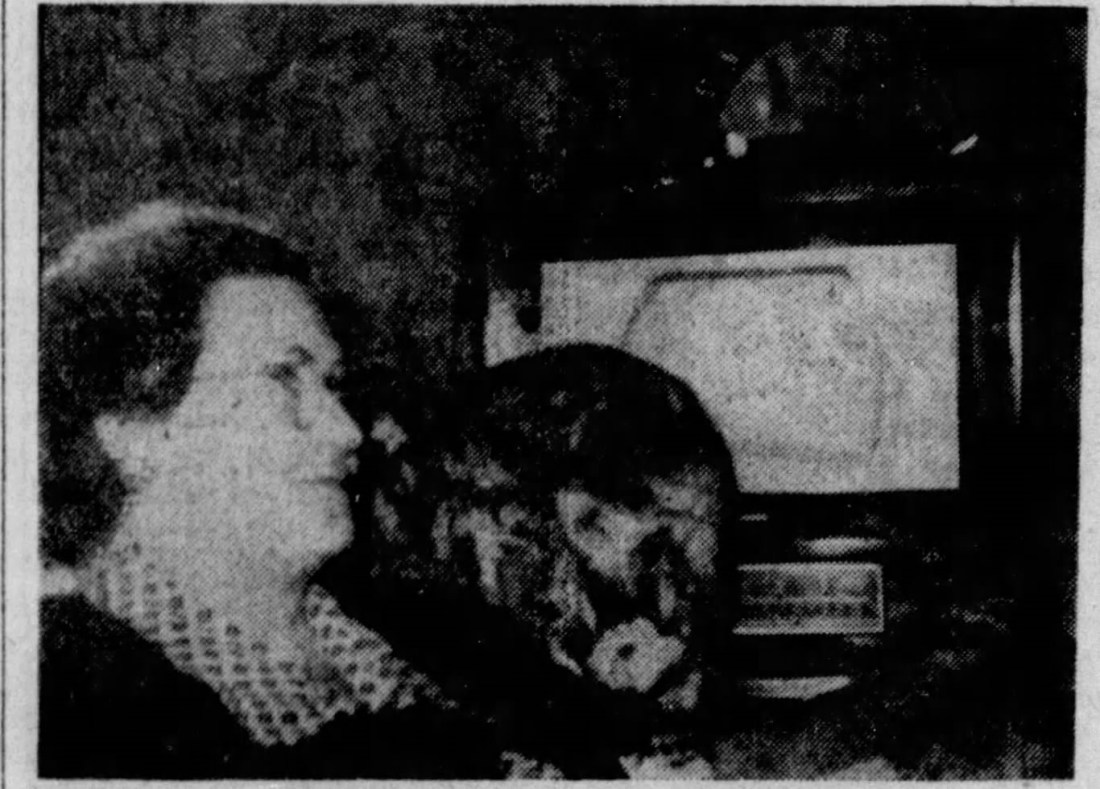
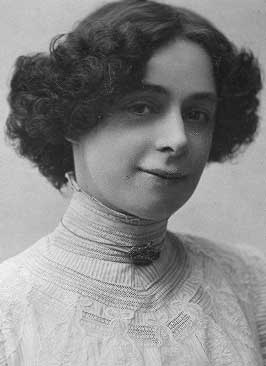
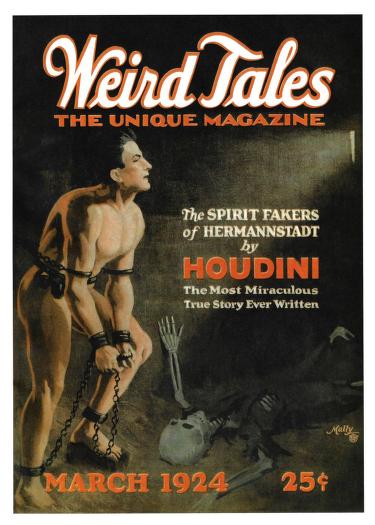
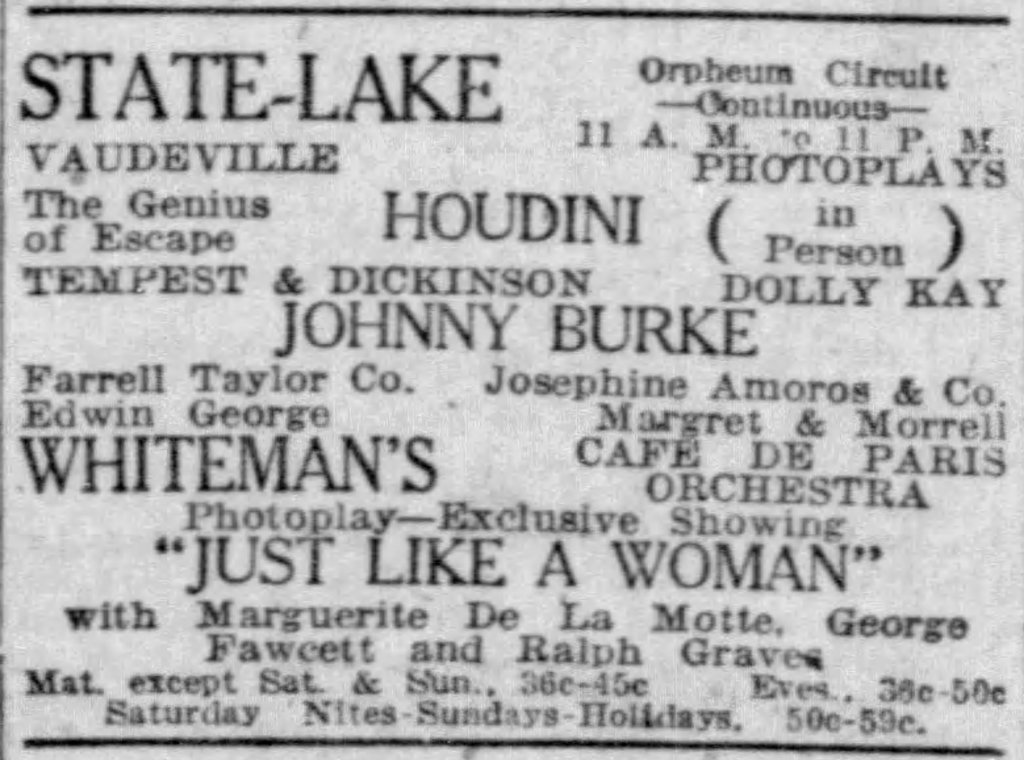
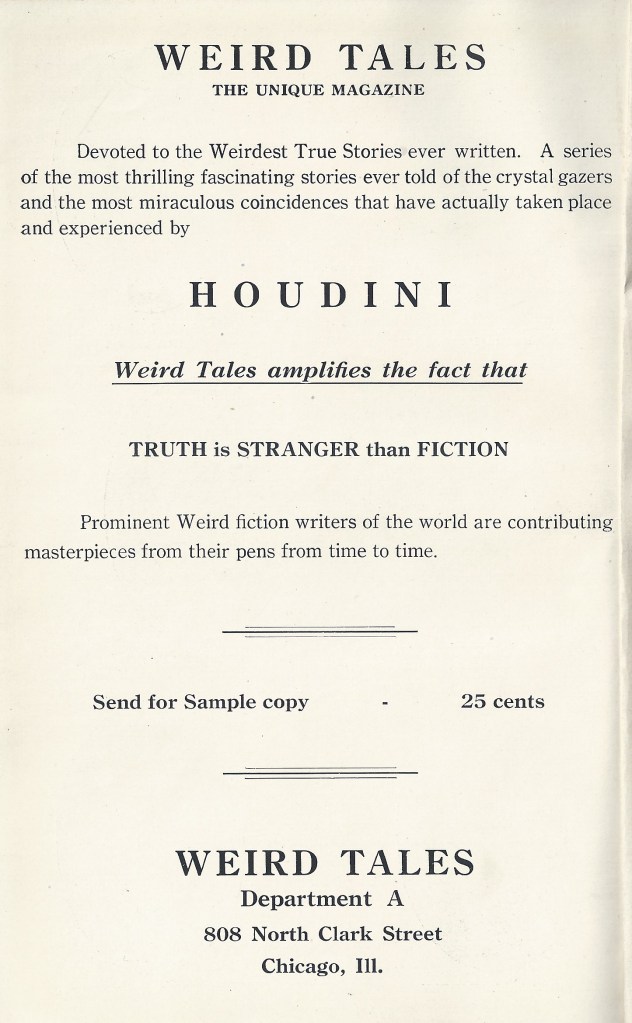
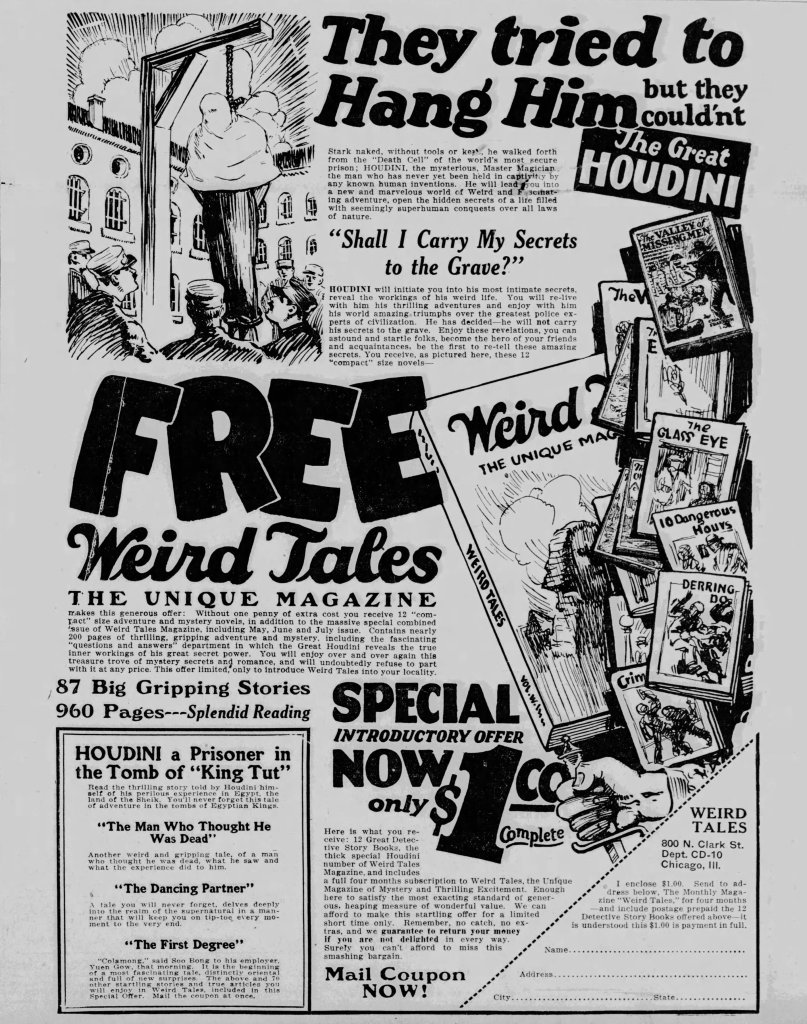
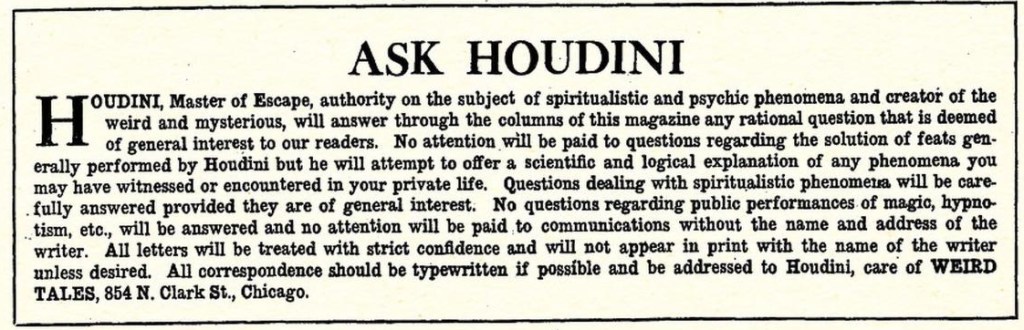
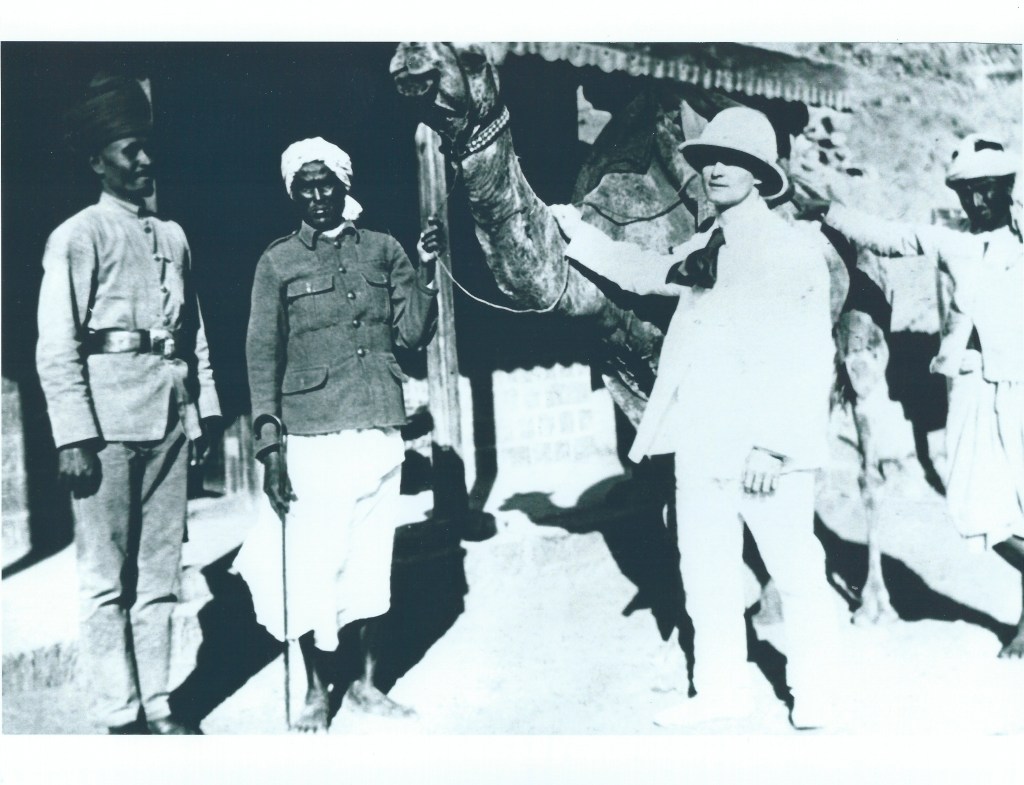
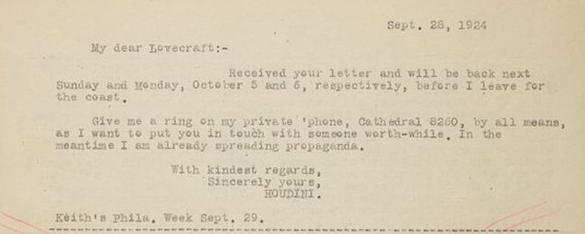
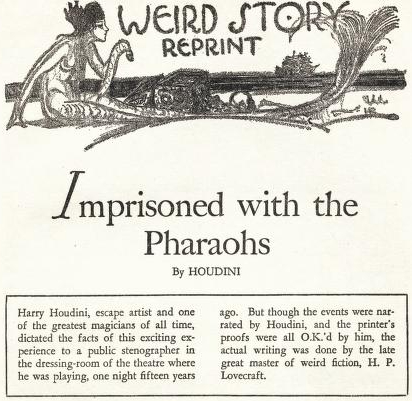


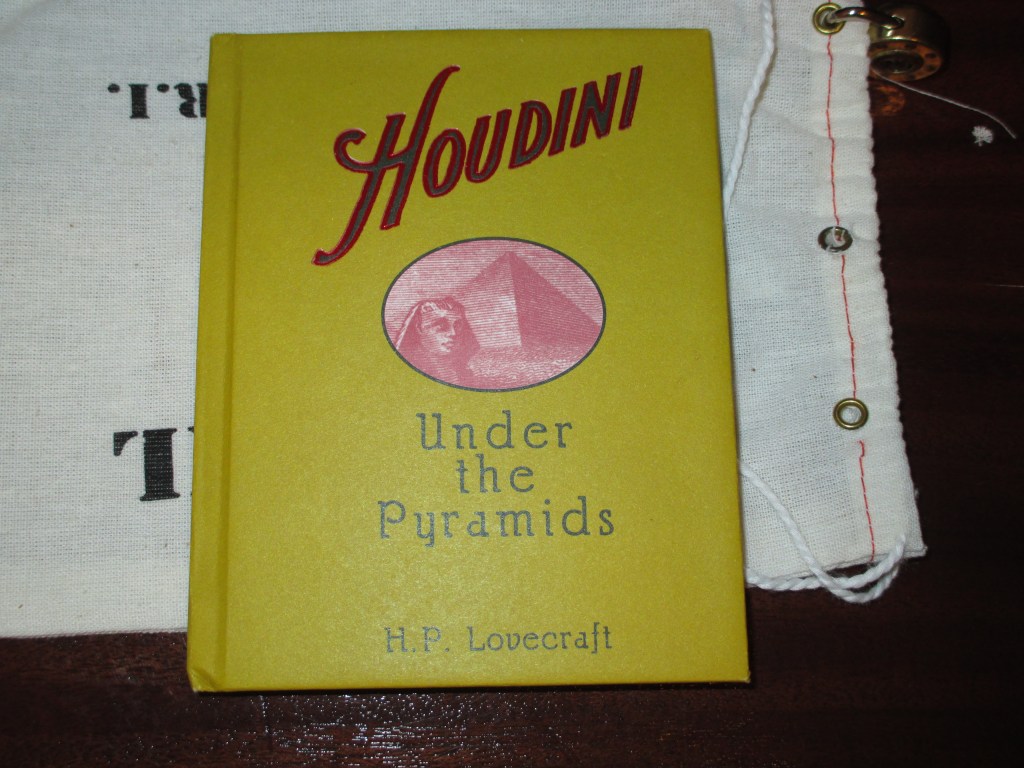

 Deep Cuts in a Lovecraftian Vein