| Tänk om H.P. Lovecraft hade levt idag och bott i Uppsala! Hur hade hans berättelser sett ut då? Vår bok heter helt enkelt 1000 Ögon: Lovecraft och är vår hyllning till denna skräckens mästare. Vi tolkar några av hans berättelser och placerar dem i vårt 1000 Ögon-universum. | What if H.P. Lovecraft was alive today and lived in Uppsala! What would his stories look like then? Our book is simply called 1000 Eyes: Lovecraft and is our tribute to this master of horror. We interpret some of his stories and place them in our 1000 Eyes universe. |
| Swedish pitch on Indiegogo | English translation |
1000 Ögon (1000 Eyes) is the label for a contemporary Swedish-language series of horror graphic novels (really, thin bandes dessinée-style hardbacks) by the creative team of Jonas Anderson, Anders Björkelid, and Daniel Thollin, the last three published by Albumförlaget. Several of these have Lovecraftian influences, notably Filgia (2013), Lovecraft (2014), and Cthulhu (2015), but like a lot of non-English language publications that don’t make it into translation, they tend to get overlooked by English-reading audiences. The name “1000 ögon” is presumably a reference to the Swedish horror film Skräcken har 1000 ögon (“Fear has 1000 Eyes,” 1970).
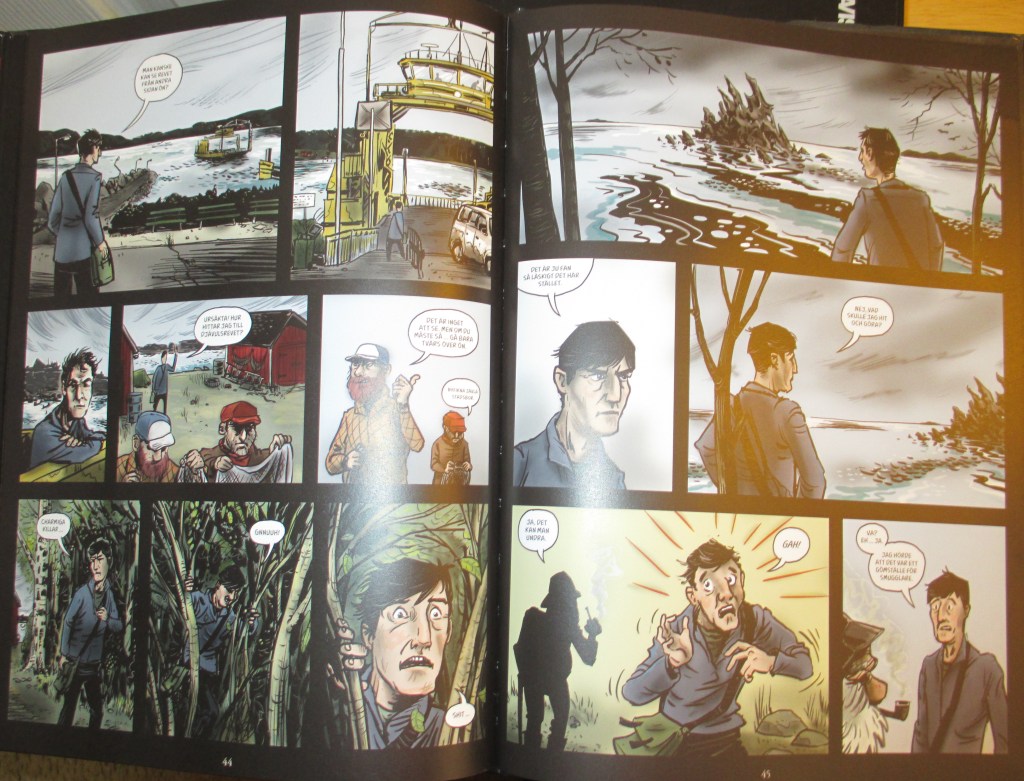
This is a bit of a shame because Lovecraft has an interesting basic premise: taking the core of four of Lovecraft’s stories (“The Hound,” “The Shunned House,” “The Statement of Randolph Carter,” and “The Shadow over Innsmouth”), and reworking them in a shared, contemporary setting, keeping what they feel is the essence of Lovecraft’s stories while freely altering the trappings and settings. In this way, the two graverobbing aesthetes of “The Hound” become more notably occult in their predilections (and apparently drive a Citroën GS); the protagonist of “The Shunned House” is a young woman named Cecilia dealing with something more than the standard mildew and black mold in the house, “The Statement of Randolph Carter” involves facetime over a smartphone rather than a field telephone, and “The Shadow over Innsmouth” takes some specific visual cues from the buildings of Uppsala and the Swedish fishing industry.
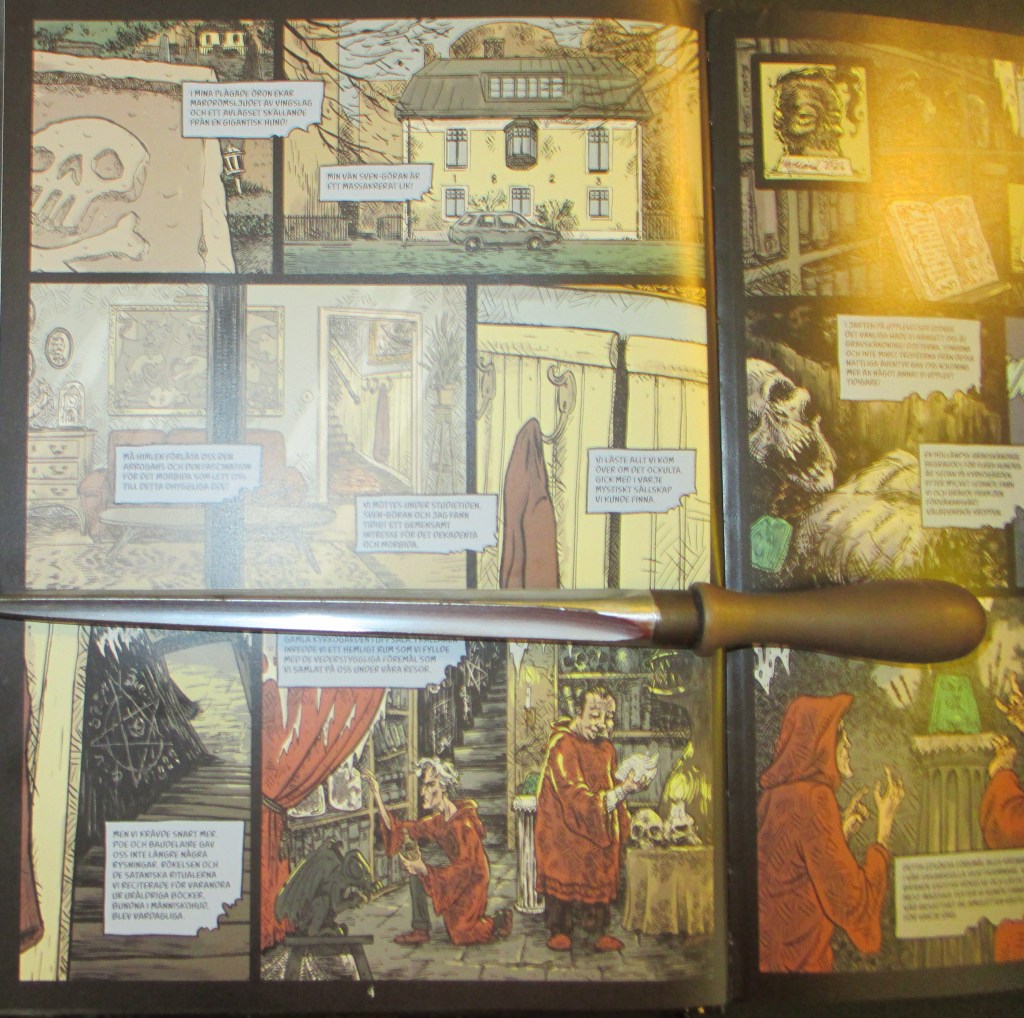
Like many contemporary takes on the Mythos, Thollin and Anderson each work in references to the Cthulhu Mythos in these stories, even if there were none before. As each one writes and draws their respective episodes independently (“The Shunned House” and “The Statement of Randolph Carter” for Daniel Thollin and “The Hound” and “The Shadow over Innsmouth” for Jonas Anderson), this provides a degree of narrative continuity that might otherwise be lacking. Readers get the sense that these stories are connected, expressions of some common threat or body of myth, in a way that might not be obvious otherwise.
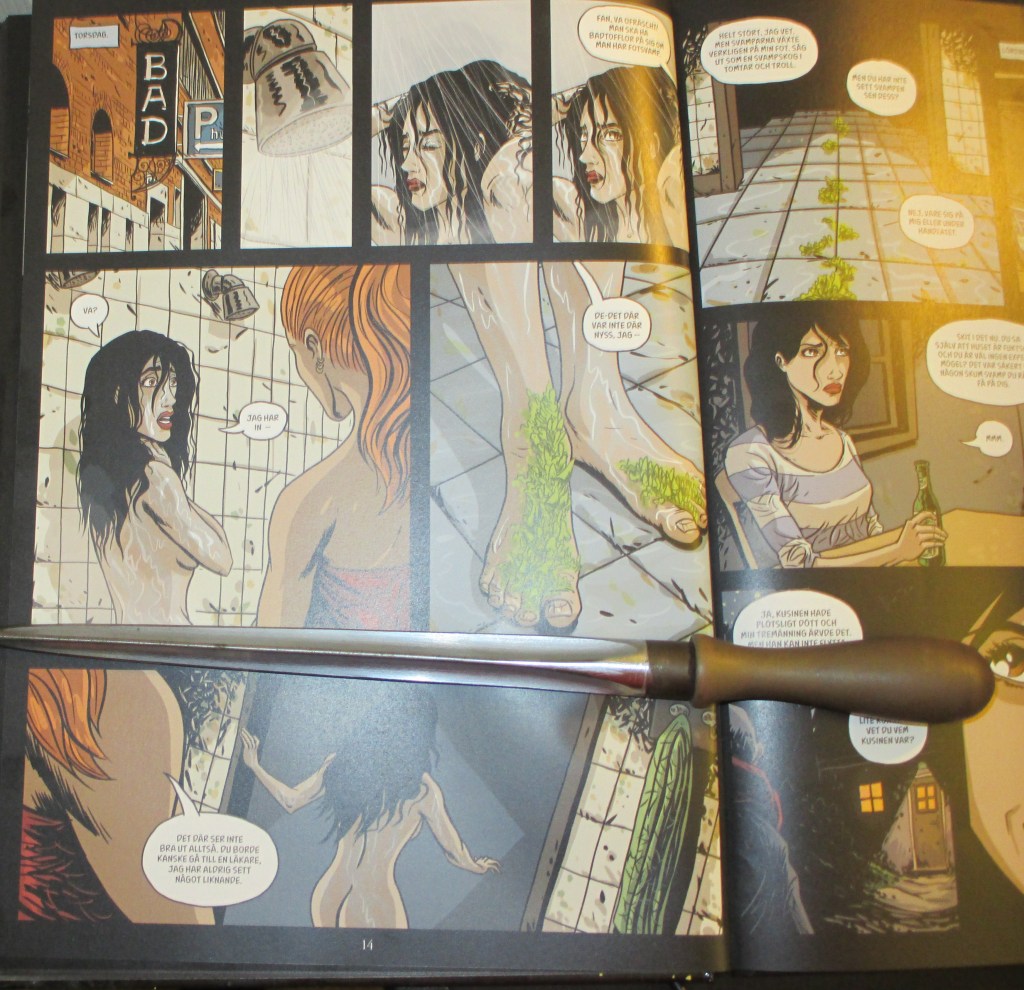
For those at least passingly familiar with Swedish architecture or Uppsala in particular, the connectivity of the stories is also geographic and cultural. Which is rather the entire point of this exercise. While Lovecraft never weighed in on localization per se, he did famously note:
Searchers after horror haunt strange, far places. For them are the catacombs of Ptolemais, and the carven mausolea of the nightmare countries. They climb to the moonlit towers of ruined Rhine castles, and falter down black cobwebbed steps beneath the scattered stones of forgotten cities in Asia. The haunted wood and the desolate mountain are their shrines, and they linger around the sinister monoliths on uninhabited islands. But the true epicure in the terrible, to whom a new thrill of unutterable ghastliness is the chief end and justification of existence, esteems most of all the ancient, lonely farmhouses of backwoods New England; for there the dark elements of strength, solitude, grotesqueness, and ignorance combine to form the perfection of the hideous.
H. P. Lovecraft, “The Picture in the House”
Which is to say: horror can be found closer to home than you think. Forget for a moment all those Hollywood horrors set in the United States, don’t think yourself safe just because Lovecraft restricted himself primarily to New England. Horror can be anywhere, closer than you would like…you may be in some corner of Lovecraft Country already and not even know it.
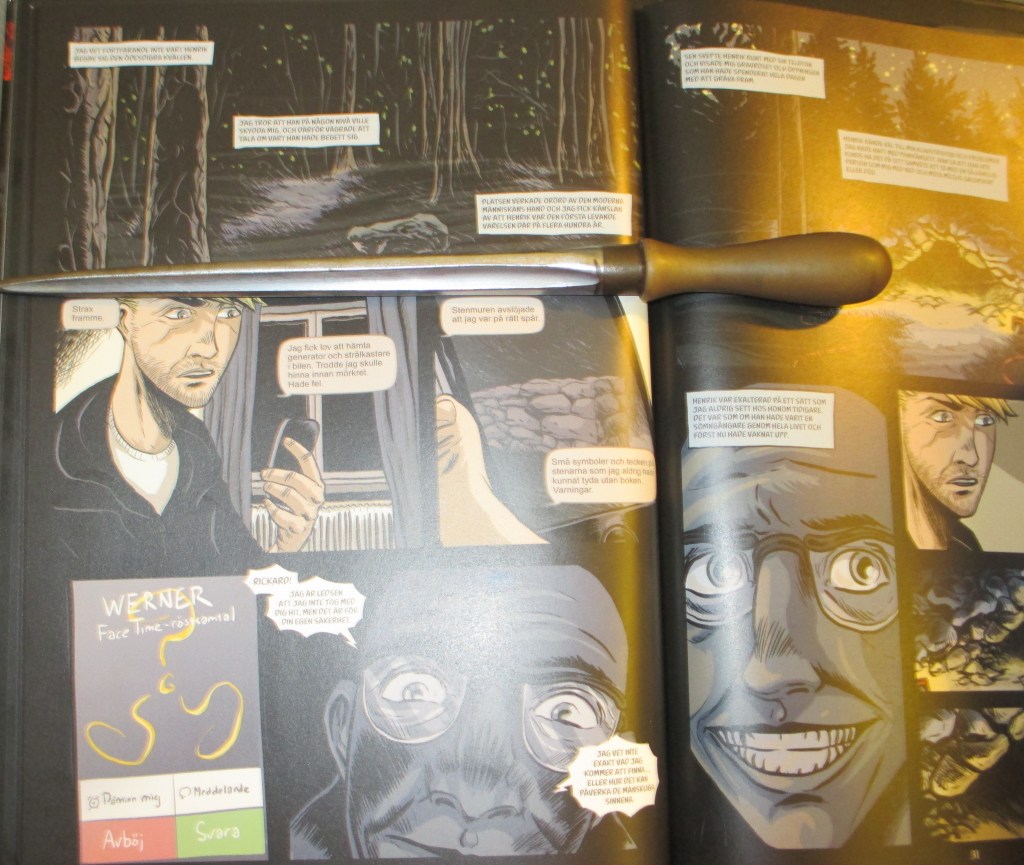
Visually, Thollin’s style is “cleaner” and closer to American-style comic figuring, while Anderson’s is a little scratchier and closer to the Franco-Belgian school, and the digital coloring on Anderson’s work in particular can look a little muddy at times. While it wouldn’t be correct to say that none of the stories being adapted lend themselves to grand visuals, it seems both Thollin and Anderson lean into a more subdued approach, focusing on the human characters and generally keeping things at their scale. So there are few grand visuals, but several clever and well-designed elements, like the stark outcropping of Devil’s Reef, which really stands out when compared to how it is normally portrayed, as barely a bump above the waterline.
Lovecraft was followed up by a sequel titled Cthulhu. Whereas Lovecraft consists of four adaptations, Cthulhu is made up of two original works, both set in Uppsala, before and after the stars are right. The stories maintain much of the same artistic style and themes of the Lovecraft adaptations, but the creators have a little more free play to indulge their imaginations. Readers who dig the style and want to see what happens what Thollin and Anderson move beyond adaptation to pastiche won’t be disappointed.
While you might find Filgia, Lovecraft, and Cthulhu available online in some second-hand bookstores, the best way to order them is probably direct from Albumförlaget.
Bobby Derie is the author of Weird Talers: Essays on Robert E. Howard and Others and Sex and the Cthulhu Mythos.
Deep Cuts in a Lovecraftian Vein uses Amazon Associate links. As an Amazon Associate I earn from qualifying purchases.
 Deep Cuts in a Lovecraftian Vein