| Lovecraft. H. P. Lovecraft. Saft Dir das was? Nur flüchtig. Also, paß auf. Schriftsteller. Amerika. 1890-1937. Hat in Edgar Allen Poe—Nachfolge phantastiche Geschichten geschrieben. Origien des Grauens. Versponnen Wissenschaftler und romantische Helder gegen unheimliche und unbekannte Mächte aus den Tiefen des Universums. Ganz eigene, in sich geschlossene Mythologie. Kosmische Götter und Monstren mit merkwürdigen Namen. Azathoth, Nyarlathotep, Cthulhu… Okay, okay. Ende des Klappentextes. Was hast Du vor? Ich will was über die Lebensgeschichte von Lovecraft machen. Und was? Einen Comic. Einen Comic? In wieviel Bänden? Lies erst mal! | Lovecraft. H.P. Lovecraft. Mean anything to you? Just in passing. Okay, pay attention. Writer. America. 1890-1937. Like Edgar Allen Poe’s succesor—wrote fantastic stories. Origins of horror. Weaves scientists and romantic heroes against sinister and unknown forces from the depths of the universe. Completely separate, self-contained mythology. Cosmic gods and monsters with strange names. Azathoth, Nyarlathotep, Cthulhu… Okay, okay. End of blurb. What are you up to? I want to do something about Lovecraft’s life story. And that is? A comic. A comic? In how many volumes? Read it first! |
| Roland Hüve & Reinhard Kleist, introduction to Lovecraft | English translation |
Lovecraft (1994) is a standalone German-language graphic novel in the European format normally associated with bandes dessinée—a slim, full-color hardback. The creation of Roland Hüve (script) and Reinhard Kleist (script & art), the 80-page story is focused on the idea of the character of Randolph Carter as a literary expy and alter ego for H. P. Lovecraft himself. As part of that, it adapts or partially adapts the story of “The Statement of Randolph Carter” as sort of an arching narrative of Lovecraft’s life, drawing on L. Sprague de Camp’s 1975 biography for details.
That bare description doesn’t really do the book justice. While the story is familiar—making Lovecraft himself a central character, part and parcel of the Mythos has been a favored treatment of many comic book creators—the real pleasure of the book is in Kleist’s artwork. The style is impressionistic, shifting, often mixing watercolors and frantic pencils, charcoals, and mixed media to great effect. It is a style very far away from the clean figures and lines of most comics at the time, either in Europe or North America. Much as if Dave McKean‘s lauded covers for The Sandman (1989-1996) were stretched out to fill a book.
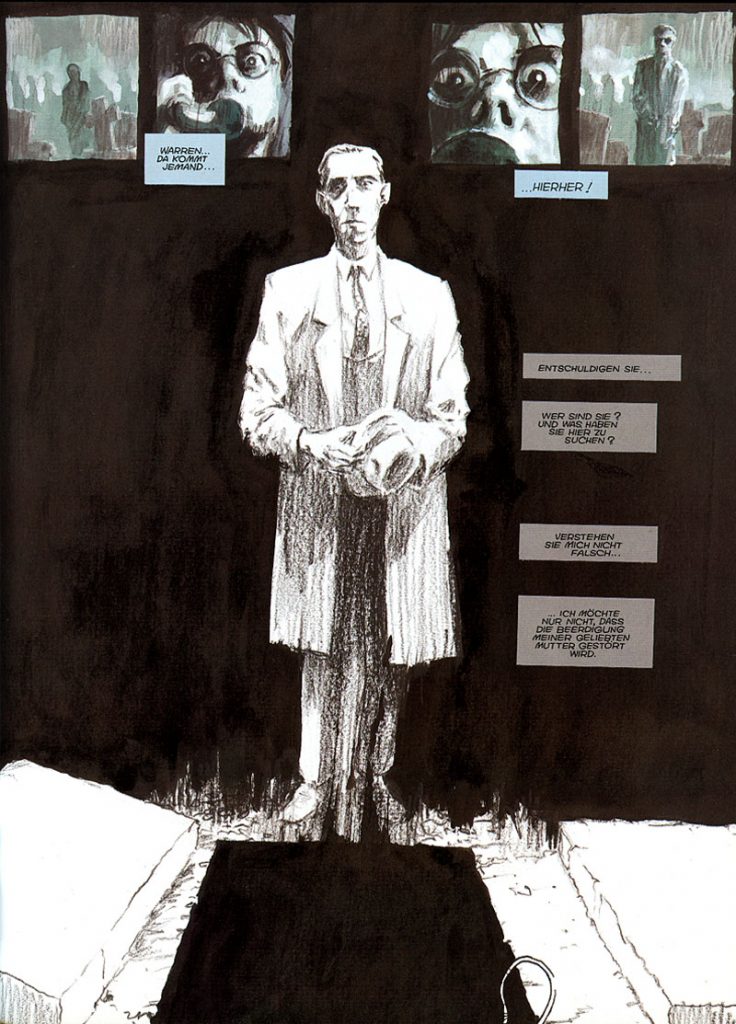
Although that still might not be giving Kleist quite enough credit; as an artist, he has his own style, adaptable and varied. It is a visual feast, and readers familiar with Lovecraft’s biography will find many interesting visual references…and some amusing errors. Sonia H. Greene goes from a Juno-esque brunette who was seven years older than Lovecraft in real life to a young, ginger-haired flapper with a bob-cut…until she turns into a succubus.
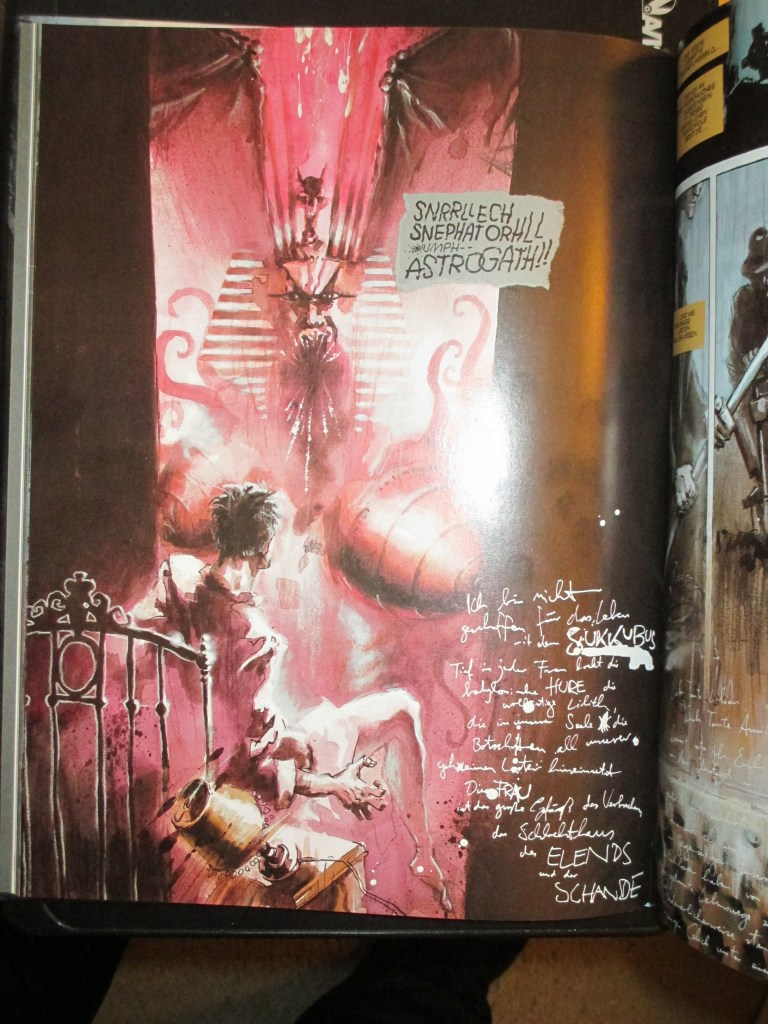
Following the trend of blending real-life and fiction, more than a few liberties are taken. Don’t try to take it as a straight biography, but as what it is: a flight of fantasy spinning out from Lovecraft’s reputation as a horror writer and the rather neurotic and sexually-inhibited depiction of the man in de Camp’s flawed but ground-breaking biography.
The second story in the book is a separate adaptation by Kleist alone, a much more restrained and deliberately grungier adaptation of “The Music of Erich Zann,” done in black and white and red, a much more sparse style that contrasts neatly with the rather more busy and cluttered compositions of the lead story.
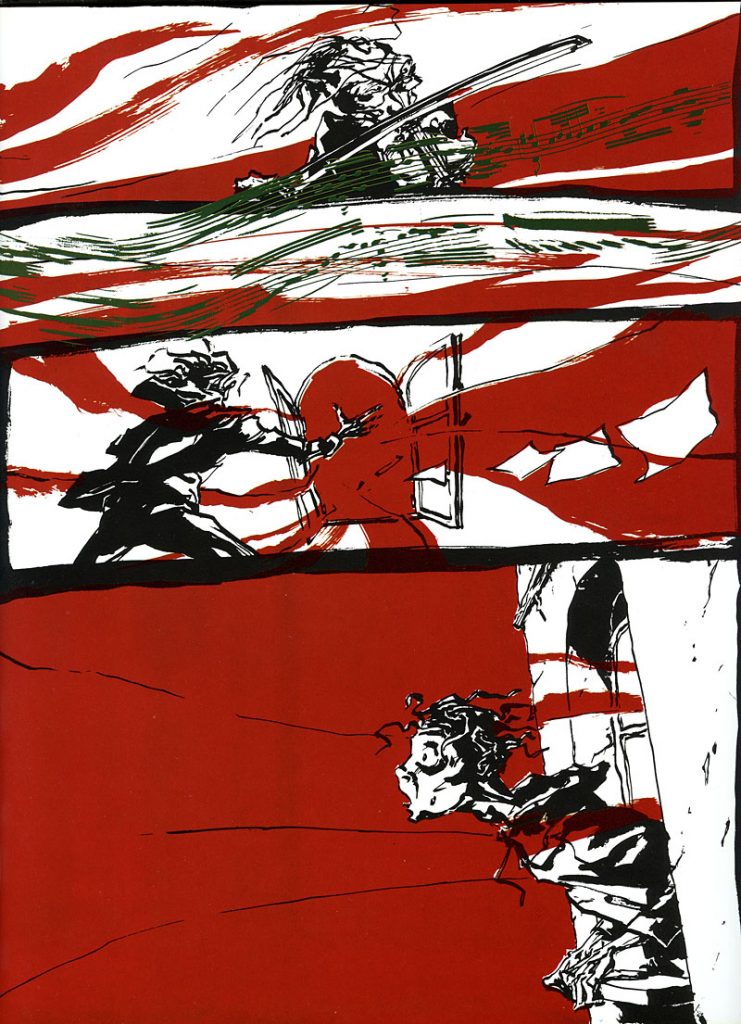
As an adaptation, this one is rather faithful and does more to capture the mood and atmosphere of the story with its bold use of red; it’s an aesthetic choice that serves to suggest and convey the invasion from beyond in a way that a tentacle or a starry blackness doesn’t.
Like many European graphic novels, Lovecraft was never translated into English, so remains fairly obscure among English-reading audiences today. Of course, today it would have to compete with any number of competitors like Lovecraft (2004) by Hans Rodionoff, Enrique Breccia, and Keith Giffen; The Strange Adventures of H. P. Lovecraft (2010) by Mac Carter, Tony Salmons, Adam Byrne, and Keaton Kohl, and Some Notes on a Nonentity (2017) by Sam Gafford and Jason C. Eckhardt among many others.
That is a pity, because while the writing may lose something in the translation from the German, the art is compelling and might have universal appeal.
Bobby Derie is the author of Weird Talers: Essays on Robert E. Howard and Others and Sex and the Cthulhu Mythos.
Deep Cuts in a Lovecraftian Vein uses Amazon Associate links. As an Amazon Associate I earn from qualifying purchases.
 Deep Cuts in a Lovecraftian Vein
Great post, makes me want to search this one out!
I think “Verspönnen” in the blurb probably connotes craziness, maybe with a hint of ridiculousness. ”Du spinnst” gets used like “you’re crazy” or even more loosely, “that’s ridiculous.” Some older dictionaries even translate it “airy-fairy.” (Brits, most likely. Go figure.)
LikeLike
German is not my strong suit; I should really get a native speaker to sanity check these translations.
LikeLike
Don’t feel bad about your German skills; I’ve been reading German for 50 years, but I just learned the “du spinnst” idiom using Duolingo over the past two years or so. Your translation was pretty good.
LikeLiked by 1 person
A great post, as always. I agree with you regarding the art, and was going to comment on it, but you said it perfectly. The cover alone is remarkable with its shades of blues, blacks, and whites. Simple, yet conveys the mood of the comic. As for Sonia becoming a succubus, well…
LikeLiked by 1 person