Antisemitism
The following article deals explicitly with antisemitism in a historical context. Frank discussion of these matters requires the reproduction of at least some samples of antisemitic speech from historical sources (e.g. Lovecraft’s letters). As such, please be advised before reading further.
Unfortunately, the prevailing approach in science fiction studies has been to dismiss the Gernsback magazines as embarrassingly simplistic, tasteless, and even detrimental to the eventual emergence of a mature literature. This is an ironic and all-too-casual judgment of a Jewish immgirant who throughout his life was in search of the respect as a technologist and editor that always seemed to elude him. A certain tone seems to have been set early on by the spectacularly racist H. P. Lovecraft’s moniker for Gernsback: “Hugo the Rat.”
—Grant Wythoff, The Perversity of Things (2016), 8-9
Hugo Gernsback is a central figure in the development of science fiction pulp magazines and on science fiction fandom. His direct dealings with Lovecraft were very few, mostly limited to the purchase of “The Colour Out of Space,” which ran in the September 1927 issue of Gernsback’s magazine Amazing Stories. Yet Gernsback’s reputation among Lovecraft and his circle of correspondents was low, and the moniker “Hugo the Rat” which Lovecraft coined has continued to stick, in fan-circles and to a degree among scholars, for decades.
Hugo Gernsback was Jewish; H. P. Lovecraft was an antisemite. Many readers and even scholars might take it as a given that Lovecraft’s prejudices were at play in his antipathy to Gernsback, and there is some truth to that. The real history of why and how this antipathy came about is a bit more complicated than it might first appear, and Lovecraft was not the only pulp writer involved with Gernsback in the series of exchanges that turned Hugo Gernsback into “Hugo the Rat.”
It’s not a pretty history; the most critical events in this narrative take place against Hitler and the Nazi’s rise to power in Germany in 1933, and antisemitic language in the period letters will be presented as it was, uncensored. Reader discretion is advised.
Gernsbacher & Modern Electronics
Hugo Gernsbacher was born in Luxembourg in 1884, into a Jewish family. His father was a successfull wine wholesaler and Hugo had been educated by private tutors, able to read, write, and speak German, French, and English fluently, and had attended L’Ecole Industrille et Commerciale in Luxembourg and the Technikum in Bingen, Germany. Before the age of 18 he had developed a significant amount of practical experience with electricity (even receiving a papal dispensation to complete the telephone wiring of a Carmelite convent), and had a penchant for invention. In 1904 at age 19, the industrious young man emigrated to the United States of America and simplified his name to Hugo Gernsback.
For the next several years, Gernsback was notable as an electrical experimenter, inventer, and businessman. The full scope of his engineering and business enterprises is too long to go into here, but chief among them was co-founding the Electro Importing Company in 1905, the foundation of Modern Electronics magazine in 1908, and the creation of the Wireless Association of America in 1909. Gernsback encouraged amateur experimentation with electricity and especially with early radio, profited from the sale of wireless sets and other components, helped spread technical knowledge of electricity and radio, and invested his profits in further developments of the technology.
Modern Electronics was Gernsback’s first magazine. Nominally, Modern Electronics was a mail-order catalog for the Electro Importing Company, but it carried much more than a list of goods for sale and their prices. The magazine was designed for the amateur enthusiast, full of practical technical knowledge in plain English, with the occasional fiction clearly marked and entertaining. Gernsback’s first science fiction novel was Ralph 124C 41+, serialized in the pages of Modern Electronics from 1911-1912.
In 1913, Gernsback began publication of a new magazine, The Electrical Experimenter, which dropped the catalog and focused on a combination of science fact and fiction. Modern Electronics continued until 1914, when it was merged with Electrician and Mechanic (1890-1014) to form Modern Electrics and Mechanics—which in 1915 changed its title to Popular Science Monthly, which is still published today.
By 1915, the Electrical Experimenter was published through Gernsback’s Experimenter Publishing company. Hugo’s older brother Sidney Gernsback had emigrated to the United States and joined his brother’s businesses c.1913. In addition to the magazine, Experimenter Publishing published a number of correspondence courses for electricity, and proved successful enough that he introduced a new magazine, Radio News, in 1919. “Scientific stories” (science fiction) had their place in the Electrical Experimenter as well, and Gernsback encouraged the readers—amateur experimenters, mostly—to imagine new possibilities and write and submit stories. In 1920, the Electrical Experimenter became Science and Invention, but the solicitation of science fiction continued despite the new title.
Science fiction already existed, but Hugo Gernsback was set to popularize it.
Lovecraft & Amazing Stories
If there is one issue that clings closest to the memory of Hugo Gernsback it is that he was very bad at paying authors.
—Mike Ashley & Robert A. W. Lowndes, The Gernsback Days (2004), 123
Pulps like The All-Story had been running “scientific romances,” such as Edgar Rice Burroughs novels of John Carter of Mars, since the 1910s. In 1920, the Argosy and All-Story combined to form The Argosy All-Story; the consolidated magazines meant one less market for prospective science fiction in the pulps.
Weird Tales was founded in 1923, and H. P. Lovecraft quickly found a place in the magazine, making several sales to editor Edwin Baird and owner J. C. Hennenberger. The first year or so of the magazine was unstable, with an irregular schedule and changes in size and format; in 1924 the magazine was reorganized. Baird was out, and Farnsworth Wright assumed the editorial role. While still favoring Lovecraft, Wright was more cautious in what he would buy, and would end up rejecting many of Lovecraft’s stories—but Weird Tales did run science fiction on occasion, putting it into slight competition with Science and Invention.
In 1924, Gernsback tested the waters for a new, all-science fiction pulp magazine, with the proposed title Scientifiction. Response was lukewarm, and the idea was set aside as Gernsback focused his attention and money on a new project—WRNY, a radio station (with occasional television broadcasts) which raised its antenna in 1925. Once the station was successful, Amazing Stories was issued by Hugo Gernsback’s Experimenter Publishing company beginning in 1926. It was the first pulp magazine devoted entirely to science fiction (“scientifiction”), although the term was so new and ill-defined that could mean almost anything; Amazing’s first issue included stories from H. G. Wells, Jules Verne, and Edgar Allan Poe. In practical business terms, however, instead of per-word rates Gernsback and Amazing Stories preferred to pay on a per-story basis. Mike Ashley and Robert A. W. Lowndes noted in The Gernsback Days (123-130) that the rates Gernsback offered were reminiscent of the many writing contests his magazines would run with cash prizes for the winners, ranging fro $100 to $1.
It is difficult to talk about exact rates, since Amazing Stories seemed to negotiate on a per-piece basis except when it had contracted for a number of stories at once, but it appears short stories typically went for up to $50, and novels for $100. Depending on the exact wordcount, this could be either very fair or very bad. For example, if a 1,000 word “short” story sold to Amazing for $50, then ther effective per-word rate of 1/2¢ per word—the “average” rate for Weird Tales (cf. The Weird Tales Story 2)—not terrible if a pulp writer has no where else to place a science fiction story, and possibly good if they can turn out several short pieces in quick succession, but you would rarely reach Weird Tales’ top rate of 1¢ or 1.5¢ per word…and Weird Tales’ rates were relatively low compared to other pulps. If a 60,000 word novel is sold to Amazing for $100, however, the effective per-word rate is 1/6th of a cent per-word, below Weird Tales‘ lowest rate—and that was the price Gernsback paid to reprint H. G. Wells’ The War of the Worlds in Amazing Stories Aug-Sep 1927 (The Gernsback Days 125).
In March 1927, H. P. Lovecraft had completed “The Colour Out of Space,” a 12,000-word novelette (Dawnward Spire, Lonely Hill 127). By June, it had been submitted and accepted by Amazing Stories (DS 134). Lovecraft duly reported this to his friends, which occasioned a bit of scuttlebutt:
Congratulations on having sold “The Colour Out of Space”. I wish it had been W.T., because Amazing Stories pays poorly, and is not going so well as its backers believed it would. But it will probably extend your audience by some thousands.
—Donald Wandrei to H. P. Lovecraft, 6 July 1927, LWP 136
As for “The Colour Out of Space”—Wandrei tells me that Amazing Stores doesn’t pay well, so that I’m sorry I didn’t try Weird Tales first.
—H. P. Lovecraft to Clark Ashton Smith, 15 July 1927, DS 136
There are a few things to unpack here: first, we have no idea where Wandrei was getting his information on Amazing Stories. None of his own fiction appeared in its pages up to 1927. The second is that “it is not going so well”—this is a point that Ashley & Lowndes delve into in The Gernsback Days, and it is true that Hugo Gernsback claimed that Amazing Stories was not yet on a paying basis in 1927, despite a circulation in excess of 100,000 (much more than Weird Tales)…and came to the conclusion that Hugo Gernsback was using the profits from his magazines to fund his lifestyle and prop up his radio station WRNY (130-132).
What this meant in practical terms was that in 1927 the rates per story were low:
Amazing Stories, being still in its infant stage, our rates per story are hardly based on the story’s merit—rather on the extent of our budget for the year. Our rates for short stories just now range from $15 to $30 per story…
—Amazing to Edmond Hamilton, 28 Sep 1927, quoted in The Gernsback Days 129
So whomever was the source of Wandrei’s data on Amazing Stories, it jived with what Amazing was telling its own authors. There are a two more points which are tied up together: payment was supposed to be on publication, and both Wandrei and Lovecraft suggest that Lovecraft tried “The Colour Out of Space” on Amazing first, instead of Weird Tales. This is significant because of a point of confusion that arose later:
“Colour out of Space” was sent to Gernsback because of Wright’s rejections of other things which L. esteemed, and in anger at this! It brought only $25.00, and that after three dunning letters!
—R. H. Barlow, “Memories of H. P. Lovecraft” (1934), O Fortunate Floridian! 404
Here, Lovecraft’s friend Barlow appears to be misinformed—Lovecraft apparently did not send “Colour” to Farnsworth Wright at Weird Tales—and he suggests that Lovecraft was not paid promptly. This latter issues seems to be confirmed by other letters:
The cheque ought to be very respectable, since the text covered 32 pages.
—H. P. Lovecraft to August Derleth, June or July 1927, Essential Solitude 1.98
[…] “The Colour Out of Space” appears in the current Amazing Stories. They sent me two copies of the magazine, but I am still awaiting my cheque.
—H. P. Lovecraft to Donald Wandrei, 6 Aug 1927, LWP 143
Speaking of payment—beware of Amazing Stories! I haven’t received anything yet for “The Colour out of Space”, & shall have to make inquiries soon.
—H. P. Lovecraft to August Derleth, November 1927, Essential Solitude 1.114
Amazing Stories has just promised to remit before the end of this month—though I fear, from what everyone tells me of their rates, that it won’t be an impressive sum.
—H. P. Lovecraft to August Derleth, 13 Jan 1928,Essential Solitude 1.125
[…] I haven’t forgotten that his skinflint magazine gave me only $25.00 (& that after long months & repeated requests!) for a story (“The Colour Out of Space”) of the same length as one for which Weird Tales paid me $165.00.
—H. P. Lovecraft to Lillian D. Clark, 10 May 1928, LFF 2.655
$25.00 at 12,000 words works out to a little over 1/5¢ per word—the other story that Lovecraft mentions is “The Call of Cthulhu” (Weird Tales Feb 1928), which at 11,200 words was being paid the top rate of 1.5¢ per word. So even if Barlow was incorrect about Lovecraft submitting “Colour” to Weird Tales, all the other particulars check out…and we can well imagine Lovecraft begrudging the “skinflint” magazine that paid him so little, and so late.
We can only speculate for Amazing’s part of the whole business. $25 would have been just in line with the rates quoted in the 1927 letter to Hamilton; and in keeping with their general policy of paying relatively low rates for fiction. The lateness of the payment could be anything from a clerical error, unethical business practices, or a temporary shortage of funds…we have no idea. What we do know is that Lovecraft wasn’t the only one: creditors were piling up, and authors were going unpaid:
I never collected a single payment on time, and when it got so that they ran several months behind, and I had a tip they were on the verge of bankruptcy and changing hands, I quit.
—A. Hyatt Verrill to Forrest J. Ackermann, quoted in The Gernsback Days 132
What’s notable is at this point Lovecraft was not directing any animosity at Hugo Gernsback, either as the magazine’s publisher or as a Jew. Lovecraft’s letters from this period don’t mention Gernsback, which is easily understandable when Lovecraft wouldn’t have been dealing with him at all, but with the editor C. A. Brandt. Whatever the case, Lovecraft made no effort to submit to Amazing Stories again.
Clark Ashton Smith & Wonder Stories
Hugo Gernsback’s creditors moved in, and in 1929 they forced Experimenter Publishing into bankruptcy. This was the end of Hugo Gernsback’s involvement with Amazing, but not Amazing Stories itself: the creditors re-invested in the company, recognizing the sci-fi pulp as a viable business, and Amazing would outlast Gernsback and the pulp era.
For his part, Hugo Gernsback was not done with science fiction. As the bankruptcy was proceeding, Gernsback was already planning three new magazines: Radio-Craft, Air Wonder Stories, and Science Wonder Stories. The two new publishing companies, Stellar Publishing and Techni-Craft Publishing, were family affairs, with his brother Sidney, with his wife Dorothy and her sister Harriet Kantrowitz. David Lasser, the son of Russian Jewish immigrants and a recent M.I.T. graduate, became editor. Lasser knew little of science fiction, but he knew science and writing, and Hugo Gernsback still saw his magazines as primarily educational as well as entertaining.
In addition to regular monthly magazines, Amazing Stories had published a companion quarterly issue; Stellar Publishing continued this practice with Science Wonder Stories and also issued a Science Wonder Quarterly from Fall 1929 to Spring 1930; in May 1930 Air Wonder Stories and Science Wonder Stories merged into a single magazine titled Wonder Stories, and Science Wonder Quarterly became Wonder Stories Quarterly. In that last Spring 1930 issue of Science Wonder Quarterly before the merger took place, Lovecraft’s friend Frank Belknap Long, Jr.’s story “The Thought Materializer” appeared.
As for Wonder Stories—have you seen anything of Belknap’s in that lately? He had one story accepted, but has not been paid—hence assumed that it had not appeared. Dwyer, however, says he distinctly recalls such a tale 2 or 3 months ago—though his memory is indistinct about it. The matter forms quite an enigma. Apparently Gernsback continues his old financial habits in his new company!
—H. P. Lovecraft to Clark Ashton Smith, 23 Jun 1930, DS 220
Thanks for the definite information about Belknap’s tale in the Wonder Stories Quarterly. I had just received a letter from the firm stating that they had never carried any Long story in any of their publications, when your news arrived. I at once wrote again—& finally they admitted that the tale was published. I have now sent a half dollar for the magazine, & am hoping for the best. Meanwhile Belknap has received no cash. Undoubtedly this Gernsback outfit is something which it is well to have as little as possible to do with!
—H. P. Lovecraft to Clark Ashton Smith, 17 Jul 1930, DS 222-223
What you tell me about Belknap’s experience with the Gernsback crowd is indeed amazing. I don’t see how they do business on a basis of that sort. Certainly Dr. Keller, Arthur B. Reeve, Starzl, and a lot of other people whose work they use aren’t writing just for the glory of seeing their names in print. I suppose their game is to cheat the more obscure or occasional contributors, if they can “get away” with it. There ought to be some way of getting at them. Anyway, let me know how the affair works out! They have not yet reported on my “Andromeda” (after nearly two months) and I am writing to make a rather curt inquiry.
—Clark Ashton Smith to H. P. Lovecraft, 30 Jul 1930, DS 224
I’ve lately received the Wonder Quarterly with Belknap’s tale, but he has not yet heard from the editors despite a fresh inquiry on his part a fortnight ago. As you suggest, it probably takes real prominence to get satisfactory dealings from the Gernsback organisation! Good luck with “Andromeda”!
—H. P. Lovecraft to Clark Ashton Smith, 6 Aug 1930, DS 225
Clark Ashton Smith had achieved early recognition as a poet in California, but had never been able to translate that into financial success. Living with his aged parents and doing considerable seasonal work to make ends meet, Smith was able to sell several stories and poems to Weird Tales in the 1920s, and determined to try his hand as a full-time pulpster, sending stories to several outfits, including Wonder Stories and another Gernsback magazine, Amazing Detective Stories—and his stories were accepted.
What had changed from Lovecraft’s initial encounter with Amazing is that Wonder Stories could not be differentiated from Hugo Gernsback; the bankruptcy had thrust his name prominently into the news in science-fiction and science-fiction fandom circles. While the market for science fiction pulps was now growing, with fiercer competition, Lovecraft and Smith were focusing on Hugo Gernsback as the personality behind Wonder Stories—not the editor David Lasser. This was a very different relationship than both men had with Weird Tales and its editor Farnsworth Wright.
As it happened, though Smith was cautious, Wonder Stories bought “Andromeda” at 3/4¢ per word (not great, but not bad either), and sent a check promptly—with a request for more. Smith conveyed this information to Lovecraft…with one more note:
By the way, the Gernsback outfit has just remitted a sizable check ($90.00) for “Andromeda”, and they seem anxious to see the new story, which I am now submitting. They may have taken me for a compatriot, from the tone of my letter to them! And they are saying to each other, “We will not bamboozle our Jewish brother even if we could.”
—Clark Ashton Smith to H. P. Lovecraft, Sep 1930, DS 232-233
In some previous letters to Smith, Lovecraft had made some antisemitic remarks regarding Jewish people in New York, so Smith may have felt “safe” in expressing this opinion. As it happens, this is the first reference in the extant letters that either Smith or Lovecraft made to the Wonder Stories staff being Jewish. Explicit here is the stereotype of Jewish greed or unethically sharp business practice; certainly uncalled for considering that Smith had been paid in full and fairly promptly.
Smith needed the money and was happy to write if they would buy, though the relationship was not always so enthusiastic. No one else could write like Smith, his poetic language and prodigious vocabulary were inimitable, and his mind tended more toward the weird and horror than to bright shining futures or action-adventure space operas. Editorial requests from Lasser thus brought about a bit of friction:
The Jews want some more “ekshun” in the first part of “The Red World”, which they criticize as being “almost wholly descriptive”. It looks as if they were trying to compete with “Astounding Stories.”
—Clark Ashton Smith to H. P. Lovecraft, c. 21 Oct 1930, DS 251
Astounding Stories had begun publication in January 1930, an immediate competitor to both Amazing Stories and Science Wonder Stories, and those three magazines would top the science fiction pulp market for the rest of the 1930s. The syndication of the Buck Rogers comic strip in 1929 spurred readers interest for space opera, and the pulps responded; Smith himself was asked to write such stories, and his Captain Volmar tales “Marooned in Andromeda” (Wonder Stories Oct 1930) and “A Captivity in Serpens” (Wonder Stories Quarterly Summer 1931, under the title “The Amazing Planet”) are examples of this type. However, action (“ekshun” to mimic a New York Yiddish accent phonetically) was not Smith’s strong type…and Lovecraft was not one to correct Smith about “the Jews.”
So Meester Gernspeck vants someding more should heppen by de “Red Voild” a’ready! Oy, should ah poor men pay oudt good money by ah story vere efferyding stend still ent dunt say it nuddings? I fear that I shan’t find the gentleman’s periodical much of a haven for my stuff—though he did take my “Colour Out of Space” in the old Amazing days . . . . paying all of 25 dollars like the generous philanthropist he is!
—H. P. Lovecraft to Clark Ashton Smith, 30 Oct 1930, DS 252
Which reminds me that I am beginning another Volmar yarn for the Jews—“Captives of the Serpent.” I’ll give them their “action” this time!!!
—Clark Ashton Smith to H. P. Lovecraft, 10 Nov 1930, DS 266
I hope I may soon see “Captives of the Serpent”, in spite of the specially ordered overdoses of “ekshun”. Which reminds me that young Belknap is meditating a complaint to the Author’s League concerning the dishonesty of Meestah Goinspeck’s outfit. They haven’t paid him a cent for his story of last spring, & utterly ignore the courteous inquiries he has written them. I advise him to make a final try for payment by sending Gernsback an advance carbon of his letter to the League—announcing that the original will be despatched if no satisfactory word is received within five days.
—H. P. Lovecraft to Clark Ashton Smith, Nov 1930, DS 268
I am glad that Belknap is planning to bring a complaint against that gang of Yiddish highbinders.
—Clark Ashton Smith to H. P. Lovecraft, c 17 Nov 1930, DS 271
The rhetoric was already getting very acerbic. Perhaps encouraged by Lovecraft’s response, Smith would begin to write more openly of these prejudices to others as well.
No, I have not signed (and could not be induced to sign) a contact with that Gernsback gang of Yiddish high binders. They merely suggested the writing of a series of astronomical tales, dealing with the adventures of a space-ship and its crew; and they have paid ¾ a cent per word for such material of mine as they have used. My chief grievance against them is that they are putting so many restrictions on my work, and have shown themselves utterly oblivious or disregardful of literary values.
—Clark Ashton Smith to August Derleth, 22 Nov 1930, EID 30
I have been feeling rather punk lately, and have done nothing but hack-work—another piece of junk for the Jews. I’ll recommend the Gernsback outfit for quick action in publishing material—the novelette that I wrote for them in December is out in the issue (April) now on the stands. But if I were a vain person, I’d sue them for criminal libel because of the alleged picture of me that they are using. It makes me look as if I had been on a forty-day debach; of all the cock-eyed caricatures!
—Clark Ashton Smith to August Derleth, 8 Mar 1931, EID 39
Ashley & Lowndes in The Gernsback Days noted an apparent misapprehension of the situation on the part of Wonder Stories: Lasser thought with his directions and prompts he was helping to develop Smith as an author, while Smith thought he was churning out hackwork for an illiterate bunch of moneygrubbers (173-175). This and other editorial high-handedness such as changing titles arbitrarily were slowly alienating Smith from Wonder Stories.
Yet they continued to pay in full and on time, so Smith kept writing. However, at this point the idea of Gernsback’s personal involvement, his supposed sharp business practices, and the lack of any pushback on antisemtic comments meant that the latter were continuing to spread:
Glad “Beyond the S.F.” landed with Shylock ben Gernsback. I shall have my eyes open for the Novr. W.S.—for I must own this tale, in conjunction with its predecessor.
—H. P. Lovecraft to Clark Ashton Smith, 11 Sep 1931, DS 322
Beginners have far more chance with the Shylock Gernsback outfit-chance to “land”, that is, not chance of getting prompt or adequate remuneration.
—H. P. Lovecraft to J. Vernon Shea, 13 Sep 1931, Letters to J. Vernon Shea 49
“The City of the Singing Flame” (Wonder Stories July 1931) and its sequel “Beyond the Singing Flame” (Wonder Stories Nov 1931) by Clark Ashton Smith are two genuine classics of the period, but Lovecraft’s depiction of Gernsback as quite literally the stereotype of a greedy Jew show that he was fixed on Gernsback as personally responsible for both his own issues with Amazing Stories and Frank Belknap Long’s issue with Science Wonders Quarterly. Isolated incidents and existing prejudice had come together…and then there began to be a delay of payments.
Too bad about the delay in your checks. Even at that, the Clayton system is vastly preferable to that of Gernsback, who doesn’t seem to have any time-limit at all on the settlement of arrears. The blighter still owes me about 250 djals.
—Clark Ashton Smith to August Derleth, 10 Feb 1932, EID 97
Gernsback has taken a hunk of tripe, The Invisible City, which is scheduled for appearance in the June Wonder Stories. They certainly take the palm for promptness in printing accepted matter—but they make up for it on the payment end.
—Clark Ashton Smith to August Derleth, 15 Mar 1932, EID 105
As it happened, circumstances weer a bit different than when Amazing Stories began delaying payments in the late 1920s. The Wall Street Crash of 1929 which started the Great Depression took time to hit the pulp market, but it did; Weird Tales suffered considerable delays in paying authors after its bank closed, owing some authors hundreds of dollars (see Scott Connor’s “Weird Tales and the Great Depression” in The Robert E. Howard Reader for details).
In December 1932, the bank for Stellar Publishing closed, delaying payments to many authors, including Smith. The problem was compounded by in mid-1932 when the Eastern Distributing Corporation, which was the distributor for Wonder Stories, went bankrupt. The result was that Gernsback’s publishing companies likely lost a vast chunk of money, taking a substantial hit to their liquidity (The Gernsback Days 202-203). Nevertheless, Smith continued to sell to Wonder Stories in the hopes of being paid.
Gernsback has written to tell me that he can’t pay for any of my material at present, since he claims to have lost huge sums of money through the bankruptcy of a firm that had been distributing his magazines. All this helps to make the financial outlook as bright and sunny as a cloud of sepia fifty fathoms down in the undersea.
—Clark Ashton Smith to August Derleth, 5 Apr 1933, EID 171
Assessments of Gernsback/Wonder Stories in the letters of Lovecraft & co. were not uniformly negative during 1932-1933, but were often hedged with casual antisemitism, e.g.:
Glad the Invisible City is due in the near future, & that Gernsback has some appreciation of what he is offering. It’s odd, but in spite of that damn’d kike’s financial remissness & sharp dealings, I really think he offers a better & more vital range of scientifiction than either of his two competitors. He is not quite so rigid in his demand for the commonplace & the stereotyped.
—H. P. Lovecraft to Clark Ashton Smith, 4 Apr 1932, DS 360
The Chance story offers infinite possibilities. And so the eckshun-luffing management of W.S. suggested the idea! I’m hanged if those damn kikes aren’t brighter & more sensible in many ways than the philistines controlling Astounding & the technologists in charge of Amazing! Really, there is little doubt but that Wonder is the most generally interesting of the scientifiction magazines. Sorry the space-limit has gone down so annoyingly.
—H. P. Lovecraft to Clark Ashton Smith, 27 Aug 1932, DS 381
As to Wonder Stories, I am somewhat in a quandary. I can recommend the mag. For ultra-prompt publication of material; but they seem to make up for it on the payment end. They have, so far, paid for seven of my stories at ¾ of a cent per word, but are in arrears on the last five or six, and protest their inability to pay at present together with their anxiety to do so. I don’t know whether to gamble any more stuff on them or not, since I more than suspect that they are capable of sharp dealing. My worst apprehension is that old Hugo may pull another bankruptcy stunt, as he did with Amazing Stories several years back. Undoubtedly the magazine—Wonder Stories—is having a hard time just at present. Their treatment of Belknap is pretty raw, I’d say. The chief reason that I’ve had anything to do with them is, that Gernsback has had the perspicacity to print some of my more out-of-the-way stuff which no one else would touch. And I have had, after all, about five hundred bucks out of the old highbinder.
—Clark Ashton Smith to Donald Wandrei, 10 Nov 1932, Selected Letters 195-196
The final straw for Smith came with “The Dweller in the Gulf,” published in Wonder Stories march 1933 as “The Dweller in the Martian Depths.” In addition to changing the title, the editors had taken a hacksaw to Smith’s prose and bowdlerized the ending. Editor David Lasser wrote to Smith that the changes had been made “at Gernsback’s express order” (DS 408)—and Smith would submit no more to the magazine, which already owed him over six hundred dollars, although two previously submitted stories would still be published after this.
Hazel Heald & Hugo the Rat
I suppose Gernsback is still withholding ‘eckshun’ on his debts. One of my clients is about to write an indignant letter to the Authors’ League concerning his financial shortcomings—though I imagine its effect will be close to zero.
—H. P. Lovecraft to Clark Ashton Smith, 2 Feb 1933, DS 403
Yes—my Gernsback-mulcted client is Mrs. Heald—whose story was nothing extra, although it surely deserved some remuneration.
—H. P. Lovecraft to Clark Ashton Smith, c.10 Feb 1933, DS 404
“The Man of Stone” by Hazel Heald had been published in Wonder Stories Oct 1932. On 30 January 1933, Adolf Hitler became chancellor of Germany. Even at that point, Hitler and the Nazis were a byword for antisemitism, and while few may have believed the full extent of Hitler’s plans in Mein Kampf, which would see its first abridged English translation published in October 1933, the rhetoric was clear…and influential.
I await sight of the “Weaver” & “Flower Women” with keen interest, & shall try to get sight of the misnamed “Secret of the Cairn” in Hugo the Rat’s kosher mekasin. Hope his ekshun on debts won’t be delayed beyond all reason—I’d like to set Adolf Hitler on the scoundrel!
—H. P. Lovecraft to Clark Ashton Smith, 8 Apr 1933, DS 414
As for Hugo the Rat—probably he’s waiting for the dollar to get as low as the German mark did in the early 1920’s. Then—oy, he shood pay it up by his condribudors a’ready!
—H. P. Lovecraft to Clark Ashton Smith, 3 May 1933, DS 415
This is the first appearance of the epithet “Hugo the Rat.” Whether this was in a reference to Gernback’s “greedy” nature or an allusion to his Jewishness is unclear; Lovecraft had elsewhere referred to “rat-faced Jew[s]” (LFF 1.256) and Jewish “rat-like temperaments” (LWP 84), so either is feasible. However Lovecraft intended, the nickname stuck.
Unrestricted prejudice, stereotypes, and delay or denial of payments to Lovecraft, Smith, and their friends and clients had soured both men on Hugo Gernsback, who they now held personally to blame for a situtation which might honestly have been somewhat out of his hands to control, as the Great Depression worsened and Wonder Stories began to make economic cuts in length, and moved to a bi-monthly rather than monthly schedule.
Incidentally—I’ve passed on to him, & will pass on to Mrs. Heald, the information about the bad-debt collector. This certainly sounds promising, & I hope you yourself can ultimately employ her to advantage. Anyone who can extract cash from Hugo the Rat is an expert!
—H. P. Lovecraft to Clark Ashton Smith, 12 Jul 1933, DS 425
Yes, I have heard that Gernsback has a doubtful reputation in matters of payment. Though I disapprove strongly of the Hitler regime, I think that it might be administered, not unjustifiably, on a Jewish gyp and literary sweat-shop keeper such as H. G. I have a suspicion that he may try another of his bankruptcy stunts before long. I have the address of a lawyer in N.Y. who is said to be good at collecting money from backward publishers and shall at least try holding the threat of legal action over Gernsback.
—Clark Ashton Smith to Donald Wandrei, 6 Aug 1933, Selected Letters 218
The lawyer in New York City was Ione Weber, a female attorney. Not much is publicly available on her career; she was a charter member of the Fiorello LeGaurdia chapter of Phi Delta Delta at the Brooklyn Law School in 1922, and in 1924, Ione Weber was listed editor of the magazine for Phi Delta Delta operating out of the Eagle Building in NY, and she is listed as author of New York Pleading and Practice (1930). It’s not clear if Weber was in normal practice, or part of a firm, but being asked to recoup relatively small claims from a pulp publisher suggests she must have had some other source of income. Still, she apparently had some success:
Hope Miss Webber [sic] has been able to collect you something from Hugo the Rat—as she has for Mrs. Heald. Hugo still manages to get decent stuff in spite of his delinquencies—I don’t buy W S now, but Comte d’Erlette has just sent me a fine story by Carl Jacobi—“The Tomb from Beyond”—clipped from the November issue. If you haven’t seen it I’ll send it to you.
—H. P. Lovcraft to Clark Ashton Smith, 29 Nov 1933, DS 483
Some magazines pay much less—especially Wonder Stories, whose editor Gernsback is a veritable Shylock. Hugo the Rat (as Clark Ashton Smith & I affectionately call him) never pays at all except under pressure—in fact, one New York lawyer makes a speciality of Gernsback bad debt collection!
—H. P. Lovecraft to F. Lee Baldwin, 13 Jan 1934, Letters to F. Lee Baldwin 25
A woman lawyer in New York—a Miss Weber, whose address I’ve forgotten but who could be located through Clark Ashton Smith—makes a speciality of collecting bad debts from Gernsback, & actually did extort $35.00 from him on behalf of a revisions lenient of mine. I’d probably try something on the old reprobate just for the fun of it if I had any unsold MSS. of the right length & character!
—H. P. Lovecraft to Richard F. Searight, 15 Jan 1934, LPS 298
Searight’s story “The Cosmic Horror” had appeared in Wonder Stories Aug 1933, and he had not been paid, hence Lovecraft’s advice. Clark Ashton Smith dithered as he contemplated legal action. Lovecraft, who had no skin in this particular game since he had settled accounts with Amazing Stories, encouraged him to act.
I am, by the way, giving the Gernsback outfit a broad hint that some legal action will be forthcoming unless they pay up a good installment of their arrears at an early date. Wandrei recommends Nat Schachner, one of the star scientifictionists, as a capable lawyer for such collections. Schachner must have had some experience with old Hugo, since he contributed a number of stories to W.S. some time back. I must admit that the idea of setting a Jew to catch a Jew is one that appeals to me. But, on the whole, I’d prefer to collect something without legal bother and expense, if I can.
—Clark Ashton Smith to H. P. Lovecraft, Mar 1934, DS 535
Let us hope you can eventually arrange to get something out of Hugo the Rat. Eh deedn’t know it Meestah Schechner vass ah smart lawyer a’ready. Oy! He shood make Hugo pay det money ef he hass to boin his shop to get it!
—H. P. Lovecraft to Clark Ashton Smith, 9 Mar 1934, DS 540
I think seriously of putting the collection of my arrears from Gernsback in the hands of a New York lawyer before long. That Yiddish highbinder makes me boil. I have it on good authority that he draws down one hundred bucks a week for adorning Wonder Stories with his name, while the real editor, doing all the work, receives only twenty per. In rough figures, he owes me about $750.00, representing a lot of blood and sweat, which is too much to lose.
—Clark Ashton Smith to August Derleth, 17 Apr 1934, EID 219
At this point, David Lasser was out as editor of Wonder Stories and Charles D. Hornig, the former editor of The Fantasy Fan and a friend of Lovecraft and Smith, had been installed as editor—so Smith actually did finally have an inside line on Wonder Stories. Gernsback, meanwhile, was seeking to diversify his pulp line with Pirate Stories and High Seas Adventure—and even was contemplating a Weird Tales rival titled True Supernatural Stories. A “dummy issue” of the latter was filed with the Library of Congress to secure rights to the title, and included reprints of of Smith and Lovecraft’s work from The Fantasy Fan; whether they were ever compensated for this is unknown (see Sam Moskowitz’ “The Gernsback ‘Magazines’ That No One Knows” in in Riverside Quarterly v.4, #4).
Finally, Smith took the legal plunge:
I have written to a New York attorney about the little matter of collecting from gernsback. His arrears total $769.00, and I do not intend to be robbed of it all by low-class Jewish business morality.
—Clark Ashton Smith to August Derleth, 16 May 1934, EID 221
Miss Ione Weber, New York attorney, has undertaken the collection of my arrears from Gernsback but does not seem to be overly optimistic about getting anything at an early date. I’m not eager to press the matter with an actual lawsuit: one has to pay the legal expenses in advance, and the lawyer gets 25%, or perhaps even 50% of the proceeds. Oh hell….. I never was very enthusiastic about laws, lawyers, et al.
—Clark Ashton Smith to August Derleth, 4 Jun 1934, EID 222
Miss Ione Weber, the attorney in whose hands I placed the matter of collecting from Gernsback, has evidently not succeeded in compelling him to disgorge, so far. I fear me he’s a hard-boiled Hebrew hellion, if there ever was one; and I’d gladly turn him over to the ministrations of Herr Hitler.
—Clark Ashton Smith to August Derleth, 28 Jun 1934, EID 223
Much to my surprise, the New York attorney, Miss Weber, has succeeded in prying fifty dollars out of Gernsback. This, according to G’s own accounting dept, leaves only $691 more to pay! I hope that I’ll receive at least part of it before the onsent of inflation or the forming of a proletariat government in the U.S.A.
—Clark Ashotn Smith to August Derleth, 22 Jul 1934, EID 225
My lawyer, Miss Weber, succeeded in extracting another 50 from Gernsback; also, a promise to pay the balance of arrears in trade acceptances, at 75 per month.
—Clark Ashton Smith to August Derleth, 29 Sep 1934, EID 237
Liquidity was obviously still an issue with Gernsback’s magazines—launching several new ventures no doubt didn’t help that—but Weber seems to have reached an out-of-court agreement for payments to be made on the debt. A trade acceptance is, effectively, a type of IOU—a bill of exchange acknowledging a debt, which can in turn be sold, traded, or redeemed for cash at a future date. Ashley & Lowndes write:
Ione Weber cautioned Smith that she was “not optimistic about how soon collection can be made. The last few months I have been having more than the usual difficulty in collecting from them.” She explained further. “Gernsback himself told me that these magazines were not paying but made an arrangement with me by which he would pay my other author clients at stated intervals. However, this promise was not kept.”
(The Gernsback Days 243)
Smith wasn’t the only author that Gernsback hadn’t paid. Although Smith did eventually recoup all that he was owed, many more authors went without. Richard F. Searight suggested a joint lawsuit (LPS 226, 330), although nothing came of this. E. Hoffmann Price quoted science fiction writer Edmond Hamilton in a letter to Lovecraft:
You speak of Fantasy being connected, via editor, with Wonder Stories. From all I gather, their rates, when they pay off, are indeed nominal! Something like 1/4 ¢, and rumored but never realized 1/2 ¢ payoffs. I’m afraid I couldn’t spend much time trying to seduce the fancy of an outfit like that—or have I confused them with the nest of vipers assembled under the Gernsbach [sic] standards? Hamilton assures me no one is a scientifiction writer until he has been defrauded at least once by Hugo Gernbach! [sic]
—E. Hoffmann Price to H. P. Lovecraft, 21 Nov 1933, Mss. John Hay Library
In October 1934, Hornig optimistically wrote that Wonder Stories would shortly be able to pay promptly, and repay its past debts…and there are some signs that Gernsback & Wonder Stories was trying to do this (The Gernsback Days 243). Lovecraft wrote of his young Jewish friend Kenneth Sterling:
He has already sold stories to Wonder . . . .& collected from Hugo the Rat (it takes a Yid to catch a Yid!) . . . . & is bubbling over with ideas.
—H. P. Lovecraft to Clark Ashton Smith, 26 Mar 1935, DS 596
However, more problems lay ahead.
Donald A. Wollheim & Thrilling Wonder Stories
No—for Jesu’s sake don’t mention that Klarkash-Ton & I call Gernsback “Hugo the Rat.” That would form a thoroughly unjustifiable attack, despite the fact that the damn skunk undoubtedly deserves it!
—H. P. Lovecraft to F. Lee Baldwin, 16 May 1934, Letters to F. Lee Baldwin 86
“Hugo the Rat” was a pet name, of the kind that Lovecraft reserved for many. Farnsworth Wright was often “Pharnobozus” or “Farney” in his letters; William Crawford, editor/publisher of the fanzine Marvel Tales, was “Hill-Billy Crawford.” The nicknames were sometimes slightly derogatory, but were basically meant in fun…and in private. Lovecraft never called him “Hugo the Rat” in public, or made any public statement about the financial situation of Gernsback not paying his authors. Others did.
Donald Wollheim published “My Experience with Wonder Stories” was published in the April 1935 Bulletin of the Terrestrial Fantascience Guild. Wollheim’s story “The Man from Ariel” had been published in Wonder Stories Jan 1934, and not paid for. Up to this point, the science fiction fandom aspect of Gernsback’s career hasn’t been terribly relevant, but it should be remembered that it was Gernsback who, pursuing his enthusiasm for amateurs, encouraged science fiction fans to write to oen another by publishing their names and addresses in the pages of Amazing Stories in the 20s, and in 1934 founded a fanclub called the Science Fiction League through Wonder Stories. Now, Wollheim’s public airing of the dirty laundry caused an uproar in fandom, made all the worse when Gernsback banned Wollheim from the Science Fiction League, leading to a splintering in the group (see Up To Now: The ISA-SFL Clash).
Lovecraft commented on the affair, which was still spooling out:
I saw the Wollheim article dealing with Hugo the Rat—through the kindness of a bright young member of the Science Fiction League, Kenneth Sterling, who has recently moved to Providence. It was nothing new to me—for more than one friend of mine has been robbed by that thieving son-of-a-beachcomber. He printed a story by Frank B. Long in the Spring 1930 Wonder Stories Quarterly, & neither paid the author nor gave any attention to letters about the matter. I advised Long to take drastic steps, but he thought the sum wasn’t large enough to bother about. Others I know—including C A S—have recovered cash from the Rat only through legal action. There’s no real answer that Gernsback can make to the Wollheim expose—all he can do is to kep quiet. But his shifty tactics will overreach themselves & wreck him in the end. Meanwhile he relies on suckers, pays two or three contributors whom he can’t afford to lose, & counts on the MSS. of writers who don’t care whether they’re paid or not. I wouldn’t mind a non-paying magazine if the editor would honestly call it such—like the F F [The Fantasy Fan], F M [Fantasy Magazine], & M T [Marvel Tales]. It is his masquerading as a remunerative publisher which makes Hugo such a damn’d thief! Fortunately he is an exception.
—H. P. Lovecraft to William Anger, 24 Apr 1935, Letters to Robert Bloch & Others 233
Regardless of whether the issue of payments was due more to circumstances of the Great Depression or sharp business tactics, Wollheim’s expose and the resulting fan-feuding, coupled with professional pulpsters who now shunned Wonder Stories and other Gernsback magazines, sank Gernsback’s reputation. Eventually, the situation was untenable.
Wonder Stories sold by Hugo the Rat to the Margulies group which Belknap likes so well.
—H. P. Lovecraft to R. H. Barlow, 11 Mar 1936, O Fortunate Floridian! 326
Leo Margulies was the chief editor of Standard Publications, sometimes called “Thrilling Publications” because they published titles like Thrilling Adventures, Thrilling Detective, Thrilling Love, Thrilling Mystery, Thrilling Sports, and Thrilling Western. In August 1936, when they purchased Wonder Stories, Margulies renamed it Thrilling Wonder Stories. Charles D. Hornig was laid off as editor. Hugo Gernsback left science fiction to its own devices for a while.
Although Lovecraft and Gernsback never met, and it isn’t clear if they ever even corresponded, the publisher’s reputation remained with Lovecraft for the short time remaining to him. Even into 1937, barely a month away from death, Lovecraft wrote:
By the way—Hugo Gernsback is a notorious sharper who ought never to be trusted. He tries to sensationalise pseudo-science, and is so dishonest in his non-payment of contributors that reputable authors have virtually blacklisted his magazines.
—H. P. Lovecraft to Nils Frome, 8 Feb 1937, Letters to F. Lee Baldwin 352
If you think the pay is bad, pray be informed that Hugo the Rat often parallelled it in the old days, & that according to some reporters Amazing Stories now does little better.
—H. P. Lovecraft to Richard F. Searight, 14 Feb 1937, LPS 437
In January 1936, Lovecraft and Kenneth Sterling collaborated on “In the Walls of Eryx” (Weird Tales Oct 1939), a story which incorporated several punning references to personalities in science fiction pulpdom. There on the jungled Venus they conceived:
I was always slashing ugrats and stepping on skorahs, and my leather suit was all speckled from the bursting darohs which struck it from all sides.
“Ugrats,” “Hugo the Rat.” A bit of a petty immortalization for Gernsback, who despite his infamy in regards to business practice, editorial tastes in science fiction, etc. is still today recognized as a critical figure in the popularization of science fiction, and the namesake of the Hugo Awards.
Conclusion
The question may fairly be asked: Why has “Hugo the Rat” stuck in the consciousness of fans and writers of science fiction history? I suspect that it is Lovecraft’s own posthumous popularity, and the publication of his letters, that have spread the epithet far beyond the limits of personal correspondence that Lovecraft ever intended. Other writers may well have said things as bad or worse about Gernsback, but their letters haven’t been published, studied, or folded into the history of pulp publishing in anything like the same way Lovecraft’s have. I haven’t been able to find any usage of the term in fanzines of the 40s and 50s so far. The epithet was most prominent in volume 5 of Lovecraft’s Selected Letters (1965), and usage of it picks up in science fiction scholarship in the 1970s.
Whether or not you consider “Hugo the Rat” as an antisemitic label or a playful jab at a non-paying publisher, it is undeniable that antisemitic prejudice colored Lovecraft and Clark Ashton Smith’s views. That the views were expressed particularly sharply in 1933, when Hitler was coming to power and antisemitism was gaining increased traction makes their particular prejudice all the worse, especially in hindsight.
It didn’t start out that way. Which is probably as close as a we might get to a lesson from this episode. This post doesn’t contain every single instance where Lovecraft or Clark Ashton Smith referred to Gernsback as “Hugo the Rat,” or made an antisemitic comment regarding him; a full list would be tedious rather than informative. Neither Lovecraft or Clark Ashton Smith started out lambasting Hugo Gernsback for being Jewish. One made a comment, the other didn’t censure them for it, and before long the two men were jocularly passing back and forth antisemitic quips that neither would ever air in public. If there is a lesson to this exchange, it’s that allowing prejudice to go unchallenged, even in joking fashion, makes prejudice more acceptable over all…and that has shaped how we see and talk about the past.
Grant Wythoff in The Perversity of Things felt the need to address Lovecraft’s characterization of “Hugo the Rat” because that epithet has become so strongly identified with Gernsback, even though no more than a dozen people likely ever knew Lovecraft said it during his lifetime. The name and characterization have been repeated so many times, that most people assume it was true, and that Hugo Gernsback was a “sharper” who didn’t pay his authors. Of course, Gernsback wasn’t alone in this; Weird Tales faced its own difficulties and delays in paying authors; when Robert E. Howard died in 1936, Farnsworth Wright owed him more than Gernsback ever owed Clark Ashton Smith. While Gernsback certainly exacerbated some of his own troubles in his dealings with Wollheim and other authors, and there were likely poor business decisions that were responsible for delays and nonpayments, it seems likely that much of the negative characterization of Gernsback carries at least a whiff of antisemitism, intentional or unconscious. It is a very weird aspect of Lovecraft’s legacy that this nickname should stick, to a man he never met and had very little to do with directly…but, here we are.
For the facts of Hugo Gernsback’s life and publications, and details on his magazines I have relied primarily on Hugo Gernsback: A Man Well Ahead of His Time (2007) edited by Larry Steckler, and The Gernsback Days (2004) by Mike Ashley and Robert A. W. Lowndes, and recommend them both for learning more about Gernsback’s life and his involvement with science fiction publishing.
A Final Word on Clark Ashton Smith’s Antisemitism
The vermin is a very Jew, and will have his last ounce of brain and marrow.
—Clark Ashton Smith, “The Corpse and the Skeleton” (1965)
While H. P. Lovecraft’s antisemitism is fairly well-documented, with dozens of instances in his letters regarding Jewish persons, race, and religion; the antisemitic comments that Clark Ashton Smith made towards Hugo Gernsback and his company may come as something of a surprise to many readers. Smith’s comments on Jewish people are very few in his published letters, and the bulk of his antisemitic comments were directed solely against Gernsback & co.—with an occasional swipe at other Jewish publishers, e.g.:
I return the Ullman–Knopf communication herewith. Knopf should remove the Borzoi from his imprint, and substitute either the Golden Calf or a jackass with brazen posteriors. I wish Herr Hitler had him, along with Gernsback.
—Clark Ashton Smith to H. P. Lovecraft, Oct 1933, DS 456
Too bad about Knopf. I wish Hitler had him, along with Gernsback.
—Clark Ashton Smith to August Derleth, 19 Oct 1933, EID 196
The tone and wording of the comments suggest frustration with publishers in general, which focused in on their being Jewish as a convenient target for abuse—even though their being Jewish had nothing to do with, say, editorial changes in Smith’s tales in Wonder Stories or Knopf turning down a collection of Lovecraft’s fiction.
In terms of fiction, Clark Ashton Smith had very few Jewish characters or references in his fiction, and so few occasions to express any antisemitism. Smith’s usual line was fantasy & horror set in imaginary worlds, and science fiction set in the far future, so references to Jews in his work are rather rare—there is no more need for Jewish characters in Zothique, Atlantis, Xiccaraph, Hyperborea, or Mars than there would be for Christians or Buddhists or run-of-the-mill Satanists—so absence of Jewish characters isn’t particularly unusual or necessarily reflective of antisemitism on Smith’s part.
Those few stories which do feature Jewish characters rely almost entirely on Jewish stereotypes that were old when Shakespeare wrote The Merchant of Venice, the same stereotypes Smith expressed in negative terms in his anti-Gernsback commentary. Clark Ashton Smith’s unpublished story “The Parrot” is the most prominent example, with Ben Stein as a veritable caricature of a “greedy Jew”…and the only good thing that can be said about the sketch is that it wasn’t published until after Clark Ashton Smith’s death.
In general, it must be acknowledged that casual antisemitism was sadly common among many members of the Weird Tales circle; in addition to Lovecraft and Smith, Robert E. Howard and August Derleth at least are also known to have made antisemitic comments in letters. Smith also never (as far as I can find) made any such comments to Jewish correspondents like Robert Bloch or Samuel Loveman. While it is dangerous to generalize, and certainly never a major aspect of any letter, this kind of antisemitic commentary against Jewish publishers appears to have been generally tolerated among the non-Jewish members of the Weird Tales circle of correspondents. This kind of discrimination was no doubt someting that Hugo Gernsback and other Jews in the United States faced frequently during the 1930s.
Bobby Derie is the author of Weird Talers: Essays on Robert E. Howard and Others and Sex and the Cthulhu Mythos.
Deep Cuts in a Lovecraftian Vein uses Amazon Associate links. As an Amazon Associate I earn from qualifying purchases.
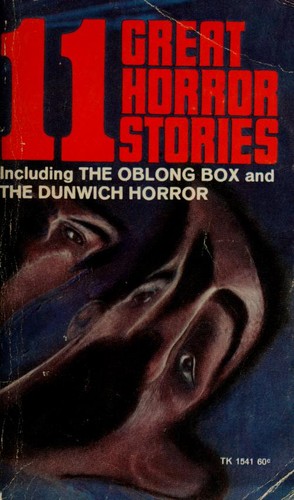

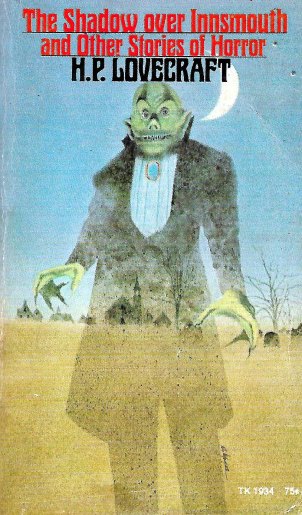
 Scholastic continued to publish magazines, even as they continued to expand their book sales beyond book clubs and mail-order catalogues into book fairs at schools. One of their odder offerings was Weird Worlds, a pop-culture/comic magazine edited by R. L. Stine (as Bob and Jane Stine).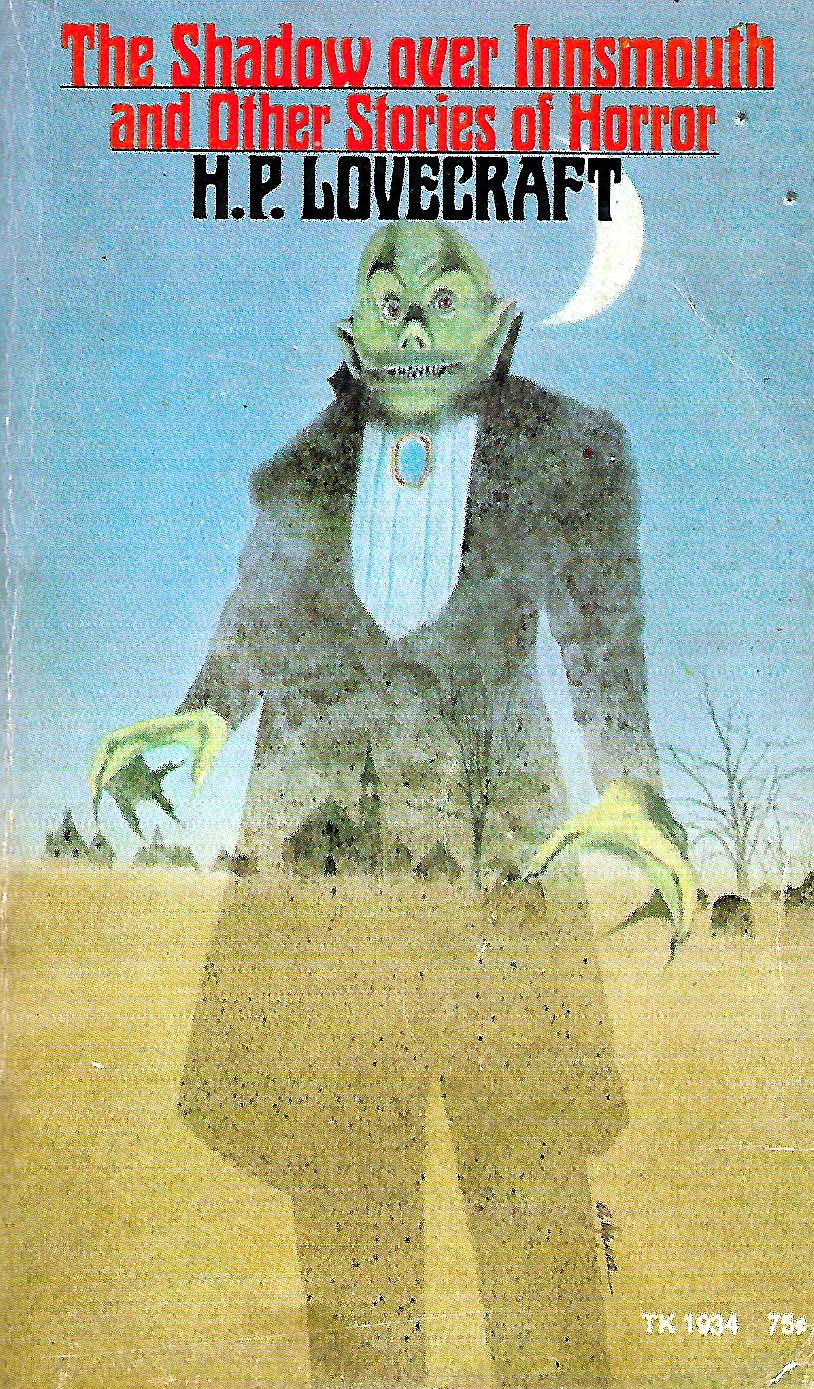





 Deep Cuts in a Lovecraftian Vein