Posts

“The Dunwich Horror” (1945) by Silvia Richards & H. P. Lovecraft

Clown Warning

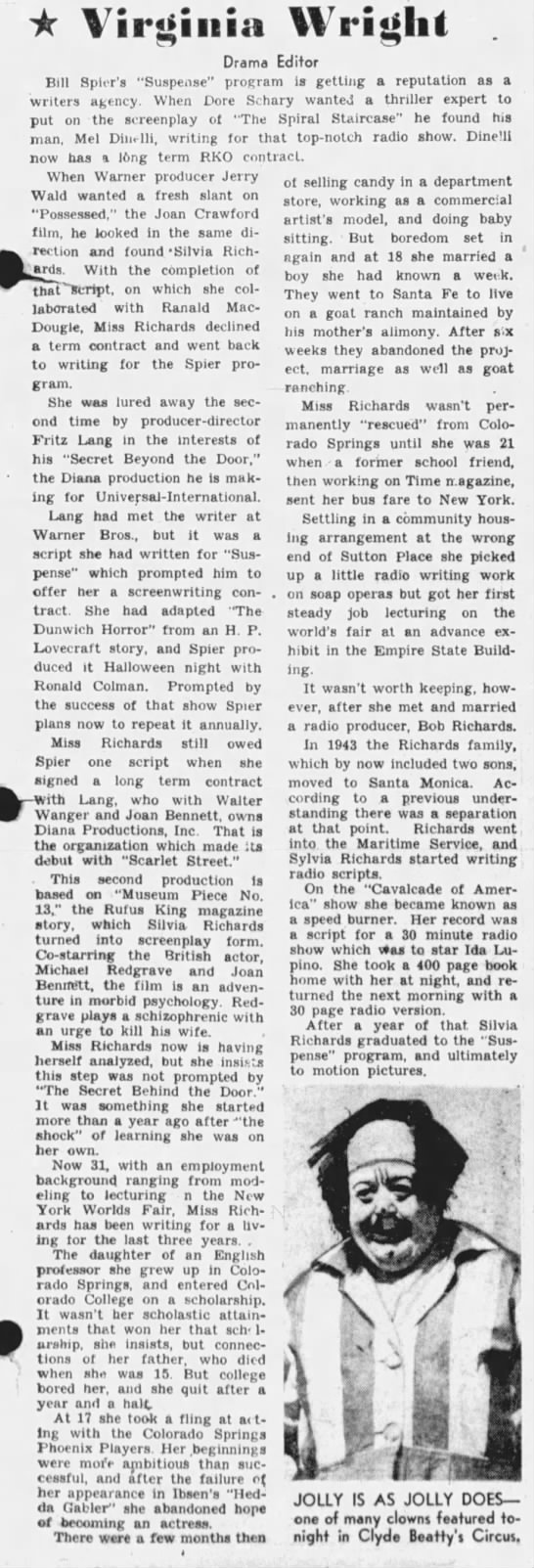
The newspaper clipping below includes a terrifying picture of Jolly the clown. Reader discretion advised.


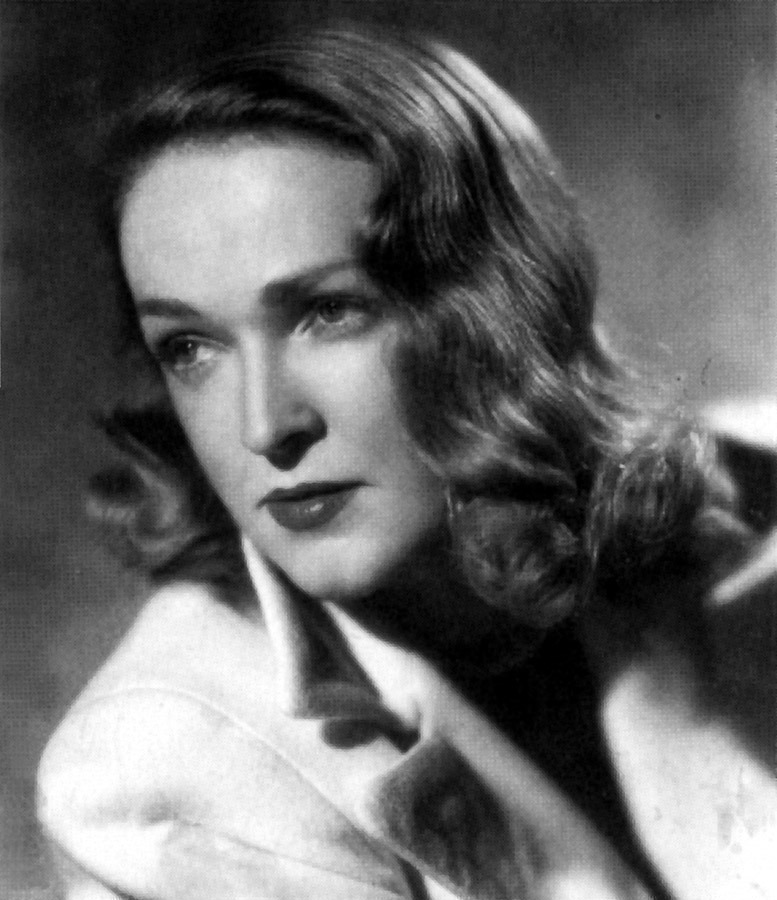
Silvia Richards

“The Dunwich Horror” by H. P. Lovecraft was first published in Weird Tales (Apr 1929). It was not republished until a decade later, when Arkham House brought out the first collection of Lovecraft’s fiction, The Outsider and Others (1939). Despite wartime paper shortages, the story was reprinted in the omnibus Great Tales of Terror and the Supernatural (1944). The following year, “The Dunwich Horror” lent its name to a paperback edition The Dunwich Horror (1945, Bath House), an armed services edition The Dunwich Horror and Other Weird Stories (1945). On Hallowe’en night (although many newspapers list it as playing on 1 November), a radio adaptation of “The Dunwich Horror,” written by Silvia Richards, was performed by Ronald Colman.

The show was called Suspense and began broadcasting in 1940, lasting until 1962. It did not originally feature stories involving science fiction or the supernatural, but increasingly featured more and more such adaptations during its run.

Silvia Richards’ screenplay makes many necessary adaptations for a radio drama. It begins like Orson Welles’ infamous 1938 broadcast of H. G. Wells’ The War of the Worlds, as a mock news-broadcast, but the asides for vividly audio-acted scenes and music make it much more of a dramatization. Dr. Henry Armitage narrates the entire story, as though reporting in live from Dunwich (here pronounced correctled as Dunnich). Richards retains all the essential plot points of Lovecraft’s story and several key passages, although much of his language is lost in abridgement and change in presentation. Notably, she retains most if not all of the audio cues—animal noises and suchlike—which the story contains, which translate well into the new medium.

As a production, the radioplay is interesting for the effort to reproduce the accents, the sounds of whipporwills, the pronounciation of the odd names. As a screenplay, there’s a rather admirable skill in boiling Lovecraft’s narrative (all ~17,500 words of it) down to something that could play in less than twenty-four minutes (a half-hour timeslot has to leave room for commercials); her abridgement was probably about 6,000 words (24 pages) total. An interesting addition was the source for an “alternate formula”: Falconer’s Mystical Formulae of the Middle Ages. Whether Silvia Richards was aware of it or not, this would be one of, if not the, first Mythos tome invented by a woman author.

Lovecraft’s friends, Clifford M. & Muriel E. Eddy, heard the broadcast and commented on it:

Hearing Lovecraft’s ‘Dunwich Horror‘ dramatized on the radion program….”Suspense”……….with the movie star..Ronald Colman….as the narrator…..gave your friends, the Clifford Eddys of Pearl street, a real thrill. I hope you, too, heard it…though I cannot say I cared much for the “Orson Welles” type of presentation…..trying to put the idea across that the thing was really happening right then, was silly. It made a burlesque out of that which I had considered a truly fine horror yarn. Lovecraft himself read that yarn aloud to us…..when it was still in manuscript form…and the way he read it made chills REALLY creep up and down our spines. It was a Hallowe’en yarn….but I think most listeners failed to get the real significance.
—Muriel K. Eddy to Winfield Townley Scott, 2 Nov 1945, MSS. Brown Digital Repository

Silvia Richards continued to work in Hollywood as a script writer for radio, film, and television; the article above from the Los Angeles Daily News for 1 Apr 1947 is the most I’ve found about her life in her own words. A former Communist, she was later called to testify before the House Committee on Un-American Activities, and her collaboration (in part to protect her two young sons) included testifying against her ex-husband Robert L. Richards. She is not known to have done any further adaptations of Lovecraftian material, but her radioplay stands as an early, fairly faithful adaptation of Lovecraft’s material to a new medium.

You can listen to Silvia Richards’ 1945 adaptation of “The Dunwich Horror” for Suspense for free online here.


Bobby Derie is the author of Weird Talers: Essays on Robert E. Howard and Others and Sex and the Cthulhu Mythos.

Deep Cuts in a Lovecraftian Vein uses Amazon Associate links. As an Amazon Associate I earn from qualifying purchases.
Her Letters To Lovecraft: Sarah Susan Phillips Lovecraft

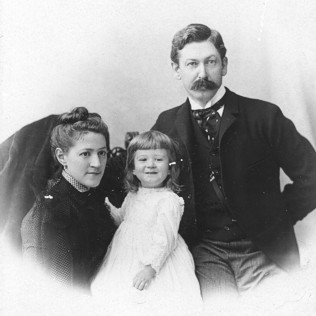
My first memories are of the summer of 1892—just before my second birthday. We were then vacationing in Dudley, Mass., & I recall the house with its frightful attic water-tank & my rocking-horses at the head of the stairs. I recall also the plank walks laid to facilitate walking in rainy weather—& a wooded ravine, & a boy with a small rifle who let me pull the trigger while my mother held me. At that period my father was alive & in business in Boston, so that our residences were around the Boston suburbs—Dorchester & Auburndale. In the later place we stayed with my mother’s friend, the rather famous poetess Louise Imogen Guiney, pending the construction of a house of our own. That house was never built—for my father was fatally stricken in April 1893, & my mother & I moved back to the old maternal Providence home where I was born.
—H. P. Lovecraft to J. Vernon Shea, 4 Feb 1934, Letters to J. Vernon Shea 219 

Sarah Susan Phillips was born 17 October 1857, the second child and second daughter of Whipple Van Buren Phillips and Rhoby Alzada (Place) Phillips. As with her older sister Lillian, Susie was educated at the Wheaton Seminary in Norton, MA. Unlike her older sister, Susie never seems to have been engaged in any kind of employment outside the home. She was likely active in Providence society, like her sister Annie, and aside from Louise Imogen Guiney also claimed some familiarity with Charlotte Perkins Gilman. On 12 June 1889 at 31 years old, Susie married Winfield Scott Lovecraft, a commercial traveller for the Gorham Silver Company of Providence, and left her parents home for Massachusetts. A little over a year later, she returned to the family home in Providence to give birth to her sole child, Howard Phillips Lovecraft, on 20 August 1890.

We know very little about Susie’s early life and marriage. There is no information on how she came to meet her husband, or any details of their courtship. It can be assumed, because of W. S. Lovecraft’s work he must have traveled extensively; and it would not be surprising if she grew homesick, especially when she found herself pregnant. Still, there was no reason to think that the marriage was necessarily unhappy. W. S. Lovecraft had purchased a home lot with the idea of building them a home, they had a son…and the young child was a prodigy, speaking and even reading at a precious age. As for her other interests, Lovecraft would write:

My mother was, in all probability, the only person who thoroughly understood me, with the possible exception of Alfred Galpin. She was a person of unusual charm & force of character, accomplished in literature & the fine arts; a French scholar, musician, & painter in oils. I shall not again be likely to meet with a mind so thoroughly admirable.
—H. P. Lovecraft to Elizabeth Toldridge, 1 Jun 1921, Letters to Elizabeth Toldridge 364

In 1893, W. S. Lovecraft was placed under the legal guardianship of a lawyer and on 25 April committed to Butler Hospital in Providence; an anecdote recounts that he had an hallucination on a business trip to Chicago, and had to be put under restraint and returned to Providence. His medical records indicate further hallucinations, and the records show that Winfield Scott Lovecraft suffered from “general pareisis”—late-stage syphilis. Additional rumors and anecdotes suggest that this was contracted before or outside the marriage from sexual encounters with other women, perhaps sex workers (see “The Shadow of Syphilis” in Sex and the Cthulhu Mythos).

This brings up a difficult point in any discussion of Susie Lovecraft: we have basically nothing about herself from her own hand. There are several references to his mother in H. P. Lovecraft’s letters, but relatively few of his letters from before her death survive. What we have left are passing references in other memoirs of her son’s friends and acquaintences who met her only briefly, a letter from Susie’s neighbor Clara Hess, and a good bit of speculation and gossip, passed on from second- and third-hand. So when, for example, we read that:

H. P.  used to speak of his mother as a “touch-me-not” and oncebut once onlyhe confessed to me that his mother’s attitude toward him was “devastating.” […] his mother, probably having been sex-starved against her will, lavished both her love and her hate on her only child….
Sonia H. Davis, “Memories of Lovecraft I” (1969): Ave Atque Vale 152-153

It has to be remembered that Sonia never met Susie, that she’s repeating things she claims to have heard from H. P. Lovecraft over thirty years before, and that she was publishing this after twenty years of Lovecraft scholarship and criticism had already made something of an ogre of Susie Lovecraft, blaming her overprotectedness and coddling for some of her son’s traits. So…how much of that is accurate, and how much of that reflects a tradition?

We don’t know for sure.

What we do know is that after her husband’s medical confinement, Susie and her son moved back into the family home in Providence. The lot and the dream of a house of her own was gone, and she presumably focused on raising her young son and caring for her parents. In 1896, Rhoby Phillips would die; in 1898, W. S. Lovecraft would pass away, leaving a small estate to his widow and son. In 1904, Whipple V. Phillips would die, and the state of the family finances made it unfeasible to keep the house. Susie and her son moved into smaller quarters on the same street…and there they stayed, through all the trials and tribulations of H. P. Lovecraft’s schooling and afterwards.

The period of 1904-1914 is one of the most poorly attested in Lovecraft’s life. We know he suffered various illnesses, that he failed to graduate highschool, that he attempted a correspondence course, read voluminously, kept odd hours, etc. How much of this was due to his mother’s permissiveness or particular parenting is unclear. What she occupied herself with is also unclear. One incident that stands out:

My mother was, in the year 1906, thrown to the floor of a car which started prematurely; & sustain’d a nervous shock whose effects never wholly left her. The company made a moderate settlement out of court, after a litigation had been prepar’d against them.
—H. P. Lovecraft to Maurice W. Moe, 13 Dec 1928, Letters to Maurice W. Moe 191

This may or may not be the earlier “breakdown” that Lovecraft mentions in another letter (Letters to Rheinhert Kleiner & Others 134). Money issues were no doubt a major issue on Susie’s mind; as a young man Lovecraft seems to have been both rather spendthrift, had failed to obtain an education, and showed no inclination of getting a job. Neither is there any record of Susie Lovecraft obtaining any sort of employment; perhaps a reflection of her clinging to her family’s social status in Providence. So they were living solely off the slowly-diminishing funds at hand, and that included a sharp downturn in 1911 when her brother lost a chunk of the inheritance money, presumably on a failed business venture or bad investment (LMM 295).

It was presumably during this period that Susie might have participated in suffragette meetings:

Our acquaintence with the Lovecraft family stemmed through my husband’s mother’s having once met Sarah Lovecraft at a women’s suffrage meetings, although I never learned whether or not Howard’s mother really believed in equal rights for women. Mrs. Lovecraft had confided in my mother-in-law that her son was a truly gifted writer, and someday she knew he would be famous. She raved about him.
—Muriel E. Eddy, “The Gentleman from Angell Street” (1961)

In 1914, H. P. Lovecraft became involved with amateur journalism, and amateurs began to show up at their rooms, and met Mrs. Lovecraft. Some of these individuals, Susie apparently did not approve of, others she warmed to. We get only bits and pieces, never a complete picture; the majority of visitors were more interested in Howard than they were in Susie.

I was greeted at the door of 598 Angell Street by his mother, who was a woman just a little below medium height, with graying hair, and eyes which seemed to be the chief point of resemblance between herself and her son. She was very cordial and vivacious, and in another moment had ushered me into Lovecraft’s room.
—Rheinhart Kleiner, “A Memoir of Lovecraft” (1949): Ave Atque Vale 99

In 1919, Susie suffered a nervous breakdown of some sort, and went to stay with her sister Lillian. While we do not have any confirmed accounts from this period, her neighbor Clara Hess wrote an account in a letter, later published as “Lovecraft’s Sensitivity,” which has become the source of many rumors and allegations, part of which reads:

Later when she moved into the little downstairs flat in the house on Angell Street around the corner from Butler Avenue I met her often on the Butler Avenue cars, and one day after many urgent invitations I went in to call upon her. She was considered then to be getting rather odd. My call was pleasant enough but he house had a strange and shutup air and the atmosphere seemed weird and Mrs. Lovecraft talked continuously of her unfortunate son who was so hideous that he hid from everyone and did not like to walk upon the streets where people could gaze at him. […]

I remember that Mrs. Lovecraft spoke to me about weird and fantastic creatures that rushed out from behind buildings and from corners at dark, and that she shivered and looked about apprehensively as she told the story.

The last time I saw Mrs. Lovecraft we were both going ‘down street’ on the Butler Avenue car. She was excited and apparently did not know where she was. She attracted the attention of everyone. I was greatly embarrassed, as I was the object of all her attention….
—Clara Hess, Letter to Winfield Townley Scott (1948) in Ave Atque Vale 165-167

Scott, who later gained access to Susie’s medical records, would write:

A psychiatrist’s record at Butler Hospital expresses this another way: it says she was “a woman of narrow interests who received, with a traumatic psychosis, an awareness of approaching bankruptcy.” She entered the hospital March 13, 1919, and at that time Dr. F. J. Farnell found disorder had been evidenced for fifteen years; that in all, abnormality had existed at least twenty-six years. There is only a mention of her husband’s death in the hospital record of her case, but the reader will note that twenty-six years before was the date of the establishment of a legal guardianship for Winfield Lovecraft, the year Howard (“Have been in execrable health—nervous trouble—since the age of two or three”) was three years old.

She suffered periods of mental and physical exhaustion. She wept frequently under emotional strains. In common  lingo, she was a woman who had gone to pieces.
—Winfield Townley Scott,  “His Own Most Fantastic Creation: Howard Phillips Lovecraft” (1944) in Lovecraft Remembered 15-16

Whether or not Scott’s presentation of Susie is accurate or not, Scott’s appraisal of Susie is almost unrelentingly negative. For a woman who had suffered considerable personal losses, possibly been exposed to sexually transmitted disease and the resulting social stigma, and lived under mounting financial strain, in a social situation which made many solutions possibly untenable—even if she had been willing and able to work (a large if, considering her apparent mental health issues), it is not clear what work would have been available for a widow with no prior experience in the 1910s. Susie appears to have been all-too-keenly aware of financial disaster.

This might have been the first time in Lovecraft’s 28 years when he was not in regular daily contact with his mother, and while they had exchanged notes, birthday cards and the like before this—Lovecraft apparently had a habit of writing her poems for her birthday, some of which survive—this is the true start of their correspondence:

My mother, feeling no better here, has gone on a visit to my elder aunt for purposes of complete rest; leaving my younger aunt as autocrat of this dwelling. My aunt does splendidly—but you above all others can imagine the effect of maternal illness & absence. I cannot eat, not can I stay up long at a time. Pen-writing or typewriting nearly drives me insane. […] I am assured, however, that my mother’s state is not dangerous; that the apparent stomach trouble is neurotic & not organic. She writes optimistic letters each day, & I try to make my replies equally optimistic; though I do not find it possible to “cheer up”, eat, & go out, as she encourages me to do. Such infirmity & absence on her part is so unprecedented, that it cannot but depress me, despite the brightest bulletins of her physician—whom, by the way, she writes that she is now well enough to dismiss.
—H. P. Lovecraft to Rheinhart Kleiner, 18 Jan 1919, LRKO 129

By March, her condition had gotten to the point that Susie was admitted to Butler Hospital, the same mental health facility where her husband had died. Lovecraft probably never visited the hospital building itself—at least there is no record of it—but would visit her on the wooded grounds, and continued to write her letters. Two of his letters to Susie survive from this period, and give an idea of what their correspondence must have been like:

My dearest Mother:

I was greatly pleased to received your letter, and thank you in addition for the small primroses,—which still adorn this apartment—the Weekly Review, the banana, and the most captivating cat picture, which I shall give a permanent place on the wall.

The Amateur Journalists’ Conference of Tuesday, February 22, was a most distinguished success in every way […]
—H. P. Lovecraft to Sarah Susan Lovecraft, 24 Feb 1921, Letters to Family & Family Friends 1.25

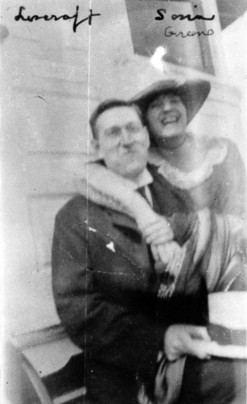
With Susie absent from home, Howard began to make day-trips to Boston to visit with his amateur friends. Much as he would later describe his travels in detail to his aunts, Howard gives a blow-by-blow account of the Boston conference—although he left out meeting Sonia H. Greene.

My dearest Mother:

I was glad to receive your letter of Sunday, and must thank you exceedingly for the Reviews, apples, and beautiful picture of the Taj Mahal, which reminds one of the fabulous Oriental edifices in Lord Dunsany’s tales. Just now I am taking a breathing spell before plunging into a fresh sea of Bush work—he has snet a new rush order which ought to bring in a considerable sum […]
—H. P. Lovecraft to Sarah Susan Lovecraft, 17 Mar 1921, LFF 1.30-31

One has to wonder if the reference to Lovecraft’s revision work for David Van Bush were a way he had of trying to alleviate, if only a little, her economic stress. Very unusually, both of these letters are closely typed rather than handwritten; perhaps this made it easier for his mother to read than his handwriting.

While his letters to his mother are bright and chipper, Howard’s references to his mother in letters from 1919-1921 show his genuine concern at her health and prolonged absence from the home. At the hospital, Susie underwent surgery for the removal of her gallbladder. She succumbed to an infection a week later, and died on 24 May 1921. Her son had not visited her during this final illness, but it was not known that it would be fatal until too late.

Despite my mother’s nervous illness & presence at a sanitarium for two years, the fatal malady was entirely different & unconnected—a digestive trouble of sudden appearance which necessitated an operation. No grave result was apprehended till the very day before death, but it then became evident that only a strong constitution could cause survival. Never strong or vigorous, my mother was unable to recover. The result is the cause of wide & profound sorrow, although to my mother it was only a relief from nervous suffering. For two years she had wished for little else—just as I myself wish for oblivion. Like me, she was an agnostic with no belief in immortality, & wished for death all the more because it meant peace & not an eternity of boresome consciousness. For my part, I do not think I shall wait for a natural death; since there is no longer any particular reason why I should exist. During my mother’s lifetime I was aware that voluntary euthanasia on my part owould cause her distress, but it is now possible for me to regulate the term of my existence with the assurance that my end would cause no more than a passing annoyance—of course my aunts are infinitely considerate & solicitous, but the death of a nephew is seldom a momentous event.
—H. P. Lovecraft to Elizabeth Toldridge, 1 Jun 1921, Letters to Elizabeth Toldridge 364

Susie’s son did not take his own life—and managed to shake himself out of the grief of his bereavement. Howard involved himself deeper into amateur affairs, and in his growing correspondence with Sonia H. Greene. For the rest of his life, H. P. Lovecraft would cherish the memory of his mother, and wrote with all sincerity that:

It takes no effort at all—especially when I am out in certain woods and fields which have not changed a bit since my boyhood—for me to imagine that all the years since 1902 or 1903 are a dream…… that I am still 12 years old, and that when I go home it will be through the quieter, more village-like streets of those days—with horses and wagons, and little varicoloured street cars with open platforms, and with my old home at 454 Angell St. still waiting at the end of the vista—with my mother, grandfather, black cat, and other departed companions alive and unchanged.
—H. P. Lovecraft to R. H. Barlow, 9 Aug 1933, O Fortunate Floridian! 73

Lovecraft’s oldest surviving note to his mother—a little poem asking her to let him sleep in instead of dragging him to his aunt’s for Thanksgiving dinner—was published as the first “letter” in the Selected Letters published by Arkham House. This note and two surviving letters from Howard to his mother are published in Letters to Family & Family Friends volume 1; they have also been digitized and can be read online at the Brown University Library website.

For more information on Sarah Susan Phillips and Winfield Scott Lovecraft, see Kenneth W. Faig Jr.’s excellent essay “The Parents of Howard Phillips Lovecraft” in An Epicure in the Terrible.


Bobby Derie is the author of Weird Talers: Essays on Robert E. Howard and Others and Sex and the Cthulhu Mythos.

Deep Cuts in a Lovecraftian Vein uses Amazon Associate links. As an Amazon Associate I earn from qualifying purchases.
“The Book of Fhtagn” (2021) by Jamie Lackey

I’d thought that changing the ghost to a scion of the Elder Gods made the play more relatable, and that changing Rosencrantz and Guildenstern into mad cultists had added a bit of reality. But maybe that was just me.
—Jamie Lackey, “The Book of Fhtagn”

It’s not just her. Lovecraft may not have literally rewritten Shakespeare to dd in elements of his own Mythos, but he did have an interpretation of the Bard’s most famous depiction of madness which dovetails nicely with Lackey’s philosophical approach to Innsmouth in “The Book of Fhtagn”:

Continuing in the dramatick line, but ascending the scale several degrees, I find “Hamlet” a most absorbing character, even as you do. It is hard for me to give an original estimate or opinion, since other commentators’ opinions are so abundant; but I find in Hamlet a rare, delicate, & nearly poetical mind, filled with the highest ideals and pervaded by the delusion (common to all gentle & retired characters unless their temperament be scientific & predominantly rational—which is seldom the case with poets) that all humanity approximates such a standard as he conceives. All at once, however, man’s inherent baseness becomes apparent to him under the most soul-trying circumstances; exhibiting itself not in the remote world, but in the person of his mother & his uncle, in such a manner as to convince him most suddenly & most vitally that there is no good in humanity. Well may he question life, when the perfidiousness of those whom he has reason to believe the best of mortals, is so cruelly obtruded on his notice. Having had his theories of life founded on mediaeval and pragmatical conceptions, he now loses that subtle something which impels persons to go on in the ordinary currents; specifically, he loses the conviction that the usual motives & pursuits of life are more than empty illusions or trifles. Now this is not “madness“—I am sick of hearing fools & superficial criticks prate about “Hamlet’s madness”. It is really a distressing glimpse of absolute truth. But in effect, it approximates mental derangement. Reason is unimpaired, but Hamlet no longer sees any occasion for its use. He perceives the objects & events about him, & their relation to each other & to himself, as clearly as before; but his new estimate of their importance, and his lack of any aim or desire to pursue an ordinary course amongst them, impart to his point of view such a contemptuous, ironical singularity that he may well be thought a madman by mistake. He sums up this position himself when he says:

“How weary, stale, flat, & unprofitable
Seem to me all the uses of this world
Fie on’t! ah, Fie! ’tis an unweeded garden
That grows to seed. Things rank & gross in Nature
Possess it merely.”

—H. P. Lovecraft to Alfred Galpin, 14 Nov 1918, Letters to Alfred Galpin & Others 219-220
Quoting Shakespeare’s Hamlet, Act I, Scene 2.

There is a kind of depth in the philosophy of the Lovecraft Mythos which is rarely explored in fiction. Scott R. Jones went into it in When The Stars Are Right: Toward An Authentic R’lyehian Spiritualityand Randolph Partain in Lessons From An Indifferent Cosmos: How Cthulhu Can Help You Be A Better Human. Few look beyond the self-blinded earthgazers who see Cthulhu as an evil that must be vanquished, or Innsmouth as a place of horror that has to be escaped rather than a place of dark beauty to be explored and appreciated.

Which is exactly the choice that Jamie Lackey presents in “The Book of Fhtagn.”

The closest works of comparison are probably Innsmouth (2019) by Megan James and “Down into Silence” (2018) by Storm Constantine. With “The Book of Fhtagn,” they present an Innsmouth not as it was, but as it is or might be. A contemporary Innsmouth where the Mythos coexists with smartphones and pumpkin spice, high school plays and global warming. Where James and Constantine play up the domestic and tourist angles, however, Lackey leans into the darker aspect of things: what if it’s not just about being born in Innsmouth, or visiting it? What if there’s a choice involved in becoming a full member of the community? Personal sacrifices to be made? Which begs deep questions about Lovecraft’s philosophy, of going through the motions of daily life when we are all just temporary, meaningless things on a cosmic scale of time.

And, for a teenager in high school, what the heck to do with the rest of their life.

I had gone into the ocean, and a part of me would now live there forever.
—Jamie Lackey, “The Book of Fhtagn”

Like Lovecraft’s Hamlet, Lackey’s Kimberely gets her glimpse of absolute truth—and finds in that contemplation of how small and pointless the mundanity of life is, a certain freedom of detachment from everyday things—and in time she finds the courage to embrace her new purpose.

Jamie Lackey’s “The Book of Fhtagn” is published in the Fall 2021 issue of Starward Shadows Quarterly.


Bobby Derie is the author of Weird Talers: Essays on Robert E. Howard and Others and Sex and the Cthulhu Mythos.

Deep Cuts in a Lovecraftian Vein uses Amazon Associate links. As an Amazon Associate I earn from qualifying purchases.
Editor Spotlight: Interview with Erica Ciko Campbell and Desmond Rhae Harris of Starward Shadows Quarterly

We’re interested in exploring the wicked, strange places that walk the line between reality and nightmare—the alien, the absurd, and above all else, the weird.—Starward Shadows Quarterly Submissions page

In order for more diverse voices in cosmic horror, weird fiction, and Lovecraftian fiction to be published, there needs to be venues to publish those new voices. Starward Shadows Quarterly published their first issue in Fall 2021. Editor-in-Chief Erica Ciko Campbell and Associate Editor/Designer & Illustrator Desmond Rhae Harris have brought their own aesthetic and appreciation for weird fiction, sword & sorcery, fantasy, & science fiction to their endeavor, and have been kind enough to answer a few questions.

How did you get into H. P. Lovecraft and cosmic horror?

Erica Ciko Campbell: I actually started writing what I would consider very “soft” cosmic horror all the way back when I was 12 with other kids on roleplay forums online. I didn’t even realize it fell into the genre at the time, but I gravitated towards themes of the insignificance of mankind in a vast and chaotic multiverse, and my characters were almost always aliens. Since I felt like an outsider all my life, it may sound cliché, but I was really just writing about what I felt like inside—but on a cosmic scale.

As far as my introduction the immortal master of cosmic horror himself: In 10th grade, I was “loaned” a copy of The Call of Cthulhu and Other Weird Stories, a collection of many of Lovecraft’s greatest stories such as “The Whisperer in Darkness” and “The Haunter of the Dark.” From the moment I opened it for the very first time, I was awestruck. For the first time in my life, I’d encountered someone who wrote stuff that touched on the same themes I was interested in. I’m pretty sure I read the entire thing in a couple of afternoons, in those little storage cubbies beneath the desks so the teachers wouldn’t catch me during class. From then on, I always said that Lovecraft was my favorite author of all time and space.

Desmond Rhae Harris: I actually first heard of H. P. Lovecraft when I was a teenager and saw him referenced in a “Necronomicon” that somehow made its way into the occult section in a bookstore. I cracked it open and the descriptions of Nyarlathotep sparked a strong interest in the real stories from Lovecraft himself.

…And, since my earliest memories, I stared up into the black nighttime shadows at the treeline and lost myself in the sight of the starry sky or the moon anytime I got the chance. The pale taste of space that you can get from Earth filled my guts with a deep hollowness at the uncertainty of what was out there and where everything I knew stood in comparison to the rest of the universe. It terrified me at times, so the later discovery of cosmic horror as experienced by others was extremely cathartic and held a very strong draw.

Do you feel that your gender and sexuality have shaped your understanding of Lovecraft and your approach to Lovecraftian fiction?

DRH: I do feel that way: my confusion about my sexuality and identity when I was younger made me notice how narrow of a range of demographics appeared in works from authors like Lovecraft. This struggle to find an ideal character to identify with led me to seek out more representation in literature later on.

There are so many people at all age ranges who might be more able to accept themselves for who they are if they can see demonstrations of people like them finding their place in the world. So, while I still read and enjoy H. P. Lovecraft’s work, I am acutely aware of which demographics he pays attention to (or doesn’t) and how he portrays them. And, I look for opportunities to be more inclusive while still preserving the essence of cosmic horror that Lovecraft gave us—after all, the broader the lens through which we view cosmic horror, the more complex and astonishing it can be.

ECC: When I write, I usually don’t put major emphasis on gender, orientation, etc. unless it’s a key point in the story. So I end up with a lot of Lovecraftian stories/cosmic horror with LGBTQ+ and BIPOC characters, but I wouldn’t say I make any special effort to do this: I just enjoy writing these types of characters and feel that I (and also, inadvertently, my audience) can identify with them more.

I can’t help but feel a bit excited to live in a time when every single character no longer reads as the exact same thirty-something white guy. Even as a kid I was kind of critical of this element of Lovecraft’s stories and noticed the lack of diversity: and this was before it was a hot button issue on the internet. To be blunt, I find it boring. So I would say that as an editor, I’m especially excited to see Lovecraftian submissions from female/LGBTQ/BIPOC authors, featuring characters that fall into these demographics as well (If you want a great example, you should check out The Book of Fthagn by Jamie Lackey in our first issue.) That’s not to say that I’ll pass over a story just because the author doesn’t fall into one of these demographics, of course.

What made you want to create your own ezine for cosmic horror?

ECC: I’ve always been a “lone wolf” and liked doing my own thing. If I don’t like the way other people do things, I start my own project instead. There aren’t many magazines out there publishing the same type of stuff that we intend to: New Weird, S&S, and Cyberpunk don’t often cross paths in the same publication, at least as far as I’ve seen. I wanted to create a magazine that contains the exact mix of stories that I’ve always wanted to read, because there weren’t any.

Also, I spent so much time submitting stories to magazines over the past few years that I started to wonder what it felt like to run one. I think it’s really easy for authors to put a lot of pressure on editors and to judge them (I know I’m guilty of it myself)—so I figured the best way to get a true understanding of what goes on “on the inside” was to start my own magazine and see with my own eyes.

I worked for two other magazines before starting SSQ, but I’ve never been good at taking instructions from others. I quit Novel Noctule because of this. I still read for Cosmic Roots and Eldritch Shores sometimes, but I’m not involved in the internal workings of the editorial process at all, so it’s a totally different experience.

DRH: The most concise way that I can put it is: inspiration. Whenever I look at other ezines, I enjoy them for what they are but they also spark all kinds of ideas. What I could do differently, what I could explore next, what doors I could open, what unseen groups I could highlight. In the end, I can only tolerate so much inspiration before I have to make something out of it.

What do you want to achieve with Starward Shadows Quarterly?

ECC: This one is actually pretty simple: I want to create a place where readers can go for a while where they don’t really have to think about the problems of Earth, and where they can feel free to explore hidden worlds and fantastical ideas they wouldn’t have otherwise thought of. I guess you could call it a sanctuary for all true lovers of darkness, where they don’t need to feel choked by the chains of society, and both dreams and delusions have new meaning. That’s not to say that we’ll be avoiding Earth-based stories entirely. With ones like Angel Teeth, you can’t help but stare the ugliness of our human reality dead in the eyes and smile at it.

DRH: I want people of all types to feel welcomed by every issue that we publish. I want to seek out diamonds in the rough that might otherwise have gone unpublished because of either a lack of credentials or a “touchy” demographic, because I know how it feels to be glossed over.

Aside from Lovecraft, other thematic inspirations cited for Starward Shadows Quarterly include J. R. R. Tolkien and Robert E. Howard. How do you handle the historical racism and colonialist tropes inherent in fantasy and sword & sorcery?

DRH: This is a tricky topic. The best I can explain it is that we always look for ways to bring fresh, modern insight on those topics, and we deliberately seek out authors who provide that. If a story doesn’t have a new, enlightened viewpoint that shatters racism and colonialism and instead falls back on addressing those grief-ridden topics in the same, tired, old ways, then we simply won’t publish the story—no matter how good it is otherwise. It isn’t enough for something to be “not that problematic.” It needs to actively counteract the social impact that previous authors have had in these difficult areas in order for us to accept it.

ECC: Like Desmond said, this is a tricky question. Personally, I believe it’s possible to write stories in both these genres that avoid these tropes entirely. In these genres there’s always going to be “the oppressed,” and then you’re going to have “the oppressors”, or you wouldn’t have much of a story: But in my opinion, the old archetypes don’t have to be carved in stone. Stories can be written from different perspectives that were unheard of back in the old days. The background characters of the past can become the heroes (or, if I’m writing it, the anti-heroes) of the future. Even if you tear down the metaphorical statues built by the founders that are tainted with archaic viewpoints and toxic worldviews, you’re left with some pretty good building blocks. It’s up to us to decide what to do with them.

Do you feel writers like Lovecraft, Tolkien, & Howard still resonate with contemporary audiences?

ECC: Oh yes, definitely. In certain corners of the internet, it seems like there’s a subset of people that latch onto one of these authors and worship them almost religiously. Everything they write seems to be an emulation. I think that thanks to mass-printed paperbacks and the unprecedented ability of the internet to spread weird fiction far and wide, these guys have more fans than ever. And many of them don’t even know or care about what the authors were like as people, and get swept away by “fandoms.”

For example, there are tons of people who aren’t aware of Lovecraft’s problematic outlook/history at all. Kind of hard to miss, if you paid attention to the stories… But perhaps they haven’t read them all. Either that, or they choose to ignore them because A) they don’t care or B) they feel the art is the only thing that matters.

On a purely thematic basis, all controversy aside: fads may come and go in the literary world, and the favor of society may shift, but the true masters will reign forever. And even if their names were erased from history, they inspired so many countless authors that they’re burned into the literary world for as long as it exists.

DRH: Absolutely! Classics are classics, after all. And, while our values as a society might have shifted over the course of time, I see no reason to throw the baby out with the bathwater, so to speak: I feel that we should always look for areas where we could do better, but always maintain respect for those who paved the way for us and continue to harvest inspiration from their skills so that we can give new values a timeless voice.

In fact, it’s imperative that we bridge the gap between “old and new” speculative fiction by blending modern insights with creativity and intricacy that has already withstood the test of time. By doing so, we might bridge the gap between different readers as well, and help them understand each other better.

Do you think it is important for weird fiction and fantasy to escape the shadow of Lovecraft & Tolkien? Do you think that is even possible?

DRH: One could argue that, by standing on the shoulders of giants, they might leap to a new mountain entirely—but they’re still highly unlikely to forget the giants that helped them get there. As I’m sure you gathered from my previous responses, I’m not personally concerned with escaping the shadows of previous masters or reinventing the wheel: I just want each new take on speculative fiction to bring in something fresh enough to require a good deal of active, analytical thought to trace it back to Lovecraft and Tolkien—because that means that it took a lot of active thought and creativity for the author to write the piece in the first place.

By the same coin, I think pieces that directly reference previous icons in a tongue-in-cheek manner have their own merits by playing off of something familiar and almost “breaking the fourth wall” in a sense. It’s not quite satire, but it’s not mere fanfiction either. There’s a delicate balance to be struck there, and a few people do it just right.

Another inspiration you cite is Tamsyn Muir. Are there other women/LGBTQ+ authors whose weird work you find inspirational? Any favorites?

ECC: When I was a child, I absolutely adored A Wrinkle in Time by Madeleine L’Engle, along with all its sequels. I think these were actually my first real foray into true, far-out science fiction. I had a little Evangelion notebook where I wrote down all the poems from one of the sequel books… The one about the mitochondria. I can’t even remember the name anymore. [A Wind in the Door (1973)] Sadly, aside from Ursula K. Le Guin, no one else is really popping out in my mind. I’m not sure if this speaks to the lack of diversity in the genre, or my lack of adventurism as a reader!

DRH: I personally really like the work of C. S. Friedman, particularly Black Sun Rising.

Besides specific authors, are there any specific anthologies, ezines, magazines, or films that have inspired Starward Shadows Quarterly?

ECC: Films have actually been a massive inspiration for me over the years, arguably moreso than literature. Growing up, I was absolutely obsessed with A Clockwork Orange, Pink Floyd: The Wall, and Natural Born Killers, just to name a few. I was also a huge anime fan in my youth, and I can practically recite the entire Neon Genesis Evangelion series by heart at this point. On the Science Fiction end of things, Outlaw Star was also one of my greatest inspirations of all time and space.

Video games have been another massive inspiration for me over the years. While we were in the process of creating the magazine, I was (and still am) obsessively playing through the entire Dark Souls series. I’m awestruck with what a wonderful job the developers did at creating a bleak and sorrowful world that still somehow manages to inspire the slightest bit of hope in the end. One thing that absolutely captivates me about Dark Souls is what a great metaphor it is for depression and other mental illnesses. No matter how many times you lose and get beaten to a pulp, eventually you overcome it, and life (or undeath, in this case, I suppose) goes on.

As far as other magazines, I really admire the design and setup of both Vastarien and Cosmic Horror Monthly. I also worked for a New Weird magazine called Novel Noctule for a time, and admittedly, what I learned there inspired our “behind the scenes” processes a great deal.

DRH: You’ll never guess this, but Lord of the Rings… I think I speak for both of us when I say that we also take a huge amount of inspiration from music in genres such as dungeon synth and dark ambient. I also really enjoy the atmosphere in games like Morrowind and Oblivion, so that tends to creep in as well.

While Starward Shadows Quarterly wears its literary inspirations on its sleeve, who are the artistic inspirations?

DRH: Oh wow, well, I could go on for more hours than anyone wants about this, so I’ll just give you a list of highlights: Michael Whelan, Philippe Caza, Lady Frieda Harris, H. R. Giger, Zdzisław Beksiński, Austin Osman Spare, Vincent Van Gogh, Alphonse Mucha, Bruce Pennington, and Frank Frazetta.

ECC: I really like the art of Michael Whelan, the guy who did the covers for the Elric series, along with countless others. Zdzisław Beksiński also immediately came to mind. Once upon a time, a former member of one of the most legendary proto-black metal bands of all time told me that my own artwork reminded him of Austin Osman Spare, so I suppose he makes the list as well.

Your submissions guidelines specifically call for works by neurodivergent and disabled authors. Do you feel weird fiction in general does a poor job of representing such voices?

ECC: Actually, yes. I feel that too often, the neurodivergence ends up being the “horror” or the punchline of the story. The same goes for disability. I feel there are too many stories about neurodivergent/disabled people and not enough by them, if that makes sense—and it should come as no surprise that most of these aforementioned stories are written by neurotypical people who see a life of disability as the ultimate horror.

DRH: I do feel that speculative and weird fiction do tend to follow the troughs previously dug for them by cisgendered male authors. Obviously, that’s not to say that there aren’t plenty of authors within that demographic that fully deserve the pedestal that they’ve been given. But I’ve always felt a burning desire to raise equal pedestals for other demographics: Pedestals reserved for others who match previous and current authors in skill, not in demographic.

Just a side note: I’m afraid that, sometimes, the label of “weird” sometimes also causes a lot of the very authors we seek to slink back and hide a bit: not everyone is comfortable wearing an alternative or underrepresented label like a shroud. Not everyone wants to feel like a “freak who joined the circus” thanks to a lot of the stigma that still clings to the idea of being different. So, hopefully, I’m not creating a catch-22. However, I do feel that speculative/weird fiction as a whole tends to passively allow neurodivergent and disabled voices to go unheard, and I want to actively call those voices to a place where they’ll feel welcome, whether it be as authors or as readers.

Based on your submissions, do you feel there is a lot of diversity in the folks writing weird fiction these days?

ECC: Unfortunately—and it’s hard to tell from a single submissions period, but I’ll try my best—it still in some ways seems to be an “old boys club.” I can say with confidence that we received more submissions from cis guys than any other demographic. Now I want to stress there’s nothing wrong with this. We’ve published several of them, in fact, and will continue to welcome them with open arms along with everyone else. But even though we specifically called for disabled and neurodivergent authors, we didn’t get submissions from a ton of them.

One genre that’s especially lacking in diversity, I’ve noticed, is Sword and Sorcery. Finding a good Sword and Planet story by a female author honestly felt like fishing out a single pearl in a sea of marbles. We barely received any S&S/S&P from anyone but cis guys, which I hope in the future will change.

Another trend I noticed was that guys lean towards “harder” SF stuff and body horror, while women seemed more likely to send fantasy or psychological stuff. Of course, there were a few awesome ladies that sent hardcore body horror that made everything else in the inbox seem pale—but unfortunately that’s not exactly the type of thing we’re going for with the magazine, as cool as it is.

I must say, I feel that the published Weird Fiction sphere feels very “curated” after digging through our inbox. The subs were definitely not in line with what I see out there in the world published. I think editors are doing a careful job selecting work by underrepresented groups, and making sure not to gloss them over like they might have in the past.

DRH: …I wish I had a different answer to give you, but: not so much. There’s more diversity than there used to be, certainly, and that’s wonderful. However, I do still have to put in a deliberate effort to find authors from underrepresented demographics within the ocean of slush. (If you fall under a marginalized demographic, take this as an active call! I’d love to read what you have to say.)

From an editorial perspective, how do you handle issues of prejudice & discrimination in the submissions you receive?

DRH: At the risk of seeming blunt or harsh: If a submission contains enough content that I don’t even feel comfortable reading, let alone publishing, I simply auto-reject. I tend to ramble (in case anyone missed that) so I can’t afford the time to give personal feedback if something surpasses a certain threshold of “not at all what I’m looking for.” It’s too overwhelming.

But if a piece is creative and promising enough to maintain its “spark” despite any discriminatory/prejudiced language or themes, I’m happy to reach out to the author and discuss the matter with them. I’ll point out how it could be interpreted, ask if that’s how they meant for it to come off, and offer them the opportunity for an R&R. After all, if someone is open to the idea of learning and growing as a modern author, I’m thrilled to play a part in helping them to do that.

ECC: There were a few situations where we received a story where it genuinely seemed like the author didn’t realize what they were writing could be perceived as offensive. In these cases, if I felt they were well-intentioned but naïve, I gently explained why we couldn’t publish it. However, if something was written on purpose with the intent to shock or come across as offensive, we usually just sent them a form rejection. Right out of the gate I decided I wasn’t going to engage with trolls—especially the ones who know exactly what they’re doing. Why give them the sick satisfaction?

As speculative fiction writers, artists, and editors, you have both worked in the trenches of weird fiction websites and ezines for a few years. Have you faced discrimination for your gender or sexuality in that context?

ECC: Recently, I had a really weird experience where I submitted a story to a certain venue, and it was quickly accepted with much enthusiasm. However, somehow, the editor seemed to have missed the fact that the main character was trans. (It certainly wasn’t the focal point of the story, so I guess it makes sense it went over his head: I always try to present characters as just “people” so maybe this time I did too good of a job, ha). But anyways, as soon as he found out, he started acting kind of weird, and basically tried to delicately tiptoe out of the contract.

All discrimination aside, the same guy was also incredibly hurtful and rude to me during the prolonged illness of a family member after approaching me for some totally unrelated writing event, so he may have just been a jerk.

But all-in-all, my experiences haven’t been so bad. Overall people have been pretty courteous, honestly. I can’t really comment definitively on whether or not my gender has worked for or against me, because if I’ve been rejected on that basis, it’s been kept behind the scenes.

DRH: Unfortunately, yes, I have. There has been more than one seemingly-promising opportunity that went dark after my LGBTQ+ status came to light, and I’ll admit that it can be very disheartening. There was even a situation where I was asked/welcomed to volunteer my voice as a marginalized demographic, only to have the project fall through after the creator moved on and found more “convenient” replacements. Things like that suck. They always have, and they always will—but, at the end of the day, they only reinforce the conviction that I’m doing the right thing by working on a publication that actively seeks to welcome and elevate authors who may have experienced similar things.

As a medium, how do you think ezines like Starward Shadows Quarterly compare with older media like Weird Tales? What are the advantages and disadvantages?

ECC: Weird Tales has an old, dedicated audience who might not even be that tech savvy. People are always going to follow it just for the name, and the fact that Lovecraft was published in it back in the day. It could be owned by a team of purple canaries and certain people would still rave about Weird Tales. Also, it’s basically impossible to get into this thing without already being established. I remember following their submissions a year or two ago, and they took a grand total of one unsolicited submission from a pool of 500 to 1,000 authors. So basically it’s an invite-only old boys club that, in my opinion, isn’t really offering anything revolutionary or even new.

This probably sounds like a stab, but I don’t mean it that way: I feel the same way about plenty of other big-name magazines that invite the same big-name authors again and again. For lack of a better word, it’s boring. At Starward Shadows, we promise to give new voices a chance instead of creating an echo chamber for the same old ones. (Not like we could afford the big names anyway! Ha!)

But at the end of the day, I think this makes us a lot more relatable. The average up-and-coming author stands about as much of a chance at getting into Weird Tales as a street urchin does at becoming the Emperor of the Galaxy, so hopefully they’ll dream of getting into Starward Shadows instead.

DRH: I don’t really have much to say about this other than that we hope to bring in all kinds of fresh content that Weird Tales doesn’t offer.

The tagline for Starward Shadows Quarterly is “The Speculative Fiction Ezine Where The Stars Are Always Right.” Do you think that the stars have always been right for diverse cosmic horror fiction? Or has something changed?

DRH: Oh boy, this is a loaded question. Erica and I actually banter back and forth on a very regular basis over whether the stars are “right” for something or not. I say that the stars are ever changing, and that the constant chaos and change of the universe mean that there’s a point of opportunity for just about anything. In fact, one could say that the stars have always been right for diversity since it’s always been present—humanity’s social confines have been the problem.

I would, however, say that the “cultural stars” are now more favorable towards diversity within cosmic horror fiction than they used to be during, say, Lovecraft’s day. I do think that society has shifted towards a place of greater awareness of marginalized demographics—I shudder to think of the life of secrecy and fear that I’d have had to live mere decades ago. And hopefully, with future issues, we can continue to make the stars even better for those who can relate to a statement like that.

ECC: Oh, they never are. It’s an inside joke, really. If you sit around waiting for the stars to be right, your life and the entire world will pass you by. Whether the stars are right or not, this is the time you were born in, so it’s the only chance you’ll ever have to write cosmic horror.

All jokes aside, I think we can all agree on one thing: In the past, the stars definitely weren’t aligned for anybody that didn’t fit the mold. But this isn’t a problem unique to cosmic horror. And sadly, to this day, things haven’t changed as much as they should have. We can’t fix the world, but we can promise to give you a chance that others wouldn’t if you send us your greatest cosmic horror piece, no matter who you are or where you come from.

What do you see as the future of Lovecraftian fiction and cosmic horror?

ECC: I think the universe, and the future of cosmic horror, is a circle. In other words, everything old is new again. The past and the present will slowly integrate in a way that Lovecraft himself probably never would have imagined. New authors will continue to be inspired by his work, but slowly, the trickle of new material flowing into the Mythos will become a waterfall: So the authors of the future will have a lot more to work with than we do in this generation. If we do a good job, that is.

I wonder what he’d think about it, really. Maybe if the universe really is a circle, the stars will finally be right someday in the far future of the distant past, and I can ask him.

DRH: Oh, everything. As social dynamics and culture have changed to become more accepting, and as scientific discoveries have progressed, so many doors have been opened. In online spaces you find people exchanging incredible, inspiring, and horrifying ideas at a rate that never used to be possible. I think that all these things will contribute to cosmic horror becoming more intricate and well known than ever before—perhaps too well known…

Thank you Erica and Desmond for answering these questions, and for a chance to pick your brains about the state of weird fiction, and a look at the inner workings of Starward Shadows Quarterly.

Starward Shadows Quartery can be found online at https://starwardshadows.com/ and you can follow them on twitter at https://twitter.com/StarwardShadows.


Bobby Derie is the author of Weird Talers: Essays on Robert E. Howard & Others (2019) and Sex and the Cthulhu Mythos (2014).

“Zolamin and the Mad God” (2013) by Lisa Morton

“You can best me at dice, girl, but let’s see how well you do in my bed.”

She’d grinned, but Amarkosa had shouted from the bar, “You, sir, would be well advised to release her arm while you’ve still got one of your own.” The spectators had all guffawed, but the barbarian had flushed and yanked Zolamin close. “I think I can handle this—”

When she broke the bottle of ale over his head, he was only stunned—but when he found the jagged bottleneck pressed to his throat, he’d sobered up quickly. “You can leave like a good boy,” Zolamin told him, “or you can leave like a dead man. Your choice.”
—Lisa Morton, “Zolamin and the Mad God” in Deepest, Darkest Eden: New Tales of Hyberborea (2013) 111

Pedants can argue whether or not Clark Ashton Smith’s stories of Hyperborea count as sword & sorcery; stories like “The Seven Geases” are replete with sorcery, but little swordplay. As with his contemporaries like Robert E. Howard, C. L. Moore, E. R. Eddision, Lord Dunsany, Poul Anderson, J. R. R. Tolkien, Smith took inspiration from Orientalist fiction such as the 1,001 Nights and epic tales such as the Prose Eddas. Their settings of Pegāna and Elf-land, Witchland and Demonland, Middle Earth, the Hyborian and Thurian Ages, Hyperborea and Poiseidonis are exotic fantasy-lands, filled with thieves, warriors, wizards, and monsters. Each of them added to a growing fantasy milieu which blossomed in roleplaying games like Dungeons & Dragons, and inspired the huge resurgence in fantasy settings which continues today.

What differed for each writer was the approach. Howard’s tales of Conan the Cimmerian, Kull of Atlantis, and and Solomon Kane are action-packed, bloody, dark, with a gritty, hardboiled American sensibility. Clark Ashton Smith’s stories such as “The Weird of Avoosl Wuthoqquan” and “The Black Abbot of Puthuum” are more sardonic, less focused on bloodshed, giving more detail to the descriptions of gems and cruelty, to sorcery and horror. If Howard’s tales are heroic fantasy, driven by protagonists that live by their swords and their wits, Smith is closer to dark fantasy, with few heroes to triumph, where many of the main characters are undone by their own hubris and unbridled desires.

Lisa Morton’s Zolamin shares a literary lineage with Howard’s Valeria (“Red Nails”) and Bêlit (“The Queen of the Black Coast”) and Moore’s Jirel of Joiry, in that she is a woman warrior and mercenary; but the setting of the story and the overall tone is definitely Clark Ashton Smith’s Hyperborea…though a little more explicit than Smith could ever publish:

She remembered her mother, forced into a life of prostitution after her parents had traded her at the age of ten for a pair of oxen. Zolamin’s mother had borne her while still a teen; her father could have been any of dozens of men. Determined that her daughter would not follow in her footsteps, mother had done her best to disguise the child’s gender and raised her as a boy […]
—Lisa Morton, “Zolamin and the Mad God” in Deepest, Darkest Eden 114

Zolamin’s backstory is essential to her character for this story, because the Mad God plays on her ambitions, small and different as they are. Her character drives the story, and if it is not quite hardboiled fantasy in the vein of Dashiell Hammet’s Red Harvest with swords, it is still a respectable entry in a fairly small body of work: stories set in the worlds of Clark Ashton Smith, and striving to capture some of the mood of his tales rather than pastiche the way he wrote them. Like “Hode of the High Place” (1984) by Jessica Amanda Salmonson, it isn’t sword-skill which determines the course of the story as much as choices made which are a bit darker and more psychologically driven. There are scenes of action but they are often anti-climactic, interrupted by the visions of the Mad God, and that in itself is part of why the story works, because Zolamin has to decide how to handle the messy affair she has stumbled into…and unlike Conan and the Tower of the Elephant, there is no mercy to be dealt out here.

“Zolamin and the Mad God” was published in Deepest, Darkest Eden: New Tales of Hyberborea (2013). It has not yet been reprinted.


Bobby Derie is the author of Weird Talers: Essays on Robert E. Howard and Others and Sex and the Cthulhu Mythos.

Deep Cuts in a Lovecraftian Vein uses Amazon Associate links. As an Amazon Associate I earn from qualifying purchases.

The Shuttered Room (1966) by Julia Withers

Incidentally, I’ve just sold Heritage Productions THE SHUTTERED ROOM. No doubt they’ll flesh out the “romance” between Dunwich boy and Innsmouth girl to give it “body” and we’ll have a shilling shocker out of it, but I couldn’t care less, really….
—August Derleth to Ramsey Campbell, 6 Feb 1964, Letters to Arkham 170

“The Shuttered Room,” the title story for the collection The Shuttered Room and Other Pieces (1959), is arguably Derleth’s greatest work of fanfiction. While originally billed as one of Derleth’s “posthumous collaborations,” and Derleth had claimed to base it on unspecified notes by Lovecraft. In one letter, Derleth described it as:

[…] wedding of the Innsmouth and Dunwich themes, as manifestly HPL intended to do, judging by his scant notes.
—August Derleth to Felix Stefanile, August 11, 1958, MSS. Wisconsin Historical Society

Whether or not these notes actually existed is open to speculation; no surviving letters suggests Lovecraft had any intention to unite the two themes. Nevertheless, in 1958 Derleth sat down to write the story (A Look Behind the Derleth Mythos 215, 231). The result is not his best Mythos story, or even his best pastiche, but probably the best fanfiction story that Derleth would ever write, a literal union of the Whateley and Marsh family trees from “The Dunwich Horror” and “The Shadow over Innsmouth,” paying detailed homage to both.

In the 1960s, August Derleth and Arkham House began to have some success in selling the film rights to various Lovecraft & related properties, resulting in five films:

Despite the fact that every film except The Shuttered Room was distributed by American International Productions, this wasn’t an early effort at a cinematic universe or franchise along the lines of the Universal monsters. While a couple of the films shared a few elements such as the Necronomicon, each was produced separately and without any direct tie-ins to the others in the form of characters, sets, props, or storylines.

The films all received different marketing promotions and led to the creation of associate media: Die, Monster, Die! got a comic book adaptation and there was an Italian fotonovela created for Curse of the Crimson Altar, for example. In 1966, released before the film came out, The Shuttered Room received a film novelization—as a kind of Gothic romance.

The novel was written by “Julia Withers,” a pseudonym used by prolific novelist and ghostwriter Jerrold Mundis who had worked on several different screenplay novelizations in the late 1960s. It’s difficult to tell how successful the slim paperback (only 156 pages) was. It is even more difficult to tell if Mundis ever bothered to read Derleth’s original story. Probably not; there is little enough let of Derleth’s original story in the screenplay by D. B. Ledrov and Nathaniel Tanchuck. Much of the best writing in the short story is in the descriptive passages that Derleth wrote so well, and the best part of the film is the cinematography; the novel lacks both.

The Shuttered Room (novel) is a very barebones kind of contemporary thriller dressed up (at least in terms of the cover) as a kind of Gothic romance, where family secrets, an old building, and a family curse threaten a nice young couple. There is no Mythos content beyond the name of Dunwich itself—here an isolated island rather than a town. Even “Whateley” is rendered as “Whately,” and there is no reference to Innsmouth at all. What Mundis does add above and beyond what is in the film is a touch of the grotesque, some backstory that either never made it to the final film or was cut out, and one important thing…

There, squatting in the midst of the tumbled bedding from that long-abandoned bed, sat a monstrous, leathery-skinned creature that was neither frog nor man, one gorged with food, with blood still slavery from its batrachian jaws and upon its webbed fingers—a monstrous entity that had strong, powerfully long arms, grown from its bestial body like those of a frog, and tapering off into a man’s hands, save for the webbing between the fingers…
—August Derleth, “The Shuttered Room” in The Watchers Out of Time 158

Something vaguely resembling a woman crouched in that doorway. Its hair was long and matted and tangled. A tattered filthy garment hung from its twisted body. Its eyes were large and bulbous. Its nose was non-existent, only two gaping holes. A slit with jagged teeth served for a mouth. It’s skin was leathery and cracked—scale-like, actually—and it glistened with moisture.
—Julia Withers (Jerrod Mundis), The Shuttered Room 149

Imagine trying to describe a Deep One/Whateley hybrid, in a setting which has already expunged every reference to Innsmouth and to an audience that has no familiarity with “The Dunwich Horror.” The solution in Mundis’ The Shuttered Room was to describe the nameless Whately child as a monstrous freak: “stillborn…or it should have been…but it lived.”

“Ontogeny recapitulates phylogeny,” as Lovecraft would put it. The idea was that living things re-experience the stages of evolution as they grow; so that human embryos have gills…tails…which are lost as they develop. The idea that an embryo might get “stuck” at a certain stage and yet successfully be born and grow to adulthood is not unique to The Shuttered Room novel. In fact, it is strongly reminiscent of the 1953 horror film The Maze—and one has to wonder if Derleth might not have taken a bit of inspiration from this film too. Some years after Derleth wrote “The Shuttered Room,” Ramsey Campbell mentioned the film to Derleth:

There have been movies with a definite slant toward the conceptions of the Mythos, however […] there was the one starring Richard Carlson titled THE MAZE, which was about the hideous frog-creature which is kept and fed in an ancient castle, and finally turns out to be the first in a line who now live in the castle!
—Ramsey Campbell to August Derleth, 10 Aug 1961, Letters to Arkham 12-13

Did Derleth borrow from The Maze? Did Jerrold Mundis? In such a case as this, where the original work has been so translated, and so changed in the transformation from short story to screenplay to short novel, it’s difficult to say…but the various works stand as distinct iterations of a very odd cadet line of the Mythos.

The film was not so creative. Or perhaps it just wasn’t in the budget. The company forewent any supernatural or preternatural explanation; there was no monster, and almost no explanation. In that sense, at least, the novel is an improvement on the film, or at least a step closer to Derleth’s original story. The idea of a madwoman trapped in the attic is closer to Jane Eyre than Cthulhu; perhaps that’s why the marketing of The Shuttered Room (novel) bears the hallmarks of the Gothic romances of its day, rather than any effort to market it to Lovecraft fans. The novel stands as an example of how truly weird and diffuse Lovecraftian influence can get.


Bobby Derie is the author of Weird Talers: Essays on Robert E. Howard & Others (2019) and Sex and the Cthulhu Mythos (2014).

“Hode of the High Place” (1984) by Jessica Amanda Salmonson

For the first time he recognized that the possession of an object was never as ecstatic as the seeking; the reality never as pleasurable as the dream.
—Jessica Amanda Salmonson, “Hode of the High Place” in The Last Continent 201

There is no pithy word for stories that are inspired by Clark Ashton Smith, that partake of his style and essence, are reminiscent of his darker moods and most erotic intimations. When someone writes a tale that draws inspiration from H. P. Lovecraft, or involves him in some form, we call it “Lovecraftian.” For the Bard of Auburn, we might say “Smithian,” but there are many Smiths. “Klarkash-Tonian” is a bit of a mouthful. Nothing seems to succinctly embrace the whole concept.

It is a rare story where we have need of such a word.

“Hode of the High Place” is not set explicitly in Smith’s Zothique, or any other fantasy world we know. In mood, in device, in tone, it could well be. It fits neatly among the other neo-Zothique tales of The Last Continent: New Tales of Zothique (1999), one of the very few anthologies where authors are encouraged to play in Clark Ashton Smith’s imaginary worlds. Smith himself might well have smiled and recognized this story as a literary descendant, had he lived long enough to read it.

When considering those who follow Smith, there is a tendency toward pastiche, as in “The Vulviflora of Vuutsavek” (2008) by Charlotte Alchemilla Smythe. Salmonson is wise enough to not try and mimic the same tendency for arcane vocabulary, but there are elements of Smith that readers will recognize in the tone, the omniscient third-person perspective which is almost voyeuristic in following the triumphs and tragedies of this story. Then there is the erotic element.

A gelatinous mass flowed over him, oblivious to his thrashing, smothering him as the water had smothered the flames. Then he felt something expected and pleasant: gentle, rhythmic constrictions around his genitals.
—Jessica Amanda Salmonson, “Hode of the High Place” in The Last Continent 197

One of the hallmarks of Smith’s fiction was a fascination with scenes of unnatural carnal pleasures, necrophilia (or perhaps more accurately, a love that extends beyond death), assignations with witches, lamia, and succubi, etc. It isn’t in every work, and it isn’t in any sense explicit by contemporary terms, even his play The Dead Will Cuckold You (1951) is concerned with character and relationships rather than actually describing the actions of genitalia. Some of Smith’s stories which could only be published in expurgated form during his lifetime, such as “Mother of Toads” (Weird Tales Jul 1938), are quaint in terms of actual sexual content, though still potent in terms of image, plot, and suggestion.

This reticence toward explicit sexual description in Smith’s fiction, and his frustration with the standards of his day that censored even that, can be easily understood. Clark Ashton Smith was writing weird fiction of which sex was a part, but not weird erotica or pornography with a weird setting. The point of Smith’s stories was not to sexually excite the reader, not in the way of Victorian erotica like The Way of a Man With A Maid. The erotic element was always intimately tied to the weirdness in some fashion, as with the work of Arthur Machen. Perhaps Smith might have been more explicit if editors and laws had allowed it, but there was no way it could have been published in the 1930s under existing censorship laws.

Contemporary writers don’t operate under the same restrictions. It is much more acceptable these days to be much more explicit about sexual relations. Salmonson could no doubt have gotten away with far more sexual content in this story; other tales are more explicit. Yet this is not a case where the point is to titillate the reader; it is a necessary plot point for the story. Ultimately, I would say that “Hode of the High Place” shows admirable restraint, getting just explicit enough to cross that conceptual line between “suitable for young adults” to “suitable for adult audiences,” but not becoming particularly lurid or distracting from the rest of the story…indeed, the brief sexual scenes are ultimately critical.

It was fashioned in the shape of a bone with a serpent wrapped around, the universal insignia used on jars of poison, pictured on no-trespassing signs to prove the warning adamant, and marked on maps to show where wayfarers had best not go.
—Jessica Amanda Salmonson, “Hode of the High Place” in The Last Continent 206

If “Hode of the High Place” is not set in Zothique itself, it still feels like it could be set beneath a dying sun on a dying world, one last tragedy being acted out with all of its follies and its terrible inevitability.

Jessica Amanda Salmonson’s “Hode of the High Place” was first published in Beyond Lands of Never (1984), the second volume of the fantasy Lands of Never (1983). It was republished in The Last Continent: New Tales of Zothique (1999), and in her collection Dark Tales (2002).


Bobby Derie is the author of Weird Talers: Essays on Robert E. Howard & Others (2019) and Sex and the Cthulhu Mythos (2014).

Shadows of Wings (1930) by Susan Myra Gregory

A poet-friend of mine, Susan Myra Gregory of Monterey, sister of the novelist Jackson Gregory, asked me to write a preface for a little collection of her verse which is being brought out in Southern California. She has a real lyric talent, of the true feminine Sapphic type, and I was glad to do the preface—an odd interlude in the writing of my Antarean novelette.
—Clark Ashton Smith to H. P. Lovecraft, 10 Dec 1929, Dawnward Spire, Lonely Hill 190

Susan Myra Gregory was 46 years old when her small 40-page book of poems was published, with a card cover, by the Troubadour Press in San Diego. She had worked for many years as a teacher of English and journalism at Analy high school and Monterey high school. Gregory provided some of the local color to John Steinbeck, who set novel Tortilla Flat (1935) in Monterey and dedicated it to her. There are few references to her in Smith’s published letters, but it seems likely that, as with many California poets, Susan Myra Gregory may have met Clark Ashton Smith through his mentor George Sterling, or possibly when Smith made one of his trips down from Auburn to Carmel. Her brother Jackson Gregory, an author of popular westerns, whose wife Lotus McGlashan Gregory had bought a few of Clark Ashton Smith’s drawings some years before (The Shadow of the Unattained 200).

Whatever the extent of their relationship, it was obviously enough of a relationship for Smith to gladly write an introduction to her poetry collection.

05

It is easy to see why Smith would enjoy Gregory’s poetry. Poems such as “Tonight,” “Necromancy,” and “Orpheus’ Song to Eurydice” touch on some of his favorite themes, and his introduction struck enough of a chord with one contemporary reviewer to quotes liberally from it. 

if she is more Classical and less cosmic or macabre in her scope than either Sterling or Smith, her poems smack of the fantastic verse which Arkham House would publish in volumes such as Fire and Sleet and Candlelight (1961). “Dream” and “Sleep” might not have been out of place in the pages of Weird Tales, and indeed several of these poems are reprinted from various magazines and journals.

From a strictly commercial standpoint, the book is a bit of a trifle, and has a certain vanity-press air, although it was published as part of a series of ten booklets by modern poets. Classic poems dedicated to Sappho had less cachet to the general public during the interwar years, though no doubt H. P. Lovecraft or Samuel Loveman, both dedicated Classicists, would have appreciated the beauty of lines like:

No, the “lost songs of Sappho” are not lost;
Only ye seek afar for something near.

Though no doubt Lovecraft would have tsk’d at the use of archaic English diction in this instance, Clark Ashton Smith’s edict that “it seems impossible that such poetry as hers will not always have its lovers” is true, or at least it should be. For the sentiments are sweet, the language is soft, and lines such as “Beauty so keen is like a two-edged sword” deserve to be mumbled through the lips of some trenchcoat-clad detective in a Noir film.

Susan Myra Gregory’s poetic career did not end with this book; she had several poems published in Singing Years: The Sonoma County Anthology of Poetry and Prose (1933), but what further contact she had with Clark Ashton Smith is unclear. She died in 1939.

Shadows of Wings has been scanned and is available here.


Bobby Derie is the author of Weird Talers: Essays on Robert E. Howard & Others (2019) and Sex and the Cthulhu Mythos (2014).

Her Letters to Robert E. Howard: Catherine Lucille Moore

Dear Mr. Howard:

My blessing! I can’t tell you how much I enjoyed “Sword-Woman.” It seemed such a pity to leave her just at the threshold of higher adventures. Your favorite trick of slamming the door on a burst of bugles! And leaving one to wonder what happened next and wanting so badly to know. Aren’t there any more stories about Agnes?
—C. L. Moore to Robert E. Howard, 29 Jan 1935, The Collected Letters of Dr. Isaac M. Howard 24

Catherine Lucille Moore burst into the pages of Weird Tales with “Shambleau” (Nov 1933). She was a secretary at the Fletcher Trust Company in her native Indianapolis, Indiana, and engaged to a bank teller named Herbert Ernest Lewis. During the Great Depression, jobs were scarce and her $25 a week was needed to support her family; married women were often expected to be homemakers, and this may be why Moore and her fiance had a long engagement—and it is why, when she began to sell her stories to the pulps for extra cash, she used her initials “C. L.” so that her employers would not discover she had an extra source of income.

By the time C. L. Moore hit the pages of Weird Tales, to immediate acclaim, Robert E. Howard had already become a fixture; his stories of Conan the Cimmerian were still going strong, interspersed with other weird tales and poems, as well as sales to Weird Tales‘ companion magazine The Magic Carpet, and he had just employed an agent, Otis Adelbert Kline, who would help Howard break into many other pulp markets.

Both Moore and Howard had correspondents in common, notably H. P. Lovecraft, but also R. H. Barlow and E. Hoffmann Price; Howard and Moore also shared a friend in Frank Thurston Torbett, a Texan fan of weird fiction. Yet there is nothing in the letters of either of the principles to their friends to suggest of a correspondence between two of the great fantasists of Weird Tales in the ’30s. All that is known to survive of their correspondence is a single letter, dated 29 January 1935…and from that, and a few inferences in the rest of their correspondence to others, is all that we can judge of their exchange.

To begin with, we know that Moore was a fan:

I’d like to read everything Robert E. Howard has ever written. The first story of his I read was WORMS OF THE EARTH, and I’ve been a fanatic ever since. And of course Lovecraft and Price.
—C. L. Moore to R. H. Barlow, n. d. [early Apr 1934], MSS John Hay Library

In the October 1934 issue of Weird Tales, readers were treated to both the Conan story “The People of the Black Circle” and “Black God’s Kiss” by C. L. Moore—which introduced her character Jirel of Joiry, a redheaded French swordswoman in a fantastic medieval France. While not as heavy on the action as Howard, Moore’s weird imagination and the fiery disposition of her warrior made an impression on the readers, with comments printed such as:

I (and I’m sure many others) want to hear a great deal more of Jirel. She’s the kind of person I’d like to be myself. A sort of feminine version of Conan the Cimmerian. He, too, is one of my favorites.
—Mary A. Conklin, WT Dec 1934

The character of Jirel may become as famous to us as Conan. I vote her first place.
—Claude H. Cameron, WT Jan 1935

We don’t know exactly what began the exchange of letters; Lovecraft, Price, Barlow, or Weird Tales editor Farnsworth Wright could all easily have supplied the other’s address for the asking. Near the end of the letter, Moore writes:

Thanks for being flattering about “Black God’s Shadow,” and for letting me read “Sword-Woman.” So see if you can’t find some more about Agnes?
—C. L. Moore to Robert E. Howard, 29 Jan 1935, The Collected Letters of Dr. Isaac M. Howard 27

“Black God’s Shadow,” the second Jirel of Joiry story, was published in the December 1934 issue of Weird Tales, which would have hit the stands in mid-November. Few of Howard’s letters from this period survive, but a letter to August Derleth (11 Dec 1934) mentions the contents of the December Weird Tales. “Sword Woman” was an historical adventure story starring Dark Agnès de Chastillion, a red-haired female warrior-mercenary in 16th century France—with obvious parallels to Jirel of Joiry, although the two were conceived separately. “Sword Woman” is neither set in the East or a weird story, so it would seem unlikely that Farnsworth Wright saw and rejected it, unless it was intended for the never-published third magazine Strange Stories; possibly Howard had intended to send it to Action Stories.

We can only speculate who wrote first. What is clear is that the 29 January letter is not the first letter in the exchange; it is too involved in answering specific points from a previous letter, such as notorious bank robber John Dillinger, who had been shot to death on 22 July 1934:

About Dillinger, it’s not distinction in this part of the country to have known him—practically everyone did. Mooresville, his home town, is only a few miles south of here and happens to be my fiance’s birthplace too. I know several who went to school with him, and in Mooresville the sympathy with him ran very high.
—C. L. Moore to Robert E. Howard, 29 Jan 1935, The Collected Letters of Dr. Isaac M. Howard 24

Howard, who had a fondness for outlaws (at least of a certain sort), had been following news of Dillinger at least somewhat, since he had written to Lovecraft on 24 March 1934 that “Notice they haven’t caught Dillinger yet” (A Means to Freedom 2.724). Presumably he had responded to some comment that Moore had made, possibly regarding his death.

Much of the letter, however, focuses on a mutual love of both Howard and Moore: poetry. In keeping with the theme of warrior-women, Moore thanks Howard for “the original of Mary Ambree,” which suggests Howard copied out the ballad that begins:

WHEN captains courageous, whom death could
Did march to the siege of the city of Gaunt,
They mustered their soldiers by two and by three,
And the foremost in battle was Mary Ambree.

From Moore’s comments, the other snippets of poetry were taken from Kipling (the title of whose novel Captains Courageous is taken from the ballad); Howard had an edition of Rudyard Kipling’s Verse in his library at the time of his death. Other poems Howard quoted include Frederick I. C. Clarke’s “The Fighting Race” (“But his rusty pike’s in the cabin still, With Hessian blood on the blade.”) and G. K. Chesterton’s “The Ballad of the White Horse” (“That bore King Alfred’s battle-sword Broken in his left hand.”) Most, if not all, of the poems are about battle and war, suggesting that they were discussing the theme, possibly as an extension of Jirel and Agnès.

Well, I could go on and one forever on that line, but had better change the subject.
—C. L. Moore to Robert E. Howard, 29 Jan 1935, The Collected Letters of Dr. Isaac M. Howard 25

What’s left of the letter is largely concerned with Howard’s own fiction, especially Conan stories. She mentions “The Devil in Iron” (WT Aug 1934) and “A Witch Shall Be Born” (WT Dec 1934), saying of the latter:

That “Witch” story was pretty strong meat, but perfectly grand. Such a lustiness about your stories when you want them that way. And the witch herself was gorgeous. Odear, I’m consumed with jealousy.
—C. L. Moore to Robert E. Howard, 29 Jan 1935, The Collected Letters of Dr. Isaac M. Howard 24

There is a passing reference to “the new serial, with Conan among the frontiersmen,” which would be a reference to “Beyond the Black River” (WT May-Jun 1935) that Howard had just sold, and accepting his offer for a copy of “The Garden of Fear” (Marvel Tales June 1934). Howard wrote to Lovecraft ca. Dec 1934 a passage which he might have copied, in essence if not word-for-word, in his preceding letter to Moore:

My latest sales to Weird Tales have been a two-part Conan serial: “Beyond the Black River”—a frontier story; and a novelet dealing with Mississippi negroes, etc. “The Moon of Zambebwei”, which I understand will be changed to “The Grisly Horror.” In the Conan story I’ve attempted a new style and setting entirely—abandoned the exotic settings of lost cities, decaying civilizations, golden domes, marble palaces, silk-clad dancing girls, etc., and thrown my story against a back-ground of forests and rivers, log cabins, frontier outposts, buckskin-clad settlers, and painted tribesmen Some day I’m going to try my hand at a longer yarn of the same style, a serial of four or five parts.
—Robert E. Howard to H. P. Lovecraft, ca. Dec 1934, A Means to Freedom 2.817

Perhaps this precipitated one of the most interesting passages in Moore’s letter, the equivalent to asking Lovecraft if the Necronomicon is real:

Tell me, do  you really think it possible that mankind goes back as far, and thru as many changing times and topographies, as you write about? I understand Lovecraft, for instance, doesn’t take anything he writes at all seriously. But sometimes I have myself half convinced—as those times when I’m alone in the house late at night and am perfectly sure that the entire outside is one solid mass of vampires and were-wolves! It seems rather arbitrary to be hard-headed and say, “Nothing exists but what we can see or feel,” and yet it’s even worse to err on the side of credulity. What’s your opinion?
—C. L. Moore to Robert E. Howard, 29 Jan 1935, The Collected Letters of Dr. Isaac M. Howard 26

Quite a few people would love to read Howard’s answer to that question. This letter to Robert E. Howard predates Moore’s first letter from Lovecraft, so she was repeating what her friend and correspondent R. H. Barlow had said about the Old Gent in Providence. As far as can be ascertained, Howard never mentioned his correspondence with Moore to Lovecraft, Moore never mentioned her correspondence with Howard to Lovecraft, and Lovecraft never mentioned his correspondence with Moore to Howard, but discusses and alludes to his correspondence with Howard to Moore. Whether that means that Howard and Moore corresponded only briefly, and dropped each other after a time—or whether it carried on for the rest of Howard’s brief life, we don’t know.

The implication, from some of her letters to Lovecraft showing ignorance of Howard’s upcoming publications and travels in 1935, suggest that the correspondence may have been sporadic or intermittent (Letters to C. L. Moore and Others 68, 70). Years later, she recalled in an interview:

Do you remember anything in particular about your correspondence with REH?

Moore: We really had such a short period to correspond that I don’t remember much, except that he seemed interested and had a good mind. We had enough common background that we were able to talk to each other, on paper anyway. I think he would have been pleasant to know—just as Lovecraft would’ve.
Chacal #1, 31

On 13 February 1936, her fiance Herbert Ernest Lewis died by a self-inflicted gunshot wound. Though reported as an accident in the newspapers and in Moore’s letters, the death certificate lists it as a suicide. Moore was severely affected, and Lovecraft rushed to keep her occupied:

Despite my upheaved programme I at once started a letter of what I thought to be the most consoling & useful sort—with sympathetic remarks & citations of others who have bravely pulled out of similar bereavements) gradually giving place to the cheerful discussion of general & impersonal topics in which long time-stretches (thus placing local & individual sorrows at the small end of the telescope) are concerned—answering a letter received early in February. History was the main theme—the dominant topic being Roman Britain & its long decline, as brought up by C L M’s discussion of Talbot Mundy’s “Tros” stories. That, I fancy, is the kind of stuff a bereaved person likes to get from the outside world—sincere sympathy not rubbed in, & a selection of general topics attuned to his interests & quietly reminding him that there is a world which has always gone on & which still goes on despite personal losses. […] I managed to finish & despatch the epistle last Monday. But the tragic accident surely is a beastly shame—far worse than deaths which do not his promising young folk with everything before them.
—H. P. Lovecraft to R. H. Barlow, 11 Mar 1936, O Fortunate Floridian 321

Talbot Mundy, whose Tros of Samothrace was serialized in the pages of Adventure, was a favorite author of Robert E. Howard. What is real is that on 11 June 1936, Robert E. Howard took his own life, also with a self-inflicted gunshot wound to the head.

Frank Thurston Torbett told Moore; Moore told Lovecraft; Lovecraft told everyone. With Robert E. Howard dead, she wrote to his father Dr. Isaac M. Howard for confirmation…and he wrote back:

I have since received a letter from Dr. Howard, his father, enclosing a note dated May 14 which REH had apparently been saving to send to me. […] The news was like a blow in the face. It’s amazing how real he seemed even through the medium of his letters. I had hoped to see him next year when and if I get that much-talked-of car and make the California trip, but he could scarcely have become more vivid had I known him personally.
—C. L. Moore to H. P. Lovecraft, 24 Jun 1936, Letters to C. L. Moore and Others 130-131

She wrote more to Lovecraft about Howard, but her most important letter was sent to his father:

It was a shock as stunning to me as if I had really known your son, for his letters made him very real to me. […] Nothing that I can say now would help you—I know, for four months ago I too suffered bereavement under very similar circumstances. The young man whom I was to marry this year was accidentally shot in the temple and instantly killed while leaning a gun which he thought unloaded. So I can understand what you are enduring now, and I know that nothing but time will help you find life worth living again. In one respect you are luckier than I, for you have memories of a full and happy life with your wife and son that nothing can take away. […] In the meantime, and until time has brought your comfort, as it is just now beginning to comfort me, there is nothing to say except that all over the United States we are grieving with you, and not only for you but for ourselves.
—C. L. Moore to Dr. I. M. Howard, 25 Jun 1936, The Collected Letters of Dr. Isaac M. Howard 52-53

The letter was published in the Cross Plains Review for 3 July 1936, although they misspelled her name.

Most of Moore’s letters to Robert E. Howard do not appear to survive, at least not beyond those preserved among Howard’s papers:

[Gil Kane]: I made a deal with the agent who handled the Robert E. Howard estate. The agent’s name was Oscar Friend – he was an old pulp writer and, in fact, he gave me a box to take home which contained everything they owned that Howard had ever done. I found original manuscripts there… letters from H.P. Lovecraft to Howard… also letters from… who was that wonderful writer? She married a science fiction writer called Henry Kuttner.

Dave: That’s C.L. Moore, isn’t it?

Gil: C.L. Moore! Of course! She was working a bank as a teller and she wrote letters to Howard that he kept – they were the most beautiful, poetic, lovely, intimate letters… they were sensational. They talked about how she wanted to write. I went through every scrap of paper in that box and held onto it for about nine months – I thought that Friend had possibly forgotten about it but he didn’t. What happened was Friend became quite ill and the Howard estate’s bank wanted a new agent for the material and they got Glen Lord who was a fan down in Texas. He took things over and he wanted the box back.
—Steve Whitaker & Dave Proctor, “Interview with Gil Kane” (1986)

We can only guess what else Howard and Moore might have discussed: poetry, philosophy, history, and action were all shared interests. Perhaps Howard showed her his other unpublished Dark Agnès works, or “Red Nails” with the pirate Valeria; perhaps she shared some of her own unpublished fiction, or they discussed Otis Adelbert Kline. Perhaps; unless some cache of letters surfaces, this is all we have…and perhaps we should be grateful that even this letter was saved from the ash heap of history.

The sole surviving letters to Robert E. Howard and Dr. Isaac M. Howard are published in The Collected Letters of Dr. Isaac M. Howard.


Bobby Derie is the author of Weird Talers: Essays on Robert E. Howard & Others (2019) and Sex and the Cthulhu Mythos (2014).

Her Letters To Lovecraft: Sonia H. Greene

I first met him at the Boston Convention when the amateur journalists gathered there for this conclave, in 1921. I admired his personality but frankly, at first, not his person.

As he was always trying to find recruits for amateur journalism he offered to send me some amateur literature not only form his own pen but also from the pens of others whose effort he felt was worthy of my perusal; works that appeared in the different amateur journals.

From then on we kept up quite a steady correspondence, and I felt highly flattered when he told me in some of his letters that mine indicated a freshness not born of immaturity, but rather a refreshingness because of originality and the courage of my convictions when I disagreed.

And I disagreed often, not just to be disagreeable, but because I wanted, if possible, to eradicate or partly remove some of his intensely fixed ideas.
—Sonia H. Davis, “The Private Life of H. P. Lovecraft” in Ave Atque Vale 132

Sonia Haft Shafirkin was born to a Jewish family in 1883, in or near Ichnya, in the present-day Ukraine; then the Russian Empire. By the time Sonia was 7 years old, her father had left or deserted the family, and her mother obtained a divorce and emigrated westward. Sonia spent two years in the United Kingdom at school; her mother traveled on to the United States of America, remarried, and sent for her daughter. The homelife was not entirely happy, and her step-father soon put his new stepdaughter to work; Sonia was apprenticed to a milliner at age 13. At age 16, she married a 25-year-old Russian immigrant, Samuel Greene (ne Seckendorff). Her first child, a son, was born the next year and died in infancy. A daughter, Florence Carol Greene, was born in 1903.

The marriage did not last; Samuel Greene died in 1916. Sonia Haft Greene lived in New York continued to climb the ranks of the millinery trade, attended night schools and evening courses, raised her daughter, and helped to care for her mother (now separated from her husband) and two half-siblings. Sonia was draw into societies like the socially progressive Sunrise Club and the Blue Pencil Club, an amateur journalist affiliate where she met James F. Morton. Because of her connections with the BPC, Sonia attended the July 1921 amateur journalists convention in Boston, Massachusetts…and there, met H. P. Lovecraft.

It was not love at first sight, but there was a connection made, and the two began to correspond. We cannot say exactly what Sonia saw in Lovecraft, but consider her circumstances: a widow or divorcee, a single mother of an almost-grown daughter, financially self-sufficient, with literary interests…and here was an intelligent man who no doubt wrote her extremely gentlemanly yet challenging letters, probably filling pages on topics literary and philosophical…and Sonia apparently answered back. While many memoirs speak of Sonia’s beauty, few of them discuss her intelligence and wit…but Lovecraft did.

Lovecraft persuaded her to join the United Amateur Press Association, the amateur journalism group he was associated with, and she generously subscribed $50 to the fund (the equivalent of a month’s rent in many New York apartments at the time). These first letters do not survive, but based on the remarks that appear in Lovecraft’s letters at the time, and Sonia’s own comments, we can get an idea of some of the contents. For example, when Lovecraft wrote:

Galba, yuh’d orta hear what she says about you in her latest 12-pager! […] I never before saw a nut quite like Mme. Greenevsky—it must be Slavonic blood For pure hot air she may have rivals, but the joke is that there is sound sense and profound literary erudition beneath all the nonsense. So she thinks Grandpa is egotistical? Hell! That’s what she told me at the convention—and then added that she never would have wasted her valuable time in trying to convert me if I were not an unusual specimen, or something like that. Her worst trouble is an absent sense of humour—the poor fish thought it was serious egotism when I told her that I despise all mankind and consider myself a cosmic intelligence aloof from the race. In letters Mme. G. is not at all egotistical—I was surprised at the Uriah-Heepness of her written as distinguished from oral arguments. But Holy Yahveh, what floral rhetoric! However, let me not libel an honest and learned thinker, who is really the most remarkable accession which amateurdom has had for some time.
—H. P. Lovecraft to the Gallomo, 31 Aug 1921, Letters to Alfred Galpin 104

Alfred Galpin and Lovecraft had been reading and discussing Frederick Nietzsche (or related works like Schopenhauer’s Studies in Pessimism(1890), and Galpin’s essay “Nietzsche as a Practical Prophet”), and this had apparently spilled over into the letters with Sonia. At the same time that this July-August 1921 correspondence was taking place, Sonia and Lovecraft were planning out a new amateur journal, The Rainbow. The first issue (October 1921) contains a nominal essay by Lovecraft titled “Nietzscheism and Realism,” culled from excerpts from two of his letters to Sonia. It’s difficult to judge Sonia’s exact sentiments from Lovecraft’s letters, but some years later she wrote:

Editor Brooklyn Daily Eagle:
In last evening’s Eagle I was amazed to find that Dr. M.P. McDonald has so far misinterpreted Nietzsche’s philosophy as to state that one “should trample his neighbor down,” and that this is so typically exemplified in the subway, where we find even the most modest girls flailing their arms to get into a much crowded car. I fear Dr. McDonald is interpreting the German professor literally.

The proper interpretation to put upon his philosophy is that if Nietzsche had his way, there would never be such crowded subways and there would be no need for trampling of any kind.

It is appalling how many people read Nietzsche and how few know how to interpret him. Any one who really wishes to understand him should read H. L. Menken’s [sic] “The Philosophy of Friedrich Nietzsche.” I would advise the biography by Frederic Halevy; after reading which, the reader will find Nietzsche as a practical prophet rather than a destructive one.

The average American girl or boy will answer, when asked about Nietzsche: “Oh, that’s the guy who is to blame for the war.” Upon further inquiry, “Have you read anything by Nietzsche?” you will hear: “Aw, no. I haven’t and I don’t want to! He’s no good to read about anyway!”

As with Caesar, the good is interred with Nietzsche’s bones, and all that appears evil in the eyes of the nonunderstanding majority is flagrantly and maliciously flaunted into the universe.
Sonia Haft Greene to the Brooklyn Eagle, 10 Feb 1931

In her memoir, Sonia also wrote:

Yet, in one of his earliest letters to me, part of which I incorporated in my second issue of the Rainbow, he indicates the true reasons for being kindly, humane, just and merciful.
—Sonia H. Davis, “The Private Life of H. P. Lovecraft” in Ave Atque Vale 145)

Nietzsche’s work is also notably antisemitic, which may have tied into another subject that they discussed in their letters: the poet Samuel Loveman, who had been re-introduced to amateur journalism through Lovecraft’s efforts.

Long before H. P. and I were married he said to me in a letter when speaking of Loveman, “Loveman is a poet and a literary genius. I have never met him in person, but his letters indicate him to be a man of great learning and cultural background. The only discrepancy I find in him is that his of the Semitic race, a Jew.”

Then I replied that I was a little surprised at H. P.’s discrimination in this instance—that I thought H. P.. to be above such a petty fallacy—that perhaps our own friendship might find itself on the rocks under the circumstances, since I too am of the Hebrew people […]

It was only after several such exchanges of letters that he put the “pianissimo” on his thoughts (perhaps) and curtailed his outbursts of discrimination. In fact, it was after this that our own correspondence became more frequent and more intimate until, as I then believed, H.P. became entirely rid of his prejudices in this direction, and that no more need have been said about them.
—Sonia H. Davis, “The Private Life of H. P. Lovecraft” in Ave Atque Vale 147-148

Lovecraft apparently urged Sonia to write to Loveman as well. At first, Sonia demurred. However, she had occasion to visit Cleveland, where Loveman lived, and met him there. They got on quite well; Lovecraft heard of the trip through Sonia’s letters:

When I wrote to him later I deplored the fact that he, too, could not have been with us; that his presence would have made my happiness complete for that evening, etc.

In reply I found a letter from him at home which was quite warm and appreciative, coming from him, but even the warmth was bountifully intermixed with reservations.

By this time I had two correspondents: H. P. and S. L.
—Sonia H. Davis, “The Private Life of H. P. Lovecraft” in Ave Atque Vale 133

In September 1921, Sonia stopped in Providence while traveling on business, meeting Lovecraft and his aunts and putting the finishing touches on the first issue of The Rainbow, which was published to some acclaim the next month. Their 1921 letters no doubt discussed the contents, and their letters from October 1921 to early 1922 must have discussed the contents of the second issue, which would be published in May 1922:

I am grateful to Mrs. Greene for her editorial in support of my literary policies, as indeed for many instances of a courtesy & generosity seldom found in this degenerate aera. You may be assur’d that I shall not diminish the frequency of the epistles I send her, tho’ I am of opinion that S. Loveman & my grandchild Alfredus deserve much of the credit for her retention in the United. I regret that she hath suffer’d indignites from Mrs. Houtain; whose cast of mind, I suspect, is not exempt from the petty cruelty & fondness for gossip which blemish the humours of the most commonplace females.
—H. P. Lovecraft to Rheinhart Kleiner, 25 Jan 1922, Letters to Rheinhart Kleiner & Others 194

However, Sonia also began to push another idea in her letters:

Her latest idea is to have a sort of convention of freaks & exotics in New York during the holidays; inviting for two weeks such provisional sages as Loveman, The Chee-ild [Frank Belknap Long, Jr.], & poor Grandpa Theobald [Lovecraft]! Only a sincere enthusiast could thus think of uprooting such outland fixtures from their native hearths!
—H. P. Lovecraft to Rheinhart Kleiner, 21 Sep 1921, Letters to Rheinhart Kleiner & Others 192

The idea of an amateur get-together in New York was a bit bold, but then Sonia had met both Lovecraft and Loveman separately, and must have known from their letters that Lovecraft had never met Loveman and desired to do so. It took some considerable convincing…but Sonia had considerable charm, and perhaps a secondary motive:

It was his prejudice against minorities, especially Jews, that prompted me to invite H. P. and S. L. to spend some time in New York, so that if H. P. never met a Jew before, I was happy to know that for the first time he would meet two of them, both of whom were favorably cultured and enlightened, and that the favored of the race is not limited to this infinitesimal number.
—Sonia H. Davis, “The Private Life of H. P. Lovecraft” in Ave Atque Vale 148

Lovecraft had met Jewish people before, and Sonia’s hope of curing his prejudices didn’t work. However, he did accept her invitation to visit New York in April 1922 (if only to meet Loveman and visit with friends), and his letters to his aunts go into great detail about the attractions of the city and the graciousness of Sonia as a host. Then he departed for home, and their correspondence resumed.

The second (and last) issue of The Rainbow has a cover date of May 1922; this received a bit less attention than the first, and yet it must have been an expensive production. We’ll never know if it was the lack of reception, the cost, busyness on the part of Sonia and Lovecraft, or something else that caused her to cease publication. Yet their relationship continued after Lovecraft’s first New York adventure—and deepened.

Sonia made occasional visits to Providence, and on a trip to Magnolia, Massachusetts in June 1922, she invited Lovecraft to come along. The visit lasted from 26 June-5 July and resulted in the composition of at least two stories: “The Horror at Martin’s Beach” and “Four O’Clock”, with a third tale apparently unpublished.

The trip also saw the start of a new correspondence circle, the Gremolo (Sonia GREene, James F. MOrton, and H. P. LOvecraft), similar to those that Lovecraft already participated in:

By the way—it looks as though the Galpinian cast-asides are going to found a scholastic salon of their own, for this a.m. there blew into the Magnolia P.O. two bulky duplicate letters for Mme. G. & myself, from good ol’ Mocrates [James F. Morton] in Madisonium. He calls the new circle the Gremolo, & doubtless intends it as the standard refuge for rejected second-raters.  […] Mo gives a cruel anecdote in the new Gremolo, which you must not repeat to SL on pain of death.
—H. P. Lovecraft to Alfred Galpin, 30 Jun 1922, Letters to Alfred Galpin & Others 226

No letters from Lovecraft to the Gremolo (or Morton or Sonia to the Gremolo) have surfaced, so it’s not clear how long it lasted, or if it differed substantially from Lovecraft’s other letters to Morton. Judging by Lovecraft’s letters to other such correspondence groups, they would probably have focused on literature, philosophy, and amateur affairs of mutual interest. Certainly, Lovecraft would not include anything intimate to letters intended for both Morton and Sonia.

Lovecraft and Sonia had seen quite a bit of each other in those early months of 1922, and Sonia noted:

After my vacation in Magnolia we each went to our respective homes. Then our more intimate correspondence began which led to our marriage.
—Sonia H. Davis, “The Private Life of H. P. Lovecraft” in Ave Atque Vale 138

We have very little idea of what this “intimate correspondence” might have looked like or consisted of. Some of it was no doubt cajoling Lovecraft into additional visits; he went down to New York to visit her again in September 1922. Some of it must have discussed the possibility of marriage, and we have a surviving excerpt from such a letter, which Sonia incorporated into an article as “The Psychic Phenominon [sic] of Love”; this was eventually published, at least Lovecraft’s portion, as “Lovecraft on Love” in the Winter 1971 issue of the Arkham Collector. Sonia notes on the manuscript:

It was Lovecraft’s part of this letter that I believe made me fall in love with him; but he did not carry out his own dictum; time and place, and reversion of some of his thoughts and expressions did not bode for happiness.

The September 1922 visit was another success; Sonia and Lovecraft both wrote to Providence encouraging the aunts to come, and the younger aunt Annie E. P. Gamwell took them up on it. When Lovecraft and his aunt returned to Providence, Sonia found opportunities to visit in October and November, and when passing through in July 1923 she dragged Lovecraft along to a visit to Narragansett Pier. All these visits suggest a deepening relationship, but they were no doubt precipitated and followed by letters and postcards. Another subject would rear its head in 1923: Sonia was elected president of the United Amateur Press Association.

I got a note from Mrs. Greene asking to be relieved of the unexpected & cataclysmic presidential burden, but have written back urging her to hang on for dear life until Saas, P. J. C., & I get the matter thrashed out. If she resigns, the office will automatically fall on that impossible creature Mazurewicz—1st Vice-Pres.—which of course means utter chaos. You see we have a definite presidential succession, unlike The National with its need for directorial action. But—I shall not try to do anything, or to ask S. H. G. to serve, unless I am absolutely assured of the active & strenuous cooperation of Daas & Campbell.
—H. P. Lovecraft to James F. Morton, 23 Sep 1923, Letters to James F. Morton 55-56

Sonia of course had a full-time job, and probably little to no idea what being president of an amateur press association entailed; no doubt her initial generosity had encouraged the votes for her. We have little idea of her personal life during this period, but she was traveling frequently and it appears that it was during this time period (1921-1923) that her daughter Florence (who Lovecraft had met during the 1922 visit) left her home to work as a journalist.

Weird Tales debuted in 1923, and Lovecraft immediately formed a rapport with the editor Edwin Baird and the proprietor J. C. Henneberger. He sold several stories, including Sonia’s “The Horror at Martin’s Beach,” which appeared in the October 1923 issue as “The Invisible Monster”—which was no doubt discussed between them. Sonia’s accounts of this period suggests that the correspondence was prolific and heavy:

I well know that he was not in a position to marry, yet his letters indicated his desire to leave his home town and settle in New York. […]

After two years of almost daily correspondence—H. P. writing me about everything he did and everywhere he went, introducing names of friends and his evaluation of them, sometimes filling 30, 40 and even 50 pages of finely written script—he decided to break away from Providence.

During our few years of correspondence and the many business trips I took to New England I did not fail to mention many of the adverse circumstances that were likely to ensure, but that we would have to work out these problems between us, and if we really cared more for one another than for the problems that might stand in our way, there was no reason why our marriage should not be a success. He thoroughly agreed.
—Sonia H. Davis, “The Private Life of H. P. Lovecraft” in Ave Atque Vale 136

Strange as it may sound, Lovecraft’s prospects at this point were positive: he had a lucrative ghost-writing assignment doing a story for Houdini for Weird Tales (“Imprisoned with the Pharaohs”), there were possibilities for remunerative literary work in New York City, he was doing some considerable revision work for David Van Bush, Sonia had her well-paying job and savings, many of his friends were in New York…while the whole thing was a gamble, there were reasons to be optimistic.

So on 3 March 1924, Sonia H. Greene became Sonia H. Lovecraft.

Being, like me, highly individualised; she found average minds only a source of grating and discomfort, and average people only a bore to escape from—so that in our letters and discussions we were assuming more and more the position of two detached and dissenting secessionists from the bourgeois milieu; a source of encouragement to each other, but fatigued to depression by the stolid grey surface of commonplaceness on all sides and relieved only by such isolated points of light as Sonny Belknap, Mortonius, Loveman, Alfredus, Kleiner, and the like.
—H. P. Lovecraft to Lillian D. Clark, 9 Mar 1924, Letters to Family and Family Friends 1.102

When Sonia and Howard were living together, they had no need to writer letters to one another. Much of what we know about their marriage during this period comes from diary-like entries in Howard’s letters to his aunts, and occasionally to others. A full account of their marriage is beyond the scope of this article, but  it is notable that their period of cohabitation was not long. Health troubles landed Sonia in the hospital; financial troubles struck them as well—Sonia’s high paying job was gone, a hat shop venture failed, Howard’s efforts to secure employment failed consistently, and the new couple were forced to economize—and by December 1924, Sonia had determined that she had to take a position in the Midwest.

Howard would not follow.

Our marital life for the next few months was spent on reams of paper washed in rivers of ink.
—Sonia H. Davis, “The Private Life of H. P. Lovecraft” in Ave Atque Vale 140

H. P. Lovecraft’s letters during 1925-1926 give our only insight into their married life. For most of that period, Howard remained in New York while Sonia worked in Cincinnati, Cleveland, and Chicago, returning to New York for visits whenever she got the opportunity. His letters to his aunts give the flavor of what must have been their almost exchanges:

Her last letter to me before returning sheds so much light on the hard conditions preceding her loss of the post, that I think I will enclose it for you & L D C [Lillian D. Clark] to read.
—H. P. Lovecraft to Annie E. P. Gamwell, 26 Feb 1925, Letters to Family and Family Friends 1.254-255

In a letter just recd., S H suggests that I drown the memory of my losses in a trip to Saratoga the middle of next month, whilst her employers are away—possibly working a call on nice old Mr. Hoag.
—H. P. Lovecraft to Lillian D. Clark, 28 May 1925, Letters to Family and Family Friends 1.301

Had a letter from S H yesterday, saying that Mrs. Galpin didn’t shew up in Cleveland at all! She’s quite worried, imagining all sorts of kidnappings, wrecked, & such like; but I fancy Mrs. G. was merely too tired out to relish the Youngstown change of cars, so went straight home to Chicago.
—H. P. Lovecraft to Lillian D. Clark, 27 Aug 1925, Letters to Family and Family Friends 1.367

Another letter from S H, whose prospects seem unfortunately black. Conditions in new place are uncongenial owing to rivalry of those who sell on occasion. She advises me to move—but I stand by my vote & the results of the election & stay!
—H. P. Lovecraft to Lillian D. Clark, 22 Oct 1925, Letters to Family and Family Friends 1.457

For his own part, Lovecraft’s responses seemed to include terms of endearment:

For nearly two years our almost daily exchanges of letters consisted of each assuring the other of real appreciation. On his part it was a case of “Oh, it isn’t you, my dear, it is all the others.” “You don’t know how much I appreciate you!” etc. etc.
—Sonia H. Davis, “The Private Life of H. P. Lovecraft” in Ave Atque Vale 149

Howard’s initial enchantment with New York had by this time soured. He had no job and was supported by money given to him by his absent wife and a few dollars from his aunts, living in a neighborhood of the city swiftly becoming a slum, and someone broke into his rooms and stole his clothes—and Sonia’s wicker valise. His letters to others showcase his increasingly xenophobic and racist sentiments regarding New York and its denizens, particularly Jews, immigrants, and Harlem. Profoundly unhappy, his aunts suggested he return home to Providence, and Sonia supported the move:

S H endorses the move most thoroughly—had a marvellously magnanimous letter from her yesterday. She may be in Cleveland 2 wks. Or more to come, so there’s no need of bothering her with the packing.
—H. P. Lovecraft to Lillian D. Clark, 1 Apr 1926, Letters to Family and Family Friends 2.585

For the next three years, Howard would remain in Providence, sometimes visited by Sonia, sometimes traveling down to New York to visit with her, sometimes for weeks as when Sonia again attempted to open a hat shop in Brooklyn in 1928. During such periods when they were together, their correspondence must have ceased, or perhaps been limited to cards as Lovecraft took the opportunity to travel to places within reach of New York in search of colonial antiquities. However, this shop failed too, and Lovecraft returned to Providence.

For the next several months we again lived in letters only. He was perfectly willing and even satisfied to live this way, but not I. I began urging a legal separation, in fact, divorce. […] I told him I did everything I could think of to make our marriage a success, but that no marriage could ever be such in letter-writing only; that a close propinquity was necessary for a true marriage. Then he would tell me of a very happy couple whom he knew, where the wife lived with her parents, in Virginia, while the husband lived elsewhere for reasons of illness, and that their marriage was kept intact through letters. My reply was that neither of us was really sick and that I did not wish to be a long-distance wife “enjoying” the company of a long-distance husband by letter-writing only.
—Sonia H. Davis, “The Private Life of H. P. Lovecraft” in Ave Atque Vale 140-141

Howard protested, but eventually acceded to Sonia’s request. No-fault divorce was not available, but under Rhode Island law Howard could file for divorce on the cause of Sonia having abandoned the marriage, and her failure to respond would be proof of the abandonment. While this legal fiction was pursued, Howard failed to sign and file the final decree—so that they were technically still married, even though Sonia believed they were divorced, and Howard uniformly presented himself as such, in the rare occasions when he mentioned his marriage in later years.

After a year and a half of almost daily letter-writing, back and forth, we were finally divorced in 1929, but we still kept up correspondence; this time it was entirely impersonal, but on a friendly basis, and the letters were far and few between until in 1932 I went to Europe. I was almost tempted to invite him along but I knew that since I was no longer his wife he would not have accepted. However, I wrote to him from England, Germany and France, sending him books and pictures of every conceivable scene that I thought might interest him.
—Sonia H. Davis, “The Private Life of H. P. Lovecraft” in Ave Atque Vale 141

Most of our information on Sonia’s life and her correspondence with Howard came through his letters. Now that they were divorced, their correspondence waned, and Lovecraft’s skittishness to talk about his marriage leads to gaps in the record. One rare reference on their correspondence from 1929-1930:

No—you hadn’t previously mentioned the relay’d greetings from the quondam Mme. Theobald; an incident which prompts the usual platitude concerning the microscopic dimensions of this planetary spheroid. My messages from that direction during the past two years have been confin’d to Christmas & birthday cards, but if occasion arises to exchange more verbose greetings, I shall assuredly add your respects & compliments to my own.
—H. P. Lovecraft to Alfred Galpin, c. Sep 1930, Letters to Alfred Galpin & Others 264

There must have been periods of greater activity; during Sonia’s 1932 trip to Europe, which led to Lovecraft compiling and revising her notes into a travelogue: “European Glimpses.” She wrote for him to join her in Connecticut in 1933. It may have been at this time that “Alcestis: A Play” was written, if not earlier. It was their last meeting.

After the Hartford and Farmington visit I did not see Howard again, but we still corresponded, on and off, after I came to California; it was here that I soon met Dr. Davis and remained there.
—Sonia H. Davis, “The Private Life of H. P. Lovecraft” in Ave Atque Vale 145-146

Sonia H. Greene married Nathaniel A. Davis in 1936. It is not clear if she ever informed Lovecraft of the marriage, or if by that point they had fallen completely out of touch. Lovecraft’s lists of postcards sent from his Southern travels do not include entries for Sonia. She was apparently not informed of his death by his surviving aunt, Annie E. P. Gamwell, or by any of their mutual friends at that time, and did not learn about it until about a decade later, probably after the death of her third husband in 1946.

As in many cases when discussing Lovecraft’s correspondence, we do not have Sonia’s own letters to Lovecraft to go by. Whether he choose not to keep them or whether he did and they were not preserved after this death is unknown. Certainly, such intimate correspondence as a man might have with his wife might not be something Lovecraft wished preserved for posterity. However, unlike most of his other correspondents, we don’t have almost anything of Lovecraft’s side of the correspondence either.

In her memoir, Sonia states:

I had a trunkful of his letters which he had written me throughout the years but before leaving New York for California I took them to a field and set a match to them. I now have only the one in the Rainbow and one which I received from him after I returned from Europe. But there are still about a dozen picture postal cards that he sent me before our marriage, during and afterward. Some are still of some interest.
—Sonia H. Davis, “The Private Life of H. P. Lovecraft” in Ave Atque Vale 145

As mentioned, Sonia had been largely if not completely out of contact with the world of things Lovecraftian since they parted in 1933. She was not immediately aware of his death, or of the efforts to preserve and publish his fiction and letters, the appointment of R. H. Barlow as his literary executor, the foundation of Arkham House for that purpose in 1939 by August Derleth and Donald Wandrei, or the beginnings of critical and biographical efforts in works such as W. Paul Cook’s In Memoriam: Howard Phillips Lovecraft (Driftwind Press, 1941) and Winfield Townley Scott’s “His Own Most Fantastic Creation: Howard Phillips Lovecraft” (1944). Ultimately, she was made aware of Lovecraft’s demise, posthumous fame, and began to reconnect with friends like Samuel Loveman.

Whether prompted by a friend or on her own initiative, Sonia composed a memoir of her late husband, the raw manuscript of what would become “The Private Life of H. P. Lovecraft” and read part of it to August Derleth in New York in 1947. According to Derleth’s account:

Meanwhile, did I tell you Sonia Lovecraft Davis turned up with some laughable idea of cashing in on HPL’s “fame” and the desire to publish a “frank” book, entitled THE PRIVATE LIFE OF H. P. LOVECRAFT, and quoting generously from his letters. She read me part of the ms. in New York, and in it she has HPL posing as a Jew-baiter (she is Jewish), she says she completely supported HPL for the years 1924 to 1932, and so on, all bare-faced lies. I startled her considerably when I told her we had a detailed account of their life together in HPL’s letters to Mrs. Clark. I also forbade her to use any quotations from HPL’s letters without approval from us, acting for the estate. I told her by all means to write her book and I would read it, but it was pathetically funny; she thought she could get rich on the book. She said it would sell easily a million copies! Can you beat it! I tried to point out that a biographical book on HPL by myself, out two years, had not yet sold 1000 copies, and that book combined two well-known literary names. She thought she should have $500 advance on her book as a gift, and royalties besides! I burst into impolite laughter, I fear.
—August Derleth to R. H. Barlow, 23 Oct 1947, MSS. Wisconsin Historical Society

One salient point is “quoting generously from his letters.” Arkham House had begun the process of collecting and transcribing letters from Lovecraft’s correspondents for the Selected Letters project, but the first volume would not be published until 1964. The letters that Sonia was quoting must therefore have still been in her possession at least as late as 1947.

Post-World War II, and the exposure of the horrors of the Holocaust, public antisemitism was a vastly different manner than it had been during the interwar period. Derleth’s comments shows he was aware of the potential difficulty if Lovecraft’s antisemitism became well-known. While he did not necessarily speak for Lovecraft’s estate, he had received permission from Lovecraft’s surviving aunt Annie E. P. Gamwell to work with Barlow to publish Lovecraft’s work, and Derleth used this as license to be very protective of both Lovecraft’s intellectual property and his image.

Some correspondence from Sonia survives from this period that sheds light on what happened:

Am I to understand that letters HPL had written to me subsequent to our marriage and those he wrote to me afterwards are not my own private property to do with as I choose? That I must not use them in any way I wish? I am not using material he may have written to some else, only that which he has written to me and for; such as my stories & poems revised by him. Do these, too, belong to you?
—Sonia Davis to August Derleth, 13 Sep 1947, MSS. John Hay Library

To be clear: the writer of a letter still has copyright of the contents, even if physical ownership of the letter belongs to someone else. This seems to be the tack that Derleth was taking: in the pretense that he represented Lovecraft’s estate, he was forbidding her from quoting Lovecraft’s correspondence. This was technically a bluff, since Derleth had no such authority…but legal bluster can be useful to a canny businessman. Derleth must have replied in the affirmative, since Sonia wrote:

So upon reflection I wrote to Mr. Derleth telling him I would have my own publisher do the work and that I would use my story of the “Invisible Monster” as revised by H.P. of mine first as well as some very personal letters and poems of his revision.

In reply he shot back a spec. del. letter that all HP. material belong to the estate of H.P.L. and that “Arkham House” (ie. he) alone had full legal rights to its use; and that I was likely to find that the could would restrain the sale of the work, would confiscate & destroy it.

I have written him stating that I had already offered the material to you, but that I may have to retract the offer if I am to be punished for using letters that were addressed to me personally.

Perhaps I am quite ignorant of the law but I cannot see how these can belong to the Lovecraft estate, to Mr. Barlow (as he stated) or to himself! Personally I no longer feel an interest in my past. Other interests have developed since then. However, because Mr. D. & you and others clamored for HPL’s private life with me, I thought it might be a source of income, and at the same time tell some truths that would throw more light on his character and perhaps on his psychology.

Since I do not know the law regarding these matters and as I have no money to start any “fights” it might be the better part of valor to drop the matter altogether, since while I do not fear Mr. D’s veiled threats and open intimidation I’m not in a position to fight.

Mr. D’s method of “high pressuring” me into doing what he wants is not to my taste. It would be interesting to contact the county clerk in Providence and make sure my reasons to believe that H.P. died intestate. If so, how does the property belong to Barlow and Derleth?
—Sonia Davis to Winfield Townley Scott, 13 Sep 1947, MSS. John Hay Library

Legal intimidation is a tactic because it works; by this point Sonia was 60 years old and was apparently still in, or had re-entered, the workforce after the death of her third husband. Whether or not one chooses to believe that Derleth was acting in what he thought was Lovecraft’s best interests, his accounts of the affair at the time do not reflect well on him:

I’ve heard from various sources in town that Lovecraft’s wife has suddenly put in an appearance and is causing somewhat of a rumpus. Is this true, or is it, as usual, the kind of ill thought out gossip that is prevalent among the inept citizens of the L. A. Fantasy Society?
—Ray Bradbury to August Derleth, 19 Nov 1947, MSS. Wisconsin Historical Society

Lovecraft’s wife did turn up; she is now a Mrs. Sonia Davis, the widow of the husband (no. 3) she had after HPL. She wrote a biography called THE PRIVATE LIFE OF H. P. LOVECRAFT, and wanted to incorporate a lot of his prejudices as if they were major parts of his life, seen through her Yiddish eyes; she also wanted to include letters of Lovecraft, but we pointed out that the only way she could do that would be with our permission first. We have heard nothing further from her, though I had a talk with her in New York City.
—August Derleth to Ray Bradbury, 21 Nov 1947, MSS. Wisconsin Historical Society

Given the circumstances, Sonia made a possibly fateful decision:

Here is what I propose to do with the H.P. material. I’ll send you my version of his biography but not his letters. If you find this sufficiently interesting to review for your newspaper you may use it for whatever monetary consideration it is worth to you.

You may revise and edit it to suit yourself, of course, adhering to the general context, but as I shall wish to use it later for publication I trust there will be no trouble in so doing. That is, I wish to sell the story but not the rights to it. Nor do I wish Derleth to make use of any part of it without my permission.

He wants the story and the letters. And as he has stated that the letters belong to the H.P. estate he would probably copy them and return the original.

The entire story is not yet all typed but if you are still interested I shall type it and you may use what you wish.
—Sonia Davis to Winfield Townley Scott, 4 Nov 1947, MSS. John Hay Library

“The Private Life of H. P. Lovecraft” that we have today is a meandering document, often filled with random remembrances that occur on the page as they occurred to Sonia. Scott heavily edited this manuscript, reorganizing it into a basically chronological narrative of the marriage, retaining most of Sonia’s language and insights, but like the manuscript we have it contains few direct quotes from Lovecraft. The memoir was published as “Howard Phillips Lovecraft As His Wife Remembers Him” published in the Providence Journal 22 Aug 1948. A notable omission in this version of Sonia’s memoir is that it makes no reference to burning a trunk of letters. She does show continued anxiety about the subject:

Derleth told me that I cannot & must not quote H.P. not only from his letters but not even anything he said that might not have been in letters. So that if you can manage to paraphrase, it may be alright. Otherwise Derleth will stop at nothing, to hurt me, even if he had to take me into court. And I’m not in a position to quarrel with him and win, for I have no income other than what I earn.
—Sonia Davis to Winfield Townley Scott, 6 Aug 1948, MSS. John Hay Library

Derleth had no way of knowing Sonia had submitted the manuscript to Scott, and apparently had not heard from her in some weeks after her had made his legal threats in early September 1947. So he wrote to her:

I have so far had no reply to my letter of 18 September. Meanwhile, I hope you are not going ahead regardless of our stipulations to arrange for publication of anything containing writings of any kind, letters or otherwise, of H. P. Lovecraft, thus making it necessary for us to enjoin publication and sale, and to bring suit, which we will certainly do if any manuscript containing works of Lovecraft do not pass through our office for the executor’s permission.

You will be interested to know that we now have in Lovecraft’s own letters to his aunts a complete and detailed account of how things went during his entire married life.
—August Derleth to Sonia Davis, 21 Nov 1947, The Normal Lovecraft 29

Derleth was describing the diary-entry letters, some of which do describe their married life in great detail, although certainly leaving out many things a man might say to his wife, and vice versa. Sonia apparently consulted her friends about what to do.

Enclosed is a letter from (August) Derleth. Do you think he is “shooting in the dark”? Bluffing? I answered, telling him as long as he has H.P.’s letters to his aunts he no longer needs my version of the story.
—Sonia Davis to Samuel Loveman, 30 Nov 1947, The Normal Lovecraft 28

Some of the Sonia/Derleth correspondence is not accessible to scholars at this point. Although the letters for the critical period at the end of 1947 exist, they are apparently in private hands. However, Lovecraft and Derleth scholar John D. Haefele quoted one such letter in one of his publications:

You are at perfect liberty to destroy those letters from Lovecraft without showing them to anyone. …. You are not at liberty to publish any part of them without our permission…
—August Derleth to Sonia Davis, 19 Dec 1947, Lest We Forget 15

This strongly suggests that the holocaust of letters Sonia describes may actually have happened at the end of 1947 or early 1948. There is apparently a reference to burning the letters written on the back of Derleth’s letter of 1 October 1965 (Arkham House Archive), but it is difficult to believe that Sonia would have waited until 1965 to burn a trunk of letters: she suffered a heart attack in Summer 1948, and in 1960 she broke her hip, forcing her to move into a nursing home. Late 1947 or early 1948 may have been the last period when Sonia was physically able to accomplish such destruction without assistance.

Sonia and Derleth reconciled, her Lovecraft memories and revisions printed in Arkham House books (except for Alcestis and European Glimpses), and they remained good friends until her death. Even with the destruction of these years of correspondence, one or two odd survivals apparently remained. “The Psychic Phenominon [sic] of Love” being one:

Before burning 400+ letters of H.P.L.’s I copied part of one, adding my own version. After many years, I came across it, and am sending you a copy for permission to try to sell it. I do not know where I can sell it; but if I may use it and am unable to sell it, I will use it as part of my biography which has been invited by the Library of Special Collections at Brown University which is publishing my late husband’s works, N. A. Davis.
—Sonia Davis to August Derleth, 29 Nov 1966, MSS. Wisconsin Historical Society

As for the cards that Sonia had sent to Lovecraft over the years, they suffered a similar fate:

Mrs. Gamwell also gave the children about a hundred picture postcards that Sonia had mailed to Howard. These all held  loving, spirited messages to H.P.L. from his sweetheart in New York. Not knowing their possible value in the far-away future, I did not hold on to any of these cards bearing Sonia’s signature, written in her breezy, happy handwriting. It was plain to be seen, from the messages on the cards, that this pretty woman of writing ability—among her other gifts—really liked H.P.L.! And the strange part of it all was that he had not once mentioned his love affair to us…and we were his very good friends.

The children played for hours with the cards, and they eventually went the way all children’s toys go…in the ash-heap!
—Muriel E. Eddy, The Gentleman From Angell Street 17

That is essentially the end of what we know for Sonia H. Greene’s letters to H. P.  Lovecraft. “Lovecraft on Love” and “Nietzscheism and Realism” are the major letter-excerpts that remain; the former has not been reprinted as far as I can determine, while the latter is available in several collections, notably Arkham House’s Miscellaneous Writings and the Necronomicon Press facsimile of The Rainbow.

In some of H. P. L.’s letters to me he often spoke of reincarnation, but I do not think he believed in it.
—Sonia H. Davis, “The Private Life of H. P. Lovecraft” in Ave Atque Vale 150

We are so fortunate, as readers and scholars, that so many of Lovecraft’s letters have survived. Not only for what they tell us about Lovecraft himself, but about the people he interacted with, the lives and relationships he had with women like Sonia H. Greene. Through his surviving letters to his aunts and friends, we have a deeper, more complete idea of his marriage and his critical formative period in New York. She was a critical part of his life, and we would not know as much as we do about Sonia without his letters.

Yet, there is always that regret that we couldn’t know more. That decisions were made which cost us that inside glimpse at her life with Lovecraft, her love affair with a man who, while he would go on to become a legend, was at once just a husband trying to make the best of it in the big city…and things didn’t work out. They grew apart. The letters and postcards just stopped one day.

As they must. No one lives forever, no relationship lasts forever. Normally when we look at the correspondence with Lovecraft, the story we tell really stops when Lovecraft dies; but Sonia’s story went on…and her story and his are intimately intertwined, even in death.


Bobby Derie is the author of Weird Talers: Essays on Robert E. Howard & Others (2019) and Sex and the Cthulhu Mythos (2014).