Posts

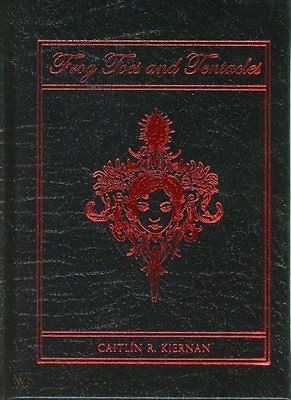
“Pages Found Among the Effects of Miss Edith M. Teller” (2005) by Caitlín R. Kiernan

And you stood up, then. You stood, taller than I recalled because you have grown longer, and the moon flashed across the glistening scales below your small breasts, your nipples as erect and sharp as barnacles, thorns grown from the sea, and I took a step back, despite myself.

Do not retreat.
Do not retreat from me.

Only my thoughts, not yours. I will not now be so conceited as to believe I could ever know your thoughts. Not after what she has done with you, or you have done with her. Mother Hydra has held you tight to her bosom in the lightless places at the bottom of the world, and she has accepted all your gifts, all those human parts you were forever trying to cast aside. The old flesh.
—Caitlín R. Kiernan, “Pages Found Among The Effects of Miss Edith M. Tiller” in Frog Toes and Tentacles (2005), 13

Monsters have a particular fascination in a transgender context. The act of transformation, however violent or painful, gives results. What you were is gone, and you have become something else—perhaps who you were meant to be. Body dysmorphic disorder is real, and the fantasy of such transformations that do not require months or years of hormone replacement therapy and surgery is real.

There is a sexual component to such transformation fantasies. Consider the ending to The Shape of Water, blood erupting in clouds from the vertical scars in her neck as the gills finally come in, as a visual metaphor for losing her virginity all over again. To become a woman…and more than that, to cast her old life behind. Such transformations are one-way, like puberty. You can’t go back again.

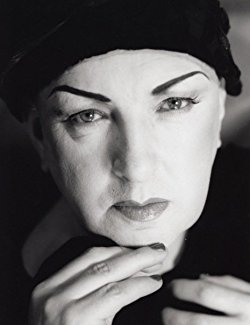
In the various sequels to “The Shadow over Innsmouth,” a great deal of focus is given to the transformation itself, its implications and effects. “The Gathering” (2017) by Brian Lumley and “All Our Salt-Bottled Hearts” (2016) by Sonya Taaffe both look at what happens when the change does not come, and how those who cannot go down beneath the waves to live in glory forever and ever deal with that. Caitlín R. Kiernan, by contrast, looks at a heretic. Someone who has refused the call.

And her lover.

Innsmouth-related erotica is not exactly rare; Tide of Desire (1983) by Sheena Clayton is an entire novel exploring it, and one could easily fill a fairly decent anthology of short stories including such pearls as “The Flower of Innsmouth” (2011) by Monique Poirier or “Madeline Marsh’s Midlife Crisis” (2015) by K. Z. Morano. Yet it is rare to find stories that focus on the characters involved, their complex motivations and emotions, as much as the sexual action itself. In stories like “The Innsmouth Porno VHS” (2014) by Adolf Lovecraft, the characters involved are consciously skeezy and the fetish is teratophilia; they don’t have any emotional investment in the transformation or the people transformed, much like folks fetishize transgender sex workers, seeing them not as individuals but as commodities.

Not so with Caitlín R. Kiernan.

She wants you to feel the reunion of these two lovers, one of whom took the plunge (literally), and the other who would not. Wants that taste of real horror as the act begins, and the clothes are shredded “making of them ribbons for a mermaid’s hair.” Edith’s lover Samaritana did not come back as she had known her…and there are surprises in store.

I stopped struggling (I had been; I can say that now, because I know I ama a heretic) and lay entirely still while those tendrils worked their way quickly between my legs, those strong tendrils or arms sprouting from the hairless mound where your sex had been, twisting back upon themselves, flexing, searching like blind, unfed serpents. What is it the old stories say? Cut off one, and two will sprout in its stead? (ibid., 21)

There is much unsaid in the story. The text has the quality of Edwardian prose, at once explicit and poetic. This is not sexploitation, no actors mugging for the camera and faking orgasms. Elaborations on the Mother Hydra mythos are hinted at but not elaborated upon, and the relationship, like many of the relationships in her fiction, does not have a happy ending. The subtitle for this story is:

Dead by her own hand, Janury 7th, 1905
Danvers State Insane Asylum, Mass.

Which is how it should be. Not every story, even an erotic story, has a happy ending. Transgender folks know that better than most. The struggle of whether or not to transition is real, and takes its toll both physically and psychologically. There is more to unpack in this story…and that probably says more to its quality than anything else.

“Pages Found Among the Effects of Miss Edith M. Teller” was first published in Frog Toes and Tentacles (2005).


Bobby Derie is the author of Weird Talers: Essays on Robert E. Howard & Others (2019) and Sex and the Cthulhu Mythos (2014).
¿Donde Duermes, Elderado? Y Otros Poemas (1964) by Clérigo Herrero

Am pulling out of a bad physical slump and have not done too much work, apart from the writing of poems in Spanish, some of which I hope to place sooner or later with Latin-American periodicals. They have been checked over by a good Spanish professor, who did not find too much to correct.
—Clark Ashton Smith to August Derleth, 31 March 1950, Selected Letters of Clark Ashton Smith 364

English was the language of Weird Tales during its first run (1923-1954), though stories might have snippets of any number of languages, natural, artificial, and fictional.

Neither H. P. Lovecraft nor Robert E. Howard were ever fluent in Spanish, though both of them were at least somewhat familiar with it. The evidence for Lovecraft’s knowledge is fairly slight: the two passages in his story “The Mound,” which had been ghostwritten for Zealia Brown Reed Bishop, both of which are largely accurate (the final portion was deliberately designed to appear somewhat crude); Lovecraft’s library included a copy of Ollendorff’s New Method of Learning to Read, Write, and Speak the Spanish Language (Lovecraft’s Library 139), which may have served him as a reference. Lovecraft also used Spanish openings and closings to some of his letters to Bernard Austin Dwyer in 1928 (during the period “The Mound” was written, and when Lovecraft recounted his dream of Roman Hispania), signing himself once “Luis Randolfo Cartero y Teobaldo” (LMM 468)

Robert E. Howard’s knowledge of Spanish was probably more utilitarian. In at least a casual way, he had picked up at least a small stock of Spanish and Mexican words—exclamations, terms of address, names of food and drink. Certainly, when Spanish-speaking characters appear in his stories their English dialogue tends to be sprinkled with a few choice Spanish terms, although sometimes with some peculiarities of spelling; a common technique when Howard wanted to express something of the rural or uneducated nature of the speaker, though it’s hard to tell sometimes if he is doing it on purpose or not, as he seems to have dropped this tendency in Spanish relatively quickly. So, for example, in “Red Shadows” (1928) he writes “Senhor,” in “Winner Take All” (1930) he writes “Senyor,” but in “The Horror from the Mound” (1932) he writes “Señor.”

In late 1948 or early 1949, Smith learned Spanish, made his first translations of Spanish poetry, and wrote his first poems in Spanish.
—Donald Sidney-Fryer, “A Memoir of Timeus Gaylord: reminsicences of Two Visits with Clark Ashton Smith, &c.” in The Romanticist #2 (1978) 3

Smith had already taught himself French from dictionaries and grammars in the 1920s; Lovecraft would praise his translations of Baudelaire. A decade after the death of Howard and Lovecraft, Smith would do the same with Spanish. All three men shared a love of language and poetry, and were autodidacts, but Smith was the only one of the three to attempt anything like fluency in Spanish, at least to the point of translating and composing poetry in that language.

His hopes of being published in that language do not appear to have been fulfilled during his lifetime, although some of his translations of Spanish poetry from Gustavo Adolfo Bécquer, José A. Calcaño, and José Santos Chocano (“El Cantor de América”) did see print in zines and his poetry collections, and some of the English translations of his Spanish poems also appeared in his Arkham House poetry collections—including a translation or two of “Clérigo Herrero,” Smith’s Spanish pen-name (“Cleric Smith”—Clark, clerk, cleric).

After Smith’s death in 1961, his widow attempted to continue to publish his work, and selling some of his letters and manuscripts in conjunction with letterpress printer and bookdealer Roy A. Squires. One of these projects was the small pamphlet ¿Donde Duermes, Elderado? Y Otros Poemas (1964), done entirely in Spanish, publishing eight of his poems as by Clérigo Herrero. The colophon says this printing was only 160 copies, although the bibliographies say 176.

Donde-inside

Typescripts of some of his other Spanish poems, discovered after this printing, were published in Shadows Seen & Unseen (2007), showing something of his process:

SSU-sample

For long decades, the Spanish poetry of Clark Ashton Smith was relatively unavailable: published far apart in limited editions. Today it has all been republished as part of the Collected Poetry and Translations of Clark Ashton Smith (2012) …and it is a testament to one of the great voices of Weird Tales to extend himself this way, to explore and express himself in another language. Because there is far more to this world than just the English language.

El mundo es el suyo,
El sol es el tuyo,
La luna es la mía.

The world is yours,
The sun is thine,
The moon is mine.


Bobby Derie is the author of Weird Talers: Essays on Robert E. Howard & Others (2019) and Sex and the Cthulhu Mythos (2014).
The Witch-Cult in Western Europe (1921) by Margaret A. Murray

“He had not read in vain such treatises as Miss Murray’s Witch-Cult in Western Europe; and knew that up to recent years there had certainly survived among peasants and furtive folk a frightful and clandestine system of assemblies and orgies descended from dark religions antedating the Aryan world, and appearing in popular legends as Black Masses and Witches’ Sabbaths.”
—H. P. Lovecraft, “The Horror at Red Hook”

“The other manuscript papers were all brief notes, some of them accounts of the queer dreams of different persons, some of them citations from theosophical books and magazines (notably W. Scott-Elliot’s Atlantis and the Lost Lemuria), and the rest comments on long-surviving secret societies and hidden cults, with references to passages in such mythological and anthropological source-books as Frazer’s Golden Bough and Miss Murray’s Witch-Cult in Western Europe.”
—H. P. Lovecraft, “The Call of Cthulhu”

I took a good deal of it at college, and am familiar with most of the standard authorities such as Tylor, Lubbock, Frazer, Quatrefages, Murray, Osborn, Keith, Boule, G. Elliot Smith, and so on.
—H. P. Lovecraft, “The Whisperer in Darkness”

Margaret Alice Murray was 58 and already a successful Egyptologist when she published The Witch-Cult in Western Europe: A Study in Anthropology in 1921. On the strength of that book, she wrote the article on Witchcraft for the Encyclopedia Britannica in 1929, which remained in print in various editions until 1969. The influence of that book—and its sequel, The God of the Witches (1931)—has profoundly impacted how entire generations have come to see witchcraft. And it played a critical part in the development of the Lovecraft Mythos.

The book has an odd place in the Mythos. Certainly, Lovecraft was inspired by it, and Murray’s thesis as interpreted through Lovecraft’s own lens strongly influenced “The Festival,” “The Dreams in the Witch House,” and other stories. He included it among other real works in “The Horror at Red Hook” and “The Call of Cthulhu,” so it is technically a kind of Mythos tome, although not by any stretch a grimoire akin to the Necronomicon. Subsequent authors have borrowed on its dual status as both a real book and a “Mythos” work as well.

So while never writing a Mythos story or probably reading anything that Lovecraft wrote, Margaret Murray and her Witch-Cult in Western Europe are in the rare position of being adopted into the Mythos. She shares this status with a few others: Robert W. Chambers and The King in Yellow, Helena Blavatsky and The Book of Dzyan. Yet Murray’s impact on Lovecraft was profoundly greater than the mythology of Hastur or Theosophy. It began in 1924, at the New York Public Library:

The most revealing and stupefying book among those I have been reading is “The Witch Cult in Western Europe”, by Margaret Alice Murray, which was published in 1921 and reviewed with great attention by Burton Rascoe in the Tribune. In this book the problem of witchcraft superstition is attacked from an entirely new angle—wherein the explanation of delusion and hysteria is discarded in favour of an hypothesis almost exactly like the one used by Arthur Machen in fiction [marginal note: The Three Impostors]—i.e. that there has existed since prehistoric times, side by side with the dominant religion, a dark, secret, and terrible system of worship nocturnally practiced by the peasants and including the most horrible rites and incantations. This worship, Miss Murray believes, is handed down from the squat Mongoloid peoples who inhabited Europe before the coming of the Aryans; and reflects the life and thought of a barbarous culture in which stockbreeding had not yet been supplanted by agriculture. This latter feature is clear from the dates of the two great nocturnal feasts and orgies… Roodmas, or April 30, and Hallowe’en, or October 31—dates having a connexion with nothing whatever in agriculture (unlike such agricultural festivals as Easter, Harvest-home, etc.), but corresponding with uncanny fidelity to the breeding-seasons of the flocks and herds. Buttressed by an amazing array of sound documentary evidence taken from witchcraft trial reports, Miss Murray unhesitatingly asserts that the similarities and consistencies in the testimony of witch-suspects cannot be explained on any assumption save one which allows for a certain amount of actuality. In her mind, practically all the confessions treat not of dreams and delusions, but form highly coloured versions of real meetings and ceremonies conducted in deep woods and lonely places betwixt midnight and dawn, attended by secretly annotated peasants stolen thither one by one, and presided over by local cult-leaders clad in animal skins and called the “Devils” of their particular branches or “Covens”. The hideous nature of the cult-rites is amply attested—and the whole subject takes on a new fascination when one reflects that the system probably survived to comparatively recent times. Miss Murray has no difficulty in tracing the cult’s presence in the Salem witchcraft of 1692, and entures to name the Reverend George Burroughs as “Devil” of the particular branch or Coven involved. Cotton Mather thus stands vindicated, and displayed as the suppressor of a movement involving the most loathsome and offensive practices. Another point of interest is the association of Joan of Arc with the witch-cult—a circumstance which makes one weep less at her fiery martyrdom. The use of this newly unearthed lore in a study of American superstition will be quite new, so that I really believe my book will have some degree of interest if it is ever suffered to materialise.
—H. P. Lovecraft to Lillian D. Clark, 30 Mar 1924, Letters from New York 53-54

The book never materialized, but Lovecraft melded Murray’s hypothesis of an underground witch-cult practicing remnants of a pagan religion and married it to the idea of primitive pre-human survivals and their connection with fairies (“the Little People”) in the fiction of Arthur Machen (which he had also lately been reading), and formed his own theory of history—which would go on to inform much of his fiction. Not for nothing would Richard Upton Pickman in “Pickman’s Model” have a Salem Village ancestor hanged for witchcraft in 1692, or that Joseph Curwen would flee from there to Providence, R. I. in the annals of The Case of Charles Dexter Ward.

The combination of Machen and Murray was assisted by Murray including in her work certain euhemeristic ideas and scientific racialism:

The dwarf race which at one time inhabited Europe has left few concrete remains, but it has survived in innumerable stories of fairies and elves. Nothing, however, is known of the religious beliefs and cults of these early people, except the fact that every seven years they made a human sacrifice to their god—‘And aye at every seven years they pay the teind to hell’—and that like the Khonds they stole children from the neighbouring races and brought them up to be the victims. That there was a strong connexion between witches and fairies had been known to all students of fairy lore. I suggest that the cult of the fairy or primitive race survived until less than three hundred years ago, and that the people who practised it were known as witches. I have already pointed out that many of the witch-belief and practices coincide with those of an existing dwarf race, viz. the Lapps.
—Margaret Murray, The Witch-Cult in Western Europe, 238

The Sámi people (historically Lapps, Laplanders) are an indigenous people in Northern Europe; racial anthropologists in Lovecraft’s time categorized them as “Mongoloid” (along with Asians and Native Americans) as opposed to the majority population of Europe which was “Caucasoid.” Although this was not the primary focus of Murray’s work, Lovecraft took this as concrete scientific evidence to support his existing prejudices. Along with Sir James George Frazer’s The Golden Bough: A Study in Comparative Religion (1890), Murray’s book offers what in the 1920s seemed a very rational, dogmatic, albeit radical re-interpretation of a chunk of European (and at least one episode of American) history.

Not everyone accepted The Witch-Cult in Western Europe as genuine; Jacqueline Simpson in Margaret Murray: Who Believed Her and Why? chronicles some of the academic blowback, including Murray’s misrepresentation and misinterpretation of sources. Lovecraft was at best peripherally aware of this academic debate, with two exceptions:

The witch-cult was an objective example of that element of reaction against mediaeval piety which appears in certain leering gargoyles & in various sinister undertones in literary & other art. As for its origin—I am wholly against Summers & with Miss Murray. Summers has let his serious acceptance of Christianity bias him. He is blind to dozens of points of resemblance betwixt witch-cult practices (especially festival dates) & primitive-reliques of Nature-worship all over Europe, & makes a very weak argument in his earlier witchcraft book which Koenig lent me.
—H. P. Lovecraft to Clark Ashton Smith, 29 Nov 1933, Dawnward Spire, Lonely Hill 484

The theories of Miss Murray regarding the source of the cult have been attacked from different angles by scholars as antipodal as Joseph McCabe & the Rev. Montague Summers, but I still think they are as plausible as any yet advanced. You will, I think, appreciate “The White People” anew upon giving it a post-Murray re-reading.
—H. P. Lovecraft to Fritz Leiber, 19 Dec 1936, Letters to C. L. Moore and Others 302

Joseph McCabe was a noted atheist, and while Lovecraft doesn’t cite the exact work in question, McCabe made a glowing endorsement of Murray and her book in The Story of Religious Controversy (1929). Montague Summers also addressed Murray’s book at some length in The History of Witchcraft and Demonology (1926), commenting at one point:

Miss Murray does not seem to suspect that Witchcraft was in truth a foul and noisome heresy, the poison of the Manichees. Her “Dianic cult,” which name she gives to this “ancient religion” supposed to have survived until the Middle Ages and even later and to have been a formidable rival to Christianity, is none other than black heresy and the worship of Satan, no primitive belief with pre-agricultural rites, in latter days persecuted, misinterpreted, and misunderstood. It is true that in the Middle Ages Christianity hadnot a rival but a foe, the eternal enemy of the Church Militant against whom she yet contends to-day, the dark Lord of that city which is set contrariwise to the City of God, the Terrible Shadow of destruction and despair.

Miss Murray with tireless industry has accumulated a vast number of details by the help of which she seeks to build up and support her imaginative thesis. Even those that show the appropriation by the cult of evil of the more hideous heath practices, both of lust and cruelty, which prevailed among savage or decadent peoples, afford no evidence whatsoever of any continuity of an earlier relgiion, whilst by far the greater number of the facts she quotes are deflected, although no doubt unconsciously, and sharply wrested so as to be patent of the sginification it is endeavoured to read into them. (ibid. 32-33)

Summers’ critique is undercut by his belief that witches were both Satanic and had magical powers; McCabe’s because his antipathy toward religion led him to be too credulous in accepting Murray’s thesis wholeheartedly. While scholars, neither were academics or anthropologists. Lovecraft himself in another letter suggests that Murray’s book is “probably about 85% right” (Letters with Donald and Howard Wandrei and to Emil Petaja 463)

There is no reference in Lovecraft’s published letters to Murray’s sequel, The God of the Witches (1931); he apparently never read it, and perhaps never heard of it. Murray herself has very little to say about her witch-research in her autobiography:

Though my Witch Cult in Western Europe did not appear till 1921 the greater part of the research had been done during the war. The book received a hostile reception from many strictly christian sects and reviewers, but it made its way in spite of oppostion.

My second book on the same subejct, which is really on the survival of pagan beliefs and rites under a veneer of Christianity, was The God of the Witches. It was a flop and was remaindered in two years. But it was the 1939-45 war that made it known. I think because it was a change from the monotony of the kind of books that are published in and just after a a war. Also as a remainder it was cheap, selling at five shillings.

My view of Joan of Arc roused, and still rouses, fierce opposition. I am not usually a fighter, but when I am attacked with words like “I don’t believe one word you say about Joan of Arc,” I have to defend myself.

I have one effective reply which is, “Have you studied the original documents?” I have always found that these ardent worshippers have to acknowledge, when pressed, that they have not read anything of the kind. then I retort, “Well, I have,” and I reel off the names of the contemporary recorders (and there are a good many of them) while my critic’s eyes get rounder and rounder. I wind up by saying, “It is hardly worth while to continue the discussion, is it? For you and I have such different standpoints. I argue from contemporary documentary evidence, and you from hearsay.” The book was re-published after the war and has proved a best seller.
—Margaret Murray, My First Hundred Years (1963), 104-105

The Lovecraftian legacy of Margaret Murray is embodied in “witch-haunted Arkham” in all of its incarnations, in the “Dreams in the Witch House” and the witch-cult in general that appears in works such as “The Festival” and “The Thing on the Doorstep.” Works inspired directly by Lovecraft in this vein include “The Salem Horror” (1937) by Henry Kuttner, “Satan’s Servants” (1949) by Robert Bloch, and the graphic novel Providence (2015-2107) by Alan Moore and Jacen Burrows. The Witch-Cult in Western Europe is referenced by name in Mythos stories such as “The Fairground Horror” (1976) by Brian Lumley and “A Critical Commentary on the Necronomicon” (1988) by Robert M. Price.

The long tail of Murray’s influence on fantasy fiction encompasses more than just Lovecraft and those he influenced. Herbert Gorman in “The Place Called Dagon” (1927), which Lovecraft read, shows a survival of the Salem witch-cult; so does the film I Married A Witch (1942), Fritz Leiber’s novel Conjure Wife (1943), etc. all the way to Lords of Salem (2013) and American Horror Story: Coven (2014). Her books were a direct inspiration for the creation of Wicca by Gerald Gardner and Doreen Valiente, and the prolific occult literature produced from those fertile grounds has, in turn, influenced a great deal of horror and weird fiction…and, of course, Lovecraftian occultism:

In the west, the conjuration, cultivation, or worship of this Power was strenuously opposed with the advent of the Solar, Monotheistic religions and those who clung to the Old Ways were effectively extinguished. The wholesale slaughter of those called “Witches” during the Inquisition is an example of this […] The current revival of the cult called WICCA is a manifestation of the ancient secret societies that sought to tap this telluric, occult force and use it to their own advantage, and to the advantage of humanity, as was the original intent.
—Simon, Necronomicon xxii

Anthropology has pushed back and moved on. Outside of occult circles, there is no strong belief that Murray’s “witch-cult” actually existed. Historians and anthropologists have a better understanding of witch trials in the early modern period, both in Europe and the Americas. Instead of an organized pagan survival, there is a mess of politics, religion, folklore, and disparate human dramas and tragedies.

What does that mean for the Mythos?

For the most part, Mythos fiction reflects the syntax of the period. The Salem Witch Trials are a part of the history of Massachusetts; Lovecraft himself never attributes any of the innocent victims of that hysteria as actual witches in his fiction, instead he added fictional characters such as Keziah Mason and Joseph Curwen to the milieu. These characters and their stories are dependent on the historical reality of the witch trials, but the interpretation of that history is still up to contemporary authors and audiences.

The “cult” of the Stella Sapiente in Moore & Burrows’ Providence, for example, looks very little like the 13-member covens that Margaret Murray wrote about in The Witch-Cult of Western Europe, but it retains certain features derived from Murray that feature in Lovecraft’s work. The image of Nyarlathotep as the “Black Man” of the witch-cult remains intact in many Mythos stories, and is derived directly from Murray and Machen as discussed in “Collector the Third: Charles Wilson Hodap (1842-1944)” (1995) by Kenneth W. Faig, Jr.

So Margaret Murray and The Witch-Cult in Western Europe remain a historical touchstone for the Mythos. Both a part of it and oddly apart from it. The book is not “canon” in the sense that its ideas are absolutely true within the fictional reality of the Mythos, yet it is in the canon of works which directly influenced and are referenced by Lovecraft and his contemporaries, alongside The King in Yellow and The Book of Dzyan, Arthur Machen’s The Three Imposters, etc.


Bobby Derie is the author of Weird Talers: Essays on Robert E. Howard & Others (2019) and Sex and the Cthulhu Mythos (2014).
“Cosmic Horror” (1945) by Dorothy Tilden Spoerl

Lovecraft’s tales fascinate me, but they do not frighten.
—Dorothy Tilden Spoerl, “Cosmic Horror” in The Ghost #3 (1945)

The Ghost was an amateur journal published by Lovecraft’s friend W. Paul Cook; it had a very small print run, and was never sold. The contents were drawn largely from Lovecraft’s circle of friends and correspondents, and include important pieces—August Derleth’s thesis on weird fiction, which shows Lovecraft’s influence; E. Hoffmann Price’s memoirs of Farnsworth Wright and Robert E. Howard, which would be the start of his Book of the Dead; essays on James F. Morton, etc. The content was not all Lovecraftian, but these rarities became collector’s items because of that content.

Issue #3 begins with a little mystery: a rather one-page article of appreciation on Lovecraft entitled “Cosmic Horror” by Dorothy Tilden Spoerl. It has been largely forgotten by time, although it appears to be one of the first such appreciations by a woman on Lovecraft’s fiction to see print. But who was Spoerl? What connection did she have with Lovecraft?

There is no obvious trace of Dorothy T. Spoerl in Lovecraft’s published correspondence. Her autobiography makes no mention of Lovecraft, pulp fiction, or amateur journalism; although it gives a little context: in 1945 she was 35 years old, married to minister Howard Spoerl, and had a PhD in Psychology; “Cosmic Horror” appears to be her only amateur publication of record. On her husband Howard Spoerl, there is a little more data: he had placed poems in the amateur journal Driftwind (1935, produced by Walter J. Coates, a friend of Lovecraft’s), Leaves (1938, produced by R. H. Barlow, Lovecraft’s literary executor), and The Ghost (1945 and 1947 issues).

The Spoerls, then, appear to have been at least friends-of-friends and part of the wider community of amateur journalism, even if they never met Lovecraft directly.

The title as much as anything suggests that Dorothy Tilden Spoerl had read Lovecraft’s essay “Supernatural Horror in Literature”, which had first seen print in W. Paul Cook’s earlier amateur journal The Recluse (1927); revised, expanded, and serialized (but the series never finished) for the fanzine The Fantasy Fan (1933-1935); and finally Arkham House reprinted the whole thing in The Outsider and Others (1939). So we know that Spoerl read that; the essay specifically mentions both “The Shunned House” and “The Picture in the House,” which stories had appeared in multiple formats before 1945, including The Outsider and Others; but we have no idea what all of Lovecraft she read.

Yet she did read him.

Which says something in itself. Though one can hardly imagine a pair of folks more ideologically different—Spoerl’s faith appears to have been very sincere; Lovecraft a determined atheist—she did find a connection with him through his fiction. It spoke to a part of her own experience, and that was something she wanted to share. We don’t know why she read Lovecraft, but her reaction to reading Lovecraft speaks to why the Old Gent’s fiction retains its popularity: the themes resonate with people, even those markedly different in outlook from Lovecraft himself.

Spoerl
The Ghost #3 (1945)

The Reverend Doctor Dorothy Tilden Spoerl died in 1999 at the age of 93. “Cosmic Horror” was published only once, in The Ghost #3 (1945). No copyright renewal could be located.


Bobby Derie is the author of Weird Talers: Essays on Robert E. Howard & Others (2019) and Sex and the Cthulhu Mythos (2014).
Orphne #1 & #2 (2018) by Mani C. Price

We live in a Golden Age of Mythos comics. More Mythos comics have been published in the last two decades than in the four that came before that. Lovecraftian references can, and do, appear in everything from webcomics to manga, from The Woman of Arkham Advertiser (A・Aの女): Article 01: In The Vault (2019) by Takata Yuki (高田 悠希) to “The Elder Sister-like One, Vol. 1” (2016) by Pochi Iida (飯田ぽち。) to Innsmouth (2019) by Megan James and Calla Cthulhu (2017). Independent presses have risen with the advent of affordable print-on-demand comic publishing services like IndyPlanet and digital comic marketplaces like Comixology have made it much easier for creators to get their work out there—and to highlight more diverse voices.

orphne002

When Randolph Carter was thirty he lost the key of the gate of dreams.
—H. P. Lovecraft, The Silver Key

“The gods travel into men’s dreams by way of a key hole and exit from whence they came once their divine mission is complete.”
—Artemidorus, quoted in Orphne #1

Mythos comics cover all the ground that prose Mythos fiction does, from pastiche and parody to genre-bending and genre-blending; it is rarely four-color superheroes punching out the minions of Great Cthulhu. There is room for comedy, erotica, dark fantasy, science fiction, and sometimes quite subtle and atmospheric horrors. What sets comics and graphic novels apart from their pure prose counterparts, or even illustrated stories, is the ability of art and words to come together a such a way as to create a unique reading experience—there are things that can be done in a graphic novel that would be difficult or impossible to pull off in a prose story.

Mani C. Price is a visionary artist and diviner; her penchant for Lovecraft and mythology is evident from her artwork. As the writer and artist for Orphne, Price brings her interests to bear with references to Classical Greek mythology, magic, and Lovecraftian references that are present but not pressed on the viewer. There is no mention in these stories to Lovecraft’s “The Silver Key,” yet the artistic theme of both issues emphasizes keys and key-holes; the figure of Mr. Angell is the image of H. P. Lovecraft—whom Muriel Eddy described as “The Man from Angell Street,” referring to his family’s house in Providence, Rhode Island.

Orphne prefers to show rather than tell; there are mysteries for the reader to unravel, characters are not introduced, and their identities must be divined by what they say and do. We know little about the main character Victoria, but that little we do know is intriguing…she is, more than Mr. Angell, the central character and mystery of the story so far. What key will unlock those answers?

But always I shall guard against the mocking and insatiate Hypnos, lord of sleep, against the night sky, and against the mad ambitions of knowledge and philosophy.
—H. P. Lovecraft, “Hypnos”

Lovecraft also had a penchant for Greek and Roman myth, and in the second issue this brings in the figure of Hypnos, Lord of Dreams. Some readers may draw parallels between this character and another popular comics character: Dream of the Endless, created by Neil Gaiman for his run on Sandman (1989-1986). The similarities are superficial, however; Gaiman and Price (and Lovecraft) are drawing in common from the well of Greco-Roman mythology in populating their Dreamlands. As the holder of the artifact that Victoria seeks, Hypnos is being set up as the primary antagonist in a story where most of the conflict so far is unseen—a combination of internal conflicts and unknown forces acting on Victoria, secrets unspoken, hints of supernatural influence.

Where the story goes from here is another question that goes unanswered. Issues #1 and #2 were published in 2018, but the series is not yet finished. Art takes time, and as Orphne is being produced by an individual rather than a big company, some delay is to be expected before we see issue #3. Yet it seems certain that it will be worth the wait.

Orphne #1 and #2 are written and illustrated by Mani C. Price, coloring and layout by Justin Wolfson, lettering by Jason Price, editing by Jason Price and the late Sam Gafford. Issues can be purchased directly from the website Mani The Uncanny.


Bobby Derie is the author of Weird Talers: Essays on Robert E. Howard & Others (2019) and Sex and the Cthulhu Mythos (2014).
“Paedomorphosis” (1998) by Caitlín R. Kiernan

“Oh,” Annie said and sat down on the rug, grateful for something between her and the concrete. “Where are you from, anyway?”

The loose flap of cloth falling back in place, once again concealing the crack, and “Massachusetts,” Elise replied, “but no place you’ve probably ever heard of.”
—Caitlín R. Kiernan, “Paedomorphosis” in Song of Cthulhu 93

Music, lesbians, a muggy Georgia summer, and white blind things in the dark. “Paedomorphosis” is a story of mood and affect, intimation almost to the point of deliberately hiding things. If it wasn’t published in a Mythos anthology…if it wasn’t published by Caitlín R. Kiernan…there are certain connections which might not be made at all. Like “She Flows” by Takeuchi Yoshikazu (竹内義和) the story lives in that liminal space between telling and showing and knowing. It’s not a horror story by any stretch, but there are the bones of horror story technique there: the way the story and characters are built up, like fossils emerging from dry rock of an ancient river bed, and there are only a few people that can read those old bones and reconstruct something of what happened.

To a degree, all stories are reflections of their authors. We read about Lovecraft’s life and we look for the echoes of events and ideas in his fiction; as his life becomes more well-known through biographies, Lovecraft himself has become a kind of character in the fictional universe, fragments of his life and thought cropping up here and there in stories, some more explicit than others.

With “Paedomorphosis,” readers may well ask how much of Kiernan herself is reflected in the story. The setting of Athens, Georgia, where she lived. Elise-from-Massachusetts with her interest in paleontology; Kiernan herself a paleontologist. The imagery of drowning, repeated in some stories, especially her later novel The Drowning Girl: A Memoir (2012). The lesbian characters and her own sexuality.

“I thought dykes were supposed to be all tough and fearless and shit,” she said.

Annie shook her head, swallowed before she spoke. “Big ol’ misconception. right up there with the ones about us all wanting dicks and pickup trucks.”
—Caitlín R. Kiernan, “Paedomorphosis” in Song of Cthulhu 93

The story has the feel of something cribbled together from bits of life; people and places known rather than imagined. A bit of sexual longing, fulfilled. Drugs and rock and roll. And it takes Annie…and the audience…somewhere they never expected, gives them a glimpse of a world they never imagined might exist, those strange caverns measureless to man, the porous world spoken of so cryptically in “Machines Are Digging” (2009) by Reza Negarestani.

The title is never explained; look up the definition on your own time. The story ends with, of all things, a quote from Tolkien:

There are strange things living in the pools and lakes in the hearts of mountains…
—J. R. R. Tolkien, quoted in “Paedomorphosis” in Song of Cthulhu 98

But not the whole of it:

There are strange things living in the pools and lakes in the hearts of mountains: fish whose fathers swam in, goodness only knows how many years ago, and never swam out again, while their eyes grew bigger and bigger and bigger from trying to see in the blackness; also there are other things more slimy than fish. Even in the tunnels and caves the goblins have made for themselves there are other things living unbeknown to them that have sneaked in from outside to lie up in the dark.
—J. R. R. Tolkien, The Hobbit, Chapter V “Riddles in the Dark”

The story captures a mood, but the mood itself is almost inexpressible in anything less than the story. There are things to think about, long after the last page is turned. What might have happened, if Annie had been fearless enough to take the plunge? Who is the subject of paedomorphosis in the story? These are questions that Kiernan doesn’t answer in this story…but in some of her other stories, we catch hints of what might have happened, in love affairs that lasted a little longer and got a little weirder.

“Paedomorphosis” was first published in The Urbanite #10 (1998), it has been reprinted in Kiernan’s collection Tales of Pain and Wonder (2000, 2002, & 2008); Song of Cthulhu (2001); and Rock On: The Greatest Hits of Science Fiction & Fantasy (2012).


Bobby Derie is the author of Weird Talers: Essays on Robert E. Howard & Others (2019) and Sex and the Cthulhu Mythos (2014).
Windwalker’s Mate (2008) by Margaret L. Carter

She had been chose, she said, to be sacrificed to Ithaqua, the wind-walking elemental which the Stillwater people are said to have worshipped, and she had decided that she would flee, rather than die for a pagan god, of whsoe existence even she was not too sure.
—August Derleth, “The Thing That Walked on the Wind,” Strange Tales of Mysery and Terror Jan 1933

Ithaqua is one of August Derleth’s original contributions to the Mythos; the story that introduced him is first mentioned to Lovecraft in 1930, after Wright apparently rejected it (ES1.277). The sort of chequered history has dogged the Windwalker down the decades; few writers have made much use of Derleth’s creation, although Brian Lumley has made good use of Ithaqua—and given that entity a penchant for spawning children, a la Yog-Sothoth and “The Dunwich Horror”—in works such as “Born of the Winds” (1975) and Spawn of the Winds (1978).

It is Lumley’s interpretation that almost certainly inspired M. L. Carter’s dark paranormal romance novel Windwalker’s Mate (2008), although she puts her own spin on the proceedings. Shannon is a survivor; after the Rite of Union, she left the cult that was trying to bring strange Mythos entities to overrun this world—and forty weeks later she gave birth to her son Daniel, never knowing if his father was Nathan, the son of the culture leader who had participated in the rite with her, or the Windwalker who had possessed him.

Romance may seem an odd genre for Lovecraftian fiction; Lovecraft himself saw little of it in his life and his stories focus very little on those kind of human relationships. Nor were many of Lovecraft’s followers very inclined toward such things. Yet there is a thin substratum of genuine Mythos romance, dealing with the complex tangle of human relationships in a Mythos milieu—and much more seriously than “I Wore The Brassiere Of Doom” (1986) by Sally Theobald or “Love’s Eldritch Ichor” (1990) by Esther M. Friesner. These are works that tend to get overlooked by the main audience of Mythos writers; stuff like Tide of Desire (1983) by Sheena Clayton, Arkham Dreams (2011) by Robin Wolfe, Widdershins (2013) by Jordan L. Hawk…and one might even include The Dunwich Romance (2013) by Edward Lee, although that gets a little more hardcore than the others.

There are a few steamy moments in Windwalker’s Mate. It is far from the elaborate sexual fantasies of, say, Shoggoth Butt Invasion (2016) by Jason Wayne Allen. The sex scenes serve the plot as much as the reader; Shannon is reconnecting with Nathan, worried about her kidnapped son, placing her hope that coitus will re-establish their telepathic bond (it makes sense in the context of the book)…

He deepened the kiss, drawing her back into the present. her tongue darted eagerly to meet his. His hand cupped her breast through the T-shirt and thin bra. The tingling in the nipple zapped to the pit of her stomach and the V between her legs. The explosion of colors crashed over her again.

Then she saw stars falling like snowflakes and the sky behind them splitting open.
—Margaret L. Carter, Windwalker’s Mate 105

…yet the emotional core of the novel is very serious. Shannon is trying to save her son; she’s a lonely single mother, the cops are useless, and the former cult leader is trying to use Daniel to summon Ithaqua and the Ancient Ones into the world…there is a great deal of drama, both of the mind-numbingly mundane and weird kind.

It works. Opinions will vary on the approach, but M. L. Carter succeeds at what she set out to do: write a paranormal romance with the Mythos as a setting. If Chaosium ever published a sequel to The Ithaqua Cycle (1998/2006), this would not be out of place. The basic premise is much like the question of what happens after Rosemary’s Baby? only with Rosemary having the hard practicality to not stay with the Satanic cult because she had a baby to think of now. Daniel might well be the spawn of the Windwalker, but he isn’t a Wilbur Whateley-esque monster…not yet, anyway.

Windwalker’s Mate was published in 2008 by Amber Quill Press. Carter’s other Lovecraftian works include “Prey of the Goat” (1994) and the erotic novella Tentacles of Love (2009).


Bobby Derie is the author of Weird Talers: Essays on Robert E. Howard & Others (2019) and Sex and the Cthulhu Mythos (2014).
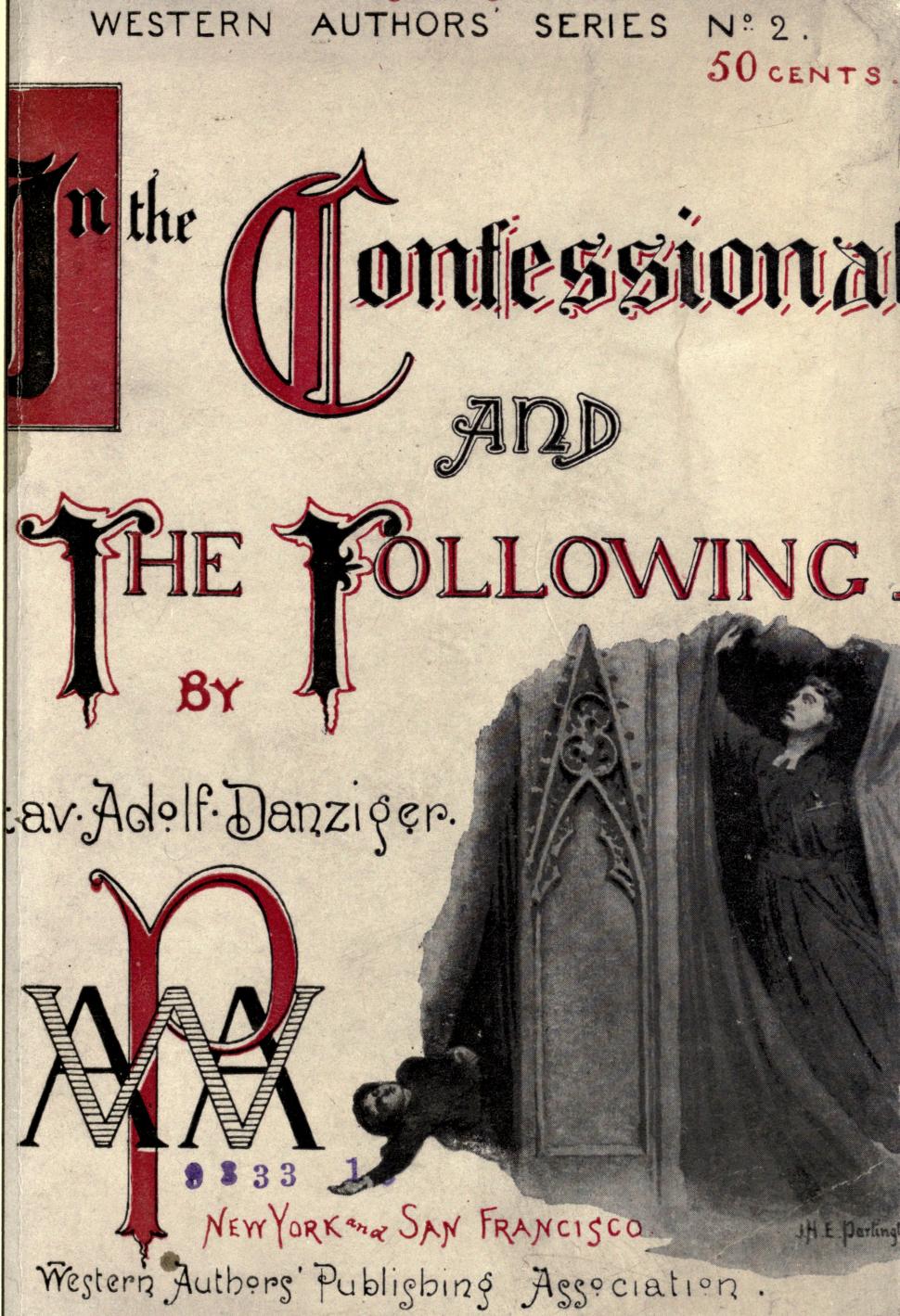
“Dope War of the Black Tong” (1996) by Robert M. Price

[…] we present an original story by the estimable Price, which is dedicated to Lin Carter and Robert E. Howard, as it utilizes Carter’s Dr. Anton Zarnak and Howard’s Steve Harrison. Its style brings back memories of the weird mysteries which Howard was noted for.
—Edward P. Berglund, “Preface to the Revised Edition” Disciples of Cthulhu (2nd Rev. Ed.) vi

In the Spring of 1933, Robert E. Howard got himself a new agent. Otis Adelbert Kline was a pulp writer himself, and had been a reader for Weird Tales in the early days, ghost-editing a single issue to bridge the gap between the outgoing Edwin Baird and the incoming Farnsworth Wright. Kline’s agency handle the promotion and collection of Howard’s work, freeing the Texas pulpster to simply write, and the agent encouraged Howard to splash new markets—to spread his literary wings and try his hands at not just weird fiction but spicy stories and detective fiction.

It was the great period of hardboiled detective fiction, which would become so married to film noir; the pulp magazine Black Mask thrilled to Dashiell Hammett’s Continental Op and Sam Spade, Raymond Chandler’s John Dalmas. Yet it was also the era of Sax Rohmer’s Fu Manchu novels. Yellow Peril literature was still going strong in the interwar period; H. P. Lovecraft and Robert E. Howard exchanged letters discussing the danger threatened by Imperial Japan, on the rise since their victories in the Russo-Japanese War and the Great War, and worried over the Japanese invasion of Manchuria in 1931, and the looming probability of a great race war in the perhaps not too distant future.

This was the background against which Howard created Steve Harrison, star of nine weird detective stories, four of which sold and were published in magazines like Strange Detective Stories, Super-Detective Stories, and Thrilling Mystery between 1934 and 1936. Harrison’s beat was normally the local Chinatown, and the plots tend to be more oriented toward action than detection. Racism and racial conflict are part and parcel for the stories; Robert E. Howard, who had written quite a bit for Oriental Stories, obviously never heard Robert Knox’s rule that “No Chinaman must figure in the story.”

“Three unsolved murders in a week are not so unusual—for River Street,” grunted Steve Harrison, shifting his muscular bulk restlessly in his chair. […]

“It’s your business to solve murders,” she said.”

“Give me a little time. You can’t rush things, when you’re dealing with the people of the Oriental quarter.”

“You have less time than you think,” she answered cryptically. […] “Do you remember Erlik Khan?”

Involuntarily his hand sought his face, where a thin-scar ran from temple to jaw-rim.

“I’m not likely to forget him,” he grunted. “A Mongol who called himself Lord of the Dead. His idea was to combine all the Oriental criminal societies in America in one big organization, with himself at the head. He might have done it, too, if his own men hadn’t turned on him.”
—Robert E. Howard, “Names in the Black Book” (1934) in Steve Harrison’s Casebook 143

Occult detective Anton Zarnak was created by Lin Carter in the late 1980s, first as a minor character in “Curse of the Black Pharaoh,” and then star of his own adventures—sometimes written by Carter, others by Robert M. Price, Joseph S. Pulver, Sr; Pierre Comtois, and C. J. Henderson. Carter alongside L. Sprague de Camp had a hand in the legacies of H. P. Lovecraft and Robert E. Howard; the two collaborated on many further adventures for Conan; revised, finished, or re-wrote Howard’s fiction; published highly-regarded fantasy anthologies and wrote articles promoting weird fiction and sword & sorcery. Lin Carter also created his own “Xothic Cycle” to expand on the work of Lovecraft and August Derleth.

Price in his introduction to Lin Carter’s Anton Zarnak: Supernatural Sleuth notes that Zarnak’s influences include Sherlock Holmes, the Weird Tales occult detective Jules de Grandin (created by Seabury Quinn), Sax Rohmer’s Sir Dennis Nayland Smith, August Derleth’s Dr. Laban Shrewsbury, Steve Ditko’s Dr. Strange, and Robert E. Howard’s own Steve Harrison. Zarnak had his abode in Chinatown, had an Sikh manservant (much as Wong to Dr. Strange, or Ram Singh to The Spider), and had a shelf full of Mythos tomes. The first proper Zarnak story opens:

Below Fourteenth Street, between Chinatown and the river, extends a disreputable region of cryptic, winding alleys, crumbling tenements, rotting wharves and abandoned warehouses slumping in decay. Here dwell the human dregs of a thousand Eastern ports: Hindus, Japanese, Arabs, Chinamen, Levantines, Turks, Portuguese. Once these dark and sinister side-streets and fetid alleyways were the battlefield of the Tong wars; that was in the days of the legendary detective Steve Harrison, who single-handedly dealt out the white man’s law and the white man’s justice along River Street.
—Lin Carter, “Dead of Night” (1988) in Lin Carter’s Anton Zarnak: Supernatural Sleuth 107

Steve Harrison was a product of the 1930s; between the time Robert E. Howard drew his last breath and Lin Carter sat down at his typewriter a second World War had come and gone; together with the Korean War and the Vietnam War these conflicts changed the contours of Yellow Peril fiction—it is often forgotten that comic book characters such as Dr. Strange and Iron Man came to be in the 1960s, their pulp fiction roots showing in characterizations of Asian characters as mystical and exotic, such as the Ancient One who taught Strange his sorcery, and the Mandarin who served as a Chinese counter to the American Iron Man. Later, as such blatant Asianophobia waned, the characters would be re-imagined from their original contexts…so what was Carter up to, writing a story with 1930s racial tropes (and almost 1930s racial language) in the 1980s?

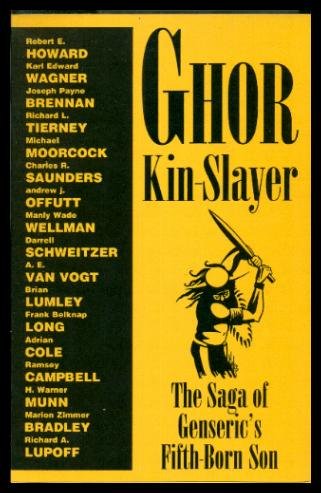
In part, it might be because Howard’s Steve Harrison stories had only rarely been published or republished; most of them only became available in the late 1970s and 80s, during the tail end of the “Howard Boom,” and those often spread out; there was no complete book of Steve Harrison stories at the time. Also in part, it could be that Carter did not see the problem; he avoided the outright vulgarities of Howard (the N-word was casually dropped in several stories), and the nature of the fiction was in keeping with the style of the original—which, for a pasticheur like Carter, was important. Some years before, African-American fantasy author Charles Saunders had specifically called out de Camp and Carter for this approach in their Conan stories:

Carter and de Camp, on the other hand, continue to practice good old-fashioned bigotry in their non-Conan endeavors. Though they have done a good job at ameliorating some of Howard’s more blatant racism, their own efforts at sword-and-sorcery are throwbacks. This is doubly shameful, because both of these men are scholars, and should know better. Their books sell well enough, so it may be that racism in fantasy matters little to fandom.

But it does matter to me.
—Charles Saunders, “Die, Black Dog! A Look At Racism in Fantasy Literature” (1975)

The Cthulhu Mythos is itself no stranger to Yellow Peril tropes, as seen in “Polaris” (1920) by H. P. Lovecraft & “The Lair of the Star-Spawn” (1932) by August Derleth and Mark Schorer. The question is not if such sentiments are present in the original material, but how a new author working with that material chooses to adapt it to the syntax of their own time. There is nothing wrong with presenting historical racism as a fact of life; To Kill a Mockingbird (1960) for example is set during the Great Depression, and the realistic racism in the novel is critical to the story.

The issue when creating fiction set in this period or in this style is how much the story plays into the inherent biases of racial tropes and stereotypes. Having a villain who is Asian does not necessarily make a Yellow Peril story, so long as the individual is not a villain because they are Asian. Presenting historical racism as it was is often necessary; writing a story as if from that period, with all the inherent approach that the racism is true and correct is neither necessary nor commendable. The point is often a fine one, and easily lost on writers trying to capture the spirit of pulp fiction without considering the ideas and messages inherent in the text, never mind the subtext.

Carter was not alone in trying to navigate these difficult waters. One of the more egregious examples might be “Yellow Peril”: The Adventures of Sir John Weymouth-Smythe (1978) by Richard Jaccoma, which is essentially Fu Manchu fanfiction with a very slight wink toward the Mythos (Jaccoma also holds the rather dubious honor of having written the script for Teenage Twins (1976), the first hardcore adult film to feature the Necronomicon—and an incantation from a Robert E. Howard story—but I digress.) Like Carter, he was essentially trying to write a 1930s style Yellow Peril story.

This is essentially where Robert M. Price’s “Dope War of the Black Tong” (1996) begins:

The one-man posse of River Street set his feet squarely, while the blue steel of twin automatics leaped into his fists and began to discharge a hail of white man’s justice into the knot of Oriental thugs. When his guns were empty he cast them aside and reached for the Gurkha knife had concealed in his belt Eastern style. It descended with the force of a guillotine, cleaving the skull of the first assassin to elude the rain of bullets and reach him. Himalayan blood spattered Harrison as he pulled the blade free of the sundered wreck of a head and managed to dodge a sword thrust aimed at himself.
—Robert M. Price, “Dope War of the Black Tong” (1996) in Disciples of Cthulhu (2nd Rev. Ed.) 140-141

Price is deliberately working the story as a throwback piece; a character that uses the term “chink” or “Chinaman” once or twice can be grimaced at as an acknowledgment of the casual historical use of racial pejoratives; but the text itself describes them as “Asiatics,” “Muhammadans,” and “slant-eyed devils.” Not strong language by Robert E. Howard’s standards in 1936…but in 1996?

The story itself is the kind that weaves together disparate elements of Mythos (and non-Mythos) fiction, one of Price’s major interests. So the story references not just Steve Harrison and Anton Zardak, but the Unaussprechlichen Kulten created by Robert E. Howard in “The Black Stone” (1932) and given a German name through the help of Lovecraft, for more on which see “Unspeakable! The Secret History of Nameless Cults; the minor Mythos story “Dig Me No Grave” (1937) published after Howard’s death; the Black Lotus from the Conan stories, for more on which see “Robert E. Howard’s Reefer Madness”; Gol-Goroth from Howard’s “The Gods of Bal-Sagoth” (1931); the cat-headed staff of Howard’s Solomon Kane; a passing reference to Frank Belknap Long’s Chaugnar-Faugn from The Horror from the Hills (1931), which includes an Asian Mythos cult; Lloigor, Zhar, and the Tcho-Tcho from August Derleth and Marc Schorer’s “The Lair of the Star Spawn” (1932)…and those latter especially deserve further consideration:

And the Tcho-Tchos! Every cop in the area knows them only too well: the latest wave of Oriental immigrants to clutter the docks. Damn near every single one of them connected with the criminal underground in one way or another. There are only a few, but even at that, there’s too damn many of them if you ask me!
—Robert M. Price, “Dope War of the Black Tong” (1996) in Disciples of Cthulhu (2nd Rev. Ed.) 155

Derleth & Schorer introduced—and exterminated—the Tcho-Tcho in their story; but the idea of a small alien race in Asia had appeal to Lovecraft, who made reference to them, and were revived by devoted fans like Robert M. Price, who here inserts them into the context of the Asian diaspora to the United States, very unlike their original appearance. The language used against the Tcho-Tcho, who were initially presented as inhuman, is essentially the same as used for any Asian ethnicity in the age of the Asiatic Barred Zone Act (1917). Price doesn’t mention the events of Derleth & Schorer’s story, and glosses over their depiction of the Tcho-Tcho by noting:

You should be aware that these dwarf-like figures belong to a warrior caste specially bred. Not all the Tcho-Tchos are like them, nor have I expressly claimed to be of their nation. (ibid.)

Price’s mingling and confusion of real-world prejudice against Asian immigration with the fantasy racism of Derleth & Schorer’s confusion is a literary sin; whatever his intent, the result is that the real-world fear and hatred is given a justification within the context of story. Price has perhaps exposited too much; the Tcho-Tcho never appear on the page before the revelation is made, so the reader is exposed to their Mythos aspect and the anti-Asian prejudice in virtually the same breath.

Then it gets weirder:

The swelling chorus of guttural voices gave Steve a hint of his earlier dread. Deep down he knew that his Celtic forbears had driven the reptilian kindred of these dusky trolls away from the open spaces of human habitation. His knife thirsted for their stinking blood. He seemed to know that his statuesque cmpanion shared his own primal hate for the Little People. Askbar Singh’s ancestral mythology would know them as the Asuras, eternal enemies of the Aryan gods. (ibid., 163)

For anyone not hip-deep in Mythos lore this probably seems like racist gibberish. It is in fact a very nerdy reference where Price attempts to tie the dwarfish Tcho-Tcho with the Little People in Robert E. Howard’s stories such as “The Children of the Night” (1931) and “The People of the Dark” (1932) which in turn drew inspiration from Arthur Machen’s Little People stories such as “The Novel of the Black Seal” (1895), “The Red Hand” (1895), and “The Shining Pyramid” (1906); those interested in the gritty details can read about it in “Conan and the Little People: Robert E. Howard & Lovecraft’s Theory.”

The Little People as initially conceived by Machen and Howard derive from racialist anthropological theories that posited a “Mongoloid” race that inhabited Europe before being driven out by the arrival of the Causcasoid race that were the ancestors of contemporary (and implicitly white) Europeans. Both Machen and Howard attributed powers and non-humanoid characteristics to the Little People, and it’s easy to see how Price might have been drawn to the idea of conflating the Tcho-Tcho and Little People who both shared short stature, non-human nature or attributes, ignorant of modern technology, worship of Mythos agencies (in at least some cases)…but also an at least implicit connection to Asian peoples.

The fact that Price gives Steve Harrison a racial—and almost explicitly Aryan—hatred for the Little People/Tcho-Tcho makes the already bizarre mashup of fantasy and real-world racism uglier. Robert E. Howard, with his strong grounding in racialist ideas of history and narrative, had no difficulty writing such stories in the 1930s; Price in putting those thoughts into Steve Harrison’s head was perhaps doing no different than Howard might have done, and certainly was not writing anything worse than Howard had written in “The Children of the Night.”

Yet this was written in the 1990s, not the 1930s.

The fundamental issue here is not so much the use of the Tcho-Tcho as villains; Derleth and Schorer had already done that. If anything, giving the Tcho-Tcho some greater depth and making them something other than an “evil” race of faceless mooks would be praiseworthy. Attempting to accurately portray the historical racism of the period is certainly understandable given the context of the setting, where Anton Zarnak (who lives in Chinatown) and Steve Harrison (who works the Chinatown beat) meet to deal with a mutual threat. Combining the real-world prejudice and the fantasy racism however…this is where the story really gets problematic.

Price himself was a long-time editor of Chaosium’s Call of Cthulhu Fiction line, and as part of his notes for Howard’s “The Children of the Night” he wrote:

Can you spot similarities between this tale and three by Lovecraft? I am thinking of “Polaris,” where the narrator recalls an ancient life in which he fell asleep on guard duty when he should have been watching for the advance of his people’s subhuman foes; “The Shadow over Innsmouth,” where the narrator’s opening gives nary a sign of the atavistic identity-change he has undergone by the end; and “Pickman’s Model,” where one member of a Kalem-like club is ostracized as a hideous sub-human changeling.
—Robert M. Price, Nameless Cults: The Cthulhu Mythos Fiction of Robert E. Howard 66

Not all the parallels are pleasant: “Polaris” is explicitly a “Yellow Peril” story, albeit one set in a mythical past, for example. Early on “The Shadow over Innsmouth” has more than a trace of it:

But the real thing behind the way folks feel is simply race prejudice—and I don’t say I’m blaming those that hold it. I hate those Innsmouth folks myself, and I wouldn’t care to go to their town. I s’pose you know—though I can see you’re a Westerner by your talk—what a lot our New England ships used to have to do with queer ports in Africa, Asia, the South Seas, and everywhere else, and what queer kinds of people they sometimes brought back with ’em. You’ve probably heard about the Salem man that came home with a Chinese wife, and maybe you know there’s still a bunch of Fiji Islanders somewhere around Cape Cod.

“Well, there must be something like that back of the Innsmouth people.[“]
—H. P. Lovecraft, “The Shadow over Innsmouth”

With Lovecraft, the prejudice is a red herring. The real-world fears of miscegenation and “foreignness” held by other Massachusetts locals towards the folkd of Innsmouth is a mask for the much weirder and more horrific truth. The locals are correct in that the “Innsmouth look” is the result of Innsmouth being a mixed-race community, they are wrong and ignorant in assuming they know what the “races” involved are. Blinded by their prejudice, they don’t see the terrible reality.

That could have been the case with “Dope War of the Black Tong”—but we never get a sense of the Tcho-Tcho before the Mythos connection is revealed. They have no sympathetic character, no demonstration of the prejudices they must suffer, no real explanation for what they’re doing in Chinatown instead of the Plateau of Sung. In this sense, the Howardian action-adventure approach that Price adopted is partially to blame; he starts off with Harrison in the thick of it, rather than ruminating on what brought the Tcho-Tcho diaspora to the United States, or why they would form a tong.

Price’s story essentially sees Harrison confirm the prejudices he held instinctively against the Tcho-Tcho just for looking Asian.

The racialism in the early Mythos stories from the 1930s can have a very long tail, impacting stories today. It is difficult to say how much influence “Dope War of the Black Tong” has had on the depiction of the Tcho-Tcho as, essentially, default Yellow Peril villains in contemporary Mythos fiction. For example, in the roleplaying game Delta Green, the Tcho-Tcho diaspora and association with drugs and other criminal activities are explicitly part of the setting; however, the explicit association between the Little People and the Tcho-Tcho is not.

“Dope War of the Black Tong” was first published in Disciples of Cthulhu (2nd rev. ed., 1996), it has been republished in Lin Carter’s Anton Zarnak: Supernatural Sleuth (2002), and Robert M. Price’s own collection Blasphemies & Revelations (2008/2019).


Bobby Derie is the author of Weird Talers: Essays on Robert E. Howard & Others (2019) and Sex and the Cthulhu Mythos (2014).
“The Sorrow of Qingfeng” (2014) by Grey Yuen

Traitorous may be one who withholds praise and gratitude to Her Majesty of Ten Thousand Years for appointing the title of Grand Prefect to our Judge Di Renjie, but when caught between the horns of political obligations and the call of justice, it is justice that often falters.
—Grey Yuen, “The Sorrow of Qingfeng” in Swords & Mythos (2014) 256

Judge Di (or Dee) has become popular in the West through a series of historical crime novels by Robert van Gulik; but the character was based on a real person, Di Renjie, a magistrate during the late Tang dynasty and the early Zhou dynasty under the empress Wu Zetian (“Her Majesty of Ten Thousand Years”), and it is in this period (694 CE) that the story is set. This is not a detective story; though it shares some elements with that genre. “The Sorrow of Qingfeng” is something rarer and weirder: a Mythos Wuxia story.

Wuxia is a genre of Chinese (and more broadly Southeast Asian) fiction dealing with the adventures of martial artists; a form of fantasy which has enthralled millions across the globe, especially in the form of Japanese manga and anime like Dragonball and Fist of the North Star, and Chinese martial arts films like The 36th Chamber of Shaolin (1978) and Crouching Tiger, Hidden Dragon (2000). The influence of wuxia can still be clearly seen in Dungeons & Dragons and many other roleplaying games, action film around the world, and English-language fantasy fiction.

Mythos fiction, not so much.

Action & adventure is nothing new to the Mythos. The original draft of the first story of Conan the Cimmerian, “The Phoenix on the Sword” (Weird Tales Dec 1932) mentions Yog-Sothoth and the Old Ones, and that was neither the first or last time Robert E. Howard’s sword & sorcery heroes touched base with the Mythos; “The Vale of Lost Women” being a notable instance of swords being taken up against a Lovecraftian horror. Howard was not entirely ignorant of Asian martial arts; there were exhibitions and matches even in Texas in the 1920s, and even wrote “Hard-Fisted Sentiment,” a mixed-martial arts story where an American boxer goes up against masters in French savate, jujitsu, and British boxing in turn.

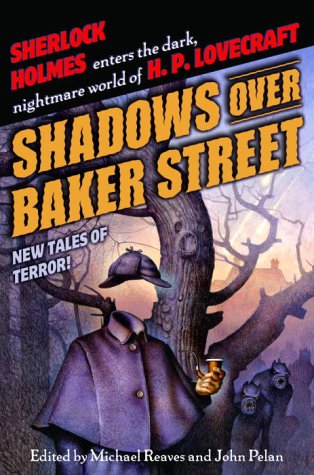
It has been relatively rare to see a Mythos story where wuxia-style fantasy martial arts feature prominently. Steve Perry’s “The Case of the Wavy Black Dagger” in Shadows over Baker Street (2003) comes pretty close, but for the most part the two modes of fiction simply don’t cross over very often. Cthulhu may be punched, but said punches usually have little to do with specific schools or techniques, swords of nigh-magical sharpness, or the cultivation of internal force. These are the tropes that Grey Yuen specifically invokes in “The Sorrow of Qingfeng.”

Grey Yuen’s style in the story is reminiscent of “Quest of the Nameless City” (2007) by Tachihara Tōya (立原透耶); the effort is made to set the story not in some nameless quasi-medieval Asian setting, but in a specific era of Chinese history and with a style of narration that borrows at least a little from the Romance of the Three Kingdoms (which period, the Tang dynasty, immediately preceded the Zhou dynasty). Like Tachihara Tōya, Yuen makes an effort to combine Western-style Lovecraftian imagery with a very different cultural context, with fairly solid results:

It stared back at me. He stared back me. He was…black—not dark-skinned, not in his skin tone. He was black like the night. At first, I thought he was from the lands far to the west, where the sun scorches and the sands run yellow, where an ancient city waits to be discovered again. But then I realised he was from much farther aay, waiting to give away secrets that would doom us all.
—Grey Yuen, “The Sorrow of Qingfeng” in Swords & Mythos (2014) 267-268

The question of the racial characterization of Nyarlathotep rears its head, as it did in “Collector the Third: Charles Wilson Hodap (1842-1944)” (1995) by Kenneth W. Faig, Jr., but in a slightly different syntax. Yuen is smart to keep explicit details to a minimum, this is a story where a wuxia character encounters the Mythos, and suggestion works better than detailed explanation. Likewise, the spectacle of Master Yue’s Taishan Wulei Palm is all the more effective for seeing the results than the execution.

“The Sorrow of Qingfeng” is definitely an odd duck of a story, and it is hard to see where it might have been published except in an anthology like Sword & Mythos (2014), edited by Silvia Moreno-Garcia & Paula R. Stiles—yet it is an effective story, one that marries disparate modes of fiction and cultural contexts into a very competent whole. It has not yet been reprinted.


Bobby Derie is the author of Weird Talers: Essays on Robert E. Howard & Others (2019) and Sex and the Cthulhu Mythos (2014).
Editor Spotlight: Interview with Lynne Jamneck

Why a collection of contemporary Lovecraftian stories written by women? The evidence for answering this question is there for anyone to see; simply review the Table of Contents from Lovecraftian-inspired anthologies over the past number of years (and there are many) and it becomes evident that the bulk of contributions published in these collections were written by men. Here, some draw what seems to them an obvious conclusion—women simply don’t write Lovecraftian fiction. Of course, anyone who has consistently read both Lovecraftian and horror fiction in general will know that this is not the case.
—Lynne Jamneck, introduction to Dreams from the Witch House (2015) v-vi

Tales of the Cthulhu Mythos (1969, Arkham House), the very first anthology specifically dedicated to the Cthulhu Mythos, featured no stories by women. Nor did The Disciples of Cthulhu (1976, DAW), New Tales of the Cthulhu Mythos (1980, Arkham House), or many subsequent anthologies of Mythos fiction. While female authors, poets, editors, and artists have been far from absent from Lovecraftian fiction, their voices have not been equally heard by readers. The overall under-representation of women in Mythos anthologies over several decades must be understood to appreciate the background against which Lynne Jamneck was working when she was putting together one of the first all-women Mythos anthologies in 2015.

Dreams from the Witch House (Dark Regions Press) hit shelves the same year as two other Mythos anthologies of fiction by female authors: She Walks in Shadows (Innsmouth Free Press) and Cassilda’s Song (Chaosium). These three anthologies share few authors in common, testament to the number of talented women writing in the Mythos…and, perhaps, a notice to the editors of male-dominated Mythos anthologies that keep filling book after book with the same old names: there are women Mythos writers out there. Good ones. Why not publish them? 

Gothic Lovecraft (2016, Cycatrix Press) was co-edited by Lynne Jamneck & S. T. Joshi. This limited-edition anthology shares several of the female writers with Dreams from the Witch House, and is one of the better gender-balanced Lovecraftian anthologies, before considering its interesting theme and what the various authors do with it. The combination of talent and editorial insight makes for a solid Mythos anthology.

Lynne Jamneck has been kind enough to answer questions about herself as a Lovecraftian writer, and her experience as a Mythos editor on Dreams from the Witch House and Gothic Lovecraft:

How did you get into Lovecraft and the Mythos?

Lynne Jamneck: I can’t actually remember. I know that no-one came to me and said here’s someone you should be reading. All things considered, it was probably the result of discovering Stephen King as a teenager, and likely after reading King’s Danse Macabre. I’m sure he mentions Lovecraft in that as an influence and/or talks about him in some context. But I also didn’t immediately go out and look for Lovecraft’s writing. But it’s a name that, once you’ve seen it a few times in print, it sticks, you know?

Do you feel that being you (female, queer, non-American) has shaped your understanding of Lovecraft and approach to the Mythos?

LJ: Difficult to say, but probably, at least to a degree. Definitely the cultural and race aspects of both Lovecraft and his work. Having lived in South Africa during Apartheid and then through the country’s democratization has unquestionably shaped my perspective of the Other, including myself as Other. Funny though, I’ve never particularly found Lovecraft’s lack of female protagonists something that specifically put me off his work. There’s often overlap of the human experience regardless of gender. Maybe it’s because from a young age I’ve had to imagine my own experience, as queer, within the contexts of others due to a lack of representation. It’s more of a curiosity – in the same situations, how would women react to Lovecraftian terror? How do they experience it? 

Besides being an editor, you’ve written a good bit of Lovecraftian fiction yourself. What draws you to write it?

LJ: The lack of closure. I hate writing stories with resolved endings. It bothers me. I do it to annoy people who ignore the realities of life.

What made you decide to edit two anthologies of Mythos fiction?

LJ: With Dreams from the Witch House, it was definitely with the aim of exploring the female approach and reaction to cosmic horror, more so than because I wanted to make a point about including only women based on gender… Does that make sense? Maybe it’s the same thing. And it was an opportunity to work with writers who I believed would be able to present this in a unique manner, while at the same time possibly discovering writers I was unaware of and providing them with an opportunity to contribute to the dialogue. Gothic Lovecraft happened because of several fortuitous opportunities all connecting at the same time. It was an opportunity to explore the more lurid nature of Lovecraft’s universe and its echoes in the style of Gothic horror.

Were there any barriers to editing and publishing an anthology of Lovecraftian fiction written solely by women?

LJ: Not at all, at least not from Chris Morey at Dark Regions Press, who I initially approached with the idea. There were a few grumbles about people not being able to submit because they were male, which I didn’t pay much attention to, considering that male writers still seem to represent the larger percentage of authors included in horror anthologies.

You wrote in the introduction to Dreams from the Witch House “Perhaps it is simply that women write the Lovecraftian differently than many of their male counterparts traditionally have.” Do you think this is true historically—that writers like Joanna Russ and Ann K. Schwader have brought their own understanding to Lovecraftian fiction?

LJ: Definitely. This links back to what I mentioned previously about reaction and response to cosmic horror, to that sense of awe (in the traditional sense of the word) one experiences when confronted by something your mind can barely make sense of. It’s a curious combination of attraction and being repelled all at once. I know I’m generalizing, but I think there is definitely a difference in terms of how women would deal with such circumstances compared to men, at least based on the cosmic horror I’ve read. It’s interesting; the female perspective often comes across as more accepting of cosmic inevitability…there often appears to be some kind of recognition… It’s difficult to pinpoint.

Dreams from the Witch House, She Walks In Shadows, and Cassilda’s Song, all came out at about the same time in 2015. Were you aware these other anthologies of Mythos fiction were in the works while you were editing Dreams?

LJ: Only at a peripheral level, primarily from mentions in conversations with others. I knew that Witch House would have a different sensibility so I didn’t engage in comparisons. 

The first printing of Dreams contained “The Genesis Mausoleum”—which had been plagiarised from Clark Ashton Smith’s “The Seed from the Sepulchre.” How did you discover the plagiarism? How did you handle it?

LJ: If I recall, someone who had read an advance copy told me but by then it was too late to remove it from the first print. I was livid. I made sure to let as many publishers as possible know about what the individual had done because I didn’t want any other editor to have to experience the same thing. It’s deplorable. There’s absolutely no excuse. 

You partnered with S. T. Joshi to edit Gothic Lovecraft. How would you describe your working relationship? What did both of you bring to the task?

LJ: S.T. is an extremely generous co-editor. I think we played off one another well. His knowledge and scholarship on Lovecraft is very broad. In turn, I wrote my MA in English Literature on Lovecraft and Poe (ten years ago, yikes!), which provided a good foundation for us to work from. From my end, I probably brought a bit more of a modern approach to some of Lovecraft’s ideas, informed by a queer/female perspective.

Both Dreams from the Witch House and Gothic Lovecraft contain a mix of well-known Lovecraftian authors and some that are less well known. Did you have specific writers in mind when starting both projects?

LJ: Yes. As I noted above, I knew from the outset that I wanted to work with Joyce Carol Oates (I’m always surprised to learn how few people realize Lovecraft is an influence in a decent amount of her work), Caitlin R. Kiernan, Gemma Files, Sonya Taaffe, Karen Heuler, and Lois Gresh because their work signified the sensibility I had in mind for the anthology.  Once I approached these authors, small but important signposts occurred in our conversations that directed me to additional writers (apart from those who submitted during the open call) and, well, the magic just happened.

Did you achieve what you wanted with Dreams from the Witch House?

LJ: Overall, yes. My aim was to collect and present stories that imbued readers with a sense of dread and unease not only while reading it, but that would linger and reoccur in the mind at unexpected moments. That’s what cosmic horror is to me. The inescapable.

Do you feel the Mythos scene has changed since Dreams and Gothic Lovecraft came out?

LJ: It’s difficult to comment on the scene as a whole and admittedly, I tend to seek out Lovecraftian/cosmic fiction that is less obvious in terms of using the typical Lovecraftian conventions/settings/monsters. There definitely still is a generous degree of retreading. I tend to look for fiction that, while recalling Lovecraft, presents the notion of cosmic horror in a new way; that doesn’t need Cthulhu or Nyarlathotep to instill the sense that we are atomic specks on a small rock in a very, very big universe we still know precious little about.  

In your thesis, “Tekeli-li! Disturbing Language in Edgar Allan Poe and H. P. Lovecraft” you talk about how the shoggoths have appropriated the word (‘tekeli-li) of the Elder Things—do you think writers today appropriate Lovecraft and his Mythos?

LJ: Absolutely, some more successfully than others. Among the rehashes there are fantastic narratives like Matt Ruff’s Lovecraft Country that appropriates the mythos in the best way possible, all the while remaining quintessentially ‘Lovecraftian’, to produce a story that is super relevant today, right now. These and other stories (e.g., The Fisherman by John Langan) is the kind of legacy that Lovecraft’s work has, in its best form, evolved into today. 

While editors don’t play favorites—what’s your favorite story from Dreams and why?

LJ: Why do you do this to me! Sneaky-sneaky. I’ll meet you half-way and give you a story I love for a specific reason. I knew right away, after finishing “The Body Electric” by Lucy Brady that I wanted to include it in the anthology. The story is a super-great mesh of the Old and New coming together in a way that I found extremely relevant to a mainstream, modern cosmic horror sensibility. I find the idea of something cosmically threatening meshing with computer code more than a little bit unsettling, for reasons that should be 100% obvious. 

Thank you Lynne Jamneck for answering these questions, and I hope we see more from you in the future.

Aside from editorial laurels, Lynne Jamneck is a Lovecraftian writer in her own right with stories such as “The Paramount Importance of Pictures” (2006), “Azif” (2011), “In Bloom” (2016), “Oude Gouden” (2017), “We All Speak Black” (2018), and a scholar whose thesis “Tekeli-li! Disturbing Language in Edgar Allan Poe and H. P. Lovecraft” was published in Lovecraft Annual #6 (2012).

Dreams from the Witch House may be purchased direct from the publisher.

Gothic Lovecraft may also be purchased direct from the publisher.

Lynne Jamneck’s other works may be purchased through her Amazon author page.


Bobby Derie is the author of Weird Talers: Essays on Robert E. Howard & Others (2019) and Sex and the Cthulhu Mythos (2014).