Posts

“Objects From the Gilman-Waite Collection” (2003) by Ann K. Schwader

Most interesting of all was a glancing reference to the strange jewellery vaguely associated with Innsmouth. It had evidently impressed the whole countryside more than a little, for mention was made of specimens in the museum of Miskatonic University at Arkham, and in the display room of the Newburyport Historical Society. The fragmentary descriptions of these things were bald and prosaic, but they hinted to me an undercurrent of persistent strangeness.
—H. P. Lovecraft, “The Shadow over Innsmouth”

The story takes place in a desert town, far from the ocean. A lonely businessman traveling far from home, steps into an art museum to relieve a moment’s boredom. What follows is an exercise in titillation. “Gillman-Waite” is the hook; “Iä, Hydra Mother!” is the sinker, and in between is the line, reeling the reader in slowly, paragraph by paragraph.

Ann K. Schwader is a poet laureate of the Mythos, but her fiction receives relatively little attention. In stories like “Mail Order Bride” (1999) and “Objects From the Gilman-Waite Collection” (2003) she offers a quiet, but distinct, embellishment on the Deep Ones. Both stories focus on the oft-neglected feminine side of their life and worship, but both are also written so that the narrative viewpoint is that of a male human, and this point-of-view character’s relationship with the Mythos in the story is complicated by their relationship with women. The alien nature of the Deep One hybrids is never apparent on the surface, because they find women themselves alien and incomprehensible. Yet chauvinism is far from their only or worst sin, as the protagonist of  “Objects From the Gilman-Waite Collection” recalls:

The strain and twist of muscles under slick cold skin, almost slipping from his grasp as she struggled…

A past episode of sexual violence tends to evaporate any good will the reader has toward a protagonist, but even this is a cue that Schwader plays with. Rape is an act of domination, a show of power and physical strength against someone weaker rather than an expression of lust—and the protagonist even recalls “he did what he’d done in anger”—but his victim’s response emasculates him (figuratively), and there hovers over the story the question of who, exactly was (and is) in control. That anxiety as much as anything drives the mood of story.

Mechanically, Schwader astutely utilizes several familiar devices from Lovecraftian storytelling. The structure of the story thus takes on two parallel narratives: the nameless protagonist viewing the exhibit in the museum, and the flashbacks of the same protagonist to a drunken night in a college town in Massachusetts and the secret shame of what he did there. This is a common track in much Lovecraftian fiction, where the events of the current day are one level of the narrative, and the uncovered history (biographical, genealogical, etc.) forms a secondary narrative, both progressing toward a common conclusion; compare to “The Shadow over Innsmouth,” where present-day exploration of the town is juxtaposed with the story of how it came to its current condition, and the author’s own story and that of his family are intertwined in the narrative of both.

The story sets a steady pace: marked not by the number of the exhibits but by the protagonist’s growing sense of dread, and the completeness of the memory of the night he wants to forget. In many Mythos stories the climax of the plot or action, and the climactic revelation are often two separate events—the latter typically occurring, in Lovecraft, at the very end of the story, sometimes as the final line of the story. In “The Shadow over Innsmouth” for example the climax is the raid on Innsmouth by federal authorities and the torpedoing of Devil’s Reef, but the climactic revelation is when the protagonist discovers their own Innsmouth heritage—and embraces it. In this story however, the climax and revelation occur essentially simultaneously, coming together naturally at the end of the tour with the final exhibit, past memory merging with terrifying present. Schwader also uses a familiar trick of Lovecraft’s where an aesthetic element slowly grows throughout the piece to set the pace; in this case, the humidity grows steadily throughout, a marked contrast from the dry desert air of the opening that takes on sinister connotations by the time the protagonist reaches the final exhibit.

To call “Objects in the Gilman-Waite Collection”  an embellishment is to recognize that the story, while it can stand on its own, is really building off of something larger than itself. Schwader doesn’t recap the whole history of Innsmouth here; she doesn’t need to. No explanation is ever given regarding Cthulhu, Mother Hydra, or the Deep Ones, and the author does not try to cram in any new Mythos entity or large chunk of exposition explaining some aspect of Mythos lore or carving out some unique corner of Lovecraft Country. What it does do is successfully gild the lily.

All in the band of the faithful—Order o’ Dagon—an’ the children shud never die, but go back to the Mother Hydra an’ Father Dagon what we all come from onct—Iä! Iä! Cthulhu fhtagn! Ph’nglui mglw’nafh Cthulhu R’lyeh wgah-nagl fhtagn—”
—H. P. Lovecraft, “The Shadow over Innsmouth”

Mother Hydra is mentioned only once in Lovecraft’s fiction: a single throwaway line in “The Shadow over Innsmouth” as a sort of Eve figure or mother-goddess, her character, worship, and cult are never explored or expanded upon by the Providence gentleman. It’s not much to work with, but rather than writing paragraphs of exposition to expand on Mother Hydra, Schwader does it subtly. The little expansion on Mother Hydra during the climax and revelation at the end of the story serves the plot, not the other way around…and in the end, there are still things left unexplained, mysteries for the reader to make up their own mind about, and perhaps explore.

“Objects from the Gilman-Waite Collection” first appeared in Ann K. Schwader’s collection Strange Stars & Alien Shadows: the Dark Fiction of Ann K. Schwader (2003) and the limited edition (100 copies) Cthulhu’s Creatures (2007), and was reprinted in Ross E. Lockhart’s anthology The Book of Cthulhu II (2012). Why the story hasn’t been reprinted more broadly is hard to say—there’s been no shortage of Innsmouth-themed anthologies since 2003—and what little critical appraisal it has received is in the brief notes in Strange Stars & Alien Shadows.  Editor Kevin O’Brien notes a “feminist tone” in her story “Mail Order Bride,” expanding:

Though the protagonist is male, the agents of the Deep Ones are female and their patron is not Dagon but Hydra. The tone was obvious throughout, yet it wasn’t blatant. The story was not a diatribe against men, and it even managed to make me sympathize with the otherwise unsympathetic male caricature. Yet almost from the beginning it was clear that the women were in control, and their control only became stronger with time.
—Kevin O’Brien, introduction to Strange Stars & Alien Shadows ix-x

The same basic observation can be applied to “Objects From the Gilman-Waite Collection”—but there’s a weird assumption there. Why would a feminist Cthulhu Mythos story be “a diatribe against men?” Joanna Russ, more noted for her feminist fiction, didn’t exactly write a “diatribe” in “I Had Vacantly Crumpled It into My Pocket … But By God, Eliot, It Was a Photograph from Life!” (1964); Irvin Rubin is a caricature of a certain type of socially awkward male fan, but not all men. The answer might be supplied in part by Robert M. Price’s notes to the story:

Perhaps because of the patriarchal nature of the Mythos, we rarely see women involved in cultic activities, except as sacrificial victims. They are almost certainly involved, among the nameless and faceless crowd of worshippers, but we almost never see them. […] In this story Ann gives us a glimpse of an exclusively female cult dedicated to Mother Hydra, one in which the only service a man might provide is as the sacrifice. Disturbing perhaps; after all, it’s based on the radical feminist idea that, aside from fathering children, men are practically worthless in a society dominated by women. But what’s sauce for the goose….
—Robert M. Price, Strange Shadows & Alien Stars 199

There’s a political angle to both O’Brien and Price’s interpretations of Schwader, and a subcurrent of that is, for all their praise of her work, a negative association of feminism. The implicit idea that female empowerment is somehow a threat to the power, authority, or position of men: that there is a balance of power between the sexes, and if women gain power men must lose power.

As Price notes, the treatment of women in the Cthulhu Mythos is not very pretty. Lovecraft never employed the “virgin sacrifice,” but there are female rape victims in “The Horror at Red Hook,” “The Curse of Yig,” and hinted at in the notes to “The Shadow over Innsmouth”; the ape princess in “Facts Concerning the Late Arthur Jermyn and His Family” ends up stuffed and mounted, Lavinia Whateley births two monstrous children in “The Dunwich Horror,” for which willing or unwilling service she is blocked from the rites and eventually disappeared. Aside from pregnancy and implied sexual violence, this is no worse than the fates of Lovecraft’s male characters—who often end up dead or occasionally worse—but in the wider Mythos, the female sacrifice is a not uncommon trope. Molly Tanzer even invoked it in “ALL THIS for the GREATER GLORY of the 7th and 329th CHILDREN of the BLACK GOAT of the WOODS” (2012) by Molly Tanzer.

The idea of this negative drawback to female empowerment or emphasis is a real part of the horror of the stories—to male readers, at least. Just as Tina L. Jens played with uniquely female horrors of reproduction in “In His Daughter’s Darkling Womb” (1997) by Tina L. Jens, here Schwader may be playing on a uniquely male horror: the loss of privilege afforded by their gender…or maybe that horror is just the natural result of Schwader following her own voice, as an independent female Mythos writer:

Women in the Mythos—why there aren’t more of us, why there are as many of us as there are, or even why we’re here to begin with—have become quite a topic in Lovecraftian circles. […] After spending the last couple of years trying to formulate answers, I’ve come to only one conclusion. One little secret to share about women in the Lovecraftian Mythos.

We were there from the start.

[…] Like all Lovecraftians, I’m interested in the past. In traditions. Women have their own literary tradition to reclaim in the Mythos, and I hope to see more of us doing so in future anthologies and collections.
—Ann K. Schwader, “Reclaiming the Tradition” vii-viii


Bobby Derie is the author of Sex and the Cthulhu Mythos (2014)

“ALL THIS for the GREATER GLORY of the 7th and 329th CHILDREN of the BLACK GOAT of the WOODS” (2012) by Molly Tanzer

I always preferred to think that strong women and loving couples and flirting and passion and a hundred other delightful emotions existed, somewhere, in Lovecraft’s world, and we just didn’t get told that story. Which begs the question: what if these realistic, flesh and blood and sex and sweat characters did meet up with Lovecraft’s?
—Carrie Cuinn, Cthulhurotica (2010) 5

“ALL THIS for the GREATER GLORY of the 7th and 329th CHILDREN of the BLACK GOAT of the WOODS” begins with an unusual twist on the Greek myth of Pygmalion. The story of Pygmalion and his statue-bride has been adapted to a Mythos vein at least a few times, notably by August Derleth in “Innsmouth Clay” (1971) and Clint Collins in “The Summoned” (2011), but here Tanzer subverts the expectations in a manner that is quirky and surreal: rather than focus on Pygmalion and Galatea, the narrator of the story is Pygmalion’s offering to Aphrodite—inanimate, but possessed of anima. A passive actor in the proceedings of the story, this unique nameless narrator acts as witness of and commentator on the events that follow.

H. P. Lovecraft was a transgressive writer, whose fiction violated the cultural taboos of his era—he wrote stories featuring cannibalism, necrophilia, atheism, nihilism, incest, cosmic miscegenation, and inescapable biological determinism. Molly Tanzer is a subversive writer, whose stories undermine the reader’s expectations; she sets tropes on their head, teases well-worn plots and situations then inverts them, challenges staid conventions with fresh perspective. The Cthulhu Mythos provides plenty of raw material.

As a mature genre, Mythos horror has its own tropes and familiar elements. A reader who has suspended disbelief for the insidious cults of Cthulhu and Yog-Sothoth in “The Call of Cthulhu,” “The Shadow over Innsmouth,” and “The Dunwich Horror” need not be reintroduced to them fresh; cultists and tentacled entities became a stock element in much of the fiction after Lovecraft and his contemporaries. What was transgressive in the 1930s became accepted, and eventually kitsch: the default late-night gatherings of robed strangers have taken on the verisimilitude of Hollywood Satanism, only with naughty tentacles instead of inverted crosses. Overripe for satire and subversion.

London during the Victorian period; the British Museum, with the relics of a recent archaeological dig on display; a curator with untoward designs on a puritanical innocent maid; a small gathering of cultists; a summoning ritual which requires sacrifice—this is almost a by-the-numbers plot, until the climax. All of which is by design: Tanzer knows the tropes she is invoking, builds the scenario up so that savvy reader’s expectations are pointed in one direction before she pulls the rug out and switches gears. The language, fitting for a story dealing with Shub-Niggurath, titillates and teases of things to come:

“Do you know what a dildo is?” asked the docent roguishly, his mustache twitching as he tried not to smile.

This is not erotic Lovecraftian fiction, although Tanzer deliberately flirts with the possibility. The nameless narrator is not coy, but neither are they crude; sex-positive without being sex-obsessed. Tanzer’s story is a pastiche not of anything Lovecraft wrote specifically, but of an accepted standard of Mythos fiction, where virgins are to be sacrificed by robed cultists, preferably in as leering and erotic a manner as possible, such as put to film by Roger Corman in The Dunwich Horror (1970). The Hollywood version of the Mythos, where all the real horror and atmosphere has been boiled off, leaving a handful of reoccurring images and predictable plot devices. Then Tanzer flips the script.

ConquerorWomb_cover02-187x300“ALL THIS for the GREATER GLORY of the 7th and 329th CHILDREN of the BLACK GOAT of the WOODS” is a piece it would be hard to write before the 21st century. It requires the build-up of Mythos fiction tropes from the 70, 80s, and 90s, and it requires a publisher and audience willing to deal with such a surreal, adults-oriented approach as far as the unique narrator and the overall plot of the story. It’s not erotica, but it’s also not for kids: that weird middle ground of adult fiction that is sexually explicit but isn’t porn. There weren’t a lot of publishers for that material, and still aren’t. As kitsch as the robed-cultists-sacrificing-the-virgin is, the Mythos is still transgressive to many people, to the point that a sex-positive protagonist in a Mythos story is subversive.

That’s really the interesting thing about this story, not so much the events of the plot or characters but what the plot and characters say about the average understanding and approach to Mythos fiction. In M. L. Carter’s “Prey of the Goat”, Shub-Niggurath is a figure of negative sexuality, characterized by unhealthy lust, violation, non-consensual sex, and threats of sexual violence; in Tina L. Jens’ “In His Daughter’s Darkling Womb” the protagonist is the center of a plot that involves her being coerced into sex; in Joanna Russ “I Had Vacantly Crumpled It into My Pocket … But By God, Eliot, It Was a Photograph from Life!” a Lovecraftian entity entraps the male character with promise of a romantic relationship—these are all essentially negative depictions of sexuality, sex as a medium for horror.

Sex itself is not demonized in Tanzer’s story. The depiction of Shub-Niggurath is effectively the same as in “Prey of the Goat,” but the sexual act is portrayed by the narrator and the helping characters as a positive thing with many warm recollections, when everyone involved is willing and has a good time. Tanzer does not dismiss the possibility of rape—that is a real and vital source of conflict throughout the story—but sexual assault and horror are not the sole depictions of sexuality in the narrative. This is a marked contrast from a great deal of Cthulhu Mythos fiction, and although Tanzer doesn’t dwell on the implications in the story itself, it feels almost like a response to the question Carrie Cuinn posed in her introduction to Cthulhurotica.

“ALL THIS for the GREATER GLORY of the 7th and 329th CHILDREN of the BLACK GOAT of the WOODS” was first published in The Magazine of Bizarro Fiction #7 (2012), and then reprinted in the ebook-only anthology Conqueror Womb: Lusty Tales of Shub-Niggurath (2014). Molly Tanzer has written a number other Mythos tales such as “Go, Go, Go, Said the Byakhee” (2011), “Herbert West in Love” (2013), “The Curse of the Old Ones” (2015, with Jesse Bullington), and “The Thing on the Cheerleading Squad” (2015); and has carved out her own corner of Lovecraft Country with the Ivybridge Twins stories, set in the Victorian period and collected in A Pretty Mouth (2012).


Bobby Derie is the author of Sex and the Cthulhu Mythos (2014)
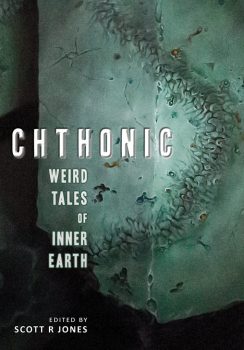
“Commencement” (2001) by Joyce Carol Oates

When I was eleven or twelve years old, I discovered H. P. Lovecraft in the Lockport Public Library, in upstate New York—the collection of Lovecraft stories was large and unwieldy with a distinctive font, which I can “see” vividly if I shut my eyes. The stories that riveted me immediately were “The Rats in the Walls” and “The Dunwich Horror.” At once I fell under the Lovecraftian spell—subsequently I have reprinted Lovecraft tales in anthologies of “literary” stories in the hope of breaking down the artificial barriers and unfortunate prejudices between genres.
—Joyce Carol Oates, Lovecraft Unbound 

Joyce Carol Oates had written eloquently about Lovecraft in The King of the Weird (1996), and curated a collection of his best fiction, Tales of H. P. Lovecraft (1997). Two of her novelettes have appeared in the Lovecraftian anthologies: “Commencement” in Lovecraft Unbound (2009) and “Shadows of the Evening” in Dreams from the Witch House: Female Voices of Lovecraftian Horror (2015). Neither is a story of the Cthulhu Mythos. Oates does not partake of the shared creative universe created by Lovecraft and his contemporaries, her works are not set in and do not expand on the setting as Tina L. Jens does in “In His Daughter’s Darkling Womb” or Margaret L. Carter does in “Prey of the Goat”; she does not reference Lovecraft himself as Joanna Russ in “I Had Vacantly Crumpled It Into My Pocket…But By God, Eliot, It Was A Photograph From Life!” or Adèle Olivia Gladwell in “Hypothetical Materfamilias.”

What is a Lovecraftian tale, without the Mythos and without Lovecraft?

LovecraftUnboundEllen Datlow, editor of Lovecraft Unbound, states in her introduction that she had read and enjoyed Lovecraft, but:

I’ve also read the multitudes of pastiches in anthologies of work “inspired” by Lovecraft, but most—for me, at least—are too obvious and bring little new to the table.

It’s a fair observation, and goes hand-in-hand with Oates’ remark on the prejudices of genre fiction. Lovecraft is more than just a bunch of strange and evocative names, and in his essay Supernatural Horror in Literature, the Providence gentleman himself observed:

The true weird tale has something more than secret murder, bloody bones, or a sheeted form clanking chains according to rule. A certain atmosphere of breathless and unexplainable dread of outer, unknown forces must be present; and there must be a hint, expressed with a seriousness and portentousness becoming its subject, of that most terrible conception of the human brain—a malign and particular suspension or defeat of those fixed laws of Nature which are our only safeguard against the assaults of chaos and the daemons of unplumbed space.

Lovecraftian pastiche may replace “bloody bones” with “eldritch tentacles” and the “clanking chains” with the Necronomicon, but the same principle applies: what writers are trying to recapture should not be the outward form of Lovecraft’s Mythos, but the central mood or essence. This is what Oates tries to capture in her tale, without recourse or reference to any of the outer trappings of the Mythos.

“Commencement” is a work of weird allegory. It is time for Commencement at the University, the annual academic ritual through which graduates get their degrees. There are no names, for even though this is a special event (the two hundredth anniversary of the University), it is also somewhat timeless, a ritual repeated every year without fail. The formula of the university commencement gives the shape of the story. As the pomp and symbolism of the ceremony slowly unfolds, so too do we get a glimpse of the broader setting—advancements in human genetic engineering, cloning, hints of hard science fiction—and the themes of continuity, of the marriage of ancestral strength to contemporary progress.

Then comes the climax, the conferring of the honorary degrees. The mystery of the Pyramid, foreshadowed slowly and with a slow build up of suspense Lovecraft would have approved of, is revealed but not explained. The viewpoint character for the story is the Assistant Mace Bearer, a nameless protagonist that harkens back to the initiates of “The Festival” and “The Shadow over Innsmouth”—unsure and unready for what transpires, as the Commencement continues in its final stages of the Recessional and Disrobing, they find the central truth to all such rituals: to participate in it is to experience a profound change. Like the protagonist in “The Shadow over Innsmouth,” they accept this new self that they have become.

The crux of Oates’ conception is the subversion of expectations; the fact that the ceremonies of medieval universities are still used in the present day are taken as granted. Lovecraft could not have contrived a better source of robed cultists or strange rites than reality provides. What Oates adds is the secondary layer of meaning—the mystery that the outward forms hide and disguise—and then drives it how during the climax. The horror of “Commencement” is not in the visceral details of the conferring of the honorary degrees, but in the culpability of the thousands of attendees, the group acceptance and participation which normalized such bloody exercises as the gladiatorial games of ancient Rome, Madama la Guillotine during the Terror, the Salem Witch Trials, or the sacrifices of Xipe Totec atop the Pyramid of the Sun in Tenochtitlán.

Is it Lovecraftian? The University is not Miskatonic University, not as Lovecraft envisaged it. A story does not automatically become Lovecraftian because an editor includes it in an anthology. Context can color a story, suggest associations which the author might not have intended. If encountered outside Lovecraft Unbound—Oates’ novelette first appeared in Redshift: Extreme Visions of Speculative Fiction (2001)—would it strike the reader as Lovecraftian? Without any direct allusion to Lovecraft’s works, the average reader probably wouldn’t make that connection. Technically, the story does not even have any supernatural element. Yet the influence of Lovecraft is certainly in the piece, with echoes of his themes and methods. Critical readers would no doubt pick up on the Lovecraftian vibe, as Datlow appears to have done, and scholars might look at Oates’ own definition of Lovecraft’s fiction:

Lovecraft with the fusion of the gothic tale and what would come to be defined as science fiction, and with the development of a species of horror fantasy set in meticulously described, historically grounded places (predominantly, in Lovecraft, Providence, Rhode Island; Salem, Massachusetts; and a region in northern central Massachusetts to which he gave the name “the Miskatonic Valley”) in which a seemingly normal, intelligent scholar or professor, usually a celibate bachelor, pursues a mystery it would wiser for him to flee.
—Joyce Carol Oates, Tales of H. P. Lovecraft viii

This is, if not exactly a synopsis for “Commencement,” at least highly evocative of the final product. It may not fulfill Lovecraft’s definition of a weird tale, and readers may never know whether or not Oates consciously had Lovecraft in mind when she conceived and executed this story, it certainly shows his influence. Not with tentacles or the Necronomicon, but by reproducing in form the shape and mood of Lovecraft’s stories, at least as she understands it.

So yes, “Commencement” is Lovecraftian.


Bobby Derie is the author of Sex and the Cthulhu Mythos (2014)

“Prey of the Goat” (1994) by Margaret L. Carter

…so from the wells of night to the gulfs of space, and from the gulfs of space to the wells of night, ever the praises of Great Cthulhu, of Tsathoggua, and of Him Who is not to be Named. Ever Their praises, and abundance to the Black Goat of the Woods. Iä! Shub-Niggurath! The Goat with a Thousand Young!
—H. P. Lovecraft, “The Whisperer in Darkness” (Weird Tales Aug 1931)

RP_shubniggFew of the entities of the Cthulhu Mythos created by Lovecraft & his correspondents in the 1930s were implicitly or explicitly female; of those the most enduring in the imagination of Mythos writers and fans is Shub-Niggurath. Mother Hydra, whatever her literary charms, has not inspired multiple anthologies dedicated to her. Shub-Niggurath is itself nebulous, never appearing on the scene, but as an element of ecstatic worship and invocation in several of Lovecraft’s stories; in “The Mound” Shub-Niggurath is portrayed as a “sophisticated Astarte,” in Clark Ashton Smith’s “The Holiness of Azédarac” the familiar epithet is given a masculine twist as “the Ram with a Thousand Ewes”;  it is only in his letters Lovecraft described Shub-Niggurath explicitly:

Yog-Sothoth’s wife is the hellish cloud-like Shub-Niggurath, in whose honour nameless cults hold the rite of the Goat with a Thousand Young. By her he has two monstrous offspring—the evil twins Nug and Yeb. He has begotten hellish hybrids upon the females of various organic species throughout the universes of space-time (cf. “The Dunwich Horror”) [. . .]
—H. P. Lovecraft to Willis Conover, 1 Sep 1936, Selected Letters
 5.303

Most of the stories about Shub-Niggurath that have been published are written by men. This may not be terrible surprising: most Cthulhu Mythos published has been written by men. When “Prey of the Goat” first appeared in The Shub-Niggurath Cycle (1994), M. L. Carter was the only woman whose work was represented among the offerings.

24516480The horrors of Lovecraft were, by and large, of equal terror to all—you don’t need to be a white male to appreciate cosmic horror, and assigning sex and gender to some of the more alien creatures of the Mythos may be a somewhat laughable enterprise—a diminution of these eldritch deities to prosaic human concerns. But there is a caveat: sex exists in Lovecraft’s fiction, and with the purpose: procreation. Female characters, be they willing participants or victims, may lay with and beget monsters. Important segments of Lovecraftian fiction fall into the familiar cycles of the “demon lover” or “rape fantasy,” which Margaret L. Carter recognized:


H. P. Lovecraft, who was strongly influenced by Arthur Machen, has a wizard’s daughter raped by the outcast dark divinity, Yog-Sothoth, in “The Dunwich Horror.” The girl gives birth to twins, one a queerly repulsive boy who grows at an impossible rate but looks outwardly human, the other an invisible monstrosity, formed of elements alien to this universe. Asenath in “The Thing on the Doorstep” is the result of a union between a blasphemously evil necromancer and a “thing from the sea.”
—M. L. Carter, introduction to Demon Lovers and Other Strange Seductions (1972)


Carter brings this understanding and approach to the sexuality of the Cthulhu Mythos to “Prey of the Goat.” As a horror story, it hits familiar beats: a strange, horrible old artifact. Disturbing dreams. Carnal acts that hint at possession. Prayer and invocations. A victory…with an aftermath. The “demon’s” name is Shub-Niggurath, but the aesthetics are not beholden to Lovecraft; this is the erotic nightmare in a Christian Episcopal mold, a new priest facing an old Catholic terror without even a rite of exorcism in his arsenal. The Mythos elements are prominent, but reserved; Carter seeds a few connections without going overboard. This is a story that ties in to the larger Cthulhu Mythos, but its world is intimate, focused on just two people and their relationship.

The protagonist is Father Michael Emeric, the recipient of the amulet of Shub-Niggurath is his wife Terri. Much of the fine detail in the plot is not devoted to Mythos minutiae, but on the dynamics of the relationship between the two, their respective roles of husband and wife, man and woman; Michael tries not to overstep, to respect Terri’s agency, but when he does feel the need to undermine it finds it surprisingly easy. There’s an undercurrent in the story when it demonstrates how easy it is for Michael to slip into stereotypical masculinity to get what he wants, yet also how reluctant he is to do that. Terri for her part shares a distinct parallel with the female protagonist of  Tina L. Jens’ “In His Daughters’ Darkling Womb (1997)”:

If they could have had a baby—but years of trying had produced no conception, with infertility tests failing to reveal the cause. Now that Terri was past thirty, they’d given up.

Infertility as a literary device has its uses: it it obviates the question of why characters do not have children, it makes conception (if it does happen) all the more miraculous or unholy. Yet there is a fundamental difference in approach between how Carter and Jens use it in these stories—in Jens’ story, the protagonist is female, the miscarriages she suffers are a result of failing to carry to term rather than failure to conceive; in Carter’s the protagonist is male, and the cause of the infertility is more ambiguous. If the infertility tests have failed to reveal a cause, is that because the cause lies not within her, but within her husband?

Carter essentially is putting the infertility fear on the other foot: not the feminine fear of miscarriage, or inability to have children, or birthing a monster, but the masculine fear of being cuckolded. The title “Prey of the Goat” forces the reader to ask the question: who is the prey, Michael or Terri? Certainly, the pastor’s wife is the one possessed by Shub-Niggurath, the one who has to suffer through the terrible erotic dreams where:

Then the goat stepped down into the crowd. She grabbed the first man and forced him to—forced him into her. He screamed.

But Terri tells her husband, when he asks her role in the dream, “I was the goat!” Later on, Michael wakes to find his possessed wife riding him—a rare example of rape of a man by a woman in Mythos fiction—the first dream is revealed as foreshadowing. Terri is the focus of the supernatural activity of the story, but the plot involves both of them, and this feeds into the ambiguous sexuality of Shub-Niggurath, who blends male and female characteristics in its appearance here. Whether Michael is threatened by the superior masculine aspect of Shub-Niggurath, or by the sexual dominance asserted by Terri under the Goat’s influence, the unexpected menage has Michael questioning his inadequacy, an attitude that carries right through to the foreboding end of the story. Abortion is ruled out by faith, but also by Michael’s impotent clutching at straws: “Besides, she might be wrong. It might be mine.”

“Prey of the Goat” almost never appeared at all; it was originally accepted for Lin Carter’s Weird Tales published by Zebra Books, but that series ended in 1983. If not for The Shub-Niggurath Cycle a decade later, it might never have seen publication at all. Which is a shame since it is a deceptively simple plot which is well worth deeper consideration. Carter has returned to the Mythos a few times, most notably with the romance novel Windwalker’s Mate (2008) and the erotic novella Tentacles of Love (2009).


Bobby Derie is the author of Sex and the Cthulhu Mythos (2014)

“Hypothetical Materfamilias” (1994) by Adèle Olivia Gladwell

The eerie nostalgia of Gladwell’s enigma might have resonated in Lovecraft’s skull.
—Ramsey Campbell, introduction to The Starry Wisdom: A Tribute to H. P. Lovecraft

Lovecraftian fiction tends to be fairly conservative in form. Pulp tales were designed for ready consumption, even if readers did occasionally have to reach for the dictionary, and the stories follow the lines of standard genre tales for the most part. The writers in the generations following Lovecraft & co. were not obligated to follow the same constraints for publication, but many fell back on conventional narrative structures, especially for homages and pastiches. Experimental Lovecraftian fiction remains rare.

The Starry Wisdom: A Tribute to H. P. Lovecraft (1994) 1639140-starry_wisdomwas an entire anthology of Lovecraftian fiction—Lovecraftian in the sense that many of the stories were about Lovecraft and his influence, not just embellishments on the Mythos, much of it experimental or at least unconventional. By luck or dint of effort, the anthology has proven surprisingly influential in the long term; Alan Moore’s “The Courtyard” went on to inspire several successful comics and graphic novels, and other noteworthy contributors include J. G. Ballard, William S. Burroughs, Ramsey Campbell, Brian Lumley, and Grant Morrison. In addition to prose it contains John Coulthart’s classic adaptation of “The Call of Cthulhu”, a graphic stories by James Havoc & Mike Phillbin and Rick Grimes, and three essays on the Lovecraftian occult. It was a groundbreaking, forward-looking collection of a very different kind of Lovecraftian fiction than the collections of reprints and pastiches that were being put forth by Chaosium at the time.

Adèle Olivia Gladwell is the only female author in the book.

“Hypothetical Materfamilias” is a non-traditional narrative, partaking of a stream-of-consciousness, but really it is the kind of half-poetic speech of ‘zines, underground comix, and white label remixes. Like a lot of experimental fiction, the nuance of the piece is less in a coherent account of a series of events than the feel and rhythm of the words, the emotions and associations evoked by the images they describe; weird phrases rise to the eye at random from what at first glance might be literary noise. Readers bring their own experience to such a piece which will color any interpretation, yet there is a story there, in the flow of words.

Lovecraft, from within a tableau of fastidious time, knows IT comes for him. IT keeps coming.

The focus of Gladwell’s piece is on IT—never named or defined, the story works around the definition of IT with the promise and portent that “IT comes. And you know IT comes for you.” The gist of the narrative is of death and birth, except played in in a kind of reverse, like watching a baby being born in rewind, disappearing back into its mother. An unbirthing portended and sometimes shrouded in symbolism, and focused on a male figure who is, by context, probably Lovecraft; the unnamed female figure that appears in italicized paragraphs might be his mother, the eponymous “hypothetical materfamilias” of the title; the author herself is “I,” the one writing the story, who breaks through occasionally to speak directly to the reader, and she is the medium through which the message is expressed. Identifications are necessarily vague—is IT death? Lovecraft? Cthulhu? Is IT knowable, in any sense, or is it defined by being undefinable?

Lovecraft is mentioned by name exactly three times in “Hypothetical Materfamilias,” and no other Mythos entities or architecture are mentioned explicitly by name: while some of the images and descriptions appear to coincide with elements of Lovecraft’s fiction, there are no direct references or allusions as in Tina L. Jens’ “In His Daughter’s Darkling Womb.” This story is essentially as far as a work of Lovecraftian fiction can get away from being Cthulhu Mythos fiction; Joanna Russ’ “I Had Vacantly Crumpled It Into My Pocket… But By God, Eliot, It Was A Photograph From Life!” would still be Lovecraftian in tone and content even if you removed any explicit reference to Lovecraft, but remove three words from “Hypothetical Materfamilias” and the piece isn’t “Lovecraftian” in the strictest sense.

Most Mythos and Lovecraftian fiction do not challenge the reader; they may play with uncomfortable scenes and concepts, but the communication of those images and ideas is usually couched in a very familiar narrative framework—the discovery of old family secrets, an exploration into the forbidden, an extraordinary event to be witnessed or explained—”Hypothetical Materfamilias” is more of an experience. It challenges the reader to question what they just read, to derive sense from it, to fit it into a rational framework; but the normal levers and handholds of Mythos fiction are absent here. There is little for the reader to grasp, save the three uses of Lovecraft, and those don’t help very much; a sift for themes and images will turn up similarities with other things Lovecraftian, but how much of these are a reflection of the writer’s intent versus the reader “reading in” to the text?

Gladwell’s few writing credits before this piece were entirely through Creation; it isn’t hard to see these as possible vanity publishing projects, and this represents her last known published work. While the piece meets the bare minimum for inclusion in the book by the triple invocation of “Lovecraft,” like calling forth Bloody Mary or the Candy Man, the lack of any real Mythos or Lovecraftian theme have probably doomed it to obscurity. All of which may be reasons why “Hypothetical Materfamilias” have failed to gain traction, besides the 1999 reprint of The Starry Wisdom.

Yet there is no work which is not due serious consideration—every writer starts and ends somewhere, every person has relationships. Every writer starts and ends somewhere, and every story has to be appreciated and judged on its own merits, and in its context. In this case, that means to consider Gladwell’s piece next to the rest of The Starry Wisdom anthology. In that context, “Hypothetical Materfamilias” fits rather well.

Many of the works are experimental or use a nontraditional narrative, not all of them refer directly or indirectly to Lovecraft or the Cthulhu Mythos, most of the writers are not familiar names in Mythos anthologies, and few of the works have been republished. So in that respect at least, Gladwell’s story is of a piece with the rest of the anthology. It may not be an instant classic of Lovecraftian fiction like Coulthart’s graphic adaptation or Moore’s “The Courtyard,” and stands separate from the kind of borrowing and elaboration that marks much of Mythos fiction such as Robert M. Price’s “A Thousand Young” and Grant Morisson’s “Lovecraft in Heaven,” but it works fine as a standalone piece separate and outside of the usual Lovecraftian tradition, as an example that Lovecraftian fiction need not be constrained to familiar channels.


Bobby Derie is the author of Sex and the Cthulhu Mythos (2014)

“In His Daughter’s Darkling Womb” (1997) by Tina L. Jens

[…] his Secret Seed, Cthylla, in whose darkling womb he planned to rise up again one day reborn, had been threatened.
– Brian Lumley, The Transition of Titus Crow (1975)

SingersStrangeSongsAs with “I Had Vacantly Crumpled It into My Pocket . . . But By God, Eliot, It Was a Photograph from Life!” by Joanna Russ, the title of Tina L. Jens’ piece is a signal about the nature of the work, a reference for readers as to the nature of the piece. A fitting homage to the works of Brian Lumley, given that her novelette was published for the first and only time in Singers of Strange Songs: A Celebration of Brian Lumley (1997). The reason why it has languished mostly forgotten does not reflect on the individual merits of Jens as a writer or of her novelette as a work of fiction, but the nature of the Cthulhu Mythos itself.

There is no canon to the Cthulhu Mythos. Lovecraft and his contemporaries wrote their stories independently, none absolutely behooved to the other to keep their shared mythology consistent—although they played and collaborated: Lovecraft (with the aid and argument of August Derleth, E. Hoffmann Price, Farnsworth Wright, and C. C. Senf) derived a German name for Robert E. Howard’s Black Book, and so we have the Unaussprechlichen Kulten. Clark Ashton Smith offered some clarifications on the genealogy of his alien entities to young fan R. H. Barlow, and so we have the family tree of the gods.

Hazel_Heald_WS3210Genealogy is a fine tradition in the Mythos: it establishes relationships and offers infinite room for expansions, amendments, and additions. Most writers default to Lovecraft’s fiction as “canon,” and so build off of the material in his stories in preference to anything else. Lovecraft, in ghost-writing for Hazel Heald in “Out of the Aeons” (WT Apr 1935) created Ghatanothoa. Lin Carter in “Out of the Ages” (1975) made Ghatanothoa the son of Cthulhu, and gave him two brothers: Ythogtha and Zoth-Ommog. Brian Lumley, in turn building off Carter,  introduced Cthylla in his novel The Transition of Titus Crow (1975).


Fewer writers build off the works of later Mythos writers. Aside from possible issues of copyright, the mythology gets convoluted and contradictory, and the quality of the writing and approach to the material varies greatly. Yet many of the concepts created by writers are more enduring than the fiction; Frank Belknap Long’s Chaugnr Faugn appeared and was destroyed in the forgettable novella The Horror from the Hills (WT Jan-Mar 1931), but still inspired W. H. Pugmire’s classic “The Child of Dark Mania” (1997); Robert Bloch’s Mythos tales featuring the tome De Vermiis Mysteriis were out of print when featured by Caitlín R. Kiernan’s in “Derma Sutra (1891)” (2008). The success of these stories lies in the ability of later writers to pay homage to their forebears, while doing something innovative with the material.

“In His Darkling Daughter’s Womb” is Jens’ homage to Lumley and his creation—but she does that not by rote recital, nor does she attempt pastiche. “In His Darkling…” is episodic; is built from brief scenes and snatches of field journal entries which provides a brisk pace for what could otherwise have been a good-sized novel. The opening verse (“In his darkling daughter’s womb | Great Cthulhu will be born”) sets the stage for readers who have never read Lumley or Lin Carter before—they may not catch all the references, but they are more informed than the protagonist, Dr. Katherine Cullom.

She is a scientist, skeptical of myth and legend, but entranced by the wonder of what they have captured: a giant, unique octopus specimen. A set-up with all the nuance of bringing an alien lifeform aboard the space station in a horror movie, but the trope works: it allows the reader Cullom’s perspective of Cthylla, behind the glass in her giant aquarium tank, even as the reader get a look into the personal life of Dr. Cullom…and the story really is about her, as much as all the Mythos lore being referenced:

I am tired of the moralizing, the pompous righteousness of all these men, who see me as nothing more than a cold-hearted bitch who cares more for work than her unborn child. What do they know of the pain I must endure as I wait, helpless, hopeless, and without distraction, as yet another child withers and dies in my womb?

Miscarriage is a reproductive horror that is unique to women, and in the Mythos a horror generally unexplored; infertility and the loss of a child are mundane horrors that come to us from within, rather than from outside…and there is no running from them. There are shades and borrowings in Jens’ story familiar to many horror fans—the everyday miracle of conception and birth is ripe for perversion, as famously illustrated by Rosemary’s Baby (1967)…or “The Nameless Offspring” (1932) or “The Dunwich Horror” (1929) or “The Great God Pan” (1890)…but those stories are all about human women being subject to conception, often against their will. Jens’ story takes a different tack: there is no rape in this story, and the primary focus is not on a human woman being impregnated. The lack of violence in the sexual act, if nothing else, sets this apart from most Mythos stories that deal with the reproductive theme.

The story has probably too many in-jokes and a little too self-aware to be a classic of Mythos fiction. The crew outside of those Cullom’s immediately interacts with are faceless, nameless, and disposable; her emotional distance from them is reflected in our lack of information about them. David Gaugham is the closest thing the piece has to a villain, and spends the story plotting and dropping Alhazred’s rhymes ham-handedly (with a brief but excruciating drop to work in a moment on abortion rights—probably just to close off one potential avenue of escape). By contrast, Cthylla gets the most development of any of the characters: Cullom’s obsession with her work lavishes the female Mythos entity with attention. While the reader knows the prophecy of Cthylla, where she comes from and what she is intended to do, she cannot reproduce asexually. It is not without irony that Cullom, who has suffered through fertility treatments and attempts at in vitro fertilization, suits up in a set of tentacles to artificially inseminate Cthylla.

“In His Darkling Daughter’s Womb” is in many ways a dual narrative; Cullom’s tale of very human emotional pain, loss, scientific curiosity, and eventually hope intertwines with Cthylla’s own story, and through Cullom does Cthulhu’s daughter conceive, and through Cthylla does Cullom reach her own kind of redemption—yet at the same time the whole sequence of events takes place within the larger narrative of Lumley’s prophesy of Cthulhu’s return. Even the small triumphs of humanity are, ultimately, no more than steps leading to something greater, and like Rosemary in Rosemary’s Baby, Collum cannot even see how she is being manipulated to bring about what others desire. Scrape all the unnecessary Mythos references out of this story, and it still holds up as a decent story of a weird monster that has been captured by a female scientist dealing with her own issues; add them in however, and it becomes part of a larger story…which is the point of the Cthulhu Mythos.


Bobby Derie is the author of Sex and the Cthulhu Mythos (2014)

“Shadow Over Innsmouth” (1942) by Virginia Anderson & “The Woods of Averoigne” (1934) by Grace Stillman

Joanna Russ may have been the first woman to write prose set in the Cthulhu Mythos…but she was preceded by at least two female poets who tackled the Mythos as their subject, and while often neglected, their work stands among the first verse contributions to the burgeoning Mythos.

Poetry has always been an important aspect of the Mythos. Many of the principal writers of the early Mythos—H. P. Lovecraft, Robert E. Howard, Clark Ashton Smith, August Derleth, Frank Belknap Long, etc.—were poets, and bits of poetry are embedded in their fiction, or like Lovecraft’s “Fungi from Yuggoth” (1930-1943) cycle or Robert E. Howard’s “Arkham” (1931) can be viewed as a part of the fabric of the Mythos itself. This poetic tendency in part reflects the tradition of the fantastic verse such as “The Rime of the Ancient Mariner” (1834), which was sometimes made a part of weird fiction, as in Edgar Allan Poe’s “Ligeia,” which was revised to contain “The Conqueror Worm” (1845).
Of course, another large part of the poetic tradition of the Mythos is that Weird Tales was unusually in the amount of poetry it published—including several of Lovecraft’s “Fungi” and works from other authors. What might surprise readers is the amount of poetry in WT that was written by women. According to Partners in Wonder: Women in Science Fiction, 1926-1965, 63 female poets were featured in the pulp magazine during the period of the Unique Magazine’s heyday—including Alice I’Anson, whose “Teotihuacan” (WT Nov 1930) so inspired Robert E. Howard. Amateur poets also existed among the early fandom, writing verse to contribute to fanzines, such as Virginia Kidd’s “Science and Knowledge” (The Fantasy Fan, Dec 1933).
It was rare for anyone not among the circle of Lovecraft & his fellow Mythos writers to craft Mythos poetry in that early period, but at least two did—Virginia “Nanek” Anderson and Grace Stillman.
Shadow Over Innsmouth
by Virginia Anderson
(Dedicated to H. P. Lovecraft by Nanek)
We have forgotten some of mankind’s ways:
The art of dying, or say … Meroy’s gift.
So when age grows upon us and our days
By span of man are numbered, the seas rift
And take us in. Then in the rites of old
We pledge allegiance where the strange pale gold
Of obscene Gods dispense eternal life
Wherein to glory, savour and renew. …
Free from the world’s alarms and strife
In ocean palaces of colalous hue,
Shedding the shape of man and doubling back
In form at least on evolution’s track.

Virginia Combs came of age in the small town of Crandon, Wisconsin during the tale end of the Great Depression; bought her first pulp magazine (Planet Stories) in 1938 or ’39, and soon was a prolific writer of fan-letters to several pulp magazines, most especially The Spider. She took the pen-name “Nanek,” borrowing the term from the Sikh religion of the Spider’s associate Ram Singh (Guru Nanak was the founder of Sikhism, the name was sometimes rendered in English as “Nanek”). Her correspondents included Norvell Page, A. Merritt, Isaac Aasimov, and Hannes Bok. At a time when fandom was primarily male, she stood out; Page even wrote her into the Spider series as “Jinnie Combs” in “Volunteer Corpse Brigade” (The Spider Nov 1941). In 1942, she married and became Virginia Anderson—but to her pulp friends and fandom, she was always Nanek.

I guess it never occurred to me that there were things you didn’t do because you were male or female.
— Virginia Anderson, XENOPHILE #40 (5)

The pulps and fandom were not just an escape, but an outlet for her creative energies—she wrote poems based on the works of the pulp authors she admired, which were published in Famous Fantastic Mysteries and fanzines. In 1942, Francis T. Laney, a prominent member of the Los Angeles Science Fiction Society wrote, asking for a poem for his fanzine The Acolyte, which was mainly dedicated to H. P. Lovecraft. Nanek responded with “Shadow Over Innsmouth” which appeared in the second issue (Winter 1942).

“Shadow Over Innsmouth” is an homage to H. P. Lovecraft’s “The Shadow over Innsmouth” (WT Apr 1936), but where Lovecraft focuses on the human character discovering (and eventually embracing) their Deep One heritage, Nanek gives us the alien perspective of someone who has already completed the transition. Rather than simply revisit Lovecraft’s tale, she moves beyond it, taking her cue from Lovecraft’s final line “[…] in that lair of the Deep Ones we shall dwell amidst wonder and glory for ever.”

The tone of the poem is one of escapism—though not within an element of horror, involving as it does rites of allegiance to “obscene Gods,” and the “doubling back […] along evolution’s track.” Immortality still has its price, physical and spiritual; to shed human constraint means to become something other than human. Contemporary readers might see in this foreshadows of posthumanism, but there is also an echo of Christian mythos here: “[…] our days By span of Man are numbered” is almost Biblical language, and as many Christians expect their souls to be taken into heaven, so to do “the seas rift And take us in.” This does not necessarily imply any blasphemous intent on Nanek’s part, but it does help to contrast the “life everlasting” beneath the waves to the “life everlasting” in Heaven—both involve leaving behind earthly life.

Nanek’s “Shadow Over Innsmouth” was only reprinted once, in The Innsmouth Cycle (1998), the text is reproduced from that copy; “Meroy” and “colalous” are probably transcription errors (for “Mercy” and “coralous”), made when originally setting the type for The Acolyte. Given the obscurity of that ‘zine, it is unfortunate that Nanek’s poem did not receive wider distribution.

The Woods of Averoigne
(Inspired by the Clark Ashton Smith’s stories)

By Grace Stillman

Deep in the woods of Averoigne,
Goblin and satyr, loup-garou,
Devil and vampire hold their feasts:
Forces of wizardry imbue
Even the foliage of the oak;
Beeches and pines in drear decay
Uplift their bony branches wan
Under a sky of corpse-like gray.
Evil is there in Averoigne:
Evil I should not see at all;
Evil whose very presence seems
Holding me in curious thrall:
Knowing it well, my feet still grope
Nearer this force malign, withdrawn;
In dread, against my will I creep
Deep in the woods of Averoigne.

Grace Stillman is a cipher; “The Woods of Averoigne” is her only publication in Weird Tales, nor does she have credits in any other pulp index. The published letters of Clark Ashton Smith, H. P. Lovecraft, etc. contain no reference to her or the poem, so we have no idea what they thought of it—but we know what inspired it.

Clark Ashton Smith’s Averoigne is a fictional medieval French province sometimes compared to James Branch Cabell’s Poictesme, and was one of his own original settings—much as the Miskatonic River valley and its towns of Arkham, Dunwich, Innsmouth, and Kingsport are “Lovecraft Country,” and Robert E. Howard had his stories of the Hyborian Age and Thurian Age. Averoigne was introduced to the readers of Weird Tales with “The End of the Story” (May 1930), and continued on with “A Rendezvous in Averoigne” (Apr-May 1931), “The Maker of Gargoyles” (Aug 1932), “The Mandrakes” (Feb 1933), “The Beast of Averoigne” (May 1933), and “The Holiness of Azédarac” (Nov 1933). Her poem itself would appear in the same issue of Weird Tales as another of Clark Ashton Smith’s Averoigne tales, “The Colossus of Ylourgne” (Jun 1934).

Stillman’s poem evokes the witch- and fiend-haunted forests of Averoigne, which form a common element in many of Smith’s tales. Plant life was one of Smith’s foci in life, and it shows in his fiction:

[…] the gnarled and immemorial wood possessed an ill-repute among the peasantry. Somewhere in this wood there was the ruinous and haunted Château des Faussesflammes; and, also, there was a double tomb, within which the Sieur Hugh du Mainbois and his chatelaine, who were notorious for sorcery in their time, had lain unconsecrated for more than two hundred years. Of these, and their phantoms, there were grisly tales; and there were stories of loup-garous and goblins, of fays and devils and vampires that infested Averoigne.
(“A Rendezvous in Averoigne”)

Much of Stillman’s imagery is taken directly from Smith’s descriptions of the setting, right down to the types of trees he mentions in the stories. It is, like Nanek’s later piece, a derivative work that seeks to capture something of the essential idea and feel of the original, and succeeds not so much in the first few opening lines with their talk of familiar horrors, but for the fact that despite the dark legends of Averoigne people are still drawn there—as many readers, including Grace Stillman herself, were. Again, we see a writer who has struck at a point essential to the Mythos: the point of attraction, for lovers of the weird, to these terrible and remote regions, even though they are warned away from it. By entering these areas, the protagonist—and by extension the reader—cross a threshold, pass through a limnal space or boundary, break a taboo. What is more, the nameless narrator in Stillman’s poem knows that they are doing this, but are unable to help themselves, as something draws them deeper into the darkness.

As far as I can determine “The Woods of Averoigne” has never been republished. Like Nanek’s “Shadow Over Innsmouth” it represents something of a lost start. Like many early contributions to the Cthulhu Mythos, they failed to gain enough audience to influence subsequent writers and fans. They were a part of the movement that eventually exploded into the sprawling shared universe of the Mythos, but were largely overlooked and ignored. It isn’t enough to simply write something good, or even to have it published; if it is not referenced, reprinted, or revisited…it becomes forgotten, unless someone finally resurrects and remembers it.

†††

With thanks and appreciation to Dave Goudsward for his help.


Bobby Derie is the author of Sex and the Cthulhu Mythos (2014)

“I Had Vacantly Crumpled It into My Pocket … But By God, Eliot, It Was a Photograph from Life!” (1964) by Joanna Russ

Before the story begins, before the very first word, Lovecraft fans will recognize the title as the the climactic revelation of H. P. Lovecraft’s “Pickman’s Model” (1926). The title is the hook to reel the reader in, and the import of that one line doesn’t hit the reader until the penultimate sentence. Despite the fact that “I Had Vacantly Crumpled It into My Pocket … But By God, Eliot, It Was a Photograph from Life!” was first published in The Magazine of Fantasy and Science Fiction in 1964, it would not appear in a Mythos anthology until Cthulhu 2000 (1995)… and it hasn’t been reprinted in a Mythos anthology since.

This might seem odd, considering that Joanna Russ might be the first female prose writer who contributed to the Cthulhu Mythos. H. P. Lovecraft himself collaborated with “Elizabeth Berkeley” (Winifred Virginia Jackson) on “The Green Meadow” (1918-1919) and “The Crawling Chaos” (1921), Anna Helen Crofts on “Poetry and the Gods” (1920), and his future wife Sonia Haft Green on “The Horror at St. Martin’s Beach” and “Four O’Clock” (1922). None of these are Mythos tales per se, although “The Crawling Chaos” became a sobriquet for Nyarlathotep. Later, working as a revisionist, Lovecraft ghost-wrote tales for  female clients including “The Curse of Yig” (1928), “The Mound” (1929-1930), and “Medusa’s Coil” (1930) for Zealia Brown Reed Bishop; “The Horror in the Museum” (1932), “Winged Death” (1932), “The Man of Stone” (1932), “Out of the Aeons” (1933), and “The Horror in the Burying-Ground” (1933-1934). HPL also “collaborated” with Catherine L. Moore insofar as both contributed sections to the round-robin “The Challenge from Beyond” (1935); Moore herself never appears to have written a Mythos story.

From Lovecraft’s death until 1964, when Russ’ “I Had…” was published, the sub-genre of Mythos fiction appears quite bare of female writers—although it is hard to say this with utmost certainty, given the prevalence of the fanpress (for example, Virginia “Nanek” Anderson contributed the poem “Shadow Over Innsmouth” to The Acolyte Winter 1942). Certainly the first edition of Tales of the Cthulhu Mythos (1969) was all-male, as were several anthologies that followed. Russ finally made it in to the revised version of Tales, the 1990 edition, with her second and final Mythos story “My Boat” (1976).

The problem for editors and anthologists is that “I Had…” was way ahead of its time. It is a reference to H. P. Lovecraft and his Mythos, but it isn’t a Mythos story in itself, does not use or expand the mythology. August Derleth, if he had been in a litigious mood, could hardly have found anything to issue a cease & desist about except the title. The crux of the story is that if you recognize the title, if you pick up the story to read it, if you go in there expecting another pastiche or sequel to “Pickman’s Model”… then you the reader have taken the bait.

Which is all the more apt when you consider that the story is almost cruelly accurate portrait of a certain segment of fandom itself; the socially awkward nerd, the obsessive Lovecraft fan which is a Western prototype of the otaku. Even today the caricature of Irvin Rubin she sketches cuts precisely because fannish collectors not only knows something of the type, but if they’re reading the story then they probably identify at least a little bit with that dark side of fandom. Rubin is the bookish kid with no friends who grew up to be a bookish adult with no friends, no lovers, no real life but a long delayed adolescence. There but for grace may have gone us all. For many such fans starved of human companionship, the possibility of real interaction is enticing as it is abnormal…so it is when Rubin meets a woman.

On a technical level, Russ is playing a stranger game than even the premise of the story. In format, it is not quite a Lovecraftian pastiche; Rubin is the vaguely Lovecraftian protagonist, but the story itself is told through two narrators—the good-hearted, older Miss June Kramer he works with, and a nameless narrator who provides the final piece of the story. Kramer’s narrative gives a view of Rubin by someone who is at once wiser and sympathetic, though we see little enough of her: the Miss suggests a woman who never married or divorced, rather than a widow; her age is somewhere north of 40, putting at least 12 years between her and Rubin; she has sufficient regular social interaction to have a group of ladies over for bridge and to share a story over a cup of coffee in the company cafeteria—and who is moved enough by Rubin to leave her bridge game and go to his cold room, just to prove that he does have at least one friend. The nameless narrator we never see; Kramer’s narrative serves to get us to the anticlimax, where Rubin is about to be married. The nameless narrator carries the story through the last part, which Miss Kramer never saw—perhaps because Russ didn’t want her to see it, wanted her to preserve the innocence of knowing what really happened to Irvin Rubin. Yet Russ definitely wants the reader to know what happened to him…

It is the reader that completes this story. If you haven’t read “Pickman’s Model,” if you aren’t familiar with Lovecraft and that certain type of obsessive and lonely fan, then the story is a fine weird tale, but nothing special. Maybe even a little hokey, because like M. R. James it leaves a great deal unsaid, unexplained; the meaning is implied between the lines. The catch requires recognition, and a very different use of Lovecraft than almost any other author has ever used. Arguably, Russ didn’t have to use Lovecraft for the story—but who else would she use, in 1964? Lovecraft already had the legend for it, the myth built up around himself and his writings.

Once you read the story, once you get the cruel joke, you may never read it again. The prose is not beautiful, the essence of the story a one-note tragedy. That couldn’t have helped it with the anthologists either: many fans want pastiches, stories that celebrate and expand on Lovecraft & co.’s artificial mythology, and many writers want that too. It’s fun, it’s part of the game. “I Had…” is ultimately more adult and demanding—a story with insight, which demands a moment’s reflection. One you may be glad to have read, if only because it is so different from what most people consider a “Lovecraftian” story.

###


Bobby Derie is the author of Sex and the Cthulhu Mythos (2014)