I’m so glad you liked Jirel and the BLACK GOD’S KISS. You know, I never can tell when a story’s good or not. It never fails to surprise me when people are complementary. Jirel was considerable fun, but I hadn’t considered the story is very good. Somehow it seems—along with the rest of my later efforts, to lack the unity that SHAMBLEAU, BLACK THIRST and, in a smaller measure, SCARLET DREAM had. And I am awfully sorry, but I’ve already finished a sequel. I can hear you gritting your teeth, but please, mister, a girl has to live. You can shut your eyes and hold your nose, if necessary, when it comes out, but Mr. Wright was very much enthused about Jirel and wants more. And when he cracks the whip I’ve got to jump. —C. L. Moore to R. H. Barlow, 5 Jul 1934, MSS. Brown Digital Repository
“Black God’s Kiss” (Weird Tales Oct 1934), the first tale of Jirel of Joiry, had been published a scant two months before. If Farnsworth Wright, editor of Weird Tales, had already suggested C. L. Moore write a sequel, starting what was effectively a second series character in the magazine before the first episode had even been published, suggests he had great faith in both Moore and the character.
Unlike with Northwest Smith, whose subsequent stories so far have been largely disconnected episodes with no strict continuity, “Black God’s Shadow” was a direct sequel to “Black God’s Kiss.” Appropriately, the story begins with a brief recap of the first, as Jirel regrets her supernatural vengeance on Guillaume, who had sought to conquer her. Jirel is haunted by her decision—and Guillaume’s ghost. So Jirel resolves to return to the dark land and save his damned soul, if she can.
If “Black God’s Kiss” was an echo of Alice’s Adventures in Wonderland (1865), then “Black God’s Shadow” is reminiscent of Through the Looking Glass (1871); sufficiently self-contained for new readers, but retreading familiar themes. There is no solid mythology here as in “Dust of the Gods” (1934) or Lovecraft’s Mythos, Jirel experiences these things and interpreted them through instinct as much as her rational mind, but there is no secret history, no account of forbidden names—but there is an elemental, spiritual struggle which is the hallmark of most of Moore’s stories so far, a contest of the human spirit against something inhuman.
If this be sword & sorcery, it was not quite in the same vein as Robert E. Howard’s Conan the Cimmerian; Jirel’s sword avails her little during her trek to the underworld, but there is a certain similarity of character that the two share. For when Conan says:
Let teachers and priests and philosophers brood over questions of reality and illusion. I know this: if life is illusion, then I am no less an illusion, and being thus, the illusion is real to me. I live, I burn with life, I love, I slay, and am content. —Robert E. Howard, “Queen of the Black Coast” (Weird Tales May 1934)
It seems to presage when Jirel feels:
She remembered laughter, and singing and gayety—she remembered slaughter and blood and the wild clang of mail—she remembered kisses in the dark, and the hard grip of men’s arms about her body. —C. L. Moore, “Black God’s Shadow” (Weird Tales Dec 1934)
At the end of the story, Jirel is content, much as Conan had somber satisfaction after meting out death to what killed his own lover, Bêlit. Yet there the parallels end; Conan does not replay the descent of Inanna, and Jirel’s quest is one of mercy—or at least, freedom from the memory of Gillaume that haunts her—and that supernatural adventure is as much an assuage to her grief as it is an exorcism.
While Roy Thomas & co. never say so explicitly, “Black God’s Shadow” may have another Conan connection, as one line in it strongly recalls the character of Red Sonja‘s insistence that no man shall have her unless she be beaten in battle:
For she had been the commander of the strongest fortress in the kingdom, and called no man master, and it was her proudest boast that Joiry would never fall, and that no lover dared lay hands upon her save in answer to her smile. —C. L. Moore, “Black God’s Shadow” (Weird Tales Dec 1934)
Jirel is less than virginal, a point that C. L. Moore never lingers on but makes apparent, even in this second episode. Like Northwest Smith, she is presented neither as a slut or a nun, and shows no shame at sexual desire, but neither is she ruled by it, nor does any moral punish her for it. In an age of flappers who flaunted sexual norms, Jirel perhaps represents the kind of woman that many wished they could be.
Moore worried about how this second character would be received:
What did you think of BLACK GOD’S KISS? And B. G.’S. SHADOW? Jirel doesn’t seem to have gone over so well, though Mr. Wright thought B.G.’S. K. the best I had done up to that time. I’m working on another Jirel story now.—Oh, I was forgetting. You haven’t read all my stories, have you? —C. L. Moore to Forrest J. Ackerman, 3 Dec 1934
This is especially true in Moore’s letters to R. H. Barlow, who was trying to gently nudge her from falling into the trap of pulp pap.
I am terrified every time I think about your warnings not to get hackneyed. You’ll have to let me know when I begin to show signs of it. You must, tho, give me a little latitude in the matter of continuing Smith and Jirel stories ad nauseam. I know how you hate it. Keen an eye on me, tho, and tell me all my faults. I get such an awful swelled-head when people flatter me that I do need someone to say flatly, “That’s awful!” sometimes. All of which I’ve remarked on before, of course. Not that I don’t enjoy the compliments you relay too. —C. L. Moore to R. H. Barlow, 31 Dec 1934, MSS. Brown Digital Repository
There was enough support for Jirel in the ‘Eyrie’ to give Moore a swelled head, even if it was slightly less effusive than for Northwest Smith:
Jirel of Joiry
Gertrude Hemken, of Chicago, writes: “About C. L. Moore and The Black God’s Kiss: that Amazon, Jirel, is a gal after my own heart, by gum. Somehow I always preferred women of that type, to clinging vines, or sweet little ones who shudder at the thought of killing a fly. Of course, it isn’t supposed to be nice for women to curse a blue streak as Jirel did, but, shucks, it makes her all the more interesting (to me). And now we find Jirel again in this issue (December). Gosh, I could stand her for every issue, and keep yelling for more. She’s just that kind of a girl. What more can I say but that I am immensely fond of her, and stand a bit in awe of such a maid, although fictitious? Long live C. L. Moore, who has the ability to create such dynamic characters as Jirel of Joiry and Northwest Smith.[“] —The ‘Eyrie’, Weird Tales Feb 1935
Lovecraft was slightly less effusive in his praise, though he wrote to several correspondents that the Jirel sequel was the second-best story in the issue, e.g.
The December W T is strikingly better than its mediocre predecessor. Klarkash-Ton’s fascinating “Xeethra” easily leads, with “The Black God’s Shadow” as a fair second. —H. P. Lovecraft to F. Lee Baldwin, 7 Dec 1934, Letters to F. Lee Baldwin, etc. 114
In a later letter, Lovecraft expanded slightly:
“The Black God’s Kiss”, despite overtones of conventional romance, is great stuff. The other-world description & suggestions are stupendous. “Black God’s Shadow” not quite up to it. —H. P. Lovecraft to Duane W. Rimel, 22 Dec 1934, Letters to F. Lee Baldwin, etc. 248
Which is fair. “Black God’s Kiss” had novelty on its side, and the romantic schmaltz that Lovecraft disliked never really came in until the end. In “Black God’s Shadow,” Moore starts out where she left off, and drags Jirel back down through the same passage. Twice, however, was enough. When next Jirel of Joiry returned, it would be with a new and more original adventure.
Weird Tales was not the only pulp that C. L. Moore read, nor the only one she submitted stories to. While it might seem that she was selling everything that she wrote (and Moore would say as much in some later interviews), her letters in 1934 show that Farnsworth Wright, editor at Weird Tales, wasn’t accepting everything that came off of C. L. Moore’s typewriter—and so Moore splashed the science fiction pulps, selling “The Bright Illusion” to Astounding for its October 1934 issue—and that story has an interesting origin:
Yes, I do much more revising that I care about. Have to, tho it simply sickens me, and I hate everybody in sight while laboring away at the disgusting job. A story of mine which I’ve just sold to ASTOUNDING and which will appear in Oct. is really a third of one original N.W.Smith tale. I had that almost finished when I saw that it was two stories, and split it apart. Then the half I got to work on began to show amoeba-like tendencies toward division, and the third attempt resulted in THE BRIGHT ILLUSION, which I’ve sold, to Astounding. The other two nuclei are still simmering gently in the back of my mind, and may emerge some day. —C. L. Moore to R. H. Barlow, 5 Jul 1934, MSS Brown Digital Repository
“The Bright Illusion” starting out as a Northwest Smith story makes sense; the protagonist Dixon is broadly similar to Smith in Moore’s previous stories, although not as well developed. As to the original story, Moore would expand on that:
I wrote a story once, which I don’t believe you ever saw—starting out as my story “Greater Glories” started with a man lost in the interior of a giant body, being swept into its brain-chamber and finding himself in the presence of a god whose people have almost completed their race-goal. The people are of peculiar physical structure which permits their amalgamation into one immense and rather horrid-looking mass, like a great vine budded with individuals who by now have sunk their individuality into the whole, being drawn together by a common race-love which through the millennials [sic] of life has grown out of and taken the place of all other forms of attraction between individuals. The race has become a unit, but incomplete as the god is incomplete, because each lacks the essential attributes of the other. They are reaching their ultimate goal, which is the union of god and united people, into a perfect whole which is to go on, perhaps, as no more than an atom at the bottom of some tremendous scale of unknown evolution—somewhere. I didn’t sell the story, and finally cut it up into “Greater Glories” and “Bright Illusion” and another mass which I haven’t tried to recast. —C. L. Moore to H. P. Lovecraft, 7 Dec 1935, LCM 87-88
Elements of this plot are clearly seen in “The Bright Illusion”: especially the emphasis on love, the god that knows nothing of love, and the way the god absorbs the energy of its worshippers into its flame. Where it differs is the narrower scope: instead of an entire race embodied in an individual, a human and nonhuman, pawns of cosmic deities (or deity and would-be-deity) meet and feel an attraction that is outside the experience of either.
So a smaller story, more personal, and maybe a little less weird, although very much outside the normal product of Astounding, which still tended to more traditional interplanetary stories, gadget fiction, etc. However, in December 1933 editor F. Orlin Tremaine had allowed that he was expanding the magazine to include “thought variant” stories that pursued ideas that maybe weren’t strictly scientific. Perhaps this openness to slightly weirder fare made Astounding a tempting potential market.
What’s most notable at the story for the time is the somewhat unusual emphasis on sex. Dixon, a human, is presented as a representative of a species with two sexes (and, implicitly, genders, although Moore does not make this distinction explicit); the high priestess of IL is from a species that has many more sexes as part of their reproduction, and ignorant of romantic love. They two meet, wreathed in illusion so each sees the other translated as a member of their own species, and attraction is immediate, mutual, and confusing:
And she was not even female!
He narrowed his eyes and strove to pierce the mirage for a moment; to convince himself that here knelt a colored horror of sinuousity and sexlessness. And verything within him cried out protestingly. She was human—she was lovely—she was everything desirable and sweet. And she did not even exist save as a crawling horror upon whom in her normal guise he could never dare to look. —C. L. Moore, “The Bright Illusion”
While this is not a direct address to any LGBTQ+ issues of Moore’s day, there are definite parallels as Dixon and the priestess strive to understand their attraction and overcome their cultural preconceptions:
Could his own new love for her endure the sight of her real self? And what would happen to this strange flowering of an emotion nameless and unknown to her—her love for him? Could it bear the look of his human shape, unmasked? And yet, he asked himself desperately, could a love as deep and sincere as the love he bore her be so transient a thing that he could not endure the sight of her in another guise? —C. L. Moore, “The Bright Illusion”
Compare this internal monologue to The Crying Game (1992); and Dixon’s overcoming of his preconceptions and acceptance of his lover for who she is (Dixon is still filtering his relationship through his human understanding)—and this immediately turns to the rather significant obstacles for them to get together, being biologically incompatible and not even destined for the same afterlife. Even the sexless god IL realizes there are some fundamental issues to their union:
[“]Love is a thing between the two sexes of your own race. This priestess of mine of of another sex than those you understand. There can be no such thing as this love between you.”
“Yet I saw her first in the form of a woman,” said Dixon. “And I love her.”
“You love the image.”
“At first it may be that I did. but now—no; there’s much more of it than that. We may be alien to the very atoms. Our minds may be alien, and all our thoughts, and even our souls. But, after all, alien though we are, that alienage is of superficial things. Stripped down to the barest elemental beginning, we have on kinship—we share life. We are individually alive, animate, free-willed. Somewhere at the very core of our beings is the one vital spark of life, which in the last analysis is self, and with that one spark we love each other.” —C. L. Moore, “The Bright Illusion”
It’s not quite “the love that dare not speak it’s name,” but Moore is definitely trying to find the language and put it into Dixon’s mouth to describe an attraction that goes beyond the physical.
It has to be added that any view of the story that reads LGBTQ+ parallels in the story is a reflection of the prevelance of such issues in contemporary society. It’s notable that in the 1970s, when the magazine Chacal interviewed Moore, they had a different perspective on the story based on the prominent issues of the day:
Chacal: Upon reading “The Bright Illusion,” I got the distinct impression that it was a parable about racial tolerance. Am I correct, or am I reading something into it?
Moore: It just came off my typewriter, but it probably was. Not consciously, but the idea was probably lurking somewhere in my mind.
–“Interview: C. L. Moore Talks To Chacal” in Chacal #1 (1976), 30
Like many pulp stories that emphasize the power of love, such connections are often unrealistically sudden and powerful, which prevents the pace from dragging. So it was in A. Merritt’s “The Conquest of the Moon Pool” (1919) and “The Metal Monster” (1920), which share some elements with “The Bright Illusion,” particularly in “Moon Pool” the ultimately tragic nature of the love. Moore was aware of the pacing issue and not trying to drag the story out too long:
I suppose you know I’ve a story, THE BRIGHT ILLUSION, in the October AS[T]OUNDING. That’s one idea which must surely be absolutely original—or am I flattering myself? Anyhow it’s really a different story, tho I’m rather ashamed of the way it’s written. T[h]e idea needed more space to develop than the plot warranted, if you follow me! You’ll understand when you read it. I had either to make it abrupt or dragged-out and boring, and by the time I’m halfway through with a story I usually hate it anyhow and want to get the whole thing over with. —C. L. Moore to R. H. Barlow, 21 Aug [1934], MSS Brown Digital Repository
Considering “The Bright Illusion” is 17 pages, I think Moore drew the story out as far as the plot would sustain it. Some notes in another letter suggest that the story was otherwise written much like her previous Northwest Smith yarns, taking inspiration as it came to her, and worried that the result was too weird for Astounding.
I am wondering what you thought of my BRIGHT ILLUSION in this month’s ASTOUNDING. Was it bad? I can never tell if they’re going to be masterpieces or utter flops. The drawing was nice, tho. The first I’ve had that really satisfied me—it looked just like that. […] The great god IL in THE BRIGHT ILLUSION was snatched out of the April on the calendar that stared me int he face when I looked round for a good name, and the girl Apri in my new story has the same derivative. […] I did a drawing for THE BRIGHT ILLUSION which was pretty good too, tho was rejected as being too weird and too much of a contrast with ASTOUNDING’s usual type of drawing. The figures were simply heavily outlined a la McClelland Barclay, no background. They were afraid that the story itself was almost too weird for their rag, and thought the drawing would push it over the borderline. I’d like you to see it, tho don’t want to load you up there with my things. —C. L. Moore to R. H. Barlow, 10 Sep-9 Oct 1934, MSS Brown Digital Repository
Irrespective of her worries, Moore retained a fondness for the story, and sent a copy to Barlow, who had proposed publishing a collection of her weird fiction.
Despite your preference, I find I like it better than BLACK GOD’S KISS. It’s so nice and sentimental, and really ingenuous. I think. It took such an awful lot of struggle to figure out some way of solution that I’m very fond of the thing. I’ll send you my illustration for it, and the draft for the JULHI illustration, which is all I have of the drawing now—that is, if I can find it. (Heavens how involved my paragraphs do get.) —C. L. Moore to R. H. Barlow, 31 Dec 1934, MSS Brown Digital Repository
Barlow thought enough of the story to mention it to Lovecraft, who did not usually buy Astounding:
Oct. W.T. about average, on the whole. The Moore item is really very notable—full of intensity & atmospheric suggestion of encroaching dream-worlds which none of the other authors seem able to achieve. I’ll try to look up the item in Astounding, even though it be less free from the hackneyed & conventional. —H. P. Lovecraft to R. H. Barlow, [26 Oct 1934], O Fortunate Floridian 187
Ultimately, Barlow had to send the copy of “The Bright Illusion” to Lovecraft:
Thanks very much for “The Bright Illusion”, which I had not seen before. There is splendid atmosphere in it, & the conception of a whole alien world with a hypnotic false front is really masterful. On the other hand, the mawkish, sticky, 1900-period sentimentality I’d hardly nominate this effusion for use in your select volume—assuming that your plans stops short of complete works. —H. P. Lovecraft to R. H. Barlow, [16 Mar 1935], O Fortunate Floridian 217-218
Lovecraft’s dislike of the “mawkish” bits is typical—he also disliked when Merritt did something similar in “The Conquest of the Moon Pool”—but his praise for her handling of the alien world is genuine, since it was very different from the typical idea of a human landing on an Earth-like world with human-like aliens.
Astounding had its own letters column, called “Brass Tacks,” as with Weird Tales and the “Eyrie,” this was a forum where readers could weigh in on the stories in previous issues, sometimes getting into technical matters of science and mechanics. The story was well-received:
And last, but far from least, there is C. L. Moore. I read five of her stories without being impelled to rave. Good jobs they all were, and done in workmanlike fashion; but nothing calling for repeated reading. Then The Bright Illusion! Man, there is a job of work—adult fare, that; no fooling! I have read it three times so far, and haven’t got it all yet. I have no idea whether Miss (or Mrs.) Moore is a young girl with an unusually powerful mind and a full store of unsullied idealism, or whether she is a woman whose long and eventful life has shown her that real love is man’s supreme dower. But whoever or whatever she may be, I perceive in her Bright Illusion a flame of sublimity brighter, whiter, fiercer, and more intense even than the eternal fire of IL’s great temple. —Edward E. Smith, Astounding Stories Jan 1935
E. E. “Doc” Smith was well-known as the author of the Lensman series, and his occasional letters in the ‘Eyrie’ (and reference to this as her sixth story) showed him to be a regular reader of Weird Tales—and curiously enough, he knew what many WT readers did not, which was that Moore was female. It would seem as if she had landed another successful market.
“The Bright Illusion” was published in the October 1934 issue of Astounding Stories. Scans of this issue are available to download from Pulp and Old Magazines and Words Envisioned.
For readers who want to read more about the origin of “The Bright Illusion” and its origins, Marcos Legaria has a detailed article: “C. L. Moore’s “To What Dim Goal” and Its Progeny” in Penumbra: A Journal of Weird Fiction and Criticism, 2023.
The fan-letters for “Scarlet Dream” were still being run in Weird Tales when the fourth adventure of Northwest Smith was announced, to appear in the August 1934 issue. While it sold readily enough to Farnsworth Wright, Moore herself had misgivings about the story:
An August tale, DUST OF GODS, is pretty poor, I’m sorry to say. —C. L. Moore to R. H. Barlow. n.d. (early Apr 1934), MSS Brown Digital Repository
The young fan Barlow had been in touch with Moore for a few months,
Which brings us round to your query about revamping some of my tales. If you think they’re worth while, and if the necessity arises, I’ll try, tho it’ll be like pulling teeth. The mental sloven again. Yes, the Guardian of the cave in DUST OF GODS was rather unnecessary. You’re not telling me anything about my own defects that I don’t know already. That story was written just at the drag-end of a very blank period, and patched painfully together. Maybe that’s why I hate it so—it was so hard to write. The Guardian, I still think, could have been quite effective if handled more carefully. The idea came from no less a personage than the Sea-Hag’s Goon (I suppose Popeye graces your Floridan funnies?) Did you ever notice that the Goon, even in the darkest night, never seems affected by shadows at all? It’s as if the creature belonged to another state of being so remote from ours that the dark can’t touch it. I don’t believe “Segar” intended that effect, for he doesn’t shade his other characters either, but the Goon’s shadowless state so impressed me that I thought something should be done. You observe the sad result, tho if I’d been in a fresher state of mind I might have been able to write a whole story around such a being. It was a good idea, anyhow, don’t you think? —C. L. Moore to R. H. Barlow, 5 Jul 1934, MSS Brown Digital Repository
C. L. Moore was still working a full-time job, writing stories whenever she could find the time. Like with many of her other stories at this point, she took impromptu inspiration from everyday events:
I think the funniest, tho, was the god Lsa who appeared briefly in DUST OF GODS. When I wrote that story I happened to see an ad for the L. S. Ayres & Company department story of Indpls. in a newspaper, and grabbed at the initials. Dust of Gods itself happened by accident. I was typing “Gold Dust” and accidentally left out the “l”, and it struck me how interesting “god dust” sounded. —C. L. Moore to R. H. Barlow, 10 Sep-9 Oct 1934, MSS Brown Digital Repository
In “Shambleau,”“Black Thirst,” and “Scarlet Dream,” Northwest Smith falls into adventure essentially by random chance. By contrast, “Dust of the Gods” opens up like a hardboiled crime story, as Smith and his partner Yarol look for a job to afford their next bottle of segir-whiskey. They get an offer to find the dead gods of a lost planet, and embark on what in another context would be an epic fantasy quest. One with distinctly Lovecraftian overtones.
So you see the old gods have not died utterly. They can never die as we know death: they come from too far Beyond to know either death or life as we do. —C. L. Moore, “Dust of the Gods”
Northwest Smith has a welcome skepticism and practicality to this revelation. He had, at this point, seen several alien species, had his mind and soul tugged at by different creatures that would have been eldritch entities in a Mythos story, and sought and found adventure on many worlds. Dead gods and fifty thousand dollars (plus expenses) was just another Tuesday.
The story quickly takes on an Indiana Jones-esque twist, with some gorgeous moments:
“I saw it once carved in the rock of an asteroid,” went on Yarol in a whisper. “Just a bare little fragment of dead stone whirling around and around through space. There was one smooth surface on it, and this same sign was cut there. The Lost Planet must really have existed, N. W., and that must have been a part of it once, with the god’s name cut so deep that even the explosion of a world couldn’t wipe it out.” —C. L. Moore, “Dust of the Gods”
Moore plays a little fast and loose with the physics, and much of the story is pure description, speculation, and exposition. Yet it works well enough for its purpose. A small adventure into a fragment of Big Time, to find the fossils of ancient, pre-human gods lost in the wastelands of Mars. It veers from the formula of Moore’s previous stories—no sexy alien women here, to seduce Northwest Smith or fall in love with him—but it gives him more time and repartee with Yarol, to deepen the characterization of their partnership and to expand on the setting, the ancient Mars that was once green, and now is not, where even the most ancient and forbidden god is now little more than a common cussword.
By this point, Moore had established sufficient reputation that H. P. Lovecraft was looking forward to her next story:
I got the new W.T. yesterday, but have not had time even to glance at it. Doubt if it amounts to much except for the Moore & Howard offerings. —H. P. Lovecraft to Robert Bloch, [11 Aug 1934], Letters to Robert Bloch & Others 109
Lovecraft was not disappointed:
Read the Aug. W. T., & fancy it is a trifle above the average. Howard, Moore, & Flagg items all notable from bizarre standpoint. —H. P. Lovecraft to R. H. Barlow, [14 Aug 1934], O Fortunate Floridian 163
I’ve now read the August W T, & would say it stands a little above the average. I’d group the redeeming items in this order: Moore, Howard, Cave, Flagg. Miss Moore certainly is the discovery of the last half-decade—the most distinguished accession to the noble company since Howard appeared in 1925. —H. P. Lovecraft to Richard Ely Morse, 15 Aug 1934, Letters to Hyman Bradofsky 89
Nor was Lovecraft alone:
C. L. Moore certainly must be a genius—I liked her Dust of Gods almost better than any of the tales so far published. My one objection is the omnipresent ray-gun, whose use seemed particularly unnecessary in this tale, since the dust could better have been ignited by some secret device installed aeons agao to protect it from desecration. —Clark Ashton Smith to R. H. Barlow, 10 Sep 1934, To Worlds Unknown 256
Smith was being, perhaps, a little disingenuous here. He had done his share of interplanetary adventures for the pulps, including those set on Mars and dealing with brooding, ancient, alien horrors, such as “The Vaults of Yoh-Vombis” (Weird Tales May 1932), and if he didn’t use a lot of rayguns, he and more were both very much tapping into some of the same atmosphere of interplanetary horror, of a setting on distant worlds that were lived-in and grimy, not perfect and unblemished.
Average fans praised Moore, though “Dust of the Gods” took second place to Robert E. Howard’s “The Devil in Iron” for the best story in the issue. Still, Moore was cognizant of the quiet efforts by R. H. Barlow against falling into pulp conventions and formulaic stories.
And speaking of Cabell, wait till you read my May story! I hadn’t realized until I read over the proof-sheets they sent me last week how closely it follows the Cabell-Dunsany phraseology. For instance “—so it might have been no mortal twilight, but some strange and lovely evening in a land where the air was suffused with colored mists, and no winds blew”. It’s almost trite, it’s so Cabellian-Dunsanyesqe. (Heavens! Excuse that! I didn’t mean to coin words so flagrantly.) —C. L. Moore to R. H. Barlow, 28 Apr 1934 MSS Brown Digital Repository
The third tale of Northwest Smith after “Shambleau” (Weird Tales Nov 1933) and “Black Thirst” (WT Apr 1934) followed in the very next issue after the second episode, appearing in the May 1934 issue of Weird Tales. Smith is once again on Mars, though at this point there is no strict chronology in the series, no reference to previous episodes. Each is essentially a standalone story, a separate episode in Smith’s checkered career, much as Robert E. Howard’s characters Conan the Cimmerian and Solomon Kane did not have episodes that followed in any strict chronological order.
In gist, “Scarlet Dream” follows several familiar tropes: an exotic market, a strange purchase, a fabulous dream. Yet the tropes are those of fantasy, adapted to the science fiction setting. There are hints of worldbuilding—a Martian emperor, ivory from Jupiter’s largest moon, a unit of currency called a cris that is more than five dollars—some of which have appeared in previous stories and will appear in future ones, and others which are throwaway details. The idea of a cloth or pattern as a focus of strangeness was nothing new either: “The Yellow Wallpaper” (1892) by Charlotte Perkins Gilman, “The Diary of Mr. Poynter” (1919) by M. R. James, and “The Cloth of Madness” (1920) by Seabury Quinn all being iterations of that idea.
Yet for Northwest Smith, the cloth does not bring madness, but transportation. This was the first of Moore’s stories that would feature the protagonist on a journey to a different world in the sense of another dimension rather than just another planet; a transition fundamentally different from rocketships and standard interplanetary tales fare. However, it is couched in the sort of imagery of Dunsany or Lovecraft’s Dreamlands tales, like “The Silver Key” (1929):
“There are many dream countries,” she said, “many nebulous, unreal half-lands where the souls of sleepers wander, places that have an actual, tenuous existence, if one knows the way. . . . But here—it has happened before, you see—one many not blunder without passing a door that opens one way only. And he who has the key to open it may come through, but he can never find the way into his own waking land again. Tell me—what key opened the door to you?” —C. L. Moore, “Scarlet Dream”
There’s a woman; nameless and beautiful, tragic and doomed. While many fans and critics will point out the women in Howard’s Conan tales, Northwest Smith is seldom at a loss for a beautiful woman, whether human or otherwise, though his relationships tend to be brief and often marked by strangeness, she was not averse to the possibilities of romance that Lovecraft shunned in his own fiction, nor prone to the kind of nudity, bondage, or flagellation that marked the stories of Seabury Quinn and Robert E. Howard when they sought to make the cover of Weird Tales with a particularly enticing scene.
The nameless Thing that stalks the dream-world, preying as it will, recalls in part Robert E. Howard’s “The Slithering Shadow” (WT Sep 1933), where the amorphous Thog preys upon the dreamers of the city of Xuthal. Whether that was direct inspiration or coincidence, Moore never makes clear in any letter. It is interesting to think of this story as a kind of complement to Howard’s tale; as Conan deals with a city of sleepers and the horror that stalks them, Northwest Smith deals with a dreamer and the shadowy predator that hunts them, and both find a way to hurt their foe, and to escape. Yet it would probably be more accurate to say that without deliberately tying her Northwest Smith story to any Mythos of Lovecraft or Howard’s, Moore was drawing on familiar elements in crafting her own unique tale.
The fan-response was, once more, very positive, though there was a slight trend against interplanetary stories—the criticism being aimed more at Edmond Hamilton than C. L. Moore. “Scarlet Dream” was voted the favorite tale of the issue, beating out Robert E. Howard’s Conan tale “Queen of the Black Coast.” Among her writer peers, H. P. Lovecraft noted the story’s excellence in brief:
“Scarlet Dream” is also the real stuff—full of the tension & mystery needed by a weird tale. —H. P. Lovecraft to Clark Ashton Smith, [May/June 1934], Dawnward Spire, Lonely Hill 557
The May W T was much above the average, with “Scarlet Dream”, “Queen of the Black Coast” & “The Tomb Spawn”. —H. P. Lovecraft to Duane W. Rimel, 1 Jun 1934, Letters to F. Lee Baldwin, et al. 180
The plot of “Scarlet Dream” is relatively slight, though evocatively written; if there’s a criticism to be made, then it has to do with the episodic nature of what was now quite clearly a series. All three stories feature broadly the same three-act structure: Northwest Smith is minding his own business; falls into some strange business involving a beautiful woman, has a horrific encounter with some alien entity; and then emerges with the woman dead and Smith strangely affected by an experience beyond normal human ken. Beauty and vampirism are recurring themes. Something that her fellow-Weird Talers noticed:
I can’t get excited over Moore; too feminine stories, for one thing, and the effect rests too much on being outside this earth. — August Derleth to CAS, 22 May [1934], Eccentric, Impractical Devils 221
Personally, I rather like the Moore stories; though I notice that the three already published all have the same recipe of ingredients. The ray-gun stuff is a drawback. What I do like is the hint of unearthliness. After all, very few writers achieve anything that even suggests the possibility of non-terrestrialism; and I admit that I value this particular imaginative quality. — Clark Ashton Smith to August Derleth, 4 Jun 1934, Eccentric, Impractical Devils 222-223
Not that there’s anything wrong with that; far from it. The stories had sold and been well-received by fans. Formula by itself is often misinterpreted as a drawback, which it is when someone tries to define and follow it too rigidly. Moore was taking inspiration from her favorite weird fiction and filtering it through her own imagination. What she was concerned about, however, was growing stale.
I was tremendously pleased at your confidence about Mr. Lovecraft’s flattering opinion of me. So much so that I’m ashamed to have you read the sort of stuff I’m turning out now. Those first three of mine I did think were pretty fair, but I just don’t have ideas like that all the time, and meanwhile have got to eat, you know. I mean that quite literally. —C. L. Moore to R. H. Barlow, 1 Jun 1934, MSS Brown Digital Repository
Farnsworth Wright, editor of Weird Tales, was apparently pleased with what he had read and published so far, and another Moore story would be published just a few months later.
C. L. Moore’s “Scarlet Dream” can be read for free online here.
JE: Did the success of “Shambleau” generate numerous requests for additional stories?
CLM: No, not really. The editor of Weird Tales, Farnsworth Wright, simply told me that he would like to see more of my work. No other editors, at the time, wrote to me requesting additional stories. My success in the science-fiction field came gradually and only after the publication of several other stories. […] I didn’t want it to be known at the bank that I had an extra source of income. I wrote “Shambleau” in the midst of the Depression. The bank was a very paternalistic organization. It was already firing those people whose services weren’t really needed. I had the feeling that they might have fired me had they known that I was earning extra income. So I kept it a deadly secret. Using my initials was simply a means of obscuring my identity. —“C. L. Moore: POET OF FAR-DISTANT FUTURES” by Jeffrey M. Elliot in Pulp Voices(1983) 46-47
“Shambleau” (WT Nov 1933) struck like a lightning bolt—boldly original, and meeting almost universal acclaim. Yet the pages of Weird Tales are littered with one-hit wonders, authors who sold a single story and never made another sale, or who did sell again but could never recapture the power and promise of that first story. With C. L. Moore’s second tale, readers would find out whether “Shambleau” was a lucky accident or not. Within a few months, they found out.
BLACK THIRST by C. L. Moore
Another weird and thrilling tale about Northwest Smith, by the author of “Shambleau”—an astounding story of ultimate horror. —”Coming Next Month,” Weird Tales Mar 1934
Between November 1933 and March 1934, C. L. Moore had not been idle. The Great Depression was still raging, she was still working in her secretarial position in Indianapolis, and she now had a new, unexpected source of income if she could continue to sell stories. According to a 1976 interview with Chacal, her second story, “Werewoman,” was rejected; whether or not this was quite the order of events is unclear as some of her later interviews are contradictory on this matter, but it seems clear that she was emboldened to write several new stories and submit them to Weird Tales; editor Farnsworth Wright bought some of them and relatively quickly brought them to press.
“Black Thirst” appeared in the April 1934 issue of Weird Tales. It is the second published tale of Northwest Smith; the one-off space outlaw was now officially a series character. Set on Venus rather than Mars, with Earth as no more than a green star in the sky, it follows a similar mix of beauty mingled with horror, ray-gun action, and alienation—not repeating the plot of “Shambleau,” but strongly evocative of the elements that had made that story work, somewhat remixed. From some subsequent comments, it is apparent that Moore was at this point more likely to write by the seat of her pants than plot, and take advantage of sudden bursts of inspiration:
You ask for manuscripts. If what you mean is the original draft, all scribbled over, the only one I have now is the medieval-lady opus. I’ll enclose it when I return your magazines. It’s not a very accurate original, tho, for when I typed it for publication I made a good many changes as I went along. And as I remember, I changed my mind in the middle a couple of times, and deflected the course of the story. You see, I never know until I’m half-way through how it’s going to end, and usually have to go back and alter the first a little to hitch up with the last. I was nearly thru with SHAMBLEAU before I had the remotest idea how I was going to rescue Smith from her clutches. And in BLACK THIRST the Alendar’s relapse into primeval ooze was as much of a shock to me as to any of the characters in the sotry. I didn’t know until I had actually begun that scene on the edge of the underground sea how I was going to overcome the Alendar. Smith’s hairbreadth escapes were quite literally harbreadth, for I’m usually breathless with apprehension as I snatch him just in time from the awful dangers that beset him. Tho that’s all past tense now, I suppose. —C. L. Moore to R. H. Barlow, 1 Jun 1934, MSS Brown Digital Repository
By the way, speaking of the Alendar, I wonder how other people find the odd names they want for characters. I usually glance around ind esperation and seize on the first hting I see. Alendar is simply Calendar with the C left off. And N. W.’s friend Yarol is a transpostion of the name on the Royal typewriter I wrote the story on. —C. L. Moore to R. H. Barlow, 10 Sep-9 Oct 1934, MSS Brown Digital Repository
There is also a suggestion that Farnsworth Wright, following his editorial habits (see “Bat’s Belfry” by August Derleth), was revising Moore’s manuscripts as they came in. The exact nature of these revisions is unclear, though typically he asked writers to tighten up overwordy passages or would silently remove references to sex.
I trust your revisions may make Mrs. Moore’s second story as striking and interesting as this one. —H. P. Lovecraft to Farnsworth Wright, 21 Nov 1933, Letters to Woodburn Harris 86
The story is slightly more daring than typical Weird Tales entries. The third paragraph includes a bald reference to “Venusian street-walkers,” and the story deals with human-trafficking and eunuch-guarded harems in a way strongly reminiscent of Yellow Peril stories of white slavery and seraglios, an alien eugenics that treats the breeding of human beings like humans breeds cows or cats, and an almost homosexual element when the Alendar considers Northwest Smith:
“I realized how long it had been since I tasted the beauty of a man. It is rare, so different from female beauty, that I had all but forgotten it existed. And you have it, very subtly, in a raw, harsh way…” —C. L. Moore, “Black Thirst”
More than “Shambleau,” the expanding Interplanetary setting that C. L. Moore sketches echoes fantasy as much or more than science fiction. She speaks of the three planets (Mars, Venus, and Earth), but there are kings, castles, courts, and courtesans; payment is expected in gold coins; and Smith looks for swords and daggers as much as rayguns. If “Shambleau” was drawing heavily on Westerns, then “Black Thirst” seems to draw as much from her quasi-medieval fantasy setting in her pre-pulp writing. If there is a criticism to the story, it might be that it hews a little too close to the plot of “Shambleau.” Once again, Northwest Smith finds himself facing an almost spiritual as well as physical peril from a vampiric alien. While not quite formulaic, readers could definitely see how strongly it echoed some of the notes of Moore’s first tale.
Yet they loved it.
Donald Allgeier, of Springfield, Missouri, writes: “This letter is written primarily because of Black Thirst. I have a thirst (black or not) for more like it. I hope the next story by Moore is as good as this. . . . Who is C. L. Moore, anyway? Surely he’s not a brand-new author—not when he can write as he does. Could he perhaps be a new pseudonym for some famous writer? I thought he had just about reached the ultimate in his first story, but the second proved my mistake. Most authors would carefully avoid description of all those beautiful girls, but Moore handles it beautifully, delicately, and marvelously. The Alendar, too, is a worthy creation. I’d like to see a novel by Moore. —”The Eyrie,” Weird Tales June 1934
There were many more fan-comments in that vein, and Wright had already seen the promise of his new discovery and bought more stories from Moore–and Wright was careful at this point to follow her wishes and not reveal her gender, though that bit of gossip would soon make the rounds in fan-circles. Even her pulp peers were impressed by Moore’s sophomore effort; Lovecraft praised it to many of his friends. Though most of Lovecraft’s comments are brief, a few are fuller:
The present issue, I think, is far above the average—with your tale, the splendid Bruks reprint, the powerful Smith yarn with self-drawn illustration, and the strikingly potent, original, and distinctive “Black Thirst”. —H. P. Lovecraft to Robert E. Howard, 3 Apr 1934, A Means to Freedom 2.727
The recent WT is distinctly above average—“Black Thirst” perhaps leading because of the utter originality of its conception, the vividness of its unfolding, & the ever-brooding air of hidden, transcendent horror just beyond one’s sight. A little less conventionality of the popular-romance setting & mood would increase the power of the tale. —H. P. Lovecraft to R. H. Barlow, 10 Apr 1934, O Fortunate Floridian 129
“Black Thirst” has a lot of conventional stuff, but the atmosphere of utterly unknown evil & menace is extremely distinctive. —H. P. Lovecraft to Clark Ashton Smith, [13 Apr 1934], Dawnward Spire, Lonely Hill 552
In 1935 when R. H. Barlow was thinking of re-printing the story for Moore through his small press, he apparently considered revising the tale—which Lovecraft disagreed with:
As for revision—some of the tales would take careful thought indeed. “Black Thirst” couldn’t be revised except by striking at its very core—cutting out the vapid idea of human-looking beauties on another planet (unless descent from a remote terrestrial source is suggested, &c.), &c. It might be wisest to let some of the tales alone, & hope that later specimens will avoid the flaws which they possess. But all that is for later consideration. —H. P. Lovecraft to R. H. Barlow, [25 Mar 1935], O Fortunate Floridian 229
As a young man, Lovecraft had grown up on adventurous “planetary romances” like Edgar Rice Burrough’s A Princess of Mars, which featured lots of action and improbably human-looking aliens with princesses that could procreate quite readily with Earth-born heroes. Biologically, this is as bunk as Star Wars and Star Trek‘s rubber-forehead aliens, and as an adult Lovecraft was very critical of the idea of Earth-like worlds that evolved Earth-like humanoids, as expressed in Lovecraft’s “Some Notes on Interplanetary Fiction.” So Lovecraft was not strongly drawn to the Burroughs-esque elements that may have appealed to Weird Tales fans; for him, it was the sheer alien weirdness and horror that was the true appeal of Moore’s first couple stories.
There is every indication that Wright knew he had another hit on his hands with “Black Thirst,” because he had already bought other stories that was destined to appear in subsequent issues of Weird Tales. Yet the Unique Magazine brought with it more than acceptances and (eventually) welcome checks; Moore also made new friends, as fan-letters from Weird Tales turned into correspondences with folk like R. H. Barlow.
I hope you will not be too much disappointed in the stories that follow. Perhaps, when you have read those appearing in the April and May issues, you will write again to tell me what you thought of them. —C. L. Moore to R. H. Barlow, 8 Mar 1934, MSS Brown Digital Repository
Through Barlow, Moore would come to correspond with Lovecraft, Robert E. Howard, and Clark Ashton Smith, among others. It connected her to a wider community of writers, whom she would both influence and be influenced by. If “Shambleau” marked C. L. Moore’s arrival on the scene, “Black Thirst” helped her swiftly gain acceptance into the world of weird and science fiction pulp writers.
C. L. Moore’s “Black Thirst” can be read for free online here.
The following article deals explicitly with antisemitism in a historical context. Frank discussion of these matters requires the reproduction of at least some samples of antisemitic speech from historical sources (e.g. Lovecraft’s letters). As such, please be advised before reading further.
In early May of 1934, H. P. Lovecraft was in DeLand, Florida, soaking up the sunshine. His young friend and correspondent R. H. Barlow had invited Lovecraft to stay with his family for a few weeks—and after Lovecraft had overcome his shock at finding out that Barlow was only a teenager, he had enjoyed the generous hospitality of the host family. One day, Lovecraft and Barlow were driven into town and took in a new film playing at the Athens Theatre: The House of Rothschild.
Advertisement in the DeLand News, 5 May 1934
Adolf Hitler had come to power in Germany in 1933 and immediately moved to put his antisemitic rhetoric into effect. Hollywood’s response was slow; antisemitism was rife in the United States as well, and any film dealing with Jewish subjects risked censure from the Anti-Defamation League on one hand, and feeding fuel to bigots on the other. It was in this atmosphere that The House of Rothschild began production. For more details on the background of the film, check out The American Jewish Story Through Cinema.
Screenwriter Nunnally Johnson adopted George Hembert Westley’s play of the same name, interjecting the Prussian Count Ledrantz (played by Boris Karloff) into the picture to give a face to the antisemitic bigotry that the Rothschilds would contend with. George Arliss, in the lead roles of Mayer Rothschild and Nathan Rothschild, had already played prominent Jewish characters such as Benjamin Disraeli in the play Disraeli and the 1921 silent film of the same name. The result was that the 1934 film, while definitely cinema, had a strong theatricality to the staging, shooting, and performances. In 1935, looking back at the films he had seen over the last year, Lovecraft noted:
I saw the Rothschild film—which was smooth, but obviously theatrical.
Lovecraft had a noted fondness for historical dramas, and while he did not address the issue in his letters, likely appreciated the attention to detail in historical costumes and settings. Likewise, Lovecraft did not comment on one of the technical achievements of the film: while most of it is shot in black-and-white, the final scenes were shot in Technicolor, rendering a vibrant finish to culminate with the Rothschild’s triumph over adversity.
One detail that Lovecraft did notice was an odd emblem mounted on the wall outside the door of the Rothschild house, which each member would touch as they come in or leave throughout the film. Neither he nor Barlow knew what this was, but back in Providence Lovecraft’s aunt took it upon herself to find out, and so Lovecraft wrote back to his young friend:
Also—to be returned—an echo from the recent past in the form of an explanation of that queer door-post thing that the Jews kissed in the Rothschild cinema. My aunt saw the film & was as curious as we were—& at her request a friend connected with the public library looked it up (& had a helluva time finding it!) & made a transcript of the information for her. So here you have it all at your finger-tips…mezuzah….sounds like a name out of Klakaksh-Ton!
The mezuzah is a parchment with verses from the Torah, affixed to the doorposts of homes in Rabbinical Judaism. One can imagine a rather confused Providence librarian, working only from a description of something half-glimpsed on screen, consulting the 12-volume Jewish Encyclopedia or equivalent source and copying out the relevant article.
The House of Rothschild (1934); the mezuzah is first seen a little over five minutes into the film.
The film was a commercial and critical success. While it did not shake the stereotype of “the Greedy Jew,” it was generally received as a positive portrayal with an emphasis on the discrimination that the Rothschilds and other Jews in the film had suffered. It emphasized that even relatively wealthy and successful Jews were, at best, pariah capitalists whose wealth could be taken away because of prejudicial laws, and emphasized the threat of violence that all Jews lived under. A timely message considering Nazi Germany’s enactment of antisemitic laws, pushing Jews out of various occupations, stripping them of rights and citizenship, and finally coming for their lives and property, had just begun.
The ambiguity of The House of Rothschild—the way it both plays to the stereotypes of Jewish greed and financial influence and to the real discrimination that Jews faced in Europe—and its critical and commercial success left it open to exploitation. Director Fritz Hippler and Nazi propaganda minister Josef Goebbels pirated two scenes from The House of Rothschild in the antisemitic Nazi propaganda film Der ewige Jude (“The Eternal Jew,” 1940), co-opting the same imagery presented in The House of Rothschild to deliver the entirely opposite message. The Nazis also made their own, openly antisemitic version of the story as Die Rothschilds (“The Rothschilds,” 1940).
By the time The Eternal Jew came out, Lovecraft was long dead, so it cannot be said whether he would have recognized the scenes that the Nazis stole from The House of Rothschild. It can be said with some certainty that Lovecraft would have recognized the stereotypes of Jewish prejudice that the Nazis presented. This can be said because Lovecraft’s letters give a fairly detailed account of his own antisemitic prejudices and how they changed over time; he even recorded encounters with Jewish media such as The Dybbuk (1925) by S. Ansky and Jewish characters and themes in fiction such as The Golem (1928) by Gustav Meyrink.
What Lovecraft’s letters do not show, perhaps surprisingly, is any specific prejudice against the Rothschild family, or any general belief in Jewish conspiracy theories. The fabricated text of The Protocols of the Elders of Zion(1903) and related conspiratorial works find no mention in Lovecraft’s letters, even during those letters where Lovecraft wanders into the idea of Jewish control of newspapers in New York City, e.g.:
I didn’t say that Jews own all the papers, but merely that they control their policies through economic channels. The one great lever, of course, is advertising. Virtually all the great department stores of New York (except Wanamaker’s) are solidly Jewish even when they deceptively retain the names of earlier Aryan owners; & a clear majority of the large shops of other sorts are, as well. These Semitic merchants are clannish & touchy to the very limit, & will arrange to withdraw all their advertising at once whenever a newspaper displeases them. And, as Mencken has pointed out, their grounds of displeasure are limitless. They even resent the frequent use of the word “Jew” in the news, so that papers speak of “East Side agitators”, “Bronx merchants”, “Russian immigrants” &c. Let any N. Y. paper try to refer to these people in the frank, impartial, objective way a Providence or Pittsburgh or Richmond paper would, & the whole pack of synagogue-hounds is after it—calling down the vengeance of heaven, withdrawing advertising, & cancelling subscriptions—the latter a big item in a town where 1/3 of the population is Semitic in origin & feelings. The result is, that not a paper in New York dares to call its soul its own in dealing with the Jews & with social & political questions affecting them. The whole press is absolutely enslaved in that direction, so that on the whole length & breadth of the city it is impossible to secure any public American utterance—any frank expression of the typical mind & opinions of the actual American people—on a fairly wide & potentially important range of topics. [(in margin:) P.S. Better not quote any of this to Bloch (who I discover is of Jewish extraction). While of course this question does not involve any aspersion on the Jewish heritage as a whole, it nevertheless makes embarrassing reading for anybody having more than an academic connexion with Semitism. One would handle it differently with a Jewish correspondent.] Only by reading the outside press & the national magazines can New Yorkers get any idea of how Americans feel regarding such things as Nazism, the Palestine question (in which, by every decent standard, the Arabs are dead right & both England & the Jews intolerably wrong), the American immigration policy, & so on. This is what I mean by Jewish control, & I’m damned if it doesn’t make me see red—in a city which was once a part of the real American fabric, & which still exerts a disproportionately large influence on that fabric through its psychologically impressive size & its dominance both in finance & in various opinion-forming channels (drama, publishing, criticism &c.). Gawd knows I have no wish to injure any race under the sun, but I do think that something ought to be done to free American expression from the control of any element which seeks to curtail it, distort it, or remodel it in any direction other than its natural course. As a matter of fact, I don’t blame the Jews at all. Hell, what can we expect after letting them in & telling them they can do as they please? It is perfectly natural for them to make everything as favourable for themselves as they can, & to feel as they do.
This is about as close as Lovecraft gets to outright Jewish conspiracy theories in his letters. Lovecraft’s particular prejudice in this instance is colored by his antipathy toward New York City in general, which he had left seven years prior, to return to his native Providence.
The sticky question: is this absence of evidence or evidence of absence? It is entirely possible that in some lost letter that has not come down to us, Lovecraft went all-in on some antisemitic tirade that recapitulated Nazi propaganda wholesale. When Robert E. Howard made a few dog whistles about “international capital” causing wars for profit (MF 2.819), we don’t know what Lovecraft’s response was because his next letter is non-extant. On the other hand, there are hundreds of letters where, even when airing his worst antisemitic prejudices, Lovecraft never brings up the issue. Hugo Gernsback, for instance, is never depicted as part of a conspiracy. So it is not entirely clear if Lovecraft had heard of these conspiracy theories and did not credit them, or if he did credit them but we simply don’t have those letters anymore.
Since we know that Lovecraft saw The House of Rothschild (1934), we can definitely say that Lovecraft was at least introduced to the idea of the influence of Jewish bankers and financiers, and their influence on European conflicts. We also know that in the limited context of New York newspapers, Lovecraft felt Jewish economic influence amounted to suppression of speech on certain topics. Yet for all that, Lovecraft’s prejudices do not seem to have extended so far as to believe wholesale in conspiracy theories about Jews. Even considering how much Nazi propaganda Lovecraft did swallow, several points of Nazi antisemitism went too far even for Lovecraft:
It is amusing to think of the thoroughly Aryan people who would be placed outside as aliens if the strict Nazi test were made worldwide. Palgrave, compiler of the Gold Treasury (whose sire was born Cohen), the present Lord Rosebery (whose mother was a Rothschild), the aristocratic Belmont family of America (whose forebear change his name from Schönberg), the Hamiltons of Philadelphia (Andrew Hamilton, the lawyer famous in the Zenger freedom-of-the-press case of 1735 & the designer of Independence Hall, married a Jewess named Franks) & so on! Indeed—since the Nazi ban is not merely on Jews but on all non-Aryans, it would come down heavily upon all who bear a trace of Indian blood—such as the descendants of Pocahontas, famous throughout Virginia & including men as eminent as John Randolph of Roanoke! Plainly, then, the present attitude of the Nazis on this point is an extreme & unscientific one….. although, as I have said, I certainly believe that actual members of the Jewish culture-group ought to be kept from securing a grip on the legal, educational, artistic, & intellectual life of any Aryan nation. They had gone too far in Germany, & they have gone too far in America—where so much literary & critical material is either of Semitic origin or (through Jew-owned publishing houses) Semitic selection. It is certainly time that the Aryan people everywhere made sure that they are not being led by fundamentally antipathetic aliens, & that they are not permitting such aliens to serve as their mouthpieces of opinion.
Prejudice has to be seen as a spectrum of ignorance and discrimination; while it is common to label historical figures as antisemitic or not, the truth tends to be more nuanced. Antisemitic stereotypes were common in the United States in the 1930s, but it does not follow that every antisemite believed exactly the same things, or even agreed with one another on the exact details of their prejudices.
How much of the message of The House of Rothschild did Lovecraft actually take in? Films are both a product of their time and actors in it; they present ideas that already exist and they also shape them. It does not seem likely that Lovecraft’s beliefs in Jewish conspiracies were strengthened by watching George Aldiss on screen say: “Money is the only weapon that the Jew has to defend himself with.” Yet we have to wonder if he was at all moved by the sentiment: “To trade with dignity, to live with dignity, to walk the world with dignity.”
Again, we have no evidence either way. Certainly, Lovecraft was not often driven by sentiment in his arguments. It cannot be said with any certainty that Lovecraft’s slow turn against the Nazis in his letters was driven, at least in small part, by popular media that depicted the historical persecutions of Jews. Yet we cannot say that didn’t play its part either. On the balance, we are left only with Lovecraft’s two neutral comments on the film, and an awareness of the social and historical context in which he watched it. Lovecraft and Barlow sat in that darkened theater and saw on screen the naked prejudice which was being enacted half a world away in Nazi Germany…and came out, no doubt, blinking in the Florida sunlight, with some questions about what they saw.
Beyond that, we can only reflect on what The House of Rothschild means for us today, as a piece of cinematic history. It is worth watching.
Historical Antisemitism Warning Some quotes in this article contain antisemitic sentiments from translations of stories written in the 1920s. These quotes are included as part of a discussion of the historical context of antisemitism in relation to weird fiction and Weird Tales. Reader discretion is advised.
The shortest tale, John Flanders’ Nude With a Dagger, was a peach. Let’s hear more from him.
The November 1934 issue of Weird Tales featured a cover by Margaret Brundage illustrating a scene from E. Hoffmann Price’s “Queen of the Lilin”; Robert E. Howard’s latest serial of Conan the Cimmerian, “The People of the Black Circle,” came to its conclusion; and familiar names like August Derleth, Dorothy Quick, Kirk Mashburn, Arlton Eadie, and Paul Ernst all made an appearance. A highlight for many readers was a reprint of “The Music of Erich Zann” by H. P. Lovecraft—and right before it, a new author, one John Flanders with the provocatively-titled “Nude with a Dagger.” Lovecraft must have seen the story, and probably read it, though he made no comment on it at that time. Yet it was not the last time John Flanders would appear in Weird Tales…and Lovecraft would take note of him.
Raymundus Joannes de Kremer (8 July 1887 – 17 September 1964) was a Belgian (Flemish) writer born in Ghent. His first book of weird fiction, Les Contes du Whisky (“Whisky Tales,” 1925) published under the pen-name Jean Ray garnered immediate praise; critic Gérard Harry dubbed him “the Belgian Edgar Allan Poe.” This literary fame was brief; de Kremer was arrested and convicted for embezzlement in 1926, and served two years in prison. On his release, de Kremer wrote to live in multiple languages and under many pseudonyms—weird fiction and detective stories in French as Jean Ray, boy’s adventure stories in Dutch as John Flanders, etc.
The United States possessed both a tremendous appetite for fiction and a considerable production capacity; millions of words were being written every month for pulp magazines in the United States in the 1930s, and some of those magazines were being distributed internationally, or repackaged and produced in localized versions, as sometimes happened in the United Kingdom and Canada. Translations both into and out of English also occurred; a savvy pulp writer who sold only the North American serial rights to a story could have their agent sell the story to international markets. The payments for translation rights were often less than the original sale, but the same story could be sold multiple times to different language markets and make a decent profit. The same was true, to a smaller extent, for stories translated into English for the pulp market. The only trick was finding a pulp willing to pay for them.
Weird Tales represented an unusually approachable market for non-English fantastic fiction. Fantasies and exotica translated into English was nothing new; the 1,001 Nights filtered into English originally from French editions, and Greek and Roman ghost stories would be familiar to Classics students. In his essay “Supernatural Horror in Literature” H. P. Lovecraft noted the fame of certain German and French writers of the weird whose work had filtered into English translation, as well as Lafcadio Hearn whose Kwaidan (1904) had helped to popularize Japanese ghost stories and folk tales. Weird Tales had included occasional translations from as early as 1923, under Edwin Baird, and editor Farnsworth Wright continued the practice—not always regularly, but occasionally. This included works like “Fioraccio” (WT Oct 1934) by Giovanni Magherini-Graziani and “The Violet Death” (WT Jul 1935) by Gustav Meyrink…and de Kremer, aka Jean Ray, aka John Flanders.
English-language readers first encountered Jean Ray’s fiction in the 1930s, when Roy Temple House, the founding editor of Books Abroad, translated seven stroeis fro the American pulp magazines Weird Tales, Terror Tales, and Dime Mystery. These works all appeared under the Flanders pseudonym. […] House translated other authors from French and German for Weird Tales during the mid-1930s, most notably Gustav Meyrink, but Jean Ray’s ales appear to have dominated his efforts for the pulps. These early translations of the author’s work are competent and flow smoothly. House tok some liberties with his source material: he made significant changes in at least one case, and the titles are often complete different, though to what extant these English titles were his doing or the results of editorial decisions is unclear. His versions are faithful to the overall content, however, if not always down to the level of the sentence or word. A more incisive criticism might be that House did not choose the best of Jean Ray’s material in print by that point, though perhaps not all of it was available to him.
It was in these translated stories in Weird Tales in the mid-1930s that Lovecraft got his only taste of Jean Ray’s work—and even filtered through Roy Temple House’s translation and Farnsworth Wright’s editing, he found them worth commenting on, at least in passing. For fans of Lovecraft or Ray, it is worth considering each of these translations in turn.
The old money-lender bumped into a weird problem that all his hardness could not penetrate.
Weird Tales Epigraph
This story first appeared in Les contes du whisky (1925) under the title “Le Tableaux” (“The Portrait”). Scott Nicolay noted that Jean Ray’s collections work on themes, which are often lost when stories are taken out of that context. In this case, the tale of a pawnbroker and the dead man’s vengeance echoes several other tales in the same book, variations on a theme of supernatural comeuppance. The thrust of the plot is well-worn; Lovecraft assayed something thematically similar in “In the Vault” (1925), and usurers and pawnbrokers are familiar villains from Shakespeare’s Shylock on down. The degree to which translators can take liberties with the original might be glimpsed by comparing two translations:
Gryde chuckled. Having noticed me, he motioned for me to examine a medium-sized canvas standing in the library. I had a moment of astonishment and admiration. I had never seen anything so beautiful before.
It was a large figure of a nude man, godlike in beauty, approaching from some far-off realm of clouds and distant thunderstorms, of night and flames.
Gryde sneered. When he noticed me, he called my attention to a moderately large painting which stood against his bookcase. When I caught sight of it, I started with surprize and admiration. It seemed to me that I had never seen anything so perfect.
It was a life-sized nude, a man as handsome as a god, standing out against a vague, cloudy background, a background of tempest, night and flame.
“The Portrait,” trans. Scott Nicolay, Whiskey Tales144
In his notes to the translation, Nicolay notes the provocativeness of the title, and suggests a “bait-and-switch,” a shock to readers expecting a female nude. What strikes me, however, is the last part of the title—”with a dagger” is more than a slight foreshadowing of the story’s end, almost giving the game away, as happened when H. P. Lovecraft’s “Facts Concerning the Late Arthur Jermyn and His Family” was published in its pages as “The White Ape.” Weird Tales had a habit of “spoiling” stories a bit in this way, which as much as anything suggests that editor Farnsworth Wright may have had a hand in the title.
Lovecraft never referred to this tale in any of his published letters, though he could hardly have missed it. Weird Tales readers seemed divided on it, with one reader noting it “falls into the class of the stale plot”; another simply called it “rank.” In truth it probably isn’t that bad, but as a small and homely tale of spectral vengeance, it is a little too familiar in outline and bereft of style to have much impact on veteran Weird Tales readers.
The tale of a ghastly horror that stalked at night through the cemetery—a blood-chilling story of the Undead
Weird Tales Epigraph
“Le gardien du cimetière” (“The Cemetery Guard”) first appeared in abridged form in Ciné (30 Nov 1919), the complete version in Le journal de Gand (3 Aug 1920), at which journal Ray would be part of the editorial staff in the 1920s, and it was included in Les contes du whisky. Once again, Weird Tales does not go for subtlety: the title, opening illustration, and epigraph all more than hint at the nature of the story and the eponymous duchess. Yet for all that, like many of Jean Ray’s other stories in Whiskey Tales, while the subject matter isn’t terribly original, there is a charm in the manner of the telling, and the manner of the ending fits well with similar stories in Weird Tales. Most of the comments in the Eyrie concerning this issue are taken up with Robert E. Howard, Clark Ashton Smith, and the sensational debut of C. L. Moore, but reader Fred Anger wrote:
John Flanders’ The Graveyard Duchess was next in line; despite its briefness, it was well written, and the hackneyed vampire plot was given a new twist. More from Flanders.
Another reader who enjoyed “The Graveyard Duchess” was H. P. Lovecraft:
The Derleth-Schorer & Byrne stories are both good of their kind, while “The Graveyard Duchess” is really excellent.
While Lovecraft was not over-fond of vampire tales, he did appreciate those that approached the old idea from a different angle, like “The Canal” (1927) by Everil Worrell. In that respect, “The Graveyard Duchess” as it develops is almost a psychological horror tale until the end, and in the manner of its narration—a frame-story of explaining matters to the authorities—it shares the same basic approach that Lovecraft would take in stories like “The Statement of Randolph Carter” and “The Thing on the Doorstep.” Also like the latter story, the ending essentially involves emptying a revolver into an undead corpse.
The brevity of the story was probably a plus for Wright, who would often be stuck trying to fill the pages between longer stories.
A story of the grim and terrible conflict that took place one night in a pawnbroker’s shop
Weird Tales Epigraph
“Josuah Güllick, Prêteur sur gages” (“Josuah Güllick, Pawnbroker”) was first published in L’Ami due livre (15 Apr 1924); a slightly revised version appeared in Les contes du whisky the next year. This was the story most altered between its initial French version and the English translation that ran in Weird Tales; while readers might guess with the given name “Josuah” or “Joshua” who was depicted as a greedy pawnbroker was intended as a Jewish stereotype character, in the original there is no question of the antisemitism:
When whiskey unlocks the magnificent door to the City of Dreams, I envision myself in a room piled high with all the luxuries I have glimpsed in museums, in the displays of fine department stores, and pictures in fancy books. A huge fireplace surrounds me with its friendly glow, a club chair soothes my limbs, the heavenly liquor casts strange flames at the whims of crystal decanter, and upon the dark marble of a high, high chimney, bold letters are inscribed:
May God punish the Jews!
Alas, all my wealth is there, in the City of Mirages. My stove is more often red with rust than with flames, and the inscription of my contempt is not in golden letters in the beautiful polished stone of a fireplace, but in the aching flesh of my heart—and each night my prayer carries to God the cry of my singular hatred:
May God punish the Jews!
“”Josuah Güllick, Pawnbroker”,” trans. Scott Nicolay, Whiskey Tales144
Almost twenty years after the Dreyfus affair and eight years before Adolf Hitler would become Chancellor of Germany, antisemitism was still rife in Europe. This style of fantastic tale that centers around prejudice wasn’t unknown in French-language literature at the time; Black Magic (1929) by Paul Morand being another example focused more on anti-Black prejudice and stereotypes. The surprise is not that these words were written as much as that somewhere between Ghent and Chicago, where Weird Tales had its offices, someone had the good sense to strike out these two passages and every other overt bit of antisemitism in the story. There were other, smaller changes to the story, too. Originally the gem set in the ring is an “Inca jewel”; presumably “Aztec” had a bit more familiarity and cachet, and so it became the new title, taking further attention away from the original subject.
Without those passages, the story turns from an explicitly antisemitic morality play to a more generalized anti-usury story—very much in the vein of “Nude with a Dagger.” Readers gave it faint praise, noting “The Aztec Ring was very good of its type.” Lovecraft was more blunt:
“The Aztec Ring” & “The Man Who Could Not Go Home” are routine stuff.
Lovecraft, who increasingly copied portions of his letters to multiple correspondents to help deal with his massive correspondence, said the same thing to Emil Petaja (LWP429). It is perhaps worth noting that this was the second time Jean Ray and Lovecraft appeared together in Weird Tales though neither under their real name: Lovecraft was represented by “Out of the Æons” as by Hazel Heald.
“Le Dernier Voyageur” (“The Last Guest” or “The Last Traveller”) was first published in La Revue Belge (1 May 1929), and then republished in the collection La croisière des ombres: Histoires hantées de terre et de mer (“The Shadow Cruise: Haunted Tales of Sea and Air,” 1932). These were the stories that came out of Jean Ray’s two years of incarceration, where his mind could roam free, even if his body could not. As with Whisky Tales, the collection has a theme that works better together, one story dovetailing with another, than apart. In truth, the stories in La croisière des ombres verge much more closely on the kind of fiction that William Hope Hodgson and Algernon Blackwood would write than the earlier stories of supernatural vengeance and comeuppance; it would have been fascinating to get Lovecraft’s comments on Jean Ray’s “The Mainz Psalter”—but instead, the last tale of John Flanders that Lovecraft read was “The Mystery of the Last Guest.”
In the original French, there is a certain playfulness and precision of language that is lost; set as it is in an English seaside resort, some of the original lines were in English, and the names like Buttercup and Chickenbread are, as Nicolay points out, very Dickensian. Like “The Graveyard Duchess,” the horror is initially very much psychological rather than supernatural, only at the end does Ray leave some evidence to suggest the unseen reality. Unlike that earlier tale, his development of the plot is slower and more careful, the tension building steadily to a revelation …and then a kind of afterthought or meditation. It is without question the weirdest of the four John Flanders stories, and even in House’s translation probably scans the best. Readers of Weird Tales appear to agree when they wrote:
The Mystery of the Last Guest left me all goose-pimples. Flanders is always good. […]
The Mystery of the Last Guest by John Flanders is an excellent tale of a dreadful menace, which is suggested, making the story extra creepy. […] My selections for first, second, and third places are, respectively, The Mystery of the Last Guest, The Cold Grey God, and In a Graveyard.
Despite the accolades, the praise for Flanders was entirely overshadowed by praise for C. L. Moore, Robert E. Howard, Clark Ashton Smith, and other popular and prolific writers. While Farnsworth Wright wouldn’t give up on using the occasional translation in Weird Tales, the experiment with John Flanders seems to have run its course by the end of 1935. Whether this was a matter of cost or lack of reader response or both, no one can say now. It probably didn’t help that Jean Ray happened to hit the page at the same time as startling new talents like C. L. Moore.
The first note Lovecraft received on “The Mystery of the Last Guest” came from Price:
In my hasty critique of WT shorts, I overlooked John Flanders’ story—I hereby make an amendment of the blanket indictment. His drawing of the characters was quite delightful and the ending—striking, when it got under one’s skin.
The Flanders story is really quite notable—with some actually convincing atmospheric touches. I’ve seen fairly good stuff of his before—especially a yarn called “The Graveyard Duchess.”
W T of late has been lousy. “Vulthoom” & the Bloch item only decent Sept. features, & Oct. saved only by “Cold Grey God” & a tale by one John Flanders.
W T is rather lousy of late. In the Sept issue “Vulthoom” & “Shambler form the Stars” barely save it from being a total loss, while “Cold Grey God” & “Last Guest” perform a similar service fro the Oct. number.
Oct. W T certainly beat the Sept. issue. I liked the Flanders tale exceedingly, & believe the author will be worth watching. He had another good thing some months ago—“The Graveyard Duchess.”
The pithy comments on the contents of Weird Tales were typical of Lovcraft’s letters; he rarely went into great detail about the stories he enjoyed or why he enjoyed the, although those occasional discussions are a real treat. In the case of John Flanders, he appears to have made enough of an impression to have been more than a blip on Lovecraft’s radar—but there would, sadly, simply be nothing more forthcoming from John Flanders in Weird Tales.
Dime Magazine and Terror Tales
Jean Ray had three other stories published in American pulps during this period:
“A Night in Camberwell,” Terror Tales (Sep 1934): “La nuit de Camberwall” first appeared in L’Ami du Livre (15 Nov 1923), collected in Les contes du whisky. A noir-esque vignette with no supernatural element.
“If Thy Right Hand Offends Thee,” Terror Tales (Nov 1934): “La dette de Gumpelmeyer” (“Gumpelmeyer’s Debt”) first appeared in Le journal de Gand (11 Oct 1922), collected in Les contes du whisky. A Jewish jeweler accidentally cuts off a hand; guilt or something more weighs on him. An antisemitic parable-cum-conte cruel in line with Ray’s other stories of the period, but notable for the image of severed or disembodied hands that reoccurs in his work.
“The Broken Idol,” Dime Mystery Magazine (Jul 1935): “Le singe” (“The Monkey) first appeared in Le journal de Gand (18 Mar 1921), collected in Les contes du whisky. A collector has bought an ivory statue of Hanuman, but does not heed the warning and suffers the consequences. Of a piece with “The Aztec Ring,” minus the antisemitism.
Terror Tales and Dime Mystery Magazine were both entries into the “shudder pulps” or “weird menace”; they rarely dealt with supernatural or super-science threats, but often included stories of weird crimes, bondage, torture, sadism, and excessive violence and cruelty. They formed minor competitors to Weird Tales, which sometimes dabbled in publishing weird menace stories itself. Given that several of the tales in Les contes du whisky have no supernatural element, if Weird Tales rejected them then the weird menace pulps may have been the only likely market—or vice versa.
There are no comments about these stories in Lovecraft’s letters, and he generally didn’t take these magazines. However, Lovecraft claimed to have purchased the first (Sep 1934) issue of Terror Tales (ES2.655, LPS127, 326), so he probably did read at least “A Night in Camberwell.” This piece is unlikely to have raised Lovecraft’s appreciation for John Flanders.
Recommended Further Reading (in English)
While there are many excellent books collecting Jean Ray’s work, and critically analyzing his life and fiction, in French, Flemish, or German; sources in English tend to be more scarce. The best and most complete translations currently available is the six-volume series from Wakefield Press translated by Scott Nicolay, who also provides informative introductions and afterwords, beginning with Whiskey Talesand Cruise of Shadows.
Hubert Van Calenbergh’s “Jean Ray and the Belgian School of the Weird” was first printed in the (now scarce and expensive) My Own Private Spectres (1999, Midnight House), but was also published in Studies in Weird Fiction #24 which may be more accessible.
As to the work of C. L. Moore—I don’t agree with your low estimate. These tales have a peculiar quality of cosmic weirdness, hard to define but easy to recognise, which makrs them out as really unique. […] In these tales there is an indefinable atmosphere of vague outsidesness & cosmic dread which marks weird work of the best sort. How notably they contrast with the average pulp product—whose bizarre subject-matter is wholly neutralised by the brisk, almost cheerful manner of narration! Whether the Moore tales will keep their pristine quality or deterioriate as their author picks up the methods, formulae, & style of cheap magazine fiction, still remains to be seen.
—H. P. Lovecraft to William F. Anger, 28 Jan 1935, Letters to Robert Bloch & Others 227
C. L. Moore burst into the pages of Weird Tales in 1933 with “Shambleau”—a science fantasy that earned universal praise and introduced her character Northwest Smith. She followed that success with three more tales of Smith: “Black Thirst” (WT Apr 1934), “Scarlet Dream” (WT May 1934), and “Dust of the Gods” (WT Aug 1934). These stories were all self-contained, with a common setting and characters, but with no strong narrative continuity. These episodes all took place during Smith’s life as an interstellar outlaw, but there was no overarching plot between episodes, and few if any clues to put them in any order aside from order of publication.
Then in the October 1934 issue of Weird Tales, Moore introduced a new character—a fiery, red-headed warrior-woman in medieval France—Jirel of Joiry. In later years, recalling the character, Moore remembered:
Long, long ago I had thoughts of a belligerent dame who must have been her progenitor, and went so far as to begin a story which went something like this: “The noise of battle beating up around the walls of Arazon castle rang sweetly in the ears of Arazon’s warrior lady.” And I think it went no farther. So far as I know she stands ther eyet listening to the tumult of an eternal battle. Back to her Jirel of Joiry no doubt traces her ancestry.
Jirel’s Guillaume whom I so ruthlessly slew in the first of her stories, yet whom I can’t quite let die, was patterned after the drawing of Pav of Romne with which I illustrated her latest story, “The Dark Land” in Weird Tales. I made that drawing somewhere in the remote past, and have cherished it all these years in the confidence that someday it would come in handy. I meant to use it to illustrate “Black God’s Kiss,” first of the Jirel tales, but somehow the story got out of hand, and I’ve never since been able to introduce a situation it would fit until “The Dark Land.”
—C. L. Moore, “An Autobiographical Sketch of C. L. Moore,” Echoes of Valor 2, 37-38
Weird Tales Jan 1936
In later years, she would write of her two most famous redheads:
Shambleau and Jirel bear a close relationship to each other, and both, I believe, unconsciously reflect the woman I wish I could have been. I owe a great deal of my literary outpourings to Himself, My Unconscious.
—C. L. Moore, The Faces of Science Fiction
The basic plot, of a strange journey and a Faustian bargain, are familiar enough elements from a dozen weird fiction stories. Female protagonists, especially swordswomen, were rare. Robert E. Howard had included Bêlit in “Queen of the Black Coast” (WT May 1934), and long-time readers might recall R. T. M. Scott’s “Nimba, The Cave Girl” (WT Mar 1923), so it wasn’t as if Jirel was exactly the first to grace the pages of the Unique Magazine—but Moore brought her own unique style.
At least, H. P. Lovecraft thought so, and wasn’t shy to tell others about it:
Black God great stuff—real nightmare outsideness.
—H. P. Lovecraft to R. H. Barlow, 7 Oct 1934, O Fortunate Floridian 183
Oct. W.T. about average, on the whole. The Moore item is really very notable—full of a tensity & atmospheric suggestion of encroaching dream-worlds which none of the other authors seem able to achieve. I’ll try to look up the item in Astounding, even though it be les from the the hackneyed & conventional. —H. P. Lovecraft to R. H. Barlow, 26 Oct 1934, O Fortunate Floridian 187
“The Black God’s Kiss”, despite overtones of conventional romance, is great stuff. The other-world descriptions & suggestions are stupendous.
—H. P. Lovecraft to Duane W. Rimel, 22 Dec 1934, Letters to F. Lee Baldwin et al. 248
Nor was Lovecraft alone in his praise, as the story received praise in “The Eyrie,” Weird Tales‘ letters pages, such as:
I (and I’m sure many others) want to hear a great deal more of Jirel. She’s the kind of person I’d like to be myself. A sort of feminine version of Conan the Cimmerian. He, too, is one of my favorites. —Mary A. Conklin, Weird Tales Dec 1934
The creator of Cthulhu’s admiration for the tale can be easily understood; this is easily the most Lovecraftian of C. L. Moore’s early stories. Jirel’s descent into the tunnel recalls stories like Lovecraft’s “The Rats in the Walls” and “The Festival,” and her description is as pure an effort at non-Euclidean geometry as anything Lovecraft attempted:
There was something queer about the angles of those curves. She was no scholar in geometry or aught else, but she felt intuitively that the bend and slant of the way she went were somehow outside any other angles or bends she had ever known. —C. L. Moore, “Black God’s Kiss” in Weird Tales Oct 1934
The comparison of Jirel with Conan is one that would be made again, as Jirel and the Cimmerian’s adventures continued. They were contemporaries, and their creators thought a bit alike, as they would find out through correspondence, when Robert E. Howard let her read his own story about a flame-haired French swordswoman, Dark Agnes de Chastillon. Moore’s Jirel stories tend to lean more into the sorcery than the swordplay; while she has a sword and uses it in “Black God’s Kiss,” her quest is a very un-Conan-like one for a sorcerous weapon to aid her where force of arms has failed, and in many of her other stories she faces supernatural threats where her blade is useless.
If many of the readers liked “Black God’s Kiss,” at least one of them did not:
The Black God’s Kiss was by far the poorest C. L. Moore story yet. The first three of C. L. Moore’s tales were excellent, but the last two were rather pediculous. —Fred Anger, Weird Tales Dec 1934
William F. Anger’s sour note in “The Eyrie” might be forgotten, except for one coincidence: he had become a correspondent of H. P. Lovecraft. Though Lovecraft had not yet started to correspond with C. L. Moore, as he later would, he felt obliged to defend the merits of Moore’s fiction, including “Black God’s Kiss”:
Regarding the Moore stories—one has to separate the undeniably hackneyed & mechanical romance from the often remarkable background against which it is arrayed. “The Black God’s Kiss” had a vastly clever setting—the pre-human tunnel beneath the castle, the upsetting of gravitational & dimensional balance, the strange, ultra-dimensional world of unknown laws & shapes & phenomena, &c. &c. If that could be taken out of the sentimental plot & made the scene of events of really cosmically bizarre motivation, it would be tremendously powerful. The distinctive thing about Miss Moore is her ability to devise conditions & sights & phenomena of utter strangeness & originality, & to describe them in a language conveying something of their outre, phantasmagoric, & dread-filled quality. That in itself is an accomplishment possessed by very few of the contributors to the cheap pulp magazines. For the most part, allegedly “Weird” writers phrase their stories in such a brisk, cheerful, matter-of-fact, colloquial, dialogue-ridden sort of style that all genuine ene of shadow & menace is lost. So far, Miss M. has escaped this pitfall; though continued writing for miserable rags like the current pulps will probably spoil her as it has spoiled Quinn, Hamilton, & all the rest. The editors will encourage her worst tendencies—the sticky romance & cheap “Action”—& discourage everything of real merit (the macabre language, the original descriptive touches, the indefinite atmosphere, the brooding tension, &c.) which her present work possesses. Nothing will ever teach the asses who peddle cheap magazines that a weird story should not & cannot be an “action” or “character” story. The only justification for a weird tale is that it be an authentic & convincing picture of a certain human mood; & this means that vague impressions & atmosphere must predominate. Events must not be crowded, & human characters must not assume too great importance. The real protagonists of fantasy fiction are not people but phenomena. The logical climax is not a revelation of what somebody does, but a glimpse of the existence of some condition contrary to nature as commonly accepted. —H. P. Lovecraft to William F. Anger, 16 Feb 1935, LRBO 229
While Lovecraft never wrote these exact words to C. L. Moore, when they did get to corresponding she had her own response:
Also, since I’m disagreeing with everything today, I’ll have a shot at your dislike for romance contrasted with your love and understanding of fantasy. You don’t ahve to take Dumas any more literally than you do Dunsany. Of course lots of people probably do look persistently through rose-colored glasses, but then dear, sincere old Lumley believes implicitly in his phantasms. To me it’s just as pleasant to imagine during the duration of the story that there is a loely springtime world people exclusively by handsome heroes and exquisite heroines and life is one long romp of adventure with no unpleasant attribtues at all, as it is to believe for the length of the story that time, space and natural law can be elastic enough to permit the existence of a Shambleau or a Cthulhu (have I spelled him right?). Your point, of course, is that to be acceptable as release-literature the hapenings must be incredibly outside, not aganst the phenomena of nature. Does that mean that you can’t with self-respect, enjoy Howard’s gorgeous Conan sagas, which are surely pure romance for the most part? —C. L. Moore to H. P. Lovecraft, 11 Dec 1935, Letters to C. L. Moore and Others 88-89
A large part of the charm in the early Moore stories, be they tales of Northwest Smith or Jirel of Joiry or science fiction tales like “The Bright Illusion” (Astounding Stories Oct 1934) is the imaginative and lush descriptions, often trying to capture in words some utterly alien emotion or experience above and beyond what anyone might imagine a young woman working as a secretary in an Indianapolis bank during the Great Depression might ever dream of. Yet she did dream them, and her early fantasies made a mark.
There are two interesting sequels to “Black God’s Kiss.” The first is quite literally a direct sequel: “Black God’s Shadow” was published only a couple months later in the December 1934 issue of Weird Tales. This would be the first direct sequel she had ever written, a step away from the disconnected adventures of Northwest Smith—and while she never developed the setting of Joiry with as much depth as Robert E. Howard did the Hyborian Age for Conan, it was still a step in the direction of the fantasy worlds that would follow in coming decades.
The second sequel is more complicated. In early 1934, Lovecraft’s young friend R. H. Barlow began to correspond with C. L. Moore. Barlow learned that Moore was in talks with William Crawford to try and publish some of her stories. Barlow was an amateur printer and bookbinder, and wanted to publish a small edition of her stories. The correspondence between C. L. Moore and Lovecraft actually began when Barlow enlisted Lovecraft’s aid to try and convince here to give Barlow the good stories:
I shall be glad to cooperate in any way possible, & will endeavour at the earliest opportunity to write the authoress such a letter as you suggest—pointing out sound as distinguished from commercial lines of development, yet avoiding any air of supercilious fault finding or lack of appreciativeness. There is no question but that her work possesses a strain of authentic cosmic alienage & extreme originality found in no other weirdist since Klarkash-Ton—a pervasive atmospheric tension, & a curious facility in evoking images of utter trangeness & suggesting monstrous gateways from the tri-dimensional world to other spheres of entity. —H. P. Lovecraft to R. H. Barlow, 16 Mar 1935, O Fortunate Floridian217
There was some finagling, but eventually Barlow and Lovecraft convinced Moore to allow Barlow to publish a small edition containing “Shambleau,” “Black Thirst,” and “Black God’s Kiss”—Lovecraft considered her best stories at the time. As it happened, neither Barlow or Crawford’s volumes ever came to press, although Barlow did print and bind some other works of Moore’s, notably a few copies of “Were-Woman.”
Without “Black God’s Kiss” and Jirel of Joiry, H. P. Lovecaft and C. L. Moore may never have begun to correspond—which would have changed the trajectory of both their lives.
“Winged Death” is pretty much a ghost-written Ech-Pi-El-ism. All that honest Mrs. Heald had to start with was a cloudy idea about somebody killing somebody with bugs. Then she got a medical friend to shed some light on poisonous African insects, & decided to give the tale an African cast. That was all I had to go on. The plot—with the idea of transferred personality & the returning & ceiling-writing death-envoy—is entirely my own. But it doesn’t pay to do this sort of work—when one could have just as good chances of fullpay with a piece nominally as well as actually one’s own. I’ve cut it out now—though the last two reliques of my collaboration (one more Heald opus & the collaboration with Sultan Malik) are yet to be printed. —H. P. Lovecraft to Clark Ashton Smith, 9 Mar 1934, Dawnward Spire, Lonely Hill 544
“Winged Death” was nothing to run a temperature over, though Belknap has taken an unaccountable fancy to it. My share in it is something like 90 to 95%. —H. P. Lovecraft to R. H. Barlow, 10 Apr 1934, O Fortunate Floridian! 129
Once again, H. P. Lovecraft takes a basic idea from a revision client and works it into his own very weird plot (more or less, there are some distinct parallels with another revision, “The Last Test”). For those interested in Hazel Heald’s contribution to this story, the question lies in what Lovecraft accounts for “5-10%”; no comment survives from Heald herself to shed light any light on the matter. In this case, that appears primarily to be the use of poisonous insects and an African setting—rare enough territory for Lovecraft, whose work very seldom went in that direction.
In 1934, Africa was still largely under the control of European powers. The Great War had seen a re-shuffling of African colonial possessions, but home rule by the indigenous peoples was rare, with only Ethiopia and Liberia free of European control—and Italy under Benito Mussolini would invade Ethiopia in 1935, beginning the Second Italo-Ethiopian War (and arguably part of the larger conflict that became World war II).
In the pulps, even in Weird Tales, Africa was still portrayed as the Dark Continent, with undiscovered marvels and horrors, black magic and primitive tribal societies far from white European rule that practiced body modification, cannibalism, and whatever else. The language and portrayal of native Africans were almost universally crude and prejudiced. H. Rider Haggard and Edgar Rice Burroughs led the way with their Allan Quartermain and Tarzan novels; Robert E. Howard’s Solomon Kane tromps through the jungles and deserts of the continent before the Scramble for Africa; Donald Wandrei’s “The Tree-Men of M’bwa” (Weird Tales Feb 1932) and Hugh B. Cave’s “The Cult of the White Ape” (Weird Tales Feb 1933) are set in contemporary Africa, but might easily have been written fifteen years earlier or later, as far as the pulps were concerned.
Lovecraft’s literary visits to Africa were few. “Facts Concerning the Late Arthur Jermyn and His Family” (1921) touches on 18th-century British exploration of the Congo region, where Sir Wade Jermyn runs across a very Edgar Rice Burroughs-esque hidden city; “The Picture in the House” (1921) includes as a vital detail an engraving by the de Bry brothers about a cannibal butcher shop in the 16th century book Regnum Congo. In 1924, Lovecraft ghost-wrote “Imprisoned with the Pharaohs” for the magician Harry Houdini, supposedly based on an adventure during the latter’s tour of Egypt. Meditations on the ruins of Great Zimbabwe, which Lovecraft believed were left by a lost white civilization, formed the basis for the poem “The Outpost” (1930) and the African link in “Medusa’s Coil” (1939). There are other, minor references scattered throughout some of his stories, but Africa as a setting and Africans as characters rarely appear in Lovecraft’s fiction.
So “Winged Death” stands out as one of Lovecraft’s few attempts to actually capture Africa, particularly contemporary Africa, as a setting. Lovecraft chose South Africa, and did at least basic research as far as names and geography. The town of “M’gonga” is invented, and the description represents the old Colonial attitudes, warts and all:
When I saw myself losing ground in Mombasa, I applied for my present situation in the interior—at M’gonga, only fifty miles from the Uganda line. It is a cotton and ivory trading-post, with only eight white men besides myself. A beastly hole, almost on the equator, and full of every sort of fever known to mankind. Poisonous snakes and insects everywhere, and niggers with diseases nobody ever heard of outside medical college. —H. P. Lovecraft, “Winged Death”
The “N-word” is used a grand total of three times in this story, which is less than in “Medusa’s Coil” or “The Rats in the Walls” (due solely to the name of the cat), and in keeping with Lovecraft’s style only ever as part of an account by a white character displaying their prejudice; the more neutral term “black” is used throughout when referring to the indigenous African characters. Arguably, this might be called restraint on Lovecraft’s part—he could certainly have gotten away with worse—but that’s a bit damning with faint praise, considering there was no need to use the word at all.
More interesting is the protagonist’s use of the name Galla, which is a racial slur for the Otomo people in Ethiopia, far from Uganda and South Africa where the story is set. Whether this was due to an error on Lovecraft’s part (possibly misreading antiquated sources as research), or a deliberate allusion to the “Gullah” people of Georgia and South Carolina whom Lovecraft discussed in a 1933 letter to R. H. Barlow (O Fortunate Floridian 88), is not clear. Intent, in cases like this, is impossible to tell.
The black supporting characters, notably the infected crocodile-hunter Mevana and the fly-victims Batta and Gamba, play their parts in this story but get little in the way of character development. This is nothing atypical of either Lovecraft or comparable African fiction; the focus is on the criminal mad scientist and the weird goings-on of the tale. The best that can be said is they are not portrayed in a notably negative way, aside from a touch of superstition.
Notable in the story is its sole connection to the Mythos, with an allusion to “The Outpost” (where “The Fishers from Outside” make their first appearance) and thus a kind of tie to “Medusa’s Coil”:
In one spot we came upon a trace of Cyclopean ruins which made even the Gallas run past in a wide circle. They say these megaliths are older than man, and that they used to be a haunt or outpost of “The Fishers from Outside”—whatever that means—and of the evil gods Tsadogwa and Clulu. To this day they are said to have a malign influence, and to be connected somehow with the devil-flies. —H. P. Lovecraft, “Winged Death”
Not a lot of effort has been made by subsequent Mythos authors to tie together “Clulu” or “Winged Death” and “Marse Clooloo” of “Medusa’s Coil”; and probably for obvious reasons, although Lin Carter made some use of “The Fishers from Outside.” Still, it’s worth noting that Lovecraft himself was apparently not against the idea of an African recension of the Mythos. There is a certain irony in the final statement of Thomas Slaunewaite, who had ridiculed the native beliefs throughout the story, in admitting at the end “THE BLACKS WERE RIGHT.”
For the average reader at the time, however, “Winged Death” would likely have been taken as no more than another tale of African black magic, in the vein of Edward Lucas White’s “Lukundoo” (1907, reprinted in Weird Tales Nov 1925) or Henry S. Whitehead’s “The Lips” (Weird Tales Sep 1929). At least one fan noted that it was essentially an inverse detective tale:
Bernard J. Kenton, of Cleveland, writes: “How can any discriminating reader find merit in other fantasy magazines when Weird Tales adds a new Poe to its columns every month or so? Of the recent writers, Hazel Heald strikes my fancy most, for whenever did anything so strikingly horrible as ‘The Horror in the Museum’ appear in print? Even Lovecraft—as powerful and artistic as he is with macabre suggestiveness—could hardly, I suspect, have surpassed the grotesque scene in which the other-dimensional shambler leaps out upon the hero. ‘Winged Death’ (Heald) makes life a living joy for the amateur criminologist. It is my prediction (verified at least in fiction such as ‘Winged Death’ and ‘The Solitary Hunters’) that the man of exceptional intellect will turn to crime when legitimate channels of amassing wealth are unnavigable; compared to them, Al Capone will look like a kid stealing milk bottles.
—”The Eyrie” in Weird Tales May 1934
All of the language and most of the plot were supplied by Lovecraft rather than Heald; it is possible that her medical friend provided some of the technical data on poisonous African flies, though it is equally possible that Lovecraft dug this up himself through research. Once the story was written, probably in the summer of 1932, Hazel Heald then tried to sell it—and, interestingly enough, did not go straight for Weird Tales.
Something odd befell a client of mine the other day—involving a story-element which I had intended & introduced under the impression that it was strictly original to me. The tale was sent to Handsome Harry [Harry Bates, editor of Strange Tales], & he rejected it on the ground that the element in question (the act of an insect dipping itself in ink & writing on a white surface with its own body) formed the crux of another tale which he had just accepted. Hell’s bells—& I thought I’d hit on an idea of absolute novelty & uniqueness! Now I’m hoping that my client will land with Wright before the S.T. item appears, for otherwise there will be a suspicion of plagiarism from the latter. —H. P. Lovecraft to August Derleth, Aug 1932, Essential Solitude2.497
Strange Tales of Terror and Mystery was essentially a clone of Weird Tales, but it paid better (2 cents per word on acceptance for ST, vs. 0.5 cent per word on publication for WT), and it successfully poached several authors from Weird Tales during its short run, including Robert E. Howard and Henry S. Whitehead. However, it only ran seven issues between 1931 and 1933; the story with the insect-writing was never published in its pages. No doubt Lovecraft advised Heald to try the story on S.T. first, and only after it was rejected to submit it to Wright, who apparently held onto it for some time before it was finally published in 1934.
The story remained fairly obscure; August Derleth reprinted it as one of Lovecraft’s revisions in Marginalia (1944), but it was not reprinted again until bundled with the rest of the revisions and collaborations in The Horror in the Museum and Other Revisions in the 1970s, from where it began to be reprinted more frequently. Regrettably, no comment survives from Hazel Heald of what Lovecraft made of her plot-germ.
Joanna Russ may have been the first woman to write prose set in the Cthulhu Mythos…but she was preceded by at least two female poets who tackled the Mythos as their subject, and while often neglected, their work stands among the first verse contributions to the burgeoning Mythos.
Poetry has always been an important aspect of the Mythos. Many of the principal writers of the early Mythos—H. P. Lovecraft, Robert E. Howard, Clark Ashton Smith, August Derleth, Frank Belknap Long, etc.—were poets, and bits of poetry are embedded in their fiction, or like Lovecraft’s “Fungi from Yuggoth” (1930-1943) cycle or Robert E. Howard’s “Arkham” (1931) can be viewed as a part of the fabric of the Mythos itself. This poetic tendency in part reflects the tradition of the fantastic verse such as “The Rime of the Ancient Mariner” (1834), which was sometimes made a part of weird fiction, as in Edgar Allan Poe’s “Ligeia,” which was revised to contain “The Conqueror Worm” (1845).
Of course, another large part of the poetic tradition of the Mythos is that Weird Tales was unusually in the amount of poetry it published—including several of Lovecraft’s “Fungi” and works from other authors. What might surprise readers is the amount of poetry in WT that was written by women. According to Partners in Wonder: Women in Science Fiction, 1926-1965, 63 female poets were featured in the pulp magazine during the period of the Unique Magazine’s heyday—including Alice I’Anson, whose “Teotihuacan” (WT Nov 1930) so inspired Robert E. Howard. Amateur poets also existed among the early fandom, writing verse to contribute to fanzines, such as Virginia Kidd’s “Science and Knowledge” (The Fantasy Fan, Dec 1933).
It was rare for anyone not among the circle of Lovecraft & his fellow Mythos writers to craft Mythos poetry in that early period, but at least two did—Virginia “Nanek” Anderson and Grace Stillman.
Shadow Over Innsmouth
by Virginia Anderson
(Dedicated to H. P. Lovecraft by Nanek)
We have forgotten some of mankind’s ways:
The art of dying, or say … Meroy’s gift.
So when age grows upon us and our days
By span of man are numbered, the seas rift
And take us in. Then in the rites of old
We pledge allegiance where the strange pale gold
Of obscene Gods dispense eternal life
Wherein to glory, savour and renew. …
Free from the world’s alarms and strife
In ocean palaces of colalous hue,
Shedding the shape of man and doubling back
In form at least on evolution’s track.
Virginia Combs came of age in the small town of Crandon, Wisconsin during the tale end of the Great Depression; bought her first pulp magazine (Planet Stories) in 1938 or ’39, and soon was a prolific writer of fan-letters to several pulp magazines, most especially The Spider. She took the pen-name “Nanek,” borrowing the term from the Sikh religion of the Spider’s associate Ram Singh (Guru Nanak was the founder of Sikhism, the name was sometimes rendered in English as “Nanek”). Her correspondents included Norvell Page, A. Merritt, Isaac Aasimov, and Hannes Bok. At a time when fandom was primarily male, she stood out; Page even wrote her into the Spider series as “Jinnie Combs” in “Volunteer Corpse Brigade” (The Spider Nov 1941). In 1942, she married and became Virginia Anderson—but to her pulp friends and fandom, she was always Nanek.
I guess it never occurred to me that there were things you didn’t do because you were male or female.
— Virginia Anderson, XENOPHILE #40 (5)
The pulps and fandom were not just an escape, but an outlet for her creative energies—she wrote poems based on the works of the pulp authors she admired, which were published in Famous Fantastic Mysteries and fanzines. In 1942, Francis T. Laney, a prominent member of the Los Angeles Science Fiction Society wrote, asking for a poem for his fanzine The Acolyte, which was mainly dedicated to H. P. Lovecraft. Nanek responded with “Shadow Over Innsmouth” which appeared in the second issue (Winter 1942).
“Shadow Over Innsmouth” is an homage to H. P. Lovecraft’s “The Shadow over Innsmouth” (WT Apr 1936), but where Lovecraft focuses on the human character discovering (and eventually embracing) their Deep One heritage, Nanek gives us the alien perspective of someone who has already completed the transition. Rather than simply revisit Lovecraft’s tale, she moves beyond it, taking her cue from Lovecraft’s final line “[…] in that lair of the Deep Ones we shall dwell amidst wonder and glory for ever.”
The tone of the poem is one of escapism—though not within an element of horror, involving as it does rites of allegiance to “obscene Gods,” and the “doubling back […] along evolution’s track.” Immortality still has its price, physical and spiritual; to shed human constraint means to become something other than human. Contemporary readers might see in this foreshadows of posthumanism, but there is also an echo of Christian mythos here: “[…] our days By span of Man are numbered” is almost Biblical language, and as many Christians expect their souls to be taken into heaven, so to do “the seas rift And take us in.” This does not necessarily imply any blasphemous intent on Nanek’s part, but it does help to contrast the “life everlasting” beneath the waves to the “life everlasting” in Heaven—both involve leaving behind earthly life.
Nanek’s “Shadow Over Innsmouth” was only reprinted once, in The Innsmouth Cycle (1998), the text is reproduced from that copy; “Meroy” and “colalous” are probably transcription errors (for “Mercy” and “coralous”), made when originally setting the type for The Acolyte. Given the obscurity of that ‘zine, it is unfortunate that Nanek’s poem did not receive wider distribution.
The Woods of Averoigne
(Inspired by the Clark Ashton Smith’s stories)
By Grace Stillman
Deep in the woods of Averoigne,
Goblin and satyr, loup-garou,
Devil and vampire hold their feasts:
Forces of wizardry imbue
Even the foliage of the oak;
Beeches and pines in drear decay
Uplift their bony branches wan
Under a sky of corpse-like gray.
Evil is there in Averoigne:
Evil I should not see at all;
Evil whose very presence seems
Holding me in curious thrall:
Knowing it well, my feet still grope
Nearer this force malign, withdrawn;
In dread, against my will I creep
Deep in the woods of Averoigne.
Grace Stillman is a cipher; “The Woods of Averoigne” is her only publication in Weird Tales, nor does she have credits in any other pulp index. The published letters of Clark Ashton Smith, H. P. Lovecraft, etc. contain no reference to her or the poem, so we have no idea what they thought of it—but we know what inspired it.
Clark Ashton Smith’s Averoigne is a fictional medieval French province sometimes compared to James Branch Cabell’s Poictesme, and was one of his own original settings—much as the Miskatonic River valley and its towns of Arkham, Dunwich, Innsmouth, and Kingsport are “Lovecraft Country,” and Robert E. Howard had his stories of the Hyborian Age and Thurian Age. Averoigne was introduced to the readers of Weird Tales with “The End of the Story” (May 1930), and continued on with “A Rendezvous in Averoigne” (Apr-May 1931), “The Maker of Gargoyles” (Aug 1932), “The Mandrakes” (Feb 1933), “The Beast of Averoigne” (May 1933), and “The Holiness of Azédarac” (Nov 1933). Her poem itself would appear in the same issue of Weird Tales as another of Clark Ashton Smith’s Averoigne tales, “The Colossus of Ylourgne” (Jun 1934).
Stillman’s poem evokes the witch- and fiend-haunted forests of Averoigne, which form a common element in many of Smith’s tales. Plant life was one of Smith’s foci in life, and it shows in his fiction:
[…] the gnarled and immemorial wood possessed an ill-repute among the peasantry. Somewhere in this wood there was the ruinous and haunted Château des Faussesflammes; and, also, there was a double tomb, within which the Sieur Hugh du Mainbois and his chatelaine, who were notorious for sorcery in their time, had lain unconsecrated for more than two hundred years. Of these, and their phantoms, there were grisly tales; and there were stories of loup-garous and goblins, of fays and devils and vampires that infested Averoigne.
(“A Rendezvous in Averoigne”)
Much of Stillman’s imagery is taken directly from Smith’s descriptions of the setting, right down to the types of trees he mentions in the stories. It is, like Nanek’s later piece, a derivative work that seeks to capture something of the essential idea and feel of the original, and succeeds not so much in the first few opening lines with their talk of familiar horrors, but for the fact that despite the dark legends of Averoigne people are still drawn there—as many readers, including Grace Stillman herself, were. Again, we see a writer who has struck at a point essential to the Mythos: the point of attraction, for lovers of the weird, to these terrible and remote regions, even though they are warned away from it. By entering these areas, the protagonist—and by extension the reader—cross a threshold, pass through a limnal space or boundary, break a taboo. What is more, the nameless narrator in Stillman’s poem knows that they are doing this, but are unable to help themselves, as something draws them deeper into the darkness.
As far as I can determine “The Woods of Averoigne” has never been republished. Like Nanek’s “Shadow Over Innsmouth” it represents something of a lost start. Like many early contributions to the Cthulhu Mythos, they failed to gain enough audience to influence subsequent writers and fans. They were a part of the movement that eventually exploded into the sprawling shared universe of the Mythos, but were largely overlooked and ignored. It isn’t enough to simply write something good, or even to have it published; if it is not referenced, reprinted, or revisited…it becomes forgotten, unless someone finally resurrects and remembers it.
†††
With thanks and appreciation to Dave Goudsward for his help.
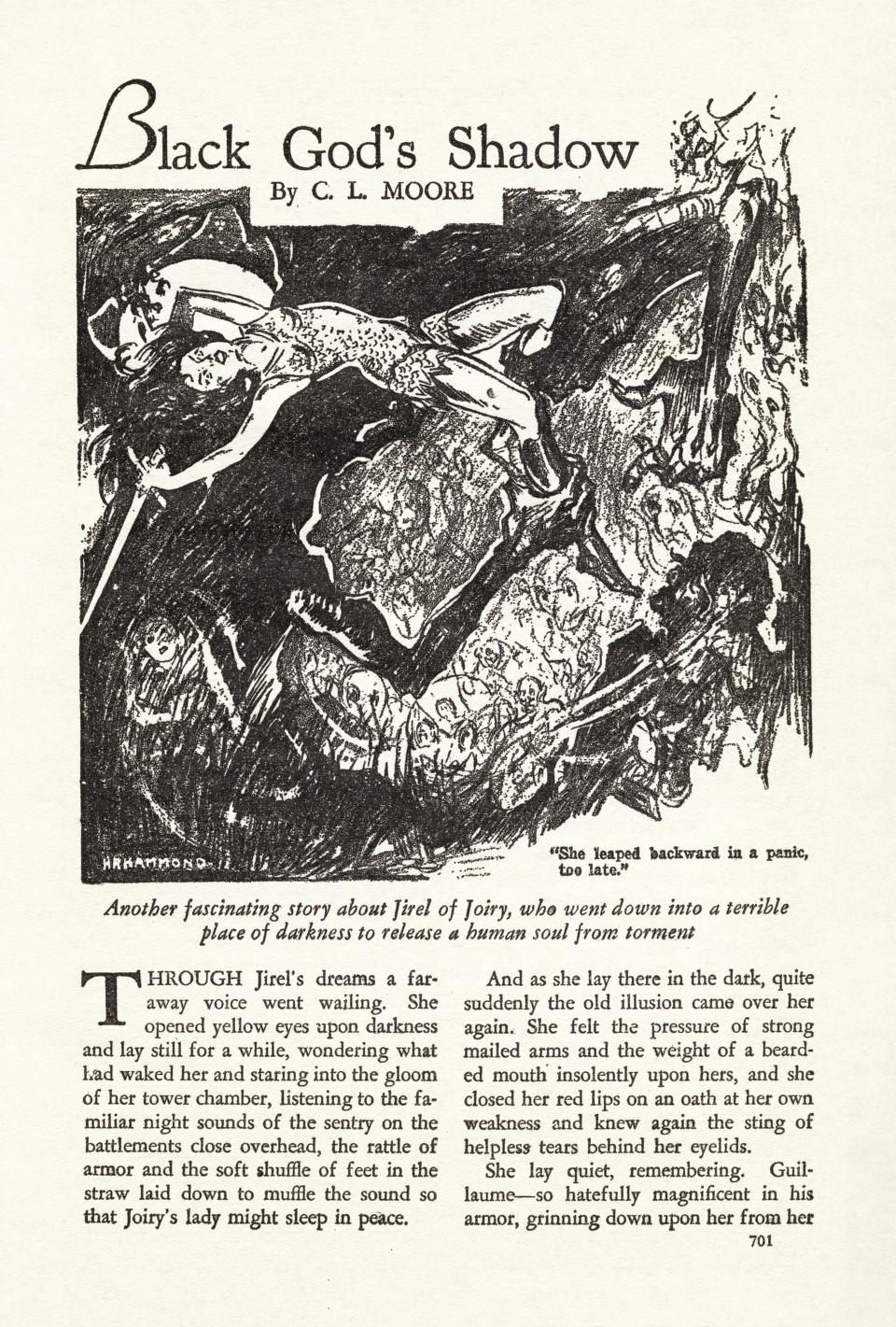

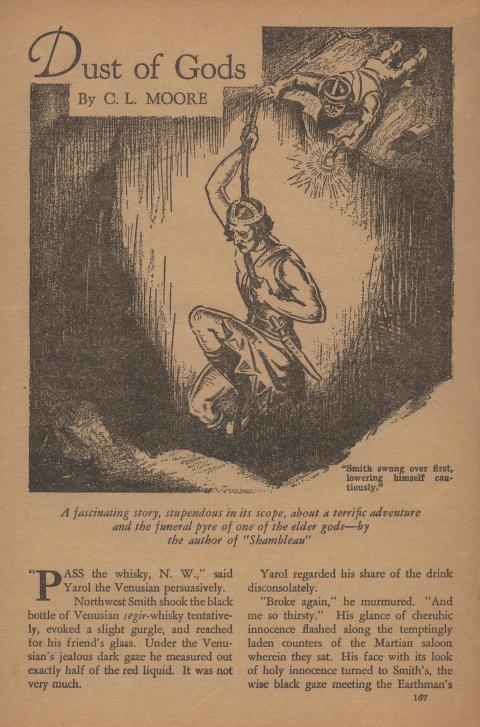
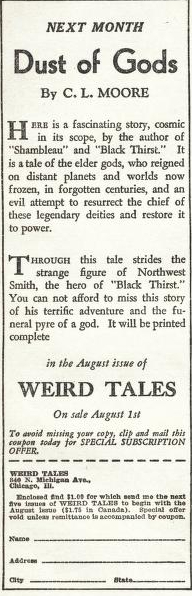
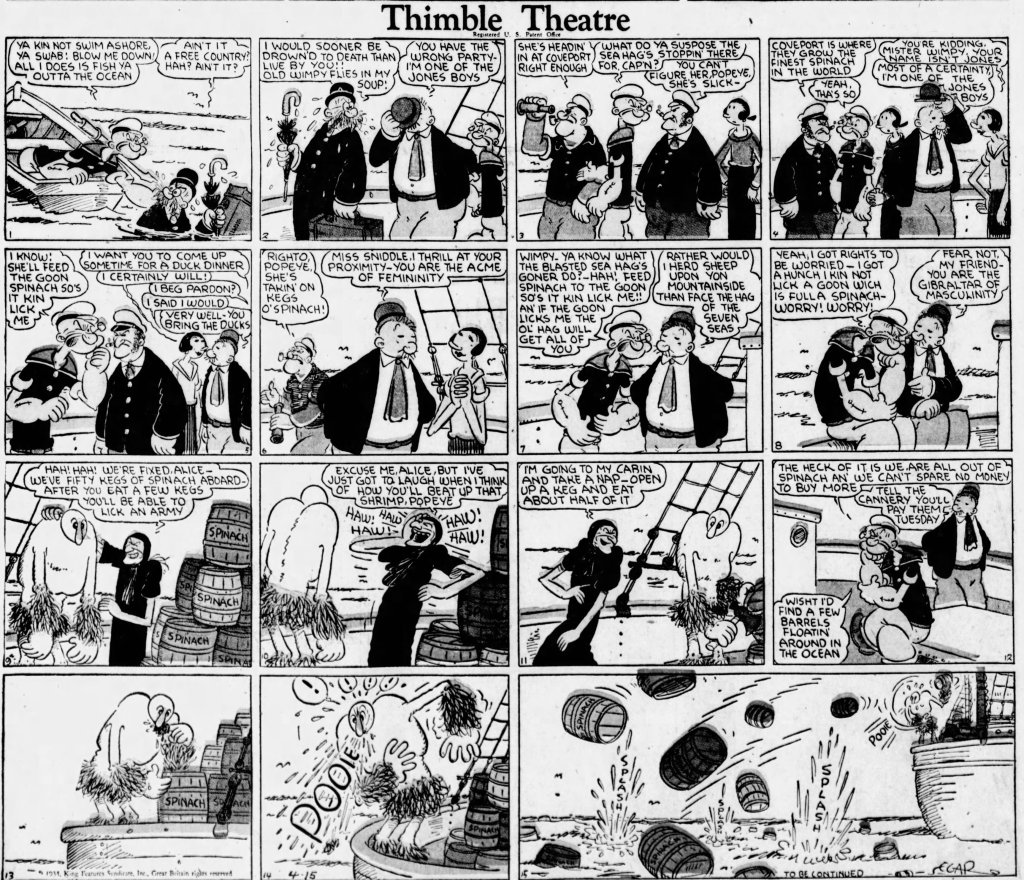
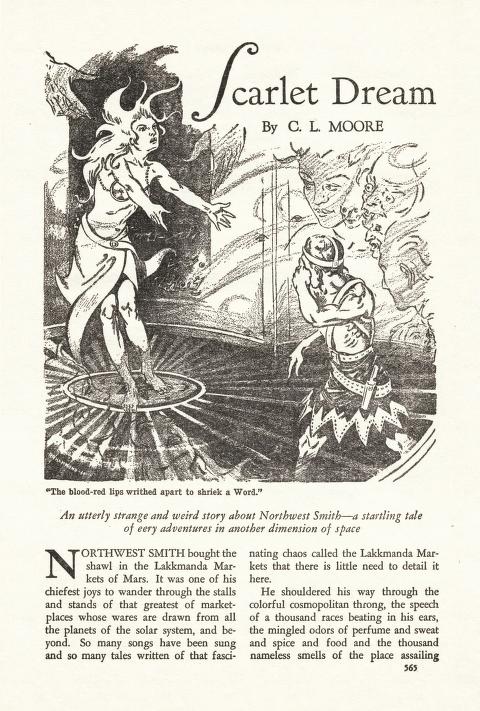
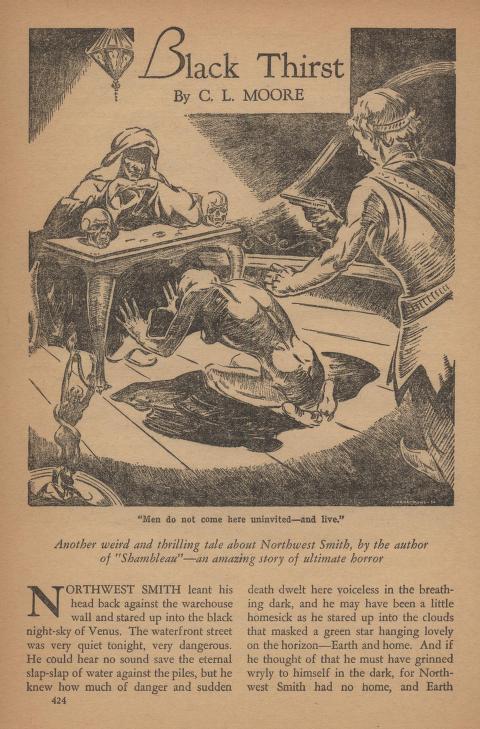
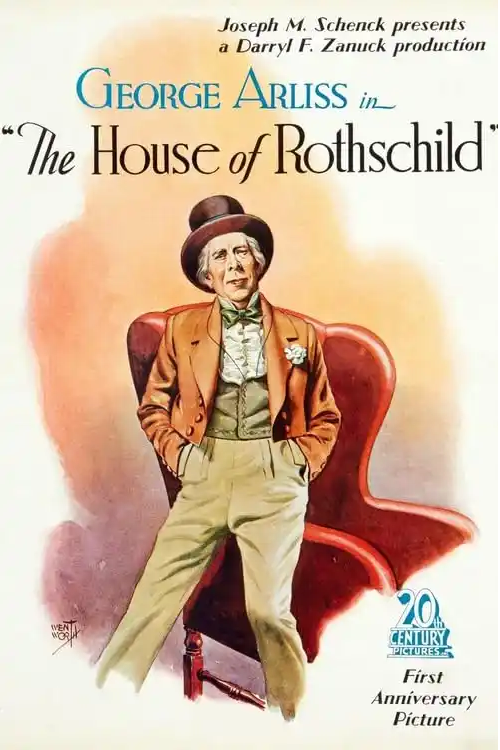
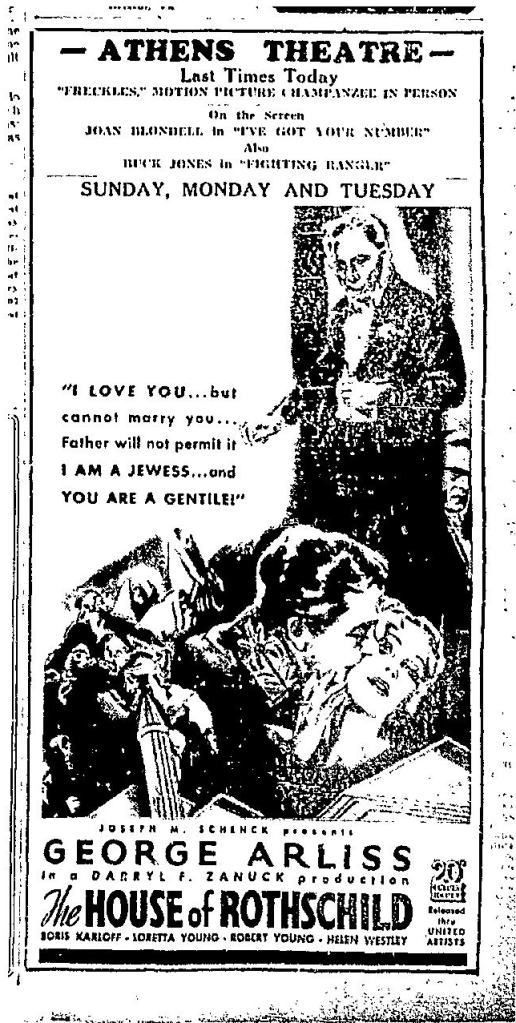
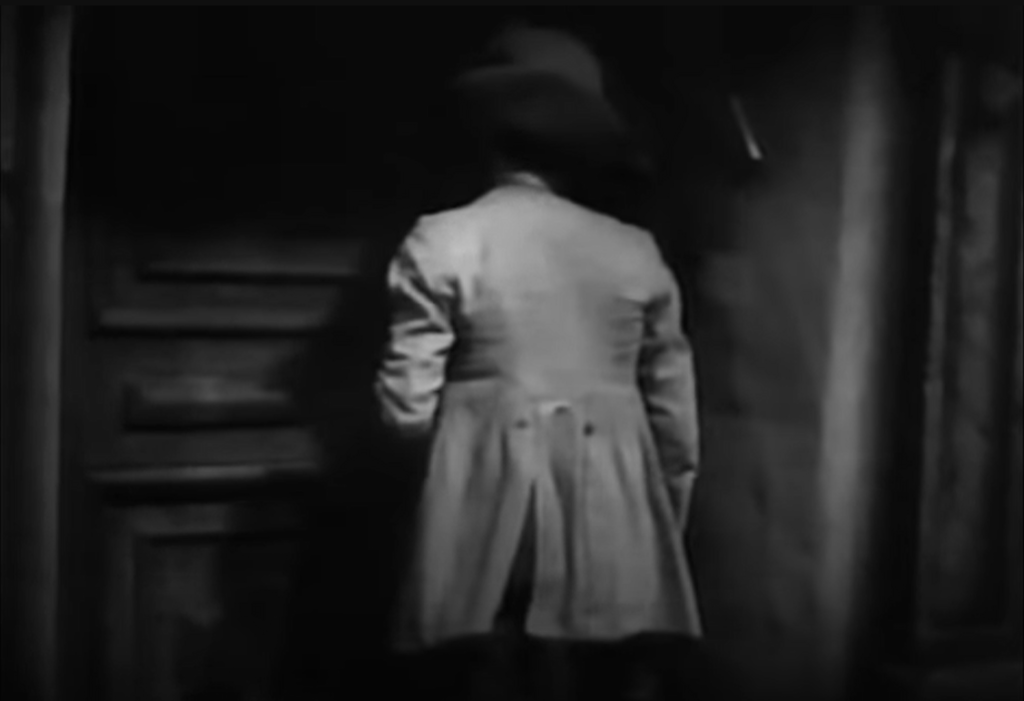
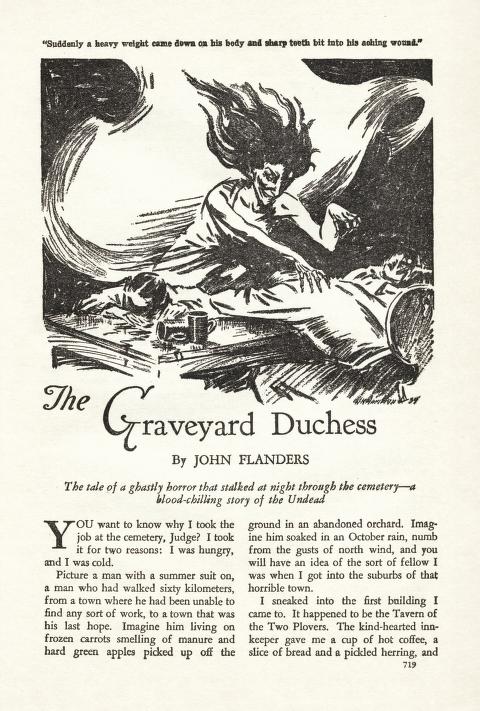

![Weird Tales v27 n01 [1936-01]_0054](https://deepcuts.blog/wp-content/uploads/2022/01/weird-tales-v27-n01-1936-01_0054.jpg)

 (2014)
 Deep Cuts in a Lovecraftian Vein