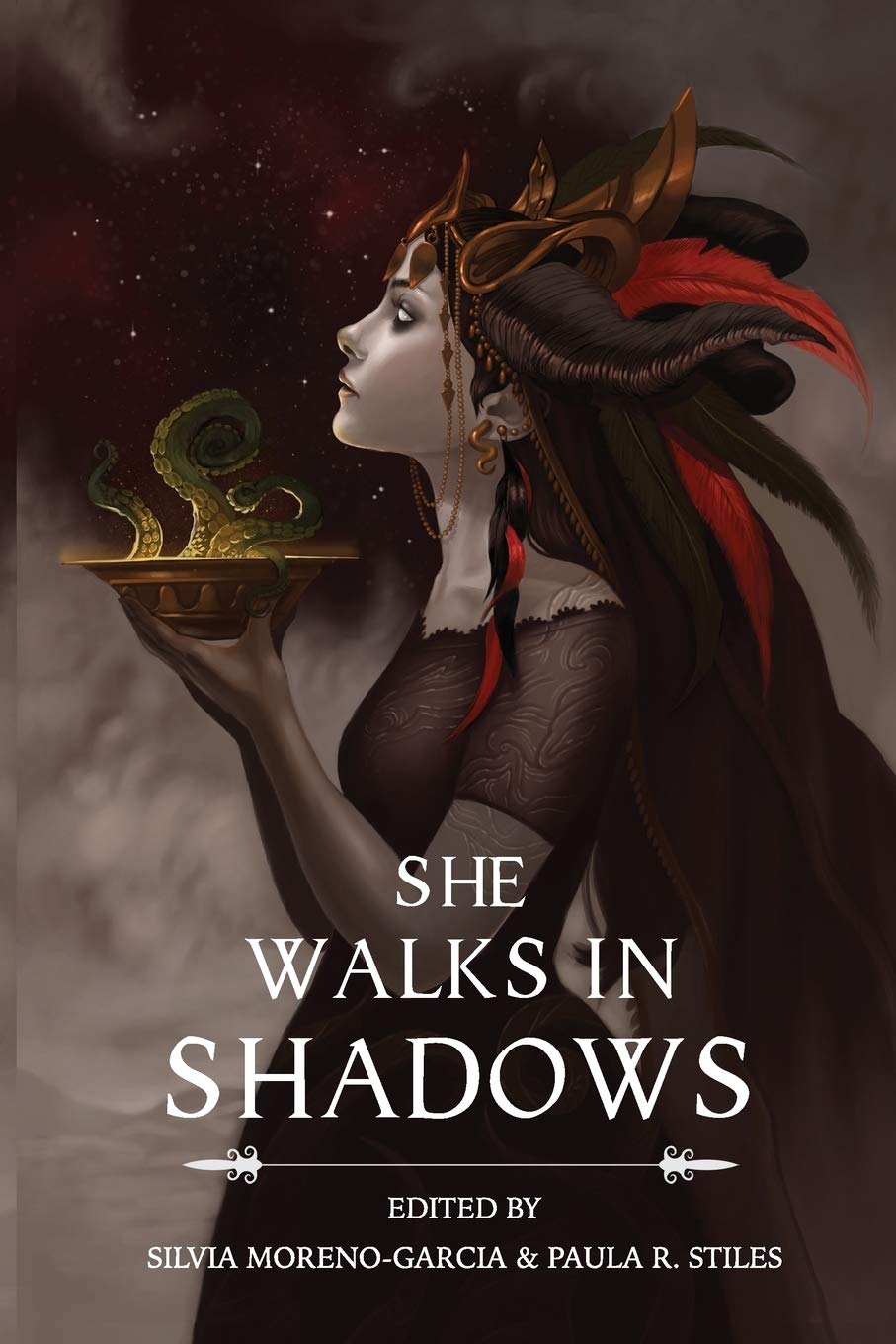
Brown Jenkin was agitated, running circles around me, climbing up my back and crawling down into my lap, staring at me with his beady black eyes. I reached out to him tentatively and he nuzzled my hand, stirring a strange kind of love in my heart.
—Lyndsey Holder, “Chosen” in She Walks in Shadows (2015) 160
Familiar horrors inspire a kind of wish-fulfillment. Thousands of readers of Bram Stoker’s Dracula and Anne Rice’s The Vampire Lestat have imagined what it would be like to be undead, ageless and powerful, bound by night and loosed from the morals of humanity. Roleplaying games like Werewolf: the Apocalypse let fans of werewolf movies and lore vicariously embody the power and ferocity of the change. Contemporary witches look back at the witch trials and pay tribute to those hypothetical ancestors, sometimes drawing imaginary connections to the persecuted of Salem Village in the Province of Massachusetts Bay.
Lovecraftian horrors are not so familiar as vampires and werewolves, and so there are fewer who wish to truly meet or embody those horrors. Fewer readers express a desire to be Pickman-esque ghouls than to become vampires, though more than a few would happily undergo the change into a Deep One and dwell in wonder and glory forever beneath the waves. While there are a few Lovecraftian witches, occultists like Keziah Mason and Joseph Curwen are often still figures of horror, not mentors or figures of nostalgia akin to Dracula.
“Chosen” by Lyndsey Holder thus enters a rather scarce territory. We very often see Keziah Mason presented as the stereotypical witch, the old hag with the familiar, steeped in the blood libel of child sacrifice from old legends. Sometimes, rarely, we see her as the archetypal Lovecraftian witch, the one who embodies the kind of freedom, wisdom, and power—and attracts the kind of prosecution—that embodies the more mythical ancestors of contemporary Wiccans, as inspired by The Witch-Cult in Western Europe (1921) by Margaret A. Murray.
Holder’s story is very short, just six pages long, short and to the point, and all too easy to spoil. The biggest unanswered question might be why the nameless girl protagonist is a child in Vancouver, very far from Arkham as the broom flies. However, Lyndsey Holder is herself Canadian. Maybe there’s a bit of wish-fulfillment in this story, a fictional accounting of a pilgrimage she would have taken if the dreams had come to her. Certainly, Mythos fans can appreciate why they might save and scrimp to travel thousands of miles just to be there, where horror once walked. More than a few fans stride the streets of Providence and Salem every year, after all, thinking of Lovecraft and witches.
The horror in this story doesn’t really come from Keziah Mason or her familiar Brown Jenkin. They are familiar figures, and there is something comforting in their portrayal. The horror in the story is how the protagonist reacts to them, how her life changes when they become a part of it. The ending is certainly a fitting one. Not every Lovecraft fan would choose that way to become a part of the Mythos, but for those who are given a chance to be part of the story…well, a few readers at least will understand.
“Chosen” by Lyndsey Holder was published in She Walks in Shadows (2015) and its reprints, it has not otherwise been republished.
Bobby Derie is the author of Weird Talers: Essays on Robert E. Howard and Others and Sex and the Cthulhu Mythos.
Deep Cuts in a Lovecraftian Vein uses Amazon Associate links. As an Amazon Associate” I earn from qualifying purchases.
 Deep Cuts in a Lovecraftian Vein