It was Arkham House that perpetuated the Big Lie in this case, and from there a mechanism of critical bandwagonism took off and continues to this day. The tenet is, if you tell a lie big enough and enough times, people will believe it. That’s why Lovecraft has been raved about for all these decades. It’s a big lie that readers have been force-fed by a pro-Lovecraftian syndicate designed to make money.
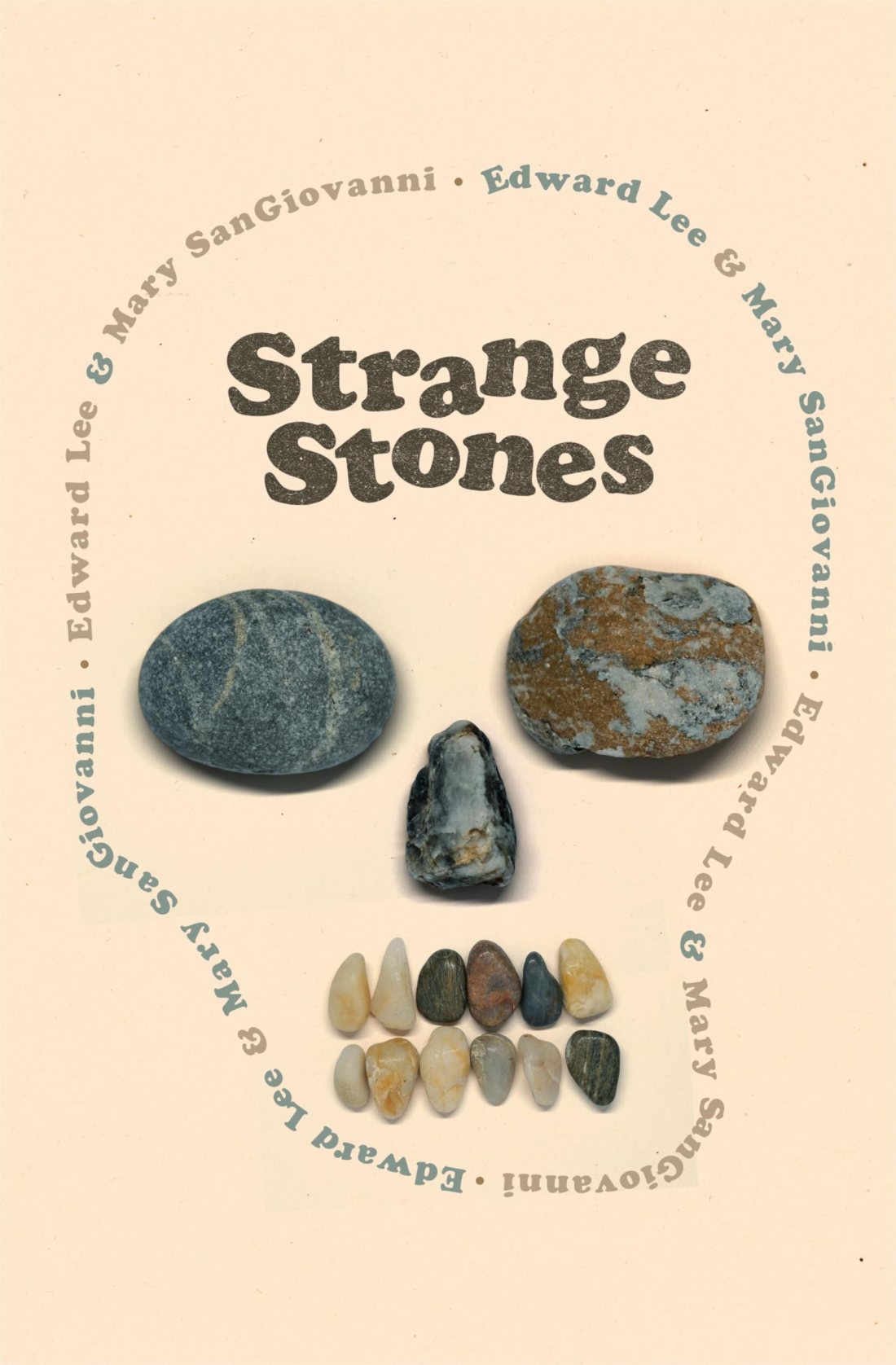
—Edward Lee & Mary SanGiovanni, Strange Stones (2025) 3
Professor Robert Everard, who speaks those words at a horror convention, is a Lovecraft-hating asshole. That is his point. If the sentiment gets a rise out of you and makes you want to refute it, congratulations: the authors have succeeded at their characterization. It is a very unconventional way to draw readers into a rather meta short Lovecraftian horror novel, but Everard’s arguments and the context in which they take place are important to understand, because they’re fundamental to the plot of the novel.
Fiction genres in the sense that we think of them today tended to emerge around the turn of the 20th century. Western dime novels were a staple of 19th century popular literature in the United States; science fiction, mysteries, fan clubs, etc. all preceded the emergence of pulp magazines in the 1910s and 1920s, but it was really the pulp magazines that began to crystallize genre as we think of it today, and especially organized fandom as we think of it today. The horror conventions today are all descended, more or less, from the early science fiction fan conventions of the 1930s in the United States.
Genre is only secondarily a literary convention; the primary purpose was marketing. Specialization allowed pulp magazines to carve out niches and develop dedicated readership that they could directly market to. Magazines in the same genre competed with one another for the same dimes and quarters; Weird Tales had to struggle against Ghost Stories, Tales of Magic and Mystery, Strange Tales of Mystery and Terror, Terror Tales, Famous Fantastic Mysteries, Unusual Stories, and others, and tried to draw in readers from science fiction magazines like Astounding Stories, Amazing Stories, Wonder Stories, and Planet Stories.
Hardbacks, paperbacks, comics, and movie makers all learned this lesson, that specialization has the benefit of attracting a specific, dedicated readership. And once you have that audience, the quality of the content is less important than if it stays in genre. Decades of genre products have been, essentially, disposable pap, churned out quick and cheap for an eager audience that cared less about quality than if it was horror or science fiction. This is the kind of silly, low-quality stuff that gives genre media a bad name, but it’s also the stuff that’s generally predominant at any given moment. True genre classics are rare, and stand out because so much of the run-of-the-mill material is generic, familiar monsters and spaceships.
In this sense, what is a genre convention, then, then a target-rich environment? The earliest conventions weren’t entirely uncommercial, but they weren’t dominated by dealer rooms or particular creators promoting their latest film or book, which are common attributes of contemporary conventions. What creators and companies learned was that it’s a lot easier to sell your product if your customers are all in the same place; genre conventions in the United States in particular have become an important part of the economic ecosystem of various celebrities, independent dealers, small companies, and boutique shops.
The cultural phenomenon of the convention has developed to the point where it’s become a key aspects of organized fan culture, to the point of becoming the setting of new creative works, like I Am Providence: A Novel (2016) by Nick Mamatas and Screamland: Death of the Party (2012) by Harold Sipe, Christopher Sebela, and Lee Leslie. And it’s this crux of the commercialization of horror and the convention experience which forms the springboard setting for Edward Lee and Mary SanGiovanni’s novel Strange Stones (2025).
Richard Everard’s grudging kvetch against Lovecraft’s ascendance in horror media is in part a tongue-in-cheek jab at a genuine aspect of fandom and how Lovecraft and his Mythos have faced posthumous commercialization and pop culture significance way beyond its initial tiny dedicated genre audience. Everard’s own interaction with the convention circuit has been primarily a lecherous attempt to get in the pants of as many women as he could, a series of sexual conquests that is both a kind of wish fulfillment and a genuine recognition that yes, fans do hook up at conventions. Rachel Bloom wasn’t being entirely inaccurate with Fuck Me Ray Bradbury in the way genre literary figures can attract groupies.
There is a dark side to that, too: many prominent or even beloved genre literary figures have been revealed as sex pests or abusers. Alec Nevala-Lee’s excellent Astounding: John W. Campbell, Isaac Asimov, Robert A. Heinlein, L. Ron Hubbard, and the Golden Age of Science Fiction (2018) contains accounts of bad behavior by writers like Isaac Asimov, for example. This kind of contact between fans and creators is mainly possible because of events like conventions, where individuals who would normally be separated by hundreds or thousands of miles are brought into geographical proximity and with shared purpose.
So Everard is a caricature of specific figures in convention culture: a lecher (right there in the name: “Everard”/”Ever-hard”), a high-minded academic who snobbishly looks down on the tastes of the masses, a shit-stirrer more focused on selling his own books and tearing others down instead of creating something positive. All of which makes him less than sympathetic when he does encounter some real horror.
The back three-quarters of the short novel are a whirlwind tour through several of Lovecraft’s Mythos stories, but not in a way that readers might think. Lee and SanGiovanni are very carefully and deliberately introducing Lovecraftian settings like Innsmouth, Arkham, and Dunwich in ways that are very accurate to Lovecraft’s fiction—often focused on small details, which are then blown up and expanded upon—but not trying to pastiche Lovecraft’s particular style or language. So it is very deliberately Lovecraftian, with Everard’s familiarity with Lovecraft’s corpus letting him recognize where and when he is, yet at the same time the settings are fresh, parts of the setting that Lovecraft himself never put on the page.
Readers might be curious if there are any connections with Edward Lee’s “Hardcore Lovecraft” series which includes books like The Haunter at the Threshold and The Wet Dreams of Dead Gods. Strictly speaking, the answer is no; Lee’s own Lovecraftian novels remain very distinct in setting and approach, and Strange Stones is in general much less explicit in terms of violence, gore, and sexual activity. That doesn’t mean it isn’t there, but it is less prominent in the plot. In part because the focus of the story isn’t on titillation or exploitation-level sex and violence, while there is definitely transgressive grue and sexual activity, the pace of the story is such that the writers don’t dwell on it in anything like the detail of Lee’s more extreme solo works.
One important characteristic of Strange Stones, however, is that it is not nostalgic for Lovecraft. Works of the type “Lovecraft was right! The Mythos was real!” or revisiting old stomping grounds like Dunwich and Innsmouth can lead to much more watered-down horrors. Like Bela Lugosi’s Dracula or Boris Karloff’s Frankenstein or Lon Chaney Jr.’s Wolfman, there comes a point where Cthulhu becomes overly familiar, to the point that the appearance of the Big C comes across more as a friendly face than a stark horrific reality that haunts the imagination. A point Ken Hite touched on in “Cthulhu’s Polymorphous Perversity” in Cthulhurotica, discussing the plush toy incarnations of Lovecraft’s primal alien horror.
Instead, Lee and SanGiovanni present Lovecraft’s Mythos as terrifying.
Dismembered corpses. Perverse sexual defilements. Sudden violence. The Mythos in Strange Stones has all the subtlety of a Goatwhore album cover or an issue of Crossed by Garth Ennis and Jacen Burrows. Readers are going to have to make their way through dead babies, threats of anal assault by oversized piscine pricks, and an alien orgy in which dismembered torsos feature prominently. The Mythos is not a dry, abstract, intellectual horror in this novel; it is a living, breathing cult simmering with malice, madness, and strange and terrible hungers. That this is not quite as extreme in terms of sex and violence as Edward Lee gets up to on his own is not the same as saying that this novel is tame or soft in any way.
It is a difference in emphasis. Everard doesn’t see the clean Mythos that Lovecraft presented to the world, with its carefully-constructed narratives where all the orgies and most of the violence happens off the page. What Everard sees is Lovecraft with the blinders taken off; what Lovecraftian fiction could look like, if writers approached his Mythos with the imagination normally reserved for a particularly lurid Cannibal Corpse album or exploitation film. Fairly reminiscent in many ways of what Antony Johnston, Alan Moore, and Jace Burrows did in The Courtyard and Neonomicon, though without quite as elaborate a working-out of details.
Strange Stones is, after all, a fairly short novel, briskly paced, and not concerned with a unified theory of the Cthulhu Mythos as much as keeping the story moving through each step of Everard’s ordeal. While there is room for a sequel, as a one-and-done novel it stands alone effectively enough. While not perfect, it is fun and a quick read, quite unlike the majority of Mythos fiction published these days.
Bobby Derie is the author of Weird Talers: Essays on Robert E. Howard and Others and Sex and the Cthulhu Mythos.
Deep Cuts in a Lovecraftian Vein uses Amazon Associate links. As an Amazon Associate I earn from qualifying purchases.
 Deep Cuts in a Lovecraftian Vein