After years of infertility, failed IVF cycles, and slowly decaying hope, she knew she was not one of the lucky or even one of the blessed, whatever that meant. She wasn’t meant to have children.
So when she first heard the name Dr. Keziah Mason offhandedly mentioned in an online infertility support group, it felt less like salvation and more like an invitation to finally belong.
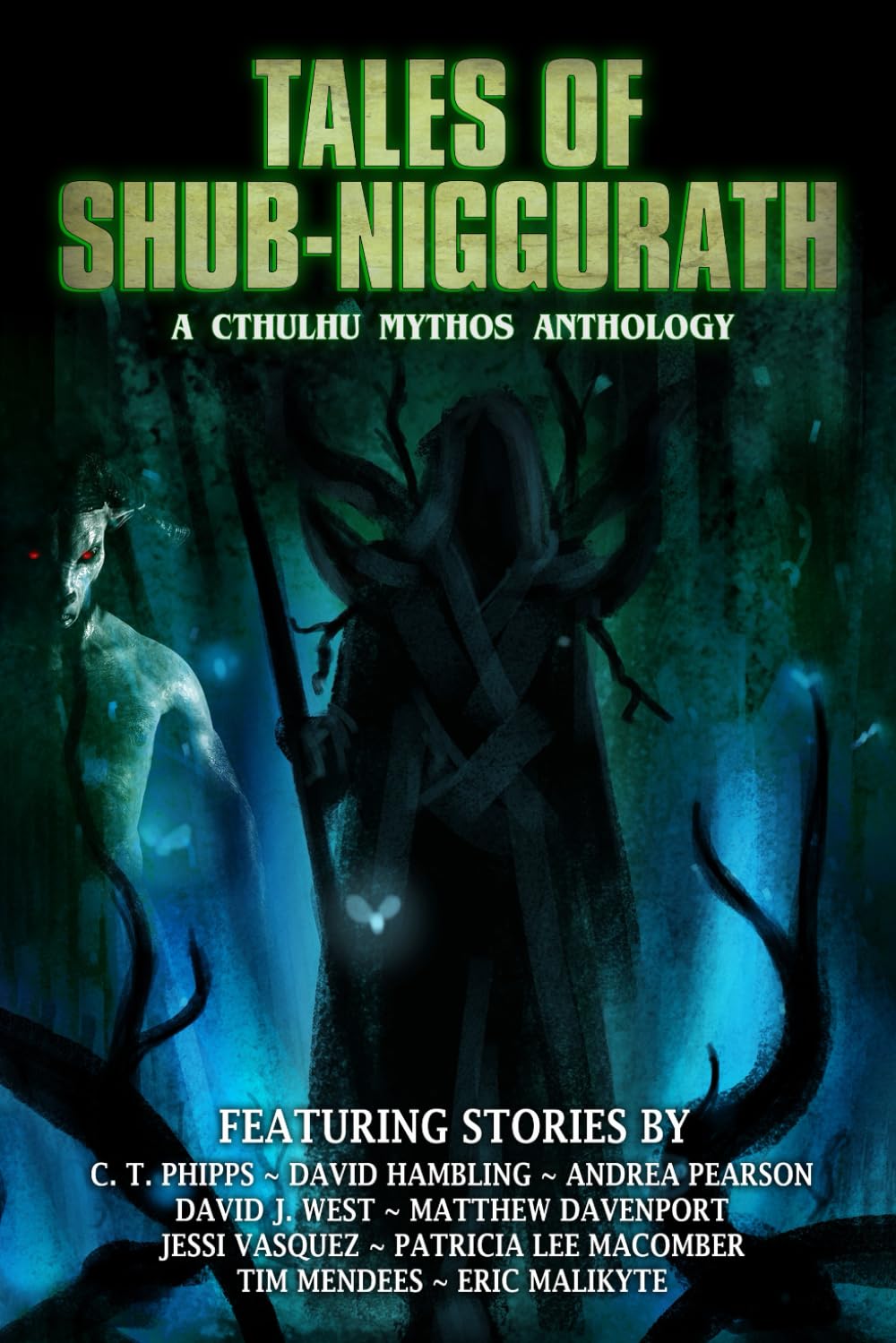
—Andrea Pearson, “A Thousand Young” in Tales of Shub-Niggurath (2025), 213
Pregnancy has been a common element in weird fiction. The act of conception, the trauma of birth, the aftermath of a sexual act that leads to a natural set-up or sequel for a story, have been familiar elements since Arthur Machen’s “The Great God Pan” (1894) or Aleister Crowley’s Moonchild (1917)—and writers like H. P. Lovecraft (“The Dunwich Horror”, “The Curse of Yig”), Clark Ashton Smith (“The Nameless Offspring”) are direct literary descendants of that tradition.
The basic idea of the monstrous pregnancy was and remains largely unchanged in a great deal of weird fiction, there are a thousand and one variations on the fundamental idea, and entire academic books have been written on the subject in fiction and film, such as Women, Monstrosity, and Horror Film (2018) by Erin Harrington, The Rhetoric and Medicalization of Pregnancy and Childbirth in Horror Films (2020) by Courtney Patrick-Weber, and The Sinful Maternal: Motherhood in Possession Films (2024) by Lauren Rocha.
Pregnancy is still scary; women still go through a physical transformation and ordeal, even if they are more likely to survive it than a century ago. Unwanted pregnancies, as from rape, remain a real concern. With improvements in medicine involving fertility and infertility, the possibilities of pregnancy horror have shifted, however. Now we have adult fears of persistent infertility, of unsupportable pregnancies of multiples, dangerous pregnancies due to the mother’s health or age that are as yet possible due to science, and a shifting cultural emphasis on pregnancy and against abortion that threatens women’s bodily autonomy.
Yet these are themes, elements, narrative devices. Weird writers have addressed these issues in works like “In His Daughter’s Darkling Womb” (1997) by Tina L. Jens and Flowers for the Sea (2021) by Zin E. Rocklyn, both of which use more contemporary frameworks to set up the narrative framework for the monstrous pregnancy. The main difference between writers like Jens, Rocklyn, and Pearson from Machen, Crowley, and Lovecraft, however, is the change in protagonist focus. None of the older writers focus on the experience of pregnancy, none of them tell of the horror from the woman’s point of view. They are always outsiders looking in.
Andrea Pearson’s “A Thousand Young” is not a fetishistic gaze at pregnancy; we don’t get lascivious descriptions of baby bumps, labor, breastfeeding, etc. Strip away the Mythos elements and it is almost a classic monkey’s paw story, where the dearest wish is granted in a way that is unexpected or undesired. Yet it is told from the woman’s perspective; it is her body, her hopes, her dreams, that are at play, and as the story progresses, the reader gets a sense of the enormity of what is happening, and what will continue to happen, long after the last word is read on the final page. That is why it works—and what makes it a fitting paean to Shub-Niggurath, alongside stories like “Goat-Mother” (2004) by Pierre Comtois and “In Xochitl in Cuicatl in Shub-Niggurath” (2014) by Nelly Geraldine García-Rosas.
“A Thousand Young” by Andrea Pearson was published in Tales of Shub-Niggurath (2025).
Bobby Derie is the author of Weird Talers: Essays on Robert E. Howard and Others and Sex and the Cthulhu Mythos.
Deep Cuts in a Lovecraftian Vein uses Amazon Associate links. As an Amazon Associate I earn from qualifying purchases.
 Deep Cuts in a Lovecraftian Vein