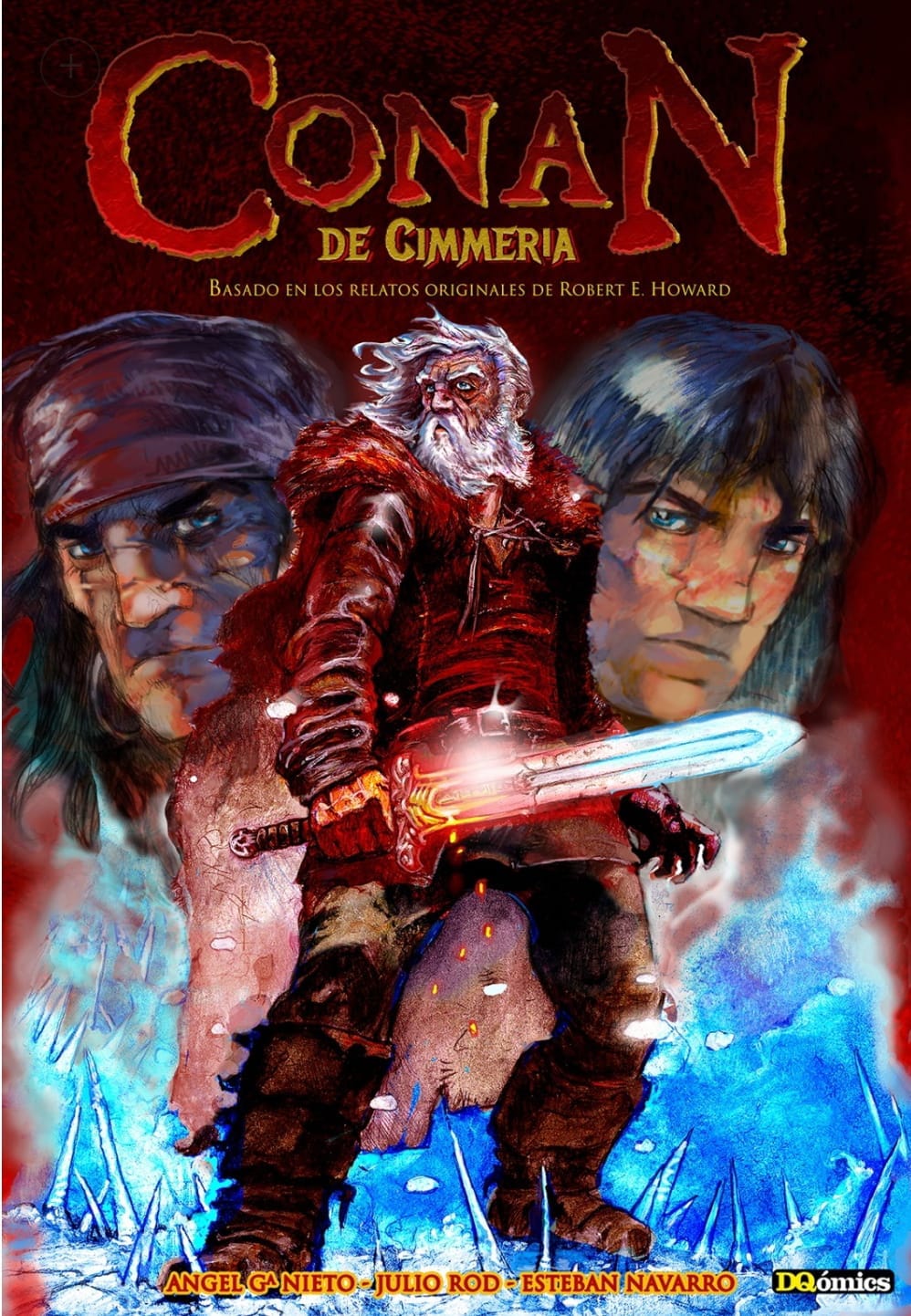
Derivative works all share a connection with the parent work. Every story with Cthulhu derives, directly or indirectly, from Lovecraft’s “The Call of Cthulhu.” Every story with Conan the Cimmerian derives from the original stories written by Robert E. Howard. From the humble pages of Weird Tales have spun out thousands of creative works in a dizzying array of media—short stories, novels, comics (strips, books, magazines, and graphic novels), cartoons, live-action and animated films, music, paintings, sculptures, toys, video games—and one of the key thing to remember about these works is that they aren’t being created in a vacuum, but in communication with one another.
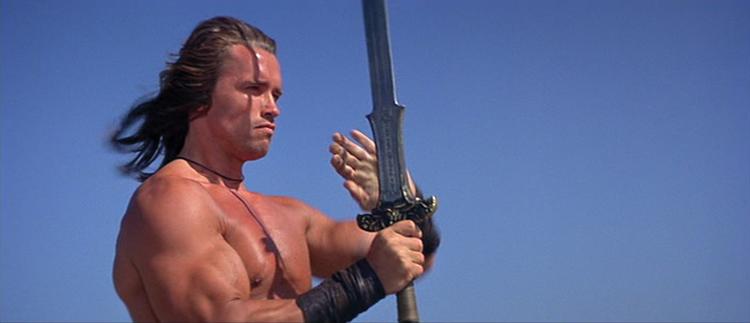
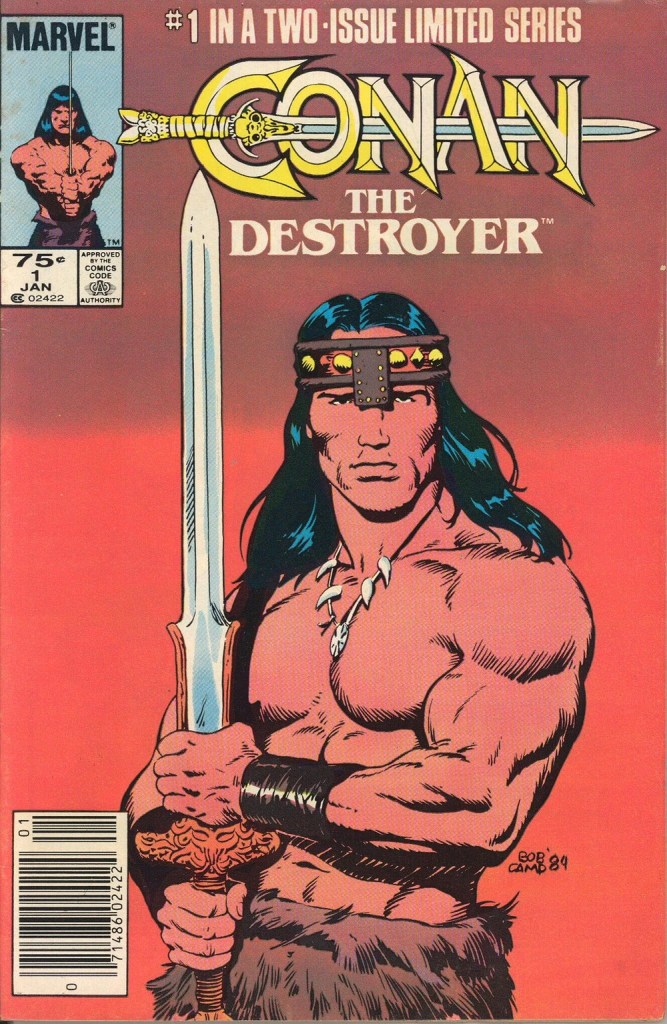
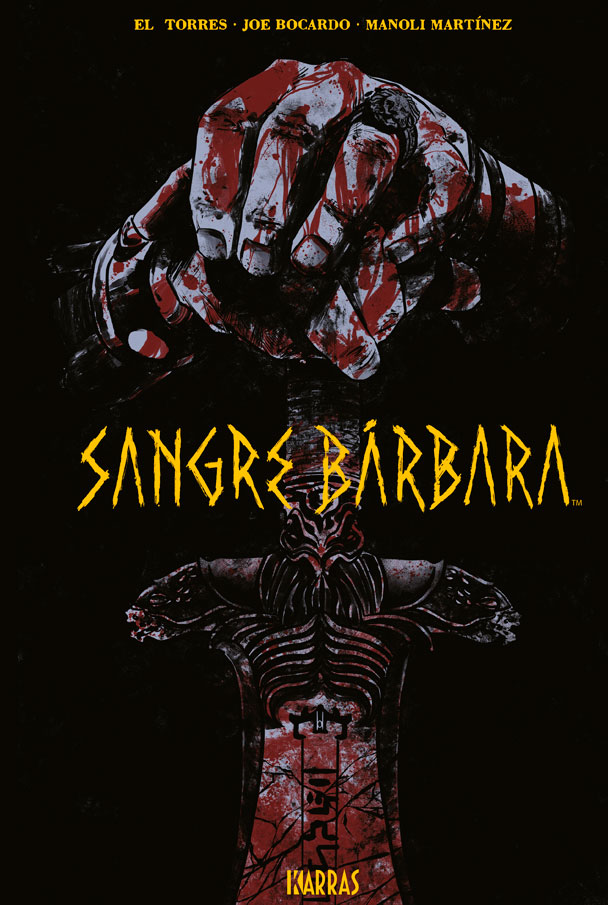
The Atlantean sword in the film Conan the Barbarian (1982) owes nothing to anything in the stories of Robert E. Howard; the closest the Texas pulpster managed to a special weapon was in the first Conan tale, “The Phoenix on the Sword,” and that sword was broken in the course of the story. Some of the pastiche tales and comic book stories that followed included magic weapons, but none of them served as the immediate inspiration for the Atlantean sword in the film either. Nevertheless, the sword featured extensively in the poster and marketing materials for both Conan the Barbarian and its sequel Conan the Destroyer (1984)—and, unsurprisingly, was represented fairly faithfully in the Marvel Comic adaptations of the films.
For many years, outside the movie continuities, the Atlantean sword was not a key feature of most Conan media. While it continued to have lingering appeal because of the tie to the film—including multiple weapon makers providing official or bootleg versions of the sword for fans and collectors—publishers like Marvel and Dark Horse did not lean into that aspect of the film iconography.
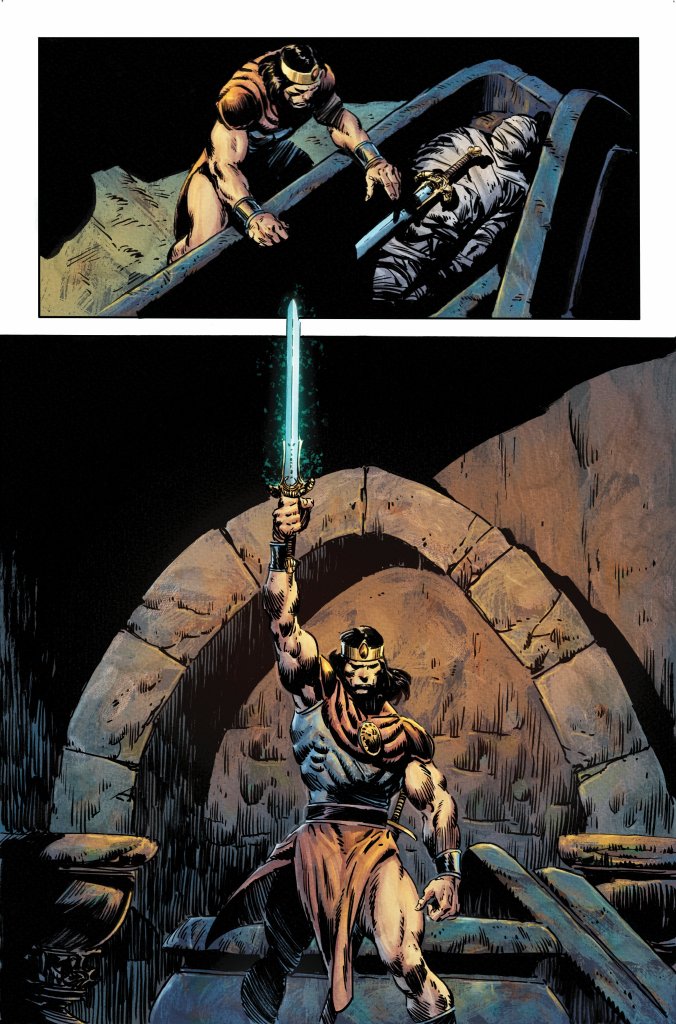
More recently, however, the iconic Atlantean sword has seen increased placement in both official and unofficial Conan media. The latest Conan comics published by Titan have deliberately leaned into a melding of the iconic looks of previous incarnations of the Cimmerian, drawing both from the John Buscema/Ernie Chan era of Marvel Comics as well as the 1982 film. It’s little surprise that when Conan does actually go to Atlantis in Conan the Barbarian #11, the Atlantean sword—or at least a good facsimile—makes an appearance.
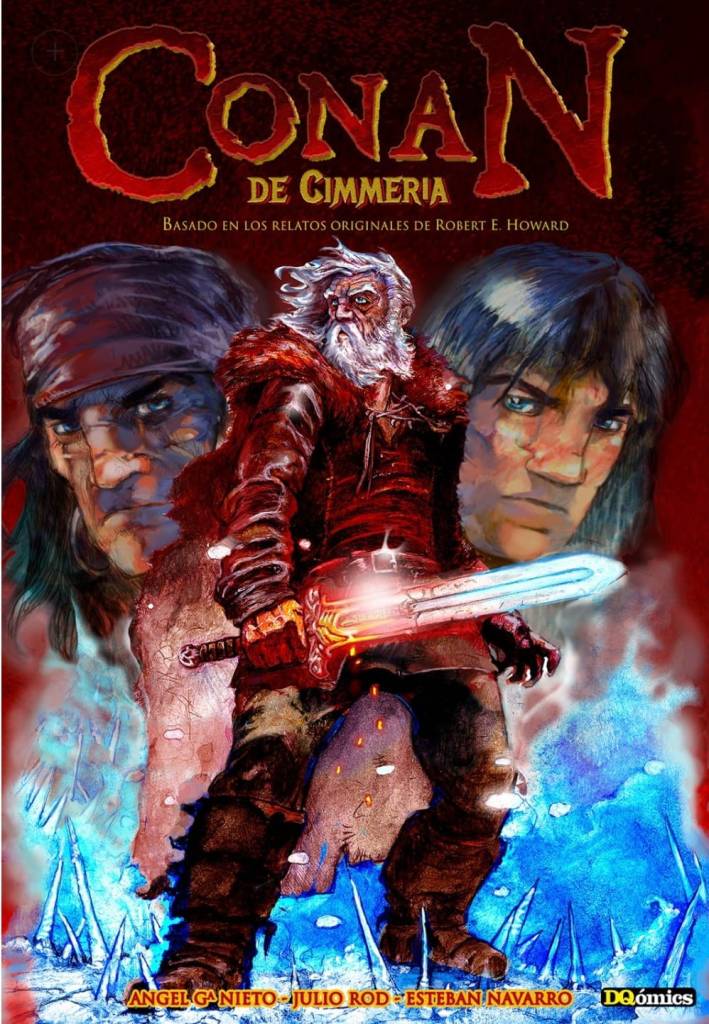
Outside of the official comics, works produced in areas where the Conan the Cimmerian stories by Robert E. Howard have fallen into the official domain have had fewer qualms about borrowing the iconic imagery of the Atlantean sword. Such is the case for Sangre Bárbara (2021) by El Torres, Joe Bocardo, & Manoli Martínez, and such is also the case for Conan de Cimmeria (2021) by the creative team of Ángel Gª Nieto (writer), Julio Rod (artist), & Esteban Navarro (colorist).
| Hace mucho tiempo, en una era no soñada, caminó Conan, el Cimmerio, que a lo largo de su turbulent existential vivió multiud de fastuosas adventuras. Dejadme que os cuente cual cronista de un tiempo olvidado sus grandes y magníficas hazañas, que lo convertieron en Leyenda. | Long ago, in an age undreamed of, walked Conan the Cimmerian, who throughout his turbulent life lived a multitude of magnificent adventures. Let me tell you like a chronicler of a forgotten time his great and magnificent exploits, which made him a Legend. |
| Conan de Cimmeria, Back cover copy | English translation |
Conan de Cimmeria is a standalone Spanish-language graphic novel that tells three original stories based on the Conan character created by Robert E. Howard, each one telling a brief adventure of the Cimmerian at a different point in his career. It is essentially identical in general form and intent to the majority of comics produced officially by the owners of the Conan trademarks, just produced independently. The prominent usage of the Atlantean sword in the first story, “La Forja del Destino” (“The Forge of Destiny”), is perhaps the most notable artistic callback to other Conan-related works, but the book also appears to draw inspiration from the classic Marvel comics, while still taking the opportunity to present an original—if recognizable—version of the barbarian.
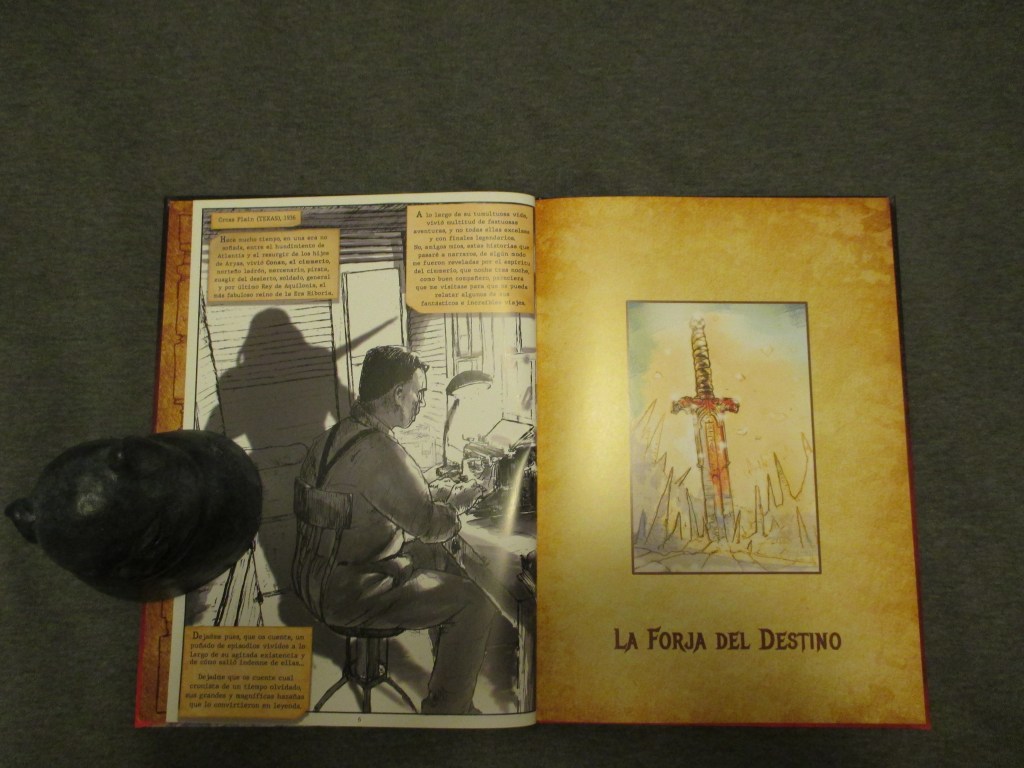

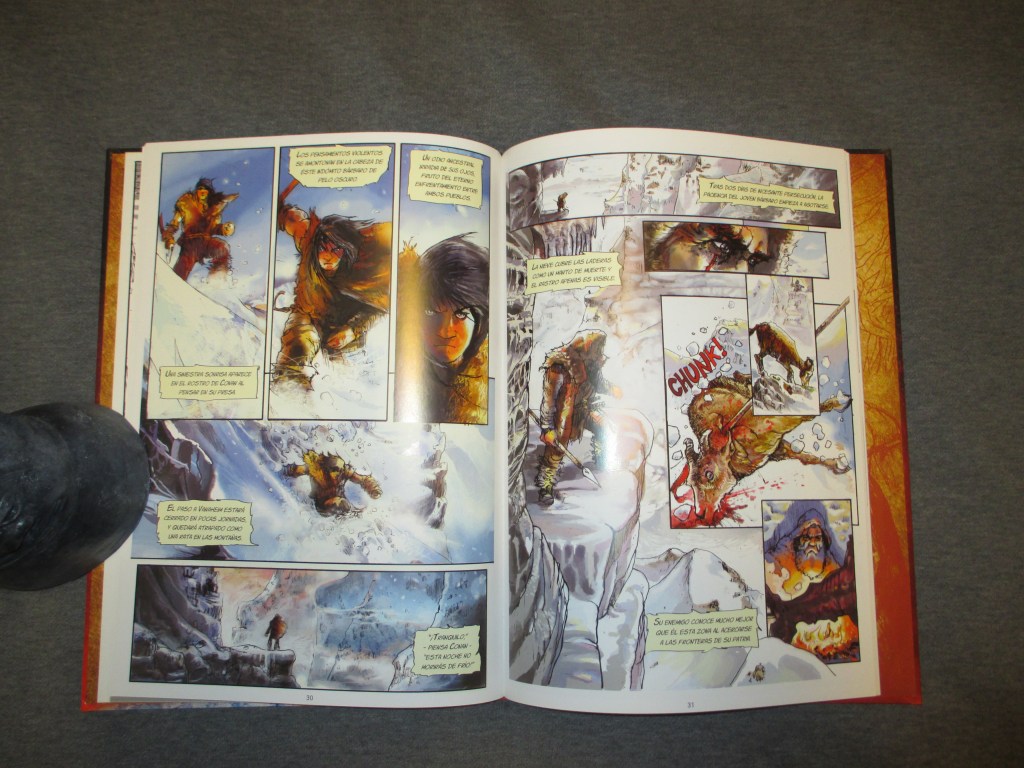
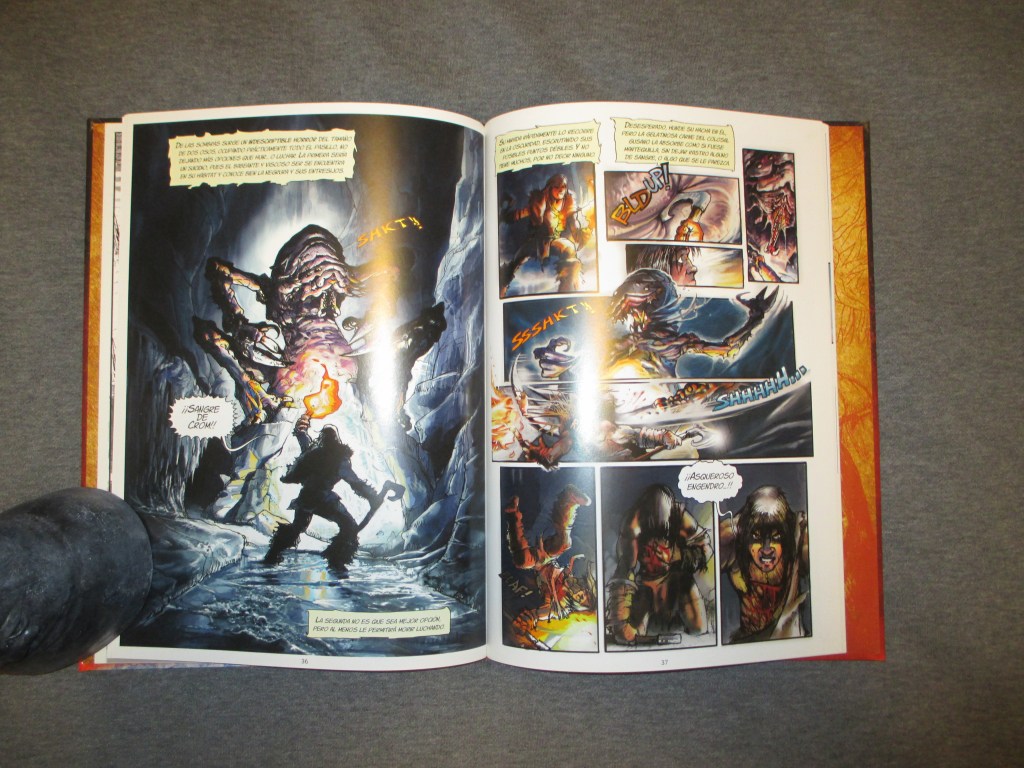
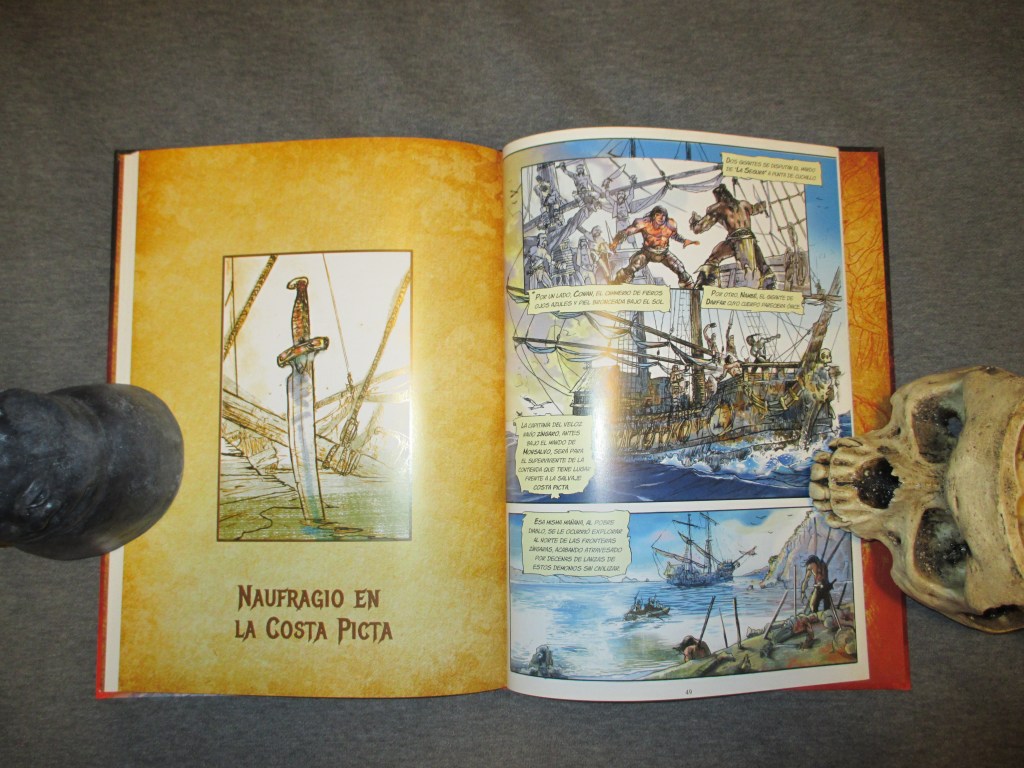
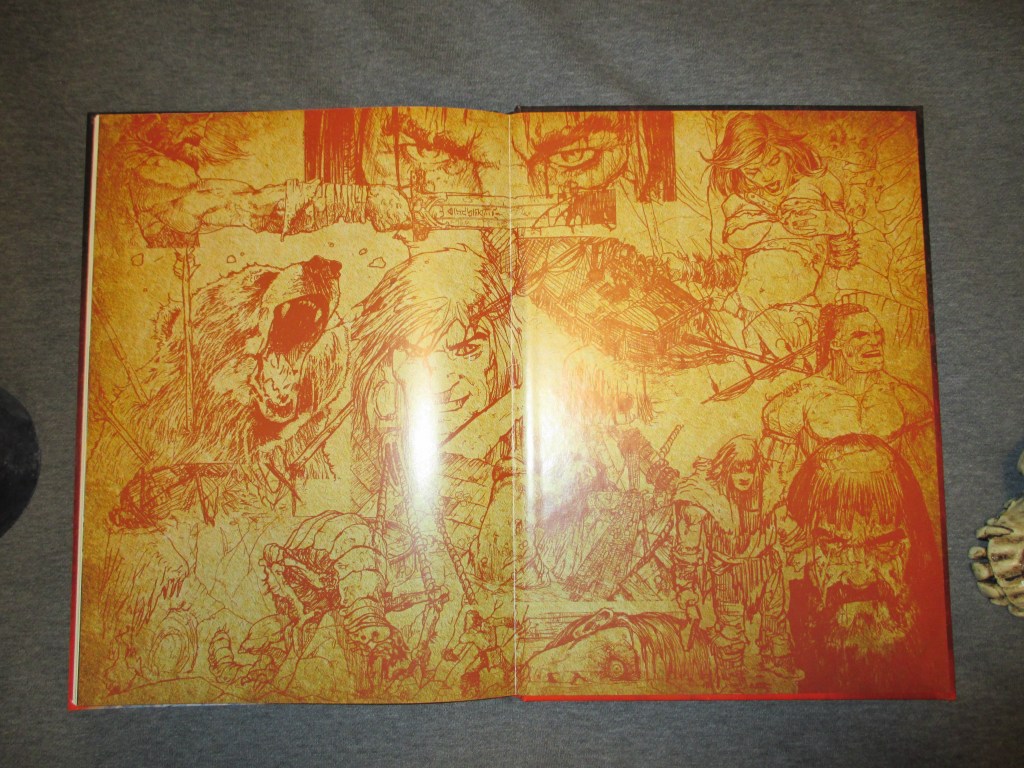
The stories are a bit more violent and bloody than the classic Marvel Comics, but not so gore-filled as to detract from what are essentially pulpy adventure tales; there is one scene with the topless corpse of a woman, but other than that, there is no nudity or sex. It is the kind of Conan comics that could please everyone from 13 to 93 in terms of being exactly what it sets out to be: the kind of broad-appeal Conan comic that is reminiscent and evocative of what has come before, but which is distinctly original, an addition to the Conan cycle that is respectful of the source material.
In an era when properties falling into the public domain often leads to a splurge of derivative trash that pays little to no respect for the original, it’s nice to find examples of works where the creators basically want to use the stories to create new tales of character they like, int he style in which they’d like to read them.
Bobby Derie is the author of Weird Talers: Essays on Robert E. Howard and Others and Sex and the Cthulhu Mythos.
Deep Cuts in a Lovecraftian Vein uses Amazon Associate links. As an Amazon Associate I earn from qualifying purchases.
 Deep Cuts in a Lovecraftian Vein