“A Very Cthulhu Christmas” (2016) by Melissa McCann

My first positive utterance of a sceptical nature probably occurred before my fifth birthday, when I was told what I really knew before, that “Santa Claus” is a myth. This admission caused me to ask why “God” is not equally a myth.
—H. P. Lovecraft, “A Confession of Unfaith” (1922)

From a strictly literal viewpoint, Christmas is a Christian holiday, the celebration of the birth of Jesus Christ. That simple truth, so celebrated and shorn of pretension during Linus’ famous recitation at the end of “A Charlie Brown Christmas” (1965) should not be forgotten or disputed. However, in the last two thousand plus years since the death of Christ, things have gotten complicated. How and when and why Christmas is celebrated has changed; traditions have arisen, fallen out of favor, or been borrowed in. Christmas tress became popular, and stockings, and gifts wrapped in bright paper and ribbons, but many of these are things essentially secular in nature, enjoyed both by devout Christians of various denominations and folks who have never darkened the door of a church.

The Christian origins have been bedecked by a more elaborate and peculiar mythology of traditions, folkore, fakelore, and rituals. The most notable entity outside the baby Jesus itself might be Saint Nicholas or Father Christmas or Santa Claus; but celebrants certainly know others. Song, story, and film have given St. Nick a wife, reindeer, and a troop of elves, at least in many English-speaking countries. A more shadowy and often peculiar extnded Christmas-time pantheon that might include the Krampus, Zwarte Piet, Père Fouettard, Belsnickel, Yule Cat, Befana, Grýla, Perchta, and Elf-on-a-Shelf, among others.

Why not add Cthulhu to the holiday mythos?

While Lovecraft may not have believed in Santa Claus, or even necessarily the historical Jesus, he certainly enjoyed Christmas, and even had a Christmas tree when he could afford it, exchanged gifts and notes with friends and family. Nor was he immune to the general charms that the holiday offered, as evidenced by “The Festival” (written 1923), where he imagines a strictly pagan celebration “that men call Christmas though they know in their hearts it is older than Bethlehem and Babylon, older than Memphis and mankind.”

Followers-on in the Lovecraftian tradition don’t necessarily go that hard. Some stories are just a bit of Xmas fun.

It was the night before Christmas, and in a haunted house on Ash street, a tiny creature in a floppy red Santa hat and coat manifest in the dark beneath an ornamented tree.
—Melissa McCann, “A Very Cthulhu Christmas” (2016)

This short tale is not a word-for-word riff off Clement Clarke Moore’s classic “A Visit from St. Nicholas,” although it probably takes general inspiration from the idea. Christmas Eve. The house is quiet. Everyone is safely tucked away. Yet something is stirring.

The short tale works because while it is set on Christmas Eve, it is also set in a haunted house whose inhabitants are more than a little eldritch, though many of the details and backstory are very much left hinted at rather than explicit. The story treads a fine line between humor and seriousness, and the overall tone is vaguely reminiscent of Roger Zelazny’s classic A Night in the Lonesome October. It is a very secular Christmas tale; Linus would have no place here, although a reading from the Necronomicon would probably be appreciated by the inhabitants of this particular house. Nor does McCann try to hamfistedly tie Santa Claus into the Mythos. It is a Christmas story in the way Die Hard is a Christmas story, because of setting and props, recognizable elements and old familiar names.

Which works. McCann isn’t trying to save the world and/or Hanukkah, or set up a Hallmark romantasy with tentacles, but she sets out to tell a well-paced, straightforward tale where the tropes of two very different cults mingle and overlap in ways that are both funny and appropriate.

“A Very Cthulhu Christmas” (2016) by Melissa McCann can be found as a standalone Amazon ebook, and is also included in her collection King of Midwinter (2019).


Bobby Derie is the author of Weird Talers: Essays on Robert E. Howard and Others and Sex and the Cthulhu Mythos.

Deep Cuts in a Lovecraftian Vein uses Amazon Associate links. As an Amazon Associate I earn from qualifying purchases.
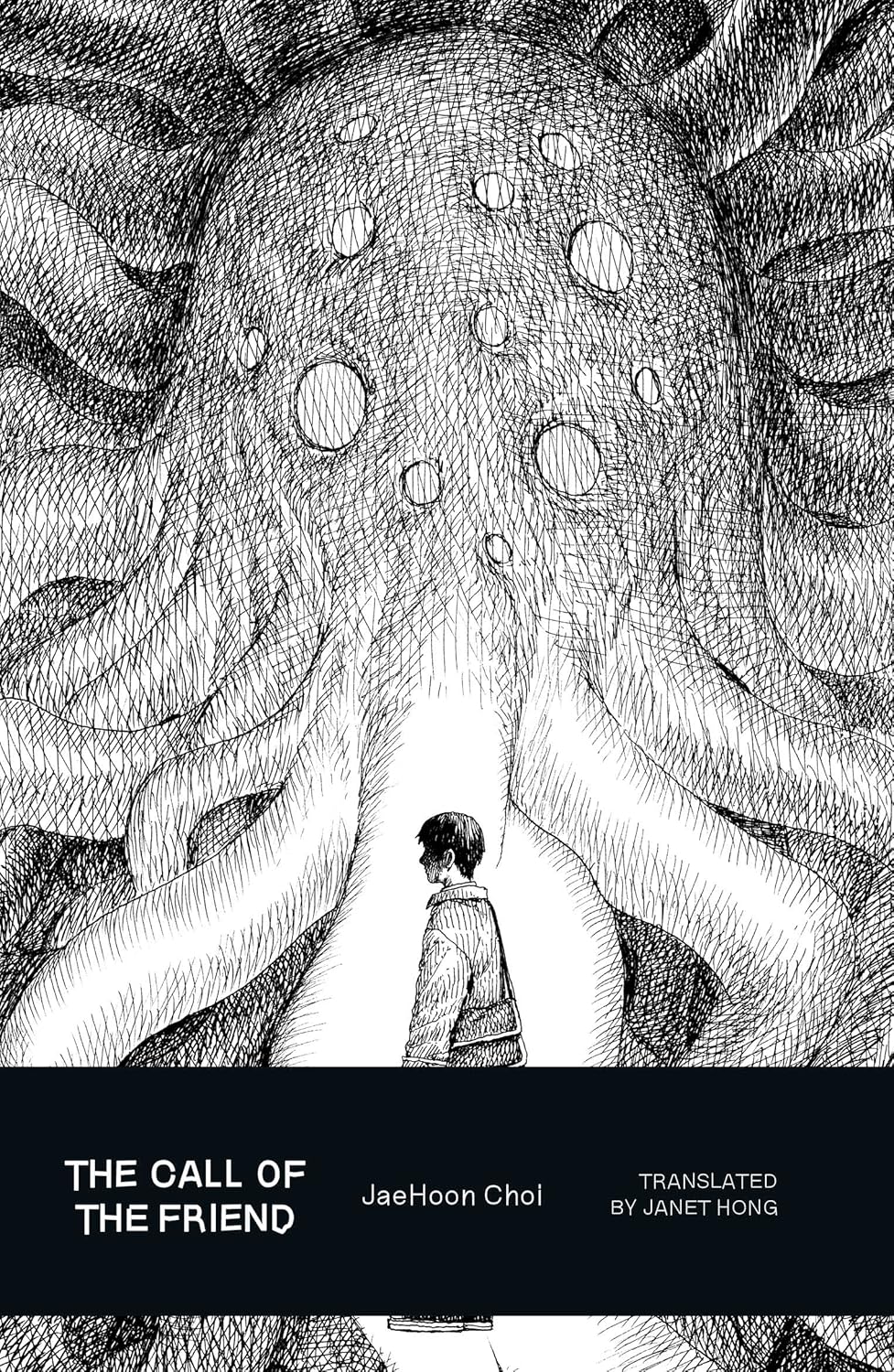
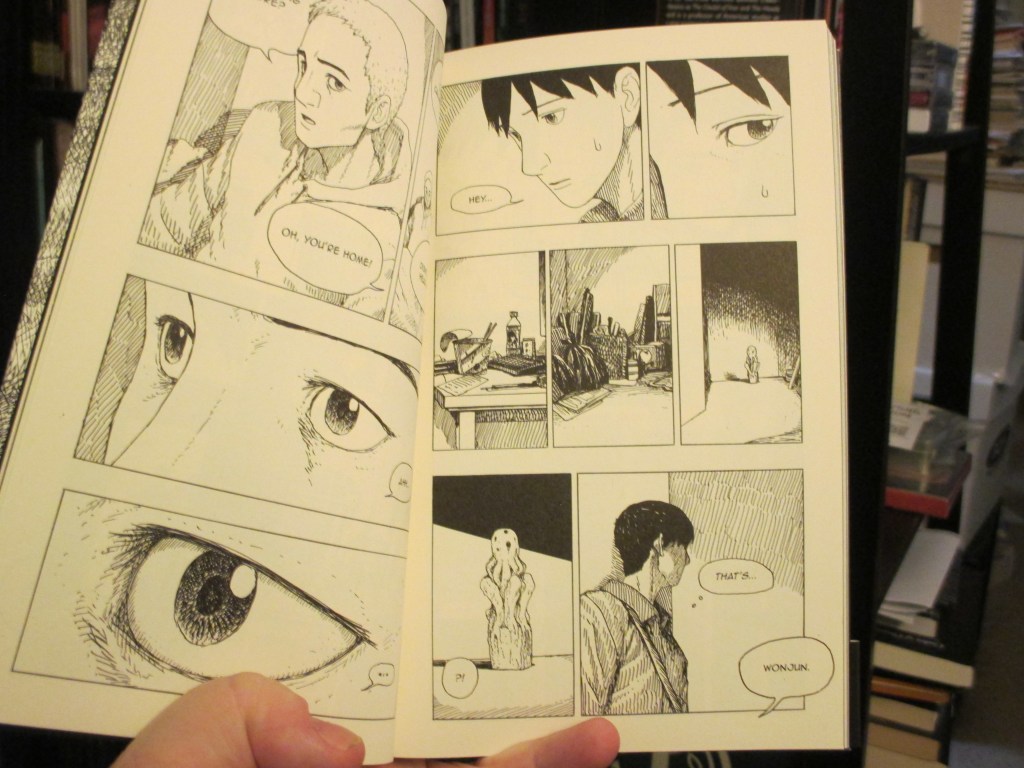
The Call of the Friend (2025) by JaeHoon Choi (최재훈) trans. Janet Hong

THE CALL OF THE FRIEND is part of the Lovecraft Reanimated project, where leading Korean speculative fiction writers reimagine the works of horror master H.P. Loveccraft, while honoring his eerie, grotesque imagery and the blurred boundaries between reality and fantasy, they update his ideas for a global audience.
The Call of the Friend (2025), inside cover flap

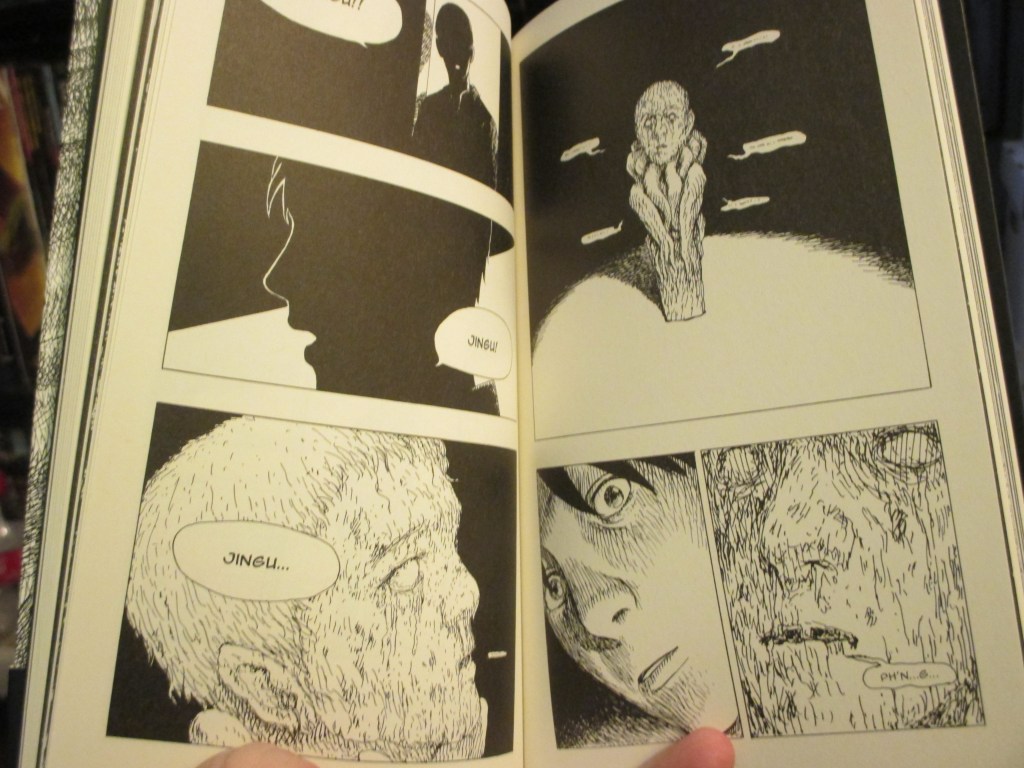
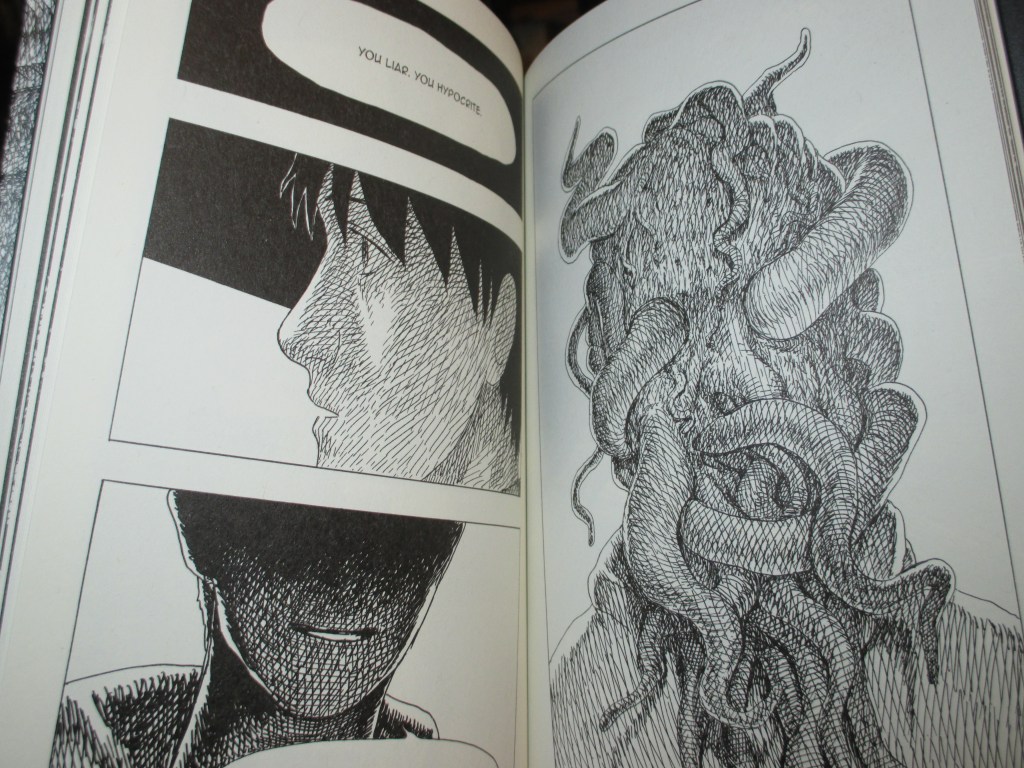
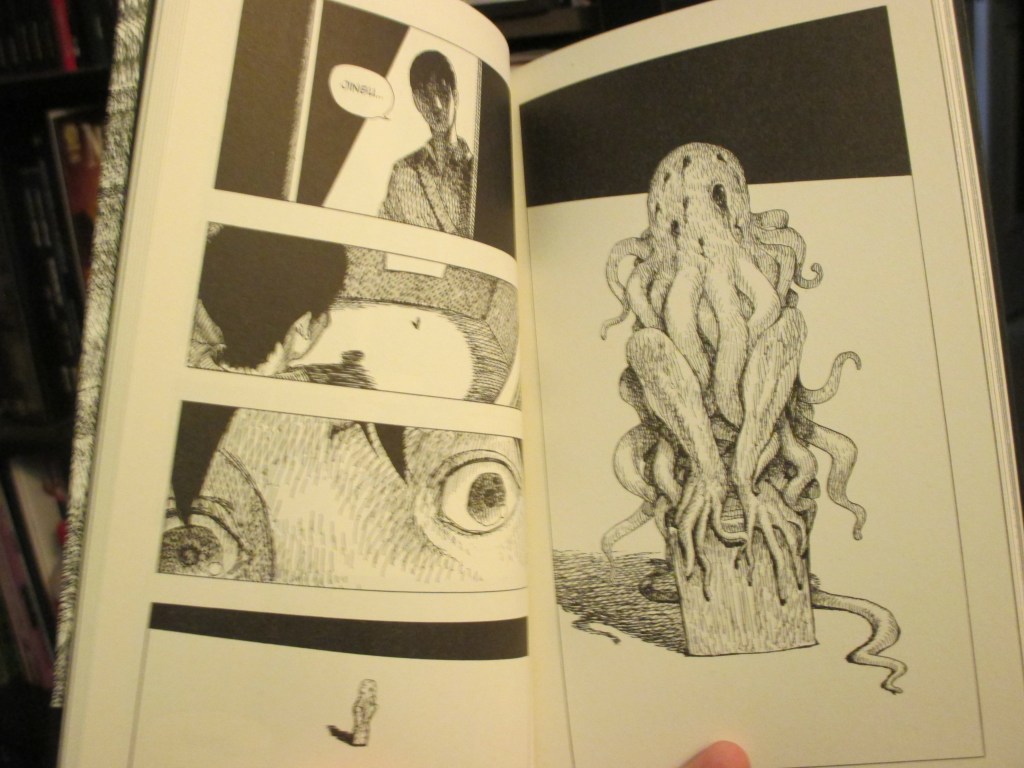
The Call of the Friend (친구의 부름) is a standalone black-and-white graphic novel by Korean comic artist and writer JaeHoon Choi (최재훈), first published in 2020. The English translation by Janet Hong was published in 2025 by Honford Star. The story is set in contemporary urban Korea, where university student Wonjun checks in on his friend Jingu, whose sister (a K-pop idol) has recently committed suicide, implicitly because of a scandalous affair. It is in Jingu’s apartment that Wonjun spots a strange idol.

The story that unspools is not a straightforward linear narrative. It is intimate, focused on Wonjun, with everyone other than Jingu essentially faceless. Readers get pieces of the puzzle, but the full story isn’t spelled out for them, readers are forced to interpret the evidence as best they can. In this, they are given a single helpful hint in a short essay at the end of the book:

Some live a life of violence, while others make every effort to avoid stepping on an insect. But no matter the severity or type of sin, the moment we realize we have sinned, we experience fear. The fear isn’t so much the dread of punishment or retribution. It stems from the knowledge that we’ve hurt someone or caused their unhappiness, and the sin manifests as fear. Depending on the intensity of this fear, we can either be liberated from our guilt or ensnared by it.

While I don’t want the theme to be too obvious in this story, I hope readers might be able to tangibly experience Wonjun’s guilt. These long, nocturnal reflections on our current human condition, set against H. P. Lovecraft’s world of unexplained fears, have prompted me to contemplate the words we’ve spoken, the conflict and guilt we’ve endured, as well as the subsequent death and feat they cause.
The Call of the Friend (2025), 104-105

As an essay, it is slightly reminiscent of Arthur Machen’s prologue to “The White People” on ‘sorcery & sanctity.’ The idea of fear as a fundamental response to a transgression—an instinctive response to some imbalance caused by action or inaction—and that this fear can liberate or ensnare guilt, has its attractions. Yet how does this philosophical approach jive with Lovecraft’s famous proclamation that “the strongest kind of fear is fear of the unknown”?

When you don’t know what the sin was. When the only way you have to measure how badly you’ve hurt someone is the measure of the fear you feel in response to it. Whether this is what JaeHoon Choi intended with The Call of the Friend I cannot say, but the presence of the Cthulhu Mythos in this story is suggestive of something that goes beyond tawdry K-pop star drama and the suicide of the sister of a friend. It suggests that there’s something much bigger at work here, something unseen and unknowable, and it threatens to ensnare Wonjun entirely.

The Call of the Friend is somewhat reminiscent of Minetaro Mochizuki’s Hauntress (1993) in general outline—both of them deal with young university students living on their own, the one checking in on the other to whom something has happened, and with a supernatural horror creeping into their lives—and more importantly, that sensation of an urban legend unfolding in a space of familiar, contemporary surroundings. These are characters ill-equipped to deal with the psychological terrors of their experiences. They have no strong faith, no occult skills or leanings. They are regular people, with limited resources, facing the uncanny.

That works. JaeHoon Choi takes advantage of the prosaic setting and characters to make the distortions of perception all the more disturbing for taking place in setting of absolute reality. Readers will question how much of this is in Wonjun’s head, will wonder when we slip into dream, hallucination, or twisted memory. The idol forms a locus of manifestation, a central image to embody what it is happening, but even until the end, readers have to decide how much of this is really happening.

The comic ends like an unresolved chord. Readers don’t get answers. Only the impression that they have witnessed something. Perhaps that is the answer itself.

Janet Hong’s translation of the graphic novel into English is very readable and smooth. While most of the graphic novel itself has relatively sparse dialogue, the essay at the end is very clear and easy to understand, and a valuable key to understanding the work.

The Call of the Friend (2025) by JaeHoon Choi and translated by Janet Hong is available at the Honford Star website as an ebook or softcover.


Bobby Derie is the author of Weird Talers: Essays on Robert E. Howard and Others and Sex and the Cthulhu Mythos.

Deep Cuts in a Lovecraftian Vein uses Amazon Associate links. As an Amazon Associate I earn from qualifying purchases.
The Mystery of Lustful Illusion -Cthulhu Pregnant- (2015) by Takayuki Hiyori (宇行 日和)

Eldritch Fappenings

This review deals with a work of pornography, and the history of erotic art and writing. As part of this review, selected images with cartoon depictions of genitalia and/or sexually explicit contact will be displayed.
As such, please be advised before reading further.


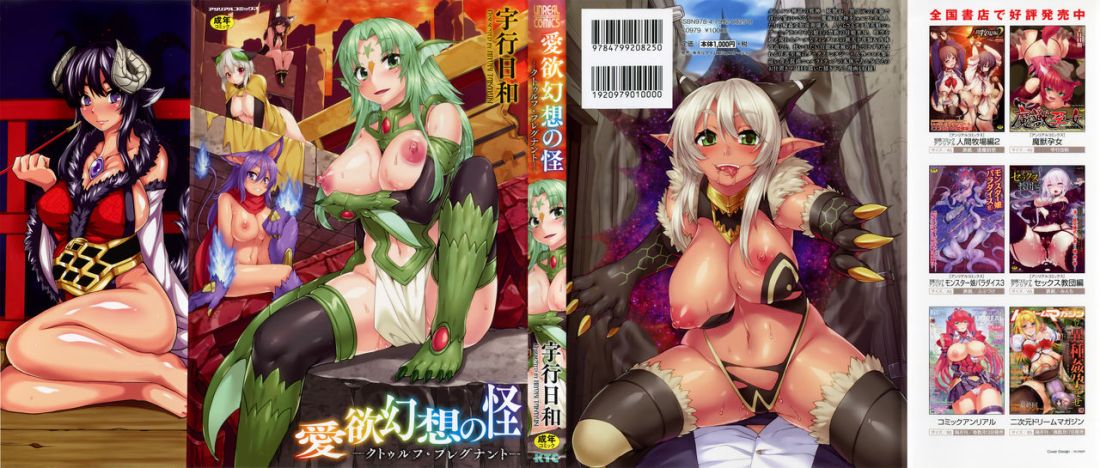
愛欲幻想の怪~クトゥルフ・プレグナント~ (The Mystery of Lustful Illusion -Cthulhu Pregnant-) by Takayuki Hiyori (宇行 日和) is a 2015 Japanese tankōbon hentai manga published by Unreal Comics (アンリアル). This book is divided into ten chapters, each of which contains a fully-illustrated and sexually explicit Cthulhu Mythos story.

In art style, the book is geared more toward erotic comedy than erotic horror; and many of the Cthulhu Mythos entities within are presented as monster girls. Takayuki Hiyori had been previously known for their dōjinshi based on popular monster girl harem manga Monster Musume, and their manga are essentially a pornographic parallel to the mostly non-explicit books like Monster Girl Encyclopedia II (2016) by Kenkou Cross (健康クロス).

Cthulhu_TOC

In terms of writing and storytelling, The Mystery of Lustful Illusion -Cthulhu Pregnant- is a disconnected collection of short works, much like most Lovecraft story collections or Lafcadio Hearn’s classic collection Kwaidan. There is no larger overarching story of narrative, the major appeal of the work being simply that it uses the Cthulhu Mythos for these erotic stories and sexualized versions of eldritch entities like Cthulhu, Hastur, Shub-Niggurath, the Deep Ones, the Hounds of Tindalos, and the Cats of Ulthar.

The contents are aimed toward some well-established tropes and kinks: as the title might imply, impregnation is a fairly significant theme in many of the stories, but there are also instances of multiple penetration, sex work, incest, nonconsensual sex, body transformation or modification, breast expansion, group sex, large genitals, etc. Readers familiar with tentacle erotica might wonder if such appendages play their part, as they do in Le Pornomicon (2005) by Logan Kowalsky, but in truth they don’t play a significant role in the proceedings.

Cthulhu_CalloftheAbyssIn point of fact, The Mystery of Lustful Illusion -Cthulhu Pregnant- is difficult to distinguish from Monster Musume or Monster Girl Encyclopedia products. While Takayuki Hiyori uses references to the Cthulhu Mythos in the crafting and telling of the stories, the manga itself is pretty straight forward monster girl erotica, and aimed more directly at that audience than Lovecraft fans. The depictions of the various Mythos entities is mostly original, but skewed toward “mostly human with a few non-human traits”—the Cats of Ulthar, for example, are indistinguishable from the generic manga or anime “catgirl,” with their primary feline traits being cat ears and tail on a nubile young woman’s body. Eldritch horrors are hinted at but seldom realized.

The contents of this book might be generally compared to the more sexually explicit chapters of The Elder Sister-like One by Pochi Iida (飯田ぽち。), but where Pochi is telling an extended narrative with a few characters with extended character development and exploring emotions, Takayuki Hiyori is necessarily more episodic, with varied content and swift-moving stories that tend to get to the sexual action fast, dwell on them for the majority of the length of the chapter, and come to a relatively swift conclusion.

Cthulhu - Ulthar

Arguably the most fun chapter in the book is a variation on “The Cats of Ulthar.” While the forms the cats take are stereotypical for hentai manga, and the results are pretty much what you might expect, it both pays homage to Lovecraft’s original work while playfully subverting aspects of it. One might compare it in some ways to the “erotic” versions of classic horror novels which achieved a bit of notoriety in the 1970s, like The Adult Version of Frankenstein and The Adult Version of Dracula by “Hal Kantor” (Ed Wood, Jr.). Erotic retellings of Lovecraft aren’t exactly new—for example, “Herburt East: Refuckinator” (2012) by Lula Lisbon—but illustrated or graphic adaptations are relatively scarce.

愛欲幻想の怪~クトゥルフ・プレグナント~ (The Mystery of Lustful Illusion -Cthulhu Pregnant-) by Takayuki Hiyori (宇行 日和) has not been officially translated into English or published in the United States; perhaps some company like FAKKU might do so in the future and make it more widely available. Until then, those interested in the Japanese original can still find copies available from retailers online.


Bobby Derie is the author of Weird Talers: Essays on Robert E. Howard and Others and Sex and the Cthulhu Mythos.

Deep Cuts in a Lovecraftian Vein uses Amazon Associate links. As an Amazon Associate I earn from qualifying purchases.