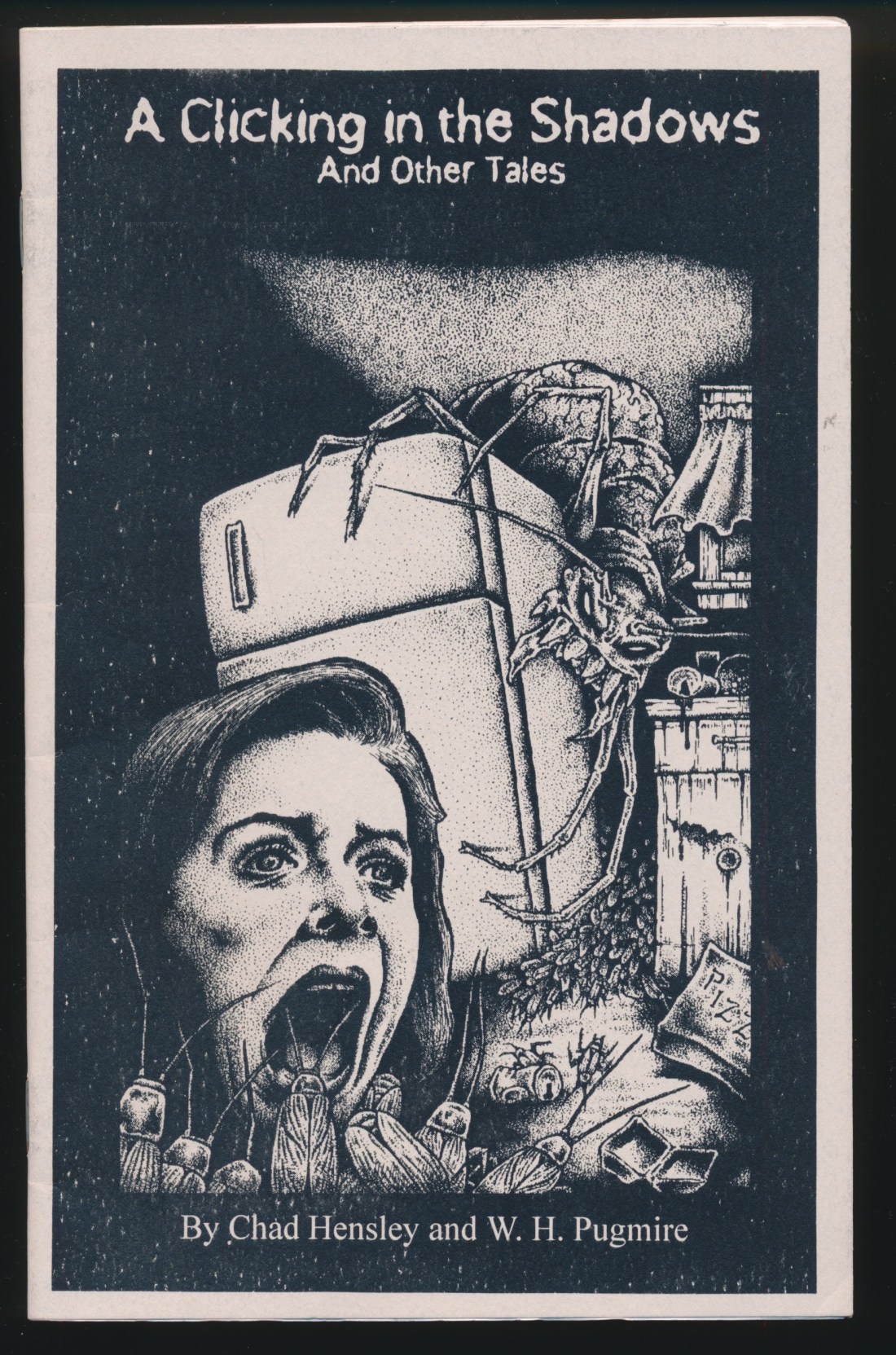
“Re-Quest Denied” (1998) by Stanley C. Sargent

Dedicated to W.H. Pugmire, the culprit concealed behind every bush of Sesqua Valley.
—Stanley C. Sargent, “Re-Quest Denied” in Mythos Online, Vol. 1, #8 (Feb 1998)

In 1996, Stanley C. Sargent wrote “For Wilum, Gent.,” published in the obscure journal Leathered in Crimson #1. In 1997, Sargent reviewed Tales of Sesqua Valley by W. H. Pugmire; it was Pugmire’s first fiction collection. In 1999, Sargent co-edited and illustrated Dreams of Lovecraftian Horror, Pugmire’s next collection. They were friends, they were admirers of each other’s work. And in 1998, Sargent penned a small tribute to his friend.

“Re-Quest Denied” is a rare tale of Sesqua Valley written by someone other than Pugmire himself, and interestingly it parallels some of the themes expressed in “Vyvyan’s Father” (2013) by Jayaprakash Satyamurthy. Both stories essentially deal with an escape into disenchantment, the refusal of the call of beauty and emotion to focus on logic, rationality, mundanity, dullness—and both ultimately come to regret that choice and embrace what they had once rejected.

There is a question as to how much of Sargent himself went into this story. Not in the exact details, but in the emotions. In his own brief bio, he wrote:

Born at high noon on the summer solstice, 1950, in Ohio, Stanley C. Sargent grew up near his grandparents’ 200 acre farm. He populated three large, abandoned gravel pits on the farm with prehistoric and mythological beasts only he could see.

At age 18, Stan pulled up stakes and moved to San Francisco, where he could live as he liked and be openly gay. He attended a conference on Mayan hieroglyphs in Guatemala City in the mid-1970’s, and he spent a month in Iran in 1979. He worked for many years for corporate law firms, as word processing department supervisor.

In 1991, Stan abandoned the business world. He continued his long-time interest in and production of art (ink pointillism and later airbrush painting); in 1999, he completely illustrated a paperback book by W.H. Pugmire. At age 44, he began writing horror fiction inspired by the style of H.P. Lovecraft.

Compare that to:

Victor had dedicated every moment of his waking life to work, to the exclusion of all else. He had never even stopped long enough to get married. Emotions, longings, and his natural romantic lean had been suppressed and ignored completely. The result had been a brilliant career as advisor to the most powerful men and women on Earth; all the world had known and honored him. Now he was retired, and none of it meant anything to him.

At age sixty-five, Victor felt his life had been wasted. Without the endless distractions he had always known, a tidal wave of emotion rose up from deep within his soul, overwhelming him with the realization that, regardless of his worldly success, his life was a total failure.

He had lived a one-sided existence devoid of love and passion. He had spent his life building a magnificent palace in which he dwelled alone; in all his years, he had never found anyone with whom to share the love or passion that resided within him. And now that he was an old man, overweight and wrinkled, loosing his hair, it was too late.

Likewise, it seems clear that “Pug” is inspired by W. H. Pugmire, even if it isn’t meant to be him. A sort of idealized Pugmire, the eternal youth that echoes the kind of masculine beauty that written about in stories like “Pale, Trembling Youth” (1986) by W. H. Pugmire & Jessica Amanda Salmonson. Pug is a dream, a promise, a part of Sesqua Valley made flesh, the fire the moth is drawn to.

In terms of writing, this is one of Sargent’s minor works; the prose is straightforward, a bit basic, the plotting fairly straightforward and heavy with foreshadowing. Readers might compare it to The Substance (2025), only in reverse. Perhaps wisely, Sargent doesn’t step on Pugmire’s toes, doesn’t add much to the lore of Sesqua Valley. A single legend, a couple of inhabitants. Nothing that Pugmire would have to write around or contradict in his own works, but also not much to tie it in except for Mt. Selta itself.

“Re-Quest Denied” is far from a lost work, although it remains fairly obscure. Originally published in the now-defunct Mythos Online webzine in 1998, it was reprinted in the print journals Al Azif #3 (May-Jun 1998), Dreaming in R’lyeh #1 (2003), and Tales of the Cthulhu Mythos: Cthulhu’s Creatures (2007), all of which are long out of print. Unfortunately, Sargent never included it in any of his own collections; even more unfortunately, the original art that accompanied this work (titled “Pug” and with the alt text: “Yet it was the nude youth of breathtaking veauty that was the true centerpiece of Victor’s dreamlike vision.”) appears to be lost, as it wasn’t captured by the Internet Archive.

Alas.


Bobby Derie is the author of Weird Talers: Essays on Robert E. Howard and Others and Sex and the Cthulhu Mythos.

Deep Cuts in a Lovecraftian Vein uses Amazon Associate links. As an Amazon Associate I earn from qualifying purchases.
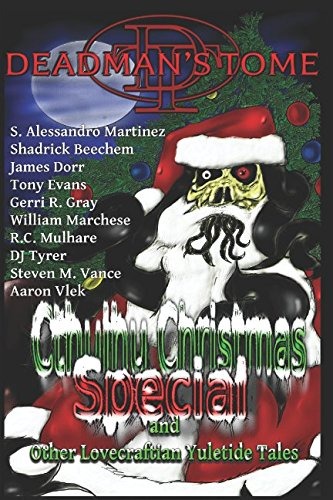
“Vyvyan’s Father” (2013) by Jayaprakash Satyamurthy

In H. P. Lovecraft’s body of work, the town of Innsmouth is mentioned by name only in four stories (“Celephaïs,” “The Shadow over Innsmouth,” “The Thing on the Doorstep,” and “The Dreams in the Witch House”) and a couple “Fungi from Yuggoth.” The core of Lovecraft’s Mythos, which so many writers have expanded upon over the decades, tends to be fairly scanty. Lovecraft country, that literary realm where the Old Ones walk, was painted in broad strokes and a few fine details, and it is everyone else who has filled in the gaps.

Writers who came after Lovecraft have, when not playing in his sandbox, carved out their own spaces. The most famous are Ramsey Campbell’s Severn Valley stories set in and around the literary Brichester and Goatswood in the United Kingdom; and W. H. Pugmire‘s Sesqua Valley and associated towns and mountains set in the Pacific Northwest of North America. Since these writers lived much longer than Lovecraft, and had more opportunity to write and publish, it might not be surprising that they have produced correspondingly more lore for their associated locales than Lovecraft did for his.

And yet, these places often feel smaller, because the voices associated with them tend to be singular. While anybody can write a tale of Innsmouth, it is generally considered uncouth to poach a living author’s copyrighted creations without permission. Some of them have consented to letting other writers splash in their ponds—Ramsey Campbell, for instance, consented to Made in Goatswood (1996), a tribute anthology; and in 2013 the Lovecraft eZine #28 did a similar tribute to W. H. Pugmire.

These tales represented a first step at a wider Sesqua Valley Mythos. New ideas, new perspectives, new angles. Pugmire was never dogmatic about his Sesqua Valley lore, preferring to expand it in hints and suggestions, a tale at a time, and there has not yet been an effort to correlate all the contents of his fiction into a single concordance or wiki. Perhaps, in the future, there will be more. For now, one particular tale from Lovecraft eZine #28 is worth discussing, because it does something different than the rest. Something very Pugmire-like in its approach to the Sesqua Valley tales.

“Vyvyan’s Father” by Jayaprakash Satyamurthy does not mention Sesqua Valley. Simon Gregory Williams and William Davis Manly do not appear on the page. Uniquely of the tribute stories in the eZine, Satyamurthy chose to write a story that is definably set in the world of Sesqua Valley—for anyone who is familiar with Pugmire’s work, at least, it is obvious from the clues and details as much as the context of the issue—without falling into the same trap of Mythos pasticheurs who load up a story with familiar names. It is an approach that echoes Pugmire’s own insistence that writing Lovecraftian fiction should echo the aesthetics of Lovecraft, not just pay lip-service to Arkham and Innsmouth, Dunwich and Kingsport, Cthulhu and the Necronomicon.

His eyes beguiled me, being slightly slanted and of a silver hue that seemed to contain particles of other shades in their pale irises.
—W. H. Pugmire, “The Horror on Tempest Hill” in An Imp of Aether 142

If his eyes were open, they would startle you with their timeless, silvery-grey depth.
—Jayaprakash Satyamurthy, “Vyvyan’s Father” in Lovecraft eZine (2013)

There is something very appropriate in how Satyamurthy’s tale is a bridge between India and Sesqua Valley; the lost child, the orphan of the Valley, is caught between two worlds in a way that echoes something of India’s own history as a crossroads of empires, with those who fall outside the established social orders caught like nuts in a pulau: a part of the whole, yet apart from the rest. This between-two-worlds tension defines Vyvyan’s character, but it also echoes the story as a whole: instead of just playing in Pugmire’s backyard, Satyamurthy builds a bridge between the setting of many of his own stories and Pugmire’s. Instead of submitting himself to Pugmire’s aesthetic, he shows how their themes can connect. Like New World tomatoes incorporated into a quintessentially Indian paneer gravy.

The slow expansion of Sesqua Valley beyond the bounds of Pugmire’s fiction is not the trauma-driven diaspora that marks much of contemporary Innsmouth tales. It is a different kind of cultural diffusion, spread by wanderers and their children, artifacts and ideas that spread out and draw strangers in. Where it goes from here…who can say?

“Vyvyan’s Father” by Jayaprakash Satyamurthy can be read online at Lovecraft eZine #28, and print edition is also available.


Bobby Derie is the author of Weird Talers: Essays on Robert E. Howard and Others and Sex and the Cthulhu Mythos.

Deep Cuts in a Lovecraftian Vein uses Amazon Associate links. As an Amazon Associate I earn from qualifying purchases.

“In Their Own Voices” (2025) by Lavie Tidhar

Fishhead was of a piece with this setting. He fitted into it as an acorn fits its cup.
—Irvin S. Cobb, “Fishhead” (1913)

She remembered college well. It was so different to junior high, when the kids used to push her, gathered round in a circle so that she couldn’t escape. Fishhead! Fishhead! they’d cry.
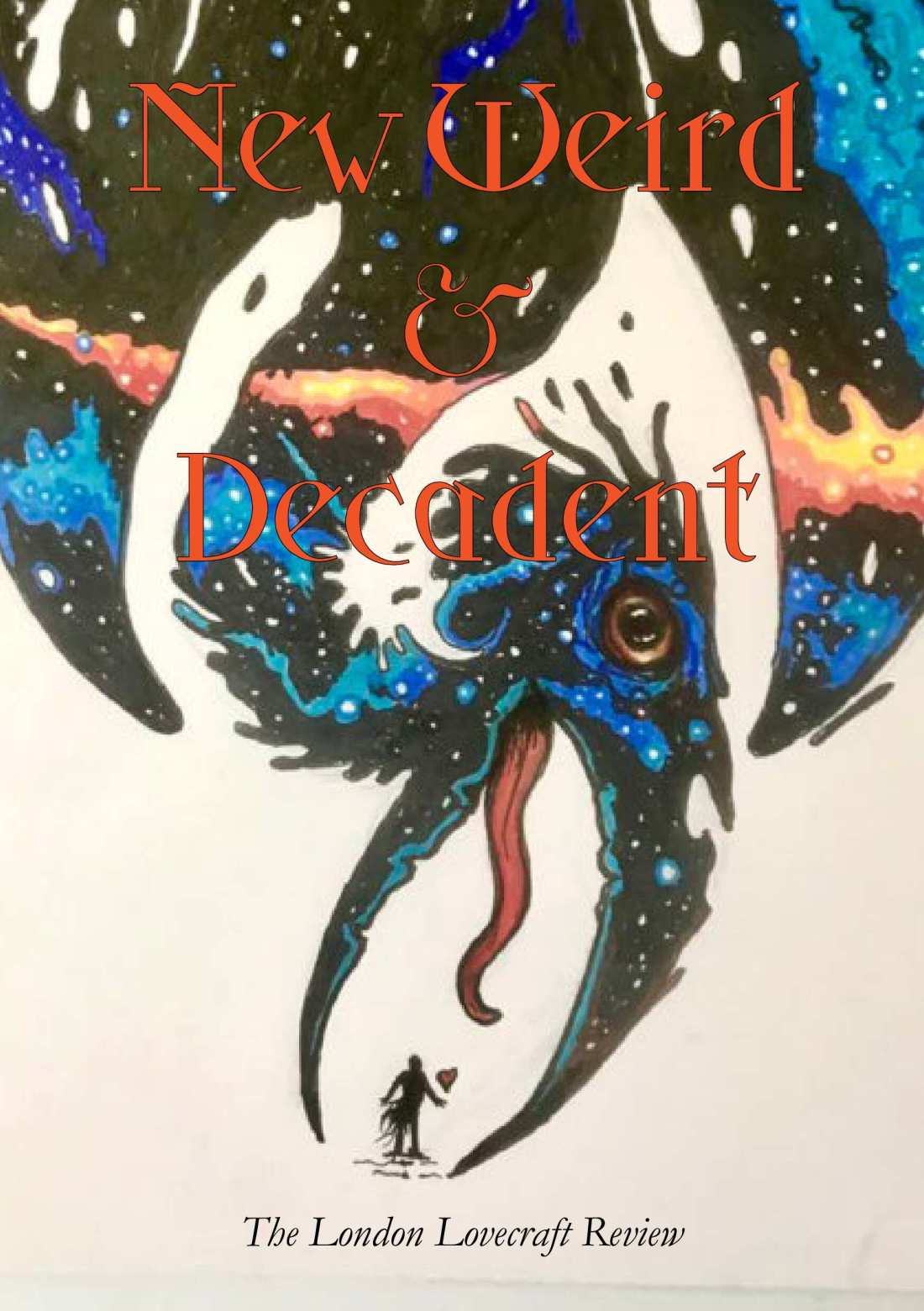
—Lavie Tidhar, “In Their Own Voices” in New Weird & Decadent (2025) 29

The 21st-century story of “The Shadow over Innsmouth” is the diaspora. It is a very post-colonialist idea; the concept of identity and ethnicity, which has been forcibly divorced from geography. The people of Innsmouth were forced from their homes by government violence, military force. Arrested, imprisoned, murdered.

Yet they survived.

“The Doom That Came to Innsmouth” (1999) by Brian McNaughton & “The Litany of Earth” (2014) by Ruthanna Emrys, “Legacy of Salt” (2016) by Silvia Moreno-Garcia, “All Our Salt-Bottled Hearts” (2016) by Sonya Taaffe, and Winter Tide (2017) by Ruthanna Emrys are some of the stories that deal with the way the survivors of the government raid on Innsmouth scattered, and how their descendants connected, formed their own groups, attempted to preserve and reclaim their legacy.

Glad your collaborator found my Massachusetts atmosphere convincing.
The plot I am now experimenting on concerns another fictitious Mass.
town—“Innsmouth”—which is vaguely suggested by the ancient & almost
dead city of Newburyport. Of course, there is no sinister, un-human shadow
over poor old Newburyport—but then, there never was a festival of worms
at Marblehead (Kingsport)!
—H. P. Lovecraft to August Derleth, 14 Nov 1931, Essential Solitude 1.411

One of the biggest parts of the diaspora mythology is the return to Innsmouth itself. The town that Lovecraft described takes its real-life inspiration from his visit to Newburyport, Massachusetts, and while its literary antecedents include Irvin S. Cobb’s “Fishhead,” Herbert S. Gorman’s “The Place Called Dagon,” and Robert W. Chambers’ “The Harbor-Master.” This is not portrayed as irredentism, however; the return is not a military re-conquest, violence meeting violence, but a peaceful reoccupation. Innsmouth is portrayed as ground of little to no value aside from those who are bound there by ties of ancestry and memory.

Lavie Tidhar’s “In Their Own Voices” is about such a return. It is not a horror story, though horror is part of its history and heritage. This is about the healing that comes after the horror, about reunion, self-acceptance, and finding your tribe. Tidhar has done well to ground the story in the genuine Massachusetts geography, much as Lovecraft himself did.

Silvia linked hands with her sisters; and when she smiled she tasted salt on her tongue, and it took her a moment to realize she had been crying.
—Lavie Tidhar, “In Their Own Voices” in New Weird & Decadent (2025) 29

Readers could easily imagine the Silvia of “In Their Own Voices” and Aphra of Ruthanna Emrys’ “The Litany of Earth” meeting together, stranger cousins at a family reunion—and that’s part of the game. Writers like Tidhar are surfing the same wave that August Derleth, Silvia Moreno-Garcia, Sonya Taaffe, and so many others have ridden, but they are all on their own journey, and the emphasis is different for each writer. The legacy of Innsmouth is both horror and acceptance, monsters and orphans. That speaks across generations.

“In Their Own Voices” by Lavie Tidhar was published in New Weird & Decadent (2025), also available on Amazon.


Bobby Derie is the author of Weird Talers: Essays on Robert E. Howard and Others and Sex and the Cthulhu Mythos.

Deep Cuts in a Lovecraftian Vein uses Amazon Associate links. As an Amazon Associate I earn from qualifying purchases.
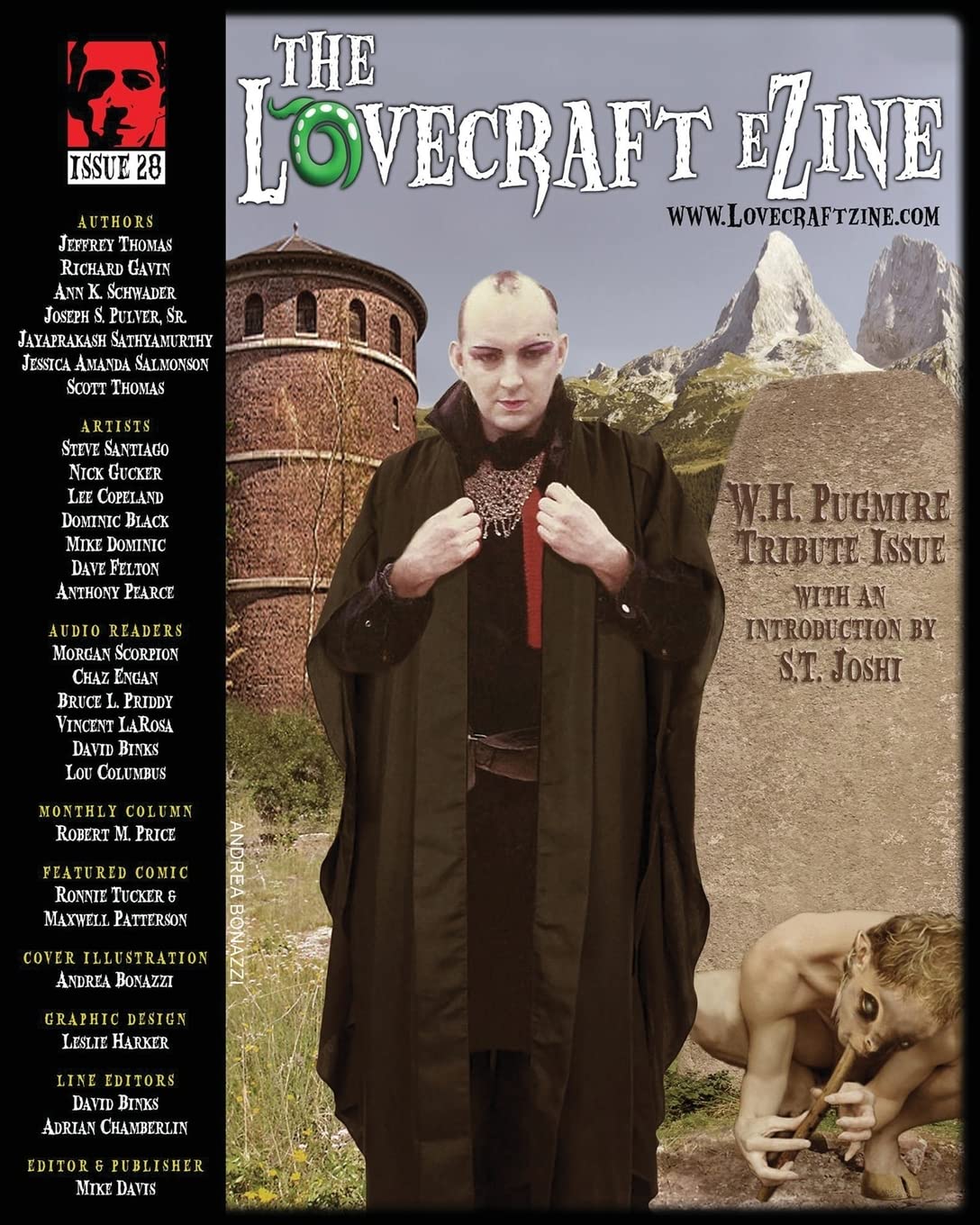
“Under an Arkham Moon” (2014) by Jessica Amanda Salmonson & W. H. Pugmire

(To the memory of Robert Bloch)
—Jessica Amanda Salmonson & W. H. Pugmire, “Under an Arkham Moon” in
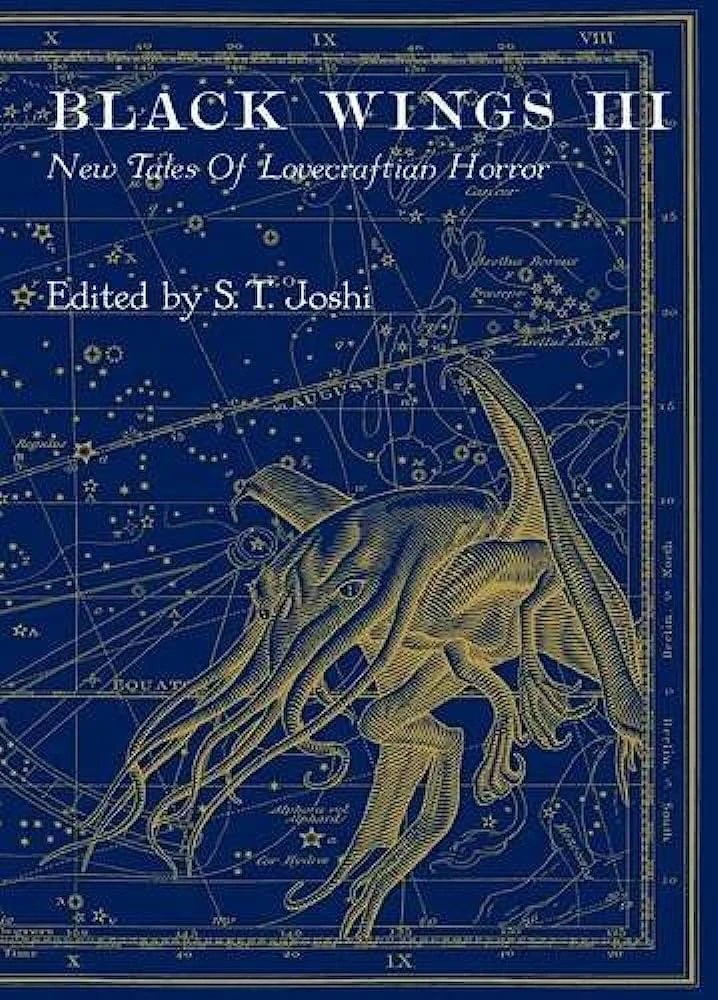
Black Wings III (2014) 57

Teratophilia is the love of monsters and the monstrous. This can be love of any sort, the fondness of familiarity or a sibling-like bond of friendship to sexual desire or even some unchangeable, devoted, and obsessive agape. There are many forms of teratophilia on display in this short tale by Salmonson and Pugmire. The love of human oddities, so often misconstrued as monsters; the love of Arkham, that fictional town that is so steeped in evil it corrupts the dreams of those within it; and a hot, burning physical desire for the monster in the attic…but above all, there is the love for that very human monster H. P. Lovecraft, and the story is written in such a way to pay homage to his creations, while taking them a step or three further.

The dedication to the memory of Robert Bloch is a nod to his story “The Mannikin” (WT Apr 1937), and this story shares a character with a similar conjoined twin and a connection to De Vermis Mysteriis, and may owe itself to a certain idea from Lovecraft. The plot is essentially a sequel to Lovecraft’s “The Unnamable” (1925), evident from its references to “The Attic Window” in Whispers (albeit with a nod toward the Indiana Magazine War), and the thing with the blemished eye. However, for the most part this is a story that reveals in the decadent Lovecraftian aesthetic. That really soaks in the sensuous language, the dark atmosphere, the terrible hints and lore.

This was a story written by a pair of monster kids that grew up into adults still in love with a world of dark delights and evil that was something more than the banal of canceling school lunches or denying health care claims to the sick. A story that tells how someone might be drawn back to old haunts to, as Conan the Cimmerian once put it in “The People of the Black Circle”: “like a crippled snake to soak up fresh venom from some source of sorcery.”

Sometimes, we return to Arkham for renewal.

I had returned to Arkham from the “real” world with fewer victories than I expected. I had been defeated, I of noble blood, noble of its kind. I needed Ambrose’s familiariaty, even that part of him that could slip from poetry to venom in a single heartbeat.
—Jessica Amanda Salmonson & W. H. Pugmire, “Under an Arkham Moon” in
Black Wings III (2014) 59

The twist in this story, when teratophilia proves both sexual and reciprocal, is a delicious one of its kind. Lovecraft always left the nature of the Unnamable deliberately ambiguous, and Salmonson & Pugmire have kept it so here. The terrible truth behind Lovecraft’s original story was very different, but this is still a fine sequel. A return to Lovecraft country, a refreshing dip for dark spirits who remember when Lovecraftian fiction was less hung up in the trappings of the Mythos and evoked more of the strange, decadent mood of Lovecraft’s early fiction, when friends scared each other to look into a house haunted by something they could not give a name to.

“Under an Arkham Moon” by Jessica Amanda Salmonson & W. H. Pugmire was first published in Black Wings III (2014); it was reprinted in Pugmire’s collection An Ecstasy of Fear (2019, Centipede Press).

The Terrible Truth Behind The Unnamable

The thing, it was averred, was biologically impossible to start with; merely another of those crazy country mutterings which Cotton Mather had been gullible enough to dump into his chaotic Magnalia Christi Americana, and so poorly authenticated that even he had not ventured to name the locality where the horror occurred. And as to the way I amplified the bare jotting of the old mystic—that was quite impossible, and characteristic of a flighty and notional scribbler! Mather had indeed told of the thing as being born, but nobody but a cheap sensationalist would think of having it grow up, look into people’s windows at night, and be hidden in the attic of a house, in flesh and in spirit, till someone saw it at the window centuries later and couldn’t describe what it was that turned his hair grey.
—H. P. Lovecraft, “The Unnamable”

Lovecraft gets a bit of a ribbing for “unnamable,” “unspeakable,” or “indescribable” critters – which he never had a monopoly on and was never so addicted to as a lot of critics like to think; the story in question in fact begins by making fun of the tendency in stories like Ambrose Bierce’s “The Damned Thing” or Guy de Maupussant’s “The Horla.”

Beyond that though, Lovecraft would take his inspirations where he found them, and this includes the family copy of Cotton Mather’s Magnalia Christi Americana (1702), which purports to be a religious history of New England but manages to cram in so many weird bits and pieces that you’d be amazed—witchcraft narratives, ghost stories, sea monsters, the works. The bit which inspired Lovecraft’s story is a very obscure bit of gossip about a “thing with a blemished eye”:

At the Southward there was a Beaſt, which brought forth a Creature, which might pretend unto ſomething of an Humane Shape. Now the People minded that the Monſter had a Blemiſh in one Eye, much like what a profligate Fellow in the Town was known to have. This Fellow was hereupon examin’d; and having upon his examination, conſeſ’d his inſandous Beſtialities; for which he was deſervedly Executed.
—Mather, MCM Book VI, Chapter V, Tenth Remark

Which was a hard go, the worse so because while Mather names no names, we know what actually inspired the anecdote.

George Spencer, an ugly balding man with one “pearle” or false eye, had probably been whipped in Boston for receiving stolen goods, and had also been punished in New Haven for botching an attempt to escape to Virginia. He admitted that he had gained no spiritual benefit from the ministry of the famed John Davenport, that he had not said a single prayer during his five years in New England, and that he read the Bible only when ordered to do so by his master. In February, 1642, Spencer’s life took a cruel turn when a sow gave birth to a dead deformed piglet. The “monster” was completely bald and had “butt one eye in the midle of the face, and thatt large and open, like some blemished eye of a man.” Out of its forehead “a thing of flesh grew forth and hung downe, itt was hollow, and like a mans instrum’ of genration.”

The magistrates arrested Spencer and put him in prison. New Haven had not yet tried a capital crime. Spencer had seen enough of the colony’s system of justice to know that the magistrates expected offenders to confess and repent. He had recently seen a man merely whipped for molesting a child, and as Spencer made clear, he thought that child molestation was a more disgusting crime than bestiality. Yet he denied his guilt until one magistrate “remembered him of thatt place of scripture, he that hideth his sin shall not prosper, butt he yt confesseth and forsaketh his sins shall finde mercie.” Spencer then “answered he was sory and confessed he had done itt,” only to learn that his confession would get him hanged and that mercy would come only from the Lord, not the Colony of New Haven. He retracted and repeated his confession several times in a desperate attempt to find a formula that would save his life. But on April 8, 1642, two months after the birth of the monster, the sow was put to the sword in front of the unrepentant Spencer, and he was hanged, “a terrible example of divine justice and wrath.”
—John M. Murrin, “‘Things Fearful to Name’: Bestiality in Colonial America”

Lovecraft was no doubt taken by the layers of obfuscation in Mathers’ account, which only really hinted at the appearance of the unfortunate piglet. Stripped of this mystery and romance, we are left with a man who was wrongly accused and ultimately was executed for an accident of nature by an intolerant society of religious fanatics. A much more banal but frighteningly very real moment in history that served as the seed for some very strange stories.


Bobby Derie is the author of Weird Talers: Essays on Robert E. Howard and Others and Sex and the Cthulhu Mythos.

Deep Cuts in a Lovecraftian Vein uses Amazon Associate links. As an Amazon Associate I earn from qualifying purchases.
“The Passionate Fantasophile” (1979) by Janice Arter & “To the Shade of HPL” (1981) by Margaret Carter

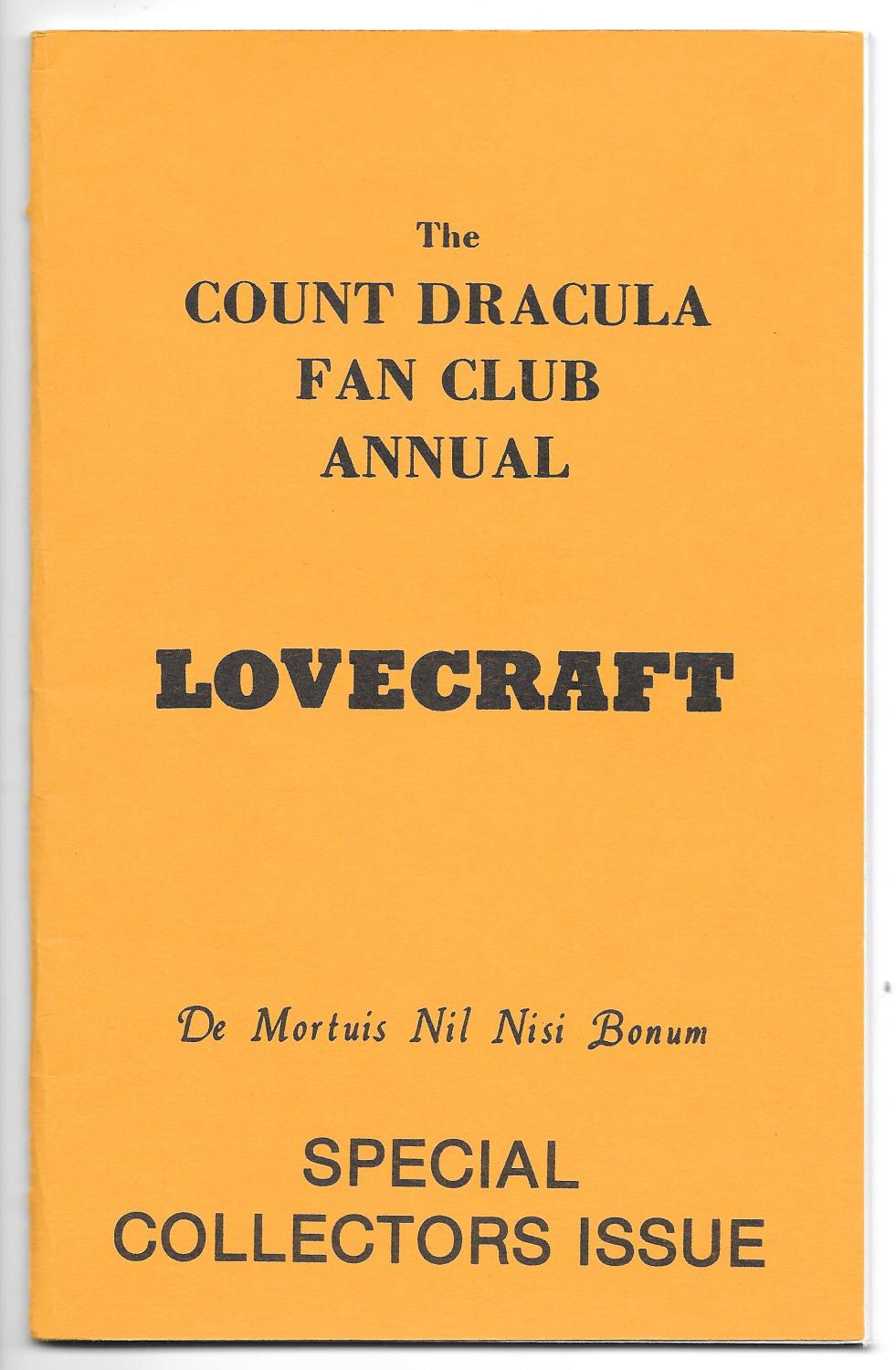
Dr. Jeanne Keyes Youngson founded the Count Dracula Fan Club in 1965 after a trip to Romania; this was before the publication of McNally and Florescu’s In Search of Dracula (1972), but after the first full biography of Stoker, Harry Ludlam’s A Biography of Bram Stoker: Creator of Dracula (1962). It was the beginning of a serious opening-up of Dracula scholarship, serious scholarship that had fans and researchers scouring archives, uncovering Stoker’s original notes and manuscript, critically annotating and comparing different editions of the text. The work was international, and the fan club contained both enthusiastic vampire fiction fans and literary historians, and it published official journals and other publications.

In 1985, the Count Dracula Fan Club published an annual, a special Lovecraft-themed collectors issue. The highlight of the issue might be Kenneth W. Faig, Jr.’s brief article “The Revision of Dracula”—the first real address of the Lovecraft/Miniter Dracula revision anecdote from the Lovecraftian scholar’s point of view. However, it was full of more than that, including two neat little Mythos poems by women authors, “The Passionate Fantasophile” by Janice Arter and “To the Shade of HPL” by Margaret Carter.

“The Passionate Fantasophile” by Janice Arter

Published for the first time in The Further Perils of Dracula (1979), a Count Dracula Fan Club poetry anthology, Arter’s 18-line poem is a lyric poem, opening with the invitation “Come live with me and drink my blood,” and working through a list of familiar activites, including:

Come live with me and we shall learn
The power to make the oceans burn,
The secrets of the Scroll of Thoth,
The chant to summon Yog-Sothoth,
And we shall be as one.

This is a poem for lovers in multiple senses of the term. It is a very romantic invitation, of one horror fan to another, inviting activities that would be horroric to anyone except another horror fan. By the 70s, Lovecraft’s Mythos was being woven into the pantheon of familiar horrors, and Yog-Sothoth could comfortably rub shoulders next to vampires and witches. It is the kind of opening-of-the-heart that would only really work from one true horror fan to another, someone who will both get the references and the appeal of going to the Sabbath or dwelling in unimagined space with someone else who gets it.

“To the Shade of HPL” by Margaret Carter

Published for the first time in Daymares from the Crypt (1981), a chapbook collection of Carter’s poetry, and was re-released in an ebook of the same-name in 2012. Carter’s verse takes the form of an ode in 12 lines, a tribute to Lovecraft and the Mythos he had spawned, which Carter herself had contributed to over the years, and would continue to do so in the years to come. Some of the imagery is in the same vein as Arter’s poem, emphasizing the Mythos experience and aesthetic:

The hand that traced those tales of nameless lore
Never lent its grave-chilled touch to me—
Yet I have groped my way down Arkham’s hills
To watch the rites of Innsmouth by the sea.

The difference is, Carter isn’t just evoking Lovecraft’s Mythos, but Lovecraft himself. The Old Gent had already become a part of his own Mythos, his growing legend entwined with the stories he had written, and the artificial mythology being slowly expanded by fans and pros alike. Carter isn’t directly inviting the reader to participate in nameless rites or to dance with ghouls, but is expressing her own experience of doing so, made possible only by H. P. Lovecraft.

While both of these poems are fairly minor in the grand scheme of fantasy and horror literature, they are examples of the growing acceptance of Lovecraft and the Mythos in the 1980s, even in Dracula fandom, which was only tangential to Lovecraft.


Bobby Derie is the author of Weird Talers: Essays on Robert E. Howard and Others and Sex and the Cthulhu Mythos.

Deep Cuts in a Lovecraftian Vein uses Amazon Associate links. As an Amazon Associate I earn from qualifying purchases.
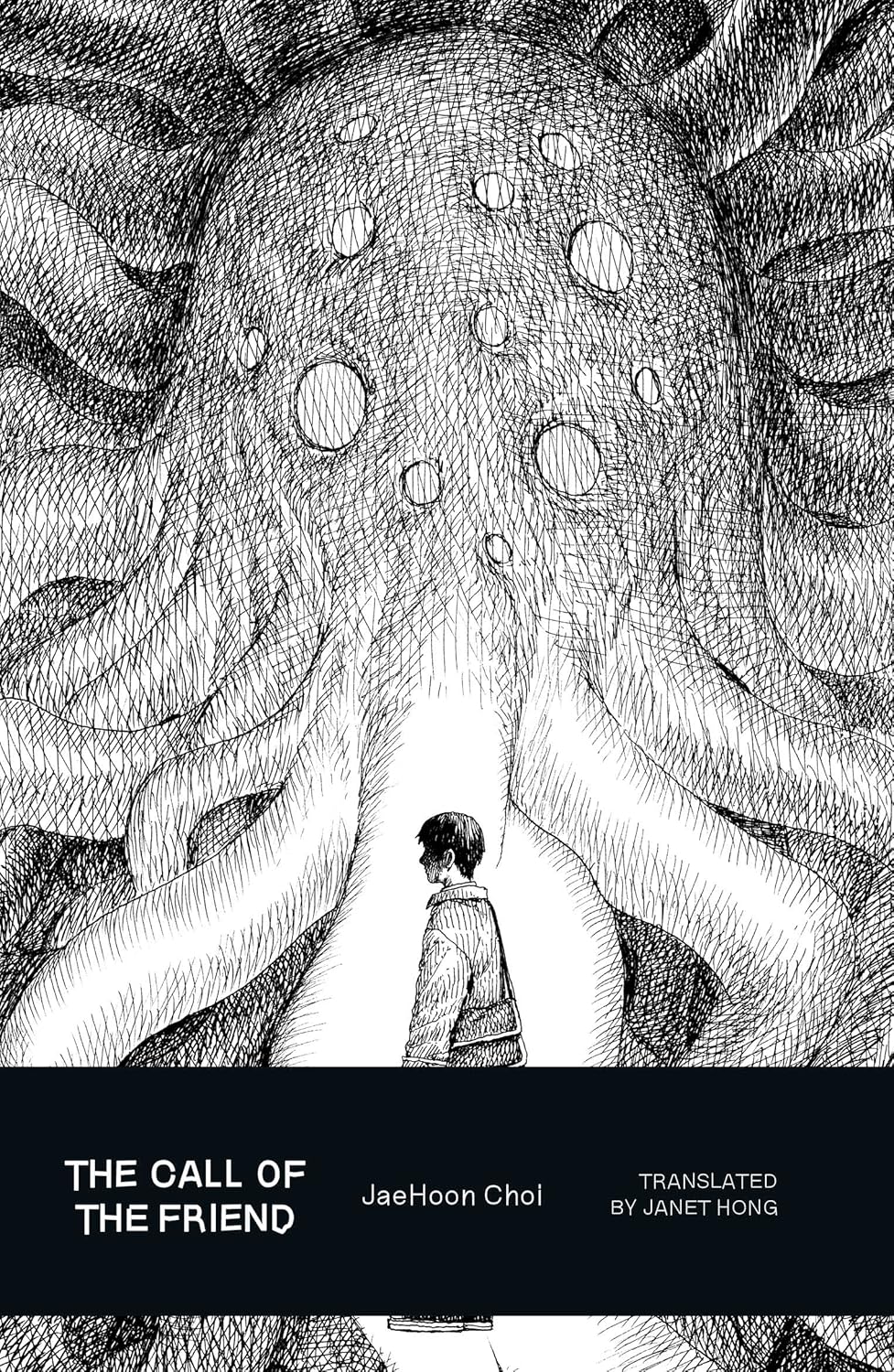
The Call of the Friend (2025) by JaeHoon Choi (최재훈) trans. Janet Hong

THE CALL OF THE FRIEND is part of the Lovecraft Reanimated project, where leading Korean speculative fiction writers reimagine the works of horror master H.P. Loveccraft, while honoring his eerie, grotesque imagery and the blurred boundaries between reality and fantasy, they update his ideas for a global audience.
The Call of the Friend (2025), inside cover flap

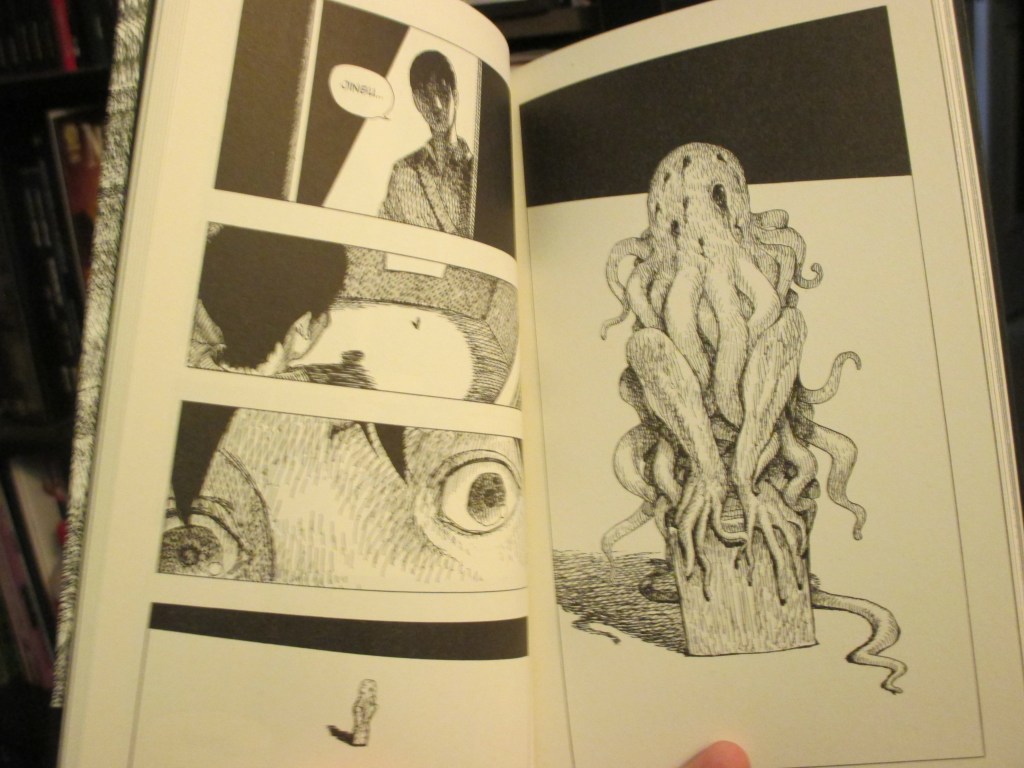
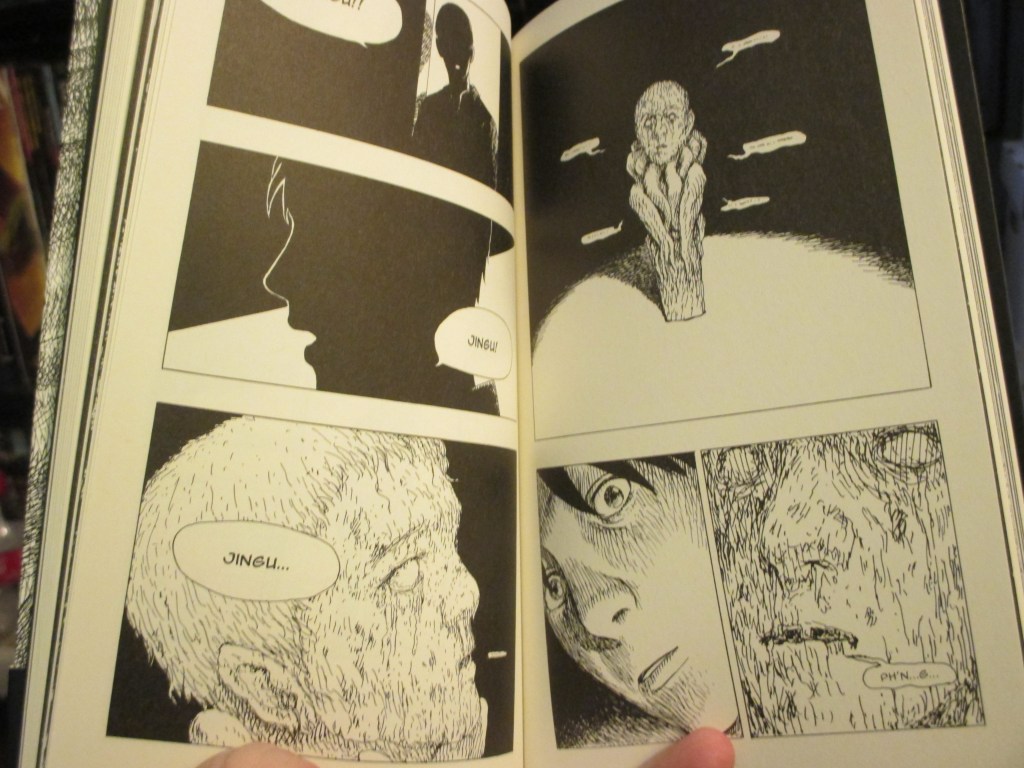
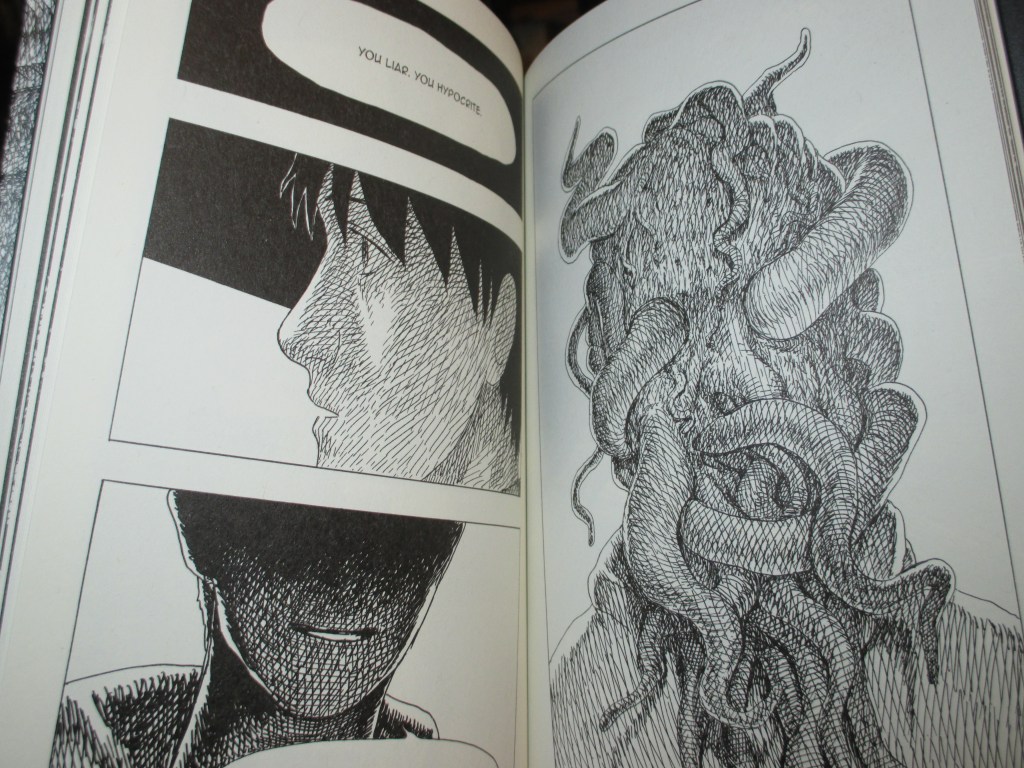
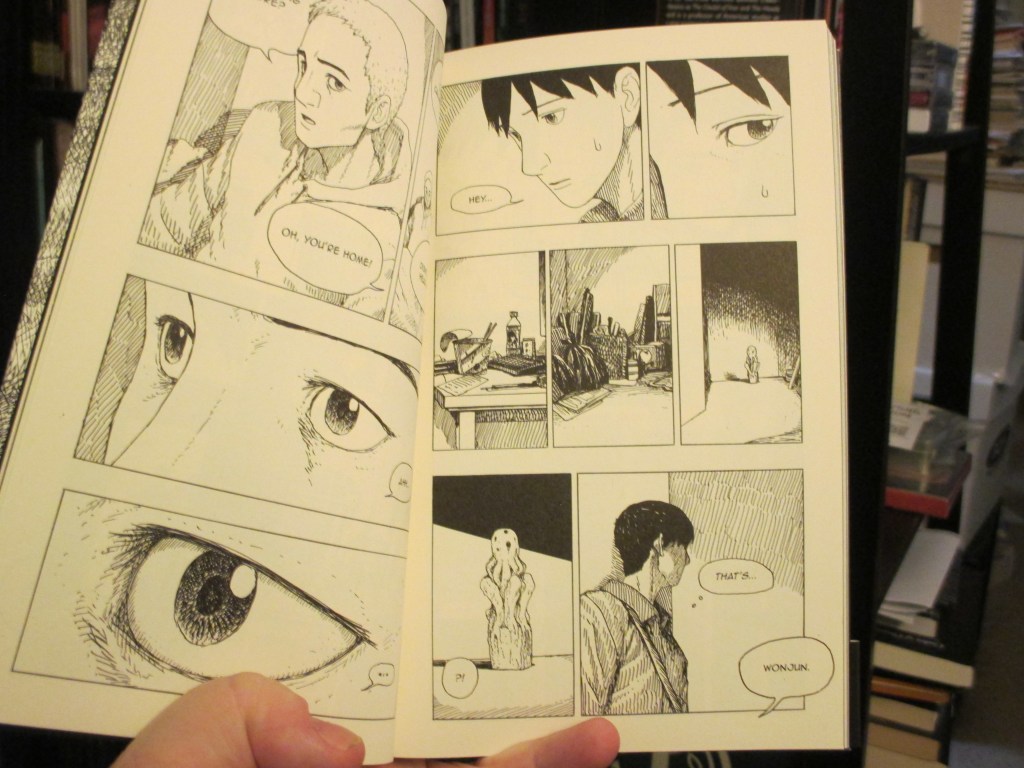
The Call of the Friend (친구의 부름) is a standalone black-and-white graphic novel by Korean comic artist and writer JaeHoon Choi (최재훈), first published in 2020. The English translation by Janet Hong was published in 2025 by Honford Star. The story is set in contemporary urban Korea, where university student Wonjun checks in on his friend Jingu, whose sister (a K-pop idol) has recently committed suicide, implicitly because of a scandalous affair. It is in Jingu’s apartment that Wonjun spots a strange idol.

The story that unspools is not a straightforward linear narrative. It is intimate, focused on Wonjun, with everyone other than Jingu essentially faceless. Readers get pieces of the puzzle, but the full story isn’t spelled out for them, readers are forced to interpret the evidence as best they can. In this, they are given a single helpful hint in a short essay at the end of the book:

Some live a life of violence, while others make every effort to avoid stepping on an insect. But no matter the severity or type of sin, the moment we realize we have sinned, we experience fear. The fear isn’t so much the dread of punishment or retribution. It stems from the knowledge that we’ve hurt someone or caused their unhappiness, and the sin manifests as fear. Depending on the intensity of this fear, we can either be liberated from our guilt or ensnared by it.

While I don’t want the theme to be too obvious in this story, I hope readers might be able to tangibly experience Wonjun’s guilt. These long, nocturnal reflections on our current human condition, set against H. P. Lovecraft’s world of unexplained fears, have prompted me to contemplate the words we’ve spoken, the conflict and guilt we’ve endured, as well as the subsequent death and feat they cause.
The Call of the Friend (2025), 104-105

As an essay, it is slightly reminiscent of Arthur Machen’s prologue to “The White People” on ‘sorcery & sanctity.’ The idea of fear as a fundamental response to a transgression—an instinctive response to some imbalance caused by action or inaction—and that this fear can liberate or ensnare guilt, has its attractions. Yet how does this philosophical approach jive with Lovecraft’s famous proclamation that “the strongest kind of fear is fear of the unknown”?

When you don’t know what the sin was. When the only way you have to measure how badly you’ve hurt someone is the measure of the fear you feel in response to it. Whether this is what JaeHoon Choi intended with The Call of the Friend I cannot say, but the presence of the Cthulhu Mythos in this story is suggestive of something that goes beyond tawdry K-pop star drama and the suicide of the sister of a friend. It suggests that there’s something much bigger at work here, something unseen and unknowable, and it threatens to ensnare Wonjun entirely.

The Call of the Friend is somewhat reminiscent of Minetaro Mochizuki’s Hauntress (1993) in general outline—both of them deal with young university students living on their own, the one checking in on the other to whom something has happened, and with a supernatural horror creeping into their lives—and more importantly, that sensation of an urban legend unfolding in a space of familiar, contemporary surroundings. These are characters ill-equipped to deal with the psychological terrors of their experiences. They have no strong faith, no occult skills or leanings. They are regular people, with limited resources, facing the uncanny.

That works. JaeHoon Choi takes advantage of the prosaic setting and characters to make the distortions of perception all the more disturbing for taking place in setting of absolute reality. Readers will question how much of this is in Wonjun’s head, will wonder when we slip into dream, hallucination, or twisted memory. The idol forms a locus of manifestation, a central image to embody what it is happening, but even until the end, readers have to decide how much of this is really happening.

The comic ends like an unresolved chord. Readers don’t get answers. Only the impression that they have witnessed something. Perhaps that is the answer itself.

Janet Hong’s translation of the graphic novel into English is very readable and smooth. While most of the graphic novel itself has relatively sparse dialogue, the essay at the end is very clear and easy to understand, and a valuable key to understanding the work.

The Call of the Friend (2025) by JaeHoon Choi and translated by Janet Hong is available at the Honford Star website as an ebook or softcover.


Bobby Derie is the author of Weird Talers: Essays on Robert E. Howard and Others and Sex and the Cthulhu Mythos.

Deep Cuts in a Lovecraftian Vein uses Amazon Associate links. As an Amazon Associate I earn from qualifying purchases.
“Body to Body to Body” (2015) by Selena Chambers

Every woman’s body is a story, you see.
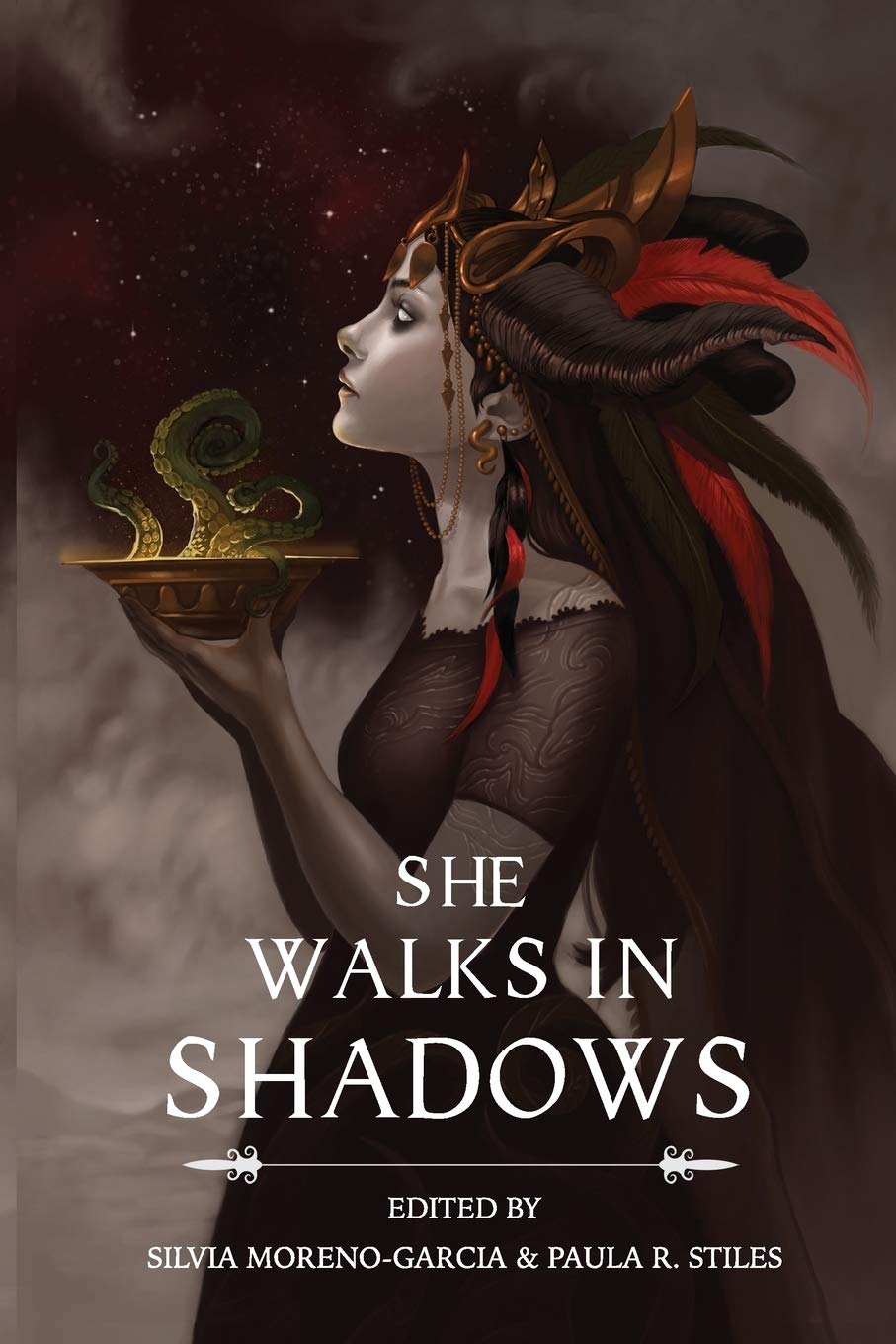
—Selena Chambers, “Body to Body to Body” in She Walks in Shadows (2015) 132

Lovecraftian genealogical narratives tend to focus on a single, often the paternal, line. What that tends to exclude is a large number of other ancestors and relatives: mothers, grandmothers, aunts, cousins, sisters, half-sisters, and step-siblings. Writers following Lovecraft were not averse to filling out and following other branches of various family trees. August Derleth’s “The Shuttered Room” (1959) follows some Whateley cousins, for example, and Lavinia Rising (2022) by Farah Rose Smith expands on Lavinia Whateley’s background.

These Mythos family reunion stories are often a bit contradictory; that’s the point. By expanding on unspoken relations, authors have the opportunity to give alternative narratives, fresh viewpoints, different and more complex takes on a set of events or individuals. That’s how myth cycles—and, more often than not, family stories, repeated in games of telephone down generations—tend to work. Readers get to balance the narratives and decide for themselves what “really” happened.

Yes, he knew about the Innsmouth blood now.
—H. P. Lovecraft, “The Thing on the Doorstep”

“Body to Body to Body” by Selena Chambers is set up chronologically as an immediate sequel to Lovecraft’s “The Thing in the Doorstep,” and narratively is structured in parallel: the police are interviewing a suspect, and she tells her tale. What marks this story as different is that the interviewee is Asenath Waite’s half-sister—from before their mother’s marriage to Ephraim Waite—and so the events she relates are largely a prequel to Lovecraft’s tale, expanding on Asenath’s background and childhood. How she became who she became, in every sense of the word.

Like “The Thing on the Cheerleader Squad” (2015) by Molly Tanzer and other stories that spin out of Lovecraft’s original, this story explores a different relationship dynamic with Asenath and Ephraim. In Lovecraft’s original story, questions of identity ultimately make Asenath a victim, overpowered and replaced by her father’s mind; stories like Tanzer and Chambers give Asenath more agency, and more of an identity of her own distinct from her father’s.

Chambers’ depiction of the Waite’s home life makes no bones about Ephraim Waite as a bigoted old occultist; it feels like there might be a hint of Lovecraft in the portrayal, reminiscent of how Mexican Gothic (2020) by Silvia Moreno-Garcia borrows some characterization from Lovecraft for its villain. However, the real delight in the story is the little details from the protagonist’s point of view, the hints of Innsmouth culture that go beyond Mythos lore and speak of lived experience in the town. And it offers an alternative ending to “The Thing on the Doorstep” which is more hopeful than Lovecraft’s vision.

“Boby to Body to Body” by Selena Chambers was published in She Walks in Shadows (2015) and its variations. It has not otherwise been reprinted.


Bobby Derie is the author of Weird Talers: Essays on Robert E. Howard and Others and Sex and the Cthulhu Mythos.

Deep Cuts in a Lovecraftian Vein uses Amazon Associate links. As an Amazon Associate” I earn from qualifying purchases.

“A Thousand Young” (2025) by Andrea Pearson

After years of infertility, failed IVF cycles, and slowly decaying hope, she knew she was not one of the lucky or even one of the blessed, whatever that meant. She wasn’t meant to have children.

So when she first heard the name Dr. Keziah Mason offhandedly mentioned in an online infertility support group, it felt less like salvation and more like an invitation to finally belong.
—Andrea Pearson, “A Thousand Young” in Tales of Shub-Niggurath (2025), 213

Pregnancy has been a common element in weird fiction. The act of conception, the trauma of birth, the aftermath of a sexual act that leads to a natural set-up or sequel for a story, have been familiar elements since Arthur Machen’s “The Great God Pan” (1894) or Aleister Crowley’s Moonchild (1917)—and writers like H. P. Lovecraft (“The Dunwich Horror”, “The Curse of Yig”), Clark Ashton Smith (“The Nameless Offspring”) are direct literary descendants of that tradition.

The basic idea of the monstrous pregnancy was and remains largely unchanged in a great deal of weird fiction, there are a thousand and one variations on the fundamental idea, and entire academic books have been written on the subject in fiction and film, such as Women, Monstrosity, and Horror Film (2018) by Erin Harrington, The Rhetoric and Medicalization of Pregnancy and Childbirth in Horror Films (2020) by Courtney Patrick-Weber, and The Sinful Maternal: Motherhood in Possession Films (2024) by Lauren Rocha.

Pregnancy is still scary; women still go through a physical transformation and ordeal, even if they are more likely to survive it than a century ago. Unwanted pregnancies, as from rape, remain a real concern. With improvements in medicine involving fertility and infertility, the possibilities of pregnancy horror have shifted, however. Now we have adult fears of persistent infertility, of unsupportable pregnancies of multiples, dangerous pregnancies due to the mother’s health or age that are as yet possible due to science, and a shifting cultural emphasis on pregnancy and against abortion that threatens women’s bodily autonomy.

Yet these are themes, elements, narrative devices. Weird writers have addressed these issues in works like “In His Daughter’s Darkling Womb” (1997) by Tina L. Jens and Flowers for the Sea (2021) by Zin E. Rocklyn, both of which use more contemporary frameworks to set up the narrative framework for the monstrous pregnancy. The main difference between writers like Jens, Rocklyn, and Pearson from Machen, Crowley, and Lovecraft, however, is the change in protagonist focus. None of the older writers focus on the experience of pregnancy, none of them tell of the horror from the woman’s point of view. They are always outsiders looking in.

Andrea Pearson’s “A Thousand Young” is not a fetishistic gaze at pregnancy; we don’t get lascivious descriptions of baby bumps, labor, breastfeeding, etc. Strip away the Mythos elements and it is almost a classic monkey’s paw story, where the dearest wish is granted in a way that is unexpected or undesired. Yet it is told from the woman’s perspective; it is her body, her hopes, her dreams, that are at play, and as the story progresses, the reader gets a sense of the enormity of what is happening, and what will continue to happen, long after the last word is read on the final page. That is why it works—and what makes it a fitting paean to Shub-Niggurath, alongside stories like “Goat-Mother” (2004) by Pierre Comtois and “In Xochitl in Cuicatl in Shub-Niggurath” (2014) by Nelly Geraldine García-Rosas.

“A Thousand Young” by Andrea Pearson was published in Tales of Shub-Niggurath (2025).


Bobby Derie is the author of Weird Talers: Essays on Robert E. Howard and Others and Sex and the Cthulhu Mythos.

Deep Cuts in a Lovecraftian Vein uses Amazon Associate links. As an Amazon Associate I earn from qualifying purchases.
“A Loobelier Licking” (1998) by Maxi Dell

Lois Gresh writers her erotic fiction under the nom de plume Maxi Dell. […] She says about her story: “Perception marks the boundaries of reality. What seems strange to us, what we fight the most, may be the only thing that matters. In a world of cold darkness the heat of love ignites sex even if the lover is a so-called demon.”
Demon Sex (1998), 45-46

Some writers of Cthulhu Mythos fiction approach the project with the care of a pasticheur working another episode into a series of canonical tales—like writing an unofficial sequel to a classic Sherlock Holmes story, they might write “what happened next” for Lovecraft’s “The Dunwich Horror” or “The Shadow over Innsmouth”; such is the case with “The Shuttered Room” by August Derleth. Other writers prefer to reinterpret the story, providing an alternate take on what really happened, this is what you see with “The Black Brat of Dunwich” (1997) by Stanley C. Sargent.

In her Mythos fiction career, Lois H. Gresh’s approach is closer to that of a DJ, remixing familiar songs and beats but putting her own spin on it. She doesn’t re-tell old stories, she doesn’t try to abide by anyone’s canon, and the result is something that at once has a lot of familiar elements, but is nothing like what you’ve heard before—and perhaps not what you would expect, either. None of which is a bad thing, unless you go into her stories expecting something else.

You’ll be twenty tomorrow, Emilie. It’s time for us to share The Gift.” Rolfe’s voice was hoarse, gravel grating against the fishdead air.

She said, “The Gift is something I definitely don’t want for my birthday. How about if we just say here in Innsmouth and never have sex?”
—Maxi Dell, “A Loobelier Licking” in Demon Sex 48

The story is set in Innsmouth, though not quite the same Innsmouth readers will find familiar. It deals with Yog-Sothoth and Eihort, the latter an eldritch entity that was created by Ramsey Campbell for his Mythos stories. Emilie and Rolfe are best friends, 19 years old, irrepressibly horny, outsiders among outsiders—and is stuck in a tricky situation. Emilie is the cosmic equivalent of an ugly duckling, physically unlovely and ostracized because she carries the genes of a Great Old One. The Innsmouthers want to kill her. The brood of Eihort, the Loobeliers, Yog-Sothoth, and most especially her friend Rolfe want to impregnate her.

Except if she gets pregnant, she dies and Cthulhu gets loose and ends the world.

If that sounds a little complicated—well, yes. It’s also sexually explicit, more than slightly surreal, and probably doesn’t make too much sense if you think about it too long. Emilie’s negative body image, search for love, and the apparent fact of her imminent demise or translation to another reality if she gives in to her teenage lust plays as very nearly a parody, a kind of cosmic teenage sex comedy. While it plays a little more serious than that (at least from Emilie’s point of view), in an era when “monsterfucker” is a tag for a vast swathe of fiction, I think audiences today might have more sympathy for Emilie.

It’s not just that she wants to get laid. She wants love, too.

Rolfe, on the other hand, is utterly inept. By his logic, he and Emilie are two of a kind, and he’s the only option for her to survive—his every effort to get laid, however, reinforces the problem. In the end, he’s been friendzoned so hard the reader would almost feel sorry for him, if he wasn’t so utterly without romance.

[“]Our only chance is to mate with each other before they get to you.”

He was being ridiculous. As if her only choices were sex with Rolfe or sex with a fish. What an absurd thought. Of course, if it came down to it, she’d choose Rolfe. He wasn’t a fish, after all, and he did have a certain raw masculinity that she found appealing. Plus, she’d known him since they were children, and he was her only friend. But still…

Maybe it was the way he put it: mating.
—Maxi Dell, “A Loobelier Licking” in Demon Sex 49

(Readers may, at this point, wonder what the heck a loobelier is. As near as I can tell, they appear only in this story and nowhere else, so it would be a terrible spoiler to reveal that. Trust me, knowing what they are does not significantly make much more sense in context.)

As an erotic horror story, if you don’t invest too much time in thinking about it, this is fun. Gresh has a knack for entertaining prose and slightly surreal situations (see “Showdown at Red Hook” (2011) by Lois H. Gresh), and this is no exception. While probably never going to appear in any list of canonical Innsmouth tales, I think the subversion of expectations, as much as the anticipation of Emilie’s final decision, is what makes this story work.

“A Loobelier Licking” as by Maxi Dell was published in Demon Sex (1998). It has not been reprinted.


Bobby Derie is the author of Weird Talers: Essays on Robert E. Howard and Others and Sex and the Cthulhu Mythos.

Deep Cuts in a Lovecraftian Vein uses Amazon Associate links. As an Amazon Associate I earn from qualifying purchases.
The Burning of Innsmouth, Part 1 (2019) by Tammy Nichols

‘The Burning of Innsmouth’ is a Lovecraftian-themed tale of eldritch horror and hidden corruption. In the all-too-quiet Massachusetts port-town of Innsmouth, nothing is quite what it seems and no one is who they say they are. The story takes place in 1927, just after the fictional events described by HP Lovecraft in his classic tale ‘The Shadow Over Innsmouth’. Beautifully illustrated, it’s a cat-and-mouse story explores how the town and its cultish denizens came to be destroyed by a shadowy branch of the American government.
—descriptor for The Burning of Innsmouth, Part 1 on DriveThruComics

Tammy Nichols is a UK-based graphic designer and illustrator (Tears of Envy). In 2019 she released The Burning of Innsmouth, Part 1, the first of what was proposed to be a three-issue series. The other issues have not yet been seen; such things happen. As a result, what we have is an inherently incomplete story. Characters are introduced, mysteries set up, but we have no idea how things would end. The first issue doesn’t end so much on a cliffhanger as on a promise: Innsmouth isn’t burning yet, but it is a pile of dry tinder waiting for the spark.

The art shows a careful aesthetic: deep shadows and heavy blacks, digital shading that’s made to look like halftone. Nichols explains some of her graphic language on her blog, including the customized font for the Gilman House hotel, as well as the film noir influence and the colour journey she intends to take the reader on. These are elements of visual rhetoric that inform a story and how it is told in ways that prose text cannot capture. The Facebook group dedicated to the comic also includes some behind-the-scenes of pages and panels in black and white vs. colored.

From a storytelling standpoint, the decision for the federal government to employ outside agents—two pairs of twins, one of whom is African-American, and another a sister-brother pair with ties to the infamous Waite family of “The Thing on the Doorstep” fame—is interesting. It gives us characters who are outsiders, agents of a bigoted government but not a part of it, sympathetic in their motivations, at least insofar as they are being coerced into this dangerous task. It also adds a welcome bit of diversity into a Mythos that tends heavily to the white and male.

If there’s a criticism of the story, it plays a little fast and loose with the Innsmouth lore. Obed Marsh is portrayed as still alive in 1927, when Lovecraft has him die in 1878. There are hints of further divergences, but these aren’t developed fully in this 32-page first issue. Such shifts from Lovecraftian “canon” aren’t necessarily bad—it being remembered that mythologies are by their nature often cycles of stories with similar settings, themes, and characters, not a single continuity or cohesive narrative universe. I would have liked to see where this one went.

For now, The Burning of Innsmouth is incomplete. Someday, perhaps, Nicholls will finish it. Or perhaps she won’t. Such fragments and the what-might-have-beens they inspire are still a part of the broader constellation of Mythos materials, a part of the shared narrative for readers to muse over and enjoy. And if you don’t like how Nicholls did it, or where the story was headed at the end of part 1…write your own.

The Burning of Innsmouth, Part 1 by Tammy Nicholls is available at DriveThruComics. There is also merch (including a nice map of Innsmouth) on the associated Redbubble store.


Bobby Derie is the author of Weird Talers: Essays on Robert E. Howard and Others and Sex and the Cthulhu Mythos.

Deep Cuts in a Lovecraftian Vein uses Amazon Associate links. As an Amazon Associate I earn from qualifying purchases.