Her Letters to August Derleth: Dorothy McIlwraith

From 1926 to January 1940, Farnsworth Wright was the editor with whom August Derleth dealt at Weird Tales. Wright had bought Derleth’s first story, and while Derleth would never have the acclaim and popularity of Seabury Quinn, H. P. Lovecraft, Robert E. Howard, Clark Ashton Smith, or Edmond Hamilton, he was dependable and productive. While much of Derleth’s weird fiction consisted of workmanlike potboilers that lacked the delicacy and character development of his regional fiction, he seemed to almost always have something suitable to fill space in the Unique Magazine—and through diligence and competence, placed more work in Weird Tales than almost any other writer.

When Farnsworth Wright was fired, Dorothy McIlwraith (1891-1976) moved into the editorial chair, assisted by her secretary D. Lyn Johnson and associate editor Lamont “Monty” Buchanan. For the last fourteen years of Weird Tales‘ existence—and a little while after—August Derleth corresponded with Dorothy McIlwraith. While Wright had known Derleth as a tyro and help shape him as a pulp writer, McIlwraith would know him as a mature writer and businessman. Not just as a writer submitting stories, but as the publisher of Arkham House (who bought ad space in Weird Tales), an anthologist republishing stories from Weird Tales (which required permission to use, since Weird Tales had bought the rights), and as the unofficial agent for H. P. Lovecraft’s estate and Henry S. Whitehead.

During Dorothy McIlwraith’s tenure as editor, she published 63 stories by August Derleth, plus a couple of reviews and letters, and not counting the stories from Lovecraft and Whitehead. The file of correspondence at the Derleth archive at the Wisconsin Historical Society is relatively sparse and incomplete: 62 letters from Dorothy McIlwraith (at least one other letter exists in private hands), plus a handful of letters to Johnson and a dozen or so to Buchanan, and 3 copies of letters from Derleth to McIlwraith. Overall, about 101 pages of correspondence, which doesn’t cover nearly everything; notably there’s a massive gap between 1948 and 1954. What happened to this correspondence is unknown.

What correspondence we do have, covering 1940-1948 and 1954-1955 gives good insight into a professional working relationship between a pup editor and one of her most important writers/agents: cordial, polite, sometimes deeply insightful into Weird Tales‘ business practices, but also generally impersonal, succinct, and not afraid to reject Derleth on occasion. The first extant letter gives a good overview of the content:

Dear Mr. Derleth:

I was exceedingly glad to receive your letter of June 19th, and should like to think that we are going to see something of yours again as a possibility for WEIRD TALES. We all feel that it is unfortunate that we have had to make the magazine a bi-monthly, and we are all hoping that that condition is only temporary. Times are very difficult, of course, in the pulp paper field, and we are feeling it in every direction. We do hope to keep the magazine continuing however, on its present basis, and for better conditions before too long a time.

We plan to use “The Sandwin Compact” in the next issue which will be made up – that is, Novemeber, published September first. Meanwhile, if you have something else which you could send along for us to read, we should be very glad indeed to see it. We very definitely do not plan to make any great change in the magazine’s editorial policy, and most emphatically we do not plan to make it a horror magazine. Indeed, all our editorial selections have tended to be in the opposite direction.

Yours sincerely
WEIRD TALES
Dorothy McIlwraith
Editor
—Dorothy McIlwraith to August Derleth, 25 Jun 1940, MSS. Wisconsin Historical Society

The comment on “we do not plan to make it a horror magazine” was with regard to the direction of Weird Tales. Under Farnsworth Wright, Weird Tales had published a broad range of “off-trail” stories that wouldn’t fit in most other magazines, including stories of fantasy, the supernatural, science fiction, etc.—and while there were many ghost stories and the occasional weird crime tale, the magazine was never solely dedicated to horror, and it never catered solely to the more gruesome blood-and-bones, torture-heavy fair of the shudder pulps. McIlwraith was reassuring Derleth that Weird Tales wasn’t going to lower its standards or cater to the lowest tier of pulp reader.

In truth, there were changes coming. McIlwraith had neither Farnsworth Wright’s long experience with weird fiction, nor the leeway to chase trends which Wright sometimes did to try and attract new readers. With the sudden competition that had blossomed in the field, McIlwraith found herself unable to pay for the top talent, devoid of some of the biggest names in Weird Tales (Robert E. Howard, H. P. Lovecraft), and stuck on a bi-monthly schedule which made it difficult to run serials—a three-part serial would take six months to complete.

With magazines like Famous Fantastic Mysteries focusing on reprints, Unknown on the more contemporary style of fantasy, and Astounding focusing on science fiction, McIlwraith chose to center Weird Tales on what she perceived as its core audience and focus: Edgar Allan Poe-style tales of supernatural horror and the macabre. All original, with no reprints (at least at first). She invited some of the big name authors from her other magazine, Short Story, to submit; she wrote to past authors like August Derleth asking them to submit; she sought to develop new authors like Ray Bradbury and Manly Wade Wellman—and, to give readers what they wanted, she sought to publish Lovecraft. Which meant going through Derleth.

We have been much interested in reading the Lovecraft story “The Case of Charles Dexet Ward”, and certainly agree that it belongs in WEIRD TALES. It will constitue a problem, but we feel that it is one which can be solved. First of all the question of length is to be consdiered. And will you please tell us – are there likely to be other Lovecraft unprinted stories turn up, which might lessen the value of “The Case of Charles Dexter Ward” as a unique feature, and also be shorter – thereby being less of a makeup problem?

To use this story it will be necessary for us to break our policy of all stories complete – which we have felt to be wise for a bi-monthly magazine – and before we go to that length we should want to feel that this was indeed “the last of the Lovecrafts”. That point out of the way, our decision is that we can use “The Case of Charles Dexter Ward” on a basis of 40,000 words, in two parts – that would be at a price of $400.00. This will require some cutting but that actually will help the story – especially the early part. We should expect to use it in the May and July issues of WEIRD TALES next year. You see how difficuly it is to issue a bi-monthly!
—Dorothy McIlwraith to August Derleth, 8 Nov 1940, MSS. Wisconsin Historical Society

While the idea of cutting a Lovecraft story for length to fit might seem sacrilegious, it was business as usual in the pulp field; Farnsworth Wright was no less hesitant when dealing with Lovecraft himself, and it was Wright who began the process of buying and publishing Lovecraft stories from Derleth after Lovecraft’s death, for the aid of Lovecraft’s surviving aunt Annie Gamwell. As it happened, this was not “the last of the Lovecrafts”—not be a long shot. The unearthing of “new” material Lovecraft’s papers or old amateur journals fed into his posthumous fame, although it did mean the Weird Tales editorial team sometimes had to make excuses:

We are getting ready to use “The Shadow Over Innsmouth”, and in view of the fact that we talked last time a bit about “the last of the Lovecrafts”, we are going to have to do some covering. We shall say that we “discovered” “The Shadow Over Innsmouth” in a rare volume, and knowing that it had never had magazine publication we decided to withould no linger from our public this H. P. L. gem. I wonder if you wouldn’t give me some notes on the story to add to this statement – which we shall make in the Eyrie? If you would give me, perhaps, some of your impressions of this particular yarn in connection with other Lovecraft’s, I think it would be a good note.
—Dorothy McIlwraith to August Derleth, 7 Aug 1941, MSS. Wisconsin Historical Society

This was not technically a lie; the 1936 Visionary Press publication of The Shadow over Innsmouth was rare enough, and few of the readers would have known the story had previously been rejected by Farnsworth Wright, in part because of its length. McIlwraith actually managed to give Lovecraft his first cover illustration for Weird Tales. Derleth, for his part, provided the spiel that McIlwraith asked for:

The Shadow Over Innsmouth has never before seen publication in any magazine, or in any general form whatever, with the exception of once having been produced in book form in a privately printed and extremely limited edition. This tale is one of the best, the most exciting of the longer tales belonging to the Cthulhu Mythology. Reference to it was made in at least two of my WEIRD TALES stories ( The Return of Hastur, Beyond the Threshold), which more than anything I can say testifies to the powerful hold it has upon the imagination of its readers. The precise place of The Shadow Over Innsmouth in the Cthulhu Mythology is not certain, but Donald [Wandrei] and I have placed it between The Whisperer in Darkness and The Shadow Out of Time. It was written before The Haunter of the Dark, The Dreams in the Witch-House, and The Thing on the Doorstep, and only At the Mountains of Madness apart from The Shadow Out of Time followed it in the Cthulhu Mythos. That means that it followed closely in sequence upon some of the most successful of Lovecraft’s stories — The Dunwich Horror, The Call of Cthulhu, and The Colour Out of Space. It is a dark, brooding story, typical of Lovecraft at his best.
Weird Tales Jan 1942

In addition to the Lovecraft stories, Derleth sold his own pulpy Mythos and non-Mythos tales. As Arkham House ran through Lovecraft material, he turned to Weird Tales—and Lovecraft’s revision clients—for further material. As Weird Tales had the habit of buying all rights to stories when it could, that often meant reprint rights would be requested through McIlwraith, who appeared happy to grant them. While asking the original author for permission was polite, it legally wasn’t necessary unless they had retained reprint rights.

I should think you would be quite safe in assuming that the authors would be willing for you to use “The Diary of Alonzo Typer” by William Lumley, “The Mound,” “The Curse of Yig,” Medusa’s Coils” [sic] by Zealia Brown Reed (Bishop)[,] “The Horror in the Museum” and “Out of the Eons” by Hazel Heald even if you don’t hear from them direct.
—Dorothy McIlwraith to August Derleth, 14 May 1943, MSS. Wisconsin Historical Society

This permission paved the way for these stories to be included in Beyond the Walls of Sleep (1943), the second Lovecraft collection from Arkham House. Not all of Derleth’s projects necessarily came to fruition, however. In one letter, McIlwraith wrote:

Inasmuch as WEIRD TALES never bought any book rights, as far as I can make out, there would be no question about your being able to use the material in a book—”The Best From Weird Tales.” Of course we still hold the copyright, but your acknowledgement would take care of that.
—Dorothy McIlwraith to August Derleth, 27 May 1943, MSS. Wisconsin Historical Society

The idea of a “best of” collection of Weird Tales had been in circulation for a long time. The publishers of Weird Tales had tried it themselves with The Moon Terror & Other Stories (1927), a poor selection of tales that took over a decade to dispose of. The British Not at Night series edited by Christine Campbell Thomson did much better, and in the 1930s Weird Tales writers E. Hoffmann Price and Kirk Mashburn convinced Lovecraft, Howard, Derleth, and other writers to submit stories for a best-of anthology—Farnsworth Wright even appears to have given his blessing, but they failed to find a publisher that would take a risk on such a weird volume, and the project died.

Derleth mentioned The Best From Weird Tales in The Acoylte (Summer 1943), and described it as “20 to 30 tales representing the best from 1933 to 1943 ($3.00).” However, things didn’t work out. Wartime paper shortages, a lack of credit with the printer, some hold-up with the rights—the details aren’t available in the Derleth/McIlwraith letters. It wouldn’t be the last “Lost Arkham House” book, but it might have been the first. A glance at many of the other anthologies that Derleth had a hand in during the 1940s shows many stories from Weird Tales, perhaps the stars simply weren’t right yet for such a collection. One of the few copies of Derleth’s letters to McIlwraith preserved in the collection gives a prospective list of stories he wanted to use:

THE NIGHT WIRE, by H. F. Arnold
THE THREE MARKED PENNIES, by Mary Elizabeth Counselman
THE WOMAN OF THE WOOD, by A. Merritt
HERE LIES, by Howard Wandrei
THE SULTAN’S JEST, by E. Hoffmann Price
DEAF, DUMB, AND BLIND, by C. M. Eddy, Jr.
THE WIND THAT TRAMPS THE WORLD, by Frank Owen
THE WEIRD OF AVOOSL WUTHOQQUAN, by Clark Ashton Smith
THE HOUNDS OF TINDALOS, by Frank Belknap Long, Jr.
THE SPACE EATERS, by Frank Belknap Long, Jr.
IN AMUNDSEN’S TENT, by John Martin Leahy
REVELATIONS IN BLACK, by Carl Jacobi
MASQUERADE, by Henry Kuttner
THE PHANTOM FARMHOUSE, by Seabury Quinn
THE CANAL by Everil Worrell
THE TSANTSA OF PROFESSOR VON ROTHAPFEL, by Alanson Skinner
THE WAY BACK, by Paul Ernst
THE GHOSTS OF STEAMBOUT COULEE, by Arthur J. Burks
WAXWORKS, by Robert Bloch
BEETLES, by Robert Bloch
IN THE TRIANGLE, by Howard Wandrei
THE EYES OF THE PANTHER, by Howard Wandrei
WHEN THE GREEN STAR WANED, by Nictzin Dyalhis
INVADERS FROM OUTSIDE, by J. Schlossel
THE CHAIN, by H. Warner Munn
SHAMBLEAU, by C. L. Moore
THE TREADER OF THE DUST, by Clark Ashton Smith
THE THING IN THE CELLAR, by David H. Keller
—August Derleth to Dorothy McIlwraith, 3 Feb 1944, MSS. Wisconsin Historical Society

Several stories on this list are included among Lovecraft’s list of the the best stories from Weird Tales in his letters; notably absent are any stories from Lovecraft or Derleth—presumably Derleth figured he had those permissions covered. Many of these stories would show up in future anthologies by Derleth, but not all of them; it could be that the Best From Weird Tales was effectively spread out over several anthologies, interspersed with other material.

Not every interaction resulted in permission give or a sale made. When Derleth offered his first “posthumous collaboration” with Lovecraft, The Lurker at the Threshold, to Weird Tales for serialization, McIlwraith politely balked:

I just don’t see how we could manage it for WEIRD. I don’t feel serials in an every other month magazine are good, anyway, and such long installments are out for the durations–of the paper restrictions. Too bad from our standpoint.
—Dorothy McIlwraith to August Derleth, 17 Jan 1945, MSS. Wisconsin Historical Society

Over the years, the tone of the letters softens a little; “Dear Mr. Derleth” becomes “Dear August”; full signatures become replaced with a quickly scrawled “McI” or “Mac.” Yet there is always a reserve; this was business correspondence, first and foremost, and neither Derleth or McIlwraith ever raise a harsh word toward the other to spoil the relationship. On rare occasions, we get notice of some more personal sentiments and deeper insight into the philosophy of Weird Tales under McIlwraith:

Dear August:

Thank you very much for your letter of January 2nd about WEIRD. I certainly appreciated your interest and trouble in writing; also I most certainly agree with you that we do not want WEIRD to have a consistently flippant tone. We shall be careful on that score in lining up future issues.

Naturally, we have felt the magazine needs new blood from time to time, and are gratified that you agree with us that [Ray] Bradbury is a good addition to the list. [Harold] Lawlor is not such a consistent performer, but does seem popular with our readers; one thing which has always interested me is the fact that WEIRD TALES readers write us very much more frequently than those of SHORT STORIES. This holds true for the new people we are reaching in the present sellers’ market, as well as for the very vocal small body of self appointed fans.

Your friendship for the magazine is one of our most valued assets, so again thanks for your comments on the current issue.

With all best wishes for 1945, I am,

Yours sincerely,

WEIRD TALES
[Mac]
Doroth McIlwraith
Editor
—Dorothy McIlwraith to August Derleth, 10 Jan 1945, private collection

The November 1944 issue of Weird Tales was maybe a little more fun-oriented than most, but never reached the level flippancy of Unknown. Derleth presumably was afraid the two lead novelettes were a bit too unserious. At the other end of things, McIlwraith was still unclear about the community nature of Weird Tales fanbase—her changes to ‘The Eyrie’ distanced readers from writers and editor, and the implementation of the Weird Tales Club didn’t quite make up for the lack of direct feedback which made such a close and dedicated readership.

McIlwraith and the rest of the Weird Tales editorial team, however, was never driven by nostalgia, never backward-looking. Their vision of Weird Tales was always looking toward the future:

Miss McIlwraith and I were pleased to see the Robert E. Howard collection, “Skull Face and Others.” It is a pleasure to again read some of these yarns. One wonders, occasionally, where the Howards and Lovecrafts of the future will develop from. WEIRD TALES, of course, is always interested in new people and yet I find a story, for instance like [“]Mr George[“], just isn’t produced by the new boys but some of our old stand-bys.
—Lamont Buchanan to August Derleth, 30 Aug 1946, MSS. Wisconsin Historical Society

The post-war years saw Weird Tales struggle on, almost to the end of the pulp era. There is a gap in the archive that covers much of this period, as Weird Tales‘ competitors dropped out one by one, and the magazine struggled to retain readers and relevance. Despite the readers’ fondness for Lovecraft, McIlwraith wasn’t willing to buy any and all of Derleth’s Cthulhu tales.

Frankly, we like this latest Cthulhu the least of all our problem material, so it would seem logical to pass it up for WEIRD TALES. In any event, we couldn’t use it till well on in next year, and that is planning too far ahead for good magazine publishing practice. We don’t feel that we should so definitely commit ourselves on your own or sponsored material that we have no chance for future flexibility.
—Dorothy McIlwraith to August Derleth, 30 Jul 1946, MSS. Wisconsin Historical Society

Which is why there’s nearly a three-year gap between the publication of “The Watcher from the Sky” (Jul 1945) to “The Testament of Clairborne Boyd” (Mar 1949), which were the second and third parts of the “Trail of Cthulhu” series. Near the end, however, both Derleth and McIlwraith must have been willing to do what they could to shore up readership—and if that meant Lovecraft, then they would give them Lovecraft.

Dear Mac,

[…] Meanwhile, I’ve heard nothing from you about my proposal for a new series of Lovecraft-Derleth collaborations in Weird Tales. You already have THE SURVIVOR, which I hope can appear in the July or Septemeber issue. Three others are now ready—

WENTWORTH’S DAY, at 4500 words
THE GABLE WINDOW, at 7500 words
THE PEABODY HERITAGE, at 7500 words

There will be at least two more—or enough for an entire year of Weird Tales. And we might be able to turn up more thereafter, if the use of them has any noticeable effect on the sales of the magazines.

Do let me know about this as soon as you can, will you? I’ll send on the new stories whenever you’re ready for them; I’m not sending them along herwith because I’ve no assurance you want them.
—August Derleth to Dorothy McIlwraith, 24 Feb 1954, MSS. Wisconsin Historical Society

McIlwraith did want them. She was still looking ahead past the lean times. Yet of these stories, only “The Survivor” made it into print in Weird Tales July 1954—in what turned out to be its penultimate issue under Dorothy McIlwraith’s editorship. The Unique Magazine, which had run from almost the beginning of the pulp era to its end, finally shut its doors. As editor, and Derleth’s friend, it was McIlwraith’s sad duty to share the news:

Dear August:—

As a matter of fact, I am writing this at home, not from the office, the sad fact being that we have gone into receivership. As one of our editorial creditors, I think you will receive official notice to this effect, but am not quite sure of the procedure. It is a very sad time for us all; what the fate of the magazines—SS and WT—will be, we, of course, don’t know.

I have here: The Gable Window, The Ancestor, Wentworth’s Day, The Peabody Heritage, Hallowe’en for Mr. Faulkener * Also the Seal of R’leyh. It might be that whoever takes over WT might see the value of the Lovecraft tie-in, but I don’t know, and anyway you probably would be a better salesman than I, so let me know if I’ll return all the manuscripts. Personal mail will be forwarded.

I can’t tell you how sorry and grieved I am, so there’s no use trying—or crying.

Yours,
Mac
—Doroth McIlwraith to August Derleth, 15 Nov 1954, MSS. Wisconsin Historical Society

Sometimes, when a pulp magazine went bankrupt, the new owners would see the potential in the company and reinvest in the magazine. That had happened with Gernsback’s Amazing Stories in 1929, and Wonder Stories in 1936. However, it was the end of the pulp era. Pulp publisher Leo Margulies would end up buying both Weird Tales and Short Stories, but any attempt at revival was far in the future. McIlwraith’s last extent letter to Derleth is just an effort to pick up the pieces:

Dear August:—

I find that no sort of notification has gone out from the Receiver’s office to any author. I am sending on to them your last letter, and suggest that you write to the company at our last address—200 West 57th street—from which all mail not addressed personally is being forwarded to the proper authorities. Such a mess, and I am so sorry.

Yours,
Mac
—Doroth McIlwraith to August Derleth, 7 Jan 1957, MSS. Wisconsin Historical Society

As sparse as this correspondence may seem, it highlights several key aspects of the last phase of the original run of Weird Tales—McIlwraith’s efforts to produce a quality magazine of weird fiction, some of the restrictions she faced doing that, how Derleth fed her both his own work and that of Lovecraft and others, and in turn mined Weird Tales for material for his anthologies. It was a mutually beneficial relationship, and if McIlwraith did not always buy everything that Derleth was selling, that was just part of the pulp game and Derleth seems to have taken it in stride.

Would we have a Cthulhu Mythos if Weird Tales had ended up under another editor or ceased publication in 1940? While Derleth’s pulp Mythos tales weren’t up to the best of Lovecraft, they did keep Lovecraft’s name alive in a wide-circulating print magazine in a way that Arkham House’s expensive hardbound volumes could not. It certainly seems that McIlwraith’s initial unwillingness to serialize The Lurker at the Threshold led to Derleth to put off “posthumous collaborations” for several years—until the end, when they were desperate for anything to draw readers. Ironically, Derleth ended up with a number of stories and nowhere to publish them, so that most of the posthumous collaborations first saw print in the collection The Survivor and Others (1957).

Some of the gaps in the archive are unfortunate. We know C. Hall Thompson published two Mythos stories in Weird Tales: “The Spawn of the Green Abyss” (Nov 1946) and “The Will of Claude Ashur” (Jul 1947); we know Derleth put a stop to it, probably threatening legal action. It seems unlikely Derleth could have avoided mentioning the subject to McIlwraith, but there’s no letters about it in the archive, and the correspondence that does mention the affair is from years after the fact (cf. A Look Behind the Derleth Mythos 267-268, Letters to Arkham 201).

Since most of Derleth’s correspondence remains unpublished, any hints of his correspondence with McIlwraith in his letters to others is patchy at best. Comments in his letters with Clark Ashton Smith are about typical for pulp writers and editors—praising her when she buys something, bitter when she doesn’t. At one point, Derleth wrote:

Which reminds me that I’ll give Miss McIlwraith a line pushing your work, and hope it will stimulate her out of that peculiar lethargy which inevitably marks a woman who has for most of her active adult life edited an adventure stories magazine (SHORT STORIES).
—August Derleth to Clark Ashton Smith, 27 Apr 1943, Eccentric, Impractical Devils 328

Derleth would have been hard-pressed if Smith had challenged him to name any other women editors that fit that remark. Being editor of a pulp magazine wasn’t only a man’s game, but it was rare enough for a woman—and only Dorothy McIlwraith saw Weird Tales through its last 14 years, to the bitter dregs of its first run.


Bobby Derie is the author of Weird Talers: Essays on Robert E. Howard and Others and Sex and the Cthulhu Mythos.

Deep Cuts in a Lovecraftian Vein uses Amazon Associate links. As an Amazon Associate I earn from qualifying purchases.
Editor Spotlight: Dorothy McIlwraith, Mary Gnaedinger, & Cele Goldsmith Lalli

The impact of female editors of pulp magazines is not always acknowledged, and this is especially true when considering the legacy of H. P. Lovecraft and Mythos fiction. Three of these women stand out: Dorothy McIlwraith, the editor of Weird Tales (1940-1954); Mary Gnaedinger, editor of Famous Fantastic Mysteries (1939-1953); and Cele Goldsmith Lalli, editor of Fantastic (1958-1965). Together, these three women would essentially bridge the gap, accounting for most Mythos magazine fiction that was published between 1940 and 1965.

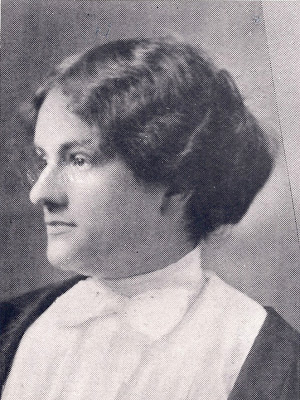
Dorothy McIlwraith

McIlwraith, Dorothy-Photograph
Dorothy McIlwraith

After his death on 15 March 1937, Lovecraft’s literary legacy continued in Weird Tales, which had been the home to most of his professional fiction and continued to be the mainstay of his most devoted fans. Editor Farnsworth Wright published at least one Lovecraft item, be it a story or verse, in nearly every issue for the next three years—including collaborations with Hazel Heald and Zealia Bishop, stories which Wright had previously rejected, and material from amateur publications.

In late 1938, Weird Tales was sold to William Delaney, owner of Short Stories, Inc. and publisher of the successful Short Stories pulp magazine, which was edited by Dorothy McIlwraith, a Canadian woman of Scottish descent. (What About Dorothy McIlwraith?) The Weird Tales offices were moved to New York City in November of that year, with editor Farnsworth Wright moving his family from Chicago for the transition. Beginning with the December 1938 issue, Weird Tales officially listed its offices in New York. Robert Weinberg claimed that McIlwraith was made associate editor of Weird Tales at this point, but if so she was never listed as such in the magazine itself. (The Weird Tales Story 6)

Farnsworth Wright had been suffering from progressive Parkinson’s disease for years, and the finances for Weird Tales continued to worsen. In part this may have been due to the death of prominent writers like Henry S. Whitehead (1932), Robert E. Howard (1936), and H. P. Lovecraft (1937), but it was also due in part to new competition. While Weird Tales had been the predominant purveyor of fantastic fiction in the pulp field since its inception in 1923, outlasting rivals such as Ghost Stories (1926-1932), Tales of Magic and Mystery (1927-1928), and Strange Tales (1931-1933), but in 1939 several strong competitors emerged, including Strange Stories (1939-1941), Unknown (1939-1943), Famous Fantastic Mysteries (1939-1953), Fantastic Adventures (1939-1953), Planet Stories (1939-1955), and Startling Stories (1939-1955).

Added to these woes, New York Mayor Fiorello La Guardia began cracking down on nude covers on the newstands; while aimed at the weird terror or “shudder” pulps, the ban also caught Weird Tales, which had been using nudes from Chicago artist Margaret Brundage for the cover, to both fan appreciation and consternation. In addition, Brundage was unable to move to New York and found shipping her delicate pastels economically unfeasible—especially when publisher Bill Delaney cut payment rates for artists. (Alluring Art of Margaret Brundage 32) Delany also tried other changes to reduce costs and increase sales:

Delaney was more concerned than Henneberger or Cornelius in turning the pulp into a paying, profit-making proposition. His first idea was to increase the page count from 128 to 160 pages. He also used a cheaper quality of paper, making the issue look even thicker than before. The first of these thick issues appeared in February 1939. However, the idea did not catch on and sales dropped steadily. Another of Delaney’s ideas was to cut rates, both to artists and authors. the policy showed as quality quickly dropped. In another effort to boost sales, the size was cut to 128 pages in September 1939 and the price was dropped to 15 cents. The magazine still did not sell. (The Weird Tales Story 6)

In January 1940, Farnsworth Wright left Weird Tales; the magazine by this point had gone to a bimonthly schedule, and his final issue as editor was March of that year. While some sources claim Wright retired or resigned, firsthand accounts suggest he was fired:

I am no longer connected with Weird TalesMiss McIlwraith has taken over the editorship. The publisher was losing too heavily, and he figured that the elimination of my salary would help to cut down the deficit.
—Farnsworth Wright to Virgil Finlay, 17 Jan 1940, BOK 66
The magazine has two stories and four poems of mine (accepted by Farnsworth Wright) still unpublished, but I think seriously of withdrawing these, even though I need the money like hell and am not likely to find another market for these particular items. Wright was let out by the publishers to cut down expenses, and W.T. is now being edited by a woman, who also edits Strange Stories. [sic] It is to be hoped that Wright will soon secure another editorship, or perhaps even start a rival magazine himself. In the meanwhile, W.T.‘s best contributors are sticking with him, in the belief that he has had a raw deal.
—Clark Ashton Smith to Margaret St. Clair, 22 Feb 1940, Selected Letters of Clark Ashton Smith 328
Wright was cold-bloodedly fired from Weird Tales, because of circulation drop. It’s being carried on by McIlwraith. Wright is hit pretty hard, and our gang has pledged to boycott the mag. If Wright succeeds in getting another publisher interested in backing a new weird mag, we’ll submit only to him. It’s all we can do for one of the best and most liked editors in our field. With Wellman, Kuttner, Hamilton, Quinn, Williamson, and others not submitting to Weird, I’m thinking McIlwraith will have to print blank pages.
—Otto Binder to Jack Darrow, 10 Mar 1940, The Thing’s Incredible! The Secret Origin of Weird Tales 219
When he was dismissed because of physical disabilities, many of the younger contributors to W.T. emoted all over the place, and waged a campaign to boycott the magazine. I did not join in this piece of juvenile idiocy. To expect a publisher to retain an editor incapable of coming to work was unrealism beyond the norm, even for youth! Finally, Wright’s successor, Dorothy McIlwraith, certainly was not responsible for his having been relieved of duty.  As editor of Short Stories, her position was far more important than was the editorship of W.T.  All she could gain was extra work, a bonus of headaches. Why penalize her by depriving her of desirable contributors?
None of these loyal nit-wits realize that the publisher scrapped Wright’s long established editorial policies, and told Dorothy what to do, and how to do it. As an employee, she had to obey orders, or, bail out. Anyone who ever knew the magazine business was aware that her leading magazine, Short Stories, was for a readership far more discriminating and mature than that of the W.T. fanciers.
Price, Book of the Dead: Friends of Yesteryear: Fictioneers & Others 112
After Wright left WEIRD TALES (banished into outer space, is the way he wrote me about it), I happened to be in New York. I found out that he was living out at Jackson Heights, so I went out to see him, and was always glad I did, for he died only a few weeks later.
Edmond Hamilton, “He That Hath Words,” Deeper Than You Think #2, Jul 1968, 12

Farnsworth Wright died on 12 June 1940. Dorothy McIlwraith took up the editorship with the May 1940 issue of Weird Tales, while simultaneously editing Short Stories, and would remain at the helm of both until Delaney sold the business in 1954. Assisting her was Lamont Buchanan, credited as the associate editor and referred to as the art editor.

Having inherited a magazine that was bleeding readers and in the shadow of Wright’s departure, McIlwraith’s tenure in what turned out to be Weird Tales’ waning days is often overlooked or mischaracterized. Robert Weinberg’s comments echo those of many critics down the years:

As an editor, Ms. McIlwraith was a competent craftsman but was not on the same level as Farnsworth Wright. She was a veteran pulp editor and handled the magazine as best she could. Her biggest trouble was that she was not as familiar with weird fiction as her predecessor. Another problem was that her ideas on what Weird Tales should be were somewhat narrower in scope than the beliefs Wright worked by. A publisher who did not let her run the magazine with as free a hand was no help. She did the best she could. (The Weird Tales Story 43)

This is damning with faint praise; while Wright was a personable and intelligent editor, he was also notoriously indecisive, rejecting some of the best work of H. P. Lovecraft, Robert E. Howard, Clark Ashton Smith, and other writers; and Weird Tales under his watch was often characterized by wide variety as Wright chased the readers in the next pulp over with planetary science fiction by Edmond Hamilton & Otis Adelbert Kline, shudder pulps or detective pulps with Seabury Quinn, Robert E. Howard’s bloody historical adventures, hero pulps with Paul Ernst’s abominable Doctor Satan seriesand that leaves out such ambitious botches as The Moon Terror and Other Stories (1927), Oriental Stories/The Magic Carpet Magazine (1930-1934), the short-lived third pulp Strange Stories (c.1930), and Wright’s Shakespeare Library (1935), all of which ultimately failed and drew resources away from Weird Tales.

McIlwraith & Delaney faced a crowded market, and yet they were still paying the lowest rate of the fantasy pulps, 1 cent per word. Changes were made: the popular “Weird Tales Reprint” feature which Wright had instituted was dropped, as were serials, with the magazine promising “All Stories Complete” and “All Stories NewNo Reprints.” McIlwraith convinced several of her most prominent authors at Short Stories to submit material for Weird Tales, including H. Bedford Jones, “The King of the Pulps.”  While she couldn’t always afford to keep them, Weird Tales under McIlwraith’s direction continued to use the talents of some of the greatest artists and writers of the 40s and 50s: Ray Bradbury, Greye Le Spina, Robert Bloch, Margaret St. Clair, Manly Wade Wellman, Mary Elizabeth Counselman, Joseph Payne Brennan, Robert Barbour Johnson, Fritz Leiber, Virgil Finlay, Hannes Bok, and Kelly Freas, to name a few.

One valid criticism of McIlwraith’s tenure is general failure to engage with writers, artists, or fans on the same level as Wright. Under her editorship, the letter-column “The Eyrie” ceased to be a fan-forum, but a place where authors could expand on the background of their stories. In its place was started “The Weird Tales Club”those who wrote in received a free membership card and had their names and addresses posted and encouraged to write to each other, but there was no apparent effort to generate an official fan club newsletter or real organization. Remembrances of McIlwraith are far fewer and less personal. Still, not all commentary on McIlwraith is negative:

But a magazine can’t survive by living off the past. It has to grow and change, like a living thing. Dorothy McIlwraith’s Weird tales did grow and change in several ways. there was a subtle difference in the whole attitude of the magazine.  […] If anything, the new editor was more artistically minded than her predecessor. The glaringly trashy covers (imitative of the more successful sex and sadism pulps like Terror Tales and Horror Stories) and occasionally godawful formula story, which Wright seemed to regard as good business practices, disappeared.
Darrel Schweitzer, “What About Dorothy McIlwraith?” in WT50: A Tribute to Weird Tales 95
Actually, I think she’s been far too neglected; I can’t dismiss anyone who published Bradbury, Sturgeon, Brown and other top talents. And I think she would have published more, had she been given the budget to compete with Unknown Worlds, F&SF and the other comparable markets. But that lousy 1 cent a wordand sometimes bimonthly publicationinduced few writers to remain in WT once better rates were obtainable elsewhere.
Robert Bloch, The Robert Bloch Companion 33

While McIlwraith courted new and old authors, and was restricted in reprints for the first few years by policy, Lovecraft and the nascent Cthulhu Mythos were far from neglectedbut there was a shortage of material. Lovecraft & Robert E. Howard were dead and with most of their Mythos-fiction already published in Weird Tales, Clark Ashton Smith largely alienated from fiction-writing (although he would contribute “The Enchantress of Sylaire” (Jul 1941), “The Master of the Crabs” (Mar 1948), and”Morthylla” (May 1953)), and after Lovecraft’s death few of his immediate circle such as Frank Belknap Long, Henry Kuttner, or Robert Bloch seemed interested in continuing the shared mythology…but there was August Derleth.

We plan to use “The Sandwin Compact” in the next issue which will be made upthat is, November, published September first
Dorothy McIlwraith to August Derleth, 25 June 1940, A Look Behind the Derleth Mythos 131

Arkham House, founded by August Derleth & Howard Wandrei after the death of Lovecraft explicitly to publish his fiction, had done just that in 1939 with The Outsider & Othersand much of their catalog for the next ten years would include reprints of stories that had first appeared in Weird Tales, and Arkham House would take out full-page advertisements in the pulp for their books. Derleth, a tireless promoter of Lovecraft’s work and a frequent contributor to the magazine as a writer, began to develop a series of original Mythos fiction in the magazine, beginning with “The Sandwin Compact” (Jan 1941) and “Beyond the Threshold” (Sep 1941).

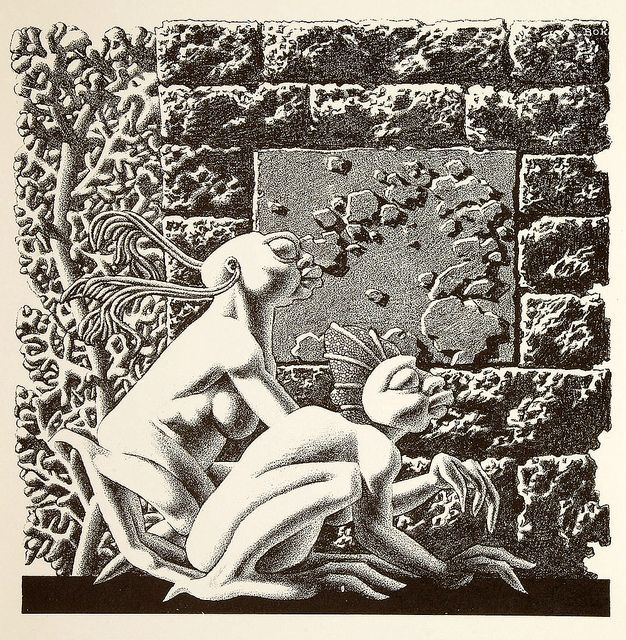
Derleth had also become the de facto literary executor of Lovecraft’s fiction, and as material was uncovered that had not previously appeared in Weird Tales, sold it to McIlwraith for Weird Tales; this included “The Mound” by Zealia Bishop & H. P. Lovecraft (Jan 1941), The Case of Charles Dexter Ward (May & Jul 1941), “The Shadow over Innsmouth” (Jan 1942, with its classic illustration by Hannes Bok), and “Herbert WestReanimator” by H. P. Lovecraft (May, July, Sep, Nov 1942; Sep, Nov 1943). The Dream-Quest of Unknown Kadath was also uncovered from Lovecraft’s files during this period, but if Derleth offered it to McIlwraith, she turned it downas she did sword & sorcery fiction like Fritz Leiber’s “Fahfrd & Grey Mouser” series, which appeared in Unknown.

Wartime paper rationing and lackluster sales still hit hard, however. Weird Tales dropped to 112 pages in 1943, and the ban on reprints was dropped; Lovecraft’s “Fungi from Yuggoth” sonnets would be reprinted (May 1944; Jan, Sep 1946; Jan, Mar 1947), as well as “The City” (Jul 1950), “The Horror at Red Hook” (Mar 1952), and “Hallowe’en in a Suburb” by H. P. Lovecraft (Sep 1952). Eager for a new attraction, McIlwraith also looked for a series character from a promising regular:

John Thunstone first appeared in 1943, after Wright retired as editor of Weird Tales and was succeeded by Dorothy McIlwraith. She and her associate, Lamont Buchanan, sat down with me for several careful discussions of how Thunstone might act and look, and what he might find to do.
Manly Wade Wellman, foreword to Lonely Vigils xi

Wellman’s occult detective was a success, and he would tip his hat to Lovecraft by including the Necronomicon in the Thunstone story “Letters of Cold Fire” (May 1944)the same issue where the page count was reduced to 96 pagesThe success of Lovecraft’s fiction and Derleth’s pastiches apparently encouraged McIlwraith and Derleth to mine this vein a little deeper:

I too have had a good many letters through the Arkham House clientele, if they respond as well to ‘The Dweller in Darkness’ I’ll no doubt have to do other stories in the same Lovecraftian veinthough I’ll wait for the green light from you before going ahead.”
August Derleth to Dorothy McIlwraith, 3 Feb 1944, A Look Behind the Derleth Mythos 140

McIlwraith published “The Trail of Cthulhu” (Mar 1944), “The Dweller in Darkness” (Nov 1944), and “The Watcher from the Sky” (Jul 1945). In the September, the world war ended with the use of atomic weapons against Hiroshima and Nagasaki; a science fiction weapon from the pulps becoming a terrible and deadly reality at last.

Derleth also took advantage of the new reprint feature by agenting weird stories from English authors like William Hope Hodgson that Arkham House was publishing. With Derleth’s regular contributions (sometimes published under the pseudonym Stephen Grendon), reprint material he was supplying, and his original Mythos fiction, something had to give…and did:

Sorry I forgot to mention The Lurker on [sic] the Threshold. I just don’t see how we could manage it for Weird. I don’t feel serials in an every other month magazine are good, anyway, and such long installments are out for the duration[because] of the paper restrictions.
Dorothy McIlwraith to August Derleth, 17 Jan 1945, A Look Behind the Derleth Mythos 191
We have Grendon’s “Mr. George,” “The Hog” by Hodgson as well as several other novelettes from other sources […] and now you send along “Boyd”…Frankly, we like this Cthulhu the least of all our problem material, so it would seem logical to pass it up for Weird Tales
Dorothy McIlwraith to August Derleth, 30 July 1946, A Look Behind the Derleth Mythos 151

The Lurker at the Threshold was the first of Derleth’s “posthumous collaborations” with Lovecraft, although it was written almost entirely by Derleth, based around two brief fragments of Lovecraft; Arkham House later published the book the same year. McIlwraith also rejected the first submission of “The Testament of Claiborne Boyd,” part of the series that Derleth would collect as the stitch-up novel The Trail of Cthulhu. These decisions, as much as anything, show that McIlwraith was not simply cashing in on Lovecraft or the Mythos.

What did happen is that someone not connected with Derleth or Lovecraft tried their hand at pastiche. McIlwraith published C. Hall Thompson‘s “Spawn of the Green Abyss” (Nov 1946) and “The Will of Claude Asher” (Jul 1947), probably seeing them as no more than superior Lovecraft pastiches. Derleth, who felt Lovecraft’s work belonged to Arkham House, responded:

Yes, I know of C. Hall Thompson. He borrowed flagrantly from HPL’s work, and we stopped it by writing to his editors pointing out his invasion of prorpietary interests, though we would probably have given him the green signal to go ahead if he had submitted his work to us first. this he did not do; so it had to stop.
August Derleth to Ramsey Campbell, 6 Aug 1964, A Look Behind the Derleth Mythos 267-268

No more pastiches were published by Thompson in Weird Tales. Whether she believed Derleth’s legal bluster or simply didn’t wish to alienate such a regular contributor and advertiser is unclear, but there are signs that Weird Tales was still in financial trouble. With the September 1947 issue, WT raised the price from 15 to 20 cents per issue, while retaining the reduced page count. Three more of Derleth’s tales appeared in the following years: “Something in Wood” (Mar 1948), “The Whippoorwills in the Hills” (Sep 1948), and the formerly-rejected “The Testament of Clairborne Boyd” (Mar 1949). With the next issue, May 1949, the price was increased again to 25 cents per issue. Derleth would manage to land more stories: “Something From Out There” (Jan 1951), “The Keeper of the Key” (May 1951), “The Black Island” (Jan 1952), which featured the use of atomic weapons against Cthulhu.

Derleth was the most prominent Mythos writer in Weird Tales during McIlwraith’s editorship, but arguably the best one was Robert Bloch, who published the third in his triptych with Lovecraft, “The Shadow from the Steeple” (Sep 1950), and the highly acclaimed “Notebook Found In A Deserted House” (May 1951). Among the reprints, McIlwraith chose Robert E. Howard’s “The Black Stone” (Nov 1953).

In September 1953, adapting to market pressure, Weird Tales became a digest. McIlwraith apparently asked Derleth for more Mythos/Lovecraftian material, probably in a last-ditch effort to spur readership. He responded with “posthumous collaborations” that Derleth had written based on some fragment of Lovecraft’s text or ideas in his commonplace book:

You already have “The Survivor,” which I hope can appear in the July or September issue. Three others are now ready

“Wentworth’s Day,” at 4500 words
“The Gable Window,” at 7500 words
“The Peabody Heritage,” at 7500 words
There will be at least two moreor enough for an entire year of Weird Tales. And we might be able to turn up more thereafter, if the use of them has any noticeable effect on the sales of the magazine.
August Derleth to Dorothy McIlwraith, 24 Feb 1954 A Look Behind the Derleth Mythos 211

“The Survivor” appeared in the July 1954 issue, the last of the Derleth Mythos contributions. She wrote to him:

I have here: “The Gable Window,” “The Ancestor,” “Wentworth’s Day,” “The Peabody Heritage,” “Hallowe’en for Mr. Faulkner,” also “The Seal of R’lyeh.” It might be that whoever takes over WT might see the value of the Lovecraft tie-in, but I don’t know…
Dororthy McIlwraith to August Derleth, 15 Nov 1954, A Look Behind the Derleth Mythos 212, 219

Weird Tales folded with the September 1954 issue; both it and Short Stories were sold, and McIlwraith moved on. The various Derleth Mythos stories would see print elsewhere, and be collected and printed in book form. So too, Arkham House would collect and publish many stories and authors from McIlwraith’s period of editorship during the following decades.

We do not have any extensive memoirs from McIlwraith, and most of what she has written about weird fiction are restricted to editorial comments in “The Eyrie”but in 1954 she weighed in on H. P. Lovecraft and Weird Tales:

Although the first all-science-fiction magazine did not appear until 1926, Weird Tales magazine with its very first issue inaugurated a policy of devoting some portion of its contents to science fiction and has continued that policy from March of 1923 to date. There was always some conflict between those readers who wanted more space devoted to straight weird material—i.e., fantasy—as opposed to those who would have preferred additional science fiction. The man who helped reconcile those two elements was H. P. Lovecraft, who in his own popular fashion blended weird and horror elements into a credible scientific background to come up with a combination which satisfied all readers. Lovecraft influenced a great many of the younger writers […]
Dorothy McIlwraith, Editor’s Choice in Science Fiction 185

She was not wrong, especially on the final point.

In evaluating Dorothy McIlwraith’s role with regard to Lovecraft and the Mythos, it is difficult not to consider the symbiotic role played by Derleth and Arkham House in the pulp’s final 14 years. While many of its stories were selected for reprint in anthologies long before this was the norm for science fiction, Weird Tales never issued a successful anthology of its own materialArkham House largely fulfilled that role during McIlwraith’s time. By the same token, Weird Tales was exactly the market that Arkham House & August Derleth needed. Without McIlwraith, it seems unlikely that Derleth would have written Trail of CthulhuMask of Cthulhu, or many of his posthumous collaborationsand whatever else may be thought of those works, as well as those of Bloch, Wellman, and Thompson, they helped keep the memory of Lovecraft alive for a new generation of readers.

But in this, Dorothy McIlwraith was not alone…

Mary Gnaedinger

MaryGnaedinger
Mary Gnaedinger

The Munsey Company practically invented the pulp magazine, with highly successful titles like Argosy going back to the turn of the century. With this large stock of stories, in 1939 they launched Famous Fantastic Mysteries primarily as a title to reprint them. The editor selected was Mary Gnaedinger, who also edited Fantastic Novels (1940-1941) and A. Merritt’s Fantasy Magazine (1949-1950).

Gnaedinger and McIlwraith were technically rivals, but since Weird Tales initially offered no reprints and Famous Fantastic Mysteries no original material, they seemed at least at first more complementary than anythingat least to contemporary eyes. FFM, however, paid better, so Gnaedinger was able to snatch away Virgil Finlay, one of the finest artists working in the pulps. She was also much more attentive to the growing science fiction and fantasy fandom, and catered the content of the magazine to the stories they wanted to read, republishing many now-classic works by Robert W. Chambers, A. Merritt, Arthur Machen, Ray Cummings…and even Weird Tales regulars.

Lovecraft was not initially on the menu; though Gnaedinger managed to reprint “The Colour Out of Space” (Oct 1941), supplemented with the poem “For H. P. Lovecraft” by Robert A. Lowndes. In 1943, Munsey sold Famous Fantastic Mysteries to All-Fiction Field, who retained Gnaedinger as editor and loosened her restrictions, allowing her to publish more original material. (Sisters of Tomorrow 293) Gnaedinger took advantage of this by making arrangements with Arkham House, with whom she had some dealings, to reprint some of Lovecraft’s fiction:

The Lurker on [sic] the Threshold is an excellent fantastic story, but I regret to say that we have decided it is too specialized for the ordinary readers who undoubtedly form a large cross-section of our public. A great part of the story is written for the initiated fantasy fan, and cutting would spoil it. Not that I think you would want to see it cut.
Mary Gnaedinger to Derleth, 6 Feb 1945, A Look Behind the Derleth Mythos 191

Ironically, this was the same general rejection that McIlwraith had given Derleth when he pitched the idea of serializing The Lurker at the Threshold in Weird Tales. However, Gnaedinger was open to reprinting shorter works, and so in due course Famous Fantastic Mysteries hosted “The Outsider” (Jun 1950), “The Music of Erich Zann” (Mar 1951), and “Pickman’s Model” (Dec 1951), all “Published by permission of Arkham House.”

Fan-scholars and poets like Virginia “Nanek” Anderson also made their appearance in FFM. Two pieces in particular stand out: “Masters of Fantasy: Howard Phillips Lovecraft – The Outsider” (Aug 1947) and “Masters of Fantasy: Arthur Machen: Inspirator of Lovecraft” (Dec 1948); while credited as to Neil Austin, it has been suggested these pieces were actually written by arch-fan Forrest J. Ackermann.

There is a little mystery to the Famous Fantastic Mystery reprints, with the main one being: Why FFM? In 1941, Weird Tales wasn’t publishing reprints, so the reprint of “The Colour Out of Space” isn’t exactly cutting into their market; but in the 1950s it seems unusual that Derleth would offer reprints to FFM when Weird Tales was an open marketunless either McIlwraith had already turned him down, or Gnaedinger offered more money. Either seems a likely possibility, but the details to the deal have not come to light.

Near the end of its run, Gnaedinger also published a few works by Robert E. Howard with connections to the Mythos, notably “Skull-Face” (Dec 1952)whose villain Kathulos was once feverishly debated to have a connection to Cthulhu by the fans of Weird Talesand “Worms of the Earth” (Jun 1953), which appeared in the final issue.

Famous Fantastic Mysteries folded the year before Weird Tales; while it had a good 14-year run, the pulp market was largely collapsing in on itself, competing both with comic books and the burgeoning paperback, which offered another cheap way to reprint fiction. Mary Gnaedinger continued to keep in close touch with fans, and while she may have published little original Mythos fiction, she was a sensitive barometer to what the fans wantedand strove to give it to them. In the early 1950s, that was more Lovecraft.

Cele Goldsmith Lalli

Science fiction magazines weathered the collapse of the pulps a little better than most, and writers that had cut their teeth at Weird Tales and Unknown would go on to find success in the 60s with The Magazine of Fantasy & Science Fiction, Galaxy Science Fiction, and Analog Science Fiction and Fact (which evolved from Astounding). It was in this Cold War/Space Race atmosphere that Cele Goldsmith (later Cele Goldsmith Lalli) became editor of both Amazing Stories and its companion Fantastic from 1958-1965, when the magazines were sold.

Cele Goldsmith combined the approaches of both McIlwraith and Gnaedinger: she listened to the fans, and she was willing to give them both original fiction and classic reprints. In the May 1960 issue of Fantastic she republished “The Challenge From Beyond”, but paired it with fan-scholar Sam Moskowitz’ essay “A Study in Horror: The Eerie Life of H. P. Lovecraft.” Two years later, she published Derleth’s posthumous collaboration “The Shadow out of Space” (Dec 1962), which had appeared a few years earlier in the Arkham House volume The Survivor and Others (1957), which volume contained Derleth’s posthumous collaborations from Weird Tales.

Finally, in Goldsmith published two new Mythos stories, and from an author that wasn’t part of the Arkham House stablealthough if Derleth ever caused a stink about it like C. Hall Thompson, it has never come to light. The stories were “The Dunstable Horror” (Apr 1964) and “The Crib of Hell” (May 1965), both by “Arthur Pendragon”thought to possibly be the pen-name of well-known Fantastic contributor Arthur Porges. While it was still rare for Mythos fiction to be published outside the aegis of Arkham House, Derleth could not police every magazine forever.

Porges_Irwin_Cele_80bday
Arthur Porges (left) & Cele Goldsmith Lalli (right)

What these three women accomplished, from 1939-1965, was essentially to help keep the Mythos alive in the pulps. Because of the controlling nature that Arkham House had on Lovecraft’s material, and Derleth’s production of additional Mythos material, a sizable amount of what they published came from Derleth or went through himbut not all of it. These editors held authority over their own magazines, and while they might pay Derleth for a story, what they published was ultimately their own decision. What we get, in their magazines, are the inklings of original Mythos material outside of what August Derleth approved to be printed, and this in professional magazines, not just the fanzines.

Maybe that is a small thing, in the great scheme of the universe. None of these editors appear to have been particular devotees of Lovecraft or the Mythos…but neither were they ignorant of it. They knew their business, and Lovecraft and the writers he inspired was a part of that.


Bobby Derie is the author of Weird Talers: Essays on Robert E. Howard & Others (2019) and Sex and the Cthulhu Mythos (2014).