The Coming of Cormac (1974) by Caer Ged & The Seductress of Eden (1982) by Mark Farris

Eldritch Fappenings
This review deals with works of pornography, and the history of erotic art and writing. As part of this review, selected passages involving sexually explicit activites will be included.
As such, please be advised before reading further.


“Personally,” I said, “I shared Bloch’s opinion of the stories. There was too much emphasis placed on sex. Once I wrote a very critical letter to Editor Wright about the prevalence of sex in some Weird Tales stories, citing the Conan stories as an example.

Willis Conover, 14 Aug 1936, Lovecraft at Last 43

About the Conan tales—I don’t know that they contain any more sex than is necessary in a delineation of the life of a lusty bygone age. Good old Two-Gun didn’t seem to me to overstress eroticism nearly as much as other cash-seeking pulpists—even if he did now & then feel in duty bound to play up to a Brundage cover-design.

H. P. Lovecraft to Willis Conover, 14 Aug 1936, Letters to Robert Bloch & Others 382

In the 1930s editor of Weird Tales Farnsworth Wright recognized that sex sells—or at least, that a tasteful nude on the cover seemed to improve sales. Yet Weird Tales was not in any sense a pornographic magazine, and the “delineation of the life of a lusty bygone age” that Lovecraft spoke about was relatively prudish compared to an episode of Game of Thrones. Robert E. Howard would have an occasional female character disrobed, might hint at sex, but it would have been impossible to publish anything relating to male genitalia, penetration, or any oral sex beyond a passionate kiss in the 1930s, even if he had been so inclined to write such things. Even Howard’s stories for the Spicy magazines, which promised more sizzling sex than other pulps, were more likely to involve a particularly hard spanking than coitus, and paragraphs would peter out into ellipses before getting to any sort of explicit description.

Robert E. Howard’s hardboiled fantasy stories of Conan the Cimmerian would long survive him and grow in popularity, and as restrictions on sex in publishing eased (particularly after Grove Press, Inc. v. Christenberry, 1959), sword & sorcery fiction began to gradually grow more explicit. Fritz Leiber’s “The Sadness of the Executioner” (1973) for example, features “a deliciously slender girl of no more than sixteen, unclad save for four ornaments of silver filigree” as a violent and insane member of a mad king’s harem, and Leiber doesn’t mind describing her anatomy—but he stops short of pornography. Again, there were limitations to what most publications would accept.

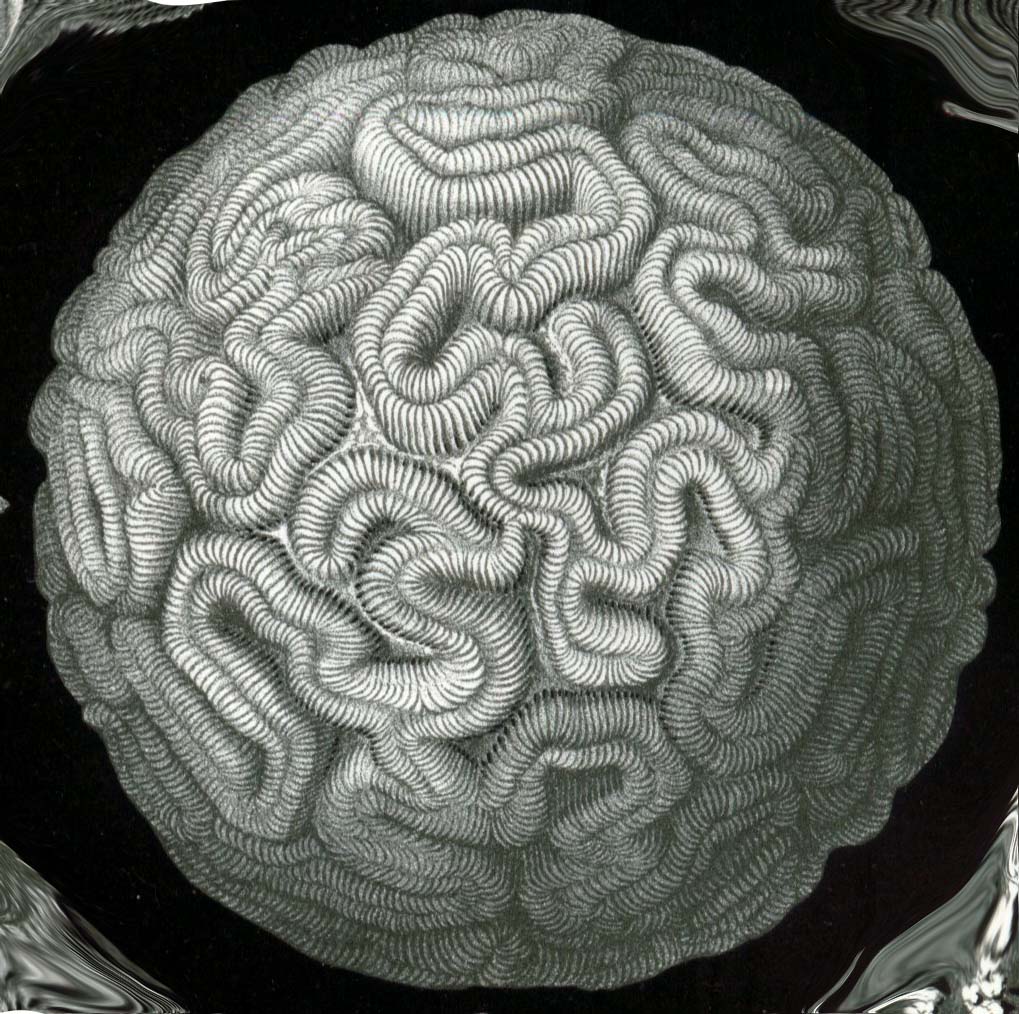
The earliest sexually explicit efforts in that vein were, oddly enough, probably inspired by Marvel’s Conan the Barbarian comic, which began publication in 1970. “Gonad the Horney” was published in the San Francisco Ball in 1972, and the Tijuana bible style Red Sonja and Conan – Hot and Dry was published in 1977. Both of these sexually explicit little comics were parodies of the Marvel material, much as how in later years Hustler would create This Ain’t Conan the Barbarian (2011). Tongue was firmly in cheek, and the point was generally amusement rather than titillation or telling a good story.

Yet with the boom in paperback fantasy in the 1960s through the 1980s, the market for adult-oriented Sword & Sorcery grew…and a few pornographic novels were published to meet that market segment. Two in particular stand out as of particular interest to fans of Robert E. Howard and H. P. Lovecraft, The Coming of Cormac (1974) and The Seductress of Eden (1982) by Mark Farris—and these novels are worth consideration and comparison.

The Coming of Cormac (1974) by Caer Ged

During the fifth cycle of man, before the cataclysm that drove Atlantis from the depths of the sea and split the face of the earth, there was a oneness of the land called Augura by its inhabitants. Though darkness and its creatures and daemons still walked unchained, there rose five kings who rallied civilization and its boundaries. These kingdoms were called Telus,Nebula, Waldrop, Agila and Valana, and war was constant among them.

Beyond these boundaries of man was wilderness. To the south was Sartar with burning deserts and steaming jungles inhabited by savage men of black skin. To the east was the Land of Shadows with the Mountains of Krath barring entrance. To the west were the unknown waters of the Great Sea. And to the north was the frozen wasteland called Bifrost with its warring barbarians.

It was from this bitter land of cold that Cormac came to seek his fortune in the cities of civilization . . .

from The Book of Cormac, Aram Akkad.

Caer Ged, The Coming of Cormac 1

“KNOW, oh prince, that between the years when the oceans drank Atlantis and the gleaming cities, and the years of the rise of the Sons of Aryas, there was an Age undreamed of, when shining kingdoms lay spread across the world like blue mantles beneath the stars—Nemedia, Ophir, Brythunia, Hyperborea, Zamora with its dark-haired women and towers of spider-haunted mystery, Zingara with its chivalry, Koth that bordered on the pastoral lands of Shem, Stygia with its shadow-guarded tombs, Hyrkania whose riders wore steel and silk and gold. But the proudest kingdom of the world was Aquilonia, reigning supreme in the dreaming west. Hither came Conan, the Cimmerian, black-haired, sullen- eyed, sword in hand, a thief, a reaver, a slayer, with gigantic melancholies and gigantic mirth, to tread the jeweled thrones of the Earth under his sandalled feet.”
—The Nemedian Chronicles

Robert E. Howard, “The Phoenix on the Sword”

The Coming of Cormac was billed as “the first ‘sword and sorcery’ book to ever hit the stands—with plenty of hot far-out, uncensored sex!”—and that statement may well stand the test of time, because while it is not the first erotic speculative fiction novel, it is the earliest one I’ve seen that was blatantly and obviously based on Robert E. Howard’s Conan stories (the title no doubt a reference to The Coming of Conan, an early collection). Cormac of Bifrost is essentially a clone of Conan the Cimmerian (and not far off from another Howard character, Cormac Mac Art). The basic premise of the tale, which involves rescuing a princess and some encounters with giant snakes, a witch, undead, and “demons” along the way is very much in the mold of the 1970s Sword & Sorcery pastiche, right down to casual references to “savage men of black skin,” the very sort of thing that Charles R. Saunders noted in his essay “Die, Black Dog! A Look At Racism In Fantasy Literature” (1975). Take out the naughty bits and the story could essentially have run in any fantasy magazine or as a script in Marvel’s Conan comics.

The story is very sexually explicit indeed. Like most erotic novels, that is both the promise and the problem: stopping the plot every few pages for a lengthy sex scene tends to disrupt the flow and pacing of the story, while trivial attempts at titillation are more likely to be eye-rolling than enticing:

A half-clad amazon hastened to the summons. The top-heavy girl panted as she trotted before the priestess of Krath. Her massive tits bounced and bobbed beneath thin veils of black gossamer cloth.

Caer Ged, The Coming of Cormac 94

In terms of content, a great deal of focus is on rape of one sort or another; the princess Avalona gets used and abused in more way than one before Cormac can rescue her, fulfilling the dark promise of such villains. Cormac, once he is inevitably captured, is likewise abused. Not every encounter is nonconsensual, but this is very much the kind of story where the gaze is unflinching…and that is the point. This is all the kind of X-rated stuff that Robert E. Howard and most fantasy authors that came after him could at best hint at, but never put on the page.

The actual action sequences—such as when Cormac is fighting Yog-Sarez, the great serpent who is the son of the serpent-god Seth—are decently written. There is comedy in the book, although it is not quite what readers might expect. For example, at one point Cormac is in The Labyrinth, “a section of the city known for its thieves, robbers, and assassins” (plainly based on “The Maul from Howard’s “The Tower of the Elephant”) and encounters a pair of familiar characters:

To the barbarian’s left a large, blonde northerner, who looked no older than the Bifrostian, shared a table with a smaller youth dressed in grey garments. The two chattered endlessly of their adventures. Like magpies, they tried to out-brag the other, while guzzling bottles of cheap waterfront wine. Eventually, their ramblings turned to Avalona and a brazen plan to steal the princess from under Onard’s nose and to return her to Heres for the reward. The grey-clad youth’s fingers seemed to trace a path across a yellowed parchment spread before them. Slowly but surely, teh wine took its effect and the pair passed out, sprawled across the table.

Caer Ged, The Coming of Cormac 83-84

The pair are patently intended to be Fritz Leiber’s sword & sorcery heroes Fafhrd & the Gray Mouser. Their appearance here isn’t unprecedented; Roy Thomas and John Buscemea had joking inserted “Fafnir and Blackrat” into Conan the Barbarian #6 (1971), and there’s reason to believe that the author here was more than familiar with comic books. At one point Avalona is kidnapped by a rapacious madman with a singing sword looking for his wife Aleta—a reference to Prince Valiant—and later in the novel the witch-priestess summons four demons from the far future who turn out to be, basically, the Fantastic Four. That eventually turns out to be the witch’s X-rated undoing:

Abruptly, the thing stopped and roared. Its gigantic hands fell to tis waist and clawed at the flimsy cloth covering its sex. The blue material tore away, revealing a cylindrical organ of living stone, fully a foot long, hung like a pachydrem. As the creature’s boulder-shattering roars continued, the shaft jerked upward in a throbbing path.

Caer Ged, The Coming of Cormac 148

As Conan pastiche novels go, The Coming of Cormac is a bit below the level of Lin Carter’s Thongor series. The worldbuilding is sparse, the sorcery sparser, and the plot is a bit perfunctory, episodic, and often failing to build tension. The tongue-in-cheek pop culture inclusions are the sole real humor in what is otherwise a fairly cheerless novel of a feckless princess who is passed around and used by one person after another, but without any philosophical meditation a la the Marquis de Sade’s Justine. It accomplishes what it set out to do, but not much more.

“Caer Ged” is an obvious pseudonym, which has been attributed to George Wyatt Proctor, a fantasy fan and novelist. I’m not entirely sure what the basis for this identification is, although a contemporary fanzine Godless #8 (1974) claims “Caer Ged” is also “Lee Wyatt,” which is another pseudonym attributed to Proctor.

The Seductress of Eden (1982) by Mark Farris

My friends say that I am a man who was born out o fhis time, that I should have been one of the Trojan warriors or Hyperborean adventurers I have devoted my life to studying.

Mark Farris, The Seductress of Eden 5

Where The Coming of Cormac was set in a prehistoric past, akin to Robert E. Howard’s Hyborian Age, The Seductress of Eden is set very firmly in the contemporary 1980s. Enter Joseph Kade, a Canadian anthropologist with an interest in fantasy who decides to do some first-hand anthropological exploration of the dark underworld of sex—and ends up in a pulpy adventure that will take him all over the world, meeting (and bedding) all manner of beautiful women, almost getting killed multiple times, and finally stumbling into the ruins of a lost civilization in the Australian Outback while searching for the Phallus of the Old Ones.

If the principal focus of The Coming of Cormac is Robert E. Howard, the focus of The Seductress of Eden is Lovecraft, although the author slips in sly references to the works of Clark Ashton Smith and Howard as well. Kade is caught up in a quest for an eldritch artifact, and the story tends to careen from passionate sexual act to almost gratuitous violence and back again. The pulp aesthetic firmly establishes this as a Lovecraftian fantasy, but one that veers closer to Howardian action, despite references to the Necronomicon and the odd serpent-man:

It stood like a man, about six feet tall, but it resembled a lizard It had green, scaly skin and the head of a snake. It hissed at me and a long, forked tongue slithered out. Its unblinking eyes stared into mine and it raised clawed hands and moved toward sme, dragging an eight-foot tail behind it. […]

“Father was doing experiments with evolution,” said Gloria. “it was his theory that we all evolved from the basic forms of life, encompassing reptiles, and that it was not only possible forus to communicate with them but to evolve back to their forms. This was one of his experiments.”

“Jesus!”

“Father also believed that the continent of Eden was partially inhabited by a prehistoric race of snake-men. This experiment added credibility to that theory.”

Mark Farris, The Seductress of Eden 111-112

The Seductress of Eden is very fast and loose with the Cthulhu Mythos; this is not quite the setting readers familiar with Lovecraft and Howard will be familiar with. Instead of shoggoths, for example, there are shontothes; and instead of Cthulhu, there is quite literally Satan. The Howardian sword & sorcery elements don’t really come in until very late in the novel, though there they are rather explicit, once Kade picks up an ancient axe:

And I had wielded it before…in other lifetimes. I had fought with it on the steps of Atlantis, protecting my queen. I had wielded it on the wastelands of Cimmeria, a barbarian defending his homeland. I had struck with it in the depths of Nemordia, to free my mate from the lair of a wizard. And now I was using it to save a goddess…

Mark Farris, The Seductress of Eden 235

The main problem with The Seductress of Eden is that all of those past lives, reminiscent as they are of Howard’s James Allison stories, sound like more exciting and titillating adventures than the one chronicled in the book. While the action moves fast, it’s not a particularly deep plot, and the post-climax ending where Kade confesses his sins to a priest feels bowdlerized. A huge chunk of exposition at the end of the novel finally lays bare the writer’s version of what’s going on with the Phallus of the Old Ones, and it is so far from anything a Lovecraft fan might recognize it is almost parody.

Except that is the main difference between The Coming of Cormac and The Seductress of Eden: the story is played straight. This isn’t Howardian pastiche except for a couple of paragraphs near the end, nor is it a Lovecraftian pastiche despite the references to the Necronomicon. There are no tongue-in-cheek drop-ins of Prince Valiant and the Fantastic Four. It is an original story which plays out with as much seriousness as it can muster considering that Kade and his new girlfriend have to literally hump their way to their final goal.

Yet when the story assails the reader the Vatican assassins, the sex mutants, the mercenaries, the monsters, the repeated gangbangs, and a sex toy which is quite literally “What if H. R. Giger made a Sybian?,” the result is more like an X-rated serial than a coherent novel. The Seductress of Eden is very much a collision of fantastical pulp elements with hardcore sexuality, and the end result strains belief long before we get to the shontothes or the Golden Phallus of the Old Ones.

“So,” I went on, “now we try to get the scroll and map. And this Contessa has … the scroll?”

“Yes.”

“And I have to seduce her to get it?”

“That’s right.”

“This,” I said for about the millionth time, “is amazing!”

Mark Farris, The Seductress of Eden 73-74

As with Cormac in The Coming of Cormac, the protagonist Joe Kade isn’t a rapist—but there’s a lot of rape in the book. Weirdly enough, for all that the story is predicated on Kade encountering the darkest and most lurid parts of the sexual underground, the actual content is a bit vanilla: there are relatively few kinks on display, not many taboos presented or broken. Kade isn’t forced to expand his sexual horizons very far…and that is probably by design. The attraction of this book is the weirdness of its plot more than the weirdness of the sex itself.

The Seductress of Eden was published under the Tigress Books imprint, which also published Brian McNaughton’s Sheena Clayton novels such as Tide of Desire (1983). All of the Clayton novels had Mythos references in them, and it’s possible that “Mark Farris” was a house name that was used by McNaughton as well—however, the other Mark Farris novels for Tigress aren’t known to have Mythos references, and McNaughton himself never made any claim to the name. More to the point, The Seductress of Eden doesn’t read much like a McNaughton novel, who was prone to be much darker and less heavy-handed in his use of Mythos lore.

Women In The Novels

Both The Coming of Cormac and The Seductress of Eden are told primarily from the point-of-view of the male protagonists, although Cormac has a few chapters dedicated to Princess Avalona’s viewpoint—those chapters where she is raped. Which presents a substantial difference between the two novels worth discussing.

The recovery of Princess Avalona in The Coming of Cormac is the point of the novel, the central driving plot. She begins the novel as a blushing virgin, and through several chapters of degradation and forced sexual intercourse is used and abused, transported against her will, and finally, after many lives have been lost and the major villains are dead, is comfortable enough in her own sexuality to make advances on Cormac himself. It is not exactly a bildungsroman, but as a tale of Avalona growing up it parallels in some ways a much more X-rated and darker version of Queen Yasmela in Robert E. Howard’s “Black Colossus.” While Avalona never quite gets Yasmela’s agency, she at least comes to overcome her initial sexual trauma and take charge of her own sexual needs and desires.

By contrast, Gloria in The Seductress of Eden starts out the novel as a high-priced escort raised in a family of sex mutants with aspirations to gain the Phallus of the Old Ones to become a goddess, and her every action in the story is bent exclusively toward the goal. There is no innocence to be lost, no self-discovery, and ultimately no redemption of the character. She enters into the novel utterly confident in her own sexuality and repeatedly unfazed by any effort to degrade her through rape or any other form of sexual violence. In comparison with The Coming of Cormac, Gloria has more in common with the witch-priestess Sheheit than she does to Avalona—and that kind of represents part of the odd characterization of women in both stories.

In both The Coming of Cormac and The Seductress of Eden present sexuality as inherently positive, at least the relatively limited sexuality on display here. Cormac has no idea why the civilized people are so hung up about the whole virginity business, Kade is protective of Gloria because he loves her, but not overly jealous when she ends up having sex with someone else. While it isn’t quite the aftermath of the free love of the 1960s, sex is definitely not presented as a phenomenon that only happens within the confines of legal matrimony. Yet the women characters who have most embraced their sexuality or try to use sex for their own ends are presented as the ultimate villains.

It is not an uncommon characterization in pornographic works: sexual experience and lack of sexual mores is generally seen as a positive trait, but aggressive or self-serving sexuality is a hallmark of an evil character. This isn’t entirely unusual in fantasy either—in Howard’s “A Witch Shall Be Born” one of the key differences between Queen Taramis and her evil sister Salome is that the latter is sexually active and open about it—but in the context of a pornographic novel, it rather highlights the disparity between male and female characters. Cormac and Kade’s sexual exploits to sate their lusts don’t mark them out as sluts deserving of some dark fate, and they are rarely forced into sex against their will. By contrast, the women in these stories face most of the sexual violence, and most of the consequences of sex, including pregnancy and death.

Conclusions

Publishing has come a long way since Robert E. Howard first wrote the Conan stories. Softcore sword & sorcery novels like Lin Carter’s Tara of the Twilight (1979) have given way to explicit sexual scenes in George R. R. Martin’s A Song of Ice and Fire novels. There is more permissiveness in what can be openly published than ever before—yet the fundamental narrative problem of how (and if, and why) to weave hardcore eroticism into the story remains. For The Coming of Cormac and The Seductress of Eden, the sex is the point, it’s how they were marketed.

It is really odd to look back at erotica produced before the age of the Internet. While a writer’s imagination might be unlimited, and fanzines were free to publish the occasional nude drawing or naughty limerick without too much fear of the postal censor, as a commercial prospect any sort of really weird fiction or sword & sorcery-based pornographic novel had to be a bit of a daunting prospect—not because it couldn’t be done, but because you had to be able to both advertise that work to the correct audience and make something worth reading. In that respect, The Coming of Cormac and The Seductress of Eden are both game attempts to try and meet the needs of a very small and speculative market…and in doing so, they demonstrate how hard it is to produce commercial literature on demand.

Both novels suffer from trying to balance hardcore sex with their pulpy adventures. Howard’s original Conan stories sometimes include lingering gazes at the female form or hints of sexual activities that may happen or are about to happen, but these are largely small titillations that don’t affect the flow of the stories. Erotic fantasy adventure is a difficult prospect at the best of times, as the litany of B-movie sword-and-sorcery films that have struggled to pass muster with rampant female nudity and threadbare plots and acting can well attest.

What’s striking about both of these novels is that they’re coming from about the same place, and even if they don’t use quite the same means, they’re headed for the same goal: to try and capture some of the energy and tropes pulp fiction while injecting hardcore eroticism. On the surface, this shouldn’t be terribly difficult. Read Howard’s description:

Bêlit sprang before the blacks, beating down their spears. She turned toward Conan, her bosom heaving, her eyes flashing. Fierce fingers of wonder caught at his heart. She was slender, yet formed like a goddess: at once lithe and voluptuous. Her only garment was a broad silken girdle. Her white ivory limbs and the ivory globes of her breasts drove a beat of fierce passion through the Cimmerian’s pulse, even in the panting fury of battle. Her rich black hair, black as a Stygian night, fell in rippling burnished clusters down her supple back. Her dark eyes burned on the Cimmerian.

She was untamed as a desert wind, supple and dangerous as a she-panther. She came close to him, heedless of his great blade, dripping with blood of her warriors. Her supple thigh brushed against it, so close she came to the tall warrior. Her red lips parted as she stared up into his somber menacing eyes.

Robert E. Howard, “Queen of the Black Coast”

A lot of what makes pulp fiction work is that readers have to use their imagination. Nothing any writer comes up with will be able to match the sex that Bêlit and Conan have in the reader’s mind. Like the unnamable horrors so often attributed to Lovecraft, to render them in exquisite and clinical detail—to measure Conan’s sword to the nearest millimeter—is to rob them of some of their mystery and magic. If the mating dance of Bêlit in “Queen of the Black Coast” had turned to actual coitus, the entire tone of the story might not have shifted, but the infinite possibilities in the reader’s mind would have collapsed into a single certainty. The possibilities are often much more tantalizing than the execution.

But it ultimately depends on what you’re going for. The Coming of Cormac and The Seductress of Eden draw these comparisons specifically because, like erotic fanfiction they rely to a greater or lesser extent on existing properties. Without Conan, there is no Cormac or Kade. They invite comparison to Robert E. Howard because they are riffing off of Howard. Original works without trying to ape the themes of older fiction might have more leeway to forge their own balance with a more explicit tone, as Martin did in his Song of Ice and Fire series and as Karl Edward Wagner did in his Kane series.


Bobby Derie is the author of Weird Talers: Essays on Robert E. Howard & Others (2019) and Sex and the Cthulhu Mythos (2014).

Deep Cuts in a Lovecraftian Vein uses Amazon Associate links. As an Amazon Associate I earn from qualifying purchases.
Strange Bedfellows (2023) by Caroline Manley (Raph)

Eldritch Fappenings
This review deals with works of erotica, and the history of erotic art and writing. As part of this review, selected passages involving sexually explicit activites will be included.
As such, please be advised before reading further.


With the release of this zine I hope that Lovecraft is screaming and crying and spinning in his grave.

product description for Strange Bedfellows on etsy

Roleplaying games as currently understood and popularized begin with the publication of the original Dungeons & Dragons boxed set in 1974. The players and designers of that period were typically white, heterosexual, cisgender males—reflecting in many ways the audience of fantasy and science fiction fans at the time—and D&D developed in the middle of a boom in paperback publishing that saw the mass market publication of J. R. R. Tolkien’s The Lord of the Rings, Robert E. Howard’s Conan stories, and H. P. Lovecraft’s Mythos fiction, among many others. It should come as no surprise that in this environment, with fiction from the 30s and 50s being interpreted for gaming for a 70s audience, a great deal of prejudice was effectively “baked in.”

Yet gaming has never been exclusively male, white, cisgender, or heterosexual—and as the hobby has expanded the gamers and game designers have only become more diverse, and the games have increasingly become aware of and confronted many of the prejudices that passed without question in earlier editions. It is not unusual in the 2020s to run across disclaimers like those in Harlem Unbound (2017) by Darker Hue Studios, or this one:

Fate of Cthulhu is a game that deals with many hard topics, including mental health, systemic abuses of power, and the deaths of huge portions of the human species. Make sure all the players are aware of these things and give enthusiastic ocnsent before they begin playing.

Also—Howard Phillips Lovecraft was a racist and an anti-Semite.

There. We said it.

We could give a litany of examples, but they are easy to find with a simple Internet search. Look up the name of his cat, for instance (HPL was over-the-top, even for his time). Go ahead, we’ll wait.

Fate of Cthulhu (2020)

If there is a bit of animus in declarations like those for Strange Bedfellows and Fate of Cthulhu, it has to be remembered that for decades prior to these products very little thought was given to implicit and explicit discrimination against folks based on race, ethnicity, gender, or sexuality in gaming products. Many early fantasy settings were implicitly based on a fantasy version of medieval Europe with the assumption that the default human population was largely or exclusively white, and depictions of non-white characters and settings were often rife with stereotypes. Items like the girdle of femininity/masculinity in Dungeons & Dragons were cursed; early editions of the Palladium Role-Playing Game had an insanity table derived from editions of Diagnostic and Statistical Manual of Mental Disorders that still listed homosexuality as a mental disorder—which spawned the joke that just seeing Cthulhu could turn you gay.

It sounds relatively obvious today that a players need not fear discrimination for their race, gender, or sexuality, and that they can likewise roleplay a character with those identities with discrimination—but historically that has not always been the case.

Having created and explored their characters in the game, played through adventures, developed their backgrounds, it isn’t surprising to see gamers create art and fiction about those same characters. The nature of such works is as varied as gamers themselves; from the first drabbles and sketches in a notebook to lengthy original epics and detailed portraits, from acceptable to all audiences to sexually explicit works intended for adults only.

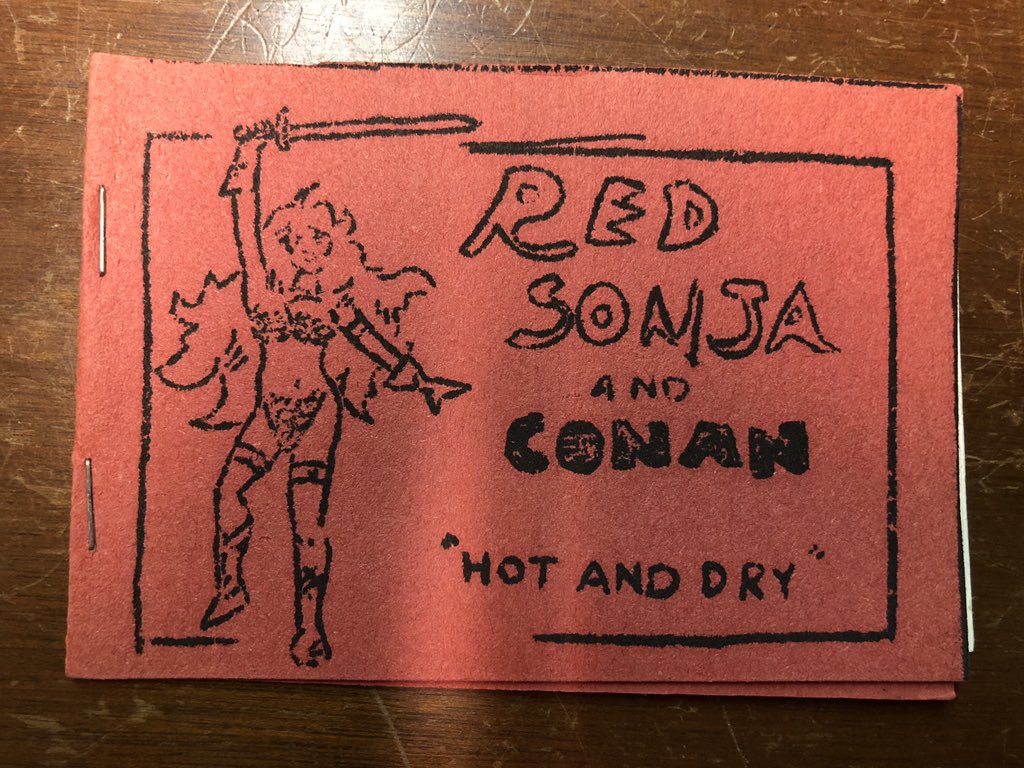
Such a work is Strange Bedfellows by Caroline Manley (Raph): a 24-page ‘zine on their Call of Cthulhu character Laurence “Laurie” Metzger, an art student at university with a penchant for fencing and the occult. It consists of eight sexually-explicit homoerotic encounters between “Laurie” and various Mythos entities, and the twelve-page short story “In Sleep, What Wakes” starring Laurie, which is really an extended erotic lucid dream-sequence bookended with brief episodes in the waking world.

A tongue ghosts over the seam of his lips, over the still-fresh scar that bisects them, and he opens his mouth eagerly. This time as they kiss, that hand sill holds him in place. It does wonders for his buzzing brain, keeping all its edges dulled, despite how intent it is on drawing him back into paralyzing fear. Back into questioning the way malleable tentacles cling to his form as though trying to crawl beneath his skin. If they weren’t so alien, their curiosity would almost be endearing, but—

“In Sleep, What Wakes” in Strange Bedfellows

Raph has described Laurie as a “nerdy twink with a taste for the occult” and this represents a very different approach to a lot of other homoerotic Lovecraftian works. “Le Pornomicon” (2005) by Logan Kowalsky for example focuses on bears, Dagger of Blood (1997) by John Blackburn is a bisexual medley. In all of those stories, the characters tend be sexually aggressive; by comparison, Laurie is more passive and receptive, and that dynamic reflects the odd circumstances of the story. There is a slight BDSM element to the story, but it has to do with the nature of power and leverage rather than the the rather severe submission and pain depicted in “Under the Keeper of the Key” (2015) by Jaap Boekestein.

Like Widdershins (2013) by Jordan L. Hawk, “Moonshine” (2018) by G. D. Penman, or “(UN)Bury Your Gays: A Queering of Herbert West – Reanimator by H.P. Lovecraft” by Clinton W. Waters, the story works in part because it is a story about relationships instead of just sex. Raph explores Laurie’s psychology a bit, their intimacies with the eldritch entity called Gabriel. The psychological trauma which is measured in Call of Cthulhu by the loss of Sanity points is here addressed in narrative terms, as an inability to sleep restfully because of traumatic memories and stress.

Taken as a whole, Strange Bedfellows doesn’t spell out an entire campaign or dive deep into the background of Laurie and Gabriel—but what is there is intriguing, well-crafted, and well-depicted for those interested in such art and fiction. The adult content is unabashed, but then what is there to be abashed about, when it is clearly labeled and everyone who picks up this ‘zine presumably has some idea of what they are getting into? Anyone that wants to clutch their metaphorical pearls at the idea that if they open up pages 10-11 they’ll see a double-page spread of Cthulhu spearing Laurie with an inhumanly oversized phallus should ask themselves what they expected to find in a ‘zine clearly advertised as 18+ and homoerotic.

Tabletop roleplaying gaming has come a long way since its beginnings, and while we cannot say what Lovecraft would have made of it all had he lived to see it, we know that during his life he appreciated and took joy in the fact that other people were having fun with his creations:

I like to have others use my Azathoths & Nyarlathoteps—& in return I shall use Klarkash-Ton’s Tsathoggua, your monk Clithanus, & Howard’s Bran.

H. P. Lovecraft to August Derleth, 3 Aug 1931, Essential Solitude 1.353

The collaborative nature of the Mythos as it was originally conceived by Lovecraft is very much in line with the collaborative narrative of the tabletop…and the nature of such collaboration is that the ideas expressed and how they are expressed are not limited by the imagination of a single creator. Even Lovecraft had limits to his imagination, and to how he could express that imagination. Lovecraft delighted in his metaphorical strange bedfellows…and perhaps Strange Bedfellows will delight those with an interest in Mythos erotica.

Strange Bedfellows (2023) by Caroline Manley (Raph) may be purchased at Etsy.


Bobby Derie is the author of Weird Talers: Essays on Robert E. Howard & Others (2019) and Sex and the Cthulhu Mythos (2014).

Deep Cuts in a Lovecraftian Vein uses Amazon Associate links. As an Amazon Associate I earn from qualifying purchases.
“Lady Chatterly’s Blowhole” (2022) by Beth W. Patterson

She was thrilled to a weird passion.

D. H. Lawrence, Lady Chatterly’s Lover (1928)

In the 1920s and 30s in the United States of America, erotica was technically illegal—groups like the New York Society for the Suppression of Vice worked hand in glove with the police and the government censors of the United States Post Office to crack down on anything that smacked of smut, from James Joyce’s Ulysses (1922) and Henry Miller’s Tropic of Cancer (1934) to Tijuana bibles, nudist magazines, or explicit works on birth control.

This did not stop the production or distribution of erotic works, but it drove it largely underground. Ambitious but shady individuals placed ads big and small in pulp magazines like Weird Tales, coding their books as works of medical or anthropological interest to skirt the laws. Pulp magazines with sex interest like Spicy Mystery and its sisters skated a thin line between being permissible or being deemed obscene and taken off newsstands and sometimes crossed it.

It took decades for the legal standards to loosen. Landmark cases like United States v. One Book Called Ulysses, 5 F. Supp. 182 (SDNY 1933) and Grove Press, Inc. v. Christenberry, 175 F. Supp. 488 (SDNY 1959) opened the door for people in the United States to publish and possess such works as Fanny Hill (1748) without fear of the books being seized and burned, and the publishers fined and imprisoned. With the new legalization of erotic literature came availability, as old classics were reprinted openly to meet a curious demand.

The artificial restrictions on publication had helped to create a kind of erotic canon; works like The Golden Ass of Apuleius, Giovanni Boccaccio’s Decameron, Leopold von Sader-Masoch’s Venus in Furs (1870), and the anonymous The Way Of A Man With A Maid (1908) weren’t necessarily the most transgressive or well-written erotic works, but in the grey market of erotic books, certain titles had by dint of age, popularity, or literary quality stood out above the rest and became a part of the culture.

It is this loose canon that many writers continue to call back to. Pluto in Furs (2019) and Pluto in Furs 2 (2022), anthologies of weird explicit fiction, is a deliberate reference to Venus in Furs. Peter H. Cannon’s jocular short story “Asceticism and Lust: The Greatest Lovecraft Revision” (1988) imagines a collaboration between Lovecraft and Henry Miller that results in “Tropic of Cthulhu”—a tongue-firmly-in-cheek reference to Miller’s censored novels Tropic of Cancer and Tropic of Capricorn (1939). Lovecraftian erotica, by the way, took a few decades to really get going in no small part because of the legal restrictions outlined above. The freedom to read Ulysses also brought with it the freedom to appreciate all the further extrapolations of sex and the Cthulhu Mythos.

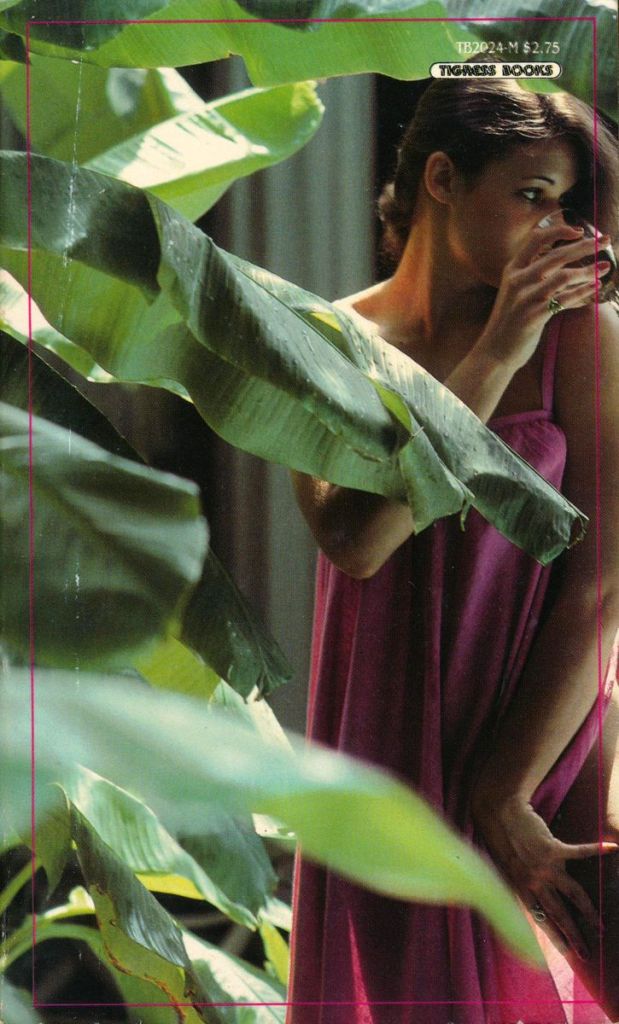
So when a reader picks up the Nookienomicon and leafing through those austere pages reads the title of one story is “Lady Chatterly’s Blowhole” by Beth W. Patterson, there is a certain expectation that they will get the reference, even if they haven’t read the book. Like Mark Twain’s Huckleberry Finn or Shakespeare’s plays, a certain amount of cultural osmosis is assumed to have occurred.

The world is supposed to be full of possibilities, but they narrow down to pretty few in most personal experience. There’s lots of good fish in the sea…maybe…but the vast masses seem to be mackerel or herring, and if you’re not mackerel or herring yourself you are likely to find very few good fish in the sea.

D. H. Lawrence, Lady Chatterly’s Lover (1928)

The intention of “Lady Chatterly’s Blowhole,” however, is not to be a pornographic episode along the lines of “The Flower of Innsmouth” (2011) by Monique Poirier or an erotic paranormal romance novel like Tide of Desire (1983) by Sheena Clayton. The Nookienomicon promises “Bawdy Tales of the Cthulhu Mythos,” and Patterson delivers in a double-entendre-laden comedy that is more sizzle than steak. Working in the tradition of the period works that often had to couch any eroticism in euphemism to get past the censors, this honeymoon in Innsmouth tiptoes the fine line between discussing marital relations—and Innsmouth lore—openly and hinting at it as strongly as possible.

The tone is deliberately light, and Patterson manages to hit a certain comedic line that marks the spoof rather than the farce, although it’s damn close. This is a story that could sit fairly next to “At the Mountains of Murkiness, or From Lovecraft to Leacock” (1940) by Arthur C. Clarke or the Innsmouth episode from Mark E. Rogers’ The Adventures of Samurai Cat (1984). The puns come fast, furious, and often in an unrelenting stream. To give just the barest flavor of the narrative:

[“]Such is the way of people touched by the Old Ones.”

“Touched by the Old Ones?” Fannly looked delightedly aghast. “In what way? Can you show me on a doll?”

Beth W. Patterson, “Lady Chatterly’s Blowhole” in the Nookienomicon 71

To spoof something properly, you have to love it, and there’s a lot of love on display here. Patterson doesn’t just make the obvious jokes (although the stream of sexual innuendos and nautical euphemisms is relentless), and does more than just tease eldritch revelations.

“Is it normal for men to have five of those?”

“Not human men,” replied her husband. “His trousers must fit him like a glove…darling, are you disappointed?”

Beth W. Patterson, “Lady Chatterly’s Blowhole” in the Nookienomicon 68

Aficionados of the Cthulhu Mythos will have read any number of escapes, successful or attempted, from Innsmouth that have been published over the decades, but I can fairly guarantee that they haven’t read one quite like “Lady Chatterly’s Blowhole.”


Bobby Derie is the author of Weird Talers: Essays on Robert E. Howard & Others (2019) and Sex and the Cthulhu Mythos (2014).

“In the Name of Cavities” (2021) by Rajeev Singh

Eldritch Fappenings
This review deals with works of erotica, and the history of erotic art and writing. As part of this review, selected passages involving sexually explicit activites will be included.
As such, please be advised before reading further.


The nature of the said delights was a mystery that was sealed off with a picture of a nude, big-breasted woman lying prone on a greenish stone slab, her butt lifted up by an imposing figure in shadows, who seemed to be wearing some kind of costume and a cape that spread out like wings. A themed orgy? It had intrigued her to no end, the goblet of her unmet desires begging to be filled with a wine she had never tasted.

Rajeev Singh, “In the Name of Cavities” in Lustcraftian Horrors (2021) 239

Lovecraftian erotica is the fiction of transgression. Folks generally don’t write about the perfectly normal sex life of Edward Pickman Derby and Asenath Waite, or the raunchy but otherwise unremarkable wet dreams of Walter Gilman and the coeds he spied in the shower. When Innsmouth and R’lyeh come into play, people expect—not unfairly—for things to get properly weird. What qualifies as “weird” depends on your starting point. How much pornography and erotic fiction have you already consumed, how many sexual encounters have you had? What exactly is left that will shock you? What boundaries do you have left to transgress?

In that respect, the quest for greater titillation parallels and can overlap the quest for knowledge that marks much of Lovecraftian fiction. Protagonists draw closer to the central mystery, led there by an insatiable curiosity. Libido sciendi, the desire to know. Jaded seekers of the ultimate thrill who stumble onto the Mythos are an entire mode of Lovecraftian erotica. In that respect, “In the Name of Cavities” is part of a literary tradition with Robert M. Price’s “A Thousand Young” (1989). Except instead of a jaded libertine seeking greater carnal desires, it’s a bored housewife answering an internet advertisement for some excitement in a sexless marriage.

Any road up, as the saying goes. Rajeev Singh’s premise and characterization work in large part because they do start out very much with the starting point of utter mundanity: the neglected housewife decides to cheat. Yet this isn’t a morality play on the consequences of adultery; by chance, Anaïs has stumbled onto something more than the Eyes Wide Shut-style party she’d maybe hoped for.

Which is an aspect of the story that Singh doesn’t dwell upon: how much contemporary media has shaped our idea of what transgressive erotica really is. When we see the BDSM playroom in From Beyond and Barbara Crampton dawns her leather apparel, the audience is supposed to recognize that as a corruption of the character, or at least an awakening of darker sexual desires than missionary position with the lights off. Real bondage play, and the communities that develop around those desires, are strange and alien by comparison to those depicted in works like Fifty Shades of Grey, dealing as they do with issues of consent, safety, and roleplay.

So how much of what Anaïs saw should she have recognized? How much should the readers have recognized? When you read a passage like:

At first, she couldn’t say for sure but yes, the business end of each arm or tentacle did resemble a hard penis. And they weren’t just showpieces, those erections. Many of the feelers were busy plunging in and out of cavities all over a woman’s body as she lay flat on a green stone slab, similiar to what Anaïs had seen on the internet, only butt-downward.

Rajeev Singh, “In the Name of Cavities” in Lustcraftian Horrors (2021) 239

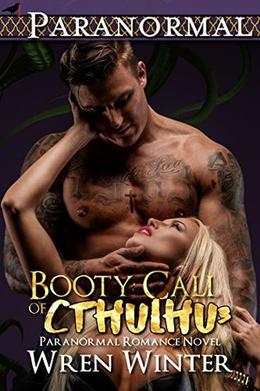
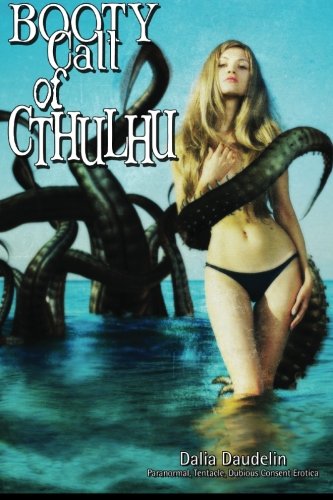
Anaïs does not make the immediate connection to Japanese hentai, works like La Blue Girl or Urotsukidoji. Naughty tentacles have become a trope in some circles for so long that the shock value has largely worn off…but the idea still has legs. Readers already familiar with works like Booty Call of Cthulhu (2012) by Dalia Daudelin and “The Flower of Innsmouth” (2011) by Monique Poirier probably won’t be shocked, but they might still be appreciative of the execution. Jaded sensibilities mean there are very few erotic impossibilities that haven’t shown up somewhere, in some media, and that is reflected in the frustrated Lovecraftian sex-quest.

It is very difficult to come up with something completely new and original.

To take another example from the story, Singh’s use of “cavities” is strongly reminiscent of Graham Masterton’s short story “Sex Object” (originally published in Hottest Blood, and then adapted to comics in Verotika #7), or even of the comic series Stranger Kisses. It’s hard to point out these works as inspirations, many writers stumble upon the same ideas completely independently of one another.

As a work of Lovecraftian fiction, “In the Name of Cavities” lives in a little universe of its own, relatively self-contained…but that’s okay because the last few pages take that idea and run with it, projecting the lusty present out into a post-apocalyptic future. That extension of the idea far beyond the length of the encounter, the duration of a climax, is a pleasant surprise…and a possibility that works within a Lovecraftian premise better than it does with most other erotic works.

“In the Name of Cavities” by Rajeev Singh was published in Lustcraftian Horrors: Erotic Stories Inspired by H. P. Lovecraft (2021).


Bobby Derie is the author of Weird Talers: Essays on Robert E. Howard & Others (2019) and Sex and the Cthulhu Mythos (2014).

Booty Call of Cthulhu (2012) by Dalia Daudelin

Eldritch Fappenings
This review deals with works of erotica, and the history of erotic art and writing. As part of this review, selected passages involving sexually explicit activites will be included.
As such, please be advised before reading further.


Joanne Lagrasse is a newly graduated college student living the life. Well, if the life is sitting in your apartment all day trying to research monsters for a novel. The strange book her favorite professor gave her is full of ramblings by what must be a mad man, which makes for uneasy reading and a loner lifestyle.

She pushes herself to go out to the beach, though the takes the tome with her. When she decides to not heed her professor’s warning and reads a chant out loud, she finds herself faced with a giant monster and its lewd tentacles, each one eager to fill her holes.

Booty Call of Cthulhu, back cover copy

Before the internet, erotic literature often left a literal paper trail. It wasn’t enough to write a story or book, if you wanted to sell it you had to advertise—small ads in appropriate adult newspapers or magazines (or, for erotic fanfiction, fanzines), mail-order catalogs or lists of other publications in the backs of books, and for particularly notable works perhaps even a published review in some suitable medium. By the early 2010s, the game had fundamentally changed: the cheap adult paperbacks of previous decades had largely fallen off with the rise of more readily-available pornography, and self-publishing became feasible thanks to print-on-demand publishing and ebooks. The internet was a great leveler, doing away with much of the traditional advertising—and with it, much of the traditional paper trail which historians and smuthounds alike relied on.

Now, scholars have to rely on search engines and internet archives, hoping for social media posts, blogposts, and the occasional interview:

ED: I see you write tentacle erotica, which has a soft spot in my heart as an anime geek. How did you get into that sub-genre?

DD: I love H. P. Lovecraft! I’ve been a member of 4chan’s /x/ for, well, probably 6 years now. That’s their paranormal board. Horror and tentacles are both very fun to write, especially when you can make them sexy.

EROTICA AUTHOR INTERVIEW: DALIA DAUDELIN, AUTHOR OF BOOTY CALL OF CTHULHU by Ellen Dominick

Booty Call of Cthulhu by Dalia Daudelin is a good example of the works of the period. Originally released as a Kindle ebook under the nom de plume Roxy Feurouge in 2012 (and as by Mia Lust on Barnes & Noble’s website), then as a thin print-on-demand softcover in 2013 (still available), the story is straightforward and geared toward specific, clearly indicated kinks: monsters, tentacles, dubious consent—and it delivers on all counts.

My jaw went slack. My mouth opened just enough for the tentacle to slide in. It went from a wool texture to something more slimy, a bit like another tongue.

Dalia Daudelin, Booty Call of Cthulhu 14

Readers hoping for an erotic re-telling of “The Call of Cthulhu” or a Cthulhu Mythos pastiche with a bit more explicit sex than usual will be sorely disappointed. While not quite Porn Without Plot, most of the twelve print pages are devoted to a detailed array of sexual acts, most involving tentacles. Comparisons with tentacle-themed Japanese adult animation like La Blue Girl fall a bit short: while the sex scenes cover much of the same material (penetrations anal, oral, and vaginal, etc.), there is quite a bit more story and character development in the Japanese manga and its anime adaptation. Booty Call of Cthulhu is written like a typical pornographic feature film, with the brief non-sexual interludes providing the set-up for the next carnal scene, with an abrupt finish after the final climax.

Short, sweet, and to the point—and when compared to similar works of the period like I Was Impregnated by Cthulhu! (2012) by Penny P. Zahn, The Tentacles of the Elder Gods (2012) by Lindsey Purl, Cthulhu’s Carresses (2013) by Amy Morrel, Uhluhtc’s Sacrifice (2013) by Grace Vilmont, I Fucked Cthulhu! (2013) by Deliah Fawkes, Cuckolded by Cthulhu (2013) by Lillian Jacobs, and Cthulhu Comes (2014) by Sandy Laws—Booty Call of Cthulhu isn’t particularly poorly written. If there’s a real criticism to be made, it’s that it is no more than it set out to be, and a much more engaging erotic narrative could have come from the same premise.

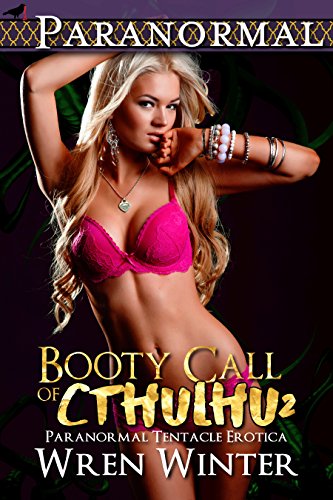
What differentiates Booty Call of Cthulhu from most of its contemporaries is that it was either popular enough or sufficiently tickled the imagination to elicit two sequels: Booty Call of Cthulhu 2 and Booty Call of Cthulhu 3 by Wren Winter—and neither of which is currently available (Wren has also written My Night With Cthulhu, which is not either of those two books under a new title).

Whether this is a licensing issue or Amazon removed the ebooks for violating one of their policies is unclear, and probably will remain so…because as with internet fanfiction, the internet’s archive is imperfect and there is no paper trail. Neither 2 or 3 ever received a hardcopy printing, at far as I’ve been able to determine, and unless you were fortunate enough to buy them during the window of opportunity they were available, those texts are essentially impossible to obtain. Should the files be corrupted or Amazon stop supporting them, they may well be lost forever.

Several of Booty Call’s contemporaries, including I Was Impregnated by Cthulhu! and Cuckolded by Cthulhu have already suffered the same fate. It’s not just that these works exist only on a handful of Kindle accounts, but unless you were aware they existed already it is exceedingly difficult to find out they ever existed. Posting an ebook to Amazon and letting the search engine handle discovery for a public apparently starved for sexually explicit Mythos-flavored content was often enough to sell a few copies…and then, for one reason or another, the ebooks were no longer sold, and there might not even be a page to point at to show where it had been for sale.

Given the ephemeral nature of pornography and the quality of the writing, few folks will lament this as a great loss to our shared cultural heritage—most erotica is treated as eminently disposable, to be enjoyed in the moment but not necessarily saved for posterity as with so many other books. Yet works like Booty Call of Cthulhu certainly represent a certain moment in time, and a literary trend which, in its perennial reflowering, means critics and fans of Lovecraft and the Cthulhu Mythos need to acknowledge two truths:

Some people want to read about having sex with Cthulhu, and a body of work has grown up to meet that demand.

The question that remains to be seen is how, if at all, these works might be preserved. It is fair to say that Booty Call of Cthulhu was not the first and will not be the last sexually explicit story about an amorous eldritch entity, but it is disturbing how easily such works can effectively fall off the face of the internet, perhaps never to be read again. Because it has a print edition, Booty Call of Cthulhu will probably linger on longer than most—and it is weird to think that in generations to come, a furtive Mythos fan may enter into a dusty bookshop and find among the dross of the 2010s an ancient example of Lovecraftian smut…

I entered, charmed, and from a cobwebbed heap
Took up the nearest tome and thumbed it through,
Trembling at curious words that seemed to keep
Some secret, monstrous if one only knew.
Then, looking for some seller old in craft,
I could find nothing but a voice that laughed.

H. P. Lovecraft, “The Book” from Fungi from Yuggoth

Bobby Derie is the author of Weird Talers: Essays on Robert E. Howard and Others and Sex and the Cthulhu Mythos.

Deep Cuts in a Lovecraftian Vein uses Amazon Associate links. As an Amazon Associate I earn from qualifying purchases.
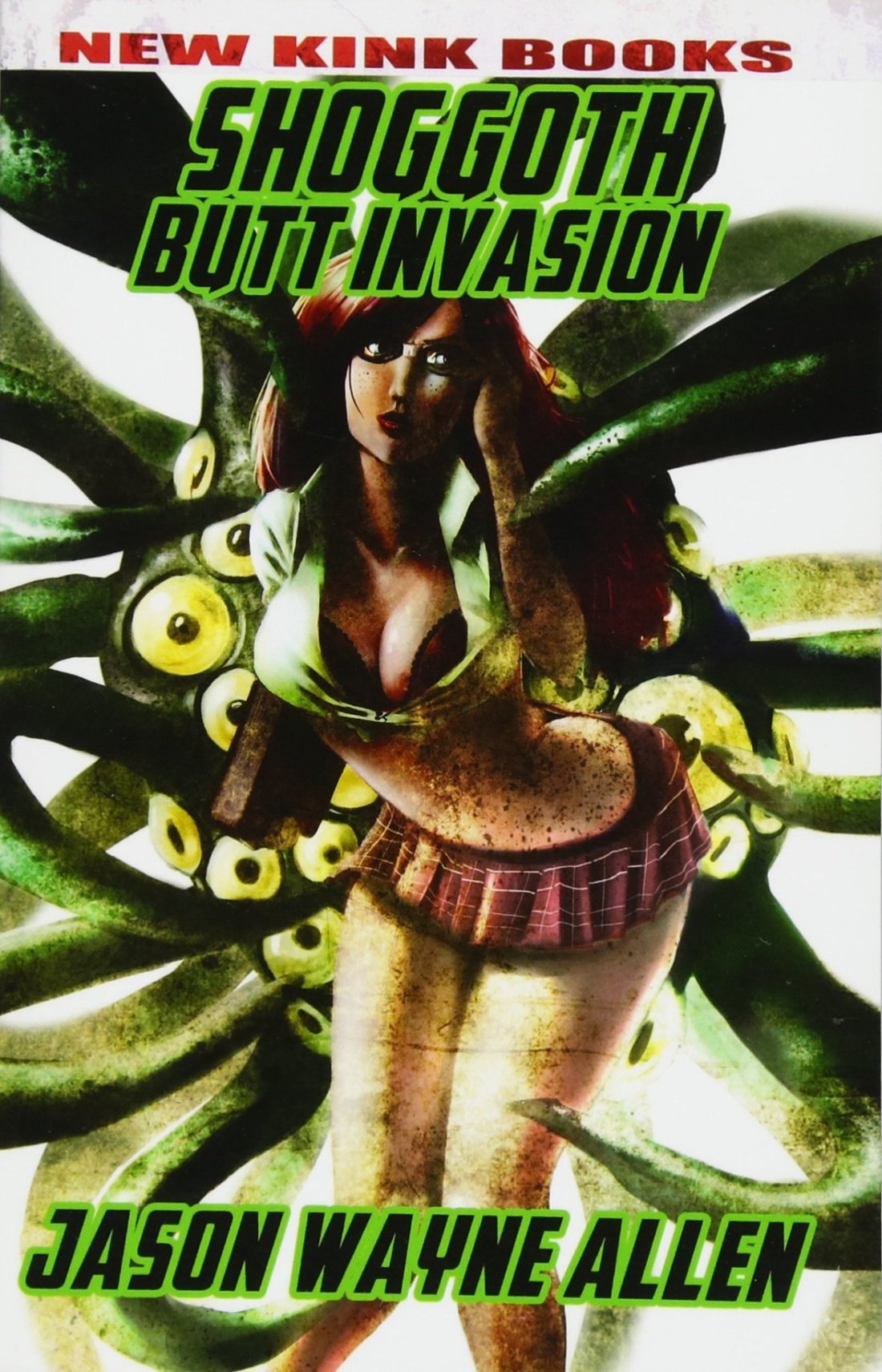
Shoggoth Butt Invasion (2016) by Jason Wayne Allen

Eldritch Fappenings
This review deals with a work of erotica, and the history of erotic art and writing. As part of this review, selected passages involving sexually explicit activites will be included.
As such, please be advised before reading further.


Thus I am coming to be convinced that the erotic instinct is in the majority of mankind far stronger than I could ever imagine without wide reading & observation; that it relentlessly clutches the average person—even of the thinking classes—to a degree which makes its overthrow by higher interests impossible.

H. P. Lovecraft to Rheinhart Kleiner, 23 Apr 1921, Letters to Rheinhart Kleiner & Others 177

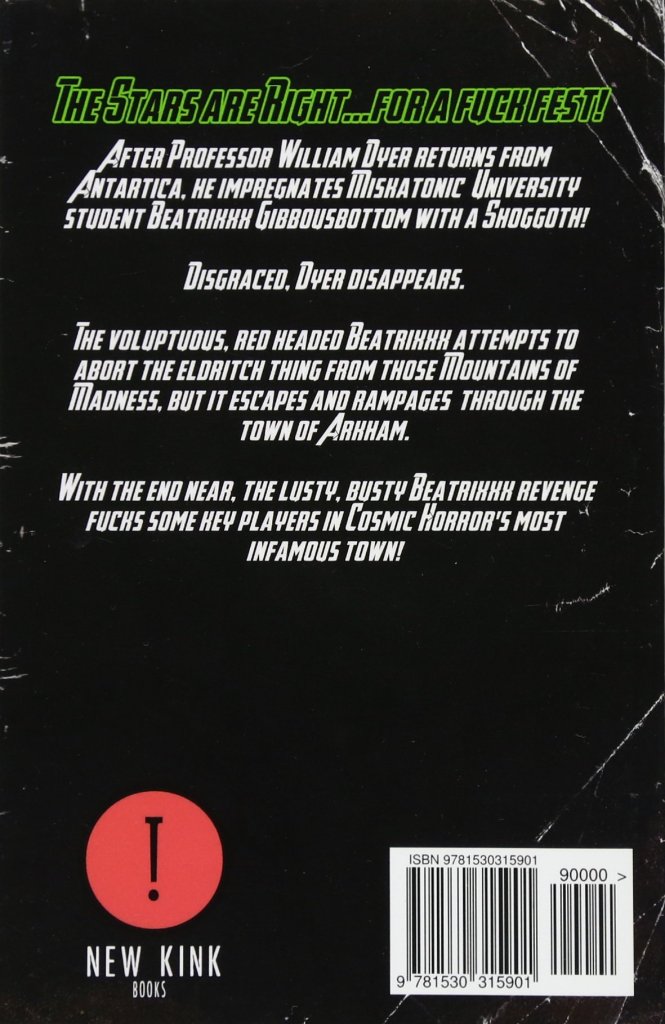
Shoggoth Butt Invasion (2016) by Jason Wayne Allen is a farcical sequel to At the Mountains of Madness by way of Debbie Does Dallas. The tone is very tentacle-in-cheek: sexually explicit, outrageously unrealistic, over-the-top, and surprisingly dedicated to wringing out jokes from Lovecraft’s Mythos with all the aplomb of an X-rated version of National Lampoon’s Bored of the Rings or Doon. It is gleefully and unapologetically taking the piss in a way that is rather rare even for most Mythos parodies such as “The Fluff at the Threshold” (1996) by Simon Leo Barber or “Kanye West—Reanimator” (2015) by Joshua Chaplinsky.

This is not unfamiliar territory for Jason Wayne Allen, whose other Mythos works include the Deep One erotic novella Ichthyic in the Afterglow (2015) and “The Horror at the Garrsmouth Orgy” in Strange Versus Lovecraft (2013). Drawing on both the surrealistic atmosphere of bizarro fiction and the rhetoric of gonzo pornography, Allen has crafted a nymphomaniac heroine who is utterly unfazed as one eldritch horror after another crawls out of—and into—her orifices.

Readers might be shocked and appalled at a character who embodies the sex-crazed vapid bimbo or nymphette, may be affronted by Allen’s mockery of the Mythos, even disgusted by crude language and scenes like this:

My legs in the stirrups, I watch the doctor’s head move between my knees. I wonder if the doctor likes the hair I keep down there, that orange patch matching the carpet to my fiery drapes. My hips slowly rise as I feel his latex fingers part my pussy lips. I come hard in the doctor’s chiseled face, and out with my juices comes the shoggoth.

Dr. Wadsworth is a skid mark on the floor of his examination room.

Jason Wayne Allen, Shoggoth Butt Invasion 7-8

Shocked, appalled, disgusted—and, hopefully, still turning the pages—is the point. A shoggoth emerging during a nonstandard vaginal exam and squishing the attending physician is played for erotic slapstick, not horror. The whole point of the exercise is to push the limits a little, to pile silly on silly, affront on affront, to say to hell with conventions and expectations and keep transgressing further and further…because it’s a fun ride. Disturbing in parts, borderline obscene in others, but that’s rather the point. If you’re not going push the limits of what the audience finds acceptable, the ne plus ultra, then why write a transgressive erotic Lovecraftian novella anyway?

There is one scene that tip-toes on the very borders of obscenity, if it doesn’t cross directly over it. It involves the mortal remains of Dr. Wadsworth, the gynecologist who was splattered by the shoggoth, reassembled with an aborted fetus and reanimated so that the Frankenstein’s Monster can give Beatrixxx one more going-over before the serum wears off. I’m not sure that one would pass the Miller Test.

In a sense, Shoggoth Butt Invasion is Mythos-as-exploitation. The erotic possibilities of Lovecraft’s Mythos may be theoretically infinite, but in practice most “Lovecraftian” erotica follows familiar beats. It’s a rare work that seeks to be as transgressive, weird, and offensive as most readers and critics imagine Lovecraftian erotica should be. Allen is more dedicated to explicitly Mythos erotica than Cthulhu Scat Hangover & The Innsmouth Porno VHS (2014) by Adolf Lovecraft, but doesn’t have the dedication to characterization, setting, and plot that are the hallmarks of Edward Lee’s “Hardcore Lovecraft” novels such as Trolley No. 1852 and The Dunwich Romance.

Cthulhu lets go another shriek. THis one warbles into almost a human moan.

“Fuck yeah! Iä! Iä Fhtagn that pussy, baby!

Jason Wayne Allen, Shoggoth Butt Invasion 42

Future generations will probably never read Shoggoth Butt Invasion. Released as an ebook via AmazonKindle and a slim print-on-demand paperback from CreateSpace, the book is no longer available for sale in either format. New Kink Books, the publisher, appears to be defunct. For all that POD publishing and digital publishing have opened up the marketplace to thousands of new titles for readers, it is a very fast-paced and fragile reading ecosystem. Books that don’t sell fall off the backlist as publishers crash or content managers find offense with them, and there are vanishingly few to filter down into the secondary market of used books. Libraries ignore them.

Sometime in the future, perhaps, if a cult following develops the few surviving copies might become collector’s items—or the files might crop up on some sharing site, helping to circulate those networks and hard drives too eventually crap out. Now, more than ever, books that are not read and appreciated in their time are likely destined to be forgotten utterly.

Does it matter? Is Shoggoth Butt Invasion worth preserving?

You’ll never know unless it is.


Bobby Derie is the author of Weird Talers: Essays on Robert E. Howard and Others and Sex and the Cthulhu Mythos.

Deep Cuts in a Lovecraftian Vein uses Amazon Associate links. As an Amazon Associate I earn from qualifying purchases.

Fight! Iczer-One (戦え!!イクサー1, 1985-1987)

Nagisa: “Why did you chose me?”

Iczer-One: “Because I like you.”

Fight! Iczer-One

The manga “Fight! Iczer-One” (戦え!!イクサー1) by Rei Aran (阿乱 霊) was first serialized in issues 21 and 22 (1983-1984) of Japanese manga anthology magazine Lemon People (レモンピープル), with an additional chapter published in 1986. From 1985-1987, the series was adapted as an Original Video Animation consisting of three episodes running a total of ~100 minutes. This begat a small franchise that would include the sequels OVA Adventure! Iczer-3 (冒険!イクサー3, 1990-1991) and Iczer Girl Iczelion (戦ー少女 イクセリオン, 1995), American comic adaptations of the OVAs Iczer One (1994, Antarctic Press) and Iczer-3 (1996, CPM), and various audio dramas, art books related to the OVAs, etc. Much of this media is only in Japanese, but the original OVA for Fight! Iczer-One was dubbed into English in 1993, and with this and subsequent re-release on DVD it has a small English-language audience. This review will focus primarily on the 1985-1987 three-episode OVA, specifically the 2005 DVD release.

In terms of what it is, Fight! Iczer-One is almost the quintessential 1980s anime. It has big hair, martial arts, laser swords, an alien invasion, flying ships with drills on the front, giant mecha, body horror, tentacles, the power of love, a high school girl, a little bit of nudity, lesbians, lasers, explosions…and, of course, the aliens who are attacking the Earth are known as the Cthulhu (クトゥルフ), sometimes translated into Cthulwulf in the dub.

Rei Aran, the creator of the original manga, and Hirano Toshiki (平野 俊貴), the director and character designer for the OVAs, were obviously drawing on some familiar influences. For example, the alien parasites that provide the majority of the body horror have obvious parallels with John Carpenter’s The Thing (1982) and possibly Alien (1979), and the advanced Japanese military ships with the prominent front-mounted drills are reminiscent of the Gōtengō—but the story and designs were also innovative.

Iczer Robo: A Visual History illustrates how the mecha designs are relatively sleeker than those of other manga and anime of the period, such as Robotech or Appleseed, and incorporate organic components (notably, the secondary pilot as a kind of power source), an idea that would be taken much further in works like Neon Genesis Evangelion. The relative dearth of male characters in the story, where both primary protagonists and antagonists are women, and the focus on lesbian relationships is a decided step away from male- and heterosexual-dominated narratives in manga and anime as well…and that brings up a fine point of discussion.

Lemon People was known as a lolicon magazine that often featured manga depicting younger or younger-looking women or girls in a romantic or sexual context. Today, the term lolicon (derived ultimately from Vladimir Nabokov’s novel Lolita) is often associated with pedophilia and pornography, particularly Japanese art and manga that depict underage girls in sexually suggestive, nude, or explicitly sexual contexts, which rather drives folks to imagine something much more salacious and taboo than the reality, even without taking into account Japanese censorship laws. “Fight! Iczer-1” and its adaptations and sequels are not child pornography by any stretch of the imagination, featuring no explicit depiction of genitalia and relatively little nudity during their runtimes. The protagonist Kanō Nagisa is explicitly in high school at the time of the events, much as the main characters of Sailor Moon were, and is clearly an older teen rather than an adolescent.

While this is technically the first Lovecraftian animated work to feature a lesbian relationship, predating Mystery of the Necronomicon (黒の断章, 1999) by over a decade, the plot focuses more on the emotional side of the relationship rather than the sexual side of things. Iczer-One needs the emotional rapport with Nagisa to effectively fight the Cthulhu, but there is a barrier of understanding that complicates this relationship even getting off the ground. It may seem weird to claim a realistic depiction of relationship struggles in an anime where aliens eat their way out of Nagisa’s parents and a giant mecha is powered by lesbian love, but a lot of the emotional angst Nagisa goes through could have been eased up if Iczer-One had been open and communicative about her needs for this relationship/plan to save the planet.

Iczer-One: “I was created by the Cthulhu. I’m an android.”

Fight! Iczer-One

If all of this doesn’t sound very Lovecraftian…well, it is not. Fight! Iczer-One is Mythos-In-Name-Only; the alien Cthulhu have no real connection to H. P. Lovecraft or the Mythos beyond the name. The use of the name is reminiscent of how in Armitage III (1995) the scriptwriter Konaka Chiaki (小中 千昭) borrowed the name “Armitage” from Dr. Henry Armitage in Lovecraft’s “The Dunwich Horror”: a reference, an inspiration, but not ultimately an effort to incorporate the story into any wider Mythos through the borrowing. This kind of tangential connection to the Mythos is more common than one might think; like the inclusion of the Necronomicon Ex Mortis in Evil Dead II, these are the outer ripples of Lovecraft’s influence on the pop cultural landscape.

It has to be emphasized: Fight! Iczer-One is fun. While the franchise was never huge in English and amounts to little more than a couple VHS tapes or DVDs and a handful of obscure comics, for those who remember anime of this vintage, the OVA is a good example of a lesser-known and often overlooked work from this period.


Bobby Derie is the author of Weird Talers: Essays on Robert E. Howard and Others and Sex and the Cthulhu Mythos.

Deep Cuts in a Lovecraftian Vein uses Amazon Associate links. As an Amazon Associate I earn from qualifying purchases.

Cthulhu Scat Hangover & The Innsmouth Porno VHS (2014) by Adolf Lovecraft

In all of his stories, not one of H. P. Lovecraft’s characters ever pissed themselves in fright. No character soiled their britches as Great Cthulhu stumbled through the waves, or noisily vomited up a half-digested lunch on seeing the swiftly-decomposing remains of Wilbur Whateley. You might run across a reference to a man whose face has been bitten away, but never a dirty diaper; a suggestive smear of blood, but never a drop of menses. A character might be described as moving through filth, but you never get the actual description of the turds, or the rotting carcasses buzzing with flies, or the sudden desperate need for a restroom.

Weird fiction may be horrifying, but it is rarely disgusting. Fear and disgust are basic emotions that can both arise from transgressions, and can be quite intimately linked: a dead body may engender fear and disgust, a prude might find a Satanic orgy both horrifying and revolting. During the heyday of Weird Tales, there was a limit one could go in explicit description, and while later decades grew more lax in terms of actual censorship, many practical limitations remain. Nudity is still more acceptable in horror films than actual feces; a character might be shot a hundred times or bisected by a saw blade, but they probably won’t be drowned in a toilet full of urine.

Even in weird and horror fiction, there are many norms and mores…and transgressing these can result in quite powerful works of art and literature. Terrible, in their own way, but powerful.

This is the psychology of the exploitation films, underground comix, heavy metal and all of its many musical sub-genres and modes with their cover art, and of Splatterpunk fiction and its literary descendants Extreme Horror and Bizarro fiction. For writers and artists who embrace the transgression beyond mere fright, there are strange, vast opportunities to go beyond what any normal writer—even the normal Lovecraftian writer—has gone before.

Of course, it isn’t necessarily pleasant to read or write, but that’s the point. The visceral response, the new emotional sensation that you can’t get anymore. After reading “Innsmouth” or “Cthulhu” for the fiftieth or a hundredth time, do you really still feel the same dread? Or have you gotten used to it? Cthulhu, for many, has become a familiar horror. There are plushies. You can go buy dice and pillows, Cthulhu panties and sex toys. While a Lovecraft reader might be horrified at the mere existence of such merch, Cthulhu itself is far less a figure of terror to most. Cthulhu has become…cuddly.

That isn’t always the case, of course. Some Lovecraftian fiction is more transgressive than others, even in these jaded later days. “Necrophallus” by Makino Osamu (牧野修) is explicitly more visceral than the average Mythos tale; Insania Tenebris (2020) by Raúlo Cáceres pushes Mythos art to an explicit extreme; “The Vulviflora of Vuutsavek” (2008) by Charlotte Alchemilla Smythe is sexually explicit without letting go of the essential element of horror—yet none of these works really embrace disgust as equal to horror. None of them push that element of transgression.

For Lovecraftian works like that, you generally need to look for such works as Edward Lee’s “Hardcore Lovecraft” line including The Innswich Horror, The Haunter of the Threshold, Going Monstering, Trolley No. 1842, and The Dunwich RomanceThese are all stories that put the horror and disgust under a microscope, that don’t pan away or keep the nastier bits of the action off the page or buried under a metaphor, as Lovecraft did. In a more avant-garde vein, you might look at Jordan Krall’s bizarro classic Squid Pulp Blues, pedal-to-the-metal Tentacle Death Trip, and the surreal collection Nightmares from a Lovecraftian Mindor Kevin Strange’s McHumans.

Many of these works are now out of print and rare. Extreme fiction tends to have a limited audience, and self-publishing and small presses have been the norm; once it was Arkham House that published what the big publishers wouldn’t, but now the bleeding, gore-stained edge of extreme Lovecraftian fiction is mostly occupied in self-publishing…and there are some delightfully disgusting treats out on the fringes of known literature.

“Adolf Lovecraft” was the pseudonym for a bizarro writer who self-published three ebooks: Cthulhu Scat Hangover (2014), The Innsmouth Porno VHS (2014), and Cthulhu Bomb (In A Whore’s Guts (2016). While never destined for any best-of anthologies and largely ignored by critics, these are works that are exactly what they set out to be: nasty deep dredges where the balance is less on Lovecraftian horror than Lovecraftian disgust.

Cthulhu Scat Hangover contains two stories: “The Brown Eye From Beyond” and “Cthulhu Scat Hangover.” Both of these stories deal with very similar themes and visuals, and barely amount to more than a scene each; they may or may not have been inspired by a similar scene in chapter four of “The Apocalypse Donkey” in Squid Pulp Blues…

The wet sounds of shit-hitting-cement got louder. The tentacles got closer and before they wrapped around his leg, JImbo thought he saw the hypnotic and crystalline eyes of a squid. He blinked, thinking it was his imagination but when he looked again, they were still there.
—Jordan Krall, Squid Pulp Blues 146

…or perhaps not; independent invention has happened before and will again.

While some of the images are striking, the prose is rather straightforward, with an almost business-like low-budget horror movie earnestness than any effort to wax loquacious. Adolf Lovecraft does not try to ape Lovecraft’s loquaciousness and occasional ultraviolet prose.

The pain was indescribable as Angela from accounts slowly forced her entire fist into his sphincter. He was screaming gibberish, completely helpless, and she too was shouting something equally nonsensical—”Cthulhu R’lyeh wgah’nagl fhtagn!” or some such bollocks—as her wrist, then her forearm, strekaed with gore and faeces, disappeared past Donny’s torn, haemorrhaging anus.
—Adolf Lovecraft, “Cthulhu Scat Hangover”

The stories also have no wider Mythos to tie into; aside from the name and familiar incantation, we aren’t left with any idea of why Angela from accounts is doing this, exactly. We don’t see the cult, if there is one, we get one perspective of a life with all of its petty bullshit hopes, ambitions, fears, and insecurities, and then he dies on a toilet after shitting out a tentacled horror.

It isn’t even played for laughs.

The Innsmouth Porno VHS also consists of two short works: the eponymous “Innsmouth Porno VHS” and “Brown Shower Apocalypse.” The latter has more in common with the contents of “Cthulhu Scat Hangover” than the others, and again there’s that sense of familiarity of theme, if nothing else, with Krall’s Squid Pulp Blues: the looming apocalypse, the terrible mundane sordidness of human relationships, sexual paraphilia, and the use of drugs and alcohol to cope. While it isn’t wholesome to any degree, “Brown Shower Apocalypse” isn’t written as a story to cater to or condemn those who have a sexual desire for a woman to shit on their chest like that infamous scene in Ilsa, She-Wolf of the S.SAs kinks go, it’s disgusting but not horrorific…except, perhaps in this story where it blends from one into the other at the end.

“The Innsmouth Porno VHS” is a different approach: no scat, for one thing. For another, it engages in a bit of intriguing worldbuilding:

Mike and I, in our early 20s, had been born into a world in which the Innsmouth Condition already existed. The Innsmouth kids had been born about a decade earlier. It wasn’t exactly commonplace to us—I’d only ever seen a couple of people with it in my life, and that had been in large cities—but it definitely was part of the world.
—Adolf Lovecraft, “The Innsmouth Porno VHS”

Imagine a world where developing fishy attributes was like Thalidomide babies. Pornography is already intensely driven by genre and tags; the desire for new and different sees users browse by both specific sexual acts and kinks and types of performers. Race, sex and gender, hair color, body types, body modifications like tattoos and piercings are all fair game. It wouldn’t be that strange to imagine what adults with Innsmouth Condition might end up doing in front of the camera…

It is about as far from cosmic horror as you can get. If Joe Koch is correct that body horror is the opposite end of the spectrum from cosmic horror (A Transmusculine Horror Writers Looks At Lovecraft), then “The Innsmouth Porno VHS” might suggest that the spectrum has another axis, and that body disgust is the opposite end of the spectrum from cosmic disgust. The idea recalls Arthur Machen’s dialogue on sorcery and sanctity, the idea that there are transgressions of the mundane world that are more repellent than mere theft or murder, the kind of revulsion against reality hinted at in some weird tales:

And for three hundred years I have done his bidding, from this marble couch, blackening my soul with cosmic sins, and staining my wisdom with crimes, because I had no other choice.
—Robert E. Howard, “The Tower of the Elephant”

A tentacled entity sliding out of a broken rectum covered in shit into a toilet might evoke mingled disgust and horror, but there is nothing of the cosmic in a videotaped orgy featuring two women with birth defects. Weird, certainly; outside the mundane categories on your pornographic website of choice, but the physicality of a hardcore sex tape, with spitting, rough sex, and dirty talk spoken from mouths ill-adapted to human speech trends more toward disgust than horror…although there is still that strange fascination that accompanies anything unusual, bizarre, and taboo.

As the name implies, “The Innsmouth Porno VHS” is sexually explicit, but the real focus is on the mental or spiritual corruption of the protagonist. The eponymous VHS awakens something in him, and Adolf Lovecraft deftly captures that sense of utter fascination, of something beguiling in its wrongness, the shivering sensation of watching something you weren’t meant to see…trying to capture, in a sense, that liminal state of watching pornography for the first time, except with less explicit fear of being caught and more explicit visceral attraction mixed with disgust.

The orgy, gangbang, fish fry, whatever it was, began to wind down.
—Adolf Lovecraft, “The Innsmouth Porno VHS”

The difference between this story and the others in Adolf Lovecraft’s small corpus is that the dirtiness and disgust are on the inside. The other stories are gross-outs, violent, nasty, and viscerally disgusting in the acts they describe, and the point-of-view characters don’t survive to develop new kinks or learn any moral lesson. In “The Innsmouth Porno VHS” however, there’s something more…not in the sense of a greater extreme of physical disgust, but maybe in the sense of cosmic disgust. It isn’t just about jerking off to a new fetish for Innsmouth girls, it’s what that new and unnatural libido leads him to do…and that is, in many ways, more disgusting than all the scat-filled references in the other stories combined.

Cthulhu Bomb (In A Whore’s Guts) is an omnibus anthology of Adolf Lovecraft’s work, including all four stories from the previous two collections along with several new ones. The same themes are at play, but the stories don’t build on one another, there is no larger picture to grasp. Many of the same ideas, spinning out in variations, fucked-up situations that are brutal but never beautiful, that degrade but don’t enlighten.

Disgusting stories aren’t for everyone; it is a different kind of transgression, meant to invoke a different response, and while disgust and fear are closely related, the effects they have on mind and body can be very different. For those who think they have delved into the depths of cosmic horror…there may be some things out there that you aren’t ready for yet, and may never be. There are stranger and more terrible things than Adolf Lovecraft out there.


Bobby Derie is the author of Weird Talers: Essays on Robert E. Howard and Others and Sex and the Cthulhu Mythos.

Deep Cuts in a Lovecraftian Vein uses Amazon Associate links. As an Amazon Associate I earn from qualifying purchases.
The Mystery of Lustful Illusion -Cthulhu Pregnant- (2015) by Takayuki Hiyori (宇行 日和)

Eldritch Fappenings

This review deals with a work of pornography, and the history of erotic art and writing. As part of this review, selected images with cartoon depictions of genitalia and/or sexually explicit contact will be displayed.
As such, please be advised before reading further.


愛欲幻想の怪~クトゥルフ・プレグナント~ (The Mystery of Lustful Illusion -Cthulhu Pregnant-) by Takayuki Hiyori (宇行 日和) is a 2015 Japanese tankōbon hentai manga published by Unreal Comics (アンリアル). This book is divided into ten chapters, each of which contains a fully-illustrated and sexually explicit Cthulhu Mythos story.

In art style, the book is geared more toward erotic comedy than erotic horror; and many of the Cthulhu Mythos entities within are presented as monster girls. Takayuki Hiyori had been previously known for their dōjinshi based on popular monster girl harem manga Monster Musume, and their manga are essentially a pornographic parallel to the mostly non-explicit books like Monster Girl Encyclopedia II (2016) by Kenkou Cross (健康クロス).

Cthulhu_TOC

In terms of writing and storytelling, The Mystery of Lustful Illusion -Cthulhu Pregnant- is a disconnected collection of short works, much like most Lovecraft story collections or Lafcadio Hearn’s classic collection Kwaidan. There is no larger overarching story of narrative, the major appeal of the work being simply that it uses the Cthulhu Mythos for these erotic stories and sexualized versions of eldritch entities like Cthulhu, Hastur, Shub-Niggurath, the Deep Ones, the Hounds of Tindalos, and the Cats of Ulthar.

The contents are aimed toward some well-established tropes and kinks: as the title might imply, impregnation is a fairly significant theme in many of the stories, but there are also instances of multiple penetration, sex work, incest, nonconsensual sex, body transformation or modification, breast expansion, group sex, large genitals, etc. Readers familiar with tentacle erotica might wonder if such appendages play their part, as they do in Le Pornomicon (2005) by Logan Kowalsky, but in truth they don’t play a significant role in the proceedings.

Cthulhu_CalloftheAbyssIn point of fact, The Mystery of Lustful Illusion -Cthulhu Pregnant- is difficult to distinguish from Monster Musume or Monster Girl Encyclopedia products. While Takayuki Hiyori uses references to the Cthulhu Mythos in the crafting and telling of the stories, the manga itself is pretty straight forward monster girl erotica, and aimed more directly at that audience than Lovecraft fans. The depictions of the various Mythos entities is mostly original, but skewed toward “mostly human with a few non-human traits”—the Cats of Ulthar, for example, are indistinguishable from the generic manga or anime “catgirl,” with their primary feline traits being cat ears and tail on a nubile young woman’s body. Eldritch horrors are hinted at but seldom realized.

The contents of this book might be generally compared to the more sexually explicit chapters of The Elder Sister-like One by Pochi Iida (飯田ぽち。), but where Pochi is telling an extended narrative with a few characters with extended character development and exploring emotions, Takayuki Hiyori is necessarily more episodic, with varied content and swift-moving stories that tend to get to the sexual action fast, dwell on them for the majority of the length of the chapter, and come to a relatively swift conclusion.

Cthulhu - Ulthar

Arguably the most fun chapter in the book is a variation on “The Cats of Ulthar.” While the forms the cats take are stereotypical for hentai manga, and the results are pretty much what you might expect, it both pays homage to Lovecraft’s original work while playfully subverting aspects of it. One might compare it in some ways to the “erotic” versions of classic horror novels which achieved a bit of notoriety in the 1970s, like The Adult Version of Frankenstein and The Adult Version of Dracula by “Hal Kantor” (Ed Wood, Jr.). Erotic retellings of Lovecraft aren’t exactly new—for example, “Herburt East: Refuckinator” (2012) by Lula Lisbon—but illustrated or graphic adaptations are relatively scarce.

愛欲幻想の怪~クトゥルフ・プレグナント~ (The Mystery of Lustful Illusion -Cthulhu Pregnant-) by Takayuki Hiyori (宇行 日和) has not been officially translated into English or published in the United States; perhaps some company like FAKKU might do so in the future and make it more widely available. Until then, those interested in the Japanese original can still find copies available from retailers online.


Bobby Derie is the author of Weird Talers: Essays on Robert E. Howard and Others and Sex and the Cthulhu Mythos.

Deep Cuts in a Lovecraftian Vein uses Amazon Associate links. As an Amazon Associate I earn from qualifying purchases.

Teenage Twins (1976)

Historically significant, this was shot in three days by the legendary Carter Stevens, and was the very first adult XXX feature film to star real life twin sisters (Brooke and Taylor Young). Somehow their college professor stepfather (played by Leo Lovemore) has come to find the Necronomicon in his possession, which he needs for his witchcraft class. Right. That’s the thing to do with the most powerful and valuable book of dark magic on Earth…play show-and-tell with some 20-year-old turdbrains in community college. Inviting a horny friend (Eric Edwards) to help him with translating the ancient tome, the two men decide to give the Necronomicon a test drive and perform a ritual that’s supposed to give eternal life—which of course goes all wrong.
—Robin Bougie, “Enter My Dark Passage The Seventies Occultist Porn Film” in
Cinema Sewer Volume Six (2017) 9

Teenage Twins (1976) was not the first time one of Lovecraft’s creations had made it to feature film, as there was a run of Lovecraftian films in the 1960s. However, in addition to being the first X-rated American film to feature genuine twin sisters, it was the first pornographic film to feature the Necronomicon. How that came to be, is a bit of an entertaining story in itself.

Carter Stevens (Michael Stevens Worob) had been trained as a photographer and worked in film processing and directing. In 1972 he found a distributor and began his career directing pornographic films with Collegiates (1973); he would also do a fair amount of work in front of the camera. This was during the “Golden Age of Porn,” when adult filmmaking had a certain cachet—the stag film of the first half of the 20th century had given way to films that focused on plot as well as spectacle, and often featured a certain degree of arthouse aesthetic mixed in with the literal grindhouse appeal. By the mid-to-late 70s, Stevens had achieved some measure of success along these lines with films like Rollerbabies (1976), a science fiction pornographic film. As Stevens would then put it:

We had just put Rollerbabies in the can and were cutting it, (and that was the longest, most expensive, most complicated film I had done to date) and we were pretty burned out when Annie Sprinkle introduced me to one of the twins at another porn shoot we were all on. The twins had both been stewardesses for a couple of rinkydink southern airlines and had been laid off.
—Joshua Axelrod interview with Carter Stevens in Cinema Sewer, Volume Two 65

“Taylor Young” (real name unknown) had begun acting in adult films with Fanny (1975), whose cast also include Annie Sprinkle and Leo Lovemore. A comparison of Stevens and Lovemore’s filmographies show that they worked on several films together before Teenage Twins, including Lickety Split (1974), Highway Hookers (1975), Hot Oven (1975), and Mount of Venus (1975); Eric Edwards had been in the last three films as well, and would be in Teenage Twins also; Tia von Davis, who would play the twins’ mother in Teenage Twins was also in Mount of Venus. While it wouldn’t quite be a repertory company, it was clear that Stevens had a few actors he’d worked with before and could trust to perform when the opportunity presented itself.

I met the sister [Brooke Young] and she said she might be interested. I called my distributor in Detroit and told him I needed money right away to make another film. He balked as I hadn’t finished Rollerbabies yet but when I said I have a set of twins his wallet dropped open faster than his mouth. It was a real challenge making Twins as neither girl knew crap about sex. I remember Mary Stuart siting in my kitchen with a dildo trying to teach the girls how to give head. And I swear I’m not kidding when I say up until then they thought the term “Blow Job” was literal. We cobbled together a script (yes my films had scripts) in no time and within 2 weeks we shot Teenage Twins.
—Joshua Axelrod interview with Carter Stevens in Cinema Sewer, Volume Two 65

Mary Stuart was an actress who had worked with Stevens on Lickety Split and Rollerbabies. Stevens’ distributor was Arthur Weisberg, president of Gail Film Distributors, who had backed him financially on The Collegiates, The Hot Oven, and Mount of Venus before Rollerbabies and Teenage Twins. As for the script…

The credits for Teenage Twins name “Al Hazard” as responsible for the script; this was the pen name of writer Richard Jaccoma, who also used it (or a variation on the name) for Vampire Lust (1975), Punk Rock (1977), Honeymoon Haven (1977), Pleasure Palace (1979), and various adult magazine articles; he would eventually edit Screw magazine. Jaccoma was a definite fan of pulp fiction, and the use of a variation of Abdul Alhazred as a penname is one of the Easter eggs for fans—and it is really his script which makes what would have been just another mid-70s pornographic film with a gimmick into something of interest to Mythos films today. His non-pornographic works include the Fu Manchu pastiche Yellow Peril— The Adventures of Sir John Weymouth-Smythe—one of the characters in the novel being a certain writer named Al Hazard.

It was shot in one long 3 day weekend. We saved money by renting the camera equipment for a Friday and it didn’t have to be returned till Monday morning all for one day’s rental fee, so we shot most of our films in 3 day (pardon the expression) spurts. The kitchen and dining room shots were done in my real kitchen and dining room. The rest was shot in my studio on sets.
—Joshua Axelrod interview with Carter Stevens in Cinema Sewer, Volume Two 65

The hurried production probably accounts for some of the roughness of the film, and little errors in the editing. There was no budget for special effects, but the script and directing is clever in how it works to try and suggest it. The twins, for example, are supposed to have a psychic bond so that each feels what the other feels; a sex scene with one could thus alternate in cuts with how the other twin is handling their empathic arousal—which notably includes one scene where the promiuscious twin Hope is with her boyfriend and the virginal twin Prudence relieves herself by masturbating with a Bible—which scene was cut from some releases of the film so as not to offend audiences. The soundtrack, however, is fantastically funky.

The overall low budget and rush of the filmmaking is probably most notable with the ending. The film culminates with a ritualistic orgy, guided by the professor reading from the Necronomicon—but ends with notable abruptness at the final line. Whether or not they simply ran out of film, it sure feels like that.

In fact we all called them the Quaalude twins. Sexually they were rather unschooled. They did not fool around with each other off screen, it was strictly my idea to pair them up on screen as I had never heard of it done in any movie before that. […] When I found the male twins for Double Your Pleasure I had to dly down to Florida to get one of the female twins out of jail where she had been doing time for passing bad checks. In turth I think she had just gotten so stoned and ust kept writing checks long after the bank had closed the account.
—Joshua Axelrod interview with Carter Stevens in Cinema Sewer, Volume Two 65

The actors in Teenage Twins would go on with their careers; Carter Stevens would direct them both again in Double Your Pleasure (1978), which would be almost their last film—it isn’t uncommon for actors to leave the industry after only a few years, to put their screen names behind them and move on with their lives without the stigma. It is a pity there are no interviews that give Brooke and Taylor’s perspective on the filming of Teenage Twins, or their brief careers.

Stevens claimed that Teenage Twins was his most profitable film, and with the low production costs and the number of times it has been packaged and re-packaged, that wouldn’t be surprising.  While the “teenage” part was always spurious (no birthdates are given for Brooke and Taylor, but they look to have been in their mid-20s), incest was and is still a taboo subject, and taboo always has a marketing draw…as evidenced by films like Hammer Studio’s Twins of Evil (1971) which included a brief (non-explicit) lesbian scene, or by the Sexxxtons Mother/Daughter duo in the 2010s, although in that case the two women made sure to never make sexual contact with one another. Whether Teenage Twins could be legally made today would probably require a careful analysis of the incest laws of whatever state it was filmed in (Stevens is quoted as saying “As far as I know, there’s no crime called ‘conspiracy to aid and abet the commission of incest.'” Teenage Twins Collection booklet 6).

Yet for Mythos fans, the most interesting part of the film is the Necronomicon itself.

Screenshot 2022-02-11 8.54.15 PM

Although mentioned in the film’s opening, the Necronomicon itself doesn’t appear until well over half the film’s runtime, and no good shots have appeared of the prop itself. Pulp fans might be interested to know that the incantation read out of the book is “Ka nama kaa lajerama”—the incantation from Robert E. Howard’s “The Shadow Kingdom” (Weird Tales Aug 1929), the film thus marks the adult film debut of Howard’s literary creations as well.

The Necronomicon in Teenage Twins acts as a catalyst as much as it does a grimoire; supposedly the very presence of the book inspires some of the sexual escapades, such as when Gerald has a threesome with his step-daughter Hope alongside Professor Robert. It is an interesting angle, but as with many pornographic films, the plot is mainly there to set up the scenes and the pairings. Yet if Jaccoma hadn’t written the Necronomicon into the script—and Stevens hadn’t rolled with it—who would remember Teenage Twins today as more than a mid-70s effort to capitalize off of gay-for-pay twin actors?

Screenshot 2022-02-11 11.02.57 PM

There are several versions of Teenage Twins out there in the marketplace, including on VHS and DVD, and it has been marketed as Teenage Tarts and The Young Twins. The Teenage Twins Collection includes commentary on the making of the film with director Carter Stevens, as well as great little details like:

Ads for production assistants and actors appeared in the Village Voice on December 1, 1975 and shooting commenced days later on December 5. […] A $65 receipt from Chicken Galore for fried chicken, ribs and twenty paper plates gives some indication of the cost of feeding cast and crew on a tiny budget.
—Michael J. Bowen, Teenage Twins Collection booklet 5

I was once told that at an early WorldCon a cut of Teenage Twins was shown which excised the hardcore sexuality and left intact the plot; it was supposedly screened under the tongue-in-cheek title At the Mons of Madness. I’ve never been able to find any confirmation to this, but Stevens was a known science fiction fan, and a con reporter in the fanzines Drift #3 and Event Horizon #349 confirms that he attended MidAmericaCon (the 34th WorldCon) in 1976, and apparently held private screenings of some of his films…so I consider it at least possible that the film was shown.


Bobby Derie is the author of Weird Talers: Essays on Robert E. Howard and Others and Sex and the Cthulhu Mythos.

Deep Cuts in a Lovecraftian Vein uses Amazon Associate links. As an Amazon Associate I earn from qualifying purchases.