インスマスを覆う影 (Innsumasu o Oou Kage, 1994). Return to Innsmouth (1999). Dagon (2001). Innsmouth Legacy (2004). Cthulhu (2007). Innsmouth (2015). H. P. Lovecraft’s The Deep Ones (2020). The Innsmouth School for Girls (2023). H. P. Lovecraft’s The Shadow over Innsmouth (2024).
Those titles don’t even cover the entire cinematic legacy of H. P. Lovecraft’s “The Shadow over Innsmouth,” which includes a number of short films, television episodes, and a broad thematic influence that crops up in a number of films. Innsmouth, with its relatively accessible settings, modicum of action, near-human creatures that are fairly easy to depict with make-up and prosthetics, and a combination of folk, cosmic, and body horror vibes is one of the most popular and identifiable works for filmmakers to either adapt, riff on, or incorporate into their own original works.
Each film is unique, each faces its own limitations and creative choices, which makes the variations on the familiar theme interesting for comparison with the others. So what sets Innsmouth (2015) apart from its fellows?
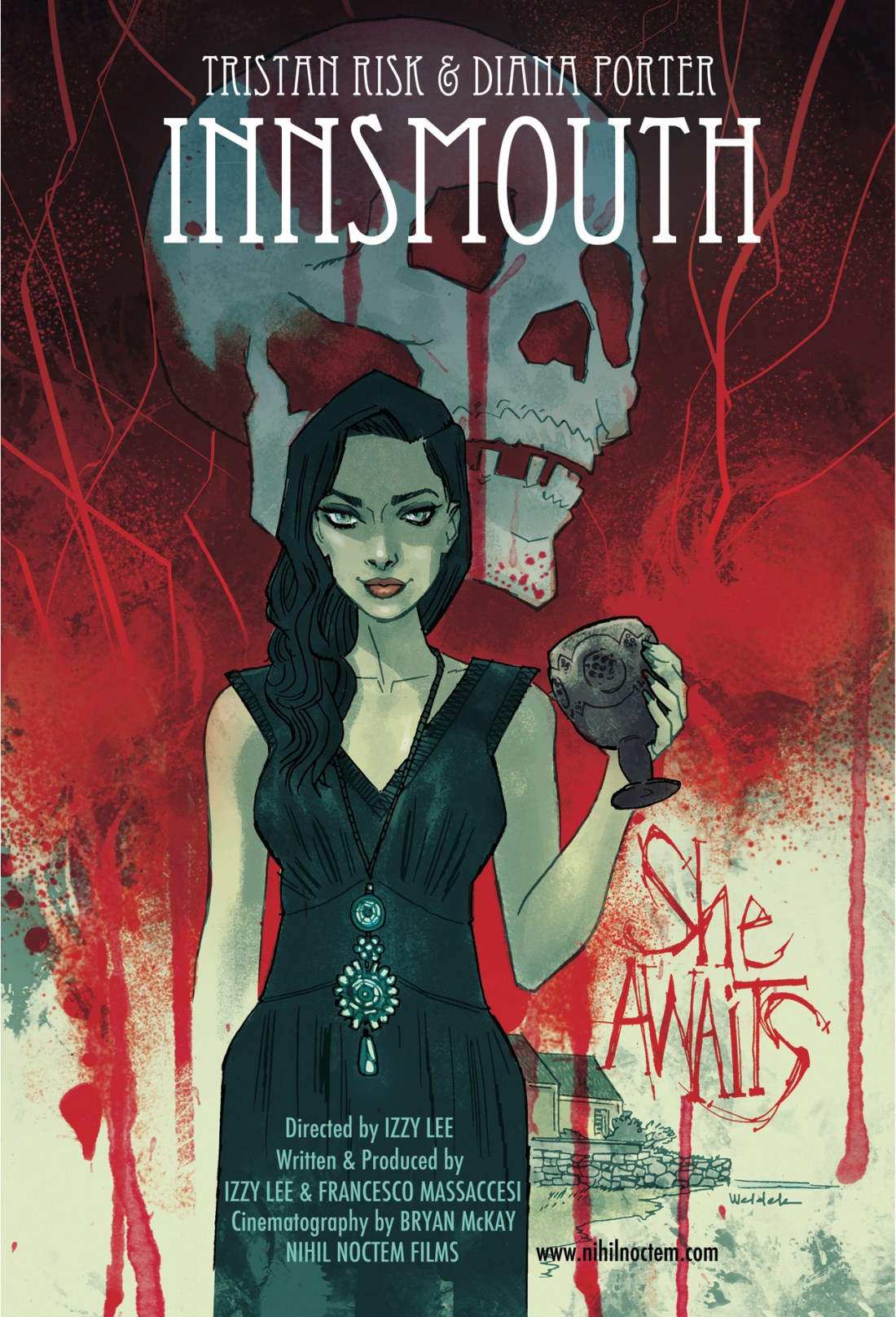
Innsmouth (2015) is an 11-minute short film, directed by Izzy Lee, written by Izzy Lee and Francesco Massaccesi based on the novella by H. P. Lovecraft, and starring Diana Porter and Tristan Risk. Cinematographer was Bryan McKay, and they even used the exterior of the Wentworth Coolidge Mansion, which Lovecraft actually visited (Horror Guide to Northern New England 211).
The story is a highly abbreviated adaptation of “The Shadow over Innsmouth” crossed with a police procedural: Detective Olmstead travels to Innsmouth to solve a murder, and finds some unexpected genealogical (and gynecological) revelations. As Izzy Lee put it:
Innsmouth was created to make [Lovecraft] roll over in his grave a little by having the cast 98% female and switching the gender roles. […] there’s also a ton of light being shed on how film excludes central female characters. I wanted to create a film where women call the shots onscreen, in nearly every role.
—quoted in Joe Yanick’s “Izzy Lee puts a New Spin on Lovecraft with Short INNSMOUTH” (Diabolique, 8 Mar 2016)
The result is, like most shorts with hard budget limitations, a bit bare-bones. One of those works that promise something a bit more than can be delivered in the running time. It would have been nice to have seen this premise stretched out to feature length, more atmosphere, and characters and plot given more time to develop. Yet within the constraints, Lee seems to have achieved her directorial goals.
Most of the cast is women, and that results in a shift in focus away from the normally patriarchal stories of Innsmouth. In The Deep Ones (2020), the point is made explicit that this is a story about fish men impregnating human women; in Cthulhu (2007), the prodigal son is not exactly welcomed home, but is expected to get busy fairly immediately with breeding the next generation of Deep One hybrids. The male characters in these stories rarely come out sympathetic, and the women characters are often fairly eager to accommodate.
KATHERINE
Asses are made to bear, and so are you.PETRUCHIO
Women are made to bear, and so are you.
—Shakespeare, The Taming of the Shrew, Act II, Scene 1
Lee and Massaccesi’s script doesn’t ignore the Deep One colonization project angle, but they do but their own twist on it, which is aided by some relatively simple but very effective props/makeup effects. Picture Innsmouth as more matriarchal and more fishlike in their reproduction and you get the gist.
Detective Diana Olmstead (Diana Porter) arrives on the scene of a bizarre death: a body with a strange bite wound and a mysterious egg sac on her back. A clue leads her to Innsmouth, where she meets a seductive and horrific fate in the form of Alice Marsh (Tristan Risk: American Mary, The Editor, ABCs of Death 2). Innsmouth explores the “monstrous feminine” with an all-female cast and two male extras. This is notable because Lovecraft’s universe is traditionally male-dominated.
You can expect nudity, blood, egg sacs, gills, teeth, claws, and a soon-to-be notorious scene with Tristan Risk.
—”Innsmouth” at H. P. Lovecraft Film Festival website
Part of the short film’s fame comes from one scene that it would be unfair to spoil. It is enough to say that of all the films that have tried to capture something of the sexual and body horror that Lovecraft implied in his story but could never put on the page, Izzy Lee’s “Innsmouth” may be the most daring in trying to depict it. Kudos to Tristan Risk for her work in bringing that to the screen. In the hands of a less conscientious director, the camera might have lingered too long and crossed the line into exploitation, but I think the brief glimpse into the eye of madness was the mingled shock and titillation needed to set this short film apart.
As with many short films, the length ultimately works against it. This film whets the appetite for a more daring, less traditional reimagination of Lovecraft’s story that treats the subject seriously and isn’t afraid to break a few taboos if it gives the final product some punch, but doesn’t completely satisfy. Lovecraftian film fans who appreciate more mature fare should watch this at least once; filmmakers tackling Innsmouth should challenge themselves to see what works here.
After its initial run on the film festival circuit, Innsmouth (2015) was available for a time on DVD from Nihil Noctem films, though it is now out of print. As of this writing, the film is available for streaming on Shudder.
Bobby Derie is the author of Weird Talers: Essays on Robert E. Howard and Others and Sex and the Cthulhu Mythos.
Deep Cuts in a Lovecraftian Vein uses Amazon Associate links. As an Amazon Associate I earn from qualifying purchases.
 Deep Cuts in a Lovecraftian Vein