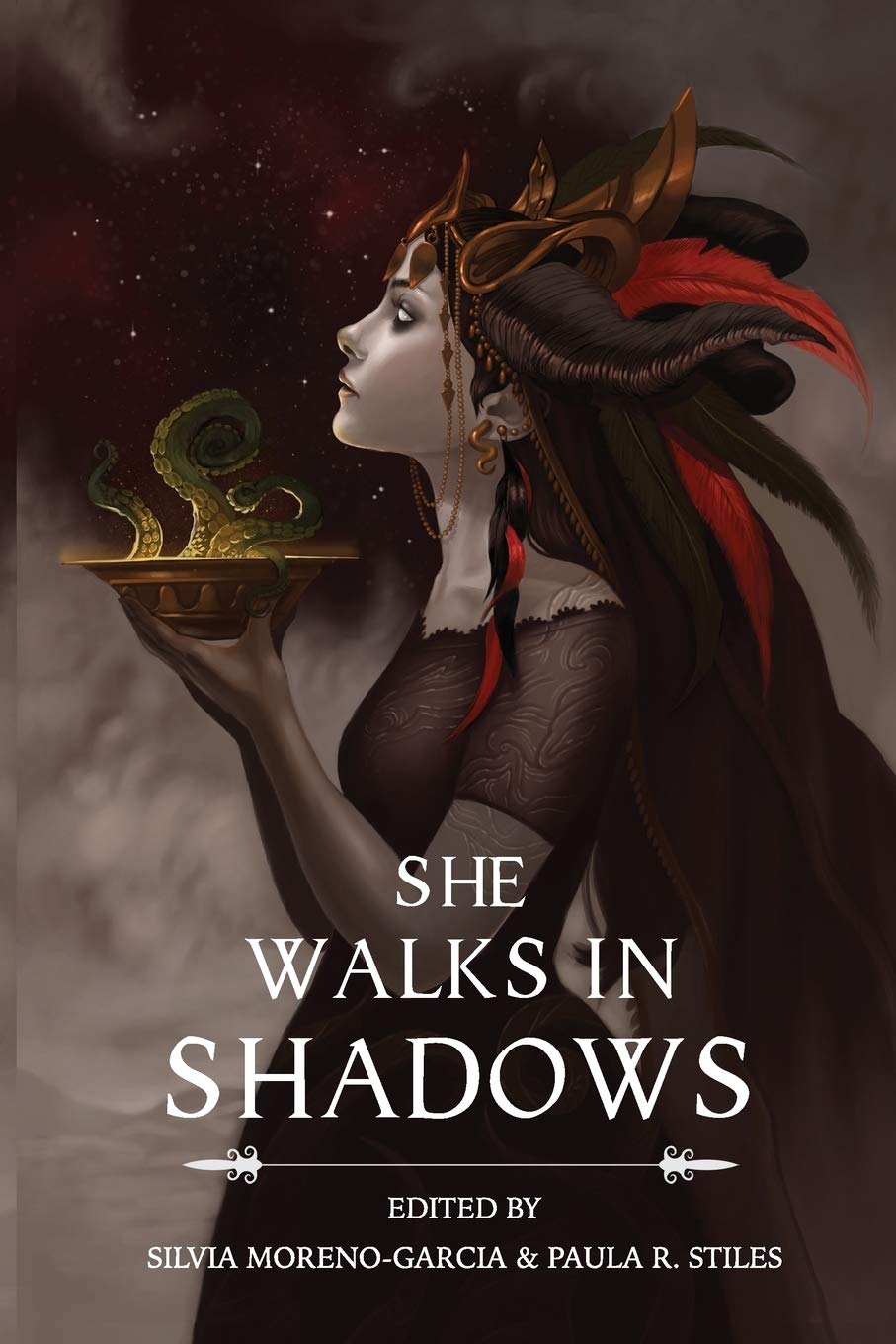
“Chosen” (2015) by Lyndsey Holder

Brown Jenkin was agitated, running circles around me, climbing up my back and crawling down into my lap, staring at me with his beady black eyes. I reached out to him tentatively and he nuzzled my hand, stirring a strange kind of love in my heart.
—Lyndsey Holder, “Chosen” in She Walks in Shadows (2015) 160

Familiar horrors inspire a kind of wish-fulfillment. Thousands of readers of Bram Stoker’s Dracula and Anne Rice’s The Vampire Lestat have imagined what it would be like to be undead, ageless and powerful, bound by night and loosed from the morals of humanity. Roleplaying games like Werewolf: the Apocalypse let fans of werewolf movies and lore vicariously embody the power and ferocity of the change. Contemporary witches look back at the witch trials and pay tribute to those hypothetical ancestors, sometimes drawing imaginary connections to the persecuted of Salem Village in the Province of Massachusetts Bay.

Lovecraftian horrors are not so familiar as vampires and werewolves, and so there are fewer who wish to truly meet or embody those horrors. Fewer readers express a desire to be Pickman-esque ghouls than to become vampires, though more than a few would happily undergo the change into a Deep One and dwell in wonder and glory forever beneath the waves. While there are a few Lovecraftian witches, occultists like Keziah Mason and Joseph Curwen are often still figures of horror, not mentors or figures of nostalgia akin to Dracula.

“Chosen” by Lyndsey Holder thus enters a rather scarce territory. We very often see Keziah Mason presented as the stereotypical witch, the old hag with the familiar, steeped in the blood libel of child sacrifice from old legends. Sometimes, rarely, we see her as the archetypal Lovecraftian witch, the one who embodies the kind of freedom, wisdom, and power—and attracts the kind of prosecution—that embodies the more mythical ancestors of contemporary Wiccans, as inspired by The Witch-Cult in Western Europe (1921) by Margaret A. Murray.

Holder’s story is very short, just six pages long, short and to the point, and all too easy to spoil. The biggest unanswered question might be why the nameless girl protagonist is a child in Vancouver, very far from Arkham as the broom flies. However, Lyndsey Holder is herself Canadian. Maybe there’s a bit of wish-fulfillment in this story, a fictional accounting of a pilgrimage she would have taken if the dreams had come to her. Certainly, Mythos fans can appreciate why they might save and scrimp to travel thousands of miles just to be there, where horror once walked. More than a few fans stride the streets of Providence and Salem every year, after all, thinking of Lovecraft and witches.

The horror in this story doesn’t really come from Keziah Mason or her familiar Brown Jenkin. They are familiar figures, and there is something comforting in their portrayal. The horror in the story is how the protagonist reacts to them, how her life changes when they become a part of it. The ending is certainly a fitting one. Not every Lovecraft fan would choose that way to become a part of the Mythos, but for those who are given a chance to be part of the story…well, a few readers at least will understand.

“Chosen” by Lyndsey Holder was published in She Walks in Shadows (2015) and its reprints, it has not otherwise been republished.


Bobby Derie is the author of Weird Talers: Essays on Robert E. Howard and Others and Sex and the Cthulhu Mythos.

Deep Cuts in a Lovecraftian Vein uses Amazon Associate links. As an Amazon Associate” I earn from qualifying purchases.
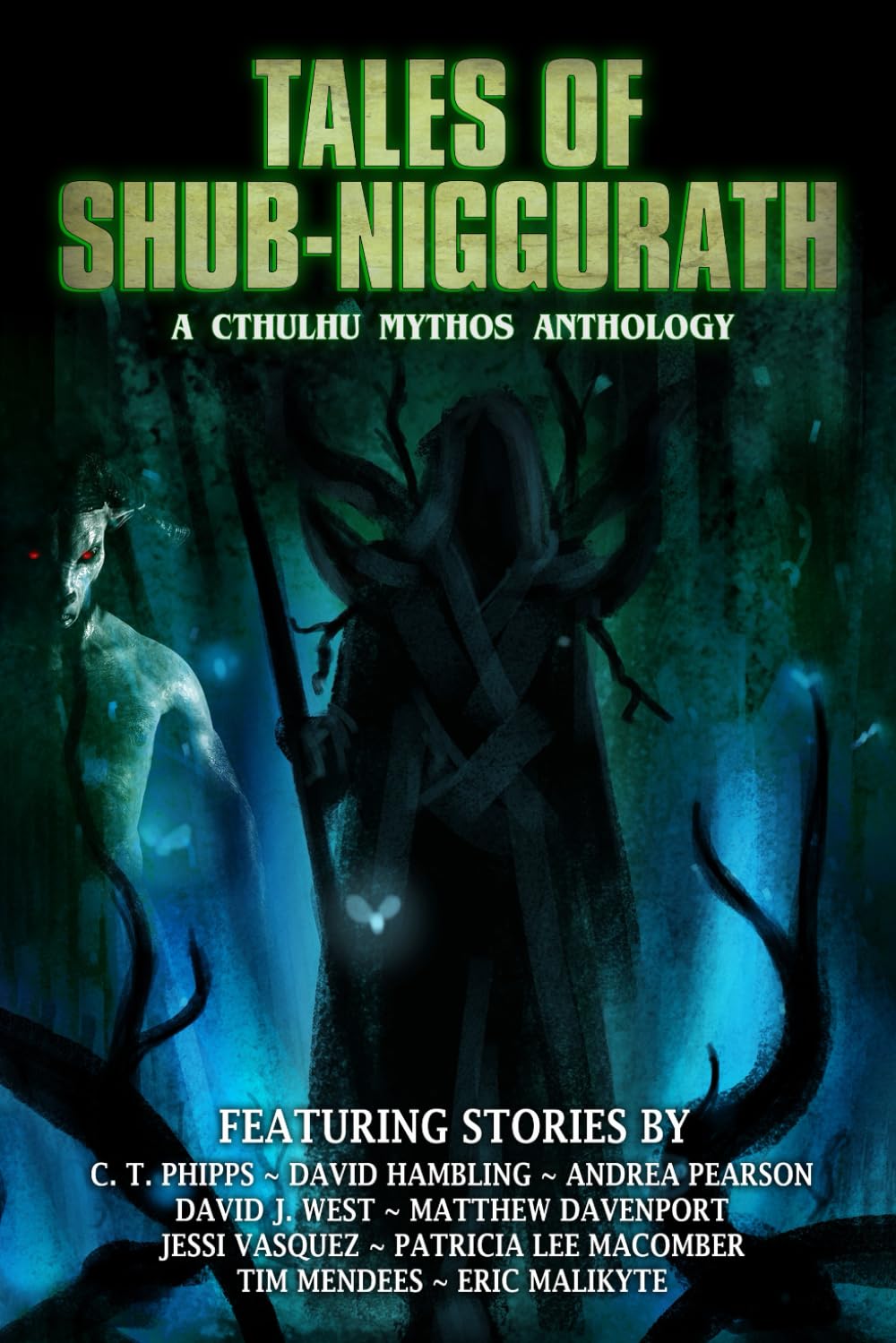
“A Thousand Young” (2025) by Andrea Pearson

After years of infertility, failed IVF cycles, and slowly decaying hope, she knew she was not one of the lucky or even one of the blessed, whatever that meant. She wasn’t meant to have children.

So when she first heard the name Dr. Keziah Mason offhandedly mentioned in an online infertility support group, it felt less like salvation and more like an invitation to finally belong.
—Andrea Pearson, “A Thousand Young” in Tales of Shub-Niggurath (2025), 213

Pregnancy has been a common element in weird fiction. The act of conception, the trauma of birth, the aftermath of a sexual act that leads to a natural set-up or sequel for a story, have been familiar elements since Arthur Machen’s “The Great God Pan” (1894) or Aleister Crowley’s Moonchild (1917)—and writers like H. P. Lovecraft (“The Dunwich Horror”, “The Curse of Yig”), Clark Ashton Smith (“The Nameless Offspring”) are direct literary descendants of that tradition.

The basic idea of the monstrous pregnancy was and remains largely unchanged in a great deal of weird fiction, there are a thousand and one variations on the fundamental idea, and entire academic books have been written on the subject in fiction and film, such as Women, Monstrosity, and Horror Film (2018) by Erin Harrington, The Rhetoric and Medicalization of Pregnancy and Childbirth in Horror Films (2020) by Courtney Patrick-Weber, and The Sinful Maternal: Motherhood in Possession Films (2024) by Lauren Rocha.

Pregnancy is still scary; women still go through a physical transformation and ordeal, even if they are more likely to survive it than a century ago. Unwanted pregnancies, as from rape, remain a real concern. With improvements in medicine involving fertility and infertility, the possibilities of pregnancy horror have shifted, however. Now we have adult fears of persistent infertility, of unsupportable pregnancies of multiples, dangerous pregnancies due to the mother’s health or age that are as yet possible due to science, and a shifting cultural emphasis on pregnancy and against abortion that threatens women’s bodily autonomy.

Yet these are themes, elements, narrative devices. Weird writers have addressed these issues in works like “In His Daughter’s Darkling Womb” (1997) by Tina L. Jens and Flowers for the Sea (2021) by Zin E. Rocklyn, both of which use more contemporary frameworks to set up the narrative framework for the monstrous pregnancy. The main difference between writers like Jens, Rocklyn, and Pearson from Machen, Crowley, and Lovecraft, however, is the change in protagonist focus. None of the older writers focus on the experience of pregnancy, none of them tell of the horror from the woman’s point of view. They are always outsiders looking in.

Andrea Pearson’s “A Thousand Young” is not a fetishistic gaze at pregnancy; we don’t get lascivious descriptions of baby bumps, labor, breastfeeding, etc. Strip away the Mythos elements and it is almost a classic monkey’s paw story, where the dearest wish is granted in a way that is unexpected or undesired. Yet it is told from the woman’s perspective; it is her body, her hopes, her dreams, that are at play, and as the story progresses, the reader gets a sense of the enormity of what is happening, and what will continue to happen, long after the last word is read on the final page. That is why it works—and what makes it a fitting paean to Shub-Niggurath, alongside stories like “Goat-Mother” (2004) by Pierre Comtois and “In Xochitl in Cuicatl in Shub-Niggurath” (2014) by Nelly Geraldine García-Rosas.

“A Thousand Young” by Andrea Pearson was published in Tales of Shub-Niggurath (2025).


Bobby Derie is the author of Weird Talers: Essays on Robert E. Howard and Others and Sex and the Cthulhu Mythos.

Deep Cuts in a Lovecraftian Vein uses Amazon Associate links. As an Amazon Associate I earn from qualifying purchases.