Searchers after horror haunt strange, far places.
—H. P. Lovecraft, “The Picture in the House”I come from Des Moines. Somebody had to.
—Bill Bryson, The Lost Continent
Lovecraft country is often associated with New England, because that’s where Lovecraft set many of his most famous stories. Arkham, Dunwich, and Innsmouth are in the fictional Miskatonic River valley of a fantasy version of Essex County of Massachusetts. Yet Lovecraft country was never restricted to the Bay State.
The fictional stomping-grounds of the Old Ones encompassed the Oklahoma frontier of “The Curse of Yig” (1929) and “The Mound” (1940); the French provence of Averoigne in Clark Ashton Smith’s tales; the ancient town of Stregoicavar in Hungary in Robert E. Howard’s “The Black Stone” (1931). Other writers have staked out and developed their own corners of Lovecraft country: the Severn Valley in Ramsey Campbell’s tales, with Goatswood and Brichester; the Sesqua Valley in the Pacific Northwest by W. H. Pugmire; and any other of other additions, popular and obscure, by writers professional and amateur.
Yet this might be a first. Niceville USA meets Shub-Niggurath.
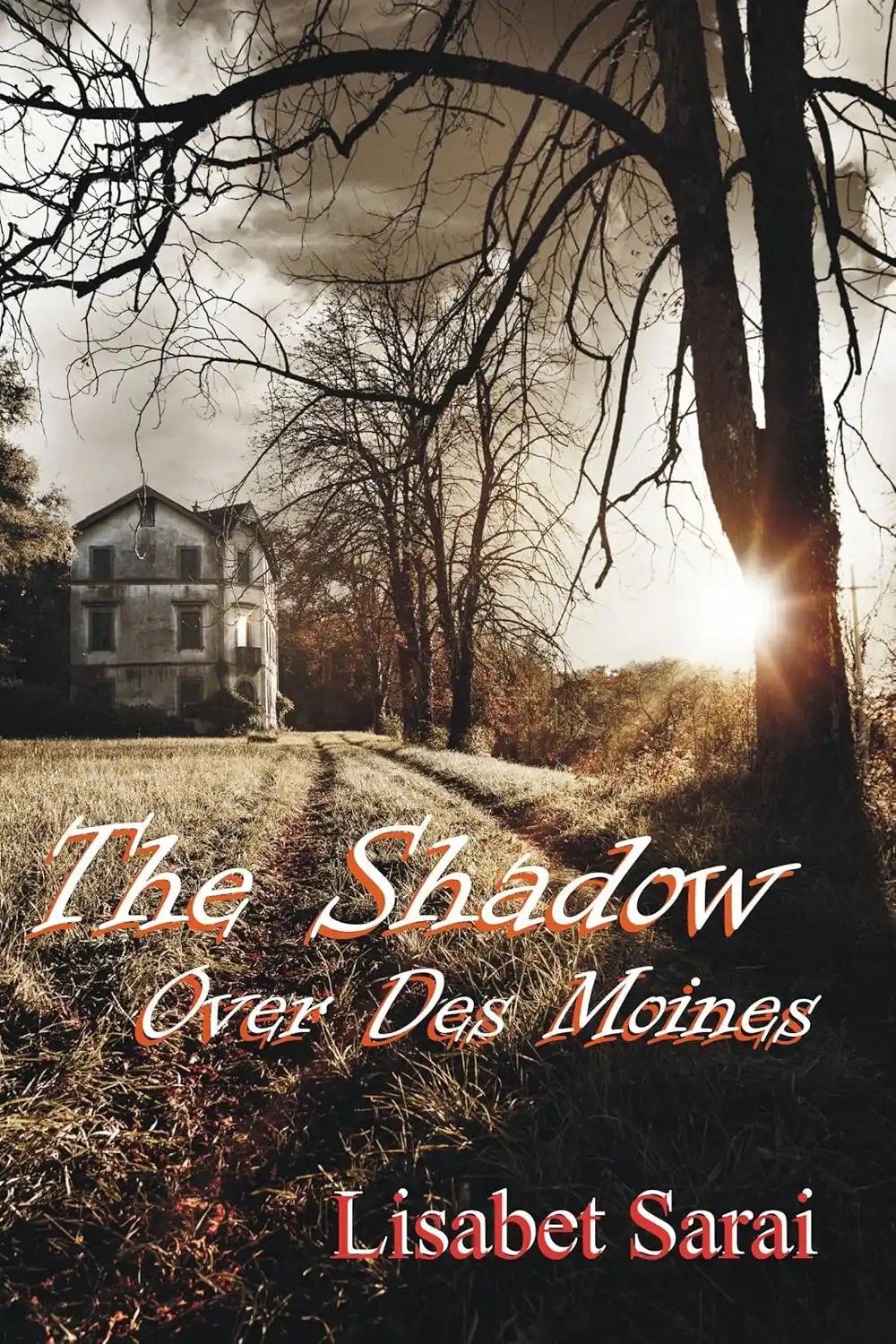
The Shadow over Des Moines is a parody written in the style of the great pulp horror author H.P. Lovecraft. if you are not familiar with his work, you are missing a treat. He’s perfect for Halloween. Check out The Dunwich Horror, At the Mountains of Madness or The Shadow over Innsmouth. I am not ashamed to say that Lovecraft has had a singificant influence on my own writing.
—Lisabet Sarai, “The Shadow over Des Moines”
Two of the elements that make parody work are juxtaposition and exaggeration. The Lovecraftian parodist doesn’t just copy the most obvious or characteristic elements of Lovecraft’s prose, they often enhance them to the point of ridiculousness. Made all the more obvious by contrasting the Lovecraftian aesthetic with an area of the country least associated with anything eldritch.
The surprising thing is, it doesn’t come off badly. The prose is a little purple, but the Midwestern setting itself isn’t exaggerated. It’s more like a Lovecraftian protagonist moved into a suburb than an attempt to reveal the hidden horrors of home-made blueberry pie and calf-length skirts. The humor and horror of the story don’t come at the expensive of the innocent metropolis of Des Moines, but in the quirky Lovecraftian excess of the protagonist—and the fact that this is an erotic parody.
Leonora encouraged me to drop by and visit anytime, but I doubted that I would act on her suggestion. Shivers ran down my spine as a I watched her swaying hips retreat down my path and across the street to her own dwelling. Nevertheless, I found my body reacted to her as if I were fifteen instead of fifty four. I found it necessary to spend a quarter of an hour reading Popular Mechanics before my tumescence subsided.
—Lisabet Sarai, “The Shadow over Des Moines”
The outlines of the story are familiar; basically Fright Night with a sexy Lovecraftian twist and trappings. The fact that so much of it is played straight-faced makes the occasional play on words all the more effective (“Mrs. Gratsky’s gate swung silenly open, as if well-lubricated.”) If it leans a little too hard into some of the stereotypes of Lovecraftian pastiche, it also works to deliver a carefully-curated erotic aesthetic that balances vivid description with an older, quainter verbiage. The end result is as absurd as it is utterly appropriate. Where else but in such a story as this will you get such turns of phrase as “unhallowed anus?”
Like most erotic Lovecraftian ebook fare, things wrap up fairly swiftly after the climax. The pacing is set up for this single encounter, not a longer series of repetitive erotic adventures a la the Booty Call of Cthulhu series. Yet this is a very competent, self-contained example of this mode of fiction. If I had any suggestion for a sequel, it would be to make more use of Des Moines itself; it feels like there was room to make more use of this most un-Lovecraftian addition to Lovecraft country.
“The Shadow over Des Moines” (2016) by Lisabet Sarai is available as a Kindle ebook. More of her work can be found at https://lisabetsarai.com and https://lisabetsarai.blogspot.com.
Bobby Derie is the author of Weird Talers: Essays on Robert E. Howard and Others and Sex and the Cthulhu Mythos.
Deep Cuts in a Lovecraftian Vein uses Amazon Associate links. As an Amazon Associate I earn from qualifying purchases.
 Deep Cuts in a Lovecraftian Vein