Roach smell is distinctive. A kind of sickly, musty reek that clings to places; sign of the often unseen dwellers in darkness. At night, sometimes, you can lie awake, dreading the skitter of tiny feet. Knowing they’re there. Knowing they could appear anywhere. On your toothbrush. On the ceiling. Walking across your face… and they often incite a visceral reaction, these alien creatures which cohabit the welcoming space that is human habitation. A kind of horror that has nothing to do with grimoires or ancient gods, but of much more mundane and realistic issues of filth, disease, and the invasion of personal space.
What a wonderful idea for a story, they must have thought, before writing “A Clicking in the Shadows.”
“Can you smell them? Yep, they’re nearby now, right enough. By their stench shall ye know them! Tryin’ to squeeze through the spaces, sure enough. They stink to all-mighty heaven.” —Chad Hensley & W. H. Pugmire, “A Clicking in the Shadows” in A Clicking in the Shadows and Other Tales (2002) 7
By Their smell can men sometimes know Them near, but of Their semblance can no man know, saving only in the features of those They have begotten on mankind; and of those are there many sorts, differing in likeness from man’s truest eidolon to that shape without sight or substance which is Them. —H. P. Lovecraft, “The Dunwich Horror”
W. H. Pugmire was one of the most evocative voices in Lovecraftian horror from about the 1970s until his death in 2019. Chad Hensley is probably better known as the editor of EsoTerra: The Journal of Extreme Culture than as a horror writer, though he’s put out a fair bit of work over the years. The two writers collaborated together, and “A Clicking in the Shadows” is the premiere piece in their (now very obscure) joint collection A Clicking in the Shadows And Other Tales (2002).
From 1997 until 2003, I lived in Seattle, Washington. Wilum Pugmire lived down the street from me. So it was easy to meet up, critic each other’s fiction, as well as collaborate. We’ve written one poem and three short stories together, one of which wound up in the mass market paperback anthology The Darker Side: Generations of Horror. Wilum and I also collaborated on a chapbook of short stories titled A Clicking in the Shadows and Other Tales published in 2002. The lead story received an honorable mention in Year’s Best Fantasy and Horror. I’m really pleased and proud to have collaborated with Wilum and hope to do so again one day. —Madhouse Introduction: Meet Chad Hensley (6 Apr 2014)
Oftentimes with collaborations, one name may be more recognizable than the other, and gain the bulk of the attention from critics. In this case, Pugmire is certainly the more well-known in Lovecraftian circles, and in his introduction to A Clicking in the Shadows, Robert M. Price writes:
All seven of their tales herein contained seem to take place in Sesquas Valley or at least in a kindred state of mind. In fact, a perfect image for the mood of these stories would have to be the scene in “A Clicking in the Shadows” where one character frantically wields a can of poison bug-spray to whelm a looming tide of horrific vermin. The spray itself is as poisonous as the I’ll it aims to eradicate, and one is not sure whether its intended path to relief is to destroy the pests or to put the pestered out of their worldly misery! Such is the desperate, sweetly poisonous atmosphere through which we move in these stories. (4)
I don’t think that’s strictly accurate. While one story in the collection, “Hairs of the Mother” by Hensley, is explicitly set in Sesqua Valley, none of the others are. “A Clicking in the Shadows” is set in Mississippi, far from the Pacific Northwest where Sesqua Valley is located, so from a purely pedantic geographical point, it doesn’t hold up. The question of whether it occupies a bit of psychogeography akin to Sesqua Valley is more subjective. Pugmire’s bit of personal Lovecraft country is aggressively rural or semi-rural; there are houses, a small town, but it’s the unmanaged wilderness that is the Valley itself. Hensley’s stories, at least in this slim volume, tend to more urban locales; nor is Hensley building a mythology. Some of the stories in A Clicking in the Shadows are explicitly or implicitly part of the Arkham myth-cycle, but they’re not the legends of some particular eldritch entity or place, but it is primarily an aesthetic anthology. Two different voices that sometimes work in harmony.
“A Clicking in the Shadows” is an effective bit of harmony. The story is brief, and holds to a very down-to-earth horror vibe until near the end, when things ratchet up from the realistic to the uncanny to the frankly eldritch. It reminds of another collaboration, “Pale, Trembling Youth” (1986) by W. H. Pugmire & Jessica Amanda Salmonson, where the resulting product is reminiscent of the work of both authors but also finds its own voice, which isn’t quite the same as either on their own.
Late in the night, Thorp was awakened by an itch on his nose. Numbly, in groggy stupor, he clumsily scratched at his face. His fingers found a small, flattened body that squirmed in his hand as he grabbed it. —Chad Hensley & W. H. Pugmire, “A Clicking in the Shadows” in A Clicking in the Shadows and Other Tales (2002) 8
It would be nice if, one of these days, a new collection were issued with all of Pugmire’s collaborations. Maybe it would lead more readers toward Chad Hensley; maybe not. Certainly, such a collection would be worth reading, if only to showcase the talents involved.
“A Clicking in the Shadows” was first published in A Clicking in the Shadows And Other Tales (2002); it was republished in Inhuman #6 (2015).
Elder Gods liked cupcakes, right? The text said ritual sweet bread. —Elizabeth Guizzetti, “Room Party Fit for an Elder God” in Cthulhu FhCon255
The cuddlification of the Cthulhu cult did not happen overnight. It took a few steady years of fanfiction and pastiche for some of the tropes to gel. Cultists in robes, human sacrifices, silly titles, and wavy daggers did not start out as standard parts of Lovecraft’s Mythos, but became familiar over time. With familiarity came the jokes, cartoons, limericks, and funny stories.
The Cthulhu Mythos is old enough that the cult-trope-driven stories are older than some entire genres of science fiction and fantasy. You can draw a line from “Lights! Camera!! Shub-Niggurath!!!” (1996) by Richard Lupoff through “Shub-Niggurath’s Witnesses” (2015) by Valerie Valdes. Increasingly, there is a trend toward examination of the prosaic side of Mythos cult activities. Some are relatively serious tales that try and get into the psychology of Mythos cults like “The Book of Fhtagn” (2021) by Jamie Lackey, while others include things like bake sales and potluck dinners a la Innsmouth (2019) by Megan James, but there is that mingling where the extraordinary becomes grounded in the disturbingly mundane.
Cthulhu FhCon (2025) is an odd anthology that rather embraces the cuddlification and tropes by postulating a convention for eldritch entities and their mortal servitors. The convention tale is an outgrowth of SFF culture, and there have been Mythos versions before, such as Strange Stones (2025) by Edward Lee & Mary SanGiovanni. This is the first time there’s been an entire anthology of such stories…and of course, at least one writer had to address the idea of the room party.
Elizabeth Guizzetti’s “Room Party Fit for an Elder God” is very much a Lovecraftian convention story from a cult-trope point of view. Cult membership is falling off, and if one of the Elder Gods makes an appearance, it’ll grow again. If the priestess is lucky, the God will like the chocolate sardine cupcakes and she might even get her deposit back. As such, it fits well into the ongoing cuddlification of the Cthulhu cult. The collateral damage of the room party is a punchline, not unlike an Addams Family cartoon. What’s a little death and madness when the Elder God really liked your cupcakes?
The religious rites varied according to circumstances and the requirements of the people. The greater number of the ceremonies appear to have been practised for the purpose of securing fertility. Of these the sexual ritual has been given an overwhelming and quite unwarranted importance in the trials, for it became an obsession with the Christian judges and recorders to investigate the smallest and most minute details of the rite. Though in late examples the ceremony had possibly degenerated into a Bacchanalian orgy, there is evidence to prove that, like the same rite in other countries, it was originally a ceremonial magic to ensure fertility. —Margaret Murray, The Witch-Cult in Western Europe (1921)
The conception of Shub-Niggurath as a fertility figure in Lovecraft’s artificial mythology, presented or hinted at in “The Mound” (1940) by Zealia Bishop & H. P. Lovecraft, has always carried with it certain implications. In the early 20th-century anthropological context, “fertility rites” in religion applied to humans, animals, and vegetables. There were rites to conceive and safely deliver children, to grow more crops, to have domestic animals increase in number. The sexual connotations were clear and sometimes salacious.
This was before in vitro fertilization or genetic engineering, before hormonal birth control or effective medical gender transition. Before contemporary labels like ace and aro. The anthropological perspective rarely took into account the vast diversity of reproductive schemes in nature, most of which don’t apply to humans and domestic animals; it did absorb a lot of the cultural norms regarding gender and sexual identity, and the reproductive focus of fertility cults in the literature can bear some strange parallels to reproductive abuse and pregnancy fetishism.
This is the heritage of Shub-Niggurath in the 21st century: one of the rare identified-as-female divinities (or at least entities) in the Cthulhu Mythos, and her cult is often treated as effectively the Quiverfull movement with optional magic and monsters. While that may be a simplification for a diverse array of works that run from “Shub-Niggurath’s Witnesses” (2015) by Valerie Valdes to “The Shadow over Des Moines” (2016) by Lisabet Sarai, the important takeaway is that Shub-Niggurath and her cult have been primarily shaped by early 20th-century ideas of sexuality and reproductive biology.
What does Shub-Niggurath have to offer if you’re asexual, transgender, gay, or just never want to have kids?
As for the rest of the idealistic traditional family concept, you know I never had any real interest in men. I guess I should have been more open about my romantic endeavors. I would have been, if I’d known you thought I was holding back for your sake. You suspected there was something with Rachel, and briefly, there was. There were also a few people in college of varying genders, and while I sometimes felt deep affection, I discovered I’m not terribly interested in physical intimacy. And I don’t feel like my life is incomplete without it.
I love cake. I love cozy mystery novels and sad romance movies. I love my friends, I love Liriope, I love you. And that’s enough. I wish I’d made this clearer to you. —Jessi Vasquez, “Blessed Be Her Children” in Tales of Shub-Niggurath(2025) 192
“Blessed Be Her Children” by Jessi Vasquez is told in mostly epistolary format; as a series of journal entries, sometimes addressed to specific readers, in a contemporary setting involving a young divorced single mother, her daughter, and her older sister. This is a woman’s story, told from a woman’s perspective, dealing with the messy, complicated mess of faith and something more than faith as their relationships get tangled up with a cult that has an unnerving focus on fertility. The story is not explicitly set in the Cthulhu Mythos; it doesn’t need to drop Shub-Niggurath’s name to draw the familiar associations with goatish imagery associated with the cult. Yet it is very much written, at least in part, in response to how we look at Shub-Niggurath now compared to in 1940.
One squat, black temple of Tsathoggua was encountered, but it had been turned into a shrine of Shub-Niggurath, the All-Mother and wife of the Not-to-Be-Named One. This deity was a kind of sophisticated Astarte, and her worship struck the pious Catholic as supremely obnoxious. What he liked least of all were the emotional sounds emitted by the celebrants—jarring sounds in a race that had ceased to use vocal speech for ordinary purposes. —H. P. Lovecraft & Zealia Bishop, “The Mound”
Lovecraft never presents Shub-Niggurath from a woman’s perspective. He very rarely addresses pregnancy and birth in the Mythos from the viewpoint of anyone who might have to gestate something and push it out of their body in forty weeks or so. Lavinia Whateley has a few lines in “The Dunwich Horror,” but that’s only afterward. Readers don’t get to see what joy or fear, horror or gratitude, disgust or distress that she felt at the conception of conception, pregnancy, and birth. The whole viewpoint of reproductive horror from a woman’s perspective came to the Mythos relatively late, and is still being explored in stories like “In His Daughter’s Darkling Womb” (1997) by Tina L. Jens and “A Thousand Young” (2025) by Andrea Pearson.
So Vasquez’s approach in “Blessed Be Her Children” is interesting. It is a rebellion against the default program that the cultists are running. The cult, rather than adapt to changing ideas, is still serving what is essentially an ultraconservative agenda: be fruitful and multiply, on our terms. “Blessed Be Her Children” isn’t a polemic in the guise of a piece of fiction, but it is correctly trying to portray a predatory religious group (that happens to be a Mythos cult) whose central ethos doesn’t take into account that nowadays not everyone is heterosexual and looking to have kids.
Now from darkness, there springs light Wall of sleep is cool and bright Wall of sleep is lying broken Sun shines in, you have awoken —Black Sabbath, “Behind the Wall of Sleep”
England. August 1969. The cinema across the street was playing the Italian horror anthology film I tre volti della paura (1963, “The Three Faces of Fear”), rendered into English as Black Sabbath. Or maybe it was just a poster of the film. Recollections, years later, differ. That became the title of the band, and the lead song on the album they recorded in November of that year. The basis of the band was blues-based rock & roll, with heavier guitar riffs, less melodic and more distorted. Lyrically, the band borrowed from horror and fantasy as much as they did the grimy street life of drugs; shades of Tolkien in “The Wizard,” Dennis Wheatley in “Black Sabbath” and “N.I.B.,” H. P. Lovecraft in “Behind the Wall of Sleep.”
Guitarist Tony Iommi had lost the tips of two fingers in a workplace accident, and down tuned the guitar to make playing easier, but played aggressively; Geezer Butler, on bass, was used to playing a guitar and followed Iommi’s riffs, but was also the band’s chief lyricist. Bill Ward on drums set the tempo, alternately driving or (in the case of “Black Sabbath”) with dirge-like slowness; Ozzy Osbourne provided lead vocals and harmonica. Iommi, Butler, Ward, and Osbourne all had working-class backgrounds, done stints in factories and abattoirs. They were young, a bit raw, and played and sang hard and fast and loud—and had an interest in horror and fantasy.
The ’60s saw a rise in interest in horror and fantasy fiction, alternative spirituality, and the occult. Wicca gained traction in the United Kingdom and United States; the works of Aleister Crowley were reprinted; the Hobbit and the Lord of the Rings, first released as hardbacks, found new life in paperback. British writer Dennis Wheatley published an entire library of occult fantasies like The Devil Rides Out. Old pulp authors like H. P. Lovecraft likewise found a new generation of enthusiasts for horror and fantasy as Arkham House hardbacks were reprinted as affordable paperbacks, like Dagon and Other Macabre Tales (1969) by British publisher Panther, which contained “Beyond the Wall of Sleep.” When asked about the matter, Geezer Butler responded:
I think I may have borrowed the title “Behind the Wall of Sleep” from “Beyond the Wall of Sleep” (of which I have a first edition), but it’s so long ago, I can’t really remember. The lyrics came from a dream I had, hence the title. Most of my inspiration in those days came from books by Dennis Wheatley, rather than Lovecraft or Poe. —Butler, quoted in Gary Hill’s The Strange Sound of Cthulhu 44
The one-day studio recording session for their eponymous debut album, produced by Rodger Bain (who provided the Jew’s harp on “Sleeping Village”), was almost a live album, with a few effects added to “Black Sabbath” and some double-tracked guitar solos for “N.I.B.” and “Sleeping Village.” No complicated audio engineering, no elaborate orchestration; listeners have noted a jazz-like quality to the rhythm swings, the few chords by the several key changes that give variety to the sound (Experiencing Black Sabbath 4). It is still very clearly based in twelve-bar blues and lyrically draws from the tradition of psychedelic rock, but it is also clear the musicians are trying to get away from that, breaking formulas. The music and the aesthetic came together to make something different than the typical prog-rock offerings.
On 29 November 1969, Black Sabbath’s set for the Top Gear radio show played “Black Sabbath”, “N.I.B.”, “Behind the Wall of Sleep” and “Sleeping Village.” The first time the public heard the new sound. By the time the album was released on Friday the 13th (13 Feb 1970), the marketing was already spinning the band’s darker image, playing up links to Satanism, witchcraft, and the occult, and “Black Sabbath” climbed the charts. On the North American release, “Behind the Wall of Sleep” and “N.I.B” was divvied up as “Wasp / Behind the Wall of Sleep / Bassically / N.I.B.”—probably by the production company for royalty purposes (Experiencing Black Sabbath 4); “Behind the Wall of Sleep” has a jazz waltz-like opening and ends with a bass solo, so you can see where the idea for “Wasp” and “Bassically” came from, even though they are just the opening and closing to “Behind the Wall of Sleep.”
At least some listeners picked up on the Lovecraft reference:
The newest from that far-out band known as Black Sabbath is now available on LP album and both cartridge and cassette tape form. This newest album is appropriately entitled “Black Sabbath” and offers such new goodies from the group as “The Wizard”, “Wicked World” and a title taken from one of the late H. P. Lovecraft’s stories, “Behind the Wall of Sleep.”
The group is in its usual sardonic turn of mind, and of course, their music is a fine example of just what can be done with unusual nad bizarre sound when coupled with some rather weird lyrics.
Lyrically, “Behind the Wall of Sleep” has little to do with Lovecraft’s story. The song is about death, or perhaps a death-like sleep brought about by opium (“Visions cupped within the flower / Deadly petals with strange power”). Butler was likely more inspired by the title than the story itself, though Osbourne makes the lyrics work.
Black Sabbath can be fairly claimed to be the first heavy metal album—and highly formative and influential on many other subgenres, from black metal to stoner rock—and buried in there, the third track on the A-side, was a reference to H. P. Lovecraft. They weren’t the first band to take inspiration from H.P.L.; the U.S. psychedelic/folk rock band H. P. Lovecraft (1967-1969) was earlier. Nor was Lovecraft ever the focus of Black Sabbath. Yet they did get the ball rolling—Lovecraft and metal would meet, again and again, over the decades to come, and many metal bands credited Black Sabbath for their influence, musical and Lovecraftian.
Black Sabbath est à notre connaissance le premier group aujourd’hui classé dans le catégorie « metal » à faire allusion à l’œuvre de Lovecraft. Malheureusement, à l’exception de cette chanson, il n’y a dans la discographie des Anglais de Birmingham aucune trace d’influence lovecraftienne. Aujourd’hei, comme nouse le signalons parfois dans les pages de cet ouvrage, un certain nombre de formations inspirées par le maître de Providence justifient leur emprunt par l’antériorité de Black Sabbath. D’autres se sont meme interéssés à l’écrivain grâce à cette chanson du quautor.
Black Sabbath is, to our knowledge, the first band now classified as “metal” to allude to Lovecraft’s work. Unfortunately, with the exception of this song, there is no trace of Lovecraftian influence in the discography of the English band from Birmingham. Today, as we sometimes point out in the pages of this book, a number of bands inspired by the master of Providence justify their borrowing by the precedent of Black Sabbath. Others have even become interested in the writer thanks to this song by the quartet.
Black Sabbath was a beginning, not an ending. The years after its release would see Black Sabbath develop their style and glamour, inspiring generations of metalheads.
“I cannot speak longer, for the body of Joe Slater grows cold and rigid, and the coarse brains are ceasing to vibrate as I wish. You have been my only friend on this planet—the only soul to sense and seek for me within the repellent form which lies on this couch. We shall meet again—perhaps in the shining mists of Orion’s Sword, perhaps on a bleak plateau in prehistoric Asia, perhaps in unremembered dreams tonight, perhaps in some other form an eon hence, when the solar system shall have been swept away.” —H. P. Lovecraft, “Beyond the Wall of Sleep”
John Michael “Ozzy” Osbourne 3 December 1948 – 22 July 2025 R.I.P.
Her grandfather scared her, and sometimes did things to her. —Nina Kiriki Hoffman, “A Resonant Darkness” in Cold War Cthulhu (2025) 76
Child protagonists are an interesting choice for horror stories. They are often innocent, ignorant of the way the world works, ignored by grown-ups, relatively powerless against threats they cannot name, prone to fantasy and flights of the imagination, yet credulous to their own senses and the existence of the supernatural. A child in danger tugs at the heartstrings of many, and often readers can sense and understand that a child is in danger before the character realizes it, which helps to build tension.
More than that, perhaps, adult readers know the ways that children are vulnerable to abuse. There is an intersection of real-world fears that underlies every interaction in a story told from a child’s point of view. Not just predation, but the need to grow up too soon, the way their childhood can be taken from them, how easily traumatic events can upend their lives and rob them of safety and security.
Home, where she helped Mom take care of the five younger children. Mom had weird moments where, if one of the babies was crying, she’d curl up in a corner with her hands over her ears. Then Twyla would go in and take the bay out of his or her crib and check and change the diapers and warm up formula and feed the baby, and the baby would relax, and eventually Mom would come out of her weird fit and pretend it never happened. —Nina Kiriki Hoffman, “A Resonant Darkness” in Cold War Cthulhu (2025) 76
Adding a supernatural element to that mix can either be the nudge that turns domestic tragedy into dark fantasy or stark horror. In the hands of a skilled writer, it can sometimes redefine the nature of the seemingly mundane if terrible threat. Recasting child sexual abuse or the early shouldering of responsibilities for a failing parent into…something else, more disquieting.
Preparation, perhaps. Or initiation.
There is a history of Mythos fiction centered around a child protagonist or victim, the most famous stories of which are probably Robert Bloch’s “The Unspeakable Betrothal” (1949) and “Notebook Found in a Deserted House” (1951). Nina Kiriki Hoffman’s “A Resonant Darkness” is alike to these stories in some of the techniques: the child is often isolated; adults are either powerless to help them, or prove complicit in their victimization. Someone wants something from the children, and without any support network, they are left alone to face whatever seeks them.
In terms of plot, “A Resonant Darkness” feels more like a prologue than a complete story. Many questions are left unanswered, and while there is a beginning, middle, and end, the story feels like a beginning—certainly it is for young Twyla. The story earns its place in the anthology Cold War Cthulhu due to its setting: 1958, the World’s Fair in Denmark, where a visit to the U.S.S.R. exhibition to see Sputnik 2 prompts thoughts of the things in the outer darkness and the sacrifices made to them their, animals sent up as astronauts to die in space, far from home. It is a workable setting for the theme, although for plot purposes, the time and place matter less than the relationships and actions involved.
It’s the child in danger that matters, that keeps the reader on their toes, and keeps them reading to the last page.
I have given the whole of a cloudy Sabbath to finish my dismembered corpse story—“The Return of Helman Carnby”. I shall enclose the carbon with this; and I hope you will like it. The thing became a sizable yarn, with all the details that I worked out . . . It goes to “Ghost Stories”, then to W. T.,—both of which will doubtless reject it. But I think myself that the tale is a pretty fair literary beginning for the New Year. I like to picture it in the sunny and lightsome pages of the “Ladies’ Home Journal.” —Clark Ashton Smith to H. P. Lovecraft, c. early Jan 1931, Dawnward Spire, Lonely Hill290
Needless to say, I perused the monstrous narrative of Helman Carnby with the most acute & shuddering admiration; &, having made the verbal changes indicated in your supplementary note, have forwarded to Derleth with instructions for return to you through Wandrei. It is certainly a great piece of work, & I am extremely flattered by the prominent part played therein by the Necronomicon. But God! If there is still a copy of the original Arabic version in existence, what safety can we guarantee for this unhappy planet? Is it not true that no copy was found when the police entered the seemingly deserted mansion of Carnby & observed those hideous & inexplicable conditions which the newspapers were not allowed to print? What of that utterly unthinkable foot-mark which seemed to be burned into the floor? But one must not think of such things! Anyway, it’s a great yarn, & the cumulative suspense & malign suggestiveness of the earlier parts are enough to set any outfit of teeth—even false ones on a dentist’s cupboard shelf—chattering! It looks to me quite all right as it is—if there were any way of piling on another shudder, I’d say it would be by veiling the final horror a little more obscurely from actual sight, & trying to hint or imply the blasphemous abnormality which sent the secretary fleeing from that accursed habitation. I certainly hope that the tale will find a typographical haven. —H. P. Lovecraft to Clark Ashton Smith, c. 18 Jan 1931, Dawnward Spire, Lonely Hill293
Ghost Stories did not take “The Return of Helman Carnby,” not even after Smith re-wrote the ending and sent it back for another look; nor was it published by Weird Tales. The story was published in Strange Tales of Mystery and Terror (Sep 1931), under the title “The Return of the Sorcerer.” This is arguably Smith’s most distinctly “Lovecraftian” story, being an explicit extension of Lovecraft’s Mythos rather than involving any of Smith’s own fabulous settings and entities, and one of the first uses of the Necronomicon outside of Lovecraft’s own works (compare “The Were-Snake” (1925) by Frank Belknap Long, Jr. and “The Picture” (1939) by Robert D. Harris).
“The Return of the Sorcerer” was reprinted in Smith’s first Arkham House collection Out of Space and Time (1942), and anthologist August Derleth selected it for inclusion in Sleep No More(1944), which meant it was included in the Armed Services Edition of that book issued to soldiers during World War II. One can just about imagine a marine en route across the Pacific Ocean idling away a sweltering hour reading of the dismembered corpse crawling from the grave. By the 1950s, however, “The Return of the Sorcerer” had been out of print for years—though not forgotten.
Web of Evil was a horror comic published by Quality in the years immediately before the formation of the Comics Code Authority, and which ran 21 issues. The product was typical of the era: often shoddy artwork and simple, quick stories that emphasized grue and taboo, shock and suspense. The stories were often unsigned and the creators weren’t above lifting a plot from an old pulp magazine from time to time.
“The Corpse That Wouldn’t Die!” in Web of Evil #2 (Jan 1953) by artist Jack Cole is very clearly based on “The Return of the Sorcerer.” The names were changed to hide the plagiarism, and the unnamed Necronomicon is in Sanskrit rather than Arabic, but the essentials of the story are clearly recognizable. It may no longer be a Mythos story, but for all that it has a distinct charm for those that recognize that Cole is, at least, lifting from the best.
At six pages, the action moves fast—and in almost every panel, Cole tries to add some dramatic element of lighting or motion to capture the eye or set the tone, which often leads to near-comical exaggeration. Though there is not so much grue as there might have been: after all the corpse of the deceased sorcerer is still intact when it returns from the grave.
Lifting stories from pulp writers was not unusual in the 50s, and “The Corpse That Wouldn’t Die!” sits neatly among the Pre-Code Lovecraftian Horror Comics. The tale has been reprinted a number of times, including a version in Tales of Voodoo vol. 5, no. 2 (Mar 1972), where the art was reworked by Oscar Fraga and the result retitled “The Deadly Corpse” (sample pages below). Fraga’s rework updates the art to match the sensibilities of Eerie Publications in the 70s, but doesn’t add anything new to the story itself.
People have such queer ideas about private detectives. —Raymond Chandler, The Long Goodbye (1953)
Hardboiled detective fiction has never ignored the existence of ethnic minority, BIPOC, and LGBTQ+ characters. The representation often wasn’t great; prejudices were common, and sometimes a plot point. Genre-blending mixes with hardboiled fiction tend to follow similar lines. In the made-for-tv movie Catch A Deadly Spell(1991), for example, a key plot point is that the man who stole the Necronomicon is in a relationship with a transwoman.
There has been a trend in contemporary works, however, to swing the other way. Instead of token diversification or showcasing prejudices while fixing on a white cisgender heterosexual viewpoint, there are stories that focus on minority viewpoints, and in particular on intersectional experiences. Winter Tide (2017) by Ruthanna Emrys has as a protagonist an Innsmouth woman during the 1950s, but her group includes two gay men, a brother and his Black girlfriend, and a Japanese-American woman; Ring Shout (2020) by P. Djèlí Clark focuses on a group of Black women, one of whom is gender-nonconforming and homosexual, another mixed-race; The City We Became (2020) by N. K. Jemisin has a group as cosmopolitan as New York itself.
The Long Shalom by Zachary Rosenberg is another entry in that mode—I asked a few folks for a pithy descriptive term, and they suggested “wokepunk” and “diversifiction”—focused on protagonist Alan Aldenberg, a bisexual Jewish WW1 veteran and ex-mob gunsel, now wise-cracking private detective, who ends up dealing with a Lovecraftian supernatural threat. Aldenberg teams up with his half-Japanese/half-Jewish bisexual ex-girlfriend and two fellow WW1 veterans: an African-American man and a transwoman.
Yet the most important thing about The Long Shalom isn’t the cast of characters; it’s how the story is fundamentally based on their experiences and the discrimination they face. As in Ring Shout, the racial, ethnic, and gender discrimination they face becomes embodied as both traditional and supernatural threats. These individuals, who each have to deal with intersectional discrimination for their particular identities, also now have bigoted cosmic horrors to deal with.
Which leads to a certain aspect of the protagonists taking these new horrors in stride. There is more to the complex interplay of identity as Alan, long non-practicing, returns to the Jewish neighborhood and finds himself an outcast among outcasts, than there is to him confronting an ancient horror that seems immune to bullets. As the fantasy aspects increase—thanks to ancient scrolls and some very Innsmouthian-flavored Jewish women in a remote seaside community—the impression becomes closer to a retelling of a game of Harlem Unbound (2017), albeit with more of a Jewish than Black focus, and the mundane antagonists become almost cartoonish in their bigotry.
Yet that is kind of the point: as much as some of these characters feel like a caricature, the real thing, whether they were police uniforms or Klan robes, was if anything more explicit and violent. Racism and prejudice is seldom nuanced or interesting at base; it’s dull, ugly, and stupid, a combination of ignorance and stereotypes, hot points of emotions that can flash into bursts of unbelievable violence over almost nothing.
Alan clenched his teeth, fighting for something inspiring to say and coming up emptier than a wine bottle after Purim. —Zachary Rosenberg, The Long Shalom 90
While the novel is short and the fantastic elements get away a bit from the more grounded characterizations, Rosenberg does have a certain style and authentic understanding of the characters and their cultures, which is appealing. Like Ring Shout, the threat is Lovecraftian without being based explicitly on Lovecraft’s Mythos; this is fundamentally an effort to write a Jewish horror story, with a hardboiled setting and more than a taste of pulp action—and it succeeds at that.
This review concerns a work of erotica, and as such may involve text and images of an adult nature. Reader discretion advised.
Yes, if you spell Uhluhtc backwards it becomes Cthulhu. It’s not terribly clever as an authorial tool, but it is a semi-smart homage to that fine animated filme Heavy Metal. —Grace Vilmont, “Author’s Note,” “Uhluhtc’s Sacrifice”
Uhluhtc appears in the segment “Den” in the film Heavy Metal (1982); this was an adaptation of Richard Corben’s character and story of the same name in Heavy Metal Magazine and Métal Hurlant—there being a lot more Lovecraftian material in the pages of those magazines than just in the Métal Hurlant/Heavy Metal/Metal Extra Lovecraft Special. Corben had used “Uhluhtc” in one of his early Den episodes.
Heavy Metal Magazine (June 1977)
Corben was likely inspired by “Count Alucard” in Son of Dracula (1943), a transparent anadrome used as an alias by the vampire played by Lon Chaney, Jr. In both cases, the purpose of the reversal isn’t really to conceal the identity as much as to plant an Easter egg for fans to find. It’s a nod and wink, a signal to readers that the writer is a horror fan too.
What makes it an appropriate title for Grace Vilmont’s tentacle and cultist erotic novella, a light-hearted and sexually explicit horror-sex-comedy that leans heavier on the sex comedy than the horror, is the way Vilmont’s approach to the Lovecraftian tropes inverts traditional ways of casting sexuality as evil or depraved. The way it plays with the tropes is very explicitly tongue-in-cheek (and tentacle-in-cheek, and every other orifice), but there is a core of message there. It is good unclean fun that manages to be sex-drenched and irreverent without being nasty or raunchy in the way of some erotica titles that play more with violent or onerous taboos, but is also very expressly contrasting itself against negative depictions of sexuality.
It does get a little silly at parts:
“I probably should have told you more. But I never expected this. You’re carrying Uhluhtc’s spawn—”
“I know,” Cassie said proudly.
“Brenda continued as if Cassie hadn’t spoken. “—and your body needs a near constant supply of human semen. I don’t pretend to understand the reasons why or the logic behind it. But you need to get fucked and fertilized right now.” —Grace Vilmont, “Uhluhtc’s Sacrifice”
Vilmont’s tale is one of a spate of tentacle-sex-with-optional-impregnation stories that have appeared, often in waves, in ebook format; a sister to Booty Call of Cthulhu (2012) by Dalia Daudelin and its sequels. While readers may or may not be titillated by the tentacle sex, it is the approach to the setting and characters that is often more interesting from the perspective of historical context.
This tale is centered on the completely consenting cultists; who, aside from their tendency toward orgies and summoning eldritch entities, have less malice per capita than the average book club. Their robes have zippers and while race is seldom explicitly mentioned, it’s clear that the majority of characters at least are coded as Caucasian; the racial dynamics of Lovecraft’s cult of Cthulhu were left at the door, no one is being violently sexually assaulted or hurt. If there is any shade thrown in this story, it is a swipe toward the sexual repression and bigotry associated with Evangelical Christianity:
“I was sick of the way Mom used Christianity as a hammer to control me and everything else around her.” […]
“Nothing we do here is illegal in any way.”
Cassie nodded. “But the evangelicals she fell in with would consider this an affront to God.” She nodded sagely then broke character and giggled. “I used Mom’s journal and her descriptions of the orgies and everything else when I masturbated for the first time. That’s why I’m here.” —Grace Vilmont, “Uhluhtc’s Sacrifice”
There is an example of an important broader point in horror and erotic literature. Both horror and erotica are often fundamentally concerned with transgression, whether of social and moral norms or physical laws and reality. The corpse that rises from the grave is unnatural and violates our sensibilities of the distinction between life and death; incest violates sexual norms regarding appropriate partners (and often involves some complicated relationships and power dynamics, to boot). When they come together, this collision of transgressions can sometimes achieve a greater frisson than either could alone.
However, the narrative desire for sex positivity also means that the rhetoric of the story can easily get flipped.
Satanic and Lovecraftian cults are staples of horror fiction in large part because they are cast in contrast to Christianity, the dominant religious and moral framework for much of the intended audience. This emphasis on Christianity is useful because Christian dogmatic norms of sexual behavior means you can get that element of sexual transgression—the Black Mass with the body of a naked woman as an altar, the wild ritual orgies, the occasional sexual sacrifice to an eldritch entity—which really works in stories like “The Black Stone” by Robert E. Howard.
When those sexual antics are displayed as evil, corrupting, illegal, etc.; the cult itself and its members assume those attributes. When those same cults are aligned in a sex positive manner to contrast with the often reactionary and sexually repressive ideology of Christian sects, you get to an odd place where you are essentially confirming the biases of the majority in one regard (look at all the sex they’re having!) while at the same time casting the Christians as the real bad guys (look at those prejudiced, sexless bigots.
If that sounds familiar, it’s because it is very much a real-world issue translated onto the page and dressed up in horror clothes. Progressive and open attitudes towards sexual activity are nothing new, but they are very much still contentious and topical issues because the folks trying to repress that sexuality (whether or not they claim to be Christian) have never given up on the topic. The cult of Cthulhu (well, Uhluhtc in this case) becomes a stand-in for all of those who have suffered prejudice from those attempting to control or repress their sexuality.
Except they can summon some tentacles to really spice things up. It is a fantasy, after all.
This progressive framing of what would traditionally be “evil” cults, particularly in terms of their approach to sex, is in part driven by the real-world shift in attitudes regarding sex and religion, and ongoing cultural clashes between opposing ideologies and questioning of traditional narratives of sexual morality and religious dogma. The syntax of the era continues to find expression in the fiction of that era, even when it’s tentacle porn. While Lovecraft and Vilmont Grace may not have been consciously modelling their respective works to reflect ongoing societal issues, it is clear when reading them in historical context that the how and why of their cults’ approach to sex was in part shaped by the issues they faced at the time.
While I had initially first found this as an Amazon ebook, it seems to no longer be available from Amazon, but is still available on Goodreads.
It was Arkham House that perpetuated the Big Lie in this case, and from there a mechanism of critical bandwagonism took off and continues to this day. The tenet is, if you tell a lie big enough and enough times, people will believe it. That’s why Lovecraft has been raved about for all these decades. It’s a big lie that readers have been force-fed by a pro-Lovecraftian syndicate designed to make money. —Edward Lee & Mary SanGiovanni, Strange Stones(2025) 3
Professor Robert Everard, who speaks those words at a horror convention, is a Lovecraft-hating asshole. That is his point. If the sentiment gets a rise out of you and makes you want to refute it, congratulations: the authors have succeeded at their characterization. It is a very unconventional way to draw readers into a rather meta short Lovecraftian horror novel, but Everard’s arguments and the context in which they take place are important to understand, because they’re fundamental to the plot of the novel.
Fiction genres in the sense that we think of them today tended to emerge around the turn of the 20th century. Western dime novels were a staple of 19th century popular literature in the United States; science fiction, mysteries, fan clubs, etc. all preceded the emergence of pulp magazines in the 1910s and 1920s, but it was really the pulp magazines that began to crystallize genre as we think of it today, and especially organized fandom as we think of it today. The horror conventions today are all descended, more or less, from the early science fiction fan conventions of the 1930s in the United States.
Genre is only secondarily a literary convention; the primary purpose was marketing. Specialization allowed pulp magazines to carve out niches and develop dedicated readership that they could directly market to. Magazines in the same genre competed with one another for the same dimes and quarters; Weird Tales had to struggle against Ghost Stories, Tales of Magic and Mystery, Strange Tales of Mystery and Terror, Terror Tales, Famous Fantastic Mysteries, Unusual Stories, and others, and tried to draw in readers from science fiction magazines like Astounding Stories, Amazing Stories, Wonder Stories, and Planet Stories.
Hardbacks, paperbacks, comics, and movie makers all learned this lesson, that specialization has the benefit of attracting a specific, dedicated readership. And once you have that audience, the quality of the content is less important than if it stays in genre. Decades of genre products have been, essentially, disposable pap, churned out quick and cheap for an eager audience that cared less about quality than if it was horror or science fiction. This is the kind of silly, low-quality stuff that gives genre media a bad name, but it’s also the stuff that’s generally predominant at any given moment. True genre classics are rare, and stand out because so much of the run-of-the-mill material is generic, familiar monsters and spaceships.
In this sense, what is a genre convention, then, then a target-rich environment? The earliest conventions weren’t entirely uncommercial, but they weren’t dominated by dealer rooms or particular creators promoting their latest film or book, which are common attributes of contemporary conventions. What creators and companies learned was that it’s a lot easier to sell your product if your customers are all in the same place; genre conventions in the United States in particular have become an important part of the economic ecosystem of various celebrities, independent dealers, small companies, and boutique shops.
The cultural phenomenon of the convention has developed to the point where it’s become a key aspects of organized fan culture, to the point of becoming the setting of new creative works, like I Am Providence: A Novel(2016) by Nick Mamatas and Screamland: Death of the Party(2012) by Harold Sipe, Christopher Sebela, and Lee Leslie. And it’s this crux of the commercialization of horror and the convention experience which forms the springboard setting for Edward Lee and Mary SanGiovanni’s novel Strange Stones (2025).
Richard Everard’s grudging kvetch against Lovecraft’s ascendance in horror media is in part a tongue-in-cheek jab at a genuine aspect of fandom and how Lovecraft and his Mythos have faced posthumous commercialization and pop culture significance way beyond its initial tiny dedicated genre audience. Everard’s own interaction with the convention circuit has been primarily a lecherous attempt to get in the pants of as many women as he could, a series of sexual conquests that is both a kind of wish fulfillment and a genuine recognition that yes, fans do hook up at conventions. Rachel Bloom wasn’t being entirely inaccurate with Fuck Me Ray Bradbury in the way genre literary figures can attract groupies.
There is a dark side to that, too: many prominent or even beloved genre literary figures have been revealed as sex pests or abusers. Alec Nevala-Lee’s excellent Astounding: John W. Campbell, Isaac Asimov, Robert A. Heinlein, L. Ron Hubbard, and the Golden Age of Science Fiction (2018) contains accounts of bad behavior by writers like Isaac Asimov, for example. This kind of contact between fans and creators is mainly possible because of events like conventions, where individuals who would normally be separated by hundreds or thousands of miles are brought into geographical proximity and with shared purpose.
So Everard is a caricature of specific figures in convention culture: a lecher (right there in the name: “Everard”/”Ever-hard”), a high-minded academic who snobbishly looks down on the tastes of the masses, a shit-stirrer more focused on selling his own books and tearing others down instead of creating something positive. All of which makes him less than sympathetic when he does encounter some real horror.
The back three-quarters of the short novel are a whirlwind tour through several of Lovecraft’s Mythos stories, but not in a way that readers might think. Lee and SanGiovanni are very carefully and deliberately introducing Lovecraftian settings like Innsmouth, Arkham, and Dunwich in ways that are very accurate to Lovecraft’s fiction—often focused on small details, which are then blown up and expanded upon—but not trying to pastiche Lovecraft’s particular style or language. So it is very deliberately Lovecraftian, with Everard’s familiarity with Lovecraft’s corpus letting him recognize where and when he is, yet at the same time the settings are fresh, parts of the setting that Lovecraft himself never put on the page.
Readers might be curious if there are any connections with Edward Lee’s “Hardcore Lovecraft” series which includes books like The Haunter at the Threshold and The Wet Dreams of Dead Gods. Strictly speaking, the answer is no; Lee’s own Lovecraftian novels remain very distinct in setting and approach, and Strange Stones is in general much less explicit in terms of violence, gore, and sexual activity. That doesn’t mean it isn’t there, but it is less prominent in the plot. In part because the focus of the story isn’t on titillation or exploitation-level sex and violence, while there is definitely transgressive grue and sexual activity, the pace of the story is such that the writers don’t dwell on it in anything like the detail of Lee’s more extreme solo works.
One important characteristic of Strange Stones, however, is that it is not nostalgic for Lovecraft. Works of the type “Lovecraft was right! The Mythos was real!” or revisiting old stomping grounds like Dunwich and Innsmouth can lead to much more watered-down horrors. Like Bela Lugosi’s Dracula or Boris Karloff’s Frankenstein or Lon Chaney Jr.’s Wolfman, there comes a point where Cthulhu becomes overly familiar, to the point that the appearance of the Big C comes across more as a friendly face than a stark horrific reality that haunts the imagination. A point Ken Hite touched on in “Cthulhu’s Polymorphous Perversity” in Cthulhurotica, discussing the plush toy incarnations of Lovecraft’s primal alien horror.
Instead, Lee and SanGiovanni present Lovecraft’s Mythos as terrifying.
Dismembered corpses. Perverse sexual defilements. Sudden violence. The Mythos in Strange Stones has all the subtlety of a Goatwhore album cover or an issue of Crossed by Garth Ennis and Jacen Burrows. Readers are going to have to make their way through dead babies, threats of anal assault by oversized piscine pricks, and an alien orgy in which dismembered torsos feature prominently. The Mythos is not a dry, abstract, intellectual horror in this novel; it is a living, breathing cult simmering with malice, madness, and strange and terrible hungers. That this is not quite as extreme in terms of sex and violence as Edward Lee gets up to on his own is not the same as saying that this novel is tame or soft in any way.
It is a difference in emphasis. Everard doesn’t see the clean Mythos that Lovecraft presented to the world, with its carefully-constructed narratives where all the orgies and most of the violence happens off the page. What Everard sees is Lovecraft with the blinders taken off; what Lovecraftian fiction could look like, if writers approached his Mythos with the imagination normally reserved for a particularly lurid Cannibal Corpsealbum or exploitation film. Fairly reminiscent in many ways of what Antony Johnston, Alan Moore, and Jace Burrows did in The Courtyard and Neonomicon, though without quite as elaborate a working-out of details.
Strange Stones is, after all, a fairly short novel, briskly paced, and not concerned with a unified theory of the Cthulhu Mythos as much as keeping the story moving through each step of Everard’s ordeal. While there is room for a sequel, as a one-and-done novel it stands alone effectively enough. While not perfect, it is fun and a quick read, quite unlike the majority of Mythos fiction published these days.
France, 1974. Jean Giraud (Mœbius), Philippe Druillet, Jean-Pierre Dionnet, and Bernard Farkas came together to create Les Humanoïdes Associés, a publisher for a new type of comic magazine: Métal Hurlant (“Howling Metal,” 1974-1987). Initially released as a quarterly and focused on science fiction, Métal Hurlant featured some of the best international comic artists of its time, as well as some of the most daring content, not just featuring sex, drugs, and rock & roll—but humor, horror, gory violence, politics, and philosophy.
The magazine was successful enough to inspire spin-offs in other countries, largely based, at least initially, on material translated from Métal Hurlant. So in the United States and Commonwealth countries, Anglophones could read Heavy Metal (1977-2023), with various special issues, spin-offs, graphic novels, and other projects; in Italy, the localized version of Métal Hurlant lasted only 12 issues (1981-1983), with several standalone Metal Extra issues, though the sister magazine Totem lasted longer (1980-1984). In West Germany, Schwermetall (“Heavy Metal,” 1980-1984) lasted a respectable 57 issues under its first publisher, and eventually ran to issue 219/220 (1998). Spain had their own translation of Métal Hurlant in the 1980s, the Netherlands had Zwaar Metaal (“Heavy Metal”), Denmark had Total Metal, Finland had Kylmä metalli (“Cold Metal”), Sweden had Tung Metal (“Heavy Metal”) and Pulserande Metal (“Pulsing Metal”), Turkey had Heavy Metal Türkiye…most of these international runs didn’t last long, but they spread the stories and art far and wide.
The creation of Métal Hurlant coincided with a number of other trends. H. P. Lovecraft, Robert E. Howard, Clark Ashton Smith, and other early contributors to the Cthulhu Mythos became more widely available thanks to paperback reprints, and with the death of August Derleth, Arkham House lost its grip on the Mythos. New anthologies like The Disciples of Cthulhu(1976) proved that anyone could now play with the shared universe that Lovecraft and his friends had created. Argentinian master Alberto Breccia began and completed a series of Lovecraft adaptations for comics from 1973-1979, many of which first appeared in the Italian magazine Il Mago. Underground comix in the United States like Skull Comix (1970-1972) were giving way to semi-prozines like Star * Reach (1974-1979), and publishers also found they could side-step the Comics Code Authority by publishing magazines like Creepy (1964-1983) and Eerie (1966-1983) instead of standard-size comics, all of which featured material inspired by or adapting Lovecraft. H. R. Giger’s Necronomicon art collection was published in 1977, and quickly inspired the aesthetic for the film Alien (1979).
There was, in other words, a small revolution in Lovecraftian art, comics, and fiction in the 1970s. Not all at once, but from many different angles—and Métal Hurlant, the international crossroads where underground American artists like Richard Corben; French masters like Mœbius, Druillet, and Nicollet; Swiss artists like Giger; and Argentinian masters like Breccia could all come together at once.
That is what happened in September 1978, when Les Humanoïdes Associés published a 150-page special issue of Métal Hurlant dedicated to H. P. Lovecraft. The idea was so attractive that the next year, the English-language Heavy Metal magazine released their own Lovecraft special issue to coincide with Halloween, and when Métal Hurlant was translated in Italy, they released a one-off Metal Extra special issue dedicated to Lovecraft.
All three of these magazines share certain common elements, largely because the English- and Italian-language productions included material translated from the French special Lovecraft issue. Yet they were each different as well…and that’s kind of fascinating in itself, how these three magazines represent three different takes on the material, each tailored for their respective audience.
What follows is a survey: what each Lovecraft special issue contains, and by comparison, what they do not contain. To avoid excessive repetition, each issue and its unique contents are discussed separately, and then a single section discusses all the shared features. Because this is a long, image-heavy post, a table with links is provided to aid navigation:
150 pages, counting covers, the table of contents, ads, etc., Métal Hurlant Special #33 bis (“extra”) was one of several themed issues released by Les Humanoïdes Associés, with the other themes including Fin du monde (“the End of the World”, #36), Rock (#39), Guerre (“War”, #42), and Alien (#43). Not every feature in this issue involves Lovecraft or the Mythos, but a majority do. There are errors in the table of contents as printed, so a full list is given here.
Features involving Lovecraft or his creations are marked in bold; color pages are marked [c].
Front Cover: H. R. Giger
“La cimetière” (illustration) by Souchu, 2-3
Advertisement for Heilman by Voss and A l’Est de Karakulac by Daniel Ceppi, 4
Table of Contents, 5
Edito triste./Edito gai by Philippe Manœuvre, 6
“La Chose” by Alain Voss, 7-12
“Lettres de Lovecraft” by François Truchaud, 13
“La Retour de Cthulhu” by Alan Charles & Richard Martens, 14-15
“La Nuit du Goimard: Un ecrivain nommé Habileté-à-l’amour” by Jacques Goimard, 16-18
“Le Monstre Sur le Seuil” by Norberto Buscaglia & Alberto Breccia, 19-29
“Je m’appelle Howard Phillips Lovecraft” by François Truchaud, 30-32
“L’Homme de Black Hole” by Serge Clerc, 33-36
“Hommage à HPL…” (uncredited), 37-39
“Petite bibliothèque lovecraftienne” by François Truchaud, 40-41
“La Trace Ecarlate” by Jean-Jacques Mendez & Daniel Ceppi, 42-43
“Excursion Nocturne” by Frank Margein, 44-47
“Le langage des chats” by Nicole Claveloux, 48-49
Untitled illustration by Richard Martens, 50
“L’Indicible Horreur d’Innswich” by Philippe Setbon, 51-52
“Amitiés Rencontres” by Vepy & Daniel Ceppi, 53-57
“Barzai le Sage” by Marc Caro, 58-65
Advertisement for Richard Corben’s Den, 66
[c] “Le Chef d’Œuvre de Dewsbury” by Yves Chaland & Luc Cornillon, 67-70
[c] “L’énigme du mystérieux puits secret” by Yves Chaland & Luc Cornillon, 71-74
“A la Recherche de Kadath” by François Truchaud & M. Perron, 75-78
“H. P. Lovecraft 1890-1937” by George Kuchar, 79-81
“Les Bêtes” by Dank, 82-84
Advertisement for Le Diable by Nicollet and Les Naufragés du Temps by Paul Gillon, 85
“Le Necronomicon” by Druillet, 86-96
Advertisment for La Boite Oblungue by Edgar Allan Poe and La Rivier du Hibou by Ambrose Bierce, 97
Advertismenet for Les Trafiquants d’Armes by Eric Ambler
“Les 3 Maisons de Seth” by Dominique Hé, 99-101
“Les 2 Vies de Basil Wolverton” by Yves Chaland, 102-103
Advertisement for back issues of Métal Hurlant, 104-105
Advertisement for Métal Hurlant posters, 106
[c] “H.P.L.” by Jean-Michel Nicollet, 107-109
[c] “Ktulu” by Mœbius, 110-114
“Plat du Jour” by Vepy & Daniel Ceppi, 115-117
“Le Pont Au Dessus de l’Eau” by Luc Cornillon, 118-119
“Cauchemar” by Alex Niño, 120-129
“H. P. Lovecraft au cinéma” by Jean-Pierre Bouyxou, 130-131
“L’Abomination de Dunwich” by Alberto Breccia, 132-146
Back cover by Richard Martens
Unique Content
Front Cover: A plate from H. R. Giger’s Necronomicon(1977).
“Cauchemar” (“Nightmare”) by Alex Niño is a 10-page black-and-white comic that showcases a series of nightmares realized in surrealistic and highly detailed form; Niño pays homage to the styles of other artists, naming Heinrich Kley, Arthur Rackham, Phillip Druillet, and Jean Giraud (Mœbius). Not explicitly Lovecraft-related.
Edito triste./Edito gai (“Sad Editorial/Gay Editorial”); “Edito triste” is written as by “Abdul Fernand Alhazred”, while the “Edito gai” (as in happy, not homosexual) is by Philippe Manœuvre. Both concern how the Métal Hurlant Lovecraft Special came together.
“Je m’appelle Howard Phillips Lovecraft” (“I am called Howard Phillips Lovecraft”) by François Truchaud is a brief biographical sketch of Lovecraft’s life, fairly accurate for the compressed time and space, with illustrations by Richard Martens and Druillet; the Druillet illustration is the same as the cover to the Lovecraft special issue of L’Herne(1969).
“La Nuit du Goimard: Un ecrivain nommé Habileté-à-l’amour” (“The Night of Goimard: A Writer Named Able-to-Love”) by Jacques Goimard is an essay on Lovecraft’s fiction, illustrated by Perry’s silhouette of Lovecraft.
“Le Monstre Sur le Seuil” (“The Monster on the Threshold”) by Norberto Buscaglia & Alberto Breccia is an 11-page black-and-white comic adaptation of Lovecraft’s “The Thing on the Doorstep.” Breccia’s art combines traditional pen-and-ink with collage, which leads a strange, otherworldly aspect to the artwork.
“L’énigme du mystérieux puits secret” (“The Riddle of the Mysterious Secret Well”) by Yves Chaland & Luc Cornillon is a 4-page color comic where an investigative duo investigates a mysterious well and uncovers some counterfeiters; slightly reminiscent in overall style to Hergé’s Tintin. Not explicitly Lovecraft-related.
“Lettres de Lovecraft” (“Lovecraft’s Letters”) by François Truchaud is a review of Lettres 1 (1978), the French-language translation of the first volume of Lovecraft’s Selected Letters. Illustrated by Mœbius’ cover for Lettres d’Arkham (1975).
“L’Indicible Horreur d’Innswich” (“The Unspeakable Horror of Innswich”) by Philippe Setbon is a short fiction that purports to be the last story written by H. P. Lovecraft, complete with a mock reproduction of the original manuscript written on an envelope, based on the famous At the Mountains of Madness envelope.
“Petite bibliothèque lovecraftienne” (“Little Lovecraftian Library”) by François Truchaud is a brief survey of Lovecraft-related material available in French publications, as well as some related publications such as The Occult Lovecraft (1975) and H. P. Lovecraft: A Biography (1975) in English.
Back cover by Richard Martens, based on a photo of Lovecraft.
Heavy Metal H. P. Lovecraft Special Issue (Oct 1979)
This material is taken, for the most part, from a bizarre and eldritch tome written in a strange tongue, the “Homage á Lovecraft” issue of Métal Hurlant. We trust it will add just the right touch to your Hallowe’en festivities. —Sean Kelly, editorial for Heavy Metal vol. III, no. 6
96 pages, counting the ads, table of contents, etc., which makes for a thinner magazine that can still be side-stapled. Heavy Metal magazine vol. III, no. 6 is part of the normal numbering rather than an extra or one-off issue. While it draws much of its material directly from the Métal Hurlant Lovecraft special, the publishers chose not to reproduce all of the Lovecraft material from the French.
What didn’t they translate? The text pieces, the Georges Kuchar reprint, several of the more humorous and less Lovecraft-related comics, a couple pages of Druillet’s Necronomicon, and oddly the Breccia adaptation of “The Thing at the Doorstep.” What remains isn’t exactly entirely dedicated to Lovecraft, either, so that the “Lovecraft” issue has rather less Lovecraft-related material in it than might be expected.
Maybe there was a crunch with time to put the issue together, or some issues with the right. However, they also added a few things that didn’t appear in the Métal Hurlant issue, notably the J. K. Potter cover and “The Devil’s Alchemist,” a work of fiction. Unlike the Métal Hurlant Lovecraft special, the majority of Heavy Metal pages are in color, including colorizing some works that were in black-and-white in Métal Hurlant.
Lovecraftian items are marked in bold; color pages are marked [c]; items from the Métal Hurlant special are marked with an asterisk (*).
Front cover (“Mr. Lovecraft”) by J.K. Potter
Advertisement for Strategy & Tactics, 1
[c] Table of Contents, 2
[c]Advertisement for Job Cigarette Papers, 3
“…Thirty-one…” (editorial) by Sean Kelly w/ J. K. Potter, 4
[c] Advertisement for The Encyclopedia of Science Fiction, 5
[c] “Final Justice” by Chateau, 6-14
[c] Advertisement for Heavy Metal posters, 15
[c] Advertisement for Heavy Metal subscriptions, 16
[*] “The Dunwich Horror” (“L’Abomination de Dunwich”) by Alberto Breccia, 17-25, 74-80
[c] [*] “Ktulu” by Mœbius, 25-29
[c] “Xeno Meets Dr. Fear and Is Consumed” by Terrance Lindall & Chris Adames, 30-31
[*] “The Thing” (“La Chose”) by Alain Voss, 32-37
[*] “The Beasts” (“Les Bêtes”) by Dank, 38-40
[c] [*] “The Man from Blackhole” (“L’Homme de Black Hole”) by Serge Clerc, 41-44
[c] [*] “H.P.L.” by Jean-Michel Nicollet, 45-47
[c] “Love’s Craft” by Sean Kelly & Matthew Quayle, 48-49
[c] [*] “Dewsbury’s Masterpiece” (Le Chef d’Œuvre de Dewsbury) by Yves Chaland & Luc Cornillon, 50-53
[c] Advertisement for back issues of Heavy Metal, 54-55
[*] “The Necronomicon” by Druillet, 56-61
[*] “The Language of Cats” (“Le langage des chats”) by Nicole Claveloux, 62-63
“Chain Mail” (letters page, but comic by Christopher Browne) 64
[c] Advertisement for Dragonworld, 65
[c] “Pat and Vivian” by Frank Margerin, 66-68
[c] “The Alchemist’s Notebook” by David Hurd & William Baetz, w/Walter Simonson, 69-73
[“The Dunwich Horror” continued, 74-80]
[c] Advertisement for The Grailwar by Richard Monaco, 81
[c] “Bad Breath” by Arthur Sudyam, 82-89
[c] Advertisement for Heavy Metal books/graphic novels, 90-91
[*] “The Agony Column” (“Amitiés Rencontres”) by Vepy & Daniel Ceppi, 92-96
Back cover (“Elizabeth”) by George Smith
Unique Content
Front cover: “Mr. Lovecraft” by J.K. Potter. Before digital image manipulation programs existed, Potter was producing strange, disturbing images with a combination of photographs, airbrush, and traditional pen and ink. The effects, with Potter’s imagination, could be quite stunning. In this instance, he uses it to place Lovecraft in a cosmic scene. Potter would lend his talents to several future Lovecraft-related projects, including the cover for Tales of the Cthulhu Mythos (1990).
“The Alchemist’s Notebook” by Byron Craft (as by David Hurd & William Baetz) is an original work of Mythos fiction, with illustrations by Walter Simonson. A note on the first page says that this story is “an excerpt from the novelization of the upcoming movie, The Cry of Cthulhu“—but the film never made it past pre-production (Cthulhu Calling: An Interview with Byron Craft). In 2016, Craft published the full version of the novelization as The Alchemist’s Notebook, which was later changed to The Cry of Cthulhu.
“Bad Breath” by Arthur Sudyam is an 8-page comic that is principally black-and-white with color tints on Selected panels and figures; it follows an amorous young man whose bad breath is impacting his love life, and the solution he attempts has horrific—and amusing—consequences. Not explicitly Lovecraft-related.
“Final Justice” by Chateau is a 9-page color comic where a couple in Europe to write a book on historical crimes watch the re-enactment of a medieval murder at an ancient chateau. Not explicitly Lovecraft-related.
“Love’s Craft” by Sean Kelly is a poem, accompanied by an illustration by Matthew Quayle. Tentatively Lovecraftian based on the title, but with no direct references to Lovecraft or the Mythos.
“Pat and Vivian” by Frank Margerin is a 3-page humorous comic about a woman awoken by a strange entity at the door. Not explicitly Lovecraft-related.
“…Thirty-one…” (editorial) by Sean Kelly, discussing Lovecraft in brief. Accompanied by a photo-manipulated image of Lovecraft by J. K. Potter.
“Xeno Meets Dr. Fear and Is Consumed” by Terrance Lindall & Chris Adames is a two-page color fantasy/horror comic with a distinct textured painting style. Young Xeno, asking a fundamental question about certainty, sets off in dreams to find Dr. Fear—and does. Not explicitly Lovecraft-related.
Metal Extra Speciale Lovecraft (Nov 1982)
Cui, questo numero speciale di Métal Hurlant e un vero e proprio “omaggio” nei limiti è nei termini in cui puo esserlo una realizzazione a fumetti. Essa però dimostra sino a che punto è giunta oggi l’influenza del “solitario di Providence” e del suo mondo di sogni, di miti, di realtà alternative. E’un “ommagio” che ciascun disegnatore o scrittore ha estrinsecato secondo la sua predisposizione, il suo modo di vedere, il suo atteggiaento mentale, culturale, di spirito. E cosi (non ci si meravigli di ciò) vi saranno controbuti (fumetti) “seri” e meno seri o aprtamente ironici, allucinati e satirici. Un autore è amato non soo quando si prende sul serio il suo universo incubico (come ne L’uomo del Buco Nero, Il capolavoro di Dewsbury, ecc.), ma anche quando ci si scherza su, fra il serio e il faceto (Cthulhu), lo si prende aperamente in giro (La traccia scarlatta, Escursione notturna, Il ritorno di Cthulhu e cosi via).
Hence, this special issue of Métal Hurlant is a real “homage” to the extent that a comic book production can be. However, it demonstrates how far the influence of the “solitary of Providence” and his world of dreams, myths, and alternative realities has reached today. It is an “homage” that each artist or writer has expressed according to his predisposition, his way of seeing, his mental, cultural, and spiritual attitude. And so (don’t be surprised by this) there will be “serious” and less serious or overtly ironic, hallucinatory and satirical counterparts (comics). An author is loved not only when his nightmare universe is taken seriously (as in The Man from the Black Hole, Dewsbury’s Masterpiece, etc.), but also when he is joked about, half-jokingly (Cthulhu), and openly made fun of (The Scarlet Trail, Night Excursion, The Return of Cthulhu, and so on).
Gianfranco de Turris, Metal Extra Speciale Lovecraft, 5
English translation
Instead of trying to publish this as part of their regular series of issues, the editors in Italy essentially excerpted the majority of the Lovecraft comics content from the Métal Hurlant Lovecraft special and squeezed it into a 100-page (counting covers) square-bound Metal Extra issue. They also added some additional materials not in either the Métal Hurlantor Heavy Metal Lovecraft special issues
Lovecraftian items are marked in bold; color pages are marked [c]; items from the Métal Hurlant special are marked with an asterisk [*].
[*] Front Cover by Mœbius
Table of Contents, 3
“Howard Phillips Lovecraft” by Gianfranco de Turris, 4-5
[*] “Annunci sul Gironale…” (“Amitiés Rencontres”) by Vepy & Daniel Ceppi, 6-10
[*] “Barzai il Saggio”(“Barzai le Sage”) by Marc Caro, 11-18
[c] [*] “Ktulu” by Mœbius, 19-25
“Il Nome e la Cosa” by Luigi de Pascalis, 24-26
[c] [*] “La Traccia Scarlatta” (“La Trace Ecarlate”) by Jean-Jacques Mendez & Daniel Ceppi, 27-28
[*] “H. P. Lovecraft al Cinema” (“H. P. Lovecraft au cinéma”) by Jean-Pierre Bouyxou [uncredited], 29-30
[c] [*] “Il Capolavoro di Dewsbury”(Le Chef d’Œuvre de Dewsbury) by Yves Chaland & Luc Cornillon, 31-34
[*] “Il Ritorno di Cthulhu” (“La Retour de Cthulhu”) by Alan Charles & Richard Martens, 35-36
[*] “La Cosa” (“La Chose”) by Alain Voss, 37-42
[*] “Alla Ricerca di Kadath” (“A la Recherche de Kadath”) by François Truchaud & M. Perron, 43-46
[*] “H. P. Lovecraft 1890-1937” by Georges Kuchar, 47-49
[*] “Il Linguaggio dei Gatti” (“Le langage des chats”) by Nicole Claveloux, 50-51
[*] “Il Piatto del Girno” (“Plat du Jour”) by Vepy & Daniel Ceppi, 52-54
[*] “Escursione Notturna” (“Excursion Nocturne”) by Frank Margerin, 55-58
“R. H. B.” by Andreas & François Rivière, 59-66
[*] “H. P. L.” by Jean-Michel Nicollet, 67-69
“Incubo Londinese” by Riccardo Leveghi, 70-72
[c] [*] “Il Ponte dull’acqua” (“Le Pont Au Dessus de l’Eau”) by Luc Cornillon, 73-74
[c] “Oltre L’autore Lovecraft” by Onomatopeya, 75-82
[*] “Le 3 Case di Seth”(“Les 3 Maisons de Seth”) by Dominique Hé, 83-85
[*] “La Bestie” (“Les Bêtes”) by Dank, 86-88
[*] “L’Uomo di Black Hole” (“L’Homme de Black Hole”) by Serge Clerc, 89-92
[*] “Le 2 Vite di Basil Wolverton” (“Les 2 Vies de Basil Wolverton”) by Yves Chaland, 93-94
[*] “Omaggio a H. P. Lovecraft” (“Hommage à HPL…”), 95-97
“Piccola Bibioteca Lovecraftiana” by Gianfranco de Turris & Sebastiano Fusco, 98
Unique Content
Front Cover is a colorized version of Mœbius’ depiction of Lovecraft at his desk from Lettres d’Arkham.
“Howard Phillips Lovecraft” by Gianfranco de Turris is a two-page editorial-cum-introduction to the issue and Lovecraft, illustrated with reproductions of photos of Lovecraft.
“Il Nome e la Cosa” (“The Name and the Thing”) by Luigi de Pascalis is a short work of fiction about the Golem of Prague, accompanied by illustrations by Massimo Jacoponi, a photo of Lovecraft, and Perry’s silhouette of Lovecraft. Other than the illustrations, no explicit Lovecraftian content.
“Incubo Londinese” (“London Nightmare”) by Riccardo Leveghi is a short work of fiction. Illustrated by Bradley, Druillet’s cover art from L’Herne, a photo of Lovecraft, and two images from Lovecraft’s letters. Other than the illustrations, no explicit Lovecraftian content.
“Oltre L’autore Lovecraft” (“Beyond the Author Lovecraft”) by Onomatopeya is an 8-page fotonovela-style comic about Lovecraft’s life and literary afterlife, a montage of photos tinted, textured, and collaged together with speech bubbles and text boxes to provide a humorous but largely accurate narrative.
“Piccola Bibioteca Lovecraftiana” (“Little Lovecraftian Library”) by Gianfranco de Turris & Sebastiano Fusco; while sharing essentially the same title as its counterpart in Métal Hurlant, this is a brief listing of the relevant Arkham House volumes and the Italian translations of Lovecraft and related materials, including August Derleth’s “posthumous collaborations.”
“R. H. B.” by Andreas & François Rivière is an 8-page, black-and-white comic about Lovecraft’s friend R. H. Barlow.
Shared Content
Listed below are the shared features, drawn from the original Métal Hurlant issue and also appearing in either or both of Heavy Metal and Metal Extra, along with notes on differences between the versions and necessary context.
“A la Recherche de Kadath” (“Alla Ricerca di Kadath,” “In Search of Kadath”) by François Truchaud & M. Perron is a 4-page black-and-white fantasy pictorial map of Lovecraft’s Dreamlands in a lavish, detailed style. Appears in Métal Hurlant and slightly smaller in Metal Extra.
“Amitiés, Rencontres” (“Annunci sul Gironale…,” “The Agony Column”) by Vepy & Daniel Ceppi is a 5-page black-and-white comic. The French title translates literally as “Friendships, Meetings”, and the Italian as “Announcements in the Daily,” but in context it might better be called Personal Ads. The nameless protagonist is in police/medical custody, and flashes back to when he answered a personal ad in the paper, and received a response. When he goes to meet the woman, he is waylaid: the whole setup has been a trap. Not explicitly Lovecraftian. Appeared in Métal Hurlant, Heavy Metal, and Metal Extra.
“Barzai le Sage”(“Barzai il Saggio,” “Barzai the Sage”) by Marc Caro is an 8-page comic composed of several extremely dark, heavily-exposed photos of a sculpture of a figure in various poses and backgrounds; the text is derived from Lovecraft’s “The Other Gods.” Appears in Métal Hurlant and in Metal Extra, where text boxes replace the original typed text annotations.
“Excursion Nocturne” (“Escursione Notturna,” “Noctural Excursion”) by Frank Margerin is a 4-page black-and-white comic that is wordless until the final panel; the whole is a careful set-up of horror tropes with a comedic flourish. Not explicitly Lovecraftian. Appeared in Métal Hurlant and Metal Extra.
“Hommage à HPL…” (“Omaggio a H. P. Lovecraft,” “Homage to Lovecraft”) by uncredited is nominally a 3-page black-and-white cut-out diorama inspired by Lovecraft; though the content is more descriptive of general witchcraft and I haven’t been able to source any particular Lovecraftian inspiration. Appeared in Métal Hurlant and Metal Extra.
“H. P. L.” by Jean-Michel Nicollet is a 3-page color fantasy painted comic. A pair of fantasy creatures travel through a city to where a suited, winged figure sits on a throne atop a pillar, and asks a sphinx-like riddle. A panel reveals the figure has the face of Lovecraft. While slight in terms of content, and the events play out with a dry humor, the artwork is fantastic. Nicollet would go on to do many painted covers for weird fiction translated into French, including collections of Robert E. Howard, Clark Ashton Smith, etc. The winged, demonic Lovecraft would reappear on the cover of Robert Bloch’s Retour à Arkham(1980). Appeared in Métal Hurlant, Heavy Metal, and Metal Extra.
“H. P. Lovecraft 1890-1937” by Georges Kuchar is a 3-page biographical comic of Lovecraft’s life, which first appeared in the U.S. underground comix Arcade #3 (1975). Kuchar exaggerates certain elements of Lovecraft’s life and personality for comedic effect, but largely follows the available scholarship and characterization of H.P.L. in 1975. Appeared in Métal Hurlant and Metal Extra.
“KTULU” by Mœbius is a 5-page color comic; a group of politicians, finished with a week’s work, descend to a strange place and ask Lovecraft where to find a Ktulu to hunt. A surreal, sardonic work that owes little to the Mythos but echoes Mœbius’ other work of the period, like Le Garage Hermétique; the image of Lovecraft on a high throne oddly echoes Nicollet’s “H.P.L.” Appeared in Métal Hurlant, Heavy Metal, and Metal Extra.
“L’Abomination de Dunwich” (“The Dunwich Horror”) by Alberto Breccia, a 15-page black-and-white adaptation of Lovecraft’s “The Dunwich Horror”—and a fairly faithful and evocative adaptation, with particular care given to Wilbur Whateley and his unnamed twin. Appeared in Métal Hurlant and Heavy Metal; many of Breccia’s adaptations of Lovecraft stories first appeared in Italian in the magazine Il Mago, which may be why Metal Extra chose not to reprint it.
“La Chose”(“La Cosa,” “The Thing”) by Alain Voss is a 6-page black-and-white adaptation of Lovecraft’s “The Statement of Randolph Carter.” Voss elaborates on Lovecraft’s story a bit, making Harley Warren more sinister and flamboyant, and the grave they break into becomes an elaborate sepulchre, but is otherwise very faithful. Appeared in Métal Hurlant, Heavy Metal, and Metal Extra.
“La Retour de Cthulhu” (“Il Ritorno di Cthulhu,” “The Return of Cthulhu”) by Alan Charles & Richard Martens is a 2 -page black-and-white comic. “Uncle Nyarlathotep” narrates a tongue-in-cheek account of the ritual that results in the reincarnation of H. P. Lovecraft. Appeared in Métal Hurlant and Metal Extra.
“La Trace Ecarlate” (“La Traccia Scarlatta,” “The Scarlet Track”) by Jean-Jacques Mendez & Daniel Ceppi is a two-page, slightly humorless, mostly wordless spectacle. Métal Hurlant printed the comic in black and white, but Metal Extra added a bit of red to actually illustrate the “scarlet trace,” which works much better.
“Le Chef d’Œuvre de Dewsbury” (“Il Capolavoro di Dewsbury,” “Dewsbury’s Masterpiece”) by Yves Chaland & Luc Cornillon is a 4-page color comic that ells an original Lovecraftian story, somewhat in the vein of “Pickman’s Model,” with the mysterious Dewsbury taking the place of Pickman, but truncated and dedicated to not showing the unnamable horror. Appeared in Métal Hurlant, Heavy Metal, and Metal Extra.
“Le langage des chats” (“Il Linguaggio dei Gatti,” “The Language of Cats” ) by Nicole Claveloux is a 2-page black-and-white comic, and adapts an excerpt from “The Dream-Quest of Unknown Kadath” involving the cats of the Dreamlands. Appeared in Métal Hurlant, Heavy Metal, and Metal Extra.
“Le Pont Au Dessus de l’Eau” (“Il Ponte dull’acqua,” “The Bridge over the Water”) by Luc Cornillon is a 2-page comic where a man attempts to commit suicide by leaping from a bridge, and finds himself embattled by a protoplasmic tentacled entity. Not explicitly Lovecraft-related, though some might call it Lovecraftian. Published in black-and-white in Métal Hurlant, and colorized in Metal Extra.
“Les 2 Vies de Basil Wolverton” (“Le 2 Vite di Basil Wolverton,” “The Two Lives of Basil Wolverton”) by Yves Chaland is a 2-page black-and-white comic. In Lord Whateley’s residence is uncovered the diary of an old servant, Basil Wolverton (after the comic artist), who had long served the family. The diary describes how Wolverton was a mad genius who sought to use the life-forces of others to extend his lifespan and rule the world—but he chose as his experimental subjects Black slaves, and found afterward his he fell into idleness and stupidity. The story is effectively a brief echo of the kind of weird racism typical of 1920s and 30s pulp fiction, although the artwork is excellent. Appeared in Métal Hurlant and Metal Extra.
“Les 3 Maisons de Seth” (“Le 3 Case di Seth,” “The 3 Houses of Seth”) by Dominique Hé is a 3-page black-and-white comic in the form of a document about an artist’s visit to an ancient temple in Egypt, where he received a vision of the eldritch entity Suthluhlu. The artistic depiction of Egyptian pyramids, temples, statues, hieroglyphs, etc. is exquisite in its precision, though the Lovecraftian content itself is slight. Appeared in Métal Hurlant and Metal Extra.
“Les Bêtes” (“La Bestie,” “The Beast”) by Dank is a 3-page black-and-white comic. The narrative is slight, a soldier or servant informs a man that the Beasts are back, which turn out to be a collection of fanged dinosaurs (and, bizarrely, a rhinocerous of unusual size) that are mowed down with guns; the hunter leaves strange three-toed tracks as he leaves after the slaughter. It’s a surreal bit of fluff, striking for its visuals, but deliberately obtuse. Not explicitly Lovecraftian. Appeared in Métal Hurlant, Heavy Metal, and Metal Extra.
“L’Homme de Black Hole” (“L’Uomo di Black Hole,” “The Man from Blackhole”) by Serge Clerc is a 4-page comic. Howard Phillip Wingate, horror author, recalls a visit to Arkham, where he encounters Nathaniel Jenkins, a retired doctor who lived at Blackhole Cottage, and participates in his experiments. What he sees there causes him to flee, but he hears once more from Jenkins, whose brilliant mind has succumbed… The story is a pure pastiche of Lovecraft, with little visual and written nods scattered throughout. Published in black-and-white in Métal Hurlant and Metal Extra, but in color in Heavy Metal.
“Le Necronomicon” (“The Necronomicon”) by Druillet is 11 pages of black-and-white pseudo-script and illustrations, laid out as pages from an alien manuscript; a photograph of Lovecraft is included on the frontispiece. Druillet’s recension of the Necronomicon was released near-contemporaneously with Al Azif (1973) by L. Sprague de Camp, the Necronomicon (1977) by Simon, and The Necronomicon: The Book of Dead Names (1978) ed. by George Hay. Yet where the others focused primarily on producing some kind of decipherable content or referenced existing cultures and systems, Druillet deliberately made his pages evocative but untranslateable—and as a result, universal across all languages. Published in Métal Hurlant and Heavy Metal, with some slight differences in presentation.
“Plat du Jour” (“Il Piatto del Girno,” “Dish of the Day”) by Vepy & Daniel Ceppi is a 3-page black-and-white comic. A hooded figure buys a spider, takes it home, cooks it up, and serves it to a bed-written individual in a rat costume. The tone is slightly ghastly, but also slice-of-life. Not explicitly Lovecraft-related. Published in Métal Hurlant and Metal Extra.
Cultural Impact
In the decades after the Métal Hurlant Lovecraft Special was published, many of the stories and artwork have been reprinted in various formats and languages. Today, you can find collections of Druillet and Breccia’s Lovecraft comics and art in several languages. What might strike readers, however, is that the bulk of the three issues do not consist of adaptations of Lovecraft’s stories, but also comics, art, fiction, and nonfiction about Lovecraft himself. That issue, and to a degree the English and Italian magazines it inspired, was a nexus of Lovecraftian art and fiction that helped to further the spread of not just Lovecraft’s Mythos, but the myth of Lovecraft and his life, inexplicably entwined with his creations.
For many readers, one of these issues was their first introduction for Lovecraft. For some, it was an example of what Lovecraftian comics and art could be, unfettered by censorship or expectations to conform to commercial standards of what a comic or Lovecraftian work should be like. These works aren’t pornographic or particularly graphic, but they vary from reverent to irreverent, ghoulish to enchanting. Lovecraft and his work are interpreted many different ways by different creators—and that’s okay. There’s room for all those different approaches, and many more.
Métal Hurlant is being published in a new series. Perhaps appropriately, in August 2024 they published a new Lovecraft special—reflecting a new generation of talents to flex their imaginations and showcase their skills. It is a testament to the cultural impact of that first mammoth issue, but also a reflection that these specials are part of an enduring tradition. Creators that are happy not just to read about Lovecraft, his fiction and letters, but to participate in the process and add to the body of art and literature he inspired.
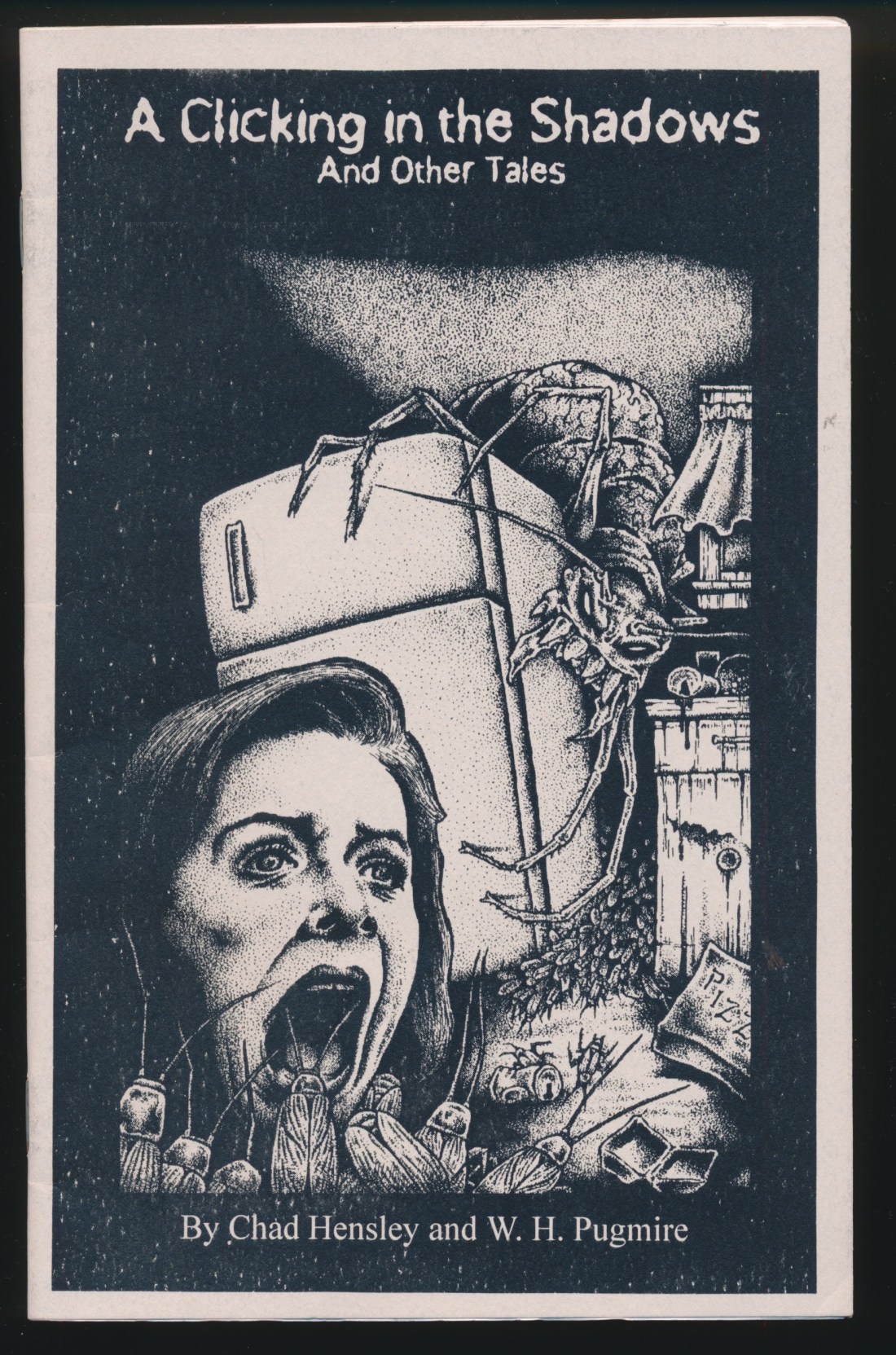
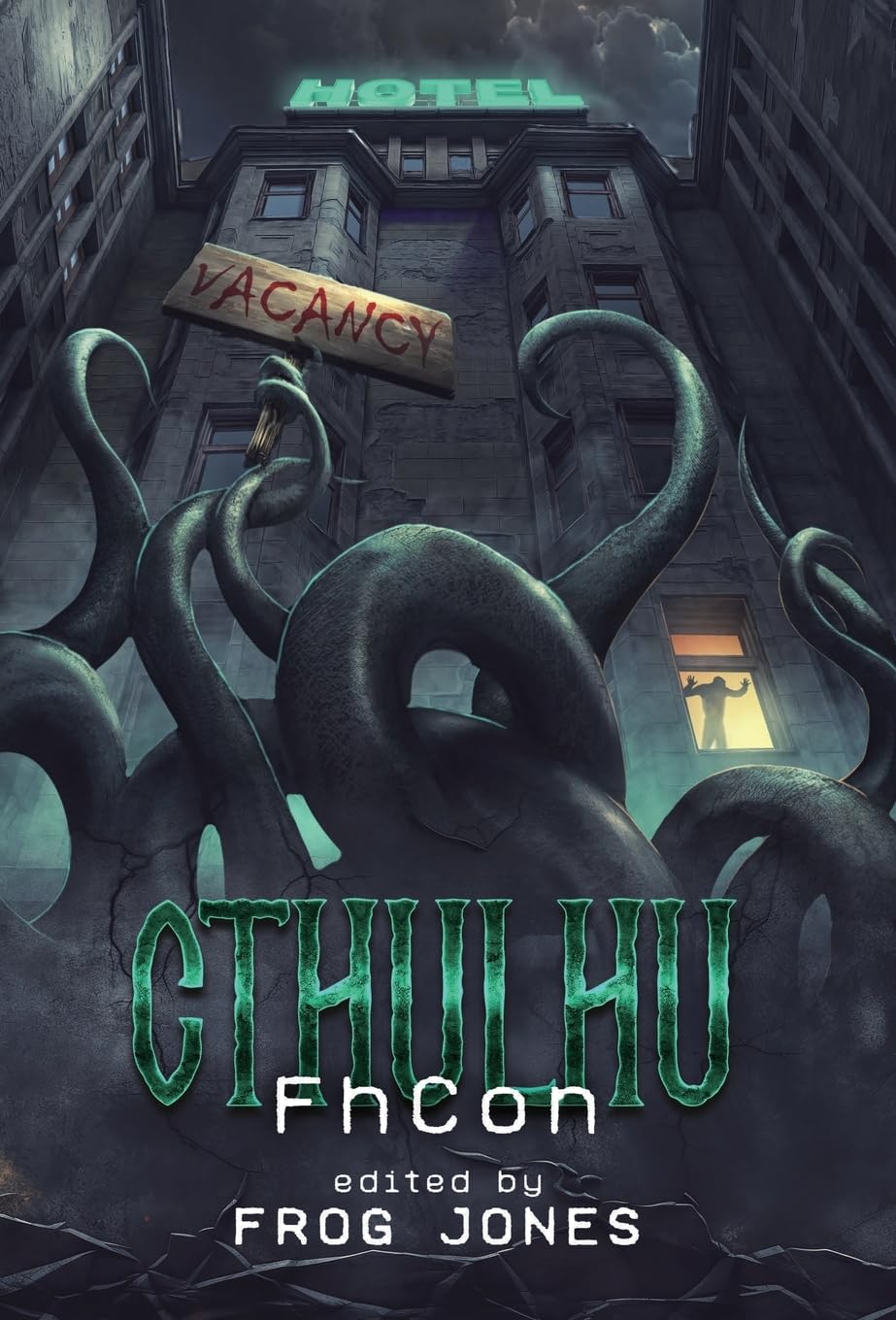
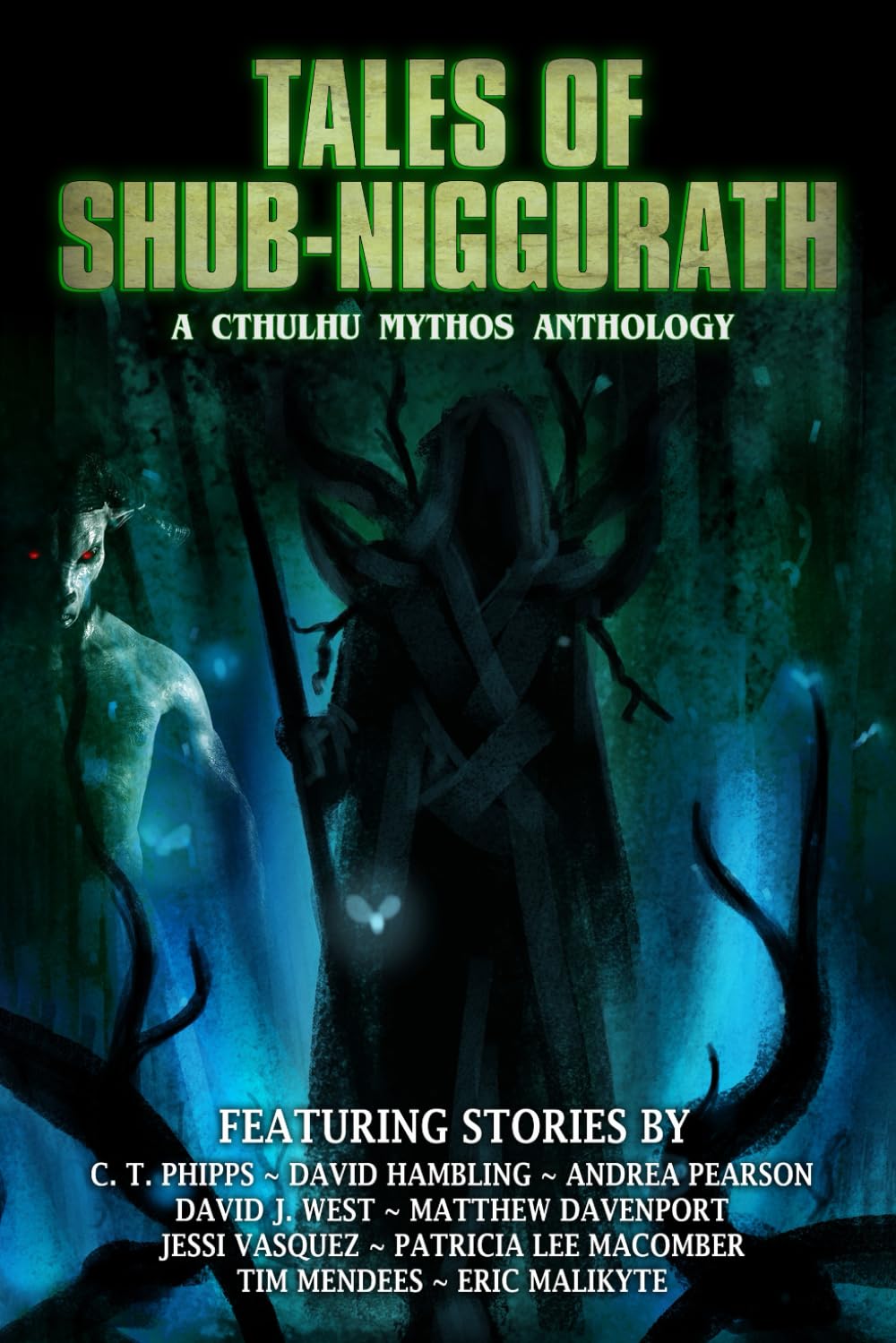
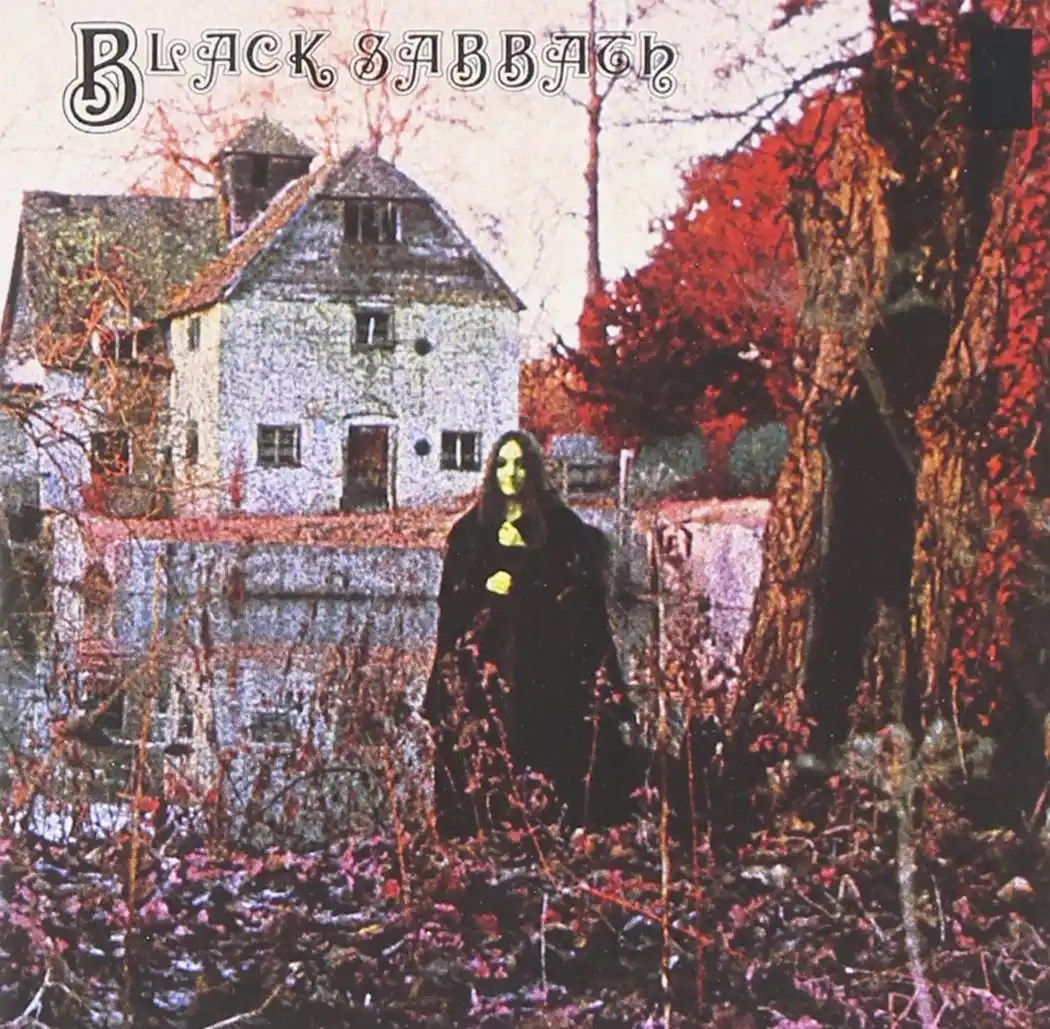
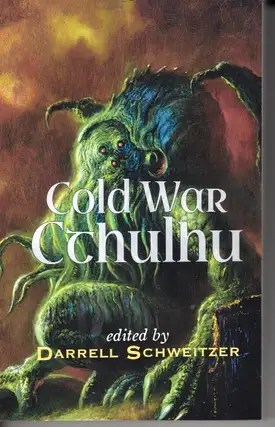
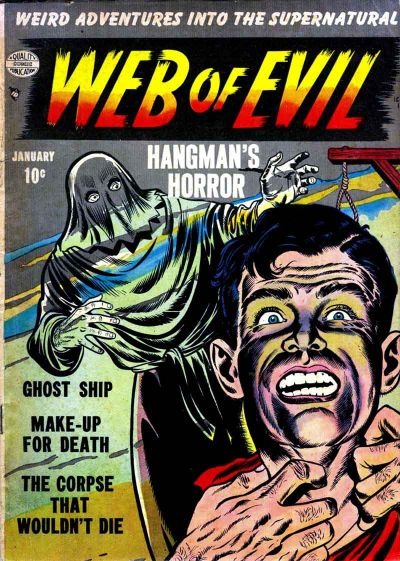
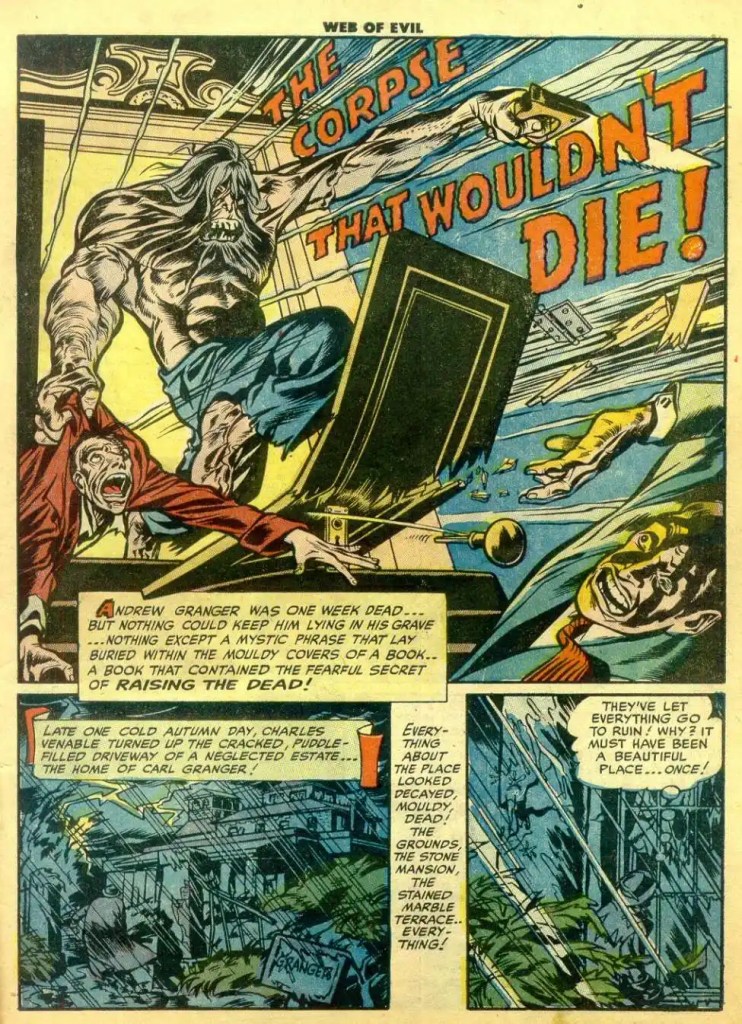
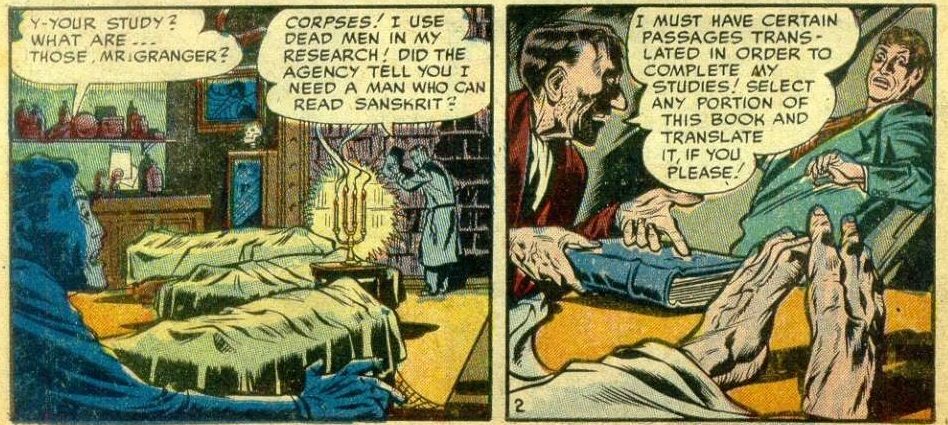
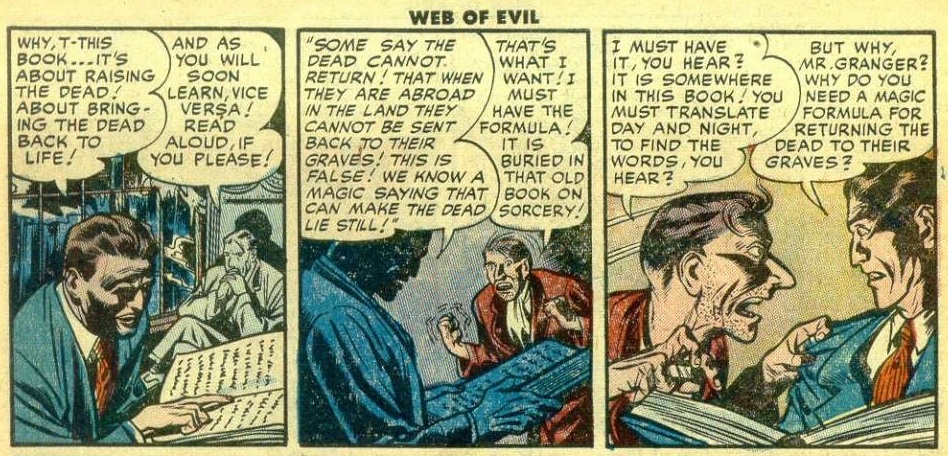
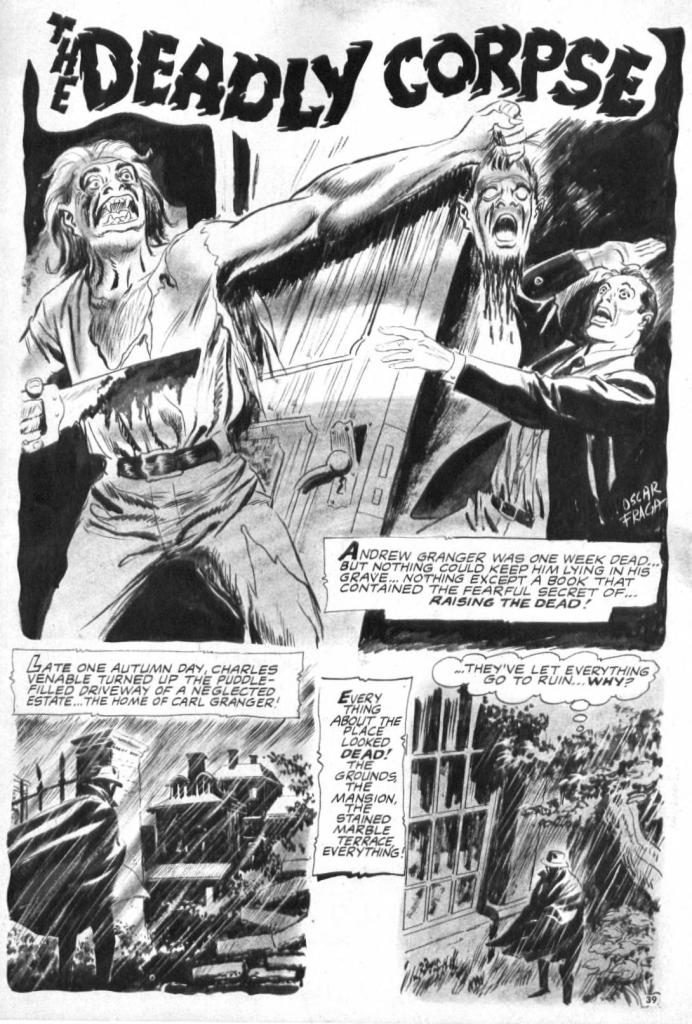
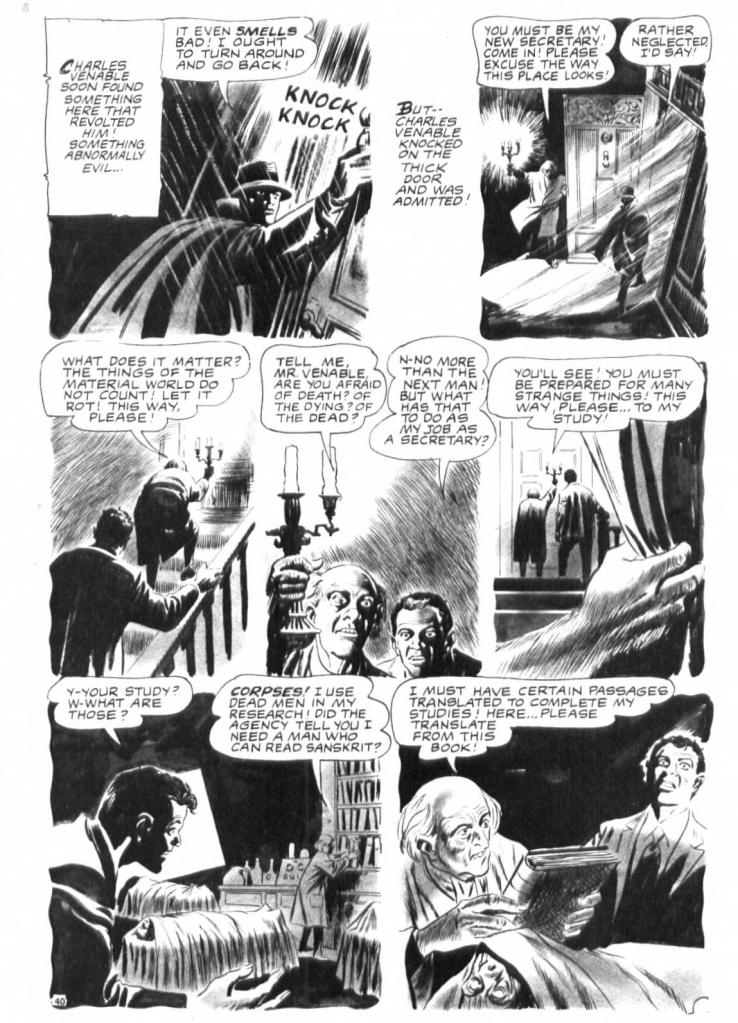
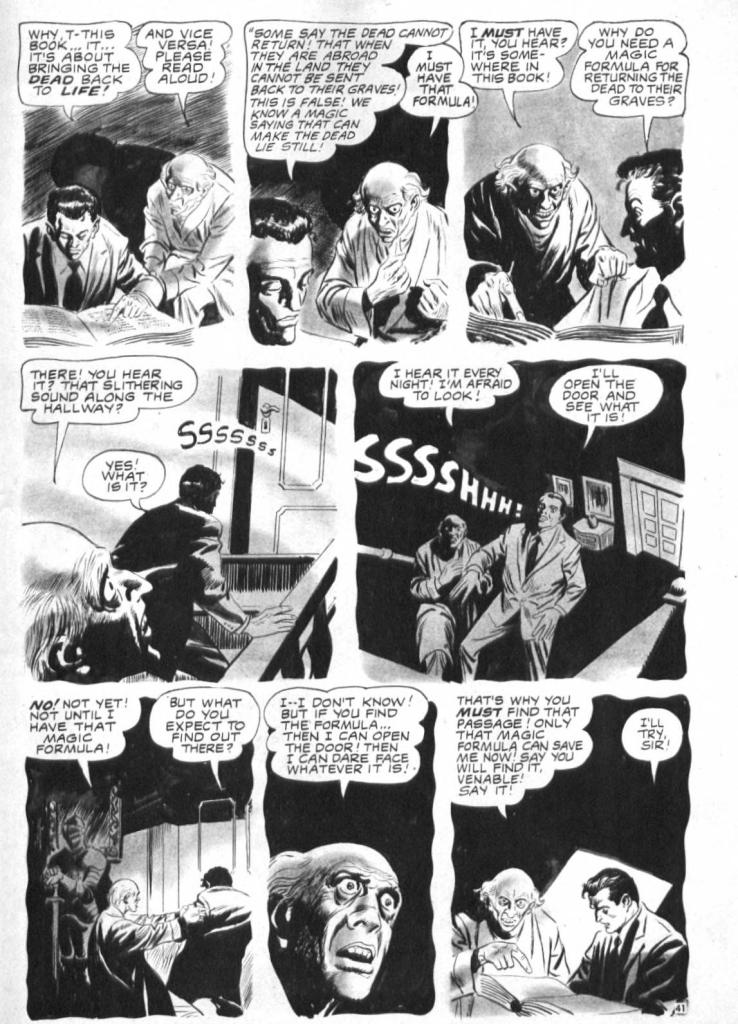
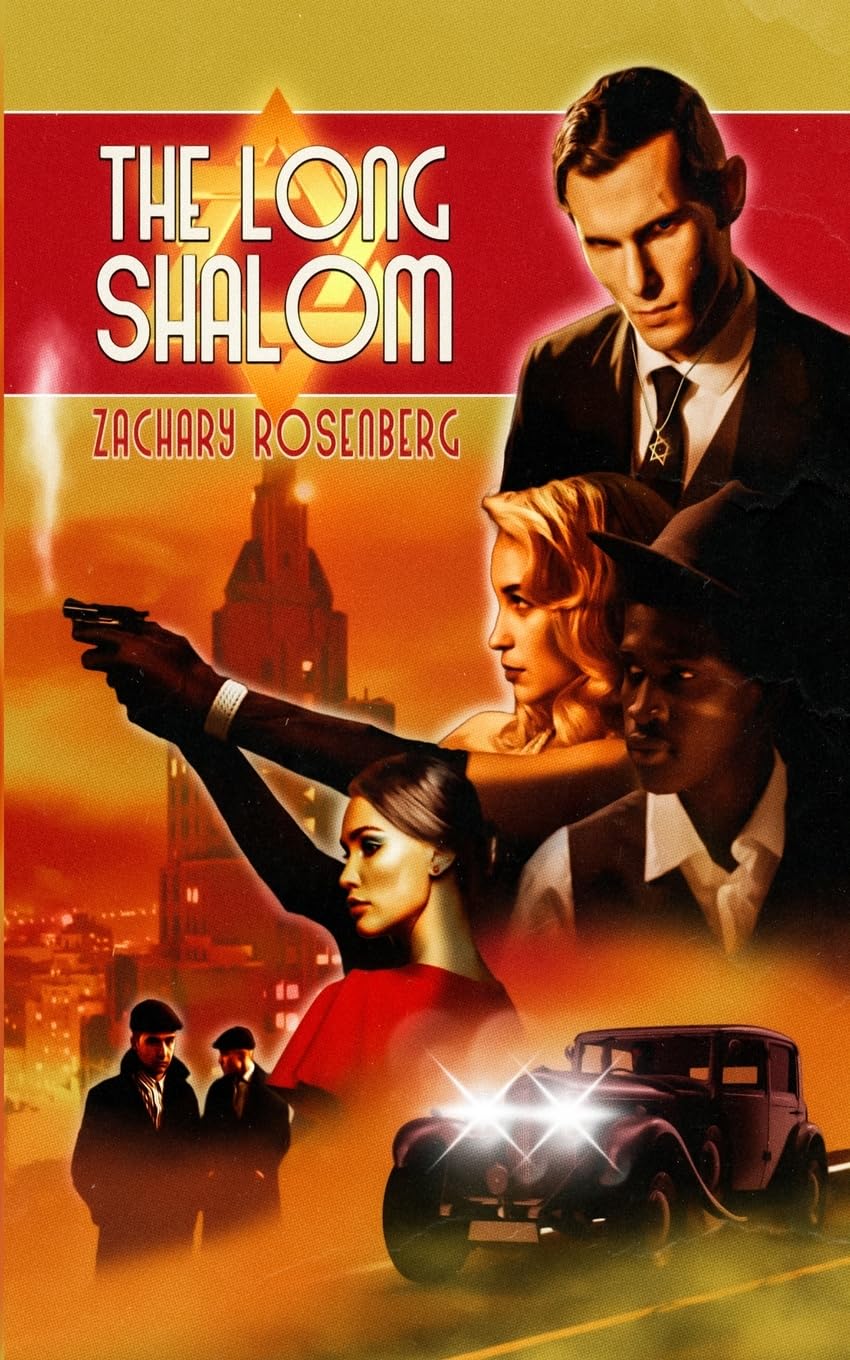
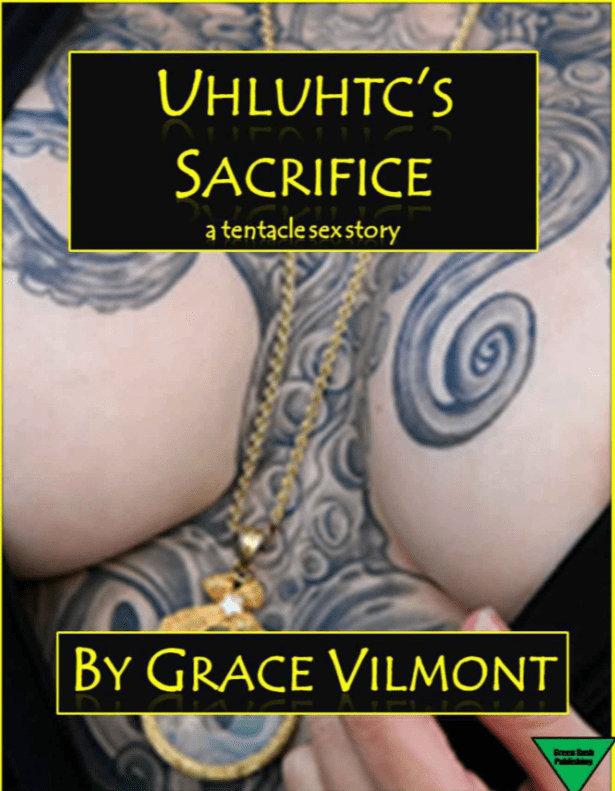
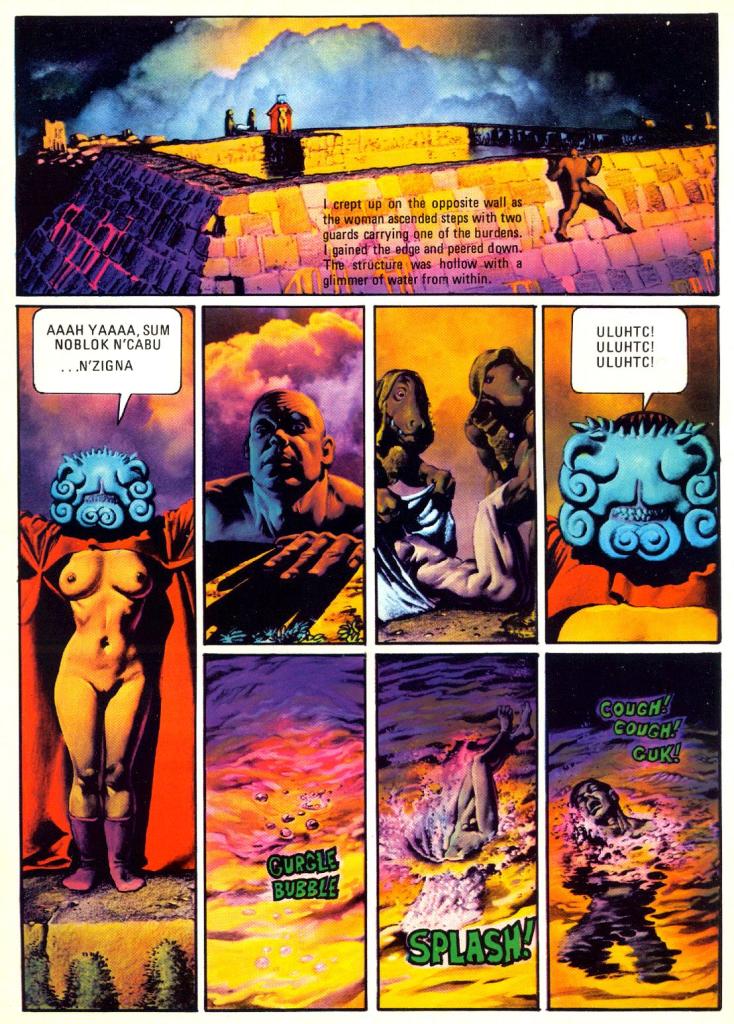
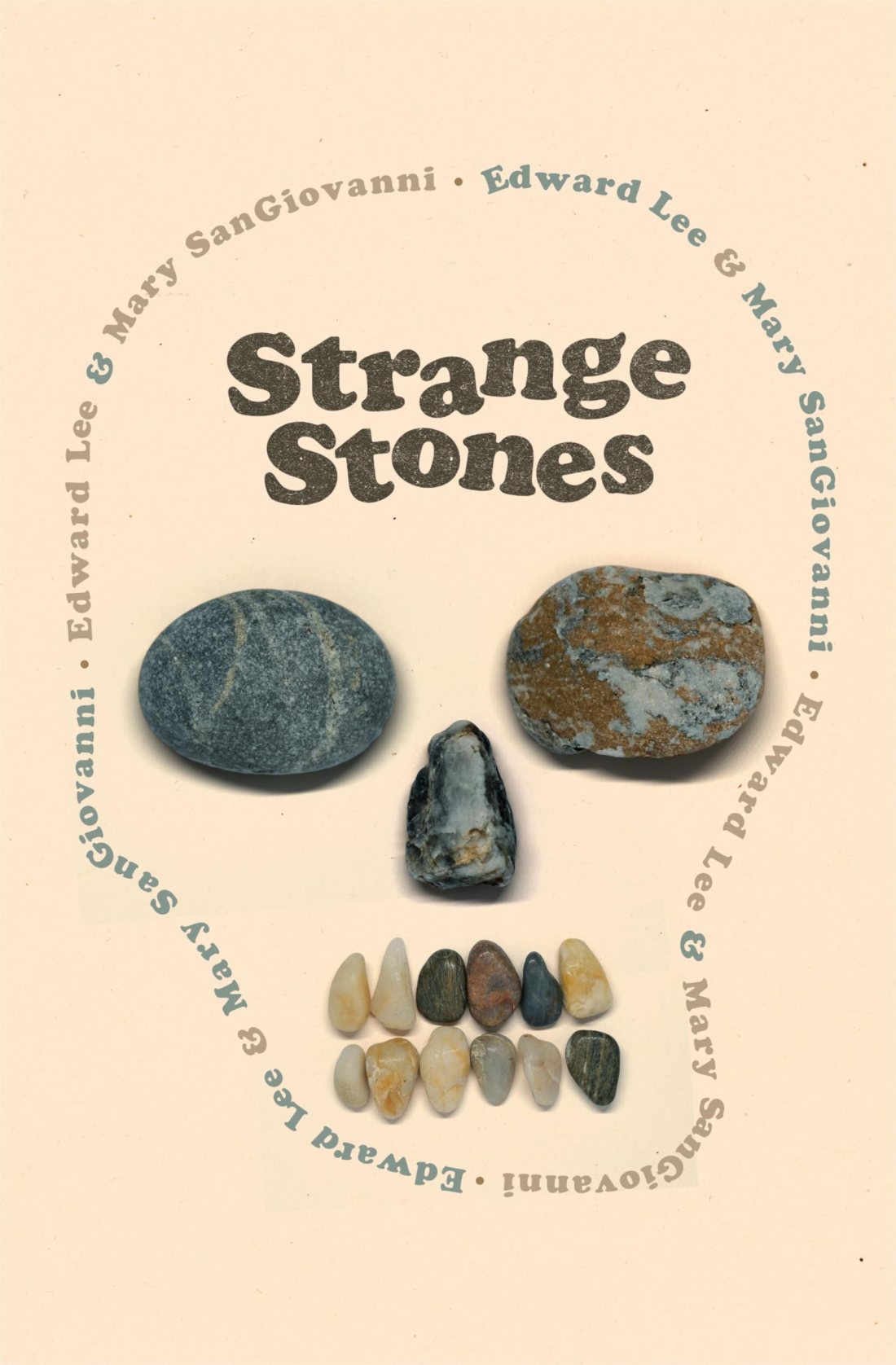
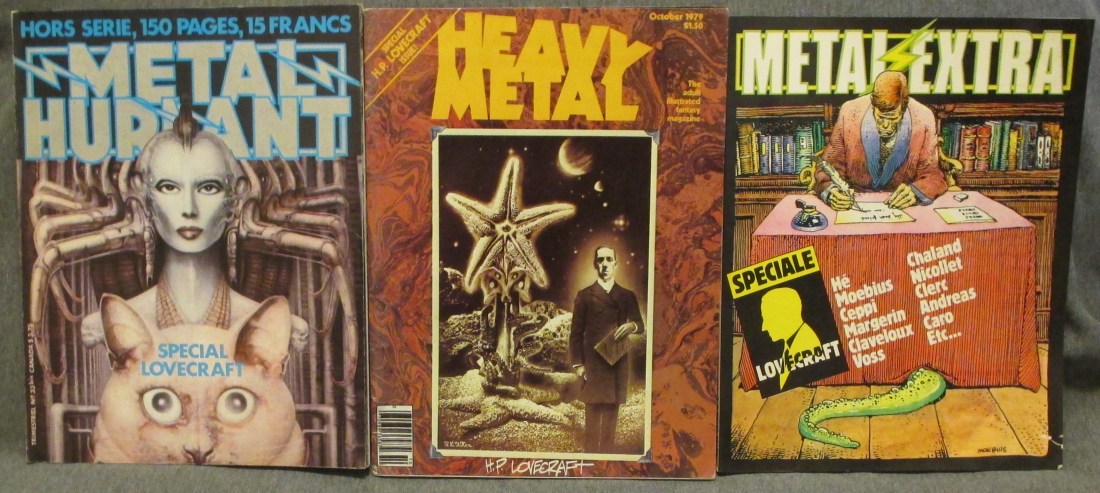
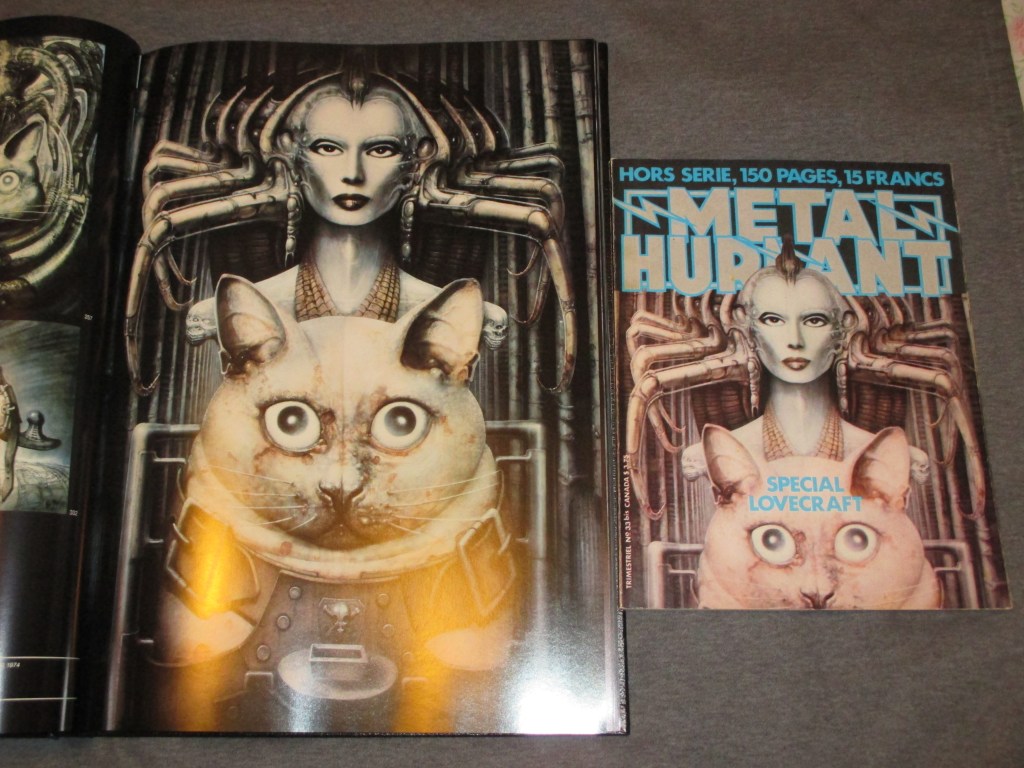
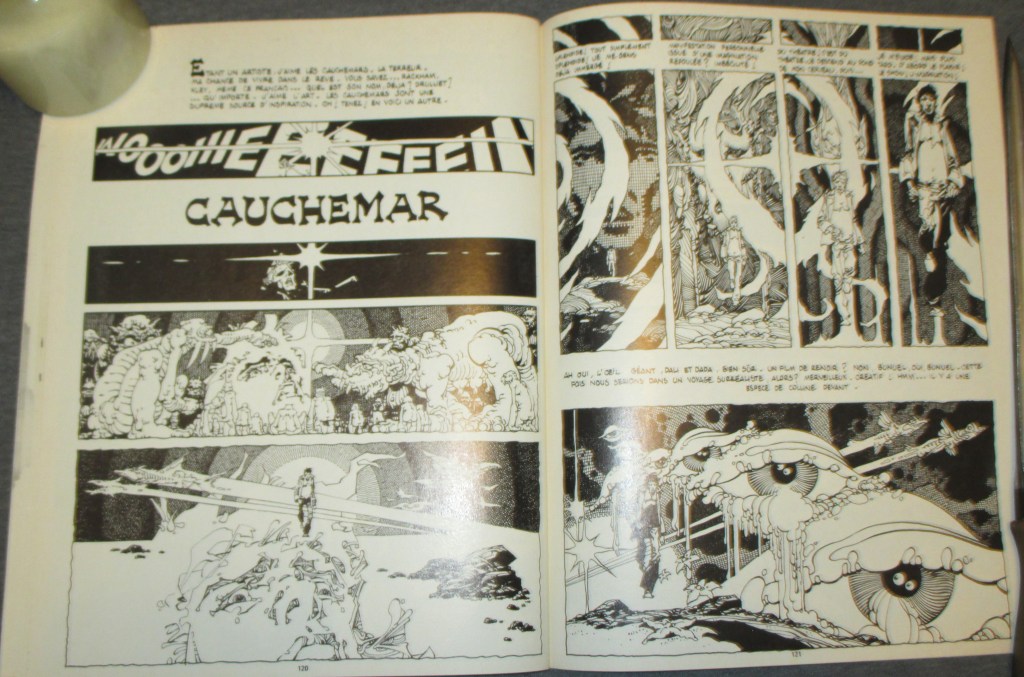
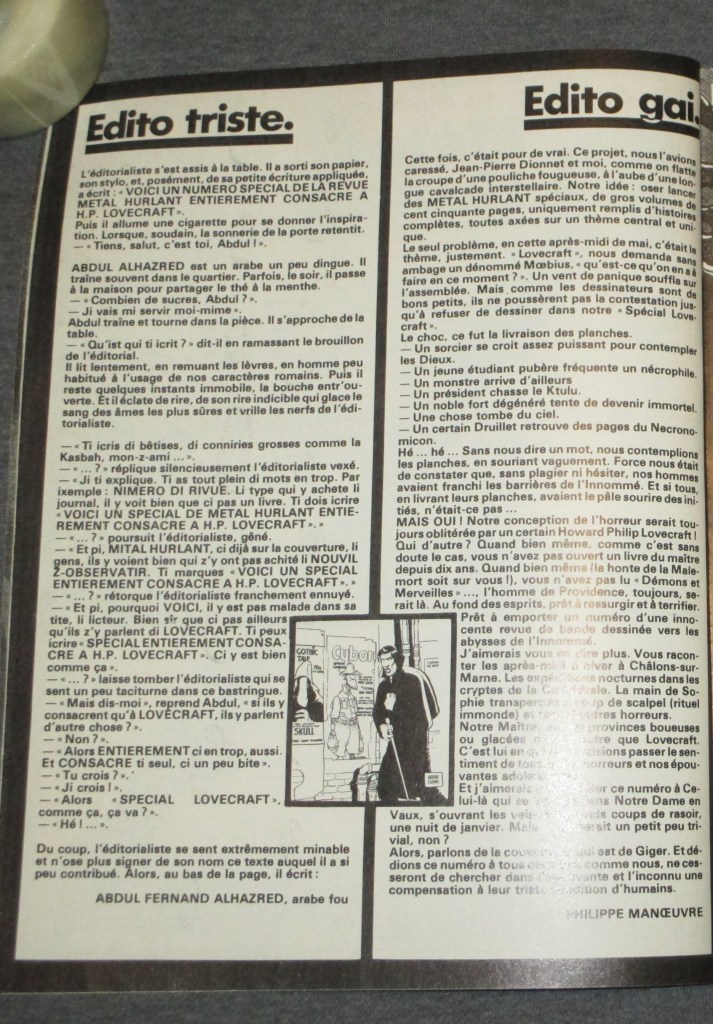
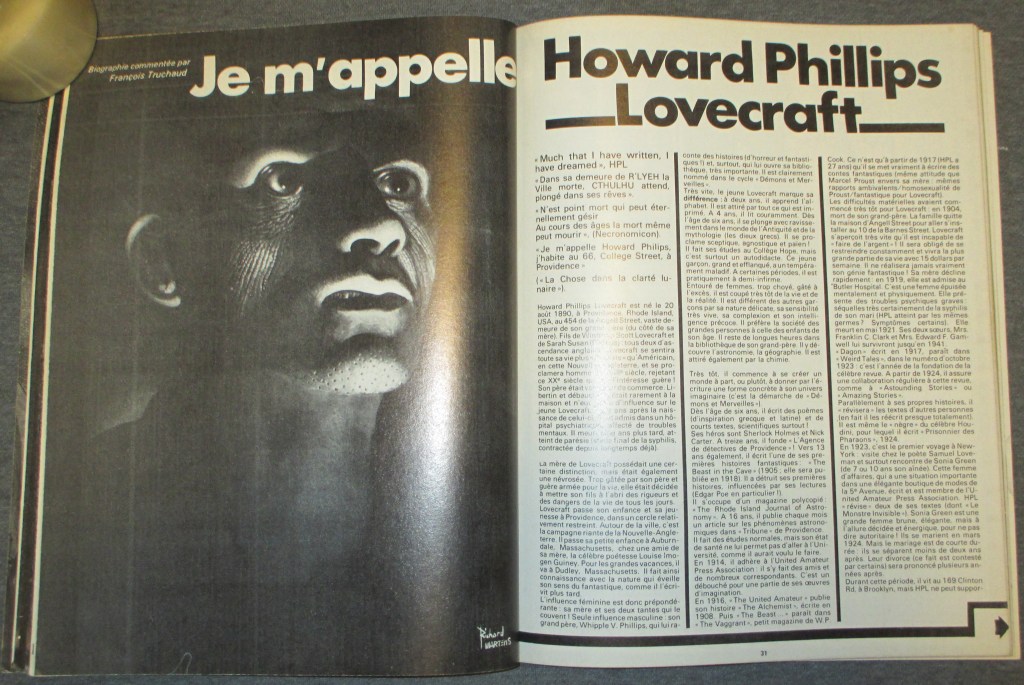
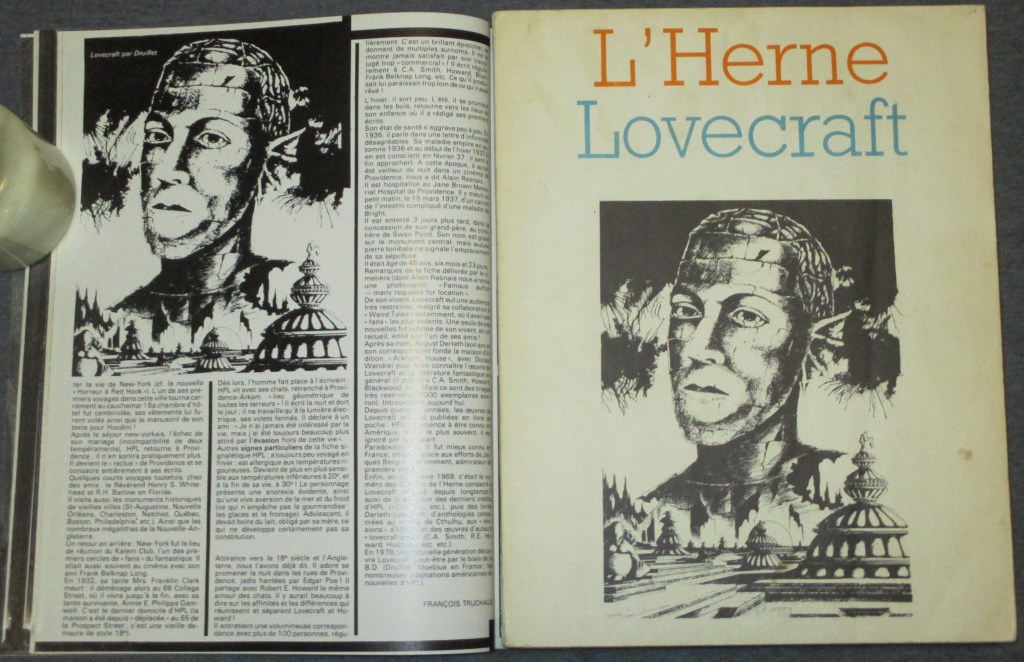
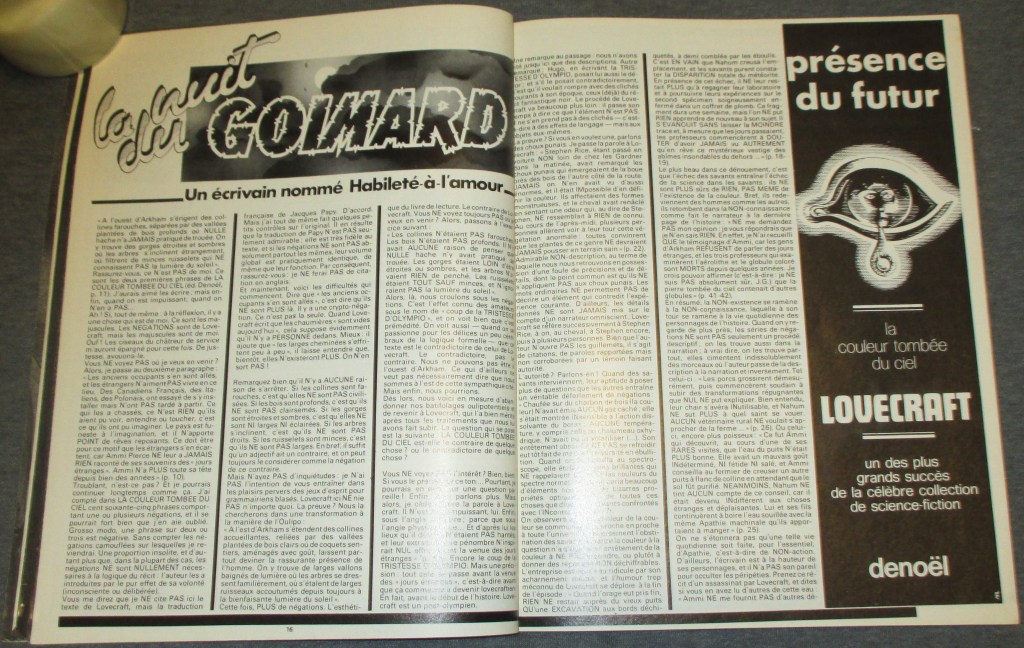
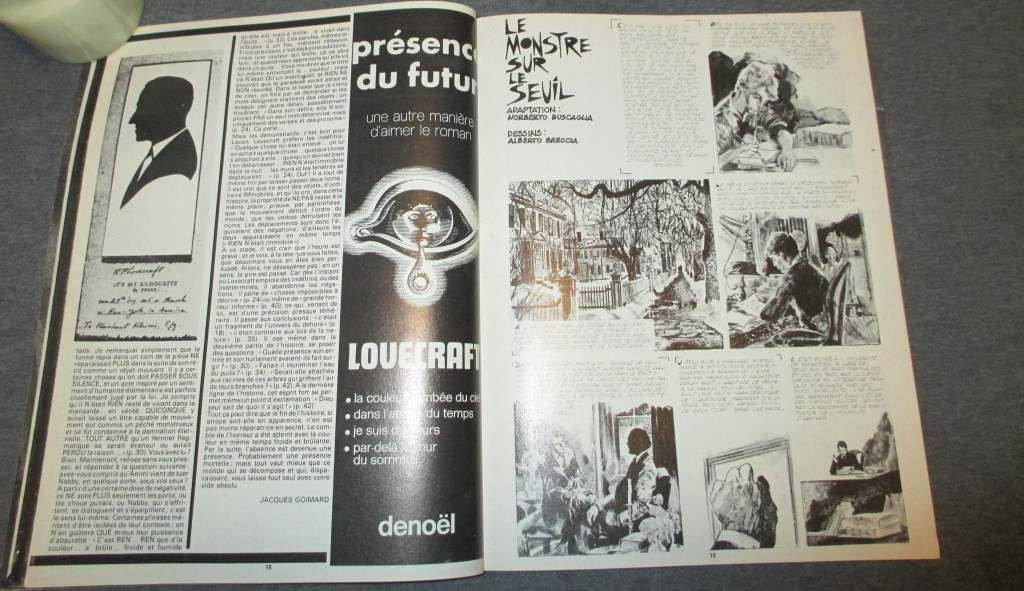
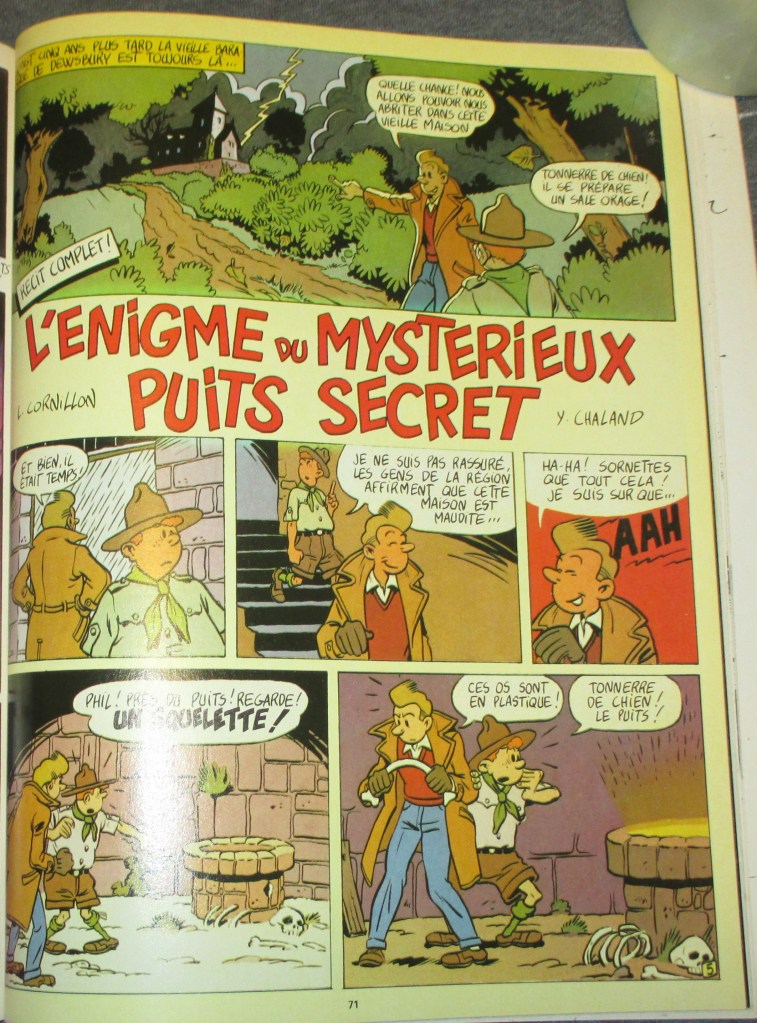
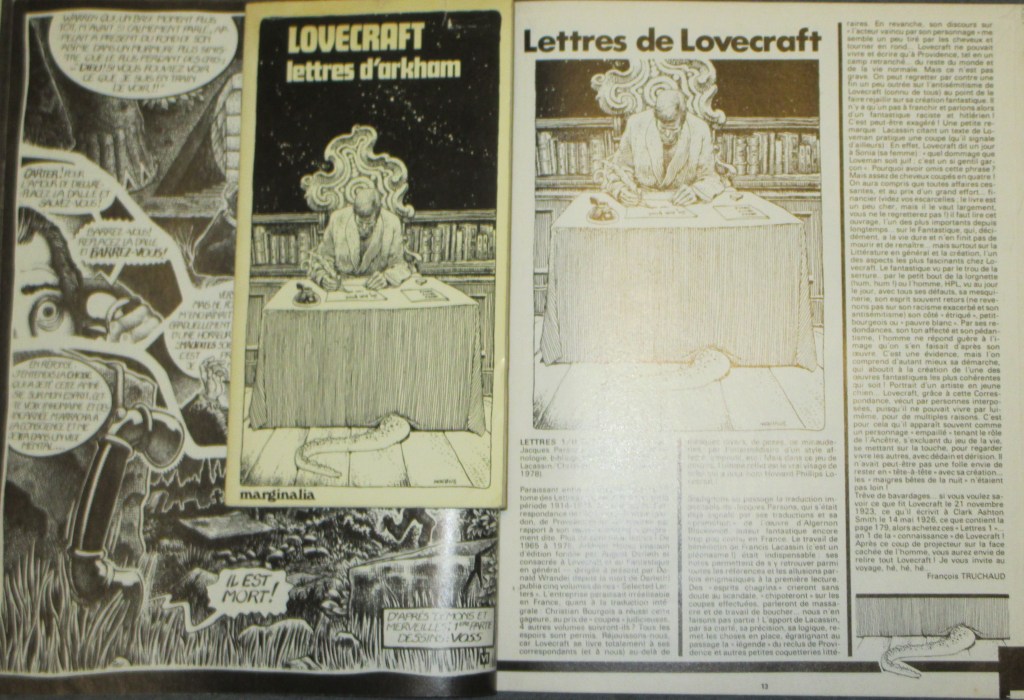
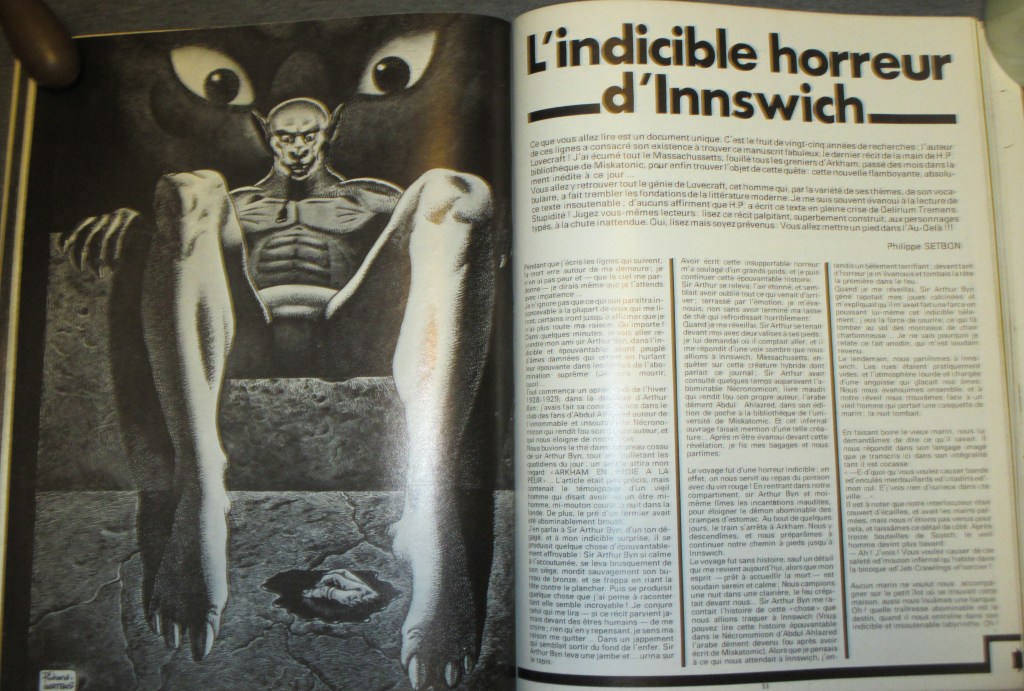
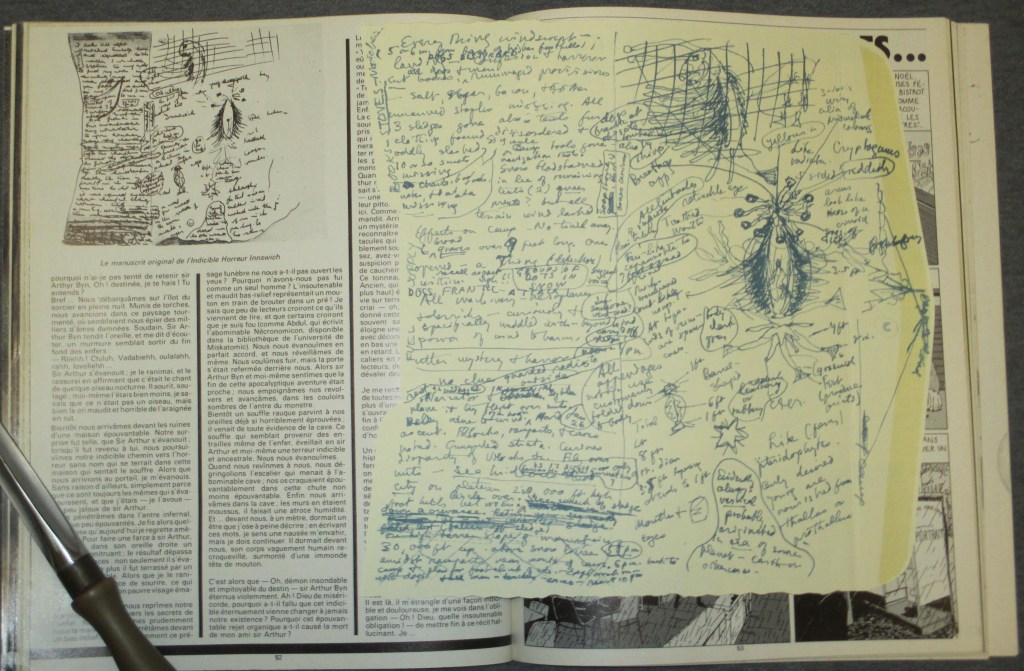
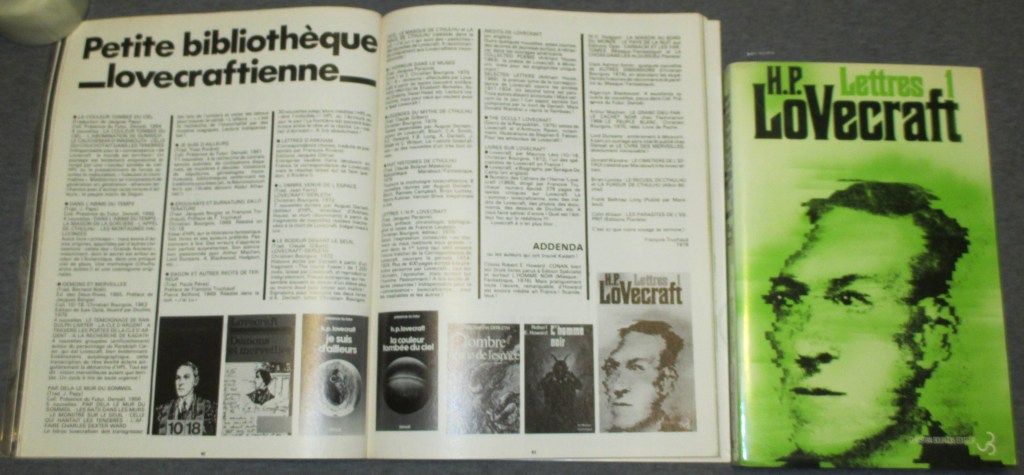
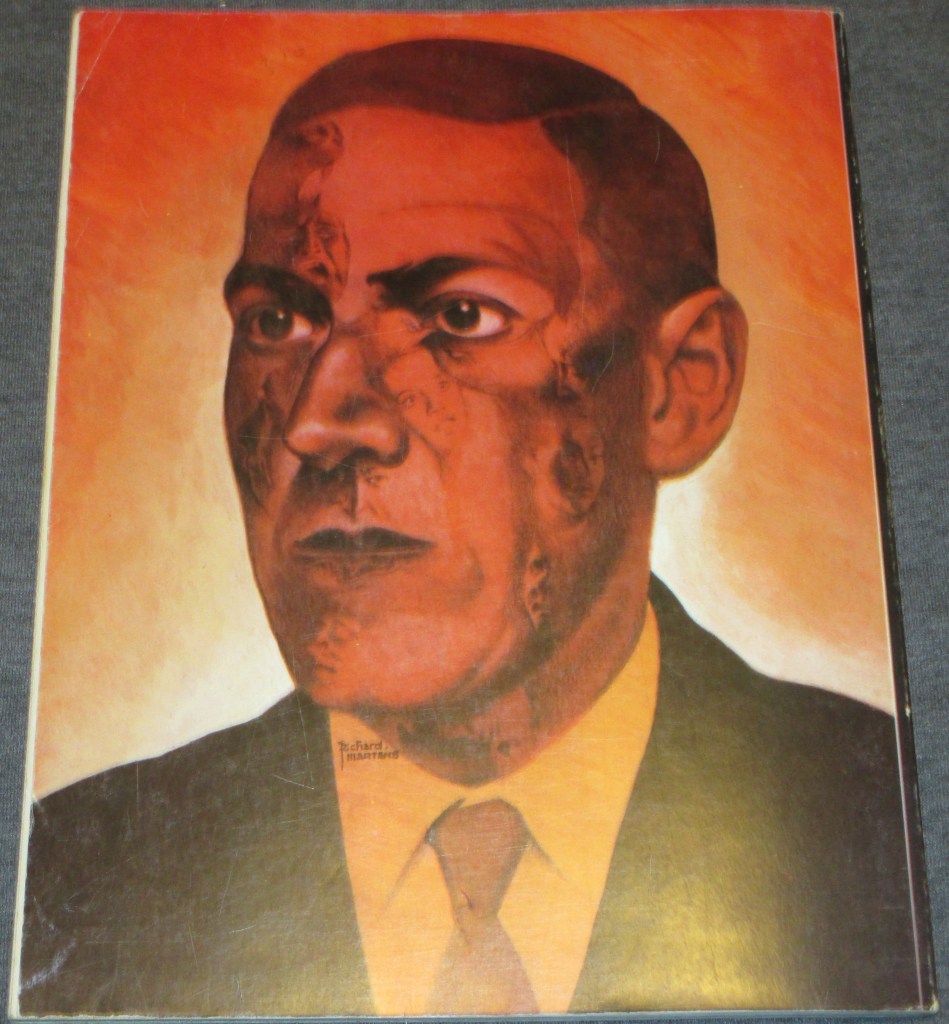
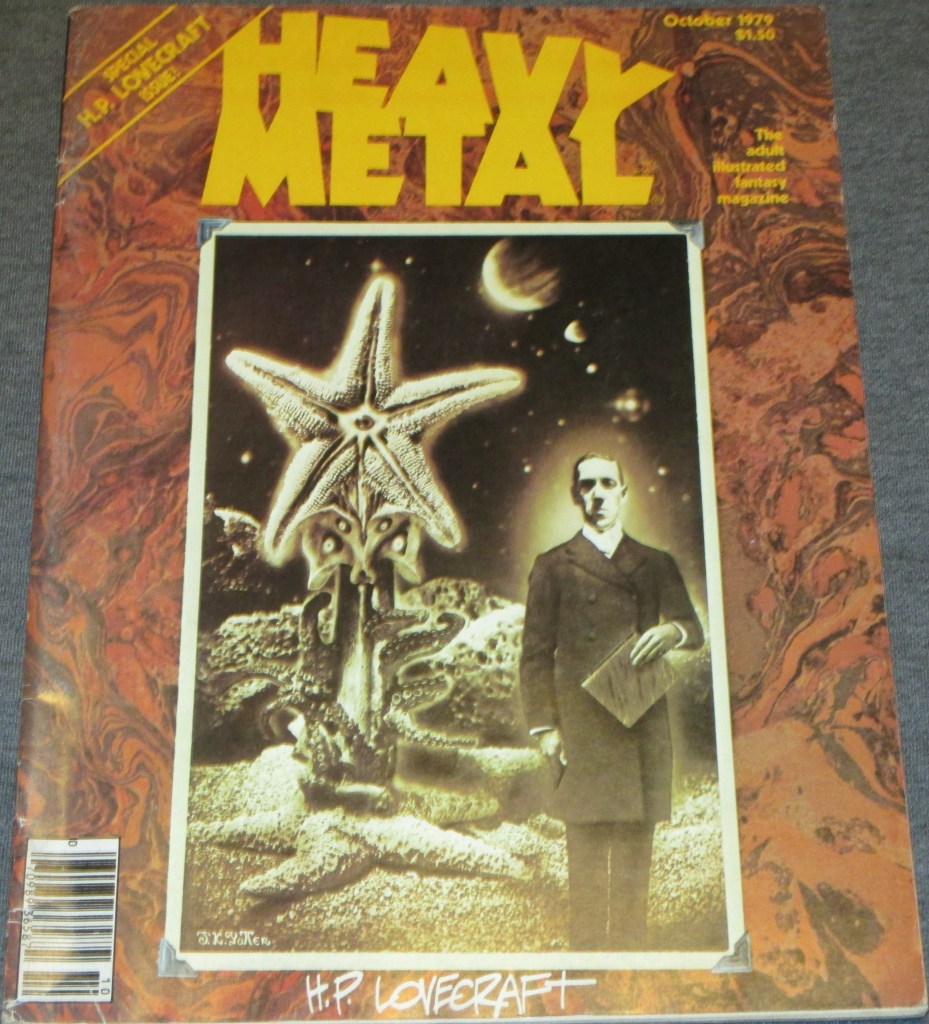
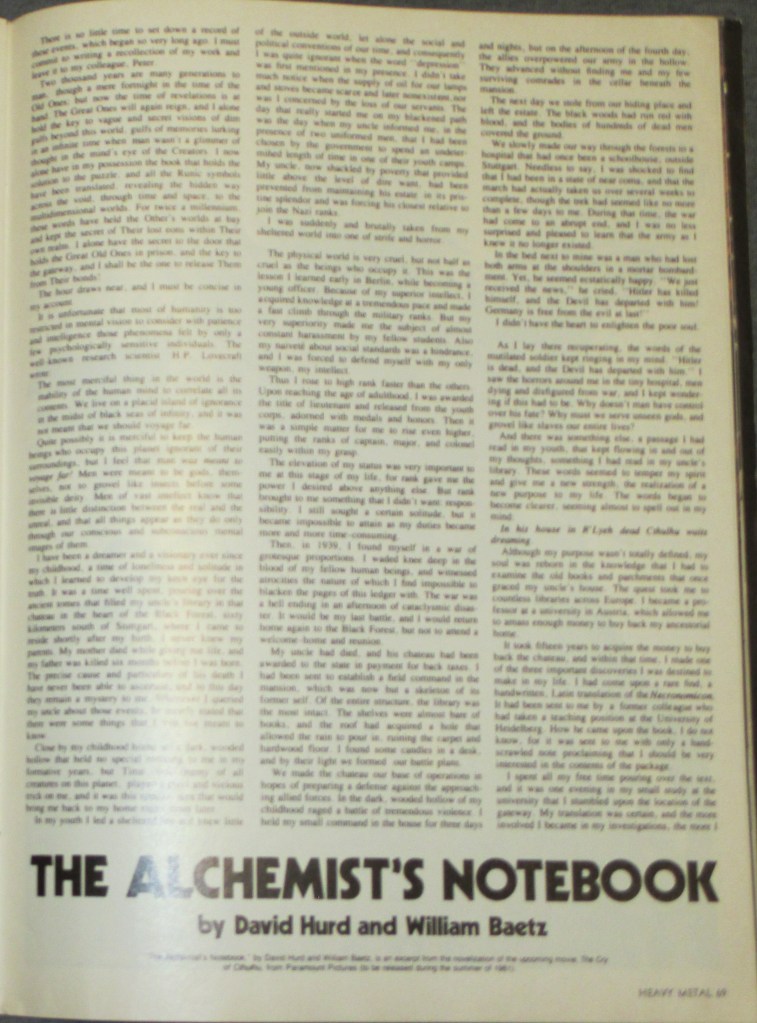
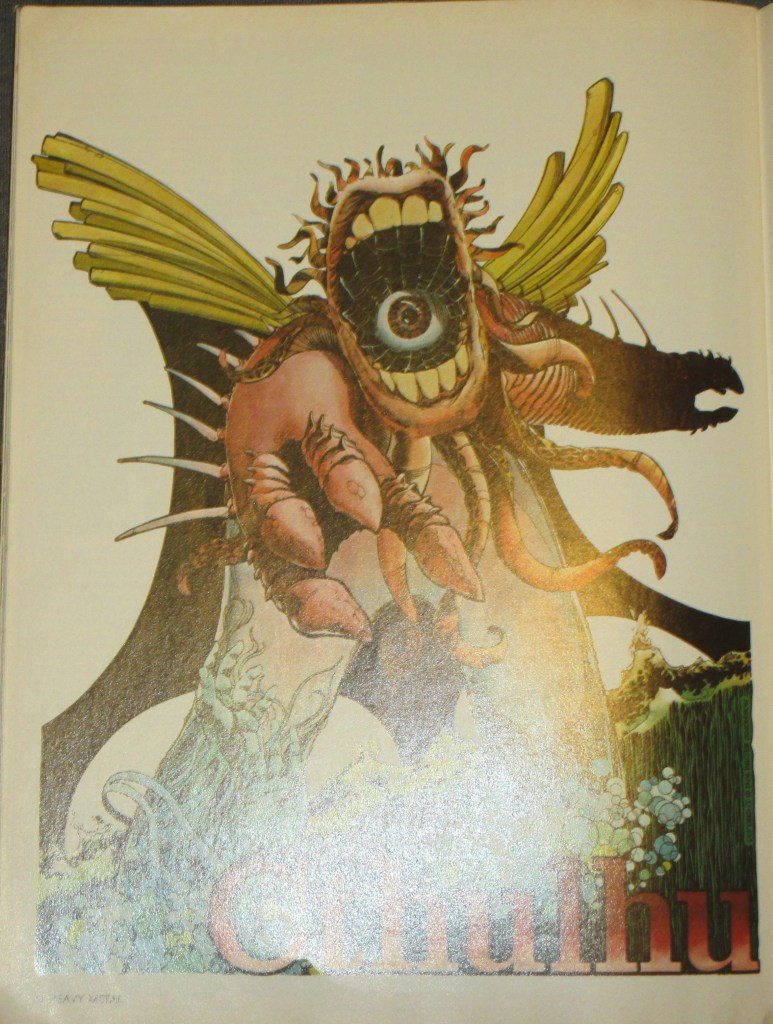
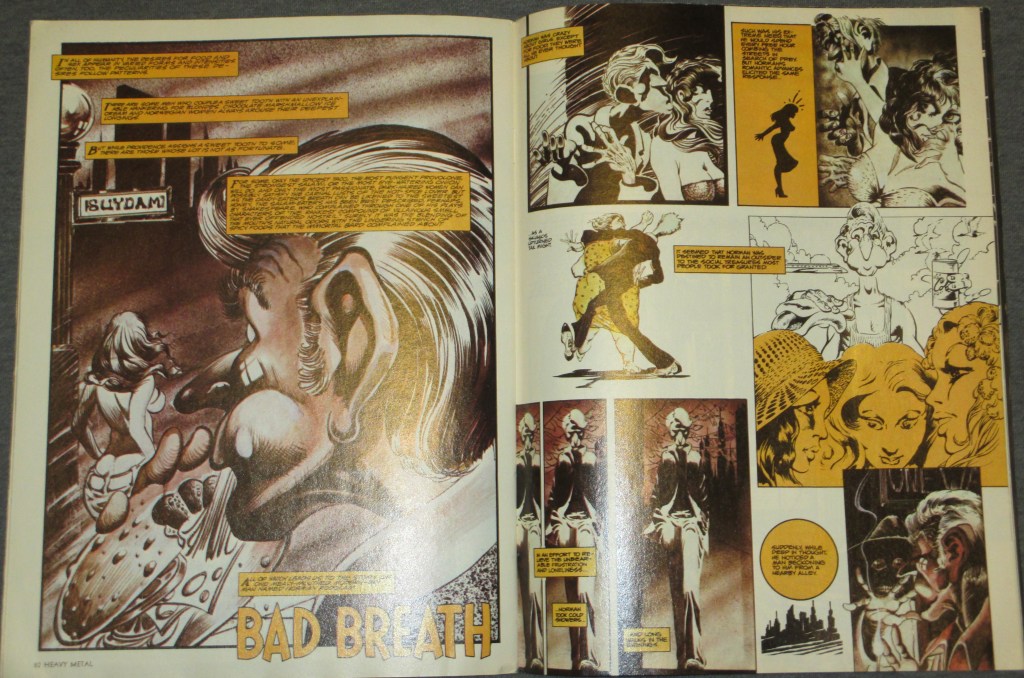
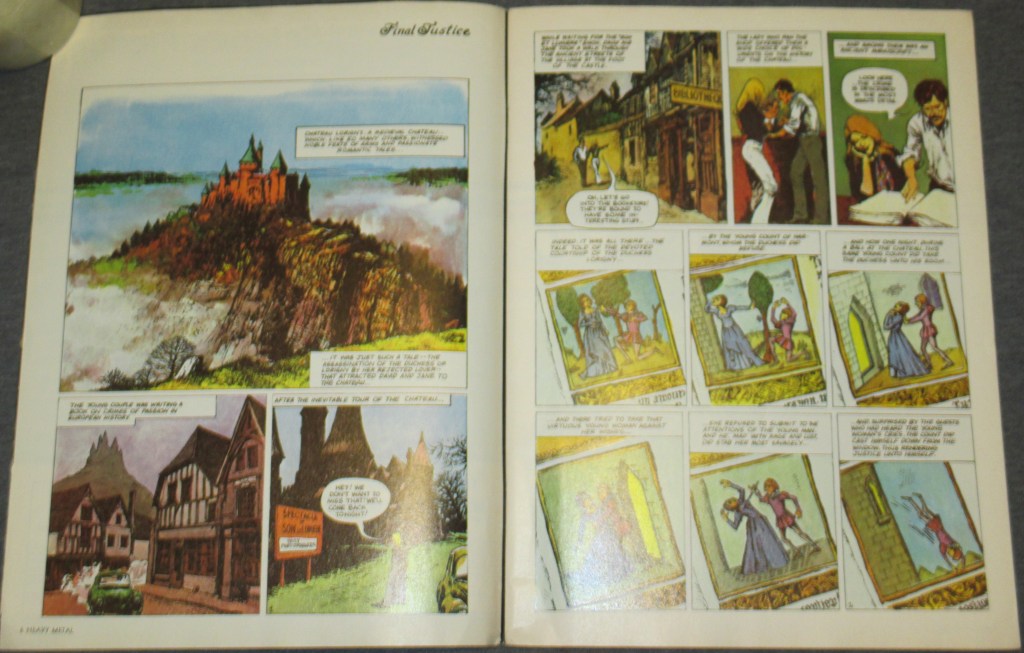
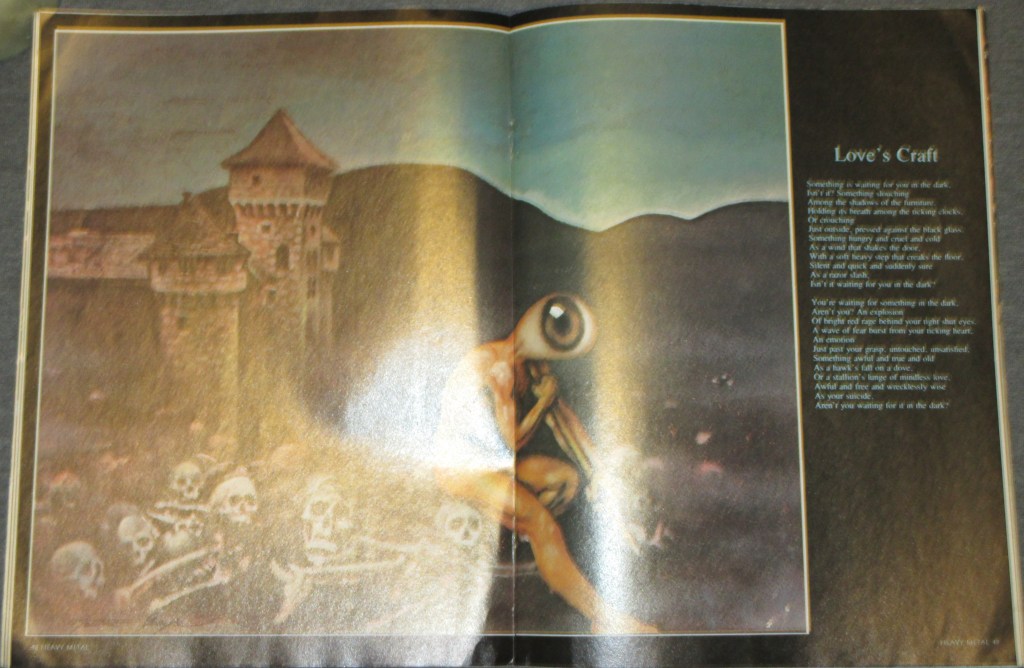
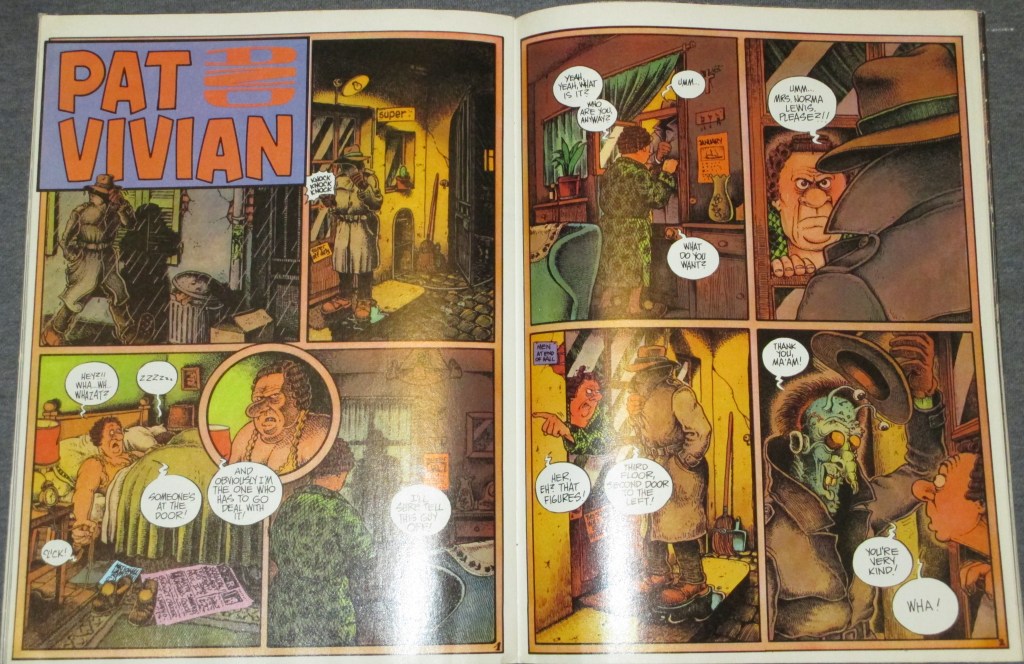
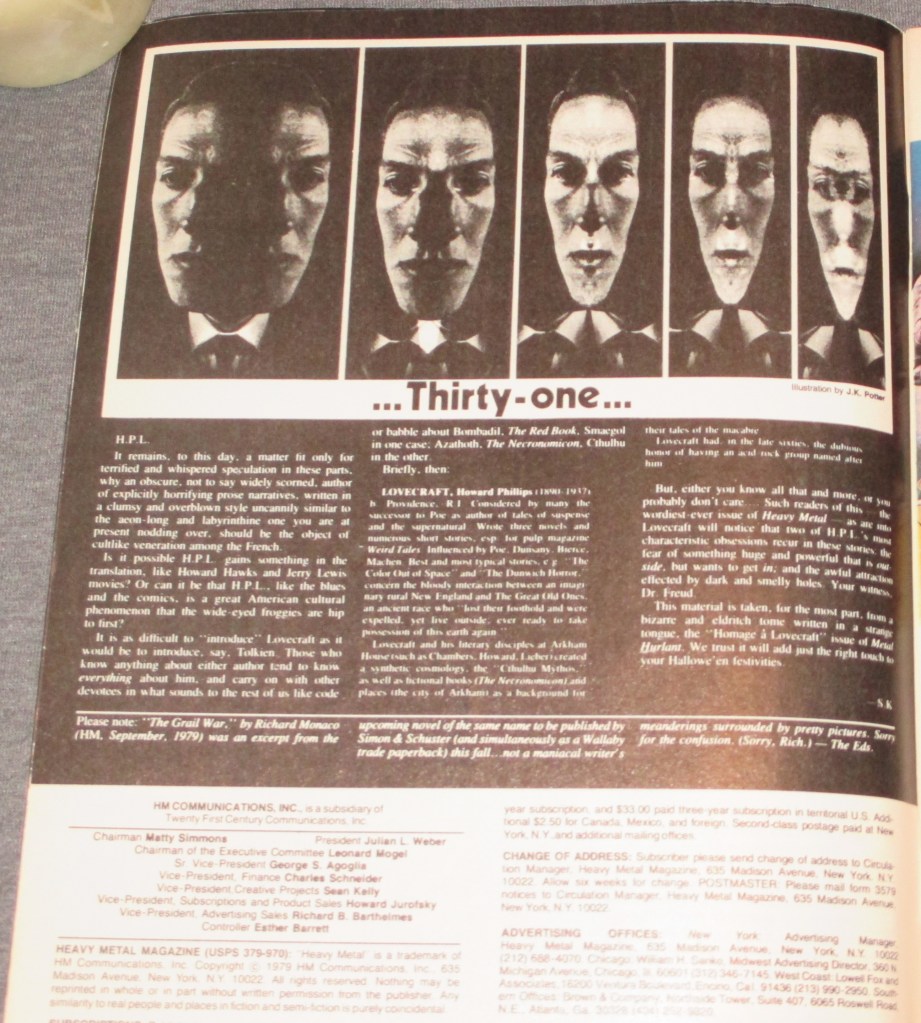
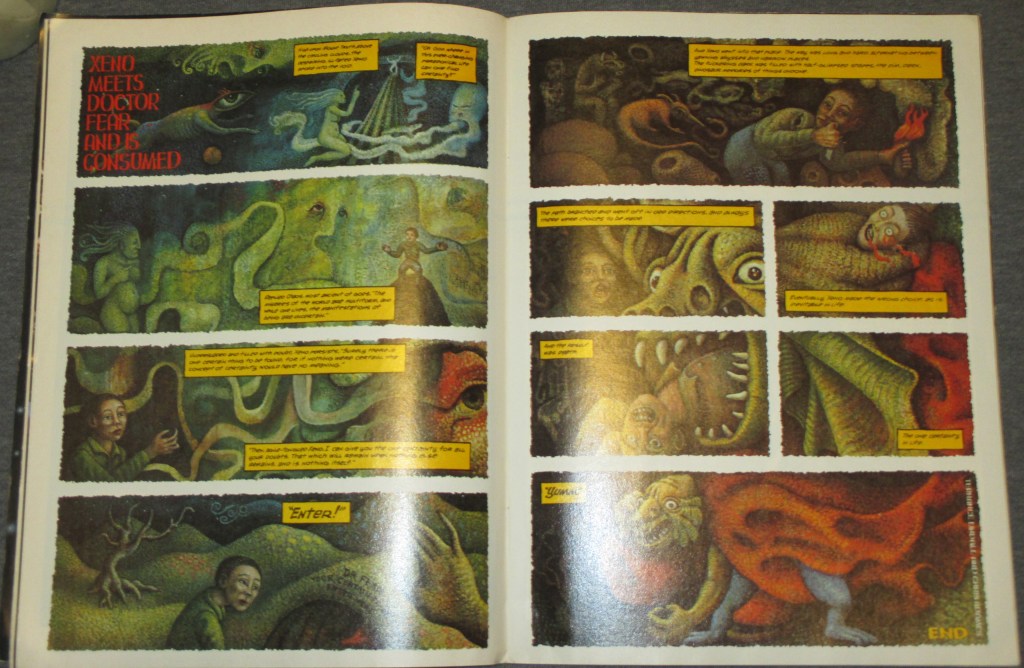
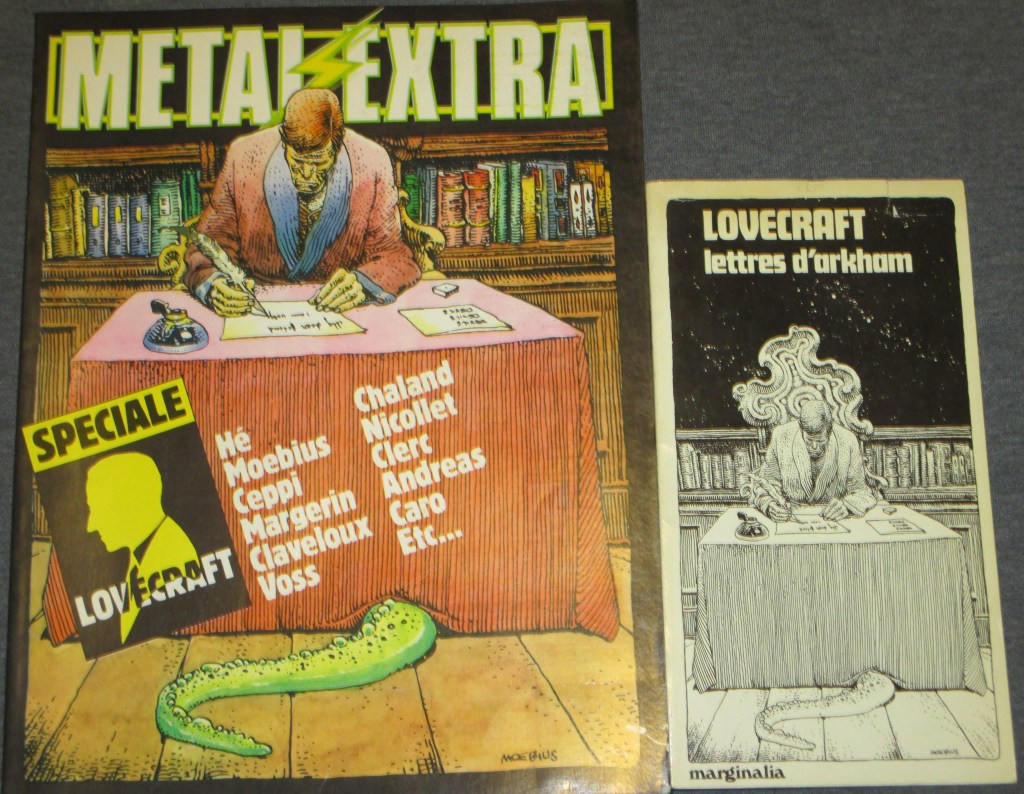
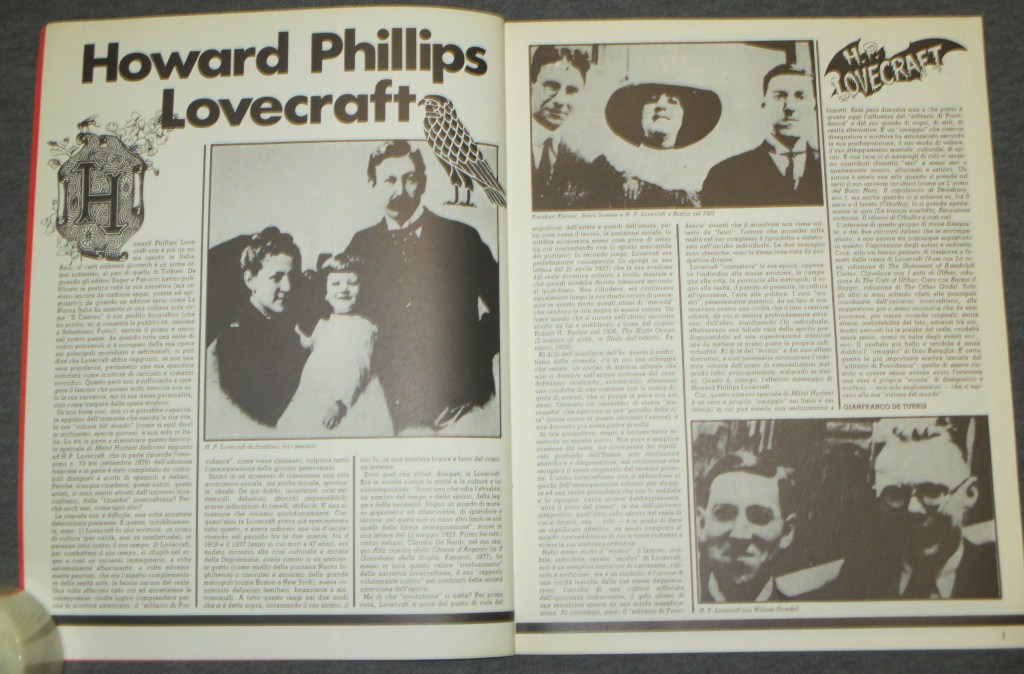
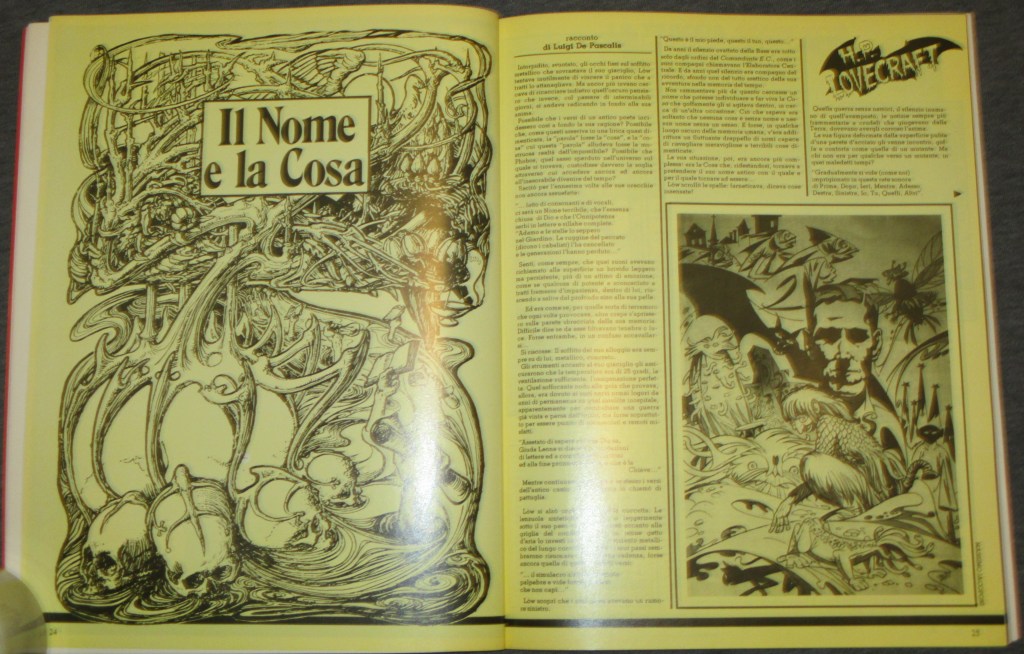
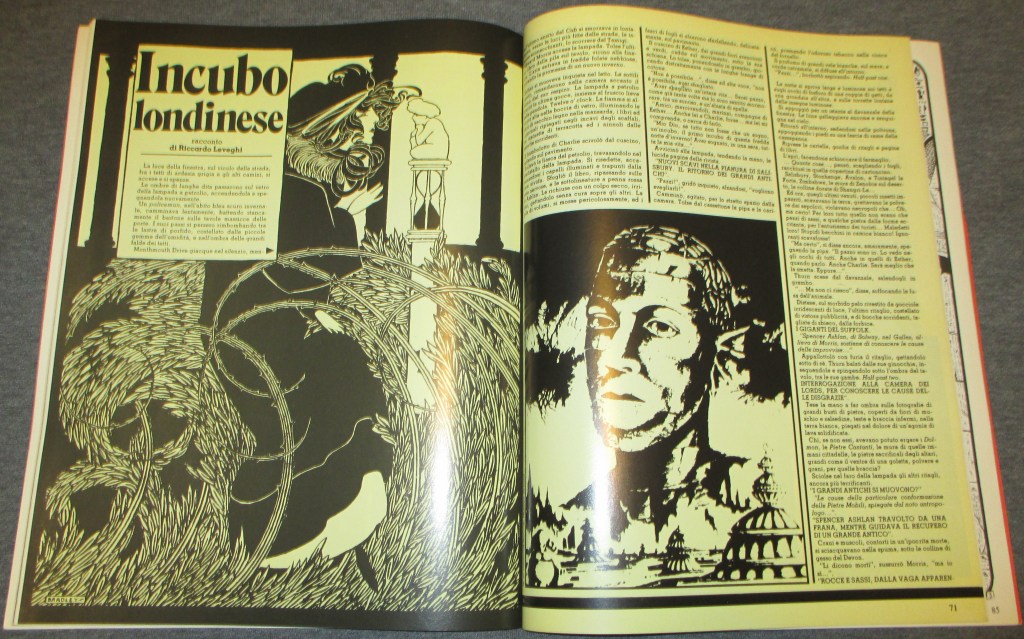
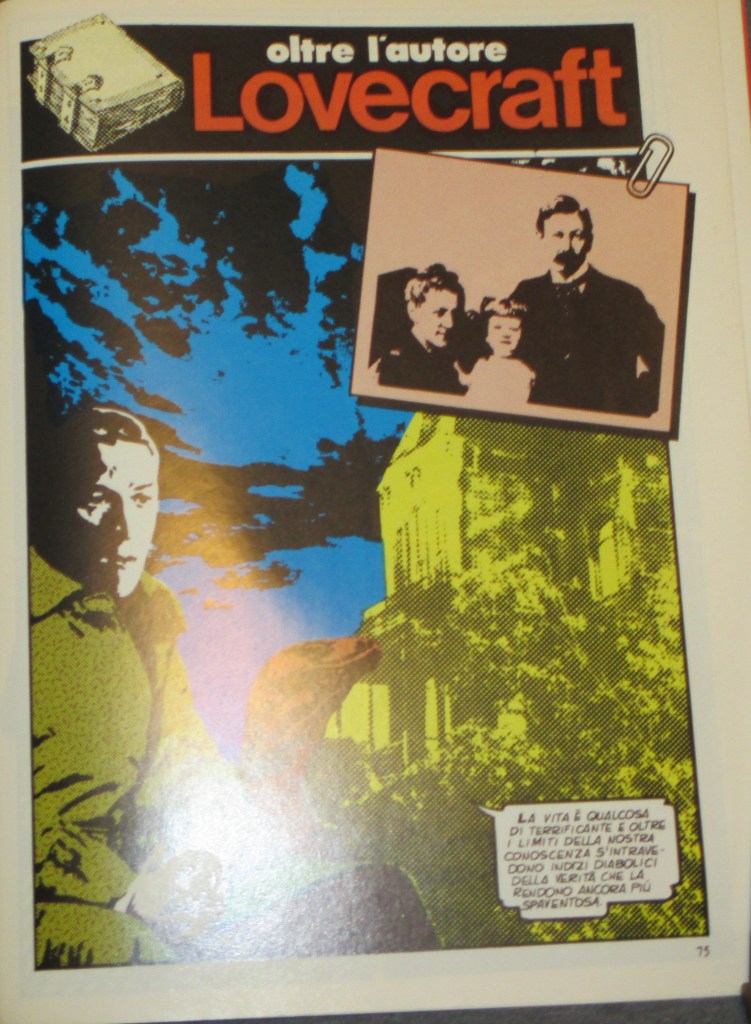
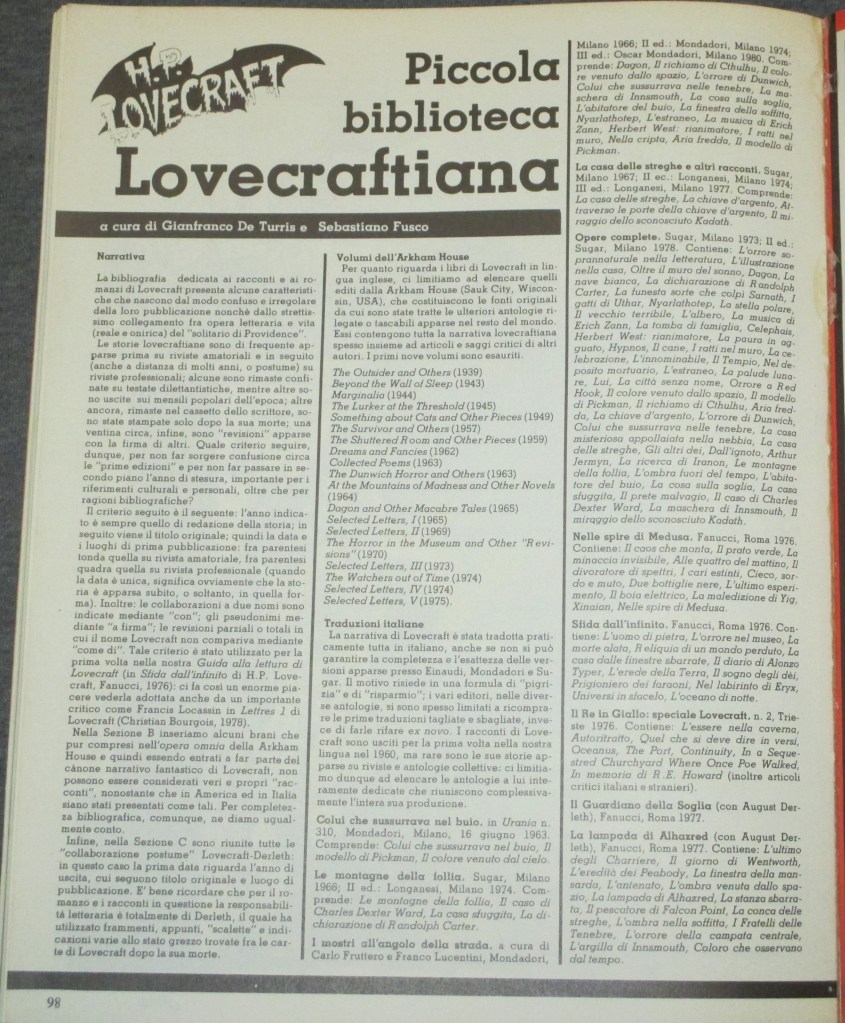
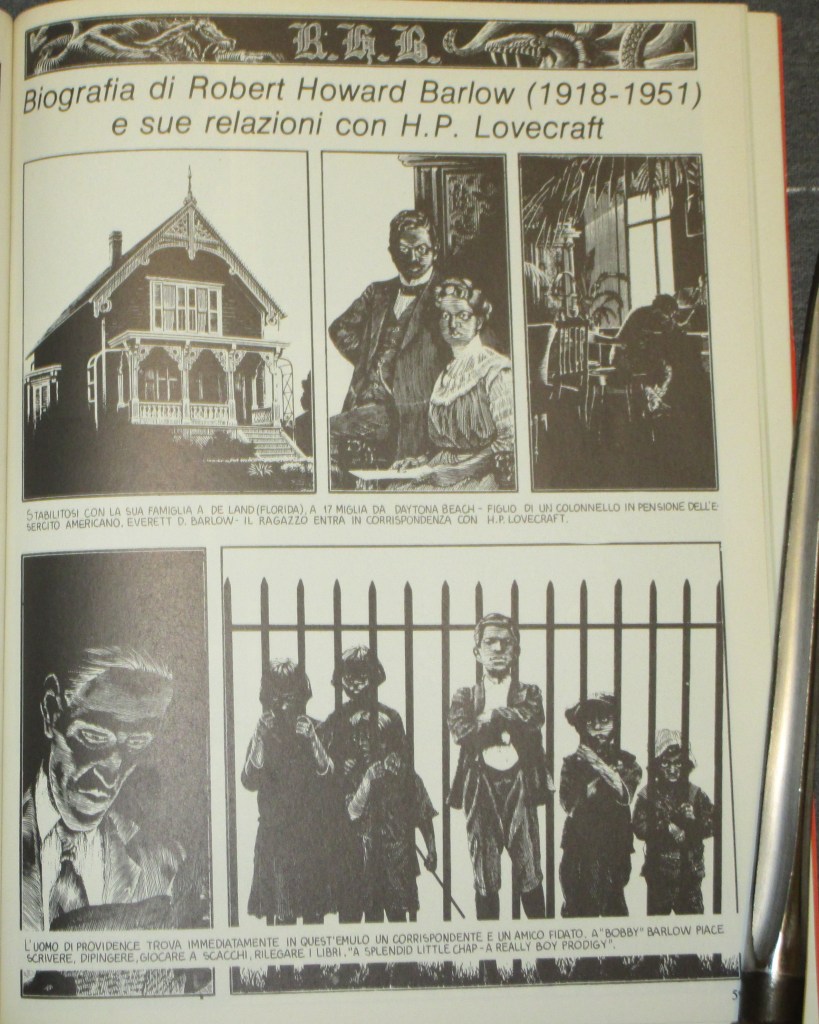
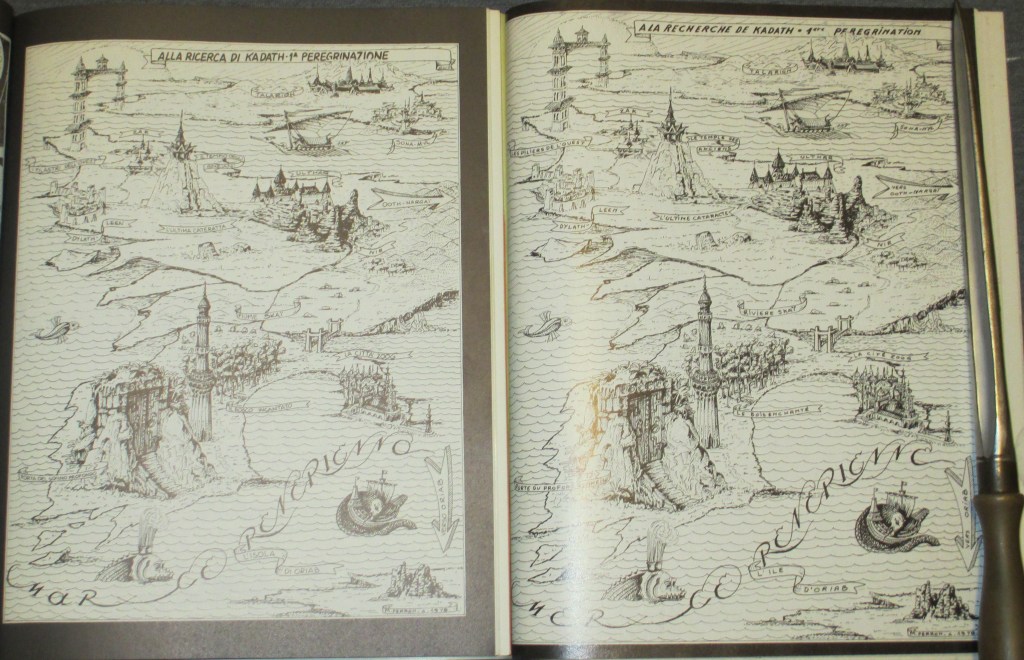
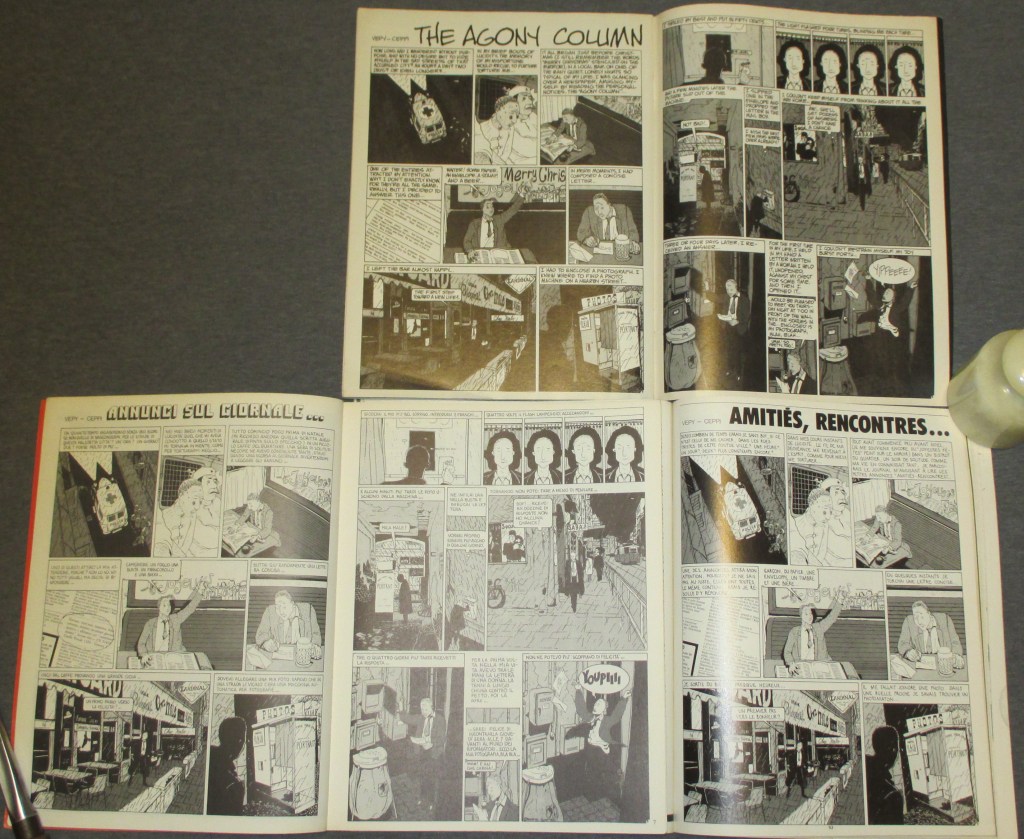
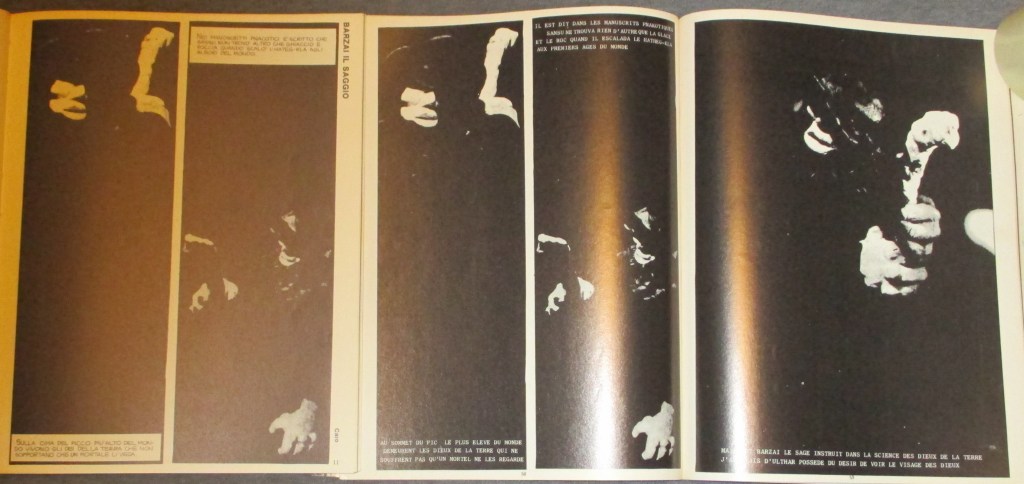
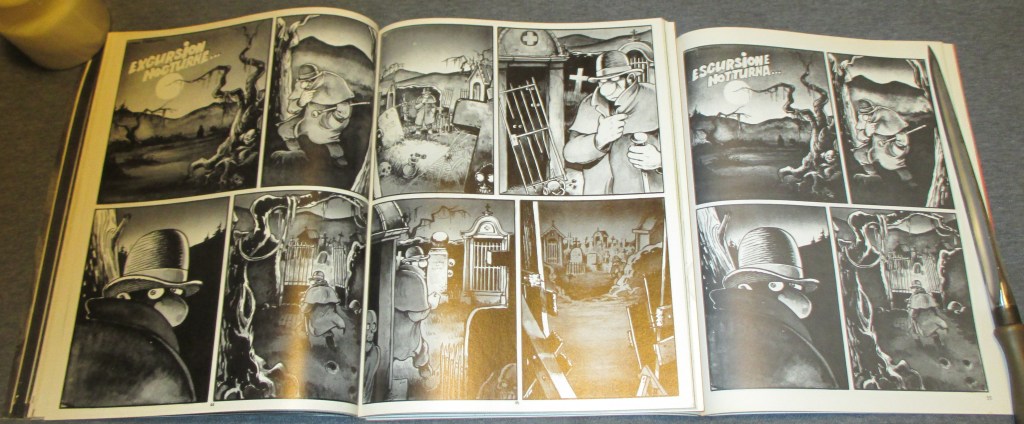
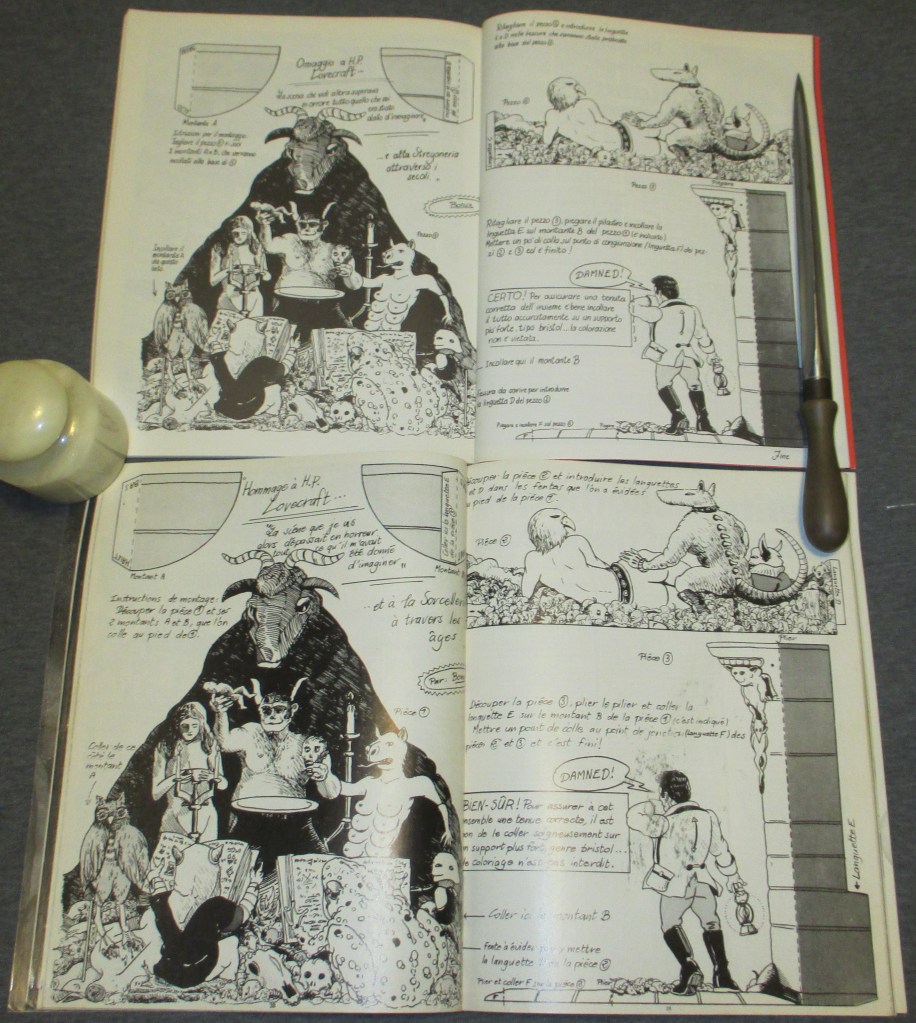
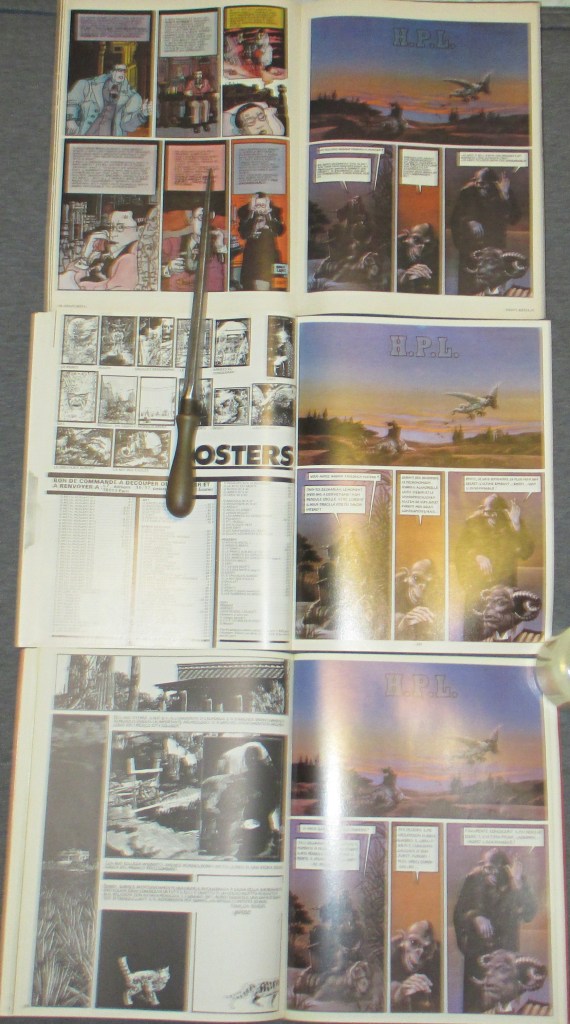
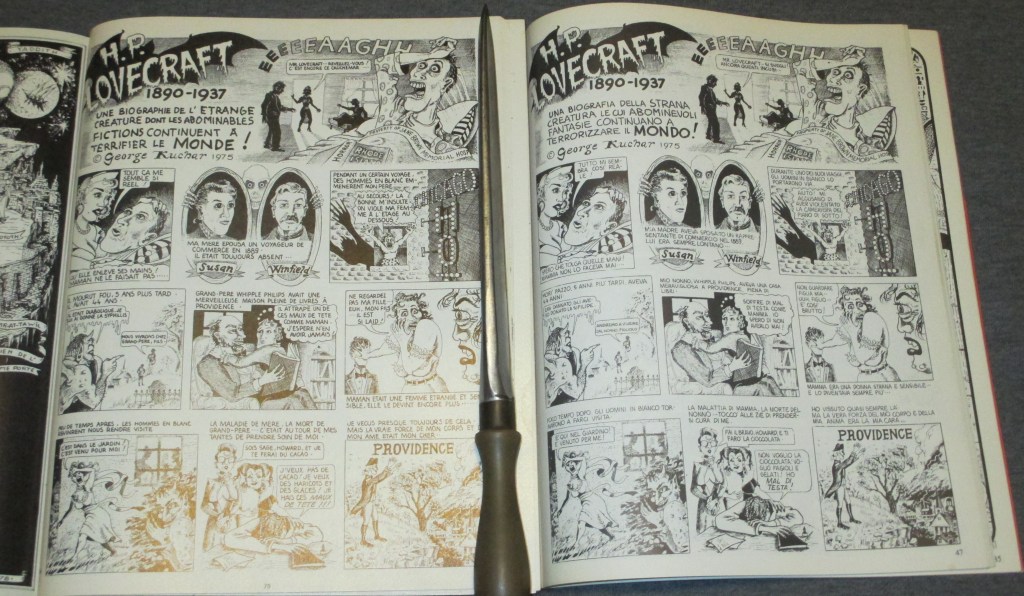
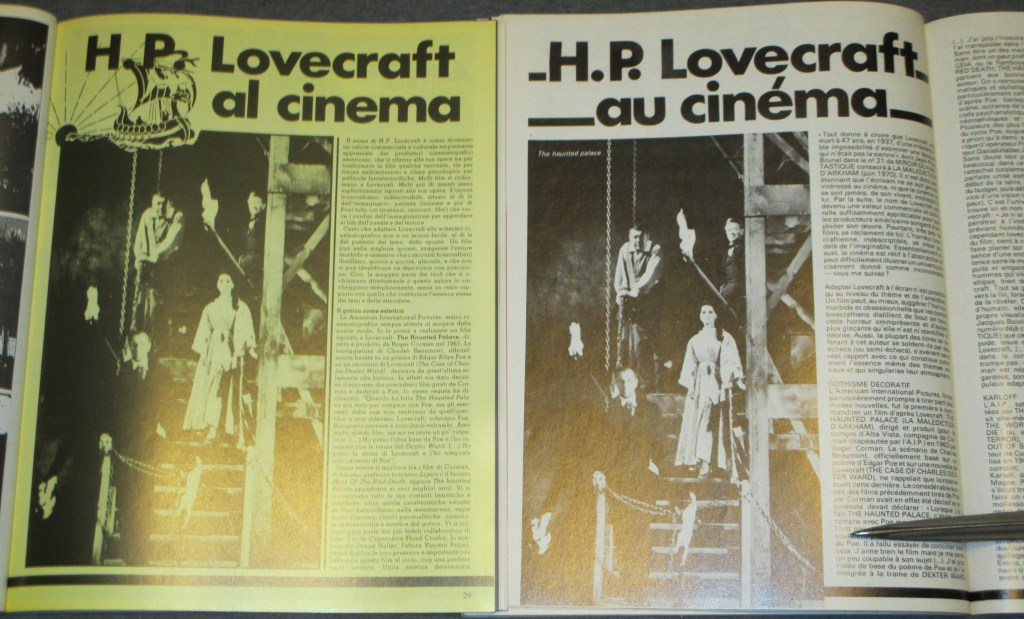
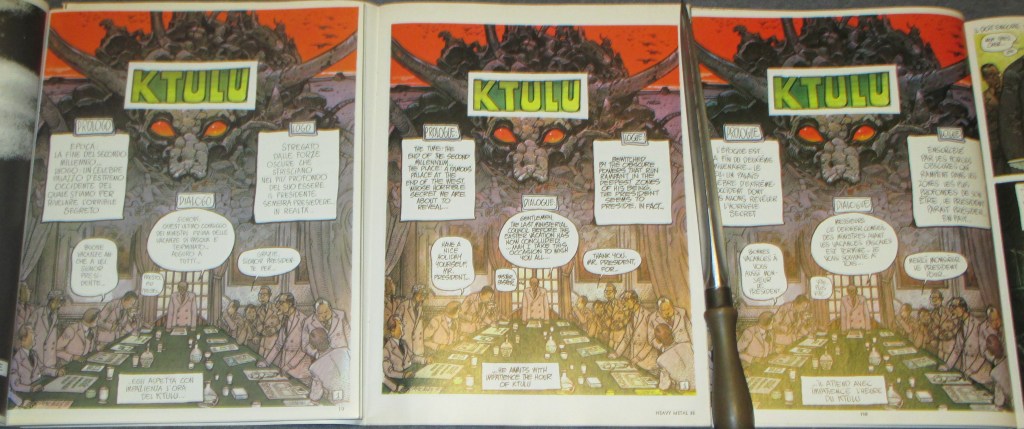
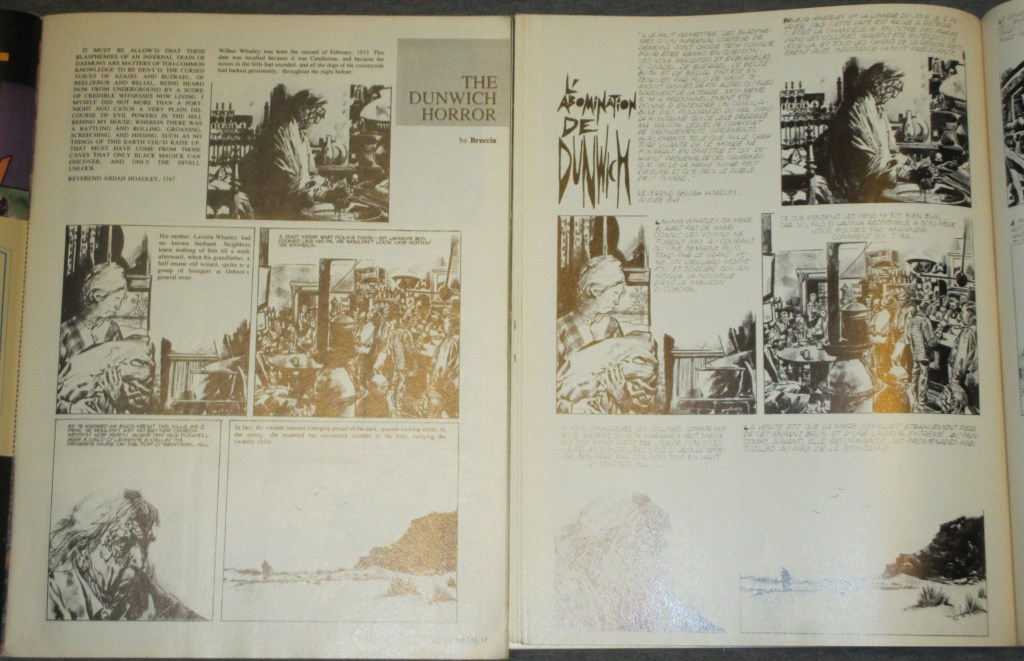
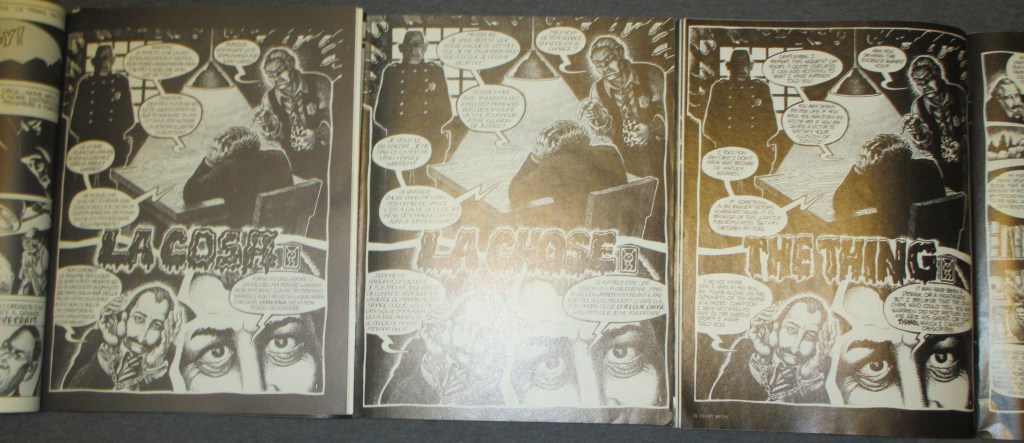
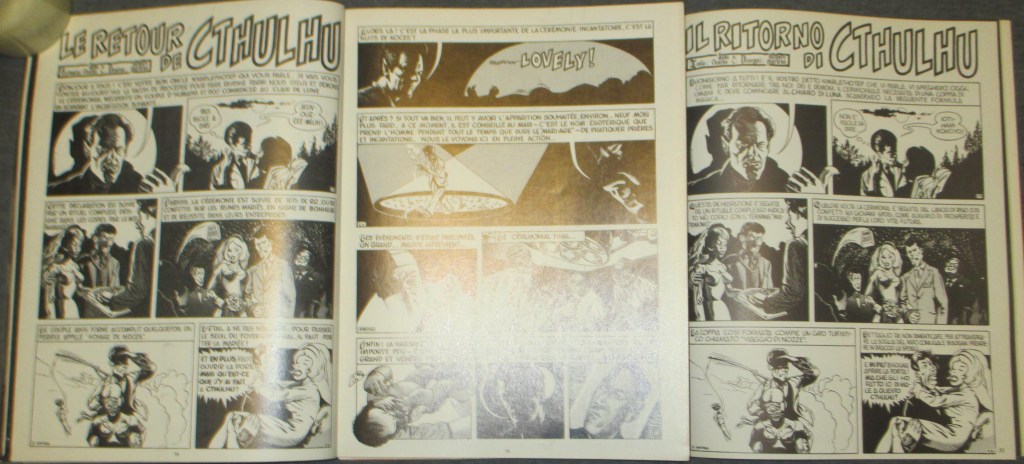
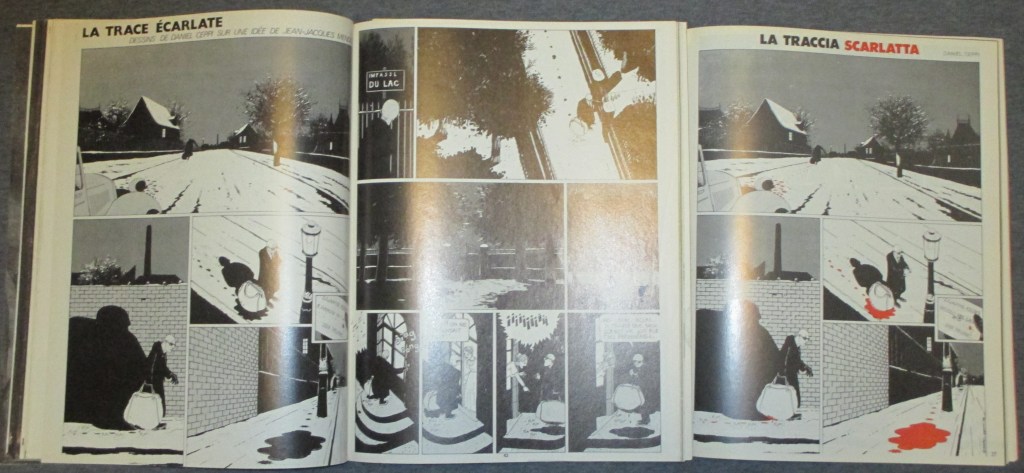
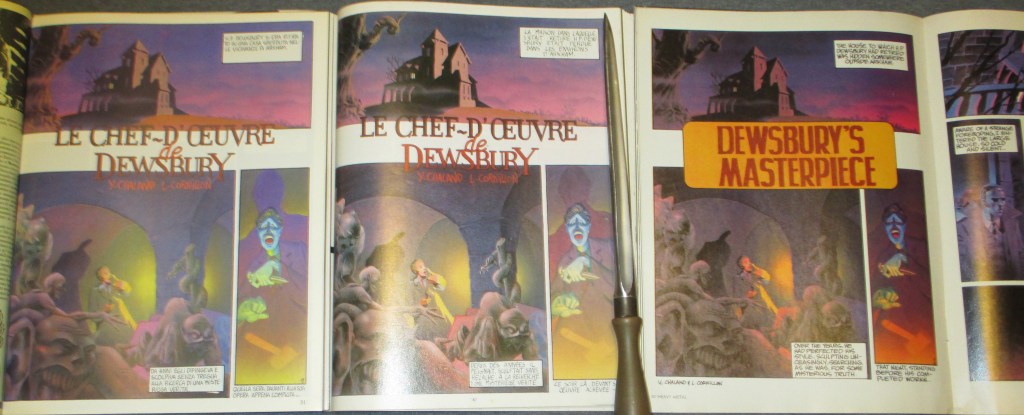
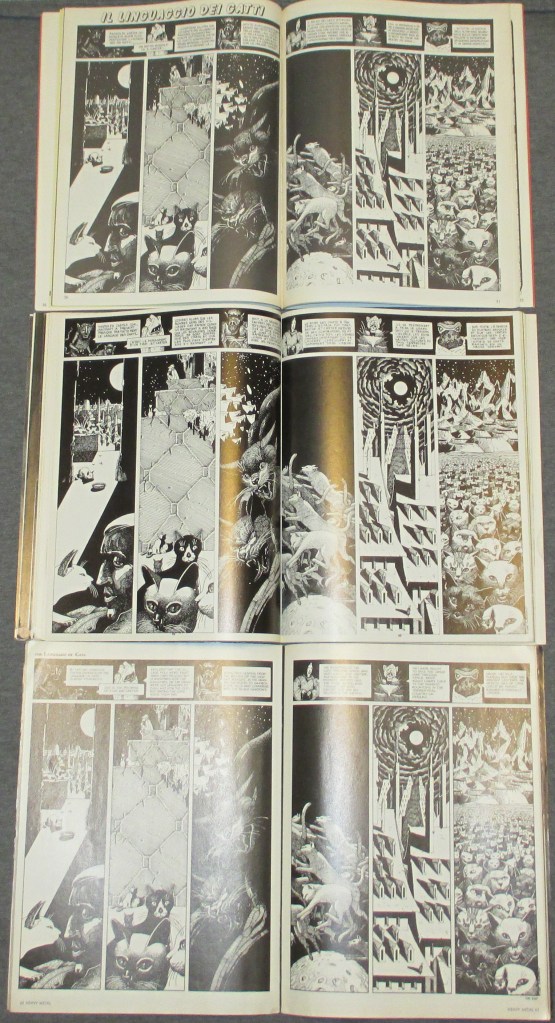
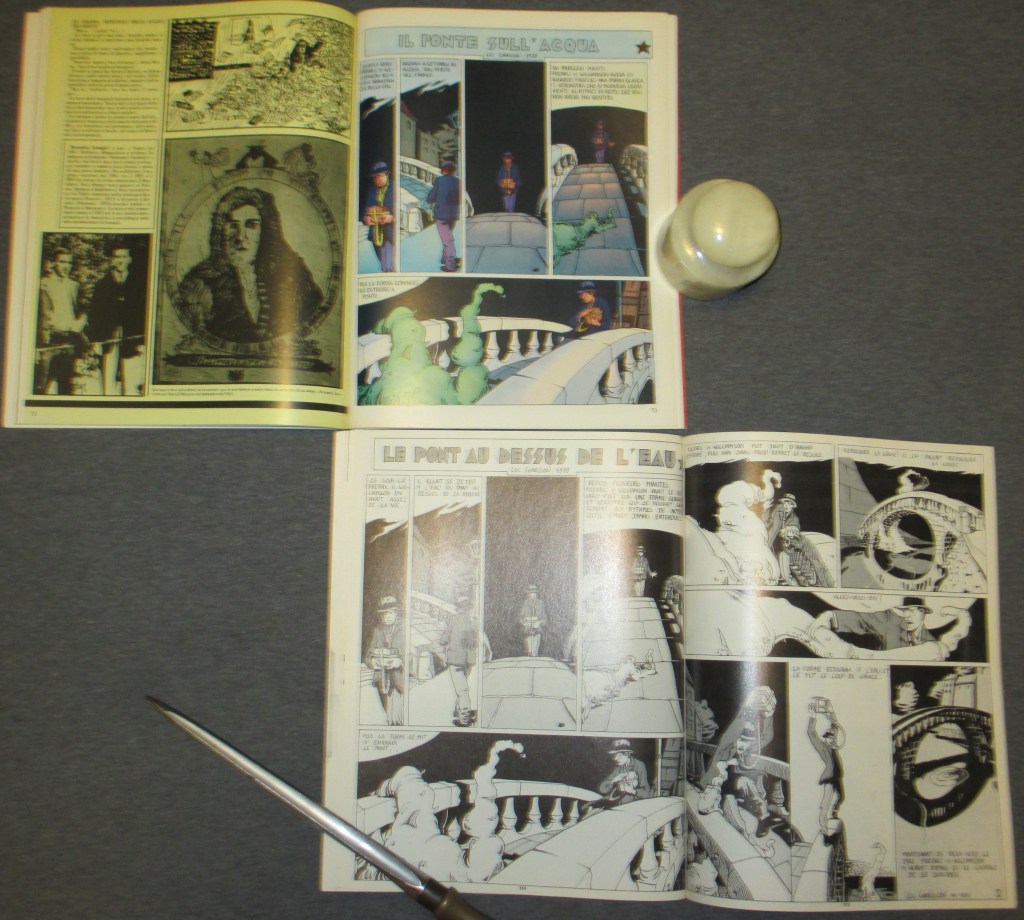
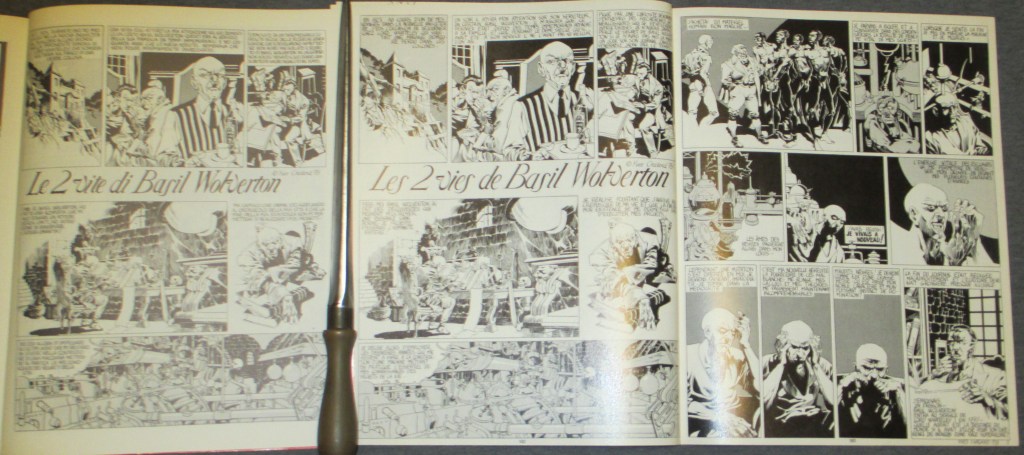
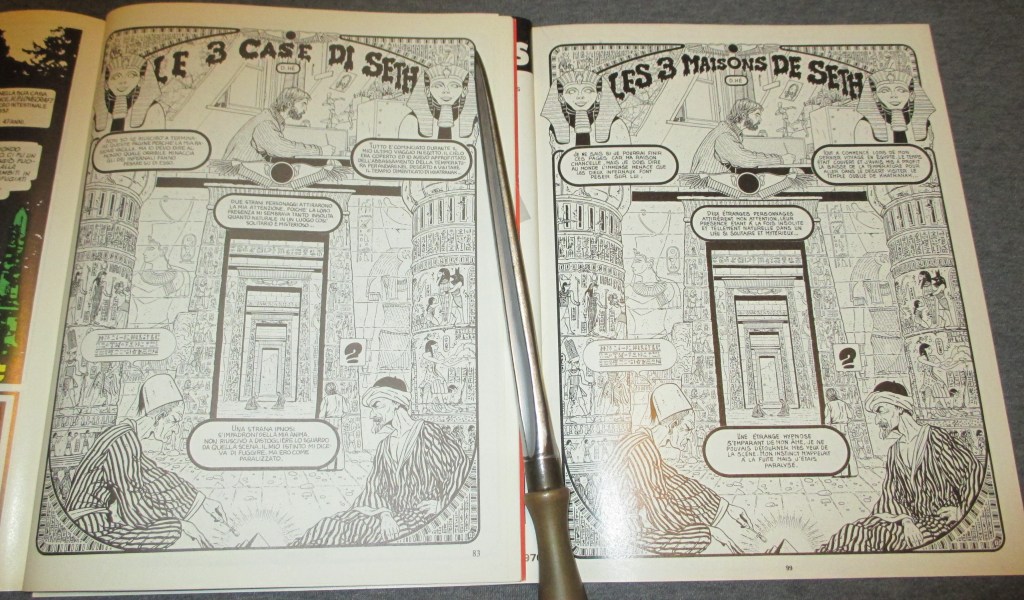
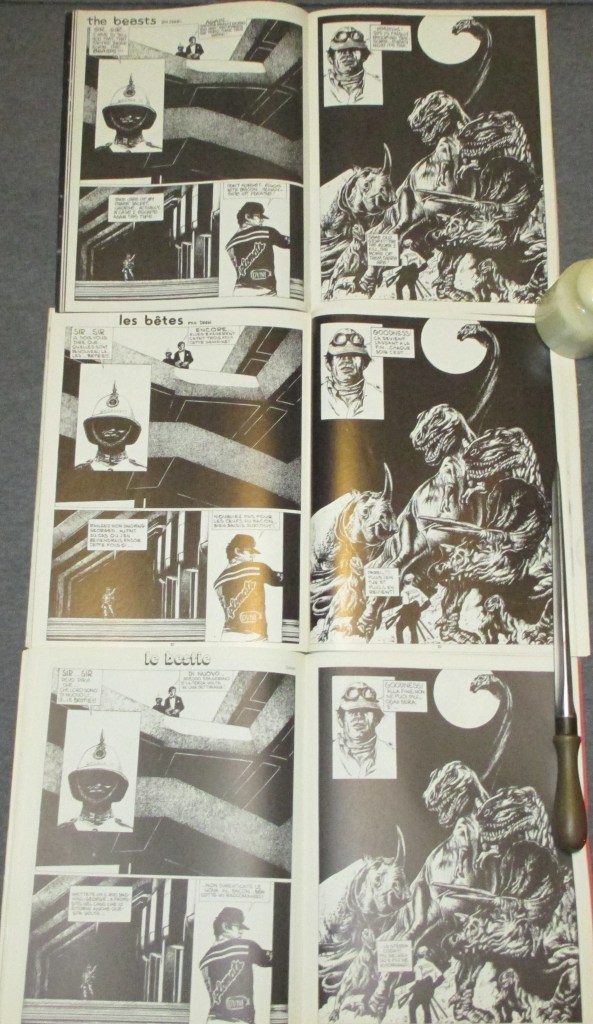
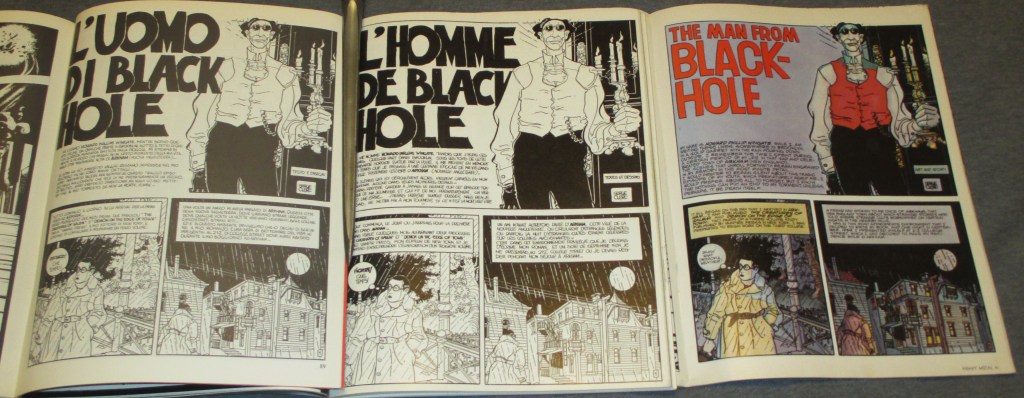
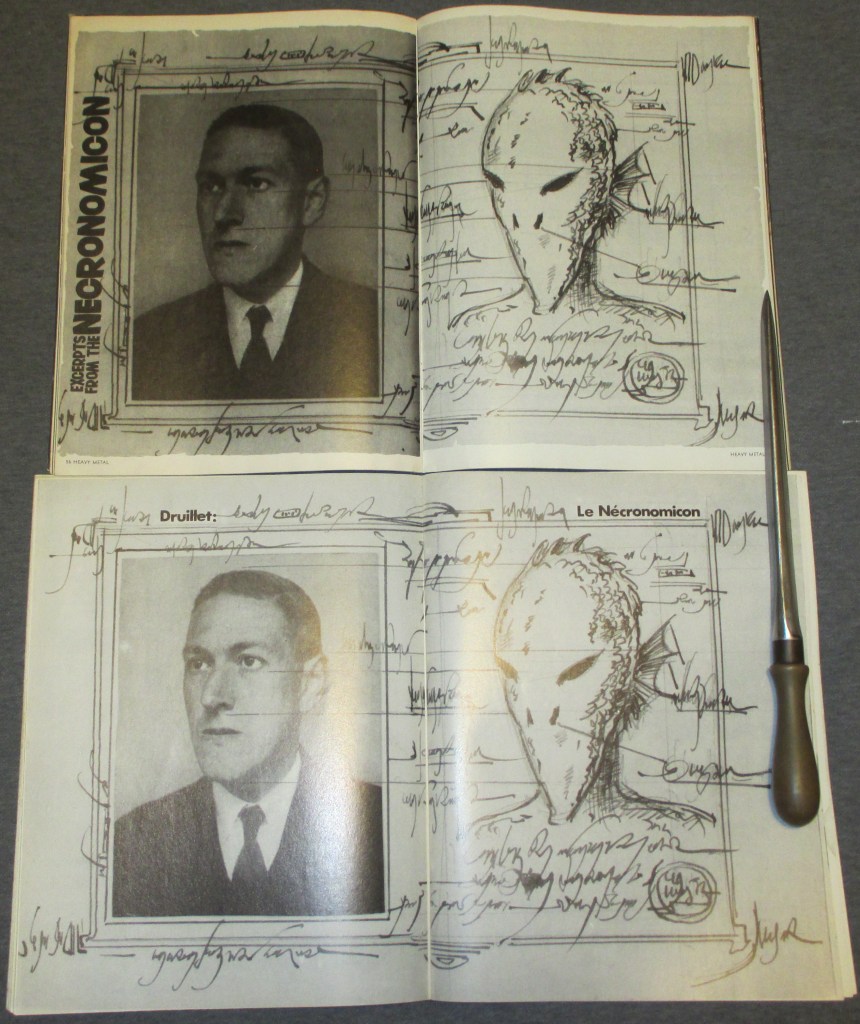
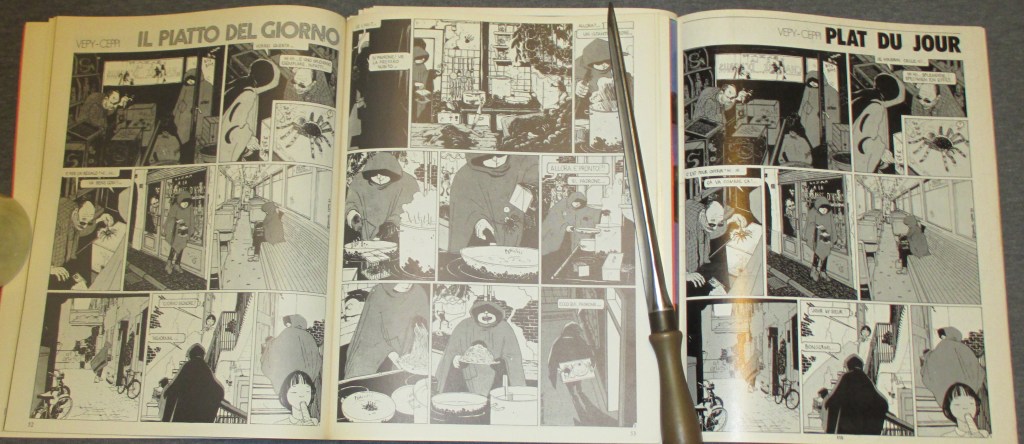
 Deep Cuts in a Lovecraftian Vein