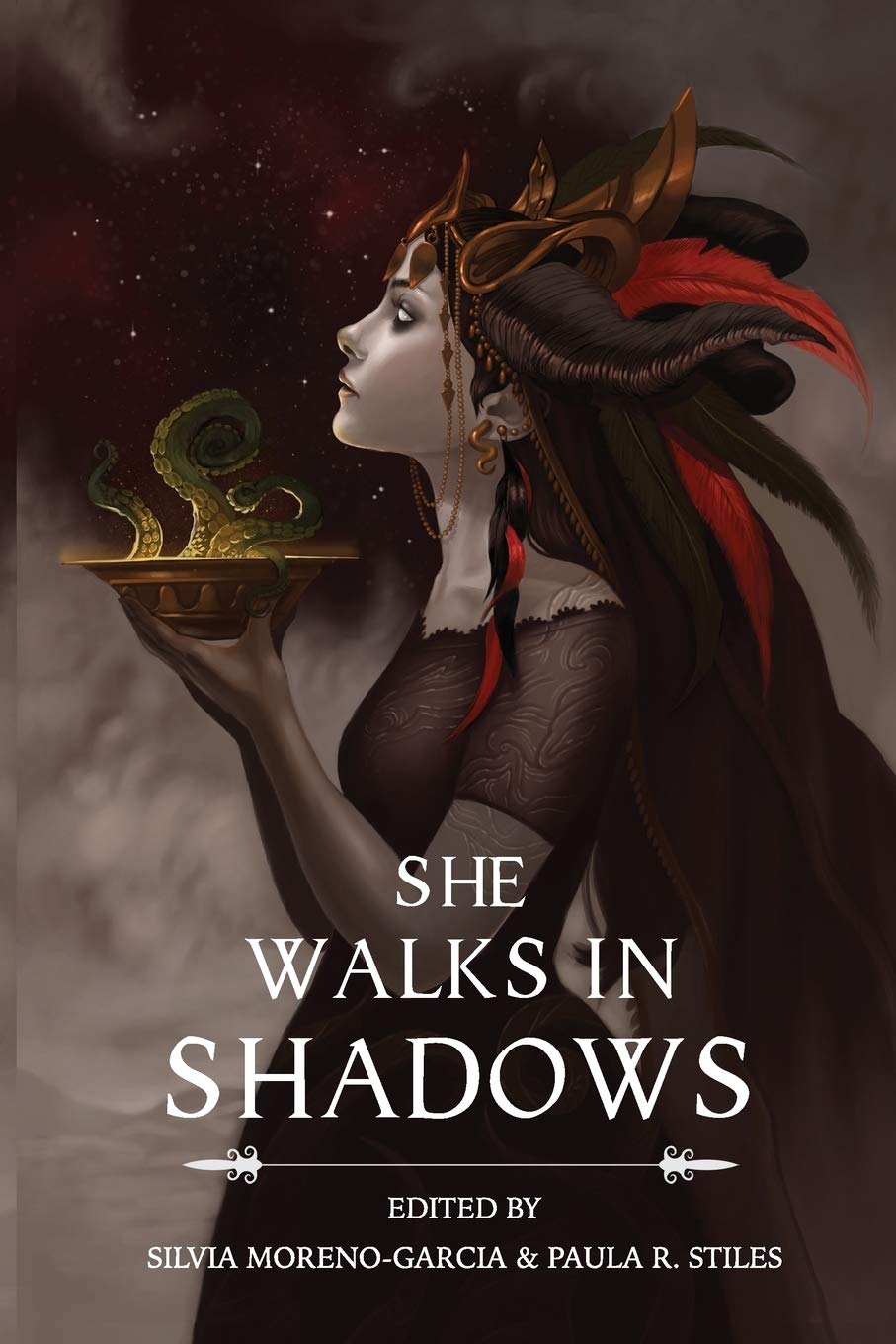
“The Thing on the Cheerleader Squad” (2015) by Molly Tanzer

The friend whose daughter had gone to school with Asenath Waite repeated many curious things when the news of Edward’s acquaintance with her began to spread about. Asenath, it seemed, had posed as a kind of magician at school; and had really seemed able to accomplish some highly baffling marvels. She professed to be able to raise thunderstorms, though her seeming success was generally laid to some uncanny knack at prediction. All animals markedly disliked her, and she could make any dog howl by certain motions of her right hand. There were times when she displayed snatches of knowledge and language very singular—and very shocking—for a young girl; when she would frighten her schoolmates with leers and winks of an inexplicable kind, and would seem to extract an obscene and zestful irony from her present situation.
—H. P. Lovecraft, “The Thing on the Doorstep”

The most subtly pervy moment in all of Lovecraft’s fiction is near the end of this paragraph, when the reader realizes that the mind of an old man is trapped in a young woman’s body as she goes to high school. It’s the kind of body-swapping setup that could serve as the premise for bad porn…or, in the hands of a competent writer, for a particular kind of tongue-in-cheek horror story. But who would write such a tale?

Molly Tanzer.

There has been considerable discussion about whether or not “The Thing on the Doorstep” is a transgender story (see: Must I Wear This Corpse For You?: H. P. Lovecraft’s “The Thing on the Doorstep” (1937) by Joe Koch ), but there is general agreement that Lovecraft deliberately avoided or elided any question of sexual attraction or the sex act itself in the tale. The pornographic possibilities went unrealized, but so did any potential interrogation of the character’s sexual identities with regard to gender. That has left a blank space on the Lovecraftian map for other writers more comfortable with such ideas to explore.

There’s a definite element of the quintessential queer film But I’m a Cheerleader! (1999) in the mix of influences Tanzer is drawing on, and the first half of the story plays it relatively straight when prudish, sheltered Victoria comes to terms with the complicated feelings aroused when her cousin Asenath reappears at Miskatonic High dressing like a boy and going out with girls. But Tanzer only plays out the high school melodrama and teenage angst so long, and even then, it’s with tongue-very-much-in-cheek.

Veronica rolled her eyes. “So what—you’re Laura Palmer now?”

“Maybe Bobby Briggs,” Asenath lowered her voice.
—Molly Tanzer, “The Thing on the Cheerleader Squad” in She Walks in Shadows 122

The plot in this story is very slight, Veronica’s treacle-sweet faith in Jesus and her utter frustration at how Asenath’s bad reputation is affecting her own showcase the kind of general ignorance, vapid insecurities, and rampant cruelty that are the hallmarks of high school. The story is told well; Tanzer keeps the pace ticking, doesn’t get too bogged down in secondary characters, or feel the need to jam a shoggoth out of left field into act three. The surprises, when they come, feel like they’ve always been there, waiting to be discovered.

What makes it work is the ending. Readers of “The Thing on the Doorstep” have their preconceptions of what is going on and how events will play out; those familiar with narratives of homosexual awakening might imagine that Tanzer is going to take the But I’m a Cheerleader! route with a Lovecraftian twist. The truth is, this was always a horror story, and the finale brings together all the elements in a way that readers probably won’t expect.

Is this a transgender story? When considering it in the context of Lovecraft’s original story, there’s a definite argument to make that it is more of a trans story than “The Thing on the Doorstep.” Asenath never comes out and makes the claim to be transmasculine directly, but that ambiguity is part of what makes the story work. The reader sees, through Veronica’s eyes, how Asenath acts and dresses and presents, and must make their own determination of which gender Asenath identifies with. That still leaves plenty of room for other authors to play with the unrealized possibilities of sex and gender in “The Thing on the Doorstep.”

“The Thing on the Cheerleader Squad” by Molly Tanzer was first published in She Walks in Shadows (2015) and its paperback reprints, and was also published in Transcendent: The Year’s Best Transgender Speculative Fiction (2016).


Bobby Derie is the author of Weird Talers: Essays on Robert E. Howard and Others and Sex and the Cthulhu Mythos.

Deep Cuts in a Lovecraftian Vein uses Amazon Associate links. As an Amazon Associate I earn from qualifying purchases.
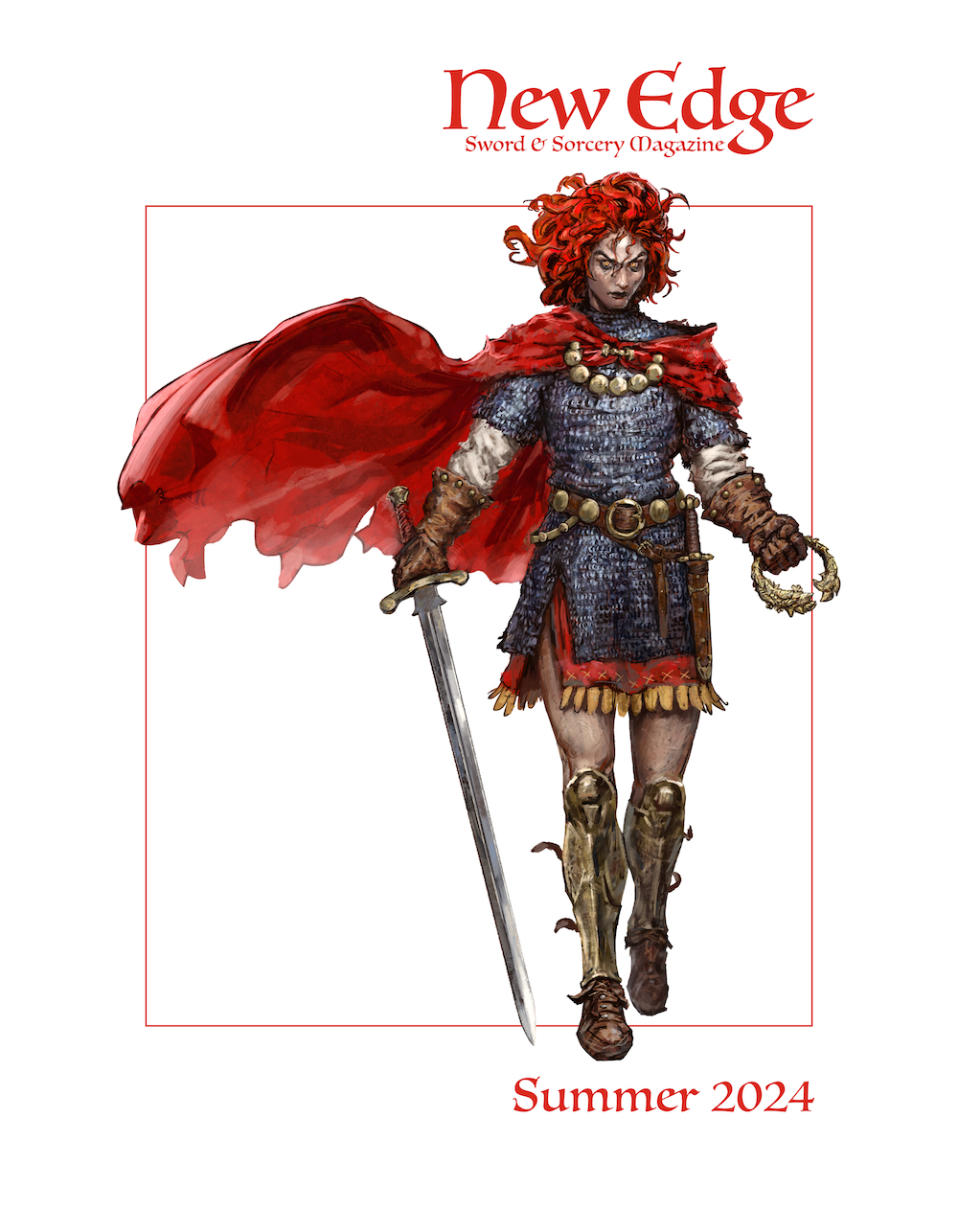
“Jirel and the Mirror of Truth” (2024) by Molly Tanzer

“You have succeeded today;” it said, “but you have lost yourself, Jirel, once of Joiry.[“]
—Molly Tanzer, “Jirel and the Mirror of Truth” in New Edge Sword & Sorcery #3

Jirel of Joiry appeared in Weird Tales with “Black God’s Kiss” (1934) by C. L. Moore. That style of story had no name yet, and very few peers to compare it to. Readers immediately saw in Jirel a warrior akin to Conan the Cimmerian and Kull of Atlantis, embattled against wizards and stranger foes that blended adventure and horror, might thews and magic, swords and sorcery.

As a consequence, the initial spate of adventures from C. L. Moore’s typewriter were a bit raw. There was little continuity and less worldbuilding. Jirel herself was a boldly sketched character, and her personal trials shaped her development—yet Moore never tried to portray her at different ages as Robert E. Howard had done with Conan, never sought to reconcile her fantastic France with the real world, and the adventures she went on were the definition of episodic. Where readers could look forward to Conan as a king and know he spent a varied career as a thief, pirate, and mercenary soldier, Jirel was little different in her last adventure than she was at her first.

Jirel of Joiry had no destiny, no future, almost no past to speak of.

So when Molly Tanzer received permission from C. L. Moore’s heirs to do a new authorized Jirel story, she had some decisions to make. Ninety years of steady development has refined heroic fantasy fiction far from its roots in pulp fiction. There have probably been a hundred stories about mystic Mirrors of Truth, not least because Robert E. Howard had a go at the idea with “The Mirrors of Tuzun Thune” (1929), and the pages of at least ten thousand paperback novels is stained with the blood of cunning wizards and magical gewgaws who learned, far too late, what the tip of the blade feels like as it cleaves their liver (or black heart, or festering brain, etc.) in two.

In this respect, “Jirel and the Mirror of Truth” reads like a fairly competent and well-written sword & sorcery story in a fairly old-school mode. If the heroine wasn’t Jirel, readers would still have no doubt that Jirel’s literary DNA was in the mix, much as most barbarians in fiction have a little bit of Howard’s Cimmerian in them. If it lacks something of the raw and sensual language of C. L. Moore, that’s because Tanzer is a smart enough writer not to fall in the trap of trying to pastiche Moore’s prose style. Better, it shows a solid understanding of one of Moore’s central themes: the Jirel stories are always about a contest of spirit as much (or more) than flesh.

It doesn’t take much genre savviness to glance at the title and decide the question will emerge, sooner or later, “Who is Jirel of Joiry?” The answer, however, might surprise a few folks. Molly Tanzer doesn’t regurgitate bits of old Moore stories, though she draws on elements of them; she illustrates who Jirel is through her actions and interactions with others, especially her new companion, Thevin Galois. Less a girlfriend and more than a sidekick, Thevin is a kind of Enkidu to Jirel’s Gilgamesh; the two are alike, but they complement each other. Perhaps they reflect one another’s strengths and weaknesses, their potentialities. Thevin is what Jirel might have been; Jirel is what Thevin might yet be.

When it came to amorous matters, Thevin preferred the company of women, and did not give much notice to men’s attentions.
—Molly Tanzer, “Jirel and the Mirror of Truth” in New Edge Sword & Sorcery #3

Tanzer likes LGBTQ+ characters in her stories, and in this respect Thevin as a lesbian works well. Her sexuality is stated, there’s a hint of tension and attraction with Jirel, but this isn’t Thirsty Sword Lesbians or Dagger Kiss where the question is whether they’ll kiss. If anything, it’s nice to just see the representation of a character where their sexuality is relevant to their character but not the main focus of the story or present just to fulfill a lurid scene or two—there is actual porn out there for folks that want erotic tales of lesbian swordswoman. Tanzer is focused on telling Jirel’s story.

For readers who start with “Black God’s Kiss” and read through the whole C. L. Moore-penned Jirel of Joiry saga to “Hellsgarde” (1939), “Jirel and the Mirror of Truth” might be a bit of a jolt in style. There’s a bit more of Michael Moorcock and Joanna Russ in the style than Robert E. Howard and C. L. Moore. Yet it is a well-written story, and a cut above the pastiche of yesteryear. With a little luck, Jirel’s new adventures may have just begun.

“Jirel and the Mirror of Truth” by Molly Tanzer was published in New Edge Sword & Sorcery #3 (Summer 2024).


Bobby Derie is the author of Weird Talers: Essays on Robert E. Howard and Others and Sex and the Cthulhu Mythos.

Deep Cuts in a Lovecraftian Vein uses Amazon Associate links. As an Amazon Associate I earn from qualifying purchases.

“In the Garden of Ibn Ghazi” (2021) by Molly Tanzer

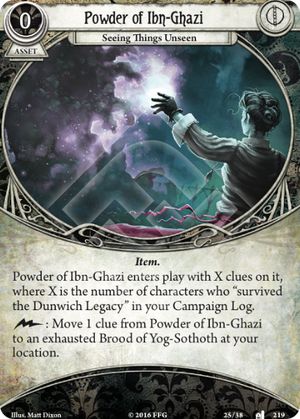
 I can see it a little when I make the Voorish sign or blow the powder of Ibn Ghazi at it, and it is near like them at May-Eve on the Hill.
—H. P. Lovecraft, “The Dunwich Horror”

Libido sciendi is the desire to know; the pull that drives people to squint through keyholes, pry up rocks and flagstones, to pick the lock on your sister’s diary. It is a very Lovecraftian drive, and one that applies equally well to the investigators of a Cthulhu Mythos story and to many readers themselves. How many young men and women have sat down to make lists of strange titles in Lovecraft’s stories, tracked hints between stories, read dead men’s letters, searched online to ferret out connections? It is not too much to say that generations have persisted in plumbing the Lovecraftian debts…and yet exciting would it be to find one more mystery to uncover?

Molly Tanzer wants readers to know that “this story is based on a true experience of mine. I really did have the thought, Oh, I loved that story, ‘In the Garden of Ibn Ghazi,’ when I picked up that card in Arkham Horror, years agao now. But after many, many deep Googles and queries to editors whom I thought might have published it later, I was forced to conclude that no such story exists. Last year, I picked up that card again in the game, and after doing yet another deep dive into the annals of the internet, I thought to myself, ‘I should just write it, then.”
—epigraph to “In the Garden of Ibn Ghazi” in
The Magazine of Fantasy & Science Fiction (Mar/Apr 2021), 126

If you want to get technical about it, Molly Tanzer is playing a very old game in this story. A person in the real world finds a hint that something in Lovecraft’s fiction might be real. Lovecraft would mention his friend Clark Ashton Smith among the artists of the Mythos, August Derleth put copies of Arkham House’s Lovecraft books on the same shelf as the Necronomicon in some of his stories, Joanna Russ had a fan run across a genuine Lovecraftian horror in “I Had Vacantly Crumpled It into My Pocket—But By God, Eliot, It Was a Photograph from Life!“, Robert Bloch in Strange Eons has someone run across an original Pickman painting. The fun of the game is guessing where the dividing line is—how much of what Lovecraft wrote is real? How did he know?

Tanzer teases the reader a better than most. The themes are play are so hoary and well-worn they’re like an old ratty pair of slippers, so easy and comfortable to slip into you almost wouldn’t wear anything else. The protagonist knows that the set-up has to be fake, recognizes the theatricality of it, even reels off the names of familiar works like The Wicker Man and Murder on the Orient Express as a knowing wink to what is about to happen—and the reader keeps reading anyway. It isn’t that Tanzer is being unoriginal, it’s just that it’s almost a ritual with readers at this point. They recognize all the signs, and appreciate the set up, but what they want…what they need…is to know the secret of the ending.

A large part of the appeal of the story will be for Lovecraftian enthusiasts. The nameless protagonist is not explicitly Molly Tanzer herself, but in the sense of “write what you know,” enough of Tanzer is stamped on the character’s backstory to lend verisimilitude. It gives room for little in-jokes. When Tanzer writes:

And it was actually S. T. Joshi who first called me a minor Lovecraftian author, so the scales balance out on that one. I think he was trying to hurt my feelings, but there’s no point to being offended by the truth.
—Molly Tanzer, “In the Garden of Ibn Ghazi” in
The Magazine of Fantasy & Science Fiction (Mar/Apr 2021), 140

S. T. Joshi is a noted Lovecraft scholar, biographer, writer, and critic who is somewhat famous for being acerbic. If he doesn’t like something, Joshi makes no bones about it. For fans of Lovecraftian fiction, two sentences is enough to invoke the image of S. T. damning someone with faint praise. This isn’t so much a jibe at the Old Man of Lovecraft Studies so much as a wink-and-a-nod at the realities; whether or not Joshi actually said something like this to Tanzer is less important than this is something he might well say. Lovecraft fans familiar with Joshi will recognize the hint; like many real-life people who found fictional versions of themselves appearing in Lovecraftian stories, Joshi has crossed that threshold a few times—most notably in the final issue of Alan Moore & Jacen Burrows graphic novel Providence.

There is a lot to like about the story. Tanzer has a great deal of skill in creating convincing snippets of authentic-sounding antique prose, and an awareness of how language and tone reveal little slip-ups when you’re trying to make a text sound old to an audience. The nested narrative structure is a complicated one, the kind of thing Lovecraft would use to good effect in stories like “The Dunwich Horror,” “The Call of Cthulhu,” and The Case of Charles Dexter Ward. At one point, I thought one of the key nested episodes was paraphrasing one of the tales of the Scheherazade—but no, it was something of Tanzer’s own design, though with a hint of the folktale about it.

There is a lot that is Lovecraftian about “In the Garden of Ibn Ghazi,” but there are no tentacles or blasphemous names, no Necronomicons, and the gnosis that reader and unnamed protagonist seek is, in the end, not another nugget of Mythos lore. This is not a locked-room mystery where you guess who the killer is on page three, nor a standard Cthulhu yarn where you’re waiting for the cultists in the funny robes and wavy daggers to come out of the literary woodwork. But if the reader is willing to suspend their disbelief a little, and enjoy the ride, they may find find it worth the journey.

“In the Garden of Ibn Ghazi” (2021) by Molly Tanzer was first published in The Magazine of Fantasy & Science Fiction (Mar/Apr 2021).


Bobby Derie is the author of Weird Talers: Essays on Robert E. Howard and Others and Sex and the Cthulhu Mythos.

Deep Cuts in a Lovecraftian Vein uses Amazon Associate links. As an Amazon Associate I earn from qualifying purchases.
“Herbert West in Love” (2012) by Molly Tanzer

“Of Herbert West, who was my friend in college and in after life, I can speak only with extreme terror. This terror is not due altogether to the sinister manner of his recent disappearance, but was engendered by the whole nature of his life-work, and first gained its acute form more than seventeen years ago, when we were in the third year of our course at the Miskatonic University Medical School in Arkham. While he was with me, the wonder and diabolism of his experiments fascinated me utterly, and I was his closest companion.”
—H. P. Lovecraft, “Herbert West—Reanimator”

“Knew you faggots were faggots,” he said smugly. “Going on a date? To a party? I’m not surprised you suck dick by choice, West, but you, Langbroek? You might actually get a girl to look at you! That is, if you weren’t so busy sucking dick. By choice,” he added, and then laughed loudly, hurr hurr hurr.
—Molly Tanzer, “Herbert West in Love”

Readings of homosexual subtext in Lovecraft’s fiction rarely give way to text—critics are more comfortable noting the possible allegories and ambiguity of language than they are exploring those themes in a work of fiction. There are some who do have the courage and insight to go into such uncharted territories, including the graphic novel Providence (2015-2017) by Alan Moore & Jacen Burrows, “Herburt East: Refuckinator” (2012) by Lula Lisbon, and “Herbert West in Love” (2012) by Molly Tanzer. While Lisbon focuses on eroticism, Tanzer addresses the more complex social and emotional issues surrounding the realities of homosexuality in the early part of the 20th century…when gay men could often face violence and legal penalties as well as social ostracism.

Tanzer’s story works because of how well she develops the characters of the story. As a prequel to Lovecraft’s tale, it beautifully sets up a number of scenes, with a great deal of attention to little details of Lovecraftian lore in the name of streets and Miskatonic University faculty—but all of this is dressing for the main question: who or what is Herbert West in love with?

Tristan almost slipped on a patch of ice when West grabbed him by the hand and pulled him down into a kiss, right there in the snowy brightness under the lamppost, but West’s grip was like iron, and it kept Tristan steady on his feet.
—Molly Tanzer, “Herbert West in Love”

It feels like a question that shouldn’t need to be asked, that doesn’t matter, certainly not in Lovecraft’s narrative and most of the stories that follow it. Lovecraft, uninterested in romance, never gave West any romantic partners; it was a rare author that followed that did. The intensity of West’s focus on reanimation often makes him an essentially asexual character, all of his passion devoted to his work. Yet that is the crux of Tanzer’s narrative.

It isn’t a question of whether or not West is homosexual or bisexual; Tanzer and Lovecraft never get inside West’s head on the matter of his sexuality. West is only seen through the eyes of his associates, with their own emotions and prejudices coloring their perceptions. The degree of manipulation that the young reanimator shows make all of his actions suspect. We never know if West is truly attracted to his fellow student, or if sex is one more weapon that West will use to achieve his goal.

Pete Rawlik, who has carved something of a niche in this particular corner of the Mythos, described “Herbert West in Love” as “subversive” in his introduction to Legacy of the Reanimator (2015)—which it is, in a certain sense. The reader is not presented with any definitive statements on West’s sexuality, but his actions in the story frame two possibilities: either West is open to sexual encounters with men, and thus subverting the asexual character created by the largely homophobic Lovecraft; or West is far more treacherous and alien than even Lovecraft portrayed him, willing to feign homosexuality, even with all its attendant potential consequences in the early 20th century, if that will successfully manipulate his assistant.

Either reading changes our perspective on West, and how we read the reanimator from that point on.

“Herbert West in Love” was first published in the Lovecraft ezine, it has been republished in Tanzer’s collection Rumbullion ‘and Other Liminal Libations’ (2013) and the anthology Legacy of the Reanimator (2015).


Bobby Derie is the author of Weird Talers: Essays on Robert E. Howard & Others (2019) and Sex and the Cthulhu Mythos (2014).

“ALL THIS for the GREATER GLORY of the 7th and 329th CHILDREN of the BLACK GOAT of the WOODS” (2012) by Molly Tanzer

I always preferred to think that strong women and loving couples and flirting and passion and a hundred other delightful emotions existed, somewhere, in Lovecraft’s world, and we just didn’t get told that story. Which begs the question: what if these realistic, flesh and blood and sex and sweat characters did meet up with Lovecraft’s?
—Carrie Cuinn, Cthulhurotica (2010) 5

“ALL THIS for the GREATER GLORY of the 7th and 329th CHILDREN of the BLACK GOAT of the WOODS” begins with an unusual twist on the Greek myth of Pygmalion. The story of Pygmalion and his statue-bride has been adapted to a Mythos vein at least a few times, notably by August Derleth in “Innsmouth Clay” (1971) and Clint Collins in “The Summoned” (2011), but here Tanzer subverts the expectations in a manner that is quirky and surreal: rather than focus on Pygmalion and Galatea, the narrator of the story is Pygmalion’s offering to Aphrodite—inanimate, but possessed of anima. A passive actor in the proceedings of the story, this unique nameless narrator acts as witness of and commentator on the events that follow.

H. P. Lovecraft was a transgressive writer, whose fiction violated the cultural taboos of his era—he wrote stories featuring cannibalism, necrophilia, atheism, nihilism, incest, cosmic miscegenation, and inescapable biological determinism. Molly Tanzer is a subversive writer, whose stories undermine the reader’s expectations; she sets tropes on their head, teases well-worn plots and situations then inverts them, challenges staid conventions with fresh perspective. The Cthulhu Mythos provides plenty of raw material.

As a mature genre, Mythos horror has its own tropes and familiar elements. A reader who has suspended disbelief for the insidious cults of Cthulhu and Yog-Sothoth in “The Call of Cthulhu,” “The Shadow over Innsmouth,” and “The Dunwich Horror” need not be reintroduced to them fresh; cultists and tentacled entities became a stock element in much of the fiction after Lovecraft and his contemporaries. What was transgressive in the 1930s became accepted, and eventually kitsch: the default late-night gatherings of robed strangers have taken on the verisimilitude of Hollywood Satanism, only with naughty tentacles instead of inverted crosses. Overripe for satire and subversion.

London during the Victorian period; the British Museum, with the relics of a recent archaeological dig on display; a curator with untoward designs on a puritanical innocent maid; a small gathering of cultists; a summoning ritual which requires sacrifice—this is almost a by-the-numbers plot, until the climax. All of which is by design: Tanzer knows the tropes she is invoking, builds the scenario up so that savvy reader’s expectations are pointed in one direction before she pulls the rug out and switches gears. The language, fitting for a story dealing with Shub-Niggurath, titillates and teases of things to come:

“Do you know what a dildo is?” asked the docent roguishly, his mustache twitching as he tried not to smile.

This is not erotic Lovecraftian fiction, although Tanzer deliberately flirts with the possibility. The nameless narrator is not coy, but neither are they crude; sex-positive without being sex-obsessed. Tanzer’s story is a pastiche not of anything Lovecraft wrote specifically, but of an accepted standard of Mythos fiction, where virgins are to be sacrificed by robed cultists, preferably in as leering and erotic a manner as possible, such as put to film by Roger Corman in The Dunwich Horror (1970). The Hollywood version of the Mythos, where all the real horror and atmosphere has been boiled off, leaving a handful of reoccurring images and predictable plot devices. Then Tanzer flips the script.

ConquerorWomb_cover02-187x300“ALL THIS for the GREATER GLORY of the 7th and 329th CHILDREN of the BLACK GOAT of the WOODS” is a piece it would be hard to write before the 21st century. It requires the build-up of Mythos fiction tropes from the 70, 80s, and 90s, and it requires a publisher and audience willing to deal with such a surreal, adults-oriented approach as far as the unique narrator and the overall plot of the story. It’s not erotica, but it’s also not for kids: that weird middle ground of adult fiction that is sexually explicit but isn’t porn. There weren’t a lot of publishers for that material, and still aren’t. As kitsch as the robed-cultists-sacrificing-the-virgin is, the Mythos is still transgressive to many people, to the point that a sex-positive protagonist in a Mythos story is subversive.

That’s really the interesting thing about this story, not so much the events of the plot or characters but what the plot and characters say about the average understanding and approach to Mythos fiction. In M. L. Carter’s “Prey of the Goat”, Shub-Niggurath is a figure of negative sexuality, characterized by unhealthy lust, violation, non-consensual sex, and threats of sexual violence; in Tina L. Jens’ “In His Daughter’s Darkling Womb” the protagonist is the center of a plot that involves her being coerced into sex; in Joanna Russ “I Had Vacantly Crumpled It into My Pocket … But By God, Eliot, It Was a Photograph from Life!” a Lovecraftian entity entraps the male character with promise of a romantic relationship—these are all essentially negative depictions of sexuality, sex as a medium for horror.

Sex itself is not demonized in Tanzer’s story. The depiction of Shub-Niggurath is effectively the same as in “Prey of the Goat,” but the sexual act is portrayed by the narrator and the helping characters as a positive thing with many warm recollections, when everyone involved is willing and has a good time. Tanzer does not dismiss the possibility of rape—that is a real and vital source of conflict throughout the story—but sexual assault and horror are not the sole depictions of sexuality in the narrative. This is a marked contrast from a great deal of Cthulhu Mythos fiction, and although Tanzer doesn’t dwell on the implications in the story itself, it feels almost like a response to the question Carrie Cuinn posed in her introduction to Cthulhurotica.

“ALL THIS for the GREATER GLORY of the 7th and 329th CHILDREN of the BLACK GOAT of the WOODS” was first published in The Magazine of Bizarro Fiction #7 (2012), and then reprinted in the ebook-only anthology Conqueror Womb: Lusty Tales of Shub-Niggurath (2014). Molly Tanzer has written a number other Mythos tales such as “Go, Go, Go, Said the Byakhee” (2011), “Herbert West in Love” (2013), “The Curse of the Old Ones” (2015, with Jesse Bullington), and “The Thing on the Cheerleading Squad” (2015); and has carved out her own corner of Lovecraft Country with the Ivybridge Twins stories, set in the Victorian period and collected in A Pretty Mouth (2012).


Bobby Derie is the author of Sex and the Cthulhu Mythos (2014)