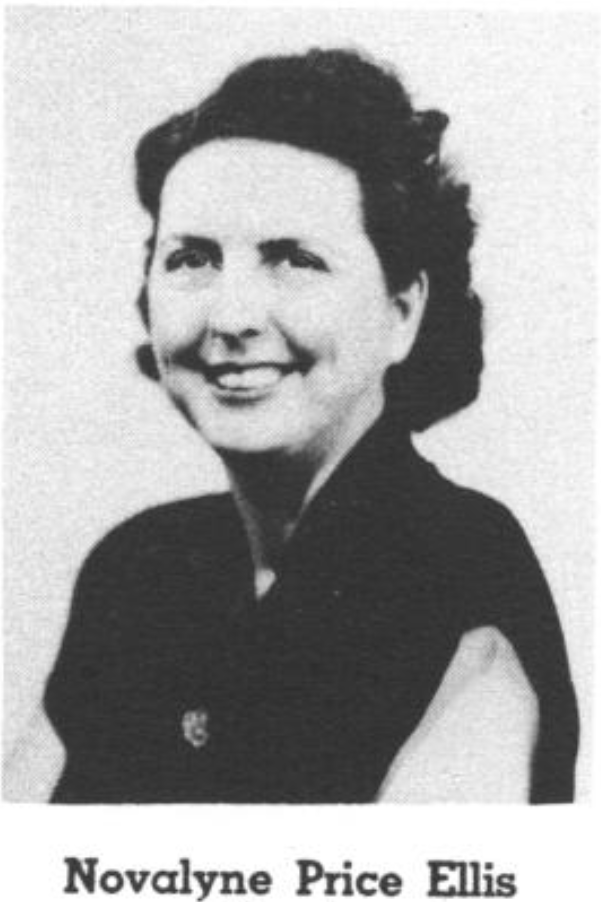
Deeper Cut: The Short Fiction of Novalyne Price Ellis

The last two or three years, we’ve dated steadily, not because we’re in love; but because we like each other and like to talk about books and writing stories. Both of us try to write; he has sold a few things, and I’m still trying.
—Novalyne Price Ellis, One Who Walked Alone 19

Writing was one of the interests Novalyne Price and Robert E. Howard had in common, and it drew them together. According to Novalyne’s memoir, Howard put her in touch with his agent Otis Adelbert Kline, who agreed to read one of her stories, and sent it back with comment—at the time, literary agents normally charged a reading fee, but Kline likely did this as a favor to Bob. Unfortunately for Novalyne, her story (and Kline’s letters) were accidentally burned (ibid. 227). Sadly, Novalyne did not appear to break into print during her time in Cross Plains, Texas.

However, in later letters, Novalyne says she was published:

Eventually, I sold a few short stories and the radio script about Bob’s look-alike or double.
—Novalyne Price Ellis to L. Sprague de Camp, 20 Aug 1977,
Selected Letters of Novalyne Price Ellis 19

Although I had to keep teaching because I was afraid I wouldn’t be able to meet my monthly bills, I did sell a few stories and articles over the years.
—Novalyne Price Ellis to Thomas W. Collins, 10 Nov 1988, ibid. 51

While I sold a few stories during the 1940s and 50s, I know so little about writing and what I am trying to do for Bob.
—Novalyne Price Ellis to Glenn Lord, 27 Aug 1979,
Selected Letters of Novalyne Price Ellis Vol. II, 15

But I was very lucky with the sixteen to eighteen stories, articles, radio scripts, and things that I sold. My first story had two paragraphs cut. One other story had a title change, and the radio script had a title change and the first line changed—(which was a mistake.)
—Novalyne Price Ellis to Glenn Lord, 8 Dec 1980, ibid. 50-51

Glenn, the first story I sold was the result of the editor’s making a couple of suggestions about cutting it. After that I sold another group of stories because I knew more than I had a[t] first. Kline was handling my material then, too, and he made some worthwhile suggestions about individual stories.
—Novalyne Price Ellis to Glenn Lord, 10 Nov 1981, ibid. 75

All my life, I wanted to write but teaching was so exciting and I put so much effort into it, I didn’t have time to devote to writing. However, the fact that I managed somehow to write and sell about 18 stories and articles encourages me to believe that I can write salable material.
—Novalyne Price Ellis to Donald Grant, 19 Nov 1981, ibid. 79

I have read and re-read the stories of mine that sold, and I’ve tried for the same spontaneity of ease. It’s been hard.
—Novalyne Price Ellis to Glenn Lord, 3 Sep 1986, ibid. 151

Some of this material jives with known information. The radio play, for instance, is “The Day of the Stranger” (1947) by Novalyne Price Ellis. Articles like “Lafayette Teacher Terms Public Speaking Training Vital Necessity in School System” (The Lafayette Progress 29 Aug 1959) are fairly well known. However, the assertion that she wrote and published a number of fiction stories in the 1940s and 50s, and even published them through Kline’s agency, is new. It suggests an ongoing business relationship with Kline, possibly until his death in 1946.

The real question is: where were Novalyne’s stories published? Her name is absent from the major pulp databases. She might have used a pen name, which was common enough during the period, and difficult to track. So too, she might have been writing primarily in the romance pulps, which are poorly attested, or in non-pulp magazines, which are likewise not well indexed. As it happens, at least two of her stories were published (or republished) in newspapers and are available through online archives, while at least two more were published in non-pulp magazines, one of which is available online.

Part of the difficulty in finding these stories is that the first three (all published in 1945) were published under the name Novalyne Price Robarts (she was briefly married to Douglas Robarts from 1942 to c.1946; she married William Ellis in 1947), and appeared in Canadian newspapers and/or magazines. Kline was known for placing his client’s work internationally, and while World War II put a serious crimp in such sales, Canada seems to have been a ready market for Novalyne’s romantic fiction.
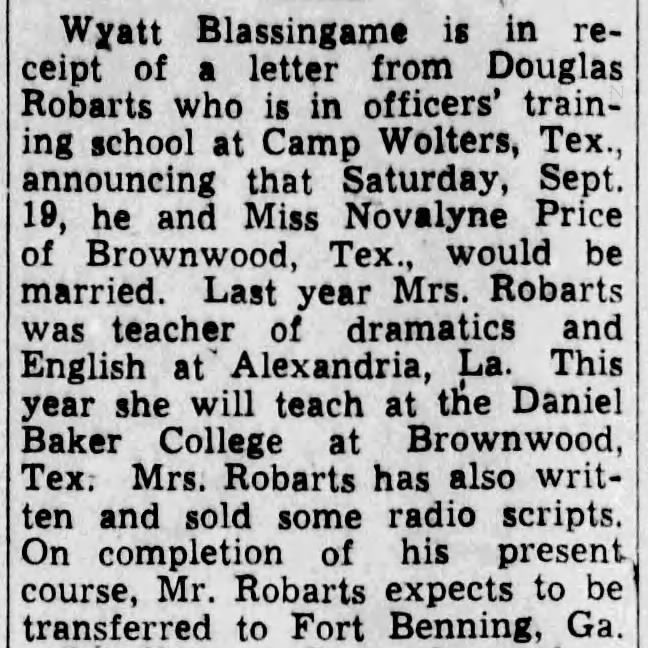
So we have a glimpse of at least some of Novalyne’s published fiction—and we can get a glimpse of her style and themes, and a better understanding of the stories she may have shared with Robert E. Howard, Tevis Clyde Smith, Otis Adelbert Kline, and others.

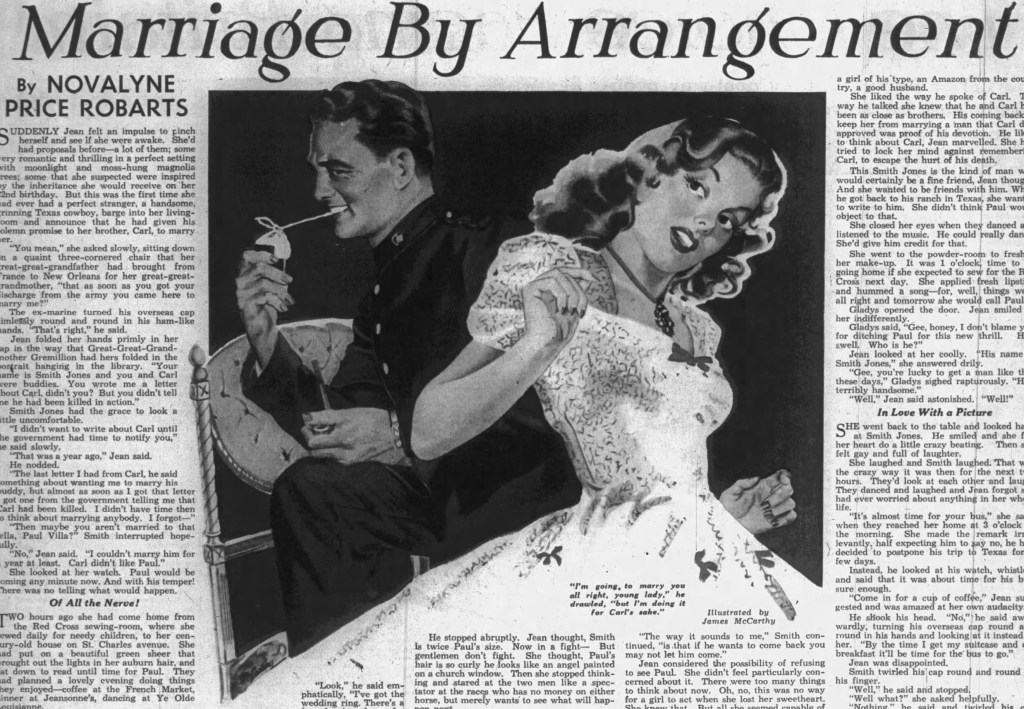
“Marriage by Arrangement” (23 Jun 1945)

This short story was published in the Toronto (Ontario, Canada) Star Weekly newspaper, under the name Novalyne Price Robarts.

Jean receives a proposal from Smith Jones, the Marine buddy of her brother Carl, who was killed in action. This makes a small difficulty, as she’s expected to receive a proposal from Paul Villa, and doesn’t like being told who she will or will not marry. Initial upset at the unexpected proposal gives way, by degrees, to attraction and regret for hardheadedness.

By 5 o’clock that afternoon, she felt so sorry for Smith Jones she even cried a little. She spent most of the afternoon trying to write him a letter. But she didn’t know his address. She could run an ad. in the personal column of the newspaper.

This is not one of Novalyne’s relationships recast in fictional form; but there is a bit of an echo of One Who Walked Alone in the vacillation, the feminine independence versus the attraction. It’s a wish-fulfillment story aimed for women, an ideal romantic fantasy where the main conflict is a woman struggling with the question of what—and who—she really wants. Fortunately, in this case, Jones comes back, hat literally in hand.
“Blueprint for Happiness” (29 Sep 1945)

This short story was published in the Toronto (Ontario, Canada) Star Weekly newspaper, under the name Novalyne Price Robarts.

Mary Ellen Carter, schoolteacher, doesn’t want to be an old maid. She wants to be a wife and mother. Handsome Greg, war vet, was in love with Gloria and building her the kind of house that Mary Ellen wanted to live in. Fat Mr. Wilkes proposes to Mary Ellen. It is a swift and perfunctory love quadrangle that ends with Mary Ellen resigning to become a housewife.

“Blueprint for Happiness” is not in any sense a progressive love story, nor does it reflect Novalyne’s own path in life—she managed to balance marriage, motherhood, and teaching—though her schoolteacher background undoubtedly inspired things. These were real considerations at the time; women were torn between the practicality of career vs. traditional homemaker expectations. The story is a kind of wish-fulfillment, a swift and happy ending to a potentially complex and knotty social quandary.
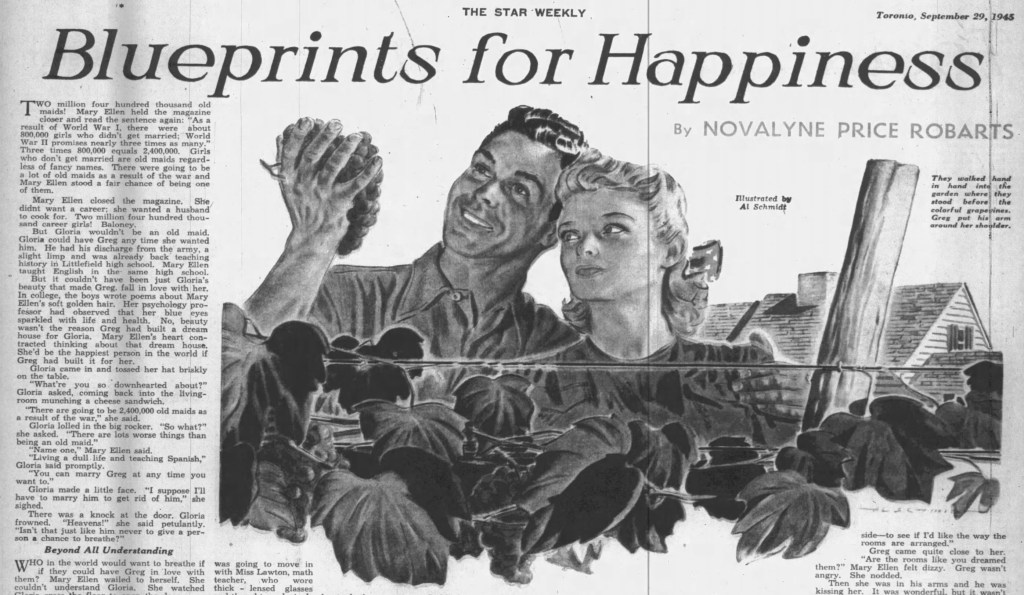
Toronto (Ontario, Canada) Star Weekly, 29 Sep 1945 (14)

“A Date with the Moon” (Sep 1945)

An advertisement for the September 1945 issue of the Canadian Home Journal includes a listing for this story, as by Novalyne Price Robarts. I have not yet been able to obtain a copy or scan of this issue to confirm the contents.

“A Fellow Has To Fight” (May 1951)

This short story was published in The Country Guide (May 1951) magazine, under the name Novalyne Price Ellis.

This is a fairly treacle-sweet story of an accomplished young man named Jimmy Jones at high school who feels restrained by his mother’s attitude and expectations he refrain from fighting or sports, and eager to make time with beautiful Betty Myers—but the local bully starts accusing him of being a “mamma’s boy” and a “sissy.” Jones gets into one little fight and Betty starts dating other people…

“I don’t care to discuss it further,” she stormed. “And furthermore. I’ll give you to understand that I can have a date with anybody I want to. Just because I’ve had a few dates with you is no sign that you own me.”

“Well, ye gods!” I mumbled. (75)

That isn’t anything ripped straight from Novalyne and Bob’s relationship, but there might be an echo of it. Certainly, Novalyne went on dates with other men before, after, and during the time she dated Robert E. Howard, and didn’t feel guilty about it as there was no agreement of being exclusive with each other. Unfortunately, a few pages are missing from the scan, so we don’t see how the story ends.


The stories—two complete, one incomplete, one only a title—have some commonalities. They are mostly told from a woman’s point of view; they are concerned with romance, but also social pressures and expectations; and they are relatively light fantasies with happy endings. All of them have Novalyne’s particular style; readers familiar with her letters and One Who Walked Alone will recognize the occasional turn of phrase, certain ways of thinking. While these stories are all written probably pretty much to order for newspapers looking to publish fluffy stories that make readers feel good, they also capture echoes Novalyne’s own thoughts and conflicts.

While the stories don’t tell us much about Novalyne’s own romantic relationships, they do tell us more about Novalyne as a writer. These are passable stories. These are salable stories. Not exceptional, not groundbreakingly original, but neither are they incompetent or completely stale. They’re stories which show an understanding of the form of romance, but don’t have enough space to really develop the conflicts very far before resolution. The kind of short stories that a busy schoolteacher might churn out between grading themes and coaching kids after class.

Are these the kind of stories she might have shown to Robert E. Howard? Hard to say. The plots she describes in One Who Walked Alone include more mature elements, like a woman with an illegitimate child. Not the kind of thing that would play in your average newspaper. The sense of place is also somewhat vague; except for “Marriage by Arrangement,” which is explicitly set in New Orleans and involves a Texas suitor, the others are generic Anytown USA (or, in this case, Anytown, CAN) locales.

It will be interesting to see what other stories from Novalyne Price Ellis’ typewriter turn up, in old magazines and newspapers or online databases.


Bobby Derie is the author of Weird Talers: Essays on Robert E. Howard and Others and Sex and the Cthulhu Mythos.

Deep Cuts in a Lovecraftian Vein uses Amazon Associate links. As an Amazon Associate I earn from qualifying purchases.
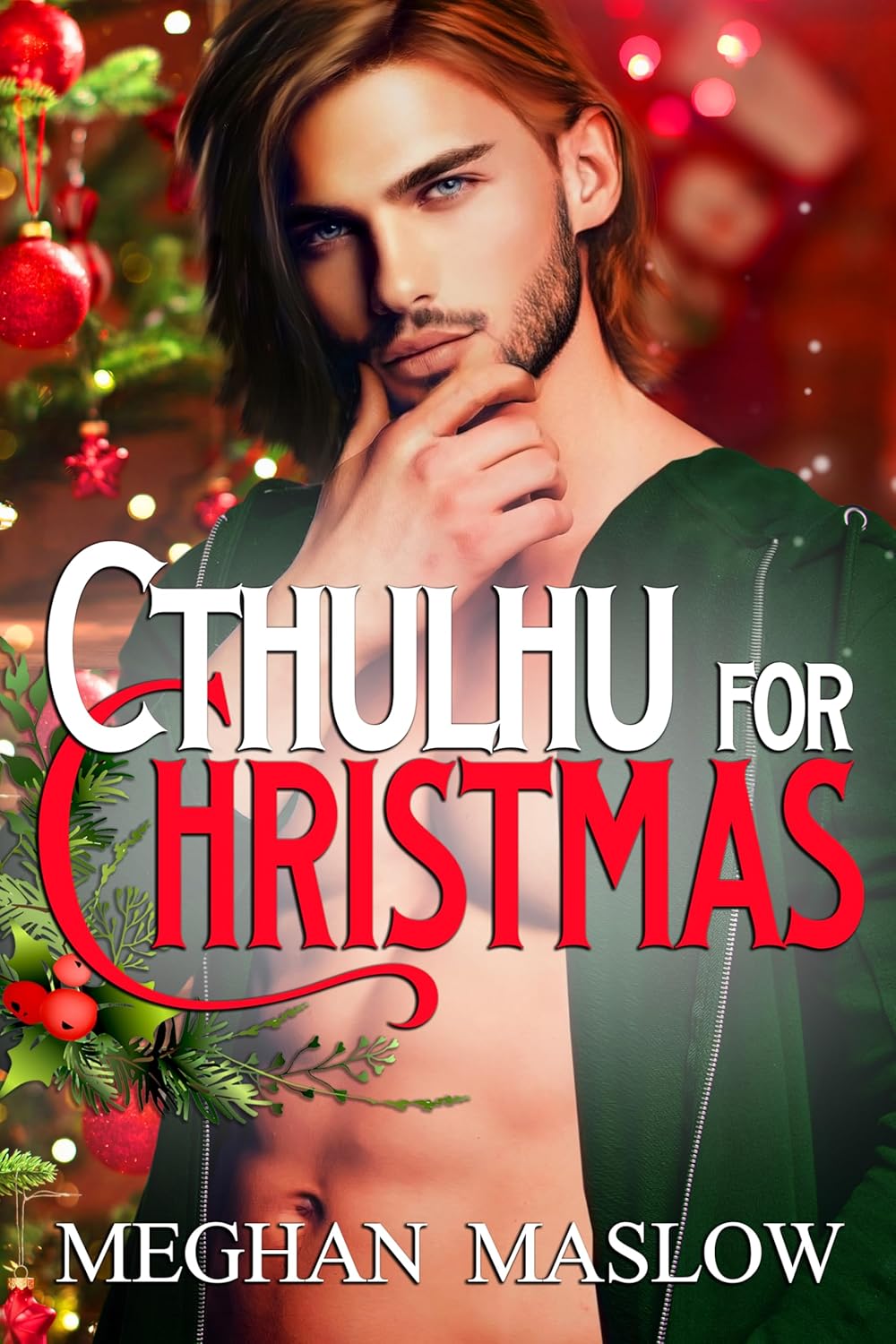
“Cthulhu for Christmas” (2023) by Meghan Maslow

Eldritch Fappenings
This review is of a homoerotic romance work which deals with mature themes and tentacle erotica.
Reader discretion advised.


Romance fiction is about the churn. Individual works often have minimal lasting value; only a rare few works of the sticking power or cultural cachet of Maurice (1971) by E. M. Forester. Yet the appetite for such works is constant. Consumers don’t just want porn, they want characters, settings, relationships, hardship, overcoming adversity, happy endings, unhappy endings—new stories, all the time. And creators need to eat, so they need to keep producing more and more to try and fill that demand.

Sometimes, this results in works that are less character-driven romance and more of erotica of dubious quality. Erotic ebooks like Booty Call of Cthulhu (2012) by Dalia Daudelin and its sequels might be produced rather quickly to hop on a trend. Creators might explore specific niches; Tentacles and Wedding Bells (2022) by Margaret L. Carter is about a young woman marrying into a family that just happens to be a bit inhuman, while Widdershins (2013) by Jordan L. Hawk explores a same-sex relationship in a fantasy steampunk setting, and “Moonshine” (2018) by G. D. Penman does much the same in a Prohibition-era gangster story.

There are times when a spate of Amazon erotic ebooks in a month are focused on bigfoot weddings, or older bosses (of either gender) seducing a new employee, or being isekai’d into a novel and now locked into a forbidden sexual relationship with a step-sibling. One month the flavor might be elves, another Regency-era settings, and sometimes a clever or ambitious author might combine the two. All’s fair in love and genre fiction.

Holiday-themed offerings are available in abundance. Hallowe’en, Thanksgiving, and Christmas are all well-represented…and probably also Boxing Day, Hanukkah, and Arbor Day too. Christmas, however, remains a particular favorite. There’s something about the immense cultural memeplex that extends far beyond the actual celebration of Christ’s birth. A jolly old elf has never stuffed so many stockings; kids who wished for new siblings for Xmas may well get them, Rudolf may be a well-hung were-reindeer with amorous intentions toward Mrs. Claus, and the mistletoe works overtime to trigger steamy kisses. The literary stakes of such works are often pitifully low, with writers and readers more or less satisfied so long as the product delivers the bare minimum of what it promises or hints at.

Content Warning: violence, mature content, brief discussion of child abandonment
—Meghan Maslow, “Cthulhu for Christmas” (2023)

To paraphrase Roger Ebert, I have a sneaky respect for anyone that goes much, much further than too far. With a premise that starts out with “Cthulhu-themed Christmas book” and then expands into: “A Winter Holiday MM Tentacle Romance,” it would have been easy—ridiculously easy—to do a minimalist job, check off the hashtags, and pump out a simple, quirky, and porntastic M/M tentacle erotica ebook in time for the Xmas sales boost. No one would have complained.

What readers get is so much more. Readers going in hoping to see tentacles stretch out holes like pre-lubricated o-ring orifices from page one will be disappointed to find themselves going through short chapters filled with with well-developed characters, in an interesting and evocative setting (with map!), as personal dramas and a murder mystery slowly unfolds. Many of the plot-beats might feel like a Hallmark Christmas movie mixed with your favorite detective show. Will gay cop Zen King tell his straight best friend he’s in love with him? What does Zak’s best friend Grey Criswell and his old money family have to do with the mysterious murder at Salem’s Tree Lot? And what the heck does any of this have to do with a break-in at the local library?

Cthulhu’s Compendium is a one-of-a-kind artifact. I can’t believe you glimpsed it! Please tell me you were able to read some of it! I’ve requested permission from the Special Collections numerous times, but they always inform me it doesn’t exist.”

“Cthulhu’s. Compendium.” Uh huh. “Like Lovecraft? It’s a work of fiction?”

I’d actually read some Lovecraft in high school when an emo kid recommended him.

She huffed. “It’s not fiction. And while it’s unsubstantiated, it’s well known that Lovecraft vacationed here on many occasions. Even visited the museum. You do the math.”
—Meghan Maslow, “Cthulhu for Christmas” (2023)

The Mythos elements of the plot don’t come exactly as a surprise (it’s in the title), but to Maslow’s credit the story takes the time to build up to the revelations. The tone is paranormal romance rather than horror—and because Lovecraft’s work is explicitly fiction within the setting, there’s room for Maslow to play fast and loose with what is “true” in terms of the Mythos. For the most part, that means that sometimes there are tentacles and sometimes they are frisky, though not always cooperative.

If you’d have told me I’d be cock-blocked by tentacles, I’d have laughed. But I wasn’t laughing now.

Fuck my life.
—Meghan Maslow, “Cthulhu for Christmas” (2023)

(For those interested in the steamier bits, the tentacles don’t cock-block for long. Quite the opposite.)

There’s a lot of little silly details that add up in the story to make it more charming. There’s a beaver that’s moved onto a houseboat like a stray dog. A pair of caribou driving a sleigh that work like a Uber service with an app called Caribou For You. An arranged marriage. An ugly sweater contest. If that sounds silly—that’s the point. Mundane weirdness tends to ground a story with more fantastical elements.

“Cthulhu for Christmas” (2023) by Meghan Maslow is not some quick and dirty romp churned out to meet a Yuletide theme and a couple keywords. There is a lot more heart to the story, and a lot more craft to the writing this tale of love, lust, and magic, than a reader might expect.

This story was written as part of a set of holiday-themed tentacle romance offerings: Tinsel & Tentacles.


Bobby Derie is the author of Weird Talers: Essays on Robert E. Howard and Others and Sex and the Cthulhu Mythos.

Deep Cuts in a Lovecraftian Vein uses Amazon Associate links. As an Amazon Associate I earn from qualifying purchases.
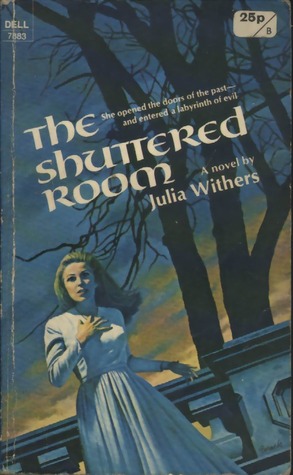
The Shuttered Room (1966) by Julia Withers

Incidentally, I’ve just sold Heritage Productions THE SHUTTERED ROOM. No doubt they’ll flesh out the “romance” between Dunwich boy and Innsmouth girl to give it “body” and we’ll have a shilling shocker out of it, but I couldn’t care less, really….
—August Derleth to Ramsey Campbell, 6 Feb 1964, Letters to Arkham 170

“The Shuttered Room,” the title story for the collection The Shuttered Room and Other Pieces (1959), is arguably Derleth’s greatest work of fanfiction. While originally billed as one of Derleth’s “posthumous collaborations,” and Derleth had claimed to base it on unspecified notes by Lovecraft. In one letter, Derleth described it as:

[…] wedding of the Innsmouth and Dunwich themes, as manifestly HPL intended to do, judging by his scant notes.
—August Derleth to Felix Stefanile, August 11, 1958, MSS. Wisconsin Historical Society

Whether or not these notes actually existed is open to speculation; no surviving letters suggests Lovecraft had any intention to unite the two themes. Nevertheless, in 1958 Derleth sat down to write the story (A Look Behind the Derleth Mythos 215, 231). The result is not his best Mythos story, or even his best pastiche, but probably the best fanfiction story that Derleth would ever write, a literal union of the Whateley and Marsh family trees from “The Dunwich Horror” and “The Shadow over Innsmouth,” paying detailed homage to both.

In the 1960s, August Derleth and Arkham House began to have some success in selling the film rights to various Lovecraft & related properties, resulting in five films:

Despite the fact that every film except The Shuttered Room was distributed by American International Productions, this wasn’t an early effort at a cinematic universe or franchise along the lines of the Universal monsters. While a couple of the films shared a few elements such as the Necronomicon, each was produced separately and without any direct tie-ins to the others in the form of characters, sets, props, or storylines.

The films all received different marketing promotions and led to the creation of associate media: Die, Monster, Die! got a comic book adaptation and there was an Italian fotonovela created for Curse of the Crimson Altar, for example. In 1966, released before the film came out, The Shuttered Room received a film novelization—as a kind of Gothic romance.

The novel was written by “Julia Withers,” a pseudonym used by prolific novelist and ghostwriter Jerrold Mundis who had worked on several different screenplay novelizations in the late 1960s. It’s difficult to tell how successful the slim paperback (only 156 pages) was. It is even more difficult to tell if Mundis ever bothered to read Derleth’s original story. Probably not; there is little enough let of Derleth’s original story in the screenplay by D. B. Ledrov and Nathaniel Tanchuck. Much of the best writing in the short story is in the descriptive passages that Derleth wrote so well, and the best part of the film is the cinematography; the novel lacks both.

The Shuttered Room (novel) is a very barebones kind of contemporary thriller dressed up (at least in terms of the cover) as a kind of Gothic romance, where family secrets, an old building, and a family curse threaten a nice young couple. There is no Mythos content beyond the name of Dunwich itself—here an isolated island rather than a town. Even “Whateley” is rendered as “Whately,” and there is no reference to Innsmouth at all. What Mundis does add above and beyond what is in the film is a touch of the grotesque, some backstory that either never made it to the final film or was cut out, and one important thing…

There, squatting in the midst of the tumbled bedding from that long-abandoned bed, sat a monstrous, leathery-skinned creature that was neither frog nor man, one gorged with food, with blood still slavery from its batrachian jaws and upon its webbed fingers—a monstrous entity that had strong, powerfully long arms, grown from its bestial body like those of a frog, and tapering off into a man’s hands, save for the webbing between the fingers…
—August Derleth, “The Shuttered Room” in The Watchers Out of Time 158

Something vaguely resembling a woman crouched in that doorway. Its hair was long and matted and tangled. A tattered filthy garment hung from its twisted body. Its eyes were large and bulbous. Its nose was non-existent, only two gaping holes. A slit with jagged teeth served for a mouth. It’s skin was leathery and cracked—scale-like, actually—and it glistened with moisture.
—Julia Withers (Jerrod Mundis), The Shuttered Room 149

Imagine trying to describe a Deep One/Whateley hybrid, in a setting which has already expunged every reference to Innsmouth and to an audience that has no familiarity with “The Dunwich Horror.” The solution in Mundis’ The Shuttered Room was to describe the nameless Whately child as a monstrous freak: “stillborn…or it should have been…but it lived.”

“Ontogeny recapitulates phylogeny,” as Lovecraft would put it. The idea was that living things re-experience the stages of evolution as they grow; so that human embryos have gills…tails…which are lost as they develop. The idea that an embryo might get “stuck” at a certain stage and yet successfully be born and grow to adulthood is not unique to The Shuttered Room novel. In fact, it is strongly reminiscent of the 1953 horror film The Maze—and one has to wonder if Derleth might not have taken a bit of inspiration from this film too. Some years after Derleth wrote “The Shuttered Room,” Ramsey Campbell mentioned the film to Derleth:

There have been movies with a definite slant toward the conceptions of the Mythos, however […] there was the one starring Richard Carlson titled THE MAZE, which was about the hideous frog-creature which is kept and fed in an ancient castle, and finally turns out to be the first in a line who now live in the castle!
—Ramsey Campbell to August Derleth, 10 Aug 1961, Letters to Arkham 12-13

Did Derleth borrow from The Maze? Did Jerrold Mundis? In such a case as this, where the original work has been so translated, and so changed in the transformation from short story to screenplay to short novel, it’s difficult to say…but the various works stand as distinct iterations of a very odd cadet line of the Mythos.

The film was not so creative. Or perhaps it just wasn’t in the budget. The company forewent any supernatural or preternatural explanation; there was no monster, and almost no explanation. In that sense, at least, the novel is an improvement on the film, or at least a step closer to Derleth’s original story. The idea of a madwoman trapped in the attic is closer to Jane Eyre than Cthulhu; perhaps that’s why the marketing of The Shuttered Room (novel) bears the hallmarks of the Gothic romances of its day, rather than any effort to market it to Lovecraft fans. The novel stands as an example of how truly weird and diffuse Lovecraftian influence can get.


Bobby Derie is the author of Weird Talers: Essays on Robert E. Howard & Others (2019) and Sex and the Cthulhu Mythos (2014).

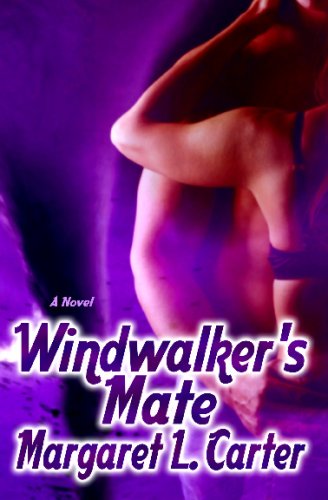
Windwalker’s Mate (2008) by Margaret L. Carter

She had been chose, she said, to be sacrificed to Ithaqua, the wind-walking elemental which the Stillwater people are said to have worshipped, and she had decided that she would flee, rather than die for a pagan god, of whsoe existence even she was not too sure.
—August Derleth, “The Thing That Walked on the Wind,” Strange Tales of Mysery and Terror Jan 1933

Ithaqua is one of August Derleth’s original contributions to the Mythos; the story that introduced him is first mentioned to Lovecraft in 1930, after Wright apparently rejected it (ES1.277). The sort of chequered history has dogged the Windwalker down the decades; few writers have made much use of Derleth’s creation, although Brian Lumley has made good use of Ithaqua—and given that entity a penchant for spawning children, a la Yog-Sothoth and “The Dunwich Horror”—in works such as “Born of the Winds” (1975) and Spawn of the Winds (1978).

It is Lumley’s interpretation that almost certainly inspired M. L. Carter’s dark paranormal romance novel Windwalker’s Mate (2008), although she puts her own spin on the proceedings. Shannon is a survivor; after the Rite of Union, she left the cult that was trying to bring strange Mythos entities to overrun this world—and forty weeks later she gave birth to her son Daniel, never knowing if his father was Nathan, the son of the culture leader who had participated in the rite with her, or the Windwalker who had possessed him.

Romance may seem an odd genre for Lovecraftian fiction; Lovecraft himself saw little of it in his life and his stories focus very little on those kind of human relationships. Nor were many of Lovecraft’s followers very inclined toward such things. Yet there is a thin substratum of genuine Mythos romance, dealing with the complex tangle of human relationships in a Mythos milieu—and much more seriously than “I Wore The Brassiere Of Doom” (1986) by Sally Theobald or “Love’s Eldritch Ichor” (1990) by Esther M. Friesner. These are works that tend to get overlooked by the main audience of Mythos writers; stuff like Tide of Desire (1983) by Sheena Clayton, Arkham Dreams (2011) by Robin Wolfe, Widdershins (2013) by Jordan L. Hawk…and one might even include The Dunwich Romance (2013) by Edward Lee, although that gets a little more hardcore than the others.

There are a few steamy moments in Windwalker’s Mate. It is far from the elaborate sexual fantasies of, say, Shoggoth Butt Invasion (2016) by Jason Wayne Allen. The sex scenes serve the plot as much as the reader; Shannon is reconnecting with Nathan, worried about her kidnapped son, placing her hope that coitus will re-establish their telepathic bond (it makes sense in the context of the book)…

He deepened the kiss, drawing her back into the present. her tongue darted eagerly to meet his. His hand cupped her breast through the T-shirt and thin bra. The tingling in the nipple zapped to the pit of her stomach and the V between her legs. The explosion of colors crashed over her again.

Then she saw stars falling like snowflakes and the sky behind them splitting open.
—Margaret L. Carter, Windwalker’s Mate 105

…yet the emotional core of the novel is very serious. Shannon is trying to save her son; she’s a lonely single mother, the cops are useless, and the former cult leader is trying to use Daniel to summon Ithaqua and the Ancient Ones into the world…there is a great deal of drama, both of the mind-numbingly mundane and weird kind.

It works. Opinions will vary on the approach, but M. L. Carter succeeds at what she set out to do: write a paranormal romance with the Mythos as a setting. If Chaosium ever published a sequel to The Ithaqua Cycle (1998/2006), this would not be out of place. The basic premise is much like the question of what happens after Rosemary’s Baby? only with Rosemary having the hard practicality to not stay with the Satanic cult because she had a baby to think of now. Daniel might well be the spawn of the Windwalker, but he isn’t a Wilbur Whateley-esque monster…not yet, anyway.

Windwalker’s Mate was published in 2008 by Amber Quill Press. Carter’s other Lovecraftian works include “Prey of the Goat” (1994) and the erotic novella Tentacles of Love (2009).


Bobby Derie is the author of Weird Talers: Essays on Robert E. Howard & Others (2019) and Sex and the Cthulhu Mythos (2014).