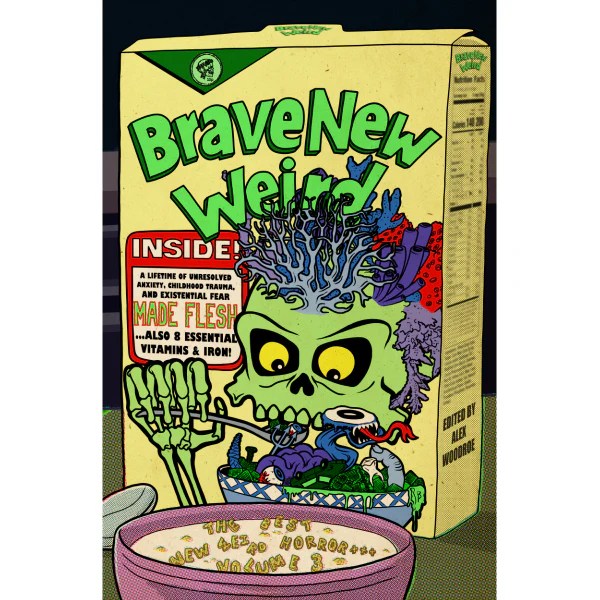
“Are you depressed?” I asked her. My wife had a sleep mask over her eyes but I knew she was awake from the way she was breathing. She reached a pale hand out from under the duvet and scratched at her nose, then snatched the hand back. The gesture was vaguely reptilian. I picked the antidepressants up the next day.
—Sonya Vatomsky, “The Yolo Wallpaper” in Brave New Weird, Vol. III (2025) 182
Medicine evolves over time. This applies to both mental and physical health. We understand in a general way that those diagnosed with demonic possession or lycanthropy in antiquity or the medieval period may well have suffered from conditions we would call epilepsy or dissociative identity disorder today. Old theories are disproved or fall out of favor, new designations and treatments rise into popularity. Sometimes this a reflection of scientific advancement in our understanding of anatomy and chemistry, sometimes it is a reflection of cultural forces. Yet it is important to realize that even as diagnoses of shell shock have given way to diagnoses of post-traumatic stress disorder, there is a great deal of ignorance of how and why medicine works.
Which gives rise a vast amount of magical thinking.
X-rays, chemotherapy, vitamins, enemas, juice cleanses, health supplements, herbs, exercise regimens, specialized diets, light therapy, dianetics, acupuncture, leeches, homeopathy, and exorcisms represent a range of medical treatments that range from the valid to the bullshit, but to the average individual, the distinction between legitimate medical treatment and medical woo can be unclear. Many people carry basic superstitions, misconceptions, and outdated ideas about health that influence their daily life. More desperate people, or those who cannot afford or distrust scientific medical care are more likely to be persuaded to try alternative treatments. With the placebo effect, sometimes they might even seem to work.
The internet has contributed greatly to the spread of alternative medicine, not just because of the spread of disinformation, but because it allows disparate individuals to connect and form networks sharing medical woo—and, perhaps most importantly, these groups become target market for various supposed health products, from copper mesh socks to the use of a horse dewormer to treat Covid 19. Heavy political polarization had fractured medical discourse and eroded hard-won trust in established science, leading to the anti-vaxxer movement. Something that would have been almost unthinkable a century ago.
Public standards have risen, so that no city administration, however corrupt, would dare to cut off the water supply, sewer connexions, and vaccination service, or allow relief applicants to starve. It is understood that such things must go on.
—H. P. Lovecraft to Robert E. Howard, 5 Nov 1933, A Means to Freedom 2.669
“The Yellow Wallpaper” (1892) by Charlotte Perkins Gilman is often read as an expression on women’s mental health, and how medical theories and treatment at the time fundamentally misunderstood and failed to provide adequate care. “The Yolo Wallpaper” (2025) by Sonya Vatomsky is a riff off the idea, but filtered through the current complex medical information/disinformation landscape, with a surreal twist. The briskly-paced story follows the protagonist’s frustration at their wife’s illness—at first dismissed by the general practitioner as depression and to be treated with rest and pills—and their medical journey into internet forums seeking medical advice and a variety of purported health care products that promise relief.
The result feels like a case study from The Thackery T. Lambshead Pocket Guide to Eccentric and Discredited Diseases, but even if the tone is different from Gilman’s original story, the reflection on the failures of the medical establishment, the inability to actually see the patient and address their suffering, remains. While played for laughs, especially when the anatomy gets a little hairy, it ultimately shows what passes for a healthy relationship in the 2020s, or at least a healthier one than in Gilman’s story. Here, the spouse actively tried to help their wife, is a conscientious caregiver working themself to exhaustion and financial ruin in an effort to get through this illness and claw a way back to normal.
Which, in a way, they succeed at. A happier ending than Gilman gave to her afflicted.
“The Yolo Wallpaper” by Sonya Vatomsky was published in in Brave New Weird, Vol. III (2025).
Bobby Derie is the author of Weird Talers: Essays on Robert E. Howard and Others and Sex and the Cthulhu Mythos.
Deep Cuts in a Lovecraftian Vein uses Amazon Associate links. As an Amazon Associate I earn from qualifying purchases.
 Deep Cuts in a Lovecraftian Vein