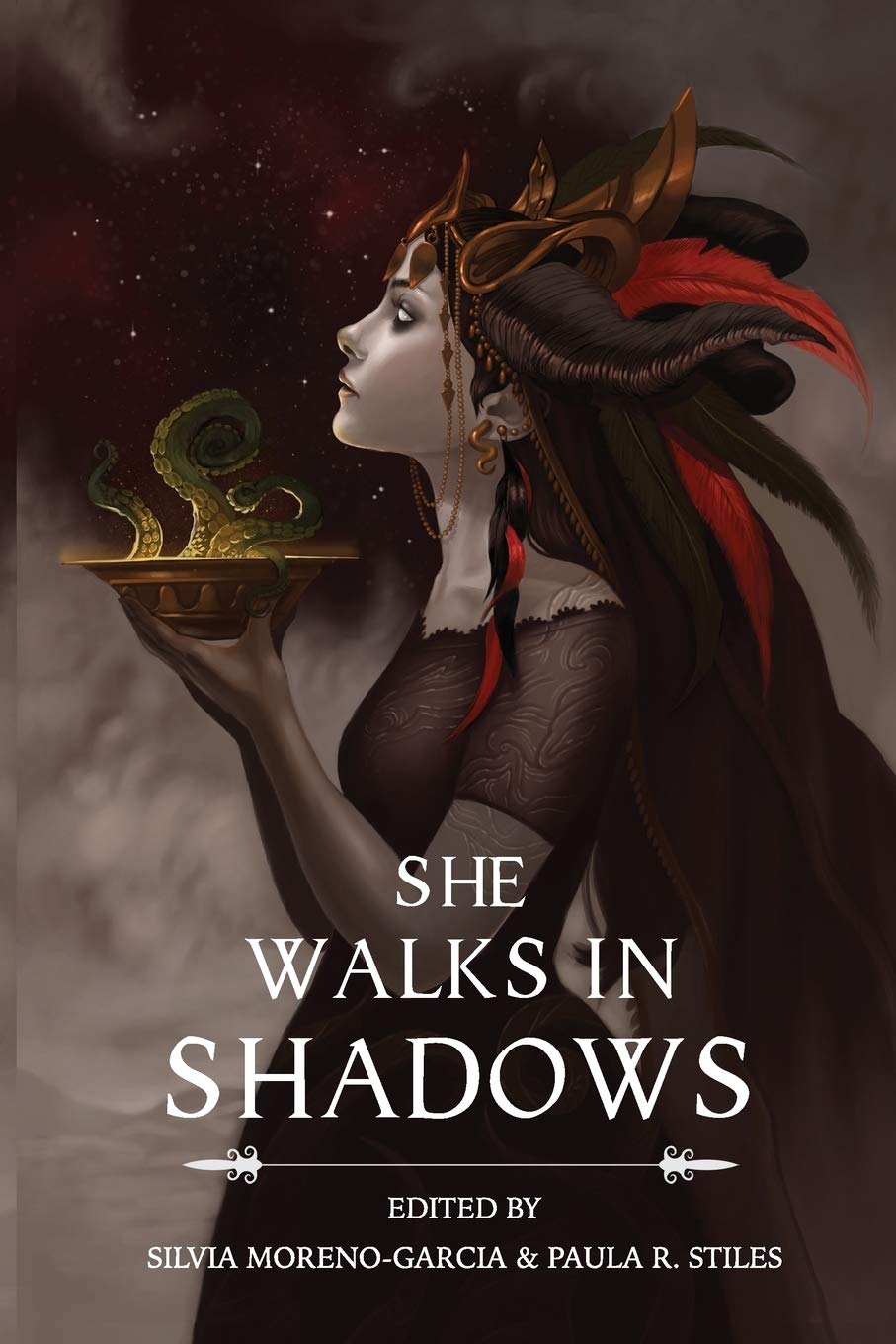
“Chosen” (2015) by Lyndsey Holder

Brown Jenkin was agitated, running circles around me, climbing up my back and crawling down into my lap, staring at me with his beady black eyes. I reached out to him tentatively and he nuzzled my hand, stirring a strange kind of love in my heart.
—Lyndsey Holder, “Chosen” in She Walks in Shadows (2015) 160

Familiar horrors inspire a kind of wish-fulfillment. Thousands of readers of Bram Stoker’s Dracula and Anne Rice’s The Vampire Lestat have imagined what it would be like to be undead, ageless and powerful, bound by night and loosed from the morals of humanity. Roleplaying games like Werewolf: the Apocalypse let fans of werewolf movies and lore vicariously embody the power and ferocity of the change. Contemporary witches look back at the witch trials and pay tribute to those hypothetical ancestors, sometimes drawing imaginary connections to the persecuted of Salem Village in the Province of Massachusetts Bay.

Lovecraftian horrors are not so familiar as vampires and werewolves, and so there are fewer who wish to truly meet or embody those horrors. Fewer readers express a desire to be Pickman-esque ghouls than to become vampires, though more than a few would happily undergo the change into a Deep One and dwell in wonder and glory forever beneath the waves. While there are a few Lovecraftian witches, occultists like Keziah Mason and Joseph Curwen are often still figures of horror, not mentors or figures of nostalgia akin to Dracula.

“Chosen” by Lyndsey Holder thus enters a rather scarce territory. We very often see Keziah Mason presented as the stereotypical witch, the old hag with the familiar, steeped in the blood libel of child sacrifice from old legends. Sometimes, rarely, we see her as the archetypal Lovecraftian witch, the one who embodies the kind of freedom, wisdom, and power—and attracts the kind of prosecution—that embodies the more mythical ancestors of contemporary Wiccans, as inspired by The Witch-Cult in Western Europe (1921) by Margaret A. Murray.

Holder’s story is very short, just six pages long, short and to the point, and all too easy to spoil. The biggest unanswered question might be why the nameless girl protagonist is a child in Vancouver, very far from Arkham as the broom flies. However, Lyndsey Holder is herself Canadian. Maybe there’s a bit of wish-fulfillment in this story, a fictional accounting of a pilgrimage she would have taken if the dreams had come to her. Certainly, Mythos fans can appreciate why they might save and scrimp to travel thousands of miles just to be there, where horror once walked. More than a few fans stride the streets of Providence and Salem every year, after all, thinking of Lovecraft and witches.

The horror in this story doesn’t really come from Keziah Mason or her familiar Brown Jenkin. They are familiar figures, and there is something comforting in their portrayal. The horror in the story is how the protagonist reacts to them, how her life changes when they become a part of it. The ending is certainly a fitting one. Not every Lovecraft fan would choose that way to become a part of the Mythos, but for those who are given a chance to be part of the story…well, a few readers at least will understand.

“Chosen” by Lyndsey Holder was published in She Walks in Shadows (2015) and its reprints, it has not otherwise been republished.


Bobby Derie is the author of Weird Talers: Essays on Robert E. Howard and Others and Sex and the Cthulhu Mythos.

Deep Cuts in a Lovecraftian Vein uses Amazon Associate links. As an Amazon Associate” I earn from qualifying purchases.

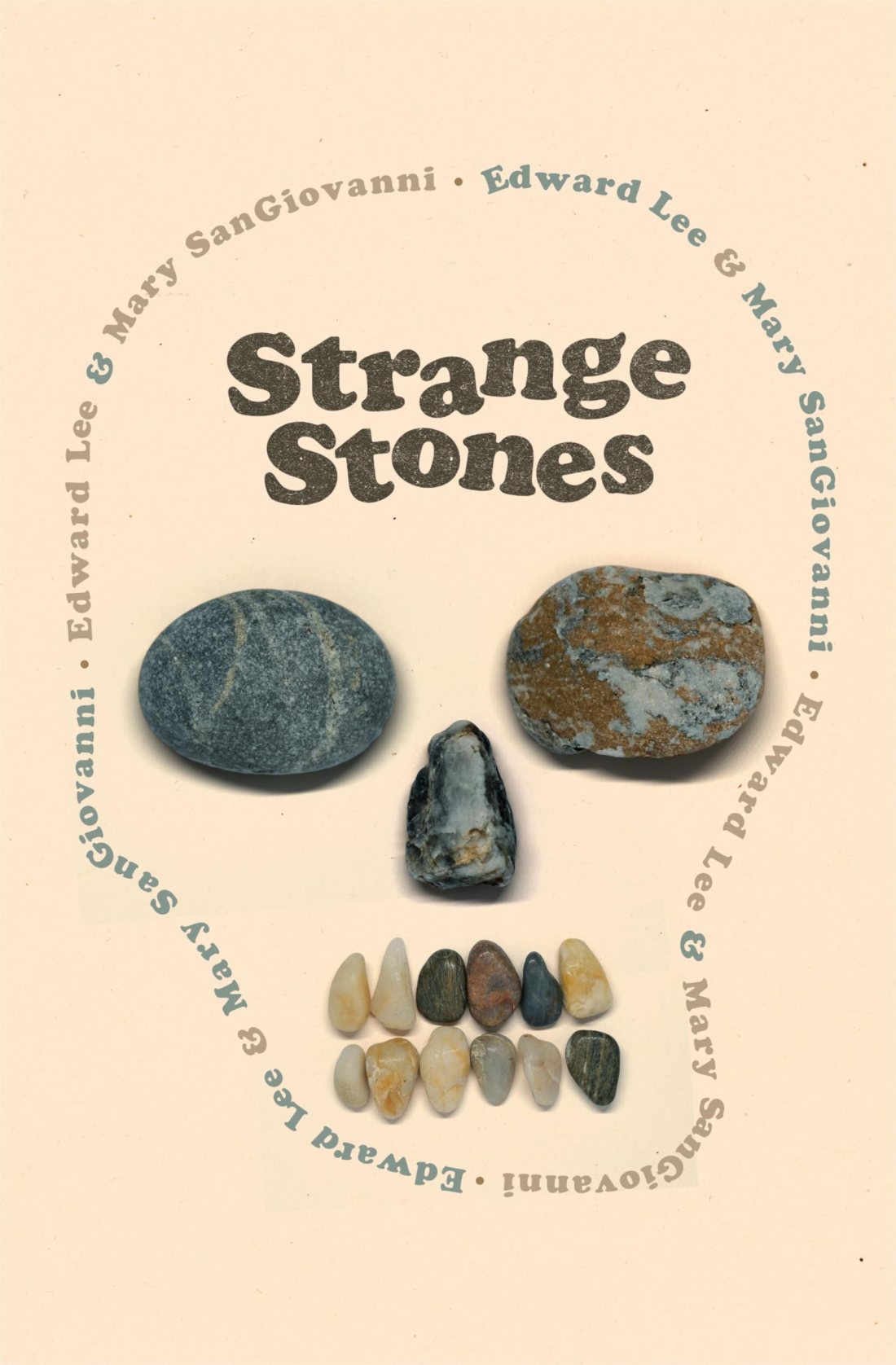
Strange Stones (2025) by Edward Lee & Mary SanGiovanni

It was Arkham House that perpetuated the Big Lie in this case, and from there a mechanism of critical bandwagonism took off and continues to this day. The tenet is, if you tell a lie big enough and enough times, people will believe it. That’s why Lovecraft has been raved about for all these decades. It’s a big lie that readers have been force-fed by a pro-Lovecraftian syndicate designed to make money.
—Edward Lee & Mary SanGiovanni, Strange Stones (2025) 3

Professor Robert Everard, who speaks those words at a horror convention, is a Lovecraft-hating asshole. That is his point. If the sentiment gets a rise out of you and makes you want to refute it, congratulations: the authors have succeeded at their characterization. It is a very unconventional way to draw readers into a rather meta short Lovecraftian horror novel, but Everard’s arguments and the context in which they take place are important to understand, because they’re fundamental to the plot of the novel.

Fiction genres in the sense that we think of them today tended to emerge around the turn of the 20th century. Western dime novels were a staple of 19th century popular literature in the United States; science fiction, mysteries, fan clubs, etc. all preceded the emergence of pulp magazines in the 1910s and 1920s, but it was really the pulp magazines that began to crystallize genre as we think of it today, and especially organized fandom as we think of it today. The horror conventions today are all descended, more or less, from the early science fiction fan conventions of the 1930s in the United States.

Genre is only secondarily a literary convention; the primary purpose was marketing. Specialization allowed pulp magazines to carve out niches and develop dedicated readership that they could directly market to. Magazines in the same genre competed with one another for the same dimes and quarters; Weird Tales had to struggle against Ghost Stories, Tales of Magic and Mystery, Strange Tales of Mystery and Terror, Terror Tales, Famous Fantastic Mysteries, Unusual Stories, and others, and tried to draw in readers from science fiction magazines like Astounding Stories, Amazing Stories, Wonder Stories, and Planet Stories.

Hardbacks, paperbacks, comics, and movie makers all learned this lesson, that specialization has the benefit of attracting a specific, dedicated readership. And once you have that audience, the quality of the content is less important than if it stays in genre. Decades of genre products have been, essentially, disposable pap, churned out quick and cheap for an eager audience that cared less about quality than if it was horror or science fiction. This is the kind of silly, low-quality stuff that gives genre media a bad name, but it’s also the stuff that’s generally predominant at any given moment. True genre classics are rare, and stand out because so much of the run-of-the-mill material is generic, familiar monsters and spaceships.

In this sense, what is a genre convention, then, then a target-rich environment? The earliest conventions weren’t entirely uncommercial, but they weren’t dominated by dealer rooms or particular creators promoting their latest film or book, which are common attributes of contemporary conventions. What creators and companies learned was that it’s a lot easier to sell your product if your customers are all in the same place; genre conventions in the United States in particular have become an important part of the economic ecosystem of various celebrities, independent dealers, small companies, and boutique shops.

The cultural phenomenon of the convention has developed to the point where it’s become a key aspects of organized fan culture, to the point of becoming the setting of new creative works, like I Am Providence: A Novel (2016) by Nick Mamatas and Screamland: Death of the Party (2012) by Harold Sipe, Christopher Sebela, and Lee Leslie. And it’s this crux of the commercialization of horror and the convention experience which forms the springboard setting for Edward Lee and Mary SanGiovanni’s novel Strange Stones (2025).

Richard Everard’s grudging kvetch against Lovecraft’s ascendance in horror media is in part a tongue-in-cheek jab at a genuine aspect of fandom and how Lovecraft and his Mythos have faced posthumous commercialization and pop culture significance way beyond its initial tiny dedicated genre audience. Everard’s own interaction with the convention circuit has been primarily a lecherous attempt to get in the pants of as many women as he could, a series of sexual conquests that is both a kind of wish fulfillment and a genuine recognition that yes, fans do hook up at conventions. Rachel Bloom wasn’t being entirely inaccurate with Fuck Me Ray Bradbury in the way genre literary figures can attract groupies.

There is a dark side to that, too: many prominent or even beloved genre literary figures have been revealed as sex pests or abusers. Alec Nevala-Lee’s excellent Astounding: John W. Campbell, Isaac Asimov, Robert A. Heinlein, L. Ron Hubbard, and the Golden Age of Science Fiction (2018) contains accounts of bad behavior by writers like Isaac Asimov, for example. This kind of contact between fans and creators is mainly possible because of events like conventions, where individuals who would normally be separated by hundreds or thousands of miles are brought into geographical proximity and with shared purpose.

So Everard is a caricature of specific figures in convention culture: a lecher (right there in the name: “Everard”/”Ever-hard”), a high-minded academic who snobbishly looks down on the tastes of the masses, a shit-stirrer more focused on selling his own books and tearing others down instead of creating something positive. All of which makes him less than sympathetic when he does encounter some real horror.

The back three-quarters of the short novel are a whirlwind tour through several of Lovecraft’s Mythos stories, but not in a way that readers might think. Lee and SanGiovanni are very carefully and deliberately introducing Lovecraftian settings like Innsmouth, Arkham, and Dunwich in ways that are very accurate to Lovecraft’s fiction—often focused on small details, which are then blown up and expanded upon—but not trying to pastiche Lovecraft’s particular style or language. So it is very deliberately Lovecraftian, with Everard’s familiarity with Lovecraft’s corpus letting him recognize where and when he is, yet at the same time the settings are fresh, parts of the setting that Lovecraft himself never put on the page.

Readers might be curious if there are any connections with Edward Lee’s “Hardcore Lovecraft” series which includes books like The Haunter at the Threshold and The Wet Dreams of Dead Gods. Strictly speaking, the answer is no; Lee’s own Lovecraftian novels remain very distinct in setting and approach, and Strange Stones is in general much less explicit in terms of violence, gore, and sexual activity. That doesn’t mean it isn’t there, but it is less prominent in the plot. In part because the focus of the story isn’t on titillation or exploitation-level sex and violence, while there is definitely transgressive grue and sexual activity, the pace of the story is such that the writers don’t dwell on it in anything like the detail of Lee’s more extreme solo works.

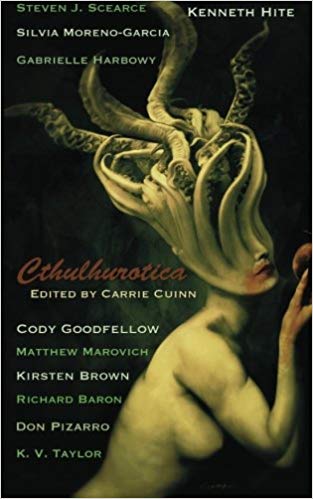
One important characteristic of Strange Stones, however, is that it is not nostalgic for Lovecraft. Works of the type “Lovecraft was right! The Mythos was real!” or revisiting old stomping grounds like Dunwich and Innsmouth can lead to much more watered-down horrors. Like Bela Lugosi’s Dracula or Boris Karloff’s Frankenstein or Lon Chaney Jr.’s Wolfman, there comes a point where Cthulhu becomes overly familiar, to the point that the appearance of the Big C comes across more as a friendly face than a stark horrific reality that haunts the imagination. A point Ken Hite touched on in “Cthulhu’s Polymorphous Perversity” in Cthulhurotica, discussing the plush toy incarnations of Lovecraft’s primal alien horror.

Instead, Lee and SanGiovanni present Lovecraft’s Mythos as terrifying.

Dismembered corpses. Perverse sexual defilements. Sudden violence. The Mythos in Strange Stones has all the subtlety of a Goatwhore album cover or an issue of Crossed by Garth Ennis and Jacen Burrows. Readers are going to have to make their way through dead babies, threats of anal assault by oversized piscine pricks, and an alien orgy in which dismembered torsos feature prominently. The Mythos is not a dry, abstract, intellectual horror in this novel; it is a living, breathing cult simmering with malice, madness, and strange and terrible hungers. That this is not quite as extreme in terms of sex and violence as Edward Lee gets up to on his own is not the same as saying that this novel is tame or soft in any way.

It is a difference in emphasis. Everard doesn’t see the clean Mythos that Lovecraft presented to the world, with its carefully-constructed narratives where all the orgies and most of the violence happens off the page. What Everard sees is Lovecraft with the blinders taken off; what Lovecraftian fiction could look like, if writers approached his Mythos with the imagination normally reserved for a particularly lurid Cannibal Corpse album or exploitation film. Fairly reminiscent in many ways of what Antony Johnston, Alan Moore, and Jace Burrows did in The Courtyard and Neonomicon, though without quite as elaborate a working-out of details.

Strange Stones is, after all, a fairly short novel, briskly paced, and not concerned with a unified theory of the Cthulhu Mythos as much as keeping the story moving through each step of Everard’s ordeal. While there is room for a sequel, as a one-and-done novel it stands alone effectively enough. While not perfect, it is fun and a quick read, quite unlike the majority of Mythos fiction published these days.


Bobby Derie is the author of Weird Talers: Essays on Robert E. Howard and Others and Sex and the Cthulhu Mythos.

Deep Cuts in a Lovecraftian Vein uses Amazon Associate links. As an Amazon Associate I earn from qualifying purchases.
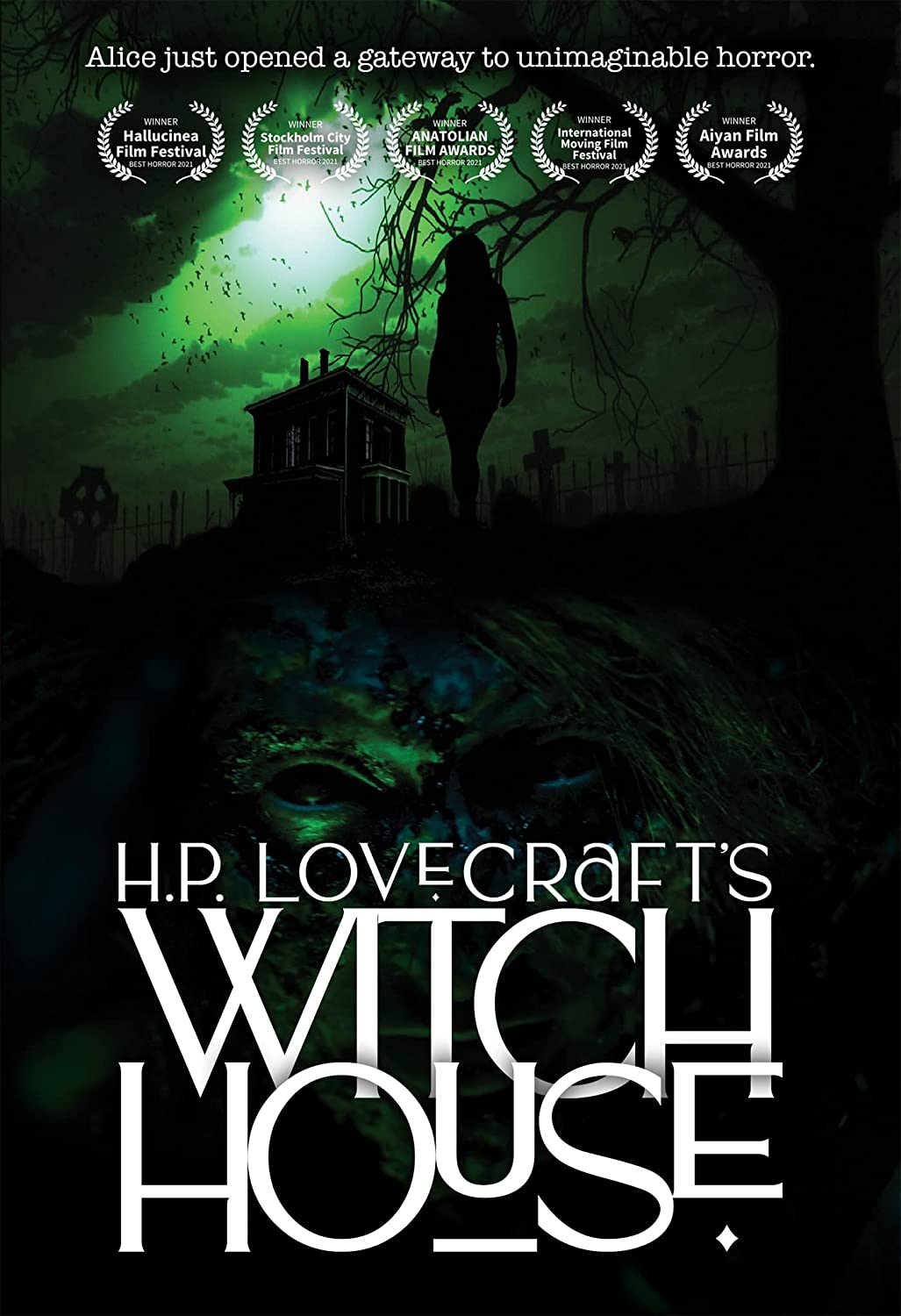
H. P. Lovecraft’s Witch House (2021)

After that he killed the time at a cheap cinema show, seeing the inane performance over and over again without paying any attention to it.

H. P. Lovecraft, “The Dreams in the Witch House”

Lovecraftian cinema is a diverse body of work, from short films to feature-length presentations to episodes of television or streaming shows; live-action to animation; zero-budget schlock and student films to big-budget Hollywood productions; from works that strive to adapt Lovecraft’s stories to the screen with various degrees of fidelity to more original presentations that take inspiration from or make reference to things Lovecraftian but seek to tell their own stories and focus on their own characters. In brief, Lovecraftian cinema is simply an extension of the Mythos into another media, with all of its own quirks and conventions.

H. P. Lovecraft’s Witch House (2021), directed by Bobby Easley, is loosely inspired by “The Dreams in the Witch House,” but with several twists. Mathematics graduate student Alice Gilman (Portia Chelleynn) is fleeing an abusive relationship and boards in an old house (the historic Hannah House in Indianapolis), which has a dark history involving the witch Keziah Mason (Andrea Collins), and whose odd angles and witchcraft tie in to Gilman’s own theories about other dimensions—and as the bodies pile up, Gilman learns that Mason and her coven are still very much active…

When compared to other productions of this type and covering this sort of material, H. P. Lovecraft’s Witch House is firmly in the middle of the pack of independent film festival fare such as The Last Case of August T. Harrison (2016), H. P. Lovecraft’s Two Left Arms (2017), H. P. Lovecraft’s The Deep Ones (2020), and Sacrifice (2020). All of these films pay more than lip-service homage to Lovecraft and the Mythos, are produced on modest budgets, and are serious efforts at a dramatic storyline and low-key horror rather than campy horror-comedies (e.g. The Last Lovecraft: The Relic of Cthulhu (2011), Killer Rack (2015)), arthouse reimaginings (e.g. Herbert West Reanimator (2018)), or reboots of previous franchises (e.g. Castle Freak (2020), The Resonator: Miskatonic U (2021)).

Individual performances, writing, cinematography, special effects (practical and CGI), score, and sound design vary—every film has its high points and low points, and if none of these seem destined right now for classic or break-out-hit status alongside films like Reanimator (1985), neither are they completely without merit or enjoyment. For most of these films, the problems they run into isn’t low budget or bad actors but poor writing: these are the cinematic equivalent of Cthulhu Mythos pastiche stories, and it shows in every familiar plot point and trope. The creators probably mean well by incorporating the Simon Necronomicon and its symbols, or by referencing Lovecraft and how his Mythos is really real…but these are both very old hat, and less clever than they might think.

Still, if nothing else, it’s fun to see how different creators approach the same material, like new wine in old bottles, and how far a given director or actor or special effects unit will go in pursuit of giving the audience something they haven’t seen before. For H. P. Lovecraft’s Witch House, there are a few pleasant surprises: Alice Gilman might be the first bisexual character in Lovecraftian cinema, and her brief love scene was probably the first live-action, non-pornographic lesbian love scene in a Mythos film. The dream sequences in particular are rather effective, and the lead actress Portia Chelleynn turns in a very competent performance.

Using you as a vessel for the birth of the antichrist.

H. P. Lovecraft’s Witch House

If there is a criticism to be leveled against H. P. Lovecraft’s Witch House, it’s the emphasis on Satanic witchcraft and the recycling of plot elements of Rosemary’s Baby into its Lovecraftian framework…and that requires a bit of explanation for why it might look like it would work, and why it really doesn’t.

The Salem Witch Trials were the belated American expression of a centuries-long persecution by civil and religious authorities of an imagined Satanic conspiracy. The Witch-Cult in Western Europe (1921) by Margaret A. Murray recast this as an imagined pagan religious conspiracy, and this was the form of the “witch-cult” which H. P. Lovecraft understood, believed, and worked into his stories. The diaspora of the Salem witch-cult is referenced in The Case of Charles Dexter Ward, “The Festival,” “The Dunwich Horror,” “The Dreams in the Witch House” and other stories. Following Murray, Lovecraft eschewed Satanism in his witchcraft—rather than something as prosaic as Christianity, Lovecraft was developing his own artificial mythology that was outside the narrow confines of God and Satan.

Likewise, Satanism had nothing much to do with Lovecraft, at least while he was alive and for some decades thereafter. In 1966, Anton LeVay founded the Church of Satan, a non-theistic religious philosophy that took the theatrical trappings and some of the rituals which literature—including accounts of the witch trials—associated with Satanism in the early modern period. The founding was propitious; Ira Levin’s novel Rosemary’s Baby came out in 1967, and the award-winning film was released in 1968. LaVey published The Satanic Bible in 1969, William Peter Blatty’s novel The Exorcist came out in 1971, and in 1973 was also adapted to the screen. Bands like Black Sabbath (1968) and Coven (1967) adopted elements of Satanism and occultism in their acts, laying some of the groundwork for what would become black metal.

It was the start of a Satanic pop culture renaissance, one that borrowed from and built on earlier ideas of Satanism, but took it in a new direction, some more theatrical and some more serious; sometimes both. Despite his dearth of Satanic connections, Lovecraft had his part too. Lovecraftian references appear in The Satanic Rituals (1972), notably “The Ceremony of Nine Angles” and “The Call of Cthulhu”; The Dunwich Horror (1970) deliberately echoed many of the beats of Rosemary’s Baby, with Nancy Wagner (Sandra Dee) serving in the role of Rosemary, complete with weird dreams, cultic conspiracy, and infernal impregnation. From there, parallel paths developed: Satanists and occultists borrowing Lovecraft into their rituals, philosophy, and theology, and pop culture confusing the Lovecraftian Mythos with Satanism as they sought to borrow on the dark appeal of both for black metal music, horror films, comics, and other media.

In the case of H. P. Lovecraft’s The Witch House, it’s easy to see where the writers were coming from and what they were going for: Keziah Mason was intended to be the genuine Salem Witch in Lovecraft’s story, and accused witches were believed to be associated with Satanism. It isn’t much of a stretch to give Keziah Mason a Satanic coven, or a typically Satanic goal…it’s just not a very Lovecraftian take on the subject. Quite the opposite of Lovecraft’s very non-Satanic take on witchcraft, really. It’s not even how most contemporary non-theistic Satanists and occultists would integrate Lovecraft’s Mythos into their beliefs and practices.

Which isn’t quite a damning indictment of the film as a whole, but it emphasizes the issue with Lovecraftian film pastiche: the people writing these movies and putting them together mean well, but are largely aping the most obvious aspects of Lovecraft’s Mythos stories without understanding the underlying ideas and mood that make those work. In “The Dreams in the Witch House,” the ultimate revelation was that the horrors were real…that there was a cruel reality that lay behind the Salem witch accusations, that the accused were not just innocent victims of religious mania; something a bit closer to The Lords of Salem (2012).

On its own merits, as a part of the Lovecraftian cinematic oeuvre, H. P. Lovecraft’s The Witch House isn’t a terrible film—but it is exemplary of an approach that misses the mark of what can make a really great Lovecraftian film, focusing on obvious surface elements and easy references, like Miskatonic University hoodies instead of making a film that captures the feel of a Lovecraft story.

H. P. Lovecraft’s Witch House was released in 2021 and is available on DVD and streaming.


Bobby Derie is the author of Weird Talers: Essays on Robert E. Howard & Others (2019) and Sex and the Cthulhu Mythos (2014).

“Women Who Live Between the Worlds” (2021) by J. Lily Corbie

“The only times women are even mentioned in these books, we’re…sacrifices or vessels. We’re things, tools to use, a means to an end.”
—J. Lily Corbie, “Women Who Live Between the Worlds” (2021)

2021 marks a century of women being involved with the Cthulhu Mythos. From “Falco Ossifracus” (1921) by Edith Miniter to She Walks In Shadows (2015) and Dreams From The Witch House: Female Voices of Lovecraftian Horror (2015), through all of the women who Lovecraft collaborated with and ghostwrote for, the women fans who wrote poems and stories and novels of the Mythos over the decades expanding and exploring the shared world. Women were there from the beginning…and they are still here, still writing, still creating new art, fiction, poetry, etc.

For all that women have made their mark in the literature of Lovecraftian fiction, the place of women within the Mythos has been less explored. Many authors have expanded on Lovecraft’s original stories and characters in various ways. “The Head of T’la-yub” (2015) by Nelly Geraldine García-Rosas offers a new way of looking at “The Mound”; “A Coven in Essex County” (2016) by J. M. Yales explores patriarchy in Innsmouth; “Magna Mater” (2015) by Arinn Dembo posits a matriarchial twist on “Arthur Jermyn”; “The Devil’s Hop Yard” (1978) by Richard Lupoff & “The Cry in the Darkness” (2011) by Richard Baron offer two different interpretations of Mamie Bishop from “The Dunwich Horror.” The story of women in the Mythos has been recast, reexamined, expanded and elaborated upon; their legacies continue to grow.

Yet very rarely is this a case of women within the stories on a journey of discovery for the women that came before them. We don’t often see female characters confront the fact that the stories of Keziah Mason, Lavinia Whateley, and Marceline Bedard within the fictional universe are few, and mostly related by men. A hypothetical woman student, searching for women cultists, might be hard-pressed to find anything definitive about what role women played in the rites and ceremonies of the cult of Cthulhu. Historical sexism is alive and well in Lovecraft country.

As we walked between them, she said, “It wasn’t deliberate.” She glanced at me sideways. “Most of the time, at least. Our works have been discarded and destroyed because they were simply considered unimportant or uninteresting. They were lost to history through accident and neglect as often as malice. They’ve gone unarchived in libraries, uncollected in museums for those same reasons. But the dreamlands are ours.”
—J. Lily Corbie, “Women Who Live Between the Worlds” (2021)

In The Witch-Cult in Western Europe (1921) by Margaret A. Murray, the Salem Witch Trials are attributed to the persecution of an actual coven. Those Salem witches, both the real women who died and the fictional counterparts they inspired, like Keziah Mason in “The Dreams in the Witch House,” have left descendents—and a stamp on the collective memory. To some, like Lovecraft’s unnamed correspondent who claimed descent from Mary Easty, witchcraft was real—or at least something she wanted to be real. A spiritual heritage that she could be a part of.

Corbie’s “Women Who Live Between the Worlds” is similar to “Down into Silence” (2018) by Storm Constantine in that there is a wistfulness to it. In a contemporary, mundane world with smartphones and the internet, the legends of Arkham’s witch-haunted streets seems far away, and perhaps a bit silly. In her version of Arkham, which could easily fit in the same world as Constantine’s Innsmouth, students grown at failed rituals and wonder if the fault is in them…or if there just isn’t any magic in the first place. No deeper truth to learn.

Is it the case that the Mythos isn’t real—or is it just not for women?

In many ways, Corbie’s answer to that reflects the truth of women’s continued contributions to the Mythos. While their work may be overlooked or forgotten for a time, it is still there—and they are still there, waiting to be discovered. Sometimes with a little help from their friends, sisters, fellow initiates and would-be-cultists. It’s not just that women are an intimate and vital part of creating the Mythos, but they are an intimate and vital part of the fictional universe of the Mythos. You do not have a Dunwich horror without Lavinia Whateley.

Corbie’s approach to the story is multi-layered, bordering on the metafictional. While she’s keeping it strictly within the confines of the fictional universe where Arkham and Miskatonic University are real, there are contemporary sensibilities at play in how she re-interprets some of the events and characters. Marceline Bedard of “Medusa’s Coil” (1939) by Zealia Bishop & H. P. Lovecraft, for example, is described as:

“Murdered,” she said, “for perceived sins of ancestry rather than the sins of her voluntary commission.”
—J. Lily Corbie, “Women Who Live Between the Worlds” (2021)

As a narrative, “Women Who Live Between the Worlds” is ultimately an extended induction, both for the protagonist Lizza and for the readers. No Merlin is here to guide a young Arthur to the sword in the stone, no Hagrid appears to say: “You’re a wizard, Harry.” If Lizza and her friends want to be witches in the Lovecraftian vein, they have to find out how to open that door themselves…and it is every bit as perilous, damaging, and difficult one might expect. It’s not enough to copy the words from the old books and say them at the right time.

The real question we are left with…the stories yet to be told…are what Lizza might do with her Silver Key, once she gets it. Those should be worth reading.

J. Lily Corbie’s “Women Who Live Between the Worlds” was published on her blog on 1 May 2021.


Bobby Derie is the author of Weird Talers: Essays on Robert E. Howard and Others and Sex and the Cthulhu Mythos.

Deep Cuts in a Lovecraftian Vein uses Amazon Associate links. As an Amazon Associate I earn from qualifying purchases.
“Riemannian Dreams” (2010) by Juan Miguel Marín

He was getting an intuitive knack for solving Riemannian equations, and astonished Professor Upham by his comprehension of fourth-dimensional and other problems which had floored all the rest of the class.
—H. P. Lovecraft, “The Dreams in the Witch House”

What inspired your story? The weird quasi-Lovecraftian speculations behind Einstein’s theory of relativity and its Riemannian mathematics.
Interview: Juan Miguel Marín

When it comes to the erotic possibilities of the Lovecraft Mythos, “The Dreams in the Witch House” and “The Whisperer in Darkness” may not jump immediately to mind, much less German mathematician Georg Friedrich Bernhard Riemann (1826-1866). Yet that is what Juan Miguel Marín attempts in his entry for the Cthulhurotica anthology…and not without some success. Whether Marín knew it or not, his particular approach of visitations of the Lovecraftian erotic through dreams echoes certain critical interpretations of Lovecraft’s “The Dreams in the Witch House”:

But something significant happens in this dream. Keziah thrusts into Gilman’s right hand “a huge grey quill” with which to sign his name to the devil’s book and to provide the necessary blood. Brown Jenkin races across his body, up to his shoulders and down his right arm, to bite him in the wrist, causing a “spurt” of blood at which Gilman faints. The next morning “his cuff was brown with dried blood.” The stories of the devil’s book are, let us admit, rather unimaginative, but they conceal a masturbatory fantasy that seems actually at work here. Gilman faints away because he cannot accept the wet dream.
—Robert Waugh, “The Ecstasies of ‘The Thing on the Doorstep’, ‘Medusa’s Coil,’ and Other Erotic Studies” in A Monster of Voices 101

“Riemannian Dreams” begins as an echo of Riemann’s own mathematical proofs, stating the facts as clearly as he can, but also a kind of dream-diary. The timeline is unclear; Riemann died in 1866, but he feels the dreams were inspired by the Edison wax phonograph, c.1899; other references to “The Dreams in the Witch House” and “The Whisperer in Darkness,” and Einstein’s theory of relativity put it somewhere between 1905 and the 1920s. Perhaps this is not the Bernhard Riemann, but another professor; or some alternate timeline where Riemann survived another forty or fifty years.

The lack of certainty is a hallmark of Marín’s narrative. For the most part, readers are presented with bits and pieces, notes and letters, fragments of a story that build up to suggest a narrative. This echoes how Lovecraft would do much the same thing with “The Whisperer in Darkness” and other tales, although the connective tissue is a bit thinner here; the dates not quite adding up is one example, but more importantly, we gain no real glimpse of Riemann’s waking life—his protestant faith, his wife, where he lives and works, though there are references to teaching. The material world is faint, hazy, dream-like, but the dream sequences themselves are vivid.

Riemann’s wet dreams are queer; they do not fall easily into any particular spectrum of sexuality, the subjects of his attention being particularly fluid—now male, now female, sometimes both.

In the first lucid dream I could glimpse only a young, pale, androgynous face, which the water ripples sometimes hid, sometimes revealed. I could not tell whether the atractive stranger was a boy or a girl. I could only notice the blond-auburn hair, pale skin of a healthy pinkish color, rose-colored cheeks, rosy red lips, and the eyes… […] I see now a beautiful backside. Like mine, also covred with nothing but a loincloth. My scientific curiosity tries to find out more about those lovely hips but the mist prevents me.
—Juan Miguel Marín, “Riemannian Dreams” in Cthulhurotica 72-73

The “scientific curiosity” is a hallmark of the Lovecraftian protagonist, the libidi sciendi, the desire to know. It’s tempting to look for metaphors here in Riemann’s efforts to define the nature of the subject of his desires, a quest for self-knowledge of his own sexuality as much as an effort to define an external reality. The subjects of his dream-vision, however, are a bit outside of those dreamt in this particular Horatio’s philosophy…at least at the start.

As an episode, “Riemannian Dreams” occupies a bit of an odd place in the Mythos. It is not situated clearly in respect to any time and place, but the connections between this story and “The Dreams in the Witch House” and “The Whisperer in Darkness” are established clearly and deliberately, but not the timeline. It’s not quite sequel, prequel, or interqual, simply an episode. Contrast this to a story such as “The Dreams in the Laundromat” by Elizabeth Reeve in Whispers in Darkness: Lovecraftian Erotica, which takes care to establish setting and continuity, set after “The Dreams in the Witch House” and focusing on the continuing legacy of Keziah Mason and Walter Gilman. “Riemannian Dreams” walks a fine line between mathematical logic and dream logic; fitting, since ultimately that is the choice which Riemann is presented with at the end.

What is your favorite bit?

“…leaving me covered in salty sweat, uncomfortably wet, and, unfortunately, awake.”
Interview: Juan Miguel Marín

“Riemannian Dreams” was published in Cthulhurotica (2010), and has not yet been reprinted. Juan Miguel Marín is also the author of “The Bats in the Walls” (2010).


Bobby Derie is the author of Weird Talers: Essays on Robert E. Howard & Others (2019) and Sex and the Cthulhu Mythos (2014).