Lovecraft y Negrito (2023) by Dolores Alcatena

Racist Language
This review concerns H. P. Lovecraft’s cat, whose name was a racial slur against Black people.
As part of this review, the cat’s name and variations are included. Reader discretion advised.


The first known reference to H. P. Lovecraft’s cat was in a letter from his grandfather when Lovecraft was only 5 years old:

You and Dumplin Mama must keep the Barn shut every night and take care of Nig.
—Whipple Van Buren Phillips to H. P. Lovecraft, 17 Oct 1895, Letters to Family & Family Friends 2.1046

“Nig” was short for “Niggerman.” It was a black cat, at a time when the N-word was relatively common for pets with black coats. Whether it was Lovecraft who named the kitten, or a family member or friend, is not recorded in any of Lovecraft’s letters. It was his childhood pet—and, as it happened, the only pet he could afford during his life, although he retained a great fondness for cats throughout his life, often petting or playing with strays. In 1904, Whipple Van Buren Phillips died. Lovecraft’s family home was sold, he and his mother moved away from his childhood home, and the cat disappeared during the tumult, never seen again.

Lovecraft remembered his feline companion in later years, and based two cats in his stories on his lost pet: Niggerman in “The Rats in the Walls,” and Nig in The Case of Charles Dexter Ward. Neither appearance caused any particular outcry at the time of publication; Weird Tales was no stranger to the N-word and other terms, and it was not until “The Rats in the Walls” (1956) that any serious effort was made to censor or bowdlerize the cat’s name. Works in translation and adaptation were more likely to change the name; different languages, with different histories regarding race relations and Black slavery, have their own nuances of language to give shades of meaning or seek to avoid giving offense.

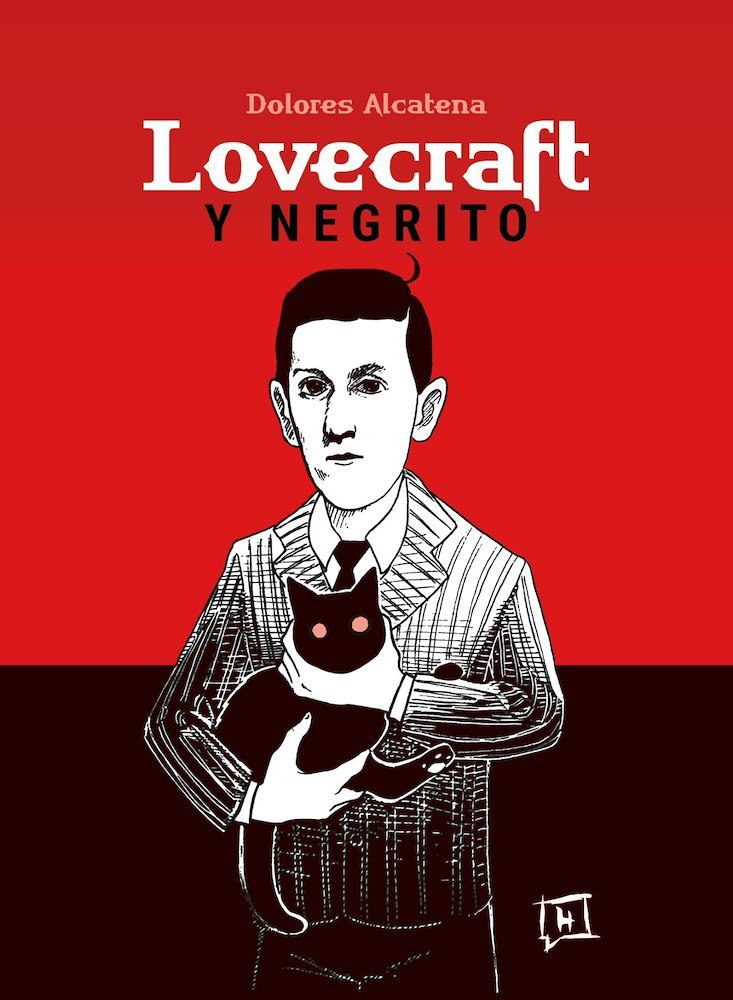
In 2023, Argentinian illustrator and writer Dolores’ Alcatena published Lovecraft y Negrito, a short graphic novel about Lovecraft’s friendship with his beloved pet. As she puts it in the opening:

Como amante de los gatos, Howard Philips Lovecraft frecuentemente incluía en sus relatos a estos elegantes y misteriosos animalitos. En su estilo deliberadamente desamorado y serio, los describía como símbolos de perfección, estética, libertad e independencia. Pero entre las cartas del escritor aparece Niggerman, un gatito negro que acompañaba a Lovecraft en su niñez. Al hablar de Niggerman (rebautizado ‘Negrito” para esta obra) las palabras del autor asumían un tono cálido, recordando con ternura cómo jugaban juntos en el jardín. Al hablar del gatito, el escritor no pudo, o no quiso, esconder sus sentimientos. El cariño que Lovecraft mantuvo a lo largo de su vida por Niggerman inspiró esta historia, permitiéndonos acceder a un costado más humano del gran autor del horror.As a cat lover, Howard Philips Lovecraft often included these elegant and mysterious animals in his stories. In his deliberately dispassionate and serious style, he described them as symbols of perfection, aesthetics, freedom, and independence. But among the writer’s letters appears Niggerman, a black kitten who accompanied Lovecraft in his boyhood. When talking about Niggerman (renamed “Negrito” for this work), the author’s words took on a warm tone, fondly recalling how they played together in the garden. When talking about the kitten, the writer could not, or did not want to, hide his feelings. Lovecraft’s lifelong affection for Niggerman inspired this story, allowing us to glimpse a more human side of the great horror author.
Dolores Alcatena, Lovecraft y Negrito (2023)English translation

“Negro” in Spanish is the color black, “-ito” is a diminutive suffix; context is important because in some usages “negrito” can mean bold type, or it can be a reference to certain Southeast Asian peoples, or a not-necessarily-kind reference to small Black children. In the context of this story, it might be best to think of it as a term of affection, like naming a black kitten “Blackie.”
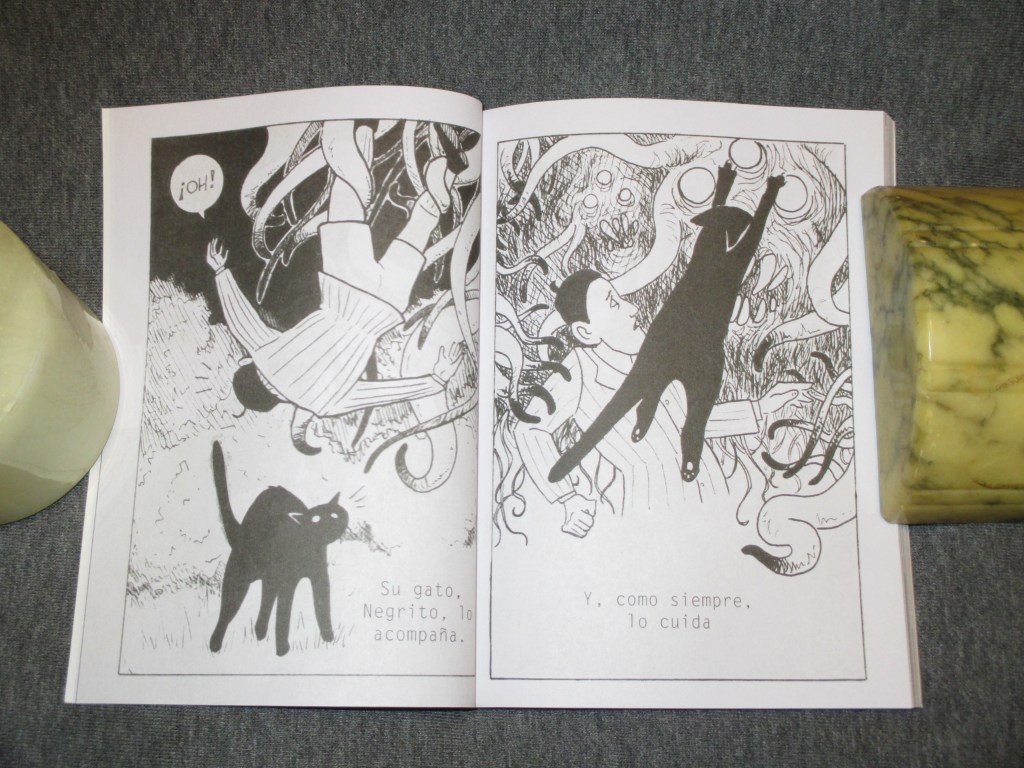
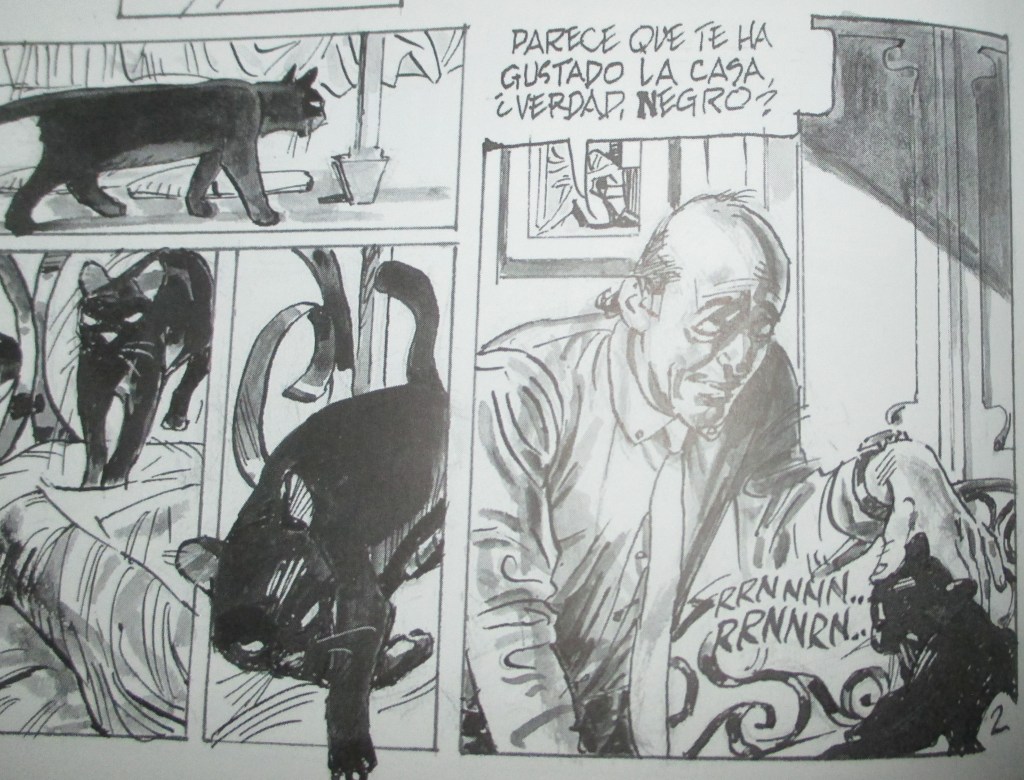
Su gato, Negrito, lo acompaña.

Y, como siempre, lo cuida.
His cat, Negrito, accompanies him.

And, as always, takes care of him.
Dolores Alcatena, Lovecraft y Negrito (2023)English translation

The story is told in black and white, mostly from Negrito’s perspective. The cat aids and protects Howard through his journeys, including the events that would inspire “The Cats of Ulthar” and “The Shadow over Innsmouth.” From a cat’s perspective, the cat-killing couple in Ulthar are particularly horrific.
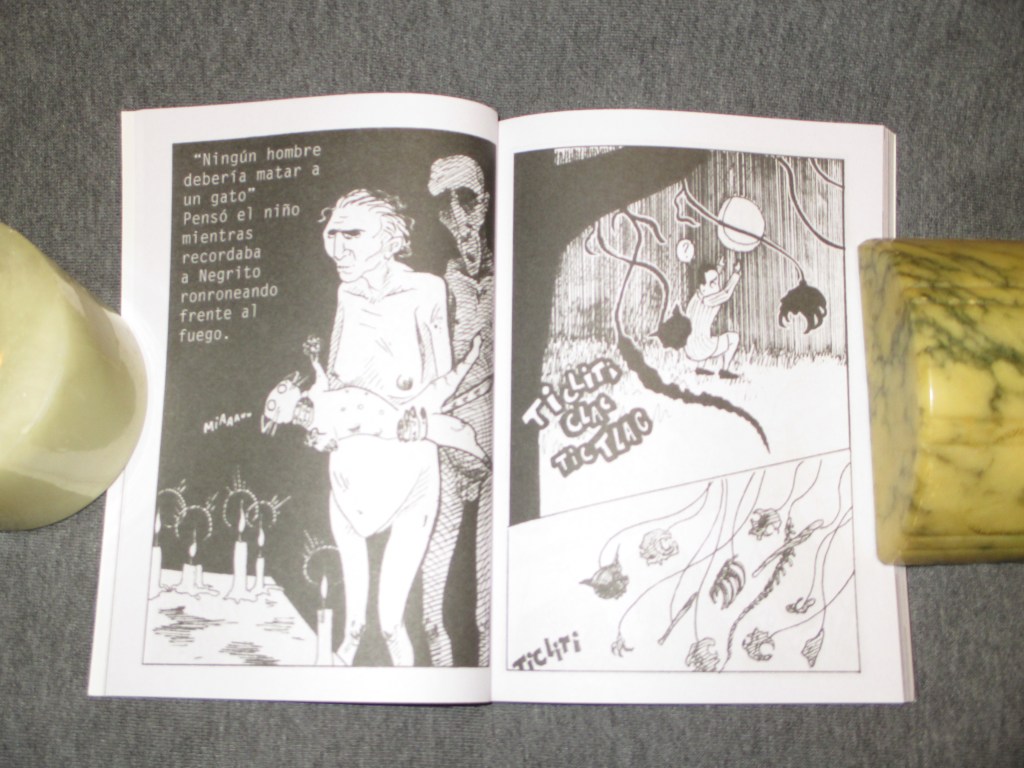
“Ningún hombre debería matar a un gato”
Pensó el niño mientras recordaba a Negrito ronroneando frente al fuego.
“No man should kill a cat,” the boy thought as he remembered Negrito purring in front of the fire.
Dolores Alcatena, Lovecraft y Negrito (2023)English translation

There is a somewhat fairy-tale quality to the retelling, the traipse through Lovecraft’s fiction. Most of Howard’s waking life we don’t see…but then his cat was not there to see that.
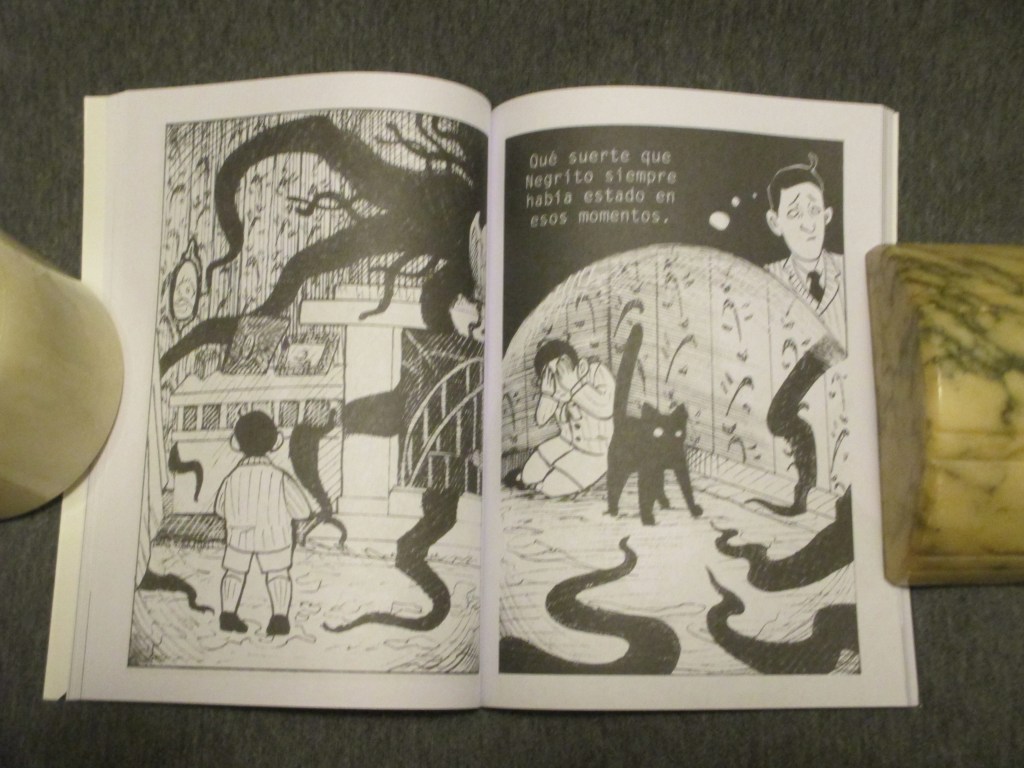
Qué suerte que Negrito siempre había estado en esos momentos.How lucky that Negrito had always been there in those moments.
Dolores Alcatena, Lovecraft y Negrito (2023)English translation

The Lovecraft of these stories is a scared, almost a traumatized kid, with Negrito as his only friend; parental figures are absent. It is a very sympathetic view of Howard as a child, but in comparison to El Joven Lovecraft by José Oliver & Bartolo Torres it does not show Lovecraft’s occasional joyfully morbid side. Readers are meant to empathize with a young Lovecraft.
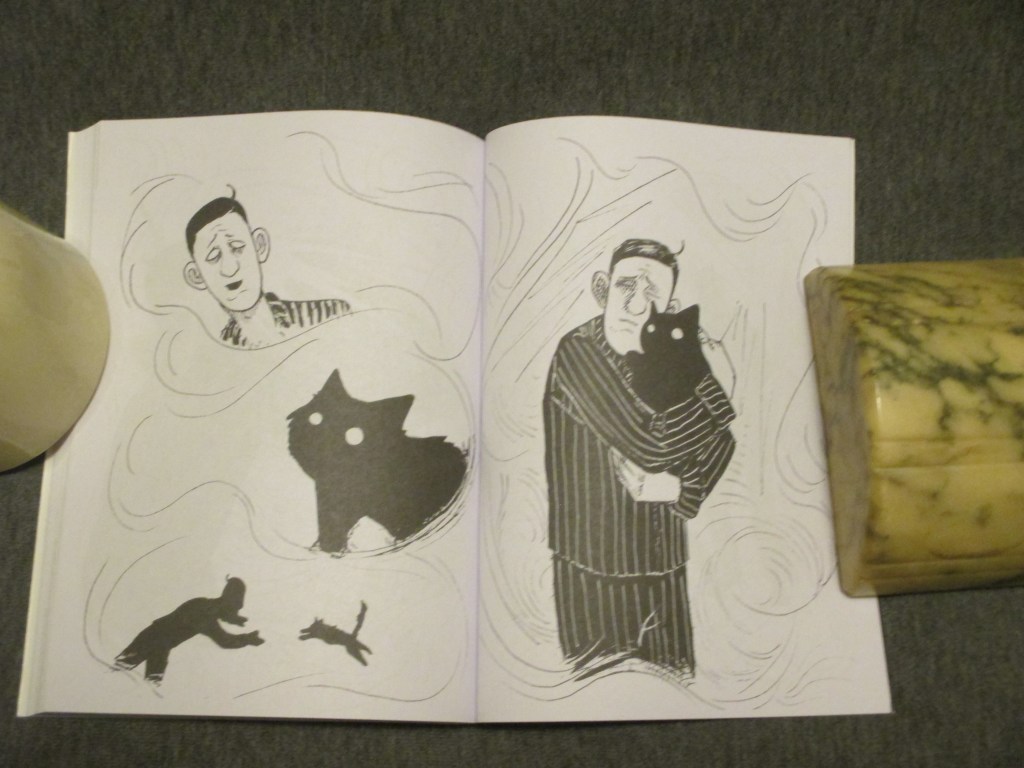
The ending, a wordless reunion between the dead Lovecraft and his lost cat, is the kind of afterlife that every cat-lover might wish to experience themselves someday.
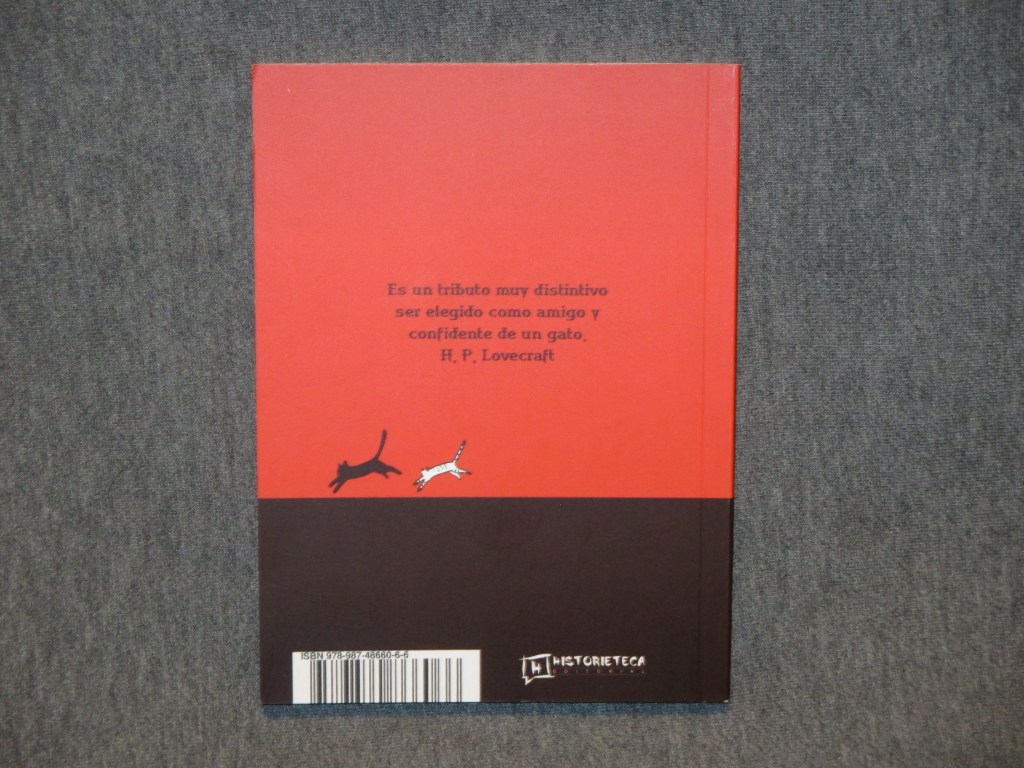
Es un tributo muy distintivo ser elegido como amigo y confidente de un gato.
H. P. Lovecraft.
It is a very distinctive tribute to be chosen as a friend and confidant of a cat.
H. P. Lovecraft.
 It is no compliment to be the stupidly idolised master of a dog whose instinct it is to idolise, but it is a very distinct tribute to be chosen as the friend and confidant of a philosophic cat who is wholly his own master and could easily choose another companion if he found such an one more agreeable and interesting.
Dolores Alcatena, Lovecraft y Negrito (2023)English translationH. P. Lovecraft, “Cats and Dogs”

Lovecraft y Negrito is a story about a boy and his cat. It is not a historical work that delves into the nuances of the cultural forces that went into such names, or how naming cats did or did not reflect Lovecraft’s racial prejudices in later life. If readers want a scholarly exploration of what we do and don’t know about the real animal, check out Ken Faig’s essay “Lovecraft’s Boyhood Cat” in Lovecraft Annual #19 (2025). If you want a heartwarming fantasy about Lovecraft and his beloved pet, which has gained a kind of literary immortality, then read Lovecraft y Negrito.


Bobby Derie is the author of Weird Talers: Essays on Robert E. Howard and Others and Sex and the Cthulhu Mythos.

Deep Cuts in a Lovecraftian Vein uses Amazon Associate links. As an Amazon Associate I earn from qualifying purchases.
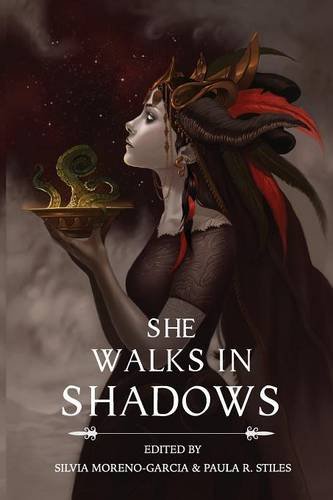
“Lockbox” (2015) by E. Catherine Tobler

There are not a vast number of women mentioned in H. P. Lovecraft’s “The Rats in the Walls.” However, two stand out:

The worst characters, apparently, were the barons and their direct heirs; at least, most was whispered about these. If of healthier inclinations, it was said, an heir would early and mysteriously die to make way for another more typical scion. There seemed to be an inner cult in the family, presided over by the head of the house, and sometimes closed except to a few members. Temperament rather than ancestry was evidently the basis of this cult, for it was entered by several who married into the family. Lady Margaret Trevor from Cornwall, wife of Godfrey, the second son of the fifth baron, became a favourite bane of children all over the countryside, and the daemon heroine of a particularly horrible old ballad not yet extinct near the Welsh border. Preserved in balladry, too, though not illustrating the same point, is the hideous tale of Lady Mary de la Poer, who shortly after her marriage to the Earl of Shrewsfield was killed by him and his mother, both of the slayers being absolved and blessed by the priest to whom they confessed what they dared not repeat to the world.
—H. P. Lovecraft, “The Rats in the Walls”

While it wouldn’t be quite accurate to say that Lovecraft scholarship has ignored these women, it would be accurate to say that the picklocks of literary critics and historians haven’t turned up any particular connections or likely historical or literary inspirations for Margaret Trevor and Mary de la Poer. While we know Lovecraft drew inspiration for this tale from Sabine Bearing-Gould’s “S. Patrick’s Purgatory” in Curious Myths of the Middle Ages, and while there is no lack of mysterious ladies therein, one stands out as a possible inspiration:

It is worthy of remark that the myth of S. Patrick’s Purgatory originated among the Kelts, and the reason is not far to seek. In ancient Keltic Mythology the nether world was divided into three circles corresponding with Purgatory, Hell, and Heaven ; and over Hell was cast a bridge, very narrow, which souls were obliged to traverse if they hoped to reach the mansions of light. This was—

“The Brig o’ Dread, na brader than a thread.”

And the Purgatory under consideration is a reflex of old Druidic teaching. Thus in an ancient Breton ballad Tina passes through the lake of pain, on which float the dead, white robed, in little boats. She then wades through valleys of blood. (248-249)

This is speculative; Lovecraft borrows some of the imagery for “The Rats in the Walls,” and it includes a woman recalled in a ballad associated with pain and blood, which may have been the seed from which Margaret Trevor and Mary de la Poer (and their respective ballads) grew. One might also wonder if the legend of Elizabeth Bathory worked on Lovecraft’s imagination, or any of the prospective cultists included in Margaret Murray’s The Witch-Cult in Western Europe, and these are certainly possible. The image is, in both cases, of women of the line who do not shrink away from the family cult, but become active participants.

Trish Thawer in The Witches of BlackBrook (2015) famously wrote: “We are the daughters of the witches you weren’t able to burn.” While that may not be historically true (convicted witches during the Salem Witch hysteria were hung, not burned at the stake), there is a sentiment that applies to readers and writers in Lovecraft’s Mythos: who are the daughters and granddaughters of Lovecraft’s women cultists, who had such a bad reputation that they haunted the ballads of the country for centuries thereafter?

Which is the theme that E. Catherine Tobler assays in “Lockbox,” one of the stories in She Walks in Shadows. The brief story is a return to Exham Priory by a female descendant of the de la Poer (or Shrewsfield) line and her not-quite-trustworthy lover…and the thing that makes the story work is that it is her story, her reconnection with this ancestor and all the mystery and horror that Margaret Trevor of Cornwall represents, not as a member of the cult she was marrying into, but as a black saint in her own right:

The worst thing was, despite the horrors around her, Margaret Trevor was something to be worshipped, a glory even in the blood and ruin that streaked her. The stories said that she loved the old cults well, but had taken a passive role beside her husband. But here, in the horrible cellar with the collapsing girders, she was a gold-and-silver goddess while her husband cowered.
—E. Catherine Tobler, “Lockbox” in She Walks in Shadows 94-95

The story is told with many footnotes, many caveats, things that cannot be said and perhaps dare not be remembered. It gives the suggestion of a maddening experience that has snapped a thread of sanity and memory, but the title is the crux of the story, because it is a mystery and a memory that the narrator can choose to recall whenever she wishes—whenever she is ready to leave her placid isle of ignorance and remember what really happened down there, in the buried ruins of Exham Priory.

“Lockbox” by E. Catherine Tobler was first published in She Walks in Shadows (2015) and its reprints, and was also reprinted in Wilde Stories 2016: The Year’s Best Gay Speculative Fiction.


Bobby Derie is the author of Weird Talers: Essays on Robert E. Howard and Others and Sex and the Cthulhu Mythos.

Deep Cuts in a Lovecraftian Vein uses Amazon Associate links. As an Amazon Associate I earn from qualifying purchases.
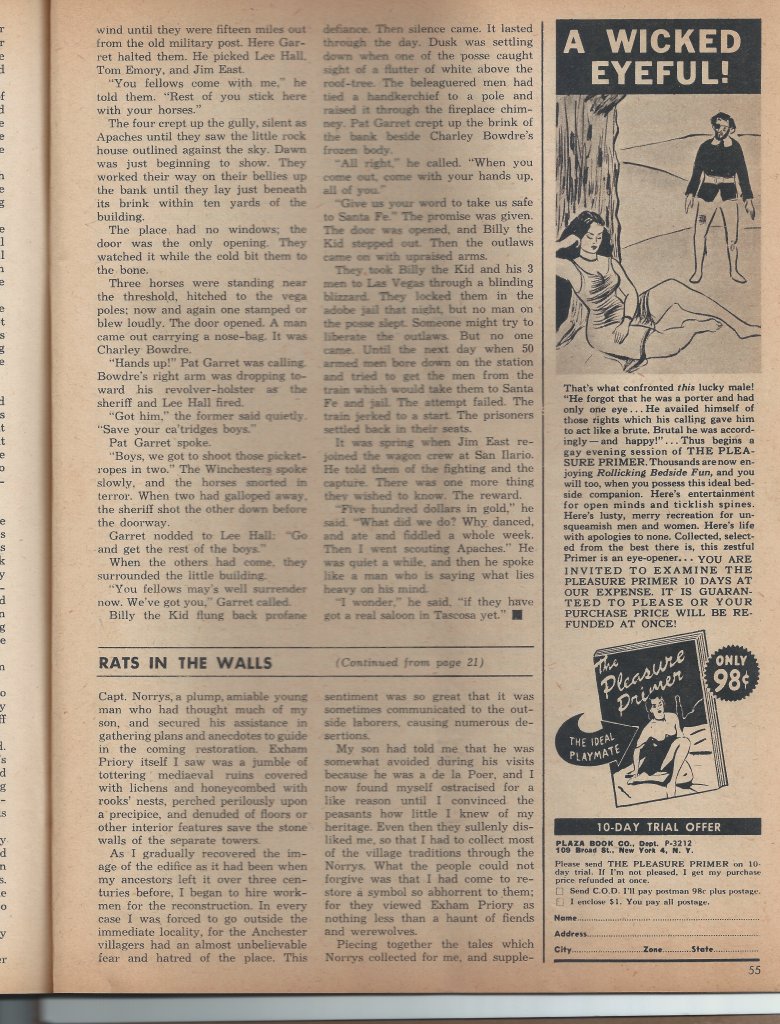
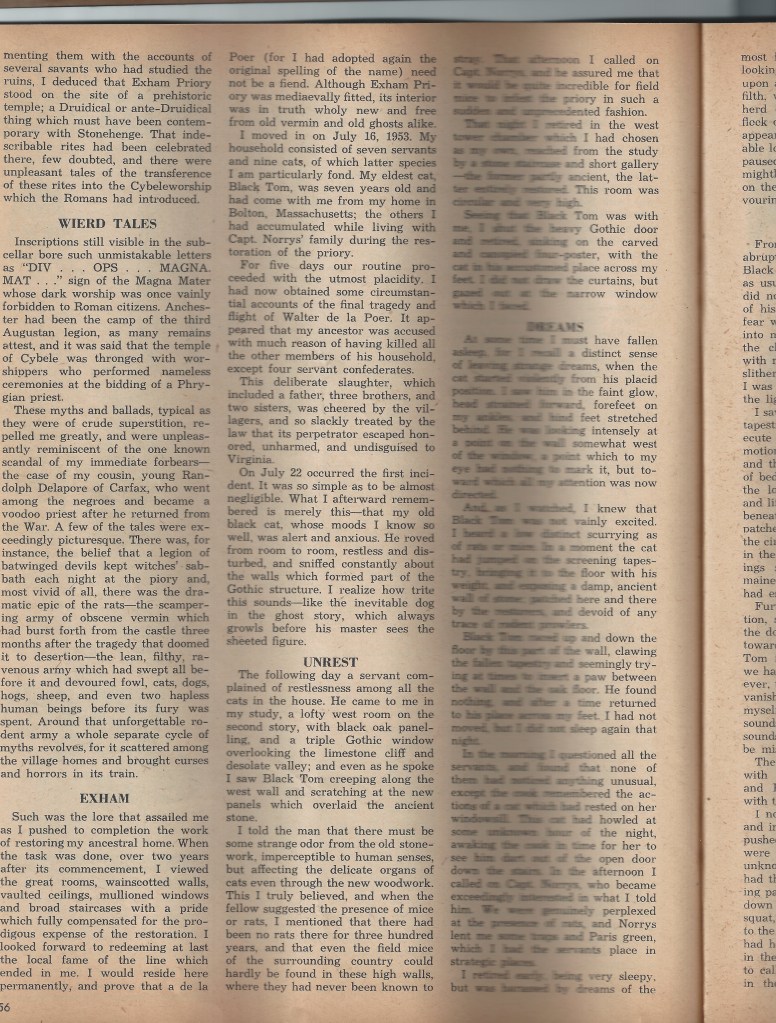
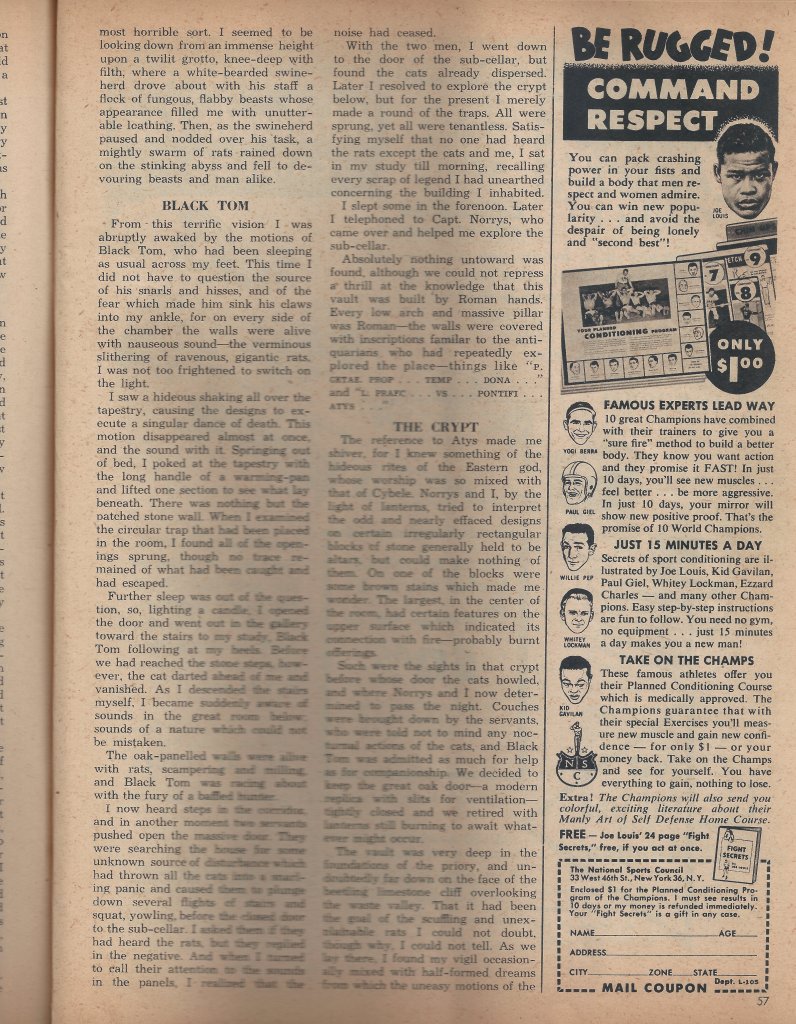
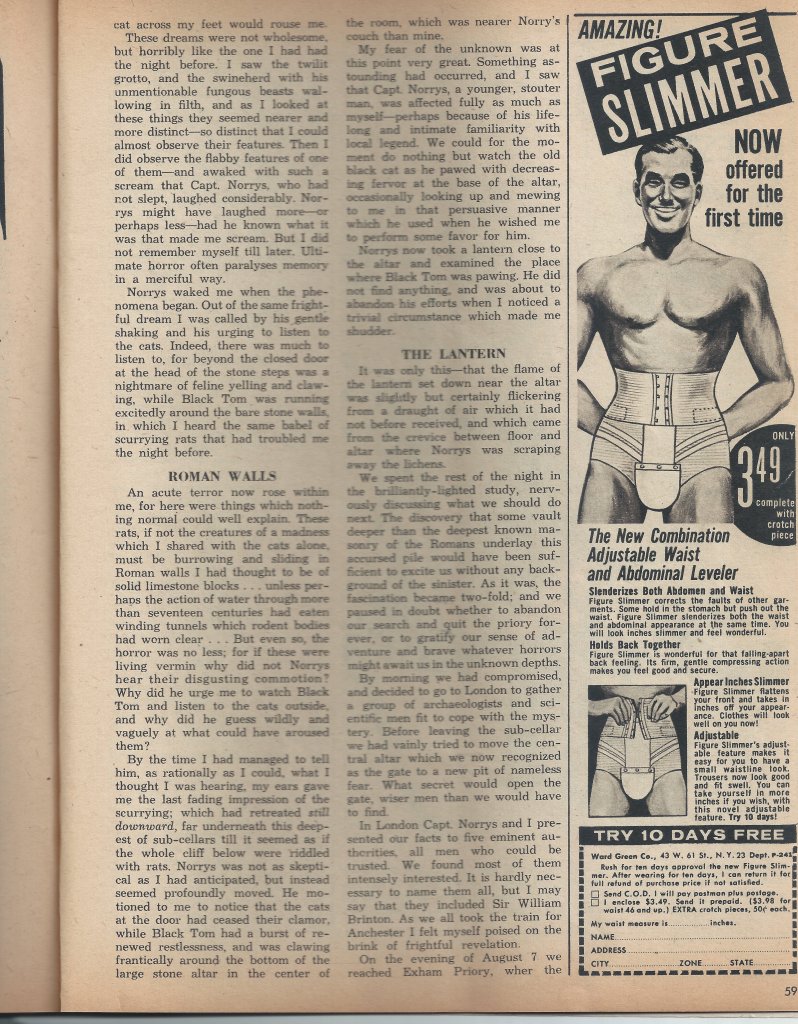
“The Rats in the Walls” (1956) by H. P. Lovecraft

Racist Language

The following article deals explicitly with racist language in a historical context. Frank discussion of these matters requires the reproduction of at least some samples of these pejoratives. As such, please be advised before reading further.


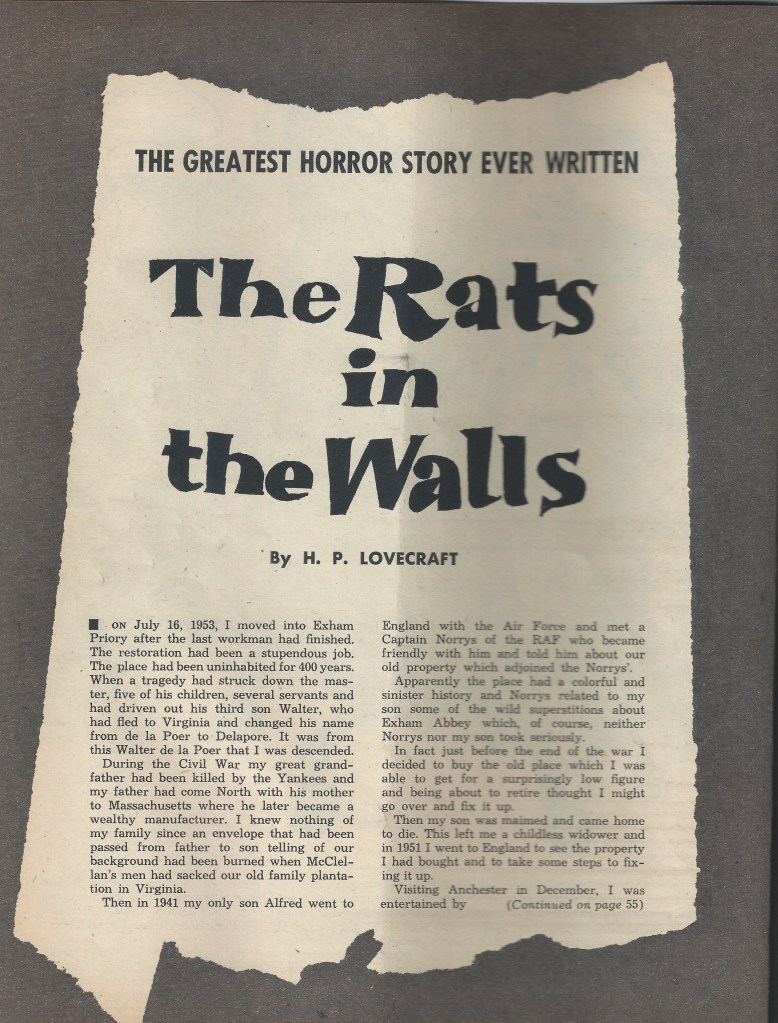
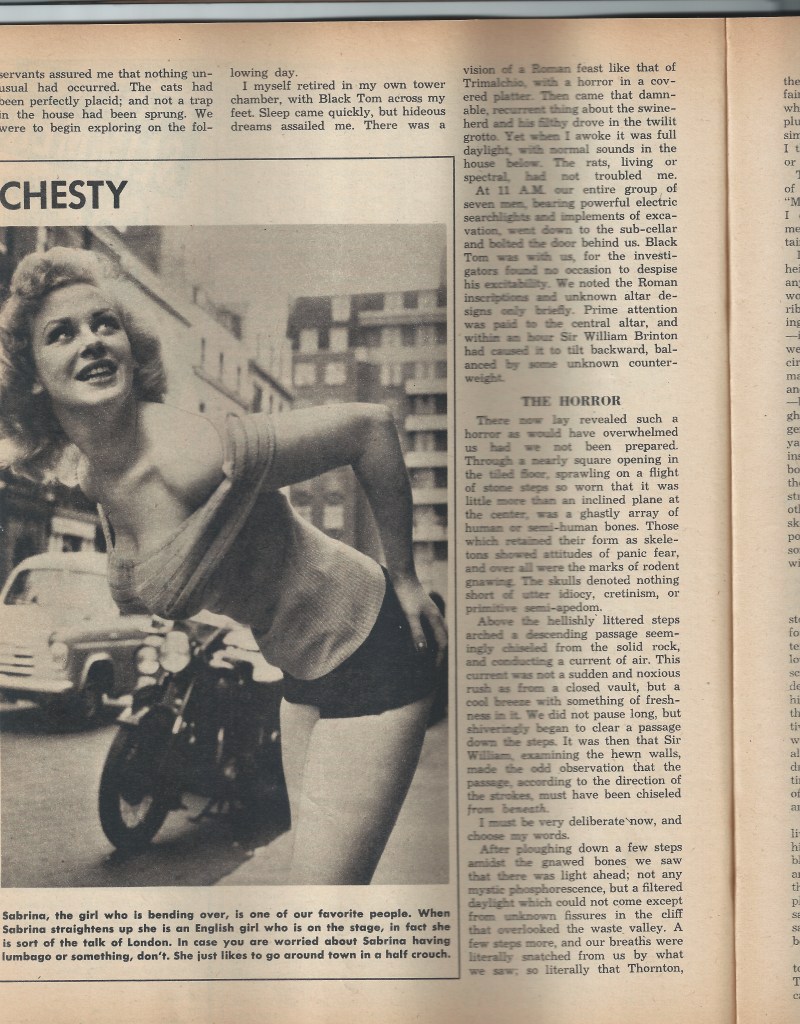
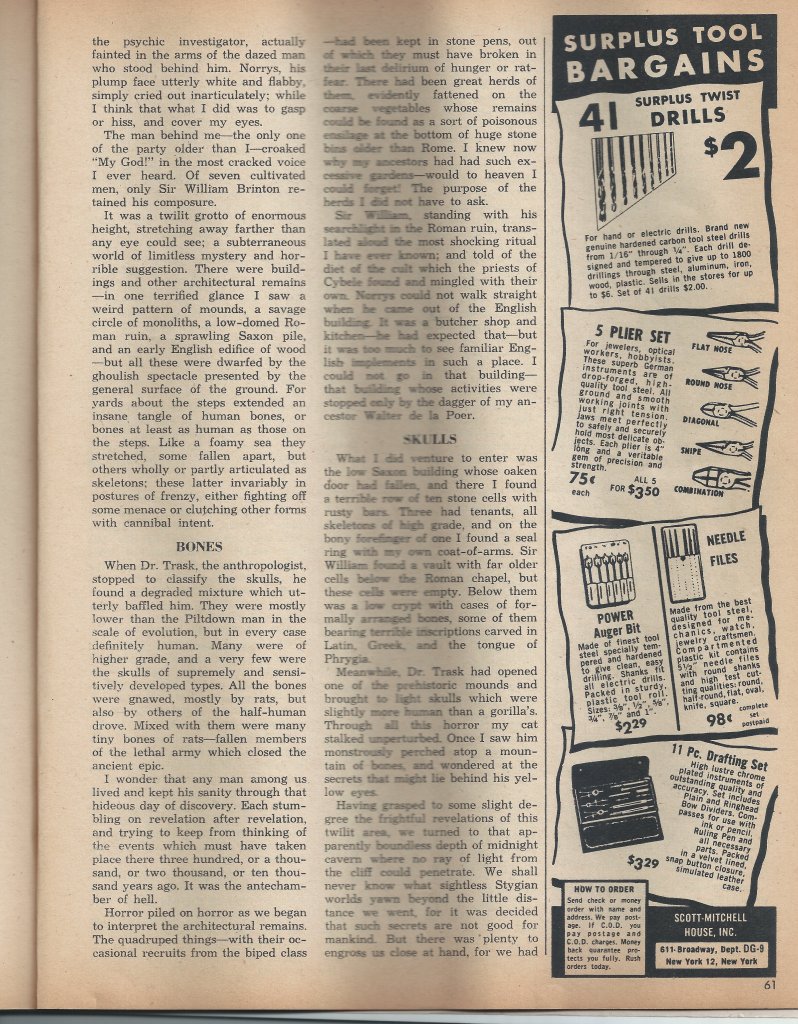
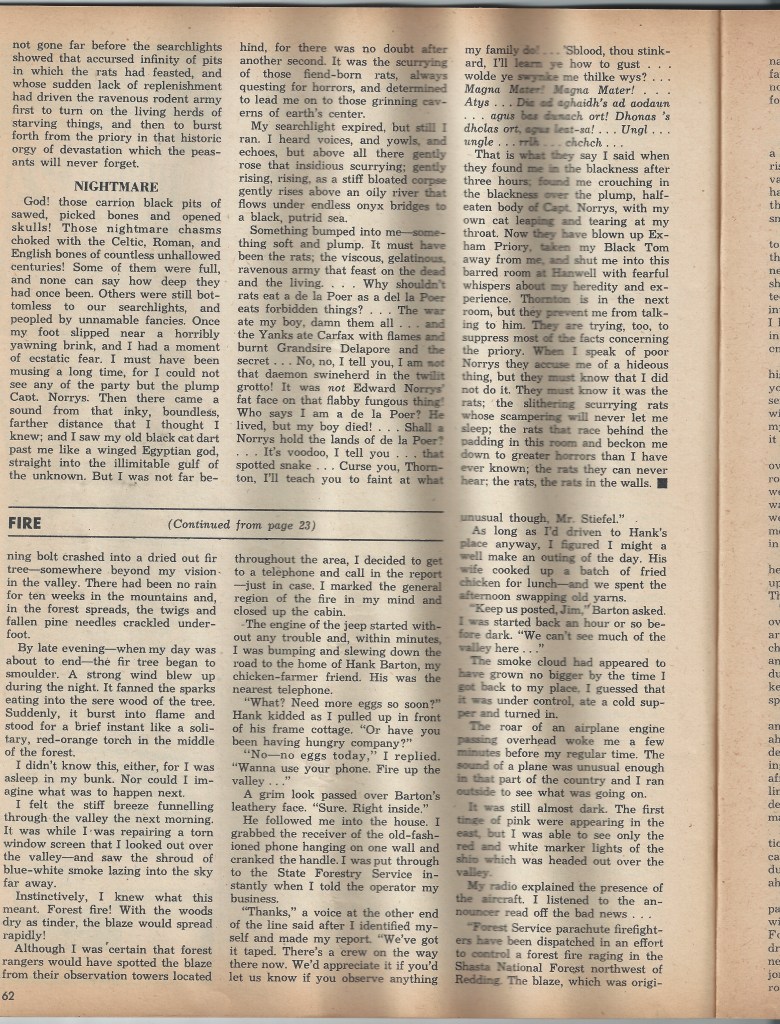
As I have said, I moved in on July 16, 1923. My household consisted of seven servants and nine cats, of which latter species I am particularly fond. My eldest cat, “Nigger-Man”, was seven years old and had come with me from my home in Bolton, Massachusetts; the others I had accumulated whilst living with Capt. Norrys’ family during the restoration of the priory. I moved in on July 16, 1953. My household consisted of seven servants and nine cats, of which latter species I am particularly fond. My eldest cat, Black Tom, was seven years old and had come with me from my home in Bolton, Massachusetts; the others I had accumulated while living with Capt Norrys’ family during the restoration of the priory.
“The Rats in the Walls” (Weird Tales Mar 1924)“The Rats in the Walls” (Zest Jan 1956)

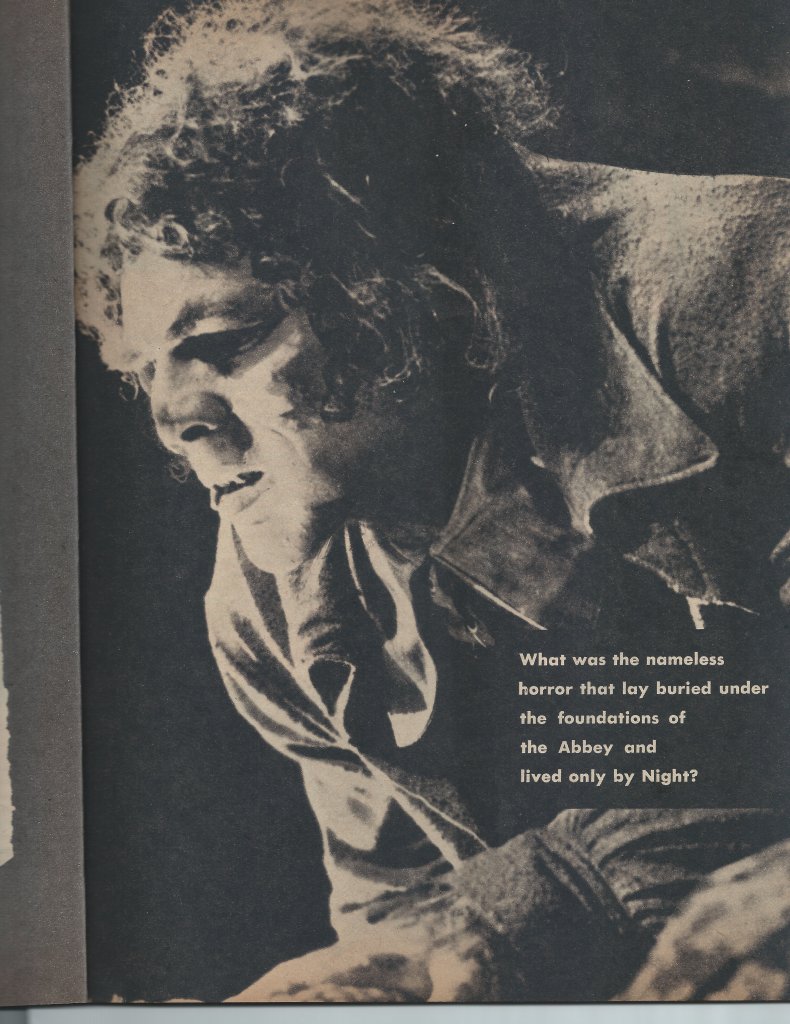
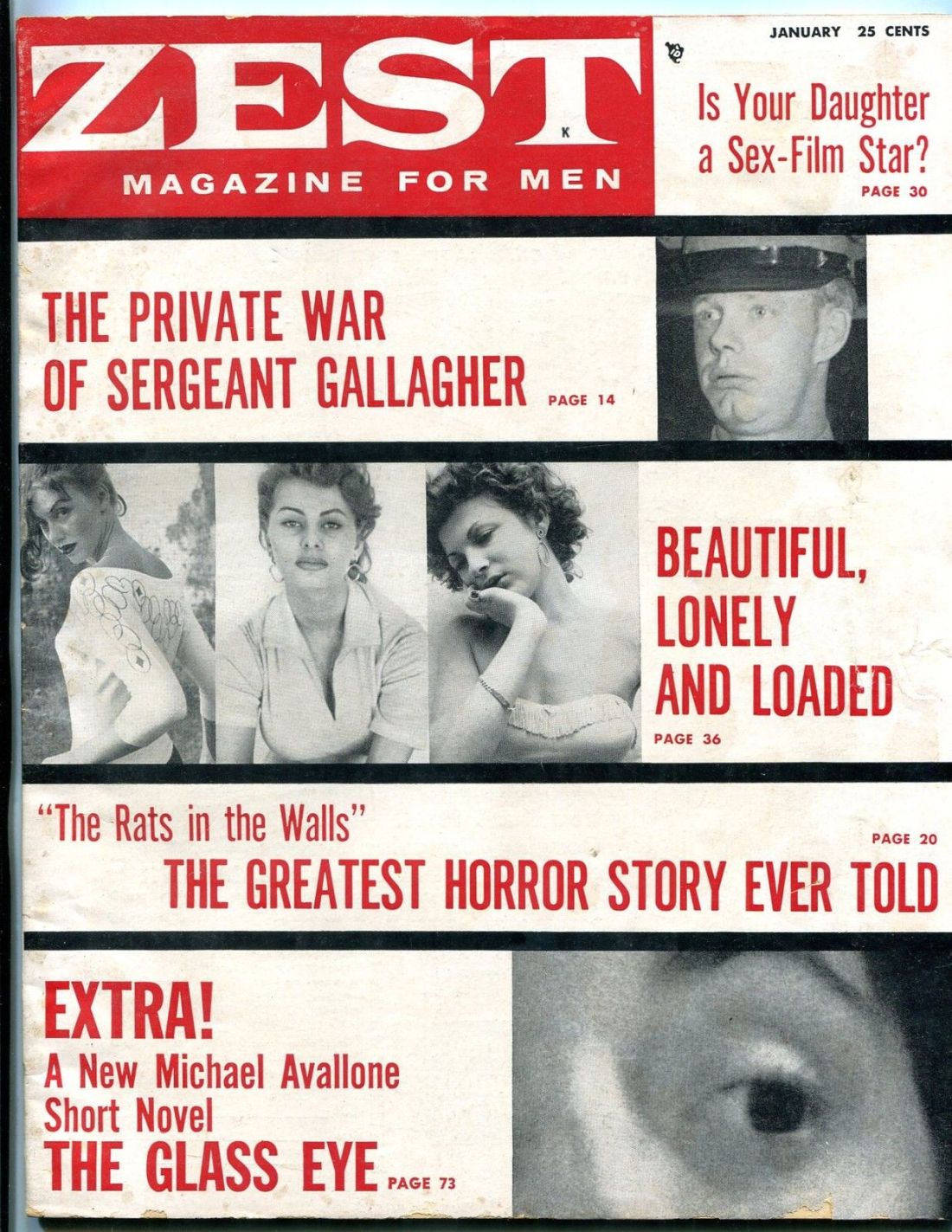
In January 1956, the premiere issue of Zest: The Magazine for Men debuted on the newsstands of the United States. Zest was one of a crowd of men’s magazines, from the upscale Playboy (which featured nude photographs of women) to men’s adventure pulps like Cavalier and Swank. Weird fiction in these magazines wasn’t unknown; Playboy had reprinted William Hope Hodgson’s “The Voice in the Night” in the July 1954 issue. The point of such magazines was not just titillation, but adult entertainment of a broad, masculine stripe—everything from frank articles about sex to lurid tales of escapes from Nazi death camps, real and imagined.

In that context, the decision of a new men’s magazine with a broadly scattershot tabloid approach to content reprinting an H. P. Lovecraft story isn’t necessarily that odd. “The Rats in the Walls” was broadcast on the cover as “The greatest horror story ever told!” and the copyright notice was to H. P. Lovecraft—by then dead almost 19 years, and with August Derleth and Arkham House acting in de facto control of the estate. Presumably, Derleth would have been happy to let them reprint the story for a modest fee.

What sets the 1956 version of “The Rats in the Walls” apart, however, is not the simple fact of its publication but the editorial changes that went along with it. The story was initially set in 1923, the year it was written, and features as background the Great War. In the Zest version, the setting is shifted to 1953, post-World War II. The story was also abridged, jettisoning some of Lovecraft’s verbiage, taking a hatchet to his paragraphs so that they would more easily fit in the three-column magazine format, and perhaps most notably, changing the name of the cat from “Nigger-Man” to “Black Tom.”

For all that Lovecraft has a reputation as a racist, much of that reputation is based on his private letters rather than his published fiction. Lovecraft used the word “nigger” just 31 times in five stories—”The Rats in the Walls” (19), “Medusa’s Coil” (6), “Winged Death” (3), “Through the Gates of the Silver Key” (2), and “The Picture in the House” (1)—although he occasionally used other similar terms (“Nig” for the black cat in The Case of Charles Dexter Ward, “darky” and “darkies” once each in “Medusa’s Coil,” etc.). More important than how often or not Lovecraft used these terms was why and how he used them; in many instances, the terms are used by racist characters, and we know they’re racist because they use those terms; the use of pejoratives was a way for Lovecraft to establish that part of their character.

In the case of “The Rats in the Walls” and The Case of Charles Dexter Ward, however, things are different. The use of the terms “Nig” and “Nigger-Man” are very specific references to black cats, and rather than being narrative contrivances to announce a character as being racist, they are expressly drawn from Lovecraft’s own life:

I can assure you that Nigger-Man is (or was, alas!) a glorious and purring reality!

H. P. Lovecraft to Edwin Baird, 3 Feb 1924, Letters to Woodburn Harris and Others 49

Nigger-Man (or Nig) had been the name of Lovecraft’s own childhood pet, a black cat that the family had adopted and named at an unknown point. The first reference to “Nig” is in a letter from Whipple Phillips (Lovecraft’s grandfather) to a young HPL in 1895. We don’t know if a young H. P. Lovecraft named the cat himself, or if one of the adults named it. We do know that whoever named it, the adults apparently tolerated the name, which wasn’t an unusual name for an animal with black coloring at the time; the cat aboard the Terra Nova during Robert Falcon Scott’s 1910-1913 Antarctic expedition carried the name, for example. It isn’t clear when the use of the word declined as a pet name in the US, but anecdotal evidence suggests after WW2.

In later life Lovecraft would refer to black cats by similar names:

When I speak to little Sam I call him all sorts of things—“Little Black Devil”, “Old Nigger Man”, “Spawn of the Shadows”, “Little Piece of the Night”, “Old Black Panther”, “Little Onyx Sphinx”, “Child of Bast”, & so on, & so on ….. Not excluding the succinct & universal “kittie”!

H. P. Lovecraft to Duane W. Rimel, 10 Aug 1934, Letters to F. Lee Baldwin, etc. 200-201

The cat vanished in 1904, the tumultuous year that saw the death of Lovecraft’s grandfather, which forced Lovecraft and his mother to move from the family home into reduced quarters, and began the long slide into genteel poverty. Lovecraft never again could afford a true pet, though he enjoyed neighborhood kitties like the above-mentioned Sam Perkins and remembered his former cat for the rest of his life.

Editor Edwin Baird had already published stories that contained the word “nigger” in Weird Tales, and the use of the name for black-furred pets was so common during the period as to be almost innocuous; no doubt he didn’t think twice about publishing “The Rats in the Walls” in 1924. Nor did editor Farnsworth Wright, who succeeded Baird, change the cat’s name when he reprinted “The Rats in the Walls” in the June 1930 issue of Weird Tales. Twenty-six years later, however, the editor at Zest apparently thought differently. So it was that the 19 instances of the cat’s name were deftly replaced.

It would not be the last time.

In terms of textual traditions, the Zest text of “The Rats in the Walls” is largely a dead end, rarely reprinted and largely ignored by both scholars and readers, a curiosity for collectors but not much more. None of Arkham House’s reprints of “The Rats in the Walls” ever replaced the cat’s name. Three years later when another men’s magazine, Sensation, reprinted “The Rats in the Walls” it was somewhat garbled and chopped-up, but the cat’s name was intact. The main textual tradition of “The Rats in the Walls” kept the cat’s name, even as societal views on the acceptability of that name gradually shifted.

Before 1971, the resistance to changing the name came from Arkham House, who insisted they owned the copyrights to Lovecraft’s fiction and who handled licensing and reprints; after the death of August Derleth in 1971 the control Arkham House used fell apart—and, more importantly, a “pure text” movement grew within the burgeoning community of Lovecraft fans and scholars. They wanted to read what Lovecraft actually wrote, warts and all, rather than what editors had made of his stories. For example, the ending of “Medusa’s Coil” (1939) by Zealia Bishop & H. P. Lovecraft was bowdlerized in its first publication, changing Lovecraft’s “a Negress” to “a loathsome, bestial thing, and her forebears had come from Africa.”

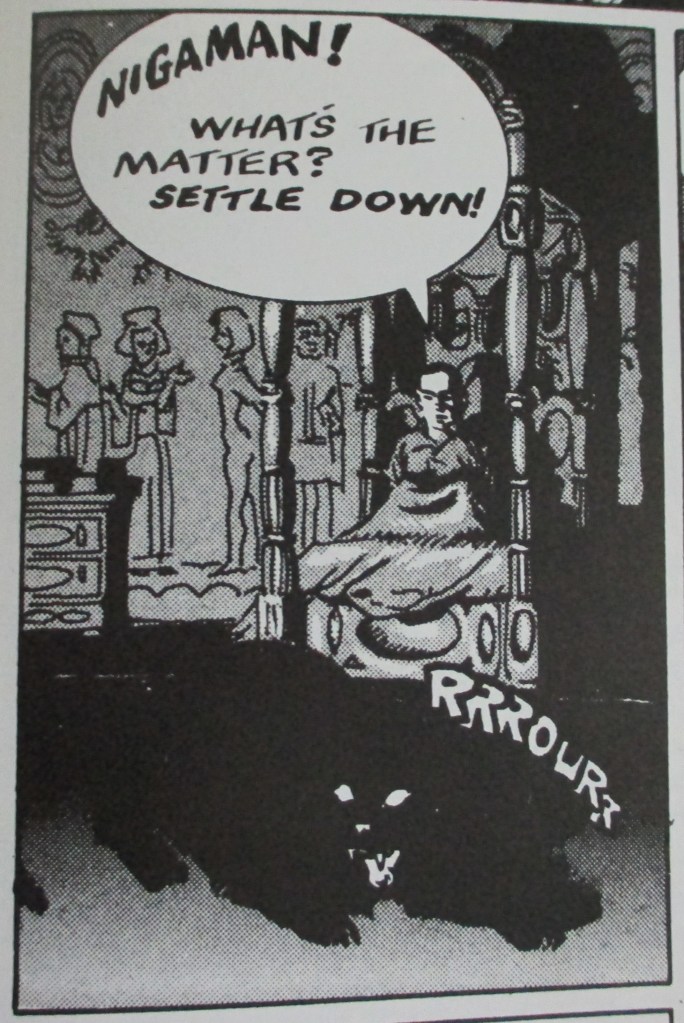
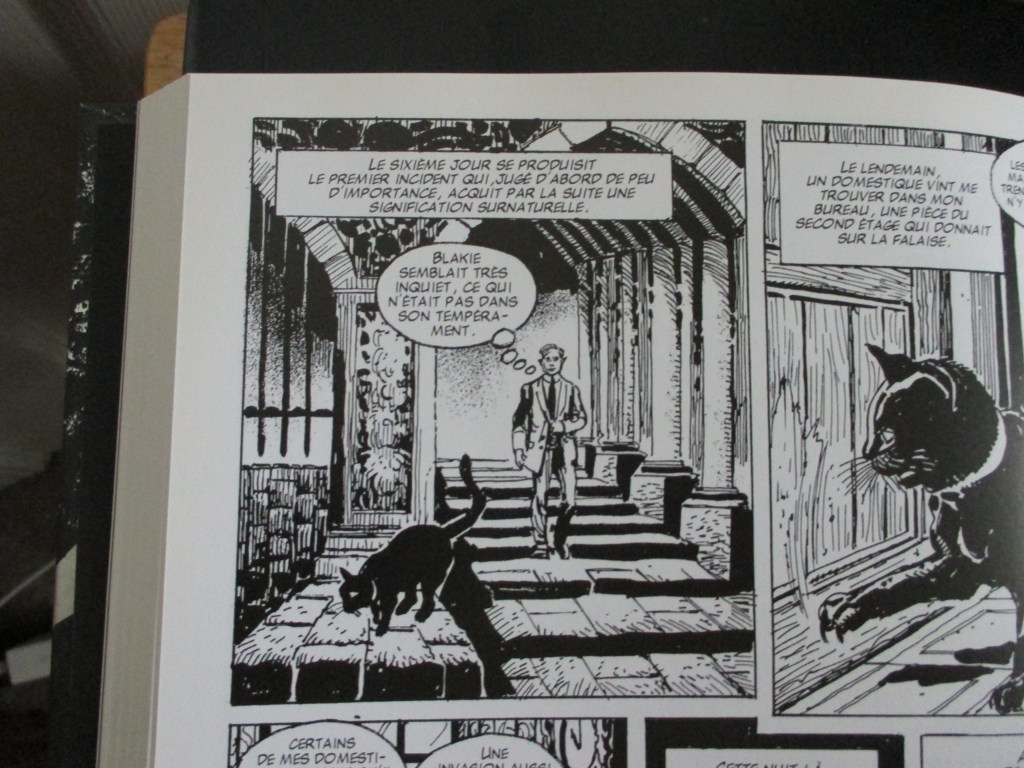
In adaptation and translation, however, English-language scholars and editors had less sway, and subtle shades of meaning came into play. In Maria Luisa Bonfanti’s Italian translation “I ratti nel muro,” the cat becomes Moro (“Moor”) and Jacques Papy’s French translation “Les rats dans les murs” calls it Négrillon (“Pickaninny”); Bob Jennings in adapting “The Rats in the Walls” to comics for Creepy #10 (Jul 1968) re-named the cat Salem; Richard Corben in Skull Comix #5 (1972) it was Nigaman; Vicente Navarro and Adolfo Usero in Lovecraft Un Homenaje en 15 Historietas (2013) it was Negro (“Black”); and Horacio Lalia in Le Manuscrit oublié (2000) used “Blakie” or “Blackie.” Dan Lockwood in The Lovecraft Anthology Vol. 1 (2011) simply left the cat’s name out, though the puss otherwise retains its accustomed role. The picture is further complicated when various of these adaptations are themselves translated into other languages, but the examples illustrate the very general point: some translators and adapters attempt to capture the essence of the name, some deliberately sidestep or avoid the issue.

This idiosyncratic approach to handling Lovecraft’s material is understandable. In the context of the story, the name has no particular significance to anyone except Lovecraft himself, it doesn’t matter whether the cat even has a proper name, as far as its narrative purpose is concerned. Where translators and adaptors have kept the name or something close to it, the reason must be a very conservative approach to the material—a desire to be as true to Lovecraft’s original text as possible.

There are those for whom that represents a fundamental issue. For example, when compiling a collection of Lovecraft’s most Gothic tales, “The Rats in the Walls” was left out. The reasoning given was:

[…] some of his most famous Gothic stories, such as ‘Herbert West—Reanimator’ (1922) and ‘The Rats in the Walls’ (1924), are disfigured by casual racist remarks or allusions that make contemporary reprintings problematic.*

*It is broadly acknowledged, even by his fas, that Lovecraft espoused racist views in his writing; and there are references in this collection which readers are likely to find offensive. Their inclusion in this edition in no way implies endorsement by the editor or publisher.

Xavier Aldana Reyes, introduction to The Gothic Tales of H. P. Lovecraft (2018) xi

“Problematic” in this context has to be read as “potentially offensive to today’s audience”; it cannot mean “an actual difficulty in reprinting the story” because “The Rats in the Walls” is one of Lovecraft’s most-reprinted stories, and is now in the public domain and freely available to read on the internet (link). There has been considerable clamor on the internet lately about the censoring or sanitization of works by dead authors—Roald Dahl, Ian Fleming, and Agatha Christie have all come up—and each case is a little different. For example, Christie authorized some changes to her works while still alive—it being remembered that the original title of And Then There Were None (1939) was Ten Little Niggers, named after an 1869 minstrel song, and that the original title persisted until 1980 in some editions.

What these authors share with Lovecraft is literary longevity. They were all born in a world where racism, antisemitism, and sexism were much more prevalent, pervasive, open, and accepted; these views influenced their work. Unlike many of their contemporaries that work is still being published and read. Though they have all long since given up the ghost, their literary works are still in print, still marketable, and still in demand by new generations of readers. Editors of new editions who cover up or erase the racism and antisemitism of yesterday are not doing the historian’s duty to preserve and accurately represent the past…but neither are they historians: they’re businesspeople, trying to sell a product to the widest possible market, and to give that market what they think it wants.

As the Zest version of “The Rats in the Walls” shows, such efforts do not tend to amount to much in the long run. Well-meaning as folks like Reyes might be in their effort to protect the innocent eyes of contemporary readers from historical racism, failing to reprint Lovecraft’s most Gothic story in a collection of Gothic stories is simply an act of cowardice. If editors and publishers, scholars and critics, are to be good stewards of the past and honest with the reading public, then we have to deal with historical racism honestly and openly—and if the words and themes are offensive, to explain their original context, and why and how Lovecraft used them, and how his original audience would have read and understood them.

Reprinting Lovecraft’s “The Rats in the Walls” is an educational opportunity to teach readers more about this story and Lovecraft. Removing the cat’s offensive name removes the opportunity to engage with that aspect of the text. At the same time, now that the story is in the public domain, anyone can play with the text freely. Scholars and fans will no doubt continue to strive for accuracy to Lovecraft’s original, but there is no reason why anyone appropriating the text of the story of its characters cannot make their own decisions about what is appropriate in this day and age—if anyone has a desire to write the further adventures of Black Tom.


Bobby Derie is the author of Weird Talers: Essays on Robert E. Howard & Others (2019) and Sex and the Cthulhu Mythos (2014).

Deep Cuts in a Lovecraftian Vein uses Amazon Associate links. As an Amazon Associate I earn from qualifying purchases.