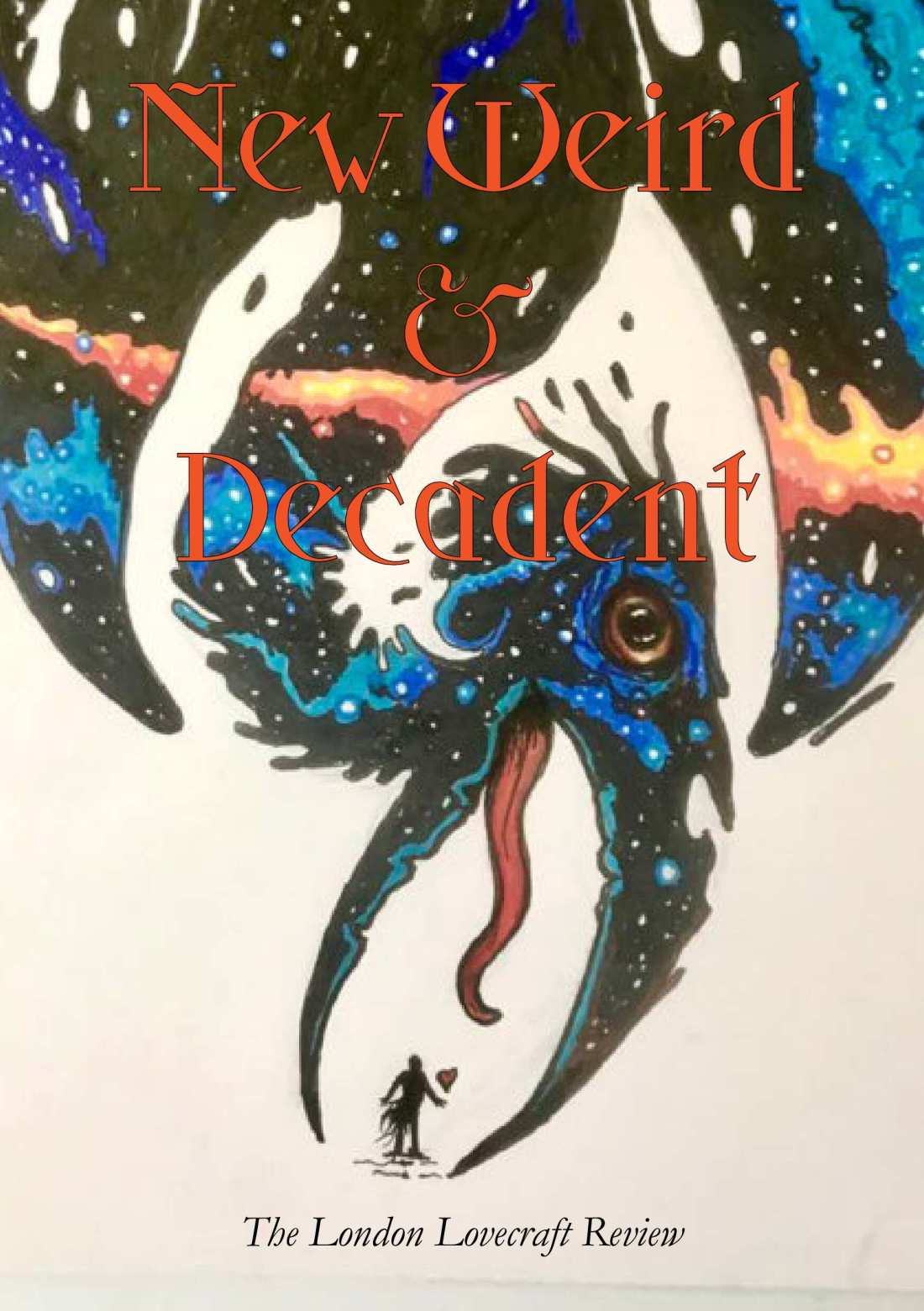
“In Their Own Voices” (2025) by Lavie Tidhar

Fishhead was of a piece with this setting. He fitted into it as an acorn fits its cup.
—Irvin S. Cobb, “Fishhead” (1913)

She remembered college well. It was so different to junior high, when the kids used to push her, gathered round in a circle so that she couldn’t escape. Fishhead! Fishhead! they’d cry.
—Lavie Tidhar, “In Their Own Voices” in New Weird & Decadent (2025) 29

The 21st-century story of “The Shadow over Innsmouth” is the diaspora. It is a very post-colonialist idea; the concept of identity and ethnicity, which has been forcibly divorced from geography. The people of Innsmouth were forced from their homes by government violence, military force. Arrested, imprisoned, murdered.

Yet they survived.

“The Doom That Came to Innsmouth” (1999) by Brian McNaughton & “The Litany of Earth” (2014) by Ruthanna Emrys, “Legacy of Salt” (2016) by Silvia Moreno-Garcia, “All Our Salt-Bottled Hearts” (2016) by Sonya Taaffe, and Winter Tide (2017) by Ruthanna Emrys are some of the stories that deal with the way the survivors of the government raid on Innsmouth scattered, and how their descendants connected, formed their own groups, attempted to preserve and reclaim their legacy.

Glad your collaborator found my Massachusetts atmosphere convincing.
The plot I am now experimenting on concerns another fictitious Mass.
town—“Innsmouth”—which is vaguely suggested by the ancient & almost
dead city of Newburyport. Of course, there is no sinister, un-human shadow
over poor old Newburyport—but then, there never was a festival of worms
at Marblehead (Kingsport)!
—H. P. Lovecraft to August Derleth, 14 Nov 1931, Essential Solitude 1.411

One of the biggest parts of the diaspora mythology is the return to Innsmouth itself. The town that Lovecraft described takes its real-life inspiration from his visit to Newburyport, Massachusetts, and while its literary antecedents include Irvin S. Cobb’s “Fishhead,” Herbert S. Gorman’s “The Place Called Dagon,” and Robert W. Chambers’ “The Harbor-Master.” This is not portrayed as irredentism, however; the return is not a military re-conquest, violence meeting violence, but a peaceful reoccupation. Innsmouth is portrayed as ground of little to no value aside from those who are bound there by ties of ancestry and memory.

Lavie Tidhar’s “In Their Own Voices” is about such a return. It is not a horror story, though horror is part of its history and heritage. This is about the healing that comes after the horror, about reunion, self-acceptance, and finding your tribe. Tidhar has done well to ground the story in the genuine Massachusetts geography, much as Lovecraft himself did.

Silvia linked hands with her sisters; and when she smiled she tasted salt on her tongue, and it took her a moment to realize she had been crying.
—Lavie Tidhar, “In Their Own Voices” in New Weird & Decadent (2025) 29

Readers could easily imagine the Silvia of “In Their Own Voices” and Aphra of Ruthanna Emrys’ “The Litany of Earth” meeting together, stranger cousins at a family reunion—and that’s part of the game. Writers like Tidhar are surfing the same wave that August Derleth, Silvia Moreno-Garcia, Sonya Taaffe, and so many others have ridden, but they are all on their own journey, and the emphasis is different for each writer. The legacy of Innsmouth is both horror and acceptance, monsters and orphans. That speaks across generations.

“In Their Own Voices” by Lavie Tidhar was published in New Weird & Decadent (2025), also available on Amazon.


Bobby Derie is the author of Weird Talers: Essays on Robert E. Howard and Others and Sex and the Cthulhu Mythos.

Deep Cuts in a Lovecraftian Vein uses Amazon Associate links. As an Amazon Associate I earn from qualifying purchases.
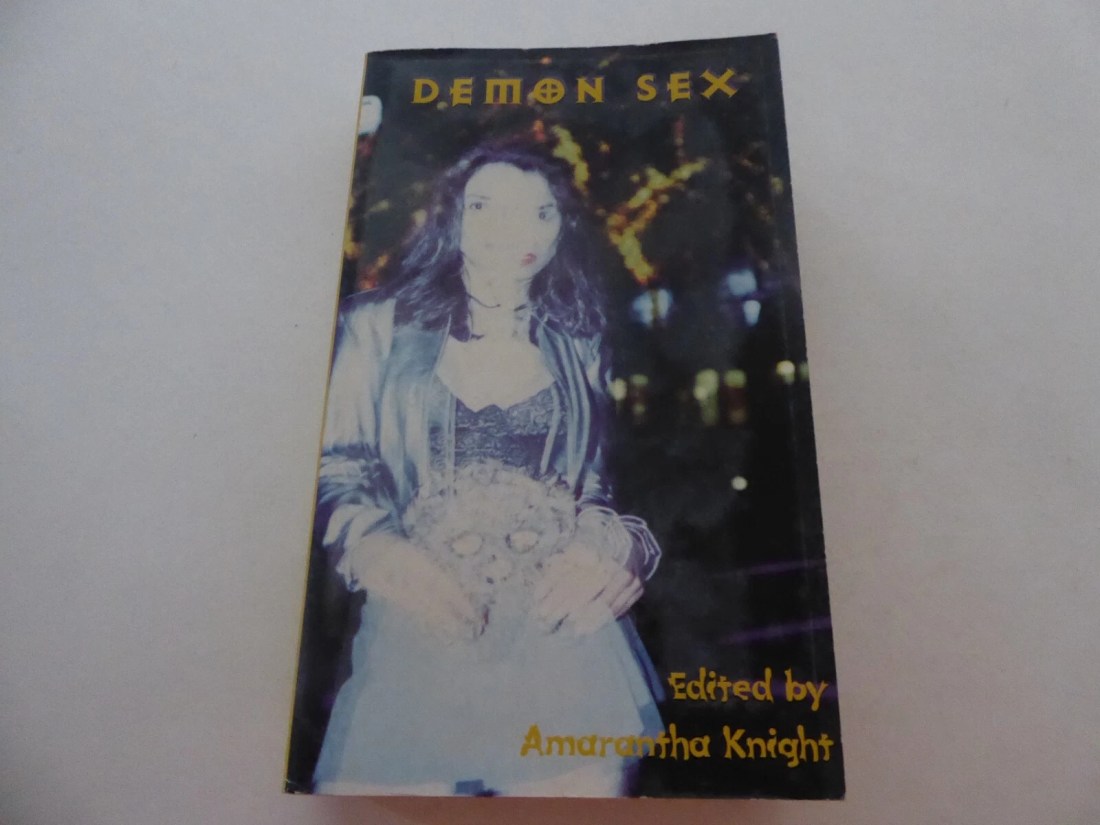
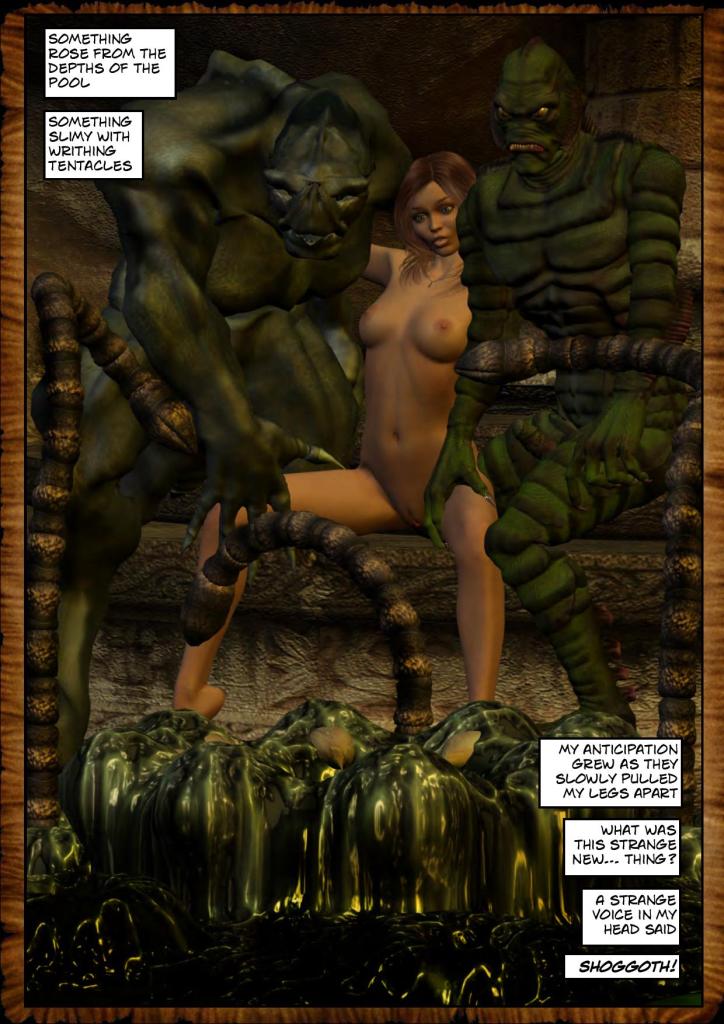
“A Loobelier Licking” (1998) by Maxi Dell

Lois Gresh writers her erotic fiction under the nom de plume Maxi Dell. […] She says about her story: “Perception marks the boundaries of reality. What seems strange to us, what we fight the most, may be the only thing that matters. In a world of cold darkness the heat of love ignites sex even if the lover is a so-called demon.”
Demon Sex (1998), 45-46

Some writers of Cthulhu Mythos fiction approach the project with the care of a pasticheur working another episode into a series of canonical tales—like writing an unofficial sequel to a classic Sherlock Holmes story, they might write “what happened next” for Lovecraft’s “The Dunwich Horror” or “The Shadow over Innsmouth”; such is the case with “The Shuttered Room” by August Derleth. Other writers prefer to reinterpret the story, providing an alternate take on what really happened, this is what you see with “The Black Brat of Dunwich” (1997) by Stanley C. Sargent.

In her Mythos fiction career, Lois H. Gresh’s approach is closer to that of a DJ, remixing familiar songs and beats but putting her own spin on it. She doesn’t re-tell old stories, she doesn’t try to abide by anyone’s canon, and the result is something that at once has a lot of familiar elements, but is nothing like what you’ve heard before—and perhaps not what you would expect, either. None of which is a bad thing, unless you go into her stories expecting something else.

You’ll be twenty tomorrow, Emilie. It’s time for us to share The Gift.” Rolfe’s voice was hoarse, gravel grating against the fishdead air.

She said, “The Gift is something I definitely don’t want for my birthday. How about if we just say here in Innsmouth and never have sex?”
—Maxi Dell, “A Loobelier Licking” in Demon Sex 48

The story is set in Innsmouth, though not quite the same Innsmouth readers will find familiar. It deals with Yog-Sothoth and Eihort, the latter an eldritch entity that was created by Ramsey Campbell for his Mythos stories. Emilie and Rolfe are best friends, 19 years old, irrepressibly horny, outsiders among outsiders—and is stuck in a tricky situation. Emilie is the cosmic equivalent of an ugly duckling, physically unlovely and ostracized because she carries the genes of a Great Old One. The Innsmouthers want to kill her. The brood of Eihort, the Loobeliers, Yog-Sothoth, and most especially her friend Rolfe want to impregnate her.

Except if she gets pregnant, she dies and Cthulhu gets loose and ends the world.

If that sounds a little complicated—well, yes. It’s also sexually explicit, more than slightly surreal, and probably doesn’t make too much sense if you think about it too long. Emilie’s negative body image, search for love, and the apparent fact of her imminent demise or translation to another reality if she gives in to her teenage lust plays as very nearly a parody, a kind of cosmic teenage sex comedy. While it plays a little more serious than that (at least from Emilie’s point of view), in an era when “monsterfucker” is a tag for a vast swathe of fiction, I think audiences today might have more sympathy for Emilie.

It’s not just that she wants to get laid. She wants love, too.

Rolfe, on the other hand, is utterly inept. By his logic, he and Emilie are two of a kind, and he’s the only option for her to survive—his every effort to get laid, however, reinforces the problem. In the end, he’s been friendzoned so hard the reader would almost feel sorry for him, if he wasn’t so utterly without romance.

[“]Our only chance is to mate with each other before they get to you.”

He was being ridiculous. As if her only choices were sex with Rolfe or sex with a fish. What an absurd thought. Of course, if it came down to it, she’d choose Rolfe. He wasn’t a fish, after all, and he did have a certain raw masculinity that she found appealing. Plus, she’d known him since they were children, and he was her only friend. But still…

Maybe it was the way he put it: mating.
—Maxi Dell, “A Loobelier Licking” in Demon Sex 49

(Readers may, at this point, wonder what the heck a loobelier is. As near as I can tell, they appear only in this story and nowhere else, so it would be a terrible spoiler to reveal that. Trust me, knowing what they are does not significantly make much more sense in context.)

As an erotic horror story, if you don’t invest too much time in thinking about it, this is fun. Gresh has a knack for entertaining prose and slightly surreal situations (see “Showdown at Red Hook” (2011) by Lois H. Gresh), and this is no exception. While probably never going to appear in any list of canonical Innsmouth tales, I think the subversion of expectations, as much as the anticipation of Emilie’s final decision, is what makes this story work.

“A Loobelier Licking” as by Maxi Dell was published in Demon Sex (1998). It has not been reprinted.


Bobby Derie is the author of Weird Talers: Essays on Robert E. Howard and Others and Sex and the Cthulhu Mythos.

Deep Cuts in a Lovecraftian Vein uses Amazon Associate links. As an Amazon Associate I earn from qualifying purchases.
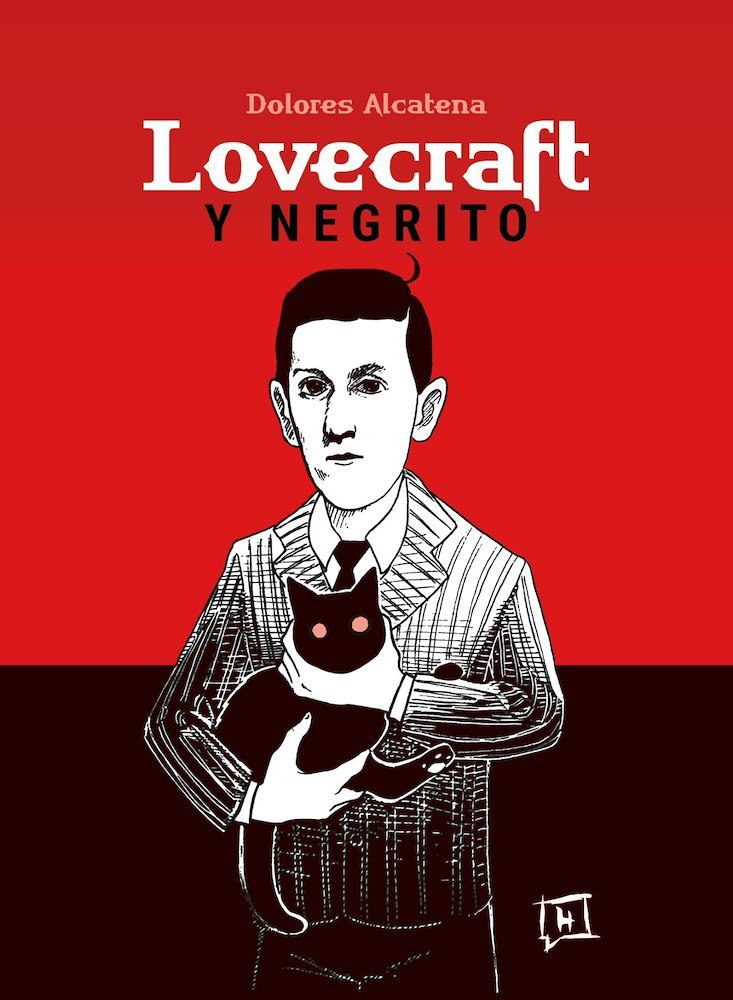
Lovecraft y Negrito (2023) by Dolores Alcatena

Racist Language
This review concerns H. P. Lovecraft’s cat, whose name was a racial slur against Black people.
As part of this review, the cat’s name and variations are included. Reader discretion advised.


The first known reference to H. P. Lovecraft’s cat was in a letter from his grandfather when Lovecraft was only 5 years old:

You and Dumplin Mama must keep the Barn shut every night and take care of Nig.
—Whipple Van Buren Phillips to H. P. Lovecraft, 17 Oct 1895, Letters to Family & Family Friends 2.1046

“Nig” was short for “Niggerman.” It was a black cat, at a time when the N-word was relatively common for pets with black coats. Whether it was Lovecraft who named the kitten, or a family member or friend, is not recorded in any of Lovecraft’s letters. It was his childhood pet—and, as it happened, the only pet he could afford during his life, although he retained a great fondness for cats throughout his life, often petting or playing with strays. In 1904, Whipple Van Buren Phillips died. Lovecraft’s family home was sold, he and his mother moved away from his childhood home, and the cat disappeared during the tumult, never seen again.

Lovecraft remembered his feline companion in later years, and based two cats in his stories on his lost pet: Niggerman in “The Rats in the Walls,” and Nig in The Case of Charles Dexter Ward. Neither appearance caused any particular outcry at the time of publication; Weird Tales was no stranger to the N-word and other terms, and it was not until “The Rats in the Walls” (1956) that any serious effort was made to censor or bowdlerize the cat’s name. Works in translation and adaptation were more likely to change the name; different languages, with different histories regarding race relations and Black slavery, have their own nuances of language to give shades of meaning or seek to avoid giving offense.

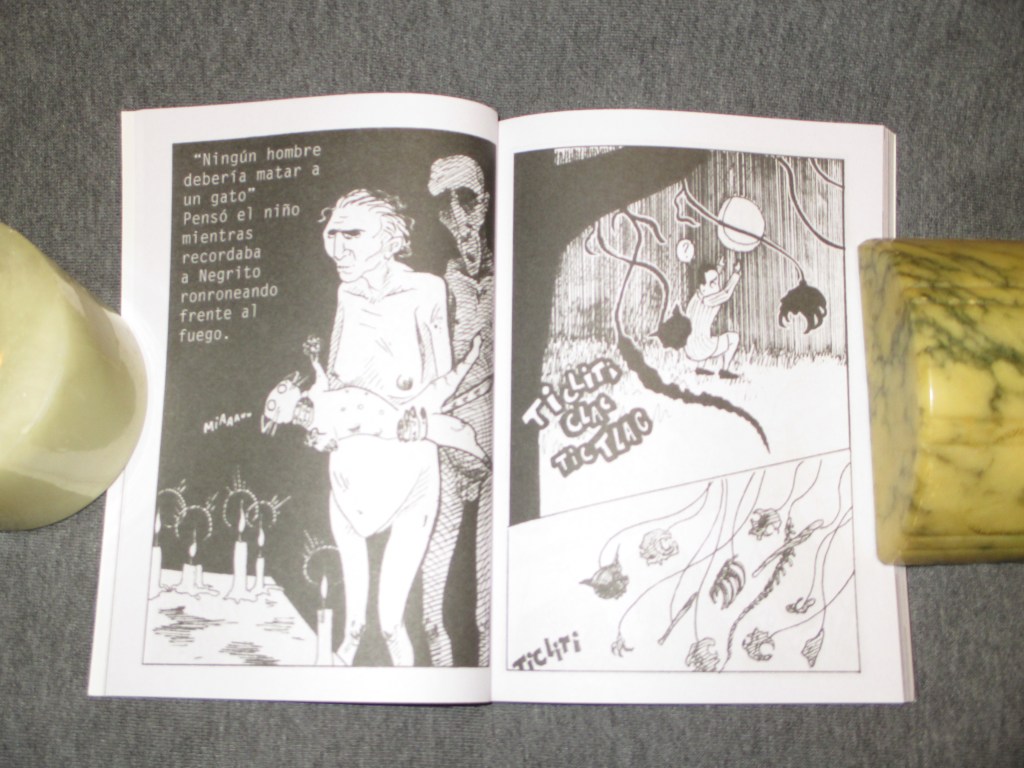
In 2023, Argentinian illustrator and writer Dolores’ Alcatena published Lovecraft y Negrito, a short graphic novel about Lovecraft’s friendship with his beloved pet. As she puts it in the opening:

Como amante de los gatos, Howard Philips Lovecraft frecuentemente incluía en sus relatos a estos elegantes y misteriosos animalitos. En su estilo deliberadamente desamorado y serio, los describía como símbolos de perfección, estética, libertad e independencia. Pero entre las cartas del escritor aparece Niggerman, un gatito negro que acompañaba a Lovecraft en su niñez. Al hablar de Niggerman (rebautizado ‘Negrito” para esta obra) las palabras del autor asumían un tono cálido, recordando con ternura cómo jugaban juntos en el jardín. Al hablar del gatito, el escritor no pudo, o no quiso, esconder sus sentimientos. El cariño que Lovecraft mantuvo a lo largo de su vida por Niggerman inspiró esta historia, permitiéndonos acceder a un costado más humano del gran autor del horror.As a cat lover, Howard Philips Lovecraft often included these elegant and mysterious animals in his stories. In his deliberately dispassionate and serious style, he described them as symbols of perfection, aesthetics, freedom, and independence. But among the writer’s letters appears Niggerman, a black kitten who accompanied Lovecraft in his boyhood. When talking about Niggerman (renamed “Negrito” for this work), the author’s words took on a warm tone, fondly recalling how they played together in the garden. When talking about the kitten, the writer could not, or did not want to, hide his feelings. Lovecraft’s lifelong affection for Niggerman inspired this story, allowing us to glimpse a more human side of the great horror author.
Dolores Alcatena, Lovecraft y Negrito (2023)English translation

“Negro” in Spanish is the color black, “-ito” is a diminutive suffix; context is important because in some usages “negrito” can mean bold type, or it can be a reference to certain Southeast Asian peoples, or a not-necessarily-kind reference to small Black children. In the context of this story, it might be best to think of it as a term of affection, like naming a black kitten “Blackie.”

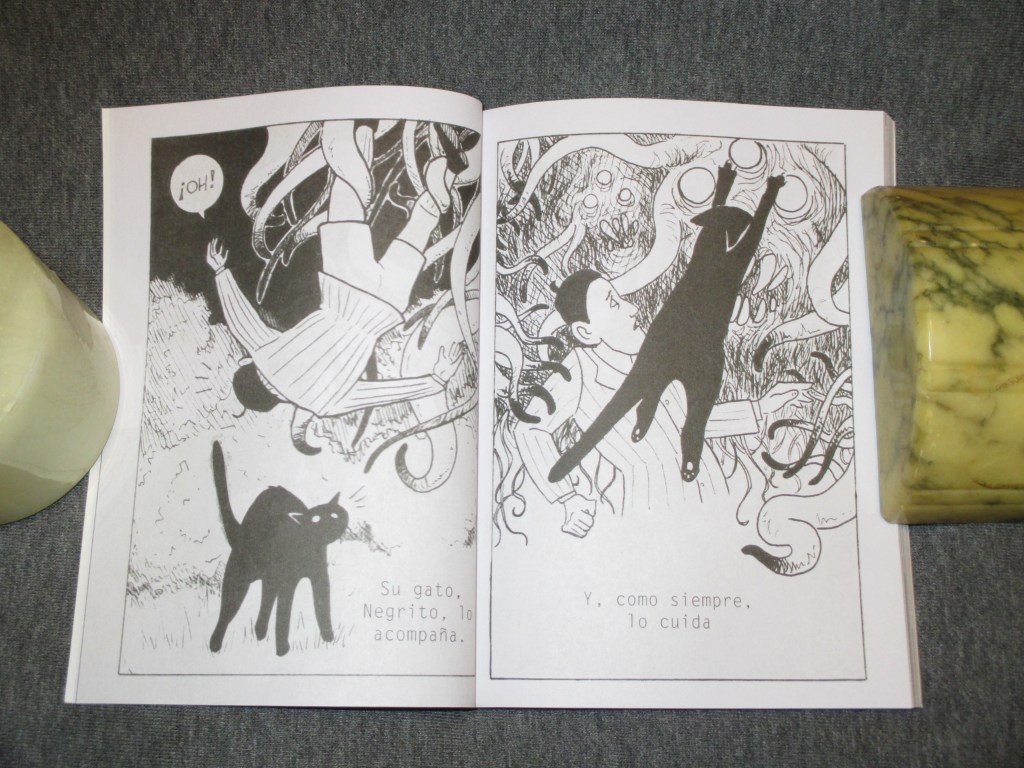
Su gato, Negrito, lo acompaña.

Y, como siempre, lo cuida.
His cat, Negrito, accompanies him.

And, as always, takes care of him.
Dolores Alcatena, Lovecraft y Negrito (2023)English translation

The story is told in black and white, mostly from Negrito’s perspective. The cat aids and protects Howard through his journeys, including the events that would inspire “The Cats of Ulthar” and “The Shadow over Innsmouth.” From a cat’s perspective, the cat-killing couple in Ulthar are particularly horrific.

“Ningún hombre debería matar a un gato”
Pensó el niño mientras recordaba a Negrito ronroneando frente al fuego.
“No man should kill a cat,” the boy thought as he remembered Negrito purring in front of the fire.
Dolores Alcatena, Lovecraft y Negrito (2023)English translation

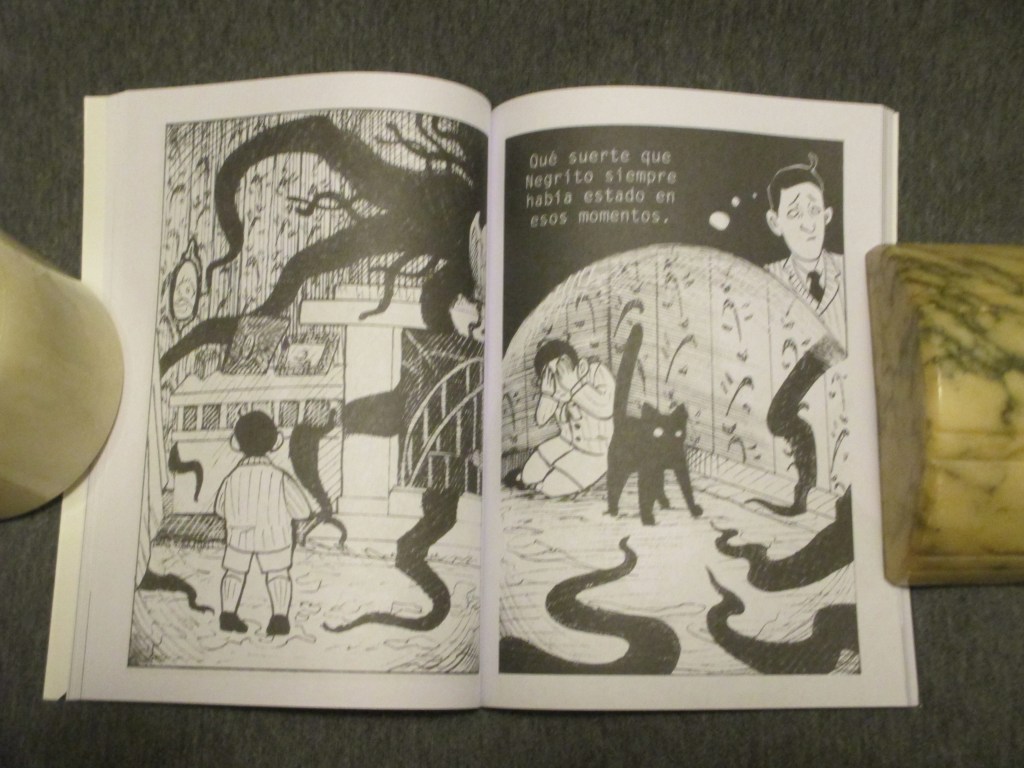
There is a somewhat fairy-tale quality to the retelling, the traipse through Lovecraft’s fiction. Most of Howard’s waking life we don’t see…but then his cat was not there to see that.

Qué suerte que Negrito siempre había estado en esos momentos.How lucky that Negrito had always been there in those moments.
Dolores Alcatena, Lovecraft y Negrito (2023)English translation

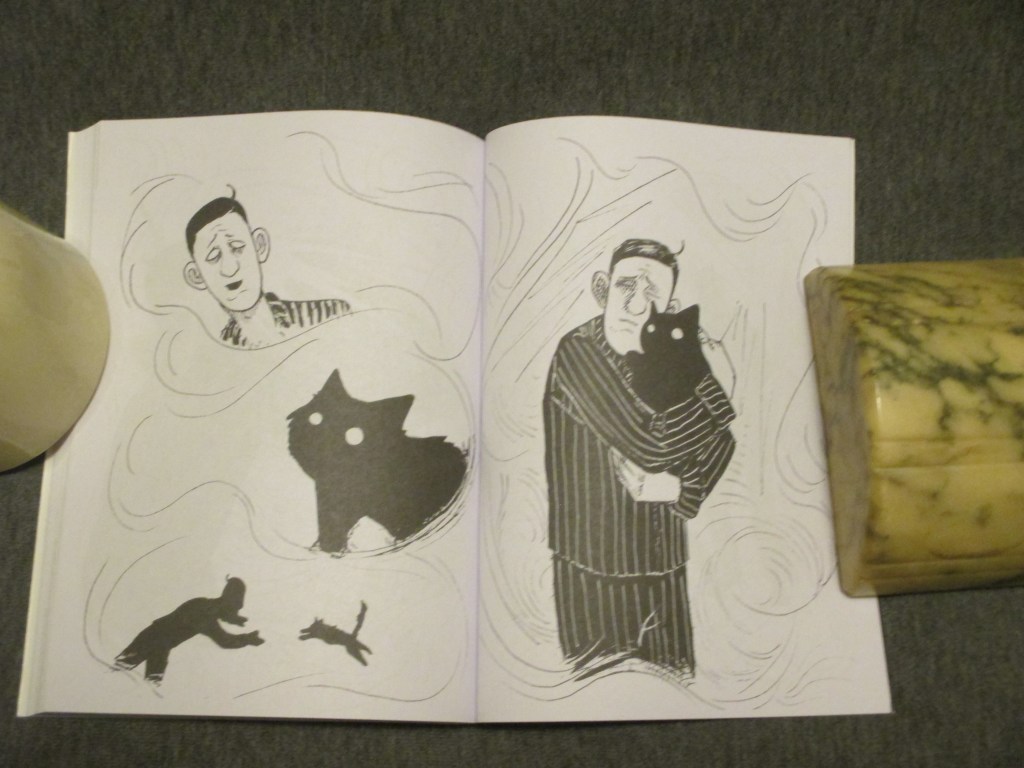
The Lovecraft of these stories is a scared, almost a traumatized kid, with Negrito as his only friend; parental figures are absent. It is a very sympathetic view of Howard as a child, but in comparison to El Joven Lovecraft by José Oliver & Bartolo Torres it does not show Lovecraft’s occasional joyfully morbid side. Readers are meant to empathize with a young Lovecraft.

The ending, a wordless reunion between the dead Lovecraft and his lost cat, is the kind of afterlife that every cat-lover might wish to experience themselves someday.

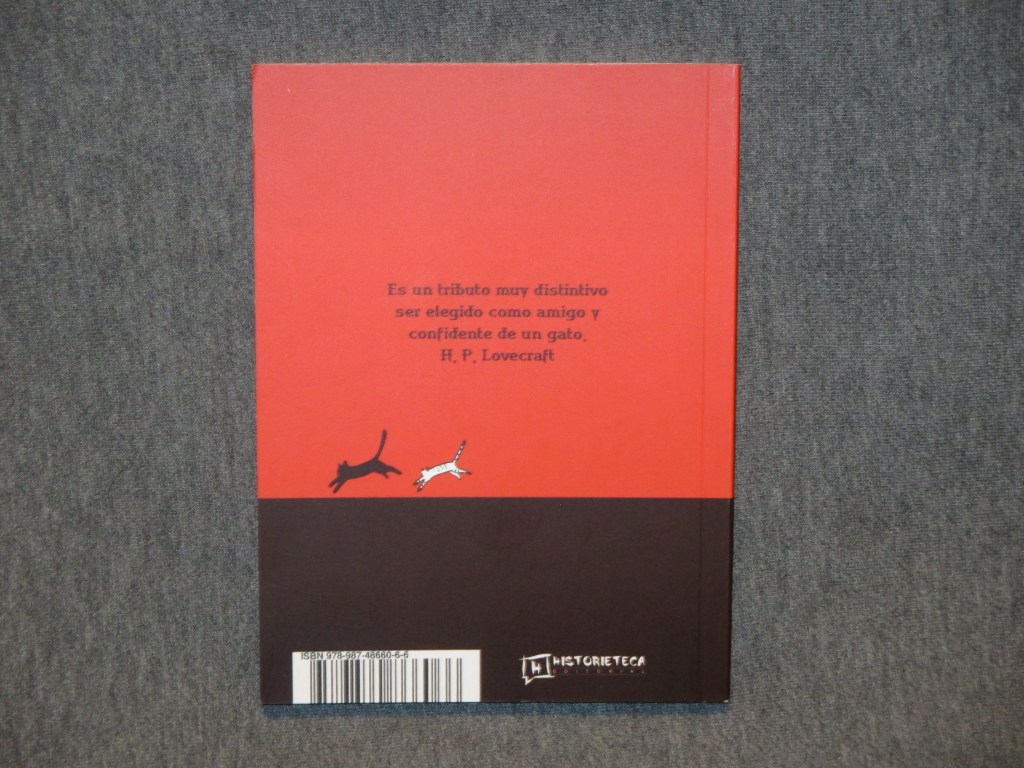
Es un tributo muy distintivo ser elegido como amigo y confidente de un gato.
H. P. Lovecraft.
It is a very distinctive tribute to be chosen as a friend and confidant of a cat.
H. P. Lovecraft.
 It is no compliment to be the stupidly idolised master of a dog whose instinct it is to idolise, but it is a very distinct tribute to be chosen as the friend and confidant of a philosophic cat who is wholly his own master and could easily choose another companion if he found such an one more agreeable and interesting.
Dolores Alcatena, Lovecraft y Negrito (2023)English translationH. P. Lovecraft, “Cats and Dogs”

Lovecraft y Negrito is a story about a boy and his cat. It is not a historical work that delves into the nuances of the cultural forces that went into such names, or how naming cats did or did not reflect Lovecraft’s racial prejudices in later life. If readers want a scholarly exploration of what we do and don’t know about the real animal, check out Ken Faig’s essay “Lovecraft’s Boyhood Cat” in Lovecraft Annual #19 (2025). If you want a heartwarming fantasy about Lovecraft and his beloved pet, which has gained a kind of literary immortality, then read Lovecraft y Negrito.


Bobby Derie is the author of Weird Talers: Essays on Robert E. Howard and Others and Sex and the Cthulhu Mythos.

Deep Cuts in a Lovecraftian Vein uses Amazon Associate links. As an Amazon Associate I earn from qualifying purchases.
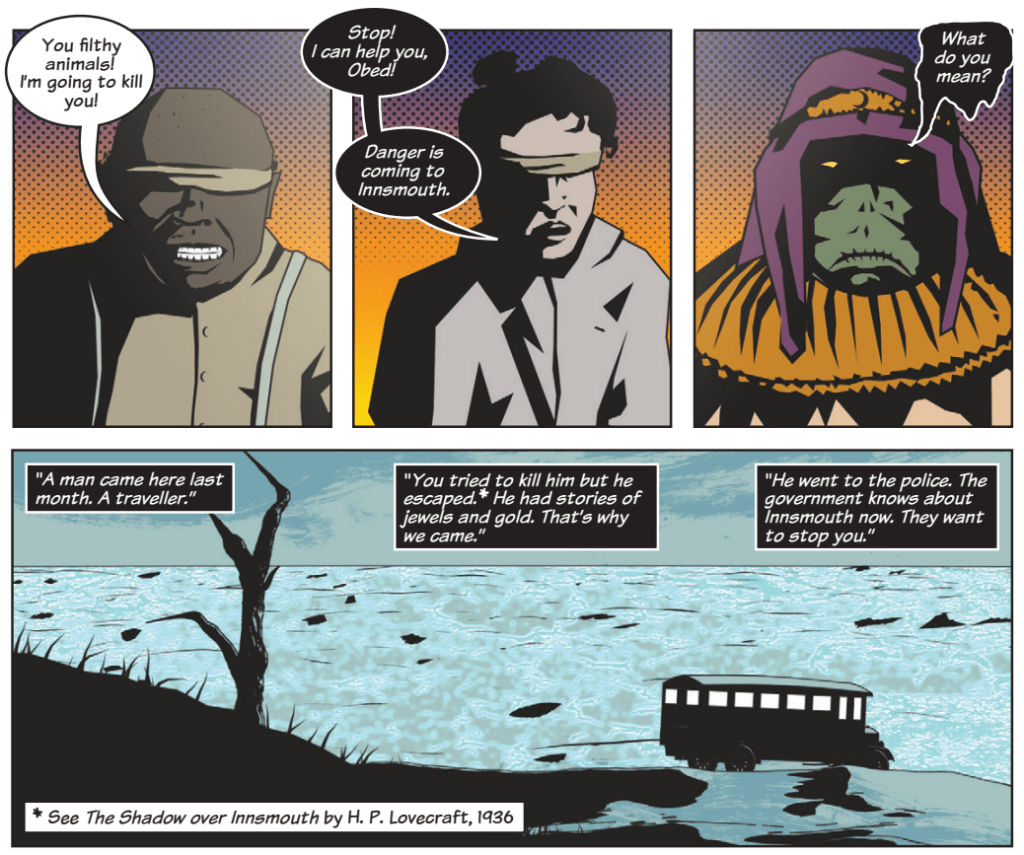
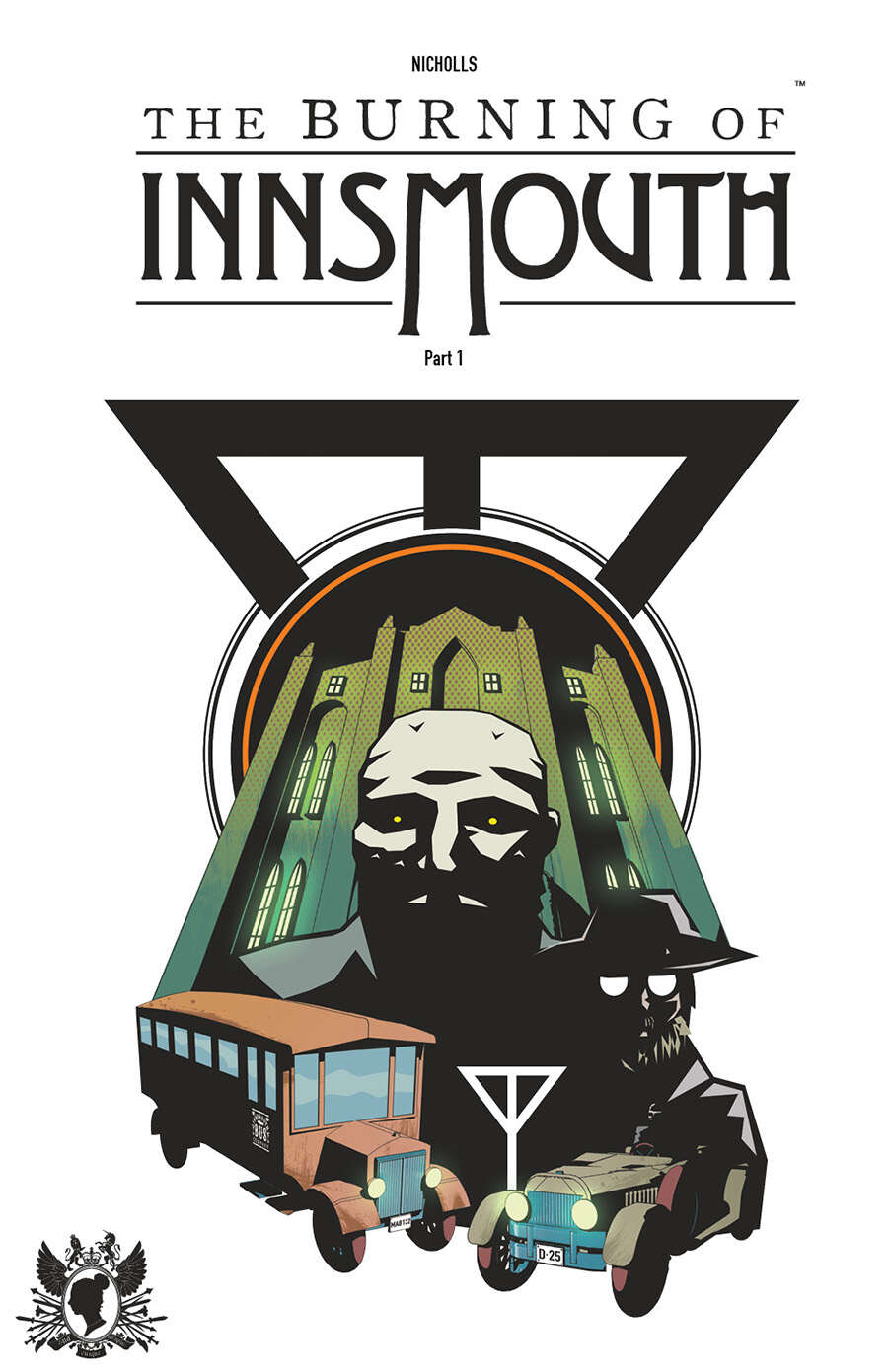
The Burning of Innsmouth, Part 1 (2019) by Tammy Nichols

‘The Burning of Innsmouth’ is a Lovecraftian-themed tale of eldritch horror and hidden corruption. In the all-too-quiet Massachusetts port-town of Innsmouth, nothing is quite what it seems and no one is who they say they are. The story takes place in 1927, just after the fictional events described by HP Lovecraft in his classic tale ‘The Shadow Over Innsmouth’. Beautifully illustrated, it’s a cat-and-mouse story explores how the town and its cultish denizens came to be destroyed by a shadowy branch of the American government.
—descriptor for The Burning of Innsmouth, Part 1 on DriveThruComics

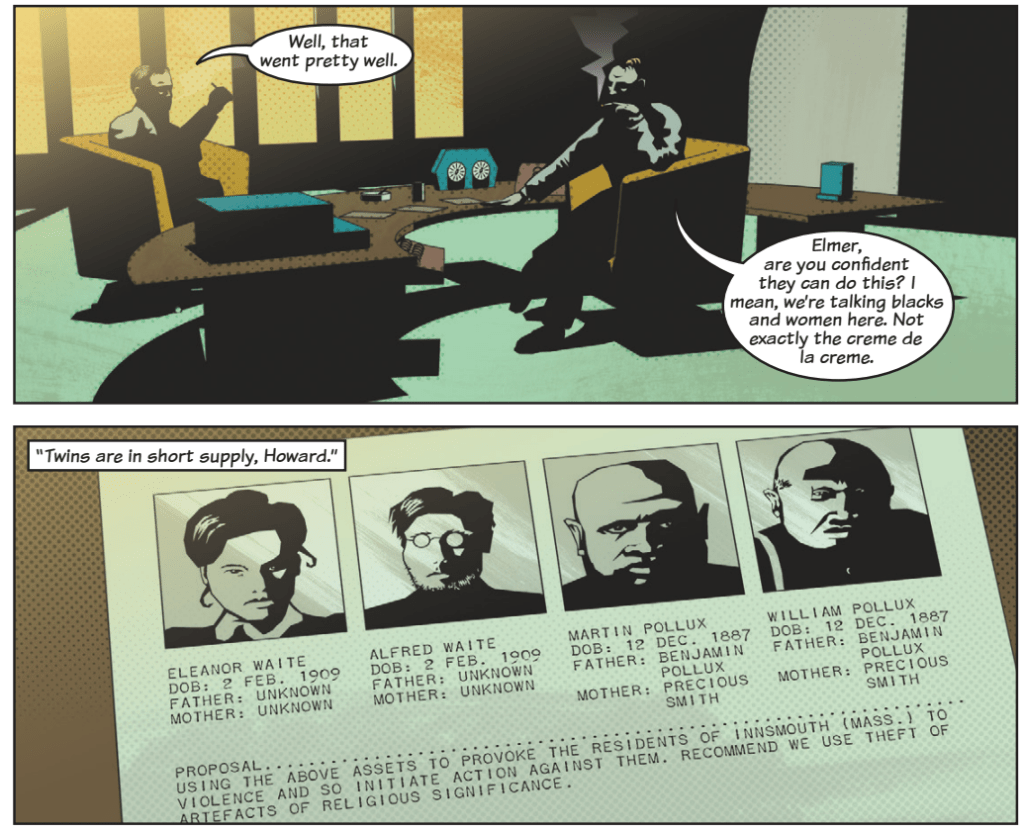
Tammy Nichols is a UK-based graphic designer and illustrator (Tears of Envy). In 2019 she released The Burning of Innsmouth, Part 1, the first of what was proposed to be a three-issue series. The other issues have not yet been seen; such things happen. As a result, what we have is an inherently incomplete story. Characters are introduced, mysteries set up, but we have no idea how things would end. The first issue doesn’t end so much on a cliffhanger as on a promise: Innsmouth isn’t burning yet, but it is a pile of dry tinder waiting for the spark.

The art shows a careful aesthetic: deep shadows and heavy blacks, digital shading that’s made to look like halftone. Nichols explains some of her graphic language on her blog, including the customized font for the Gilman House hotel, as well as the film noir influence and the colour journey she intends to take the reader on. These are elements of visual rhetoric that inform a story and how it is told in ways that prose text cannot capture. The Facebook group dedicated to the comic also includes some behind-the-scenes of pages and panels in black and white vs. colored.

From a storytelling standpoint, the decision for the federal government to employ outside agents—two pairs of twins, one of whom is African-American, and another a sister-brother pair with ties to the infamous Waite family of “The Thing on the Doorstep” fame—is interesting. It gives us characters who are outsiders, agents of a bigoted government but not a part of it, sympathetic in their motivations, at least insofar as they are being coerced into this dangerous task. It also adds a welcome bit of diversity into a Mythos that tends heavily to the white and male.

If there’s a criticism of the story, it plays a little fast and loose with the Innsmouth lore. Obed Marsh is portrayed as still alive in 1927, when Lovecraft has him die in 1878. There are hints of further divergences, but these aren’t developed fully in this 32-page first issue. Such shifts from Lovecraftian “canon” aren’t necessarily bad—it being remembered that mythologies are by their nature often cycles of stories with similar settings, themes, and characters, not a single continuity or cohesive narrative universe. I would have liked to see where this one went.

For now, The Burning of Innsmouth is incomplete. Someday, perhaps, Nicholls will finish it. Or perhaps she won’t. Such fragments and the what-might-have-beens they inspire are still a part of the broader constellation of Mythos materials, a part of the shared narrative for readers to muse over and enjoy. And if you don’t like how Nicholls did it, or where the story was headed at the end of part 1…write your own.

The Burning of Innsmouth, Part 1 by Tammy Nicholls is available at DriveThruComics. There is also merch (including a nice map of Innsmouth) on the associated Redbubble store.


Bobby Derie is the author of Weird Talers: Essays on Robert E. Howard and Others and Sex and the Cthulhu Mythos.

Deep Cuts in a Lovecraftian Vein uses Amazon Associate links. As an Amazon Associate I earn from qualifying purchases.
“U.S. Fish and Wildlife Services Inspection Report No. IF-32651” (2024) by Sarah Hans

Have any of these yokels even seen a Black woman before?
—Sarah Hans, “U.S. Fish and Wildlife Services Inspection Report No. IF-32651” in Arkham Institutions (2024) 137

“The Shadow over Innsmouth” is one of Lovecraft’s most quintessential tales, not just in the sense that it has become one of the core stories for his artificial mythology, but because when you strip down the story to its fundamentals it is one of the quintessential stories of its type: a civilized intruder tale. Someone from wider civilization travels to a liminal community, someplace that is, whether or not it is physically far away, somehow isolated culturally from the wider network of the world we know, and there’s something wrong there.

What is wrong and who does the intruding vary. In The Wicker Man (1973), a police officer finds a neo-pagan religion up to no good. In Midsommar (2019), tourists go to a remote Swedish village and find a pagan survival group up to no good. The essential framework is supremely adaptable, and most importantly, it leaves a great deal of room for novelty and reinvention. When Lovecraft used the idea in “The Shadow over Innsmouth,” the idea wasn’t new; he was riffing off stories like Herbert Gorman’s “The Place Called Dagon” (1927) and Algernon Blackwood’s “Ancient Sorceries” (1908). What Lovecraft added was the twist: that the intruder was not really an intruder at all, but was akin to the horrors.

Innumerable versions of this basic idea have played out through the Cthulhu Mythos, sometimes revisiting and recapitulating “The Shadow over Innsmouth,” sometimes with other locations. Stories like “Satan’s Servants” (1949) by Robert Bloch and “The Moon Lens” (1964) and “The Horror Under Warrendown” (1997) by Ramsey Campbell all riff on the basic concept, while La Planète aux Cauchemars (2019) by Mathieu Sapin & Patrick Pion, “The Chabad of Innsmouth” (2014) by Marsha Morman, and now with “U.S. Fish and Wildlife Services Inspection Report No. IF-32651” (2024) by Sarah Hans are examples of revisiting and updating the Innsmouth story itself.

With a few changes.

Before I exit the truck, I get my gun out of the glovebox. I do have a permit for it, but I’m not supposed to carry one while I’m on official duties. I can’t risk being caught in the middle of nowhere unarmed, though. I work alone most of the time and sundown towns don’t exactly advertise themselves
—Sarah Hans, “U.S. Fish and Wildlife Services Inspection Report No. IF-32651” in Arkham Institutions (2024) 138

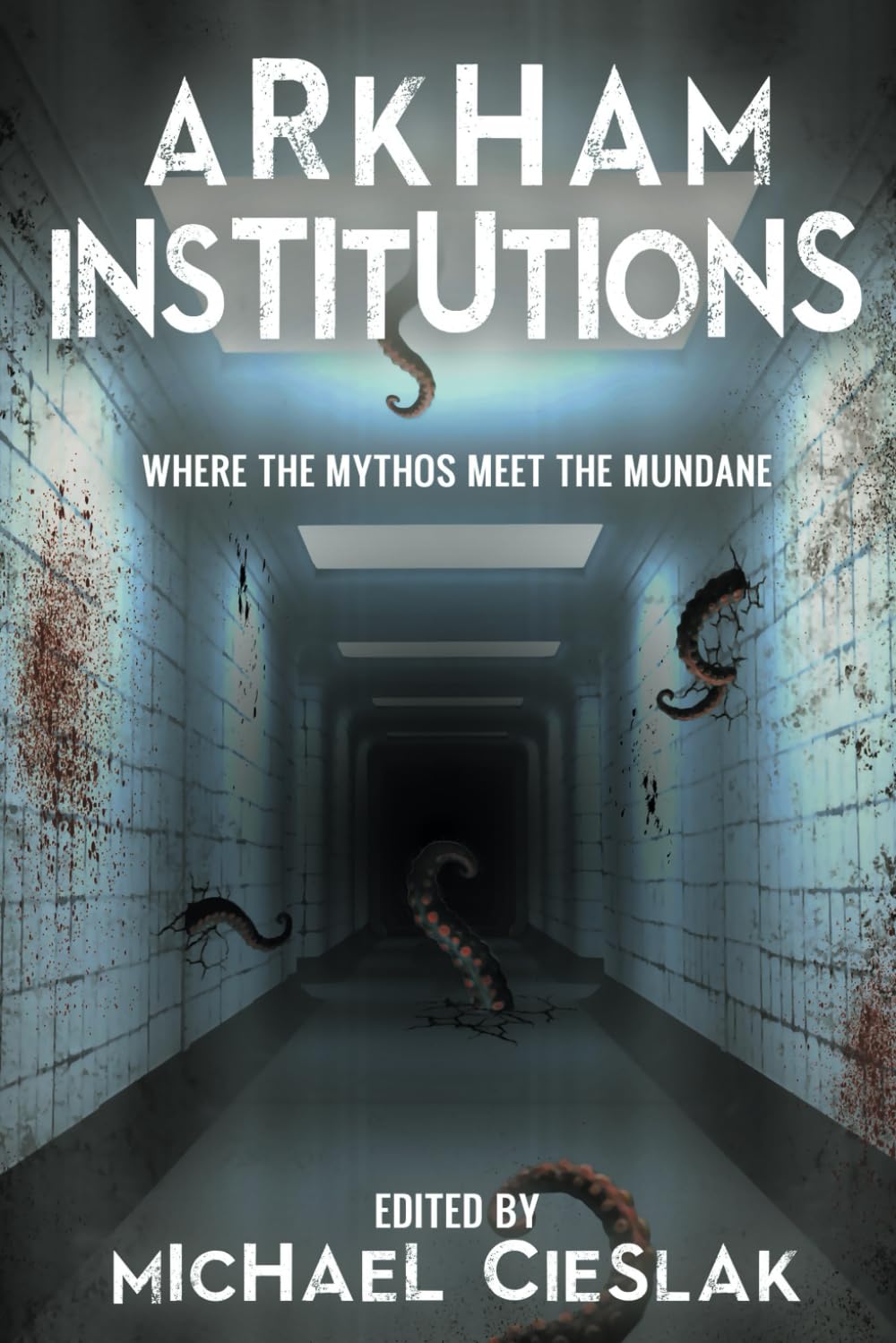
The pitch for Arkham Institutions is “to explore how the people who run these towns and their institutions deal with the eldritch abominations of Lovecraftian terror” (back cover text). Which is as good a reason why a Fish & Wildlife Service agent will pop into Innsmouth for an inspection of the Innsmouth Fisheries as any other reason why someone might intrude on this liminal community.

Hans’ Innsmouth isn’t exactly Lovecraft’s, and the story doesn’t try to recapitulate the whole narrative. It is a contemporary setting, there’s no mention of the government raid of 1927, no reference to the Marsh Refinery. The business of the town is fishing, and Agent Cherise Brown has no ancestral links to the inbred locals. What plays out is a very different story that takes inspiration from Lovecraft—and probably wouldn’t be very comprehensible unless you’re familiar with that story—but tries to do something original with the idea.

The central idea is one I can dig: no liminal community can remain unvisited forever. Innsmouth was always going to receive some outside visitor who would cause problems. The question was not a matter of if it would happen, but who would intrude and when, and how the community would respond to that intrusion. It is an idea that suggests different possibilities—when would Innsmouth be no longer able to hide? As timeless as the locale seems in Lovecraft’s tale, in the context of how the world has developed after his death, it is easy to see how fragile Innsmouth’s isolation really was.


Bobby Derie is the author of Weird Talers: Essays on Robert E. Howard and Others and Sex and the Cthulhu Mythos.

Deep Cuts in a Lovecraftian Vein uses Amazon Associate links. As an Amazon Associate I earn from qualifying purchases.
Innsmouth (2015)

インスマスを覆う影 (Innsumasu o Oou Kage, 1994). Return to Innsmouth (1999). Dagon (2001). Innsmouth Legacy (2004). Cthulhu (2007). Innsmouth (2015). H. P. Lovecraft’s The Deep Ones (2020). The Innsmouth School for Girls (2023). H. P. Lovecraft’s The Shadow over Innsmouth (2024).

Those titles don’t even cover the entire cinematic legacy of H. P. Lovecraft’s “The Shadow over Innsmouth,” which includes a number of short films, television episodes, and a broad thematic influence that crops up in a number of films. Innsmouth, with its relatively accessible settings, modicum of action, near-human creatures that are fairly easy to depict with make-up and prosthetics, and a combination of folk, cosmic, and body horror vibes is one of the most popular and identifiable works for filmmakers to either adapt, riff on, or incorporate into their own original works.

Each film is unique, each faces its own limitations and creative choices, which makes the variations on the familiar theme interesting for comparison with the others. So what sets Innsmouth (2015) apart from its fellows?

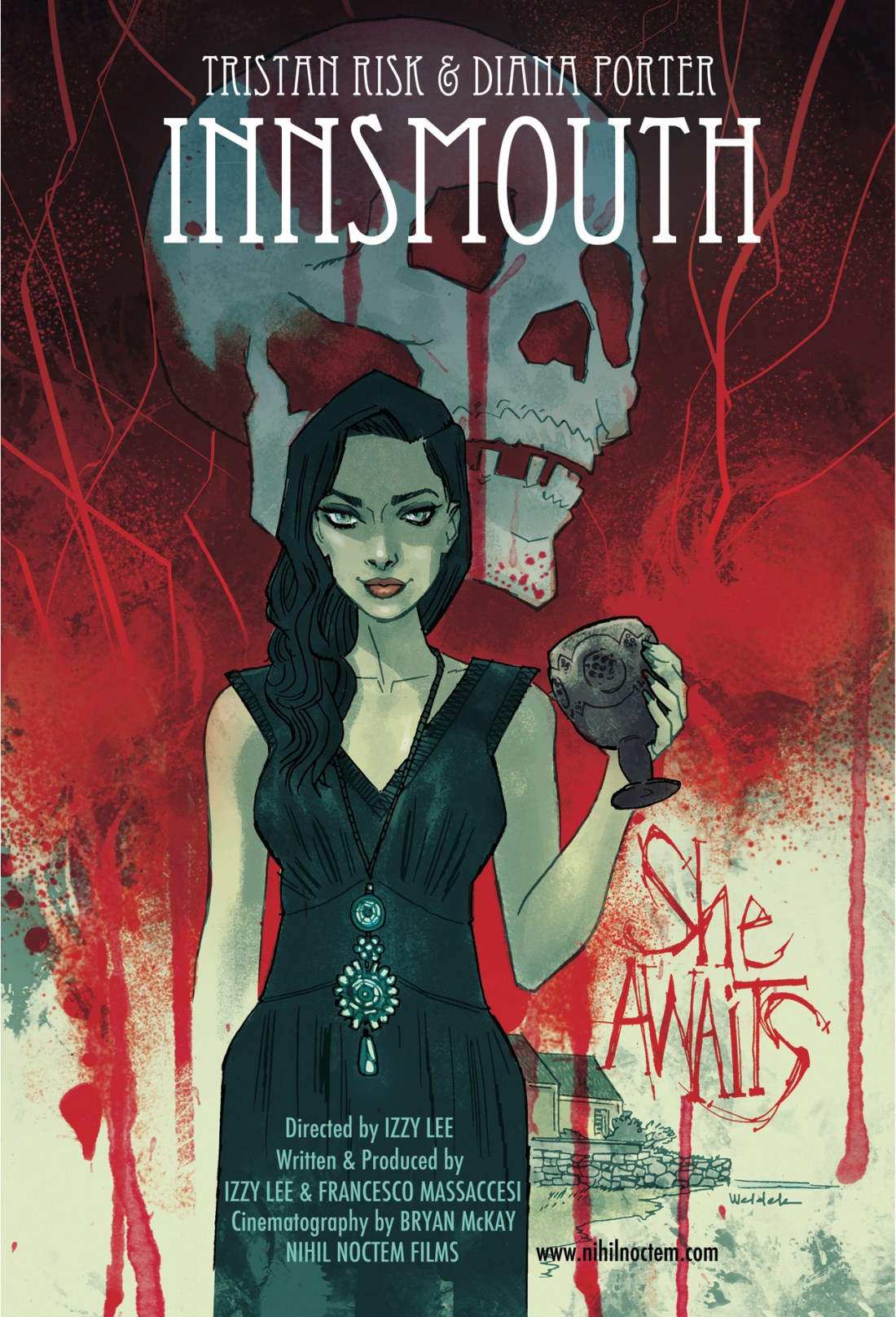
Innsmouth (2015) is an 11-minute short film, directed by Izzy Lee, written by Izzy Lee and Francesco Massaccesi based on the novella by H. P. Lovecraft, and starring Diana Porter and Tristan Risk. Cinematographer was Bryan McKay, and they even used the exterior of the Wentworth Coolidge Mansion, which Lovecraft actually visited (Horror Guide to Northern New England 211).

The story is a highly abbreviated adaptation of “The Shadow over Innsmouth” crossed with a police procedural: Detective Olmstead travels to Innsmouth to solve a murder, and finds some unexpected genealogical (and gynecological) revelations. As Izzy Lee put it:

Innsmouth was created to make [Lovecraft] roll over in his grave a little by having the cast 98% female and switching the gender roles. […] there’s also a ton of light being shed on how film excludes central female characters. I wanted to create a film where women call the shots onscreen, in nearly every role.
—quoted in Joe Yanick’s “Izzy Lee puts a New Spin on Lovecraft with Short INNSMOUTH” (Diabolique, 8 Mar 2016)

The result is, like most shorts with hard budget limitations, a bit bare-bones. One of those works that promise something a bit more than can be delivered in the running time. It would have been nice to have seen this premise stretched out to feature length, more atmosphere, and characters and plot given more time to develop. Yet within the constraints, Lee seems to have achieved her directorial goals.

Most of the cast is women, and that results in a shift in focus away from the normally patriarchal stories of Innsmouth. In The Deep Ones (2020), the point is made explicit that this is a story about fish men impregnating human women; in Cthulhu (2007), the prodigal son is not exactly welcomed home, but is expected to get busy fairly immediately with breeding the next generation of Deep One hybrids. The male characters in these stories rarely come out sympathetic, and the women characters are often fairly eager to accommodate.

KATHERINE 
Asses are made to bear, and so are you.

PETRUCHIO 
Women are made to bear, and so are you.
—Shakespeare, The Taming of the Shrew, Act II, Scene 1

Lee and Massaccesi’s script doesn’t ignore the Deep One colonization project angle, but they do but their own twist on it, which is aided by some relatively simple but very effective props/makeup effects. Picture Innsmouth as more matriarchal and more fishlike in their reproduction and you get the gist.

Detective Diana Olmstead (Diana Porter) arrives on the scene of a bizarre death: a body with a strange bite wound and a mysterious egg sac on her back. A clue leads her to Innsmouth, where she meets a seductive and horrific fate in the form of Alice Marsh (Tristan Risk: American Mary, The Editor, ABCs of Death 2). Innsmouth explores the “monstrous feminine” with an all-female cast and two male extras. This is notable because Lovecraft’s universe is traditionally male-dominated.

You can expect nudity, blood, egg sacs, gills, teeth, claws, and a soon-to-be notorious scene with Tristan Risk.
—”Innsmouth” at H. P. Lovecraft Film Festival website

Part of the short film’s fame comes from one scene that it would be unfair to spoil. It is enough to say that of all the films that have tried to capture something of the sexual and body horror that Lovecraft implied in his story but could never put on the page, Izzy Lee’s “Innsmouth” may be the most daring in trying to depict it. Kudos to Tristan Risk for her work in bringing that to the screen. In the hands of a less conscientious director, the camera might have lingered too long and crossed the line into exploitation, but I think the brief glimpse into the eye of madness was the mingled shock and titillation needed to set this short film apart.

As with many short films, the length ultimately works against it. This film whets the appetite for a more daring, less traditional reimagination of Lovecraft’s story that treats the subject seriously and isn’t afraid to break a few taboos if it gives the final product some punch, but doesn’t completely satisfy. Lovecraftian film fans who appreciate more mature fare should watch this at least once; filmmakers tackling Innsmouth should challenge themselves to see what works here.

After its initial run on the film festival circuit, Innsmouth (2015) was available for a time on DVD from Nihil Noctem films, though it is now out of print. As of this writing, the film is available for streaming on Shudder.


Bobby Derie is the author of Weird Talers: Essays on Robert E. Howard and Others and Sex and the Cthulhu Mythos.

Deep Cuts in a Lovecraftian Vein uses Amazon Associate links. As an Amazon Associate I earn from qualifying purchases.
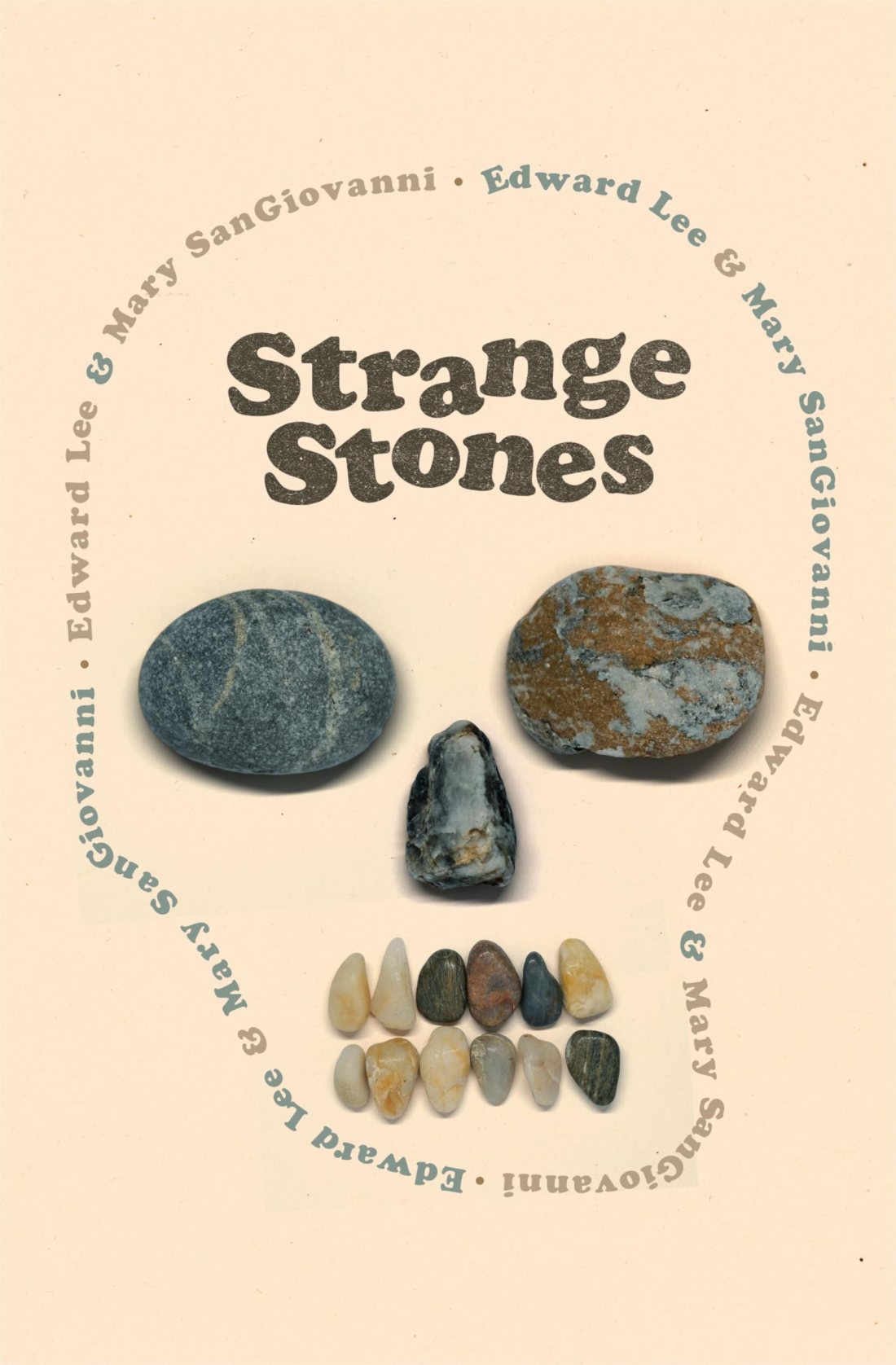
Strange Stones (2025) by Edward Lee & Mary SanGiovanni

It was Arkham House that perpetuated the Big Lie in this case, and from there a mechanism of critical bandwagonism took off and continues to this day. The tenet is, if you tell a lie big enough and enough times, people will believe it. That’s why Lovecraft has been raved about for all these decades. It’s a big lie that readers have been force-fed by a pro-Lovecraftian syndicate designed to make money.
—Edward Lee & Mary SanGiovanni, Strange Stones (2025) 3

Professor Robert Everard, who speaks those words at a horror convention, is a Lovecraft-hating asshole. That is his point. If the sentiment gets a rise out of you and makes you want to refute it, congratulations: the authors have succeeded at their characterization. It is a very unconventional way to draw readers into a rather meta short Lovecraftian horror novel, but Everard’s arguments and the context in which they take place are important to understand, because they’re fundamental to the plot of the novel.

Fiction genres in the sense that we think of them today tended to emerge around the turn of the 20th century. Western dime novels were a staple of 19th century popular literature in the United States; science fiction, mysteries, fan clubs, etc. all preceded the emergence of pulp magazines in the 1910s and 1920s, but it was really the pulp magazines that began to crystallize genre as we think of it today, and especially organized fandom as we think of it today. The horror conventions today are all descended, more or less, from the early science fiction fan conventions of the 1930s in the United States.

Genre is only secondarily a literary convention; the primary purpose was marketing. Specialization allowed pulp magazines to carve out niches and develop dedicated readership that they could directly market to. Magazines in the same genre competed with one another for the same dimes and quarters; Weird Tales had to struggle against Ghost Stories, Tales of Magic and Mystery, Strange Tales of Mystery and Terror, Terror Tales, Famous Fantastic Mysteries, Unusual Stories, and others, and tried to draw in readers from science fiction magazines like Astounding Stories, Amazing Stories, Wonder Stories, and Planet Stories.

Hardbacks, paperbacks, comics, and movie makers all learned this lesson, that specialization has the benefit of attracting a specific, dedicated readership. And once you have that audience, the quality of the content is less important than if it stays in genre. Decades of genre products have been, essentially, disposable pap, churned out quick and cheap for an eager audience that cared less about quality than if it was horror or science fiction. This is the kind of silly, low-quality stuff that gives genre media a bad name, but it’s also the stuff that’s generally predominant at any given moment. True genre classics are rare, and stand out because so much of the run-of-the-mill material is generic, familiar monsters and spaceships.

In this sense, what is a genre convention, then, then a target-rich environment? The earliest conventions weren’t entirely uncommercial, but they weren’t dominated by dealer rooms or particular creators promoting their latest film or book, which are common attributes of contemporary conventions. What creators and companies learned was that it’s a lot easier to sell your product if your customers are all in the same place; genre conventions in the United States in particular have become an important part of the economic ecosystem of various celebrities, independent dealers, small companies, and boutique shops.

The cultural phenomenon of the convention has developed to the point where it’s become a key aspects of organized fan culture, to the point of becoming the setting of new creative works, like I Am Providence: A Novel (2016) by Nick Mamatas and Screamland: Death of the Party (2012) by Harold Sipe, Christopher Sebela, and Lee Leslie. And it’s this crux of the commercialization of horror and the convention experience which forms the springboard setting for Edward Lee and Mary SanGiovanni’s novel Strange Stones (2025).

Richard Everard’s grudging kvetch against Lovecraft’s ascendance in horror media is in part a tongue-in-cheek jab at a genuine aspect of fandom and how Lovecraft and his Mythos have faced posthumous commercialization and pop culture significance way beyond its initial tiny dedicated genre audience. Everard’s own interaction with the convention circuit has been primarily a lecherous attempt to get in the pants of as many women as he could, a series of sexual conquests that is both a kind of wish fulfillment and a genuine recognition that yes, fans do hook up at conventions. Rachel Bloom wasn’t being entirely inaccurate with Fuck Me Ray Bradbury in the way genre literary figures can attract groupies.

There is a dark side to that, too: many prominent or even beloved genre literary figures have been revealed as sex pests or abusers. Alec Nevala-Lee’s excellent Astounding: John W. Campbell, Isaac Asimov, Robert A. Heinlein, L. Ron Hubbard, and the Golden Age of Science Fiction (2018) contains accounts of bad behavior by writers like Isaac Asimov, for example. This kind of contact between fans and creators is mainly possible because of events like conventions, where individuals who would normally be separated by hundreds or thousands of miles are brought into geographical proximity and with shared purpose.

So Everard is a caricature of specific figures in convention culture: a lecher (right there in the name: “Everard”/”Ever-hard”), a high-minded academic who snobbishly looks down on the tastes of the masses, a shit-stirrer more focused on selling his own books and tearing others down instead of creating something positive. All of which makes him less than sympathetic when he does encounter some real horror.

The back three-quarters of the short novel are a whirlwind tour through several of Lovecraft’s Mythos stories, but not in a way that readers might think. Lee and SanGiovanni are very carefully and deliberately introducing Lovecraftian settings like Innsmouth, Arkham, and Dunwich in ways that are very accurate to Lovecraft’s fiction—often focused on small details, which are then blown up and expanded upon—but not trying to pastiche Lovecraft’s particular style or language. So it is very deliberately Lovecraftian, with Everard’s familiarity with Lovecraft’s corpus letting him recognize where and when he is, yet at the same time the settings are fresh, parts of the setting that Lovecraft himself never put on the page.

Readers might be curious if there are any connections with Edward Lee’s “Hardcore Lovecraft” series which includes books like The Haunter at the Threshold and The Wet Dreams of Dead Gods. Strictly speaking, the answer is no; Lee’s own Lovecraftian novels remain very distinct in setting and approach, and Strange Stones is in general much less explicit in terms of violence, gore, and sexual activity. That doesn’t mean it isn’t there, but it is less prominent in the plot. In part because the focus of the story isn’t on titillation or exploitation-level sex and violence, while there is definitely transgressive grue and sexual activity, the pace of the story is such that the writers don’t dwell on it in anything like the detail of Lee’s more extreme solo works.

One important characteristic of Strange Stones, however, is that it is not nostalgic for Lovecraft. Works of the type “Lovecraft was right! The Mythos was real!” or revisiting old stomping grounds like Dunwich and Innsmouth can lead to much more watered-down horrors. Like Bela Lugosi’s Dracula or Boris Karloff’s Frankenstein or Lon Chaney Jr.’s Wolfman, there comes a point where Cthulhu becomes overly familiar, to the point that the appearance of the Big C comes across more as a friendly face than a stark horrific reality that haunts the imagination. A point Ken Hite touched on in “Cthulhu’s Polymorphous Perversity” in Cthulhurotica, discussing the plush toy incarnations of Lovecraft’s primal alien horror.

Instead, Lee and SanGiovanni present Lovecraft’s Mythos as terrifying.

Dismembered corpses. Perverse sexual defilements. Sudden violence. The Mythos in Strange Stones has all the subtlety of a Goatwhore album cover or an issue of Crossed by Garth Ennis and Jacen Burrows. Readers are going to have to make their way through dead babies, threats of anal assault by oversized piscine pricks, and an alien orgy in which dismembered torsos feature prominently. The Mythos is not a dry, abstract, intellectual horror in this novel; it is a living, breathing cult simmering with malice, madness, and strange and terrible hungers. That this is not quite as extreme in terms of sex and violence as Edward Lee gets up to on his own is not the same as saying that this novel is tame or soft in any way.

It is a difference in emphasis. Everard doesn’t see the clean Mythos that Lovecraft presented to the world, with its carefully-constructed narratives where all the orgies and most of the violence happens off the page. What Everard sees is Lovecraft with the blinders taken off; what Lovecraftian fiction could look like, if writers approached his Mythos with the imagination normally reserved for a particularly lurid Cannibal Corpse album or exploitation film. Fairly reminiscent in many ways of what Antony Johnston, Alan Moore, and Jace Burrows did in The Courtyard and Neonomicon, though without quite as elaborate a working-out of details.

Strange Stones is, after all, a fairly short novel, briskly paced, and not concerned with a unified theory of the Cthulhu Mythos as much as keeping the story moving through each step of Everard’s ordeal. While there is room for a sequel, as a one-and-done novel it stands alone effectively enough. While not perfect, it is fun and a quick read, quite unlike the majority of Mythos fiction published these days.


Bobby Derie is the author of Weird Talers: Essays on Robert E. Howard and Others and Sex and the Cthulhu Mythos.

Deep Cuts in a Lovecraftian Vein uses Amazon Associate links. As an Amazon Associate I earn from qualifying purchases.
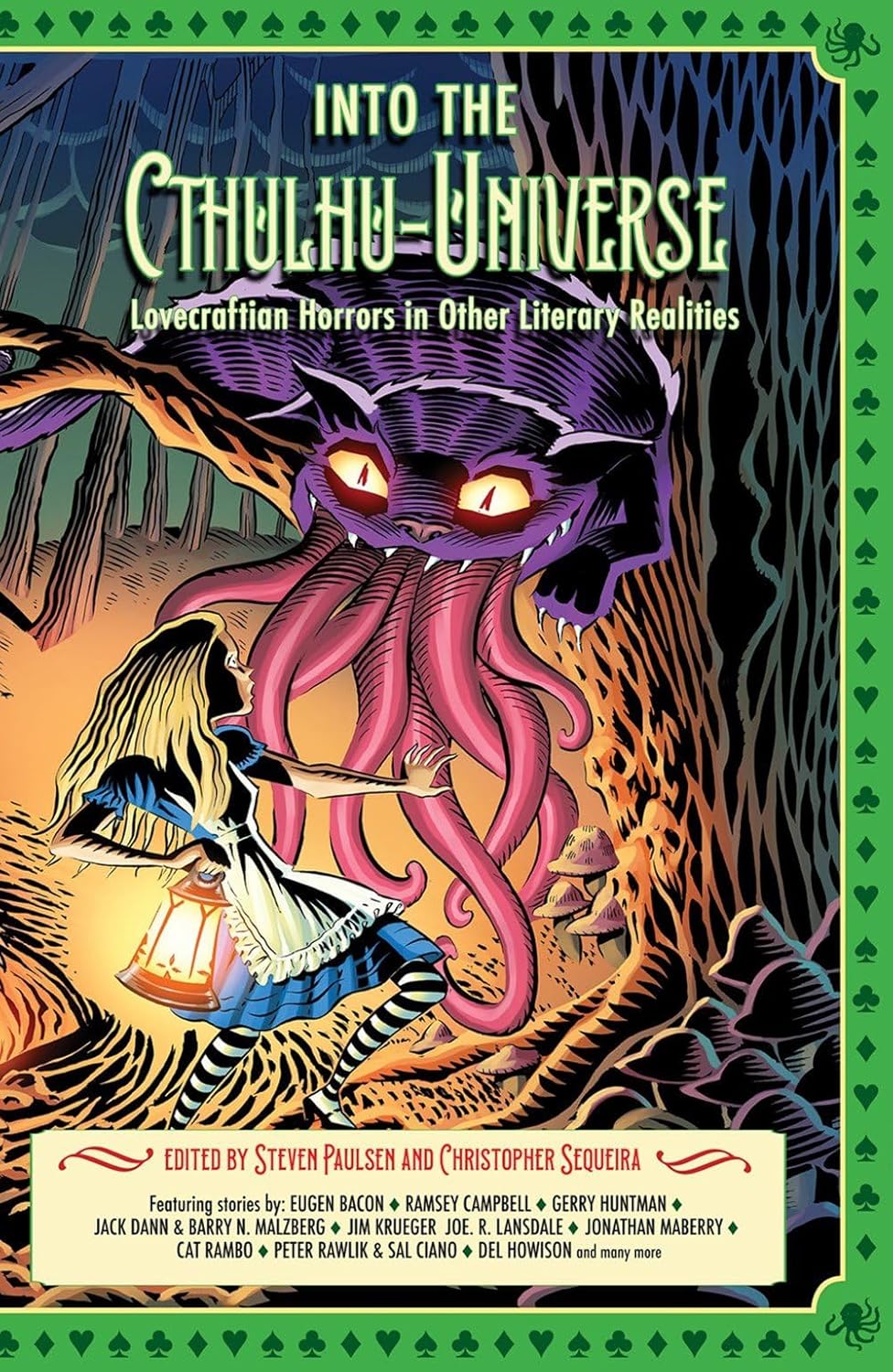
“Innsmouth Park” (2025) by Jane Routley

The day Oswald arrived, he called us to my father’s study and said peremptorily, “It is a truth universally acknowledged that a spinster sister with a small portion is nothing but a burden to her relatives. I want you silly women married and out of my household as soon as possible.” Then he burned my father’s extensive collection of coastal plants and butterflies and sold his library.
—Jane Routley, “Innsmouth Park” in Into the Cthulhu-Universe (2025) 76-77

We don’t like Oswald.

Jane Austen’s role in weird fiction is underappreciated, largely because she herself didn’t really write any (although Northanger Abbey is a biting satire of the Gothic novel, and a must-read for Gothic fans which even Lovecraft acknowledged, which has to at least classify Austen as weird fiction’s strange aunt.) Yet the world she described, the characters and milieu she envisioned, have been enduring and influential far beyond the genre she initially worked in. Generations of writers have called back to Austen, and mashups like Sense and Sensibility and Sea Monsters (2009) by Austen & Ben H. Winters, Regency Cthulhu (2023) by Andrew Peregrine & Lynne Hardy, and Secrets & Sacrifices: A Regency Cthulhu Novel (2024) by Cath Lauria all point to a similar rainy-day afternoon brainstorm:

Why not mix Austen and Lovecraft?

“In ’forty-six Cap’n Obed took a second wife that nobody in the taown never see—some says he didn’t want to, but was made to by them as he’d called in—had three children by her—two as disappeared young, but one gal as looked like anybody else an’ was eddicated in Europe. Obed finally got her married off by a trick to an Arkham feller as didn’t suspect nothin’. But nobody aoutside’ll hev nothin’ to do with Innsmouth folks naow. Barnabas Marsh that runs the refin’ry naow is Obed’s grandson by his fust wife—son of Onesiphorus, his eldest son, but his mother was another o’ them as wa’n’t never seed aoutdoors.
—H. P. Lovecraft, “The Shadow over Innsmouth”

Lovecraft did not live in Austen’s world, but the New England society that Lovecraft came from retained some of the same social mores and norms as in Austen’s day. Marriages were not just alliances of mutual love and affection, but involved perceptions of respectability and status, and practical concerns of money and temperament. While women in the UK have more options today than they did in the late 18th/early 19th century, the societal obsessions with marriage, reproduction, and compatibility are still there for many.

Jane Routley in “Innsmouth Park” takes this to heart. She drops an Innsmouth gent into an Austen scenario. Between the Oswalds of the world and the intelligent, meek, and slightly inhuman (but very wealthy) owner of Innsmouth Park, readers might suspect that they know the outcome of this short story before it gets three pages in. However, Routley does have a twist or two for the readers, and manages to pull off a solid story out of what could easily have been a farce.

As in any mashup, the tone tends to be rather light, and in this case favors Austen over Lovecraft. Nothing wrong with that; Austen’s strength was her setting and characters, and the Mythos is a flavor that mixes well into different settings. What makes it fun, however, are the little flourishes, the nods to both Austen and Lovecraft, and the very careful effort to build up the relationship between protagonist Eugenia and her potential suitor Rowah Marsh. We get to see things, not from the Lovecraftian point of view, but from the Austenian.

Whoever asked the Marsh daughter how she felt getting married off “by a trick?” Would she have been relieved to be out from under her domineering father, or lost and at sea among people she had never met before? Was it a step down or a step up in terms of her lifestyle and freedoms? We don’t get those questions or answers in “The Shadow over Innsmouth,” but you can be damned sure if Austen was writing that story that we would.

Routley recognizes this. While the story is filled with witty lines and little nods to her literary forebears, at the core the story is played straight. If you really did read an Austenian take on “The Shadow over Innsmouth,” it would have the same basic outlines as “Innsmouth Park.” We don’t like Oswald because he represents all the overbearing dudebro assholes we have to deal with in our own lives, but in the specific Austenian context he plays the necessary role of the manifest social norms that are forcing the woman protagonist out of the family home and into a suitable marriage (other options, such as being a governess, being considered but found unsatisfactory.)

That is really what makes “Innsmouth Park” work; the choice that is made is ultimately not driven by green or love or lust, but a practical consideration of limited options and the available alternatives. Faced with a momentous life decision, Eugenia zeroes in on what really matters to her, and the priorities may or may not surprise the Lovecraft fans—but the Austen fans will understand.


Bobby Derie is the author of Weird Talers: Essays on Robert E. Howard and Others and Sex and the Cthulhu Mythos.

Deep Cuts in a Lovecraftian Vein uses Amazon Associate links. As an Amazon Associate I earn from qualifying purchases.
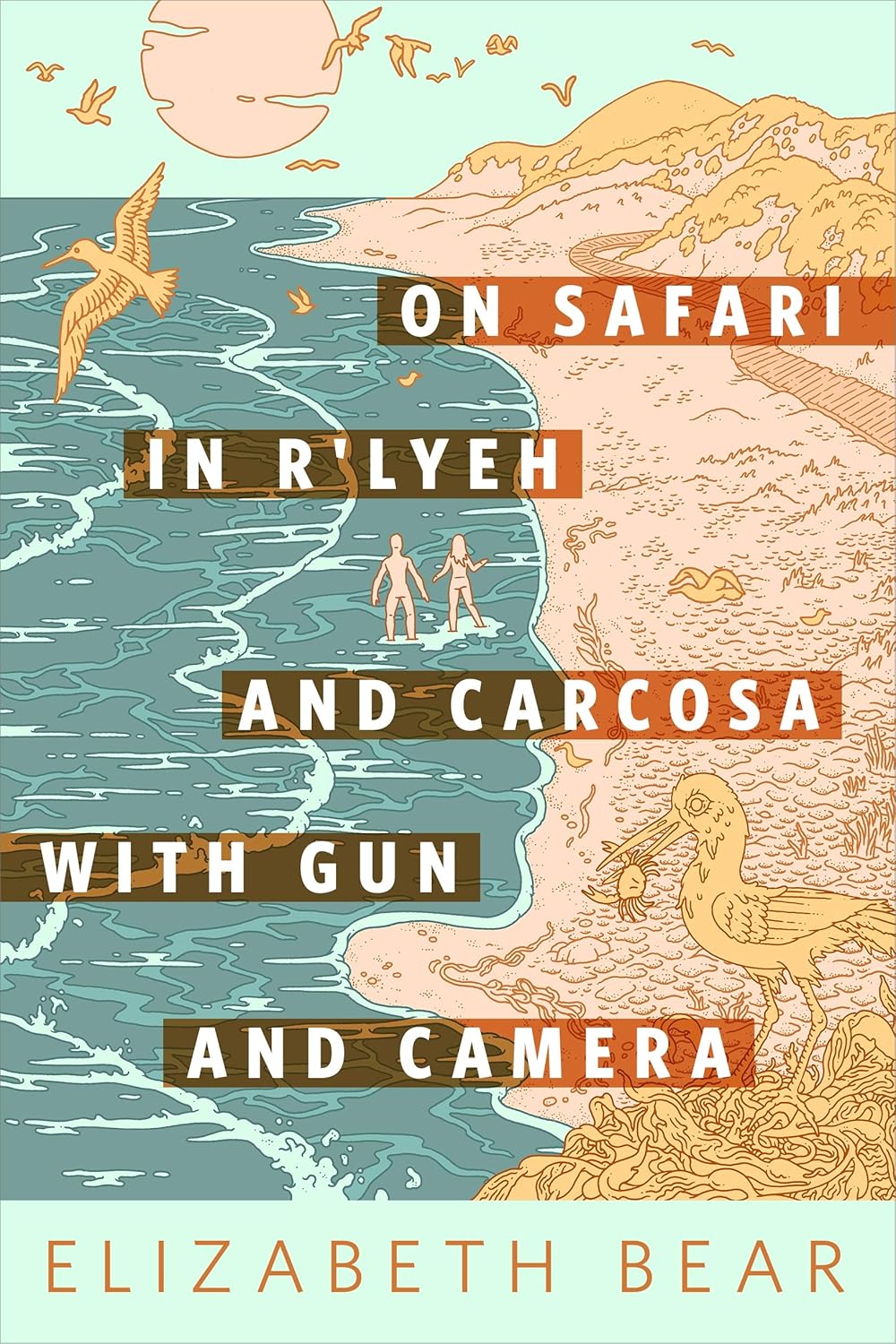
“On Safari in R’lyeh and Carcosa with Gun and Camera” (2020) by Elizabeth Bear

The oldest and strongest emotion of mankind is fear, and the oldest and strongest kind of fear is fear of the unknown.
—H. P. Lovecraft, “Supernatural Horror in Literature”

While many horror stories grapple with fear of the unknown, there are elements within and without the narrative of cozy horror stories that bring the work in question into a safer, more knowable realm, allowing for a sense of comfort to take hold.
—Jose Cruz, “The H Word: Getting Cozy With Horror”

“Cozy horror” is the current term for a broad swathe of horror-flavored creative works. It is probably more properly a mode of weird fiction than a subgenre. A kind of attitude and approach that reaches across genre conventions. Not everything with horror trappings is necessarily horrific in the pure sense of the term. With experience comes familiarity. Bela Lugosi capes, Boris Karloff neck-bolts and flat top, plush Cthulhus all come from the same Hallowe’en-store aesthetic of cozy horror.

Parts of Lovecraftian horror have been cozy for a long time.

In part, this is because Mythos fiction, more than most, tends to be intensely self-referential. Writers want the readers to make connections with other stories, they want to be part of something bigger. Sometimes this bleeds over into full-blown nostalgia; “The Discovery of the Ghooric Zone” (1977) by Richard Lupoff and “Down into Silence” (2018) by Storm Constantine are both stories that bank on the reader not only being able to catch the hints, but to share in that sensation of quiet longing and awed recognition. Others just go for straight-up humor, even to the point of parody and satire: what is “At the Mountains of Murkiness, or From Lovecraft to Leacock” (1940) by Arthur C. Clarke if not taking the piss out of Lovecraftian horror, in a gentle and ribbing British manner?

The balancing point of “cozy Lovecraftian horror” is going to be subjective. It needs to at least work as a weird tale on its own; it needs to be a part of or allude to the Mythos in a way that the readers can recognize and respond to. Jose Cruz’ four elements of Familiarity, Sensuousness, Distance, and Fun are all important—but three of those, at least, are typical of most Mythos stories by default. Readers rarely identify with finding our great-great-great-grandma was a Deep One or Ape Princess, or experience the anxiety of living in the attic room of a witch house and dealing with an extradimensional rodent infestation when they really should be focusing on their finals. The Fun aspect of cozy horror is probably the trickiest and most argumentative aspect of the whole business.

That being said, I believe “On Safari in R’lyeh and Carcosa with Gun and Camera” (2020) by Elizabeth Bear stands out as a very good representation of cozy Lovecraftian horror. The overall shape of the narrative is intensely familiar: how many scions of Innsmouth (never mentioned under that name) have come back home, in how many different variations? Yet the way the story is told is relatively light and novel: a fifty-something female physics professor with tenure and a penchant for sushi. A perfect setup for any number of funny-because-its-true comments about the lives of women in academia.

I note, entirely for the record and apropos of nothing, that I am the only female tenured faculty in the physics department. I note, entirely for the record and apropos of nothing, that I do an estimated thirty-six percent of the emotional labor in my sixteen-person department.

Female grad students and admins do the rest. And it’s not like we’re any less introverted and non-neurotypical than the dudes. We’re just forced to learn to endure more discomfort in order to have careers.
—Elizabeth Bear, “On Safari in R’lyeh and Carcosa with Gun and Camera” (2020)

If the story was just a whine, no matter how well-deserved, it probably wouldn’t sustain interest. Yet Bear is very good at composing her narratives, and has structure the story with an in media res action sequence right at the start to let us know that yes, the safari with guns and cameras are real, we’re getting to that. Then she gets to that. It’s not exactly a novel story structure, but it’s a workhorse of fiction for a reason: putting a bit of action first as a hook to draw the reader in, and then it can build up again.

The actual horror in the story is slight. The monsters aren’t very monstrous, the characters aren’t really scared as much as driven by scientific curiosity; blasting away at byakhees like Hunter S. Thompson in bat country is a select aesthetic that doesn’t really encourage the same kind of comforting glow of, say, a mountain that walked or stumbled, or the remnants of an ancient cannibal feast that happens to have the unmistakable physical tell-tales of your own peculiar family. This is not quite on the level of a hypothetical Abbott and Costello Meet Cthulhu, but it’s not far from it.

It is the kind of good, clean fun that you can have when you learn to stop worrying and love the Lovecraft Mythos—and it managed to do it without naming Deep Ones, without running across a copy of the Necronomicon, and only mentioning Miskatonic Univeristy once and in regards to a failed graduate thesis in genetics. If the rules at play seem to owe a little more to the Call of Cthulhu Roleplaying Game than Lovecraft’s original, then at least Bear has the good sense not to recapitulate the entire Mythos, August Derleth style. She gives just enough lore to keep things moving, and no more.

“On Safari in R’lyeh and Carcosa with Gun and Camera” (2020) by Elizabeth Bear is available as an ebook. It has also been republished in The Year’s Best Dark Fantasy and Horror: Volume 2 (2021) and The Long List Anthology: Volume 7 (2022).


Bobby Derie is the author of Weird Talers: Essays on Robert E. Howard and Others and Sex and the Cthulhu Mythos.

Deep Cuts in a Lovecraftian Vein uses Amazon Associate links. As an Amazon Associate I earn from qualifying purchases.
“The Chabad of Innsmouth” (2014) by Marsha Morman

“He wasn’t an anti-Semite,” Pavel assured me. “I bet he doesn’t know what a Jew is. Outsiders—you know. That’s all it is.”

Marsha Morman, “The Chabad of Innsmouth” in King David and the Spiders from Mars 142

Jewish characters were rare in Weird Tales. While there were some stories with Jewish characters, such as “The Devil’s Pool” (1932) by Greye La Spina, that is the exception rather than the rule. Whether this was a reflection of the stories submitted or editorial fiat is impossible to determine; we know Jean Ray’s stories in Weird Tales had the antisemitism removed before they were published in the magazine, and that might have been part of an unofficial policy…or just good business. After all many readers, writers, artists, and publishers in the pulp field were Jewish. No need to antagonize folks, even during an era when antisemitism was rife in the United States.

If Jewish characters were rare, Jewish culture was rarer. H. P. Lovecraft was dimly aware that Judaism was not a monolithic religion or heterogenous ethnic group, that there were sectarian differences and distinctions between populations, even if he was ignorant of the exact nature of those differences. For many folks reading Weird Tales, however, the ignorance would have been more profound. White, Anglo-American, Protestant Christian would have been the default cultural syntax for most, and the vast majority of weird fiction from the early 20th century was written from, and read in, that context.

So it isn’t terribly surprising that Lovecraft didn’t include many Jewish characters in his fiction—really, only a bookseller in “The Descendent”—and most of his contemporaries likewise didn’t do much with them (though see Conan and the Shemites: Robert E. Howard and Antisemitism). Thus, the first generation of Mythos fiction was both largely devoid of Jewish representation and of Jewish stereotypes and antisemitism. This absence tended to repeat itself in later generations: there are relatively few stories that are distinctly Mythos and also prominently feature Jewish characters or cultures. There are a number of Jewish authors of Cthulhu Mythos and Lovecraftian fiction, but almost no Jewish Cthulhu Mythos stories to speak of.

(Although I would be remiss if I failed to mention Edward M. Ederlac’s Merkabah Rider series, where an Hasidic gunslinger deals with Mythos threats in the Old West. Those are just plain fun.)

[“]They said if I took another oath, I would be able to understand all that gibbering, but I didn’t.”

“Jew aren’t supposed to take oaths,” I told him. “They’re too powerful. Always say, ‘Maybe, maybe, maybe.'”

Marsha Morman, “The Chabad of Innsmouth” in King David and the Spiders from Mars 164

So what would happen if a Jew came to Innsmouth? And not just any Jew, but an Orthodox Hasidic Jew of the Chabad movement—a traditionalist bringing Judaism to other Jewish people, a young rabbi dedicated to cultural outreach? It is an interesting setup, because Jewish religion and culture is such an absolute lacuna in Lovecraft’s “The Shadow over Innsmouth.” The Esoteric Order of Dagon has an absolute Old Testament flavor (“Dagon an’ Ashtoreth—Belial an’ Beëlzebub—Golden Caff an’ the idols o’ Canaan an’ the Philistines—Babylonish abominations—Mene, mene, tekel, upharsin—”), but in Lovecraft’s Innsmouth before the coming of the Deep Ones there was only a Baptist church, a Methodist church, a Congregationalist church, and a group of Freemasons; no Catholic church, no African-American Methodist-Episcopalian church, no synogogue. The Deep Ones moved in on the prototypical WASP space, but with no real indication of how or why they might interact with Jews or anyone else.

Which means that Marsha Morman had pretty much a blank slate when writing “The Chabad of Innsmouth.” Return to Innsmouth stories tend to be a bit frayed and outworn, like a familiar shirt worn until threadbare—if the reader has read Lovecraft’s original, they know most of the things that the protagonist is about to discover—and there’s certainly a good bit of that shmatte feeling here. The Cthulhu Mythos aspects of it in particular are so utterly familiar that they’re almost hackneyed; not really much innovation on Lovecraft’s original in that sense.

What works is the novel approach itself. Innsmouth, eighty-odd years after the event’s of Lovecraft’s story, has a new rabbi, trying to serve a small community, and…it’s nice to see that different perspective.

It was unwholesome to find someone so visually repellant. I was taught to look to the neshama—soul—of every person instead of their outsides. I was very ashamed as we hurried back to the car, Pavel’s smelly set of keys in hand.

Marsha Morman, “The Chabad of Innsmouth” in King David and the Spiders from Mars 142

Judaism and the Esoteric Order of Dagon are so alien to one another that there isn’t a lot of real interaction. The rabbi and his charges, ironically, can only really categorize the cult through the lens of Christian saints, Satanic cults, and finally the stories of the old Philistine god from the tanakh. We never get the Dagonite perspective on the Chabad house at all, except as outsiders intruding into business they don’t understand. The cultural clash and failure of understanding on both sides is a bit fascinating, and it would have been nice to see more details on that…but that might have killed the pacing. The darker elements of the plot are reminicent of “Mail Order Bride” (1999) by Ann K. Schwader, and “The Chabad of Innsmouth” slides surprisingly well into the broader cycle of Innsmouth stories.

Not everything works. The ending feels more than a bit rushed, and the geography is also a bit ludicrous; Lovecraft put Innsmouth in Essex County, north of Boston, while Morman puts it south of Boston, somewhere around Cape Cod, but that’s a quibble. A few entries from the perspective of the protagonist’s wife, the shalucha, detailing her experience of Innsmouth, might have gone a long way to develop the atmosphere. It’s not really a horror story, or at least the rabbi doesn’t know they’ve stumbled into a horror story, until near the very end, so there is less tension built up before the climax than maybe there should be.

Overall, however, Marsha Morman definitely fulfilled the premise. Readers get something that they rarely, if ever, get anywhere else; the Mythos expands a little, takes on a new dimension, and maybe a new perspective gets placed on an old story. Most intruiging of all, this is ultimately the story about new beginnings, not endings. The chabad house in Innsmouth is still standing at the end, the small community is still there…and the door is open for more stories.

“The Chabad of Innsmouth” by Martha Morman was published in King David and the Spiders from Mars (2014, Dybbuk Press). It has not yet been reprinted.


Bobby Derie is the author of Weird Talers: Essays on Robert E. Howard and Others and Sex and the Cthulhu Mythos.

Deep Cuts in a Lovecraftian Vein uses Amazon Associate links. As an Amazon Associate I earn from qualifying purchases.