THE CALL OF THE FRIEND is part of the Lovecraft Reanimated project, where leading Korean speculative fiction writers reimagine the works of horror master H.P. Loveccraft, while honoring his eerie, grotesque imagery and the blurred boundaries between reality and fantasy, they update his ideas for a global audience. —The Call of the Friend(2025), inside cover flap
The Call of the Friend (친구의 부름) is a standalone black-and-white graphic novel by Korean comic artist and writer JaeHoon Choi (최재훈), first published in 2020. The English translation by Janet Hong was published in 2025 by Honford Star. The story is set in contemporary urban Korea, where university student Wonjun checks in on his friend Jingu, whose sister (a K-pop idol) has recently committed suicide, implicitly because of a scandalous affair. It is in Jingu’s apartment that Wonjun spots a strange idol.
The story that unspools is not a straightforward linear narrative. It is intimate, focused on Wonjun, with everyone other than Jingu essentially faceless. Readers get pieces of the puzzle, but the full story isn’t spelled out for them, readers are forced to interpret the evidence as best they can. In this, they are given a single helpful hint in a short essay at the end of the book:
Some live a life of violence, while others make every effort to avoid stepping on an insect. But no matter the severity or type of sin, the moment we realize we have sinned, we experience fear. The fear isn’t so much the dread of punishment or retribution. It stems from the knowledge that we’ve hurt someone or caused their unhappiness, and the sin manifests as fear. Depending on the intensity of this fear, we can either be liberated from our guilt or ensnared by it.
While I don’t want the theme to be too obvious in this story, I hope readers might be able to tangibly experience Wonjun’s guilt. These long, nocturnal reflections on our current human condition, set against H. P. Lovecraft’s world of unexplained fears, have prompted me to contemplate the words we’ve spoken, the conflict and guilt we’ve endured, as well as the subsequent death and feat they cause. —The Call of the Friend(2025), 104-105
As an essay, it is slightly reminiscent of Arthur Machen’s prologue to “The White People” on ‘sorcery & sanctity.’ The idea of fear as a fundamental response to a transgression—an instinctive response to some imbalance caused by action or inaction—and that this fear can liberate or ensnare guilt, has its attractions. Yet how does this philosophical approach jive with Lovecraft’s famous proclamation that “the strongest kind of fear is fear of the unknown”?
When you don’t know what the sin was. When the only way you have to measure how badly you’ve hurt someone is the measure of the fear you feel in response to it. Whether this is what JaeHoon Choi intended with The Call of the Friend I cannot say, but the presence of the Cthulhu Mythos in this story is suggestive of something that goes beyond tawdry K-pop star drama and the suicide of the sister of a friend. It suggests that there’s something much bigger at work here, something unseen and unknowable, and it threatens to ensnare Wonjun entirely.
The Call of the Friend is somewhat reminiscent of Minetaro Mochizuki’s Hauntress(1993) in general outline—both of them deal with young university students living on their own, the one checking in on the other to whom something has happened, and with a supernatural horror creeping into their lives—and more importantly, that sensation of an urban legend unfolding in a space of familiar, contemporary surroundings. These are characters ill-equipped to deal with the psychological terrors of their experiences. They have no strong faith, no occult skills or leanings. They are regular people, with limited resources, facing the uncanny.
That works. JaeHoon Choi takes advantage of the prosaic setting and characters to make the distortions of perception all the more disturbing for taking place in setting of absolute reality. Readers will question how much of this is in Wonjun’s head, will wonder when we slip into dream, hallucination, or twisted memory. The idol forms a locus of manifestation, a central image to embody what it is happening, but even until the end, readers have to decide how much of this is really happening.
The comic ends like an unresolved chord. Readers don’t get answers. Only the impression that they have witnessed something. Perhaps that is the answer itself.
Janet Hong’s translation of the graphic novel into English is very readable and smooth. While most of the graphic novel itself has relatively sparse dialogue, the essay at the end is very clear and easy to understand, and a valuable key to understanding the work.
The Call of the Friend (2025) by JaeHoon Choi and translated by Janet Hong is available at the Honford Star website as an ebook or softcover.
I got hooked on Lovecraft when I was just starting to read English, which I taught myself so I could buy and read horror and SF, which was practically unavailable in my own language (Flemish, which is another version of Dutch typical for Belgium, at last for the Flemish-speaking part, since French is our national second language). […] During January-April 1963 I wrote a novelette, titled “De Poort in het duister” (A Way into Darkness”), which was “published” in 6 copies in a carbon-typed fanzine I was “publishing with a friend.” […] I mentioned “A Way into Darkness” several times to correspondents, and it was noted down in one of the Reader’s Guides to the Cthulhu Mythos. —Eddy C. Bertin, “Darkness: Your Name Is A Story” 63
I was very ill at the start of 1963, and for three weeks I suffered from a high fever and horrible nightmares. I had just discovered the work of H. P. Lovecraft, and in those nightmares I was constantly involved in a very surrealistic battle between immense inhuman forces, who took the form of geometrical patterns, which were fighting a war in a world outside of our space and time. It was around this time that I wrote “De poort in het duister” aka “The Way into Darkness” […] (Boekestein 2014, 7)
It is difficult to say when Lovecraft first came to the Low Countries. Belgian writer Jean Ray appeared in Weird Tales in the 1930s, under the pseudonym John Flanders.Kalju Kirde talks about running across copies of Weird Tales in Estonia during the late 1930s or early 1940s, possibly copies of the British edition of Weird Tales which appeared in the 1940s (Kirde 121). It is not unfeasible that some American pulps or copies of the British Not at Night series containing Lovecraft’s stories appeared in Belgium or the Netherlands at this time. But for the most part Lovecraft appears to have been a stranger to the Dutch and Flemish readers, at least in their native language.
After the death of H. P. Lovecraft in 1937, Arkham House was founded to publish his work and oversee his literary legacy, and began publishing his work in hardcover editions in 1939. Arkham House exercised de facto control of the Lovecraft copyrights, including foreign translations and a proprietary interest in who published Cthulhu Mythos fiction in the United States. During World War II, translations of Lovecraft’s work to non-English markets were largely unfeasible, but after the war the small publisher began to find some success.
French translation collections of Lovecraft’s work began to appear in the 1950s, beginning with La Couleur tombée du ciel (1954, Editions Donoël), and German in the 1960s with 12 grusel Stories (1965, Wilhelm Heyne Verlag), but it would be years before a Lovecraft collection was translated for the Dutch language market. During the 1950s, science fiction and fantasy fandom in Belgium and the Netherlands was largely disorganized, but groups began to coalesce and fan-publications proliferated in the 1960s. (Boekestein 2000; Dautzenberg 174)
Enterprising fans like Eddy C. Bertin would learn English and import British and American editions, and his story “De Poort in het duister” (“The Gate into Darkness,” also published as “A Way into Darkness”) is the first known Cthulhu Mythos story in Dutch, published in the fanzine Nachtmerrie (vol. 4, no. 4, May 1963)…“published” in an edition of only six copies. As Bertin recalls:
I knew Lovecraft from two stories, “The Rats in the Walls” and “the Thing on the Doorstep” (published in two now very rare Dutch horror anthologies), neither of which I really liked. […] There were however very few books of horror available in Dutch, but the English and American paperbacks found in the supermarkets and bookshops contained a much larger variety of it. So I started teaching myself to read english, with a dictionary at hand. […] one of those books I tackled was Best Supernatural Stories of H. P. Lovecraft in a cheap hardcover from Tower Books. I found his language and style very hard reading (for a beginner) but his ideas and images hooked me for life. I started hunting for his other books, discovering the “collaborations” with August Derleth, Arkham House, and later the works of others who had expanded and changed his Mythos, such as J. Ramsey Campbell, Brian Lumley, and so on. (Bertin, “My European Mythos”3)
The first Dutch translation of Lovecraft I’ve found is “Het Ding op de Drempel” (“The Thing in the Doorstep”) in Voor en na Middernacht: Zijnde Vijfendertig Spook en Griezelverhalen Alsmede Andere Fantastische Vertellingen (1949, Elsevier, trans. A. Verhoef; a different edition was also released in 1954); “Ratten” (“The Rats in the Walls”) was published in Griezelverhalen (1959, Het Spectrum, trans. W. Wielek-Berg), and it may be other single stories were translated and published in anthologies or magazines from 1940 to the 1960s, when the first Dutch language collection of Lovecraft would appear.
Macabere Verhalen (1967, Uitgeverij Contact), translated by Jean A. Schalekamp, and began a small boom in Dutch translations of the American horrorist’s work. This was quickly followed by Het gefluister in de duisternis: Greizelverhalen (1968, A. W. Bruna & Zoon, trans. R. Germeraad), and Heksensabbat: Griezelverhalen (1969, A. W. Bruna, trans. C. A. G. van der Broek). The Dutch translation “Heksensabbat” (“The Dreams in the Witch House”) in the latter volume may have inspired Julien C. Raasveld to write “The House of Keziah Mason,” which first appeared (in English) in his ’zine Parallax #0 (March 1971), and was itself later translated as La Mansion de Keziah Mason (Las Mejoras Historias de Fantasmas, 1973); this is the second known Cthulhu Mythos work by a Flemish author.
The Bruna editions also contained the essay “De ‘verboden’ boeken van H. P. Lovecraft” by Aart C. Prins, one of the earliest Dutch critical works examining Lovecraft’s themes. Prins also edited Het Monster in de Liftan andere griezelverhalen (1967, Bruna) which contained the Hazel Heald/Lovecraft collaboration “The Horror in the Museum”, and De Bewoner van het Meer (1968, A. W. Bruna & Zoon), which contained translations of non-Lovecraft Mythos stories by Clark Ashton Smith, Ramsey Campbell, Robert E. Howard, August Derleth, and Robert Bloch. Also in 1968 was published Wie Kan-ik Zeggen Dat er is? (Bruna, trans. J. J. van Olffen), which included several of Derleth’s “posthumous collaborations” with H. P. Lovecraft.
The 1970s saw more of Lovecraft’s work published in Dutch. A. W. Bruna & Zoon began the Bruna Fantasy en Horror series with De droomwereld van Kadath (1972, trans. Pé Hawinkels), and further volumes included De bergen van de waanzin (1973, trans. Heleen ten Holt), and De zaak Charles Dexter Ward (1974, trans. J. F. Niessen-Hossele); their last Lovecraft volume was Het huis in de nevel (1976, trans. Pon Ruiter). The number of different translators who had worked on bringing Lovecraft into the Dutch language at this point likely added to an uneven quality to the fiction—yet it did capture the public imagination, and avid fans became a part of the worldwide network of Mythos fiction writers.
Miscellaneous Lovecraft stories were also translated in various anthologies. One editor used the pseudonym “E. L. de Marigny” (from a character in Lovecraft’s “Through the Gates of the Silver Key” and “Out of the Aeons”) in publishing Fata Morgana (Maulenhoff, 1980) and Griezel-omnibus: Het verschrikkelijke geheim (1982, Elsevier), both of which contained Lovecraft translations. Other anthologies featuring Lovecraft translations include: Vampier! (1972, De Arbeiderspers), 50 beroemde griezelverhalen (1974, Elsevier), Kleine Griezelomnibus 1 (1976, A. W. Bruna & Sons), Land van de Griezel (1976, D.A.P.Reinaert Uitgaven), Van Edgar Allan Poe tot Roald Dahl, De 50 Beste Griezelverhalen (1980, Borsbeek & Loeb), Van Jules Verne tot Isaac Asimov: De 50 Beste Science Fiction-Verhalen (1981, Publioboek/Bart), De Beste Griezelverhalen (1982, K-Tel), De Beste Science-Fiction Verhalen (1982, K-Tel), Duistere Machent (1982, Loeb), and In de Geest van Tolkien (2003, Uitgeverij M). Some stories have been translated more than once, which combined with reprints has led to a little confusion at times.
The Dutch fantasy fan scene was also developing at this time; a notable publication was Drab, “eerste nederlandse tijdschrift voor Horror & Fantasy” (“first Dutch magazine for Horror & Fantasy”). Beginning in 1973 and running irregularly through 1980, it published sixteen issues in four volumes. Roeland de Vust provided three original translations for the magazine: the short story “Yule Ritus” (“The Festival”) Drab 1, No. 3 (1975), the R. H. Barlow collaboration “En de zee was niet meer” (“Till A’ the Seas”) Drab 3, No.2 (1976), and the poem “Waar eens Poe wandelde” (“In a Sequester’d Providence Churchyard Where Once Poe Walk’d”) Drab 4, No. 3 (1978); which issue also included Temme Tams’ translation “Van wat daarbuiten is” (“From Beyond”). In addition to this, de Vust provided a review of L. Sprague de Camp’s biography of Lovecraft in Drab 3, No. 2. Regarding the translations, Roeland de Vust wrote:
For me, translating was a challenge, trying to maintain in Dutch the “ancient” literary style of H.P.L.
A sentiment many of Lovecraft’s translators no doubt agree with.
Sometime in the ‘60s or ‘70s Eddy C. Bertin conceived a project for a booklet of five horror stories, to be published in Dutch, two of them involving the Mythos. One would have been “He Who Feeds on Thoughts,” which would be an adaptation of his science fiction story “De Gedachteneter” (“The Thought Eater,” published in De Achtjaarlijkse God, 1971, Bruna), and the second “The Sound of Silver Rain.” However, the project failed to attract subscribers and was scrapped (Bertin 2008a, 4).
Bertin and Julien C. Raasveld’s contributions to the Mythos were both duly recorded by Robert Weinberg and Edward P. Berglund in the Reader’s Guide to the Cthulhu Mythos(1973). It was through these fan-connections that the next phase of Dutch Mythos work was published—in English! With the death of August Derleth in 1971, the Cthulhu Mythos became free of his more restrictive attempts to control the publication of new Mythos material. Berglund noticed while compiling the Reader’s Guide that there were enough stories by professional authors for an anthology, and at Donald Wollheim’s suggestion solicited Bertin for stories with the idea of proposing the anthology to Arkham House. (Berglund x; Bertin 2008a, 4) Bertin sent him “Hingoo” (“All-Eye”) by Bob van Laerhoven “which I just changed slightly to fit better in the Mythos” Bertin 63) and Bertin’s rewrote “Darkness, My Name Is,” Arkham House turned the anthology down, but Berglund later published it as Disciples of Cthulhu(1976, DAW).
These early works of Dutch Mythos fiction were fairly typical of the time; Bertin’s “Darkness, My Name Is,” Raasveld’s “House of Keziah Mason,” and van Laerhoven’s “All-Eye” are pastiches of various degrees of creativity and skill, and went little beyond what Lovecraft and Derleth had written. “Darkness, My Name Is” however saw Bertin take a step beyond and begin to craft his own original Mythos, introducing his own tome (Von denen Verdammten by Edith Brendall—an occasional pseudonym for Bertin), his own Mythos entity Cyäegha, and an isolated geographic setting akin to Lovecraft’s Miskatonic Valley and Campbell’s Severn Valley. As Bertin put it:
It was never really my intention to develop a series of stories and novelettes dealing with Lovecraftian creatures, but set in Europe—it just happened along the way. Just as Lovecraft himself wrote his Mythos stories loosely, without really trying to put them into a rationalised fictional universe, then so did I. […] (Bertin 2008a, 3)
Bertin quoted from Von denen Verdammten as poems, in German, English, and Dutch. Some of these were published in collections of weird verse for younger readers: “De Weg in het Duister” (“The Way into Darkness”), “De Brandende Kat” (“The Burning Cat”), and “Dunwich Droomt, Dunwich Gilt” (“Dunwich Dreams, Dunwich Screams”) in Griezelverzen 1 (1998, Het Griezelgenootschap). Griezelverzen 2 (1999, Het Griezelgenootschap) included “De trap bij Maanlicht” (“The Stairway by Moonlight”) (Bertin 2008a, 5).
Disciples was successful enough to get French (Las adorateurs de Cthulhu, 1978) and German (Cthulhu’s Kinder, 1980) translations. Fandom was not exclusive by language, so in Belgium, for example, you had publications such as H. P. Lovecraft Inedit: Fantastique et Mythologies Modernes (1978) by Jacques van Herp, published in French, closely following the French translations of Lovecraft and his letters, but adds:
Quant à la quatrième génération elle s’annonce avec Brennan, Walter C. de Bill Jr, Bob Van Laerhoven, Eddy C. Bertin, et compte désormais des européens continentaux. […] On peut espérer plus de la voie ouverte par Eddy C. Bertin. Une nouvelle région maléfique apparait, un lieu maudit en Allemagne. Et l’on se dit que l’Europe offre un vaste champ d’implantation avec ses vieilles cités gothiques, et ces villes mortes. Bertin nous apprend que Ludvig Prinn vécut à Gand et à Bruges avant de monter sur le bûcher à Bruxelles. Il presente Liyuhh, une trduction allemande des Textes de Brendal, se nom Von denen Verdammten, eine Verhandlung über die unheimlichen Kulten des Alten. Et l’on retrouve le climat et la mesure de Lovecraft.
As for the fourth generation, it is announced with Brennan, Walter C. de Bill Jr, Bob Van Laerhoven, Eddy C. Bertin, and now has continental Europeans. […] One can hope for more from the path opened up by Eddy C. Bertin. A new evil region appears, a cursed place in Germany. And we say that Europe offers a vast field of settlement with its old Gothic cities, and these dead cities. Bertin tells us that Ludvig Prinn lived in Ghent and Bruges before going to the stake in Brussels. He presents Liyuhh, a German translation of the Brendal Texts, called Von denen Verdammten, eine Verhandlung über dieunheimlichen Kulten des Alten. And we find the climate and the measure of Lovecraft.
Bertin then translated the English story into Dutch, where it was published by Robert Zielshot in the semi-prozine Essef No. 4 (Feb 1978); he later re-wrote the Dutch version into a two-part novel and sold it to the Belgian gentleman’s magazine Hoho where it appeared in issues 313 and 315 (Feb & Mar 1978) as “De Vallei der Nachtmerries” (“The Valley of Nightmares”) and “De Berg van de Demon” (“The Mountain of the Demon”), adding sex and gore, changing the setting the Mexico, and publishing it under the pseudonym Juan Fernandez Sonando. Bertin would end up re-writing the novel once again and titling it Cyäegha, My Name Is Darkness in 1983, but this longer version was apparently never published (Bertin 1985, 64; Bertin 2008, 5).
The continued publication of Lovecraft and other Mythos fiction (Robert E. Howard was also notable for having many stories translated into Dutch in the 1970s) was having an effect: other Dutch writers began to write their own stories, including Mark J. Ruyffelaert, who published “Het boek Tegrath” (2e Land van de Griezel, ed. Albert van Hageland, D.A.P. Reinaert, 1978) and “Il Vit!” (Tussen Tijd en Schaduw, ed. Danny De Laet, Walter Soethoudt, 1978), where they appeared alongside non-Mythos works by Bertin, Raasveld, and others. Ruyffelaert’s “boek Tegrath” (inspired probably by Jean Ray’s “Le Grande Nocturne” (1942)) and would become part of his own personal Mythos, reappearing in stories such as the “Brieven aan Randolph Carter” (“Letters to Randolph Carter”) series; Marcel Orie would use it as well.
While still writing Lovecraftian pastiche, Ruyffelaert’s fiction draws more influence from some of the later writers, notably by the development of Bubastis (a Dreamlands city, not the ghoulish goddess as conceived by Robert Bloch in “The Brood of Bubastis”) in a series of tales: “Nocturne” in Vierde Ragnarok (1998), “De Droomwereld van Mahal” (“The Dreamworld of Mahal,” 2005), “Paradise Regained” (2008), “Sedlec, Bubastis” (2009), “De beul van Molsheim” (“The Executioner of Molsheim,” 2010), “De ondergang van Bubastis” (“The Demise of Bubastis,” 2014), “Een feestmaal voor kraaien” (“A Feast for Crows,” 2016), and “De vierde ruiter – de Dood” (“The Fourth Horseman – Death,” 2018). Ruyffelaert describes his relation with Lovecraft:
Reading Lovecraft was for a long time a great spiritual comfort to me: my belief in reaching the true haven of inner peace I owe to him. As a 14 year “old” I was confronted with the horror behind the horror and it provided me with an additional career. Lovecraft understood how to make enjoyable art out of his own fears, and then opened up his dream-world to many talented visitors. […] My intention: a salute to that fantasy giant who taught me how to dream. (Ruyffelaert)
In the early 1980s, many of the previous translations and some new ones were collected into an omnibus edition and a new collection: Griezelverhalen (Loeb, 1982) and Het gefluister in de duisternis: Griezelverhalen (Loeb, 1984), the former included the essay “Het fenomeen Lovecraft” by editor Erik Lankester, and the latter a translation of Robert Bloch’s essay “Heritage of Horror”—unfortunately, most of Lovecraft’s letters and biographies and critical studies have yet to see translation into Dutch, leaving the audience with relatively less insight into the man and his work in that language, although Michel Houellebecq’s flawed but popular monograph on Lovecraft was included in De koude revolutie: confrontaties en bespiegelingen, translated by Martin de Haan and published by Uitgeverij De Arbeiderspers in 2012.
The 1980s saw a few more efforts from Dutch Mythos authors. First among these was Eddy C. Bertin, who produced two notable Lovecraftian publications. Eyurid: A Lovecraftian Portfolio with Tais Teng (pseudonym of Thijs van Ebbenhorst Tengbergen) was originally published in issues 21-25 of Bertin’s magazine SF-Gids (1976-1978), SF-Gids also published numerous book reviews of Lovecraft and related works published in English and in translation; issues 119 and 120 were devoted to various versions of the Necronomicon. Bertin, following in the footsteps of August Derleth, couldn’t help referencing his own additions to Mythos-lorekeeping in his story “The Piercing of Priscilla Petersen”:
Research in the archives and in Fandata by Jan Meeuwesen and Jos Lexmond, a bibliography of fantastic literature published in Dutch, showed that in the Netherlands alone at least fifteen short story collections by Lovecraft had been issued by various different publishers. Contact, Bruna, Loeb, Bakker, Meulenhoff. Not bad for a writer who’d never even had a single collection published under his name during his own lifetime. Further investigation yielded a rather sloppily produced fanzine, SF-Gods, which was published in Gentbrugge in 1989, nos. 199 and 120 when taken together formed a double issue on the famous Necronomicon. (Bertin 2013, 23)
Eyurid was later published as a standalone loose-leaf portfolio in 1980 by Dunwich House—Bertin’s own small press. (Bertin 2008c, 3) The other was Dunwich Dreams, which ran for eight issues from 1982 to 1984 in the Esoteric Order of Dagon amateur press association, and featured Lovecraftian illustrations by Bertin, editorials, the Mythos story “Concerto for a Satin Vampire” (vol. 1, no. 1), the essays “A Chronological Bibliography of the Fiction of H. P. Lovecraft Translated in Dutch Language, and Published in the Netherlands (Holland) and Belgium from 1949 up to March 1983” (vol. 1, no. 3) and “Addenda to HPL Bibliography in Dutch Language” (vol. 1, no. 4). Bertin also placed Mythos stories in the American ‘zine Crypt of Cthulhu, with “The Waiting Dark” in vol. 4, no. 4 (Candlemas 1984), and “The Gibbering Walls” in vol. 8, no. 6 (St. John’s Eve 1989), which were rewritten versions of stories originally written and published in Dutch in the 1970s (Bertin 2008a, 8-9).
This was a very typical practice of Bertin, who remarked:
I don’t translate into English, I just rewrite it and then compare it with the original to see if I missed anything. Most of the stories in Dutch are not Mythos, the Mythos ones are all the rewritten versions and thus are completely different from the originals. “Darkness, My Name Is”, and “Waiting in the Dark”, were rewritten in Dutch from the English originals, and so are the same. (Bertin 2008b, 18-19)
Bertin’s fiction during this period still tended toward pastiche, expanding on Lovecraft’s creations, but he was also expanding on his own corner of the Mythos—“The Gibbering Walls” tying into his previous stories “A Way into Darkness” and “Darkness, My Name Is,” while remaining a standalone tale. Many of the stories involve similar themes, dealing with internal struggles that become externalized in monstrous fashion. In an interview, Bertin wrote:
A recurring theme is the fact that monsters are not born but created by society, just as the monster of Frankenstein turns into a killer because society doesn’t accept him. […] transformation of man into something else is the main theme of all my shorter Mythos fiction. (Bertin 2008b, 18)
Bertin also dabbled in verse, including the poem “Meeting a strange guy, called Lovecraft, close to the cemetery of Providence” which was published in the Dutch magazine Rakis #1 (Oct 1989). Bertin was also an organizer of the “Dunwich Experience,” a multimedia installation that toured Flanders in the early 1980s (Van de Wiele).
A notable problem that Bertin had as a Belgian writer in getting published was dealing with issues of language and dialect:
Publishers and compilers of anthologies often complained about the many dialect words that Bertin used in his texts. Julien Raasveld once told me that the editors of De schaduw van de raaf [The Shadow of the Raven, Bertin’s 1983 collection] went through the text first and erroneously deleted all of the occurrences of the words ‘gans’ and ‘doorheen’ and only then did they actually begin reading it. Why this act of stubbornness? Because it wasn’t literary enough. Apparently the man who expressed himself at conventions in a broad Ghent accent was no different in this respect to the writer in the attic. (Moragie 4)
Many horror writers face discrimination for using colloquial language to better address their audience, so at least Bertin was in good company, but it is a particularly Dutch problem to deal with issues of linguistic determination because of small dialectal differences between the Netherlands and Belgium.
Another Dutch writer who began pursuing the same general path at this point was Jan Bee Landman, who published “The Flood” in Alpha Adventures (Jan 1985) and “The Canals of Delft” in Etchings & Odysseys #7 (1985). The latter story is one of the first by a Dutch writer to use a Dutch setting (Raasveld’s “The House of Keziah Mason” was set in Antwerp), and the description of that old city is as loving as any that Lovecraft bestowed on New England:
By the close of the 20th century it still retained much of its old glory, despite the sacrilegious presence of motorcars, electric lights and parking meters. To the casual tourist it was just another attractive landmark, but to a more sensitive soul it breathed a different atmosphere. In the dark water of the canals, that lay as still and inscrutable as it had in remote ages, he could still see the cruel grave of 16th century heretics and the home of the great little sailing ships that roamed the oceans pugnaciously ins search of exotic goods and slaves. A small light behind some attic window in the depth of night would recall the times when Dutch alchemists worked their silent evils in secret. No number of swarming cars on the market square, between the dizzying tower of the big church and the stolid medieval town hall, could silence the echoes of howling witches that had once smouldered there at the stake. (Landman 71)
Jan J. B. Kuipers also wrote around this time, their story “Het teken van de Geit” (“The Sign of the Goat”) appeared in Brieven aan Satan: de beste griezelverhalen (1990, Meisner, Stichting Fantastische Vertellingen). Kuipers did not write extensively in the Mythos, though some of his stories take influence from or refer to Lovecraft or the King in Yellow, including “Rondom Hygelac” (“About Hygelac,” 2014), “Offa’s bruid” (“Offa’s Bride,” 2016), “Een man van zijn woord” (“A Man of his Word,” 2018), and “De Jutterstoren” (“The Beachcomber’s Tower,” 2019). Much of Kuiper’s Mythos fiction focuses on historical settings; one recurring aspect is Saint Muirgen, a mermaid (descended from Father Dagon and Mother Hydra) which the early church adopted as a saint.
One of the major hindrances for prospective Dutch Mythos writers appears to have been the lack of a Dutch-language market for new Mythos fiction—as opposed to Mythos fiction in translation, which continued sporadically in anthologies. Peripheral works were also translated into Dutch and filtered slowly into the pop culture of Belgium and the Netherlands. For example, the popular Flemish graphic novel series De Rode Ridder, published book 124 Necronomiconin 1987. The book and amulet in that comic derive from the Simon Necronomicon (first published in English in 1977 by Schlangekraft), although it is otherwise a sword & sorcery tale. Roleplaying games also provided an introduction to the Mythos for many, with the Call of Cthulhu Roleplaying Game from Chaosium being a gateway to Lovecraft’s fiction:
My love for H. P. Lovecraft started with a board game. For evenings on end, my friends and I attempted to save the world from slumbering Evil, while trying to maintain our sanity. Nine times out of ten, we succeeded, by clever planning and by careful division of our resources. This was all well and good, until I actually started reading the stories and I realised that ‘winning’ was in fact the exception. (den Heijer 41)
The influence of roleplaying games can be seen in stories like Johan Klein Haneveld’s “Spelavond” (“Game Night”) in Lovecraft in de polder, which explicitly references Call of Cthulhu.
In 1988, Dagon Press published Het Onnoembare: Fantastische Griezelliteratuur In De Traditie Van Weird Tales, Arkham House En De Cthulhu Mythologie: Inleiding, Catalogus En Bibliografie by Dennis Schouten, a comprehensive overview of the Mythos, Arkham House, and Weird Tales for a Dutch audience.
By the 1980s, individual collections by Dutch and Belgian authors were being published that contained their original Mythos fiction. Notably, Eddy C. Bertin’s collections De Griezeligste Verhalen van Eddy Bertin (1984, Loeb) and Krijsende Muren (1998, Babel), and Mark J. Ruyffelaert’s Nocturne (2007, Verschijinsel) collected some of their Mythos works for the first time and made them available to a wider audience. However, there is a discontinuity in the late 1980s: as Bertin put it “the bottom fell out of the market,” and there was very little Dutch science fiction, fantasy, or horror fiction being published (Boekestein 2014, 4).
Because of this, Bertin transitioned to writing and selling horror fiction for a younger audience in the 1990s, focusing on the horror-obssessed Anton and the teenage witch Valentina. Both series began to incorporate elements of his Mythos fiction. The Von denen Verdammten appears in Overal Vuur (1996, Elzenga), Dorstige Schaduwen (1997, Elzenga), Duivelse Dromen (1999, Elzenga), Kille Dromen (2001, Elzenga), and Valentina’s Schaduwboek (2004, Leopold). The Valentina books were translated and published in both German and Swedish (Bertin 2008a, 6-8).
The Dutch magazine/anthology Waen Sinne premiered in 2002, with stories by Martijn Adelmund (as by Maarten Krohn), Jaap Boekestein, Dirk Bontes, Eddy C. Bertin, and Remco van Straten. Jaap Boekestein was also one of the editors, and his story was “Connectie Den Haag” (“The Hague Connection”), which makes reference to the Necronomicon and Von Denen Verdammten and adds Boekestein’s own contributions: the Liber Buccesteynus and Die Unaussprechliche Kosmologieën, which would be used by later authors. About the story, Boekestein later confessed:
At the time that we decided to do a Mythos Waen Sinne, I’d never actually written a Mythos story. I wasn’t even that well versed on the Mythos itself. […] All I basically knew was that Cthulhu was still sleeping, and that every self respecting Mythos author who’d ever lived had, at one time or another, had a go at inventing his own forbidden book or Mythos entity. I didn’t really feel comfortable about trying to invent a new Old One, but creating some evil tome was definitely doable. (Boekestein 2013b, 18)
Waen Sinne lasted two more issues; the second was devoted to Sword & Sorcery, and included Jan Mara’s “Verzengende Angst” (“Flaming Terror”), which references the Mythos. The third was devoted to classical monsters and contained no Mythos content.
Jaap Boekestein’s next two Mythos stories appeared under the pseudonym Claudia van Arkel, “Schepper van dood en leven” (“Creator of Death and Life”) in Pure Fantasy 8 (June 2007), and quickly followed that up with “Drie laatste nachten” (“Three Last Nights,” published in English as “The Devil-God of Captain Underwood”) in Zwarte zielen 2 (Verschijnsel, October 2007). His next story was under his own name, and in another of his zines, Wonderwaan: “Shhh shhh Cth… Shhh shhh Cth…” (Wonderwaan 6, June 2008). “Warme Rode Zee” (“Warm Red Sea”), Wonderwaan 23 (September 2012) and an English story, “Under the Keeper of the Key” which appeared in the erotic anthology Lovecraft After Dark(James Ward Kirk Publishing, 2015), both deal with a combination of the Mythos and BDSM. This reflects his approach to the material:
What kind of people, I wondered, wouldn’t have much of a problem with the Mythos Universe? People who were different from the norm, was my conclusion. People who perceived reality differently. “Transformation is the key. Transformation of both the body and the mind.” If you live in a non-mundane world, you don’t feel mundane fears. The monsters might even welcome you in as one of their own. (Boekestein 2013a, 47)
Boekestein collaborated with Tais Teng on the English-language “Dancing for Azathoth” in The Worlds of Science Fiction, Fantasy and Horror Vol. 2, (CreateSpace 2017), then back to Dutch for “Het dorp der Engelen” (“The Village of Angels”) in Wonderwaan 41 (Spring 2017). His Mythos story, “Van de Ouden” (“From the Ancients”) appeared in Lovecraft in de polder (2018); it was translated into English and published as “The Allure of the Old Ones” in Cyäegha 21 (Winter 2019). Hallmarks of Boekestein’s Mythos fiction are the use of the Netherlands and especially the Hague as a setting.
Computercode Cthulhu(2005, ebook 2018) by Paul Harland is an original Dutch-language Mythos novel with illustrations by Tais Teng. “Stoor niet Cthulhu’s slaap!” (“Do not disturb Cthulhu’s sleep!”) became an appropriate tagline for Harland’s novel, as the 2000s inaugurated the most active period of Dutch-language original Mythos fiction—likely buoyed in part by the greater ease and lower cost of desktop publishing and print-on-demand works, but also a reflection of a burgeoning market for weird fiction and Dutch and Flemish writers eager to write and publish their own Mythos fiction.
Frank Roger’s Mythos story “Duisternis, duisternis, verzwelg mij” (“Darkness, Darkness, devour me”) appeared in his collection De Trein naar Nergens en Andere Verhalen (2005, Free Musketeers). This is a story of a writer’s search for isolation, sudden inspiration and slow degradation, calling back to Lovecraft’s Gothic roots.
Later that year, Eddy C. Bertin’s “Dunwich Dreams, Dunwich Screams” appeared in Tales Out of Dunwich(Hippocampus Press), a successor volume to editor Robert M. Price’s anthology The Dunwich Cycle(1995, Chaosium), and concerns his latest addition to the Mythos library: Von denen Verdammten, a relatively recent (1907) German text which deals with unspeakable cults—a counterpart to such tomes as Ludwig Prinn’s Vermis Mysteriis or von Junzt’s Unausprechlichen Kulten (created by Robert Bloch and Robert E. Howard, respectively). The story would bring Dagon and the Deep Ones to Dunwich, England, which was the probable inspiration for Lovecraft’s Dunwich, Massachusetts. Bertin would write of the story:
This story is based on my own visit to Dunwich, and my research there. It continues my “European” cycle of Mythos stories, began with “Darkness, My Name Is” and others. I always wanted to write a story about the real dunwich, England, incorporating its weird history into the Mythos. […] Well, I did it now, as my tribute to HPL. (Price 302; cf. Bertin 2008a, 10)
Bertin’s next contribution was “De piercing van Priscilla Petersen” in Horrorarium (2006, Suspense Publishing). As with many Bertin stories, this was not originally a Mythos tale, but became so during its many rewrites. While not strictly a Mythos tale, Bertin also considers “Rose Nere” (“Black Roses”) in Phantoms of Venice (2001, Shadow Publishing) to belong to his conception of the Mythos (Bertin 2008a, 10-11).
The Dutch fantasy magazine Wonderwaan premiered in 2007, the publication of the NCSF (Nederlands Contactcentrum voor Science Fiction/Dutch Science Fiction Society). As the editors Jaap Boekestein and Marcel Orie put it:
We both grew up reading about the Lovecraft Circle and “pulps” like Weird Tales and Wonder Stories, always wishing that there were still magazines like these out there, to which we could pitch our own attempts at writing weird fiction. In a way Wonderwaan is a homage to these pulps. Wonderwaan (an invented word which combines the Dutch words for “wonder” and “delusion” aims to collect the best fantastic stories from Holland and Belgium. We select well-known themes and clichés from the pulp era, and challenge our authors to put new and strange spins on them. (Boekestein & Orie 3)
Since then, a number of issues of Wonderwaan have been dedicated to Mythos fiction, including issues 6 (June 2008, “Cthulhu Fhtagn!”), 8 (December 2008, “Iä Yog-Sothoth!”), 23 (September 2012, “Iä Shub-Niggurath!), 24 (December 2012, “Azathoth!”), 36 (December 2015, dedicated to Ruyffelaert’s Brievan aan Randolph Carter series), and 41 (Spring 2017, “Dromen vanuit R’lyeh”). In addition, individual stories are scattered among regular issues. The contributors included a number of familiar names such as Eddy C. Bertin, Mark J. Ruyffelaert, Jaap Boekestein, Jan J. B. Kuipers, Tais Teng (“Lovecraft, My Love”), and Mike Jansen, one of the editors of Lovecraft in de polder, who contributed to Wonderwaan with “Opdracht in Amlwch” (“Assigned to Amlwch”).
The magazine also introduced several new writers to the Dutch Mythos, most notably Marcel Orie with “Ansichtkaarten uit Carcosa” (“Postcards from Carcosa”) in Wonderwaan 6 (June 2008), followed by “Een handleiding voor later, voor na de apocalypse” (“A Manual for Later, for After the Apocalypse”) in Wonderwaan 24 (December 2012), “Keizer der waanzin” (“The Emperor of Madness”) in Wonderwaan 33 (March 2015), “Dode mannen dromen niet” (“Dead Men Don’t Dream”) in Wonderwaan 37 (Spring 2016), and “Het feestmaal onder de catacomben” (“The Feast Under the Catacombs”) in Wonderwaan 48 (Winter 2018). Marcel Orie’s “De poppen van dr. Edelweiss” (“The Dolls of Dr. Edelweiss”) also appeared in 2015 in both Ganymedes 15 and Cyäegha 14. Orie’s work is characterized by a conscious effort to expand the Mythos, tying into the work of Lovecraft, Ruyffelaert, Thomas Ligotti, and others. Their major invention was the Wurmwater, a kind of limbo or hell populated by the ghosts of pirates and criminals—including the Marshes of Innsmouth.
Other writers whose Mythos and Lovecraftian fiction appeared in Wonderwaan include Cornelis Alderlieste with “Fantoompijn” (“Phantom Pain”), Frank Daman with “Trô d’diâle” (a nonsense title, possibly means “The Devil’s Pit”), Auke Pols with “De ademer van de wateren” (“The Breather of Waters”) and “Overleef jij het maan-beest?” (“Can You Survive the Moon-beast?”), Jos Lexmond with “Weg…wachter” (“Gone…watchman,” translated as “The Watcher of the Way,” reprinted from Spaciale Aanbieding‘s 153-157, June 2009-April 2010), Nieske den Heijer with “Het doek” (“The Canvas”), Chantal Noordeloos with “De hongerende diepten” (“The Starving Depths”), Martijn Adelmund with “Schipperskind” (“Skipper’s Child”), Richard Meijer with “Vakantie Bali” (“Bali Holiday”), Jack Schlimazlnik with “Van oude goden, de dingen die niet voorbij gaan” (“Of Old Gods, The Things That Don’t Pass Away,” a play on the Dutch classic “Van oude menschen, de dingen die voorbijgaan” by Louis Couperus (1906)), and Tom Thys with “De Lijkenkrabber” (“The Corpse Scraper”).
The importance of Wonderwaan in the development of Dutch Mythos fiction has been to both recognize the fanbase for Mythos fiction among readers and to provide a market for new writers. Much as Weird Tales provided a receptive forum for writers and fans of weird fiction, Wonderwaan has served as a locus for the development of the Dutch Mythos, the special issues helping to emphasize the different voices and takes on the Mythos setting.
Outside of Wonderwaan, a few other stories found a home too. Tais Teng’s “De Tempel van Cthulhu” appeared in the ebook Met Gebroken Oog en Botte Klauw (2011, Verschijnsel), and the humorous short-short “Growing up in the Cthulhu Home for Deserving Orphans” was posted to DeviantArt in 2019. Eddy C. Bertin’s “My Fingers are Eating Me” appeared in The Whispering Horror (2013, Shadow Publishing). The latter story has a typically Bertinian convoluted history of rewriting and publishing (Bertin 2008a, 9-10).
Another important ‘zine has been Graeme Phillips’ Cyäegha. From the very first issue in 2008, which includes an Eddy C. Bertin interview and article “My European Mythos,” the zine has worked to bring the Dutch-language Mythos to a wider English-speaking audience, often featuring the first English translations of Dutch Mythos fiction and insights and commentary from the most prolific and important Dutch and Flemish authors of Mythos fiction. This is especially the case in the nine “Dutch/Flemish Special Issues,” which have brought the majority of Dutch Mythos work into English translation. In 2015, Phillips also began publishing the ‘zine Forbidden Knowledge, which includes translations of the introduction to Wonderwaan’s Mythos special issues.
Lovecraft in de Polder(2018, EdgeZero), edited by Laura Scheepers & Mike Jansen, is the first book-anthology of Dutch-language Mythos fiction. The list of authors includes both newcomers and old familiar names: Boukje Balder, Jaap Boekestein, Anaïd Haen, Johan Klein Haneveld, Abram Hertroys, Mike Jansen, Peter Kaptein, Jan J.B. Kuipers, Roderick Leeuwenhart, Django Mathijsen, Mark J. Ruyffelaert, Jack Schlimazlnik, Tais Teng, Dack van de Bij, and Adriaan van Garde. In discussing the impetus for the anthology, editor Mike Jansen noted of Dutch Mythos fiction:
My own experience, from compiling four Ragnarok anthologies for Babel Publications, judging four years of the Millennium Prize and three years of the EdgeZero competition, is that perhaps one story in fifty submitted falls within this category. So from almost 4000 stories (King Kong Award, Millennium Prize, Paul harland Prize, Harland Awards, Fantastels and Trek Sagae) written by nearly 1500 Dutch and Belgian writers, since the King Kong Award first began in 1977, we are talking about maybe eight stories Compared to the English-language production this is a mere drop in the ocean.
However, in general, the production of genre stories has dramatically increased over the past two decades, and a quick count of all of the stories submitted to these competitions shows that more than half of them were written in the last ten years. This means that there have been so many new Lovecraftian stories added in such a relatively short period of time that an anthology of these stories written by the top Dutch writers has become an increasingly enticing prospect. (Jansen 2)
Reception was mixed, however; Tom Thys in reviewing the book noted the speed in which the anthology was assembled:
Unfortunately, this has resulted in a somewhat lopsided collection as some of the stories fail to rise above mere pale imitations of the various rituals and creatures of the Lovecraftian pantheon. I really have to be strict here: the authors should have been given more time and the editors should have taken more time to select and streamline this collection. (Thys 4)
Also in 2018, Eddy C. Bertin died. The Dutch science fiction and horror community mourned the loss of one of their earliest and most prominent voices. Yet he left behind a legacy that continues to grow, as more writers use Cyäegha and Von Denen Verdammten. As he put it:
From the very beginning I’ve always tried to create my own version of the mythos, and in my own modest way, I think I’ve succeeded. (Boekestein 2014, 7)
Those who recall that South Africa featured as the setting of “Winged Death,” ghostwritten by H. P. Lovecraft for Hazel Heald and published in Weird Tales (March 1934) may wonder if any Lovecraftian fiction has been published in Afrikaans. As in the Netherlands, South Africa has a rather small market for science fiction, which was dominated by English-language imports from the United States and the United Kingdom (Byrne 522). Letters from South Africa were published in Weird Tales in the 1930s and 40s, and addresses published in WT show members of the Weird Tales Club in South Africa during Dorothy McIlwraith’s editorship. Unfortunately, I have been unable to verify any information on an Afrikaans translation of Lovecraft, or any Mythos works published in Afrikaans.
Bertin, Eddy C. (1985). “Darkness: Your Name Is A Story: On The Writing Of ‘Darkness, My Name Is’” in Etchings & Odysseys #6, 63-64. Madison, WI: The Strange Company.
__________ (2008a). “My European Mythos” in Cyäegha #1 (Spring 2008). UK: Graeme Phillips.
__________ (2008b). “Interview: A Conversation with Eddy C. Bertin” (trans. Graeme Phillips) in Cyäegha #1 (Spring 2008). UK: Graeme Phillips.
__________ (2008c). “The Creation of ‘Eyurid’” in Cyäegha #2 (Winter 2008). UK: Graeme Phillips.
__________ (2013). “The Piercing of Priscilla Petersen” in Cyäegha #8 (Spring 2013). UK: Graeme Phillips.
den Heijer, Nieske (2013). “Afterword” (trans. Graeme Phillips) in Cyäegha #9 (Summer 2013). UK: Graeme Phillips.
Jansen, Mike (2018). “Introduction: Foreward to Lovecraft in de Polder” (trans. Graeme Phillips) in Cyäegha #21 (Summer 2019). UK: Graeme Phillips.
Kirde, Kalju (1989). “Recognition of Lovecraft in Germany” in Books at Brown XXXVIII-XXXIX. Providence, RI: The Friends of the Library of Brown University.
Landman, Jan Bee (1985). “The Canals of Delft” in Etchings & Oddyseys #7, 71-81. Madison, WI: The Strange Company.
Moragie, Max (2019). “The Ghent Night-Writer: ECB” (trans. Graeme Phillips) in Cyäegha #22 (Autumn 2019). UK: Graeme Phillips.
van Herp, Jacques (1978). H. P. Lovecraft Inedit: Fantastique et Mythologies Modernes. Special edition of “Ides… et autres.” Belgium.
Note: With thanks and appreciation for the help of Roel Konijnendijk, Roeland de Vust, Graeme Phillips, and Ben Joosten. Any mistakes in the above are my fault, not theirs.
France, 1974. Jean Giraud (Mœbius), Philippe Druillet, Jean-Pierre Dionnet, and Bernard Farkas came together to create Les Humanoïdes Associés, a publisher for a new type of comic magazine: Métal Hurlant (“Howling Metal,” 1974-1987). Initially released as a quarterly and focused on science fiction, Métal Hurlant featured some of the best international comic artists of its time, as well as some of the most daring content, not just featuring sex, drugs, and rock & roll—but humor, horror, gory violence, politics, and philosophy.
The magazine was successful enough to inspire spin-offs in other countries, largely based, at least initially, on material translated from Métal Hurlant. So in the United States and Commonwealth countries, Anglophones could read Heavy Metal (1977-2023), with various special issues, spin-offs, graphic novels, and other projects; in Italy, the localized version of Métal Hurlant lasted only 12 issues (1981-1983), with several standalone Metal Extra issues, though the sister magazine Totem lasted longer (1980-1984). In West Germany, Schwermetall (“Heavy Metal,” 1980-1984) lasted a respectable 57 issues under its first publisher, and eventually ran to issue 219/220 (1998). Spain had their own translation of Métal Hurlant in the 1980s, the Netherlands had Zwaar Metaal (“Heavy Metal”), Denmark had Total Metal, Finland had Kylmä metalli (“Cold Metal”), Sweden had Tung Metal (“Heavy Metal”) and Pulserande Metal (“Pulsing Metal”), Turkey had Heavy Metal Türkiye…most of these international runs didn’t last long, but they spread the stories and art far and wide.
The creation of Métal Hurlant coincided with a number of other trends. H. P. Lovecraft, Robert E. Howard, Clark Ashton Smith, and other early contributors to the Cthulhu Mythos became more widely available thanks to paperback reprints, and with the death of August Derleth, Arkham House lost its grip on the Mythos. New anthologies like The Disciples of Cthulhu(1976) proved that anyone could now play with the shared universe that Lovecraft and his friends had created. Argentinian master Alberto Breccia began and completed a series of Lovecraft adaptations for comics from 1973-1979, many of which first appeared in the Italian magazine Il Mago. Underground comix in the United States like Skull Comix (1970-1972) were giving way to semi-prozines like Star * Reach (1974-1979), and publishers also found they could side-step the Comics Code Authority by publishing magazines like Creepy (1964-1983) and Eerie (1966-1983) instead of standard-size comics, all of which featured material inspired by or adapting Lovecraft. H. R. Giger’s Necronomicon art collection was published in 1977, and quickly inspired the aesthetic for the film Alien (1979).
There was, in other words, a small revolution in Lovecraftian art, comics, and fiction in the 1970s. Not all at once, but from many different angles—and Métal Hurlant, the international crossroads where underground American artists like Richard Corben; French masters like Mœbius, Druillet, and Nicollet; Swiss artists like Giger; and Argentinian masters like Breccia could all come together at once.
That is what happened in September 1978, when Les Humanoïdes Associés published a 150-page special issue of Métal Hurlant dedicated to H. P. Lovecraft. The idea was so attractive that the next year, the English-language Heavy Metal magazine released their own Lovecraft special issue to coincide with Halloween, and when Métal Hurlant was translated in Italy, they released a one-off Metal Extra special issue dedicated to Lovecraft.
All three of these magazines share certain common elements, largely because the English- and Italian-language productions included material translated from the French special Lovecraft issue. Yet they were each different as well…and that’s kind of fascinating in itself, how these three magazines represent three different takes on the material, each tailored for their respective audience.
What follows is a survey: what each Lovecraft special issue contains, and by comparison, what they do not contain. To avoid excessive repetition, each issue and its unique contents are discussed separately, and then a single section discusses all the shared features. Because this is a long, image-heavy post, a table with links is provided to aid navigation:
150 pages, counting covers, the table of contents, ads, etc., Métal Hurlant Special #33 bis (“extra”) was one of several themed issues released by Les Humanoïdes Associés, with the other themes including Fin du monde (“the End of the World”, #36), Rock (#39), Guerre (“War”, #42), and Alien (#43). Not every feature in this issue involves Lovecraft or the Mythos, but a majority do. There are errors in the table of contents as printed, so a full list is given here.
Features involving Lovecraft or his creations are marked in bold; color pages are marked [c].
Front Cover: H. R. Giger
“La cimetière” (illustration) by Souchu, 2-3
Advertisement for Heilman by Voss and A l’Est de Karakulac by Daniel Ceppi, 4
Table of Contents, 5
Edito triste./Edito gai by Philippe Manœuvre, 6
“La Chose” by Alain Voss, 7-12
“Lettres de Lovecraft” by François Truchaud, 13
“La Retour de Cthulhu” by Alan Charles & Richard Martens, 14-15
“La Nuit du Goimard: Un ecrivain nommé Habileté-à-l’amour” by Jacques Goimard, 16-18
“Le Monstre Sur le Seuil” by Norberto Buscaglia & Alberto Breccia, 19-29
“Je m’appelle Howard Phillips Lovecraft” by François Truchaud, 30-32
“L’Homme de Black Hole” by Serge Clerc, 33-36
“Hommage à HPL…” (uncredited), 37-39
“Petite bibliothèque lovecraftienne” by François Truchaud, 40-41
“La Trace Ecarlate” by Jean-Jacques Mendez & Daniel Ceppi, 42-43
“Excursion Nocturne” by Frank Margein, 44-47
“Le langage des chats” by Nicole Claveloux, 48-49
Untitled illustration by Richard Martens, 50
“L’Indicible Horreur d’Innswich” by Philippe Setbon, 51-52
“Amitiés Rencontres” by Vepy & Daniel Ceppi, 53-57
“Barzai le Sage” by Marc Caro, 58-65
Advertisement for Richard Corben’s Den, 66
[c] “Le Chef d’Œuvre de Dewsbury” by Yves Chaland & Luc Cornillon, 67-70
[c] “L’énigme du mystérieux puits secret” by Yves Chaland & Luc Cornillon, 71-74
“A la Recherche de Kadath” by François Truchaud & M. Perron, 75-78
“H. P. Lovecraft 1890-1937” by George Kuchar, 79-81
“Les Bêtes” by Dank, 82-84
Advertisement for Le Diable by Nicollet and Les Naufragés du Temps by Paul Gillon, 85
“Le Necronomicon” by Druillet, 86-96
Advertisment for La Boite Oblungue by Edgar Allan Poe and La Rivier du Hibou by Ambrose Bierce, 97
Advertismenet for Les Trafiquants d’Armes by Eric Ambler
“Les 3 Maisons de Seth” by Dominique Hé, 99-101
“Les 2 Vies de Basil Wolverton” by Yves Chaland, 102-103
Advertisement for back issues of Métal Hurlant, 104-105
Advertisement for Métal Hurlant posters, 106
[c] “H.P.L.” by Jean-Michel Nicollet, 107-109
[c] “Ktulu” by Mœbius, 110-114
“Plat du Jour” by Vepy & Daniel Ceppi, 115-117
“Le Pont Au Dessus de l’Eau” by Luc Cornillon, 118-119
“Cauchemar” by Alex Niño, 120-129
“H. P. Lovecraft au cinéma” by Jean-Pierre Bouyxou, 130-131
“L’Abomination de Dunwich” by Alberto Breccia, 132-146
Back cover by Richard Martens
Unique Content
Front Cover: A plate from H. R. Giger’s Necronomicon(1977).
“Cauchemar” (“Nightmare”) by Alex Niño is a 10-page black-and-white comic that showcases a series of nightmares realized in surrealistic and highly detailed form; Niño pays homage to the styles of other artists, naming Heinrich Kley, Arthur Rackham, Phillip Druillet, and Jean Giraud (Mœbius). Not explicitly Lovecraft-related.
Edito triste./Edito gai (“Sad Editorial/Gay Editorial”); “Edito triste” is written as by “Abdul Fernand Alhazred”, while the “Edito gai” (as in happy, not homosexual) is by Philippe Manœuvre. Both concern how the Métal Hurlant Lovecraft Special came together.
“Je m’appelle Howard Phillips Lovecraft” (“I am called Howard Phillips Lovecraft”) by François Truchaud is a brief biographical sketch of Lovecraft’s life, fairly accurate for the compressed time and space, with illustrations by Richard Martens and Druillet; the Druillet illustration is the same as the cover to the Lovecraft special issue of L’Herne(1969).
“La Nuit du Goimard: Un ecrivain nommé Habileté-à-l’amour” (“The Night of Goimard: A Writer Named Able-to-Love”) by Jacques Goimard is an essay on Lovecraft’s fiction, illustrated by Perry’s silhouette of Lovecraft.
“Le Monstre Sur le Seuil” (“The Monster on the Threshold”) by Norberto Buscaglia & Alberto Breccia is an 11-page black-and-white comic adaptation of Lovecraft’s “The Thing on the Doorstep.” Breccia’s art combines traditional pen-and-ink with collage, which leads a strange, otherworldly aspect to the artwork.
“L’énigme du mystérieux puits secret” (“The Riddle of the Mysterious Secret Well”) by Yves Chaland & Luc Cornillon is a 4-page color comic where an investigative duo investigates a mysterious well and uncovers some counterfeiters; slightly reminiscent in overall style to Hergé’s Tintin. Not explicitly Lovecraft-related.
“Lettres de Lovecraft” (“Lovecraft’s Letters”) by François Truchaud is a review of Lettres 1 (1978), the French-language translation of the first volume of Lovecraft’s Selected Letters. Illustrated by Mœbius’ cover for Lettres d’Arkham (1975).
“L’Indicible Horreur d’Innswich” (“The Unspeakable Horror of Innswich”) by Philippe Setbon is a short fiction that purports to be the last story written by H. P. Lovecraft, complete with a mock reproduction of the original manuscript written on an envelope, based on the famous At the Mountains of Madness envelope.
“Petite bibliothèque lovecraftienne” (“Little Lovecraftian Library”) by François Truchaud is a brief survey of Lovecraft-related material available in French publications, as well as some related publications such as The Occult Lovecraft (1975) and H. P. Lovecraft: A Biography (1975) in English.
Back cover by Richard Martens, based on a photo of Lovecraft.
Heavy Metal H. P. Lovecraft Special Issue (Oct 1979)
This material is taken, for the most part, from a bizarre and eldritch tome written in a strange tongue, the “Homage á Lovecraft” issue of Métal Hurlant. We trust it will add just the right touch to your Hallowe’en festivities. —Sean Kelly, editorial for Heavy Metal vol. III, no. 6
96 pages, counting the ads, table of contents, etc., which makes for a thinner magazine that can still be side-stapled. Heavy Metal magazine vol. III, no. 6 is part of the normal numbering rather than an extra or one-off issue. While it draws much of its material directly from the Métal Hurlant Lovecraft special, the publishers chose not to reproduce all of the Lovecraft material from the French.
What didn’t they translate? The text pieces, the Georges Kuchar reprint, several of the more humorous and less Lovecraft-related comics, a couple pages of Druillet’s Necronomicon, and oddly the Breccia adaptation of “The Thing at the Doorstep.” What remains isn’t exactly entirely dedicated to Lovecraft, either, so that the “Lovecraft” issue has rather less Lovecraft-related material in it than might be expected.
Maybe there was a crunch with time to put the issue together, or some issues with the right. However, they also added a few things that didn’t appear in the Métal Hurlant issue, notably the J. K. Potter cover and “The Devil’s Alchemist,” a work of fiction. Unlike the Métal Hurlant Lovecraft special, the majority of Heavy Metal pages are in color, including colorizing some works that were in black-and-white in Métal Hurlant.
Lovecraftian items are marked in bold; color pages are marked [c]; items from the Métal Hurlant special are marked with an asterisk (*).
Front cover (“Mr. Lovecraft”) by J.K. Potter
Advertisement for Strategy & Tactics, 1
[c] Table of Contents, 2
[c]Advertisement for Job Cigarette Papers, 3
“…Thirty-one…” (editorial) by Sean Kelly w/ J. K. Potter, 4
[c] Advertisement for The Encyclopedia of Science Fiction, 5
[c] “Final Justice” by Chateau, 6-14
[c] Advertisement for Heavy Metal posters, 15
[c] Advertisement for Heavy Metal subscriptions, 16
[*] “The Dunwich Horror” (“L’Abomination de Dunwich”) by Alberto Breccia, 17-25, 74-80
[c] [*] “Ktulu” by Mœbius, 25-29
[c] “Xeno Meets Dr. Fear and Is Consumed” by Terrance Lindall & Chris Adames, 30-31
[*] “The Thing” (“La Chose”) by Alain Voss, 32-37
[*] “The Beasts” (“Les Bêtes”) by Dank, 38-40
[c] [*] “The Man from Blackhole” (“L’Homme de Black Hole”) by Serge Clerc, 41-44
[c] [*] “H.P.L.” by Jean-Michel Nicollet, 45-47
[c] “Love’s Craft” by Sean Kelly & Matthew Quayle, 48-49
[c] [*] “Dewsbury’s Masterpiece” (Le Chef d’Œuvre de Dewsbury) by Yves Chaland & Luc Cornillon, 50-53
[c] Advertisement for back issues of Heavy Metal, 54-55
[*] “The Necronomicon” by Druillet, 56-61
[*] “The Language of Cats” (“Le langage des chats”) by Nicole Claveloux, 62-63
“Chain Mail” (letters page, but comic by Christopher Browne) 64
[c] Advertisement for Dragonworld, 65
[c] “Pat and Vivian” by Frank Margerin, 66-68
[c] “The Alchemist’s Notebook” by David Hurd & William Baetz, w/Walter Simonson, 69-73
[“The Dunwich Horror” continued, 74-80]
[c] Advertisement for The Grailwar by Richard Monaco, 81
[c] “Bad Breath” by Arthur Sudyam, 82-89
[c] Advertisement for Heavy Metal books/graphic novels, 90-91
[*] “The Agony Column” (“Amitiés Rencontres”) by Vepy & Daniel Ceppi, 92-96
Back cover (“Elizabeth”) by George Smith
Unique Content
Front cover: “Mr. Lovecraft” by J.K. Potter. Before digital image manipulation programs existed, Potter was producing strange, disturbing images with a combination of photographs, airbrush, and traditional pen and ink. The effects, with Potter’s imagination, could be quite stunning. In this instance, he uses it to place Lovecraft in a cosmic scene. Potter would lend his talents to several future Lovecraft-related projects, including the cover for Tales of the Cthulhu Mythos (1990).
“The Alchemist’s Notebook” by Byron Craft (as by David Hurd & William Baetz) is an original work of Mythos fiction, with illustrations by Walter Simonson. A note on the first page says that this story is “an excerpt from the novelization of the upcoming movie, The Cry of Cthulhu“—but the film never made it past pre-production (Cthulhu Calling: An Interview with Byron Craft). In 2016, Craft published the full version of the novelization as The Alchemist’s Notebook, which was later changed to The Cry of Cthulhu.
“Bad Breath” by Arthur Sudyam is an 8-page comic that is principally black-and-white with color tints on Selected panels and figures; it follows an amorous young man whose bad breath is impacting his love life, and the solution he attempts has horrific—and amusing—consequences. Not explicitly Lovecraft-related.
“Final Justice” by Chateau is a 9-page color comic where a couple in Europe to write a book on historical crimes watch the re-enactment of a medieval murder at an ancient chateau. Not explicitly Lovecraft-related.
“Love’s Craft” by Sean Kelly is a poem, accompanied by an illustration by Matthew Quayle. Tentatively Lovecraftian based on the title, but with no direct references to Lovecraft or the Mythos.
“Pat and Vivian” by Frank Margerin is a 3-page humorous comic about a woman awoken by a strange entity at the door. Not explicitly Lovecraft-related.
“…Thirty-one…” (editorial) by Sean Kelly, discussing Lovecraft in brief. Accompanied by a photo-manipulated image of Lovecraft by J. K. Potter.
“Xeno Meets Dr. Fear and Is Consumed” by Terrance Lindall & Chris Adames is a two-page color fantasy/horror comic with a distinct textured painting style. Young Xeno, asking a fundamental question about certainty, sets off in dreams to find Dr. Fear—and does. Not explicitly Lovecraft-related.
Metal Extra Speciale Lovecraft (Nov 1982)
Cui, questo numero speciale di Métal Hurlant e un vero e proprio “omaggio” nei limiti è nei termini in cui puo esserlo una realizzazione a fumetti. Essa però dimostra sino a che punto è giunta oggi l’influenza del “solitario di Providence” e del suo mondo di sogni, di miti, di realtà alternative. E’un “ommagio” che ciascun disegnatore o scrittore ha estrinsecato secondo la sua predisposizione, il suo modo di vedere, il suo atteggiaento mentale, culturale, di spirito. E cosi (non ci si meravigli di ciò) vi saranno controbuti (fumetti) “seri” e meno seri o aprtamente ironici, allucinati e satirici. Un autore è amato non soo quando si prende sul serio il suo universo incubico (come ne L’uomo del Buco Nero, Il capolavoro di Dewsbury, ecc.), ma anche quando ci si scherza su, fra il serio e il faceto (Cthulhu), lo si prende aperamente in giro (La traccia scarlatta, Escursione notturna, Il ritorno di Cthulhu e cosi via).
Hence, this special issue of Métal Hurlant is a real “homage” to the extent that a comic book production can be. However, it demonstrates how far the influence of the “solitary of Providence” and his world of dreams, myths, and alternative realities has reached today. It is an “homage” that each artist or writer has expressed according to his predisposition, his way of seeing, his mental, cultural, and spiritual attitude. And so (don’t be surprised by this) there will be “serious” and less serious or overtly ironic, hallucinatory and satirical counterparts (comics). An author is loved not only when his nightmare universe is taken seriously (as in The Man from the Black Hole, Dewsbury’s Masterpiece, etc.), but also when he is joked about, half-jokingly (Cthulhu), and openly made fun of (The Scarlet Trail, Night Excursion, The Return of Cthulhu, and so on).
Gianfranco de Turris, Metal Extra Speciale Lovecraft, 5
English translation
Instead of trying to publish this as part of their regular series of issues, the editors in Italy essentially excerpted the majority of the Lovecraft comics content from the Métal Hurlant Lovecraft special and squeezed it into a 100-page (counting covers) square-bound Metal Extra issue. They also added some additional materials not in either the Métal Hurlantor Heavy Metal Lovecraft special issues
Lovecraftian items are marked in bold; color pages are marked [c]; items from the Métal Hurlant special are marked with an asterisk [*].
[*] Front Cover by Mœbius
Table of Contents, 3
“Howard Phillips Lovecraft” by Gianfranco de Turris, 4-5
[*] “Annunci sul Gironale…” (“Amitiés Rencontres”) by Vepy & Daniel Ceppi, 6-10
[*] “Barzai il Saggio”(“Barzai le Sage”) by Marc Caro, 11-18
[c] [*] “Ktulu” by Mœbius, 19-25
“Il Nome e la Cosa” by Luigi de Pascalis, 24-26
[c] [*] “La Traccia Scarlatta” (“La Trace Ecarlate”) by Jean-Jacques Mendez & Daniel Ceppi, 27-28
[*] “H. P. Lovecraft al Cinema” (“H. P. Lovecraft au cinéma”) by Jean-Pierre Bouyxou [uncredited], 29-30
[c] [*] “Il Capolavoro di Dewsbury”(Le Chef d’Œuvre de Dewsbury) by Yves Chaland & Luc Cornillon, 31-34
[*] “Il Ritorno di Cthulhu” (“La Retour de Cthulhu”) by Alan Charles & Richard Martens, 35-36
[*] “La Cosa” (“La Chose”) by Alain Voss, 37-42
[*] “Alla Ricerca di Kadath” (“A la Recherche de Kadath”) by François Truchaud & M. Perron, 43-46
[*] “H. P. Lovecraft 1890-1937” by Georges Kuchar, 47-49
[*] “Il Linguaggio dei Gatti” (“Le langage des chats”) by Nicole Claveloux, 50-51
[*] “Il Piatto del Girno” (“Plat du Jour”) by Vepy & Daniel Ceppi, 52-54
[*] “Escursione Notturna” (“Excursion Nocturne”) by Frank Margerin, 55-58
“R. H. B.” by Andreas & François Rivière, 59-66
[*] “H. P. L.” by Jean-Michel Nicollet, 67-69
“Incubo Londinese” by Riccardo Leveghi, 70-72
[c] [*] “Il Ponte dull’acqua” (“Le Pont Au Dessus de l’Eau”) by Luc Cornillon, 73-74
[c] “Oltre L’autore Lovecraft” by Onomatopeya, 75-82
[*] “Le 3 Case di Seth”(“Les 3 Maisons de Seth”) by Dominique Hé, 83-85
[*] “La Bestie” (“Les Bêtes”) by Dank, 86-88
[*] “L’Uomo di Black Hole” (“L’Homme de Black Hole”) by Serge Clerc, 89-92
[*] “Le 2 Vite di Basil Wolverton” (“Les 2 Vies de Basil Wolverton”) by Yves Chaland, 93-94
[*] “Omaggio a H. P. Lovecraft” (“Hommage à HPL…”), 95-97
“Piccola Bibioteca Lovecraftiana” by Gianfranco de Turris & Sebastiano Fusco, 98
Unique Content
Front Cover is a colorized version of Mœbius’ depiction of Lovecraft at his desk from Lettres d’Arkham.
“Howard Phillips Lovecraft” by Gianfranco de Turris is a two-page editorial-cum-introduction to the issue and Lovecraft, illustrated with reproductions of photos of Lovecraft.
“Il Nome e la Cosa” (“The Name and the Thing”) by Luigi de Pascalis is a short work of fiction about the Golem of Prague, accompanied by illustrations by Massimo Jacoponi, a photo of Lovecraft, and Perry’s silhouette of Lovecraft. Other than the illustrations, no explicit Lovecraftian content.
“Incubo Londinese” (“London Nightmare”) by Riccardo Leveghi is a short work of fiction. Illustrated by Bradley, Druillet’s cover art from L’Herne, a photo of Lovecraft, and two images from Lovecraft’s letters. Other than the illustrations, no explicit Lovecraftian content.
“Oltre L’autore Lovecraft” (“Beyond the Author Lovecraft”) by Onomatopeya is an 8-page fotonovela-style comic about Lovecraft’s life and literary afterlife, a montage of photos tinted, textured, and collaged together with speech bubbles and text boxes to provide a humorous but largely accurate narrative.
“Piccola Bibioteca Lovecraftiana” (“Little Lovecraftian Library”) by Gianfranco de Turris & Sebastiano Fusco; while sharing essentially the same title as its counterpart in Métal Hurlant, this is a brief listing of the relevant Arkham House volumes and the Italian translations of Lovecraft and related materials, including August Derleth’s “posthumous collaborations.”
“R. H. B.” by Andreas & François Rivière is an 8-page, black-and-white comic about Lovecraft’s friend R. H. Barlow.
Shared Content
Listed below are the shared features, drawn from the original Métal Hurlant issue and also appearing in either or both of Heavy Metal and Metal Extra, along with notes on differences between the versions and necessary context.
“A la Recherche de Kadath” (“Alla Ricerca di Kadath,” “In Search of Kadath”) by François Truchaud & M. Perron is a 4-page black-and-white fantasy pictorial map of Lovecraft’s Dreamlands in a lavish, detailed style. Appears in Métal Hurlant and slightly smaller in Metal Extra.
“Amitiés, Rencontres” (“Annunci sul Gironale…,” “The Agony Column”) by Vepy & Daniel Ceppi is a 5-page black-and-white comic. The French title translates literally as “Friendships, Meetings”, and the Italian as “Announcements in the Daily,” but in context it might better be called Personal Ads. The nameless protagonist is in police/medical custody, and flashes back to when he answered a personal ad in the paper, and received a response. When he goes to meet the woman, he is waylaid: the whole setup has been a trap. Not explicitly Lovecraftian. Appeared in Métal Hurlant, Heavy Metal, and Metal Extra.
“Barzai le Sage”(“Barzai il Saggio,” “Barzai the Sage”) by Marc Caro is an 8-page comic composed of several extremely dark, heavily-exposed photos of a sculpture of a figure in various poses and backgrounds; the text is derived from Lovecraft’s “The Other Gods.” Appears in Métal Hurlant and in Metal Extra, where text boxes replace the original typed text annotations.
“Excursion Nocturne” (“Escursione Notturna,” “Noctural Excursion”) by Frank Margerin is a 4-page black-and-white comic that is wordless until the final panel; the whole is a careful set-up of horror tropes with a comedic flourish. Not explicitly Lovecraftian. Appeared in Métal Hurlant and Metal Extra.
“Hommage à HPL…” (“Omaggio a H. P. Lovecraft,” “Homage to Lovecraft”) by uncredited is nominally a 3-page black-and-white cut-out diorama inspired by Lovecraft; though the content is more descriptive of general witchcraft and I haven’t been able to source any particular Lovecraftian inspiration. Appeared in Métal Hurlant and Metal Extra.
“H. P. L.” by Jean-Michel Nicollet is a 3-page color fantasy painted comic. A pair of fantasy creatures travel through a city to where a suited, winged figure sits on a throne atop a pillar, and asks a sphinx-like riddle. A panel reveals the figure has the face of Lovecraft. While slight in terms of content, and the events play out with a dry humor, the artwork is fantastic. Nicollet would go on to do many painted covers for weird fiction translated into French, including collections of Robert E. Howard, Clark Ashton Smith, etc. The winged, demonic Lovecraft would reappear on the cover of Robert Bloch’s Retour à Arkham(1980). Appeared in Métal Hurlant, Heavy Metal, and Metal Extra.
“H. P. Lovecraft 1890-1937” by Georges Kuchar is a 3-page biographical comic of Lovecraft’s life, which first appeared in the U.S. underground comix Arcade #3 (1975). Kuchar exaggerates certain elements of Lovecraft’s life and personality for comedic effect, but largely follows the available scholarship and characterization of H.P.L. in 1975. Appeared in Métal Hurlant and Metal Extra.
“KTULU” by Mœbius is a 5-page color comic; a group of politicians, finished with a week’s work, descend to a strange place and ask Lovecraft where to find a Ktulu to hunt. A surreal, sardonic work that owes little to the Mythos but echoes Mœbius’ other work of the period, like Le Garage Hermétique; the image of Lovecraft on a high throne oddly echoes Nicollet’s “H.P.L.” Appeared in Métal Hurlant, Heavy Metal, and Metal Extra.
“L’Abomination de Dunwich” (“The Dunwich Horror”) by Alberto Breccia, a 15-page black-and-white adaptation of Lovecraft’s “The Dunwich Horror”—and a fairly faithful and evocative adaptation, with particular care given to Wilbur Whateley and his unnamed twin. Appeared in Métal Hurlant and Heavy Metal; many of Breccia’s adaptations of Lovecraft stories first appeared in Italian in the magazine Il Mago, which may be why Metal Extra chose not to reprint it.
“La Chose”(“La Cosa,” “The Thing”) by Alain Voss is a 6-page black-and-white adaptation of Lovecraft’s “The Statement of Randolph Carter.” Voss elaborates on Lovecraft’s story a bit, making Harley Warren more sinister and flamboyant, and the grave they break into becomes an elaborate sepulchre, but is otherwise very faithful. Appeared in Métal Hurlant, Heavy Metal, and Metal Extra.
“La Retour de Cthulhu” (“Il Ritorno di Cthulhu,” “The Return of Cthulhu”) by Alan Charles & Richard Martens is a 2 -page black-and-white comic. “Uncle Nyarlathotep” narrates a tongue-in-cheek account of the ritual that results in the reincarnation of H. P. Lovecraft. Appeared in Métal Hurlant and Metal Extra.
“La Trace Ecarlate” (“La Traccia Scarlatta,” “The Scarlet Track”) by Jean-Jacques Mendez & Daniel Ceppi is a two-page, slightly humorless, mostly wordless spectacle. Métal Hurlant printed the comic in black and white, but Metal Extra added a bit of red to actually illustrate the “scarlet trace,” which works much better.
“Le Chef d’Œuvre de Dewsbury” (“Il Capolavoro di Dewsbury,” “Dewsbury’s Masterpiece”) by Yves Chaland & Luc Cornillon is a 4-page color comic that ells an original Lovecraftian story, somewhat in the vein of “Pickman’s Model,” with the mysterious Dewsbury taking the place of Pickman, but truncated and dedicated to not showing the unnamable horror. Appeared in Métal Hurlant, Heavy Metal, and Metal Extra.
“Le langage des chats” (“Il Linguaggio dei Gatti,” “The Language of Cats” ) by Nicole Claveloux is a 2-page black-and-white comic, and adapts an excerpt from “The Dream-Quest of Unknown Kadath” involving the cats of the Dreamlands. Appeared in Métal Hurlant, Heavy Metal, and Metal Extra.
“Le Pont Au Dessus de l’Eau” (“Il Ponte dull’acqua,” “The Bridge over the Water”) by Luc Cornillon is a 2-page comic where a man attempts to commit suicide by leaping from a bridge, and finds himself embattled by a protoplasmic tentacled entity. Not explicitly Lovecraft-related, though some might call it Lovecraftian. Published in black-and-white in Métal Hurlant, and colorized in Metal Extra.
“Les 2 Vies de Basil Wolverton” (“Le 2 Vite di Basil Wolverton,” “The Two Lives of Basil Wolverton”) by Yves Chaland is a 2-page black-and-white comic. In Lord Whateley’s residence is uncovered the diary of an old servant, Basil Wolverton (after the comic artist), who had long served the family. The diary describes how Wolverton was a mad genius who sought to use the life-forces of others to extend his lifespan and rule the world—but he chose as his experimental subjects Black slaves, and found afterward his he fell into idleness and stupidity. The story is effectively a brief echo of the kind of weird racism typical of 1920s and 30s pulp fiction, although the artwork is excellent. Appeared in Métal Hurlant and Metal Extra.
“Les 3 Maisons de Seth” (“Le 3 Case di Seth,” “The 3 Houses of Seth”) by Dominique Hé is a 3-page black-and-white comic in the form of a document about an artist’s visit to an ancient temple in Egypt, where he received a vision of the eldritch entity Suthluhlu. The artistic depiction of Egyptian pyramids, temples, statues, hieroglyphs, etc. is exquisite in its precision, though the Lovecraftian content itself is slight. Appeared in Métal Hurlant and Metal Extra.
“Les Bêtes” (“La Bestie,” “The Beast”) by Dank is a 3-page black-and-white comic. The narrative is slight, a soldier or servant informs a man that the Beasts are back, which turn out to be a collection of fanged dinosaurs (and, bizarrely, a rhinocerous of unusual size) that are mowed down with guns; the hunter leaves strange three-toed tracks as he leaves after the slaughter. It’s a surreal bit of fluff, striking for its visuals, but deliberately obtuse. Not explicitly Lovecraftian. Appeared in Métal Hurlant, Heavy Metal, and Metal Extra.
“L’Homme de Black Hole” (“L’Uomo di Black Hole,” “The Man from Blackhole”) by Serge Clerc is a 4-page comic. Howard Phillip Wingate, horror author, recalls a visit to Arkham, where he encounters Nathaniel Jenkins, a retired doctor who lived at Blackhole Cottage, and participates in his experiments. What he sees there causes him to flee, but he hears once more from Jenkins, whose brilliant mind has succumbed… The story is a pure pastiche of Lovecraft, with little visual and written nods scattered throughout. Published in black-and-white in Métal Hurlant and Metal Extra, but in color in Heavy Metal.
“Le Necronomicon” (“The Necronomicon”) by Druillet is 11 pages of black-and-white pseudo-script and illustrations, laid out as pages from an alien manuscript; a photograph of Lovecraft is included on the frontispiece. Druillet’s recension of the Necronomicon was released near-contemporaneously with Al Azif (1973) by L. Sprague de Camp, the Necronomicon (1977) by Simon, and The Necronomicon: The Book of Dead Names (1978) ed. by George Hay. Yet where the others focused primarily on producing some kind of decipherable content or referenced existing cultures and systems, Druillet deliberately made his pages evocative but untranslateable—and as a result, universal across all languages. Published in Métal Hurlant and Heavy Metal, with some slight differences in presentation.
“Plat du Jour” (“Il Piatto del Girno,” “Dish of the Day”) by Vepy & Daniel Ceppi is a 3-page black-and-white comic. A hooded figure buys a spider, takes it home, cooks it up, and serves it to a bed-written individual in a rat costume. The tone is slightly ghastly, but also slice-of-life. Not explicitly Lovecraft-related. Published in Métal Hurlant and Metal Extra.
Cultural Impact
In the decades after the Métal Hurlant Lovecraft Special was published, many of the stories and artwork have been reprinted in various formats and languages. Today, you can find collections of Druillet and Breccia’s Lovecraft comics and art in several languages. What might strike readers, however, is that the bulk of the three issues do not consist of adaptations of Lovecraft’s stories, but also comics, art, fiction, and nonfiction about Lovecraft himself. That issue, and to a degree the English and Italian magazines it inspired, was a nexus of Lovecraftian art and fiction that helped to further the spread of not just Lovecraft’s Mythos, but the myth of Lovecraft and his life, inexplicably entwined with his creations.
For many readers, one of these issues was their first introduction for Lovecraft. For some, it was an example of what Lovecraftian comics and art could be, unfettered by censorship or expectations to conform to commercial standards of what a comic or Lovecraftian work should be like. These works aren’t pornographic or particularly graphic, but they vary from reverent to irreverent, ghoulish to enchanting. Lovecraft and his work are interpreted many different ways by different creators—and that’s okay. There’s room for all those different approaches, and many more.
Métal Hurlant is being published in a new series. Perhaps appropriately, in August 2024 they published a new Lovecraft special—reflecting a new generation of talents to flex their imaginations and showcase their skills. It is a testament to the cultural impact of that first mammoth issue, but also a reflection that these specials are part of an enduring tradition. Creators that are happy not just to read about Lovecraft, his fiction and letters, but to participate in the process and add to the body of art and literature he inspired.
Cuando lea estas lineas yo no estaré ya en el mundo de los vivos . . .
Con estas palabras comienza la carta que Robert E. Howard envía a su amigo, mentor y famoso escritor. En un escrito delirante el auto tejano describe su progresivo descenso al infierno de la locura y la desesparación después de visitar una antiqua tumba india sita en el interior de una cueva.
En la narración se mezclan los sueños con la realidad, la escritura, la relación con los amigos y su novia, la salud de la madre y su dependencia de ella . . Sin salida, totalmente acorralado por sus miedos, Howard debe buscar una solución, una huida, un sacrificio . . .
Dear H. P. Lovecraft,
When you read these lines, I will no longer be in the world of the living . . .
With these words begins the letter Robert E. Howard sent to his friend, mentor, and famous writer. In a delirious letter, the Texan author describes his gradual descent into the hell of madness and despair after visiting an ancient Indian tomb located inside a cavern.
The story mixes dreams with reality, writing, his relationship with his friends and girlfriend, his mother’s health and his dependence on her… With no way out, completely cornered by his fears, Howard must find a solution, an escape, a sacrifice…
Querido H. P. Lovecraft (2017, Spanish), back cover copy
English translation
Rusty Burke, a scholar of the life and work of Robert E. Howard, has noted that REH was one of H. P. Lovecraft’s major correspondents—but that HPL was Howard’s major correspondent. The bulk of the surviving letters we have from Robert E. Howard are to Lovecraft; and while many of Howard’s other letters—to Clark Ashton Smith, Farnsworth Wright, C. L. Moore, Novalyne Price, etc. are important, none of them really cover the same breadth and depth as Howard’s letters to Lovecraft. Nor, in many cases, have we much of the other side of the conversation. In the collected correspondence of both men, at least as much as survives, we gain a deeper understanding and appreciation for the push and tug of the conversation.
This literary friendship has extended far past the limits of the grave. Novalyne Price Ellis mentioned it in her memoir One Who Walked Alone (1986); “Gilgamesh in the Outback” (1986) by Robert Silverberg sees the two palling around the underworld together. The semiotic ghosts of both men have followed each other into novels and comic books, from Rick McCollum’s Ashley Dust (1996) to Lovecraft’s Book(1985) by Richard Lupoff, later restored as Marblehead (2006). Howard makes an appearance in most of the biographical graphic novels that have come out about Lovecraft, and every biography of Howard cannot avoid mentioning their “civilization vs. barbarism” argument in letters that winged their way from Providence, R.I. to Cross Plains, TX and back again.
It is this relationship that Antonio Manuel Fraga has attempted to capture in his novel Querido H. P. Lovecraft(2016, “Dear H. P. Lovecraft), which was written and published in Galician. The novel was then translated into Spanish (Castilian) by Mercedes Pacheco Vázquez and published, also as Querido H. P. Lovecraft, in 2017. It has not yet been translated or published in English, but in brief the novel takes the form of a classic epistolary novel, like Dracula, but consisting of several fictional letters between H. P. Lovecraft, Robert E. Howard, and Dr. Isaac M. Howard (REH’s father, with whom HPL corresponded after REH’s death in 1936). The bulk of the novel consists of Howard’s final letter to Lovecraft, detailing the supernatural curse that descended upon him and the real reason he took his life that day.
De ROBERT ERVIN HOWARD para H. P. LOVECRAFT 10 de junio de 1936 Sr. H. P. Lovecraft 66, College Street. Providence, R.I.
Querido H. P. Lovecraft:
Cuando lea estas líneas no estaré ya en el mundo de los vivos, pues pronto daré el definitivo salto hacia las tinieblas. Sin otra salida, y después de lo vivido, espero que la muerte se abra a mi como una madre redentora, un pecho cálido que me ampare y silencie los horripilates alaridos que no dejan reposar mi mente, cansada y enferma.
Puede que este testimonio, dictado por la urgencia y la necesidad de purga, me sirva también para comprender mejor toda esta atrocidad, o por lo menos para distinguirla de un modo más global.
Hace dos semanas me acerqué a Brownwood, donde compré tres tumbas en su camposanto. Los miembros de mi exiqua familia tendrán así cada uno su trozo de tierra donde reposar, donde olvidar tanto dolor embalsamados en la archilla arenosa de Texas.
Las raíces de nuestros padecimientos se entredan en el pasado, se mezclan y alimentan de las mismas sales, pero sus tallos crecen independientes hacia un sol que es fuego fatuo, sin bndad ni compasión.
En el caso de mi madre, la desgraciada Hester, hablamos de una vida marcada por la enfermedad propia y ajena –si como enfermeded se puede calificar mi mal, que después expcliaré detalladamente. ¡Tiempo habrá!–.
El padecimiento de mi padre, el viejo doctor Howard, tiene el sabor de la ceniza del desprecio de su compañera. Durante toda su vida fue un imán para las malas inversiones, en las que dilapidó los escasos ahorros de la familia. ¡Y bien que se lo reprochó Hester! Esa fue una de las causas del désden de su mujer, pero no el único ni el más importante. En esa guerra fue un titán. Por el contrario, sospecho fundadamente que no resistirá el trance de nuestra partida. Ojalá me equivoque.
Y por último está mi padecimiento, el del necio Bob, el torpe ignorante. Afortunademente, pronto será silenciado por este colt que ahora siento en el muslo y que se convertirá en mi redentor, reverendo y verdugo.
From ROBERT ERVIN HOWARD to H. P. LOVECRAFT 10 June 1936 Mr. H. P. Lovecraft 66 College Street, Providence, R.I.
Dear H. P. Lovecraft:
When you read these lines, I will no longer be in the world of the living, for I will soon take the final leap into darkness. With no other way out, and after what I have experienced, I hope that death will greet me like a redeeming mother, a warm breast to shelter me and silence the horrifying screams that keep my tired and sick mind from resting.
Perhaps this testimony, dictated by the urgency and necessity for a purge, will also help me better understand this whole atrocity, or at least to distinguish it in a more comprehensive way.
Two weeks ago, I went to Brownwood, where I bought three graves in the cemetery. The members of my tiny family will each have their own piece of land to rest in, where they can forget so much pain, embalmed in the sandy Texas clay.
The roots of our sufferings are buried in the past, they mix and feed on the same salts, but their stems grow independently toward a sun that is a will-o’-the-wisp, without kindness or compassion.
In the case of my mother, the unfortunate Hester, we are talking about a life marked by her own and other people’s illnesses—if my illness can be described as illness, which I will explain in detail later. If there is time!
The predicament of my father, old Dr. Howard, tastes like the ashes of his companion’s contempt. Throughout his life he was a magnet for bad investments, in which he squandered our family’s meager savings. And well did Hester reproach him for it! That was one of the causes of his wife’s disdain, but not the only one, nor the most important. In that war he was a titan. On the contrary, I strongly suspect that he will not be able to withstand our departure. I hope I am wrong.
And finally there is my suffering, that of the foolish Bob, the ignorant bumbler. Fortunately, he will soon be silenced by this colt that I now feel in my thigh and that will become my redeemer, reverend and executioner.
Querido H. P. Lovecraft (2017, Spanish) 20-21
English translation
Perhaps surprisingly given how prominently the letters formed their relationship—Lovecraft and Howard never met, though they corresponded from 1930 until Howard’s death in 1936—the epistolary format has featured less prominently in their fictional afterlives. In fiction, at least, the two men would get the chance to meet as they never did in life. So too, that way the writer isn’t forced to write as many letters to and from Lovecraft and Howard from the other’s perspective, which would require more than a passing familiarity with both men’s life and letters to convincingly nail the voice and knowledge of each.
It is difficult to judge how well Antonio Manuel Fraga has captured their voices. That Fraga did some research into Robert E. Howard’s life is evident, he obviously read at least the flawed biography Dark Valley Destiny(1983), or Mark Finn’s Blood and Thunder (1st ed. 2006/2nd ed. 2013), which emphasizes the sometimes conflicted family dynamics among the Howards. Some of the choices (filtered, admittedly, through two layers of translation) strike me as unlikely; Robert E. Howard would probably not have referred to his mother by her given name, for example, and never had anything but praise for his father in his letters to Lovecraft. There are a few other details that are “off” in the short novel, but to try and catalogue them would be pedantic. This is a fantasy novel, and some allowances have to be given.
As a novel, Querido H. P. Lovecraft is an interesting example of a familiar idea: the author becoming the character. The Robert E. Howard of this book is not the same REH that comes through in his letters to Lovecraft, but he is recognizable as an interpretation of that person. What it reveals is less about Howard and Lovecraft than it does about Antonio Manuel Fraga—what Fraga has taken away from his research about Howard, the aspects of his life and relationships that he wished to emphasize in telling his story.
Is it a story worth telling? As an exercise in fantasy, it’s fine. There have been innumerable stories that mingled H. P. Lovecraft’s death with his Mythos, that have blurred the lines between reality and fantasy, for fun if nothing else. In that sense, Querido H. P. Lovecraft is something of a fanfic novel, a great and impossible what if, the kind of cache of letters that Lovecraft and Howard fan-scholars might dream of coming across, like the scholarly protagonists of a ghost story that find the document that explains it all at last.
What we cannot forget, however, is that this is not about how Robert E. Howard lived and died, but the stories and interpretations that have grown up around it.
The death Robert E. Howard is tinged with tragedy. This was a man whose life has sometimes been described as a trajectory toward his inevitable demise, with biographers and critics looking back across the whole of his existence for signs that would point to his self-destruction. Howard’s suicide is a part of his mythos, as explored in works like “El guardian” (2010) by Enrique Balmes & Roc Espinet and “Life After Death” (2010) by David Güell, so the focus on his crucial final days isn’t unusual. The addition of a supernatural element throws off the narrative of inevitability; it emphasizes Howard as more of a victim and cheapens a tragic affair by diluting his own agency. He goes out not as the cipher, the man who had reached his hidden limit and came to the final step, but as a haunted man who suffers under persecutions the novel details all too well.
It would be interesting, someday, to read this in a proper English translation. To see what niceties of language I’ve missed, what nuances may come out from having someone fluent translate Fraga’s prose. While I doubt the translation would capture Howard or Lovecraft’s voice in their letters, there are a lot of nods to people, stories, and events in Howard’s life that would get a nod from Howard and Lovecraft aficionados.
A major focus of the Western occult tradition is the grimoire. For the most part, the occult tradition that has come down to us is primarily a literate one rather than an oral one; and potential occultists are more likely to first encounter magical teachings in written form than by word of mouth. While that may be shifting a bit in an era of ubiquitous streaming video and podcasts, for the most part it holds true: Western magic as we know it has focused heavily on written texts as a primary store of data and means of transmission. Readers interested in delving further into the topic are recommended to read Owen Davies’ excellent and accessible Grimoires: A History of Magic Books.
Translations are a major part of the occult publishing scene. Dan Harms regularly reviews new translations of occult manuscripts and texts into English. However, these reviews rarely deal with just the quality of the individual translation, but the selection and editing of the text, the critical and academic apparatus that surrounds the text. While some works might be simply translated into another language without comment, most translations involve either selective transmission, or the addition of explanatory and critical material that adds to the value of the translation by providing additional historical or literary context, or speaks to the translator’s intended purpose for the translation.
The Simon Necromonicon(1977) was the first, most popular, and at this point most pirated Grimoire associated with the Lovecraftian occult tradition; for decades the mass-market paperback edition has been a mainstay of New Age bookshelves, and has numerous sequels and derivative works. Elías Sarhan’s authorized translation, first published in 1992 by EDAF in Spain, has also gone through multiple editions. It is a faithful translation of the Avon paperback edition, including Simon’s acknowledgments, the preface to the second edition, the quote from the Chaldean Oracle of Zoroaster, and all illustrations, magical seals, and non-English names in the original text, with one notable exception:
The highly characteristic Necronomicon gate sigil created by Khem Caigan which normally graces the cover and frontispiece of the Simon Necronomicon is nowhere in evidence. Whether Avon didn’t ship the plates or that wasn’t part of the licensing deal, the publishers simply didn’t use it, at least on several printings. The paperback copy I have includes a generic computer-generated 10-pointed star on the cover. Considering how prominently Caigan’s design has been displayed in many editions and how widely it has been swiped by artists as a generic Lovecraftian symbol, its absence is a significant departure from English-language version.
Necronomicon gate sigil created by Khem Caigan
In addition, there is an appendix. “Cronología, Fragmentos e Invocaciones de H. P. Lovecraft sobre « El Necronomicón»” (“Chronology, Fragments, and Invocations from H. P. Lovecraft’s Necronomicon). This begins with an introduction by Alberto Santos Castillo, an editor of many Spanish-language translations of Lovecraft’s works, that begins:
Si abordamos la obra de H. P. Lovecraft teniendo en cuenca el contenido del presented libro, nos surgeon does cuestiones queue son como dos caras different es del author de Providence: el iniciado en saberes ocultos y el escéptico materialista.
A lo largo de toda su vida, Lovecraft defendió que el contenido de sus historias era producto de un ejercicio literario propio de la ficción y que no mostraban ningún tipo de realidad posible o alternativa a la nuestra. Desde muy pequeño convivió con la soledad y el aislamiento. La imagen de su abuelo Whipple, un hombre bondadoso y «sabio», por toda esa biblioteca que le donó a su muerte, afianzaron en él esa inquietud por el concocimiento. El mundo debía ser creado y medido entre los povorientos volúmenes de las estanterías. Sin embargo, Lovecraft ansiaba un saber oculto cuando las pesadillas y las obsesiones se cebaban en él. Al leer su obra, uno descubre que hay una verdad que se escapa entre líneas, frente a esa imagen de frialdad y distanciameiento emocional pretendido.
If we approach the work of H. P. Lovecraft taking into account the content of the presented book, there are two different faces of the author of Providence: the initiate in occult knowledge and the materialistic skeptic.
Throughout his life, Lovecraft maintained that the content of his stories was the product of a literary exercise characteristic of fiction and that they did not depict any kind of possible or alternative reality to our own. From a very young age, he lived with loneliness and isolation. The image of his grandfather Whipple, a kind and “wise” man, and the entire library he donated to him upon his death, strengthened his desire for knowledge. The world had to be created and measured among the dusty volumes on the shelves. However, Lovecraft yearned for hidden knowledge when nightmares and obsessions took their toll on him. Reading his work, one discovers that there is a truth that escapes between the lines, in contrast to that image of coldness and intended emotional detachment.
El Necronomicón 271
English translation
Simon’s Necronomicon has any number of flaws, many of which are discussed in The Necronomicon Files by Dan Harms and John W. Gonce, but there are two immediate issues every Lovecraft fan and would-be Lovecraftian occultists have to face: 1) Simon’s assertions of the real existence of the Necronomicon goes against what we know of Lovecraft’s life, attitudes, and knowledge of the occult; and 2) Simon’s Necronomicon, purportedly a translation of the original text, bears basically no similarity to the Necronomicon that Lovecraft and his contemporaries wrote about, containing only a scattered handful of familiar-sounding names and none of the translations or contents supposed to be in there according to stories like “The Dunwich Horror.”
To address these shortcomings and add value to the basic Simonomicon, Castillo tacked on an appendix that contains (in order), a Spanish translation of Lovecraft’s “History of the Necronomicon,” a collection of quotes (“fragmentos”) from the Necronomicon that Lovecraft peppered into his work in stories like “The Nameless City” and “The Dunwich Horror,” and finally a collection of incantations from Lovecraft’s work, mostly in his made-up artificial language (e.g. « ¡Wza-y’ei! ¡Wza-y’ei! Y’kaa haa bho: ii, Rhan-Tegoth: Cthulhu fthang: ¡Ei! ¡Ei! ¡Ei! ¡Ei! Rhan-Tegoth. ¡Rhan-Tegooth, Rhan-Tegoth!» (287) adapted from “The Horror in the Museum”). Some minor spelling and formatting errors aside from the translation, this is a neat piece of work and a definite improvement over the base version of Simon’s Necronomicon, and makes sense for a Spanish translator that knows they need to address both potential audiences: those primarily interested in Lovecraft’s fiction and those primarily interested in the occult.
Fragmentos Originales del Necronomicón (2001) trans. Marcelo Bigliano
The Necronomicon: The Book of Dead Names (1978) edited by George Hay is probably the second-most popular (and pirated) Necronomicon grimoires in existence. Except much of the book is not actually a grimoire at all; of the 184 pages, there are 12 pages of front matter, an introduction by Colin Wilson that weaves a fictional history of the “real” Necronomicon manuscript (pp. 13-56), a fake letter from Dr. Stanislaus Hinterstoisser (pp. 57-64), a commentary by Robert Turner (pp. 65-80), and a note on supposed decipherment of the text (pp. 81-102) before readers actually get to the supposed English translation of the medieval grimoire that inspired Lovecraft (pp.103-140). Then there are the appendices in the form of three essays: “Young Man Lovecraft” by L. Sprague de Camp (pp. 141-146), “Dreams of Dead Names” by Christopher Frayling (pp. 147-171), “Lovecraft and Landscape” by Angela Carter (pp. 171-182), and the whole book is rounded off with a bibliography (pp. 183-4).
The actual Necronomicon material in the Hay Necronomicon is effectively less than 40 pages. Which might explain why someone had the bright idea to cut out the pseudo-scholarship and present a highly abridged translation of the book. That is exactly what Marcelo Bigliano did in Fragmentos Originales del Necronomicón: El Libro de Los Nombres Muertos de Abdul al-Hazred (2001), published by Tomo in Mexico in several editions, as a modestly sized and priced paperback.
Where El Necronomicón was being inclusive, Fragmentos Originales is selective. Bigliano begins with what appears to be an original prologue that essentially lays out an abbreviated version of Lovecraft’s history of the Necronomicon and then tries to sell the authenticity of the Necronomicon as an occult document. To give a sample:
También los conocidos libros negros titulados Seventh Books of Moses son mencionados por Lovecraft en sus relatos. Si se considera la relación entre estas obras, basadas en versiones latinas alterads de Key of Solomon y ciertos textos hebreos poco conocidos: The Leyden Papyrus, un antiquo libro de magia egipcio que se le considera parte de un todo con el Eigth Book of Moses y the Sword of Moses, que a su vez se cree que contiene en Ninth and Tenth Books de la serie, surge con fuerza un sistema mágico estrechmente relacionado con el Necronomicón.
Also the well-known black books titled the Seventh Books of Moses are also mentioned by Lovecraft in his stories. Considering the relationship between these works, based on altered Latin versions of the Key of Solomon and certain little-known Hebrew texts—The Leyden Papyrus, an ancient Egyptian book of magic considered part of a whole with the Eighth Book of Moses and the Sword of Moses, which in turn is believed to contain the Ninth and Tenth Books of the series—a magical system emerges that is closely related to the Necronomicon.
Fragmentos Originales del Necronomicón 9
English translation
However, this is really an uncredited translation of Robert Turner’s “The Necronomicon: A Commentary” from the Hay Necronomicon:
The well-known ‘black books’ entitled the Sixth and Seventh Books of Moses are mentioned by Lovecraft in his stories, and if one considers the terlationship between these works—based on corrupt Latin versions of the Key of Solomon and certain little known Hebrew texts—The Leyden Papyrus,—an ancient Egyptian book of magic said to be one with the Eighth Book of Moses—and The Sword of Moses—held to contain the Ninth and Tenth Books in the series, a system of magic closely related to concept of the Necronomicon powerfully emerges. (Hay 68)
Lovecraft does not mention the Sixth and Seventh Books of Moses—which are genuine grimoires—in any of his fiction, though the title crops up in some related works by other authors (Dan Harms pointed out to me that the Seventh Book of Moses appears in “Wentworth’s Day,” one of Derleth’s “posthumous collaborations” with Lovecraft). This is part of Turner’s wind-up to the actual magical manuscript material he invented, and if it resembles those “authentic” grimoires at all, it’s because he designed them to.
Following this prologue (pp. 8-16), Bigliano then presents the translation of Turner’s “Foreword” (Hay 105, 108; Fragmentos 17-20), sans illustrations, and then jumps directly into a highly abbreviated rundown of the major eldritch entities in the Lovecraft Mythos, again borrowed from Turner (Hay 74-75; Fragmentos 20-23). For example:
Shub-Niggurat El Gran Macho Cabrío Negro de los Bosques con un millar de Jóvenes. La manifestación Terrenal del Poder de los Antiquos. El Dios del Aquelarre de las Brujas. La naturaleza ELemental de Shub-Niggurat es la de la Tierra, simbolizada por el signo de Tauro en los cielos y, en el mundo, por la Puerta del Viento del Norte.
Shub-Niggurath The Great Black Goat of the Woods with a thousand Young. The Earthly manifestation of the Power of the Ancients. The God of the Witches’ Sabbath. Shub-Niggurath’s Elemental nature is that of the Earth, symbolized by the sign of Taurus in the heavens and, in the world, by the Gate of the North Wind.
Fragmentos Originales del Necronomicón 23
English translation
Not actually sure if Bigliano picked up these planetary associations somewhere or if they’re original additions to the text, but from there he continues directly into a translation of the magical manuscript portion of the Hay Necronomicon, including reproducing all the sigils and seal (pp. 25-85). A conclusion chapter is also borrowed from Turner in an earlier part of the book (Hay 78-79; Fragmentos 87-89). A brief note on Lovecraft (pp. 91-92) is followed by a translation of Angela Carter’s essay (pp. 93-116), and finally a section on the Cthulhu Mythos (pp. 117-124).
In the end, the Fragmentos lives up to its title: like a handful of pages from a larger manuscript that have been re-bound as their own work. Bigliano cut out the heart of the Hay Necronomicon and packaged it as a mass-market grimoire along the lines of the Simon Necronomicon, judiciously rearranging bits and pieces to suit his needs or tastes and ejecting most of the more peripheral matter about the supposed manuscript’s origins and connections to Lovecraft. All of the tongue-in-cheek elements, such as Colin Wilson’s carefully written introduction, and all the more elaborate illustrations, were cut. That isn’t particularly surprising when one considers that there are no notices of permission granted; this was, by all appearances, one of the many unauthorized translations of the Hay Necronomicon and its material.
The two Spanish-language grimoires are separated in time, translator, and geographical publishing context, but were both working toward a similar end: translating this English-language Lovecraftian occult material to a Spanish-language market who were presumably familiar with Lovecraft and eager for more. The popularity of the works can be attested by their multiple editions, and the different paths that the editors and translators took to the material represent respective approaches.
It is fun to think how, in a couple of centuries, historians of the occult might have multiple different recensions and translations of the Necronomicon available, and will have to figure how the family of texts relate to one another, to try and understand or re-create the chain of events or decisions that led to such similar material following different paths. If only the Fragmentos survived, one could not reconstruct the Hay Necronomicon; but they could probably ascertain its influence on Eldritch Witchcraft: A Grimoire of Lovecraftian Magick (2023) by Amentia Mari & Orlee Stewart based on certain illustrations and lore. Who knows what the Lovecraftian occult tradition might look like, in a different time and in different tongues?
The works of H. P. Lovecraft have never entered another language wholesale; they tend to trickle in, translated a story here and a story there, or at best one collection at a time. Tracing the spread and influence of Lovecraft’s work in languages other than English thus becomes doubly tricky. A Spanish translation might have first been published in Barcelona, Mexico City, or Buenos Aires, just as an English edition might be published in New York, London, or Brisbane, and by what paths a copy in one nation might end up in the hands of a reader in another…well, the distribution is ultimately uneven.
According to S. T. Joshi’s H. P. Lovecraft: A Comprehensive Bibliography (2009), Lovecraft began being translated into Spanish in the 1940s, although publication was largely piecemeal until the 1980s (which in Spain, at least, may have been in part due to the Francoist regime), and regional languages like Galician and Catalán have their own publication histories that largely start in the 1980s and 1990s. However, when it comes to the history of Lovecraft in Catalan and Spanish, there is at least one really interesting outlier, which has been largely overlooked in much English-language histories of Mythos fiction.
Joan Perucho Gutiérrez (1920 – 2003) was a noted writer and poet in the Spanish and Catalán languages in Spain, who wrote under the pen-names Joan Perucho (Catalán) and Juan Perucho (Spanish). In 1956 he published his first short fiction, “Amb la tècnica de Lovecraft” (“In the style of Lovecraft”) in the Catalán publication Els Quaderns d’atzavara (“The Agave Notebooks”). Perucho must have been a precocious writer indeed, because Lovecraft was far from a household name in Spain at the time, and this is sometimes credited as Lovecraft’s introduction to Catalán audiences—a claim I cannot verify or deny.
In 1969, Perucho translated “Amb la tècnica de Lovecraft” into Spanish, where it was published in the newspaper La Vanguardia Española (16 Aug 1969, p.9) under the title “Magia Negra” (“Black Magic”), and in the anthology Los Mitos de Cthulhu (Alianza Editorial) under the more well-known title “Con la técnica de Lovecraft” (“In the style of Lovecraft”); the two Spanish versions have some minor differences, particularly in the beginning of the text. Largely because of its inclusion in that important Spanish-language Mythos anthology, Perucho’s story has gained a degree of notability, if not exactly acclaim, and has been republished a few times. However, it has largely gone without comment in English.
The following translation is taken from the “Magia Negra” Spanish version of the piece:
TRADUJO el texto, hace aproximadamente diez años, el poeta José Corredor Matheos, en homenaje a Philip Howard Lovecraft, escritor de «science fiction» que murió perseguido por los seres invisibles. Sólo entonces se supo la verdadera relación de los hechos y que, en un momento impreciso, el automático de la gramola se disparó; hizo un ruidito y lentamente bajó el disco. Hubo uno pausa. Alguna cosa, como una corriente de aire casi imperceptible, fue creciendo en intensidad; entreabrió una puerta y descendió unos escalones que daban a un patio interior; tropezó con algo sólido y opaco, y blasfemó en vox baja; después se dirigió a un pequeño pasadizo, al otro lado del patio, y allí se arremolinó. La música se oía ahora lejana, sorda, filtrada. Era una noche silenciosa y tranquila, de una gran suavidad, con el aromo de la primavera que descendía de los árboles.
La magia de la boca desapareció debajo de las pequeñas placas de la sífilis en los labios y en el paladar. Eran unas luces rojas y verdes, en el interior de las cuales podía verse perfectamente su imagen con un rictus de ironía amarga y de decepción. Ironía nacida de la desesperación y de la muerte, más allá de las cuales, débiles ráfagas de aire descansan en el interior de los vasos abandonados, llenos de ceniza y agua pútrida; o dentro de la caja de resonancia de los pianos «Chassaigne», modelo 1906, esperando la oportunidad del conducto sutilísimo que les una, con unas cuantas palabras no pronunciadas, al oído del caballero momificado o de la dama solitaria. Formas gastadas de vida o de muerte, de nacimiento mecánico en un dolor visceral; de vómitos que se suceden implacables (o que por lo menos atormentan con la angustia del espasmo que ha de venir y que siempre, siempre desemboca en una suerte de abismo, y en el sudor, y en los cabellos enganchados) y de pequeñas crisis de histeria, y de dientes que se carían y que la lengua percibe voluminosos y febricitantes.
No era esto. Sólo la quemadura gélida de un «thoulú», uno di aquellos seres informes y terribles que ya había descrito minuciosamente en el siglo XII el árabe Al-Buruyu en su tratado «Los que vigilan». La evidencia de las cosas surgía de improviso con mil y una significaciones aterradoras y alusivas. No había fuerza humana capaz de conjurar lo inevitable, de alejar el dogal que ceñiría al elegido, el cual, por un impulso misterioso, sería arrastrado al sacrificio, al aniquilamiento de lo propia personalidad, y se convertiría en algo horrible y sin nombre. Abominable concepción ésta, fruto de las nupcias del cielo y del infierno. No era otra cosa lo aparición de señales en todas las habitaciones de la casa, y aquellos restos de cuerpos extraños, hallados en el patio una mañana, y que se volatilizaron misteriosamente una hora después. El magisterio de Al-Buruyu se presentaba como una fuerza maléfica, anticipándose a los siglos; como un ojo impasible y escrutador; y con una voz caligráfica y cabalística que iba avanzando como una risa en la noche, sobre la nieve surcada de pisadas deformes y con alaridos alucinantes cerca de las rejas de los manicomios.
Se oyó la bocina de un automóvil. La presencia, inquieta, se distendió. Murmuró unos sonidos ininteligibles y se insinuó —leve fosforescencia apenas— en el fondo del pasadizo, entre inmundicia y botellas de licor vacías. Se encendió una luz en una ventana vecina y poco después se apagó. La primavera respiraba afuera.
El tiempo se acumulaba en el cerebro y en la sangre en pliegues suavísimos y turbadores, en los cuales se percibía la claridad solar. Había cortezas y una materia rugosa, resquebrajada por surcos sin dirección precisa, que parecía calcinada por un contacto satánico o sordamente enfurecido. O bien una superficie enharinada con polvos de arroz, debajo de la cual, latían, vívidas y sensibles, amplias llagas supuradoras, como bocas martirizadas y ocultas, como flores monstruosas y sonámbulas que súbitamente se agrandaban inflándose, tensando su estructura íntima hacia un delirio febril. Era demasiado tarde para el antídoto: la invertida esvástica de plata, que traería ecos de los cantos litúrgicos hasta la huida de la estepa y la venida de la savia vivificadora. El vuelo de las hojas era un vuelo de bronces, enlutado y solemne, sobre una tierra árida y espectral. Apenas se podío entrever, con un supremo esfuerzo, la risa de un niño vestido de marinero, medio nublada por el dolor; o la triste tenacidad del hombre que medita hasta altas horas de la madrugada, y que se veía ahora bajo el peso de una lágrima; o la inútil trenza perfumada, aire de una mirada que alimentaba el deseo. La carne había comenzado a corromperse, todavía con la presencia de la vida, y exhalaba una pestilencia indefinible que lo impregnaba todo. Lentamente se inició el éxodo, e incluso la araña huyó, con su perezosa pero terrible seguridad, abandonando el refugio de su vida feliz. Entreveía lecturas de íncubos y súcubos, formulas mágicas dé la muerte y del diablo, traspasando todo vestigio de razón, viéndose hojear la «Dissertation sur les apparitions des anges, des demons et des esprits et sur les revenants et vampirs», del monje Calmet, que ponía en evidencia la realidad de la fría certeza de Al-Buruyu. Ya Angela Foligno había revelado al comentarista que al principio «non est in me membrum quod non sit percussum, tortum, et pœnatum a dœmonius, et semper sum infírma, et semper stupefacta, et plena doloríbus in omnibus membris vivís». Existía también un flotar sobre la realidad, un ir a la deriva a través de paisajes inexistentes, de algas mortecinas que se crispaban airadas y amenazadoras al contacto más leve, y manubrios que giraban vertiginosamente dentro del cráneo, con un alboroto insufrible de timbres y altavoces disporados, para desaparecer después en un angustioso silencio de tumba.
Se alisó el cabello con la mano, despacio y maquinalmente. Bebía con delectación y a pequeños sorbos una copa de auténtico «scotch» Forrester, y se encontraba seguramente a diez millas de la costa y con una tempestad de todos los diablos. Una muchacha rió, con la risa provocadora di Jane Rusell, y se aproximó desde la barra. Llevaba la boca pintada de un rojo intenso, color de sangre de buey, y un jersey que le ceñía apretadamente el busto. Le hizo una caricia en la mejilla y le murmuró algo afectuoso, mientras rozaba con su cara la de él. Había una atmósfera densa y enturbiada por el humo del tabaco, y algunos invitados se habían quitado la chaqueta. Otra muchacha, que movía las ancas como una estrella de Hollywood, cantaba con éxtasis lánguido y sensual que se adhería a la piel.
Creía que no lo volvería a ver. De pronto se le ocurrió ponerse a reír delante de aquel niño vestido de marinero, pasado de moda y ridiculo. Lo relacionó con muchas otras cosas, como el banderín de un club de hockey clavado en alguna pared, una desteñida fotografía que fijaba unos rostros ausentes en una lejana excursión a Bañólas, un día de mucho frío; o en un pequeño bar del Paseo de Gracia, mucho tiempo después, cuando ella ya preparaba el equipo de novia y le regalaba corbatas el día de su santo.
La cantante agradeció los aplausos con una sonrisa. Ahora la gente intentaba bailar, excepto un grupito que bebía y conversaba con el camarero y con la muchacha, que ya había concluido su número. Había una media luz, sucia y gastada.
Penetrado por las sombras, detrás del gran monumento a Napoleón, detrás de las campanas de los tranvías, bajo los burdeles de todas las ciudades del mundo, en el último momento lúcido, necesitaba ahora buscar la luz, engañar a la presencia, acercarla si era preciso, de la manera que fuese, a la luz limpia y purificadora, a la luz que a veces rasgaba las tinieblas. Debía haber luz en algún sitio. Así se lo parecía a él.
Muy lejos, seguramente a diez millas de distancia, alguien o algo reptaba por la alfombra. Dejó atrás las dos butacas y se incorporó poco a poco. Era como un babear o como un ruido inconfesable. Se hizo una claridad lívida. Como una alucinación de Lovecraft.
Juan PERUCHO
I TRANSLATED the text, about ten years ago by the poet José Corredor Matheos, in homage to Philip Howard Lovecraft, a science fiction writer who died persecuted by invisible beings. Only then did the true story become known, and that at an imprecise moment, the jukebox automatically triggered; it made a little noise and slowly lowered the record. There was a pause. Something, like an almost imperceptible current of air, grew in intensity; it half-opened a door and went down some steps that led to an inner courtyard; it stumbled against something solid and opaque, and cursed in a low voice; then it went to a small passageway on the other side of the courtyard, and swirled there. The music now sounded distant, muffled, filtered. It was a night silent and calm, of great softness, with the aroma of spring descending from the trees.
The magic of the mouth disappeared beneath the small syphilis plaques on the lips and palate. They were red and green lights, inside which one could perfectly see his image with a rictus of bitter irony and disappointment. Irony born of despair and death, beyond which, weak gusts of air rest inside abandoned glasses, full of ashes and putrid water; or inside the sound box of the “Chassaigne” pianos, model 1906, waiting for the opportunity of the subtlest conduit that would unite them, with a few unspoken words, to the ear of the mummified knight or the lonely lady. Worn-out forms of life or death, of mechanical birth in visceral pain; of vomiting that follows one another relentlessly (or that at least torments with the anguish of the spasm that is to come and that always, always ends in a kind of abyss, and in sweat, and in tangled hair) and of small hysterical crises, and of cavities in teeth that the tongue perceives as voluminous and feverish.
It was not this. Only the icy burn of a “thoulú”, one of those formless and terrible beings that the Arab Al-Buruyu had already described in detail in the 12th century in his treatise “Those Who Watch”. The evidence of things emerged suddenly with a thousand and one terrifying and allusive meanings. There was no human force capable of adjuring the inevitable, of removing the noose that would bind the chosen one, who, by a mysterious impulse, would be dragged to sacrifice, to the annihilation of his own personality, and would become something horrible and nameless. Abominable conception this, fruit of the marriage of heaven and hell. It was nothing else than the appearance of signs in all the rooms of the house, and those remains of strange bodies, found in the courtyard one morning, and which mysteriously vanished an hour later. The teaching of Al-Buruyu presented itself as an evil force, anticipating the centuries; like an impassive and scrutinizing eye; and with a calligraphic and cabalistic voice that advanced like a laugh in the night, on the snow furrowed with deformed footprints and with hallucinatory screams near the bars of the asylums.
The sound of a car horn honked. The presence, uneasy, became relaxed. It murmured some unintelligible sounds and insinuated itself—barely a faint phosphorescence—at the end of the passage, among filth and empty liquor bottles. A light came on in a neighboring window and shortly after went out. Spring was breathing outside.
Time accumulated in the brain and blood in soft and disturbing folds, in which the light of the sun could be perceived. There were crusts and rough matter, cracked by furrows without a precise direction, which seemed calcined by a satanic or dully enraged contact. Or a surface floured with rice powder, beneath which, vivid and sensitive, wide suppurating sores throbbed, like martyred and hidden mouths, like monstrous and somnambulistic flowers that suddenly enlarged and inflated, straining their intimate structure towards a feverish delirium. It was too late for the antidote: the inverted silver swastika, which would bring echoes of liturgical chants until the flight from the steppe and the coming of the life-giving sap. The flight of the leaves was a flight of bronze, mournful and solemn, over an arid and spectral land. It was only with a supreme effort that one could make out the laughter of a child dressed as a sailor, half clouded by pain; or the sad tenacity of the man who meditates until the early hours of the morning, and who now saw himself under the weight of a tear; or the useless perfumed braid, the air of a look that fed desire. The flesh had begun to rot, still with the presence of life, and exhaled an indefinable stench that permeated everything. Slowly the exodus began, and even the spider fled, with its lazy but terrible security, abandoning the refuge of its happy life. He glimpsed readings of incubi and succubi, magical formulas of death and the devil, transcending all vestiges of reason, seeing himself leafing through the “Dissertation sur les apparitions des anges, des demons et des esprits et sur les revenants et vampirs” [1], by the monk Calmet, which highlighted the reality of the cold certainty of Al-Buruyu. Angela Foligno had already revealed to the commentator that at the beginning “non est in me membrum quod non sit percussum, tortum, et pœnatum a dœmonius, et semper sum infírma, et semper stupefacta, et plena doloríbus in omnibus membris vivís.” [2] There was also a floating above reality, a drifting through non-existent landscapes, through dying algae that twitched angrily and threateningly at the slightest touch, and handlebars that turned vertiginously inside the skull, with an unbearable uproar of ringing bells and loudspeakers, to then disappear in an agonizing silence of the grave.
He smoothed his hair slowly and mechanically. He sipped a glass of genuine Forrester scotch with delight and in small sips, and was probably ten miles from the coast and in a hell of a storm. A girl laughed, the provocative laugh of Jane Russell, and came over from the bar. Her mouth was painted a deep red, the color of oxblood, and her sweater cinched tight around her bust. She caressed his cheek and murmured something affectionate as she brushed her face against his. The air was thick and clouded with tobacco smoke, and some of the guests had taken off their jackets. Another girl, who moved her haunches like a Hollywood star, sang with a languid, sensual ecstasy that clung to the skin.
He thought he would never see her again. Suddenly it occurred to him to laugh in front of that boy dressed as a sailor, old-fashioned and ridiculous. He connected it to many other things, like the pennant of a hockey club nailed to a wall, a faded photograph that showed some absent faces on a distant excursion to Bañólas, one very cold day; or in a small bar in Paseo de Gracia, long after, when she was already preparing her bridal outfit and giving him ties on his saint’s day.
The singer acknowledged the applause with a smile. Now people were trying to dance, except for a small group that was drinking and talking with the waiter and the girl, who had already finished her number. There was a half-light, dirty and worn.
Penetrated by the shadows, behind the great monument to Napoleon, behind the bells of the trams, beneath the brothels of all the cities of the world, in his last lucid moment, he now needed to seek the light, to deceive the presence, to bring it closer if necessary, in whatever way, to the clean and purifying light, to the light that sometimes pierced the darkness. There had to be light somewhere. It seemed so to him.
Far away, surely ten miles away, someone or something was crawling across the carpet. He left the two armchairs behind and slowly sat up. It was like drooling or an unutterable noise. It became a livid clarity. Like an hallucination of Lovecraft.
[1] French: “Dissertation on the apparitions of angels, demons and spirits, and on ghosts and vampires” [2] Latin: “There is not a member in me that is not struck, twisted, and punished by the devil, and I am always sick, and always astonished, and full of pains in all my living members.”
Juan PERUCHO
Transcribed from La Vanguardia Española (16 Aug 1969, p.9)
English translation
“Magia Negra” / “Con la técnica de Lovecraft” is more of a prose poem than a short story; a collection of images and ideas meant to invoke the mood and style of Lovecraft more than a pastiche like “Celui qui suscitait l’effroi…” (1958) by Jacques Janus. It isn’t clear what exactly Perucho had read of Lovecraft at this point, but several themes are and ideas are evocative of Lovecraft’s Mythos tales without being direct references to any specific story.
We have a strange Arab author (“Al-Buruyu” instead of Abdul Alhazred), and his mysterious book (Those Who Watch, rather than the more familiar Necronomicon). There is no Cthulhu but there are the strange and formless “thoulú.” Was this deliberate, mangling things like Howard Phillips Lovecraft’s name for effect, or the result of a botched translation from English into another language? I suspect the cumulative differences represent Perucho’s innovation and playing of the Mythos game, mixing fact and fiction. Which is very Lovecraftian.
The work remains a liminal entry, a Catalán introduction to an English-language author that was later translated into Spanish for a wider audience, even as Lovecraft himself began to enjoy wider translation in Spanish-language markets. It is easy to see how it might have frustrated early readers of Los Mitos de Cthulhu (1969); it doesn’t fit neatly into the Mythos like many early pastiches. The very ambiguity gives it character, however; so few early efforts to write in Lovecraft’s style try to capture the essence. While I don’t think Perucho really nailed it—like the pasticheurs, he tends to focus on the more obvious elements—it’s an interesting experiment, and strikes an interesting contrast with some of the other Lovecraft-inspired works in the 1950s and 60s.
Thanks to Mariano Villarreal ( literfan@yahoo.es ) for his help and assistance; all the errors in the translation are mine.
The Persian word رباعی (rendered rubāʿī in English) refers to a poem of four lines or parts; in English terms, a quatrain. Following the traditional conventions of Persian poetry these were composed using one of two thirteen-syllable meters. رباعيّات (rubāʿiyyāt) is the plural form; so the Rubáiyát of Omar Khayyám could be literally rendered as The Quatrains of Omar Khayyám—but where’s the style in that?
In the 1850s, English poet and writer Edward FitzGerald was involved in translations of Spanish and Persian poetry and plays into English. In 1856-7, Edward Byles Cowell, a former professor under whom FitzGerald had studied the Persian language, sent him transcripts of two Persian manuscript with a series of quatrains by Omar Khayyám (1048-1131), a Persian polymath who lived in the Seljuk Empire. How much of the poetry which is attributed to Khayyám that he actually wrote is a matter of conjecture and debate. There are no known original manuscripts from Khayyám containing poetry, only verses that were quoted by others, decades or centuries after his death. So the poems that FitzGerald translated were from much-later collations of extant verse, some or all of which may never have been written by Khayyám itself.
FitzGerald took a free hand to translation; he rendered each rubāʿī into a four-line quatrain, often rhyming in an AABA form. The result was published as the Rubáiyát of Omar Khayyám in 1859, to little notice. However, subsequent editions were published over the years and decades, with FitzGerald taking advantage of the reprints to expand subsequent editions with more poems, and to tweak the translations. By the end of the 19th century, the work had achieved monumental popularity, reflecting in part the expansion of the British Empire and the pervasive Orientalism that occasionally peaked into popular phases, like the Egyptomania that swept the English-speaking world after the discovery of King Tutankhamun’s tomb.
In addition to the authorized editions by FitzGerald, which could differ substantially from each other, there were innumerable other translations and pirated editions. The language and even numbering of the quatrains differ between editions. As a result, like the Christian Bible, it is difficult to talk about the Rubáiyát of Omar Khayyám as a single text, but rather as a corpus of related works within which are distinct traditions. For our purposes, the text of FitzGerald’s 5th (1898) edition appears most influential.
Given the immense popularity of the Rubáiyát of Omar Khayyám in the late 19th and early 20th centuries, it shouldn’t be surprising that several Weird Tales writers during the 1930s read and enjoyed some version of this book, and that it influenced them to greater or lesser degree, including the three most-remembered today: H. P. Lovecraft, Robert E. Howard, and Clark Ashton Smith.
H. P. Lovecraft
The w. k. Khayyam-Fitzgerald reference to philosophy seems to shew an under-appreciation of the pure joy of argument. However—the genial maker of tents was none one to appreciate anything truly intellectual in a detached way. —H. P. Lovecraft to Rheinhart Kleiner, 23 Feb 1918, LRKO 105-106
The first reference to the Rubáiyát of Omar Khayyám in Lovecraft’s letters shows a familiarity with FitzGerald’s translation; the last name Khayyám had been literally translated as “Tentmaker”, hence Lovecraft’s reference to the “genial maker of tents.” The quatrain in question is probably:
Myself when young did eagerly frequent Doctor and Saint, and heard great argument About it and about: but evermore Came out by the same door where in I went. —XXVII. Rubáiyát of Omar Khayyám (5th ed, 1898)
It is not exactly clear when Lovecraft read Khayyám/FitzGerald, although it seems to have been several years before 1918:
As to the Rubaiyat of Omar & FitzGerald, it is so long since I read the thing that I have forgotten its details. I did not especially like it—which is doubtless the reason I never perused it a second time. —H. P. Lovecraft to Rheinhart Kleiner, 11 Jun 1920, LRKO 167-168
Lovecraft doesn’t explain further, but there are certainly some aspects of Khayyám’s poetry that might have rubbed the weird writer the wrong way—his meticulousness for meter, Khayyám’s topics including love and drinking, the obtuseness of some of the translated images—and perhaps the sheer prosaicness of the poetry, which were far less fantastic than the 1,001 Nights.
During the course of discussion [George Kirk] gave me two books—one a fine sidelight on colonial life at Princeton College, & the other a variorum edition of the Rubaiyat which I wanted to send my correspondent Woodburn Harris—an Omar enthusiast. Nothing could make him take pay for either. —H. P. Lovecraft to Lillian D. Clark, 27-28 May 1930, LFF 2.855
Kirk was a bookseller and friend of Lovecraft’s; Harris was another correspondent, unfortunately none of their published letters attest to any conversations on Khayyám. Lovecraft’s final word on the poet and his work appeared in his suggestions for a reading guide, the final chapter for Anne Tillery Renshaw‘s textbook Well Bread Speech (1936), which never made it into the finished product:
In the Oriental field we do not have to be asked to read the Arabian Nights or Fitzgerald’s translation of Omar’s Rubiyat. —H. P. Lovecraft, Collected Essays2.186
Lovecraft’s reading list didn’t necessarily reflect his personal tastes, only his professional assessment of what books qualified as those people should read as part of a literary education. It is a reflection of his acknowledgement of the tremendous popularity and influence of Khayyám’s poetry in FitzGerald’s translation as much as anything else.
It’s a pity we don’t have more of Lovecraft’s thoughts on Khayyám, and especially whether the Persian poet’s poetry was any inspiration at all to that of his famous Arabic poet, Abdul Alhazred and his Al Azif—which was at least partially written in poetry. Though aside from the common geographic origin in the Middle East (albeit different parts of it) and being poets, the biographies of Alhazred and Khayyám show few similarities.
Robert E. Howard
In the words of Omar Khayyam: “East is East and West is West To a ramblin’ gay galoot.” —Robert E. Howard to Tevis Clyde Smith, 8 Jun 1923, CL1.3
In the first surviving letter from Robert E. Howard, he mentions Omar Khayyám by name—although the poetic reference is actually to Rudyard Kipling’s “The Ballad of East and West” (1889). Howard’s interest in poetry is often overlooked, but poetry pervades his fiction, and Howard himself was lauded as a poet of considerable power by Lovecraft.
Howard’s letters to his friend Tevis Clyde Smith include a great deal of off-the-cuff poetry (some of it ribald, jocular, or doggerel verse), as well as quotations from other verses that Howard had read, heard, or memorized. For example:
“Methought a voice within the temple cried, When all the temple is prepared within, Why loiter drowsy worshippers outside?” “I tell you this, when started from the goal, Over the flaming shoulders of the foal, Of heaven’d Parwin and Mushtari they flung, In my predestined plot of dust and soul.” “A book of verses underneath a bough, A loaf of bread, a jug of wine and thou, Beside me singing in the wilderness, Ah, wilderness were Paradise enow!” “Look to rose about us,” Lo, “Laughing,” she says, “Into the world I blow, “At once the silken tassel of my purse, Tare [sic], and my treasures to the garden throw.
— Robert E. Howard to Tevis Clyde Smith, 6 Aug 1925, CL1.61-62
These are lines for quatrains II, LXXV, XII, and XIV of the 5th (1898) edition. It isn’t clear if Howard read this specific edition, but he seems to have read at least some version derived from the 5th edition text. Howard scholar Steve Trout noted Howard’s quotations may have come from Little Blue Book #1, which followed the text of FitzGerald’s 5th edition (Howard History).
In more serious letters, Howard would praise Khayyám, e.g.:
I have carefully gone over, in my mind, the most powerful men — that is, in my opinion — in all of the world’s literature and here is my list:
Jack London, Leonid Andreyev, Omar Khayyam, Eugene O’Neill, William Shakespeare.
All these men, and especially London and Khayyam, to my mind stand out so far above the rest of the world that comparison is futile, a waste of time. Reading these men and appreciating them makes a man feel life not altogether useless. —Robert E. Howard to Tevis Clyde Smith, week of 20 Feb 1928, CL1.166
Howard also wrote to Lovecraft, listing Khayyám among his favorite poets (MF1.510/ CL2.419). Although Howard was still just as likely to take the poet’s name in vain for the sake of a joke:
“Old Stiff had a friend, Hatrack by name; The life he led was a sin and a shame. He, lounged like Omar beneath a bough, With a whore and jug of beer — and how!” —Robert E. Howard to Tevis Clyde Smith, c. Mar 1929, CL1.319
The reference is to one of the most famous of Khayyám’s quatrains:
A Book of Verses underneath the Bough, A Jug of Wine, a Loaf of Bread—and Thou Beside me singing in the Wilderness— Oh, Wilderness were Paradise enow! —XII. Rubáiyát of Omar Khayyám (5th ed, 1898)
One of Howard’s greatest tributes to Khayyám and FitzGerald was to quote from the Rubáiyát of Omar Khayyám‘s 1898 edition in the opening chapters of the serial “Skull-Face” (Weird TalesOct–Nov–Dec 1929). And in One Who Walked Alone (1986) by Novalyne Price Ellis, it is written:
Bob’s attention was centered on a copy of The Rubáiyat. He already had a copy, but he said he might come back next week and pick up that book and another one—that one by Cabell. (92)
Price would herself quote from Rubáiyát of Omar Khayyám in her memoir.
Upon his death, Howard’s father donated his library to Howard Payne University in nearby Brownwood; this included a copy of the Rubáiyát of Omar Khayyám, a later edition which combined the aspects of FitzGerald’s previous translations, and is listed as “the First and Fifth versions.”
Clark Ashton Smith
Then I began to write verse, including, I remember, some rather lame imitations of the Rubaiyat. Gradually I acquired a feeling for meter and rhythm; and at sixteen or seventeen was able to sell a few poems to magazines. —Clark Ashton Smith to Samuel J. Sackett, 30 Jun 1939, SLCAS 359
Poe, not Omar Khayyam, was the first poet who impressed me, and I’ll never forget the thrill of finding his poems in a grammar-school l ibrary at the age of thirteen. I remember too that the librarian commented reprovingly on my morbid and unhealthy taste in reading-matter! —Clark Ashton Smith to Samuel J. Sackett, 11 Jul 1950, SLCAS 364
I did a lot of boyhood scribbling, imitations of Omar, lurid Oriental romances, etc;, and at 17 sold several pseudo-Orientales to the Black Cat and the Overland Monthly. —Clark Ashton Smith to L. Sprague de Camp, 21 Oct 1953, SLCAS 371
Compared to Lovecraft and Howard, Smith was the most accomplished poet of the three, having collected and published a good deal of his poetry during his lifetime, and having achieved some small measure of fame for his poetry while breathing. Smith was not as hidebound as early Lovecraft was, and more experimental than Howard, even to the point of translating and writing poetry in other languages. His rich vocabulary, striking images, and the mentorship of poets like George Sterling steered made Clark Ashton Smith a weird poet par excellance—and Sterling was well-versed in poetry enough to comment on a perceived lift, intentional or not:
But here is your excellent poem to comment on, which I’ll venture to the extent of saying I like it very much, but am of the opinion that it’s first line is too suggestive of that which begins “The Rubaiyat.” — George Sterling to Clark Ashton Smith, 14 Jul 1914, SU 109, SLCAS 23
You’re quite right about the resemblance of the first line of my poem to the one in the Rubaiyat:—“Before the phantom of false morning died,” which begins the second quatrain of that poem. It’s strange that I’d not noticed the reminiscence before. I’ve not thought of a new line, so far. — Clark Ashton Smith to George Sterling, 27 Jul 1914, SU 110
Before the phantom of False morning died, Methought a Voice within the Tavern cried, “When all the Temple is prepared within, “Why nods the drowsy Worshiper outside?”
Ere yet the soaring after-fire was flown, I found a city in the twilight lone— Asleep in lapse of some forgotten land And griping horizons of deserts prone.
Unfortunately, Smith’s maturation as a poet came at a time when U.S. tastes in poetry were shifting away from his preferred style. As a consequence, despite initial fame as a young poet, Smith struggled throughout his adult life with poverty and the difficulty of making a living and supporting his parents. Selling poems and fiction were two ways Smith worked during the 1910s-1920s to sustain himself and his family, as well as gifts from friends, manual labor, and efforts to self-publish his own verse (among his enthusiastic customers were Lovecraft and Howard). Smith had literary appetites, but little cash to feed it.
Most of my reading now will have to be in the form of re-reading, since I can’t afford new books. The prices have gone up astoundingly. . . . I spent yesterday afternoon with Omar and Leopardi (the latter the volume you sent me) and found them better company than ever. — Clark Ashton Smith to Samuel Loveman, 7 Nov 1918, BUS 132
My table is covered with a litter of borrowed books—“The Rubaiyat of Hafiz,” “Thus Spake Zharathtustra,” [sic] “A Feast of Lanterns,” and others . . . Do you know this rendering of Hafiz, by L. Cranmer-Byng? Much of it is excellent (d—d if I can see much difference between Hafiz and Omar, in regard to thought and feeling) and one stanza haunts me:
“That night we wrought Love’s miracle again; For one brief gloom one soul was born of twain: Now Death shall weary at the springs of Youth, By singing water that he sealed in vain.” — Clark Ashton Smith to Samuel Loveman, 15 Dec 1918, BUS 142-143
The Rubáiyát of Hafiz is another collection of Persian quatrains rendered into English. Hafiz (also as Hafez) had been translated into English before Khayyám, but the success of the Rubáiyát of Omar Khayyám encouraged further translations of Persian poetry in the now-familiar mold of FitzGerald’s translations. Good marketing strategy, if nothing else.
Khayyám forms one of Smith’s poetic touchstones, at least in his letters, no doubt because of his re-reading of his poetry. The quotations from and allusions to Khayyám’s verses all seem to come from FitzGerald’s 1898 text, or a text derived from that edition.
It desolates me to hear that you have been unwell. There’s d—d little in life, beyond the brief Epicurean category of Omar’s stanza, “A book of verses underneath the bough, etc.” Even art is a kind of Barmecides-feast, when one is sick, or indisposed. As for the rest—the “wine” and “bread” are worse than mockery to a sick and queasy stomach. And love—love is the shadow of a dead, forgotten dream,—or a ravenous, writhing, serpent-shapen flame from the cauldron-fires of Malebolge. — Clark Ashton Smith to Samuel Loveman, 12 Aug 1919, BUS 169
I can’t imagine what the place is like now, even with such oases, and “wells amid the waste” as will continue to exist. — Clark Ashton Smith to George Sterling, 28 Aug 1919, SU 174
A Moment’s Halt—a momentary taste Of BEING from the Well amid the Waste— And Lo!—the phantom Caravan has reach’d The NOTHING it set out from—Oh, make haste! —XLVIII. Rubáiyát of Omar Khayyám (5th ed, 1898)
Clark Ashton Smith shared Lovecraft’s love of the fantasy Middle East and Near East of the 1,001 Nights, but unlike his friend, Smith was very much fond of alcohol and the company of women, and so was more able to marry Khayyám into his fantasy Orientalist mindset:
I can readily imagine you in Alexandria or Lesbos, or, in a later incarnation, wandering through the Baghdad of Haroun or Almansour, after the journey of the Persian wastes. . . . Alas, for Omar, and Saddi, and Shiraz with its golden wine and golden roses! I wish we were there in Shiraz or Baghdad or Ispahan, with “Time’s purple” a thousand years deep between us and this nightmare of the modern world! — Clark Ashton Smith to Samuel Loveman, 29 Aug 1919, BUS 171
In time, Smith’s appreciation of Khayyám/FitzGerald’s bore poetic fruit:
I’ve completed two longer poems, which I’ll send you in my next. One is an ode to Omar Khayam [sic], the other a fantastic dialogue entitled “The Ghoul and the Seraph.” — Clark Ashton Smith to Samuel Loveman, 31 Aug 1919, BUS 191
The poem was “To Omar Khayyam.” It was well-received by Smith’s friends, but faced some initial difficulty getting published, apparently due to the stigma of Prohibition:
“Asia” has returned my “Omar” ode. They seemed to like the poem, but, I dare say, thought its publication in their pages not “advisable.” It might “get them in bad” with many of their readers. The hedonism (not to mention the pessimism) of the poem would be anathema to a lot of people in this Puritan paradise. It’s incredible, but ch is the fact . . . Even in San Francisco, people are being fined or imprisoned for carrying pocket-flasks! The old Blue Laws were nothing to some of these new statutes. I dare say they’ll want to stop the publication of such books as “The Rubaiyat.” Why not, when it’s against the law to publish or disseminate recipes for the manufacture of wine or beer, or even to use the word “beer,[”] “whiskey,” etc in an advertisement or label, or on a bill-board! — Clark Ashton Smith to Samuel Loveman, 25 Feb 1920, BUS 202-203
Smith eventually sold the poem to The Lyric West in 1921 for $5. However, the magazine sat on the poem for years, so the first publications was actually Smith’s own 1922 self-published poem collection Ebony and Crystal, where Lovecraft and Howard would have read it. In June 1926, The Lyric West finally published Smith’s ode. It was well-received.
I won a poetry prize the other day, much to my amazement. I was awarded fifty dollars for the best poem published in volume 5 of “The Lyric West”, a Los Angeles poetry magazine. The poem was “To Omar Khayyam”, which they had held for years before printing. I had forgotten all about it, in fact. — Clark Ashton Smith to Donald Wandrei, 13 Mar 1927, TWU 53
Three Weird Talers. Three different takes on the Rubáiyát of Omar Khayyám. While an 11th/12th century Persian poet (as filtered through a 19th century Englishman) might not be the most obvious of influences, this work was part of the shared cultural heritage of weird fiction in the 1920s and 30s.
H. P. Lovecraft appartient corps et âme à la grande familie des écrivains puritans de Nouvelle-Angleterre.
Névropathe exemplaire, il vécut à Providence—Arkham pour tes initiés—une existence tout entière vouée à l’exorcisme des démons de son imaginaire.
D’où l’œuvre fantastique que l’on sait.
Sa correspondance participle de façon à la fois ironique et passionnée à ce douloureux mais aussi fascinant combat : pour la première fois, les lecteurs français sont à même de pénetrer dans le labyrinthe le plus intime du créateur magique de Démons et merveilles et di La coouleur tombée du ciel.
Ces Lettres d’Arkham les y invitent…
H. P. Lovecraft belongs body and soul to the great family of New England Puritan writers.
Exemplary neurotic, he lived in Providence—Arkham for the initiates—a life entirely devoted to exorcising the demons of his imagination.
Hence the fantastic work we all know.
His correspondence is an ironic and passionate contribution to this painful but fascinating struggle: for the first time, French readers are able to penetrate the most intimate labyrinth of the magical creator of Démons et merveilles and La coouleur tombée du ciel.
These Letters from Arkham invite them to do so…
Back cover copy
English translation
French audiences may have been aware of H. P. Lovecraft as early as the 1930s, when English-language books and periodicals made it to European shores; Jacques Bergier even claimed to have carried on a brief correspondence with Lovecraft, and he certainly had two letters published in the pages of Weird Tales despite living in France at the time.
Lovecraft’s major introduction to French audiences came in the 1950s with collections like La couleur tombée du ciel (“The Color from the sky”/”The Colour Out of Space”) [1954, Denoël], and Démons et merveilles (“Demons and Marvels”) [1955, Deux Rives] that translated Lovecraft’s prose into French. Both of included introductions from Bergier, who provided many readers with their first insight into Lovecraft himself—who he was, and where he came from. Both books went through many reprints and editions.
In 1964, Arkham House published the first volume of Lovecraft’s Selected Letters. This project had begun shortly after Lovecraft’s death in 1937, as August Derleth and Donald Wandrei had begun contacting Lovecraft’s correspondents and requesting letters to transcribe for future publication. The scope and cost of the project soon made actual publication of the Arkham House Transcripts—at least in their entirety—impractical; war time paper rationing and rising post-war costs delayed the project further. The first three volumes, released under the editorship of Derleth and Wandrei, represent a compromise to their original vision—but also a tremendous effort, and one nearly unique.
Lovecraft had died broke and was far from a popular or mainstream author; the publication of his letters not only kick-started real Lovecraft biographical scholarship and literary criticism, but it helped center Lovecraft himself as an individual worth reading. More of Lovecraft’s letters would be published than those of Ernest Hemingway, Dashiell Hammett, or dozens of other much more popular authors.
Of course the French had to get in on the action.
Early translations of Lovecraft’s letters into French began piecemeal, in literary and fan periodicals; the biography is a bit opaque to English-language readers living in the United States, but a special issue of L’Herne dedicated to Lovecraft in 1969 stands out for translating a few letters, amid a mass of literary and biographical material that marks the first major critical publication on Lovecraft in any language. The 1970s in France would see growing interest in Lovecraft, especially in the field of Franco-Belgian comics; the contributors of Metal Hurlant (“Howling Metal,” translated into English markets as Heavy Metal magazine), which began in 1974, was founded by Jean Giraud (Mœbius) and Philippe Druillet, both of whom would go on to fame…and through Metal Hurlant, many graphic adaptations of Lovecraft’s stories, and stories inspired by Lovecraft and his creations, would be published in the pages of Metal Hurlant and Heavy Metal, to audiences around the world.
Lettres d’Arkham (1975, Jacques Glénat), translated by François Rivière, is a slim booklet of 80 pages, counting all the introductory material. The cover is by Mœbius, and plays to Lovecraft’s legend: seated at a table, writing with a quill pen, a row of antique volumes behind him, against a starry landscape, a tail or tentacle discreetly emerging from beneath the table cloth.
Jacques Glénat had founded Glénat Éditions in 1972; it is now a major publisher of bandes dessinées, and also publishes French translations of manga and nonfiction periodicals. But this was early days, and Lettres d’Arkham was the second entry in a series titled Marginalia; the first was a reprint of Les clefs mystérieuses (“The Mysterious Keys”) by Maurice Leblanc, the creator of Arsène Lupin. This was apparently an experiment in shorter-form material, mostly fiction reprints, with Rivière as overall editor of the series. Lettres d’Arkham appears to be the sole non-fiction entry.
Given the short format, Yves Rivière apparently opted against trying to translate entire letters. Instead, after a brief initial essay (“Lovecraft, un cauchemar Américan”/”Lovecraft, an American nightmare”) and chronology of his life, Rivière presents a series of excerpts from the first two volumes of the Selected Letters, divided into individual topics.
The initial letters, reminiscent of illuminated manuscripts, were created by the artist Floc’h (Jean-Claude Floch), who would become known for his many collaborations with François Rivière.
Most of the translations don’t specify date or even the recipient of the letter, so from a scholastic viewpoint Lettres d’Arkham wasn’t ideal—but translating one of Lovecraft’s letters is more difficult than translating one of his stories or poems. There is no guiding narrative, the letters are full of quirky language, obscure topical and geographic references, callbacks to previous correspondence. Even though Derleth and Wandrei had already edited and censored Lovecraft’s letters to give the excerpts in the Selected Letters volumes better readability (and to remove or downplay some of Lovecraft’s more racist sentiments), Rivière was trying to translate some pretty tricky material for an entirely new audience.
Generally speaking, Rivière seems to have done a pretty decent job of the translations. The most egregious errors are (and this might be expected), geographical. For example, the entry for Salem places it in New York instead of Massachusetts. Still, for a Lovecraft fan in 1970s France, how else were you going to read any of Lovecraft’s letters at all?
For francophone readers, that is still an issue. The vast majority of Lovecraft’s letters have never been translated into French, and might never be (one can only imagine the difficulty of trying to translate some of Lovecraft’s slang-filled letters or stream-of-consciousness sections into French). Some further attempts have been made to present a part of Lovecraft’s correspondence to a French audiences: in 1978 there was Lettres Tome 1 (1914-1936), translated by Jacques Parson, for example, but there was no Lettres 2 forthcoming. Several other collections of part of Lovecraft’s letters have been published, especially in recent years, much of the correspondence from Lovecraft’s later years, and with friends like Clark Ashton Smith, August Derleth, C. L. Moore, Fritz Leiber, E. Hoffmann Price, and Robert E. Howard, remains untranslated.
There are people working on that last one, however. A translation of the correspondence of Robert E. Howard and H. P. Lovecraft into French by David Camus and Patrice Louinet was successfully crowdfunded, and although health issues have delayed the project, it still looks fantastic.
It has to be emphasized what a labor of love translation is; it is never simply a matter of translating word-for-word, but always trying to capture the essence of what is being communicated. English-language readers have an advantage over the French in that we have practically every word that Lovecraft has written published, but as he wrote them; French readers and scholars face not only a limited amount of such material, but have to deal with multiple translations of those same stories and letters in various formats.
Considering that the whole of Arkham House’s Selected Letters has never been translated, much less any of the later, more complete volumes of letters by Necronomicon Press or Hippocampus Press, Lettres d’Arkham remained relevant in France long past the point where most Lovecraft scholarship had superseded the Arkham House Selected Letters.
How can I wear the harness of toil And sweat at the daily round, While in my soul forever The drums of Pictdom sound? —Robert E. Howard, “The Drums of Pictdom,” Collected Poetry 2.72
Today, historians and archaeologists tell us that real-life Picts were a people in what is now Scotland during the early Middle Ages, who in time merged with or were subsumed by the other peoples in the region. When a 13-year-old Robert E. Howard ran across the mention of them in a New Orleans library in 1913, however, the Picts were a mysterious race. Pseudohistories like the Pictish Chronicle mingled with scientific racialism, and the early archaeological and anthropological theories of the British Isles to made the Picts a race apart from Gaelic peoples like the Irish and Welsh; Germanic invaders like the Angles, Saxons, and Jutes; Nordic raiders a-viking from Scandinavia; or more southernly European invaders like the Romans. The underdogs of the ancient world, the last hold-outs as waves of invaders washed over the British Isles, driven at last to one distant corner…and at last, snuffed out, to leave only a few enigmatic stone monuments behind.
Howard, with a penchant for underdogs, was enamored from the first.
Picts are one of the near-constants of Robert E. Howard’s imagination. They feature in nearly every era of his fantastic fiction, from the tales of Brule the Spear-Slayer and other Picts who aided King Kull in Valusia, to the howling tribespeople in the Pictish wilderness across the Black River in the age of Conan the Cimmerian, they play a major part in the history of the Hyborian Age, to Bran Mak Morn who fought the invasion of the Romans in the British Isles, to the time of Brian Boru when Turlough Dubh O’Brien encountered them among the small islands to the north of Britain, and into the modern day when a rumor of a surviving cult of Bran Mak Morn came in “The Children of the Night.”
Over the course of his writing career, Howard’s conception of the Picts changed and evolved. His initial depictions of them drew comparisons with the Little People, the elves and fairies of British folklore, but when he began a correspondence with H. P. Lovecraft in 1930, Howard began to differentiate the two concepts (see “Conan and the Little People: Robert E. Howard and Lovecraft’s Theory”), which eventually led to one of Howard’s most powerful stories: “Worms of the Earth,” which mingles references to Lovecraft’s Mythos with Howard’s Pictish lore (Lovecraft would return the favor by including the cult of Bran Mak Morn among others in his story “The Whisperer in Darkness.”)
While Picts are an important part of Robert E. Howard’s work, they do not tend to fare so well in adaptation and in the writing of others. Henry Kuttner, not long after Howard’s dead, began the Elak of Atlantis stories in Weird Tales, which included an antagonistic people called “Pikhts.” The success of the Conan the Barbarian comics, and by-blows like Kull the Conqueror, have seen many Pictish characters in the Hyborian and Thurian Ages, but these depictions tend to borrow from Native American imagery (which to be fair, Howard did himself in “Beyond the Black River”—see John Bullard’s article “‘Beyond the Black River’: Is It Really ‘Beyond The Brazos River?'”) Bran Mak Morn, Howard’s most singularly developed Pictish character, has had notable adaptations in the comics as well, especially two adaptations scripted by Roy Thomas: “Worms of the Earth” (art by Tim Conrad), and “Kings in the Night” (art by David Wenzel), and in prose was the subject of three notable pastiches: Legion from the Shadows(1976) by Karl Edward Wagner, For the Witch of Mists(1981) by David C. Smith & Richard Tierney, and Bran Mak Morn: Red Waves of Slaughter(2024) by Steven L. Shrewsbury.
For all that might sound like a lot, given the hundreds of Conan comics and dozens of novels, and even the dozens of Kull and Solomon Kane comics, the Picts might fair be said to have often been overlooked. Because Howard’s themes for the Picts evolved over time—covering so many disparate periods, and often involving stories not published until after his death—there isn’t really a cohesive Pictish Mythos in fiction, despite the fact that they are more of the connective tissue of Howard’s fantasy fiction than nearly anything else.
This is all a very long way to say that it’s nice to see some other creators take an interest.
Les Ombres de Thulé (2023) by Patrick Mallet (script), Lionel Marty (art), & Axel Conzalbo (colors) is a French-language bande dessinée; there is also an English-language translation available, The Shadows of Thule, released the same year, translated by Montana Kane. The story is not an adaptation of any Howard tale, nor is it specifically tied to Howard’s setting or chronology, but it is clear that Mallet & Marty took inspiration from Howard and Lovecraft, and the tale contains many Echoes of “Worms of the Earth,” “Kings of the Night,” and “The Dunwich Horror.”
The Romans have pushed deep into Britain, and they’re here to stay. The Picts are a fading people, ancient, barbarous, and wise with magic, but more desperate every year. A Roman general is manipulated by a necromancer into releasing an ancient Lovecraftian horror that had been sealed away long ago…and it might take all the swords and sorcery of the King of the Picts to deal with this old enemy.
Map on the inner pages of the French edition; not included in the English translation.
If it sounds familiar, it is because it is. his is not quite as dark and brooding as Howard’s tales of Bran Mak Morn, and the scale of the action and magic owes more to the popular depictions of contemporary fantasy than to some of the more realistic or restrained proportions of older works. Readers today expect glowing eyes, towering tentacled terrors, and headlopping…and Les Ombres de Thulé delivers on all three.
Conzalbo uses color to heighten the distinction between the old man’s vision and the real-world scenes.
Like other bandes desinees such as Orcs et Gobelins T11: Kronan (2021) by Jean-Luc Istin, Sébastien Grenier, and J. Nanjan and Crom (2022) by Raule, Jaunfra MB, & Alejandro TM, there is a certain aesthetic that pervades this book. Digital coloring adds a certain studied muddiness to some of the artwork that looks better than plain, flat colors but doesn’t quite replicate the texture of real paint. Minor nudity is taken for granted, as are splashes of gore. While some of the pages may seem crowded with panels, there are often huge splash pages that give moments to admire the detail that larger page sizes allow.
Mallet and Marty wear their influences on their sleeves. This is a love-letter to Howard and Lovecraft as much as anything else. An original story, but also a remix that combines some of the highlights from their favorite weird fiction. If it dips into a bit more of Celtic myth (there are some definite overtones of Michael Moorcock’s Corum Jhaelen Irsei tales), or some Dungeons & Dragons-style mucking about with eldritch blasts and healing spells than Howard or Lovecraft would have had it, that speaks to how the fantasy aesthetic has changed in the hundred years since Weird Tales began publication.
Back covers of the French (left) and English (right) editions.
Les Ombres de Thulé / The Shadows of Thule is a fun experience, in French or English. Kane’s translation appears faithful to the original text and in keeping with the spirit of the work, not always an easy balance to achieve. It is nice to see creators who take inspiration from Howard and Lovecraft’s work without necessarily being slavishly devoted to a long and convoluted Mythos.
Os Mitos de Lovecraft (2020) is a crowdfunded Brazilian black-and-white graphic anthology edited by Douglas P. Freitas and published by Skript, probably best known for the deluxe hardcover edition which has a cover modeled on the bound-in-human-skin Necronomicon ex Mortis from Evil Dead 2 and Army of Darkness. Like its fellow Brazilian Lovecraftian anthology O despertar de Cthulhu em Quadrinhos (2016), while there is a common theme in terms of subject, the style and tone of the individual works inside varies considerably. Every style of comic art and horror can be represented under the broad remit of Lovecraftian comics, from straight adaptations of Lovecraft in exquisite realistic depiction to splatterpunk-esque gore fests with plenty of airbrush-style gore streaks to lighter works with more cartoonish tentacled Cthulhu-esque characters.
The anthology begins with an absolute masterpiece in two pages, by Argintenean artist Salvador Sanz, which originally appeared in the Spanish-language graphic horror anthology Cthulhu 23; for this anthology, it was translated into Brazilian Portuguese by Aline Cardoso and re-lettered by Johnny C. Vargas. This is a distillation of “Out of the Æons” (1935) by Hazel Heald & H. P. Lovecraft, subtracting all the human characters, the drama, and the fantastic history deciphered from the scroll in exchange for focusing on a masterful rendering of the mummy who caught a glimpse of Ghatanothoa—and paid the price.
In a cinematic journey, the reader is taken closer and closer to the ancient petrified horror. The panels zoom in on the one eye that peeks out between gnarled fingers. To the dark image that is still captured there, on the retina. The detail on the art, the pacing, and the execution of the concept, which boils down the essence of the Lovecraft/Heald horror story into two pages, is exquisite.
※
Freitas’ own contribution to Os Mitos de Lovecraft is “Sob As Trevas” (“Beneath the Darkness”), in collaboration with illustrator and comic creator Chairim Arrais. This is a tongue-in-cheek 8-page sword & sorcery story involving a nameless Cimmerian warrior and their female partner Ruivas (“Red”/”Red-hair”). Freitas & Arrais are clearly referencing Robert E. Howard’s most famous creation, Conan the Cimmerian, and aren’t coy about it:
Em algum lugar às margens do rio Estígio, sul da Aquilônia, ‘entre os anos em que os oceanos beberam a Atlântida e as cidades reluzentes, e os anos da ascensão dos filhos de Aryas’. Dois guerreiros buscam conforto após uma fuga.
Somewhere on the banks of the River Styx, south of Aquilonia, ‘between the years when the oceans drank Atlantis and the gleaming cities, and the years of the rise of the sons of Aryas’. Two warriors seek comfort after an escape.
“KNOW, oh prince, that between the years when the oceans drank Atlantis and the gleaming cities, and the years of the rise of the Sons of Aryas […]” —Robert E. Howard, “The Phoenix on the Sword”
The character Ruivas is depicted similarly to the eponymous character in Arrais’ standalone comic “Red+18”; whether this is intended as an unofficial crossover, an Easter egg for fans of Arrais’ work, or just a coincidence—the character could as easily be a play on Red Sonja for the Marvel Comics, albeit sans the trademark mail bikini—is unclear, and maybe unimportant.
The story itself is fairly slight and straightforward: after successfully stealing a jewel, the pair of thieves hide out in a convenient cavern…which ends up being occupied by some nameless eldritch horror.
The story really wanted more pages; there’s little opportunity to really develop any atmosphere before the tentacles emerge from the darkness, and the action sequences are correspondingly cramped and staccato-like, crammed into increasingly more panels per page. With the in media res debut, the titillation, and the swift conclusion, this is strongly reminiscent of the kind of back-up feature that sometimes ran in Savage Sword of Conan, more of a sketch of an interlude than a full-fledged story.
Yet what there is there is fun. The writing is light-hearted, the chemistry between legally-not-Conan and Ruivas is alternately playful and rocky, and Arrais’ artwork does everything the script calls for. The brief sword & sorcery interlude sets a different tone than the other stories in the anthology, featuring more sex and action than horror or outright comedy. While I would have liked for it to delve more into the Howardian vibe of horror that permeated tales like “Xuthal of the Dusk” or “Red Nails,” limitations of space have to be acknowledged. Still, it would be nice if Freitas & Arrais had the opportunity to revisit the idea at a longer length more suitable to develop the characters and story at some point.
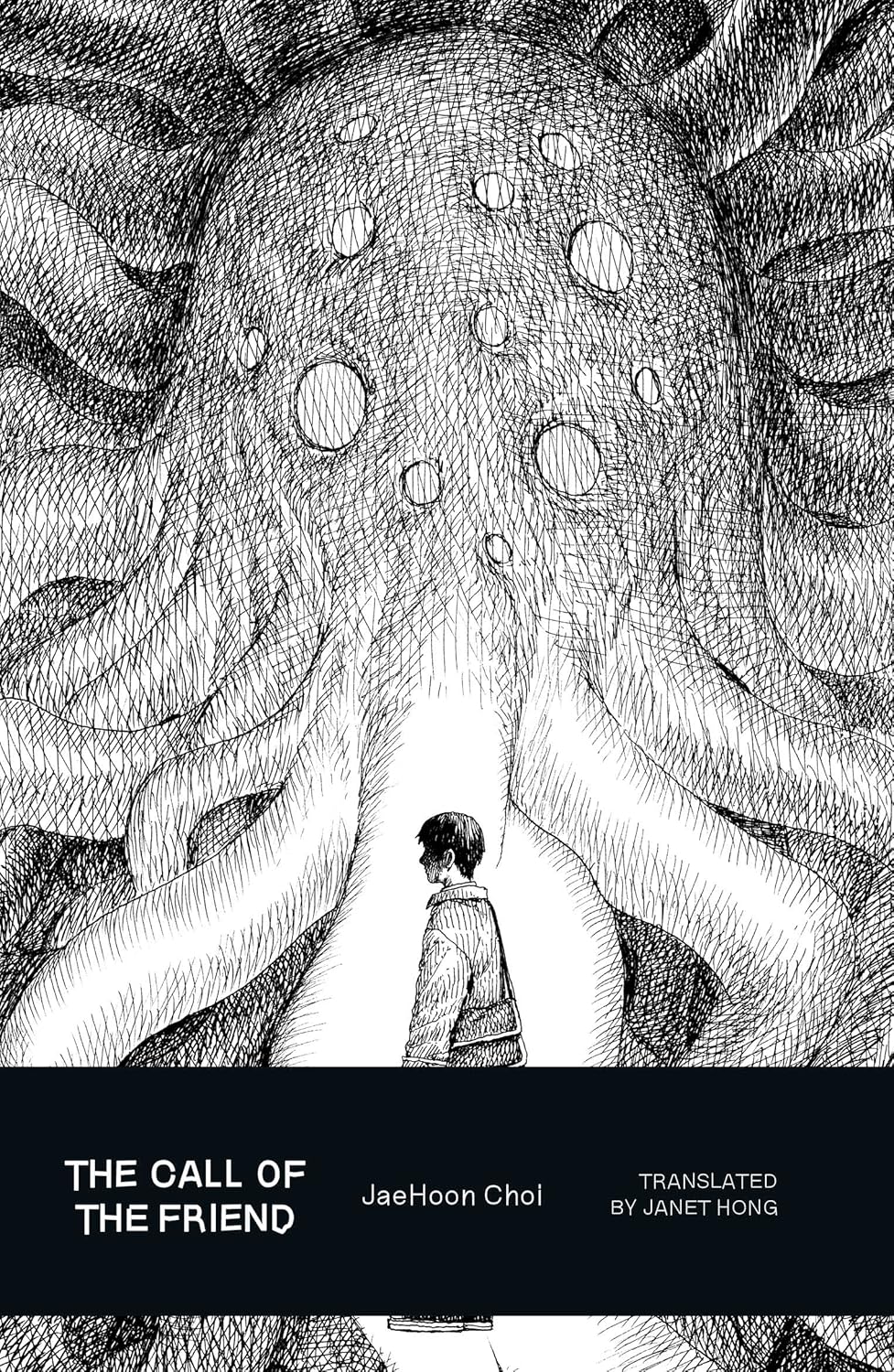
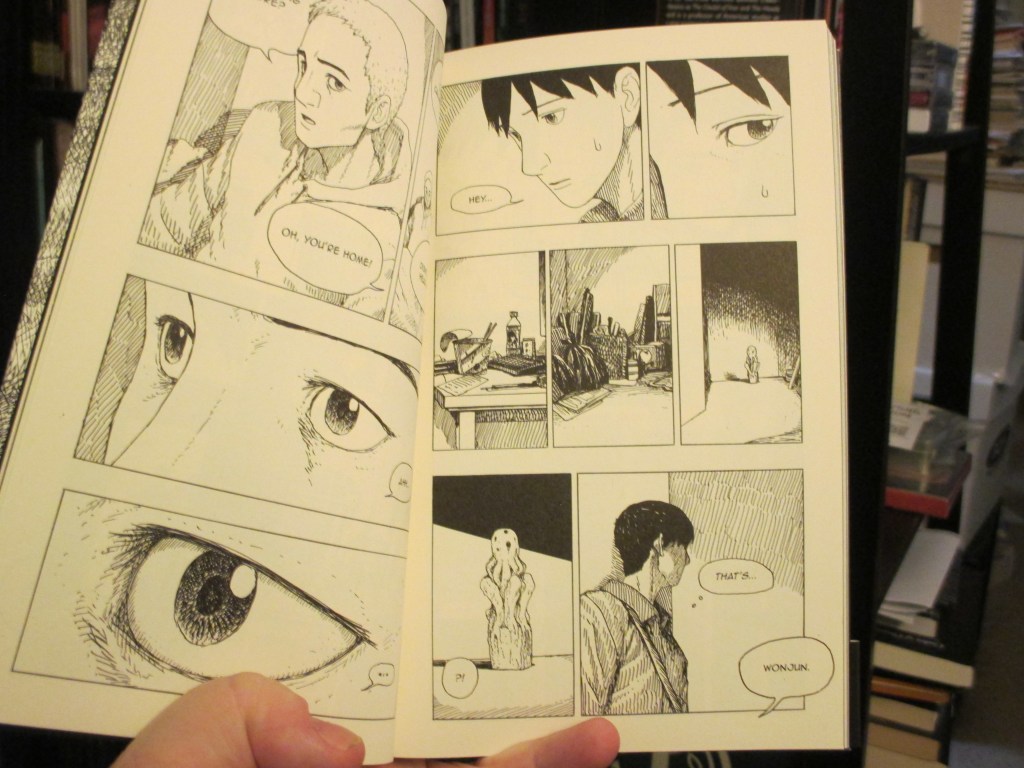
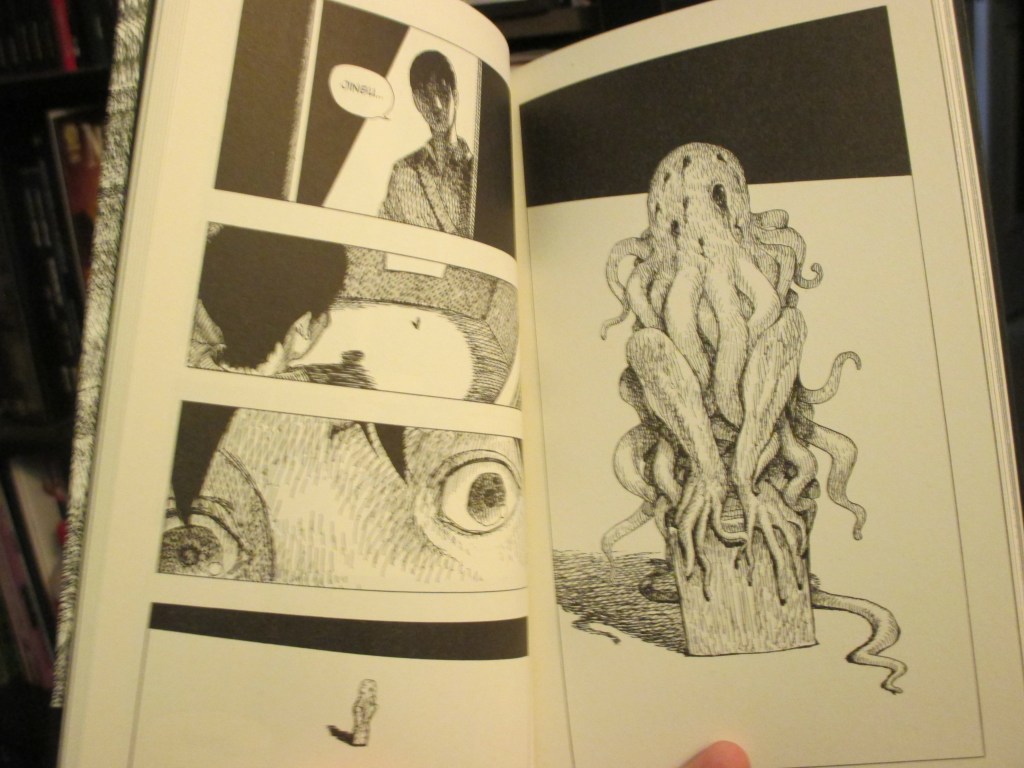
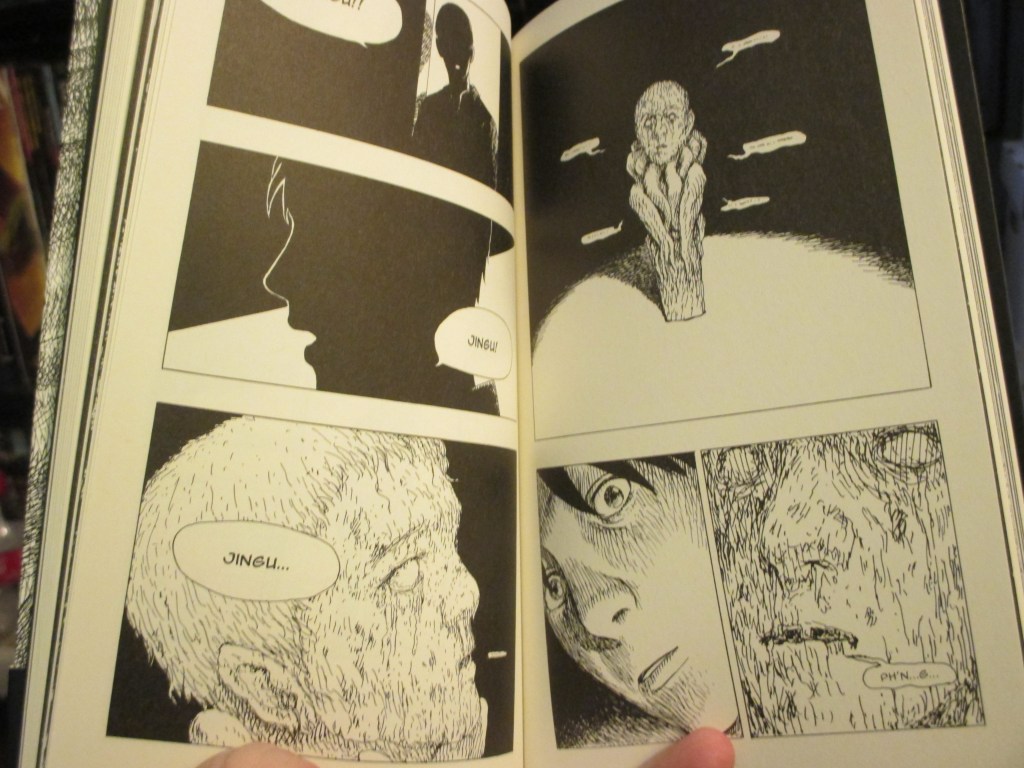
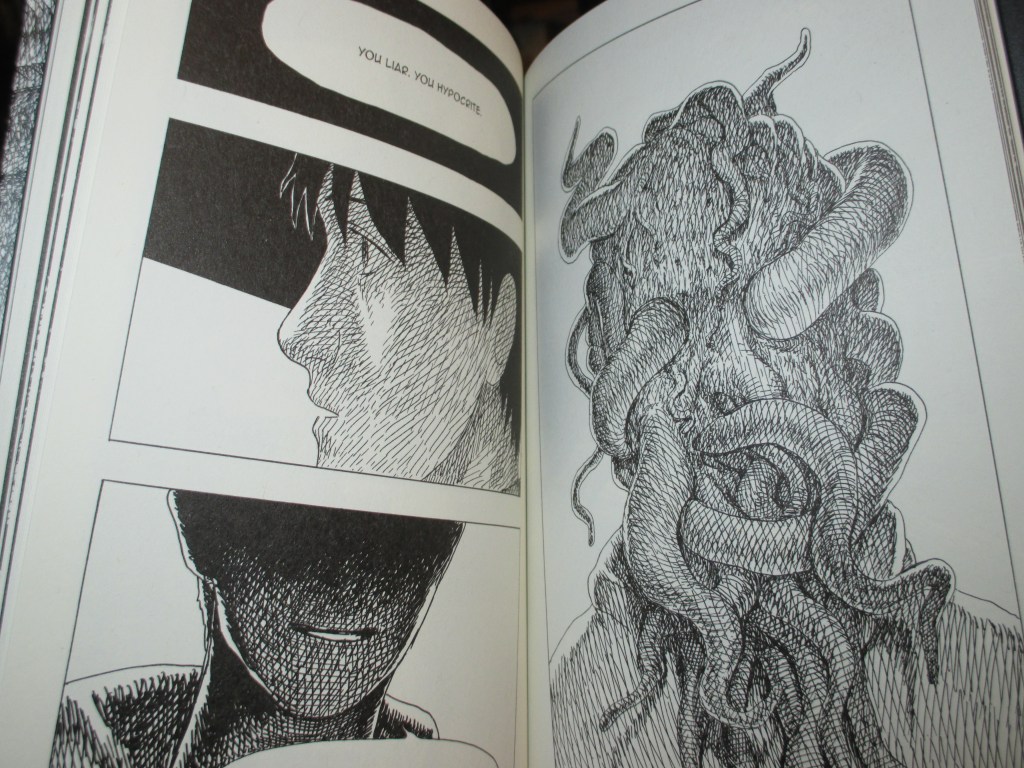
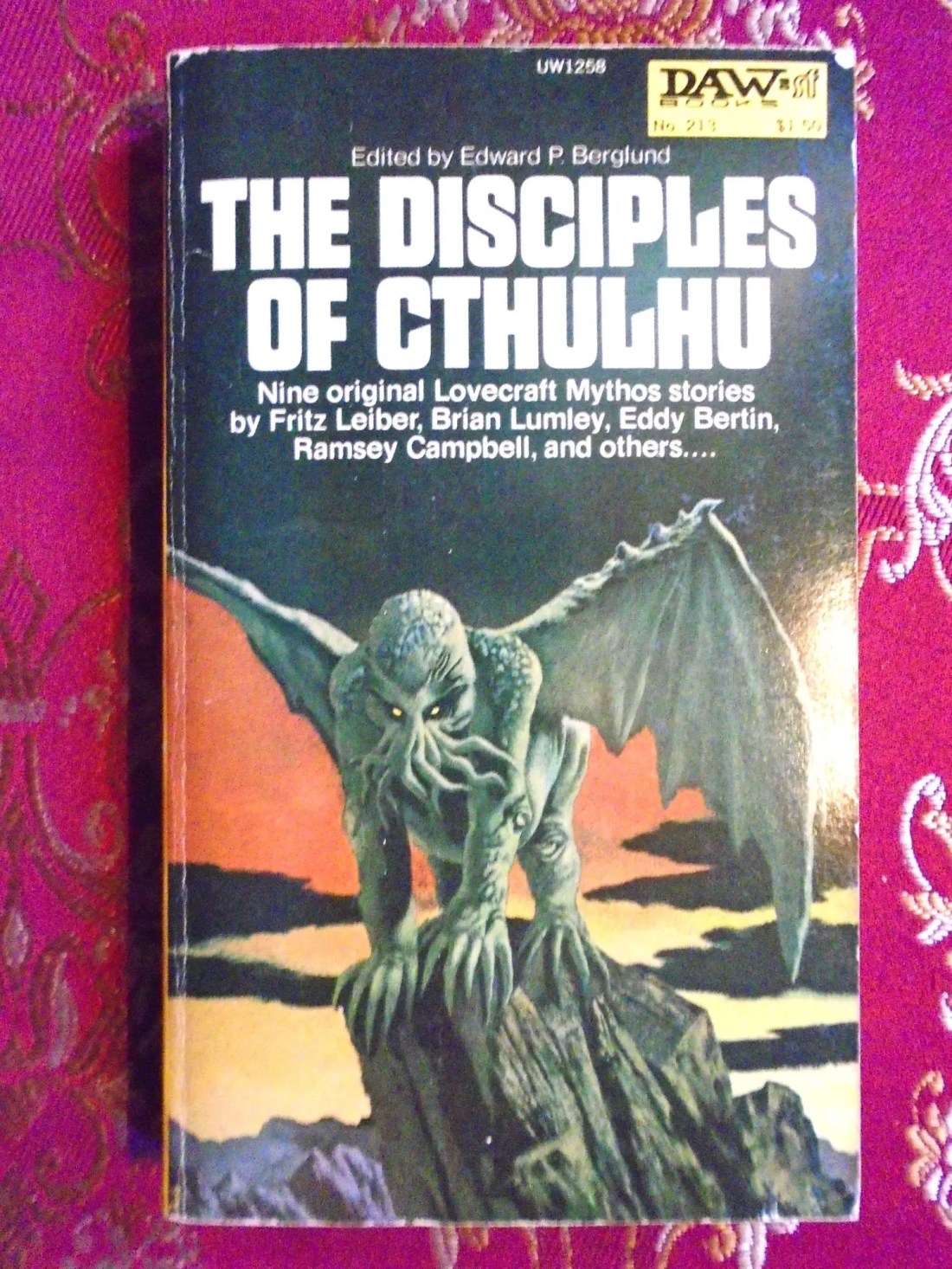
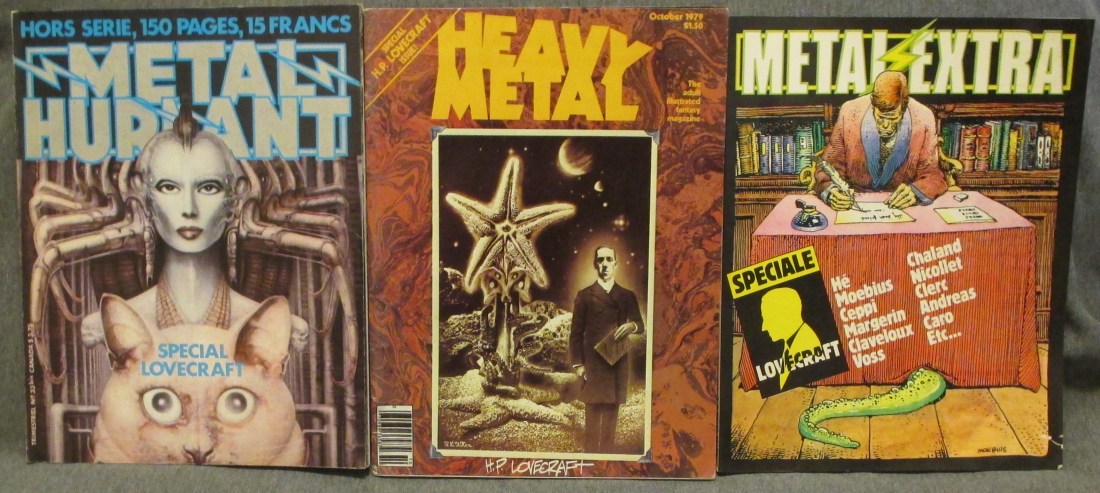
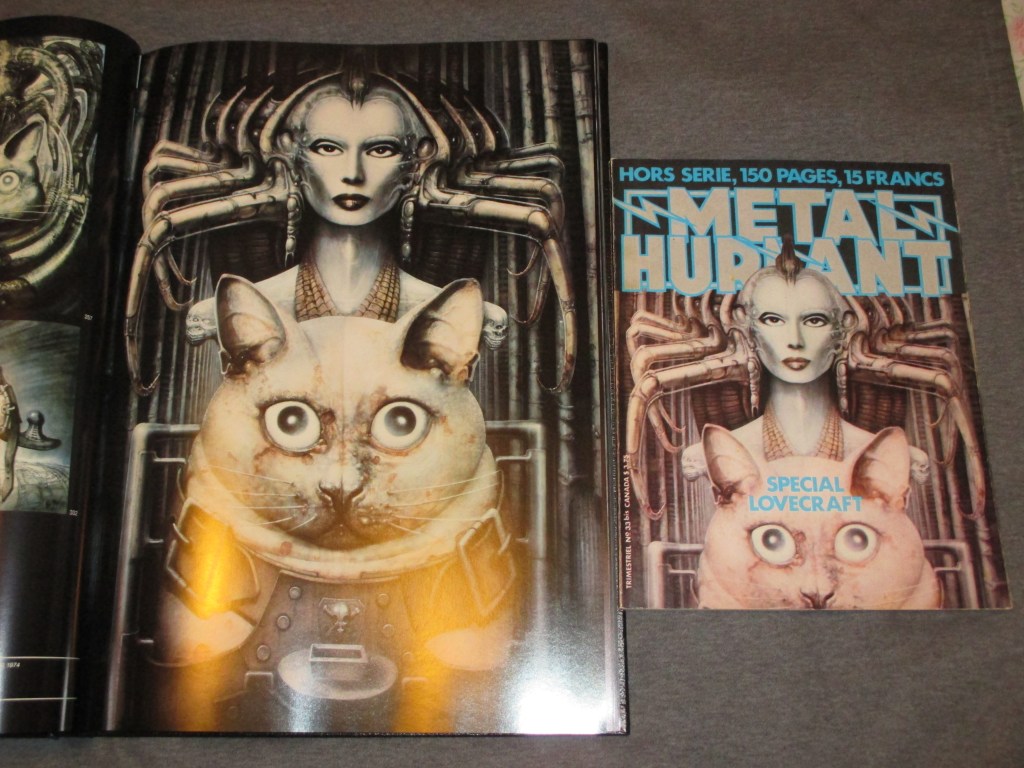
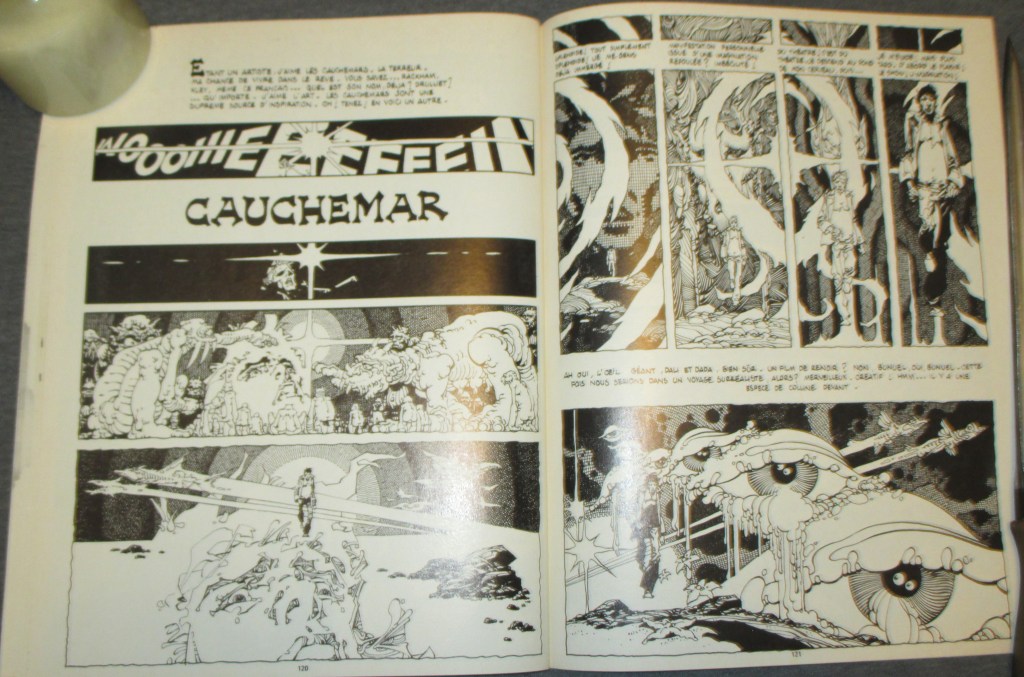
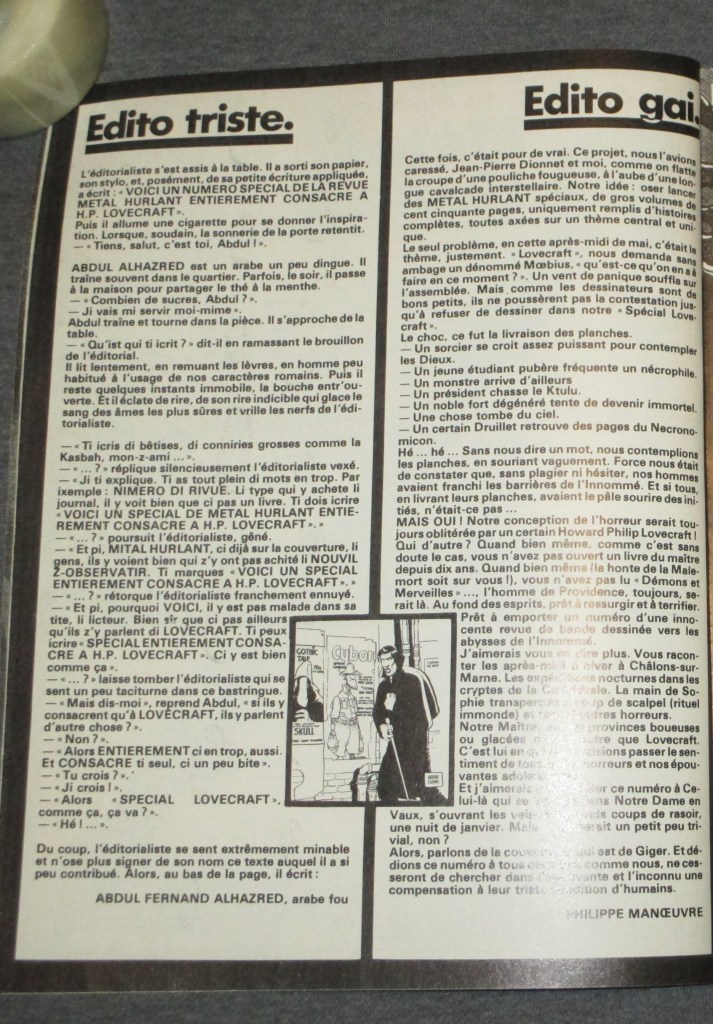
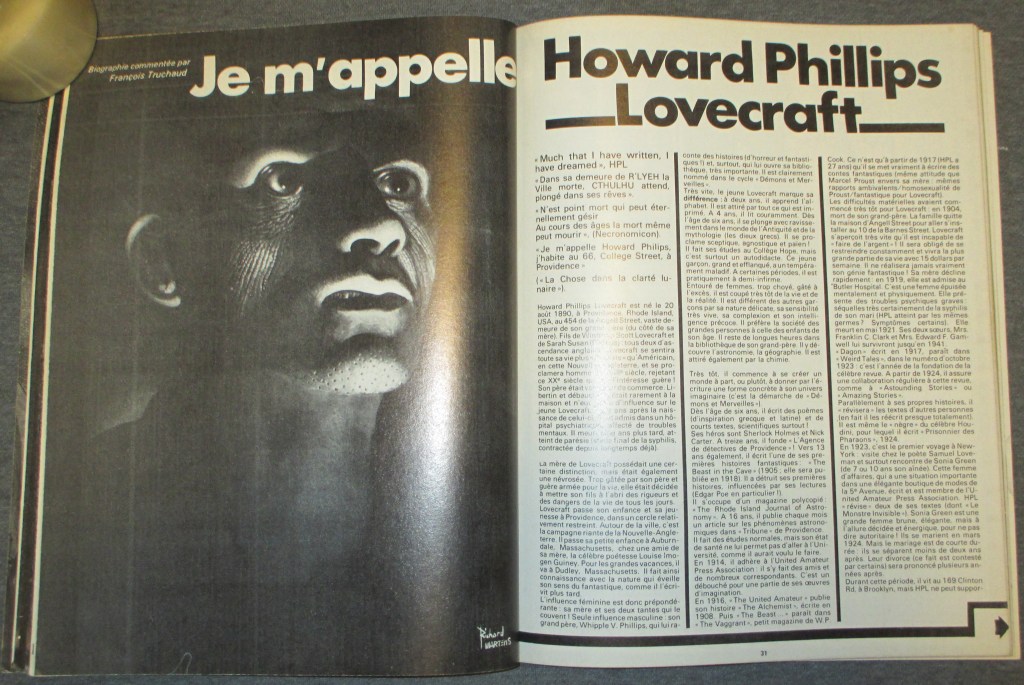
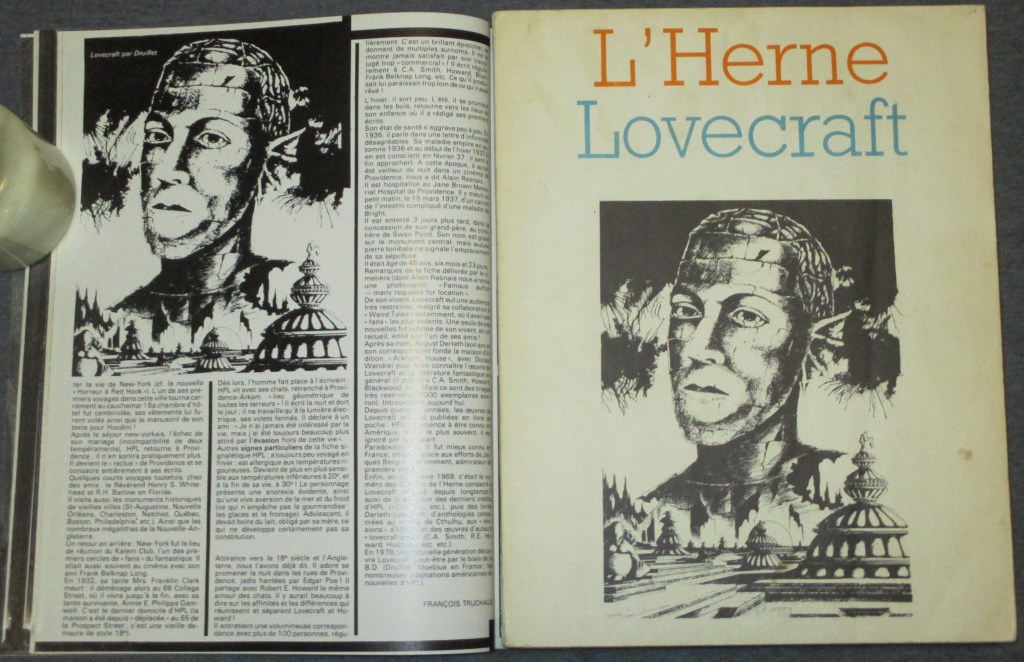
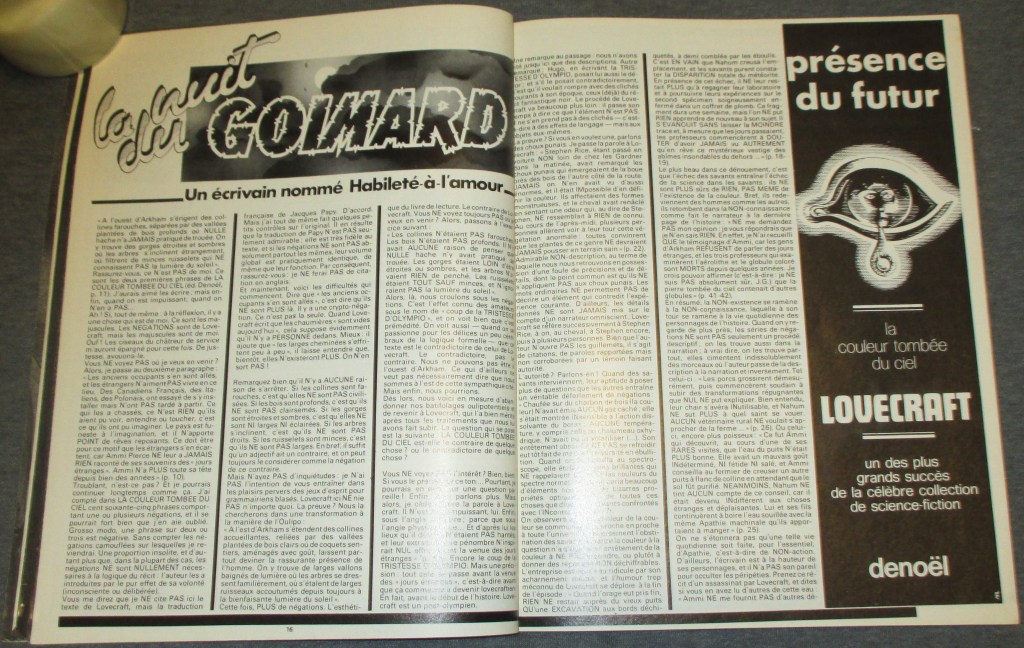
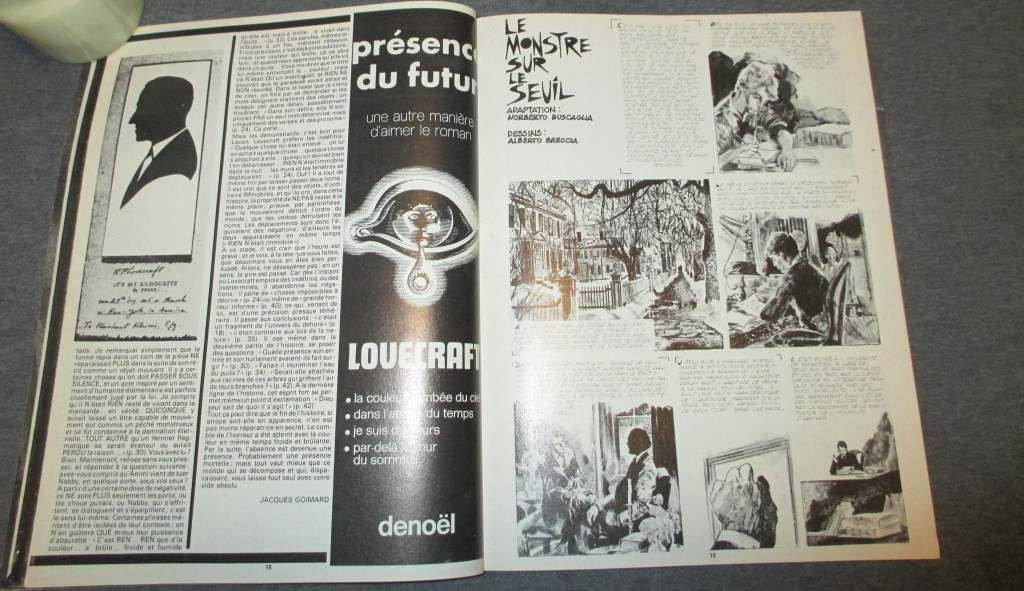
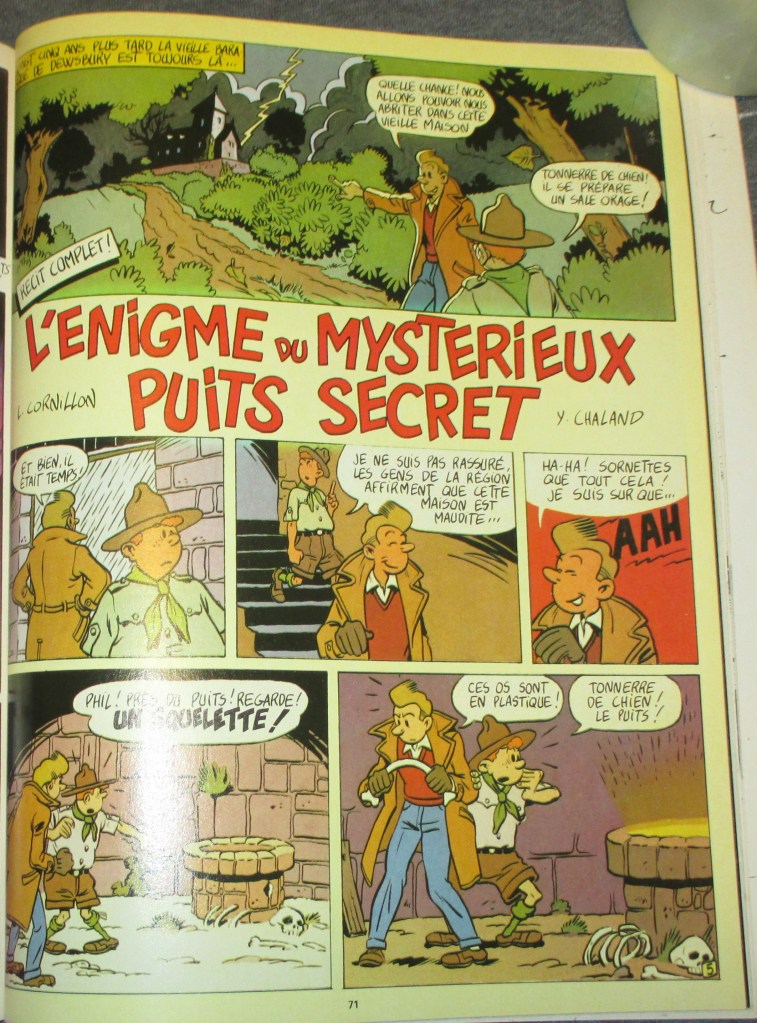
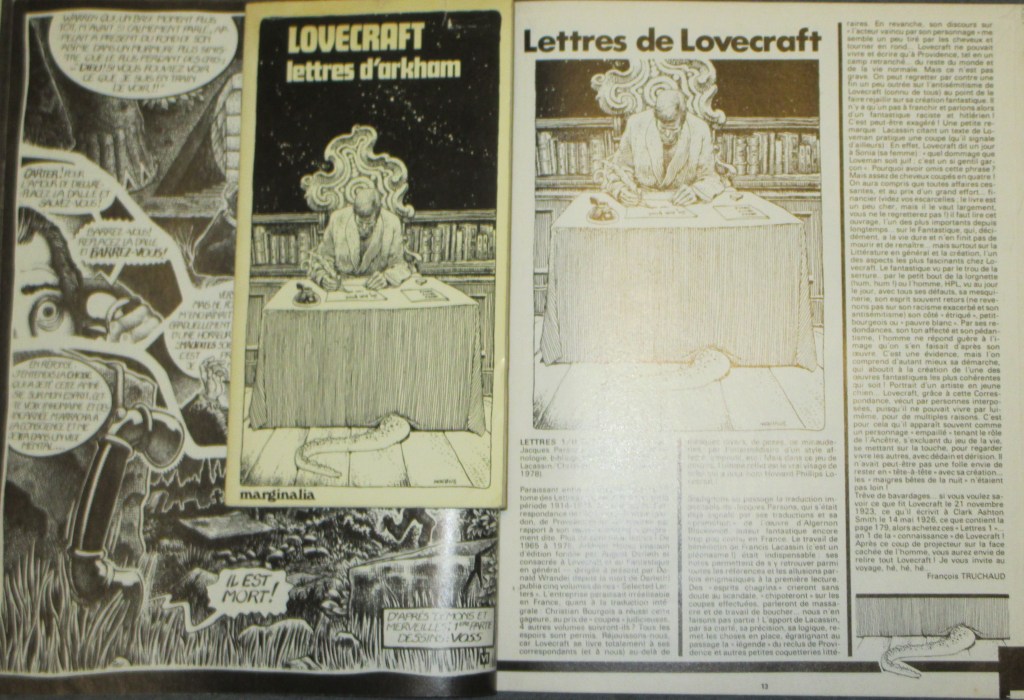
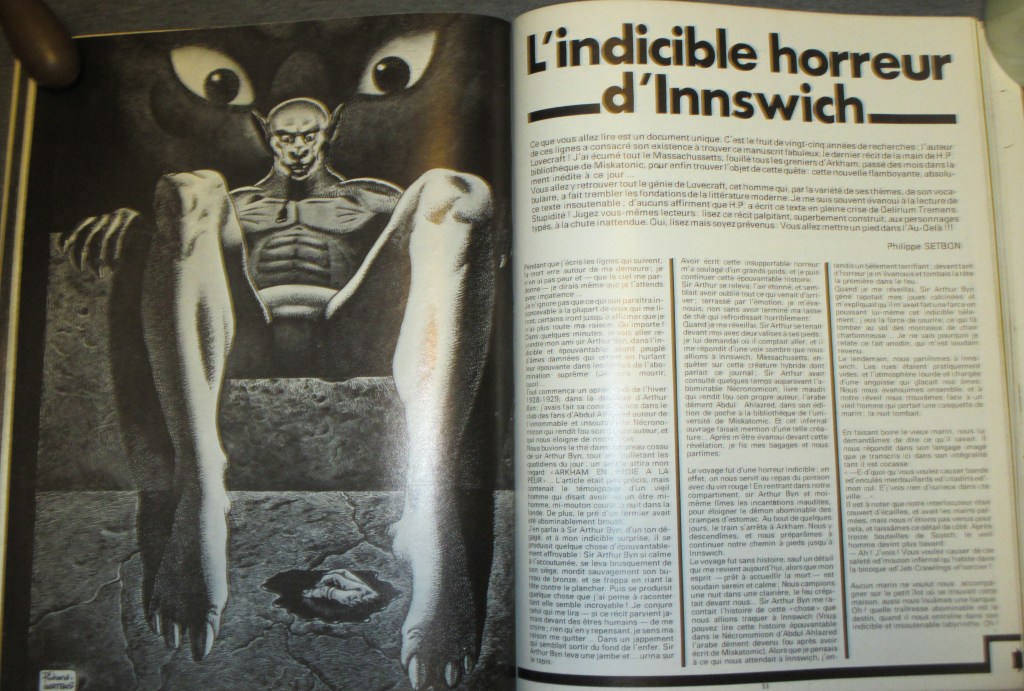
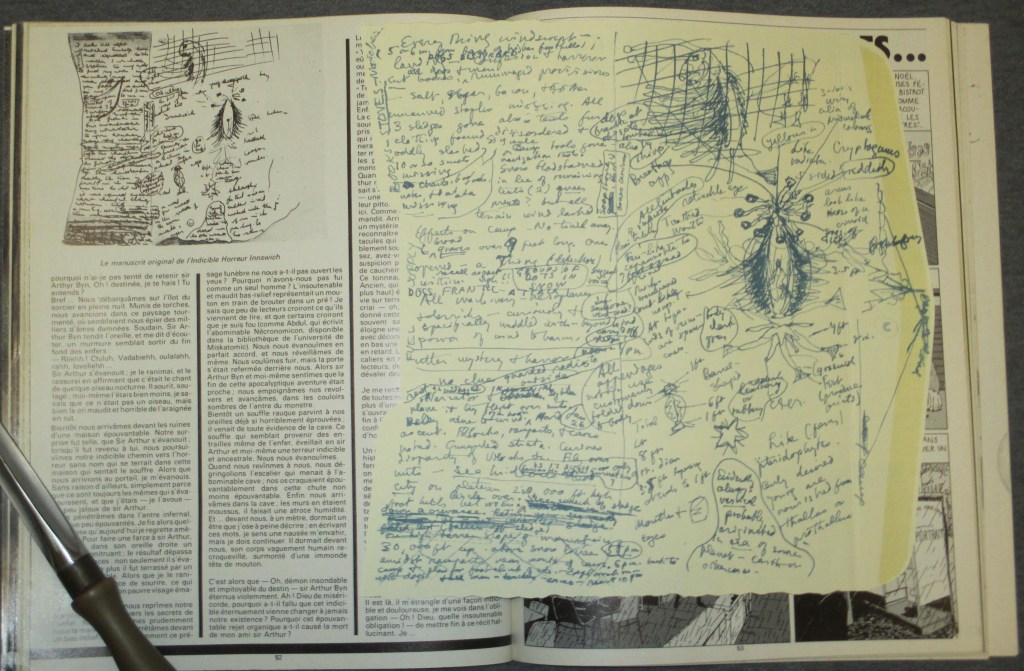
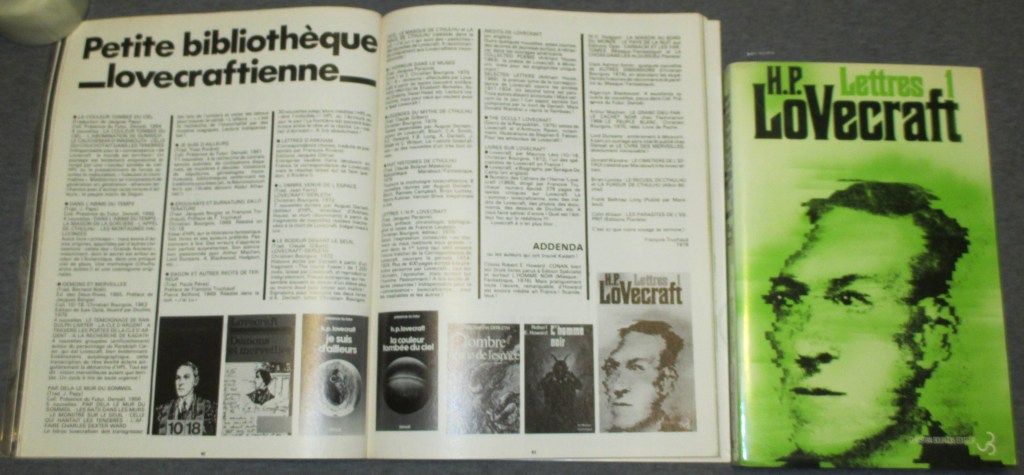
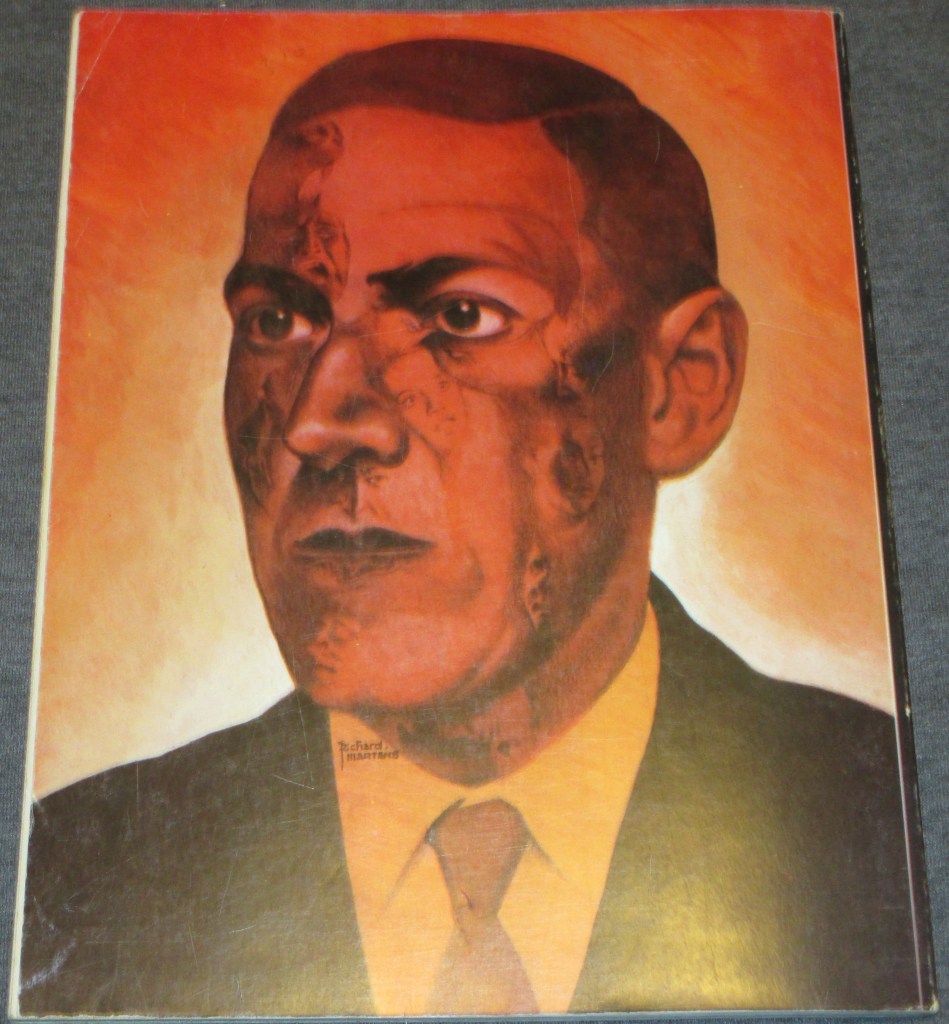
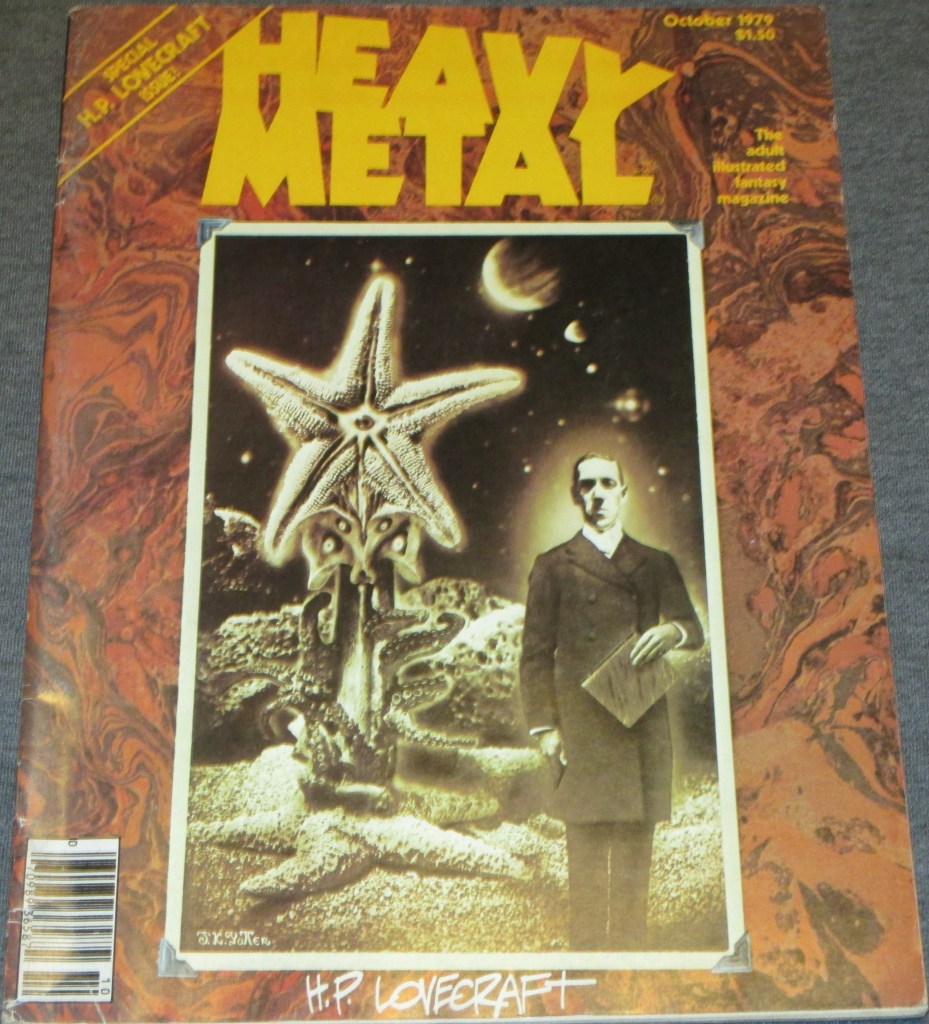
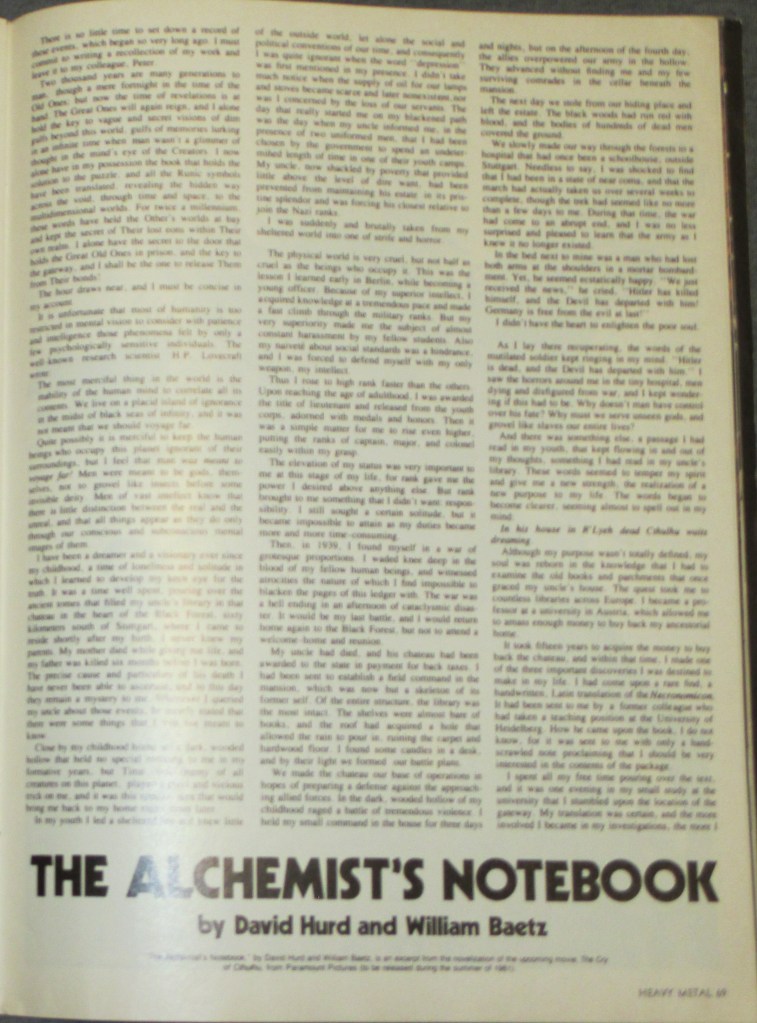
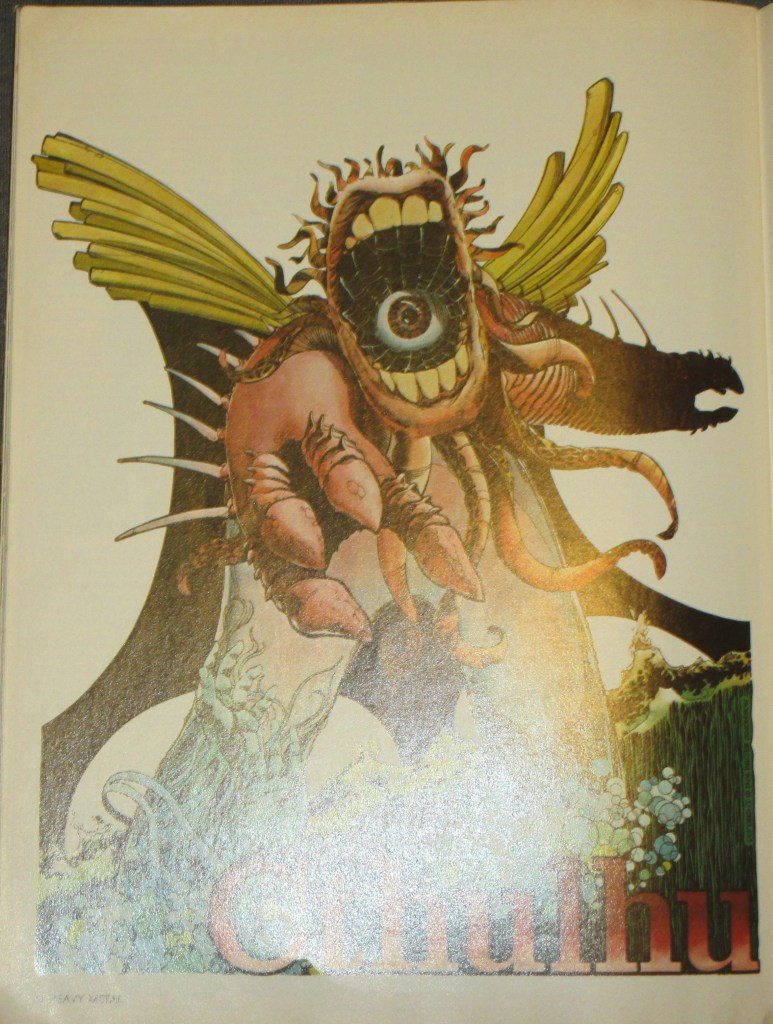
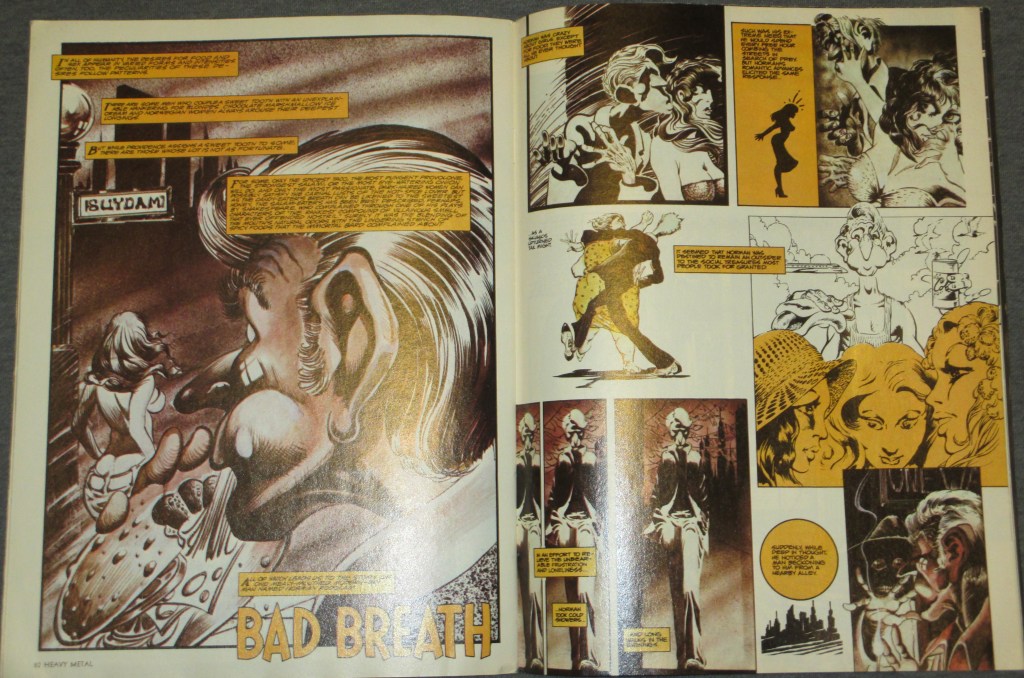
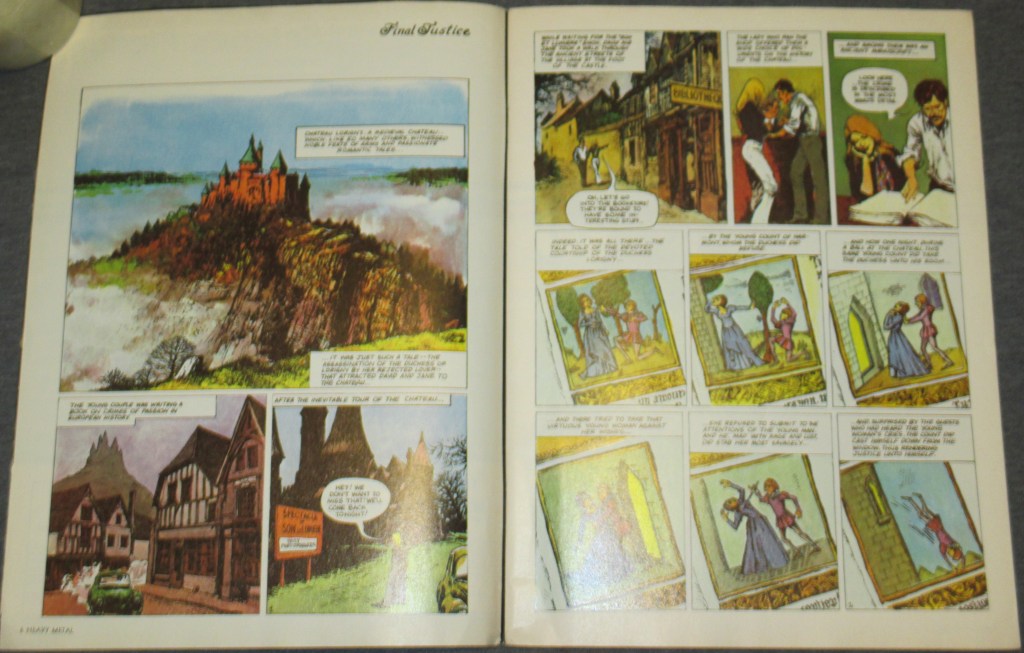
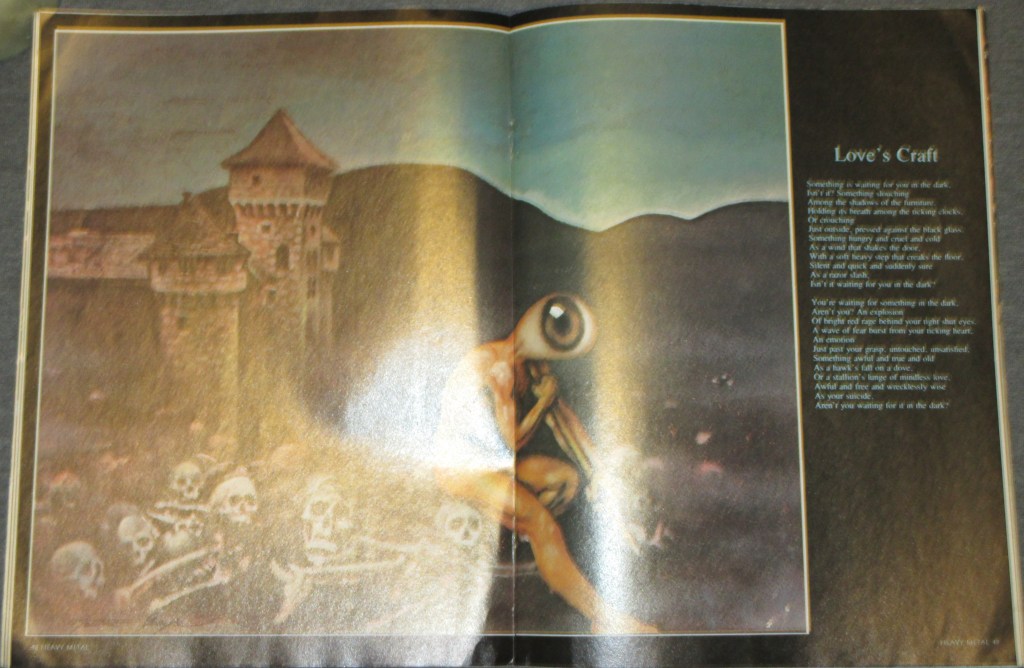
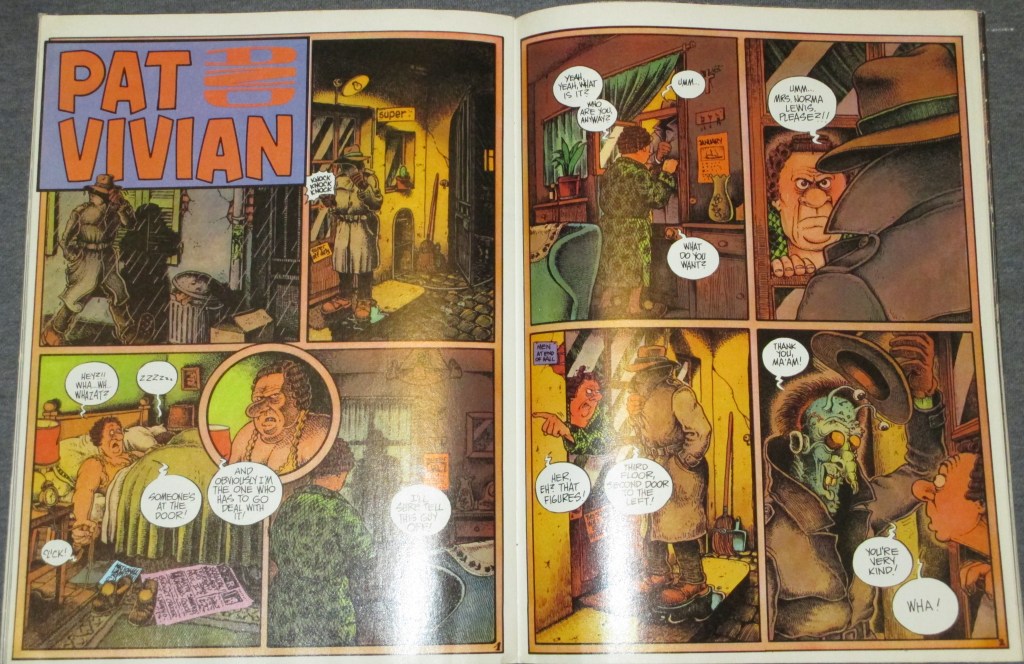
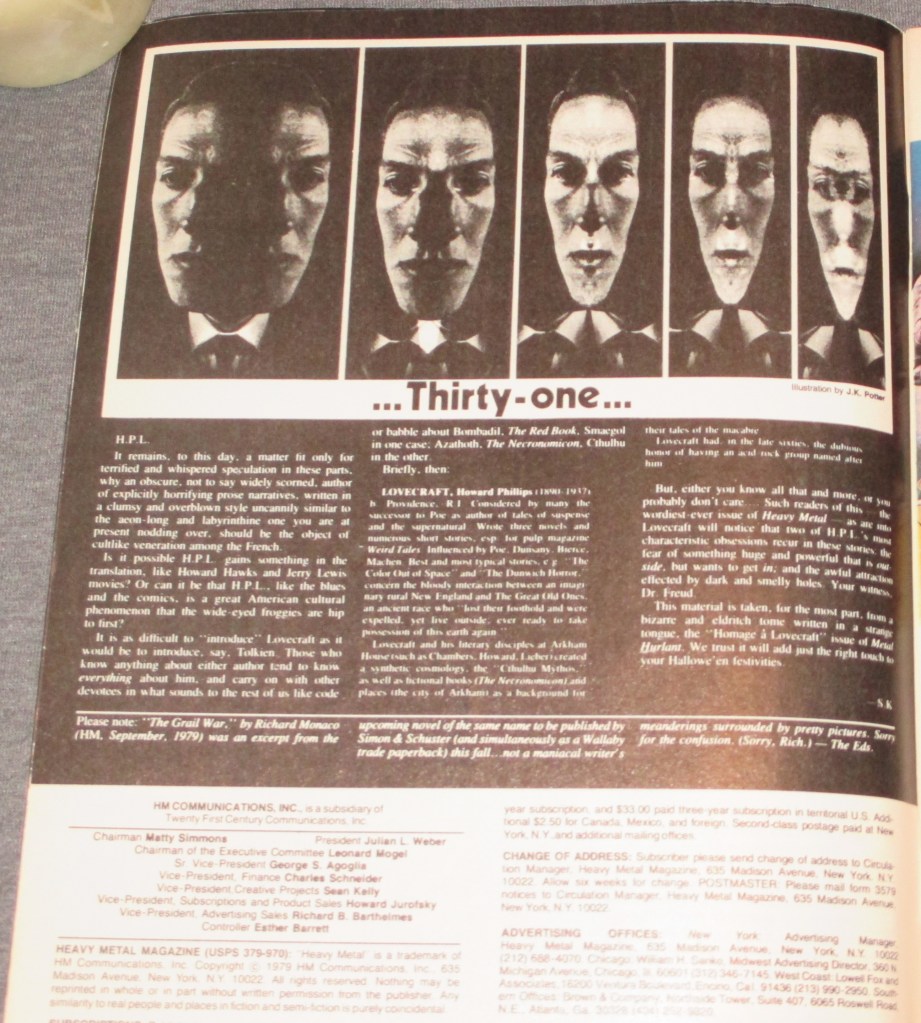
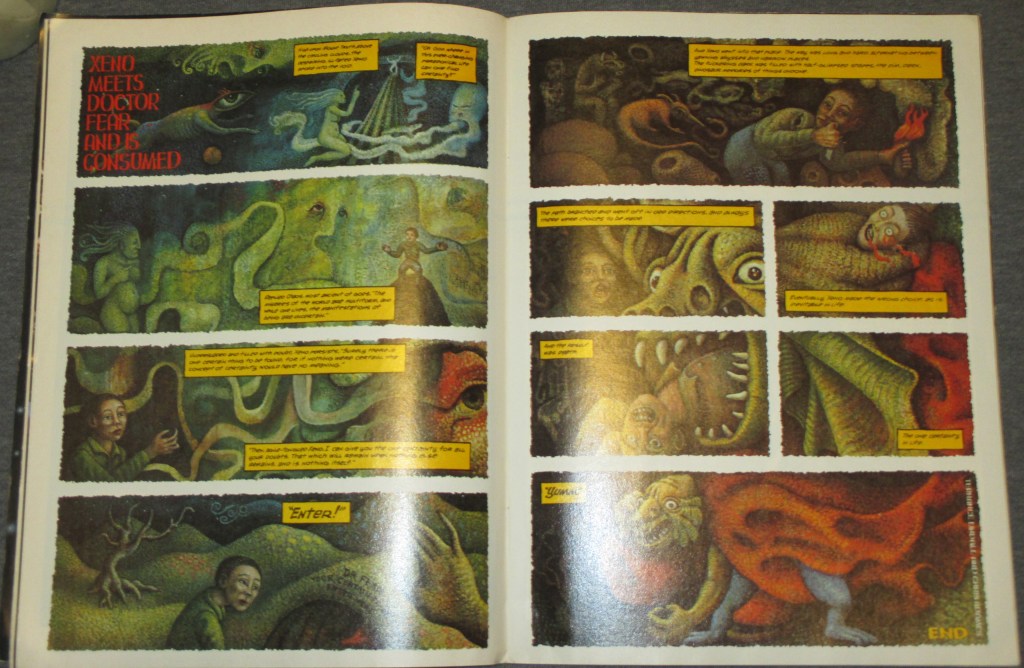
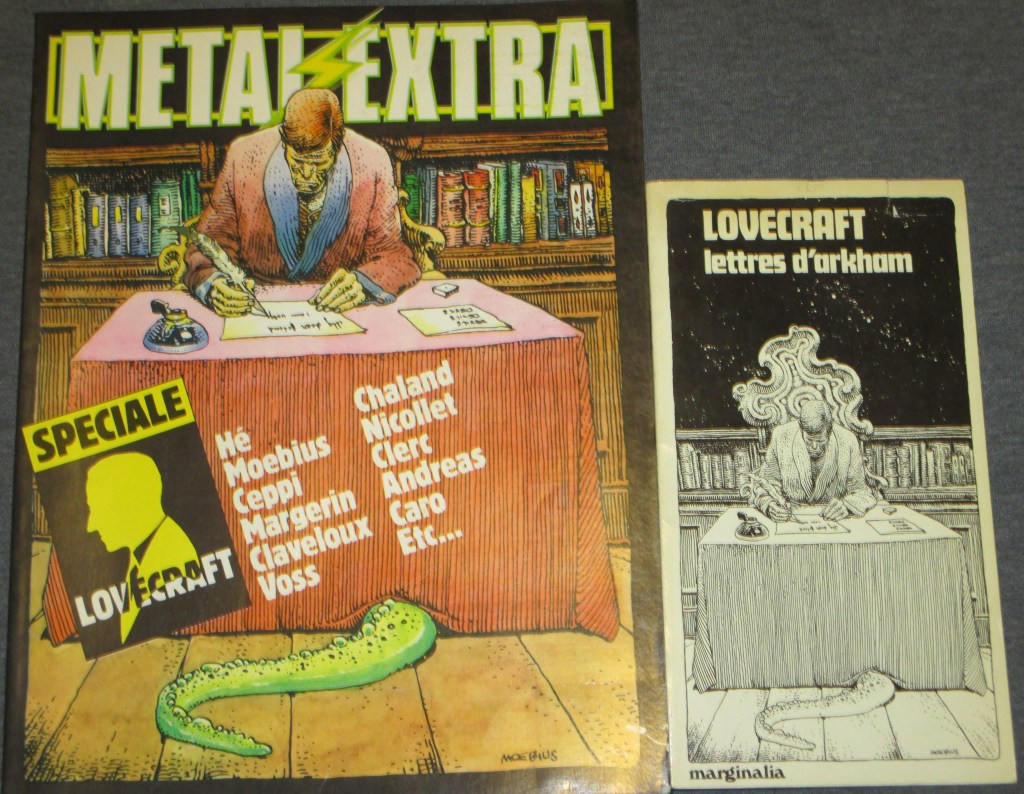
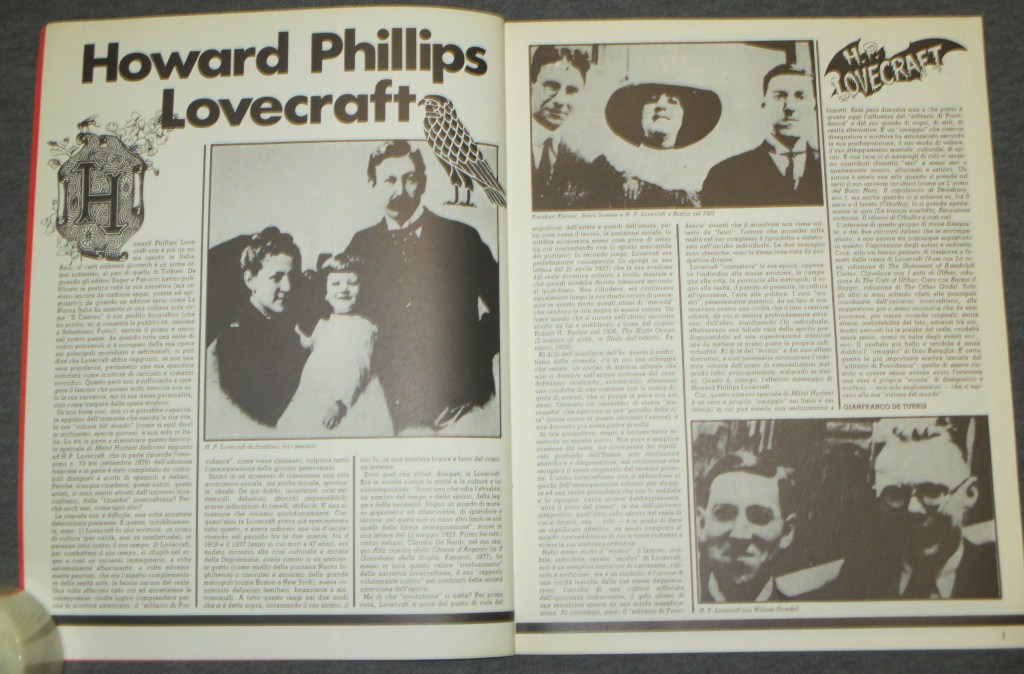
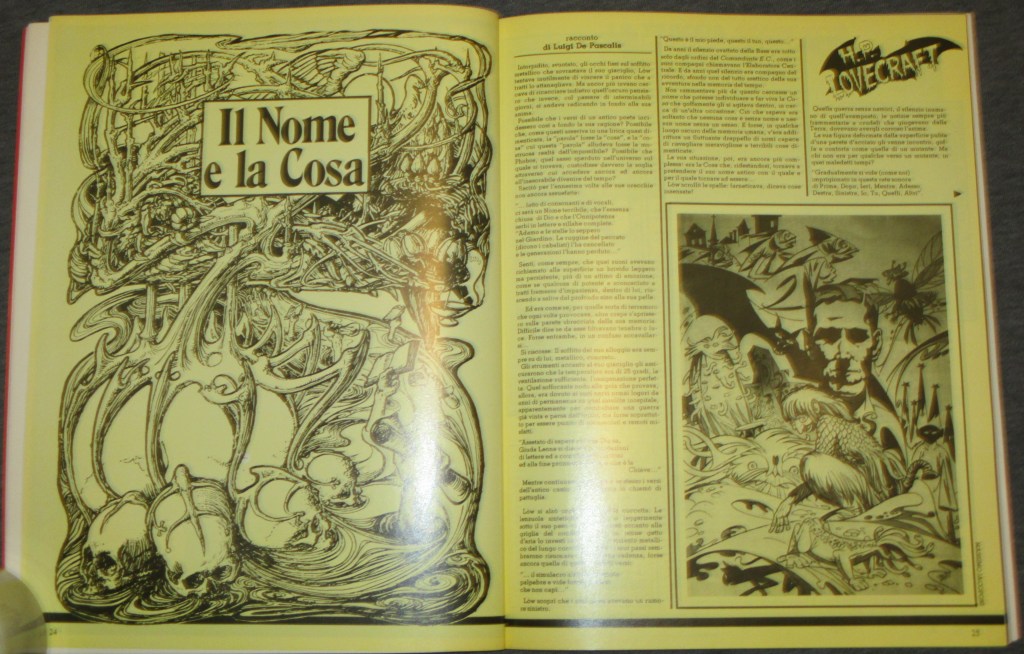
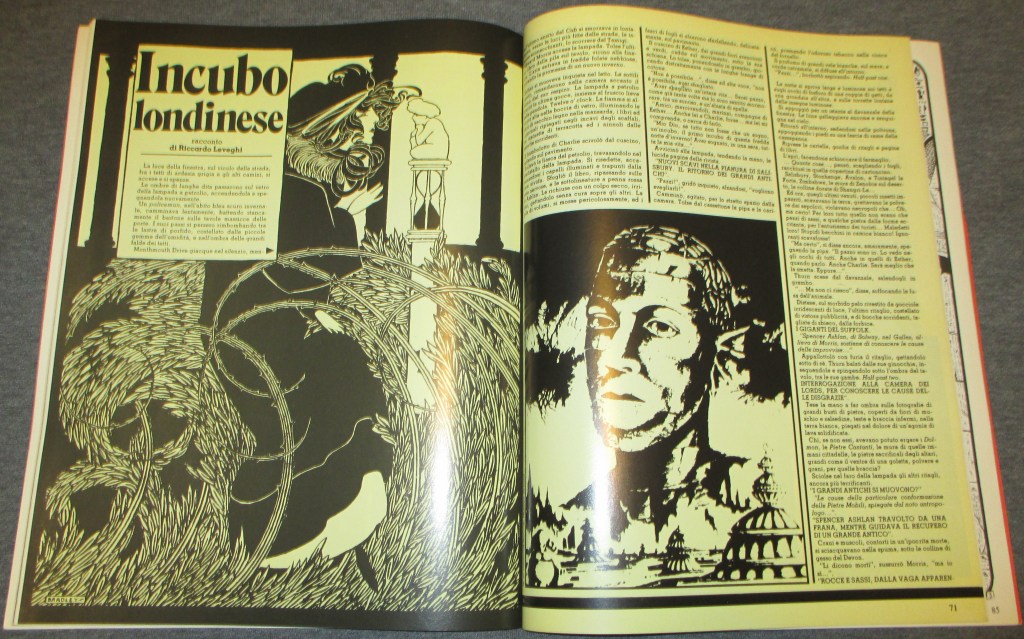
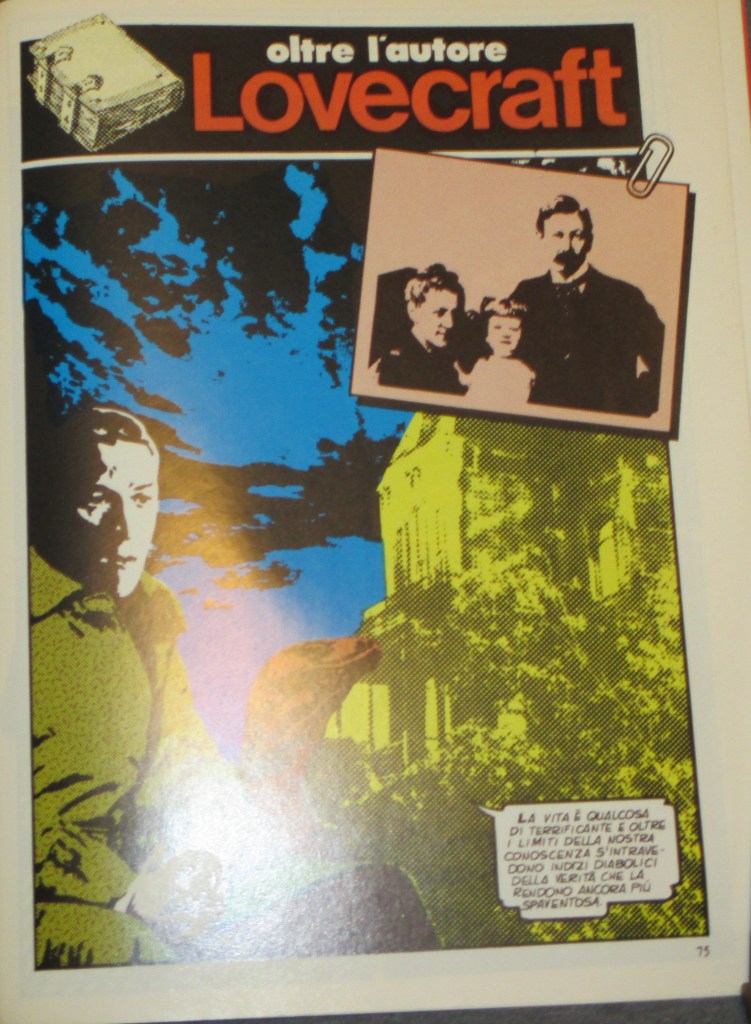
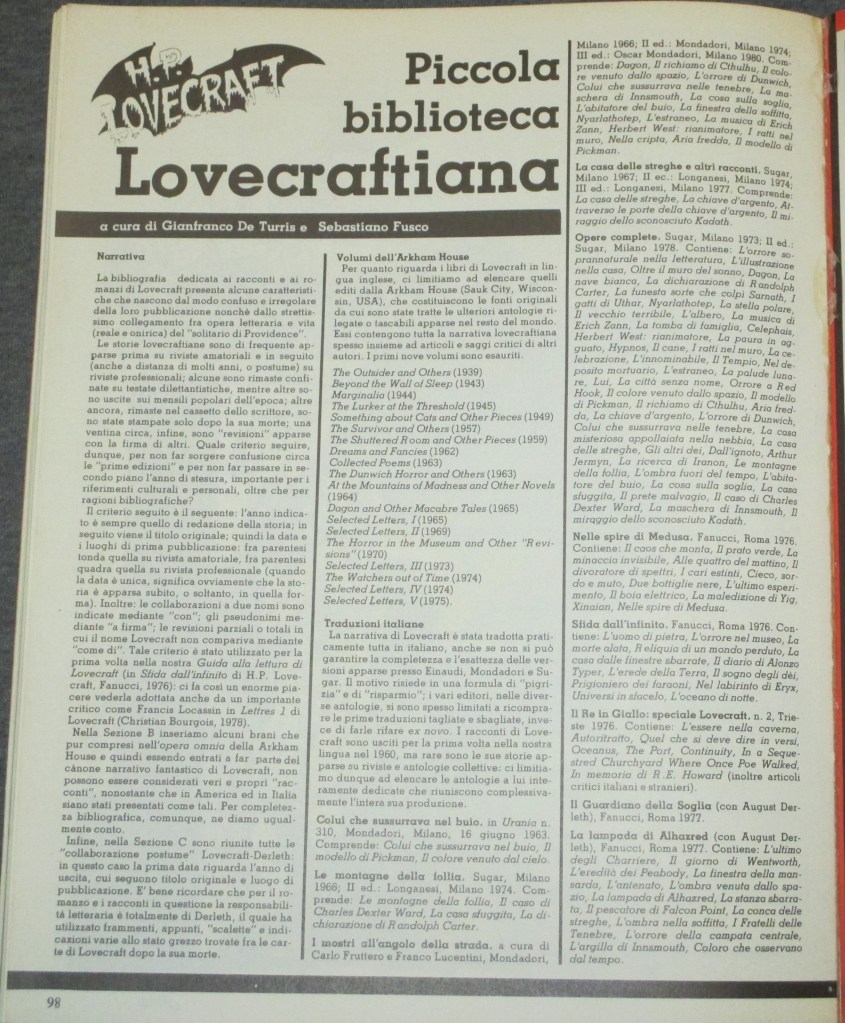
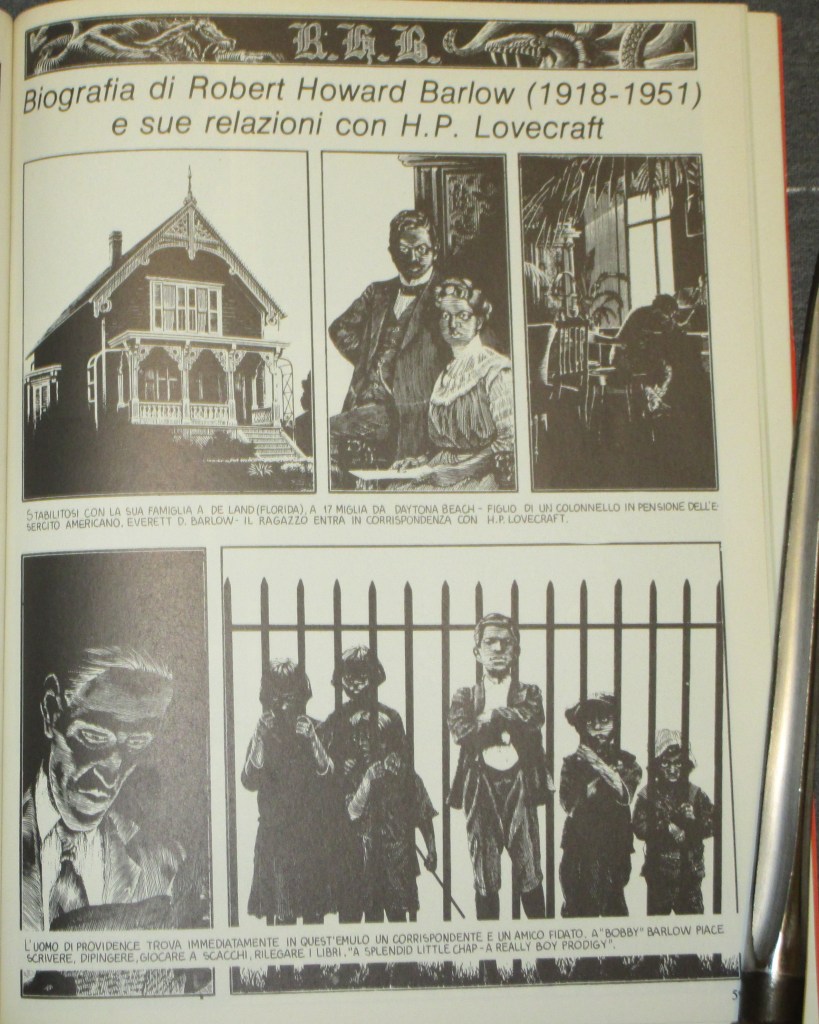
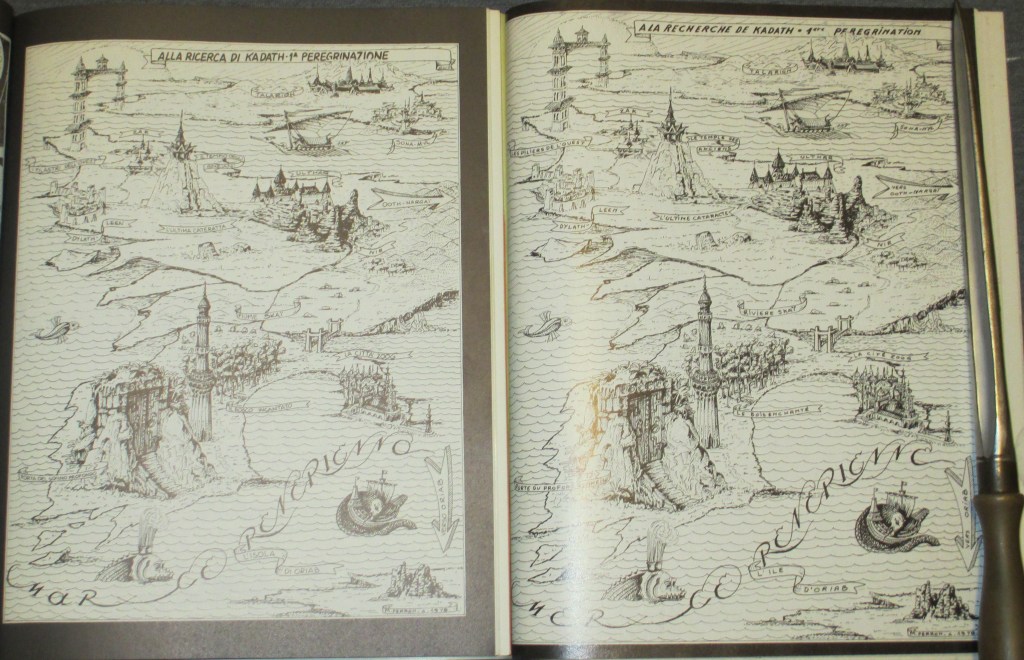
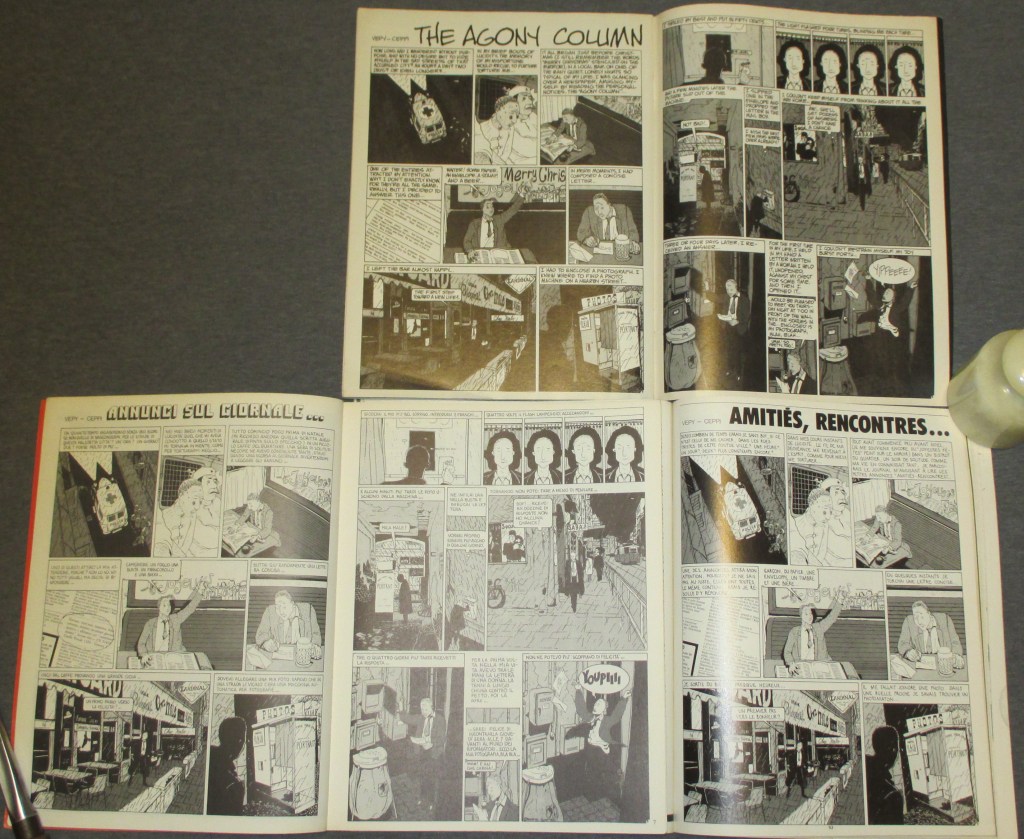
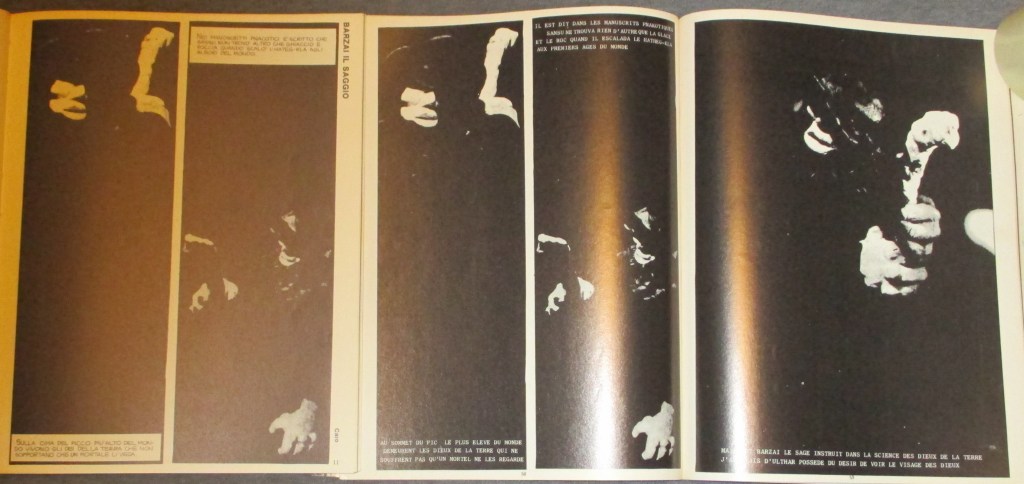
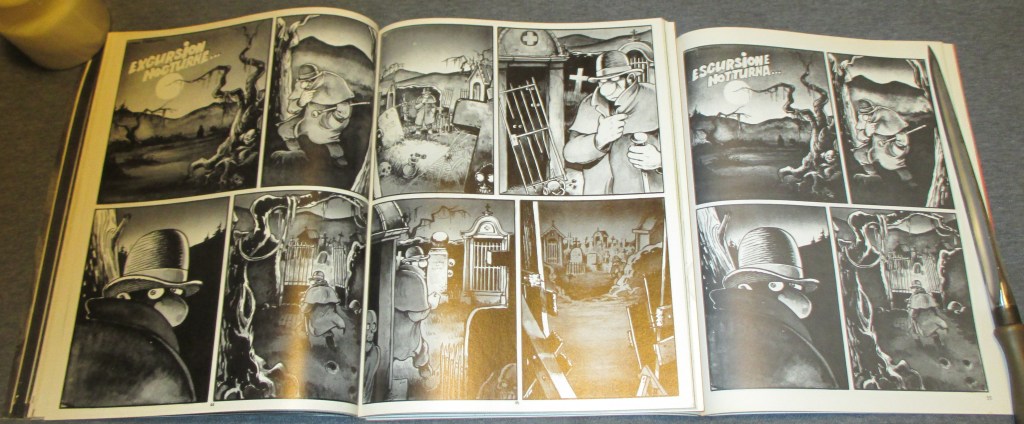
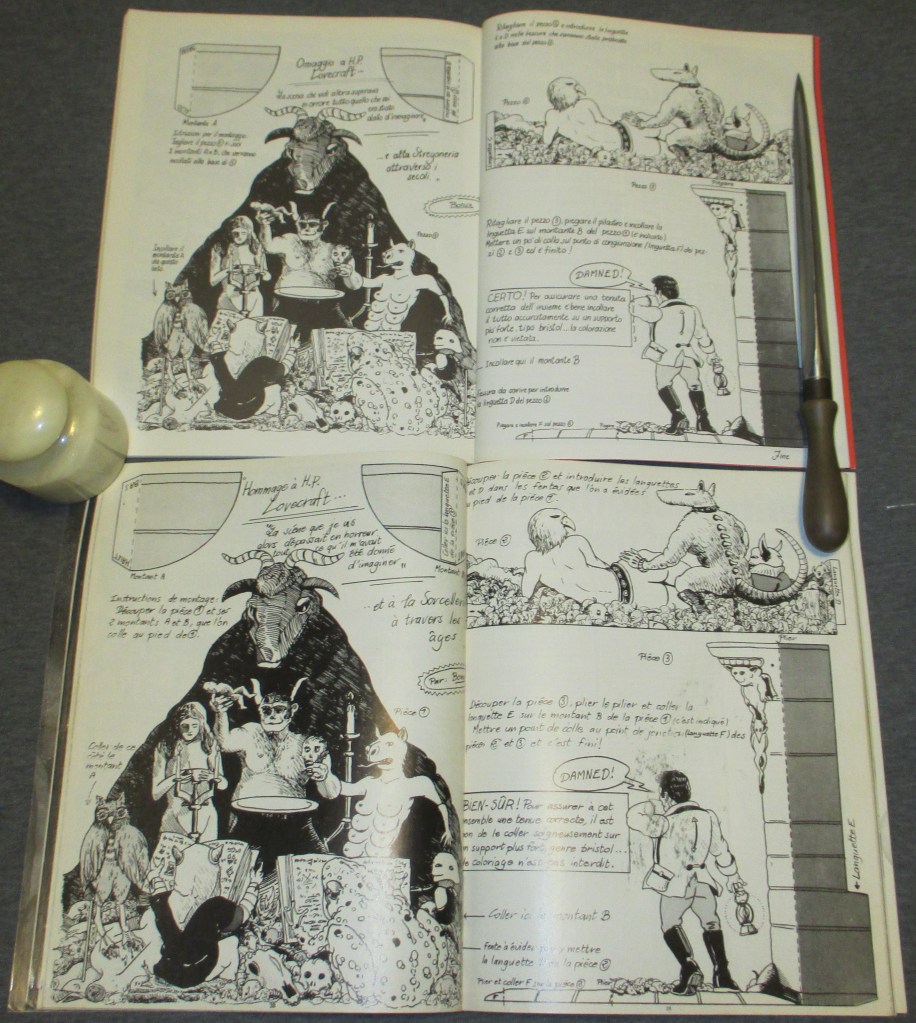
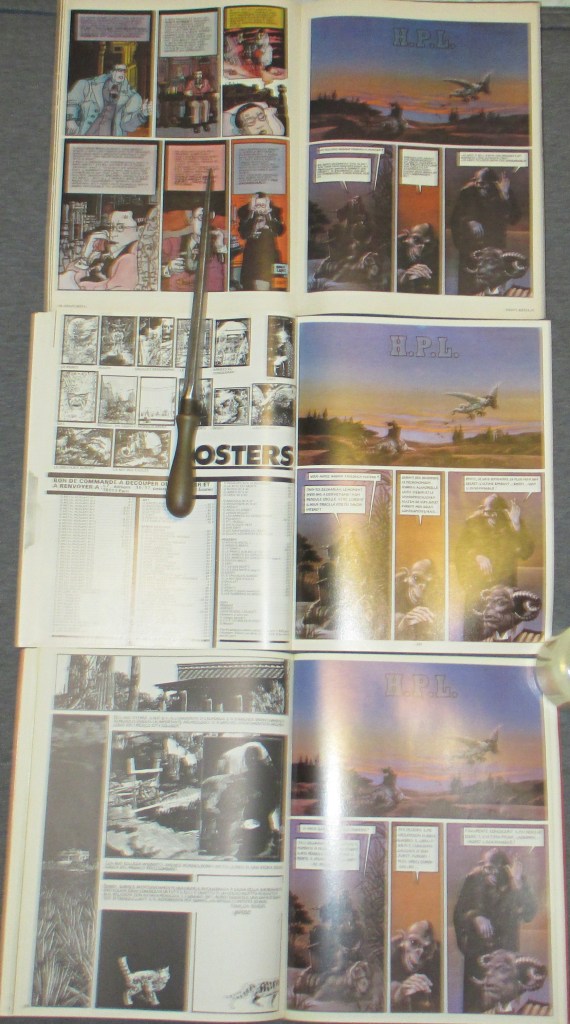
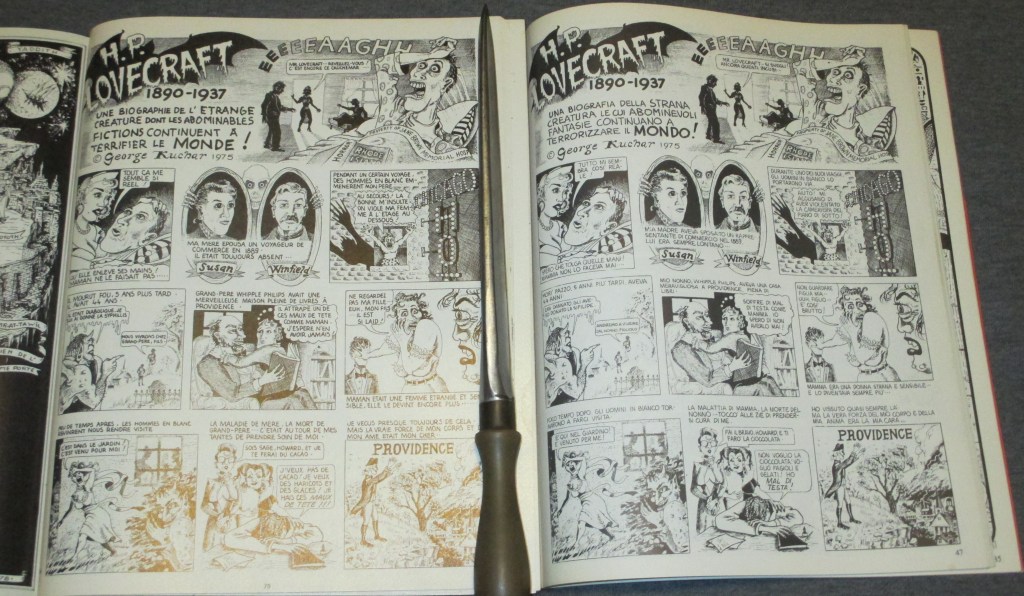
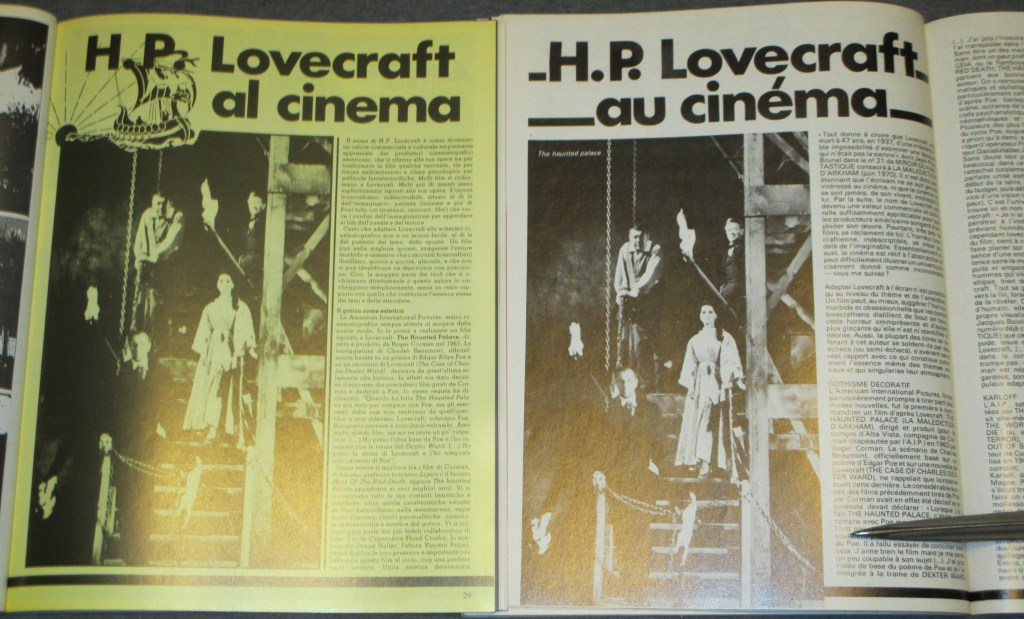
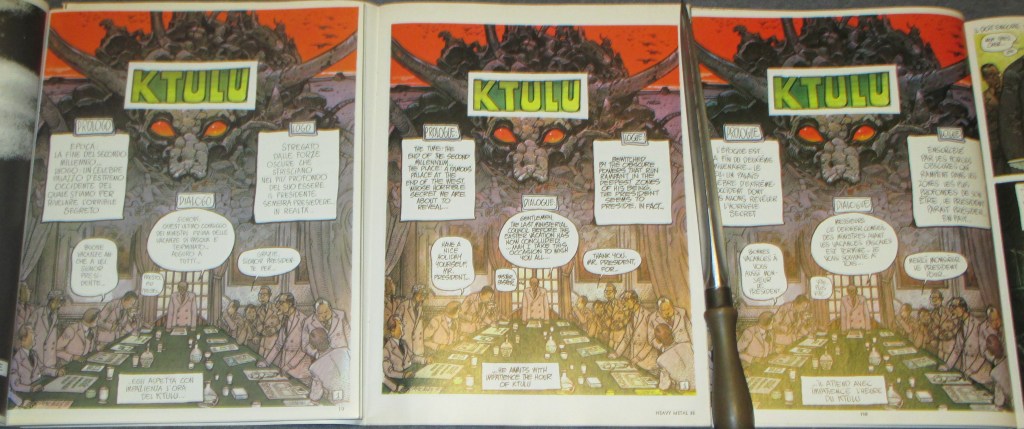
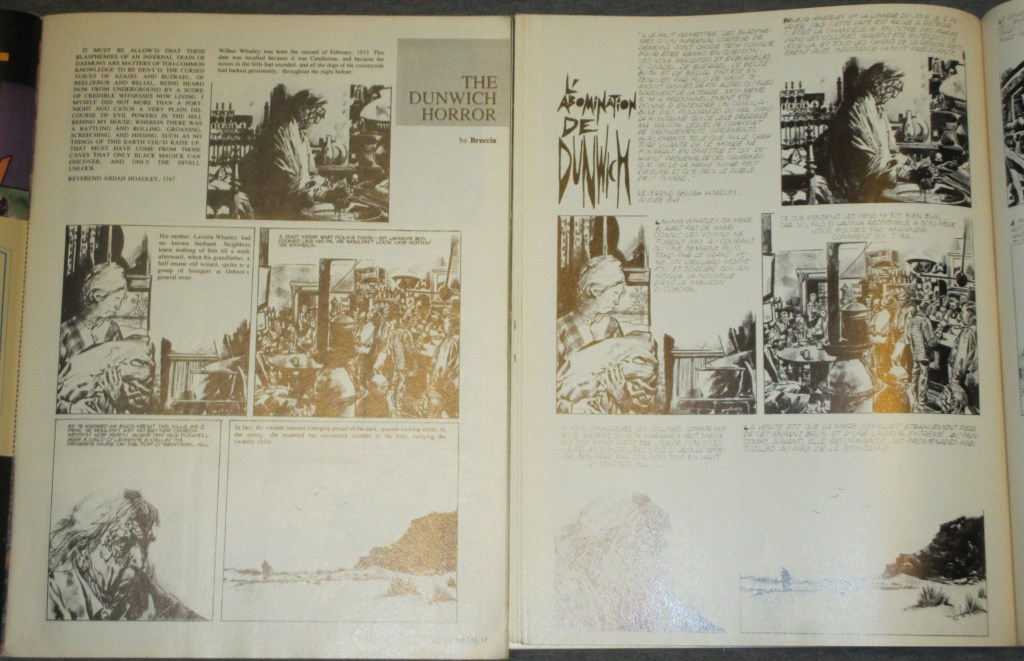
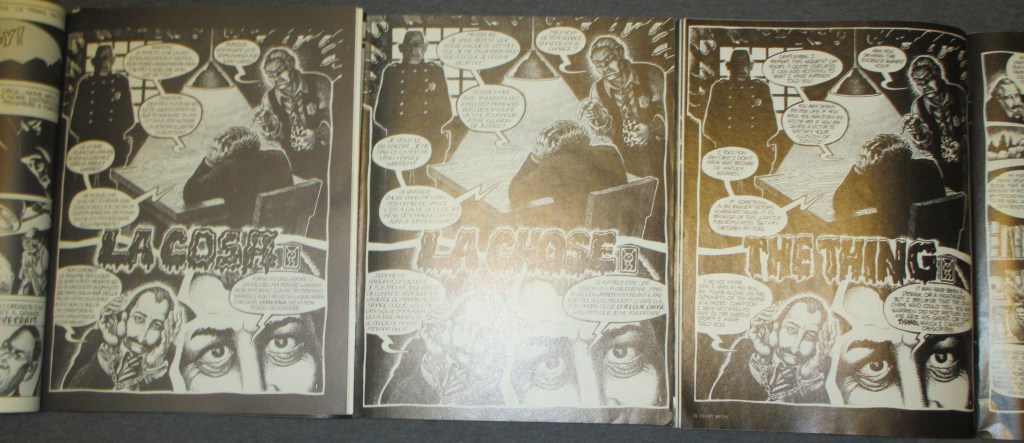
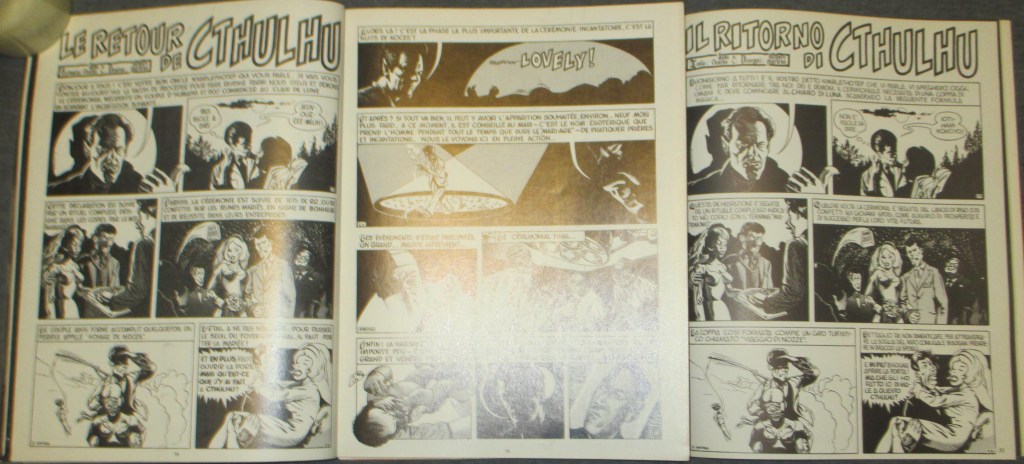
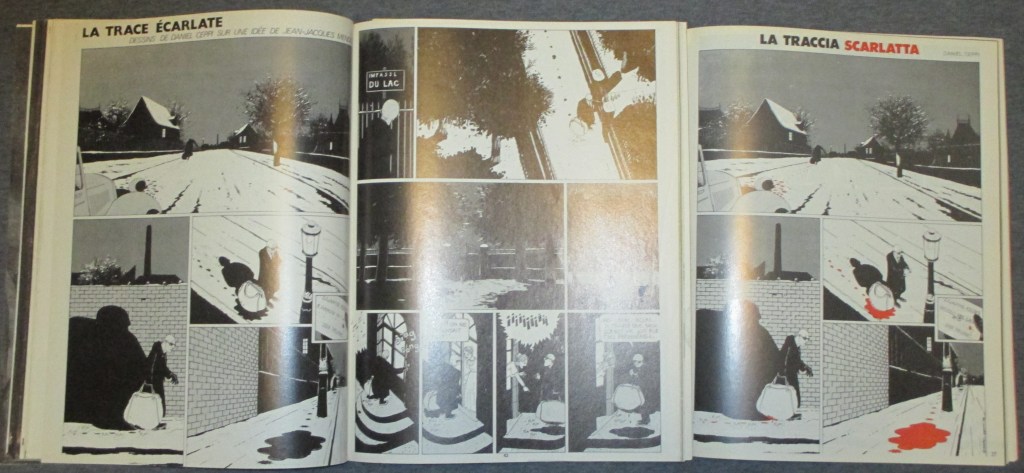
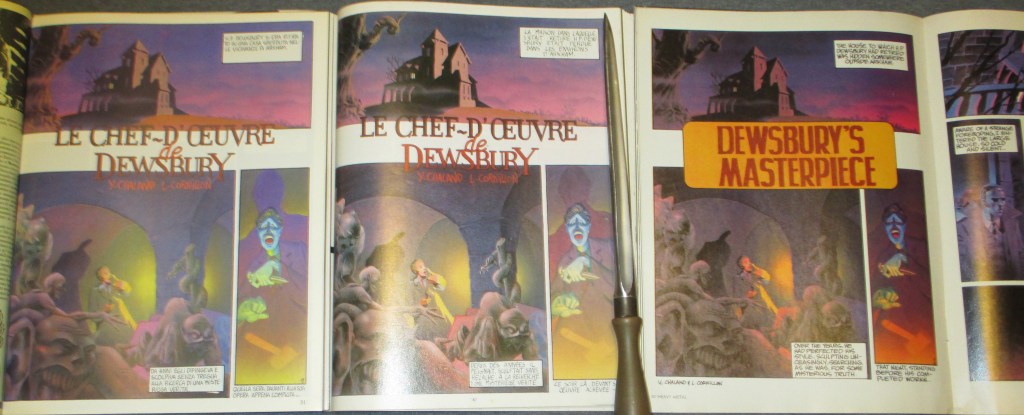
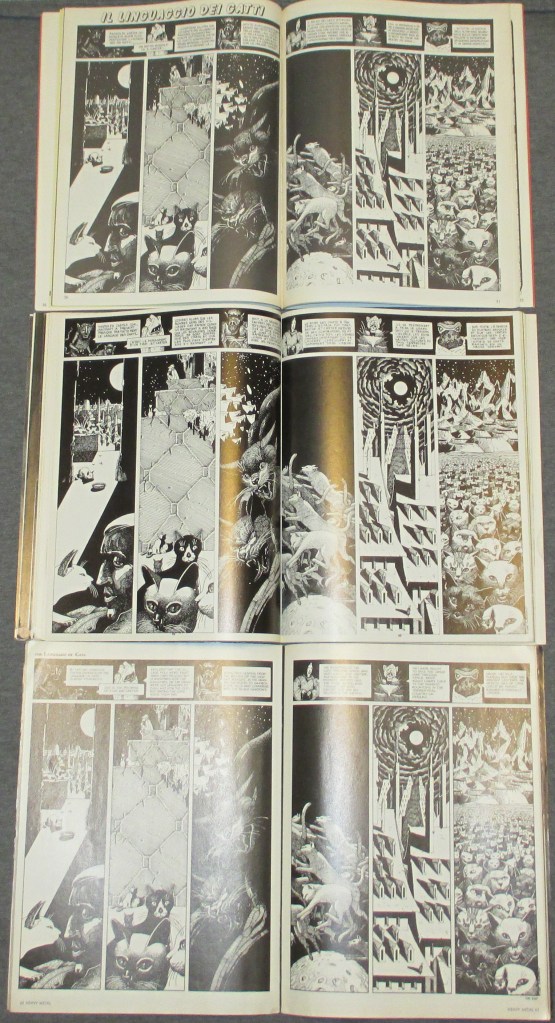
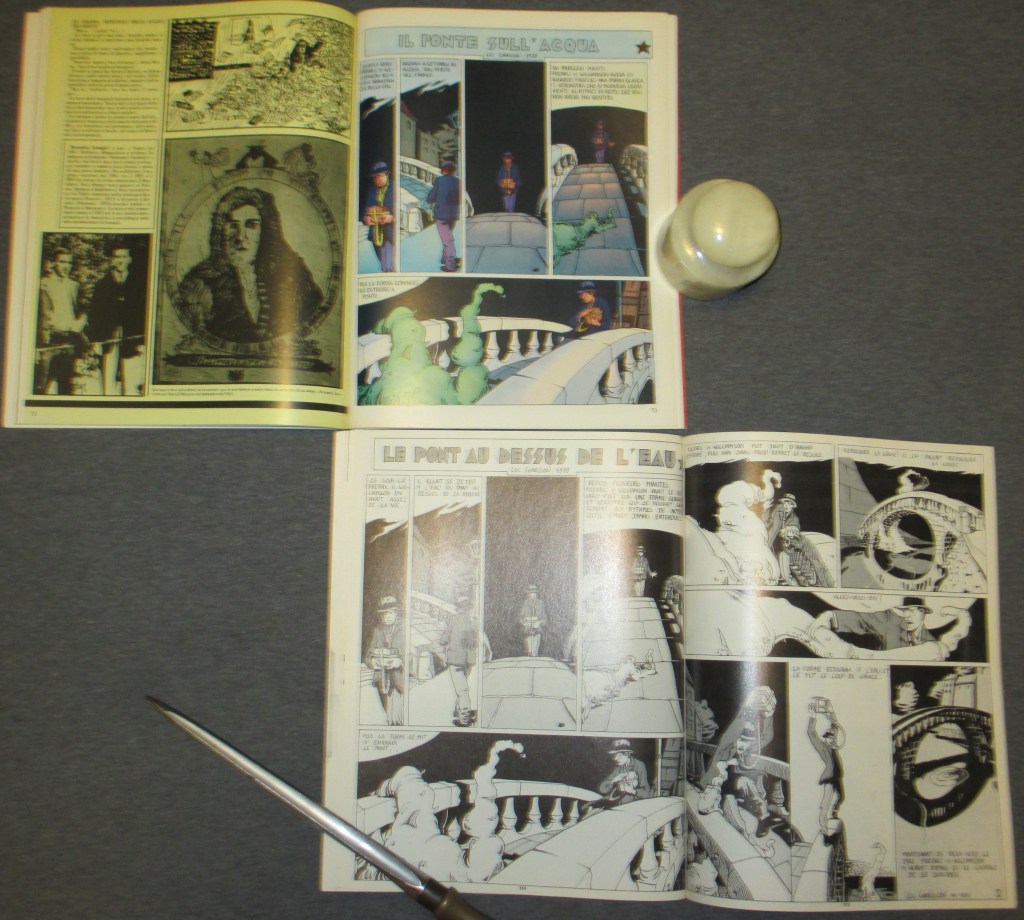
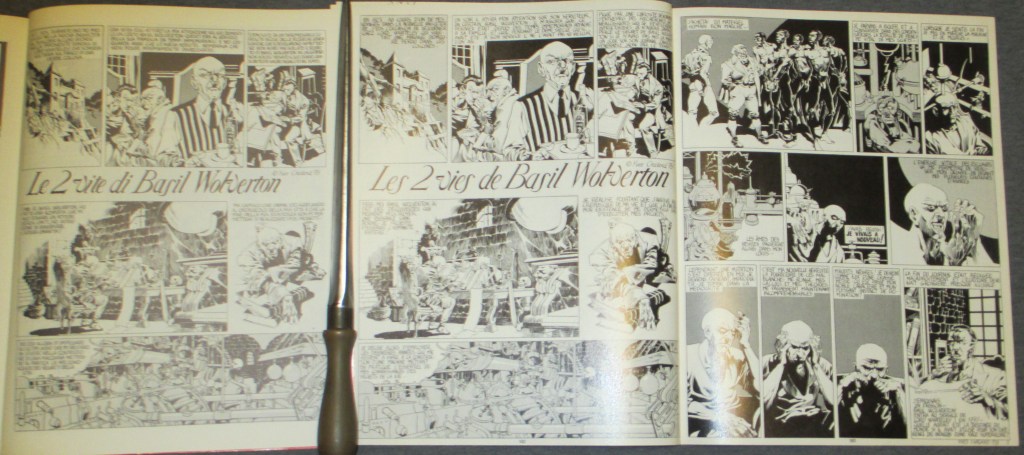
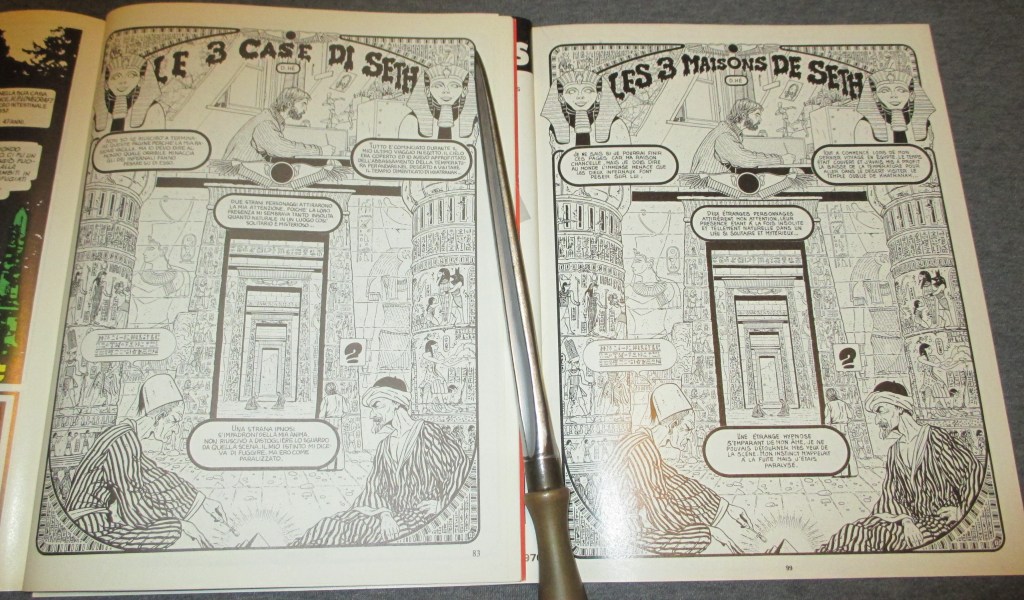
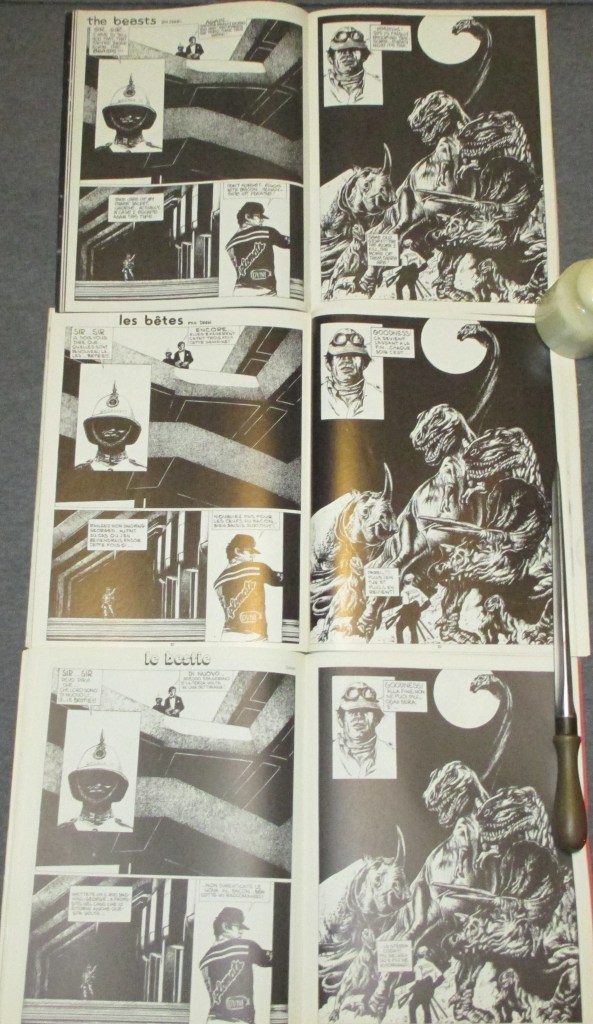
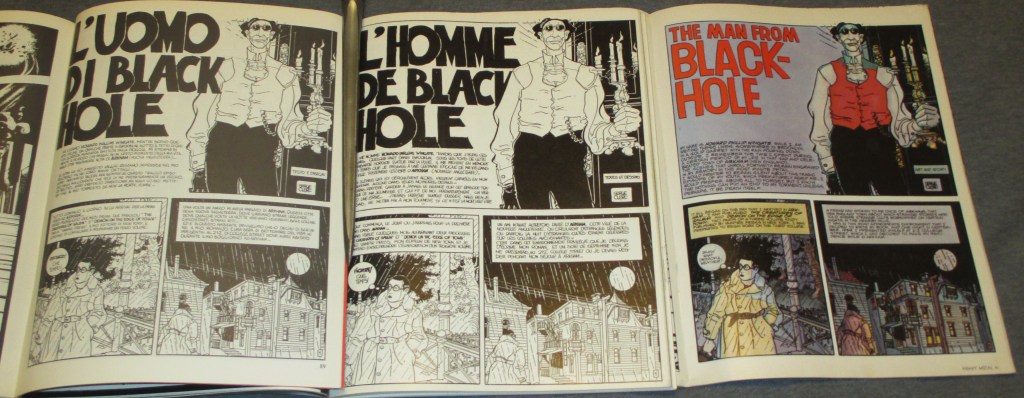
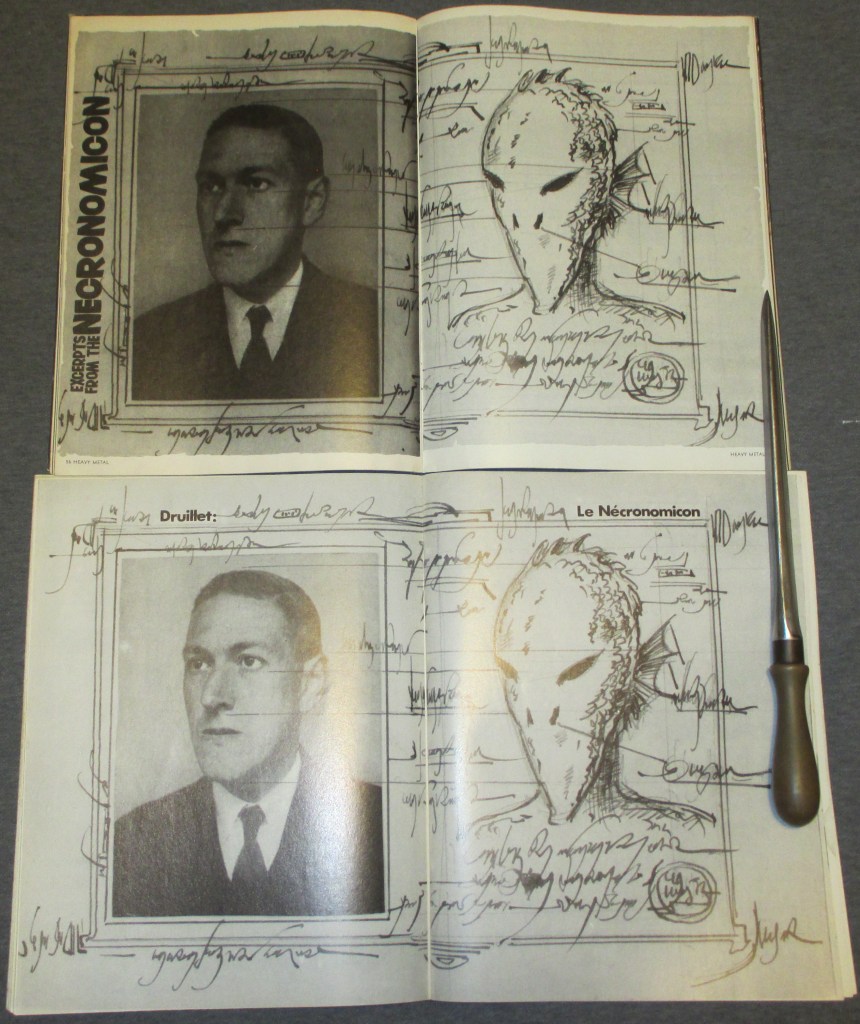
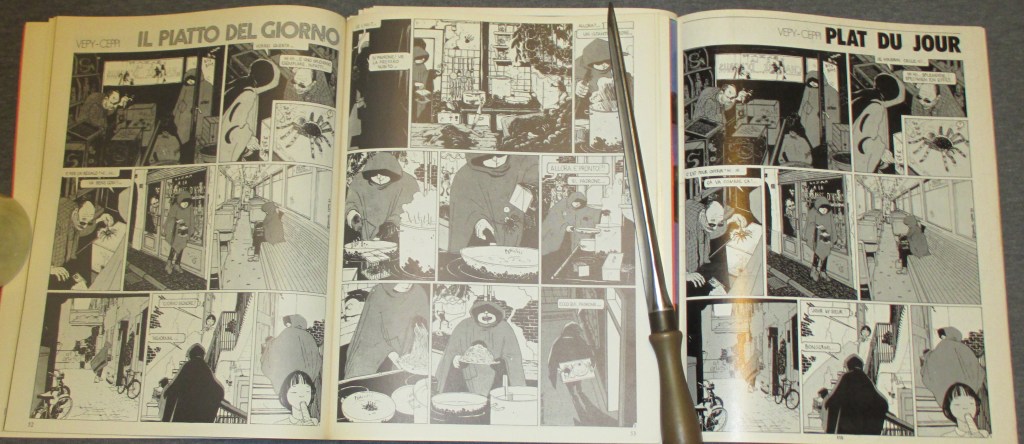
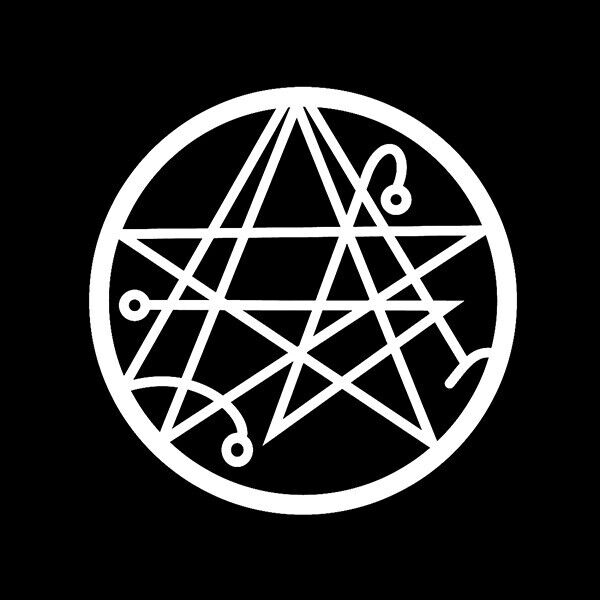
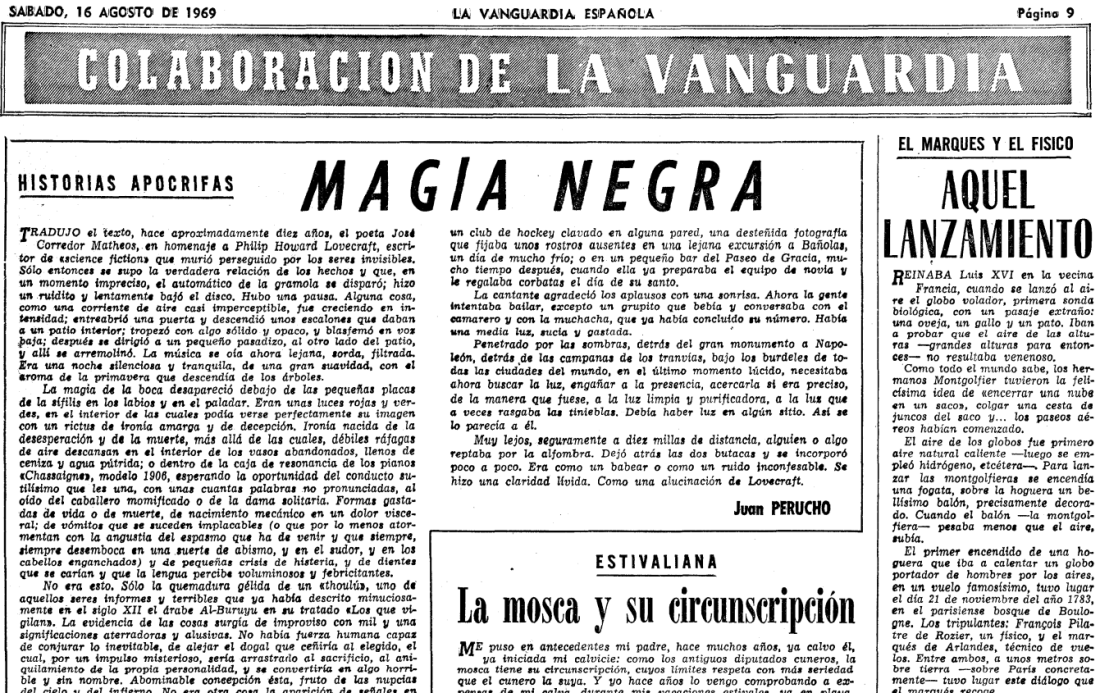
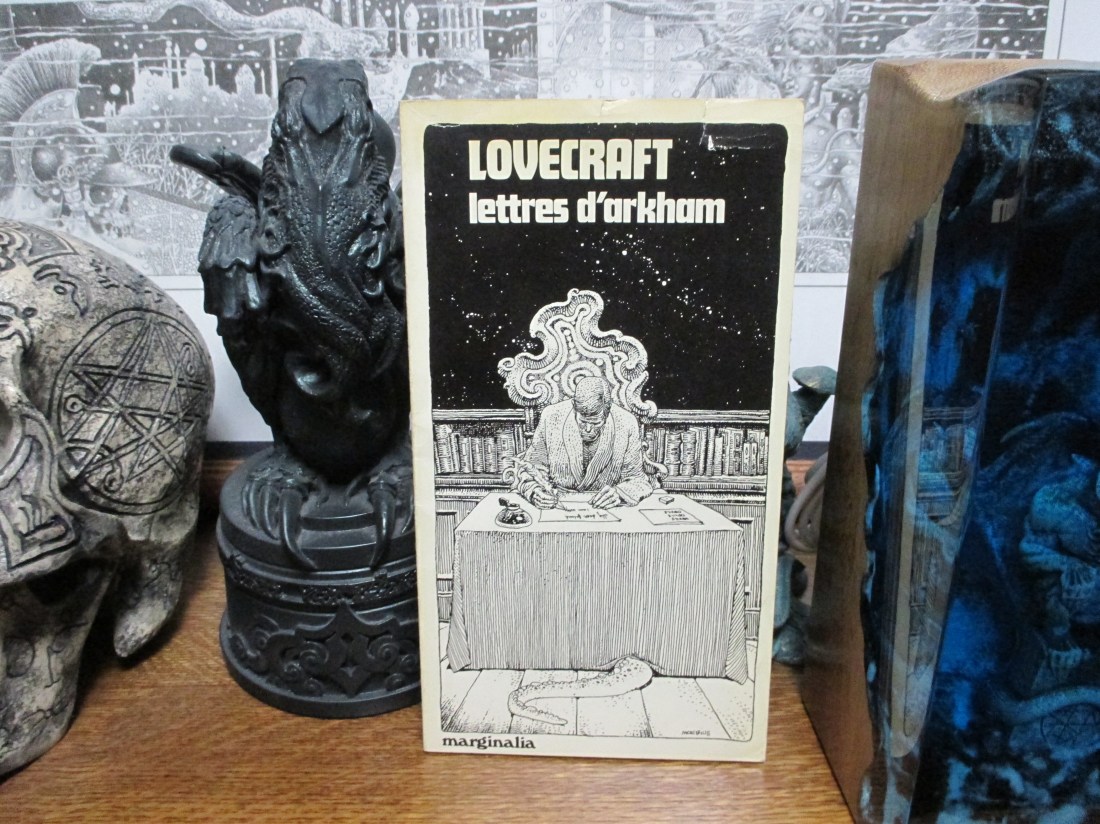
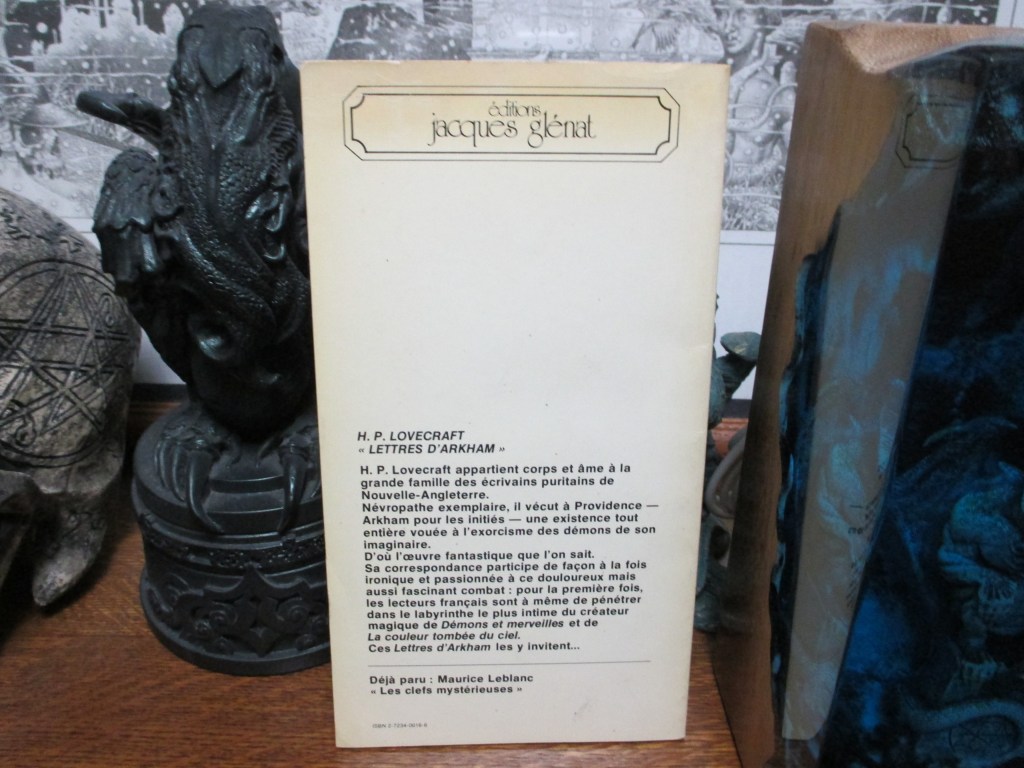
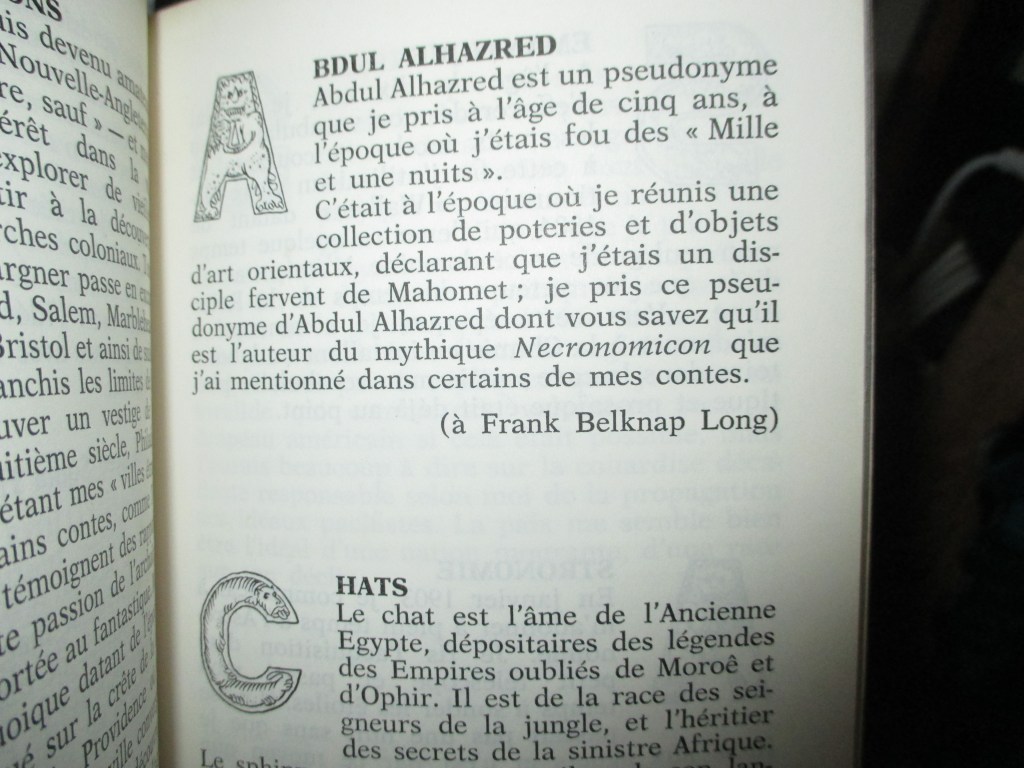
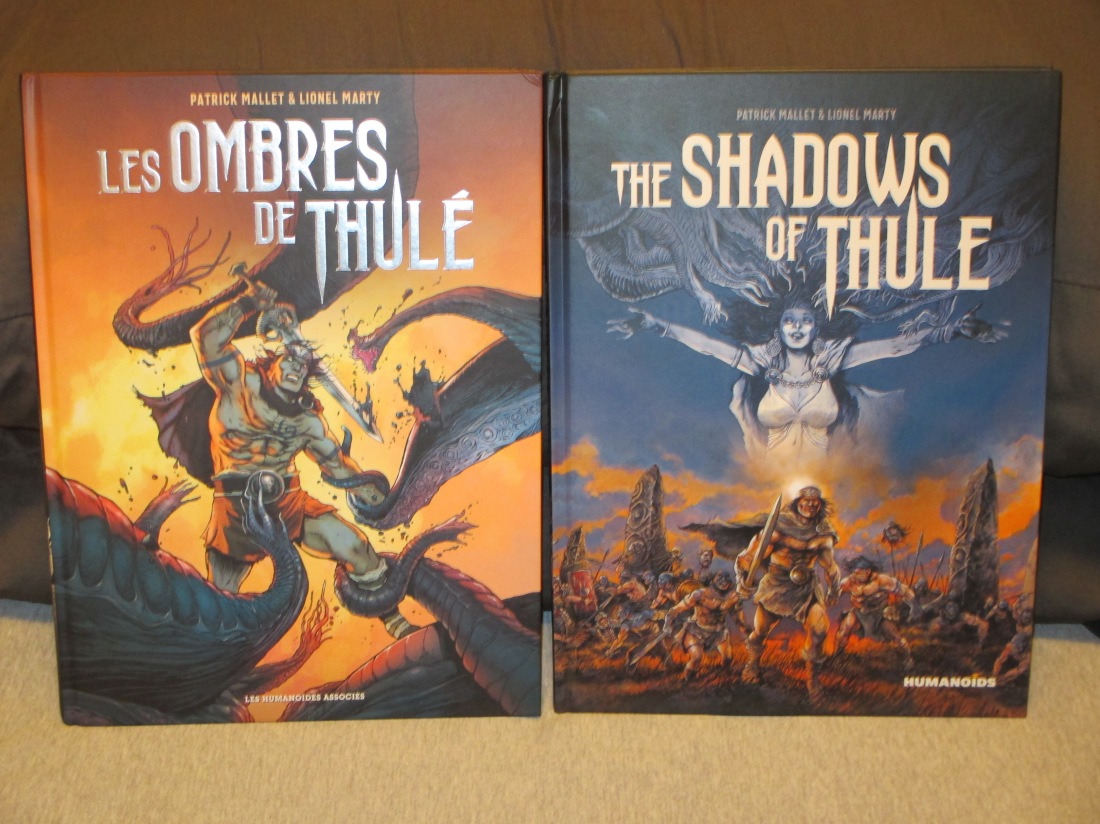
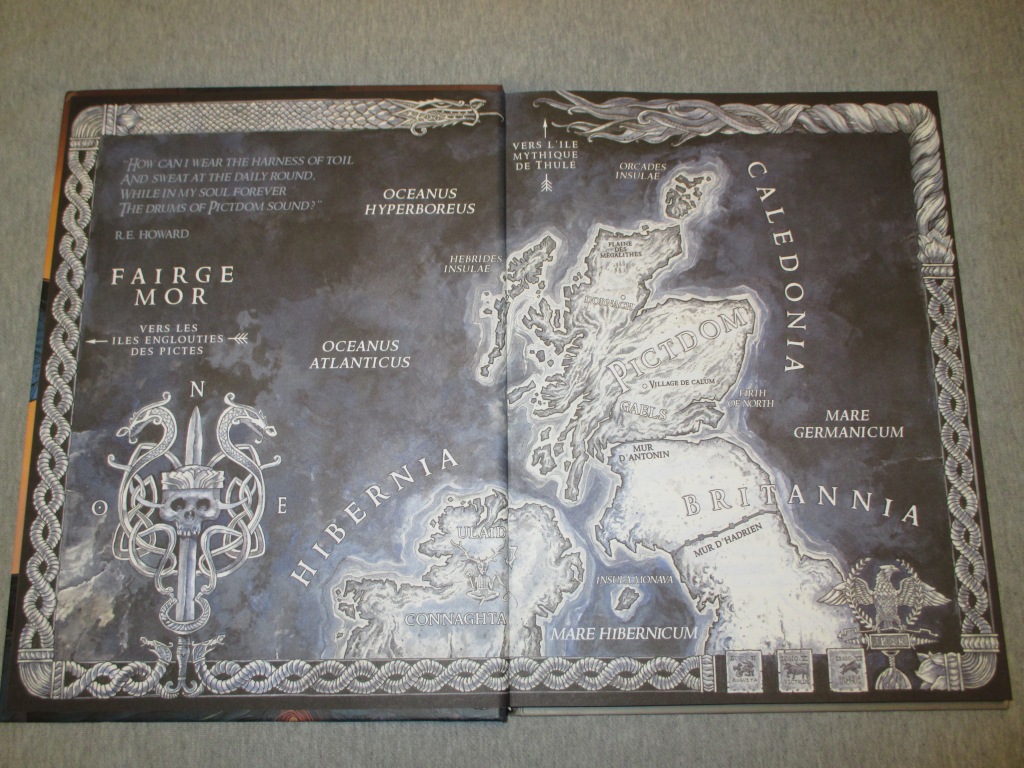



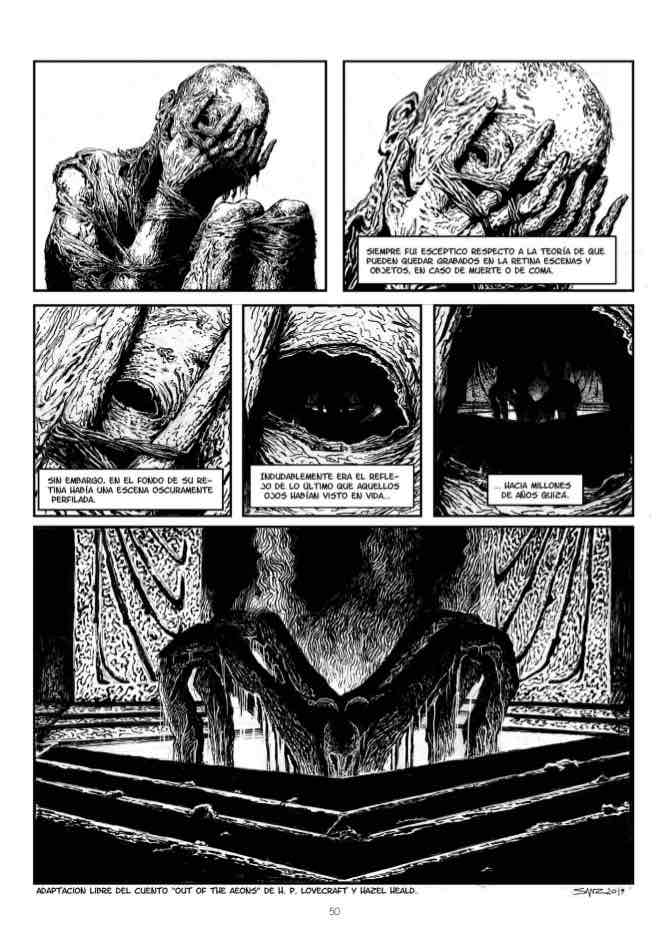
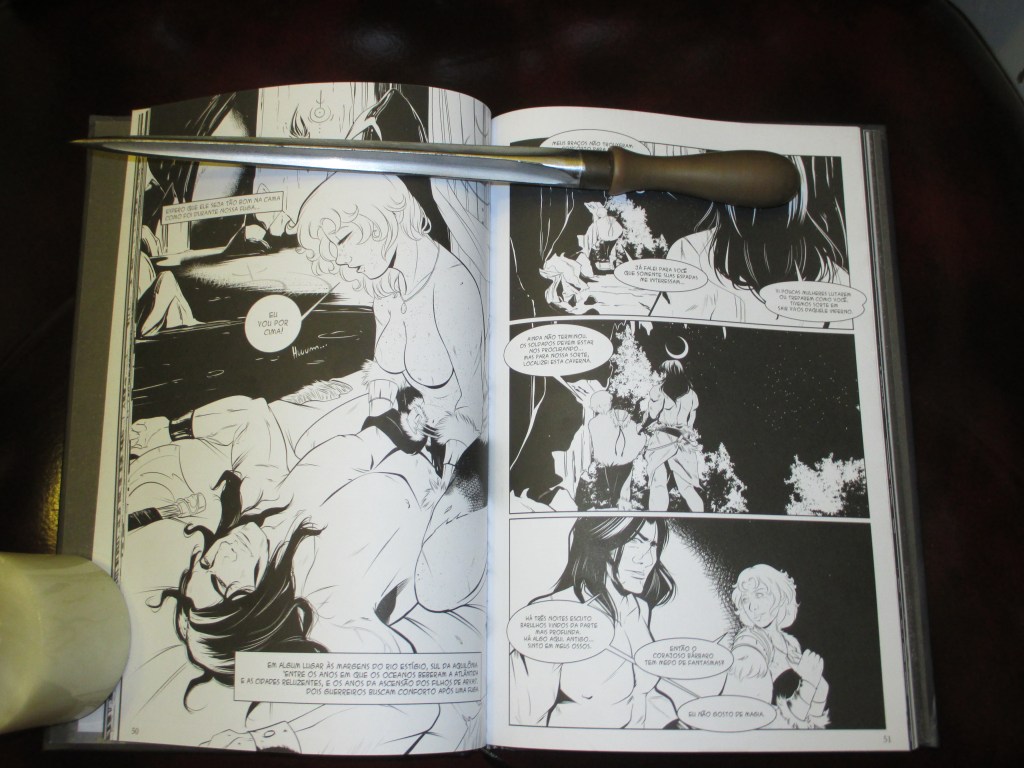
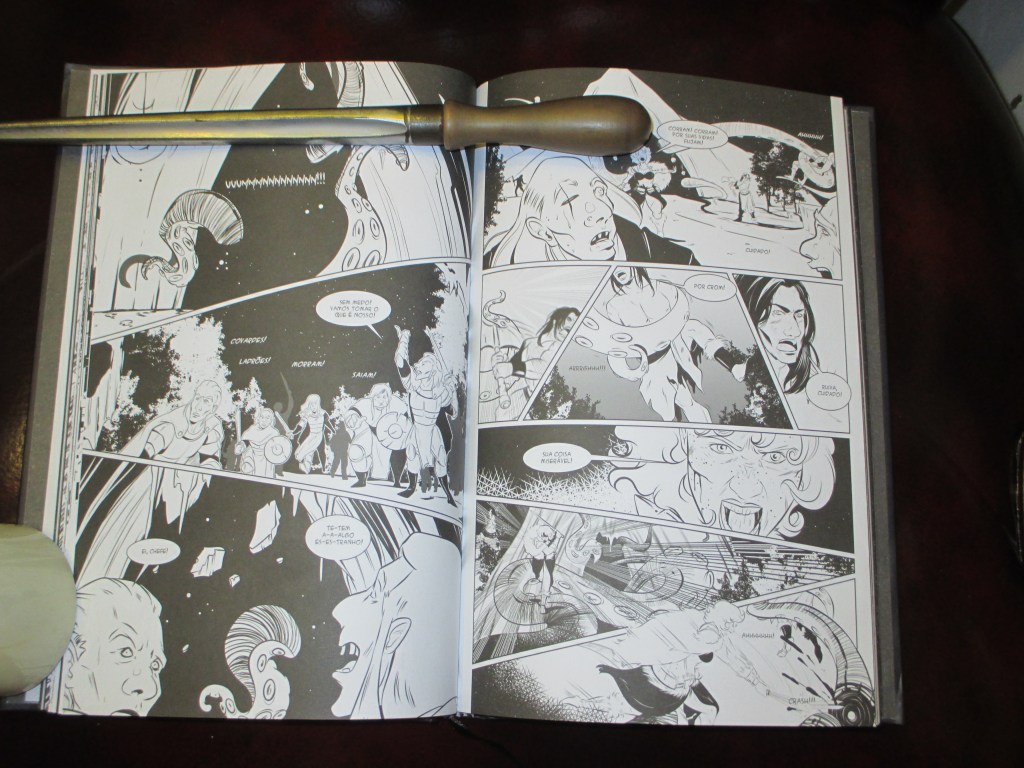
 Deep Cuts in a Lovecraftian Vein