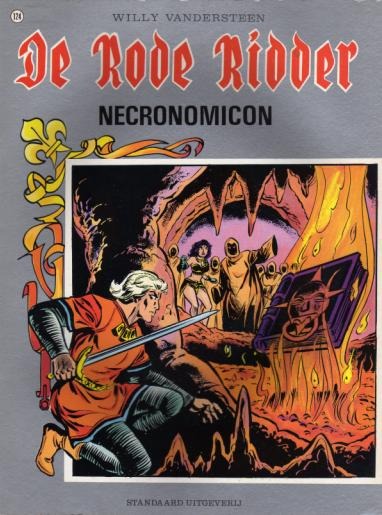
De Rode Ridder (“The Red Knight”) is a long-running Flemish-language medieval fantasy comic created by Willy Vandersteen in 1959, based on a series of children’s novels by Leopold Vermeiren in the 1940s. Roughly comparable to Prince Valiant, although not quite as consistent in storyline, as de Rode Ridder involves many standalone episodes and more fantasy and even science fiction elements. Vandersteen, who is credited with writing and drawing the strip for the first 43 albums (although gruntwork was done by others in his studio), passed it on to Karel Biddeloo, who wrote and drew the next 150 or so albums of De Rode Ridder’s adventures. About in the middle of Biddeloo’s run was album 124: Necronomicon, with Biddeloo joined by Urssla Lundmark (colorist) and Anita Schauwvlieghe (lettering).
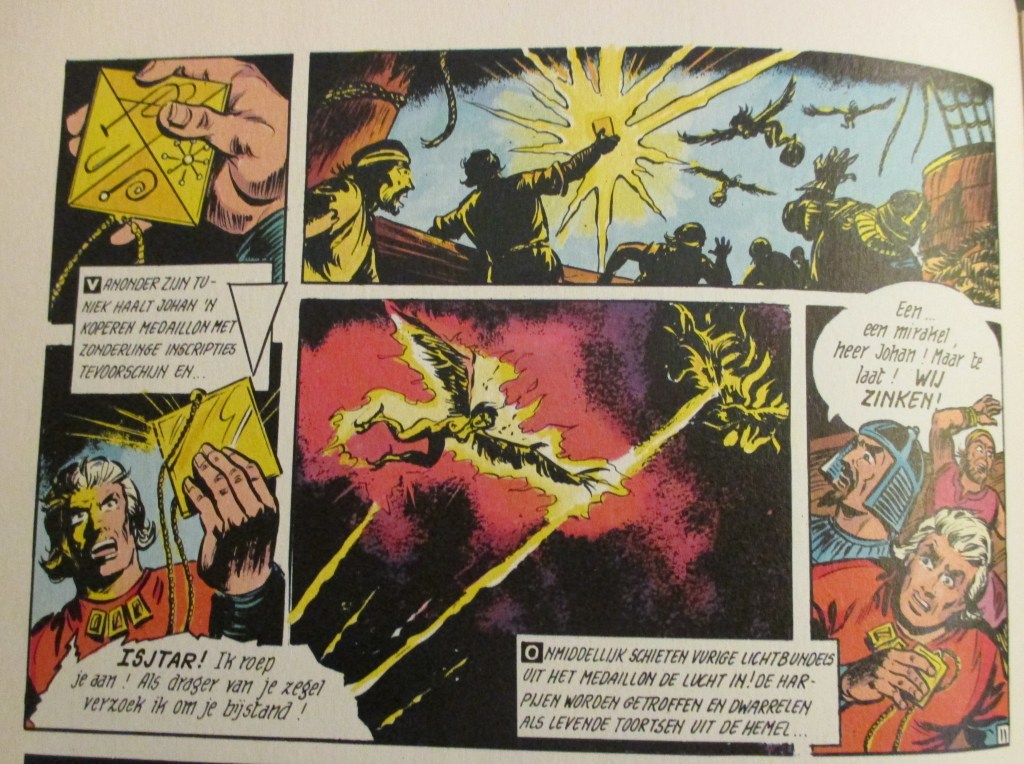
While at sea returning from Byzantium, Johan, the Red Knight, is besieged by harpies…who are defeated with the aid of the Seal of Ishtar, which Johan acquired in the last album, Oniria. Except the amulet that de Rode Ritter pulls out from underneath his tunic may look a bit familiar:
The Goddess of Venus is the most excellent Queen INANNA, called of the Babylonians ISHTAR. She is the goddess of Passion, both of Love and of War, depending on her sign and the time of her appearance in the heavens. […]
This is her Seal, which you must engrave on Copper, Venus being exalted in the heavens, with no one about watching its construction. Being finished, it is to be wrapped in the purest silk and lain safely away, only to be removed when need arises, at any time.
Simon Necronomicon 14-15
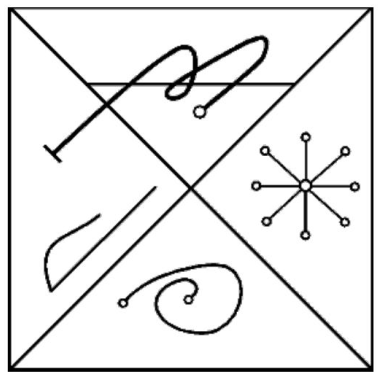
The Simon Necronomicon was first published in 1977, and by 1980 was released as a mass-market affordable paperback, to grace the New Age shelves of bookstores forevermore. While the impact of the Simon Necronomicon on Lovecraftian occult literature is sizable—see Dan Harms & John Wisdom Gonce III’s The Necronomicon Files for details—the artistic impact of it is often more apparent. The Gate Sigil on the cover of the book, created by artist Khem Caigan, has gone on to be appropriated by dozens or hundreds of artists for illustrations, comics, album covers, tattoos, and various and sundry merch.
The other illustrations in the book provided the first real visual occult symbols of the Mythos. While Lovecraft and Derleth had described their Elder Signs, and Robert W. Chambers had mentioned the Yellow Sign, Lord Dunsany the Sign of Mung, etc., there was no consistent popular depiction of these symbols or gestures—it was up to the readers to imagine what they would look like. Now, thanks to the Simon Necronomicon, there was a visual reference for various occult signs and talismans. Not surprising, then, that writer/artists like Karel Biddeloo opted to work them in.
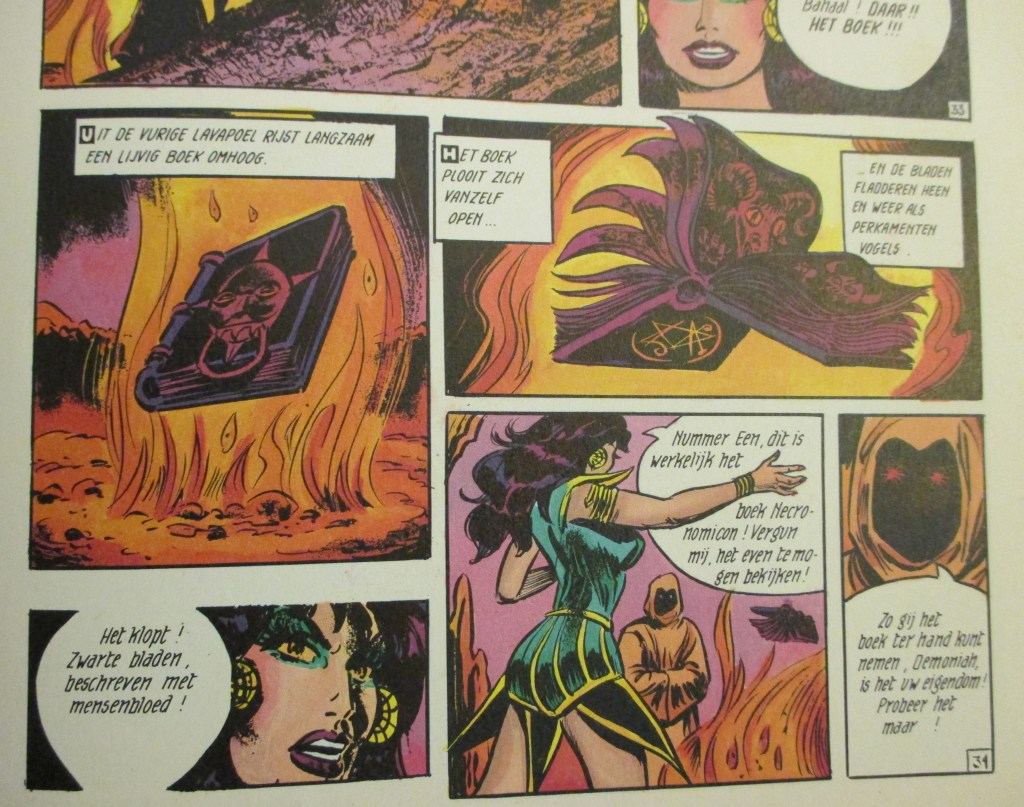
The Necronomicon of this Rode Ridder album isn’t a cheap paperback however, but a full-blown grimoire stored in a pillar of flame in a cavern beneath the earth, with a will of its own. A group of cultists working with Johan’s old foe, the sorceress Demoniah, manipulate him into retrieving the book for them. What follows is a rather typical adventure, full of action and a bit more swords & sorcery than horror—and I rather suspect that since the cultists are “der Meesters van de Swarte Kring” (“the Masters of the Black Circle”) that Biddeloo was also inspired in part by Robert E. Howard’s Conan stories, which includes “The People of the Black Circle.” The Necronomicon survived the destruction of the Swarte Kring, and would reappear in album 128: De Boeienkoning (“The Escape Artist, lit. “The King of Fetters,” much as how Houdini was sometimes billed “the Handcuff King”).
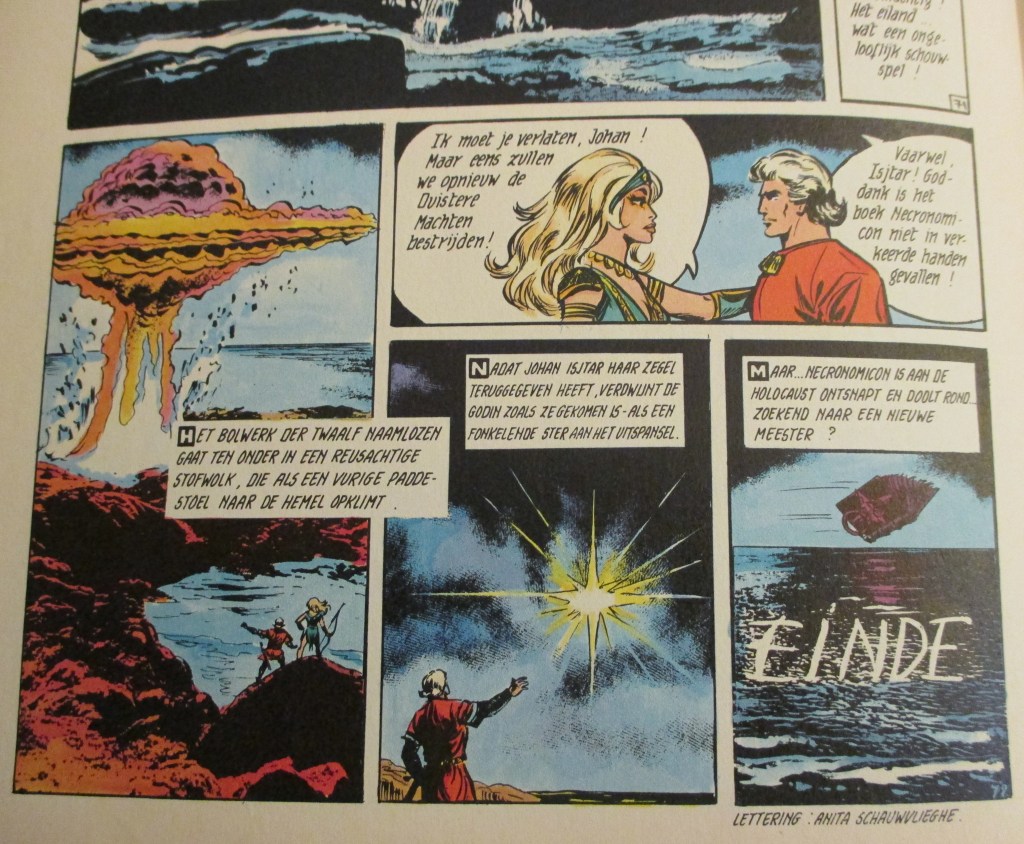
De Rode Ridder: Necronomicon is a fairly typical dip-of-the-toes into the Mythos; while Cthulhu, Yog-Sothoth, et al. don’t merit a mention, that’s probably as much as because Biddeloo was drawing from the Simon Necronomicon rather than directly from Lovecraft for inspiration; if this had been published after The Evil Dead came out in Belgium, the Necronomicon might be bound in human skin with a face on it! The book itself becomes a typical MacGuffin, since for all its portentous power it does not do much of anything by itself. For readers already familiar with the Necronomicon, it might be a fun or cute reference that gives de Rode Ridder another adventure; for those whose first experience with the Necronomicon was reading about it in this comic…perhaps this was their first step toward reading Lovecraft.
In terms of art, Karel Biddeloo is no Hal Foster, and the coloring sometimes muddies what might be better linework, yet it is still a very competent product with occasional dynamic illustrations that break out of the panel borders and breathe a little life into the work.
Regrettably, the adventures of de Rode Ridder have never been translated into English, although the Belgian albums and reprints are fairly available from European booksellers.
Bobby Derie is the author of Weird Talers: Essays on Robert E. Howard and Others and Sex and the Cthulhu Mythos.
Deep Cuts in a Lovecraftian Vein uses Amazon Associate links. As an Amazon Associate I earn from qualifying purchases.
 Deep Cuts in a Lovecraftian Vein