Eldritch Fappenings
This review concerns a work of explicit adult art and literature, and will touch on aspects of historical pornographic works, including NSFW images. Reader discretion is advised.
By the way—Cthulhu isn’t a she but a he. He’d feel deeply enraged if anyone regarded him as sissified!
—H. P. Lovecraft to Willis Conover, Jr. 29 Aug 1936 Letters to Robert Bloch & Others 389
In “The Call of Cthulhu,” Lovecraft defaults to referring to Cthulhu as male. Whether human gender binaries can encompass Great Cthulhu is something for later writers in the Mythos to decide. Lovecraft, for his part, only addresses it in his letters in a joking matter, with the typical cultural disdain toward “sissies”—men who display effeminate manners or dress, often misconstrued as homosexuals; Lovecraft had made another comment about the “sissy” Gordon Hatfield.
Throughout human history, in pretty much every culture, there has existed a minority who do not fit into rigid gender or sexual binaries. Whether this was a physical condition such as being intersex, or an individual’s identification with a different gender than assigned at birth, or taking on cultural attributes and attire associated with different genders—there is a broad range of physical, psychological, social, and sexual aspects involved. Each culture and language has their own nomenclature involved. In English in the 20th century, terms like hermaphrodite have fallen out of use in favor of words like intersex; the term transvestite, once identified largely as a sexual fetish or mental disorder, has largely fallen away from use in favor of transgender.
The rich vocabulary includes both contemporary efforts to define identities (e.g. genderqueer, gender fluid), pejorative terms (e.g. tranny, cross-dresser), and a grey middle ground of terminology most often associated with sex work, erotic literature, and pornography (e.g. ladyboy, shemale). Loanwords from other languages also enrich the language, e.g., futanari, from the Japanese ふたなり. The term futanari has come to be a pornographic genre unto itself, both in adult comics and literature, with its own specific tropes, and generally presents a fetishized ideal: an individual that possesses (sometimes exaggerated) sexual traits of both male and female.
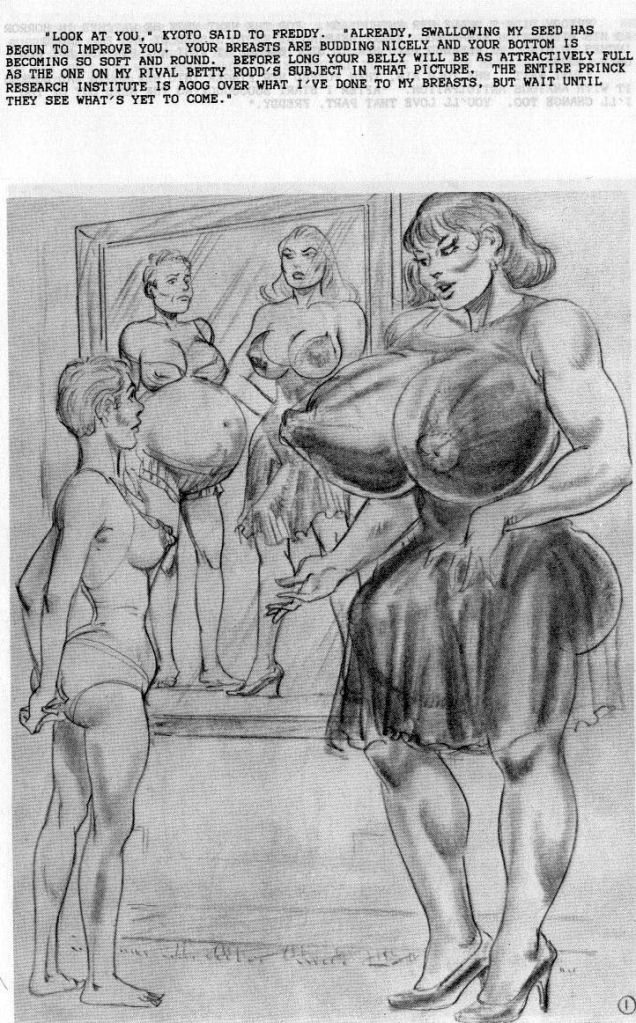
Despite the term futanari coming from the Japanese language and popularized by Japanese erotic comics, the basic idea is not unique to Japan. In the 1980s, for example, U.S.-born adult artist Eric Stanton created his “Princks” or “Ladyprinckers” or “Princkazons,” women with Amazonian physiques who also possessed penises (often of exaggerated proportions) and used their great strength and sexual organs to dominate and emasculate men. For example, in Stantoons #49 (“Makeover”), he presents a scenario where the men, unable to resist, are forcibly transformed and feminized. Stanton takes this idea to its cartoonish limit, and plays it for body horror and black humor as much as sexual titillation.
For the most part, however, “Princks” died with Eric Stanton. By the 1990s and 2000s, gender transition surgery and hormone replacement therapy had progressed substantially from the gland stories of early science fiction (see The Hormonal Lovecraft); the legal recognition of homosexuality and rights led to greater awareness of different LGBTQ+ identities outside of fetishized pornographic stereotypes. Besides this, futanari proved to be a more popular fetishized pornographic stereotype.
More importantly, the increasing acceptance of transgender individuals and the process of gender transition opened up literature for more positive stories of gender transition. While feminization as a sexual fantasy, voluntary or involuntary, will always remain, the acceptance and embrace of such a change as a positive metamorphosis instead of body horror gained more traction (see Seabury Quinn’s “Lynne Foster is Dead!” (1938): A Mistaken Gender Identity by Sophie Litherland).
Which doesn’t mean that a clever and skilled creator couldn’t combine the two. Lovecraft in “The Shadow over Innsmouth” presented a narrator who, at first horrified at the changes happening to their body, comes to accept their metamorphosis and the new identity that comes with it. For Lovecraft, the reader is allowed a peak as someone that fear and hated the alien and other becomes the other—and in fact, was one of them all along. The completeness of their change is indicated by how thoroughly they embrace who they are now, and reject who they thought they were.
In 2017, erotic comic artist InCase began producing “The Invitation,” a sexually explicit webcomic. The second chapter was published in 2019. At first glance, “The Invitation” shares many hallmarks with feminization and futanari adult comics. Part of what sets it apart, however, is the framing and development of the story.
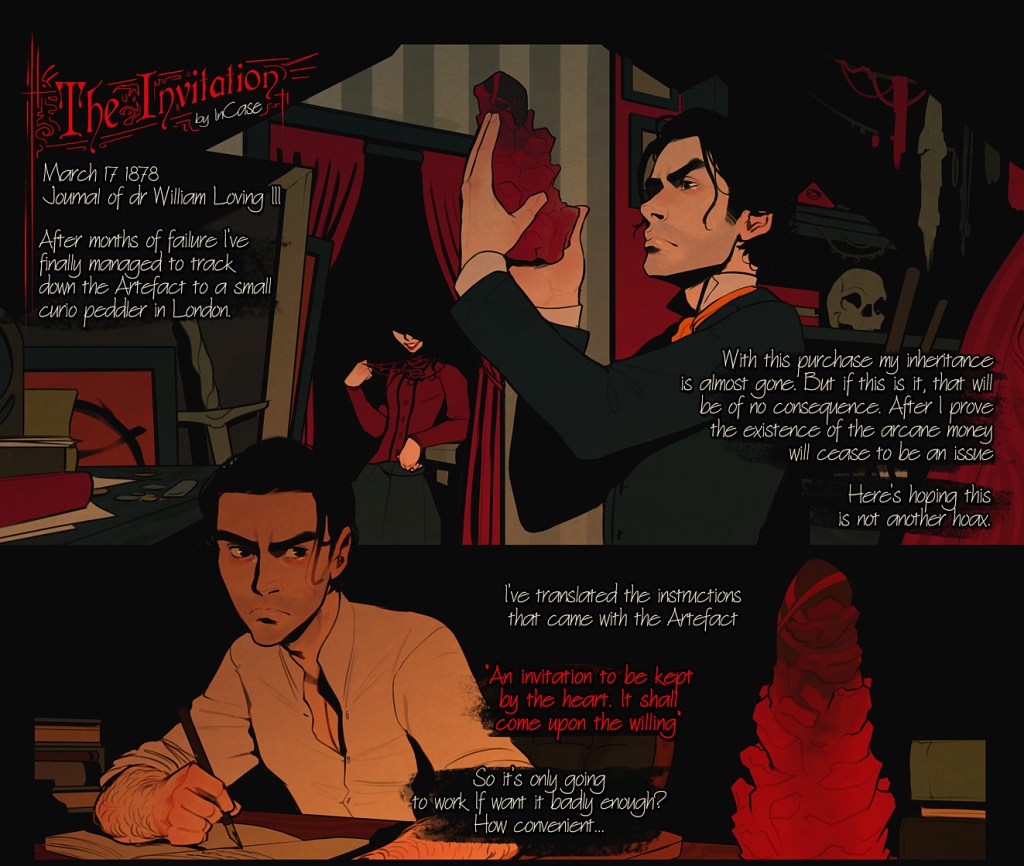
William Loving III starts out as a very Lovecraftian protagonist, an obsessive delver in the obscure and occult, who had finally found an artefact that promises to put him in touch with a strange, eldritch entity…and he goes a little mad with the revelations.
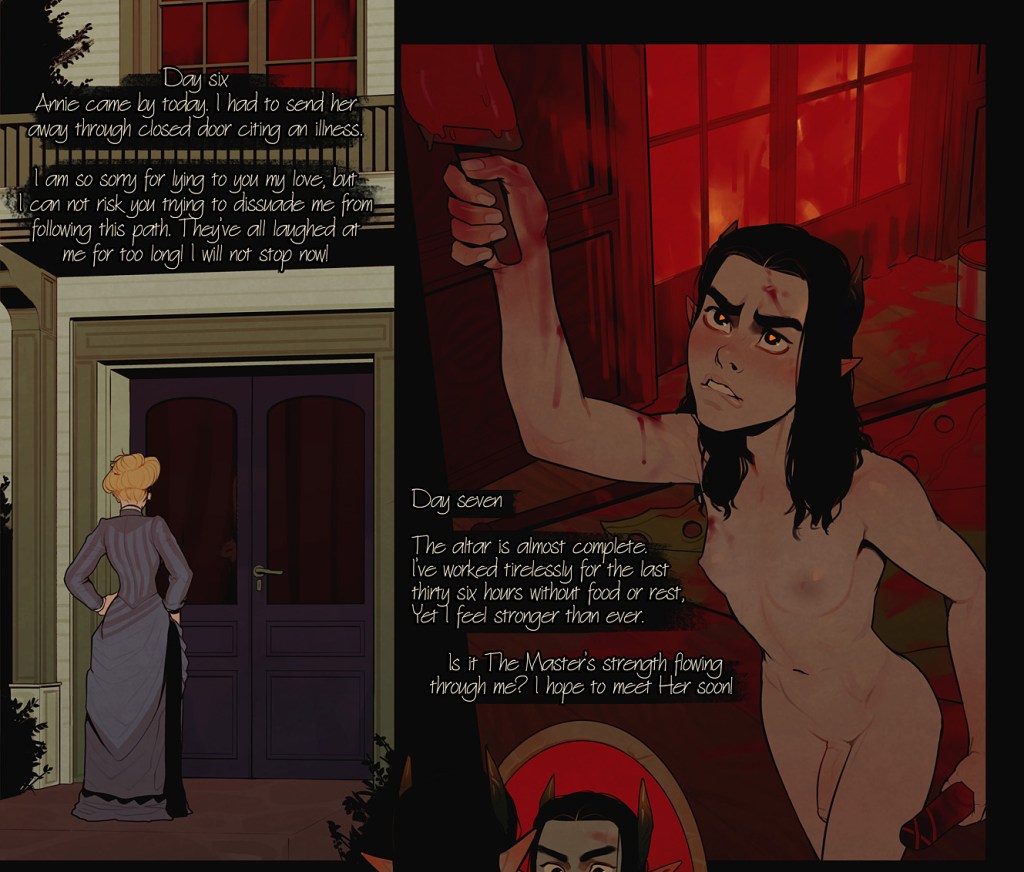
As their transformation progresses, William’s priorities and attitudes shift, their old mores fall away as they embrace a broader and more inclusive attitude toward gender and sexuality attraction. Above all, the Master who brought these changes to body and mind is imprisoned, and members of their cult, like William, seek to free them. Idol, old one, madness, cult…while InCase is not using Lovecraft’s Mythos directly, there are some clear parallels to aspects of Lovecraft’s work and the broader genre of stories inspired by the Mythos.
Then, whispered Castro, those first men formed the cult around small idols which the Great Ones shewed them; idols brought in dim aeras from dark stars. That cult would never die till the stars came right again, and the secret priests would take great Cthulhu from His tomb to revive His subjects and resume His rule of earth. The time would be easy to know, for then mankind would have become as the Great Old Ones; free and wild and beyond good and evil, with laws and morals thrown aside and all men shouting and killing and revelling in joy. Then the liberated Old Ones would teach them new ways to shout and kill and revel and enjoy themselves, and all the earth would flame with a holocaust of ecstasy and freedom. Meanwhile the cult, by appropriate rites, must keep alive the memory of those ancient ways and shadow forth the prophecy of their return.
—H. P. Lovecraft, “The Call of Cthulhu”
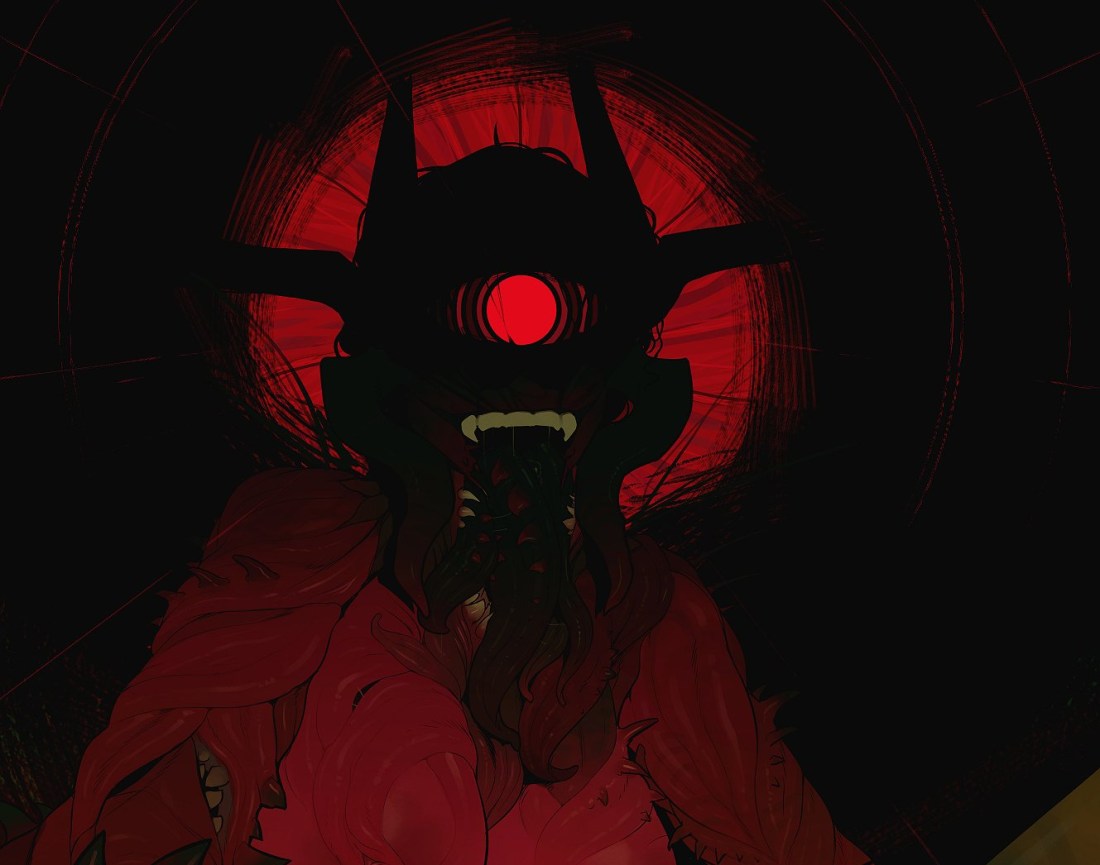
In the second half of the first chapter, InCase shifts the focus away from William pursuing the transformation on their own to interacting with the Master and their other servants. Sexual activity slowly grows more transgressive, with rougher action, bigger penetrations, more and less human (and more tentacular) participants…and the wonder of transformation and the bliss of sex is juxtaposed against the cosmic horror of the Master’s true face, and a glimpse of their true nature.
For a story about transformation and sex, and the gorgeously rendered artwork that conveys both sexuality and teratophilia, corruption and indulgence, these two characters are essentially character-driven. William is obsessed with magic, and having followed that obsession it consumes them utterly. What he left behind was his fiancé Annie, who becomes the protagonist of the second chapter.
In the Victorian milieu of The Invitation, Annie more than William represents a character whose body and identity are repressed by society; she is bound up in expectations of behavior (social and sexual) that she strains again; a woman of science at a period when women are not widely tolerated in science. A woman whose social standing is in peril from a broken engagement. A person who is, like William, innately curious.
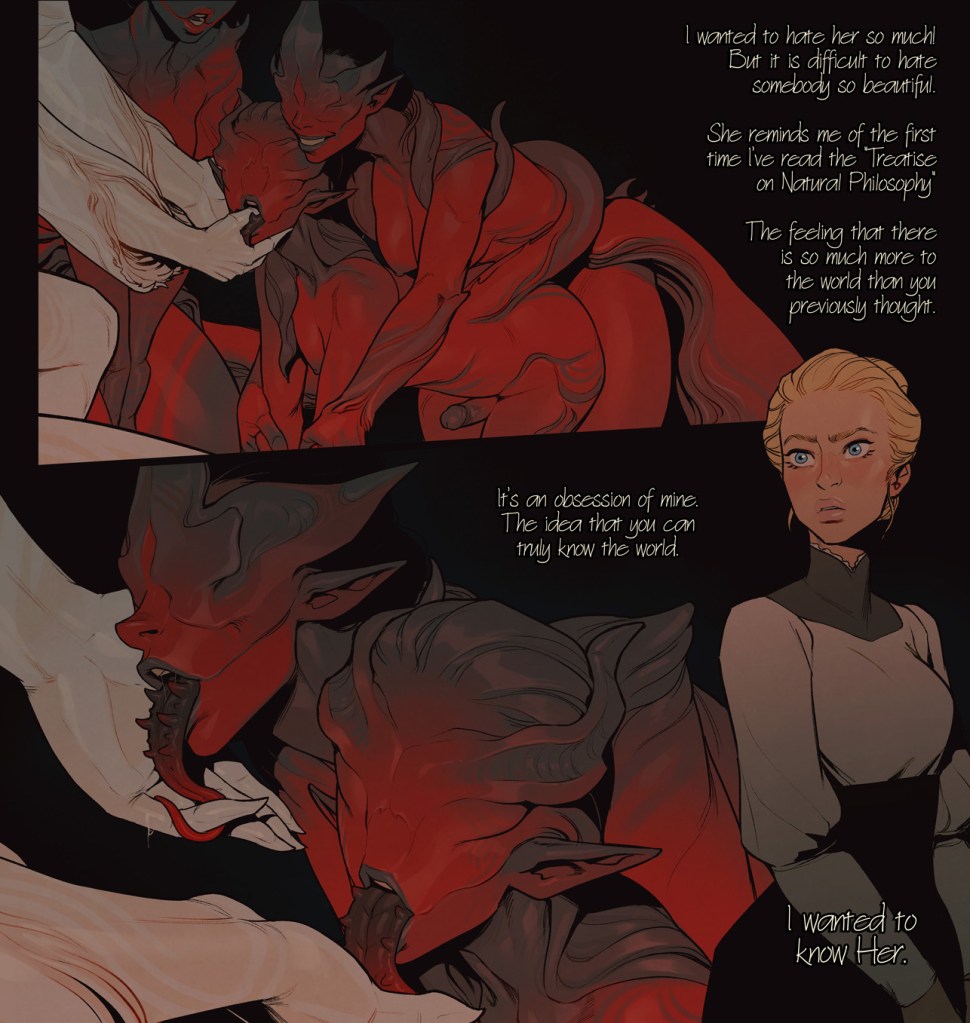
There is a strong fantasy element to InCase’s work, both in The Invitation and in their other erotic comics. Without going into clinical detail, many of their characters fall into the spectrum of the sexualized fantasy of intersex characters rather than the reality. There are rarely true hermaphrodites, but there are often characters who appear to be women in every aspect save for having a penis and testes, which is fully functional (often incredibly so). Characters don’t undergo costly top and bottom and facial surgeries, they don’t take regimens of hormones their entire lives to achieve some semblance of the body they desire, that matches their gender identity. In real life, things are messy and imperfect; in comics, they can be idealized.
It is the fantasy that allows the exploration of these ideas. What would a Victorian woman do if she suddenly had a penis? If she was no longer restricted to the sexual role that biology and society had deigned for someone of her sex and gender? If you grew gills in Innsmouth, would you avoid the sea?
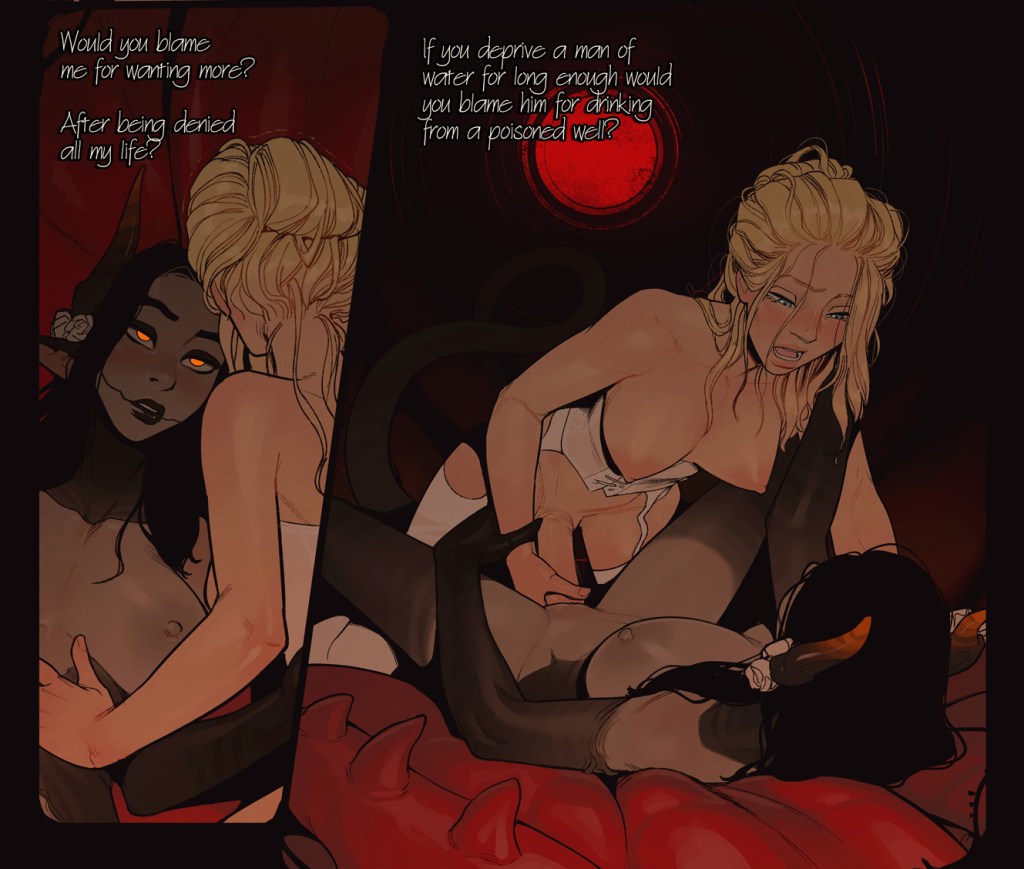
The Invitation is not a body-positive story about gender transition. It is an erotic horror story with themes of body horror and cosmic horror. William and Annie are not individuals who seek transition as a means to express and assert their gender identity. They are cultists who reject the world that they feel has rejected them; they are the outsiders who having finally given up on belonging to the world around them, with all the repressive mores, have turned to a being for whom all laws and mores are oppressive. Even natural laws.
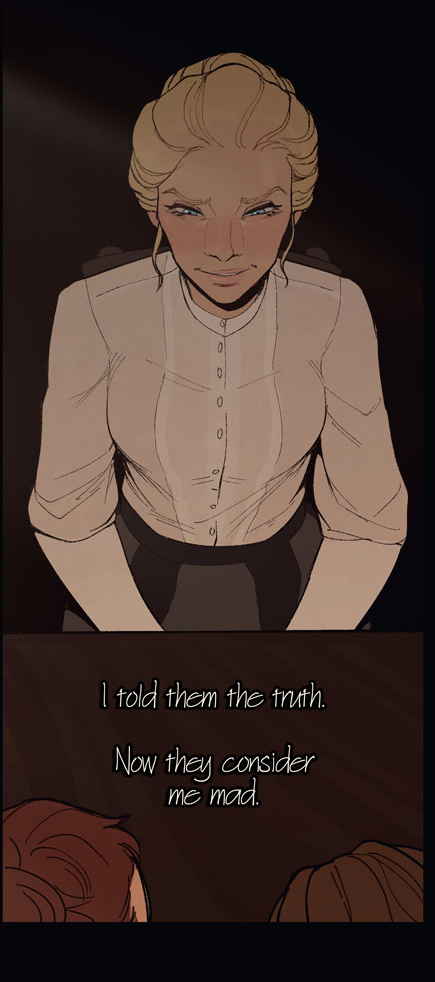
It is important to distinguish between the reality of being transgender and the fantasy. Not everyone who is trans undergoes surgery or takes hormones; nor are trans folk mere sexual objects for others to fetishize and covet. InCase is drawing specifically on the tropes of trans and intersex characters as they have developed in erotic comics art over the last several decades; Annie and William are not Stanton’s Princks, but they are conceptual cousins. Where the Princks’ purpose is entirely driven by kink, the transition of Annie and William is much more moral.
Stanton’s Princks are domineering and cruel; they degrade and make fun of the men they transform, they revel in their strength and the men are helpless to resist. The suffering of the Princks’ victims is the point; that’s the relationship that Eric Stanton often pursued, regardless of whether it was Princkazons vs. men, or women vs. men, or women vs. women. The Master never taunts her victims, never degrades them, never says a cruel word; the Master’s inhuman hunger is frightening, but what really breaks Annie at the end is the realization that it is entirely voluntary. Like the Cenobites in Clive Barker’s “The Hellbound Heart” (1986), the Master does not seek out new victims—they find her. Drawn in by curiosity, they find a moral universe at odds with what they know.
A universe both horrific and addictive. Twisted, unnatural, and yet utterly freeing. Is it any wonder why some folks have embraced it as a positive example of gender transition, at least in jest?
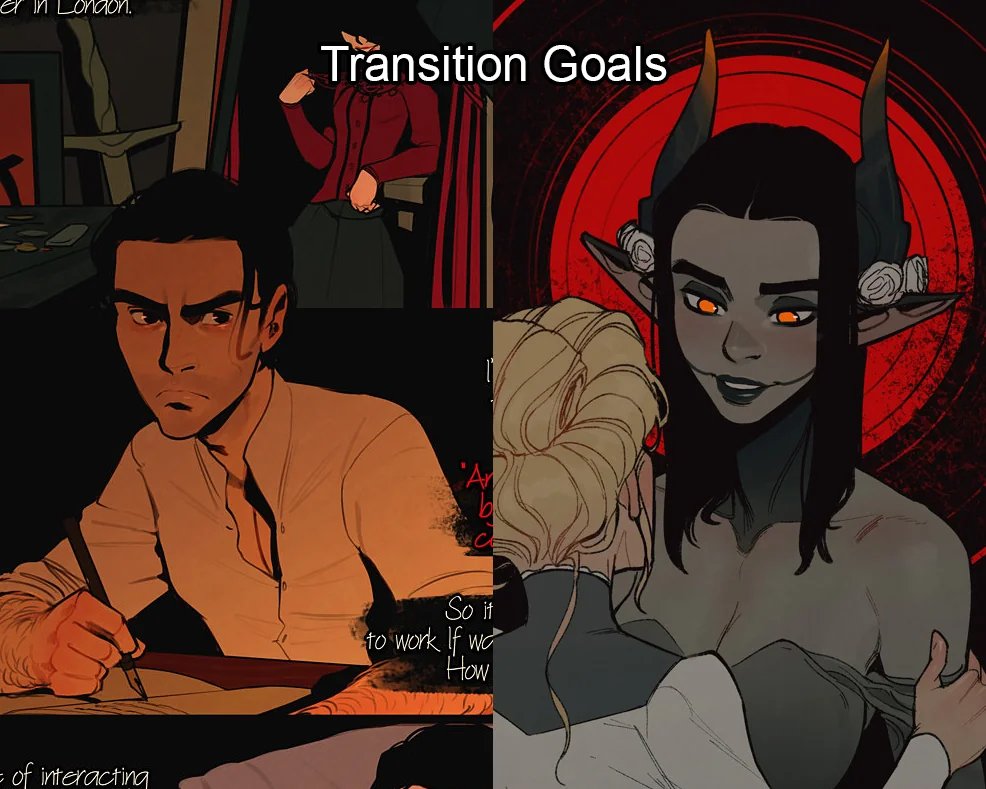
In the end, it isn’t about whether or not William has a vagina or Annie has a dick. Their final acceptance of each other was to move beyond their conceptions of sex and gender, to discard all labels. This is presented as both horror…and a short of transcendence. As old de Castro said in “The Call of Cthulhu,” they had become like the Master themselves, they had moved beyond the need to define themselves in human terms, and had come at last into a more complete marriage, through and within the Master.
Which is about as Lovecraftian an ending as one could hope for.
InCase’s work can be found on their website and their Patreon account.
Bobby Derie is the author of Weird Talers: Essays on Robert E. Howard and Others and Sex and the Cthulhu Mythos.
Deep Cuts in a Lovecraftian Vein uses Amazon Associate links. As an Amazon Associate I earn from qualifying purchases.
All images copyright their respective owners.
 Deep Cuts in a Lovecraftian Vein