Becoming a Cthulhuian Overlord (成为克苏鲁神主) began as a novel by Yi Jian San Lian (一键三连) published on China Literature, which was then adapted in 2020 into a manhua by An Zhu (渚谙, writing) and Na Ti Maeo (拿铁猫, illustration), produced by Kaite Dongman(凯特动漫, Cat Comics), which has been translated into English by Sangria and is now being serialized online at Tapas.
This serial work falls into the genre of isekai: a very broad and currently popular genre in many media that involves an individual who becomes displaced from the real world to another world. The nature of the displacement and the other world are major flavors for the genre; the protagonist might die, for example, and be reincarnated into a fantasy world that follows rules like a tabletop roleplaying game such as Dungeons & Dragons or an equivalent video game like World of Warcraft. Or they might fall through a portal and be lost in the distant past, transported to an alien world, etc.
If this sounds a bit overbroad, it’s because isekai is a term for a mode of fantasy fiction that existed long before the term itself existed. In A Connecticut Yankee in King Arthur’s Court (1889), a blow to the head sends the Boss back to the Dark Ages Europe; in A Princess of Mars (1912) former Confederate soldier John Carter is transported bodily to a fantastic version of Mars. Lovecraft, Robert E. Howard, and others were familiar with the basic idea; one might consider The Dream-Quest of Unknown Kadath a kind of isekai, and in “The Challenge from Beyond” George Campbell is transposed into the body of an alien worm—and decides to conquer the alien planet, which is a very appropriate approach for a typical isekai protagonist. These portal fantasies bridge a gap between low fantasy (fantasy fiction set in the mundane world or realistic setting) and high fantasy (fantasy fiction set in a world separate from the real world).
Which is all meat for argument for those who like to argue labels. In Becoming a Cthulhuian Overlord, the premise is that the unnamed protagonist dies in a car accident with his pregnant wife, and has a mysterious supernatural encounter with a certain messenger…
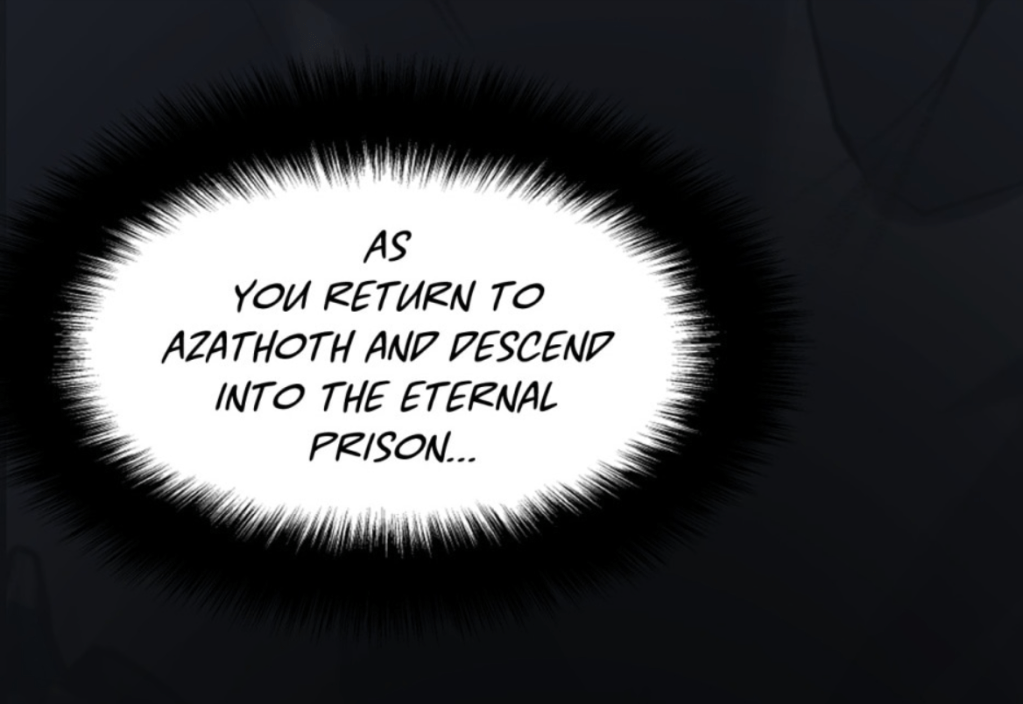
…and reincarnates as Qi Su, an orphaned high school student in Lua City, which superficially looks much like the mundane world. Except now he can see a variety of shadowy and horrific phantoms that he has to pretend not to see, or else they’ll eat him.
If that doesn’t sound very Lovecraftian—it is not, at least at first. Serialized graphic fiction are often paced relatively slowly at first, and this has all the hallmarks of a slow-burn comic. There isn’t a lot of exposition to begin with, and a great deal of the storytelling takes place through the art, which takes advantage of the format to do long-scrolling dynamic shots in odd perspectives. Some of the art is quite effective, even if it obviously draws inspiration from works like Parasyte.
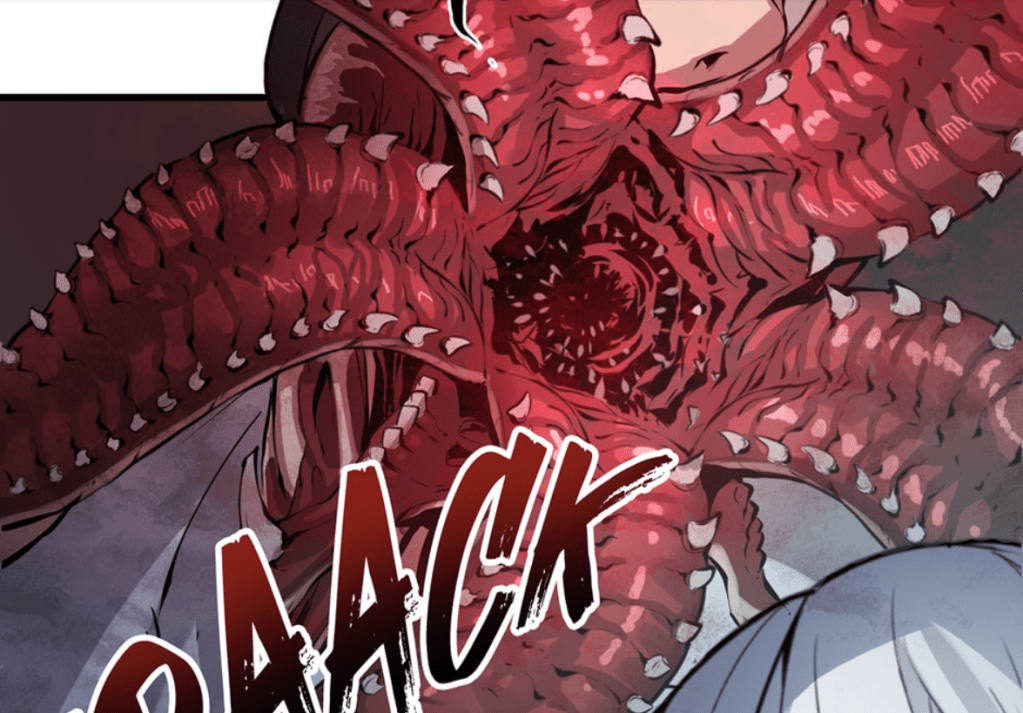
The odd tentacled entity aside, the first few chapters of Becoming a Cthulhuian Overlord are very by-the-numbers stuff, drawing strongly on the basic ideas of Yu Yu Hakusho and similar works, riffing off of Buddhism and traditional exorcism practices, with a few twists and turns. Our protagonist is back in high school, dealing with supernatural threats, teenage romances, etc. However, Qi Su doesn’t know the rules of this new world, and that ignorance helps to build a bit of tension as he learns the ropes.
Readers expecting something more overtly Lovecraftian from the title should pause and reconsider their assumptions. Just as many American and European writers attempt to assimilate the Cthulhu Mythos into a fundamentally Christian worldview, associating Cthulhu and co. with Satanism, non-Western cultures tend to fold the Mythos into their own mythopoetic framework. So for Ultraman Tiga, Ghatanathoa is interpreted as a kaiju of great power; for Soul Eater, the Great Old Ones are extremely powerful beings of madness with great spiritual powers. Becoming a Cthulhuian Overlord, working as it does within a very broadly Buddhist and Chinese folk religion framework, is centered around ghosts and exorcism, with the ghosts tending to have a particular Lovecraftian flavor…but it also develops its own unique metaphysics on top of that, tossing in pop culture borrowings to create a kind of a la carte occultism.
For example, in chapter 13 Qi Su gets Gordon Freeman‘s crowbar.
Which is a long way to say: don’t get too hung up on how Lovecraft wrote things. Different creators incorporate or reference his material differently, and sometimes in minimal or unexpected ways.
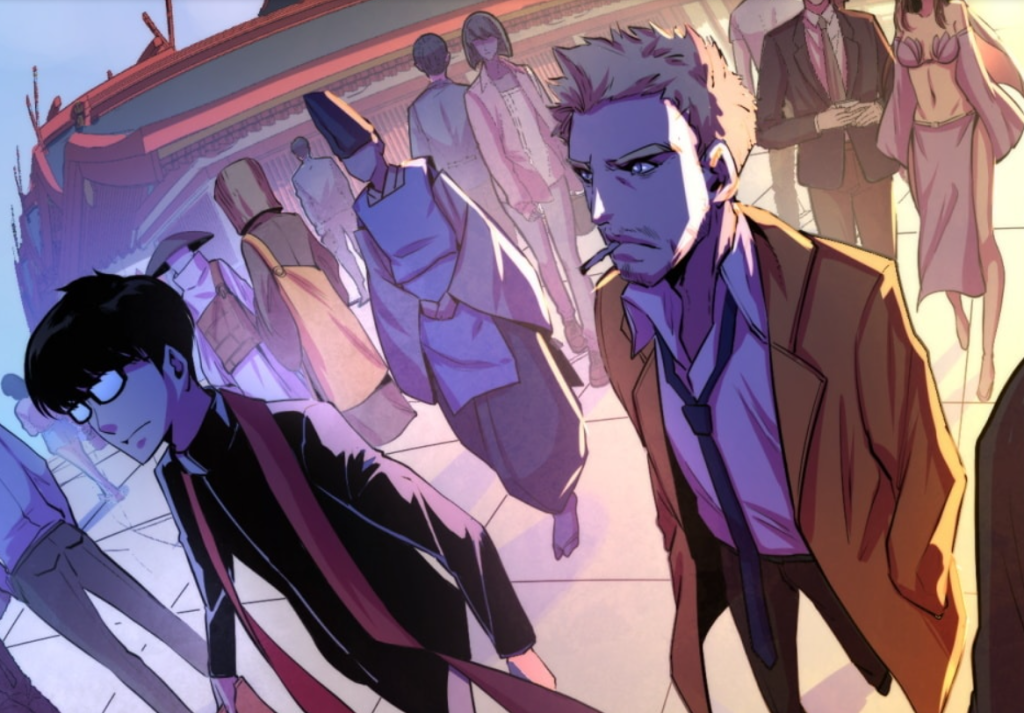
As of the time of this writing, the whole manhua (over 200 episodes) has not yet been translated and released in English, so it continues to be a very slow burn, building up its world, introducing new characters, etc. Hopefully, the translation will actually be completed; some translations of serial works tend to stop before the end if the interest isn’t there for it, leaving the work incomplete, as happened with Apocalypse Zero.
For readers interested, the first chapters are free to read on Tapas, with updates every Monday.
Bobby Derie is the author of Weird Talers: Essays on Robert E. Howard and Others and Sex and the Cthulhu Mythos.
Deep Cuts in a Lovecraftian Vein uses Amazon Associate links. As an Amazon Associate I earn from qualifying purchases.
 Deep Cuts in a Lovecraftian Vein
For those who are interested in this story, you will need patience. Because at the start there will be a mix of many elements such as Doctor who, fairy tales, and many philosophical and psychological theories etc. It is the second half that starts to dive in and show more of the Lovecraftian or more Western elements such as Cthulhu, Deep ones, Undeads, Vampires and etc. I recommend waiting if you are interested for purely the Lovecraftian elements.
LikeLiked by 1 person