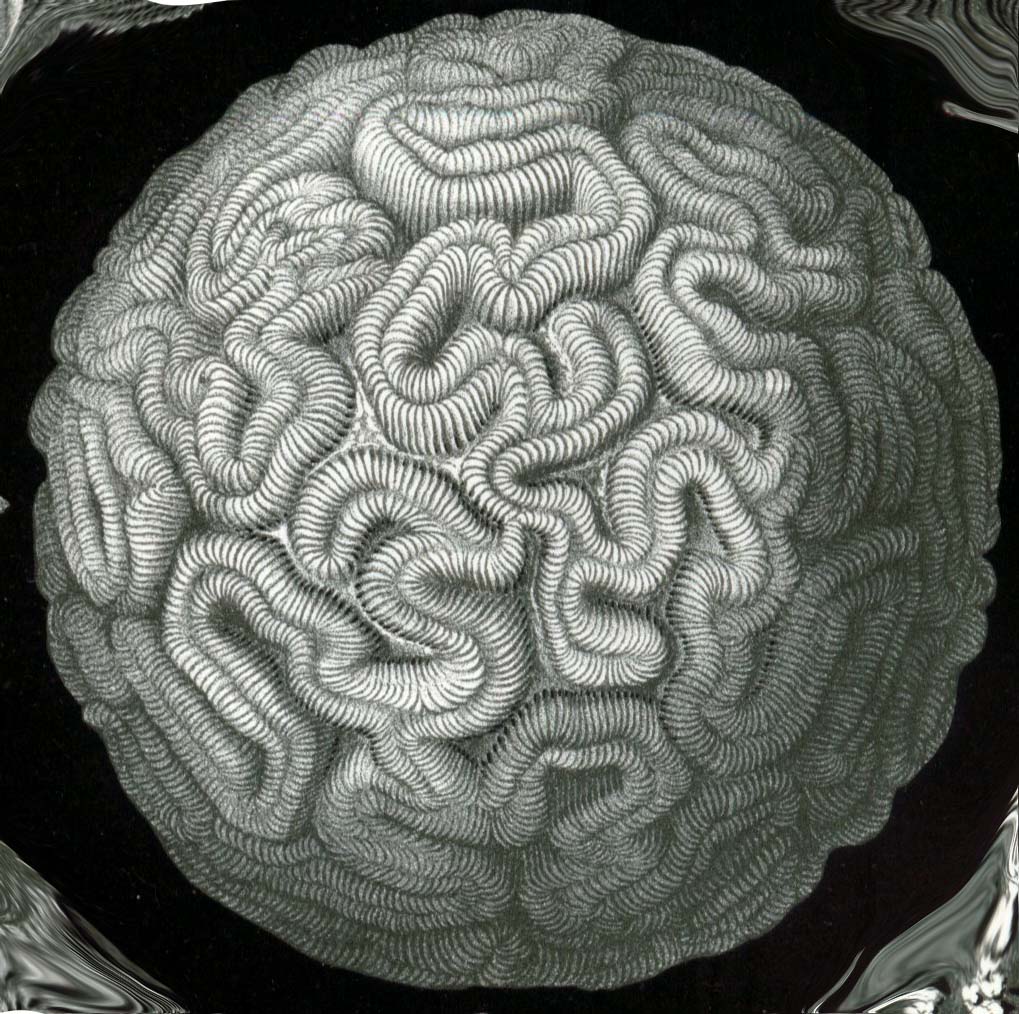
“I was wondering about my eyes; one of my eyes—the left—saw everything golden and yellow and orange, and the other eye saw shades of blue and grey and green; perhaps one eye was for daylight and the other was for night. If everyone in the world saw different colors from different eyes there might be a great many new colors still to be invented.
—Shirley Jackson, We Have Always Lived in the Castle
The power of Aickman’s stories, to me, lies in their VIBE: how does one analyze that? I can relay the known facts, characters, plot points (and assume that these facts, as relayed, are reliable)—this does little to explain the atmosphere you find yourself in, upon reading this story. Without reading his specific words, phrasing, etc—without ingesting how the words are arranged—it’s a bit akin to me explaining a particularly disturbing dream I had: I can relay the pertinent details, but the mood and feel are impossible to convey.
It is the accumulation of myriad things and personal symbols, arranged just so, that provides the unique distress of our dreams, and they seem rather nonsensical as a whole, or incredibly banal when relayed. This is what I am reminded of when I delve into this story. I can read you the lyrics of a song- without the music, it is an incomplete encapsulation. To try to fully analyze or interpret Aickman does his Art and Words a tremendous disservice because it is fundamentally the MYSTERY that contains the magic of his storytelling.
Many readers may be frustrated by the ambiguity inherent in his stories, or baffled by their cryptic nature; others may find them to contain exactly what they were looking for, scratching an itch that they hadn’t even known they had.
As a queer woman, I am instinctively drawn to such ambiguity. Unless we are lucky enough to be surrounded by other queer people, we usually live our lives in—and surrounded by—a constant, perpetual state of ambiguity. We still exist on the outskirts and fringes of society, and whether we’re trying to interpret another’s romantic affections (or interest), their intentions, our human rights, or whether our queerness is embraced or even acknowledged, we are usually unable to take anything for granted or as a given.
My perspective has a queer lens, but this also applies universally. Aickman’s stories reflect the ambiguity, uncertainty, and peculiarity of Life in all its glory. They take the utter weirdness of Reality and skew it just enough to say something profound about what we can interpret from “the left unspoken,” the truly unknowable; the cracks in the spaces of things.
Most horror, especially cosmic horror, relies on its implications; I feel that Aickman’s horror is very much of a cosmic nature, but deviates from the definition as we ascribe it traditionally. Aickman, according to Ramsey Campbell, was not a fan of Lovecraft OR horror. He preferred the term “strange stories.” They certainly are strange, but many are also definitely horror. (They are also simultaneously comforting to me in a way, because of this peculiar ambiguity, but that’s another essay.)
The horror of an Aickman story does not lie in the implications because by definition, implications are implied by undisputed facts, concrete knowledge we assume within the confined reality of a story. Yet in the nightmare logic of an Aickman story, everything is called into question because much of what comes across as “peculiar” are typically things and situations we would think of as mundane, benign, ordinary, on their own—it is how and where these things are placed within the confines of his stories, and their accumulation, that allows the uncanny feel to increase. The true “why” remains undetermined. The abject horror I feel inherent in most of Aickman’s stories is in the immense possibilities and implications of the implications themselves: ALL bets are off. If most horror shows us pieces of the shadowy Things hiding in the shadows, Aickman’s shows us that those shadows have cracks of their own where other Things hide.
Coming to the end of an Aickman story is to amass a giant jigsaw puzzle, realizing as you snap the last piece into place that there are actually still several fundamental pieces missing, and that it is only with the addition of these pieces that it is possible to comprehend exactly what it is that the puzzle is of. Aickman may have had the pieces, but he’s not sharing.
I feel a summary of the story is helpful:
In “Choice of Weapons” the prickly, stuffy, dissatisfied, somewhat unsympathetic Malcolm is dining with his hapless fiancée Ann when he becomes suddenly, intensely enamored with a woman sitting by herself. He flees his date, follows the woman, and sees a man in fancy dress leaving a house he thinks may be hers. A concerned doctor, Dr. Bermuda, hypnotizes him to determine the address (telling him “the only way to get rid of a temptation is to yield to it”) and also provides her name.
He visits her and discovers Dorabelle is a peculiar woman with peculiar thoughts living in a peculiar house. She is quite possibly unbalanced, erratic, and may be having hallucinations. It also appears, although she claims she is poor and the house is in a state of disrepair, that the house is stuffed with money—until her butler makes off with it and never returns.
After several visits, Dorabelle tells him she is in love with another man—the fancy-dressed man he saw previously. She confides that this man appeared to her one day in her mirror after her reflection disappeared; they will be married. After a disastrous encounter where Malcolm attempts to kiss her and she responds with fury, he is surprised when Dr. Bermuda arrives at the house with his son and takes him home. There, he is informed that after being “prescribed” to by the sympathetic Dr. Bermuda, Ann has overdosed on pills.
Malcolm goes to sleep, dreams of Dorabelle, then awakens to discover a note that reads, ‘I want you’ with no signature. He assumes it’s from her and races to her house, where he is accosted by the man in fancy dress who accuses him of stealing Dorabelle’s money and challenges him to a duel: “There are rapiers behind the clock. Or pistols in my bedroom.” Malcolm chooses the swords—they duel. He throws a candlestick in the man’s face while piercing him with his weapon, then falls unconscious. When he awakes, Dr. Bermuda is there and leads him to Dorabelle, who is gravely wounded; he realizes that Dorabelle was the fancy-dressed man. She proclaims her love, they kiss, and she dies. The police arrive; Dr. Bermuda is again sympathetic, telling Malcolm that although modern science has failed to cure him, he will not leave him to suffer consequences from the law. He instructs his son to look behind the mirror in the bedroom and bring them what he finds, at which point the story ends.
I share this summary to relay the salient points of this story for anyone unfamiliar, but it does not begin to convey the myriad ways in which this story meanders and weaves in and out of itself and defies an easy explanation. Almost everything of import that happens can be read in different ways, and even insignificant details are odd. The things Aickman does not explain feel as important as what he does. The entire thing is an enigma wrapped inside a riddle of near inscrutability. Going for a logical explanation of the whole sends you into unfathomable possibilities and interpretations. No one is a reliable narrator, including the Reality of the story.
Ultimately, the doctor can be seen as being a benevolent helper or a malevolent manipulator. His hypnosis and specific advice help fuel Malcolm’s trajectory when his obsession would have likely petered out on its own. He may have innocently prescribed the fiancée sleeping pills; he may have hypnotized and/or manipulated her; he may have murdered her due to an unknown motivation, then used his medical credentials to cover it up. It also appears that he may have been the one responsible for writing the anonymous note that Malcolm finds by his bedside. Is he orchestrating all these deaths for his own selfish reasons? What is the something that the doctor asks his son to fetch from behind the mirror—the pistols? Is he going to kill Mlacolm or convince him to kill himself? Was it all an elaborate plan to steal Dorabelle’s money—the money the butler already made off with?
The meaning of the title “Choice of Weapons” literally refers to the rapiers and pistols, and the story implies that no matter which Malcolm chose, one of these weapons would be responsible for his undoing, even upon winning the duel. Yet another interpretation is: will science or emotion win out? Will rationality, or delusions? These choices also determine his and Dorabelle’s outcome.
What was Dorabelle’s motivation for dressing up as a man? To make Malcolm jealous? Did she even impersonate a man? For there is a supernatural interpretation one can make: that in this world, there really IS a man living inside her mirror, either existing already or conjured up by Dorabelle’s desire/longing, and that he took possession of her body during the duel, only to be banished back to his realm once he is grievously injured.
The only things I can say with certainty about “Choice of Weapons” are that in this story, unrequited or unproclaimed love ultimately brings ruin to the two main characters, with one of them causing the death of the other and also having a hand in the death of his fiancée. Even if Malcolm was manipulated, it’s of note how easily he was influenced when in a vulnerable state, and it illustrates how subjective our reality is when perception and perspective are colored by our own desires. The other lesson it proffers is that it is not wise to put all of your faith in a doctor (or anyone in authority) and assume that they’re working in your best interests.
It’s interesting to note that in most of the accounts I’ve read about him, Aickman himself could be described similarly to Malcolm: prickly, stuffy, discontented. This story ultimately speaks to the dangers of obsession and jealousy, which may have been his ultimate intention; Aickman may have been purging personal demons. It may or may not be relevant that he knew firsthand of being madly in love and then rejected: he was deeply wounded/offended when his affair with the writer Elizabeth Jane Howard ended and she chose instead to marry another. It’s a theme that comes up in more than one of his stories.
A strong sense of alienation frequently infuses his work, and his characters are often outsiders. Even when not sympathetic, they retain an inherent sadness and dissatisfaction within the reality of the worlds they inhabit, and this is something that resonates deeply with me, particularly in this story. I often feel a bit sad about, or pity, his characters and the frustrations they must feel navigating a world that often seems unfamiliar or unwelcoming to them. It may be my queerness or my neuro-divergence but I feel a kinship with and empathy for these two main characters who find themselves adrift, lost, as they make their way through their lives. Both the man and Dorabelle are each looking for someone who accepts and loves them—each of them thinks they find it—but neither is ready to accept the reality of their surroundings and situations, and the results for both are ultimately and irrevocably tragic.
This story provides ample puzzling material for analysis and attempting to determine meaning. I don’t presume to have any “right” answers- I don’t think there ARE any. That’s the joy for me of an Aickman story, and each time I read this, or any of his stories, I have new and different thoughts and opinions about what they may mean. He remains a unique, memorable storyteller of a very particular type of magic: one that sometimes leads me to believe that he may have been seeing the REAL world all around us, but that WE only have the right kind of eyes some of the time.
Stina Patton is an artist, writer, reviewer, and lover of the strange, surreal, and unsettling. She currently resides in Hell where she is kept sane by her many, many books and not as many cats. Find her creepy (and not-so-creepy) Art at stinasdemons.bigcartel.com/ and see her thoughts on life and Horror on Bluesky @stinasdemons.com
Copyright 2026 Stina Patton.

