El Puritano (2021) by El Torres, Jaime Infante, & Manoli Martínez

¿Dónde está Bess?
El Puritano (2021)

“Where is Bess?” said Solomon Kane.
“Woe that I caused her tears.”
“In the quiet churchyard by the sea
she has slept these seven years.”
The sea-wind moaned at the window-pane,
and Solomon bowed his head.
“Ashes to ashes and dust to dust,
and the fairest fade,” he said.
—Robert E. Howard, “Solomon Kane’s Homecoming” (1936)

For any other pulp writer, Solomon Kane would be a breakout character. Robert E. Howard’s original pulp stories, even the unpublished drafts, fragments, and synopses, have been collected, published, translated into other languages, and recorded as audiobooks. Kane has been adapted to comics by at least Marvel, Blackthorne, Dark Horse, Diabolo Ediciones, and now Karras Comics. In 2009 a feature film titled Solomon Kane was released; no less an author than Ramsey Campbell handled the novelization, and Campbell had also previously completed some of Howard’s Solomon Kane fragments. There is a Solomon Kane roleplaying game, a Solomon Kane board game, toys and action figures, and bootleg t-shirts. Solomon Kane has even been borrowed into the work of other authors, like Paul Di Filippo’s “Observable Things.”

Few pulp characters can claim as much success in publication, commercialization, and longevity. Yet Robert E. Howard’s Solomon Kane has since the 1930s dwelled in the shadow of Conan the Cimmerian. While Solomon Kane was Howard’s first successful series character, Conan was easily his most popular, and the tales and poems of the Puritan swordsman are often discovered by readers after they have already been hooked by Conan.

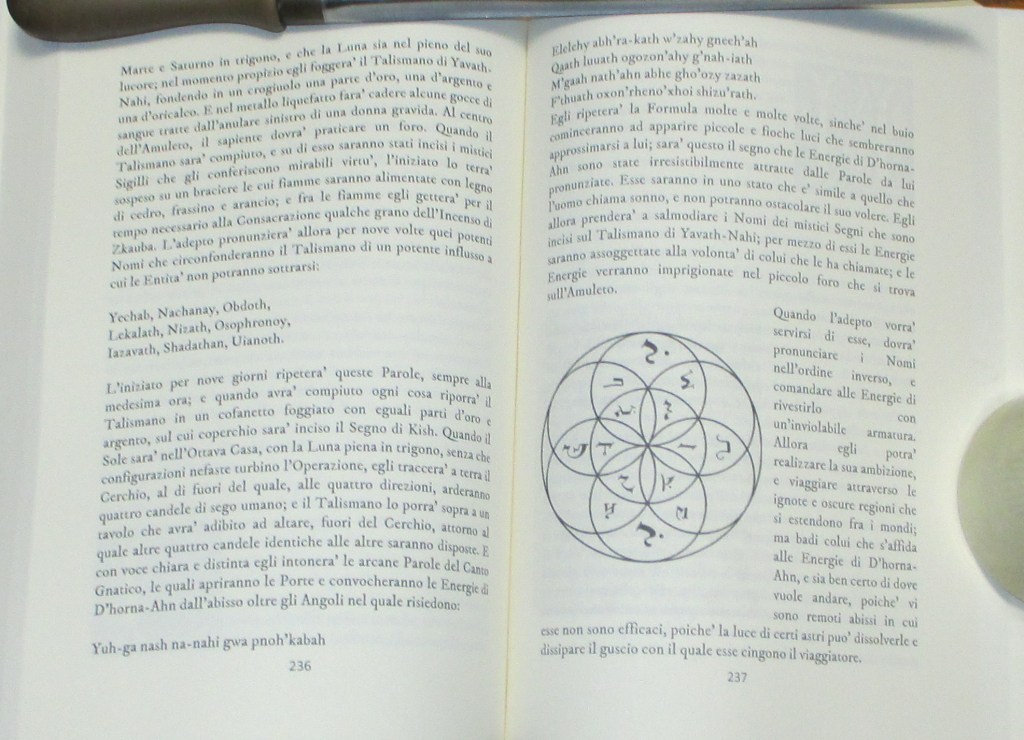
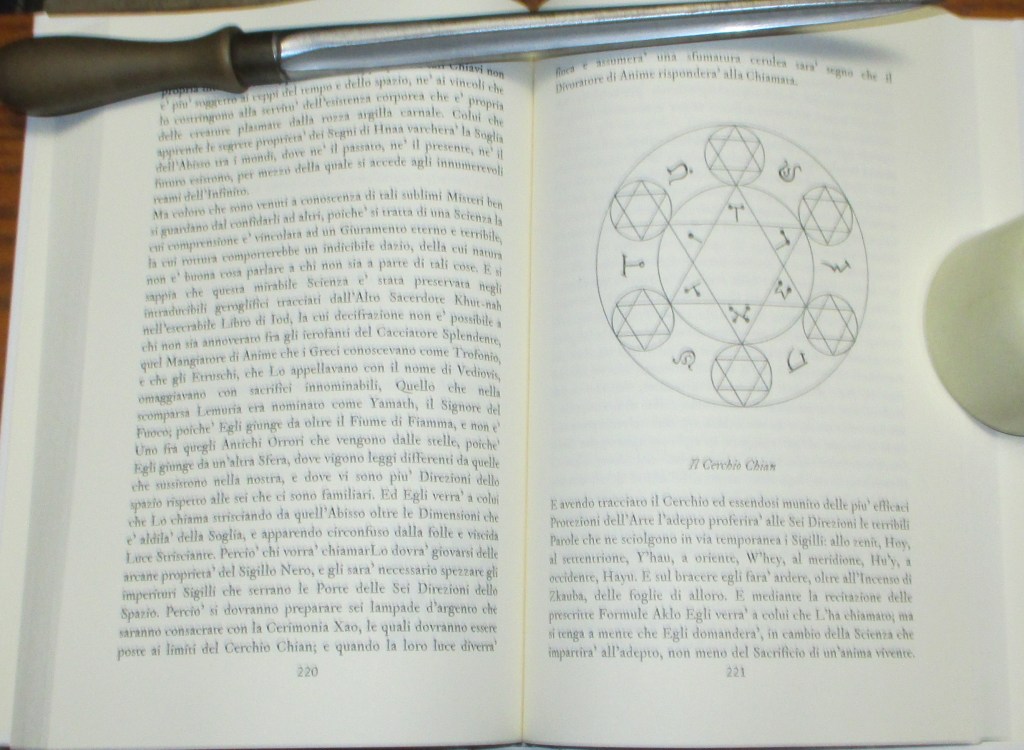
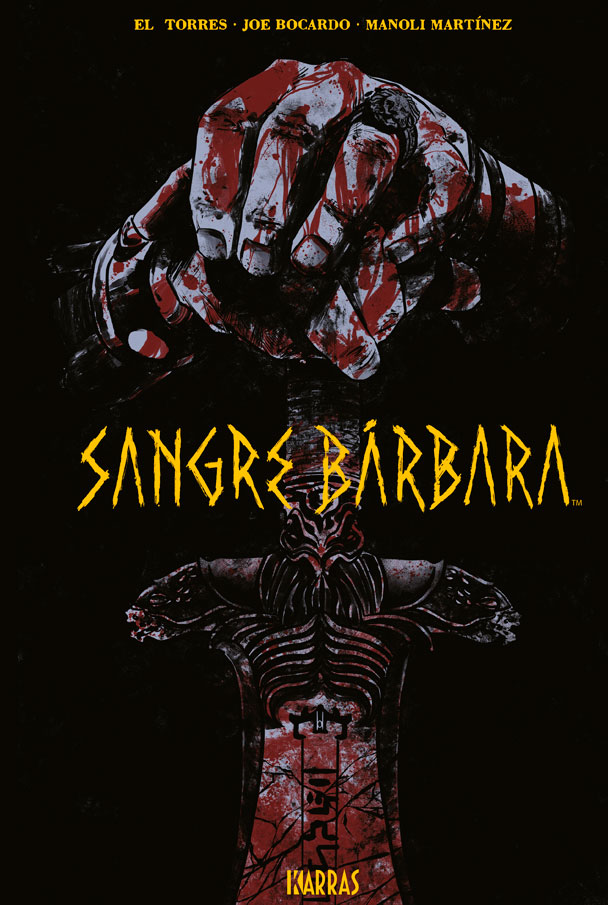
El Puritano (“The Puritan,” 2021, Karras Comics) is an original graphic novel based on Robert E. Howard’s Solomon Kane, who has fallen into the public domain in Europe. The creators of this graphic novel are El Torres (script), Jaime Infante (pen & inks), & Manoli Martínez (colorist); the logo was designed by Ferran Delgado. While it is a standalone graphic novel in that the story is self-contained, the framing narrative makes this a kind of “second chapter” to Sangre Bárbara (2021) by El Torres, Joe Bocardo, & Manoli MartínezEl Puritano begins where Sangre Bárbara ends, with the former slave Mary Bohannon telling tales to a young Robert E. Howard, so while each stands on its own, taken together there is an episodic narrative…or perhaps it would be more accurate to say that Robert E. Howard’s own story, the narrative and mythology of his life, have been closely entwined with his characters so that he becomes the common bridging element between them.

Solomon Kane did not attract as much fan interest as Conan in the 1930s, ’40s, and ’50s, so there were fewer efforts to define a canonical chronology of his adventures—and indeed, Howard made no particular effort to set down a timeline; certain adventures clearly take place after others, because they refer to earlier events or Kane had acquired his strange cat-headed staff, but trying to fix real-world dates gets problematic. We never see Solomon Kane’s parents or home, we never get a fix for when he was born or how old he is; Kane steps onto the page, fully formed, and leaves the same way after completing his mission.

In El Puritano, El Torres and Jaime Infante have placed a much older but still spry Solomon Kane in the English colonies of North America. Various influences are at play here, some more obvious than others: Arthur Miller’s The Crucible (1956); Twins of Evil (1971), starring Peter Cushing as a witch-hunter; and The VVitch (2015) by director Robert Eggers all play their part in the mix, with little nods and homages to the various creators, actors, and storylines at play. Solomon Kane, the self-declared Puritan, is present in a colony of fellow believers, and yet he is apart from them. As it may be, since Howard noted:

All his life he had roamed about the world aiding the weak and fighting oppression, he neither knew nor questioned why. That was his obsession, his driving force of life. Cruelty and tyranny to the weak sent a red blaze of fury, fierce and lasting, through his soul. When the full flame of his hatred was wakened and loosed, there was no rest for him until his vengeance had been fulfilled to the uttermost. If he thought of it at all, he considered himself a fulfiller of God’s judgment, a vessel of wrath to be emptied upon the souls of the unrighteous. Yet in the full sense of the word Solomon Kane was not wholly a Puritan, though he thought of himself as such.
—Robert E. Howard, “Red Shadows”

The story that unfolds is a love letter to the character, with many references to past adventures without dwelling on them. Kane is faced once again with supernatural evil, and the need to defend an innocent young woman whose only crime may have been to love a witch. But Kane is also faced with his own conscience and past deeds—and how his own people, with all their superstition and ignorant faith, judge him and others. N’longa makes a surprising but very appropriate appearance, this time inhabiting the flesh of a Wampanoag woman, a kind of transgender experience that is at once novel and yet very fitting for the character.

Jaime Infante’s subdued, realistic artwork greatly compliments the script, and Manoli Martínez does some really notable work as a colorist, shifting the palette of the scenes to depict flashbacks, astral visitations, somber daylight, and vicious battle.

The story ends, not with Mary Bohannon talking to a young Robert E. Howard, but with Bob himself in his room, standing before the typewriter. The house still stands in Cross Plains, TX, now a museum with Bob’s room restored. You can see a Tour of the Robert E. Howard Home by Ben Friberg online, if you can’t get out there in person, and see it just as Infante tried to capture it on the page. Bob needs to write a story, and begins to type the opening words of “Red Shadows”…so it is both an ending and a beginning; what might be the last tale of Solomon Kane loops around as Howard records his legend. It begins and ends with Robert E. Howard.

El Puritano can be purchased from Karras Comics; they are working on other new works based on Robert E. Howard’s stories and characters as well.


Bobby Derie is the author of Weird Talers: Essays on Robert E. Howard and Others and Sex and the Cthulhu Mythos.

Deep Cuts in a Lovecraftian Vein uses Amazon Associate links. As an Amazon Associate I earn from qualifying purchases.
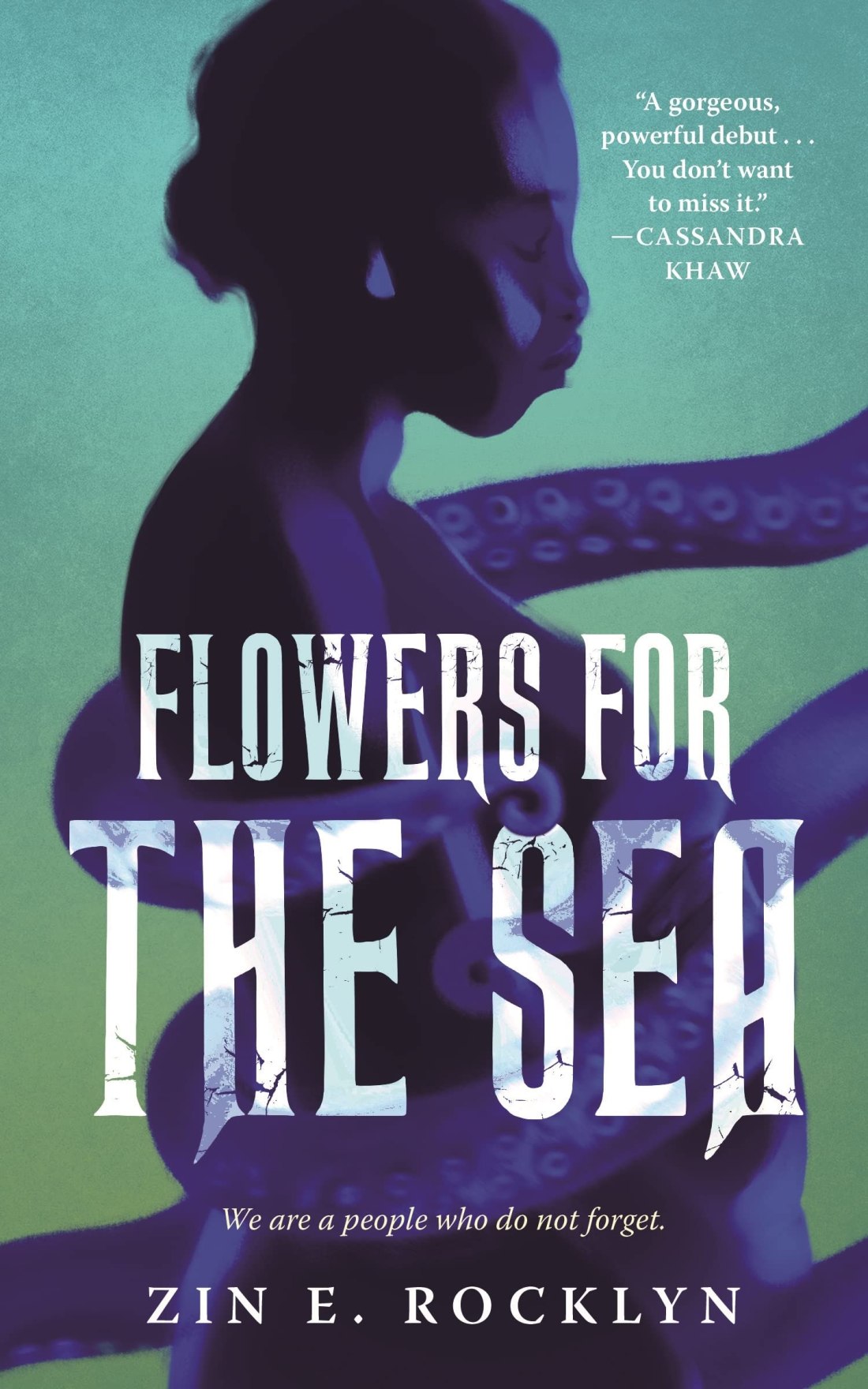
Sangre Bárbara (2021) by El Torres, Joe Bocardo, & Manoli Martínez

“Sabed, oh Principe…

“…que entre los años en que los océanos enguilleron Atlantis y sus resplandecientes ciudades, y el surgir de los hijoes de Aryas…

“…hubo una edad no soñada.”

Brillantes reinos se esparacían por el mundo como mantos azules bao las estrellas.

“Nemedia, Ofir, Brithunia, Hiperbórea…”

“Zamora, con sus mujeres de oscuros cabellos y sus torres plagadas de arácnidos misterios…”

“Zingara y su gallardía, Koth, que lindaba con las tierras de pastoreo de Shem.

“Estigia, con sus tumbas custodiadas por sombras.

“E Hirkania, cuyos jinetes vestían de acero, seda y oro.

“Pero el reino más orgulloso del mundo era Aquilonia, que reinaba suprema en el oeste.

“Ya hacía años que allí regia el poderoso Rey Conan, el cimmerio, aquel que fue guerrero, ladrón, pirata y saqueador antes que gran monarca.

“Y llegó el tiempo en que una sombra se agitó en las junglas Pictas que dormitaban al oesta de Aquilonia.”
“Know, oh Prince…

“…that between the years when the oceans engulfed Atlantis and her resplendent cities, and the rise of the sons of Aryas…

“There was an age undreamed of.”

Brilliant kingdoms spread across the world like blue mantles beneath the stars.

“Nemedia, Ophir, Brythunia, Hyperborea…”

“Zamora, with its dark-haired women and its towers plagued by arachnid mysteries…”

“Zingara and her chivalry, Koth, which bordered on the pastoral lands of Shem.

“Stygia, with its shadow-guarded tombs.

“And Hyrkania, whose horsemen wore steel, silk, and gold.

“But the proudest kingdom in the world was Aquilonia, which reigned supreme in the west.

“It had been years since the mighty King Conan, the Cimmerian, ruled there, the one who was a warrior, thief, pirate, and plunderer before being a great monarch.


“And the time came when a shadow stirred in the Pictish jungles that slept west of Aquilonia.”
Sangre Bárbara (2021, Karras Comics)

So begins Sangre Bárbara (“Barbarian Blood,” 2021, Karras Comics). It is a fitting opening, with a variation of the incipit that Robert E. Howard wrote for “The Phoenix on the Sword,” which was the very first Conan the Cimmerian story, and which ran as a masthead across the Marvel Conan the Barbarian comics for decades, and even ran in a slightly different form at the beginning of the Conan the Barbarian (1982) film that starred Arnold Schwarzeneggar. The opening sets the mood; it immediately places the reader in the time and place for the action, and then the story opens…

As with The Barbarian King 1: Le Spade Spezzate (2019) by Massimo Rosi & Alessio Landi and The Song of Bêlit (2020) by Rodolfo Martínez, this is an original work which takes advantage of the fact that Robert E. Howard’s characters and fiction have fallen into the public domain in Europe. The creators of this graphic novel are El Torres (script), Joe Bocardo (pen & inks), & Manoli Martínez (colorist); the logo was designed by Ferran Delgado.

Like The Barbarian King, Sangre Bárbara is set after the series of stories written by Robert E. Howard, giving the creators a freer hand in writing the adventure. Unlike that work, the principal character in the story is not Conan of Cimmeria…although he is still very much in the story…it is his son, the Prince Conan. A lean young man with the lean build and close-cropped hair of a boxer or legionnaire, scouting in the Pictish wilderness over the Aquilonian border, much as his father did in “Beyond the Black River.”

The story that follows wears several of its literary and artistic influences openly: the iconography of the 1982 film runs through the book like a river, from the cover to almost the last page. There is strong dedication to the original Howard texts, as shown in the opening. And there are hints of suggestions from the Marvel comics as well; I wouldn’t liken it to any kind of borrowing, but more of an inspiration: there was a storyline in Marvel’s Conan the King series titled “The Prince is Dead” which might have been the seed of this story…but Karras Comics takes the storyline much further than Marvel would ever have dared.

There is nudity, and there is gore; the writers and artist get away with it because they finally can—the same way the writers and artists of the French Glénat adaptations, and the Italian Leviathan Labs The Barbarian King books. Conan comics have almost always been a little more mature than the standard superhero fare, a little more bloody and sexy and visceral, but they have never been primarily ago either sex or blood. There are plenty of pornographic and horror comics that go in for plenty of each, if those are what readers want; so the trick for Conan comics nowadays is finding the right balance—in 2006, Dark Horse released a nude cover for Conan the Barbarian #24, and that was too much for some. In Sangre Bárbara, for the story being told and the atmosphere being set, it is certainly not much more explicit than in the 1982 film.

When reading this neo-Howardiana, it is interesting to see the choices that the writers and artists make in the depiction of the Hyborian Age. In this particular case, it is notable how racially diverse the cast is. Robert E. Howard held many of the racial prejudices one would expect of a young white man who grew up primarily in small towns in Texas; it was mentioned in the memoir One Who Walked Alone (1986) by Novalyne Price Ellis how Cross Plains was a sundown town. Some of this 1930s Texas racial stratification made it into Howard’s tales of the Hyborian Age—and some of that was continued in the Conan pastiches by other authors, which is why Charles R. Saunders wrote “Die Black Dog! A Look At Racism In Fantasy Literature” (1975, rev. 2011)—but they aren’t essential to it. Of course you can have Black characters in the Hyborian Age. Why not?

It is difficult not to compare Sangre Bárbara and The Barbarian King, since both works are branching off from similar premises, but they go about their work very differently. The Barbarian King is more acid sword & sorcery, heavier on the magic and the melancholy, the dream-like sequences and monstrous clash of color. Sangre Bárbara is much more gritty, subdued, and realistic; there is sorcery, but it isn’t bolts of flame erupting from fingertips, and the conflicts in the story are more complex than just a math problem of how many bodies can be piled up with a sword. There is a constant thread on the nature of civilization that runs through the story…right down to the last, and my favorite page.

As regards African-legend sources, I well remember the tales I listened to and shivered at, when a child in the “piney woods” of East Texas, where Red River marks the Arkansaw and Texas boundaries. There were quite a number of old slave darkies still living then. The one to whom I listened most was the cook, old Aunt Mary Bohannon who was nearly white—about one sixteenth negro, I should say.

Robert E. Howard to H. P. Lovecraft, c. Sep 1930, A Means to Freedom 1.44

This is, as far as I am aware, the first appearance of Mary Bohannon in comic book or graphic novel—and I like the sentiment, that to honor the past does not mean to be bound to every part of it irrevocably, and that the future remains to be written. The adventures of Conan are far from over, there are tales of the Hyborian Age left to tell—and maybe they will be a little more mature in more ways than just enough blood and nudity to ensure an NC-17 rating, but in what stories they tell and how, and how race fits into the age undreamed of. Certainly, this is a good start.

Sangre Bárbara can be purchased from Karras Comics; they are working on other new works based on Robert E. Howard’s stories and characters as well.


Bobby Derie is the author of Weird Talers: Essays on Robert E. Howard and Others and Sex and the Cthulhu Mythos.

Deep Cuts in a Lovecraftian Vein uses Amazon Associate links. As an Amazon Associate I earn from qualifying purchases.

The Barbarian King: Salomé (2020) by Barbara Giorgi & Nicolò Tofanelli


Salomé muore e arriva nell’Aldilà.

La vista dell’Inferno è così terrificante de spaventare a morte anche la strega.

Con le ultime energie rimaste stringe un patto con un demonio, un traghettatore di anime, prigioniero anch’egli degli Inferi.

Salomé gli dona parti del suo corpo e quel che rimane della sua anima per fuggire dall’Inferno. In cambio dovrà donare al demone un erede, ma fare patti con il Male ha sempre delle consequenze terribili.
Salomé dies and arrives in the afterlife.

The sight of Hell is so terrifying that it scares even the witch to death.

With her last remaining energy she makes a pact with a demon, a ferryman of souls, also a prisoner of the Underworld.

Salomé gives him parts of her body and what remains of his soul to escape from Hell. In exchange she will have to give the demon an heir, but making deals with Evil always has terrible consequences.
Back cover copy to The Last Barbarian: Salomé (2020)

One of the surprises in The Barbarian King 1: Le Spade Spezzate (2019) by Massimo Rosi & Alessio Landi was the appearance of Salomé, the witch-queen from Robert E. Howard’s Conan story “A Witch Shall Be Born” (Weird Tales Dec 1934). This was a surprise not only because of a tie-in with another classic Conan tale, but because Salomé was quite firmly deceased at the end of that episode, long before Conan won his kingdom of Aquilonia. So how did she show up in The Barbarian King?

To answer that, Leviathan Labs published a spin-off: The Barbarian King: Salomé (2020). The creative team for this effort was Barbara Giorgi (script), Nicolò Tofanelli (pencils/inks), Angelo Razzano (colorist), Massimo Rosi (editor), Mattia Gentili (letter), and Lucrezia Benvenuti (logo & map design). This graphic novel covers what happened to Salomé between the end of “A Witch Shall be Born” and her appearance to aid the stricken Conan in The Barbarian King 1.

Robert E. Howard did populate his Conan tales with various non-Conan characters, but he never wrote any separate adventures of Bêlit or Valeria, or of Conan’s grandfather or sons or daughters, so there was no exact precedent for spin-offs. Thus it should not be surprising that in the seventy-odd years of Conan pastiche stories and novels, and fifty-odd years of Conan comics, spin-offs for side characters are comparatively rare. Pasticheurs, faced with the choice of writing new Conan tales or new non-Conan tales set in the Hyborian Age, generally went with the former; although The Leopard of Poitain (1985) by Raul Garcia-Capella is a notable early exception, and The Song of Bêlit (2020) by Rodolfo Martínez focuses in large part on Bêlit, though it is still a Conan story at heart.

In comic books, Marvel was largely skittish about spin-offs, early in Conan the Barbarian‘s run Roy Thomas and Gil Kane had produced a “Tale of the Hyborian Age” backup feature, echoing the successful “Tales of Asgard,” but the idea was never repeated. As Thomas tells it:

So I enlisted Gil to do a “Tale of the Hyborian Age”—a series I’d hoped to use occasionally in the 52-page Conan to give Barry [Windsor Smith] a rest. “The Blood of the Dragon” introduced the concept (which may have been Gi’s idea, since we co-plotted the story) that, when the hydragon was killed, its human assassin was magically changed to take its place. I was always proud of the name “hydragon,” combining the mythical “hydra” and the word “dragon,” and intended one day soon to use the hydragon of the Bossonian Marches in an actual Conan story.

Roy Thomas, Barbarian Life. vol. 1, 76

Conan never faced the hydragon, and there would be no more “Tales of the Hyborian Age.” Instead, Thomas created Red Sonja—an original Hyborian Age character loosely inspired by Robert E. Howard’s Red Sonya of Rogatino from “The Shadow of the Vulture” (The Magic Carpet Magazine Jan 1934). Red Sonja would go on to become a character who could be the protagonist of her own series—or series of series—which are still ongoing as of this writing.

Leaving Red Sonja aside, there were very few non-Conan series to spin-off from the main line: Conan: The Book of Thoth (2006, Dark Horse), Age of Conan: Bêlit (2019, Marvel), Age of Conan: Valeria (2020, Marvel), and Bêlit & Valeria: Swords vs. Sorcery (2022, Ablaze) are the only other spin-off series centered on characters from the Conan line; one might add Robert E. Howard Presents Thulsa Doom (2010, Dynamite) which spun out of Dynamite’s Red Sonja comics, though the character shares little more than a name with Howard’s original creation. Even so, that is a rather sparse showing from the dozens of series and hundreds of Conan and Red Sonja comics produced.

Red Sonja probably gives a good explanation why: for all of the worldbuilding that was put into the Hyborian Age by Robert E. Howard and subsequent writers, many of the comic adventures made little use of this. Red Sonja and Conan often tackled monster-of-the-month in their individual comics, or adventured through cities and countries never named by Robert E. Howard, in what were effectively generic sword-and-sorcery stories starring familiar protagonists. Even when Marvel published both Conan and Red Sonja comics at the same time, the two series were not written with reference to one another; they were effectively standalone S&S series that only nominally shared the same setting.

The same issue is evident in the spin-off series based around Thoth-Amon, Bêlit, Valeria, and Thulsa Doom. Many of these stories were well-written and illustrated—Sana Takeda’s covers for Age of Conan: Bêlit are absolutely gorgeous—but for the most part, these stories veer fairly far from Howard’s original conception of the characters and often have limited continuity with the Hyborian Age in the series they’re nominally spinning off from. Readers interested in greater lore for the Hyborian Age, like readers of the Cthulhu Mythos that desire more fragments of the artificial mythology to fit into their puzzle, were disappointed.

The Barbarian King: Salomé certainly takes it liberties with the character and the setting—but it begins very faithfully to “A Witch Shall Be Born.” Salomé begins just as Howard and Conan had left her, dead and her schemes unraveled. What we get next is her afterlife, which Howard never depicted or wrote about, so the writer and artist had a very free hand. I rather suspect that a possible inspiration for the series was Claudia Chevalier Vampire (2004- , Pat Mills & Franck Tacito), which is a spin-off of the popular Requiem Chevalier Vampire (2000-2012, Pat Mills & Olivier Ladroit)—both series have an emphasis on Hell, violence, sexuality, and mature storytelling, with the spin-offs taking a prominent female supporting character and turning them into a protagonist to expand on their characterization and tell their story.

Salomé’s harrowing, and the physical and mental transformations of her character—something less than redemption—lead her very far from the character that Robert E. Howard created. Yet it does change her into exactly the strange, wan, damaged character who aids Conan in the pages of The Barbarian King. Nor do they ever lose sight of where Salomé came from; her own abandonment as an infanticide and rescue being important themes in her interactions with other characters.

In that sense, Salomé follows the same philosophy of The Barbarian King: Robert E. Howard’s work is the launching point from which the creators start, but they are pushing into new, unwritten territory…but not without losing sight of where they came from, or where they’re going. If you like The Barbarian King, Salomé is an interesting accessory that goes deeper into the background and character of an important supporting character.

The Barbarian King: Salomé (2020) is available from Leviathan Labs. Like The Barbarian King it is in Italian, with no English translation yet.


Bobby Derie is the author of Weird Talers: Essays on Robert E. Howard and Others and Sex and the Cthulhu Mythos.

Deep Cuts in a Lovecraftian Vein uses Amazon Associate links. As an Amazon Associate I earn from qualifying purchases.
“The Whisper of Ancient Secrets” (2010) by Penelope Love

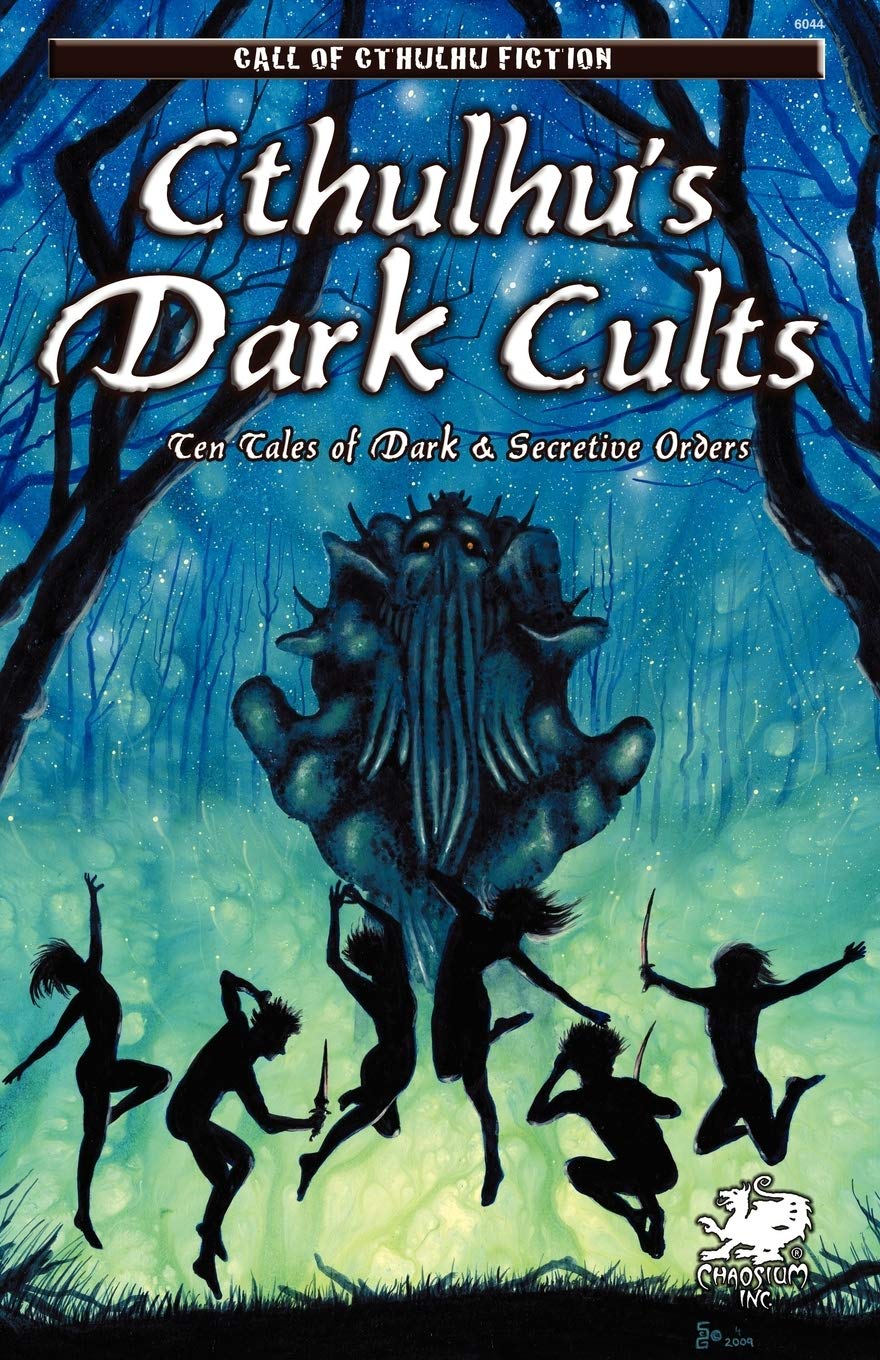
An often underestimate influence on Lovecraft’s genre is the immensely popular and long time market-sayer, the Call of Cthulhu roleplaying game, published by Chaosium, Inc.  […] The game’s influence extended further than just the gaming community, for Lovecraftian and Cthulhu Mythos authors were quick to discover that Chaosium’s sourcebooks provided a wealth of information, by categorizing and defining Lovecraft’s visions. Soon the game became an encyclopedia, the first point of call for all things Cthulhuoid. This influence is so profound, that new creations which first appeared in the Call of Cthulhu game now appear regularly in the fiction of modern day Lovecraftian authors.
—David Conyers, “Introduction” to Cthulhu’s Dark Cults viii

Tabletop roleplaying games involve many different types of writing and editing. If you were to sit down and write a new game ex nihilo, you would need to first engage in some top-down game design, probably starting with a concept or pitch for the game—who are the player characters and what do they do?

In Dungeons & Dragons, you are an adventurer and you go on adventures! In Shadowrun, you are a shadowrunner, a mercenary criminal in a fantasy cyberpunk future, and you go on shadowruns, which are illegal jobs that can range from smuggling to murder-for-hire to corporate espionage…only with dragons and elves. In Vampire: the Masquerade, you are a vampire and navigate the complex politics of undead society while striving to sustain yourself and control the beast within. In Call of Cthulhu, you are an investigator and you solve cases and delve into mysteries.

The pitch often but not always contains the basic premise of the setting. Dungeons & Dragons is largely setting agnostic; while the default setting is a quasi-medieval fantasy, the basic rules can (and have) been adapted to many different settings, and players are quite capable of creating their own. For games with specific settings like Shadowrun, a certain amount of setting information has to be brainstormed and written so that players know where the action is taking place. Games set in a historical period of the real world like Call of Cthulhu have a distinct advantage in this case because a great deal of raw setting information is widely available—all you have to do is pick up a history book or delve through old newspaper archive and you can find whatever facts you need for playing in the 1920s or 1890s.

Additional writing involves mechanics—the game’s systems, the mathematical and conceptual specifics that indicate how certain actions like combat or magic are to be resolved, tracked, and sometimes abstracted. It isn’t always possible or desirable, for example, to track how much blood a character loses if they get stabbed; the player marks off a couple hit points on their character sheet and moves on. All of that, and how it integrates into the setting and the gameplay experience, is a matter of game design and editing—complicated stuff!

The last, but not the least, bit of work that goes into a tabletop roleplaying game is what most readers would recognize as narrative fiction: short stories and short-shorts which are set in the setting and are told from the perspective of characters that are in that setting. All the rest of the game give the readers—the prospective players of the game—tools and references so that they can play, but the narrative fiction is what sells the tone and style of the setting, free from any considerations of play.

Most games have to create this from nothing. Dungeons & Dragons took inspiration from Robert E. Howard, J. R. R. Tolkein, Fritz Leiber, etc. in creating the game, but none of those authors was specifically writing D&D fiction. Shadowrun added in cyberpunk influences from William Gibson, Bruce Sterling, and Pat Cadigan, but again, those cyberpunk authors weren’t specifically writing Shadowrun stories—they were writing their own stories from which the Shadowrun authors took inspiration, and then the Shadowrun authors wrote their own stories.

With Call of Cthulhu…the lines are a bit blurrier. What exactly is the difference between a Cthulhu Mythos story, and a Call of Cthulhu story? Is there even a difference?

Unlike Dungeons & Dragons or ShadowrunCall of Cthulhu was specifically inspired by the body of Cthulhu Mythos fiction created by Lovecraft, his contemporaries, and all those who came thereafter. So while D&D wasn’t designed to let player characters actually journey around Tolkien’s Middle Earth or Howard’s Hyborian Age, Call of Cthulhu was designed for player characters to be able to visit Lovecraft’s Innsmouth or Howard’s Stregoicavar, to read the Necronomicon and, if they were very unlucky, to even catch a glimpse of Cthulhu. In that sense, yes, all Call of Cthulhu fiction is part of the Mythos by default—because the game is about playing in that Mythos setting.

However, writing for roleplaying games has very different goals than most narrative fiction. Lovecraft & co. were not obliged to keep any strong continuity between their disparate productions, or to go into detail on the people, places, and objects in those stories. Lovecraft’s map of Arkham and Howard’s essay on the Hyborian Age were, in the 1930s, anomalously deep background for the period, and much of that data never made it into any story—but for roleplaying games, that level of detail is relatively common and expected. More, where earlier Mythos writers were free to be loose or even contradictory with their artificial mythology and how magic worked, in a game things typically have to be more concrete—or at least, the format of the game encourages categorization and specification where narrative fiction favors imagination and non-specificity. You can see this in works like the Monster Girl Encyclopedia II (2016) by Kenkou Cross (健康クロス), which has strong roots in roleplaying gaming.

Beyond the strict game design considerations, there are economic ones. A roleplaying game is typically more than a single book, it is an entire line of products with different subjects which involve the same setting and/or system. Overall development of a game line requires high-level decisions on which books to produce, and how to keep setting material and style consistent between products, because what is written in one book can impact every other book in the line. Line development influences how the setting or its presentation changes over time, and players are often quick to harp on real or imagined discrepancies between rules or setting information between books…and by building on developments from one book to the next, the game setting and rules grow richer and more complex, which often draws readers and players in.

With Call of Cthulhu, this sets a complicated relationship with the Mythos. The game itself takes inspiration and makes reference to a set group of stories and concepts created by Lovecraft & co.—and the line developers, editors, writers, and artists need to make decisions when that material is vague or conflicting. Yet those same creators have no control over what anyone else creates, so while they strive to keep consistency within their own game line, the Mythos continues to proliferate outside of those artificial boundaries…and with many writers and artists taking inspiration from each other, it can be very fuzzy as to whether a given Mythos story is “in” the setting (or settings plural, as it is now) of Call of Cthulhu fiction, or if it is general Mythos fiction that has taken, as David Conyers pointed out, some inspiration from the game and the reference materials it has generated.

For most readers, the distinction is negligible or academic. As Conyers noted, many creators have dipped into or taken inspiration from the volumes of material produced by Chaosium and creators of various related Cthulhu roleplaying games over the years. To take one example, the popular image of Nyarlathotep as a three-legged being with a long tendril for a head and a bloody maw with a long tongue is not referenced anywhere in the works of Lovecraft, Derleth, or other first-generation Mythos authors; it was created for the roleplaying game, but has gone on to become one of the most popular depictions of Nyarlathotep. Some other aspects of the popular Mythos were created or codified by Call of Cthulhu, such as the Order of the Silver Twilight which has featured heavily in spin-off works like Arkham Horror and Call of Cthulhu: The Card Game.

As a roleplaying game, Call of Cthulhu tends to be very conservative in terms of mechanics, setting development, and presentation. That is part of the reason that a good deal of the actual innovation in the setting in terms of critically analyzing and rethinking the setting and pitch of how the game is played and who is playing it devolves to related games like Harlem Unbound (2017) by Darker Hue Studios.

This has led to a certain domination of the game by nostalgia. The Masks of Nyarlathotep (1984) campaign written by Larry DiTillio with Lynn Willis, for example, has been revised, re-packaged, expanded, and re-released for six different editions of the game. Because of the strong influence and constant re-publication of Masks, it has tied into many subsequent Call of Cthulhu products and become something of a cornerstone of the identifiable Call of Cthulhu line identity. Fans have created original art, spin-offs, prequels, sequels, soundscapes, and props based on the campaign. The Good Friends of Jackson Elias podcast is a direct reference to the campaign, where the player character investigators are good friends of one Jackson Elias.

Madness is the mark of gods, the response to the whisper of ancient secrets, and the unseen hand that turns the world in its disordered course. With it, I have peered beyond mere dream and pattern, beyond childhood impetuosity and adult grief, beyond the analysis of which other men are capable. Accepting madness, I accept the gods and rule well with their gifts thereby.
The Masks of Nyarlathotep (4th edition, 2010) 185

Last but not least, Masks of Nyarlathotep has inspired Call of Cthulhu fiction such as “The Whisper of Ancient Secrets” by Penelope Love. The background is a bit necessary because while this story can be read and enjoyed on its own, it is so tied into the Call of Cthulhu setting and Masks of Nyarlathotep and its ancillary materials to such a degree that is fundamentally a product of the game rather than an independent Mythos story that is just borrowing some names or characters.

Pastiche takes as its hallmark a slavish devotion to the outer forms and tropes of Mythos fiction, but this is something much more relaxed and intimate. Love isn’t trying to ape Lovecraft’s style or anyone else’s, it’s a story that demonstrates a profound amount of Mythos lore as codified by Call of Cthulhu over the previous five decades but doesn’t really seek to capture anything of the Lovecraftian tone of mystery or cosmic horror. It is very much a peek behind the scenes, at the kind of happenings that occur off the page in a regular Mythos story or as a result of decisions made by the Keeper or gamemaster as to how the story will react to what the player characters are doing.

Like “Scritch, Scratch” (2014) by Lynne Hardy, to really appreciate what Love does with this story really requires understanding that background of game design and the culture of Call of Cthulhu as distinct from how other Mythos writers approach the material.

“The Whisper of Ancient Secrets” was published in Cthulhu’s Dark Cults (2010). It has not yet been reprinted.


Bobby Derie is the author of Weird Talers: Essays on Robert E. Howard and Others and Sex and the Cthulhu Mythos.

Deep Cuts in a Lovecraftian Vein uses Amazon Associate links. As an Amazon Associate I earn from qualifying purchases.
The Barbarian King 1: Le Spade Spezzate (2019) by Massimo Rosi & Alessio Landi

Oggi Aquilonia has ottenuto la pace a caro prezzo e il Barbaro ormai è un vecchio stanco Re pieno di rimorsi, sognando il clamore della battaglia e l’adrenalina dell’avventura… questi sono tempi in cui il fuoco e l’acciaio potrebbero dettare le nuove leggi dell’uomo.

Today Aquilonia has obtained peace at a great price and the Barbarian is now a tired old King full of remorse, dreaming of the clamor of battle and the adrenaline of adventure … these are times when fire and steel could dictate the new laws of man.
— The Barbarian King 1: Le Spade Spezzate

Dead pulp authors can eternal lie, and in strange aeons many of their works may still be under copyright or have certain characters trademarks depending on the intellectual property laws of any given country. In Europe, the works of Robert E. Howard may be in the public domain, and because of that they are fair game for reprinting and reimagination. This applies both for prose works like the novel The Song of Bêlit (2020) by Rodolfo Martínez, and for comic books and graphic novels like French publisher Glénat’s gorgeous series of new adaptations of Robert E. Howard’s original stories of Conan the Cimmerian.

Comic books and graphic adaptations of the Cimmerian are intriguing because from 1970 to 1993 Conan (and other Robert E. Howard characters) were licensed to Marvel Comics, which provided a distinctive and iconic interpretation of the character—all the more so because the Conan comics were translated and published everywhere from Japan to Turkey. Marvel’s Conan the Barbarian was the most successful sword & sorcery comic of all time, with tie-ins to the 1980s Arnold Schwarzeneggar films, merchandise, and the lore of Robert E. Howard became intimately entangled with the Marvel Universe—including the Serpent-god Set, the Serpent Men, the eldritch entity Shuma-Gorath, the sinking of Atlantis, and by extension the Hyborian backstory of Varnae the Vampire and Kulan Gath, the villain of a popular X-Men event.

Marvel wouldn’t be the first to publish a Conan comic—La Reina de le Costa Negra in Mexico has that honor with its blond barbarian—nor the last, as Dark Horse held the license for many years. Yet Marvel’s Conan remains distinctive in fixing the barbarian’s appearance and some of his mannerisms and the development of his world. Even Dark Horse’s Conan under various artists and writers looked a bit more like the Marvel Conan than it did the original illustrations in Weird Tales, although the Frank Frazetta covers for the Lancer paperbacks in the 60s had their influence on both. Both Marvel and Dark Horse worked to both adapt Robert E. Howard stories and to publish new adventures of the barbarian, woven in and around his published career.

Which makes it really exciting to see how different creative teams handle the character.

The Barbarian King is an Italian-language series of fumetti (comics, equivalent to perfect bound graphic novels in the United States) from publisher Red Dragon and Leviathan Labs. The creative team for the first volume, Le Spade Spezzate (“The Broken Swords”) is Massimo Rosi & Alessio Landi (script); Luca Panciroli, Federico de Luca, & Alessandro Bragalini (pencils, ink, & layout); Marco Antonio Imbrauglio (colorist); Enrico Santodirocco (editing); Mattia Gentili (letterer); and Lucrezia Benvenuti (logo & map design).

In adapting Conan to comics there are traditionally two routes to take: adaptation of the original stories or the creation of new works that are based on past works and/or the same characters—Marvel also had a habit of adapting some non-Conan Robert E. Howard stories, non-Robert E. Howard Conan stories, and even some non-Conan sword & sorcery stories as Conan comics. One reason Marvel could “get away” with this is because they took a very different approach to continuity than Robert E. Howard did.

By the time Marvel got Conan, essentially all of his adventures had been published. These were initially written and published out of chronological order; Robert E. Howard was not setting out to create a single sprawling epic novel like The Lord of the Rings or The Odyssey, the adventures of Conan were written and published out of order, telling different stories from different periods of Conan’s life. This freed Howard from any strict timeline of events, much as the Hyborian Age—as a prehistoric hodgepodge of different places and eras—allowed him the freedom to shift setting and tone. Conan could be in a young thief in police procedural one story (“The God in the Bowl”), then an experience adventurer in a pirate story (“The Treasure of Tranicos”), then a king of a mighty nation overthrowing usurpers in a medieval war (The Hour of the Dragon), and it was up to the fans to piece together a probably outline of Conan’s career…which a couple of early fans did in the 1930s, and which other fans have added to or revisited ever since.

Marvel and to a degree Dark Horse would use these outlines as the skeleton on which to build their own storylines. By starting more or less linearly from the beginning of Conan’s career, they could intersperse Robert E. Howard adaptations with original storylines, follow the trace of Conan’s journeys and develop additional characters and plots—sometimes expanding on what Howard and others had written, sometimes adding new elements, even borrowing from the Cthulhu Mythos or staging crossovers. As a method, this has the advantage in that the Conan comics often had a kind of narrative flow that is usually missing from monthly comics in the United States: you can often literally trace Conan’s travels on the map of the Hyborian Age.

It also allows the development of series characters—sidekicks, reoccurring antagonists, etc.—which are almost entirely absent from Howard’s stories. Robert E. Howard’s Conan is not like Michael Moorcock’s Elric to have a Companion to Champions along for the ride for several subsequent adventures, neither does he have the same lover or enemy. Stygian sorcerer Thoth-Amon as Conan’s arch foe is entirely a creation of later writers; they never even meet in “The Phoenix on the Sword,” or in any other Howard story (although Conan runs afoul of the wizard’s deeds in “The God in the Bowl”). Conan’s habit of killing every wizard he meets and always ending the story with a different girlfriend was one of the major critiques laid against the pulp hero—but in the comics, many more encounters could be planned and carried out, more tension built up, relationships would have more lasting impact because they lasted longer from issue to issue and story to story.

The Howard’s Conan chronology ends, effectively, with The Hour of the Dragon. There he is king, he has survived multiple attempts on his life and rule, and he is going to take as queen the young woman Zenobia. No Howard stories are set after this point, though other authors and comics picked up at this point because it is a natural gray area: anything can happen, because nothing more is written after this point! Conan could even die—an impossibility in earlier tales, because of course he has to survive for the next adventure that is already planned out.

So after the events of The Hour of the Dragon is where The Barbarian King picks up.

King Conan is conspicuously different in this incarnation than the Marvel or Dark Horse versions: heavier, hairier, with grey streaks in his beard and scars on his face. While Conan comics have often been a bit more mature than others on the stands, able to get away with more gore and nudity than most comics, The Barbarian King leans into both more than most, but less for exploitation than because this is a very different, darker, more mature story than more readers will be familiar with and occasionally gritty, multi-media artwork fits the tone.

If acid sword & sorcery is a thing, this might be it.

When Roy Thomas and other writers began to adapt Conan to comics in the 1970s, they did so in part with the guidance of L. Sprague de Camp; de Camp had inserted himself into the editing of Robert E. Howard’s Conan stories, and had written several Conan pastiches, finished various fragments and synopses, and expanded the outline of Conan’s career. He didn’t do this for free or even directly, and Roy Thomas is frank about their relationship in his great memoir Barbarian Life: A Literary Biography of Conan the Barbarian, but de Camp’s influence was still strong on the series. Dark Horse’s comics, on the other hand, were published after a revolution in Howard studies & publishing had strongly emphasized the publishing of the original, unedited Robert E. Howard texts and the decline of pastiche—so show fairly less influence from de Camp—but they still follow Campian certain trends, like the emphasis on Thoth-Amon as an archvillain.

The Barbarian King ignores de Camp more or less entirely. Rather than setting Thoth-Amon up as the villain, they turn to one of the most iconic Conan stories of all time: Yara from “The Tower of the Elephant,” who has escaped from his prison and is now in command of new and inhuman powers from the Cthulhu Mythos to revenge himself on the barbarian king. This crossover isn’t the first time the Mythos have entered a Conan story (Robert E. Howard himself included explicit refrences to Lovecraft’s Mythos in the first draft of “The Phoenix on the Sword”), but it set the tone for the series as it develops: this is sword & sorcery with a strong blend of horror into the mix.

If The Barbarian King avoids de Camp and Marvel’s legacy for the most part, the influence of the 1982 film Conan the Barbarian is still very obvious, in theme, language, and occasional artistic flourishes that call back to the iconic Atlantean sword. Perhaps some of the costuming and nudity may also be reminiscent of 1980s Italian Sword & Sorcery films that were inspired by Conan, such as the Ator series or Sangraal…or perhaps not; the artists and writers on this project are obviously keen on the genre, but this is a Robert E. Howard project through-and-through.

Il desiderio era fondere il Fantasy Eroico Howardiano con un qualcosa di quasi Lovecraftiano e Barkeriano, cosa che immaginai quando lessi i VERMI DELLA TERRA con Bran Mak Morn la prima volta, nonché flavour che ho ritrovato da poco in Britannia di Milligan e Ryp, ad esempio.

The desire was to blend Howardian Heroic Fantasy with something almost Lovecraftian and Barkerian, which I imagined when I first read WORMS OF THE EARTH with Bran Mak Morn, as well as the flavor I recently found in Milligan and Ryp’s Britannia, for example.
—Massimo Rosi, “Intervista a Massimo Rosi a cura di Italian Sword & Sorcery” in The Barbarian King 1: Le Spade Spezzate

The story is brutal enough in some places to edge toward grimdark, although I don’t think the story is amoral or dystopian in that sense. It is definitely less reminiscent of Howard’s more high-hearted hero and more Conan in his darker and broodier moods, pushed in directions that Howard would never have dared take him in the pulps—and in that respect, I think, the series is highly reminiscent to the new Elric graphic novel adaptions being published by Titan books beginning with The Ruby Throne. Comic storytelling can be grittier and more explicit now than ever before, and in revisiting these characters these writers and artists are pushing the limit a little, going beyond just the words in old paperbacks and pulp magazines…and there’s nothing wrong with that.

Questo è il Re Barbaro! E sono sicuro che lo riconoscerete nell’albo che stringete ta le mani, perché gli autori che lo hanno realizato sono figli di Cimmeria e hanno compreso da temp il segreto dell’acciaio; ad animarli è la passione per le battaglie e per le donne; a contraddistinguerli uno lo spirito libero, sprezzante della censura e del politically correct. Chi sono io per dirlo? Son il cronista delle loro imprese e brindo alla loro gloria. Ma ora, bando alle ciance, è tempo di tornare nel mondo hyboriano.

Buona lettura cimmeri!

This is the Barbarian King! And I’m sure you will recognize it in the book that you hold your hands, because the authors who made it are sons of Cimmeria and have long understood the secret of steel; to animate them and the passion for battles and women; to distinguished by a free spirit, contemptuous of censorship and political correctness. Who am I to say? I am the chronicler of their exploits and I toast to their glory. But now, no more chatter, it’s time to go back to the Hyborian world.

Happy reading Cimmerians!
—Enrico Santodirocco, “Introduzione” in The Barbarian King 1: Le Spade Spezzate

A preview of the first few pages of The Barbarian King can be read for free on Issuu, and there is a video trailer on Facebook. While The Barbarian King is not yet available in English, the series and its art volumes can be purchased from Leviathan Labs, and some translations into other languages are available; O Rei Bárbaro (2019) for example is in Brazilian Portuguese and printed in black and white.


Bobby Derie is the author of Weird Talers: Essays on Robert E. Howard and Others and Sex and the Cthulhu Mythos.

Deep Cuts in a Lovecraftian Vein uses Amazon Associate links. As an Amazon Associate I earn from qualifying purchases.
“Cthylla” (2015) by Lucy A. Snyder

They already have your money. And when the Goddess rises, everybody dies and none of this mattered. That’s just how it goes.
—Lucy A. Snyder, “Cthylla” in When the Black Stars Burn 81

But He loves you. He loves you, and He needs money!
—George Carlin, You Are All Diseased (1999)

There is a popular conception that Lovecraft ignored economics in his Mythos stories. While he doesn’t deal with dollars and cents, and economic woes aren’t a major theme, this isn’t quite true. Money was largely a distraction in Lovecraft’s stories. When it was present at all, it was often in the form of gold, such as the ancient gold pieces spent by the Terrible Old Man, or the strange pale gold that came out of the refinery at Innsmouth, or that gold which was mixed with starborn Tulu metal in the caverns of K’n-yan in “The Mound.” The United States was still on the gold standard throughout Lovecraft’s lifetime; for a man that paid for his daily meals in dimes and quarters, gold was how he thought of wealth.

The cult of Cthulhu never needed gold. Why would they? Why would Cthulhu want your money?

Money and wealth weren’t major themes in Lovecraft’s work largely because the human emotions and narratives that wrapped around them—greed, desperation, economic stress—weren’t what he wanted to write about. His inheritances and legacies focus on different kinds of wealth: the ancient books of Wizard Whateley, preserved for his grandson’s use; the Innsmouth Look that can’t be bought or sold; the jade amulet pried from the corpse of a warlock, dug out of the grave. In that same sense, Lovecraft’s cults were not designed with the realities of religion in mind. We never hear of collection plates during the rites of the Esoteric Order of Dagon, or a building fun for a proper temple for the Cult of Cthulhu, or a bake sale or potluck for the Starry Wisdom.

Writers after Lovecraft have played with cults in any manner of ways, from Hollywood cultists with robes and wavy daggers in “ALL THIS for the GREATER GLORY of the 7th and 329th CHILDREN of the BLACK GOAT of the WOODS” (2012) by Molly Tanzer or “Dreams of a Thousand Young” (2014) by Jennifer Brozek; to comedic farse in “Shub-Niggurath’s Witnesses” (2015) by Valerie Valdes; to quasi-realistic cults of personality as in Agents of Dreamland (2017) by Caitlín R. Kiernan; to real-life cults in Ring Shout (2020) by P. Djèlí Clark. There’s room in the Mythos for a multiplicity of takes on cults, because cults have become tropes and stereotypes…everything from a coven to a new religious movement to a criminal syndicate to a multi-level marketing scheme could be described as a “cult.” The particulars depend on the tone the author wants to strike, the use they have for them, the narrative they want to tell.

Lucy A. Snyder’s “Cthylla” is essentially a cyberpunk narrative, even though it’s set in a contemporary period and there isn’t any real science fiction or overt fantasy elements. Maybe some other label would be more fitting, but “cyberpunk” fits in terms of the themes more than the thematic trappings. Cyber because it is ultimately about computers and human connections, punk because it is a narrative of personal alienation, transformation, and ultimately rebellion against the status quo.

Real-life has shifted the technological and socio-political bases that cyberpunk of the 1980s was built on, but the themes remain relevant. Human augmentation and space travel were tropes of an older style of science fiction, adapted and explored with aplomb and style, but they didn’t really foresee the internet or smartphones, nor did they try to; the break-up of global superpowers and the rise of megacorporations never quite happened as they predicted, the environmental disasters and plagues foreseen have rolled out generally slower…but the point of science fiction is not to accurately predict the future. The point was to present a certain setting of high tech and low life, a background dystopia against which to tell stories where technology and society had reached a point of individual alienation and transformation. You can set a cyberpunk story in today’s world, without cyberware. We’ve arrived at the future, just not quite the one we imagined.

Yet the stars are not yet quite right.

The Temple of the Deep Mother needs your money because it is the megacorp of the setting. Technologically and legally savvy, its tentacles are everywhere, and it exists to squash individual interests and identities to conform to its self-serving goal. The megacorp doesn’t care about its employees; they are literally to be sacrificed, products made to be consumed, costs already factored into a cosmic balance sheet, and to fuel their continued growth and achieve their final goal they need to make movies, build and operate spiritual retreats, pay employees…everything costs money. Probably there’s a big spreadsheet with a bottom line pinpointing the exact cost to raise the Goddess from the deep.

There’s a certain banality to it all; that is to be expected when you pull the curtain back and think about how a cult would actually work in a world with smartphones and an internet. The Temple of the Deep Mother might be a bit more sinister than Raëlism or the Brotherhood of the Seven Rays, but if it popped up today it would likely be hard to distinguish outwardly from other new religious movements. In the context of the story, Snyder makes that work. The ultimate result they aim for is mystical and nihilistic… “everybody died and none of this mattered.”

One thing didn’t fit into the program or prophecy: you can’t buy love, and you can do ever so much with computers these days. What if somebody did matter? What if you could make them matter? It is a very human response to rise up against a system that seeks to devalue humanity…and “Cthylla” is a very human story. The lesbian relationship that is developed, the brief interludes of loving someone that suffers from mental illness and attempts suicide, are poignant. They have to be, because they are the backbone of the story. One lives her corporate life, born to die; the other finds in her lover a reason to live and rise above herself.

There’s a certain symmetry between “Cthylla” and “Take Your Daughters to Work” (2007) by Livia Llewellyn—both of them feature a comparable ugliness in a cult that will literally sacrifice its future, its children, in pursuit of its goals, but they get there through different routes. “Take Your Daughters To Work” is industrially-focused, steampunk, visible machines and progress; “Cthylla” is more postmodern. Both may involve tallying lives and dollars, but there’s no way to judge progress for the millenarian project in “Cthylla.” There is a very punk aesthetic to the idea of being raised in a system where you very expressly have no future, except instead of nuclear war the promised apocalypse is some cosmic horror raised from the depths, and if Llewellyn’s story is about the horror of acceptance, Snyder’s story is about what happens if, just maybe, someone fights back.

“Cthylla” by Lucy A. Snyder was first published in The Library of the Dead (2015), and is also included in her collection While the Black Stars Burn (2015).


Bobby Derie is the author of Weird Talers: Essays on Robert E. Howard and Others and Sex and the Cthulhu Mythos.

Deep Cuts in a Lovecraftian Vein uses Amazon Associate links. As an Amazon Associate I earn from qualifying purchases.
“Two Fungi From Yuggoth” (1977) by Alice Briley

Sonnets, it seems to me, are preëminently the medium for complete ideas—in short, for a poetry as nearly intellectual as poetry can be without ceasing to be poetry. There is something inherently reflective and analytical about the very form of the sonnet.
—H. P. Lovecraft to Frank Belknap Long, 25 Feb 1924, SL1.317

The Fungi from Yuggoth is a sonnet-cycle by H. P. Lovecraft which has become, post-mortem, his most-remembered and celebrated work of poetry. As David E. Schultz deftly traces in “Dim Essences: The Origins of The Fungi from Yuggoth” in The Fungi from Yuggoth: An Annotated Edition, most of the sonnets were composed in a forty-day burst from December 1929-January 1930, but their numbering and publication proved complicated during Lovecraft’s lifetime, with various sonnets appearing in different amateur journals and Weird Tales, sometimes labeled as part of the cycle and sometimes not, often with different numbering. Never published as whole during his lifetime, the full sonnet cycle was finally compiled in Beyond the Wall of Sleep (1943, Arkham House), and has been reprinted in whole and in part many times in the decades since, as well as analyzed, illustrated, set to music, and even adapted to comics.

More than that, “The Fungi from Yuggoth” sonnets have inspired generations of writers and artists. One somewhat infamous project was Alan Moore’s Yuggoth Cultures, a novel of short pieces inspired by Lovecraft’s sonnets. Most of that work was lost, but of the ones that survive “The Courtyard” was adapted to comics and launched a body of related works, notably its sequels Neonomicon and ProvidenceOther works were in a more poetical vein, such as the anthology More Fungi from Yuggoth (2000), and Starry Wizdom’s “Night Gaunts, Too (On reading sonnet XX in H.P. Lovecraft’s *Fungi from Yuggoth* cycle)” from Walk on the Weird Side (2017).

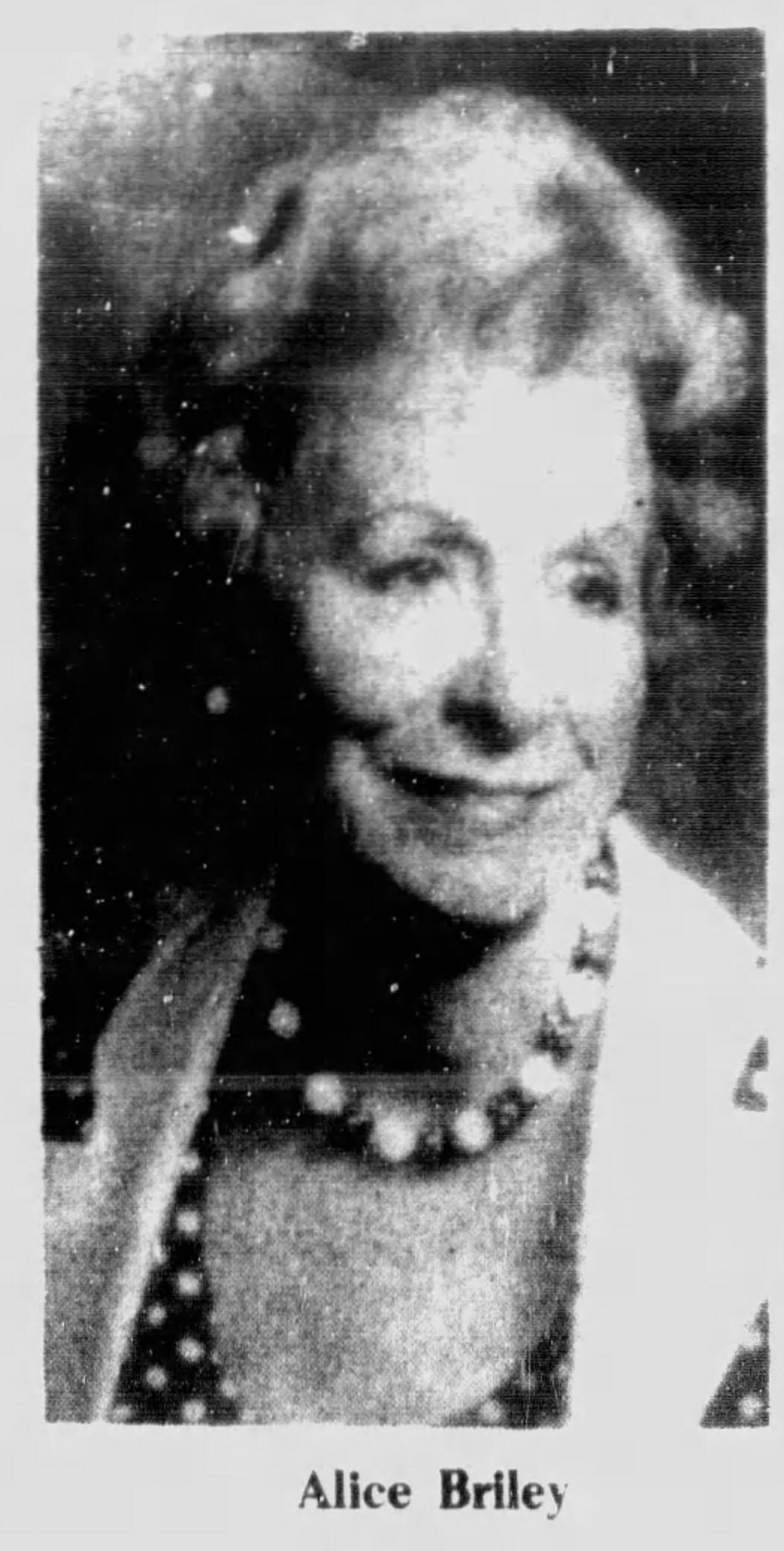
Alice Briley’s “Two Fungi from Yuggoth” (“in the manner of H. P. Lovecraft”) are a little more obscure. How and why she was inspired to write them isn’t clear. Briley was a noted poet associated with both state-level and national-level poetry organizations, and was no doubt at least aware of August Derleth through his poetry publications: in addition to publishing fantastic poetry through its regular imprint, Arkham House had a poetry-only imprint titled Hawk & Whipporwill. She could have read Lovecraft’s Fungi in the Arkham House Collected Poems of H. P. Lovecraft (1960), or the Ballantine paperback Fungi from Yuggoth & Other Poems (1971).

Whatever the case, in 1977 two sonnets labeled “Fungi from Yuggoth” appeared in her collection From A Weaver’s Shuttle. Newspaper accounts in ’77 and ’78 show Briley won awards from the National Federation of State Poetry Societies, possibly for that volume; the August Derleth Society Newsletter (vol. 4, no. 3, 1981), which reprinted the two Fungi claimed the poems won the August Derleth Memorial Award—unfortunately, the newspapers failed to list what awards that Briley won, and there are no lists of awardees for the NFSPS that far back currently available online, so it is hard to give specifics. The last publication of Briley’s Fungi I have been able to find is in a small pamphlet titled Weird Sonnets (1981, Owl Creek Press), which is described by one review as not a sequel to Lovecraft’s Fungi, but a collection of works that “belongs to the same loose tradition.”

Which is as accurate a description of Alice Briley’s Fungi as anything.

Her sonnets consist of “I. The Elder One” and “II. Arkham Hill.” They follow the form of Lovecraft’s Fungi, being 14 lines each; they are technically correct in terms of rhyme and meter, but probably aren’t the more beautiful lines she ever produced. The last lines to “The Elder One” for example are a bit clunky:

A feathered thing that bore a human face
Came swooping toward me in a wild descent,
and clutch me tightly in a foul embrace.
Not heaven’s herald, but from its fetid breath,
An Elder One more primative [sic] than death.

“More primitive than death” is an odd image. The rhyme works, but one wonders what exactly she was thinking of, since the “Elder One” reads more like a harpy or some fallen angel than most of Lovecraft’s creations.

“Arkham Hill” is a bit more promising, in that at least it establishes a stronger narrative and an effort at an original creation with ties to Lovecraft’s setting. The witch Eliza Pruitt lived by Arkham Hill, and many sought her until:

Until that fearful twilight when she found
Those mushrooms she had never seen before,
At dawn, they found her writhing on the ground
“Fungi from Yuggoth!” she screamed. Then said no more.

Again, not a great deal of familiarity is shown with Lovecraft’s fiction; at least, nothing to show that she had read anything beyond The Fungi from Yuggoth. Yet even that little exposure appears to have stirred her imagination, and she sought to expand on Lovecraft’s horrors in her own way. Yuggoth spores that took root in a fertile imagination and sprouted, however briefly, some fruiting bodies.

Given the decades since their last publication and Alice Briley’s demise, whether these particular Fungi will spread once again is unclear. Under current U.S. law, the work is almost certainly protected by copyright…but they are possible orphan works where determining who owns those copyrights and getting permission may be difficult and more costly than it is worth. This is an ongoing issues with many minor Mythos works, akin to some of the issues involved with fanfiction—and there is a danger that such works may be forgotten or lost with time before they can enter the public domain. Even digital archiving can be difficult without the proper permission from the copyright owners.

Alice Briley’s “Two Fungi from Yuggoth,” then, represents both the fecundity and the fragility of the Cthulhu Mythos: while Mythos works are in no immediate danger of dying out, who knows what works have already been lost, crumbling away in some forgotten fanzine? 


Bobby Derie is the author of Weird Talers: Essays on Robert E. Howard and Others and Sex and the Cthulhu Mythos.

Deep Cuts in a Lovecraftian Vein uses Amazon Associate links. As an Amazon Associate I earn from qualifying purchases.

“SCP-5389” (2021) by Agisuru

The more these synthetic daemons are mutually writtne up by different authors, the better they become as general background-material! I like to have others use my Azathoths & Nyarlathoteps—& in return I shall use Klarkash-Ton’s Tsathoggua, your monk Clithanus, & Howard’s Bran.
—H. P. Lovecraft to August Derleth, 3 Aug 1931, ES 1.353
What has become known as the Cthulhu Mythos began as a kind of literary game. Writers at Weird Tales, inspired by each other’s artificial horrors, began to borrow or insert references to each other’s creations in their stories. The practice can be traced back earlier—Robert W. Chambers famously borrowed a few odd names from Ambrose Bierce for his stories in The King in Yellow—but H. P. Lovecraft and his friends took the game to another level.
About the Necronomicon—I like to have other authors in the gang allude to it, for it helps work up a background of evil verisimilitude.
—H. P. Lovecraft to J. Vernon Shea, 14 Aug 1931, LJS 35

The purpose of the sharing, of the Necronomicon appearing in both Lovecraft’s “The Hound” (1922) and Frank Belknap Long’s “The Were-Snake” (1925) was verisimilitude. The use of the same names by different authors reinforced the idea of a reality and consistency between the stories, that these writers were drawing from a shared background of genuine mythology…and it worked. Readers wanted to know more, they wrote to H. P. Lovecraft and other writers asking about where they could find out more about Cthulhu and Tsathoggua, and where they could get copies of the Necronomicon and Unaussprechlichen Kulten.

It was the beginning of a shared universe and viral marketing, though neither term had been invented yet. Because the instantiation of the idea preceded its formal definition or codification, there have been a few quirks and hiccups. There was no concept of “canon” in the early Mythos stories: Lovecraft placed no restrictions on the use of his creations by other authors, and while there are a few references in his letters to attempting to keep things consistent between authors, he himself did not have or attempt to exercise any authority over the creativity of others. Robert E. Howard, Clark Ashton Smith, Robert Bloch, Donald Wandrei, and Henry Kuttner continued to write their own stories, in their own styles. The Mythos was a connective tissue, and it was left to fans to try and codify, extrapolate, and gloss the bits of lore.

August Derleth was both an original author of the Mythos, contemporary and equal with Lovecraft and the others, and the first great codifier and pasticheur. Derleth had the great advantage that, as co-founder of Arkham House, he entered into agreements with Lovecraft’s surviving aunt Annie Gamwell and literary executor R. H. Barlow to publish Lovecraft’s fiction, and often acted to promulgate, define, and defend Lovecraft’s Mythos.

In his desire to see Lovecraft’s legacy continue in print, Derleth succeeded. However, in the process he had stifled creative use of the Mythos. His interpretations (or misinterpretations, as Richard L. Tierney would argue in “The Derleth Mythos”) had constrained the definition of both what the Mythos was and could be; his pastiches like The Lurker at the Threshold had devolved into being about the Mythos rather than using the Mythos as a common background with which to tell stories, and he had squashed the efforts of would-be Mythos writers like C. Hall Thompson. While the Mythos field was not stagnant—Derleth encouraged the work of writers like Ramsey Campbell, Brian Lumley, and Colin Wilson—it was largely constrained by Derleth’s own tastes and desire to maintain control on Lovecraft’s legacy.

With the death of August Derleth and the relaxation of this central authority, the Mythos has blossomed. Would-be codifiers and glossators have had to face up to the impossibility of applying a single “canon” to the Mythos. There are too many stories, too many different voices, any number of different interpretations or ideas, often contradicting one another…which is not a bad thing. Lovecraft’s own mythology is often inconsistent, as real-world mythology is. Derleth succeeded in keeping the Mythos alive in the decades after Lovecraft’s death; now it is up to everyone else to reinterpret and reinvent the Mythos, to keep it fresh and relevant for new generations to enjoy and play with.

My own rule is that no weird story can truly produce terror unless it is devised with all the care & verisimilitude of an actual hoax. […] My own attitude in writing is always that of the hoaxweaver.
—H. P. Lovecraft to Clark Ashton Smith, 17 Oct 1930, DS 244

For all of its success, the Cthulhu Mythos as it exists today is not without its flaws. While Lovecraft encouraged other writers to use his creations and borrowed those of his friends, copyright remains a dominant influence on any shared literary enterprise. While pretty much everything Lovecraft wrote is in the public domain in the United States, the same is not true for Clark Ashton Smith, Robert E. Howard, August Derleth, Fritz Leiber, and other contemporary authors—not to mention authors of later generations such as Ramsey Campbell, Brian Lumley, W. H. Pugmire, and Caitlín R. Kiernan. While many of these later authors are generous in allowing others to utilize their contributions to the Mythos in their own stories, issues of copyright and permissions add a layer of complexity that can serve as a potential energy barrier to new Mythos fiction.

Or, to put it another way: it’s easier to use the Mythos material you know is in the public domain and won’t be sued over. A good bit of the attraction of the Mythos is that unlike the shared universes of Marvel and DC, they are largely free to use. This is why people continue to utilize Cthulhu and the Necronomicon, and to revisit the plot and characters of “The Shadow over Innsmouth” and “The Dunwich Horror” more often than they do Tsathoggua and the Book of Eibon, or Gol-goroth and Unaussprechlichen Kulten. The Mythos was not conceived as a shared universe from the first, so these legal tripwires remain and sometimes hamper ideas.

So imagine a Cthulhu Mythos for the 21st century. A collective literary endeavor, eminently flexible just conceived in such a way as to maximize both participation and sharing, to avoid legal hassles and deliberately avoid stagnation by encouraging a multiplicity of canons—to embrace change and growth, rather than be locked in to a single limited conception dominated by a few great authors.

That is essentially what the SCP Wiki is and aims to be.

The literary roots go all the way back to the pulps: when H. P. Lovecraft had the federal government move in to Secure Innsmouth, Contain its populace, and Protect the wider world from the awful truth of what actually happened there, he was at the forefront of a mixture of fiction and popular conspiracy theory where secret agencies work to maintain normalcy and contain the anomalous. Steps along the way include the warehouse where the Ark of the Covenant was stored at the end of Raiders of the Lost Ark (1981), Friday the 13th: The Series (1987-1990), Delta Green, GURPS Warehouse 23 (1999), the comic book The Men in Black (1990) and its 1997 film adaptation, The X-Files (1993-2002), Millennium (1996), and even internet-based fanfiction like “The Fluff At The Threshold” (1996) by Simon Leo Barber.

In 2007, a post on 4chan pitched the basic idea in the form of SCP-173. A secret agency (the SCP Foundation) works to contain the anomalous, from artifacts to creatures to ideas and concepts. The idea gained steam from there: a wiki was established, formats agreed upon, and everything published was done so under a Creative Commons license. The early SCP wiki was very different from how the SCP wiki stands today—many of the popular concepts like Sarkism and the Church of the Broken God took time to develop, and are still being developed. New concepts like the Ethics Committee and thaumiel class came into existence, and the existence and treatment of “D-Class” have been argued and reimagined—my personal favorite embellishment for the latter being SCP-1851-EX, which shows how well the SCP format can be used to address complex and emotionally charged subjects like historical racism.

The SCP wiki has also spread out to include video games, Japanese doujinshi, tchotchkes and cosplay, even novels like There Is No Antimemetics Division (2021) by qntm—and long-time readers of the wiki may well wonder if the project hasn’t jumped the shark. There are joke SCPs, badly written tales, erasures and lacunae, political and ideological squabbles that have found their way into the pages. Not every SCP is equally creative or equally well-written; some represent weeks of writing and artwork, others read like they were whipped off during a lunch break; some involve baroque and abstruse concepts normally the domain of doctors of philosophy and religion, and some are little more than random artifacts fit for a Dungeons & Dragons or Call of Cthulhu Roleplaying Game campaign. Many are effectively little more than short fiction more suited for a Creepypasta. Not only is there no single “canon,” but many of the SCPs are written in such a way that they directly contradict one another (as with the various “proposals” for SCP-001). Even what you thought you knew might be upended by some new SCP, or an older entry being removed.

In a wiki with few constants, one consistent element is the influence of H. P. Lovecraft and the Cthulhu Mythos. This is very rarely an effort to actually squeeze the Mythos into the shared universe of the SCP Foundation, though you occasionally see references to Miskatonic University (e.g. SCP-6027). More often it is a metafictional take on the ideas and tropes of the Mythos, often as presented not in Lovecraft’s original stories but through the pop-culture milieu of Derlethian pastiche and the Call of Cthulhu Roleplaying Game. SCP-2662 and SCP-3883 are cases in point, as somewhat tongue-in-cheek takes on sex and the Cthulhu Mythos, and the very idea of a “cognitohazard” owes something to Sanity Points as a mechanic; but there are more serious takes. The King in Yellow was definitely an inspiration for The Hanged King’s Tragedy (SCP-701); Lovecraft’s life served as an inspiration for SCP-4315.

One of the more interesting and clever entries that take inspiration from Lovecraft’s Mythos is SCP-5389, written in 2021 by user Agisuru. Like many good SCPs, 5389 doesn’t skimp on the containment procedures; the dry prelude to the actual description provides the reader with an idea of the efforts made to contain the anomalous issue, and sometimes a foreshadowing of the actual threat (if any) posed. The description itself is relatively straightforward, almost dry: long-time SCP wiki readers probably will gloss over another anomalous animal. The addendum and interview material is where the real narrative develops, and as the reader opens one section after another the rabbit hole gets deeper and deeper—a good mystery is often the heart of a good SCP as well as a good Mythos story.

The twist at the end is almost inevitable, but the real fun in the entry is in the names of the protocols and agents involved: Ib-e, Orne, Olmstead, Zadok Allen, Marsh—names borrowed from “The Doom that Came to Sarnath” and “The Shadow over Innsmouth.” SCP-5389 is not, to be clear, a kind of contemporary re-telling of either of those stories, but they are Easter eggs for Lovecraft aficionados…and perhaps an invitation. This isn’t exactly another new take on an old story in the vein of “The Doom That Came to Innsmouth” (1999) by Brian McNaughton and “The Litany of Earth” (2014) by Ruthanna Emrys, it’s a remix of some of the fundamental Lovecraftian ideas in a new form and format.

The Cthulhu Mythos is in its own way as infectious a meme as anything fought by the antimemetics division, and inextricable from the noosphere and oneiric collective of humanity. It may never die, just as Arthurian legend and Greek and Roman myths have continued to influence us for centuries and millennia. We are, as Terry Pratchett put it in The Science of Discworld II: The Globe, “Pans narrans”—storytelling apes. We like a good story, and SCP-5389 is a part of one: the story of the Cthulhu Mythos and how it continues to develop, to evolve…and we may look forward to how it continues to do so for a long time to come.

If you liked SCP-5389, Agisuru has posted two other SCPs with a similar dynamic as of this writing: SCP-6918 and SCP-6919.


Bobby Derie is the author of Weird Talers: Essays on Robert E. Howard and Others and Sex and the Cthulhu Mythos.

Deep Cuts in a Lovecraftian Vein uses Amazon Associate links. As an Amazon Associate I earn from qualifying purchases.
“Werewoman” (1938) by C. L. Moore

To your boundless amazement I shall now take typewriter in hand and write you a letter. Still further to shock you, I am enclosing the story you so kindly inquired about, and also—did I or didn’t I send you WEREWOMAN? This burning question has haunted me all day, ever since I delved industriously into the stack of boxes and bales which I laughingly term my files and produced every story I ever wrote with the exception of the famous WW. I am probably being even more hen-brained than usual, but will enclos the carbon of WW which I have somewhere around, tho lurking in the back of my subconscious is a suspicion that I have already sent you the original. If so, pay no attention. Surely you have sufficient aplomb to withstand a sudden deluge of werewomen.
—C. L. Moore to H. P. Lovecraft and R. H. Barlow, 20 Aug 1935, LCM 56

In the summer of 1935, H. P. Lovecraft was staying with R. H. Barlow and his family in DeLand, Florida. At Barlow’s urging, Lovecraft and C. L. Moore had begun their correspondence (Her Letters To Lovecraft: Catherine Lucille Moore), with Lovecraft full of praise for stories like “Shambleau” (1933) and “Black God’s Kiss” (1934). Barlow, as was typical, asked her for manuscripts and drawings…and in 1934 received an unusual reply:

I’m having rather a set-back in my attempts to illustrate my own stories. The one Mr. Wright liked so well was a drawing for the story, which, as you know, he returned. WERE-WOMAN. The drawing was pretty good, but the story, I must admit, rather terrible. It’s heartening to know that the more established writers get things back too, but I can’t pretend that the fault was anybody’s but my own in this case, and I really expected it back when I sent it. It was a grand idea, I still think, but somehow it just wouldn’t jell. Mr. Wright has inquired about it several times and has asked me to re-write it, but my mind is a perfect vacuum whenever I try.
—C. L. Moore to R. H. Barlow, 1 Jun 1934, MSS. John Hay Library

It isn’t clear when exactly Moore wrote “Werewoman” (sometimes spelled “Were-Woman”)—in later interviews, she claimed it was her second Northwest Smith story after “Shambleau,” and the first to be rejected by Farnsworth Wright, editor of Weird Tales, but her memory issues later in life make such claims somewhat questionable; the 1934 date of this letter suggests “Werewoman” may have been written and submitted somewhat later. At some point, Moore sent the “Werewoman” typescript to Barlow, who presumably showed it to Lovecraft during his visit…along with another rejected story:

Well, have just received my first flat rejection from Wright. A harmless little tale about a sorcerer king of antediluvian time, his mysterious witch-queen and a time-traveler with a startling resemblance to a certain Mr. Smith whom I may have mentioned once or twice before, tho no names were named in the story. Ah well, life is full of disappointments.
—C. L. Moore to R. H. Barlow, 31 May 1935, MSS. John Hay Library

This story appears to be lost, but Moore apparently also sent this story to Barlow, who forwarded it to Lovecraft, who had finally taken his leave of Florida. We know this because of Lovecraft’s answering letter:

Well—anyhow, I’ve read the enclosed story, & think it distinctly good in places—though the rather conventional dialogue & general layout put it below “The Were Woman”. I presume the interepid [sic] & leather-clad time-traveller is none other than our old friend Northwest Smith. The other-wordly suggestion & description of vague, non-human forms are excellently managed—despite a slight sense of disappointment in the climax. It beats most recent Mooreiana, though scarcely attaining the “Shambleau”-”Black Thirst”-”Were-Woman” level. Most distinctly does it bear the impress of pulp influence. However—both stories are good, & I can unhesitatingly praise them in writing the author.
—H. P. Lovecraft to R. H. Barlow, 24 Aug 1935, OFF 286

In another letter, we find out where and when Lovecraft must have read “Werewoman”: shortly after leaving the Barlows, in St. Augustine:

Aunt just forwarded “Werewoman”, for which abundant thanks. Glad you’re getting the decent text before the thing is pulpised. I recall reading it on a bench in San Agustin—in the Plaza de la Constitutción.
—H. P. Lovecraft to R. H. Barlow, 2 Jan 1936, OFF 313

R. H. Barlow had convinced C. L. Moore to allow him to publish “Werewoman,” which he eventually did in his amateur journal Leaves #2 (Winter 1938). He also separately printed and bound a small edition, one copy of which is listed in The Book Sail 16th Anniversary Catalogue:

493. MOORE, C[athereine] L[ucille]. Werewoman. 1934. Privately prepared, typewritten ribbon copy on the rectors of [iii] 29 [ii] pages, 8 ½” x 11″. Inscribed by Moore and bound in half morocco and heavy paper-covered boards, with an additional inscription on an adhesive label affixed to the front fly. A notation appears on the final leaf, indicating that this is one of three copies.

The literary afterlife of “Werewoman” after its initial printing is a messy affair; pulp scholar Sam Moskowitz had noted that the story was in the public domain and republished it without seeking Moore’s permission, which rather soured Moore on Moskowitz (and in turn, Moskowitz on Moore) in a dispute that went on for decades, with Moskowitz getting the final word after Moore’s death. Dave Goudsward tracks the accusations and animosity in his article “A Tale of Two Stories” in Pulp Adventures #36 (2020), which also reprints “Werewoman.”

Lovecraft never wrote anything more about the story; he might have written about it to Moore and his letter lost, but as the story had not seen print during his lifetime he could scarcely write about it to anyone else. Despite Moore’s own low opinion of the tale, he ranked it among her better ones…and while “Werewoman” might not be the best of the Northwest Smith tales, it is undoubtedly among the weirdest.

C. L. Moore never spoke of the inspiration for this story; though the term “were-woman” or “werewoman” had cropped up rarely in Weird Tales before then, notably in Robert E. Howard’s “Worms of the Earth” (WT Nov 1932), and the werewoman inviting Northwest Smith as her mate recalls the interaction Bêlit and Conan in “The Queen of the Black Coast” (WT May 1934). It eschews any direct connection to the other Northwest Smith stories, and is hard to place in any kind of chronology. Ironically, that probably made it easier when Roy Thomas adapted the story for Conan the Barbarian in Savage Sword of Conan #221 (1994).

While space opera had few absolute conventions in the early 1930s, “Werewoman” defies most of them: on an unknown planet, Northwest Smith encounters werewolves and ancient alien sorcery. It wouldn’t be the first or last time that Moore mixed superscience with the supernatural, but there is absolutely no hesitancy or winking at the audience. The division between fantasy and science fiction as distinct sub-genres was already beginning to be established, but weird tales could and did mix and mingle both.

Lovecraft no doubt loved the rich description, the absolute weirdness of the conception and execution of the story. If a reader can suspend their disbelief about the incongruence of settings, there is much to enjoy in the story. Once again, outer space outlaw Northwest Smith has stumbled into an ancient mystery, one that involves a beautiful woman and a danger to body and soul alike. In terms of tone, the presentation of Smith as an “adventurer,” the story is closer to the kind of sword & sorcery tales of Robert E. Howard or Fritz Leiber, Jr. than the space operas of E. E. “Doc” Smith or Edmond Hamilton.

Moore’s werewoman is different than that of most of the other werewolves Lovecraft had encountered written by women. She is not solitary, but the leader of a pack; more than a killer, she shows admiration and acceptance for Northwest Smith. Like White Fell in The Were-Wolf (1896) by Clemence Housman, she seems to embrace her nature, but rather than defy gender roles she seems to embrace and embody her position as the leader of the pack. No wailing or gnashing of teeth over her fate, no men fighting over her: she likes being a wolf, and chooses whom to love. The result is a sympathetic portrayal of a strong woman that goes for what she wants—not unlike Moore’s heroine Jirel of Joiry.

“Werewoman” has been reprinted many times over the decades, but the confusion about its copyright status appears to have largely prevented the text from being widely available online. The text in Pulp Adventures #36 is a true and accurate copy of the original 1938 printing from Leaves. Being a mimeographed publication, Leaves does not scan well, but anyone that wants to strain their eyes can attempt to make their way through this scan. A full reprint of Leaves and Barlow’s other amateur journal The Dragon-Fly was published by S. T. Joshi and can be found here.


Bobby Derie is the author of Weird Talers: Essays on Robert E. Howard and Others and Sex and the Cthulhu Mythos.

Deep Cuts in a Lovecraftian Vein uses Amazon Associate links. As an Amazon Associate I earn from qualifying purchases.

“The Devil’s Pool” (1932) by Greye La Spina

It is really very hard to work with a superstition as well-known & conventionalised as those of the vampire & werewolf. Some day I may idly try my hand, but so far I have found original synthetic horrors much more tractable.
—H. P. Lovecraft to Clark Ashton Smith, 7 Nov 1930, DS 262

By the 1930s, werewolf stories were already an established genre. While many of the tropes that we associate with pop culture lycanthropy today were not yet standard—silver bullets, the infectious bite, the influence of the moon on the transformation, the werewolf as a sympathetic character or power fantasy—they already existed, both in myth and legend and in dozens of stories and novels, from The Were-Wolf (1896) by Clemence Housman and The Thing In the Woods (1924) by Harper Williams to any number of stories in Weird Tales from leading authors like Seabury Quinn, H. Warner Munn, and Greye La Spina. Pulp writers worked many variations of the werewolf tale, most of which today are rather old-fashioned…and even when first published, as Lovecraft noted, sometimes the premise and rules were just a little too familiar. What fear of the unknown can there be, when dealing with the known quantity of a werewolf?

Yet for all that, werewolves were a perennial favorite, for both weird fiction fans and authors. There were endless variations on the theme to explore, and many of the tropes had not quite been codified yet, which added to the possibilities.

Greye La Spina knew a thing or two about werewolves. Though they never corresponded, La Spina was one of Lovecraft’s foremost women contemporaries at Weird Tales during the 1920s and 30s, and in terms of sheer published output she was much more successful than the Old Gent from Providence, publishing over a hundred short stories, novelettes, and serials in a dozen pulps. She had dealt with werewolves previously in “Wolf of the Steppes” (The Thrill Book, Mar 1919) and Invaders from the Dark (Weird Tales, Apr-May-Jun 1925), and in 1932 she returned to the theme again with a story titled “The Devil’s Pool” (Weird Tales June 1932).

The story earned the cover illustration for the issue, but there was little praise for it—especially from Lovecraft:

The La Spina novelette somehow drags along very dully—with triteness & triviality sapping at what might be suspensefully horrible.
—H. P. Lovecraft to Clark Ashton Smith, 6 May 1932, DS 367

Klarkash-Ton appears to advantage, but the La Spina thing left me cold even though I recognised a fine chance for horrific atmosphere in the wanderings of the hero around the forbidden wing of the accursed farmhouse.
—H. P. Lovecraft to August Derleth, 7 May 1932, ES 2.477

In fairness to La Spina, the “triteness & triviality” that Lovecraft noticed is not the result of any sort of formula plot. There are some vivid and effective images in the story, which is no doubt part of what earned it that cover illustration. The story is notably reminiscent of what would become Manly Wade Wellman’s most notable type of weird tale, with supernatural horror overtaking relatively simple but forthright people in a largely secluded rural setting, and “The Devil’s Pool” would not be out of place in an anthology alongside some of his southern mountain stories.

Nor was La Spina simply repeating the same werewolf lore that had characterized “Wolf of the Steppes” and Invaders from the Dark, but followed a different vein of lore:

The writer of Perigord tells how at the beginning of the nineteenth century it was believed in this district that at each full moon certain lads, particularly the sons of priests, are compelled to become werewolves. They go forth at night when the impulse is upon them, strip off their clothes and plunge naked into a certain pool. As they emerge they find a number of wolf-pelts, furnished by the demon, which they don and thus scour the countryside. Before dawn they return to the same pool, cast off their skins, and plung into the water again, whence emrging in human form they make their way home. […] Exorcism and, above all, the Blessed Sacrament of the Altar will disperse all glamour and objectively restore to human shape those upon whom an evil spell of fascination and metamorphosis has been cast.
—Montague Summers, The Werewolf (1933)

While Summers’ book on werewolves came out after La Spina’s story was published, she obviously drew on similar legends from some book of folklore—and improved on them with a few of her own twists, which had they been worked out a little more carefully would have made for a better story. As it stands, there’s some fairness to Lovecraft’s criticism: the story is drawn out and slow, the characterization is lacking, the inability of the characters to explain anything utterly frustrating, the action lacks punch, and the story is ultimately on the weaker end of Christian horror, with the evil vanquished by a handful of holy wafers.

Other aspects of the story have not aged well. One of the supporting characters is Harry Epstein, “a young Jewish fellow”—and while Harry’s religion has absolutely nothing to do with the story, La Spina makes his Jewishness the central and nearly constant aspect of his character. While the characterization is not explicitly a negative stereotype, it is constant and depicted in a manner reminiscent of many broad ethnic depictions. Phrases like “The dark, Hebraic face scowled.” only work if both the writer and audience have an idea in their head as to what a Jew looks like as distinct from anyone else. It’s good to get a little diversity into what is otherwise a cast of white Anglo-Saxon Protestants, but that’s very much a pulp formulation, with zero subtlety or purpose than to add a bit of color.

The fact that the 14-year-old Janie wants to marry Harry someday is a separate issue.

Janie Baumann is integrally tied with how the story addresses disability and ableness, which is one of the major themes. For most of the story, young Janie cannot walk and is confined to her bed, out of sight of the narrative—yet it is ultimately her condition, and the stresses placed on her aged grandfather as caregiver, which is the driving factor for the supernatural events of the story, and she is vital in their eventual resolution. In addition to physical mobility issues, she is also characterized with suggestions of mental disability: “Janie isn’t stupid, but she isn’t very…what I’d call bright.” Between the physical disability issues and suggestions of mental disability, Janie is presented as a pathetic figure, a subject of empathy for all of the adults around her—except for the villainous Lem Schwartz, who seeks to take advantage of the sympathy the other adults have for Janie.

Representations of disability in weird fiction during the early 20th century were often not great, as examined in A Disability Scholar Looks At Lovecraft by Farah Rose Smith; characters with disabilities were often characterized as either pathetic or monstrous. In “The Devil’s Pool,” there’s a bit of both. Janie is, for most of the story, characterized as “a cripple”—though this physical disability is overcome by the end, and the mental disability is never as evident or depicted in the manner as initially described. The one bright spot for Janie in the story is that she never allows her disability to define her…it is the motivations and outlooks of other people as they act based on their ideas of her disability that lead to the events of “The Devil’s Pool.”

The monstrous depiction of disability is something that happens to the main character, who finds himself faced with his own difficulties walking. If La Spina had allowed a bit more room for introspection, this could have been an interesting as a depiction of how an individual comes to terms with such a sudden change in their ableness—but at this point in the story, the plot was finally getting to the “good” parts, and speeding along toward the climax. So although the setup would seem to call for the protagonist to gain some insight and deepened understanding for what Janie has been going through, and that she is not necessarily as helpless and needy as supposed, not as much is made of the disability as a theme as it could have been.

By the end of the story, all of the disabilities are miraculously resolved; no doubt Lovecraft would have rolled his eyes at the rather prosaic happy ending.

Mrs. La Spina is distinctly mediocre—full of clichés and cheap romantic devices. Two or three of her older stories weren’t bad, but her latest attempt was pitifully weak.
—H. P. Lovecraft to Natalie H. Wooley, 22 Nov 1934, LRBO 197

References to Greye La Spina are few in Lovecraft’s letters; no doubt he read her stories as they appeared in Weird Tales, but like the work of Seabury Quinn, he rarely felt the need to comment, and when he did it was usually to make some remark lamenting her conventionality. He was right that La Spina gave the readers what they wanted—and that was why, no doubt, she was commercially more successful at it than Lovecraft. Unfortunately, that’s also why she has largely fallen into obscurity: “The Devil’s Pool” isn’t exactly a forgotten classic of the werewolf genre; it isn’t even her best werewolf story, and easily forgotten among the dozens of other lycanthrope stories in Weird Tales and other pulps.

“The Devil’s Pool” (Weird Tales June 1932) is in the public domain and can be read online.


Bobby Derie is the author of Weird Talers: Essays on Robert E. Howard and Others and Sex and the Cthulhu Mythos.

Deep Cuts in a Lovecraftian Vein uses Amazon Associate links. As an Amazon Associate I earn from qualifying purchases.