The Were-Wolf (1896) by Clemence Housman

Clemence Housman, in the brief novelette “The Were-wolf”, attains a high degree of gruesome tension and achieves to some extent the atmosphere of authentic folklore.
—H. P. Lovecraft, “Supernatural Horror in Literature”

Clemence Housman was a British author, illustrator, and suffragette; The Were-wolf (1896) is her first novel. Lovecraft included Housman under chapter IX, “The Weird Tradition in the British Isles”—marking out Housman alongside such weird luminaries as Oscar Wilde, Bram Stoker, and M. P. Shiel.

When and where Lovecraft first read Housman is unclear; she is not mentioned by Scarborough & Birkhead, nor does Lovecraft mention the book many times in his letters. Yet we know he must have read The Were-wolf before 1927 (when the first version of “Supernatural Horror in Literature” was published, Housman reference included), and a rare discussion of the novel may give us another clue:

Also, I have a book by Clemence Housman, “The Werewolf”. which is probably as good as that kind of story can be. It failed to make much of an impression on me.
—Clark Ashton Smith to H. P. Lovecraft, c.24-30 Oct 1930, DS 253

I have read Clemence Housman’s “Werewolf”—George Kirk has it—& thought it rather good—though not so good a werewolf tale as Biss’s “Door of the Unreal”, which Cook, Munn, & Morton own.
—H. P. Lovecraft to Clark Ashton Smith, [7 Nov 1930], DS 259

George Kirk was a New York bookseller and a good friend of Lovecraft’s, a member of the Kalem Club which was Lovecraft’s literary circle. Probably, Kirk picked up a copy during his bookdealing, knew Lovecraft was researching weird fiction, and lent it to Lovecraft to read. As friends do.

Lovecraft’s description of The Were-wolf is accurate but bare-bones. Housman’s novel is set vaguely in Scandinavia, based mostly on inference, and without a set period. Since there are no references to modern inventions or events it could be set at any point from the 19th century to any time after the Christianization of the Nordic countries—because this is, without a doubt, a Christian horror story.

As a mode of fiction, Christian horror is not all homilies and pale hellfire; though there is plenty of pap for those who fall back on God as the ultimate power in the victory over every evil, where the recital of a Bible verse, waving of a cross, or a few drops of holy water defeats the vampire or exorcises the evil spirit. Christian horror stories tend to expand on the psychological framework of Christianity while exploring or developing a supernatural fringe beyond accepted dogma; sometimes incorporating elements of pre-Christian belief into the mix—and a happy outcome is not in any way guaranteed. So it is with The Were-wolf.

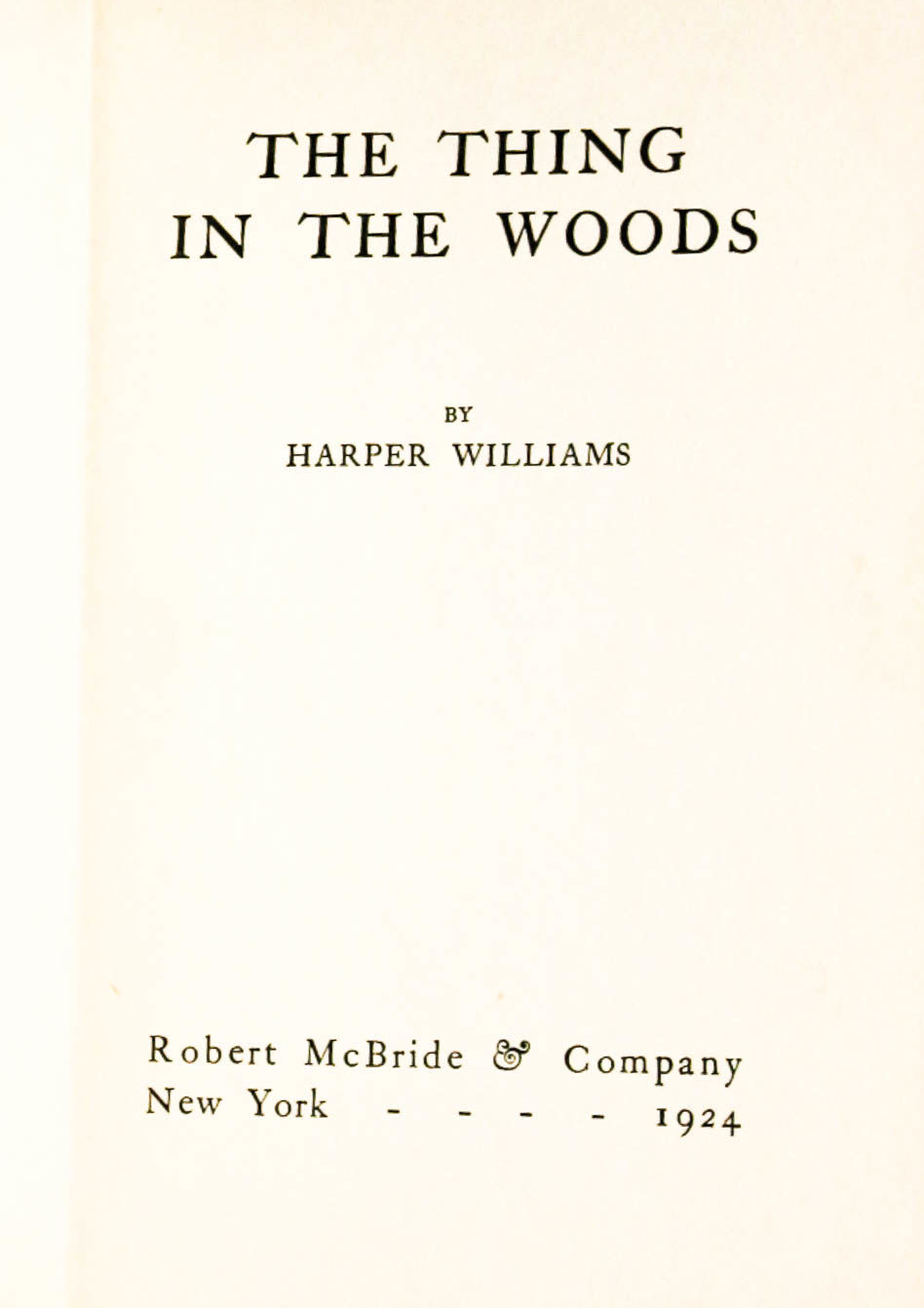
What Lovecraft leaves out of his description is the nature of the werewolf; for unlike The Thing In the Woods (1924) by Harper Williams, this werewolf is female…or at least, femme:

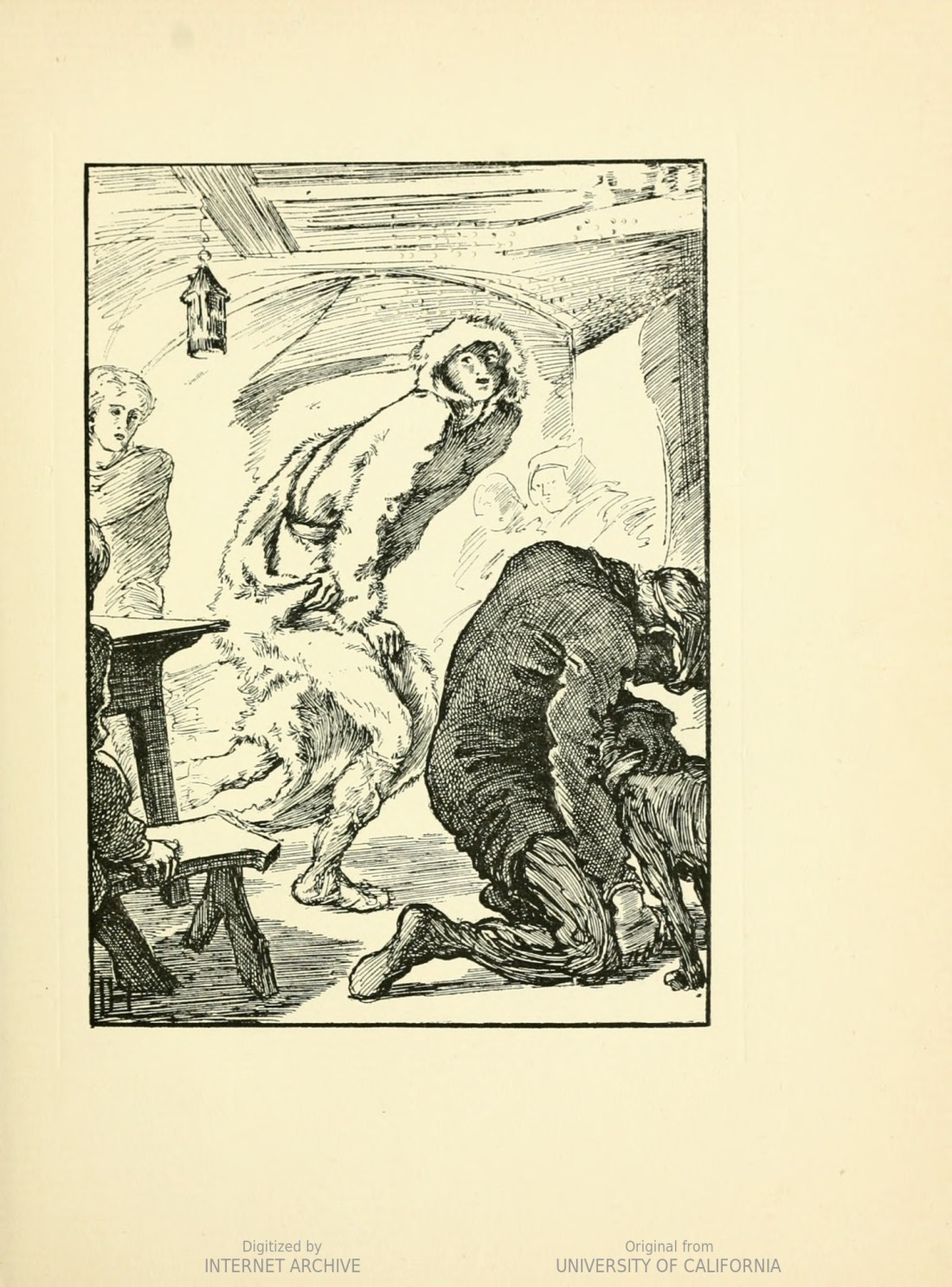
She was a maiden, tall and very fair. The fashion of her dress was strange, half masculine, yet not unwomanly. A fine fur tunic, reaching but little below the knee, was all the skirt she wore; below were the cross-bound shoes and leggings that a hunter wears. A white fur cap was set low upon the brows, and from its edge strips of fur fell lappet-wise about her shoulders; two of these at her entrance had been drawn forward and crossed about her throat, but now, loosened and thrust back, left unhidden long plaits of fair hair that lay forward on shoulder and breast, down to the ivory-studded girdle where the axe gleamed.
—Clemence Housman, The Were-wolf

Her name was White Fell, and metaphorically she is the literal serpent in this icy Scandinavian garden, who intrudes on the idyllic home life and sets brother against brother. Yet in some ways, White Fell represents something of the fierce freedom and independence that Clemence Housman campaigned for, the woman that could cross a hundred leagues of snow and ice hunting game, confident and independent and not constrained by either skirts or customs. Melissa Purdue in “Clemence Housman’s The Were-Wolf: A Cautionary Tale for the New Woman” argues convincingly that this is deliberate, and her detailed analysis is worth reading.

How much of this would Lovecraft have picked up on? We don’t know; gender dynamics in fiction were never his forte, and he discussed and played with such ideas very seldom. One interesting note is that Housman shifts in describing White Fell as a human woman to a “Thing”:

 The dreadful Thing in their midst, that was veiled from their knowledge by womanly beauty, was a centre of pleasant interest.
—Clemence Housman, The Were-wolf

Compare this to how Lovecraft has a character describe Asenath Waite in “The Thing on the Door Step”:

[“]I’ll kill that entity . . . her, him, it . . . I’ll kill it! I’ll kill it with my own hands!”
—H. P. Lovecraft, “The Thing on the Doorstep”

In both cases, Housman and Lovecraft are deliberately denying not just female identity, but basic humanity: White Fell and Asenath Waite are both cast as fiends in human shape. Whether Housman was an influence on Lovecraft in this regard, or whether both were expressing in their different ways the particular syntax of their era which struggled to define individuals who violated the known order as anything other than monsters or genderless (but not sexless) “things”—that might be splitting hairs. It is amusing that Edward Pickman Derby does describe Asenath as “that preying wolf in my body,” which might be taken as a metaphor, or might suggest a closer link in Lovecraft’s mind between Asenath and lycanthropy.

A final word on Lovecraft and Housman involves a bit of a flub:

Yes—I noted with regret the Housman misprint, which came in an eleventh-hour appendix sent in too late for proofreading. In such copies as I have personally distributed, I have made pen-&-ink correction.
—H. P. Lovecraft to Vincent Starrett, 6 Dec 1927, Letters to Maurice W. Moe 524

In that rare first printing of “Supernatural Horror in Literature,” the name Clemence had been erroneously printed as Clarence.

Clemence Housman’s The Were-wolf is in the public domain, and may be read online.


Bobby Derie is the author of Weird Talers: Essays on Robert E. Howard and Others and Sex and the Cthulhu Mythos.

Deep Cuts in a Lovecraftian Vein uses Amazon Associate links. As an Amazon Associate I earn from qualifying purchases.

The Thing In the Woods (1924) by Harper Williams

In the autumn of 1924, J. C. Henneberger, owner of Weird Tales, owed H. P. Lovecraft some money. Unable to lay hands on the funds immediately, Henneberger instead transferred to Lovecraft his sizable credit at the prominent New York bookseller Scribner’s. Lovecraft hoped to convert this into cash, but unable to do this, he was left with $60 credit—so, Lovecraft and his friend Frank Belknap Long, Jr. decided to go on a buying spree, purchasing a number of books by Lord Dunsany, Arthur Machen, and works of history. Lovecraft even picked up a book for his friend:

For Belknap (his own choice)

The Thing In the Woods (new horror novel)—Harper Williams

—H. P. Lovecraft to Lillian D. Clark, 6 Nov 1924, Letters to Family & Family Friends 2.185

Before Lovecraft gave Long his gift, he read the whole novel himself. So it was less than a month later Lovecraft wrote to his aunt:

On this occasion I presented Belknap with the book which I got for him at Scribner’s a couple of months ago, but which I kept until I might have a chance to read it. It is an excellent horror story by someone I never heard of before—Harper Williams—entitled “The Thing in the Woods”, & dealing with the superstitious Pennsylvania countryside. There is more than a hint of obscure lycanthropy—but read it for yourself when you get here! On the flyleaf I wrote the following dedication to the Child:

BELKNAP, accept from Theobold’s ſpectral Claw
Theſe haunting Chapters of dæmoniack Awe;
Such nightmare Yarns we both have often writ,
With goblin Whiſpers, and an Hint of IT.
Till ſure, we’re like to think all Terror’s grown
A ſort of private Product of our own!
Leſt, then, our Pride our ſober Senſe miſlead,
And make us copyright each helliſh Deed,
‘Tis ours to ſee what ghastly Flames can blaze
From Spooks and Ghouls that other Wizards raiſe!

—H. P. Lovecraft to Lillian D. Clark, 29 Nov 1924, Letters to Family & Family Friends 2.229

The poem is sometimes given or indexed under the title “[On The Thing In the Woods by Harper Williams].” Written more than half in jest, with its 18th-century style including the long s (ſ), it yet carries an important point: Lovecraft never saw himself (or he and his friends) as having any monopoly on weird fiction, and appreciated discovering new authors and new horrors.

The Thing In the Woods would disappear from Lovecraft’s writings after this; he did not keep a copy for himself, never mentions it or Harper Williams in any other letter, and would not even include it among other notable stories in his essay “Supernatural Horror in Literature.” Yet there are two points of interest for this novel, above and beyond the story itself: the identity of the author, and the influence it may well have had on “The Dunwich Horror.”

“Harper Williams” was the pseudonym of Margery Winifred Williams Bianco; Harper had been her mother’s maiden name. She is best known today as the author of the classic children’s book The Velveteen Rabbit (1922), under the name Margery Williams, but before the Great War she wrote a handful of novels aimed at adults. The Thing In the Woods was her first horror novel, set in the Pennsylvania Dutch country where she spent a few childhood years, and was originally published in the United Kingdom in 1913 under her own name, while the 1924 edition that Lovecraft bought with his credit was the first American edition. Possibly the success of The Velveteen Rabbit encouraged her to use a pseudonym to avoid confusing her work with children with her work for adults.

In 1982, Lovecraft scholar Robert M. Price wrote and published “The Pine Barrens Horror”—an essay which speculated that the fantabulous anatomy of Wilbur Whateley in “The Dunwich Horror” might have been inspired in part by the Jersey Devil. Eminent Lovecraft scholar S. T. Joshi managed to find a Lovecraft connection: the Jersey Devil was mentioned in the obscure and long-out of print novel The Thing In the Woods by Harper Williams. Price was able to secure a copy, which he eventually reprinted in the collection Tales Out of Dunwich:

It was not easy finding a copy (a library discard, still however possessed by the Mississippi Library Commission, which I secured through Interlibrary Loan at Drew University), but when I did, I plunged in. (10)

What has excited the interest of Lovecraft scholars is less the Jersey Devil references than the other similarities shared between Williams’ novel and Lovecraft’s “The Dunwich Horror.” Both works take a rural setting, and both center on a pair of twin brothers born out of wedlock—one of which is confined to a shed at times, and who has a dislike of dogs. It does not take much imagination to see how Lovecraft might have been inspired by such details in crafting his story, although in tone and style of telling they are very different.

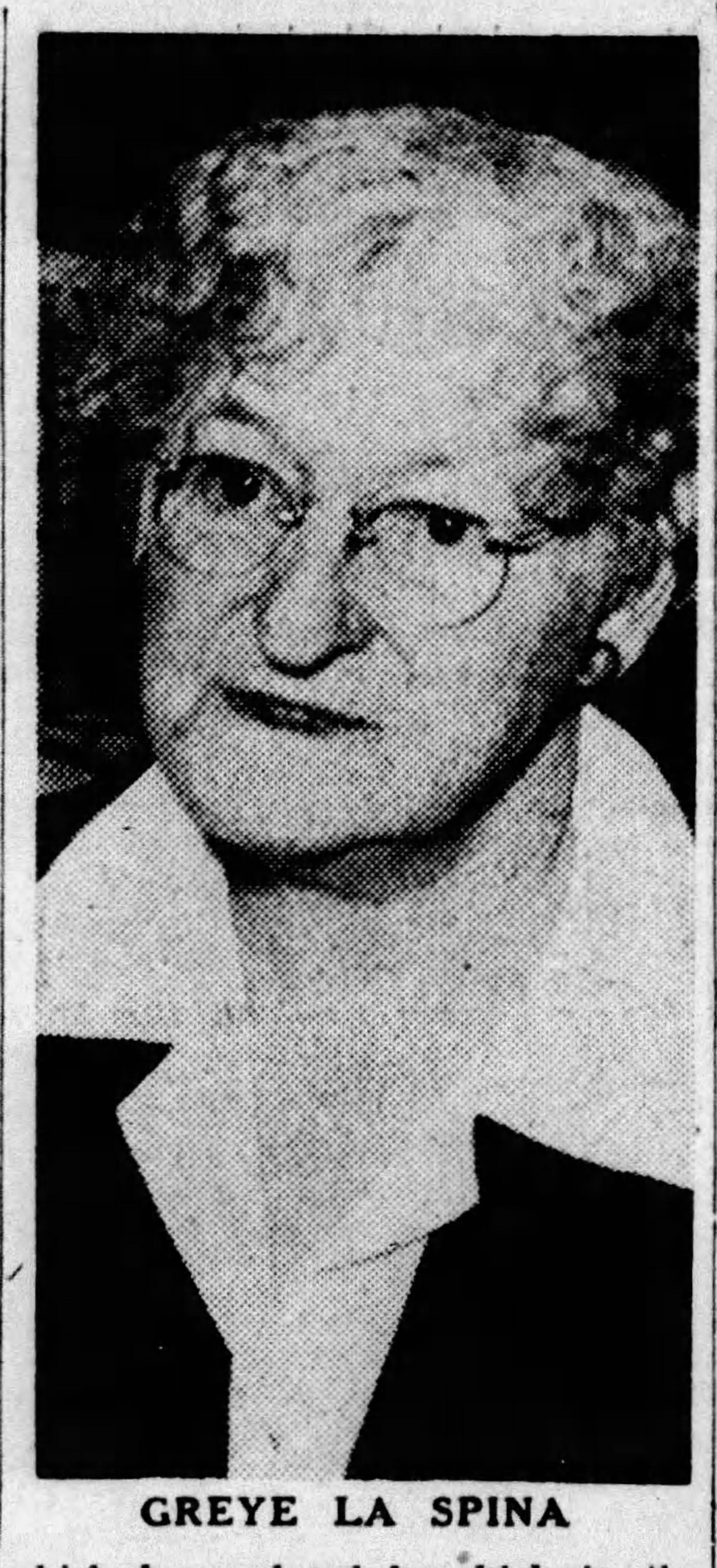
When Lovecraft wrote “there is more than a hint of obscure lycanthropy,” he was spoiling the novel a bit. For most of the length of the book it is something of a rural thriller, closer to a weird crime novel than anything explicitly supernatural; while there are periodic mentions of beliefs in witches and the Jersey Devil, it is really only in the last chapter that the solution to the mystery is presented as something truly unnatural. That being said, that final chapter and the werewolf-lore in it would not be out of line with some of the werewolf stories that appeared in the pages of Weird Tales, like Greye La Spina’s novel Invaders from the Dark (Apr-May-Jun 1925) or Seabury Quinn’s “The Wolf of St. Bonnot” (Dec 1930).

This was long before Universal’s The Wolf Man (1941) set in stone in the popular media some of the common conceptions about werewolves; before even Montague Summers’ The Werewolf (1933), which would become a sourcebook for weird writers. There is no infection from a bite, nor does the moon have any effect on the transformation. There is a silver bullet, but that might have come from Whittier’s “The Garrison of Cape Ann” (1857) or The Book of Were-Wolves (1865) by Sabine Baring-Gould, or any source after those. No doubt Lovecraft was less-interested in the werewolf theme than he was in Williams’ skillful handling of the narrative, the realism she achieved in the setting and characters, and how she built up to the culminating revelation—though not exactly as Lovecraft would do it.

The Lovecraft connection and the internet have, after a very long interval, rescued Williams’ novel from complete oblivion. In the 1980s, finding a copy of an obscure 1920s weird novel would have been a daunting task; today, The Thing In the Woods is in the public domain, and has been scanned and made available for everyone to read online at Google Books, Hathitrust, and there is a LibriVox audiobook on the Internet Archive.


Bobby Derie is the author of Weird Talers: Essays on Robert E. Howard and Others and Sex and the Cthulhu Mythos.

Deep Cuts in a Lovecraftian Vein uses Amazon Associate links. As an Amazon Associate I earn from qualifying purchases.
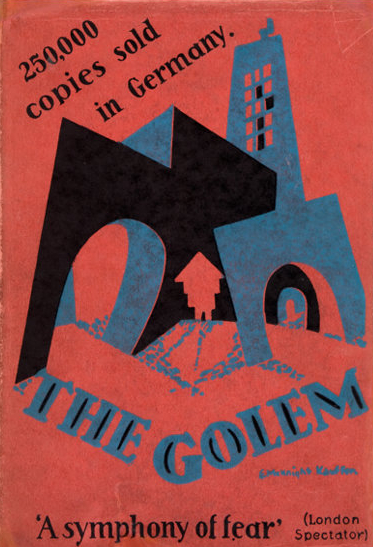
The Golem (1928) by Gustav Meyrink

Jewish folklore has preserved much of the terror and mystery of the past, and when more thoroughly studied is likely to exert considerable influence on weird fiction. The best examples of its literary use so far are the German novel The Golem, by Gustav Meyrink, and the drama The Dybbuk, by the Jewish writer using the pseudonym “Ansky”. The former, wildly popular through the cinema a few years ago, treats of a legendary artificial giant animated by a mediaeval rabbin of Prague according to a certain cryptic formula. The Dybbuk, translated and produce in America in 1925, describes with singular power the possession of a living body by the evil soul of a dead man. Both golems and dybbuks are fixed types, and serve as frequent ingredients of later Jewish tradition.
⁠—H. P. Lovecraft, “Supernatural Horror in Literature” (1927 version),
Collected Essays 2.100

Gustav Meyrink was the pseudonym of Gustav Meyer, an Austrian who had lived in Prague for twenty years as a banker. In the 1890s Meyrink developed an interest in the occult, and became a member of the Hermetic Order of the Golden Dawn (and also, briefly, the Theosophical Society). In 1902 he was charged with fraud, which ended his banking career; Meyrink turned his focus to writing and translation, and became especially known for his German-language stories of the supernatural. While not Jewish himself, Meyrink’s close familiarity with Prague, including the Jewish quarter and the occult, provided him the ingredients for his greatest novel.

Der Golem was serialized in the German magazine Die Weißen Blätter from December 1913 to August 1914; it was published as a standalone novel in 1915, to immense popularity. The book was eventually translated into English by Madge Pemberton, and The Golem was published in 1928. Of course, H. P. Lovecraft’s first version of “Supernatural Horror in Literature” was published in 1927…so how did he write about Meyrink’s novel?

He watched the film.

The one weird film I did see was “The Golem”, based on a mediaeval ghetto legend of an artificial giant. In this production the settings were semi-futuristic, some of the ancient gabled houses of Prague’s narrow streets being made to look like sinister old men with peaked hats.
—H. P. Lovecraft to August Derleth, 16 Dec 1926, Essential Solitude 1.56

You left out the “Golem” illustration mentioned, but I fancy you may send it later. I wish I could get hold of a copy of the book. I saw a cinema of it in 1923, but never had access to the Meyrink text–although I mentioned it in my article.
—H. P. Lovecraft to Robert Bloch, c. 6 Dec 1933, Letters to Robert Bloch & Others 92

Der Golem (“The Golem”) was a silent film directed by and starring Paul Wegener with German intertitles released in 1915. The film is now believed to be lost, aside from some fragments. This film was followed by two more: Der Golem und die Tänzerin (“The Golem and the Dancing Girl”) in 1917, and Der Golem, wie er in die Welt kam (“The Golem: How He Came Into The World”) in 1920, both of which were also directed by and starring Paul Wegener as the golem. So it isn’t clear which film Lovecraft actually saw. The 1920 film survives and is in the public domain.

Lovecraft claimed in most of his letters to have caught a showing of it in 1921, and like many an English student of the VHS era who needed to write a book report, he assumed somewhat erroneously that it was faithful to the plot of the book. However, despite being nominally based on Meyrink’s novel, the book and films share little in common save the Prague setting and the Golem legend—or at least, an interpretation of the original Jewish lore as filtered through several non-Jews. Meyrink’s novel recounts his version of the golem story in brief:

“The original story harks back, so they say, to the sixteenth century. Using long-lost formals from the Kabbala, a rabbi is said to have made an artificial man–the so-called Golem–to help rint the bells in the Synagogue and for all kinds of other menial work.

“But he hadn’t made a full man, and it was animated by a sort of vegetable half-life. What life it had, too, so the story runs, was only derived from a magic charm placed behind its teeth each day, that drew down to itself what was known as the ‘free sidereal strength of the universe.’

“One evening, before evening prayers, the rabbi forgot to take the charm out of the Golem’s mouth, and it fell into a frenzy. It raged through the dark streets, smashing everything in its path, until the rabbi caught up with it, removed the charm, and destroyed it. Then the Golem collapsed, lifeless. All that was left of it was a small clay image, which you can still see in the Old Synagogue.”
—Gustav Meyrink, The Golem  (1985 ed.) 26

The German trilogy of films adapt a similar version of the golem story, in different times and contexts. The 1915 film has an antiques dealer discover the Golem of Prague and revives it to serve him; as in the original legend the Golem eventually goes on a rampage. The 1917 film is a comedy where a man makes himself up as the golem to win love. The 1920 film is essentially a retelling of the Golem of Prague legend, set in the medieval period. None of these make any effort to follow the original Jewish story very closely. Lovecraft, ignorant of Jewish lore as he was, probably had no idea how the film differed from the original Jewish story.

In Meyrink’s novel the Golem never plays an active role—it is a shadowy figure in a novel that is focused on the life of the mentally unstable Athanasius Pernath, as experienced by a nameless narrator; so that the story has something of an avant garde, experimental feel, with some chapters possibly being memories, delusions, or dreams and it is never quite clear what is the reality.

Lovecraft finally got a chance to read The Golem in 1935, when his young friend Robert H. Barlow loaned him a copy of the 1928 English translation. Having finally read it, Lovecraft’s acclaim was immediate:

Lately read Gustav Meyrink’s “The Golem”, lent me by young Barlow. The most magnificent weird thing I’ve struck in aeons! The cinema of the same title which I saw in 1921 was a mere substitute using the empty name—with nothing of the novel in it. What a study in subtle fear, brooding hints of elder magic, & vague driftings to & fro across the borderline betwixt dream & waking! There are no overt monsters or miracles—just symbols & suggestions. As a study in lurking, insidious regional horror it has scarcely a peer—doing for the ancient crumbling Prague ghetto what I have vainly tried to do for certain festering New England backwaters in some of my own laboured efforts. I had never read the novel before, but mentioned it in my article as a result of having seen the cinema. Now I perceive that I ought to have given it an even higher rating than I did.
—H. P. Lovecraft to J. Vernon Shea, 11 Apr 1935, Letters to J. Vernon Shea 266-267

But—I’ve read “The Golem!” Iä! Shub-Niggurath! The Goat with a Thousand Young!!! That’s what I call a story! Nothing like the cinema—the latter was just a shocker capitalising the title—though it did have splendid architectural effects. How splendidly subtle the novel is—no overt monsters, but vague suggestions of inconceivable presences & influences! It captures the nebulous, brooding horror of the immemorial Prague ghetto as I have feebly sought to capture that of certain ancient & retrogressive backwaters of New England.
—H. P. Lovecraft to R. H. Barlow, 20 Apr 1935, O Fortunate Floridian 251

Lovecraft was so enthusiastic about the novel that he encouraged several of his correspondents to write to Barlow to have the loan of the book; so that over the next few months it was duly sent from Lovecraft to C. L. Moore, to Margaret Sylvester, Duane W. Rimel, Emil Petaja, F. Lee Baldwin, and Richard F. Searight, and offered it to Clark Ashton Smith as well. A few of their thoughts on the novel survive:

You were right about “The Golem”. Reading it in broad day was no insurance against the subtle assaults upon reality. “No actual monsters jump out of its pages”, but even tho I read it on a sunny Sunday afternoon, in a deckchair in the sunshine, it left me cold and chilly inside, and a bit glassy-eyed. I remember so vividly having wakened somewhere in grey night and seeing dusty moonlight falling thru bars on just such a littered floor as P. awakened to see in the Golem’s room. I can’t have, of course, but the book is so vivid I do remember it clearly. It was ugly. I haven’t quite finished, but will forward it to Miss Sylvester soon, as Barlow has requested.
—C. L. Moore to H. P. Lovecraft, 7 May 1935, Letters to C. L. Moore 35-36

Thanks for Ar-Ech-Bei’s offer of The Golem. However, I read the book several years ago, when it was loaned to me, by a young friend in the Bay region. I agree with you that it is a most consummate and eerily haunting study in strange atmosphere; probably one of the best things of the kind ever written.
—Clark Ashton Smith to H. P. Lovecraft, Jun 1935, Dawnward Spire, Lonely Hill 608

The others in the lending-list no doubt made their own appreciative comments. As with Lovecraft’s discovery of William Hope Hodgson around the same time, the reading of Meyrink’s novel prompted Lovecraft to read more of his work…but the Old Gent was stymied by the general lack of English translations.

Glad “The Golem” reached you at last. I was sure you’d appreciate it—for it is really a phenomenal triumph in its way. Few books indeed are capable of summoning up such a poignant & convincing pageant of mystical atmospheric impressions—& the absence of conventional “conflict” is all in its favour. I wish I owned it—but am told it is hard to get despite the relatively recent date (1928) of this translation. The original German novel, I believe, dates from the 1890’s. I wish I knew something of Meyrink, but I have found almost nothing about him. The only thing of his besides “The Golem” that I’ve read are som rather mediocre short stories—one of which appeared in W. T. I believe he is still living—but doubt if he has written or ever will write anything to compare with this early tour de force.
—H. P. Lovecraft to Richard F. Searight, 19 Nov 1936, Letters to Price & Searight 431

Although Lovecraft didn’t know it, Meyrink had died in 1932. In his letters, Lovecraft says he had read “a story in the ‘Lock & Key Library'” (ES 2.691), which would be “The Man on the Bottle” (Lock & Key Library vol. 3, 1909), which Lovecraft later described as “a rather clever but essentially routine conte cruel” (OFF 259); “I recall “Bal Macabre” in Strange Tales—very effective, with genuine atmospheric tension” (OFF 259), “Bal Macabre” was published in Strange Tales of Mystery and Terror (Oct 1932); and finally “The Violet Death” ran in Weird Tales (Jul 1935)…and with that, Lovecraft had read basically all of Meyrink’s work that had been published in English during his lifetime.

It is easy to see why Lovecraft was so enamored of The Golem; in its style and elements it is almost a Lovecraftian novel, with is tenuous sanity, hinting horrors, the strange mystical book Ibbur, and other elements. While it would be interesting to ruminate on the influence The Golem had one Lovecraft’s own fiction—to draw parallels, perhaps, between the original Jewish legend of the artificial servitor run amok and the shoggoths of At the Mountaints of Madness—but by the time Lovecraft had read the novel he had relatively few works of original fiction left to write, and those works show little influence of the book or Meyrink’s style. Still, this novel if nothing else would have introduced Lovecraft to tarot cards,which are a recurring occult element.

There was, in fact, only one thing left to do: revise “Supernatural Horror in Literature” to rectify his earlier mistake.

I didn’t change as much as I expected—words here & there, a bad punctuation style where dates follow titles of stories, a boner regarding “The Golem”, & a bit of over-florid writing in the Poe chapter. To explain that Golem business I must confess that when I wrote the treatise I hadn’t read the novel. I had seen the cinema version, & thought it was faithful to the original—but when I came to read the book only a year ago…Holy Yuggoth! The film had nothing of the novel save the mere title & the Prague ghetto setting—indeed, in the book the Golem-monster never appeared at all, but merely lurked in the background as a shadowy symbol. That was one on the old man!
—H. P. Lovecraft to Willis Conover, 31 Jan 1937, Letters to Robert Bloch & Others 415

The revised portion of the essay now reads:

Jewish folklore has preserved much of the terror and mystery of the past, and when more thoroughly studied is likely to exert considerable influence on weird fiction. The best examples of its literary use so far are the German novel The Golem, by Gustav Meyrink, and the drama The Dybbuk, by the Jewish writer using the pseudonym “Ansky”. The former, with its haunting shadowy suggestions of marvels and horrors just beyond reach, is laid in Prague, and describes with singular mastery that city’s ancient ghetto with its spectral, peaked gables. The name is derived from a fabulous artificial giant supposed to be made and animated by mediaeval rabbis according to a certain cryptic formula. The Dybbuk, translated and produced in America in 1925, and more recently produced as an opera, describes with singular power the possession of a living body by the evil soul of a dead man. Both golems and dybbuks are fixed types, and serve as frequent ingredients of later Jewish tradition.
—H. P. Lovecraft, “Supernatural Horror in Literature”

While this passage shows how scanty was Lovecraft’s knowledge of Jewish religion, history, and lore—he once commented about The Golem, “There is nothing about the Chassidim in it—but the atmosphere is rich enough without ‘em.” (LPS 427), because after his encounter with The Dybbuk (1925) he associated Hassidic Jews with Jewish occultism—the episode as a whole shows that Lovecraft was able to digest and appreciate material from varied traditions, even if his understanding was incomplete. He never, for example, shows any awareness that Meyrink was not Jewish, or that Meyrink’s depiction of the golem legend was influenced by non-Jewish esoteric traditions. While it would be difficult to say that The Golem substantially influenced his fiction in any way, Lovecraft certainly seems to have though it enriched his life—and he made an effort to share that experience with the younger writers he associated with.

Thanks to Cora Buhlert for pointing out that I should mention the 1917 and 1920 film.


Bobby Derie is the author of Weird Talers: Essays on Robert E. Howard and Others and Sex and the Cthulhu Mythos.

Deep Cuts in a Lovecraftian Vein uses Amazon Associate links. As an Amazon Associate I earn from qualifying purchases.
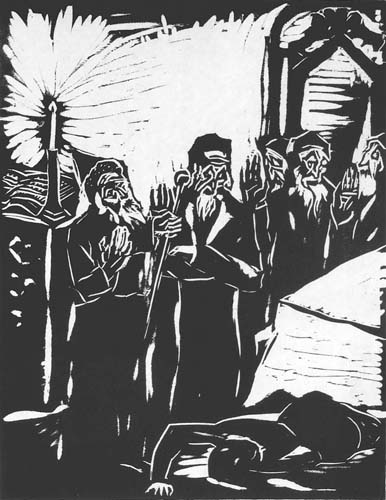
The Dybbuk (1925) by S. Ansky

up noon—window man & curtains—els telephone—out to York to meet him—up to Sonny’s—AM. Mus., Met. Mus. bus to library—gallery & reading room—els lv. read & Automat—down to N’hood playhouse—Dybbuck—bus & subway—els lv. Penn. Sta see Miss L home—W Side pk—return to 169
—H. P. Lovecraft’s diary entry for 17 December 1925, Collected Essays 5.174

By early 1925, H. P. Lovecraft had effectively separated from his wife. She had gone out to the midwest to work, returning to New York every few weeks to see him. He took a room at 169 Clinton Street, in the Red Hook neighborhood of Brooklyn, which was quickly filling up with immigrants. Unable to find work, away from his wife and his family, and suffering the indignity of a break-in to his apartment in May where even his clothes were stolen, his bias against immigrants had begun to reach a fever pitch in his letters.

In mid-December of 1925, his friend Edward Lloyd Sechrist was in town. There was a new play being performed at the Neighborhood Playhouse, and in between visits with friends such as Frank “Sonny” Belknap Long, Jr. and visits to museums and libraries, theatre was one of the things Lovecraft still liked about New York. They would have gone through the cold streets in their winter suits; bought their tickets, found their way through the theater and waited for the house lights to dim…and in the darkness before the curtain rose a voice called out…

Why, oh why,
Did the soul descend
From the highest height
To the deepest end?
The greatest fall
Contains the upward flight.
—”The Dybbuk” by S. Ansky, trans. Joachim Neugroschel
The Dybbuk and the Jewish Imagination: A Haunted Reader 4

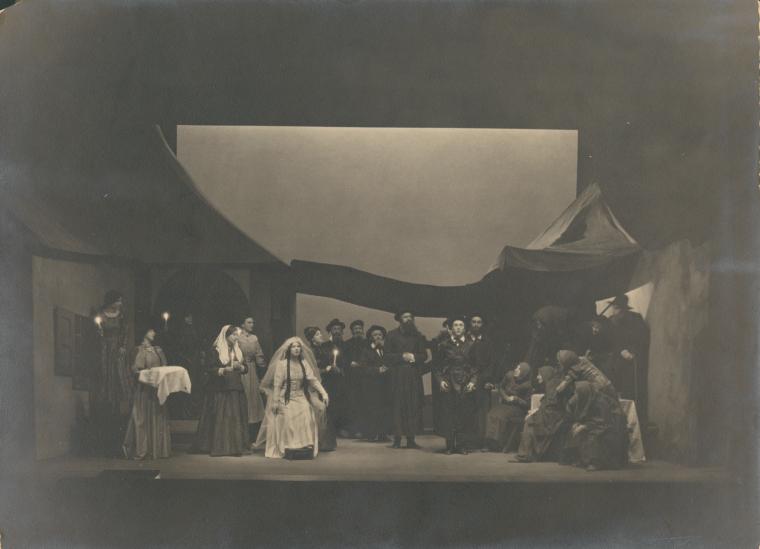
Then the curtain rose.

Dybbuk_1

The Dybbuk at the Neighborhood Playhouse, New York, 1925

“S. Ansky” was the pen-name of Shloyme Zanvl Rappoport, a Jewish author, playwright, and folklorist from the Russian Empire. The Dybbuk, or Between Two Worlds based on Jewish tradition, was written from 1913-1916 in Russian, then translated to Yiddish; it was first performed in Yiddish in Poland in 1920. It was translated into English by Henry G. Alsberg and Winifred Katzin, and opened at the Neighborhood Playhouse in New York City on 15 December 1925; it would run about 120 performances.

Daily_News_Wed__Dec_16__1925_

Contemporary newspaper reviews were mixed; the supernatural was nothing new to theatre, but the weird drama with its spectral plot and unfamiliar setting and references to Jewish culture and religion was undoubtedly a bit different than most audiences or critics were expecting. Keep in mind that Dracula would not hit the stage in New York until 1927; and Fiddler on the Roof would have to wait until 1964.

It would certainly have been novel for Lovecraft. In his native Providence, he had seldom met any Jews. It was not until Lovecraft came to New York that he encountered many Jewish immigrants from Europe, or anything of Jewish culture.

In his letters home to his aunts Lillian Clark and Annie Gamwell in Providence, Lovecraft had taken to writing long, diary-like entries regarding his experiences in the Big Apple, which included such a scene:

Here exist assorted Jews in the absolutely unassimilated state, with their ancestral beards, skull-caps, and general costumes—which make them very picturesque, and not nearly so offensive as the strident, pushing Jews who affect clean shaves and American dress. In this particular section, where Hebrew books are vended from pushcarts, and patriarchal rabbis totter in high hats and frock coats, there are far less offensive faces than in the general subways of the town—probably because most of the pushing commercial Jews are from another colony where the blood is less pure.
—H. P. Lovecraft to Lillian D. Clark, 29-30 Sep 1924,
Letters to Family & Family Friends 1.168

A week after Lovecraft saw “The Dybbuk,” he was composing Yuletide verses for his friends, he wrote to his aunt:

In writing Sechrist I alluded to his Polynesian & African travels, & to the hellish play—“The Dybbuk”—to which he so generously treated me last week: 

May Polynesian skies they Yuletide bless,
And primal gods impart thee happiness;
Zimbabwe’s wonders hint mysterious themes,
And ne’er a Dybbuk lurk to mar they dreams!

—H. P. Lovecraft to Lillian D. Clark, 22-23 Dec 1925, LFF 1.513-514

The play impressed Lovecraft enough that when he composed his essay “Supernatural Horror in Literature” for his friend W. Paul Cook’s amateur journal The Recluse, he felt obliged to mention it in the brief section on Jewish influence on weird fiction:

A very flourishing, though till recently quite hidden, branch of weird literature is that of the Jews, kept alive and nourished in obscurity by the sombre heritage of early Eastern magic, apocalyptic literature, and cabbalism. The Semitic mind, like the Celtic and Teutonic, seems to possess marked mystical inclinations; and the wealth of underground horror-lore surviving in ghettoes and synagogues must be much more considerable than is generally imagined. Cabbalism itself, so prominent during the Middle Ages, is a system of philosophy explaining the universe as emanations of the Deity, and involving the existence of strange spiritual realms and beings apart from the visible world, of which dark glimpses may be obtained through certain secret incantations. Its ritual is bound up with mystical interpretations of the Old Testament, and attributes an esoteric significance to each letter of the Hebrew alphabet—a circumstance which has imparted to Hebrew letters a sort of spectral glamour and potency in the popular literature of magic. Jewish folklore has preserved much of the terror and mystery of the past, and when more thoroughly studied is likely to exert considerable influence on weird fiction. The best examples of its literary use so far are the German novel The Golem, by Gustav Meyrink, and the drama The Dybbuk, by the Jewish writer using the pseudonym “Ansky”. The former, wildly popular through the cinema a few years ago, treats of a legendary artificial giant animated by a mediaeval rabbin of Prague according to a certain cryptic formula. The Dybbuk, translated and produce in America in 1925, describes with singular power the possession of a living body by the evil soul of a dead man. Both golems and dybbuks are fixed types, and serve as frequent ingredients of later Jewish tradition.
—H. P. Lovecraft, “Supernatural Horror in Literature” (1927 version), CE 2.100

Several years later, Lovecraft would have occasion to revise “Supernatural Horror in Literature” into its final form; in discussing The Dybbuk he added “and more recently produced as an opera.” The operatic version was in Italian, and ran as Il dibuk in 1934, and made its way to New York by 1935. Lovecraft’s friend Richard F. Searight had seen the opera, and this elicted from the Old Gent in Providence his deepest appreciation of the play:

Your description of the opera “The Dybbuk” is extremely fascinating to me, especially since I had the good luck to see the original play in 1925—when a translation was presented in New York. The mere play (which was very well staged & acted) was impressive enough, & I can well imagine the additional power derived from an appropriate musical score. From our account, I judge that the opera follows the order & events of the drama quite closely. Mention of a dance of beggars vaguely reminds me of something in the play—connected with a garden scene. The exorcism was very powerful, even without music. I surely hope I can encounter the opera sooner or later—though I don’t know when I shall next visit New York. The play produced a very potent impression on me, & I had a vague idea of trying to base a story on the dybbuk idea. I saved my programme—which had copious notes on the particular sect of Jews most addicted to cablistic research (I think they were called the Chassidim)—but that young rascal Long lost it when I lent it to him! Without this ready-made data, I let the story-ida languish—though I suppose I could find out about dybbuks, & about the Chassidim, in the great Jewish Encyclopaedia which is available at most large libraries. [E. Hoffmann] Price got a lot of stuff about Lilith from this source. What is more—this work might shed a picturesque light on the Golem belief.
—H. P. Lovecraft to Richard F. Searight, 12 Jun 1936, Letters to E. Hoffmann Price and Richard F. Searight 415-416

“Chassadim” is a reference to Hasidic Judaism, a spiritual revivalist sect that arose in Ukraine in the 18th century, and which spread through Eastern Europe and was carried to the United States by immigrants. Culturally conservative regarding their traditional clothing, it was likely Hasidic Jews who caught Lovecraft’s eye when he arrived in New York.

The idea of Lovecraft drawing inspiration from Jewish folkore is not quite as far-fetched as it might seem. “The Horror at Red Hook,” inspired in part by his experiences in New York, includes references to Lilith and aspects of medieval European occultism connected to or partially derived from Jewish sources (although in this case Lovecraft relied on the Encyclopedia Britannica rather than the Jewish Encyclopedia). The idea of the dybbuk as a possessing spirit has parallels with several of Lovecraft’s stories, notably “Beyond the Wall of Sleep,” “The Thing on the Doorstep,” and The Shadow Out of Time, and Lovecraft had written down ideas for other stories in the same vein, which like his Dybbuk-inspired tale, was never to be written.

Dybbuk_2

The Dybbuk at the Neighborhood Playhouse, New York, 1925

Rabbi Azriel. Did anyone ask the dybbuk who he is and why he’s possessing your daughter?
—”The Dybbuk” by S. Ansky, trans. Joachim Neugroschel
The Dybbuk and the Jewish Imagination: A Haunted Reader 36

Ansky’s play is a human drama in a world of spiritual and material forces, intertwined and influencing one anothers; human action has supernatural reprecussions, and supernatural forces can influence and afflict people. It deals with the interplay of these forces, but is focused very much on the people involved, their thoughts and emotions, the stresses they undergo in their daily lives as they strive and struggle and work to fit their role in the world.

Rabbi Azriel suffers his moments of crisis, and even the dybbuk is a sympathetic figure that begs the rabbi not to exorcise him. It is not a the antagonist Hollywood approach to the expelling of an evil spirit or demon at all…and it is notable that Lovecraft, whatever parallels his work may have in the idea of an alien intelligence possessing a body, never offers exorcism as a potential source of hope. The bittersweet ending of would-be bride-and-groom in The Dybbuk is almost the exact opposite of what Lovecraft would concoct as the final fate of Asenath Waite and Edward Derby.

Yet it is easy to see how he might well have been moved by the exorcism scene, the powerful cry of the lost soul clinging onto the one piece of its past that it can, with nowhere else to go and nothing else to anchor itself…and Lovecraft himself was barely clinging on, surrounded by his books and furniture, all that he had taken with him from Providence to the New York he increasingly found alienating and strange.

H. P. Lovecraft would experience and appreciate few works of Jewish culture in his life, yet he held The Dybbuk in high esteem—and we are left to wonder what might have happened, if a program had not been lost, and if Lovecraft had sat down on a park bench one day after careful thought and some research, to pen a new tale.


Bobby Derie is the author of Weird Talers: Essays on Robert E. Howard and Others and Sex and the Cthulhu Mythos.

Deep Cuts in a Lovecraftian Vein uses Amazon Associate links. As an Amazon Associate I earn from qualifying purchases.
Frankenstein; or, The Modern Prometheus (1818) by Mary Wollstonecraft Shelley

His daughter, the wife of Shelley, was much more successful; and her inimitable Frankenstein; or, The Modern Prometheus (1818) is one of the horror-classics of all time. Composed in competition with her husband, Lord Byron, and Dr. John William Polidori in an effort to prove supremacy in horror-making, Mrs. Shelley’s Frankenstein was the only one of the rival narratives to be brought to an elaborate completion; and criticism has failed to prove that the best parts are due to Shelley rather than to her. The novel, somewhat tinged but scarcely marred by moral didacticism, tells of the artificial human being moulded from charnel fragments by Victor Frankenstein, a young Swiss medical student. Created by its designer “in the mad pride of intellectuality”, the monster possesses full intelligence but owns a hideously loathsome form. It is rejected by mankind, becomes embittered, and at length begins the successive murder of all whom young Frankenstein loves best, friends and family. It demands that Frankenstein create a wife for it; and when the student finally refuses in horror lest the world be populated with such monsters, it departs with a hideous threat ‘to be with him on his wedding night’. Upon that night the bride is strangled, and from that time on Frankenstein hunts down the monster, even into the wastes of the Arctic. In the end, whilst seeking shelter on the ship of the man who tells the story, Frankenstein himself is killed by the shocking object of his search and creation of his presumptuous pride. Some of the scenes in Frankenstein are unforgettable, as when the newly animated monster enters its creator’s room, parts the curtains of his bed, and gazes at him in the yellow moonlight with watery eyes—“if eyes they may be called”. Mrs. Shelley wrote other novels, including the fairly notable Last Man; but never duplicated the success of her first effort. It has the true touch of cosmic fear, no matter how much the movement may lag in places. Dr. Polidori developed his competing idea as a long short story, “The Vampyre”; in which we behold a suave villain of the true Gothic or Byronic type, and encounter some excellent passages of stark fright, including a terrible nocturnal experience in a shunned Grecian wood.
—H. P. Lovecraft, “Supernatural Horror in Literature” (1927)

We don’t know when H. P. Lovecraft first read Mary Shelley’s Frankenstein, though it was sometime before 1920, and quite possibly was read as a child, from a copy found among the books in the family library. During his life, Lovecraft would perceive the growing influence of this critical work of science fiction and horror in pop-culture: the first film adaptation, starring Boris Karloff as the Monster, was released in 1931 and Lovecraft would see it in the theatre; and Weird Tales would serialize Shelley’s novel between May and December 1932 as part of its “Weird Reprints” series, and Lovecraft would read it then too. Various writers in the pulps, including Lovecraft himself, would show the influence of Shelley’s creation, and Lovecraft was sure to include her in his survey of weird fiction “Supernatural Horror in Literature.”

Lovecraft would not quite live to see Frankenstein’s Monster become the icon—and stereotype—that he turned into in the 1940s and 50s; for him, Shelley’s novel would always have precedence over other depictions.

The Book (1818)

By the way—my F. is a 9 ¼ x 5 ½ volume–2 columns & very thin. The date is missing, but from the typography I’d tend to place it in the 1830s. That would seem a bit late for the first Am. ed. of a  volume issued in 1818. My copy has been re-bound. On the title-page the author is very explanatorily listed as “Mrs. Mary W. Shelley, wife of Percy Busshe Shelley the Poet.”
—H. P. Lovecraft to R. H. Barlow, 20 Apr 1935, O Fortunate Floridian! 238

There are two main editions of the text of Frankenstein: the original edition issued in 1818, which was revised in 1823; and then heavily revised again for the 1831 one-volume edition. The 1831 text has been the most popular version of the text, and the version that ran in Weird Tales. While Lovecraft dated his personal copy to the 1830s, the details he gives—an American edition in two columns and with that byline—point to the 1845 edition by H. G. Daggers of New York.

91487_0

Title page of the 1845 H. G. Daggers edition.

Of the novel itself, Lovecraft does not write much in his letters, so we are largely left to his notes in “Supernatural Horror in Literature” as to his thoughts on the work. Nor is there any real evidence that he read The Last Man (1826) or Shelley’s other novels. There is one interesting highlight however:

As for weird reprints—I agree that short items are best. “Frankenstein” undoubtedly drags in places, yet has its tense & terrible moments—especially when the monster first comes to watch its creator at night.
—H. P. Lovecraft to R. H. Barlow, 31 Mar 1932, O Fortunate Floridian! 28

It is notable that Lovecraft cites this very same scene in his entry for “Supernatural Horror in Literature”—and, perhaps tellingly, this very scene is quoted in Dorothy Scarborough’s The Supernatural in Modern English Fiction (1917), which Lovecraft consulted before writing that essay. Which suggests either that either both Lovecraft and Scarborough were struck on the same passage…or that, perhaps, Lovecraft relied on Scarborough rather than re-reading the entire novel while composing his essay.

I saw—with shut eyes but acute mental vision—I saw the pale student of unhallowed arts kneeling beside the thing he had put togheter. I saw the hideous phantasm of a man stretched out, and then, on the working of some powerful engine, show signs of life. . . . The artist sleeps but he is awakened; and behold, the horrid thing stands at his bedside, looking on him with watery, yellow yet speculative eyes!
—Mary Wollstonecraft Shelley,
quoted in The Supernatural in Modern English Fiction 14

If Lovecraft cribbed a little, it was not because he hadn’t read or didn’t appreciate Shelley’s masterwork—quite the opposite. For example, when his friend Elizabeth Toldridge used the name “Frankenstein” in a poem she was writing, Lovecraft wrote back with a correction that would be echoed by generations of horror nerds:

In the next line remember that Frankenstein (in the novel, a Swiss medical student, Victor Frankenstein) means the creator of a destroying monsternot the monster itself. If you have that intention, it’s all right. If you mean the monster itself, better change to hydra-shapes or some equivalent.
—H. P. Lovecraft to Elizabeth Toldridge, 17 Oct 1933, Letters to Elizabeth Toldridge 257

The poem, which survives in manuscript, is titled (at Lovecraft’s suggestion) simply “Poetry”, and the line reads:

Come match your strength with steel, meassure your will with iron, your speed try out with the stars! For thine were Frankenstein hydra-shapes man-wrought foes to bear—

And powers of evil, loose in the world, shall reel and titter, in a giant juggler’s roust—

The Film (1931)

The success of Universal’s Dracula in early 1931 spurred the studio on to produce more horror films. Frankenstein was produced and hit theaters by December of the same year, with Boris Karloff in the iconic role—and the distinct heavy-lidded flat-top make-up—of the Monster. The film takes considerable liberties with Mary Shelley’s novel; Victor Frankenstein becomes Henry Frankenstein, and much of the original plot, atmosphere, and motivation is lost. Lovecraft saw the film within the first week of its opening on the East Cost, and wrote:

I haven’t been able to get around to any cinemas except “Frankenstein”—which vastly disappointed me. The book has been altered beyond recognition, & everything is toned down to an insufferable cheapness & relative tameness. I fear the cinema is no place to get horror-thrills!
—H. P. Lovecraft to J. Vernon Shea, 9 Dec 1931, Letters to J. Vernon Shea 85

Also saw “Frankenstein” last month & was vastly disappointed. The film absolutely ruins the book–which indeed it scarcely resembles!
—H. P. Lovecraft to R. H. Barlow, 23 Dec 1931, O Fortunate Floridian! 18

“Frankenstein” was the only cinema I attended during the autumn of 1931, & I was woefully disappointed. No attempt to follow the novel was made, & everything was cheap, artificial, & mechanical. I might have expected it, though—for “Dracula” (which I saw in Miami, Fla. last June) was just as bad.
H. P. Lovecraft to Clark Ashton Smith, 28 Jan 1932, Dawnward Spire, Lonely Hill 344

Lovecraft was, like many science fiction and horror fans, a bit of a purist who regretted the changes made to the material in its translation from the page to the silver screen. Time did not really mollify this opinion:

I saw the cinema of “Frankenstein”, & was tremendously disappointed because no attempt was made to follow the story. However, there have been many worse films–& many parts of this one are really quite dramatic when they are viewed independently & without comparison to the episodes of the original novel.
—H. P. Lovecraft to R. H. Barlow, 10 Jul 1932, O Fortunate Floridian! 33

As a thorough soporific I recommend the average popularly “horrible” play or cinema or radio dialogue. They are all the same–flat, hackneyed, synthetic, essentially atmosphereless jumbles of conventional shrieks and mutterings and superficial, mechanical situations. The Bat” made me drowse back in the early 1920s–and last year an alleged “Frankenstein” on the screen would have made me drowse had not a posthumous sympathy for poor Mrs. Shelley made me see red instead. Ugh!
—H. P. Lovecraft to Farnsworth Wright, 16 Feb 1933, Lovecraft Annual 8.28

Most radio and cinema versions of classics constitute a combination of high treason and murder in the first degree—I’ll never get over the cinematic mess that bore the name (about the only bond of kinship to the book!) of “Frankenstein”.
—H. P. Lovecraft to Robert E. Howard, 8 Apr 1934, A Means to Freedom 2.761

Keep in mind that Lovecraft lived before the home television and VCR revolution; his only experience of Frankenstein and other Universal horror films was if he could catch them in the theater—it was re-runs and rentals which cemented these as classic films, endlessly influential and copied. Lovecraft only caught the very beginnings of that…and, of course, he was inspired by Mary Shelley’s Frankenstein as well.

The Dream (1920)

I had a vivid dream a few nights ago–involving the possession of another distinct personality. The period was 1864, & the crux of the dream was a horror in a doctor’s secret laboratory. Think the dream-doctor was going to shew me an artificial man like M. Frankenstein’s uncomely creation, but premature waking robbed the dream of its climax. In this dream I was Dr. Eben Spencer; an army surgeon home on a furlough. The sinister experimenter was a colleague of mine, Dr. Chester. Some dream!
—H. P. Lovecraft to Rheinhart Kleiner, 23 Jan 1920, Letters to Rheinhart Kleiner & Others 154

In 1920, Lovecraft was finally coming out of his seclusion through the auspices of amateur journalism, and had built up a fairly robust correspondence with some friends. Weird Tales was still three years away from its debut issue, but he was well into his first major period of fiction which included dream-inspired stories such as “The Statement of Randolph Carter” (The Vagrant May 1920). In addition to this brief recap of the dream to Kleiner, Lovecraft included a much fuller version of the dream to his correspondence circle The Gallomo (Alfred Galpin, H. P. Lovecraft, and James F. Morton):

Speaking of the “Carter” story, I have lately had another odd dream—especially singular because in it I possessed another personality—a personality just as definite and vivid as the Lovecraft personality which characterises my waking hours.

My name was Dr. Eben Spencer, and I was dressing before a mirror in my own room, in the house where I was born in a small village (name missing) of northern New York State. It was the first time I had donned civilian clothes in three years, for I was an army surgeon with the rank of 1st Lieut. I seemed to be home on a furlough—slightly wounded. On the wall was a calendar reading “FRIDAY, JULY 8, 1864”. I was very glad to be in regular attire again, though my suit was not a new one, but one left over from 1861. After carefully tying my stock, I donned my coat and hat, took a cane from a rack downstairs, and sallied forth upon the village street.

Soon a very young man of my acquaintance came up to me with an air of anxiety and began to speak in guarded accents. He wished me to go with him to his brother—my professional colleague Dr. Chester—whose actions were greatly alarming him. I, having been his best friend, might have some influence in getting him to speak freely—for surely he had much to tell. The doctor had for the past two years been conducting secret experiments in a laboratory in the attic of his home, and beyond that locked door he would admit no one but himself. Sickening odours were often detected near the door…and odd sounds were at times not absent.

The doctor was aging rapidly; lines of care—and of something else—were creeping into his dark, thin face, and his hair was rapidly going grey. He would remain in that locked room for dangerously long intervals without food, and seemed uncannily saturnine. All questioning from the younger brother was met with scorn or rage—with perhaps a little uneasiness; so that the brother was much worried, and stopped me on the street for advice and aid. I went with him to the Chester house—a white structure of two stories and attic in a pretty yard with a picket fence. It was in a quiet side street, where peace seemed to abide despite the trying nature of the times. In the darkened parlour, where I waited for some time, was a marble-topped table, much haircloth furniture, and several pleasing whatnots covered with pebbles, curios, and bric-a-brac. Soon Dr. Chester came down—and he had aged.

He greeted me with a saturnine smile, and I began to question him, as tactfully as I could, about his strange actions. At first he was rather defiant and insulting—he said with a sort of leer, “Better not ask, Spencer! Better not ask!” Then when I grew persistent (for by this time I was interested on my own account) he changed abruptly and snapped out, “Well, if you must know, come up!” Up two flights of stairs we plodded, and stood before the locked door. Dr. Chester opened it, and there was an odour.

I entered after him, young Chester bringing up the rear. The room was low but spacious in area, and had been divided into two parts by an oddly incongruous red plush portiere. In the half next the door was a dissecting table, many bookcases, and several imposing cabinets of chemical and surgical instruments. Young Chester and I remained here, whilst the doctor went behind the curtain. Soon he emerged, bearing on a large glass slab what appeared to be a human arm, neatly severed just below the elbow. It was damp, gelatinous, and bluish-white, and the fingers were without nails.

“Well, Spencer”, said Dr. Chester sneeringly, “I suppose you’ve had a good deal of amputation practice in the army. What do you think, professionally, of this job?” I had seen clearly that this was not a human arm, and said sarcastically, “You are a better sculptor than doctor, Chester. This is not the arm of any living thing.” And Chester replied in a tone that made my blood congeal, “Not yet, Spencer, not yet!”

Then he disappeared again behind the portiere and emerged once more, bringing another and slightly larger arm. Both were left arms. I felt sure that I was on the brink of a great revelation, and awaited with impatience the tantalisingly deliberate motions of my sinister colleague. “This is only the beginning, Spencer,” he said as he went behind the curtain for the third time. “Watch the curtain!”

And now ends the fictionally available part of my dream, for the residue is grotesque anticlimax. I have said that I was in civilian clothes for the first time since ’61—and naturally I was rather self-conscious. As I waited for the final revelation I caught sight of my reflection in the glass door of an instrument case, and discovered that my very carefully tied stock was awry. Moving to a long mirror, I sought to adjust it, but the black bow proved hard to fashion artistically, and then the whole scene began to fade—and damn the luck! I awaked in the distressful year of 1920, with the personality of H. P. Lovecraft restored!

I have never seen Dr. Chester, or his younger brother, or that village, since. I do not know what village it was. I never heard the name of Eben Spencer before or since. Some dream! If that happened to Co [Edward H. Cole], he would be surely seeking a supernatural explanation; but I prefer actual analysis. The cause of the whole is clear—I had a few days before laid out Mrs. Shelley’s “Frankenstein” for re-reading.
—H. P. Lovecraft to the Gallomo, Apr 1920, Letters to Alfred Galpin 71-73
[The original lacks paragraph breaks; these were inserted for ease of reading.]

Lovecraft never fleshed out and finished this story. However, the next year, in the fall of 1921, Lovecraft would write another story that would involve two friends, doctors, with grisly experiments in reanimation which seemed strongly inspired by Mary Shelley’s Frankenstein—the serial “Herbert West—Reanimator.”


Bobby Derie is the author of Weird Talers: Essays on Robert E. Howard and Others and Sex and the Cthulhu Mythos.

Deep Cuts in a Lovecraftian Vein uses Amazon Associate links. As an Amazon Associate I earn from qualifying purchases.
The Mystery of Lustful Illusion -Cthulhu Pregnant- (2015) by Takayuki Hiyori (宇行 日和)

Eldritch Fappenings

This review deals with a work of pornography, and the history of erotic art and writing. As part of this review, selected images with cartoon depictions of genitalia and/or sexually explicit contact will be displayed.
As such, please be advised before reading further.


愛欲幻想の怪~クトゥルフ・プレグナント~ (The Mystery of Lustful Illusion -Cthulhu Pregnant-) by Takayuki Hiyori (宇行 日和) is a 2015 Japanese tankōbon hentai manga published by Unreal Comics (アンリアル). This book is divided into ten chapters, each of which contains a fully-illustrated and sexually explicit Cthulhu Mythos story.

In art style, the book is geared more toward erotic comedy than erotic horror; and many of the Cthulhu Mythos entities within are presented as monster girls. Takayuki Hiyori had been previously known for their dōjinshi based on popular monster girl harem manga Monster Musume, and their manga are essentially a pornographic parallel to the mostly non-explicit books like Monster Girl Encyclopedia II (2016) by Kenkou Cross (健康クロス).

Cthulhu_TOC

In terms of writing and storytelling, The Mystery of Lustful Illusion -Cthulhu Pregnant- is a disconnected collection of short works, much like most Lovecraft story collections or Lafcadio Hearn’s classic collection Kwaidan. There is no larger overarching story of narrative, the major appeal of the work being simply that it uses the Cthulhu Mythos for these erotic stories and sexualized versions of eldritch entities like Cthulhu, Hastur, Shub-Niggurath, the Deep Ones, the Hounds of Tindalos, and the Cats of Ulthar.

The contents are aimed toward some well-established tropes and kinks: as the title might imply, impregnation is a fairly significant theme in many of the stories, but there are also instances of multiple penetration, sex work, incest, nonconsensual sex, body transformation or modification, breast expansion, group sex, large genitals, etc. Readers familiar with tentacle erotica might wonder if such appendages play their part, as they do in Le Pornomicon (2005) by Logan Kowalsky, but in truth they don’t play a significant role in the proceedings.

Cthulhu_CalloftheAbyssIn point of fact, The Mystery of Lustful Illusion -Cthulhu Pregnant- is difficult to distinguish from Monster Musume or Monster Girl Encyclopedia products. While Takayuki Hiyori uses references to the Cthulhu Mythos in the crafting and telling of the stories, the manga itself is pretty straight forward monster girl erotica, and aimed more directly at that audience than Lovecraft fans. The depictions of the various Mythos entities is mostly original, but skewed toward “mostly human with a few non-human traits”—the Cats of Ulthar, for example, are indistinguishable from the generic manga or anime “catgirl,” with their primary feline traits being cat ears and tail on a nubile young woman’s body. Eldritch horrors are hinted at but seldom realized.

The contents of this book might be generally compared to the more sexually explicit chapters of The Elder Sister-like One by Pochi Iida (飯田ぽち。), but where Pochi is telling an extended narrative with a few characters with extended character development and exploring emotions, Takayuki Hiyori is necessarily more episodic, with varied content and swift-moving stories that tend to get to the sexual action fast, dwell on them for the majority of the length of the chapter, and come to a relatively swift conclusion.

Cthulhu - Ulthar

Arguably the most fun chapter in the book is a variation on “The Cats of Ulthar.” While the forms the cats take are stereotypical for hentai manga, and the results are pretty much what you might expect, it both pays homage to Lovecraft’s original work while playfully subverting aspects of it. One might compare it in some ways to the “erotic” versions of classic horror novels which achieved a bit of notoriety in the 1970s, like The Adult Version of Frankenstein and The Adult Version of Dracula by “Hal Kantor” (Ed Wood, Jr.). Erotic retellings of Lovecraft aren’t exactly new—for example, “Herburt East: Refuckinator” (2012) by Lula Lisbon—but illustrated or graphic adaptations are relatively scarce.

愛欲幻想の怪~クトゥルフ・プレグナント~ (The Mystery of Lustful Illusion -Cthulhu Pregnant-) by Takayuki Hiyori (宇行 日和) has not been officially translated into English or published in the United States; perhaps some company like FAKKU might do so in the future and make it more widely available. Until then, those interested in the Japanese original can still find copies available from retailers online.


Bobby Derie is the author of Weird Talers: Essays on Robert E. Howard and Others and Sex and the Cthulhu Mythos.

Deep Cuts in a Lovecraftian Vein uses Amazon Associate links. As an Amazon Associate I earn from qualifying purchases.
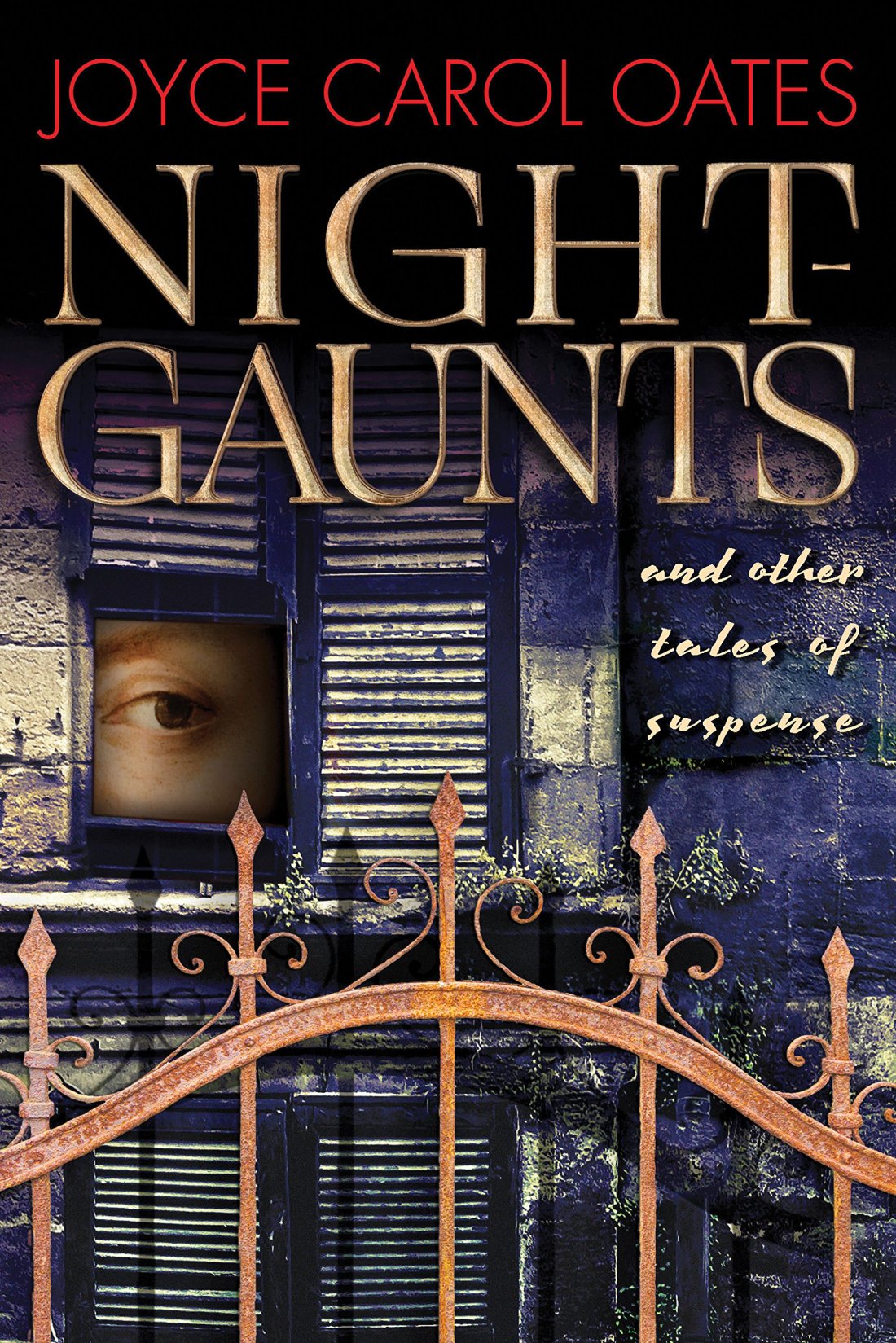
“Night-Gaunts” (2017) by Joyce Carol Oates

When I was 6 or 7 I used to be tormented constantly with a peculiar type of recurrent nightmare in which a monstrous race of entities (called by my “Night-Gaunts”—I don’t know where I got hold of the name) used to snatch me up by the stomach (bad digestion?) and carry me off through infinite leagues of black air over the towers of dead and horrible cities. They would finally get me into a grey void where I could see the needlelike pinnacles of enormous mountains miles below. Then they would let drop—and as I gained momentum in my Icarus-like plunge I would start awake in such panic that I hated to think of sleeping again. The “night-gaunts” were black, lean, rubbery things with bared, barbed tails, bat-wings, and no faces at all. Undoubtedly I derived the image from the jumbled memory of Doré’s drawings (largely the illustrations to Paradise Lost) which fascinated me in waking hours. They had no voices, and their only form of real torture was their habit of tickling my stomach (digestion again0 before snatching me up and swooping away with me. I sometimes had the vague notion that they lived in the black burrows honeycombing the pinnacle of some incredibly high mountain somewhere. they seemed to come in flocks of 25 or 50, and would sometimes fling me one to the other. Night after night I dreamed the same horror with only minor variants—but I never struck those hideous mountain peaks before waking. If I had…well, the point is that these things decreased rapidly as I grew older. Each year I believed less and less of the supernatural, and when I was 8 I began to be interested in science and cast off my last shred of religious and other superstitious belief. I do not recall many “night-gaunt” dreams after I was 8—or any after I was 10 or 11. But Yuggoth, what an impression they made on me! 34 years later I chose them as the theme of one of my Fungi….
—H. P. Lovecraft to Virgil Finlay, 24 Oct 1936, Selected Letters 5.335

A common refrain these days is to separate the art from the artist. To distinguish between an appreciation for a creator’s works from an appreciation or an agreement with the author themselves. One could, hypothetically, pick up a book by a mass murderer and enjoy it without knowing anything about the author, or admire a painting at a gallery without any awareness that the artist was a member of the Ku Klux Klan…but this implies a level of ignorance about the creator; the person approaches their work without context, without any expectation or prejudice.

It becomes more difficult to separate the art from the artist when you know more about the creator in question, when the events of their lives and their other works inform various details and themes throughout their ouevre. Such is the case with Howard Phillips Lovecraft—and perhaps more than that.

Even while he was alive, Lovecraft crossed the thin threshold between reality and legend. Frank Belknap Long immortalized him as “Howard” in “The Space-Eaters” (1928), Edith Miniter added “H. Theobald, Jr.” to  The Village Green (192?), and Robert Bloch secured permission from Lovecraft before inserting him into “The Shambler From the Stars” (1935)—and killing such fictional alter ego. Friends like Samuel Loveman and Elizabeth Toldridge wrote poetic tributes, and even his future wife Sonia H. Greene would get into the action with “Four O’Clock” (1949).

After Lovecraft’s death, memoirs, biographies, and letters were published; authors and artists who had never met or corresponded with Lovecraft now continued to se his name, his likeness, his legend in the development of new works. “The Discovery of the Ghooric Zone” (1977) by Richard Lupoff, “Gilgamesh in the Outback” (1986) by Robert Silverberg“Elder Gods” (1997) by Nancy Collins, “Koenigsberg’s Model” (2011) by Peter Tupper…these barely scratch the surface of works that use either a fictional Lovecraft, or a character based on Lovecraft, inspired by his name, his likeness, the events of his life.

As understanding of Lovecraft’s life has deepened and spread, so that the portrait of his life has become more complete, so too have the warts become more apparent. Lovecraft was generally kind, well-mannered, generous to a fault within his limited means, and gave tremendous encouragement to many writers, some of whom like Robert Bloch would go on to be amazingly influential themselves. Lovecraft was also, by his own admission, racist, antisemitic, and homophobic. Cultural syntax on these traits has shifted: readers and creators no longer want to passively acknowledge them, some of them want to actively engage with the massive underlying issues of prejudice through Lovecraft…so, contemporary works like “The Ballad of Black Tom” (2016) by Victor LaValle, Mexican Gothic (2020) by Silvia Moreno-Garcia, The City We Became (2020) by N. K. Jemisin, and Trolling Lovecraft (2021) by V. McAfee continue to engage with Lovecraft’s legend and legacy, though in a different way than previous generations.

Somewhere in between the iconic fictional Lovecrafts of the early generations of Mythos authors and the strawmen and monsters of the current generation lies Joyce Carol Oates’ character of Horace Phineas Love, Jr. from her novella “Night-Gaunts.”

H. P. Love, Jr. is, despite many similarities, patently not H. P. Lovecraft. Love is a semiotic ghost, a deliberately distorted vision of Lovecraft’s childhood, reimagined and remixed. Much of their lives have parallel: the father that died of syphilis, the grandfather’s library, the intelligent child that became a weird fiction author as an adult. Yet a great deal of it is not right, too. Lovecraft didn’t have the Scots nurses; or lost the family home; and certainly never found a copy of the Necronomicon in his grandfather’s library. Very likely, Lovecraft didn’t have congenital syphilis either, a point that has constituted an entire thread of Lovecraft scholarship from the time Winfield Townley Scott revealed the cause of Winfield Scott Lovecraft’s death down throuh Victoria Nelson’s “H. P. Lovecraft and the Great Heresies”—even though Lovecraft didn’t test positive for the disease during his final illness (see “The Shadow of Syphilis” in Sex and the Cthulhu Mythos).

Which kind of begs the question: if H. P. Love, Jr. is modelled on H. P. Lovecraft but also very deliberately not Lovecraft…why? What is the point? What story is Oates telling us when she writes snippets like:

A young girl-urchin, scarcely ten, opens her soiled dress—bares her white, scrawny chest—tiny breasts, with small pinpoint-nipples—twelve-year-old Horace is astonished—he has never seen anything like this except in certain of the illustrations in his grandfather’s liberary and then never of children so young. It is horrible to see, it is hideous, the aghast boy feels no sex-desire but only pity and sorrow, and fear.
—Joyce Carol Oates, Night-Gaunts and Other Tales of Suspense 315

If this was a way for Oates to address a fictional Lovecraft-clone’s apparent asexuality or lack of sexual desire, it’s a damn weird way of doing it. In truth, “Night-Gaunts” gives no direct answers to what it is about. In broad strokes, it is a kind of ghost story, but it is a ghost story that gets a bit lost up its own internal anatomy pursuing the alternative life of very-definitely-not-H. P. Lovecraft in a way that nevertheless seems to reflect very strongly on certain interpretations of the life and characters of H. P. Lovecraft.

A clue might be the image of the birthmark which H. P. Love, Jr. and his syphilitic father H. P. Love, Jr. share; this would appear to be an homage or reference to Nathaniel Hawthorne’s classic story “The Birth-Mark.” If one keeps the moral of that tale in mind, “Night-Gaunts” might be read as a message and a meditation on Lovecraft—how the focus on the mundane facts of a biography ignores the immortal essence of the legend, in a very “The Man Who Shot Liberty Valance” way—and that Horace Phineas Love, Jr. is, in effect both an interpretation of the legendary Lovecraft and a kind of commentary on the same.

If this is the case, it might not be entirely successful. “Night-Gaunts” reminds a great deal of Fred Chappell’s novel Dagon (1987), where the writing is good, but the themes, plot, and characterization never seem to really come together. In weird fiction, the atmosphere and telling of the story count for more than actual plot, but for “Night-Gaunts” there is a sort of postmodern purposelessness to it all: the events of Lovecraft’s life nearly define the contours of the story (except when they don’t; H. P. Love, Jr. never marries), but the internal journey of H. P. Love, Jr. is necessarily incomplete, tasks unfinished, questions unanswered.

Not every question needs an answer—the reader can decide for themselves whether or not the night-gaunts are real—or what writhing form was glimpsed in the master bedroom—but it feels like there should have been, at least, some metafictional flicker of awareness. Something to clue Love or the reader in to what their true connection to Lovecraft was. Absent that, “Night-Gaunts” feels a bit like a love letter to a dead boyfriend…an effort not to  communicate to anyone that might read it, but to work out in prose some thoughts and ideas about that semiotic echo of Lovecraft in popular culture, the recluse so many readers have dreamed Lovecraft as rather than the flesh-and-blood man who lived and died.

“Night-Gaunts” (2017) was first published in the Yale Review, and collected in Joyce Carol Oates’ Night-Gaunts and Other Tales of Suspense (2018).


Bobby Derie is the author of Weird Talers: Essays on Robert E. Howard and Others and Sex and the Cthulhu Mythos.

Deep Cuts in a Lovecraftian Vein uses Amazon Associate links. As an Amazon Associate I earn from qualifying purchases.

“Nelle Spire di Medusa” (2019) by Massimo Rosi & Tommaso Campanini

Eldritch Fappenings

This review deals with a work of comic art that includes nudity. As part of this review, selected images with cartoon depictions of nudity will be displayed.
As such, please be advised before reading further.


Una chioma simile la faceva sembrare una principessa orientale dipinta da Aubrey Beardsley; quando li sciogleva le arrivavano sotto le ginocchia e brillavano come se possedessero una vitalita propria.

Chiunque avrebbe pensato sen’zaltro a Medusa o a Berenice…
The Miskatonic Diaries: Nelle Spire di Medusa e altre storie25

Such hair made her look like an oriental princess painted by Aubrey Beardsley; when she melted them she reached under her knees and shone as if they possessed a vitality of her own.

Anyone would have thought of Medusa or Berenice without any doubt …
—”In the Coils of Medusa” (trans.)

There have been many graphic adaptations of H. P. Lovecraft’s work; adaptations of his revision tales are scarce, and it very unusual to run into two that cover the same story. However, there are two adaptations of “Medusa’s Coil” (1939) by Zealia Bishop & H. P. Lovecraft“Medusa’s Curse” (1995) by Sakura Mizuki (桜 水樹氏) and “Nelle Spire di Medusa” (2019) by Massimo Rosi (writing) & Tommaso Campanini (art), which is the title story to The Miskatonic Diaries Vol. 1—and it is interesting and informative to compare the two adaptations to each other, as well as to the source material.

001_by_tommydamninks_ddp9i2i-fullview

First story page, sans text, by Tommaso Campanini
DeviantArt

The title, to start with, is interesting: most Italian translations of “Medusa’s Coil” are titled simply “Medusa,” but the earliest translation listed in H. P. Lovecraft A Comprehensive Bibliography is “Nelle spire di Medusa” in a 1976 collection of the same name. The story itself hews closer to Lovecraft’s text than “Medusa’s Curse”: the setting is once more in the United States, in the early 20th century, and the main characters are Denis de Russy, his father, Frank Marsh, Marceline Bedard, and the nameless narrator. The character of Sophonisba, and all the other servants white and black, are absent. This is not to say that the adaption completely ditches the background of the original story:

C’era stata un’epoca in cui le capanne che sorgevano nella parte posteriore della proprieta—su un tratto pianeggiante ora sommerso dal fiume—avevnao ospitato fino a duecento schievi negri; sentirili cantare, ridere e suonare il banjo di notte equivaleva a cogliere il fascino di una civilta e un ordine sociale purtroppo estinti.
—”Nelle Spire di Medusa” (25)

There was a time when the huts that stood at the rear of the property—on a flat stretch now submerged by the river—had hosted up to two hundred black slaves; hearing them sing, laugh and play the banjo at night was tantamount to grasping the charm of an unfortunately extinct civilization and social order.
—”In the Coils of Medusa” (trans.)

Yet here there are some differences from the original story as well. Whether this was an issue with the translation or a deliberate twist by Massimo Rosi isn’t clear, but the character of Denis de Russy is given a little quirk:

Romantic young devil, too—full of high notions—you’d call ’em Victorian, now—no trouble at all to make him let the nigger wenches alone.
—H. P. Lovecraft & Zealia Bishop, “Medusa’s Coil”

Un giovanotto romantico ribelle, pieno di sentimenti che probabilmente lei definirebbe antiquati. E le assicuro che non era facile tenerlo lontano dalle ragazze negre!
—”Nelle Spire di Medusa” (26)

A rebellious romantic young man, full of feelings you would probably call antiquated. And I assure you it wasn’t easy to keep him away from black girls!
—”In the Coils of Medusa” (trans.)

While it is an inversion of Lovecraft’s original text, this formulation adds a bit of foreshadowing to later developments in the story.

As with “Medusa’s Curse,” the graphic adaptation greatly compresses and somewhat linearizes the original narrative; we never see the unnamed narrator arrive, by the time the story starts he is in the house with the elder de Russy, who is telling their story. The contours of the narrative, as with “Medusa’s Curse,” follow the general outlines of a romantic tragedy, right up until the point of the murder.

As in the original story, Marceline hardly gets any speaking lines. In “Nelle spire di Medusa” however, what she says has more portent than the dialogue Lovecraft gave her:

Voi tutti dovreste stare molto attenti se cantassi le vecchie preghiere o cercassi di evocare ciò che dorme a Yuggoth, Zimbabwe e R’lyeh. Ti facevo più prudente.
—”Nelle Spire di Medusa” (26)

You all should be very careful if you chant the old prayers or try to evoke what sleeps in Yuggoth, Zimbabwe and R’lyeh. I used to make you more cautious.
—”In the Coils of Medusa” (trans.)

Marceline Bedard in this story is more fully involved with the Cthulhu Mythos, or at least more openly conversant; while she doesn’t quite take Soniphisba’s place in ranting about “Marse Clooloo” and invoking Shub-Niggurath, there the Mythos element is more prominent, especially with the more compact narrative.

012_by_tommydamninks_ddp9i5w-fullview

Sixteenth story page, sans text, by Tommaso Campanini
DeviantArt

We never see the first two murders, not in the original story and not in the two adaptations. That lends an almost Gothic atmosphere as the elder de Russy has to follow the bloody trail back to Denis, and provides some great visuals…and it’s also where the story transitions from the romantic-tragedy to something weirder, where the hints of the supernatural cult background become shockingly, terribly real.

Which leads to the inevitable reveal…or, perhaps more accurately, the confirmation of what the readers already know, or have guessed. That the painting, as in “The Picture of Dorian Gray,” will be the mirror that reveals the truth about Marceline. In the original narrative, Lovecraft had this final confirmation placed at the very end of the story, and used it as a sort of double revelation as to both the truth of Marceline’s supernatural affiliations and, almost as an afterthought, her “passing” as white. As with “Medusa’s Curse,” Massimo Rosi and Tommaso Campanini move the reveal of the painting forward, so that the subsequent events flow naturally without requiring a flashback or other device to show what the painting looked like before its destruction.

Appena ho visto il quadro ho capito ciò che era e il suo ruolo nei tremendi segreti che si tramandano dai giorni di Cthulhu e dei Grandi Antichi…

Segreti che furono quasi cancellati dalla terra quanto Atlantide sprofondò tra le onde, ma che continuano a serpeggiare in certe tradizioni nascoste, in certi miti e riti esclusivi che si celebrano nel cuore della notte.

Vedi, non era una ciarlatana: sarei stato contento che lo fosse, invece era proprio quello che diceva.

Era l’antica, orribile ombra a cui i filosofi non hanno mai osato dare un nome… l’essere di cui il Necronomicon fa solo cenno, ed e simboleggiato dai colossi dell’isola di pasqua.
—”Nelle Spire di Medusa” (44)

As soon as I saw the painting I understood what it was and the role of him in the terrible secrets that have been handed down from the days of Cthulhu and the Great Ancients …

Secrets that were almost erased from the earth when Atlantis sank in the waves, but which continue to meander in certain hidden traditions, in certain myths and exclusive rituals that are celebrated in the dead of night.

See, she wasn’t a charlatan: I would have been glad she was, but that was just what she said.

She was the ancient, horrible shadow to which philosophers have never dared to give a name … the being of which the Necronomicon only mentions, and is symbolized by the colossi of Easter Island.
—”In the Coils of Medusa” (trans.)

019_by_tommydamninks_ddp9i89-fullview

Nineteenth story page, sans text, by Tommaso Campanini
DeviantArt

“Medusa’s Curse” side-stepped the racial reveal by eliminating the “passing” subplot of the story completely; “Nelle Spire di Medusa” chooses to address it by making it purely visual. Marceline’s race is never mentioned once in the text, and she is continually depicted as being light-skinned and with straight hair. If the reader goes back through the story and examines her features closely, they might find facial features which are ambiguous…but there is no shading that differentiates her from the rest of the characters. She basically does pass as white, even in death, except in the painting itself where she is deliberately shaded darker, with frizzier hair, and in the close-ups more pronounced features…but this aspect is never given any textual relevance.

It is a device that can only rally work in a graphic medium: it puts the onus of the issue of race on the reader as to how to interpret the painting, and thus how to interpret Marceline Bedard. Technically accurate to Lovecraft’s original, yet a new interpretation that presents a degree of ambiguity as to where the true horror in the story lies.

023_by_tommydamninks_ddp9i9c-fullview

Nineteenth story page, sans text, by Tommaso Campanini
DeviantArt

There is a bit of action in the ending, as the elder de Russy’s narrative draws to its close, the supernatural vengeance is culminated, Riverside house meets its “Fall of the House of Usher”-esque demise, and we are left with the disquieting ending where the narrator wonders at what ghostly events had replayed themselves…both “Medusa’s Curse” and “Nelle Spire di Medusa” play out these last few story beats fairly faithfully.

There’s no reason not to. It sounds weird when talking about one of Lovecraft’s least-loved stories, but once an adaptor resolves the question of how to handle the Marceline Bedard’s portrait (and all the issues bound up in that), the remaining narrative structure is cobbled together from bits and pieces that are almost too familiar: young woman marries into a family, big isolated house in the country, a friend arrives to set up the love triangle, a bloody double murder resolves the love triangle, a supernatural vengeance from beyond the grave, the house burns down, it was all a dream…or was it?

These are all very familiar story elements for anyone that’s ready a good chunk of weird fiction or Gothic fiction; they’re not all usually mixed together, but you can see the prototype of this kind of story in, for example, Robert W. Chambers’ “The Mask” from The King in Yellow (1895). The use of the Cthulhu Mythos and the revelation that Marceline Bedard is “passing” as white are novel to the story, but they also really don’t mesh well, and the slightly convoluted narrative structure that Lovecraft used to express the ideas unnecessarily conjoins those two plot threads, which is what makes the revelation of Marceline’s portrait both so memorable and so terrible: the one-drop rule is put on the same tier as some of Lovecraft’s cosmic horrors.

So if you just look at the story without that racial element, the rest of the story structure tends to fall into place fairly easily. Subtraction is the route that “Medusa’s Curse” took“Nelle Spire di Medusa,” however, goes for intimation. The story is technically very faithful to the original text, but it does so in a way that refuses to spell out the racial prejudice that underlay the original story prompt by Zealia Bishop. Whether or not that is enough is a question for the reader…and there are other questions readers might ask themselves:

Would it have been better if Marceline’s skin had not been shaded in? Will every reader of every adaptation of “Medusa’s Coil” go into the story looking for hints to her race? Would they have if they didn’t know that was the revelation all along?

You can read a Mythos story more than once, but you can only really experience that culminating confirmation, the ripping-the-band-aid-off sensation, the first time. Once you know what there is to know about “Medusa’s Coil,” there is little “shock” value left…it is only a question of the skill of the writers and artists that do the adaptation, and how they choose to handle the subject matter.

Massimo Rosi and Tommaso Campanini both do a more than adequate job on all the technical aspects of this adaptation: the narrative is relatively faithful, the pacing is right despite the front-loading of exposition and the relative death of action that are hallmarks of Lovecraft stories, and Rosi makes some clean cuts and welcome additions that tighten the narrative. Campanini’s art, in clean black-and-white except for the shaded segements of the portrait itself, are very pleasing; you can tell he put a lot of thought into the framing and layout, with a real preference for floating panels set above and in front of a larger illustraton which makes the reader sit back a little and take it all in. If I had to voice a criticism, it’s that Marceline’s hairlength is depicted inconsistenantly…it looks very short in many shots before her death…but chalk that one up to artistic license.

Tommaso Campanini uploaded the raw, textless art for “Nelle Spire di Medusa” to their DeviantArt gallery.

The Miskatonic Diaries Vol. 1: Nelle Spire di Medusa et altre storie (2019, Weird Books) is available on Amazon Kindle; the hardcopy graphic anthology does exist, but is a little harder to get in the United States. 


Bobby Derie is the author of Weird Talers: Essays on Robert E. Howard and Others and Sex and the Cthulhu Mythos.

Deep Cuts in a Lovecraftian Vein uses Amazon Associate links. As an Amazon Associate I earn from qualifying purchases.

Teenage Twins (1976)

Historically significant, this was shot in three days by the legendary Carter Stevens, and was the very first adult XXX feature film to star real life twin sisters (Brooke and Taylor Young). Somehow their college professor stepfather (played by Leo Lovemore) has come to find the Necronomicon in his possession, which he needs for his witchcraft class. Right. That’s the thing to do with the most powerful and valuable book of dark magic on Earth…play show-and-tell with some 20-year-old turdbrains in community college. Inviting a horny friend (Eric Edwards) to help him with translating the ancient tome, the two men decide to give the Necronomicon a test drive and perform a ritual that’s supposed to give eternal life—which of course goes all wrong.
—Robin Bougie, “Enter My Dark Passage The Seventies Occultist Porn Film” in
Cinema Sewer Volume Six (2017) 9

Teenage Twins (1976) was not the first time one of Lovecraft’s creations had made it to feature film, as there was a run of Lovecraftian films in the 1960s. However, in addition to being the first X-rated American film to feature genuine twin sisters, it was the first pornographic film to feature the Necronomicon. How that came to be, is a bit of an entertaining story in itself.

Carter Stevens (Michael Stevens Worob) had been trained as a photographer and worked in film processing and directing. In 1972 he found a distributor and began his career directing pornographic films with Collegiates (1973); he would also do a fair amount of work in front of the camera. This was during the “Golden Age of Porn,” when adult filmmaking had a certain cachet—the stag film of the first half of the 20th century had given way to films that focused on plot as well as spectacle, and often featured a certain degree of arthouse aesthetic mixed in with the literal grindhouse appeal. By the mid-to-late 70s, Stevens had achieved some measure of success along these lines with films like Rollerbabies (1976), a science fiction pornographic film. As Stevens would then put it:

We had just put Rollerbabies in the can and were cutting it, (and that was the longest, most expensive, most complicated film I had done to date) and we were pretty burned out when Annie Sprinkle introduced me to one of the twins at another porn shoot we were all on. The twins had both been stewardesses for a couple of rinkydink southern airlines and had been laid off.
—Joshua Axelrod interview with Carter Stevens in Cinema Sewer, Volume Two 65

“Taylor Young” (real name unknown) had begun acting in adult films with Fanny (1975), whose cast also include Annie Sprinkle and Leo Lovemore. A comparison of Stevens and Lovemore’s filmographies show that they worked on several films together before Teenage Twins, including Lickety Split (1974), Highway Hookers (1975), Hot Oven (1975), and Mount of Venus (1975); Eric Edwards had been in the last three films as well, and would be in Teenage Twins also; Tia von Davis, who would play the twins’ mother in Teenage Twins was also in Mount of Venus. While it wouldn’t quite be a repertory company, it was clear that Stevens had a few actors he’d worked with before and could trust to perform when the opportunity presented itself.

I met the sister [Brooke Young] and she said she might be interested. I called my distributor in Detroit and told him I needed money right away to make another film. He balked as I hadn’t finished Rollerbabies yet but when I said I have a set of twins his wallet dropped open faster than his mouth. It was a real challenge making Twins as neither girl knew crap about sex. I remember Mary Stuart siting in my kitchen with a dildo trying to teach the girls how to give head. And I swear I’m not kidding when I say up until then they thought the term “Blow Job” was literal. We cobbled together a script (yes my films had scripts) in no time and within 2 weeks we shot Teenage Twins.
—Joshua Axelrod interview with Carter Stevens in Cinema Sewer, Volume Two 65

Mary Stuart was an actress who had worked with Stevens on Lickety Split and Rollerbabies. Stevens’ distributor was Arthur Weisberg, president of Gail Film Distributors, who had backed him financially on The Collegiates, The Hot Oven, and Mount of Venus before Rollerbabies and Teenage Twins. As for the script…

The credits for Teenage Twins name “Al Hazard” as responsible for the script; this was the pen name of writer Richard Jaccoma, who also used it (or a variation on the name) for Vampire Lust (1975), Punk Rock (1977), Honeymoon Haven (1977), Pleasure Palace (1979), and various adult magazine articles; he would eventually edit Screw magazine. Jaccoma was a definite fan of pulp fiction, and the use of a variation of Abdul Alhazred as a penname is one of the Easter eggs for fans—and it is really his script which makes what would have been just another mid-70s pornographic film with a gimmick into something of interest to Mythos films today. His non-pornographic works include the Fu Manchu pastiche Yellow Peril— The Adventures of Sir John Weymouth-Smythe—one of the characters in the novel being a certain writer named Al Hazard.

It was shot in one long 3 day weekend. We saved money by renting the camera equipment for a Friday and it didn’t have to be returned till Monday morning all for one day’s rental fee, so we shot most of our films in 3 day (pardon the expression) spurts. The kitchen and dining room shots were done in my real kitchen and dining room. The rest was shot in my studio on sets.
—Joshua Axelrod interview with Carter Stevens in Cinema Sewer, Volume Two 65

The hurried production probably accounts for some of the roughness of the film, and little errors in the editing. There was no budget for special effects, but the script and directing is clever in how it works to try and suggest it. The twins, for example, are supposed to have a psychic bond so that each feels what the other feels; a sex scene with one could thus alternate in cuts with how the other twin is handling their empathic arousal—which notably includes one scene where the promiuscious twin Hope is with her boyfriend and the virginal twin Prudence relieves herself by masturbating with a Bible—which scene was cut from some releases of the film so as not to offend audiences. The soundtrack, however, is fantastically funky.

The overall low budget and rush of the filmmaking is probably most notable with the ending. The film culminates with a ritualistic orgy, guided by the professor reading from the Necronomicon—but ends with notable abruptness at the final line. Whether or not they simply ran out of film, it sure feels like that.

In fact we all called them the Quaalude twins. Sexually they were rather unschooled. They did not fool around with each other off screen, it was strictly my idea to pair them up on screen as I had never heard of it done in any movie before that. […] When I found the male twins for Double Your Pleasure I had to dly down to Florida to get one of the female twins out of jail where she had been doing time for passing bad checks. In turth I think she had just gotten so stoned and ust kept writing checks long after the bank had closed the account.
—Joshua Axelrod interview with Carter Stevens in Cinema Sewer, Volume Two 65

The actors in Teenage Twins would go on with their careers; Carter Stevens would direct them both again in Double Your Pleasure (1978), which would be almost their last film—it isn’t uncommon for actors to leave the industry after only a few years, to put their screen names behind them and move on with their lives without the stigma. It is a pity there are no interviews that give Brooke and Taylor’s perspective on the filming of Teenage Twins, or their brief careers.

Stevens claimed that Teenage Twins was his most profitable film, and with the low production costs and the number of times it has been packaged and re-packaged, that wouldn’t be surprising.  While the “teenage” part was always spurious (no birthdates are given for Brooke and Taylor, but they look to have been in their mid-20s), incest was and is still a taboo subject, and taboo always has a marketing draw…as evidenced by films like Hammer Studio’s Twins of Evil (1971) which included a brief (non-explicit) lesbian scene, or by the Sexxxtons Mother/Daughter duo in the 2010s, although in that case the two women made sure to never make sexual contact with one another. Whether Teenage Twins could be legally made today would probably require a careful analysis of the incest laws of whatever state it was filmed in (Stevens is quoted as saying “As far as I know, there’s no crime called ‘conspiracy to aid and abet the commission of incest.'” Teenage Twins Collection booklet 6).

Yet for Mythos fans, the most interesting part of the film is the Necronomicon itself.

Screenshot 2022-02-11 8.54.15 PM

Although mentioned in the film’s opening, the Necronomicon itself doesn’t appear until well over half the film’s runtime, and no good shots have appeared of the prop itself. Pulp fans might be interested to know that the incantation read out of the book is “Ka nama kaa lajerama”—the incantation from Robert E. Howard’s “The Shadow Kingdom” (Weird Tales Aug 1929), the film thus marks the adult film debut of Howard’s literary creations as well.

The Necronomicon in Teenage Twins acts as a catalyst as much as it does a grimoire; supposedly the very presence of the book inspires some of the sexual escapades, such as when Gerald has a threesome with his step-daughter Hope alongside Professor Robert. It is an interesting angle, but as with many pornographic films, the plot is mainly there to set up the scenes and the pairings. Yet if Jaccoma hadn’t written the Necronomicon into the script—and Stevens hadn’t rolled with it—who would remember Teenage Twins today as more than a mid-70s effort to capitalize off of gay-for-pay twin actors?

Screenshot 2022-02-11 11.02.57 PM

There are several versions of Teenage Twins out there in the marketplace, including on VHS and DVD, and it has been marketed as Teenage Tarts and The Young Twins. The Teenage Twins Collection includes commentary on the making of the film with director Carter Stevens, as well as great little details like:

Ads for production assistants and actors appeared in the Village Voice on December 1, 1975 and shooting commenced days later on December 5. […] A $65 receipt from Chicken Galore for fried chicken, ribs and twenty paper plates gives some indication of the cost of feeding cast and crew on a tiny budget.
—Michael J. Bowen, Teenage Twins Collection booklet 5

I was once told that at an early WorldCon a cut of Teenage Twins was shown which excised the hardcore sexuality and left intact the plot; it was supposedly screened under the tongue-in-cheek title At the Mons of Madness. I’ve never been able to find any confirmation to this, but Stevens was a known science fiction fan, and a con reporter in the fanzines Drift #3 and Event Horizon #349 confirms that he attended MidAmericaCon (the 34th WorldCon) in 1976, and apparently held private screenings of some of his films…so I consider it at least possible that the film was shown.


Bobby Derie is the author of Weird Talers: Essays on Robert E. Howard and Others and Sex and the Cthulhu Mythos.

Deep Cuts in a Lovecraftian Vein uses Amazon Associate links. As an Amazon Associate I earn from qualifying purchases.
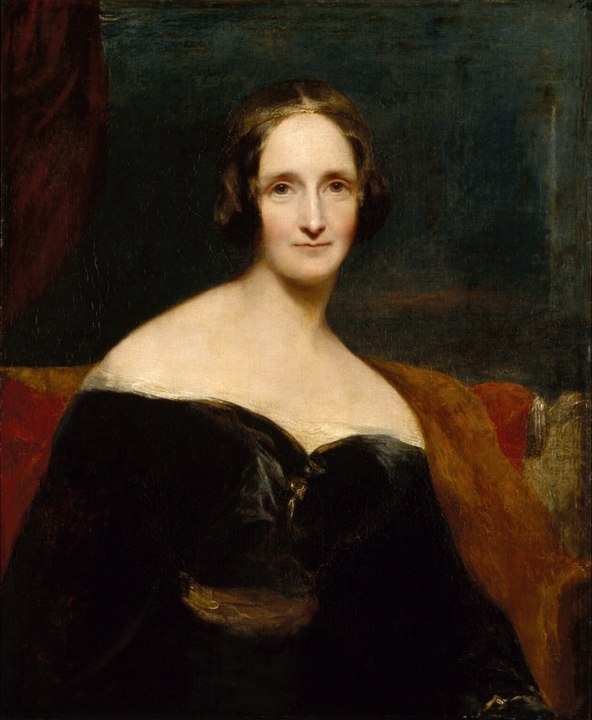
Cthulhu Trek (2008) by Leslie Thomas

Cthulhu Trek– Written and Edited Les Thomas, Layout and Illustrations Cabin Campbell, 1st. Edition, 2008. Star Trek collides with Lovecraftain horror. Robert Blochʼs Lovecraft/ Star Trek connection, Jeffery Combs HPL/ ST characters. Plus Sutter Cane (sometimes spelled Kane) Star Trek Fiction (Warning: Explicit sex and violence). $4.00
—Leslie Thomas, 13th Hour Books

In the early 1930s, science fiction fandom came into being. One of the characteristics of this fandom was the strong influence of the amateur journalism movement. It wasn’t just that there were fanatical readers of pulp fiction, but they documented their love and excitement, their fan art and fan poetry and fanfiction, their discussions and feuds.

Today, we talk about fandom studies with textbooks like the Fan Fiction Studies Reader because these early ‘zines are the trace fossils of the fans themselves, most of whom are sadly gone and can no longer give us living memories of what it was like to buy the magazines off the rack, to organize the first conventions, make their own costumes at home. To carry out debates by mail, and see the wonders and terrors of the Atomic Age and Space Age and finally the Digital Age be manifest around them.

As the fans grew up, fandom grew up with them. Scholars like Brian Wilson have traced the history of rule 34 from the first nude artwork that graced the 1930s fanzines to the Star Trek slashfic written and analyzed by Joanna Russ to the internet erotica of today. Things percolated together and got profoundly, lovingly, weird. Mash-ups between different genres, different properties, entirely different fandoms came together, often just for laughs or following some singular vision of “Hey, wouldn’t this be cool?” or “Hey, wouldn’t this be hot?”

Leslie Thomas is a fan of both Star Trek and the Cthulhu Mythos. His 2008 ‘zine Cthulhu Trek is a labor of love, an unpaginated 16-page staplebound black-and-white expression of profound and utter nerdiness—and it is, in many ways, an exemplar of what a fanzine can be: fun, scholarly by its own lights, and brimming with creativity and enthusiasm.

McCoy opened another cabinet and, from it he pulled out a small jar and handed it to Kirk. “I have to ask Jim, but did you have sex with a Yithian lately,” a slight smile crossed his kindly face as he place [sic] the alcohol back into its cabinet.
—Leslie Thomas, “Cream” in Cthulhu Trek

The first few pages of the ‘zine trace connections between Star Trek and the Mythos—principally via Robert Bloch, who wrote three episodes of the original series, and versatile actor Jeffrey Combs whose credits include multiple roles in both Star Trek series and various Lovecraftian films and adaptations, most especially the Re-Animator series, From Beyond, The Evil Clergyman, Necronomicon: Book of the Dead, and The Dunwich Horror (2009).

Like a good hoax, Thomas then transitions into fanfiction—presenting pieces of the Mythos-inflected Star Trek fiction of Sutter Kane. Of these, the bare two pages of Kirk picking up an extraterrestrial (or should that be extratemporal?) STD are perhaps the most memorable, although Chekov’s encounter with a dominatrix is certainly not something that will be forgotten in a hurry, barring blunt forced trauma to the head or the alcoholic equivalent.

Cthulhu Trek ends with the rather odd bit of trivia that Will Wheaton starred in The Curse (1987), a rarely-remembered film based on Lovecraft’s “The Colour out of Space.” Wheaton, of course, gained popularity by playing Wesley Crusher on Star Trek: The Next Generation, and if it feels weird to turn the page from Sulu in the grips of madness to a tidbit that feels straight out of the Internet Movie Database…well, it is. Like all fanzines, Cthulhu Trek is idiosyncratic, produced by one writer who was also his own editor, with Cabin Campbell as illustrator and layout artist.

Could Thomas have taken it further? Could he have produced a full-fledged erotic Star Trek/Cthulhu Mythos opus, self-published it, and reached the heights of fame that E. L. James did? Maybe. So could you. What he did instead was write and publish a funny little chapbook as a bit of amusement for himself and his fellow fans. Which is pratically the definition for what fanfiction is: the desire not just to create something inspired by some work, but to share it with others. That is what Cthulhu Trek is, ultimately; not a masturbation aid, but an endearing effort to share the love of Star Trak and the Cthulhu Mythos.


Bobby Derie is the author of Weird Talers: Essays on Robert E. Howard and Others and Sex and the Cthulhu Mythos.

Deep Cuts in a Lovecraftian Vein uses Amazon Associate links. As an Amazon Associate I earn from qualifying purchases.