The Persian word رباعی (rendered rubāʿī in English) refers to a poem of four lines or parts; in English terms, a quatrain. Following the traditional conventions of Persian poetry these were composed using one of two thirteen-syllable meters. رباعيّات (rubāʿiyyāt) is the plural form; so the Rubáiyát of Omar Khayyám could be literally rendered as The Quatrains of Omar Khayyám—but where’s the style in that?
In the 1850s, English poet and writer Edward FitzGerald was involved in translations of Spanish and Persian poetry and plays into English. In 1856-7, Edward Byles Cowell, a former professor under whom FitzGerald had studied the Persian language, sent him transcripts of two Persian manuscript with a series of quatrains by Omar Khayyám (1048-1131), a Persian polymath who lived in the Seljuk Empire. How much of the poetry which is attributed to Khayyám that he actually wrote is a matter of conjecture and debate. There are no known original manuscripts from Khayyám containing poetry, only verses that were quoted by others, decades or centuries after his death. So the poems that FitzGerald translated were from much-later collations of extant verse, some or all of which may never have been written by Khayyám itself.
FitzGerald took a free hand to translation; he rendered each rubāʿī into a four-line quatrain, often rhyming in an AABA form. The result was published as the Rubáiyát of Omar Khayyám in 1859, to little notice. However, subsequent editions were published over the years and decades, with FitzGerald taking advantage of the reprints to expand subsequent editions with more poems, and to tweak the translations. By the end of the 19th century, the work had achieved monumental popularity, reflecting in part the expansion of the British Empire and the pervasive Orientalism that occasionally peaked into popular phases, like the Egyptomania that swept the English-speaking world after the discovery of King Tutankhamun’s tomb.
In addition to the authorized editions by FitzGerald, which could differ substantially from each other, there were innumerable other translations and pirated editions. The language and even numbering of the quatrains differ between editions. As a result, like the Christian Bible, it is difficult to talk about the Rubáiyát of Omar Khayyám as a single text, but rather as a corpus of related works within which are distinct traditions. For our purposes, the text of FitzGerald’s 5th (1898) edition appears most influential.
Given the immense popularity of the Rubáiyát of Omar Khayyám in the late 19th and early 20th centuries, it shouldn’t be surprising that several Weird Tales writers during the 1930s read and enjoyed some version of this book, and that it influenced them to greater or lesser degree, including the three most-remembered today: H. P. Lovecraft, Robert E. Howard, and Clark Ashton Smith.
H. P. Lovecraft
The w. k. Khayyam-Fitzgerald reference to philosophy seems to shew an under-appreciation of the pure joy of argument. However—the genial maker of tents was none one to appreciate anything truly intellectual in a detached way. —H. P. Lovecraft to Rheinhart Kleiner, 23 Feb 1918, LRKO 105-106
The first reference to the Rubáiyát of Omar Khayyám in Lovecraft’s letters shows a familiarity with FitzGerald’s translation; the last name Khayyám had been literally translated as “Tentmaker”, hence Lovecraft’s reference to the “genial maker of tents.” The quatrain in question is probably:
Myself when young did eagerly frequent Doctor and Saint, and heard great argument About it and about: but evermore Came out by the same door where in I went. —XXVII. Rubáiyát of Omar Khayyám (5th ed, 1898)
It is not exactly clear when Lovecraft read Khayyám/FitzGerald, although it seems to have been several years before 1918:
As to the Rubaiyat of Omar & FitzGerald, it is so long since I read the thing that I have forgotten its details. I did not especially like it—which is doubtless the reason I never perused it a second time. —H. P. Lovecraft to Rheinhart Kleiner, 11 Jun 1920, LRKO 167-168
Lovecraft doesn’t explain further, but there are certainly some aspects of Khayyám’s poetry that might have rubbed the weird writer the wrong way—his meticulousness for meter, Khayyám’s topics including love and drinking, the obtuseness of some of the translated images—and perhaps the sheer prosaicness of the poetry, which were far less fantastic than the 1,001 Nights.
During the course of discussion [George Kirk] gave me two books—one a fine sidelight on colonial life at Princeton College, & the other a variorum edition of the Rubaiyat which I wanted to send my correspondent Woodburn Harris—an Omar enthusiast. Nothing could make him take pay for either. —H. P. Lovecraft to Lillian D. Clark, 27-28 May 1930, LFF 2.855
Kirk was a bookseller and friend of Lovecraft’s; Harris was another correspondent, unfortunately none of their published letters attest to any conversations on Khayyám. Lovecraft’s final word on the poet and his work appeared in his suggestions for a reading guide, the final chapter for Anne Tillery Renshaw‘s textbook Well Bread Speech (1936), which never made it into the finished product:
In the Oriental field we do not have to be asked to read the Arabian Nights or Fitzgerald’s translation of Omar’s Rubiyat. —H. P. Lovecraft, Collected Essays2.186
Lovecraft’s reading list didn’t necessarily reflect his personal tastes, only his professional assessment of what books qualified as those people should read as part of a literary education. It is a reflection of his acknowledgement of the tremendous popularity and influence of Khayyám’s poetry in FitzGerald’s translation as much as anything else.
It’s a pity we don’t have more of Lovecraft’s thoughts on Khayyám, and especially whether the Persian poet’s poetry was any inspiration at all to that of his famous Arabic poet, Abdul Alhazred and his Al Azif—which was at least partially written in poetry. Though aside from the common geographic origin in the Middle East (albeit different parts of it) and being poets, the biographies of Alhazred and Khayyám show few similarities.
Robert E. Howard
In the words of Omar Khayyam: “East is East and West is West To a ramblin’ gay galoot.” —Robert E. Howard to Tevis Clyde Smith, 8 Jun 1923, CL1.3
In the first surviving letter from Robert E. Howard, he mentions Omar Khayyám by name—although the poetic reference is actually to Rudyard Kipling’s “The Ballad of East and West” (1889). Howard’s interest in poetry is often overlooked, but poetry pervades his fiction, and Howard himself was lauded as a poet of considerable power by Lovecraft.
Howard’s letters to his friend Tevis Clyde Smith include a great deal of off-the-cuff poetry (some of it ribald, jocular, or doggerel verse), as well as quotations from other verses that Howard had read, heard, or memorized. For example:
“Methought a voice within the temple cried, When all the temple is prepared within, Why loiter drowsy worshippers outside?” “I tell you this, when started from the goal, Over the flaming shoulders of the foal, Of heaven’d Parwin and Mushtari they flung, In my predestined plot of dust and soul.” “A book of verses underneath a bough, A loaf of bread, a jug of wine and thou, Beside me singing in the wilderness, Ah, wilderness were Paradise enow!” “Look to rose about us,” Lo, “Laughing,” she says, “Into the world I blow, “At once the silken tassel of my purse, Tare [sic], and my treasures to the garden throw.
— Robert E. Howard to Tevis Clyde Smith, 6 Aug 1925, CL1.61-62
These are lines for quatrains II, LXXV, XII, and XIV of the 5th (1898) edition. It isn’t clear if Howard read this specific edition, but he seems to have read at least some version derived from the 5th edition text. Howard scholar Steve Trout noted Howard’s quotations may have come from Little Blue Book #1, which followed the text of FitzGerald’s 5th edition (Howard History).
In more serious letters, Howard would praise Khayyám, e.g.:
I have carefully gone over, in my mind, the most powerful men — that is, in my opinion — in all of the world’s literature and here is my list:
Jack London, Leonid Andreyev, Omar Khayyam, Eugene O’Neill, William Shakespeare.
All these men, and especially London and Khayyam, to my mind stand out so far above the rest of the world that comparison is futile, a waste of time. Reading these men and appreciating them makes a man feel life not altogether useless. —Robert E. Howard to Tevis Clyde Smith, week of 20 Feb 1928, CL1.166
Howard also wrote to Lovecraft, listing Khayyám among his favorite poets (MF1.510/ CL2.419). Although Howard was still just as likely to take the poet’s name in vain for the sake of a joke:
“Old Stiff had a friend, Hatrack by name; The life he led was a sin and a shame. He, lounged like Omar beneath a bough, With a whore and jug of beer — and how!” —Robert E. Howard to Tevis Clyde Smith, c. Mar 1929, CL1.319
The reference is to one of the most famous of Khayyám’s quatrains:
A Book of Verses underneath the Bough, A Jug of Wine, a Loaf of Bread—and Thou Beside me singing in the Wilderness— Oh, Wilderness were Paradise enow! —XII. Rubáiyát of Omar Khayyám (5th ed, 1898)
One of Howard’s greatest tributes to Khayyám and FitzGerald was to quote from the Rubáiyát of Omar Khayyám‘s 1898 edition in the opening chapters of the serial “Skull-Face” (Weird TalesOct–Nov–Dec 1929). And in One Who Walked Alone (1986) by Novalyne Price Ellis, it is written:
Bob’s attention was centered on a copy of The Rubáiyat. He already had a copy, but he said he might come back next week and pick up that book and another one—that one by Cabell. (92)
Price would herself quote from Rubáiyát of Omar Khayyám in her memoir.
Upon his death, Howard’s father donated his library to Howard Payne University in nearby Brownwood; this included a copy of the Rubáiyát of Omar Khayyám, a later edition which combined the aspects of FitzGerald’s previous translations, and is listed as “the First and Fifth versions.”
Clark Ashton Smith
Then I began to write verse, including, I remember, some rather lame imitations of the Rubaiyat. Gradually I acquired a feeling for meter and rhythm; and at sixteen or seventeen was able to sell a few poems to magazines. —Clark Ashton Smith to Samuel J. Sackett, 30 Jun 1939, SLCAS 359
Poe, not Omar Khayyam, was the first poet who impressed me, and I’ll never forget the thrill of finding his poems in a grammar-school l ibrary at the age of thirteen. I remember too that the librarian commented reprovingly on my morbid and unhealthy taste in reading-matter! —Clark Ashton Smith to Samuel J. Sackett, 11 Jul 1950, SLCAS 364
I did a lot of boyhood scribbling, imitations of Omar, lurid Oriental romances, etc;, and at 17 sold several pseudo-Orientales to the Black Cat and the Overland Monthly. —Clark Ashton Smith to L. Sprague de Camp, 21 Oct 1953, SLCAS 371
Compared to Lovecraft and Howard, Smith was the most accomplished poet of the three, having collected and published a good deal of his poetry during his lifetime, and having achieved some small measure of fame for his poetry while breathing. Smith was not as hidebound as early Lovecraft was, and more experimental than Howard, even to the point of translating and writing poetry in other languages. His rich vocabulary, striking images, and the mentorship of poets like George Sterling steered made Clark Ashton Smith a weird poet par excellance—and Sterling was well-versed in poetry enough to comment on a perceived lift, intentional or not:
But here is your excellent poem to comment on, which I’ll venture to the extent of saying I like it very much, but am of the opinion that it’s first line is too suggestive of that which begins “The Rubaiyat.” — George Sterling to Clark Ashton Smith, 14 Jul 1914, SU 109, SLCAS 23
You’re quite right about the resemblance of the first line of my poem to the one in the Rubaiyat:—“Before the phantom of false morning died,” which begins the second quatrain of that poem. It’s strange that I’d not noticed the reminiscence before. I’ve not thought of a new line, so far. — Clark Ashton Smith to George Sterling, 27 Jul 1914, SU 110
Before the phantom of False morning died, Methought a Voice within the Tavern cried, “When all the Temple is prepared within, “Why nods the drowsy Worshiper outside?”
Ere yet the soaring after-fire was flown, I found a city in the twilight lone— Asleep in lapse of some forgotten land And griping horizons of deserts prone.
Unfortunately, Smith’s maturation as a poet came at a time when U.S. tastes in poetry were shifting away from his preferred style. As a consequence, despite initial fame as a young poet, Smith struggled throughout his adult life with poverty and the difficulty of making a living and supporting his parents. Selling poems and fiction were two ways Smith worked during the 1910s-1920s to sustain himself and his family, as well as gifts from friends, manual labor, and efforts to self-publish his own verse (among his enthusiastic customers were Lovecraft and Howard). Smith had literary appetites, but little cash to feed it.
Most of my reading now will have to be in the form of re-reading, since I can’t afford new books. The prices have gone up astoundingly. . . . I spent yesterday afternoon with Omar and Leopardi (the latter the volume you sent me) and found them better company than ever. — Clark Ashton Smith to Samuel Loveman, 7 Nov 1918, BUS 132
My table is covered with a litter of borrowed books—“The Rubaiyat of Hafiz,” “Thus Spake Zharathtustra,” [sic] “A Feast of Lanterns,” and others . . . Do you know this rendering of Hafiz, by L. Cranmer-Byng? Much of it is excellent (d—d if I can see much difference between Hafiz and Omar, in regard to thought and feeling) and one stanza haunts me:
“That night we wrought Love’s miracle again; For one brief gloom one soul was born of twain: Now Death shall weary at the springs of Youth, By singing water that he sealed in vain.” — Clark Ashton Smith to Samuel Loveman, 15 Dec 1918, BUS 142-143
The Rubáiyát of Hafiz is another collection of Persian quatrains rendered into English. Hafiz (also as Hafez) had been translated into English before Khayyám, but the success of the Rubáiyát of Omar Khayyám encouraged further translations of Persian poetry in the now-familiar mold of FitzGerald’s translations. Good marketing strategy, if nothing else.
Khayyám forms one of Smith’s poetic touchstones, at least in his letters, no doubt because of his re-reading of his poetry. The quotations from and allusions to Khayyám’s verses all seem to come from FitzGerald’s 1898 text, or a text derived from that edition.
It desolates me to hear that you have been unwell. There’s d—d little in life, beyond the brief Epicurean category of Omar’s stanza, “A book of verses underneath the bough, etc.” Even art is a kind of Barmecides-feast, when one is sick, or indisposed. As for the rest—the “wine” and “bread” are worse than mockery to a sick and queasy stomach. And love—love is the shadow of a dead, forgotten dream,—or a ravenous, writhing, serpent-shapen flame from the cauldron-fires of Malebolge. — Clark Ashton Smith to Samuel Loveman, 12 Aug 1919, BUS 169
I can’t imagine what the place is like now, even with such oases, and “wells amid the waste” as will continue to exist. — Clark Ashton Smith to George Sterling, 28 Aug 1919, SU 174
A Moment’s Halt—a momentary taste Of BEING from the Well amid the Waste— And Lo!—the phantom Caravan has reach’d The NOTHING it set out from—Oh, make haste! —XLVIII. Rubáiyát of Omar Khayyám (5th ed, 1898)
Clark Ashton Smith shared Lovecraft’s love of the fantasy Middle East and Near East of the 1,001 Nights, but unlike his friend, Smith was very much fond of alcohol and the company of women, and so was more able to marry Khayyám into his fantasy Orientalist mindset:
I can readily imagine you in Alexandria or Lesbos, or, in a later incarnation, wandering through the Baghdad of Haroun or Almansour, after the journey of the Persian wastes. . . . Alas, for Omar, and Saddi, and Shiraz with its golden wine and golden roses! I wish we were there in Shiraz or Baghdad or Ispahan, with “Time’s purple” a thousand years deep between us and this nightmare of the modern world! — Clark Ashton Smith to Samuel Loveman, 29 Aug 1919, BUS 171
In time, Smith’s appreciation of Khayyám/FitzGerald’s bore poetic fruit:
I’ve completed two longer poems, which I’ll send you in my next. One is an ode to Omar Khayam [sic], the other a fantastic dialogue entitled “The Ghoul and the Seraph.” — Clark Ashton Smith to Samuel Loveman, 31 Aug 1919, BUS 191
The poem was “To Omar Khayyam.” It was well-received by Smith’s friends, but faced some initial difficulty getting published, apparently due to the stigma of Prohibition:
“Asia” has returned my “Omar” ode. They seemed to like the poem, but, I dare say, thought its publication in their pages not “advisable.” It might “get them in bad” with many of their readers. The hedonism (not to mention the pessimism) of the poem would be anathema to a lot of people in this Puritan paradise. It’s incredible, but ch is the fact . . . Even in San Francisco, people are being fined or imprisoned for carrying pocket-flasks! The old Blue Laws were nothing to some of these new statutes. I dare say they’ll want to stop the publication of such books as “The Rubaiyat.” Why not, when it’s against the law to publish or disseminate recipes for the manufacture of wine or beer, or even to use the word “beer,[”] “whiskey,” etc in an advertisement or label, or on a bill-board! — Clark Ashton Smith to Samuel Loveman, 25 Feb 1920, BUS 202-203
Smith eventually sold the poem to The Lyric West in 1921 for $5. However, the magazine sat on the poem for years, so the first publications was actually Smith’s own 1922 self-published poem collection Ebony and Crystal, where Lovecraft and Howard would have read it. In June 1926, The Lyric West finally published Smith’s ode. It was well-received.
I won a poetry prize the other day, much to my amazement. I was awarded fifty dollars for the best poem published in volume 5 of “The Lyric West”, a Los Angeles poetry magazine. The poem was “To Omar Khayyam”, which they had held for years before printing. I had forgotten all about it, in fact. — Clark Ashton Smith to Donald Wandrei, 13 Mar 1927, TWU 53
Three Weird Talers. Three different takes on the Rubáiyát of Omar Khayyám. While an 11th/12th century Persian poet (as filtered through a 19th century Englishman) might not be the most obvious of influences, this work was part of the shared cultural heritage of weird fiction in the 1920s and 30s.
When H. P. Lovecraft died in 1937, his “Instructions in Case of Decease” named the young Robert Hayward Barlow as his literary executor. Yet Barlow did not spend the rest of his life involved solely in science fiction fandom and publishing Lovecraft; while studying at the University of California he became interested in Mexican anthropology and languages, and after graduation in 1942 moved to Mexico permanently where he became a noted expert on Mesoamerican languages and anthropology, and a printer in Nahuatl and Mayan languages. He finally became head of the Department of Anthropology at Mexico City College, where he drew the attention of a young William S. Burroughs.
Despite success in his field, including a 1948 trip to Europe to study Mesoamerican codices, Barlow died on New Year’s Day 1951, the result of an overdose of Seconal tablets. The suggestion has been made that his death was the result of blackmail or threats to expose him as a homosexual. Despite being cut off in the prime of his life, Barlow’s brief but brilliant career was a substantial influence on Mesoamerican anthropology; some of his papers and the concepts he originated are still cited to this day—such as the Codex Huitzilopochtli.
Barlow’s legacies as Lovecraft’s executor, poet, printer, and anthropologist are often very distinct; readers familiar with him for his connections to Lovecraft are often ignorant of his achievements as an anthropologist, and vice versa. The matter of the Codex Huitzilopochtli is a matter purely of anthropological bibliography; chasing a telephone game of citations back to its source to see what Barlow actually wrote about something, and how that got interpreted, misinterpreted, and finally re-interpreted over the course of decades. Misunderstandings about it continue to crop up occasionally today, due to the relative availability of some older sources over newer ones in academic publishing.
To give an example of this kind of issue, consider these two passages:
The story of Indian America must be written with soft chalk, easily erased and corrected. The conclusions which yesterday seemed tenable may tomorrow be overruled by the discovery of a handful of bones in a cave or hitherto unknown utensils in volcanic ash. —Hubert Herring, A History of Latin America, 2nd Ed.(1956) 25
“The story of Indian America,” Pablo Martínez del Río used to tell his classes, “must be written with soft chalk, easily erased and corrected.” —Michael C. Meyer & William L. Sherman, The Course of Mexican History (1991) 4
Depending on who is speaking or writing, an anthropologist or historian might cite either Hubert Herring (1889-1967) or Pablo Martínez del Río (1892-1963) as the originator of the “soft chalk” phrase. Herring seems to have gotten it into print (in English) first, but whether he paraphrased something del Río said or vice versa—well, we don’t know, exactly. The sentiment is generally agreed upon, but the lineage of transmission is confused. This is the kind of small problem that the Codex Huitzilopochtli and R. H. Barlow presents: not a major issue of anthropology and interpretation, but how the understanding of an idea has been transmitted over time, and how that has affected how that idea has been received and understood.
In brief, this is a story about citations, the lack thereof, and what Barlow originally wrote versus how it developed in the hands of others.
My hope in tracing the history of the Codex Huitzilopochtli as a concept is to both to give readers an idea of the influence that Barlow had on Mesoamerican anthropology, and to highlight the history of a specific idea from Barlow that continues to have some currency today. For readers more familiar with Barlow as an anthropologist, this might be a more straightforward exercise in tracing citations and how ideas are transmitted over time.
General Background on Mesoamerican Codices
At the time contact between Europe and Mesoamerica was made in the late 15th century CE, several indigenous cultures had written languages and scripts, which were used to record matters including history, cosmology, and religion on both durable materials (stone monuments and buildings, ceramics, etc.) and perishable materials (bark paper, animal skin, cloth, etc.). Codices took several forms, including a long strip (tira), which might be rolled (like a scroll) or folded in and out, concertina-, accordion-, or screenfold-style. The content of these books might include both pictorial and pictographic elements.
In the 16th century (1519-1521), the Spanish Empire came into conflict with and ultimately defeated the Aztec Triple Alliance in an armed conflict. The Spanish set up new administration of their possessions, expanded against other polities in the Americas, suppressed rebellion against their rule, and attempted to suppress local religion and convert the indigenous peoples to Catholic Christianity. Toward this end, the Spanish Crown banned the production of local bark paper (forcing the use of European-made paper or vellum) and religious authorities collected and destroyed many local manuscripts. Knowledge of many local scripts and records of pre-contact indigenous culture was ultimately lost. The Mayan script, for example, fell out of use, and would not be deciphered until the 20th century.
The term codex has come to refer to both pre-contact indigenous Mesoamerican manuscripts and post-contact manuscripts that were created in the early Colonial period in whole or in part by indigenous artists and/or that contain material copied from pre-contact manuscripts. The use of the term arose in part because Europeans who collected or preserved such materials sometimes prepared and bound them as European-style books (e.g. a set of sheets called a quire is folded and bound along one edge; multiple quires are bound together to make a book. When the outer folds are cut, the individual leaves move freely).
The majority of surviving codices probably date from after European contact. Some were written and illustrated by indigenous artists on European paper, others may have been prepared by European artists copying from indigenous originals as various Europeans commissioned, copied, recorded, or otherwise preserved some of these works for their own purposes. Post-contact codices may show the influence of European contact beyond just the material used: records of post-contact events, depictions of Europeans, formatting similar to European books, etc. These scanty writings provide valuable insight into Mesoamerican history and life during this period.
The bibliographic entry for each surviving codex is unique. Since these works have survived for centuries on relatively perishable materials, they often show wear and tear, may be missing pages, repairs, include annotations or glosses in various hands, etc. Scholars who study these codices for information on Mesoamerican history do not just read the words and interpret the pictures, but analyze the style, formatting, construction, and context of the codices, noting similarities and differences with other evidence. In some cases, codices contain sufficiently similar content or style to suggest a distinct tradition or line of transmission. Such is the case with the Codex Telleriano-Remensis and the Codex Ríos.
Codex Telleriano-Remensis
The codex was formerly known as the Codex Tellerianus and the Codex Le Tellier. It was once part of the Charles-Maurice Le Tellier collection. It is made of European paper with 50 leaves, and it measures 32 by 22 centimeters (approximately 12 /2 by 8 6/8 inches). It is currently housed at the Bibliothéque Nationale de Paris. —Manuel Aguilar-Moreno, Handbook to Life in the Aztec World (2007), 273
This Aztec codex was produced in 16th century Mexico and shows the evidence of many hands, indicating that several indigenous artists worked on various sections, and those sections were later annotated with glosses in Spanish by various writers:
Codex Telleriano-Remensis, glossed as “Heroglificos de que usavan lo…” on the cover, has three major pictorial sections in several native styles. Each is annotated in Spanish, in several handwritings. One of the latter is believed to be of Fray Pedro de los Ríos. The first section is an 18-month calendar with drawings of the gods of each period and a symbol for the nemontemi (the extra five days in the solar calendar). The second is a tonalpohualli (260-day divinatory almanac). The third is a pictorial annal for the period 1198-1562, in two major styles. Two final pages contain historical notices in Spanish without drawings, for the years between 1519 and 1557. There are leaves missing from each pictorial section […] —Manuel Aguilar-Moreno, Handbook to Life in the Aztec World (2007), 272-273
In 1948-1949, R. H. Barlow traveled to Europe to view Mesoamerican codices in archives, and as part of his ongoing work to translate and research the notes of Francisco del Paso y Troncoso (1842-1916), who had written extensively on the history of the Codex Telleriano-Remensis; it is not clear if Barlow accessed the original codex at the Bibliothéque Nationale during his time in Paris. Barlow’s Anales de Tlatelolco: históricos de la nación mexicana y Códice de Tlatelolco (1948) cites the Loubat facsimile of the Codex Telleriano-Remensis.
Codex Ríos
The Codex Ríos was formerly known as Codex Vaticanus A, Codex Vaticanus 3738, and Copia Vaticana. It is a European-paper codex with 101 leaves that each measure 46 by 29 centimeters (approximately 18 by 11 3/8 inches). It is currently housed at the Vatican’s Apostalic Library. —Manuel Aguilar-Moreno, Handbook to Life in the Aztec World (2007), 272
The Vatican Apostolic Library had two Aztec codices, which scholars labeled Codex Vaticanus A (3738) and Codex Vaticanus B (3773); Codex Vaticanus A is the only Aztec codex annotated in Italian, which in itself unusual. The name Codex Ríos comes from the friar Pedro de los Ríos, who is one of the Spanish annotators of the Codex Telleriano-Remensis and in the Italian text is indicated as the compiler of the codex that now bears his name. Ríos’ involvement adds to the mystery surrounding the book’s origins:
The Italian gloss on Codex Ríos associates Pedro de los Ríos with the compilation of its paintings, identifies him as a Dominican friar, links him with an episode in Mexico in 1566, indicates that he supplied the data for the glossed commentary, and provides incidental biographical data, such as his firsthand knowledge of Oaxaca. Aside from this gloss and similar statements in the glosses on Codex Telleriano-Remensis, only one further datum has been reported about this elusive monk. An apparent report of his death by 1565 (cited in Jiménez Moreno and Mateos Higuera, 1940) conflicts with the 1566 date in Codex Ríos and the presumption that he was present when the codex was painted and annotated in Rome ca. 1570. —John B. Glass, “A Survey of Native Middle American Pictorial Manuscripts” (1966) in Handbook of Middle American Indians, Volumes 14 and 15 (1975), 136
In terms of content, the Codex Ríos differs from the Codex Telleriano-Remensis in that it seems to have had a single artist with a consistent style, and the Italian-language glosses seem to be from a single writer (and, indeed, appear to be a translation and gloss of the Spanish commentary in the Codex Telleriano-Remensis). Much of the material is similar in both volumes, with the Codex Ríos containing pages missing in the Codex Telleriano-Remensis. It is organized differently than the Codex Telleriano-Remensis, however:
The manuscript has seven major sections: 1) cosmogenic and mytholoigcal traditions with some emphasis on the four previous epochs, or suns, including notices about Quetzalcoatl and the Toltec; 2) a 260-day divinitary almanac; 3) calendrical tables without drawings for the years between 1558 and 1619; 4) an 18-month festival calendar with drawings of the gods of each period; 5) sacrificial and other customs, including portratis of Indian types; 6) pictorial annals for the years between 1195 and 1549, beginning with the migration from Chicomoztoc and covering later events in the Valley of Mexico; and 7) glyphs for the years between 1566 and 1562 without written or pictorial entries. Most of the codex has a long written commentary in Italian, but only three pages of the historical section are annotated. —Manuel Aguilar-Moreno, Handbook to Life in the Aztec World (2007), 272
This comparison is slightly complicated by the fact that the original manuscript was apparently poorly bound with some pages out of order.
The Codex Ríos was the first Mexican manuscript codex to be reproduced in print, in part, through a series of woodcuts. In 1615 and 1626, Lorenzo Pignoria added his Seconda Parte delle Imagini de gli Dei Indiani(“Second Part of the Images of Indian Gods”) to Vincenzo Cartari’s Le Imagini con la sposizione dei dei de gli antichi (1556, “The Images of the Gods of the Ancients and their Explanations”), an expansive work of comparative mythology in which Pignoria reproduced Aztec gods from the Codex Ríos to feature alongside other world mythologies.
Codex Ríos 1 versoSeconda Parte delle Imagini de gli Dei Indiani v
A facsimile edition (chromolithographic reproduction) of the Codex Ríos with preface in Italian by Franz Ehrle was published by Joseph Florimond, duc de Loubat in 1900, correcting the order of pages; a second facsimile by Coroña Núñez with Spanish translations of the Italian text in 1964 followed the Loubat’s foliation, and a third facsimile without transcription or commentary and with photographic reproduction of the pages as they exist in the original was published by Akademische Druck- u. Verlagsanstalt (ADEVA) in 1979 as part LXV of their Codices Selecti series; the latter can be viewed at the Foundation for the Advancement of Mesoamerican Studies website. The most recent facsimile (photographic reproduction, with corrected page ordering) is Religión, costumbres e Historia de los antiguos Mexicanos: libro explicative del llamado Códice Vaticano A (1996, ADEVA) edited by Ferdinand Anders and Maarten Jansen.
It does not appear that Barlow made it to Rome during his European survey of codices in 1948-1949, so any research he did on the Codex Ríos would have involved photographs or reproductions, the Loubat facsimile, and second- or third-hand descriptions of the contents. Barlow’s Anales de Tlatelolco:históricos de la nación mexicana y Códice de Tlatelolco (1948) cites the Loubat facsimile of the Codex Ríos.
Codex Huitzilopochtli
While the Codex Ríos and Codex Telleriano-Remensis are distinct works, there are close similarities in the content of several sections. Correspondences between the two codices had been drawn up by Francisco del Paso y Troncoso in 1898; correspondences were incorporated in the commentary matter of the 1900 Loubat facsimile of the Codex Ríos by Ehrle; and John B. Glass in his “A Survey of Native Middle American Pictorial Manuscripts” (1966) provides a helpful comparative table between the two codices in English:
Handbook of Middle American Indians, Volumes 14 and 15 (1975), 138
To give an idea of how close the relevant sections of these two codices are, compare these two pages from the beginning of the pictorial annals in each codex:
Note: The footprint-trail on this page is left out of the Loubat facsimile of the Codex Ríos, so this is a lower-resolution photo from the 1979 ADEVA facsimile.
As codices go, this is an unusual level of similarity, not just in the details of the depiction of the figures, but in the arrangement of the figures on the page and the glosses applied to them. The figure in the upper left on each page is Huītzilōpōchtli, patron god of the Mexica, the dominant ethnic group in the Aztec Triple Alliance. The codices correspond so closely in parts that the scholarly consensus in the first half of the 20th century is that the Codex Ríos was a copy of the Codex Telleriano-Remensis (see “Algunas observaciones acerca del Códice Vaticano 3738 o Códice Ríos” (1925) by Dr. B. Reina), or at least very close to the original (i.e. a copy only one or two generations removed from the original).
Però il contenuto dei due codici in tutto ciò, che loro è comune, è essenzialmente identico, in maniera che il Telleriano, benchè non sia probabilmente l’ originale ommediato del Rios, è certamente ad esso molto vicino.
But the content of the two codices in all that is common to them is essentially identical, so that the Telleriano, although probably not the immediate original of the Rios, is certainly very close to it.
However, in 1941, J. Eric S. Thompson, the leading English archaeologist and ethnologist in Mesoamerican studies, published a paper titled “The Prototype of the Mexican Codices Telleriano-Remensis and Vaticanus A” that proposed a different theory: that the two codices both derived from an unknown original indigenous manuscript, and the similarities came from different artists copying from the same work. Thompson’s justification for this belief involved a close analysis of the art in the comparable portions, with an emphasis on irregularities in the Codex Telleriano-Remensis and its deviation from depictions of certain gods featured in other codices compared to the Codex Ríos. To give one example:
The figure of Xolotl in Codex Telleriano-Remensis (19v) is scarcely recognizable as that of a dog. The equivalent deity in Codex Vaticanus A is definitely canine. —Thompson, “The Prototype of the Mexican Codices Telleriano-Remensis and Vaticanus A” in The Carnegie Maya III: Notes on Middle American Archaeology and Ethnology (2011), 17
Codex Telleriano-Remensis 19 versoCodex Ríos 28 verso
The two images above are from the sections of the codices called tonalamatl (“pages of days”), a kind of divinatory almanac structured around the 260-day sacred year (tonalpohualli). Tonalamatl also appear in the Codex Borbonicus, Codex Borgia, and other codices.
Other cases might be cited in which Codex Vaticanus A is more correct in presenting details than its supposed prototype, Codex Telleriano-Remensis. It is hardly credible that the very poor artist who painted the figures of the former codex, and who himself omitted important attributes (e.g. black marking around Ixcuina’s mouth, 29v), had the skill or the knowledge to correct in his version errors in the work he was copying. The conclusion is inescapable that Codex Vaticanus A was copied or recopied. —Thompson, “The Prototype of the Mexican Codices Telleriano-Remensis and Vaticanus A” in The Carnegie Maya III: Notes on Middle American Archaeology and Ethnology (2011), 17
In essence, J.E.S. Thompson doesn’t find it credible that the Codex Ríos artist could have corrected some of the errors of the artists in the Codex Telleriano-Remensis and still made other errors of their own. Thompson also ruled out the possibility that the Codex Telleriano-Remensis was copied from the Codex Ríos: the Codex Telleriano-Remensis is dated 1563 and the watermarked paper is from about that time; the Codex Ríos is dated 1566—and was possibly created c.1570. (Full discussion of the dating of these two codices and their history is outside the scope of this article, but the general consensus is that the Codex Telleriano-Remensis came first.)
R. H. Barlow read Thompson’s article no later than 1948, because in that year in a footnote on the Codex Tlatelolco he wrote:
En los códices Telleriano y Vaticano Ríos, que Thompson ha señalado como copias de un original perdido, tenemos una representación vivida de la defensa del peñol de Nochistlán, de los ataques por las fueras del Virrey, y de la muerte de Alvarado.
In the Telleriano and Vaticano Ríos codices, which Thompson has pointed out as copies of a lost original, we have a vivid representation of the defense of the Peñol de Nochistlán, the attacks by the Viceroy’s forces, and the death of Alvarado.
“El Códice de Tlatelolco, Interpretación por R. H. Barlow” in Anales de Tlatelolco:históricos de la nación mexicana y Códice de Tlatelolco (1948; 1980 reprint) 108n2
Códice Huitzilopochtli. Migration map divided up and copied as pages of the twin codices Telleiiano and Vaticano Rios (141)
This is the first reference in print to what would become known as the Codex Huitzilopochtli.
In 1966 when John B. Glass (with Donald Robertson) did his monumental “A Survey of Native Middle American Pictorial Manuscripts,” a comprehensive survey of all known Mesoamerican codices and fragments, he placed the Codex Telleriano-Remensis and Codex Ríos together as related codices in what he called the “Huitzilopochtli Group.” His justification for that grouping and that name was Barlow’s use of the term.
J. E. S. Thompson (1941b) has advanced iconographic reasons to show that Ríos cannot be a copy of Telleriano-Remensis and that the two therefore derive from a common original. Barlow (in unpublished lecture notes) has named this hypothetical lost manuscript Codex Huitzilopochtli after the god who appears at the beginning of the migration history in both manuscripts “as a traveller guiding his people.” —John B. Glass and Donald Robertson, “A Survey of Native Middle American Pictorial Manuscripts” (1966) in Handbook of Middle American Indians, Volumes 14 and 15 (1975), 136-137
The fact that Barlow was apparently keen on the idea of a hypothetical precursor codex isn’t unusual. In 1945 Barlow published “La Crónica ‘X’: Versiones Coloniales de la Historia de los Mexica Tenocha,” a paper which postulated a hypothetical common textual or pictorial source (Crónica X/Chronicle X) for the Mexica histories in Durán’s Historia de las Indias…, Alvarado Tezozomoc’s Crónica Mexicana, and Tovar’s Relación del Origen… The idea was convincing enough that Glass even saw fit to group these works together as the Crónica X Group, just as he had formed the Huitzilopochtli Group.
While Lovecraft fans might compare how the Al Azif was the precursor to the Necronomicon, a more likely inspiration would probably be New Testament textual studies, whose scholars had hypothesized a Q document as a source for the Synoptic Gospels. As Mesoamerican scholars strove to document and analyze the mass of codex material, they would utilize all the textual analysis tools at their disposal, and they were already aware that the surviving codices represented a fraction of what had been a much larger literary corpus.
Glass is careful to specify that it is only the migration history portion—beginning with the appearance of Huītzilōpōchtli—which he claims Barlow attributed to the hypothetical Codex Huitzilopochtli in his unpublished lecture notes, not the calendar or other material. This distinction was noted and continued by others, for example:
Another Central Mexican pictorial which deserves special comment is the historical portion of Codex Telleriano-Remensis/Vaticanus A (apparently cognate derivatives from a common original—see Thompson 1940-43; Robertson 1959: 107-15). An atypical version of the Mexica migration and founding of Mexico-Tenochtitlan is followed by a more standard historical narrative (pictorial scenes until 1548-49, colored year count to 1554-55, final pen additions to 1562) featuring Tenochca history but also devoting considerable attention to other neighboring communities. Nothing is known concerning the original sources of this history, but particularly for the migratory portion (Barlow’s [1950] “Codex Huitzilopochtli”), an ultimately pre-Hispanic source(s) seems likely for the section covering events anterior to the Conquest. As in the case of the Matrícula-Mendoza, although a mid-sixteenth-century date for the completion of the prototype of Telleriano-Remensis/Vaticanus A is undeniable, I would regard significant Hispanic influence in the formation of its place and name signs as quite unlikely. —H. Be. Nicholson, “Phoneticism in the Central Mexican Writing System” in Mesoamerican Writing Systems: A Conference at Dumbarton Oaks, October 30 and 31st, 1971 (1973) 22-23
Nicholson cites the unpublished Barlow notes as his source:
Barlow, R. H. n.d. Anthropology 307-A: Codices and Mesoamerican Picture Writing. Unpublished lecture notes taken by Anne Garges and corrected by lecturer. Mexico, 1950. [ibid 37]
Robert H. Barlow, “Anthropology 307-A: Codices and Mesoamerican Picture Writing,” unpublished lecture notes taken by Anne Garges and corrected by Barlow, Mexico, winter 1950. (163n18)
Anne Garges de Forrest is listed among the Bachelor of Arts candidates on page 3 of the Mexico City Collegian for 1 June 1950, which puts her in exactly the right place and time to take Barlow’s class and those notes from his lecture. Together, Glass, Roberston, Nicholson, and others incorporated the idea of the Codex Huitzilopochtliinto their view of the Mesoamerican codices’ historiography, much as they did with Crónica X. However, unlike Crónica X, there was no readily available paper or textbook to refer to…so the idea began to change as others adopted it. For example:
In 1941 Thompson related TR and Vaticanus A (Codex Rios) to a lost prototype that Robert Barlow called Codex Huitzilopochtli. —Howard F. Cline, “The Chronology of the Conquest: Synchrologies in Codex Telleriano-Remensis and Sahugun” (1973) in Journal de la Société des Américanistes
Cline was doing a close analysis of correspondences between Codex Telleriano-Remensis, Codex Ríos, and similar Mexica calendar and historical material in other codices; he built tables to showcase what parts of these codices agreed and where they differed. Yet, he makes a slip: where Glass and Nicholson had been careful to say that Barlow’s hypothetical Codex Huitzilopochtli had been a precursor only to the historical portion, Cline’s gloss suggests the Codex Huitzilopochtli was the prototype for both codices en toto. Whether or not Cline understood and intended this meaning isn’t clear, but it is common misunderstanding, one possibly made easier by the name “Huitzilopochtli Group,” which perhaps implies more than it should.
Glass and Robertson’s use of the Codex Huitzilopochtli in the Handbook of Middle American Indians (1975) lent additional scholarly weight to the idea of its existence. In 1979 when ADEVA published a facsimile of the Codex Ríos, the introductory note cites their work and adds:
The manuscript itself was composed between 1570 and 1589 on the Plateau of Mexico or already in Italy, in the latter case similar to the Codex Telleriano Remensis which is preserved in Paris, as a copy of a joint model which Robert H. Barlow denominated “Codex Huitzilopochtli.”
Thanks in part to such scholarly consensus and repetition, the idea of a common source for both the Codex Telleriano-Remensis and Codex Ríos continued to enjoy popularity and currency in Mesoamerican codicological studies for decades. When Emily Good Umberger wrote her doctoral dissertation in 1981, she accepted the basic idea of the Codex Huitzilopochtli as a hypothetical source and worked it into her personal view of Mexica codicology:
The migration pictorials of note are the Codex Boturini (Fig. 140) and the historical sections of Codex Telleriano-Remensis and Codex Vaticanus A/Rios, which are cognates deriving from a hypothetical lost original called the Codex Huitzilopochtli. They start with the departure from Aztlan and show the Aztecs wandering from site to site until they reach the lake area. Boturini stops before the foundation of the city of Tenochtitlan, but Telleriano-Remensis and Vaticanus A/Rios continue past the Conquest. The original format of these histories (which Boturini still has) is a single long sheet of fiber paper on which the history proceeds from left to right, pretty much in a horizontal direction. The main organizing device is a stream of hieroglyphic dates representing the years, and every year is counted. Another important pictorial history, the Codex Mendoza (Fig. 141) begins at a later point in history, the foundation of Tenochtitlan. —Emily Good Umberger, Aztec Sculptures, Hieroglyphs, and History (1981) 33
Umberger is doing what good anthropologists and historians do: working with the information at hand and making reasonable extrapolations based on relevant examples. The Codex Huitzilopochtli is a hypothetical source for the historical migration material in these codices; what else looks like that? Answer: the Codex Boturini, whose historical material has been noted as having strong similarities to other codices, notably the Codex Aubin and the Codex Mexicanus. So now we’re getting the image of the Codex Huitzilopochtli as a 16th-century indigenous manuscript in the style of a single long sheet (tira) of locally-made paper, which is a very logical and reasonable extrapolation.
Which presents a problem. The Codex Huitzilopochtli was still essentially hypothetical, based on a series of surmises and some scanty material—the name itself came from an unpublished set of Barlow’s notes, if we can trust the citations. What if they were all wrong?
Corrections & Re-Evaluations
The idea of a single prototype codex for both the Codex Telleriano-Remensis and Codex Ríos never gained universal acceptance among Mesoamerican scholars. Even before Thompson, there was room for speculation:
For many years after Humboldt first noted their resemblance, scholars generally assumed that the Codex Vaticanus A was a copy of the Codex Telleriano-Remensis. Such a judgment seemed inevitable since the poorly drawn illustrations of the Vatican codex could not have served as the model for those of the more skillfully executed Paris manuscript and the glosses of the latter were inscribed by several hands, whereas those of the former were collated into a single text. This ordering was espoused by J. F. Ramirez ([1855] :217, cited by Paso y Troncoso 1898:337), the first serious scholar of the Codex Telleriano-Remensis after Humboldt. But discrepancies between the two manuscripts also led to alternative proposals. In his bibliographic study of the two manuscripts Francisco del Paso y Troncoso, who otherwise accepted most of Ramirez’s opinions concerning the Codex Telleriano-Remensis, proposed that both manuscripts had been copied from a lost original (Paso y Troncoso 1898:349-351). At about the same time, in his introduction to the Loubat edition of the Codex Vaticanus A, Franz Ehrle (1900:13-16, 21-22) suggested an intermediate copy between the two known manuscripts, as did B. Reina (1925:218-219) in a later detailed study of the texts of the two documents —Eloise Quiñones Keber, “The Codex Telleriano-Remensis and Codex Vaticanus A: Thompson’s Prototype Reconsidered” (1987) in Mexicon (Jan 1987), 9
Then came Thompson’s “The Prototype of the Mexican Codices Telleriano-Remensis and Vaticanus A” (1941). Donald Robertson cited Thompson’s essay in his critical 1959 survey of Mesoamerican manuscript painting, but felt the need to add:
Thompson discussed the prototype of Telleriano-Remensis. It would be more accurate to discuss the prototypes, for there were at least two sources for the present manuscript. Kubler and Gibson have pointed out the Texcocan affiliations of the first pages in the symbols of the months of the “vague” native year. These are followed by a Tonalamatl (Plate 10). The first part of the history follows the traditions of Texcoco and the eastern shores of the lake in relating how the Valley [of Mexico] was populated (Plate 28). Mexican influences in this essentially Texcocan account will be detailed below. The second part of the historical section derives from a separate tradition and probably a distinct manuscript and is reminiscent of the historical section of the Codex Mendoza (Plate 29). The manuscript is thus a synthetic work, rather than a simple document deriving from a single source, as Thompson implied, unless the immediate source was an earlier already synthetic manuscript. —Donald Robertson, Mexican Manuscript Painting of the Early Colonial Period (1959), 109
Robertson doesn’t mention the Codex Huitzilopochtli specifically, but the “second part of the historical section” “probably a distinct manuscript” would be equivalent to Barlow’s hypothetical source-document for the migration section. Roberston also believed that the migration section originated from a tira that showed the entire migration, which the artist then broke up into individual pages—the same conclusion Umberger would come to decades later, good anthropologists thinking alike and all that (ibid. 109, 115).
So even in the 1950s, the idea of a more complex relationship between the Codex Telleriano-Remensis, Codex Ríos, and hypothetical source document(s) was still there, and even Glass and Robertson acknowledged it:
The theory of a single common prototype may oversimplify a very complex historicgraphic problem that has been inadequately studied. It fails, for instance, to explain the remarkable coincidence of a change in artists and style in Codex Telleriano-Remensis at precisely the point where its page composition changes from one format to another. —John B. Glass and Donald Robertson, “A Survey of Native Middle American Pictorial Manuscripts” (1966) in Handbook of Middle American Indians, Volumes 14 and 15 (1975), 136
Forty-six years after Thompson suggested Codex Telleriano-Remensis and Codex Ríos shared a prototype and two decades after John B. Glass cited R. H. Barlow’s unpublished lecture notes and introduced the Codex Huitzilopochtliand the Huitzilopochtli Group to a wider audience of Mesoamerican scholars, the original concept was ripe for reexamination. Which is what happened when Eloise Quiñones Keber published “The Codex Telleriano-Remensis and Codex Vaticanus A: Thompson’s Prototype Reconsidered” (1987).
Thompson based his arguments primarily on discrepancies between pictorial details in the tonalamatl sections of the two manuscripts. Since he held that the Codex Vaticanus A was more “correct” in these instances than the Codex Telleriano-Remensis, its supposed model, he concluded that the Vatican codex was neither a direct or indirect copy of the Paris manuscript but that the two derived independently from a lost common prototype. Glass and Robertson (1975:136-138) later christened this hypothetical prototype the Codex Huitzilopochtli, although Robert Barlow (in Abrams 1976:70), who originated the term, clearly intended it for the native style tira that served as the common model of the migration section, not for the entire manuscript. (9)
Eloise Quiñones Keber made considerable use of artistic comparison with comparable figures in other codices drawing on pictorial depictions in the Codex Borgia, Codex Borbonicus, and the Codex Aubin to dispute J. Eric S. Thompson’s original arguments, and traced some of these arguments to the fact that Thompson referenced the chromolithographic reproduction of the Loubat facsimile, not the original or a photographic reproduction, whose color alterations led to some honest errors on Thompson’s part. She also appears to have done something relatively few folks had thought to do: go back and look at Barlow’s lecture notes.
Barlow’s Lecture Notes
So what did Barlow actually say about the Codex Huitzilopochtli? We know that references to it in the literature apparently came from his unpublished lecture notes. Well, as it turns out, someone actually published some of those lecture notes. While it isn’t clear if these are exactly the notes Anne Garges de Forrest saved that Robertson and Nicholson cited, they appear to be the right period and content.
Barlow’s death largely cut short his career, but the material he had produced continued to see publication and sometimes re-publication, so his influence on Mesoamerican studies was more pronounced than its duration might indicate. In 1976, H. Leon Abrams, Jr. published several of Barlow’s notes as a three-part series in Katunob: A Newsletter-Bulletin on Mesoamerican Anthropology (vol. IX, no. 1-3). The relevant section of Barlow’s notes is in part 2 (Katunob vol. IX, no. 2), which originally consisted of a mimeographed document for attendees at a February 1950 graduate seminar on Mesoamerican codices.
Over the course of the lecture, Barlow discusses the content of the various codices, including the migration narratives. He begins with the Codex Azcatitlan—Barlow had published a facsimile of this codex, with commentary, in Journal de la société des américanistes in 1949, so he would have been most intimately familiar with this work—but then the lecture turns to the Codex Huitzilopochtli. His focus is on the migration narrative, which was also a feature of the Codex Azcatitlan, and how it differs from other migration narratives:
Codice Huitzilopochtli – another deviant route, known only through copies in Codice Telleriano and Vaticano A. Both published by Loubat. Of this 3 part Ms. the 2d part is the “Huitzilopochtli” migration route, originally a long strip which has been copies [sic] in leaves and made unintelligible. By having the leaves stuck together again in a long strip, the footprints at least make sense. It has been called the Codex Huitzilopochtli, because that God appears on the 1st page as a traveller guiding his people.
Without Barlow’s actual spoken lecture to guide us, there are still gaps, but a few things are clear. When Barlow discusses the Codex Huitzilopochtli, he’s referring only to the migration segment of the Codex Telleriano-Remensis and Codex Ríos. He calls it a “deviant route” because the Telleriano-Remensis/Ríos sequence differs from other Aztec migration traditions, the pictographic elements beginning in the seven caves of Chicomoztoc rather than Aztlan, and the glosses identify ethnic groups more associated with the Puebla than the Mexica. For more detail, see Elizabeth Hill Boone’s Stories in Red and Black: Pictorial Histories of the Aztecs and Mixtecs(2000), which is a comprehensive comparison of the different migration accounts in surviving codices.
As with most of his fellow Mesoamerican anthropologists, Barlow presumes that the original manuscript they drew on was a tira, a long roll or folded document that could be extended out so that the entire migration narrative could be seen as a long strip.
A little later in the lecture, Barlow discusses the rest of the Codex Telleriano-Remensis and Codex Ríos, which he grouped together, and he notes:
The two Mss. seem to have been copied from a lost anthology. Eric Thompson wrote a comment on this Ms. reconstructing the original Ms. (J. Eric Thompson “The Prototype of the Mexican Codices Telleriano-Remensis and Vaticanus A. Notes on Middle American Archaeology and Ethnology, Carnegie Institution of Washington, Division of Historical Research, No. 6, page 24, October 1, 1941.)
The result is probably much more conservative than readers might have thought. Barlow was apparently working mostly from Loubat’s facsimiles. He basically followed Thompson in his assessment that the Codex Telleriano-Remensis and Codex Ríos were independently copied from a prototype, which in turn echoed similar thoughts Barlow had about prototype manuscripts like Crónica X. Barlow’s focus was on the migration section, which was most similar to the codices he himself had studied in detail, and he mainly notes that this migration narrative is divergent from those in other codices.
Interestingly, Barlow himself does not claim in his notes that he came up with the idea of the Codex Huitzilopochtli—but his use of it has led, as we have seen, to the convention. The relative obscurity and limited availability of these notes probably had much to do with the misconceptions about the Codex Huitzilopochtli over the years.
In addition to these notes, there are some scattered references to the Codex Huitzilopochtli in Obras de Robert H. Barlow volumes IV and V. This is a Spanish-language reprint of Barlow’s materials, published and previously unpublished, including materials in the Barlow Archive at the University of the Americas in Mexico. Volume IV is Extent of the Empire of Culhua Mexica, with the first instance of “Codice Huitzilopochtli,” already mentioned above.
Volume V opens with an incomplete draft for a project Barlow had begun between 1945 and 1948 on sources of pre-Hispanic history (“[Fuentes para la historia prehispanica]”); it is little more than a detailed outline (in English in the original, in Spanish in Obras de Robert H. Barlow V), but it includes:
Prototipo de los anales contenido en el Vaticano A y el Telleriano.
1. Estos códices copian otro documento aparte del Códice Huitzilopochtli, uno anales de los siglos XIV a XVI.
2. Es importante ver las pinturas y no el comentario anexo que a veces es muy equivacdo.
Prototype of the annals contained in Vaticano A and the Telleriano.
1. These codices copy another document apart from the Codex Huitzilopochtli, an annal from the 14th to 16th centuries.
2. It is important to see the paintings and not the attached commentary which is sometimes very misleading.
Obras de Robert H. Barlow V.10
English translation
The interesting thing about this brief reference is that it reiterates Barlow sees the Codex Huitztilopochtli as the prototype for the migration narrative, not the other material in the Codex Telleriano-Remensis and Codex Ríos. A little later in the outline, Barlow expands:
Códice Huitzilopochtli
Podemos dar este nombre al códice que está copiado en el Vaticano A (Ríos) y el Telleriano.
1. Thompson, Carnegie [Institution of Washington] Notes, [f.21] (No. 6, 1941). Señala que estos dos códices derivan de un original perdido.
2. El asunto es diferente de la Tira y el Sigüenza. Son varias migraciones, inclusive una tlaxcalteca y quizá no debe considerarse mexicana.
Codex Huitzilopochtli
We can give this name to the codex that is copied in Vatican A (Ríos) and the Telleriano.
1. Thompson, Carnegie [Institution of Washington] Notes, [f.21] (No. 6, 1941). He points out that these two codices derive from a lost original.
2. The subject is different from the Tira and the Sigüenza. There are several migrations, including one from Tlaxcala and perhaps it should not be considered Mexican.
Obras de Robert H. Barlow V.11
English translation
“Sigüenza” is a reference to the “El Mapa de Sigüenza” which is an Aztec cartographic migration narrative; “Tira” in this context is a reference to the Codex Boturini, which was also known as Tira de la Peregrinación de los Mexica since it too contains a migration narrative (and had been discussed almost immediately before this part of the outline). Again, Barlow is focused narrowly on the migration narrative of the two codices, and how they differ from others—the reference to Tlaxcala is in relation to the different ethnic names, which is a major point of divergence from other migration narratives. Near the end of the draft, Barlow wrote:
Figura una migración tlaxcalteca en el Códice Huitzilopochtli. (Véase: Valle de México. Pinturas).
A Tlaxcalan migration is depicted in the Codex Huitzilopochtli. (See: Valley of Mexico. Paintings).
Obras de Robert H. Barlow V.25
English translation
A Spanish translation of Barlow’s lecture notes from Katanub are also printed in volume V.
There may be some additional materials from Barlow on the Codex Huitzilopochtli which have not yet seen print. The volume Robert Hayward Barlow: Obra histórico-antropológica (2005) contains an index of the Barlow Archive, including a folder listing for the Codex Huitzilopochtli:
Carpeta 66
5 FF.
66.1 Foto sobre cartón de un detalle de algún códice del cual no se anota el nombre.
66.2-4 Notas referentes al Códice Huitzilopochtli.
66.5 Dibujo grande a lápiz y tinta del Códice Huitzilopochtli con anotaciones.
Folder 66
5 pages
66.1 Photo on cardboard of a detail of a codex whose name is not noted.
66.2-4 Notes regarding the Codex Huitzilopochtli.
66.5 Large pencil and ink drawing of the Codex Huitzilopochtli with annotations.
Robert Hayward Barlow: Obra histórico-antropológica 159
English translation.
Scanty detail, but intriguing. The pencil and ink drawing is probably a sketch trying to reproduce the tira form of the original Codex Huitzilopochtli from the pages of the Codex Ríos. Other notes from Barlow on the Codex Huitzilopochtli might be buried elsewhere, such as among his correspondence with Thompson, also in the archive. Perhaps someday an intrepid scholar will make the trip to the University of Americas, do a little digging, and report back.
The Codex HuitzilopochtliCannot Die!
Eloise Quiñones Keber’s study of and publications about the Codex Telleriano-Remensis and Codex Ríos and their historiography have substantially shifted the scholarly consensus. In part, this is because in 1995 the University of Texas published Codex Telleriano-Remensis: Ritual, Divination, and History in a Pictorial Aztec Manuscript, with transcription, translation, and commentary by Eloise Quiñones Keber. Here, she once again reiterates her reference to Barlow’s notes:
Because the figure of Huitzilopochtli dominates the initial folio of the migration, Barlow (in Abrams 1976:70) called this section the “Huitzilopochtli” migration route and “Codex Huitzilopochtli.” Glass and Robertson (1975:136-139) applied this name more broadly to the prototype(s) of the entire Codex Telleriano-Remensis and the Codex Vaticanus A, but it is doubtful that this was Barlow’s intent. As noted, the rule of the migration account differs from the rest of the historical section and undoubtedly derived from a different pictorial source. Because of its anomalous character, judgments based on the migration section should be applied very cautiously to other sections of the manuscript or to the manuscript as a whole. (203-204)
The exception is when a scholar is reiterating in a historical or historiographical context, in which case they might follow Quiñones Keber. For example, Henry B. Nicholson in Topiltzin Quetzalcoatl The Once and Future Lord of the Toltecs (2001) cites Eloise Quiñones Keber and recaps her interpretation of the Codex Huitzilopochtli. Notably, Nicholson does not cite Barlow’s notes, but only repeats Quiñones Keber. By 2001, these notes had been out of print for almost 25 years, and could be difficult to source.
However, there are still works that cite the Codex Huitzilopochtli, Barlow’s coining of the term, and even Glass and Robertston’s Huitzilopochtli Group without reflecting Quiñones Keber’s corrections to the common misconceptions that had crept in over the decades.
In 2006, Juan José Batalla Rosado published “Estudio codicológico de la sección del xiuhpohualli del Códice Telleriano-Remensis” in Revista Española de Antropologia American vol. 36 no. 2; in this codicological study Batalla Rosado concluded that the Codex Ríos was not a copy of the Codex Telleriano-Remensis, but was independently copied from the original manuscript that gave rise to the Codex Telleriano-Remensis. (This conclusion was later challenged by Gláucia Cristiani Montoro in 2010 with the more extensive study “Estudio codicológico del Códice Telleriano-Remensis” in Revista Española de Antropologia American vol. 40 no. 2.) This might be why when Batalla Rosado wrote Chapter 2 of the Oxford History of the Aztecs (2016), he resurrected the Codex Huitzilopochtli and the Huitzilopochtli Group.
The reliance of these sourcebooks in particular on older scholarship has the effect of perpetuating old ideas. For example, Batalla Rosado is cited as the source for this passage:
So instead of the Codex Huitzilopochtli being Barlow’s stand-in name for the tira of the migration route, it’s now being used as shorthand for the hypothetical anthology of manuscripts that were copied to make the Codex Telleriano-Remensis. Cynthia L. Stone references the Codex Huitzilopochtli in the same way in In Place of Gods and Kinds: Authorship and Identity in the Relación de Michoacán (2017), 237n28, which shows that this isn’t just a one-off.
It’s important to note that neither of these books is primarily concerned about the Codex Huitzilopochtli for its own sake; they just missed the correction that Quiñones Keber noted, depending on some standard source that had likewise missed her book and papers.
Conclusion
It’s important to note that the basic idea that the Codex Telleriano-Remensis and Codex Ríos represent an anthology of different indigenous texts, copied and then glossed or annotated by European writers, has seen more or less widespread agreement for a little over two centuries. J. Eric S. Thompson’s brief but influential article only reflected his difference of opinion on the line of transmission from those sources to the European-style codices that have come down to us. Yet neither Thompson or anyone else appears to have given this prototype a name until it crops up in Barlow’s lecture notes.
This is why R. H. Barlow’s Codex Huitzilopochtli has had sticking power. Like Lovecraft’s Necronomicon, it is an evocative name; more than that, it fills an ideological niche. While Barlow’s notes indicate he clearly intended this title to only apply to cognate parts of the two codices—the migration route—the way it was expanded by others to include the entirety of the hypothetical prototype manuscript, and even adopted by Glass and Robertson for the “Huitzilopochtli Group,” seems to indicate that Mesoamerican scholarship hadn’t really had a good terminology for blocking and discussing this material together before.
The continued use suggests maybe it still doesn’t have a better term. Although I’ve seen the reference “Ríos Pair” in at least one context, it doesn’t seem to have caught on broadly as a reference to the two codices, and there doesn’t seem to be a single more accepted term for the hypothetical prototype manuscript. Codex Huitzilopochtli is, if nothing else, pithy, catchy, and memorable.
I suspect, barring the re-publication of Barlow’s notes in a more available format or a concerted effort by Mesoamerican scholars and editors of books and journals to correct for it, the Codex Huitzilopochtliwill continue to crop up here and there. That’s an ongoing issue in all sorts of scholarship: it takes time and effort to stay current, and in the gaps, some zombie ideas can continue to lurch through bibliographies and footnotes for years or decades after they’ve been identified and corrected.
†††
Thanks to Martin Andersson and Dave Goudsward for their help sourcing some materials.
In “The Things We Did in the Dark” (2024) by Julia Darcey, two women are isolated in a special place, to service the needs of an unseen god in the dark. In that story, their position is not voluntary. They are there as a punishment, and ultimately as a sacrifice, valued only for their bodies and the work they can do. Georgia Cook’s “The Well” in the 2023 cosmic horror anthology From Beyond the Threshold by Eerie River Publishing, the situation is almost the mirror opposite. Two women, a special place, an unseen god below—but this nameless pair have been called. They are there of their own free will. Cast off everything else to embrace a life of service to the dark.
Cosmic horror, at least as Lovecraft tried to define it in his essay “Supernatural Horror in Literature,” is a kind of inversion of religious awe. It is the dark twin to wonder and glory at the face of the divine, the elucidation and humility that comes from the revelation of cosmic mystery. The sure sense or knowledge that there is something more than this life, with all of its pains and disappointments; something that by its very revelation of existence upends how we think of the world and how it works.
Yet there are those for whom darkness is a part of them. Perhaps it completes them, in a very different way than others are fulfilled by faith. While some Lovecraftian protagonists go mad from the revelation—as the trope goes—others find a kind of acceptance in the new order that the truth reveals.
A very few embrace the revelation. This is part of the discussion in “The Book of Fhtagn” (2021) by Jamie Lackey; the question of why someone would become a cultist in service to an eldritch entity and the trappings of religion that have sprung up about them. The answer in that story is a kind of parallel to this one: having become aware of the dark truth, they do not fight it, reject it, go mad, or simply go through the motions of life under the knowledge that all is pointless. They welcome it. They want to be a part of it.
In the opening to Arthur Machen’s “The White People” (1904), the great Welsh horror writer presents an opening episode on the nature of sorcery and sanctity:
‘Yes, and of the sinners, too. I think you are falling into the very general error of confining the spiritual world to the supremely good; but the supremely wicked, necessarily, have their portion in it. The merely carnal, sensual man can no more be a great sinner than he can be a great saint. Most of us are just indifferent, mixed-up creatures; we muddle through the world without realizing the meaning and the inner sense of things, and, consequently, our wickedness and our goodness are alike second-rate, unimportant.’
‘And you think the great sinner, then, will be an ascetic, as well as the great saint?’
‘Great people of all kinds forsake the imperfect copies and go to the perfect originals. I have no doubt but that many of the very highest among the saints have never done a “good action” (using the words in their ordinary sense). And, on the other hand, there have been those who have sounded the very depths of sin, who all their lives have never done an “ill deed.”‘
In a Machenian sense, the women of “The Things We Did In The Dark” are not sinners, and those in “The Well” are. Not because the women on that windswept island with the well are having murderous orgies in the swamp like Lovecraft’s Cthulhu cultists, but because they are working in their slow and deliberate way, to serve an end. They’ve turned their back on the human race…and though they harm no one directly, in their service they have tossed away everything they once knew and loved.
“…I’m not afraid,” she whispers.
“Of course you ain’t,” the old woman snaps. “S’not right to be afraid.” —Georgia Cook, “The Well” in From Beyond the Threshold(2023) 68
There is a parallel in both stories to cloistered nuns; and nunneries were sometimes used as prisons to dispose of unwanted daughters and those who fell out of accepted society. Yet in “The Well,” the Keepers have walked willingly into their prison. There are no walls, nothing to prevent them from escaping that we can see. No rules and no enforcers.
They’re there because they want to be there.
That’s a bit marvelous and horrific. The acceptance of the darkness within. The recognition of something greater than themselves. Women who have pushed through pain and loss and out the other side, and found a place and purpose there, in the chaos beyond their old lives and every human attachment that held them there.
Not all of H. P. Lovecraft’s works are of equal merit, or of equal attractiveness to readers, artists, and writers. While some stories have been adapted many times in different media, others languish in relative obscurity—reprinted in Lovecraft’s collections, but rarely in anthologies, and with less impact on popular culture. The whys and wherefores differ with each tale; generally, such works were not popular during Lovecraft’s lifetime and may have only been published after his death, have little or no direct connection to the Mythos, or represent some difficulty due to changing tastes or the prejudices expressed in the story.
As something that represents all three of these categories, “Herbert West—Reanimator” is an unexpected posthumous breakout hit for Lovecraft. Initially published as a series of six interconnected short tales in the pages of Home Brew, and not published more widely until after Lovecraft’s death when Weird Tales reprinted them, “Herbert West—Reanimator” has only slight connection to Lovecraft’s wider Mythos with the Arkham/Miskatonic University setting, and contains a chapter with one of the most baldly racist characters and characterizations in Lovecraft’s oeuvre. Written as Lovecraft’s first attempt at commercial fiction, it isn’t really typical of his later style or efforts at all.
Comic and graphic adaptations of “Herbert West—Reanimator” are especially fascinating, because on those rare occasions where readers get two full adaptations, of approximately equal length, for side-by-side comparison, you can see how very different two adaptations can be of the same material—and how much work goes into turning a prose text into a comic script.
Such an opportunity presents itself with Reanimator(2008) by Florent Calvez, a hardbound 112-page French-language bande dessinee published by Delcourt, and Herbert West: Carne Fresca (“Fresh Meat”) (2021) by Luciano Saracino (script) and Rodrigo López (art), a 96-page Spanish-language hardbound album published by Dolmen. Both of these works adapt the full six episodes of “Herbert West—Reanimator” fairly faithfully—but how they do it and what they choose to emphasize is very different.
Calvez’ Reanimator is a sepia-toned period piece, starkly realistic. Unlike many later works, there are few if any visual cues or references to the 1985 film; Herbert West is blond, for example, as Lovecraft’s narrator described him, not a brunet like actor Jeffrey Combs. The most notable reference to the film is the brief shot of West being attacked by a reanimated black cat, a scene made infamous in the movie.
The main departure from Lovecraft’s story is that Calvez provides a framing narrative: the nameless assistant, older now, and visually similar to William S. Burroughs, is writing down his account of events on a ship. This wraparound segment helps give shape to the narrative as a Memoir, which features little speech and a great deal of exposition translated directly from Lovecraft’s text.
The stark realism of the work helps make the horrors stand out. There’s not a lot of gore in the traditional sense; the world of Reanimator is dark, murky, washed out like the sepia photographs of long-ago atrocities. Care and attention to detail are everywhere apparent: the details of costume and press, the architecture of houses, bits of English on newspapers and gravestones for the scenes set in the United States. It is a testament to Calvez’ skill and dedication to get the details right.
In Lovecraft’s story, we don’t see the boxing match, only the aftermath. Calvez has taken another liberty here: “Kid O’Brien” is implicitly a Jewish boxer under an Irish name, while “Buck Robinson, ‘The Harlem Smoke'” is almost a caricature of Black boxers like world heavyweight champion Jack Johnson. Boxing was a major national sport, and while Lovecraft may have cared little for it, he was certainly aware of some of the major boxers of his era, including Jackson.
The narrator’s prejudices that depicted the dead boxer in animal-like terms, and wondered if some obscure biological difference between white and black caused the failure of the reanimation experiment, Calvez leaves out. Their absence isn’t particularly noticeable, unless you know to look for them. It does not diminish the horror that marks the climax of the episode.
Saracino and López take a slightly different approach to Herbert West. The art style, in black and white, is more stylized. There is still great care and attention to detail, but the pages tend to more standard layouts, based around a six-panel grid, and there is much more dialogue. Herbert West himself is allowed to speak in his own words, instead of being relayed through his assistant.
So instead of doing a lot of telling, which Lovecraft was more or less forced to do by the nature of his medium, we get a lot more showing. Instead of a wraparound segment, we get more of an extended prologue, a demonstration of West’s experiments with animals.
West’s assistant gets a name and an identity beyond memoirist: Gregory Carter is a fellow medical student at Miskatonic University—and swiftly becomes West’s accomplice in his experiments—but here at least we get to see more interaction between the two. This isn’t Carter writing what has happened; the reader watches over his shoulder, so to speak, as events unfold.
Rodrigo López’ style shows a certain European influence; while the architecture, the dress, and the hairstyles are all very specifically old-fashioned in accordance with the setting, there are details that are more reminiscent of and older Europe than an older New England. There are roofs that look more like tile than anything you’d see in a New England winter, churches without steeples, police officers in kepi hats. A subtle transmigration of atmosphere that doesn’t change much of anything in the story, but reinforces the idea that this is not just an adaptation—it’s a localization.
Probably López’ best moments are when he gives himself a full page to really go while and showcase a scene, often from above to capture some of the landscape, to really play with broad white empty spaces and dark shadows. There’s a very Edward Gorey-like character to this splash pages. As always though, the horror is lurking near the climax of every episode.
As with Calvez, Saracino & López gently excise the racism expressed by the narrator. It is enough that initial injections of the reanimation serum have no effect, the body is disposed of…and it comes back.
It is interesting how both artists focused on this moment as the climax of the episode; both were determined to present the stark horror, the rare bit of action and excitement in these stories, the most arresting visual image in perhaps the whole story. Yet they do it very differently; the reanimated corpse of Robsinon here is still half-dressed, more human-like, and despite the hatching, not as dark in complexion compared to the other characters (a common issue with black-and-white, which needs hair, facial features, and other cues to help delineate race to the audience visually).
Both stories approach the end with characteristic foreshadowing. Yet in this instance, López’ formatting standardization helps set up the scene better. We see the passage that leads from the old funeral home’s basement to the nearby cemetery; we see Carter and West bricking it up. Centrally placed, a Chekov’s gun loaded and with safety off.
When you’ve read “Herbert West—Reanimator” and seen so many different adaptions and variations on it over the years, there’s rarely any surprise in the ending, just as there is no real shock when Godzilla goes on a rampage through a city. The cities in Godzilla films are there to be squashed. Yet there is an aesthetic appreciation for how the job is done, how well the adaptation captures something of the tone and feel of the story, what grue the artist can supply—and how the writer and artist together choose to portray events.
It is not a question of whether Reanimatoror Herbert West: Carne Fresca is the better adaptation: they each have their strengths, and they each have their differences. To convey the geographic setting, the period, the tone and atmosphere all requires going beyond just the words printed on the page in Lovecraft’s story. The adaptors need to block out the story, episode by episode, scene by scene, finally page by page and panel by panel. How to establish where the events take place. Leaving room for dialogue, for exposition. Finding the balance between showing and telling—and, in some cases, what not to say, to remain faithful to the spirit of the text without offending present audiences with old prejudices.
Neither of these works has been translated into English; non-English adaptations of Lovecraft rarely are. Yet there are few if any graphic adaptations of “Herbert West—Reanimator” in English to really equal them.
Festival shows are, sadly, an ephemeral lot. While some lead to full length plays, TV shows, or even films, most of them rise and fall with their creators, and said creators’ energy and willingness to sacrifice time and money getting their works on stage. This is especially sad for fans of Lovecraft, who are most receptive to works that expand the canon. It is hoped that this slim book of scripts can in some way help these plays reach a larger audience that they were able to when they were originally performed. —Introduction, London Lovecraft: Volume I, 4
The London Lovecraft Festival has been running since 2018, though the annual festivities were interrupted by the Covid 19 pandemic. A key part of the festivities are the dramatic or theatrical presentations, which expand on or re-cast Lovecraft’s familiar works in a new light. In 2023, four of these brief plays by LLF founding producer TL Wiswell were collected into an independently-published book by Vulcanello Productions.
Each of the four works is a specific riff off a familiar Lovecraft story, condensed and adapted into short plays with typically 2 or 3 main characters. The connecting theme is that the stories are altered to focus on the female characters, either expanding on the roles and thoughts of existing characters or by gender-flipping characters (so Herbert West may become Albertina, for example).
Other writers have had similar ideas, such as in HPL 1920 (2020) by Nick O’Gorman & Tales from the Cthulhuverse #1 (2020) by Zee Romero & Luca Cicognola, but the play as a format shifts how a story can be told, and tends to zero in on the relationship between the characters portrayed by the actors. It actually works rather well for Lovecraft’s fiction as passages of expository narration in his work can be just that, whereas in comics or film they tend to cutaway into flashbacks.
Much of the stories also have to be removed, the plot boiled down and simplified to what can feasibly be acted or narrated on a small stage at a budget. That kind of condensation is an art unto itself, and as adaptations go, Wiswell treads the fine line between faithfulness, practicality, and originality.
Mountains of Madness
CHARACTERS: Dr Willa Dyer – Geologist Dr Pomona Peabodie – Engineering Frances Danforth – graduate student, engineering
Setting: 1928. A lecture hall at Miskatonic University, set up with a film projector and a gramophone. WILLA DYER is behind the podium addressing the audience as if they are the audience of her lecture. All people referred to are substantially only present in her memories: Peabodie is dead; Danforth has gone mad. —Introduction, London Lovecraft: Volume I, 10
The Miskatonic University expedition to Antarctica in Lovecraft’s At the Mountains of Madnesswas implicitly all white men; the reimagined expedition of Wiswell’s play took place in the decade prior. The all-female expedition raises no more comment than the all-male one did for the bulk of readers. Much of the grand cosmic backstory of the Old Ones is truncated in summation—as it would be, during a lecture—and neatly bypassed Dyer’s exclamation “They were men!” in Lovecraft’s version.
Much of this short play consists of long monologues by Dyer and Peabodie, with brief interjections by Danforth; shifts in light and focus emphasize when one character is speaking from the past (as when a recording of the dead Peabodie “plays” on the gramophone). It is an effective truncation, and shows how gender need not shape every role in one of Lovecraft’s stories.
Asenath’s Tale
CHARACTERS: Viola Danforth Asenath Waite Derby
Setting: New England, 1962
Suggested stage setup: two armchairs with a table between them, upon which rests a phone. —Introduction, London Lovecraft: Volume I, 28
“The Thing on the Doorstep” features one of the more famous of Lovecraft’s women characters, Asenath Waite—but the depiction is somewhat married because of the unique gender dynamics of Waite in that story, as discussed by Joe Koch in Must I Wear This Corpse For You?: H. P. Lovecraft’s “The Thing on the Doorstep” (1937), among others. Wiswell doesn’t shy away from this; rather, she puts Asenath’s identity as a woman, and her friendship with Viola Danforth, at the center of the story.
Reading about Asenath Waite as a child in Innsmouth, her relationship with her father and with the other children, an insight into her heritage in Innsmouth, provides a humanizing perspective that is completely absent in Lovecraft’s story—where the reader never “meets” Asenath as she was in youth, but only later, as an adult, with all that implies. Wiswell makes the most of the sexism expressed by Ephraim Waite in Lovecraft’s story to frame a contentious relationship between father and daughter that goes all too badly wrong.
There is something more poignant about “Asenath’s Tale” than “The Thing on the Doorstep.” Edward Derby is almost a born victim in Lovecraft’s story, and his final act of rebellion is late in the game. Wiswell’s story with its light-hearted banter becomes something more like a tragedy; the events unfold, unstoppable, and though the players on the stage can only read their parts, those who know in the audience can see their brief, fleeting happiness and friendship for what it is: the prelude to horror.
Albertina West: Reanimator
CHARACTERS: Dr Albertina West Dr Isabel Milburn The Undead: The animated corpses of Major Sir Eric Moreland Clapham-Lee and others.
All scenes set in a laboratory with a dissecting table and a sitting room in front, in Scotland and France (or maybe Belgium)
Time: 1890-1922 —Introduction, London Lovecraft: Volume I, 50
From a narrative standpoint, “Herbert West—Reanimator” is really six brief episodes strung out like an old film serial; it’s why each individual episode ends with a mini-climax, and might be separated by months or years in time. Adapting that to the stage or screen is tricky; when Dennis Paoli, William J. Norris, and Stuart Gordon put together the screenplay for Re-Animator (1985), they ended up jettisoning entire episodes while burning through the plot to fit a tightly-paced 86-minute runtime.
Wiswell’s approach rearranges the episodes in favor of focusing on a narrower thread of plot: the friendship of West and her assistant Milburn, and reanimation of Major Sir Eric Moreland Clapham-Lee during World War I, and the aftermath. Zeroing-in on this particular plotline has a lot of benefit, because it gives West an effective antagonist to play against, a monster of her own creation, not unlike Frankenstein‘s Adam.
More than that, though, it gives Bertie West’s usually nameless, gormless, and racist assistant (and the narrator of the story in Lovecraft’s version) an identity. The fact that they’re women medical doctors during the late 19th and early 20th century actually gets a bit of attention, which is nice; while these are stories to address the gender gap in Lovecraft rather than historical societal trends to misogyny as a whole, Bertie’s nod to the National Society for Women’s Suffrage and the restrictions of women in higher education and medical practice is appropriate for the character and the setting.
Period prejudice with regard to race, on the other hand, is out. Much as with “Kanye West—Reanimator” (2015) by Joshua Chaplinsky vs. “Herburt East: Refuckinator” (2012) by Lula Lisbon, we get a version of the seen of a reanimated corpse with a baby’s arm dangling out of its mouth, but the race of the reanimated is not explicitly mentioned. Horror is mixed with bathos at this point, as Milburn and West trade quips and bon mots in a style that owes a bit more to a deranged P. G. Wodehouse than H. P. Lovecraft.
More than pretty much any other of Lovecraft’s stories “Herbert West—Reanimator” seems hard to play straight; the potential for over-the-top gore and dark humor has been made too apparent.
The Dreamquest of Unknown Kadath
Unlike the others, this adaptation of Lovecraft’s The Dream-Quest of Unknown Kadath was done in collaboration with experimental musician Shivers (Sam Enthoven) and takes the form of a puppet show, narrated and accompanied by music. An audio production of the production is available on Bandcamp.
Randolph Carter has become Miranda Carter, but the gist of the plot and the character are the same as in Lovecraft’s story—albeit with a little more humor.
As she turned to go, Carter wondered why the Zoogs had stopped pursuing her. Then she noticed all the complacent cats of Ulthar licking their chops. She recalled, too, the hungry way a young Zoog had regarded a small black kitten in the street outside. And because she loved nothing on Earth more than small black kittens, she did not mourn the Zoogs. —London Lovecraft: Volume I, 68
Puppetry, especially shadow puppetry, can be singularly evocative; action that could not be feasibly acted out can be implied, with the audience’s imagination filling in the gaps. As with most of the other stories, Carter’s gender plays little role in how the events play out; it’s a change of face, but the core of Lovecraft’s tale and characterization remains intact.
While all of these plays are competently written and I’d like to see them performed sometime, the best are doubtless “Asenath’s Tale” and “Albertina West: Reanimator” specifically because those are the two stories that diverge most from Lovecraft’s characterization, while keeping true to his plots, and thus add some new dimension to the old stories.
London Lovecraft: Volume I (2023) was first made available as a softcover volume directly from the author. TL Wiswell was kind enough to sell me a copy during their visit to NecronomiCon Providence 2024, and I appreciate the chance to add to my small store of Lovecraftian plays, alongside works like Lovecraft’s Follies (1971). It is now (2026) also available as an ebook.
My uncles sold me in the morning, and by the afternoon I stood in the grave of the Long-Sleeping God, fouling the second of the twelve sacred rites. —Julia Darcey, “The Things We Did in the Dark” in Beyond the Bounds of Infinity: An Anthology of Diverse Horror87
Christianity is a patriarchal religion. For most of its history in most of its sects, the priesthood has been exclusively male; so have most prophets and saints. The dogma of Christianity and the social norms of Christian cultures tend to circumscribe women’s place and sexuality in religion and society. H. P. Lovecraft was a materialist, but he was raised in a Baptist household, and many elements of Protestant culture remained with him throughout his life, despite his disbelief in the specifics of the Bible—or the Qur’an, Talmud, Book of Mormon, or any other religious text.
Which is why, perhaps, the gender dynamics of Lovecraft’s cults is a bit patriarchal. We never see the full rites of the Esoteric Order of Dagon in “The Shadow over Innsmouth,” or the cult of Cthulhu in “The Call of Cthulhu,” yet the members of those sects we do see are explicitly male. Lovecraft did not show a priestess of Cthulhu or Mother Hydra, did not show female worshippers among the orgiasts in the swamp about Cthulhu’s idol. The witch-cult is a little different; Keziah Mason was definitely a member of that old religion, women members of the de la Poer family were apparently party to goings-on in “The Rats in the Walls,” and Lavinia Whateley apparently participated in rites and celebrations in “The Dunwich Horror”—at least, before she was shut out. Yet for the most part, Lovecraft seems to have not been overly concerned about depicting or defining the role of women in these cults of eldritch worship.
On the other hand, Lovecraft also seldom had virgin girls sacrificed on altars to sate the lust (for blood or sex) of a god. When Ghatanathoa was placated in “Out of the Æons” (1935) by Hazel Heald & H. P. Lovecraft, it was a rather egalitarian sacrifice of twelve young men and twelve maidens. While Lovecraft was not exactly equal-opportunity in his depiction of these cults and sects, neither did he succumb completely to popular tropes.
“The Things We Did in the Dark” by Julia Darcey is another exploration in the same vein, although this is not specifically Lovecraftian, it plays with the tropes of eldritch horror while also picking at themes of virgin sacrifice, cloistering women into religious roles, using religion as a means to dispose of young women in a socially acceptable manner (cf. Magdalene laundries). There is, too, an aspect of the SCP wiki or The Cabin in the Woods: she is part of the special containment procedures, and she is the D-class personnel whose very lives are acceptable losses to keep the greater evil contained.
The language is straightforward, stark, and grim. There’s an implication that the family structure has broken down; the unnamed protagonist speaks of uncles but not mother or father, implying her parents are dead and she is at the mercy of male authority figures. Physical abuse is taken as a matter of course. Treated as a commodity to be bought and sold.
That is the setup, and it takes the unnamed protagonist the length of the short story to work out some of the harsh truths of the world and her situation—and finally, to realize her own empowerment. There is something dark and alluring about that final sentence in this story. Darcey has not painted a picture of a lovely and thriving culture; we see it only by how it treats its most unvalued prisoners, who did nothing wrong except being born women in a society that does not value women.
H. P. Lovecraft appartient corps et âme à la grande familie des écrivains puritans de Nouvelle-Angleterre.
Névropathe exemplaire, il vécut à Providence—Arkham pour tes initiés—une existence tout entière vouée à l’exorcisme des démons de son imaginaire.
D’où l’œuvre fantastique que l’on sait.
Sa correspondance participle de façon à la fois ironique et passionnée à ce douloureux mais aussi fascinant combat : pour la première fois, les lecteurs français sont à même de pénetrer dans le labyrinthe le plus intime du créateur magique de Démons et merveilles et di La coouleur tombée du ciel.
Ces Lettres d’Arkham les y invitent…
H. P. Lovecraft belongs body and soul to the great family of New England Puritan writers.
Exemplary neurotic, he lived in Providence—Arkham for the initiates—a life entirely devoted to exorcising the demons of his imagination.
Hence the fantastic work we all know.
His correspondence is an ironic and passionate contribution to this painful but fascinating struggle: for the first time, French readers are able to penetrate the most intimate labyrinth of the magical creator of Démons et merveilles and La coouleur tombée du ciel.
These Letters from Arkham invite them to do so…
Back cover copy
English translation
French audiences may have been aware of H. P. Lovecraft as early as the 1930s, when English-language books and periodicals made it to European shores; Jacques Bergier even claimed to have carried on a brief correspondence with Lovecraft, and he certainly had two letters published in the pages of Weird Tales despite living in France at the time.
Lovecraft’s major introduction to French audiences came in the 1950s with collections like La couleur tombée du ciel (“The Color from the sky”/”The Colour Out of Space”) [1954, Denoël], and Démons et merveilles (“Demons and Marvels”) [1955, Deux Rives] that translated Lovecraft’s prose into French. Both of included introductions from Bergier, who provided many readers with their first insight into Lovecraft himself—who he was, and where he came from. Both books went through many reprints and editions.
In 1964, Arkham House published the first volume of Lovecraft’s Selected Letters. This project had begun shortly after Lovecraft’s death in 1937, as August Derleth and Donald Wandrei had begun contacting Lovecraft’s correspondents and requesting letters to transcribe for future publication. The scope and cost of the project soon made actual publication of the Arkham House Transcripts—at least in their entirety—impractical; war time paper rationing and rising post-war costs delayed the project further. The first three volumes, released under the editorship of Derleth and Wandrei, represent a compromise to their original vision—but also a tremendous effort, and one nearly unique.
Lovecraft had died broke and was far from a popular or mainstream author; the publication of his letters not only kick-started real Lovecraft biographical scholarship and literary criticism, but it helped center Lovecraft himself as an individual worth reading. More of Lovecraft’s letters would be published than those of Ernest Hemingway, Dashiell Hammett, or dozens of other much more popular authors.
Of course the French had to get in on the action.
Early translations of Lovecraft’s letters into French began piecemeal, in literary and fan periodicals; the biography is a bit opaque to English-language readers living in the United States, but a special issue of L’Herne dedicated to Lovecraft in 1969 stands out for translating a few letters, amid a mass of literary and biographical material that marks the first major critical publication on Lovecraft in any language. The 1970s in France would see growing interest in Lovecraft, especially in the field of Franco-Belgian comics; the contributors of Metal Hurlant (“Howling Metal,” translated into English markets as Heavy Metal magazine), which began in 1974, was founded by Jean Giraud (Mœbius) and Philippe Druillet, both of whom would go on to fame…and through Metal Hurlant, many graphic adaptations of Lovecraft’s stories, and stories inspired by Lovecraft and his creations, would be published in the pages of Metal Hurlant and Heavy Metal, to audiences around the world.
Lettres d’Arkham (1975, Jacques Glénat), translated by François Rivière, is a slim booklet of 80 pages, counting all the introductory material. The cover is by Mœbius, and plays to Lovecraft’s legend: seated at a table, writing with a quill pen, a row of antique volumes behind him, against a starry landscape, a tail or tentacle discreetly emerging from beneath the table cloth.
Jacques Glénat had founded Glénat Éditions in 1972; it is now a major publisher of bandes dessinées, and also publishes French translations of manga and nonfiction periodicals. But this was early days, and Lettres d’Arkham was the second entry in a series titled Marginalia; the first was a reprint of Les clefs mystérieuses (“The Mysterious Keys”) by Maurice Leblanc, the creator of Arsène Lupin. This was apparently an experiment in shorter-form material, mostly fiction reprints, with Rivière as overall editor of the series. Lettres d’Arkham appears to be the sole non-fiction entry.
Given the short format, Yves Rivière apparently opted against trying to translate entire letters. Instead, after a brief initial essay (“Lovecraft, un cauchemar Américan”/”Lovecraft, an American nightmare”) and chronology of his life, Rivière presents a series of excerpts from the first two volumes of the Selected Letters, divided into individual topics.
The initial letters, reminiscent of illuminated manuscripts, were created by the artist Floc’h (Jean-Claude Floch), who would become known for his many collaborations with François Rivière.
Most of the translations don’t specify date or even the recipient of the letter, so from a scholastic viewpoint Lettres d’Arkham wasn’t ideal—but translating one of Lovecraft’s letters is more difficult than translating one of his stories or poems. There is no guiding narrative, the letters are full of quirky language, obscure topical and geographic references, callbacks to previous correspondence. Even though Derleth and Wandrei had already edited and censored Lovecraft’s letters to give the excerpts in the Selected Letters volumes better readability (and to remove or downplay some of Lovecraft’s more racist sentiments), Rivière was trying to translate some pretty tricky material for an entirely new audience.
Generally speaking, Rivière seems to have done a pretty decent job of the translations. The most egregious errors are (and this might be expected), geographical. For example, the entry for Salem places it in New York instead of Massachusetts. Still, for a Lovecraft fan in 1970s France, how else were you going to read any of Lovecraft’s letters at all?
For francophone readers, that is still an issue. The vast majority of Lovecraft’s letters have never been translated into French, and might never be (one can only imagine the difficulty of trying to translate some of Lovecraft’s slang-filled letters or stream-of-consciousness sections into French). Some further attempts have been made to present a part of Lovecraft’s correspondence to a French audiences: in 1978 there was Lettres Tome 1 (1914-1936), translated by Jacques Parson, for example, but there was no Lettres 2 forthcoming. Several other collections of part of Lovecraft’s letters have been published, especially in recent years, much of the correspondence from Lovecraft’s later years, and with friends like Clark Ashton Smith, August Derleth, C. L. Moore, Fritz Leiber, E. Hoffmann Price, and Robert E. Howard, remains untranslated.
There are people working on that last one, however. A translation of the correspondence of Robert E. Howard and H. P. Lovecraft into French by David Camus and Patrice Louinet was successfully crowdfunded, and although health issues have delayed the project, it still looks fantastic.
It has to be emphasized what a labor of love translation is; it is never simply a matter of translating word-for-word, but always trying to capture the essence of what is being communicated. English-language readers have an advantage over the French in that we have practically every word that Lovecraft has written published, but as he wrote them; French readers and scholars face not only a limited amount of such material, but have to deal with multiple translations of those same stories and letters in various formats.
Considering that the whole of Arkham House’s Selected Letters has never been translated, much less any of the later, more complete volumes of letters by Necronomicon Press or Hippocampus Press, Lettres d’Arkham remained relevant in France long past the point where most Lovecraft scholarship had superseded the Arkham House Selected Letters.
Giant spiders are traditional. The square-cube law be damned.
In “The Fortress Unvanquishable, Save For Sacnoth” (1908), the hero Leothric deals with an oversized arachnid. In “The Tower of the Elephant” (1933) by Robert E. Howard, a young Cimmerian faced eight-legged death. In “The Seven Geases” (1934) by Clark Ashton Smith, Atlach-Nacha spins their web endlessly in the dark. In “The Dream-Quest of Unknown Kadath,” H. P. Lovecraft wrote of the bloated purple spiders that warred with the almost-men of Leng, and in J. R. R. Tolkien’s The Hobbit (1937), the giant spiders of Mirkwood nearly put an end to Bilbo and his party—and they’re nothing compared to Shelob, who guards the threshold of Mordor in The Lord of the Rings (1955).
Spiders work on many levels. They are first and foremost predators, not scavengers or placid eaters of vegetables or waste. Alien in outline, fascinating in their anatomy and habits. Some leap, some spin, some are venomous. Fantasy spiders tend to all three; like the giant serpents of Sword & Sorcery, they combine and maximize the attributes and horrors of everyday attercops and exaggerate them past any natural bound. A normal spider, if scared, may bite; their venom may hurt, but few spiders are a serious threat to humans. A human need not fear being wrapped up in their web like a fly, their fluids sucked out, until a mummified corpse is left trapped forever.
In a Sword & Sorcery setting? Well, the human might be the fly. But the fly might also have a sword.
“Never Threaten A Spider” (2024) by Sara Century advertises to the readers what is about to come. It’s right there in the title. Readers who pick up a copy of Profane Altars: Weird Sword & Sorcery will not be disappointed by false advertising. Yet the giant spider in this story isn’t quite a box-tick on some giant list of Sword & Sorcery tropes, either.
Writers and readers of Sword & Sorcery (or Heroic Fantasy, Epic Fantasy, or however you chose to label that squirming grey cross-genre where fantasy, horror, and adventure fiction have mixed and mingled) today face a different problem than Robert E. Howard & co. did in the 1930s. Howard’s Conan basically defined a genre; peers like C. L. Moore’s Jirel of Joiry, Clifford Ball’s Duar the Accursed and Rand the Rogue, Fritz Leiber Jr.’s Fafhrd and the Grey Mouser, Henry Kuttner’s Elak of Atlantis, Michael Moorcock’s Elric of Melniboné, Karl Edward Wagner’s Kane, Manly Wade Wellman’s Kardios, Joanna Russ’ Alyx…a whole chain of swordsmen, swordswomen, and sorcerers have entrenched expectations of what an S&S tale is, can, and must be.
Robert E. Howard and C. L. Moore didn’t have to worry so much. They were inventing, not imitating. Tolkien’s major competition at novel-length were works like The Worm Ouroboros (1922) by E. R. Eddison and The Broken Sword (1954) by Poul Anderson. There were no Tolkienian imitators; his readers had few expectations. They were allowed to be awed, excited, amused, and entertained.
Several decades and hundreds of fantasy stories, novels, roleplaying games, comics, cartoons, and films later, and readers tend to be a bit more jaded. They’ve seen it all before. They recognize the tropes. Writers have to struggle against expectations. What should be in a fantasy adventure story? What’s too old-fashioned? How to buck expectations?
“Never Threaten A Spider” feels like it tiptoes on those questions. At a straight read, it is a straightforward adventure yarn, with a thin skein of worldbuilding, a little horror, a little action, not too heavy on the sorcery, and perhaps with a slightly unfinished feel. Not everything is explained and not all of the names are a random conglomeration of syllables, both of which are endearing. Not everything has to be explained. Writers are allowed a little mystery, to hint instead of explaining every detail. We don’t need three thousand years of history about the dead queen and the jewel of the nameless spider-god.
On deeper consideration, however, this almost by-the-numbers S&S tale is anything but. It is a subtle subversion of expectations: a swordswoman who loses her sword early on. A thief who doesn’t really want to steal anything, and ultimately doesn’t. A hardboiled protagonist saved by a cute little bunny rabbit.
The hero of the story, a woman named Viy, isn’t some thinly-reskinned version of Conan, or Jirel of Joiry, Red Sonja, or Alyx. Warrior, thief, and outlaw, yes, but not her cynicism is balanced with homesickness, her rage by kindness. The readers don’t see her at her best in terms of skill and accomplishment: sans sword and thieve’s tools, she spends much of the story half-naked and wet, and she resorts at the penultimate struggle to picking up a club and to try and beat her foes to death.
Yet she’s smart enough to know when to run. That some fights aren’t winnable. That murder isn’t the job. For a genre that can sometimes exult in the murder hobo lifestyle, there is a real subversion in having a protagonist that doesn’t need to be a barbarian hero slaying all gods and monsters and macking on the nearest princess. There is something much more realistic about Viy’s failures, her flaws, and at last her triumphant escape with life and a jewel, even if it isn’t the one she came to the god-haunted swamp to steal.
Perhaps, if we’re lucky, we’ll read more of Viy’s adventures in the years to come.
This review deals with a horror comic intended for adult audiences. As part of this review, selected images with cartoon depictions of genitalia and graphic violence will be displayed as the work is discussed. As such, please be advised before reading further.
Antonio Segura (1947-2012) was a Spanish comics writer, and Jaime Brocal Remohi (1936-2002) was a Spanish comics artist. Both were natives of Valencia, and both achieved recognition for their work, and though neither quite broke through to fame in the English-speaking comics world, Jaime (as Jaime Brocal) was one of the stable of Spanish artists that found work with Warren Publishing in horror magazines like Eerie and Creepy.
In the 1979, the situation inverted somewhat:
A Spanish version of Creepy, wearing the name on the cover, finally appeared in March 1979. Published by Toutain until issue # 79 (Jan. 1986), this series offered a mix of stories. The mix, this time, was not the result of putting together stories from different publishers—all the stories were not from Warren—but by grouping, under the same cover, reprints from American authors and illustrators with original stories by Spanish artists and writers.
The quality was high and the magazine a success. The artistic styles varied from story to story and from nationality to nationality, but the tales were genuinely interesting, provoking, and, fittingly, creepy. Yet, a stark difference can be spotted between the American stories and the Spanish ones. While American authors favored the supernatural monsters of lore and Hollywood cinema such as zombies and vampires, Spanish creators were more inclined to human monsters and realistic grounding. Supernatural horrors were mostly absent—except in beautiful adaptations of H. P. Lovecraft’s works—in the Spanish stories, the horror rather being born from alienation and human cruelty. —Fernando Gabriel Pagnoni Berns, “Spanish Creepy: Historical Amnesia in ‘Las mil caras de Jack El destripador’ in Critical Approaches to Comic Books (2023) 50
The Lovecraft adaptations included “La maldición del amuleto” (Creepy #73, Jul 1985) by Joan Boix; “La Sombra sobre Innsmouth” (Creepy #63, Sep 1984) and “La casa en el umbral” (Creepy #64, Oct 1984) by Norberto Buscaglia and Alberto Breccia, the latter an Argentinan comics artist who achieved fame for his adaptations of Lovecraft, translated in several languages—his work in the French comics magazine Métal Hurlant was translated into English in theHeavy Metal Lovecraft special issue in Oct 1979. The letters-to-the-editor page for Spanish Creepy was “Consultas al Necronomicón,” and the replies were signed “Alhazred.”
The Spanish Creepy was revived in 1990-1991 and ran for 19 issues, and the publisher Toutain tapped some of the same great Spanish talents from the first run for a series of seven original Lovecraftian horror comics, written by Antonio Segura and illustrated by Jaime Brocal Remohi.
Creepy #4 (1990)
El Otro Necronomicón (“The Other Necronomicon“) followed the sensibility of European comics rather than mainstream English or British comics; violence, gore, and nudity could be graphic, but also the approach to the subject could be vividly intelligent, aesthetic, and intellectual, with metafictional flourishes. These stories of El Otro Necronomicon were never translated or published in English-language markets, and remain relatively obscure. Even the 1992 softcover album that collects the seven stories is now quite scarce.
Alberto Breccia explained the origin of the series in his foreword to the album:
Mi amigo, mi hermano Jaime, generosamente me ha pedido que prologue su libro sobre guiones de Antonio Segura, «EL OTRO NECRONOMICÓN». Mi cierta habilidad para el dibujo no es la misma que para la escritura. Pero no puedo rehusarme y escribiré entonces una’s lineas. Hablaré de nuestro entrañable amistad de tantos años, de nuestras interminables charlas sobre dibujo y libros. Nuestras correrías por Barcelona y Valencia por librerías de viejo revolviendo, buscando y hallando antiguos cronicones, polverientos folletines y regrasando felices con nuestros trofeos a tomar unos mates en su casa en compañia de su encantadora esposa Conchín y sus hijos, a los cuales he visto crecer. ¿Qué es un prólogo? ¿Una introducción al contenido del libro? ¿Una presentación de sus autores? ¿Mi opinion sobre la obra? . . . un poco de todo eso. Es de sobra conocido que nunca he leído comics, ni siquiera de niño. Lo cual no habla mal de los comics, sino de mí. Pero estos que tengo sobre mi mesa he tenido que leerlos. En principio como un gesto de lealtad hacia al amigo y porque debía hablar sobre ellos. Poco a poco su lectura me fue atrapando hasta lamentar su término. Ese manuscrito que hallé en el viejo puesto de revistas y libros viejos de mi amigo Yoel Novoa, escultor y demonólogo, ha encontrado en Antonio Segura y Jaime Brocal los intérpretes ideales. Hace unos años, en Barcelona, Jaime me manifestó su interés en volver a dibujar una historia fantástica. Frankenstein fue la elegida. Durante unas semanas discutimos cómo pensaba encararla, discutimos bocetos; hasta su hijo Jaime confeccionó en plastilina un possible rostro del monstruo.
Luego yo debí partir a Italia para regresar posteriormente a la Argentina. Pasado un tiempo, Jaime me escribió diciéndome que había desechado el proyecto. En Valencia, en Octubre de 1988 volvimos sobre el tema. Un año después, en Buenos Aires, doy con el manuscrito. En un siguiente viaje a España, me reúno con Jaime y Antonio en Valencia y les doy con cierto pesar el manuscrito. Hoy escribo estas lineas frente al resultado de estas inquietudes. He contado el origen de la obra. He dado mi opinión sobre ella. Los autores, a través de la excelencia del trabajo pueden prescindir de mí presentación. Ahora resta la opinión de los lectores.
Alberto Breccia.
Buenos Aires, 25 de Noviembre de 1991
My friend, my brother Jaime, has generously asked me to write the prologue to his book written by Antonio Segura, “THE OTHER NECRONOMICON.” My ability to draw is not the same as my ability to write. But I can’t refuse and I’ll write a few lines. I will talk about our close friendship of so many years, about our endless conversations about drawing and books. Our trips to Barcelona and Valencia through old bookstores rummaging, searching and finding old chronicles, dusty pamphlets and returning happy with our trophies to drink some mate at his house in the company of his lovely wife Conchín and his children, whom I have seen grow up. What is a prologue? An introduction to the content of the book? An introduction of its authors? My opinion on the work? . . . a bit of all that. It is well known that I have never read comics, not even as a child. Which does not speak badly of comics, but of me. But these I have on my desk I had to read. In principle as a gesture of loyalty towards my friend and because I had to talk about them. Little by little, its reading captivated me until I regretted its end. That manuscript that I found in the old stand of magazines and old books of my friend Yoel Novoa, sculptor and demonologist, has found in Antonio Segura and Jaime Brocal the ideal interpreters. A few years ago, in Barcelona, Jaime expressed his interest in drawing a fantasy story again. Frankenstein was the chosen one. For a few weeks we discussed how he intended to approach it, we discussed sketches; even his son Jaime made a possible face of the monster in plasticine.
Then I had to leave for Italy and later return to Argentina. After some time, Jaime wrote to tell me that he had abandoned the project. In Valencia, in October 1988, we returned to the subject. A year later, in Buenos Aires, I found the manuscript. On a subsequent trip to Spain, I met Jaime and Antonio in Valencia and, with some regret, gave them the manuscript. Today I am writing these lines as a result of these concerns. I have told the origin of the work. I have given my opinion on it. The authors, thanks to the excellence of their work, can dispense with my introduction. Now all that remains is for the readers to give their opinion.
Alberto Breccia.
Buenos Aires, 25 November 1991
Prólogo de Alberto Breccia, El Otro Necronomicon
Prologue by Alberto Breccia,English translation
Breccia’s prologue makes a little more sense as an extension of the comic prologue to the stories, where a comic version of Alberto Breccia relates to comic versions of Antonio Segura & Brocal Remohi to adapt stories from a secret manuscript that H. P. Lovecraft wrote. The results are the seven stories in this collection.
Hechos que no se atrevió a novelar…. ni quiso hacer llegar al lector, abominaciones que ni el se atrevió a divulgar.
Para mí, este manuscrito es como el otro Necronomicon.
Facts that he did not dare to novelize …. and did not want to make them known to the reader, abominations that he did not dare to divulge.
For me, this manuscript is like the other Necronomicon.
“La Voz de la Bestia sin Nombre”
“The Voice of the Nameless Beast” opens in a rural setting where animals have begun to attack humans. A repairman comes to the small, insular community…
…and discovers a cult.
Tres veces hemos pronunciado tu nombre secreto… ven a nosotros… ayúdanos una vez más a vengarnos de quienes nos desprécian y humillan… trikk’kliki… og’giduuuu… haj’jdoei*
Three times we have pronounced your secret name… come to us… help us once again to take revenge on those who despise and humiliate us… trikk’kliki… og’giduuuu… haj’jdoei*
Nota: *Desaconsejamos leer estas sílabas en voz alta. Nunca see sabe…
Footnote: *We advise against reading these syllables aloud. You never know…
Without being explicitly connected to Lovecraft’s stories, the brief story is very Lovecraftian in outline, albeit able to depict explicitly on the page the kind of naked cultists at their ceremonies which Lovecraft could not.
“Bloody Blues”
Titled in English, this story is implicitly set in the Southern United States of a generation ago; like Robert Johnson’s “Hellhound on My Trail” (1937), it combines the Blues with supernatural horror…and, in this case, borrows a couple of licks from Lovecraft’s “The Hound.”
Los autores dedican está historia a John Lee Hooker.
To the credit of Seguna and Brocal Remohi, not only are the majority of characters in this story African-American, but they are not depicted as racial stereotypes. Unfortunately, this is slightly offset by the fact that this is one of the grislier of the tales in this volume, with an infernal blues song sending the Black audience into a literal orgy of rape, murder, and cannibalism worthy of Emaneulle and the Last Cannibals (1977) or Cannibal Holocaust (1980).
In a footnote at the end of the tale, it is explained that one of the survivors had traveled to Providence to tell H. P. Lovecraft a strange story.
“El Shoggoths”
The first story with an explicitly Lovecraftian connection features a “Mr. Howard” from Providence dealing with a rare book dealer named Solomon over an obscure volume, and wants to know the author of certain annotations in the margins. The dealer says he bought it from a little person who runs a circus. This gives Brocal Remohi the chance to draw several very special people, some of whom have a distinct resemblance to various characters that appeared in Creepy.
The annotator, however, is no longer quite human.
“Los Hombres de Negro”
“The Men in Black” opens on a picture of the Spanish Creepy offices—imagine in 1991 opening the latest magazine and staring at a rather good rendition of the magazine editor, asking artist Jaime Brocal Remohi (pipe) and Antonio Seguna (cigarette):
¿Para cuándo tienes pensado entregarme la próxima historia del Otro Necronomicón?
When do you plan to deliver the next story of the Other Necronomicon?
Jaime Brocal RemohiAntonio Segura
Inserting themselves into the story adds a bit of metafictional framing to the tale—which is itself a nested narrative, where a woman in a wheelchair at an asylum explains to the doctor how one day her father returned from Salem with a book written in archaic Latin…and after his untimely death, two men in black come looking for it. Unwisely, Amanda decides to read the book herself, and ends up literally ravished by the dark forces unleashed.
“Jugando con Fuego”
“Playing with Fire” continues to follow the Men in Black—as well as Segura and Jaime Brocal Remohi. The creative team end up at a cemetery to confront a few corpses that don’t want to stay dead. It seems the creators of horror comics have been drawn into a horror comics themselves…literally.
Igual que nunca podré olvidar a los Hombres de Negro, a los Guardians del Libro.
Just as I will never forget the Men in Black, the Guardians of the Book.
“La Feromona”
“The Pheromone” is a return to the Lovecraftian-but-not-specifically-Lovecraft horror stories. A chemist makes a perfume that changes any male who breathes it into a mindless, sexually insatiable, incredibly strong brute.
Which leads to a scene of physical and sexual violence worth of some of the bolder French and Italian adult horror comics of the 1970s like Outre-Tombe and Satanik.
While featuring gore worthy of Re-Animator (1985), there is an odd twist at the end which is more reminiscent of Arthur Machen’s classic “The White People” (1904):
Sólo sé que sacó la receta de aquel maldito libro de brujería.
All I know is that he got the recipe from that damn book of witchcraft.
It is important at this point to appreciate what both Antonia Segura and Jaime Brocal Remohi bring to the table with this collection. The art is very Creepy-like, and the impression I get is that this is very deliberate; these were stories in the mold of the old Warren horrors. Yet the aesthetic sensibility is more a European: more sex, more violence, and a little more high brow concept to the writing, yet it never spills over into parody.
Brocal Remohi in particular uses a lot of photo-references to get the real-life characters’ faces and expressions correct, there’s a lot of work that goes into his backgrounds, and yet his page layouts are very restrained—no big splash pages, no Dutch angles, a very careful play between light and dark which gives a grounded, realistic scale to his art that helps make the horror more horrific.
“Un Mal Principio, Un Mal Final”
“A Bad Beginning, A Bad Ending” is the final tale in El Otro Necronomicón, and appropriately enough wraps back to where it all began: with Alberto Breccia.
It is almost a character study; an old man seduced by a young woman, the forces of darkness tempting and threatening and closing in—Alberto Breccia (1919-1993), he was the generation before Segura and Remohi, and this is an homage to Breccia’s legend as much as any of the homages penned by Lovecraft’s friends for the Old Gent from Providence. The difference being, Breccia was still around at the time to receive the sincere admiration.
Taken all together, the basic premise of El Otro Necronomicón has real potential: an excuse to write basically any horror story, and give it the added cachet that it supposedly came from the black book of secret tales that not even H. P. Lovecraft dared release upon the world. That basic formulae doesn’t last very long, though; Segura and Brocal Remohi kept extending the metafictional elements. It feels like the natural conclusion of the story might have to be their own destruction as the Men in Black reclaim the manuscript, but we don’t get that ending. Instead, they made a final tribute to the artist who had inspired them. The last words of the last story are:
El maestro que nos ensenó cómo contar lo que muchas veces resulta imposible de contar.
The master who taught us how to tell what is often impossible to tell.
When you think about Lovecraft’s fiction, and the difficulty that so many have faced in trying to adapt them to comics, radio, film, video games—how few seem to actually capture something of the horror in the tales—I think there is a fitting tribute to someone who did have the artistic vision and skill to not just realize adaptations of Lovecraft’s work, but to do it well. Much as we might praise Bernie Wrightson’s Frankenstein or Tanabe Gou’s At the Mountains of Madness for their outstanding masterworks.
My lost heart bled beneath the sands Of distant, dead Carcosa. My heart, once buried, fed the land That grew the oak Carcosa.
The oak was felled and burned to light Those dim shores of Carcosa. Love’s but a candle. Soon I’ll die To wander lost Carcosa.
My love’s a dream, and dreams must die To resurrect Carcosa. My dream is dead. My queen’s alive. She conquers bright Carcosa. —Joe Koch, The Wingspan of Severed Hands 79
A dry description of The Wingspan of Severed Hands might be something like: “a short novel that reimagines Robert W. Chambers’ mythology of The King in Yellow with distinct feminist themes, a nonlinear narrative, and surreal imagery.” Which would not do justice to the language or the story. This is a story with texture and attitude, occupying a grey area between cosmic horror, body horror, magical realism, surrealism, and splatterpunk. Like a gelatinous eyeball, it’s not easy to nail down; and it resists easy labeling.
Much of the effectiveness of the story lies in its deliberately ambiguous, unsettled nature. The narrative shifts from familiar scenes and scenarios to nightmarish episodes, the transition often seamless and in a condition of otherwise banal reality, so that the readers are left wondering how much is really happening and how much is undiagnosed psychotic episode or hallucination. There is a loving richness to the description of mutilation, decay, graphic violence, bodily corruption, and growth that is a stylistic hallmark of Koch’s work, an evident love and appreciation for the language and imagery of transformation.
Trying to capture in words that fascinating process of transition. From girl to woman, life to death, caterpillar to butterfly, steak to ground beef, health cell to cancerous, girlfriend to ex. Wrapped up in and around a reinterpretation of the Yellow Mythos.
The post-Classical horizon of Yellow Mythos stories comes to the Yellow Mythos more indirectly, usually through popular culture like the Call of Cthulhu Roleplaying Game, which popularized images like the three-limbed figure of the Yellow Sign designed by Kevin Ross in 1989, or the American Gothic sensibilities of the first season of True Detective created by Nic Pizzolatto. Post-Classical is less beholden to Chambers, more directly influenced by the imagery and ideas of what the Yellow Mythos is in the popular consciousness—which can be both very freeing and very constraining, depending on whether the creator hews close to what someone else has done or pushes outward to define their own space. A good example of this might be the Alagadda series of the SCP-wiki, which draws inspiration from the first horizon stories but is more adjacent to it than directly connected.
The Wingspan of Severed Hands is in the second horizon. It’s a post-Kevin Ross piece, the three-legged image of the Yellow Sign derived from the roleplaying game; the Queen in Yellow is similar to the Hanged King in the Alagadda series, a new riff on a familiar concept. Yet the actual references to Chambers are few; Koch draws more strongly off the mass of post-Chambers ideas than Chambers himself. There’s no play, no Cordelia, and the madness inspired by the Yellow Sign is an outbreak more in line with an RPG in mid-apocalypse.
The Yellow Mythos in this story is a kind of lifeline to the reader. Something familiar that they can keep a hold of during a narrative that changes perspective as it winds its way through time and space. Yet at the same time, it’s not Chambers’ mythos. There are surprises in store, odd pieces that might not jive with what a reader familiar with Yellow Mythos stories thinks is going on.
It is, all in all, much more personal.
Three women. One battle.
A world gone mad. Cities abandoned. Dreams invade waking minds. An invisible threat lures those who oppose its otherworldly violence to become acolytes of a nameless cult. As a teenage girl struggles for autonomy, a female weapons director in a secret research facility develops a living neuro-cognitive device that explodes into self-awareness. Discovering their hidden emotional bonds, all three unveil a common enemy through dissonant realities that intertwine in a cosmic battle across hallucinatory dreamscapes.
Time is the winning predator, and every moment spirals deeper into the heart of the beast. —Joe Koch, The Wingspan of Severed Hands back cover copy
This is a story focused on women. There aren’t many male characters, and while the actions of the men and boys are not peripheral to the story, we don’t get their viewpoint and their actions are critical largely with regard to how they treat the women who are the viewpoint characters. We don’t see husbands, fathers, brothers, or sons; there’s an implicit matriarchial arrangement to the story. Mothers, daughters, and grandmothers are the main relationships, and that’s the emotional heart of the book. The suffering that goes into these toxic relationships, invisible to so many, that finds manifestation in so many little ways.
Yet at the same time, the relationships in the book represent a closed circle. The viewpoint characters don’t really have any women friends to turn to, no support network. They are isolated, locked in—in a trailer, in a bunker, in a cage, in a decaying body, in a cycle of expectations and recriminations, haunted by a past that they cannot escape until the climax.
The end of The Wingspan of Severed Hands is the beginning of a new life. An opportunity for at least some of the viewpoint characters to move on, out of the shadow of motherly expectations, grief, and trauma. The reward for all the gooey, gory, traumatic, painful growth and transformation in the story is…the potential for more growth. Maybe even to be happy, although the ending is not itself exactly happy.
One of the themes suggested, but not fully explored, in The Wingspan of Severed Hands is the nature of The King in Yellow itself. So many writers have focused on what Chambers did, what he wrote, the things he hinted at. Yet if one day, if you opened up a book marked with the Yellow Sign on its spine, and found it blank—how would you fill the pages? What would you write? What would The King in Yellow be in your own words?

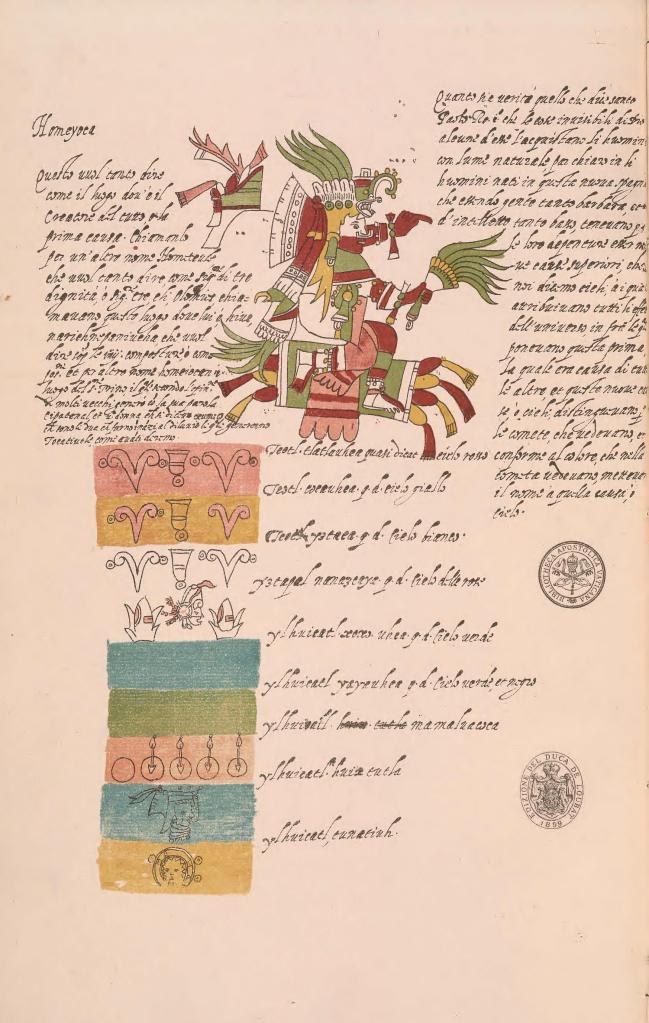
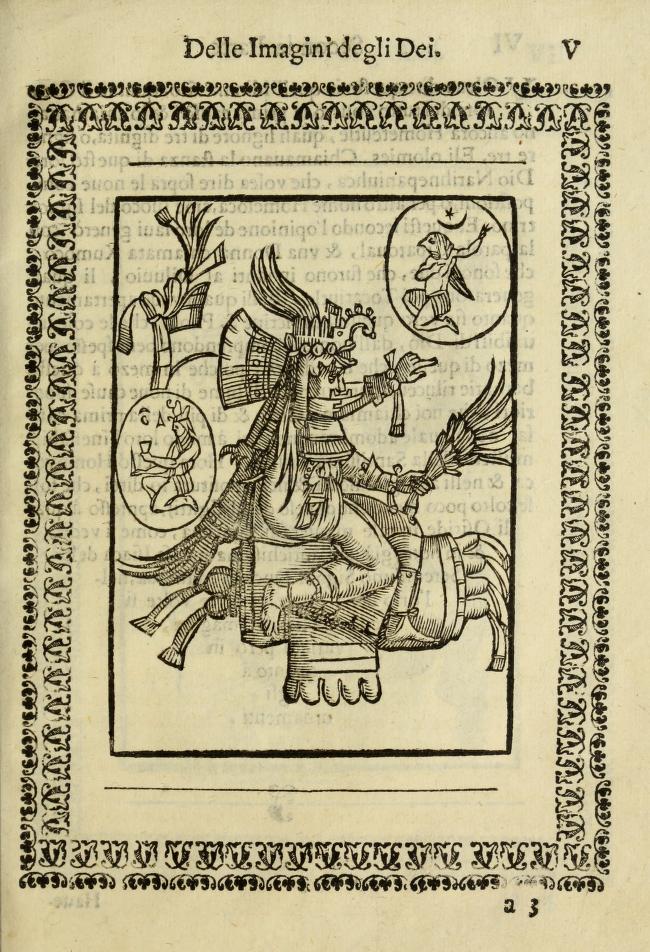

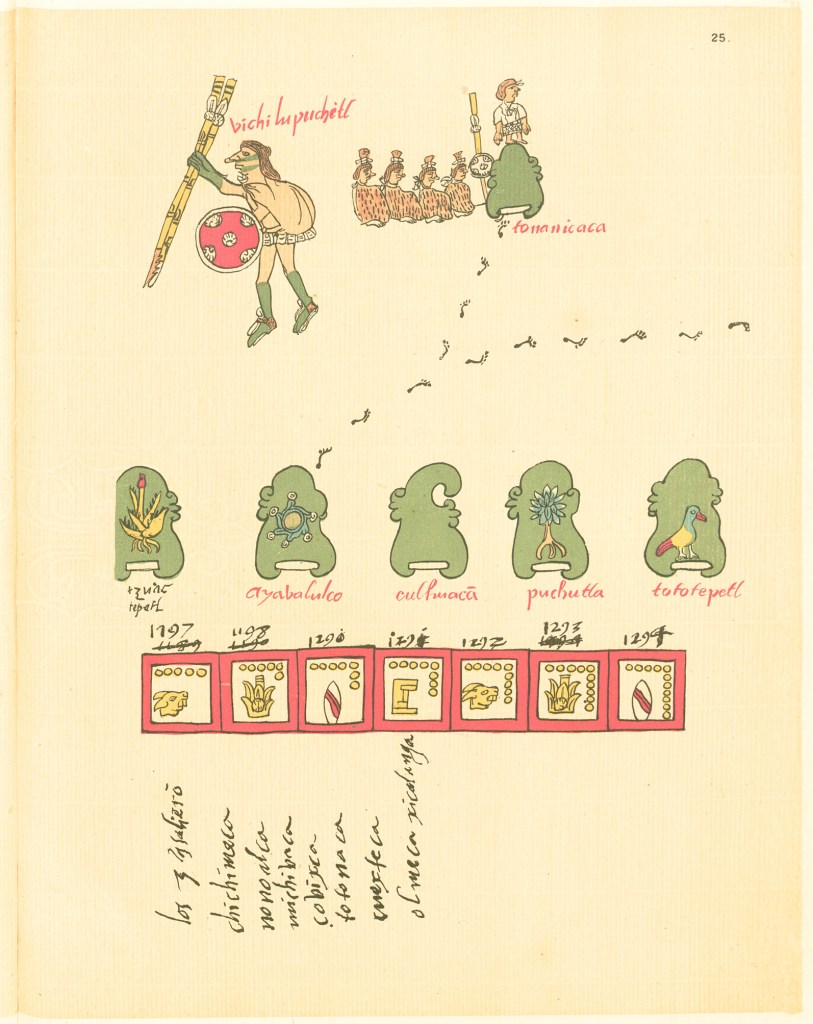

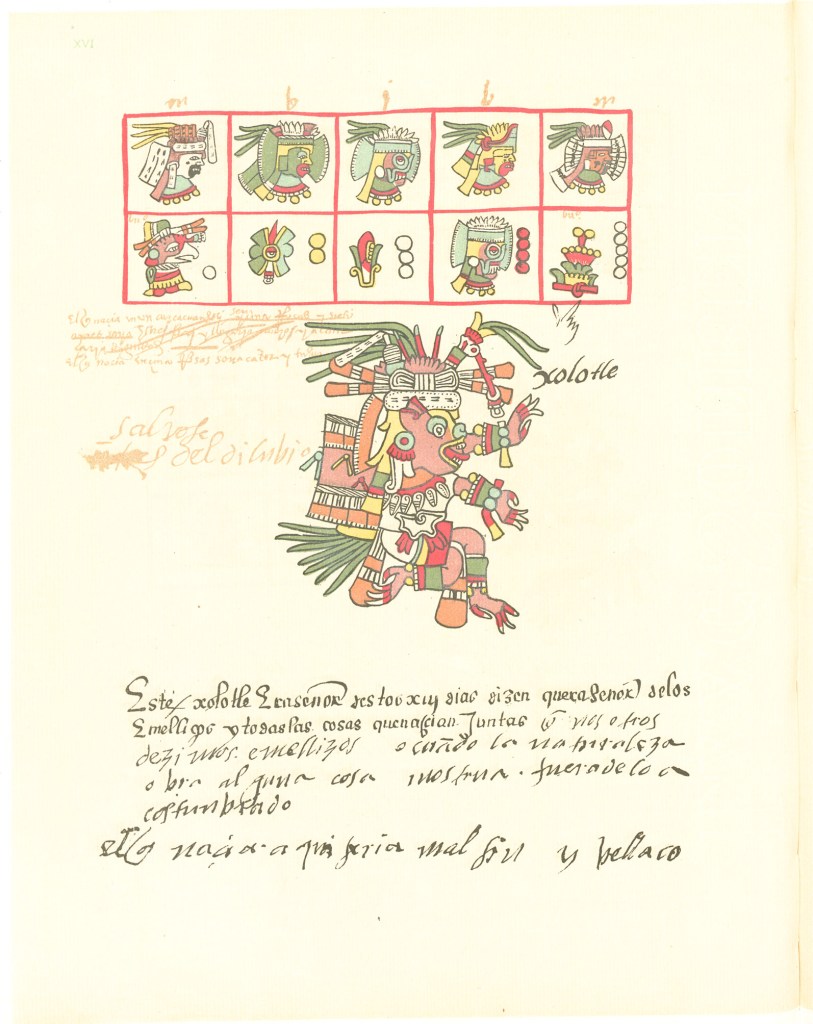
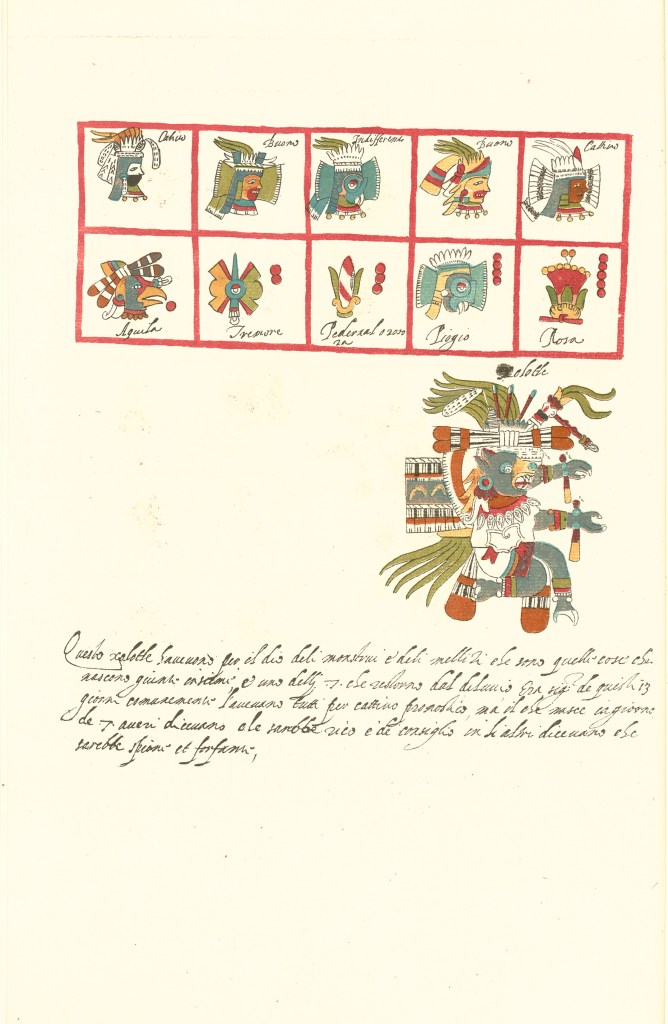
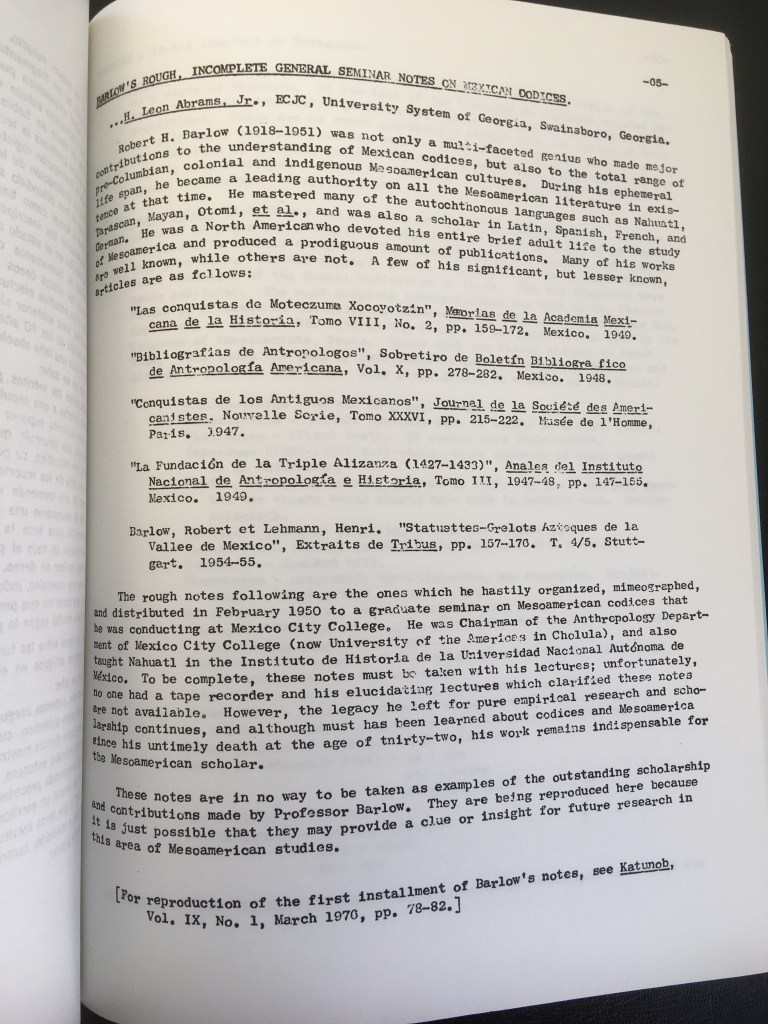
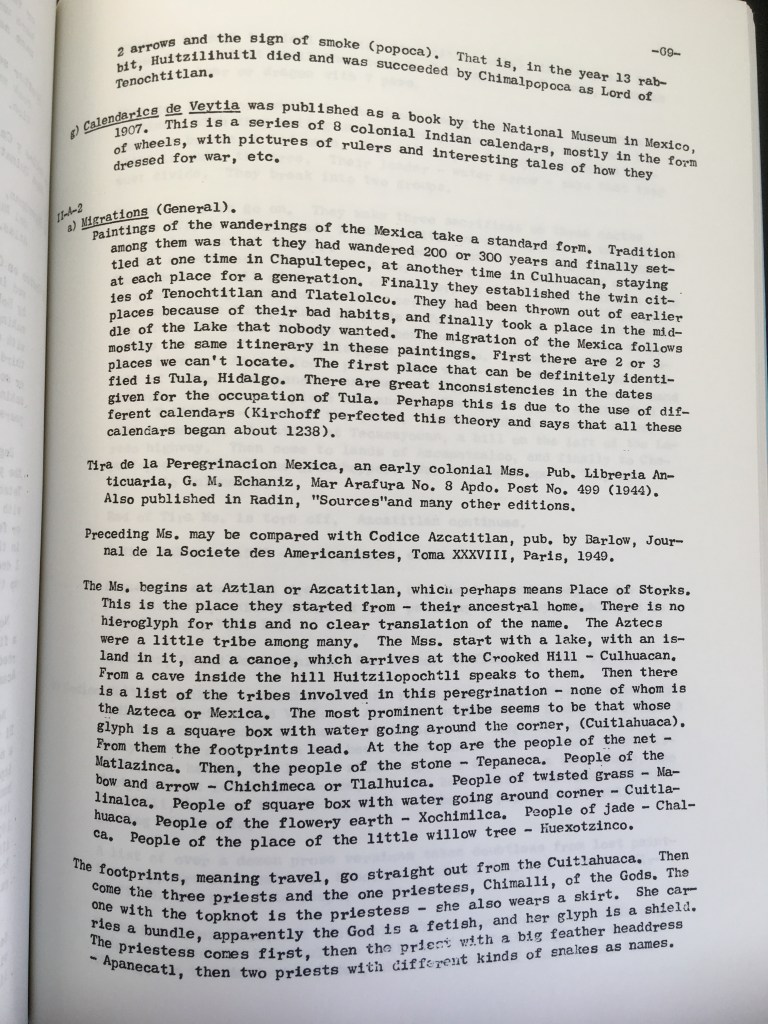
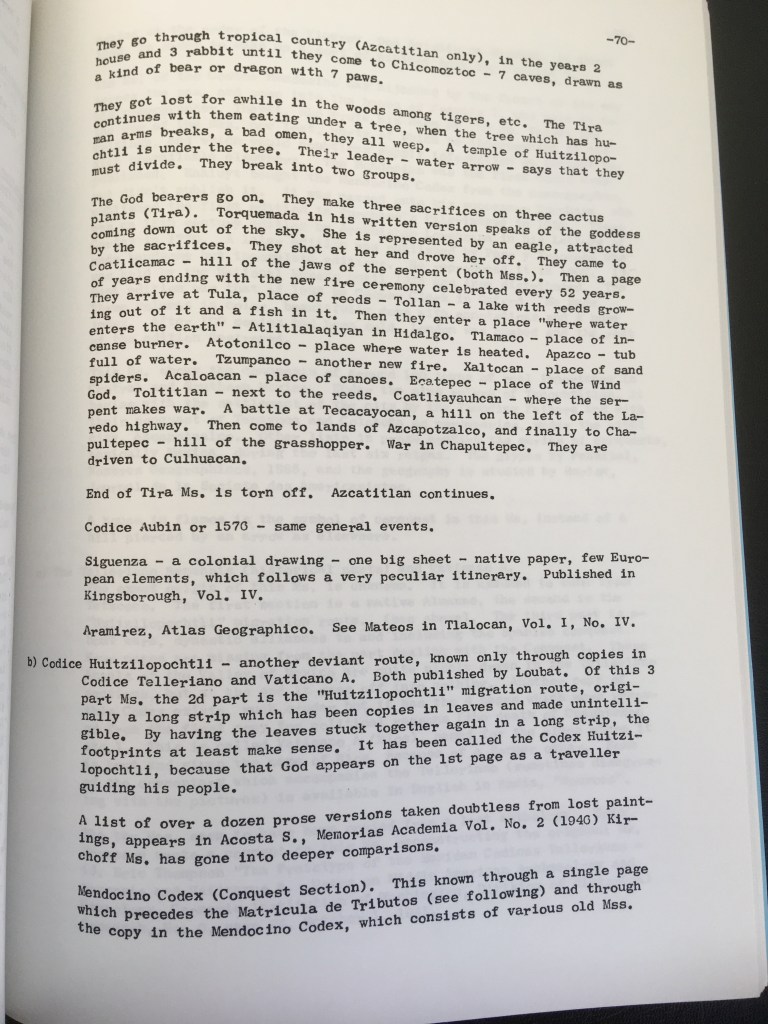
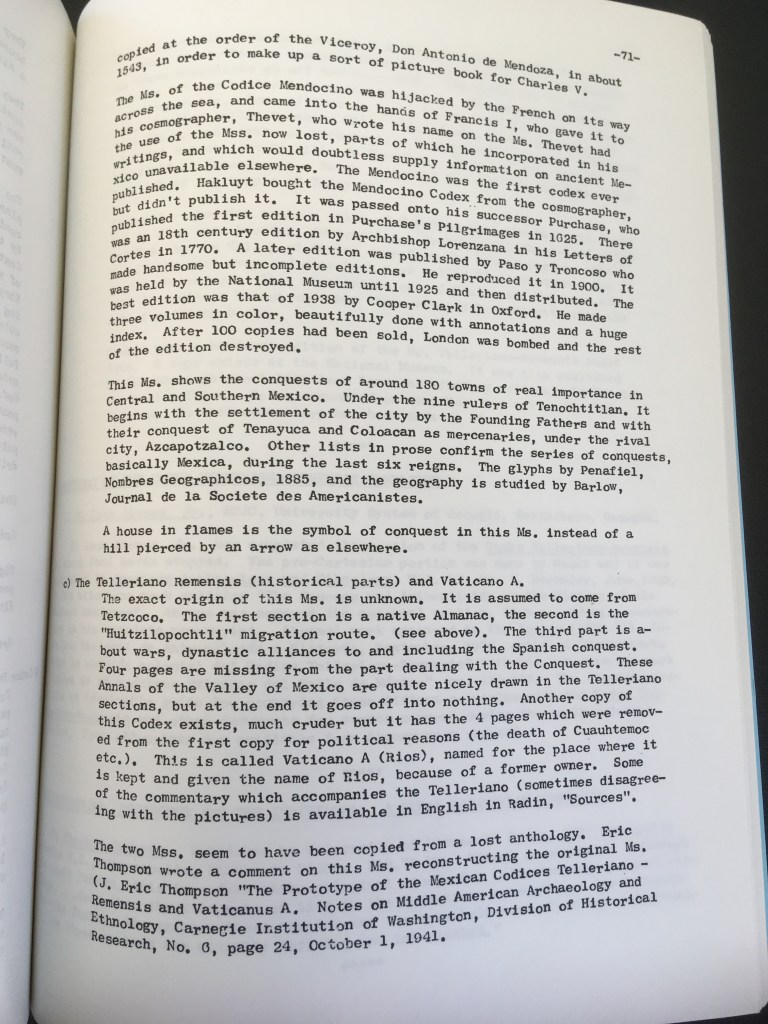
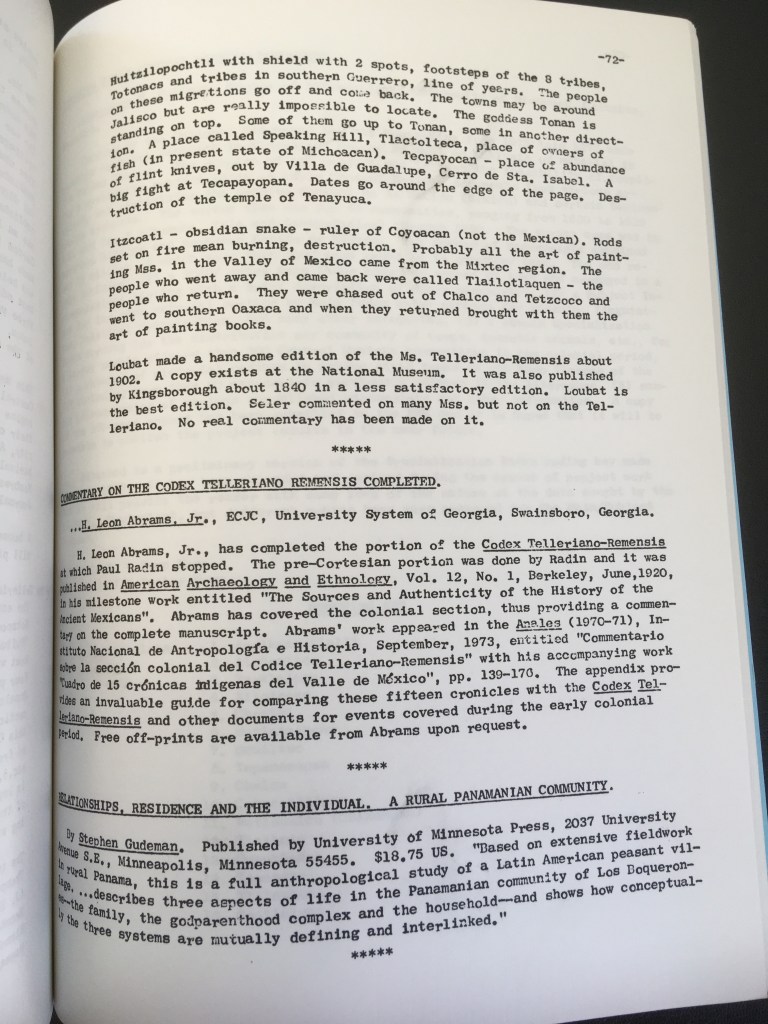

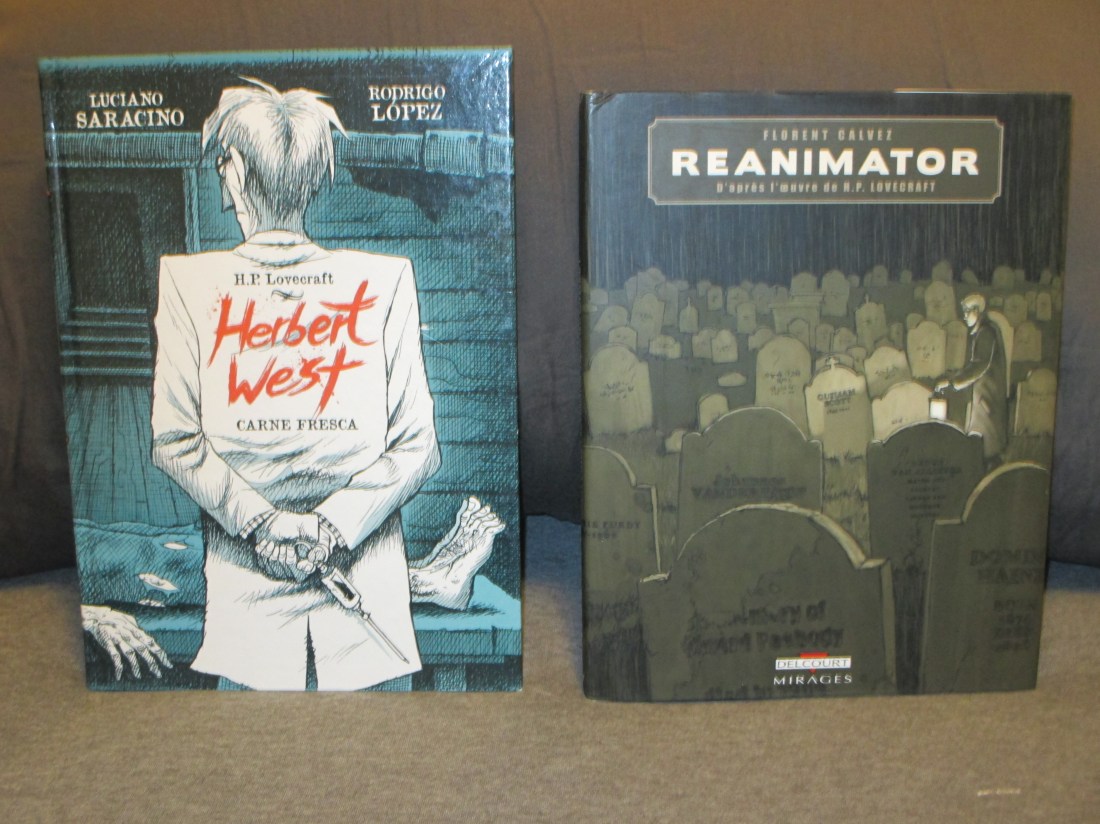
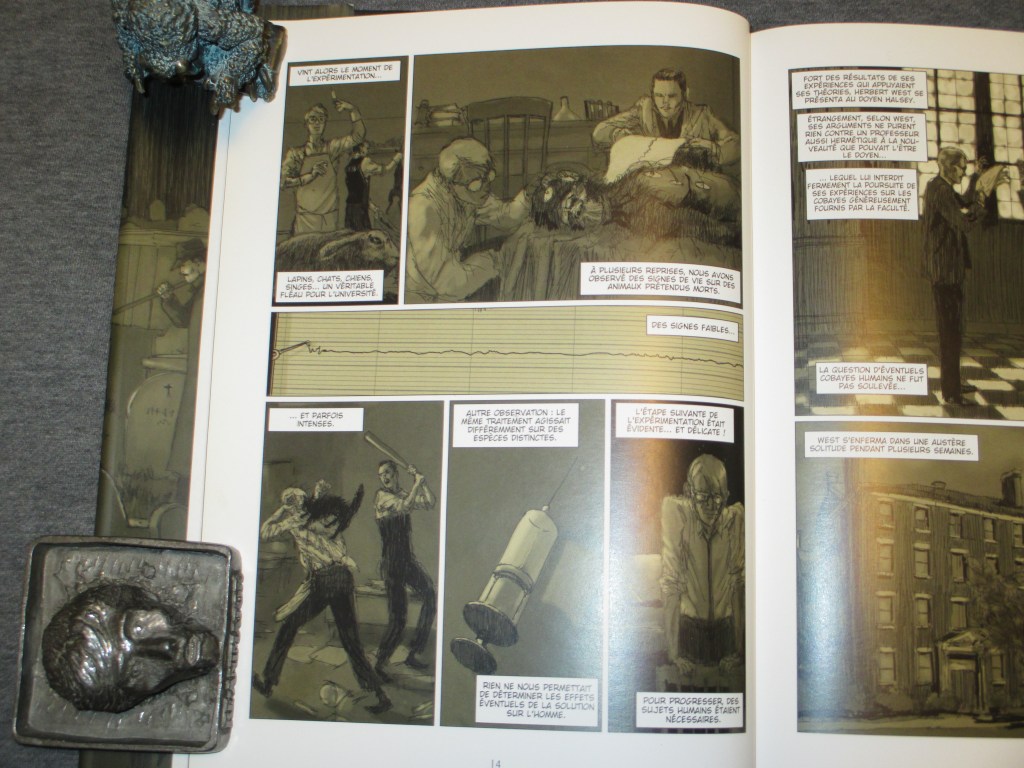
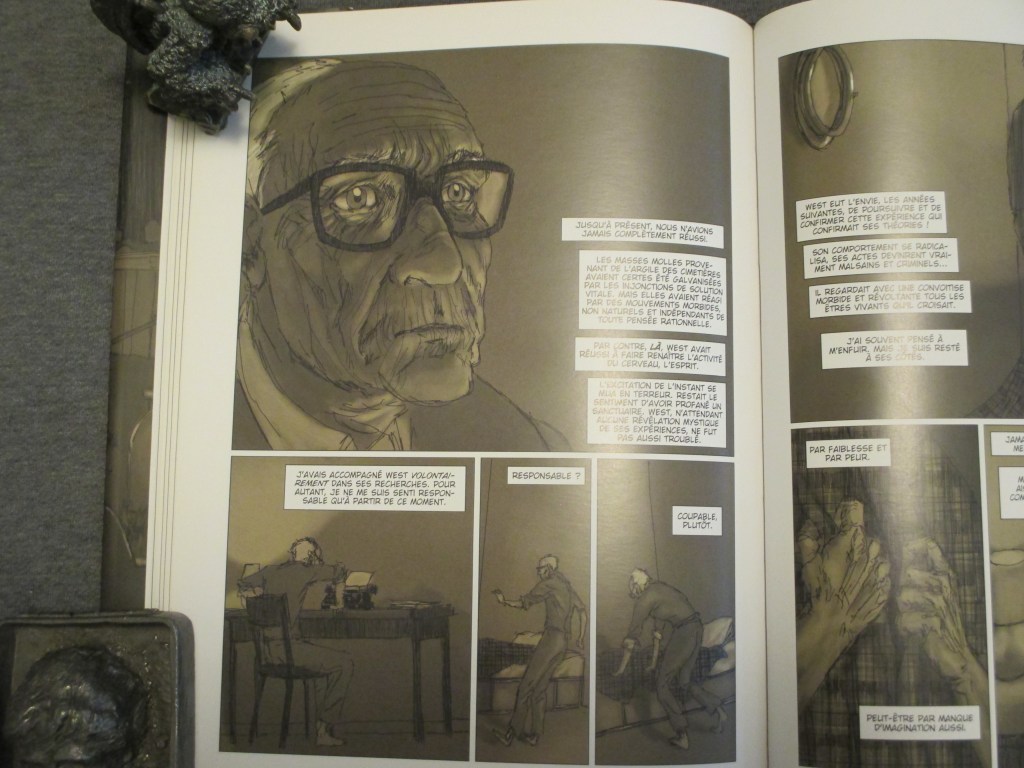
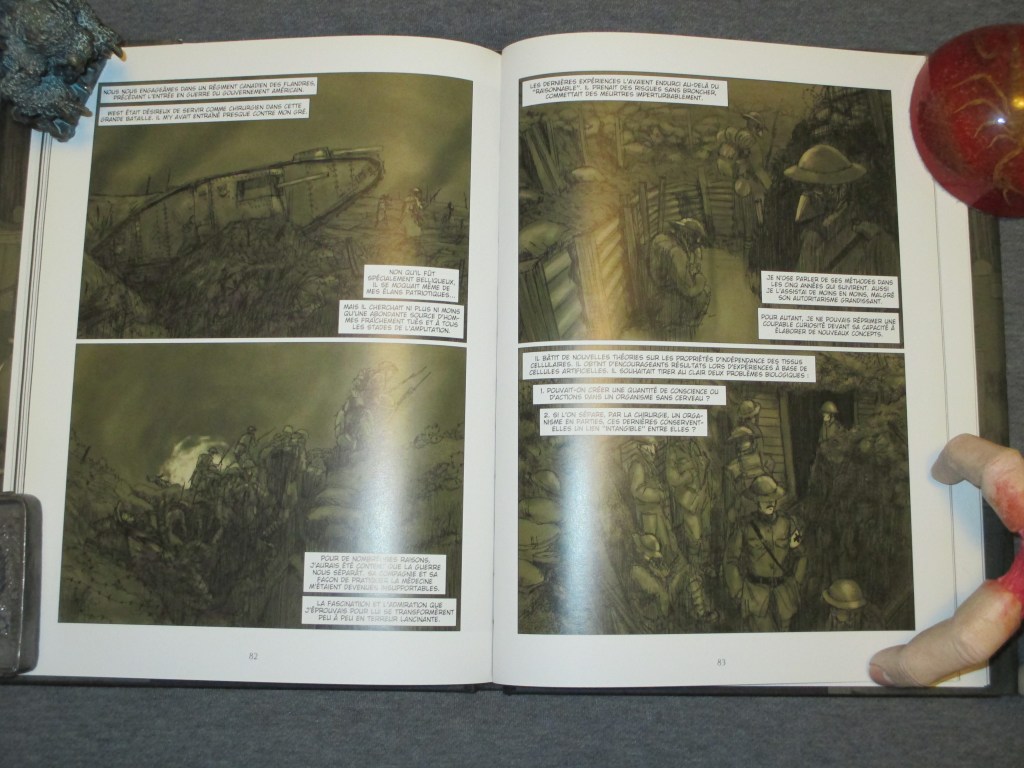
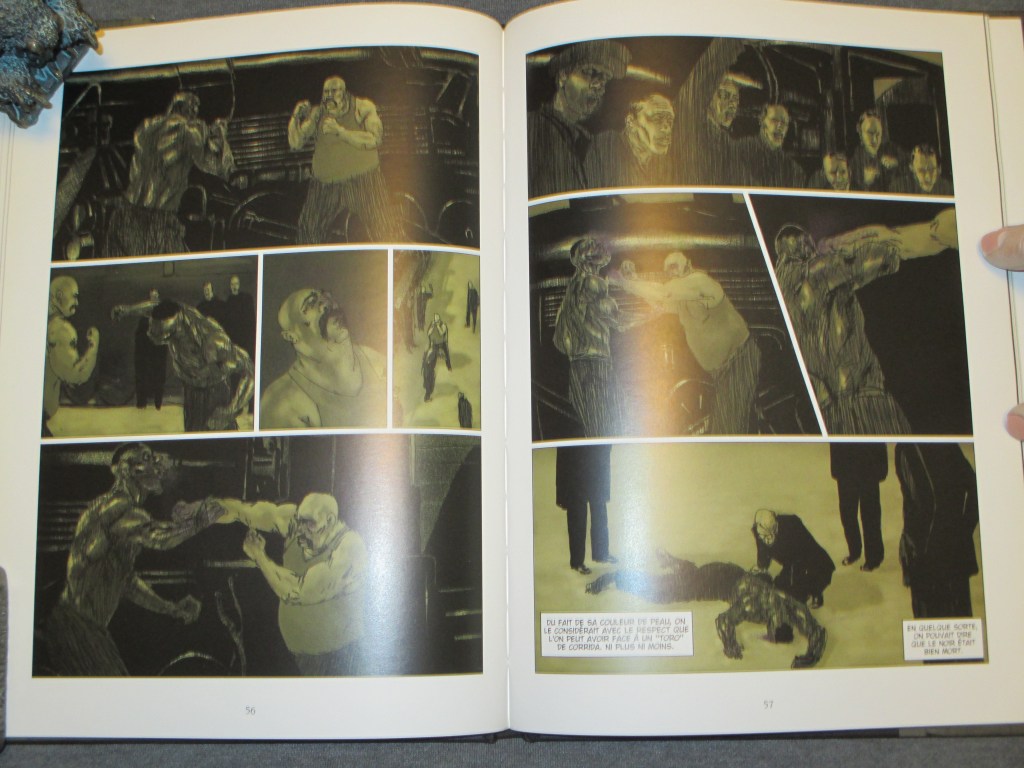
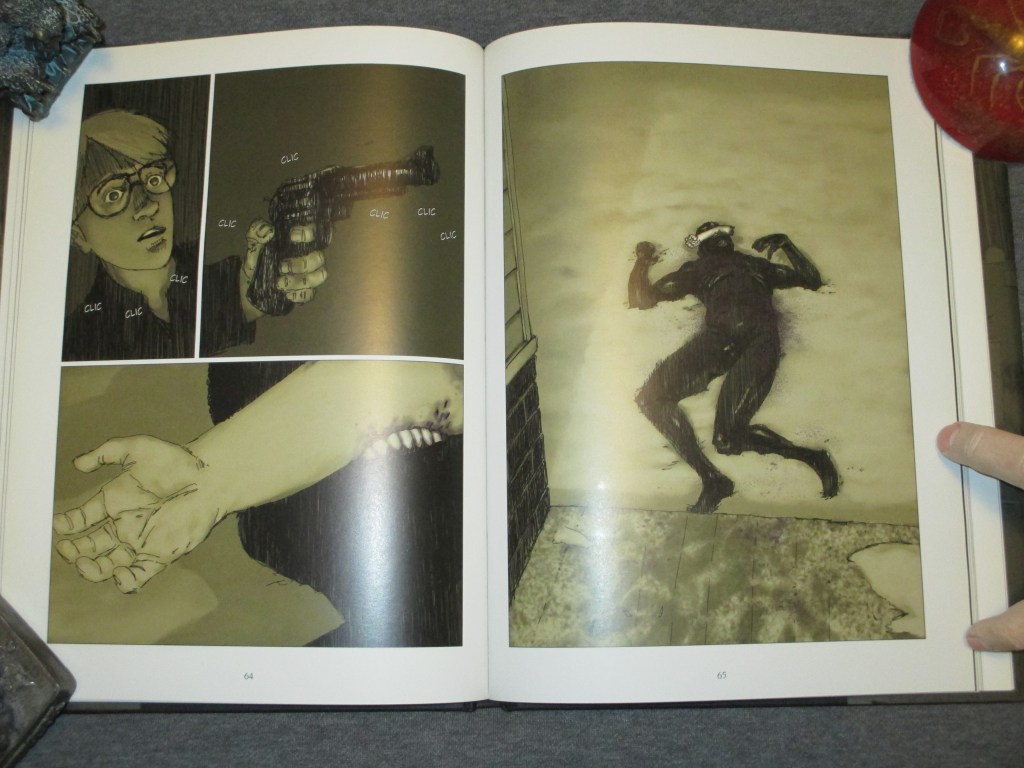
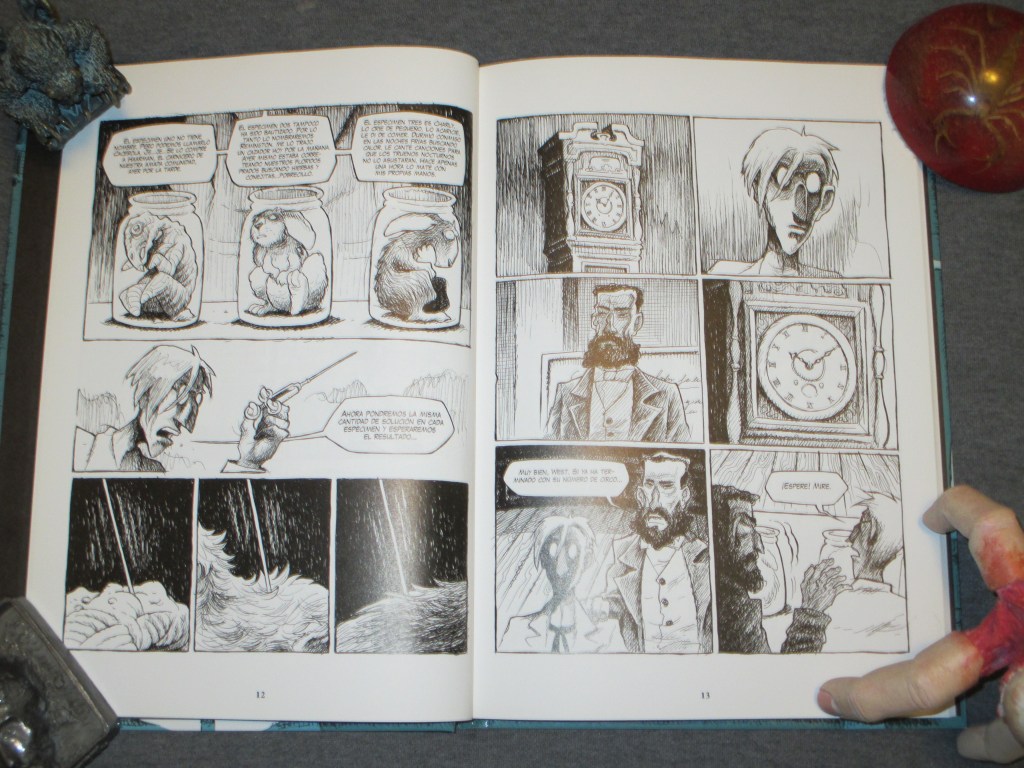
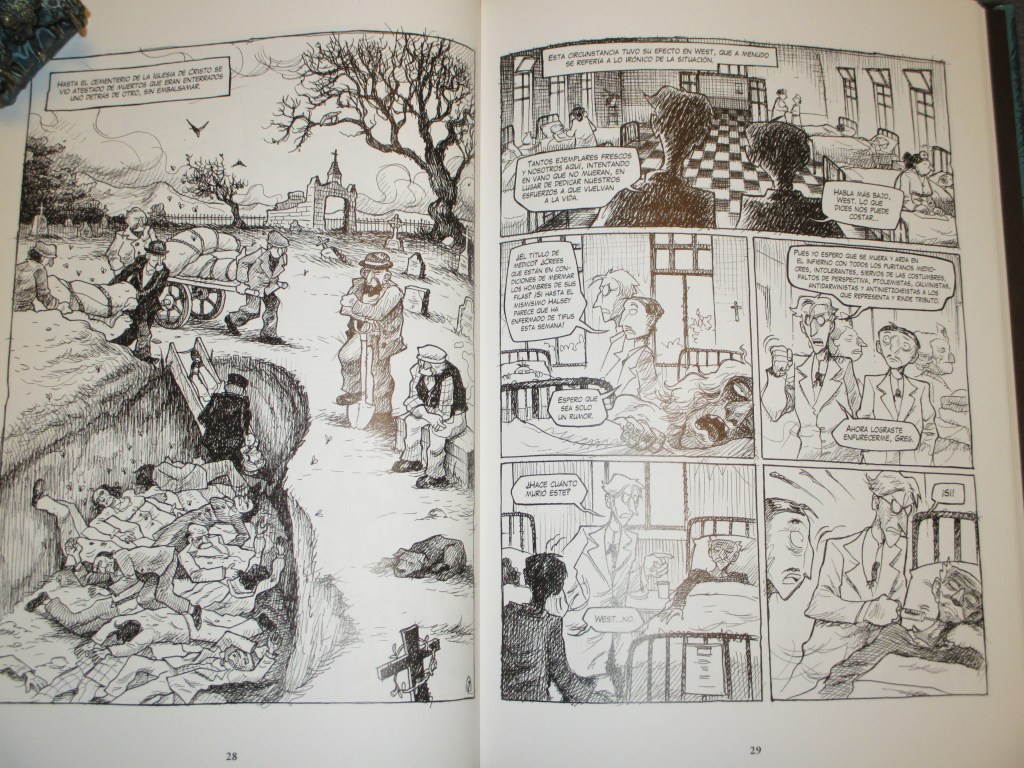
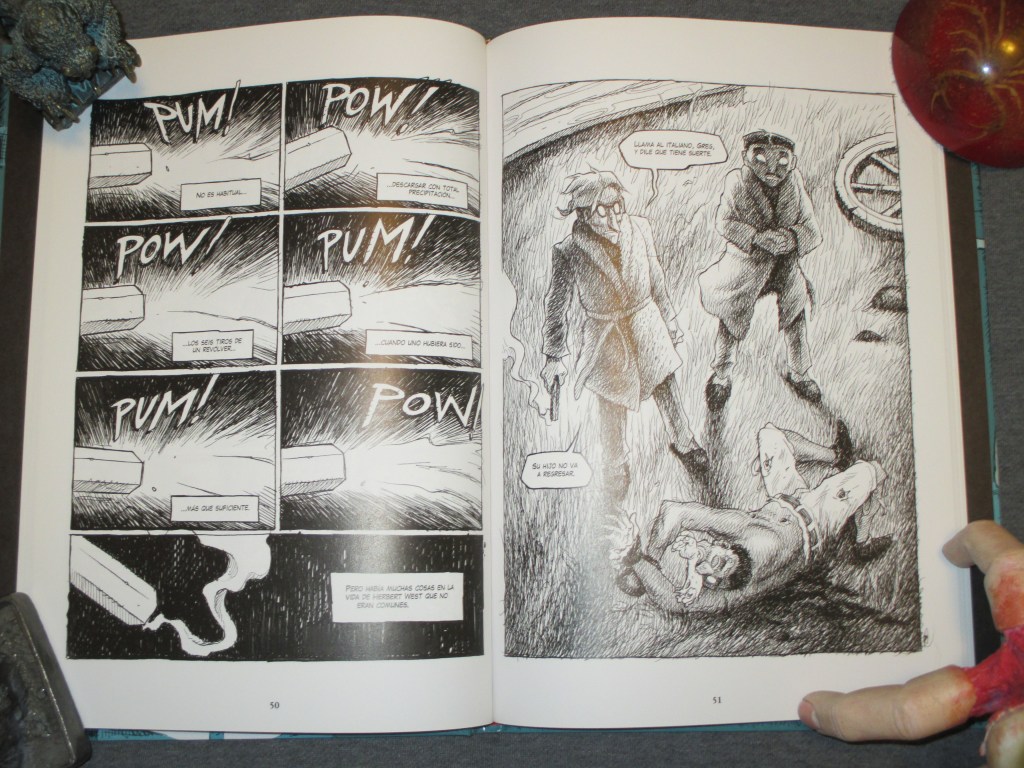
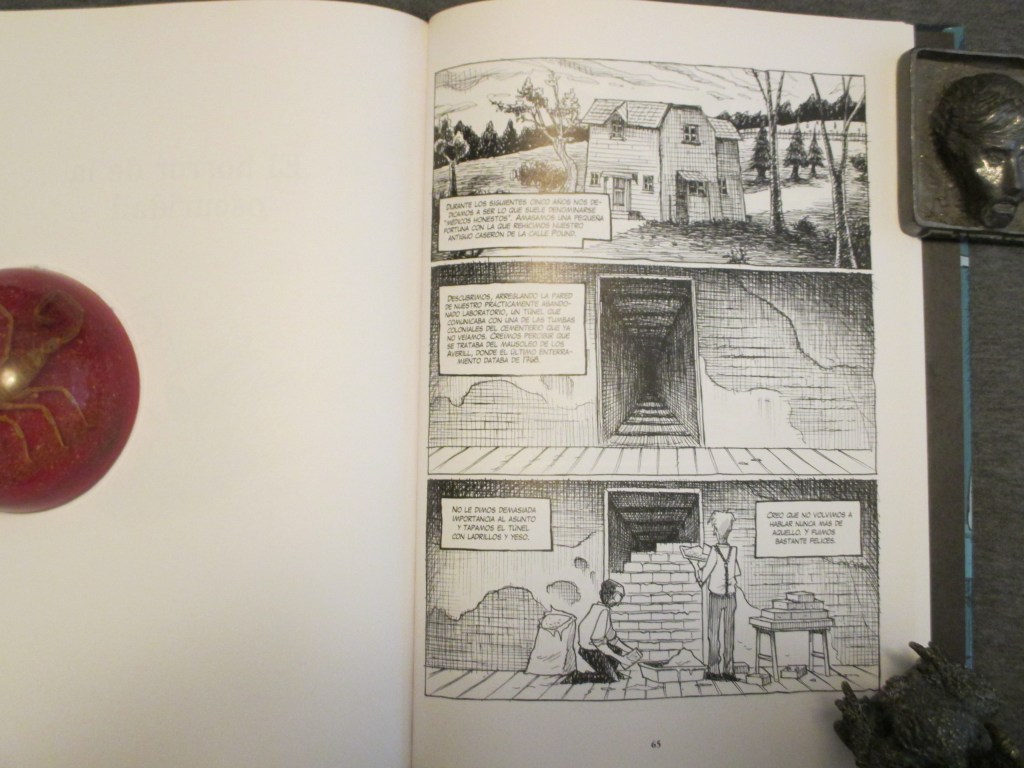

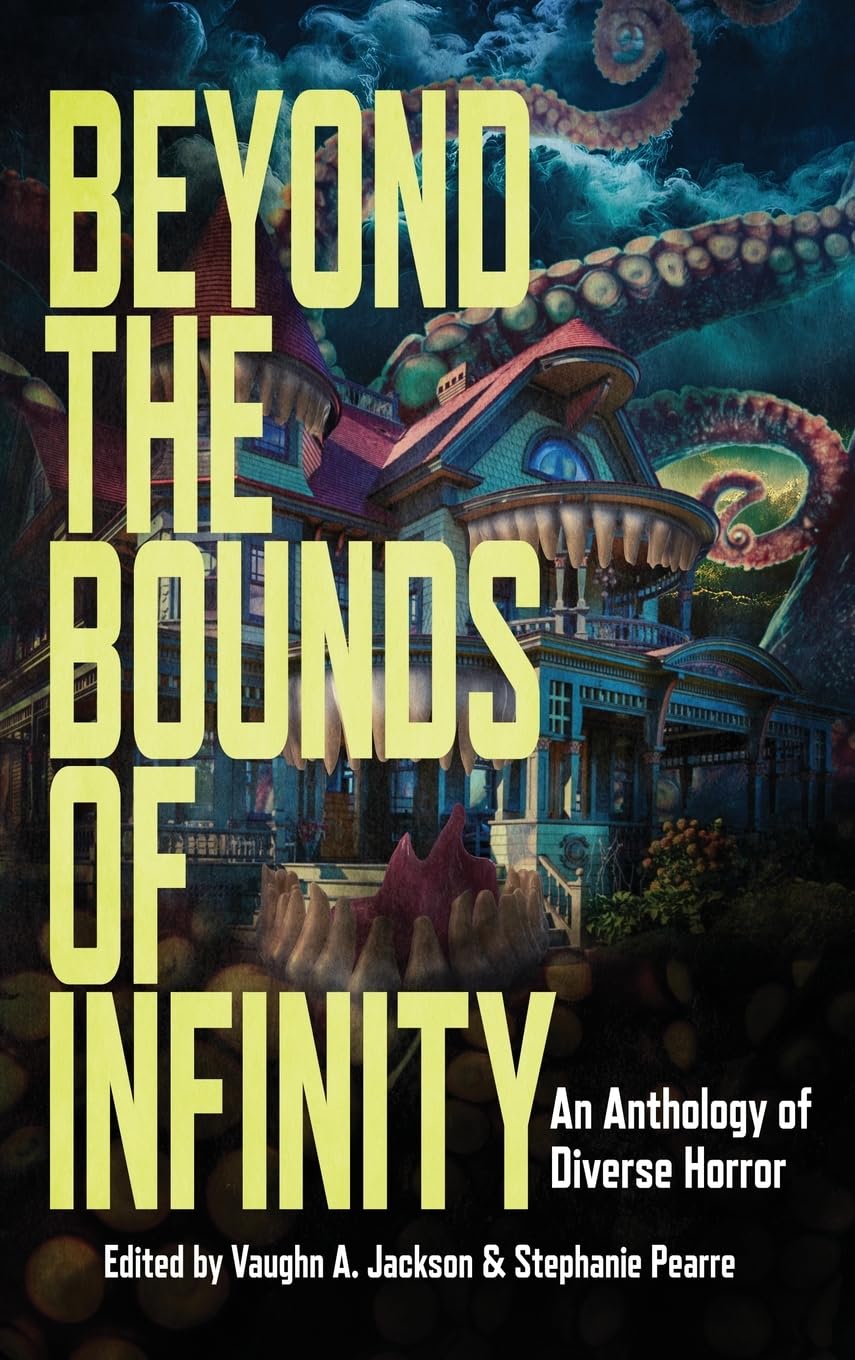
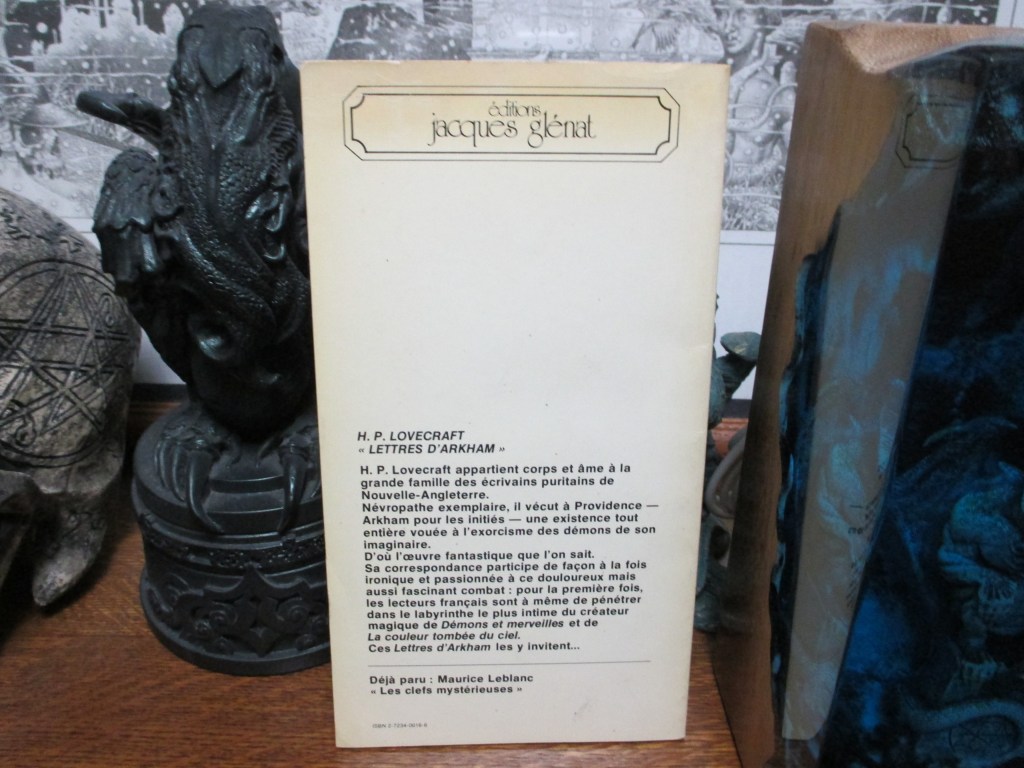
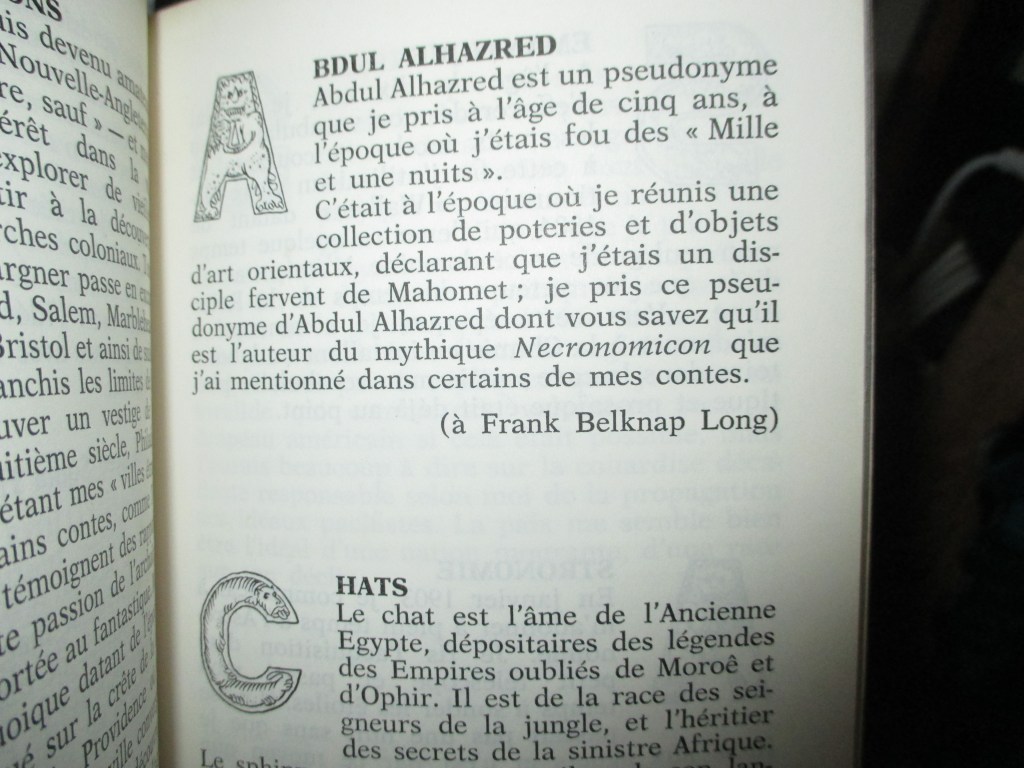
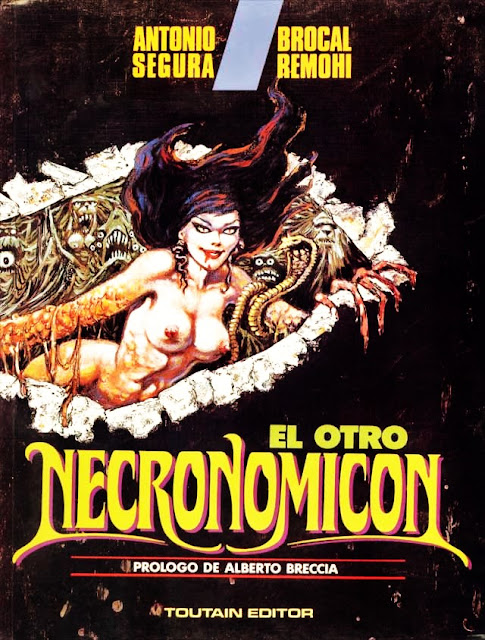
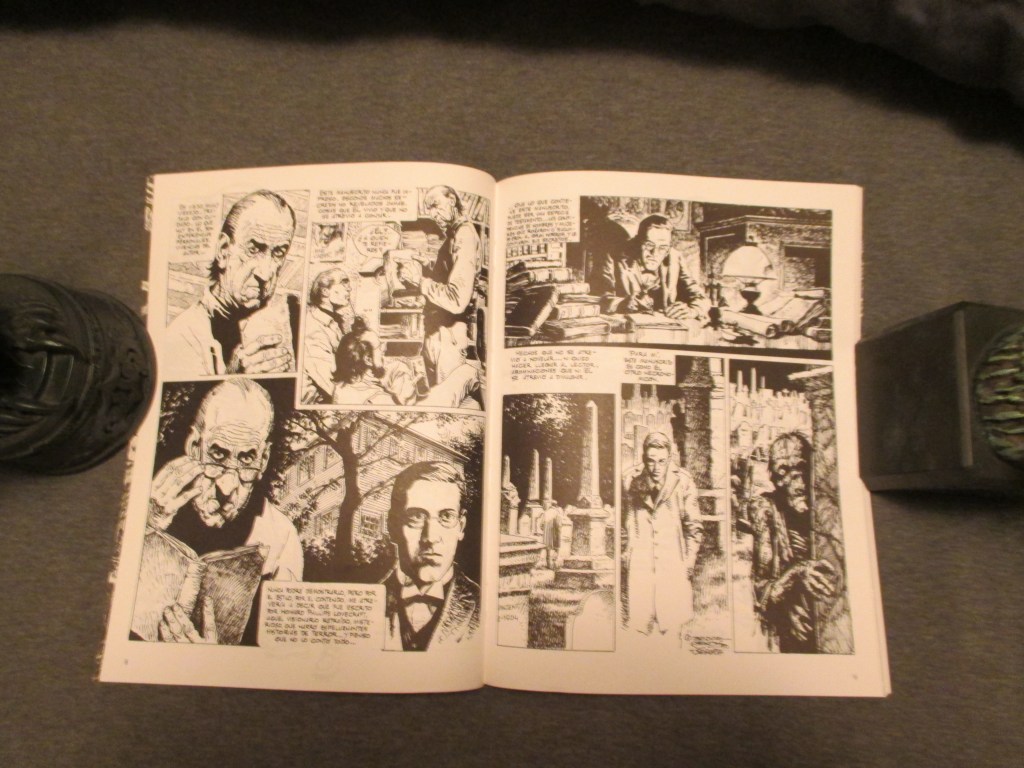
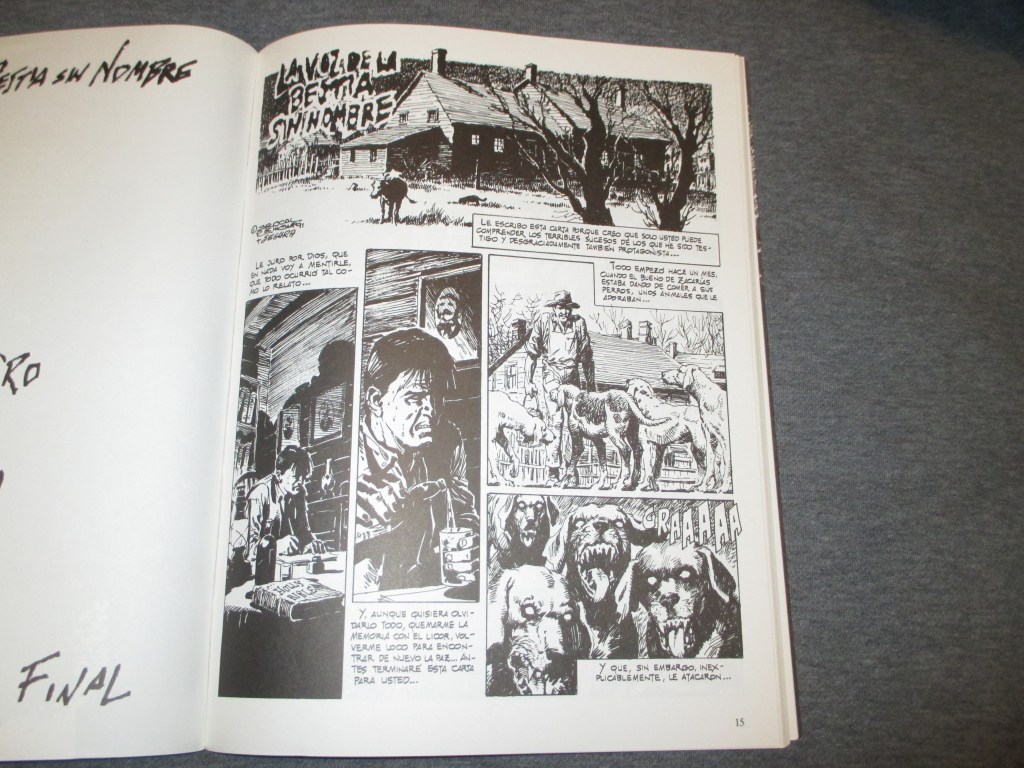
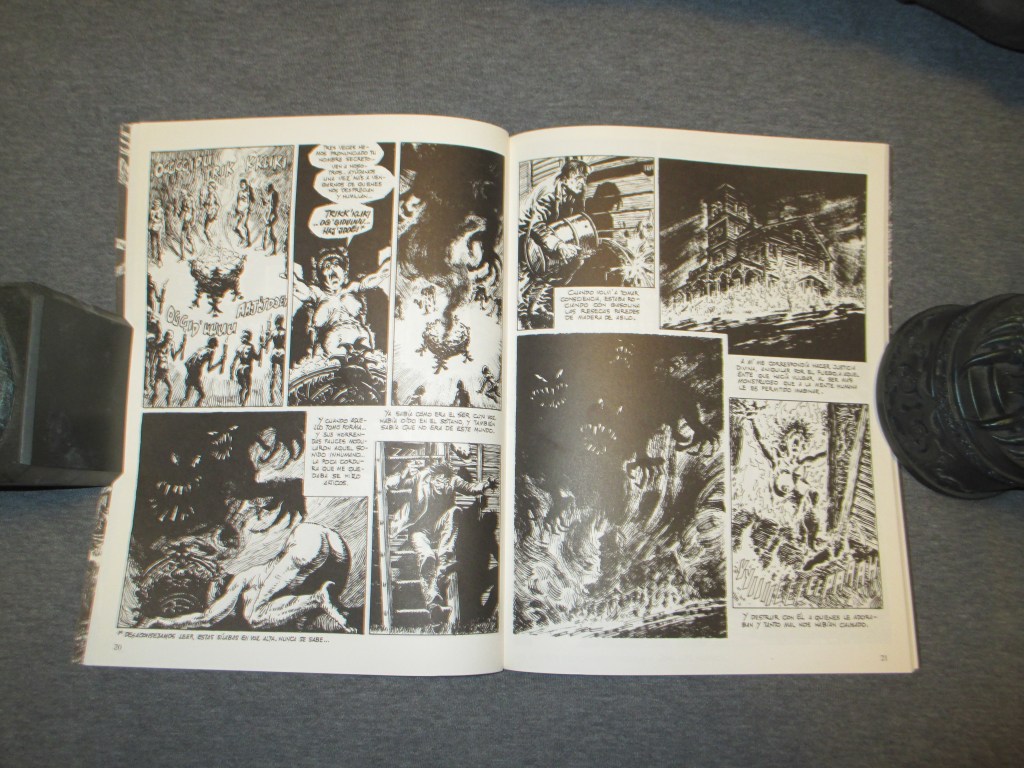
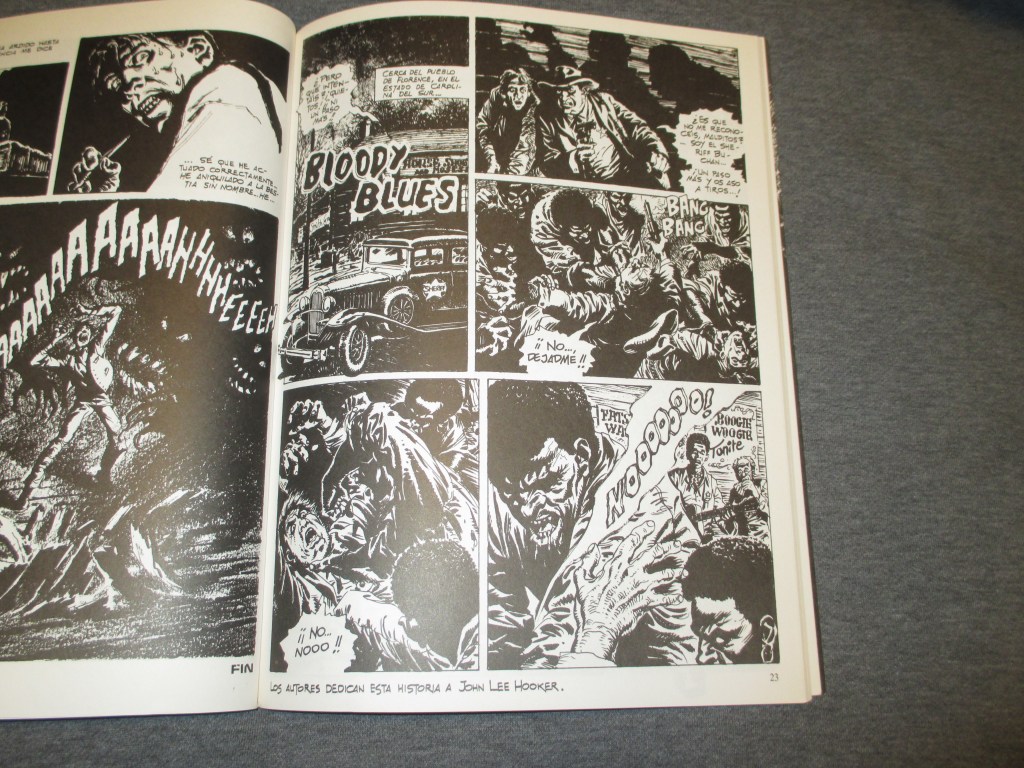
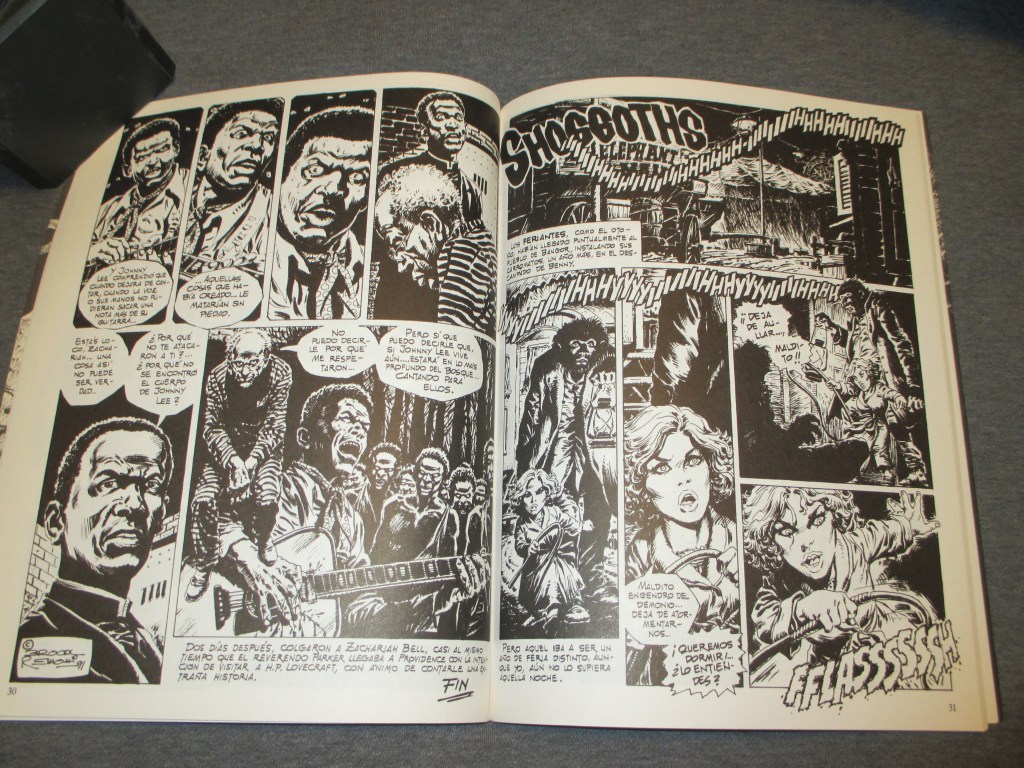
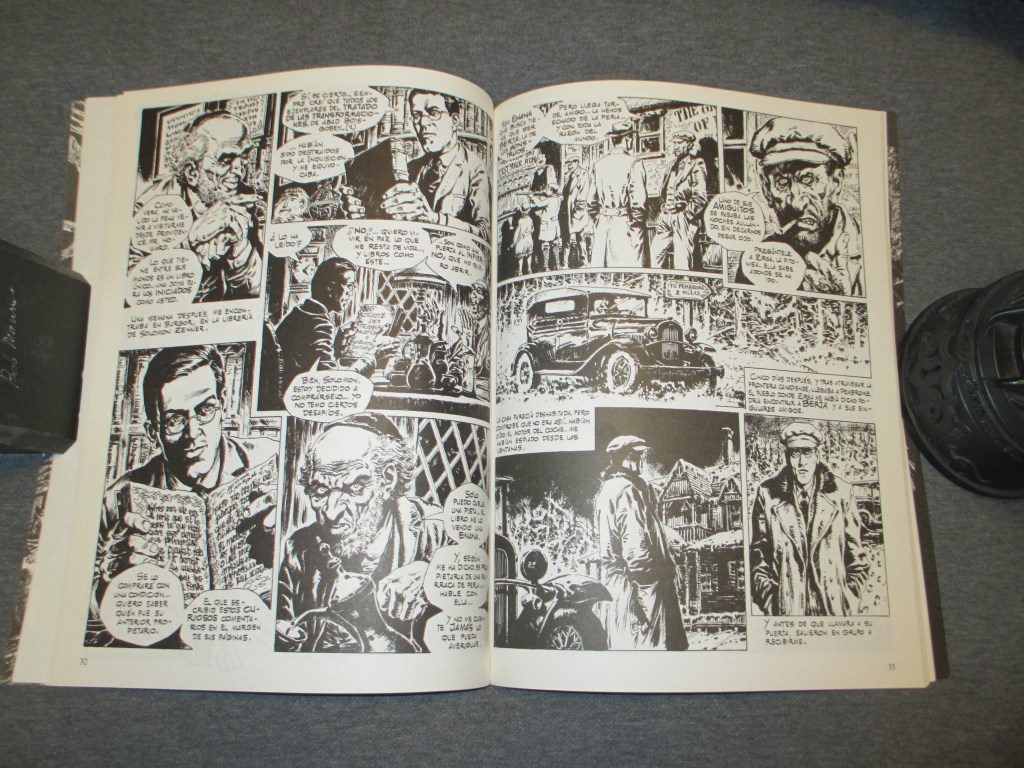
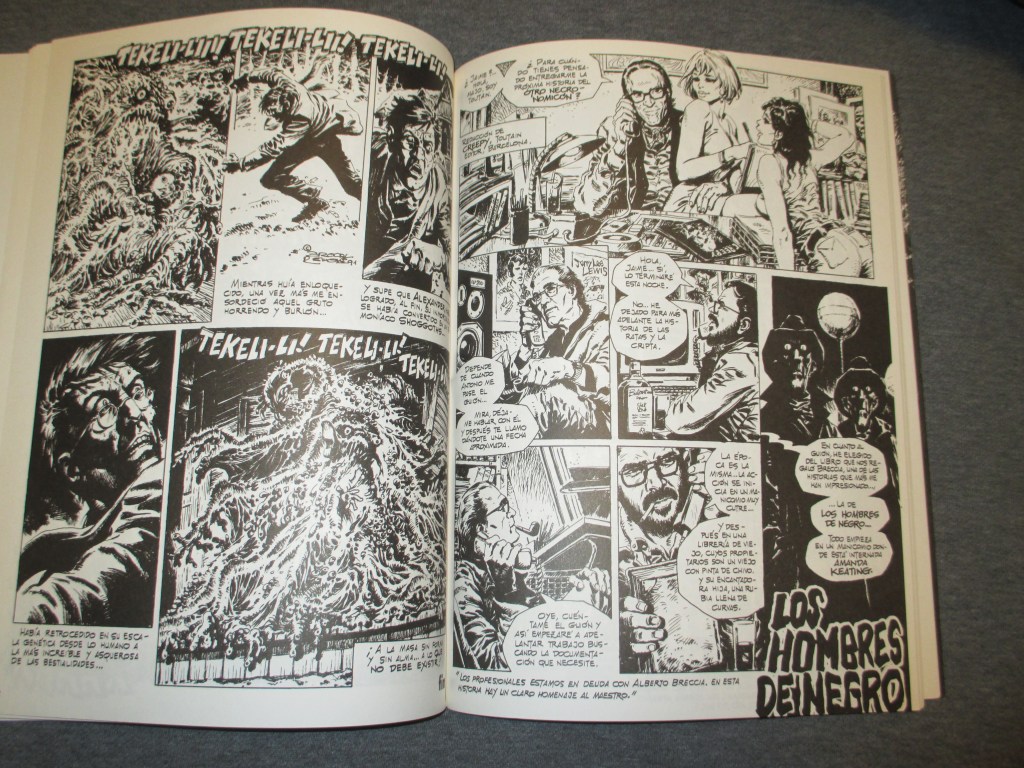
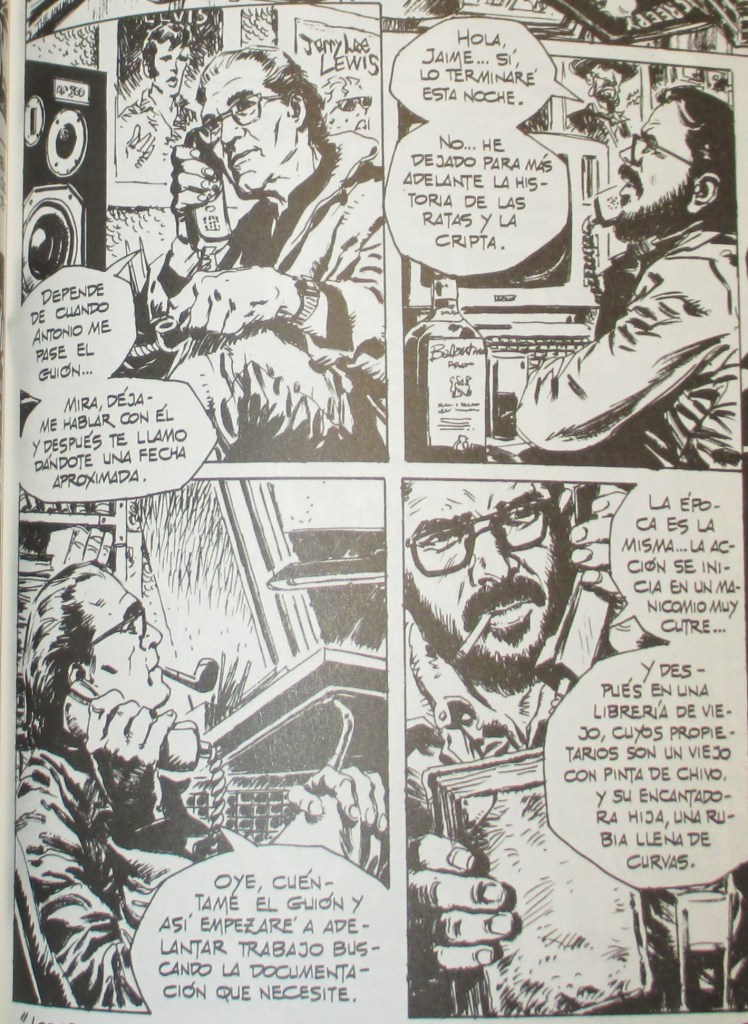
 Deep Cuts in a Lovecraftian Vein