Posts

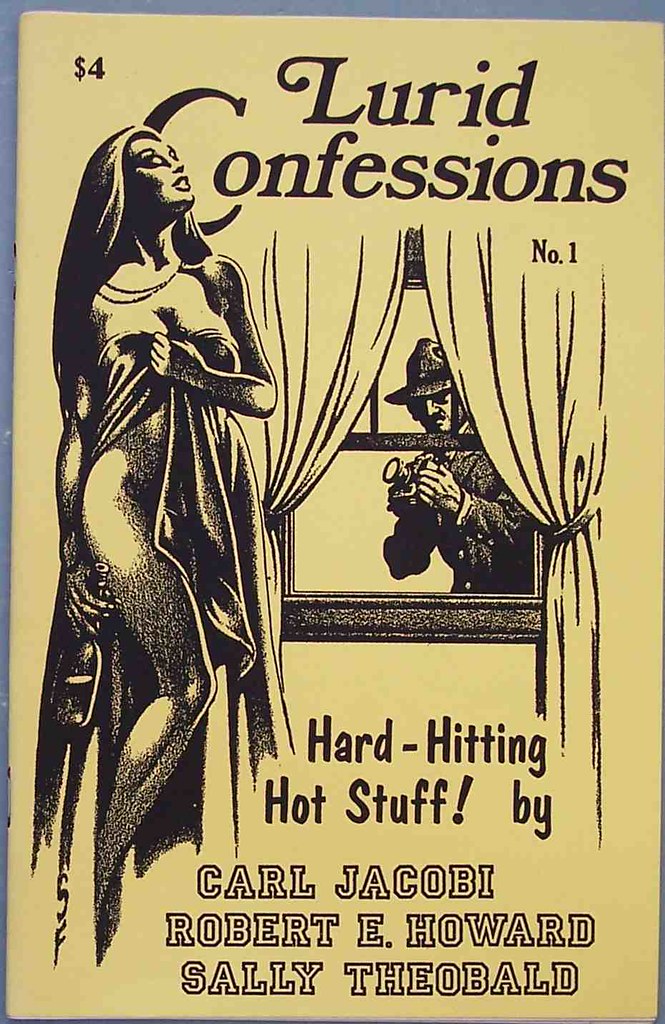
“Four O’Clock” (1949) by Sonia H. Greene

His touch was lightest in the stories by Sonia H. Greene, who was later to become his wife; he made some alterations in The Invisible Monster, he made only suggestions for the prose style of Four O’Clock.
—August Derleth, Something About Cats and Other Pieces(1949) vii

Four O’Clock” is the third work of fiction, after “The Horror at Martin’s Beach” (1923) (published in Weird Tales as “The Invisible Monster”) and Alcestis: A Play (1985) attributed to Sonia H. Greene with some input or assistance from H. P. Lovecraft, who she would marry in 1924. Relatively little is known about the genesis of this story, as Lovecraft mentions it only a few times in his letters, except that it was apparently one of three tales that were conceived during a visit by Sonia and Lovecraft to Magnolia, Massachusetts in 1922:

Mme. G. has taken to this sort of composition—has written one & planned two more—& I’m damned if they don’t look like good stuff! The first one, “Four O’Clock”, has some images noxiously Poe-esque—I shall polish it up for use in the U.A. or something else.
—H. P. Lovecraft to Alfred Galpin, 30 Jun 1922, Letters to Alfred Galpin 120

After the repast—a most marvelous meal prepared by Mrs. G. alone since the negress disappointed her & failed to appear—a programme of literary reading & discussion took place. I read my “Doom that Came to Sarnath” & “The Tree”, Belknap read his “Eye Above the Mantel”, Mrs. Green read her “Four O’Clock” & one of the other Magnolia horror-tales not yet revised […]
—H. P. Lovecraft to Anne E. P. Gamwell, 9 Sep 1922, Letters from New York 20-21

The story did not see publication during Lovecraft’s lifetime, but in 1946 Sonia (now Sonia H. Davis) came into contact with August Derleth of Arkham House, and after some personal disagreements and correspondence, both “The Invisible Monster” and “Four O’Clock” were published in Something About Cats and Other Pieces (1949), which contained several of Lovecraft’s revision tales; it would subsequently be reprinted in The Horror in the Museum (1970) and other collections of Lovecraft’s revision and ghostwritten tales, despite the relatively slight evidence, as Joshi notes:

In a letter to Winfield Townley Scott (11 December 1948; ms JHL), Sonia H. Davis wrote that this story was written only at HPL’s suggestion. On that basis, I excluded it from the revised Horror in the Museum (1989); but in fact, much of the prose appears to be similar to HPL’s own prose, with some characteristic linguistic and even punctuational usages; so HPL probably did touch up the story somewhat. HPL never mentions the story in any extant correspondence, it was apparently not published in his lifetime. The only basis for the text is its first appearance in 1949.
—S. T. Joshi, Collected Fiction Vol. 4 (Revisions and Collaborations): A Variorum Edition 4.613

The letter mentioned is available online, where Sonia writes:

I have sent to Arkham House snap photo of HPL’s aunts, some post cards, a story revised by HP and a fictitious story I wrote about HP a few months after I met him, but at his request I did not publish it in the Rainbow because, as he told it, it was obviously a description of himself.
—Sonia H. Davis to Winfield Townley Scott, 11 Dec 1948

If the “story revised by HP” is “The Horror at Martin’s Beach”/”The Invisible Monster,” then by process of elimination the “fictitious story I wrote about HP” must be “Four O’Clock.” Which perhaps places this story in the same category of “Falco Ossifracus” (1921) by Edith Miniter, closer to affectionate parody than an effort at a weird tale, a literary tweaking of Lovecraft’s nose.

There is something deliciously pulpy about “Four O’Clock.” The tale of supernatural revenge beyond the grave to be visited at the eponymous hour has all of the four-color garish earnestness of a Tale from the Crypt-Keeper. The demons, be they real or hallucinations, have a cartoonish quality. The Poe-esque images that Lovecraft mentioned are laid on with a heavy trowel, so the fine line between pastiche and parody is blurry and indiscernible, but for readers that cackled at old horror comics, it’s hard to suppress a smile.

The major question, as with every story that claims any part of being a Lovecraft “revision,” is how much of it he wrote—or re-wrote, as is often the case. “Four O’Clock” is not easy to categorize in that regard; it has no familiar landmarks of Lovecraft country, no explicit references to the as-yet-mostly-unborn conception of Lovecraft’s Mythos. There are thematic resonances with his work, but how much of these owe themselves to Lovecraft’s imagination or Sonia H. Greene’s is impossible to say. Take for example one of the opening sentences:

The great black silences of night’s depth told me, and a monstrous cricket, chirping with a persistence too hideous to be unmeaning, made it certain. (Variorum 613)

How comparable is this to azif?

[…] azif being the word used by Arabs to designate that nocturnal sound (made by insects) suppos’d to be the howling of daemons.
—H. P. Lovecraft, “History of the Necronomicon”

Similar common images abound, the most obvious of which is perhaps the appearance of what would become one of the more common visual cues in the Mythos:

The four talons, long, thin, and straight, were now seen to be tipped by disgusting, thread-like tentacles, each with a vile intelligence of its own, which groped about incessantly, slowly at first, but gradually increasing in velocity until I was nearly driven mad by the sheer dizziness of their motion. (Variorum 615)

H. P. Lovecraft, of course, neither invented the tentacle in weird fiction nor had any monopoly on the concept; M. R. James used them to good effect in “Count Magnus” (1904), Arthur Machen in “The Novel of the Black Seal” (1895), H. G. Wells in The War of the Worlds (1897), etc. The tentacles could be coincidental, or a deliberate reference to something that came up in their correspondence which Sonia incorporated into the story deliberately to invoke Lovecraft as the unnamed protagonist of the story.

We’ll never know.

Serious literary analysis of this story could point to it as a night terror, as a psychological suspense narrative driven by the phantasmagoric imagery, a variation on the theme of the incubus attack with all attendant sublimated psychosexual implications—and there is certainly a case to be made with that. Sonia H. Greene was 39 in 1922, biological clock ticking inevitably toward doom as surely as the fated hour approaches in the story. While such deep reading of the story is possible, maybe valuable to those who enjoy that kind of exercise, the simpler enjoyment of this story might be just in the slightly ridiculous seriousness with which it pursues its premise, like a solid exploitation film.

The plot actually has gross parallels to a tangential Mythos story: “Wentworth’s Day” (1957) by August Derleth features another posthumous appointment being kept. Stylistically the stories are worlds apart, but it’s interesting that Derleth for all his efforts to ground the plot in a suitably realistic milieu doesn’t achieve anything quite like the same effect as in “Four O’Clock”—where the over-the-top visuals of the pending hour, completely surreal in any realistic setting, actually work with the kind of dream-logic that might come from reading too much Poe.

Not that Derleth borrowed anything from Greene or Lovecraft, the idea of the appointment being kept or the curse fulfilled after death is a hoary one. Both stories might be considered a bit hokey, even when they were written, and there’s a campfire tale quality to “Four O’Clock.” It feels like a story to be read not to keep the darkness at bay, but to welcome it home.


Bobby Derie is the author of Weird Talers: Essays on Robert E. Howard & Others (2019) and Sex and the Cthulhu Mythos (2014).
 

“Pickman’s Other Model (1929)” (2008) by Caitlín R. Kiernan

You know, it takes profound art and profound insight into Nature to turn out stuff like Pickman’s. Any magazine-cover hack can splash paint around wildly and call it a nightmare or a Witches’ Sabbath or a portrait of the devil, but only a great painter can make such a thing really scare or ring true. That’s because only a real artist knows the actual anatomy of the terrible or the physiology of fear—the exact sort of lines and proportions that connect up with latent instincts or hereditary memories of fright, and the proper colour contrasts and lighting effects to stir the dormant sense of strangeness. I don’t have to tell you why a Fuseli really brings a shiver while a cheap ghost-story frontispiece merely makes us laugh. There’s something those fellows catch—beyond life—that they’re able to make us catch for a second. Doré had it. Sime has it. Angarola of Chicago has it. And Pickman had it as no man ever had it before or—I hope to heaven—ever will again.
—H. P. Lovecraft, “Pickman’s Model” (1927)

“Pickman’s Other Model (1929)” is a sequel in every sense of the word. Not only does Kiernan unfold the next chapter in the narrative, peeling away more onion-layers to reveal deeper mysteries, but it is a continuation of the themes of the original story in a new direction. Without so many words, Kiernan asks and answers the unobvious question: What’s better than a photograph from life?

The story could have been labeled “Eliot’s Tale”—Eliot being the person to whom Thurber, the protagonist in Lovecraft’s story, had been addressing his narrative to. Now three years later, Thurber was dead and it was Eliot picking up the pieces of the man’s life, sorting through the letters and drawings, uncovering something that Thurber, in Lovecraft’s story, failed to mention: Pickman’s nudes.

It isn’t some lingering prudery that kept nudity out of Lovecraft’s story, nor is it any particular prurience of Kiernan’s that places it at the center of hers. Lovecraft’s focus was on one of Pickman’s models, the necrophagous critters that haunt Boston’s old tunnels; Kiernan’s focus is on his other model—a young woman whom any artist might sketch in the nude to hone their skills at anatomy, and who catches Eliot’s attention.

The development of the investigation is leisurely, with specific details that are highly suggestive but never so explicit as to reveal the central mystery. Hints along the way, artfully arranged, touching on some of Kiernan’s favorite themes…echoes of “The Call of Cthulhu,” “The Hound,” old family shames and lesbian desires—and a particular anatomical feature—that echo Kiernan’s own stories like “Houndwife” (2010), “pas-en-arrière” (2007), and Daughter of Hounds (2007). Always keeping that toehold in reality, the story coded with all the care of a good hoax, as when Kiernan discusses what might well have been the inspiration for the story:

It might have only been a test reel, or perhaps 17,000 or so frames, some twelve minutes, give or take, excised from a far longer film. All in all, it was little but than a blatantly pornographic pastiche of the widely circulated 1918 publicity stills of Theda Bara lying in various risqué poses with a human skeleton (for J. Edward Gordon’s Salomé).
—Caitlín R. Kiernan, “Pickman’s Other Model” in Confessions of a Five-Chambered Heart 276

thedaskeleton

I overheard, when the lights came back up, that the can containing the reel bore two titles, The Necrophile and The Hound’s Daughter, and also bore two dates – 1923 and 1924. (ibid)

As much as Lovecraft and others liked to portray the artist as portraying some supernal truth, Kiernan knows that reality tends to be much baser. So much is the case when Eliot finally meets Pickman’s other model in the penultimate chapter: a tired young woman who has seen a little too much of the world, with bad habits and a filthy mouth. Living in the present but still haunted by the past.

A past which catches up to her in the final chapter, hinting as Lovecraft did of more in heaven and earth than was dreamt of, darker and uglier realities at play which even the best of art could only hint at as a shadow in the final flickering frames on a black-and-white reel.

The success of “Pickman’s Other Model (1930)” is less in revelation than in suggestion and presentation. This is a story not so much for readers who want another piece of the Mythos puzzle as much as those who enjoy the process of discovery…and how some stories and images stay with you, for a long while. That is the other question, and perhaps as close to a theme of Kiernan’s narrative and her utmost reflection on Lovecraft’s: How do you unsee such things? You can’t.

“Pickman’s Other Model (1930)” was first published in Kiernan’s Sirenia Digest (March 2008), it has been reprinted Black Wings: New Tales of Lovecraftian Horror (2010), New Cthulhu: The Recent Weird (2011), Confessions of a Five-Chambered Heart (2012), Beneath an Oil-Dark Sea: The Best of Caitlín R. Kiernan Volume Two (2015), and Houses Under The Sea (2018).


Bobby Derie is the author of Weird Talers: Essays on Robert E. Howard & Others (2019) and Sex and the Cthulhu Mythos (2014).


Editor Spotlight: Christine Campbell Thomson

The ‘Not at Night’ series was originally conceived by its editor on the top of a bus one evening when it became clear that a money maker was needed for the firm of Selwyn & Blount, the original publishers. It was one of those brilliant ideas that grew and grew over a period of some ten or eleven years ending with an Omnibus voluming containing the pick of the stories (in the opinion of the editor) and the War, which put a final end to its existence. During its long and honourable life over a quarter of a million copies were sold and the little 2/- volumes were seen in the stalls of almost every railway station, as well as in the bookshops.
—Christine Campbell Thomson, introduction to Not At Night (1960)

During the interwar period, American pulps became increasingly popular, both at home and abroad, being exported to Canada, the United Kingdom, Australia, and other countries—but were largely seen as disposable fiction. Very few stories in the pulps were republished in anthologies between hardcovers. Which makes Christine Campbell Thomson’s decision in 1925 to edit and publish a collection of horror fiction, much of it culled from the pages of Weird Tales, all the more innovative.

What’s more, the book was a success. Not At Night (1925) reportedly was republished ten times in the next three years, spawned ten direct sequels, at least one imitator, an omnibus, and even had a brief paperback reprint revival in the 1960s and 70s. It was the first hardback publication for the fiction of many Weird Tales writers, and the list of those published within its pages includes H. P. Lovecraft and many in his circle of correspondence, notably Frank Belknap Long, Robert E. Howard, Clark Ashton Smith, Henry S. Whitehead, and Seabury Quinn.

Christine Campbell Thomson herself was an author, editor, and literary agent. In 1924 she had been agent to Oscar Cook, and shepherded his memoir Borneo: Steal of Hearts (1924) to great success; they were married a month after its release. Cook held a controlling interest in the publishing firm of Selwyn & Blount, and Thomson was working for that company when she hit on the idea of a cheap collection of horror stories, mostly reprints, aimed at the bustling book-stall market. As she told it:

The first book, Not At Night, came out in October, 1925—a tremendously exciting moment! For the idea had been conceived on the top of a bus (they were open-decked buses in those days) just as it pulled away from its Oxford Circus stop about six o’clock one evening. I was on that bus with the then Director of Selwyn & Blount, Ltd. He was, I remember, lamenting, like every other publisher, that he waned something new and couldn’t find it…and something popular. I believe that he claims the bright moment when Not at Night took birth, but I think that it was a case of two minds on the same thought at the same moment—at any rate, I know that I am responsible for the title of the Series!

The price of the projected book was a matter of fierce argument. Finally we agreed upon two shillings in the belief that Not at Night would be the kind of book that a man would buy at a railway-bookstall, throwing down a single coin and running for his train. We wanted, above all, to produce books that would be within the reach of a very large number of people….

The jacket for this first volume (and for many of the later ones), was designed by that clever advertising-agent, Betty Prentis, who was then working as a freelance artist under her trade-name Eliza Pyke. It was “Eliza”, with her sense of dramatic colour, who contributed not a little toward a “brighter bookstalls” movement!

Publication-day dawned and we held our hands in trepidation. Were we backing a wrong horse? Within a week we knew that we were on the right one. Not At Night was launched and we daringly planned a second and a third to follow in the ensuing years. For originally this was a one-book scheme. The popularity of the Series never waned, and it became a matter of pride to make each subsequent volume equal the quality of the previous one; for—in our modest opinion—it was impossible to surpass it!
—Christine Campbell Thomson, introduction to Not At Night Omnibus (1936) 9-10

Thomson wrote little more than this on the Not At Night series; there are no introductions to the original volumes except the omnibus, and her memoir I Am A Literary Agent (1951) while full of fascinating anecdotes, leaves off most of her time as an editor at Selwyn & Blount. However, a fairly extensive correspondence regarding the series (and their appearances therein) survives from Lovecraft and his contemporaries, giving us a unique opportunity to see what they thought about their book appearances, in their own words, and a hint at some of what was happening behind the scenes.

Not At Night (1925) & More Not At Night (1926)

MoreNAN

The first two Not at Night volumes were comprised primarily of stories from Weird Tales in 1925 and 1926—quite literally hot off the press—and include two stories by Lovecraft’s friend and Mythos originator Frank Belknap Long, one by August Derleth, and the first Jules de Grandin episode from Seabury Quinn. Lovecraft was not present in these volumes, and appears to have been generally ignorant of their existence: while popular in the United Kingdom, the books were not imported into the United States in large numbers.

By the way—Long has had two stories of his reprinted from Weird Tales in British anthologies of weird fiction. “Death Waters” appears in “Not At Night”, & “The Sea-Thing” in “More Not At Night”. These collections, he tells me, he’s only just received copies himself) are very good, & I shall ask him for the loan of them.
—H. P. Lovecraft to August Derleth, 11 Mar 1927, Essential Solitude1.74

The two collections containing Long’s tales are called, respectively, “Not At Night” & “More Not At Night”. As soon as I ascertain the publisher I’ll let you know.
—H. P. Lovecraft to August Derleth, 16 Mar 1927, ES1.75

As a mark of their debt to Weird Tales editor Farnsworth Wright, whose agent in London Charles Lovell apparently provided the materials for these and subsequent volumes in the series, Thomson included a dedication in More Not at Night and several subsequent volumes:

The Editor desires to record her acknowledgements to Weird Tales by whose kind permission these stories are reprinted.

You’ll Need A Night Light (1927)

YNAN

The third Not At Night volume was the first hardback publication of a Lovecraft Mythos story: “The Horror at Red Hook.” The book also marks the appearance of stories from Thomson (under the name Flavia Richardson) and her husband Oscar Cook; both had submitted and published their work in Weird Tales.

A third pleasure is given me by the news of Red Hook’s anthological reprinting; and I’d like to see the book if you can get me a copy later on. I can most emphatically and advantageously use any royalties, be they ever so humble, which may chance to trickle in from Mr. Lovell. I’ve been meaning to ask Belknap whether he obtained anything for the two stories reprinted in previous issues.
—H. P. Lovecraft to Farnsworth Wright, 16 July 1927, Selected Letters 2.155, Lovecraft Annual 8.11

I also learn to my great pleasure that the British “Not at Night” anthology which reprinted two of Belknap’s tales has used one of mine—”Red Hook”—in its third issue. This will bring enough of a royalty to keep me in postage stamps if Belknap’s experience by any criterion.
—H. P. Lovecraft to August Derleth, 26 July 1927, ES1.100

I’ve forgotten the name of the British firm that issues the “Not at Night” anthologies, but Wright could tell you quickly enough. It’s like an average publisher to choose a writer’s worst tale for particular preference. “Red Hook” was so poor that I hesitated in sending it to Wright in the first place, but he thought it was one of my best!
—H. P. Lovecraft to August Derleth, 4 Aug 1927, ES1.101-102

I have never tried my luck with the British market, but I believe I will later take advantage of your much-appreciated suggestion. No—I have patronised no agents in England, although I am told that Weird Tales’s London representative systematically endeavours to re-market all the contents of that dubious congeries of mediocrity on the other side. As a result of this arrangement, they tell me that one of my poorest printed effusions—”The Horror at Red Hook”—is about to be reprinted in the latest number of the Selwyn & Blount “Not At Night” anthology—an institution which has already used two stories by Frank Belknap Long.
—H. P. Lovecraft to Vincent Starrett, 23 Aug 1927, Letters to Maurice W. Moe 523

At Cook’s I saw the two “Not at Night” anthologies, & asked the name of the publishers. It is Selwyn & Blount.
—H. P. Lovecraft to August Derleth, 5 Sep 1927, ES1.104

Anthologies, by the way, are right in my line. I’ve just received the 3d. of the Selwyn & Blount “Not at Night” series with my “Horror at Red Hook” as the last story in the book. This is my first—if not my last—appearance between cloth covers.
—H. P. Lovecraft to Donald Wandrei, 19 Dec 1927, Mysteries of Time & Spirit 195-196, SL2.211

I duly received the Selwyn and Blount anthology which you forwarded. Not half bad! My first appearance between cloth covers, save for prefaces to two books of other people’s poetry which I’ve edited. I note that their illiterate proofreader copies the misprinted punctuation of the Latin quotation—the comma after tali which so lacerated my heart in Weird Tales.
—H. P. Lovecraft to Farnsworth Wright, 22 Dec 1927, SL2.212, LA8.16

You’ll Need A Night Light is not technically Lovecraft’s first appearance in hardcover, since he had previously had material appear in The Poetical Works of Jonathan E. Hoag (1926) and White Fire (1927), both tributes and collections of work of notable amateur journalists that Lovecraft had edited, but it was his first fiction appearance in an anthology. While happy to be in the anthology and pleased at the idea of royalties, Lovecraft’s estimation of the book’s literary value was low:

Your inclusion in the last “Not at Night” volume also gave me great pleasure, but you should have been there before with “The Outsider” or one of your more important tales than “The Horror at Red Hook.”
—Donald Wandrei to H. P. Lovecraft, 15 Jan 1928, MTS 199

As for that ‘Not at Night’—that’s a mere lowbrow hash of absolutely no taste or significance. Aesthetically speaking, it doesn’t exist.
—H. P. Lovecraft to Donald Wandrei, 20 Jan 1928, MTS 202

In fact, a hallmark of the Not At Night series under Thomson’s editorship was going for the grue, so to speak. She often picked not the best of the stories from Weird Tales, but some of the most vivid and visceral, such as Eli Colter’s “The Last Horror” and Seabury Quinn’s “The House of Horror”—a far cry from Lovecraft’s preferred aesthetic, but the readers ate it up.

Gruesome Cargoes (1928)

GC

The fourth Not At Night volume consisted primarily of original stories and reprints from Hutchinson’s Mystery-Story Magazine and Ghost Stories, rather than reprints from Weird Tales. The volume’s publication apparently coincided, more or less, with some financial difficulty at Selwyn & Blount, which led directly to their acquisition by another British publishing company, Hutchinson’s, with which Oscar Cook had some association (his stories appeared in several of their magazines). Selwyn & Blount were maintained as an imprint or associated company, and continued to produce the Not At Night series.

As for the “Not at Night” anthologies—your mention of the Asbury book coincides with special timeliness with a note just received from Weird Tales’ London agent. Selwyn & Blount have failed, & no royalties can be paid their authors before next March. Another company has taken over the sale of the remaining books—but I fancy that the new “Gruesome Cargoes” will end the series unless this Asbury person finds a way to take over its good-will.
—H. P. Lovecraft to August Derleth, 5 Oct 1928, ES1.160

So “Gruesome Cargoes” isn’t taken from W.T.! Maybe they wouldn’t have failed if they’d stuck to their good old source! Home you get some royalties from the defunct S & B in the end.
—H. P. Lovecraft to August Derleth, 17 Oct 1928, ES1.165

The Asbury that Lovecraft mentions involves the other Not at Night book published in 1928…and one not edited by Christine Campbell Thomson or published by Selwyn & Blount.

Not at Night! (1928)

NAN2

In 1928, the American publishing firm of Macy-Masius produced their own Not at Night! volume, edited by Herbert Asbury and with contents drawn from the first three books of the British Not at Night series. This volume was apparently unauthorized—whether the publishers knowingly violated copyright law or there was a misunderstanding regarding the license to use certain stories from Weird Tales is not entirely clear, although based on the disclaimer at the front of the book the publishers appear entirely ignorant of the original provenance of the stories in an American pulp magazine:

These stories were originally printed in England in “Weird Tales,” and were selected and arranged for the English edition  by Christine Campbell Thomson.

Asbury’s introduction underlines his basic ignorance of Weird Tales:

And a whole new school of writers has arisen to contribute to the scores of magazines in this country and England which specialize in tales of horror and the occult. All of these periodicals appear to be enormously successful, and their number is rapidly increasing. […] Most of the authors represented in this collection appear to be comparatively unknown in this country (Seabury Quinn is the only one whose work I have ever seen before), and scholars and critics will look in vain for evidences of the skill and erudition displayed by such masters of the horror story as Edgar Allan Poe, Ambrose Bierce and Algernon Blackwood. But any such comparison would be manifestly unfair, for the only criteria applied in selecting these tales from the many which were available were shock and gruesomeness.
—Herbert Asbury, introduction to Not at Night! (1928) 10-11

Seabury Quinn was also regularly published in Real Detective, where Asbury likely read him. The book republishes Lovecraft’s “The Horror at Red Hook,” in addition to stories from Ausut Derleth and Frank Belknap Long. Its appearance caused consternation, and a legal challenge from Farnsworth Wright, editor of Weird Tales, and Macy-Massius withdrew it from the stands.

I am indeed interested to hear of the proposed action regarding Not at Night, and certainly hope the matter can be properly straightened out. It seems rather a tangle—I never heard of this Jeffries before; but was told last September by the agent Lovell that a certain Hutchinson and Co. had bought the edition of the book containing Red Hook, and that I would receive from them such royalties as would have been due me from the late lamented Selwyn and Blount. At that time nothing was said of any other sale of rights, British or American. I fancied that Macy-Massius might have later bought the rights from Hutchinson—and bought the rights to the earlier books from the receiver of the deceased corporation—but in any case it seemed to me that something was due the various authors represented.

As to including me in the list of plaintiffs—I suppose it’s all right so long as there is positively no obligation for expense on my part in case of defeat. My financial stress is such that I am absolutely unable to incur any possible outgo or assessment beyond the barest necessities; so that, unsportsmanlike though it may seem, I cannot afford to gamble on any but a “sure thing”—sure, that is, not to involve loss. If, however, the guarantee of non-assessment on your part is to be taken literally as covering all possible expenses both principal and incidental, I suppose it would be foolish not to stand behind the action and reap whatever royalties might be due me in case of victory. I certainly need all such things that human ingenuity can collect.

Therefore—it being understood that I am in no position to share in the burthens of defeat—you may act for me if you wish; though I doubt if my profits will amount to very much in case of victory. I will pass on your letter to Little Belknap, and fancy he will extend similar authorisation.
—H. P. Lovecraft to Farnsworth Wright, 15 Feb 1929, SL2.260-261, LA8.20

No—I didn’t notice the “Not at Night” advertisement you mention. Bold plagiarism of titles—but I suppose it’s a different anthology. I must look it up.
—H. P. Lovecraft to August Derleth, 27 Sep 1928, ES1.159

This will be my second appearance between cloth covers, one other anthology having used a tale of mine a year ago.
—H. P. Lovecraft to Elizabeth Toldridge, 20 Nov 1928, Letters to Elizabeth Toldridge & Anne Tillery Renshaw 22 SL2.253-254

It rather tickled me to see this Herbert Asbury claiming editorship of a book which he merely took as he found it—but maybe he changed the punctuation in some of the tales. I suppose “Red Hook” must be in it—& if so, I am wondering if I ought to get any royalties. Maybe I’ll write the London agent Lovell & see.
—H. P. Lovecraft to August Derleth, Dec 1928, ES1.169

Residual current honours are purely anthological. I believe I last winter appris’d you, that my “Horror at Red Hook” had been included in the British weird anthology “Not at Night”—published by the now unhappily deceased London firm of Selwyn & Blount. Well, Sir, that anthology has just been republished in America, (Macy-Masius, $2.00) & I am still in it.
—H. P. Lovecraft to Maurice W. Moe, 13 Dec 1928, LMM 196

This fame business would be rather expensive if it were followed up—O’Brien’s book $2.50, the Asbury “Not at Night” perhaps $2.00, & the O. Henry thing I don’t know how much! […] I’ve just wondered, though, if Long & I oughtn’t to get some royalties from the Asbury affair. We kept our book rights, & Selwyn & Blount have either paid or promised a legitimate return—even posthumously. How come this Asbury person git so much fo’ nuffin’? But then—Gawd knows I’m no business man. Your account of the new “Not at Night” sounds very attractive, & I may yet fall for it. The copies to be autographed have not yet come, but I’m prepared for quick action when they do. Asbury’s geographical mistakes are somewhat amusing. Really, I’ll have to emigrate to the States if there’s a chance of getting well known over there some day! Beastly fog, this—I can hardly see St. Paul’s dome from my Bloomsbury upper window as I write!
—H. P. Lovecraft to August Derleth, 14 Dec 1928, ES1.170

I thought the appearance of the volume delightful, but did not care much for Asbury’s slighting reference to the artistic & scholastic merit of the contents. I was tempted to answer his slur about scholarship by pointing out that his own lordly erudition was not sufficient to detect & delete the mispunctuation which destroys the sense of the quotation from Delrio—the comma after tali which the British anthologist stupidly copied from the original misprint in Weird Tales. I’m not sure yet wether or not I’ll buy the book. Belknap has put in an order for a used copy at the nearest Womrath Library—since they sell books rather cheap after withdrawing them from circulation.
—H. P. Lovecraft to August Derleth, 26 Dec 1928, ES1.173

Yeah—that Asbury goof sure gives a dirty dig in his praefatio. And then, after jeerin’ at bum scholarship, he goes & retains the misprinted punctuation in my Delrio quote!
—H. P. Lovecraft to James F. Morton, 26 Dec 1928, Letters to James F. Morton 171

It was interesting to hear of your new professor’s acquaintance with “Not At Night”—& flattering to learn his opinion of “Red Hook.” I can’t like that yarn at all, myself, & wouldn’t be inclined to place it first even in the Asbury compilation.
—H. P. Lovecraft to August Derleth, 1 Feb 1929, ES1.180

Wright is going to sue Macy-Masius for printing (under an invalid contract) the contents of “Not at Night”, & wants Long & me to let him include us among the complainants. I think I’ll let him—I surely wouldn’t mind some extra royalty!
—H. P. Lovecraft to August Derleth, 15 Feb 1929, ES1.184

As for Wright’s lawsuit—I suppose the rights sold to Selwyn & Blount were British rights only, so that reprinting in the U.S. is illegal. Wright said something about a defective & unauthorised contract which Macy-Masius had made with somebody named Jeffries—but I couldn’t quite get the drift of the situation, since the explanation seemed to assume my possession of information which in truth was never given to me. However, I wish Wright luck, & hope that Belknap & I can get something out of it. Too bad you relinquished all rights on those older tales of yours which are represented.
—H. P. Lovecraft to August Derleth, 25 Feb 1929, ES1.185

By coincidence, I have also just received as a gift a copy of the Asbury “Not at Night” volume.
—H. P. Lovecraft to August Derleth, 20 Aug 1929, ES1.208

Herbert Asbury edited the pirated American “Not at Night” anthology (containing my “Horror at Red Hook”) which Macy-Masius withdrew from the market rather than pay royalty or damages to Weird Tales.
—H. P. Lovecraft to Carl Ferdinand Strauch, 5 Nov 1931, LJVS 302

By Daylight Only (1929)

BDLO

Lovecraft’s third anthology appearance was “Pickman’s Model” in By Daylight Only, which also included stories by H. Warner Munn and August Derleth. Whether for cost or other reasons, Thomson had returned to reprinting the “best” (or at least, most grisly) Weird Tales had to offer. It also appears to have used a simplified royalty system, offering a lump sum payment to writers (probably minus an agent fee) rather than residuals based on sales.

Also, [Wright] says that the successors of the late Selwyn & Blount are going to issue another anthology of W.T. stuff, & intend to include “Pickman’s Model.”
—H. P. Lovecraft to August Derleth, 2 Aug 1929, ES1.206

I wouldn’t be at all surprised if the new Not at Night annual had a goodly quota of your material. I trust that I may get a free copy, as I did of the issue containing “Red Hook”.
—H. P. Lovecraft to August Derleth, 13 Aug 1929, ES1.207

Did you get “By Daylight Only” free, or did you have to buy it? I haven’t seen a copy, & had no idea it was out, although Wright lately sent me a cheque for $21.25 to cover “Pickman’s Model.” Where does one get it? I’d sort of like to own it, since I’m represented therein.
—H. P. Lovecraft to August Derleth, 15 Dec 1929, ES1.236

I’d like the address of the place you got “By Daylight Only” if you have it conveniently at hand. I’m too broke to buy it now, but sooner or later I’d relish its presence on my shelves. […] Too bad you let Wright have all rights on “The Tenant”.  Got $21.50 for the use of “Pickman’s Model”—the arrangement in this case being one outright payment instead of the dribbling royalty system used in connexion with the earlier “Not at Nights”.
—H. P. Lovecraft to August Derleth, 22 Dec 1929, ES1.238

If I get “By Daylight Only” it will probably be from the Argus—whose catalogues have reached me regularly for many years. What is their price? Not much more, I imagine, than the ultimate cost when ordered from England, if all the duties & incidentals be counted in. Munn—represented by “the Chain”—tells me he has a copy; & I am asking him whether or not he had to pay for it.
—H. P. Lovecraft to August Derleth, 27 Dec 1929, ES1.239

I’ll probably purchase “By Daylight Only” from the Argus. It ought to be worth a dollar & a quarter!
—H. P. Lovecraft to August Derleth, Jan 1930, ES1.243

Switch On The Light! (1931)

SOTL

While at this point considered an “annual” tradition, the tides of publishing mean schedules sometimes slip. So it is that there appears to have been no new Not at Night volume published in 1930, but two volumes in 1931. The first of these, Switch on the Light! includes Lovecraft’s  “The Rats in the Walls” (which had recently been republished in Weird Tales, and led to his correspondence with Robert E. Howard) as well as one of his stories ghost-written for revision client Zealia Brown Reed Bishop, “The Curse of Yig.” August Derleth and Frank Belknap Long are also both present.

Belknap’s Visitor from Egypt & my Rats in the Walls will appear in the new British “Not at Night” anthology.
—H. P. Lovecraft to Clark Ashton Smith, Nov 1930, Dawnward Spire, Lonely Hill 269

This reminds me that your “Pacer” will be companioned in the “Not at Night” anthology by Belknap’s “Visitor from Egypt” & my own “Rats in the Walls”—the remuneration for each of which seems to be the same as yours.
—H. P. Lovecraft to August Derleth, 21 Nov 1930, ES1.287

Glad the new “Not at Night” is a decent specimen of its kind. I shall wait till the publishers send me a copy. Shall be very glad to see your “Pacer” between cloth covers, & hope you will be equally well represented in whatever 1931 volume the firm may publish.
—H. P. Lovecraft to August Derleth, 29 May 1931, ES1.344

Why don’t I publish my things in book form? Because no publisher wants to buy them for that purpose! […] Stories of mine in anthologies, aside from “Red Hook” & “Cthulhu”, are “Pickman’s Model” (Not at Night, London 1929) & “The Rats in the Walls” (“ “ 1930).
—H. P. Lovecraft to J. Vernon Shea, 19 Jul 1931, Letters to J. Vernon Shea 21

M R James, the Not at Nights, &c., were all most enthusiastically welcome.
—H. P. Lovecraft to August Derleth, 3 Aug 1931, ES1.354

I’ll wait a while before buying the Rat-containing Not at Night—for it seems to me they did send me a belated copy once. Moreover, they very definitely promised me a copy of the present anthology this spring. Same with Belknap—who has received none so far.
—H. P. Lovecraft to August Derleth, 9 Oct 1931, ES1.393

In 1930 Wright reprinted [“The Rats in the Walls”] in W T, & in 1931 it was included in the British “Not at Night” anthology.
—H. P. Lovecraft to F. Lee Baldwin, 16 May 1934, Letters to F. Lee Baldwin 87

Hope your mother will be able to get you the Not-at-Night with the Rats.
—H. P. Lovecraft to Robert Bloch, Sep 1934, LRBO 112

At this point, the success of the Not At Night series may have inspired similar efforts in America—less blatant that Macy-Masius’ volume, but strongly indicative. Weird Tales attempted to publish a reprint anthology of its own, The Moon Terror & Other Stories (1927), which performed poorly, still being advertized for sale into the 1940s. More successful was Beware After Dark (1929), edited by T. Everett Harré and including Lovecraft’s “The Call of Cthulhu”, and another possible influence is Creeps by Night (1931), edited by Dashiell Hammett and including Lovecraft’s “The Music of Erich Zann.” In the 1930s, Weird Tales author E. Hoffmann Price also tried to get a Weird Tales anthology published, without success. Lovecraft mentions these briefly:

I’d be glad enough to have them use “Pickman’s Model”, which was included in the British “Not at Night” series, but has not seen book publication in America.
—H. P. Lovecraft to Robert E. Howard, 12 Sep 1931, A Means to Freedom 1.213

I’m very glad that “Pickman’s Model” has been used in a British publication, and will gladder when it appears in American covers.
—Robert E. Howard to H. P. Lovecraft, Oct 1931, MF1.228, Collected Letters of Robert E. Howard 2.269

My “Call of Cthulhu” is in “Beware After Dark”, edited by T. Everett Harre & published by the Macaulay co., & the British “Not at Night” collections (published annually) usually include me among their contents.
—H. P. Lovecraft to Carl Ferdinand Strauch, 10 Oct 1931, LJVS 299-300

At Dead of Night (1931)

ADON

Nothing by Lovecraft appeared in At Dead of Night, though it had a story (“Passing of a God”) from his friend, correspondent, and collaborator Henry S. Whitehead. Lovecraft and his associates were still struggling to get copies.

At Dead of Night, the new Selwyn & Blount anthology, has come; it has Prince Borgia’s Mass, and is a lousy collection. I was glad to see Passing of a God here, however.
—August Derleth to H. P. Lovecraft, 15 Jan 1932, ES2.442

Thanks for the Not at Night information—my order goes to the Argus in this mail. But I do think Charles Lovell was a damn cheap sport not to send us free copies after promising to do so last May. Is there anything by our gang in the latest number?
—H. P. Lovecraft to August Derleth, 27 Jan 1932, ES2.444

Thus all the “Not at Nights” have done their reprinting directly from W.T. without any notification of the respective authors.
—H. P. Lovecraft to August Derleth, 2 Feb 1932, ES2.447

I am informed by the Argus that the stock of “Switch on the Light” is exhausted, but that a fresh lot is due within a week. Therefore they are retaining my dollar & promising as early delivery as possible. I doubt if I’ll get the current annual.
—H. P. Lovecraft to August Derleth, 2 Feb 1932, ES2.448

The Argus had not yet sent my Not at Night, but I presume they will not forget to do so when it comes in. Sorry you aren’t being paid for your story in the latest issue. I believe you said there is nothing of mine in this one.
—H. P. Lovecraft to August Derleth, 25 Feb 1932, ES2.458

Grim Death (1932)

GD

The eighth entry in the series saw the first hardcover publication of the fiction of Texas pulpster Robert E. Howard, with his Cthulhu Mythos tale “The Black Stone.” Howard had been corresponding with Lovecraft for two years at this point, and had turned his hand to a few pieces of Mythos fiction, but this was the first Mythos story written by someone other than Lovecraft to appear in book form.

No—I fancy the gang aren’t represented at all in the new “Not at Night”, for nobody’s been notified, & cheques usually precede publication.
—H. P. Lovecraft to August Derleth, 28 Oct 1932, ES2.506

Glad the new Not at Night has “The Black Stone”—but it isn’t a volume I’d like to buy.
—H. P. Lovecraft to August Derleth, Nov 1932, ES2.513

(N. B. I suppose you know that your “Black Stone” is in the new “Not at Night” anthology.)
—H. P. Lovecraft to Robert E. Howard, 7 Nov 1932, MF1.463

Don’t spare the new “Not at Night” from your library if you have any conceivable use for it—though of course I’ll be glad to have it if it is a question of Grandpa or the ash-dump! When I said I was glad Howard’s story was included, that was from a personal rather than a literary angle—for I concede that our Master of Massacre has by no means escaped from the crude & the conventional, despite the undeniable power of some of his suggestions of a monstrous & unhallowed antiquity.
—H. P. Lovecraft to August Derleth, 12 Nov 1932, ES2.523

I shall greet both of the volumes you mention with profound gratitude. Those “Not at Nights” are surely growing into an ambitious five-foot shelf of mediocrity!
—H. P. Lovecraft to August Derleth, 19 Nov 1932, ES2.525

No, I didn’t know my “Black Stone” had landed in the “Not At Night” anthology.
—Robert E. Howard to H. P. Lovecraft, Dec 1932, MF1.494, CL2.497

By the way, could you give me the address of the “Not at Night” people?
—Robert E. Howard to H. P. Lovecraft, Dec 1932, MF1.510, CL2.581

So you didn’t know “The Black Stone” had landed in the “Not at Night” anthology? That’s odd, for you ought to have received a small cheque from Charles Lovell (W.T.’s London agent) for the reprint rights. Better ask Wright about it. The address of the “Not at Night” firm is as follows: Selwyn & Blount, Paternoster House, Paternoster Row, London, E.C.4., Eng.
—H. P. Lovecraft to Robert E. Howard, 21 Jan 1933, MF2.524

Glad you liked “The Black Stone.” It appeared in the British Not at Night anthology for 1932. Yes, I wrote the verses attributed to “Justin Geoffrey.” Glad you liked them.
—Robert E. Howard to Emil Petaja, 6 Mar 1935, CL3.304

Lovecraft’s general derision of the contents is not without some justification; most of the contents of the anthologies have rested in obscurity, though some like Howard’s “The Black Stone” and Dr. David H. Keller’s “The Thing in the Cellar” have gone on to be regarded as classics. Issues of payment, notification of authors, and copies of the work continued to plague the Weird Tales gang, for whom anthology appearances were still a novelty.

Keep On The Light (1933)

KOTL

Robert E. Howard returned again for the ninth entry in the Not At Night series, with the Mythos-related story “Worms of the Earth.” This volume also included Clark Ashton Smith’s first anthology appearance with “The Isle of the Torturers” set in Zothique, and Whitehead returned with “The Chadbourne Episode.” Other Weird Tales notables a little outside the Lovecraft circle included in this volume are Hugh B. Cave and Mary Elizabeth Counselman.

Selwyn and Blount, London publishers, who bring out a yearly anthology of weird tales under the title of Not at Night, have recently selected “The Isle of the Torturers” for inclusion in their next collection.
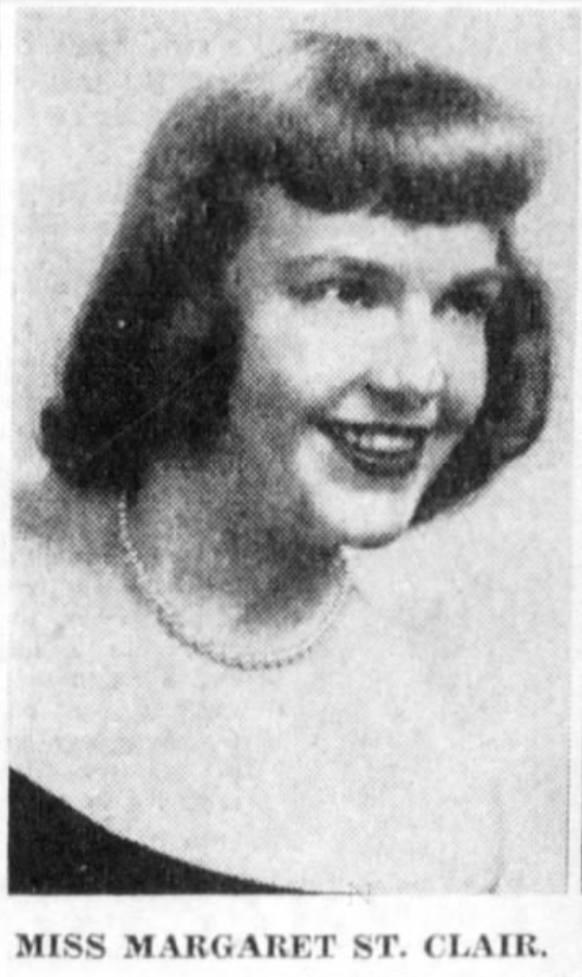
—Clark Ashton Smith to Ray & Margaret St. Clair, 23 May 1933, Selected Letters of Clark Ashton Smith 208

[…] a few of my things have been printed in anthologies, hence may be obtainable if one is willing to lay out the price of a whole book for each story. […] “The Rats in the Walls” is in “Switch on the Light” (one of the Selwyn & Blount “Not at Night” series published in London & probably obtainable for a dollar each through the Argus Book Shop of Chicago). Other tales of mine in Selwyn & Blount anthologies are “The Horror at Red Hook” in “You’ll Need a Night Light”, & “Pickman’s Model” in “By Daylight Only”.
—H. P. Lovecraft to Robert Bloch, 22 April 1933, Letters to Robert Bloch 19

I understand that “Worms of the Earth” is to appear in the “Not at Night” series. I’ve been laying off to get the book that published my “Black Stone” but haven’t ever got around to it.
—Robert E. Howard to H. P. Lovecraft, Sep 1933, MF2.634, CL3.108

I am delighted to hear that “Worms of the Earth” will appear in the new “Not at Night”. With “The Black Stone” last year, you are surely becoming quite a fixture!
—H. P. Lovecraft to Robert E. Howard, 2 Nov 1933, MF2.655

I have, by the way, ordered […] the [Christine Campbell] Thomson anthology, Keep on the Light, which contains my yearn, The Isle of the Torturers. These have not yet arrived.
—Clark Ashton Smith to H. P. Lovecraft, Jan 1934, DS 522, SLCAS 247

And by the way—let me congratulate you on the inclusion of “The Isle of the Torturers” in the latest “Not at Night.”
—H. P. Lovecraft to Clark Ashton Smith, 11 Feb 1934, DS 524

I received also the new Not at Night anthology, Keep on the Light, and was struck by the immense superiority of the items taken from Weird tales, over others which, I presume, are by British authors. Howard’s Worms of the earth and Whitehead’s The Chadbourne Episode were the leaders.
—Clark Ashton Smith to H. P. Lovecraft, Mar 1934, DS 535, SLCAS 251

I can loan you The Green Round and the new Not at Night, if you have not yet seen them.
—Clark Ashton Smith to H. P. Lovecraft, Mar 1934, DS 537

The new Not at Night sounds good, although “The Chadbourne Episode” is by no means good Canevin’s best. I don’t believe I’ll bother you to lend that, since I’ve probably read everything in it that’s any good. Your “Isle of the Torturers” & Two-Gun Bob’s “Worms of the Earth” are undoubtedly the headliners.
—H. P. Lovecraft to Clark Ashton Smith, 9 Mar 1934, DS 538-539

Where do you get your Not at Night anthologies? I’ve been trying to locate a firm that handles them, but without success.
—Robert E. Howard to Clark Ashton Smith, Mar 1934, CL3.199

Glad you’ve got ahead of Lavell with the 1934 Not at Night. Is the 1933 one any good? I believe it contains Klarkash-Ton’s “Isle of the Torturers”.
—H. P. Lovecraft to August Derleth, 11 Mar 1934, ES2.626

Thanks very much for the tip on the Argus House. I ordered the Not at Night books I wanted, but they were out of them, and had to send to England for them. I haven’t yet received them.
—Robert E. Howard to Clark Ashton Smith, 21 May 1934, CL3.208

As a note, the list of books in Robert E. Howard’s library at the time of his death does not include any of the Not At Night series, so presumably he was unable to acquire them by mail order.

Terror By Night (1934)

TBN

The Horror in the Museum” was another of Lovecraft’s revision tales, ghostwritten for Hazel Heald, who became much-lauded in Weird Tales; it became the second of Lovecraft’s revisions to see print in a Not At Night volume. The other notable stories from the Lovecraft circle were Robert E. Howard’s Conan story “Rogues in the House”—the first Conan story to see publication in book form—and August Derleth’s “The Metronome.”

Yes—a number of tales nominally by others have had my hand behind them “the Curse of Yig” was reprinted in the S & B (London) “Not at Night” anthology some years ago, & “The Horror in the Museum” is scheduled for such reprinting this year.
—H. P. Lovecraft to Duane W. Rimel, 13 Apr 1934, LFLB 167

And, before I forget to mention it, Wright did another of his right-about-faces and took The Metronome, English rights to which you will remember I previously sold to the Not at Night series.
—August Derleth to H. P. Lovecraft, 15 Jun 1934, ES2.644

I haven’t yet gotten a copy of the Terror by Night, but intend to shortly.
—Robert E. Howard to August Derleth, Oct 1934, CL3.255

I liked your story in the Not at Night Anthology. I was rather surprized that the book didn’t include one of Lovecraft’s stories. Any anthology of weird fiction should include his work
—Robert E. Howard to August Derleth, 11 Dec 1934, CL3.258

Nightmare By Daylight (1936)

NBD

The eleventh and last of the regular series holds nothing of particular interest for fans of the Mythos; like Grusome Cargoes, the contents are mostly original rather than drawn from Weird Tales, with the exception of the reprint of David H. Keller’s “The Dead Woman.”

For example—it develops that he turned down Keller’s splendidly realistic story of insanity, “The Dead Woman”, which Schwartz later used & which has been reprinted in the latest British “Not at Night”.—H. P. Lovecraft to Duane W. Rimel, 22 Dec 1934, LFLB 242

We can only guess at why Christine Campbell Thomson chose to go with original stories over more Weird Tales reprints once again; the pulp fiction had been a staple of the series since the beginning and probably contributed to its overall success. Even Lovecraft noted that inclusion had almost become a tradition:

I have never made efforts to market stories in England, but several have been reprinted in anthologies there. There is a weird anthology series—”Not at Night”—appearing every year in London, & several of my tales have been in that.
—H. P. Lovecraft to Henry Kuttner, 12 Mar 1936, Letters to C. L. Moore 235

Not At Night Omnibus (1937)

NANO

The end of the Not At Night era came in a massive, somewhat more expensive omnibus edition. Here at last Thomson broke her usual editorial silence to offer an introduction, and our only real insight into her editorial process:

Choosing the stories for this and the previous eleven volumes had been a fascinating business, and has not dulled one’s appreciation of the macabre. It has been interesting, too, to see how the horror-story, as such, has developed during the last ten years. From the first, I set myself against “literature”; the story was the thing, and no amount of style could persuade me to select a story that lacked genuine, unadulterated horror. For those who wanted something more high-brow there was plenty. And I think our courage in meeting a requirement of this sort has done much towards getting rid of the politely watered “thriller.”

In choosing the stories for the present omnibus I have been guided by three things: first, that no author should be represented more than twice, in fairness to others; second, that the stories should as far as possible be evenly picked from the eleven preceding volumes of the Series, and third, that the type of story should be both mixed and representative.

This Not at Night Omnibus has been a dream of my own for some time now, but it could not come true until there were a certain number of individual volumes from which to select material. I only hope that most readers will like at least a large proportion of what I have chosen, and that no one will imagine that non-inclusion is any disparagement of quality. And if you like this collection and have not yet read the previous volumes, may I add that they are all still available for those who want them?
—Christine Campbell Thomson, introduction to Not At Night Omnibus 10

As it happens, Thomson knowingly or unknowingly broke her own rule, because she included three stories by Lovecraft: “Pickman’s Model” under his own name, “The Curse of Yig” as by Zealia Brown Reed, and “The Horror in the Museum” as by Hazel Heald. Lovecraft did not live to enjoy the irony; he died on 15 March 1937, and never saw the book in print.

My “Pickman’s Model” is going to be reprinted again—in England, in a “Not at Night” omnibus.
—H. P. Lovecraft to Willis Conover, 4 Dec 1936, LRBO 406

“Pickman’s Model” is to be reprinted again—this time in a “Not at Night Omnibus” to be published in London next spring.
—H. P. Lovecraft to Wilson Shepherd, 15 Dec 1936, LRBO 366

“Pickman’s Model” is to be printed again—this time in a “Not at Night” omnibus to be published in London next spring.
—H. P. Lovecraft to Duane W. Rimel, 20 Dec 1936, LFLB 341

One small item to the good (the modest extent of precisely £1 sterling) is the prospective reprinting of “Pickman’s Model” in British “Not at Night Omnibus” to be issued next spring. I hope they use the real text, & not the emasculated one with the “Oh, gracious me!” ending which Wright put over on me in the recent reprint.
—H. P. Lovecraft to Clark Ashton Smith, 5 Feb 1937, DS 663

Wright informs me that Pickman’s Model is about to be reprinted again—in a Special coronation Omnibus of the Not at Night series. The material reward will be only £1 sterling—but it will gratify me to be connected in any way with the enthronement of our new Sovereign. God Save the King!
—H. P. Lovecraft to James F. Morton, March 1937, LJFM 400, SL5.432

Christine Campbell Thomson divorced Oscar Cook in 1937 or 1938; whether this is coincidental to the ending of the series or if the end of the personal relationship carried over into the business side of publishing, or if as she maintained the beginning of World War II in 1939 is responsible, is unknowable. All we can say is that while Thomson and Lovecraft’s views on weird fiction were polar opposites, there is no doubt that her inclusion of Lovecraft & other Weird Tales writers in the popular series brought them to the attention of a wider and more appreciative audience:

Osmond Robb writes from Edinburgh, Scotland: “Just a short appreciation of your magazine, which has given me many hours of delightfully blood-curling enjoyment. My first acquaintance with the work of your star authors was made not through the medium of WT itself but via the famous Not at Night series of carefully selected reprint shockers, published in England, many of which were from your magazine. Eli Colter—Seabury Quinn—H. P. Lovecraft—these names were strange to me when I encountered them in the pages of the little red books with the gruesome titles, By Daylight Only, Not at Night, Grim Death, etc. I must confess that then, as now, the unvarnished blood-and-thunders which sought to revolt the reader by nauseous details of putrefaction and slimy abomination left me cold. I wanted other-worldly horror, the chill dread of what may lie beyond the farthest outposts of our cognizance, not the cheap revulsion of rotting cadavers. This eery, authentic thrill the late lamented H. P. L. provided, and the first story I ever read by this exquisite literary craftsman established me as one of his fans. The Horror at Red Hook, with its muttering crones, its vile incantations and its final glimpse into the shadows of an all-too-realistic inferno sent shivers up and down my spine. Since that date I have never been disappointed by a Lovecraft story.
Weird Tales, Nov 1938

Not At Night (1960), More Not At Night (1961), & Still Not At Night (1962)

In the 1960s, the Not at Night series received a brief resurrection in the form of three paperbacks. The contents of the three volumes were not identical to the 1925 and 1926 books of the same title, but selected from the corpus of Not At Night stories, with the addition of brief introductions by Thomson, who wrote:

Now the publishers of Arrow Books have had the brilliant idea of staging a ‘comeback’ with an ‘Arrow’ Not at Night; the stories in it have again been selected by the original editor, Christine Campbell Thomson, and she confidently believes that they will be as popular now as then. It is illuminating and comforting to find how many stories that might have been considered old-fashioned have stood the test of approximately thirty years—more than a generation—and read as well now as they did then. In this collection an attempt has been made to cover all types of the stories used from the scientific experimental to the period ghost and the plain horror.

To re-read the old books has been wonderful and in some ways a sentimental experience akin to having a grandchild and this little volume foes to the world with the belief that the modern readers will be as pleasantly terrified as were those who originally bought each issue.
—Christine Campbell Thomson, introduction to Not At Night (1960)

Among the old favorites was “The Curse of Yig” by Lovecraft and Zealia Bishop.

Before the first volume of the Arrow ‘Not at Night’ was officially on sale, the publishers were asking for a second. Nothing, of course, could be a more fitting tribute to the quality of the good old stories nor more pleasing to the editor.

Here, then, is the second collection from those long-ago favourites. Again, it has been a selection that proved difficult owing to the quality and claims of so many rivals. But the choice has been made on a basis of trying to find something for everyone; from the supernatural to the natural; from the realms of the gorgeous East to the modest homes of the Middle West of America. Here you have a collection which is honestly believed to be as good as the first one.
—Christine Campbell Thomson, introduction to More Not At Night (1961)

This second volume had nothing by Lovecraft in it, though it included Robert E. Howard’s “Rogues in the House.” Still Not At Night contains no material from Lovecraft. It is tempting to think the reason for the exclusion may have more to do with Arkham House’s effective control of the Lovecraft estate and copyrights and efforts to reprint Lovecraft in paperback than Thomson deciding, after so many years, that she simply didn’t care to reprint any more of his stories.

The series had one final revival, in the form of two reprints under different titles and covers: More Not At Night (1961) was republished as Never At Night (1972), and Still Not At Night (1962) was reprinted as Only By Daylight (1972). Horror writer Ramsey Campbell, who was a young teenager when the Arrow reprints first hit the stands, later recalled:

It was in my very early teens, perhaps even earlier, that I bought a paperback of one of Christine Campbell Thomson’s Not at Night anthologies and found it dismally unsatisfactory, not in lacking gruesomeness—the book was a trough of that—but in the utter absence of good prose. I later encountered Thomson’s boast ‘From the first, I set my face against literature’ but believe me, I didn’t need to be told. Her influence was apparent in the increasingly pornographic and decreasingly literate Pan Books of Horror Stories before Steve Jones and David Sutton rescued them from their downward trend, and her regrettable tradition may be seen in a more recent teeming of writers bent on outdoing each other in disgustingness.
Ramsey Campbell and Modern Horror Fiction 4

Which brings us around, finally, to the weird editorial legacy of Christine Campbell Thomson. As an anthologist, there is no doubt that she was a sound businessperson, and her literary instincts were aimed squarely at providing the public with cheap collections of gore and grue, as affordably as she could. The covers were garish and eye-catching, the construction of the books often relatively shabby, though at least some of the printings used good paper. She constructed a product, and did so as economically as possible; of the 178 stories in the Not At Night series, 100 were reprints from Weird Tales, several were written by Thomson or her husband, and others still were reprints from other pulps or British magazines. Very little of the contents were original, and those were the books which appeared at the two points the series floundered, in 1928 and 1936.

We never get a sense of Thomson’s appreciation or lack thereof for individual writers: she had no direct contact with them and does not appear to have played favorites, publishing women as well as men, tales of supernatural fiction as well as weird terror or science fiction. Even the Weird Tales authors never really mention her: their focus is entirely on the product, seeing their name in print in hardcover was a kind of magic, the thing that happened so seldom in the pulps.

Yet as materialistic as Thomson’s aims might have been, and as pointed as her focus was in providing a product for the masses, whatever else she accomplished with the Not At Night series she succeeded in two things: bringing Lovecraft & co. to the attention of a wider audience than Weird Tales, and helping to establish the financial viability of the pulp reprint and standalone horror anthology. While these things might have happened on their own, Thomson’s editorial success at Not At Night is undeniable, if only for the number of “firsts” she managed to publish over those eleven books in the initial series.


Bobby Derie is the author of Weird Talers: Essays on Robert E. Howard & Others (2019) and Sex and the Cthulhu Mythos (2014).

“Pickman’s Centerfold, Or: The Dunwich Ho” (2003) by Nancy Holder

Next thing I saw on the computer screen was a close-up of a drawing in a book of what looked to me like a big, enormous cock with tentacles and a beaked glans. I thought, Oh, Jesus, he’s the one for sure been cutting up the hookers. He’s got some kind of psychosexual thing going.

Gil slurred, “This’s Cthulhu.” Then he started crying.

—Nancy Holder, “Pickman’s Centerfold” in Hot Blood XI Fatal Attractions 245

Richard Upton Pickman holds a particular fascination with some writers in the Mythos. Artists have often struggled with censorship, obscenity, and unveiling true forms to the naked eye. It’s a very small conceptual leap to add an erotic element to Pickman’s work, like “Pickman’s Necrotica” in Alan Moore and Jacen Burrows’ Neonomicon (2010), the films in “Pickman’s Other Model (1929)” (2008) by Caitlín R. Kiernan…and the camshow websites designed by Pickman in “Pickman’s Centerfold, or: The Dunwich Ho.”

There is a certain reverent irreverence to Nancy Holder’s prose, right from the title to the very last line. It’s a free-wheeling, open approach to the Mythos fiction which borrows liberally from previous works, but isn’t beholden to any of them. So while Cthulhu and the Necronomicon and all make an appearance, it is in service to this story and its plotline, not to some larger fabric of Mythos fiction. “Pickman’s Centerfold” is not a sequel or prequel or really in any way connected with the narrative of “Pickman’s Model.”

This method of radical re-interpretation of the Mythos is very similar to that of “Showdown at Red Hook” (2011) by Lois H. Gresh or “Love’s Eldritch Ichor” (1990) by Esther M. Friesner and the result is…fun. Readers who have chewed through all of Lovecraft’s work and a hundred pastiches will find a story that can’t be fit into any timeline of the Mythos, and that’s okay. Holder has taken inspiration and elements from Lovecraft’s stories but has gone off to do her own thing.

The story itself is a bit light for the subject; despite appearing in (and probably written exclusively for) the erotic horror Hot Blood series, titillation and gore are not really the point, and Holder never crosses the line into either splatterpunk or erotica. Pornography and prostitution, with all its tawdry bits, are the waters in which FBI Special Agent Eliot Blake and his erstwhile comrade Gilman Innsmouth swim, like a particularly screwy episode of Law & Order: Special Victims Unit crossed with the film 8MM.

Hookers are people too, and we have a lot of those people in Boston, don’t let nobody lie to you that w have “clean up” our cit. It gets cold here. (ibid, 238)

That approach, of an FBI Special Agent hunting a serial killer running afoul of the Mythos is at once familiar to many readers but quirky enough to keep them reading.  Alan Moore did much the same thing in “The Courtyard” (1994) and its sequel. This approach helps in that it brings an “outsider” ignorant of the Mythos to come investigating, letting the readers re-live their own initiation into the weird mysteries. Holder draws on some established tropes in the process, some of more relevant than others. At one point, for example, Agent Gil pulls out a pile of books:

So wham! the books got put on the table front and center, and the first one had a picture of a really buffed-out Hannibal Lecter on the front and the title was Tales of the Cthulhu Mythos. I picked the next one up and title was At the Mountains of Madness, with a corpse in a hooded robe on the cover.

I waited for Gil to explain. (ibid, 242)

Gil couldn’t explain, and maybe Holder couldn’t either. Having works of Mythos fiction actually be present in the stories themselves is an old trick, going back to August Derleth placing Arkham House titles and copies of Weird Tales in the Mythos stories he wrote after the death of H. P. Lovecraft—Moore did the same thing in Neonomicon, Robert Bloch did it in his novel Strange Eons (1978). But whereas Bloch & Derleth were trying to establish the “truth” of Lovecraft’s Mythos in their narrative, and Moore was pursuing a grand metafictional narrative, Holder’s use here feels like a misstep. There are narrative ramifications which go unexplored: if Lovecraft lived, wrote, and died, then how has the FBI not run across the name “Richard Upton Pickman” before? The title-drops feel like an unwanted tie-in to a story that is deliberately trying to pursue its own separate narrative.

That possible misstep aside, the real focus on the latter part of the story is on the revelations: what Pickman is actually up to, what agents Blake and Innsmouth actually uncover. Despite the title, there is no centerfold—this is the digital era—and no “Dunwich Ho.” A grave disappointment for some readers, certainly, but also exemplary of one of the unconscious problems of this story: the women.

Pickman’s websites are implicitly heterosexual, places for camgirls to post their content and draw in clients; later in the story there is the suggestion he runs sites for men as well, but again exclusively for a heterosexual (if not always human) audience. The women themselves are only present in the story as nameless victims.

She was a truly awesome sight, with silicone tits of rounded perfection, big red nipples pointed directly toward the North Star. Her pussy had been shaved, and she looked fantastic. I figured, professional girl. Then I realized: one of Prickman’s girls. (ibid, 246)

There are a lot of possible invisible constraints here: maybe editorial policy at Hot Blood emphasizes heterosexual relations, maybe it would kill the pacing if Eliot Blake focused in on the identities of the female victims, maybe it’s just in keeping with Blake’s personality to treat all adult entertainers as prostitutes, characterized by their physical attributes rather than their names or personalities, and Holder was honestly reflecting that. Whatever the case, the women end up as ciphers, present only to be sex objects and then die gruesomely.

The human women aren’t the only ones that go nameless, but at least when Cthulhu’s wife/mate appears there’s a deliberate shift in tone: when the focus goes from “he” (Cthulhu) to “she,” it becomes retrospectively obvious that “she” has been the major driver for the story, not Pickman or Cthulhu. Holder doesn’t go into the details of “her”—doesn’t even her use common appellation—but it’s a rare story that puts Cthulhu and his mate on sexual parity, so to speak, and the revelation of what has really been going on works well.

“Pickman’s Centerfold, Or: The Dunwich Ho” was published in Hot Blood XI Fatal Attractions (2003); it has not been reprinted. Nancy Holder’s other Mythos work includes “In Arkham Town, Where I Was Bound” (2014), “Baubles” (2015), and “Nyarlathotep Came Down To Georgia” (2018), and she has taught Lovecraft at the University of California at San Diego and the Stonecoast Creative Writing Program at the University of Southern Maine.


Bobby Derie is the author of Weird Talers: Essays on Robert E. Howard & Others (2019) and Sex and the Cthulhu Mythos (2014).
Widdershins (2013) by Jordan L. Hawk

Now I ride with the mocking and friendly ghouls on the night-wind, and play by day amongst the catacombs of Nephren-Ka in the sealed and unknown valley of Hadoth by the Nile.
—H. P. Lovecraft, “The Outsider”

Some of the trustees were still unhappy, but Christine’s stunning find of the tomb of the Black Pharoah Nephren-ka had commanded headlines across the globe.
—Jordan L. Hawk, Widdershins 14

1897. Somewhere between Boston and Providence lies the small city of Widdershins, a quiet place where a man can start over…at least until the Liber Arcanorum drops into the lap of a closeted translator of dead languages and the bodies start piling up. Nothing like an unexpected mystery to bring two people together.

Jordan L. Hawk’s Widdershins (2013) is an historical paranormal romance with two little twists: the world is set in the same country as Lovecraft’s Mythos (Dr. Whyborne even went to college at Arkham), and the protagonists are two homosexual men. It may, in fact, be the first homosexual Mythos romance novel—somewhat of a weird distinction to make, but previous Mythos romance novels like Margaret L. Carter’s The Windwalker’s Mate (2008) and Robin Wolfe’s Arkham Dreams (2011) were focused on heterosexual relationships, and homosexual characters and relationships remain rather rare in the Mythos by comparison. The closest comparable work in the field is probably “Moonshine” (2018) by G. D. Penman.

The depictions of the men and the challenges they face are sympathetic; the construction of the setting is very competent. Hawk does their research:

A: But the research into the period!! How much did you actually do to capture the period as well as the paranormal element?

JLH: As much as I can! I have a replica Sears & Roebuck catalog from 1897 so I could figure out what sorts of goods and furnishings an average person in the period would have in their home. And I managed to find plans for middle class homes and hotels of the era online, which was a major boon.

My biggest problems research-wise actually came from the American setting. Casually glancing over the history section, you’d think America in the 1800s was nothing but the Civil War, followed up by the western expansion. At times it wasn’t easy to find out about the day to day life of people living in the northeast, especially if I needed something really specific. Most of the “daily life” books of the period center on Victorian England rather than Gilded Age America, and although there is some overlap, there are a lot of differences beyond drinking coffee versus tea.
Author Interview: Jordan L. Hawk

The Mythos elements are also rather refreshingly grounded: Arkham and the Necronomicon and all exist, but to the majority of the world (and the two protagonists), they are but part of the setting. The protagonists only discover gradually that there are secret cults about and some brands of paranormal science actually work, if you know how to pronounce the Aklo. Once that is established, given an expert in dead languages and a genuine grimoire, progress is fairly rapid.

The tone established falls somewhere between Cthulhu by Gaslight and Lois H. Gresh’s Sherlock Holmes vs. Cthulhu: The Adventure of the Deadly Dimensions (2017); magic exists, there’s a mystery afoot, and by chapter 7 the two principals have met and teamed up to solve it. As they continue through the adventure, the two grow closer; the common goal, trials, and tribulations provide the crisis for both men to open up, commiserate, empathize, and grow fond of one another.

“Damn it, Griffin, fuck me,” I growled.
—Jordan L. Hawk, Widdershins 152

There is a sex scene. Not a weird one; no naughty tentacles or atypical anatomies. It is no more or less than the same kind of scene that would appear, without comment, in any number of other novels; only the genders of the particulars are different. That in itself is almost exemplary of the attitude of the novel as a whole: the book is not a homosexual pornographic novel. There is more hanging between Whyborne & Griffin that Victorian reticence, personal and social boundaries that have to be overcome and guards let down; readers who just want to see the two get together have to wait for it.

Then there’s the small matter of saving the world.

While not written in a pulp style, there’s a pulpish appeal to Widdershins. The stakes rise like something in an Indiana Jones film, the protagonists have to take into account all the possibilities that magic and the Mythos bring to their setting, and there’s an action scene at least every couple of chapters to keep the pace up. The characters, even beyond the two protagonists, have their own motivations and hangups. The best supporting character is Dr. Christine Putnam, an archaeologist that has fought an uphill battle her entire professional life because of her gender—and succeeded. Her desire to retain her hard-won reputation almost gets her killed, but that’s all the more endearing.

Searchers after horror will have to haunt stranger places than Widdershins to find what they’re looking for, but it is a well-written novel in its own mode of historical paranormal romance. It never descends into any attempt to ape Lovecraft’s style like a bad pastiche, nor does it hold slavishly to the tropes of a roleplaying game. Hawk refers to Lovecraft’s setting, but she makes few direct references to any particular story so the story is fairly accessible to the lay reader—which is also rather rare for a Mythos novel.

Jordan L. Hawk’s Widdershins is the first in the Whyborne & Griffin series, which as of 2018 includes a total of 13 novels and novellas.


Bobby Derie is the author of Weird Talers: Essays on Robert E. Howard & Others (2019) and Sex and the Cthulhu Mythos (2014).
 

“Cthulhu Sex (ahem!)—a poem—” (1998) by Katherine Morel

Katherine Morel is a painter, an aspiring mad scientist, and an honorary saint of Thud, bestower of the sacred word, obsquatulate. She is currently bruised and swollen due to extra grey matter being inserted into the space between her brain and skull and hopes to sleep it off in time to be in attenance at the marriage that changed over the millennium.
Cthulhu Sex Magazine, Vol. I, Issue 13

Cthulhu Sex magazine was the brainchild of Michael Morel, and graduated over the course of its run from a small black-and-white chapbook illustrated with crude, pixelated images of sperm to a slick, full-sized semi-prozine with color covers, photographs, and digital artwork. A collection of material from the magazine was issued in 2005 as Horror Between the SheetsIn the first issue and that final collection is printed (with slight changes) “Cthulhu Sex (ahem!)—a poem—” by Katherine Morel.

The poem is an almost perfect encapsulation of the magazine as a whole. While Cthulhu is in the title, it never appears in the body text. The tone is light, the verses violent, darkly humorous, and sexually explicit.

Twas through their connection she passed her infection
—Katherine Morel, “Cthulhu Sex (ahem!)—a poem—”, Horror Between the Sheets 36

Poetry has a long history among creators and admirers of the Mythos; H. P. Lovecraft, Robert E. Howard, Clark Ashton Smith, August Derleth, and Frank Belknap Long were all notable poets, and some of their poetry was directly related to the Mythos. So too, some of the first fan-additions to the Mythos were poems, such as “Shadow Over Innsmouth” (1942) by Virginia Anderson & “The Woods of Averoigne” (1934) by Grace Stillman.

In the 1990s, poetry would continue to play its part in fandom, being featured in prominent ‘zines & journals such as the Arkham Sampler and Crypt of Cthulhu—but there were editorial limits to what those ‘zines would publish. Hardcore horror, the splatterpunk style of violent and gory horror fiction that took its cues from slasher and exploitation films (and, reaching back into the dim mists of time, the weird terror pulps), had few outlets.

To see her reflection,
Caused him an erection,
Yet something seemed the slightest bit weird. (ibid.)

Cthulhu Sex became an outlet and medium for fiction and art that couldn’t be posted elsewhere. Not much of it dealt explicitly with Cthulhu, Lovecraft, or the Mythos; it didn’t have to. The title was a statement and a challenge, just as it is in Katherine Morel’s poem. The title gives context to the text.

In 1998, people could still remember when HIV was a death sentence and not one to be long-deferred. Japanese tentacle erotica had hit the shores of the United States with  Maeda Toshio’s Urotsukidōji and La Blue Girl, and were already the subject of jokes about “naughty tentacles” on the nascent internet. There was a zeitgeist there, mostly untapped as yet… until Katherine Morel’s “Cthulhu Sex.”

she scratched her complexion,
so that bloody tentacles appeared. (ibid.)

The tagline for Cthulhu Sex was “Blood, Sex & Tentacles.” Katherine Morel’s poem was an anthem for the magazine, an invocation for what was to be from 1998 to 2007. She captured, however briefly, the mood and attitude, right at the outset.


Bobby Derie is the author of Weird Talers: Essays on Robert E. Howard & Others (2019) and Sex and the Cthulhu Mythos (2014).
Alcestis: A Play (1985) by Sonia H. Greene & H. P. Lovecraft

Alcestis. As by “Howard phillips Lovecraft and Sonia Haft Greene Lovecraft.”
Madison, WI: Strange Co., 1985. 15 pp.
Facsimile of the A.Ms. of a play (in Sonia Greene’s handwriting) that the editor, R. Alain Everts, maintains was co-written by Lovecraft and Greene. The degree of Lovecraft’s involvement (if any) is, however, undetermined.
—S. T. Joshi, H. P. Lovecraft: A Comprehensive Bibliography (2009) 195

Prior to their marriage, Sonia had suggested three ghost story plots, two of which Lovecraft expanded into stories that appeared in WEIRD TALES magazine. The third tale rests unpublished as did this play, written out in longhand by Sonia, sometime in the early 1930’s. This play was written much the same way—Sonia suggested the theme, the classical Greek subject matter delighting Lovecraft, and then Lovecraft set out to flesh out the play. His notes on Greek Mythology and on Alcestis particularly have survived, indicating that as was usual, most of the writing was his alone. despite the handwriting being that of Sonia, who likely was acting as Lovecraft’s scribe, the play bears the mark more of Lovecraft than his wife.
—R. Alain Everts, introduction to Alcestis: A Play (1985)

In the late 1960s R. Alain Everts, using a tape recorder provided by Brown University (where Lovecraft’s papers are archived), conducted a series of interviews with surviving acquaintances of H. P. Lovecraft and his circle, notably including Wilfred Blanch Talman and Sonia Davis, Lovecraft’s former wife. After the conclusion of the interviews, it became clear to Brown University that Everts had also collected materials from some of the interviewees which he did not turn over to the university. The university took out the unusual step of issuing a notice to booksellers against purchasing this material, which began a series of legal suits (see 757 F.2d 124).

In the 1970s, Everts began publishing articles based on his interviews including “Howard Phillips Lovecraft and Sex: or The Sex Life of a Gentleman,” as well as fanzines and chapbooks under the imprint “The Strange Company,” including previously unseen photographs of Lovecraft & co., letters, and Alcestis: A Play (printed in 1975 but not published until 1985). Released in an edition of only 200 copies and never reprinted, it is the rarest and most contentious of Lovecraft’s collaborations.

The play is based on Euripides’ play of the same name, which was available in several translations during Lovecraft’s lifetime, including Coleridge’s 1906 verse translation. The exact translation Howard and Sonia might have been familiar with is unknown, as no such work is listed in Lovecraft’s Library: A Cataloguebut Lovecraft specifically mentions Alcestis among Euripides’ plays in his Collected Essays (2.185). Sonia’s memoir of their marriage, The Private Life of H. P. Lovecraft (1985) likewise emphasizes their appreciation for ancient Greece:

The nomenclature of “Socrates and Xantippe” were originated by me because, as time marched on and our correspondence became more intimate, I either saw in Howard or endowed him with a Socratic wisdom and genius, so that in a jocular vein I subscribed myself as Xantippe.
—Sonia Davis, The Private Life of H. P. Lovecraft 27

The is no mention of Alcestis: A Play in the published correspondence of H. P. Lovecraft; then again, Lovecraft rarely mentioned his marriage or his wife in his correspondence after their separation, so this does not preclude collaboration. Even after Sonia filed for divorce, they remained on friendly terms and continued to correspond. Lovecraft is known to have visited her in March 1933, as she was recovering from an illness after returning from a trip to Europe (ibid. 22). Possibly this visit allowed for collaboration or at least inspired her to make this holograph manuscript; Sonia herself never alludes to the play in her memoir.

Absent all other evidence the only determination as to whether Lovecraft and Sonia did or did not collaborate on Alcestis: A Play is to look at the text itself.

Prologue

Scene I

Night. A cemetery beside a high-road, under a horned moon. Edge of road with low wall in the foreground. Ground covered with asphodel (the flower of the dead) and studded with tombs and stelae, rises unevenly to wall of cyclopean masonry overgrown with vines and lichens.

“Cyclopean” is famously one of Lovecraft’s favorite adjectives, but otherwise there is no exact bit of language readers can lean on to discern who is the author; it’s a work for stylometrists. If Lovecraft was involved, the play marks a departure from his usual style: being all-dialogue, with a few descriptions of scenes and action.

Worth noting is that despite carrying her name, the character of Alcestis—who sacrificed herself so that her husband might live—never appears in the brief play. It is more accurate to say that Alcestis: A Play is a kind of prologue, setting up the events where Apollo is made the servant of Admetus and the bargain with the Fates, ending on the rather hopeful upbeat that someone will be found willing to die in the king’s place.

Addendum: Since writing this entry, I’ve discovered that a typewritten edition of the play and prologue, probably made in the 1960s, survive at the John Hay Library and can be viewed online for free.


Bobby Derie is the author of Weird Talers: Essays on Robert E. Howard & Others (2019) and Sex and the Cthulhu Mythos (2014).
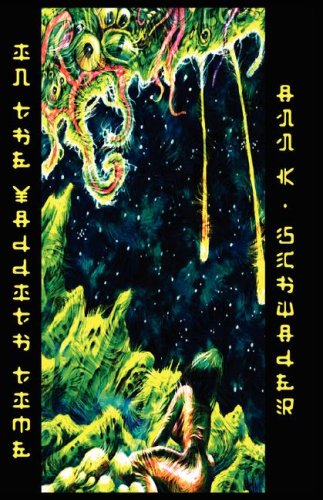
“H. P. Lovecraft” (1937) by Elizabeth Toldridge

He calls us not (as modern craftsmen do)

To scenes attained, where sin’s hideous scars

On human souls are gilded—no—but to

The far, pure, foamy glaxies of stars!

Terrors he brings and things not known before

From lone and dismal haunts of old dead suns.

Yet are our spirits outward-drawn—to soar

Through vastnesses where a stainless Wonder runs!

—”H. P. Lovecraft” by Elizabeth Toldridge, Leaves #1 (Summer 1937)

Elizabeth Augusta Toldridge was a poet, who had worked as a clerk for the U. S. government, and the author of two books of poetry: The Soul of Love (1910) and Mother’s Love Songs (1911). She sold fiction and poetry, sometimes under her own name and sometimes under the name of her father, Barnet Toldridge. (Letters to Elizabeth Toldridge & Anne Tillery Renshaw 8)

In the letters of H. P. Lovecraft to R. H. Barlow, Catherine Lucille Moore was sometimes “sister Kate”—and Elizabeth Toldridge was “Aunt Lizzy.” (O Fortunate Floridian! 360) And to Toldridge herself, Lovecraft was “Judge.” Lovecraft had first encountered Toldridge’s verse in 1924 when he was enlisted as a judge for a poetry contest, in which she was an entrant. They finally began a correspondence when Toldridge wrote to Lovecraft about the contest in 1928, and they would continue to write to one another until 1937 and Lovecraft’s death. (LETAR 7) Barlow, who would be named Lovecraft’s literary executor, visited Toldridge in her home in Washington, D.C. in 1934 and 1936, and she received copies of his amateur publications such as the Dragon-Fly.

Lovecraft and Barlow encouraged Toldridge to submit her poetry for publication, and to join the National Amateur Press Association, of which they were both members. Some of her poetry was published in the same amateur journals where Barlow and Lovecraft’s work was published. In 1934, she proposed a collection of poetry for publication to Alfred A. Knopf with the title Winnings, with Lovecraft’s support, but it did not come to fruition.

In late 1936, Barlow commenced gathering material for a new amateur periodical titled Leaves, which consisted of material from Lovecraft and his circle of friends and correspondents: Robert E. Howard, Clark Ashton Smith, C. L. Moore, August Derleth, Frank Belknap Long, etc. Most of these were incidentals: unsold manuscripts from the pulps, bits of poetry or prose, some of them taken from Lovecraft’s letters. The first issue, published after Lovecraft’s death, contained two poems by Elizabeth Toldridge: “Ephemera” and “H. P. Lovecraft.”

Nothing is known about the writing of “H. P. Lovecraft.” Given the subject and the date of publication, it is likely a memorial piece written in the event of Lovecraft’s death, but it is also possible that Toldridge intended it as a living tribute to her dear friend and correspondent of nine years. She had already written one such work “Divinity,” which she had sent to Lovecraft in 1929. (LETAR 78, 396)

“H. P. Lovecraft” is certainly a tribute to the “cosmic horror” which Lovecraft championed in their letters and his essay “Supernatural Horror in Literature.” It also touches on one of the great effects that Toldridge had on Lovecraft:

[…] it is clear that his correspondence with Toldridge strongly influenced his atempts to avoid artificial diction and to cultivate greater expression of imagery and emotion, all while loosening his former draconian strictures of versification.
—S. T. Joshi, Letters to Elizabeth Toldridge & Anne Tillery Renshaw 8

While it may be too much to say that without Toldridge there would be no “Fungi from Yuggoth” sonnet-cycle, it is apparent that the correspondence was a broadening influence for both of them: Lovecraft to focus more on content than form, and Toldridge opened to the world of weird fiction. As an homage, “H. P. Lovecraft” definitely showcases that admiration and appreciation for the weird imagination.

“H. P. Lovecraft” was first published in Leaves #1 (Summer 1937), and republished in Letters to Elizabeth Toldridge & Anne Tillery Renshaw (Hippocampus Press, 2014).


Bobby Derie is the author of Weird Talers: Essays on Robert E. Howard & Others (2019) and Sex and the Cthulhu Mythos (2014).
 

Lovecraft Country (2016) by Matt Ruff

So they talked about Ray Bradbury, and Robert Heinlein, and Isaac Asimov, all of whome Earl liked; and L. Ron Hubbard, whom he didn’t; and the Tom Swift series, which Earl had loved when he was young but which embarrassed him now, both for the books’ depiction of Negroes and for the fact that as a boy he hadn’t noticed it, despite his father’s repeated attempts to point it out to him.
—Matt Ruff, Lovecraft Country 5

There’s a lesson buried in the opening pages of Matt Ruff’s novel, soon to be an HBO series, which may go unnoticed by some readers. It is thirteen pages before Atticus Turner stumbles across a copy of The Outsider and Others (1939), the first collection of H. P. Lovecraft’s work from Arkham House. Thirteen pages of seemingly pointless discrimination against a black man, Army veteran, trying to do something as simple as drive from Jacksonville, Florida to Chicago, Illinois.

Except it isn’t pointless; it is the sole point of Matt Ruff’s novel. As much as readers and critics might like to focus on Lovecraft and his contemporaries, science fiction and weird fiction, in exclusion to the realities of Jim Crow and segregation—race and prejudice—they were a part of it, and it informed their fiction. Privilege, for white people, is not having to think too hard about it.

It’s old. It’s just the way it was. Can’t change it.

But we as readers can change the way we read it. Can understand the context in which a story was written, try to empathize with what it might be like to be an African-American and read Lovecraft’s “On the Creation of Niggers” for the first time…which is where, fifteen pages in, Ruff’s novel starts to fall apart.

The poem was written circa 1912, during a period when Lovecraft as a young man wrote ultra-nationalist and xenophobic poetry, long before he was a horror writer or connected to amateur journalism; the text Ruff uses to introduce the poem to Atticus is a complete fiction. Lovecraft never published “On the Creation…” during his lifetime; there are no mentions of it in any of his published letters, nor in any of the memoirs of his life. It was not revealed to the public until 1975 when L. Sprague de Camp published in his flawed book H. P. Lovecraft: A Biography, and for much the same reason that Ruff inserts it here: graphic, undeniable shorthand that Lovecraft was racist.

Ruff’s mention of the poem is less lazy than economic: nothing else Lovecraft wrote has the N-word in the title, and Arkham House had made a point of not emphasizing (and occasionally denying) that aspect of his life. “Medusa’s Coil” was published in Arkham House’s The Curse of Yig (1953), but that collection was released under Zealia Bishop’s name, not Lovecraft’s, and the ending censored. The first volume of the Selected Letters would not be published until 1964, and that too was censored. Ruff could have dug into Lovecraft’s fiction for an N-word—in “The Picture in the House” or “The Rats in the Walls”—but it was no doubt easier and faster to create a convenient fiction.

While the cast (predominantly African-American, with a black protagonist) and setting (1950s United States) may be relatively novel for the Mythos, relatively little else in Ruff’s novel is. Atticus Turner exists in a world where both Lovecraft’s fiction is a reality and where some iteration of the Mythos is apparently real; the same basic premise as August Derleth’s The Lurker at the Threshold (1945) and Robert Bloch’s Strange Eons (1979). Once the first connections are made, it’s a road trip to Lovecraft Country, with The Safe Negro Travel Guide as psychopomp for the journey.

It’s difficult not to compare Lovecraft Country with “The Ballad of Black Tom” (2016) by Victor LaValle, released the same year and covering some of the same thematic ground. LaValle’s worth benefits from brevity: it is difficult to maintain the mood and suspense of the short story at novel length. So too, LaValle had the courage for a downer ending. Not everybody has to live, or come out whole. More importantly, perhaps, “The Ballad of Black Tom” is a story of the Mythos—Lovecraft Country, despite the title, is not.

There is one tantalizing suggestion of a connection: that Lovecraft’s Arkham might have really been Ardham, that the tentacled Scylla might be the inspiration for Lovecraft’s shoggoths…but the farther in the reader gets to the novel, the less connection it has to Lovecraft and the Mythos. The initial set-up, in that first 13 pages, was for a dive into the Mythos from an entirely different perspective. What it delivers, ultimately, is a rather conventional occult thriller with a somewhat unconventional cast.

Lovecraft Country, it should be emphasized, is not a bad book. Matt Ruff did a fair amount of research, it shows in every chapter. His prose is solid, his characters well-developed, the plot is effective. It simply isn’t what it could be, or really what it promised to be. The name itself is a great hook, the premise it sets up is excellent, but this isn’t a book that dives into the thick of racism in the time of Lovecraft, or the Mythos he and his contemporaries created. A drive into a Massachusetts town where a freemason lodge practices real magic is not a journey into Lovecraft country.

What this book needed was some greater revelation. Some attempt to reconcile the everyday horrors of being African-American in the United States in 1954 and the cosmic horrors of the Mythos. Something like Harlem Unbound (2017), but in narrative form. Lovecraft Country didn’t have that. It never even aspired to it.


Bobby Derie is the author of Weird Talers: Essays on Robert E. Howard & Others (2019) and Sex and the Cthulhu Mythos (2014).
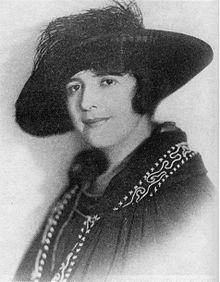
 

“Meet Me on the Other Side” (2002) by Yvonne Navarro

Bethmoora,” Paul said. “And no, it’s not Israeli. Actually, the roots aren’t traceable to any specific language or dialect. But it’s still…foreign.”
– Yvonne Navarro, “Meet Me on the Other Side” in The Children of Cthulhu 141

Four million people asleep, dreaming perhaps. What worlds have they gone into? Whom have they met? But my thoughts are far off with Bethmoora in her loneliness, whose gates swing to and fro. To and fro they swing, and creak and creak in the wind, but no one hears them.
– Lord Dunsany, “Bethmoora” in A Dreamer’s Tales (1910)

A few years after the birth of the 21st century, Anglo-Irish aristocrat Lord Dunsany was inspired to create his own artificial mythology⁠—not a substitute national mythos a la J. R. R. Tolkien’s The Lord of the Rings, but something new and largely unprecedented. He combined the love of the commonplace with the desire for the exotic, and wrapped it together in language reminiscent of the King James Bible and ancient Grecian odes. Stories like “Idle Days on the Yann” directly inspired the dream-quests of Lovecraft’s Randolph Carter…and many others besides.

For Yvonne Navarro, the questers are Paul and Macy.

“Meet Me on the Other Side” is smarter than just an update of Dunsany’s old formula where seekers tired of mundane life look for the key of dreams, the path that leads Beyond the Fields We Know, escape from the here and the now. Like many a goof Mythos story, it mixes fact with fiction; Paul first finds reference to Bethmoora in that ancient and terrible tome the Encyclopedia Cthulhiana (1994) by Dan Harms. The questers too are not run down by everyday life—they’re thrill-seekers, adventurers, explorers in their own right.

Bethmoora was out there, all right. Just waiting to be rediscovered.
Revitalized.
And they were just the people to do it.
– Yvonne Navarro, “Meet Me on the Other Side” in The Children of Cthulhu 144

The discoveries and revelations when they come are almost perfunctory; old tropes dusted off and brought out because that’s the cycle of a Mythos story: Macy is the latest Lavinia, destined for a bit of cosmic miscegenation and birthing of eldritch abominations. Yet the response is different, and what makes the story.

Paul and Macy like a challenge.

Navarro is an old pro at genre fiction; she could easily have spun this story off into an entire novel. Urban explorers in the not-quite-abandoned city in the Dreamlands, flashbacks to old adventures, the slow peeling-of-the-onion, one layer of revelation coming at a time as things build inevitably to a climax—instead, she rips the bandaid off in a couple paragraphs of exposition. The backstory is something Mythos fans have read again and again for decades. “Meet Me on the Other Side” seeks to give the readers something new, and it delivers.

The benefit of having tropes and formula is that they’re building blocks, stepping stones and shortcuts that writers can use to go beyond—and one of the great failures of many Mythos writers is that they try to only ape Lovecraft or Dunsany, to regurgitate old ideas rather than to subvert expectations or push forward with fresh takes.

Navarro does make the leap. How many other writers have had their protagonists look on conceiving and birthing tentacled horrors and the inevitable end of the world as a challenge? It is absolutely a subversion of the typical Lovecraftian attitude that humans are so small in the grand scheme of things that there is little they can do…and not an unwelcome one. The Dreamlands stories do not all embrace or express Lovecraft’s cosmicism, nor need every echo of his work embrace nihilistic horror.

“Meet Me on the Other Side” was published in The Children of Cthulhu (2002), and has not been reprinted. Navarro’s other Lovecraftian fiction includes the novelization of the film Hellboy (2004) and “Feeding the Masses” (1992) and “WWRD” (2018).


Bobby Derie is the author of Weird Talers: Essays on Robert E. Howard & Others (2019) and Sex and the Cthulhu Mythos (2014).