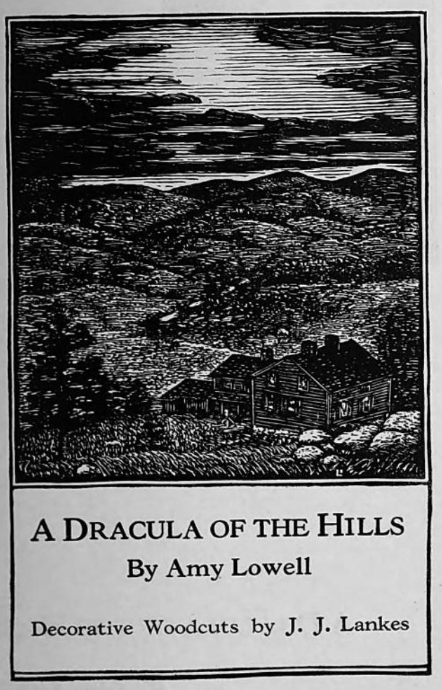
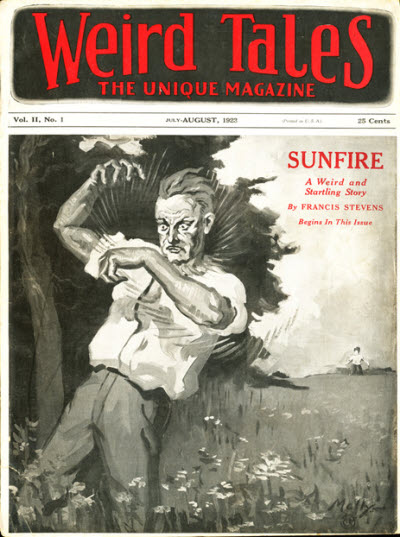
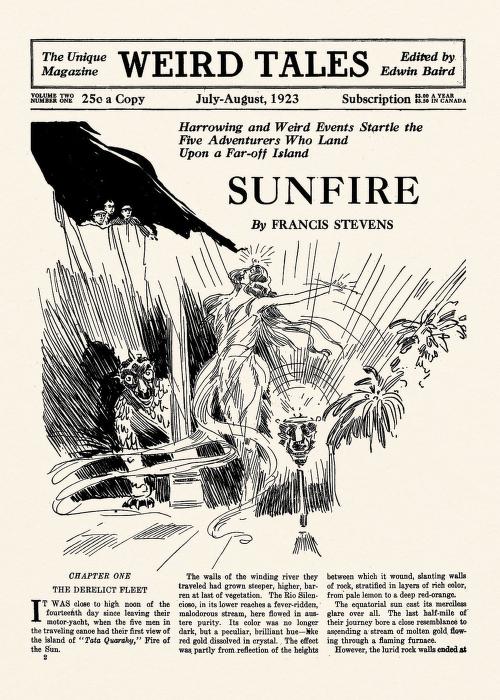
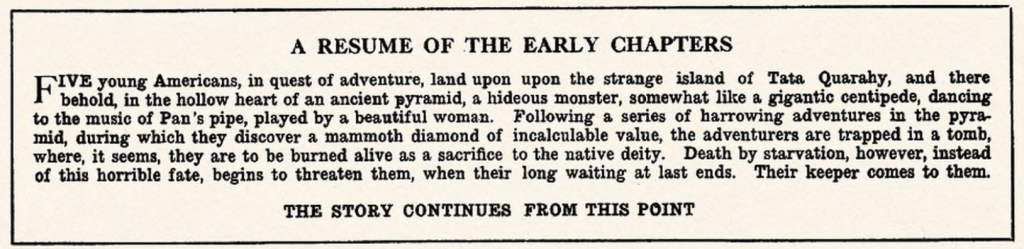
Roger Sherman Hoar, writing as Ralph Milne Farley, published “Another Dracula?” in the September and October issues of Weird Tales. Long forgotten, the story was eventually republished in the anthology Shades of Dracula (1982), alongside various rare works by Stoker. According to editor Peter Haining, the genesis for this story actually came from Stoker himself:
Among some enthusiasts of Bram Stoker’s works there has been a persistent rumour for years that it was in his mind to bring Dracula back to life in a new story, but in America this time, rather than Europe. The rumours originate from that last trip to America and a conversation Stoker had while the company was in Boston. In the first week of December 1903, Irving was appearing at the Tremont Theatre in Boston in The Bells and, as was customary, a number of the students from nearby Harvard University were employed for ‘walk-on’ parts. Among these was a 17-year-old Freshman named Roger Sherman Hoar.
Apart from his love of the theatre which had caused him to apply for a part in The Bells, Roger was a keen reader of horror fiction and had not long before been absolutely mesmerised by Dracula. As he knew the author always travelled with Irving, he hoped that during the couse of the engagement he might meet Stoker and have a chance to talk to him about the book. Stoker, for his part, liked mingling with the students as he tells us in his biography of Sir Henry Irving, and although he makes no specific reference to any such meeting, Roger Hoar later claimed that he talked with him on several occasions. Hoar says that he expressed his admiration for Dracula and ‘Stoker told me he planned to bring Dracula over to America in another story.’ In the years which followed, the young enthusiast waited unavailingly for the sequel he felt sure would follow. On hearing of Stoker’s death in 1913, he realised sadly that the story would now never be written.
Peter Haining, Shades of Dracula (1982), 134-135
This is, as near as I have been able to determine, a complete hoax on Haining’s part. Bram Stoker did accompany Sir Henry Irving and company to Boston in December 1903 for their U.S. tour, and they did perform “The Bells” with students from Harvard—newspaper accounts agree to the dates, and Stoker himself gives the details:
That night the Tremont Theatre in Boston, where we were playing, saw an occasion unique to the place, though not to the actor. The University had proclaimed a “Harvard Night,” and the house was packed with College men, from President to jib. At the end of the performance—Nance Oldfield and The Bells—the students presented to Irving a gold medal commemorative of the occasion.
I may perhaps, before leaving the subject of Harvard University, mention a somewhat startling circumstance. It had become a custom during our visit to Boston for a lot of Harvard students to act as “supers” in our plays.
Bram Stoker, Personal Reminiscences of Sir Henry Irving
Likewise, we can confirm from yearbooks that Roger Sherman Hoar (1887-1963) attended Harvard University in Boston. However, Hoar attended Harvard in 1905, graduating in 1909; in 1903, a 16-year-old Hoar was still a student at the Philip Exeter Academy in New Hampshire. Haining does not specify where he got the data for this anecdote—which appears nowhere else before this—and considering that Hoar died nearly twenty years before it saw print, readers might be suspicious as to how Haining got this information.
Unfortunately, there are several such issues with Shades of Dracula.
For example, Haining claimed that “Walpurgis Night” (a retitled version of “Dracula’s Guest”) in the book is reprinted from the May 1914 issue of The Story Teller, but that story did not appear in that issue under that or any other title. “Dracula’s Guest” did appear under the title “Walpurgisnacht” in Ghosts Four (1978), which may have given Haining the idea. Haining also claimed in Shades of Dracula that “In the Valley of the Shadow,” which he took from The Grand Magazine June 1907 is by Stoker, but that story was uncredited in its original publication and there is no evidence Stoker wrote it. Another story, “The Seer,” was definitely written by Stoker, but Haining did not find it in The London Magazine November 1901 as he claimed, but excerpted it from Stoker’s novel The Mystery of the Sea (1902). Stoker’s “At Last” was first published in Snowbound: The Record of a Theatrical Touring Party (1908), not in Collier’s Magazine 1904 as Haining claimed. “Lord Castleton Explains” is an excerpt from The Fate of Fenella (1892), not Cassell’s Magazine 1892 as Haining claimed.
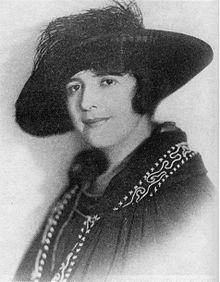
Unfortunately, Haining had a bad habit of falsifying citations, histories, and anecdotes. See Another Haining Fraud for more examples; BramStoker.org has also cataloged several of his incorrect citations. While David J. Skal treats the anecdote somewhat credulously in his Stoker biography Something in the Blood 362-363, given the inconsistencies in Haining’s anecdote about Hoar meeting Stoker and what is known of Hoar’s academic career, and Haining’s own propensity for falsifying evidence, the anecdote should probably be taken as a deliberate hoax. A good pretext, perhaps, for including “Another Dracula?” into a collection of uncollected Stoker stories. It seems likely that Roger Sherman Hoar was inspired to bring Dracula-esque vampires to the United States on his own, without any more direct prompting from Bram Stoker than reading Dracula itself.
Of course, the Americas already had their own vampires—if you knew where to look.
The Black Vampyre: A Legend of St. Domingo (1819) beat Stoker’s novel to the New World by about eighty years. The New England Vampire Panic during the late 18th and 19th centuries was still making the news while Stoker was composing Dracula—among his notes for the novel is a newspaper article on the subject (“Vampires in New England,” The New York World, 2 Feb 1896, rpt. Bram Stoker’s Notes for Dracula: A Facsimile Edition 186-193.) The New England Vampire Panic laid the foundation for vampire tales inspired by local traditions, which include H. P. Lovecraft’s “The Shunned House” (1924) and Amy Lowell’s “A Dracula of the Hills” (1923).
You might be hard-pressed to find two writers as disparate in attitude as Lowell and Lovecraft who nevertheless tackle some of the same material, each inspired by local New England folklore, each expressing themselves in their own way. Lovecraft’s attitudes regarding Lowell are well-documented, and, perhaps weirdly enough, are intimately bound up with his attitudes regarding poetry in free verse (i.e. poetry that does not conform to a particular rhyme or meter).
In the July 1915 issue of his amateur journal The Conservative, H. P. Lovecraft launched attacks on two fronts: an antisemitic reproof of the journal of In A Minor Key by Charles W. Isaacson (“In A Major Key”) and a diatribe against vers libre (“Metrical Regularity”). The two were not entirely separate, as part of Lovecraft’s argument against Isaacson was the latter’s praise of Walt Whitman, who has been called the father of free verse. So when “Concerning the Conservative” (1915) by Charles D. Isaacson was published in response, it involved a response to both Lovecraft’s racism and his disparagement of Whitman. James F. Morton, who also responded to Lovecraft’s articles in The Conservative, wrote:
Even among the Imagists, erratic though an Ezra Pound or an Amy Lowell may be in spots, there is wholesome work of its own kind, which has a legitimate place in the literary field. […] Mr. Lovecraft’s conservatism, in this as in some other matters, smacks not so much of loyalty to present accepted truths or even still current habits of thought, as of reversion to the outgrown partial and restricted views of a past age. It is in large measure reaction, rather than conservatism.
James F. Morton, “‘Conservatism’ Gone Mad,” Letters to James F. Morton 408
Imagism was a Modernist movement in Anglo-American poetry that rejected the romantic poetry of the Victorian and Georgian periods and preferred sharp language, clear images, experimentation with different forms, and free verse. Early and leading proponents included Ezra Pound (Des Imagistes: An Anthology, 1914) and Amy Lowell (Some Imagist Poets: An Anthology, 1915).
Lovecraft ultimately decided not to make further prejudiced statements against Isaacson; when it came to free verse and the Imagists, he was a bit more tenacious:
I have lately been amusing myself by a perusal of some of the “Imagist” nonsense of the day. As a species of pathological phenomena it is interesting. The authors are evidently of approximately harmless characteristics, since so far as I know, they are all at large; but their work indicates that most of them are dangerously near the asylum gates—uncomfortable close to the padded cell. There is absolutely no artistic principle in their effusions; ugliness replaces beauty, & chaos supplies the vacant chair of sense. Some of the stuff, though, would mean something if neatly arranged and read as prose. Of the major portion no criticism is necessary, or even possible. It is the product of hopelessly decayed taste, & arouses a feeling of sympathetic sadness, rather than of mere contempt. Since “Imagism” has no relation at all to poesy, I think no lover of the Muse need entertain apprehension for his art from this quarter.
H. P. Lovecraft to Rheinhart Kleiner, 23 Aug 1916, Letters to Rheinhart Kleiner & Others 58
At this rather early point in Lovecraft’s amateur journalism career, he was very much a “metrical mechanic,” much more fixed on the correctness of form and meter than content, and his preferred style was a pastiche of the older forms of Romantic poetry that the Modernists were trying to get away from. For an individual who was clinging rather stubbornly to a swiftly fading past, the Imagists’ complete break from such styles of poetry was akin to iconoclasm. As Morton perceptively pointed out, Lovecraft was being a reactionary.
Part of the problem was no doubt that the Modernists were not just breaking the molds of poetry, they also tended to be political progressives who advocated positions that Lovecraft was opposed to. So for instance, when Albert Mordell wrote an essay on Amy Lowell for the Poetry Review of America vol. 1, no. 4 (August 1916), Mordell analyzed her anti-war poem “Patterns,” inspired by the war in Europe. For Lovecraft, who was not a pacifist (see “The Peace Advocate” (1917) by Elizabeth Berkeley), this was heaping heretical philosophy onto antithetical aesthetics:
I am not inform’d just who was the first pseudo-poet to succumb to Whitman’s malign influence; certain it is, that I never heard “free verse” mentioned seriously till an exceedingly recent date. Now, however, it seems the recognised avenue of expression for persons who cannot think clearly, or who are afflicted with concomitant symptoms of radicalism and imbecility in other forms. That the vers librists are preeminently coarse in their ideas, is what one might expect as a result of their radical tendencies. A radical of any sort is by nature an iconoclast, and is never satisfied till he breaks some established canon of reason or propriety. Democracy of thought, with its accompanying rejection of the refined and the beautiful, insidiously leads on to a glorification of the gross and the physical; for the physical body is about all that the boor and the poet have in common. Mr. Mo bids these eccentrics keep off Parnassus and build a mount of their own, but methinks they have their Pierian grove already well established on some farmer’s dunghill in Boetia! From the dissipated “Bohemian” swine of Washington Square in New York, to the more scholarly Amy Lowell, they are all of the same clay. Albert Mordell, a critic in THE POETRY REVIEW, refers to the “poem” of Mrs. Lowell’s wherein grossness hath no small part, saying, ‘that if she had written nothing else, this poem would have been sufficient to immortalize her!”
H. P. Lovecraft to the Kleikomolo, October 1916, Miscellaneous Letters 22
By this point, Lowell had edited another anthology of Imagist verse (Some Imagist Poets: An Annual Anthology, 1916), and was something of the face of Imagism in the United States, at least as far as Lovecraft was concerned. When someone suggested that literary types should unionize, part of Lovecraft’s response was:
The place of literary radicals and imagist “poets” in this Utopian scheme demands grave consideration. Since the trade union movement requires at least an elementary amount of intelligence in its adherents, and is applied mainly to SKILLED labour, these deserving iconoclasts of the Amy Lowell school would seem to be left, Othello-like, without an occupation.
H. P. Lovecraft, “The Proposed Authors’ Union” in The Conservative Oct 1916, Collected Essays 2.17
Tongue firmly in cheek. However, Lovecraft was much more serious when he penned an essay on “The Vers Libre Epidemic”:
The second or wholly erratic school of free poets is that represented by Amy Lowell at her worst; a motley horde of hysterical and half-witted rhapsodists whose basic principle is the recording of their momentary moods and psychopathic phenomena in whatever amorphous and meaningless phrases may come to their tongues or pens at the moment of inspirational (or epileptic) seizure. These pitiful creatures are naturally subdivided into various types and schools, each professing certain “artistic” principles based on the analogy of poetic thought to other aesthetic sources such as form, sound, motion, and colour; but they are fundamentally similar in their utter want of a sense of proportion and of proportionate values. Their complete rejection of the intellectual (as element which they cannot possess to any great extent) is their undoing. Each writes down the sounds or symbols of sounds which drift through his head without the slightest care or knowledge that they may be understood by any other head. The type of impression they receive and record is abnormal, and cannot be transmitted to persons of normal psychology; wherefore there is no true art or even the rudiments of artistic impulse in their effusions. These radicals are animated by mental or emotional processes other than poetic. They are not in any sense poets, and their work, being wholly alien to poetry, cannot be cited as an indication of poetical decadence. It is rather a type of intellectual and aesthetic decadence of which vers libre is only one manifestation. It is the decadence which produces “futurist” music and “cubist” painting and sculpture.
H. P. Lovecraft, “The Vers Libre Epidemic” in The Conservative Jan 1917, Collected Essays 2.20
It isn’t entirely clear what free verse Lovecraft was reading; most of it seems to have come to him either through amateur journalism or what poetry journals he had seen. There is some evidence that Lovecraft may have at least skimmed through the Imagist anthologies, perhaps even Lowell’s own third and final Some Imagist Poets anthology when it was published in 1917.
As I think I have intimated before, I do not read the new “poetry”, save when I skim over a typical collection by Amy Lowell, Ezra Pound, or some equally notorious dunce, for the purpose of obtaining material for satire. There is nothing in this radicalism—it is all so arrantly nonsensical & foolishly futile! What do the poor fools want, anyway? I wish they’d might all be chloroform’d & put out of their misery. The other day Campbell sent me a copy of The Seven Arts, a magazine almost as radical in its way as the late but little lamented Bruno’s Weekly. It opens with a treasonable anti-war essay whose classic, fluent prose contains not a single sound idea or tenable theory; continues with a silly piece of Sinn Fein raving by the Irish author Padraic Colum; has a flagrantly disloyal editorial in vers libre by James Oppehnheim—an editorial whose outre verbiage at first gives nomeaning whatever, but which boils down to a plea for a pacifist revolution when deciphered into respectable English; & contains in addition as choice a mess of soft-headed literary garbage as one might wish to behold. And what is it all for? Probably not even the editor & contributors know—yet the sport of juggling with words, ideas, & phantasies probably pleases them just as such frivolous things as games, sports, & vaudeville sometimes please us. But they carry their nonsense too far, & take it so absurdly seriously! Poor creatures!
H. P. lovecraft to Rheinhart Kleiner, 24 Sep 1917, Letters to Rheinhart Kleiner & Others 89
Despite Lovecraft’s antipathy toward free verse, many poetry editors came to accept it as a valid creative expression, publishing such verse in newspapers, magazines, collections, and anthologies. One such editor was William Stanley Braithwaite, which became a particular bone of contention when Lovecraft found out that Braithwaite was Black:
So this—this—is the fellow who hath held the destinies of nascent Miltons in his sooty hand; this is the sage who hath set the seal of his approval on vers libre & amylowellism—a miserable mulatto!
H. P. Lovecraft to Rheinhart Kleiner, 5 May 1918, Letters to Rheinhart Kleiner & Others 112
Time and experience somewhat mellowed Lovecraft’s attitudes towards free verse and Amy Lowell. While the 1922 publication of T. S. Eliot’s “The Waste Land” prompted Lovecraft to write his own satire in free verse, “Waste Paper.” For all that Lovecraft remained a lifelong devotee of traditional meters and rhyme schemes, continued interaction with poets that used free verse such as Hart Crane and Edith Miniter seems to have led him to a begrudging acceptance of the practice. When Amy Lowell died 12 May 1925, Lovecraft wrote:
When I say that Miſs Lowell wrote poetry, I refer only to the essential contents—the isolated images which prove her to have seen the world transfigured with poetic glamour. I do not mean to say that the compleat results are to be judg’d as poems in any finish’d sense—but merely that there is poetical vision in the broken & rhythmical prose & disconnected pictorial presentations which she gave us. She is also, of course, the author of much genuine poetry in the most perfect metres—sonnets & the like—which most have forgotten because of the greater publicity attending her eccentric emanations.
H. P. Lovecraft to Lillian D. Clark, 8 Aug 1925, Letters to Family and Family Friends 1.340
Later, in what might be his final comment on Amy Lowell and her poetry, Lovecraft offered what might be a philosophical perspective on her and her work:
The individual quality is not a matter of theme, but is simply the manner in which one reponds to any theme that one does respond to. The history of poetry is full of cases of writers who have lived from one age into another & changed their styles accordingly. Byron, for instance, first wrote in the Georgian manner & then wholly recast himself in the mould of the romantic revival—as did many another poet who lived int he early XIX century. And in a later age, Amy Lowell discarded the late XIX century tradition for the imaginistic thought of the early XX century. In neither case was the poet’s essential personality changed. They merely continued to express in their own respective ways the impressions which impinged upon them. The change was not in them, but in the impinging impressions.
H. P. Lovecraft to Elizabeth Toldridge, Jan 1930, Letters to Elizabeth Toldridge & Anne Tillery Renshaw 123
We do not know if H. P. Lovecraft ever read “A Dracula of the Hills.” The poem in free verse was first published in The Century magazine vol. 106, no. 2, July 1923; and reprinted in Lowell’s posthumous collection East Wind (1926), neither of which is mentioned in Lovecraft’s letters or essays. Yet it is clear that Lowell and Lovecraft were drawing on a similar well of New England folklore. Compare:
She died that night.
Amy Lowell, “A Dracula of the Hills” (1923)
I mind it well, ’cause th’ whippoorwills’d be’n so loud th’ night before;
When I’d heerd ‘mdash I’d thought Florella’s time was come.
But speech gave place to gasps again, and Lavinia screamed at the way the whippoorwills followed the change. It was the same for more than an hour, when the final throaty rattle came. Dr. Houghton drew shrunken lids over the glazing grey eyes as the tumult of birds faded imperceptibly to silence. Lavinia sobbed, but Wilbur only chuckled whilst the hill noises rumbled faintly.
“They didn’t git him,” he muttered in his heavy bass voice.
H. P. Lovecraft, “The Dunwich Horror” (1928)
The vernacular dialect both authors try to capture is so similar, that if Lowell’s hills aren’t in Lovecraft country, they’re not far off. Both authors too were writing with a conscious eye toward other contemporary works; Lowell didn’t write “A Vampire of the Hills,” but used a reference to Bram Stoker’s Dracula to shape the readers’ preconceptions, much as Lovecraft in “The Dunwich Horror” would inject the line: “Great God, what simpletons! Shew them Arthur Machen’s Great God Pan and they’ll think it a common Dunwich scandal![“] In both cases, Lovecraft and Lowell were writing to an audience that would presumably get the reference they were making and would pick up on the clues.
They also both eschewed Stoker’s novel. There is no stake to be driven into a heart, no box on hallowed earth to sleep in, for Lovecraft and Lowell’s vampires. Lovecraft was inspired at least in part by an account in Charles M. Skinner’s Myths and Legends of Our Own Land (1896), and the case of Mercy Brown in 1892; Lowell’s inspiration is a little more obscure:
In a letter to Glenn Frank, editor of Century Magazine, Lowell wrote in 1921: “THe last case of digging up a woman to prevent her dead self from killing the other members of her family occurred in a small village in Vermont in the ’80s. Doesn’t it seem extraordinary?” She said her source was the American Folk-Lore Journal.
Michael E. Bell, Food for the Dead: On the Trail of New England’s Vampires 196
Bell couldn’t locate Lowell’s exact source (and she may have been mistaken), but he made a cogent observation:
Perhaps Lowell’s choice of the specific “Dracula” instead of the generic “vampire” for her poem’s title is telling. The term “vampire” did not appear in the Journal of American Folklore articles nor in her letter to Glenn Frank in which she comments on the “extraordinary” custom. Did she make the connection herself? Or had she used other sources of the New England superstition? Her choice of the literary Dracula suggests that Lowell assumed her readers would know the novel and be able to link Florella with the Count. By the early 1920s, when Lowell had completed the poem, Dracula was well on the road to total domination of the vampire genre; the terms “Dracula” and “vampire” had become synonymous. How did this occur?
The New England Vampire tradition, as incorporated into the works of Lovecraft and Lowell, has had no discernible effect on the popular imagination. Indeed, even the impact of the European folk vampire has been less formidable than we might believe. Although the vampire was a genuine figure in the folk traditions of Europe, and remained so in isolated areas of Eastern Europe well into the twentieth century, in the urban centers of Western and Northern Europe the vampire was known principally through written communication. And writing, unlike the malleable oral tradition, freezes texts and images.
Michael E. Bell, Food for the Dead: On the Trail of New England’s Vampires 199-200
Both Lovecraft and Lowell were writing ~23-24 years Anno Dracula; they were not setting down oral folklore traditions exactly as they heard them. Even focused as they were on the native New England revenant traditions, they scribbled in the shadow of Stoker’s novel, whose influence would only grow as the authorized plays in 1924 and 1927 gave way to the first authorized film adaptation in 1931. Dracula had already come to the Americas, and Lovecraft and Lowell’s recasting of local vampire tales can be read as a response to that.
Lovecraft wrote, “Some of the stuff, though, would mean something if neatly arranged and read as prose.” So too, there are vivid images in “A Dracula of the Hills” that even Lovecraft may have savored. When she wrote:
Florella’s body was all gone to dust,
Amy Lowell, “A Dracula of the Hills” (1923)
Though ‘twarn’t much more ‘n a year she be’n buried,
But her heart was as fresh as a livin’ person’s.
Father said it glittered like a garent when they took the lid off the coffin.
It was so ‘ive, it seemed to beat almost.
Father said a light come form it so strong it made shadows
Much heavier than the lantern shadows an’ runnin’ in a diff’rent direction.
In 1947, August Derleth edited and Arkham House published Dark of the Moon: Poems of Fantasy and the Macabre. Derleth claimed it was the first collection of verse in the genre since Margaret Widdemer’s The Haunted Hour (1920), and it would be the first of several poetry collections by Arkham House focusing on the weird and fantastic. Here at long last, Lovecraft and Lowell shared space between hard covers; “A Dracula of the Hills” reprinted alongside “The Fungi from Yuggoth.” Nor were they sorry company, for all that their technique and formulation differed.
“A Dracula of the Hills” can be read for free on the Internet Archive and Google Books.
Bobby Derie is the author of Weird Talers: Essays on Robert E. Howard and Others and Sex and the Cthulhu Mythos.
Deep Cuts in a Lovecraftian Vein uses Amazon Associate links. As an Amazon Associate I earn from qualifying purchases.
 Deep Cuts in a Lovecraftian Vein