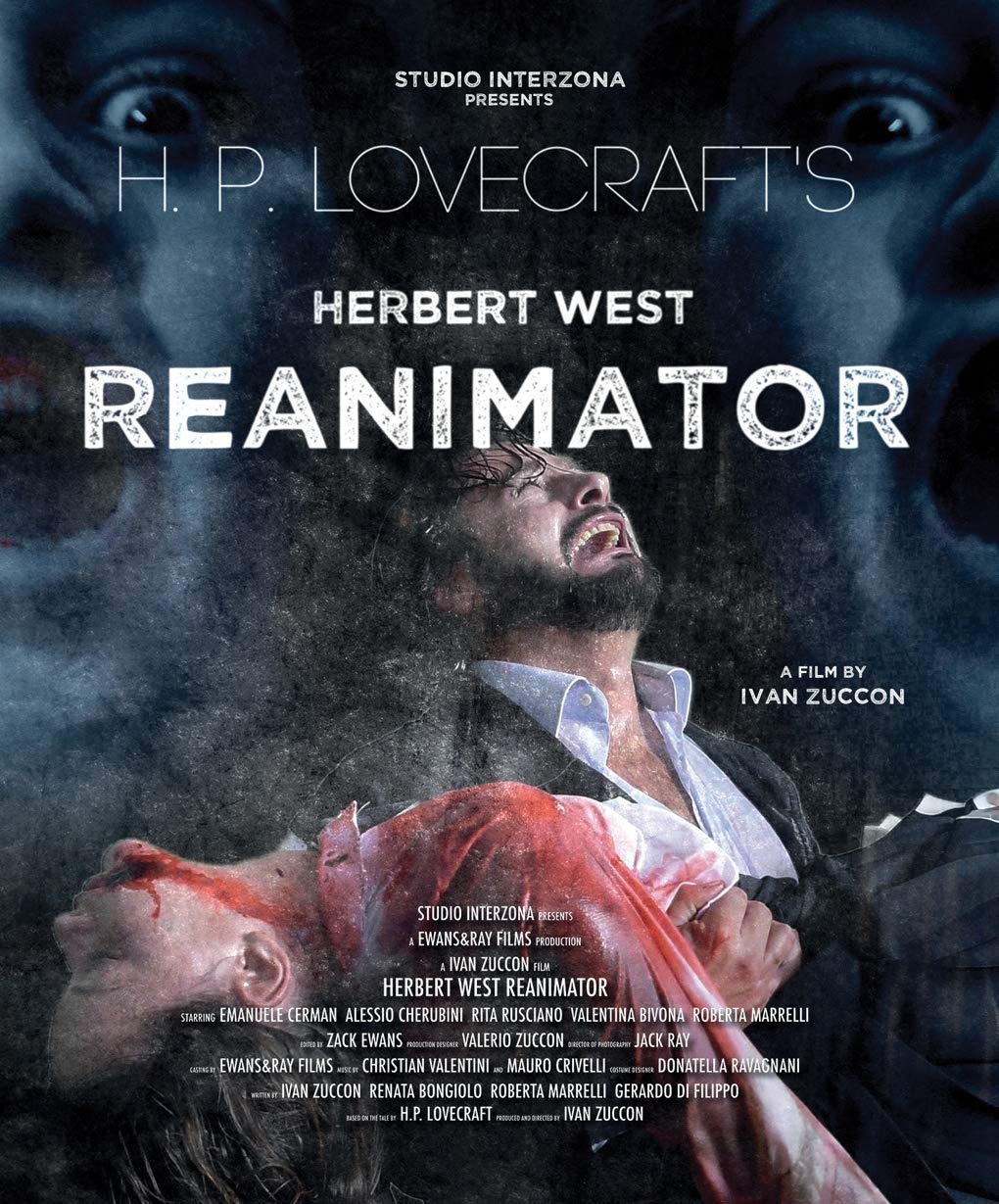
Herbert West Re-Animator (2017)

Italian director Ivan Zuccon isn’t a household name, even among the select audience of Lovecraftian film enthusiasts. Yet he should be; he has directed no less than five feature-length Lovecraftian films and adaptations:

These are all independently produced Italian horror films with modest budgets, but they have all received English-subtitled releases in some format (DVD, BluRay, and/or streaming), though the earlier ones can be more difficult to find, and few have garnered much critical attention.

That is a pity, because while Zuccon obviously is working within tight constraints in terms of budget, these are interesting films. None of them are a straight adaptation of any of Lovecraft’s stories, although La casa sfuggita and Colour from the Dark are strongly inspired by “The Shunned House” and “The Colour Out of Space,” respectively, and partially adapt those tales to an Italian setting. However, Zuccon likes to go beyond Lovecraft, to spend more time developing the characters in his stories and the weirdness they encounter. Which is particularly evident in his 2017 film Herbert West Re-Animator.

In many ways, the all Re-Animator media lives in the shadow of the breakout success of director Stuart Gordon’s classic Re-Animator (1985). Even when the pornographic parody Re-Penetrator (2004) came out, the film riffed off the iconic image of a syringe of vivid green reagent, and even Zuccon cannot completely escape that particular visual. However, Herbert West Reanimator is not a remake or adaptation of Lovecraft’s story; it is something much stranger: a film that tries to make Herbert West more Lovecraftian.

Despite Lovecraft’s original stories of Herbert West being set in Arkham, the series itself had no connection to any other aspect of his nascent artificial mythology. West doesn’t invoke Yog-Sothoth or Cthulhu, doesn’t find the formula for his reagent in the Necronomicon, never tries to resurrect a Deep One hybrid from Innsmouth or anything of that nature. Later media, especially in various comics that derive from the 1985 film, have gone back and brought Herbert West into closer contact with eldritch entities and the familiar props of Lovecraft’s Mythos.

What Zuccon has done that is different is try to capture something of the cosmic nihilism and weird aesthetic of Lovecraft in his Reanimator story, while still keeping the Mythos at arm’s length. This is Herbert West against an eldritch universe where death is but a door; but this is not Herbert West vs. Cthulhu. That approach, so different from all the others that riff off of Lovecraft’s creations as if the prop version of the Necronomicon was the source of horror instead of the creeping sense of dread, has rendered a film that is at times beautiful, bizarre, disjointed, and difficult to grasp—but is always and very importantly weird.

Emanuele Cerman plays Herbert West, and Rita Rusciano plays Elizabeth West, his daughter; they are the main viewpoint characters among the small cast, deliver solid performances, and the contrast between their narratives is key to how the film plays out. Here, rather than Herbert West’s obsession with reanimation being a coldly inhuman drive for knowledge that morphs into a morbid fascination with reanimation for its own sake, West pursues reanimation for extremely personal reasons. Nor is he the only one; unweaving the web of personal relationships between living, dead, and reanimated, and their experiences with life, death, and undeath, is the crux of the story that is revealed as viewers learn more about what awaits on the other side of the veil. This metaphysical aspect is where things get Lovecraftian in the sense of other dimensions, strange entities, and sanity-blasting knowledge.

It is still a rather modestly-budgeted independent production, so there is a certain lack of polish at points. The music by Mauro Crivelli and Christian Valentini suits the film, though it lacks the stylistic flourish to make it as memorable as Richard Band’s (who was, admittedly, borrowing heavily from Bernard Herrmann’s theme for Psycho (1960)). The impressive practical effects and almost slapstick physical acting of Stuart Gordon’s film aren’t there; the gore on display reflects more contemporary and brutal horror film conventions. Some computer-generated effects are less than convincing, but fortunately, the whole film is not shot in front of a green screen. I suspect the limitations of the production encouraged Zuccon’s creativity in trying to capture certain images and convey mood through careful shot composition, camera angles, and use of color rather than rely on CGI tentacles, and often the simpler and more stylized effects work to the film’s benefit.

When viewed in comparison to Zuccon’s previous Lovecraftian films, Herbert West Re-Animator comes across as the most polished, the one that most shows his growth as a filmmaker. While there are many fans of Lovecraft’s work that look for faithful adaptation of his stories into other media, they sometimes miss the possibilities of re-imaginings like Herbert West Re-Animator. Works that take Lovecraft’s ideas and aesthetics and run with them in a way that holds interest and keeps the viewer guessing.


Bobby Derie is the author of Weird Talers: Essays on Robert E. Howard and Others and Sex and the Cthulhu Mythos.

Deep Cuts in a Lovecraftian Vein uses Amazon Associate links. As an Amazon Associate I earn from qualifying purchases.
“Shethulhu: The Elder Goddess Returns” (2017) by T. G. Cooper

Eldritch Fappenings
This review concerns a work of adult literature. Reader discretion is advised.


The work of H. P. Lovecraft hints at weird sex. Generations of incest in “The Lurking Fear” lead to a rapid devolution among the fecund family; Arthur Jermyn in “Facts Concerning the Late Arthur Jermyn and His Family” is the byproduct of an ancestor not quite human; Audrey Davis in “The Curse of Yig” killed the children of Yig, and bore them in return; the men and women of Innsmouth in “The Shadow over Innsmouth” take on Deep Ones as their mates to spawn the next generation; Lavinia Whateley gives birth to the childer of Yog-Sothoth in “The Dunwich Horror.” The common theme that runs through these stories is one of procreation; these are stories of the aftermath of sex for the purpose of reproduction.

So what if a character is infertile? Asexual? Gay?

After 1921, Lovecraft was aware that homosexuality was a sexual practice and preference in the present day, as well as in ancient historical accounts. Specifics were not something he went into in his letters in any great detail; and because of the mores and censorship at the time, homosexual characters or acts in fiction could often only be alluded to obliquely, if at all. Lovecraft could mention the decadence of the people of K’n-yan in “The Mound” or the delvers in “The Hound” and let readers fill in the blank with their imaginations, but that was about the limit of how explicit he could go in Weird Tales.

So it has been up to other creators to wonder how homosexuality fits into the Mythos.

There have been several different attempts at this. Grant Cogswell & Daniel Gildark and Cthulhu (2007) use the absence of overt homosexuality in the Mythos to essentially tell a story of being gay in a very restrictive social environment that is focused on heterosexual relationships and procreation; it’s a familiar story with a weird twist. Widdershins (2013) by Jordan L. Hawk, “Moonshine” (2018) by G. D. Penman, and “Cthulhu for Christmas” (2023) by Meghan Maslow all depict rather straightforward homosexual romances in settings with real-world prejudices, with no focus on the cultural issue of reproduction within a Mythos milieu. “Le Pornomicon” (2005) by Logan Kowalsky and Strange Bedfellows (2023) by Caroline Manley (Raph) ditch the reproductive and heterosexual angle entirely, focusing on homosexual characters and relationships.

All of the above stories involve cisgender male/male relationships where neither partner is capable of being impregnated through any normal sexual action (an important caveat). Lesbians and transgender relationships are also present in the Mythos; such as in “Pages Found Among the Effects of Miss Edith M. Teller” (2005) by Caitlín R. Kiernan and “The Artist’s Retreat” (2011) by Annabeth Leong; for some of these characters, the reproductive theme rears its head again, simply by virtue of a functionary womb. However, in general there seem to be relatively fewer lesbians, transwomen, and transmen in Lovecraft country than homosexual men.

Weird and erotic literature can blur issues of gender, sexuality, and reproduction to play to various kinks. The Invitation (2017) by InCase depicts with characters that exhibit different combinations of genitalia and secondary sexual characteristics (all functional); Dagger of Blood (1997) by John Blackburn uses some weird surgery to swap the genitalia of two characters; Devil’s Due: A Transgender Tale (2021) by Diane Woods uses magic to effect a gender transition. These kinds of gender-bending play to specific sexual fantasies, and while these examples don’t deal with pregnancy, there is an entire mode of gender-bending weird fiction that does.

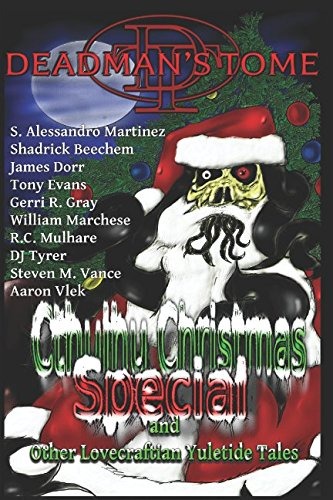
“Shethulhu: The Elder Goddess Returns” (2017) by T. G. Cooper (who also writes as Cooper Kadee) stars Charles Ward Dexter as a private detective hired to find the Femnomicon—and who is dealing with personal issues:

Back in his room, he crawled back onto his damp, smelly bed, and lay on his back, staring at the full moon outside his window. As he did so, he felt a thump inside his belly and put a hand on his tummy, grimacing. He didn’t want to sleep. Didn’t dare, really, and so he just lay there, staring at the moon and waiting for the dawn.

In his dream he’d been a woman, again, and that memory disturbed him. He’d always been a dude, a bro, a man’s man, and he didn’t know what it meant in his dreams now, which came every night, he always found himself in a woman’s body, helpless and afraid.

T. G. Cooper specializes in gender-bending fiction, and this particular story is pretty typical of the genre, adapted as a Lovecraftian pastiche. This is not a politically correct tale of an individual coming to an awareness of themselves as trans. There’s magic and tentacles involved, and the tongue is firmly in cheek:

“You should get yourself a real dog,” Ward said, pausing to scratch the white poodle under the chin.

“She was a Pitbull named Butch when I read that damn book,” the girl said. “We both got turned into girls.”

The pace flows quickly as Cooper runs through some familiar feminization tropes—including a marriage to Dexter’s former secretary, Asenath Waite. The Lovecraftian references are a bit basic; instead of the Necronomicon it’s the Femnomicon; instead of Miskatonic University, it’s Chthonic College; instead of Cthulhu it is Shethulhu. The erotic content is slight; there is no traditional humping and pumping; the eroticism is bound up in Ward’s situation, their transformation, their strong sense of gender identity and powerlessness as it is changed, and above all the pregnancy itself.

The kink aspect of “Shethulhu” plays up the crisis of masculinity that characters feel during the unwanted transition, the helplessness and despair at finding themselves in their new body; and in this case the shock and terror at being pregnant. The crisis—and, as in the end of “The Shadow over Innsmouth,” the final acceptance—is all-important; it is the arc that Charles Ward Dexter completes, the ultimate submission to the new self which is so terribly taboo in toxic masculinity. Not that gender-bending and pregnancy need always play to those specific ideas, but that’s the set-up here.

It is important to distinguish that there is a difference between erotic fiction starring trans characters vs. gender-bending erotic fiction that is firmly grounded in and plays to cisgender sexual mores and ideology. This is less Emilia Pérez (2024) and more Dr. Jekyll and Sister Hyde (1971). This is not a positive depiction of transition as much as it a vehicle for a specific set of kinks.

The Lovecraftian names and setting are played mostly for laughs, and we don’t get any deep meditation on the reproductive themes in Lovecraft’s work. Rather, it is played straight: horror is what a man would feel to suffer through what Lavinia Whateley did.

There are many permutations of pregnancy, birth, and gender-bending as kinks in Mythos fiction, this is just a relatively scarce example that puts them all together. It is especially scarce because it is less available than it once was: the story was previously available on Amazon Kindle, but is no longer purchasable through the store. T. G. Cooper’s DeviantArt page for the story indicates that it is available on their Patreon, for anyone interested in reading it.

E-books, unfortunately, are often subject to the whims of corporations and hosting services. “Shethulhu” and the Femnomicon may well be lost entirely someday.


Bobby Derie is the author of Weird Talers: Essays on Robert E. Howard and Others and Sex and the Cthulhu Mythos.

Deep Cuts in a Lovecraftian Vein uses Amazon Associate links. As an Amazon Associate I earn from qualifying purchases.

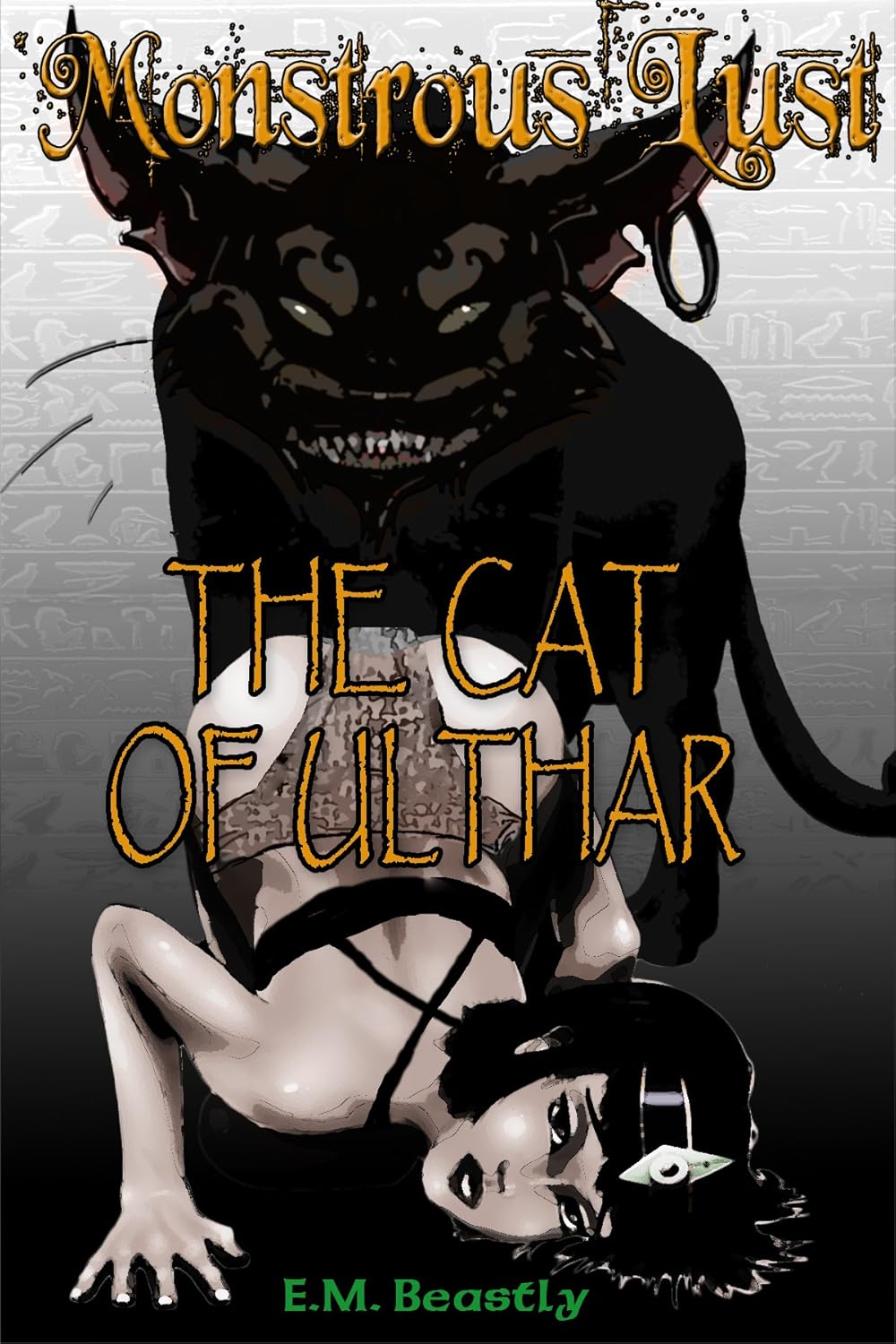
Monstrous Lust: The Cat of Ulthar (2017) by E. M. Beastly

Eldritch Fappenings
This review concerns a work of explicit adult literature. Reader discretion is advised.


There is an old legen in Ulthar, which lies beyond the river Skai, that no person can kill a cat. The legend speaks of a caravan full of strange wanderers. Some say they brought with them a blessing, others say a curse. From that day when a little boy lost his previous black kitten to an old cotter and his wife, the people of Ulthar did not dare kill a cat.

In Ulthar the cat became revered, cherished and praised. His the kind of the jungle’s lords, and heri to the secrets of hoary and sinister Africa. The Sphinx is his cousin, and he speaks her language; but is more ancient than the Sphinx, and remembers that which she hath forgotten.

As time went by, visitors to Ulthar said the cat became a powerful symbol.
—E. M. Beastly, Monstrous Lust: The Cat of Ulthar (2017)

According to Rule 34 of the Internet, there is porn of it. No exceptions. Strictly speaking, this is not true. It would be more accurate to say that the potential for erotic art and literature exists for every human conception. Diligent researchers would struggle to find, for example, a more explicit re-telling of H. P. Lovecraft’s “Sweet Ermengarde,” or lovingly rendered erotic fan-art of “Winged Death” (1934) by Hazel Heald & H. P. Lovecraft. There’s no reason for those adult works to not exist, but searchers after erotic horror will find vastly greater numbers of images dedicated to Cthulhu, Deep Ones, and shoggoths, shoggoths, shoggoths.

If porn of everything exists, it isn’t very evenly distributed. Some works and ideas attract more erotic attention and creativity than others.

Erotic works derived from Lovecraft’s “The Cats of Ulthar” exist in a relative minority compared to the erotic library spawned by “The Shadow over Innsmouth.” Lovecraft’s Dunsany-esque fantasy, part of the Dreamlands cycle, has no named characters, and as the name implies is primarily concerned with an episode involving domestic felines, told with the distinct style of a fable or just-so story. The erotic potential isn’t absent, but how to best adapt the themes and characters of the story to adult entertainment.

Well, there are the cats…

Erotic fanworks involving animal characters (expressive, talking animals, or fully anthropomorphic) have been around since at least the 1930s/1940s, when Tijuana bibles depicted erotic episodes of popular comic strip (e.g. Napoleon) and cartoon characters (e.g. Donald Duck). The emergence of an organized furry fandom from science fiction and comic book fandom would come in the 1970s and 80s, as a result of a convergence of factors, including the increased prevalence of fur-clad aliens in science fiction, the increase in shapechangers in fantasy, the success and sophistication of anthropomorphic characters in comics, cartoons, and animated films especially Disney’s Robin Hood (1973), and the late 60s/early 70s underground comic movement which included strong currents of parody, satire, and explicit sexuality that gave birth to characters like Fritz the Cat.

Technically speaking, Lovecraft got into the talking animals game in the 1920s when he wrote “The Dream-Quest of Unknown Kadath,” where the cats of the Dreamlands are not just intelligent but conversant with Randolph Carter. While Lovecraft isn’t usually seen as a precursor to contemporary furry fandom, it is clear that he was drawing from the idea of talking animals stories from stock collections of fairie tales and fables, and that he conceived the cats of Ulthar as capable of being characters in their own right. So when E. M. Beastly decided to riff off of Lovecraft for another entry in their Monstrous Lust series, the step from talking animal to anthropomorphic animal was less of a stretch than it might seem at first glance.

“Monstrous Lust: The Cat of Ulthar” is at once a sequel to and continuation of Lovecraft’s “The Cats of Ulthar,” and an erotic novella that takes the basic premise of the story in unexpected directions. While Lovecraft’s tale is horrible in the sense of Poe or Dunsany, Beastly takes things in a direction that seems to owe more to “The Shadow over Innsmouth,” where the cat-friendly law of Ulthar leads to more profound cultural changes, the rise of a dark cult, and finally physical expression in the bodies of the people of Ulthar. Until at last they disappear entirely, leaving behind a monstrous creature…the Cat of Ulthar.

While the concept is interesting, the execution is the real key. Here, the actual plot and writing of the story may disappoint readers. While the set-up of an Ulthar haunted by a sexy creature caught between human and cat with aspects of both has promise, in personality the eponymous Cat has a personality not unlike a sexually promiscuous version of the Cheshire Cat, and the two human characters who go to confront the creature are seduced and corrupted with a bare minimum of conflict. The stakes are low-to-nonexistent, the characters barely sketches, and the premise a bit weak. If you’re interested in passages discussing furry breasts and sexually explicit encounters between humans and a mystical cat-human hybrid, the story checks those boxes—but it doesn’t go far beyond that.

It is important to emphasize that there’s nothing inherently more taboo, weird, or perverted about anthropomorphic literature than any other kind. Nearly everyone has seen or read talking animal stories in some format, from Bambi to Br’er Rabbit, and anthropomorphism can apply to inanimate objects as easily as animals, as shown by the Transformers and Cars (2006). The same standards and good storytelling principles which apply to other literature also apply to anthropomorphic lit. As one reviewer put it:

On the surface, Bambi’s story is just what the subtitle says: A Life in the Woods. Yet one can find so much more in the story. The entire novel can be read as an existentaist parable, suggesting how one might make meaning in one’s own life. The novel is often seen as a disatribe against hunting, or more generally, a warning of the danger human beings pose to the natural world. The story can be read as castigating any system where the powerful exploit the weak, whether aristocracy or capitalism.

Yet Bambi is not a sermon. Salten’s beliefs and values are suggested on every page, but he doesn’t beat the reader over the head with them. He’s created characters that we as readers care about. Seeing them go through their struggles better enables us to contemplate our own lives. It is a story about its characters, not about issues; the issues become important to us because of the characters.
—Donald Jacob Uitvlugt, “Re-Reading a Classic: Bambi for the Furry Writer” in
A Glimpse of Anthropomorphic Literature (2016), 85-96

This is where “Monstrous Lust: The Cat of Ulthar” tends to fall flat; the characters fail to engage emotionally, and the story scenario doesn’t make sufficient use of the Lovecraftian setting and premise—which is, in Lovecraftian lit., a character in its own right. There’s humping and pumping, but without characters we care about. The setting is nominally Ulthar, but an Ulthar twisted into a Lovecraftian pastiche of itself, warped, twisted, depopulated, and barely present during the sexytimes. It is a fantasy sexual encounter that might easily be moved into any generical medieval setting with minimal effort.

Which is not to say that E. M. Beastly’s story is a failure, if that is exactly what the reader wants.


Bobby Derie is the author of Weird Talers: Essays on Robert E. Howard and Others and Sex and the Cthulhu Mythos.

Deep Cuts in a Lovecraftian Vein uses Amazon Associate links. As an Amazon Associate I earn from qualifying purchases.
The Invitation (2017) by InCase

Eldritch Fappenings
This review concerns a work of explicit adult art and literature, and will touch on aspects of historical pornographic works, including NSFW images. Reader discretion is advised.


By the way—Cthulhu isn’t a she but a he. He’d feel deeply enraged if anyone regarded him as sissified!
—H. P. Lovecraft to Willis Conover, Jr. 29 Aug 1936 Letters to Robert Bloch & Others 389

In “The Call of Cthulhu,” Lovecraft defaults to referring to Cthulhu as male. Whether human gender binaries can encompass Great Cthulhu is something for later writers in the Mythos to decide. Lovecraft, for his part, only addresses it in his letters in a joking matter, with the typical cultural disdain toward “sissies”—men who display effeminate manners or dress, often misconstrued as homosexuals; Lovecraft had made another comment about the “sissy” Gordon Hatfield.

Throughout human history, in pretty much every culture, there has existed a minority who do not fit into rigid gender or sexual binaries. Whether this was a physical condition such as being intersex, or an individual’s identification with a different gender than assigned at birth, or taking on cultural attributes and attire associated with different genders—there is a broad range of physical, psychological, social, and sexual aspects involved. Each culture and language has their own nomenclature involved. In English in the 20th century, terms like hermaphrodite have fallen out of use in favor of words like intersex; the term transvestite, once identified largely as a sexual fetish or mental disorder, has largely fallen away from use in favor of transgender.

The rich vocabulary includes both contemporary efforts to define identities (e.g. genderqueer, gender fluid), pejorative terms (e.g. tranny, cross-dresser), and a grey middle ground of terminology most often associated with sex work, erotic literature, and pornography (e.g. ladyboy, shemale). Loanwords from other languages also enrich the language, e.g., futanari, from the Japanese ふたなり. The term futanari has come to be a pornographic genre unto itself, both in adult comics and literature, with its own specific tropes, and generally presents a fetishized ideal: an individual that possesses (sometimes exaggerated) sexual traits of both male and female.

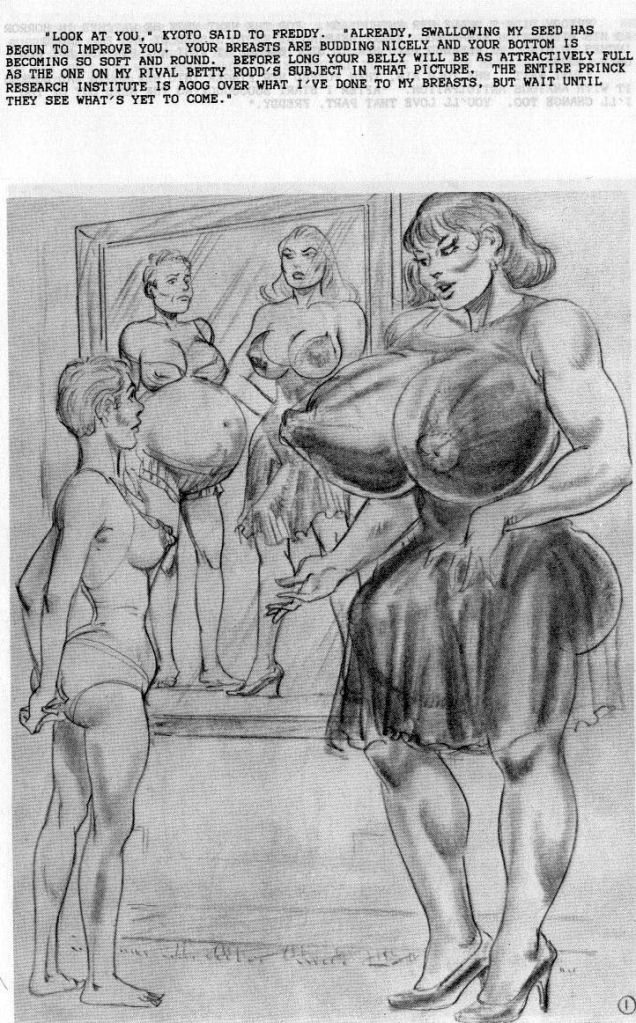
Despite the term futanari coming from the Japanese language and popularized by Japanese erotic comics, the basic idea is not unique to Japan. In the 1980s, for example, U.S.-born adult artist Eric Stanton created his “Princks” or “Ladyprinckers” or “Princkazons,” women with Amazonian physiques who also possessed pensis (often of exaggerated proportions) and used their great strength and sexual organs to dominate and emasculate men. So example in Stantoons #49 (“Makeover”), he presents a scenario where the men, unable to resist, are forcibly transformed and feminized. Stanton takes this idea to its cartoonish limit, and plays it for body horror and black humor as much as sexual titillation.

For the most part, however, “Princks” died with Eric Stanton. By the 1990s and 2000s, gender transition surgery and hormone replacement therapy had progressed substantially from the gland stories of early science fiction (see The Hormonal Lovecraft); the legal recognition of homosexuality and rights led to greater awareness of different LGBTQ+ identities outside of fetishized pornographic stereotypes. Besides this, futanari proved to be a more popular fetishized pornographic stereotype.

More importantly, the increasing acceptance of transgender individuals and the process of gender transition opened up literature for more positive stories of gender transition. While feminization as a sexual fantasy, voluntary or involuntary, will always remain, the acceptance and embrace of such a change as a positive metamorphosis instead of body horror gained more traction (see Seabury Quinn’s “Lynne Foster is Dead!” (1938): A Mistaken Gender Identity by Sophie Litherland).

Which doesn’t mean that a clever and skilled creator couldn’t combine the two. Lovecraft in “The Shadow over Innsmouth” presented a narrator who, at first horrified at the changes happening to their body, comes to accept their metamorphosis and the new identity that comes with it. For Lovecraft, the reader is allowed a peak as someone that fear and hated the alien and other becomes the other—and in fact, was one of them all along. The completeness of their change is indicated by how thoroughly they embrace who they are now, and reject who they thought they were.

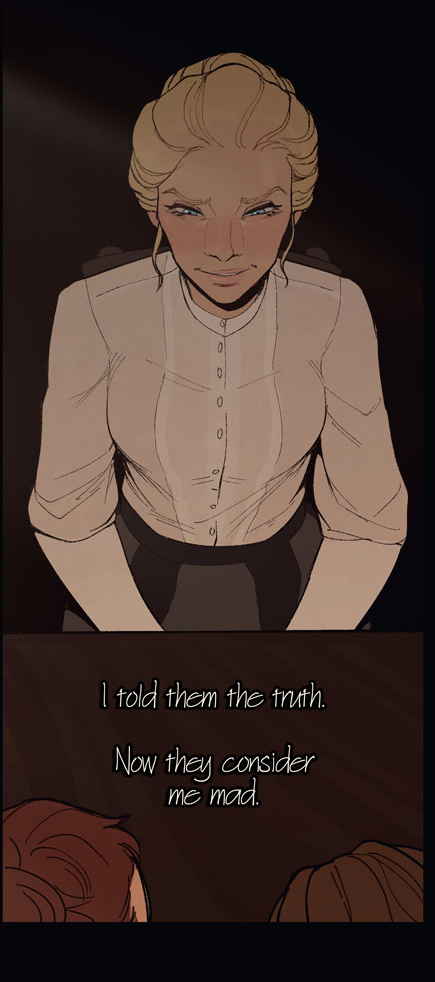
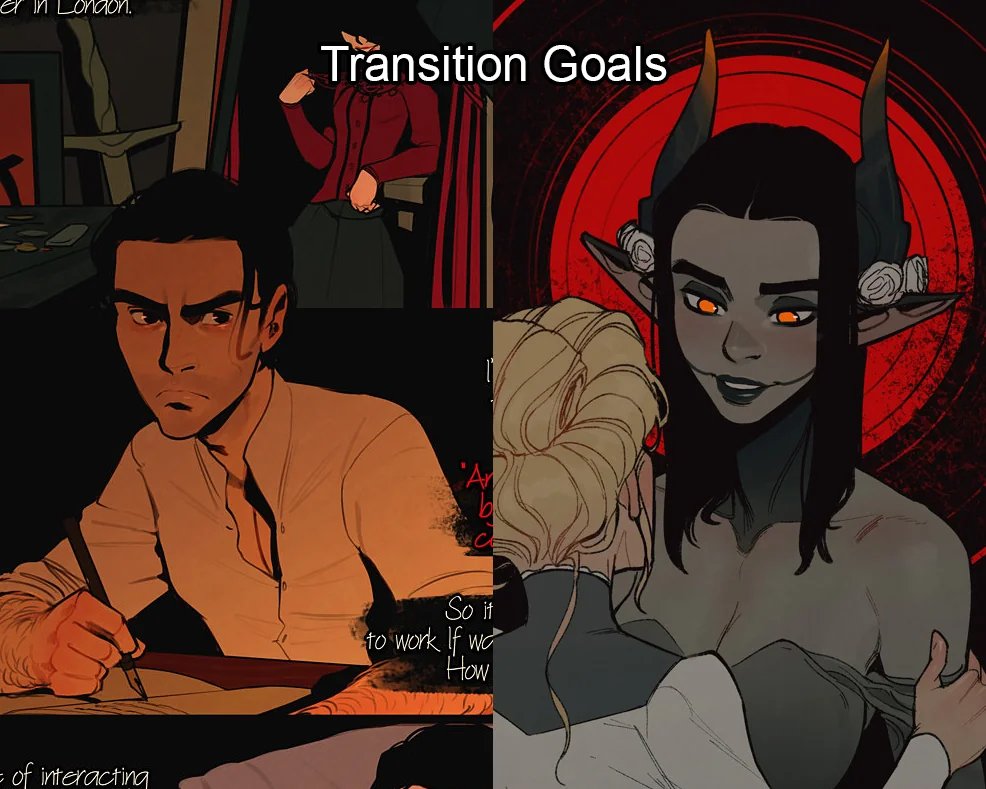
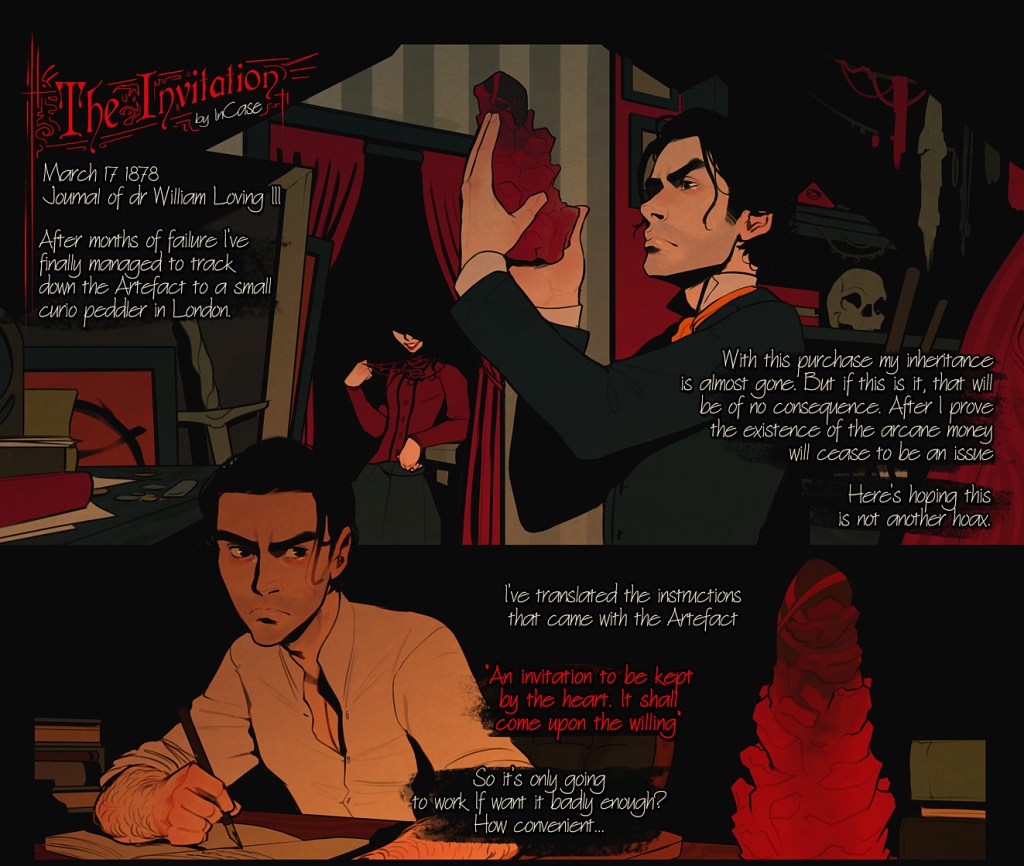
In 2017, erotic comic artist InCase began producing “The Invitation,” a sexually explicit webcomic. The second chapter was published in 2019. At first glance shares many hallmarks with feminization and futanari adult comics. Part of what sets it apart, however, is the framing and development of the story.

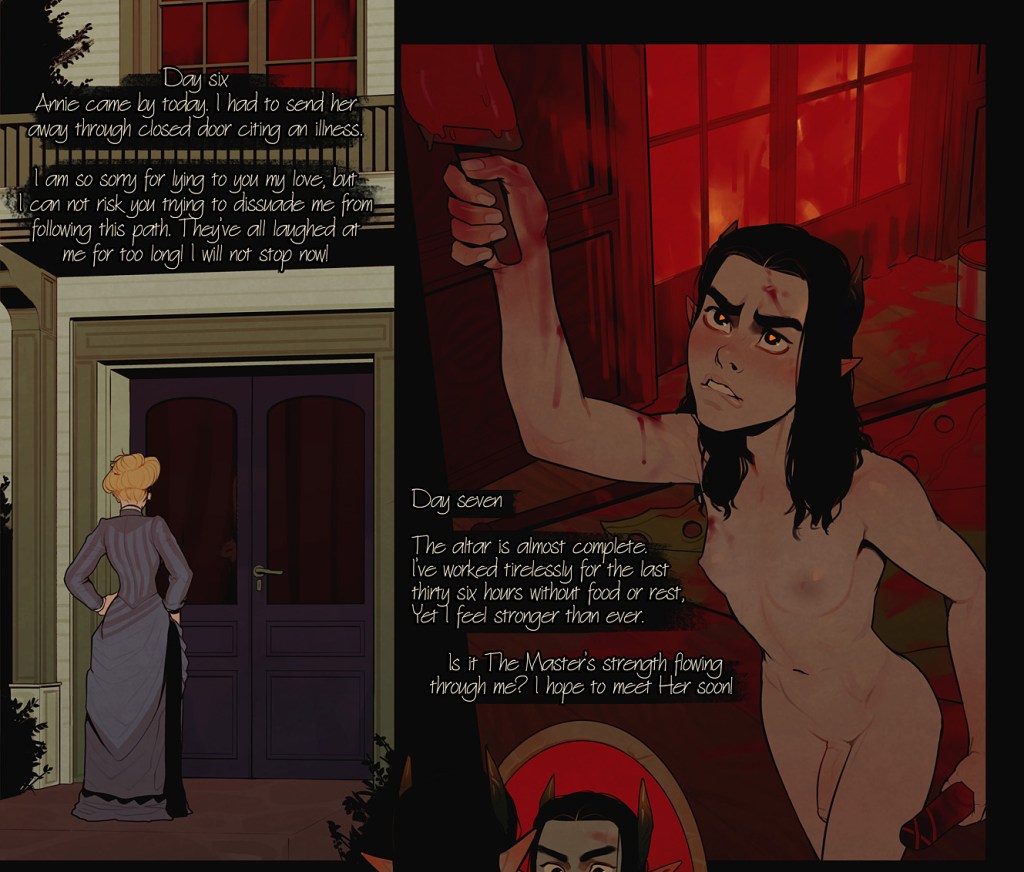
William Loving III, starts out as a very Lovecraftian protagonist, an obsessive delver in the obscure and occult, who had finally found an artefact that promises to put him in touch with a strange, eldritch entity…and he goes a little mad with the revelations.

As their transformation progresses, William’s priorities and attitudes shift, their old mores fall away as they embrace a broader and more inclusive attitude toward gender and sexuality attraction. Above all, the Master who brought these changes to body and mind is imprisoned, and members of their cult, like William, seek to free them. Idol, old one, madness, cult…while InCase is not using Lovecraft’s Mythos directly, there are some clear parallels to aspects of Lovecraft’s work and the broader genre of stories inspired by the Mythos.

Then, whispered Castro, those first men formed the cult around small idols which the Great Ones shewed them; idols brought in dim aeras from dark stars. That cult would never die till the stars came right again, and the secret priests would take great Cthulhu from His tomb to revive His subjects and resume His rule of earth. The time would be easy to know, for then mankind would have become as the Great Old Ones; free and wild and beyond good and evil, with laws and morals thrown aside and all men shouting and killing and revelling in joy. Then the liberated Old Ones would teach them new ways to shout and kill and revel and enjoy themselves, and all the earth would flame with a holocaust of ecstasy and freedom. Meanwhile the cult, by appropriate rites, must keep alive the memory of those ancient ways and shadow forth the prophecy of their return.
—H. P. Lovecraft, “The Call of Cthulhu”

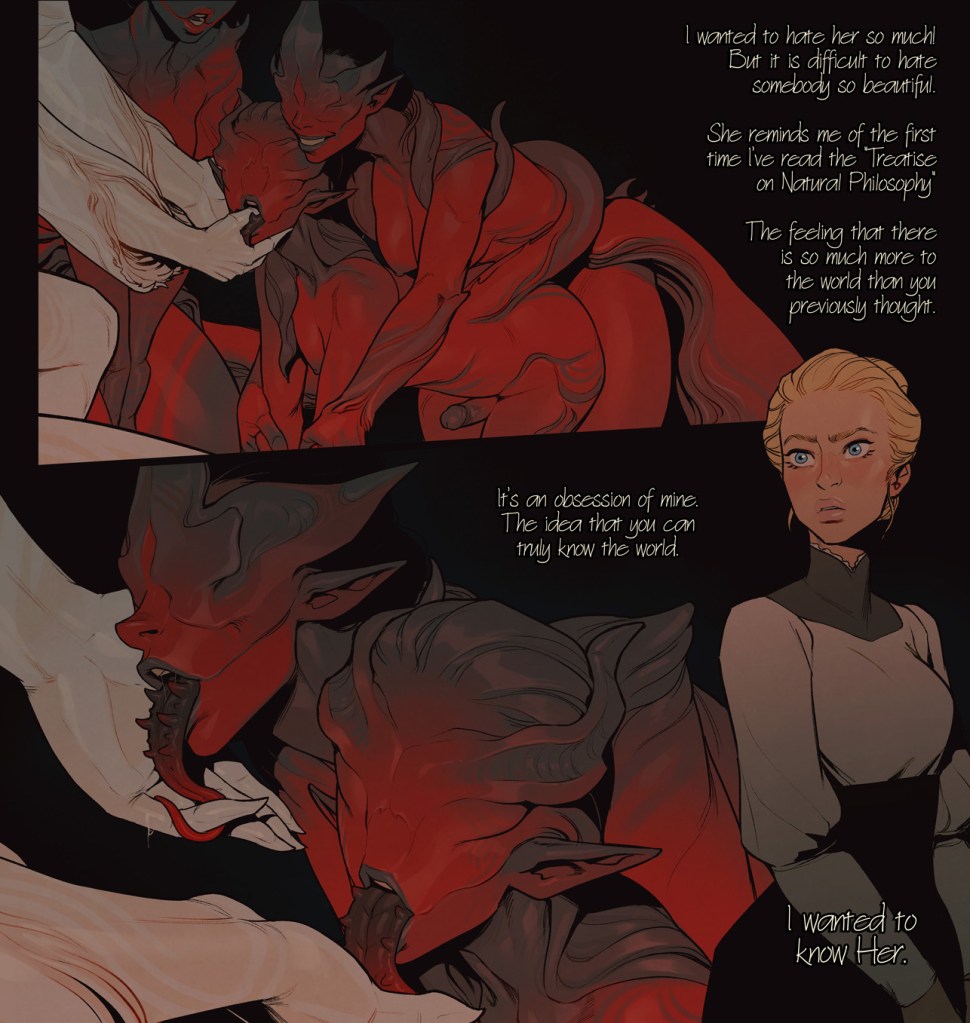
In the second half of the first chapter, InCase shifts the focus away from William pursuing the transformation on their own to interacting with the Master and their other servants. Sexual activity slowly grows more transgressive, with rougher action, bigger penetrations, more and less human (and more tentacular) participants…and the wonder of transformation and the bliss of sex is juxtaposed against the cosmic horror of the Master’s true face, and a glimpse of their true nature.

For a story about transformation and sex, and the gorgeously rendered artwork that conveys both sexuality and teratophilia, corruption and indulgence, these two characters are essentially character-driven. William is obsessed with magic, and having followed that obsession it consumes them utterly. What he left behind was his fiancé Annie, who becomes the protagonist of the second chapter.

In the Victorian milieu of The Invitation, Annie more than William represents a character whose body and identity are repressed by society; she is bound up in expectations of behavior (social and sexual) that she strains again; a woman of science at a period when women are not widely tolerated in science. A woman whose social standing is in peril from a broken engagement. A person who is, like William, innately curious.

There is a strong fantasy element to InCase’s work, both in The Invitation and in their other erotic comics. Without going into clinical detail, many of their characters fall into the spectrum of the sexualized fantasy of intersex characters rather than the reality. There are rarely true hermaphrodites, but there are often characters who appear to be women in every aspect save for having a penis and testes, which is fully functional (often incredibly so). Characters don’t undergo costly top and bottom and facial surgeries, they don’t take regimens of hormones their entire lives to achieve some semblance of the body they desire, that matches their gender identity. In real life, things are messy and imperfect; in comics, they can be idealized.

It is the fantasy that allows the exploration of these ideas. What would a Victorian woman do if she suddenly had a penis? If she was no longer restricted to the sexual role that biology and society had deigned for someone of her sex and gender? If you grew gills in Innsmouth, would you avoid the sea?

The Invitation is not a body-positive story about gender transition. It is an erotic horror story with themes of body horror and cosmic horror. William and Annie are not individuals who seek transition as a means to express and assert their gender identity. They are cultists who reject the world that they feel has rejected them; they are the outsiders who having finally given up on belonging to the world around them, with all the repressive mores, have turned to a being for whom all laws and mores are oppressive. Even natural laws.

It is important to distinguish between the reality of transgender and the fantasy. Not everyone who is trans undergoes surgery or takes hormones; nor are trans folk mere sexual objects for others to fetishize and covet. InCase is drawing specifically on the tropes of trans and intersex characters as they have developed in erotic comics art over the last several decades; Annie and William are not Stanton’s Princks, but they are conceptual cousins. Where the Princks’ purpose is entirely driven by kink, the transition of Annie and William is much more moral.

Stanton’s Princks are domineering and cruel; they degrade and make fun of the men they transform, they revel in their strength and the men are helpless to resist. The suffering of the Princks’ victims is the point; that’s the relationship that Eric Stanton often pursued, regardless of whether it was Princkazons vs. men, or women vs. men, or women vs. women. The Master never taunts her victims, never degrades them, never says a cruel word; the Master’s inhuman hunger is frightening, but what really breaks Annie at the end is the realization that it is entirely voluntary. Like the Cenobites in Clive Barker’s “The Hellbound Heart” (1986), the Master does not seek out new victims—they find her. Drawn in by curiosity, they find a moral universe at odds with what they know.

A universe both horrific and addictive. Twisted, unnatural, and yet utterly freeing. Is it any wonder why some folks have embraced it as a positive example of gender transition, at least in jest?

In the end, it isn’t about whether or not William has a vagina or Annie has a dick. Their final acceptance of each other was to move beyond their conceptions of sex and gender, to discard all labels. This is presented as both horror…and a short of transcendence. As old de Castro said in “The Call of Cthulhu,” they had become like the Master themselves, they had moved beyond the need to define themselves in human terms, and had come at last into a more complete marriage, through and within the Master.

Which is about as Lovecraftian an ending as one could hope for.

InCase’s work can be found on their website and their Patreon account.


Bobby Derie is the author of Weird Talers: Essays on Robert E. Howard and Others and Sex and the Cthulhu Mythos.

Deep Cuts in a Lovecraftian Vein uses Amazon Associate links. As an Amazon Associate I earn from qualifying purchases.
All images copyright their respective owners.

“Wife to Mr. Lovecraft” (2017) by Lucy Sussex

Dear How,

I meant to write Howard, but got interrupted, as happens. When I came back ‘How’ looked just fine on the page. it summed us up. Like: How did we ever get married? Blame the words, what we said and wrote to each other, the only thing we had in common. How did we ever think we would work it out? Those words again, mixed with pure blind optimism. How did we part? Without pain, as it should be.

I meant to write you before my news, but time just runs away sometimes. You did file the divorce papers? [crossed through]. I am now Mrs Doctor Nathaniel Davis.

Lucy Sussex, “Wife to Mr. Lovecraft” in Cthulhu Deep Down Under Vol. 1 (2017), 51

She was born Sonia Haft Shafirkin to a Jewish couple in 1883 in the Russian Empire, modern-day Ukraine. At the age of 7, she immigrated to the United States of America. At age 16, she married another immigrant, Samuel Seckendorff, who changed his last name to Greene. By 1920 she was divorced, her first husband dead; she had given birth to a daughter and a son, the latter who died in infancy. Skill and hard work brought her success in her business, and amateur journalism had become a hobby and a way to improve her mind. In 1921, Sonia H. Greene met H. P. Lovecraft at an amateur journalist convention in Boston. Contact sparked correspondence, further meetings, collaboration on stories and amateur journals, and then, in 1924, she married again.

The Lovecrafts’ marriage did not last long, and only Sonia gives a full account of their relationship. They separated, and finally filed for divorce…though Howard did not sign the papers in the end, either out of ignorance or some other unguessed reason, so that when Sonia married for a third time, to Dr. Nathaniel Davis in 1936, she thought she was free to do so.

Sonia’s marriage to H. P. Lovecraft has become part of his myth. It was during a brief but incredibly formative and important part of his life, and he spoke so little of her afterward that knowledge of his marriage was scanty among many of his correspondents. Details about their married life, and the mysterious Mrs. Lovecraft, did not begin to emerge into the public consciousness until many years after his death, when journalist Winfield Townley Scott finally made contact with her after publishing a lengthy biographical piece on Lovecraft.

The life story of Sonia H. Davis neither began nor ended with H. P. Lovecraft; and her full life story is given in her own words in her forthcoming autobiography Two Hearts That Beat As One, edited by Monica Wasserman. Yet the relative lack of information on her, the focus on her marriage with Lovecraft, and the way biographers like L. Sprague de Camp have presented Sonia in their works on Lovecraft have strongly skewed the image of who Sonia was as a person.

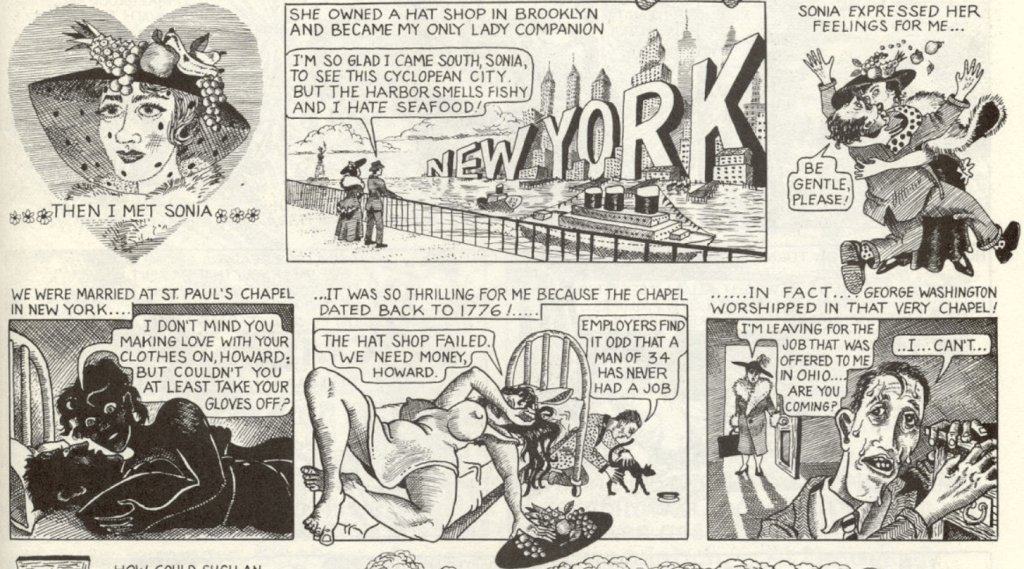
In Arcade #3 (Fall 1975) for example, George Kuchar’s biographical comic on Sonia drew heavily on L. Sprague de Camp’s Lovecraft: A Biography (19750. Sonia’s portrayal shows her as sexually aggressive compared to the timid Lovecraft, obsessed with money, a brief whirlwind romance in the life a neurotic and impractical horror-writer. While Kuchar is conscientious to reproduce some of Lovecraft’s words and feelings, with Sonia he takes more liberties, putting words and ideas into her mouth she never uttered.

Very few writers think to present matters from Sonia’s point of view.

In this tradition, “Wife of Mr. Lovecraft” by Lucy Essex is a bit different than most. The short story takes the form of a series of postcards Sonia sent to her ex-husband while on a cruise (no dates are given, but we can assume this was meant to be a honeymoon trip to the South Pacific that never happened in real life). Told from Sonia’s perspective, it shows more than a modicum of research, even with the occasional touch of invention and the odd omission or two. The story is more wistful than weird, although it flirts with weirdness.

It had tentacles, or stubs of limbs, and one staring gold eye, with a slot of a pupil, like a goat’s. […] There was something weirdly cute about it, like you get with kittens or pups. When I thought that, I remembered our baby, that story we wrote together, about horror on Martin’s Beach. I said: “Throw it back, it’s a juvenile.”

Lucy Sussex, “Wife to Mr. Lovecraft” in Cthulhu Deep Down Under Vol. 1 (2017), 53

Many writers and artists have portrayed Sonia in one form or another. Nearly every biographical comic of Lovecraft includes her at some point, and some biographical stories written after her memoir of their marriage came out, like Lovecraft’s Book (1985) by Richard Lupoff, include her as a character. Yet rarely is Sonia fleshed out. Relateable. There’s something refreshing about the portrayal of Sonia as someone…human.

Not a stereotype of a Jewish emigre or domineering wife, nor a fantastic succubus out to drain Lovecraft dry. Not someone defined by Lovecraft at all. Sonia had her own life, before and after Lovecraft, and she lived that life. The tide of their lives drew them together, and eventually bore them apart. Sussex seeks a kind of closure here which we mere readers never really got. After Sonia returned from Europe, the references in Lovecraft’s letters just peter out…and Sonia’s own account of events after that has long been unpublished. The publication of Sonia’s autobiography will, hopefully, go a long way to rectify that oversight.

“Wife to Mr. Lovecraft” by Lucy Sussex was published in Cthulhu Deep Down Under Vol. 1 (2017). It has not yet been reprinted.


Bobby Derie is the author of Weird Talers: Essays on Robert E. Howard and Others and Sex and the Cthulhu Mythos.

Deep Cuts in a Lovecraftian Vein uses Amazon Associate links. As an Amazon Associate I earn from qualifying purchases.
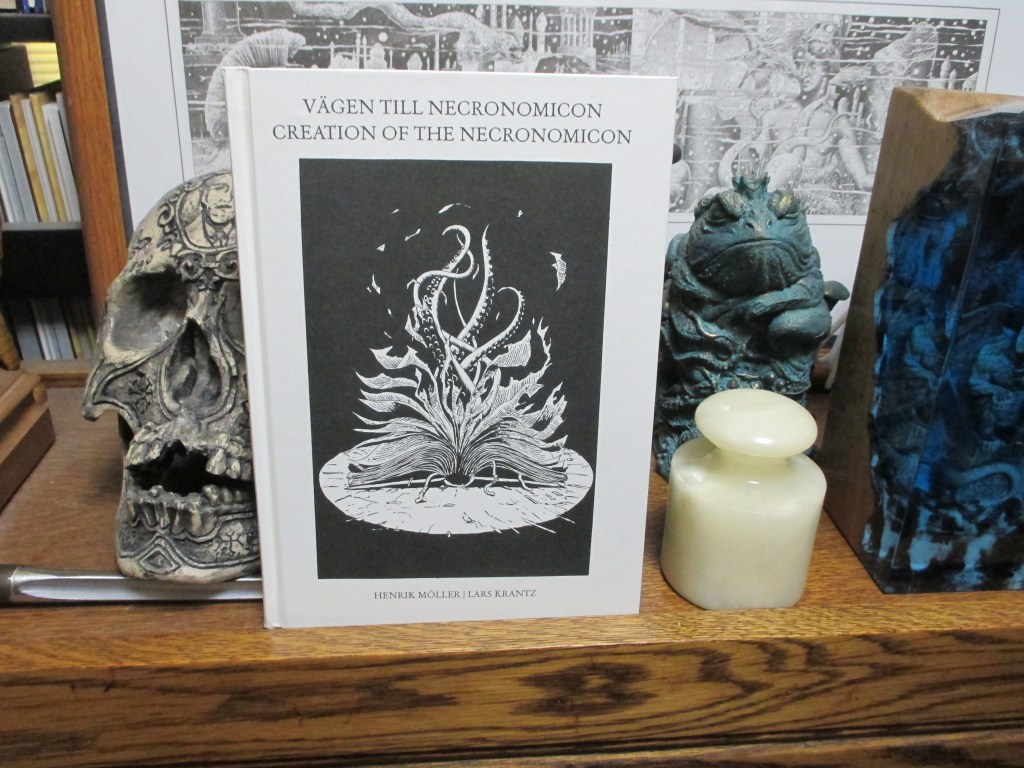
Vägen till Necronomicon—Creation of the Necronomicon (2017) by Henrik Möller & Lars Krantz

After Lars’ and my collaboration on the book CREATION OF A GOD [ATT BYGGA EN GUD, 2015], the plans of a trilogy began to take shape. While CREATION OF A GOD was a cross between the works of Lovecraft and Lord Dunsany, the second book, CREATION OF THE NECRONOMICON, was pure Lovecraftian fan fiction. The third will be a kind of Clark Ashton Smith-inspired postapocalyptic dark fantasy about three pregnant outlaws running from the law after a trainrobbery [SKAPANDET AV EN MYT —CREATION OF A MYTH, 2018].

Henrik Möller, introduction to Vägen till Necronomicon—Creation of the Necronomicon (2017)

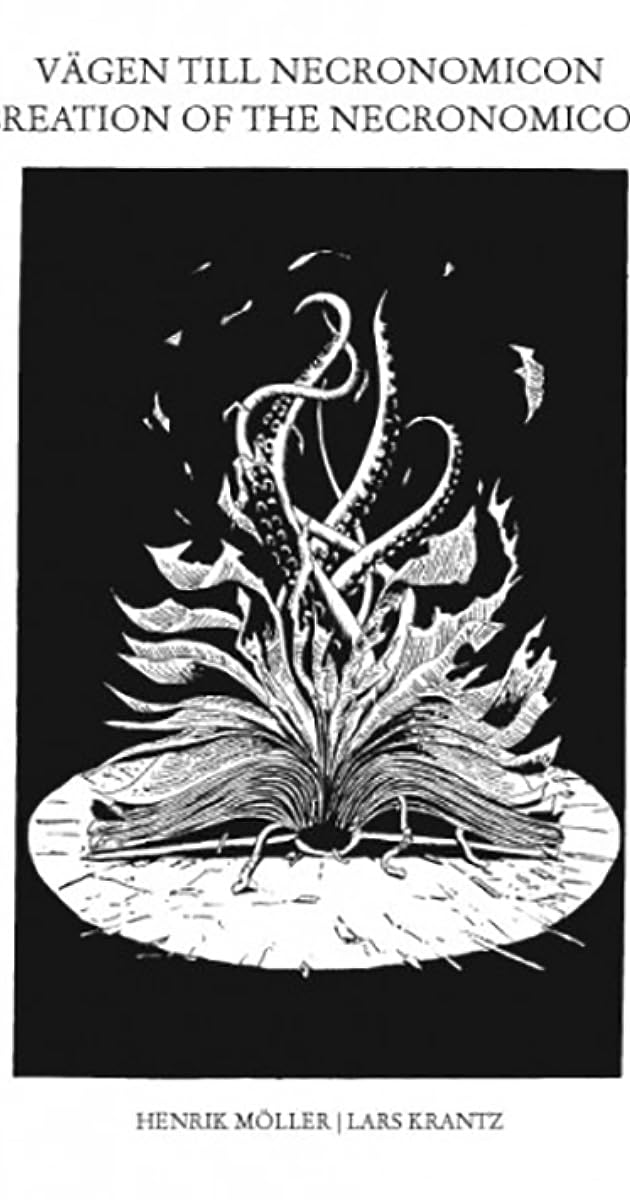
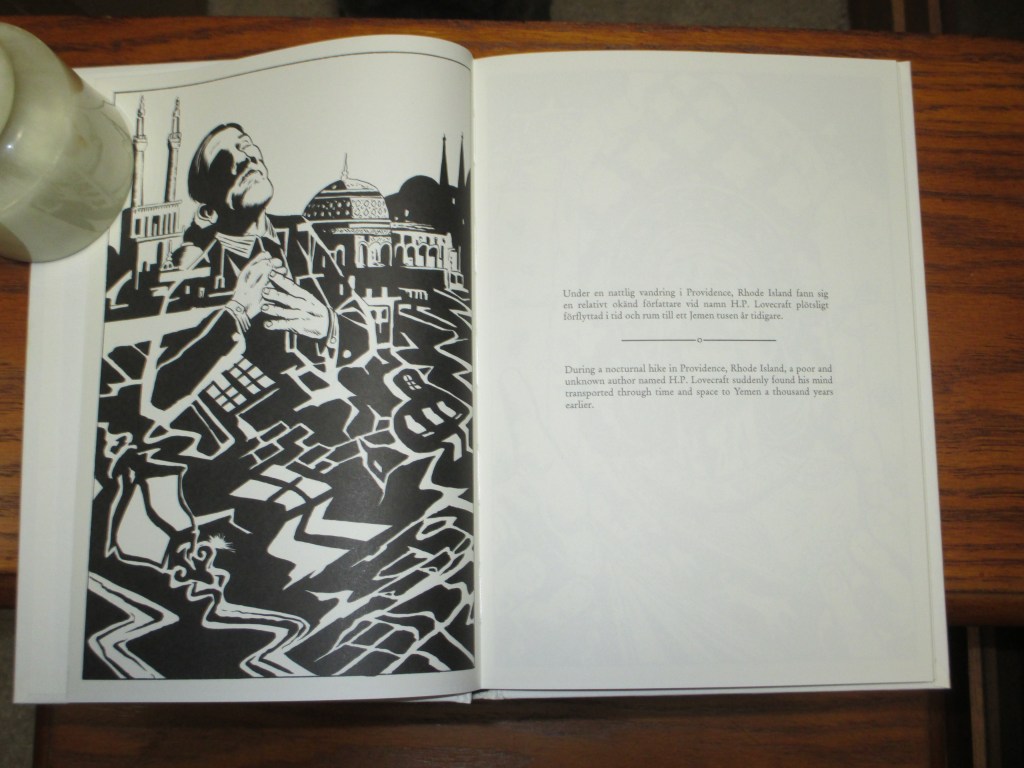
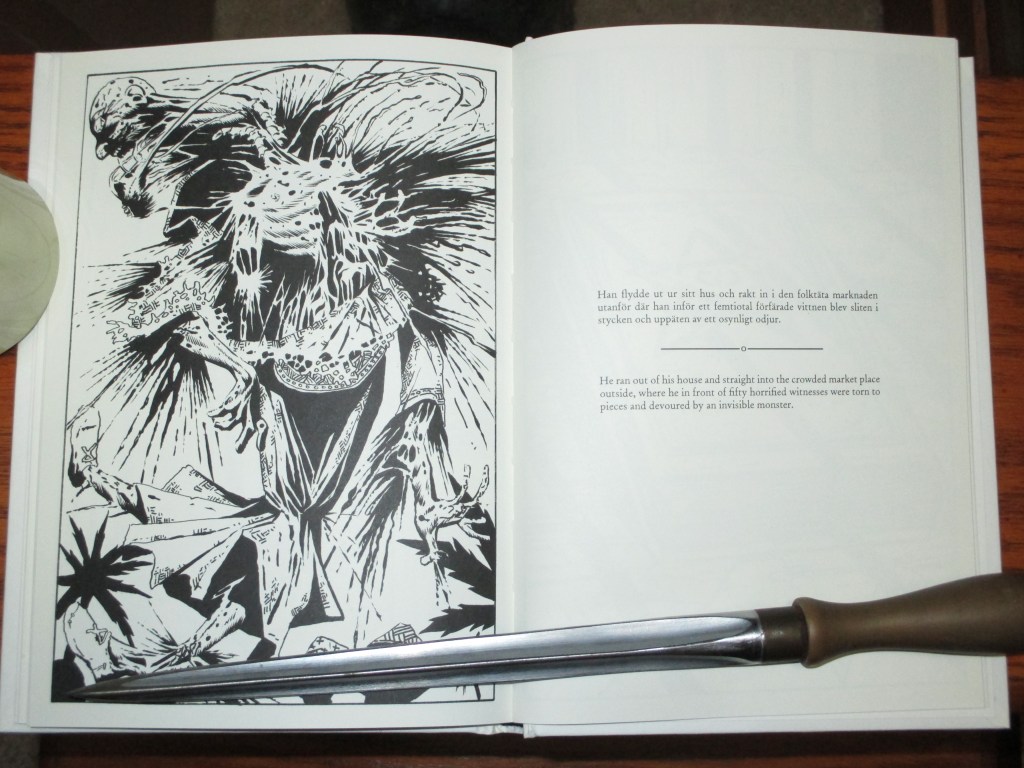
The middle of a trilogy of illustrated books, Vägen till Necronomicon—Creation of the Necronomicon (2017) consists of a text in Swedish and English by Henrik Möller, and black-and-white illustrations by Lars Krantz. While some sellers have categorized this book as a graphic novel, it would probably be more correct to label this an illustrated novel; text and image stand in contrast to one another, complementing one another: where one is sparse, the other is detailed; when one is subdued, the other is vivid. The result is as effective a work of graphic fiction as has yet been produced.

Möller’s description of the work as “fanfiction” is accurate, although that doesn’t quite do it justice. The story is an expansion of Lovecraft’s “The History of the Necronomicon,” retaining the essential elements of the story but expanding the narrative of Abdul Alhazred, adding a Vathek– or 1,001 Nights-style doomed romance. However, like many fans Möller and Krantz chose to weave fact with fiction, and the story has a framing narrative: one night in Providence, H. P. Lovecraft is out in a walk and finds his mind cast back a thousand years.

This is a not-uncommon device, the idea that Lovecraft and his fictional creation were both real, that the Mythos he created was real, at least to him—that the stories he told are occult truth, or even that he found or inherited a copy of the Necronomicon, from which he learned all this eldritch lore. The idea tends to rob Lovecraft of a certain genius, or at least agency; it makes him from a master storyteller to a kind of pulp journalist or cryptic occultist.

However, when carried out with sufficient style, the narrative convention of “the real Necronomicon!” still holds a bit of cachet. The tome, and its creators real and fiction, have achieved that legendary status where fact and fiction easily flow together. There are dozens of Necronomicons in the world today, from comic books to grimoires like Magic of Atlantis: Sauthenerom: The Real Source of the Necronomicon (1985) by Frank G. Ripel & Necronomicon: Il Libro Proibito di Abdul Alhazred (2022) by Mirando Gurzo, long novels to pillowbooks. All variations on the idea of the terrible book whose secrets are so terrible they make the skin crawl and the bright light of day a bit dimmer.

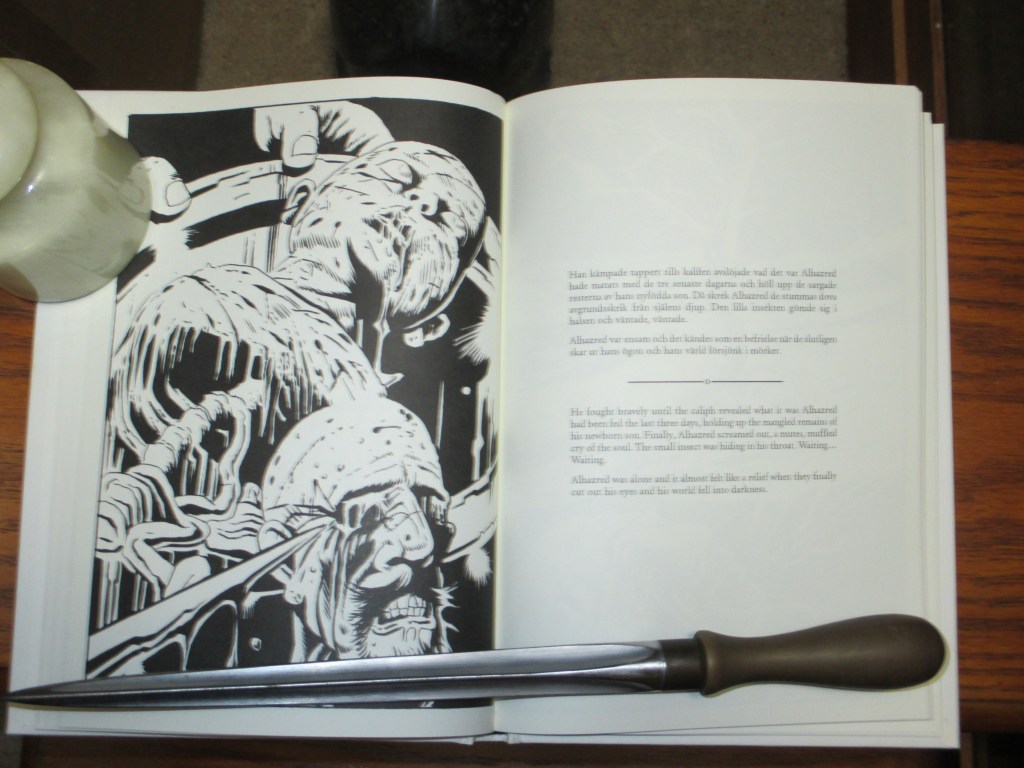
The Necronomicon is a sourcebook of horror. So it should come as no surprise that parts of Möller and Krantz’ book are appropriately horrible.

He fought bravely until the caliph revealed what it was Alhazred had been fed the last three days, holding up the mangled remains of his newborn son. FInally, Alhazred screamed out, a mutes [sic], muffled cry of the soul. The small insect was hiding in his throat. Waiting… Waiting.

Henrik Möller, Vägen till Necronomicon—Creation of the Necronomicon (2017)

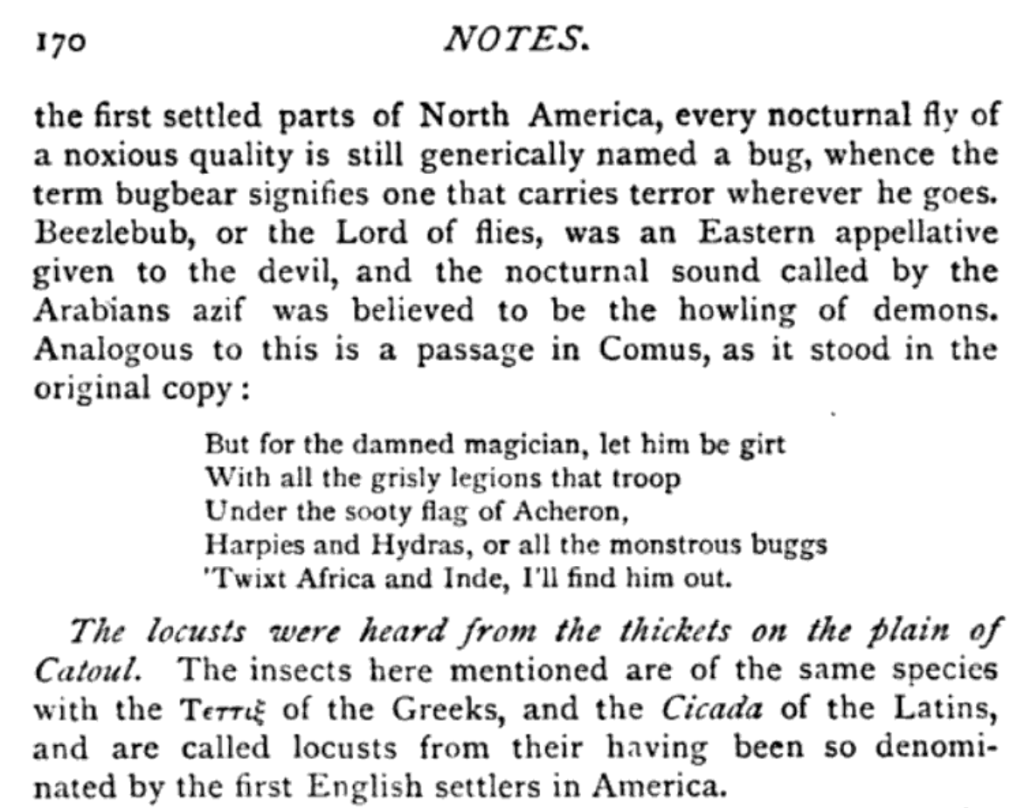
This motif of the insect comes from a very small, often overlooked detail about the Necronomicon, which Lovecraft had borrowed from another source:

Original title Al Azif—azif being the word used by Arabs to designate that nocturnal sound (made by insects) suppos’d to be the howling of daemons.

H. P. Lovecraft, “The History of the Necronomicon

It is a small detail, often overlooked. Some authors credit Alhazred as an arch-cultist, heretic, and magician; others a hero whose dire warnings are often misinterpreted and abused; or a prophet, puppeted about by unseen powers. His life is a function with a single output: the Necronomicon. It is often the book that matters, the text itself, not necessarily where it came from or how it got into its current form.

Yet for Lovecraft, the whole point of “The History of the Necronomicon” is that the story of the text was what was important. The contents could never match the darkest depths of the readers’ imagination. Alhazred is integral to the story; it was the first such book to have a proper author and history, to be more than a strange and terrible name on the shelf in the secret library of some cultist. The story of the Necronomicon is important, because without that story, it is just another odd tome, no more special than the rest.

It is a book born in blood and mystery.

There is an epilogue. The narrative returns to the frame-story. Lovecraft at his typewriter. The temporal loop is closed. In the final pages, the story comes to a bit of an ugly and unsettling close, weaving fact and fiction again:

Finally, on his deathbed, he wrote down all of Alhazred’s writings from memory into what he called his death diary and bequeathed it to his friend Robert Barlow.

After Lovecraft’s death, Barlow took the book to Mexico where he eventually committed suicide. The book is, as of today, still missing.

Henrik Möller, Vägen till Necronomicon—Creation of the Necronomicon (2017)

The truth of Lovecraft’s “death diary” is more prosaic, and perhaps more terrible for that. It was a minute record of Lovecraft’s final, fatal illness and last days, beginning 1 January 1937. While the actual diary is missing, Barlow copied and condensed some entries, which are reproduced in Lovecraft’s Collected Essays volume 5. The entry for March 7th simply reads “hideous pain.”

The reality of the death diary puts the Necronomicon in context. We may fill it with whatever terrible cruelties and eldritch lore we may dream up. The Necronomicon Files by Daniel harms & John Wisdom Gonce III has a list; everything from the secret of telepathy to how to breed worms in the carcasses of camels. The real world is often more prosaic, but no less horrible. Lovecraft’s death diary is an account of adult fears, the yawning death in hospital beds as cancer gnaws at our bowels. A death by inches, punctuated by a thousand indignities, and then…nonexistence. Throwing the gates wide to let the Old Ones come again would at least be a choice.

Henrik Möller is also a filmmaker, and to accompany the publication of Vägen till Necronomicon—Creation of the Necronomicon (2017), he also released a short video adaptation of the work, which is still available on Youtube. The film in narrated by Möller in Swedish and English, to Krantz’ illustrations, with a soundtrack by Möller. If you cannot get the book, it is a good way to experience their story.


Bobby Derie is the author of Weird Talers: Essays on Robert E. Howard and Others and Sex and the Cthulhu Mythos.

Deep Cuts in a Lovecraftian Vein uses Amazon Associate links. As an Amazon Associate I earn from qualifying purchases.
King Conan and the Stygian Queen (2016) by Jess Thornton & “Not Quite Milked by the Yeti” (2017) by Callie Page

Robert E. Howard lived during the early years of organized science fiction fandom. Devoted fans of certain literary and popular media works had existed long before, just as science fiction existed before it had a name, but it was in the 1930s that organized fandom coalesced around the science fiction and weird pulp magazines. This first fandom in the 1930s, with its politics and controversies, its enthusiasm and creativity, its sometimes bitter arguments over definitions and big egos clashing over petty pastimes, laid the groundwork for what we think of as fandom today.

Fan fiction during Robert E. Howard’s day was different, however. Fan fiction was simply amateur fiction written by fans, for fans, published in fanzines; this is what ultimately distinguished it from “pro” fiction, which was published in pulp magazines. In terms of quality, the dividing line could be nonexistent—Howard himself didn’t have any concerns if unused and rejected stories or poetry of his appeared in a fanzine, which is why he allowed The Fantasy Fan to publish “The Gods of the North”—a rejected Conan tale.

What fans generally did not do at this period was to write fanfiction as we know it today: that is, original fiction using another writer’s original characters and setting. New stories of Conan the Cimmerian didn’t fill the pages of The Fantasy Fan or any other fanzine during the 1930s, and it was rarely the case for other popular characters to get new installments in the fanzines during this period either. The concern was probably less worry about copyright strikes than propriety; the sense that it wasn’t polite to “steal” a writer’s character.

The only real exception to this was what would become known as the Cthulhu Mythos created by Lovecraft, Howard, Clark Ashton Smith, and other writers during this period—specifically because these authors shared elements of their setting and even encouraged their use. For example, one of the earliest references to the Conan stories outside of Howard or Lovecraft’s own fiction was “Horror at Vecra” by Henry Hasse (The Acolyte #5, Fall 1943), which is a Mythos story that shelves the Nemedian Chronicles almost alongside the Necronomicon.

Finally I said, “All right, what is it this time? And don’t give me any more of that Necronomicon stuff, for I know that’s a myth.” Bruce was an authority on certain terrible lores and forbidden books dealing with such lores, and he had told me things from a certain Necronomicon that literally made my flesh crawl.

“What?” he said in answer to my question. “Why look at these! Not Necronomicons, but interesting!” he trhust a couple of worn, leather-bound volumes into my hands. I glanced at the titles. One was Horride Mysteries by the Marquis of Grosse; the other, Nemedian Chronicles. I looked up at Bruce, and saw that he was genuinely excited.

Henry Hesse, The Acolyte #5 (Fall 1943) 11

The first fanfictional use of Conan as a character is a bit more difficult to pin down. Emil Petaja’s “The Warrior” (1934), dedicated to Robert E. Howard, begins with “From ancient dark Cimmeria he came| With sword uplifted, on that bloody day”—but does not mention Conan by name. R. H. Barlow was so moved by Robert E. Howard’s death in 1936 that he wrote an elegy, titled “R. E . H.” and begins “Conan, the warrior king, lies stricken dead,” though this was published in Weird Tales Oct 1936, not a fanzine. Another early unauthorized use of Conan was in “The Man of Two Worlds” by Bryce Walton (Space Stories Oct 1952), but that wasn’t a fanzine either, though the literary borrowing was perhaps closer to what we think of as fanfiction today:

Thorston leaped back atop the sea-wall and faced them. Below him, thegiant barbarian and sveral other self-appointed discipls of theri hero, faced the mob.

Thorsten kicked the barbarian in the back. As the man looked up, Thorsten shouted: “Your name, barbarian? You used the swod well enough. It’s yours.”

“I thank you, Theseus!” the barbarian’s face stretched in a fierce grin. “I am Conan the CImmerian. I came from your land, Theseus. From the wilds of Cimmeria.”

Bryce Walton, Space Stories (Oct 1952) 43

It took a while for Howardian fanfiction in the sense that folks recognize fanfiction today to get going. In part, this was probably due to the initial lull in reprints and publications of Howard’s work after his death, and then the commercial avenues opened up in the 1950s as L. Sprague de Camp and others began to produce Conan pastiches authorized by the copyright holders of Howard’s estate, as well as reworking existing Howard stories into Conan tales. Professional writers like Gardner Fox quickly determined that it might be easier to create their own carbon-copy barbarians like Crom the Barbarian and Kothar, Barbarian Swordsman instead of getting permission to write a Conan, Kull, or Bran Mak Morn story. There is a certain irony in this, as when Marvel Comics began adapting Howard’s Conan stories to comics in the 1970s, they licensed the rights to adapt some of Fox’s Kothar stories as new adventures of Conan the Cimmerian.

As Howard’s literary legacy grew and spread into other media, more unauthorized fiction and poetry appeared; sometimes in fanzines like “I Remember Conan” (1960) by Grace A. Warren, and sometimes in foreign language markets where local authors decided to continue the adventures of a popular character. With the advent of the internet, fanfiction made the leap from fanzines to websites. The early days of Howardian internet fanfiction aren’t well-attested, and little of the early webrings and erotic fanfiction sites survive except in obscure corners of the Internet Archive, but if you know where to look it still exists—although fanfiction today tends to be based as much on derivative works like the comic books (particularly Red Sonja) and the 1982 film starring Arnold Schwarzenegger.

As the economy grew increasingly online, fanfiction went through another important change: self-commercialization. Desktop publishing, ebooks, and print-on-demand meant that instead of posting fanfiction to a website for free, practically anyone could self-publish an ebook or POD book via Amazon or another online retailer—and a handful of folks did so.

While these works are qualitatively not very different from fanfiction available for free, the commercialization of these works draws greater scrutiny. Whether or not a given usage is legal is a matter for lawyers: if a work is under copyright, the owners of that copyright (the ultimate legal heirs of Howard’s estate) certainly have an exclusive right to profit off it, though certain uses may fall under fair use if they meet the right criteria. A free Conan fanfic on a website certainly isn’t a commercial endeavor, and probably doesn’t substantially impact the market for actual Conan stories by Robert E. Howard, for example. Likewise, works that riff off of Conan but explicitly aren’t Conan like Wolff (1971) by Luis Gasca & Esteban Maroto, The Leopard of Poitain (1985) by Raul Garcia-Capella and Collwen the Cimmerian Volume One (2019) by Matthew N. Sneedon don’t appear to be infringing on anyone’s copyrights.

The issue gets a little more complicated with works that fall in the public domain (as all fiction eventually does) since these are open to being reprinted, remixed, and reimagined in any way the public wants, including new commercialization. Some characters in such works may still be covered by trademarks, which do not expire after a given term. Hence the relatively complicated status of works like The Barbarian King 1: Le Spade Spezzate (2019) by Massimo Rosi & Alessio Landi, Sangre Bárbara (2021) by El Torres, Joe Bocardo, & Manoli Martínez, El Puritano (2021) by El Torres, Jaime Infante, & Manoli Martínez, and The Song of Bêlit (2020) by Rodolfo Martínez, which may be legal in areas where the Conan stories have entered the public domain, but aren’t necessarily available in markets where the copyrights or trademarks for Conan et al. are still valid.

Still, there are a couple of other creative literary efforts that run that grey edge of commercialized fanfiction, and it’s worth taking a look at them to see what they do and don’t do.

King Conan and the Stygian Queen (2016) by Jess Thornton

In 2016, Jess Thornton published four titles publishing original stories of Robert E. Howard’s most famous barbarian, Conan the Cimmerian: Conan Returns, Conan in a Stygian Jail, King Conan and the Stygian Queen, and Conan and the Monkey Men. Three of those books are no longer available; whether this was due to a copyright strike, violation of Amazon’s terms of service, Thornton deciding to take them down or some other reason isn’t very clear, and ultimately doesn’t matter. King Conan and the Stygian Queen is still available at this time of writing.

The subtitle of this book is Beyond the Black River and Robert E. Howard is listed as an author, and for good reason: the book consists of a 68-page novella, then the entire Robert E. Howard Conan story “Beyond the Black River,” and a 3-page epilogue. The 71 pages of original fiction by Thornton effectively form a kind of wraparound story, not entirely unlike what Rodolfo Martínez did with The Song of Bêlit (2020) and Howard’s “Queen of the Black Coast.” However, where Martínez was weaving his story in between Howard’s original chapters, Thornton is trying to do something different.

Thornton’s 68-page novelette has an older King Conan, some decades after the end of “The Scarlet Citadel,” still in fighting shape due to a calisthenics regimen, traveling forward in time to Cross Plains in the 1930s to save author Robert E. Howard from the eponymous Stygian Queen, an undead weapon sent by Thoth-Amon to destroy the Hyborian Age before it ever begins. Along the way, Conan basically narrates his own adventures to Howard, which implicitly forms the basis for the Conan tales that would eventually appear in Weird Tales.

There are a lot of fannish threads to pick apart here. Howard’s legend had been tied in with his most famous creation’s as early as 1936, when H. P. Lovecraft declared:

It is hard to describe precisely what made Mr. Howard’s stories stand out so sharply; but the real secret is that he himself was in every one of them, whether they were ostensibly commercial or not. He was greater than any profit-making policy he could adopt—for even when he outwardly made concessions to Mammon-guided editors and commercial critics he had an internal force and sincerity which broke through the surface and put the imprint of his personality on everything he wrote.

H. P. Lovecraft, “In Memoriam: Robert E. Howard” (1936)

This was, in turn, an extension of Howard’s own personal myth-building, since he wrote:

While I don’t go so far as to believe that stories are inspired by actually existent spirits or powers (though I am rather opposed to flatly denying anything) I have sometimes wondered if it were possible that unrecognized forces of the past or present — or even the future — work through the thoughts and actions of living men. This occurred to me when I was writing the first stories of the Conan series especially. I know that for months I had been absolutely barren of ideas, completely unable to work up anything sellable. Then the man Conan seemed suddenly to grow up in my mind without much labor on my part and immediately a stream of stories flowed off my pen — or rather off my typewriter — almost without effort on my part. I did not seem to be creating, but rather relating events that had occurred. Episode crowed on episode so fast that I could scarcely keep up with them. For weeks I did nothing but write of the adventures of Conan. The character took complete possession of my mind and crowded out everything else in the way of story-writing. When I deliberately tried to write something else, I couldn’t do it.

Robert E. Howard to Clark Ashton Smith, 14 Dec 1933, Collected Letters of Robert E. Howard (2nd ed.) 3.142-143

The truth was a little less poetic, as discussed in the essay on the first Conan story, “The Phoenix on the Sword” in Hither Came Conan (2023). The ghost of Conan didn’t stand over Howard at the typewriter, dictating his adventures; Howard pounded out a draft and then revised it, often multiple times, before submitting it and often receiving corrections that required further revision. Conan may have popped into Howard’s mind full-formed, but he had many fictional antecedents, including Kull of Atlantis and Conan the Reaver, that informed the character.

So the idea of King Conan dictating his stories to Robert E. Howard is the Howardian equivalent of Lovecraft actually owning a copy of the Necronomicon or having secret knowledge that the Mythos was actually real. By itself, that’s not entirely unknown in the wider diaspora of Lovecraftian fiction; Sangre Bárbara and El Puritano both have a wrap-around story of a young Howard listening to the stories that would go on to inform his fiction. The question becomes one of verisimilitude: how does Thornton weave this supernatural visitation from Conan of Hyborian Age Past into his known history?

Poorly.

While there is obviously some familiarity with Howard’s life, including his family, his relationship with Novalyne Price, the town of Cross Plains, Texas, etc., most of the details just don’t add up. Howard’s first Conan story was written and published in 1932; Prohibition ended in 1933; he met Novalyne Price in Cross Plains in 1934; and he committed suicide at age 30 in 1936. Yet when Conan first meets Howard the author is described as about 30, doesn’t recognize Conan, they drink a pitcher of beer together, and he meets Novalyne at the drug store in Cross Plains. Novalyne and Robert were also never engaged to be married and she was not in Cross Plains when he died, but she is described as his fiance and in town when he died at the end. All of the pieces of Howard’s life are there, but the timeline doesn’t jive with what we know of Howard’s life.

The prose is passable; it’s obvious Thornton has a great affection for Robert E. Howard’s Conan stories and sought to reproduce, as much as he could, the flavor of the language. The “methinks!” and “he ejaculated” are laid on a bit thickly and come across less naturally than how Howard wrote Conan, but no author can exactly reproduce another’s style. The use of Thoth Amon as the antagonist probably owes a bit more toward the later Conan pastiches and comic books, since Thoth Amon only appears in one story by Howard (“The Phoenix on the Sword”) and is mentioned in another (“The God in the Bowl”).

On the surface, the inclusion of the entirety of “Beyond the Black River” may seem odd. The story appears to be in the public domain (at least according to Wikisource), but it has nothing directly to do with Thornton’s novelette of King Conan and the Stygian Queen…until you get to the epilogue. Without spoiling the ending, Thornton had implicitly inserted his version of Howard into “Beyond the Black River” as an existing character, without changing a word of Howard’s story, to give the writer what he considered an appropriate glorious death in battle and send-off. Effectively making the story of Howard’s suicide a cover for what really happened.

It doesn’t really work if you think about it too hard, since throughout “Beyond the Black River” there is zero hint of that character sharing any of the information that Howard would presumably have known, and knowing quite a lot that Robert E. Howard would not have known. It’s a well-meaning tribute, perhaps, an effort to rewrite Howard’s end as being more glorious than what it was…but for it to work, the reader has to basically turn a blind eye to who Robert E. Howard was and how he suffered and persevered through the long years of his mother’s illness, the ups and downs of his writing career, his tumultuous relationship with Novalyne Price and his other friends.

King Conan and the Stygian Queen is fanfiction in the sense that this is fiction by fans, for fans—for who else except ardent fans are going to want to read a “new” (and reprinted) story of Conan? Yet the way the story is written, the errors made in depicting Howard’s life, seem likely to alienate a lot of those selfsame fans. At least those who care for who Robert E. Howard was, warts and all, instead of an idealized image of him as the first of Conan’s fanboys.

“Not Quite Milked by the Yeti” (2017) by Callie Press

My name is Brendalee Elkins and I am from round abouts Nevady, just like my whole clan has always been, ancestors and such. We been here since Apache times, and lay claim to some pretty famous Injun-fighters, leastaways teh ones what didn’t marry into the tribes like my cousin Buckminister Elkins done. Daddy always said he weren’t no more than half anything including half an Elkins, though, and I guess that proved it to my kinfolk when he run off with his little squaw.

Callie Press, “Not Quite Milked by the Yeti” in Smutpunk Erotica Collab (2017)

Most of the derivative fiction that stems from Robert E. Howard’s original creations comes from either his Hyborian Age tales of Conan or his Cthulhu Mythos tales. Yet Howard wrote many more characters and settings; original works based on Solomon Kane, Bran Mak Morn, and even Sailor Steve Costigan have seen publication in authorized works. The comedic Western stories starring Breckinridge Elkins (or his close counterparts Grizzly Elkins, Pike Bearfield, and Buckner Jeopardy Grimes) have attracted less creative attention, although they inspired Howard’s friend E. Hoffmann Price to create his own Western character, Simon Bolivar Grimes, for a series of stories. Yet fanfiction efforts to pen new Elkins stories have been few.

“Not Quite Milked by the Yeti” by Callie Press is such a rara avis, although in this case Rule 63 has been applied, and despite continuing the use of outdated cultural depictions is set in the current day. The juxtaposition of the stereotyped backwoods hicks in a contemporary world is played for humor, much the same in 2017 as it would have been in 1967 when The Beverley Hillbillies was on the air, or when Li’l Abner and Snuffy Smith ran in newspapers during Howard’s lifetime. The broad outline of the start of the story resembles Howard’s first Elkins story, “A Gent from Bear Creek,” where occasion requires Brendalee to go into town:

Somehow he said some fellers got some nekkid pitchers of me on the internets, which as I understand it is kinda like the post, only electrical. Someone musta snuck a camera up the creek whilst I was bathin’ or something, but it befuddled me as to when.

Callie Press, “Not Quite Milked by the Yeti” in Smutpunk Erotica Collab (2017)

Press has obviously studied Howard’s Elkins stories and includes several references to the series, including names like McGraw, Bear Creek, Chawed Ear, and the Humbolts. Brendalee, like her male counterpart, is not entirely the brightest or most trustworthy narrator, and casually displays superhuman strength and endurance for comedic effect. It is a solid pastiche of Howard’s style.

Then the yeti (“albino samsquatches”) enter into the story.

While the Breckinridge Elkins stories might border on the ridiculous when describing Elkins’ strength, stamina, capacity for liquor, resistance to common poisons, and thick-headedness, they never veered all the way into outright fantasy. I have a suspicion that the popularity of the “monster sex” erotic ebook scene on Amazon in the 2010s inspired this particular narrative, and fair enough—there are stranger flavors of Howard-inspired erotic fanfiction, if one knows where to look. There is also a certain flair in this novel new element that can’t help but bring a smile:

I knowed when I stared into them other-worldly eyeballs that he wanted to milk my titties somehow, and I didn’t reckon that was gonna fly with this Elkins girl. I hadn’t never had no baby, and I such as shuckin’ didn’t plan to let them big old manglers try to perjuice milk out of my sensitive mammaries, no matter how enormous they is compared to normal gals’s teats.

Callie Press, “Not Quite Milked by the Yeti” in Smutpunk Erotica Collab (2017)

Despite the slightly racy themes and language, Brendalee Elkins’ adventure with the Yeti isn’t erotica, or even particularly raunchy; just a good bit of light-hearted fun involving some oversize genitals and an unexplained desire to induce lactation. What it shares with King Conan and the Stygian Queen is a certain fannish approach: this is a story by someone who has read, enjoyed, and above all understood the Breckinridge Elkins yarns and what makes them work. Some of the jokes are a bit crude and the changes made to the setting are a bit ridiculous, but then the Elkins stories are often ridiculous, that’s what makes them funny. While no one would ever mistake “Not Quite Milked by the Yeti” as something that could have come from Howard’s typewriter, any fan familiar with Howard’s work can definitely see when Callie Press got her inspiration and what she was trying to achieve: a bit of adult-oriented humor in a Howardian vein.

Callie Press and Jess Thornton both approach their material as fans, and the primary audience that would appreciate their efforts are also fans, since they can see the work put into these stories. Yet there is a difference in how each realizes their goals. Press’ Brendalee Elkins is patently based on Breckinridge Elkins, even more than E. Hoffmann Price based Simon Boliver Grimes off of Buckner Jeopardy Grimes, but in writing the story she made Brendalee more than just a mountain man with a big bosom. Brendalee’s character may not be exactly ladylike, but neither is Breckinridge a typical example of Southwestern manhood: they are both exaggerations played for comedic effect, and at points veritably superhuman in their attributes…but they are distinct. By contrast, Thornton set out to write an actual Conan story starring Conan; there is no clever hinting, no tiptoeing around copyrights or trademarks, just an open use of an established character.

Both of these works can be categorized as commercial fanfiction, but each also represents distinct modes of fanfiction. That is part of what fanfiction is: an opportunity to experiment, to try different things, to take characters and settings in new directions that the original author(s) never dreamed. In 1936, Robert E. Howard likely imagined that Conan and Breckinridge Elkins would effectively die with him, notwithstanding a few stories left in his trunk that hadn’t seen publication yet. He would no doubt have been amazed to see what had become of his literary creations…and in the years and decades ahead, who is to say what lies ahead for Howard fandom?


Bobby Derie is the author of Weird Talers: Essays on Robert E. Howard & Others (2019) and Sex and the Cthulhu Mythos (2014).

Deep Cuts in a Lovecraftian Vein uses Amazon Associate links. As an Amazon Associate I earn from qualifying purchases.
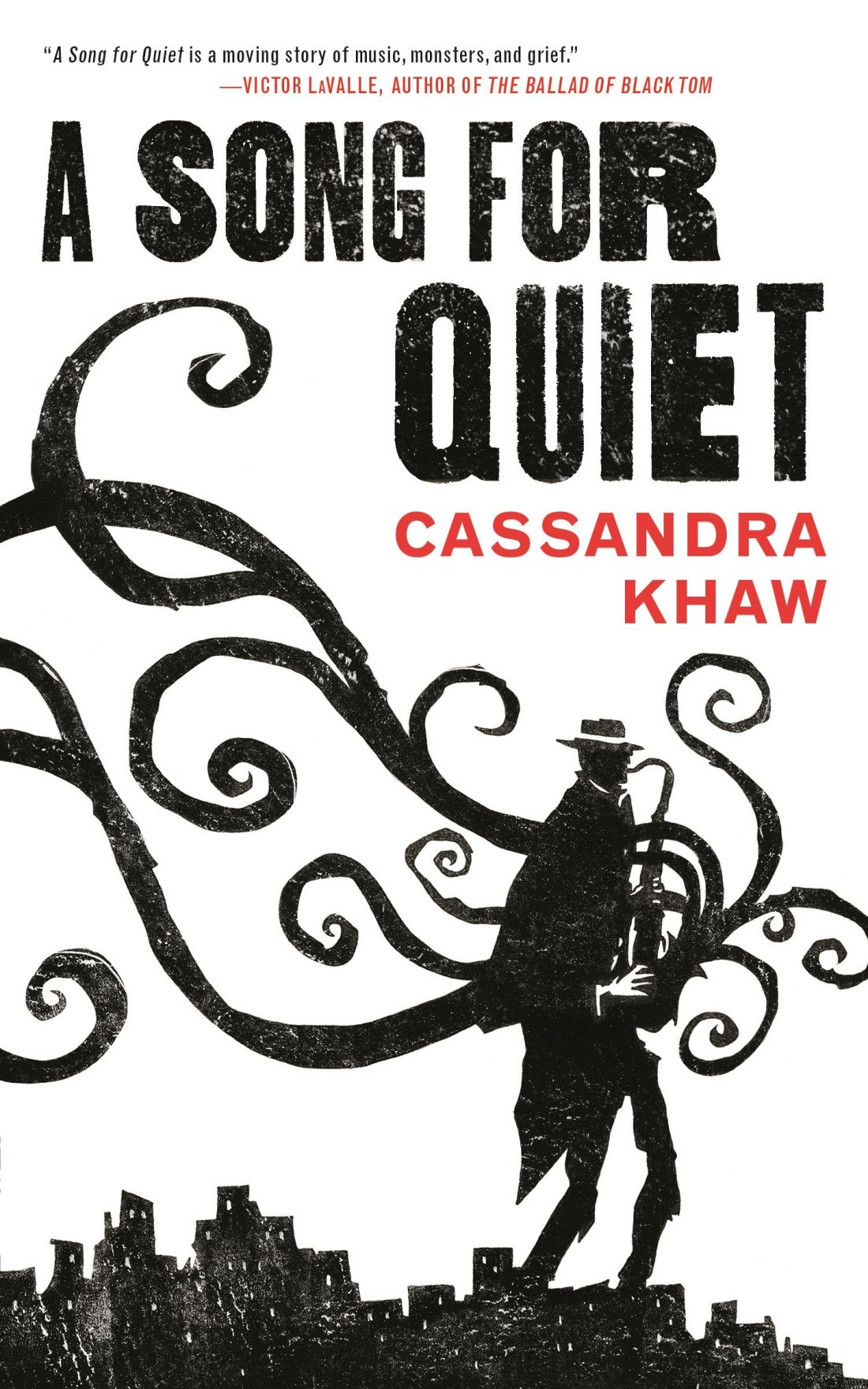
A Song for Quiet (2017) by Cassandra Khaw

Blues is about wanting and not having, about putting that need into someone else’s hands for a little while so you can pause and breathe.

Cassandra Khaw, A Song for Quiet 35

In Hammers on Bone (2016) by Cassandra Khaw, an eldritch abomination walks around in a human suit, playing hardboiled private detective John Persons, a monster who works against other monsters, working for its own inscrutable reasons against Lovecraftian incursions. A Song for Quiet is a standalone novella in the same setting, though a continent away and decades prior, with Persons relegated to an ambiguous supporting role as the narrative shifts to focus on rambling bluesman Deacon James.

Any more detail would give away the plot of the story, and it has little to spare.

In terms of theme and content, A Song for Quiet is a distant literary descendent of “The Music of Erich Zann,” the essential theme reworked and woven with considerable skill and imagination into a new context, a cousin to stories like “The Opera Singer” (2015) by Priya J. Sridhar and “While The Black Stars Burn” (2015) by Lucy A. Snyder—in part because music is the language and the medium by which the weirdness from Outside penetrates this reality, but because music doesn’t just happen. You need a figure on the threshold, like Erich Zann, who has the skills to play and faces the choice to do so. That places a very human conflict in the midst of what might otherwise be a very impersonal cosmic struggle. Ultimately, the musician on the threshold has to decide if to play.

Khaw’s choice to center the narrative on one such threshold-character, Deacon James, comes with advantages and drawbacks. The advantage is that Khaw is a skillful writer who really gets into James’ head, and the world seen through his eyes is a part of the world in stories like The Ballad of Black Tom (2016) by Victor LaValle, Lovecraft Country (2016) by Matt Ruff, and Ring Shout (2020) by P. Djèlí Clark—where Black people, even in a relatively unsegregated northern city like Arkham, have to step carefully, watch their words and actions, because any wrong step could mean violence and death. Jim Crow America was an ugly place with its very mundane horrors, without adding any Lovecraftian horrors to the mix.

The downside is, James knows nothing about the Lovecraftian aspect of the setting and doesn’t learn much of anything by the book’s end. Hammers on Bone worked so well in part because John Persons was an insider on the occult world of the Mythos, readers got their point of view and many things could be explained or accepted because of that. A Song for Quiet, seen mostly through the bluesman’s eyes, is like much in life a puzzle for which many pieces are missing and which will never be complete. John Persons in this book is one piece that doesn’t seem to fit (unless the reader has read Hammers on Bone at some point); he appears from nowhere, does things, explains almost nothing, and this is all perfectly in keeping with how the character might appear to James, but it’s as damnably frustrating as a poorly-played non-player character in a session of the Call of Cthulhu roleplaying game, enigmatic to a fault.

Another piece that doesn’t quite fit is Arkham itself. As a setting, Khaw does a tremendous job of expressing the unease a Black man might feel traveling to and being in a relatively unknown northern city; used to the more openly segregated South, Deacon James is only really at ease in Black spaces. Why it features in the story is another question entirely: Arkham is the backdrop, but it could almost as easily have been Boston, New York, or even London. While an American city makes sense, since blues music is an African-American creation, by the 1940s the geographic remit of blues music and players had gone global. There’s nothing special about Arkham in this regard—it is the place name to cement a Lovecraftian connection, but Deacon James isn’t playing to an audience of hip Miskatonic University students or anything like that. So the setting feels a bit superfluous; like a film that drops a few Lovecraftian place names but doesn’t really connect to Lovecraft’s stories about those places.

This isn’t a damning criticism: many stories have only peripheral connections to the wider Mythos, and that’s fine. The first and most important thing is whether or not the story is good, the amount of Mythos lore dropped is not a primary measure of story quality. The lament here is that it could have been better. Khaw’s take on Arkham through James’ POV is intriguing, it’s something that the novella could have used more of, and if that setting had tied more strongly into the plot it would have been smashing…or perhaps it would have turned a tightly written and fast-paced novella into a bloated short novel.

There is a lot to like about this story; Khaw’s prose is alternately poetic and grounded, using music metaphors to give shape and texture to things seen and unseen, and the characters are well-defined. As another episode of the Persona Non Grata series, it expands the world of Hammers on Bone without stepping on any toes, far enough away in time and space so that the two stories can work independently, but taken together suggesting a wider, more complex world. Thematically, the ending is a strong focus on the human conflict of the musician on the threshold, but the missing pieces of the puzzle leave a bit of tension, like a chord that refuses to resolve.

Cassandra Khaw’s A Song for Quite (2017) was published as part of Tor.com’s Lovecraftian novella series including Hammers on Bone (2016) by Cassandra Khaw, The Dream-Quest of Vellitt Boe (2016) by Kij Johnson, The Ballad of Black Tom (2016) by Victor LaValle, and Agents of Dreamland (2017) by Caitlín R. Kiernan.


Bobby Derie is the author of Weird Talers: Essays on Robert E. Howard and Others and Sex and the Cthulhu Mythos.

Deep Cuts in a Lovecraftian Vein uses Amazon Associate links. As an Amazon Associate I earn from qualifying purchases.
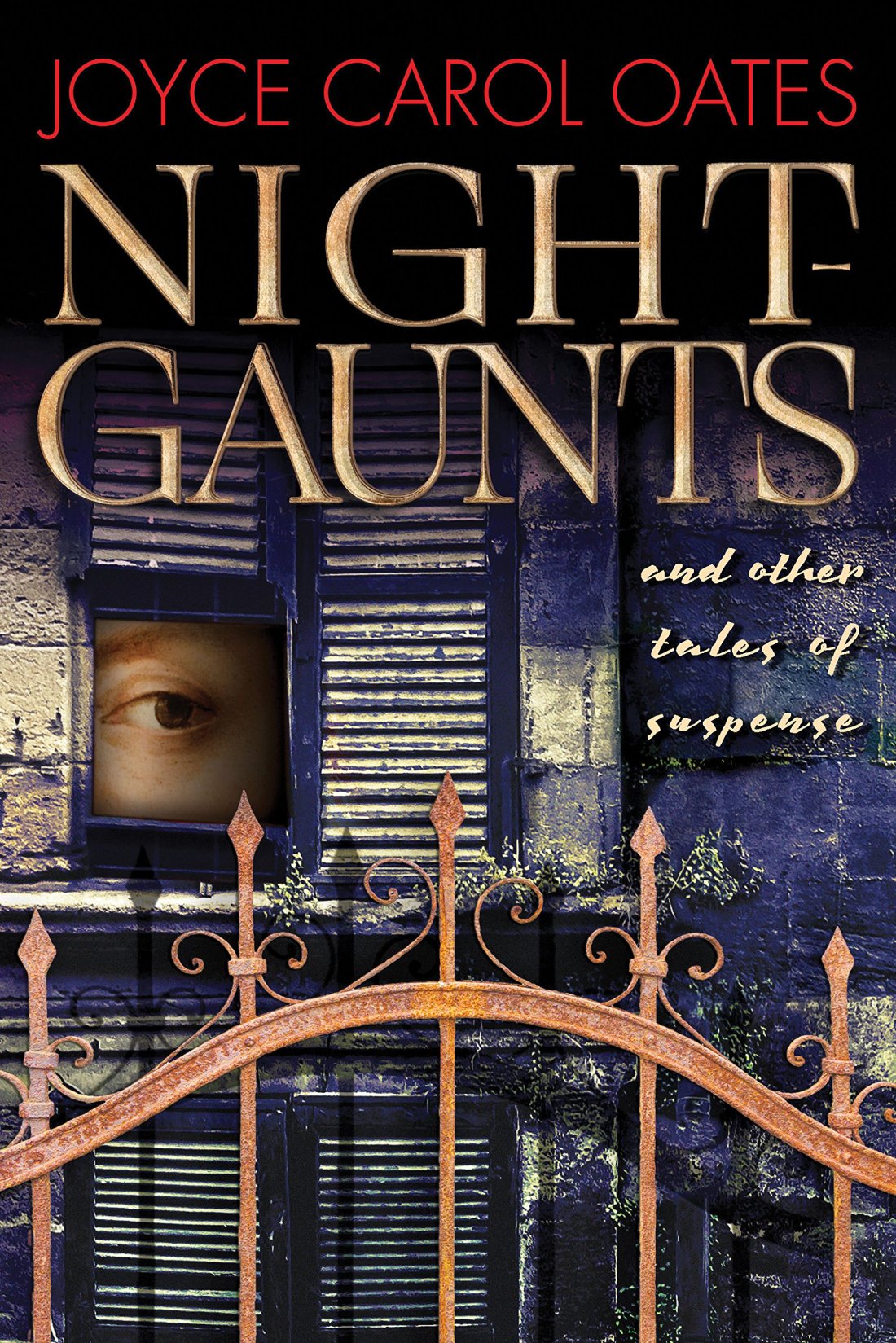
“Night-Gaunts” (2017) by Joyce Carol Oates

When I was 6 or 7 I used to be tormented constantly with a peculiar type of recurrent nightmare in which a monstrous race of entities (called by my “Night-Gaunts”—I don’t know where I got hold of the name) used to snatch me up by the stomach (bad digestion?) and carry me off through infinite leagues of black air over the towers of dead and horrible cities. They would finally get me into a grey void where I could see the needlelike pinnacles of enormous mountains miles below. Then they would let drop—and as I gained momentum in my Icarus-like plunge I would start awake in such panic that I hated to think of sleeping again. The “night-gaunts” were black, lean, rubbery things with bared, barbed tails, bat-wings, and no faces at all. Undoubtedly I derived the image from the jumbled memory of Doré’s drawings (largely the illustrations to Paradise Lost) which fascinated me in waking hours. They had no voices, and their only form of real torture was their habit of tickling my stomach (digestion again0 before snatching me up and swooping away with me. I sometimes had the vague notion that they lived in the black burrows honeycombing the pinnacle of some incredibly high mountain somewhere. they seemed to come in flocks of 25 or 50, and would sometimes fling me one to the other. Night after night I dreamed the same horror with only minor variants—but I never struck those hideous mountain peaks before waking. If I had…well, the point is that these things decreased rapidly as I grew older. Each year I believed less and less of the supernatural, and when I was 8 I began to be interested in science and cast off my last shred of religious and other superstitious belief. I do not recall many “night-gaunt” dreams after I was 8—or any after I was 10 or 11. But Yuggoth, what an impression they made on me! 34 years later I chose them as the theme of one of my Fungi….
—H. P. Lovecraft to Virgil Finlay, 24 Oct 1936, Selected Letters 5.335

A common refrain these days is to separate the art from the artist. To distinguish between an appreciation for a creator’s works from an appreciation or an agreement with the author themselves. One could, hypothetically, pick up a book by a mass murderer and enjoy it without knowing anything about the author, or admire a painting at a gallery without any awareness that the artist was a member of the Ku Klux Klan…but this implies a level of ignorance about the creator; the person approaches their work without context, without any expectation or prejudice.

It becomes more difficult to separate the art from the artist when you know more about the creator in question, when the events of their lives and their other works inform various details and themes throughout their ouevre. Such is the case with Howard Phillips Lovecraft—and perhaps more than that.

Even while he was alive, Lovecraft crossed the thin threshold between reality and legend. Frank Belknap Long immortalized him as “Howard” in “The Space-Eaters” (1928), Edith Miniter added “H. Theobald, Jr.” to  The Village Green (192?), and Robert Bloch secured permission from Lovecraft before inserting him into “The Shambler From the Stars” (1935)—and killing such fictional alter ego. Friends like Samuel Loveman and Elizabeth Toldridge wrote poetic tributes, and even his future wife Sonia H. Greene would get into the action with “Four O’Clock” (1949).

After Lovecraft’s death, memoirs, biographies, and letters were published; authors and artists who had never met or corresponded with Lovecraft now continued to se his name, his likeness, his legend in the development of new works. “The Discovery of the Ghooric Zone” (1977) by Richard Lupoff, “Gilgamesh in the Outback” (1986) by Robert Silverberg“Elder Gods” (1997) by Nancy Collins, “Koenigsberg’s Model” (2011) by Peter Tupper…these barely scratch the surface of works that use either a fictional Lovecraft, or a character based on Lovecraft, inspired by his name, his likeness, the events of his life.

As understanding of Lovecraft’s life has deepened and spread, so that the portrait of his life has become more complete, so too have the warts become more apparent. Lovecraft was generally kind, well-mannered, generous to a fault within his limited means, and gave tremendous encouragement to many writers, some of whom like Robert Bloch would go on to be amazingly influential themselves. Lovecraft was also, by his own admission, racist, antisemitic, and homophobic. Cultural syntax on these traits has shifted: readers and creators no longer want to passively acknowledge them, some of them want to actively engage with the massive underlying issues of prejudice through Lovecraft…so, contemporary works like “The Ballad of Black Tom” (2016) by Victor LaValle, Mexican Gothic (2020) by Silvia Moreno-Garcia, The City We Became (2020) by N. K. Jemisin, and Trolling Lovecraft (2021) by V. McAfee continue to engage with Lovecraft’s legend and legacy, though in a different way than previous generations.

Somewhere in between the iconic fictional Lovecrafts of the early generations of Mythos authors and the strawmen and monsters of the current generation lies Joyce Carol Oates’ character of Horace Phineas Love, Jr. from her novella “Night-Gaunts.”

H. P. Love, Jr. is, despite many similarities, patently not H. P. Lovecraft. Love is a semiotic ghost, a deliberately distorted vision of Lovecraft’s childhood, reimagined and remixed. Much of their lives have parallel: the father that died of syphilis, the grandfather’s library, the intelligent child that became a weird fiction author as an adult. Yet a great deal of it is not right, too. Lovecraft didn’t have the Scots nurses; or lost the family home; and certainly never found a copy of the Necronomicon in his grandfather’s library. Very likely, Lovecraft didn’t have congenital syphilis either, a point that has constituted an entire thread of Lovecraft scholarship from the time Winfield Townley Scott revealed the cause of Winfield Scott Lovecraft’s death down throuh Victoria Nelson’s “H. P. Lovecraft and the Great Heresies”—even though Lovecraft didn’t test positive for the disease during his final illness (see “The Shadow of Syphilis” in Sex and the Cthulhu Mythos).

Which kind of begs the question: if H. P. Love, Jr. is modelled on H. P. Lovecraft but also very deliberately not Lovecraft…why? What is the point? What story is Oates telling us when she writes snippets like:

A young girl-urchin, scarcely ten, opens her soiled dress—bares her white, scrawny chest—tiny breasts, with small pinpoint-nipples—twelve-year-old Horace is astonished—he has never seen anything like this except in certain of the illustrations in his grandfather’s liberary and then never of children so young. It is horrible to see, it is hideous, the aghast boy feels no sex-desire but only pity and sorrow, and fear.
—Joyce Carol Oates, Night-Gaunts and Other Tales of Suspense 315

If this was a way for Oates to address a fictional Lovecraft-clone’s apparent asexuality or lack of sexual desire, it’s a damn weird way of doing it. In truth, “Night-Gaunts” gives no direct answers to what it is about. In broad strokes, it is a kind of ghost story, but it is a ghost story that gets a bit lost up its own internal anatomy pursuing the alternative life of very-definitely-not-H. P. Lovecraft in a way that nevertheless seems to reflect very strongly on certain interpretations of the life and characters of H. P. Lovecraft.

A clue might be the image of the birthmark which H. P. Love, Jr. and his syphilitic father H. P. Love, Jr. share; this would appear to be an homage or reference to Nathaniel Hawthorne’s classic story “The Birth-Mark.” If one keeps the moral of that tale in mind, “Night-Gaunts” might be read as a message and a meditation on Lovecraft—how the focus on the mundane facts of a biography ignores the immortal essence of the legend, in a very “The Man Who Shot Liberty Valance” way—and that Horace Phineas Love, Jr. is, in effect both an interpretation of the legendary Lovecraft and a kind of commentary on the same.

If this is the case, it might not be entirely successful. “Night-Gaunts” reminds a great deal of Fred Chappell’s novel Dagon (1987), where the writing is good, but the themes, plot, and characterization never seem to really come together. In weird fiction, the atmosphere and telling of the story count for more than actual plot, but for “Night-Gaunts” there is a sort of postmodern purposelessness to it all: the events of Lovecraft’s life nearly define the contours of the story (except when they don’t; H. P. Love, Jr. never marries), but the internal journey of H. P. Love, Jr. is necessarily incomplete, tasks unfinished, questions unanswered.

Not every question needs an answer—the reader can decide for themselves whether or not the night-gaunts are real—or what writhing form was glimpsed in the master bedroom—but it feels like there should have been, at least, some metafictional flicker of awareness. Something to clue Love or the reader in to what their true connection to Lovecraft was. Absent that, “Night-Gaunts” feels a bit like a love letter to a dead boyfriend…an effort not to  communicate to anyone that might read it, but to work out in prose some thoughts and ideas about that semiotic echo of Lovecraft in popular culture, the recluse so many readers have dreamed Lovecraft as rather than the flesh-and-blood man who lived and died.

“Night-Gaunts” (2017) was first published in the Yale Review, and collected in Joyce Carol Oates’ Night-Gaunts and Other Tales of Suspense (2018).


Bobby Derie is the author of Weird Talers: Essays on Robert E. Howard and Others and Sex and the Cthulhu Mythos.

Deep Cuts in a Lovecraftian Vein uses Amazon Associate links. As an Amazon Associate I earn from qualifying purchases.
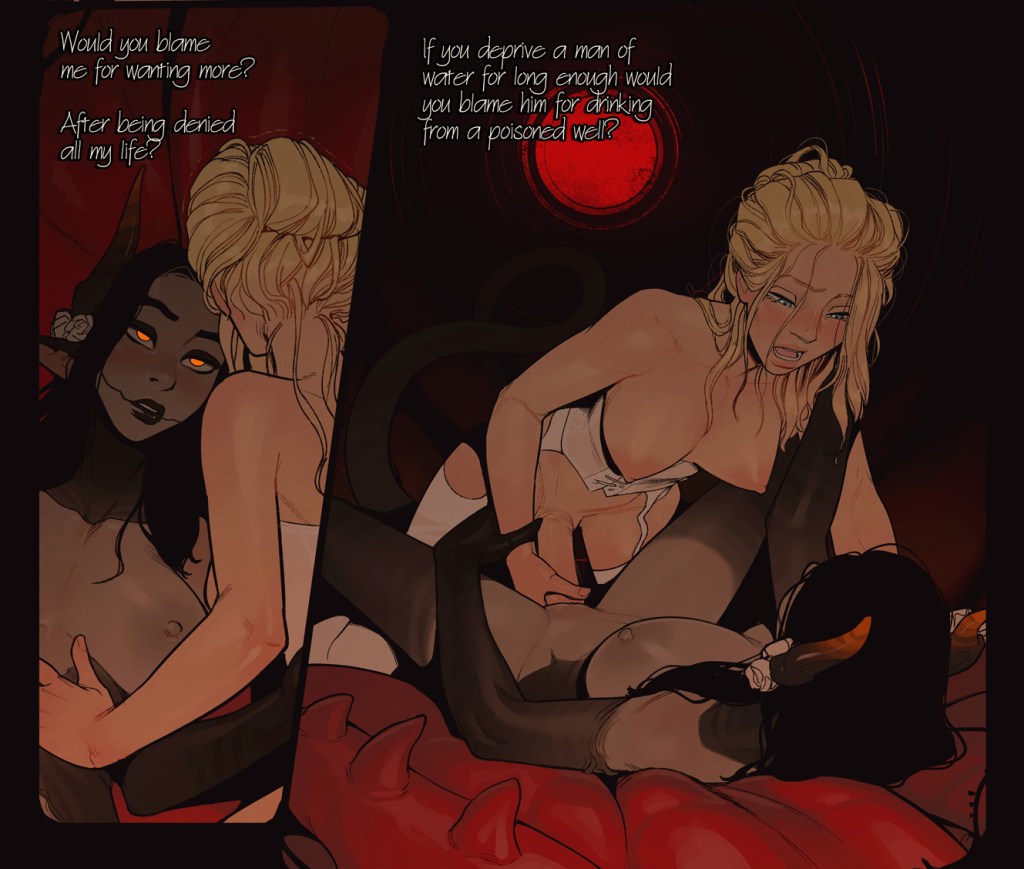
Agents of Dreamland (2017) by Caitlín R. Kiernan

The Truth Is Out There
—X Files, “Pilot,” 10 September 1993

The Federal Bureau of Investigation was created in 1908, when H. P. Lovecraft was eighteen years old. In his youth, he had formed a detective agency with his friends, inspired by the Pinkerton National Detective Agency and similar private companies. The Secret Service was the arm of the U. S. Treasury department, set up to crack counterfeiting rings and protect the president; the Black Chamber, forerunner of the National Security Agency, wouldn’t be formed until 1919.

Lovecraft had grown up in a world without G-men. With the passage of the Volstead Act and Prohibition, that would change. Hardboiled pulp crime magazines demanded more than just Sherlock Holmes-style consulting detectives, police detectives, Texas Rangers, federal marshals, or Pinkertons, though all of those characters had their place in the pages of magazines like Black Mask. Dashiell Hammett cut his teeth with The Continental Op, who worked for a fictional Continental Detective Agency modeled after the Pinkertons that Hammett himself would work for. Yet it was the rise of organized crime that came with Prohibition, and the personage of J. Edgar Hoover as head of the new Bureau of Investigation, that put their stamp on the idea of government agents in pulp fiction.

Which is why the opening to “The Shadow over Innsmouth” starts off as it does:

During the winter of 1927–28 officials of the Federal government made a strange and secret investigation of certain conditions in the ancient Massachusetts seaport of Innsmouth. The public first learned of it in February, when a vast series of raids and arrests occurred, followed by the deliberate burning and dynamiting—under suitable precautions—of an enormous number of crumbling, worm-eaten, and supposedly empty houses along the abandoned waterfront. Uninquiring souls let this occurrence pass as one of the major clashes in a spasmodic war on liquor.

H. P. Lovecraft didn’t invent the idea that governments conceal certain things from the public; the Great War impressed on the whole nation the importance of some things remaining secret. Yet it is important to place “The Shadow over Innsmouth” in that context of the rise of the G-men, of government agencies concerned with finding secrets and keeping them…and to understand that the roots of spy fiction in the Mythos, the whole cloak-and-tentacle business in Bruce Sterling’s “The Unthinkable” (1991), Alan Moore’s “The Courtyard” (1994), Delta Green (1997), Charles Stross’ “A Colder War” (2000) and The Atrocity Archives (2004), “The Star that is Not a Star” (2016) by Lucy Brady—they’re all part of a continuing tradition, born out of changes in the United States government, world affairs, and the semiotic impact on an American culture that knows that its government is hiding things from it.

Which leads also to flavors and trends in spy fiction. Ian Fleming’s James Bond is flashy, emotionally damaged, fighting secret wars against terrorists with next-generation gadgetry; Len Deighton’s unnamed protagonist of The IPCRESS FILE is faced with something no less fantastic, but the syntax is different—James Bond doesn’t deal with paperwork and bureaucracy. Spy fiction tends to vacillate between the glamorous fantasy and the grungy reality. The staid George Smiley of John le Carré’s Tinker, Tailor, Soldier, Spy is not the psychologically damaged one-man-army of Robert Ludlum’s The Bourne Identity, but they’re two sides of the same fictional coin, different iterations of the concept of the government agent, the finders and keepers of secrets.

Which is all background to set Caitlín R. Kiernan’s Agents of Dreamland in it’s proper context: the here-and-now of 2015, with a hazy secret history that extends out of knowing into past and future alike. The post-Cold War zeitgeist married the pre-war concept of G-men with the burgeoning fields of Ufology, the Shaver Mystery, Men in Black and Black Helicopters, and the warehouse at the end of Raiders of the Lost Ark. Pulp fiction jumped the semiotic shark when conspiracy fantasies like Robert Shea & Robert Anton Wilson’s The Illuminatus! Trilogy and Umberto Eco’s Foucault’s Pendulum became more or less indistinguishable from the actual conspiracy theories being peddled in Fate Magazine. When The X-Files hit in 1993, based on the 70s journalistic exploits of Kolchak, the Night Stalker, it was a spike driven straight into the vein of the American collective unconscious.

People want to believe the truth really is out there…and that the government knows and is hiding it.

Post-X Files fiction in this vein is rife, everything from big-budget Hollywood blockbusters like Independence Day (1996), Men in Black (1997), and Paul (2011) to graphic novels like Groom Lake (2009). Some are played straight, others for laughs—the bigger the cover-up, the more people and resources at play, the more it stretches the suspension of disbelief that any government agency can keep a lid on anything for any period of time.

Yet at the same time, everyone accepts that governments do successfully cover up things all the time. Documents are unclassified over time and reveal the details of events that happened in the shadows…and we know there are files still sealed. Secret histories under lock and seal. Anything might be in there—and that’s the attraction of the government conspiracy mindset. The imagination can populate those locked binders with any secrets—never mind that most of them are probably mundane things, like the sexual escapades of past presidents now safely dead, or the schematics for encryption machines rusting away in some government warehouse.

While his parents sleep, the boy is treated to Ray Harryhausen’s Rhedosaurus, Charles Laughton’s Quasimodo, and, finally, English director James Whale’s little-known and once-believed-lost The Star Maiden (1934).
—Caitlín R. Kiernan, Agents of Dreamland (2017), 48

Agents of Dreamland is the first in her Tinfoil Dossier series, which will probably be compared to Charles Stross’s Laundry series by default: both involve the Men-in-Black end of a government cover up, agencies working behind the scenes to investigate and contain the Mythos. The two bodies of work are distinctly different beasts, however. Kiernan’s point-of-view character the Signalman is on the ragged end of a career out on the edge of the spook world, a veteran of too many horrors. Not the smartest or the most clever, no Jason Bourne-style action scenes, just a bone-weary tiredness and a looming sense of desperation hovering over all.

That’s the mood. This is a war that can’t be won, because the people fighting it don’t realize it is a war yet.

The lore is stripped down; this isn’t a roleplaying game supplement about the Men in Black and their valiant secret war against the Cthulhu Mythos. This is grungier, grittier, more homely and with an air of inevitability. There are scenes and themes reminiscent of Mexican Gothic (2020) by Silvia Moreno-Garcia. Lovecraft, for all that he created, was working within a late-19th/early-20th century frame of scientific understanding—and science has dug up some much stranger things since 1937.

Kiernan doles out the information from the black dossier in measured doses, switching point of view and time between chapters, balancing exposition and description. The idea isn’t to give the reader too much at once, to let the reader form their own connections, to feel the people that are in these places at these times. It’s a spy story written like a Cthulhu Mythos story, and by the time the reader finds out the truth about The Star Maiden, puts the pieces together and think they have a clue about where this is going…

The truth is weirder than you think.

Caitlín R. Kiernan’s Agents of Dreamland (2017) is the first in the Tinfoil Dossier series, and is followed by Black Helicopters (2018) and The Tindalos Asset (2020).


Bobby Derie is the author of Weird Talers: Essays on Robert E. Howard & Others (2019) and Sex and the Cthulhu Mythos (2014).