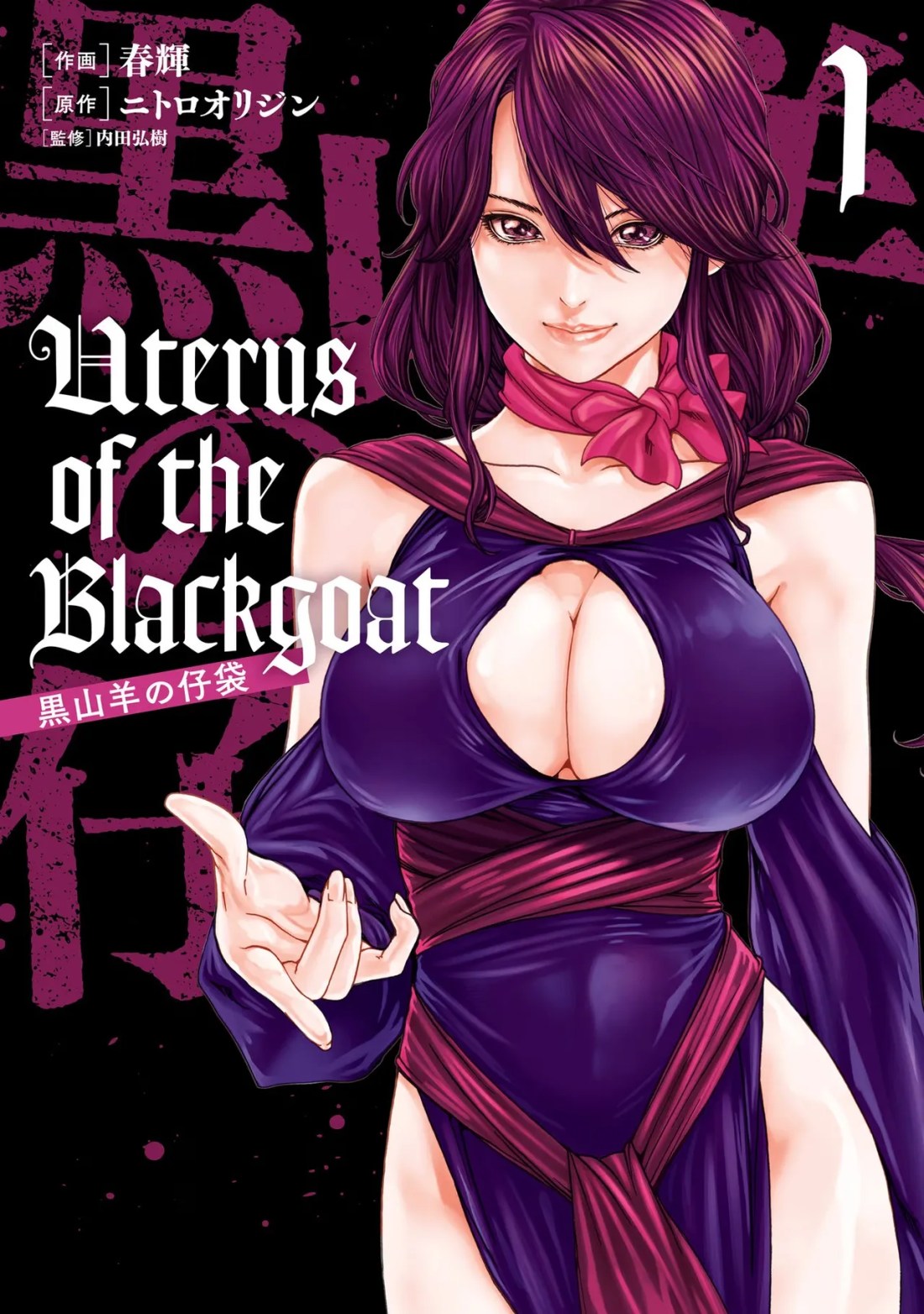
Uterus of the Black Goat Vol 1.(黒山羊の仔袋 1, 2022) by Haruki (春輝)

Eldritch Fappenings
This review concerns a work of adult literature. Some images contain nudity. Reader discretion is advised.


Powers of Darkness

The lifting of the curtain on the massive horrors of Germany’s prison and concentration camps recalls the supernatural tales of H. P. Lovecraft, a writer who was relatively unknown until August Derleth undertook his popularization, says a Chicago Tribune column. To conjure up the mood of unearthly terrors, Lovecraft invented the mythology of Cthulhu in which there are many monstrous spirits of evil, forever seeking to take possession of this planet.

Lovecraft wrote of his work: “All my stories, unconnected as they may be, are based on teh fundamental lore or legend that this race [sic] was inhabited at one time by another race who, in practicing black magic, lost their foothold and were expelled, yet live on outside, ever ready to take possession of this earth again.”

Perhaps Othulhu [sic] has come back through the cracks in Hitler’s mind. Lovecraft, who died in 1937, would be staggered by the revelation.

The Windsor (Ontario) Star, 2 May 1945, p4

In the aftermath of World War 2, the combination of Allied propaganda and the real-world horrors and atrocities committed by the Nazis and central powers created a perfect icon of evil. The Nazis became the epitome of cruelty, madness, violence, lust, and decadence; while Hitler and the Nazis became occasional figures of ridicule in works like Hogan’s Heroes, they also became the perfect embodiment of sin in post-war men’s adventure magazines, comic books, Stalag novels, and the Nazisploitation films like Ilsa, She-Wolf of the S.S. (1974), The Night Porter (1974), and Salon Kitty (1976).

H. P. Lovecraft died before the German invasion of Poland in 1939 that sparked the European beginnings of World War 2, and long before the Final Solution was decided upon and enacted. He did not live to see the Holocaust laid bare, and certainly not the pop-culture cross-pollination as the Nazis, the ultimate figures of taboo, became enmeshed in erotic and sadistic art and literature. Yet perhaps it is not surprising that, over time, Lovecraft’s Mythos and Nazis have mixed and mingled on occasion.

Dagger of Blood (1997) by John Blackburn, for instance, featured a former Nazi scientists in South America, inspired by Mengele and works like The Boys from Brazil (1976). Hellboy fought any number of Nazis in comics and film, some of whom had connections with Lovecraftian critters (a point called out specifically in the crossover Batman/Hellboy/Starman). Brian McNaughton brought the Reanimator to the Nazis with “Herbert West—Reincarnated: Part II, The Horror from the Holy Land” (1999). Insania Tenebris (2020) by Raúlo Cáceres also includes scenes where the Third Reich mixes with the Mythos, and Kthulhu Reich (2019) by Asamatsu Ken (朝松健) is an entire collection of stories that re-imagines the Nazis in a Lovecraftian context, and Charles Stross’ outstanding novel The Atrocity Archives (2004) also riffs on the wedding of these two taboos, the eldritch evils of Lovecraft and the visceral cruelty of Hitler and the Nazis.

Most of these works take as a jumping-off point the Nazi’s real and fictional investigations into the archaeological and the occult, which became widespread in popular culture thanks to films like Raiders of the Lost Ark (1981) and Indiana Jones and the Last Crusade (1989). There is some basis for truth in this, as Kenneth Hite explores in The Nazi Occult (2013), but the pop culture legacy of Nazi mystics dabbling in the Mythos has grown very far from reality. Intersections between sex and the Nazi occult exist, and so do works that combine sex and Lovecraft’s Mythos, but the combination of all three flavors is relatively rare.

Most works that deal with Lovecraftian Nazism eschew the erotic.

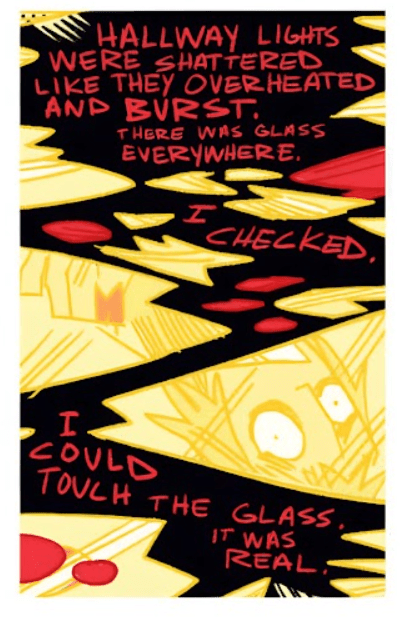
Uterus of the Blackgoat Vol 1.(黒山羊の仔袋 1, 2022) by Haruki (春輝) is a standout in that it very specifically does just that. This historical occult action manga’s prologue opens in Nazi Germany, where Hitler’s disciples are trying to unlock a Lovecraftian artifact with sex magick.
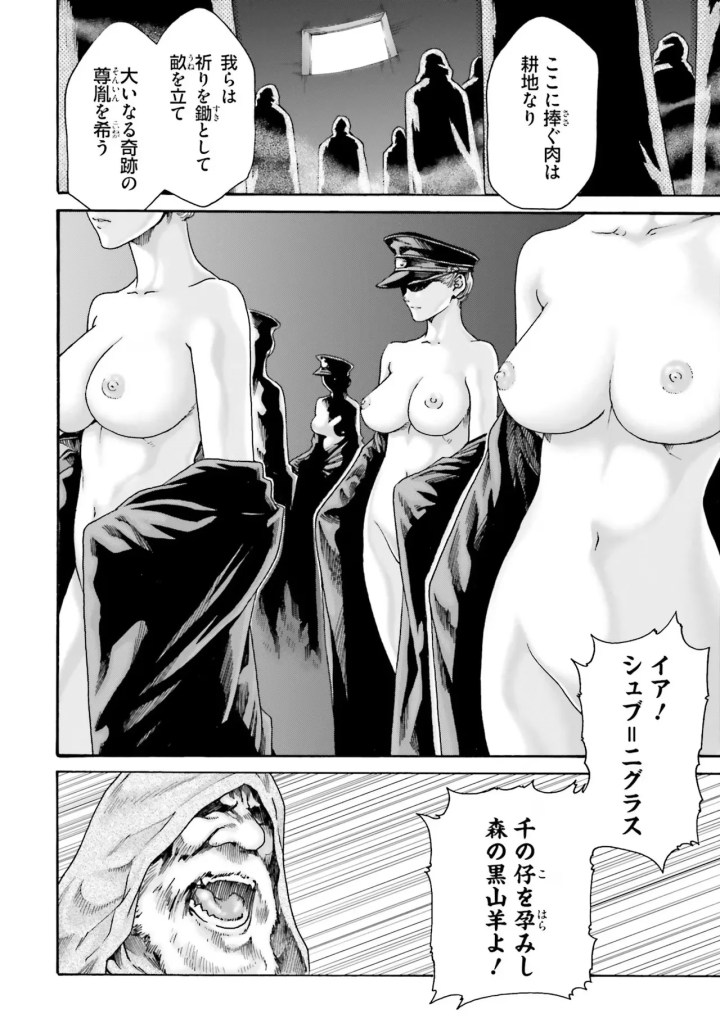
Nazi sacrifices disrobe for a ritual to Shub-Niggurath

Haruki (春輝) is an established mangaka whose works include the Ero Ninja Scrolls and Parasite Doctor Suzune series. Like all legal erotic works in Japan, the actual genitalia is obscured, often by carefully placed speech bubbles, figure-work, and blurring out the genitals. However, this work is more than “tits and tentacles”; there is a considerable amount of detail given to period dress, architecture, and background to ground the story, including some very effective splash pages that appear to have been referenced from period photographs.

Post-War Berlin

The bulk of the story takes place during the early days of the Cold War, as both the USSR and United States attempt to seize the Nazi’s research into Shub-Niggurath for themselves. At the center of their separate and competing investigations is a former maid, Mia Olbrich, who worked in the house where the rituals took place. Trying to keep both the Americans and the Soviets from getting the information is a woman named Macleod (who may actually be Mata Hari) with supernatural powers, who is also the secret agent codenamed Black Goat.

What readers get is thus a three-way struggle involving a lot of sex, some body horror, and Cold War spy shenanigans with some interesting plot twists and revelations (and this only in volume 1, there are 3 volumes in the series). While there are many typical tropes of the eromanga genre (all of the main characters are willowy, busty young women; there’s a sex scene in every chapter, etc.), it is sort of refreshing to see a work that strongly leans into the sexual aspect of Shub-Niggurath in as explicit a means as they can given the limits of the medium. While we don’t get a lot of actual Nazis in this volume after the prologue, the emphasis on sex, sexual violence, and the setting is what draws comparisons to exploitation films; there is a similar aesthetic, the idea that this is a serious story that is being played for titillation as well as action and intrigue.

There are some cosmetic parallels with “The Elder Sister-like One, Vol. 1” (2016) by Pochi Iida (飯田ぽち。) and The Mystery of Lustful Illusion -Cthulhu Pregnant- (2015) by Takayuki Hiyori (宇行 日和); the manga creators are each drawing from similar manga artistic traditions and Lovecraftian stories and roleplaying games, which shows variations on similar themes, less in any plot sense as in similarities between the depictions of Shub-Niggurath, playing with tentacles, etc. However, the emphasis on erotic content in each work is different and distinct and reflects the tone of the stories, with Uterus of the Black Goat aimed more toward erotic horror than the other two.
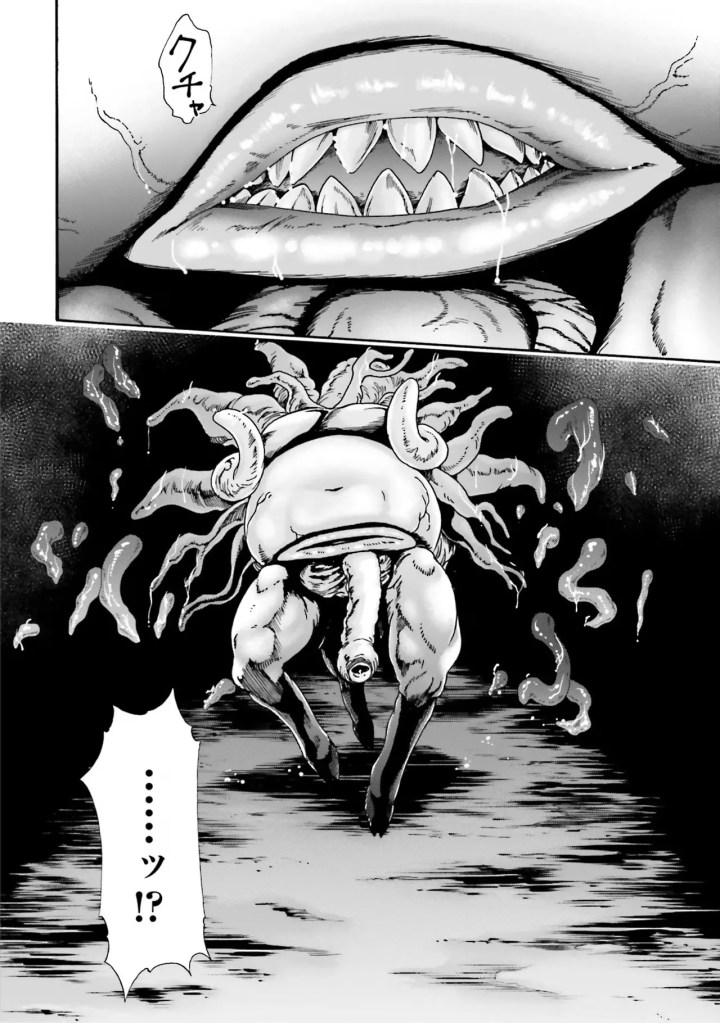
A Dark Young of Shub-Niggurath, as inspired by the Call of Cthulhu roleplaying game

Uterus of the Black Goat has not yet had an official English translation or release, but Japanese editions are available from various outlets, including Amazon.co.jp and Ebay.


Bobby Derie is the author of Weird Talers: Essays on Robert E. Howard and Others and Sex and the Cthulhu Mythos.

Deep Cuts in a Lovecraftian Vein uses Amazon Associate links. As an Amazon Associate I earn from qualifying purchases.
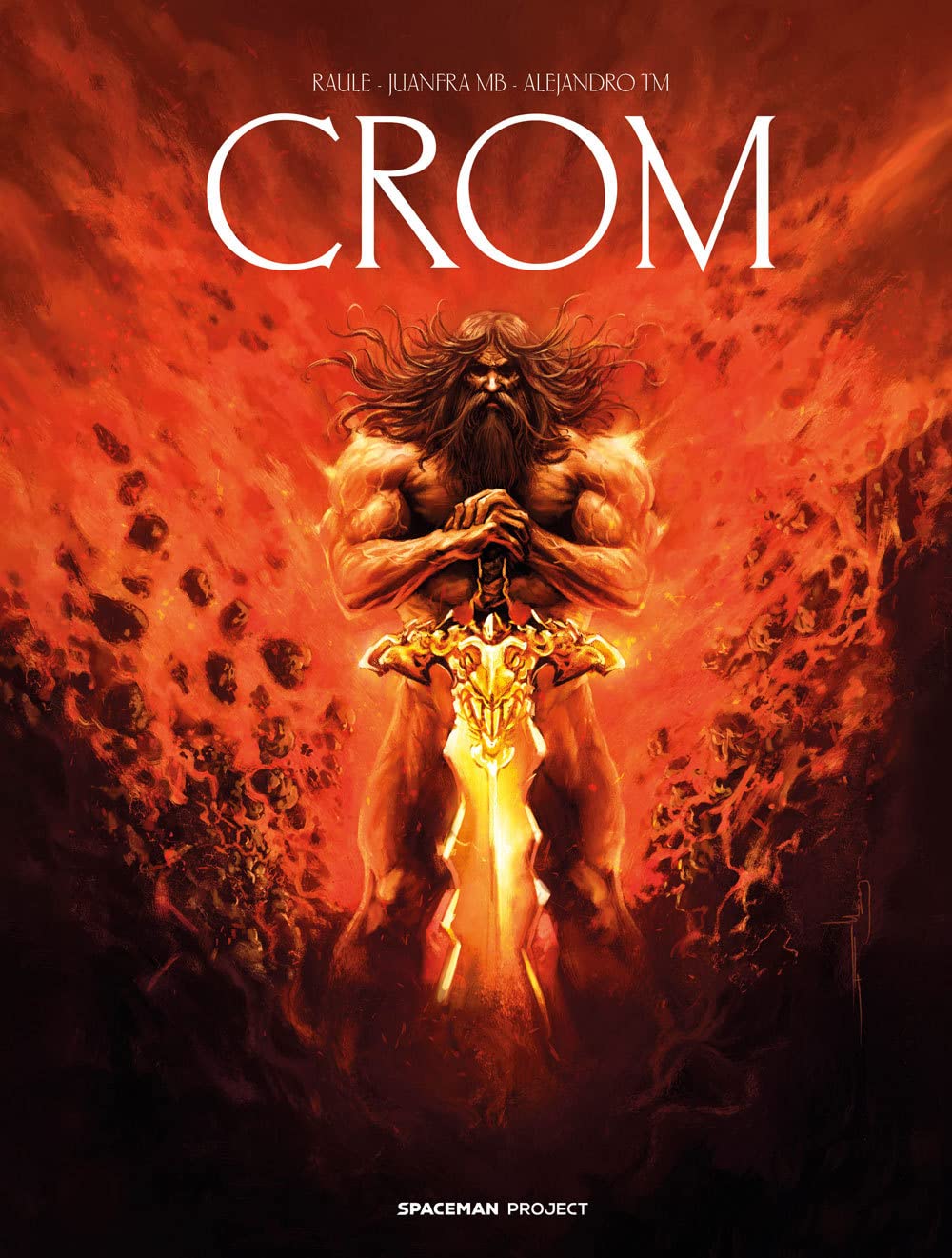
Crom (2022) by Raule, Jaunfra MB, & Alejandro TM

Depuis la nuit des temps, alors que tout n’était que téneberes et silence, les hommes osaient à peine pronouncer son nom, tant il leur inspirait de crainte. Maisie ils ignorant que Crom était né mortel, empli de rage et de haine, avide de connaître son destin dans un monde à l’agonie. Ses yeux aussi noirs que le corbeau portaient en eux le présage d’une pluie de sang éternelle et de rafales de vent tranchantes comme l’acier, semper la vengeance et la mort, anéantir Des civilisations entiéres sur son passage, peu lui important. Il aspiration à devenir le dieu Des dieux et à régner sur toute créature et toute chose. Voici son histoire.Since the dawn of time, when all was darkness and silence, men have scarcely dared to speak his name, so great was their fear of him. But little did they know that Crom was born mortal, filled with rage and hatred, eager to know his fate in a dying world. His raven-black eyes carried the omen of an eternal rain of blood and of steel-sharp winds, sowing vengeance and death, annihilating entire civilizations in his path, mattered little to him. He aspires to become the god of gods and rule over all creatures and all things. This is his story.
Back cover text of Crom (2022).English translation

Crom (2022) is a French-language bande dessinée in homage of Robert E. Howard and his creation Conan of Cimmeria, who swore by Crom. The script was written by Raule, drawn by Jaunfra MB, and colored by Alejandro TM. It is implicitly set long before the age of Conan, and tells what might be a pretty stereotypical blood-soaked, high-octane fantasy story, with some images that could have been ripped straight from a heavy metal album cover.

Chekov’s volcano: if a volcano appears at the start of a fantasy graphic novel, it must erupt by the end.

Men and monsters are killed, there’s very little dialogue and most of the story is told in pithy snippets that try not to get in the way of the artwork.

But who is Crom, really?

“They have no hope here or hereafter,” answered Conan. “Their gods are Crom and his dark race, who rule over a sunless place of everlasting mist, which is the world of the dead. Mitra! The ways of the Aesir were more to my liking.”
—Robert E. Howard, “The Phoenix on the Sword”

“What of your own gods? I have never heard you call on them.”

“Their chief is Crom. He dwells on a great mountain. What use to call on him? Little he cares if men live or die. Better to be silent than to call his attention to you; he will send you dooms, not fortune! He is grim and loveless, but at birth he breathes power to strive and slay into a man’s soul. What else shall men ask of the gods?”
—Robert E. Howard, “The Queen of the Black Coast”

His gods were simple and understandable; Crom was their chief, and he lived on a great mountain, whence he sent forth dooms and death. It was useless to call on Crom, because he was a gloomy, savage god, and he hated weaklings. But he gave a man courage at birth, and the will and might to kill his enemies, which, in the Cimmerian’s mind, was all any god should be expected to do.
—Robert E. Howard, “The Tower of the Elephant”

“Such is not the custom of my people,” Conan growled, “nor of Natala’s either. The Hyborians do not sacrifice humans to their god, Mitra, and as for my people—by Crom, I’d like to see a priest try to drag a Cimmerian to the altar! There’d be blood spilt, but not as the priest intended.”
—Robert E. Howard, “Xuthal of the Dust”

Crom, the name of the god of the Cimmerians in Robert E. Howard’s Hyborian Age adventures of Conan the Cimmerian, is invoked or named in nearly every episode, but very little is said about him. We get an idea of Crom as a sort of patron deity of Cimmerians; powerful, dark, dour, and concerned with fate, but generally uncaring. Howard does not expand on this explicitly in any of his letters, but it’s worth noting that before Conan the Cimmerian called on Crom, Conan the Reaver did:

I had clambered the cliffs—no, by the thunder of Crom, I was still in the cavern! I reached for my sword—
—Robert E. Howard, “The People of the Dark”

“The People of the Dark” (Strange Tales of Mystery and Terror June 1932), features a familiar plot device of Howard’s: a contemporary individual receives a blow to the head and is thrown back into re-living an episode of a past life, in this case the Irish reaver Conan—Conan being a relatively common Gaelic name (e.g. Arthur Conan Doyle, Conan O’Brien, etc.) Howard identified as Irish-American and many of his heroes were Irish or Irish-American too—he later noted in the Hyborian Age essay that in his fanciful history of the world, the Cimmerians were the ancestors of the Celts, and thus the Irish too.

One of Howard’s major conceptual leaps in writing the adventures of Conan the Cimmerian was not just to set the stories before recorded history, but to remove the whole element of past life regression. There is no James Allison to recall his past life as Conan the Cimmerian, Conan’s adventures appear directly on the page, without any framing narrative set in the present day. However, Howard still drew on elements of real world mythology and history in crafting his Hyborian Age.

The Crom that Conan the Reaver swears by is probably intended to be Crom Cruach, a pagan deity of pre-Christian Ireland that Howard may have run across in his studies of Irish history and folklore. This Crom is only known through post-Christian legends, which paint it as an ancient figure of worship that accepted human sacrifice, until the cult-image was destroyed by St. Patrick. The fantasy Crom of Cimmeria is not quite as malevolent (no human sacrifice), and both figuratively and physically more distant, residing atop an unnamed mountain. Howard was free to fudge the details; after all, who was going to correct him?

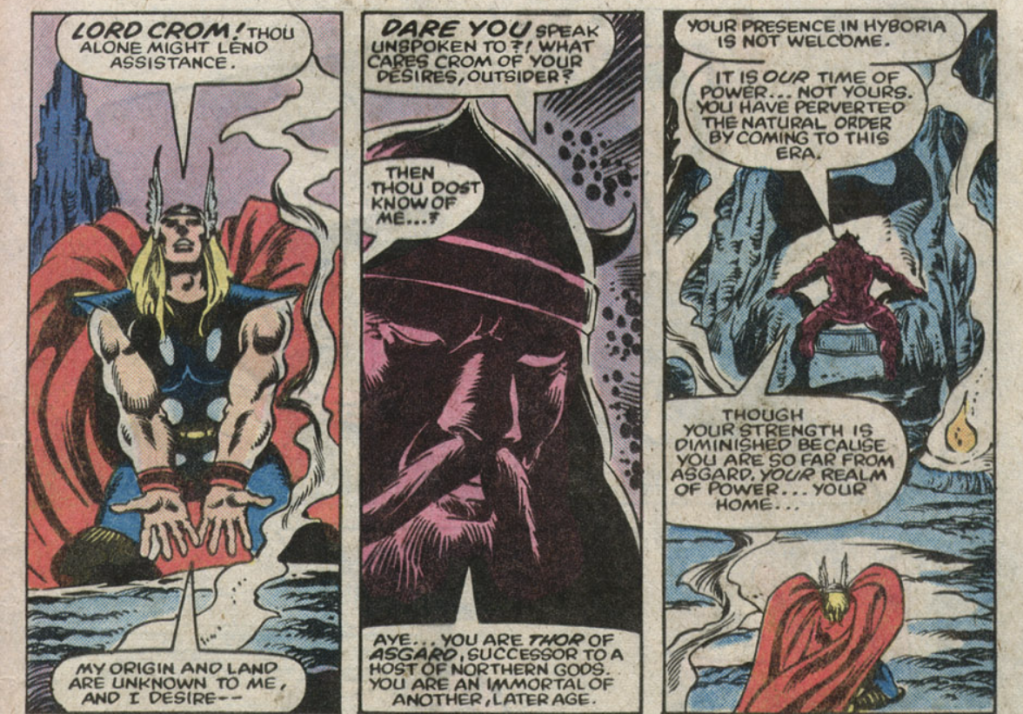
This image of Crom as essentially distant and dour has persisted through various adaptations; the 1982 Conan the Barbarian movie added a war with giants, a riddle of steel, and a Nordic Valhalla. Various comic adaptations from Marvel and Dark Horse have made Crom a more-or-less humanoid figure who appears only in rare circumstances. For example, in What if? #39, when Thor is sent back to the Hyborian Age, he climbs Crom’s mountain and actually meets with the (literally) dark and vaguely Nordic chief of the Cimmerian pantheon:

What if? #39 (June 1983). Alan Zelenetz (script), Ron Wilson (pencils), Danny Bulanadi (inks), Janice Chiang (letters), George Roussos (color)

A notable exception is Crom the Barbarian, a Conan pastiche character created by Gardner F. Fox in the 1950s for a few comic strips; this character borrows the name, but nothing else. Like Marvel’s Thor, he even appears blond.

None of these works have really tackled Crom’s origin or expanded much on his mythology; while Conan the Cimmerian might frequently swear by or at his god (or any of the others he’s adopted along the way), there’s been very little written about Crom’s worship or past—and that mostly in roleplaying games.

This is a long way to say that Raule had a free hand when it came to the script, and Jaunfra MB and Alejandro TM could exercise their imagination however they pleased when envisaging Crom and his apotheosis. What they ended up going with was a somewhat stereotypical quest narrative: Crom goes hunting for four artifacts of power, from the ruin of the first city, long sunken to the lairs of various monsters.

With a superhuman physique and strength, Crom slaughters…everyone. Entire armies. Depicted in loving detail, sometimes. Which is really sort of what sets this book off from Conan the CImmerian as Howard first conceived him, and as he is often written.

While many people comment on the artistic portrayals of Conan as this hulking musclebound figure, more brawn than brain, capable of superhuman feats of strength, speed, stamina, and swordplay…the original Conan as Howard first conceived him is very human, very mortal. Strong, but not inhumanly so; tough, but in the way a boxer is tough, able to roll with the punches and soak up punishment, and he does. Conan in “The Phoenix in the Sword” suffers terrible wounds, and only his leonine strength, speed, and skill save him from the assassins out for his hide.

From a meta-perspective, is isn’t likely that the lead character in a successful series is going to die in every fight, and readers might well expect Conan to overcome the odds—he is the hero after all—but generally Conan is in mortal danger for at least part of the story, and tends to overcome the odds with skill and bravery more than any exercise of superhuman power (a notable exception being “A Witch Shall Be Born,” where Conan is crucified…and after he gets his hands free, pulls out the remaining nails himself!)

By contrast, Crom in Crom is nearly superhuman from the get-go, facing major foes but few major injuries, obstacles, or setbacks. This isn’t a grounded, hardboiled tale of sword & sorcery—this is a legend. So when Crom runs out of mortal foes, he faces off against the four ancestral gods.

As an adult, having read many fantasy books and comics, the idea of collecting the four themed artifacts and defeating the four elemental-themed gods may seem a bit basic. If I was a twelve-year-old pouring over the pages of Heavy Metal/Metal Hurlant, however, I’d probably be breathless in awe at how metal this all is. I think everyone involved in the creation of this book understood what they needed to do, and they weren’t going to try and squeeze a lot of metaphysical complications or complex narrative twists into this story. There’s no comedic foil, no love interest, no moral dilemmas.

Sometimes the gods have to die.

In overall style and aesthetic, there are similarities between Crom and Orcs et Gobelins T11: Kronan (2021) by Jean-Luc Istin, Sébastien Grenier, and J. Nanjan. These are artists working within a fantasy milieu where the iconic bodybuilder physique and penchant for big swords has been exaggerated almost to the point of parody; the colors are vivid, but also tend to highlight and oversaturate the atmosphere of the artwork, sometimes adding a lot of emphasis that might have been missing from the original, sparse backgrounds; sometimes muddying the line work a bit.

The real Crom may be only a broken stone figure in Ireland; the Crom of Robert E. Howard’s stories was a distant pagan figure, undefined and possibly better left that way. This is not Robert E. Howard’s Crom.

For what it is trying to be, however—an homage to the concept of Crom, and the superheroic barbarian of comics, film, games, and pastiche—Crom achieves exactly what it set out to be. This incarnation of Crom seems to be almost an over-the-top parody of the comic-book Conan the Barbarian specifically because the Conan of the comics is so often already an exaggerated superheroic figure. Crom needs to be a character that takes all the essence of the Cimmerian and makes the legendary hero into something greater.


Bobby Derie is the author of Weird Talers: Essays on Robert E. Howard & Others (2019) and Sex and the Cthulhu Mythos (2014).

Deep Cuts in a Lovecraftian Vein uses Amazon Associate links. As an Amazon Associate I earn from qualifying purchases.
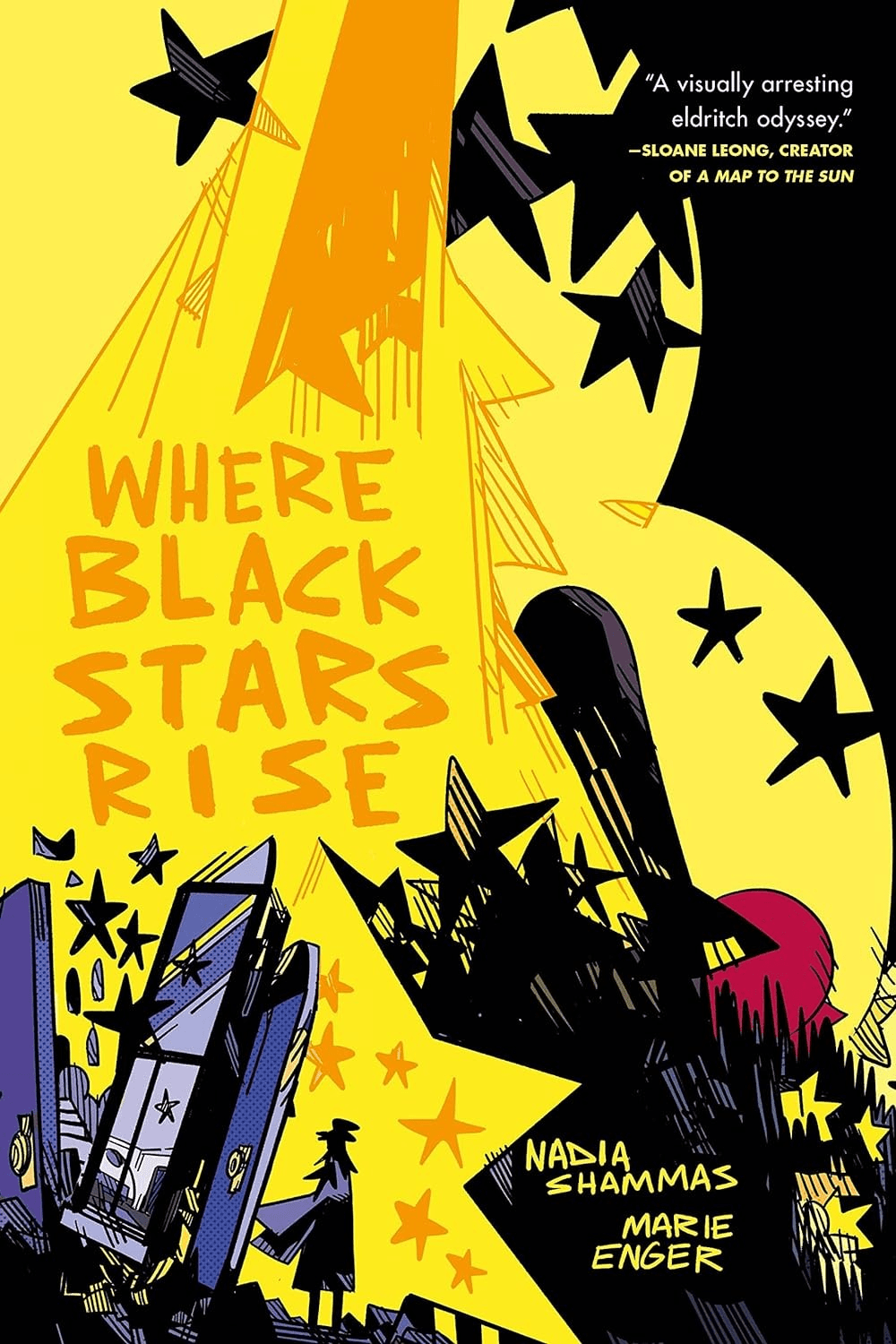
Where Black Stars Rise (2022) by Nadia Shammas and Marie Enger

I’ve always loved horror, particularly eldritch horror. Despite the deeply racist and misogynistic roots of these works, primarily the violent xenophobia of its creators, there’s an existential understanding of what it feels like to be powerless. While these men grappled with the horror of an uncaring universe, marginalized individuals grapple with the horror of a system specifically designed not to care about us. We are born into something larger, something malevolent, something we have no power to stop. Similarly, in The King in Yellow itself, there is no reason why our unfortunate narrators are chosen.

Nadia Shammas & Marie Enger, Where Black Stars Rise

On 15 December 1973, the American Psychological Association removed homosexuality from its list of mental illnesses. This reversed a course of accepted practice that had run through the 19th and 20th centuries, including during the lives of H. P. Lovecraft, Robert E. Howard, Robert W. Chambers, and other formative voices in what has come to be known as eldritch or cosmic horror. Popular understanding of mental illness and sexuality would take a few decades to catch up; some roleplaying games in the 1980s still listed homosexuality among the mental illnesses a character could have.

To say that Lovecraft et al. were products of their time is not an excuse for their bigotries and prejudices, yet it must be at least an explanation for some of the attributes of their lives and fiction. Lovecraft lived and died in an era when combat-related trauma was categorized as shell shock; the term Post Traumatic Stress Disorder wasn’t coined until 1980. It would be inaccurate to fault Lovecraft and company for working within the limits of knowledge of their own time—and even then, Mythos fiction often treats mental health with more of a Gothic, Victorian, or pulp sensibility. Lovecraft speaks of alienists more often than psychologists, and those who experience breaks from reality or accepted behavior (such as Nathan Peaslee in The Shadow Out of Time, or Delapore in “The Rats in the Walls”), or simple physical or mental abnormality (the errant cousin in “The Shadow over Innsmouth”) are more likely to be institutionalized than diagnosed and treated.

Sanity often seems a fragile, precarious state to many of these characters.

Despite the prevalence of talk of mental health in the works of Lovecraft and co., relatively few of the stories experience sharp breaks with reality—the infamous snap of the last thread that sends them from rationality into incoherence. The sight of Cthulhu in “The Call of Cthulhu” is a terrible shock, but very few characters in the works of Lovecraft or his contemporaries go mad just from the sight of an eldritch entity. More than a few characters who read from the Necronomicon do not lose touch with reality from the revelations therein. Even in Robert W. Chambers’ The King in Yellow, the eponymous play acts more as a catalyst for mental illness than a source of it.

Which is a long way to get to the point: as our cultural and scientific understanding of mental health changes, so too must the literature of horror shift to reflex that new syntax. What Lovecraft and Chambers wrote made sense within their context, but today we look on mental health very differently. This doesn’t invalidate the older stories, but it does open up vast new realms of possibility for new ones. With new understanding comes new ways to think about the Mythos.

Where Black Stars Rise (2022) by Nadia Shammas (script) and Marie Enger (art) is a graphic novel focused on mental health and the King in Yellow, the eponymous play that acts as a metatextual touchstone for the first half of Robert W. Chambers’ 1895 collection of the same name. In the course of dealing with her own life issues and mental health, therapist Amal Robardin loses a patient—and goes to find her. The journey takes her over the metatextual threshold to Carcosa itself, led by a changeling psychopomp that alternately takes on aspects of Ambrose Bierce, Robert W. Chambers, and H. P. Lovecraft (August Derleth and D. J. Tyrer, perhaps fortunately, didn’t make the cut).

If there’s a point of criticism, it might be in casting those three as the closest thing the story has to a villain—Lovecraft barely used The King in Yellow or its mythos in his work, and Bierce’s original creation bears little resemblance to what Chambers made of it—but having a straw man psychopomp is barely a speed bump in the enjoyment of a dream quest re-cast in terms of therapy.

…you’re wrong

I’m deserving of love. I’m capable of love without fear, and of doing better.

I am capable of more than this. I’m not a monster, and I’m no lost cause.

Nadia Shammas & Marie Enger, Where Black Stars Rise

One of the benefits of eldritch horror is that, very often, there is an external force involved in whatever the characters are dealing with. Dealing with mental health is often a long and involved process, and individuals are rarely “cured” in the sense that a broken bone heals or an infection runs its course. Nor can people overcome trauma or brain chemistry issues simply by lying on the couch and talking about their dreams. You might not be able to punch Cthulhu in his stupid face, but at least you know Cthulhu exists and isn’t just a figment of your imagination. Flip Cthulhu off if it makes you feel better.

There is a moment, after the visual climax, when it looks like Where Black Stars Rise is going to go the full John Milton (“The mind is its own place, and in it self Can make a Heav’n of Hell, a Hell of Heav’n.”) It is to the credit of the creators that the story steps away from this, to something sadder, perhaps more horrific, yet ultimately more real, more in line with “The Book of Fhtagn” (2021) by Jamie Lackey. Happily ever afters are for fairy tales; in the real world, not everyone can be saved, or wants to be. Sometimes you have to respect that.

A panel from Where Black Stars Rise by Nadia Shammas & Marie Enger.

For this graphic novel, Marie Enger presents a somewhat grungy, Mike Mignola-esque style. Stark shadows and bright yellows, stipple give more of the texture than hatching; there’s a lovely clutter to some scenes, and others where the curtain is dropped for effect; and the lettering and framing both fit the mood. Like the eponymous play, the graphic narrative is split into two acts, the first relatively normal and almost banal, while the second act is where things go fantastic and metaphysical.

Shammas and Enger’s work makes for an interesting contrast with I. N. J. Culbard’s graphic adaptation of The King in Yellow. Culbard is at pains to be accurate to Chambers’ original story, but as with his Lovecraft graphic adaptations, his restrained style and dedication to the original often misses the opportunity to do something extraordinary, to go beyond the text. That’s not meant as a knock on Culbard, who is meticulous with regard to authenticity, but it illustrates some of the possibilities of reworking old ideas in a new context, of offering up details the original authors had not given, of going beyond traditional interpretations and lore.

The graphic realization of Shammas’ story is a true collaboration, Enger’s art complements and expands on the text, and vice versa. Without the words, Where Black Stars Rise would still work, like Masreel or Lynd Ward’s novels in woodcuts; without art, Shammas’ script would still be a good story. Together, the result is a gem of a graphic novel, reminiscent of Black Stars Above (2019) by Lonnie Nadler & Jenna Cha but representing a distinct and novel approach to the material.

A look at the King in Yellow and its themes from a very different perspective. Not that of a white, heterosexual Anglo-American who grapple with an uncaring universe with outmoded ideas of sanity and madness; but from marginalized folks for whom an uncaring universe is something they deal with on a daily basis.

Where Black Stars Rise by Nadia Shammas and Marie Enger was published in 2022 by Tom Doherty Associates, and won the Ignyte Award for best comics team.


Bobby Derie is the author of Weird Talers: Essays on Robert E. Howard and Others and Sex and the Cthulhu Mythos.

Deep Cuts in a Lovecraftian Vein uses Amazon Associate links. As an Amazon Associate I earn from qualifying purchases.

Tentacles and Wedding Bells (2022) by Margaret L. Carter

“What’s tentacle porn?”

“You don’t want to know,” he muttered.

M. L. Carter, “In the Tentacles of Love” in Tentacles and Wedding Bells (2022)

In Sex & the Cthulhu Mythos, there is a section of about 11 pages tracing the thematic history of tentacles and erotica as it applies to the development of weird fiction. For those curious, go read it. There are citations for those who wish further reading and scholarly sources.

For the purposes of this review, it suffices to say that tentacles have been associated with weird fiction in general since around the turn of the century, and with the Mythos in particular since the days of H. P. Lovecraft, Robert E. Howard, Clark Ashton Smith, C. L. Moore, and August Derleth. Tentacles were depicted as alien and unnatural…especially when, as the popularity of Japanese anime and manga boomed in the 1980s and 1990s in the United States and other markets, tentacle erotica became increasingly more available and conspicuously a part of the erotic vernacular lexicon, even if it remained a niche interest.

Tentacle erotica is often mentioned with an expression of disgust, perversion, and transgression against the natural order, and the beings equipped with tentacles are typically inhuman, malign, and rapacious. Quite literally; “tentacle rape” has become a byword for the whole mode of tentacle erotica. It’s become almost a farcical joke: Tentacle Grape soda is a product that uses the nod-and-wink toward the trope of sexual violation by faceless phallic feelers as a selling point. Many later works have leaned into this and begun to play it for sexual titillation or laughs, as in Booty Call of Cthulhu (2012) by Dalia Daudelin or “Le Pornomicon” (2005) by Logan Kowalsky.

Yet what you don’t often see is a sex-positive take on tentacle sex.

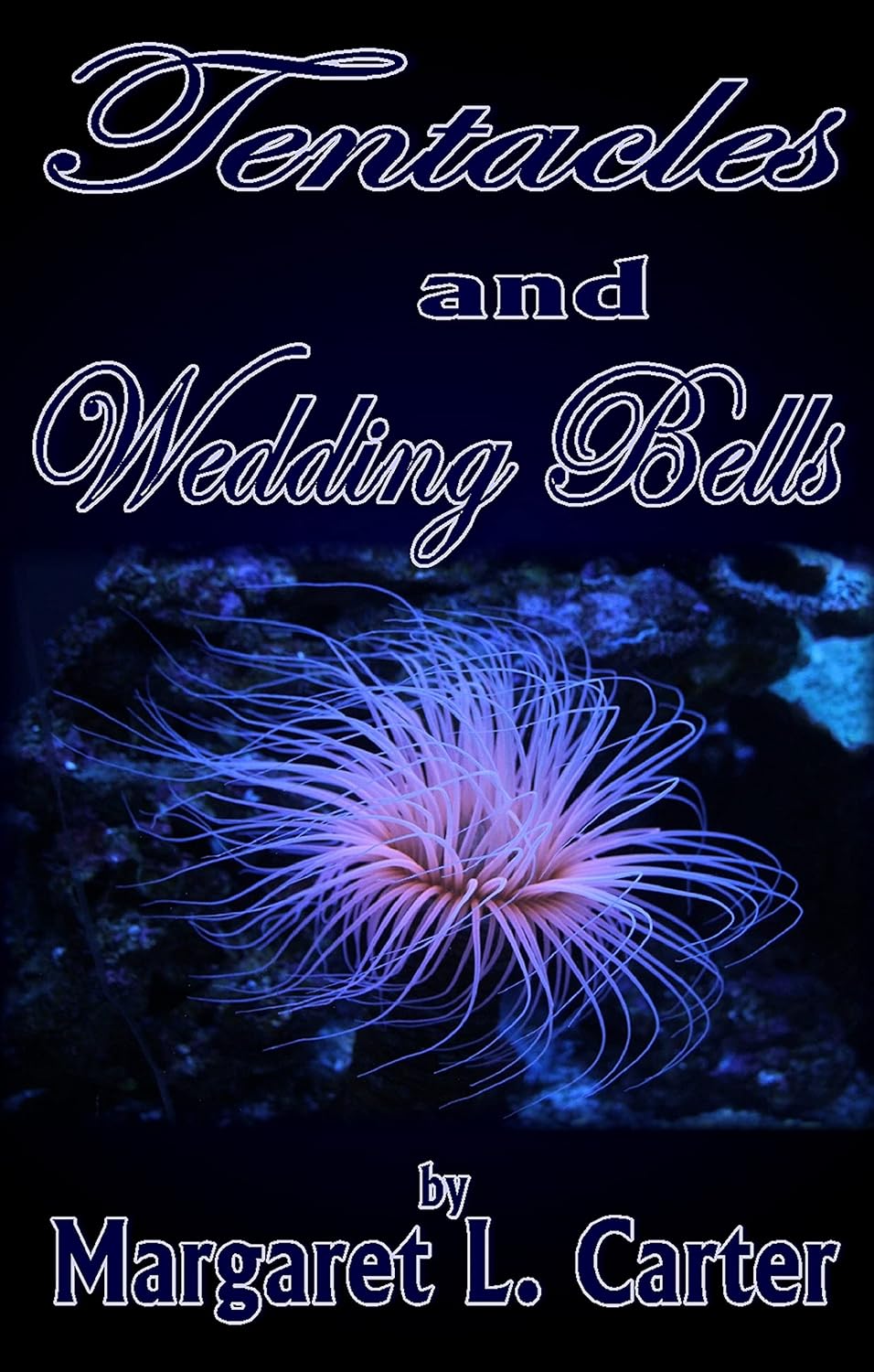
Tentacles and Wedding Bells (2022) by Margaret L. Carter is a combination of two light-hearted and sexy novelettes that had previously been published at Ellora’s Cave, an early 2000s ebook publisher that focused on romance and erotica, and which shut down in 2016. While some might cheer Amazon’s dominant share of the market, this does come at the cost of less variety from smaller independent publishers like Ellora’s Cove. Yet now, they are available once again, this time collected together.

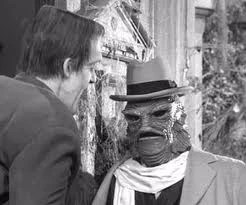
“Tentacles of Love” (2007) focuses on a wedding, where protagonist Lauren meets her future husband Blake’s family—a Mythos-inflected version of the Addams family or the Munsters, with Uncle Dexter from Innsmouth, Aunt Lavinia from Dunwich, Great-Aunt Asenath from Arkham, and of course, her fiancé’s twin brother Wilbur in the attic.

Uncle Gilbert, The Munsters (1965)

Only Wilbur takes more after their father:

A translucent mound of rainbow-colored bubbles filled the space, emitting blue and violet sparks whenever its surface rippled. A pseudopod oozed outward for a second, then withdrew into the mass, leaving a glittery trail on the floorboards.

M. L. Carter, “In the Tentacles of Love” in Tentacles and Wedding Bells (2022)

Wilbur, it turns out, is a shy, introverted soul who lives on the internet, listens to jazz, and enjoys Japanese anime (“Especially the giant robots and the creatures with tentacles.”) Pretty much like any NEET twenty-something. And Wilbur isn’t the only one with tentacles, as his brother soon reveals. For fans of “The Dunwich Horror” who have guessed at the purpose of Wilbur Whateley’s odd anatomy, M. L. Carter has the answers to your questions.

“Weird Wedding Guest” (2013) is the direct sequel; it’s Lauren and Blake’s wedding, and Wilbur meets bridesmaid Roxanne, who had been corresponding with Wilbur over email. In the dim and distant past of 2013 there was no internet dating service for the spawn of Yog-Sothoth, so the meet-cute is a little awkward…but it works.

Okay, so my email pal is half alien. He’s not really scary when you get past that fact.

M. L. Carter, “In the Tentacles of Love” in Tentacles and Wedding Bells (2022)

There are two reasons that these stories work. First, Margaret L. Carter knows her Lovecraft, and all the in-jokes and even the lore is spot-on. Fans of the Mythos will enjoy the Easter eggs and attention to detail, and the imagination at play. Second, the stories are played straight as spicy romance stories with women protagonists. These aren’t Derlethian pastiches, nor outright farces. These are women who take a great deal of weirdness in stride, and slowly come to explore some novel erotic circumstances…and their emotional attachment to their odd-looking but loveable paramours grows deeper. It’s a familiar story; like Beauty and the Beast, but more domestic.

Yet that’s why it works. Carter plays the tropes of the spicy romance off of the Lovecraftian callbacks beautifully. The sex scenes are creative and original, but more important than that they feel earned. This isn’t a story of sexual assault by eldritch entities, but a sex-positive exploration of new sensations between two willing and considerate partners.

Tentacle and Wedding Bells isn’t cosmic horror, but it is fun and intelligent. Carter is very deliberately subverting expectations in this story; the references to Wilbur’s interest in tentacle porn make a lot of sense for unstable congeries of iridescent bubbles that can exude pseudopods that double as genitalia.

It is nice, after all these years, to see both parts of Tentacles and Wedding Bells (2023) together at last and relatively available, either through Amazon or other retailers.


Bobby Derie is the author of Weird Talers: Essays on Robert E. Howard and Others and Sex and the Cthulhu Mythos.

Deep Cuts in a Lovecraftian Vein uses Amazon Associate links. As an Amazon Associate I earn from qualifying purchases.

“A Brief and Hideous Scrawl” (2022) by Erin Brown

Possibilities hinted from under the jaded metropolitan certainties in his mind; old and eldritch ancestral memories, back when beautiful virgins were wrapped in glorious robes and set out on a rock in the sunlight to be cheered by the people—and to await the dragon. The beastling was no dragon, he knew. He was a brief scrawl of hideous calligraphy write on the world, a blunt and blasphemous word.

Erin Brown, “A Brief and Hideous Scrawl” in FIYAH #22 (2022), 27

Today, Cthulhu can be quaint. Even snuggly. The majesty and fantasy of the vast, alien horror has been worn away by decades of merchandising, diluted by endless pastiches, a multitude of jokes. Hundreds of artists have tried their hands at depicting the supposedly undepictable, and the general consensus is “giant squid guy.” Often with a crotch as smooth and featureless as a Ken doll. After all, a vast, ancient entity may be one thing, but a penis? Utterly unacceptable. There may be children present. You can’t put that on a plushy.

(You absolutely can. Some people have. I digress.)

Cthulhu doesn’t have to be neutered. Like every mode and genre of horror, there are folks who say Lovecraftian horror isn’t scary anymore, if it ever was. It is ridiculous, it isn’t real, doesn’t raise a bead of cold sweat, no feces exits the rectum without permission, etc. etc. Most of these reactions are to the sanitized, Ken doll version of Cthulhu; the safe version they’ve seen a thousand times in comics and on stickers and t-shirts. Scratch that surface, and in truth, the shudders were largely always metaphorical. Few folks had nightmares about Cthulhu when the ink was still fresh on the pulp paper of Weird Tales, just as few folks died of fright when they read Dracula in the 1890s, or saw it i movie theaters in the 1930s. The idea that horror is supposed to scare the reader is essentially misguided.

At its best, weird fiction gives the reader’s imagination the tools so they can scare themselves. The realization of something, either from a dry but technically accurate description or an elaborate and expensive computer-generated image, can never approach the power of suggestion. In the case of Lovecraftian literature in particular, the suggestion is that there is something unknown and perhaps unknowable, that is so much weirder and worse than whatever familiar horrors we’re used to dealing with.

In one age, the epitome of horror may have been the vampire or werewolf; a few movies and dozens of shorts stories and novels later, and folks can confidently talk about silver bullets and crucifixes, blessed swords and fire, lasers and giant mirrors. The fun may still be there, but familiarity robs these creatures of the element of surprise. Of course, there are always exotic horrors—from other cultures, other subgenres. Crossing mythologies, crossing genres, is an old trick. How does a European exorcist deal with a penanggalan or yōkai? Oooh, what happens if a Sumerian vampire invades medieval Japan?

This is the philosophical underpinning of Erin Brown’s “A Brief and Hideous Scrawl” in FIYAH #22 (2022). On the surface, an urban fantasy predator stumbles into a different genre, and it takes them a while to figure that out. The beastling’s ignorance is almost self-destructive, but for the audience, it’s instructive. Readers equate “eldritch” with “scary thing with tentacles” all too often; they snicker and make jokes about Japanese anime, hentai, and naughty schoolgirls. Silver bullets are to werewolves what naughty schoolgirls are to Cthulhu; albatrosses around their necks. Ideas that serve to lessen and diminish the original horror by making their limits and habits more defined, more rational…more knowable.

Brown gets it. What’s better, Brown can write it. While Lovecraftian horror started out in a rather prudish period, and Lovecraft himself asserted that “The true weird tale has something more than secret murder, bloody bones,” etc., more recent generations tend to remember that bloody bones can serve a purpose. There is nothing wrong with gore, or a little body horror, especially if they serve the needs of the story and are carried off with sufficient skill. There is a certain grounding that comes with the very frank reminder that people may piss themselves when they’re scared, that murders are very rarely clean events that leave a neat and bloodless corpse.

Ultimately, the beastling’s idea of himself as “a brief and hideous scrawl” is more accurate than he knew. Like most creatures, the beastling sees itself as the center of its own narrative; a singular horror in a big world. It cannot conceive of a greater horror than itself…and that lack of imagination is, at heart, what the story is about. To look out into the darkness, see the shadows play, and not wonder at what strange shapes may cast them isn’t just dull…in some cases, it’s damn near fatal.

“A Brief and Hideous Scrawl” by Erin Brown was published in FIYAH #22 (2022).


Bobby Derie is the author of Weird Talers: Essays on Robert E. Howard and Others and Sex and the Cthulhu Mythos.

Deep Cuts in a Lovecraftian Vein uses Amazon Associate links. As an Amazon Associate I earn from qualifying purchases.

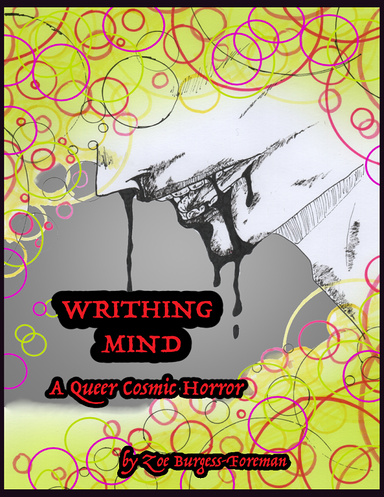
“Writhing Mind” (2022) by Zoe Burgess-Foreman

What he truly wanted to do was to find a way to express the feelings and images that had begun to creep into his head when he dreamt – a vast cosmos, something swirling and dancing in the void beyond, a body dancing to a distant beat and tendrils reaching out to take his hand.

Zoe Burgess-Foreman, “Writhing MInd” (2022)

Madness is a key theme of cosmic horror, an aspect of both attraction and repulsion. Weird fiction rarely accurately depicts mental health issues, but it has often sought to capture something of the mystique of the distorted sensorium, the disordered mind, the transition from “normal” and prosaic consciousness to one that has moved beyond rationality and into an increasingly different world view and mode of thinking. In traditional horror fiction, that state of altered consciousness is unreal—in weird fiction, that state is the true reality, a glimpse behind the veil, a realization of previously hidden truths.

Artists are a common lightning rod for such eldritch revelations, as exemplified by Lovecraft’s horror in clay:

Wilcox was a precocious youth of known genius but great eccentricity, and had from childhood excited attention through the strange stories and odd dreams he was in the habit of relating. He called himself “psychically hypersensitive”, but the staid folk of the ancient commercial city dismissed him as merely “queer”. Never mingling much with his kind, he had dropped gradually from social visibility, and was now known only to a small group of aesthetes from other towns. Even the Providence Art Club, anxious to preserve its conservatism, had found him quite hopeless.

H. P. Lovecraft, “The Call of Cthulhu”

Other writers picked up on the idea; “Something in Wood” (1948), “The Tulu Jar” (2000) by Ann K. Schwader, “The Summoned” (2015) by Clint Collins, a macabre gallery could be filled with Mythos-inflected objets d’art. Yet few stories focus on the headspace of the artist, the experience of creation, the relationship or insight or period of possession which shapes ordinary materials into an effort to capture in some form the extraordinary.

Which is ultimately what Zoe Burgess-Forman’s “Writhing Mind” is. As a story, it is almost a snapshot; there is little build-up and the denouement is cursory. These are the boring parts of the story anyway, the background and exposition. By the time the story starts, the events have already begun; the reader is only carried along for the ride, like a voyeur, watching the artist struggle to create, their descent and transcendence. The bloody climax rolls out like the first few minutes of a horror film, normal people too stuck in rational thinking to recognize the signs or heed the warnings, leaving behind only blood, bodies, and a particularly tenacious and circular idea.

They had slightly moist quality to them, not unpleasant but just enough to make them glide over his skn and make his body tingle with anticipation. They reminded him, now he collected his thoughts, of the tentacles of an octopus as rounded mouths sucked on his flesh like hungry kisses.

Zoe Burgess-Foreman, “Writhing MInd” (2022)

“Writhing Mind” is described as “a queer cosmic horror,” and that’s worth a moment of consideration. Lovecraftian fiction, as much as it deals with cosmic horrors from beyond human experience, is almost always heteronormative by default. Works like “(UN)Bury Your Gays: A Queering of Herbert West – Reanimator by H.P. Lovecraft” by Clinton W. Waters are the exception, not the rule. Queer Lovecraftian works like Le Pornomicon (2005) by Logan Kowalsky, Dagger of Blood (1997) by John Blackburn, and Strange Bedfellows (2023) by Caroline Manley (Raph) are comparatively rare compared to works like Booty Call of Cthulhu (2012) by Dalia Daudelin. By comparison, the sensuality and sexuality in Zoe Brugess-Foreman’s story is explicit, but not overly concerned with labels. The artist is cisgender male and a self-described himbo; but their sexual preference, if any, is oblique. Ultimately, it doesn’t matter.

The artist is queer for tentacled things from beyond. This is entirely appropriate: the same open mind that fuels their eldritch artwork goes pseudopod-in-hand with their sexuality. In the context of the story, there is no introspection that goes into this. The artist is already too far along in the process to question their sexual shift, or to comment on it rationally. No passing reference to Hokusai’s erotic print Tako no Ama, no anatomical studies of octopus or squid, or anything that could serve as a foreshadowing of a growing paraphilia that comes to consume them.

In hindsight, that feels like a mistake, because the artist is the only queer character in the story. Their queerness becomes inextricable from their madness, and lacking the boring build-up of a background, a deeper understanding of the character’s mindset and sexuality, the combination of sensuality, violence, and mental illness can be mistaken as causal rather than correlation. It feels like the story would have benefited from giving the artist a queer friend, someone that understood them and could relate to them but was unaffected. This was a device that Lovecraft used in stories like “The Thing on the Doorstep,” where a more straitlaced friend tells the story of a weirder associate.

Ultimately, “Writhing Mind” feels like a literary exercise with many familiar building blocks. It is not explicitly a part of the Cthulhu Mythos, there are no references to the Necronomicon, and the eldritch entity that fills the artist’s dreams and body is called by no familiar barbarous name. Yet it is clearly working in the same mode as works like Prnomicon and Strange Bedfellows, even if it mixes the ingredients a little differently…and not without a degree of skill.

“Writhing Mind” (2022) by Zoe Burgess-Foreman is available on Lulu as an ebook.


Bobby Derie is the author of Weird Talers: Essays on Robert E. Howard & Others (2019) and Sex and the Cthulhu Mythos (2014).

Deep Cuts in a Lovecraftian Vein uses Amazon Associate links. As an Amazon Associate I earn from qualifying purchases.
“Lady Chatterly’s Blowhole” (2022) by Beth W. Patterson

She was thrilled to a weird passion.

D. H. Lawrence, Lady Chatterly’s Lover (1928)

In the 1920s and 30s in the United States of America, erotica was technically illegal—groups like the New York Society for the Suppression of Vice worked hand in glove with the police and the government censors of the United States Post Office to crack down on anything that smacked of smut, from James Joyce’s Ulysses (1922) and Henry Miller’s Tropic of Cancer (1934) to Tijuana bibles, nudist magazines, or explicit works on birth control.

This did not stop the production or distribution of erotic works, but it drove it largely underground. Ambitious but shady individuals placed ads big and small in pulp magazines like Weird Tales, coding their books as works of medical or anthropological interest to skirt the laws. Pulp magazines with sex interest like Spicy Mystery and its sisters skated a thin line between being permissible or being deemed obscene and taken off newsstands and sometimes crossed it.

It took decades for the legal standards to loosen. Landmark cases like United States v. One Book Called Ulysses, 5 F. Supp. 182 (SDNY 1933) and Grove Press, Inc. v. Christenberry, 175 F. Supp. 488 (SDNY 1959) opened the door for people in the United States to publish and possess such works as Fanny Hill (1748) without fear of the books being seized and burned, and the publishers fined and imprisoned. With the new legalization of erotic literature came availability, as old classics were reprinted openly to meet a curious demand.

The artificial restrictions on publication had helped to create a kind of erotic canon; works like The Golden Ass of Apuleius, Giovanni Boccaccio’s Decameron, Leopold von Sader-Masoch’s Venus in Furs (1870), and the anonymous The Way Of A Man With A Maid (1908) weren’t necessarily the most transgressive or well-written erotic works, but in the grey market of erotic books, certain titles had by dint of age, popularity, or literary quality stood out above the rest and became a part of the culture.

It is this loose canon that many writers continue to call back to. Pluto in Furs (2019) and Pluto in Furs 2 (2022), anthologies of weird explicit fiction, is a deliberate reference to Venus in Furs. Peter H. Cannon’s jocular short story “Asceticism and Lust: The Greatest Lovecraft Revision” (1988) imagines a collaboration between Lovecraft and Henry Miller that results in “Tropic of Cthulhu”—a tongue-firmly-in-cheek reference to Miller’s censored novels Tropic of Cancer and Tropic of Capricorn (1939). Lovecraftian erotica, by the way, took a few decades to really get going in no small part because of the legal restrictions outlined above. The freedom to read Ulysses also brought with it the freedom to appreciate all the further extrapolations of sex and the Cthulhu Mythos.

So when a reader picks up the Nookienomicon and leafing through those austere pages reads the title of one story is “Lady Chatterly’s Blowhole” by Beth W. Patterson, there is a certain expectation that they will get the reference, even if they haven’t read the book. Like Mark Twain’s Huckleberry Finn or Shakespeare’s plays, a certain amount of cultural osmosis is assumed to have occurred.

The world is supposed to be full of possibilities, but they narrow down to pretty few in most personal experience. There’s lots of good fish in the sea…maybe…but the vast masses seem to be mackerel or herring, and if you’re not mackerel or herring yourself you are likely to find very few good fish in the sea.

D. H. Lawrence, Lady Chatterly’s Lover (1928)

The intention of “Lady Chatterly’s Blowhole,” however, is not to be a pornographic episode along the lines of “The Flower of Innsmouth” (2011) by Monique Poirier or an erotic paranormal romance novel like Tide of Desire (1983) by Sheena Clayton. The Nookienomicon promises “Bawdy Tales of the Cthulhu Mythos,” and Patterson delivers in a double-entendre-laden comedy that is more sizzle than steak. Working in the tradition of the period works that often had to couch any eroticism in euphemism to get past the censors, this honeymoon in Innsmouth tiptoes the fine line between discussing marital relations—and Innsmouth lore—openly and hinting at it as strongly as possible.

The tone is deliberately light, and Patterson manages to hit a certain comedic line that marks the spoof rather than the farce, although it’s damn close. This is a story that could sit fairly next to “At the Mountains of Murkiness, or From Lovecraft to Leacock” (1940) by Arthur C. Clarke or the Innsmouth episode from Mark E. Rogers’ The Adventures of Samurai Cat (1984). The puns come fast, furious, and often in an unrelenting stream. To give just the barest flavor of the narrative:

[“]Such is the way of people touched by the Old Ones.”

“Touched by the Old Ones?” Fannly looked delightedly aghast. “In what way? Can you show me on a doll?”

Beth W. Patterson, “Lady Chatterly’s Blowhole” in the Nookienomicon 71

To spoof something properly, you have to love it, and there’s a lot of love on display here. Patterson doesn’t just make the obvious jokes (although the stream of sexual innuendos and nautical euphemisms is relentless), and does more than just tease eldritch revelations.

“Is it normal for men to have five of those?”

“Not human men,” replied her husband. “His trousers must fit him like a glove…darling, are you disappointed?”

Beth W. Patterson, “Lady Chatterly’s Blowhole” in the Nookienomicon 68

Aficionados of the Cthulhu Mythos will have read any number of escapes, successful or attempted, from Innsmouth that have been published over the decades, but I can fairly guarantee that they haven’t read one quite like “Lady Chatterly’s Blowhole.”


Bobby Derie is the author of Weird Talers: Essays on Robert E. Howard & Others (2019) and Sex and the Cthulhu Mythos (2014).

Sailing Downward To The Cthulhu Call (2022) by Lisa Shea

Who hath desired the Sea—the sight of salt-water unbounded?
The heave and the halt and the hurl and the crash of the comber wind-hounded?
The sleek-barrelled swell before storm—grey, foamless, enormous, and growing?
Stark calm on the lap of the Line—or the crazy-eyed hurricane blowing?
His Sea in no showing the same—his Sea and the same ’neath all showing—
            His Sea that his being fulfils?
So and no otherwise—so and no otherwise Hill-men desire their Hills!

Rudyard Kipling, “The Sea and the Hills” from Kim (1900)

There are weird things out in the water. We still thrill to every strange creature that washes ashore, or is dredged up from the depths by a storm; the exotic, almost alien lifeforms that we glimpse through submarines or haul up in nets. The great depths of the ocean remain unexplored territory where wonders and terrors may yet reside: shipwrecks, volcanoes, lost cities. Nautical tales often contain elements of mystery, survival, adventure, and horror…and have left their mark on science fiction and fantasy. Krakens, Cthulhu, and Godzilla are all part of the lore and mystery of the ocean; sailors were the first great explorers who have lent their terminology to starships and space marines.

Yet for all the weird inspiration that the seas and oceans of the world have lent to H. P. Lovecraft and other weird writers, actual nautical weird fiction is a distinct and often overlooked subgenre. William Hope Hodgson, who was himself a sailor, was no doubt the greatest master of the weird nautical tale with his Sargasso Sea stories, “The Island of the Ud” (1907), and the unforgettable “The Voice in the Night” (1907), which inspired the Japanese film Matango (マタンゴ, 1963). H. P. Lovecraft would dabble in the genre with “Dagon” and the final chapter in “The Call of Cthulhu,” Frank Belknap Long, Jr. would contribute “The Ocean-Leech” in Weird Tales.

Nautical fiction has not gone extinct, but like railroad fiction and zeppelin stories, cultural and technological shifts have made such tales less common than before. Fewer people travel by water over long distances, with motors and electronics making it easier for ships to travel and stay in communication. Many of the tropes of nautical fiction are readily adapted to space travel stories—Event Horizon (1997) is essentially a ghost ship story set in space—and vice versa, as shown by films like The Abyss (1989) and Underwater (2020), so it might be more accurate to say that nautical fiction is undergoing an evolution as it finds its place in a changing culture.

Sometimes evolution tries something weird.

As the title might indicate, I was informed by a fellow author that every series absolutely must stay within a well-defined genre. Being a contrarian, I promptly set out to write a series in which each subsequent story is set with the same characters in a wildly different genre. I would love to hear your thoughts as I write this series as to which genres I should tackle next. Space Opera? Cozy Mystery? Amish Romance? The fun of me posting series as I write them is that it provides you, the reader, with an opportunity to shape and guide the results!

Lisa Shea, A Lovecraft Romp Through Every Genre There Is – And Some That Are Not

“Sailing Downwind to the Cthulhu Call” by Lisa Shea is Book 4 in an ongoing series about Samantha, a Black bisexual woman with a Mythos artifact and dire premonitions of Cthulhu’s emergence, and her friend-and-romantic-interest Gabriel. Strictly speaking, it might be better to regard these as chapters in a serial: while each attempts a distinct genre (1 – Horror, 2 – Mystery, 3 – Science Fiction, 4 – Sea Stories, and 5 – Romance), none of them is quite a standalone story in itself. Nor does the narrative seem complete; presumably more books are forthcoming at some point to carry Samantha and Gabriel’s story onwards, hopefully to some kind of conclusion.

Lisa Shea is a prolific author who is game for anything, and the decision to specifically try and do a nautical story with the Cthulhu Mythos has a lot of potential. While “Cthulhu,” “Dagon,” or “The Shadow over Innsmouth” might seem the obvious candidates for maritime adventures, one could just as easily imagine a sailor of any time period coming across a ghost ship crewed by Mi-Go brain canisters, or an Antarctic cruise ship that hits a frozen shoggoth. Sailing has such a rich and fascinating history, has been such a constant in human life even to the present day, that a story could be set almost anywhere or anytime.

Shea was slightly constrained in that she was keeping the same characters and continuing an overall narrative; “Sailing Downwind to the Cthulhu Call” starts out with them aboard ship, has a bit of light-hearted fun with nautical terminology, and tries to stay on topic…which is kind of where it begins to fall apart.

“I suppose, if I’m going to be reciting lines from doomed naval incidents, the Titanic shouldn’t be my first choice. Seems only two men of color were even on the ship, out of its 2,224 passengers.”

Lisa Shea, “Sailing Downwind to the Cthulhu Call”

How many people can recite the exact number of passengers on the Titanic off the top of their heads in casual banter? Keeping in mind that at no point in the proceeding does this character demonstrate that she is a Titanic fanatic. The point is driven home in the next paragraph when she begins to go into the details of the Port Chicago disaster, without any real prompting. It is not that this is information she couldn’t know, or have looked up at some point, but for a character that doesn’t know port from starboard it feels very out of character, and almost like the kind of filler used to fluff out historical romance novels for which page count is more important than pacing.

The point of bringing up the Port Chicago disaster specifically appears to be to prompt a discussion between Samantha and Gabriel on the issue of historical racism and the historical racial diversity of sailing crews, e.g.:

“When I was a boy, our neighbor was African-American. Elderly. Wrinkledlike a raisin. He’d served on the U.S.S. Mason in World War II. It said out of Boston, you know. The entire crew was African-Ameircan. At the time, our Navy wouldn’t mix those types with the white sailors.”

His brow furrowed. “Can you imagine, caring about something like that while the Nazis were slaughtering Jewish people by the trian-car-load?”

I could very well imagine.

Lisa Shea, “Sailing Downwind to the Cthulhu Call”

If this was a single bit of conversation in a longer novel, it might stand out less. Perhaps it might even help establish elements of their characters better and explain their romantic rapport since they both appear to be WWII naval buffs. However, the interaction doesn’t really drive the plot of the chapter or the story forward at all. It’s fascinating as trivia and in another context it might provide an interesting line of inquiry—how did changing racial politics affect the dynamics of sailing ships?—but in this story, the question has to be asked: what is the point? Because neither the Titanic, the Port Chicago disaster, or the U.S.S. Mason figure into Samantha and Gabriel’s little sailing cruise to Nantucket Island.

“Sailing Downwind” is technically a sea story because it takes place at sea, on a small sailboat, and most of the content is explicitly related to sailing in some fashion—even the discussion about why rum and why alcohol is measured in proof, which makes me wish Shea had consulted And a Bottle of Rum: A History of the New World in Ten Cocktails by Wayne Curtis. Yet it feels like a missed opportunity. The sailing is a little too smooth. Samantha never really learns anything about how to help out around the ship in her brief time on it. Long car trips have been planned with more care and contained more incident and excitement. For a single chapter in a longer novel, this wouldn’t be a complaint, but in a chapter trying to bill itself as nautical fiction, it just feels like so much more could have been done with the idea…a storm. Rough waves. Shark attack. Man overboard. Lost at sea. Sneaky Deep One stealing the rum. St. Elmo’s fire. Pirates (off Nantucket? Perhaps not.)

The Cthulhu Mythos material is a continuation of the story from previous books. Readers who skipped those can get the gist of the idea rather quickly; Samantha has a crystal, a piece of alien technology which is somewhere between a palantir and a browser for extraterrestrial webcams, and it’s safer to use it far away from land just in case Cthulhu decides to make a guest appearance.

I murmured, “The Chinese government would love to get their hands on this. It seems the cameras are simply orbs of energy. There’s one currently by a mountain range. I remember it from last time. I can even see how the clouds driftingby get caught in its peaks and drag a bit. It’s quite lovely.”

Lisa Shea, “Sailing Downwind to the Cthulhu Call”

The Mythos material is slight. That isn’t a bad thing in and of itself, Lovecraftian mood and ideas are more important than quotes from the Necronomicon and eldritch entities with tongue-twisting names. Unfortunately, there isn’t much of that mood either. In trying to make this a “sea story,” “Sailing Downwind” gives short shrift to also being a Mythos story. On paper, there’s no reason why it can’t be both—the nominal reason for the cruise is grounded in using the Mythos device, the Mythos device is used, and Gabriel uses sailing lore to try and interpret some of the information retrieved—and maybe it would have worked, if there was more story there.

If the essential goal of “Sailing Downwind” was to write a work of nautical fiction that mentions Cthulhu in ~25 pages, then it technically fulfills that goal…but only technically. There are some real missed opportunities here, as far as what could have been done with the same characters and the same premise with the same word count. Shea could have made this much more dramatic, much more focused on the sailing experience, emphasized the nautical horrors of the Mythos…but, Shea misses the boat. The overall impression is less of a sea story or a Mythos story, but a bridging chapter between the science fiction chapter (#3) and the sweet romance chapter (#5).

But more wonderful than the lore of old men and the lore of books is the secret lore of ocean. Blue, green, grey, white, or black; smooth, ruffled, or mountainous; that ocean is not silent.

H. P. Lovecraft, “The White Ship”

“Sailing Downwind to the Cthulhu Call – Book 4 – Sea Stories (A Lovecraft Romp Through Every Genre There Is – And Some That Are Not)” (2022) by Lisa Shea is available on Amazon Kindle.


Bobby Derie is the author of Weird Talers: Essays on Robert E. Howard & Others (2019) and Sex and the Cthulhu Mythos (2014).

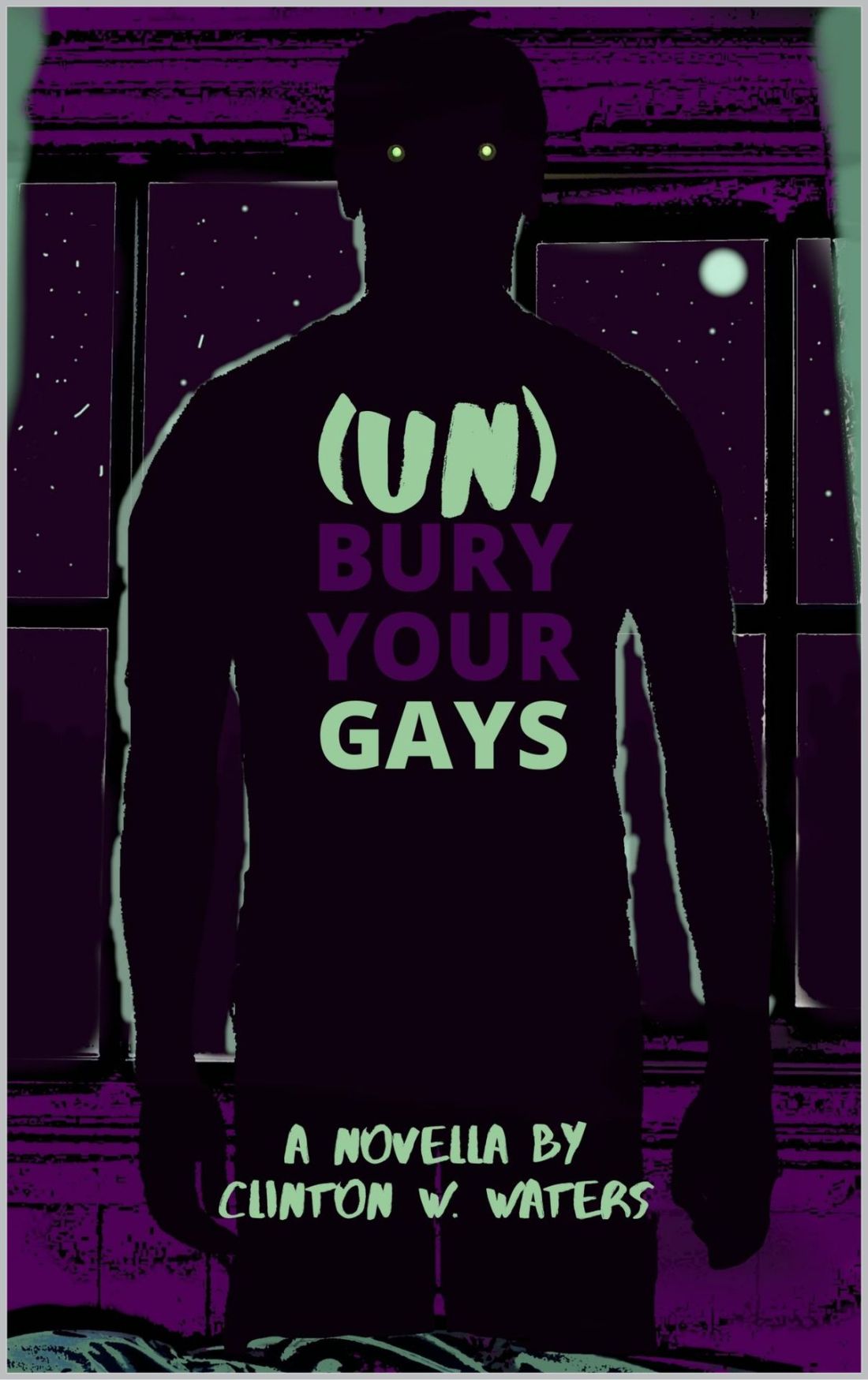
“(UN)Bury Your Gays: A Queering of Herbert West – Reanimator by H.P. Lovecraft” by Clinton W. Waters

While he was with me, the wonder and diabolism of his experiments fascinated me utterly, and I was his closest companion. Now that he is gone and the spell is broken, the actual fear is greater. Memories and possibilities are ever more hideous than realities.

H. P. Lovecraft, “Herbert West—Reanimator”

How do you go about queering Herbert West?

In 1922, before Weird Tales had ever hit the stands, H. P. Lovecraft’s first commercial work went into print: six brief tales of gruesome mad science, for which he was to be paid five dollars an episode. Commercial hack work, and Lovecraft knew it; it would not be published again until Lovecraft was safely dead and beyond objecting. From there it entered the domain of reprints, and it became the basis for the 1985 film Reanimator. The film, with the iconic performance by Jeffrey Combs as Herbert West and the glowing green reanimation agent, was a smash success. It inspired a franchise of movies, a novelization, comic books, merchandise, and stories chronicling the further adventure of the reanimator, his foes and rivals.

Herbert West has become one of Lovecraft’s breakout characters.

It is harder to pin down when the queer interpretations began. The basic building blocks were always there, from the beginning: West and his unnamed partner’s close homosocial bond, like Holmes and his Watson; Lovecraft’s typical asexuality and lack of romance in the story; the allegorical implications of men trying to create life without women, especially via the Freudian technique of injecting some of their special serum into the body. One might also add the loneliness of the outsiders, forced to hide their actions from the world, forced out onto the fringes just to be themselves without discrimination.

For queer folk, reading into the text or the adaptations something of their own experience, maybe Herbert West was always queer too. He just wasn’t out about it yet.

Brian McNaughton may have been the first to really play with the idea in “Herbert West—Reincarnated: Part II, The Horror from the Holy Land” (2000), published in Crypt of Cthulhu #106 and his collection Nasty Stories. Molly Tanzer certainly brought in the open with “Herbert West in Love” (2012). The erotic appeal was made manifest in “Herburt East: Refuckinator” (2012) by Lula Lisbon. Alan Moore & Jacen Burrows expressly coded West and his companion as queer in Providence (2017), which played off against their own queer protagonist…and there are more. The constellation of Reanimator-derived works continues to grow; some are more explicitly queer than others. Each of these interpretations is different, both in their understanding and in their depiction of what being queer means, and in what they drew from Lovecraft or what they borrowed from other media; the glowing green reagent being a common element in most stories written after 1985.

The fluid was fluorescent and green as I gently tipped the vial. A single bead of he concoction caught on the lip of the tube and then fell, splashing into the beed’s mouth.

Clinton W. Waters, “(UN)Bury Your Gays: A Queering of Herbert West – Reanimator by H.P. Lovecraft”

“(UN)Bury Your Gays” is a spiritual sequel to “Herbert West—Reanimator”; one that retreads a little familiar ground (it is a reanimator story, it would be more shocking if there wasn’t a reanimation), but is overall smaller, more focused: the protagonists are not simply repeating the Herbert West/unnamed assistant dynamic, but are exploring a much more complicated, nuanced, realistic friendship as the only two queer kids in high school. There is a sensibility in the story reminiscent of “Pale, Trembling Youth” (1986) by W. H. Pugmire & Jessica Amanda Salmonson; a weird sort of universality to the outsider experience which makes the characters much more sympathetic than West and his nameless assistant ever were.

Waters sets the action in the current day, and a certain pop-culture sensibility flows through the scenario: like the genre-savvy characters in the Scream films, they can picture themselves in a horror story and sometimes try to interpret what’s happening through that lens, riffing on vampirism and flesh-eating zombies in a way that Herbert West & his assistant in 1922 couldn’t. Less directly and less obviously, the two teens also approach their sexuality and relationship through the same lens. This is far and away from a Lovecraftian interpretation of Brokeback Mountain, but there are shades of the same relationship dynamics at play. What the leads have isn’t sexual, but they are tied together by their sexuality. A shared intimacy, but not exclusivity.

In a lot of ways, Waters flips Lovecraft’s script. Instead of a nameless protagonist talking about his relationship with Herbert West, we have the great-grand nephew Humphrey West telling the tale of his best friend. Where Herbert West is focused on reanimation practically to the exclusion of all else and seems to take his relationship with the unnamed narrator for granted, in “(UN)Bury Your Gays” the focus is all about the relationship between Humphrey and his friend, with reanimation a catalyst for a shift in their dynamic, and that is what the story is ultimately about.

Of Daniel “Danny” Moreland, I can only speak fondly. He was my closest companion. My champion. My single greatest achievement.

Clinton W. Waters, “(UN)Bury Your Gays: A Queering of Herbert West – Reanimator by H.P. Lovecraft”

A key point in Waters’ approach is that it is a queering, not the queering of “Herbert West—Reanimator.” This is one interpretation, one take, one possible iteration of the infinite possibilities of exploring Lovecraft’s original narrative, characters, or concepts through a queer lens. Rather than repeating what Molly Tanzer or Alan Moore wrote, Waters is presenting a different permutation on the same idea—one that is more inspired by Lovecraft’s original than a strict revisitation of the same familiar story and characters.

Because there is more than one way to be queer, and more than one way to reanimate the Lovecraftian corpus.

“(UN)Bury Your Gays: A Queering of Herbert West – Reanimator by H.P. Lovecraft” (2022) by Clinton W. Waters is available on Amazon Kindle.


Bobby Derie is the author of Weird Talers: Essays on Robert E. Howard & Others (2019) and Sex and the Cthulhu Mythos (2014).

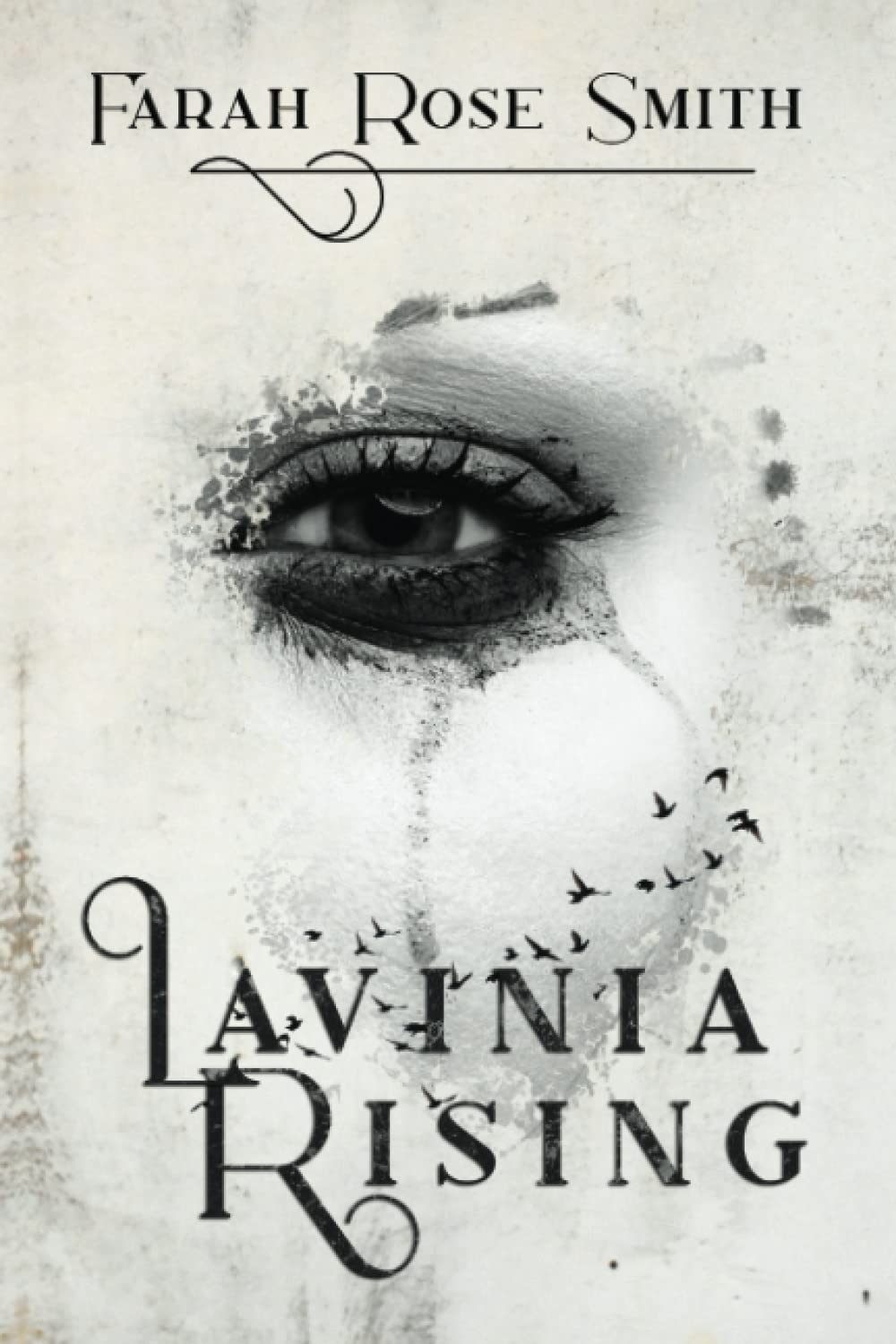
Lavinia Rising (2022) by Farah Rose Smith

Lavinia was one who would be apt to mutter such things, for she was a lone creature given to wandering amidst thunderstorms in the hills and trying to read the great odorous books which her father had inherited through two centuries of Whateleys, and which were fast falling to pieces with age and worm-holes. She had never been to school, but was filled with disjointed scraps of ancient lore that Old Whateley had taught her. The remote farmhouse had always been feared because of Old Whateley’s reputation for black magic, and the unexplained death by violence of Mrs. Whateley when Lavinia was twelve years old had not helped to make the place popular. Isolated among strange influences, Lavinia was fond of wild and grandiose day-dreams and singular occupations; nor was her leisure much taken up by household cares in a home from which all standards of order and cleanliness had long since disappeared.

H. P. Lovecraft, “The Dunwich Horror”

There is a small cycle of stories involving Lavinia Whateley, spinning out from “The Dunwich Horror.” W. H. Pugmire & Robert M. Price suggested her survival in “The Tree House” in The Dunwich Cycle; Alex Picchetti went into explicit detail about her conception of the twins in “When The Stars Come” in Whispers in Darkness: Lovecraftian Erotica; Edward Lee was no less explicit in describing Lavinia’s relationship with her sons in The Dunwich Romance.

Yet these stories are all more or less unsympathetic—perhaps not surprising as they were all written by men, and accept that Lavinia was a more or less willing participant in the events leading up to the Dunwich Horror; a cultist who finally grew afraid of her children and quietly disappeared off the page when her part in the story was over. Few of them focus on what it was like to be Lavinia Whateley. Albinos don’t have it easy in life, even when they’re not uneducated and living in rural poverty under the will of a demented wizard intent on using her as a broodmare for a pair of cosmic horror antichrists. There is little of the realism of that hard life in their characterizations. As Smith puts it:

Also, as a fellow disabled New England woman living in poverty, I felt there was something beyond affinity forming between my eyes and the words on the page. I wanted to hear her, imagine her as more fully-formed than Lovecraft had made her.

Farah Rose Smith, A Disability Scholar Looks At Lovecraft

Lovecraft’s model of Lavinia Whateley was Mary from Arthur Machen’s “The Great God Pan”—a young woman raised to be the subject of an experiment by an older, learned man, who gives birth to an enfant terrible, inhuman in aspect. Mary is barely there in Machen’s story, and Lovecraft gave her both more background and characterization—but not very positive characterization, and even the description of Lavinia is unflattering. Lavinia was “a somewhat deformed, unattractive albino woman of thirty-five,” a “slatternly, crinkly-haired albino,” with “misproportioned arms” and the Whateley chinlessness.

Some of Lovecraft’s descriptions are particular: why the misproportioned arms? Why an albino? Why crinkly hair? Readers and writers might gloss some of these: making Lavinia an albino helped to heighten the contrast with her “black brat,” Wilbur Whateley; crinkly hair can be a sign of dryness, suggesting she doesn’t wash it, which would go along with the idea that Lavinia was “slatternly” or unkempt, dirty, a common characteristic of poor whites in Lovecraft’s fiction. Yet Farah Rose Smith looked at these pieces of the puzzle and went a different way…

Ma was born in the back of a show wagon to a dyin’ hottentot (that’s what Barnum called ’em, she said, but said she’d slap me cross the cheeks top and bottom if I ever said it myself) and “New England’s tallest Negro.” When she was a little gilr, they told her to get out when she could, or else Barnum’d put her on display like them and even take out her body parts fer exhibition after she was dead.

Farah Rose Smith, Lavinia Rising 21

This puts, to pun a phrase, an entirely different complexion on the matter. Lovecraft gives no attention to Lavinia Whateley’s maternal line except to say that Mrs. Whateley died violently when the girl was twelve years old. He has nothing to say about Wilbur Whateley’s maternal grandparents. Human zoos and human oddities were real—and often very exploitative—enterprises in the late 19th and early 20th century, as famously depicted in the 1932 pre-Code horror film Freaks. Making Lavinia mixed-race highlights a heritage of discrimination…and a life she didn’t want for her sons.

Like “The Ballad of Black Tom” (2016) by Victor LaValle, Lavinia Rising is an alternate point of view for “The Dunwich Horror,” but largely follows the plot of Lovecraft’s story. This changes the story from a horror to a tragedy; readers know what is going to happen, more or less, and the difference is that we get Lavinia’s point of view as she grows up, dealing with her illnesses and disabilities, the discrimination and misogyny of a rural New England town and a patriarchal household ruled by a twisted madman that sees her as no more than a means to an end. There is little happiness in that life, and we know how it is going to end.

Yet what Farah Rose Smith offers readers is one thing more: what happens after the end. A brief epilogue to “The Dunwich Horror” which focuses on her actions to understand what happened to her children, as opposed to what happened to Mamie Bishop or Wilbur Whateley. The domestic drama and very human grief may be completely counter to Lovecraft’s idea of cosmic horror…but that is rather the point. Lovecraft did enough damage to Lavinia’s reputation; it’s time to hear her own story in her own words, and her point of view makes her an outsider in her own family of outsiders.

The only book really comparable to Lavinia Rising in the corpus of weird fiction is Helen’s Story (2013) by Rosanne Rabinowitz—and while the stories are very different in how they turn out, there is a similarity in that both of these works revisit women in weird fiction who have been ill-served by the rather patriarchial attitudes of the late 19th and early 20th century. Both Machen and Lovecraft were fully capable of writing fiction from the point of view of women, and capable too of imagining them as sympathetic and intelligent beings—Machen’s “The White People” and “The Man of Stone” (1932) by Hazel Heald & H. P. Lovecraft showcase that, at least a little—but they rarely did so. In focusing on their supernatural horrors, Lovecraft and Machen largely overlook or choose not to detail the domestic horrors and psychological horrors of those women’s lives, except by inference…or, in the case of Lavinia, a single desperate conversation:

Through all the years Wilbur had treated his half-deformed albino mother with a growing contempt, finally forbidding her to go to the hills with him on May-Eve and Hallowmass; and in 1926 the poor creature complained to Mamie Bishop of being afraid of him.

“They’s more abaout him as I knows than I kin tell ye, Mamie,” she said, “an’ naowadays they’s more nor what I know myself. I vaow afur Gawd, I dun’t know what he wants nor what he’s a-tryin’ to dew.”

H. P. Lovecraft, “The Dunwich Horror”

Smith retains Lovecraft’s dialogue verbatim, but expands on the scene and the thoughts and events behind them. Like Rabinowitz, the main point of departure is the part of the story where the woman died or disappeared—and their survival marks the transition from the familiar to the unfamiliar. This is all about the parts of the story the reader never got to read about…and, it has to be said, Smith does it well. It is a compelling story, and if there are a few inconsistencies here and there, those might as easily be chalked up to an unreliable narrator and unreliable transcription as error.

Plus, we get to learn the name of Wilbur’s brother.

Farah Rose Smith’s Lavinia Rising was published in 2022; some of her other Lovecraftian fiction is included in the collections The Witch is the Body (2021) and Of One Pure Will (2021).


Bobby Derie is the author of Weird Talers: Essays on Robert E. Howard & Others (2019) and Sex and the Cthulhu Mythos (2014).