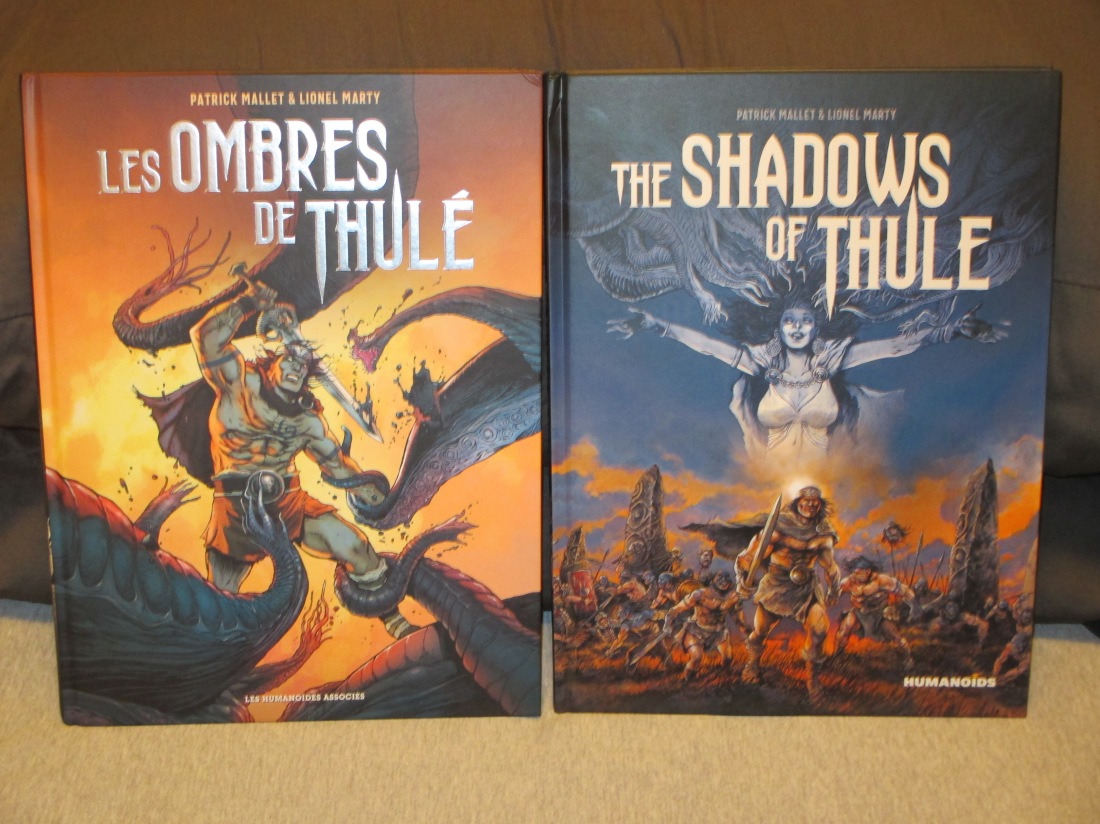
Les Ombres de Thulé (2023) by Patrick Mallet, Lionel Marty, & Axel Conzalbo

How can I wear the harness of toil
And sweat at the daily round,
While in my soul forever
The drums of Pictdom sound?
—Robert E. Howard, “The Drums of Pictdom,” Collected Poetry 2.72

Today, historians and archaeologists tell us that real-life Picts were a people in what is now Scotland during the early Middle Ages, who in time merged with or were subsumed by the other peoples in the region. When a 13-year-old Robert E. Howard ran across the mention of them in a New Orleans library in 1913, however, the Picts were a mysterious race. Pseudohistories like the Pictish Chronicle mingled with scientific racialism, and the early archaeological and anthropological theories of the British Isles to made the Picts a race apart from Gaelic peoples like the Irish and Welsh; Germanic invaders like the Angles, Saxons, and Jutes; Nordic raiders a-viking from Scandinavia; or more southernly European invaders like the Romans. The underdogs of the ancient world, the last hold-outs as waves of invaders washed over the British Isles, driven at last to one distant corner…and at last, snuffed out, to leave only a few enigmatic stone monuments behind.

Howard, with a penchant for underdogs, was enamored from the first.

Picts are one of the near-constants of Robert E. Howard’s imagination. They feature in nearly every era of his fantastic fiction, from the tales of Brule the Spear-Slayer and other Picts who aided King Kull in Valusia, to the howling tribespeople in the Pictish wilderness across the Black River in the age of Conan the Cimmerian, they play a major part in the history of the Hyborian Age, to Bran Mak Morn who fought the invasion of the Romans in the British Isles, to the time of Brian Boru when Turlough Dubh O’Brien encountered them among the small islands to the north of Britain, and into the modern day when a rumor of a surviving cult of Bran Mak Morn came in “The Children of the Night.”

Over the course of his writing career, Howard’s conception of the Picts changed and evolved. His initial depictions of them drew comparisons with the Little People, the elves and fairies of British folklore, but when he began a correspondence with H. P. Lovecraft in 1930, Howard began to differentiate the two concepts (see “Conan and the Little People: Robert E. Howard and Lovecraft’s Theory”), which eventually led to one of Howard’s most powerful stories: “Worms of the Earth,” which mingles references to Lovecraft’s Mythos with Howard’s Pictish lore (Lovecraft would return the favor by including the cult of Bran Mak Morn among others in his story “The Whisperer in Darkness.”)

While Picts are an important part of Robert E. Howard’s work, they do not tend to fare so well in adaptation and in the writing of others. Henry Kuttner, not long after Howard’s dead, began the Elak of Atlantis stories in Weird Tales, which included an antagonistic people called “Pikhts.” The success of the Conan the Barbarian comics, and by-blows like Kull the Conqueror, have seen many Pictish characters in the Hyborian and Thurian Ages, but these depictions tend to borrow from Native American imagery (which to be fair, Howard did himself in “Beyond the Black River”—see John Bullard’s article “‘Beyond the Black River’: Is It Really ‘Beyond The Brazos River?'”) Bran Mak Morn, Howard’s most singularly developed Pictish character, has had notable adaptations in the comics as well, especially two adaptations scripted by Roy Thomas: “Worms of the Earth” (art by Tim Conrad), and “Kings in the Night” (art by David Wenzel), and in prose was the subject of three notable pastiches: Legion from the Shadows (1976) by Karl Edward Wagner, For the Witch of Mists (1981) by David C. Smith & Richard Tierney, and Bran Mak Morn: Red Waves of Slaughter (2024) by Steven L. Shrewsbury.

For all that might sound like a lot, given the hundreds of Conan comics and dozens of novels, and even the dozens of Kull and Solomon Kane comics, the Picts might fair be said to have often been overlooked. Because Howard’s themes for the Picts evolved over time—covering so many disparate periods, and often involving stories not published until after his death—there isn’t really a cohesive Pictish Mythos in fiction, despite the fact that they are more of the connective tissue of Howard’s fantasy fiction than nearly anything else.

This is all a very long way to say that it’s nice to see some other creators take an interest.

Les Ombres de Thulé (2023) by Patrick Mallet (script), Lionel Marty (art), & Axel Conzalbo (colors) is a French-language bande dessinée; there is also an English-language translation available, The Shadows of Thule, released the same year, translated by Montana Kane. The story is not an adaptation of any Howard tale, nor is it specifically tied to Howard’s setting or chronology, but it is clear that Mallet & Marty took inspiration from Howard and Lovecraft, and the tale contains many Echoes of “Worms of the Earth,” “Kings of the Night,” and “The Dunwich Horror.”

The Romans have pushed deep into Britain, and they’re here to stay. The Picts are a fading people, ancient, barbarous, and wise with magic, but more desperate every year. A Roman general is manipulated by a necromancer into releasing an ancient Lovecraftian horror that had been sealed away long ago…and it might take all the swords and sorcery of the King of the Picts to deal with this old enemy.
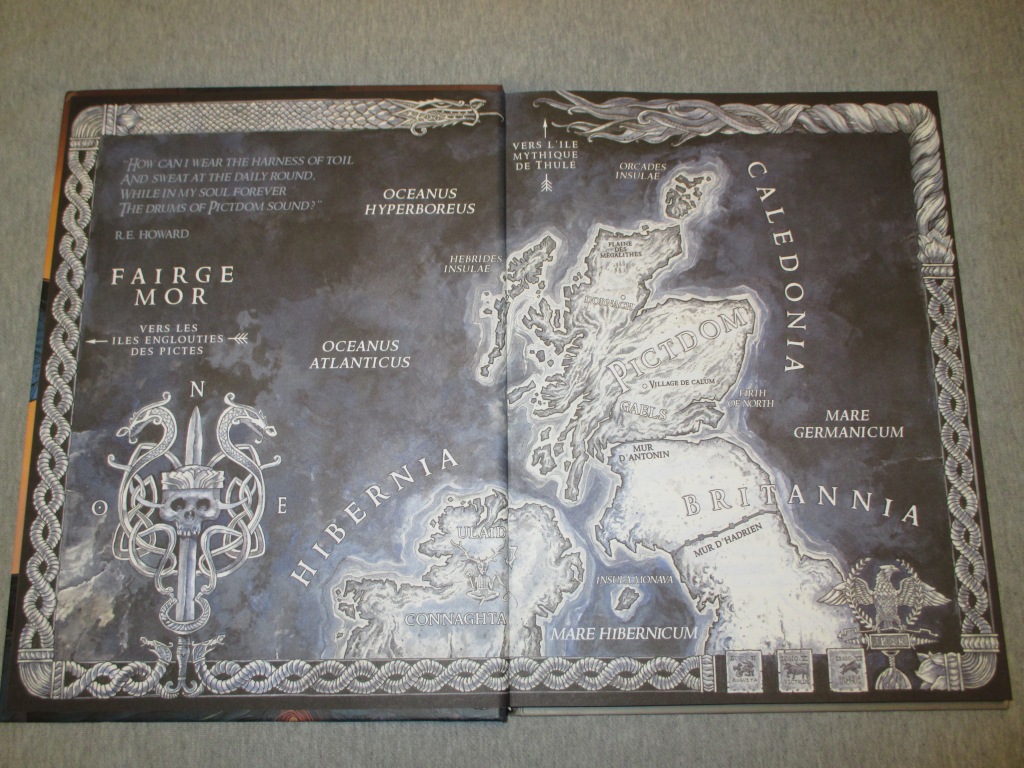
Map on the inner pages of the French edition; not included in the English translation.

If it sounds familiar, it is because it is. his is not quite as dark and brooding as Howard’s tales of Bran Mak Morn, and the scale of the action and magic owes more to the popular depictions of contemporary fantasy than to some of the more realistic or restrained proportions of older works. Readers today expect glowing eyes, towering tentacled terrors, and headlopping…and Les Ombres de Thulé delivers on all three.

Conzalbo uses color to heighten the distinction between the old man’s vision and the real-world scenes.

Like other bandes desinees such as Orcs et Gobelins T11: Kronan (2021) by Jean-Luc Istin, Sébastien Grenier, and J. Nanjan and Crom (2022) by Raule, Jaunfra MB, & Alejandro TM, there is a certain aesthetic that pervades this book. Digital coloring adds a certain studied muddiness to some of the artwork that looks better than plain, flat colors but doesn’t quite replicate the texture of real paint. Minor nudity is taken for granted, as are splashes of gore. While some of the pages may seem crowded with panels, there are often huge splash pages that give moments to admire the detail that larger page sizes allow.

Mallet and Marty wear their influences on their sleeves. This is a love-letter to Howard and Lovecraft as much as anything else. An original story, but also a remix that combines some of the highlights from their favorite weird fiction. If it dips into a bit more of Celtic myth (there are some definite overtones of Michael Moorcock’s Corum Jhaelen Irsei tales), or some Dungeons & Dragons-style mucking about with eldritch blasts and healing spells than Howard or Lovecraft would have had it, that speaks to how the fantasy aesthetic has changed in the hundred years since Weird Tales began publication.

Back covers of the French (left) and English (right) editions.

Les Ombres de Thulé / The Shadows of Thule is a fun experience, in French or English. Kane’s translation appears faithful to the original text and in keeping with the spirit of the work, not always an easy balance to achieve. It is nice to see creators who take inspiration from Howard and Lovecraft’s work without necessarily being slavishly devoted to a long and convoluted Mythos.


Bobby Derie is the author of Weird Talers: Essays on Robert E. Howard & Others (2019) and Sex and the Cthulhu Mythos (2014).

Deep Cuts in a Lovecraftian Vein uses Amazon Associate links. As an Amazon Associate I earn from qualifying purchases.

Harlem Hellfighters Never Die (2023) by Queen’s Court Games

Tabletop roleplaying has always had a performative aspect; the players and gamemasters were encouraged to embody their characters to some extant, and to be able to interact in character. The early community spaces around roleplaying games like Dragon Magazine (1976-2013) and Gen Con (1968-) were built on the shared experiences of gaming in small groups, and much of the early humor in gaming periodicals and associated media dealt with the peculiar quirks of players and rules interacting during a live session—as well as recounting the epic adventures characters underwent at those tables. This has been the basis of a good deal of media surrounding gaming, including comics like Knights of the Dinner Table (1990-) and Dork Tower (1997-), and the Japanese phenomenon of the replay, or transcripts of a gaming session packaged and sold for entertainment.

This performative aspect has been especially notable when gaming was done in public, before an audience, such as when participating in a tournament at a gaming convention or when doing live-action roleplay in any public space. There have been various efforts over the years to expand this practice in different media; for example some of the Knights of the Dinner Table strips were animated and voice actors brought in to provide short episodes like “Scream of Kachooloo,” based on the popular Call of Cthulhu Roleplaying Game. With the advent and popularity of YouTube (2005-), Twitch (2011-) and other streaming services, video and audio became increasingly popular media for gaming of all stripes, from video game let’s plays to various efforts to dramatize and/or capture the performance of a gaming session, which gelled into a format called actual play.

At its most basic, this can be as simple as group with a webcam and a cheap microphone recording a session at the kitchen table; at its most sophisticated, talented gamers/actors from around the world with their own high-end recording set-ups can collaborate on a gaming session together, and the whole professionally edited, produced, and with music or visuals into a viable product. The more high-end actual plays tend to have associated websites, social media, patreons, tipjars, and maybe even advertisements or sponsors to help defray the cost of production or run a modest profit for the gamers/actors involved. Shows like Critical Role (2015-) and its episodes CelebriD&D (2015-2020) have effectively migrated the concept from amateur or semi-professional to professional productions, but the community that generates and watches actual play primarily remains, first and foremost, dedicated hobbyist gamers who want to share the roleplaying experience.

While many actual plays focus on popular game systems like Dungeons & Dragons 5th Edition or particularly popular and notable published campaigns like Horror on the Orient Express, the format is democratic and allows for diverse gaming groups to run through any scenario or campaign, published or homebrew. This sometimes gives the rare opportunity to see, for example, a group of Black gamers play through roleplaying game designed for primarily Black player characters.

Queen’s Court Games (web, YouTube, Twitch, Bluesky, Patreon, etc.) is an award-winning actual play web series with a diverse cast; their byline is “Character-focused. Rules-light. Banter-free. Never D&D.” and they deliver. In 2023, the group (Noir Enigma, Jas Brown, Robert Madison II, Christian McKinzie, and Laura Tutu) played through the scenario Harlem Hellfighters Never Die by Chris Spivey, a scenario that came with Harlem Unbound (2017) by Darker Hue Studios (2nd edition). The actual play is spread out over six sessions/episodes, each of which is 2-3 hours long, with Noir Enigma playing the Keeper and the five gamers each as a single player character as they play through the scenario.

The performative aspect of actual play sometimes lends a scripted air to most proceedings, but the Queen’s Court Games group feels much more natural in their delivery. There is a conscientiousness to the performance, because the players all give each other space to talk, rarely trying to talk over one another, getting into little asides, etc. The Keeper, Noir Enigma, gets an oversized amount of attention because the Keeper is the driver for the scenario, the one which all the players have to interact with regularly and who has to set the pace and maintain the flow of the session for hours on end. Of the cast, Laura Tutu stands out as the most dramatic of the players. While they did practice some of their lines before play, there’s very much an improv group feel to the whole production, and the cast plays off each other well.

What sticks out the most is how much the players seem to enjoy the Harlem Unbound setting, and to inhabit those characters. It is not unusual to see Call of Cthulhu gaming groups that are all white people playing white characters and going through scenarios where anybody described as “dark” or “swarthy” is likely to wear a robe and wave a sacrificial dagger, so there is a different dynamic to having an all-Black group playing Black characters, the kind of humor they can bring (Christian McKinzie and Enigma Noir in particular get many of the funnier interactions, which have the other players in stitches with McKinzie’s self-deprecating humor and animated style). It is a playstyle that is conscious of and avoids the worst expressions of racism during the period, without playing down that racism and discrimination were prevalent at the time.

Spread out as Queen’s Court Games is over different channels, it is difficult to get a handle on viewership numbers and how well-received it was, but it is notable that the NZ Web Fest selected Harlem Hellfighters Never Die among its 2024 video actual plays.


Bobby Derie is the author of Weird Talers: Essays on Robert E. Howard and Others and Sex and the Cthulhu Mythos.

Deep Cuts in a Lovecraftian Vein uses Amazon Associate links. As an Amazon Associate I earn from qualifying purchases.
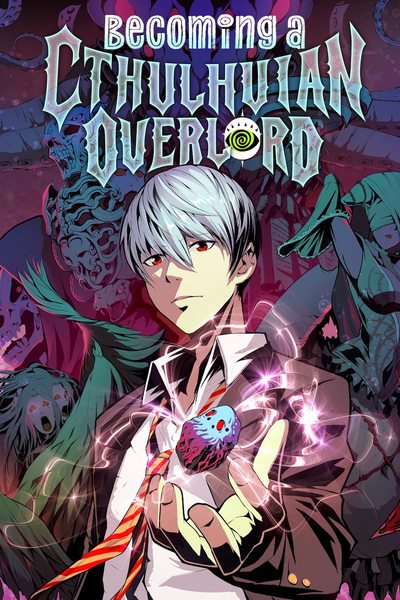
Becoming a Cthulhuian Overlord: Episodes 1-20 (2023) by Yi Jian San Lian (一键三连)

Becoming a Cthulhuian Overlord (成为克苏鲁神主) began as a novel by Yi Jian San Lian (一键三连) published on China Literature, which was then adapted in 2020 into a manhua by An Zhu (渚谙, writing) and Na Ti Maeo (拿铁猫, illustration), produced by Kaite Dongman(凯特动漫, Cat Comics), which has been translated into English by Sangria and is now being serialized online at Tapas.

This serial work falls into the genre of isekai: a very broad and currently popular genre in many media that involves an individual who becomes displaced from the real world to another world. The nature of the displacement and the other world are major flavors for the genre; the protagonist might die, for example, and be reincarnated into a fantasy world that follows rules like a tabletop roleplaying game such as Dungeons & Dragons or an equivalent video game like World of Warcraft. Or they might fall through a portal and be lost in the distant past, transported to an alien world, etc.

If this sounds a bit overbroad, it’s because isekai is a term for a mode of fantasy fiction that existed long before the term itself existed. In A Connecticut Yankee in King Arthur’s Court (1889), a blow to the head sends the Boss back to the Dark Ages Europe; in A Princess of Mars (1912) former Confederate soldier John Carter is transported bodily to a fantastic version of Mars. Lovecraft, Robert E. Howard, and others were familiar with the basic idea; one might consider The Dream-Quest of Unknown Kadath a kind of isekai, and in “The Challenge from Beyond” George Campbell is transposed into the body of an alien worm—and decides to conquer the alien planet, which is a very appropriate approach for a typical isekai protagonist. These portal fantasies bridge a gap between low fantasy (fantasy fiction set in the mundane world or realistic setting) and high fantasy (fantasy fiction set in a world separate from the real world).

Which is all meat for argument for those who like to argue labels. In Becoming a Cthulhuian Overlord, the premise is that the unnamed protagonist dies in a car accident with his pregnant wife, and has a mysterious supernatural encounter with a certain messenger…

…and reincarnates as Qi Su, an orphaned high school student in Lua City, which superficially looks much like the mundane world. Except now he can see a variety of shadowy and horrific phantoms that he has to pretend not to see, or else they’ll eat him.

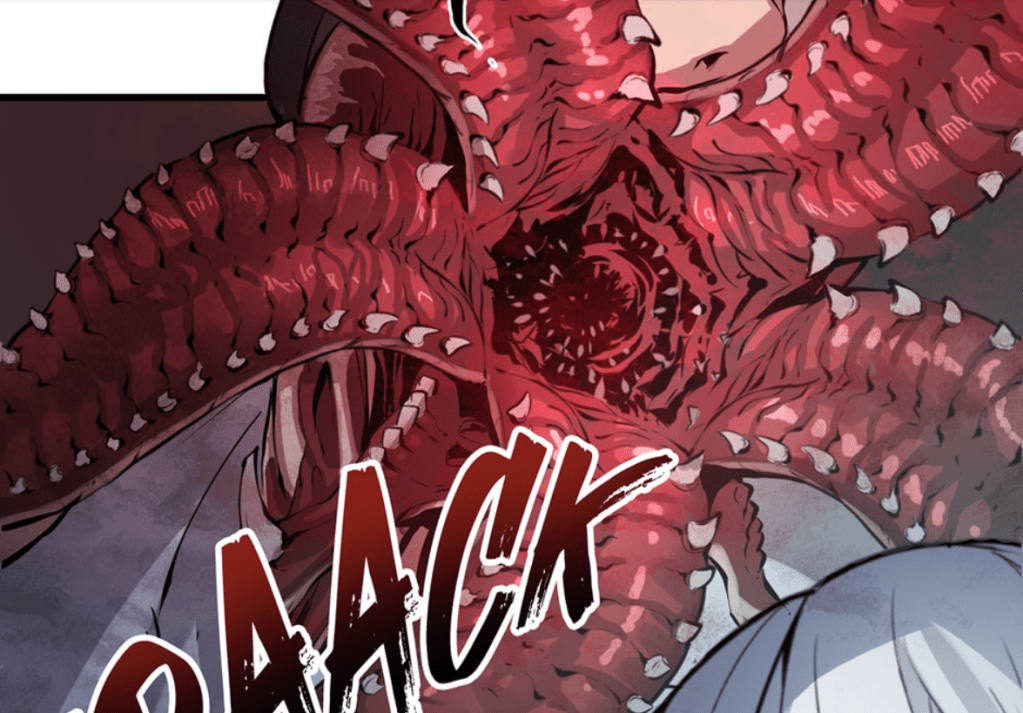
If that doesn’t sound very Lovecraftian—it is not, at least at first. Serialized graphic fiction are often paced relatively slowly at first, and this has all the hallmarks of a slow-burn comic. There isn’t a lot of exposition to begin with, and a great deal of the storytelling takes place through the art, which takes advantage of the format to do long-scrolling dynamic shots in odd perspectives. Some of the art is quite effective, even if it obviously draws inspiration from works like Parasyte.

The odd tentacled entity aside, the first few chapters of Becoming a Cthulhuian Overlord are very by-the-numbers stuff, drawing strongly on the basic ideas of Yu Yu Hakusho and similar works, riffing off of Buddhism and traditional exorcism practices, with a few twists and turns. Our protagonist is back in high school, dealing with supernatural threats, teenage romances, etc. However, Qi Su doesn’t know the rules of this new world, and that ignorance helps to build a bit of tension as he learns the ropes.

Readers expecting something more overtly Lovecraftian from the title should pause and reconsider their assumptions. Just as many American and European writers attempt to assimilate the Cthulhu Mythos into a fundamentally Christian worldview, associating Cthulhu and co. with Satanism, non-Western cultures tend to fold the Mythos into their own mythopoetic framework. So for Ultraman Tiga, Ghatanathoa is interpreted as a kaiju of great power; for Soul Eater, the Great Old Ones are extremely powerful beings of madness with great spiritual powers. Becoming a Cthulhuian Overlord, working as it does within a very broadly Buddhist and Chinese folk religion framework, is centered around ghosts and exorcism, with the ghosts tending to have a particular Lovecraftian flavor…but it also develops its own unique metaphysics on top of that, tossing in pop culture borrowings to create a kind of a la carte occultism.

For example, in chapter 13 Qi Su gets Gordon Freeman‘s crowbar.

Which is a long way to say: don’t get too hung up on how Lovecraft wrote things. Different creators incorporate or reference his material differently, and sometimes in minimal or unexpected ways.

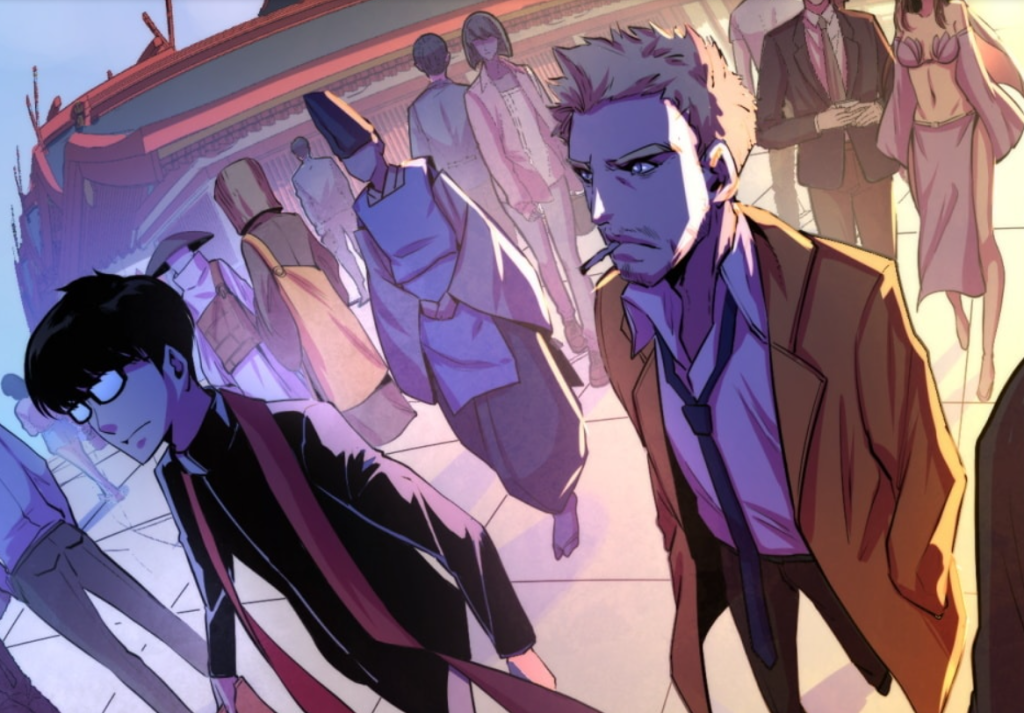
John Constantine makes an unofficial cameo in Episode 12!

As of the time of this writing, the whole manhua (over 200 episodes) has not yet been translated and released in English, so it continues to be a very slow burn, building up its world, introducing new characters, etc. Hopefully, the translation will actually be completed; some translations of serial works tend to stop before the end if the interest isn’t there for it, leaving the work incomplete, as happened with Apocalypse Zero.

For readers interested, the first chapters are free to read on Tapas, with updates every Monday.


Bobby Derie is the author of Weird Talers: Essays on Robert E. Howard and Others and Sex and the Cthulhu Mythos.

Deep Cuts in a Lovecraftian Vein uses Amazon Associate links. As an Amazon Associate I earn from qualifying purchases.
The Cthulhu Helix (2023) by Umehara Katsufumi (梅原克文)

The novel The Cthulhu Helix (2023) by Umehara Katsufumi (梅原克文) was originally published in Japanese in 1993 as 二重螺旋の悪魔 (“Double Helix Devil”); it has been translated into English by Jim Hubbert and published by Kurodahan Press, whose other publications include the Lairs of the Hidden Gods series of Japanese Cthulhu Mythos short fiction translated into English and West of Innsmouth: A Cthulhu Western (2021) by Kikuchi Hideyuki (菊地 秀行).

When H. P. Lovecraft wrote weird fiction in the 1920s and 1930s, the walls between science fiction and fantasy were practically non-existent. While a few arch-fans like Forrest J. Ackermann argued the point, in practice the supernatural and super-science were, from a narrative perspective, utterly interchangeable and compatible. C. L. Moore’s Northwest Smith fought alien gods on Mars; Robert E. Howard’s Conan wandered through ancient cities lit by radium-lamps; and H. P. Lovecraft’s Fungi from Yuggoth raised their buzzing voices in worship to Shub-Niggurath and the Black Goat of the Woods. There is no hard delineation between Lovecraft’s fantasy and science fiction stories.

If viewed through the lens of pulp fiction of his day, the science fiction elements in Lovecraft’s stories are exactly in tune with the kinds of pulp sci fi that showed up in Weird Tales. “From Beyond” is ultimately a gadget story and a gland story, brain-stealing crustacean aliens featured in Edmond Hamilton’s “The Shot from Saturn” (WT October 1931) not long after Lovecraft’s own “The Whisperer in Darkness” (WT August 1931) introduced the Mi-Go and their brain canisters. What differed with Lovecraft was his approach—Hamilton leaned into the adventurous interpretation of an alien invasion from another planet, but Lovecraft’s extraterrestrials were profoundly weirder, less explicable, not exactly less hostile but less prone to the even-then hackneyed tropes which H. G. Wells had covered so well with The War of the Worlds (1898).

Post-Lovecraft, science fiction and fantasy continued to grow and diversify, sometimes locking themselves into genre cages and sometimes breaking out. The early ideas of science fiction as gadget stories and space opera—The Gernsback Continuum as William Gibson put it—gave way over time to different ideas. Science-fantasies like the Star Wars and Star Trek novels and the Man-Kzin Wars anthologies played with psychic powers in far futures and galaxies far away where space travel was the norm and multiple intelligent species and cultures interacted in an intergalactic community; others focused on sociological changes, dystopic futures, future wars. The science may have been hard or soft, but the emphasis generally shifted from bright shiny new tech and worn old plots to more human stories on the effects of technology on people, the social impact and implications of new ways to communicate and interact, the question of what it was to be human.

Which, in the late 80s, gelled into Cyberpunk—the ultimate forebear of all the dizzying array of “-punk” suffixes which would be affixed to many speculative fictions to come. Broadly, cyberpunk was high tech and low life, continuing many of the same fundamental speculative technologies and advancements that came out of previous science fiction, but seen through the lens of contemporary societal issues—megacorporations, pollution, the alienation that came with technology and greater bureaucratic control of life, global computer networks, personal augmentation with cyberware raising the question of what it meant to be human, etc.

H. P. Lovecraft had written about what might, in hindsight, be called a megacorp in “In the Walls of Eryx” with Kenneth Sterling, but there was no down-and-out protagonist, no career criminals, no street to find its own uses for things. The Mi-Go perfected putting a brain in a canister, but there was no global Matrix to plug those brains into, to play out the games of the Matrix films. The ingredients for cyberpunk fiction using elements of the Mythos were there from the start—but it took a while for Cthulhupunk to manifest itself.

The Cthulhu Helix is one of the first Cthulhu Mythos biopunk novels (The Queen of K’n-yan (2008) by Asamatsu Ken (朝松健) was published around the same time in Japan, but made it into English translation first). It is very much a 90s product: fast-paced, set in a near future where corporate greed overcomes moral considerations, with a strong militaristic sci-fi undercurrent, and media-savvy some otaku-grade Easter eggs in reference to popular culture:

Things got weird. The monkey started ripping the cage apart. There was s ound of metal tearing. The Star of the show uttered a strange cry. His hairy body was channeling the spirit of Hercules.

“What the hell did you do to him?”

“That lead in the back of his skull is an on/off switch. The main players are micro-robots implanted in his hypothalamus. NCS-131 microbots.” She pointed to the macaque. “His name is Son Goku.”

Umehara Katsufumi (梅原克文), trans. Jim Hubbard, The Cthulhu Helix (2023) 125

The media-savviness is at the heart of the novel. While the aesthetic is something like Resident Evil (1996) or anime like Lily C.A.T. (1987), the Lovecraftian flavor is consciously a metaphor for the horror that’s been uncovered lurking in human DNA. There are no Necronomicons for these territories, just an awareness of the tropes as they are being applied:

Until now we’d been using C—for Cthulhu—as a basket term for all of these monsters. But we’d been getting flak about the single letter, so they’d decided to switch to what everyone else was using: Great Old Ones. GO1 for short. Bureau C was still Bureau C. C for clean, as we told people who didn’t have clearance.

There was another new term for the Cthulhu mythos, for a new entity: the Elder God. Lovecraft’s Elder Gods have been the lords of the Great Old Ones. They had imprisoned the Great Old Ones in this and other dimensions after they rebelled against their masters.

Lovecraft’s characters were not what we were facing. The Cthulhu Mythos was fiction, and any resemblance between it and the creatures we were battling was coincidence. No one knew anything about DNA or the intron regions in Lovecraft’s day. Still, he would’ve been astonished if he had known how close to reality his stories had come.

Umehara Katsufumi (梅原克文), trans. Jim Hubbard, The Cthulhu Helix (2023) 112-113

Using Lovecraft’s terminology and ideas without making his stories canon opened up a world of possibilities to reimagine and rework Lovecraft’s ideas into a contemporary syntax. In his day, Lovecraft had government agents raid Innsmouth, but 70+ years later the government response needed to shift to meet the needs and expectations of a new generation. Bureau C parallels the development of Delta Green for the Call of Cthulhu Roleplaying Game, the Laundry from Charles Stross’ The Laundry Files, and the Agency in Agents of Dreamland (2017) by Caitlín R. Kiernan and the rest of her Tinfoil Dossier series.

Which is why The Cthulhu Helix works as a Lovecraftian novel. The characters are all conscious of Lovecraft’s legacy, but for them it’s all shorthand and metaphor, a way to frame and discuss these complex ideas and relationships without getting bogged down in Elder Signs and other minutiae. The particular approach Umehara took is fairly Derlethian, but that’s not surprising considering when and where it was published.

A word on the translation: Jim Hubbert has done great service here in rendering very smoothly-flowing prose. It’s not always easy to keep a narrative comprehensible and moving in translation, but this reads very well, especially considering the occasional breaks in format and the potential for alphabet soup. Kudos on a job well done.

The Cthulhu Helix (2023) by Umehara Katsufumi (梅原克文) can be purchased through Kurodahan Press.


Bobby Derie is the author of Weird Talers: Essays on Robert E. Howard and Others and Sex and the Cthulhu Mythos.

Deep Cuts in a Lovecraftian Vein uses Amazon Associate links. As an Amazon Associate I earn from qualifying purchases.
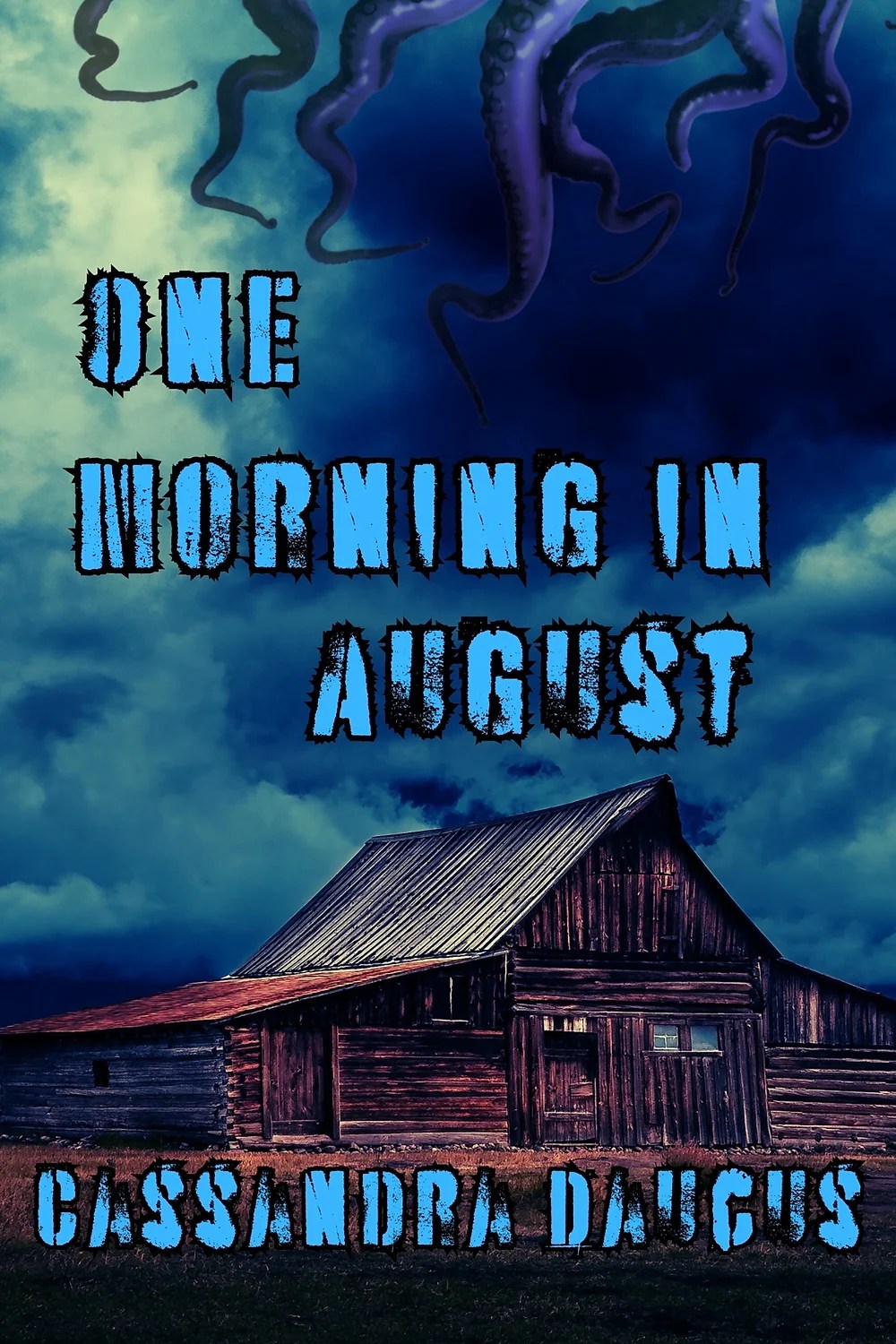
“One Morning in August” (2023) by Cassandra Daucus

The heritage of American weirdness was his to a most intense degree, and he saw a dismal throng of vague spectres behind the common phenomena of life; but he was not disinterested enough to value impressions, sensations, and beauties of narration for their own sake.

H. P. Lovecraft, “Supernatural Horror in Literature”

Lovecraftian literature is often transgressive by literary standards. Many works are not stories or plot-driven narratives in any conventional sense, and individual works have sometimes been called prose poems or mood pieces. This is fitting when you think of Lovecraft’s assertion that the weird phenomenon was the center of the story, rather than any central character—something that can be seen in “The Dunwich Horror” or “The Call of Cthulhu.”

“One Morning in August” (2023) by Cassandra Daucus is little more than a single scene, like the prelude to a post-apocalyptic film. Like many Lovecraftian tales, there isn’t much to the plot, characterization is limited, and the focus is on the weird phenomenon more than anything else. Yet there is also something Lynchian in its construction, the establishment of that “American weirdness” that Lovecraft noted in Poe, the buried emotions and resignations that underlay everyday life.

August was always hot as sin, and Bea had been disappointed to discover that the heat would redden her skin on the Nebraskan prairie even more than it did back in Boston

Cassandra Daucus, “One Morning in August”

There is that sense of loss and regret in Bea, who if not our main character is at least our prime witness for what is about to happen. The establishing shot of Bea is reminiscent of Christina’s World (1948) by Andrew Wyeth, with its vast open sky and unspoken longings. The setting, a sod house on the Nebraskan prairie, is as much part of the story as Dunwich is for “The Dunwich Horror.”

“Get in the cellar! It’s a tornado!”

James dragged her towards the house. Bea kept her eyes on the sky and allowed her gaze to drift, just in time to see the cloud over town extend a long, dark finger towards the ground. When it touched, a puff of dust exploded into the air.

Cassandra Daucus, “One Morning in August”

While the characters in the story grope toward rational explanations, like the characters in Algernon Blackwood’s “The Willows,” it doesn’t really work when what’s going on is inherently irrational. The reactions of characters in a horror movie only occur because they do not know they are in a horror movie; it is the audience who knows going in that the situation is not normal, who has seen films and read books like this before and is familiar with the tropes.

In other hands, “One Night in August” could have been extended in any number of ways. Like a low-budget film that quickly corrals all of its characters into a single room, an entire long drama could have been played out in the cellar as Bea and her family wait for things to pass and the sun to shine again. Tensions could rise, long-buried emotions could come to the surface, the seedy underbelly of the family could have been exposed and brought to light like a vivisected frog, its limbs pinned, guts on display for curious children to poke at. Instead, Daucus opts for a swifter ending, a more overt horror, a swifter destruction. Nothing wrong with that, it’s an artistic choice.

If there’s a criticism to be made about the story, it’s that some of the tropes are a little too familiar. For much of the story, Bea is framing things through her own perspective, but near the end of the tale things shift into a kind of gear normally only seen in Italian horror movies in the 1970s and 80s. While it is weird to think of it this way, we as a culture have developed a thematic language for cosmic sin. The idea that something from outside wants or needs a sacrifice, that it requires a priest or cult to serve those wants and needs…it would have been been more horrific in many ways if it had the raging, uncaring, impersonal destruction of a tornado. Something that couldn’t be bargained with, or fought, too alien to be cruel.

But all she could do was feel it happen.

Cassandra Daucus, “One Morning in August”

What works about this story is that it is a cut gem. While it may tie in thematically to a whole corpus of Lovecraftian literature, it stands on its own quite well as an effort to define a single mood in a single scene. Complete unto itself.

“One Morning in August” (2023) by Cassandra Daucus was published by Psychotoxin Press, and can be purchased here.


Bobby Derie is the author of Weird Talers: Essays on Robert E. Howard and Others and Sex and the Cthulhu Mythos.

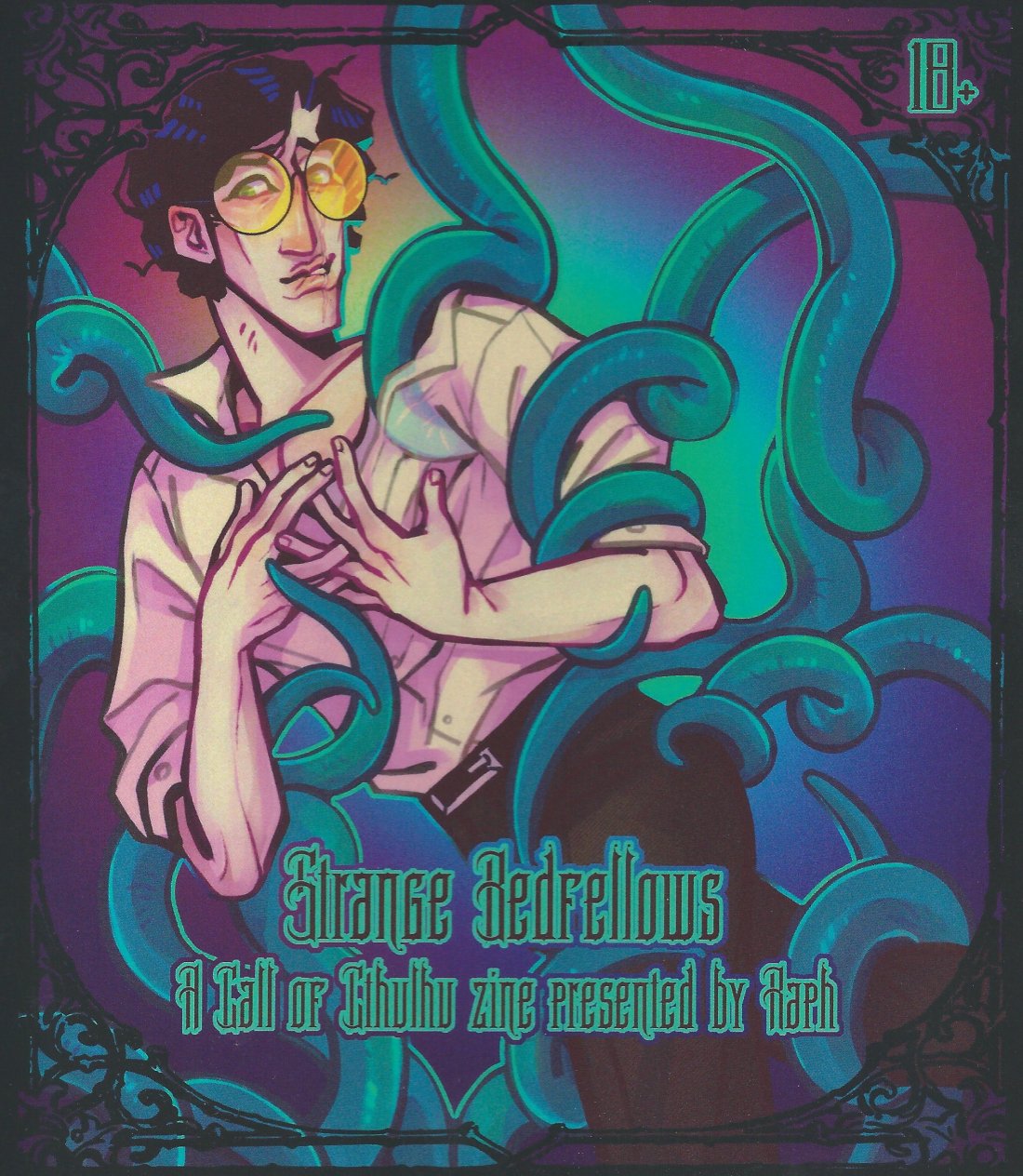
Strange Bedfellows (2023) by Caroline Manley (Raph)

Eldritch Fappenings
This review deals with works of erotica, and the history of erotic art and writing. As part of this review, selected passages involving sexually explicit activites will be included.
As such, please be advised before reading further.


With the release of this zine I hope that Lovecraft is screaming and crying and spinning in his grave.

product description for Strange Bedfellows on etsy

Roleplaying games as currently understood and popularized begin with the publication of the original Dungeons & Dragons boxed set in 1974. The players and designers of that period were typically white, heterosexual, cisgender males—reflecting in many ways the audience of fantasy and science fiction fans at the time—and D&D developed in the middle of a boom in paperback publishing that saw the mass market publication of J. R. R. Tolkien’s The Lord of the Rings, Robert E. Howard’s Conan stories, and H. P. Lovecraft’s Mythos fiction, among many others. It should come as no surprise that in this environment, with fiction from the 30s and 50s being interpreted for gaming for a 70s audience, a great deal of prejudice was effectively “baked in.”

Yet gaming has never been exclusively male, white, cisgender, or heterosexual—and as the hobby has expanded the gamers and game designers have only become more diverse, and the games have increasingly become aware of and confronted many of the prejudices that passed without question in earlier editions. It is not unusual in the 2020s to run across disclaimers like those in Harlem Unbound (2017) by Darker Hue Studios, or this one:

Fate of Cthulhu is a game that deals with many hard topics, including mental health, systemic abuses of power, and the deaths of huge portions of the human species. Make sure all the players are aware of these things and give enthusiastic ocnsent before they begin playing.

Also—Howard Phillips Lovecraft was a racist and an anti-Semite.

There. We said it.

We could give a litany of examples, but they are easy to find with a simple Internet search. Look up the name of his cat, for instance (HPL was over-the-top, even for his time). Go ahead, we’ll wait.

Fate of Cthulhu (2020)

If there is a bit of animus in declarations like those for Strange Bedfellows and Fate of Cthulhu, it has to be remembered that for decades prior to these products very little thought was given to implicit and explicit discrimination against folks based on race, ethnicity, gender, or sexuality in gaming products. Many early fantasy settings were implicitly based on a fantasy version of medieval Europe with the assumption that the default human population was largely or exclusively white, and depictions of non-white characters and settings were often rife with stereotypes. Items like the girdle of femininity/masculinity in Dungeons & Dragons were cursed; early editions of the Palladium Role-Playing Game had an insanity table derived from editions of Diagnostic and Statistical Manual of Mental Disorders that still listed homosexuality as a mental disorder—which spawned the joke that just seeing Cthulhu could turn you gay.

It sounds relatively obvious today that a players need not fear discrimination for their race, gender, or sexuality, and that they can likewise roleplay a character with those identities with discrimination—but historically that has not always been the case.

Having created and explored their characters in the game, played through adventures, developed their backgrounds, it isn’t surprising to see gamers create art and fiction about those same characters. The nature of such works is as varied as gamers themselves; from the first drabbles and sketches in a notebook to lengthy original epics and detailed portraits, from acceptable to all audiences to sexually explicit works intended for adults only.

Such a work is Strange Bedfellows by Caroline Manley (Raph): a 24-page ‘zine on their Call of Cthulhu character Laurence “Laurie” Metzger, an art student at university with a penchant for fencing and the occult. It consists of eight sexually-explicit homoerotic encounters between “Laurie” and various Mythos entities, and the twelve-page short story “In Sleep, What Wakes” starring Laurie, which is really an extended erotic lucid dream-sequence bookended with brief episodes in the waking world.

A tongue ghosts over the seam of his lips, over the still-fresh scar that bisects them, and he opens his mouth eagerly. This time as they kiss, that hand sill holds him in place. It does wonders for his buzzing brain, keeping all its edges dulled, despite how intent it is on drawing him back into paralyzing fear. Back into questioning the way malleable tentacles cling to his form as though trying to crawl beneath his skin. If they weren’t so alien, their curiosity would almost be endearing, but—

“In Sleep, What Wakes” in Strange Bedfellows

Raph has described Laurie as a “nerdy twink with a taste for the occult” and this represents a very different approach to a lot of other homoerotic Lovecraftian works. “Le Pornomicon” (2005) by Logan Kowalsky for example focuses on bears, Dagger of Blood (1997) by John Blackburn is a bisexual medley. In all of those stories, the characters tend be sexually aggressive; by comparison, Laurie is more passive and receptive, and that dynamic reflects the odd circumstances of the story. There is a slight BDSM element to the story, but it has to do with the nature of power and leverage rather than the the rather severe submission and pain depicted in “Under the Keeper of the Key” (2015) by Jaap Boekestein.

Like Widdershins (2013) by Jordan L. Hawk, “Moonshine” (2018) by G. D. Penman, or “(UN)Bury Your Gays: A Queering of Herbert West – Reanimator by H.P. Lovecraft” by Clinton W. Waters, the story works in part because it is a story about relationships instead of just sex. Raph explores Laurie’s psychology a bit, their intimacies with the eldritch entity called Gabriel. The psychological trauma which is measured in Call of Cthulhu by the loss of Sanity points is here addressed in narrative terms, as an inability to sleep restfully because of traumatic memories and stress.

Taken as a whole, Strange Bedfellows doesn’t spell out an entire campaign or dive deep into the background of Laurie and Gabriel—but what is there is intriguing, well-crafted, and well-depicted for those interested in such art and fiction. The adult content is unabashed, but then what is there to be abashed about, when it is clearly labeled and everyone who picks up this ‘zine presumably has some idea of what they are getting into? Anyone that wants to clutch their metaphorical pearls at the idea that if they open up pages 10-11 they’ll see a double-page spread of Cthulhu spearing Laurie with an inhumanly oversized phallus should ask themselves what they expected to find in a ‘zine clearly advertised as 18+ and homoerotic.

Tabletop roleplaying gaming has come a long way since its beginnings, and while we cannot say what Lovecraft would have made of it all had he lived to see it, we know that during his life he appreciated and took joy in the fact that other people were having fun with his creations:

I like to have others use my Azathoths & Nyarlathoteps—& in return I shall use Klarkash-Ton’s Tsathoggua, your monk Clithanus, & Howard’s Bran.

H. P. Lovecraft to August Derleth, 3 Aug 1931, Essential Solitude 1.353

The collaborative nature of the Mythos as it was originally conceived by Lovecraft is very much in line with the collaborative narrative of the tabletop…and the nature of such collaboration is that the ideas expressed and how they are expressed are not limited by the imagination of a single creator. Even Lovecraft had limits to his imagination, and to how he could express that imagination. Lovecraft delighted in his metaphorical strange bedfellows…and perhaps Strange Bedfellows will delight those with an interest in Mythos erotica.

Strange Bedfellows (2023) by Caroline Manley (Raph) may be purchased at Etsy.


Bobby Derie is the author of Weird Talers: Essays on Robert E. Howard & Others (2019) and Sex and the Cthulhu Mythos (2014).

Deep Cuts in a Lovecraftian Vein uses Amazon Associate links. As an Amazon Associate I earn from qualifying purchases.