“The Mask it Wears” (2024) by Sarah Musnicky

There’s a routine to the art of a scare. First, get into position.
—Sarah Musnicky, “The Mask It Wears” in Spectrum: An Autistic Horror Anthology (2024) 147

Horror follows the syntax of its age. Bela Lugosi’s opera cape set the standard for vampire dress for generations. The talking boards used by séances were commercialized as parlor games, and decades later there are books and films where ouija boards are considered genuine hotlines to the afterlife. H. P. Lovecraft lived during a time when many of the trappings of horror we know today were first being standardized and commercialized.

Lovecraft never visited a haunted house attraction or saw a slasher film. Those are the product of a later period. We, Lovecraft’s heirs, live in a different world, one awash with horror stories in every medium. Tastes have not necessarily refined, but they have agglutinated. Old familiar horrors carry a nostalgic twang, not a breathless shiver—but that’s a problem that Lovecraft himself faced.

The true weird tale has something more than secret murder, bloody bones, or a sheeted form clanking chains according to rule.
—H. P. Lovecraft, “Supernatual Horror in Literature”

Generally speaking, Lovecraft did not set his horrors in far away exotic places and distant times. His horrors might have been ancient, but they were set in the now, an age with motorcars, submarines, airplanes, radio, telephones, and electric lights. If they had cellphones and the internet in the 1920s and 30s, Lovecraft would have had to factor them into the plots of his weird tales.

Lovecraft did not concern himself overmuch with the methods of the Society for Psychical Research or the Hermetic Order of the Golden Dawn; heterodox occultism of any stripe was something he largely lacked interest in. Likewise, he never let a vampire in an opera cape stride onto one of his pages. The pages of Weird Tales were filled with old familiar horrors. Lovecraft strove to provide something different; something new and unexpected.

Second, wait for the first round of screams heading in your direction.
—Sarah Musnicky, “The Mask It Wears” in Spectrum: An Autistic Horror Anthology (2024) 147

There is nothing wrong with playing with old familiar horrors, or of trying to marry old tropes to new ones. A number of writers have played with combining Lovecraftian horrors with the slasher genre that gained prominence with Hollywood slasher films like Halloween (1978) and Friday the 13th (1980). Robert M. Price’s “A Mate for the Mutilator” (2004) comes to mind, and Chaosium’s Blood Brothers (1990). How well it works depends on the skill of the creator involved; the personal, psychological horror of the slasher stalking their prey, or the gore-filled climax of an elaborate or particularly bloody kill are rather more visceral than the kind of cerebral horror to which Lovecraft aspired. Yet they are not incompatible.

“The Mask It Wears” by Sarah Musnicky plays very specifically with horror tropes, in the syntax of the now. It was published in Spectrum: An Autistic Horror Anthology, and there is something evocative of that theme throughout this story, without actually giving a label to it. The narrator has a routine as part of their job. When something happens that throws them off-script, they’re thrown off their game. The mask they put on for dealing with their coworkers and the outside world slips—and that is the double meaning in the title. Not just the mask that the killer wears on their spree, or the mask that the protagonist wears on their job, but the mask of normal behavior that the protagonist projects, all the time, to deal with a world that seems, if not innately hostile, then somewhat incomprehensible.

Musnicky never tries to assign a label to her protagonist, why they do what they do, why they react the way they do to the unexpectedly. Yet the behavior and mindset are there, for those who recognize such things. It sets them apart from the rest of the would-be victims. Unable to move with the herd, the killer in the haunted house walks right into their room.

Lovecraft was fond of a terminal revelation, something that the whole story had been building up to, but only revealed in its fullness in the end. It was a style of fiction that owed something to mystery and detective fiction, where the last twist was revealed to explain away the final puzzle—though in Lovecraft’s case, he was willing to reveal just enough for the reader’s imagination to fill in the blanks. Musnicky’s story ends much the same way. We never get all the answers. Just enough.

“The Mask It Wears” by Sarah Musnicky was published Spectrum: An Autistic Horror Anthology (2024) by Third State Books.


Bobby Derie is the author of Weird Talers: Essays on Robert E. Howard and Others and Sex and the Cthulhu Mythos.

Deep Cuts in a Lovecraftian Vein uses Amazon Associate links. As an Amazon Associate I earn from qualifying purchases.
“The Things We Did in the Dark” (2024) by Julia Darcey

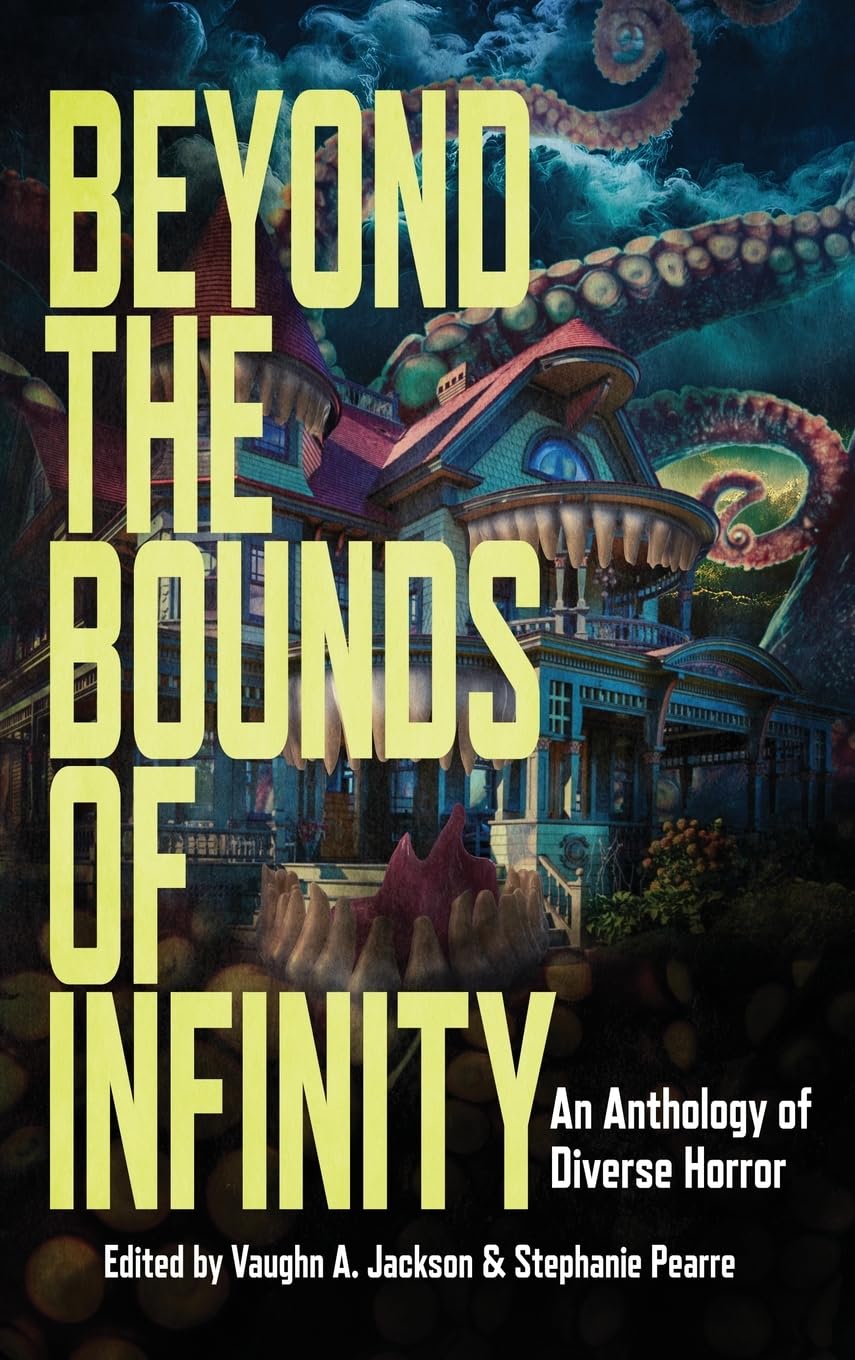
My uncles sold me in the morning, and by the afternoon I stood in the grave of the Long-Sleeping God, fouling the second of the twelve sacred rites.
—Julia Darcey, “The Things We Did in the Dark” in Beyond the Bounds of Infinity: An Anthology of Diverse Horror 87

Christianity is a patriarchal religion. For most of its history in most of its sects, the priesthood has been exclusively male; so have most prophets and saints. The dogma of Christianity and the social norms of Christian cultures tend to circumscribe women’s place and sexuality in religion and society. H. P. Lovecraft was a materialist, but he was raised in a Baptist household, and many elements of Protestant culture remained with him throughout his life, despite his disbelief in the specifics of the Bible—or the Qur’an, Talmud, Book of Mormon, or any other religious text.

Which is why, perhaps, the gender dynamics of Lovecraft’s cults is a bit patriarchal. We never see the full rites of the Esoteric Order of Dagon in “The Shadow over Innsmouth,” or the cult of Cthulhu in “The Call of Cthulhu,” yet the members of those sects we do see are explicitly male. Lovecraft did not show a priestess of Cthulhu or Mother Hydra, did not show female worshippers among the orgiasts in the swamp about Cthulhu’s idol. The witch-cult is a little different; Keziah Mason was definitely a member of that old religion, women members of the de la Poer family were apparently party to goings-on in “The Rats in the Walls,” and Lavinia Whateley apparently participated in rites and celebrations in “The Dunwich Horror”—at least, before she was shut out. Yet for the most part, Lovecraft seems to have not been overly concerned about depicting or defining the role of women in these cults of eldritch worship.

On the other hand, Lovecraft also seldom had virgin girls sacrificed on altars to sate the lust (for blood or sex) of a god. When Ghatanathoa was placated in “Out of the Æons” (1935) by Hazel Heald & H. P. Lovecraft, it was a rather egalitarian sacrifice of twelve young men and twelve maidens. While Lovecraft was not exactly equal-opportunity in his depiction of these cults and sects, neither did he succumb completely to popular tropes.

Later writers have begun to explore the possibilities of what women would actually be like inside these religions. “A Coven in Essex County” (2016) by J. M. Yales looks at women trapped in the patriarchal culture of Innsmouth; “Mail Order Bride” (1999) by Ann K. Schwader plays with the idea of a all-women fertility cult devoted to Mother Hydra; “The Book of Fhtagn” (2021) by Jamie Lackey gives a glimpse of who would choose to go full cultist in such a community; Innsmouth (2019) by Megan James touches on bake sales and all the ways people keep a church going with thankless, unpaid, often unacknowledged labor of women.

“The Things We Did in the Dark” by Julia Darcey is another exploration in the same vein, although this is not specifically Lovecraftian, it plays with the tropes of eldritch horror while also picking at themes of virgin sacrifice, cloistering women into religious roles, using religion as a means to dispose of young women in a socially acceptable manner (cf. Magdalene laundries). There is, too, an aspect of the SCP wiki or The Cabin in the Woods: she is part of the special containment procedures, and she is the D-class personnel whose very lives are acceptable losses to keep the greater evil contained.

The language is straightforward, stark, and grim. There’s an implication that the family structure has broken down; the unnamed protagonist speaks of uncles but not mother or father, implying her parents are dead and she is at the mercy of male authority figures. Physical abuse is taken as a matter of course. Treated as a commodity to be bought and sold.

That is the setup, and it takes the unnamed protagonist the length of the short story to work out some of the harsh truths of the world and her situation—and finally, to realize her own empowerment. There is something dark and alluring about that final sentence in this story. Darcey has not painted a picture of a lovely and thriving culture; we see it only by how it treats its most unvalued prisoners, who did nothing wrong except being born women in a society that does not value women.

Something to think about.

“The Things We Did in the Dark” by Julia Dacey was published in Beyond the Bounds of Infinity: An Anthology of Diverse Horror (2024) by Raw Dog Screaming Press.


Bobby Derie is the author of Weird Talers: Essays on Robert E. Howard & Others (2019) and Sex and the Cthulhu Mythos (2014).

“Never Threaten A Spider” (2024) by Sara Century

Giant spiders are traditional. The square-cube law be damned.

In “The Fortress Unvanquishable, Save For Sacnoth” (1908), the hero Leothric deals with an oversized arachnid. In “The Tower of the Elephant” (1933) by Robert E. Howard, a young Cimmerian faced eight-legged death. In “The Seven Geases” (1934) by Clark Ashton Smith, Atlach-Nacha spins their web endlessly in the dark. In “The Dream-Quest of Unknown Kadath,” H. P. Lovecraft wrote of the bloated purple spiders that warred with the almost-men of Leng, and in J. R. R. Tolkien’s The Hobbit (1937), the giant spiders of Mirkwood nearly put an end to Bilbo and his party—and they’re nothing compared to Shelob, who guards the threshold of Mordor in The Lord of the Rings (1955).

Spiders work on many levels. They are first and foremost predators, not scavengers or placid eaters of vegetables or waste. Alien in outline, fascinating in their anatomy and habits. Some leap, some spin, some are venomous. Fantasy spiders tend to all three; like the giant serpents of Sword & Sorcery, they combine and maximize the attributes and horrors of everyday attercops and exaggerate them past any natural bound. A normal spider, if scared, may bite; their venom may hurt, but few spiders are a serious threat to humans. A human need not fear being wrapped up in their web like a fly, their fluids sucked out, until a mummified corpse is left trapped forever.

In a Sword & Sorcery setting? Well, the human might be the fly. But the fly might also have a sword.

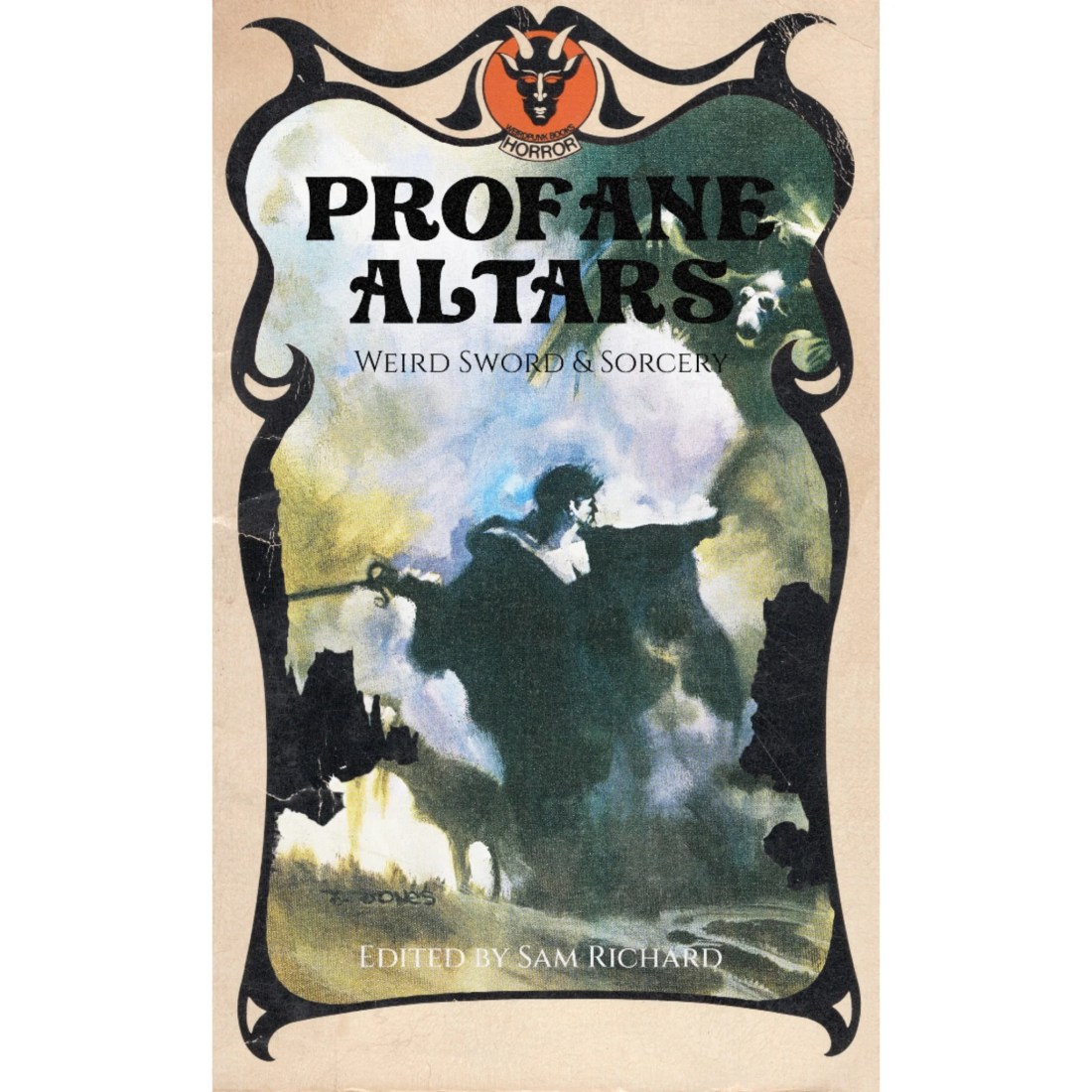
“Never Threaten A Spider” (2024) by Sara Century advertises to the readers what is about to come. It’s right there in the title. Readers who pick up a copy of Profane Altars: Weird Sword & Sorcery will not be disappointed by false advertising. Yet the giant spider in this story isn’t quite a box-tick on some giant list of Sword & Sorcery tropes, either.

Writers and readers of Sword & Sorcery (or Heroic Fantasy, Epic Fantasy, or however you chose to label that squirming grey cross-genre where fantasy, horror, and adventure fiction have mixed and mingled) today face a different problem than Robert E. Howard & co. did in the 1930s. Howard’s Conan basically defined a genre; peers like C. L. Moore’s Jirel of Joiry, Clifford Ball’s Duar the Accursed and Rand the Rogue, Fritz Leiber Jr.’s Fafhrd and the Grey Mouser, Henry Kuttner’s Elak of Atlantis, Michael Moorcock’s Elric of Melniboné, Karl Edward Wagner’s Kane, Manly Wade Wellman’s Kardios, Joanna Russ’ Alyx…a whole chain of swordsmen, swordswomen, and sorcerers have entrenched expectations of what an S&S tale is, can, and must be.

Robert E. Howard and C. L. Moore didn’t have to worry so much. They were inventing, not imitating. Tolkien’s major competition at novel-length were works like The Worm Ouroboros (1922) by E. R. Eddison and The Broken Sword (1954) by Poul Anderson. There were no Tolkienian imitators; his readers had few expectations. They were allowed to be awed, excited, amused, and entertained.

Several decades and hundreds of fantasy stories, novels, roleplaying games, comics, cartoons, and films later, and readers tend to be a bit more jaded. They’ve seen it all before. They recognize the tropes. Writers have to struggle against expectations. What should be in a fantasy adventure story? What’s too old-fashioned? How to buck expectations?

“Never Threaten A Spider” feels like it tiptoes on those questions. At a straight read, it is a straightforward adventure yarn, with a thin skein of worldbuilding, a little horror, a little action, not too heavy on the sorcery, and perhaps with a slightly unfinished feel. Not everything is explained and not all of the names are a random conglomeration of syllables, both of which are endearing. Not everything has to be explained. Writers are allowed a little mystery, to hint instead of explaining every detail. We don’t need three thousand years of history about the dead queen and the jewel of the nameless spider-god.

On deeper consideration, however, this almost by-the-numbers S&S tale is anything but. It is a subtle subversion of expectations: a swordswoman who loses her sword early on. A thief who doesn’t really want to steal anything, and ultimately doesn’t. A hardboiled protagonist saved by a cute little bunny rabbit.

The hero of the story, a woman named Viy, isn’t some thinly-reskinned version of Conan, or Jirel of Joiry, Red Sonja, or Alyx. Warrior, thief, and outlaw, yes, but not her cynicism is balanced with homesickness, her rage by kindness. The readers don’t see her at her best in terms of skill and accomplishment: sans sword and thieve’s tools, she spends much of the story half-naked and wet, and she resorts at the penultimate struggle to picking up a club and to try and beat her foes to death.

Yet she’s smart enough to know when to run. That some fights aren’t winnable. That murder isn’t the job. For a genre that can sometimes exult in the murder hobo lifestyle, there is a real subversion in having a protagonist that doesn’t need to be a barbarian hero slaying all gods and monsters and macking on the nearest princess. There is something much more realistic about Viy’s failures, her flaws, and at last her triumphant escape with life and a jewel, even if it isn’t the one she came to the god-haunted swamp to steal.

Perhaps, if we’re lucky, we’ll read more of Viy’s adventures in the years to come.

“Never Threaten A Spider” by Sara Century was published in Profane Altars: Weird Sword & Sorcery (2024, Weirdpunk Books).


Bobby Derie is the author of Weird Talers: Essays on Robert E. Howard and Others and Sex and the Cthulhu Mythos.

Deep Cuts in a Lovecraftian Vein uses Amazon Associate links. As an Amazon Associate I earn from qualifying purchases.
Marvels and Prodigies (2024) by S. J. S. Hancox-Li

Marvels and Prodigies is a game of contemporary Lovecraftian horror. It is intended for players who want the classic experience of investigation and horror, but who also want the possibility of exploring deeper into the Mythos—the possibility of themselves becoming dread sorcerers, ecstatic cultists, blessed avatars.

Marvels and Prodigies Kickstarter

Marvels and Prodigies (2024) is an independent tabletop roleplaying game written and published by S.J.S. Hancox-Li, whose initial publication was the result of a successful crowdfunding campaign. The core books are the Seeker’s Handbook (which contains basic character creation and system rules; player characters are called Seekers) and Gardener’s Manual (advanced rules, rules for magic, Mythos lore, artifacts, adventure seeds, etc., people running the game are called Gardeners); there is also a separate character sheet and quick rules, and a starting adventure/scenario The Thing That Comes In Autumn. All are available through DriveThruRPG.

Ever since the Call of Cthulhu Roleplaying Game was first published by Chaosium in 1981, it has been the de facto tabletop roleplaying game experience for the Cthulhu Mythos. It has never been the sole roleplaying game to utilize the Mythos or attempt to capture the atmosphere of cosmic horror on the tabletop experience, but the widespread and long-lasting success of the game—seven editions over 40+ years, plus translations into many non-English languages—along with Chaosium’s efforts at publishing (and republishing) Mythos fiction have effectively made it the default for Mythos roleplaying in the same way Dungeons & Dragons is often considered a default for fantasy tabletop roleplaying in general.

Even if someone wants to make their own original Mythos game post-1981, it is often designed in the shadow of Call of Cthulhu, and the choices that the designers make are typically an express development from or response to something in the mother game. So, for example, the essential play space of Call of Cthulhu is that the player characters are investigators who investigate some phenomena. The details are vague because it’s a very broad and adaptable idea; the player characters might be a private detective agency in 1920s Harlem hired to look into something, or G-men trying to figure out why professors at Miskatonic University keep dying, or maybe one of the player character’s rich uncles died and left them a haunted house. Dungeons & Dragons features adventurers who go adventuring, Call of Cthulhu features investigators who go investigating.

In 2002, Ron Edwards coined the term fantasy heartbreakers in an article of the same name. While the term has come to be dismissive—a way to put down games that try to be “Dungeons & Dragons but better”—but, in a broader sense, the term effectively captures a certain segment of independent games that develop out of one game but which attempt to address some genuine issue (in terms of system, setting, or concept) that the original game lacks or does badly. Call of Cthulhu has generated any number of heartbreakers by this definition, from The Necronomicon Roleplaying Game to Yellow Dawn, Haunted West, and Space Madness!.

Marvels and Prodigies is a Mythos heartbreaker, in the best sense of the word. While obviously drawing thematic inspiration from Call of Cthulhu‘s play space, this aggressively independent roleplaying game takes a very different tack in terms of system (instead of the percentile roll-under skill system of Call of Cthulhu it uses a dice pool and hits system reminiscent of Shadowrun 4th edition or Vampire: the Masquerade) and ideology. Player characters are Seekers who want to investigate the occult, and are given access to abilities that reflect their interests, and clear ways to develop those abilities…and this is very different from the standard Call of Cthulhu scenario.

Call of Cthulhu has had magic in every edition. Characters (player characters and non-player characters alike) have the ability to learn and cast spells. However, the mechanics of the game make learning and casting spells relatively difficult, dangerous, and likely to fail, and almost always come with real drawbacks for the player character that makes the attempt. There are relatively few spells that provide some genuine benefit with minimal cost, and none of them are available at the start of play; they may never be available, since placement of tomes with spells is basically up to the gamemaster. Player characters generally can’t start out as wizards like in Dungeons and Dragons, and might never be able to be spellcasters unless the gamemaster specifically encourages that.

That is explicitly part of the design space of the game: Call of Cthulhu encourages a very different style of roleplaying to D&D. Every investigation may be an adventure, but that doesn’t mean the designers of Call of Cthulhu want you killing every non-player character and looting their corpse, like player characters adventurers might expect to do in a dungeon in D&D. Call of Cthulhu and Dungeons & Dragons both focus on excitement, but CoC leans more into horror, and one aspect of horror is helplessness. In D&D, if you run into a monster you can’t defeat because your characters aren’t at a high enough level, you might argue the encounter was poorly planned or unfair because there was no way to win; in CoC if you run in a monster you can’t kill, that’s just something you have to live with. The atmosphere of the game thrives on some situations never being winnable.

It’s not that casting a fireball at the shoggoth might take some players out of the 1920s setting, the designers of the game generally appear to not want players to have fun the wrong way.

As far as discouraging player characters wizards goes, this approach to magic could be called broadly successful; the fact that the magic “system” is essentially a grab-bag of random effects with little rhyme or reason and often very little thought to organization doesn’t help. While various products and heartbreaker RPGs would tweak the system mechanics to further encourage or discourage player characters using magic, it’s broadly accurate to point out that magic rules in Call of Cthulhu and its heartbreakers are generally pretty hodgepodge and discouraging compared to games where player characters might actually want to be occultists.

What’s different about Marvels and Prodigies is that it’s not just a roleplaying game about Lovecraftian horror, but also about Lovecraftian wonder:

In Marvels and Pridigies, there is not just horror in those alien vistas, but wonder and glory too. A major inspiration for the themes of Marvels and Prodigies is Ruthanna Emrys and Anne Pillsworth’s The Lovecraft Reread. On their reading, the power of Lovecraft’s best stories comes from a tension between xenophobia and xenophilia. Alien fungi remove human brains, but enable us to travel the stars and distant worlds. An ancient race of telepaths steals souls and exterminates entire species, but does so while maintaining the greatest library in history and a convocation of our timeline’s greatest geniuses. You are descended from inhuman monsters, but their blood enables you to live forever in wonder and glory.

S. J. S. Hancox-Li, Seeker’s Handbook 2

Emrys’ and Pillsworth’s Lovecraft Reread is particularly focused on re-reading weird fiction (not just Lovecraft’s) with a fresh perspective, and without fannish reverence that might get in the way of genuine criticism. As they put it in their Introduction: “Welcome to the H. P. Lovecraft reread, in which two modern Mythos writers get girl cooties all over old Howard’s original stories.” If a reader feels wound up by reference to “girl cooties” and Howard Phillips Lovecraft’s fiction, then they should probably go clutch their pearls somewhere else. Lovecraft is dead, his corpse isn’t going to spin in its grave, no matter what people say or feel about him.

Which is rather the point: Mysteries and Prodigies is not a game system to replace the d100s for Call of Cthulhu, it’s a game where the focus of the investigation is not just to be horrified, but perhaps to be enthralled. To find the beauty and meaning in the universe as much as the cosmic horror. A perspective that has been explored by many writers over the years, such as in the anthology Wonder and Glory Forever: Awe-Inspiring Lovecraftian Fiction (2020). The focus on occult-minded Seekers and the focus on improvement often adds a spiritual component to the game: it’s not about becoming the most powerful wizard per se, it’s about how your player character’s deepening knowledge of the Mythos and dedication to their path changes you. The journey, more than the destination.

But is it any good? As indie RPGs go, it’s fine. The system is fairly quick to learn and certainly a step up from Call of Cthulhu‘s normal resolution system; like a lot of heartbreakers, it’s got a lot of quirky little tables, lists, and the like. Some of the quirkiness is endearing, some it is just the rough edges of a product that hasn’t had several editions worth of proofreading, editing, and further development. Mythos games generally don’t have a robust system of metaphysics, and Marvels and Prodigies is no exception, so some of the abilities are still very much a grab bag of effects with gaps and potential for abuse—but powergaming is an emergent element of all roleplaying systems regardless of mechanics.

If there’s a criticism to be laid against the book’s writing, it’s that there’s not much actual sense of the setting. The game is implicitly in a contemporary real-world setting with smartphones and firearms, but the impact of things like the Internet or someone uploading the Necronomicon onto the Internet Archive isn’t really addressed, and any would-be Gardner is going to have to put in a bit of work fleshing out when and where the action takes place before introducing their Seekers.

Use of AI

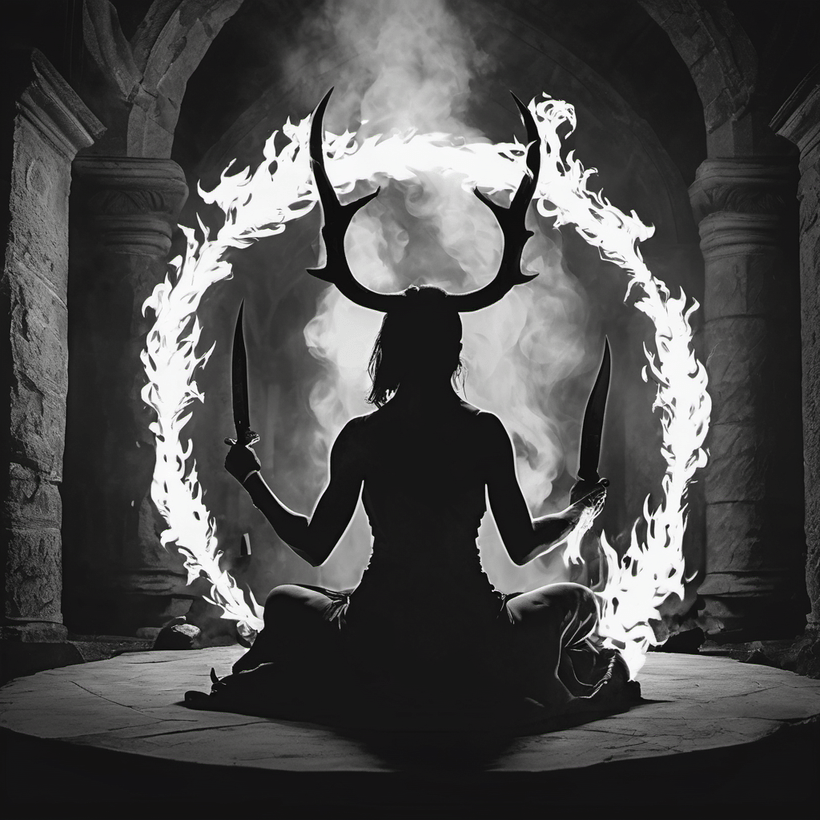
Cover images and certain chapter headers were generated using Stable Diffusion XL. These images are openly licensed by CC BY-SA 4.0. […] The Stable Diffusion XL model constitutes transformative use of existing images.

Marvels and Prodigies Kickstarter Campaign

Marvels and Prodigies uses AI-generated images to illustrate the book. The use of generative AI has been very contentious, given that the dataset used to train the AI was derived from human artists without credit or permission, and that the use of AI-generated images threatens the job market of human artists. In this particular case, the use of AI-generated images merits some discussion.

Independent roleplaying game books with a single creator generally have zero art budget; no human jobs were lost because no humans were going to be paid to create images for these books. Either the creator does their best to create their own art, or grabs public domain images and uses those.

The standards for fair use of copyrighted materials vary by country, but in the United States one important aspect is whether the use is transformative: simply copying an existing work is a violation of copyright, but if the work is transformed in some way—such as being part of a collage, or the addition of speech balloons to make it a kind of cartoon, etc.—it may be considered fair use.

In this respect, Stable Diffusion is being used as a fairly sophisticated spirograph (or, less charitably, a plagiarism engine where the results are so chopped up the original source(s) cannot be identified), and the resulting output is released under a Creative Commons license. While folks may still dislike that the work of various artists was used to train the AI and would have preferred blank covers to AI-generated images, from a practical standpoint this is basically little different from any creator grabbing images off the internet and tweaking them in Photoshop just enough to avoid a copyright claim, only the fiddling has been automated.

While folks should continue to push against the use of generative AI in commercial products, the availability of the technology is already making substantial inroads in non-commercial and ultra-low-budget productions like independent roleplaying games where art budgets are effectively non-existent. Expect to see a lot more of this kind of thing in the future, unless legal and technical restrictions on generative AI make the availability of such applications inaccessible.


Bobby Derie is the author of Weird Talers: Essays on Robert E. Howard and Others and Sex and the Cthulhu Mythos.

Deep Cuts in a Lovecraftian Vein uses Amazon Associate links. As an Amazon Associate I earn from qualifying purchases.