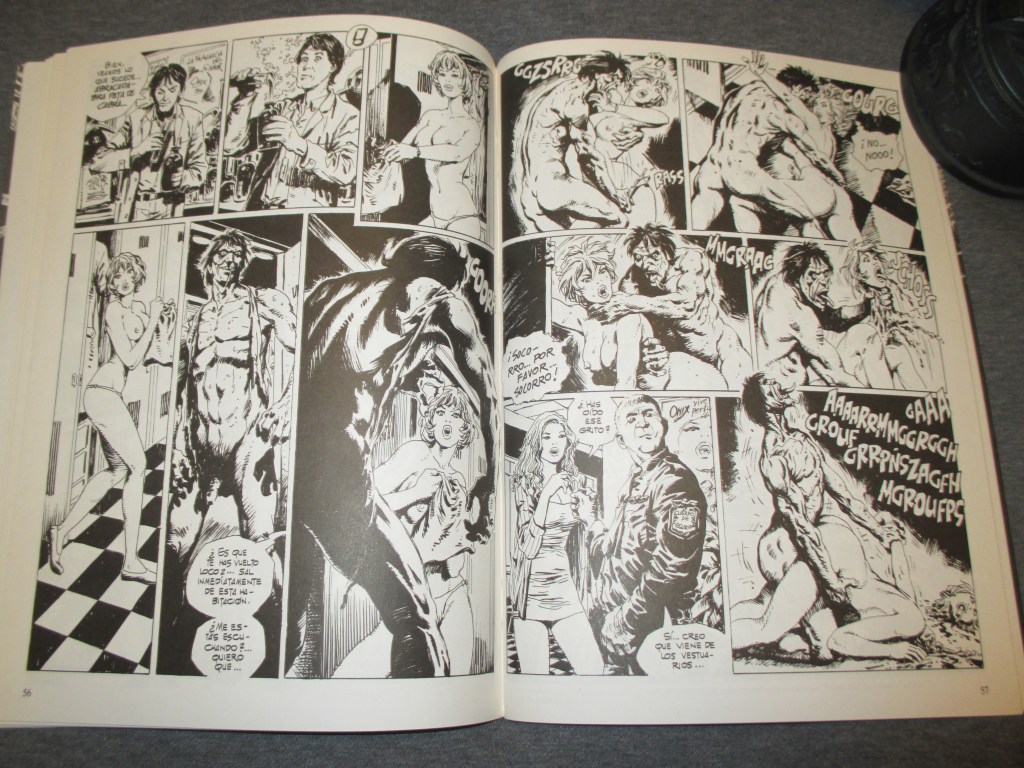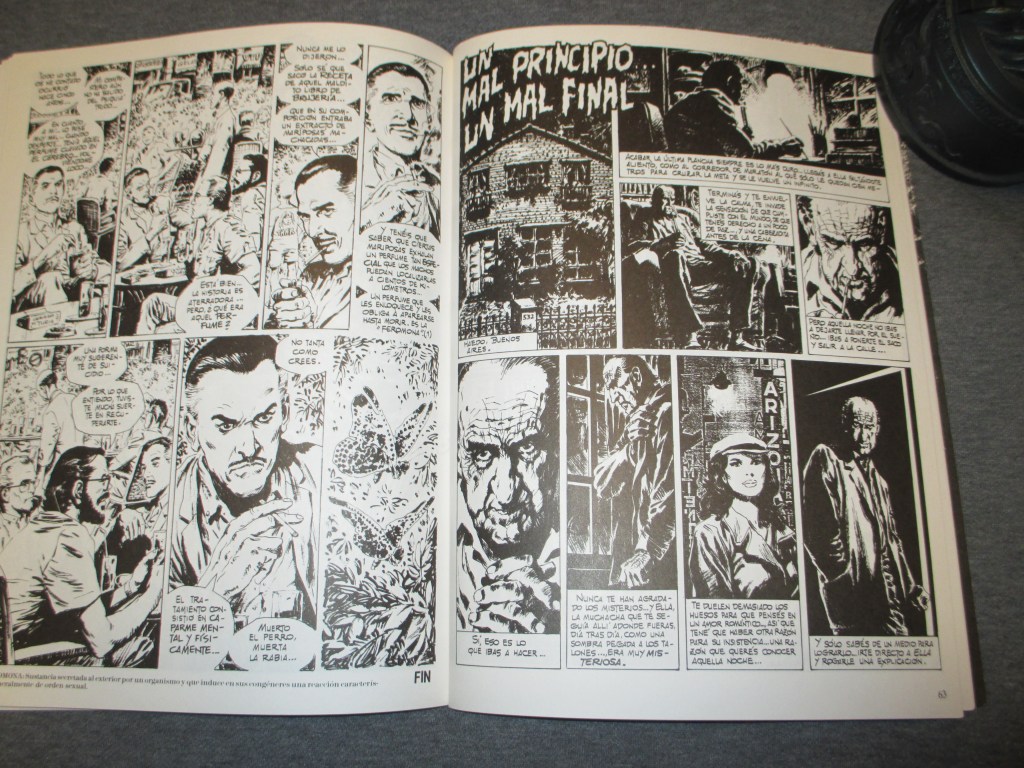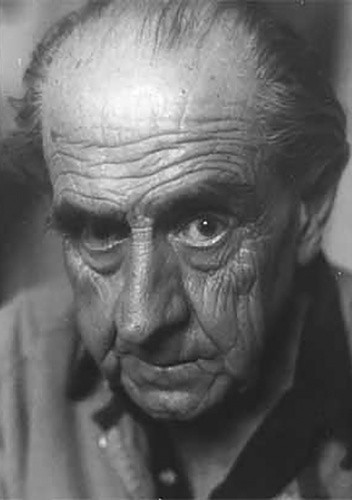
Deeper Cut: Alberto Breccia & the Cthulhu Mythos

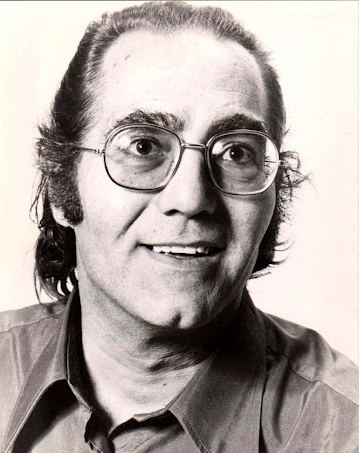
Alberto Breccia (1919-1993) was an Argentine comic artist, acknowledged as a master of the form. He began working professionally in 1939, working on comic magazines like Tit-Bits, and providing illustrations for Narraciones terrorificas, a Spanish-language horror fiction magazine which reprinted (in unofficial translation) stories from the U.S. Weird Tales.

Saturain: Ce qui t’a pousse a creer Captura, outre le fait de gagner des sous, c’etait ton interet pour le genre, evidemment. Et la litterature d’epouvante, tu l’as toujours aimee ou ca t’est venu apres?

Breccia: Avant. J’ai commence ave la collection Narraciones terrorificas des editions Molino. J’ai dessine des couvertures [pour cette collection], Albistur aussi Ce’etait dans les annees 1930, en gros, j’etais encoure celibatair. Ca a dure quelques annees. C’est la que j’ai commence a acheter et lire des recits d’epouvante. Jusqu’alors, je connaissais seulement Poe, qui est plus ou moins un auteur d’epouvante. Ou Conan Doyle et Sax Rhomer avec Fu Manchu, mais ce ne sont pas des auteurs de genre a proprement parler.

Saturnin: Ils combinent l’aventure, les feuilleton et l’epouvante.

Breccia: Oui, et le policier. Mais avec Narraciones terrorificas, je me suis plonge dans le genre, en y decouvrant Bloch, Lovecraft tous ceux dont j’ignorais alors jusqu’au nom.

Sasturain: Et tu commences a les lire pour de bon.

Breccia: Tout a fait, et je ne savais pas que la revue etait une replique de cette celebre revue americaine (Weird Tales), tu vois? Je m’en suis rendu compte longtemps apres. C’est la-dedans que j’ai lu Lovecraft, entre autres. Je possedais surement tous les Mythes de Cthulhu, et j’ai du tout vendre. Parce que j’avais cette idee fixe d’etre un lecteur cultive. Alors j’ai commence a vendre ce qui me paraissait inutile pour m’acheter a la place des livres ennuyeux a mourir Les pensees d’un tel, les maximes de La Rochefoucauld et toutes ces conneries qui ne m’ont absolument servi a rien. Maintenant, j’ai un mal de chien a reuperer ces tresors, que je tretouve mais abimes, manges aux mites. Tu sais, Lovecraft, je pense l’avoir lu bien avant. J’imaginais l’avoir decouvert lors de mon voyage en Europe, mais je l’avais probablement lu tout gamin, sans le savoir.

Sasturain: Quend tu lis de l’histoire, des romans, etc., quelle epoque preferes-tu?

Breccia: J’aime le dix-neuvieme siecele des romans de Dickens, tu vois? Cette epoque me plait: les auberges, les diligences. Mais davantage la litterature europeenne qu’americaine. J’aime les recits dont l’action se situe vers la moitie du siecle dernier, voire avants. Jusqu’en 1915, 1920.
Saturain: What pushed you to create Captura, besides earning money, was your interest in the genre, obviously. And horror literature, have you always liked it or did it come to you later?

Breccia: Before. I started with the collection Narraciones terrorificas from Molino publishing. I designed covers [for this collection], Albistur too. It was in the 1930s, basically, I was still single. It lasted a few years. That’s when I started buying and reading horror stories. Until then, I only knew Poe, who is more or less a horror author. Or Conan Doyle and Sax Rhomer with Fu Manchu, but they are not genre authors strictly speaking.

Saturnin: They combine adventure, soap opera and horror.

Breccia: Yes, and the detective story. But with Narraciones terrorificas, I immersed myself in the genre, discovering Bloch, Lovecraft, all those whose names I didn’t even know at the time.

Sasturain: And you start reading them for real.

Breccia: Exactly, and I didn’t know that the magazine was a replica of this famous American magazine (Weird Tales), you see? I realized it a long time later. It’s in there that I read Lovecraft, among others. I probably had all the Cthulhu Mythos, and I had to sell everything. Because I had this fixed idea of ​​being a cultured reader. So I started selling what seemed useless to me in order to buy instead the boring books The Thoughts of So-and-So, the Maxims of La Rochefoucauld and all that crap that was absolutely useless to me. Now, I have a hell of a time finding these treasures, which I find but damaged, moth-eaten. You know, Lovecraft, I think I read him long before. I imagined I had discovered it during my trip to Europe, but I probably read it as a kid, without knowing it.

Sasturain: When you read history, novels, etc., what era do you prefer?

Breccia: I like the nineteenth century of Dickens’ novels, you see? I like that era: the inns, the stagecoaches. But more European literature than American. I like stories whose action takes place around the middle of the last century, or even before. Up to 1915, 1920.
Breccia: Conversations avec Juan Sasturain 349-350
(This interview was conducted in Spanish by Breccia’s collaborator Juan Sasturain and first published in that language, but I only had access to a French translation.)
English translation

Breccia continued working for local publishers for twenty years before he made his first trip to Europe in 1959, and began working with European publishers. It was then that Breccia became more thoroughly acquainted with the works of H. P. Lovecraft. In the 1970s, Breccia would create adaptations of several of Lovecraft’s stories, not for any specific publisher, but on his own, and using that as an opportunity to experiment artistically with the form:

Sasturain: C’etait un systeme de pensee tres profondement ancre en toi, non?

Breccia: C’es la que ‘ai pris conscience que je devais creer pour moi. C’est la que j’ai commence a dessiner Les Mythes de Cthulhu sans avoir un editeur precis en vue. Je me rendais compte que ce marche s’ouvrait a moi, alors je me suis mis a travailler pour ce marche.

Sasturain: Tu dis toujours que Les Mythes, cette idee de dessiner due Lovecraft, est nee bien avant. Qu’un jour, bien des annees plus tot, tu t’etais achete un petit livre de lui et que tu l’avais lu…

Breccia: Je l’avais achete en 1959, au cours de mon premier voyage.

Sasturain: Et quel a ete le detonateur pour te lancer la-dedans dix ans apres?

Breccia: A l’epoque, j’avais rassemble tous les Mythes, je les avais tudies a fond, et je me sentais capable de m’y attaquer. D’ailleurs, j’avais plaisieurs versions du premier, Le Ceremonial, toutes ratees – j’ai tout jete.

Sasturain: Le Ceremonial est le premier.

Breccia: Le premier que j’adapte. Je ne me souviens plus dans quel order, mais j’ai fait La Ceremonial, Le Cauchemar d’Innsmouth, Le Monstre sur le seuil, et an 1973 j’ai decide d’aller montrer tout ca.

Sasturain: Tu pars avec plusieurs episodes termines. Les autres, tu les as faits a ton retour. Je crois que le dernier date de 1975.

Breccia: Je crois que c’est Celui qui chuchotait dans les tenebres.

Sasturain: Tu es parti en Europe avec ces nouvelles planches.

Breccia: Oui, just celles-la.
[179]
Sasturain: C’etait la premier fois que tu produisais quelque chose sans savoir qui allait le publier.

Breccia: Exactement, avec amour, en prenant mon temps. C’est tout un horizon qui s’ouvre a moi, je ne suis plus un salarie un professionniel qui y consacre le temps necessair. Je commence a jouir du dessin d’une autre manier. Enfin bref, h’ai du mal a expliquer ce que j’ai ressenti.
Sasturain: It was a very deeply rooted system of thought in you, wasn’t it?

Breccia: That’s when I realized that I had to create for myself. That’s when I started drawing The Myths of Cthulhu without having a specific publisher in mind. I realized that this market was opening up to me, so I started working for this market.

Sasturain: You always say that The Myths, this idea of ​​drawing by Lovecraft, was born well before. That one day, many years earlier, you had bought a little book by him and that you had read it…

Breccia: I bought it in 1959, during my first trip.

Sasturain: And what was the trigger that got you into this ten years later?

Breccia: At the time, I had collected all the Myths, I had studied them thoroughly, and I felt able to tackle them. Besides, I had several versions of the first one, The Festival, all failed – I threw them all away.

Sasturain: The Festival is the first.

Breccia: The first one I adapted. I don’t remember in what order, but I did The Festival, The Innsmouth Nightmare, The Monster on the Doorstep, and in 1973 I decided to go and show all that.

Sasturain: You leave with several episodes finished. The others, you did them when you returned. I think the last one dates from 1975.

Breccia: I think it’s The Whisperer in Darkness.

Sasturain: You left for Europe with these new boards.

Breccia: Yes, just those.
[179]
Sasturain: It was the first time you produced something without knowing who was going to publish it.

Breccia: Exactly, with love, taking my time. It’s a whole horizon that opens up to me, I’m no longer an employee, a professional who devotes the necessary time to it. I’m starting to enjoy drawing in a different way. Anyway, I have a hard time explaining what I felt.
Breccia: Conversations avec Juan Sasturain 177, 179English translation.

Breccia would complete ten adaptations of Lovecraft’s stories, the majority of them between 1972-1974, six of them from scripts developed by his collaborator Norberto Buscaglia. The first six stories were published in the Italian comic magazine Il Mago, but were translated and reprinted in other languages, such as the Métal Hurlant/Heavy Metal/Metal Extra Lovecraft Special. Multiple collections of these comic stories have been published over the decades, although ironically, few of Breccia’s influential Lovecraft adaptations have been published in English. While the first nine are relatively well-known and widely republished, after Breccia’s death a new collection of adaptations was published, Sueños Pesados (2003, “Heavy Dreams”). These are painted, in color, and contain one additional Lovecraft adaptation.

It is difficult to overstate how influential Breccia’s Lovecraft adaptations were, from their first publication in the 1970s right up until today, when they are still being reproduced. These are experimental comics, playing with the form, the medium, often combining elements of collage, photography, paint, and watercolors in addition to traditional pen and ink. Breccia’s assistant Horacia Lalia would go on to produce his own highly-regarded series of adaptations of Lovecraft stories, and his son Enrique Breccia provided the artwork for the graphic novel Lovecraft (2004), with Hans Rodinoff and Keith Griffen.

While it wouldn’t be accurate to say that Breccia was the first to adapt Lovecraft to comics, he single-handedly raised the bar for the quality of Lovecraft adaptations. So it is only fitting to take a look at each in turn.

These works were not published strictly in order of completion, although there is considerable stylistic variation between the earliest stories and the last (“El Que Susurraba en Las TInieblas”), and the exact publishing history is a little hazy (since they were all first published in non-English periodicals and collections), so this is a roughly chronological order of publication.


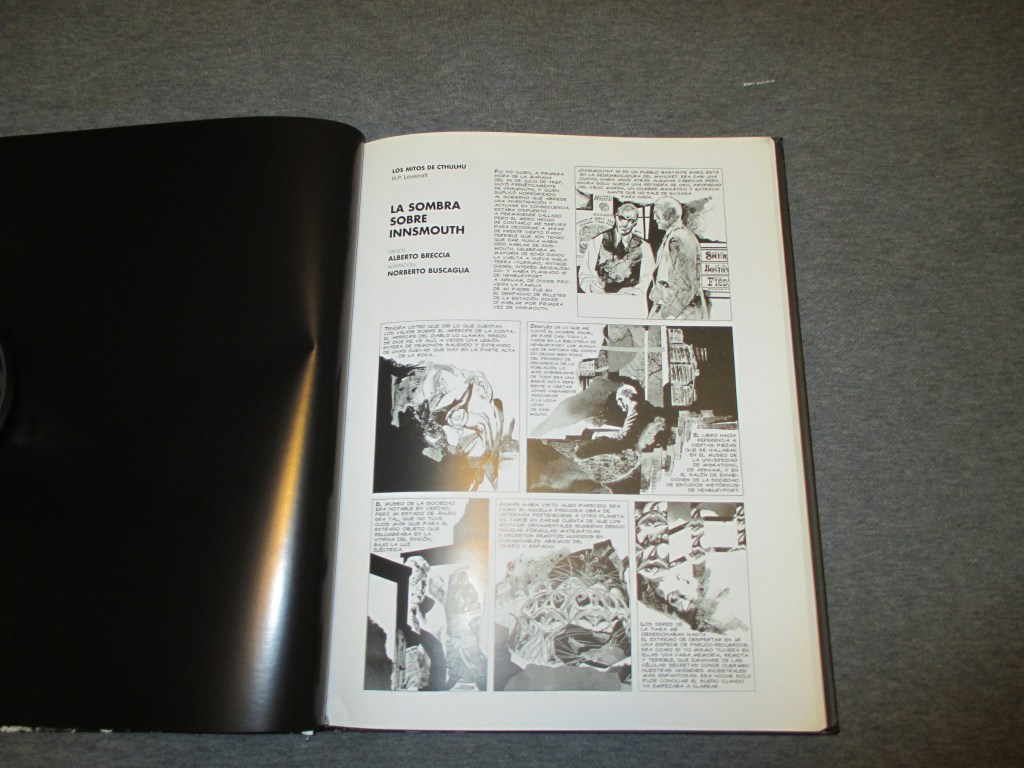
“La Sombra Sobre Innsmouth” (1973)

17 pages. Script by Norberto Buscaglia, art by Alberto Breccia. First published in Il Mago (Nov 1973). This adaptation of “The Shadow over Innsmouth” is verbose, selective in its imagery, evocative and often ambiguous in terms of landscape but with detailed faces and figures that give evidence of “the Innsmouth Look.”
“La Cosa en el Umbral” (1973)

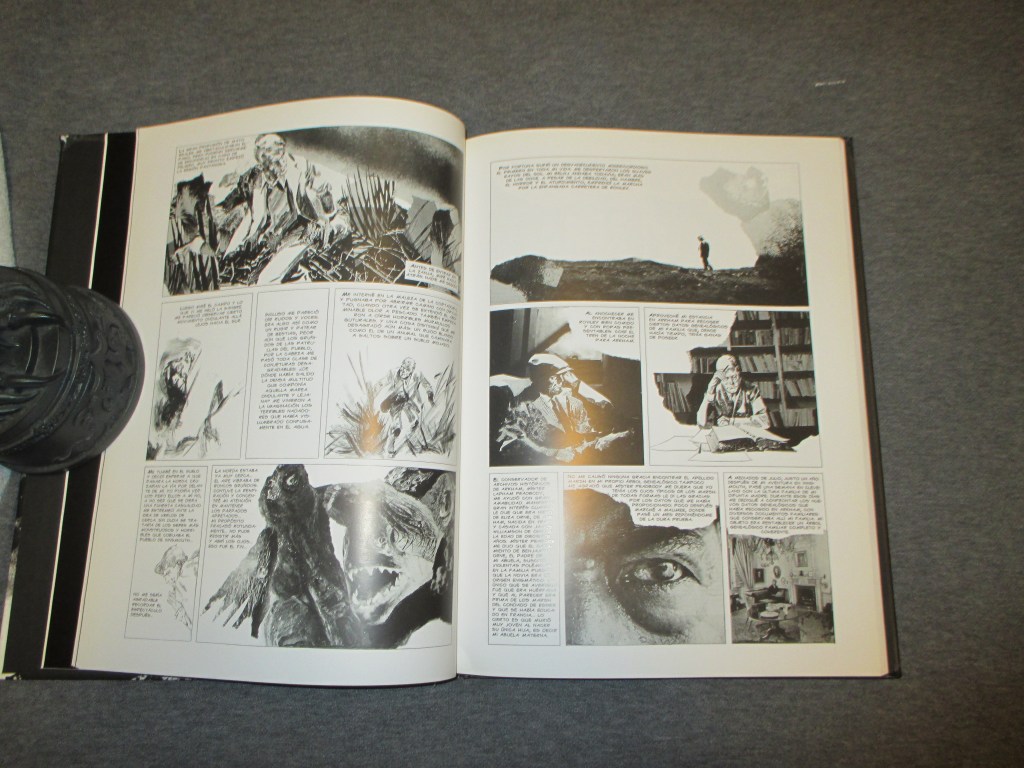
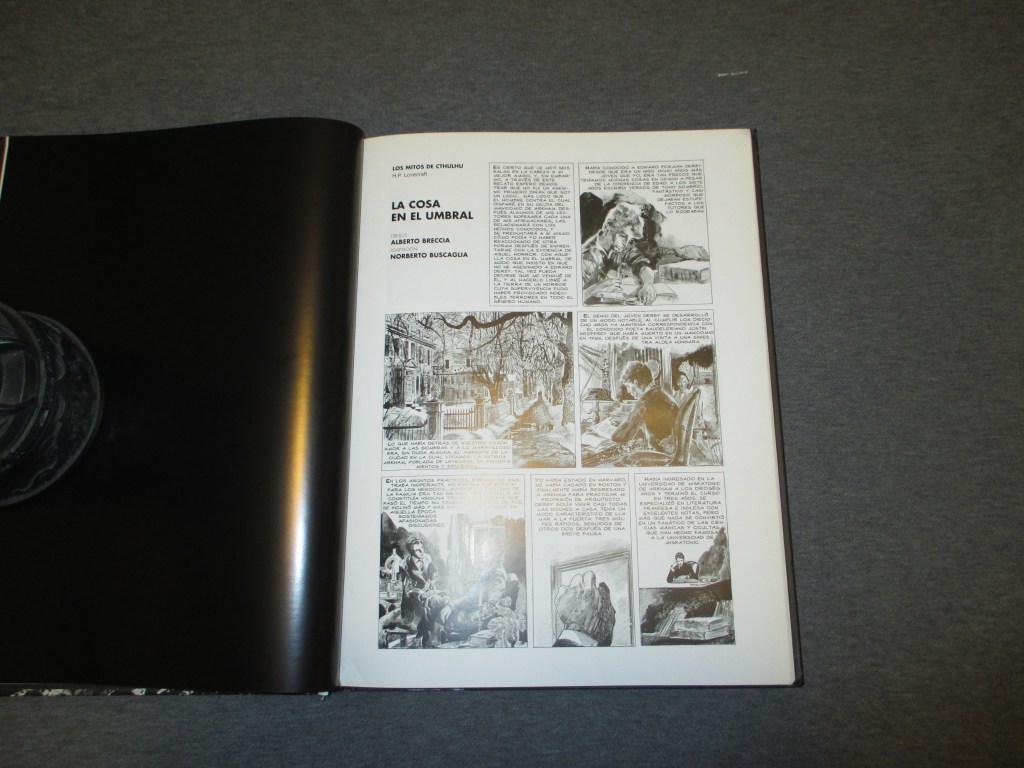
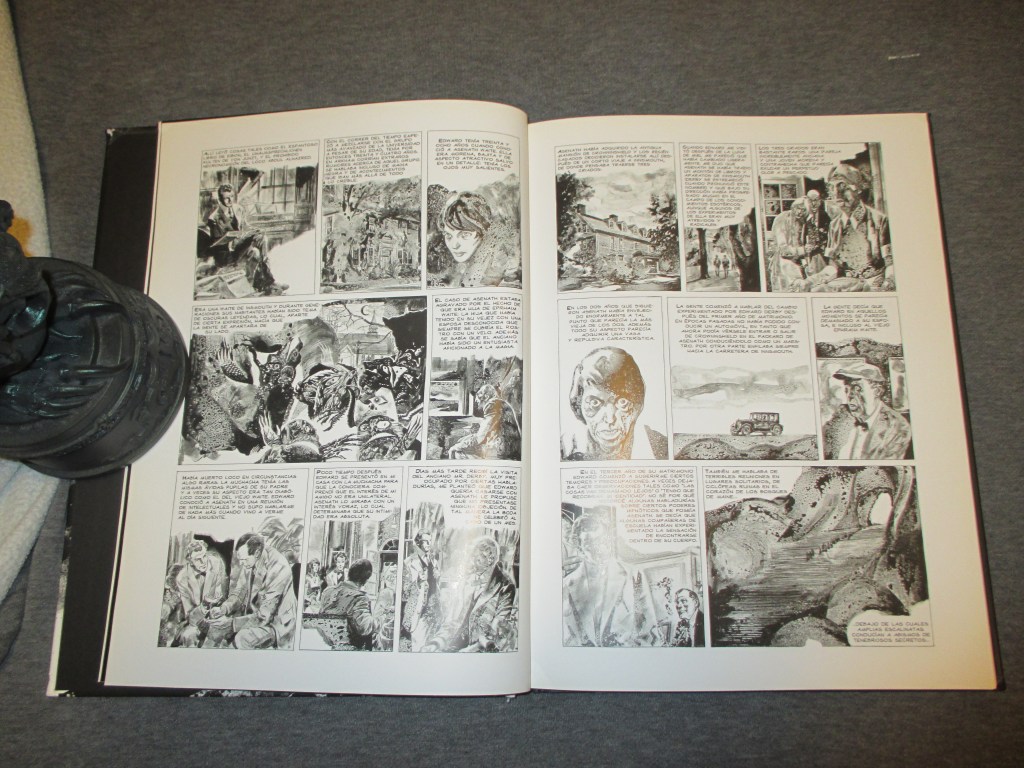
11 pages. Script by Norberto Buscaglia, art by Alberto Breccia. First published in the album Il piacere della paura (Oct 1973), and then in Il Mago (Jan 1974). This adaptation of “The Thing on the Doorstep” begins very sedately, with a heavier emphasis on traditional line work, Breccia’s other techniques mainly adding texture. However, that texture soon comes to grow and dominate as it reflects Edward Pickman Derby’s relationship with Asenath Waite; the depiction of “the Innsmouth Look” is very consistent with Breccia’s adaptation of “The Shadow over Innsmouth.”
“El Ceremonial” (1974)

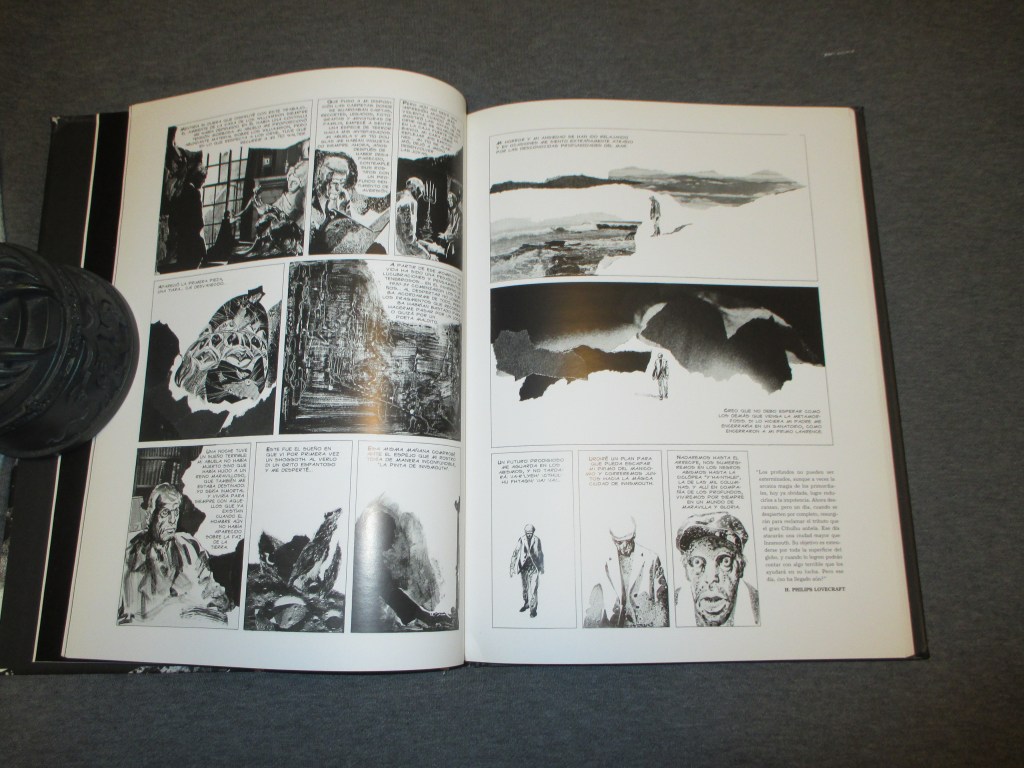
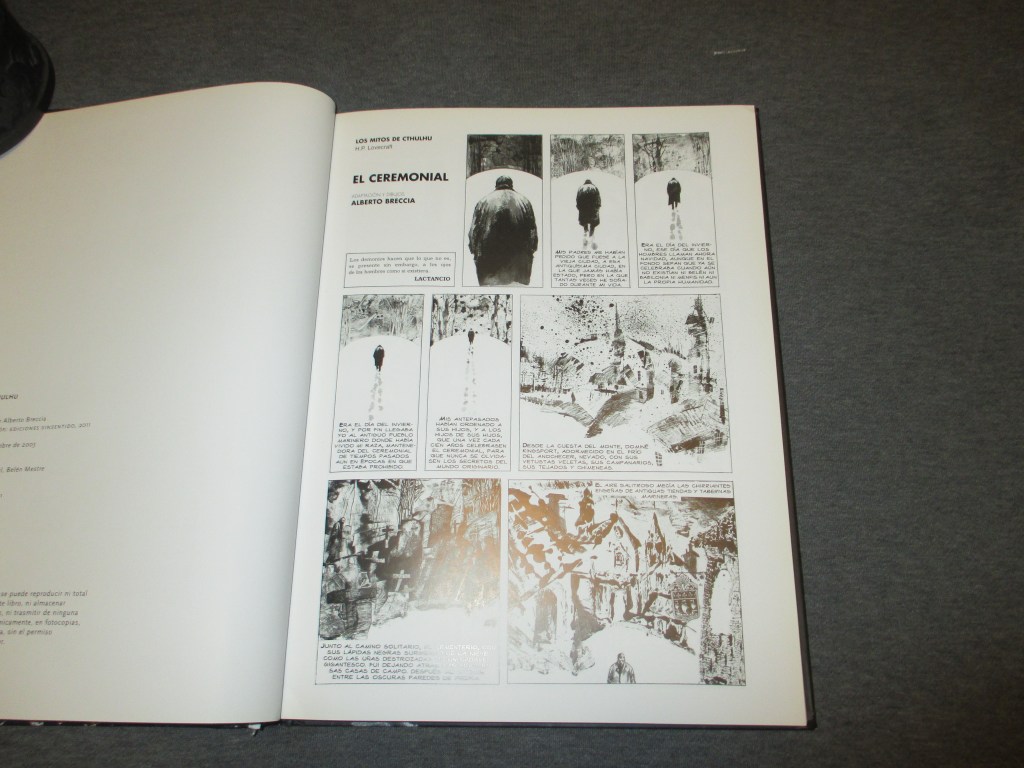
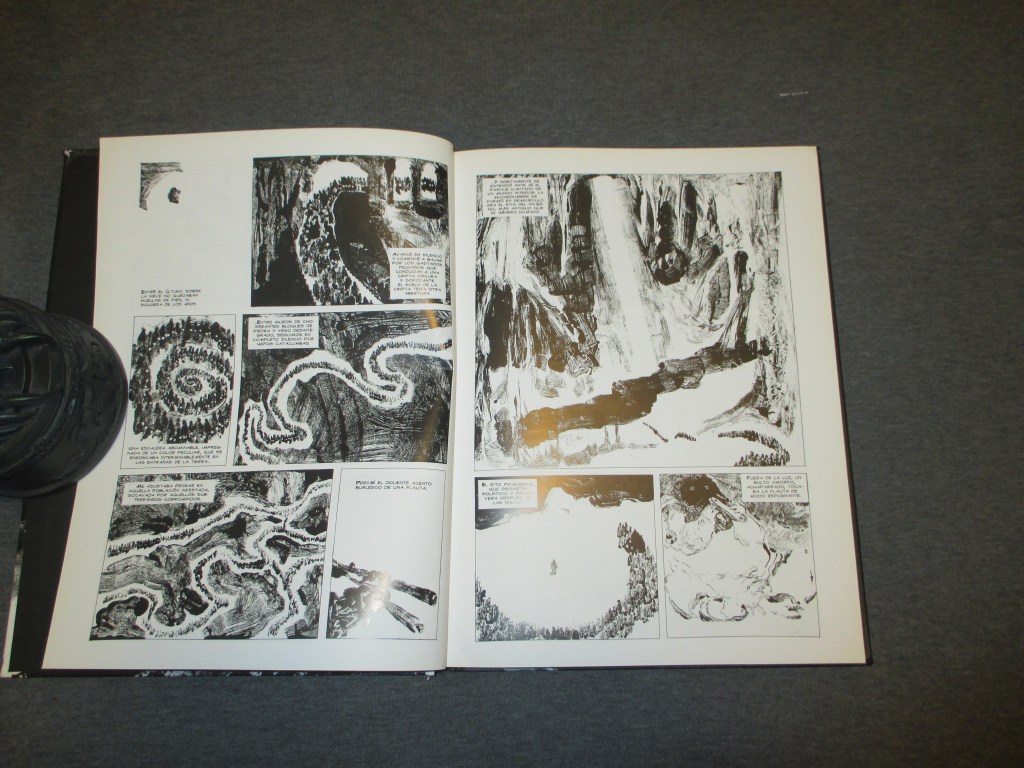
9 pages. Written and illustrated by Alberto Breccia. Signed “Breccia ’72,” this is the first adaptation of Lovecraft that Breccia completed, but wasn’t published until Il Mago (Mar 1974). Breccia makes the most of the chiaroscuro possibilities, with the white space sometimes doubling for snow, sometimes for light, or simply negative space. The combination of the surreal painting and collage with the ultra-realistic photographs and sketches that bookend the story add to the dreamlike nature of the narrative.
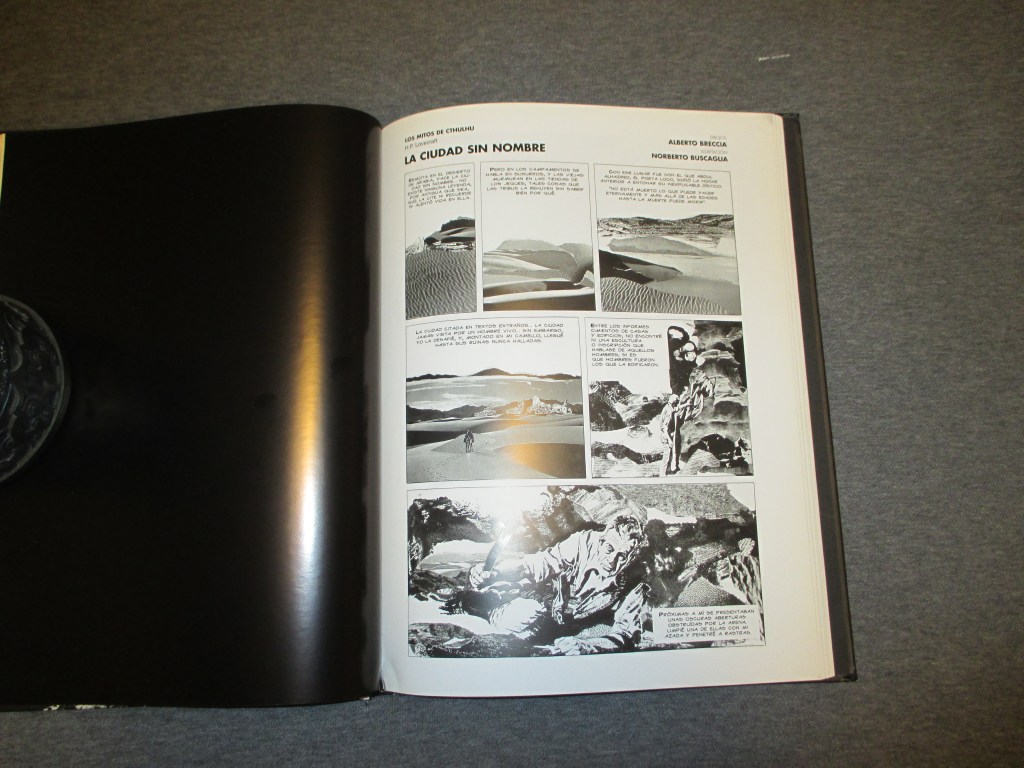
“La Ciudad sin Nombre” (1974)

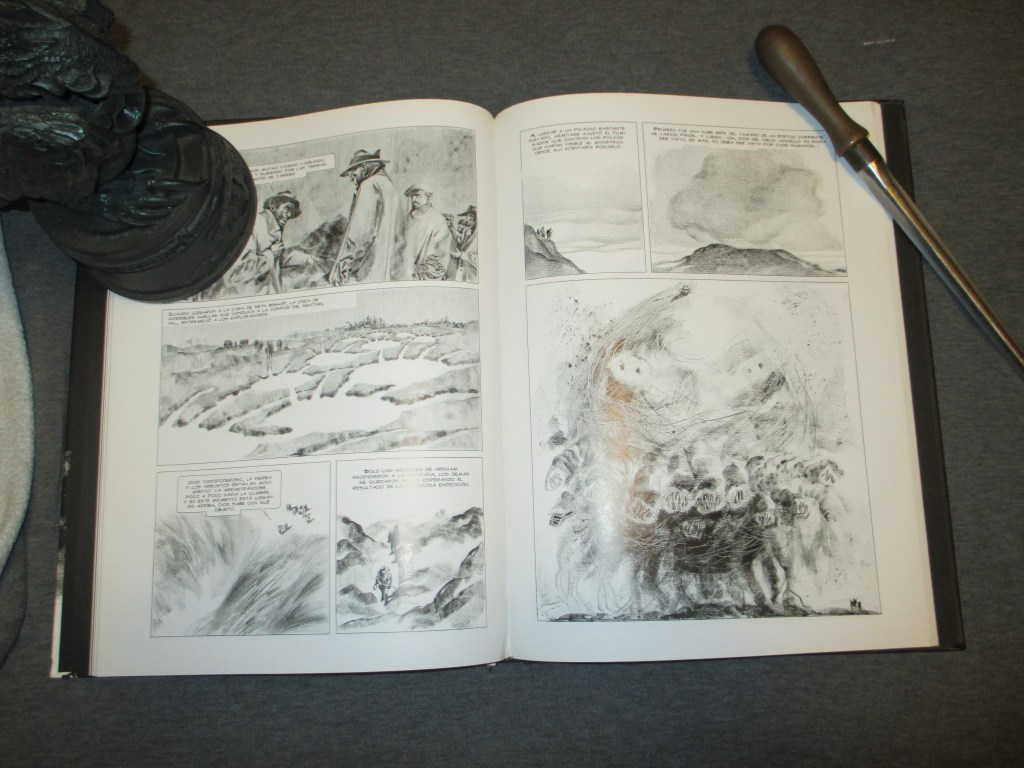
6 pages. Script by Norberto Buscaglia, art by Alberto Breccia. First published in Il Mago (Sep 1974). The shortest of the adaptations, and dominated by photographs of sandy deserts and rock outcroppings, which are collaged with sketched figures in a way suggestive of alien vistas that pure pen and ink could not capture alone.
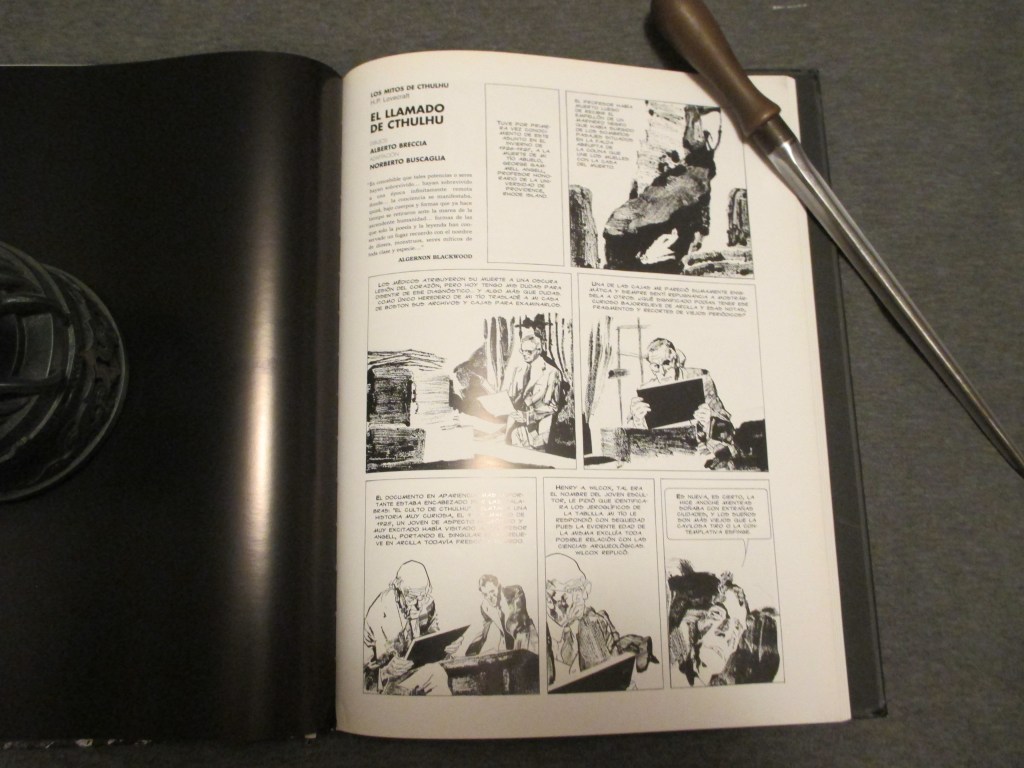
“El Llamado de Cthulhu” (1974)

11 pages. Script by Norberto Buscaglia, art by Alberto Breccia. First published in Il Mago (Dec 1974). At 11 pages, this is a very truncated version of Lovecraft’s story “The Call of Cthulhu,” though it captures all the essential plot points, it also abbreviates the complicated narrative story-within-story structure. What is really striking about this brief adaptation is how well Breccia restrains himself from revealing Cthulhu, even in the image in clay, until the moment that title entity appears on the page, at which point he presents something so truly outlandish that readers almost don’t notice the miniscule human figures that give it scale.
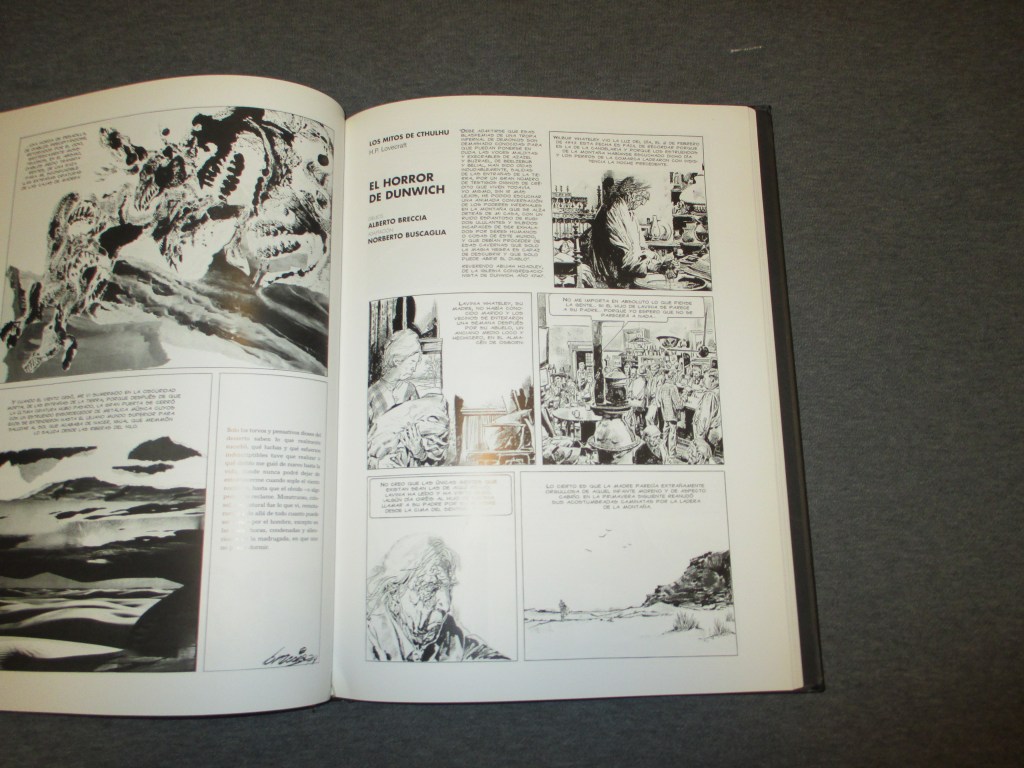
“El Horror de Dunwich” (1975)

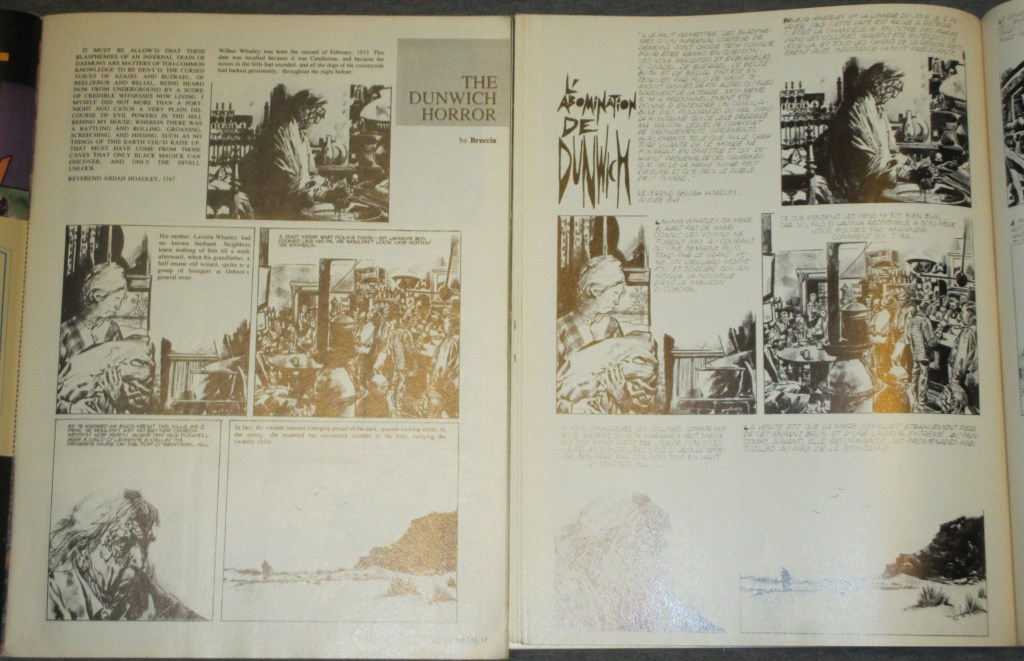
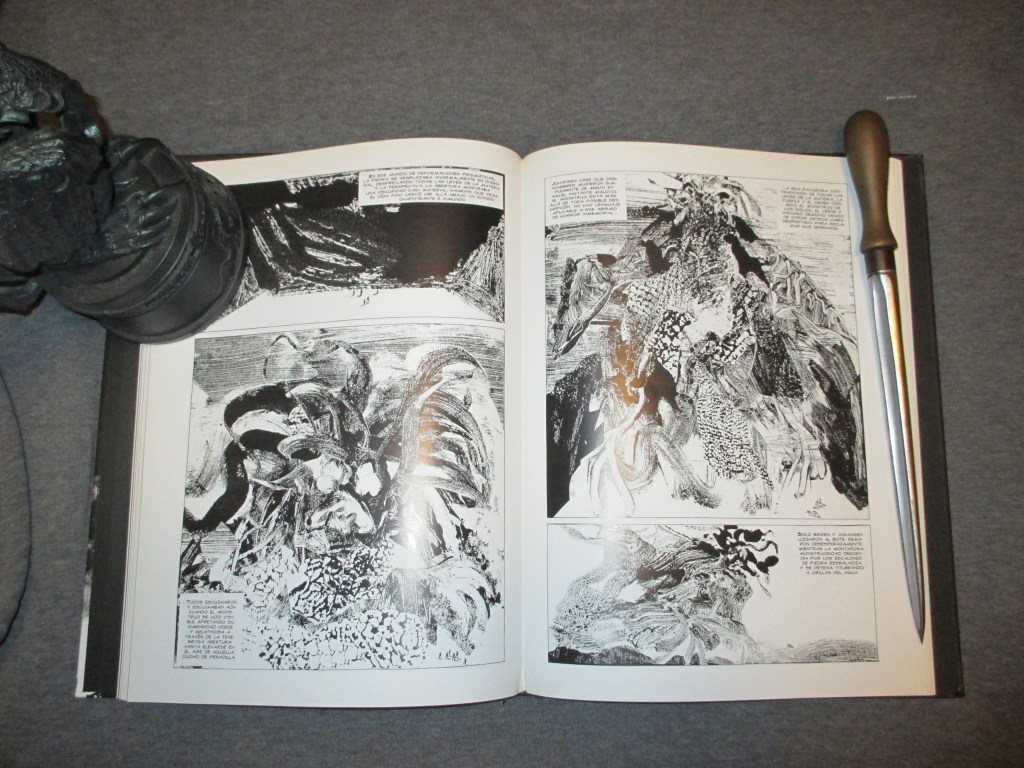
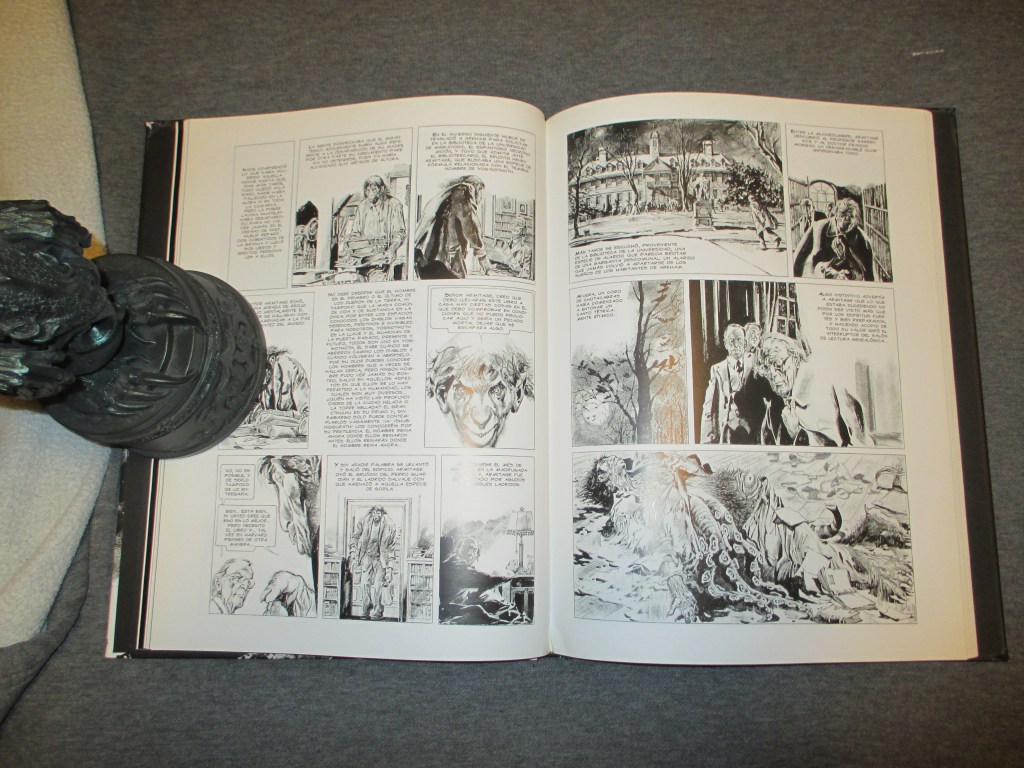
15 pages. Script by Norberto Buscaglia, art by Alberto Breccia. First published in Il Mago (Nov 1975). Arguably, this adaptation of “The Dunwich Horror” is the most famous and widely-republished of Breccia’s adaptations, because of its including in the Métal Hurlant Lovecraft Special, and the works that followed from that. Possibly some of Breccia’s finest figure and face work went into the goatish countenance of Wilbur Whateley. Like most of Breccia’s adaptations, the backgrounds and setting details are relatively spare but evocative.
Sasturain: Ce qui explique peut-etre que, pour la creature extraterrestre de <<Tres ojos>>, dans Sherlock TIme, tu n’as pas dessine un monstre. Dans L’Eternaute, tu les as desintegres. Les monstres sont intangibles: tu as dessine la sensation que genere l’epouvante chex les gens, pas l’object qui la prodout. Et tu as fait pareil pour Lovecraft.

Breccia: Je n’aime ni voir ni dessiner des monsters. Ca ne m’interesse pas.
Sasturain: Which may explain why, for the extraterrestrial creature of <<Three Eyes>>, in Sherlock Time, you didn’t draw a monster. In L’Eternaute, you disintegrated them. Monsters are intangible: you drew the sensation that generates terror in people, not the object that produces it. And you did the same for Lovecraft.

Breccia: I don’t like to see or draw monsters. I’m not interested.
Breccia: Conversations avec Juan Sasturain 355English translation

Despite Breccia’s comment, when the time came at the end of the story to reveal Wilbur’s unnamed twin, he pulled out all the stops.
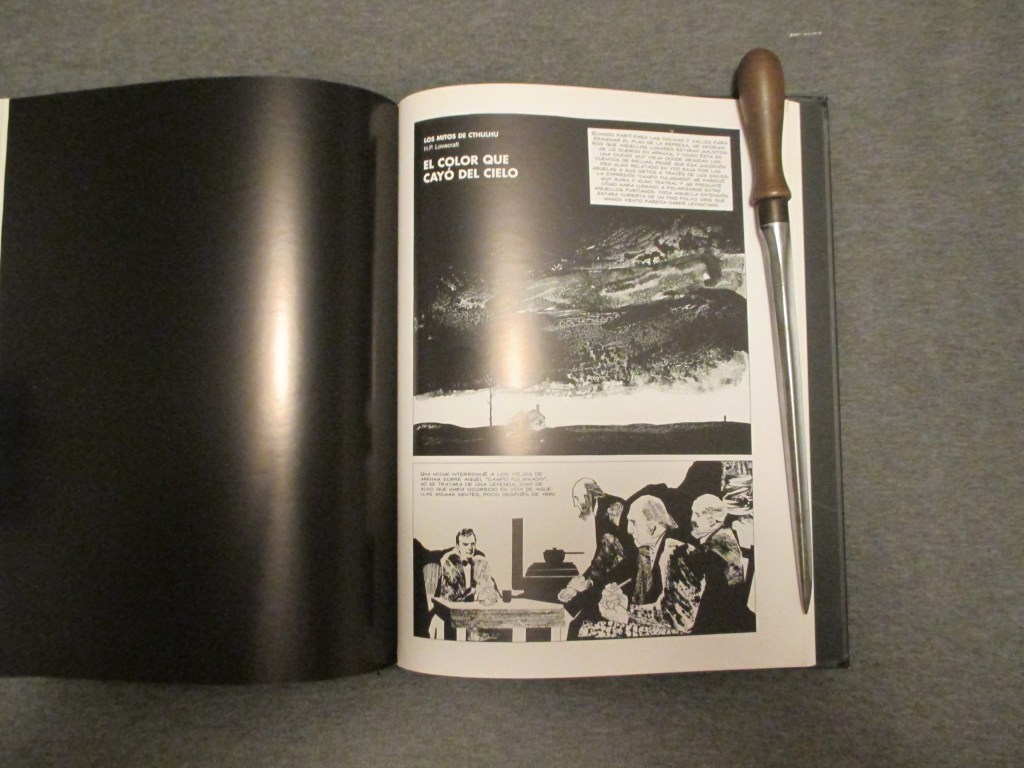
“El Color que Cayó del Cielo” (1975)

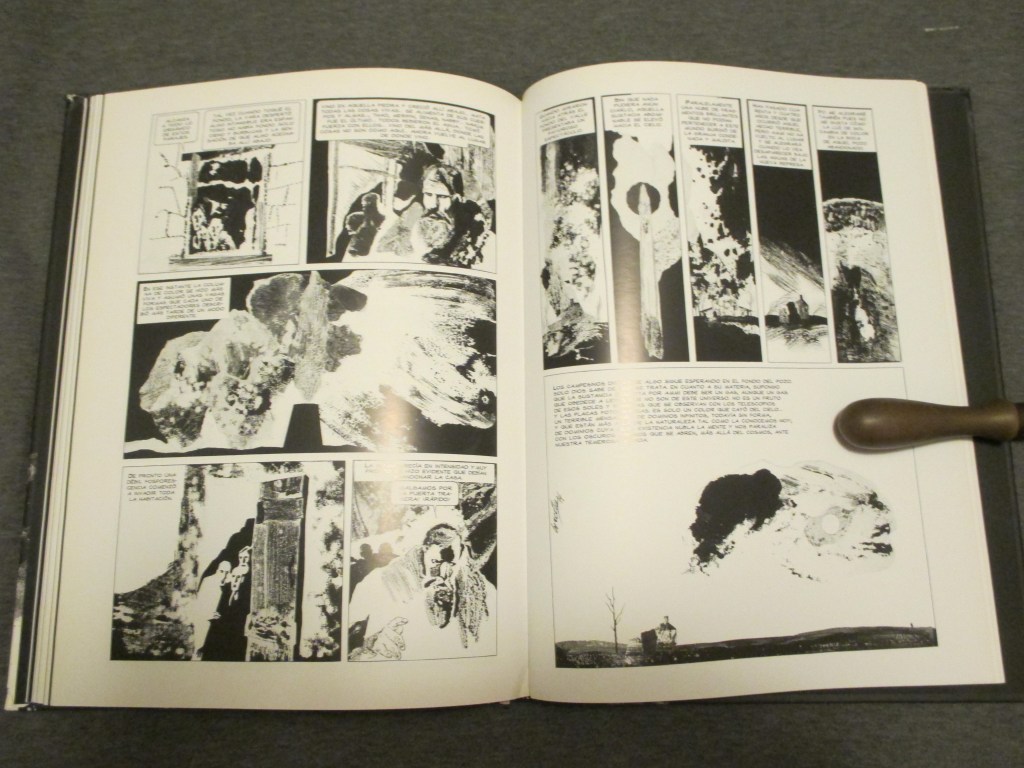
13 pages. Written and illustrated by Alberto Breccia. This adaptation of “The Colour Out of Space” first appeared in his album Los mitos de Cthulhu (1975), which contained all but one of his Lovecraft adaptations (the last not being published until years later). Compared to the previous stories, this one is much more experimental in style, bolder in its use of collage, stark blacks and blinding whites.
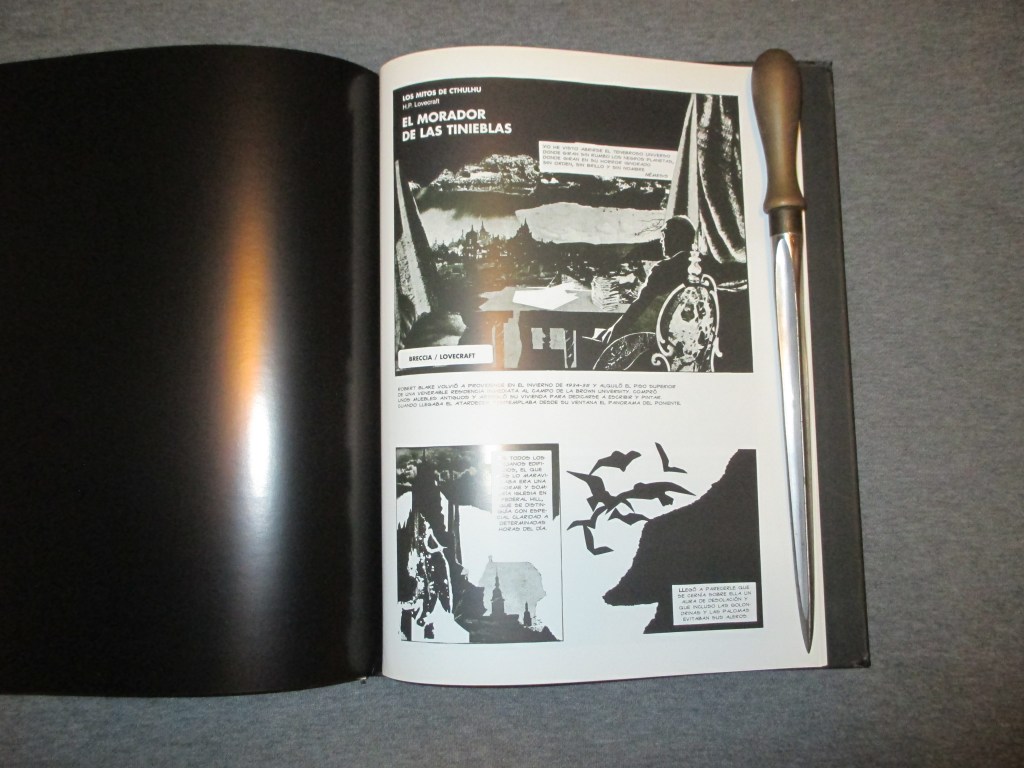
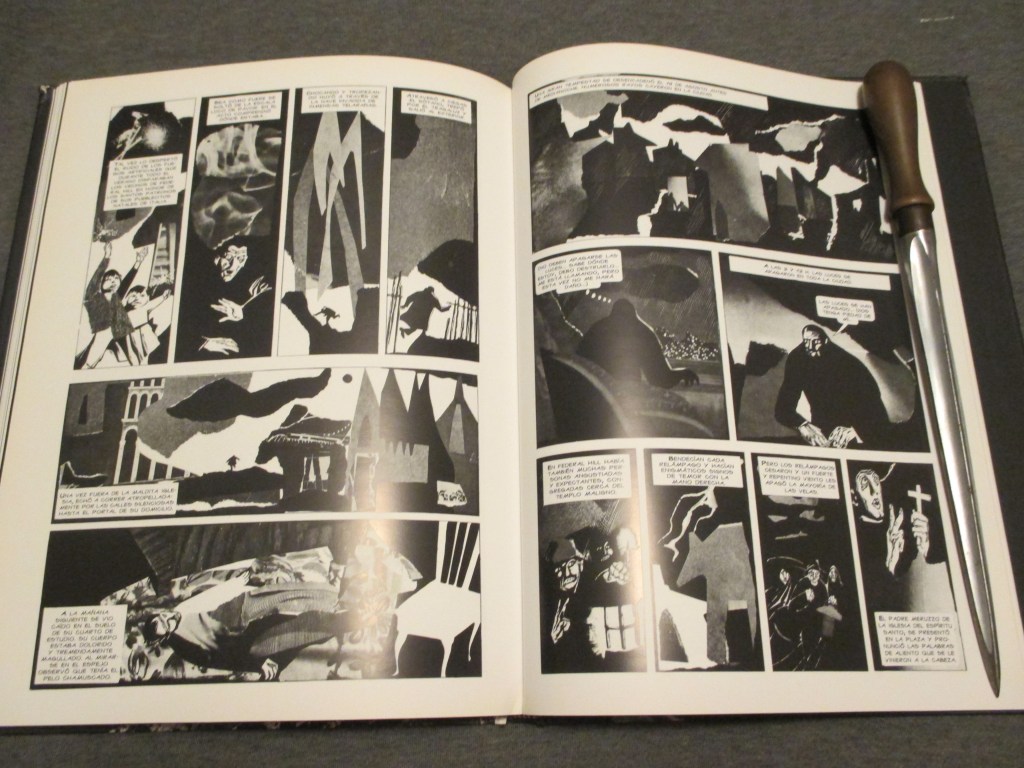
“El Morador de las Tinieblas” (1975)

15 pages. Written and illustrated by Alberto Breccia. This adaptation of “The Haunter of the Dark” first appeared in his album Los mitos de Cthulhu (1975). Again, Breccia pushes the envelope of his experimental style, his pen-and-ink illustrations taking on the more exaggerated style characteristic of his work in the 80s like Drácula, but still playing with texture, shape, and strong contrasts.

According to a note by Latino Imperato in later collections, many of the original pages for this story have been lost, and subsequent reproductions were made from the first Italian printing.
“El Que Susurraba En las Tinieblas” (1979)

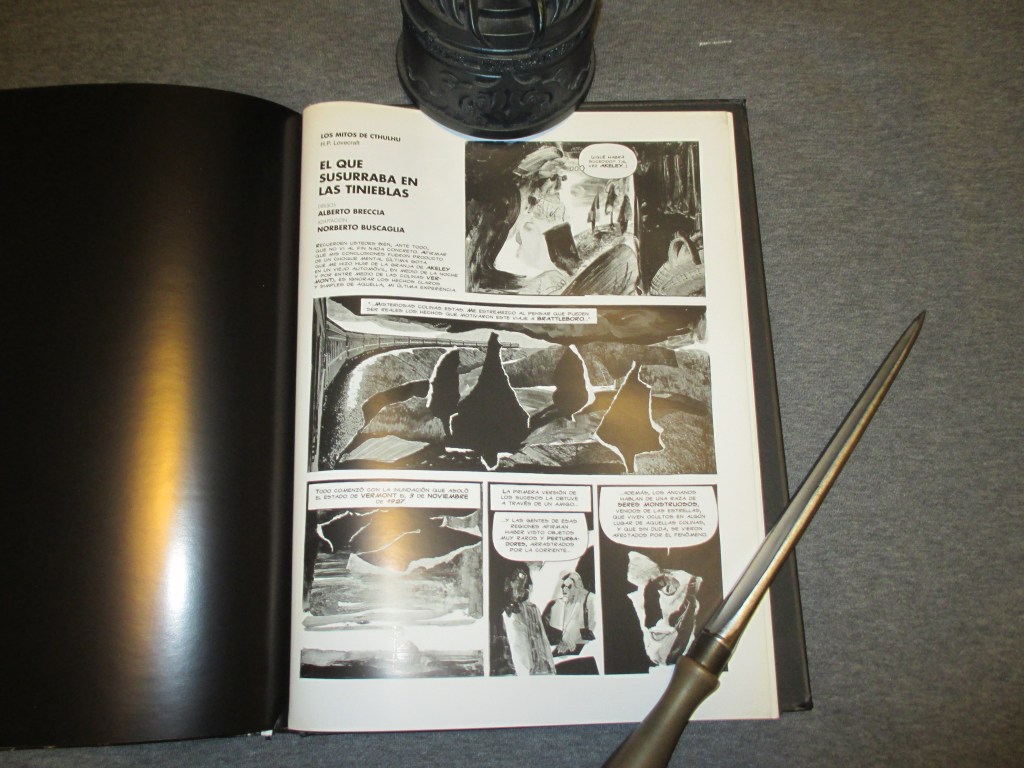
15 pages. Script by Norberto Buscaglia, art by Alberto Breccia. First published in the Argentine magazine El Pendulo (Sep 1979). This adaptation of “The Whisperer in Darkness” was the last of Breccia’s Lovecraft adaptations to be published, and the last to be collected. It is in many ways the apex of the artistic experiments and strongly points to some of Breccia’s stylistic choices in subsequent works during the 1980s like Perramus. For the most part, however, it is the most deliberately choppy and nightmarish of Breccia’s adaptations.
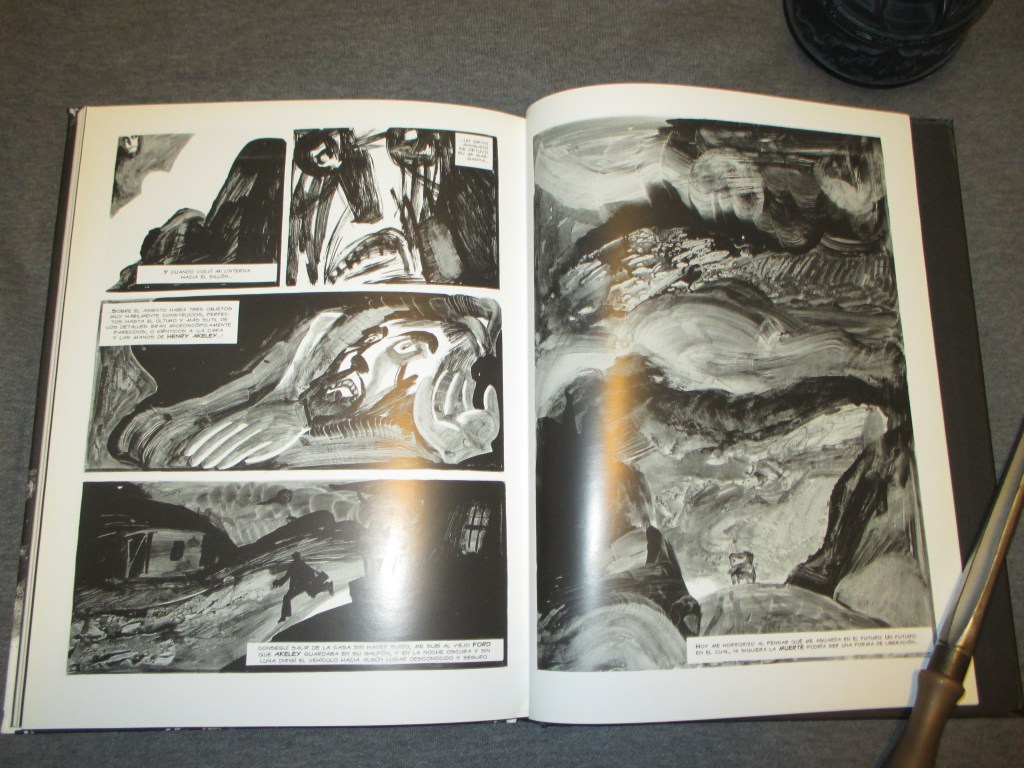
“El anciano terrible” (2003)

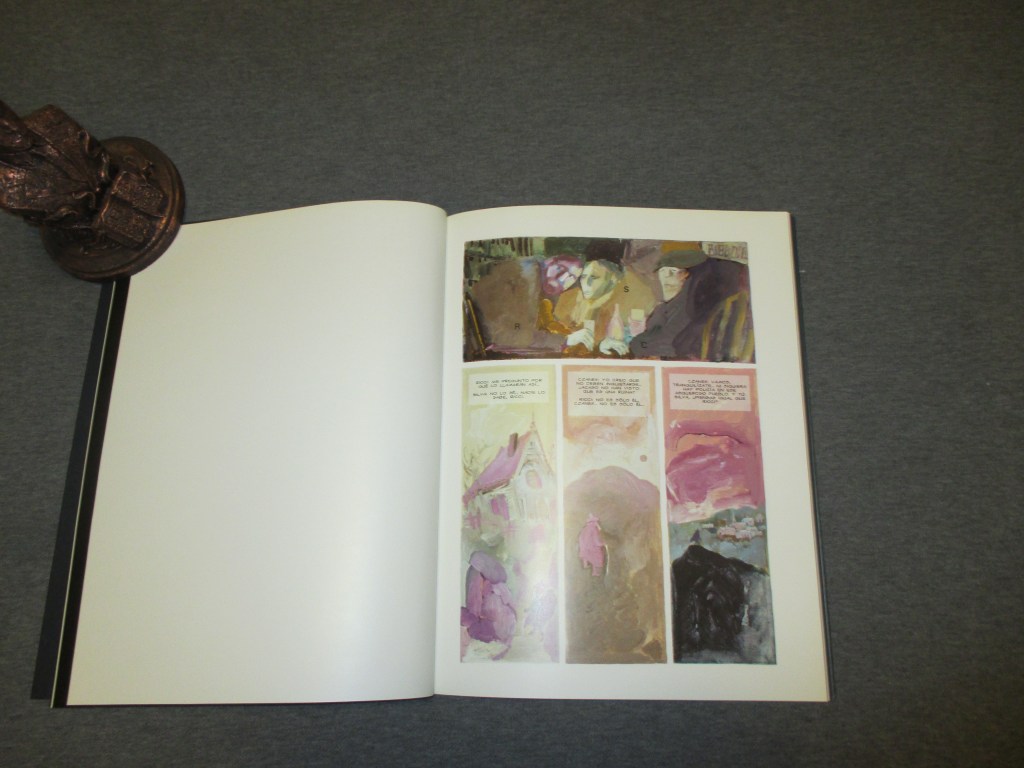
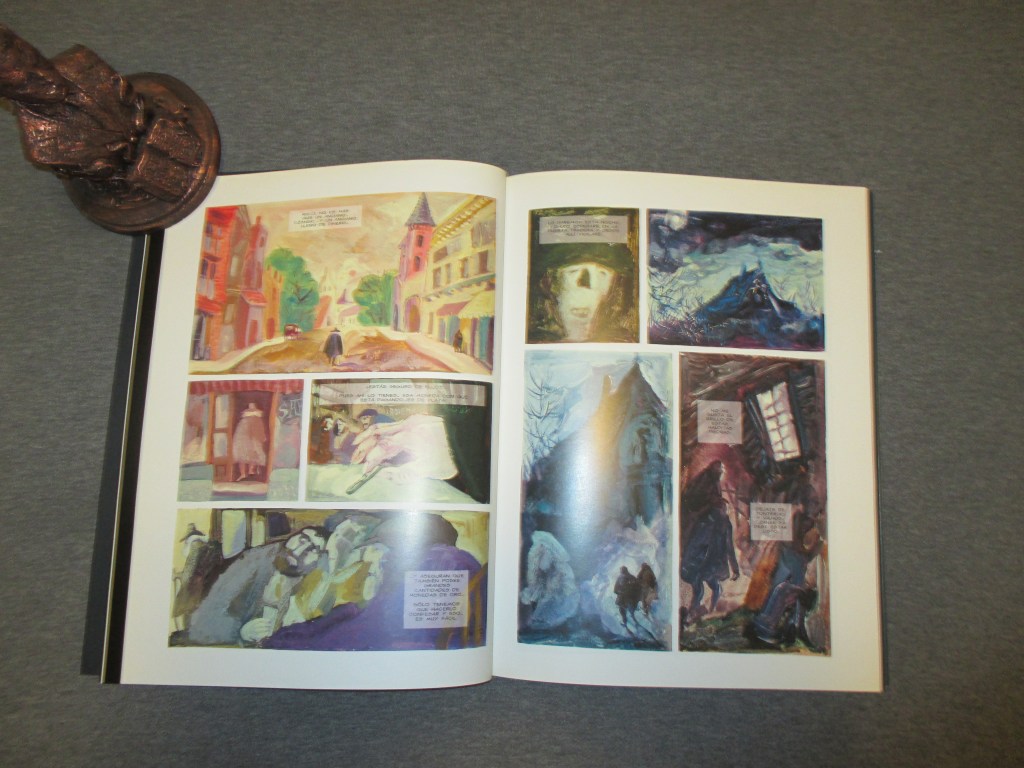
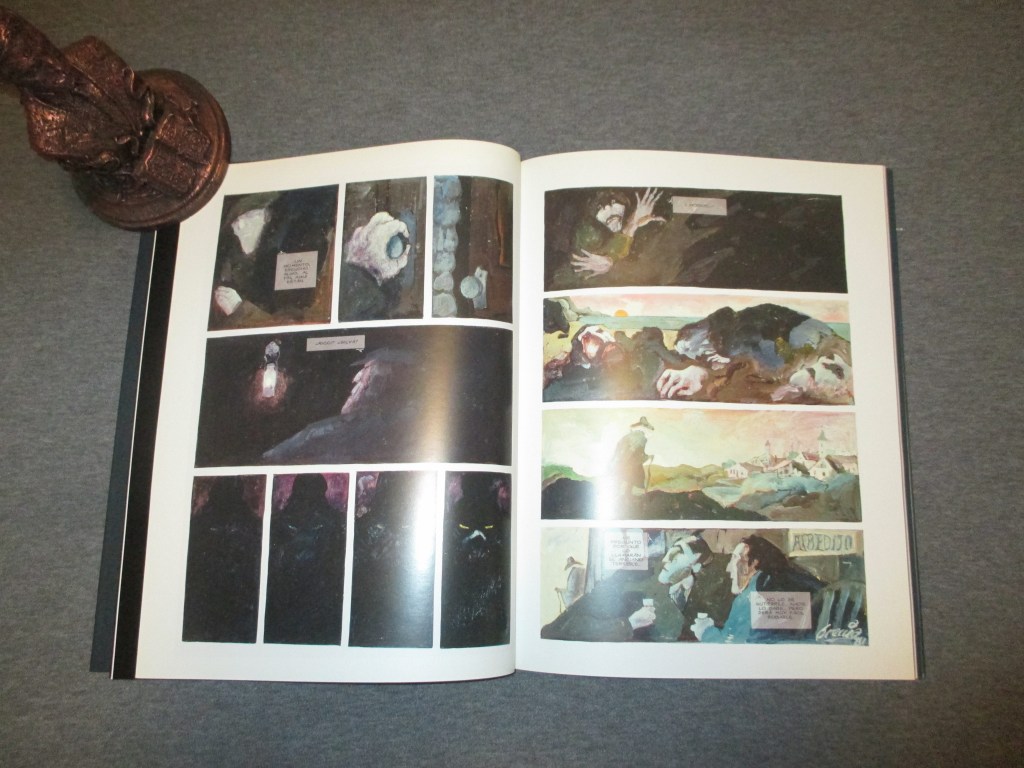
7 pages. Painted, in color, as are the other works in Sueños Pesados. The last page is dated “Breccia ’81.” Here, Breccia takes more liberties with the text than usual, eschewing much of Lovecraft’s exposition and description to give the characters a bit of dialogue, letting the art do most of the talking. The art is characteristic of this period, with vibrant colors, rich textures, but muddier faces, deliberately stylized and evocative.
Bobby Derie is the author of Weird Talers: Essays on Robert E. Howard and Others and Sex and the Cthulhu Mythos.

Deep Cuts in a Lovecraftian Vein uses Amazon Associate links. As an Amazon Associate I earn from qualifying purchases.
Deeper Cut: Métal Hurlant/Heavy Metal/Metal Extra Lovecraft Special

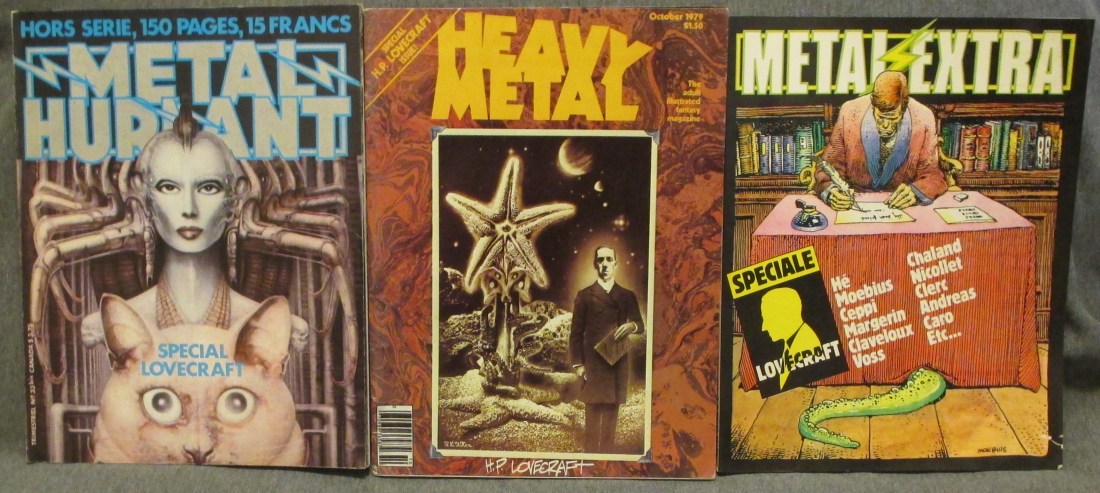
France, 1974. Jean Giraud (Mœbius), Philippe Druillet, Jean-Pierre Dionnet, and Bernard Farkas came together to create Les Humanoïdes Associés, a publisher for a new type of comic magazine: Métal Hurlant (“Howling Metal,” 1974-1987). Initially released as a quarterly and focused on science fiction, Métal Hurlant featured some of the best international comic artists of its time, as well as some of the most daring content, not just featuring sex, drugs, and rock & roll—but humor, horror, gory violence, politics, and philosophy.

The magazine was successful enough to inspire spin-offs in other countries, largely based, at least initially, on material translated from Métal Hurlant. So in the United States and Commonwealth countries, Anglophones could read Heavy Metal (1977-2023), with various special issues, spin-offs, graphic novels, and other projects; in Italy, the localized version of Métal Hurlant lasted only 12 issues (1981-1983), with several standalone Metal Extra issues, though the sister magazine Totem lasted longer (1980-1984). In West Germany, Schwermetall (“Heavy Metal,” 1980-1984) lasted a respectable 57 issues under its first publisher, and eventually ran to issue 219/220 (1998). Spain had their own translation of Métal Hurlant in the 1980s, the Netherlands had Zwaar Metaal (“Heavy Metal”), Denmark had Total Metal, Finland had Kylmä metalli (“Cold Metal”), Sweden had Tung Metal (“Heavy Metal”) and Pulserande Metal (“Pulsing Metal”), Turkey had Heavy Metal Türkiye…most of these international runs didn’t last long, but they spread the stories and art far and wide.

The creation of Métal Hurlant coincided with a number of other trends. H. P. Lovecraft, Robert E. Howard, Clark Ashton Smith, and other early contributors to the Cthulhu Mythos became more widely available thanks to paperback reprints, and with the death of August Derleth, Arkham House lost its grip on the Mythos. New anthologies like The Disciples of Cthulhu (1976) proved that anyone could now play with the shared universe that Lovecraft and his friends had created. Argentinian master Alberto Breccia began and completed a series of Lovecraft adaptations for comics from 1973-1979, many of which first appeared in the Italian magazine Il Mago. Underground comix in the United States like Skull Comix (1970-1972) were giving way to semi-prozines like Star * Reach (1974-1979), and publishers also found they could side-step the Comics Code Authority by publishing magazines like Creepy (1964-1983) and Eerie (1966-1983) instead of standard-size comics, all of which featured material inspired by or adapting Lovecraft. H. R. Giger’s Necronomicon art collection was published in 1977, and quickly inspired the aesthetic for the film Alien (1979).

There was, in other words, a small revolution in Lovecraftian art, comics, and fiction in the 1970s. Not all at once, but from many different angles—and Métal Hurlant, the international crossroads where underground American artists like Richard Corben; French masters like Mœbius, Druillet, and Nicollet; Swiss artists like Giger; and Argentinian masters like Breccia could all come together at once.

That is what happened in September 1978, when Les Humanoïdes Associés published a 150-page special issue of Métal Hurlant dedicated to H. P. Lovecraft. The idea was so attractive that the next year, the English-language Heavy Metal magazine released their own Lovecraft special issue to coincide with Halloween, and when Métal Hurlant was translated in Italy, they released a one-off Metal Extra special issue dedicated to Lovecraft.

All three of these magazines share certain common elements, largely because the English- and Italian-language productions included material translated from the French special Lovecraft issue. Yet they were each different as well…and that’s kind of fascinating in itself, how these three magazines represent three different takes on the material, each tailored for their respective audience.

What follows is a survey: what each Lovecraft special issue contains, and by comparison, what they do not contain. To avoid excessive repetition, each issue and its unique contents are discussed separately, and then a single section discusses all the shared features. Because this is a long, image-heavy post, a table with links is provided to aid navigation:


Métal Hurlant Special Lovecraft (Sep 1978)

150 pages, counting covers, the table of contents, ads, etc., Métal Hurlant Special #33 bis (“extra”) was one of several themed issues released by Les Humanoïdes Associés, with the other themes including Fin du monde (“the End of the World”, #36), Rock (#39), Guerre (“War”, #42), and Alien (#43). Not every feature in this issue involves Lovecraft or the Mythos, but a majority do. There are errors in the table of contents as printed, so a full list is given here.

Features involving Lovecraft or his creations are marked in bold; color pages are marked [c].

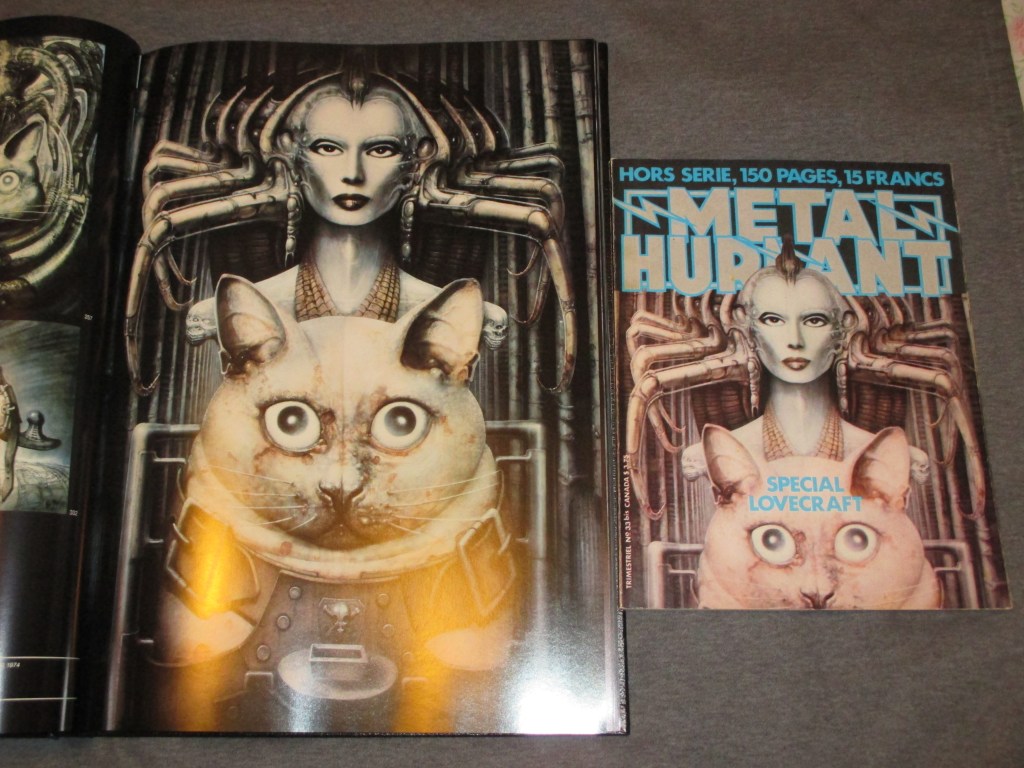
  • Front Cover: H. R. Giger
  • “La cimetière” (illustration) by Souchu, 2-3
  • Advertisement for Heilman by Voss and A l’Est de Karakulac by Daniel Ceppi, 4
  • Table of Contents, 5
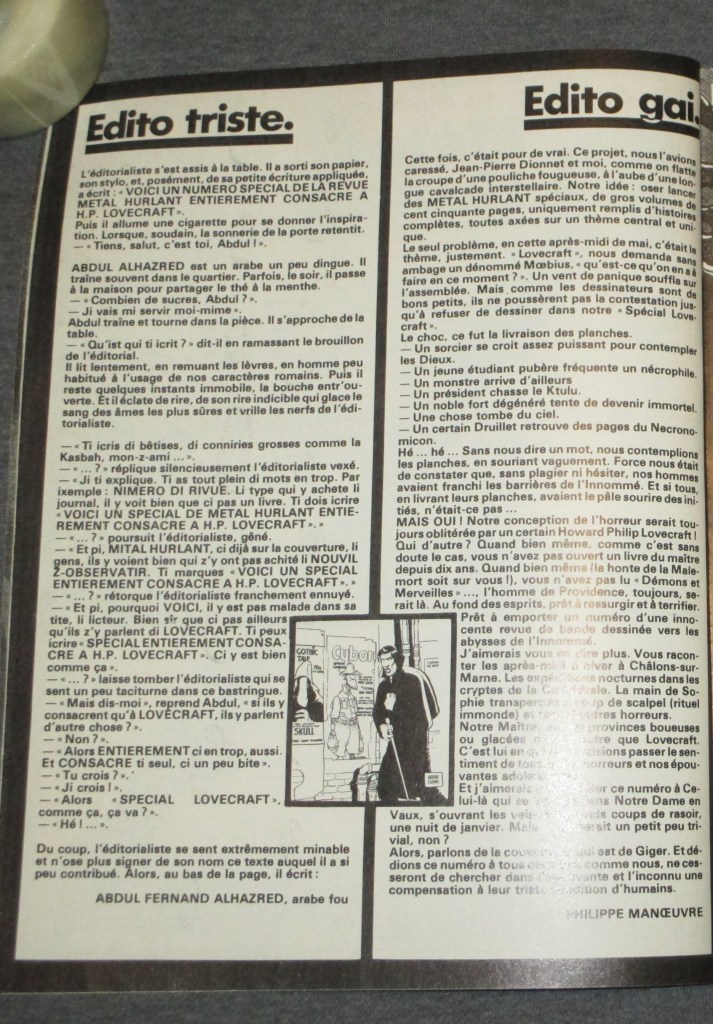
  • Edito triste./Edito gai by Philippe Manœuvre, 6
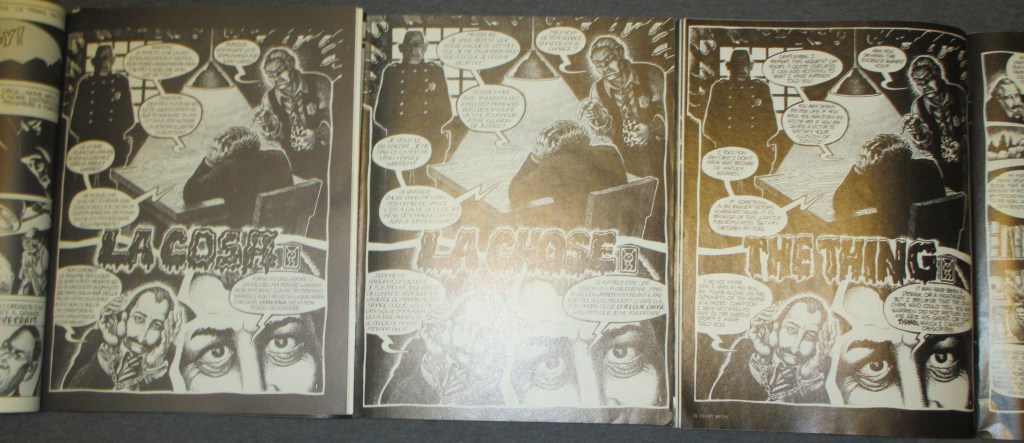
  • “La Chose” by Alain Voss, 7-12
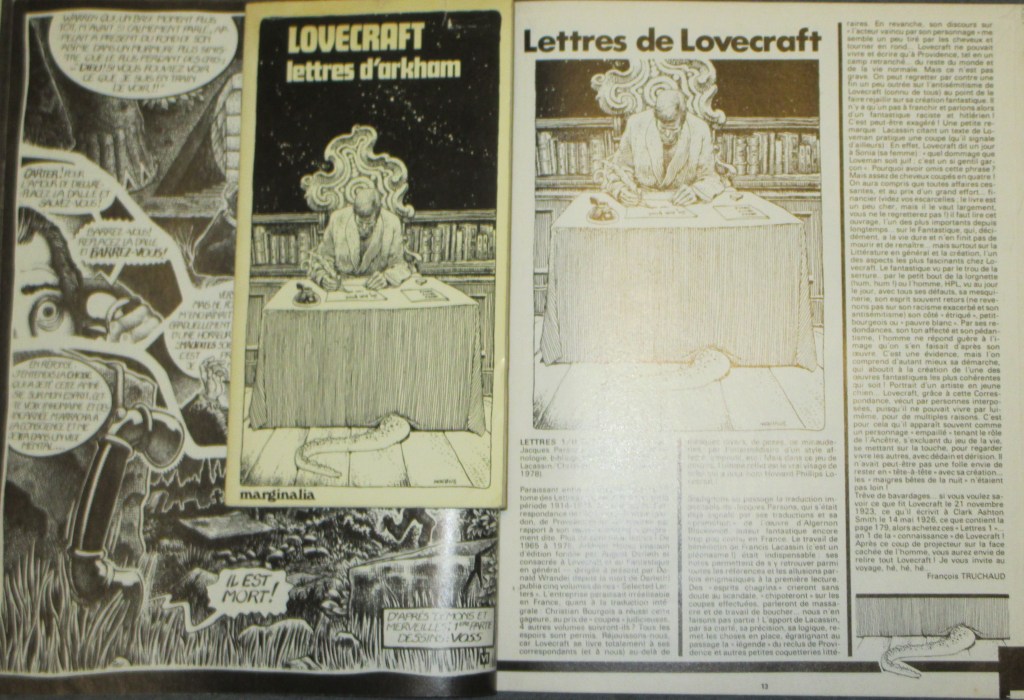
  • “Lettres de Lovecraft” by François Truchaud, 13
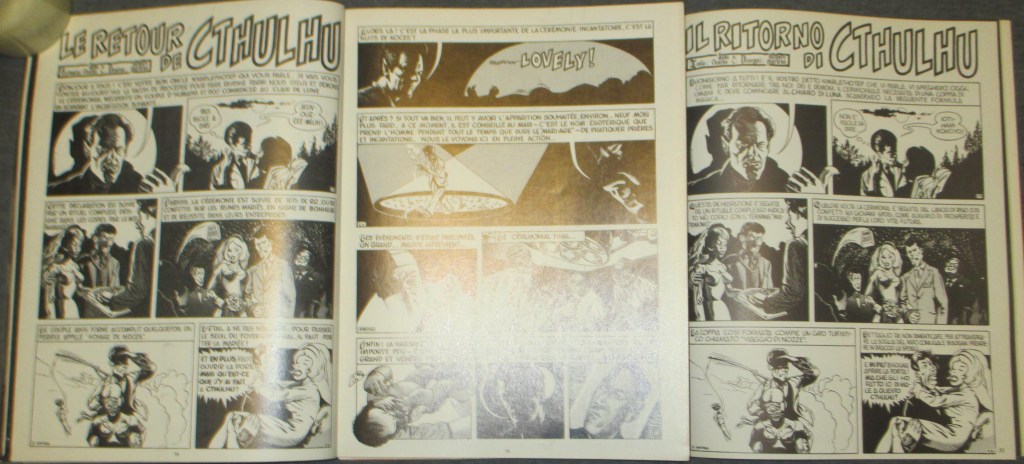
  • “La Retour de Cthulhu” by Alan Charles & Richard Martens, 14-15
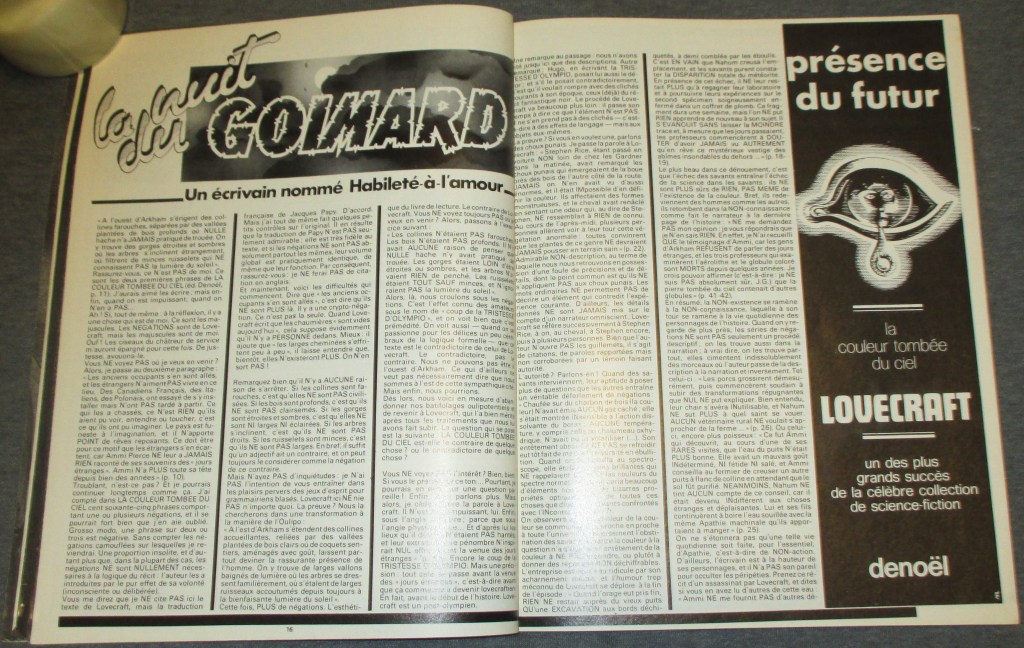
  • “La Nuit du Goimard: Un ecrivain nommé Habileté-à-l’amour” by Jacques Goimard, 16-18
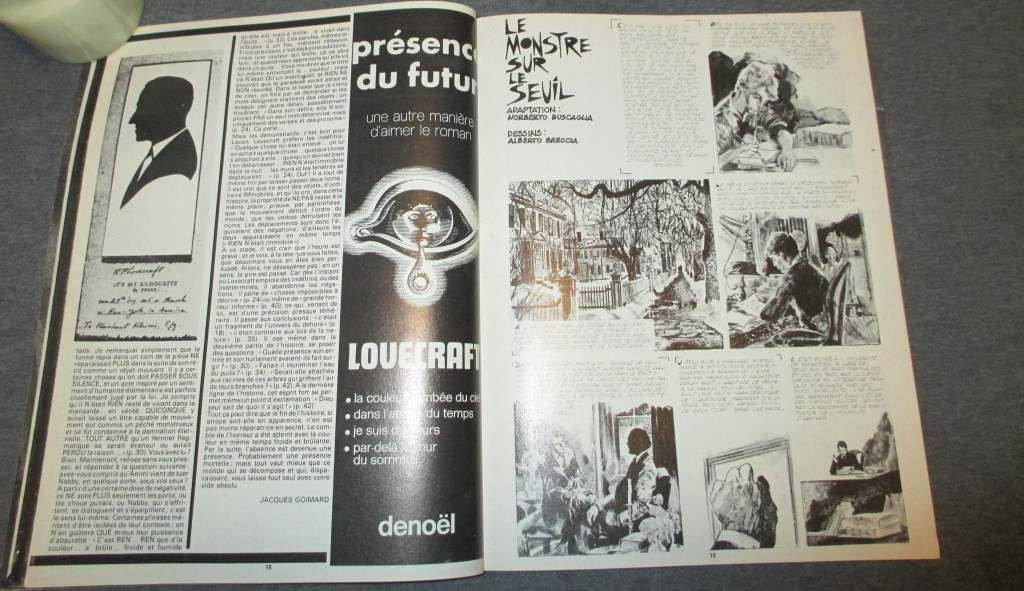
  • “Le Monstre Sur le Seuil” by Norberto Buscaglia & Alberto Breccia, 19-29
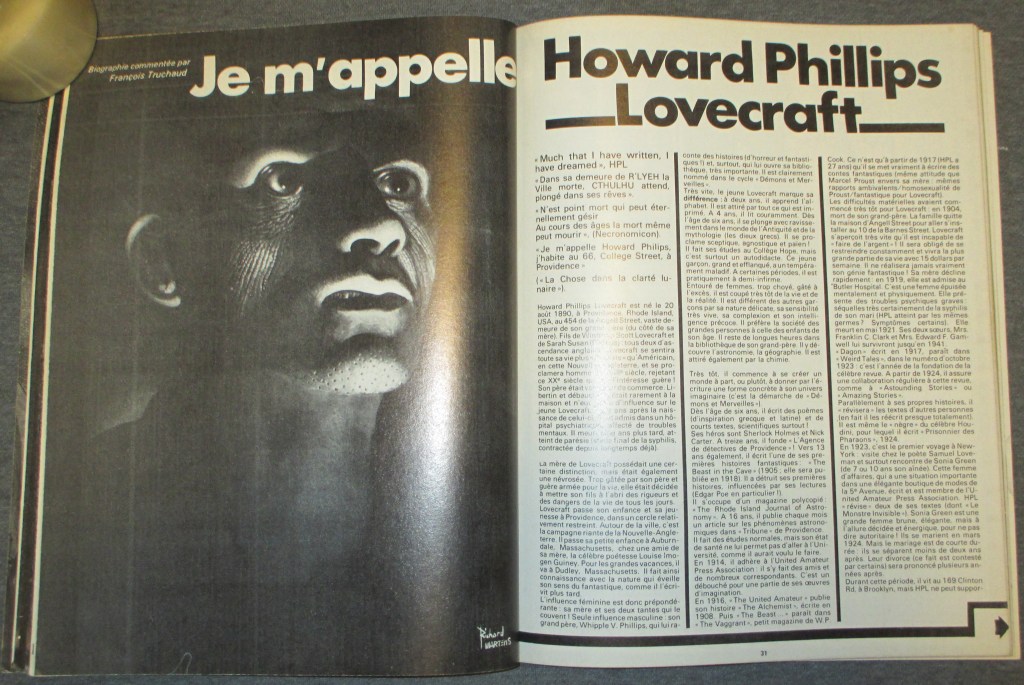
  • Je m’appelle Howard Phillips Lovecraft” by François Truchaud, 30-32
  • “L’Homme de Black Hole” by Serge Clerc, 33-36
  • “Hommage à HPL…” (uncredited), 37-39
  • “Petite bibliothèque lovecraftienne” by François Truchaud, 40-41
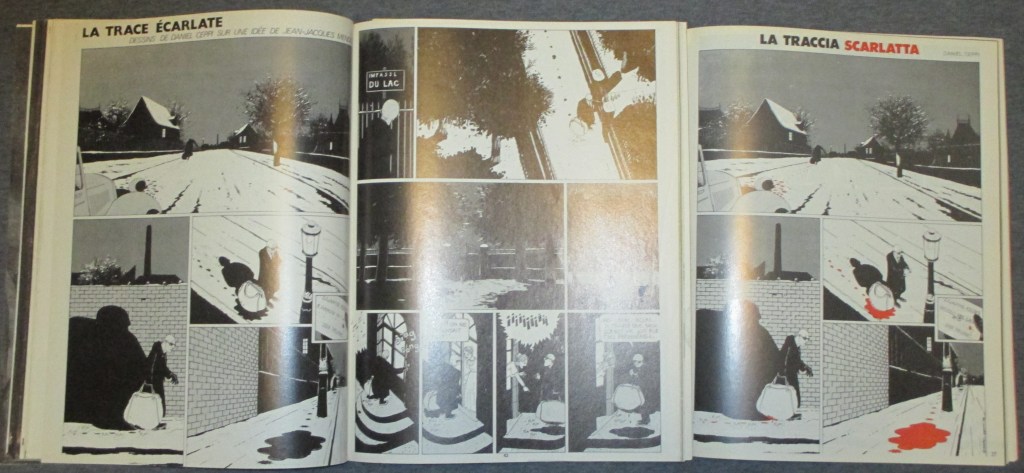
  • “La Trace Ecarlate” by Jean-Jacques Mendez & Daniel Ceppi, 42-43
  • “Excursion Nocturne” by Frank Margein, 44-47
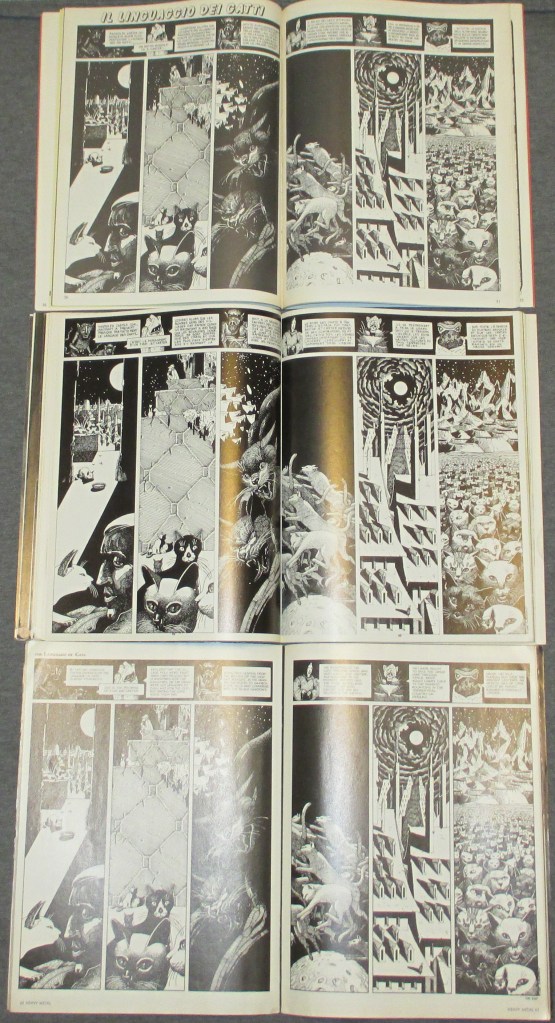
  • “Le langage des chats” by Nicole Claveloux, 48-49
  • Untitled illustration by Richard Martens, 50
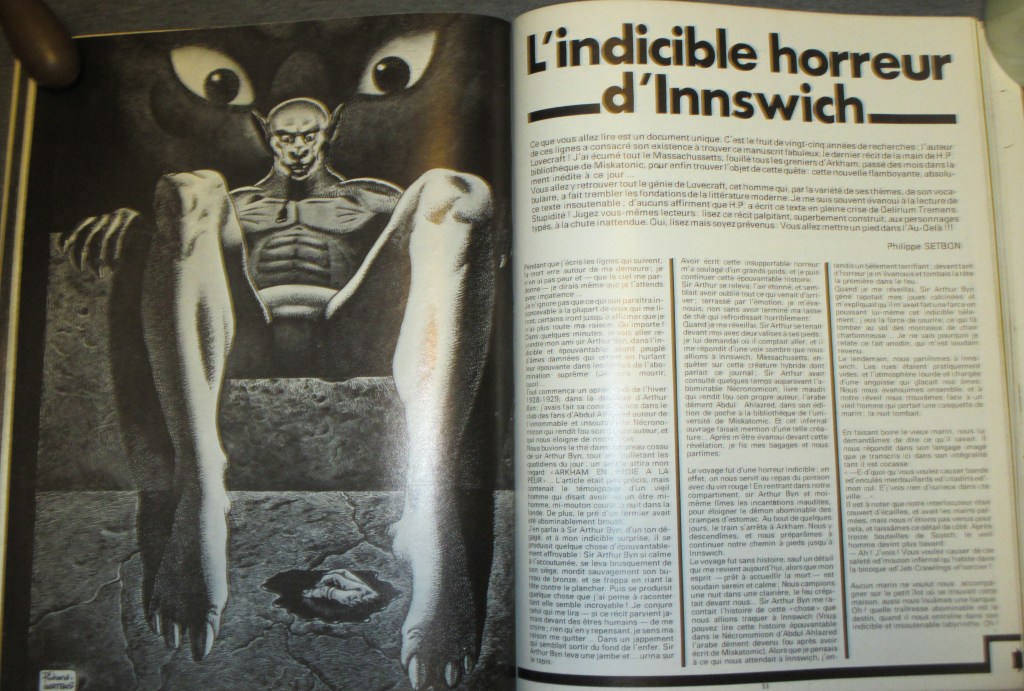
  • “L’Indicible Horreur d’Innswich” by Philippe Setbon, 51-52
  • “Amitiés Rencontres” by Vepy & Daniel Ceppi, 53-57
  • “Barzai le Sage” by Marc Caro, 58-65
  • Advertisement for Richard Corben’s Den, 66
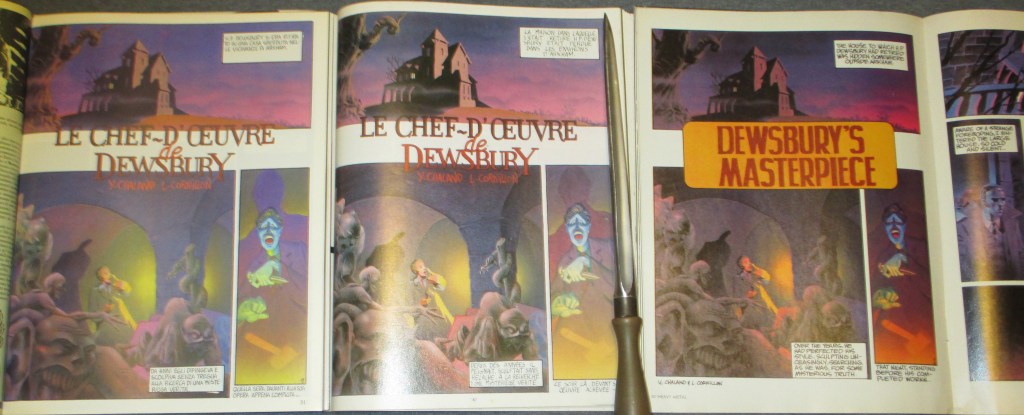
  • [c] “Le Chef d’Œuvre de Dewsbury” by Yves Chaland & Luc Cornillon, 67-70
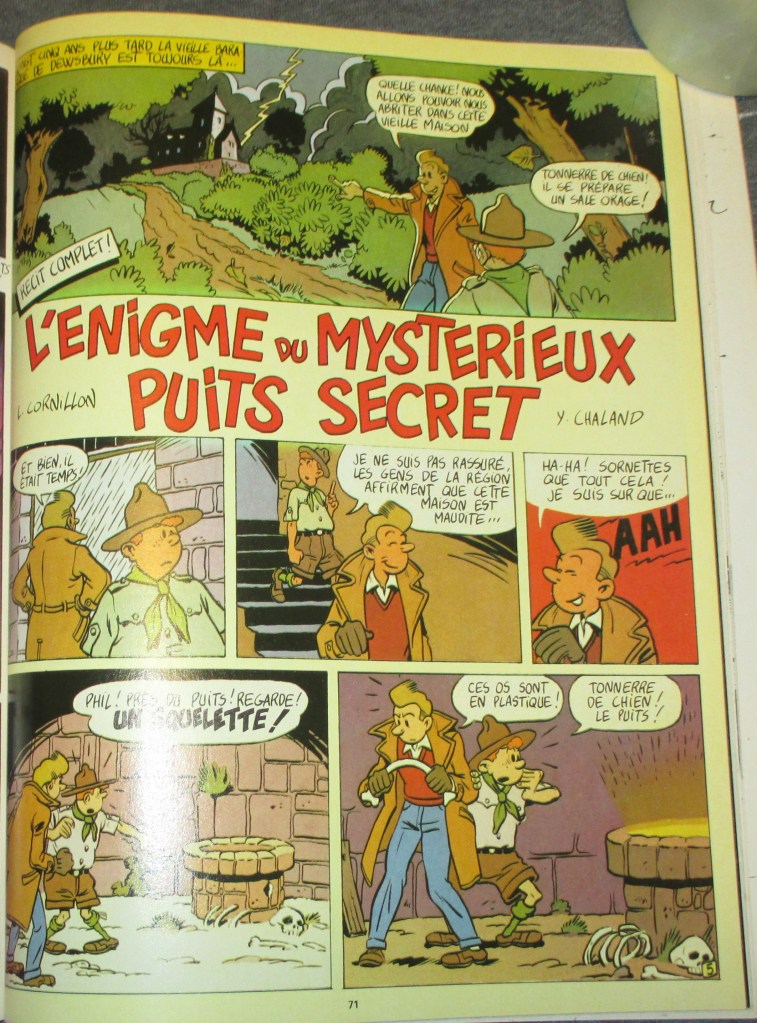
  • [c] “L’énigme du mystérieux puits secret” by Yves Chaland & Luc Cornillon, 71-74
  • “A la Recherche de Kadath” by François Truchaud & M. Perron, 75-78
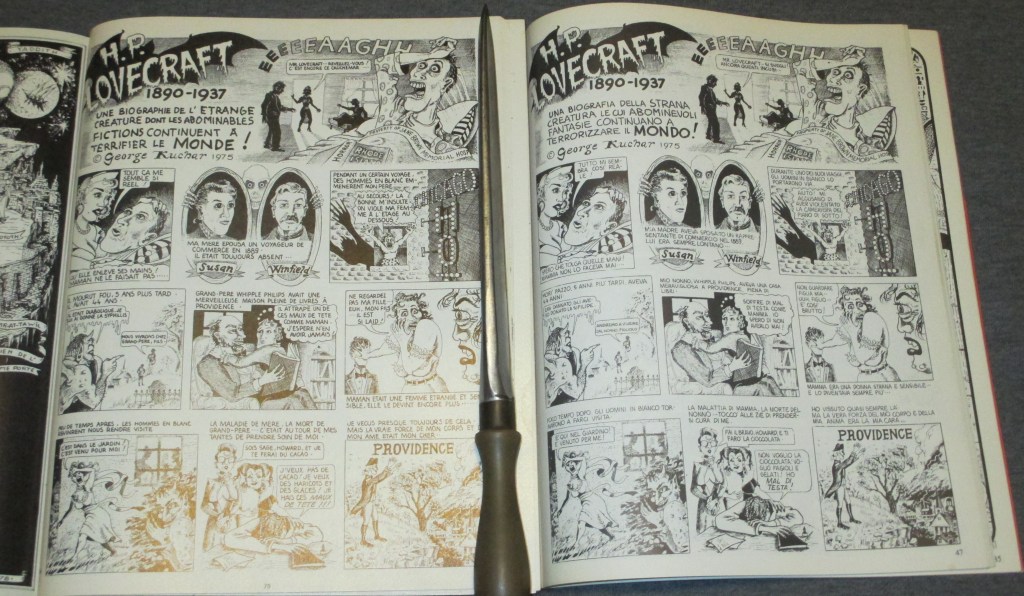
  • “H. P. Lovecraft 1890-1937” by George Kuchar, 79-81
  • “Les Bêtes” by Dank, 82-84
  • Advertisement for Le Diable by Nicollet and Les Naufragés du Temps by Paul Gillon, 85
  • “Le Necronomicon” by Druillet, 86-96
  • Advertisment for La Boite Oblungue by Edgar Allan Poe and La Rivier du Hibou by Ambrose Bierce, 97
  • Advertismenet for Les Trafiquants d’Armes by Eric Ambler
  • “Les 3 Maisons de Seth” by Dominique Hé, 99-101
  • “Les 2 Vies de Basil Wolverton” by Yves Chaland, 102-103
  • Advertisement for back issues of Métal Hurlant, 104-105
  • Advertisement for Métal Hurlant posters, 106
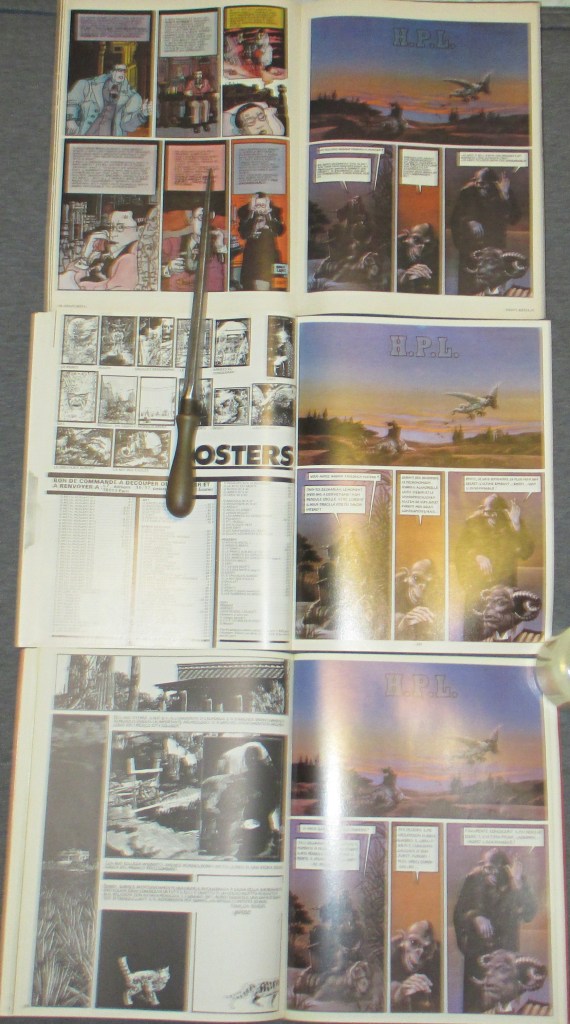
  • [c] “H.P.L.” by Jean-Michel Nicollet, 107-109
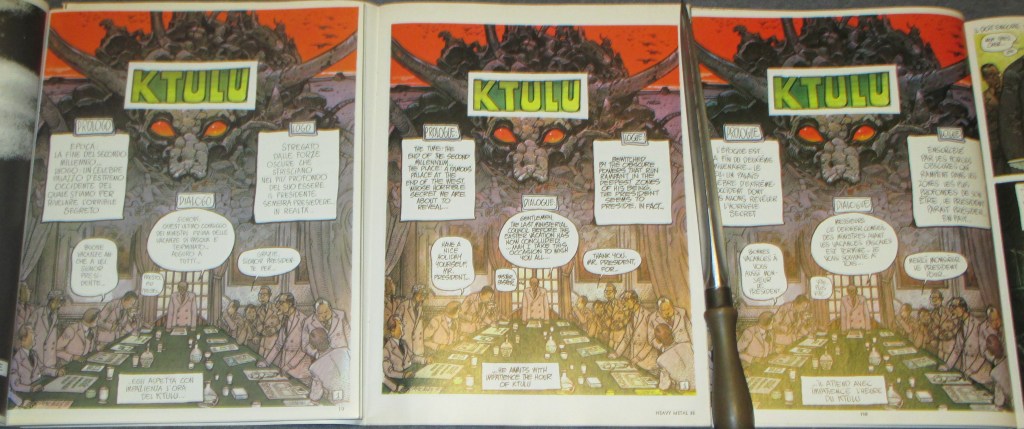
  • [c] “Ktulu” by Mœbius, 110-114
  • “Plat du Jour” by Vepy & Daniel Ceppi, 115-117
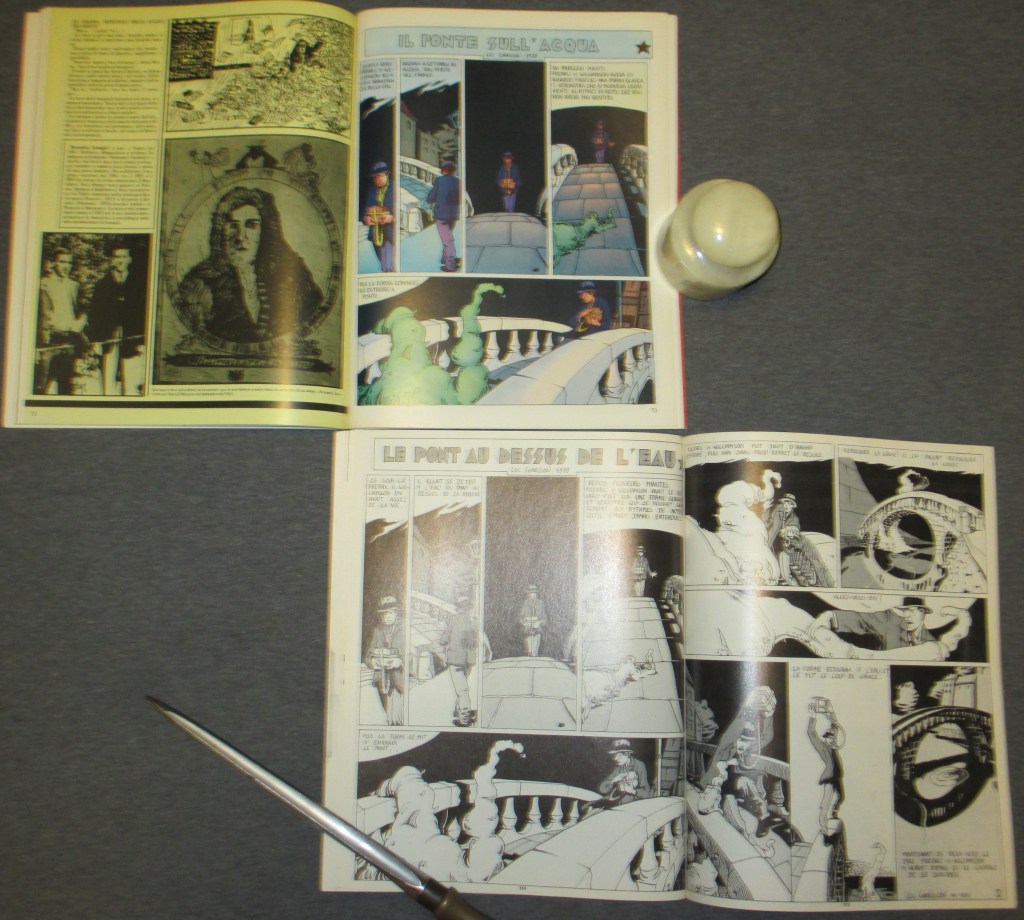
  • “Le Pont Au Dessus de l’Eau” by Luc Cornillon, 118-119
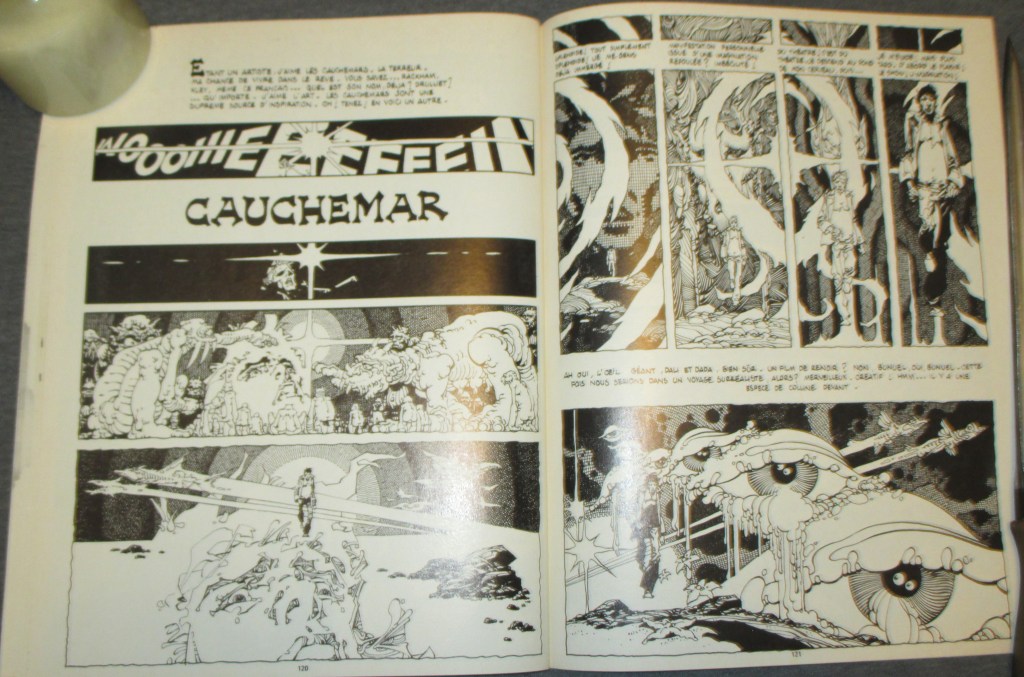
  • “Cauchemar” by Alex Niño, 120-129
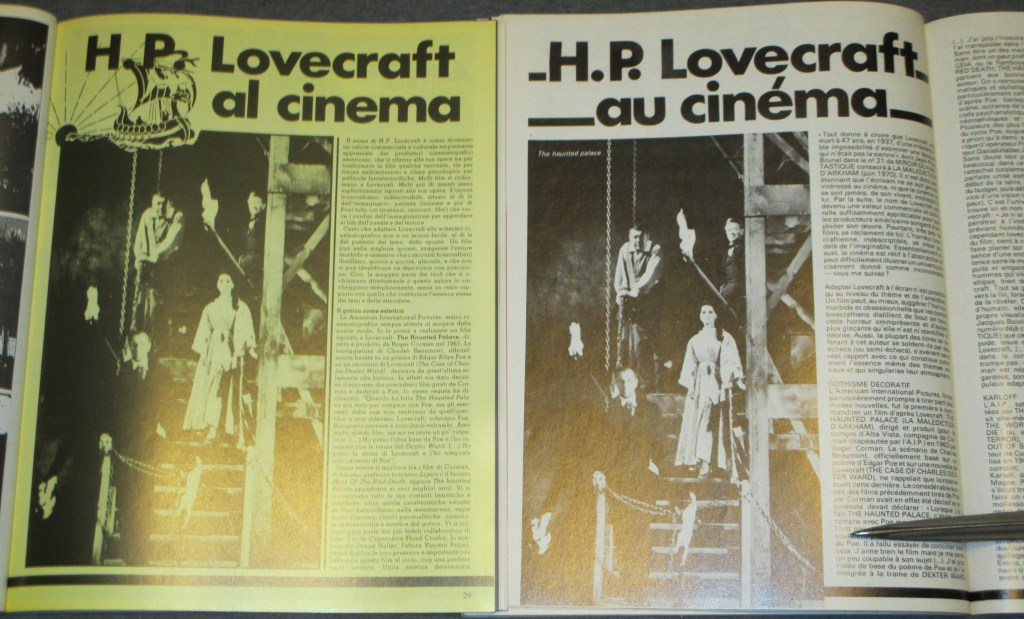
  • H. P. Lovecraft au cinéma” by Jean-Pierre Bouyxou, 130-131
  • “L’Abomination de Dunwich” by Alberto Breccia, 132-146
  • Back cover by Richard Martens

Unique Content

Front Cover: A plate from H. R. Giger’s Necronomicon (1977).

“Cauchemar” (“Nightmare”) by Alex Niño is a 10-page black-and-white comic that showcases a series of nightmares realized in surrealistic and highly detailed form; Niño pays homage to the styles of other artists, naming Heinrich Kley, Arthur Rackham, Phillip Druillet, and Jean Giraud (Mœbius). Not explicitly Lovecraft-related.

Edito triste./Edito gai (“Sad Editorial/Gay Editorial”); “Edito triste” is written as by “Abdul Fernand Alhazred”, while the “Edito gai” (as in happy, not homosexual) is by Philippe Manœuvre. Both concern how the Métal Hurlant Lovecraft Special came together.

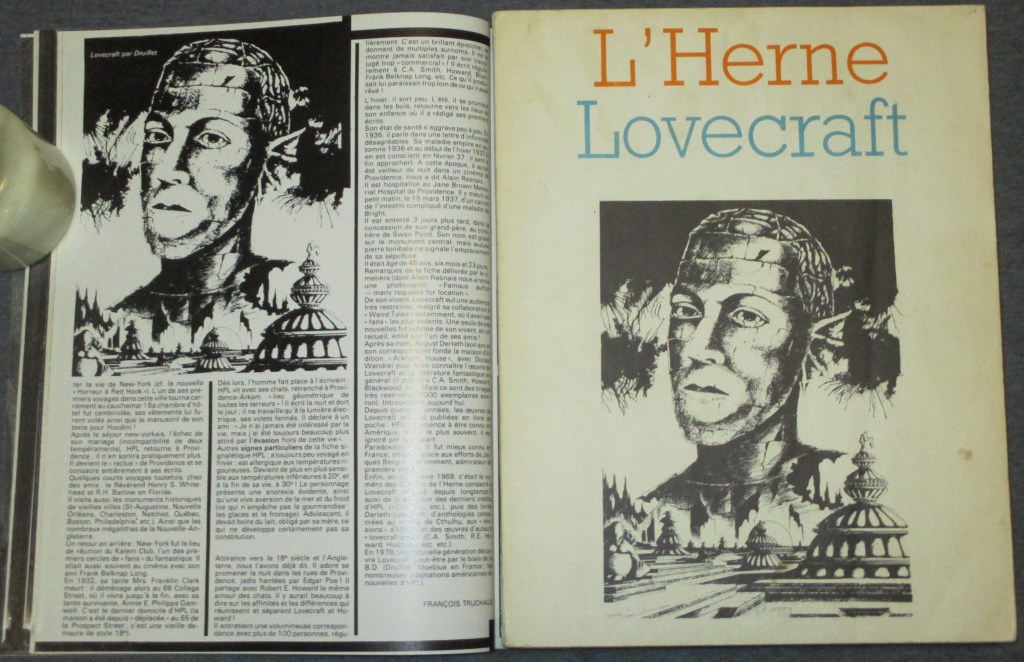
“Je m’appelle Howard Phillips Lovecraft” (“I am called Howard Phillips Lovecraft”) by François Truchaud is a brief biographical sketch of Lovecraft’s life, fairly accurate for the compressed time and space, with illustrations by Richard Martens and Druillet; the Druillet illustration is the same as the cover to the Lovecraft special issue of L’Herne (1969).

“La Nuit du Goimard: Un ecrivain nommé Habileté-à-l’amour” (“The Night of Goimard: A Writer Named Able-to-Love”) by Jacques Goimard is an essay on Lovecraft’s fiction, illustrated by Perry’s silhouette of Lovecraft.

“Le Monstre Sur le Seuil” (“The Monster on the Threshold”) by Norberto Buscaglia & Alberto Breccia is an 11-page black-and-white comic adaptation of Lovecraft’s “The Thing on the Doorstep.” Breccia’s art combines traditional pen-and-ink with collage, which leads a strange, otherworldly aspect to the artwork.

“L’énigme du mystérieux puits secret” (“The Riddle of the Mysterious Secret Well”) by Yves Chaland & Luc Cornillon is a 4-page color comic where an investigative duo investigates a mysterious well and uncovers some counterfeiters; slightly reminiscent in overall style to Hergé’s Tintin. Not explicitly Lovecraft-related.

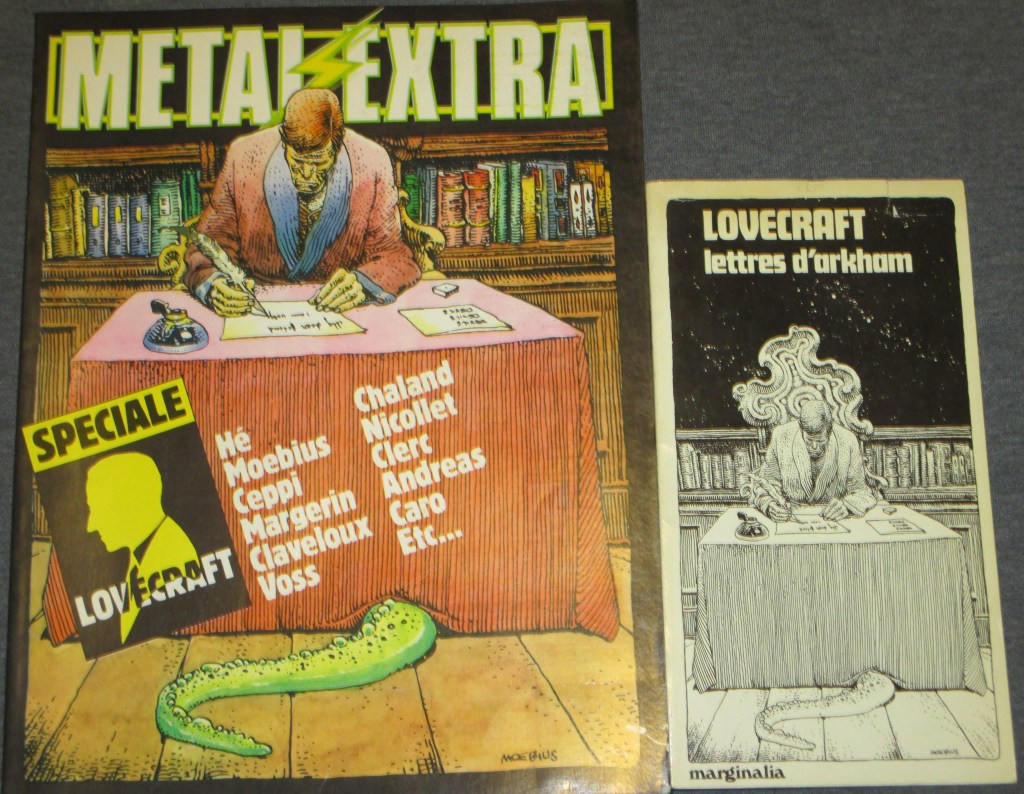
“Lettres de Lovecraft” (“Lovecraft’s Letters”) by François Truchaud is a review of Lettres 1 (1978), the French-language translation of the first volume of Lovecraft’s Selected Letters. Illustrated by Mœbius’ cover for Lettres d’Arkham (1975).

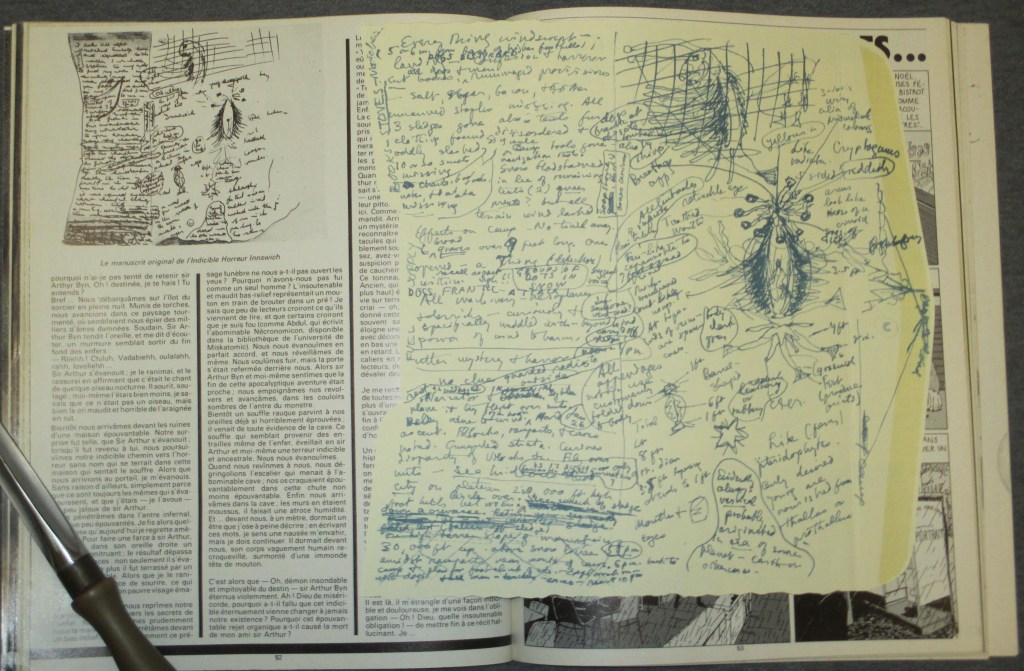
“L’Indicible Horreur d’Innswich” (“The Unspeakable Horror of Innswich”) by Philippe Setbon is a short fiction that purports to be the last story written by H. P. Lovecraft, complete with a mock reproduction of the original manuscript written on an envelope, based on the famous At the Mountains of Madness envelope.

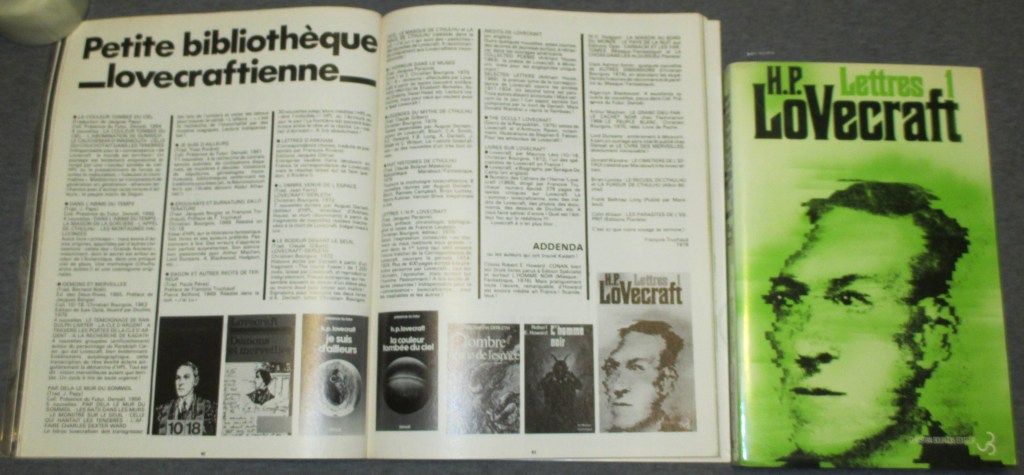
“Petite bibliothèque lovecraftienne” (“Little Lovecraftian Library”) by François Truchaud is a brief survey of Lovecraft-related material available in French publications, as well as some related publications such as The Occult Lovecraft (1975) and H. P. Lovecraft: A Biography (1975) in English.

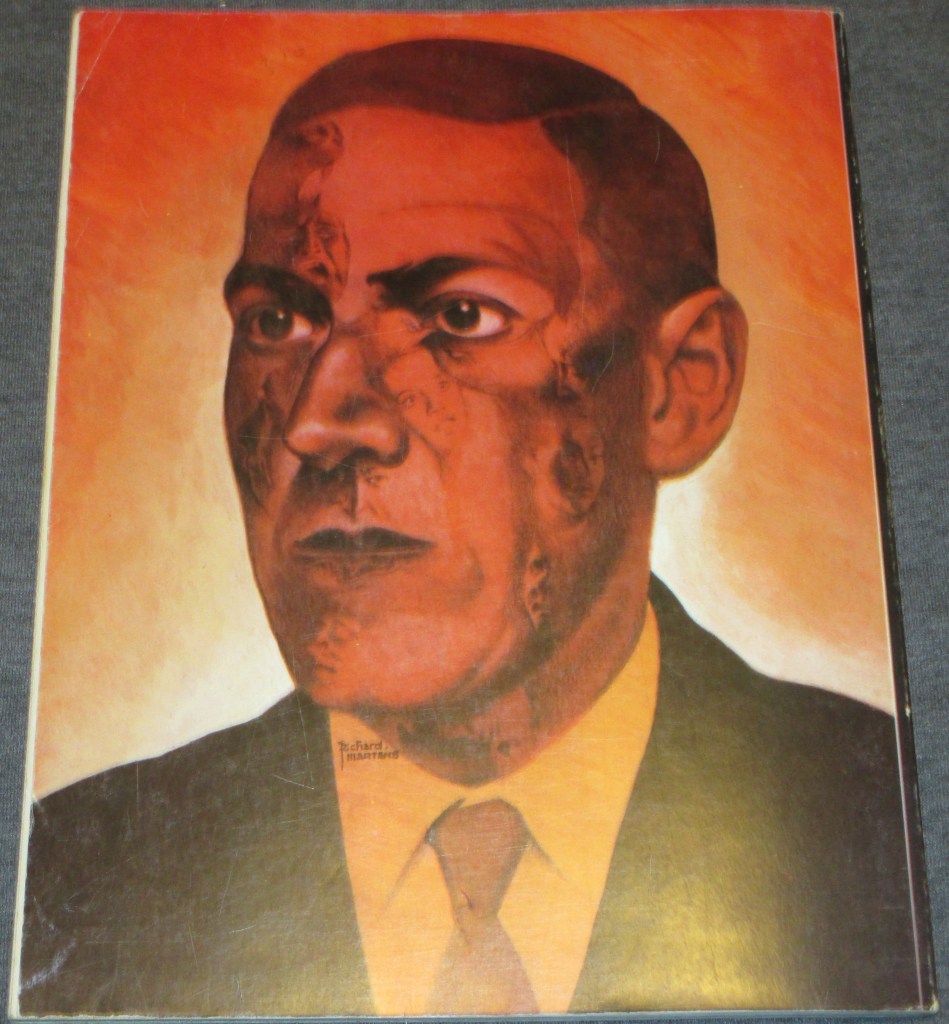
Back cover by Richard Martens, based on a photo of Lovecraft.


Heavy Metal H. P. Lovecraft Special Issue (Oct 1979)

This material is taken, for the most part, from a bizarre and eldritch tome written in a strange tongue, the “Homage á Lovecraft” issue of Métal Hurlant. We trust it will add just the right touch to your Hallowe’en festivities.
—Sean Kelly, editorial for Heavy Metal vol. III, no. 6

96 pages, counting the ads, table of contents, etc., which makes for a thinner magazine that can still be side-stapled. Heavy Metal magazine vol. III, no. 6 is part of the normal numbering rather than an extra or one-off issue. While it draws much of its material directly from the Métal Hurlant Lovecraft special, the publishers chose not to reproduce all of the Lovecraft material from the French.

What didn’t they translate? The text pieces, the Georges Kuchar reprint, several of the more humorous and less Lovecraft-related comics, a couple pages of Druillet’s Necronomicon, and oddly the Breccia adaptation of “The Thing at the Doorstep.” What remains isn’t exactly entirely dedicated to Lovecraft, either, so that the “Lovecraft” issue has rather less Lovecraft-related material in it than might be expected.

Maybe there was a crunch with time to put the issue together, or some issues with the right. However, they also added a few things that didn’t appear in the Métal Hurlant issue, notably the J. K. Potter cover and “The Devil’s Alchemist,” a work of fiction. Unlike the Métal Hurlant Lovecraft special, the majority of Heavy Metal pages are in color, including colorizing some works that were in black-and-white in Métal Hurlant.

Lovecraftian items are marked in bold; color pages are marked [c]; items from the Métal Hurlant special are marked with an asterisk (*).

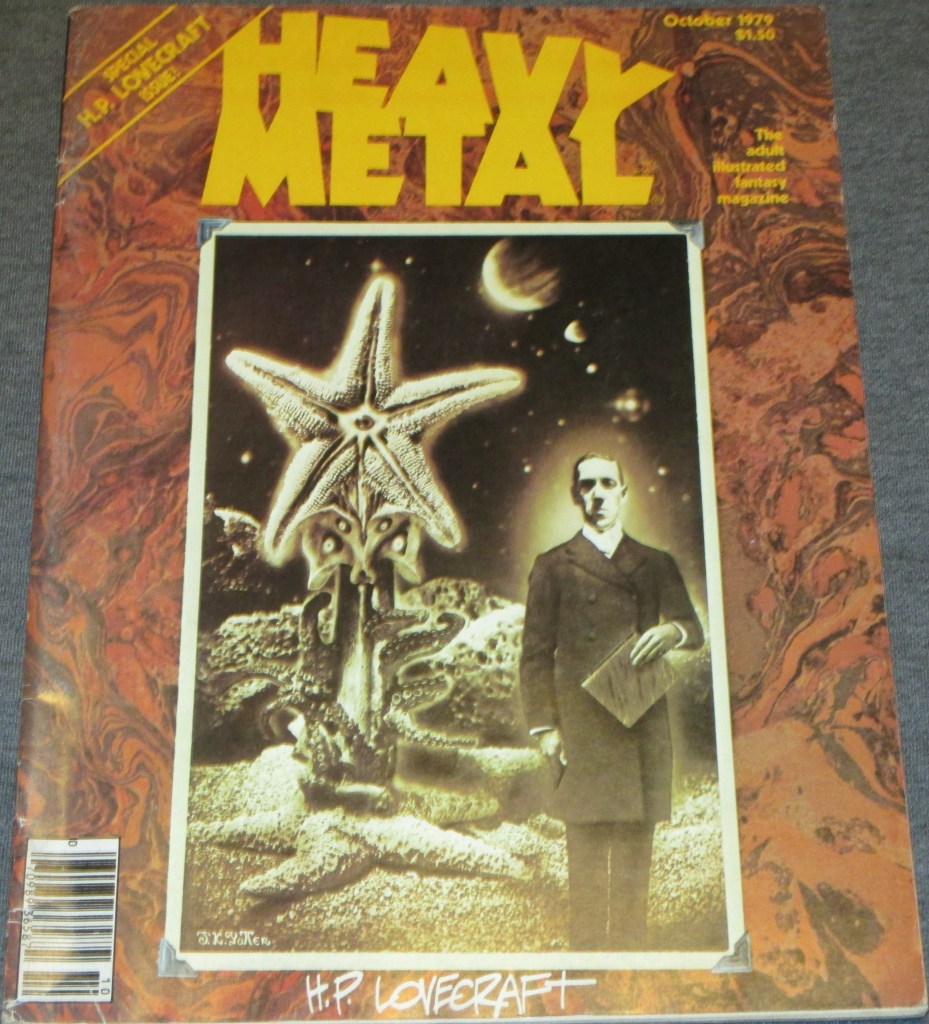
  • Front cover (“Mr. Lovecraft”) by J.K. Potter
  • Advertisement for Strategy & Tactics, 1
  • [c] Table of Contents, 2
  • [c]Advertisement for Job Cigarette Papers, 3
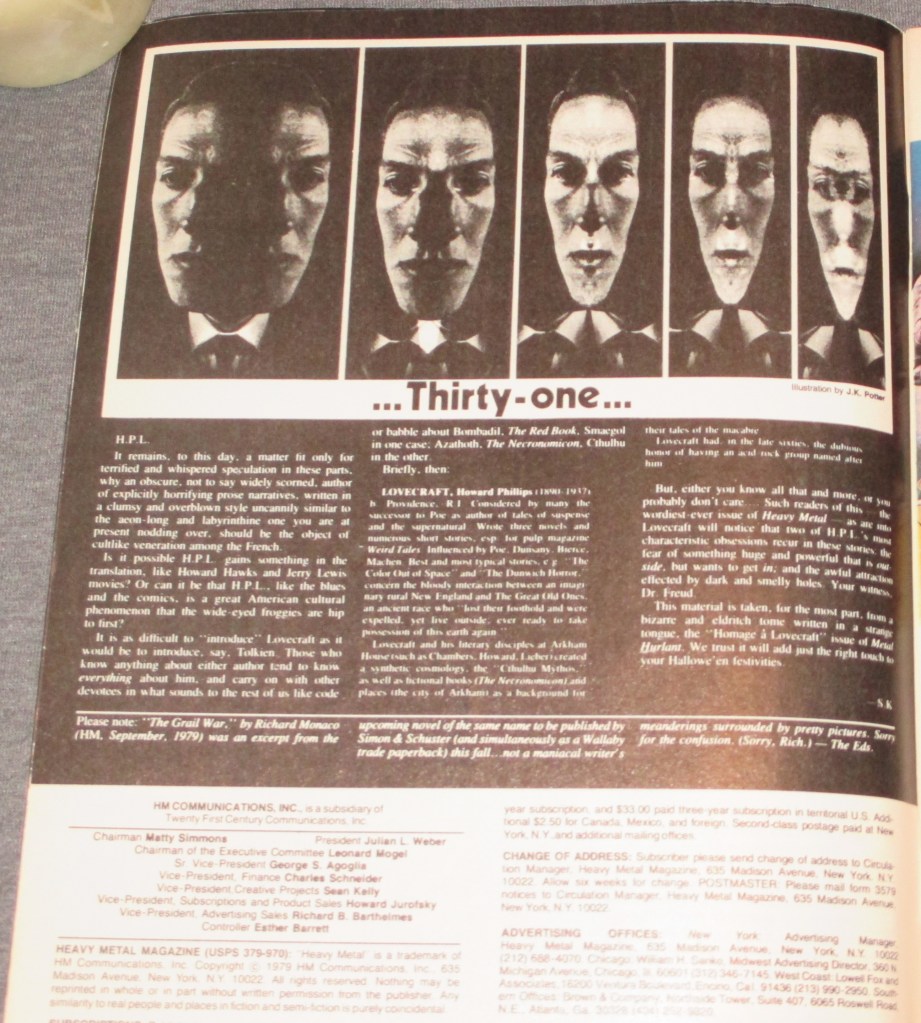
  • “…Thirty-one…” (editorial) by Sean Kelly w/ J. K. Potter, 4
  • [c] Advertisement for The Encyclopedia of Science Fiction, 5
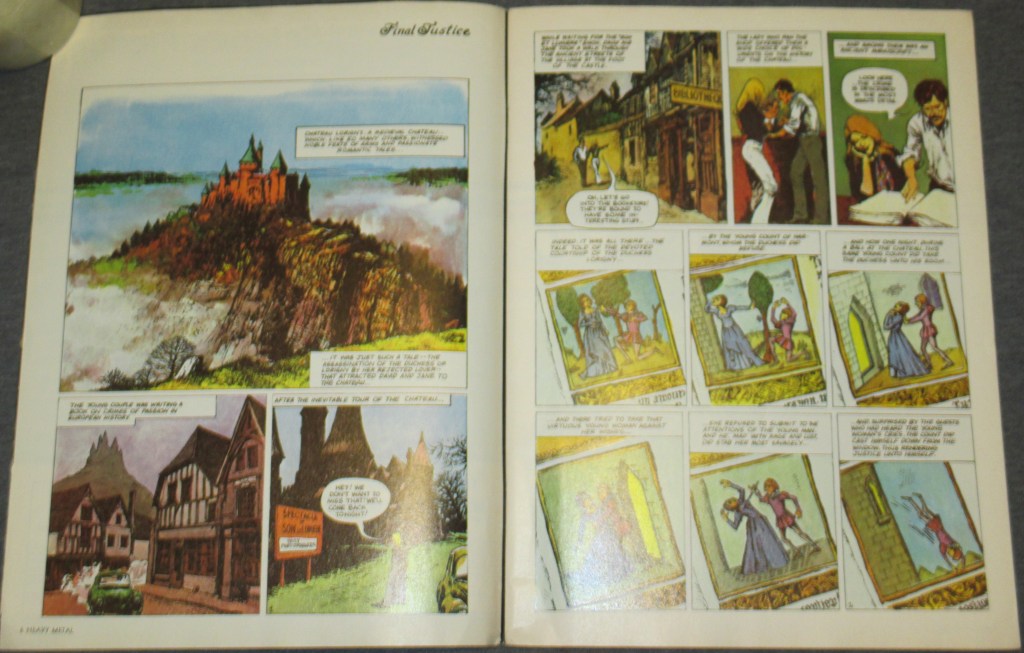
  • [c] “Final Justice” by Chateau, 6-14
  • [c] Advertisement for Heavy Metal posters, 15
  • [c] Advertisement for Heavy Metal subscriptions, 16
  • [*] “The Dunwich Horror” (“L’Abomination de Dunwich”) by Alberto Breccia, 17-25, 74-80
  • [c] [*] “Ktulu” by Mœbius, 25-29
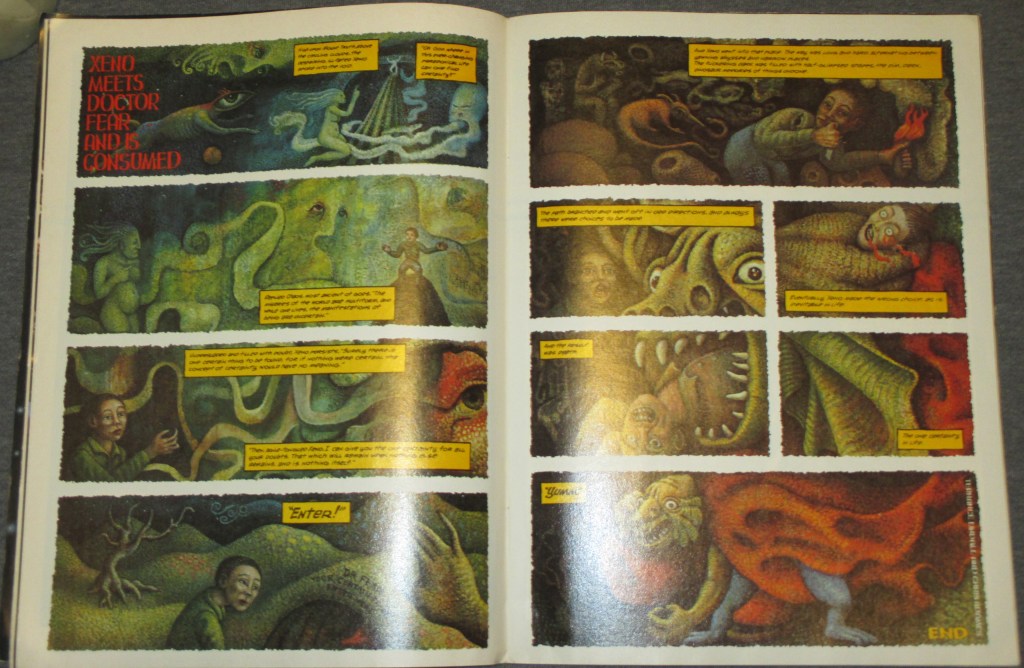
  • [c] “Xeno Meets Dr. Fear and Is Consumed” by Terrance Lindall & Chris Adames, 30-31
  • [*] “The Thing” (“La Chose”) by Alain Voss, 32-37
  • [*] “The Beasts” (“Les Bêtes”) by Dank, 38-40
  • [c] [*] “The Man from Blackhole” (“L’Homme de Black Hole”) by Serge Clerc, 41-44
  • [c] [*] “H.P.L.” by Jean-Michel Nicollet, 45-47
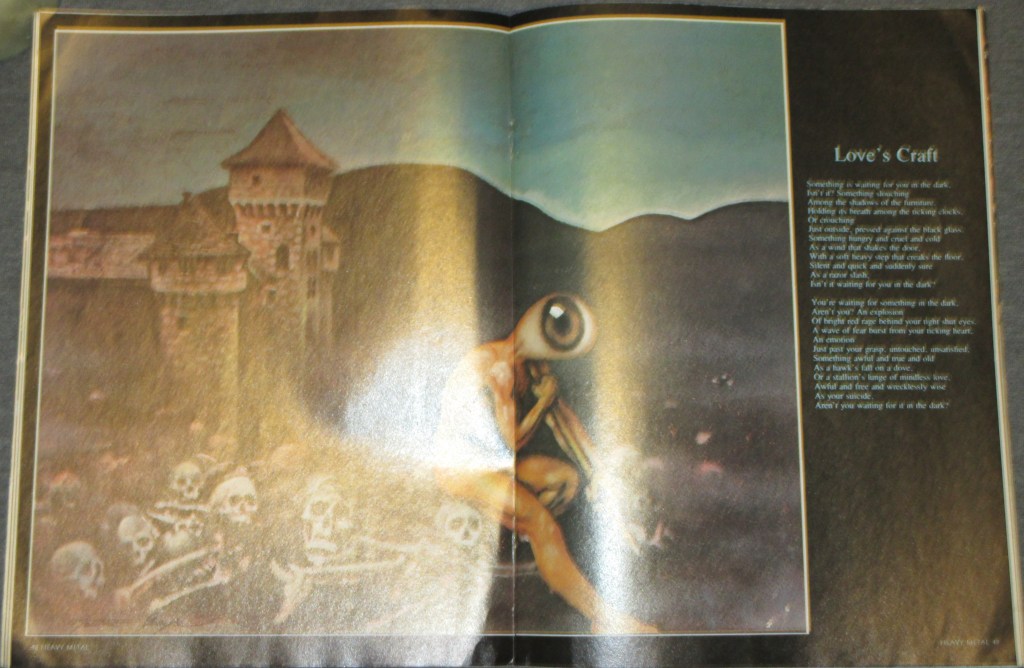
  • [c] “Love’s Craft” by Sean Kelly & Matthew Quayle, 48-49
  • [c] [*] “Dewsbury’s Masterpiece” (Le Chef d’Œuvre de Dewsbury) by Yves Chaland & Luc Cornillon, 50-53
  • [c] Advertisement for back issues of Heavy Metal, 54-55
  • [*] “The Necronomicon” by Druillet, 56-61
  • [*] “The Language of Cats” (“Le langage des chats”) by Nicole Claveloux, 62-63
  • “Chain Mail” (letters page, but comic by Christopher Browne) 64
  • [c] Advertisement for Dragonworld, 65
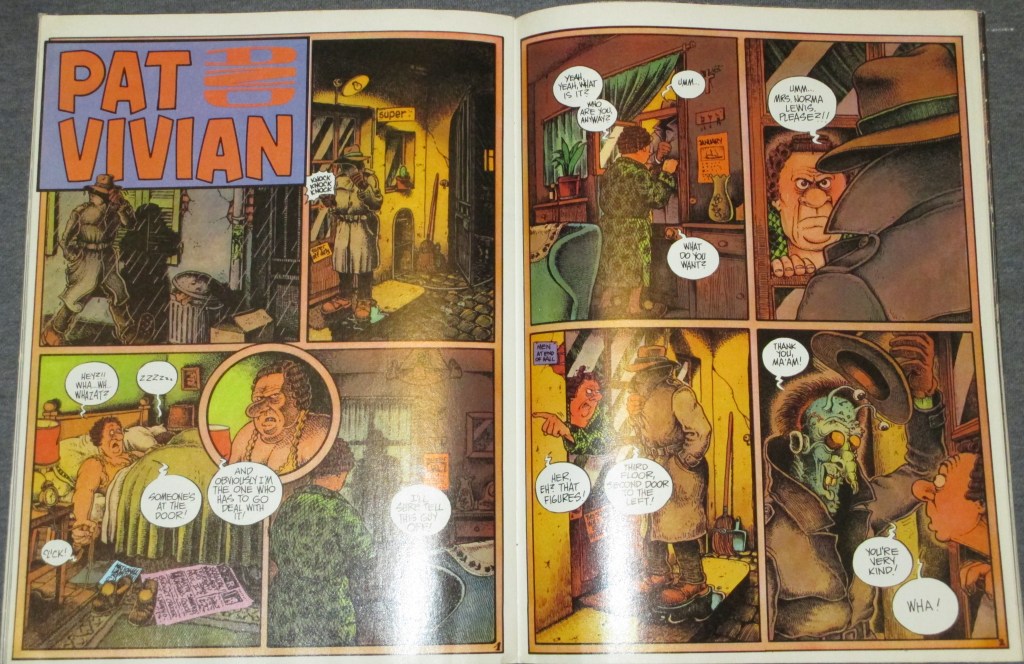
  • [c] “Pat and Vivian” by Frank Margerin, 66-68
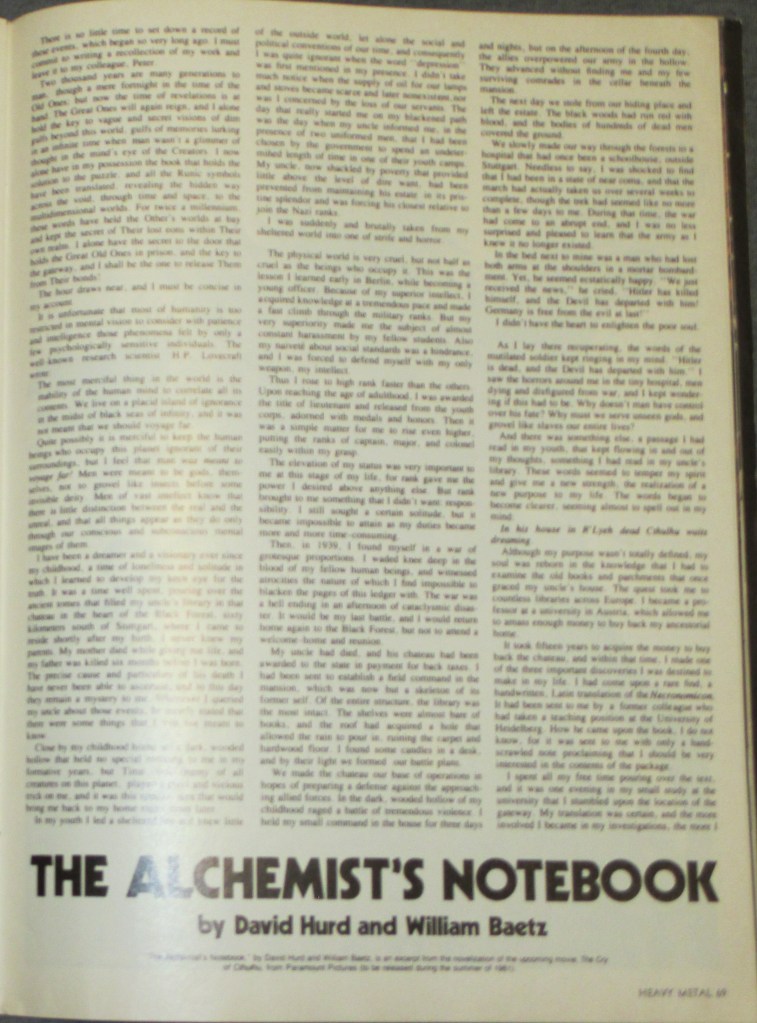
  • [c] “The Alchemist’s Notebook” by David Hurd & William Baetz, w/Walter Simonson, 69-73
  • [“The Dunwich Horror” continued, 74-80]
  • [c] Advertisement for The Grailwar by Richard Monaco, 81
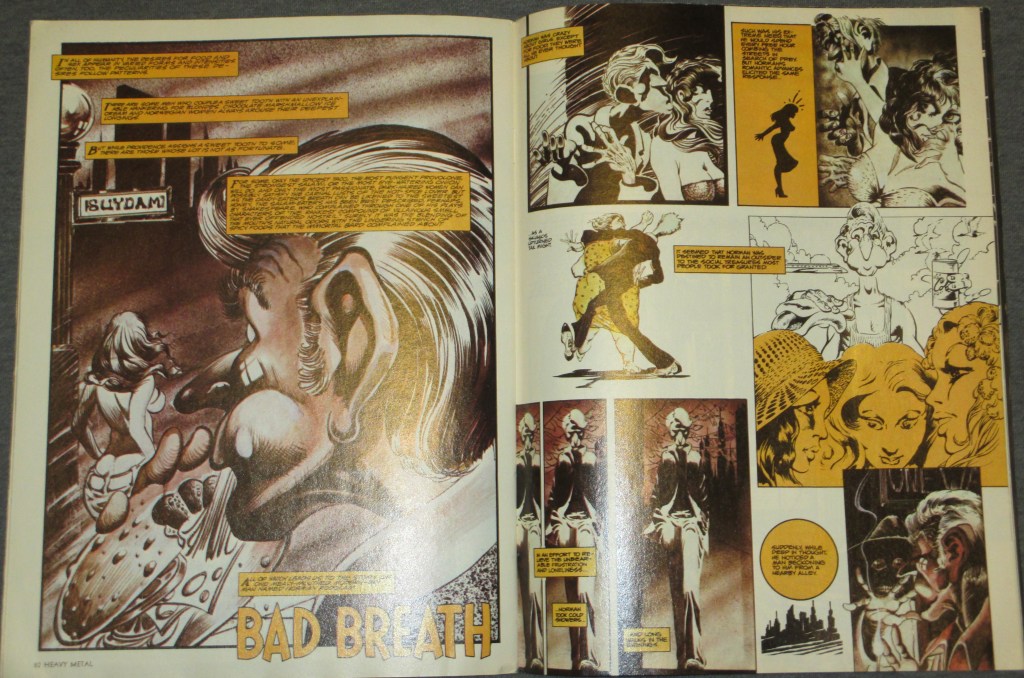
  • [c] “Bad Breath” by Arthur Sudyam, 82-89
  • [c] Advertisement for Heavy Metal books/graphic novels, 90-91
  • [*] “The Agony Column” (“Amitiés Rencontres”) by Vepy & Daniel Ceppi, 92-96
  • Back cover (“Elizabeth”) by George Smith

Unique Content

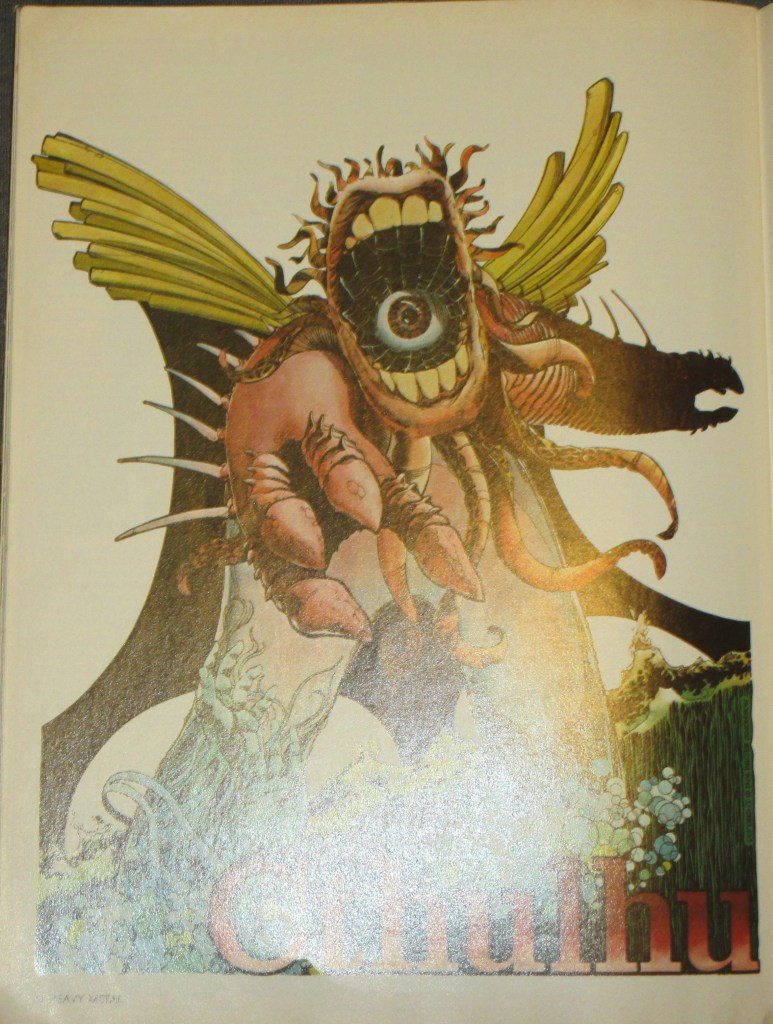
Front cover: “Mr. Lovecraft” by J.K. Potter. Before digital image manipulation programs existed, Potter was producing strange, disturbing images with a combination of photographs, airbrush, and traditional pen and ink. The effects, with Potter’s imagination, could be quite stunning. In this instance, he uses it to place Lovecraft in a cosmic scene. Potter would lend his talents to several future Lovecraft-related projects, including the cover for Tales of the Cthulhu Mythos (1990).

“The Alchemist’s Notebook” by Byron Craft (as by David Hurd & William Baetz) is an original work of Mythos fiction, with illustrations by Walter Simonson. A note on the first page says that this story is “an excerpt from the novelization of the upcoming movie, The Cry of Cthulhu“—but the film never made it past pre-production (Cthulhu Calling: An Interview with Byron Craft). In 2016, Craft published the full version of the novelization as The Alchemist’s Notebook, which was later changed to The Cry of Cthulhu.

“Bad Breath” by Arthur Sudyam is an 8-page comic that is principally black-and-white with color tints on Selected panels and figures; it follows an amorous young man whose bad breath is impacting his love life, and the solution he attempts has horrific—and amusing—consequences. Not explicitly Lovecraft-related.

“Final Justice” by Chateau is a 9-page color comic where a couple in Europe to write a book on historical crimes watch the re-enactment of a medieval murder at an ancient chateau. Not explicitly Lovecraft-related.

“Love’s Craft” by Sean Kelly is a poem, accompanied by an illustration by Matthew Quayle. Tentatively Lovecraftian based on the title, but with no direct references to Lovecraft or the Mythos.

“Pat and Vivian” by Frank Margerin is a 3-page humorous comic about a woman awoken by a strange entity at the door. Not explicitly Lovecraft-related.

“…Thirty-one…” (editorial) by Sean Kelly, discussing Lovecraft in brief. Accompanied by a photo-manipulated image of Lovecraft by J. K. Potter.

“Xeno Meets Dr. Fear and Is Consumed” by Terrance Lindall & Chris Adames is a two-page color fantasy/horror comic with a distinct textured painting style. Young Xeno, asking a fundamental question about certainty, sets off in dreams to find Dr. Fear—and does. Not explicitly Lovecraft-related.


Metal Extra Speciale Lovecraft (Nov 1982)

Cui, questo numero speciale di Métal Hurlant e un vero e proprio “omaggio” nei limiti è nei termini in cui puo esserlo una realizzazione a fumetti. Essa però dimostra sino a che punto è giunta oggi l’influenza del “solitario di Providence” e del suo mondo di sogni, di miti, di realtà alternative. E’un “ommagio” che ciascun disegnatore o scrittore ha estrinsecato secondo la sua predisposizione, il suo modo di vedere, il suo atteggiaento mentale, culturale, di spirito. E cosi (non ci si meravigli di ciò) vi saranno controbuti (fumetti) “seri” e meno seri o aprtamente ironici, allucinati e satirici. Un autore è amato non soo quando si prende sul serio il suo universo incubico (come ne L’uomo del Buco Nero, Il capolavoro di Dewsbury, ecc.), ma anche quando ci si scherza su, fra il serio e il faceto (Cthulhu), lo si prende aperamente in giro (La traccia scarlatta, Escursione notturna, Il ritorno di Cthulhu e cosi via).Hence, this special issue of Métal Hurlant is a real “homage” to the extent that a comic book production can be. However, it demonstrates how far the influence of the “solitary of Providence” and his world of dreams, myths, and alternative realities has reached today. It is an “homage” that each artist or writer has expressed according to his predisposition, his way of seeing, his mental, cultural, and spiritual attitude. And so (don’t be surprised by this) there will be “serious” and less serious or overtly ironic, hallucinatory and satirical counterparts (comics). An author is loved not only when his nightmare universe is taken seriously (as in The Man from the Black Hole, Dewsbury’s Masterpiece, etc.), but also when he is joked about, half-jokingly (Cthulhu), and openly made fun of (The Scarlet Trail, Night Excursion, The Return of Cthulhu, and so on).
Gianfranco de Turris, Metal Extra Speciale Lovecraft, 5English translation

Instead of trying to publish this as part of their regular series of issues, the editors in Italy essentially excerpted the majority of the Lovecraft comics content from the Métal Hurlant Lovecraft special and squeezed it into a 100-page (counting covers) square-bound Metal Extra issue. They also added some additional materials not in either the Métal Hurlant or Heavy Metal Lovecraft special issues

Lovecraftian items are marked in bold; color pages are marked [c]; items from the Métal Hurlant special are marked with an asterisk [*].

  • [*] Front Cover by Mœbius
  • Table of Contents, 3
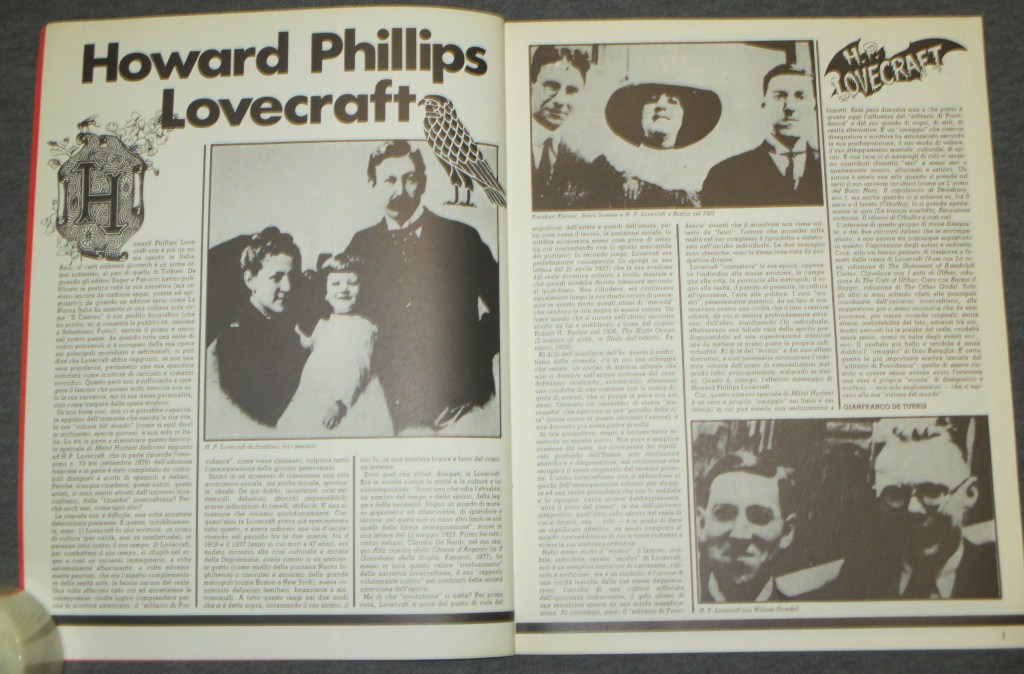
  • “Howard Phillips Lovecraft” by Gianfranco de Turris, 4-5
  • [*] “Annunci sul Gironale…” (“Amitiés Rencontres”) by Vepy & Daniel Ceppi, 6-10
  • [*] “Barzai il Saggio” (“Barzai le Sage”) by Marc Caro, 11-18
  • [c] [*] “Ktulu” by Mœbius, 19-25
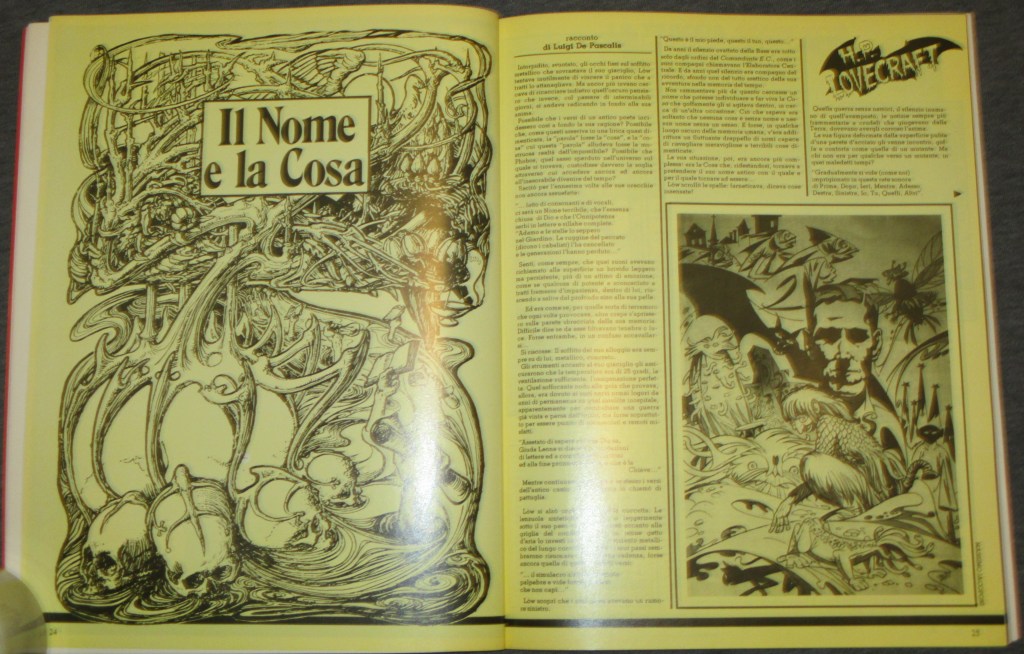
  • “Il Nome e la Cosa” by Luigi de Pascalis, 24-26
  • [c] [*] “La Traccia Scarlatta” (“La Trace Ecarlate”) by Jean-Jacques Mendez & Daniel Ceppi, 27-28
  • [*] “H. P. Lovecraft al Cinema” (“H. P. Lovecraft au cinéma”) by Jean-Pierre Bouyxou [uncredited], 29-30
  • [c] [*] “Il Capolavoro di Dewsbury” (Le Chef d’Œuvre de Dewsbury) by Yves Chaland & Luc Cornillon, 31-34
  • [*] “Il Ritorno di Cthulhu” (“La Retour de Cthulhu”) by Alan Charles & Richard Martens, 35-36
  • [*] “La Cosa” (“La Chose”) by Alain Voss, 37-42
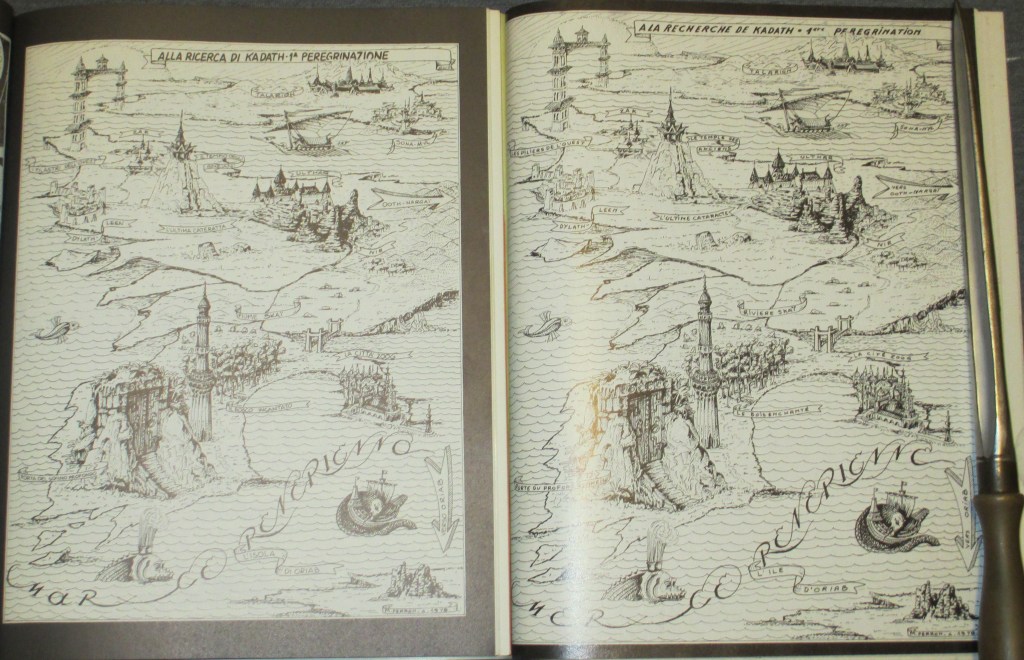
  • [*] “Alla Ricerca di Kadath” (“A la Recherche de Kadath”) by François Truchaud & M. Perron, 43-46
  • [*] “H. P. Lovecraft 1890-1937” by Georges Kuchar, 47-49
  • [*] “Il Linguaggio dei Gatti” (“Le langage des chats”) by Nicole Claveloux, 50-51
  • [*] “Il Piatto del Girno” (“Plat du Jour”) by Vepy & Daniel Ceppi, 52-54
  • [*] “Escursione Notturna” (“Excursion Nocturne”) by Frank Margerin, 55-58
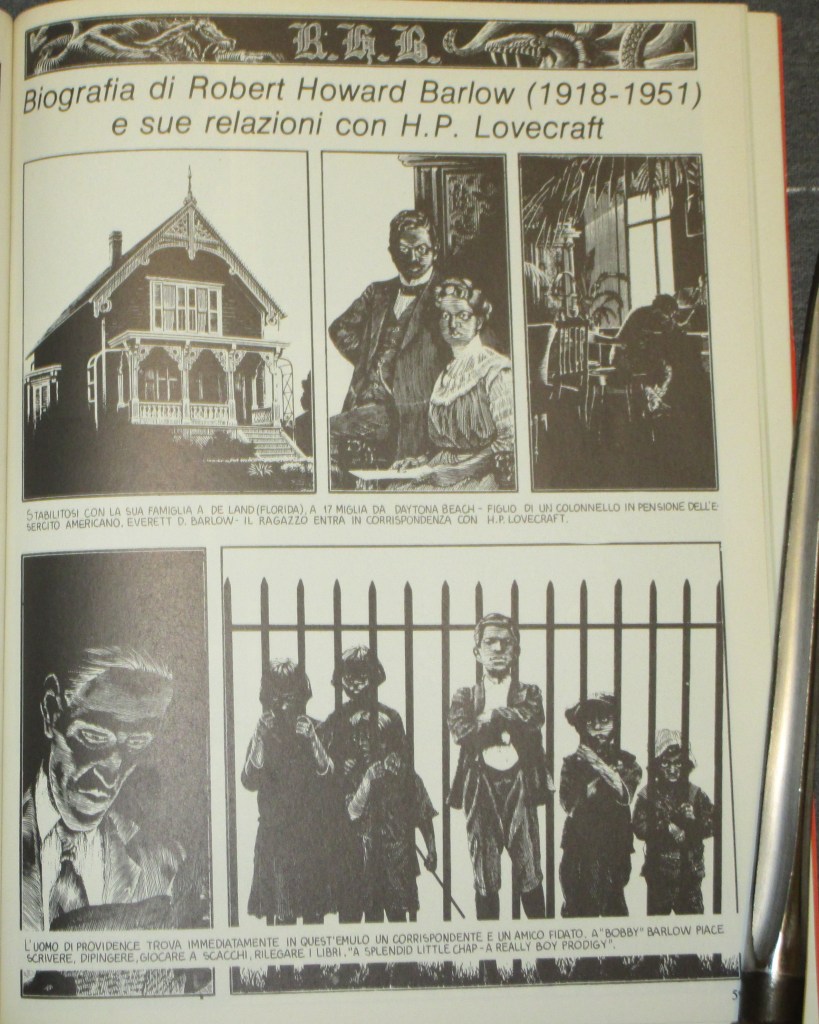
  • “R. H. B.” by Andreas & François Rivière, 59-66
  • [*] “H. P. L.” by Jean-Michel Nicollet, 67-69
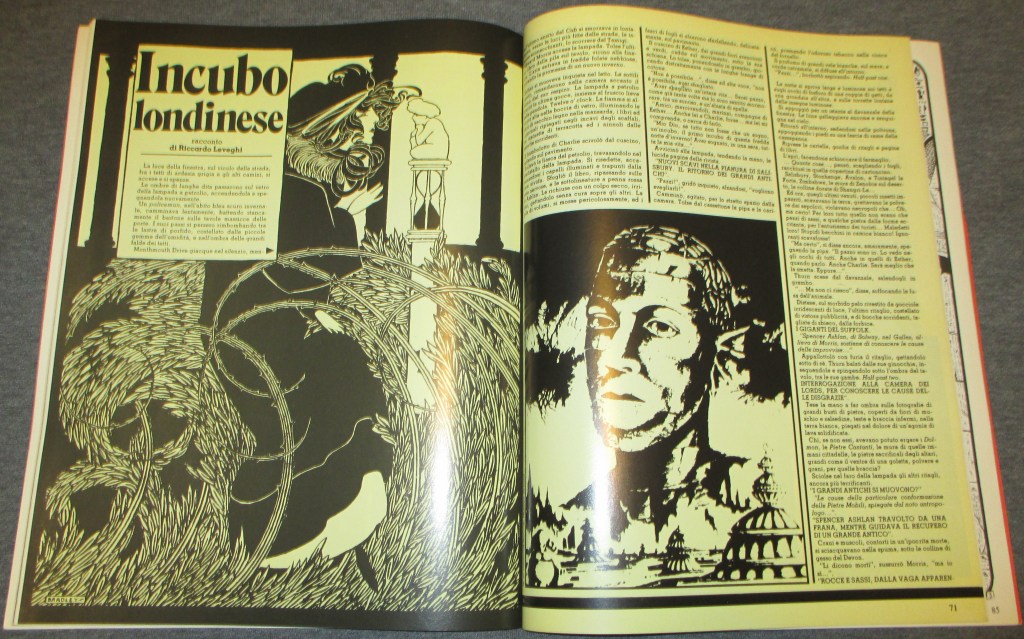
  • “Incubo Londinese” by Riccardo Leveghi, 70-72
  • [c] [*] “Il Ponte dull’acqua” (“Le Pont Au Dessus de l’Eau”) by Luc Cornillon, 73-74
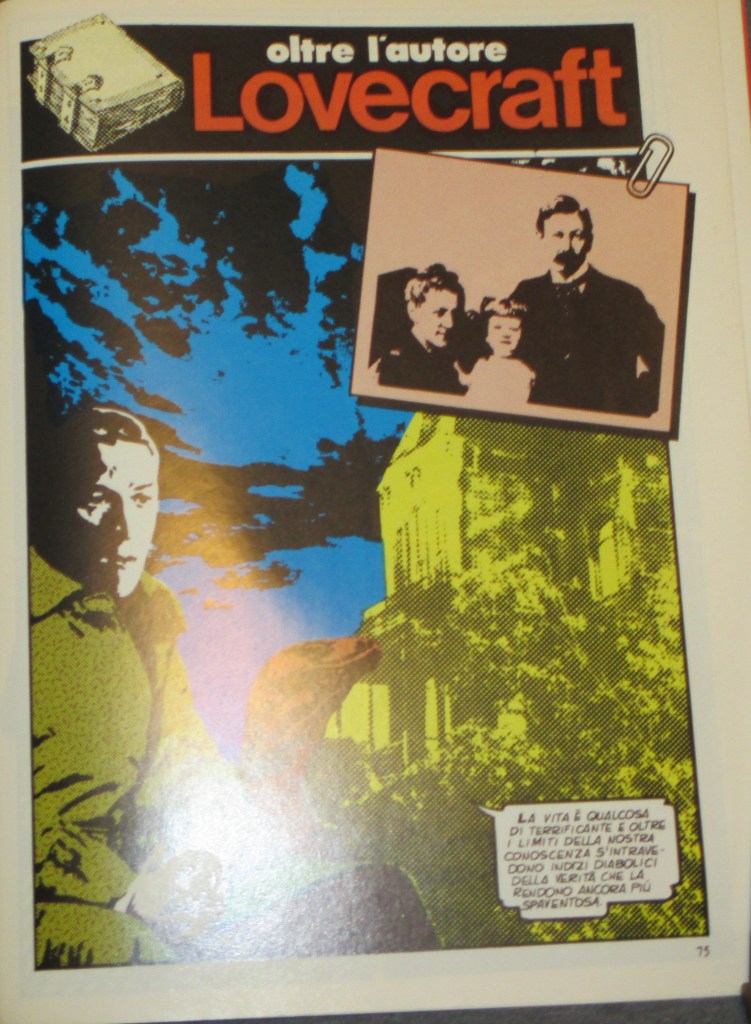
  • [c] “Oltre L’autore Lovecraft” by Onomatopeya, 75-82
  • [*] “Le 3 Case di Seth” (“Les 3 Maisons de Seth”) by Dominique Hé, 83-85
  • [*] “La Bestie” (“Les Bêtes”) by Dank, 86-88
  • [*] “L’Uomo di Black Hole” (“L’Homme de Black Hole”) by Serge Clerc, 89-92
  • [*] “Le 2 Vite di Basil Wolverton” (“Les 2 Vies de Basil Wolverton”) by Yves Chaland, 93-94
  • [*] “Omaggio a H. P. Lovecraft” (“Hommage à HPL…”), 95-97
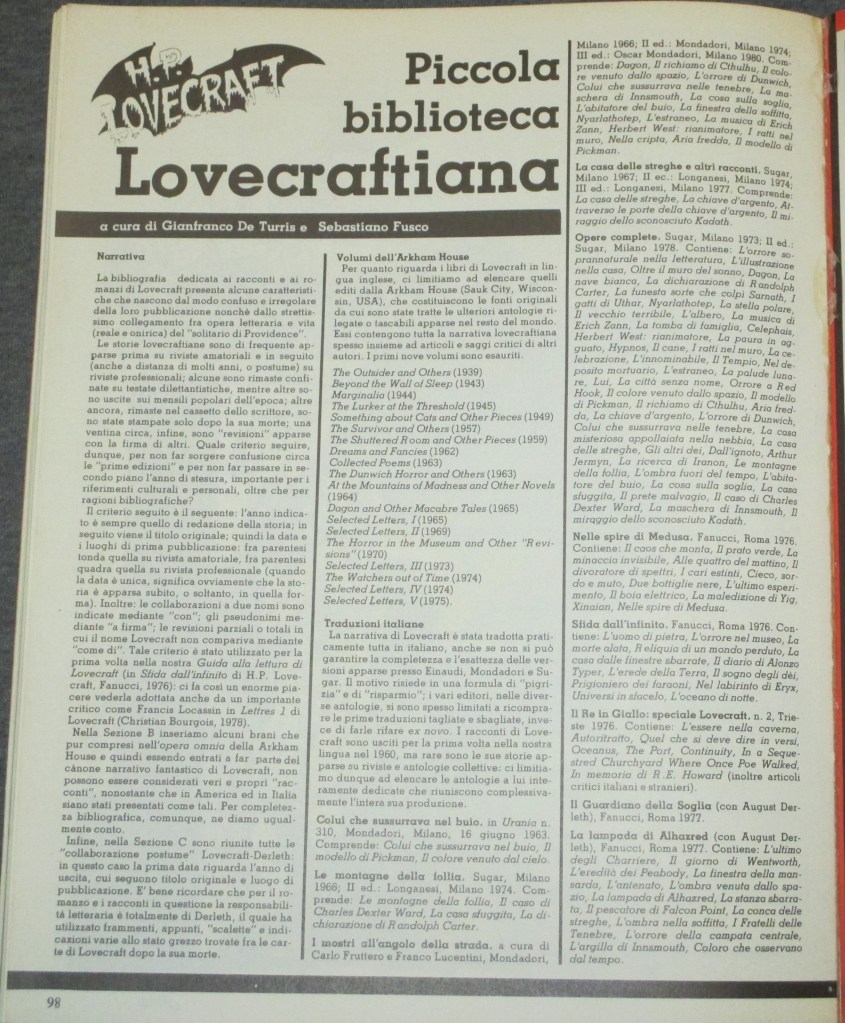
  • “Piccola Bibioteca Lovecraftiana” by Gianfranco de Turris & Sebastiano Fusco, 98

Unique Content

Front Cover is a colorized version of Mœbius’ depiction of Lovecraft at his desk from Lettres d’Arkham.

“Howard Phillips Lovecraft” by Gianfranco de Turris is a two-page editorial-cum-introduction to the issue and Lovecraft, illustrated with reproductions of photos of Lovecraft.

“Il Nome e la Cosa” (“The Name and the Thing”) by Luigi de Pascalis is a short work of fiction about the Golem of Prague, accompanied by illustrations by Massimo Jacoponi, a photo of Lovecraft, and Perry’s silhouette of Lovecraft. Other than the illustrations, no explicit Lovecraftian content.

“Incubo Londinese” (“London Nightmare”) by Riccardo Leveghi is a short work of fiction. Illustrated by Bradley, Druillet’s cover art from L’Herne, a photo of Lovecraft, and two images from Lovecraft’s letters. Other than the illustrations, no explicit Lovecraftian content.

“Oltre L’autore Lovecraft” (“Beyond the Author Lovecraft”) by Onomatopeya is an 8-page fotonovela-style comic about Lovecraft’s life and literary afterlife, a montage of photos tinted, textured, and collaged together with speech bubbles and text boxes to provide a humorous but largely accurate narrative.

“Piccola Bibioteca Lovecraftiana” (“Little Lovecraftian Library”) by Gianfranco de Turris & Sebastiano Fusco; while sharing essentially the same title as its counterpart in Métal Hurlant, this is a brief listing of the relevant Arkham House volumes and the Italian translations of Lovecraft and related materials, including August Derleth’s “posthumous collaborations.”

“R. H. B.” by Andreas & François Rivière is an 8-page, black-and-white comic about Lovecraft’s friend R. H. Barlow.


Shared Content

Listed below are the shared features, drawn from the original Métal Hurlant issue and also appearing in either or both of Heavy Metal and Metal Extra, along with notes on differences between the versions and necessary context.

“A la Recherche de Kadath” (“Alla Ricerca di Kadath,” “In Search of Kadath”) by François Truchaud & M. Perron is a 4-page black-and-white fantasy pictorial map of Lovecraft’s Dreamlands in a lavish, detailed style. Appears in Métal Hurlant and slightly smaller in Metal Extra.

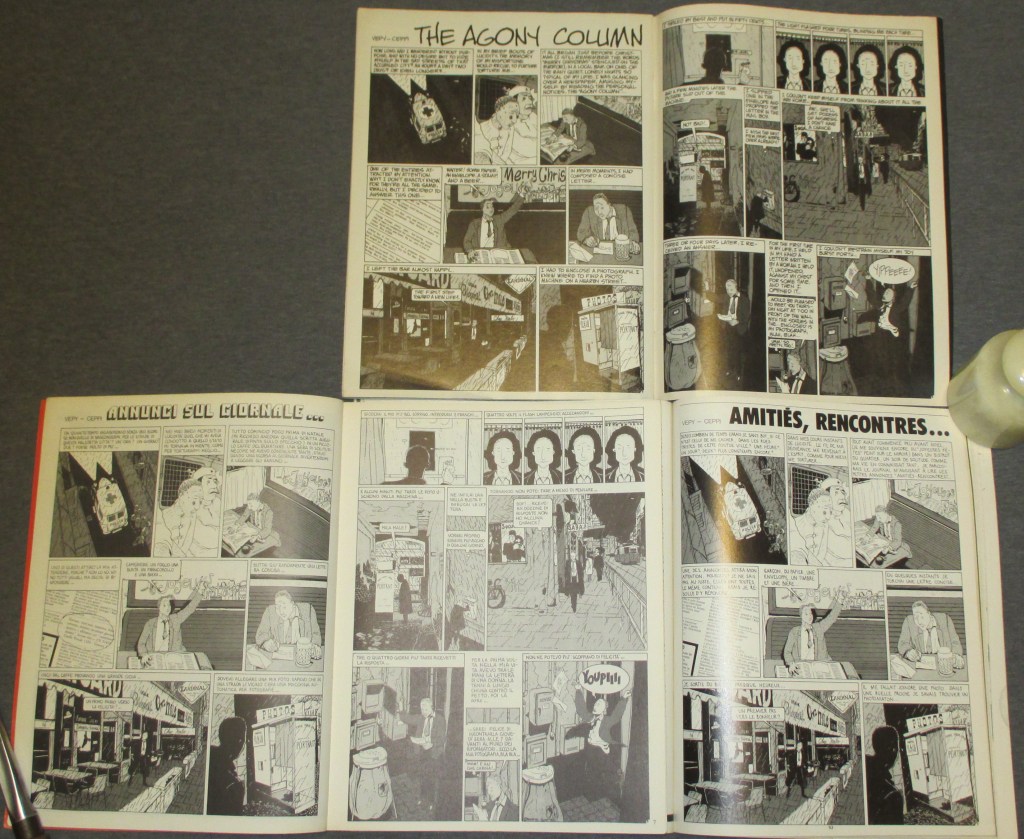
“Amitiés, Rencontres” (“Annunci sul Gironale…,” “The Agony Column”) by Vepy & Daniel Ceppi is a 5-page black-and-white comic. The French title translates literally as “Friendships, Meetings”, and the Italian as “Announcements in the Daily,” but in context it might better be called Personal Ads. The nameless protagonist is in police/medical custody, and flashes back to when he answered a personal ad in the paper, and received a response. When he goes to meet the woman, he is waylaid: the whole setup has been a trap. Not explicitly Lovecraftian. Appeared in Métal Hurlant, Heavy Metal, and Metal Extra.

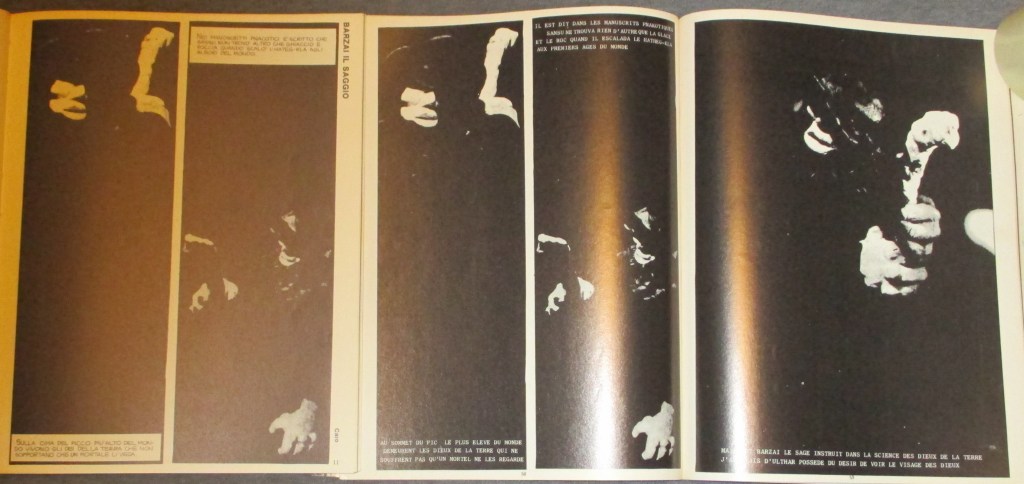
“Barzai le Sage” (“Barzai il Saggio,” “Barzai the Sage”) by Marc Caro is an 8-page comic composed of several extremely dark, heavily-exposed photos of a sculpture of a figure in various poses and backgrounds; the text is derived from Lovecraft’s “The Other Gods.” Appears in Métal Hurlant and in Metal Extra, where text boxes replace the original typed text annotations.

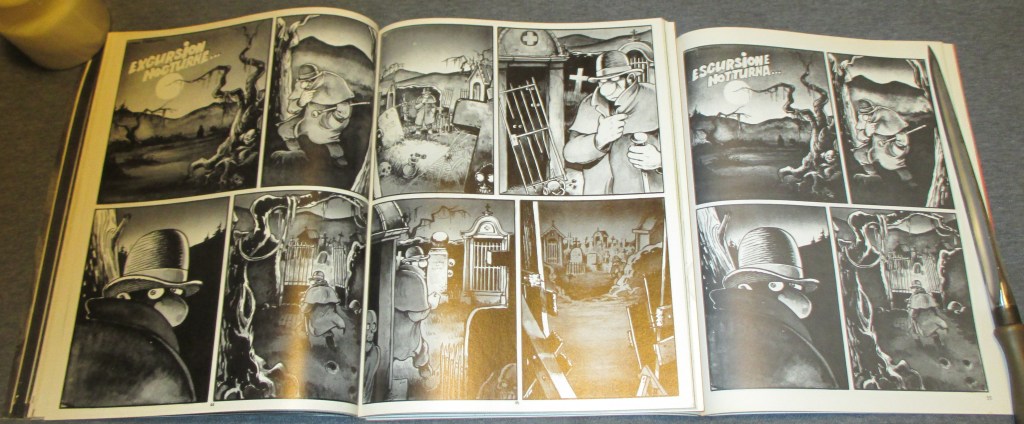
“Excursion Nocturne” (“Escursione Notturna,” “Noctural Excursion”) by Frank Margerin is a 4-page black-and-white comic that is wordless until the final panel; the whole is a careful set-up of horror tropes with a comedic flourish. Not explicitly Lovecraftian. Appeared in Métal Hurlant and Metal Extra.

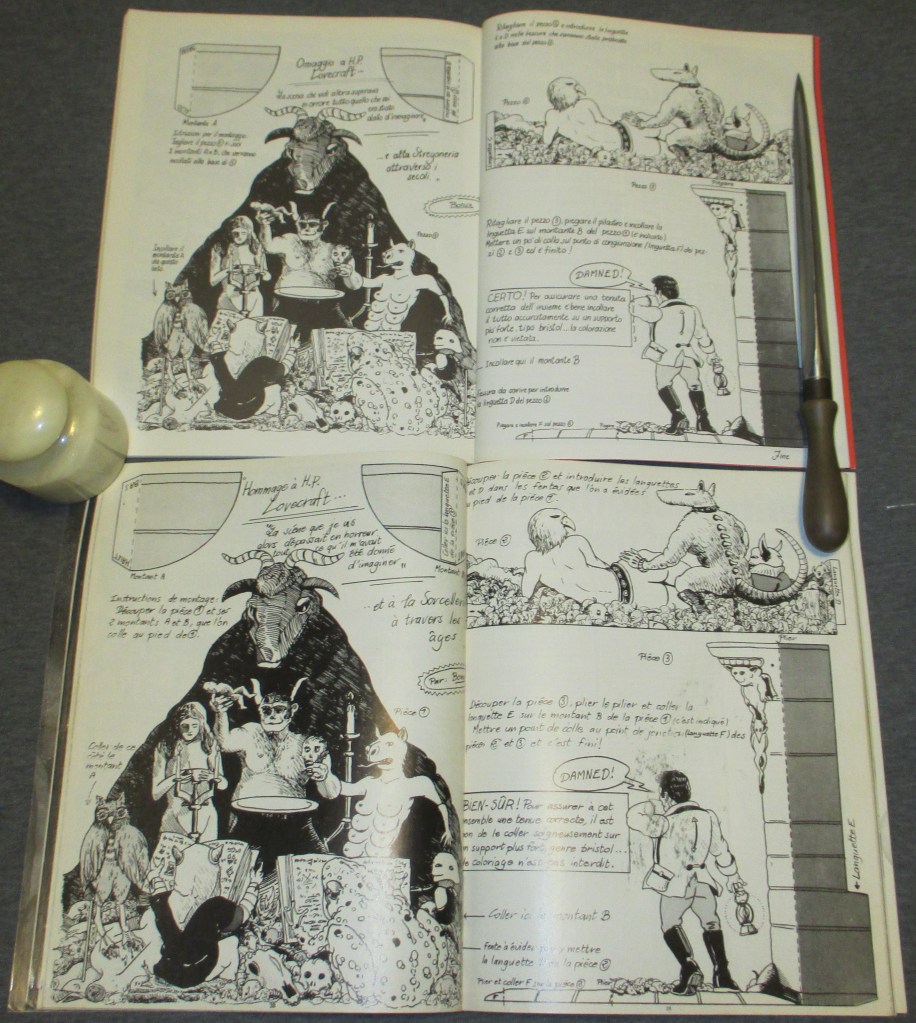
“Hommage à HPL…” (“Omaggio a H. P. Lovecraft,” “Homage to Lovecraft”) by uncredited is nominally a 3-page black-and-white cut-out diorama inspired by Lovecraft; though the content is more descriptive of general witchcraft and I haven’t been able to source any particular Lovecraftian inspiration. Appeared in Métal Hurlant and Metal Extra.

“H. P. L.” by Jean-Michel Nicollet is a 3-page color fantasy painted comic. A pair of fantasy creatures travel through a city to where a suited, winged figure sits on a throne atop a pillar, and asks a sphinx-like riddle. A panel reveals the figure has the face of Lovecraft. While slight in terms of content, and the events play out with a dry humor, the artwork is fantastic. Nicollet would go on to do many painted covers for weird fiction translated into French, including collections of Robert E. Howard, Clark Ashton Smith, etc. The winged, demonic Lovecraft would reappear on the cover of Robert Bloch’s Retour à Arkham (1980). Appeared in Métal Hurlant, Heavy Metal, and Metal Extra.

“H. P. Lovecraft 1890-1937” by Georges Kuchar is a 3-page biographical comic of Lovecraft’s life, which first appeared in the U.S. underground comix Arcade #3 (1975). Kuchar exaggerates certain elements of Lovecraft’s life and personality for comedic effect, but largely follows the available scholarship and characterization of H.P.L. in 1975. Appeared in Métal Hurlant and Metal Extra.

“H. P. Lovecraft au cinéma” (“H. P. Lovecraft al Cinema,” “H. P. Lovecraft at the Cinema”) by Jean-Pierre Bouyxou is an article on cinematic adaptations of Lovecraft up to that point, which was essentially The Haunted Palace (1963), Die, Monster, Die! (1965), The Shuttered Room (1967), Curse of the Crimson Altar (1968), and The Dunwich Horror (1970); although they also mention Necronomicon – Geträumte Sünden (1968) and Equinox (1972). Originally published in Métal Hurlant and translated for Metal Extra. Illustrated with stills from The Haunted Palace.

“KTULU” by Mœbius is a 5-page color comic; a group of politicians, finished with a week’s work, descend to a strange place and ask Lovecraft where to find a Ktulu to hunt. A surreal, sardonic work that owes little to the Mythos but echoes Mœbius’ other work of the period, like Le Garage Hermétique; the image of Lovecraft on a high throne oddly echoes Nicollet’s “H.P.L.” Appeared in Métal Hurlant, Heavy Metal, and Metal Extra.

“L’Abomination de Dunwich” (“The Dunwich Horror”) by Alberto Breccia, a 15-page black-and-white adaptation of Lovecraft’s “The Dunwich Horror”—and a fairly faithful and evocative adaptation, with particular care given to Wilbur Whateley and his unnamed twin. Appeared in Métal Hurlant and Heavy Metal; many of Breccia’s adaptations of Lovecraft stories first appeared in Italian in the magazine Il Mago, which may be why Metal Extra chose not to reprint it.

“La Chose” (“La Cosa,” “The Thing”) by Alain Voss is a 6-page black-and-white adaptation of Lovecraft’s “The Statement of Randolph Carter.” Voss elaborates on Lovecraft’s story a bit, making Harley Warren more sinister and flamboyant, and the grave they break into becomes an elaborate sepulchre, but is otherwise very faithful. Appeared in Métal Hurlant, Heavy Metal, and Metal Extra.

“La Retour de Cthulhu” (“Il Ritorno di Cthulhu,” “The Return of Cthulhu”) by Alan Charles & Richard Martens is a 2 -page black-and-white comic. “Uncle Nyarlathotep” narrates a tongue-in-cheek account of the ritual that results in the reincarnation of H. P. Lovecraft. Appeared in Métal Hurlant and Metal Extra.

“La Trace Ecarlate” (“La Traccia Scarlatta,” “The Scarlet Track”) by Jean-Jacques Mendez & Daniel Ceppi is a two-page, slightly humorless, mostly wordless spectacle. Métal Hurlant printed the comic in black and white, but Metal Extra added a bit of red to actually illustrate the “scarlet trace,” which works much better.

“Le Chef d’Œuvre de Dewsbury” (“Il Capolavoro di Dewsbury,” “Dewsbury’s Masterpiece”) by Yves Chaland & Luc Cornillon is a 4-page color comic that ells an original Lovecraftian story, somewhat in the vein of “Pickman’s Model,” with the mysterious Dewsbury taking the place of Pickman, but truncated and dedicated to not showing the unnamable horror. Appeared in Métal Hurlant, Heavy Metal, and Metal Extra.

“Le langage des chats” (“Il Linguaggio dei Gatti,” “The Language of Cats” ) by Nicole Claveloux is a 2-page black-and-white comic, and adapts an excerpt from “The Dream-Quest of Unknown Kadath” involving the cats of the Dreamlands. Appeared in Métal Hurlant, Heavy Metal, and Metal Extra.

“Le Pont Au Dessus de l’Eau” (“Il Ponte dull’acqua,” “The Bridge over the Water”) by Luc Cornillon is a 2-page comic where a man attempts to commit suicide by leaping from a bridge, and finds himself embattled by a protoplasmic tentacled entity. Not explicitly Lovecraft-related, though some might call it Lovecraftian. Published in black-and-white in Métal Hurlant, and colorized in Metal Extra.

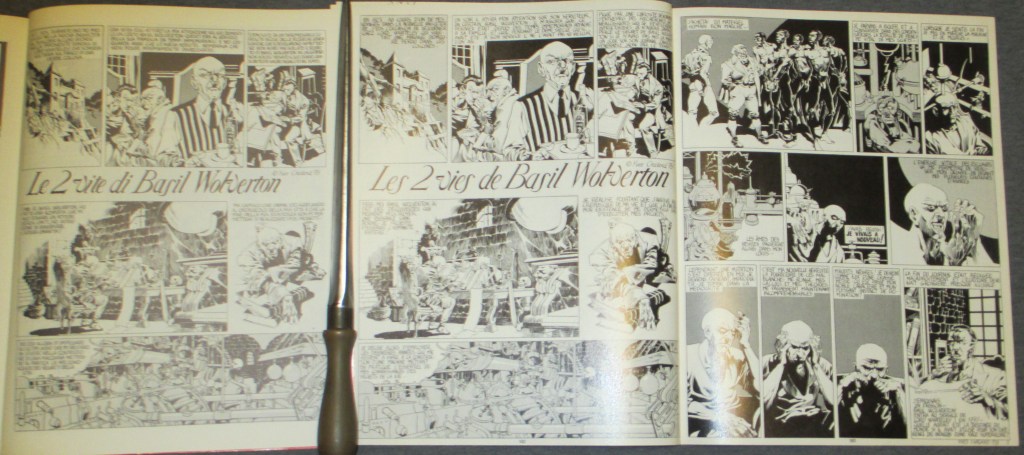
“Les 2 Vies de Basil Wolverton” (“Le 2 Vite di Basil Wolverton,” “The Two Lives of Basil Wolverton”) by Yves Chaland is a 2-page black-and-white comic. In Lord Whateley’s residence is uncovered the diary of an old servant, Basil Wolverton (after the comic artist), who had long served the family. The diary describes how Wolverton was a mad genius who sought to use the life-forces of others to extend his lifespan and rule the world—but he chose as his experimental subjects Black slaves, and found afterward his he fell into idleness and stupidity. The story is effectively a brief echo of the kind of weird racism typical of 1920s and 30s pulp fiction, although the artwork is excellent. Appeared in Métal Hurlant and Metal Extra.

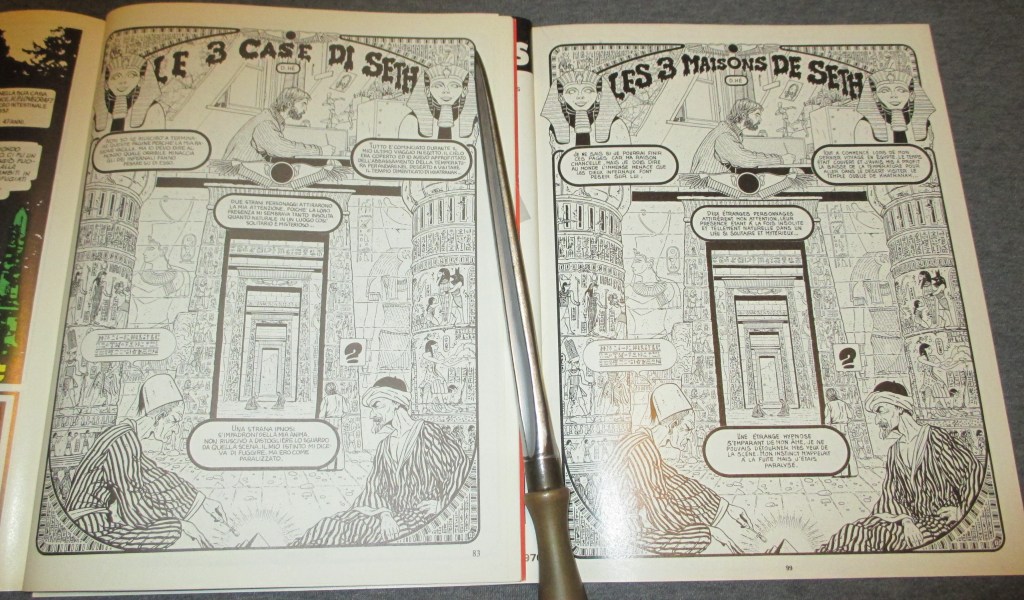
“Les 3 Maisons de Seth” (“Le 3 Case di Seth,” “The 3 Houses of Seth”) by Dominique Hé is a 3-page black-and-white comic in the form of a document about an artist’s visit to an ancient temple in Egypt, where he received a vision of the eldritch entity Suthluhlu. The artistic depiction of Egyptian pyramids, temples, statues, hieroglyphs, etc. is exquisite in its precision, though the Lovecraftian content itself is slight. Appeared in Métal Hurlant and Metal Extra.

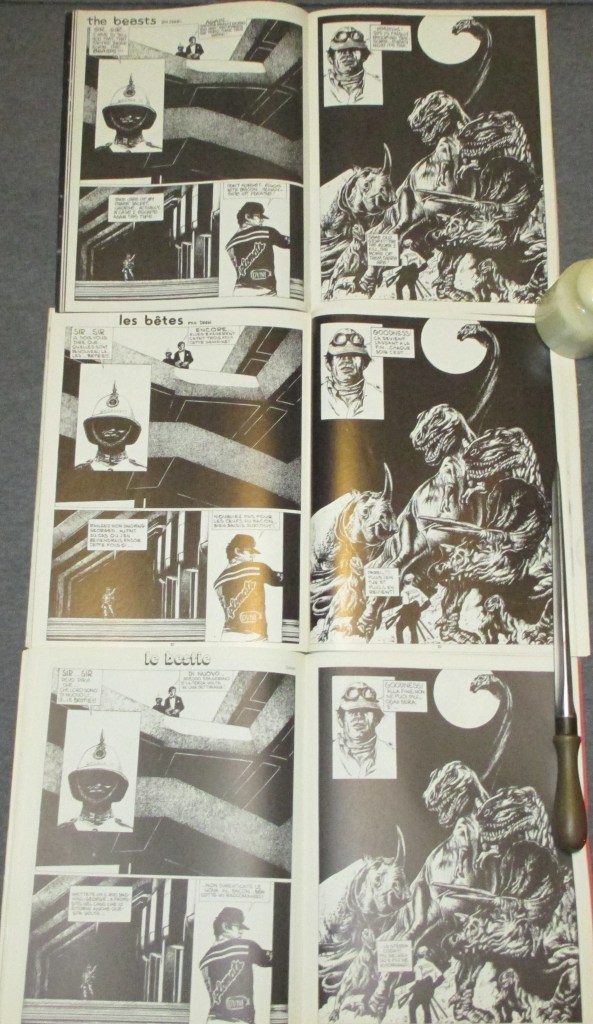
“Les Bêtes” (“La Bestie,” “The Beast”) by Dank is a 3-page black-and-white comic. The narrative is slight, a soldier or servant informs a man that the Beasts are back, which turn out to be a collection of fanged dinosaurs (and, bizarrely, a rhinocerous of unusual size) that are mowed down with guns; the hunter leaves strange three-toed tracks as he leaves after the slaughter. It’s a surreal bit of fluff, striking for its visuals, but deliberately obtuse. Not explicitly Lovecraftian. Appeared in Métal Hurlant, Heavy Metal, and Metal Extra.

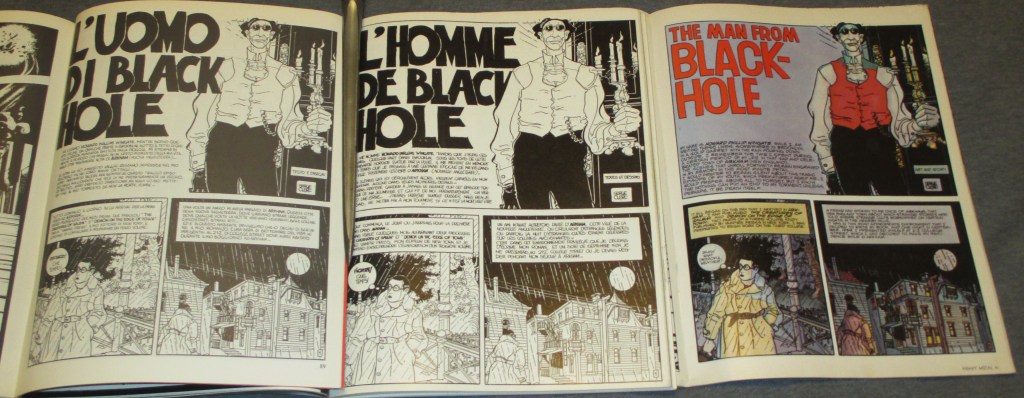
“L’Homme de Black Hole” (“L’Uomo di Black Hole,” “The Man from Blackhole”) by Serge Clerc is a 4-page comic. Howard Phillip Wingate, horror author, recalls a visit to Arkham, where he encounters Nathaniel Jenkins, a retired doctor who lived at Blackhole Cottage, and participates in his experiments. What he sees there causes him to flee, but he hears once more from Jenkins, whose brilliant mind has succumbed… The story is a pure pastiche of Lovecraft, with little visual and written nods scattered throughout. Published in black-and-white in Métal Hurlant and Metal Extra, but in color in Heavy Metal.

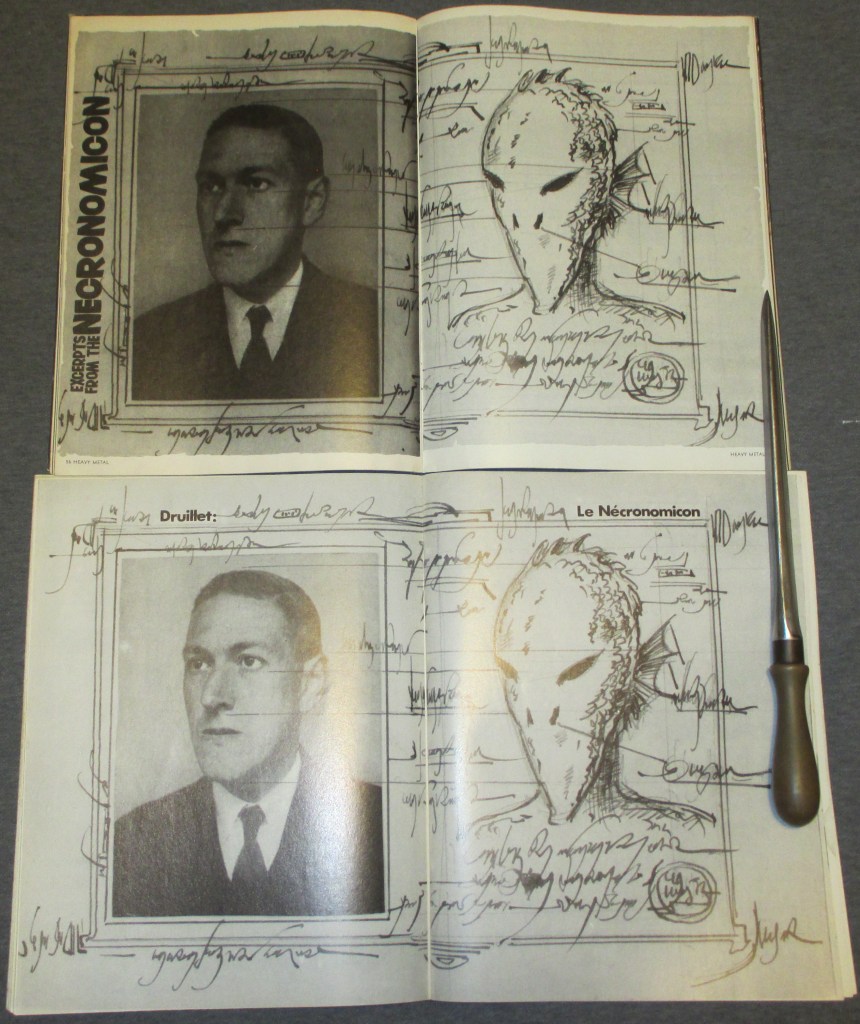
“Le Necronomicon” (“The Necronomicon”) by Druillet is 11 pages of black-and-white pseudo-script and illustrations, laid out as pages from an alien manuscript; a photograph of Lovecraft is included on the frontispiece. Druillet’s recension of the Necronomicon was released near-contemporaneously with Al Azif (1973) by L. Sprague de Camp, the Necronomicon (1977) by Simon, and The Necronomicon: The Book of Dead Names (1978) ed. by George Hay. Yet where the others focused primarily on producing some kind of decipherable content or referenced existing cultures and systems, Druillet deliberately made his pages evocative but untranslateable—and as a result, universal across all languages. Published in Métal Hurlant and Heavy Metal, with some slight differences in presentation.

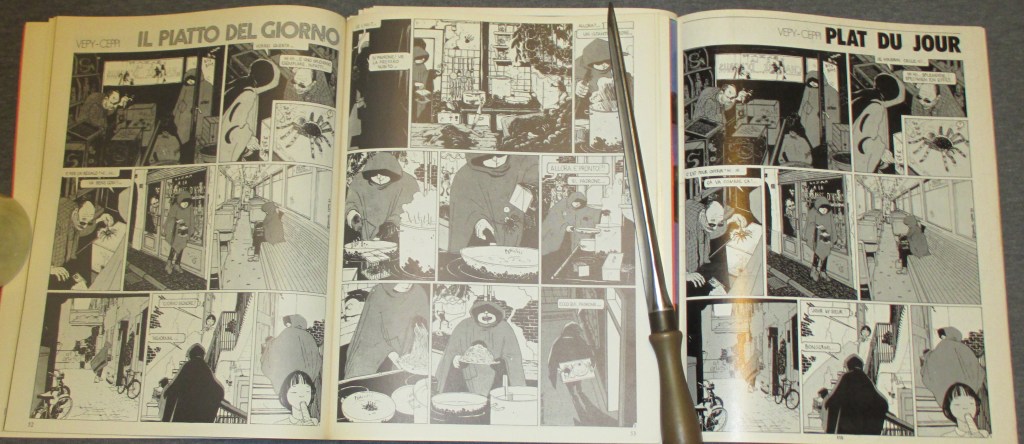
“Plat du Jour” (“Il Piatto del Girno,” “Dish of the Day”) by Vepy & Daniel Ceppi is a 3-page black-and-white comic. A hooded figure buys a spider, takes it home, cooks it up, and serves it to a bed-written individual in a rat costume. The tone is slightly ghastly, but also slice-of-life. Not explicitly Lovecraft-related. Published in Métal Hurlant and Metal Extra.


Cultural Impact

In the decades after the Métal Hurlant Lovecraft Special was published, many of the stories and artwork have been reprinted in various formats and languages. Today, you can find collections of Druillet and Breccia’s Lovecraft comics and art in several languages. What might strike readers, however, is that the bulk of the three issues do not consist of adaptations of Lovecraft’s stories, but also comics, art, fiction, and nonfiction about Lovecraft himself. That issue, and to a degree the English and Italian magazines it inspired, was a nexus of Lovecraftian art and fiction that helped to further the spread of not just Lovecraft’s Mythos, but the myth of Lovecraft and his life, inexplicably entwined with his creations.

For many readers, one of these issues was their first introduction for Lovecraft. For some, it was an example of what Lovecraftian comics and art could be, unfettered by censorship or expectations to conform to commercial standards of what a comic or Lovecraftian work should be like. These works aren’t pornographic or particularly graphic, but they vary from reverent to irreverent, ghoulish to enchanting. Lovecraft and his work are interpreted many different ways by different creators—and that’s okay. There’s room for all those different approaches, and many more.

Métal Hurlant is being published in a new series. Perhaps appropriately, in August 2024 they published a new Lovecraft special—reflecting a new generation of talents to flex their imaginations and showcase their skills. It is a testament to the cultural impact of that first mammoth issue, but also a reflection that these specials are part of an enduring tradition. Creators that are happy not just to read about Lovecraft, his fiction and letters, but to participate in the process and add to the body of art and literature he inspired.


Bobby Derie is the author of Weird Talers: Essays on Robert E. Howard and Others and Sex and the Cthulhu Mythos.

Deep Cuts in a Lovecraftian Vein uses Amazon Associate links. As an Amazon Associate I earn from qualifying purchases.
“Donde suben y bajan las mareas” (1978) by Alberto Breccia, Carlos Trillo, and Lord Dunsany

Sasturain: Mais mesure un peu l’influence que peut avoir un regard critique sur ton oeuvre: dans les années 1960, tu as tout laissé tomber jusqu’à ce qu’apparaissent des gens qui te lisaient, te suivaient, t’appreciaient. Qu t’ont renvoyé un écho positif de ce que tu avais fait. Ce n’est qu’en 1968, à la sortie du livre de Martínez Peyrou, puis celui de Masotta, qu’on t’apprécie, qu’on reconnaît ta valeur. Ton travail est reconnu en Europe, tu retrouves une stimulation. La réaction de l’extérieur te motive, t’encourage.

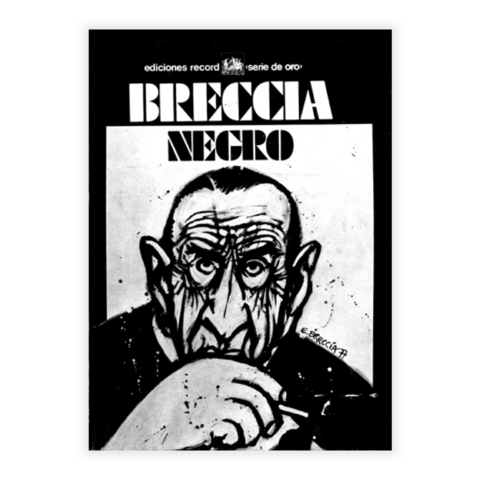
Breccia: Et j’ai trouvé un marché où proposer des choses dont tout le monde se fichait ici. Quand j’ai fait L’Éternaute, on m’a tiré dessus à boulets rouges. Mort Cinder n’a pas eu de succés. Richard Long est passé completèment inaperçu. Je veux dire par là que toutes ces ouevres relativement valables, tout le monde s’en battait l’oeil, en Argentine, alors qu’elles ont eu du succès en Europe. Si je propose Le Couer révélateur ici, personne ne le publie. Il est paru dans Breccia Negro, édité par Scutti, mais c’est moi qui l’ai imposé. À cette époque, Scutti publiait n’importe quoi. Je lui ai dit: «Faisons un livre», et c’etait parti. Le cas de Là où la marée monte et se retire, l’adaptation de la nouvelle de Lord Dunsany, par exemple, montre qu’un tas de choses n’ont pas reçu non plus un bon accueil en Europe, elles sont restées et restent inédites. Mais c’est vrai que ce genre-là m’a intéressé. Après, quand j’ai voyagé en Europe et que j’ai vu ce qui se passait la-bas, tout a changé, j’ai découvert qu’il existait un marché immense, un public qui attendait des oeuvres différentes, et qu’on pouvait faire du neuf. Un endroit où la bande dessinée était très respectée, pas comme ici, où elle demeure encore aujourd’hui un genre marginal.
Sasturain: But consider the influence that a critical eye can have on your work: in the 1960s, you dropped everything until people appeared who read you, followed you, appreciated you. Who gave you a positive response to what you had done. It was only in 1968, with the release of Martínez Peyrou’s book, then Masotta’s, that you were appreciated, that your value was recognized. Your work was recognized in Europe, you found stimulation. The reaction from outside motivated you, encouraged you.

Breccia: And I found a market where I could offer things that nobody cared about here. When I did The Eternaut, I was shot at with red-hot cannonballs. Mort Cinder was not a success. Richard Long went completely unnoticed. I mean by that that all these relatively valid works, nobody cared about them, in Argentina, while they were successful in Europe. If I offer “The Telltale Heart” here, nobody publishes it. It appeared in Breccia Negro, published by Scutti, but I was the one who insisted on it. At that time, Scutti published anything. I told him: “Let’s make a book,” and that was it. The case of “Where the Tide Ebb and Flow,” the adaptation of Lord Dunsany’s story, for example, shows that a lot of things were not well received in Europe either; they remained and remain unpublished. But it’s true that this genre interested me. Then, when I traveled to Europe and saw what was happening there, everything changed, I discovered that there was a huge market, an audience that was waiting for different works, and that we could do something new. A place where comics were very respected, not like here, where they still remain a marginal genre today.
Breccia: Conversations avec Juan Sasturain (2019) 306English translation

Alberto Breccia, a comic artist now hailed as a master and whose work is internationally recognized and translated into myriad languages, got his start like pretty much every other artist: wherever he could. When opportunities in his native Argentina were few, Breccia turned to Europe, which welcomed international talent. His fame in the English-speaking world largely rests on a series of nine adaptations of H. P. Lovecraft’s stories that he first completed and published in the 1970s, but while these have gained fame and been published and republished, they were part of a broader turn in his career toward adapting classic works of horror and fantasy into the medium of comics during the 70s.

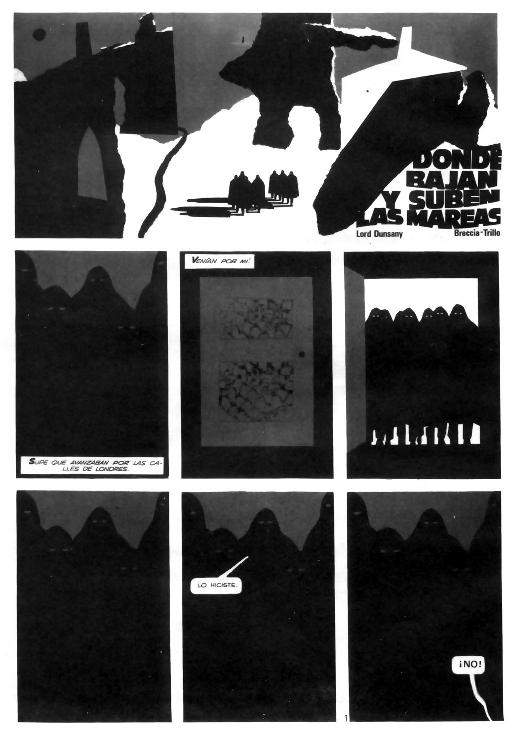
One of the more obscure of these adaptations, especially to English-language audiences, is “Donde suben y bajan las mareas” (1978), adapted from Lord Dunsany’s “Where the Tides Ebb and Flow” from A Dreamer’s Tales (1910). The script was written by Carlos Trillo, and Breccia did the artwork using a collage method; a technique that provides a certain texture to his more experimental 70s works. At a scanty 8 pages, it was probably intended for an Italian market like Il Mago, but as near as I can determine the first—and for a long time only—publication was in the now rare Breccia Negro (1978), a collection of his unpublished and scarce work, which has itself never been reprinted.

Supe que avanzaban por las calles de Londres.
Venían por mí.
Lo hiciste.
¡NO!
I knew they were advancing through the streets of London.
They were coming for me.
You did it.
NO!
Informe sobre ciegos y otras historias 101English translation

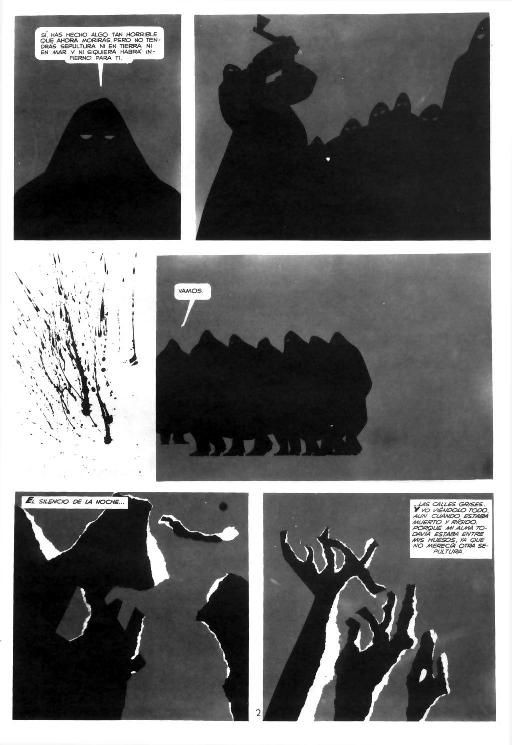
The effect is dark, almost minimalist, a chiaroscuro nightmare. As in Dunsany’s tale, it is told primarily from the view of the protagonist, who cannot see the faces of his friends and executioners clearly. Only their eyes, only the numberless mass of them who come to execute justice for the unspoken crime. When in Europe in the 70s, Breccia went to Great Britain to stand on the banks of the Thames.

Sasturain: Un jour, tu m’as raconté que tu étais allé à Londres pour chercher…

Breccia: Pour chercher la boue de la Tamise, celle de Là où la marée monte et se retire. Je suis allé voir ça de nuit. Et j’ai marché dans les ruelles de Soho, tu vois? Les ruelles de Jack l’Éventreur. Tue sais que je ne suis pas vraiment un rigolo. (Rires) J’ai suivi la piste de Lord Dunsany et de Jack l’Éventreur. Mais la ville de Lonres m’a plu tout entiere, tout ce que j’ai vu de l’Angleterre m’a plu.
Sasturain: One day, you told me that you went to London to look for…

Breccia: To look for the mud of the Thames, the one Where the tide ebbs and flows. I went to see it at night. And I walked in the alleys of Soho, you see? The alleys of Jack the Ripper. You know I’m not really a joker. (Laughs) I followed the trail of Lord Dunsany and Jack the Ripper. But I liked the whole city of London, everything I saw of England I liked.
Breccia: Conversations avec Juan Sasturain (2019) 366English translation
Sí. Has hecho algo tan horrible que ahora morirás. Pero no tendrás sepultura ni en tierra ni en mar y ni siquiera habrá infierno para ti.

Vamos.

El silencio de la noche…

…las calles grises yo viéndolo todo. Aun cuando estaba muerto y rígido. Porque mi alma todavía estaba entre mis huesos, ya que no merecía otra sepultura.
Yes. You have done something so horrible that now you will die. But you will have no burial on land or sea, and there will not even be hell for you.

Let us go.

The silence of the night…

…the gray streets, I saw it all. Even when I was dead and stiff. Because my soul was still among my bones, for it deserved no other grave.
Informe sobre ciegos y otras historias 102English translation

I dreamt that I had done a horrible thing, so that burial was to be denied me either in soil or sea, neither could there be any hell for me.

I waited for some hours, knowing this. Then my friends came for me, and slew me secretly and with ancient rite, and lit great tapers, and carried me away.

It was all in London that the thing was done, and they went furtively at dead of night along grey streets and among mean houses until they came to the river. And the river and the tide of the sea were grappling with one another between the mud-banks, and both of them were black and full of lights. A sudden wonder came in to the eyes of each, as my friends came near to them with their glaring tapers. All these things I saw as they carried me dead and stiffening, for my soul was still among my bones, because there was no hell for it, and because Christian burial was denied me.
—Lord Dunsany, “Where the Tides Ebb and Flow”

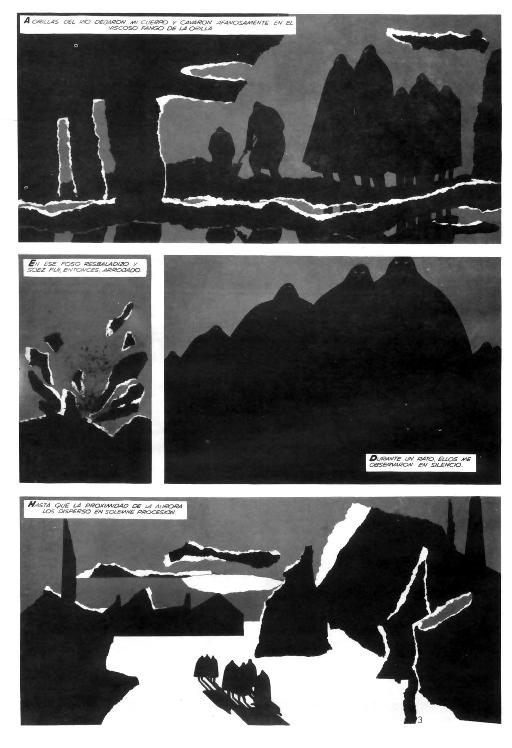
Truncated, translated; in dark blacks on greys and stark whites, Breccia sought to capture, not the cityscape of London or the lushness of Dunsany’s prose, but that shadowy limbo in which the murdered man was caught. In describing this style, Laura Caraballo wrote:

En premier lieu, les papiers lisses constituent des aplats et sont souvent utilisés pour créer des figures elliptiques qui se détachent du fond créant aussi une réversibilité entre les deux, comme on peut le voir dans Là où la maree monte et se retire (adaptation de la nouvelle de Lord Dunsany, Where the Tides Ebb and Flow), où le collage est la seule technique apploquée. Dans ces séquences, la qualité tangible des couches de papier est mise en avaunt. Breccia ajoute un élément qui redonne son caractère palpable au papier collé, notamment la trace du papier arraché qui vient à la fois avertir sur la technique et fonctionner comme accent de lumière ciblée au niveau de la composition. Dans cest formes construites par la technique du papier arraché, on peut donc retracer le geste de l’auteur qu exerce un mouvement intempestif au moment de définir ses plans et ses figures en coupant brusequement le papier. Il explore ainsi, avec une quantité minimale d’éléments et trois valeurs achromatiques, la possibilitié de construire des images avec des atmosphères très pesantes et un état d’esprit déscenchanté, tout comme la voix du narrateur dans le text de Lord Dunsany, à l’origine de cette adaptation. Le collage oscille alors entre sa fonction de trace de la technique en elle-même et de contiguïté physique avec le geste, et sa fonction mimétique, par exemple pour représenter l’impact de la lumière sur les objets.In the first instance, smooth papers are used as solids, often to create elliptical figures that stand out from the background, also creating a reversibility between the two, as can be seen in Là où la maree monte et se retire (an adaptation of Lord Dunsany’s short story, “Where the Tides Ebb and Flow”), where collage is the only technique applied. In these sequences, the tangible quality of the layers of paper is brought to the fore. Breccia adds an element that restores its palpable character to the collaged paper, notably the trace of the torn paper which both warns about the technique and functions as an accent of targeted light at the level of the composition. In these forms constructed using the torn paper technique, we can therefore trace the author’s gesture, which exerts an untimely movement at the moment of defining his planes and figures by abruptly cutting the paper. He thus explores, with a minimal quantity of elements and three achromatic values, the possibility of constructing images with very heavy atmospheres and a disenchanted state of mind, just like the voice of the narrator in Lord Dunsany’s text, at the origin of this adaptation. The collage then oscillates between its function as a trace of the technique itself and of physical contiguity with the gesture, and its mimetic function, for example to represent the impact of light on objects.
Alberto Breccia, le Maître Argentin Insoumis 46-47English translation

The result is a rather stark, dark tale, in keeping with the mood of Breccia and Trillo’s other adaptations of Edgar Allan Poe and the like; probably the grimmest adaptation of any story by Lord Dunsany to comics to date, though they preserve Dunsany’s ending. While no one would claim this is one of Breccia’s masterworks—the collage technique is effective but lacks some of the energy and brilliance of his pen and mixed media art—it is an effective adaptation, and one that deserves more attention.

A orillas del río dejaron mi cuerpo y cavaron afanosamente en el viscoso fango de la orilla.

En ese foso resbaldizo y soez fui, entonces arrojado.

Durante un rato, ellos me observaron en silencio.

Hasta que la proximidad de la aurora los disperso en solemne procession.
On the banks of the river they left my body and dug busily in the slimy mud of the shore.

Into that slippery and foul ditch, I was then thrown.

For a while, they watched me in silence.

Until the approach of dawn dispersed them in solemn procession.
Informe sobre ciegos y otras historias 103English translation

“Donde suben y bajan las mareas” has been reprinted and translated into several languages, but the only English-language adaptation I could locate is Alberto Breccia Sketchbook (2003, Ancares Editora), a bilingual edition in English and Spanish, but difficult to locate as it was published in Argentina and is now out of print. Most curious readers will have to satisfy themselves with the Spanish-language version reprinted in collections like Informe sobre ciegos y otras historias if they wish to read this tale.

A Note: I am aware that the Breccia interviews conducted with his occasional collaborator Juan Sasturain were originally done in Spanish, but the only edition I have of them is in French. Sometimes we have to work with what we have on hand.


Bobby Derie is the author of Weird Talers: Essays on Robert E. Howard and Others and Sex and the Cthulhu Mythos.

Deep Cuts in a Lovecraftian Vein uses Amazon Associate links. As an Amazon Associate I earn from qualifying purchases.
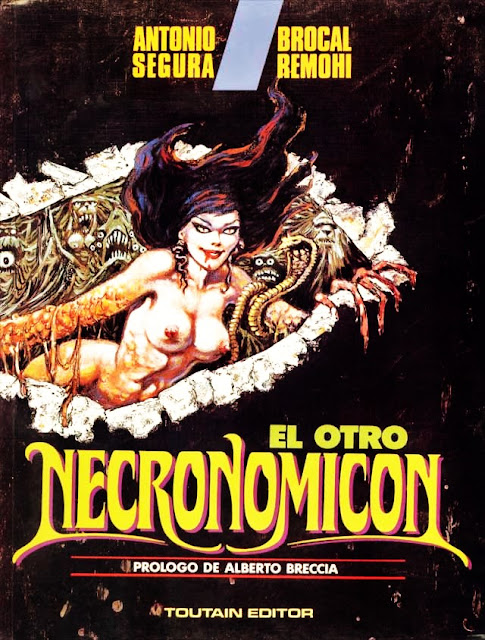
El Otro Necronomicón (1992) by Antonio Segura & Brocal Remohi

Eldritch Fappenings

This review deals with a horror comic intended for adult audiences. As part of this review, selected images with cartoon depictions of genitalia and graphic violence will be displayed as the work is discussed.
As such, please be advised before reading further.


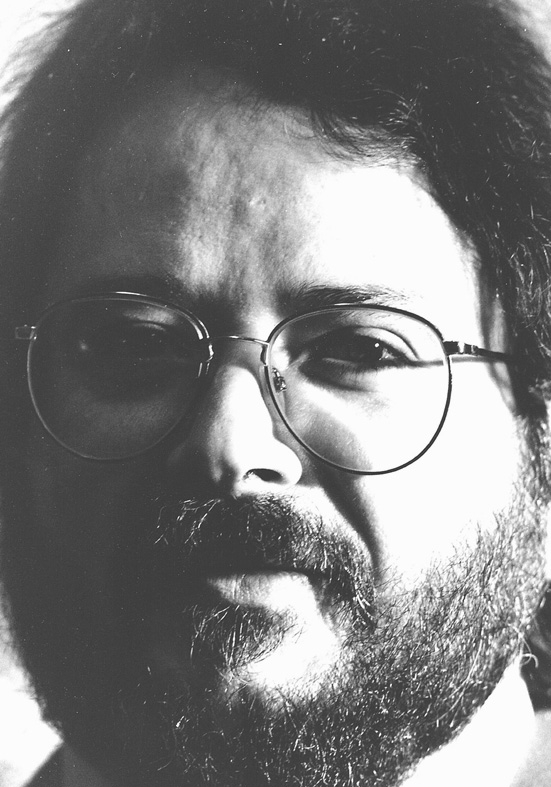
Antonio Segura (1947-2012) was a Spanish comics writer, and Jaime Brocal Remohi (1936-2002) was a Spanish comics artist. Both were natives of Valencia, and both achieved recognition for their work, and though neither quite broke through to fame in the English-speaking comics world, Jaime (as Jaime Brocal) was one of the stable of Spanish artists that found work with Warren Publishing in horror magazines like Eerie and Creepy.

In the 1979, the situation inverted somewhat:

A Spanish version of Creepy, wearing the name on the cover, finally appeared in March 1979. Published by Toutain until issue # 79 (Jan. 1986), this series offered a mix of stories. The mix, this time, was not the result of putting together stories from different publishers—all the stories were not from Warren—but by grouping, under the same cover, reprints from American authors and illustrators with original stories by Spanish artists and writers.
The quality was high and the magazine a success. The artistic styles varied froms Tory to story and from nationality to nationality, but the tales were genuinely interesting, provoking, and, fittingly, creepy. Yet, a stark difference can be spotted between the American stories and the Spanish ones.. While American authors favored the supernatural monsters of lore and Hollywood cinema such as zombies and vampires, SPanish creators were more inclined to human monsters and realistic grounding. Supernatural horrors were mostly absent—except in beautiful adaptations of H. P. Lovecraft’s works—in the Spanish stories, the horror rather being born from alienation and human cruelty.
—Fernando Gabriel Pagnoni Berns, “Spanish Creepy: Historical Amnesia in ‘Las mil caras de Jack El destripador’ in Critical Approaches to Comic Books (2023) 50

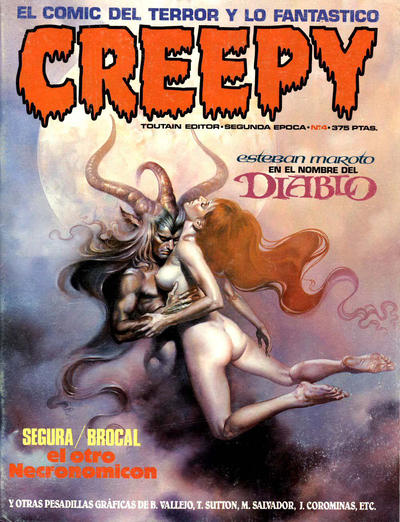
The Lovecraft adaptations included “La maldición del amuleto” (Creepy #73, Jul 1985) by Joan Boix; “La Sombra sobre Innsmouth” (Creepy #63, Sep 1984) and “La casa en el umbral” (Creepy #64, Oct 1984) by Norberto Buscaglia and Alberto Breccia, the latter an Argentinan comics artist who achieved fame for his adaptations of Lovecraft, translated in several languages—his work in the French comics magazine Métal Hurlant was translated into English in the Heavy Metal Lovecraft special issue in Oct 1979. The letters-to-the-editor page for Spanish Creepy was “Consultas al Necronomicón,” and the replies were signed “Alhazred.”

The Spanish Creepy was revived in 1990-1991 and ran for 19 issues, and the publisher Toutain tapped some of the same great Spanish talents from the first run. A series of seven original Lovecraftian horror comics, written by Antonio Segura and illustrated by Jaime Brocal Remohi.

Creepy #4 (1990)

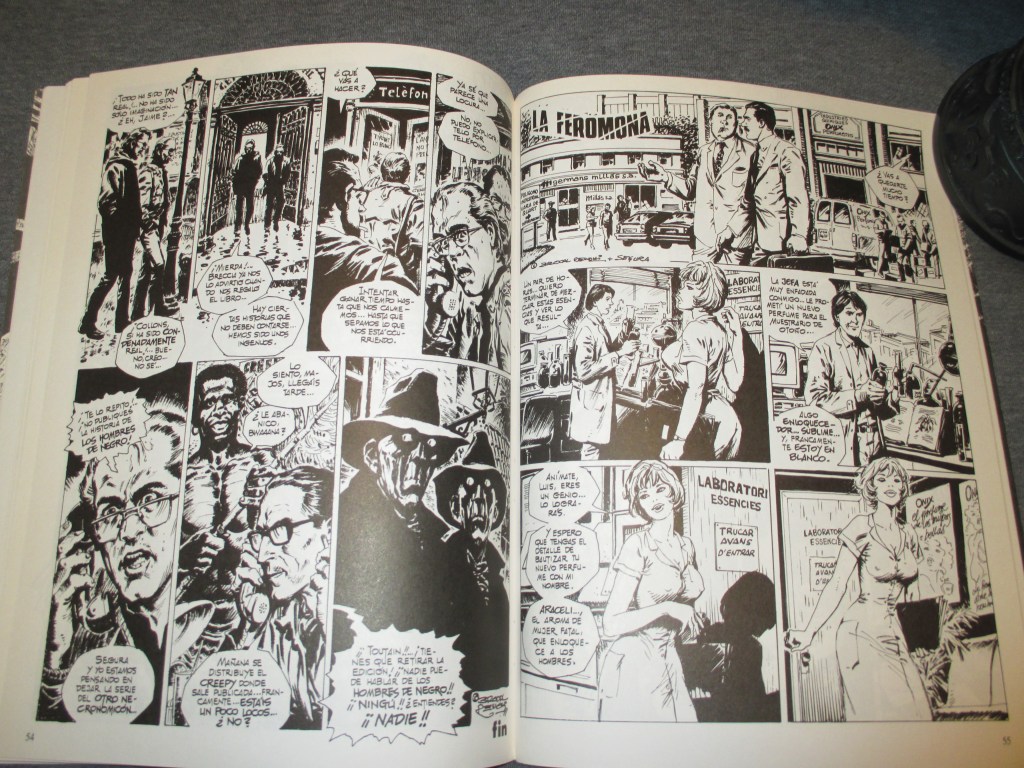
El Otro Necronomicón (“The Other Necronomicon“) followed the sensibility of European comics rather than mainstream English or British comics; violence, gore, and nudity could be graphic, but also the approach to the subject could be vividly intelligent, aesthetic, and intellectual, with metafictional flourishes. These stories of El Otro Necronomicon were never translated or published in English-language markets, and remain relatively obscure. Even the 1992 softcover album that collects the seven stories is now quite scarce.

Alberto Breccia explained the origin of the series in his foreword to the album:

Mi amigo, mi hermano Jaime, generosamente me ha pedido que prologue su libro sobre guiones de Antonio Segura, «EL OTRO NECRONOMICÓN». Mi cierta habilidad para el dibujo no es la misma que para la escritura. Pero no puedo rehusarme y escribiré entonces una’s lineas. Hablaré de nuestro entrañable amistad de tantos años, de nuestras interminables charlas sobre dibujo y libros. Nuestras correrías por Barcelona y Valencia por librerías de viejo revolviendo, buscando y hallando antiguos cronicones, polverientos folletines y regrasando felices con nuestros trofeos a tomar unos mates en su casa en compañia de su encantadora esposa Conchín y sus hijos, a los cuales he visto crecer. ¿Qué es un prólogo? ¿Una introducción al contenido del libro? ¿Una presentación de sus autores? ¿Mi opinion sobre la obra? . . . un poco de todo eso. Es de sobra conocido que nunca he leído comics, ni siquiera de niño. Lo cual no habla mal de los comics, sino de mí. Pero estos que tengo sobre mi mesa he tenido que leerlos. En principio como un gesto de lealtad hacia al amigo y porque debía hablar sobre ellos. Poco a poco su lectura me fue atrapando hasta lamentar su término. Ese manuscrito que hallé en el viejo puesto de revistas y libros viejos de mi amigo Yoel Novoa, escultor y demonólogo, ha encontrado en Antonio Segura y Jaime Brocal los intérpretes ideales. Hace unos años, en Barcelona, Jaime me manifestó su interés en volver a dibujar una historia fantástica. Frankenstein fue la elegida. Durante unas semanas discutimos cómo pensaba encararla, discutimos bocetos; hasta su hijo Jaime confeccionó en plastilina un possible rostro del monstruo.

Luego yo debí partir a Italia para regresar posteriormente a la Argentina. Pasado un tiempo, Jaime me escribió diciéndome que había desechado el proyecto. En Valencia, en Octubre de 1988 volvimos sobre el tema. Un año después, en Buenos Aires, doy con el manuscrito. En un siguiente viaje a España, me reúno con Jaime y Antonio en Valencia y les doy con cierto pesar el manuscrito. Hoy escribo estas lineas frente al resultado de estas inquietudes. He contado el origen de la obra. He dado mi opinión sobre ella. Los autores, a través de la excelencia del trabajo pueden prescindir de mí presentación. Ahora resta la opinión de los lectores.

Alberto Breccia.

Buenos Aires, 25 de Noviembre de 1991
My friend, my brother Jaime, has generously asked me to write the prologue to his book written by Antonio Segura, “THE OTHER NECRONOMICON.” My ability to draw is not the same as my ability to write. But I can’t refuse and I’ll write a few lines. I will talk about our close friendship of so many years, about our endless conversations about drawing and books. Our trips to Barcelona and Valencia through old bookstores rummaging, searching and finding old chronicles, dusty pamphlets and returning happy with our trophies to drink some mate at his house in the company of his lovely wife Conchín and his children, whom I have seen grow up. What is a prologue? An introduction to the content of the book? An introduction of its authors? My opinion on the work? . . . a bit of all that. It is well known that I have never read comics, not even as a child. Which does not speak badly of comics, but of me. But these I have on my desk I had to read. In principle as a gesture of loyalty towards my friend and because I had to talk about them. Little by little, its reading captivated me until I regretted its end. That manuscript that I found in the old stand of magazines and old books of my friend Yoel Novoa, sculptor and demonologist, has found in Antonio Segura and Jaime Brocal the ideal interpreters. A few years ago, in Barcelona, ​​Jaime expressed his interest in drawing a fantasy story again. Frankenstein was the chosen one. For a few weeks we discussed how he intended to approach it, we discussed sketches; even his son Jaime made a possible face of the monster in plasticine.

Then I had to leave for Italy and later return to Argentina. After some time, Jaime wrote to tell me that he had abandoned the project. In Valencia, in October 1988, we returned to the subject. A year later, in Buenos Aires, I found the manuscript. On a subsequent trip to Spain, I met Jaime and Antonio in Valencia and, with some regret, gave them the manuscript. Today I am writing these lines as a result of these concerns. I have told the origin of the work. I have given my opinion on it. The authors, thanks to the excellence of their work, can dispense with my introduction. Now all that remains is for the readers to give their opinion.

Alberto Breccia.

Buenos Aires, 25 November 1991
Prólogo de Alberto Breccia, El Otro NecronomiconPrologue by Alberto Breccia, English translation

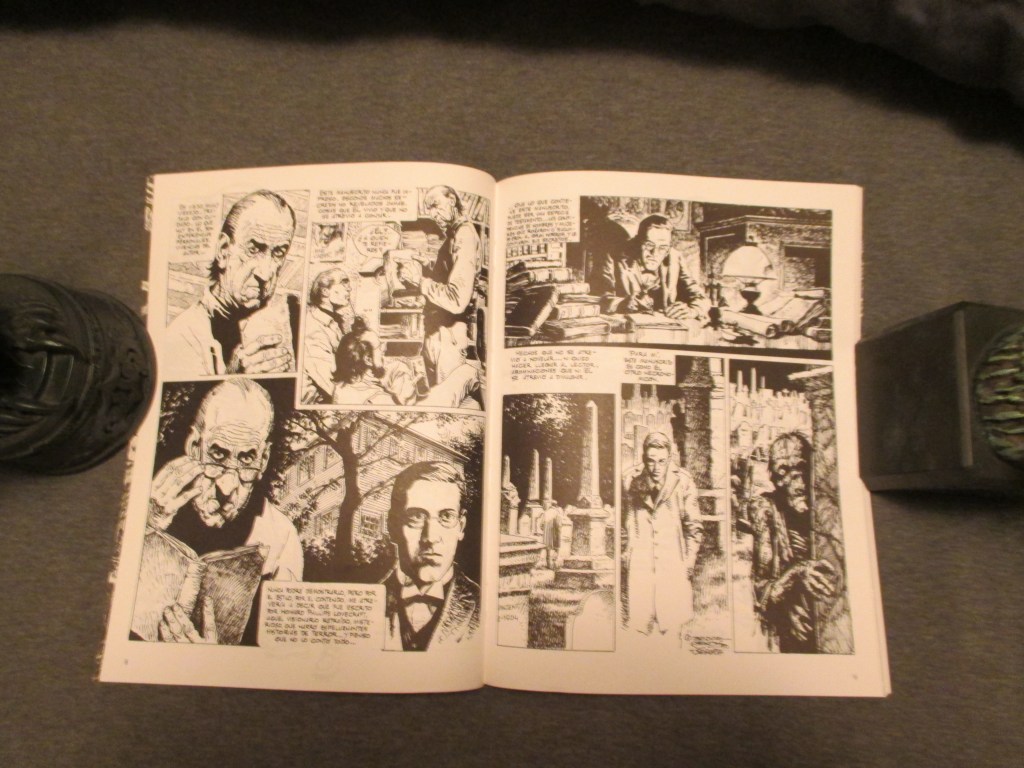
Breccia’s prologue makes a little more sense as an extension of the comic prologue to the stories, where a comic version of Alberto Breccia relates to comic versions of Antonio Segura & Brocal Remohi to adapt stories from a secret manuscript that H. P. Lovecraft wrote. The results are the seven stories in this collection.

Hechos que no se atrevió a novelar…. ni quiso hacer llegar al lector, abominaciones que ni el se atrevió a divulgar.

Para mí, este manuscrito es como el otro Necronomicon.
Facts that he did not dare to novelize …. and did not want to make them known to the reader, abominations that he did not dare to divulge.

For me, this manuscript is like the other Necronomicon.

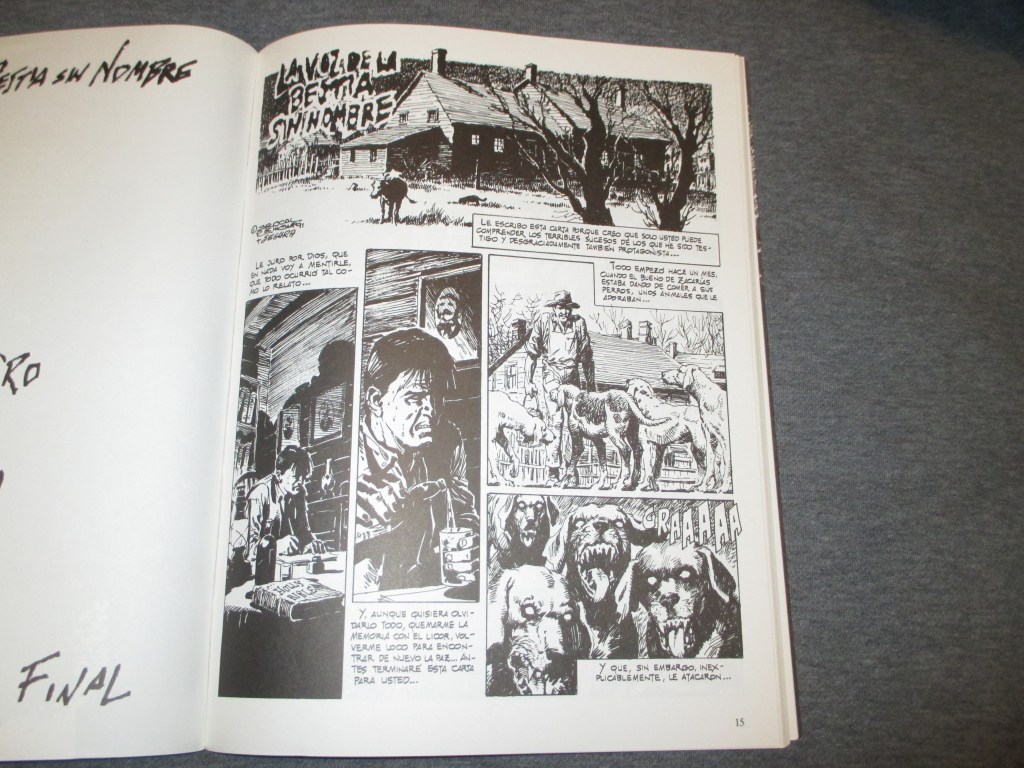
“La Voz de la Bestia sin Nombre”

“The Voice of the Nameless Beast” opens in a rural setting where animals have begun to attack humans. A repairman comes to the small, insular community…

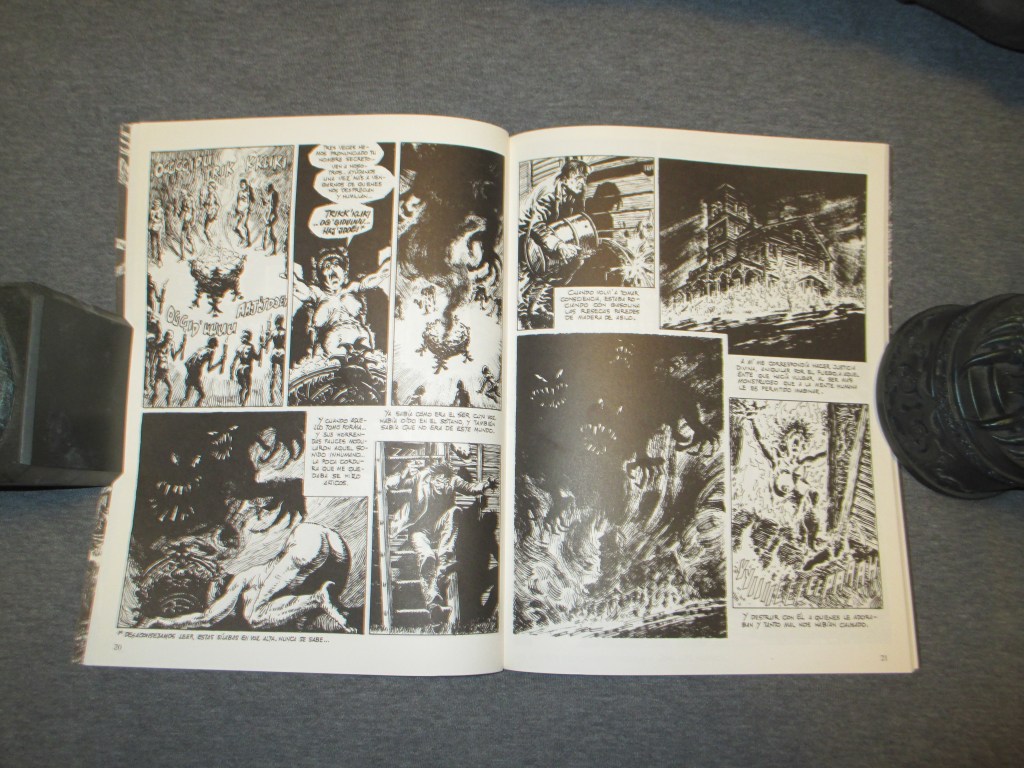
…and discovers a cult.

Tres veces hemos pronunciado tu nombre secreto… ven a nosotros… ayúdanos una vez más a vengarnos de quienes nos desprécian y humillan… trikk’kliki… og’giduuuu… haj’jdoei*Three times we have pronounced your secret name… come to us… help us once again to take revenge on those who despise and humiliate us… trikk’kliki… og’giduuuu… haj’jdoei*
Nota: *Desaconsejamos leer estas sílabas en voz alta. Nunca see sabe…Footnote: *We advise against reading these syllables aloud. You never know…

Without being explicitly connected to Lovecraft’s stories, the brief story is very Lovecraftian in outline, albeit able to depict explicitly on the page the kind of naked cultists at their ceremonies which Lovecraft could not.

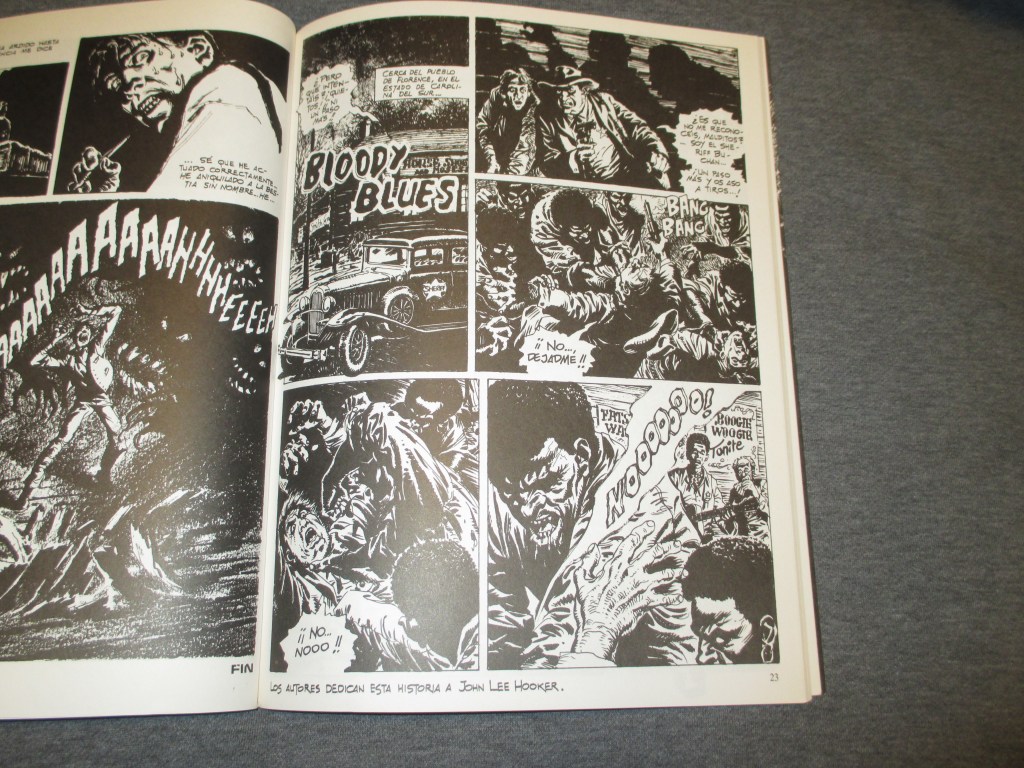
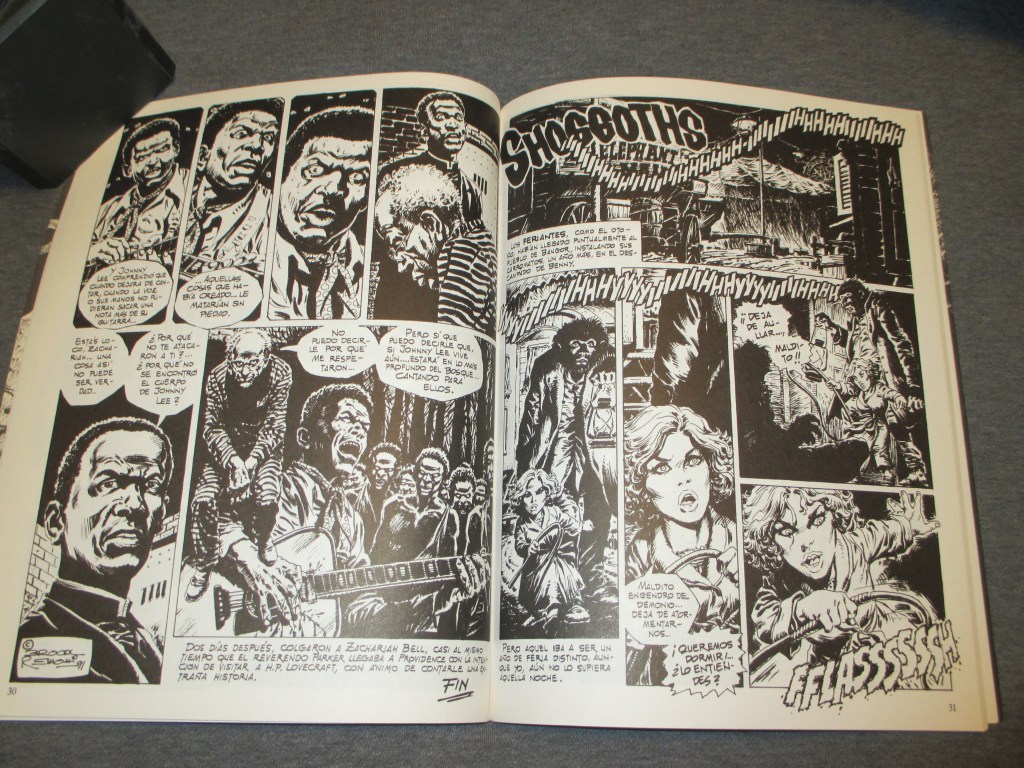
“Bloody Blues”

Titled in English, this story is implicitly set in the Southern United States of a generation ago; like Robert Johnson’s “Hellhound on My Trail” (1937), it combines the Blues with supernatural horror…and, in this case, borrows a couple of licks from Lovecraft’s “The Hound.”

Los autores dedican está historia a John Lee Hooker.The authors dedicate this story to John Lee Hooker.

To the credit of Seguna and Brocal Remohi, not only are the majority of characters in this story African-American, but they are not depicted as racial stereotypes. Unfortunately, this is slightly offset by the fact that this is one of the grislier of the tales in this volume, with an infernal blues song sending the Black audience into a literal orgy of rape, murder, and cannibalism worthy of Emaneulle and the Last Cannibals (1977) or Cannibal Holocaust (1980).

In a footnote at the end of the tale, it is explained that one of the survivors had traveled to Providence to tell H. P. Lovecraft a strange story.

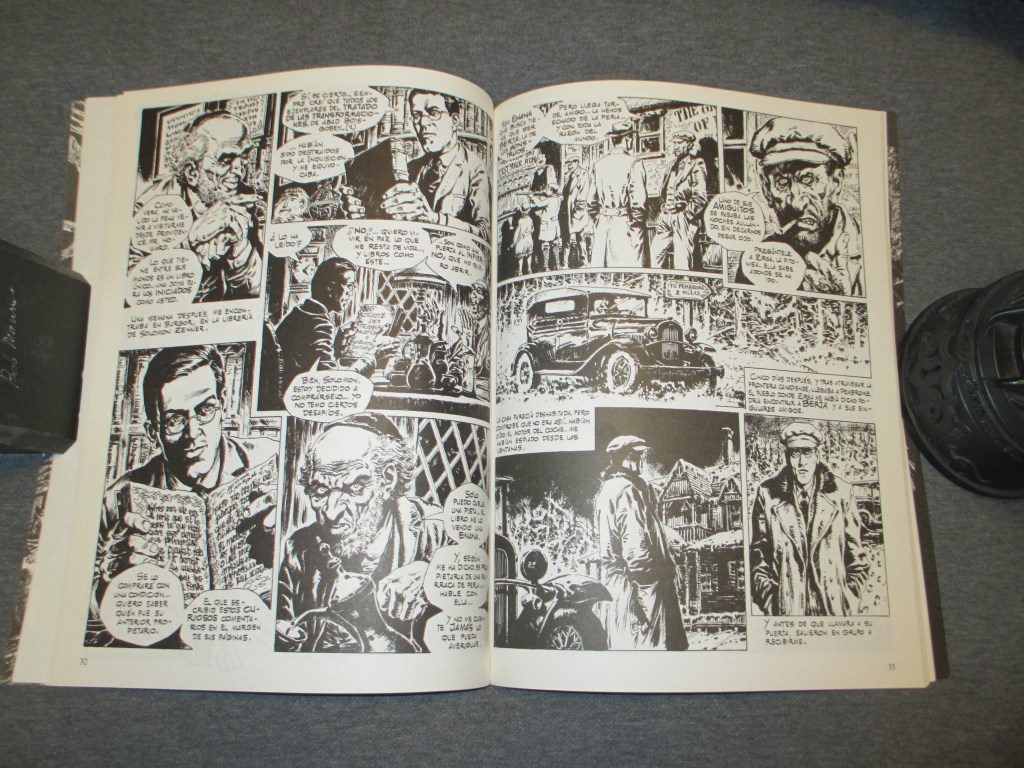
“El Shoggoths”

The first story with an explicitly Lovecraftian connection features a “Mr. Howard” from Providence dealing with a rare book dealer named Solomon over an obscure volume, and wants to know the author of certain annotations in the margins. The dealer says he bought it from a little person who runs a circus. This gives Brocal Remohi the chance to draw several very special people, some of whom have a distinct resemblance to various characters that appeared in Creepy.

The annotator, however, is no longer quite human.

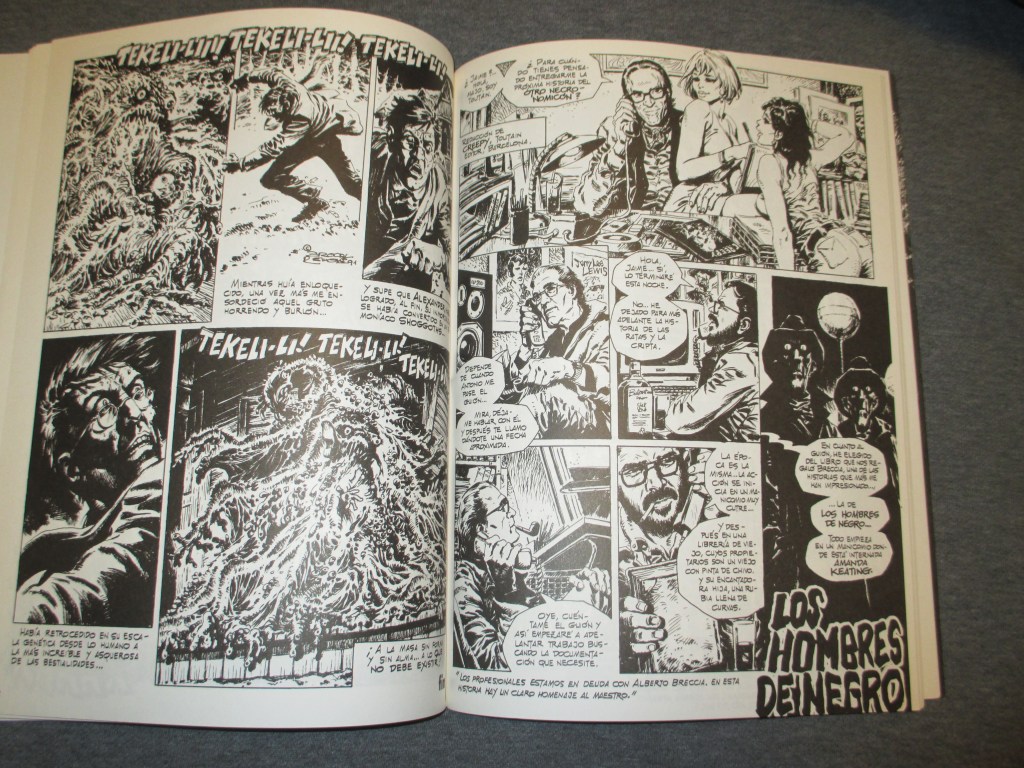
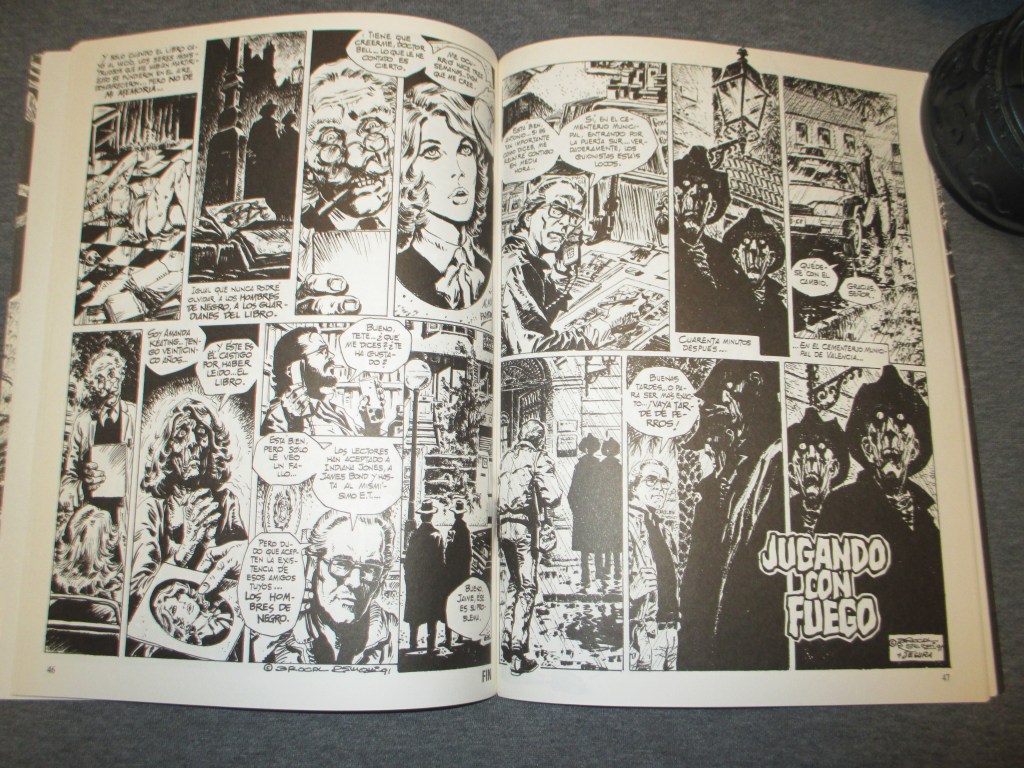
“Los Hombres de Negro”

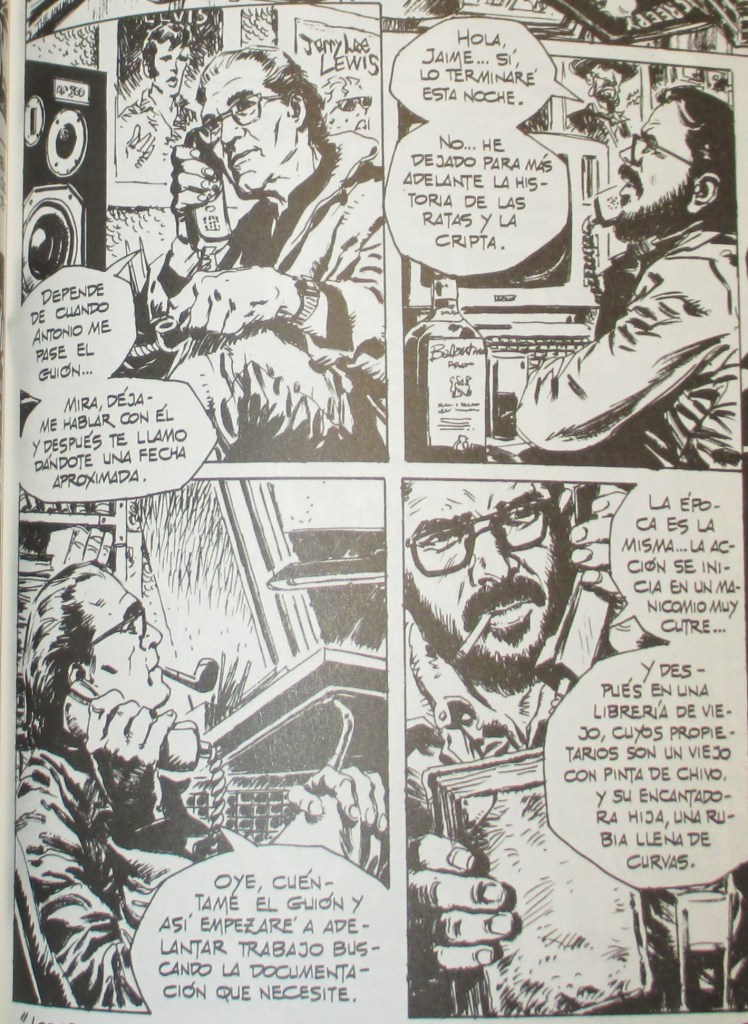
“The Men in Black” opens on a picture of the Spanish Creepy offices—imagine in 1991 opening the latest magazine and staring at a rather good rendition of the magazine editor, asking artist Jaime Brocal Remohi (pipe) and Antonio Seguna (cigarette):

¿Para cuándo tienes pensado entregarme la próxima historia del Otro Necronomicón?When do you plan to deliver the next story of the Other Necronomicon?

Inserting themselves into the story adds a bit of metafictional framing to the tale—which is itself a nested narrative, where a woman in a wheelchair at an asylum explains to the doctor how one day her father returned from Salem with a book written in archaic Latin…and after his untimely death, two men in black come looking for it. Unwisely, Amanda decides to read the book herself, and ends up literally ravished by the dark forces unleashed.

“Jugando con Fuego”

“Playing with Fire” continues to follow the Men in Black—as well as Segura and Jaime Brocal Remohi. The creative team end up at a cemetery to confront a few corpses that don’t want to stay dead. It seems the creators of horror comics have been drawn into a horror comics themselves…literally.

Igual que nunca podré olvidar a los Hombres de Negro, a los Guardians del Libro.Just as I will never forget the Men in Black, the Guardians of the Book.

“La Feromona”

“The Pheromone” is a return to the Lovecraftian-but-not-specifically-Lovecraft horror stories. A chemist makes a perfume that changes any male who breathes it into a mindless, sexually insatiable, incredibly strong brute.

Which leads to a scene of physical and sexual violence worth of some of the bolder French and Italian adult horror comics of the 1970s like Outre-Tombe and Satanik.

While featuring gore worthy of Re-Animator (1985), there is an odd twist at the end which is more reminiscent of Arthur Machen’s classic “The White People” (1904):

Sólo sé que sacó la receta de aquel maldito libro de brujería.All I know is that he got the recipe from that damn book of witchcraft.

It is important at this point to appreciate what both Antonia Segura and Jaime Brocal Remohi bring to the table with this collection. The art is very Creepy-like, and the impression I get is that this is very deliberate; these were stories in the mold of the old Warren horrors. Yet the aesthetic sensibility is more a European: more sex, more violence, and a little more high brow concept to the writing, yet it never spills over into parody.

Brocal Remohi in particular uses a lot of photo-references to get the real-life characters’ faces and expressions correct, there’s a lot of work that goes into his backgrounds, and yet his page layouts are very restrained—no big splash pages, no Dutch angles, a very careful play between light and dark which gives a grounded, realistic scale to his art that helps make the horror more horrific.

“Un Mal Principio, Un Mal Final”

“A Bad Beginning, A Bad Ending” is the final tale in El Otro Necronomicón, and appropriately enough wraps back to where it all began: with Alberto Breccia.

It is almost a character study; an old man seduced by a young woman, the forces of darkness tempting and threatening and closing in—Alberto Breccia (1919-1993), he was the generation before Segura and Remohi, and this is an homage to Breccia’s legend as much as any of the homages penned by Lovecraft’s friends for the Old Gent from Providence. The difference being, Breccia was still around at the time to receive the sincere admiration.

Taken all together, the basic premise of El Otro Necronomicón has real potential: an excuse to write basically any horror story, and give it the added cachet that it supposedly came from the black book of secret tales that not even H. P. Lovecraft dared release upon the world. That basic formulae doesn’t last very long, though; Segura and Brocal Remohi kept extending the metafictional elements. It feels like the natural conclusion of the story might have to be their own destruction as the Men in Black reclaim the manuscript, but we don’t get that ending. Instead, they made a final tribute to the artist who had inspired them. The last words of the last story are:

El maestro que nos ensenó cómo contar lo que muchas veces resulta imposible de contar.The master who taught us how to tell what is often impossible to tell.

When you think about Lovecraft’s fiction, and the difficulty that so many have faced in trying to adapt them to comics, radio, film, video games—how few seem to actually capture something of the horror in the tales—I think there is a fitting tribute to someone who did have the artistic vision and skill to not just realize adaptations of Lovecraft’s work, but to do it well. Much as we might praise Bernie Wrightson’s Frankenstein or Tanabe Gou’s At the Mountains of Madness for their outstanding masterworks.


Bobby Derie is the author of Weird Talers: Essays on Robert E. Howard and Others and Sex and the Cthulhu Mythos.

Deep Cuts in a Lovecraftian Vein uses Amazon Associate links. As an Amazon Associate I earn from qualifying purchases.