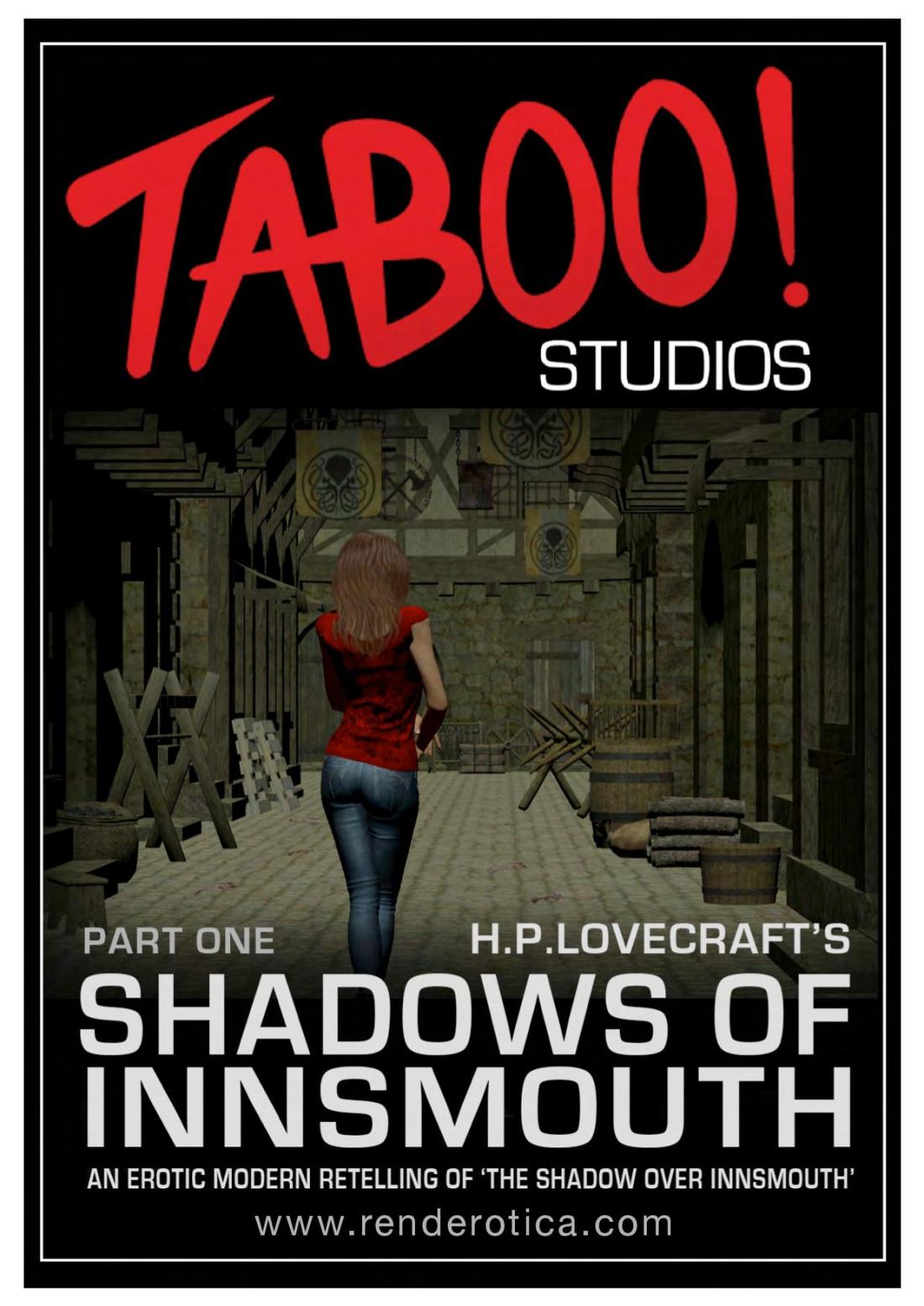
Shadows of Innsmouth (2014) by Gonzo

Eldritch Fappenings

This review deals with a work of pornography, and the history of erotic art and writing. As part of this review, selected images with cartoon depictions of genitalia and/or sexually explicit contact will be displayed.
As such, please be advised before reading further.


In 1992, author William Gibson and artist Dennis Ashbaugh published Agrippa (A Book of the Dead), consisting of a book with a 3.5″ floppy disk. It was an art project as much as anything else: the book was treated with photosensitive chemicals so that the words would begin to fade as they were exposed to light; the disk would run once and then encrypt itself. Buyers were purchasing a not so much a physical product as an experience and a challenge: how did they want to experience this, knowing that it would be rendered unreadable by the act of reading? How would they preserve it?

It was a very cyberpunk stunt, and clever programmers eventually cracked the encryption; even before that, copies of the text were available on the web, shared through networks of pirates and fans. The text survives today, even though it was designed to be forgotten, and now on a near-obsolete physical media format, because of determined interest and repeated, if often shadowy, lines of transmission. If you download the text of Agrippa now, you will probably get an accurate copy of the original text—but how would you know? What would you compare it to? The digital archivist finds themselves in a position not unlike a scholar of ancient manuscripts, comparing different and fragmented versions of texts to discern clues as to the route of transmission.

Early digital works, more than most, tend to illustrate the difficulties of preservation. The lack of physical substrate means the technological end of things—what’s the file format? Do we have a program that can open that? What operating system does it use? Do we have a computer that can run that?—means that trying to experience these works as they were originally is increasingly difficult. In many cases, the original project files and source code of a digital work, the programs used to create it, may be long gone. All we have is the end product, which may have been compressed, reformatted, or translated in various ways across its route of transmission.

Which is to say that you’re probably never going to read Shatter (1985) on a Macintosh Plus in MacPaint, or see the magic of how Batman: Digital Justice (1990) was put together on a Macintosh II that boasted a whopping 8MB of RAM. However, you can still buy print collections of those comics—which is more than most digital works can say.

The internet provides a direct market for creators to sell their works, in many cases bypassing middlemen and brick-and-mortar stories; for artists in particular, having a website meant they could sell directly to their customers through various paradigms—memberships, purchasable files, mail order—and the product didn’t have to be physical. Potential buyers who wanted a digital comic could go to the website, fork over a credit card number, and access the gallery of images or download a .zip or .PDF with the images. There was piracy, and various attempts at anti-piracy measures, because nothing was perfect, but they were generally good enough, especially for honest merchants and customers. Systems like this still exist today, although many creators have, for ease and because of issues with payment processors, opted to use middleman websites like Itch.io or DriveThruComics.

There are a lot of benefits to this kind of digital ecosystem: niche artists who would struggle to find a publisher can self-publish and still find an audience for their works; customers interested in such niche works have a better chance of finding such materials, which tends to foster the creation of more of it. This is especially true for works of parody and erotica, which often struggle with traditional print distribution channels.

Digital artist Gonzo began (as near as I can tell) with his own website, Taboo Studios, circa 2008. Gonzo created erotic comics using 3D rendering software, which has become increasingly available as a in the early 2000s thanks to the release of graphic processing cards for home use and improvements in software, often with horror settings and narratives, and frequently focused on monster sex as the kink of choice. In 2014, Gonzo published the first part of one of the first of his erotic monster sex comics based on the work of H. P. Lovecraft, “Shadows over Innsmouth.”

Shadows of Innsmouth is an almost faithful retelling of the H P Lovecraft classic, ‘Shadow over Innsmouth’. I say ‘almost’ faithful as all of the core events in the original book happens in the comic, but this time with more sex, a female lead character and its set in 2014 not 1914 – But I’m sure you will consider these changes all good changes 🙂

The story starts with Jennifer the new assistant librarian at Miskatonic University who happens to be going through a rough patch in her life, she finds the Lovecraftian novel and quickly discovers that the Innsmouth of legend is based on a real town. Her curiosity intrigued she sets off to Innsmouth to discover which parts of the book are true and which existed only in Lovecrafts twisted imagination�

This 94 page storyline based comic is the first part and features, weird mysteries, kinky sex, stranger sex, the deep ones, amphibian creatures from the sea, tribal island girls, cheating, monster breeding, emotional turmoil, selling out the future of a town in a demonic pact� and much more.

A must for any Erotic Horror fan and the first in a series of re-imaginings of his work.
—Gonzo, read me.txt file that accompanies “Shadow over Innsmouth”
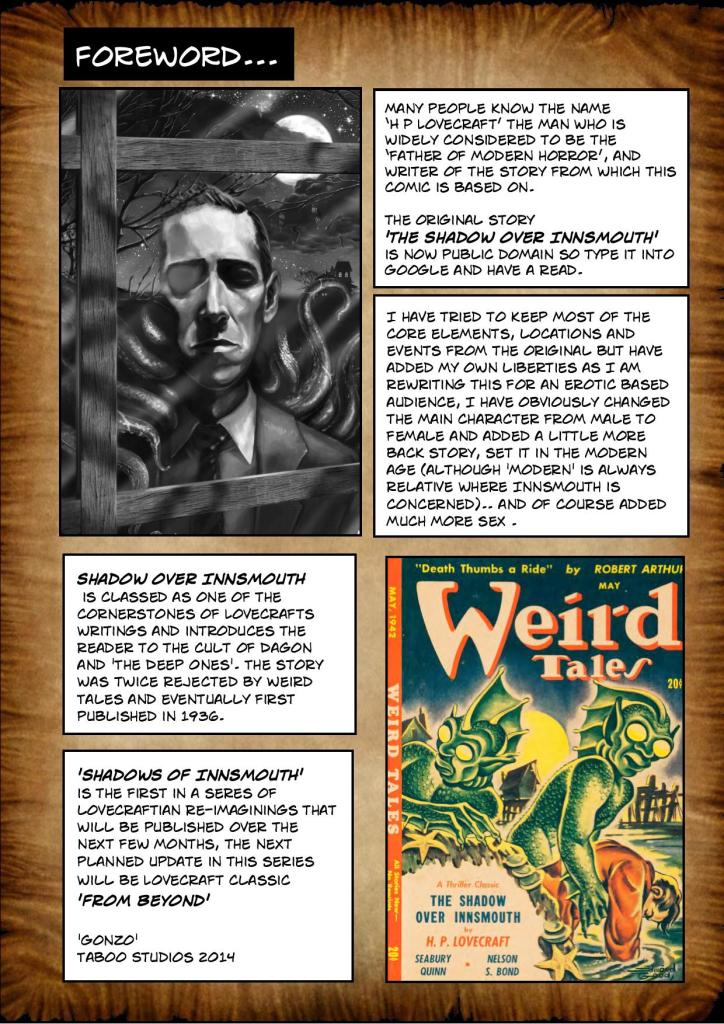
Foreword to “Shadows of Innsmouth” (2014) by Gonzo

This is a work that should be seen in the same vein as “The Statement of Randolph Carter Twisted” (2024) by Lisa Shea or The Colour Out of Space (2024) by H. P. Lovecraft & Sara Barkat: artistic re-interpretations of the original work. “The Shadow over Innsmouth” is a likely suspect for an erotic adaptation in particular because the monster sex is already there—just off the page.
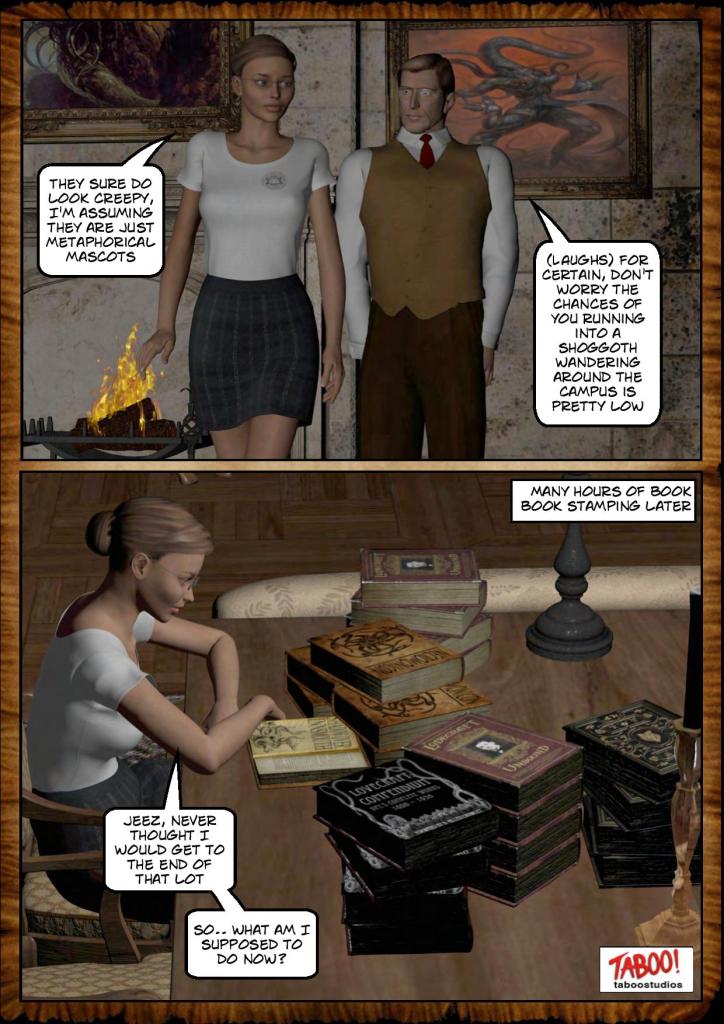
“Shadows of Innsmouth” (2014) by Gonzo, page 13

Gonzo’s style in this is reminiscent of 1970s European erotic comics, with two large panels taking up the entire page providing room for detail and dialogue or exposition, although Gonzo could and did juggle up his formats occasionally. Like most 2000s-era render artwork, the figures are relatively stiff, and Gonzo wasn’t above borrowing artwork to use as skins for books or wall art—you might recognize the cover of Lovecraft Unbound (2009) on the cover of the books stacked on the table, for example, and there are other borrowings as well.
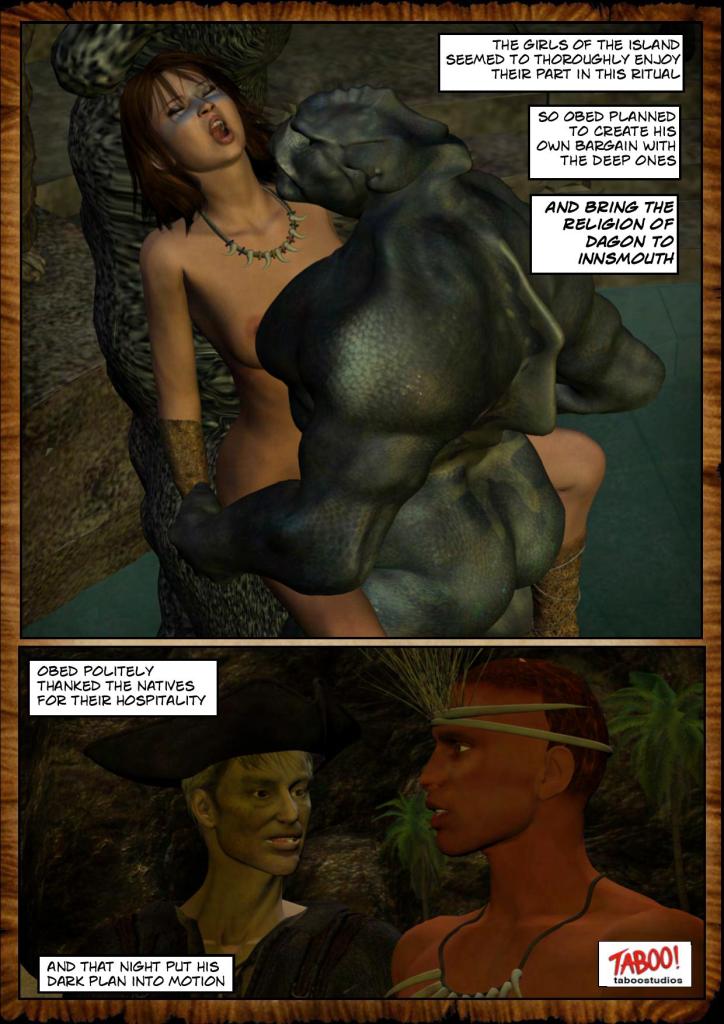
“Shadows of Innsmouth” (2014) by Gonzo – page 71

Gonzo included sexually explicit artwork—it is a pornographic work, after all—but most of the action builds up to the explicit scenes. As is typical, the limitations of the software and modeling tend to show in difficulty rendering non-Caucasian features, and many of the skin textures on objects are distorted.
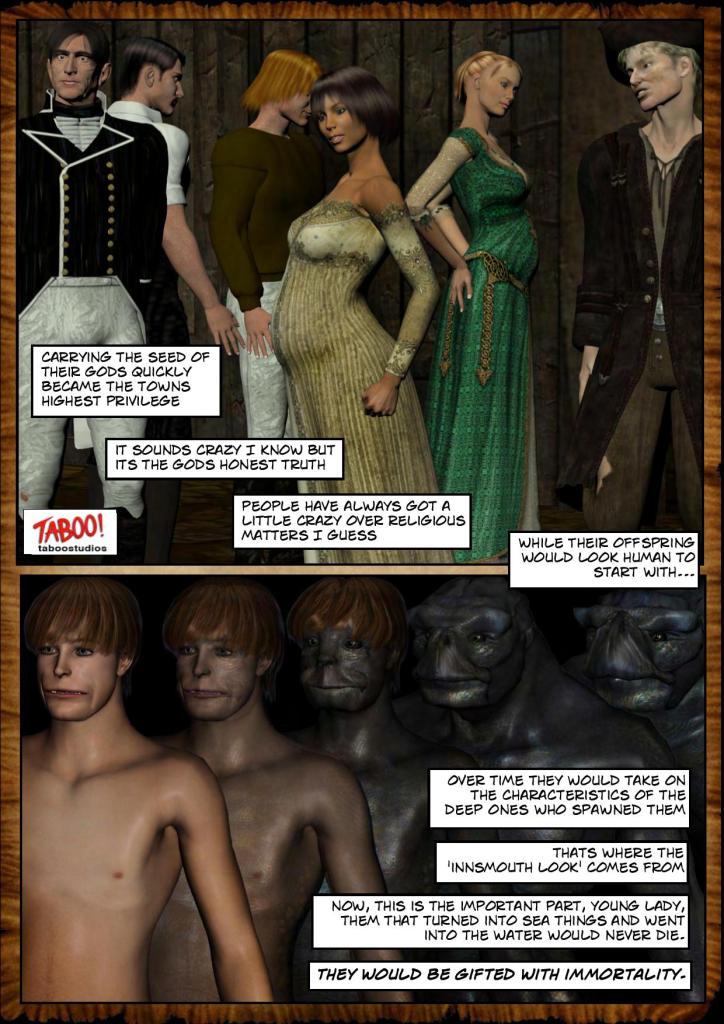
“Shadows of Innsmouth” (2014) by Gonzo – page 83

Gonzo also clearly took inspiration where he found it; the transition from human to Deep One may be reminiscent of an Animorphs, but is a familiar conceit to show the progress of time and transformation. The Deep Ones themselves tend to look a bit like cave trolls from The Lord of the Rings: The Fellowship of the Rings (2001), although Gonzo draws in the Gillman from the classic Creature from the Black Lagoon (1954) in the second part—as well as another Lovecraftian critter, this one with tentacles.
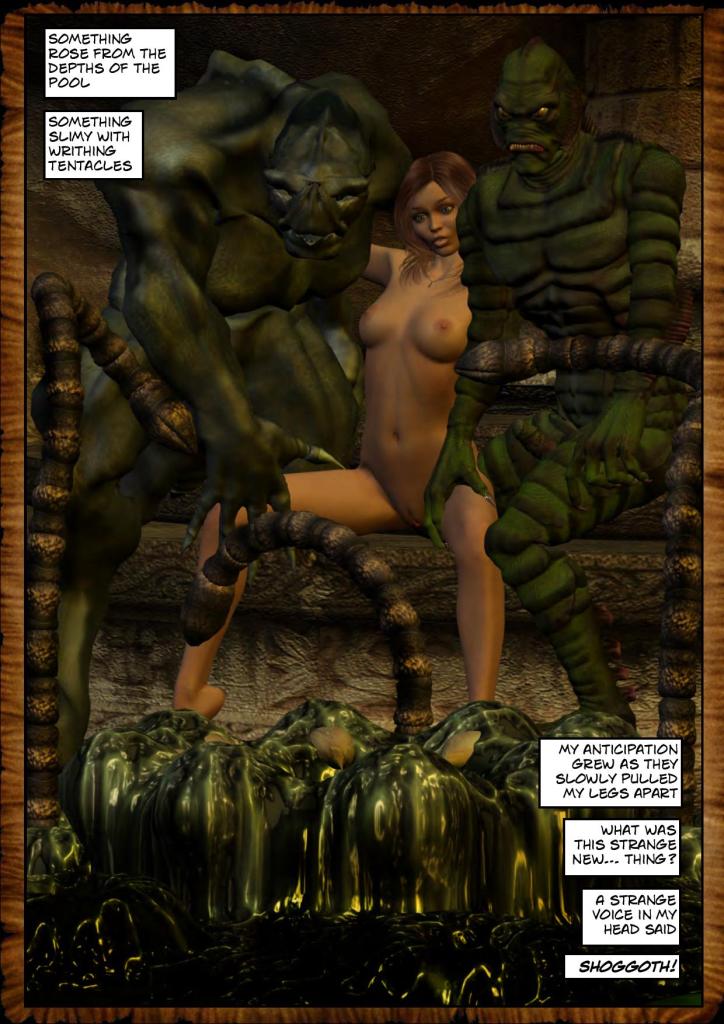
“Shadows of Innsmouth” (2014) by Gonzo – page 117

These erotic render artworks may seem a little strange and quaint today, because the state of the art has moved on. A decade of artists have worked creating custom textures, models, working with more advanced programs and faster hardware. Gonzo’s 2014 art reflects the time and tools with which they were made.

In their stated goal of creating an erotic adaptation of Lovecraft’s “The Shadow over Innsmouth,” Gonzo was largely successful. It is certainly no worse than similar efforts like The Adult Version of Dracula (1970) or Evil Head (2012). Gonzo hits the beats of the story, with their own little twists for the sake of titillation.

Nor was Gonzo alone in creating Lovecraftian erotic works using rendering software and available through much the same way. Artist Iopriest created two Lexi Crane comics, and the artist known as Jag27/Otto Maddox worked Lovecraftian entities into their horror-themed erotic horror comics as well. This was a niche that obviously found at least some audience.

Besides “Shadows of Innsmouth,” Gonzo (now Gonzo Studios) completed adaptations of “From Beyond,” “Dagon,” “Azathoth,” and “Call of Cthulhu.” While Taboo Studios’ web page is defunct, Gonzo has moved their wares to Renderotica, where they are still available for purchase and download.

For the moment.

It has to be emphasized that there is no guarantee that “Shadows of Innsmouth” will be available in a decade, or a year, or even tomorrow. An issue with a payment processor, an untimely death, an accident with a server…and the files will be gone, less accessible than the text of Agrippa. Like “The Fluff at the Threshold” (1996) by Simon Leo Barber, there isn’t really a dedicated archive for these kind of digital creative works. You can buy them, for now, and pirates probably still circulate copies, but the continued existence of these comics remains tenuous. They might disappear at any time.

The world will be a little less weird when that happens.


Bobby Derie is the author of Weird Talers: Essays on Robert E. Howard and Others and Sex and the Cthulhu Mythos.

Deep Cuts in a Lovecraftian Vein uses Amazon Associate links. As an Amazon Associate I earn from qualifying purchases.
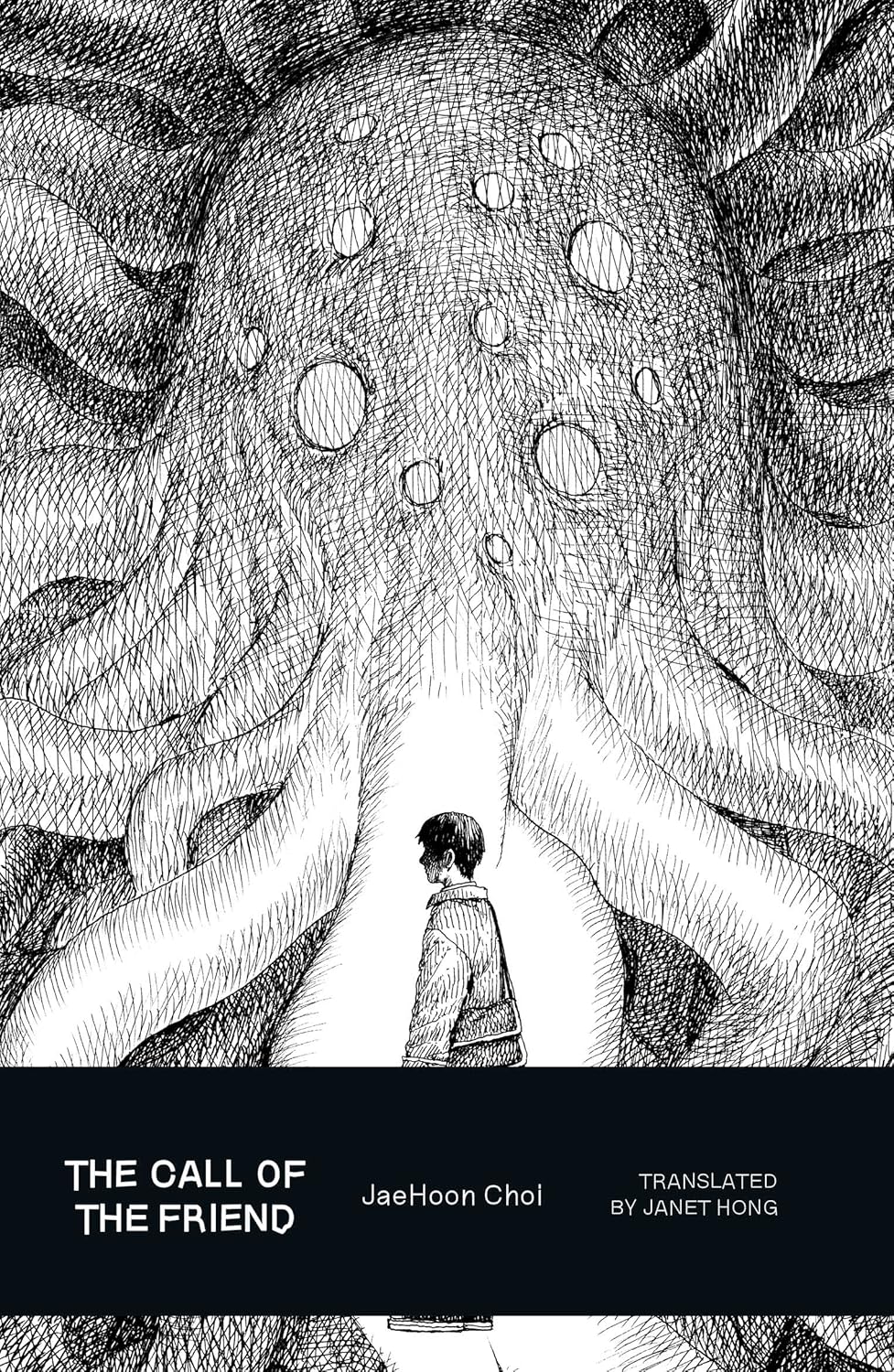
The Call of the Friend (2025) by JaeHoon Choi (최재훈) trans. Janet Hong

THE CALL OF THE FRIEND is part of the Lovecraft Reanimated project, where leading Korean speculative fiction writers reimagine the works of horror master H.P. Loveccraft, while honoring his eerie, grotesque imagery and the blurred boundaries between reality and fantasy, they update his ideas for a global audience.
The Call of the Friend (2025), inside cover flap

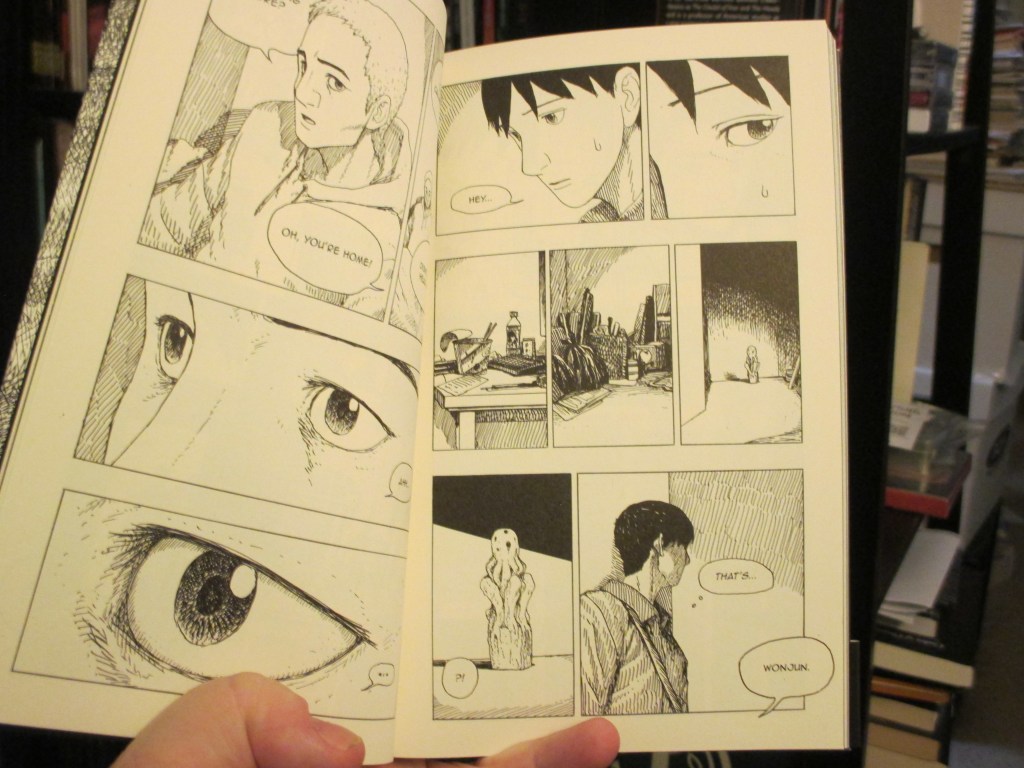
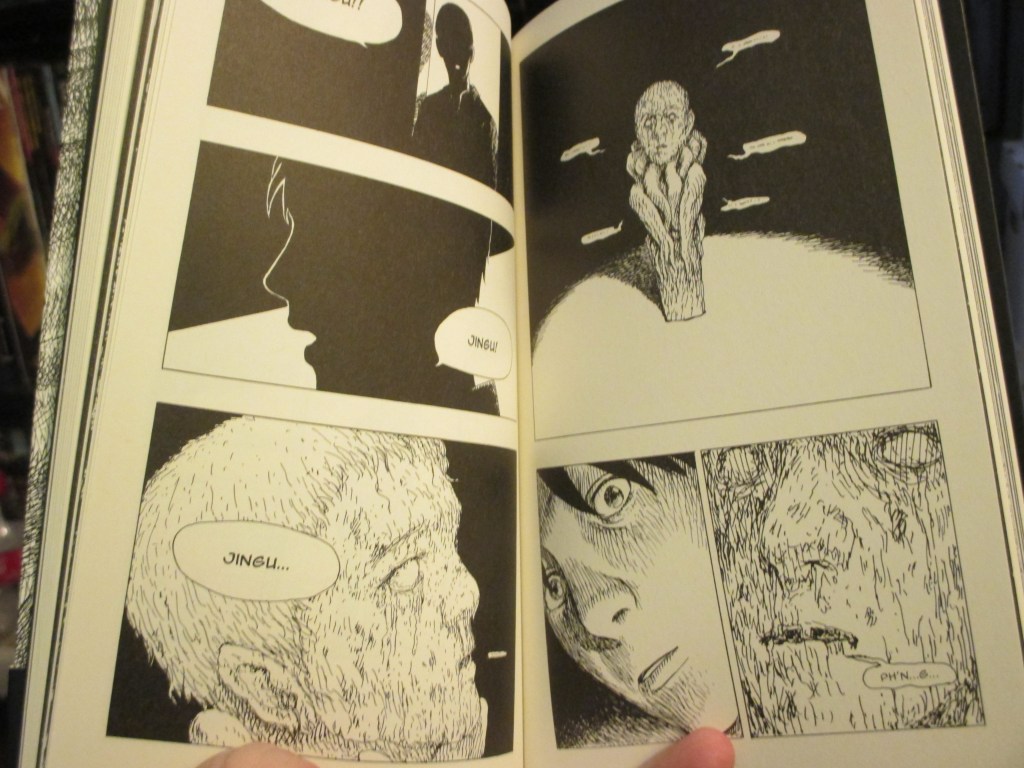
The Call of the Friend (친구의 부름) is a standalone black-and-white graphic novel by Korean comic artist and writer JaeHoon Choi (최재훈), first published in 2020. The English translation by Janet Hong was published in 2025 by Honford Star. The story is set in contemporary urban Korea, where university student Wonjun checks in on his friend Jingu, whose sister (a K-pop idol) has recently committed suicide, implicitly because of a scandalous affair. It is in Jingu’s apartment that Wonjun spots a strange idol.

The story that unspools is not a straightforward linear narrative. It is intimate, focused on Wonjun, with everyone other than Jingu essentially faceless. Readers get pieces of the puzzle, but the full story isn’t spelled out for them, readers are forced to interpret the evidence as best they can. In this, they are given a single helpful hint in a short essay at the end of the book:

Some live a life of violence, while others make every effort to avoid stepping on an insect. But no matter the severity or type of sin, the moment we realize we have sinned, we experience fear. The fear isn’t so much the dread of punishment or retribution. It stems from the knowledge that we’ve hurt someone or caused their unhappiness, and the sin manifests as fear. Depending on the intensity of this fear, we can either be liberated from our guilt or ensnared by it.

While I don’t want the theme to be too obvious in this story, I hope readers might be able to tangibly experience Wonjun’s guilt. These long, nocturnal reflections on our current human condition, set against H. P. Lovecraft’s world of unexplained fears, have prompted me to contemplate the words we’ve spoken, the conflict and guilt we’ve endured, as well as the subsequent death and feat they cause.
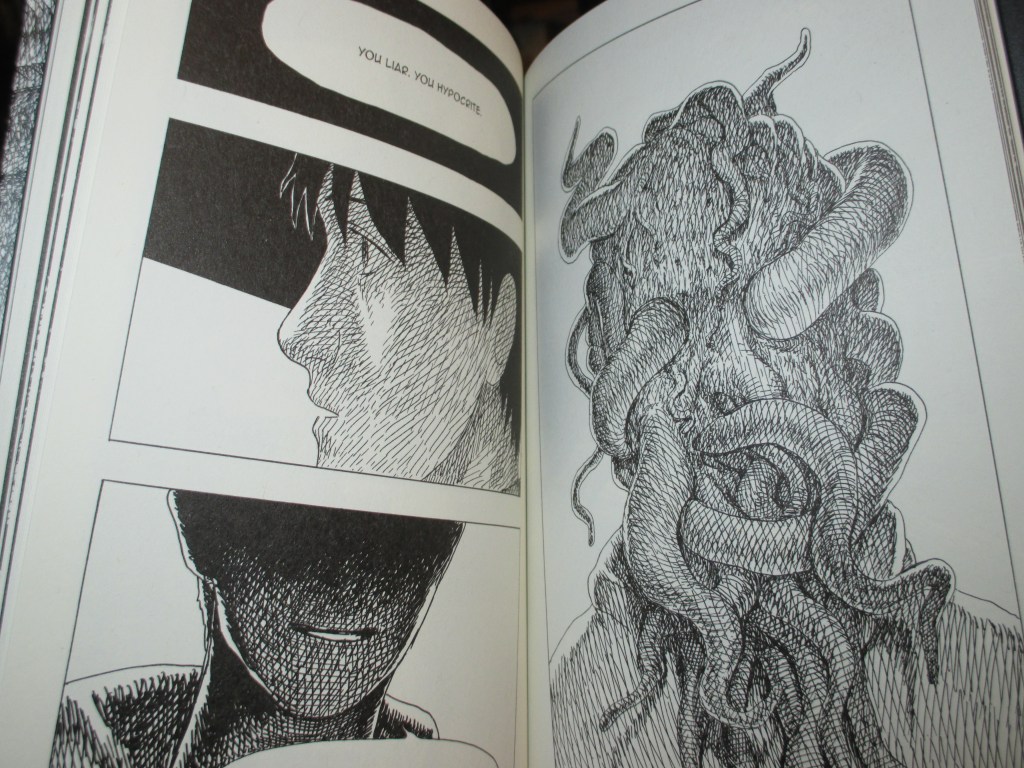
The Call of the Friend (2025), 104-105

As an essay, it is slightly reminiscent of Arthur Machen’s prologue to “The White People” on ‘sorcery & sanctity.’ The idea of fear as a fundamental response to a transgression—an instinctive response to some imbalance caused by action or inaction—and that this fear can liberate or ensnare guilt, has its attractions. Yet how does this philosophical approach jive with Lovecraft’s famous proclamation that “the strongest kind of fear is fear of the unknown”?

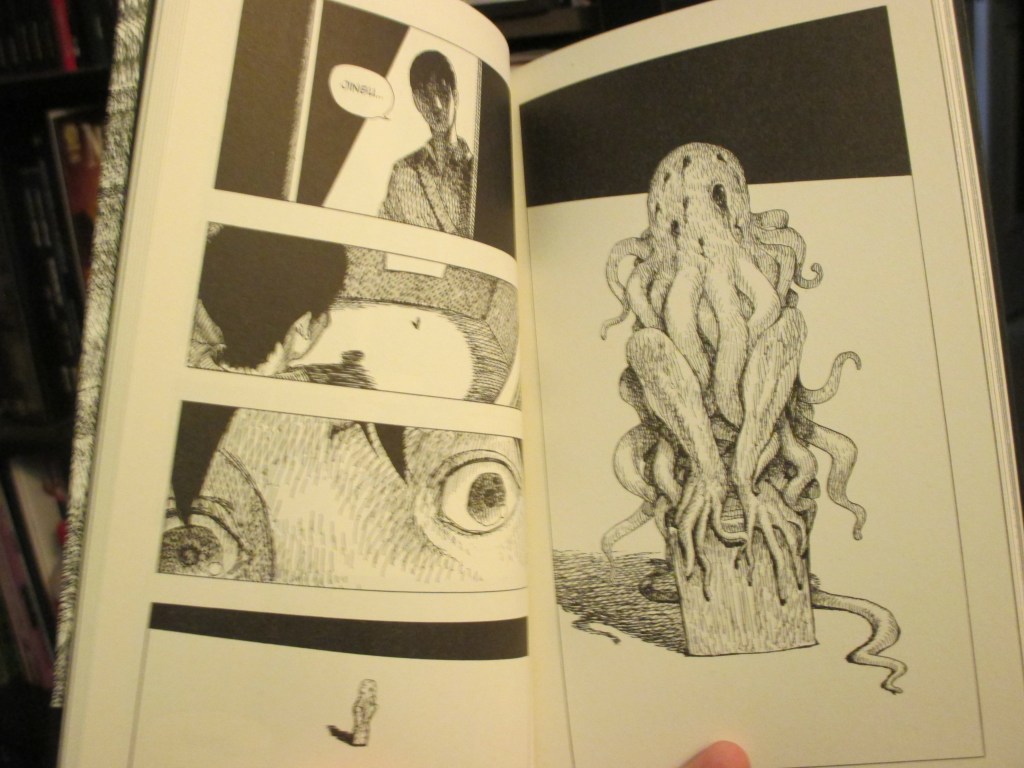
When you don’t know what the sin was. When the only way you have to measure how badly you’ve hurt someone is the measure of the fear you feel in response to it. Whether this is what JaeHoon Choi intended with The Call of the Friend I cannot say, but the presence of the Cthulhu Mythos in this story is suggestive of something that goes beyond tawdry K-pop star drama and the suicide of the sister of a friend. It suggests that there’s something much bigger at work here, something unseen and unknowable, and it threatens to ensnare Wonjun entirely.

The Call of the Friend is somewhat reminiscent of Minetaro Mochizuki’s Hauntress (1993) in general outline—both of them deal with young university students living on their own, the one checking in on the other to whom something has happened, and with a supernatural horror creeping into their lives—and more importantly, that sensation of an urban legend unfolding in a space of familiar, contemporary surroundings. These are characters ill-equipped to deal with the psychological terrors of their experiences. They have no strong faith, no occult skills or leanings. They are regular people, with limited resources, facing the uncanny.

That works. JaeHoon Choi takes advantage of the prosaic setting and characters to make the distortions of perception all the more disturbing for taking place in setting of absolute reality. Readers will question how much of this is in Wonjun’s head, will wonder when we slip into dream, hallucination, or twisted memory. The idol forms a locus of manifestation, a central image to embody what it is happening, but even until the end, readers have to decide how much of this is really happening.

The comic ends like an unresolved chord. Readers don’t get answers. Only the impression that they have witnessed something. Perhaps that is the answer itself.

Janet Hong’s translation of the graphic novel into English is very readable and smooth. While most of the graphic novel itself has relatively sparse dialogue, the essay at the end is very clear and easy to understand, and a valuable key to understanding the work.

The Call of the Friend (2025) by JaeHoon Choi and translated by Janet Hong is available at the Honford Star website as an ebook or softcover.


Bobby Derie is the author of Weird Talers: Essays on Robert E. Howard and Others and Sex and the Cthulhu Mythos.

Deep Cuts in a Lovecraftian Vein uses Amazon Associate links. As an Amazon Associate I earn from qualifying purchases.
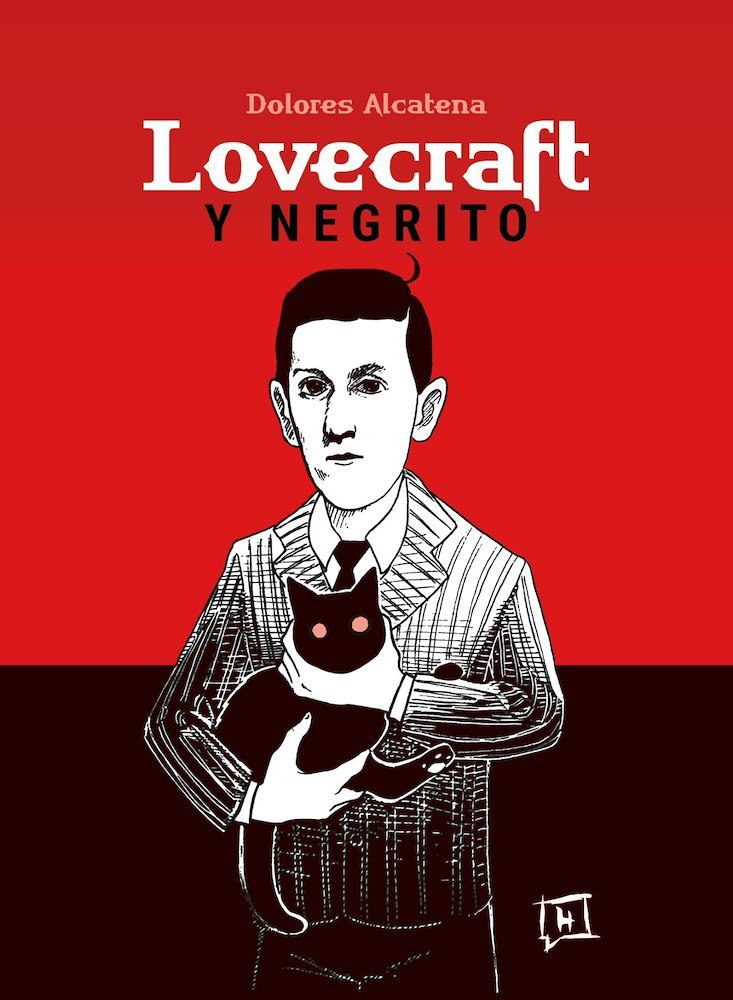
Lovecraft y Negrito (2023) by Dolores Alcatena

Racist Language
This review concerns H. P. Lovecraft’s cat, whose name was a racial slur against Black people.
As part of this review, the cat’s name and variations are included. Reader discretion advised.


The first known reference to H. P. Lovecraft’s cat was in a letter from his grandfather when Lovecraft was only 5 years old:

You and Dumplin Mama must keep the Barn shut every night and take care of Nig.
—Whipple Van Buren Phillips to H. P. Lovecraft, 17 Oct 1895, Letters to Family & Family Friends 2.1046

“Nig” was short for “Niggerman.” It was a black cat, at a time when the N-word was relatively common for pets with black coats. Whether it was Lovecraft who named the kitten, or a family member or friend, is not recorded in any of Lovecraft’s letters. It was his childhood pet—and, as it happened, the only pet he could afford during his life, although he retained a great fondness for cats throughout his life, often petting or playing with strays. In 1904, Whipple Van Buren Phillips died. Lovecraft’s family home was sold, he and his mother moved away from his childhood home, and the cat disappeared during the tumult, never seen again.

Lovecraft remembered his feline companion in later years, and based two cats in his stories on his lost pet: Niggerman in “The Rats in the Walls,” and Nig in The Case of Charles Dexter Ward. Neither appearance caused any particular outcry at the time of publication; Weird Tales was no stranger to the N-word and other terms, and it was not until “The Rats in the Walls” (1956) that any serious effort was made to censor or bowdlerize the cat’s name. Works in translation and adaptation were more likely to change the name; different languages, with different histories regarding race relations and Black slavery, have their own nuances of language to give shades of meaning or seek to avoid giving offense.

In 2023, Argentinian illustrator and writer Dolores’ Alcatena published Lovecraft y Negrito, a short graphic novel about Lovecraft’s friendship with his beloved pet. As she puts it in the opening:

Como amante de los gatos, Howard Philips Lovecraft frecuentemente incluía en sus relatos a estos elegantes y misteriosos animalitos. En su estilo deliberadamente desamorado y serio, los describía como símbolos de perfección, estética, libertad e independencia. Pero entre las cartas del escritor aparece Niggerman, un gatito negro que acompañaba a Lovecraft en su niñez. Al hablar de Niggerman (rebautizado ‘Negrito” para esta obra) las palabras del autor asumían un tono cálido, recordando con ternura cómo jugaban juntos en el jardín. Al hablar del gatito, el escritor no pudo, o no quiso, esconder sus sentimientos. El cariño que Lovecraft mantuvo a lo largo de su vida por Niggerman inspiró esta historia, permitiéndonos acceder a un costado más humano del gran autor del horror.As a cat lover, Howard Philips Lovecraft often included these elegant and mysterious animals in his stories. In his deliberately dispassionate and serious style, he described them as symbols of perfection, aesthetics, freedom, and independence. But among the writer’s letters appears Niggerman, a black kitten who accompanied Lovecraft in his boyhood. When talking about Niggerman (renamed “Negrito” for this work), the author’s words took on a warm tone, fondly recalling how they played together in the garden. When talking about the kitten, the writer could not, or did not want to, hide his feelings. Lovecraft’s lifelong affection for Niggerman inspired this story, allowing us to glimpse a more human side of the great horror author.
Dolores Alcatena, Lovecraft y Negrito (2023)English translation

“Negro” in Spanish is the color black, “-ito” is a diminutive suffix; context is important because in some usages “negrito” can mean bold type, or it can be a reference to certain Southeast Asian peoples, or a not-necessarily-kind reference to small Black children. In the context of this story, it might be best to think of it as a term of affection, like naming a black kitten “Blackie.”

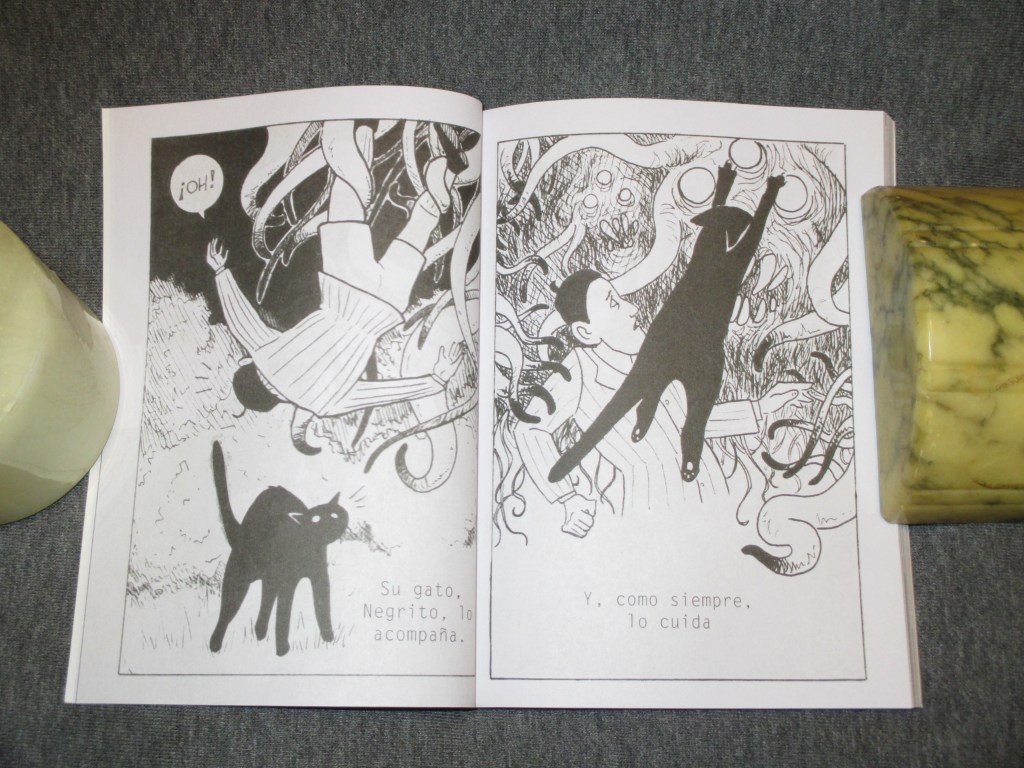
Su gato, Negrito, lo acompaña.

Y, como siempre, lo cuida.
His cat, Negrito, accompanies him.

And, as always, takes care of him.
Dolores Alcatena, Lovecraft y Negrito (2023)English translation

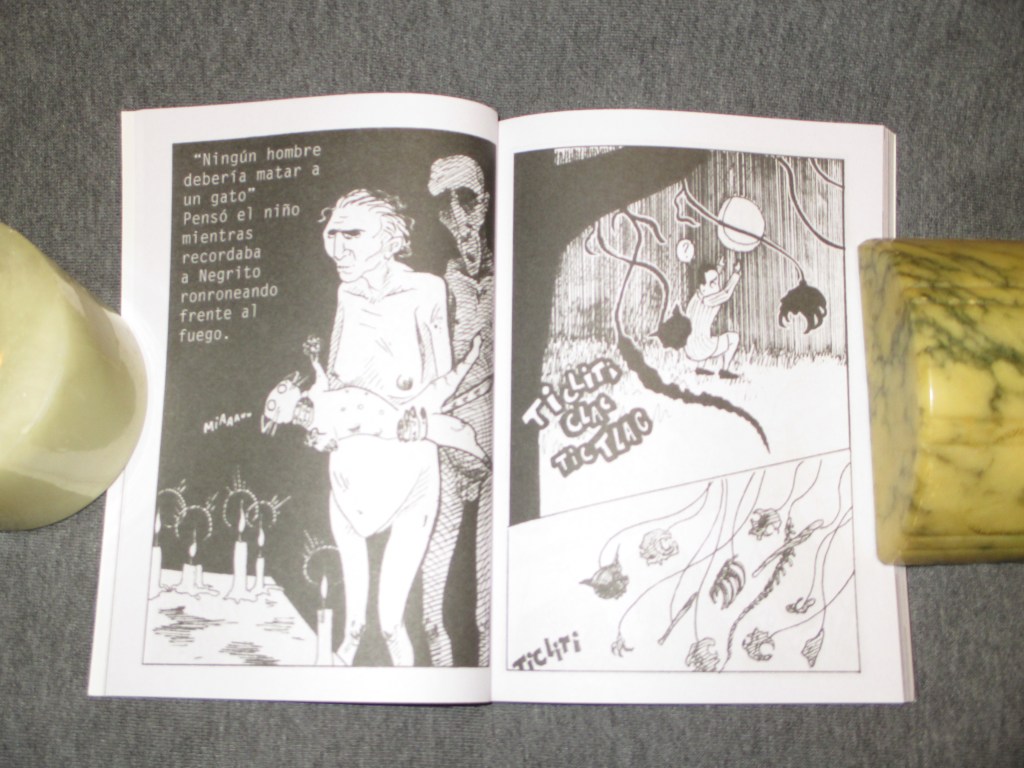
The story is told in black and white, mostly from Negrito’s perspective. The cat aids and protects Howard through his journeys, including the events that would inspire “The Cats of Ulthar” and “The Shadow over Innsmouth.” From a cat’s perspective, the cat-killing couple in Ulthar are particularly horrific.

“Ningún hombre debería matar a un gato”
Pensó el niño mientras recordaba a Negrito ronroneando frente al fuego.
“No man should kill a cat,” the boy thought as he remembered Negrito purring in front of the fire.
Dolores Alcatena, Lovecraft y Negrito (2023)English translation

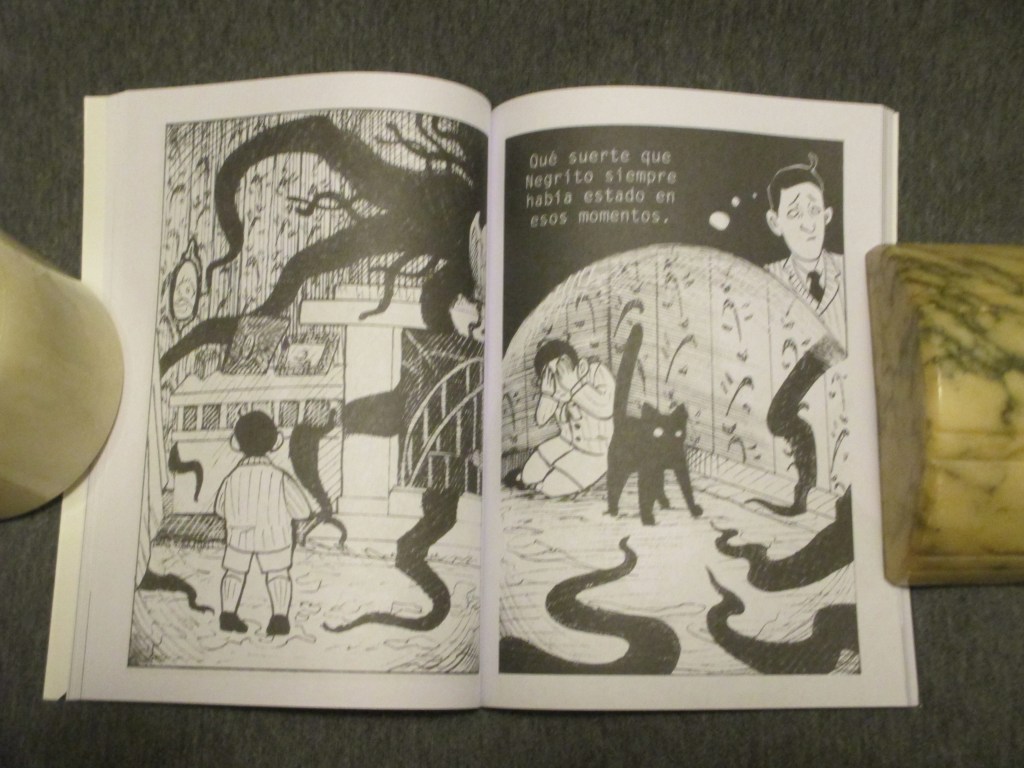
There is a somewhat fairy-tale quality to the retelling, the traipse through Lovecraft’s fiction. Most of Howard’s waking life we don’t see…but then his cat was not there to see that.

Qué suerte que Negrito siempre había estado en esos momentos.How lucky that Negrito had always been there in those moments.
Dolores Alcatena, Lovecraft y Negrito (2023)English translation

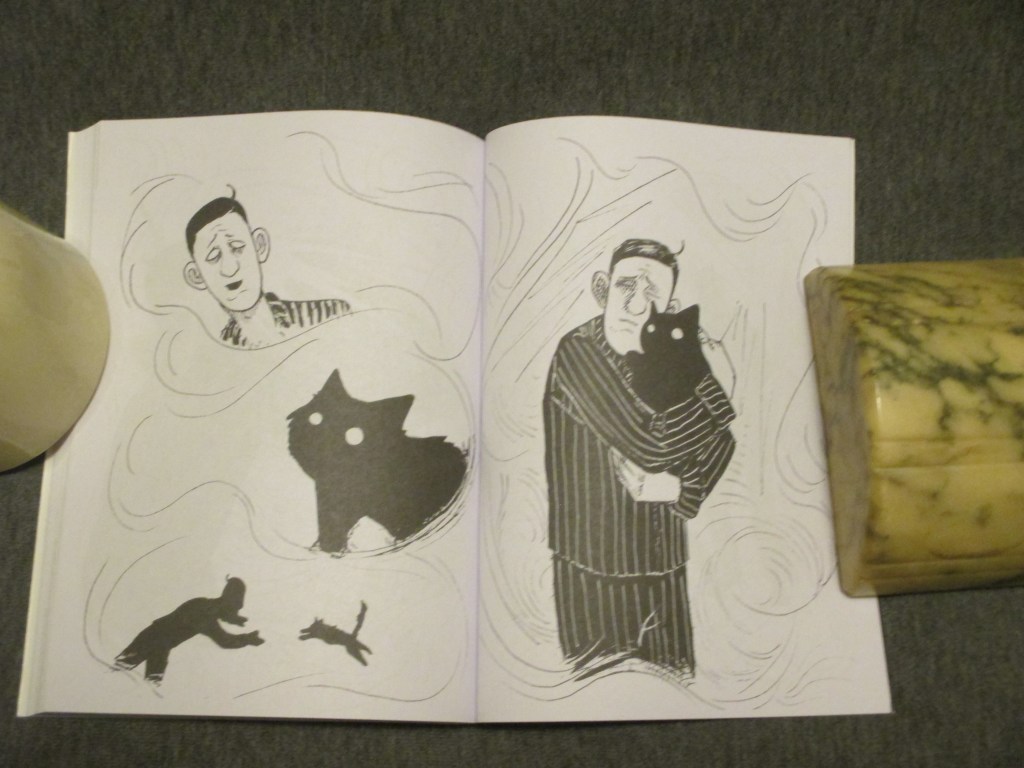
The Lovecraft of these stories is a scared, almost a traumatized kid, with Negrito as his only friend; parental figures are absent. It is a very sympathetic view of Howard as a child, but in comparison to El Joven Lovecraft by José Oliver & Bartolo Torres it does not show Lovecraft’s occasional joyfully morbid side. Readers are meant to empathize with a young Lovecraft.

The ending, a wordless reunion between the dead Lovecraft and his lost cat, is the kind of afterlife that every cat-lover might wish to experience themselves someday.

Es un tributo muy distintivo ser elegido como amigo y confidente de un gato.
H. P. Lovecraft.
It is a very distinctive tribute to be chosen as a friend and confidant of a cat.
H. P. Lovecraft.
 It is no compliment to be the stupidly idolised master of a dog whose instinct it is to idolise, but it is a very distinct tribute to be chosen as the friend and confidant of a philosophic cat who is wholly his own master and could easily choose another companion if he found such an one more agreeable and interesting.
Dolores Alcatena, Lovecraft y Negrito (2023)English translationH. P. Lovecraft, “Cats and Dogs”

Lovecraft y Negrito is a story about a boy and his cat. It is not a historical work that delves into the nuances of the cultural forces that went into such names, or how naming cats did or did not reflect Lovecraft’s racial prejudices in later life. If readers want a scholarly exploration of what we do and don’t know about the real animal, check out Ken Faig’s essay “Lovecraft’s Boyhood Cat” in Lovecraft Annual #19 (2025). If you want a heartwarming fantasy about Lovecraft and his beloved pet, which has gained a kind of literary immortality, then read Lovecraft y Negrito.


Bobby Derie is the author of Weird Talers: Essays on Robert E. Howard and Others and Sex and the Cthulhu Mythos.

Deep Cuts in a Lovecraftian Vein uses Amazon Associate links. As an Amazon Associate I earn from qualifying purchases.
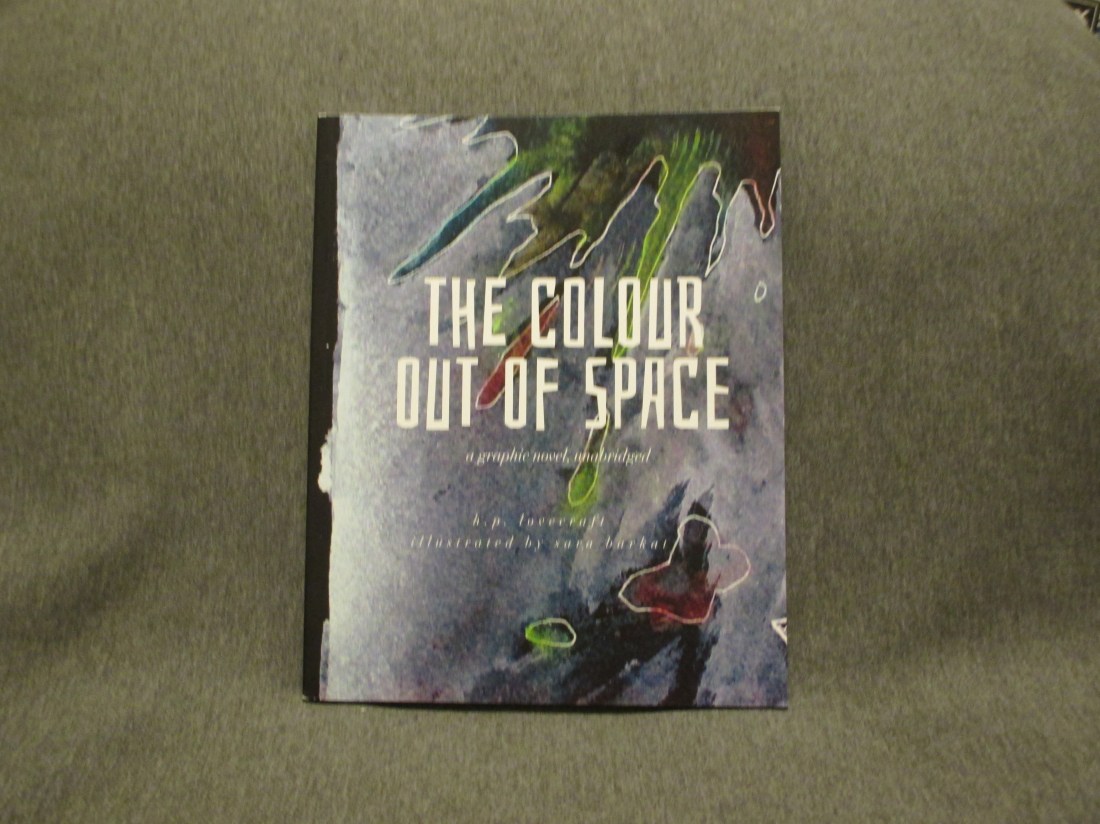
The Colour Out of Space (2024) by H. P. Lovecraft & Sara Barkat

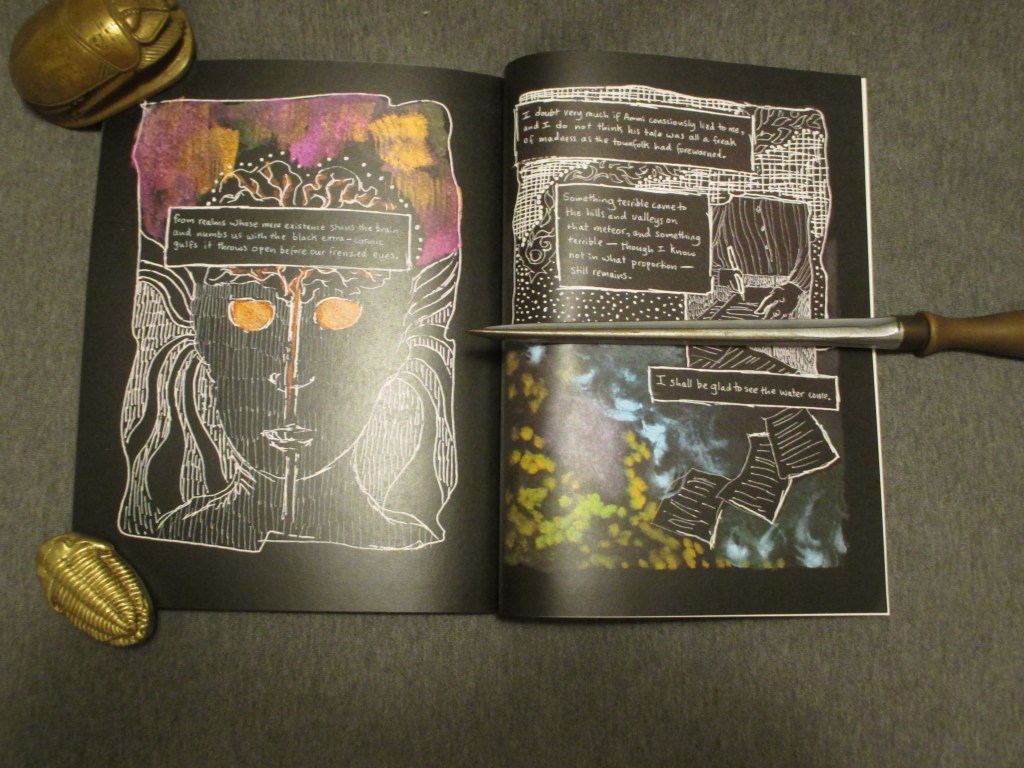
It was just a colour out of space—a frightful messenger from unformed realms of infinity beyond all Nature as we know it; from realms whose mere existence stuns the brain and numbs us with the black extra-cosmic gulfs it throws open before our frenzied eyes.
—H. P. Lovecraft, “The Colour Out of Space”

Comic and graphic novel adaptations of prose and verse literary works have always held a fascination. Because while you might declare one text as canonical, as a true text, immutable and eternal, the graphic adaptations of that text will always be different, unique to their vision and skill and ability to realize that text in illustrated form. Every artist has to pick and choose what images to convey and how to convey them, how to frame the story and the text, what to leave in and out, what to emphasize and how to do it. Give three artists the same story to draw, and you have three variations on the same story.

This sometimes arouses—at least among some readers and critics—the urge to compare different variations on the same works to each other. Because it can be fascinating to see the divergence and the commonalities, to look at all the different flowers that may blossom from identical seeds. Not necessarily to point out any one graphic adaptation of Lovecraft as better than the others, but to enjoy the diversity of views and skills.

When it comes to “The Colour Out of Space” in particular, however, there’s a fundamental question that every artist has to struggle with: how do you depict a color that is outside the visible spectrum?

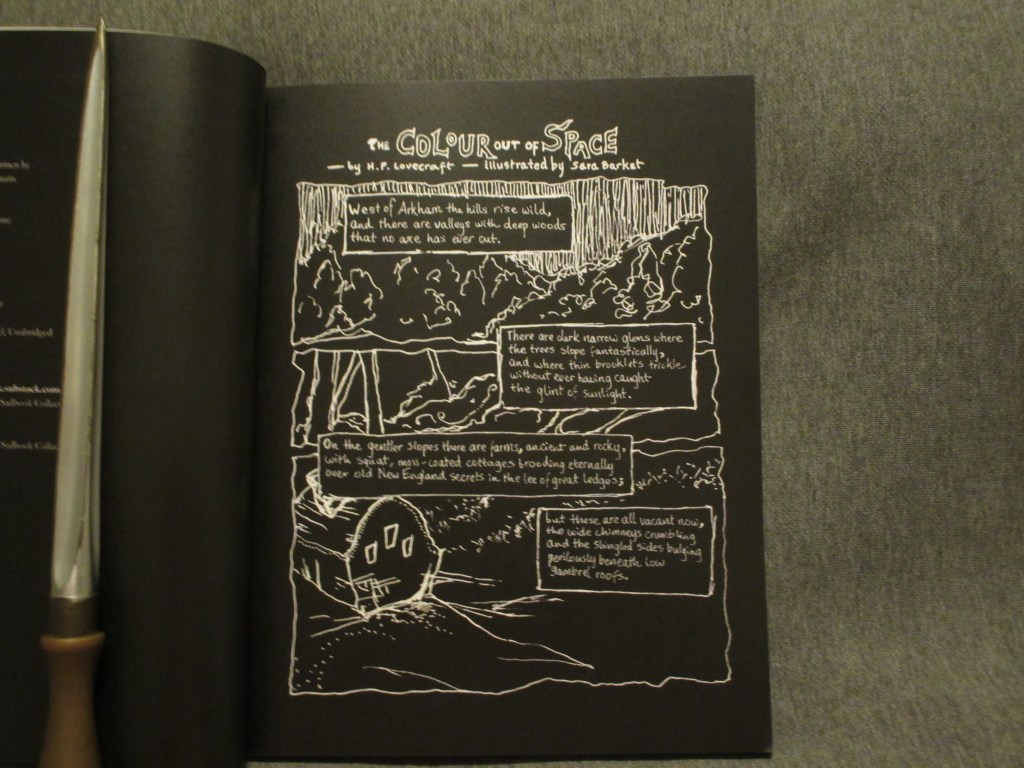
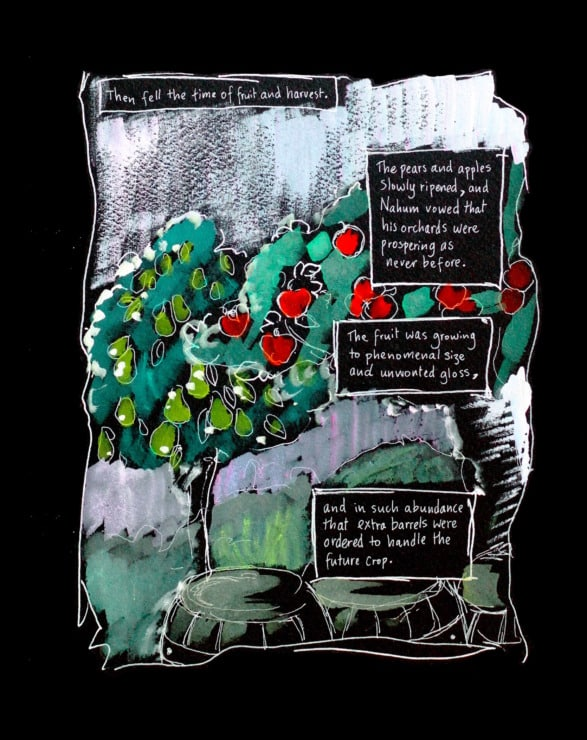
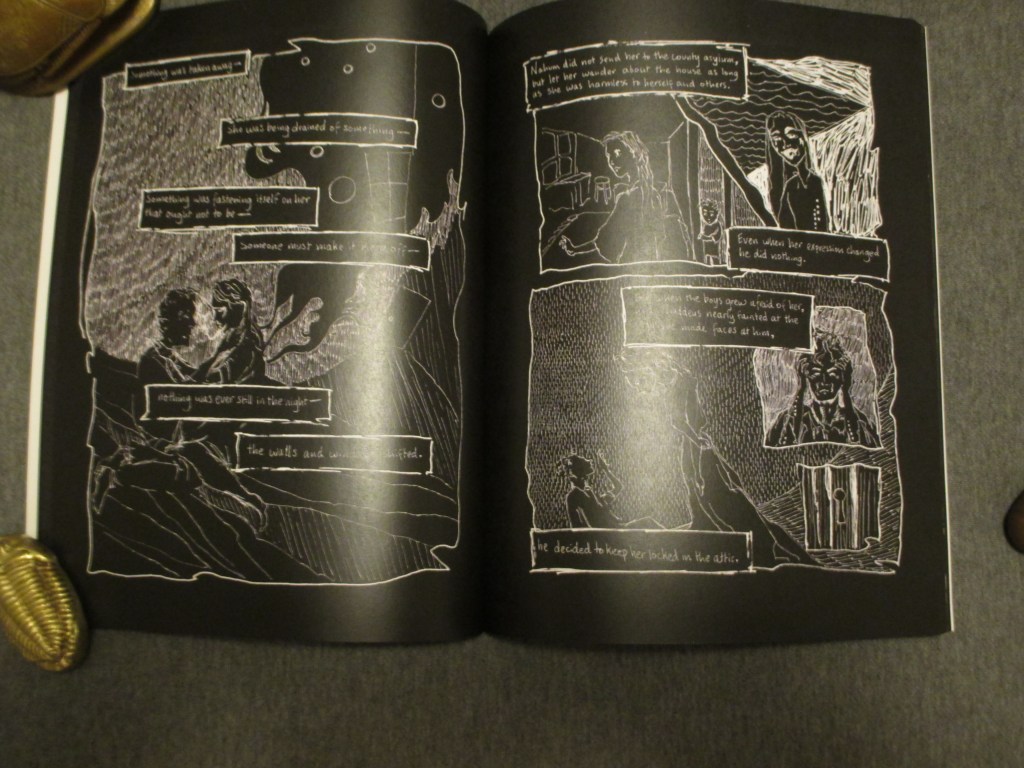
Strictly speaking, outside of a technical trick like polarized lenses, you cannot. What usually happens instead is that the artist has to use visual rhetoric to convey the sense of the unknown color, even while using the colors that are available for printing. In the case of Sara Barkat’s The Colour Out of Space (2024) this is mostly accomplished by having the majority of the art in black-and-white.

However, instead of having the colored portions represent just the color itself, the color is used to illustrate those people and objects that the color has infected. So the addition is not just a single splash of magenta or red in a monochrome world, it is a spectrum of colors in a landscape, or a room, or a person.

Barkat’s style isn’t a demonstration of technical excellence in the same sense of Gou Tanabe’s The Colour Out of Space (2025), nor does it have the minimalist book-as-object approach of Amy Borezo’s The Colour Out of Space (2016). What she has is a loose, sketchy but heavily detailed pencil that captures a certain underground aesthetic, the rawness of the art adding a certain texture to the text, especially with the use of mixed media (primarily watercolors) to add color. As with Alberto Breccia’s Cthulhu Mythos adaptations, the result is a more profound experience than either the art or the text would accomplish on their own.

Which is ultimately what a lot of people are looking for in any graphic adaptation. Not a simplification of a text, or the addition of some pretty pictures to look at, but a new way of experiencing the story.

The Colour Out of Space (2024) by H. P. Lovecraft and Sara Barkat was published by T. S. Poetry Press. Barkat’s other works include a graphic adaptation of The Yellow Wallpaper (2020) by Charlotte Perkins Gilman and Drawing Dracula Daily (2023).


Bobby Derie is the author of Weird Talers: Essays on Robert E. Howard and Others and Sex and the Cthulhu Mythos.

Deep Cuts in a Lovecraftian Vein uses Amazon Associate links. As an Amazon Associate I earn from qualifying purchases.
The Burning of Innsmouth, Part 1 (2019) by Tammy Nichols

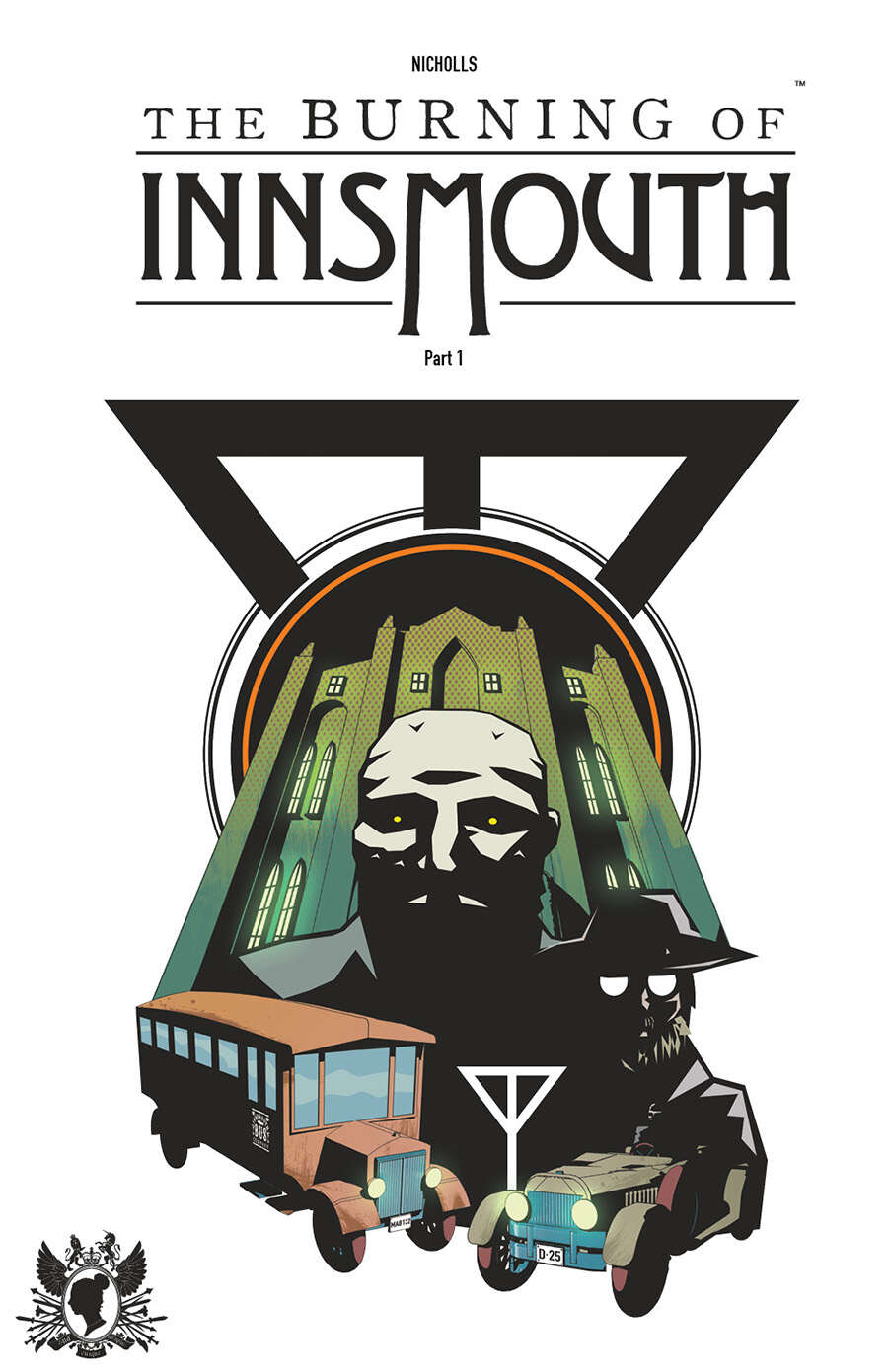
‘The Burning of Innsmouth’ is a Lovecraftian-themed tale of eldritch horror and hidden corruption. In the all-too-quiet Massachusetts port-town of Innsmouth, nothing is quite what it seems and no one is who they say they are. The story takes place in 1927, just after the fictional events described by HP Lovecraft in his classic tale ‘The Shadow Over Innsmouth’. Beautifully illustrated, it’s a cat-and-mouse story explores how the town and its cultish denizens came to be destroyed by a shadowy branch of the American government.
—descriptor for The Burning of Innsmouth, Part 1 on DriveThruComics

Tammy Nichols is a UK-based graphic designer and illustrator (Tears of Envy). In 2019 she released The Burning of Innsmouth, Part 1, the first of what was proposed to be a three-issue series. The other issues have not yet been seen; such things happen. As a result, what we have is an inherently incomplete story. Characters are introduced, mysteries set up, but we have no idea how things would end. The first issue doesn’t end so much on a cliffhanger as on a promise: Innsmouth isn’t burning yet, but it is a pile of dry tinder waiting for the spark.

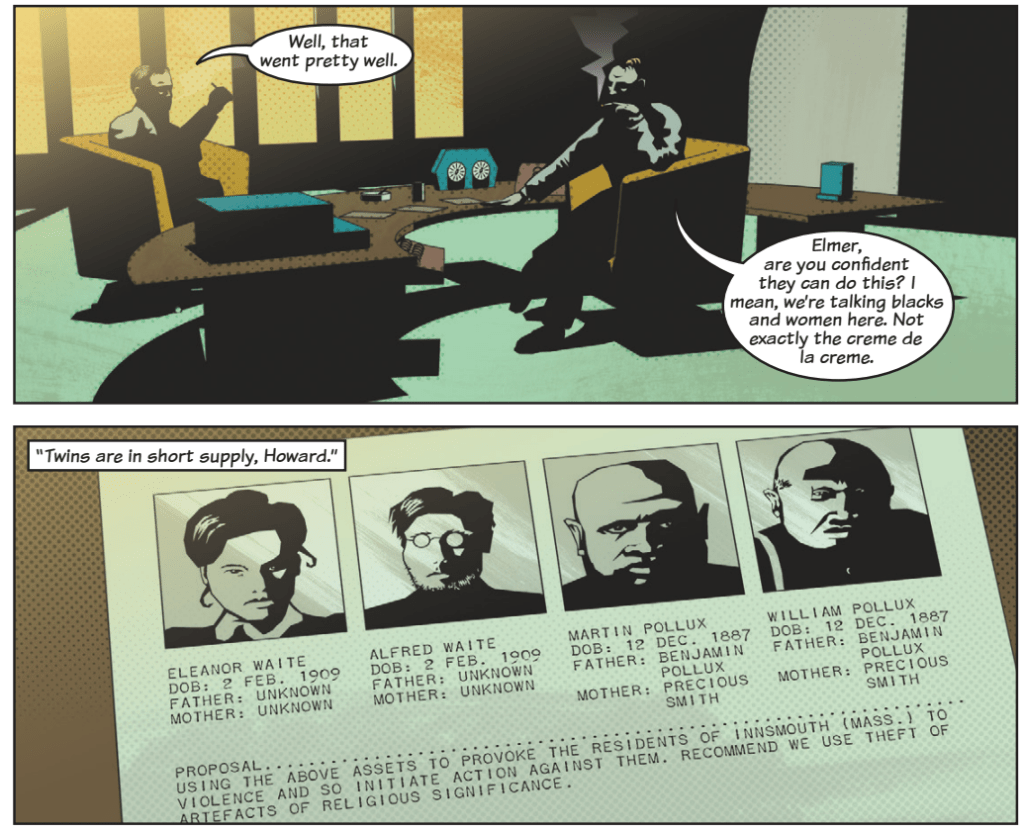
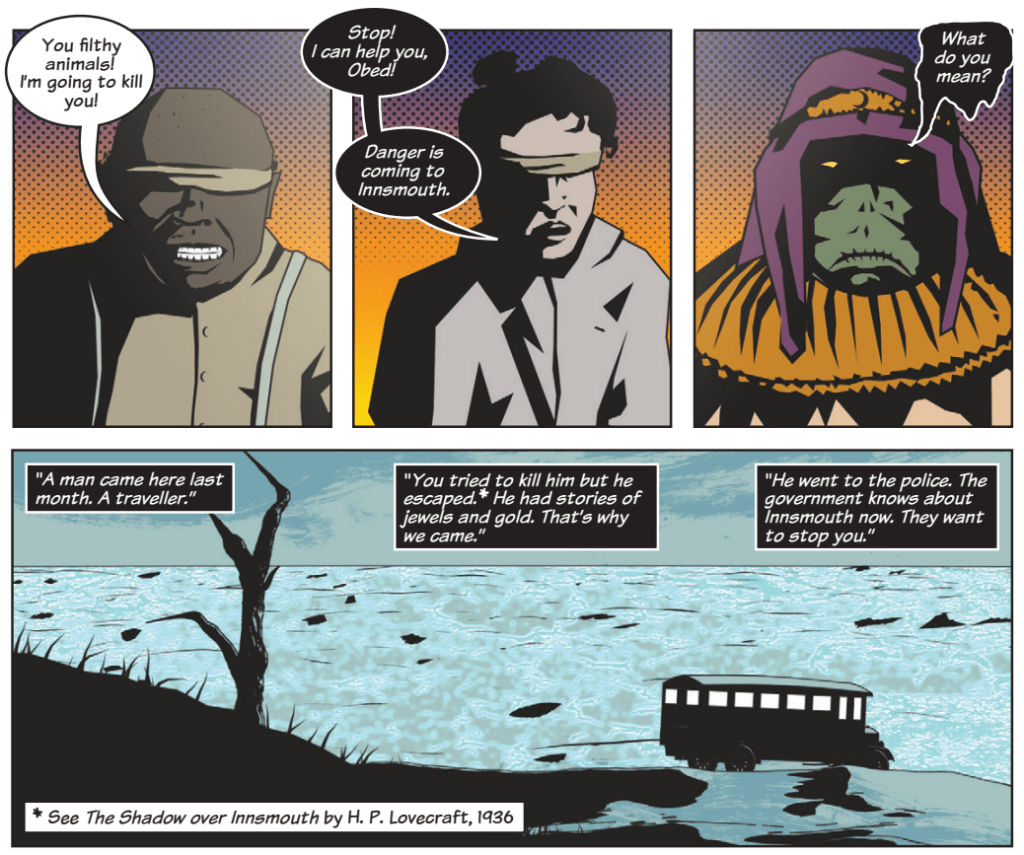
The art shows a careful aesthetic: deep shadows and heavy blacks, digital shading that’s made to look like halftone. Nichols explains some of her graphic language on her blog, including the customized font for the Gilman House hotel, as well as the film noir influence and the colour journey she intends to take the reader on. These are elements of visual rhetoric that inform a story and how it is told in ways that prose text cannot capture. The Facebook group dedicated to the comic also includes some behind-the-scenes of pages and panels in black and white vs. colored.

From a storytelling standpoint, the decision for the federal government to employ outside agents—two pairs of twins, one of whom is African-American, and another a sister-brother pair with ties to the infamous Waite family of “The Thing on the Doorstep” fame—is interesting. It gives us characters who are outsiders, agents of a bigoted government but not a part of it, sympathetic in their motivations, at least insofar as they are being coerced into this dangerous task. It also adds a welcome bit of diversity into a Mythos that tends heavily to the white and male.

If there’s a criticism of the story, it plays a little fast and loose with the Innsmouth lore. Obed Marsh is portrayed as still alive in 1927, when Lovecraft has him die in 1878. There are hints of further divergences, but these aren’t developed fully in this 32-page first issue. Such shifts from Lovecraftian “canon” aren’t necessarily bad—it being remembered that mythologies are by their nature often cycles of stories with similar settings, themes, and characters, not a single continuity or cohesive narrative universe. I would have liked to see where this one went.

For now, The Burning of Innsmouth is incomplete. Someday, perhaps, Nicholls will finish it. Or perhaps she won’t. Such fragments and the what-might-have-beens they inspire are still a part of the broader constellation of Mythos materials, a part of the shared narrative for readers to muse over and enjoy. And if you don’t like how Nicholls did it, or where the story was headed at the end of part 1…write your own.

The Burning of Innsmouth, Part 1 by Tammy Nicholls is available at DriveThruComics. There is also merch (including a nice map of Innsmouth) on the associated Redbubble store.


Bobby Derie is the author of Weird Talers: Essays on Robert E. Howard and Others and Sex and the Cthulhu Mythos.

Deep Cuts in a Lovecraftian Vein uses Amazon Associate links. As an Amazon Associate I earn from qualifying purchases.
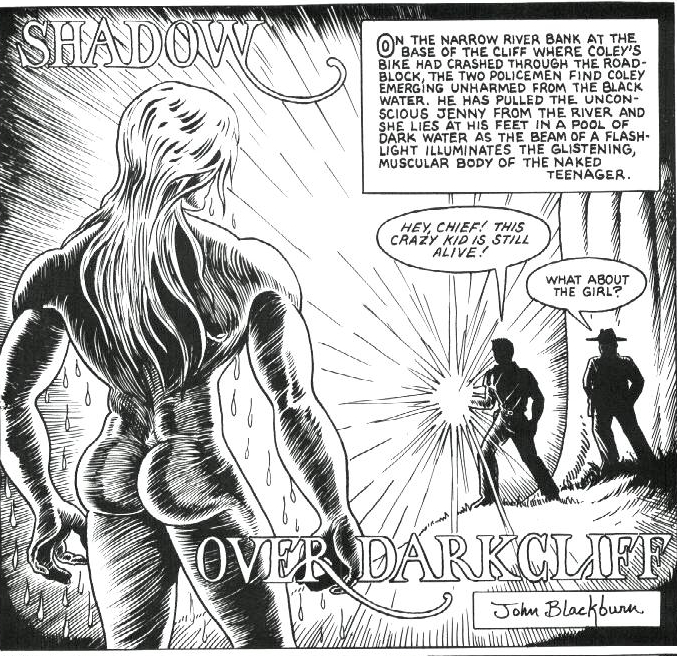
“Shadow over Darkcliff” (1993) by John Blackburn

Eldritch Fappenings
The following review of LGBTQ+ comic history includes images from selected works that depict cartoon nudity, sex, and violence. Reader discretion is advised.


Marriage and Sex

(1) Divorce shall not be treated humorously nor represented as desirable.
(2) Illicit sex relations are neither to be hinted at nor portrayed. Violent love scenes as well as sexual abnormalities are unacceptable.
(3) Respect for parents, the moral code, and for honorable behavior shall be fostered. A sympathetic understanding of the problems of love is not a license for morbid distortion.
(4) The treatment of live-romance stories shall emphasize the value of the home and the sanctity of marriage.
(5) Passion or romantic interest shall never be treated in such a way as to stimulate the lower and baser emotions.
(6) Seduction and rape shall never be shown or suggested.
(7) Sex perversion or any inference to same is strictly forbidden.
Comic Book Code of 1954

LGBTQ+ characters and themes received little coverage in the comic strips and comic books in the United States before 1954. When looking at the Pre-Code Lovecraftian Horror Comics, there are no characters or themes that jump out as explicitly gay or lesbian, transgender or genderqueer. After the Code was created in 1954, LGBTQ+ representation in commercial comics was implicitly forbidden.

Without access to mainstream publications, LGBTQ+ comics shifted to venues that were not controlled by the Comics Code Authority. Pornographic comics and underground comix formed a creative outlet for LGBTQ+ characters, stories, and creators—at the risk of being charged with obscenity. The late 60s and 70s in particular saw the birth of the underground comic scene, an outlet for readers and artists who wanted comics that were forbidden, transgressive, or mature—featuring themes of realism, sex, violence, drugs, politics, mysticism, and horror, often in some combination.

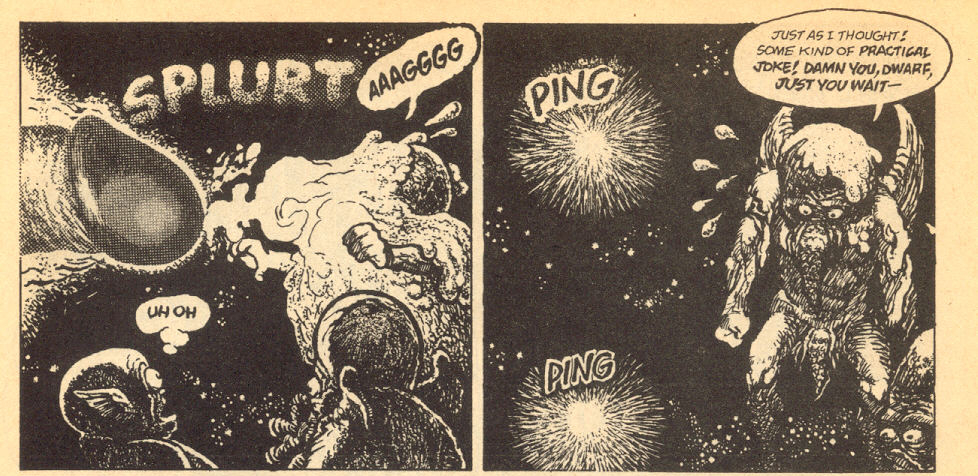
Tales from the Leather Nun (1973), for example, was an underground nunsploitation anthology comic. One of the episodes, “Tales of the Leather Nun’s Grandmother” by Spain Rodriguez, mixes Lovecraft’s Mythos with hardcore pornography, as Abdul Alhazred’s spells have accidentally turned the Leather Nun’s Grandmother’s vagina into a gateway to the realm of Cthulhu. Thus, one of the earliest appearances of Cthulhu in comics has the eldritch horror getting a face full of spunk.

Tales from the Leather Nun (1973); art by Spain Rodriguez

Cthulhu’s facial is a gag, not a homoerotic act. Tales from the Leather Nun isn’t the first LGBTQ+ Lovecraftian comic, just one of the first to begin to transgress in ways that combined sexual themes with Lovecraftian horror. It is difficult to say for sure what was the first LGBTQ+ Lovecraftian comic, if only because we have to look outside of the well-indexed mainstream.

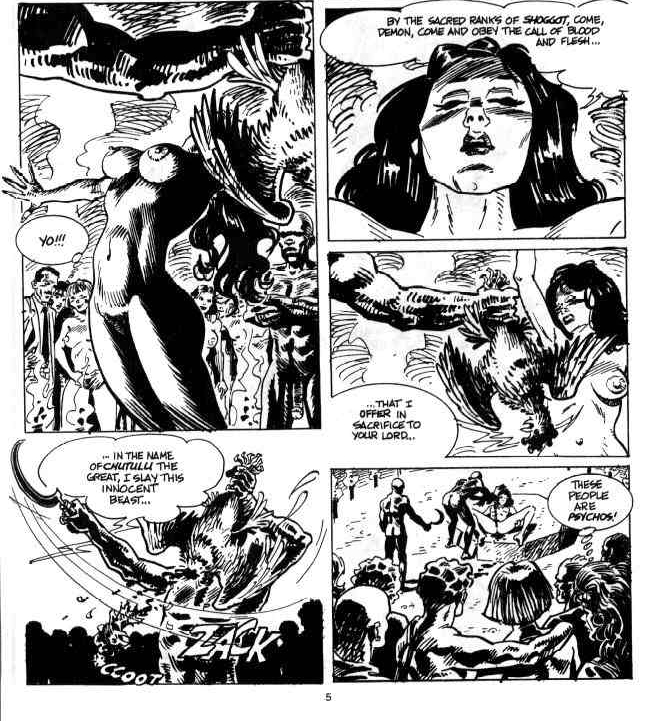
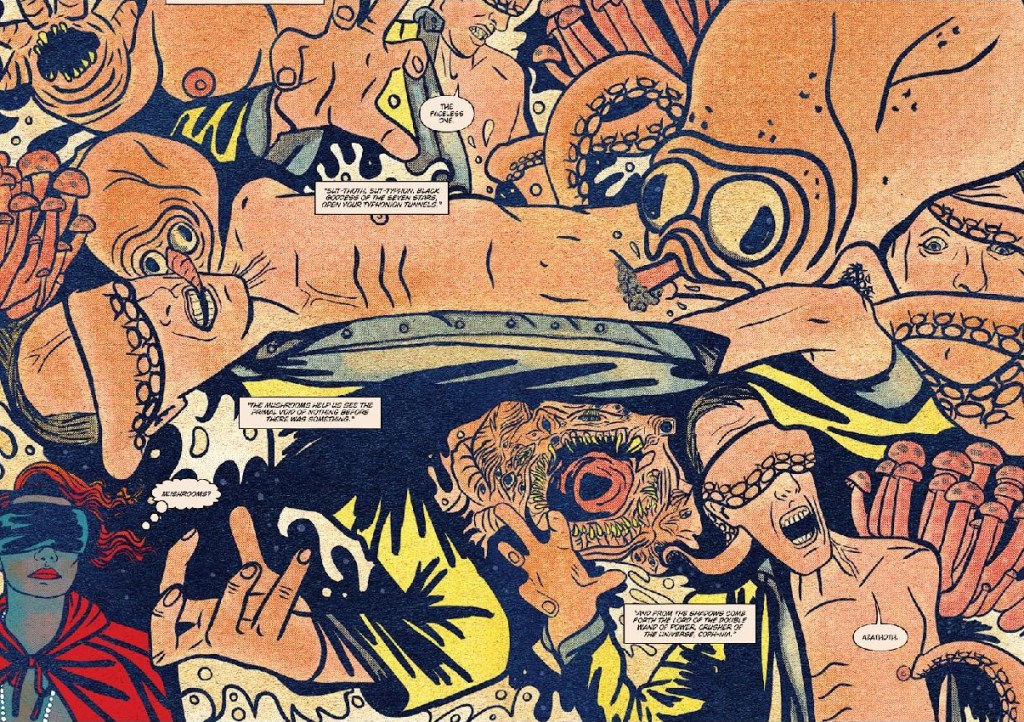
“R. H. B.” (1978) by Andreas and Rivière is a likely candidate, because it focuses on R. H. Barlow, who was gay. However, Barlow’s homosexuality isn’t really the focus of comic, barely mentioned at the end. A later example is the Italian erotic comic Ramba #4 (1989), which features the bisexual Ramba facing down a demon named Azatoth summoned during a voodoo-esque ceremony:

Ramba #6 (Eros Comix), Marco Bianchini (script) and Fabio Valdambrini (art)

Of course, most of Europe never had an equivalent to the Comics Code Authority, so they had a freer hand to explore such themes. In the United States, works like Ramba appeared in translation in the early 90s, after the CCA had been weakened or ignored by independent publishers. If we can’t quite answer the question of who came first (whether into Cthulhu’s visage or elsewhere), we can at least say there was another notable work that emerged in that period that combined Lovecraftian horror and explicit LGBTQ+ characters and themes.

In the 1970s, comic writer and artist John Blackburn created the character Coley Cochran, a 19-year-old uninhibited bisexual character with a penchant for sex, violence, and the occult and antipathy to prudes and authority figures. In the late 80s/early 90s Blackburn self-published four books of Coley’s sex-drenched adventures, a combination of erotica, character-driven drama, and graphic violence. In the first book, Coley on Voodoo Island (1989), Coley is kidnapped and transformed into a sex god in a voodoo ceremony; this supernatural element would re-emerge periodically throughout Coley’s adventures, such as Breathless (1991), which includes an adventure at a ruined temple titled “Flowers of Evil.”

In the 1990s Fantagraphics picked up the Coley adventures under their Eros Comix imprint, publishing a series of 2-3 issue miniseries, beginning with Return to Voodoo Island (1991). The problem with the Eros Comix series is that they never reprinted Coley’s earlier adventures (except when Blackburn summarized them for reprints), so that new readers come into a series that has already been going on for hundreds of pages.

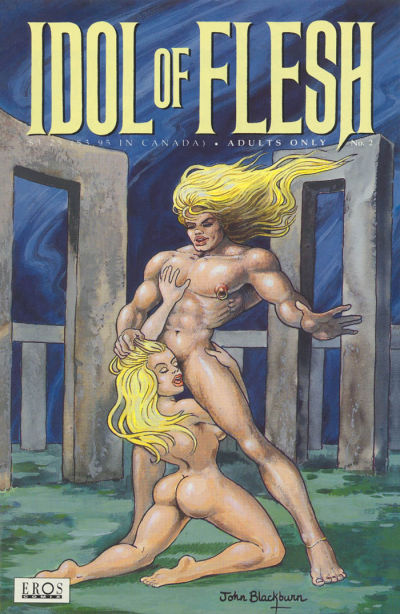
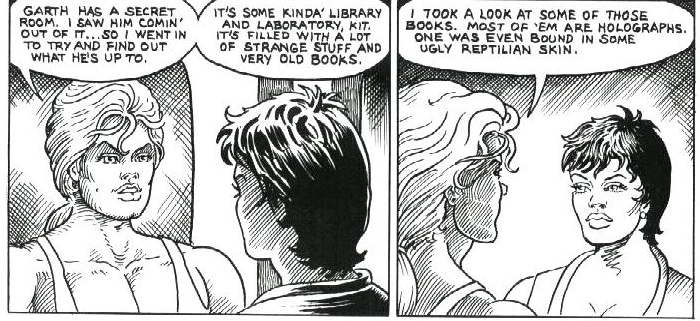
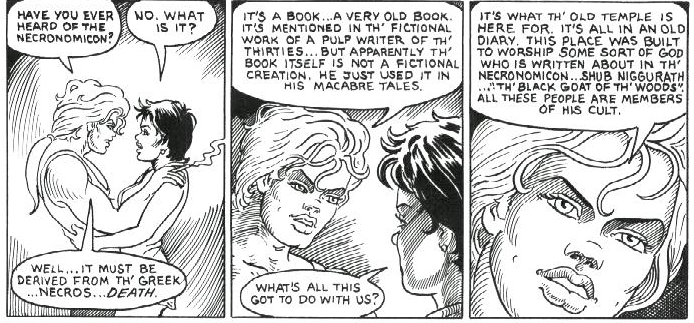
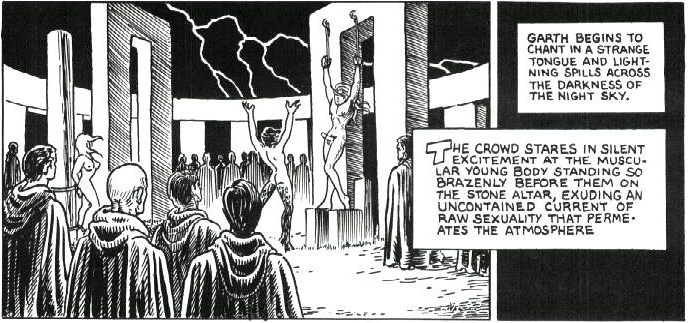
John Blackburn’s “Shadow over Darkcliff” is the second part of the two-issue series Idol of Flesh (1993), and sees Coley and friends return to the temple ruins of “Flowers of Evil”—but this time featuring a strange cult, led by a man named Garth. While the 32-page episode involves a bit of drama and a good bit of sex, the core story is explicitly Lovecraftian:

Idol of Flesh (1992) #2, by John Blackburn

Garth, it turns out, isn’t exactly human and wants Coley for sex and sacrifice. This isn’t the first or the last time Coley would be in this sort of position, the magnetic sexual attraction to both men and women is one of his supernatural traits throughout all of Blackburn’s series, as are scenes of flagellation, bondage, and sexual violence—especially the threat of castration, which appears in Return to Voodoo Island and reappears here. As in “Flowers of Evil,” Coley’s escape from this particular peril is somewhat miraculous—not a great storytelling trick, and one which Blackburn overuses a bit. Not that readers would know that unless they hunted out some of the stories that Fantagraphics did not reprint.

Blackburn would return to Coley and the Cthulhu Mythos in a longer, more involved, and even weirder storyline titled Dagger of Blood (1997), which makes brief reference to Garth and the events of “Shadow over Darkcliff.” Yet it reading the stories in order gives a better sense of the ideas that Blackburn was developing. Coley is presented as this perfect bisexual heartthrob, while characters like Garth and the antagonist of Dagger of Blood are both attracted to and hate Coley because of their own deformed bodies. There is a strong element of body dysmorphia to those characters, really only implicit here and more fully developed (and exploited) in Dagger of Blood, which fixates on genital mutilation.

It feels like Blackburn was working through some things, if only in art and writing, and perhaps only for his own entertainment. Certainly Blackburn was aware of the main focus of his comics—Coley has no shortage of sexual partners on the page, in explicit detail, both men and women—and the mundane drama of trying to keep his lovers happy is a counterweight to the more fantastic elements of Lovecraftian horror, even as the action and horror plots provide some relief from the soap opera.

When you look back at the history of LGBTQ+ characters and themes in comics, Blackburn’s work arriving when and where it did—first in self-published underground comix, and then after the CCA waned in series from an independent press which stressed the erotic angle—makes sense. It took decades after the Stonewall Riots for LGBTQ+ folks to gain greater recognition, acceptance, and basic rights in the United States, and such works were slow to find a place in mainstream comic books and strips. The underground was more willing to accept these nonconforming works with LGBTQ+ characters and to have discussions about subjects like homosexuality, polyamory, bisexuality, kink—and, yes, how the occasional bit of Lovecraftian horror fit into the mix. At the time, homosexuality in the Mythos was limited to stories like Ramsey Campbell’s “Cold Print” (1969), and those were few and far between.

Reading all of John Blackburn’s Coley saga is damn near impossible these days. Fantagraphic’s individual issues and reprint collections are long out of print and command collectors’ prices; the Idol of Flesh comics are reprinted in Coley Running Wild Book One: The Blade and the Whip. Several other adventures by Coley were published or re-printed in the gay comics anthology Meatmen, though there is no complete index for that series as yet.


Bobby Derie is the author of Weird Talers: Essays on Robert E. Howard and Others and Sex and the Cthulhu Mythos.

Deep Cuts in a Lovecraftian Vein uses Amazon Associate links. As an Amazon Associate I earn from qualifying purchases.
Minky Woodcock: The Girl Called Cthulhu (2025) by Cynthia von Buhler

Eldritch Fappenings

The following review is of a work that contains cartoon nudity, and some images are reproduced.
Reader discretion is advised.


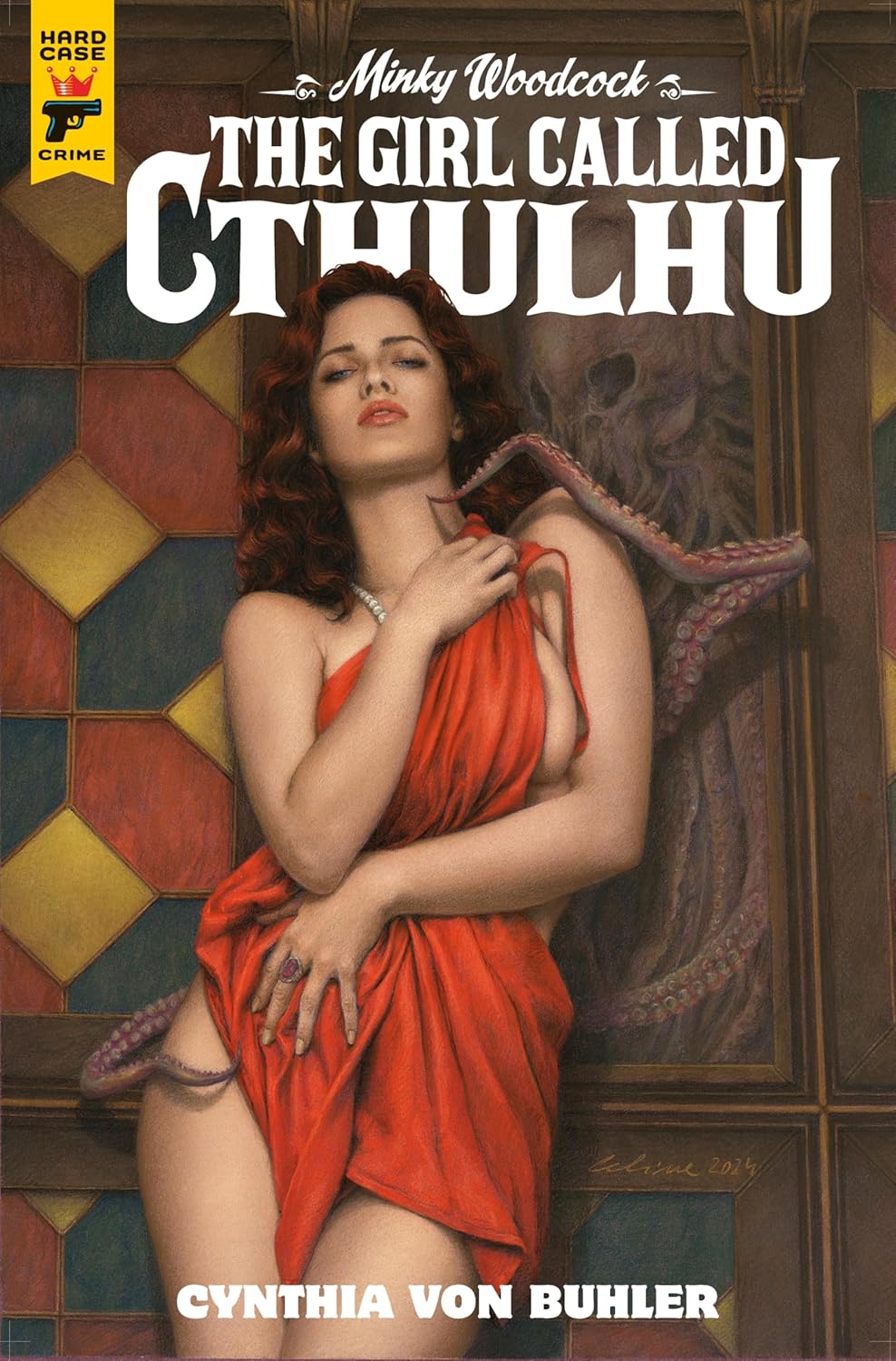
In 2017, writer-artist Cynthia von Buhler introduced the world to Minky Woodcock, private detective, in a 4-issue series The Girl Who Handcuffed Houdini, published under the Hard Case Crime imprint of Titan Comics. The series was a clever mix of hardboiled detective themes with historical characters, with the bisexual and extraordinarily intelligent and adaptable Minky Woodcock often ending up in dangerous situations and/or sans her clothes—but also finding or fighting her way out again. The series was followed up with a sequel, The Girl Who Electrified Tesla (2021), and then The Girl Called Cthulhu (2024), which was lettered by Jim Campbell.

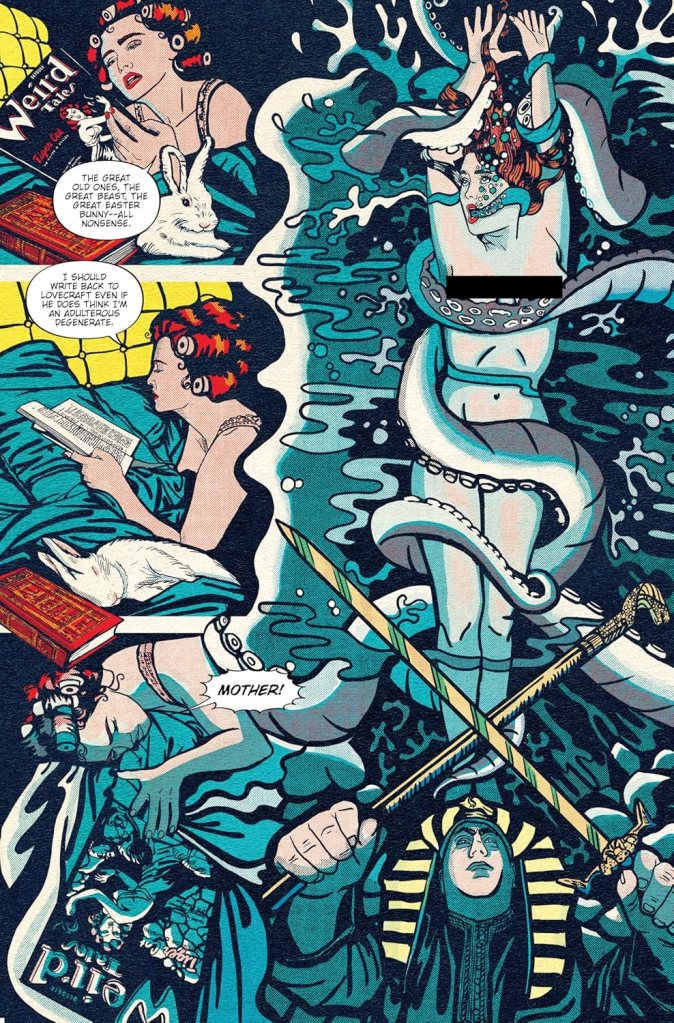
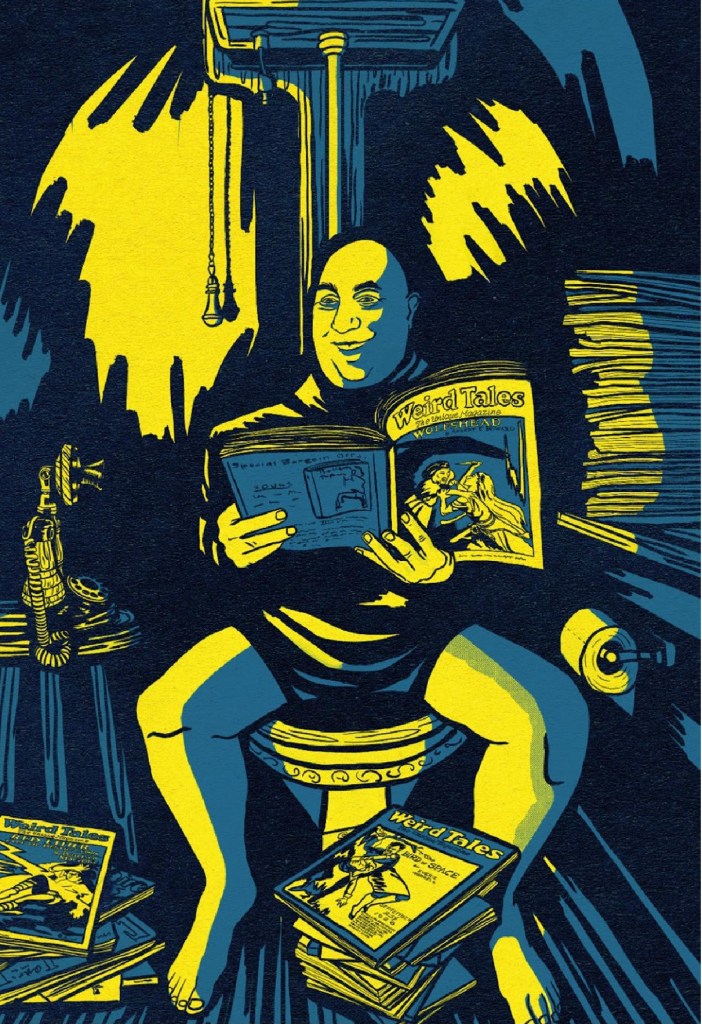
The plot is drawn from history, dealing with Lovecraft’s relationships with Harry Houdini and Aleister Crowley, slightly fictionalized for purposes of the plot, but in general faithful to the timeline—with careful reproductions of Weird Tales covers and effort made to reproduce real people, places, and events. There are a number of fun little Easter eggs for Weird Tales fans in the pages, captured in von Buhler’s own style, who favors a heavy line and stylized coloring that echoes noir and giallo films.

At its heart, Minky Woodcock: The Girl Called Cthulhu is a rather traditional detective/mystery story, tied up in a historical setting and with some added titillation thrown in. The depiction of H. P. Lovecraft and his wife Sonia are synthesized from various sources, notably The Private Life of H. P. Lovecraft (1985) by Sonia H. Davis, but aren’t particularly cruel or inaccurate given the needs of the story. Buhler flaunts her artistic homages, such as Hokusai’s “Diver and Two Octopi,” and is one of the few artists not afraid to depict Howard’s penis. Whether that’s a warning or an enticement to read the book is something I leave up to the readers.

It is a fun book, and plays to both Lovecraft and Crowley’s particular legends. Cynthia von Buhler has obviously done a good bit of research, and she wears it on her sleeve, including a section at the rear of the collected edition (and in the individual issues) explaining some of the details:

The investigations portrayed in the Minky Woodcock series are grounded in fact, the result of my extensive research. I acknowledge that some of the details may seem peculiar leading to numerous questions. Here are my responses to them. – CvB

Is all the research correct? Well, there’s no evidence Sonia H. Greene heard Crowley at the Sunrise Club (though she did attend the club), and no evidence Crowley read Lovecraft. The comparison between Lovecraft’s fiction and Crowley’s magical writing is the stuff of wishful occultists, as shown in the opening of the Simon Necronomicon. But for fictional purposes, these are pedantic niggles, and certainly other authors that have posited Lovecraft/Crowley interactions have gone further and been more ahistorical. A more interesting tidbit is the question of Lovecraft’s prejudices:

Lovecraft was a racist and anti-Semite. Why would you honor him with the title of your book? I highly doubt he would have married a Jewish woman.

Lovecraft was married to Sonia H. (Haft), a successful Jewish milliner and amateur pulp fiction writer, from 1924 to 1937. She tried to educate him as best as she could, and by the end of his life, his views had changed somewhat, but he said some pretty awful things in his day. I make his outrageous beliefs absolutely clear in my book.
—Cynthia van Buhler, Minky Woodcock: The Girl Called Cthulhu

While von Buhler doesn’t answer the first question directly, I think the book itself makes the point clear: Lovecraft was weird, and is the connective tissue between Houdini and Crowley, the three together providing a bridge from rationality to occultism and weird fiction. Lovecraft comes across as a bit stiff and surreal, but that’s not unusual for fictional depictions of HPL, and if the effort is made not to hide Lovecraft’s prejudices, neither does she make the effort to depict him as a cartoon caricature of a bigot. Sonia gets less attention, unfortunately, but her part in the proceedings is a minor one.

Ultimately, this isn’t Lovecraft’s story, or Crowley’s, but Minky Woodcock’s. A dame detective who finds herself in strange company and dangerous situations, surviving largely by her ample wits. While not quite as bloody and fierce as Max Collins’ Ms. Tree, there is that same sense of a woman in a primarily male occupation dealing with society’s preconceptions and some quite ruthless characters—and, sometimes by the skin of her teeth, coming out alive if not always on top.


Bobby Derie is the author of Weird Talers: Essays on Robert E. Howard and Others and Sex and the Cthulhu Mythos.

Deep Cuts in a Lovecraftian Vein uses Amazon Associate links. As an Amazon Associate I earn from qualifying purchases.
“The Corpse That Wouldn’t Die!” (1953) by Jack Cole

I have given the whole of a cloudy Sabbath to finish my dismembered corpse story—“The Return of Helman Carnby”. I shall enclose the carbon with this; and I hope you will like it. The thing became a sizable yarn, with all the details that I worked out . . . It goes to “Ghost Stories”, then to W. T.,—both of which will doubtless reject it. But I think myself that the tale is a pretty fair literary beginning for the New Year. I like to picture it in the sunny and lightsome pages of the “Ladies’ Home Journal.”
—Clark Ashton Smith to H. P. Lovecraft, c. early Jan 1931, Dawnward Spire, Lonely Hill 290

Needless to say, I perused the monstrous narrative of Helman Carnby with the most acute & shuddering admiration; &, having made the verbal changes indicated in your supplementary note, have forwarded to Derleth with instructions for return to you through Wandrei. It is certainly a great piece of work, & I am extremely flattered by the prominent part played therein by the Necronomicon. But God! If there is still a copy of the original Arabic version in existence, what safety can we guarantee for this unhappy planet? Is it not true that no copy was found when the police entered the seemingly deserted mansion of Carnby & observed those hideous & inexplicable conditions which the newspapers were not allowed to print? What of that utterly unthinkable foot-mark which seemed to be burned into the floor? But one must not think of such things! Anyway, it’s a great yarn, & the cumulative suspense & malign suggestiveness of the earlier parts are enough to set any outfit of teeth—even false ones on a dentist’s cupboard shelf—chattering! It looks to me quite all right as it is—if there were any way of piling on another shudder, I’d say it would be by veiling the final horror a little more obscurely from actual sight, & trying to hint or imply the blasphemous abnormality which sent the secretary fleeing from that accursed habitation. I certainly hope that the tale will find a typographical haven.
—H. P. Lovecraft to Clark Ashton Smith, c. 18 Jan 1931, Dawnward Spire, Lonely Hill 293

Ghost Stories did not take “The Return of Helman Carnby,” not even after Smith re-wrote the ending and sent it back for another look; nor was it published by Weird Tales. The story was published in Strange Tales of Mystery and Terror (Sep 1931), under the title “The Return of the Sorcerer.” This is arguably Smith’s most distinctly “Lovecraftian” story, being an explicit extension of Lovecraft’s Mythos rather than involving any of Smith’s own fabulous settings and entities, and one of the first uses of the Necronomicon outside of Lovecraft’s own works (compare “The Were-Snake” (1925) by Frank Belknap Long, Jr. and “The Picture” (1939) by Robert D. Harris).

“The Return of the Sorcerer” was reprinted in Smith’s first Arkham House collection Out of Space and Time (1942), and anthologist August Derleth selected it for inclusion in Sleep No More (1944), which meant it was included in the Armed Services Edition of that book issued to soldiers during World War II. One can just about imagine a marine en route across the Pacific Ocean idling away a sweltering hour reading of the dismembered corpse crawling from the grave. By the 1950s, however, “The Return of the Sorcerer” had been out of print for years—though not forgotten.

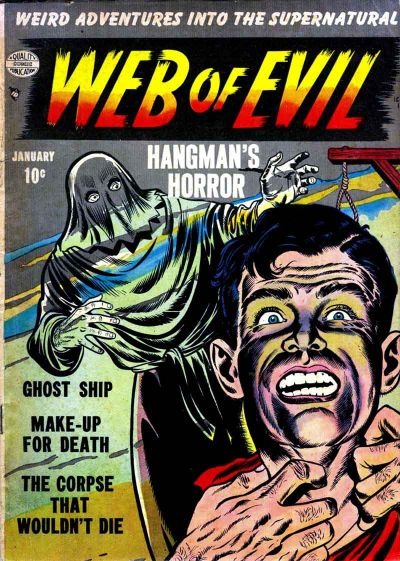
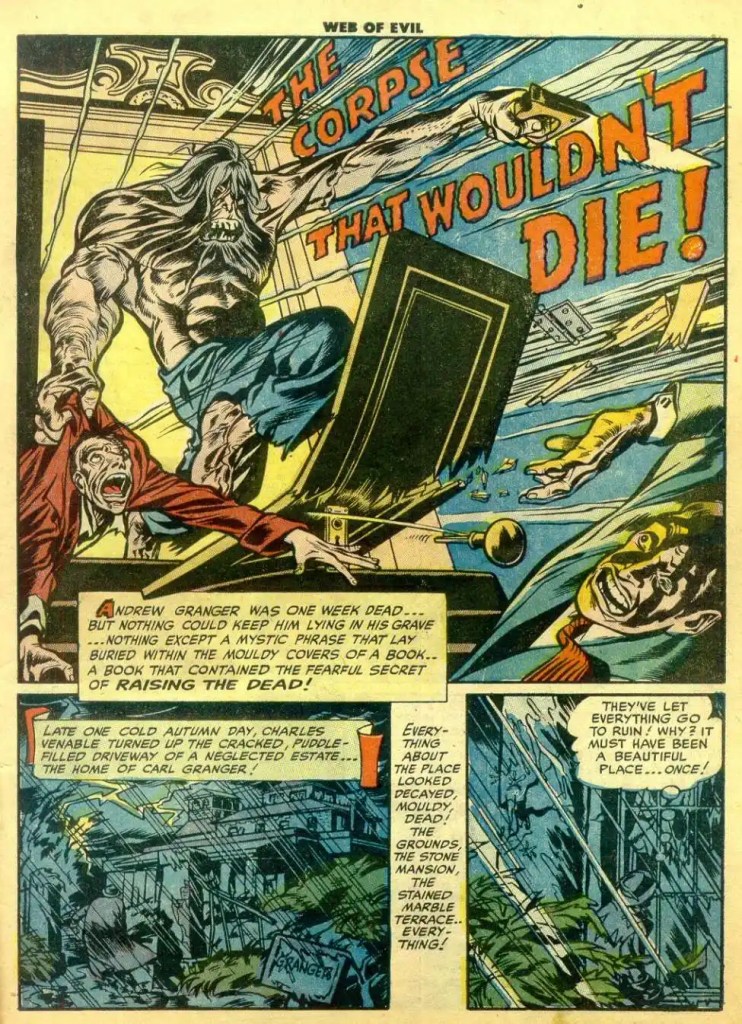
Web of Evil was a horror comic published by Quality in the years immediately before the formation of the Comics Code Authority, and which ran 21 issues. The product was typical of the era: often shoddy artwork and simple, quick stories that emphasized grue and taboo, shock and suspense. The stories were often unsigned and the creators weren’t above lifting a plot from an old pulp magazine from time to time.

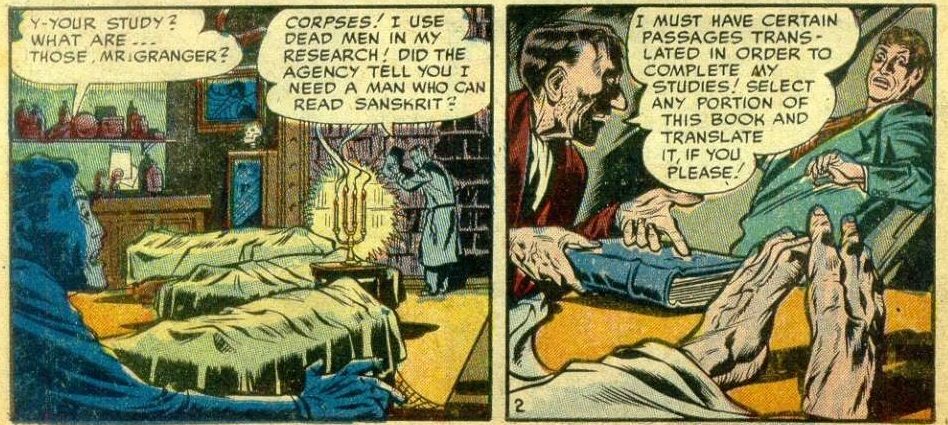
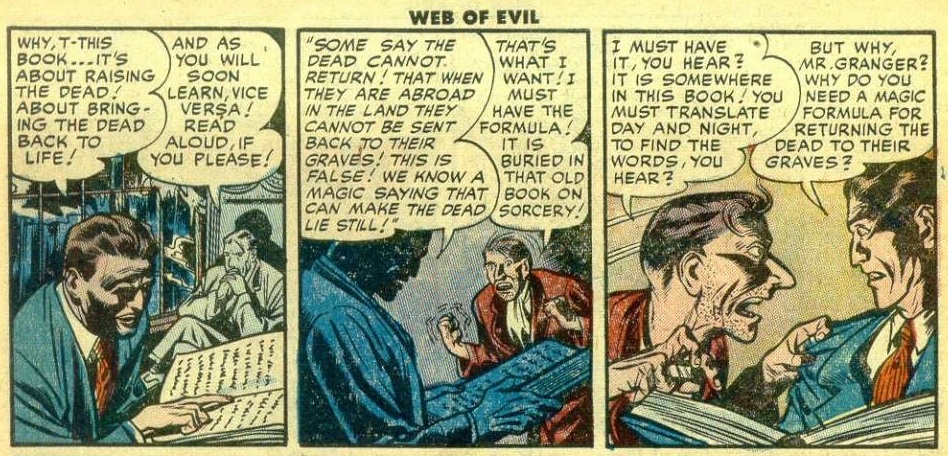
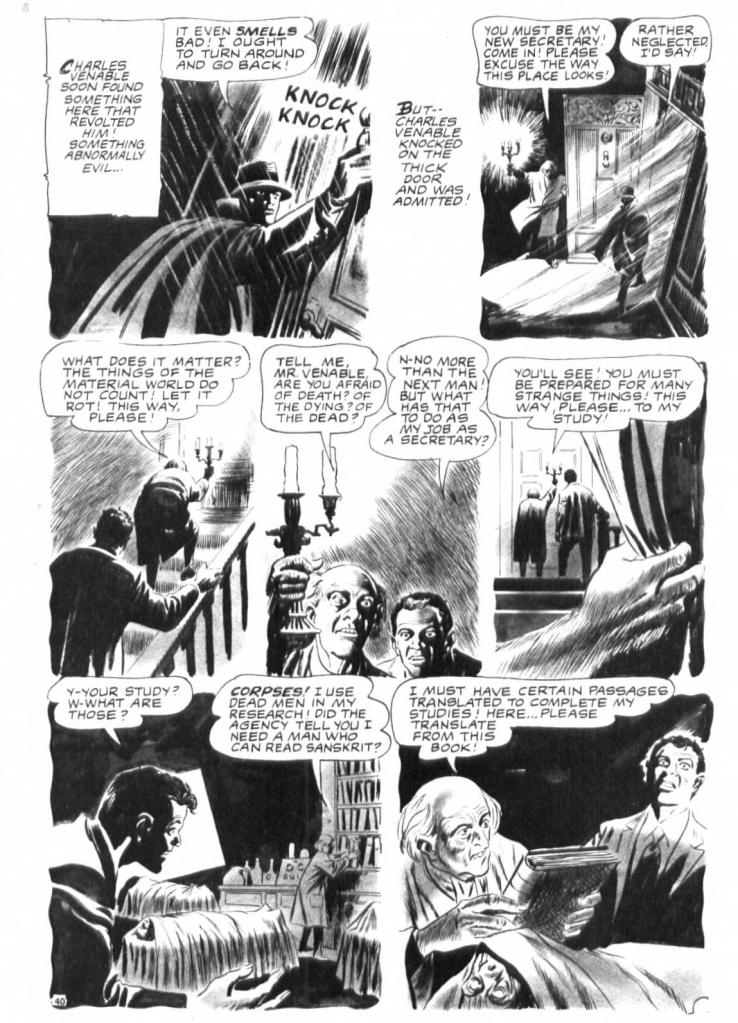
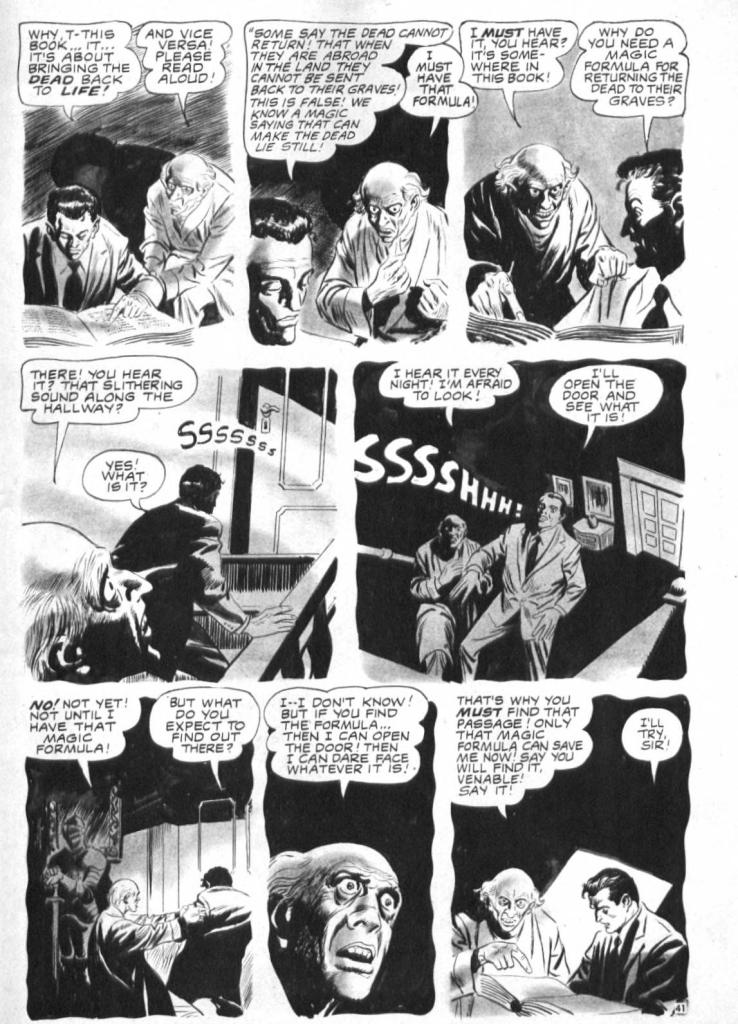
“The Corpse That Wouldn’t Die!” in Web of Evil #2 (Jan 1953) by artist Jack Cole is very clearly based on “The Return of the Sorcerer.” The names were changed to hide the plagiarism, and the unnamed Necronomicon is in Sanskrit rather than Arabic, but the essentials of the story are clearly recognizable. It may no longer be a Mythos story, but for all that it has a distinct charm for those that recognize that Cole is, at least, lifting from the best.

At six pages, the action moves fast—and in almost every panel, Cole tries to add some dramatic element of lighting or motion to capture the eye or set the tone, which often leads to near-comical exaggeration. Though there is not so much grue as there might have been: after all the corpse of the deceased sorcerer is still intact when it returns from the grave.

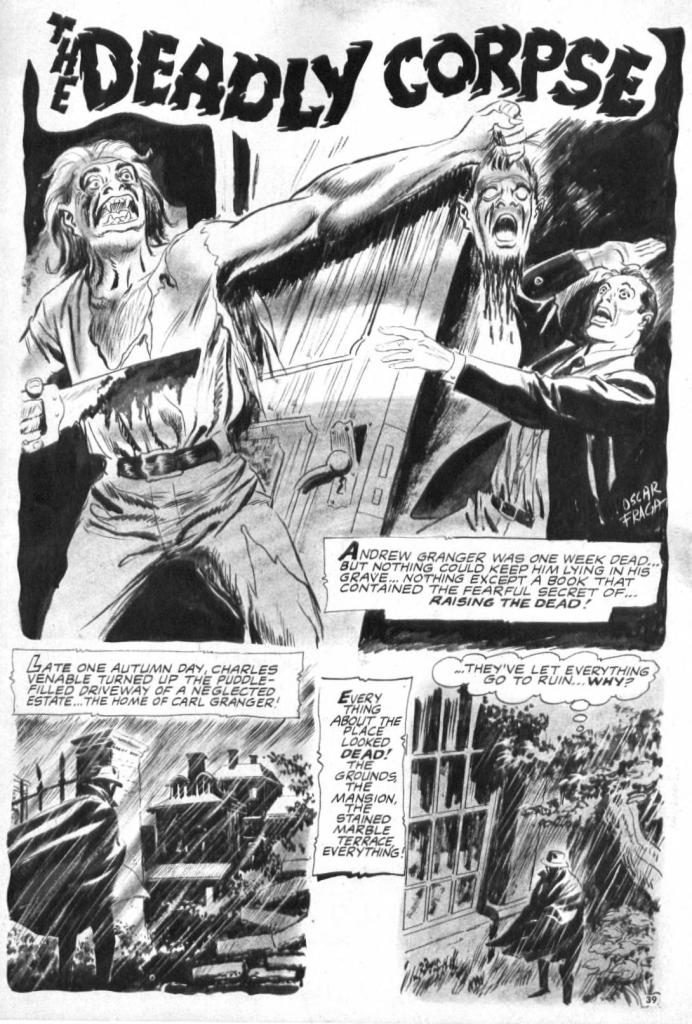
Lifting stories from pulp writers was not unusual in the 50s, and “The Corpse That Wouldn’t Die!” sits neatly among the Pre-Code Lovecraftian Horror Comics. The tale has been reprinted a number of times, including a version in Tales of Voodoo vol. 5, no. 2 (Mar 1972), where the art was reworked by Oscar Fraga and the result retitled “The Deadly Corpse” (sample pages below). Fraga’s rework updates the art to match the sensibilities of Eerie Publications in the 70s, but doesn’t add anything new to the story itself.

The original Web of Evil version can be read for free at Comic Book Plus.


Bobby Derie is the author of Weird Talers: Essays on Robert E. Howard and Others and Sex and the Cthulhu Mythos.

Deep Cuts in a Lovecraftian Vein uses Amazon Associate links. As an Amazon Associate I earn from qualifying purchases.
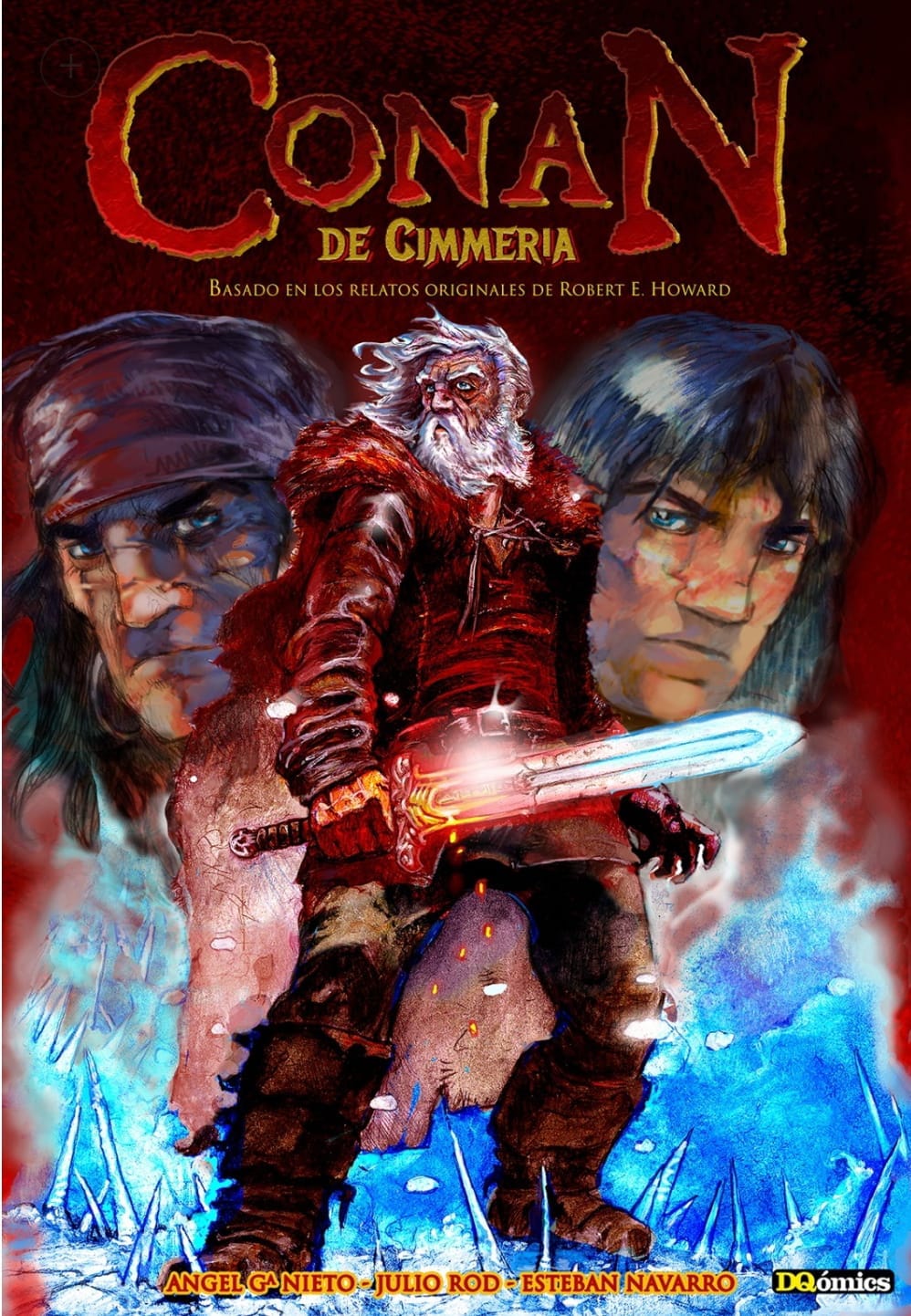
Conan de Cimmeria (2021) by Ángel Gª Nieto, Julio Rod, & Esteban Navarro

Derivative works all share a connection with the parent work. Every story with Cthulhu derives, directly or indirectly, from Lovecraft’s “The Call of Cthulhu.” Every story with Conan the Cimmerian derives from the original stories written by Robert E. Howard. From the humble pages of Weird Tales have spun out thousands of creative works in a dizzying array of media—short stories, novels, comics (strips, books, magazines, and graphic novels), cartoons, live-action and animated films, music, paintings, sculptures, toys, video games—and one of the key thing to remember about these works is that they aren’t being created in a vacuum, but in communication with one another.

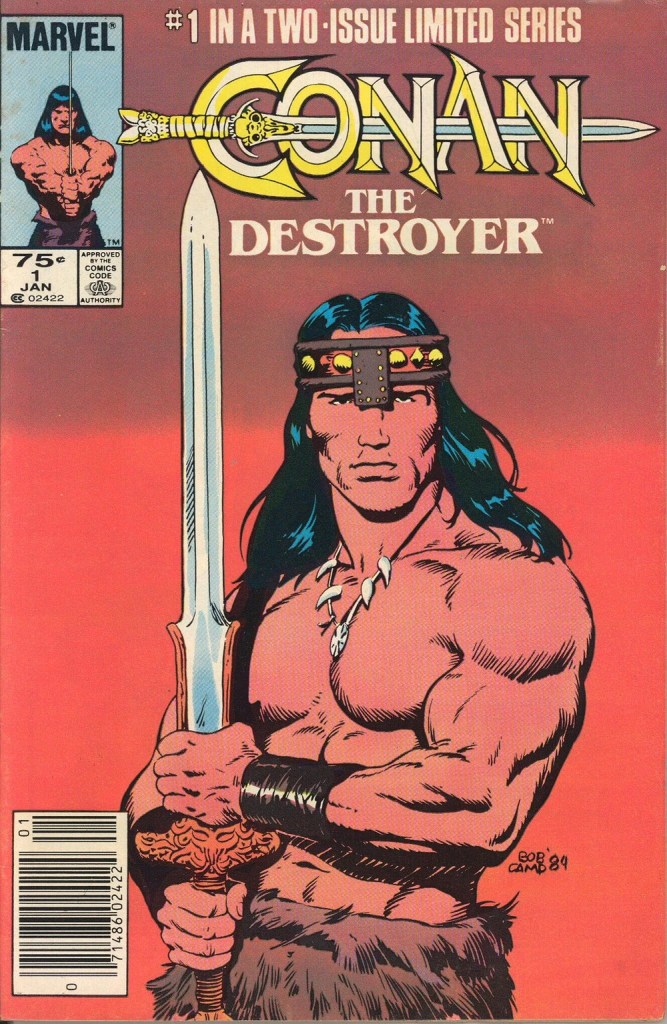
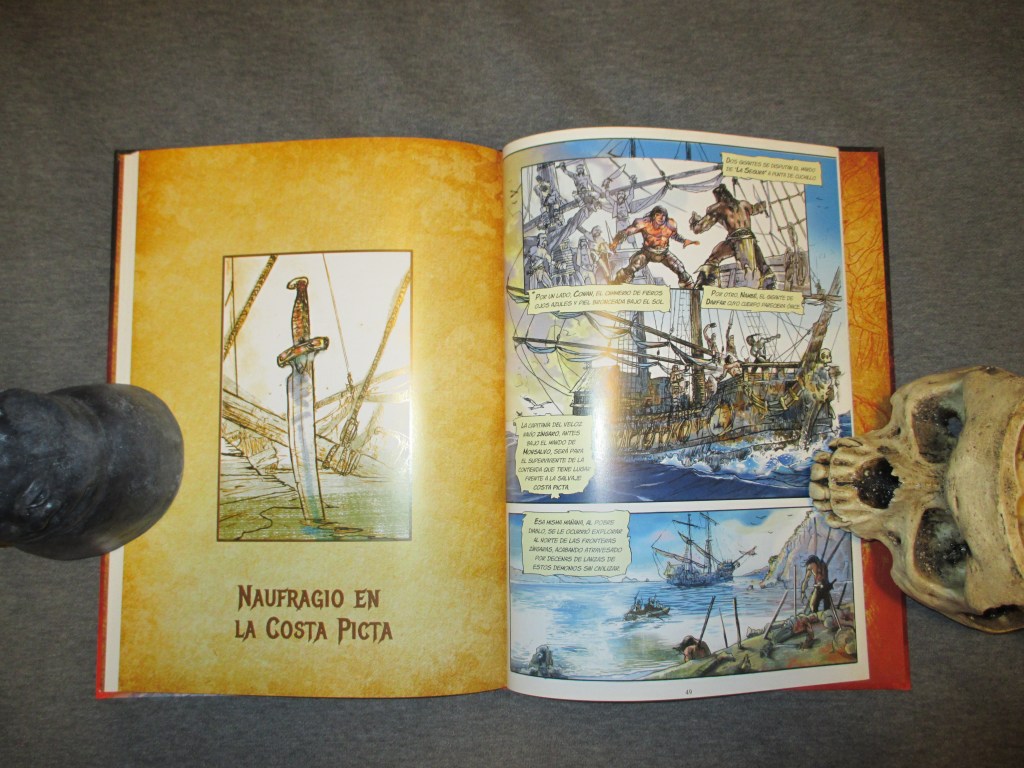
The Atlantean sword in the film Conan the Barbarian (1982) owes nothing to anything in the stories of Robert E. Howard; the closest the Texas pulpster managed to a special weapon was in the first Conan tale, “The Phoenix on the Sword,” and that sword was broken in the course of the story. Some of the pastiche tales and comic book stories that followed included magic weapons, but none of them served as the immediate inspiration for the Atlantean sword in the film either. Nevertheless, the sword featured extensively in the poster and marketing materials for both Conan the Barbarian and its sequel Conan the Destroyer (1984)—and, unsurprisingly, was represented fairly faithfully in the Marvel Comic adaptations of the films.

Art by Bob Camp

For many years, outside the movie continuities, the Atlantean sword was not a key feature of most Conan media. While it continued to have lingering appeal because of the tie to the film—including multiple weapon makers providing official or bootleg versions of the sword for fans and collectors—publishers like Marvel and Dark Horse did not lean into that aspect of the film iconography.

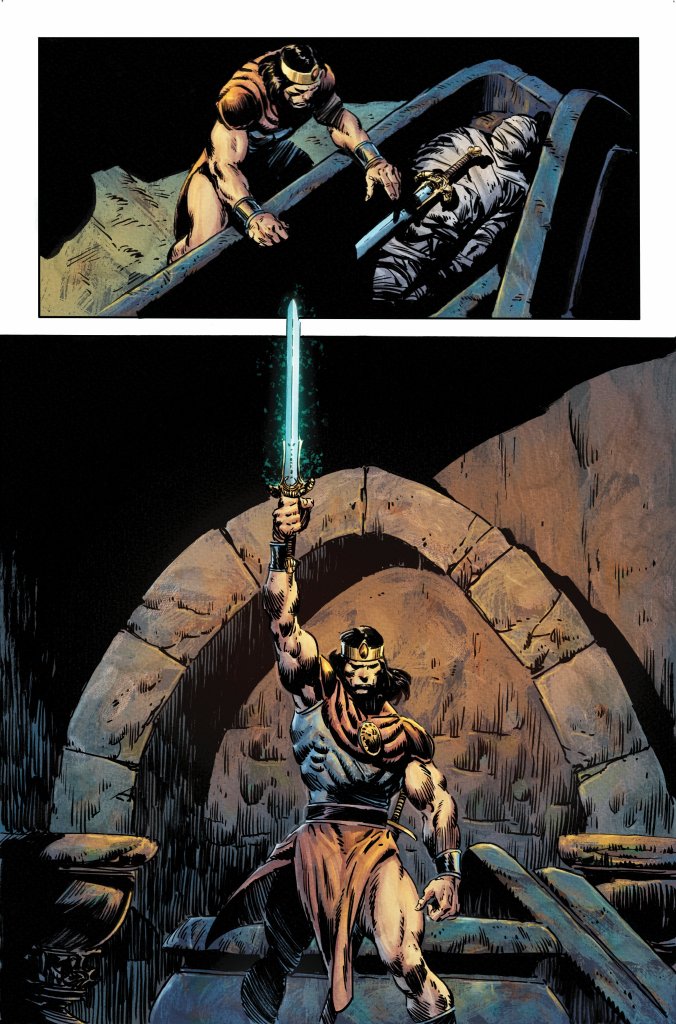
More recently, however, the iconic Atlantean sword has seen increased placement in both official and unofficial Conan media. The latest Conan comics published by Titan have deliberately leaned into a melding of the iconic looks of previous incarnations of the Cimmerian, drawing both from the John Buscema/Ernie Chan era of Marvel Comics as well as the 1982 film. It’s little surprise that when Conan does actually go to Atlantis in Conan the Barbarian #11, the Atlantean sword—or at least a good facsimile—makes an appearance.

Art by Roberto de la Torre, Color by Diego Rodriguez

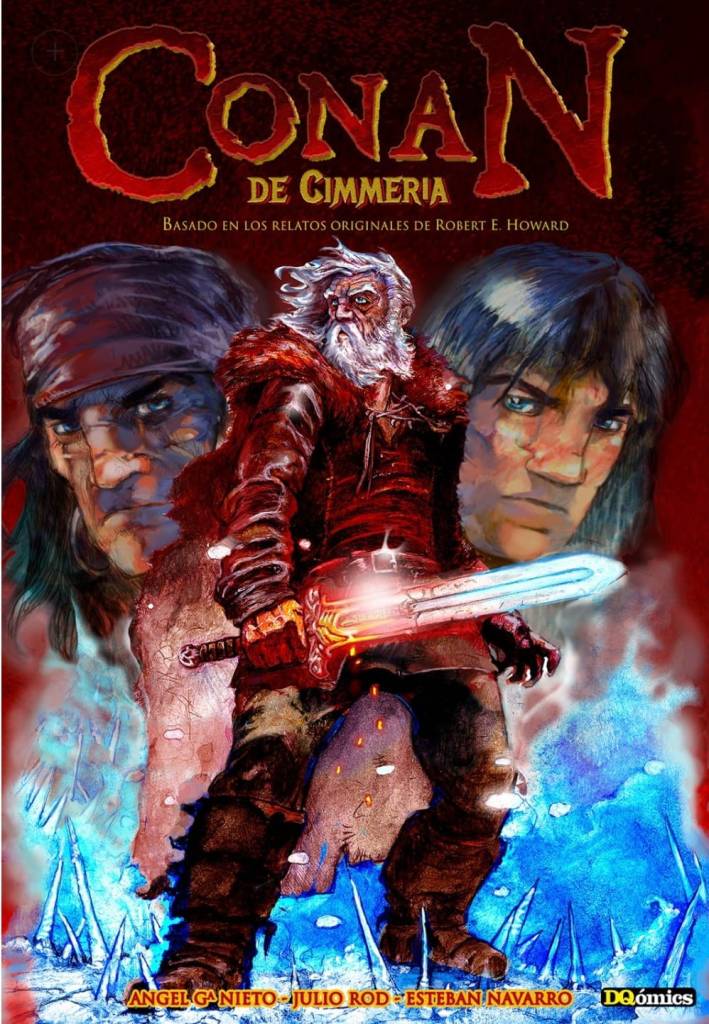
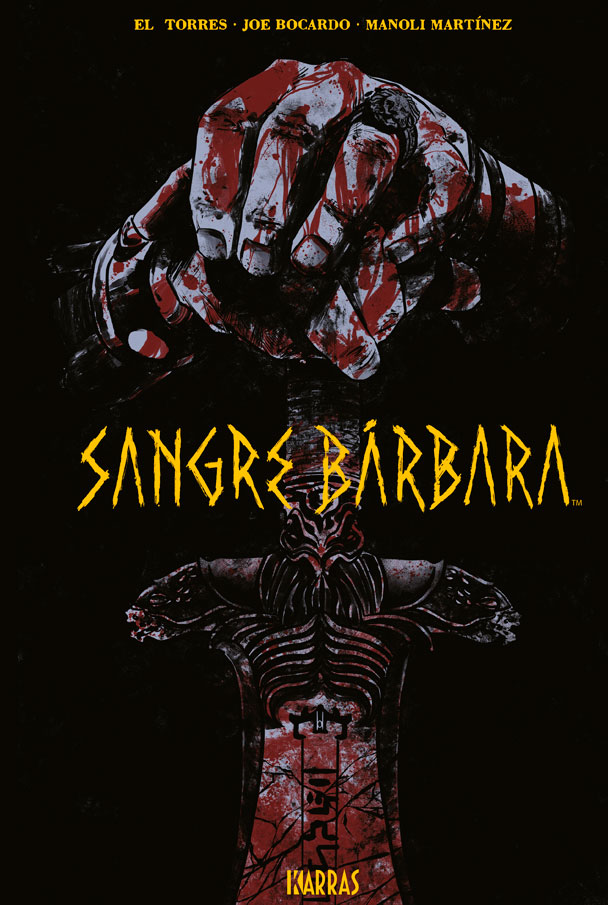
Outside of the official comics, works produced in areas where the Conan the Cimmerian stories by Robert E. Howard have fallen into the official domain have had fewer qualms about borrowing the iconic imagery of the Atlantean sword. Such is the case for Sangre Bárbara (2021) by El Torres, Joe Bocardo, & Manoli Martínez, and such is also the case for Conan de Cimmeria (2021) by the creative team of Ángel Gª Nieto (writer), Julio Rod (artist), & Esteban Navarro (colorist).

Hace mucho tiempo, en una era no soñada, caminó Conan, el Cimmerio, que a lo largo de su turbulent existential vivió multiud de fastuosas adventuras.

Dejadme que os cuente cual cronista de un tiempo olvidado sus grandes y magníficas hazañas, que lo convertieron en Leyenda.
Long ago, in an age undreamed of, walked Conan the Cimmerian, who throughout his turbulent life lived a multitude of magnificent adventures.

Let me tell you like a chronicler of a forgotten time his great and magnificent exploits, which made him a Legend.
Conan de Cimmeria, Back cover copyEnglish translation

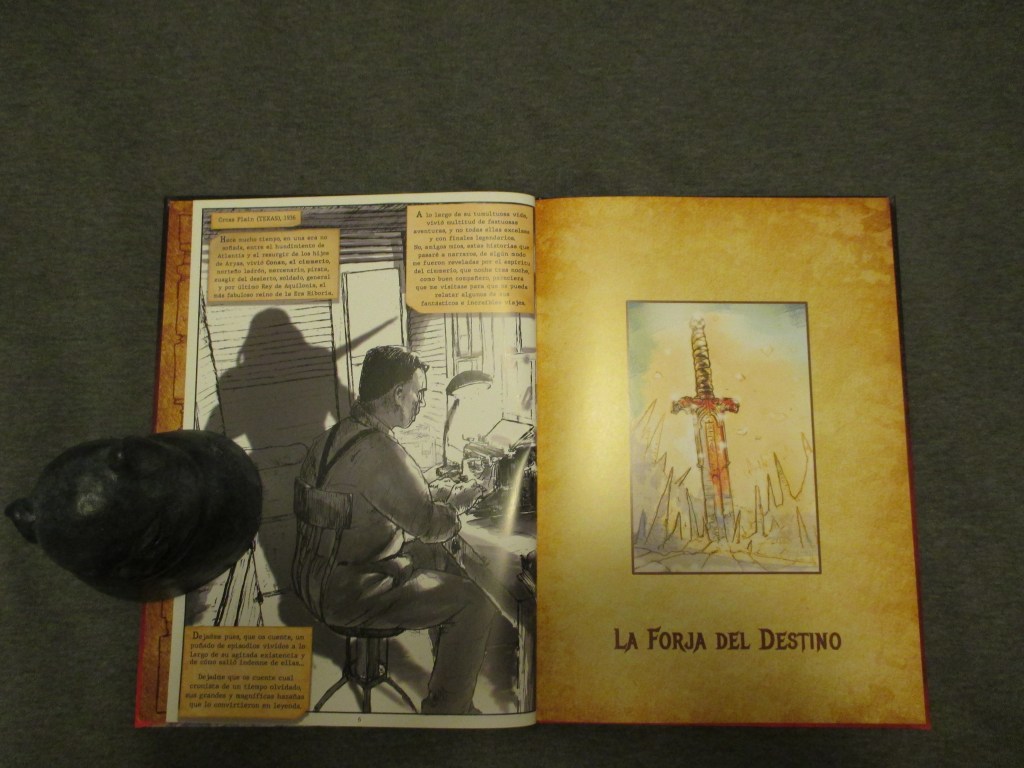
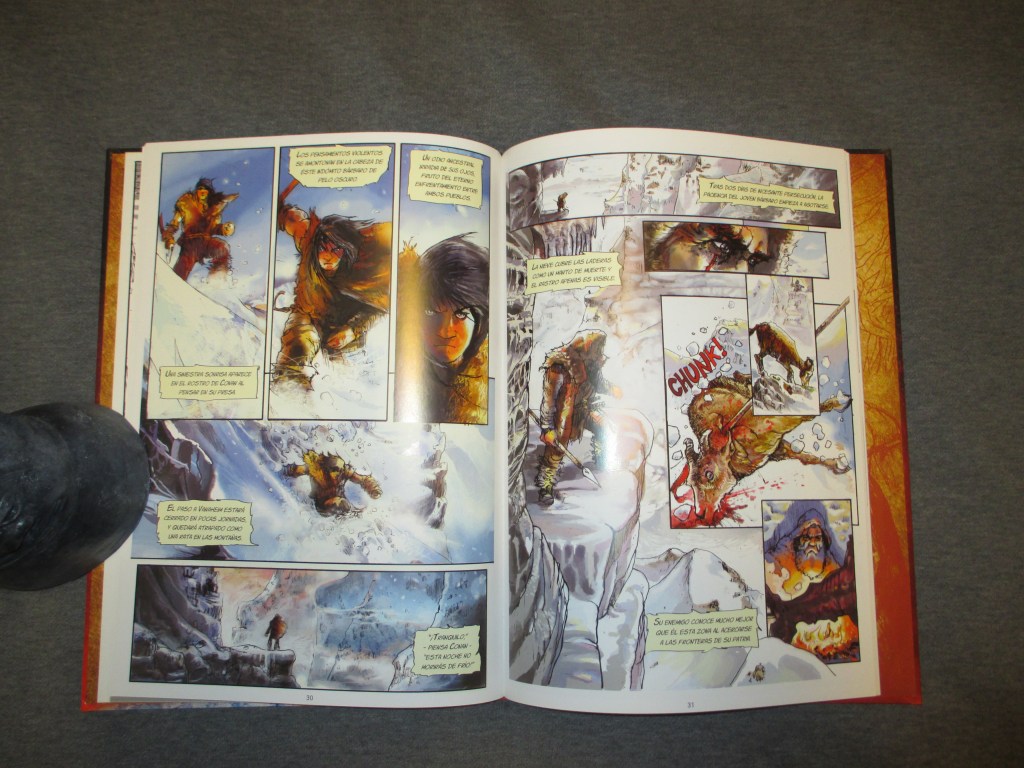
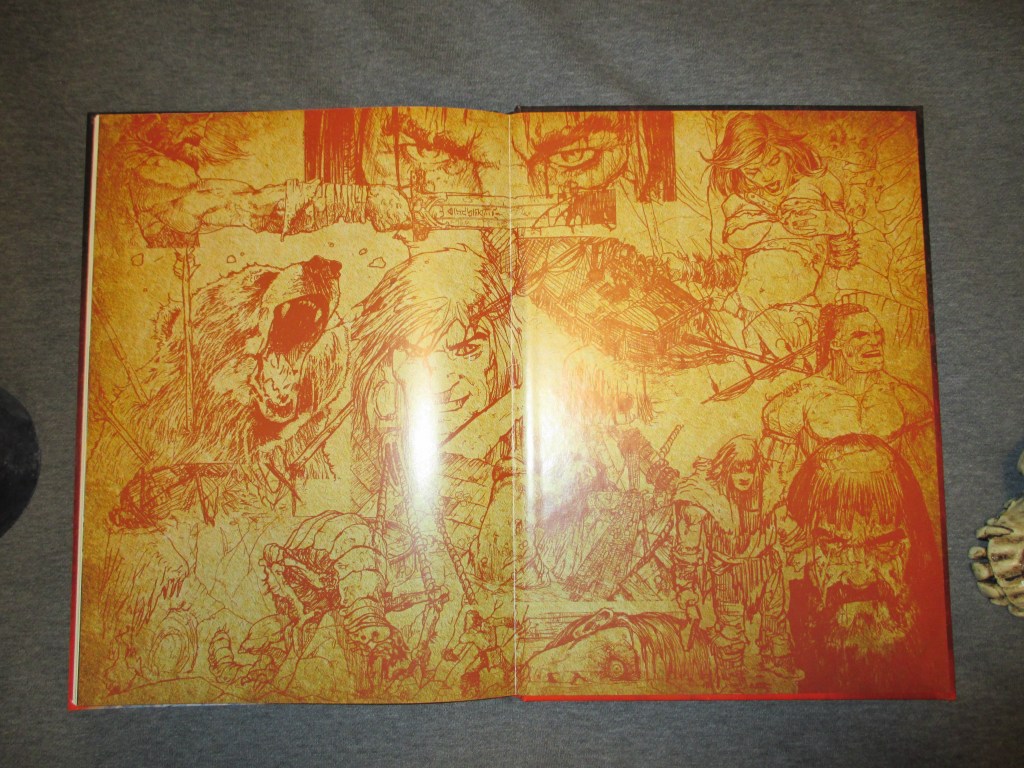
Conan de Cimmeria is a standalone Spanish-language graphic novel that tells three original stories based on the Conan character created by Robert E. Howard, each one telling a brief adventure of the Cimmerian at a different point in his career. It is essentially identical in general form and intent to the majority of comics produced officially by the owners of the Conan trademarks, just produced independently. The prominent usage of the Atlantean sword in the first story, “La Forja del Destino” (“The Forge of Destiny”), is perhaps the most notable artistic callback to other Conan-related works, but the book also appears to draw inspiration from the classic Marvel comics, while still taking the opportunity to present an original—if recognizable—version of the barbarian.

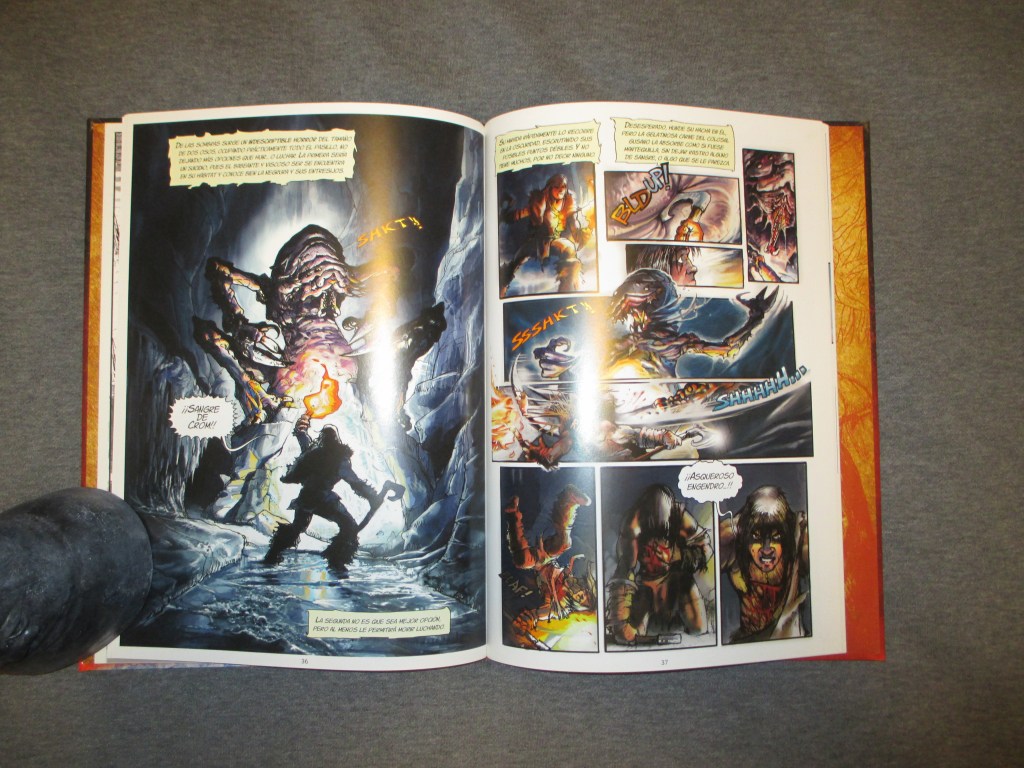
The stories are a bit more violent and bloody than the classic Marvel Comics, but not so gore-filled as to detract from what are essentially pulpy adventure tales; there is one scene with the topless corpse of a woman, but other than that, there is no nudity or sex. It is the kind of Conan comics that could please everyone from 13 to 93 in terms of being exactly what it sets out to be: the kind of broad-appeal Conan comic that is reminiscent and evocative of what has come before, but which is distinctly original, an addition to the Conan cycle that is respectful of the source material.

In an era when properties falling into the public domain often leads to a splurge of derivative trash that pays little to no respect for the original, it’s nice to find examples of works where the creators basically want to use the stories to create new tales of character they like, int he style in which they’d like to read them.


Bobby Derie is the author of Weird Talers: Essays on Robert E. Howard and Others and Sex and the Cthulhu Mythos.

Deep Cuts in a Lovecraftian Vein uses Amazon Associate links. As an Amazon Associate I earn from qualifying purchases.
Saga de Xam (1967) by Jean Rollin & Nicolas Devil

Eldritch Fappenings

This review deals with a work of erotic content. As part of this review, selected art displaying cartoon nudity will be included.
As such, please be advised before reading further.


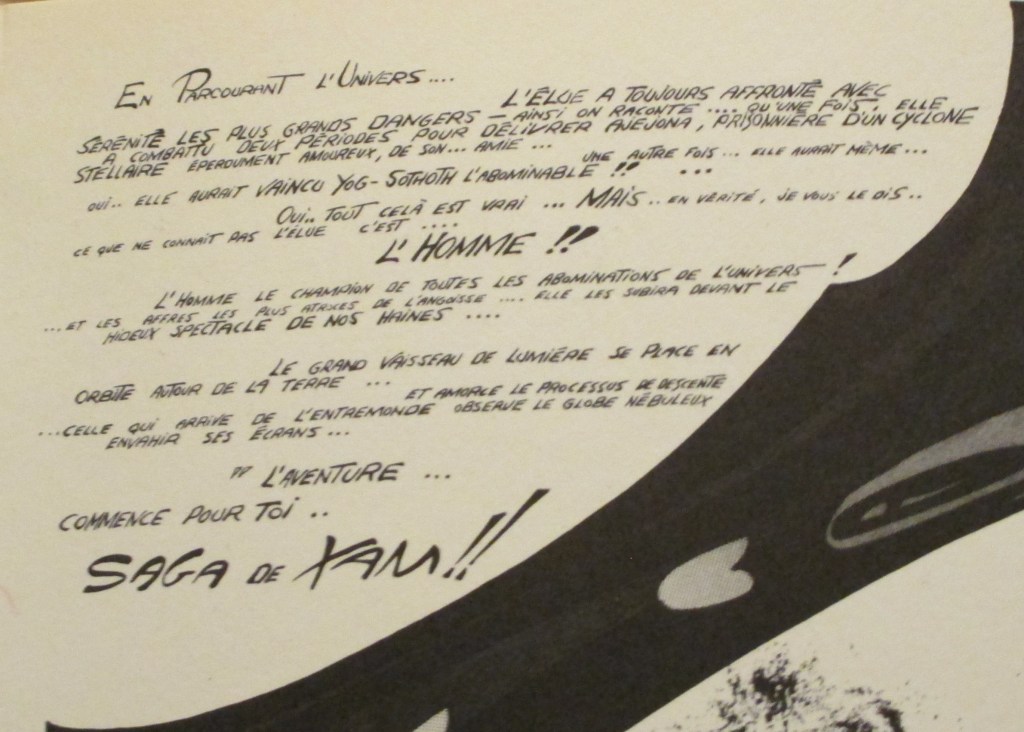
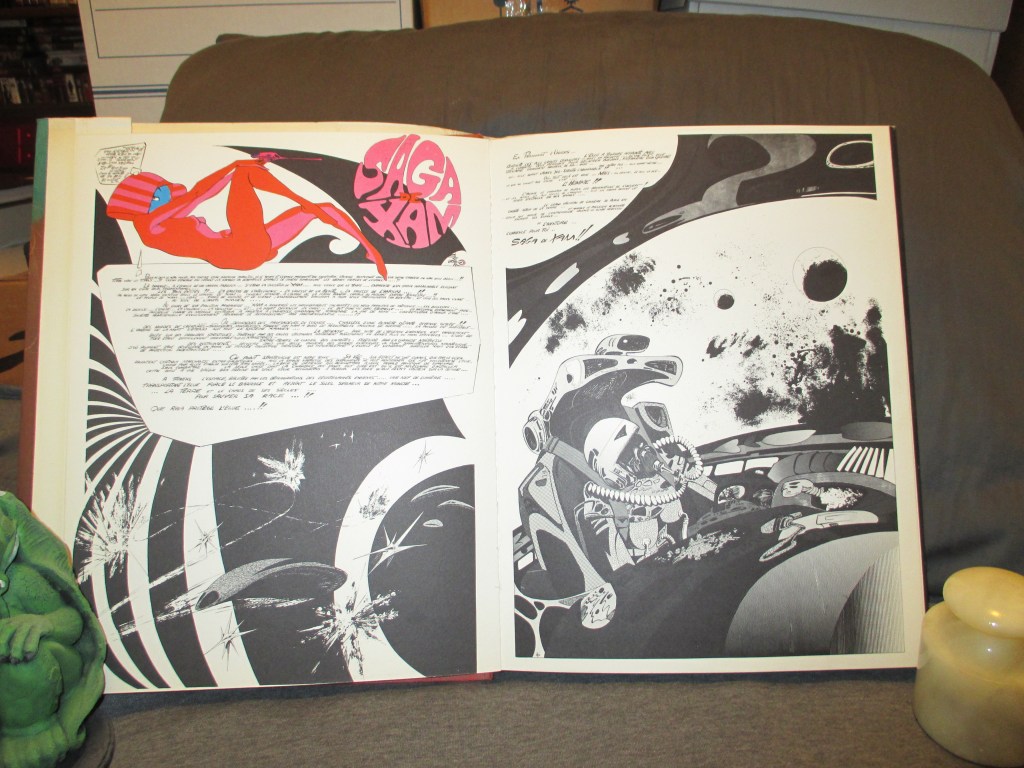
En Parcourant l’Univers . . .

L’Élue a toujours affronté avec sérénité les plus grands dangers—ainsi on raconte . . . . qu ‘une fois, elle a combattu deux périodese fois . . . Elle aurait m pour délivrer ajejona, prisonniére d’un cyclone stellaire éperoument amoureux, de son . . . amie . . .

Une autre fois . . . Elle aurait mème . . . oui … Elle aurait vaincu Yog-Sothoth l;abominable!! . . .

Oui . . tout celà est vrai . . . MAIS … en verité, je vous Le ois . . ce que ne connaître pas l’élue c’est . . . . L’HOMME !!

L’Homme le champion de toutes Les abominations de l’univers—! . . . et Les affres Les plus atroces de l’angoisse . . . . Elle Les subira devant Le hideux spectacle de nos haines . . . .

Le grand vaisseau de lumiére SE place en orbite author de la terre . . .

Et amorle Le processus de descente . . . celle qui arrive de l’entremonde observe Le globe nébuleux envahir ses écrans . . .

L’aventure … commence pour toi . . Saga de Xam!
Traveling the Universe . . .

The Chosen One has always faced the greatest dangers with serenity—thus it is said . . . . that once, she fought twice . . . She would have to free Ajejona, prisoner of a stellar cyclone, desperately in love, from her . . . friend . . .

Another time… She would have even… yes… She would have defeated the abominable Yog-Sothoth!!…

Yes… all this is true… BUT… truly, I tell you… what not knowing the chosen one is… MAN!!

Man, the champion of all the abominations of the universe—! . . . and the most atrocious pangs of anguish . . . . She will endure them before the hideous spectacle of our hatreds . . . .

The great ship of light places itself in orbit above the earth . . .

And begins the process of descent . . . she who arrives from the in-between world observes the nebulous globe invade her screens . . .

The adventure… begins for you . . Saga of Xam!
Saga de Xam (1967), chapter 1English translation

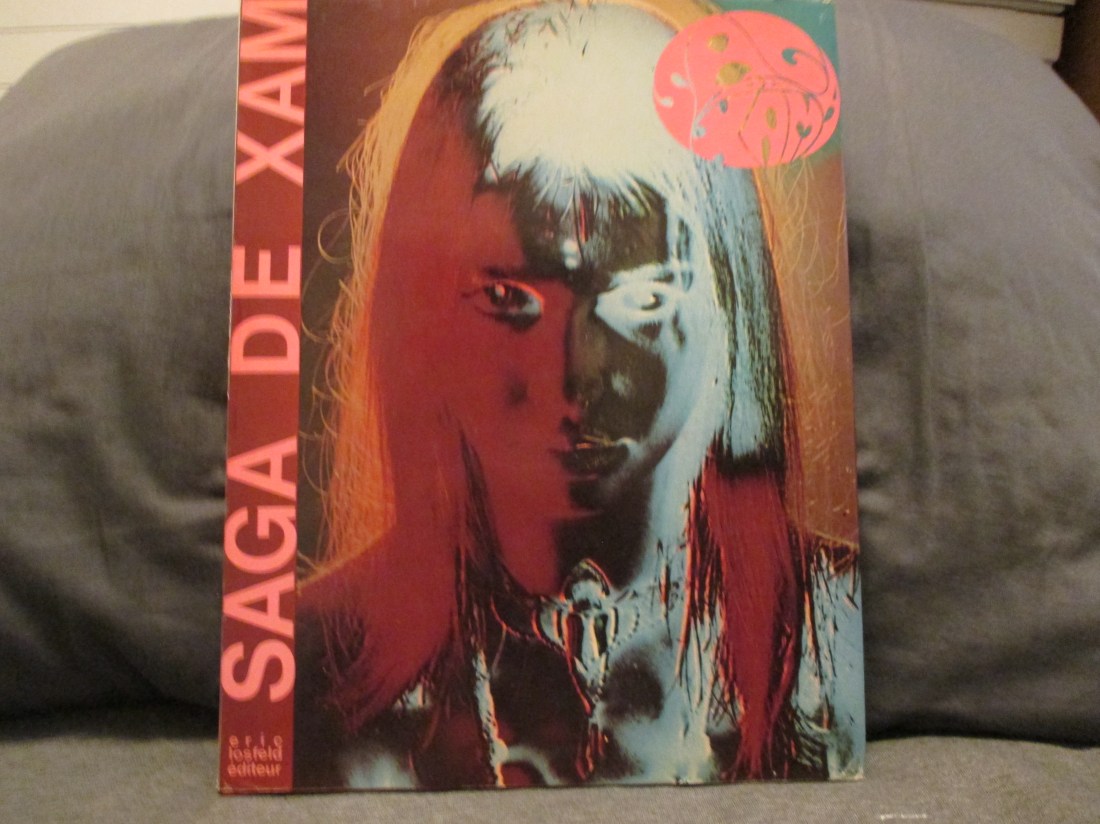
In 1967, French director Jean Rollin had not yet made his mark on cinema. While he had directed a few films, his moody, unconventional erotic horror/fantasies like Le viol du vampire (1968, “The Rape of the Vampire”), La vampire nue (1970, “The Nude Vampire”), and Le Frisson des Vampires (1971, “The Shiver of the Vampires”) all lay in the future. However, he was in contact with Éric Losfeld, a French publisher of literary and artistic works that challenged the sensibilities of the day, including fantasy, science fiction, and erotic comics like Barbarella by Jean-Claude Forest, Lone Sloane: Mystère des Abîmes by Phillipe Druillet, and Phoebe Zeit-Geist by Guy Peellaert, as well as Nicolas Devil (Nicolas Deville), who served as art director for Rollin’s short Les pays loin (1965, “The Far Countries”).

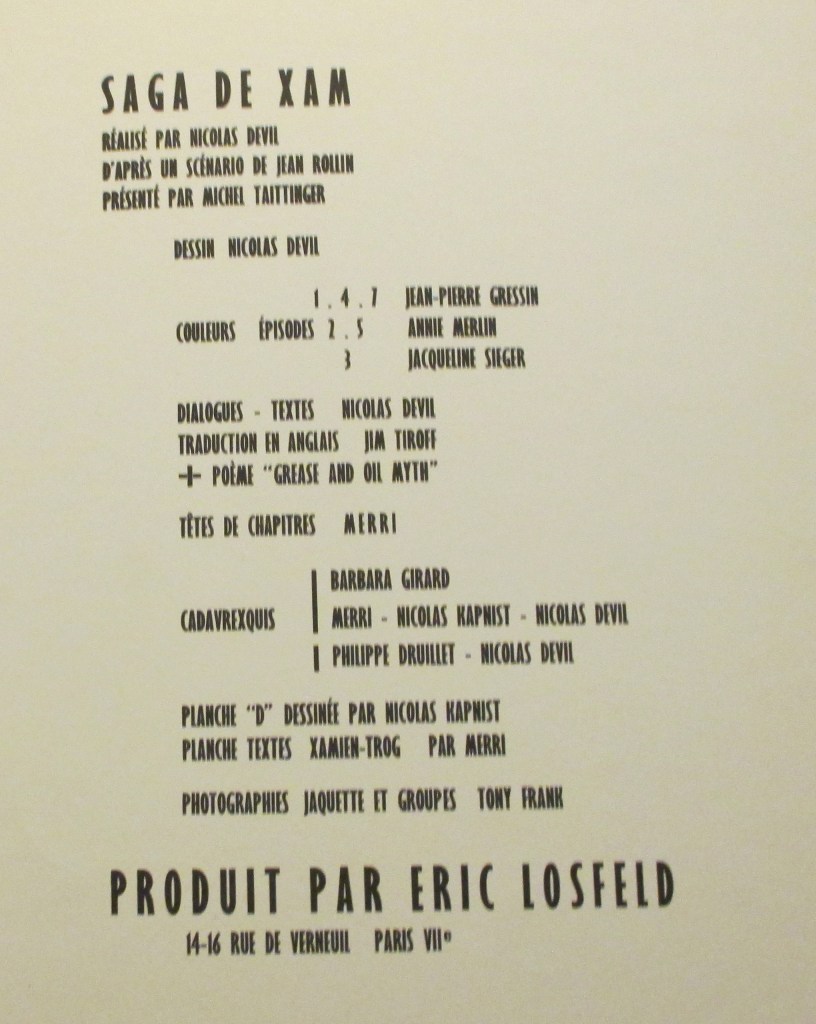
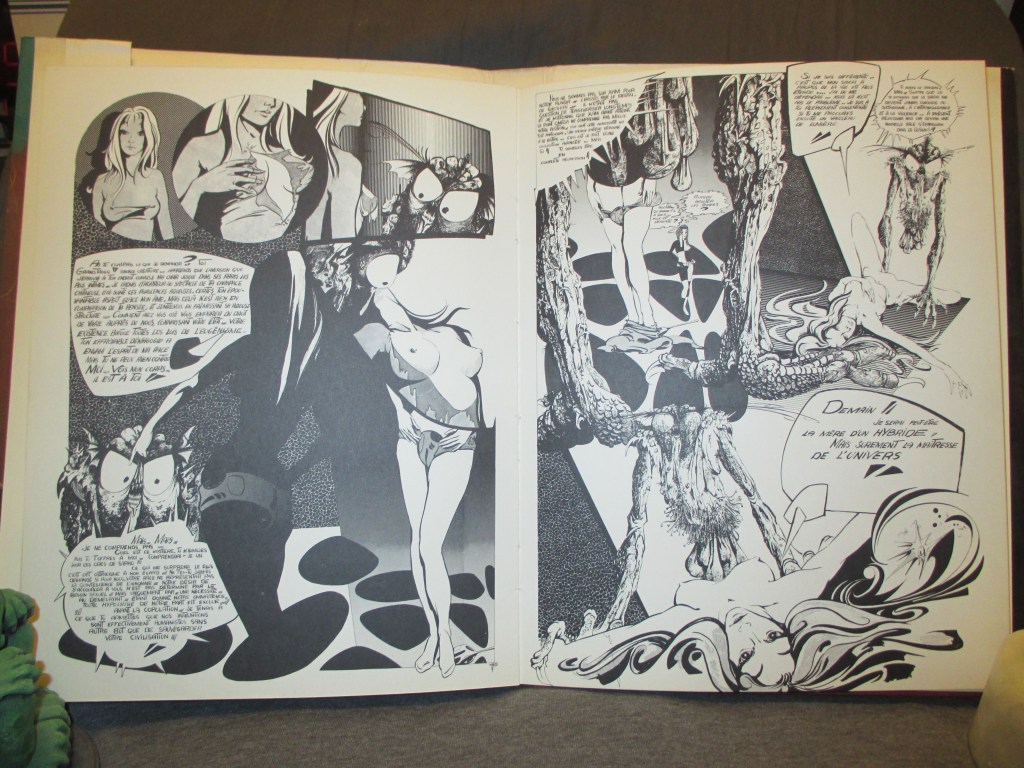
Together, they produced Saga de Xam. Rollin’s scenario had been intended for a science-fiction film that never materialized. Nicolas Devil took that script and realized it artistically. The blue-skinned woman Saga from the planet Xam is on a mission to Earth, and moves through a series of surreal adventures that expose her to the best and worst of humanity in a blend fantasy, science fiction, and eroticism for six chapters, plus a seventh chapter that is largely splash pages. Barbara Girard, Merri, Nicolas Kapnist, and Phillipe Druillet all lend their talents, and actor Jim Tiroff provides a poem in English, “Grease and Oil Myth.” While Devil is the primary creator, the final chapter uses the Exquisite Corpse approach, with creators building on each other’s work.
Credits page
The creative team.

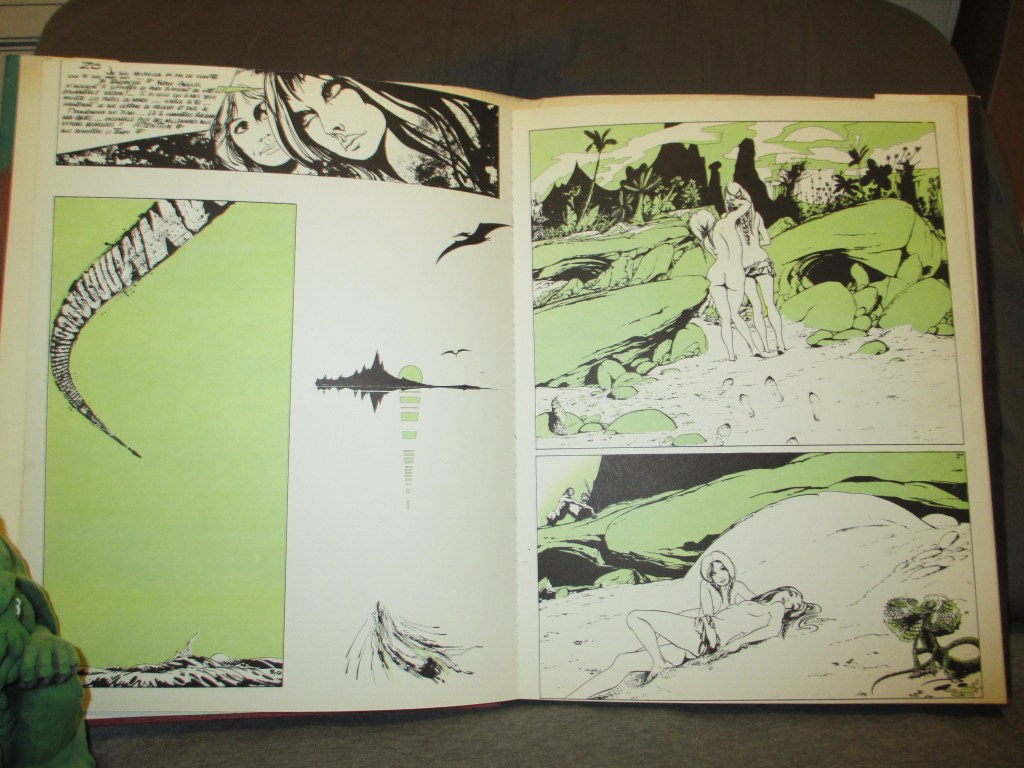
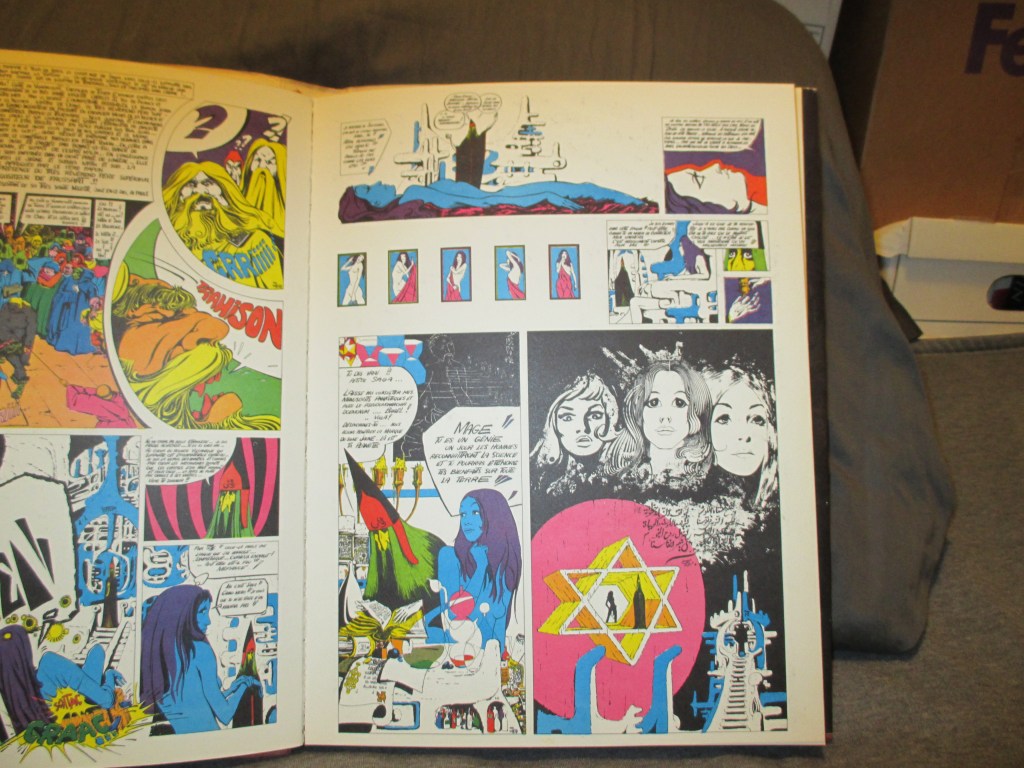
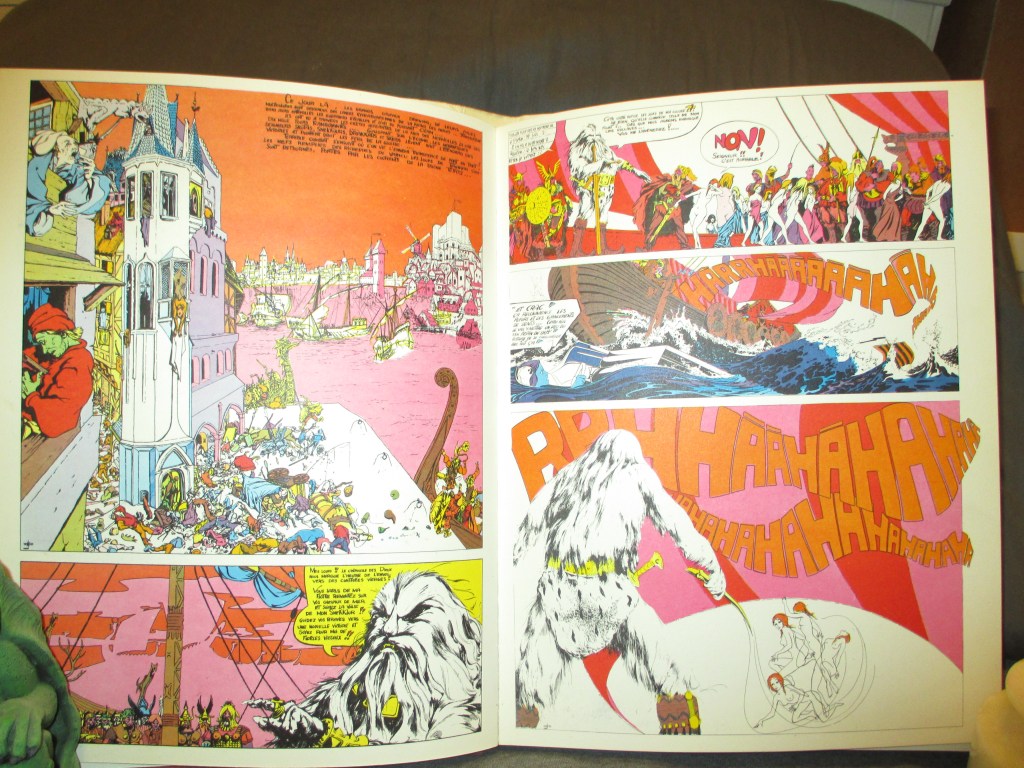
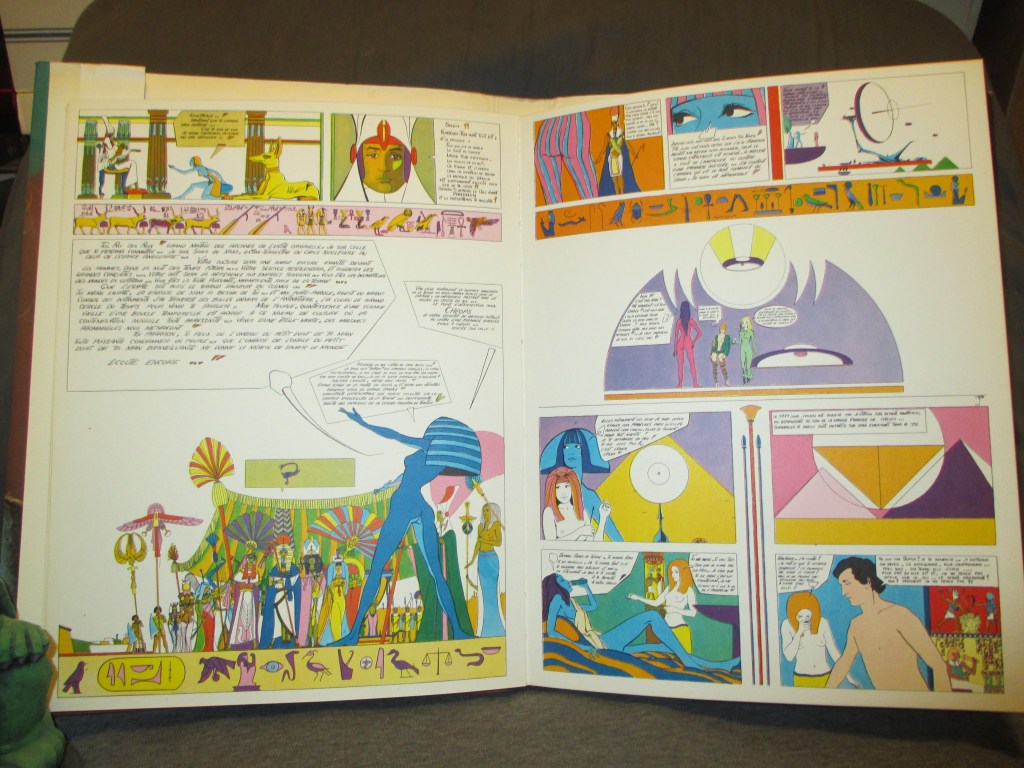
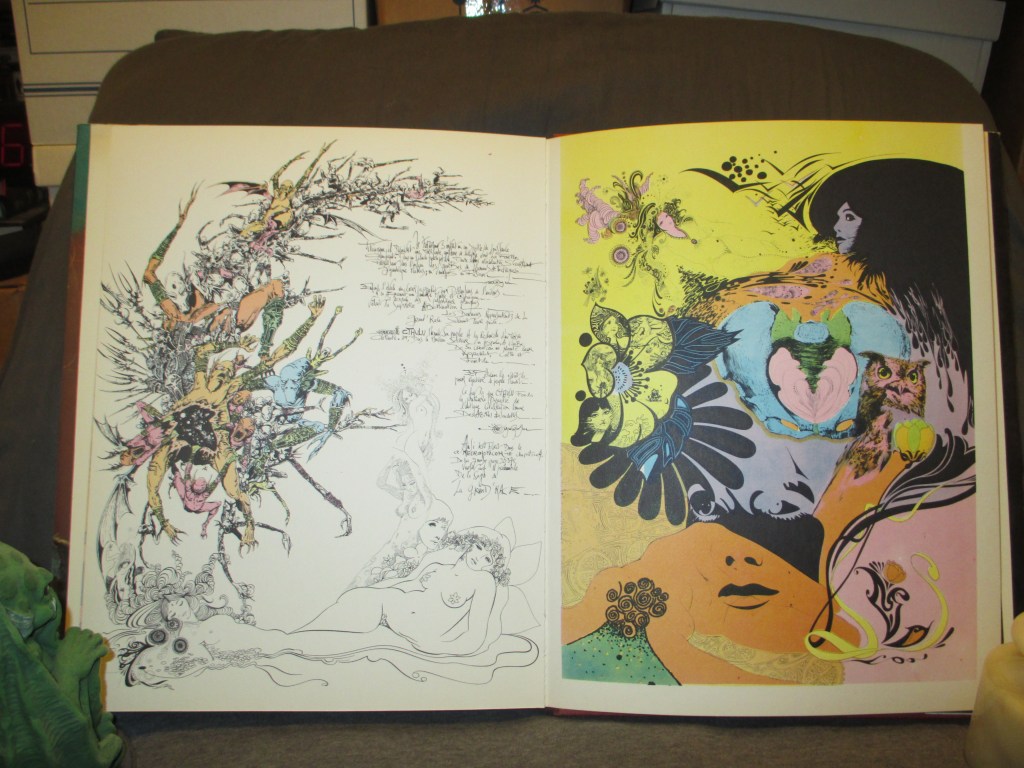
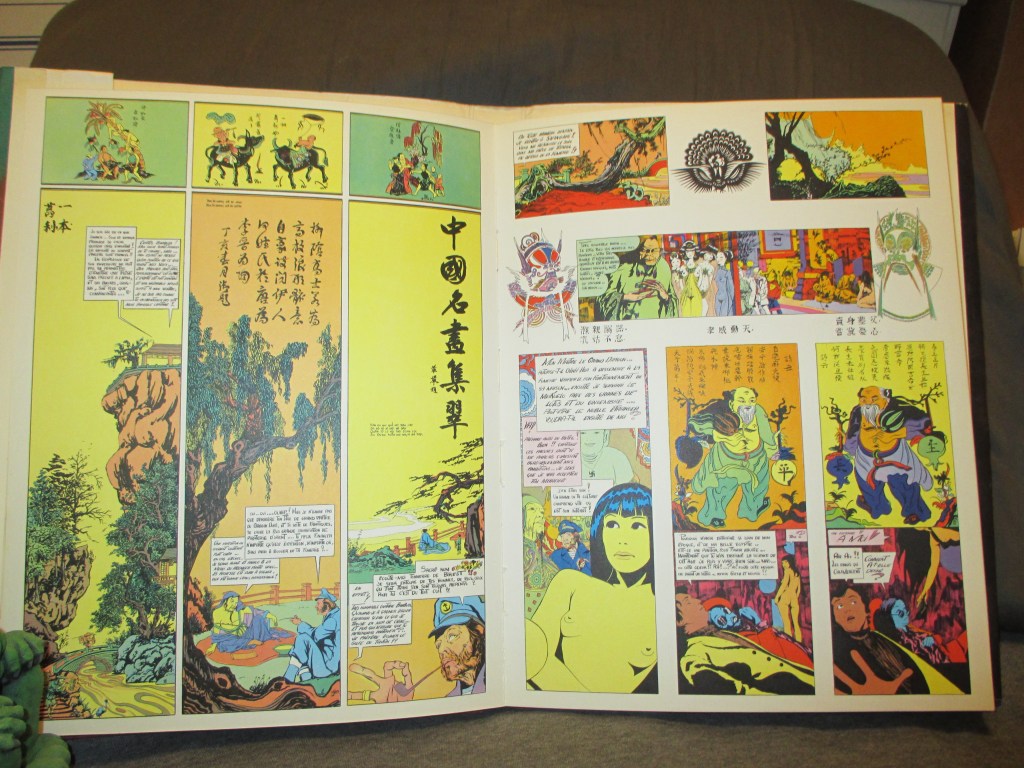
Saga de Xam was released as a single large hardbound album by Éric Losfeld in 1967. Because it was drawn on large boards and reduced to fit the page size, some of Devil’s hand-lettered text is very difficult to read without a magnifying glass, but the overall production quality was high, with excellent print quality and vibrant colors. It was in every sense of the word an avant-garde production, a psychedelic graphic novel that played with all manner of artistic styles, techniques, layout, coloring, and storytelling. Published in an edition of 5000 copies that quickly sold out, the book was somewhat legendary until relatively recently: there were reprints in 1980 and 2022, and an English translation is due for release in 2025.

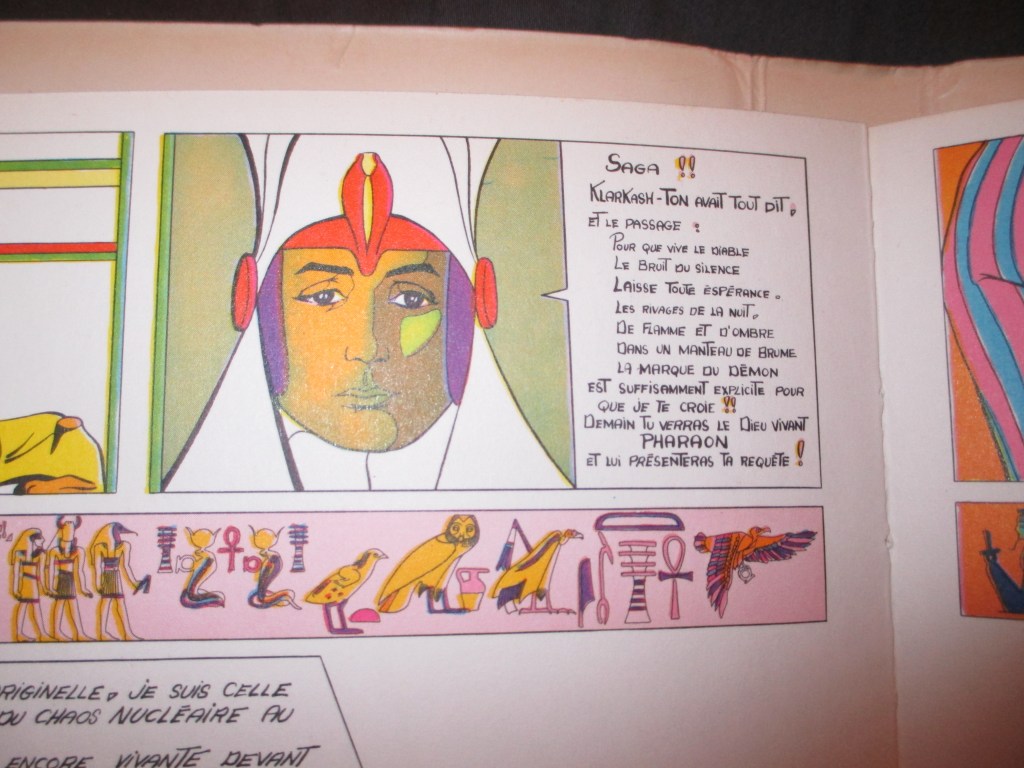
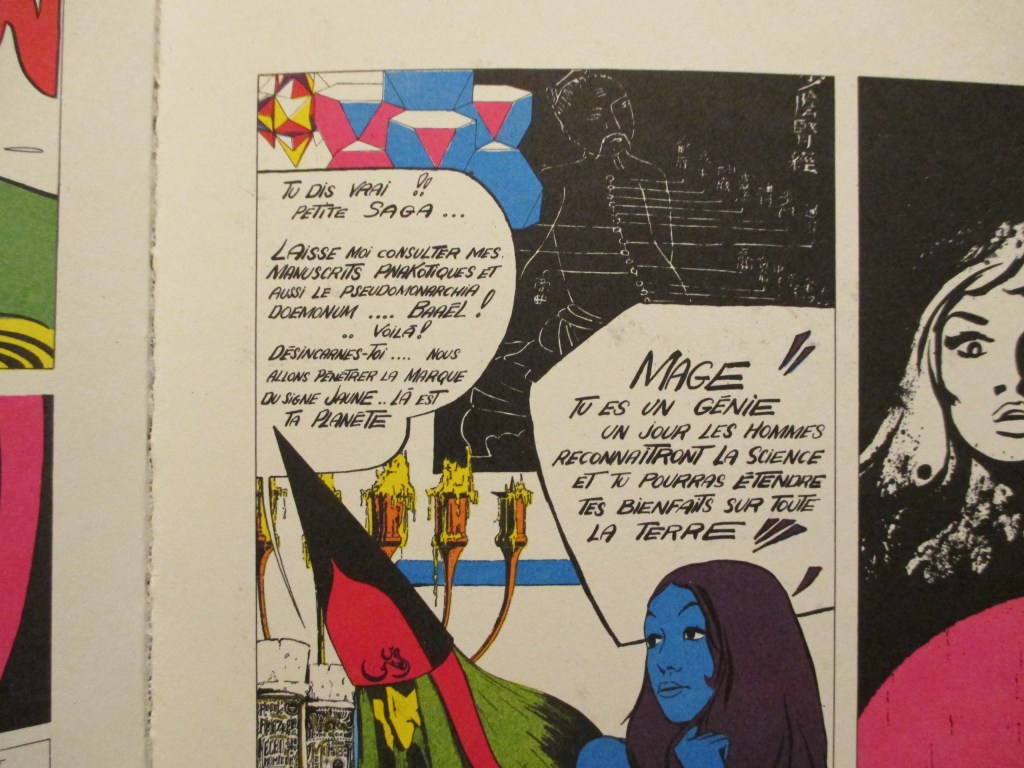
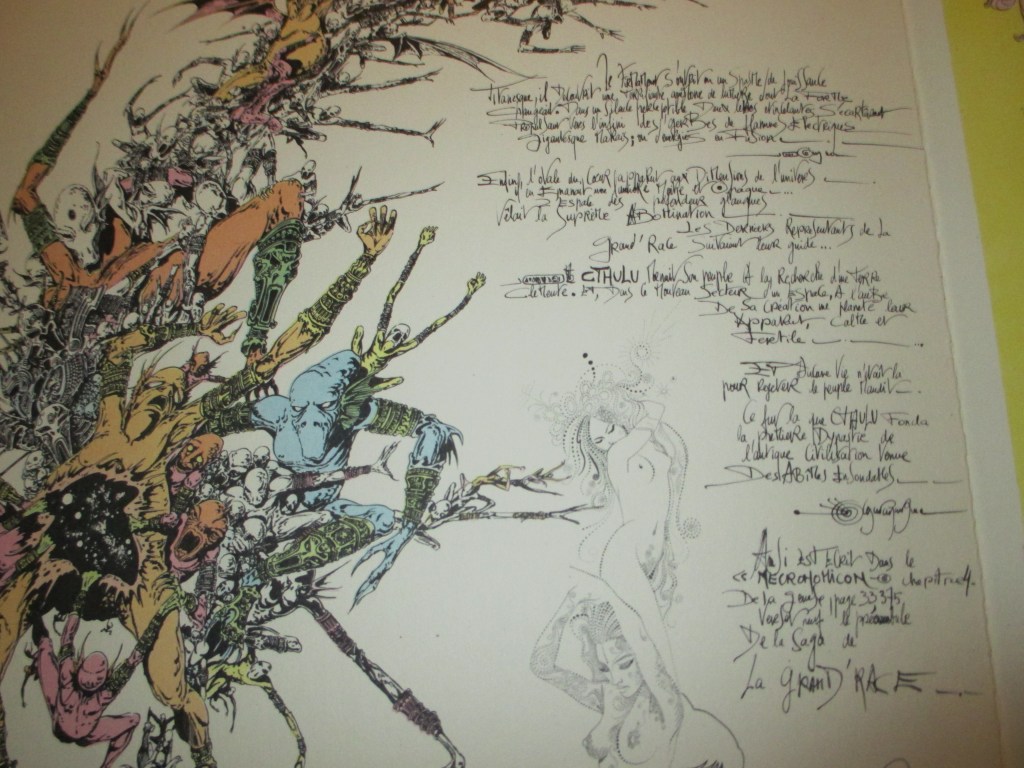
Lovecraft’s Mythos are subtly but consciously present in the text, woven into the storyline at different points. At one point, for instance, Saga encounters Abdul Alhazred; in another, a poem by “Klarkash-Ton” is quoted:

Klarkash-Ton avait tout dit, etc Le passage:

Pour que vive le diable
Le bruit du silence
Laisse toute éspérance.
Les rivages de la nuit,
De flamme et d’ombre
Dans un manteau de brume
Le marque du démon
Klarkash-Ton has said it all, and the passage:

Long live the devil
The sound of silence
Leaves all hope.
The shores of the night,
Of flame and shadow
In a cloak of mist
The demonic mark
Saga de Xam (1967), chapter 4English translation

While such blank verse isn’t a translation of any poem of Clark Ashton Smith’s that I could find, it is a nice homage to the master of Averoigne. There are several other references scattered throughout the book, not necessarily playing a large part in the proceedings but adding to the charm for fans of the Mythos. Among Fruillet’s pages in chapter 7 is one ripped straight from the Necronomicon, or at least definitely in keeping with the pages that would be published in the Métal Hurlant/Heavy Metal/Metal Extra Lovecraft Special a few years later. It’s tempting to speculate that all the Mythos elements in the book might come from Druillet’s contributions, but it is impossible to tell on such a collaborative work.

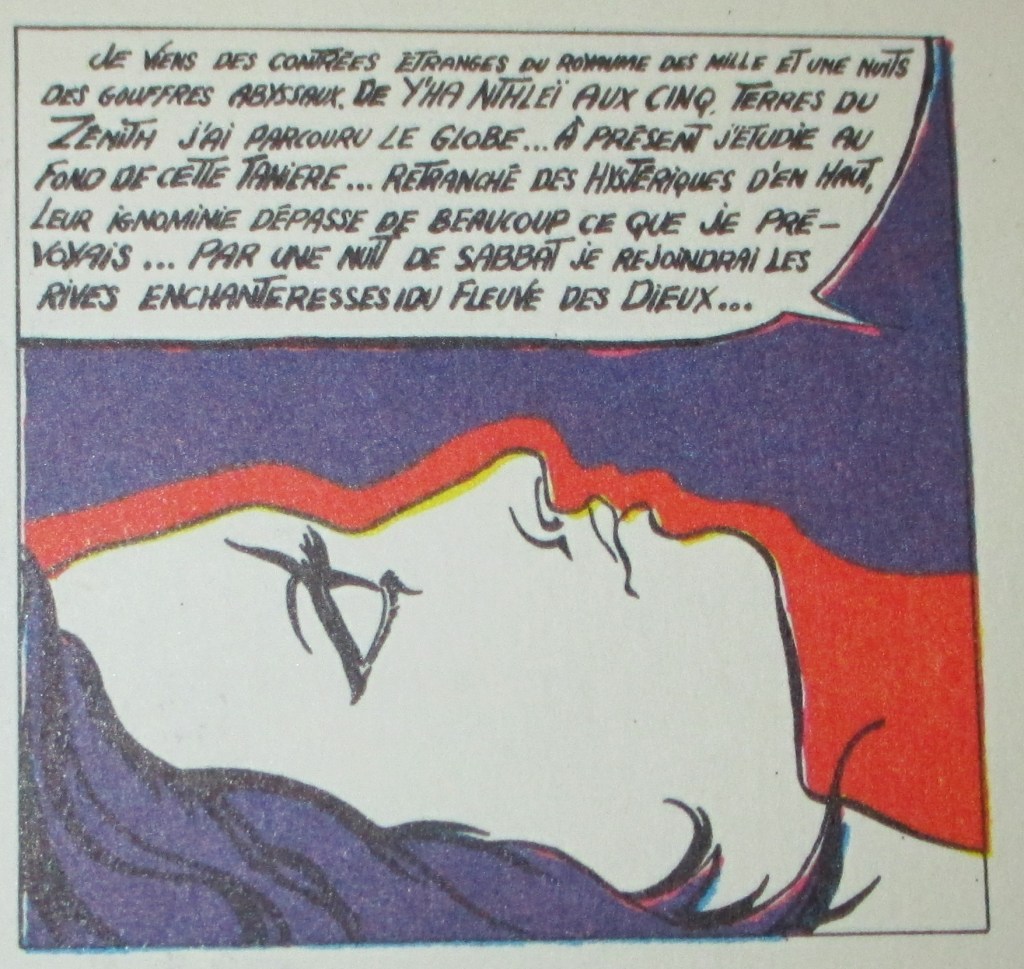
Abdul Alhazred name-drops Y’ha-nthlei from “The Shadow over Innsmouth”
Abdul Alhazred consults the Pnakotic Manuscripts

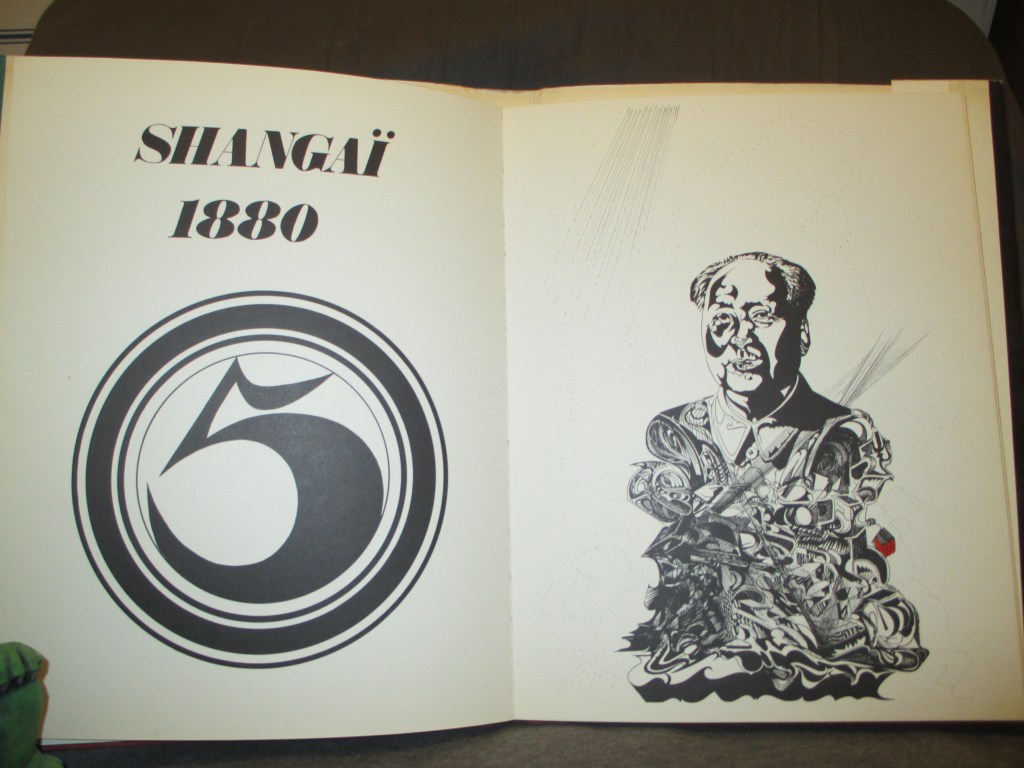
The visual style and politics are both very ensconced in the 60s counterculture; Saga is often nude but rarely powerless, violently rejecting rapists, leading women to free themselves, and developing love affairs with other women. There is a certain quirky mid-century aspect to the depictions, for example. Chapter 5 is specifically set in China, and the color tone literally renders the Asian women yellow, just as Saga is depicted as blue.

The ending is also a bit stark; when the hideous and violent Troggs invade, rather than destroying them Saga chooses to make love, not war—literally, by conceiving a hybrid child with the Grand Trogg. In an era dominated by the Vietnam War, the idea of finding a peaceful means of coexistence had its appeal.

That, then, is the story of Saga of Xam: to learn that love and sex should be given freely, not taken by force.

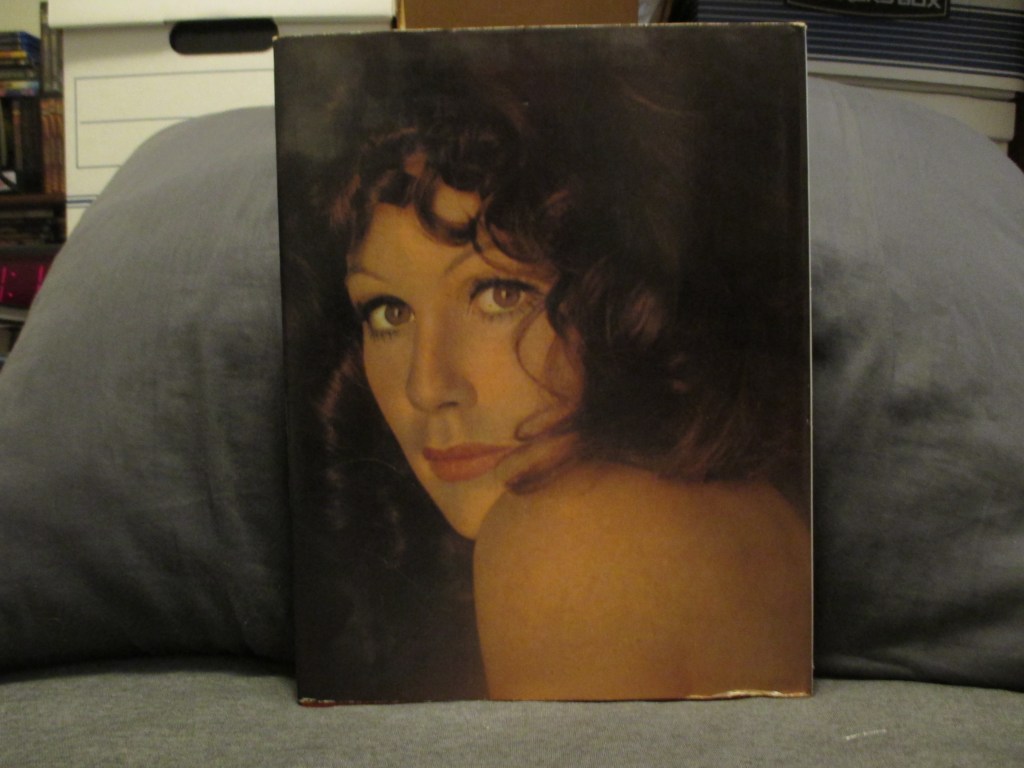
Back cover of the first edition.

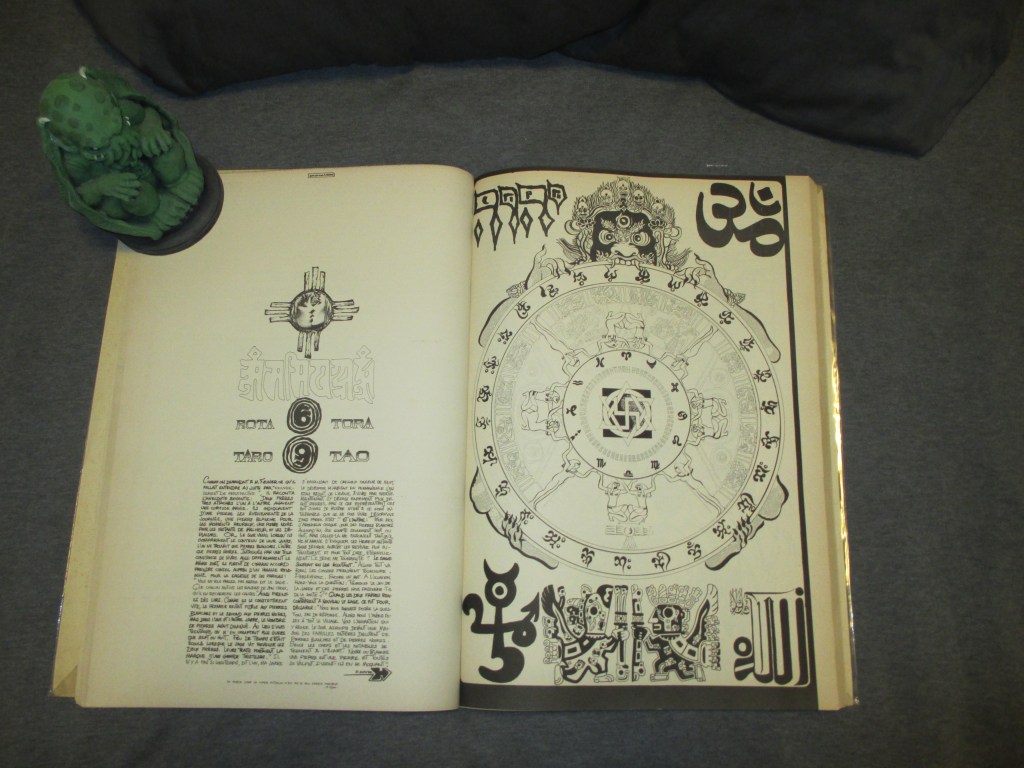
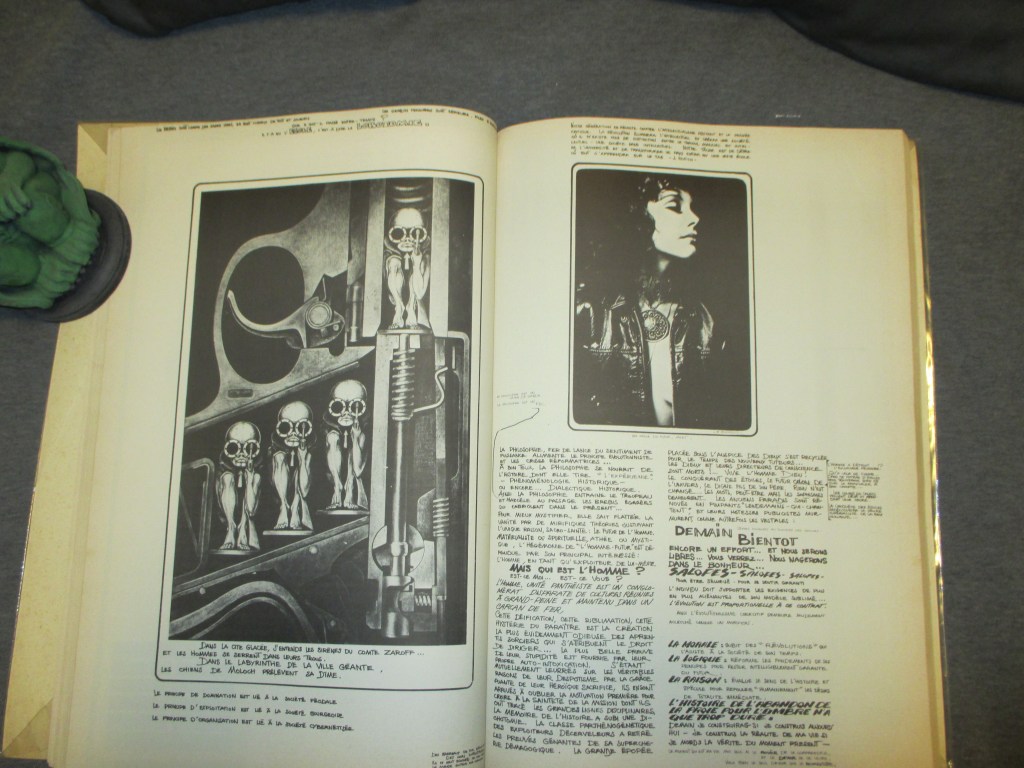
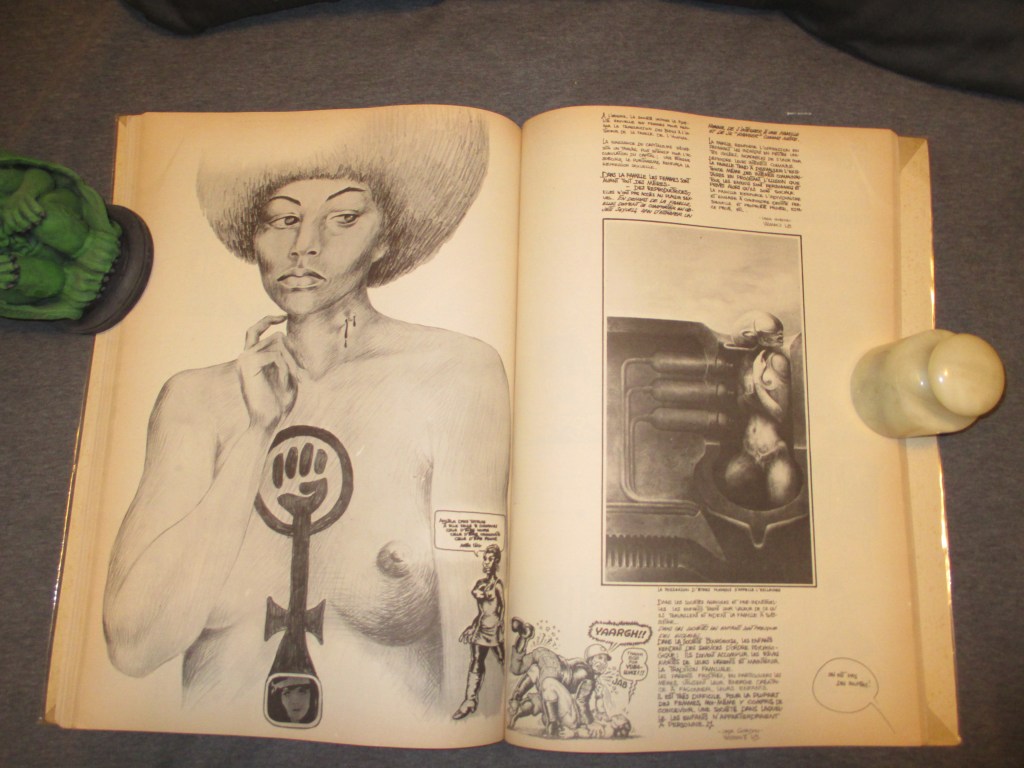
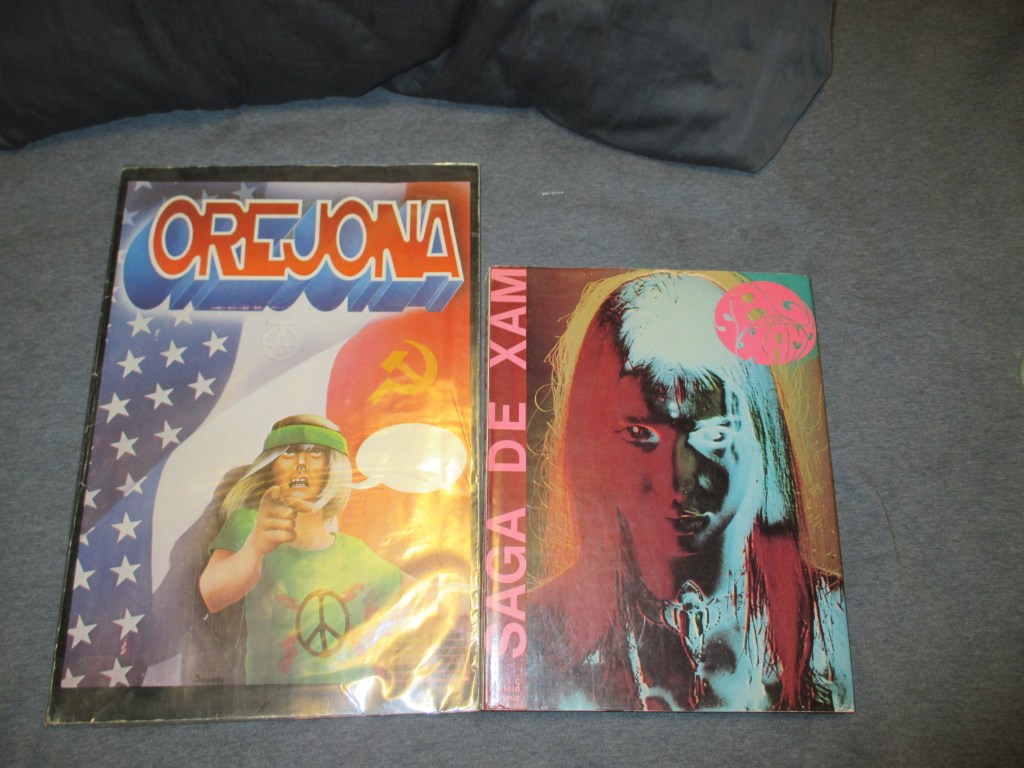
Nicolas Devil had another major graphic novel, Orejona ou Saga Generation (1974), in the form of an enormous softcover with soft paper. Despite the name, there is no direct connection to Saga de Xam except philosophically, continuing the countercultural vibe. Stylistically, it is another masterpiece of the moment, a collage of American underground comix, newsprint, original art, photographs, occult designs, and even some H. R. Giger thrown in for good measure, but there is no explicit Mythos material that I can see.

While the original Saga de Xam and its 1980 reprint remain scarce, the 2022 French reprint and the 2025 English translation remain available, and hopefully this book will continue to find an appreciative audience as something more than a scarce collector’s item.


Bobby Derie is the author of Weird Talers: Essays on Robert E. Howard and Others and Sex and the Cthulhu Mythos.

Deep Cuts in a Lovecraftian Vein uses Amazon Associate links. As an Amazon Associate I earn from qualifying purchases.