Os Mitos de Lovecraft (2020) is a crowdfunded Brazilian black-and-white graphic anthology edited by Douglas P. Freitas and published by Skript, probably best known for the deluxe hardcover edition which has a cover modeled on the bound-in-human-skin Necronomicon ex Mortis from Evil Dead 2 and Army of Darkness. Like its fellow Brazilian Lovecraftian anthology O despertar de Cthulhu em Quadrinhos (2016), while there is a common theme in terms of subject, the style and tone of the individual works inside varies considerably. Every style of comic art and horror can be represented under the broad remit of Lovecraftian comics, from straight adaptations of Lovecraft in exquisite realistic depiction to splatterpunk-esque gore fests with plenty of airbrush-style gore streaks to lighter works with more cartoonish tentacled Cthulhu-esque characters.
The anthology begins with an absolute masterpiece in two pages, by Argintenean artist Salvador Sanz, which originally appeared in the Spanish-language graphic horror anthology Cthulhu 23; for this anthology, it was translated into Brazilian Portuguese by Aline Cardoso and re-lettered by Johnny C. Vargas. This is a distillation of “Out of the Æons” (1935) by Hazel Heald & H. P. Lovecraft, subtracting all the human characters, the drama, and the fantastic history deciphered from the scroll in exchange for focusing on a masterful rendering of the mummy who caught a glimpse of Ghatanothoa—and paid the price.
In a cinematic journey, the reader is taken closer and closer to the ancient petrified horror. The panels zoom in on the one eye that peeks out between gnarled fingers. To the dark image that is still captured there, on the retina. The detail on the art, the pacing, and the execution of the concept, which boils down the essence of the Lovecraft/Heald horror story into two pages, is exquisite.
※
Freitas’ own contribution to Os Mitos de Lovecraft is “Sob As Trevas” (“Beneath the Darkness”), in collaboration with illustrator and comic creator Chairim Arrais. This is a tongue-in-cheek 8-page sword & sorcery story involving a nameless Cimmerian warrior and their female partner Ruivas (“Red”/”Red-hair”). Freitas & Arrais are clearly referencing Robert E. Howard’s most famous creation, Conan the Cimmerian, and aren’t coy about it:
Em algum lugar às margens do rio Estígio, sul da Aquilônia, ‘entre os anos em que os oceanos beberam a Atlântida e as cidades reluzentes, e os anos da ascensão dos filhos de Aryas’. Dois guerreiros buscam conforto após uma fuga.
Somewhere on the banks of the River Styx, south of Aquilonia, ‘between the years when the oceans drank Atlantis and the gleaming cities, and the years of the rise of the sons of Aryas’. Two warriors seek comfort after an escape.
“KNOW, oh prince, that between the years when the oceans drank Atlantis and the gleaming cities, and the years of the rise of the Sons of Aryas […]” —Robert E. Howard, “The Phoenix on the Sword”
The character Ruivas is depicted similarly to the eponymous character in Arrais’ standalone comic “Red+18”; whether this is intended as an unofficial crossover, an Easter egg for fans of Arrais’ work, or just a coincidence—the character could as easily be a play on Red Sonja for the Marvel Comics, albeit sans the trademark mail bikini—is unclear, and maybe unimportant.
The story itself is fairly slight and straightforward: after successfully stealing a jewel, the pair of thieves hide out in a convenient cavern…which ends up being occupied by some nameless eldritch horror.
The story really wanted more pages; there’s little opportunity to really develop any atmosphere before the tentacles emerge from the darkness, and the action sequences are correspondingly cramped and staccato-like, crammed into increasingly more panels per page. With the in media res debut, the titillation, and the swift conclusion, this is strongly reminiscent of the kind of back-up feature that sometimes ran in Savage Sword of Conan, more of a sketch of an interlude than a full-fledged story.
Yet what there is there is fun. The writing is light-hearted, the chemistry between legally-not-Conan and Ruivas is alternately playful and rocky, and Arrais’ artwork does everything the script calls for. The brief sword & sorcery interlude sets a different tone than the other stories in the anthology, featuring more sex and action than horror or outright comedy. While I would have liked for it to delve more into the Howardian vibe of horror that permeated tales like “Xuthal of the Dusk” or “Red Nails,” limitations of space have to be acknowledged. Still, it would be nice if Freitas & Arrais had the opportunity to revisit the idea at a longer length more suitable to develop the characters and story at some point.
Catherine Lucille Moore was a contemporary and correspondent of Robert E. Howard and H. P. Lovecraft; she was published in the same pulp magazine, Weird Tales, even collaborated with them on the round robin “The Challenge From Beyond” (1935). Her first story, “Shambleau” (1933), was an immediate hit with readers and weird fiction writers alike, and introduced the world to Northwest Smith, who would go on to star in a series of tales from Moore’s typewriter. Her next creation for Weird Tales, the flame-tressed swordswoman Jirel of Joiry in “Black God’s Kiss” (1934), was hailed as a female Conan.
In general outline, the Conan and Jirel publishing timeline largely lines up as well. Conan’s last original story in Weird Tales was in 1936; Jirel’s in 1939. Gnome Press published the first Conan hardcover in 1950, and the Jirel hardcover collection in 1954; paperback reprints for both appeared for both characters in the 60s as part of the general paperback Sword & Sorcery/fantasy boom. Sure, there were more Conan stories and they were more popular—is that the only reason why Robert E. Howard’s Conan the Cimmerian got the big break into comics when Jirel didn’t?
The boring, practical answer is probably “money.” Licensing a character, even an old pulp character, costs money, and anyone who did want to license Jirel for comics would have gone through C. L. Moore’s agent. Even relatively big publishers like Marvel had to balance cost versus popularity; according to Roy Thomas in Barbarian Life vol. 3, Marvel first approached Lin Carter’s agent about licensing Thongor of Lemuria because they thought Conan would be too expensive. Demographics might also have played a role; women warriors in fantasy have a long history, but in print and in comics, male characters dominated, as Nancy Collins noted when a very different red-haired swordswoman hit the page:
I was thirteen years old when I first saw Red Sonja. It was her debut appearance in the Conan the Barbarian comic book written by Roy Thomas and illustrated by Barry Windsor-Smith, back in 1973, and she was wearing a slightly more practical scale-mail tunic and leather hot-pants ensemble, but all the elements of her basic personality were there: bravery, skill with a sword, and the brashness necessary to go make a name for herself in the savage, male-dominated world of Robert E. Howard’s Hyborian Age.
She immediately grabbed my attention because there were so few strong female heroic characters back then, not just in comics but popular culture in general. (Moreover, the fact this outspoken and capable woman of action and I shared the same hair color did not hurt.) [I]t may be hard for today’s audience to understand, but in the 1960s and 1970s, with the notable exception of Wonder Woman and the Black Widow, most of the female characters in comics were either the girlfriends/wives whose role was to be menaced and/or kidnapped by the arch-nemesis of their heroic Significant Other (Lois Lane, Iris Allen, Gwen Stacy), young and far less seasoned distaff versions of well-established male heroes (Supergirl, Batgirl, Hawkgirl, Mary Marvel), superheroines with powers that precluded physical strength (Saturn Girl, Marvel Girl, Sue Storm, Dream Girl), or were symbolically devaluing (Shrinking Violet, The Wasp.)
Red Sonja as a property has enjoyed on-again/off-again success; the audience for a strong female character-led fantasy comic has been there since she first debuted, but the will and ability to keep her published in her own ongoing series hasn’t always been. Other swordswoman characters spun off from Conan like Age of Conan: Bêlit (2019, Marvel), Age of Conan: Valeria(2020, Marvel), and Bêlit & Valeria: Swords vs. Sorcery (2022, Ablaze) have enjoyed much less success in standalone miniseries—and maybe Jirel of Joiry would suffer the same fate, not quite clicking with audiences. It has to be remembered that of the thousands of characters created for pulp and magazine fiction, only a rare few like Doc Savage, Tarzan, The Shadow, Conan the Cimmerian, and Elric of Melniboné enjoy long-term popular and economic success.
So where does that leave Jirel? In the hands of the fans.
Jirel of Joiry: Into The Violet World (1987)
JIREL OF JOIRY: INTO THE VIOLET WORLD
Panel 1: Over Guiisard’s [sic] fallen drawbridge had thundered Joiry’s warrior lady, sword swinging, voice shouting hoarsely inside her helmet. For a while there was umult unspeakable. There under the archway, the yellow of fighting men and the clang of mail on mail and the screams of stricken men.
Jirel’s swinging sword and her stallion’s tramping feet had cleared a path for Joiry’s men to follow and at last into Guisard’s court poured the steel-clad hordes of Guisard’s conquerors.
Panel 2: She had waited impatiently in the courtyard until she had finally dismounted. Throwing her helmet away from her and her eager angry voice echoing hoarsely in the courtyard.
Jirel: Giraud! Make haste, you varlets! Bring me Giraud!
Panel 3: There was such bloodthirsty impatience in that hollowly booming voice that the men who were returning from searching the castle hung back as they crossed the court toward the lady in reluctant twos and threes, failure eloquent on their faces,
Below: Based on a story ‘Jirel Meets Magic’ by C. L. Moore
This piece came to me via eBay, the only comic art of Jirel I’d ever seen, and illustrating a bit of her third adventure “Jirel Meets Magic” (Weird Tales July 1935). For a couple years I’ve just enjoyed it, but eventually I decided to look up the artist—easy enough as it’s signed and dated—and was surprised to find out that it is author C. L. Bevill. Even better, she was willing to answer a few questions about this piece, how it came to be, and how I ended up with it:
When my sister and I were kids in the 70s we loved, loved, loved all things sword and sorcery. Conan, Robert Howard, Lord of the Rings, you name it. Both of us were artists and we did our own comics. So one of our favorite authors was C.L. Moore, who was a pulp writer in the 30s. Her most famous work is the Jirel of Joiry stories. I think she did those as a serial. (Forgive me if you’ve already looked up the information.)
I believe I did the piece for my sister as a birthday gift, but I don’t recall exactly. I don’t think she liked it but she was too nice to say anything. She died in March 2020 and I found the piece in her stuff, hidden away with a few other things she didn’t like from me. (I don’t hold it against her.) So I cleaned out her stuff after she died and was completely overwhelmed. (If you noticed the date, it was right at the beginning of Covid and she probably died from that.) Her landlord offered to take care of all the stuff and subsequently either sold it in a yard sale or gave it to charity. So if you got it from Washington state that’s likely how it ended up on ebay.
[…] if it’s still in a silver frame, there’s some comic artwork on the inside of the back there that I stuck in there for my sister. It was stuff we did as kids. I’m curious if it’s still there. […] Oh, we were incurable romantics as kids so the comic art in the back is something from a movie we liked as kids. Grayeagle. Terrible movie but we were very young.
C. L. Bevill, personal communication
That last note made me curious as well, so I popped open the frame:
Note: “Sure can tell where your artwork stopped & mine began. Love you, C”
On the back of the piece is a faint inscription:
To Cat, with Love your sister Caren Dec 25th 1987 —one year too late Sorry Dec 25th 1988 Still Love you Cackie!
Close-up detail.
It is a lovely piece of fan-art, and I’m glad to finally have the story behind it—and the secret it has been hiding all these years.
“Werewoman” (1994)
By a quirk of publishing, “Werewoman” (1938) by C. L. Moore was first published in a fan-magazine, and fell into the public domain. This fact was not immediately recognized for some decades, but the ever-enterprising fan/scholar/anthologist Sam Moskowitz took advantage of this lapse to to republish it (without Moore’s permission or compensation) in his anthology Horrors Unknown (1971). While this has widely been considered as somewhat uncouth, it was technically legal—and if Moskowitz could do it, so could anyone else.
So it was in 1994 “Werewoman” was adapted to graphic format for Savage Sword of Conan #121 (May 1994). Roy Thomas provided the script, Robert Brown, pencils; Rey Garcia, inks; and Susan Crespi, lettering. Originally a story of Northwest Smith and set on Mars, the revamped story was adapted to feature Robert E. Howard’s Conan the Cimmerian in place of Smith, and the setting changed to a rather generic fantasy corner of the Hyborian Age.
Roy Thomas was at this point a veteran hand at such adaptations. When he had started out writing Conan the Barbarian for Marvel, it had been adapting Howard’s original stories and filling in the gaps on his own; later the series would adapt works by other authors, either non-Howard Conan stories like Lin Carter and L. Sprague de Camp’s novel Conan of the Isles (1968), which became a graphic novel of the same name, or non-Conan fantasy stories such as Gardner F. Fox’s Kothar and the Conjurer’s Curse (1970), which became Conan the Barbarian #46-51.
So why do C. L. Moore?
1994 was well into the Dark Age of Comics, and Robert Brown’s artwork is strongly reminiscent of Rob Liefeld’s work on X-Force and Youngblood, but aggressively 90s as it is, and lacking the more somber depth of shadow or evocative linework that characterized many of the better stories in Savage Sword, it kind of works, especially with Rey Garcia’s inks adding some real depth and definition to the lines.
While it may seem odd to adapt a Northwest Smith story as a Conan tale—imagine replacing Harrison Ford with Jason Mamoa in Star Wars—the hazy, dreamlike atmosphere of the story lends itself well to a kind of fever-dream episode in the adventures of everyone’s favorite Cimmerian, while the inherent wildness of running with the pack is almost more suitable to Conan than to Smith. As a Conan story, it’s middling; as a C. L. Moore adaptation, it’s better than nothing—which is, by an large, what readers have lived with.
Aside from these two works, there is little else to say about C. L. Moore in the comics. A few early horror comics may be unofficial adaptations of or inspired by her works, though this is based on similarity of plot more than anything else. There is another notable graphic adaptation of C. L. Moore’s “Shambleau” that was published in France in 1955, but that is worthy of a longer and more in-depth look on its own.
In the years before Seduction of the Innocent and the rise of the Comics Code Authority (1954), there was an age undreamed of… Garish four-color comics of crime, horror, science fiction, the occult, and the weird filled the newsstands. The comic book had emerged as a definitive form in 1934, at first reprinting newspaper comic strips, but soon comic magazines emerged featuring original material. While the Golden Age of Comic Books is usually said to have begun with the advent of Superman in Action Comics #1 (18 April 1938), the lucrative field swiftly diversified into many different genres, not just superheroes. In the 1940s and 50s, one of the most notable and notorious genres was the horror comic.
Early comic books shared a great deal of crossover with the pulp magazines, including artists, writers, editors, and even publishers. Harry Donenfeld was the entrepreneur behind the Spicy pulp magazines that published Robert E. Howard and E. Hoffman Price—and the same magazines also published comic strips such as Olga Mesmer, The Girl with the X-Ray Eyes; Sally the Sleuth; and Polly of the Plains. Donenfeld would later expand his enterprises into the burgeoning field of comics in the mid-30s with Detective Comics, Inc.—known better today as DC Comics.
Around the same time, future Marvel Comics publisher Martin Goodman edited horror pulps. Julius Schwartz, the science fiction fan who acted as Lovecraft’s agent for At the Mountains of Madness and The Shadow Out of Time, became an editor for DC; Weird Tales writers Frank Belknap Long, Jr., Otto Binder, and Manly Wade Wellman, among others, all wrote comic book scripts. Weird Tales artists Virgil Finlay, Matt Fox, and Frank Kelly Freas worked in comics too. So when it came time to bring their skills to comics, many of the people involved with horror comics turned to horror pulps for inspiration.
Sometimes more than inspiration:
The one instance I remember was a very awkward one. It’s curious that I remember the name of the author who complained. It was August Derleth, a well-known horror writer. It was a story in one of our magazines, called “The Ornalean Clock,” and it involved the other staff writer. Mr. Derleth wrote in (it surprised me that he was reading these comic books) and sent us the story that he wrote which was about an Ornalean clock It was clear that it had been plagiarized.
It was very awkward. Richard [Hughes] confronted the writer, who did what plagiarists always do—that is, claimed he must have dipped into his unconscious, he wasn’t aware of it, and so forth. And perhaps the only defense he had was that it was so blatant!
Derleth’s story was “The Ormolu Clock” in Weird Tales January 1950. Derleth’s friend Frank Belknap Long, Jr. had written the first issue of Adventures into the Unknown, the first ongoing horror comic, published by the American Comics Group. Derleth was well-known for his love of comic strips, and no doubt spotted the plagiarism because he followed the horror comics after Long had brought them to his attention. Ironically, it was Derleth who would write a letter to editor Richard Hughes encouraging them to continue to publish horror comics instead of canceling the series (Forbidden Adventures 110-111).
If ongoing horror comics began in 1948 with Adventures into the Unknown, the horror comics craze was kicked off by Crypt of Terror #17 (April/May 1950) from EC Comics—better known today under its later title, Tales from the Crypt. EC’s comic stories were, for the time, often well-written and well-illustrated; they often had a moral, but they could also feature darker twist endings, and a bit of grue. The many imitators of EC were not often as conscientious in their writing or art; much like the pulp magazines, the newcomers often leaned into gore, mutilations, eye gouging, drug abuse, and nasty ends where criminals get away with their crimes.
While individual comic book publishers had their own internal codes of censorship, there was no industry-wide limitation on content except for general statutes on obscenity. So while explicit sex and nudity were largely the province of Tijuana bibles, comic books on the stand could easily present gore, mutilations, dark and mature storylines, mouldering skeletons, vampires, voodoo, cannibalism, and all the rest. Plagiarism, either of published stories or swipes from other artists, was rife. Yet the period ended swiftly.
In 1954, a moral panic swept the United States (and was echoed in the United Kingdom and other countries around the world), spurred on by Frederic Wertham’s Seduction of the Innocent, his many articles in newspapers and magazines, and his testimony before the Senate Subcommittee on Juvenile Delinquency. Other pearl-clutchers and parents groups added their voices, and federal oversight seemed a real possibility—so the major comic publishers came together and formed the Comics Code Authority, whose Seal of Approval would mark approved comics. Not approved? Horror.
The formation of the CCA effectively ended most horror comics publishing in the United States for a generation, and had a chilling effect on comics intended for mature audiences. They would come back—the underground comix of the 1960s and 70s especially paid tribute to EC’s horror comics, and raised a general middle finger to the censorship of the CCA, while major publishers like Marvel and DC would push back little by little with their own horror comics in the 1960s, sometimes sidestepping the CCA by publishing full-sized comic magazines. This would lead to a great flowering of horror comics magazines from publishers like Warren and Skywald in the 1970s and 80s, and lay the groundwork for comics like Heavy Metal Magazine (originally a translation of the French magazine Metal Hurlant).
Ironically, in 1954 Weird Tales also ceased publication, one of the last of the old-time pulp magazines to give up the ghost, unable to compete either against science-fiction digests or the coming men’s adventure pulps that flourished in the postwar era. An entire sub-industry was gutted almost overnight. Former pulp writers and artists who had known, talked, and corresponded to H. P. Lovecraft, who might have adapted his work to a new medium, never got that chance…well, except during the period before 1954.
While there are thousands of pre-Code comic books, there are only a handful of comics that can be positively said to be “Lovecraftian horror,” either because they directly adapt a Lovecraft story or explicitly make reference to Lovecraft’s Mythos. If one were to include other early Mythos writers like Robert E. Howard, the list would be a little longer—“Skull of Doom” in Voodoo Comics #12 (1953), for example, seems to be an adaptation of Howard’s “Old Garfield’s Heart.” But for the sake of keeping this list manageable, here are some positively identified pre-Code Lovecraftian horror comics, many of which are in the public domain and can be read for free.
A Note: Many of these early comics were completed in small studios by teams of writers and artists, working for low rates, and often without credit. As such it is not always clear who exactly worked on many of these comics, but as far as it can be determined, the names of the writers, artists, letterers, etc. will be included below.
Published in Captain Marvel Adventures #1 (Fawcett Publications), this 16-page story of Captain Marvel (now often known as Shazam) was penciled by Jack Kirby and inked by Dick Briefer. The mystic hero finds himself up against one of the undead, and to better understand his foe and their weaknesses, a librarian hands him The Vampire Legend by H. P. Lovecraft. An unlikely title, but a neat homage to Lovecraft!
“Dr. Styx” (August 1945)
Published in Treasure Comics #2 (American Boys Comics Inc.), this uncredited 8-page comic presents an occult thriller whose eponymous hero is an unsung prototype to Doctor Fate, Doctor Strange, The Phantom Stranger, and John Constantine. Whoever the writer was, they must have read more than a little of the Mythos to cite Ludvig Prinn (created by Robert Bloch), Cthulhu, Abdul Alhazred, and the Necronomicon (however misspelled).
Red Dragon (Feb-Mar-Apr 1946)
Red Dragon was a mystic superhero character whose adventures ran as a back-up feature in Super-Magician Comics published by Street & Smith, better known for their pulp magazines. Whereas most of Super-Magician Comics featured stories with the fantastic adventures of real magicians like Houdini, Red Dragon could perform acts of genuine magic by reciting the mystic words of power “Po She Lo” and a bit of doggerel rhyme. Red Dragon was accompanied on his adventures by a Chinese companion, Ching Foo, and a komodo dragon.
In a three-act adventure (“The Kingdom of Evil!” v.4 #10 Feb 1946, 8 pages; “Where Time Is Not” v.4 #11 Mar 1946, 8 pages; and “End of Evil!” v.4 #12 Apr 1946, 8 pages), Red Dragon and his companions run afoul of a cult of fish-men who worship Dagon and “Chthtlu”—an entity who dwells outside of normal space and time and is a giant green malevolent interdimensional worm with a humanoid face, a bit reminiscent of Mister Mind, and possibly inspired by him. The Lovecraftian influence is scant but noticeable. Sadly, no writer or artist is credited.
“The Book of Doom” (Oct-Nov 1948)
Red Dragon lent his name to two short series by Street & Smith in the 1940s. Like Super-Magician Comics, these were a mix of illusionism, mystery, and supernatural adventure. In Red Dragon #5 (Oct-Nov 1948), psychic investigator Dr. Savant tells the tale of a man who inherited an occult library—including a copy of the Necronmicon—and sought to raise the devil. Dr. Savant was suspicious (and he was right). The Lovecraftian elements are little more than trappings. This story ran for 8 pages; no artist or writer is credited.
“The Thing At Chugamung Cove!” (May 1949)
Marvel Comics’ first foray into horror was Amazing Mysteries #32 (May 1949), which continued on the numbering from Sub-Mariner Comics #31, and the first story in that issue was “The Thing at Chugamung Cove!” (11 pages)—which is, in effect, a highly abridged and transformed version of Lovecraft’s “The Shadow over Innsmouth,” where a writer goes to the legendary deserted town and uncovers some frightful family history. No artist or writer is credited for this adaptation.
“Experiment … In Death” (May-June 1950)
Published in Weird Science #12 (EC Comics), this 6-page story co-scripted by Bill Gaines and Al Feldstein, and illustrated by Jack Kamen with letters by Jim Wroten, is clearly strongly inspired by H. P. Lovecraft’s “Herbert West—Reanimator”; but the lengthy six-part narrative has been largely scrapped to get at the core idea of a reagent that reanimates the dead, two doctors performing experiments to do just that, and how the degradation of the brain renders them violent. In ditching the plot, so too is ditched most of the gore, making this more of an intellectual horror.
“The Black Arts” (July-August 1950)
Published in Weird Fantasy #14 (EC Comics), this 7-page story by written and inked Harry Harrison, penciled by Wally Wood, and lettered by Jim Wroten is a fairly generic tale of a young man that uses a recipe for a love potion from the Necronomicon to get a young woman to fall in love with him. Nice guys don’t use the black arts to date-rape young women, so the hint of a grisly comeuppance looks like karmic justice. The standout character here is the Necronomicon itself; which features prominently in the story.
“Fitting Punishment” (December-January 1951)
Published in The Vault of Horror #16 (EC Comics), this 7-page uncredited adaptation of H. P. Lovecraft’s “In the Vault” was written by Al Feldstein, penciled and inked by Graham Ingels, and lettered by Jim Wroten. While stripped of much of Lovecraft’s prose and compressed to its bare essentials, Feldstein and Ingels manage to capture the essence of this very Poe-esque tale, whose climactic ending offers a vivid visual little less gruesome than Lovecraft’s original.
“Baby…It’s Cold Inside” (February-March 1951)
Published in The Vault of Horror #17 (EC Comics), this 7-page uncredited adaptation of Lovecraft’s “Cool Air” was co-written by Al Feldstein and Bill Gaines, penciled and inked by Graham Ingels, and lettered by Jim Wroten. As with “Fitting Punishment,” this isn’t a Mythos story and is very much in the Edgar Allan Poe vein, but even stripped bare to the essentials it gets the message across. “Cool Air” has been one of the more popular of Lovecraft’s stories to adapt to comics, having been adapted at least five times over the decades, perhaps because of its rather straightforward plot—and the gruesome climax.
“Prisoner on Charon’s Ferry” (March 1952)
Published in Whiz Comics #143 (Fawcett Comics), this 6-page comic of Ibis the Invicible briefly features a grimoire called the Necromicon as a prop during a lecture, which an unscrupulous attendee uses to summon Charon (and later, a vulture). No artist or writer is credited, though the Grand Comic Book Database credits Bill Woolfolk with the script.
Published in Weird Terror #1 (Comic Media), this 7-page uncredited adaptation of Lovecraft’s “Pickman’s Model” was illustrated by Rudy Palais. As an adaptation, it’s interesting to compare “Portrait of Death” to “Fitting Punishment” and “Baby…It’s Cold Inside!” The line work and anatomy is a little cruder, the coloring a bit sloppier, and the writing takes many more liberties with the source material. Yet it is very much in the same spirit as the EC Comics adaptations.
Published in Web of Evil #2(Quality) this 6-page story is largely adapted from Clark Ashton Smith’s “The Return of the Sorcerer,” though the eponymous sorcerer is not dismembered and the unnamed grimoire is in Sanskrit rather than the Arabic of the Necronomicon. The story was re-worked for Eerie Publications in the 1970s.
Published in The Thing #11 (Charlton Comics) this brief 4-page original story illustrated by Lou Morales is a definite homage to Lovecraft and the Necronomicon, albeit slightly garbled. The story had an odd afterlife, as newspapers—and then Frederic Wertham himself—mixed up the plot and thought that the Necronomicon a blood-drinking monster, not a tome of eldritch lore!
“Invitation to Your Wake” (December 1953)
Published in The Hand of Fate #21 (Ace Magazines), this 7-page original story has no credits, although the Grand Comics Database suggests it was penciled and inked by Sy Grudko, probably because of similarities of style. Like EC’s Tales from the Crypt and Vault of Horror, the stories in The Hand of Fate are narrated by a mysterious cloaked figure—by the stories tend to be more serious and less darkly humorous. Once again, the major Lovecraftian element is the appearance of the “Necromonicon,” as the rest of the monsters in this story are typical vampires, werewolves, etc.
There are no doubt many more pre-Code Lovecraftian horror comics out there—for a certain value of Lovecraftian. For example in “The Fish-Men of Nyarl-Amen” in More Fun Comics #65 (DC, March 1941) by Gardner Fox (writer) and Hal Sherman (art), mystic hero Doctor Fate defeats an army of prehistoric fish-men from beneath the sea. Chris Murray in Kevin Corstorphine in “Co(s)mic Horror” in New Critical Essays on Lovecraft argue this is a definite Lovecraftian influence:
The similarity to stories such as “The Call of Cthulhu,” with the sunken city of R’lyeth [sic], and also the Deep Ones who appear in “Dagon” and “The Shadow over Innsmouth” (1931) is obvious. Indeed, the name Nyarl-Amen seems reminiscent of Y’Ha-nthlei, the name of the undersea cyclopean city referred to in “The Shadow over Innsmouth,” and is certainly related to Nyarlathotep. However, the potential for horror in the tale is undercut, as is so often the case in comics of the time, by some rather clunky dialogue.
Is it really? Hard to say. Gardner Fox in particular was well-known for riffing off of material from Weird Tales, both in prose and comics. Robert E. Howard’s Conan the Cimmerian was a definite influence on Fox’s character Crom the Barbarian who debuted in Out of this World #1(Avon, June 1950), and Fox’s Kothar the Barbarian Swordsman novels (some of which were later adapted into Conan comics by Marvel!) So it wouldn’t be surprising if Fox was riffing off of Lovecraft in the 1940s. Yet, at the same time, Lovecraft didn’t hold a monopoly on fish-people either.
Another edge case is “The Last of Mr. Mordeaux,” penciled and inked by Joe Sinnott, which ran in Astonishing #11(Atlas, Spring 1952). The 5-page story definitely seems to have taken inspiration from Lovecraft’s “The Lurking Fear” and “The Shadow over Innsmouth”: to prove his aristocratic lineage, the American Mr. Mordeaux travels to his ancestral castle in Hungary, and finds the remains of his family—driven underground centuries ago and degenerated into reptilian creatures, yet still bearing the hallmark bulging eyes and lack of eyebrows that Mr. Mordeaux still bears. Is this any looser of an adaptation than the other pre-Code horrors listed above? Where does the line fall between inspired-by and loose adaptation? In part, “Mordeaux” seems inspired-by because the premise is so broadly evocative of Lovecraft’s stories, but not directly evocative of any particular story. “The Lurking Fear” comes closest, but even that is a loose fit.
We get into the perennial question of: “What does Lovecraftian even mean, anyway?” Defined broadly enough, any terrible entity with tentacles or dark cult might look like stepped-on Lovecraft. In some cases, that’s probably true. With the publication of Lovecraft’s stories in hardback starting in 1939 by Arkham House, and the paperback editions that followed—including an Armed Services edition during World War II—Lovecraft’s fiction was more available than many of his contemporary pulp writers. Still, the Necronomicon didn’t appear in hundreds or even dozens of comics during these decades. It was an in-joke for dedicated fans—and perhaps that is how pre-Code Lovecraftian horror should best be understood. Something for the weird connoisseurs of the horror comic book and weird fiction.
The influence of Weird Tales and its circle of writers and artists on the early comic book industry could be a book in itself, ranging from Manly Wade Wellman’s work on Will Eisner’s The Spirit to the absolute sensation that was (and is) Robert E. Howard’s Conan the Cimmerian. Yet there was a certain magic to that Wild West period before the Code came down like a heavy lid, shutting down entire comic lines. While the Lovecraftian comics above aren’t particularly gruesome even by today’s standards, certainly not among the most notorious offenders of the 1940s and 50s, they were lost to time…and while the EC Comics have been collected and reprinted, many of the others remain virtually unknown.
With the arrival of the Comics Code Authority, comic books in the United States shifted ever more toward a younger audience, and toward superheroes. Unable to publish explicit horror comics, it may be unsurprising that the next Lovecraftian comics published were superhero comics like Justice League of America #10 (DC, March 1962), where the Necronomicon makes an appearance—but that would change. Underground comix creators, Marvel’s 1960s horror comics adaptations, the success of Conan the Barbarian (1970), Warren’s horror comics magazines, and Metal Hurlant’s Lovecraft special issue in 1979—the world of Lovecraftian horror comics was only groing to grow bigger and weirder.
Yet it started here, with a handful of pre-Code horror comics, many of which have never been reprinted. While these might not be the roots from which later Lovecraftian comics would grow, they were definitely precursors, part of that flood of sometimes dark, gory, and trashy four-color horror that scared parents and publishers into censorship. The first faltering steps to bring Lovecraft and Lovecraftian horror into a new medium.
Robert E. Howard lived during the early years of organized science fiction fandom. Devoted fans of certain literary and popular media works had existed long before, just as science fiction existed before it had a name, but it was in the 1930s that organized fandom coalesced around the science fiction and weird pulp magazines. This first fandom in the 1930s, with its politics and controversies, its enthusiasm and creativity, its sometimes bitter arguments over definitions and big egos clashing over petty pastimes, laid the groundwork for what we think of as fandom today.
Fan fiction during Robert E. Howard’s day was different, however. Fan fiction was simply amateur fiction written by fans, for fans, published in fanzines; this is what ultimately distinguished it from “pro” fiction, which was published in pulp magazines. In terms of quality, the dividing line could be nonexistent—Howard himself didn’t have any concerns if unused and rejected stories or poetry of his appeared in a fanzine, which is why he allowed The Fantasy Fan to publish “The Gods of the North”—a rejected Conan tale.
What fans generally did not do at this period was to write fanfiction as we know it today: that is, original fiction using another writer’s original characters and setting. New stories of Conan the Cimmerian didn’t fill the pages of The Fantasy Fan or any other fanzine during the 1930s, and it was rarely the case for other popular characters to get new installments in the fanzines during this period either. The concern was probably less worry about copyright strikes than propriety; the sense that it wasn’t polite to “steal” a writer’s character.
The only real exception to this was what would become known as the Cthulhu Mythos created by Lovecraft, Howard, Clark Ashton Smith, and other writers during this period—specifically because these authors shared elements of their setting and even encouraged their use. For example, one of the earliest references to the Conan stories outside of Howard or Lovecraft’s own fiction was “Horror at Vecra” by Henry Hasse (The Acolyte #5, Fall 1943), which is a Mythos story that shelves the Nemedian Chronicles almost alongside the Necronomicon.
Finally I said, “All right, what is it this time? And don’t give me any more of that Necronomicon stuff, for I know that’s a myth.” Bruce was an authority on certain terrible lores and forbidden books dealing with such lores, and he had told me things from a certain Necronomicon that literally made my flesh crawl.
“What?” he said in answer to my question. “Why look at these! Not Necronomicons, but interesting!” he trhust a couple of worn, leather-bound volumes into my hands. I glanced at the titles. One was Horride Mysteries by the Marquis of Grosse; the other, Nemedian Chronicles. I looked up at Bruce, and saw that he was genuinely excited.
Henry Hesse, The Acolyte #5 (Fall 1943) 11
The first fanfictional use of Conan as a character is a bit more difficult to pin down. Emil Petaja’s “The Warrior” (1934), dedicated to Robert E. Howard, begins with “From ancient dark Cimmeria he came| With sword uplifted, on that bloody day”—but does not mention Conan by name. R. H. Barlow was so moved by Robert E. Howard’s death in 1936 that he wrote an elegy, titled “R. E . H.” and begins “Conan, the warrior king, lies stricken dead,” though this was published in Weird Tales Oct 1936, not a fanzine. Another early unauthorized use of Conan was in “The Man of Two Worlds” by Bryce Walton (Space Stories Oct 1952), but that wasn’t a fanzine either, though the literary borrowing was perhaps closer to what we think of as fanfiction today:
Thorston leaped back atop the sea-wall and faced them. Below him, thegiant barbarian and sveral other self-appointed discipls of theri hero, faced the mob.
Thorsten kicked the barbarian in the back. As the man looked up, Thorsten shouted: “Your name, barbarian? You used the swod well enough. It’s yours.”
“I thank you, Theseus!” the barbarian’s face stretched in a fierce grin. “I am Conan the CImmerian. I came from your land, Theseus. From the wilds of Cimmeria.”
Bryce Walton, Space Stories (Oct 1952) 43
It took a while for Howardian fanfiction in the sense that folks recognize fanfiction today to get going. In part, this was probably due to the initial lull in reprints and publications of Howard’s work after his death, and then the commercial avenues opened up in the 1950s as L. Sprague de Camp and others began to produce Conan pastiches authorized by the copyright holders of Howard’s estate, as well as reworking existing Howard stories into Conan tales. Professional writers like Gardner Fox quickly determined that it might be easier to create their own carbon-copy barbarians like Crom the Barbarian and Kothar, Barbarian Swordsman instead of getting permission to write a Conan, Kull, or Bran Mak Morn story. There is a certain irony in this, as when Marvel Comics began adapting Howard’s Conan stories to comics in the 1970s, they licensed the rights to adapt some of Fox’s Kothar stories as new adventures of Conan the Cimmerian.
As Howard’s literary legacy grew and spread into other media, more unauthorized fiction and poetry appeared; sometimes in fanzines like “I Remember Conan” (1960) by Grace A. Warren, and sometimes in foreign language markets where local authors decided to continue the adventures of a popular character. With the advent of the internet, fanfiction made the leap from fanzines to websites. The early days of Howardian internet fanfiction aren’t well-attested, and little of the early webrings and erotic fanfiction sites survive except in obscure corners of the Internet Archive, but if you know where to look it still exists—although fanfiction today tends to be based as much on derivative works like the comic books (particularly Red Sonja) and the 1982 film starring Arnold Schwarzenegger.
As the economy grew increasingly online, fanfiction went through another important change: self-commercialization. Desktop publishing, ebooks, and print-on-demand meant that instead of posting fanfiction to a website for free, practically anyone could self-publish an ebook or POD book via Amazon or another online retailer—and a handful of folks did so.
While these works are qualitatively not very different from fanfiction available for free, the commercialization of these works draws greater scrutiny. Whether or not a given usage is legal is a matter for lawyers: if a work is under copyright, the owners of that copyright (the ultimate legal heirs of Howard’s estate) certainly have an exclusive right to profit off it, though certain uses may fall under fair use if they meet the right criteria. A free Conan fanfic on a website certainly isn’t a commercial endeavor, and probably doesn’t substantially impact the market for actual Conan stories by Robert E. Howard, for example. Likewise, works that riff off of Conan but explicitly aren’t Conan like Wolff (1971) by Luis Gasca & Esteban Maroto, The Leopard of Poitain (1985) by Raul Garcia-Capella and Collwen the Cimmerian Volume One (2019) by Matthew N. Sneedon don’t appear to be infringing on anyone’s copyrights.
Still, there are a couple of other creative literary efforts that run that grey edge of commercialized fanfiction, and it’s worth taking a look at them to see what they do and don’t do.
King Conan and the Stygian Queen (2016) by Jess Thornton
In 2016, Jess Thornton published four titles publishing original stories of Robert E. Howard’s most famous barbarian, Conan the Cimmerian: Conan Returns, Conan in a Stygian Jail, King Conan and the Stygian Queen, and Conan and the Monkey Men. Three of those books are no longer available; whether this was due to a copyright strike, violation of Amazon’s terms of service, Thornton deciding to take them down or some other reason isn’t very clear, and ultimately doesn’t matter. King Conan and the Stygian Queen is still available at this time of writing.
The subtitle of this book is Beyond the Black River and Robert E. Howard is listed as an author, and for good reason: the book consists of a 68-page novella, then the entire Robert E. Howard Conan story “Beyond the Black River,” and a 3-page epilogue. The 71 pages of original fiction by Thornton effectively form a kind of wraparound story, not entirely unlike what Rodolfo Martínez did with The Song of Bêlit (2020) and Howard’s “Queen of the Black Coast.” However, where Martínez was weaving his story in between Howard’s original chapters, Thornton is trying to do something different.
Thornton’s 68-page novelette has an older King Conan, some decades after the end of “The Scarlet Citadel,” still in fighting shape due to a calisthenics regimen, traveling forward in time to Cross Plains in the 1930s to save author Robert E. Howard from the eponymous Stygian Queen, an undead weapon sent by Thoth-Amon to destroy the Hyborian Age before it ever begins. Along the way, Conan basically narrates his own adventures to Howard, which implicitly forms the basis for the Conan tales that would eventually appear in Weird Tales.
There are a lot of fannish threads to pick apart here. Howard’s legend had been tied in with his most famous creation’s as early as 1936, when H. P. Lovecraft declared:
It is hard to describe precisely what made Mr. Howard’s stories stand out so sharply; but the real secret is that he himself was in every one of them, whether they were ostensibly commercial or not. He was greater than any profit-making policy he could adopt—for even when he outwardly made concessions to Mammon-guided editors and commercial critics he had an internal force and sincerity which broke through the surface and put the imprint of his personality on everything he wrote.
H. P. Lovecraft, “In Memoriam: Robert E. Howard” (1936)
This was, in turn, an extension of Howard’s own personal myth-building, since he wrote:
While I don’t go so far as to believe that stories are inspired by actually existent spirits or powers (though I am rather opposed to flatly denying anything) I have sometimes wondered if it were possible that unrecognized forces of the past or present — or even the future — work through the thoughts and actions of living men. This occurred to me when I was writing the first stories of the Conan series especially. I know that for months I had been absolutely barren of ideas, completely unable to work up anything sellable. Then the man Conan seemed suddenly to grow up in my mind without much labor on my part and immediately a stream of stories flowed off my pen — or rather off my typewriter — almost without effort on my part. I did not seem to be creating, but rather relating events that had occurred. Episode crowed on episode so fast that I could scarcely keep up with them. For weeks I did nothing but write of the adventures of Conan. The character took complete possession of my mind and crowded out everything else in the way of story-writing. When I deliberately tried to write something else, I couldn’t do it.
The truth was a little less poetic, as discussed in the essay on the first Conan story, “The Phoenix on the Sword” in Hither Came Conan(2023). The ghost of Conan didn’t stand over Howard at the typewriter, dictating his adventures; Howard pounded out a draft and then revised it, often multiple times, before submitting it and often receiving corrections that required further revision. Conan may have popped into Howard’s mind full-formed, but he had many fictional antecedents, including Kull of Atlantis and Conan the Reaver, that informed the character.
So the idea of King Conan dictating his stories to Robert E. Howard is the Howardian equivalent of Lovecraft actually owning a copy of the Necronomicon or having secret knowledge that the Mythos was actually real. By itself, that’s not entirely unknown in the wider diaspora of Lovecraftian fiction; Sangre Bárbara and El Puritano both have a wrap-around story of a young Howard listening to the stories that would go on to inform his fiction. The question becomes one of verisimilitude: how does Thornton weave this supernatural visitation from Conan of Hyborian Age Past into his known history?
Poorly.
While there is obviously some familiarity with Howard’s life, including his family, his relationship with Novalyne Price, the town of Cross Plains, Texas, etc., most of the details just don’t add up. Howard’s first Conan story was written and published in 1932; Prohibition ended in 1933; he met Novalyne Price in Cross Plains in 1934; and he committed suicide at age 30 in 1936. Yet when Conan first meets Howard the author is described as about 30, doesn’t recognize Conan, they drink a pitcher of beer together, and he meets Novalyne at the drug store in Cross Plains. Novalyne and Robert were also never engaged to be married and she was not in Cross Plains when he died, but she is described as his fiance and in town when he died at the end. All of the pieces of Howard’s life are there, but the timeline doesn’t jive with what we know of Howard’s life.
The prose is passable; it’s obvious Thornton has a great affection for Robert E. Howard’s Conan stories and sought to reproduce, as much as he could, the flavor of the language. The “methinks!” and “he ejaculated” are laid on a bit thickly and come across less naturally than how Howard wrote Conan, but no author can exactly reproduce another’s style. The use of Thoth Amon as the antagonist probably owes a bit more toward the later Conan pastiches and comic books, since Thoth Amon only appears in one story by Howard (“The Phoenix on the Sword”) and is mentioned in another (“The God in the Bowl”).
On the surface, the inclusion of the entirety of “Beyond the Black River” may seem odd. The story appears to be in the public domain (at least according to Wikisource), but it has nothing directly to do with Thornton’s novelette of King Conan and the Stygian Queen…until you get to the epilogue. Without spoiling the ending, Thornton had implicitly inserted his version of Howard into “Beyond the Black River” as an existing character, without changing a word of Howard’s story, to give the writer what he considered an appropriate glorious death in battle and send-off. Effectively making the story of Howard’s suicide a cover for what really happened.
It doesn’t really work if you think about it too hard, since throughout “Beyond the Black River” there is zero hint of that character sharing any of the information that Howard would presumably have known, and knowing quite a lot that Robert E. Howard would not have known. It’s a well-meaning tribute, perhaps, an effort to rewrite Howard’s end as being more glorious than what it was…but for it to work, the reader has to basically turn a blind eye to who Robert E. Howard was and how he suffered and persevered through the long years of his mother’s illness, the ups and downs of his writing career, his tumultuous relationship with Novalyne Price and his other friends.
King Conan and the Stygian Queen is fanfiction in the sense that this is fiction by fans, for fans—for who else except ardent fans are going to want to read a “new” (and reprinted) story of Conan? Yet the way the story is written, the errors made in depicting Howard’s life, seem likely to alienate a lot of those selfsame fans. At least those who care for who Robert E. Howard was, warts and all, instead of an idealized image of him as the first of Conan’s fanboys.
“Not Quite Milked by the Yeti” (2017) by Callie Press
My name is Brendalee Elkins and I am from round abouts Nevady, just like my whole clan has always been, ancestors and such. We been here since Apache times, and lay claim to some pretty famous Injun-fighters, leastaways teh ones what didn’t marry into the tribes like my cousin Buckminister Elkins done. Daddy always said he weren’t no more than half anything including half an Elkins, though, and I guess that proved it to my kinfolk when he run off with his little squaw.
Most of the derivative fiction that stems from Robert E. Howard’s original creations comes from either his Hyborian Age tales of Conan or his Cthulhu Mythos tales. Yet Howard wrote many more characters and settings; original works based on Solomon Kane, Bran Mak Morn, and even Sailor Steve Costigan have seen publication in authorized works. The comedic Western stories starring Breckinridge Elkins (or his close counterparts Grizzly Elkins, Pike Bearfield, and Buckner Jeopardy Grimes) have attracted less creative attention, although they inspired Howard’s friend E. Hoffmann Price to create his own Western character, Simon Bolivar Grimes, for a series of stories. Yet fanfiction efforts to pen new Elkins stories have been few.
“Not Quite Milked by the Yeti” by Callie Press is such a rara avis, although in this case Rule 63 has been applied, and despite continuing the use of outdated cultural depictions is set in the current day. The juxtaposition of the stereotyped backwoods hicks in a contemporary world is played for humor, much the same in 2017 as it would have been in 1967 when TheBeverley Hillbillies was on the air, or when Li’l Abner and Snuffy Smith ran in newspapers during Howard’s lifetime. The broad outline of the start of the story resembles Howard’s first Elkins story, “A Gent from Bear Creek,” where occasion requires Brendalee to go into town:
Somehow he said some fellers got some nekkid pitchers of me on the internets, which as I understand it is kinda like the post, only electrical. Someone musta snuck a camera up the creek whilst I was bathin’ or something, but it befuddled me as to when.
Press has obviously studied Howard’s Elkins stories and includes several references to the series, including names like McGraw, Bear Creek, Chawed Ear, and the Humbolts. Brendalee, like her male counterpart, is not entirely the brightest or most trustworthy narrator, and casually displays superhuman strength and endurance for comedic effect. It is a solid pastiche of Howard’s style.
Then the yeti (“albino samsquatches”) enter into the story.
While the Breckinridge Elkins stories might border on the ridiculous when describing Elkins’ strength, stamina, capacity for liquor, resistance to common poisons, and thick-headedness, they never veered all the way into outright fantasy. I have a suspicion that the popularity of the “monster sex” erotic ebook scene on Amazon in the 2010s inspired this particular narrative, and fair enough—there are stranger flavors of Howard-inspired erotic fanfiction, if one knows where to look. There is also a certain flair in this novel new element that can’t help but bring a smile:
I knowed when I stared into them other-worldly eyeballs that he wanted to milk my titties somehow, and I didn’t reckon that was gonna fly with this Elkins girl. I hadn’t never had no baby, and I such as shuckin’ didn’t plan to let them big old manglers try to perjuice milk out of my sensitive mammaries, no matter how enormous they is compared to normal gals’s teats.
Despite the slightly racy themes and language, Brendalee Elkins’ adventure with the Yeti isn’t erotica, or even particularly raunchy; just a good bit of light-hearted fun involving some oversize genitals and an unexplained desire to induce lactation. What it shares with King Conan and the Stygian Queen is a certain fannish approach: this is a story by someone who has read, enjoyed, and above all understood the Breckinridge Elkins yarns and what makes them work. Some of the jokes are a bit crude and the changes made to the setting are a bit ridiculous, but then the Elkins stories are often ridiculous, that’s what makes them funny. While no one would ever mistake “Not Quite Milked by the Yeti” as something that could have come from Howard’s typewriter, any fan familiar with Howard’s work can definitely see when Callie Press got her inspiration and what she was trying to achieve: a bit of adult-oriented humor in a Howardian vein.
Callie Press and Jess Thornton both approach their material as fans, and the primary audience that would appreciate their efforts are also fans, since they can see the work put into these stories. Yet there is a difference in how each realizes their goals. Press’ Brendalee Elkins is patently based on Breckinridge Elkins, even more than E. Hoffmann Price based Simon Boliver Grimes off of Buckner Jeopardy Grimes, but in writing the story she made Brendalee more than just a mountain man with a big bosom. Brendalee’s character may not be exactly ladylike, but neither is Breckinridge a typical example of Southwestern manhood: they are both exaggerations played for comedic effect, and at points veritably superhuman in their attributes…but they are distinct. By contrast, Thornton set out to write an actual Conan story starring Conan; there is no clever hinting, no tiptoeing around copyrights or trademarks, just an open use of an established character.
Both of these works can be categorized as commercial fanfiction, but each also represents distinct modes of fanfiction. That is part of what fanfiction is: an opportunity to experiment, to try different things, to take characters and settings in new directions that the original author(s) never dreamed. In 1936, Robert E. Howard likely imagined that Conan and Breckinridge Elkins would effectively die with him, notwithstanding a few stories left in his trunk that hadn’t seen publication yet. He would no doubt have been amazed to see what had become of his literary creations…and in the years and decades ahead, who is to say what lies ahead for Howard fandom?
Luis Vigil, que ne época fazia a revista Nueva Dimensión, tinha me mostrado algumas capas norte-americanas de um gênero resgatado sa antigas pulps estadunidenses: Espada & Feitiçaria. Essas capas eram maravilhosas. Em uma, um guerreiro selvagem protegia uma donzela seminua, rodeados por um conjunto de figuras misteriosas, caveiras, bruxos, fortalezas, dragões… Tudo apenas insinuado. Em outra, o guerreiro montado nas costas de uma gigantesca serpente, com diversas caveiras e outras formas monstruousas, preso em um calabouço. Elas raziam todos os elementos que eu sempre amei. Perguntei a Luis se havia alguma tradução daquelas histórias para o espanhol e ele respondeu que não (anos mais tarde, a editora Bruguera a publicaria). O protagonista das imagens se chamava Conan e o ilustrador era Frank Frazetta.
Quando em, 1969, Luis Gasca me pediu idias para uma história que seria publicada em uma nova revista, props um personagem daquele estilo. Ele aprovou, e assim nasceu Wolff, para a revista Drácula. Eu desenhava o que queria, fazia uma pequena sinopse e ele escrevia os textos finais com a pseudônimo Sadko. Mese depois, começaram a publicar nos Estados Unidos a adaptação do personagem de Robert E. Howard, Conan, no clássico formato dos comics, na revista Savage Tales, da Marvel, com desenhos de Barry WIndosr-Smith e roteiros de Roy Thomas.
Luis Vigil, who at the time was at Nueva Dimensión magazine, had shown me some North American covers of a genre rescued from the old American pulps: Sword & Sorcery. Those covers were marvelous. In one, a wild warrior protected a half-naked maiden, surrounded by an array of mysterious figures, skulls, witches, fortresses, dragons… All just hinted at. In another, the warrior riding on the back of a gigantic serpent, with several skulls and other monstrous shapes, trapped in a dungeon. They brought out all the elements that I’ve always loved. I asked Luis if there was any translation of those stories into Spanish and he answered no (years later, Bruguera publishing house would publish it). The protagonist of the images was called Conan and the illustrator was Frank Frazetta.
When, in 1969, Luis Gasca asked me for ideas for a story to be published in a new magazine, I proposed a character in that style. He approved, and thus Wolff was born, for Drácula magazine. I would draw what I wanted, make a short synopsis, and he would write the final texts under the pseudonym Sadko. Months later, they began publishing in the United States the adaptation of Robert E. Howard’s character Conan in the classic comic book format in Marvel’s Savage Tales magazine, with drawings by Barry Windsor-Smith and scripts by Roy Thomas.
In 1971, Spanish publisher Buru Lan published began publishing Drácula, which despite the name had little to do with Bram Stoker’s character, but was a general fantasy and horror comic comparable in some ways to Warren Comics’ Eerie and Creepy in the United States—especially since Warren would, at about the same time as Drácula came out, begin relying heavily on Spanish artists such as Esteban Maroto. At the same time, the paperback fantasy boom in the United States was blossoming with the Lancer editions of Robert E. Howard’s Conan, with covers by Frank Frazetta (who also lent his talents to Warren magazines).
Conan the Usurper (Lancer 1967), art by Frank Frazetta
Marvel’s Conan the Barbarian comic by Roy Thomas and Barry Windsor-Smith first hit the stands in 1970, and its success helped to spread the fantasy boom to comic books. It was a good time to build your own barbarian…and so, Gusca and Maroto created Wolff, inspired by and in the mold of Conan (or at least, Frazetta’s covers for the Conan paperbacks). The series caught the eye of English-language publishers, and the British publisher New English Library translated and published twelve issues under the title Dracula; Warren combined several issues as a standalone graphic novel, also titled simply Dracula…implicitly competing with Dracula Lives! and Savage Tales, both produced by Curtis, Marvel’s magazine imprint. Full-size comic magazines could circumvent the restrictions on nudity and content imposed by the Comics Code Authority on comic books.
One gets the impression the English publishers of Dracula understood exactly what they were doing; in the intro to the first issue of Dracula, the editors wrote:
The Wolff comics themselves would seem to reinforce these arguments, since Wolff is happy to swear by Crom, Mitra, and Set and throw in other references to Howard’s Conan stories and Lovecraftian allusions. All of which are, in hindsight, a bit odd if Maroto claimed they hadn’t been translated yet.
Dracula #1 (1972)
What happened is that Gusca’s script was changed in the translation. Compare this same scene to that in the 2017 Brazilian Portuguese translation, which is closer to the original Spanish:
The uncredited translator obviously took a few liberties in order to emphasize the connections between Wolff and Conan, inserting the occasional “By Crom!” or whatnot wherever convenient. Whatever injustice was done to Luis Gusca’s script, however, was balanced by accurate reproduction of Maroto’s artwork, especially in the 1973 trade paperback edition, which is larger than the average magazine page size and on glossy paper rather than newsprint.
From the description Maroto gives, he and Gusca appear to have used something similar to the Marvel Method—and the evidence of Maroto’s freed is clear in nearly every page and panel; while more restrained than the other blatantly psychedelic stories in Dracula, Maroto’s backgrounds are often sparse, but with well-proportioned, realistic figures and phantasmagoric tableaux.
Dracula #3 (1972)
Wolff’s adventures follow a series of interlinked quests. Unlike Howard’s Conan stories, the plots tend to be rather straightforward, with few betrayals or moral complexities to vex the hero; but there is much of wonder and horror. This was before Conan had become widely-parodied as a simple musclebound brute, and Wolff often overcomes the challenges set regularly in his path by luck and cunning as much as brute strength or swordplay. Wolff is obviously inspired by Conan, right down to the visual details, but he is not Conan; there is none of the brooding and cynicism that mark Howard’s hardboiled fantasy.
In terms of fantasy comics of the 1970s, “Wolff” is sadly little more than a footnote, much like Dagar the Invincible (Gold Key, 1972-1976) by Don E. Glut and Jesse Santos, or Maroto’s other barbarian Dax the Warrior for Warren’s Eerie (based on his Spanish comic “Manly”), and remembered today largely for Maroto’s artwork than for the stories themselves. These were the barbarians inspired by Conan, both as Robert E. Howard wrote him, and increasingly as Conan was depicted in the artwork and adaptations created by folks like Frank Frazetta, Roy Thomas, and Barry Windsor-Smith.
Aside from translation issues, the full series was only ever collected in English in a scarce Australian edition printed on newsprint in black and white:
So, most collectors would have to hunt down the original issues if they want to see what Wolff’s later adventures were. In other markets, a resurgence of interest in Esteban Maroto’s art have led to reprints like Espadas e Bruxas, but most English-speaking readers who want to admire Maroto’s work will have to content themselves with volumes like Lovecraft: The Myth of Cthulhu(2018).
Conan? The tall barbarian? He who came with the rough gusto of the west wind? Aye—I remember Conan!
Grace A. Warren, opening lines of “I Remember Conan” in The Conan Grimoire (1972) 138
Although Robert E. Howard died in 1936 and H. P. Lovecraft in 1937, the study of the life, letters, and work of Howard have often lagged behind Lovecraft. This was not for want of fans; Donald Wollheim consulted Lovecraft on the possibility of issuing a collection of Howard’s fiction shortly after the Texas pulpster’s death. However, circumstances were different: it took time to settle Howard’s estate, which went to his father Dr. I. M. Howard. Doctor Howard was not familiar with publishing, and with his son’s agent Otis Adelbert Kline worked to receive compensation due for stories his son had sold and to place what unpublished works remained—but various projects to get Robert E. Howard into print failed to be financially feasible, and unlike Lovecraft there was no one who thought to deposit Howard’s collected correspondence at a local university, no energetic duo like August Derleth and Donald Wandrei, who founded Arkham House specifically to put Lovecraft in print.
By the time Arkham House did publishthe first hardback American collection of Howard’s fiction, Skull-Face and Others (1946), Dr. Howard was dead…but Robert E. Howard’s posthumous career was just beginning. Arkham House had shown the viability of small presses dedicated to science fiction and fantasy, and pulp authors from storied publications like Weird Tales were in demand among the burgeoning fan movement. Gnome Press began publishing the Conan series in 1950, and after five books had exhausted most of Howard’s finished Conan material—at which point L. Sprague de Camp produced Tales of Conan (1955), a series of Howard non-Conan stories re-written as Conan adventures, and then the original novel The Return of Conan (1957), a novel by Björn Nyberg and L. Sprague de Camp.
Although Conan and Robert E. Howard hadn’t hit a mass audience—that would have to wait for the release of the Lancer paperbacks in the 1960s with the iconic Frank Frazetta covers, the Conan the Barbarian comic book by Marvel beginning in 1970, and finally the 1982 film of the same name starring Arnold Schwarzenegger as the eponymous barbarian—organized fandom activity around Howard began to pick up. Robert E. Howard had never quite been forgotten: there are many references to him and his work in the 1940s fanzine The Acolyte, which was nominally devoted to Lovecraft, for example. Yet in 1955 the Hyborian Legion was formed, and among the fanzines put out was one called Amra, named after Conan’s pseudonym among the pirates of the Black Coast.
Like most fanzines, issues of Amra weren’t intended as scholarly journals the way modern works like The Dark Man: The Journal of Robert E. Howard and Pulp Studies is, but it was a step in that direction, a place where fans who wanted to talk about Howard and the characters and settings he created could share their insights and thoughts, fanfiction and poetry, art and cartoons, essays and articles. During its fairly long run, Amra attracted some interesting names (including Frederic Wertham of Seduction of the Innocent fame, who would go on to write The World of Fanzines in 1973). It took decades more work for Howard studies to be properly established, with a pure-text movement and the publication of Howard’s letters, much as had been done with Lovecraft, but Amra played its part.
But what could Conan be to me? Father of fatherless children? For who should train such sons to manliness? Not I alone. Who should shelter daughters fair? Not I alone!
Grace A. Warren, lines from “I Remember Conan” in The Conan Grimoire (1972) 138
Grace Adams Warren (born Marguerite Grace Adams) and her husband Dana Thurston Warren appear to have been involved with organized fandom from at least the 1960s through the 1990s, though exact dates are hard to come by. Her poem “I Remember Conan” appeared in the ninth issue of Amra vol. II (January 1960), and is reminiscent of such works as “Shadow Over Innsmouth” (1942) by Virginia Anderson & “The Woods of Averoigne” (1934) by Grace Stillman and “The Acolytes” (1946) by Lilith Lorraine—fan poetry, a pure expression of sentiment. She would have written that in the years between the last of the Gnome Press books, but before the Lancer paperbacks, when it really was fanzines like Amra that were keeping the memory of Robert E. Howard and his favorite barbarian alive.
It is easy now to forget how precarious memory can be—how easily the public forgets, how few characters find an audience, how many pulp authors lie forgotten, their works no longer read or published, no one much caring whether they’ve fallen into the public domain or if they were ever written at all. It is easy to overlook, in this time of corporate-driven properties and big-budget films and streaming adaptations, that such works are often only possible because of continued fan-interest, fans who take the original material and comment, study, and build on it over time. Nowadays, there are wikis and websites, discussion groups and discords to facilitate the kind of communication that was carried out at the speed of a manual typewriter and a mail carrier’s measured pace.
For Howard studies in particular, fan contributions tend to be overlooked. The pure text movement that began in the 1970s emphasized the changes that had been made to the published stories and the wider setting and Mythos of the Howard tales, by editors and pasticheurs like L. Sprague de Camp, Lin Carter, and others. And there was quite a lot of non-Howard material dealing with Conan that would be published over the years, from original novels, comic books, film adaptations, video games, tabletop roleplaying games and more. If you’re going to draw the line between Howard’s original work and a “official” (in the sense of being authorized by the estate or its agents) pastiche novel like The Return of Conan, critical interest in even more derived works like The Leopard of Poitain (1985) by Raul Garcia-Capella, The Barbarian King 1: Le Spade Spezzate (2019) by Massimo Rosi & Alessio Landi, The Song of Bêlit (2020) by Rodolfo Martínez, and Sangre Bárbara (2021) by El Torres, Joe Bocardo, & Manoli Martínez is perhaps understandably low.
Yet these derivative works are worthy of study and appreciation in their own right. They have something to say about Howard’s characters, and they represent—as Grace Warren’s “I Remember Conan” represents—how inspiring Robert E. Howard’s writing can be, that it drives fans to create and remember, long after Howard’s own untimely death.
You too will remember Conan, The tall barbarian, He who came with the rough gusto of the west wind— Aye—even as I remember Conan!
Grace A. Warren, last lines of “I Remember Conan” in The Conan Grimoire (1972) 138
“I Remember Conan” was first published in Amra. Vol. II, no. 9 (1960), and was reprinted in The Conan Grimoire(1972).
“KNOW, oh prince, that between the years when the oceans drank Atlantis and the gleaming cities, and the years of the rise of the Sons of Aryas, there was an Age undreamed of, when shining kingdoms lay spread across the world like blue mantles beneath the stars—Nemedia, Ophir, Brythunia, Hyperborea, Zamora with its dark-haired women and towers of spider-haunted mystery, Zingara with its chivalry, Koth that bordered on the pastoral lands of Shem, Stygia with its shadow-guarded tombs, Hyrkania whose riders wore steel and silk and gold. But the proudest kingdom of the world was Aquilonia, reigning supreme in the dreaming west. Hither came Conan, the Cimmerian, black-haired, sullen- eyed, sword in hand, a thief, a reaver, a slayer, with gigantic melancholies and gigantic mirth, to tread the jeweled thrones of the Earth under his sandalled feet.” —The Nemedian Chronicles
Know, you scholars of the occult, that during the patriachal years of Hyborian Age the crazy and decadent kings established their totalitarian kingdoms under the sky: Nemedia, with its spurious and imprecise chronicles; Ophir; Brythunia; Zamoa, where young girls were forced to prostitute themselves in dark temples; Zingara and her presumed knights; Koth, who sold their daughters as slaves to the harems of Hirkania to be covered with silk and gold chains. But the greatest and most powerful was Aquilonia, the tarnished jewel of the West in the hands of conceited and incapable men.
And from Cimmeria came Collwen, a free and indomitable woman from the north, with black hair as the firmament, eyes as intense blue as the hottest flame and the animal profile of a wild mountain panther; sword in hand and ready to crush with her footsteps the arrogant patriarchs of the world.
Imagine that the ultimate hero of sword and sorcery, no matter how much the misogynist chronicles had distorted it, was a strong and indomitable woman. Imagine that a daughter of CImmeria would have been the protagonist of thousands of adventures as mercenary, pirate and chief of men; and that her inimitable feats, marked with the tip of her sword, deserved not to be forgotten again.
Most of Robert E. Howard’s heroes were men. A survey of the pulp magazines those characters appeared in during his life such as Weird Tales and Oriental Stories showed that this focus on male protagonists was common. It was unusual for there to be women protagonists in those pulps, and rare indeed to see a woman serial character such as C. L. Moore’s Jirel of Joiry, who first saw life in “Black God’s Kiss” (1934).
When Jirel appeared, two years after Robert E. Howard’s Cimmerian first took to the page in “The Phoenix on the Sword,” readers of Weird Tales hailed her as a veritable female Conan—but that wasn’t strictly accurate. Jirel was not an alternate-gender version of Howard’s most famous barbarian, nor were the stories of Jirel of Joiry the same kind of hardboiled fantasy rooted in historical adventure fiction that the Conan tales were. If there were any characters like that, they were in Howard’s own stories: Bêlit, the Queen of the Black Coast; Valeria of the Red Brotherhood; Red Sonia of Rogatino; and Dark Agnes de Chastillon—the latter of whom never saw print during Howard’s lifetime, but Moore would read her story and gush about it in her letters with Robert E. Howard.
The first pastiches of Howard’s particular style of fantasy did not see print until after his death. Weird Tales tried to fill the gap the pulpster had left in their pages with Clifford Ball’s fantasies “Duar the Accursed” (WT May 1937) and “The Thief of Forthe” (WT Jul 1937), and Henry Kuttner’s Elak of Atlantis in “Thunder in the Dawn” (WT May-Jun 1938), “Spawn of Dagon” (WT Jul 1938), “Beyond the Phoenix Gate” (WT Oct 1938), and “Dragon Moon” (WT Jan 1941). Very likely, the dismissal of Farnsworth Wright and the ascension of Dorothy McIlwraith as editor of Weird Tales signaled an editorial policy shift away from heroic fantasy, a field that was rapidly becoming competitive.
Musclebound barbarians of any gender were not the norm in fantasy fiction during the 40s and 50s, although male protagonists still dominated in fantasy fiction such as Poul Anderson’s The Broken Sword (1954) and J. R. R. Tolkien’s The Lord of the Rings (1955). The 1960s, with its paperback reprints of Howard’s Conan and other fantasies, saw a revival of interest with a new generation of writers. Michael Moorcock created Elric of Melniboné with “The Dreaming City” (Science Fantasy No. 47, June 1961), and Joanna Russ created her swordswoman Alyx with “I Thought She Was Afeard Till She Stroked My Beard” (Orbit 2, 1967), among others.
Marvel Comics obtained a license from the Robert E. Howard estate, and in 1970 published Conan the Barbarian, which would run for decades and hundreds of issues, spawning many different series, graphic novels, and related works. In Conan the Barbarian #23 (1973), series writer Roy Thomas and artist Barry Windsor Smith introduced the character of Red Sonja—inspired by Howard’s Red Sonya of Rogatino from “The Shadow of the Vulture,” Red Sonja was created to be a female swordswoman in the Howardian mold, a female counterpart but not clone of their successful Cimmerian. Red Sonja would go on to have her own series, guest star in various comics, serve as the protagonist in six fantasy novels by David C. Smith and a 1985 film, and her adventures continue today.
Unlike Conan, Red Sonja had no single main writer, and because she is a licensed character, her continuity has seen a great deal more flux. Where most of the official Conan pastiches by writers like L. Sprague de Camp, Lin Carter, and Robert Jordan kept the Cimmerian firmly grounded in Howard’s Hyborian Age, Sonja’s career has been more varied. There is no single “Probable Outline of Red Sonja’s Career,” the way there is for Conan. While her comics often have long story arcs or reoccurring characters like the villainous wizard Kulan Gath, they do not exist in a single rational chronicle.
Many of these stories are little more than generic quasi-medieval European fantasies with a female swordswoman protagonist who happens to be Red Sonja—and various writers and artists have taken advantage of this fact by writing their own versions of the She-Devil. Marada the She-Wolf (1982) by Chris Claremont and John Bolton was originally planned as a Red Sonja story, but was changed because of licensing issues. Frank Thorne worked on Marvel’s Red Sonja stories, and when he left the book created his own, more explicitly erotic version of the character, Ghita of Alizarr in 1979.
There are many many more examples that could be cited. For instance, Jessica Amanda Salmanson’s Amazons! anthology in in 1979, which introduced the Sword & Soul character Dossouye, inspired by the real-life women warrior society of Dahomey; and Marion Zimmer Bradley began the long-running Sword and Sorceress anthology series in 1984. The point of this brief history is threefold:
There are plenty of women protagonists in heroic fantasy.
They are not just Conan the Cimmerian with the serial numbers filed off and a pair of breasts.
Their stories are not simply Robert E. Howard pastiches.
These are important points to keep in mind when considering Collwen the Cimmerian Volume One (2019), because this is a work which exists in a specific context, and it has to be evaluated both for what it is, and what it is trying to be, as far as the author Matthew N. Sneedon has stated in his introduction.
Unlike Jirel, Red Sonja, Dossouye, etc., Collwen the Cimmerian is a deliberate and explicit gender-swapped version of Conan the Cimmerian. While their adventures are not identical, the basic descriptions, attitudes, and activities of the characters are substantially similar, and they are operating in the same milieu: Sneedon has set Collwen’s adventures in Robert E. Howard’s Hyborian Age, in the cities and countries from the Conan stories. In this respect Collwen the Cimmerian is perhaps a bit closer to fanfiction or The Song of Bêlit (2020) by Rodolfo Martínez than any of the original heroic fantasy women about such as Jirel or Alyx.
There are two stories in Collwen the Cimmerian Volume One: “The She-Master of the Dark Conclave” and “The Offspring of the Depths.” Both are serviceable and straightforward pastiches; “The Offspring of the Depths” has some initial similarities to Howard’s Conan story “Gods of the North” but turns into something more Lovecraftian before the end. Collwen is a perfectly adequate female pastiche of Conan, played absolutely straight: there are no jokes, no sly asides about gender trope reversals like rescuing and bedding princes, and very little about Collwen’s sexuality at all. The one time it comes up in any substantial way is a single passage:
Collwen had left her homeland to travel the world on her two powerful legs, not on a palanquin. She did not wish to spend years lying on a couch surrounded by maidservants to fatten up and let a round merchant impregnate her with a dozen cubs. She was not motivated by gold or gems. She just wanted to make the most of life; to see all the forgotten corners and wonders of the world, from the western coasts of the Picts to the eastern jungles of Khitai; to eat, drink, love and, above all, fight. She had not board to Stygia to obtain a sack full of gold, but to relish the war that had seen her being born.
Robert E. Howard’s Conan never explicitly denied the desire to settle down with a wife and have a bunch of kids after a big score. He never had to: there were fewer social expectations for men in the 1930s to settle down and procreate compared with women. Most male protagonists in heroic fantasy don’t have to consciously address or even acknowledge the gender and sexual expectations of their period; by contrast, women fantasy protagonists like Jirel and Red Sonja have had to explicitly deal with these social norms and mores, and how these issues are brought up and dealt with has changed over time.
In her own series of Marvel comics, for example, Red Sonja was noted for an oath to maintain her virginity unless defeated in battle—a point which allowed the series to titillate in her chainmail bikini but avoided the appearance of promiscuity that Red Sonja would have had if she had engaged in as many casual sexual liaisons as Conan did. Her oath of celibacy was essentially a hard-coded example of the double standard about sexual experience between men and women in the 20th century. Gail Simone’s 2013 soft reboot of Red Sonja discarded both the character’s celibacy and her heterosexuality, making Sonja both bisexual and removing the supernatural onus against casual sex; writers since have played with both ideas in their own interpretations of the character.
Sneedon doesn’t spend much time on this particular aspect of Collwen’s character, nor does he necessarily have to: having a female character doesn’t necessarily require talking about such issues any more than a male character might. However, in the context of the opening paragraphs to these two stories, it is interesting to note that Sneedon spends little time or effort to actually depict the patriarchal nature of the Hyborian Age. There are a few echoes of the casual sexism that punctuated Robert E. Howard’s Conan series (like calling a grown woman “girl” as a diminutive), but less sexual discrimination or efforts to violently enforce gender norms than perhaps might be expected given the explicit contrast apparently intended between Conan and Collwen’s sagas.
If the patriarchy that Collwen is supposed to rebel against isn’t well-defined, Collwen the Cimmerian Volume One unfortunately fallen into one of the traps of pastiching fantasy fiction from the 1930s: racism in the setting. Robert E. Howard’s Hyborian Age was marked by a combination of contemporary racial attitudes and ahistorical social conventions. Slavery existed, and it was largely slavery as practiced in antiquity or Biblical times—not restricted to a single race or by skin color, as was the chattel slavery of the South before the American Civil War. Yet when Howard speaks of that slavery he sometimes casts it in explicitly contemporary racial terms:
“Valerius does not protect his subjects against his allies. Hundreds who could not pay the ransom imposed upon them have been sold to the Kothic slave-traders.”
Conan’s head jerked up and a lethal flame lit his blue eyes. He swore gustily, his mighty hands knotting into iron hammers.
“Aye, white men sell white men and white women, as it was in the feudal days. In the palaces of Shem and of Turan they will live out the lives of slaves. Valerius is king, but the unity for which the people looked, even though of the sword, is not complete.[“]
In the 1930s, Howard could get away with explicitly exporting contemporary racial attitudes into his mythical Hyborian Age simply because they were so utterly common and widely-held that few readers or editors would find fault with such sentiments; he would lean more heavily into such ideas in describing the racially segregated society in “Shadows in Zamboula,” and would be most explicit about the racial and sexual dynamics in “The Vale of Lost Women”(1967).
Writers who choose to pastiche Howard thus face a challenge: how to be faithful to the spirit of the world Robert E. Howard created and maintain continuity with his stories without explicitly continuing or endorsing those same racial prejudices and attitudes in their own fiction. It can be a fine dance: it is appropriate in a historical story to have a character with historically accurate racial prejudices; it is not appropriate for that character’s prejudices to be portrayed by the narrative as true or accurate. The failure of writers like L. Sprague de Camp and Lin Carter to observe this distinction in their own Conan pastiches was specifically called out in “Die Black Dog! A Look At Racism In Fantasy Literature” (1975, rev. 2011) by Charles R. Saunders.
Sneedon has not managed to find the correct balance. For example, one character states:
Ngozi is my servant. She was a real princess in her tribe, but here she’s worth less than nothing. We must fear nothing of her. She’s a brute and an ignoramus, incapable of understanding what we expect. But she does understand what would happen to her if she tried to betray me.
Having a character be racist toward another character is unpleasant, but can help to define a character as unsympathetic or evil, and the relationship between the characters can be defined by that tension of racial prejudice with its arrogance and potential violence. Yet at no point does Sneedon do anything with Ngozi to disprove this prejudice, or to develop this relationship along those lines. Ngozi has no agency, no real voice for her own perspective, no chance to defend herself or deny or defy the stereotypes. The betrayal never takes place, and perhaps was not even planned. It is an attitude that a Howardian villain might well have expressed in a Conan story, but it was written in the 2010s, not the 1930s…and that is terrible. Sneedon should have known better.
Whenever a reader or critic comes across a work like this one, which takes a familiar character and setting and then changes some fundamental aspect like the gender of the main character—questions have to be asked: why Collween the Cimmerian? What is it about the Hyborian Age in particular that made it the correct setting for Collwen as a character? How is Collwen different from Conan, and how is that difference integral to the stories written about her? Is it just fanfiction, or is there any deeper purpose to these pastiches that serves as contrast to and comment on Robert E. Howard’s stories?
“…que entre los años en que los océanos enguilleron Atlantis y sus resplandecientes ciudades, y el surgir de los hijoes de Aryas…
“…hubo una edad no soñada.”
Brillantes reinos se esparacían por el mundo como mantos azules bao las estrellas.
“Nemedia, Ofir, Brithunia, Hiperbórea…”
“Zamora, con sus mujeres de oscuros cabellos y sus torres plagadas de arácnidos misterios…”
“Zingara y su gallardía, Koth, que lindaba con las tierras de pastoreo de Shem.
“Estigia, con sus tumbas custodiadas por sombras.
“E Hirkania, cuyos jinetes vestían de acero, seda y oro.
“Pero el reino más orgulloso del mundo era Aquilonia, que reinaba suprema en el oeste.
“Ya hacía años que allí regia el poderoso Rey Conan, el cimmerio, aquel que fue guerrero, ladrón, pirata y saqueador antes que gran monarca.
“Y llegó el tiempo en que una sombra se agitó en las junglas Pictas que dormitaban al oesta de Aquilonia.”
“Know, oh Prince…
“…that between the years when the oceans engulfed Atlantis and her resplendent cities, and the rise of the sons of Aryas…
“There was an age undreamed of.”
Brilliant kingdoms spread across the world like blue mantles beneath the stars.
“Nemedia, Ophir, Brythunia, Hyperborea…”
“Zamora, with its dark-haired women and its towers plagued by arachnid mysteries…”
“Zingara and her chivalry, Koth, which bordered on the pastoral lands of Shem.
“Stygia, with its shadow-guarded tombs.
“And Hyrkania, whose horsemen wore steel, silk, and gold.
“But the proudest kingdom in the world was Aquilonia, which reigned supreme in the west.
“It had been years since the mighty King Conan, the Cimmerian, ruled there, the one who was a warrior, thief, pirate, and plunderer before being a great monarch.
“And the time came when a shadow stirred in the Pictish jungles that slept west of Aquilonia.”
So begins Sangre Bárbara (“Barbarian Blood,” 2021, Karras Comics). It is a fitting opening, with a variation of the incipit that Robert E. Howard wrote for “The Phoenix on the Sword,” which was the very first Conan the Cimmerian story, and which ran as a masthead across the Marvel Conan the Barbarian comics for decades, and even ran in a slightly different form at the beginning of the Conan the Barbarian (1982) film that starred Arnold Schwarzeneggar. The opening sets the mood; it immediately places the reader in the time and place for the action, and then the story opens…
Like The Barbarian King, Sangre Bárbara is set after the series of stories written by Robert E. Howard, giving the creators a freer hand in writing the adventure. Unlike that work, the principal character in the story is not Conan of Cimmeria…although he is still very much in the story…it is his son, the Prince Conan. A lean young man with the lean build and close-cropped hair of a boxer or legionnaire, scouting in the Pictish wilderness over the Aquilonian border, much as his father did in “Beyond the Black River.”
The story that follows wears several of its literary and artistic influences openly: the iconography of the 1982 film runs through the book like a river, from the cover to almost the last page. There is strong dedication to the original Howard texts, as shown in the opening. And there are hints of suggestions from the Marvel comics as well; I wouldn’t liken it to any kind of borrowing, but more of an inspiration: there was a storyline in Marvel’s Conan the King series titled “The Prince is Dead” which might have been the seed of this story…but Karras Comics takes the storyline much further than Marvel would ever have dared.
There is nudity, and there is gore; the writers and artist get away with it because they finally can—the same way the writers and artists of the French Glénat adaptations, and the Italian Leviathan Labs The Barbarian King books. Conan comics have almost always been a little more mature than the standard superhero fare, a little more bloody and sexy and visceral, but they have never been primarily ago either sex or blood. There are plenty of pornographic and horror comics that go in for plenty of each, if those are what readers want; so the trick for Conan comics nowadays is finding the right balance—in 2006, Dark Horse released a nude cover for Conan the Barbarian #24, and that was too much for some. In Sangre Bárbara, for the story being told and the atmosphere being set, it is certainly not much more explicit than in the 1982 film.
When reading this neo-Howardiana, it is interesting to see the choices that the writers and artists make in the depiction of the Hyborian Age. In this particular case, it is notable how racially diverse the cast is. Robert E. Howard held many of the racial prejudices one would expect of a young white man who grew up primarily in small towns in Texas; it was mentioned in the memoir One Who Walked Alone (1986) by Novalyne Price Ellis how Cross Plains was a sundown town. Some of this 1930s Texas racial stratification made it into Howard’s tales of the Hyborian Age—and some of that was continued in the Conan pastiches by other authors, which is why Charles R. Saunders wrote “Die Black Dog! A Look At Racism In Fantasy Literature” (1975, rev. 2011)—but they aren’t essential to it. Of course you can have Black characters in the Hyborian Age. Why not?
It is difficult not to compare Sangre Bárbara and The Barbarian King, since both works are branching off from similar premises, but they go about their work very differently. The Barbarian King is more acid sword & sorcery, heavier on the magic and the melancholy, the dream-like sequences and monstrous clash of color. Sangre Bárbara is much more gritty, subdued, and realistic; there is sorcery, but it isn’t bolts of flame erupting from fingertips, and the conflicts in the story are more complex than just a math problem of how many bodies can be piled up with a sword. There is a constant thread on the nature of civilization that runs through the story…right down to the last, and my favorite page.
As regards African-legend sources, I well remember the tales I listened to and shivered at, when a child in the “piney woods” of East Texas, where Red River marks the Arkansaw and Texas boundaries. There were quite a number of old slave darkies still living then. The one to whom I listened most was the cook, old Aunt Mary Bohannon who was nearly white—about one sixteenth negro, I should say.
This is, as far as I am aware, the first appearance of Mary Bohannon in comic book or graphic novel—and I like the sentiment, that to honor the past does not mean to be bound to every part of it irrevocably, and that the future remains to be written. The adventures of Conan are far from over, there are tales of the Hyborian Age left to tell—and maybe they will be a little more mature in more ways than just enough blood and nudity to ensure an NC-17 rating, but in what stories they tell and how, and how race fits into the age undreamed of. Certainly, this is a good start.
Sangre Bárbara can be purchased from Karras Comics; they are working on other new works based on Robert E. Howard’s stories and characters as well.
La vista dell’Inferno è così terrificante de spaventare a morte anche la strega.
Con le ultime energie rimaste stringe un patto con un demonio, un traghettatore di anime, prigioniero anch’egli degli Inferi.
Salomé gli dona parti del suo corpo e quel che rimane della sua anima per fuggire dall’Inferno. In cambio dovrà donare al demone un erede, ma fare patti con il Male ha sempre delle consequenze terribili.
Salomé dies and arrives in the afterlife.
The sight of Hell is so terrifying that it scares even the witch to death.
With her last remaining energy she makes a pact with a demon, a ferryman of souls, also a prisoner of the Underworld.
Salomé gives him parts of her body and what remains of his soul to escape from Hell. In exchange she will have to give the demon an heir, but making deals with Evil always has terrible consequences.
One of the surprises in The Barbarian King 1: Le Spade Spezzate (2019) by Massimo Rosi & Alessio Landi was the appearance of Salomé, the witch-queen from Robert E. Howard’s Conan story “A Witch Shall Be Born” (Weird Tales Dec 1934). This was a surprise not only because of a tie-in with another classic Conan tale, but because Salomé was quite firmly deceased at the end of that episode, long before Conan won his kingdom of Aquilonia. So how did she show up in The Barbarian King?
To answer that, Leviathan Labs published a spin-off: The Barbarian King: Salomé (2020). The creative team for this effort was Barbara Giorgi (script), Nicolò Tofanelli (pencils/inks), Angelo Razzano (colorist), Massimo Rosi (editor), Mattia Gentili (letter), and Lucrezia Benvenuti (logo & map design). This graphic novel covers what happened to Salomé between the end of “A Witch Shall be Born” and her appearance to aid the stricken Conan in The Barbarian King 1.
Robert E. Howard did populate his Conan tales with various non-Conan characters, but he never wrote any separate adventures of Bêlit or Valeria, or of Conan’s grandfather or sons or daughters, so there was no exact precedent for spin-offs. Thus it should not be surprising that in the seventy-odd years of Conan pastiche stories and novels, and fifty-odd years of Conan comics, spin-offs for side characters are comparatively rare. Pasticheurs, faced with the choice of writing new Conan tales or new non-Conan tales set in the Hyborian Age, generally went with the former; although The Leopard of Poitain (1985) by Raul Garcia-Capella is a notable early exception, and The Song of Bêlit (2020) by Rodolfo Martínez focuses in large part on Bêlit, though it is still a Conan story at heart.
In comic books, Marvel was largely skittish about spin-offs, early in Conan the Barbarian‘s run Roy Thomas and Gil Kane had produced a “Tale of the Hyborian Age” backup feature, echoing the successful “Tales of Asgard,” but the idea was never repeated. As Thomas tells it:
So I enlisted Gil to do a “Tale of the Hyborian Age”—a series I’d hoped to use occasionally in the 52-page Conan to give Barry [Windsor Smith] a rest. “The Blood of the Dragon” introduced the concept (which may have been Gi’s idea, since we co-plotted the story) that, when the hydragon was killed, its human assassin was magically changed to take its place. I was always proud of the name “hydragon,” combining the mythical “hydra” and the word “dragon,” and intended one day soon to use the hydragon of the Bossonian Marches in an actual Conan story.
Conan never faced the hydragon, and there would be no more “Tales of the Hyborian Age.” Instead, Thomas created Red Sonja—an original Hyborian Age character loosely inspired by Robert E. Howard’s Red Sonya of Rogatino from “The Shadow of the Vulture” (The Magic Carpet Magazine Jan 1934). Red Sonja would go on to become a character who could be the protagonist of her own series—or series of series—which are still ongoing as of this writing.
Leaving Red Sonja aside, there were very few non-Conan series to spin-off from the main line: Conan: The Book of Thoth(2006, Dark Horse), Age of Conan: Bêlit (2019, Marvel), Age of Conan: Valeria(2020, Marvel), and Bêlit & Valeria: Swords vs. Sorcery (2022, Ablaze) are the only other spin-off series centered on characters from the Conan line; one might add Robert E. Howard Presents Thulsa Doom(2010, Dynamite) which spun out of Dynamite’s Red Sonja comics, though the character shares little more than a name with Howard’s original creation. Even so, that is a rather sparse showing from the dozens of series and hundreds of Conan and Red Sonja comics produced.
Red Sonja probably gives a good explanation why: for all of the worldbuilding that was put into the Hyborian Age by Robert E. Howard and subsequent writers, many of the comic adventures made little use of this. Red Sonja and Conan often tackled monster-of-the-month in their individual comics, or adventured through cities and countries never named by Robert E. Howard, in what were effectively generic sword-and-sorcery stories starring familiar protagonists. Even when Marvel published both Conan and Red Sonja comics at the same time, the two series were not written with reference to one another; they were effectively standalone S&S series that only nominally shared the same setting.
The same issue is evident in the spin-off series based around Thoth-Amon, Bêlit, Valeria, and Thulsa Doom. Many of these stories were well-written and illustrated—Sana Takeda’s covers for Age of Conan: Bêlit are absolutely gorgeous—but for the most part, these stories veer fairly far from Howard’s original conception of the characters and often have limited continuity with the Hyborian Age in the series they’re nominally spinning off from. Readers interested in greater lore for the Hyborian Age, like readers of the Cthulhu Mythos that desire more fragments of the artificial mythology to fit into their puzzle, were disappointed.
The Barbarian King: Salomé certainly takes it liberties with the character and the setting—but it begins very faithfully to “A Witch Shall Be Born.” Salomé begins just as Howard and Conan had left her, dead and her schemes unraveled. What we get next is her afterlife, which Howard never depicted or wrote about, so the writer and artist had a very free hand. I rather suspect that a possible inspiration for the series was Claudia Chevalier Vampire (2004- , Pat Mills & Franck Tacito), which is a spin-off of the popular Requiem Chevalier Vampire (2000-2012, Pat Mills & Olivier Ladroit)—both series have an emphasis on Hell, violence, sexuality, and mature storytelling, with the spin-offs taking a prominent female supporting character and turning them into a protagonist to expand on their characterization and tell their story.
Salomé’s harrowing, and the physical and mental transformations of her character—something less than redemption—lead her very far from the character that Robert E. Howard created. Yet it does change her into exactly the strange, wan, damaged character who aids Conan in the pages of The Barbarian King. Nor do they ever lose sight of where Salomé came from; her own abandonment as an infanticide and rescue being important themes in her interactions with other characters.
In that sense, Salomé follows the same philosophy of The Barbarian King: Robert E. Howard’s work is the launching point from which the creators start, but they are pushing into new, unwritten territory…but not without losing sight of where they came from, or where they’re going. If you like The Barbarian King, Salomé is an interesting accessory that goes deeper into the background and character of an important supporting character.
The Barbarian King: Salomé (2020) is available from Leviathan Labs. Like The Barbarian King it is in Italian, with no English translation yet.
Oggi Aquilonia has ottenuto la pace a caro prezzo e il Barbaro ormai è un vecchio stanco Re pieno di rimorsi, sognando il clamore della battaglia e l’adrenalina dell’avventura… questi sono tempi in cui il fuoco e l’acciaio potrebbero dettare le nuove leggi dell’uomo.
Today Aquilonia has obtained peace at a great price and the Barbarian is now a tired old King full of remorse, dreaming of the clamor of battle and the adrenaline of adventure … these are times when fire and steel could dictate the new laws of man. — The Barbarian King 1: Le Spade Spezzate
Dead pulp authors can eternal lie, and in strange aeons many of their works may still be under copyright or have certain characters trademarks depending on the intellectual property laws of any given country. In Europe, the works of Robert E. Howard may be in the public domain, and because of that they are fair game for reprinting and reimagination. This applies both for prose works like the novel The Song of Bêlit (2020) by Rodolfo Martínez, and for comic books and graphic novels like French publisher Glénat’s gorgeous series of new adaptations of Robert E. Howard’s original stories of Conan the Cimmerian.
Comic books and graphic adaptations of the Cimmerian are intriguing because from 1970 to 1993 Conan (and other Robert E. Howard characters) were licensed to Marvel Comics, which provided a distinctive and iconic interpretation of the character—all the more so because the Conan comics were translated and published everywhere from Japan to Turkey. Marvel’s Conan the Barbarian was the most successful sword & sorcery comic of all time, with tie-ins to the 1980s Arnold Schwarzeneggar films, merchandise, and the lore of Robert E. Howard became intimately entangled with the Marvel Universe—including the Serpent-god Set, the Serpent Men, the eldritch entity Shuma-Gorath, the sinking of Atlantis, and by extension the Hyborian backstory of Varnae the Vampire and Kulan Gath, the villain of a popular X-Men event.
Marvel wouldn’t be the first to publish a Conan comic—La Reina de le Costa Negra in Mexico has that honor with its blond barbarian—nor the last, as Dark Horse held the license for many years. Yet Marvel’s Conan remains distinctive in fixing the barbarian’s appearance and some of his mannerisms and the development of his world. Even Dark Horse’s Conan under various artists and writers looked a bit more like the Marvel Conan than it did the original illustrations in Weird Tales, although the Frank Frazetta covers for the Lancer paperbacks in the 60s had their influence on both. Both Marvel and Dark Horse worked to both adapt Robert E. Howard stories and to publish new adventures of the barbarian, woven in and around his published career.
Which makes it really exciting to see how different creative teams handle the character.
The Barbarian King is an Italian-language series of fumetti (comics, equivalent to perfect bound graphic novels in the United States) from publisher Red Dragon and Leviathan Labs. The creative team for the first volume, Le Spade Spezzate (“The Broken Swords”) is Massimo Rosi & Alessio Landi (script); Luca Panciroli, Federico de Luca, & Alessandro Bragalini (pencils, ink, & layout); Marco Antonio Imbrauglio (colorist); Enrico Santodirocco (editing); Mattia Gentili (letterer); and Lucrezia Benvenuti (logo & map design).
In adapting Conan to comics there are traditionally two routes to take: adaptation of the original stories or the creation of new works that are based on past works and/or the same characters—Marvel also had a habit of adapting some non-Conan Robert E. Howard stories, non-Robert E. Howard Conan stories, and even some non-Conan sword & sorcery stories as Conan comics. One reason Marvel could “get away” with this is because they took a very different approach to continuity than Robert E. Howard did.
By the time Marvel got Conan, essentially all of his adventures had been published. These were initially written and published out of chronological order; Robert E. Howard was not setting out to create a single sprawling epic novel like The Lord of the Rings or The Odyssey, the adventures of Conan were written and published out of order, telling different stories from different periods of Conan’s life. This freed Howard from any strict timeline of events, much as the Hyborian Age—as a prehistoric hodgepodge of different places and eras—allowed him the freedom to shift setting and tone. Conan could be in a young thief in police procedural one story (“The God in the Bowl”), then an experience adventurer in a pirate story (“The Treasure of Tranicos”), then a king of a mighty nation overthrowing usurpers in a medieval war (The Hour of the Dragon), and it was up to the fans to piece together a probably outline of Conan’s career…which a couple of early fans did in the 1930s, and which other fans have added to or revisited ever since.
Marvel and to a degree Dark Horse would use these outlines as the skeleton on which to build their own storylines. By starting more or less linearly from the beginning of Conan’s career, they could intersperse Robert E. Howard adaptations with original storylines, follow the trace of Conan’s journeys and develop additional characters and plots—sometimes expanding on what Howard and others had written, sometimes adding new elements, even borrowing from the Cthulhu Mythos or staging crossovers. As a method, this has the advantage in that the Conan comics often had a kind of narrative flow that is usually missing from monthly comics in the United States: you can often literally trace Conan’s travels on the map of the Hyborian Age.
It also allows the development of series characters—sidekicks, reoccurring antagonists, etc.—which are almost entirely absent from Howard’s stories. Robert E. Howard’s Conan is not like Michael Moorcock’s Elric to have a Companion to Champions along for the ride for several subsequent adventures, neither does he have the same lover or enemy. Stygian sorcerer Thoth-Amon as Conan’s arch foe is entirely a creation of later writers; they never even meet in “The Phoenix on the Sword,” or in any other Howard story (although Conan runs afoul of the wizard’s deeds in “The God in the Bowl”). Conan’s habit of killing every wizard he meets and always ending the story with a different girlfriend was one of the major critiques laid against the pulp hero—but in the comics, many more encounters could be planned and carried out, more tension built up, relationships would have more lasting impact because they lasted longer from issue to issue and story to story.
The Howard’s Conan chronology ends, effectively, with The Hour of the Dragon. There he is king, he has survived multiple attempts on his life and rule, and he is going to take as queen the young woman Zenobia. No Howard stories are set after this point, though other authors and comics picked up at this point because it is a natural gray area: anything can happen, because nothing more is written after this point! Conan could even die—an impossibility in earlier tales, because of course he has to survive for the next adventure that is already planned out.
So after the events of The Hour of the Dragon is where The Barbarian King picks up.
King Conan is conspicuously different in this incarnation than the Marvel or Dark Horse versions: heavier, hairier, with grey streaks in his beard and scars on his face. While Conan comics have often been a bit more mature than others on the stands, able to get away with more gore and nudity than most comics, The Barbarian King leans into both more than most, but less for exploitation than because this is a very different, darker, more mature story than more readers will be familiar with and occasionally gritty, multi-media artwork fits the tone.
When Roy Thomas and other writers began to adapt Conan to comics in the 1970s, they did so in part with the guidance of L. Sprague de Camp; de Camp had inserted himself into the editing of Robert E. Howard’s Conan stories, and had written several Conan pastiches, finished various fragments and synopses, and expanded the outline of Conan’s career. He didn’t do this for free or even directly, and Roy Thomas is frank about their relationship in his great memoir Barbarian Life: A Literary Biography of Conan the Barbarian, but de Camp’s influence was still strong on the series. Dark Horse’s comics, on the other hand, were published after a revolution in Howard studies & publishing had strongly emphasized the publishing of the original, unedited Robert E. Howard texts and the decline of pastiche—so show fairly less influence from de Camp—but they still follow Campian certain trends, like the emphasis on Thoth-Amon as an archvillain.
The Barbarian King ignores de Camp more or less entirely. Rather than setting Thoth-Amon up as the villain, they turn to one of the most iconic Conan stories of all time: Yara from “The Tower of the Elephant,” who has escaped from his prison and is now in command of new and inhuman powers from the Cthulhu Mythos to revenge himself on the barbarian king. This crossover isn’t the first time the Mythos have entered a Conan story (Robert E. Howard himself included explicit refrences to Lovecraft’s Mythos in the first draft of “The Phoenix on the Sword”), but it set the tone for the series as it develops: this is sword & sorcery with a strong blend of horror into the mix.
If The Barbarian King avoids de Camp and Marvel’s legacy for the most part, the influence of the 1982 film Conan the Barbarian is still very obvious, in theme, language, and occasional artistic flourishes that call back to the iconic Atlantean sword. Perhaps some of the costuming and nudity may also be reminiscent of 1980s Italian Sword & Sorcery films that were inspired by Conan, such as the Ator series or Sangraal…or perhaps not; the artists and writers on this project are obviously keen on the genre, but this is a Robert E. Howard project through-and-through.
Il desiderio era fondere il Fantasy Eroico Howardiano con un qualcosa di quasi Lovecraftiano e Barkeriano, cosa che immaginai quando lessi i VERMI DELLA TERRA con Bran Mak Morn la prima volta, nonché flavour che ho ritrovato da poco in Britannia di Milligan e Ryp, ad esempio.
The desire was to blend Howardian Heroic Fantasy with something almost Lovecraftian and Barkerian, which I imagined when I first read WORMS OF THE EARTH with Bran Mak Morn, as well as the flavor I recently found in Milligan and Ryp’s Britannia, for example. —Massimo Rosi, “Intervista a Massimo Rosi a cura di Italian Sword & Sorcery” in The Barbarian King 1: Le Spade Spezzate
The story is brutal enough in some places to edge toward grimdark, although I don’t think the story is amoral or dystopian in that sense. It is definitely less reminiscent of Howard’s more high-hearted hero and more Conan in his darker and broodier moods, pushed in directions that Howard would never have dared take him in the pulps—and in that respect, I think, the series is highly reminiscent to the new Elric graphic novel adaptions being published by Titan books beginning with The Ruby Throne. Comic storytelling can be grittier and more explicit now than ever before, and in revisiting these characters these writers and artists are pushing the limit a little, going beyond just the words in old paperbacks and pulp magazines…and there’s nothing wrong with that.
Questo è il Re Barbaro! E sono sicuro che lo riconoscerete nell’albo che stringete ta le mani, perché gli autori che lo hanno realizato sono figli di Cimmeria e hanno compreso da temp il segreto dell’acciaio; ad animarli è la passione per le battaglie e per le donne; a contraddistinguerli uno lo spirito libero, sprezzante della censura e del politically correct. Chi sono io per dirlo? Son il cronista delle loro imprese e brindo alla loro gloria. Ma ora, bando alle ciance, è tempo di tornare nel mondo hyboriano.
Buona lettura cimmeri!
This is the Barbarian King! And I’m sure you will recognize it in the book that you hold your hands, because the authors who made it are sons of Cimmeria and have long understood the secret of steel; to animate them and the passion for battles and women; to distinguished by a free spirit, contemptuous of censorship and political correctness. Who am I to say? I am the chronicler of their exploits and I toast to their glory. But now, no more chatter, it’s time to go back to the Hyborian world.
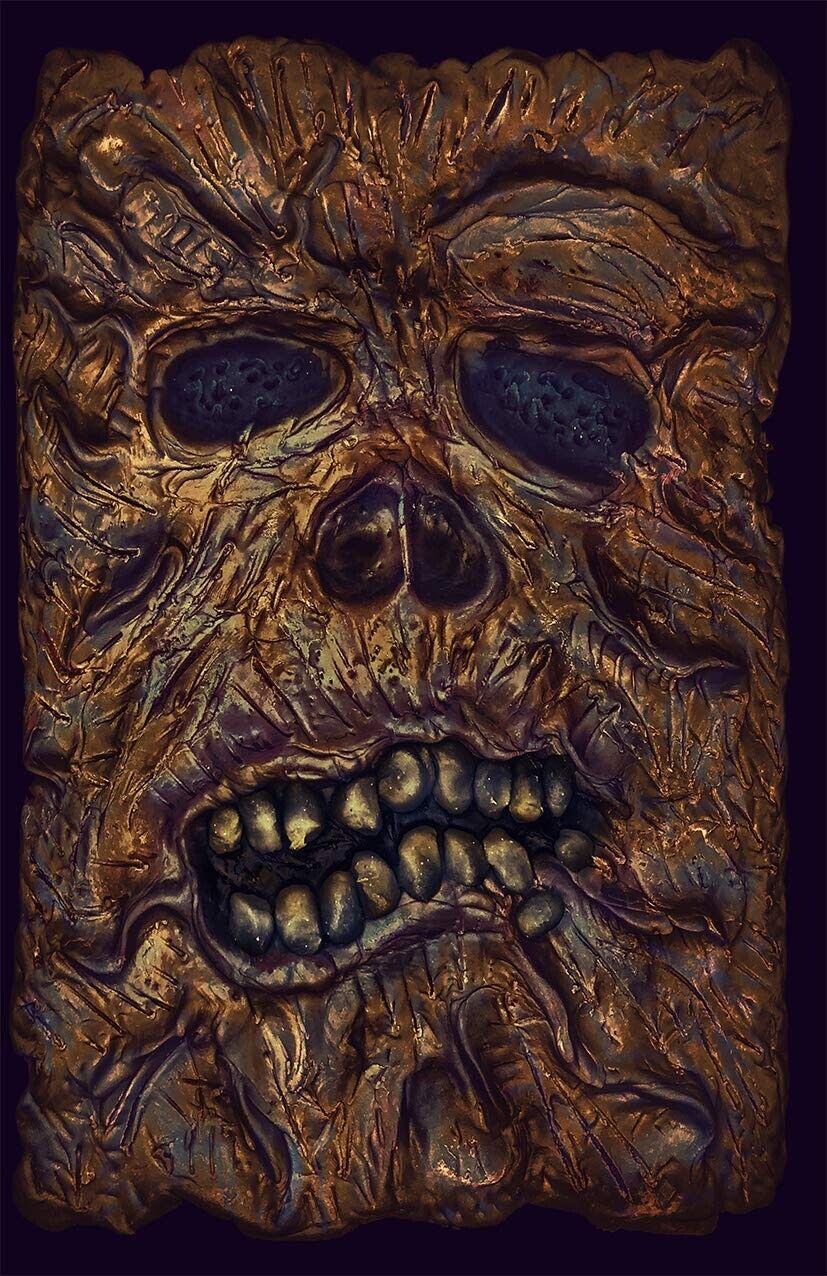

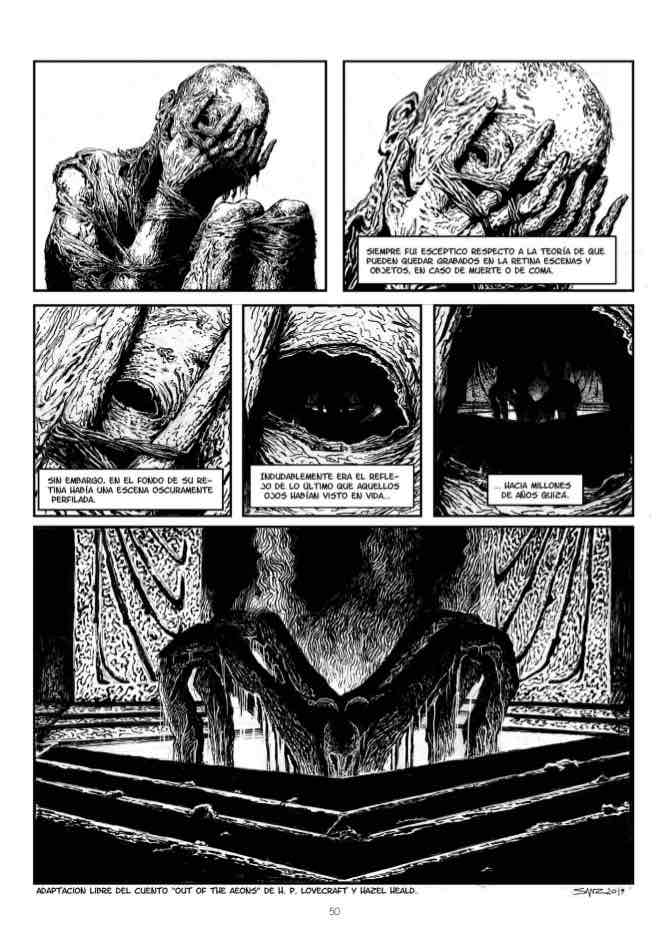
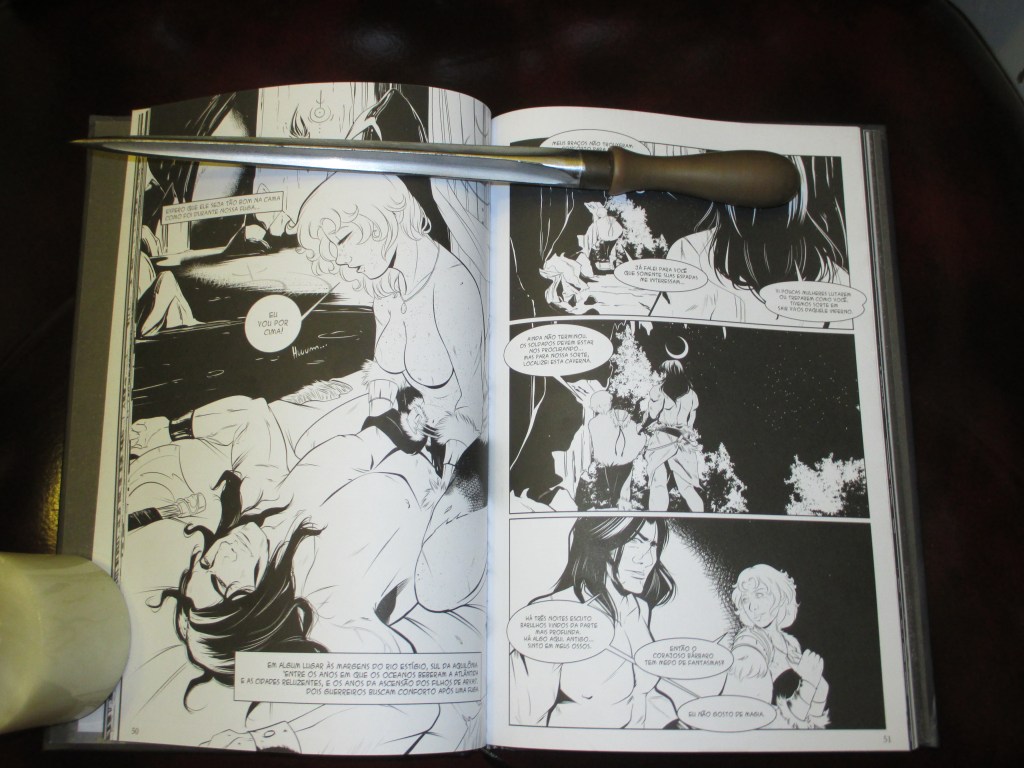
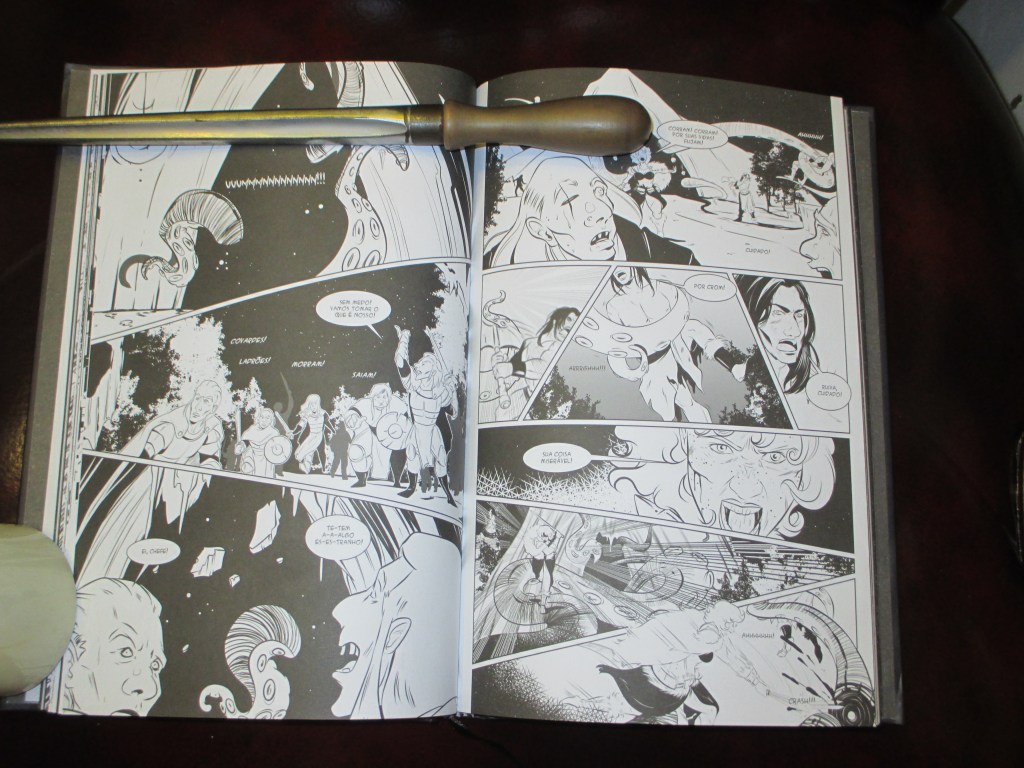






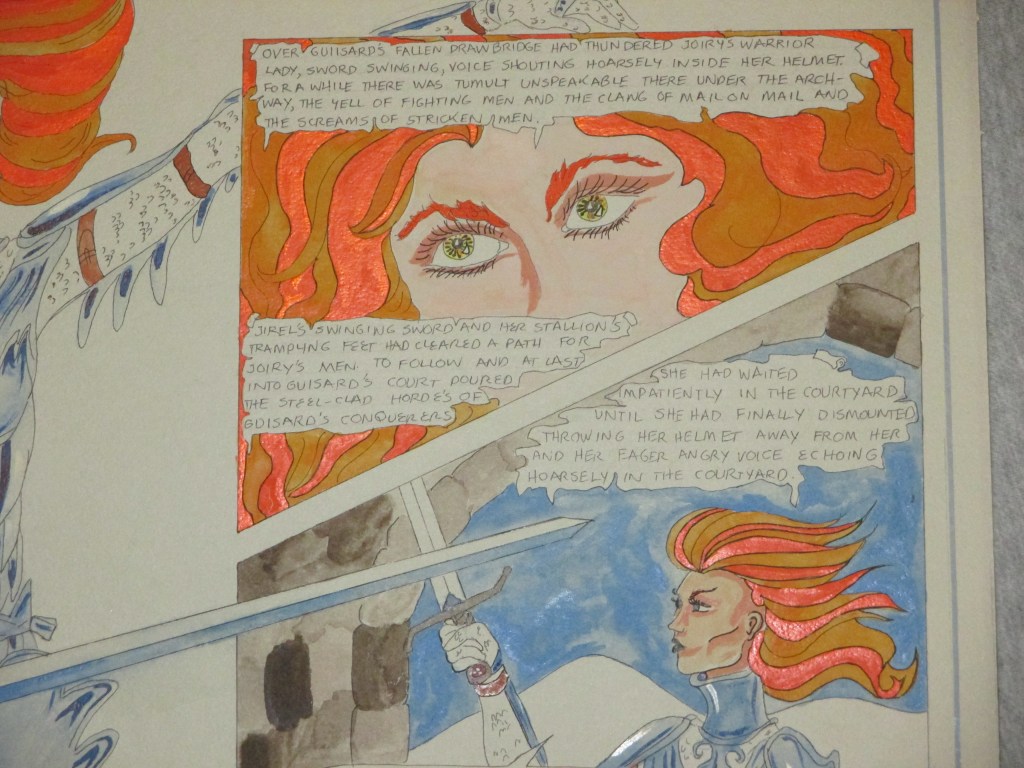

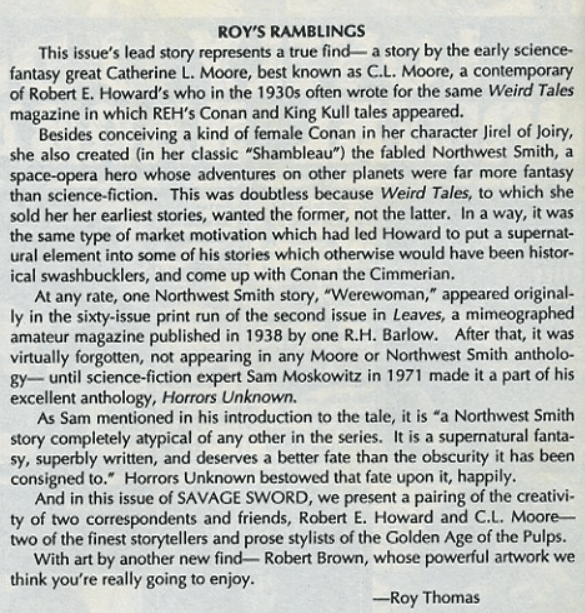

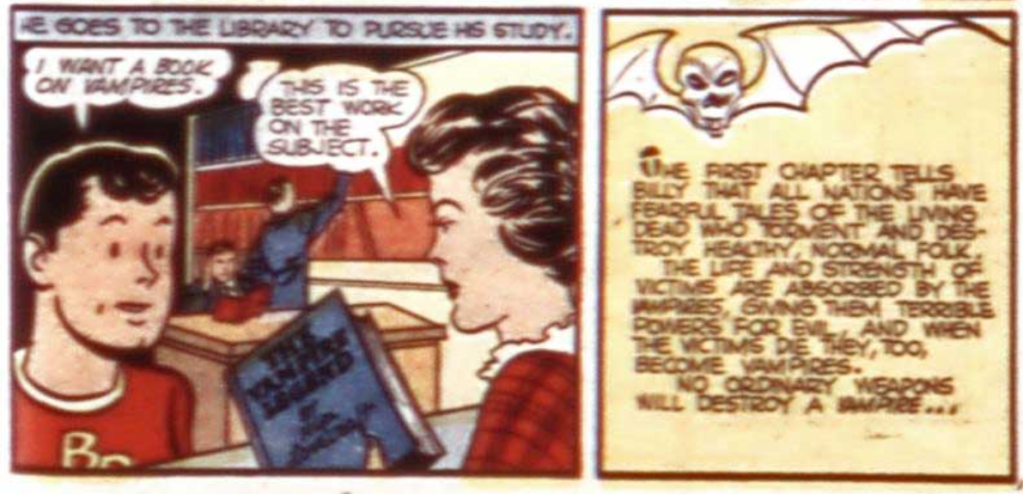
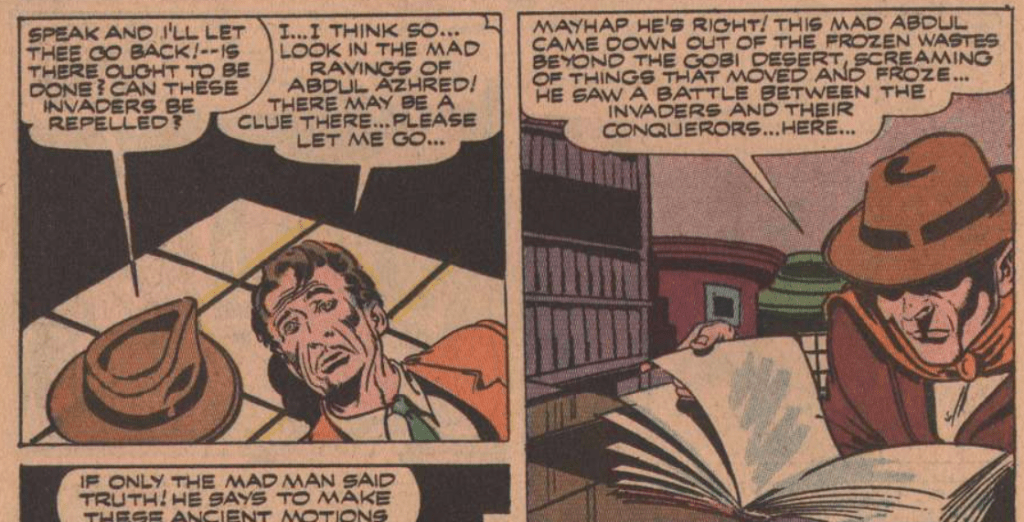
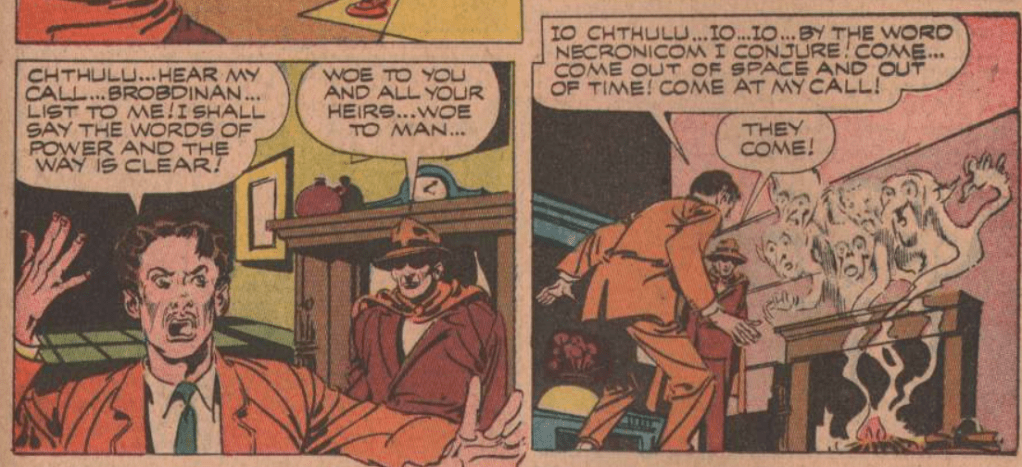


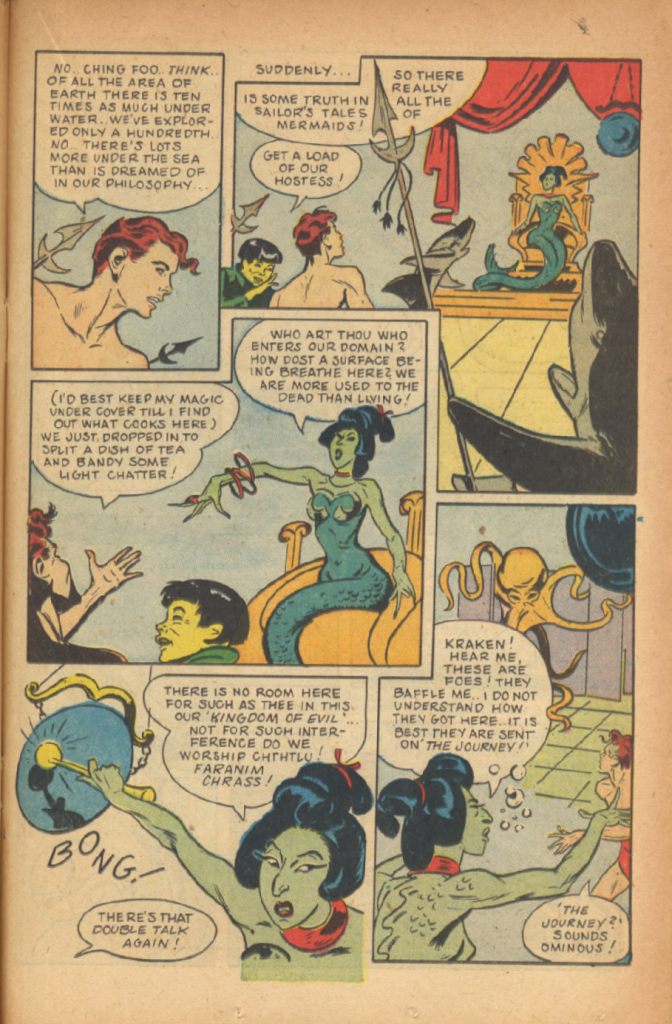
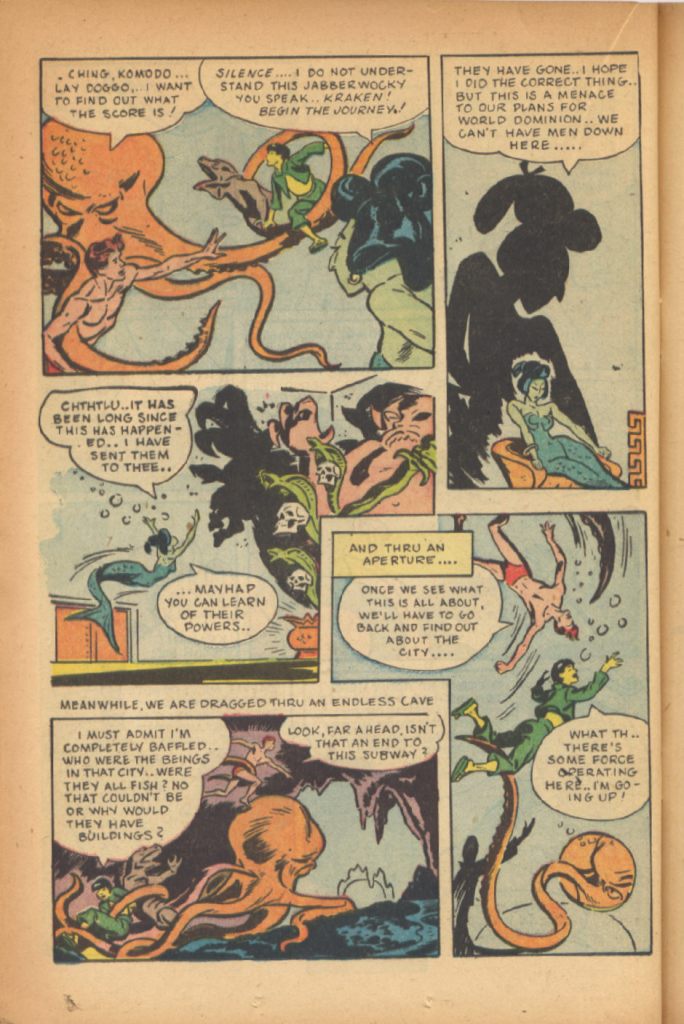
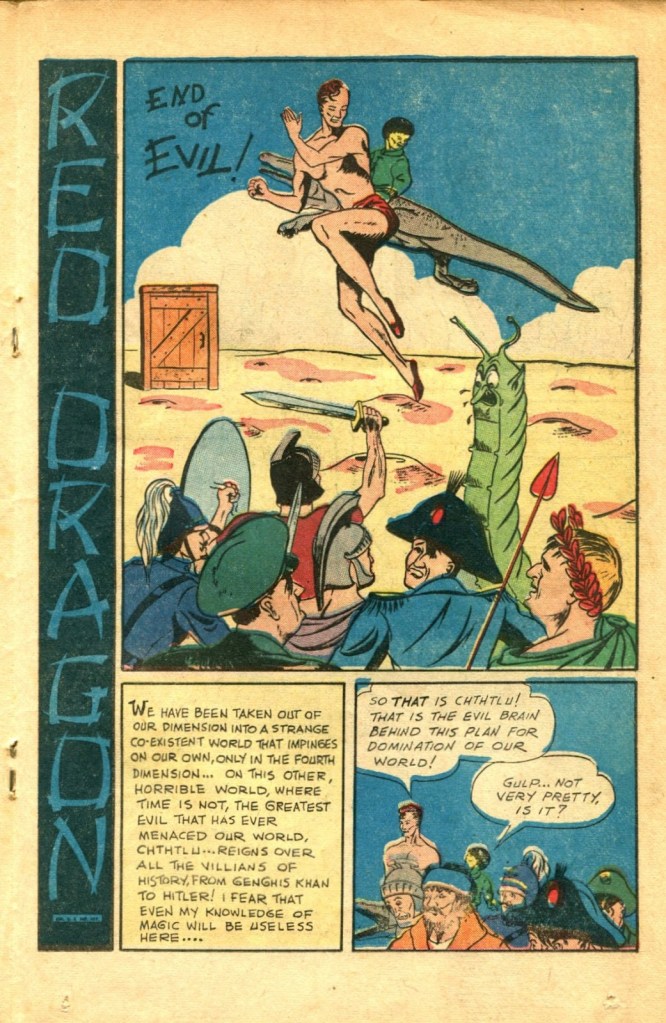
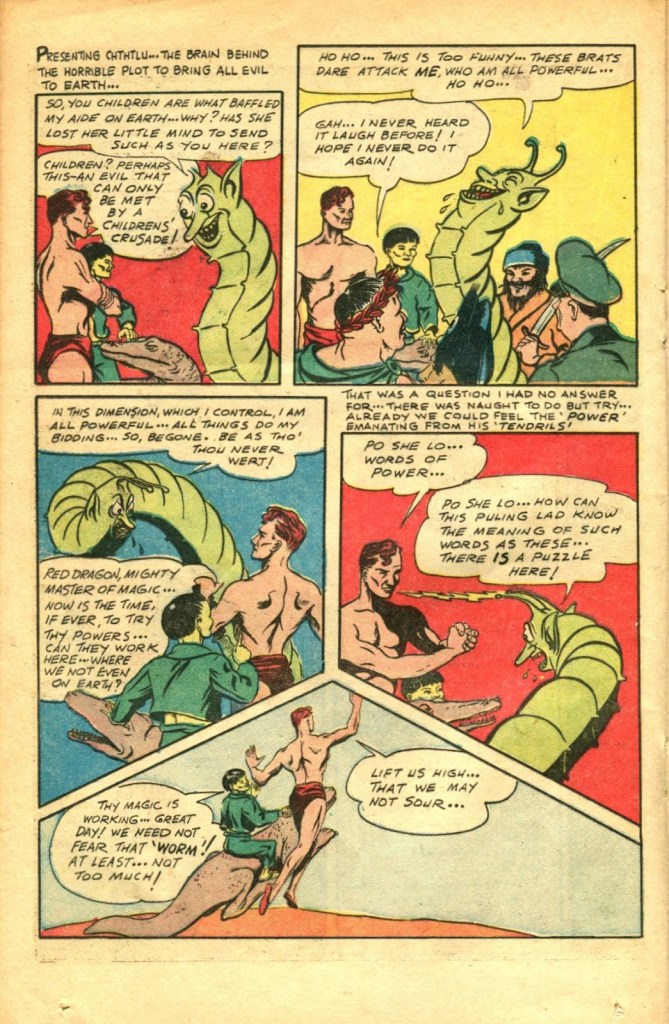
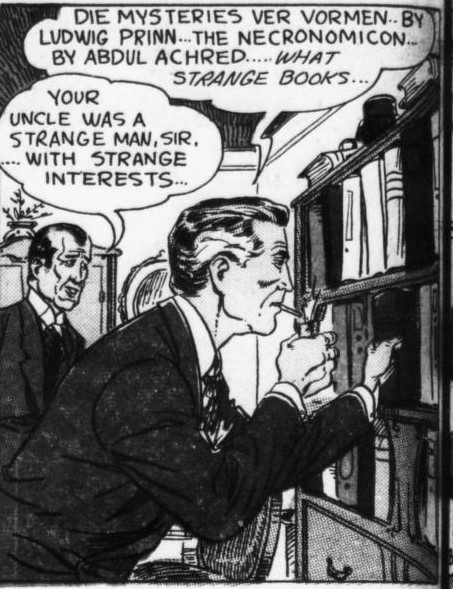
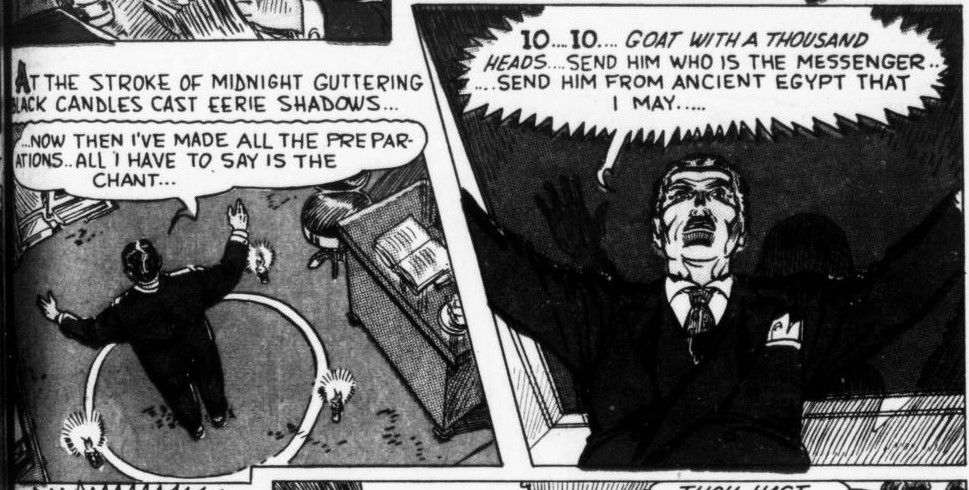
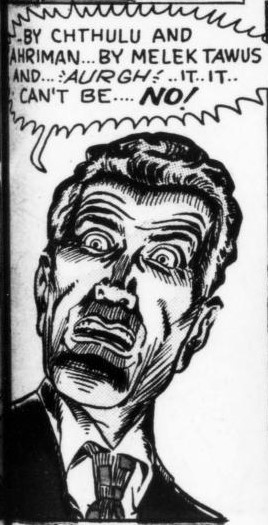

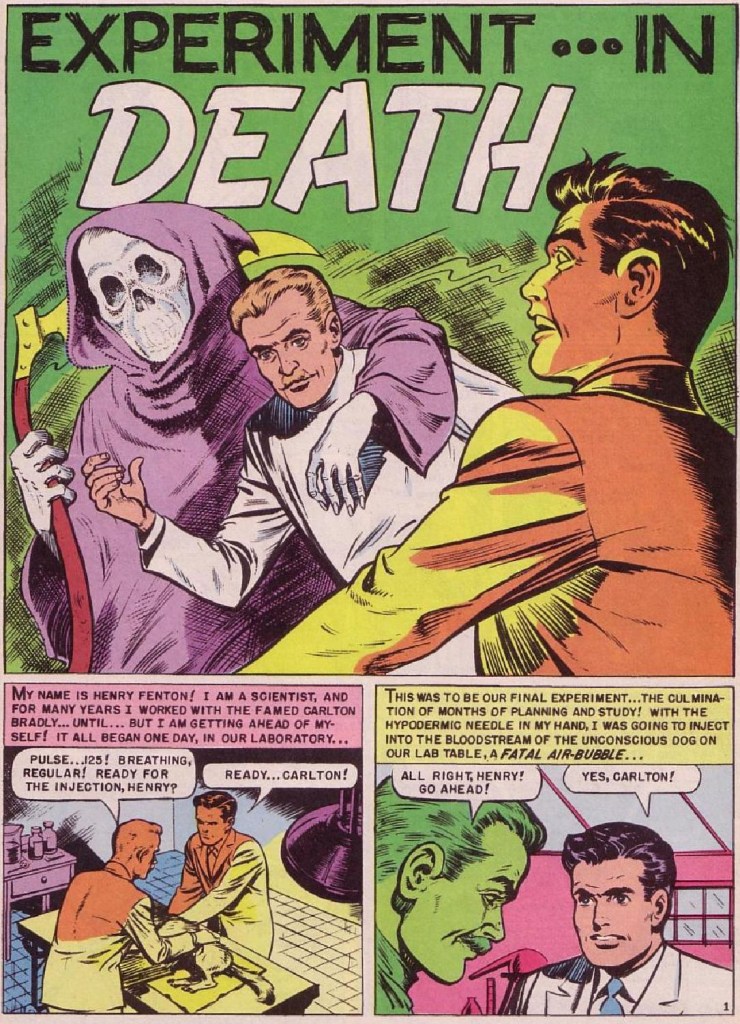
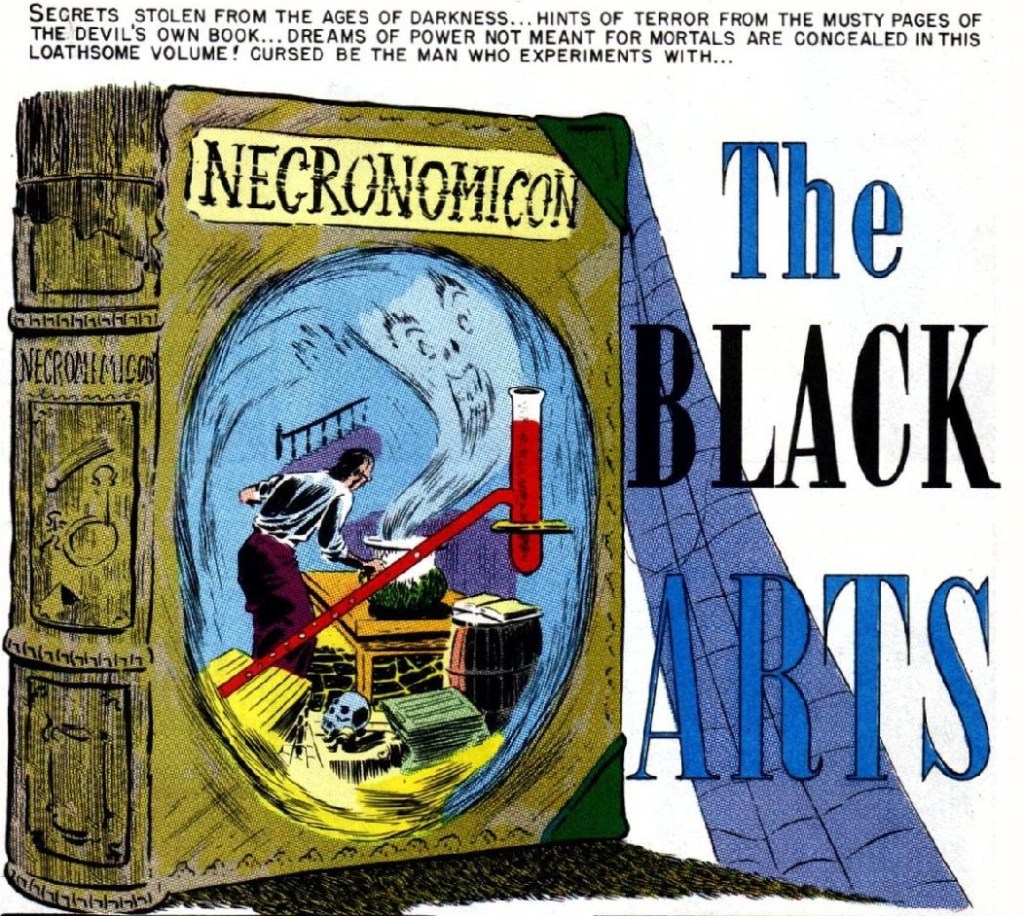
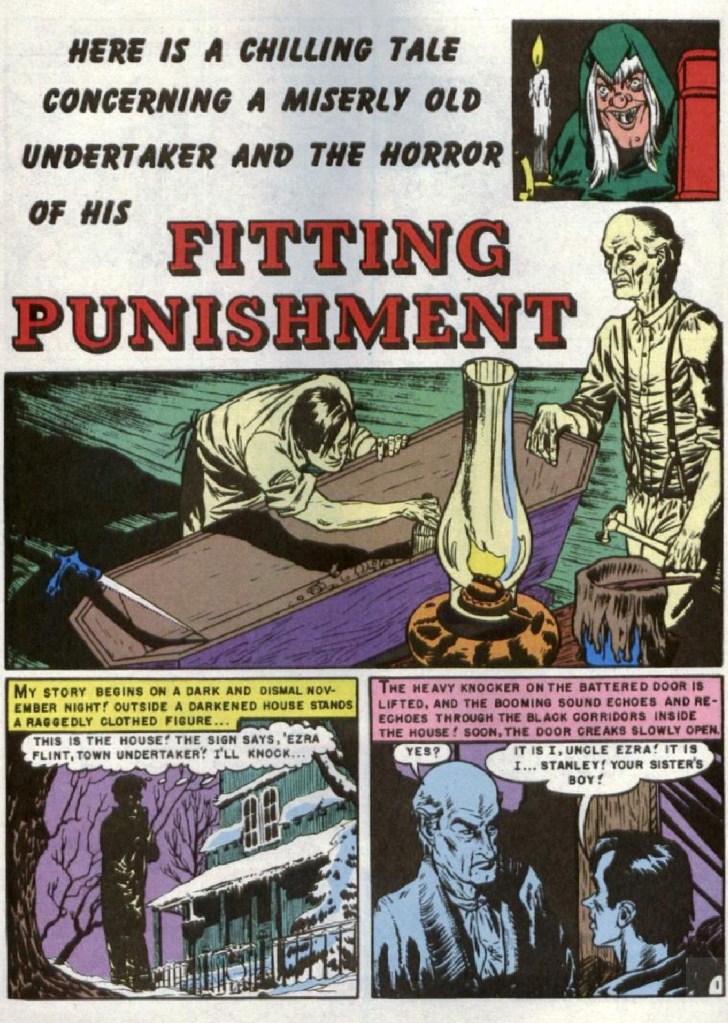
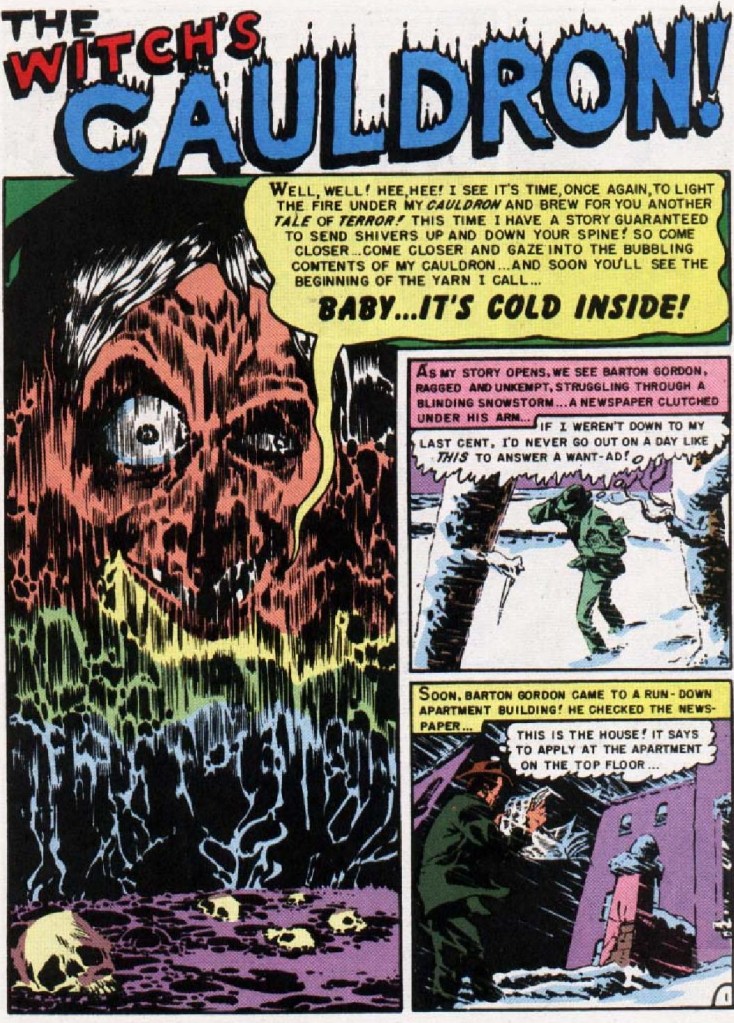
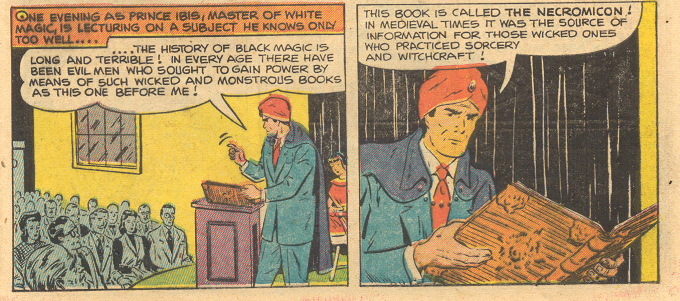
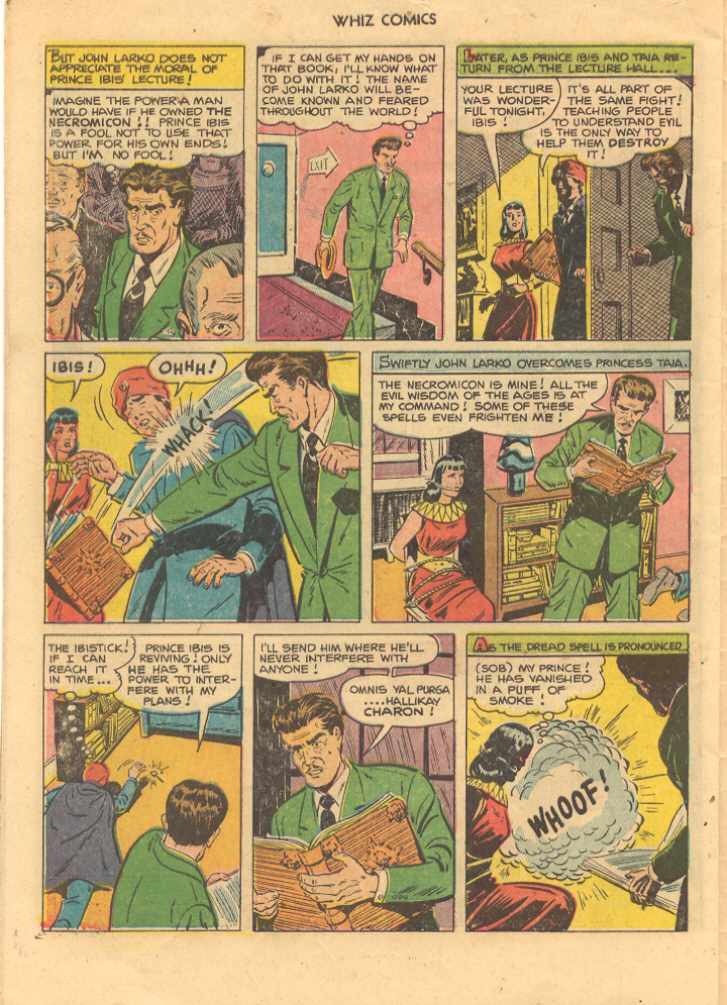

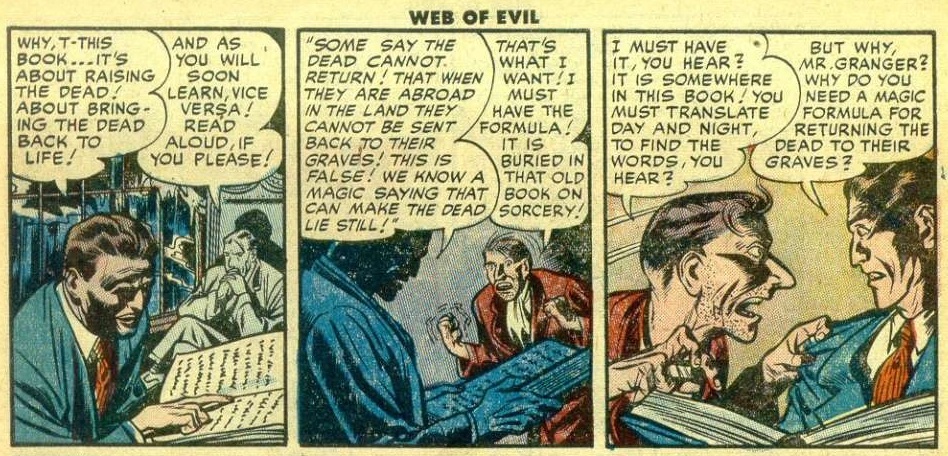
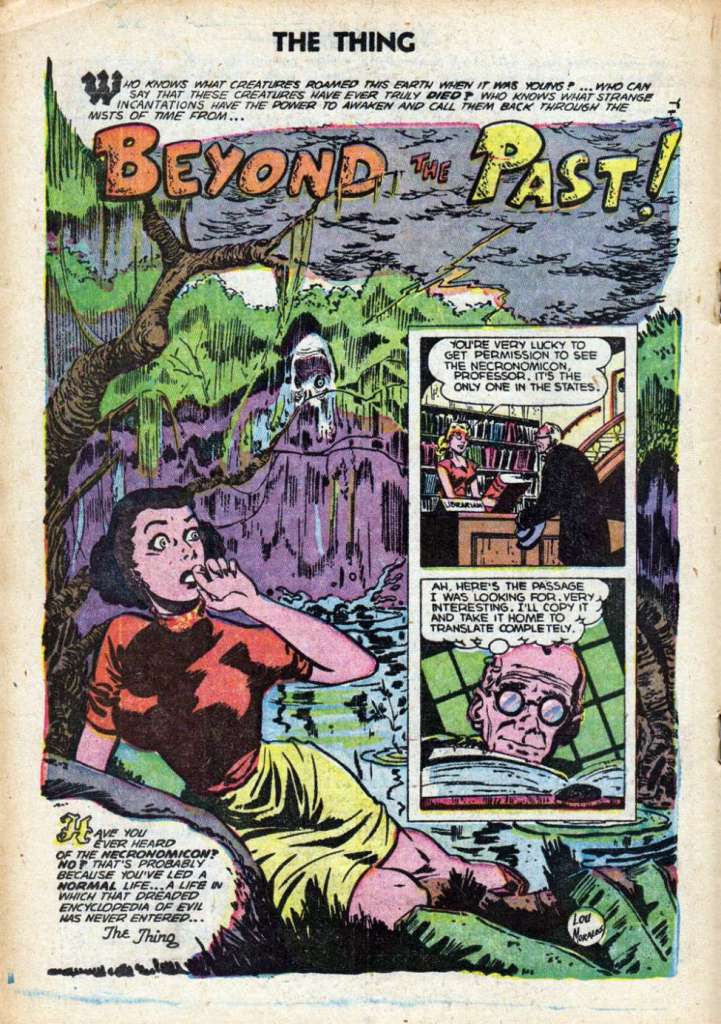
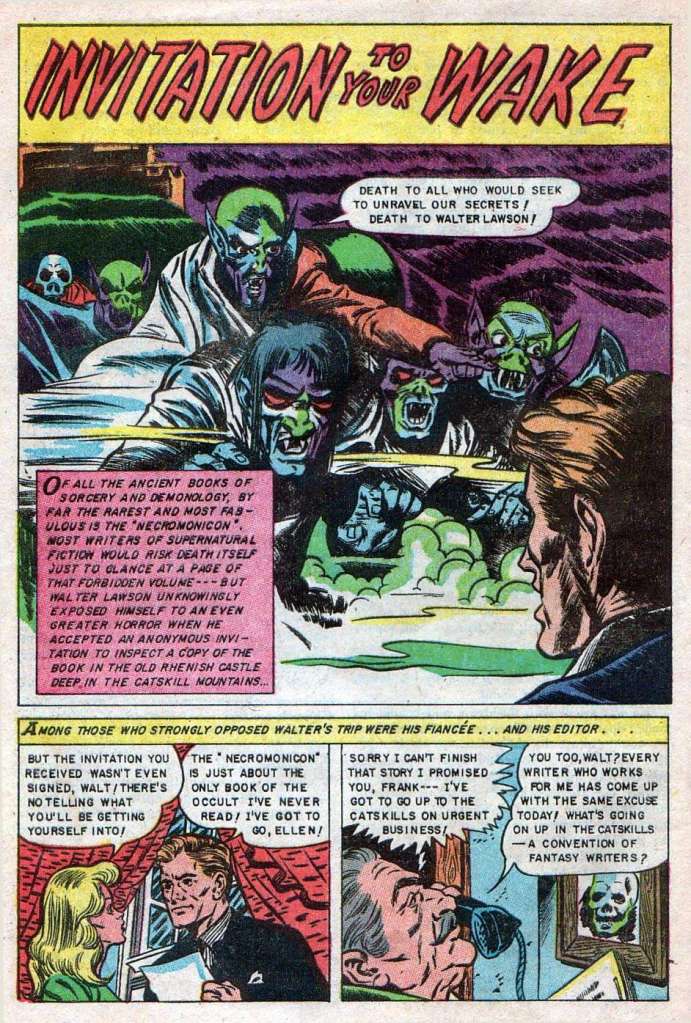

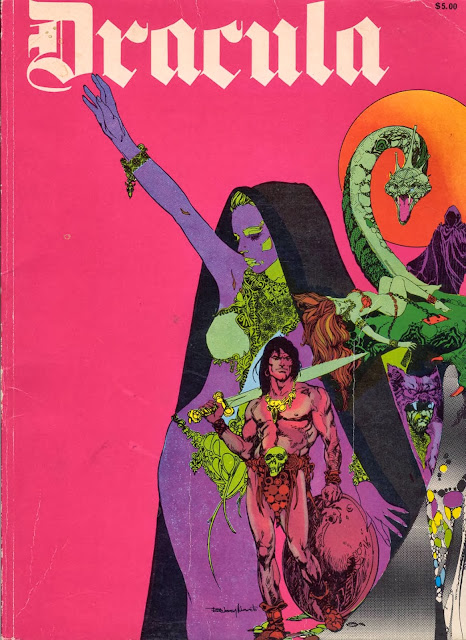

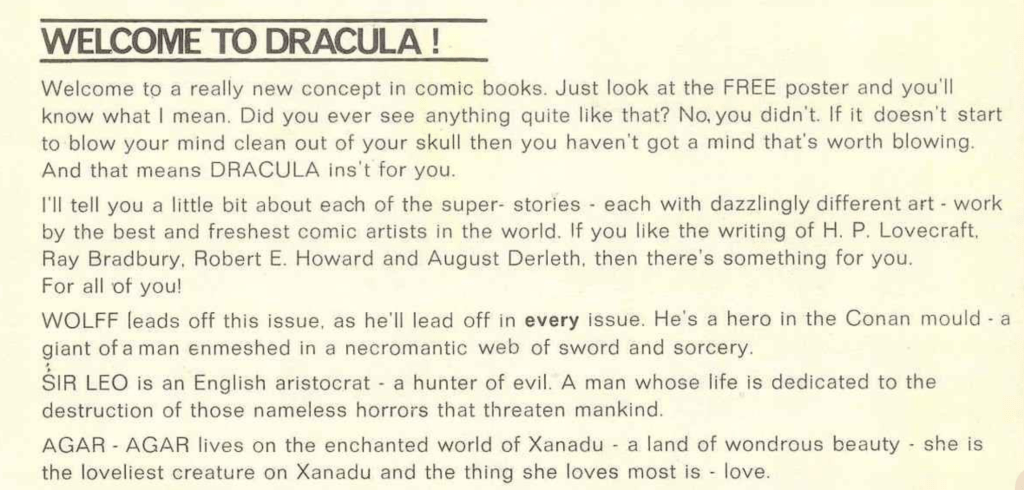
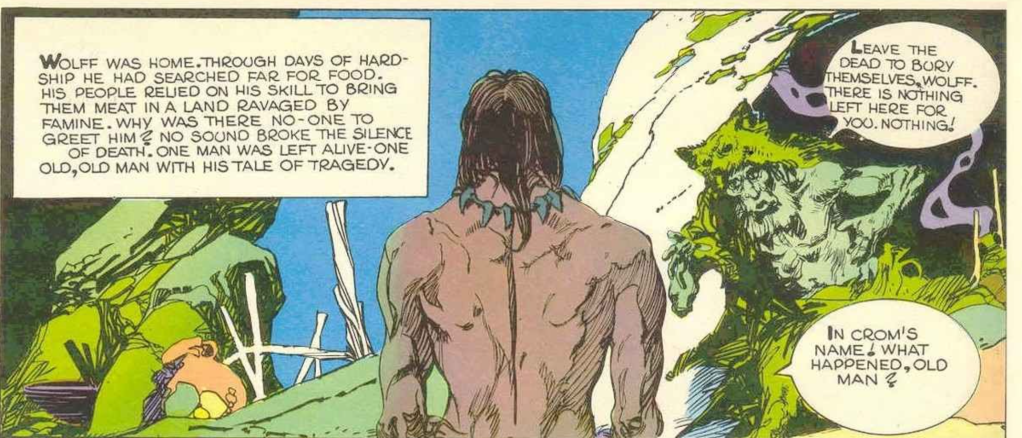
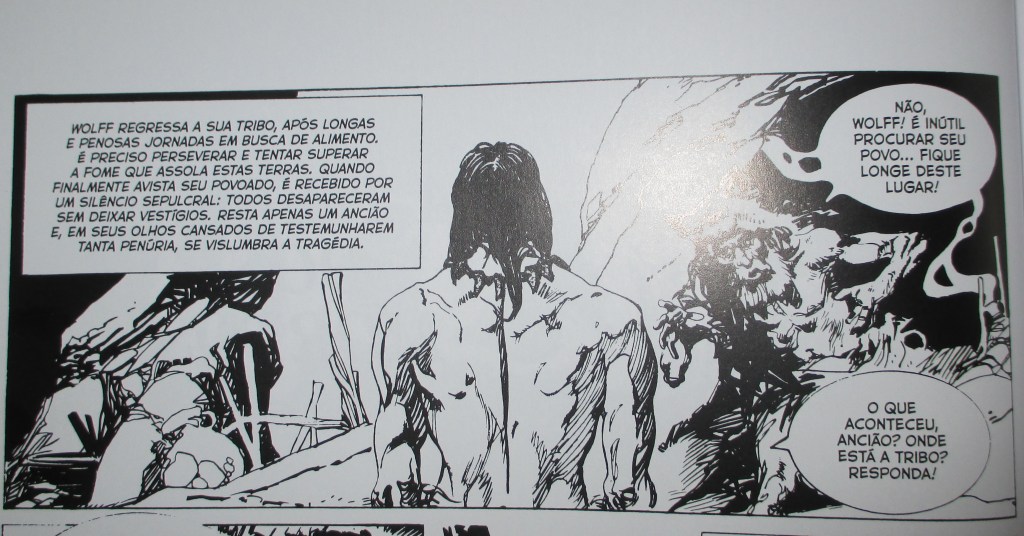
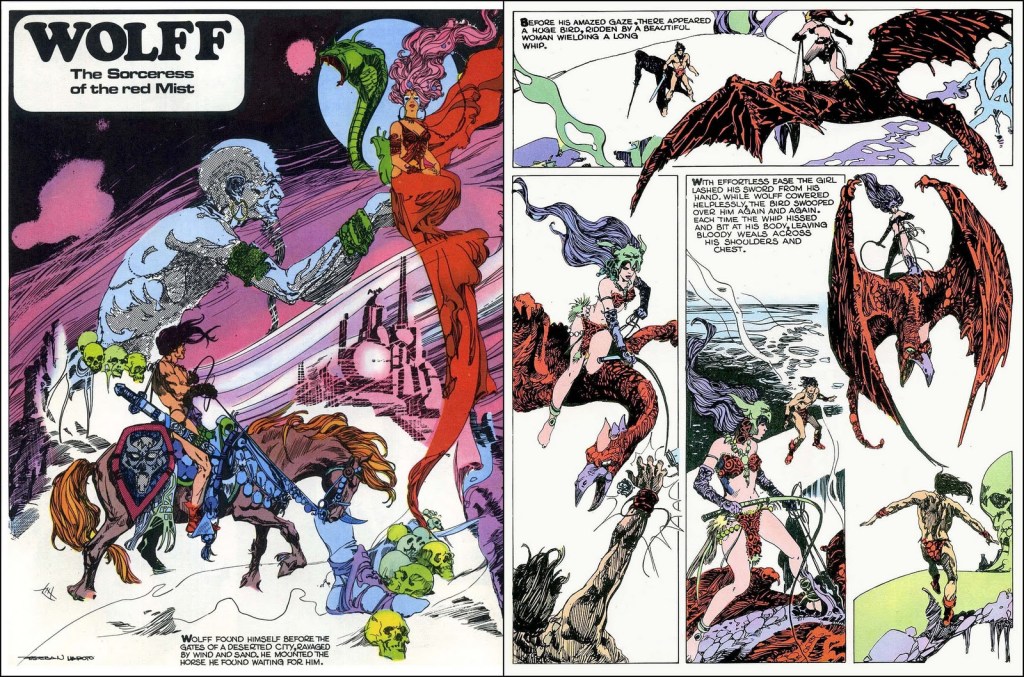
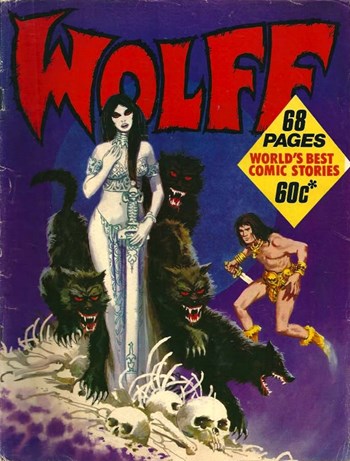
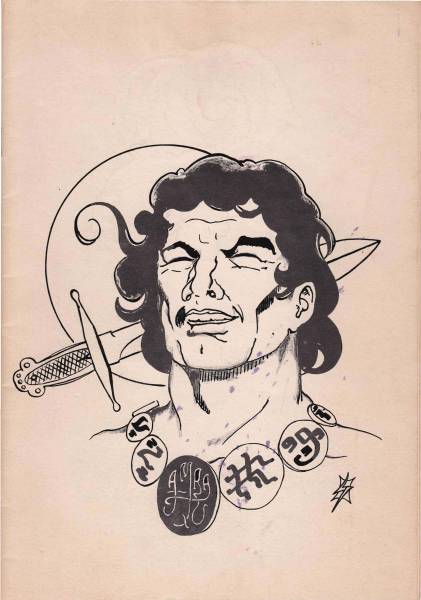
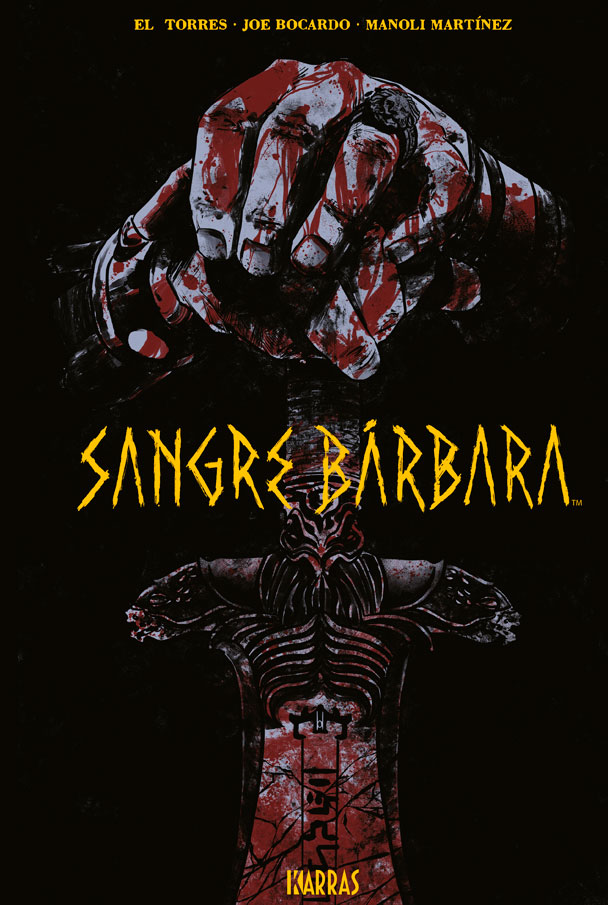

 Deep Cuts in a Lovecraftian Vein