Eldritch Fappenings This review concerns a work of explicit adult art and literature, and will touch on aspects of historical pornographic works, including NSFW images. Reader discretion is advised.
By the way—Cthulhu isn’t a she but a he. He’d feel deeply enraged if anyone regarded him as sissified! —H. P. Lovecraft to Willis Conover, Jr. 29 Aug 1936 Letters to Robert Bloch & Others 389
In “The Call of Cthulhu,” Lovecraft defaults to referring to Cthulhu as male. Whether human gender binaries can encompass Great Cthulhu is something for later writers in the Mythos to decide. Lovecraft, for his part, only addresses it in his letters in a joking matter, with the typical cultural disdain toward “sissies”—men who display effeminate manners or dress, often misconstrued as homosexuals; Lovecraft had made another comment about the “sissy” Gordon Hatfield.
Throughout human history, in pretty much every culture, there has existed a minority who do not fit into rigid gender or sexual binaries. Whether this was a physical condition such as being intersex, or an individual’s identification with a different gender than assigned at birth, or taking on cultural attributes and attire associated with different genders—there is a broad range of physical, psychological, social, and sexual aspects involved. Each culture and language has their own nomenclature involved. In English in the 20th century, terms like hermaphrodite have fallen out of use in favor of words like intersex; the term transvestite, once identified largely as a sexual fetish or mental disorder, has largely fallen away from use in favor of transgender.
The rich vocabulary includes both contemporary efforts to define identities (e.g. genderqueer, gender fluid), pejorative terms (e.g. tranny, cross-dresser), and a grey middle ground of terminology most often associated with sex work, erotic literature, and pornography (e.g. ladyboy, shemale). Loanwords from other languages also enrich the language, e.g., futanari, from the Japanese ふたなり. The term futanari has come to be a pornographic genre unto itself, both in adult comics and literature, with its own specific tropes, and generally presents a fetishized ideal: an individual that possesses (sometimes exaggerated) sexual traits of both male and female.
Despite the term futanari coming from the Japanese language and popularized by Japanese erotic comics, the basic idea is not unique to Japan. In the 1980s, for example, U.S.-born adult artist Eric Stanton created his “Princks” or “Ladyprinckers” or “Princkazons,” women with Amazonian physiques who also possessed penises (often of exaggerated proportions) and used their great strength and sexual organs to dominate and emasculate men. For example, in Stantoons #49 (“Makeover”), he presents a scenario where the men, unable to resist, are forcibly transformed and feminized. Stanton takes this idea to its cartoonish limit, and plays it for body horror and black humor as much as sexual titillation.
For the most part, however, “Princks” died with Eric Stanton. By the 1990s and 2000s, gender transition surgery and hormone replacement therapy had progressed substantially from the gland stories of early science fiction (see The Hormonal Lovecraft); the legal recognition of homosexuality and rights led to greater awareness of different LGBTQ+ identities outside of fetishized pornographic stereotypes. Besides this, futanari proved to be a more popular fetishized pornographic stereotype.
More importantly, the increasing acceptance of transgender individuals and the process of gender transition opened up literature for more positive stories of gender transition. While feminization as a sexual fantasy, voluntary or involuntary, will always remain, the acceptance and embrace of such a change as a positive metamorphosis instead of body horror gained more traction (see Seabury Quinn’s “Lynne Foster is Dead!” (1938): A Mistaken Gender Identity by Sophie Litherland).
Which doesn’t mean that a clever and skilled creator couldn’t combine the two. Lovecraft in “The Shadow over Innsmouth” presented a narrator who, at first horrified at the changes happening to their body, comes to accept their metamorphosis and the new identity that comes with it. For Lovecraft, the reader is allowed a peak as someone that fear and hated the alien and other becomes the other—and in fact, was one of them all along. The completeness of their change is indicated by how thoroughly they embrace who they are now, and reject who they thought they were.
In 2017, erotic comic artist InCase began producing “The Invitation,” a sexually explicit webcomic. The second chapter was published in 2019. At first glance, “The Invitation” shares many hallmarks with feminization and futanari adult comics. Part of what sets it apart, however, is the framing and development of the story.
William Loving III starts out as a very Lovecraftian protagonist, an obsessive delver in the obscure and occult, who had finally found an artefact that promises to put him in touch with a strange, eldritch entity…and he goes a little mad with the revelations.
As their transformation progresses, William’s priorities and attitudes shift, their old mores fall away as they embrace a broader and more inclusive attitude toward gender and sexuality attraction. Above all, the Master who brought these changes to body and mind is imprisoned, and members of their cult, like William, seek to free them. Idol, old one, madness, cult…while InCase is not using Lovecraft’s Mythos directly, there are some clear parallels to aspects of Lovecraft’s work and the broader genre of stories inspired by the Mythos.
Then, whispered Castro, those first men formed the cult around small idols which the Great Ones shewed them; idols brought in dim aeras from dark stars. That cult would never die till the stars came right again, and the secret priests would take great Cthulhu from His tomb to revive His subjects and resume His rule of earth. The time would be easy to know, for then mankind would have become as the Great Old Ones; free and wild and beyond good and evil, with laws and morals thrown aside and all men shouting and killing and revelling in joy. Then the liberated Old Ones would teach them new ways to shout and kill and revel and enjoy themselves, and all the earth would flame with a holocaust of ecstasy and freedom. Meanwhile the cult, by appropriate rites, must keep alive the memory of those ancient ways and shadow forth the prophecy of their return. —H. P. Lovecraft, “The Call of Cthulhu”
In the second half of the first chapter, InCase shifts the focus away from William pursuing the transformation on their own to interacting with the Master and their other servants. Sexual activity slowly grows more transgressive, with rougher action, bigger penetrations, more and less human (and more tentacular) participants…and the wonder of transformation and the bliss of sex is juxtaposed against the cosmic horror of the Master’s true face, and a glimpse of their true nature.
For a story about transformation and sex, and the gorgeously rendered artwork that conveys both sexuality and teratophilia, corruption and indulgence, these two characters are essentially character-driven. William is obsessed with magic, and having followed that obsession it consumes them utterly. What he left behind was his fiancé Annie, who becomes the protagonist of the second chapter.
In the Victorian milieu of The Invitation, Annie more than William represents a character whose body and identity are repressed by society; she is bound up in expectations of behavior (social and sexual) that she strains again; a woman of science at a period when women are not widely tolerated in science. A woman whose social standing is in peril from a broken engagement. A person who is, like William, innately curious.
There is a strong fantasy element to InCase’s work, both in The Invitation and in their other erotic comics. Without going into clinical detail, many of their characters fall into the spectrum of the sexualized fantasy of intersex characters rather than the reality. There are rarely true hermaphrodites, but there are often characters who appear to be women in every aspect save for having a penis and testes, which is fully functional (often incredibly so). Characters don’t undergo costly top and bottom and facial surgeries, they don’t take regimens of hormones their entire lives to achieve some semblance of the body they desire, that matches their gender identity. In real life, things are messy and imperfect; in comics, they can be idealized.
It is the fantasy that allows the exploration of these ideas. What would a Victorian woman do if she suddenly had a penis? If she was no longer restricted to the sexual role that biology and society had deigned for someone of her sex and gender? If you grew gills in Innsmouth, would you avoid the sea?
The Invitation is not a body-positive story about gender transition. It is an erotic horror story with themes of body horror and cosmic horror. William and Annie are not individuals who seek transition as a means to express and assert their gender identity. They are cultists who reject the world that they feel has rejected them; they are the outsiders who having finally given up on belonging to the world around them, with all the repressive mores, have turned to a being for whom all laws and mores are oppressive. Even natural laws.
It is important to distinguish between the reality of being transgender and the fantasy. Not everyone who is trans undergoes surgery or takes hormones; nor are trans folk mere sexual objects for others to fetishize and covet. InCase is drawing specifically on the tropes of trans and intersex characters as they have developed in erotic comics art over the last several decades; Annie and William are not Stanton’s Princks, but they are conceptual cousins. Where the Princks’ purpose is entirely driven by kink, the transition of Annie and William is much more moral.
Stanton’s Princks are domineering and cruel; they degrade and make fun of the men they transform, they revel in their strength and the men are helpless to resist. The suffering of the Princks’ victims is the point; that’s the relationship that Eric Stanton often pursued, regardless of whether it was Princkazons vs. men, or women vs. men, or women vs. women. The Master never taunts her victims, never degrades them, never says a cruel word; the Master’s inhuman hunger is frightening, but what really breaks Annie at the end is the realization that it is entirely voluntary. Like the Cenobites in Clive Barker’s “The Hellbound Heart” (1986), the Master does not seek out new victims—they find her. Drawn in by curiosity, they find a moral universe at odds with what they know.
A universe both horrific and addictive. Twisted, unnatural, and yet utterly freeing. Is it any wonder why some folks have embraced it as a positive example of gender transition, at least in jest?
In the end, it isn’t about whether or not William has a vagina or Annie has a dick. Their final acceptance of each other was to move beyond their conceptions of sex and gender, to discard all labels. This is presented as both horror…and a short of transcendence. As old de Castro said in “The Call of Cthulhu,” they had become like the Master themselves, they had moved beyond the need to define themselves in human terms, and had come at last into a more complete marriage, through and within the Master.
Which is about as Lovecraftian an ending as one could hope for.
I come from Des Moines. Somebody had to. —Bill Bryson, The Lost Continent
Lovecraft country is often associated with New England, because that’s where Lovecraft set many of his most famous stories. Arkham, Dunwich, and Innsmouth are in the fictional Miskatonic River valley of a fantasy version of Essex County of Massachusetts. Yet Lovecraft country was never restricted to the Bay State.
The fictional stomping-grounds of the Old Ones encompassed the Oklahoma frontier of “The Curse of Yig” (1929) and “The Mound” (1940); the French provence of Averoigne in Clark Ashton Smith’s tales; the ancient town of Stregoicavar in Hungary in Robert E. Howard’s “The Black Stone” (1931). Other writers have staked out and developed their own corners of Lovecraft country: the Severn Valley in Ramsey Campbell’s tales, with Goatswood and Brichester; the Sesqua Valley in the Pacific Northwest by W. H. Pugmire; and any other of other additions, popular and obscure, by writers professional and amateur.
Yet this might be a first. Niceville USA meets Shub-Niggurath.
The Shadow over Des Moines is a parody written in the style of the great pulp horror author H.P. Lovecraft. if you are not familiar with his work, you are missing a treat. He’s perfect for Halloween. Check out The Dunwich Horror, At the Mountains of Madness or The Shadow over Innsmouth. I am not ashamed to say that Lovecraft has had a singificant influence on my own writing. —Lisabet Sarai, “The Shadow over Des Moines”
Two of the elements that make parody work are juxtaposition and exaggeration. The Lovecraftian parodist doesn’t just copy the most obvious or characteristic elements of Lovecraft’s prose, they often enhance them to the point of ridiculousness. Made all the more obvious by contrasting the Lovecraftian aesthetic with an area of the country least associated with anything eldritch.
The surprising thing is, it doesn’t come off badly. The prose is a little purple, but the Midwestern setting itself isn’t exaggerated. It’s more like a Lovecraftian protagonist moved into a suburb than an attempt to reveal the hidden horrors of home-made blueberry pie and calf-length skirts. The humor and horror of the story don’t come at the expensive of the innocent metropolis of Des Moines, but in the quirky Lovecraftian excess of the protagonist—and the fact that this is an erotic parody.
Leonora encouraged me to drop by and visit anytime, but I doubted that I would act on her suggestion. Shivers ran down my spine as a I watched her swaying hips retreat down my path and across the street to her own dwelling. Nevertheless, I found my body reacted to her as if I were fifteen instead of fifty four. I found it necessary to spend a quarter of an hour reading Popular Mechanics before my tumescence subsided. —Lisabet Sarai, “The Shadow over Des Moines”
The outlines of the story are familiar; basically Fright Night with a sexy Lovecraftian twist and trappings. The fact that so much of it is played straight-faced makes the occasional play on words all the more effective (“Mrs. Gratsky’s gate swung silenly open, as if well-lubricated.”) If it leans a little too hard into some of the stereotypes of Lovecraftian pastiche, it also works to deliver a carefully-curated erotic aesthetic that balances vivid description with an older, quainter verbiage. The end result is as absurd as it is utterly appropriate. Where else but in such a story as this will you get such turns of phrase as “unhallowed anus?”
Like most erotic Lovecraftian ebook fare, things wrap up fairly swiftly after the climax. The pacing is set up for this single encounter, not a longer series of repetitive erotic adventures a la the Booty Call of Cthulhu series. Yet this is a very competent, self-contained example of this mode of fiction. If I had any suggestion for a sequel, it would be to make more use of Des Moines itself; it feels like there was room to make more use of this most un-Lovecraftian addition to Lovecraft country.
This review deals with a work of art that includes nudity. As part of this review, selected images with nudity will be displayed. As such, please be advised before reading further.
It was many and many a year ago, In a kingdom by the sea, That a maiden there lived whom you may know By the name of Annabel Lee; And this maiden she lived with no other thought Than to love and be loved by me. —Edgar Allan Poe, “Annabel Lee” (1849)
Skinny Dipper was a successfully crowdfunded multimedia project by Sex and Monsters, who are best known for their retro chic combinations of horror, pulp fiction, and tiki culture to produce works like the comic/cocktail booklet Tiki Surf Witches Want Blood.
The form of this particular project is a 32-page mixed-media comic ‘zine that remixes Poe’s “Annabel Lee” and “The Night Ocean” (1936) by R. H. Barlow with H. P. Lovecraft, re-imagining them against a palette of mixed comic and photographic work by Emily Roberts, April Snellings, Jelena Đorđević, May Nguyen, Dennis Swiatkowski, Sam McKenzie, Slime Sunday, Brite Lite Tribe, and Will Penny; and a 7″ vinyl record by Nite Jewel that contains a soundtrack to accompany the piece. Various Kickstarter bonuses to the campaign add decals, instant film shots of May Nguyen, and other goodies.
The crux of the re-imagining is model May Nguyen, who appears both in photographs and as the character model for the character of Annabel Lee in the story. Told in sparse, evocative images, Annabel Lee shifts from the bright and crowded daylit beach to a lonely moonlit scene, to go skinny dipping alone in the night ocean.
Chunks of Poe’s and Barlow and Lovecraft’s texts are taken out of context and reframed as poetry. The artists are each distinctive in their style and approach to the material; the center black-lettering on black-pages at the center of the story is incredibly evocative of the dark abysses hinted at in poem and short story, here rendered visually—and the combination of Poe’s verse and select snippets from Barlow and Lovecraft work well together with the visuals, terribly suggestive of far more than appears on the page.
Kitsch is a dirty word, but in this case the artists are trying to recapture specific moods and art styles, from the Charles Atlas bully-kicks-sand-in-your-face comics of the 50s to 80s glossy magazine photo spreads that are terribly suggestive of exotic vacations, where the sea foom can lap at your feet as you read and relax on holiday. It is a deliberate effort to reproduce an aesthetic that existed, even if that exact place never did.
One thing that both “Annabel Lee” and “The Night Ocean” capture is a sense of loneliness and longing; that may be why giving Annabel in Skinny Dipper such a distinctive face adds something to the text. May Nguyen provides a sense of reality that might have been missing if this a more traditionally-made comic book; there’s a fotonovella-style sense that these could be stills to some ancient straight-to-video movie that graced the shelves of mom & pop video stories.
It is not horror in any strict sense; not int he bloody bones and a shark coughing up a limb. It’s closer to a vacation where all the time away reminds you that the one thing ou can’t get a vacation from is yourself, can’t get out of your own head. That loneliness and the endless, ageless warm waters of the ocean might swallow you up forever, given half a chance.
Nite Jewel’s Skinny Dipper single is a soundtrack to the story; I’d call it synthwave or retrowave, while the tags for the album on call it chillwave and hypnogogic pop. Combined with the stylistic flourishes of the comic, it grounds the reader in that almost-never-when promised in a thousand 80s and early 90s magazines, comics, films, and music videos. The idea of the beach as this place of escape, the music a poppy invitation that’s a bit more upbeat than tiki exotica, but holds many of the same audio cues, just for a later generation.
At this time of writing, the album is the only thing available for direct purchase, although many stills and videos associated with the project are located on Sex and Monsters’ Facebook page.
Skinny Dipper is an interesting collaboration, one that showcases the abilities and visions of the individual artists that went into it. Copies are still available through the Kickstarter store (click “Order Now”), and will hopefully receive a wider release in the near future.
This review deals with a work of pornography, and the history of erotic art and writing. As part of this review, selected images with depictions of genitalia and/or sexually explicit contact will be displayed. As such, please be advised before reading further.
John Cleland, immersed in the clutches of the law, under circumstances which would have extinguished the fire of genius in any ordinary man, wrote himself out of the poor debtor’s prison and into everlasting fame through his immortal romance The Memoirs of Fanny Hill.
Its extraordinary success brought the attention of the authorities to his work and while condemning it for distribution, they recognized its merit, by granting Cleland a pension, stipulating however that the payment of the pension would cease should he produce any other work of the free nature of Fanny Hill.
These circumstances being of common knowledge, few except the indefatigable bibliophile have attempted to seek out and preserve other works than the romance.
It is however a fact that he did write other works and one of his best The Amatory Adventures of a Surgeon has survived the vandalism of the censor.
In this work Cleland shows himself as the pioneer in the realms of psychology and his keen interpretation of the real impulses of the human mind, prompted all its actions as it is by the sex urge, was one of the early incentives which led to the dvelopment of the present school of writers on the sexual question.
He was one of the first to recognize the value of De Sade in the study of mental vagaries and his reference to Justine or the Misfortune of Virtue in this work, led to the first English translation and general interst afterwards awakened in Sadism.
The text in this edition follows exactly the edition of Rotterdam which is a precise reprint of the original.
A. Machen, “Introduction” in The Amatory Experiences of a Surgeon (undated edition)
John Cleland was the 18th century English novelist who famously wrote Fanny Hill: or, the Memoirs of a Woman of Pleasure (1748). The author of The Amatory Experiences of a Surgeon, however, was James Campbell Reddie, a 19th-century Scottish writer of pornography, who used the pseudonym “James Campbell.” In the 1800s, the appetite for sexually-explicit media was no less than today, but the consequences of its production and sale were more severe; pseudonyms were not unknown, and doctoring up a pornographic work as by someone else far away was a reasonable effort to throw off the police.
So why is the book attributed to John Cleland?
While the title page says “experiences,” the actual cover of the book says “experience.” A quirk of this edition.
Cleland’s notoriety as the author of Fanny Hill would seem to be one reason why he was attributed as the author; presumably an ignorant buyer might recognize that name more readily than “James Campbell.” Likewise, Fanny Hill had at least a modicum of literary cachet, so attributing the work to Cleland might have been an obtuse effort to bypass censorship, at least for those who read no further than the introduction.
So who is “A. Machen,” who learnedly pretends that this is a genuine example of erotic art and literature, rather than a literary hoax-cum-masturbation fodder?
Who it is not is Arthur Machen, the Welsh journalist, thespian, and master of the weird tale who so influenced H. P. Lovecraft, Robert E. Howard, and generations of aficionados of the fantastic literature. Whoever wrote this—and it is not clear exactly when it became appended onto the many illicit reprints of The Amatory Experience of a Surgeon—was trying to do for a new generation what Readie was trying to for his original audience in the 1880s: convince them that some notable literary figure had blessed this work by association.
Arthur Machen, you see, had a reputation.
Before Machen made his name as a weird fictioneer proper, his primary fame lay in a series of translations of European slightly risque or ribald stories into English. These were not erotic works in any strict sense of the term; but classical novels and collections of short stories which were slightly more daring or concerns subjects slightly inappropriate for Victorian British society. In the late 19th century rising literacy rates, British classism, public prudery, and private decadence, combined to form discrete levels of erotic content.
Readers who wished to read the 1,001 Nights in English, for example, their options might include Edward William Lane’s expurgated and bowdlerized Arabian Nights Entertainment (1848/1853), suitable for all ages and available relatively cheaply in bookstores or through libraries, or Sir Richard Francis Burton’s uncensored, unexpurgated, scholarly translation A Plain and Literal Translation of the Arabian Nights’ Entertainments, Now Entituled The Book of The Thousand Nights and a Night which was published in 10 volumes from 1885 to 1888 by private subscription, and to which Burton famously tacked on a 10,000-word essay on pederasty.
Scholarship and academic interest in subjects like medicine, psychology, anthropology, art, and history gave a veneer of acceptability to works about sexuality or the nude form; money for private editions gave access to works not fit for the hoi polloi. Yet these works were neither hardcore erotica or complete shams, though both abounded for the unwary buyer. Rather, there was an appetite at the time that wanted something that was both of literary quality and not censored and expurgated to death. A very fine line for a translator to walk, and the end product might be politely known as curiosa or gallantia.
Machen’s first work was The Heptameron (1886), a 16th-century collection of stories from Marguerite of Navarre modeled on the 14th-century The Decameron of Giovanni Boccaccio. As Machen later described his translation, which sought to preserve something of the style of the early modern prose:
A graceful book, but, as it strikes me now, a little faded. The Heptameron always reminds me of some embroidered, silken dress that has lain in a dark chest for many long years. It is still beautiful; but the embroidered roses have grown somewhat dim.
Arthur Machen in Arthur Machen: A Bibliography (1923) 6
An amended version of this book was issued a year later as The Fortunate Lovers (1887), and was followed up by The Chronicle of Clemendy (1888), which was a collection of tales after the medieval pattern and strongly reminiscent of Balzac and Rabelais; and Fantastic Tales or The Way to Attain (1890), translated from Le Moyen de Parvenir (1617) of Béroalde de Verville. In 1894, the same year Machen published his infamous weird tale “The Great God Pan,” he also published the full twelve-volume Memoirs of Jacques Casanova (Giacomo Girolamo Casanova). If the association with the Yellow Book hadn’t sealed Machen’s reputation, Casanova probably did. Not because any of these works themselves were sexually explicit, but because they had the reputation of being books about sex—which they were, in a sense.
It’s easier to illustrate the point with an example:
In the harbour of Coulon, hard by Niort, there lived a boat-woman, who, by day and night, carried people across the ferry. And it came ot pass that two Grey Friars of the aforesaid Niort were crossing over by themselves in her boat, whereupon, seeing that the passage is one of the longest in France, they began to crave love-dalliance, to which entreaties she gave the answer that became her. But they, who for all their journeying were not aweary, nor by reason of the water were acold, nor by her rfusal ashamed, determined to have her by force, and if she made an outcry to throw her into the river. And she, whose wit was as good and sharp as their was gross and evil, said to them: “I have not so hard a heart as I seam to have, but I entreat you to grant me two things, and then you shall preceive that I am readier to obey than you to command.” So the two Grey Friars swore by St. Francis that she should ask nothing of them that they would not grant, so long as she did them the pleasure they desired. “In the first place, then,” said she, “I require of you that you advertise no man of this matter.” This they promised with great willingness. “And in second place,” she went on, “that you have your pleasure of me by turns, for this would be too great shame to have to do with the one before the face of the other. Determine, then, which shall first enjoy me.” This likewise they deemed a reasonable thing, and the younger of the two granted his companion the prerogative. So when they drew near a small island she said to the former: “Holy father, do you tell your beads and tarry here, while I am gone with your companion to yonder island, and if, when he returns, he gives a good account of me, we will lleave him, and you and I will go apart together.” The young friar leapt on to the island, and awaited there his comrade’s return, whom the baotwoman took off to another island. And when they had come alongside, the woman, making pretence to fasten her boat to a tree, said to him: “Do you go, sweetheart, and look for a place where we may dispose ourselves.” The holy man got on to the island and searched about for some nook fit for the purpose; but no sooner did she seem him on firm gorund than she pushed off, and made for open water, leaving these two holy fathers to their deservings, for all the clamour they made to her. “Wait patiently, good sirs,” said she, “for an angel to come and console you, for to-day you willhave of me no pleasuance.”
The Heptameron novel V, trans. Arthur Machen, 1924 edition.
The 1880s and 1890s editions of Machen’s translations were often issued by private subscription in small numbers; their more wider influence came during the “Machen Boom” of the 1920s, when Machen’s works were reprinted in the United States by Alfred Knopf and Vincent Starrett. While it is difficult to judge when exactly the “A. Machen” introduction was affixed onto reprints of The Amatory Experiences of a Surgeon, it would not be strange if the resurgence of Machen’s popularity in the 1920s had something to do with it. The Ethnological and Cultural Studies of the Sex Life in England(1934) makes no mention of Machen’s introduction in discussing the text, but then it’s easy to miss clandestine editions.
The reason why it is difficult to say more with any certainty is simply the nature of the reprints of The Amatory Experiences of a Surgeon. Being an obscene work by the standards of the 1880s, it was never copyrighted, and relatively easy to pirate; the pirated editions were themselves often later pirated, so that anyone interested in owning a copy will find a delirious range of editions in everything from fine bindings to cheap stapled reprints to print-on-demand editions. Many editions bear fictitious information about their printing, claiming to have been published (in English!) in Moscow or Paris. Some are illustrated, and some are xeroxed and stapled together crudely.
All we know for absolute certain is that some copies of The Amatory Experiences of a Surgeon have an introduction by “A. Machen,” some do not. Those that have the introduction we might say are of the “Machenian textual tradition,” because obviously later publishers copied the text of the Machen introduction from an earlier work, to some hypothetical first publisher who thought it would be clever, or have retail value. In circumstances such as these, each book becomes an artifact. There are several hallmarks of this particular edition, besides the size and binding:
The introduction by “A. Machen” that attributes the book to John Cleland.
While that 1925 edition had three erotic engravings, this booklet is illustrated by black-and-white sexually explicit photos which are difficult to date, but probably from the 1940s or 50s.
So the surmise is that at some point in the 20s or 30s, a publisher printed a private edition of The Amatory Experiences of a Surgeon with a spurious introduction by the then-popular Machen and an attribution to John Cleland as a way to drum up sales. Sometime in the 40s or 50s, a clandestine publisher photo-offset the text of that edition, and added a few exciting pictures, resulting in the underground copy above.
The 40s and 50s make sense in context because in 1952 Odalisque Press released an edition of The Amatory Experiences of a Surgeon which was attributed to James Campbell, lacked the Machen introduction, and was clearly marked with Odalisque’s name and the date of publication. In other words, we now have the start of an actual datable, traceable series of publications from various publishers who decided to print this work, now in the public domain, for an audience eager for the now-scarce erotica and curiosa of yesteryear.
If there are professionally published copies of the book available, who needs cheaply-made, badly illustrated copies produced by some guy in his basement, or in a print shop after hours? As the end of Prohibition signaled the return of good liquor over bathtub gin, the loosening of obscenity standards as applied to literature made sexually explicit material more readily available through legal means. As more established publishers moved into this market, they pushed out the little guys producing crummy booklets to the edges of the marketplace.
Booklets like this, crudely conceived and executed, have become the target of collectors and scholars where once they might have been sold under-the-counter in bookstores or by shady mail-order catalogs, more important for their representation of an earlier time than their literary content. It took a certain cultural context to make it feasible and desirable to put a book like this together—and it is, if nothing else, a testament to a very odd reputation that haunted Arthur Machen, though his fantastic fiction has come to overshadow his earlier writings.
If you were thumbing through Mitchell’s excellent filmography, this dismissive reference to a film named Necronomicon – Geträumte Sünden(Necronomicon – Dreamt Sins) by Jesús Franco may catch your eye and cause a moment of pause. The film does not often appear on lists of Lovecraftian cinema, did not make an appearance in that valuable tome The Lurker in the Lobby: A Guide to the Cinema of H. P. Lovecraft, and generally gets short shrift in Lovecraftian cinematic scholarship. There are good reasons for this, but the lack of attention hides an interesting story.
The film’s title wasn’t Necronomicon. It was Green Eyes of the Devil.
Jesús “Jess” Franco (1930 – 2013) began making films in Spain, under Gen. Francisco Franco’s tyrannical regime. Talented, adaptable, versatile, and rebellious, Jess Franco’s film career began in the 1950s, doing black-and-white films, comedies, documentaries, and musicals. Censorship dogged Franco’s early films; the conservative Spanish regime was wary of sex or anything that could be construed as a political message.
Inspired by the British film company Hammer’s Gothic horrors such as Brides of Dracula (1960) and the success of the French horror film Les yeux sans visage (1960, Eyes Without A Face), Franco’s made the pivot to horror. His earliest horror films, Gritos en la noche (1961, translated as The Awful Dr. Orloff in English), La mano de un hombre muerto (1962, The Sadistic Baron Von Klaus), Gritos, El secreto del Dr. Orloff (1964, Dr. Orloff’s Monster), and Miss Muerte (1965, The Diabolical Dr. Z) combine a mixture of medical horror, Gothic sensibility, and a voyeuristic approach to sadism. Franco exploited the marketability of sex and violence while keeping the films from being explicitly gory or pornographic. Yet Franco still had difficulty with Spanish censors.
The key to artistic freedom was international financing. In 1966, Franco came in touch with West German production manager Karl-Heiz Mannchen.
After producing the fast-pased comic srip concotion Lucky, el intrépido (Lucky, the Inscrutable) in 1967, Franco came to Mannchen with an eight-page script for a proposed erotic horror feature that would go on to be considered one of his finest films, Necronomicon.
The 2006 Blue Underground release of the film includes “From Necronomicon to Succubus: Interview with Jess Franco” by David Gregory and Bill Lustig which delves into the development of the film. Shipka quotes from the interview:
“I started scouting locations in Spain and Belin and it’s there I met my second co-producer of the film because my partner was Adrian Hoven, but he had an associate a co-producer named Pier Maria Caminnecci. He was very rich, the main stockholder in Siemens. So he had quite a bit of money. And he had a magnificent house. And on his bookshelf, I discovered a book entitled Necronomicon.” Looking for ideas, Franco found a short story in the book that he felt could be translated to film. The problem was the story was only three pages long. Fusing it with a script from a horror movie he’d previously written, Franco came up with a complete screenplay.
There are issues with this narrative. For one, the actual interview on the DVD tells a different and much more involved story about the Necronomicon being an actual book published by the University of Vienna based on an ancient fragment by an Arab named Al Azrad. Weird Tales: Jess Franco meets the Elder Gods describes this as “bullshitting on a heroic scale,” which seems correct. Shipka was paraphrasing and left out all the blatantly myth-making bits. But assuming there is a core of truth there, what book, exactly, could Franco have supposedly found in Caminnecci’s library?
Arkham House had begun to promote translations of Lovecraft’s fiction in languages other than English after World War II; collections appeared in French in the 1950s, and in German, Italian, and Spanish in the mid-1960s (although as a caveat, it should be noted unauthorized translations of English-language Weird Tales were appearing in South America in the late 1930s and 1940s, such as the Argentinian pulp magazine Narraciones Terrorificas). The problem is that none of these collections used the title Necronomicon. Indeed, this was before the rise of the hoax Necronomicons. L. Sprague de Camp’s hoax Al Azif was published in 1973; Schlangekraft would not publish the Simon Necronomiconuntil 1977; The Necronomicon: The Book of Dead Namesedited by George Hay appeared in 1978, a full decade after Franco’s film. H. R. Giger’s artbook Necronomicon would also not be published until 1977.
A clue to the puzzle may lie in the story mentioned. Based on length and relevance, the most likely piece would be Lovecraft’s “History of the Necronomicon.” In the mid-1960s, that work was relatively obscure; while it had first seen print as a fan-made pamphlet in 1937, Arkham House did not publish it in book form until Miscellaneous Writingsin 1995, and it isn’t listed in any of the non-English collections or anthologies during the time when Franco might have seen it. However—in 1967, Mark Owings of Mirage Associates published The Necronomicon: A Study, an oversized chapbook that collected what was known about the Necronomicon from what had been published up to that point, including Lovecraft’s “History of the Necronomicon.”
However, there is no occult grimoire to be seen in Franco’s Necronomicon, nor is one referred to in the script. No omniscient narrator conveys the action as if it were some forbidden text, magickal lore plays no part in the story, and there are no Arabs screaming curses to ward off daemonic other-dimensional monstrosities. Essentially, Franco just loved the word, although he did claim that he based the story on a genuine grimoire called “The Necronomicon” discovered in fragmentary form and kept by the University of Vienna! Some observers may put this down to Franco’s taste for teasing reviewers, or his dedication to blurring the line between fact and fiction. If it’s the latter, it’s entirely in keeping with the theme of the film, which is precisely the permeable membrane between reality and fantasy.
Thrower points to why Jess Franco’s Necronomicon is something of a black sheep of Lovecraftian cinema: regardless of where Franco picked up the name, like the hoax grimoires and Giger’s artbook listed about, it is a Necronomicon in name only. There is nothing Lovecraftian in its cinematic DNA.
Except… for about a decade or so, this was the only Necronomicon widely available. It was certainly the only film with the title until the 1993 film Necronomicon: Book of the Dead. However, this is a legacy that might easily be lost on English audiences. In the United States, the film was cut by Terry Van Tell for Titan Productions, Inc., and aside from numerous differences from Franco’s cut of the film, it was also retitled to the much more generic Succubus, negating even the label of a Lovecraftian connection.
Then Ameerican International, who bought the film for the US, Canada, and other territories wanted to change the title. They explained the title Necronomicon was not commercial enough in the US because no one knows what it means. So they adopted the title Succubus. That’s even more bizarre than the original title.
Necronomicon – Geträumte Sünden helped make Jess Franco’s reputation, both in terms of controversy and appeal. Franco had successfully “dragged up” an erotic film into something like mainstream prominence by making it a nightmarish art house horror film; a water mark in the emergence of sexploitation cinema that would lead to what has been called Eurotrash or Eurosleaze in the 1970s…and, perhaps Franco’s eventual devolution, his artistic sensibilities increasingly spent low-budget and quasi-pornographic or outright pornographic efforts. While Franco would never revisit Necronomicon directly, he would sometimes reference it in later films.
In Jess Franco’s Lust for Frankenstein (1998), actress Lina Romay wears a Necronomicon t-shirt in the early part of the film. Draculina magazine published a photo-comic adaptation of the film in 1999.
Franco’s Necronomicon was ahead of the curve in another way, which doesn’t get discussed much: the 1960s was a time when Lovecraft cinema was focused on adaptations of existing works like The Shuttered Room (1966). The tangential Lovecraftian tie-in film, the kind that may have only a trivial connection to Lovecraft or his works—but whose connections, however brief and overlooked, are sometimes tantalizing—basically didn’t exist on the big screen until Franco’s Necronomicon was released. While some folks claim Caltiki, The Immortal Monster(1959) or The Quatermass Xperiment(1955) as Lovecraftian films, they speak of themes or vibes, not even a vague connection like a Necronomicon prop-book.
So Franco’s Necronomicon stands as at least a spiritual forebear to works like Italian filmmaker Lucio Fulci’s “Gates of Hell” trilogy: Paura nella città dei morti viventi (1980, City of the Living Dead), …E tu vivrai nel terrore! L’aldil (1981, The Beyond), and Quella villa accanto al cimitero (1981, The House by the Cemetery). These films have, in turn, inspired others, some without Lovecraft connections such as Saint Ange(2004, House of Voices) to those that are explicitly Lovecraftian such as L’altrove (2000, Darkness Beyond) and Maelstrom – Il figlio dell’altrove (2001, Unknown Beyond). Fulci’s films have also inspired literature like “Phantasmagore” (2021) by H. K. Lovejoy.
That is the nature of influence: an insidious chain of connections; ripples in a pond that echo out far beyond the sight or control of whoever or whatever stirred the waters in the first place. Jess Franco’s Necronomicon may not be Lovecraft’s Necronomicon—but Franco’s Necronomicon is also no less the Necronomicon than Simon’s or H. R. Giger’s, and if it hasn’t quite spawned the cult following as some of the other Necronomicons, it is no less a testament to the enduring influence of Lovecraft’s work, in all of its unexpected permutations.
In Sex & the Cthulhu Mythos, there is a section of about 11 pages tracing the thematic history of tentacles and erotica as it applies to the development of weird fiction. For those curious, go read it. There are citations for those who wish further reading and scholarly sources.
For the purposes of this review, it suffices to say that tentacles have been associated with weird fiction in general since around the turn of the century, and with the Mythos in particular since the days of H. P. Lovecraft, Robert E. Howard, Clark Ashton Smith, C. L. Moore, and August Derleth. Tentacles were depicted as alien and unnatural…especially when, as the popularity of Japanese anime and manga boomed in the 1980s and 1990s in the United States and other markets, tentacle erotica became increasingly more available and conspicuously a part of the erotic vernacular lexicon, even if it remained a niche interest.
Tentacle erotica is often mentioned with an expression of disgust, perversion, and transgression against the natural order, and the beings equipped with tentacles are typically inhuman, malign, and rapacious. Quite literally; “tentacle rape” has become a byword for the whole mode of tentacle erotica. It’s become almost a farcical joke: Tentacle Grape soda is a product that uses the nod-and-wink toward the trope of sexual violation by faceless phallic feelers as a selling point. Many later works have leaned into this and begun to play it for sexual titillation or laughs, as in Booty Call of Cthulhu (2012) by Dalia Daudelin or “Le Pornomicon” (2005) by Logan Kowalsky.
Yet what you don’t often see is a sex-positive take on tentacle sex.
Tentacles and Wedding Bells(2022) by Margaret L. Carter is a combination of two light-hearted and sexy novelettes that had previously been published at Ellora’s Cave, an early 2000s ebook publisher that focused on romance and erotica, and which shut down in 2016. While some might cheer Amazon’s dominant share of the market, this does come at the cost of less variety from smaller independent publishers like Ellora’s Cove. Yet now, they are available once again, this time collected together.
“Tentacles of Love” (2007) focuses on a wedding, where protagonist Lauren meets her future husband Blake’s family—a Mythos-inflected version of the Addams family or the Munsters, with Uncle Dexter from Innsmouth, Aunt Lavinia from Dunwich, Great-Aunt Asenath from Arkham, and of course, her fiancé’s twin brother Wilbur in the attic.
A translucent mound of rainbow-colored bubbles filled the space, emitting blue and violet sparks whenever its surface rippled. A pseudopod oozed outward for a second, then withdrew into the mass, leaving a glittery trail on the floorboards.
Wilbur, it turns out, is a shy, introverted soul who lives on the internet, listens to jazz, and enjoys Japanese anime (“Especially the giant robots and the creatures with tentacles.”) Pretty much like any NEET twenty-something. And Wilbur isn’t the only one with tentacles, as his brother soon reveals. For fans of “The Dunwich Horror” who have guessed at the purpose of Wilbur Whateley’s odd anatomy, M. L. Carter has the answers to your questions.
“Weird Wedding Guest” (2013) is the direct sequel; it’s Lauren and Blake’s wedding, and Wilbur meets bridesmaid Roxanne, who had been corresponding with Wilbur over email. In the dim and distant past of 2013 there was no internet dating service for the spawn of Yog-Sothoth, so the meet-cute is a little awkward…but it works.
Okay, so my email pal is half alien. He’s not really scary when you get past that fact.
There are two reasons that these stories work. First, Margaret L. Carter knows her Lovecraft, and all the in-jokes and even the lore is spot-on. Fans of the Mythos will enjoy the Easter eggs and attention to detail, and the imagination at play. Second, the stories are played straight as spicy romance stories with women protagonists. These aren’t Derlethian pastiches, nor outright farces. These are women who take a great deal of weirdness in stride, and slowly come to explore some novel erotic circumstances…and their emotional attachment to their odd-looking but loveable paramours grows deeper. It’s a familiar story; like Beauty and the Beast, but more domestic.
Yet that’s why it works. Carter plays the tropes of the spicy romance off of the Lovecraftian callbacks beautifully. The sex scenes are creative and original, but more important than that they feel earned. This isn’t a story of sexual assault by eldritch entities, but a sex-positive exploration of new sensations between two willing and considerate partners.
Tentacle and Wedding Bells isn’t cosmic horror, but it is fun and intelligent. Carter is very deliberately subverting expectations in this story; the references to Wilbur’s interest in tentacle porn make a lot of sense for unstable congeries of iridescent bubbles that can exude pseudopods that double as genitalia.
It is nice, after all these years, to see both parts of Tentacles and Wedding Bells (2023) together at last and relatively available, either through Amazon or other retailers.
This review deals with a work of pornography, and the history of erotic art and writing. As part of this review, selected passages involving sexually explicit activites will be included. As such, please be advised before reading further.
Bellezza prorompente e maliziosa, biondo desiderio che esplode dalle copertine delle riviste, dalle locandine dei cinema, dai cartellon dei night club e anche (quando la censura lo permette…), dal piccolo chermo televisivo. Con Moana Pozzi, diventata ormai un “mito”, il cinema erotico italiano si è conquistto un posto d’onore accanto alle produzioni internazionali più importanti. Moana è sensualità, irruenza, genuinità. Moana è… ecstasy. Chi è sensibile alle sue grazie non dimenticherà faclmente questo concentrato di sogni…
Beauty, breathtaking and mischievous, blonde desire exploding from magazine covers, movie posters, night club billboards and even (when censorship allows…), from the small television screen. Starring Moana Pozzi, who has now become a “myth,” Italian erotic cinema has won a place of honor next to the most important international productions. Moana is sensual, impetuous, genuine. Moana is… ecstasy. Those who are sensitive to her graces will not easily forget this concentrate of dreams….
In the mid-1980s, Italian actress Moana Pozzi became a sensation for her adult films, brazen nudity on television, and her intelligence and outspokenness on sex and sexuality. In the 1990s she became a published author and political candidate, co-founding the Partito dell’Amore (“Party of Love”), which campaigned on a platform that included better sex education and legalization of brothels. While Pozzi never achieved any real political power, it added to her growing status as an Italian icon of the adult film industry. In 1994, Pozzi would die relatively young from liver cancer, leaving behind an enduring legacy—including inspiring the 1999 film Guardami and being the subject of the 2009 biographical docudrama Moana. Her name recognition was such that even in 2016, the Disney animated film Moana had to be marketed under the alternate title Oceanica in Italy.
Buried in Moana’s filmography is an odd gem: the relatively obscure Ecstasy (1989), which was very loosely adapted from (or perhaps more accurately, inspired by) Welsh author Arthur Machen’s “The Novel of the White Powder,” one of the episodes in his picaresque weird novel The Three Impostors; or, The Transmutations (1895). Machen, for all his fame as a writer of the weird and an inspiration for H. P. Lovecraft and others, has very rarely been adapted to film or television. Yet in the late 1980s, Moana Pozzi and director Luca Ronchi gave it a shot:
la storia è liberamente ispirata al racconto “Polvere biance” di ARTHUR MACHEN (1984)
the story is loosely based on the short story “White Powder” by ARTHUR MACHEN (1984)
From opening credits of Ecstasy
English translation
It isn’t exactly clear which text/translation that the filmmakers were drawing from but it seems likely to be Giuseppe Lippi’s translation in Il gran Dio Pan e altre storie soprannaturali (1982). Whatever the case, the approach to adapting Machen’s story was very “liberamente,” taking broad inspiration but telling its own story:
[…] con Ecstasy di Luch Ronchi (’90) nel cui cast figura anche il pornodivo Rocco Siffredi (vero nome Rocco Tano), qui in veste soft. Storia onirica, molto liberamente tratta dal racconto “Polvere bianca” di Arthur Machen, scrittore inglese di fine Ottocentro, basata sui poteri di una misteriosa droga che esalta, ma allo stesso tempo uccide, Ecstasy offre a Moana Pozzi una chance che lei non riesce a sfruttare appieno. Del resto la Pozzi dichiarava allora, in un sussulto di autocoscienza: « Sia chiaro, io non sono un’attrice sono una che cerca di interpretare se stessa in tante situazioni diverse».
[…] with Ecstasy by Luch Ronchi (’90) whose cast also includes porn star Rocco Siffredi (real name Rocco Tano), here in a soft role. A dreamlike story, very loosely based on the short story “White Powder” by Arthur Machen, a late 19th-century English writer, based on the powers of a mysterious drug that enhances but at the same time kills, Ecstasy offers Moana Pozzi a chance that she fails to take full advantage of. After all, Pozzi declared at the time, in a jolt of self-consciousness: “Let it be clear, I am not an actress I am someone who tries to play herself in many different situations.”
In Machen’s original, the scene is 19th-century England, where a sister worries about her brother’s ascetic habits. The family physician suggests a medicine—an innocuous white powder—and at first it seems to have positive effects, making her brother more social, outgoing, and forgetting his cares. Too soon, however, things take a turn for the worse; the drug had deleterious effects, yet the brother cannot cease taking it—and a trifle wound on the hand becomes something profoundly worse. The physician discovers it was not what he had prescribed at all, and its effects finally lead to a fate worse than death for the poor, afflicted brother.
Keeping in mind that Machen was writing a little less than ninety years before D.A.R.E., the parallels with drug addiction and “scared straight” drug literature may seem overly obvious in hindsight, but “The Novel of the White Powder” isn’t really an anti-drug story. The Victorians were well aware of the addictive possibilities of drugs like opium in the 1890s, but the white powder that the brother takes isn’t just a chemical pick-me-up:
By the power of that Sabbath wine, a few grains of white powder thrown into a glass of water, the house of life was riven asunder, and the human trinity dissolved, and the worm which never dies, that which lies sleeping within us all, was made tangible and an external thing, and clothed with a garment of flesh. And then in the hour of midnight, the primal fall was repeated and represented, and the awful thing veiled in the mythos of the Tree in the Garden was done anew.
This is how Machen took a familiar story and turned it from a familiar tale of dissolution into something infinitely more suggestive and supernatural.
In Ecstasy, the setting is moved from the 19th-century United Kingdom to Italy in the 1980s. Moana Pozzi plays a version of herself, an outgoing adult film actress named Moana. Her younger sister Anna (Carrie Janisse), is the opposite of her outgoing sister: reclusive and given to watching horror movies, living in the shadow of her more glamorous sister. Moana provides Anna with a strange drug (ironically, a grey powder). Moana narrates as her sister Anna slowly comes out of her shell…and then spirals into drug abuse and degradation. Despite a brief flirtation with witchcraft imagery at the beginning and the end, and Anna suffering a similar hand injury, there isn’t much in the way of Machen’s original idea for the drug or its effects….and it is these brief flourishes that are as near as the film ever approaches to horror in the traditional sense.
Ecstasy was evidently never intended as a straight adaptation of Machen’s story, but even so, it feels like there’s a lot of missed opportunity here. The film neither draws on the rise of cocaine or club drugs like MDMA (popularized with the street name ecstasy) in the 1980s, nor on the more overtly supernatural dissolution in “The Novel of the White Powder.” As such, there’s no explicit social commentary, and no horrific spectacle at the end. We’re left instead with a film that hovers between hardcore adult film and erotic thriller, never quite being one or the other. Sexually explicit, and yet not simply a succession of sexual encounters; being more dreamlike in tone, dominated by an overarching narration.
As a work of cinema, Ecstasy is hard to pin down. A good deal of European horror during the period was heavy on blood, nudity, and atmosphere, but there were often lines that still weren’t crossed—explicit sex and genitalia, for example, were not common features of anything except the sleaziest of the Eurosleaze during the 1970s and 80s. By the same contrast, adult films, even when they had a plot (this was not long after the Golden Age of Porn in the United States), rarely addressed anything like a drug theme in a serious way. Ultimately, the film is almost narcissistically focused on Moana herself; even her sister’s suffering is a story that happens within the context of Moana’s life, work, and her sexual encounters. Anna’s story lives in the shadow of Moana’s throughout the film, and that feels like a deliberate choice.
Ecstasy seems to walk this tightrope, being more restrained, artistic, and plot-driven than the typical adult film, and yet more sexually explicit than more overtly transgressive European horror films of the period. From the moment that Moana rubs a piece of banana on her bare vagina and offers it to the man she’s having a conversation with, you know that you’re watching a film that is transgressive in ways that your typical 1980s horror film couldn’t be, for fear of never getting distribution.
While working with a relatively small cast, and presumably a small budget, the film makes the most of what it has. The cinematography is surprisingly solid, especially the night shots of Rome. The film’s quasi-biographical aspect is an asset as well, taking advantage of Moana’s widespread publicity in showing magazine covers, glamour shots, fumetti, and pinups. The soundtrack is nothing special but doesn’t detract from the overall atmosphere either; simple synth-and-drum-machine pieces, neither corny nor overly dramatic, but oddly fitting the overall 80s aesthetic.
If there’s a charm to the film, it is how so very 1980s it is, from the teased hair to the technology, all instant film cameras, walkmans, telephone booths, and CRT televisions; the utter ubiquity of trash and cigarettes, the boxy Italian cars on the roads and the discotheque. So too, there’s something oddly endearing about how utterly blasé the adult film actors are in their skimpy outfits on the sets, the utter ambivalence they express to casual nudity and even foreplay. The conscious artifice of it all is at once a glamourization of the lifestyle, and highlights how fundamentally silly a lot of adult filmmaking really is, looking at it from the outside.
Ecstasy has never received an English-language release. The 2009 DVD is out of print, which makes this a relatively scarce and obscure film, especially for those obsessively interested in Machen’s rather limited filmography.
What he truly wanted to do was to find a way to express the feelings and images that had begun to creep into his head when he dreamt – a vast cosmos, something swirling and dancing in the void beyond, a body dancing to a distant beat and tendrils reaching out to take his hand.
Madness is a key theme of cosmic horror, an aspect of both attraction and repulsion. Weird fiction rarely accurately depicts mental health issues, but it has often sought to capture something of the mystique of the distorted sensorium, the disordered mind, the transition from “normal” and prosaic consciousness to one that has moved beyond rationality and into an increasingly different world view and mode of thinking. In traditional horror fiction, that state of altered consciousness is unreal—in weird fiction, that state is the true reality, a glimpse behind the veil, a realization of previously hidden truths.
Artists are a common lightning rod for such eldritch revelations, as exemplified by Lovecraft’s horror in clay:
Wilcox was a precocious youth of known genius but great eccentricity, and had from childhood excited attention through the strange stories and odd dreams he was in the habit of relating. He called himself “psychically hypersensitive”, but the staid folk of the ancient commercial city dismissed him as merely “queer”. Never mingling much with his kind, he had dropped gradually from social visibility, and was now known only to a small group of aesthetes from other towns. Even the Providence Art Club, anxious to preserve its conservatism, had found him quite hopeless.
Other writers picked up on the idea; “Something in Wood” (1948), “The Tulu Jar” (2000) by Ann K. Schwader, “The Summoned” (2015) by Clint Collins, a macabre gallery could be filled with Mythos-inflected objets d’art. Yet few stories focus on the headspace of the artist, the experience of creation, the relationship or insight or period of possession which shapes ordinary materials into an effort to capture in some form the extraordinary.
Which is ultimately what Zoe Burgess-Forman’s “Writhing Mind” is. As a story, it is almost a snapshot; there is little build-up and the denouement is cursory. These are the boring parts of the story anyway, the background and exposition. By the time the story starts, the events have already begun; the reader is only carried along for the ride, like a voyeur, watching the artist struggle to create, their descent and transcendence. The bloody climax rolls out like the first few minutes of a horror film, normal people too stuck in rational thinking to recognize the signs or heed the warnings, leaving behind only blood, bodies, and a particularly tenacious and circular idea.
They had slightly moist quality to them, not unpleasant but just enough to make them glide over his skn and make his body tingle with anticipation. They reminded him, now he collected his thoughts, of the tentacles of an octopus as rounded mouths sucked on his flesh like hungry kisses.
The artist is queer for tentacled things from beyond. This is entirely appropriate: the same open mind that fuels their eldritch artwork goes pseudopod-in-hand with their sexuality. In the context of the story, there is no introspection that goes into this. The artist is already too far along in the process to question their sexual shift, or to comment on it rationally. No passing reference to Hokusai’s erotic print Tako no Ama, no anatomical studies of octopus or squid, or anything that could serve as a foreshadowing of a growing paraphilia that comes to consume them.
In hindsight, that feels like a mistake, because the artist is the only queer character in the story. Their queerness becomes inextricable from their madness, and lacking the boring build-up of a background, a deeper understanding of the character’s mindset and sexuality, the combination of sensuality, violence, and mental illness can be mistaken as causal rather than correlation. It feels like the story would have benefited from giving the artist a queer friend, someone that understood them and could relate to them but was unaffected. This was a device that Lovecraft used in stories like “The Thing on the Doorstep,” where a more straitlaced friend tells the story of a weirder associate.
Ultimately, “Writhing Mind” feels like a literary exercise with many familiar building blocks. It is not explicitly a part of the Cthulhu Mythos, there are no references to the Necronomicon, and the eldritch entity that fills the artist’s dreams and body is called by no familiar barbarous name. Yet it is clearly working in the same mode as works like Prnomicon and Strange Bedfellows, even if it mixes the ingredients a little differently…and not without a degree of skill.
Robert E. Howard lived during the early years of organized science fiction fandom. Devoted fans of certain literary and popular media works had existed long before, just as science fiction existed before it had a name, but it was in the 1930s that organized fandom coalesced around the science fiction and weird pulp magazines. This first fandom in the 1930s, with its politics and controversies, its enthusiasm and creativity, its sometimes bitter arguments over definitions and big egos clashing over petty pastimes, laid the groundwork for what we think of as fandom today.
Fan fiction during Robert E. Howard’s day was different, however. Fan fiction was simply amateur fiction written by fans, for fans, published in fanzines; this is what ultimately distinguished it from “pro” fiction, which was published in pulp magazines. In terms of quality, the dividing line could be nonexistent—Howard himself didn’t have any concerns if unused and rejected stories or poetry of his appeared in a fanzine, which is why he allowed The Fantasy Fan to publish “The Gods of the North”—a rejected Conan tale.
What fans generally did not do at this period was to write fanfiction as we know it today: that is, original fiction using another writer’s original characters and setting. New stories of Conan the Cimmerian didn’t fill the pages of The Fantasy Fan or any other fanzine during the 1930s, and it was rarely the case for other popular characters to get new installments in the fanzines during this period either. The concern was probably less worry about copyright strikes than propriety; the sense that it wasn’t polite to “steal” a writer’s character.
The only real exception to this was what would become known as the Cthulhu Mythos created by Lovecraft, Howard, Clark Ashton Smith, and other writers during this period—specifically because these authors shared elements of their setting and even encouraged their use. For example, one of the earliest references to the Conan stories outside of Howard or Lovecraft’s own fiction was “Horror at Vecra” by Henry Hasse (The Acolyte #5, Fall 1943), which is a Mythos story that shelves the Nemedian Chronicles almost alongside the Necronomicon.
Finally I said, “All right, what is it this time? And don’t give me any more of that Necronomicon stuff, for I know that’s a myth.” Bruce was an authority on certain terrible lores and forbidden books dealing with such lores, and he had told me things from a certain Necronomicon that literally made my flesh crawl.
“What?” he said in answer to my question. “Why look at these! Not Necronomicons, but interesting!” he trhust a couple of worn, leather-bound volumes into my hands. I glanced at the titles. One was Horride Mysteries by the Marquis of Grosse; the other, Nemedian Chronicles. I looked up at Bruce, and saw that he was genuinely excited.
Henry Hesse, The Acolyte #5 (Fall 1943) 11
The first fanfictional use of Conan as a character is a bit more difficult to pin down. Emil Petaja’s “The Warrior” (1934), dedicated to Robert E. Howard, begins with “From ancient dark Cimmeria he came| With sword uplifted, on that bloody day”—but does not mention Conan by name. R. H. Barlow was so moved by Robert E. Howard’s death in 1936 that he wrote an elegy, titled “R. E . H.” and begins “Conan, the warrior king, lies stricken dead,” though this was published in Weird Tales Oct 1936, not a fanzine. Another early unauthorized use of Conan was in “The Man of Two Worlds” by Bryce Walton (Space Stories Oct 1952), but that wasn’t a fanzine either, though the literary borrowing was perhaps closer to what we think of as fanfiction today:
Thorston leaped back atop the sea-wall and faced them. Below him, thegiant barbarian and sveral other self-appointed discipls of theri hero, faced the mob.
Thorsten kicked the barbarian in the back. As the man looked up, Thorsten shouted: “Your name, barbarian? You used the swod well enough. It’s yours.”
“I thank you, Theseus!” the barbarian’s face stretched in a fierce grin. “I am Conan the CImmerian. I came from your land, Theseus. From the wilds of Cimmeria.”
Bryce Walton, Space Stories (Oct 1952) 43
It took a while for Howardian fanfiction in the sense that folks recognize fanfiction today to get going. In part, this was probably due to the initial lull in reprints and publications of Howard’s work after his death, and then the commercial avenues opened up in the 1950s as L. Sprague de Camp and others began to produce Conan pastiches authorized by the copyright holders of Howard’s estate, as well as reworking existing Howard stories into Conan tales. Professional writers like Gardner Fox quickly determined that it might be easier to create their own carbon-copy barbarians like Crom the Barbarian and Kothar, Barbarian Swordsman instead of getting permission to write a Conan, Kull, or Bran Mak Morn story. There is a certain irony in this, as when Marvel Comics began adapting Howard’s Conan stories to comics in the 1970s, they licensed the rights to adapt some of Fox’s Kothar stories as new adventures of Conan the Cimmerian.
As Howard’s literary legacy grew and spread into other media, more unauthorized fiction and poetry appeared; sometimes in fanzines like “I Remember Conan” (1960) by Grace A. Warren, and sometimes in foreign language markets where local authors decided to continue the adventures of a popular character. With the advent of the internet, fanfiction made the leap from fanzines to websites. The early days of Howardian internet fanfiction aren’t well-attested, and little of the early webrings and erotic fanfiction sites survive except in obscure corners of the Internet Archive, but if you know where to look it still exists—although fanfiction today tends to be based as much on derivative works like the comic books (particularly Red Sonja) and the 1982 film starring Arnold Schwarzenegger.
As the economy grew increasingly online, fanfiction went through another important change: self-commercialization. Desktop publishing, ebooks, and print-on-demand meant that instead of posting fanfiction to a website for free, practically anyone could self-publish an ebook or POD book via Amazon or another online retailer—and a handful of folks did so.
While these works are qualitatively not very different from fanfiction available for free, the commercialization of these works draws greater scrutiny. Whether or not a given usage is legal is a matter for lawyers: if a work is under copyright, the owners of that copyright (the ultimate legal heirs of Howard’s estate) certainly have an exclusive right to profit off it, though certain uses may fall under fair use if they meet the right criteria. A free Conan fanfic on a website certainly isn’t a commercial endeavor, and probably doesn’t substantially impact the market for actual Conan stories by Robert E. Howard, for example. Likewise, works that riff off of Conan but explicitly aren’t Conan like Wolff (1971) by Luis Gasca & Esteban Maroto, The Leopard of Poitain (1985) by Raul Garcia-Capella and Collwen the Cimmerian Volume One (2019) by Matthew N. Sneedon don’t appear to be infringing on anyone’s copyrights.
Still, there are a couple of other creative literary efforts that run that grey edge of commercialized fanfiction, and it’s worth taking a look at them to see what they do and don’t do.
King Conan and the Stygian Queen (2016) by Jess Thornton
In 2016, Jess Thornton published four titles publishing original stories of Robert E. Howard’s most famous barbarian, Conan the Cimmerian: Conan Returns, Conan in a Stygian Jail, King Conan and the Stygian Queen, and Conan and the Monkey Men. Three of those books are no longer available; whether this was due to a copyright strike, violation of Amazon’s terms of service, Thornton deciding to take them down or some other reason isn’t very clear, and ultimately doesn’t matter. King Conan and the Stygian Queen is still available at this time of writing.
The subtitle of this book is Beyond the Black River and Robert E. Howard is listed as an author, and for good reason: the book consists of a 68-page novella, then the entire Robert E. Howard Conan story “Beyond the Black River,” and a 3-page epilogue. The 71 pages of original fiction by Thornton effectively form a kind of wraparound story, not entirely unlike what Rodolfo Martínez did with The Song of Bêlit (2020) and Howard’s “Queen of the Black Coast.” However, where Martínez was weaving his story in between Howard’s original chapters, Thornton is trying to do something different.
Thornton’s 68-page novelette has an older King Conan, some decades after the end of “The Scarlet Citadel,” still in fighting shape due to a calisthenics regimen, traveling forward in time to Cross Plains in the 1930s to save author Robert E. Howard from the eponymous Stygian Queen, an undead weapon sent by Thoth-Amon to destroy the Hyborian Age before it ever begins. Along the way, Conan basically narrates his own adventures to Howard, which implicitly forms the basis for the Conan tales that would eventually appear in Weird Tales.
There are a lot of fannish threads to pick apart here. Howard’s legend had been tied in with his most famous creation’s as early as 1936, when H. P. Lovecraft declared:
It is hard to describe precisely what made Mr. Howard’s stories stand out so sharply; but the real secret is that he himself was in every one of them, whether they were ostensibly commercial or not. He was greater than any profit-making policy he could adopt—for even when he outwardly made concessions to Mammon-guided editors and commercial critics he had an internal force and sincerity which broke through the surface and put the imprint of his personality on everything he wrote.
H. P. Lovecraft, “In Memoriam: Robert E. Howard” (1936)
This was, in turn, an extension of Howard’s own personal myth-building, since he wrote:
While I don’t go so far as to believe that stories are inspired by actually existent spirits or powers (though I am rather opposed to flatly denying anything) I have sometimes wondered if it were possible that unrecognized forces of the past or present — or even the future — work through the thoughts and actions of living men. This occurred to me when I was writing the first stories of the Conan series especially. I know that for months I had been absolutely barren of ideas, completely unable to work up anything sellable. Then the man Conan seemed suddenly to grow up in my mind without much labor on my part and immediately a stream of stories flowed off my pen — or rather off my typewriter — almost without effort on my part. I did not seem to be creating, but rather relating events that had occurred. Episode crowed on episode so fast that I could scarcely keep up with them. For weeks I did nothing but write of the adventures of Conan. The character took complete possession of my mind and crowded out everything else in the way of story-writing. When I deliberately tried to write something else, I couldn’t do it.
The truth was a little less poetic, as discussed in the essay on the first Conan story, “The Phoenix on the Sword” in Hither Came Conan(2023). The ghost of Conan didn’t stand over Howard at the typewriter, dictating his adventures; Howard pounded out a draft and then revised it, often multiple times, before submitting it and often receiving corrections that required further revision. Conan may have popped into Howard’s mind full-formed, but he had many fictional antecedents, including Kull of Atlantis and Conan the Reaver, that informed the character.
So the idea of King Conan dictating his stories to Robert E. Howard is the Howardian equivalent of Lovecraft actually owning a copy of the Necronomicon or having secret knowledge that the Mythos was actually real. By itself, that’s not entirely unknown in the wider diaspora of Lovecraftian fiction; Sangre Bárbara and El Puritano both have a wrap-around story of a young Howard listening to the stories that would go on to inform his fiction. The question becomes one of verisimilitude: how does Thornton weave this supernatural visitation from Conan of Hyborian Age Past into his known history?
Poorly.
While there is obviously some familiarity with Howard’s life, including his family, his relationship with Novalyne Price, the town of Cross Plains, Texas, etc., most of the details just don’t add up. Howard’s first Conan story was written and published in 1932; Prohibition ended in 1933; he met Novalyne Price in Cross Plains in 1934; and he committed suicide at age 30 in 1936. Yet when Conan first meets Howard the author is described as about 30, doesn’t recognize Conan, they drink a pitcher of beer together, and he meets Novalyne at the drug store in Cross Plains. Novalyne and Robert were also never engaged to be married and she was not in Cross Plains when he died, but she is described as his fiance and in town when he died at the end. All of the pieces of Howard’s life are there, but the timeline doesn’t jive with what we know of Howard’s life.
The prose is passable; it’s obvious Thornton has a great affection for Robert E. Howard’s Conan stories and sought to reproduce, as much as he could, the flavor of the language. The “methinks!” and “he ejaculated” are laid on a bit thickly and come across less naturally than how Howard wrote Conan, but no author can exactly reproduce another’s style. The use of Thoth Amon as the antagonist probably owes a bit more toward the later Conan pastiches and comic books, since Thoth Amon only appears in one story by Howard (“The Phoenix on the Sword”) and is mentioned in another (“The God in the Bowl”).
On the surface, the inclusion of the entirety of “Beyond the Black River” may seem odd. The story appears to be in the public domain (at least according to Wikisource), but it has nothing directly to do with Thornton’s novelette of King Conan and the Stygian Queen…until you get to the epilogue. Without spoiling the ending, Thornton had implicitly inserted his version of Howard into “Beyond the Black River” as an existing character, without changing a word of Howard’s story, to give the writer what he considered an appropriate glorious death in battle and send-off. Effectively making the story of Howard’s suicide a cover for what really happened.
It doesn’t really work if you think about it too hard, since throughout “Beyond the Black River” there is zero hint of that character sharing any of the information that Howard would presumably have known, and knowing quite a lot that Robert E. Howard would not have known. It’s a well-meaning tribute, perhaps, an effort to rewrite Howard’s end as being more glorious than what it was…but for it to work, the reader has to basically turn a blind eye to who Robert E. Howard was and how he suffered and persevered through the long years of his mother’s illness, the ups and downs of his writing career, his tumultuous relationship with Novalyne Price and his other friends.
King Conan and the Stygian Queen is fanfiction in the sense that this is fiction by fans, for fans—for who else except ardent fans are going to want to read a “new” (and reprinted) story of Conan? Yet the way the story is written, the errors made in depicting Howard’s life, seem likely to alienate a lot of those selfsame fans. At least those who care for who Robert E. Howard was, warts and all, instead of an idealized image of him as the first of Conan’s fanboys.
“Not Quite Milked by the Yeti” (2017) by Callie Press
My name is Brendalee Elkins and I am from round abouts Nevady, just like my whole clan has always been, ancestors and such. We been here since Apache times, and lay claim to some pretty famous Injun-fighters, leastaways teh ones what didn’t marry into the tribes like my cousin Buckminister Elkins done. Daddy always said he weren’t no more than half anything including half an Elkins, though, and I guess that proved it to my kinfolk when he run off with his little squaw.
Most of the derivative fiction that stems from Robert E. Howard’s original creations comes from either his Hyborian Age tales of Conan or his Cthulhu Mythos tales. Yet Howard wrote many more characters and settings; original works based on Solomon Kane, Bran Mak Morn, and even Sailor Steve Costigan have seen publication in authorized works. The comedic Western stories starring Breckinridge Elkins (or his close counterparts Grizzly Elkins, Pike Bearfield, and Buckner Jeopardy Grimes) have attracted less creative attention, although they inspired Howard’s friend E. Hoffmann Price to create his own Western character, Simon Bolivar Grimes, for a series of stories. Yet fanfiction efforts to pen new Elkins stories have been few.
“Not Quite Milked by the Yeti” by Callie Press is such a rara avis, although in this case Rule 63 has been applied, and despite continuing the use of outdated cultural depictions is set in the current day. The juxtaposition of the stereotyped backwoods hicks in a contemporary world is played for humor, much the same in 2017 as it would have been in 1967 when TheBeverley Hillbillies was on the air, or when Li’l Abner and Snuffy Smith ran in newspapers during Howard’s lifetime. The broad outline of the start of the story resembles Howard’s first Elkins story, “A Gent from Bear Creek,” where occasion requires Brendalee to go into town:
Somehow he said some fellers got some nekkid pitchers of me on the internets, which as I understand it is kinda like the post, only electrical. Someone musta snuck a camera up the creek whilst I was bathin’ or something, but it befuddled me as to when.
Press has obviously studied Howard’s Elkins stories and includes several references to the series, including names like McGraw, Bear Creek, Chawed Ear, and the Humbolts. Brendalee, like her male counterpart, is not entirely the brightest or most trustworthy narrator, and casually displays superhuman strength and endurance for comedic effect. It is a solid pastiche of Howard’s style.
Then the yeti (“albino samsquatches”) enter into the story.
While the Breckinridge Elkins stories might border on the ridiculous when describing Elkins’ strength, stamina, capacity for liquor, resistance to common poisons, and thick-headedness, they never veered all the way into outright fantasy. I have a suspicion that the popularity of the “monster sex” erotic ebook scene on Amazon in the 2010s inspired this particular narrative, and fair enough—there are stranger flavors of Howard-inspired erotic fanfiction, if one knows where to look. There is also a certain flair in this novel new element that can’t help but bring a smile:
I knowed when I stared into them other-worldly eyeballs that he wanted to milk my titties somehow, and I didn’t reckon that was gonna fly with this Elkins girl. I hadn’t never had no baby, and I such as shuckin’ didn’t plan to let them big old manglers try to perjuice milk out of my sensitive mammaries, no matter how enormous they is compared to normal gals’s teats.
Despite the slightly racy themes and language, Brendalee Elkins’ adventure with the Yeti isn’t erotica, or even particularly raunchy; just a good bit of light-hearted fun involving some oversize genitals and an unexplained desire to induce lactation. What it shares with King Conan and the Stygian Queen is a certain fannish approach: this is a story by someone who has read, enjoyed, and above all understood the Breckinridge Elkins yarns and what makes them work. Some of the jokes are a bit crude and the changes made to the setting are a bit ridiculous, but then the Elkins stories are often ridiculous, that’s what makes them funny. While no one would ever mistake “Not Quite Milked by the Yeti” as something that could have come from Howard’s typewriter, any fan familiar with Howard’s work can definitely see when Callie Press got her inspiration and what she was trying to achieve: a bit of adult-oriented humor in a Howardian vein.
Callie Press and Jess Thornton both approach their material as fans, and the primary audience that would appreciate their efforts are also fans, since they can see the work put into these stories. Yet there is a difference in how each realizes their goals. Press’ Brendalee Elkins is patently based on Breckinridge Elkins, even more than E. Hoffmann Price based Simon Boliver Grimes off of Buckner Jeopardy Grimes, but in writing the story she made Brendalee more than just a mountain man with a big bosom. Brendalee’s character may not be exactly ladylike, but neither is Breckinridge a typical example of Southwestern manhood: they are both exaggerations played for comedic effect, and at points veritably superhuman in their attributes…but they are distinct. By contrast, Thornton set out to write an actual Conan story starring Conan; there is no clever hinting, no tiptoeing around copyrights or trademarks, just an open use of an established character.
Both of these works can be categorized as commercial fanfiction, but each also represents distinct modes of fanfiction. That is part of what fanfiction is: an opportunity to experiment, to try different things, to take characters and settings in new directions that the original author(s) never dreamed. In 1936, Robert E. Howard likely imagined that Conan and Breckinridge Elkins would effectively die with him, notwithstanding a few stories left in his trunk that hadn’t seen publication yet. He would no doubt have been amazed to see what had become of his literary creations…and in the years and decades ahead, who is to say what lies ahead for Howard fandom?
Eldritch Fappenings This review deals with works of pornography, and the history of erotic art and writing. As part of this review, selected passages involving sexually explicit activites will be included. As such, please be advised before reading further.
“Personally,” I said, “I shared Bloch’s opinion of the stories. There was too much emphasis placed on sex. Once I wrote a very critical letter to Editor Wright about the prevalence of sex in some Weird Tales stories, citing the Conan stories as an example.
About the Conan tales—I don’t know that they contain any more sex than is necessary in a delineation of the life of a lusty bygone age. Good old Two-Gun didn’t seem to me to overstress eroticism nearly as much as other cash-seeking pulpists—even if he did now & then feel in duty bound to play up to a Brundage cover-design.
In the 1930s editor of Weird Tales Farnsworth Wright recognized that sex sells—or at least, that a tasteful nude on the cover seemed to improve sales. Yet Weird Tales was not in any sense a pornographic magazine, and the “delineation of the life of a lusty bygone age” that Lovecraft spoke about was relatively prudish compared to an episode of Game of Thrones. Robert E. Howard would have an occasional female character disrobed, might hint at sex, but it would have been impossible to publish anything relating to male genitalia, penetration, or any oral sex beyond a passionate kiss in the 1930s, even if he had been so inclined to write such things. Even Howard’s stories for the Spicy magazines, which promised more sizzling sex than other pulps, were more likely to involve a particularly hard spanking than coitus, and paragraphs would peter out into ellipses before getting to any sort of explicit description.
Robert E. Howard’s hardboiled fantasy stories of Conan the Cimmerian would long survive him and grow in popularity, and as restrictions on sex in publishing eased (particularly after Grove Press, Inc. v. Christenberry, 1959), sword & sorcery fiction began to gradually grow more explicit. Fritz Leiber’s “The Sadness of the Executioner” (1973) for example, features “a deliciously slender girl of no more than sixteen, unclad save for four ornaments of silver filigree” as a violent and insane member of a mad king’s harem, and Leiber doesn’t mind describing her anatomy—but he stops short of pornography. Again, there were limitations to what most publications would accept.
The earliest sexually explicit efforts in that vein were, oddly enough, probably inspired by Marvel’s Conan the Barbarian comic, which began publication in 1970. “Gonad the Horney” was published in the San Francisco Ball in 1972, and the Tijuana bible style Red Sonja and Conan – Hot and Dry was published in 1977. Both of these sexually explicit little comics were parodies of the Marvel material, much as how in later years Hustler would create This Ain’tConan the Barbarian (2011). Tongue was firmly in cheek, and the point was generally amusement rather than titillation or telling a good story.
Yet with the boom in paperback fantasy in the 1960s through the 1980s, the market for adult-oriented Sword & Sorcery grew…and a few pornographic novels were published to meet that market segment. Two in particular stand out as of particular interest to fans of Robert E. Howard and H. P. Lovecraft, The Coming of Cormac (1974) and The Seductress of Eden (1982) by Mark Farris—and these novels are worth consideration and comparison.
The Coming of Cormac (1974) by Caer Ged
During the fifth cycle of man, before the cataclysm that drove Atlantis from the depths of the sea and split the face of the earth, there was a oneness of the land called Augura by its inhabitants. Though darkness and its creatures and daemons still walked unchained, there rose five kings who rallied civilization and its boundaries. These kingdoms were called Telus,Nebula, Waldrop, Agila and Valana, and war was constant among them.
Beyond these boundaries of man was wilderness. To the south was Sartar with burning deserts and steaming jungles inhabited by savage men of black skin. To the east was the Land of Shadows with the Mountains of Krath barring entrance. To the west were the unknown waters of the Great Sea. And to the north was the frozen wasteland called Bifrost with its warring barbarians.
It was from this bitter land of cold that Cormac came to seek his fortune in the cities of civilization . . .
from The Book of Cormac, Aram Akkad.
Caer Ged, The Coming of Cormac 1
“KNOW, oh prince, that between the years when the oceans drank Atlantis and the gleaming cities, and the years of the rise of the Sons of Aryas, there was an Age undreamed of, when shining kingdoms lay spread across the world like blue mantles beneath the stars—Nemedia, Ophir, Brythunia, Hyperborea, Zamora with its dark-haired women and towers of spider-haunted mystery, Zingara with its chivalry, Koth that bordered on the pastoral lands of Shem, Stygia with its shadow-guarded tombs, Hyrkania whose riders wore steel and silk and gold. But the proudest kingdom of the world was Aquilonia, reigning supreme in the dreaming west. Hither came Conan, the Cimmerian, black-haired, sullen- eyed, sword in hand, a thief, a reaver, a slayer, with gigantic melancholies and gigantic mirth, to tread the jeweled thrones of the Earth under his sandalled feet.” —The Nemedian Chronicles
Robert E. Howard, “The Phoenix on the Sword”
The Coming of Cormac was billed as “the first ‘sword and sorcery’ book to ever hit the stands—with plenty of hot far-out, uncensored sex!”—and that statement may well stand the test of time, because while it is not the first erotic speculative fiction novel, it is the earliest one I’ve seen that was blatantly and obviously based on Robert E. Howard’s Conan stories (the title no doubt a reference to The Coming of Conan, an early collection). Cormac of Bifrost is essentially a clone of Conan the Cimmerian (and not far off from another Howard character, Cormac Mac Art). The basic premise of the tale, which involves rescuing a princess and some encounters with giant snakes, a witch, undead, and “demons” along the way is very much in the mold of the 1970s Sword & Sorcery pastiche, right down to casual references to “savage men of black skin,” the very sort of thing that Charles R. Saunders noted in his essay “Die, Black Dog! A Look At Racism In Fantasy Literature” (1975). Take out the naughty bits and the story could essentially have run in any fantasy magazine or as a script in Marvel’s Conan comics.
The story is very sexually explicit indeed. Like most erotic novels, that is both the promise and the problem: stopping the plot every few pages for a lengthy sex scene tends to disrupt the flow and pacing of the story, while trivial attempts at titillation are more likely to be eye-rolling than enticing:
A half-clad amazon hastened to the summons. The top-heavy girl panted as she trotted before the priestess of Krath. Her massive tits bounced and bobbed beneath thin veils of black gossamer cloth.
Caer Ged, The Coming of Cormac94
In terms of content, a great deal of focus is on rape of one sort or another; the princess Avalona gets used and abused in more way than one before Cormac can rescue her, fulfilling the dark promise of such villains. Cormac, once he is inevitably captured, is likewise abused. Not every encounter is nonconsensual, but this is very much the kind of story where the gaze is unflinching…and that is the point. This is all the kind of X-rated stuff that Robert E. Howard and most fantasy authors that came after him could at best hint at, but never put on the page.
The actual action sequences—such as when Cormac is fighting Yog-Sarez, the great serpent who is the son of the serpent-god Seth—are decently written. There is comedy in the book, although it is not quite what readers might expect. For example, at one point Cormac is in The Labyrinth, “a section of the city known for its thieves, robbers, and assassins” (plainly based on “The Maul from Howard’s “The Tower of the Elephant”) and encounters a pair of familiar characters:
To the barbarian’s left a large, blonde northerner, who looked no older than the Bifrostian, shared a table with a smaller youth dressed in grey garments. The two chattered endlessly of their adventures. Like magpies, they tried to out-brag the other, while guzzling bottles of cheap waterfront wine. Eventually, their ramblings turned to Avalona and a brazen plan to steal the princess from under Onard’s nose and to return her to Heres for the reward. The grey-clad youth’s fingers seemed to trace a path across a yellowed parchment spread before them. Slowly but surely, teh wine took its effect and the pair passed out, sprawled across the table.
Caer Ged, The Coming of Cormac 83-84
The pair are patently intended to be Fritz Leiber’s sword & sorcery heroes Fafhrd & the Gray Mouser. Their appearance here isn’t unprecedented; Roy Thomas and John Buscemea had joking inserted “Fafnir and Blackrat” into Conan the Barbarian #6 (1971), and there’s reason to believe that the author here was more than familiar with comic books. At one point Avalona is kidnapped by a rapacious madman with a singing sword looking for his wife Aleta—a reference to Prince Valiant—and later in the novel the witch-priestess summons four demons from the far future who turn out to be, basically, the Fantastic Four. That eventually turns out to be the witch’s X-rated undoing:
Abruptly, the thing stopped and roared. Its gigantic hands fell to tis waist and clawed at the flimsy cloth covering its sex. The blue material tore away, revealing a cylindrical organ of living stone, fully a foot long, hung like a pachydrem. As the creature’s boulder-shattering roars continued, the shaft jerked upward in a throbbing path.
Caer Ged, The Coming of Cormac 148
As Conan pastiche novels go, The Coming of Cormac is a bit below the level of Lin Carter’s Thongor series. The worldbuilding is sparse, the sorcery sparser, and the plot is a bit perfunctory, episodic, and often failing to build tension. The tongue-in-cheek pop culture inclusions are the sole real humor in what is otherwise a fairly cheerless novel of a feckless princess who is passed around and used by one person after another, but without any philosophical meditation a la the Marquis de Sade’s Justine. It accomplishes what it set out to do, but not much more.
“Caer Ged” is an obvious pseudonym, which has been attributed to George Wyatt Proctor, a fantasy fan and novelist. I’m not entirely sure what the basis for this identification is, although a contemporary fanzine Godless #8 (1974) claims “Caer Ged” is also “Lee Wyatt,” which is another pseudonym attributed to Proctor.
The Seductress of Eden (1982) by Mark Farris
My friends say that I am a man who was born out o fhis time, that I should have been one of the Trojan warriors or Hyperborean adventurers I have devoted my life to studying.
Mark Farris, The Seductress of Eden 5
Where The Coming of Cormac was set in a prehistoric past, akin to Robert E. Howard’s Hyborian Age, The Seductress of Eden is set very firmly in the contemporary 1980s. Enter Joseph Kade, a Canadian anthropologist with an interest in fantasy who decides to do some first-hand anthropological exploration of the dark underworld of sex—and ends up in a pulpy adventure that will take him all over the world, meeting (and bedding) all manner of beautiful women, almost getting killed multiple times, and finally stumbling into the ruins of a lost civilization in the Australian Outback while searching for the Phallus of the Old Ones.
If the principal focus of The Coming of Cormac is Robert E. Howard, the focus of The Seductress of Eden is Lovecraft, although the author slips in sly references to the works of Clark Ashton Smith and Howard as well. Kade is caught up in a quest for an eldritch artifact, and the story tends to careen from passionate sexual act to almost gratuitous violence and back again. The pulp aesthetic firmly establishes this as a Lovecraftian fantasy, but one that veers closer to Howardian action, despite references to the Necronomicon and the odd serpent-man:
It stood like a man, about six feet tall, but it resembled a lizard It had green, scaly skin and the head of a snake. It hissed at me and a long, forked tongue slithered out. Its unblinking eyes stared into mine and it raised clawed hands and moved toward sme, dragging an eight-foot tail behind it. […]
“Father was doing experiments with evolution,” said Gloria. “it was his theory that we all evolved from the basic forms of life, encompassing reptiles, and that it was not only possible forus to communicate with them but to evolve back to their forms. This was one of his experiments.”
“Jesus!”
“Father also believed that the continent of Eden was partially inhabited by a prehistoric race of snake-men. This experiment added credibility to that theory.”
Mark Farris, The Seductress of Eden 111-112
The Seductress of Eden is very fast and loose with the Cthulhu Mythos; this is not quite the setting readers familiar with Lovecraft and Howard will be familiar with. Instead of shoggoths, for example, there are shontothes; and instead of Cthulhu, there is quite literally Satan. The Howardian sword & sorcery elements don’t really come in until very late in the novel, though there they are rather explicit, once Kade picks up an ancient axe:
And I had wielded it before…in other lifetimes. I had fought with it on the steps of Atlantis, protecting my queen. I had wielded it on the wastelands of Cimmeria, a barbarian defending his homeland. I had struck with it in the depths of Nemordia, to free my mate from the lair of a wizard. And now I was using it to save a goddess…
Mark Farris, The Seductress of Eden 235
The main problem with The Seductress of Eden is that all of those past lives, reminiscent as they are of Howard’s James Allison stories, sound like more exciting and titillating adventures than the one chronicled in the book. While the action moves fast, it’s not a particularly deep plot, and the post-climax ending where Kade confesses his sins to a priest feels bowdlerized. A huge chunk of exposition at the end of the novel finally lays bare the writer’s version of what’s going on with the Phallus of the Old Ones, and it is so far from anything a Lovecraft fan might recognize it is almost parody.
Except that is the main difference between The Coming of Cormac and The Seductress of Eden: the story is played straight. This isn’t Howardian pastiche except for a couple of paragraphs near the end, nor is it a Lovecraftian pastiche despite the references to the Necronomicon. There are no tongue-in-cheek drop-ins of Prince Valiant and the Fantastic Four. It is an original story which plays out with as much seriousness as it can muster considering that Kade and his new girlfriend have to literally hump their way to their final goal.
Yet when the story assails the reader the Vatican assassins, the sex mutants, the mercenaries, the monsters, the repeated gangbangs, and a sex toy which is quite literally “What if H. R. Giger made a Sybian?,” the result is more like an X-rated serial than a coherent novel. The Seductress of Eden is very much a collision of fantastical pulp elements with hardcore sexuality, and the end result strains belief long before we get to the shontothes or the Golden Phallus of the Old Ones.
“So,” I went on, “now we try to get the scroll and map. And this Contessa has … the scroll?”
“Yes.”
“And I have to seduce her to get it?”
“That’s right.”
“This,” I said for about the millionth time, “is amazing!”
Mark Farris, The Seductress of Eden 73-74
As with Cormac in The Coming of Cormac, the protagonist Joe Kade isn’t a rapist—but there’s a lot of rape in the book. Weirdly enough, for all that the story is predicated on Kade encountering the darkest and most lurid parts of the sexual underground, the actual content is a bit vanilla: there are relatively few kinks on display, not many taboos presented or broken. Kade isn’t forced to expand his sexual horizons very far…and that is probably by design. The attraction of this book is the weirdness of its plot more than the weirdness of the sex itself.
The Seductress of Eden was published under the Tigress Books imprint, which also published Brian McNaughton’s Sheena Clayton novels such as Tide of Desire (1983). All of the Clayton novels had Mythos references in them, and it’s possible that “Mark Farris” was a house name that was used by McNaughton as well—however, the other Mark Farris novels for Tigress aren’t known to have Mythos references, and McNaughton himself never made any claim to the name. More to the point, The Seductress of Eden doesn’t read much like a McNaughton novel, who was prone to be much darker and less heavy-handed in his use of Mythos lore.
Women In The Novels
Both The Coming of Cormac and The Seductress of Eden are told primarily from the point-of-view of the male protagonists, although Cormac has a few chapters dedicated to Princess Avalona’s viewpoint—those chapters where she is raped. Which presents a substantial difference between the two novels worth discussing.
The recovery of Princess Avalona in The Coming of Cormac is the point of the novel, the central driving plot. She begins the novel as a blushing virgin, and through several chapters of degradation and forced sexual intercourse is used and abused, transported against her will, and finally, after many lives have been lost and the major villains are dead, is comfortable enough in her own sexuality to make advances on Cormac himself. It is not exactly a bildungsroman, but as a tale of Avalona growing up it parallels in some ways a much more X-rated and darker version of Queen Yasmela in Robert E. Howard’s “Black Colossus.” While Avalona never quite gets Yasmela’s agency, she at least comes to overcome her initial sexual trauma and take charge of her own sexual needs and desires.
By contrast, Gloria in The Seductress of Eden starts out the novel as a high-priced escort raised in a family of sex mutants with aspirations to gain the Phallus of the Old Ones to become a goddess, and her every action in the story is bent exclusively toward the goal. There is no innocence to be lost, no self-discovery, and ultimately no redemption of the character. She enters into the novel utterly confident in her own sexuality and repeatedly unfazed by any effort to degrade her through rape or any other form of sexual violence. In comparison with The Coming of Cormac, Gloria has more in common with the witch-priestess Sheheit than she does to Avalona—and that kind of represents part of the odd characterization of women in both stories.
In both The Coming of Cormac and The Seductress of Eden present sexuality as inherently positive, at least the relatively limited sexuality on display here. Cormac has no idea why the civilized people are so hung up about the whole virginity business, Kade is protective of Gloria because he loves her, but not overly jealous when she ends up having sex with someone else. While it isn’t quite the aftermath of the free love of the 1960s, sex is definitely not presented as a phenomenon that only happens within the confines of legal matrimony. Yet the women characters who have most embraced their sexuality or try to use sex for their own ends are presented as the ultimate villains.
It is not an uncommon characterization in pornographic works: sexual experience and lack of sexual mores is generally seen as a positive trait, but aggressive or self-serving sexuality is a hallmark of an evil character. This isn’t entirely unusual in fantasy either—in Howard’s “A Witch Shall Be Born” one of the key differences between Queen Taramis and her evil sister Salome is that the latter is sexually active and open about it—but in the context of a pornographic novel, it rather highlights the disparity between male and female characters. Cormac and Kade’s sexual exploits to sate their lusts don’t mark them out as sluts deserving of some dark fate, and they are rarely forced into sex against their will. By contrast, the women in these stories face most of the sexual violence, and most of the consequences of sex, including pregnancy and death.
Conclusions
Publishing has come a long way since Robert E. Howard first wrote the Conan stories. Softcore sword & sorcery novels like Lin Carter’s Tara of the Twilight(1979) have given way to explicit sexual scenes in George R. R. Martin’s A Song of Ice and Fire novels. There is more permissiveness in what can be openly published than ever before—yet the fundamental narrative problem of how (and if, and why) to weave hardcore eroticism into the story remains. For The Coming of Cormac and The Seductress of Eden, the sex is the point, it’s how they were marketed.
It is really odd to look back at erotica produced before the age of the Internet. While a writer’s imagination might be unlimited, and fanzines were free to publish the occasional nude drawing or naughty limerick without too much fear of the postal censor, as a commercial prospect any sort of really weird fiction or sword & sorcery-based pornographic novel had to be a bit of a daunting prospect—not because it couldn’t be done, but because you had to be able to both advertise that work to the correct audience and make something worth reading. In that respect, The Coming of Cormac and The Seductress of Eden are both game attempts to try and meet the needs of a very small and speculative market…and in doing so, they demonstrate how hard it is to produce commercial literature on demand.
Both novels suffer from trying to balance hardcore sex with their pulpy adventures. Howard’s original Conan stories sometimes include lingering gazes at the female form or hints of sexual activities that may happen or are about to happen, but these are largely small titillations that don’t affect the flow of the stories. Erotic fantasy adventure is a difficult prospect at the best of times, as the litany of B-movie sword-and-sorcery films that have struggled to pass muster with rampant female nudity and threadbare plots and acting can well attest.
What’s striking about both of these novels is that they’re coming from about the same place, and even if they don’t use quite the same means, they’re headed for the same goal: to try and capture some of the energy and tropes pulp fiction while injecting hardcore eroticism. On the surface, this shouldn’t be terribly difficult. Read Howard’s description:
Bêlit sprang before the blacks, beating down their spears. She turned toward Conan, her bosom heaving, her eyes flashing. Fierce fingers of wonder caught at his heart. She was slender, yet formed like a goddess: at once lithe and voluptuous. Her only garment was a broad silken girdle. Her white ivory limbs and the ivory globes of her breasts drove a beat of fierce passion through the Cimmerian’s pulse, even in the panting fury of battle. Her rich black hair, black as a Stygian night, fell in rippling burnished clusters down her supple back. Her dark eyes burned on the Cimmerian.
She was untamed as a desert wind, supple and dangerous as a she-panther. She came close to him, heedless of his great blade, dripping with blood of her warriors. Her supple thigh brushed against it, so close she came to the tall warrior. Her red lips parted as she stared up into his somber menacing eyes.
A lot of what makes pulp fiction work is that readers have to use their imagination. Nothing any writer comes up with will be able to match the sex that Bêlit and Conan have in the reader’s mind. Like the unnamable horrors so often attributed to Lovecraft, to render them in exquisite and clinical detail—to measure Conan’s sword to the nearest millimeter—is to rob them of some of their mystery and magic. If the mating dance of Bêlit in “Queen of the Black Coast” had turned to actual coitus, the entire tone of the story might not have shifted, but the infinite possibilities in the reader’s mind would have collapsed into a single certainty. The possibilities are often much more tantalizing than the execution.
But it ultimately depends on what you’re going for. The Coming of Cormac and The Seductress of Eden draw these comparisons specifically because, like erotic fanfiction they rely to a greater or lesser extent on existing properties. Without Conan, there is no Cormac or Kade. They invite comparison to Robert E. Howard because they are riffing off of Howard. Original works without trying to ape the themes of older fiction might have more leeway to forge their own balance with a more explicit tone, as Martin did in his Song of Ice and Fire series and as Karl Edward Wagner did in his Kane series.
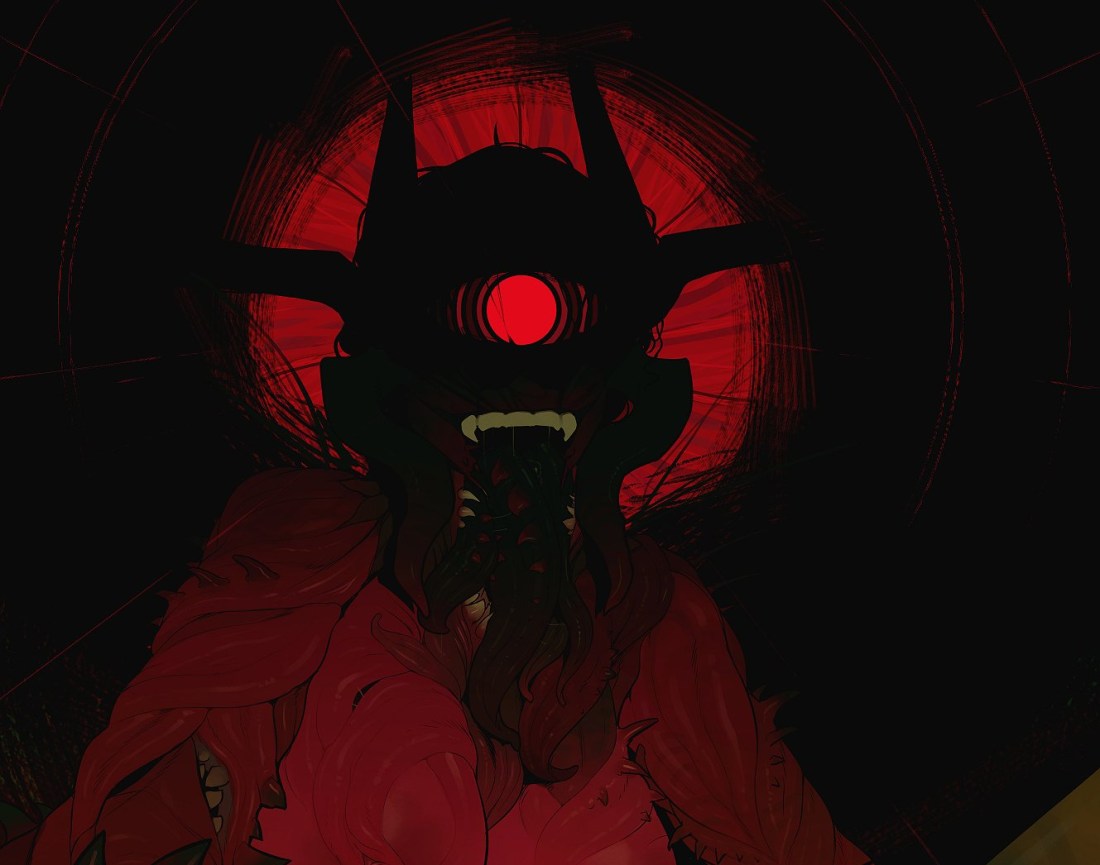
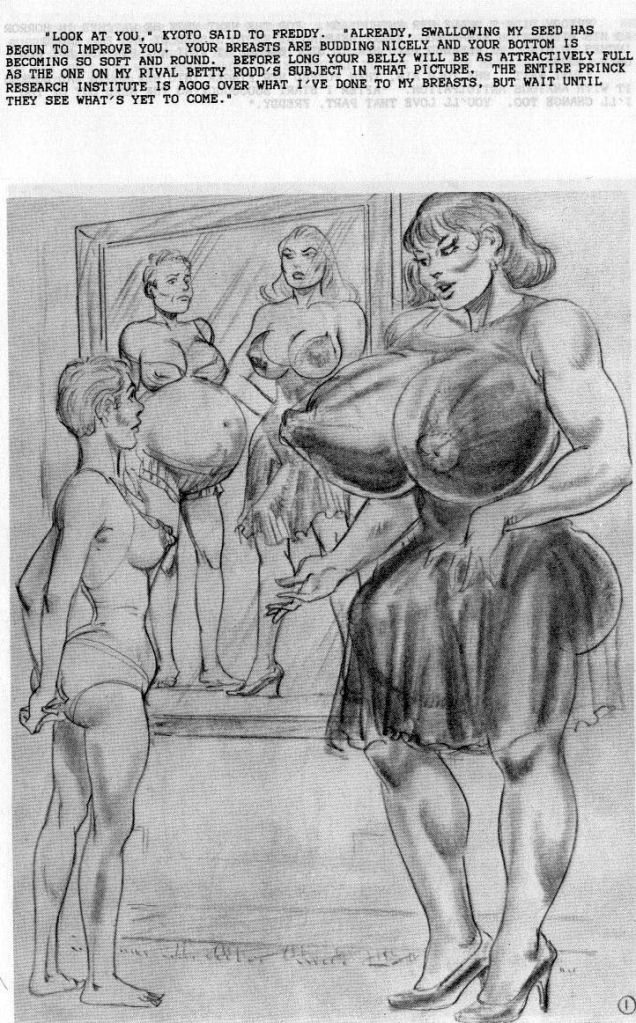
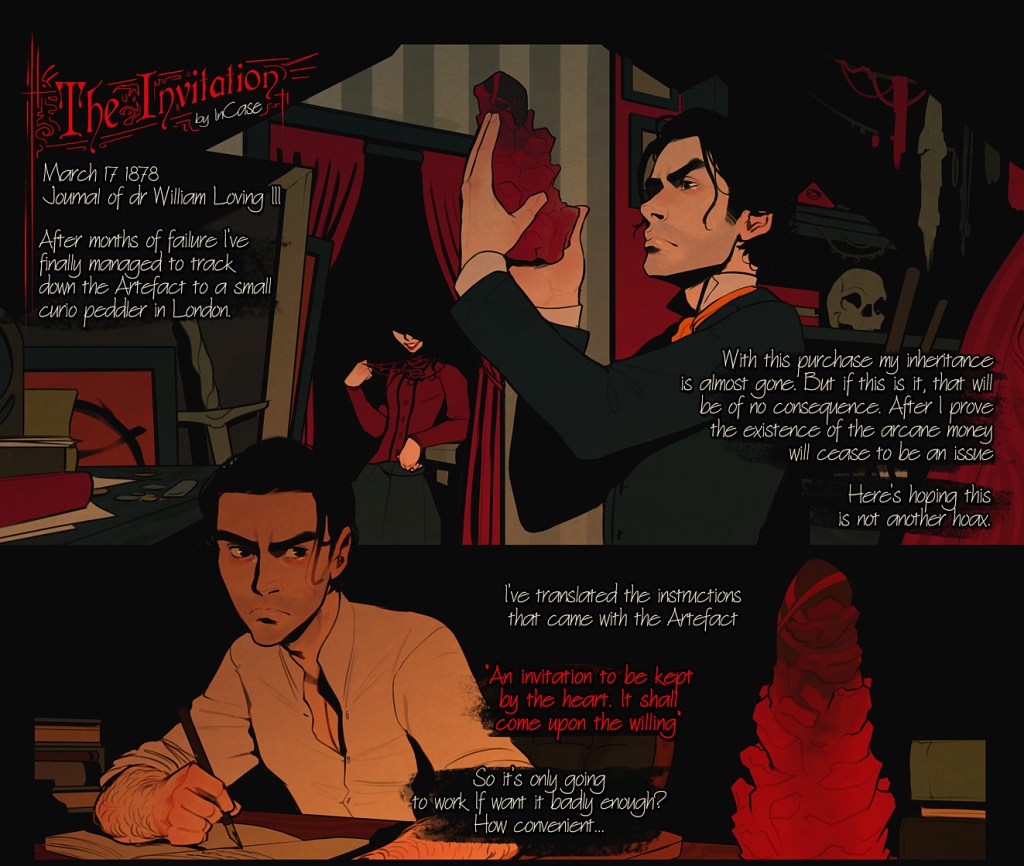
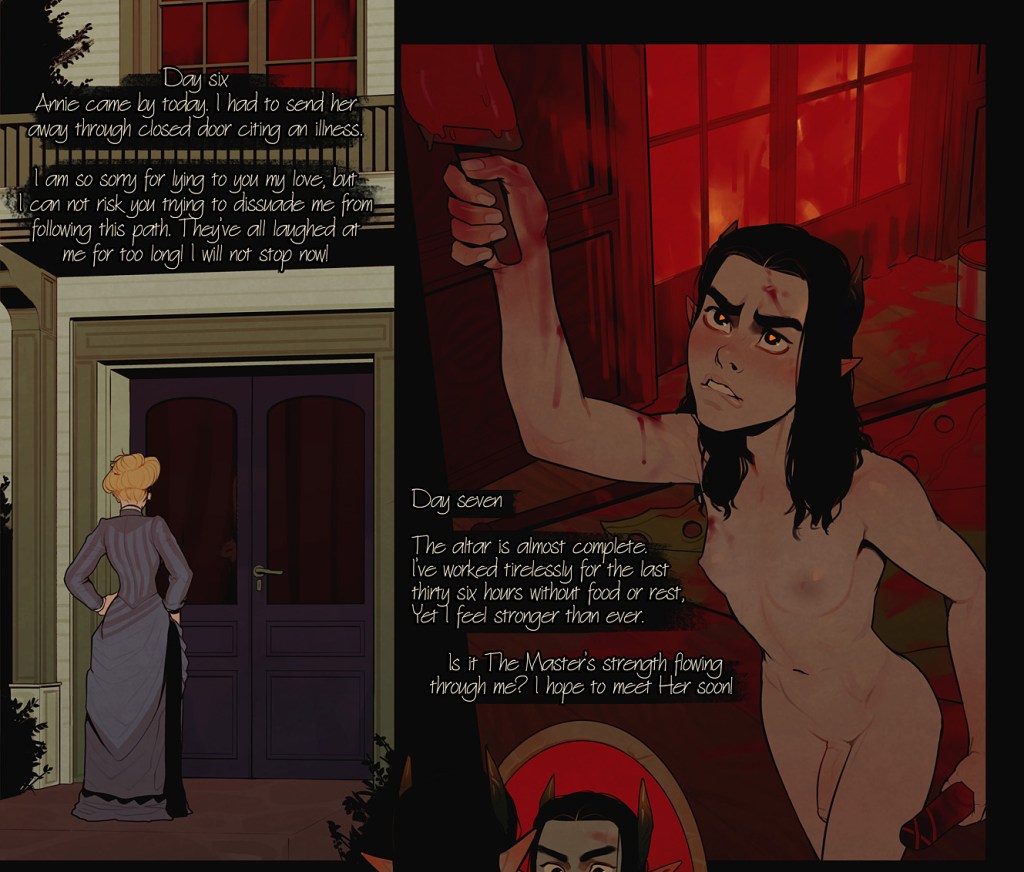
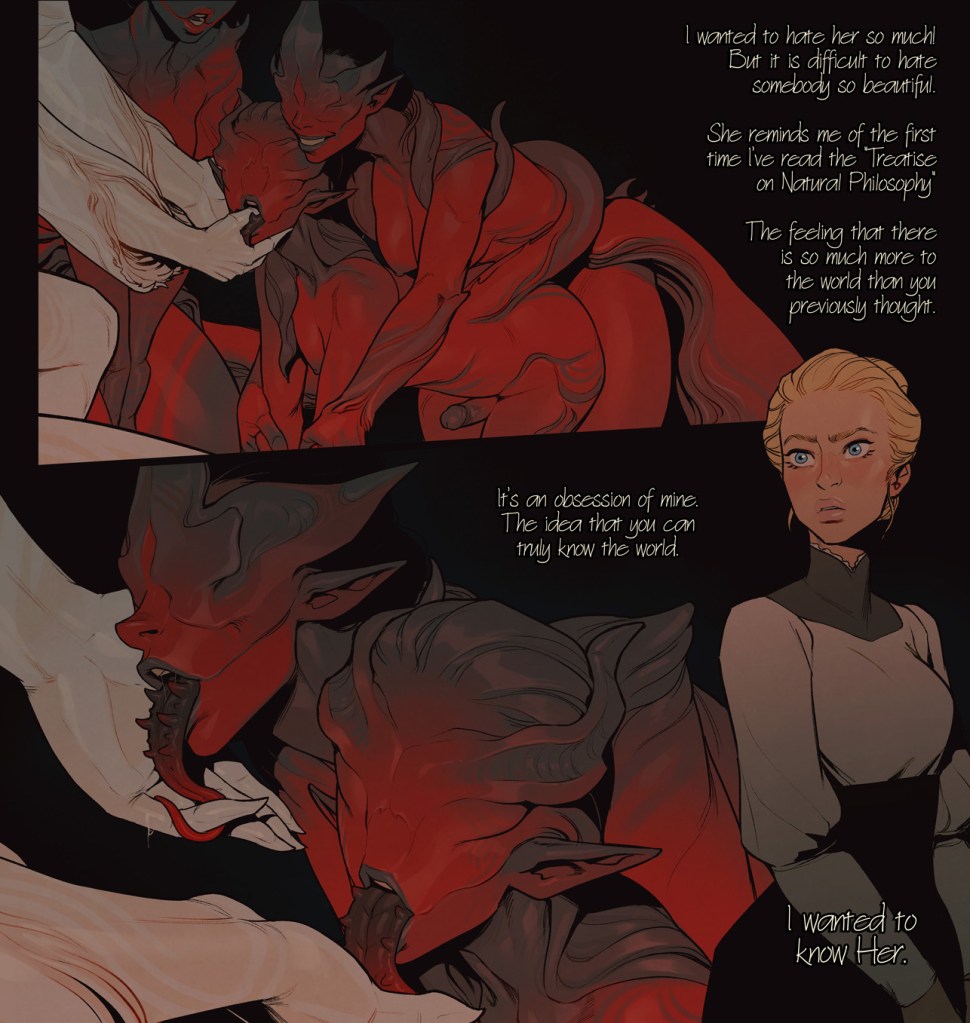
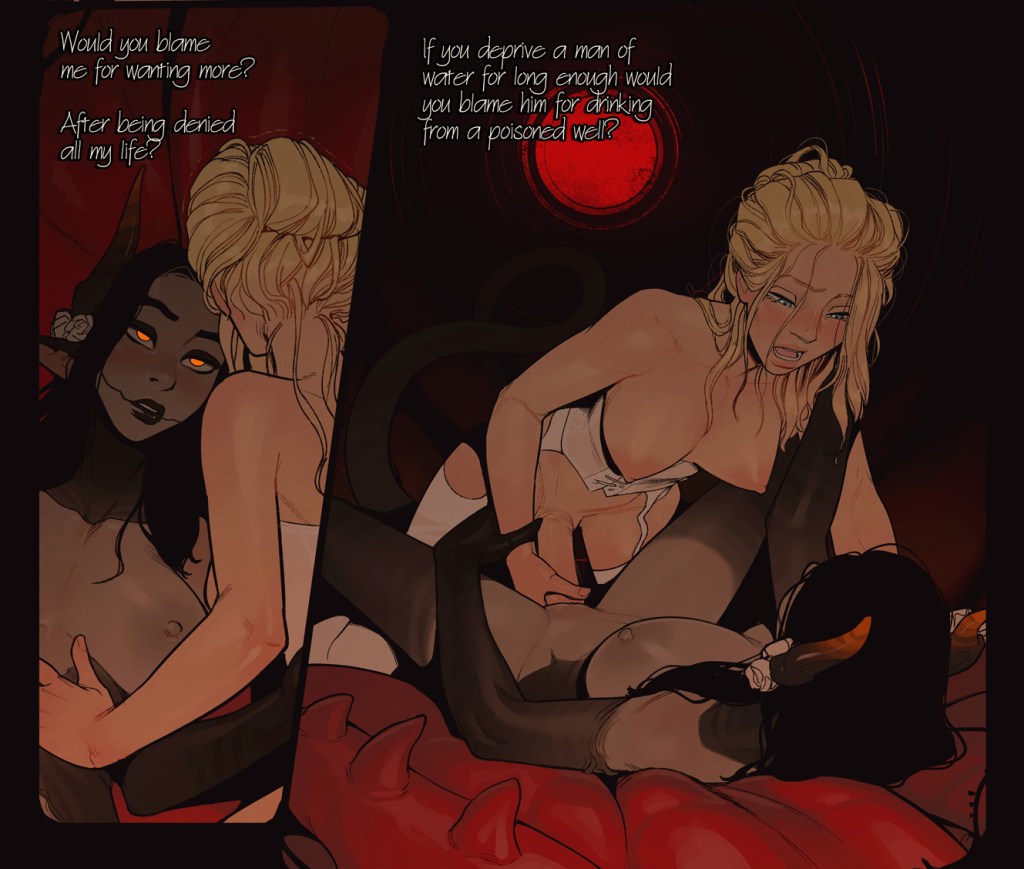
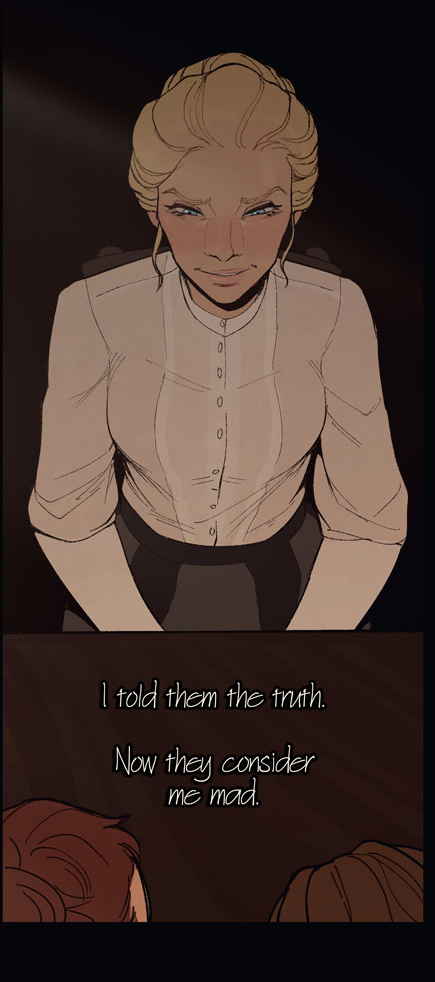
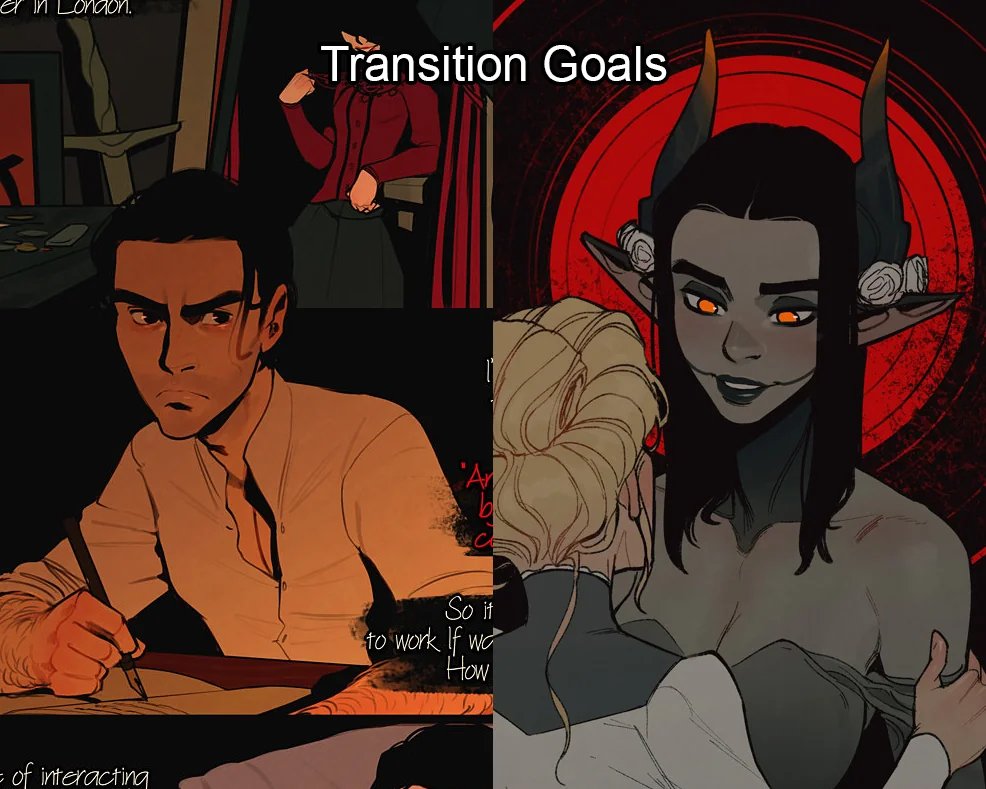
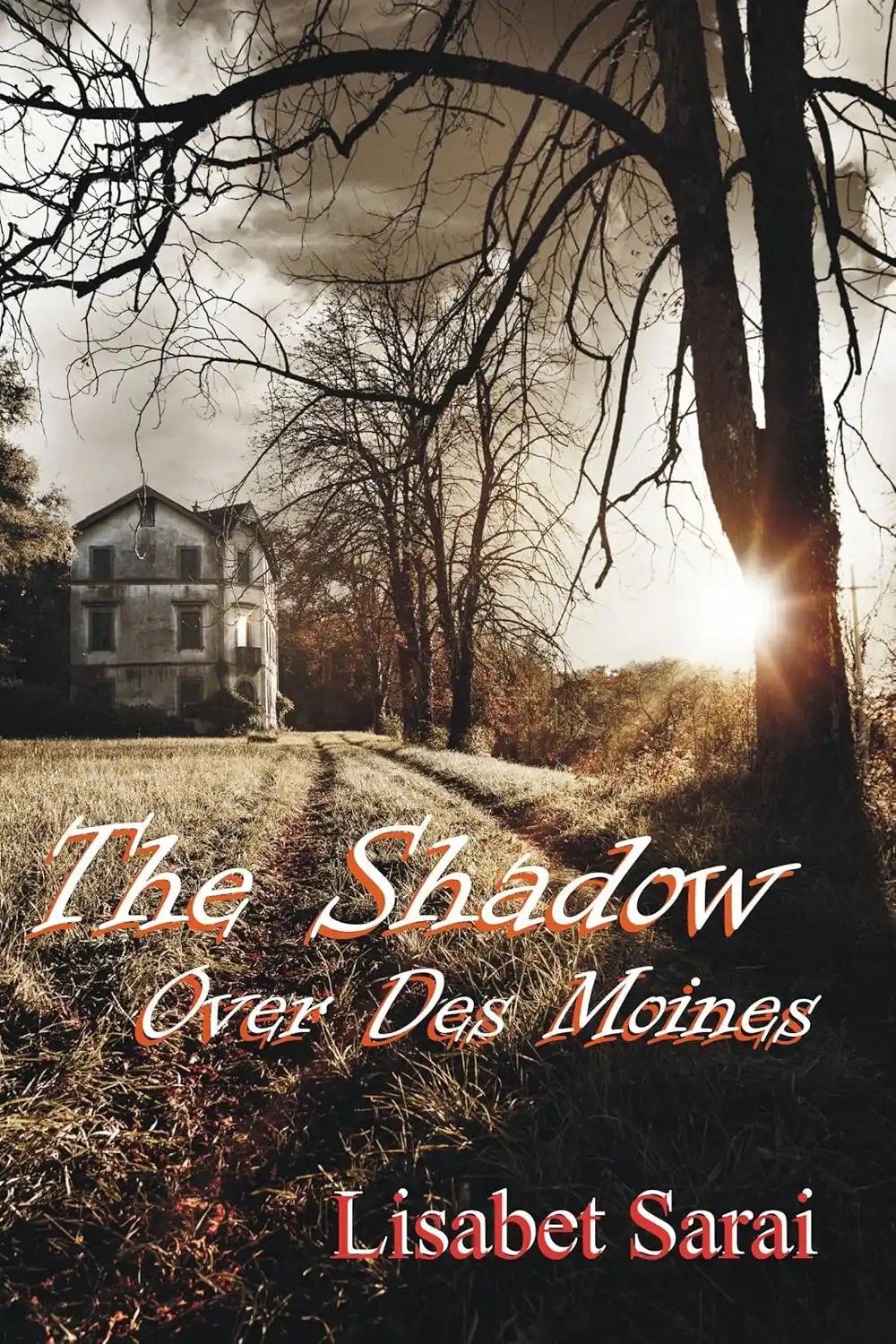

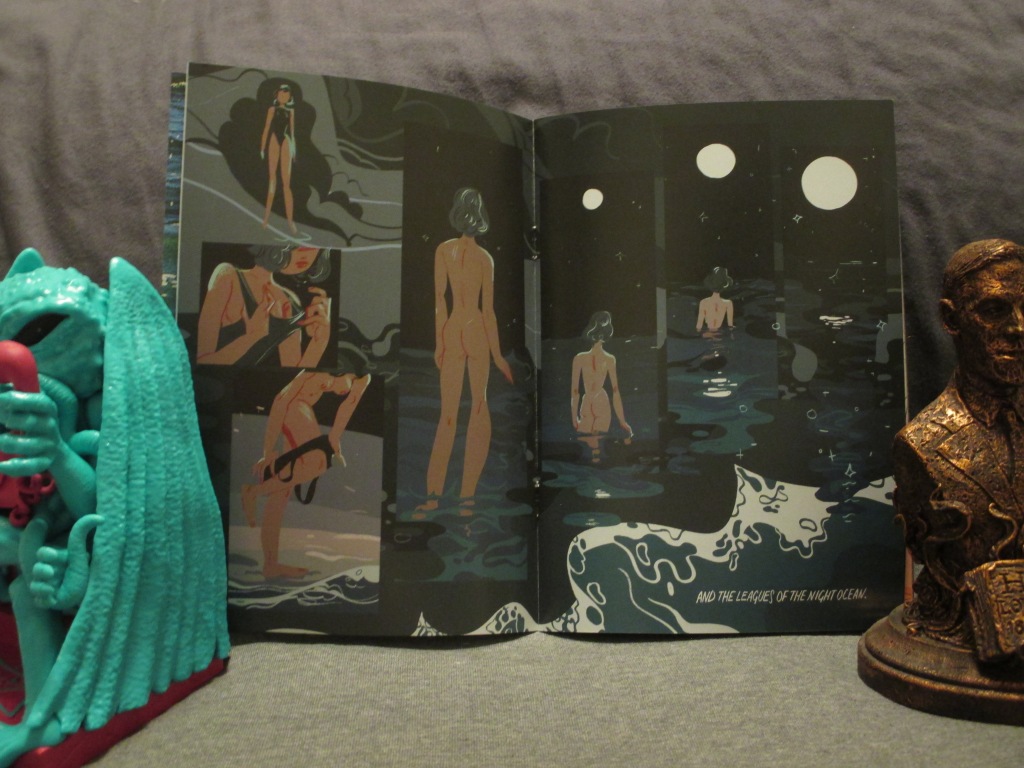
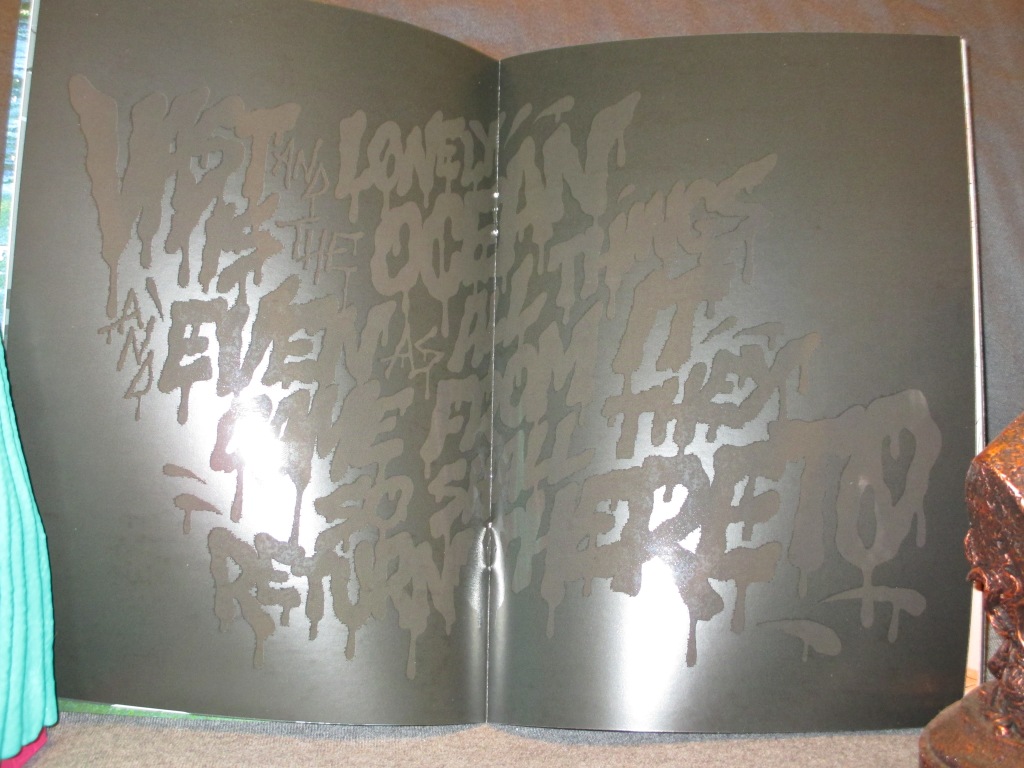
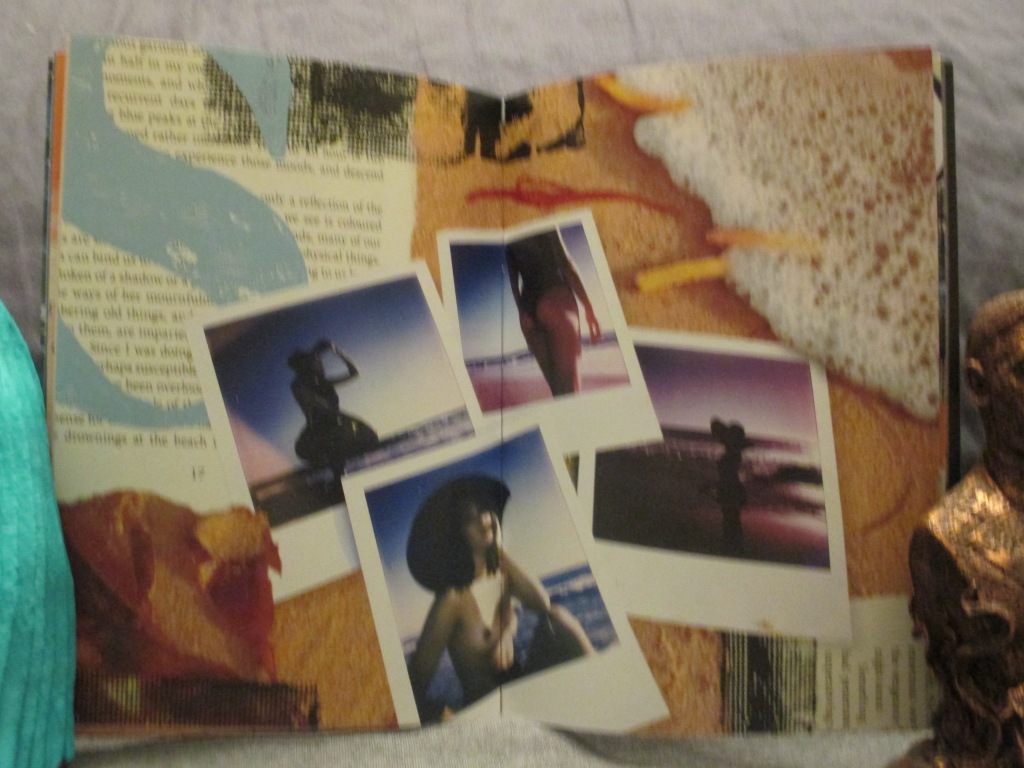
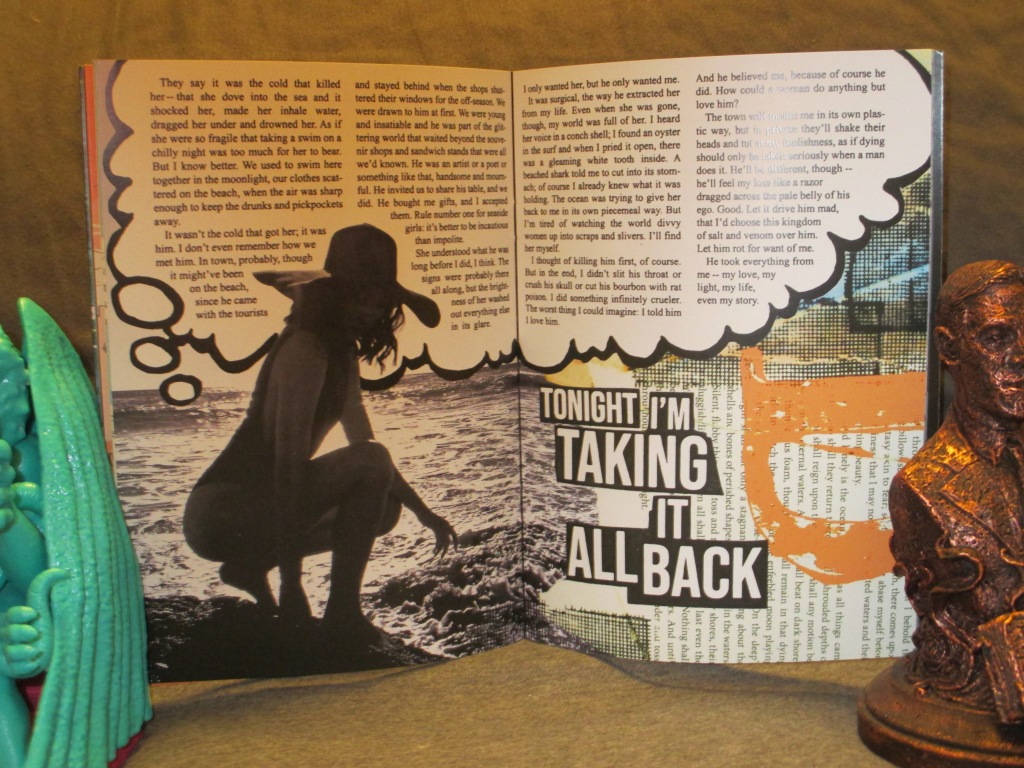
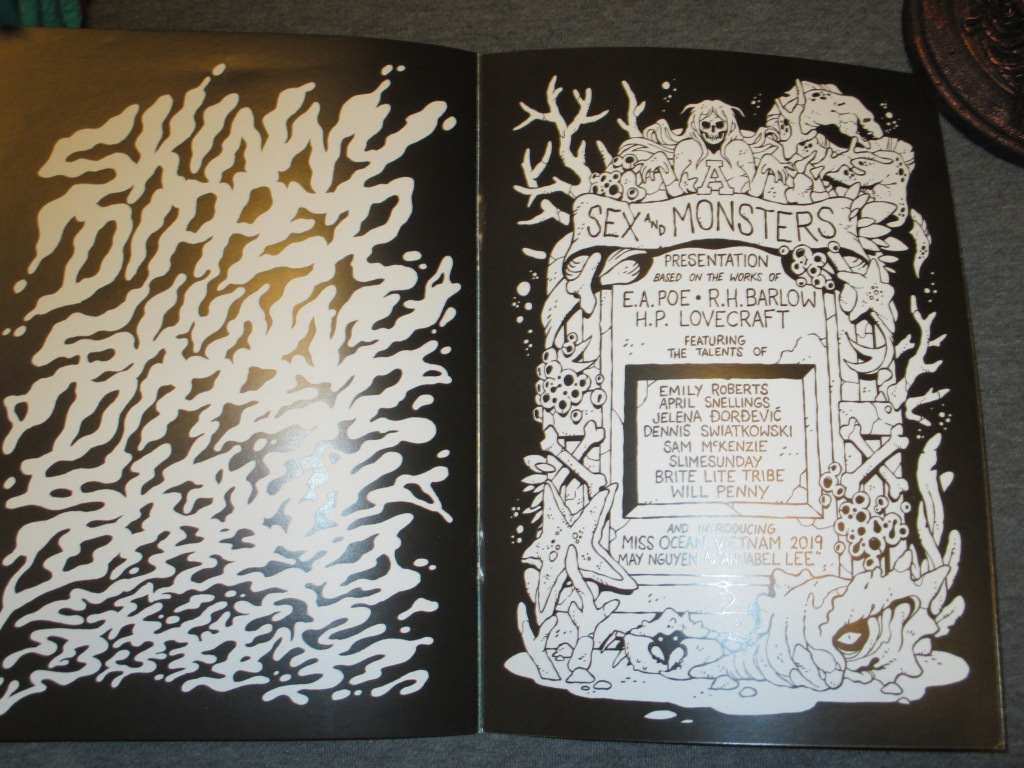
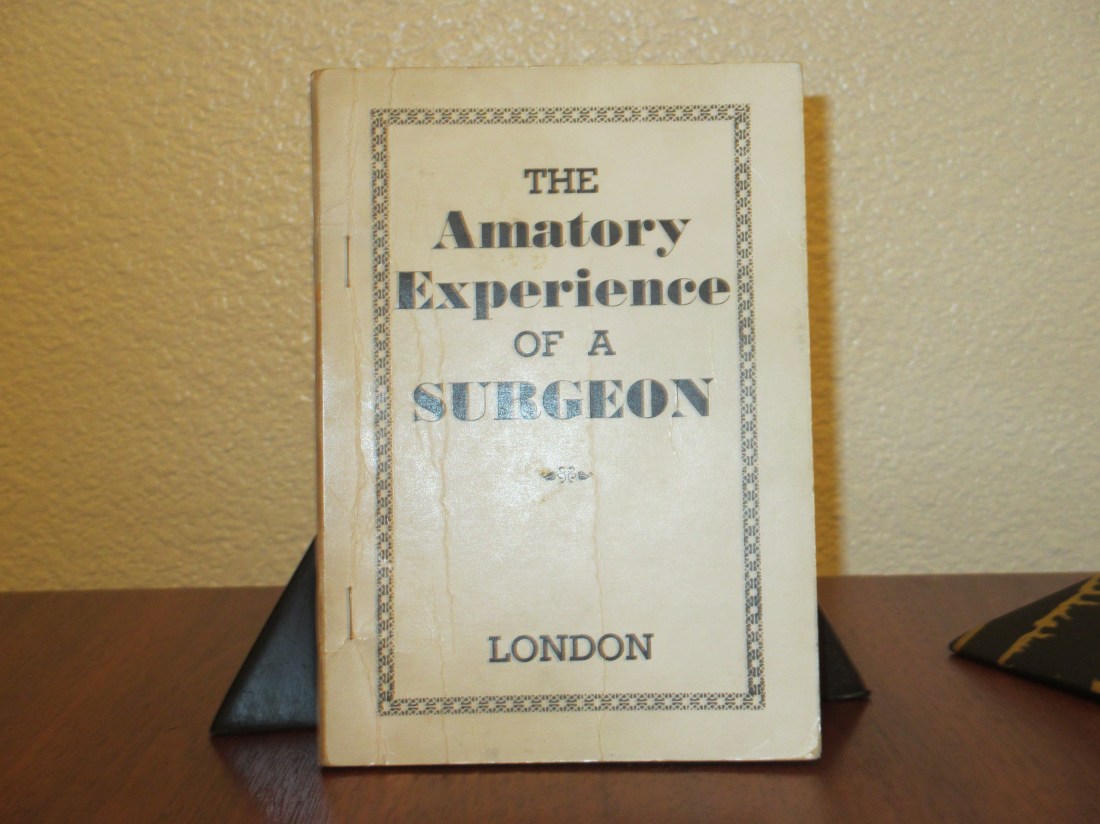


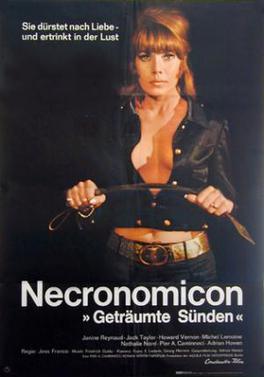
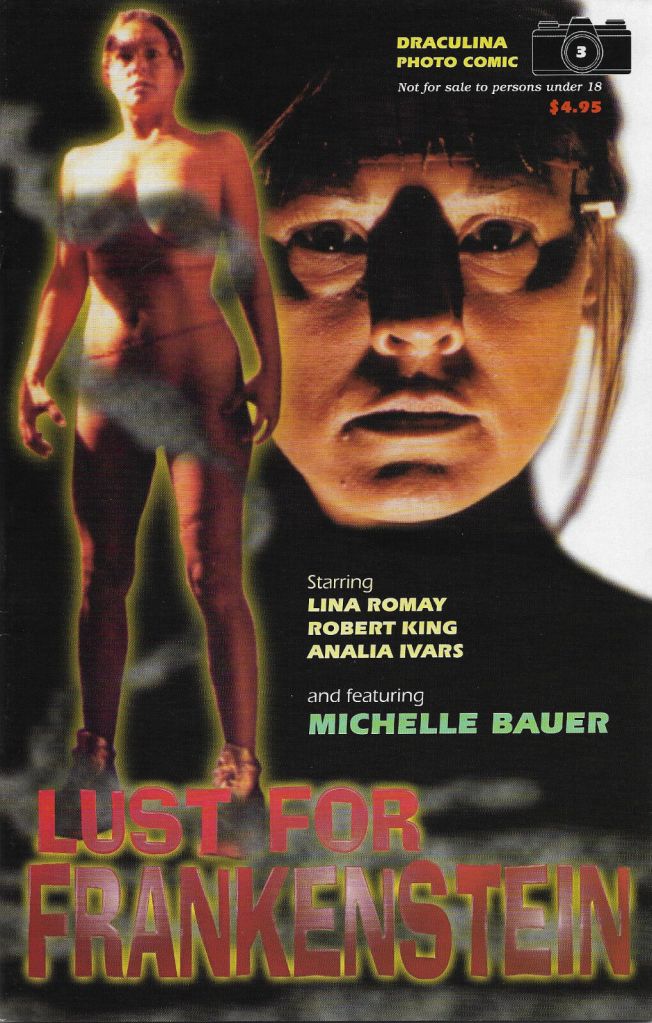
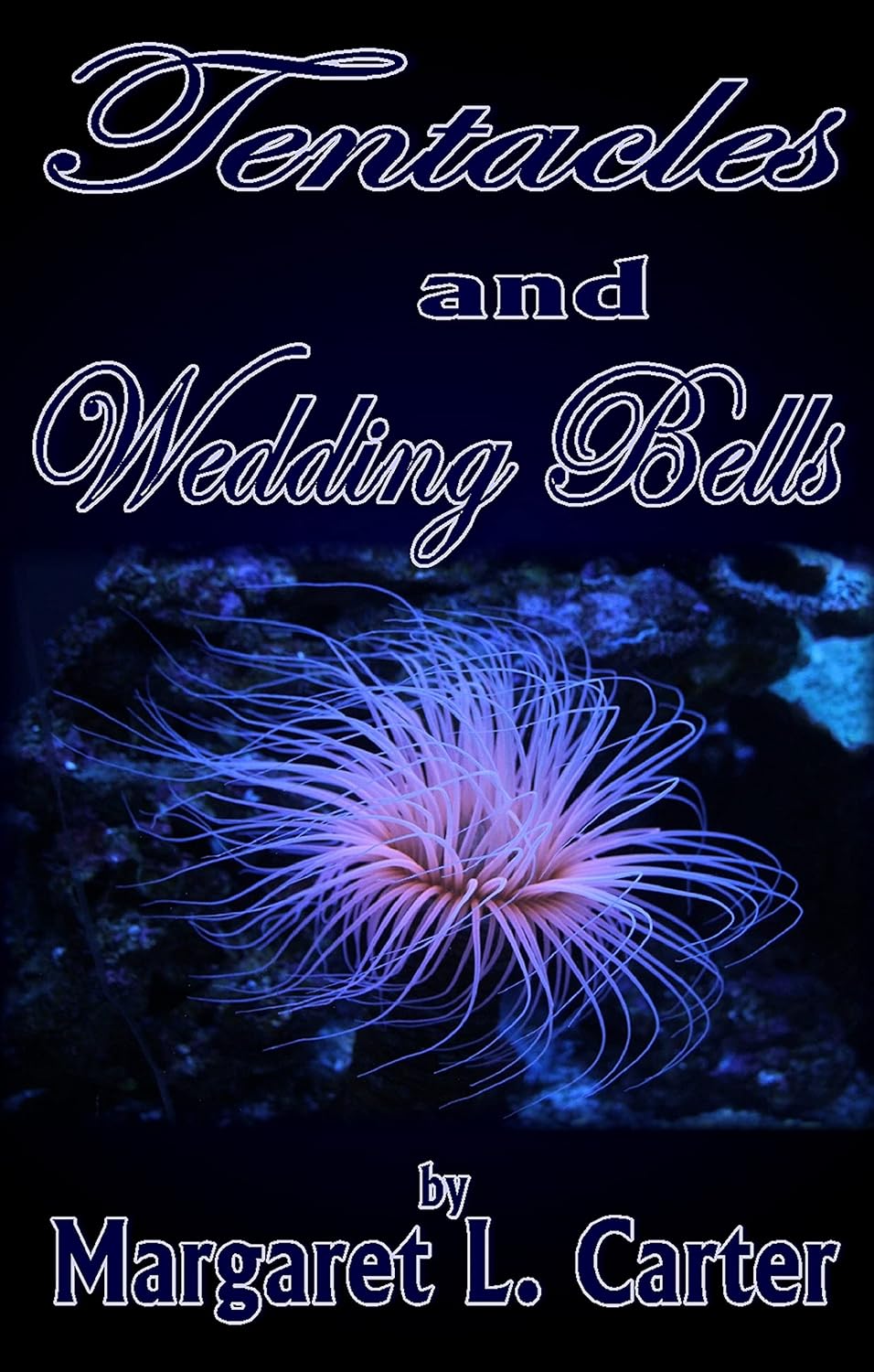


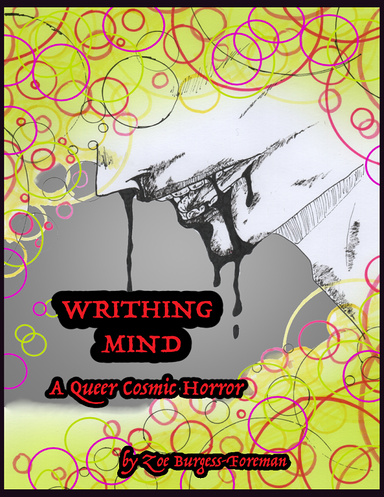

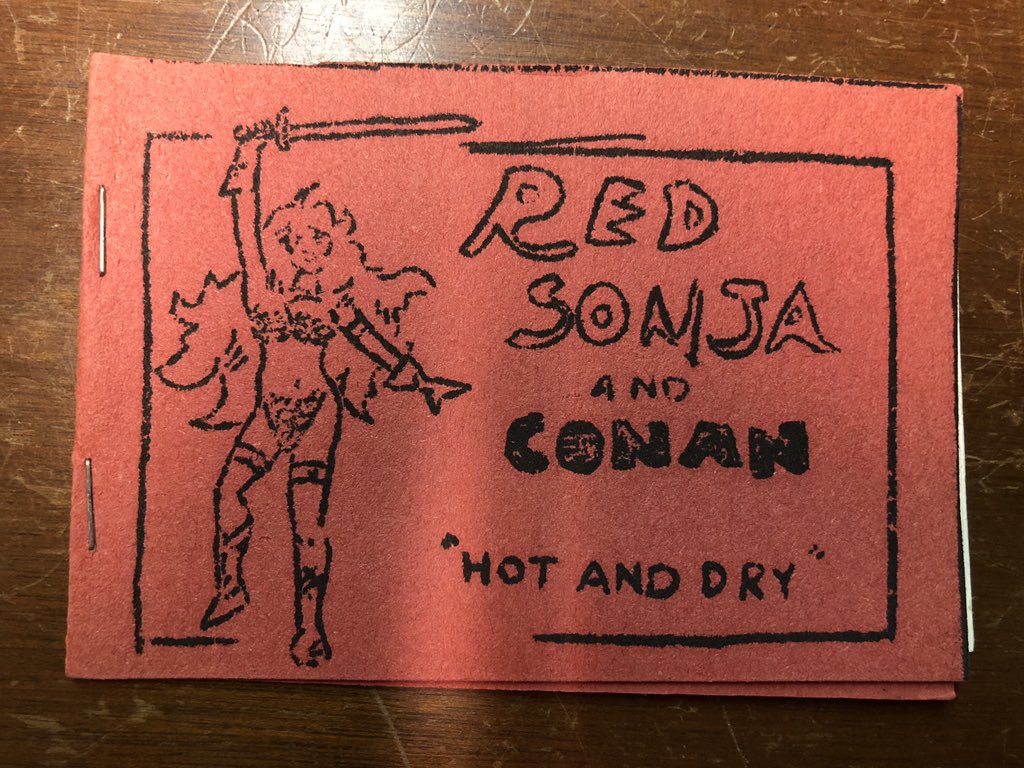


 Deep Cuts in a Lovecraftian Vein