THE CALL OF THE FRIEND is part of the Lovecraft Reanimated project, where leading Korean speculative fiction writers reimagine the works of horror master H.P. Loveccraft, while honoring his eerie, grotesque imagery and the blurred boundaries between reality and fantasy, they update his ideas for a global audience. —The Call of the Friend(2025), inside cover flap
The Call of the Friend (친구의 부름) is a standalone black-and-white graphic novel by Korean comic artist and writer JaeHoon Choi (최재훈), first published in 2020. The English translation by Janet Hong was published in 2025 by Honford Star. The story is set in contemporary urban Korea, where university student Wonjun checks in on his friend Jingu, whose sister (a K-pop idol) has recently committed suicide, implicitly because of a scandalous affair. It is in Jingu’s apartment that Wonjun spots a strange idol.
The story that unspools is not a straightforward linear narrative. It is intimate, focused on Wonjun, with everyone other than Jingu essentially faceless. Readers get pieces of the puzzle, but the full story isn’t spelled out for them, readers are forced to interpret the evidence as best they can. In this, they are given a single helpful hint in a short essay at the end of the book:
Some live a life of violence, while others make every effort to avoid stepping on an insect. But no matter the severity or type of sin, the moment we realize we have sinned, we experience fear. The fear isn’t so much the dread of punishment or retribution. It stems from the knowledge that we’ve hurt someone or caused their unhappiness, and the sin manifests as fear. Depending on the intensity of this fear, we can either be liberated from our guilt or ensnared by it.
While I don’t want the theme to be too obvious in this story, I hope readers might be able to tangibly experience Wonjun’s guilt. These long, nocturnal reflections on our current human condition, set against H. P. Lovecraft’s world of unexplained fears, have prompted me to contemplate the words we’ve spoken, the conflict and guilt we’ve endured, as well as the subsequent death and feat they cause. —The Call of the Friend(2025), 104-105
As an essay, it is slightly reminiscent of Arthur Machen’s prologue to “The White People” on ‘sorcery & sanctity.’ The idea of fear as a fundamental response to a transgression—an instinctive response to some imbalance caused by action or inaction—and that this fear can liberate or ensnare guilt, has its attractions. Yet how does this philosophical approach jive with Lovecraft’s famous proclamation that “the strongest kind of fear is fear of the unknown”?
When you don’t know what the sin was. When the only way you have to measure how badly you’ve hurt someone is the measure of the fear you feel in response to it. Whether this is what JaeHoon Choi intended with The Call of the Friend I cannot say, but the presence of the Cthulhu Mythos in this story is suggestive of something that goes beyond tawdry K-pop star drama and the suicide of the sister of a friend. It suggests that there’s something much bigger at work here, something unseen and unknowable, and it threatens to ensnare Wonjun entirely.
The Call of the Friend is somewhat reminiscent of Minetaro Mochizuki’s Hauntress(1993) in general outline—both of them deal with young university students living on their own, the one checking in on the other to whom something has happened, and with a supernatural horror creeping into their lives—and more importantly, that sensation of an urban legend unfolding in a space of familiar, contemporary surroundings. These are characters ill-equipped to deal with the psychological terrors of their experiences. They have no strong faith, no occult skills or leanings. They are regular people, with limited resources, facing the uncanny.
That works. JaeHoon Choi takes advantage of the prosaic setting and characters to make the distortions of perception all the more disturbing for taking place in setting of absolute reality. Readers will question how much of this is in Wonjun’s head, will wonder when we slip into dream, hallucination, or twisted memory. The idol forms a locus of manifestation, a central image to embody what it is happening, but even until the end, readers have to decide how much of this is really happening.
The comic ends like an unresolved chord. Readers don’t get answers. Only the impression that they have witnessed something. Perhaps that is the answer itself.
Janet Hong’s translation of the graphic novel into English is very readable and smooth. While most of the graphic novel itself has relatively sparse dialogue, the essay at the end is very clear and easy to understand, and a valuable key to understanding the work.
The Call of the Friend (2025) by JaeHoon Choi and translated by Janet Hong is available at the Honford Star website as an ebook or softcover.
Racist Language This review concerns H. P. Lovecraft’s cat, whose name was a racial slur against Black people. As part of this review, the cat’s name and variations are included. Reader discretion advised.
The first known reference to H. P. Lovecraft’s cat was in a letter from his grandfather when Lovecraft was only 5 years old:
You and Dumplin Mama must keep the Barn shut every night and take care of Nig. —Whipple Van Buren Phillips to H. P. Lovecraft, 17 Oct 1895, Letters to Family & Family Friends 2.1046
“Nig” was short for “Niggerman.” It was a black cat, at a time when the N-word was relatively common for pets with black coats. Whether it was Lovecraft who named the kitten, or a family member or friend, is not recorded in any of Lovecraft’s letters. It was his childhood pet—and, as it happened, the only pet he could afford during his life, although he retained a great fondness for cats throughout his life, often petting or playing with strays. In 1904, Whipple Van Buren Phillips died. Lovecraft’s family home was sold, he and his mother moved away from his childhood home, and the cat disappeared during the tumult, never seen again.
Lovecraft remembered his feline companion in later years, and based two cats in his stories on his lost pet: Niggerman in “The Rats in the Walls,” and Nig in The Case of Charles Dexter Ward. Neither appearance caused any particular outcry at the time of publication; Weird Tales was no stranger to the N-word and other terms, and it was not until “The Rats in the Walls” (1956) that any serious effort was made to censor or bowdlerize the cat’s name. Works in translation and adaptation were more likely to change the name; different languages, with different histories regarding race relations and Black slavery, have their own nuances of language to give shades of meaning or seek to avoid giving offense.
In 2023, Argentinian illustrator and writer Dolores’ Alcatena published Lovecraft y Negrito, a short graphic novel about Lovecraft’s friendship with his beloved pet. As she puts it in the opening:
Como amante de los gatos, Howard Philips Lovecraft frecuentemente incluía en sus relatos a estos elegantes y misteriosos animalitos. En su estilo deliberadamente desamorado y serio, los describía como símbolos de perfección, estética, libertad e independencia. Pero entre las cartas del escritor aparece Niggerman, un gatito negro que acompañaba a Lovecraft en su niñez. Al hablar de Niggerman (rebautizado ‘Negrito” para esta obra) las palabras del autor asumían un tono cálido, recordando con ternura cómo jugaban juntos en el jardín. Al hablar del gatito, el escritor no pudo, o no quiso, esconder sus sentimientos. El cariño que Lovecraft mantuvo a lo largo de su vida por Niggerman inspiró esta historia, permitiéndonos acceder a un costado más humano del gran autor del horror.
As a cat lover, Howard Philips Lovecraft often included these elegant and mysterious animals in his stories. In his deliberately dispassionate and serious style, he described them as symbols of perfection, aesthetics, freedom, and independence. But among the writer’s letters appears Niggerman, a black kitten who accompanied Lovecraft in his boyhood. When talking about Niggerman (renamed “Negrito” for this work), the author’s words took on a warm tone, fondly recalling how they played together in the garden. When talking about the kitten, the writer could not, or did not want to, hide his feelings. Lovecraft’s lifelong affection for Niggerman inspired this story, allowing us to glimpse a more human side of the great horror author.
Dolores Alcatena, Lovecraft y Negrito (2023)
English translation
“Negro” in Spanish is the color black, “-ito” is a diminutive suffix; context is important because in some usages “negrito” can mean bold type, or it can be a reference to certain Southeast Asian peoples, or a not-necessarily-kind reference to small Black children. In the context of this story, it might be best to think of it as a term of affection, like naming a black kitten “Blackie.”
Su gato, Negrito, lo acompaña.
Y, como siempre, lo cuida.
His cat, Negrito, accompanies him.
And, as always, takes care of him.
Dolores Alcatena, Lovecraft y Negrito (2023)
English translation
The story is told in black and white, mostly from Negrito’s perspective. The cat aids and protects Howard through his journeys, including the events that would inspire “The Cats of Ulthar” and “The Shadow over Innsmouth.” From a cat’s perspective, the cat-killing couple in Ulthar are particularly horrific.
“Ningún hombre debería matar a un gato” Pensó el niño mientras recordaba a Negrito ronroneando frente al fuego.
“No man should kill a cat,” the boy thought as he remembered Negrito purring in front of the fire.
Dolores Alcatena, Lovecraft y Negrito (2023)
English translation
There is a somewhat fairy-tale quality to the retelling, the traipse through Lovecraft’s fiction. Most of Howard’s waking life we don’t see…but then his cat was not there to see that.
Qué suerte que Negrito siempre había estado en esos momentos.
How lucky that Negrito had always been there in those moments.
Dolores Alcatena, Lovecraft y Negrito (2023)
English translation
The Lovecraft of these stories is a scared, almost a traumatized kid, with Negrito as his only friend; parental figures are absent. It is a very sympathetic view of Howard as a child, but in comparison to El Joven Lovecraftby José Oliver & Bartolo Torres it does not show Lovecraft’s occasional joyfully morbid side. Readers are meant to empathize with a young Lovecraft.
The ending, a wordless reunion between the dead Lovecraft and his lost cat, is the kind of afterlife that every cat-lover might wish to experience themselves someday.
Es un tributo muy distintivo ser elegido como amigo y confidente de un gato. H. P. Lovecraft.
It is a very distinctive tribute to be chosen as a friend and confidant of a cat. H. P. Lovecraft.
It is no compliment to be the stupidly idolised master of a dog whose instinct it is to idolise, but it is a very distinct tribute to be chosen as the friend and confidant of a philosophic cat who is wholly his own master and could easily choose another companion if he found such an one more agreeable and interesting.
Lovecraft y Negrito is a story about a boy and his cat. It is not a historical work that delves into the nuances of the cultural forces that went into such names, or how naming cats did or did not reflect Lovecraft’s racial prejudices in later life. If readers want a scholarly exploration of what we do and don’t know about the real animal, check out Ken Faig’s essay “Lovecraft’s Boyhood Cat” in Lovecraft Annual #19 (2025). If you want a heartwarming fantasy about Lovecraft and his beloved pet, which has gained a kind of literary immortality, then read Lovecraft y Negrito.
It was just a colour out of space—a frightful messenger from unformed realms of infinity beyond all Nature as we know it; from realms whose mere existence stuns the brain and numbs us with the black extra-cosmic gulfs it throws open before our frenzied eyes. —H. P. Lovecraft, “The Colour Out of Space”
Comic and graphic novel adaptations of prose and verse literary works have always held a fascination. Because while you might declare one text as canonical, as a true text, immutable and eternal, the graphic adaptations of that text will always be different, unique to their vision and skill and ability to realize that text in illustrated form. Every artist has to pick and choose what images to convey and how to convey them, how to frame the story and the text, what to leave in and out, what to emphasize and how to do it. Give three artists the same story to draw, and you have three variations on the same story.
This sometimes arouses—at least among some readers and critics—the urge to compare different variations on the same works to each other. Because it can be fascinating to see the divergence and the commonalities, to look at all the different flowers that may blossom from identical seeds. Not necessarily to point out any one graphic adaptation of Lovecraft as better than the others, but to enjoy the diversity of views and skills.
When it comes to “The Colour Out of Space” in particular, however, there’s a fundamental question that every artist has to struggle with: how do you depict a color that is outside the visible spectrum?
Strictly speaking, outside of a technical trick like polarized lenses, you cannot. What usually happens instead is that the artist has to use visual rhetoric to convey the sense of the unknown color, even while using the colors that are available for printing. In the case of Sara Barkat’s The Colour Out of Space(2024) this is mostly accomplished by having the majority of the art in black-and-white.
However, instead of having the colored portions represent just the color itself, the color is used to illustrate those people and objects that the color has infected. So the addition is not just a single splash of magenta or red in a monochrome world, it is a spectrum of colors in a landscape, or a room, or a person.
Barkat’s style isn’t a demonstration of technical excellence in the same sense of Gou Tanabe’s The Colour Out of Space (2025), nor does it have the minimalist book-as-object approach of Amy Borezo’s The Colour Out of Space (2016). What she has is a loose, sketchy but heavily detailed pencil that captures a certain underground aesthetic, the rawness of the art adding a certain texture to the text, especially with the use of mixed media (primarily watercolors) to add color. As with Alberto Breccia’s Cthulhu Mythos adaptations, the result is a more profound experience than either the art or the text would accomplish on their own.
Which is ultimately what a lot of people are looking for in any graphic adaptation. Not a simplification of a text, or the addition of some pretty pictures to look at, but a new way of experiencing the story.
An einem seiner vielen ereignislosen, langweiligen Abenden beschließt der junge Jacop O’Damsel, freiberuflicher Nerd, sich besoffen in einem Hinterhof schlafen zu legen. Blöd, wenn ausgerechnet da plötzlich ein intergalaktischer Dimensionsschlürfer auftaucht. Bevor Jacop überhaupt die Chance bekommt, einen Kater zu haben, nimmt in das Ding auch schon einfach so mit.
Jacop wacht in Xoth auf, einer fremden Welt voller abartiger Kreaturen – oder solite man sagen: geradezu unsagbar grauenhaft? Auf jeden Fall sind da noch die »Humanisten«, eine Bande von stinkigen Fischköpfen, die Menschen kultarig verehren, und die Jacop angeblich für eine Mission brauchen. Und gäbe es niche genug an Wahnsinn zu verkraften, setzt der Bürgermeister der Stadt, der mächtige Cthulhu, seine besten Killer auf den Fall an. Den großen Alten sei Dank gibt es da noch Yen Niggurath, ein hübisches Ziegenmädchen, Des Gefallen an dem hilflosen Menschlein findet. Zusammen mit ihr get Jacop dem »Ordus Humanus« auf den Grund, Dennis – bei Cthulhus fettem Arsch! – er hat keine Lust, ständig um sein Leben zu rennen.
Vor dem Hintergrund von H. P. Lovecrafts Cthulhu Mythos entwirft Anna-Maria Jung eine Geschichte voller Monster, Nerds, Monsternerds und Nerd monster. Und der Mann aus der Angell Street kommt auch drin vor.
On one of his many uneventful, boring evenings, young Jacop O’Damsel, a freelance nerd, decides to get drunk and sleep in a backyard. Too bad when an intergalactic dimensional shambler suddenly turns up. Before Jacop even gets the chance to have a hangover, the thing takes him with it.
Jacop wakes up in Xoth, a strange world full of disgusting creatures – or should we say, downright unspeakably horrible? In any case, there are also the “Humanists”, a gang of smelly fishheads who worship humans in a cult-like manner and who supposedly need Jacop for a mission. And when there isn’t enough madness to deal with, the mayor of the city, the mighty Cthulhu, sets his best killers on the case. Thank the Great Old Ones, there is also Yen Niggurath, a pretty goat girl who takes a liking to the helpless little human. Together with her, Jacop gets to the bottom of the “Ordus Humanus”, Dennis – by Cthulhu’s fat ass! – he doesn’t want to constantly run for his life.
Against the backdrop of H. P. Lovecraft’s Cthulhu Mythos, Anna-Maria Jung creates a story full of monsters, nerds, monster nerds and nerd monsters. And the man from Angell Street appears in it too.
Back cover copy, 2010 edition
English translation
Xoth! Die unaussprechlichen Stadt (“Xoth! The unspeakable City!”) is a 2007 graphic written and drawn by Anna-Maria Jung ( https://www.annamariajung.com/ ), an Austrian illustrator with a penchant for monsters and nerds. The publication history is a little difficult to piece out, because part of the history has been eaten by the web, but the Internet Archive maintains a copy of (most) of the old website, which offers some background:
Xoth! ist ein 70 seitiges Farbcomic, das auf dem “Cthulhu-Mythos” von Howard Philips Lovecraft beruht.
Die Idee für Xoth! kam Anna-Maria Jung 2006 in New York, als sie ein Buch zu H.P. Lovecrafts Cthulhu Mythos entdeckte. Beruhend auf diesem Mythos entstand die Idee, eine einzige Heimatwelt für Lovecrafts Kreaturen zu kreieren.
Anna-Maria diplomierte 2007 mit einer Arbeit über »Lovecraft in den Medien«. Diese Diplomarbeit wurde eine konzeptuelle Vorarbeit für ihren Comic sie erforschte Lovecrafts Vergangenheit, den gesamten Mythos und seine Einflüsse auf die Medienwelt. Auf Wunsch kann man diese Diplomarbeit bei mir als PDF kostenlos bestellen.
Als praktischen Teil entwickelte sie die Charaktere, Hintergründe, Gegenstände, Zusammenhänge, Beziehungen und Verhältnisse einer Welt, die sie, inspiriert von Sci-Fi Autor Lin Carter, Xoth taufte.
Xoth! is a 70-page color comic based on the “Cthulhu Mythos” by Howard Philips Lovecraft.
Anna-Maria Jung came up with the idea for Xoth! in 2006 in New York when she discovered a book about HP Lovecraft’s Cthulhu Mythos. Based on this myth, the idea of creating a single home world for Lovecraft’s creatures was born.
Anna-Maria graduated in 2007 with a thesis on “Lovecraft in the Media.” This thesis was a conceptual preparatory work for her comic; she researched Lovecraft’s past, the entire myth and his influence on the media world. If you wish, you can order this thesis from me free of charge as a PDF.
As a practical part, she developed the characters, backgrounds, objects, contexts, relationships and conditions of a world that she named Xoth, inspired by sci-fi author Lin Carter.
Was ist Xoth? (Deutsche)
What is Xoth? (English)
Lin Carter’s Mythos fiction was published in The Xothic Legend Cycle by Chaosium; Xoth was the star from which Cthulhu originated, and Carter’s fiction dealt with Cthulhu’s progeny. Cthulhu himself appears in Jung’s Xoth! as the mayor of the city.
Unfortunately, with the death of early web, stuff like Jacop O’Damsel’s MySpace page and the English translation of some of the comic pages are likely sadly gone forever.
A 2008 “exclusive preview” of Xoth for the Internationaler Comic Salon Erlangen 2008, where the book presumably premiered; Jung also wrote and drew a spin-off comic titled “Marie Jenkins Brown: Sechs ist Besser als zwei” (“Mary Jenkins Brown: Six Is Better Than Two”) published in Comicgate Magazin #3 (2008). Both Xoth! and the Marie Jenkins Brown spin-off were collected and published in the Xoth! Die unaussprechliche Stadt Extended Edition (2010, Zwerchfell Verlag).
Absinthe and Dimensional Shamblers don’t mix.
There is a slightly cartoonish, early-2000s webcomic vibe to Jung’s art style, which might make some folks to confuse Xoth! for a comic intended for kids at first glance, but really this is aimed at a more mature audiences, with references to alcohol and sex, and some brief cartoon nudity that is designed to amuse rather than titillate. It’s a fun takeoff of the Mythos for grown ups, especially grownups who were monster enthusiasts in their youth.
Fans will appreciate the many references to Lovecraft’s Mythos (and the Call of Cthulhu Roleplaying Game) sprinkled throughout the story. It’s definitely played for humor more than horror, reminiscent of works like The Unspeakable Vault (of Doom!), but with more narrative and focus on characters. This is really the story of Jacop O’Damsel, the sole human in the city.
Fortunately, Jacop has help from Yen Niggurath, one of the Dark Young, who takes a shine to him. Their relationship has a meet-cute quality, and there’s a certain romantic frisson between the two almost from the start.
Lovecraft, “the Man from Angell Street.” does indeed make an appearance, although he spends most of the comic in the body of a Yithian he’s been mind-swapped with. Which is a fun way to include Lovecraft in what is otherwise a contemporary setting that includes cellphones.
A scene where Jacop meets a dying Lovecraft in 1937 is also included, although Jung makes a slip here in getting the date and address incorrect.
It is a fun graphic novel. The plot isn’t very profound, but not all stories have to be epic. Some people just learn to accept where they are and who they’re with. To monsters, humans are ultimately just another monster.
The Mary Jenkins Brown spin-off comics are a bit more deliberately mature, even racy in parts. Mary is an occult detective in these brief strips, but seems more interested in getting laid than solving mysteries. They’re short and cute, played for laughs more than eroticism. It’s nice to have them collected somewhere.
There is no published English translation of Xoth!, and sadly probably never will be, which I feel is a pity because there was a time and place when I think it would have definitely found an appreciative audience. The German-language Extended Edition is still available for sale, and Anna-Maria Jung’s webstore has a lot of cool shirts.
Eldritch Fappenings This review deals with a work that contains excessive cartoon violence and sexuality. Selected images with cartoon depictions of body horror, violence, genitalia and/or sexually explicit contact will be displayed. As such, please be advised before reading further.
Lovecraft não era sequer um grande astesão, mas is so também não importa, como o rock e, mais que ele, o punk rock, provou inúmeras vezes. Um artista menos dotado é perfeitamente capaz de Fazer uma obra mais oportuna, historicamente falando, do que um virtuose incapaz de pensar sua própria profissão em termos amplos. Mas isso também não era o caso de Lovecraft, um artesão obviamente limitado e um artista incapaz de seguir as veredas que ele mesmo abria a golpes desajeitados de marreta. Sua dificuldade técnica fica ainda mais evidente em Reanimator, uma de suas obras menos felizes, mas capaz de gerar tantas pérolas pelas mãos de artists mais dotados que o próprio, como o quadrinista Juscelino Neco.
Lovecraft wasn’t even a great artist, but that doesn’t matter either, as rock and, more than that, punk rock, have proven time and time again. A less gifted artist is perfectly capable of making a more timely work, historically speaking, than a virtuoso incapable of thinking about his own profession in broad terms. But that wasn’t the case with Lovecraft either, an obviously limited craftsman and an artist incapable of following the paths he himself opened up with clumsy sledgehammer blows. His technical difficulty is even more evident in Reanimator, one of his less successful works, but capable of generating so many pearls in the hands of artists more gifted than himself, such as the comic artist Juscelino Neco.
Rocha’s introduction to Juscelino Neco’s Reanimator(2020) is irreverent toward Howard Phillips Lovecraft. Yet irreverence has ironically been the cornerstone to the posthumous success of “Herbert West—Reanimator.” This minor tale of Lovecraft’s, his first commercial effort at horror fiction, has been adapted, expanded upon, reimagined, and incorporated into other works innumerable times since its first publication—something that has only been possible because artists have been free to do what they like with this story and its setting and characters, to freely distort and play with tone, characterization, and events as they see fit. To turn the grue-filled six episodes into dark comedies, zombie gorefests, introspective reflections on sexuality, and the mechanistic nature of life…all to entertain, explore, and reexamine what Lovecraft did and did not do.
What Brazilian comic creator Juscelino Neco did was to approach “Herbert West—Reanimator” through the lens of 1960s underground comix. Herbert West and the other characters are cast as anthropomorphic animals, the grungy cousins of Mickey Mouse and Bugs Bunny, and their adventures are sexually explicit, violent, and drug-fueled. Neco put on the page everything that Lovecraft left off the page—and added a few other details of his own along the way.
The beginning is relatively restrained, Herbert West is in medical school. The broad outline of the first portion of Neco’s graphic novel follows the opening episode of Lovecraft’s story, although Neco takes many liberties with the framing of characters and events. As well as making the most of the opportunity to add a little gross-out imagery, such as a full-page pin-up of an autopsy in progress.
It is difficult to express how emotive the combination of art and text can be. The instinctive comparison is something like Art Spiegelman’s Maus, but the over-the-top black humor characteristic of the film Re-Animator(1985) is still there. There will be a page of dark panels where West laments the unimaginative bureaucracy that refuses to entertain his ideas about reanimation—and then you turn the page and its West talking to himself while being the bottom in a graphically-portrayed homosexual BDSM scene.
Then West gets an assistant. Someone to help him out.
In Neco’s Reanimator, the porcine assistant is no passive observer of events, but an active partner in West’s operations. They enable West’s experiments, but also his worst impulses. Together the two secure their first victim/experimental subject—and this is where things start to get a little more punk rock. The presence of drugs and the necessity of violence start to ramp up swiftly.
Until, while with a prostitute, the assistant cooks up some reanimation agent like its crack cocaine and injects himself. It does provide new life for spent flesh, but is also suggests a new sideline for West and his friend as drug dealers.
At this point, Neco’s Reanimator has completely abandoned Lovecraft’s narrative for a literal orgy of sex and violence. One that continues to try and outdo itself with almost every turn of the page. There is one scene at a reanimation drug-fueled party that is reminiscent of something like the end of Brian Yuzna’s Society (1989), where the individual ceases to exist.
From there, Neco goes full eldritch, bringing in some of Lovecraft’s other ideas while retaining the same ’60s underground comix shock mentality.
It is never clear, at the end, whether this is something Herbert West and his friend have caused by defying the laws of nature, or just a coincidental apocalypse. In a way, it doesn’t matter. Something fundamental has changed, the scientific genie has been let loose from the bottle and they can’t put it back. The world ends…and Neco doesn’t stop there. The world is fucked. Quite literally.
Reanimator (2020) by Juscelino Neco works on its own terms. It’s fun, disgusting, ribald, edgy, slightly ridiculous, and in the end cosmic in its scope. Readers are left without all the answers, but there’s the impression that one man’s obsession, with the aid and assistance of a friend, has led to the destruction of an entire world. That isn’t how Lovecraft ended the story, but that is the point. To do what Lovecraft would not have done, to use his fiction as a springboard, not to limit creators to only aping what he wrote forever.
Not all of H. P. Lovecraft’s works are of equal merit, or of equal attractiveness to readers, artists, and writers. While some stories have been adapted many times in different media, others languish in relative obscurity—reprinted in Lovecraft’s collections, but rarely in anthologies, and with less impact on popular culture. The whys and wherefores differ with each tale; generally, such works were not popular during Lovecraft’s lifetime and may have only been published after his death, have little or no direct connection to the Mythos, or represent some difficulty due to changing tastes or the prejudices expressed in the story.
As something that represents all three of these categories, “Herbert West—Reanimator” is an unexpected posthumous breakout hit for Lovecraft. Initially published as a series of six interconnected short tales in the pages of Home Brew, and not published more widely until after Lovecraft’s death when Weird Tales reprinted them, “Herbert West—Reanimator” has only slight connection to Lovecraft’s wider Mythos with the Arkham/Miskatonic University setting, and contains a chapter with one of the most baldly racist characters and characterizations in Lovecraft’s oeuvre. Written as Lovecraft’s first attempt at commercial fiction, it isn’t really typical of his later style or efforts at all.
Comic and graphic adaptations of “Herbert West—Reanimator” are especially fascinating, because on those rare occasions where readers get two full adaptations, of approximately equal length, for side-by-side comparison, you can see how very different two adaptations can be of the same material—and how much work goes into turning a prose text into a comic script.
Such an opportunity presents itself with Reanimator(2008) by Florent Calvez, a hardbound 112-page French-language bande dessinee published by Delcourt, and Herbert West: Carne Fresca (“Fresh Meat”) (2021) by Luciano Saracino (script) and Rodrigo López (art), a 96-page Spanish-language hardbound album published by Dolmen. Both of these works adapt the full six episodes of “Herbert West—Reanimator” fairly faithfully—but how they do it and what they choose to emphasize is very different.
Calvez’ Reanimator is a sepia-toned period piece, starkly realistic. Unlike many later works, there are few if any visual cues or references to the 1985 film; Herbert West is blond, for example, as Lovecraft’s narrator described him, not a brunet like actor Jeffrey Combs. The most notable reference to the film is the brief shot of West being attacked by a reanimated black cat, a scene made infamous in the movie.
The main departure from Lovecraft’s story is that Calvez provides a framing narrative: the nameless assistant, older now, and visually similar to William S. Burroughs, is writing down his account of events on a ship. This wraparound segment helps give shape to the narrative as a Memoir, which features little speech and a great deal of exposition translated directly from Lovecraft’s text.
The stark realism of the work helps make the horrors stand out. There’s not a lot of gore in the traditional sense; the world of Reanimator is dark, murky, washed out like the sepia photographs of long-ago atrocities. Care and attention to detail are everywhere apparent: the details of costume and press, the architecture of houses, bits of English on newspapers and gravestones for the scenes set in the United States. It is a testament to Calvez’ skill and dedication to get the details right.
In Lovecraft’s story, we don’t see the boxing match, only the aftermath. Calvez has taken another liberty here: “Kid O’Brien” is implicitly a Jewish boxer under an Irish name, while “Buck Robinson, ‘The Harlem Smoke'” is almost a caricature of Black boxers like world heavyweight champion Jack Johnson. Boxing was a major national sport, and while Lovecraft may have cared little for it, he was certainly aware of some of the major boxers of his era, including Jackson.
The narrator’s prejudices that depicted the dead boxer in animal-like terms, and wondered if some obscure biological difference between white and black caused the failure of the reanimation experiment, Calvez leaves out. Their absence isn’t particularly noticeable, unless you know to look for them. It does not diminish the horror that marks the climax of the episode.
Saracino and López take a slightly different approach to Herbert West. The art style, in black and white, is more stylized. There is still great care and attention to detail, but the pages tend to more standard layouts, based around a six-panel grid, and there is much more dialogue. Herbert West himself is allowed to speak in his own words, instead of being relayed through his assistant.
So instead of doing a lot of telling, which Lovecraft was more or less forced to do by the nature of his medium, we get a lot more showing. Instead of a wraparound segment, we get more of an extended prologue, a demonstration of West’s experiments with animals.
West’s assistant gets a name and an identity beyond memoirist: Gregory Carter is a fellow medical student at Miskatonic University—and swiftly becomes West’s accomplice in his experiments—but here at least we get to see more interaction between the two. This isn’t Carter writing what has happened; the reader watches over his shoulder, so to speak, as events unfold.
Rodrigo López’ style shows a certain European influence; while the architecture, the dress, and the hairstyles are all very specifically old-fashioned in accordance with the setting, there are details that are more reminiscent of and older Europe than an older New England. There are roofs that look more like tile than anything you’d see in a New England winter, churches without steeples, police officers in kepi hats. A subtle transmigration of atmosphere that doesn’t change much of anything in the story, but reinforces the idea that this is not just an adaptation—it’s a localization.
Probably López’ best moments are when he gives himself a full page to really go while and showcase a scene, often from above to capture some of the landscape, to really play with broad white empty spaces and dark shadows. There’s a very Edward Gorey-like character to this splash pages. As always though, the horror is lurking near the climax of every episode.
As with Calvez, Saracino & López gently excise the racism expressed by the narrator. It is enough that initial injections of the reanimation serum have no effect, the body is disposed of…and it comes back.
It is interesting how both artists focused on this moment as the climax of the episode; both were determined to present the stark horror, the rare bit of action and excitement in these stories, the most arresting visual image in perhaps the whole story. Yet they do it very differently; the reanimated corpse of Robsinon here is still half-dressed, more human-like, and despite the hatching, not as dark in complexion compared to the other characters (a common issue with black-and-white, which needs hair, facial features, and other cues to help delineate race to the audience visually).
Both stories approach the end with characteristic foreshadowing. Yet in this instance, López’ formatting standardization helps set up the scene better. We see the passage that leads from the old funeral home’s basement to the nearby cemetery; we see Carter and West bricking it up. Centrally placed, a Chekov’s gun loaded and with safety off.
When you’ve read “Herbert West—Reanimator” and seen so many different adaptions and variations on it over the years, there’s rarely any surprise in the ending, just as there is no real shock when Godzilla goes on a rampage through a city. The cities in Godzilla films are there to be squashed. Yet there is an aesthetic appreciation for how the job is done, how well the adaptation captures something of the tone and feel of the story, what grue the artist can supply—and how the writer and artist together choose to portray events.
It is not a question of whether Reanimatoror Herbert West: Carne Fresca is the better adaptation: they each have their strengths, and they each have their differences. To convey the geographic setting, the period, the tone and atmosphere all requires going beyond just the words printed on the page in Lovecraft’s story. The adaptors need to block out the story, episode by episode, scene by scene, finally page by page and panel by panel. How to establish where the events take place. Leaving room for dialogue, for exposition. Finding the balance between showing and telling—and, in some cases, what not to say, to remain faithful to the spirit of the text without offending present audiences with old prejudices.
Neither of these works has been translated into English; non-English adaptations of Lovecraft rarely are. Yet there are few if any graphic adaptations of “Herbert West—Reanimator” in English to really equal them.
This review deals with a horror comic intended for adult audiences. As part of this review, selected images with cartoon depictions of genitalia and graphic violence will be displayed as the work is discussed. As such, please be advised before reading further.
Antonio Segura (1947-2012) was a Spanish comics writer, and Jaime Brocal Remohi (1936-2002) was a Spanish comics artist. Both were natives of Valencia, and both achieved recognition for their work, and though neither quite broke through to fame in the English-speaking comics world, Jaime (as Jaime Brocal) was one of the stable of Spanish artists that found work with Warren Publishing in horror magazines like Eerie and Creepy.
In the 1979, the situation inverted somewhat:
A Spanish version of Creepy, wearing the name on the cover, finally appeared in March 1979. Published by Toutain until issue # 79 (Jan. 1986), this series offered a mix of stories. The mix, this time, was not the result of putting together stories from different publishers—all the stories were not from Warren—but by grouping, under the same cover, reprints from American authors and illustrators with original stories by Spanish artists and writers.
The quality was high and the magazine a success. The artistic styles varied from story to story and from nationality to nationality, but the tales were genuinely interesting, provoking, and, fittingly, creepy. Yet, a stark difference can be spotted between the American stories and the Spanish ones. While American authors favored the supernatural monsters of lore and Hollywood cinema such as zombies and vampires, Spanish creators were more inclined to human monsters and realistic grounding. Supernatural horrors were mostly absent—except in beautiful adaptations of H. P. Lovecraft’s works—in the Spanish stories, the horror rather being born from alienation and human cruelty. —Fernando Gabriel Pagnoni Berns, “Spanish Creepy: Historical Amnesia in ‘Las mil caras de Jack El destripador’ in Critical Approaches to Comic Books (2023) 50
The Lovecraft adaptations included “La maldición del amuleto” (Creepy #73, Jul 1985) by Joan Boix; “La Sombra sobre Innsmouth” (Creepy #63, Sep 1984) and “La casa en el umbral” (Creepy #64, Oct 1984) by Norberto Buscaglia and Alberto Breccia, the latter an Argentinan comics artist who achieved fame for his adaptations of Lovecraft, translated in several languages—his work in the French comics magazine Métal Hurlant was translated into English in theHeavy Metal Lovecraft special issue in Oct 1979. The letters-to-the-editor page for Spanish Creepy was “Consultas al Necronomicón,” and the replies were signed “Alhazred.”
The Spanish Creepy was revived in 1990-1991 and ran for 19 issues, and the publisher Toutain tapped some of the same great Spanish talents from the first run for a series of seven original Lovecraftian horror comics, written by Antonio Segura and illustrated by Jaime Brocal Remohi.
Creepy #4 (1990)
El Otro Necronomicón (“The Other Necronomicon“) followed the sensibility of European comics rather than mainstream English or British comics; violence, gore, and nudity could be graphic, but also the approach to the subject could be vividly intelligent, aesthetic, and intellectual, with metafictional flourishes. These stories of El Otro Necronomicon were never translated or published in English-language markets, and remain relatively obscure. Even the 1992 softcover album that collects the seven stories is now quite scarce.
Alberto Breccia explained the origin of the series in his foreword to the album:
Mi amigo, mi hermano Jaime, generosamente me ha pedido que prologue su libro sobre guiones de Antonio Segura, «EL OTRO NECRONOMICÓN». Mi cierta habilidad para el dibujo no es la misma que para la escritura. Pero no puedo rehusarme y escribiré entonces una’s lineas. Hablaré de nuestro entrañable amistad de tantos años, de nuestras interminables charlas sobre dibujo y libros. Nuestras correrías por Barcelona y Valencia por librerías de viejo revolviendo, buscando y hallando antiguos cronicones, polverientos folletines y regrasando felices con nuestros trofeos a tomar unos mates en su casa en compañia de su encantadora esposa Conchín y sus hijos, a los cuales he visto crecer. ¿Qué es un prólogo? ¿Una introducción al contenido del libro? ¿Una presentación de sus autores? ¿Mi opinion sobre la obra? . . . un poco de todo eso. Es de sobra conocido que nunca he leído comics, ni siquiera de niño. Lo cual no habla mal de los comics, sino de mí. Pero estos que tengo sobre mi mesa he tenido que leerlos. En principio como un gesto de lealtad hacia al amigo y porque debía hablar sobre ellos. Poco a poco su lectura me fue atrapando hasta lamentar su término. Ese manuscrito que hallé en el viejo puesto de revistas y libros viejos de mi amigo Yoel Novoa, escultor y demonólogo, ha encontrado en Antonio Segura y Jaime Brocal los intérpretes ideales. Hace unos años, en Barcelona, Jaime me manifestó su interés en volver a dibujar una historia fantástica. Frankenstein fue la elegida. Durante unas semanas discutimos cómo pensaba encararla, discutimos bocetos; hasta su hijo Jaime confeccionó en plastilina un possible rostro del monstruo.
Luego yo debí partir a Italia para regresar posteriormente a la Argentina. Pasado un tiempo, Jaime me escribió diciéndome que había desechado el proyecto. En Valencia, en Octubre de 1988 volvimos sobre el tema. Un año después, en Buenos Aires, doy con el manuscrito. En un siguiente viaje a España, me reúno con Jaime y Antonio en Valencia y les doy con cierto pesar el manuscrito. Hoy escribo estas lineas frente al resultado de estas inquietudes. He contado el origen de la obra. He dado mi opinión sobre ella. Los autores, a través de la excelencia del trabajo pueden prescindir de mí presentación. Ahora resta la opinión de los lectores.
Alberto Breccia.
Buenos Aires, 25 de Noviembre de 1991
My friend, my brother Jaime, has generously asked me to write the prologue to his book written by Antonio Segura, “THE OTHER NECRONOMICON.” My ability to draw is not the same as my ability to write. But I can’t refuse and I’ll write a few lines. I will talk about our close friendship of so many years, about our endless conversations about drawing and books. Our trips to Barcelona and Valencia through old bookstores rummaging, searching and finding old chronicles, dusty pamphlets and returning happy with our trophies to drink some mate at his house in the company of his lovely wife Conchín and his children, whom I have seen grow up. What is a prologue? An introduction to the content of the book? An introduction of its authors? My opinion on the work? . . . a bit of all that. It is well known that I have never read comics, not even as a child. Which does not speak badly of comics, but of me. But these I have on my desk I had to read. In principle as a gesture of loyalty towards my friend and because I had to talk about them. Little by little, its reading captivated me until I regretted its end. That manuscript that I found in the old stand of magazines and old books of my friend Yoel Novoa, sculptor and demonologist, has found in Antonio Segura and Jaime Brocal the ideal interpreters. A few years ago, in Barcelona, Jaime expressed his interest in drawing a fantasy story again. Frankenstein was the chosen one. For a few weeks we discussed how he intended to approach it, we discussed sketches; even his son Jaime made a possible face of the monster in plasticine.
Then I had to leave for Italy and later return to Argentina. After some time, Jaime wrote to tell me that he had abandoned the project. In Valencia, in October 1988, we returned to the subject. A year later, in Buenos Aires, I found the manuscript. On a subsequent trip to Spain, I met Jaime and Antonio in Valencia and, with some regret, gave them the manuscript. Today I am writing these lines as a result of these concerns. I have told the origin of the work. I have given my opinion on it. The authors, thanks to the excellence of their work, can dispense with my introduction. Now all that remains is for the readers to give their opinion.
Alberto Breccia.
Buenos Aires, 25 November 1991
Prólogo de Alberto Breccia, El Otro Necronomicon
Prologue by Alberto Breccia,English translation
Breccia’s prologue makes a little more sense as an extension of the comic prologue to the stories, where a comic version of Alberto Breccia relates to comic versions of Antonio Segura & Brocal Remohi to adapt stories from a secret manuscript that H. P. Lovecraft wrote. The results are the seven stories in this collection.
Hechos que no se atrevió a novelar…. ni quiso hacer llegar al lector, abominaciones que ni el se atrevió a divulgar.
Para mí, este manuscrito es como el otro Necronomicon.
Facts that he did not dare to novelize …. and did not want to make them known to the reader, abominations that he did not dare to divulge.
For me, this manuscript is like the other Necronomicon.
“La Voz de la Bestia sin Nombre”
“The Voice of the Nameless Beast” opens in a rural setting where animals have begun to attack humans. A repairman comes to the small, insular community…
…and discovers a cult.
Tres veces hemos pronunciado tu nombre secreto… ven a nosotros… ayúdanos una vez más a vengarnos de quienes nos desprécian y humillan… trikk’kliki… og’giduuuu… haj’jdoei*
Three times we have pronounced your secret name… come to us… help us once again to take revenge on those who despise and humiliate us… trikk’kliki… og’giduuuu… haj’jdoei*
Nota: *Desaconsejamos leer estas sílabas en voz alta. Nunca see sabe…
Footnote: *We advise against reading these syllables aloud. You never know…
Without being explicitly connected to Lovecraft’s stories, the brief story is very Lovecraftian in outline, albeit able to depict explicitly on the page the kind of naked cultists at their ceremonies which Lovecraft could not.
“Bloody Blues”
Titled in English, this story is implicitly set in the Southern United States of a generation ago; like Robert Johnson’s “Hellhound on My Trail” (1937), it combines the Blues with supernatural horror…and, in this case, borrows a couple of licks from Lovecraft’s “The Hound.”
Los autores dedican está historia a John Lee Hooker.
To the credit of Seguna and Brocal Remohi, not only are the majority of characters in this story African-American, but they are not depicted as racial stereotypes. Unfortunately, this is slightly offset by the fact that this is one of the grislier of the tales in this volume, with an infernal blues song sending the Black audience into a literal orgy of rape, murder, and cannibalism worthy of Emaneulle and the Last Cannibals (1977) or Cannibal Holocaust (1980).
In a footnote at the end of the tale, it is explained that one of the survivors had traveled to Providence to tell H. P. Lovecraft a strange story.
“El Shoggoths”
The first story with an explicitly Lovecraftian connection features a “Mr. Howard” from Providence dealing with a rare book dealer named Solomon over an obscure volume, and wants to know the author of certain annotations in the margins. The dealer says he bought it from a little person who runs a circus. This gives Brocal Remohi the chance to draw several very special people, some of whom have a distinct resemblance to various characters that appeared in Creepy.
The annotator, however, is no longer quite human.
“Los Hombres de Negro”
“The Men in Black” opens on a picture of the Spanish Creepy offices—imagine in 1991 opening the latest magazine and staring at a rather good rendition of the magazine editor, asking artist Jaime Brocal Remohi (pipe) and Antonio Seguna (cigarette):
¿Para cuándo tienes pensado entregarme la próxima historia del Otro Necronomicón?
When do you plan to deliver the next story of the Other Necronomicon?
Jaime Brocal RemohiAntonio Segura
Inserting themselves into the story adds a bit of metafictional framing to the tale—which is itself a nested narrative, where a woman in a wheelchair at an asylum explains to the doctor how one day her father returned from Salem with a book written in archaic Latin…and after his untimely death, two men in black come looking for it. Unwisely, Amanda decides to read the book herself, and ends up literally ravished by the dark forces unleashed.
“Jugando con Fuego”
“Playing with Fire” continues to follow the Men in Black—as well as Segura and Jaime Brocal Remohi. The creative team end up at a cemetery to confront a few corpses that don’t want to stay dead. It seems the creators of horror comics have been drawn into a horror comics themselves…literally.
Igual que nunca podré olvidar a los Hombres de Negro, a los Guardians del Libro.
Just as I will never forget the Men in Black, the Guardians of the Book.
“La Feromona”
“The Pheromone” is a return to the Lovecraftian-but-not-specifically-Lovecraft horror stories. A chemist makes a perfume that changes any male who breathes it into a mindless, sexually insatiable, incredibly strong brute.
Which leads to a scene of physical and sexual violence worth of some of the bolder French and Italian adult horror comics of the 1970s like Outre-Tombe and Satanik.
While featuring gore worthy of Re-Animator (1985), there is an odd twist at the end which is more reminiscent of Arthur Machen’s classic “The White People” (1904):
Sólo sé que sacó la receta de aquel maldito libro de brujería.
All I know is that he got the recipe from that damn book of witchcraft.
It is important at this point to appreciate what both Antonia Segura and Jaime Brocal Remohi bring to the table with this collection. The art is very Creepy-like, and the impression I get is that this is very deliberate; these were stories in the mold of the old Warren horrors. Yet the aesthetic sensibility is more a European: more sex, more violence, and a little more high brow concept to the writing, yet it never spills over into parody.
Brocal Remohi in particular uses a lot of photo-references to get the real-life characters’ faces and expressions correct, there’s a lot of work that goes into his backgrounds, and yet his page layouts are very restrained—no big splash pages, no Dutch angles, a very careful play between light and dark which gives a grounded, realistic scale to his art that helps make the horror more horrific.
“Un Mal Principio, Un Mal Final”
“A Bad Beginning, A Bad Ending” is the final tale in El Otro Necronomicón, and appropriately enough wraps back to where it all began: with Alberto Breccia.
It is almost a character study; an old man seduced by a young woman, the forces of darkness tempting and threatening and closing in—Alberto Breccia (1919-1993), he was the generation before Segura and Remohi, and this is an homage to Breccia’s legend as much as any of the homages penned by Lovecraft’s friends for the Old Gent from Providence. The difference being, Breccia was still around at the time to receive the sincere admiration.
Taken all together, the basic premise of El Otro Necronomicón has real potential: an excuse to write basically any horror story, and give it the added cachet that it supposedly came from the black book of secret tales that not even H. P. Lovecraft dared release upon the world. That basic formulae doesn’t last very long, though; Segura and Brocal Remohi kept extending the metafictional elements. It feels like the natural conclusion of the story might have to be their own destruction as the Men in Black reclaim the manuscript, but we don’t get that ending. Instead, they made a final tribute to the artist who had inspired them. The last words of the last story are:
El maestro que nos ensenó cómo contar lo que muchas veces resulta imposible de contar.
The master who taught us how to tell what is often impossible to tell.
When you think about Lovecraft’s fiction, and the difficulty that so many have faced in trying to adapt them to comics, radio, film, video games—how few seem to actually capture something of the horror in the tales—I think there is a fitting tribute to someone who did have the artistic vision and skill to not just realize adaptations of Lovecraft’s work, but to do it well. Much as we might praise Bernie Wrightson’s Frankenstein or Tanabe Gou’s At the Mountains of Madness for their outstanding masterworks.
How can I wear the harness of toil And sweat at the daily round, While in my soul forever The drums of Pictdom sound? —Robert E. Howard, “The Drums of Pictdom,” Collected Poetry 2.72
Today, historians and archaeologists tell us that real-life Picts were a people in what is now Scotland during the early Middle Ages, who in time merged with or were subsumed by the other peoples in the region. When a 13-year-old Robert E. Howard ran across the mention of them in a New Orleans library in 1913, however, the Picts were a mysterious race. Pseudohistories like the Pictish Chronicle mingled with scientific racialism, and the early archaeological and anthropological theories of the British Isles to made the Picts a race apart from Gaelic peoples like the Irish and Welsh; Germanic invaders like the Angles, Saxons, and Jutes; Nordic raiders a-viking from Scandinavia; or more southernly European invaders like the Romans. The underdogs of the ancient world, the last hold-outs as waves of invaders washed over the British Isles, driven at last to one distant corner…and at last, snuffed out, to leave only a few enigmatic stone monuments behind.
Howard, with a penchant for underdogs, was enamored from the first.
Picts are one of the near-constants of Robert E. Howard’s imagination. They feature in nearly every era of his fantastic fiction, from the tales of Brule the Spear-Slayer and other Picts who aided King Kull in Valusia, to the howling tribespeople in the Pictish wilderness across the Black River in the age of Conan the Cimmerian, they play a major part in the history of the Hyborian Age, to Bran Mak Morn who fought the invasion of the Romans in the British Isles, to the time of Brian Boru when Turlough Dubh O’Brien encountered them among the small islands to the north of Britain, and into the modern day when a rumor of a surviving cult of Bran Mak Morn came in “The Children of the Night.”
Over the course of his writing career, Howard’s conception of the Picts changed and evolved. His initial depictions of them drew comparisons with the Little People, the elves and fairies of British folklore, but when he began a correspondence with H. P. Lovecraft in 1930, Howard began to differentiate the two concepts (see “Conan and the Little People: Robert E. Howard and Lovecraft’s Theory”), which eventually led to one of Howard’s most powerful stories: “Worms of the Earth,” which mingles references to Lovecraft’s Mythos with Howard’s Pictish lore (Lovecraft would return the favor by including the cult of Bran Mak Morn among others in his story “The Whisperer in Darkness.”)
While Picts are an important part of Robert E. Howard’s work, they do not tend to fare so well in adaptation and in the writing of others. Henry Kuttner, not long after Howard’s dead, began the Elak of Atlantis stories in Weird Tales, which included an antagonistic people called “Pikhts.” The success of the Conan the Barbarian comics, and by-blows like Kull the Conqueror, have seen many Pictish characters in the Hyborian and Thurian Ages, but these depictions tend to borrow from Native American imagery (which to be fair, Howard did himself in “Beyond the Black River”—see John Bullard’s article “‘Beyond the Black River’: Is It Really ‘Beyond The Brazos River?'”) Bran Mak Morn, Howard’s most singularly developed Pictish character, has had notable adaptations in the comics as well, especially two adaptations scripted by Roy Thomas: “Worms of the Earth” (art by Tim Conrad), and “Kings in the Night” (art by David Wenzel), and in prose was the subject of three notable pastiches: Legion from the Shadows(1976) by Karl Edward Wagner, For the Witch of Mists(1981) by David C. Smith & Richard Tierney, and Bran Mak Morn: Red Waves of Slaughter(2024) by Steven L. Shrewsbury.
For all that might sound like a lot, given the hundreds of Conan comics and dozens of novels, and even the dozens of Kull and Solomon Kane comics, the Picts might fair be said to have often been overlooked. Because Howard’s themes for the Picts evolved over time—covering so many disparate periods, and often involving stories not published until after his death—there isn’t really a cohesive Pictish Mythos in fiction, despite the fact that they are more of the connective tissue of Howard’s fantasy fiction than nearly anything else.
This is all a very long way to say that it’s nice to see some other creators take an interest.
Les Ombres de Thulé (2023) by Patrick Mallet (script), Lionel Marty (art), & Axel Conzalbo (colors) is a French-language bande dessinée; there is also an English-language translation available, The Shadows of Thule, released the same year, translated by Montana Kane. The story is not an adaptation of any Howard tale, nor is it specifically tied to Howard’s setting or chronology, but it is clear that Mallet & Marty took inspiration from Howard and Lovecraft, and the tale contains many Echoes of “Worms of the Earth,” “Kings of the Night,” and “The Dunwich Horror.”
The Romans have pushed deep into Britain, and they’re here to stay. The Picts are a fading people, ancient, barbarous, and wise with magic, but more desperate every year. A Roman general is manipulated by a necromancer into releasing an ancient Lovecraftian horror that had been sealed away long ago…and it might take all the swords and sorcery of the King of the Picts to deal with this old enemy.
Map on the inner pages of the French edition; not included in the English translation.
If it sounds familiar, it is because it is. his is not quite as dark and brooding as Howard’s tales of Bran Mak Morn, and the scale of the action and magic owes more to the popular depictions of contemporary fantasy than to some of the more realistic or restrained proportions of older works. Readers today expect glowing eyes, towering tentacled terrors, and headlopping…and Les Ombres de Thulé delivers on all three.
Conzalbo uses color to heighten the distinction between the old man’s vision and the real-world scenes.
Like other bandes desinees such as Orcs et Gobelins T11: Kronan (2021) by Jean-Luc Istin, Sébastien Grenier, and J. Nanjan and Crom (2022) by Raule, Jaunfra MB, & Alejandro TM, there is a certain aesthetic that pervades this book. Digital coloring adds a certain studied muddiness to some of the artwork that looks better than plain, flat colors but doesn’t quite replicate the texture of real paint. Minor nudity is taken for granted, as are splashes of gore. While some of the pages may seem crowded with panels, there are often huge splash pages that give moments to admire the detail that larger page sizes allow.
Mallet and Marty wear their influences on their sleeves. This is a love-letter to Howard and Lovecraft as much as anything else. An original story, but also a remix that combines some of the highlights from their favorite weird fiction. If it dips into a bit more of Celtic myth (there are some definite overtones of Michael Moorcock’s Corum Jhaelen Irsei tales), or some Dungeons & Dragons-style mucking about with eldritch blasts and healing spells than Howard or Lovecraft would have had it, that speaks to how the fantasy aesthetic has changed in the hundred years since Weird Tales began publication.
Back covers of the French (left) and English (right) editions.
Les Ombres de Thulé / The Shadows of Thule is a fun experience, in French or English. Kane’s translation appears faithful to the original text and in keeping with the spirit of the work, not always an easy balance to achieve. It is nice to see creators who take inspiration from Howard and Lovecraft’s work without necessarily being slavishly devoted to a long and convoluted Mythos.
Depuis la nuit des temps, alors que tout n’était que téneberes et silence, les hommes osaient à peine pronouncer son nom, tant il leur inspirait de crainte. Maisie ils ignorant que Crom était né mortel, empli de rage et de haine, avide de connaître son destin dans un monde à l’agonie. Ses yeux aussi noirs que le corbeau portaient en eux le présage d’une pluie de sang éternelle et de rafales de vent tranchantes comme l’acier, semper la vengeance et la mort, anéantir Des civilisations entiéres sur son passage, peu lui important. Il aspiration à devenir le dieu Des dieux et à régner sur toute créature et toute chose. Voici son histoire.
Since the dawn of time, when all was darkness and silence, men have scarcely dared to speak his name, so great was their fear of him. But little did they know that Crom was born mortal, filled with rage and hatred, eager to know his fate in a dying world. His raven-black eyes carried the omen of an eternal rain of blood and of steel-sharp winds, sowing vengeance and death, annihilating entire civilizations in his path, mattered little to him. He aspires to become the god of gods and rule over all creatures and all things. This is his story.
Crom(2022) is a French-language bande dessinée in homage of Robert E. Howard and his creation Conan of Cimmeria, who swore by Crom. The script was written by Raule, drawn by Jaunfra MB, and colored by Alejandro TM. It is implicitly set long before the age of Conan, and tells what might be a pretty stereotypical blood-soaked, high-octane fantasy story, with some images that could have been ripped straight from a heavy metal album cover.
Chekov’s volcano: if a volcano appears at the start of a fantasy graphic novel, it must erupt by the end.
Men and monsters are killed, there’s very little dialogue and most of the story is told in pithy snippets that try not to get in the way of the artwork.
But who is Crom, really?
“They have no hope here or hereafter,” answered Conan. “Their gods are Crom and his dark race, who rule over a sunless place of everlasting mist, which is the world of the dead. Mitra! The ways of the Aesir were more to my liking.” —Robert E. Howard, “The Phoenix on the Sword”
“What of your own gods? I have never heard you call on them.”
“Their chief is Crom. He dwells on a great mountain. What use to call on him? Little he cares if men live or die. Better to be silent than to call his attention to you; he will send you dooms, not fortune! He is grim and loveless, but at birth he breathes power to strive and slay into a man’s soul. What else shall men ask of the gods?” —Robert E. Howard, “The Queen of the Black Coast”
His gods were simple and understandable; Crom was their chief, and he lived on a great mountain, whence he sent forth dooms and death. It was useless to call on Crom, because he was a gloomy, savage god, and he hated weaklings. But he gave a man courage at birth, and the will and might to kill his enemies, which, in the Cimmerian’s mind, was all any god should be expected to do. —Robert E. Howard, “The Tower of the Elephant”
“Such is not the custom of my people,” Conan growled, “nor of Natala’s either. The Hyborians do not sacrifice humans to their god, Mitra, and as for my people—by Crom, I’d like to see a priest try to drag a Cimmerian to the altar! There’d be blood spilt, but not as the priest intended.” —Robert E. Howard, “Xuthal of the Dust”
Crom, the name of the god of the Cimmerians in Robert E. Howard’s Hyborian Age adventures of Conan the Cimmerian, is invoked or named in nearly every episode, but very little is said about him. We get an idea of Crom as a sort of patron deity of Cimmerians; powerful, dark, dour, and concerned with fate, but generally uncaring. Howard does not expand on this explicitly in any of his letters, but it’s worth noting that before Conan the Cimmerian called on Crom, Conan the Reaver did:
I had clambered the cliffs—no, by the thunder of Crom, I was still in the cavern! I reached for my sword— —Robert E. Howard, “The People of the Dark”
“The People of the Dark” (Strange Tales of Mystery and Terror June 1932), features a familiar plot device of Howard’s: a contemporary individual receives a blow to the head and is thrown back into re-living an episode of a past life, in this case the Irish reaver Conan—Conan being a relatively common Gaelic name (e.g. Arthur Conan Doyle, Conan O’Brien, etc.) Howard identified as Irish-American and many of his heroes were Irish or Irish-American too—he later noted in the Hyborian Age essay that in his fanciful history of the world, the Cimmerians were the ancestors of the Celts, and thus the Irish too.
One of Howard’s major conceptual leaps in writing the adventures of Conan the Cimmerian was not just to set the stories before recorded history, but to remove the whole element of past life regression. There is no James Allison to recall his past life as Conan the Cimmerian, Conan’s adventures appear directly on the page, without any framing narrative set in the present day. However, Howard still drew on elements of real world mythology and history in crafting his Hyborian Age.
The Crom that Conan the Reaver swears by is probably intended to be Crom Cruach, a pagan deity of pre-Christian Ireland that Howard may have run across in his studies of Irish history and folklore. This Crom is only known through post-Christian legends, which paint it as an ancient figure of worship that accepted human sacrifice, until the cult-image was destroyed by St. Patrick. The fantasy Crom of Cimmeria is not quite as malevolent (no human sacrifice), and both figuratively and physically more distant, residing atop an unnamed mountain. Howard was free to fudge the details; after all, who was going to correct him?
This image of Crom as essentially distant and dour has persisted through various adaptations; the 1982 Conan the Barbarian movie added a war with giants, a riddle of steel, and a Nordic Valhalla. Various comic adaptations from Marvel and Dark Horse have made Crom a more-or-less humanoid figure who appears only in rare circumstances. For example, in What if? #39, when Thor is sent back to the Hyborian Age, he climbs Crom’s mountain and actually meets with the (literally) dark and vaguely Nordic chief of the Cimmerian pantheon:
What if? #39 (June 1983). Alan Zelenetz (script), Ron Wilson (pencils), Danny Bulanadi (inks), Janice Chiang (letters), George Roussos (color)
A notable exception is Crom the Barbarian, a Conan pastiche character created by Gardner F. Fox in the 1950s for a few comic strips; this character borrows the name, but nothing else. Like Marvel’s Thor, he even appears blond.
None of these works have really tackled Crom’s origin or expanded much on his mythology; while Conan the Cimmerian might frequently swear by or at his god (or any of the others he’s adopted along the way), there’s been very little written about Crom’s worship or past—and that mostly in roleplaying games.
This is a long way to say that Raule had a free hand when it came to the script, and Jaunfra MB and Alejandro TM could exercise their imagination however they pleased when envisaging Crom and his apotheosis. What they ended up going with was a somewhat stereotypical quest narrative: Crom goes hunting for four artifacts of power, from the ruin of the first city, long sunken to the lairs of various monsters.
With a superhuman physique and strength, Crom slaughters…everyone. Entire armies. Depicted in loving detail, sometimes. Which is really sort of what sets this book off from Conan the CImmerian as Howard first conceived him, and as he is often written.
While many people comment on the artistic portrayals of Conan as this hulking musclebound figure, more brawn than brain, capable of superhuman feats of strength, speed, stamina, and swordplay…the original Conan as Howard first conceived him is very human, very mortal. Strong, but not inhumanly so; tough, but in the way a boxer is tough, able to roll with the punches and soak up punishment, and he does. Conan in “The Phoenix in the Sword” suffers terrible wounds, and only his leonine strength, speed, and skill save him from the assassins out for his hide.
From a meta-perspective, is isn’t likely that the lead character in a successful series is going to die in every fight, and readers might well expect Conan to overcome the odds—he is the hero after all—but generally Conan is in mortal danger for at least part of the story, and tends to overcome the odds with skill and bravery more than any exercise of superhuman power (a notable exception being “A Witch Shall Be Born,” where Conan is crucified…and after he gets his hands free, pulls out the remaining nails himself!)
By contrast, Crom in Cromis nearly superhuman from the get-go, facing major foes but few major injuries, obstacles, or setbacks. This isn’t a grounded, hardboiled tale of sword & sorcery—this is a legend. So when Crom runs out of mortal foes, he faces off against the four ancestral gods.
As an adult, having read many fantasy books and comics, the idea of collecting the four themed artifacts and defeating the four elemental-themed gods may seem a bit basic. If I was a twelve-year-old pouring over the pages of Heavy Metal/Metal Hurlant, however, I’d probably be breathless in awe at how metal this all is. I think everyone involved in the creation of this book understood what they needed to do, and they weren’t going to try and squeeze a lot of metaphysical complications or complex narrative twists into this story. There’s no comedic foil, no love interest, no moral dilemmas.
Sometimes the gods have to die.
In overall style and aesthetic, there are similarities between Crom and Orcs et Gobelins T11: Kronan (2021) by Jean-Luc Istin, Sébastien Grenier, and J. Nanjan. These are artists working within a fantasy milieu where the iconic bodybuilder physique and penchant for big swords has been exaggerated almost to the point of parody; the colors are vivid, but also tend to highlight and oversaturate the atmosphere of the artwork, sometimes adding a lot of emphasis that might have been missing from the original, sparse backgrounds; sometimes muddying the line work a bit.
The real Crom may be only a broken stone figure in Ireland; the Crom of Robert E. Howard’s stories was a distant pagan figure, undefined and possibly better left that way. This is not Robert E. Howard’s Crom.
For what it is trying to be, however—an homage to the concept of Crom, and the superheroic barbarian of comics, film, games, and pastiche—Crom achieves exactly what it set out to be. This incarnation of Crom seems to be almost an over-the-top parody of the comic-book Conan the Barbarian specifically because the Conan of the comics is so often already an exaggerated superheroic figure. Crom needs to be a character that takes all the essence of the Cimmerian and makes the legendary hero into something greater.
I’ve always loved horror, particularly eldritch horror. Despite the deeply racist and misogynistic roots of these works, primarily the violent xenophobia of its creators, there’s an existential understanding of what it feels like to be powerless. While these men grappled with the horror of an uncaring universe, marginalized individuals grapple with the horror of a system specifically designed not to care about us. We are born into something larger, something malevolent, something we have no power to stop. Similarly, in The King in Yellow itself, there is no reason why our unfortunate narrators are chosen.
On 15 December 1973, the American Psychological Association removed homosexuality from its list of mental illnesses. This reversed a course of accepted practice that had run through the 19th and 20th centuries, including during the lives of H. P. Lovecraft, Robert E. Howard, Robert W. Chambers, and other formative voices in what has come to be known as eldritch or cosmic horror. Popular understanding of mental illness and sexuality would take a few decades to catch up; some roleplaying games in the 1980s still listed homosexuality among the mental illnesses a character could have.
To say that Lovecraft et al. were products of their time is not an excuse for their bigotries and prejudices, yet it must be at least an explanation for some of the attributes of their lives and fiction. Lovecraft lived and died in an era when combat-related trauma was categorized as shell shock; the term Post Traumatic Stress Disorder wasn’t coined until 1980. It would be inaccurate to fault Lovecraft and company for working within the limits of knowledge of their own time—and even then, Mythos fiction often treats mental health with more of a Gothic, Victorian, or pulp sensibility. Lovecraft speaks of alienists more often than psychologists, and those who experience breaks from reality or accepted behavior (such as Nathan Peaslee in The Shadow Out of Time, or Delapore in “The Rats in the Walls”), or simple physical or mental abnormality (the errant cousin in “The Shadow over Innsmouth”) are more likely to be institutionalized than diagnosed and treated.
Sanity often seems a fragile, precarious state to many of these characters.
Despite the prevalence of talk of mental health in the works of Lovecraft and co., relatively few of the stories experience sharp breaks with reality—the infamous snap of the last thread that sends them from rationality into incoherence. The sight of Cthulhu in “The Call of Cthulhu” is a terrible shock, but very few characters in the works of Lovecraft or his contemporaries go mad just from the sight of an eldritch entity. More than a few characters who read from the Necronomicon do not lose touch with reality from the revelations therein. Even in Robert W. Chambers’ The King in Yellow, the eponymous play acts more as a catalyst for mental illness than a source of it.
Which is a long way to get to the point: as our cultural and scientific understanding of mental health changes, so too must the literature of horror shift to reflex that new syntax. What Lovecraft and Chambers wrote made sense within their context, but today we look on mental health very differently. This doesn’t invalidate the older stories, but it does open up vast new realms of possibility for new ones. With new understanding comes new ways to think about the Mythos.
Where Black Stars Rise (2022) by Nadia Shammas (script) and Marie Enger (art) is a graphic novel focused on mental health and the King in Yellow, the eponymous play that acts as a metatextual touchstone for the first half of Robert W. Chambers’ 1895 collection of the same name. In the course of dealing with her own life issues and mental health, therapist Amal Robardin loses a patient—and goes to find her. The journey takes her over the metatextual threshold to Carcosa itself, led by a changeling psychopomp that alternately takes on aspects of Ambrose Bierce, Robert W. Chambers, and H. P. Lovecraft (August Derleth and D. J. Tyrer, perhaps fortunately, didn’t make the cut).
If there’s a point of criticism, it might be in casting those three as the closest thing the story has to a villain—Lovecraft barely used The King in Yellow or its mythos in his work, and Bierce’s original creation bears little resemblance to what Chambers made of it—but having a straw man psychopomp is barely a speed bump in the enjoyment of a dream quest re-cast in terms of therapy.
…you’re wrong
I’m deserving of love. I’m capable of love without fear, and of doing better.
I am capable of more than this. I’m not a monster, and I’m no lost cause.
One of the benefits of eldritch horror is that, very often, there is an external force involved in whatever the characters are dealing with. Dealing with mental health is often a long and involved process, and individuals are rarely “cured” in the sense that a broken bone heals or an infection runs its course. Nor can people overcome trauma or brain chemistry issues simply by lying on the couch and talking about their dreams. You might not be able to punch Cthulhu in his stupid face, but at least you know Cthulhu exists and isn’t just a figment of your imagination. Flip Cthulhu off if it makes you feel better.
There is a moment, after the visual climax, when it looks like Where Black Stars Rise is going to go the full John Milton (“The mind is its own place, and in it self Can make a Heav’n of Hell, a Hell of Heav’n.”) It is to the credit of the creators that the story steps away from this, to something sadder, perhaps more horrific, yet ultimately more real, more in line with “The Book of Fhtagn” (2021) by Jamie Lackey. Happily ever afters are for fairy tales; in the real world, not everyone can be saved, or wants to be. Sometimes you have to respect that.
For this graphic novel, Marie Enger presents a somewhat grungy, Mike Mignola-esque style. Stark shadows and bright yellows, stipple give more of the texture than hatching; there’s a lovely clutter to some scenes, and others where the curtain is dropped for effect; and the lettering and framing both fit the mood. Like the eponymous play, the graphic narrative is split into two acts, the first relatively normal and almost banal, while the second act is where things go fantastic and metaphysical.
Shammas and Enger’s work makes for an interesting contrast with I. N. J. Culbard’s graphic adaptation of The King in Yellow. Culbard is at pains to be accurate to Chambers’ original story, but as with his Lovecraft graphic adaptations, his restrained style and dedication to the original often misses the opportunity to do something extraordinary, to go beyond the text. That’s not meant as a knock on Culbard, who is meticulous with regard to authenticity, but it illustrates some of the possibilities of reworking old ideas in a new context, of offering up details the original authors had not given, of going beyond traditional interpretations and lore.
The graphic realization of Shammas’ story is a true collaboration, Enger’s art complements and expands on the text, and vice versa. Without the words, Where Black Stars Rise would still work, like Masreel or Lynd Ward’s novels in woodcuts; without art, Shammas’ script would still be a good story. Together, the result is a gem of a graphic novel, reminiscent of Black Stars Above (2019) by Lonnie Nadler & Jenna Cha but representing a distinct and novel approach to the material.
A look at the King in Yellow and its themes from a very different perspective. Not that of a white, heterosexual Anglo-American who grapple with an uncaring universe with outmoded ideas of sanity and madness; but from marginalized folks for whom an uncaring universe is something they deal with on a daily basis.
Where Black Stars Rise by Nadia Shammas and Marie Enger was published in 2022 by Tom Doherty Associates, and won the Ignyte Award for best comics team.
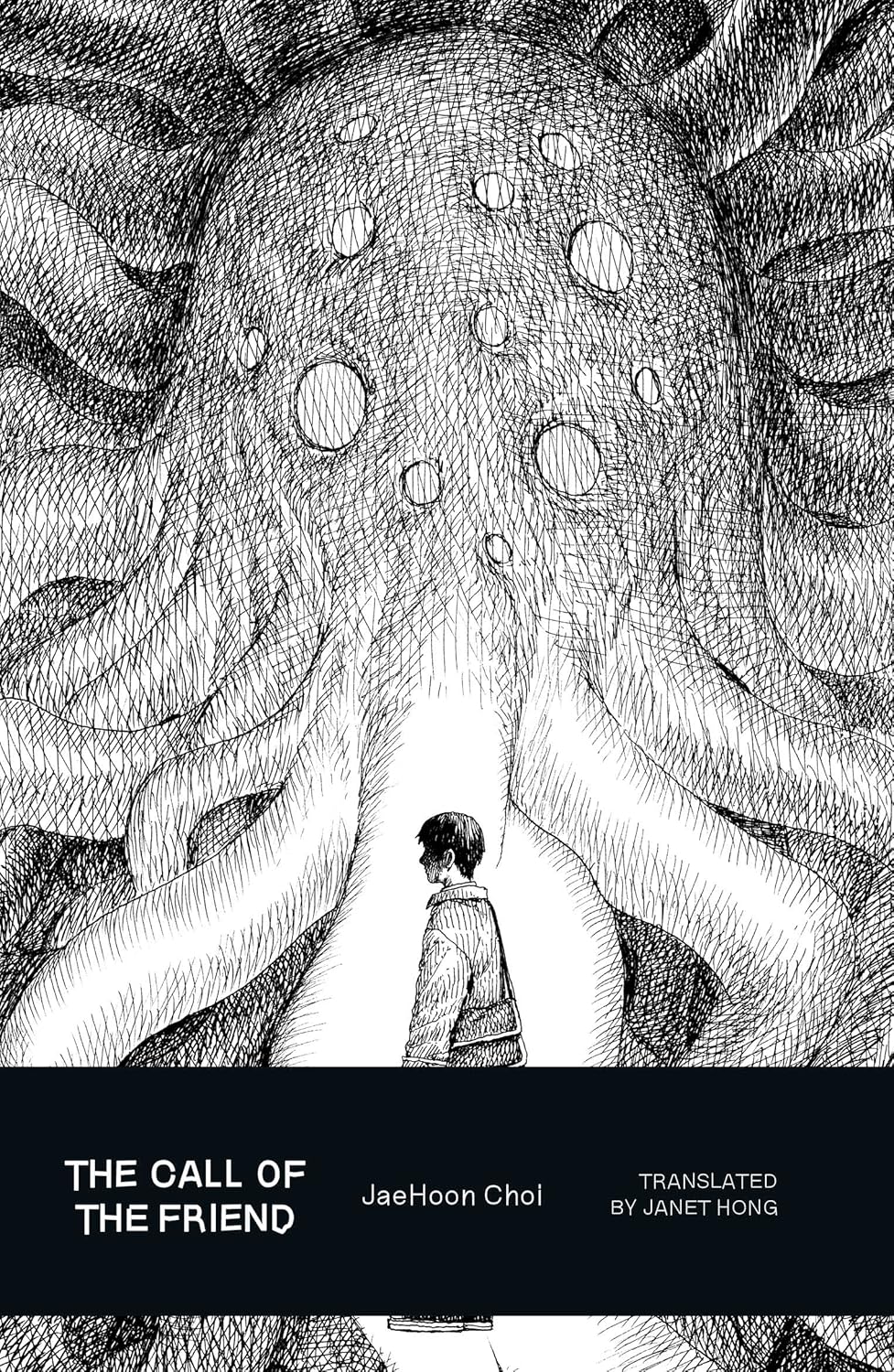
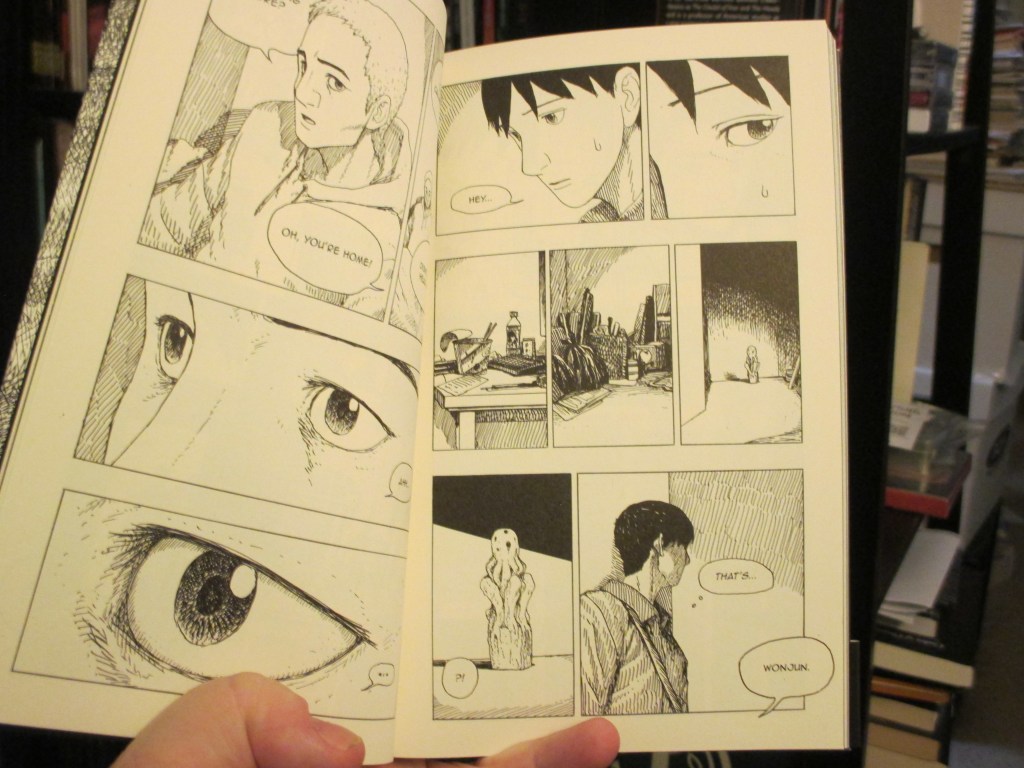
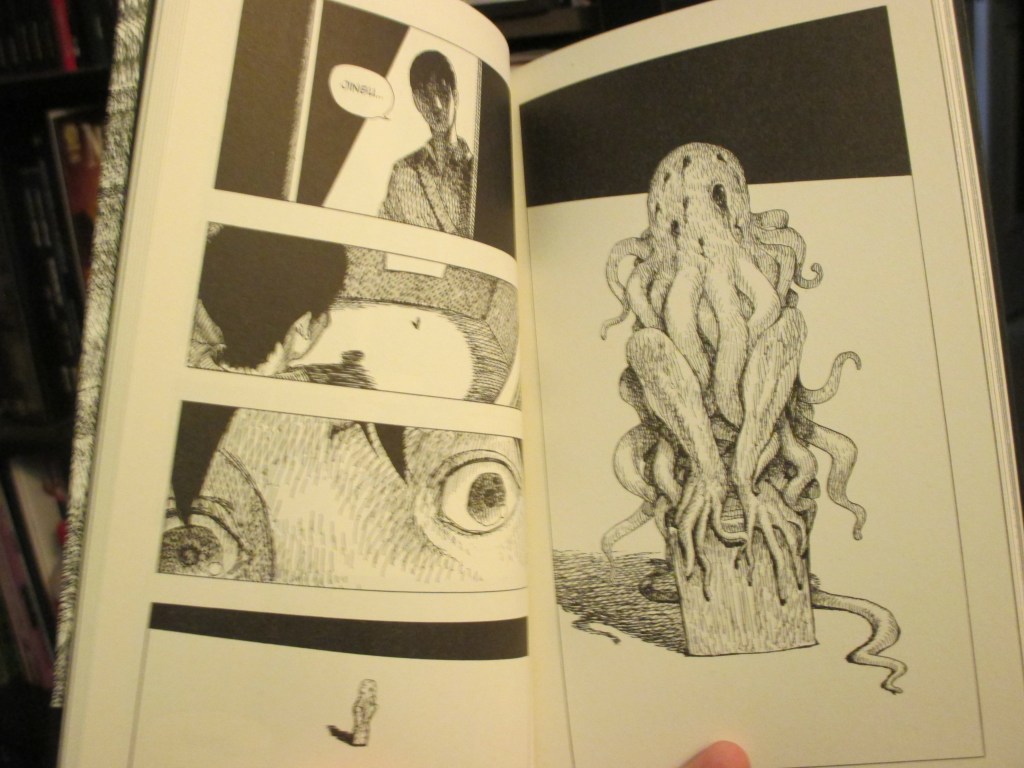
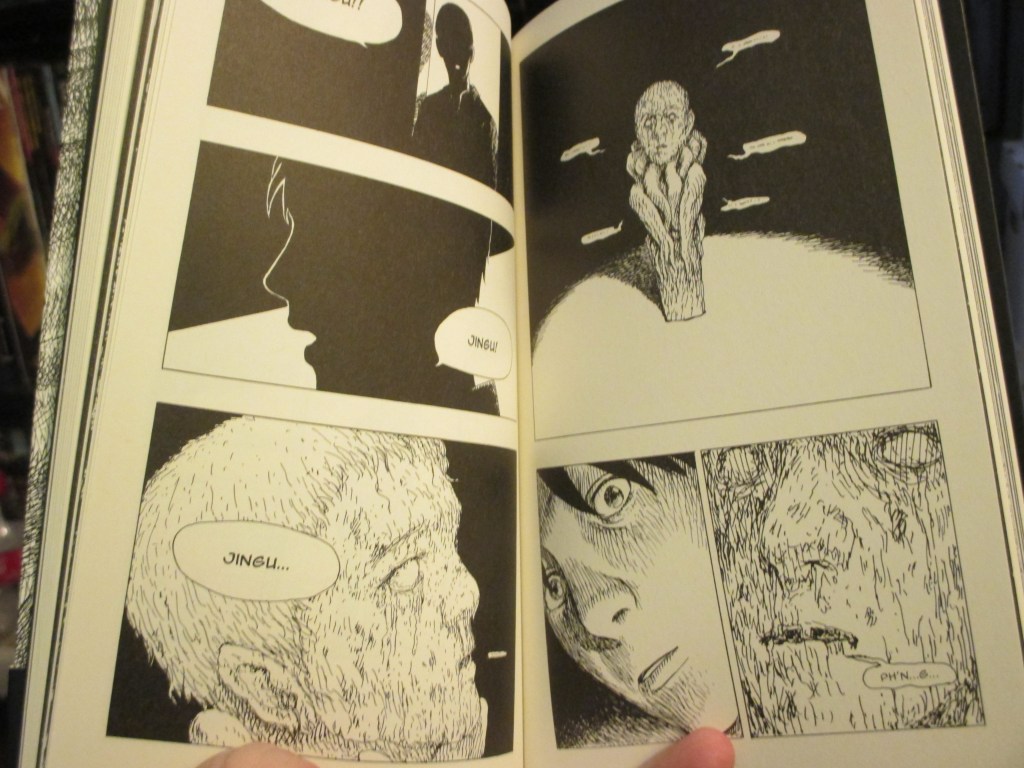
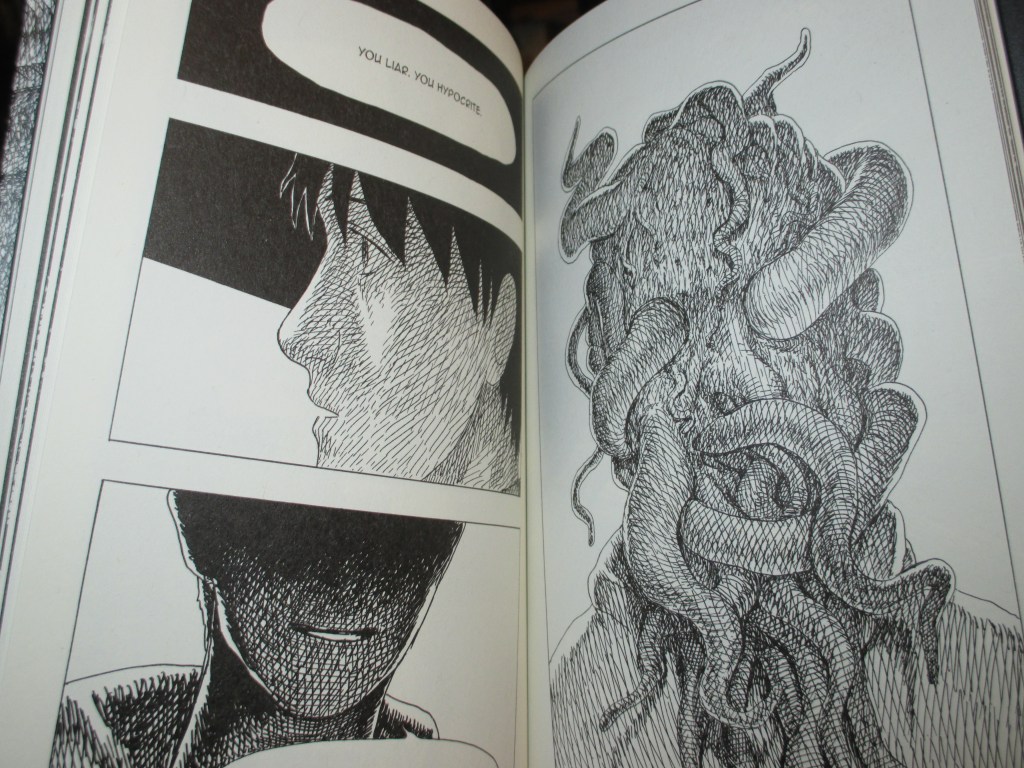
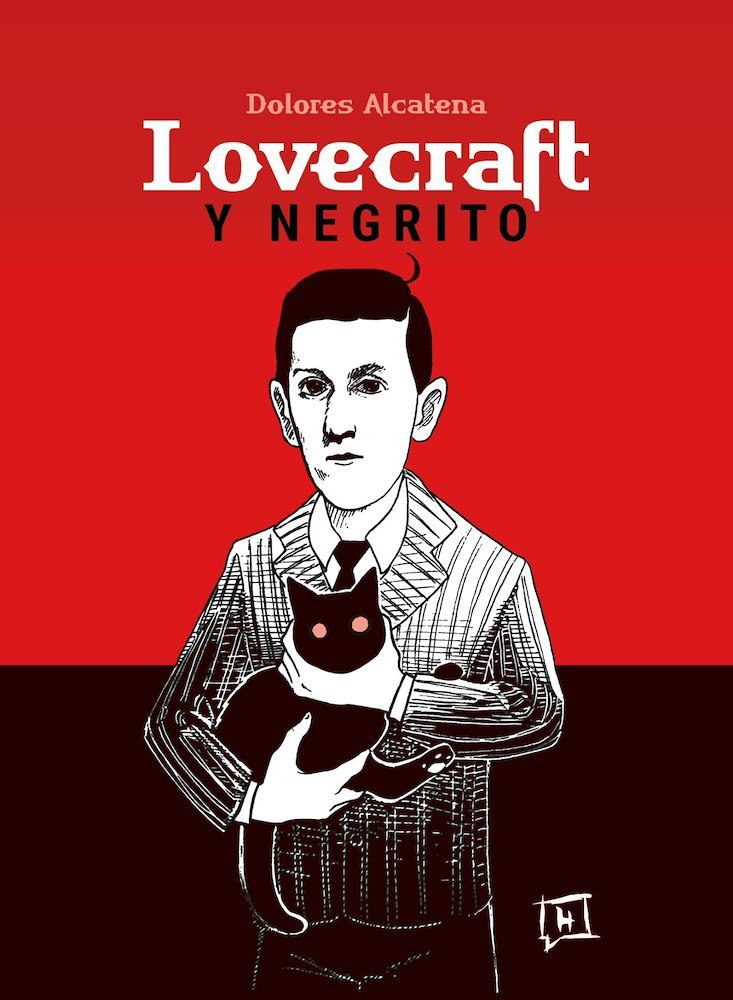
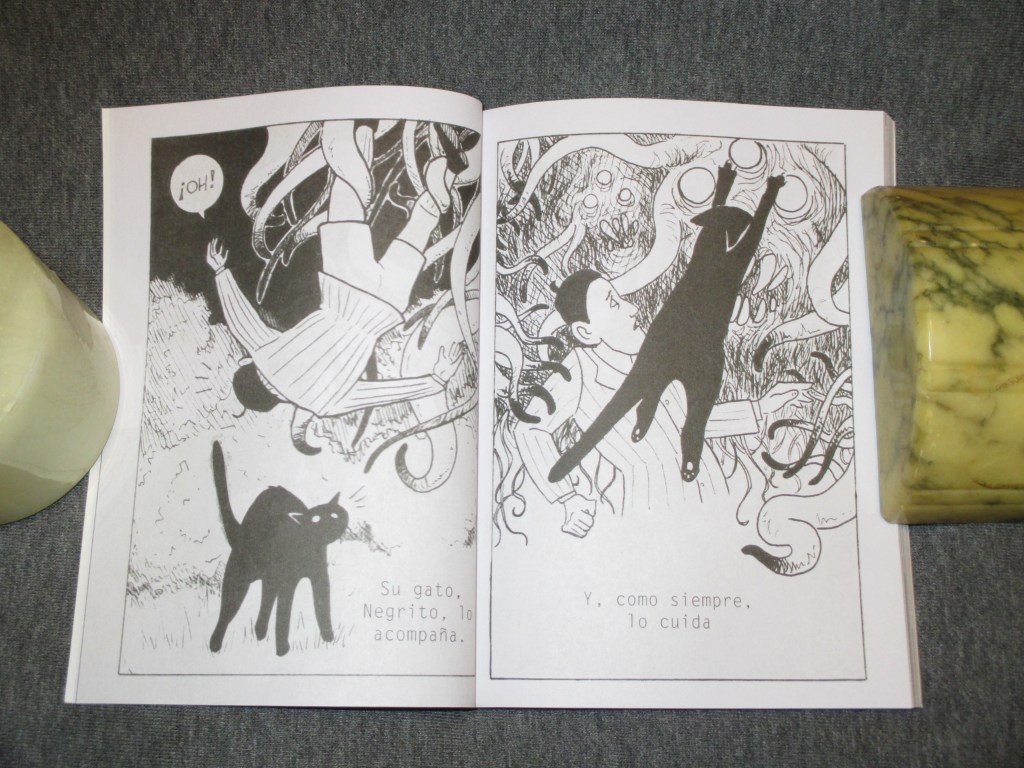
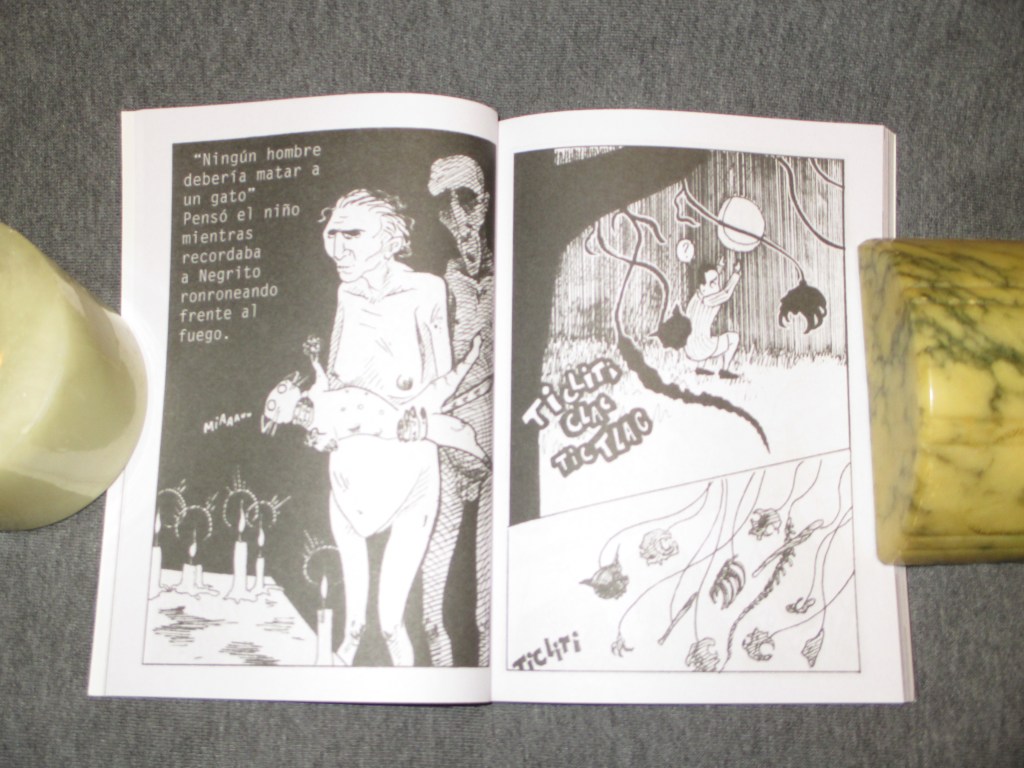
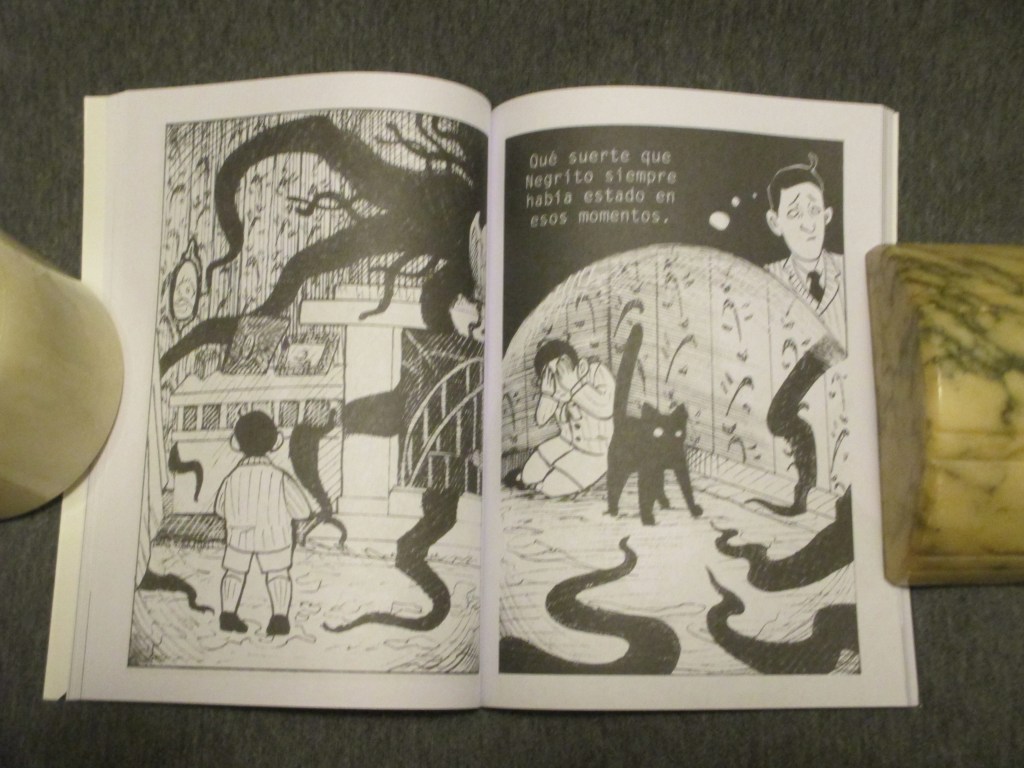
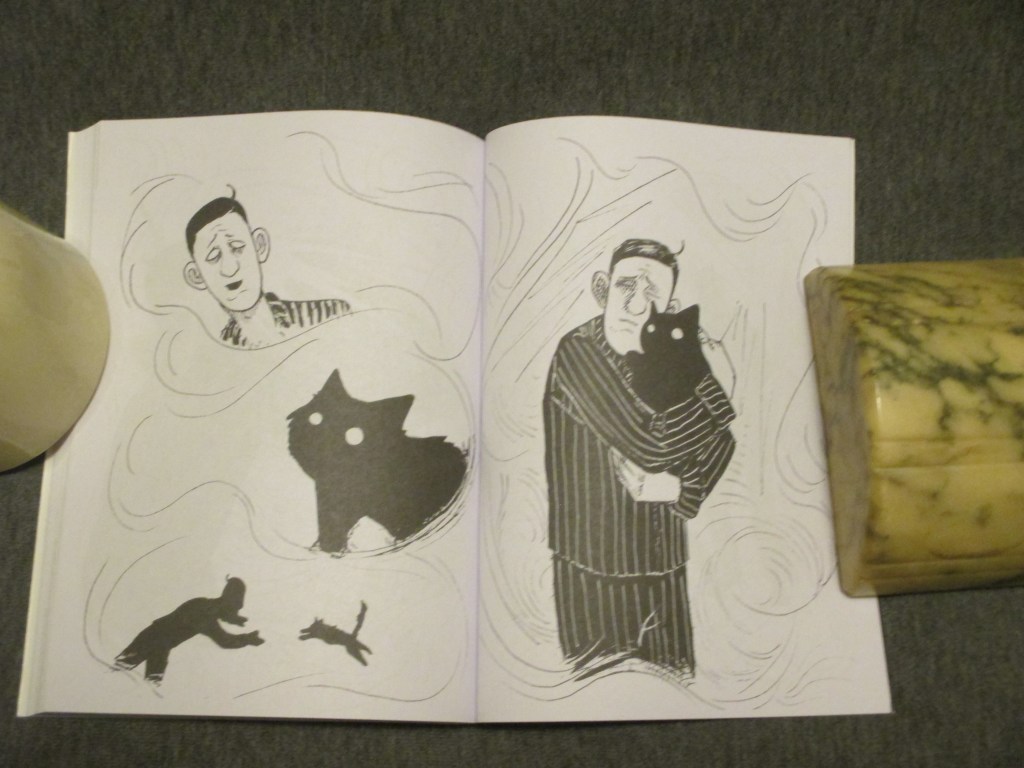
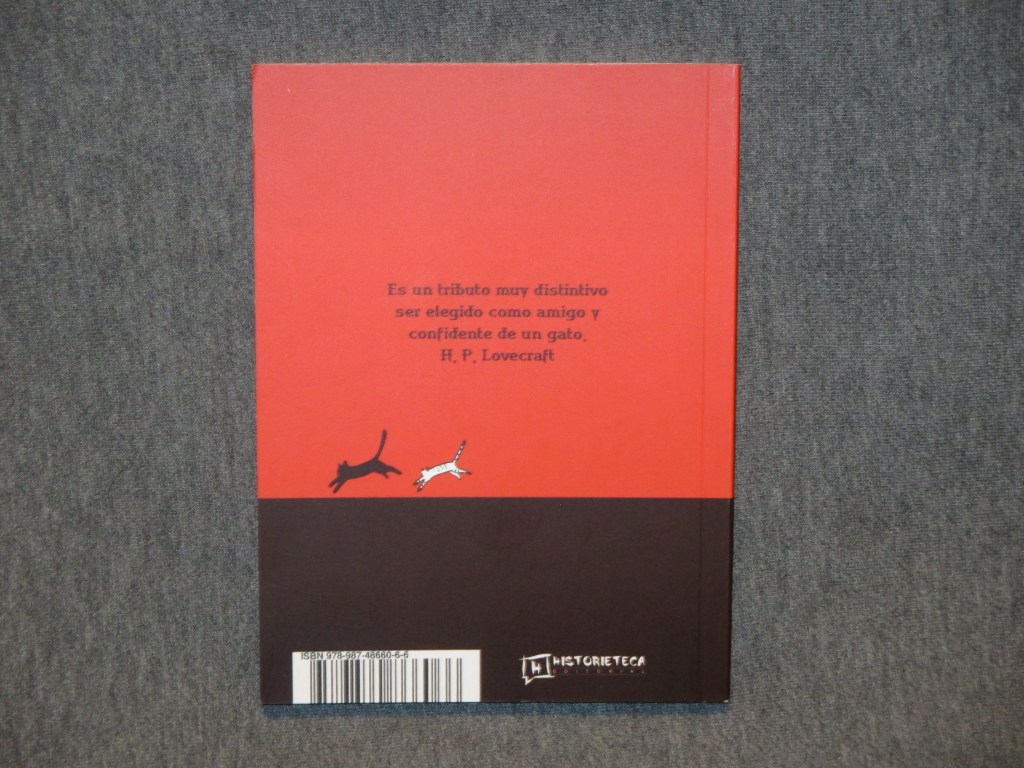
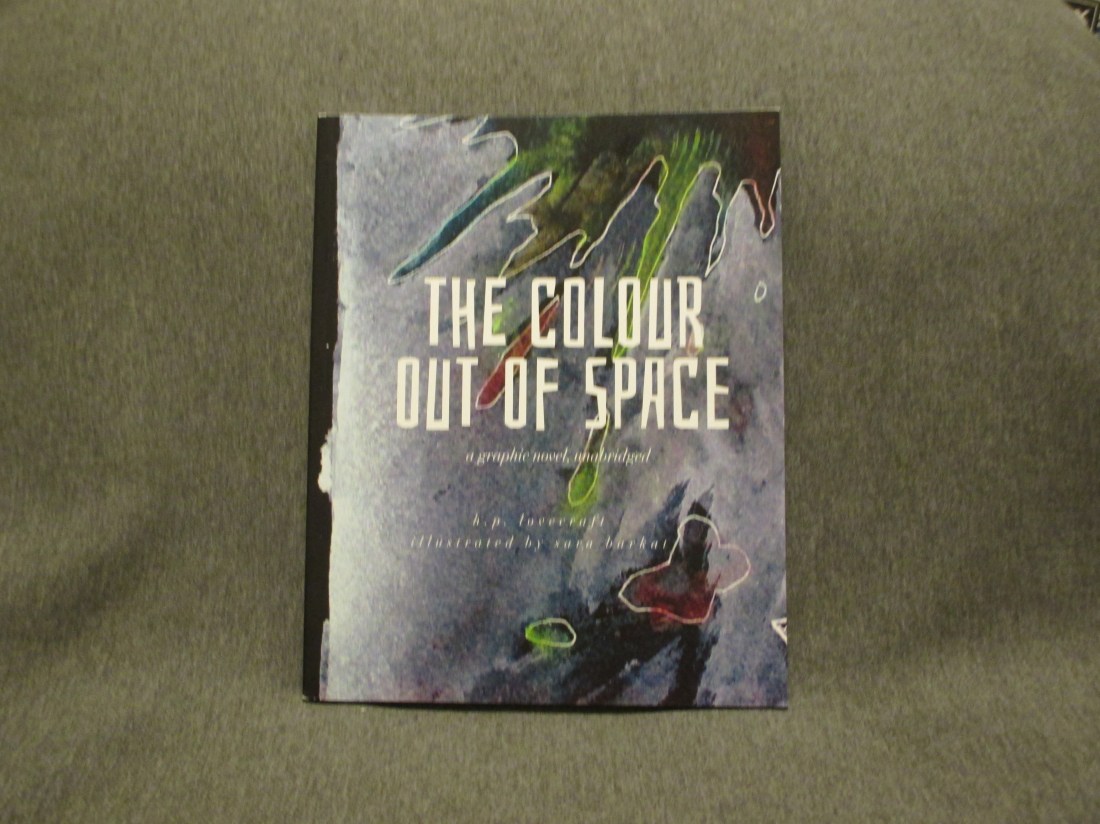
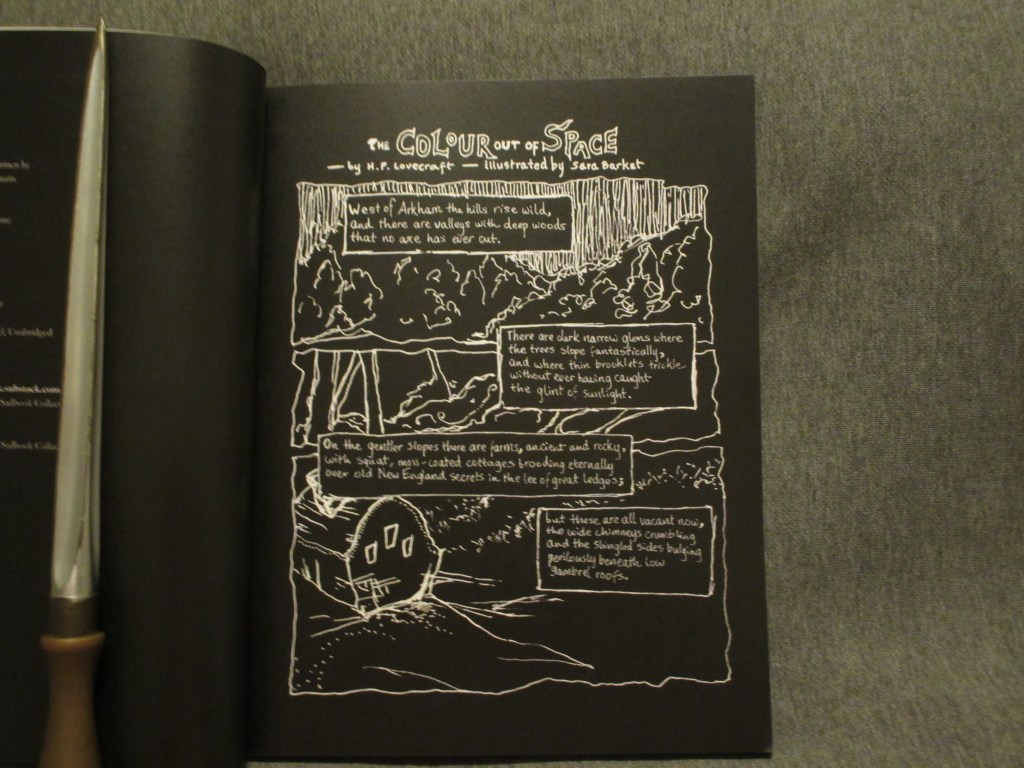
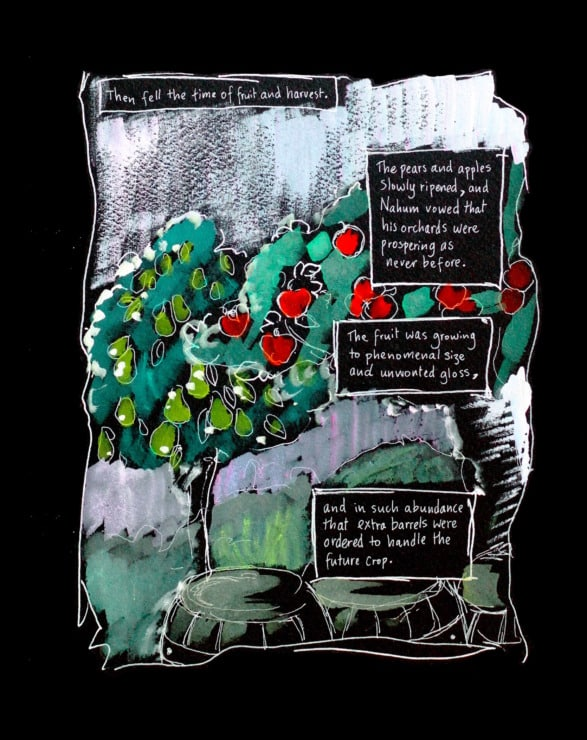
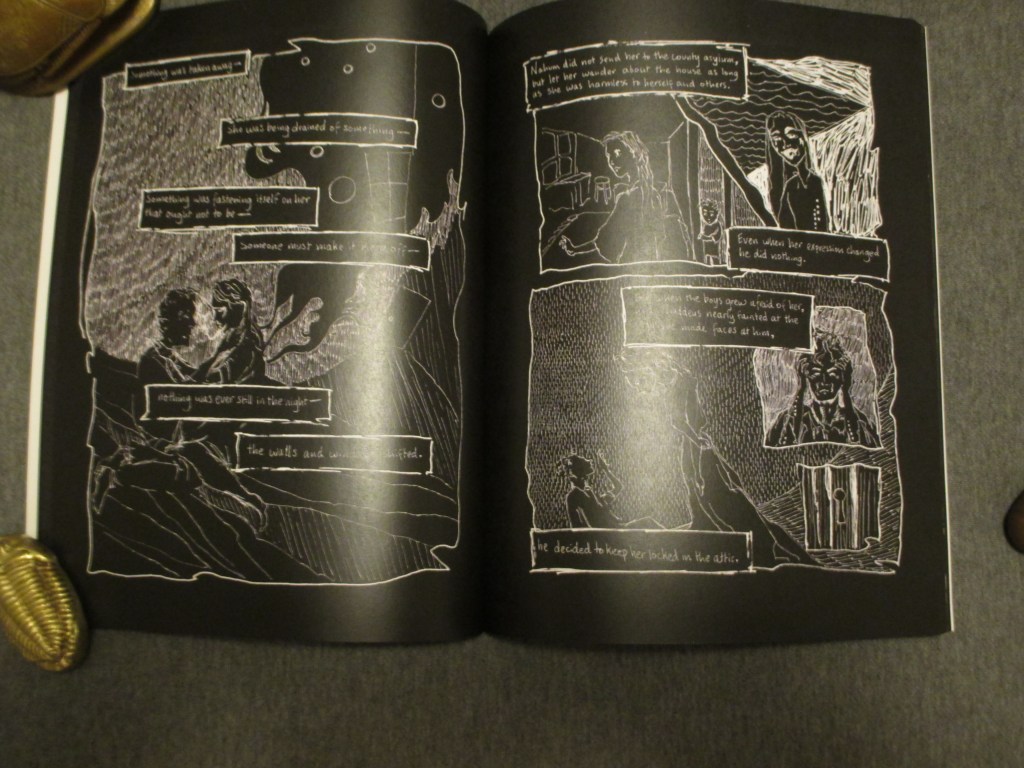
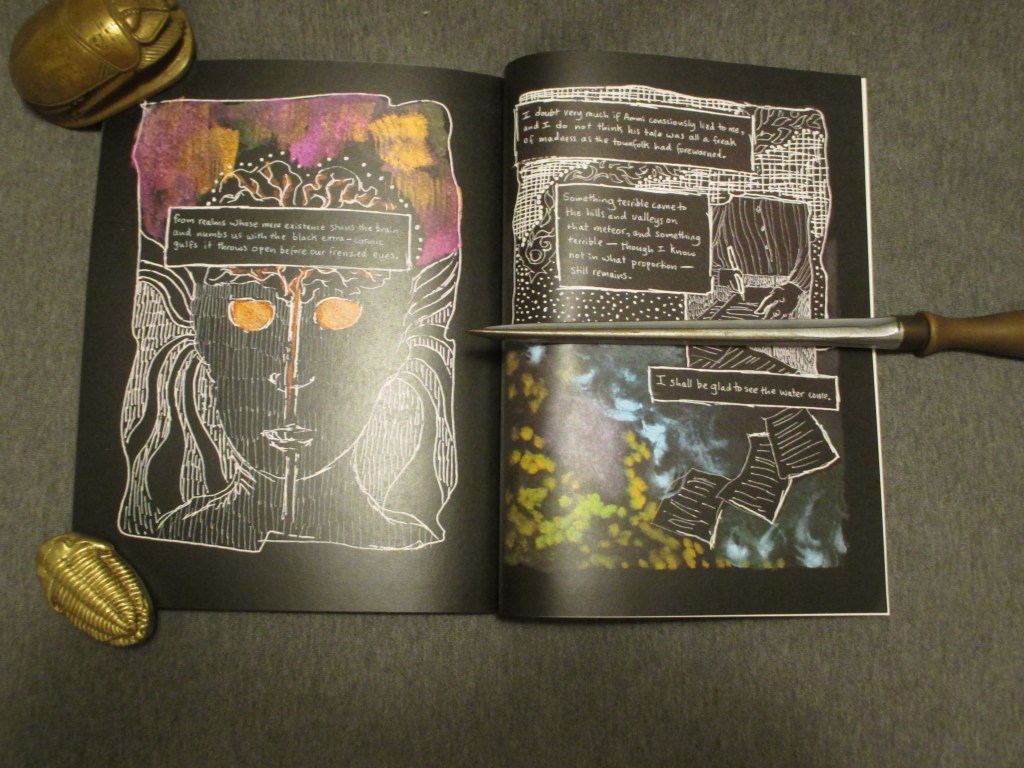
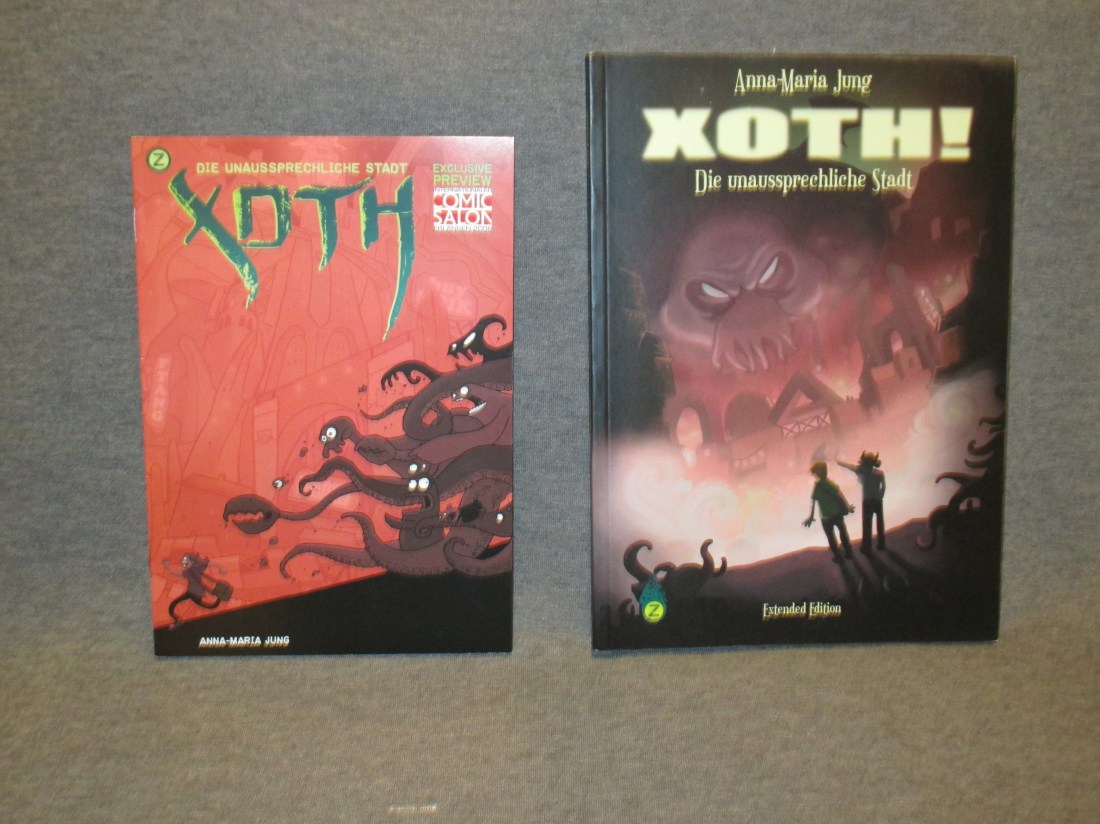
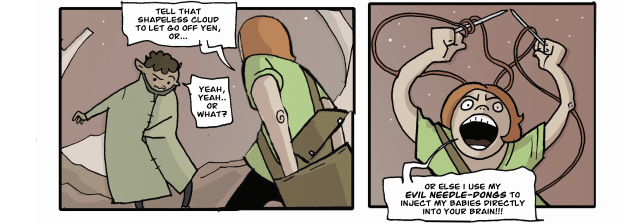
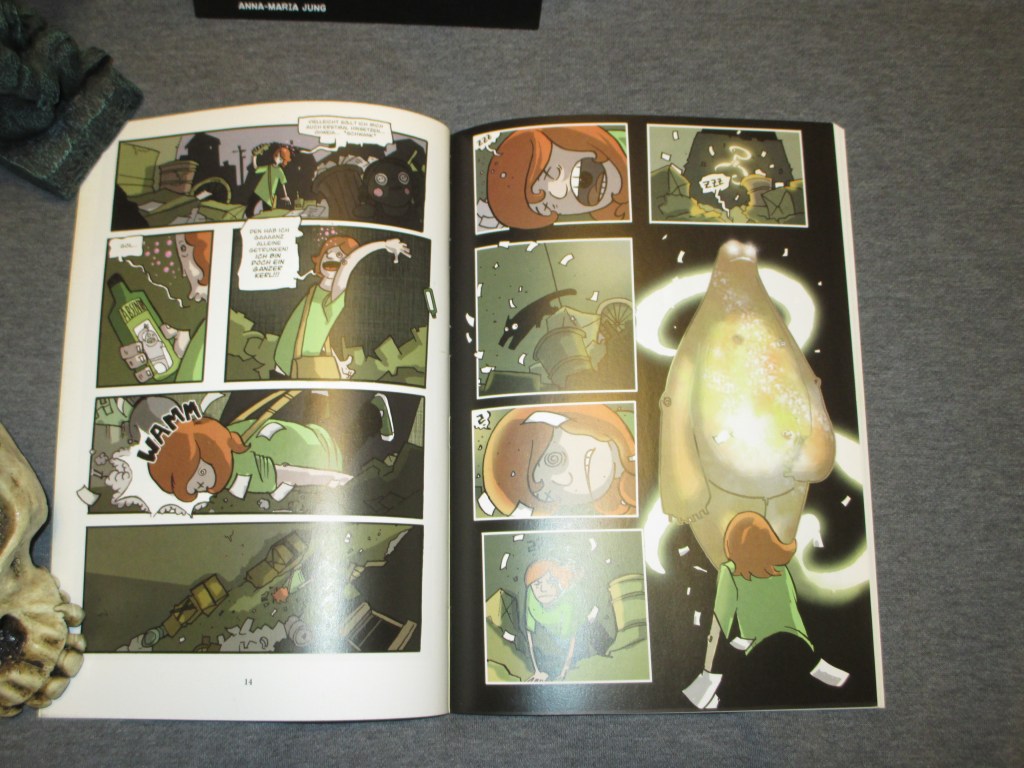
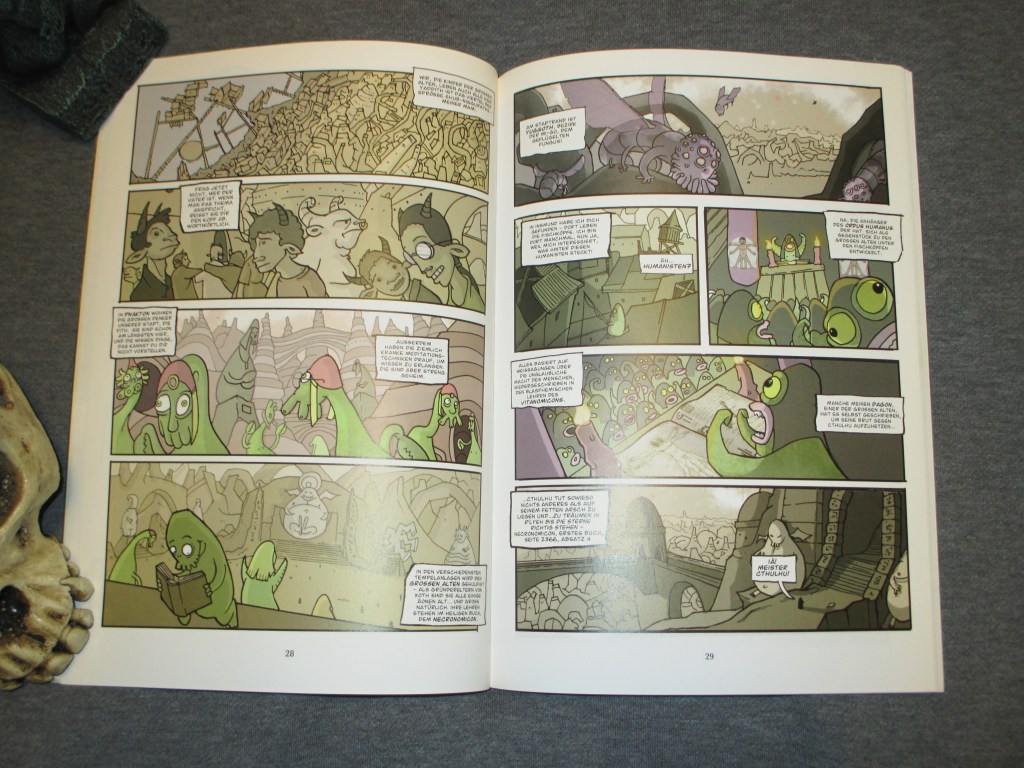
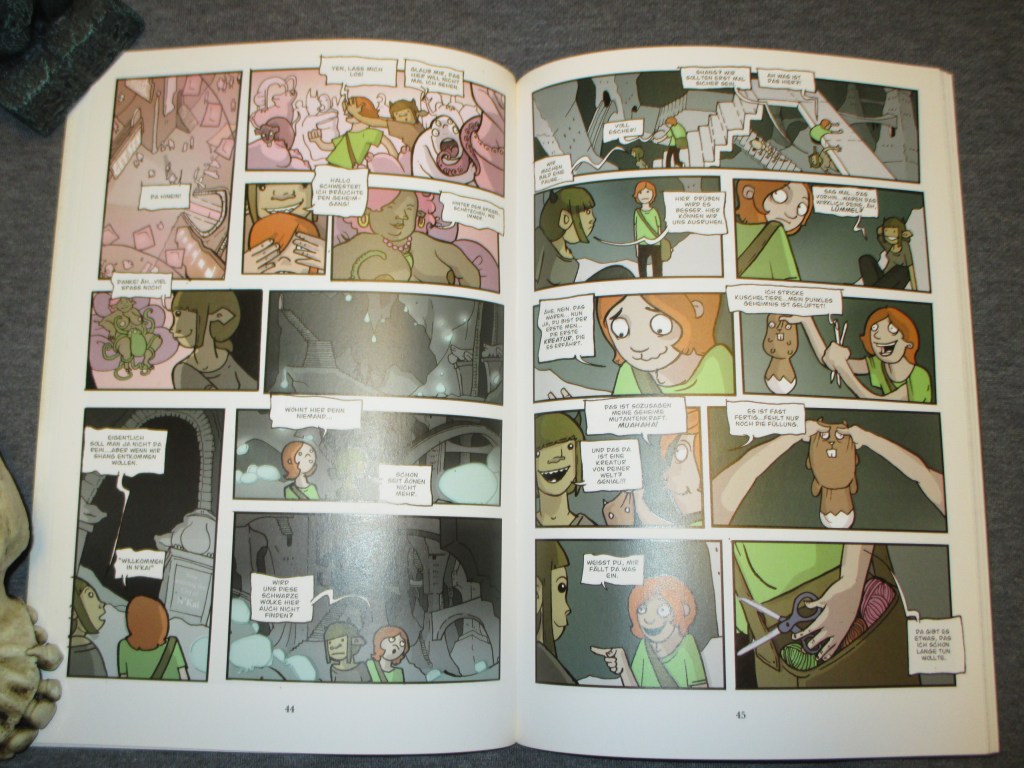
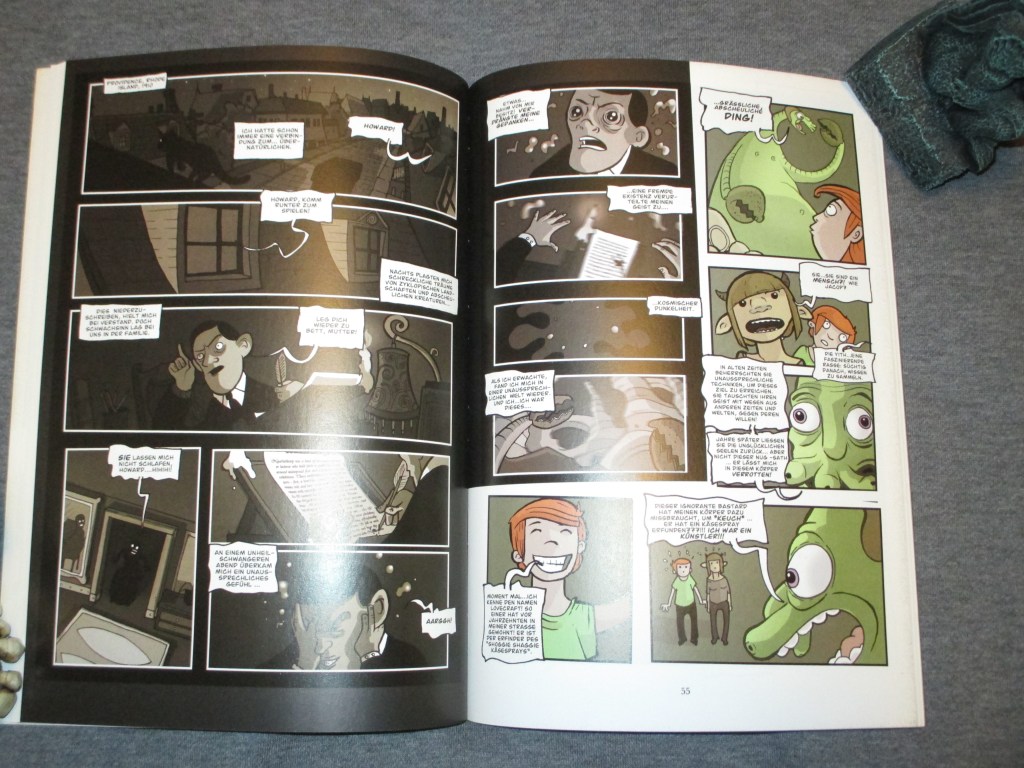
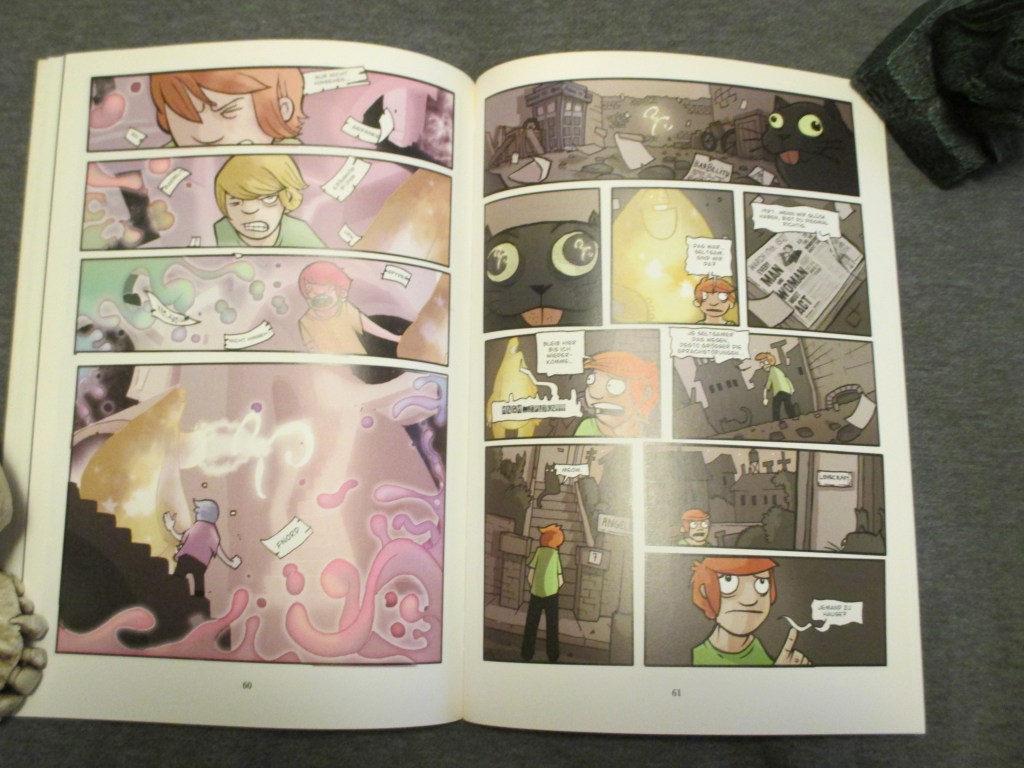
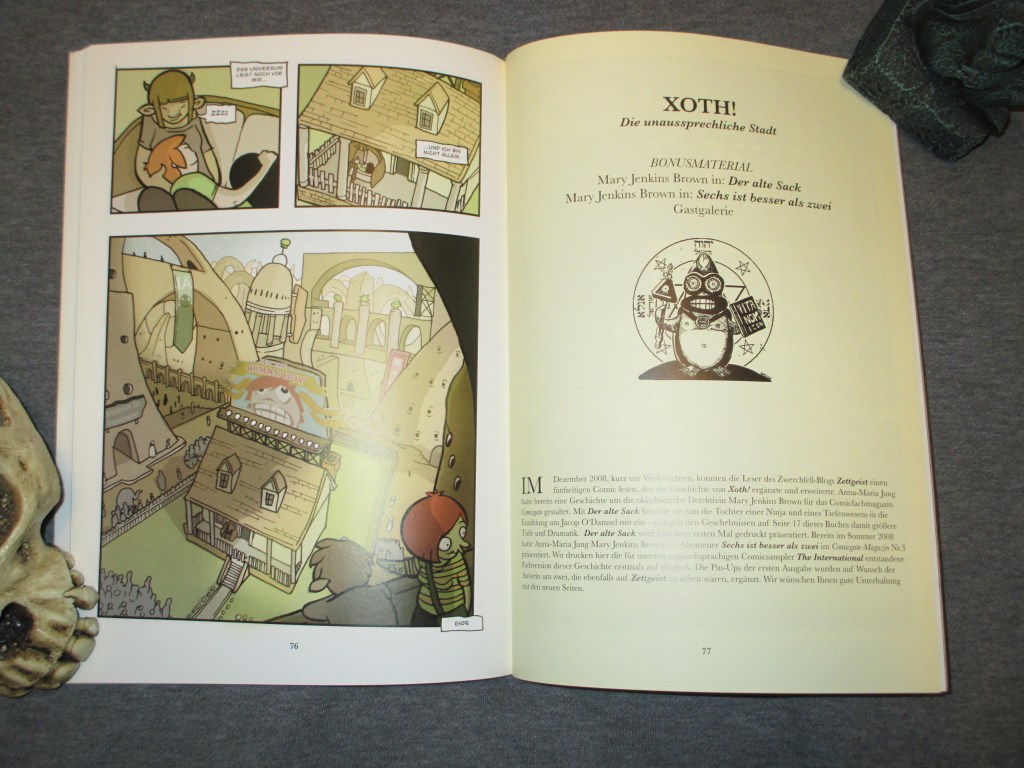
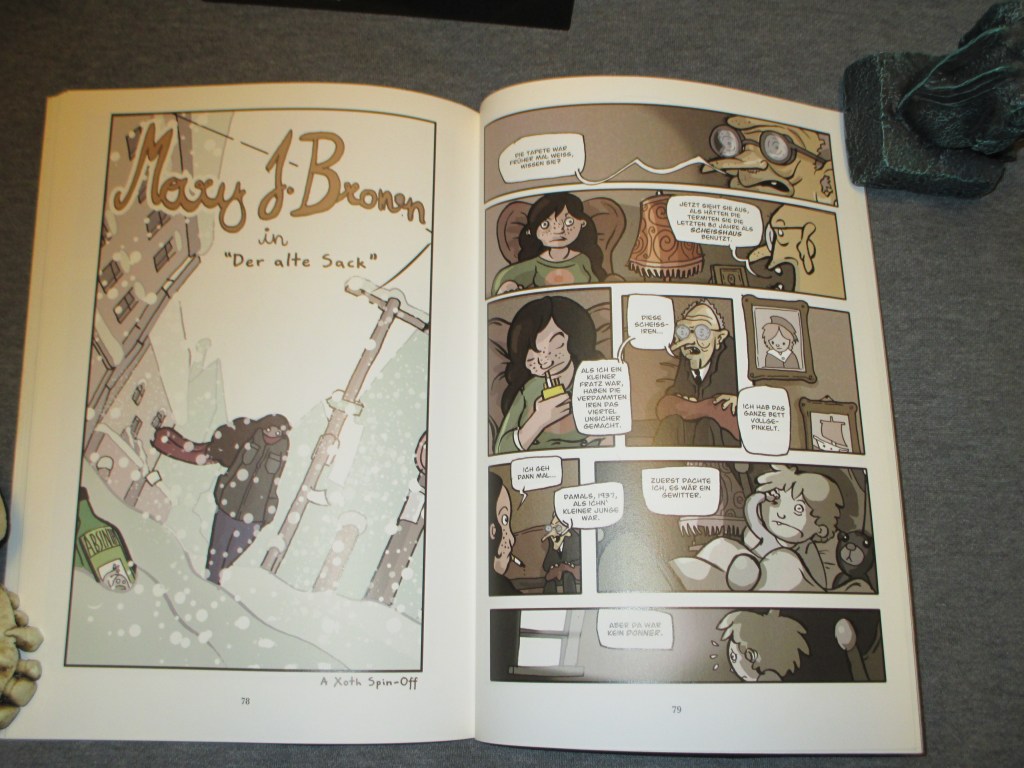
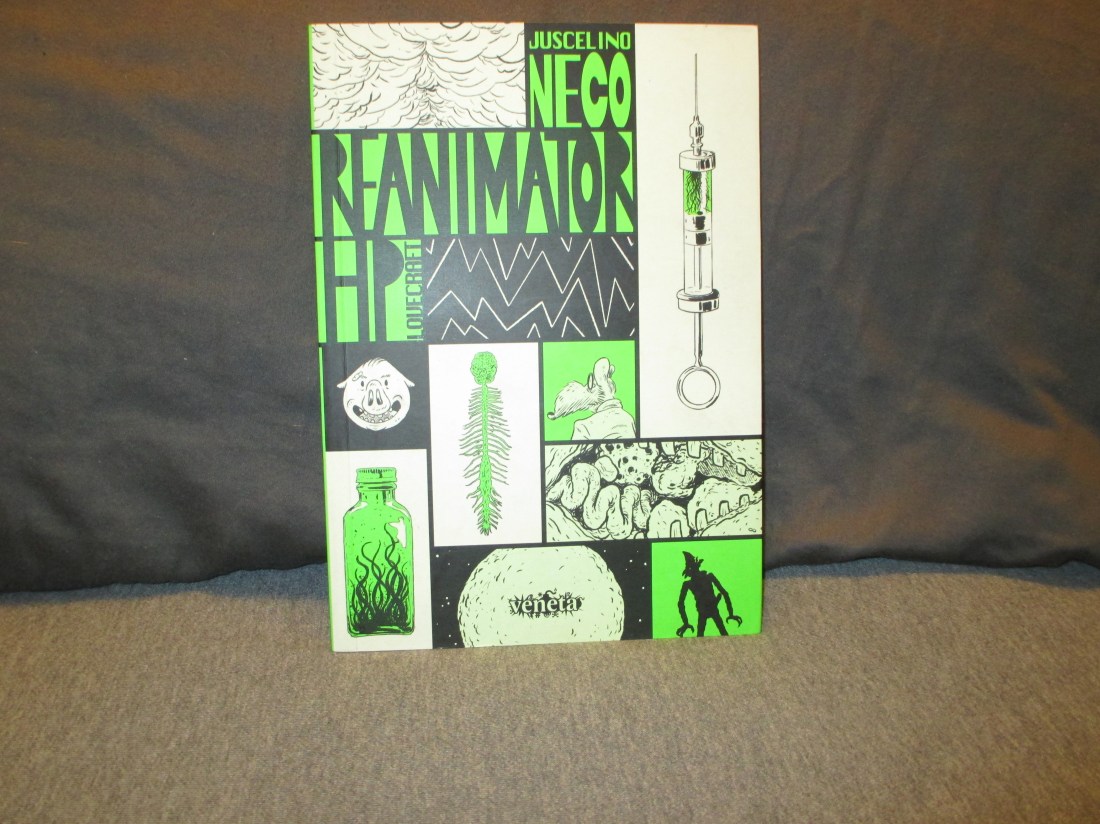
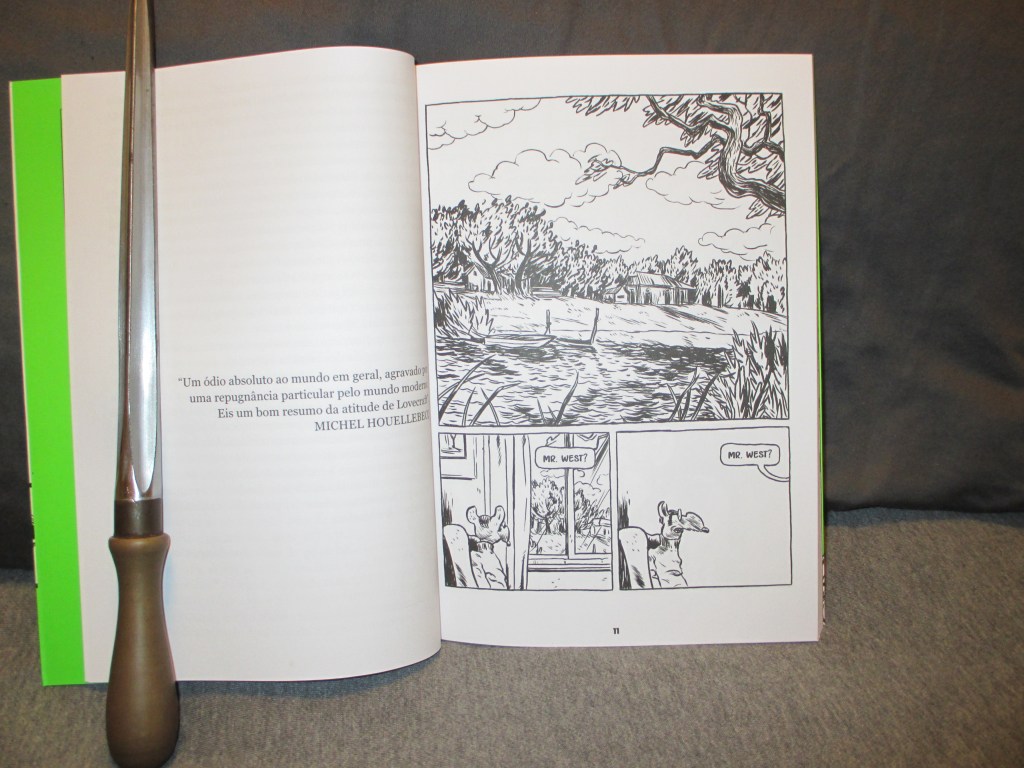
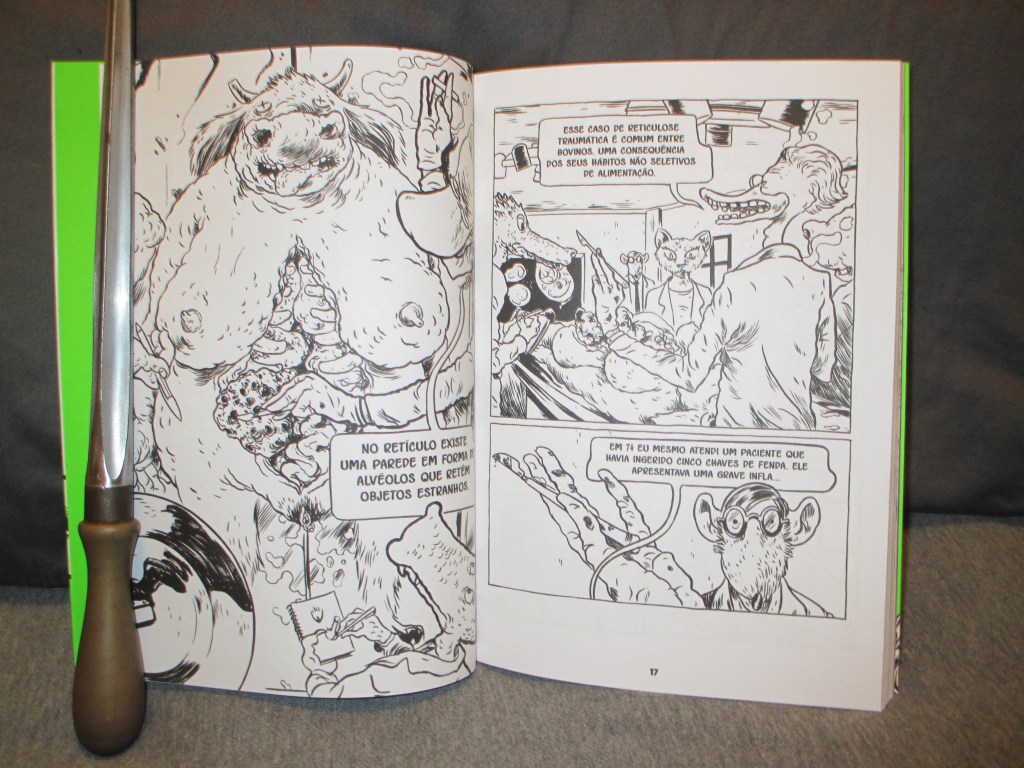
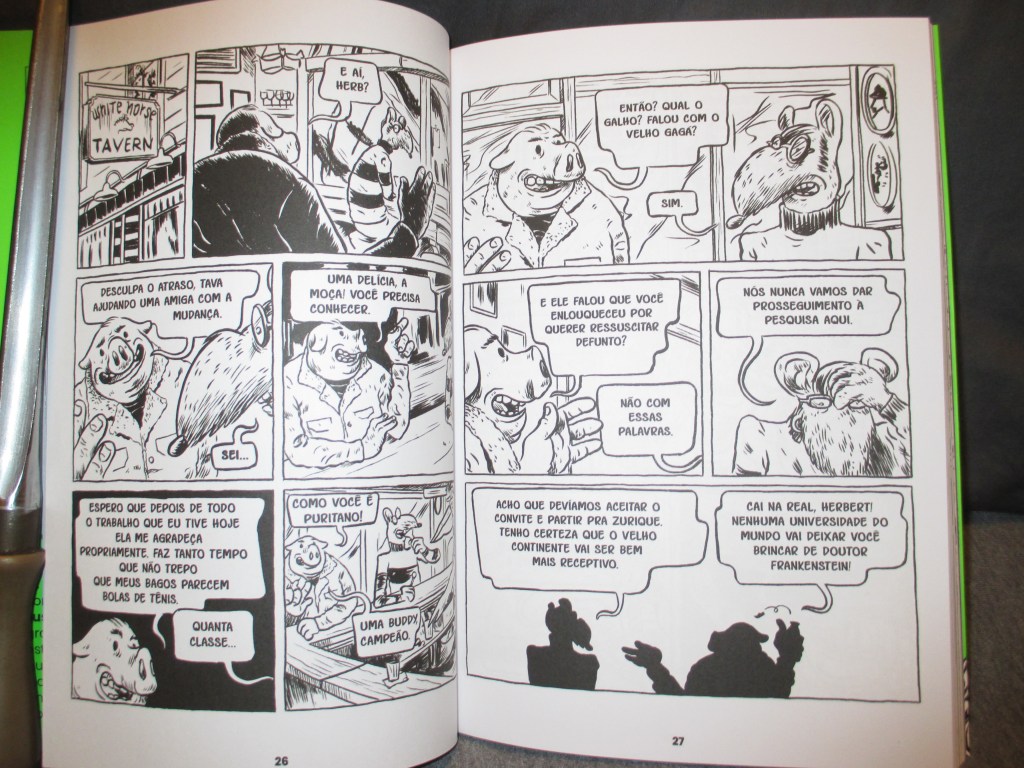
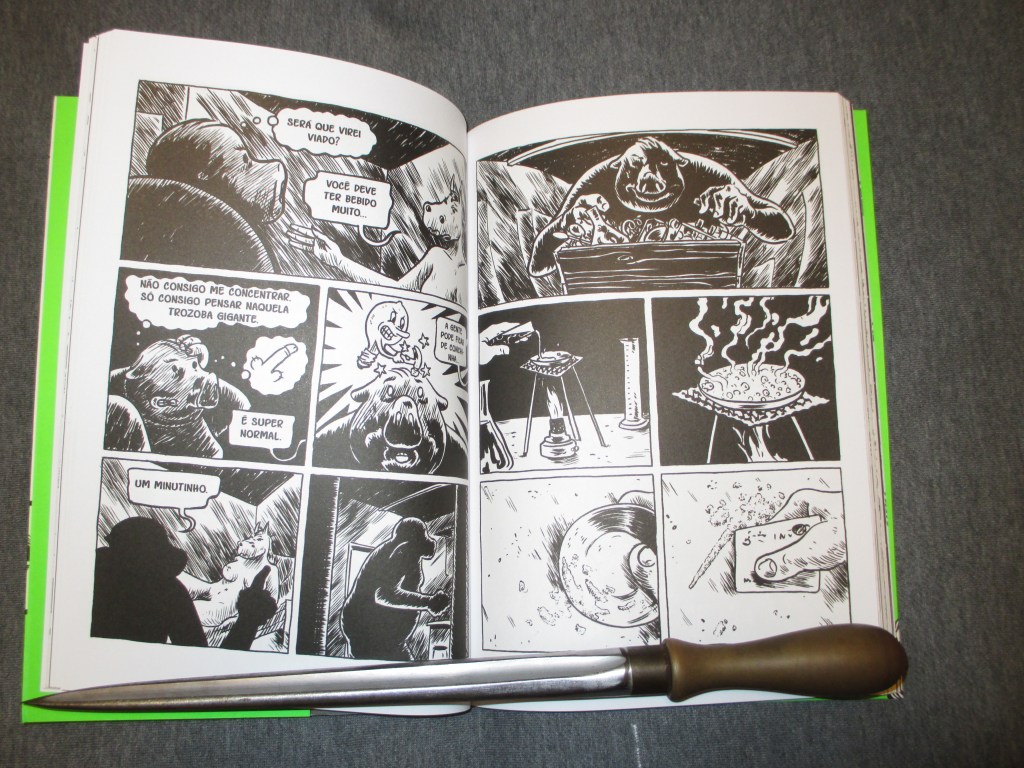
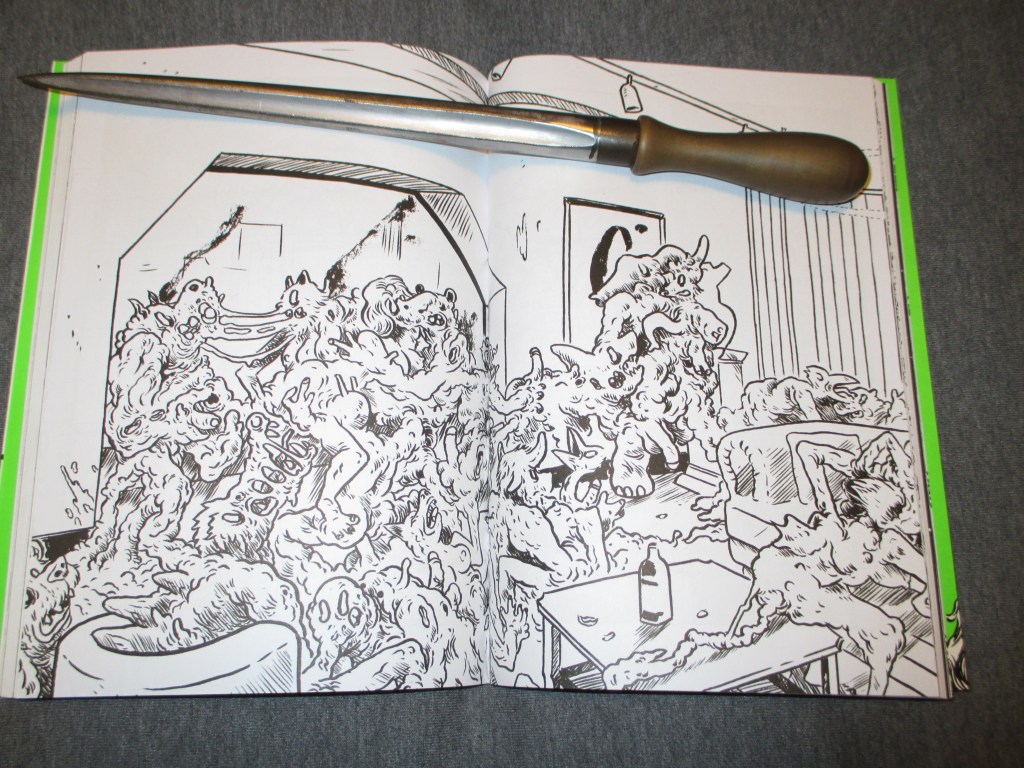
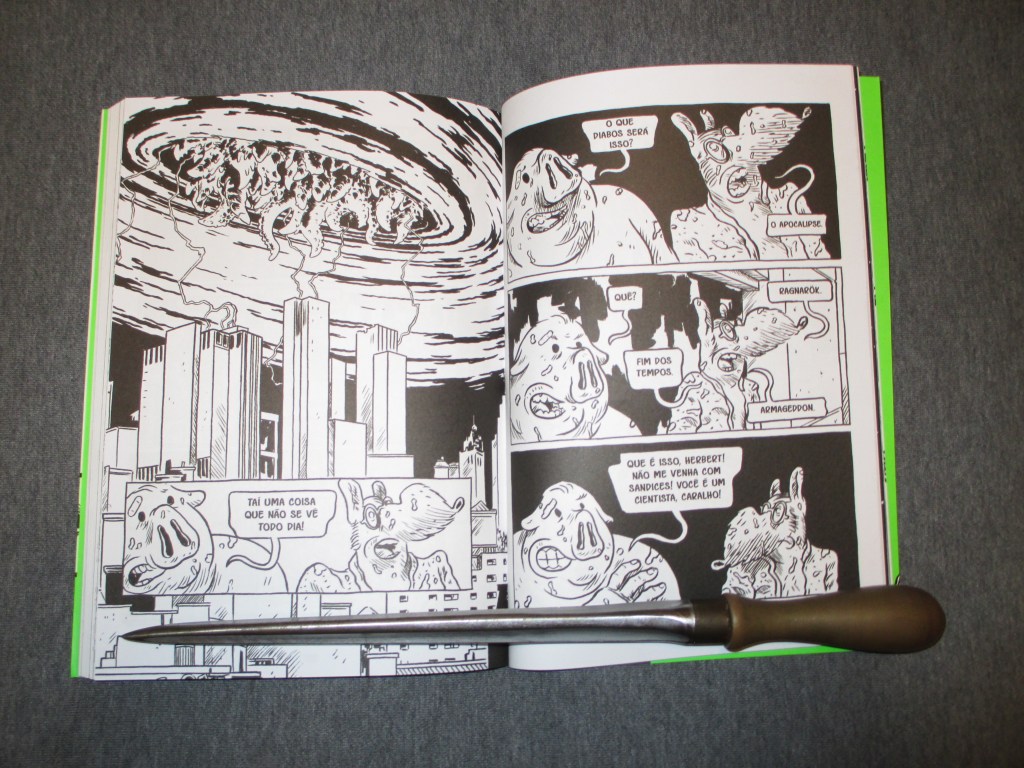
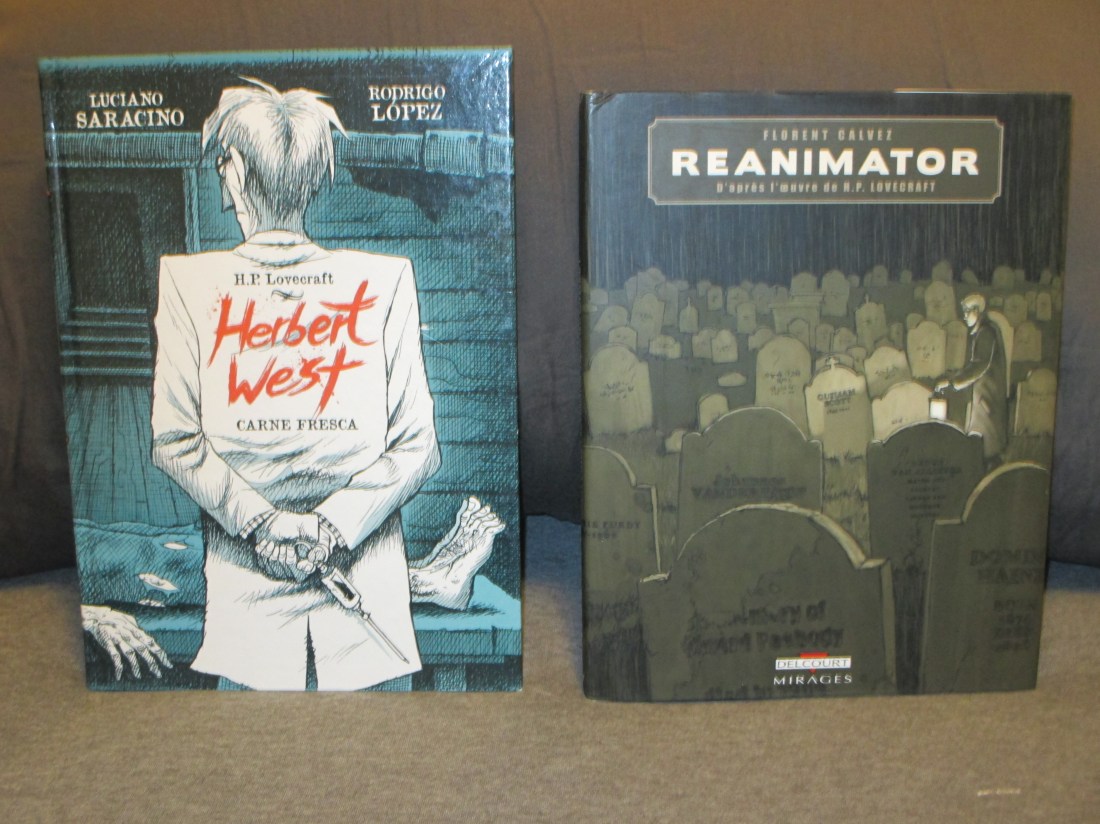
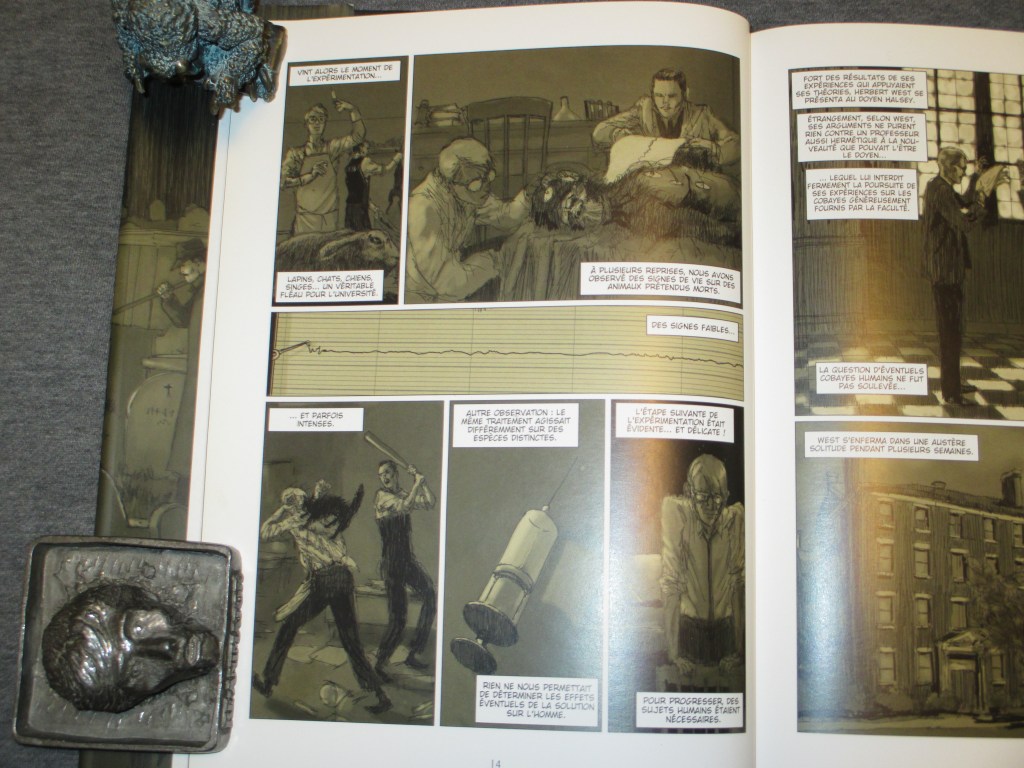
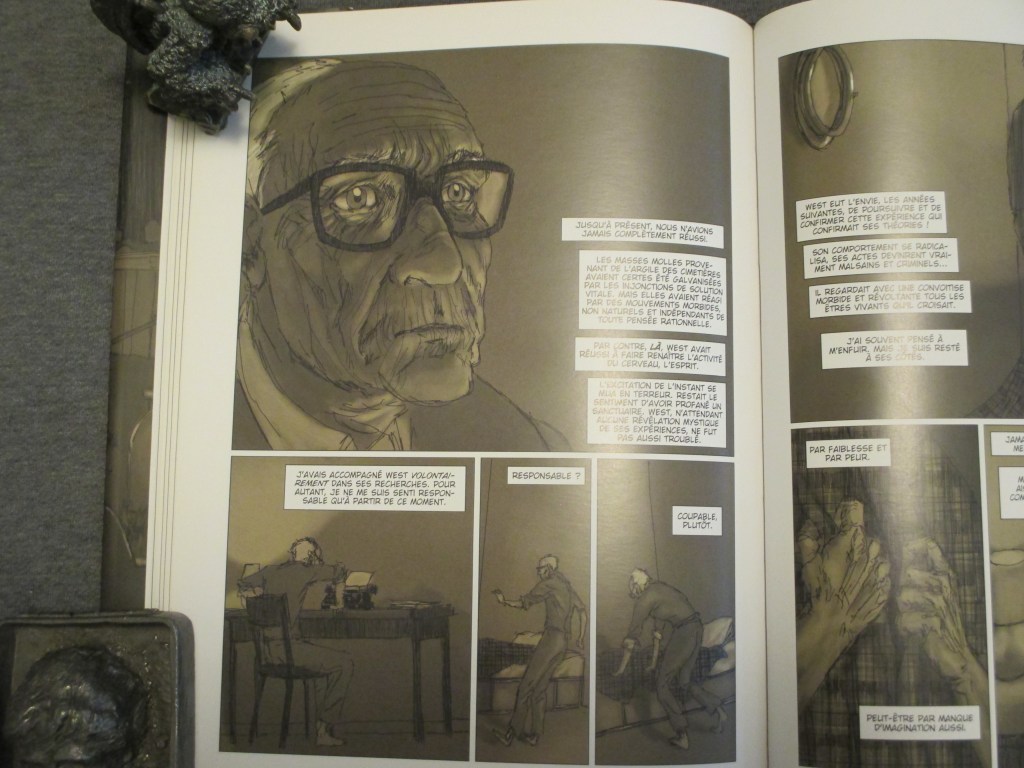
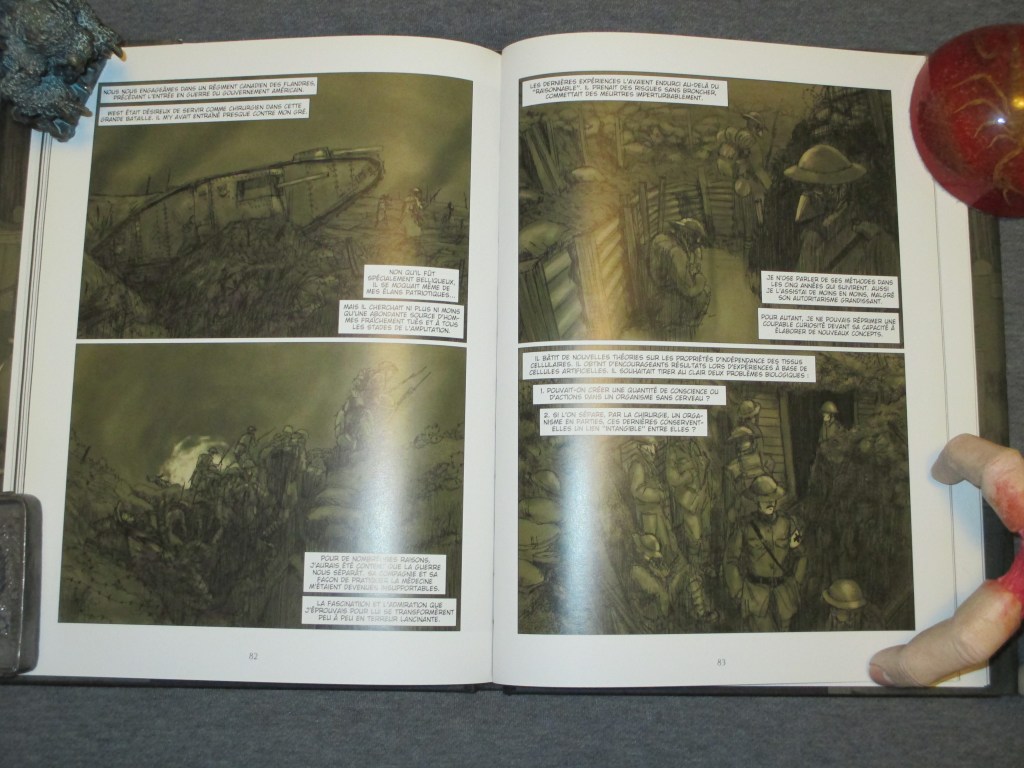
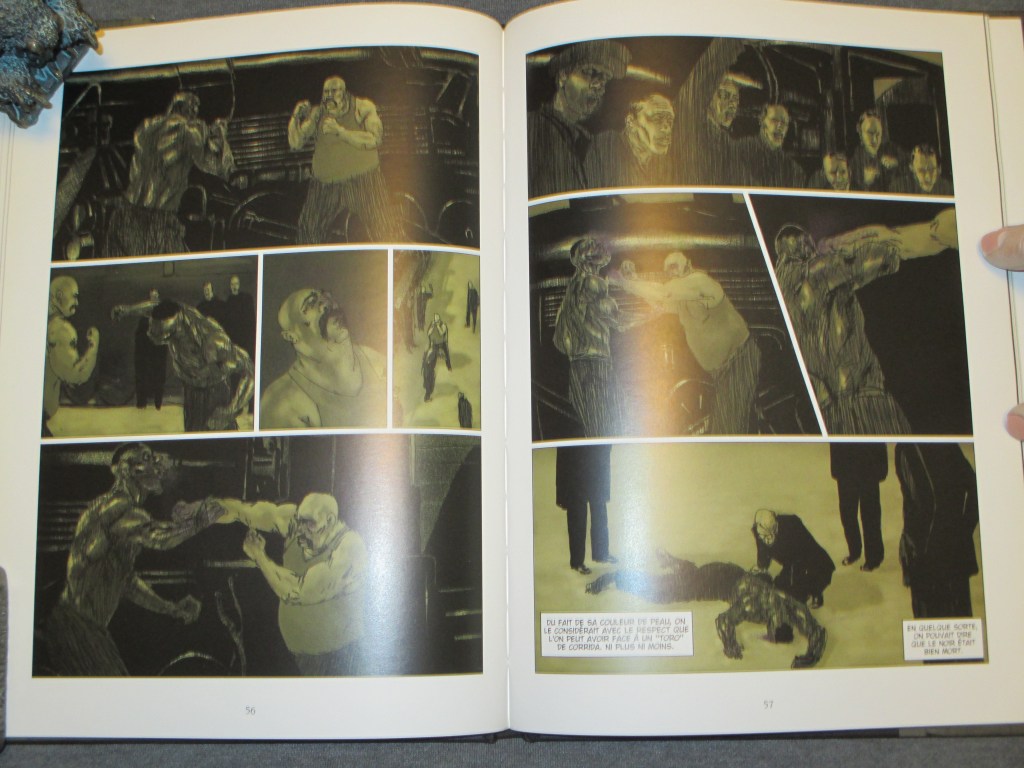
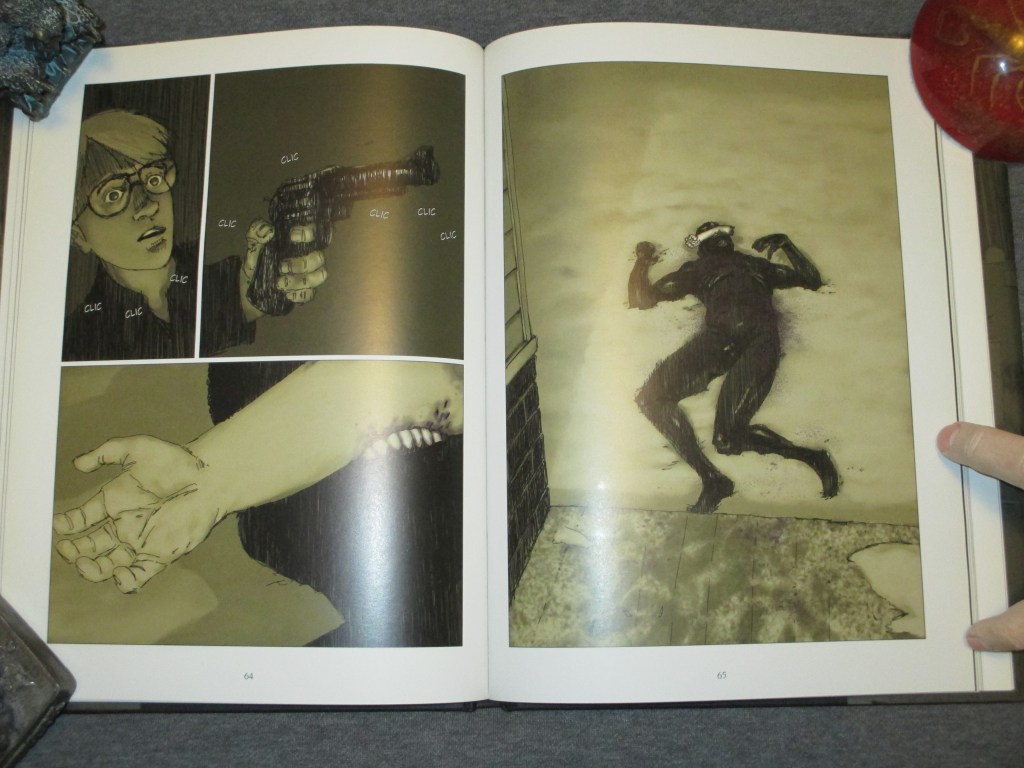
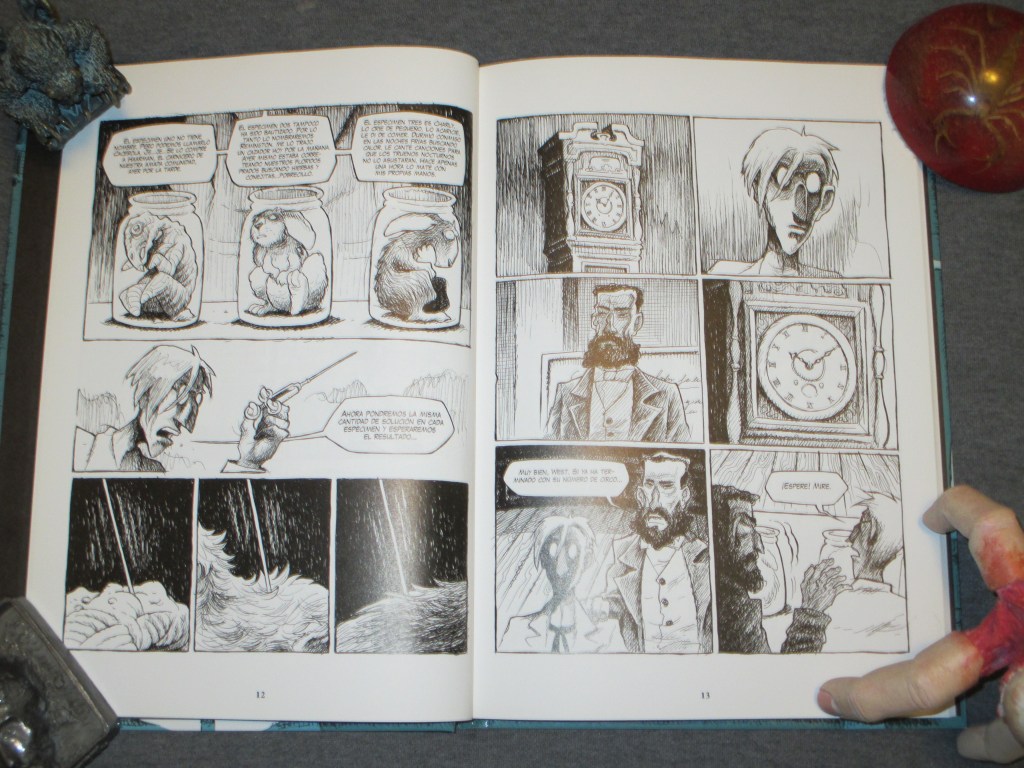
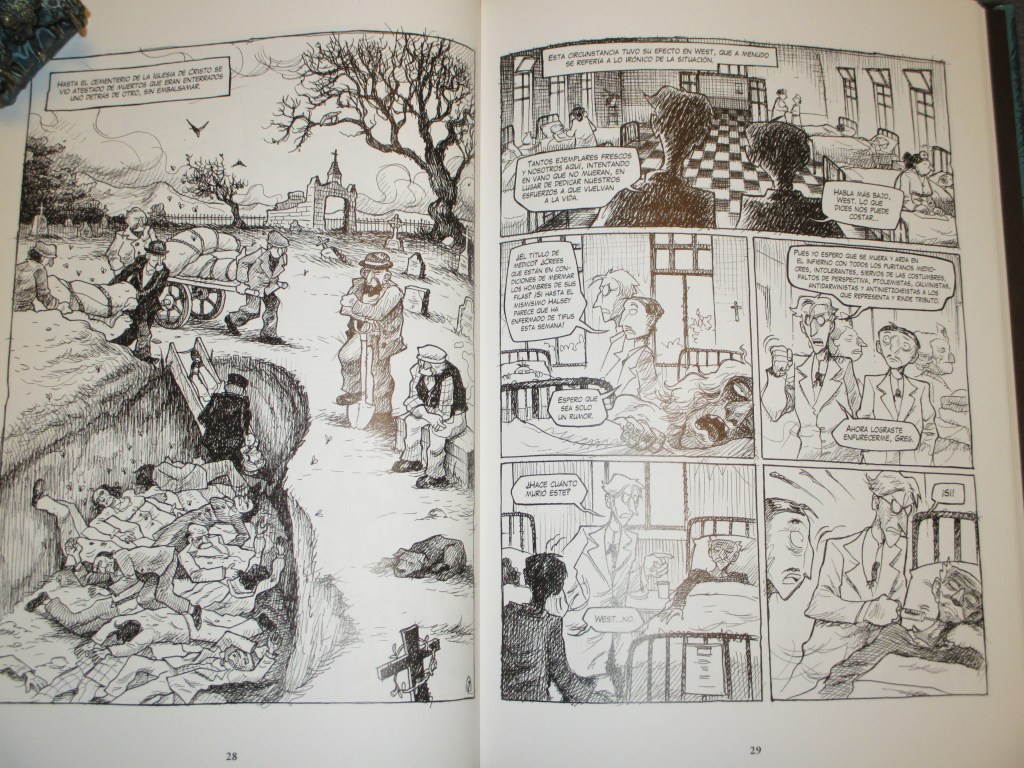
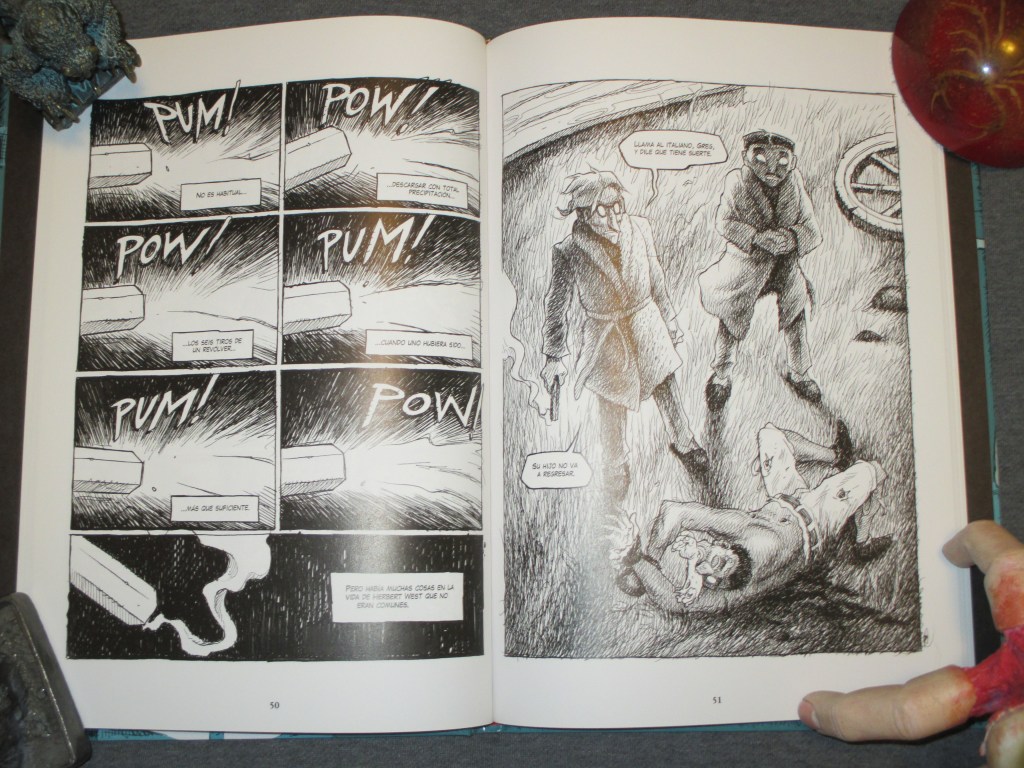
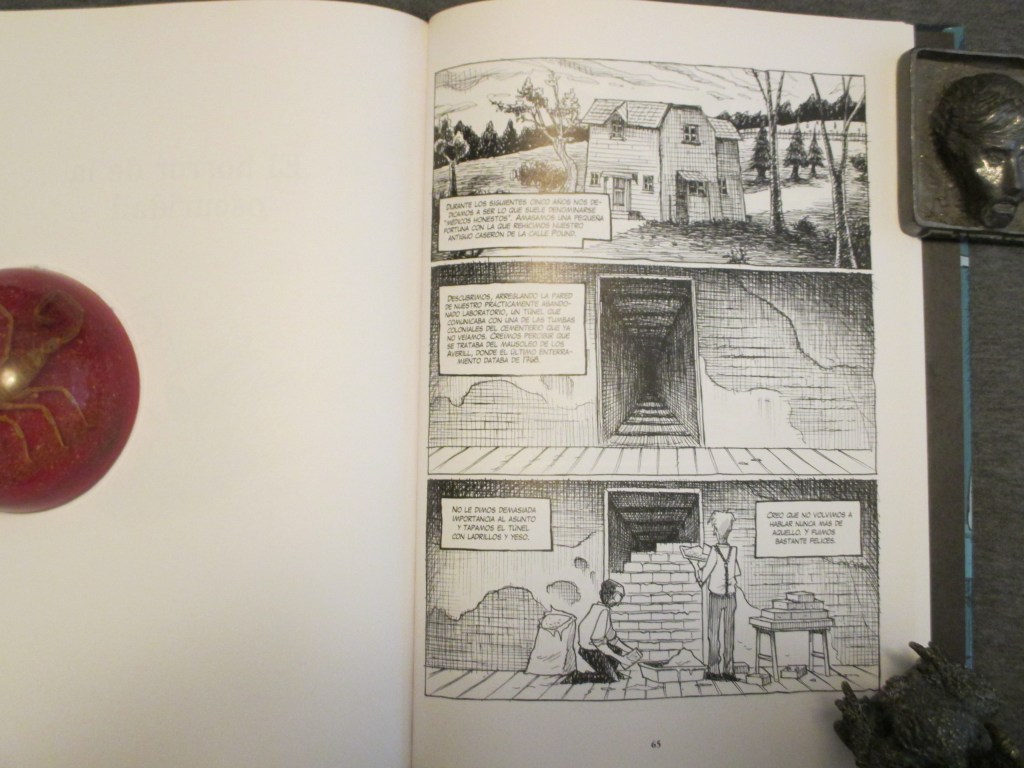

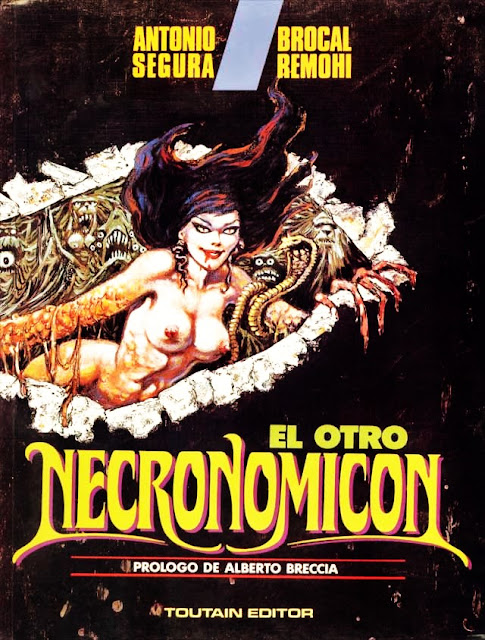
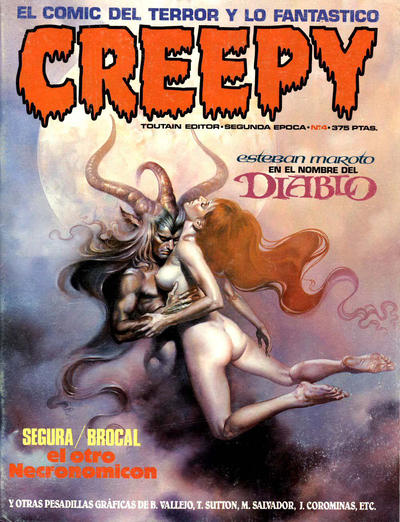
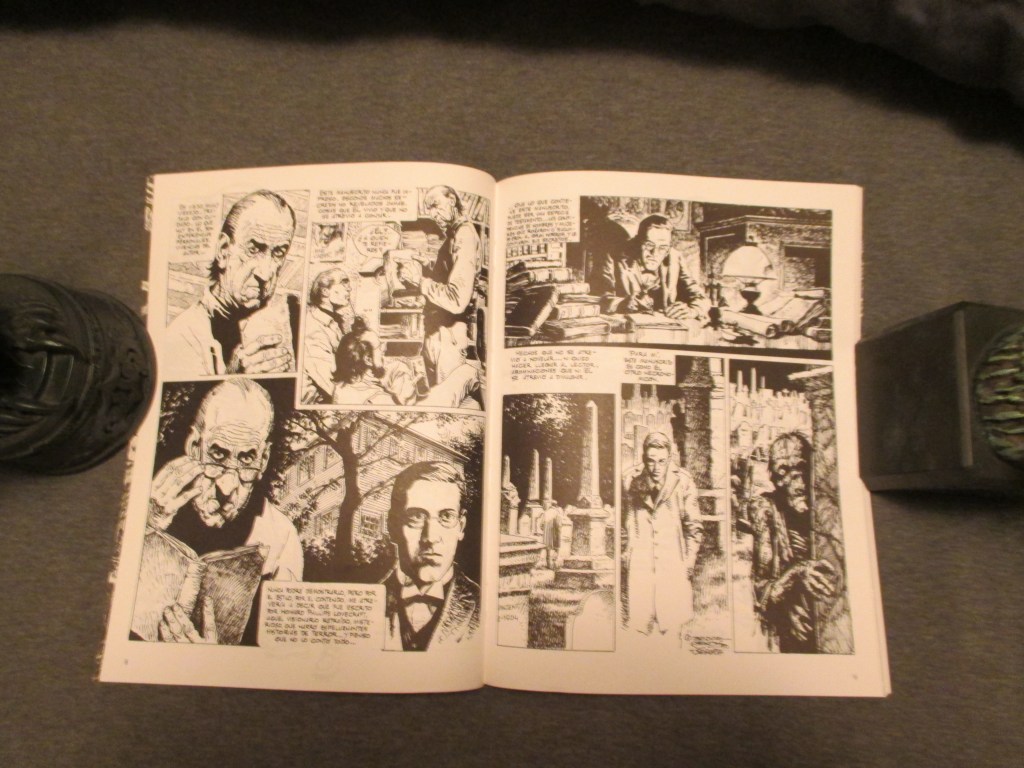
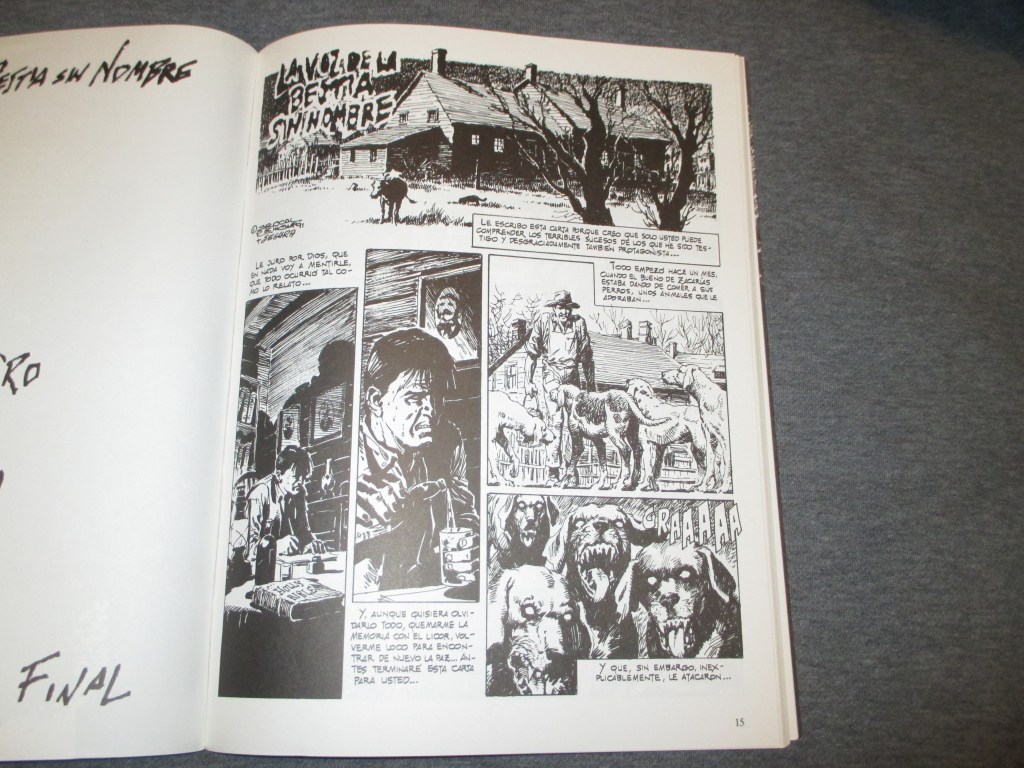
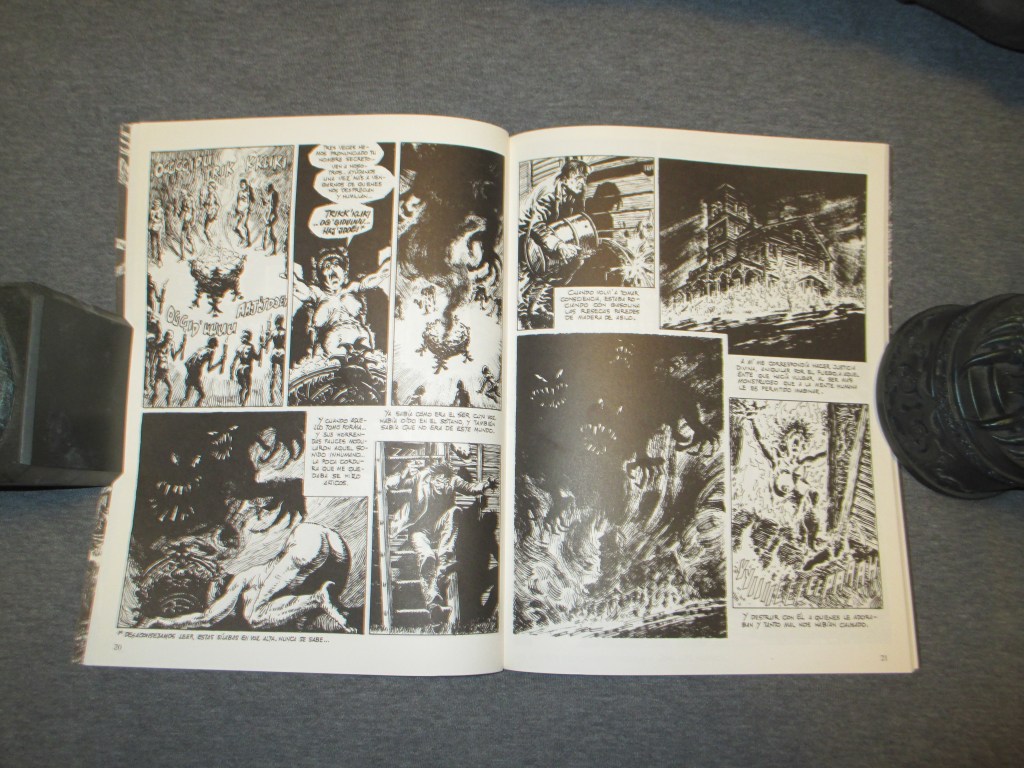
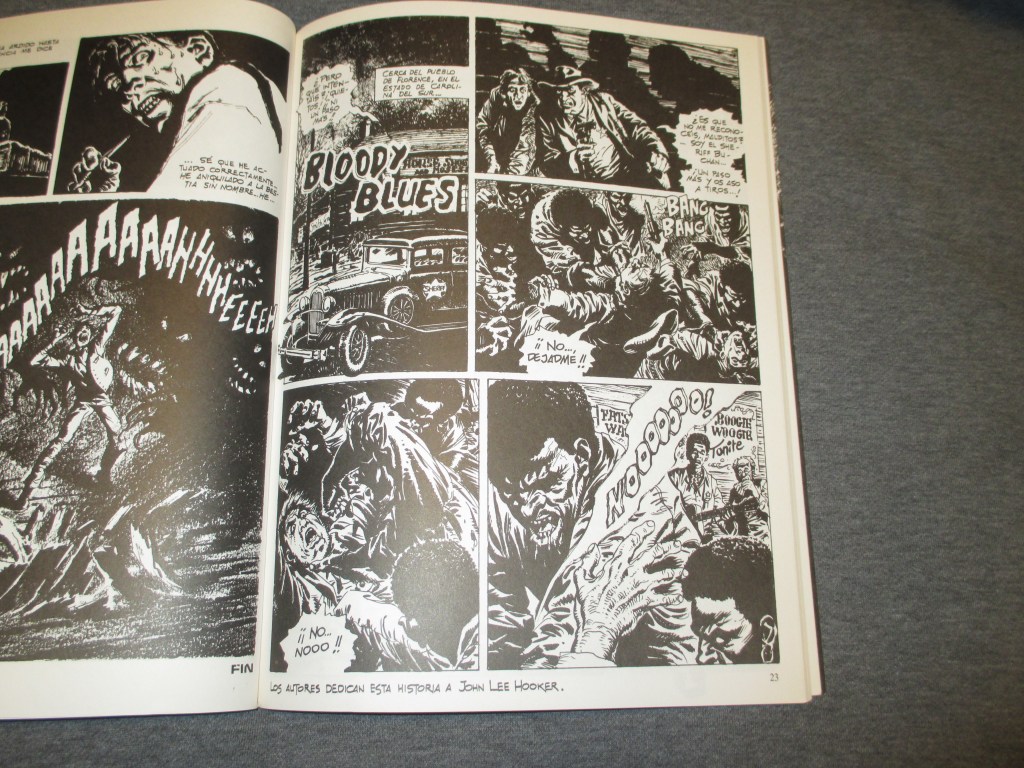
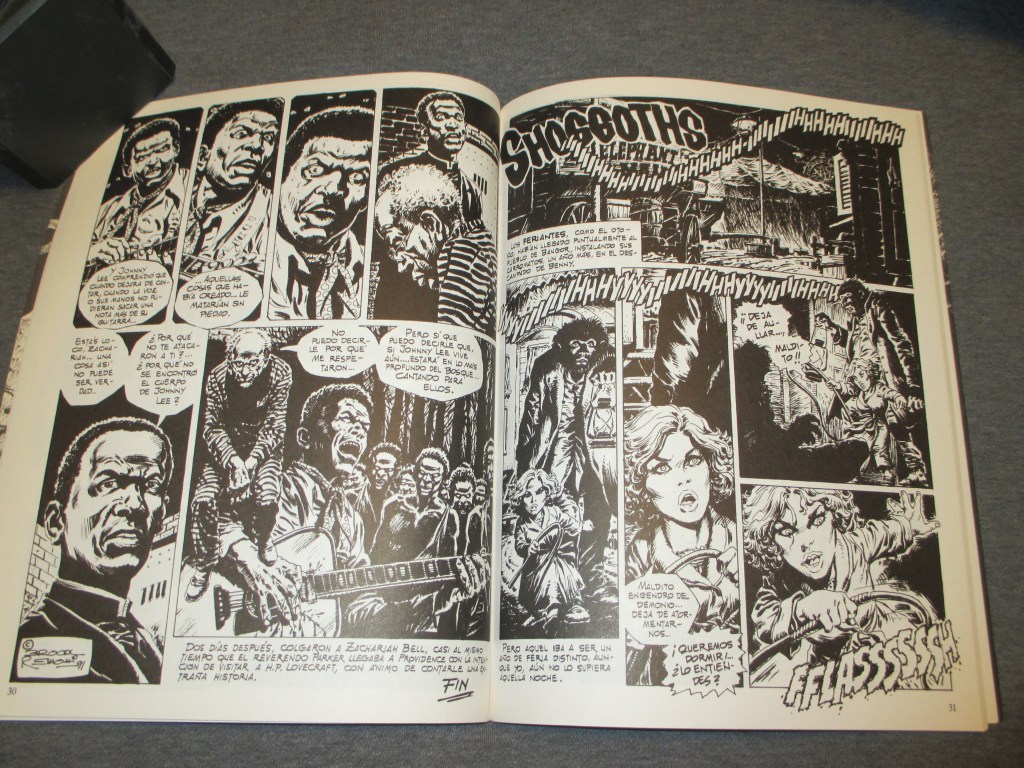
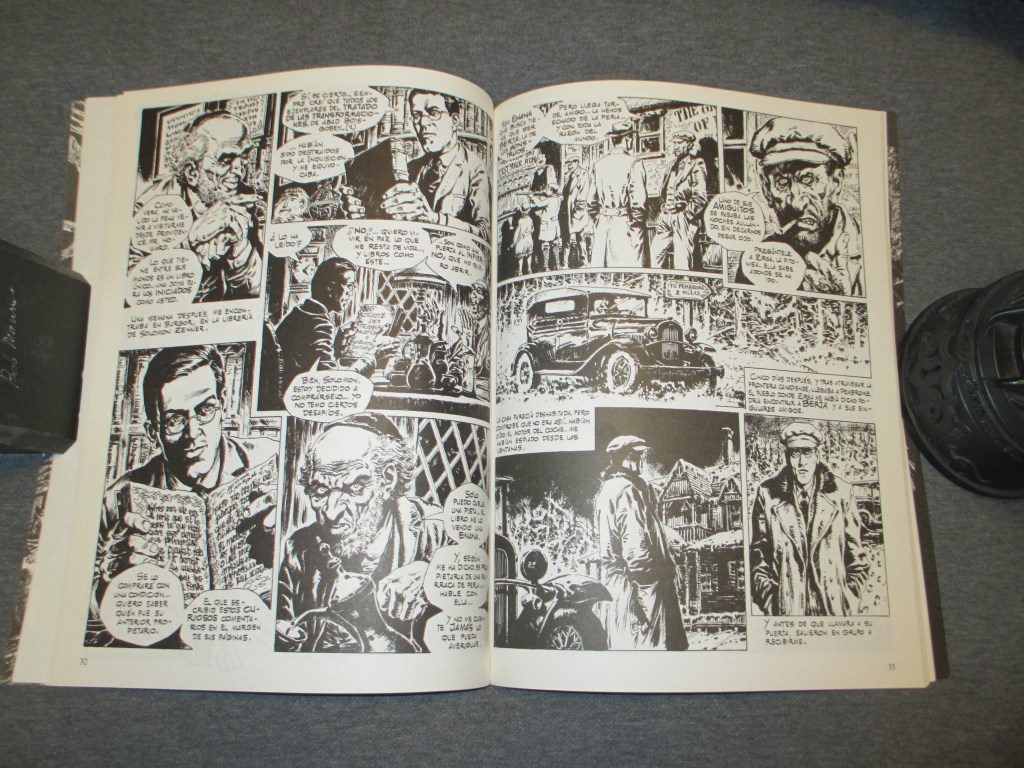
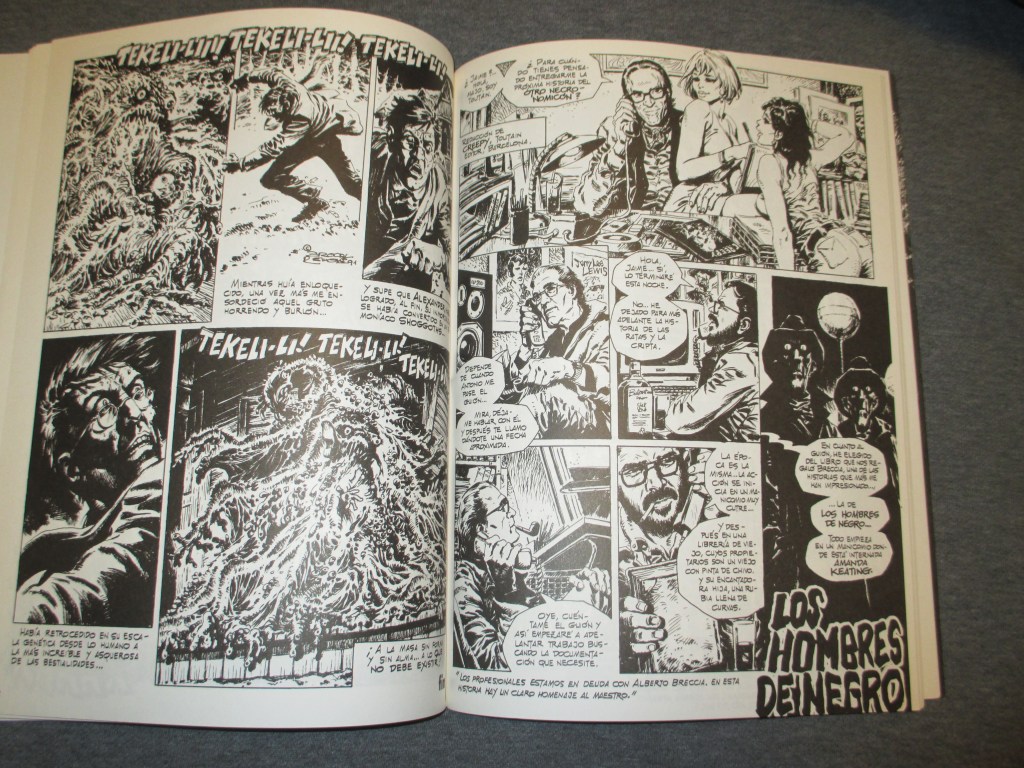
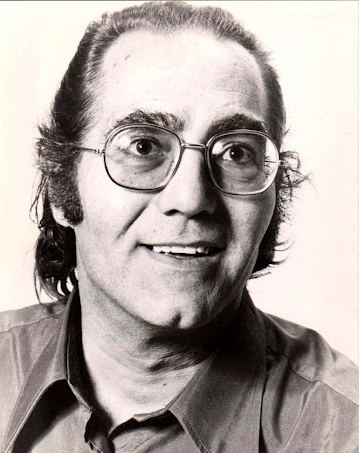
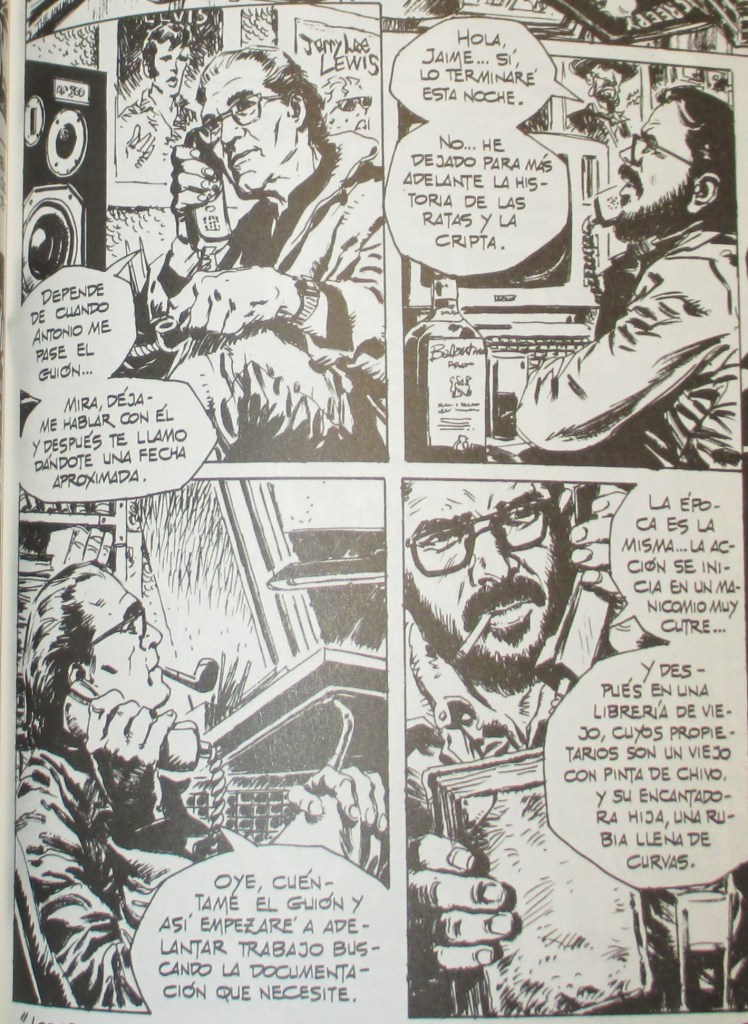
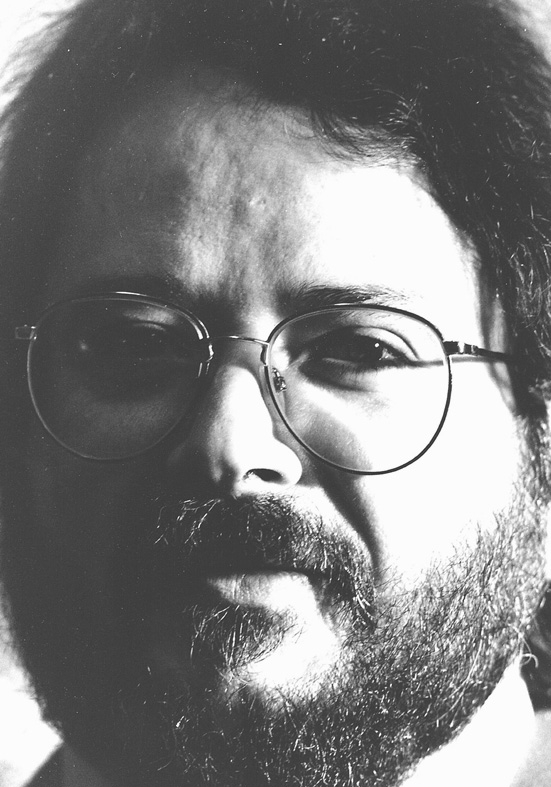
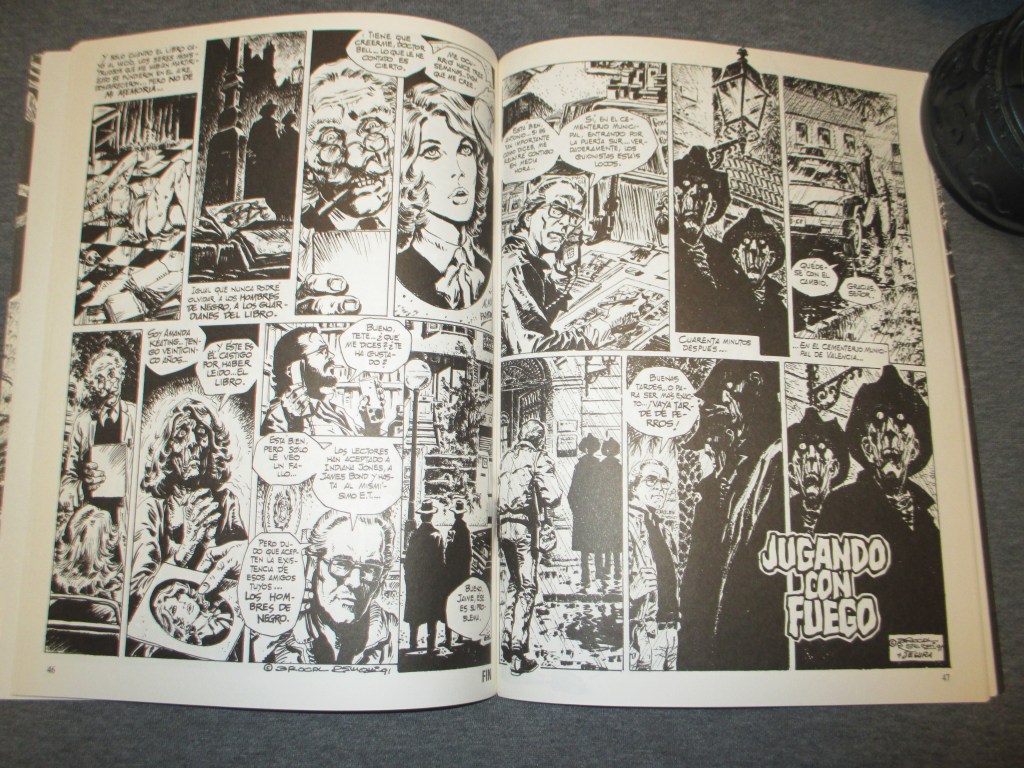
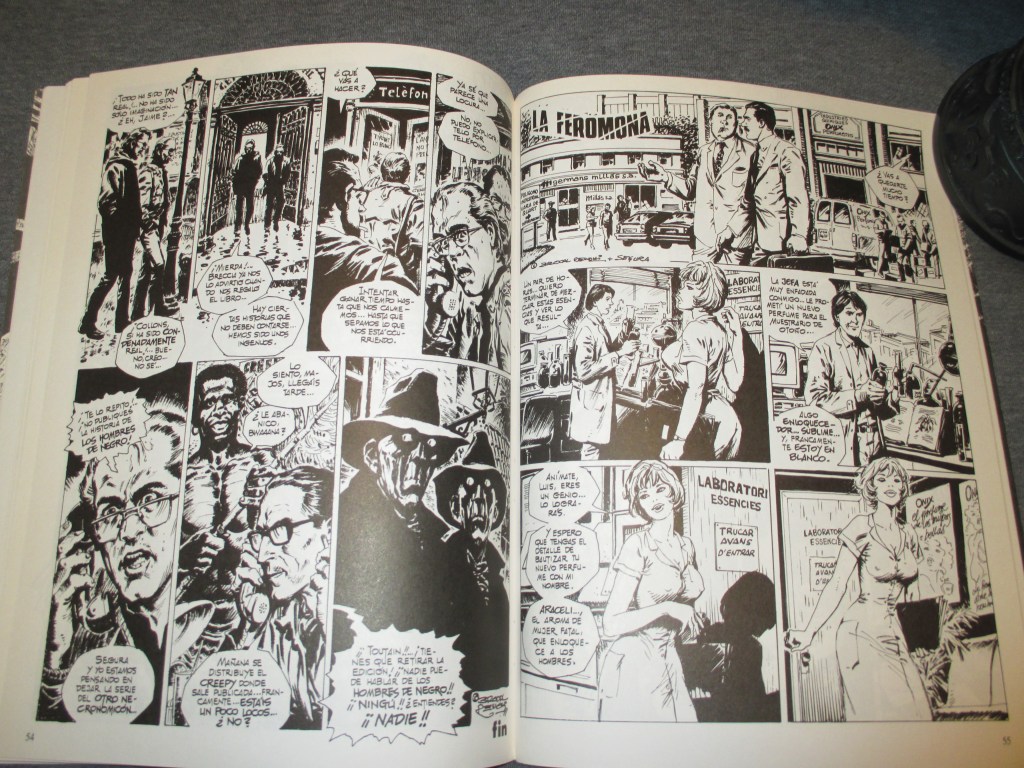
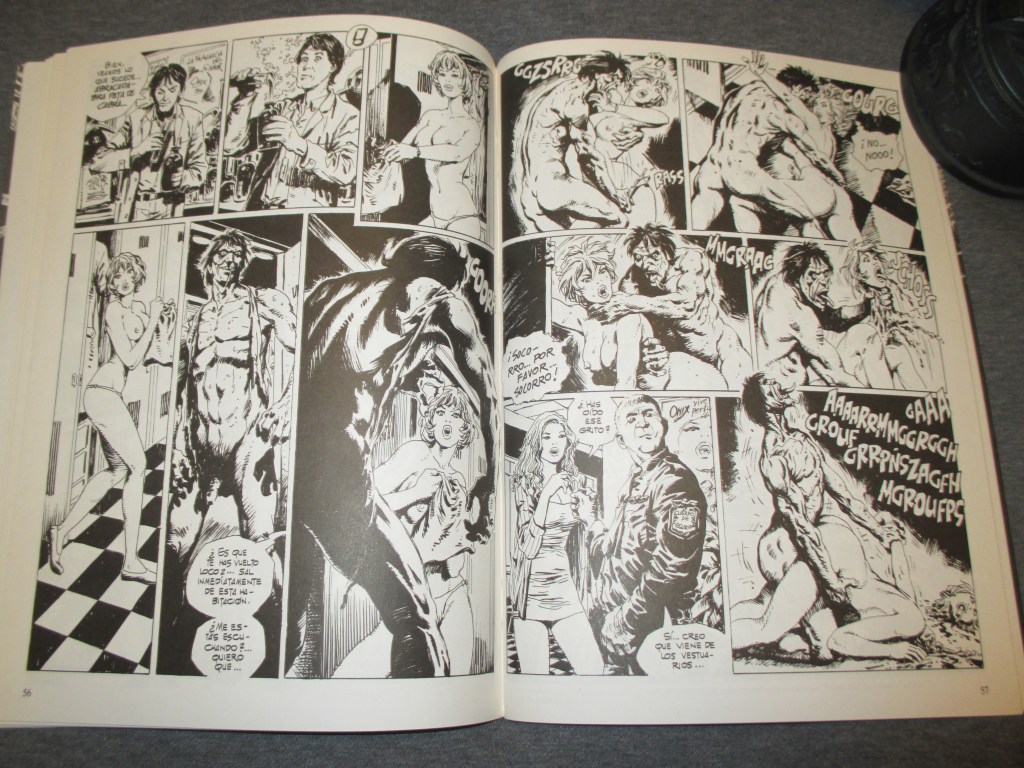
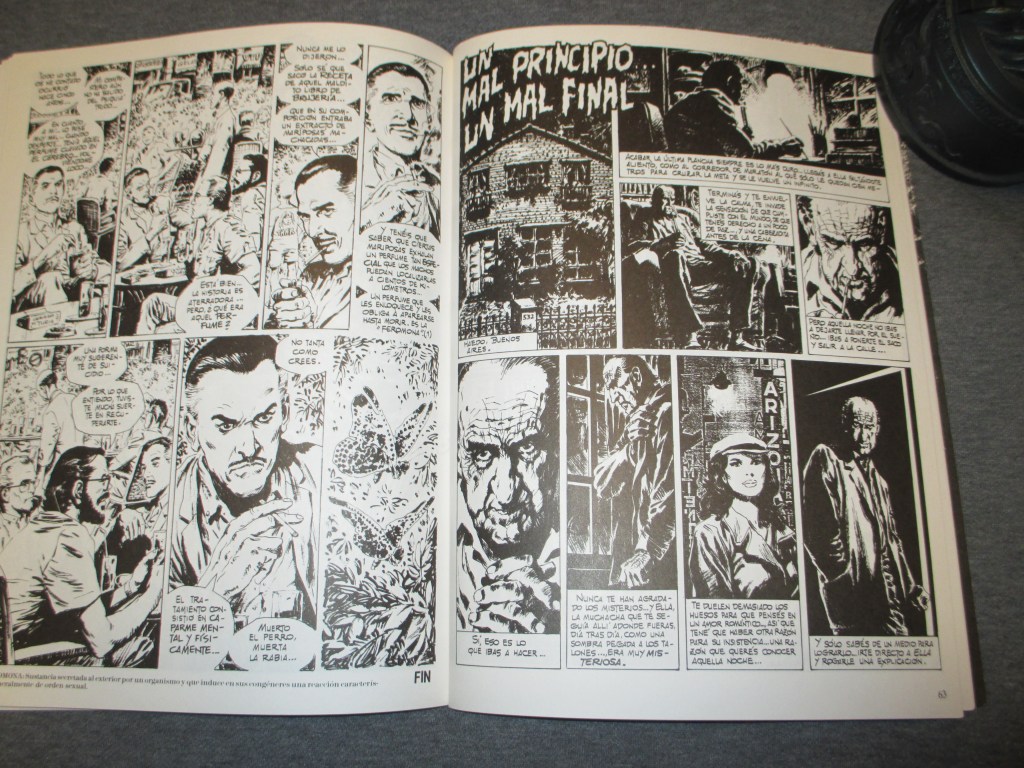
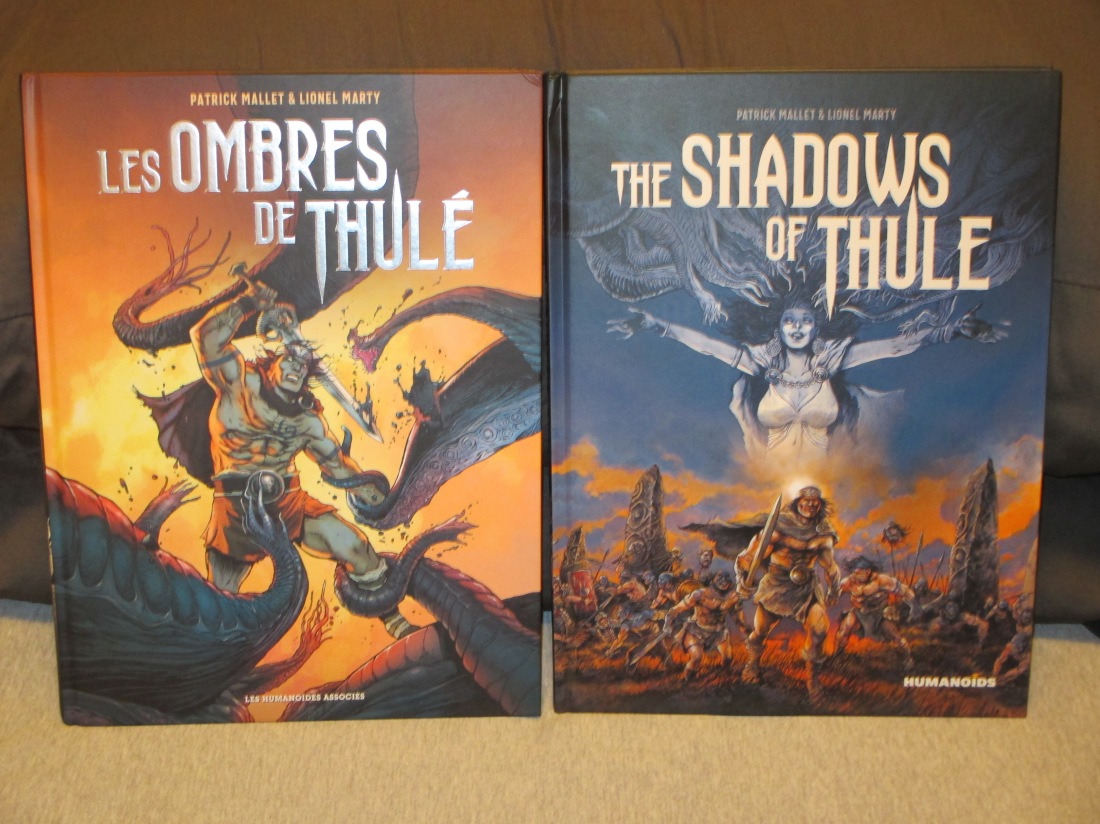
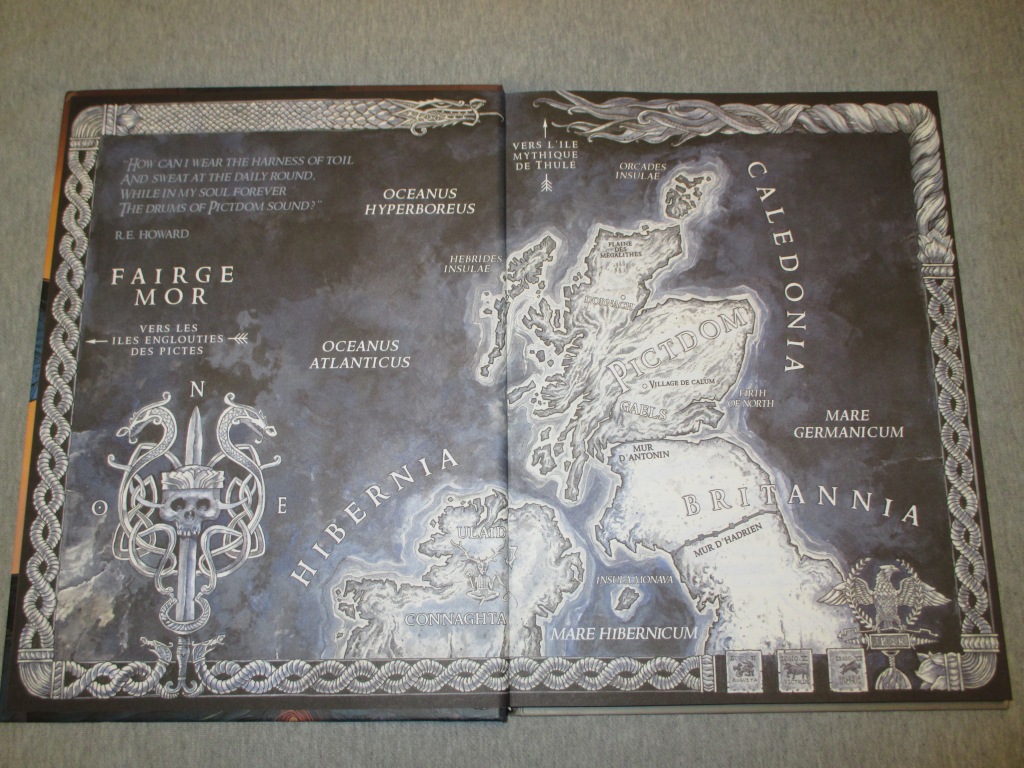


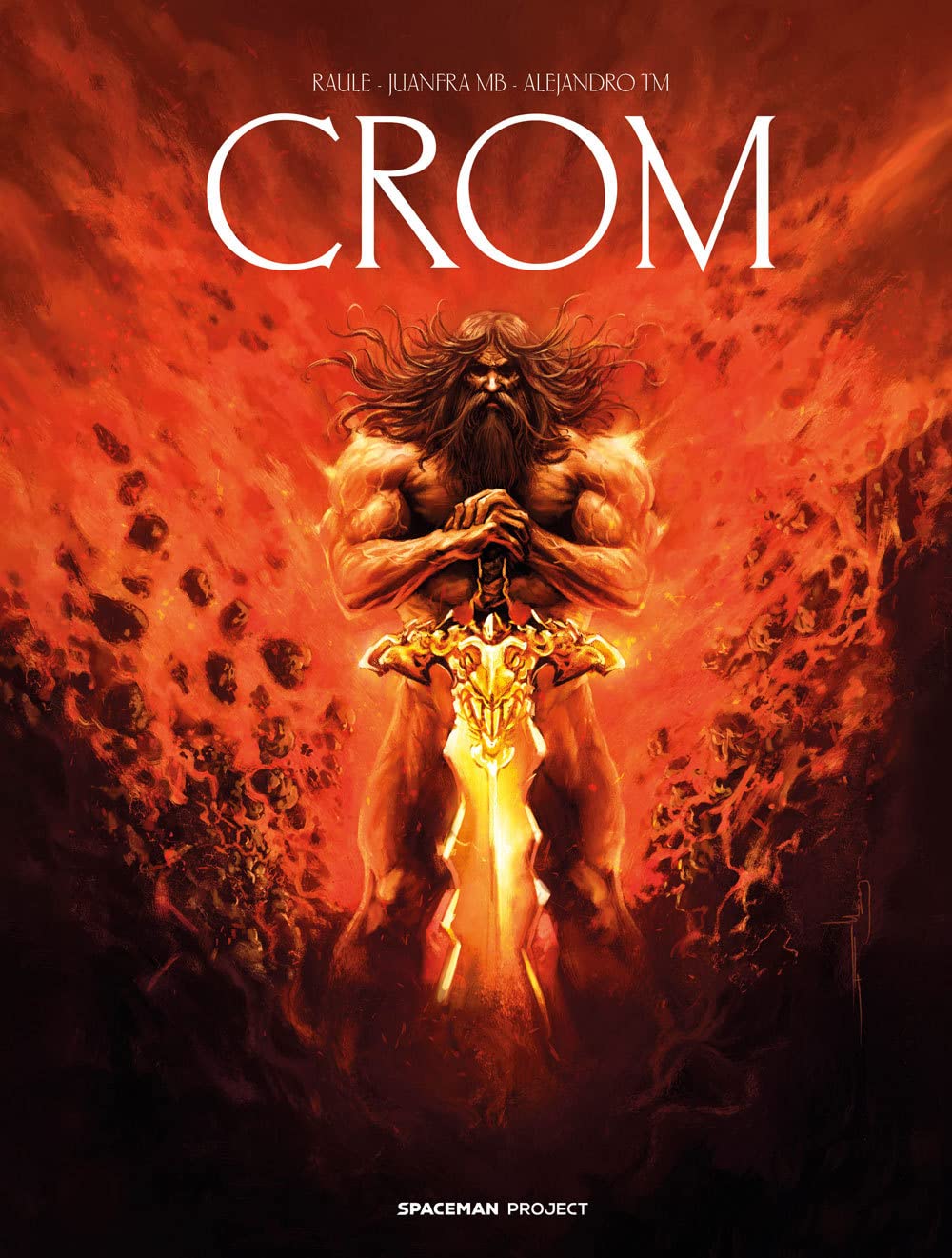

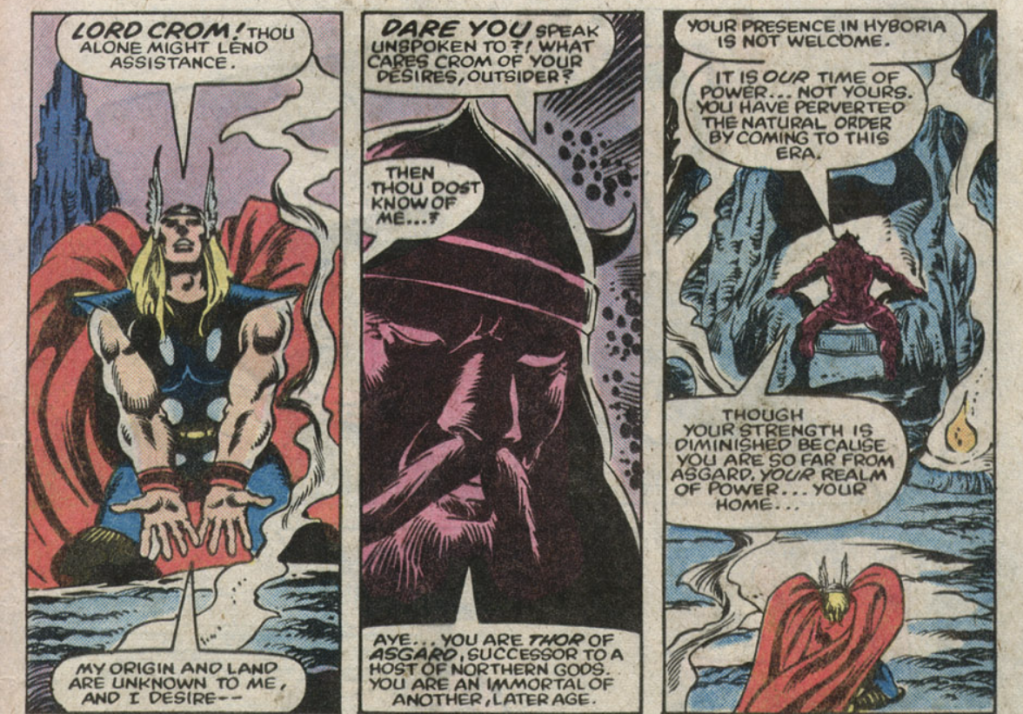


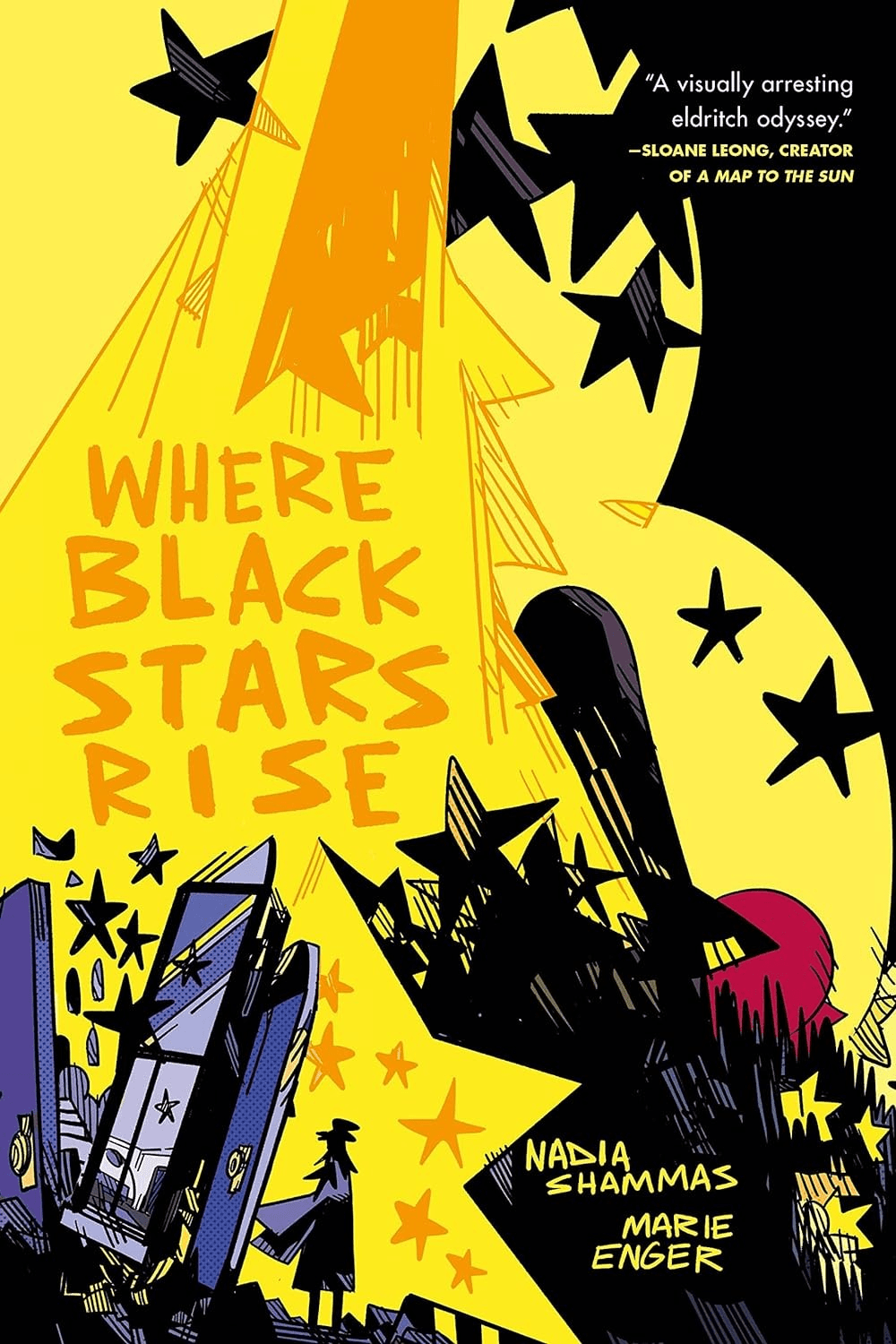
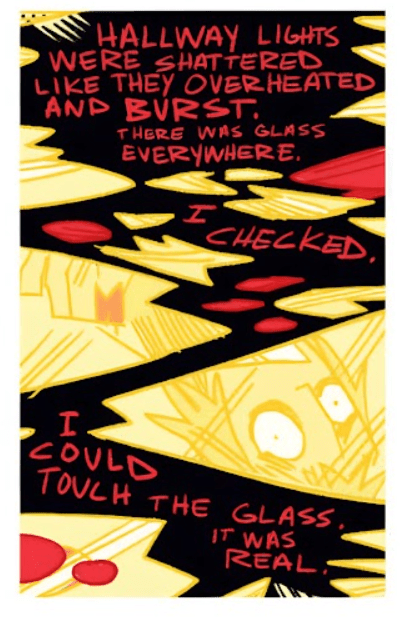
 Deep Cuts in a Lovecraftian Vein