Eldritch Fappenings
The following review of LGBTQ+ comic history includes images from selected works that depict cartoon nudity, sex, and violence. Reader discretion is advised.
Marriage and Sex
(1) Divorce shall not be treated humorously nor represented as desirable.
(2) Illicit sex relations are neither to be hinted at nor portrayed. Violent love scenes as well as sexual abnormalities are unacceptable.
(3) Respect for parents, the moral code, and for honorable behavior shall be fostered. A sympathetic understanding of the problems of love is not a license for morbid distortion.
(4) The treatment of live-romance stories shall emphasize the value of the home and the sanctity of marriage.
(5) Passion or romantic interest shall never be treated in such a way as to stimulate the lower and baser emotions.
(6) Seduction and rape shall never be shown or suggested.
(7) Sex perversion or any inference to same is strictly forbidden.
—Comic Book Code of 1954
LGBTQ+ characters and themes received little coverage in the comic strips and comic books in the United States before 1954. When looking at the Pre-Code Lovecraftian Horror Comics, there are no characters or themes that jump out as explicitly gay or lesbian, transgender or genderqueer. After the Code was created in 1954, LGBTQ+ representation in commercial comics was implicitly forbidden.
Without access to mainstream publications, LGBTQ+ comics shifted to venues that were not controlled by the Comics Code Authority. Pornographic comics and underground comix formed a creative outlet for LGBTQ+ characters, stories, and creators—at the risk of being charged with obscenity. The late 60s and 70s in particular saw the birth of the underground comic scene, an outlet for readers and artists who wanted comics that were forbidden, transgressive, or mature—featuring themes of realism, sex, violence, drugs, politics, mysticism, and horror, often in some combination.
Tales from the Leather Nun (1973), for example, was an underground nunsploitation anthology comic. One of the episodes, “Tales of the Leather Nun’s Grandmother” by Spain Rodriguez, mixes Lovecraft’s Mythos with hardcore pornography, as Abdul Alhazred’s spells have accidentally turned the Leather Nun’s Grandmother’s vagina into a gateway to the realm of Cthulhu. Thus, one of the earliest appearances of Cthulhu in comics has the eldritch horror getting a face full of spunk.
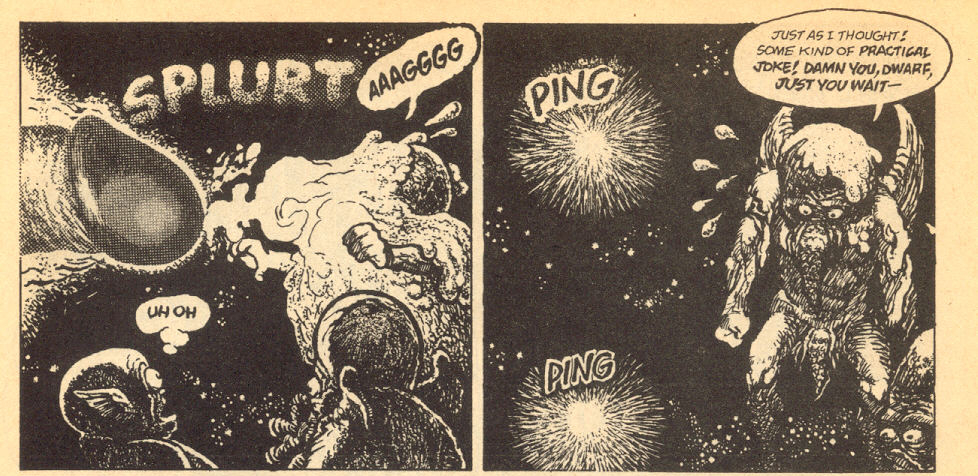
Cthulhu’s facial is a gag, not a homoerotic act. Tales from the Leather Nun isn’t the first LGBTQ+ Lovecraftian comic, just one of the first to begin to transgress in ways that combined sexual themes with Lovecraftian horror. It is difficult to say for sure what was the first LGBTQ+ Lovecraftian comic, if only because we have to look outside of the well-indexed mainstream.
“R. H. B.” (1978) by Andreas and Rivière is a likely candidate, because it focuses on R. H. Barlow, who was gay. However, Barlow’s homosexuality isn’t really the focus of comic, barely mentioned at the end. A later example is the Italian erotic comic Ramba #4 (1989), which features the bisexual Ramba facing down a demon named Azatoth summoned during a voodoo-esque ceremony:
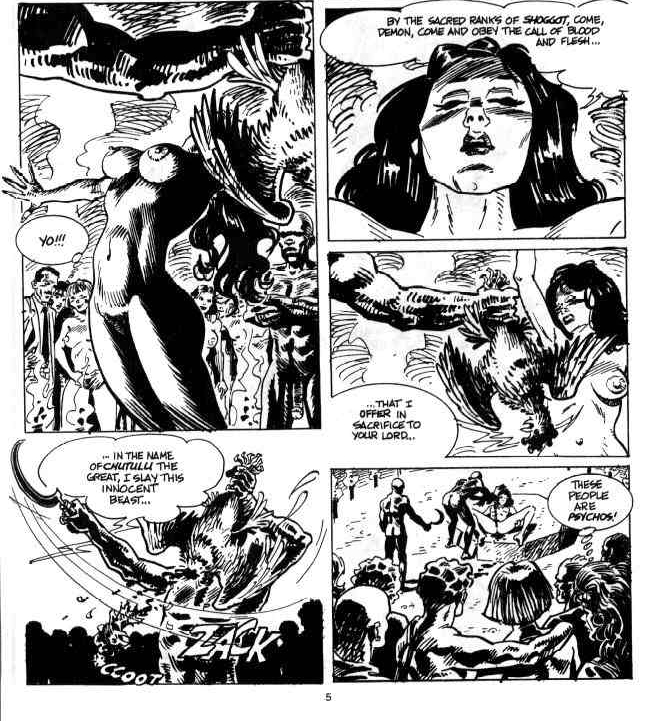
Of course, most of Europe never had an equivalent to the Comics Code Authority, so they had a freer hand to explore such themes. In the United States, works like Ramba appeared in translation in the early 90s, after the CCA had been weakened or ignored by independent publishers. If we can’t quite answer the question of who came first (whether into Cthulhu’s visage or elsewhere), we can at least say there was another notable work that emerged in that period that combined Lovecraftian horror and explicit LGBTQ+ characters and themes.
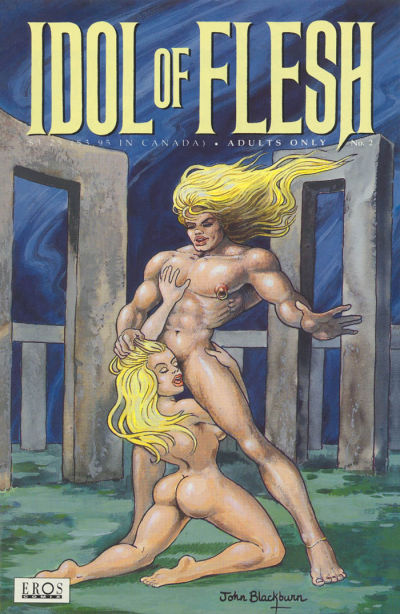
In the 1970s, comic writer and artist John Blackburn created the character Coley Cochran, a 19-year-old uninhibited bisexual character with a penchant for sex, violence, and the occult and antipathy to prudes and authority figures. In the late 80s/early 90s Blackburn self-published four books of Coley’s sex-drenched adventures, a combination of erotica, character-driven drama, and graphic violence. In the first book, Coley on Voodoo Island (1989), Coley is kidnapped and transformed into a sex god in a voodoo ceremony; this supernatural element would re-emerge periodically throughout Coley’s adventures, such as Breathless (1991), which includes an adventure at a ruined temple titled “Flowers of Evil.”
In the 1990s Fantagraphics picked up the Coley adventures under their Eros Comix imprint, publishing a series of 2-3 issue miniseries, beginning with Return to Voodoo Island (1991). The problem with the Eros Comix series is that they never reprinted Coley’s earlier adventures (except when Blackburn summarized them for reprints), so that new readers come into a series that has already been going on for hundreds of pages.
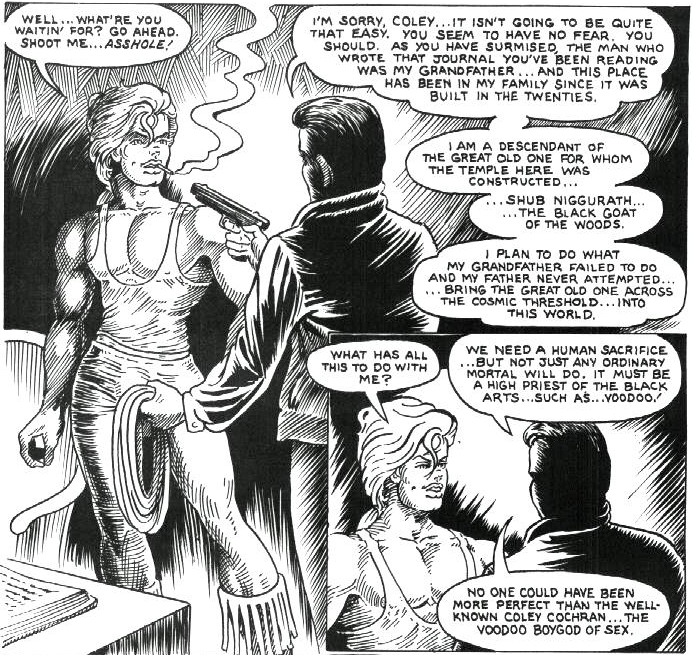
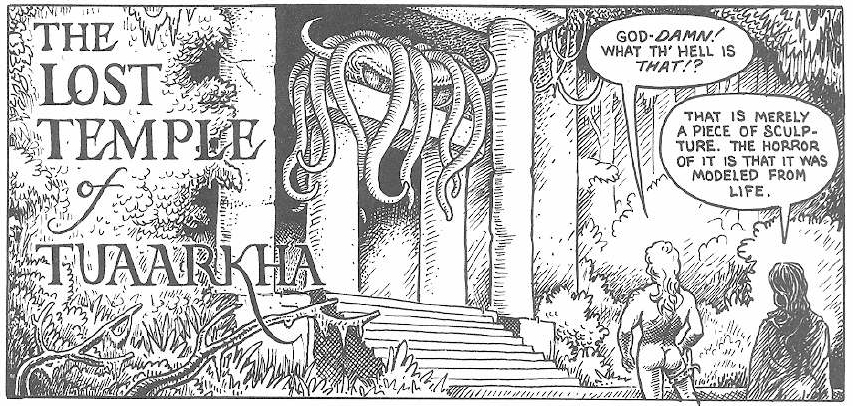
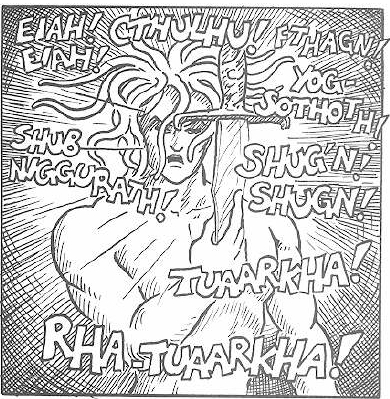
John Blackburn’s “Shadow over Darkcliff” is the second part of the two-issue series Idol of Flesh (1993), and sees Coley and friends return to the temple ruins of “Flowers of Evil”—but this time featuring a strange cult, led by a man named Garth. While the 32-page episode involves a bit of drama and a good bit of sex, the core story is explicitly Lovecraftian:
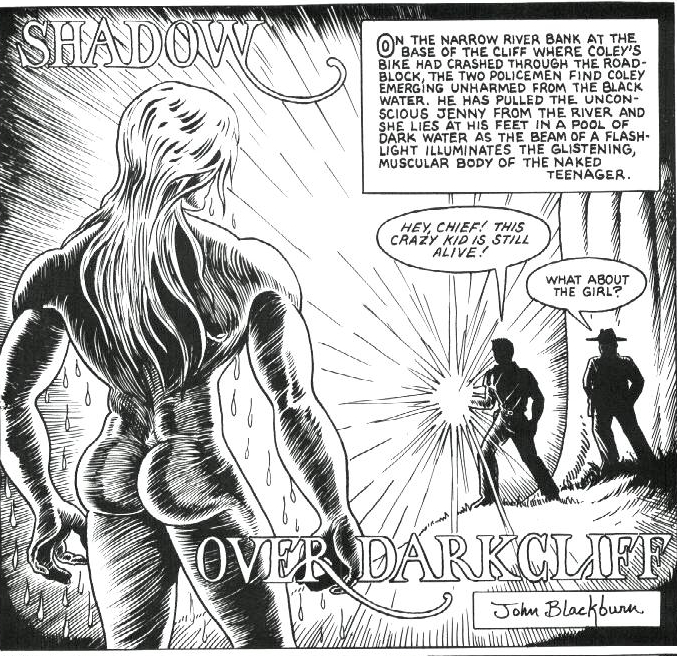
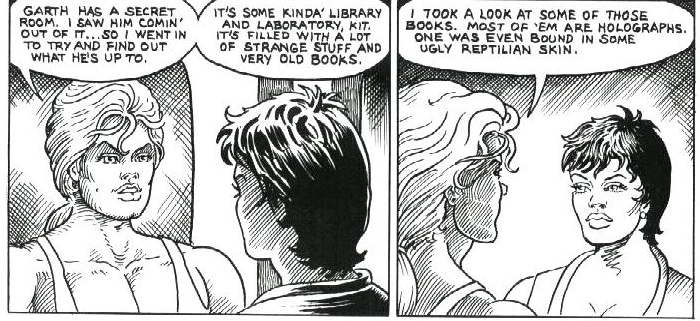
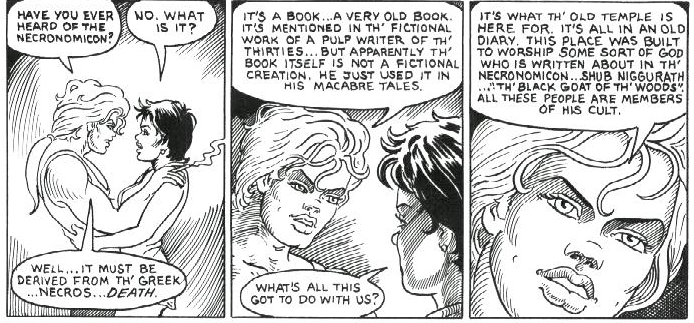
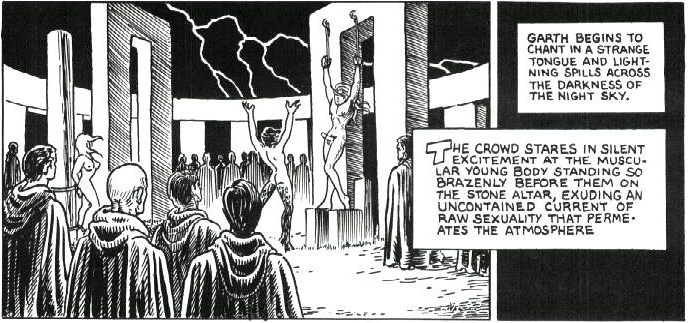
Garth, it turns out, isn’t exactly human and wants Coley for sex and sacrifice. This isn’t the first or the last time Coley would be in this sort of position, the magnetic sexual attraction to both men and women is one of his supernatural traits throughout all of Blackburn’s series, as are scenes of flagellation, bondage, and sexual violence—especially the threat of castration, which appears in Return to Voodoo Island and reappears here. As in “Flowers of Evil,” Coley’s escape from this particular peril is somewhat miraculous—not a great storytelling trick, and one which Blackburn overuses a bit. Not that readers would know that unless they hunted out some of the stories that Fantagraphics did not reprint.
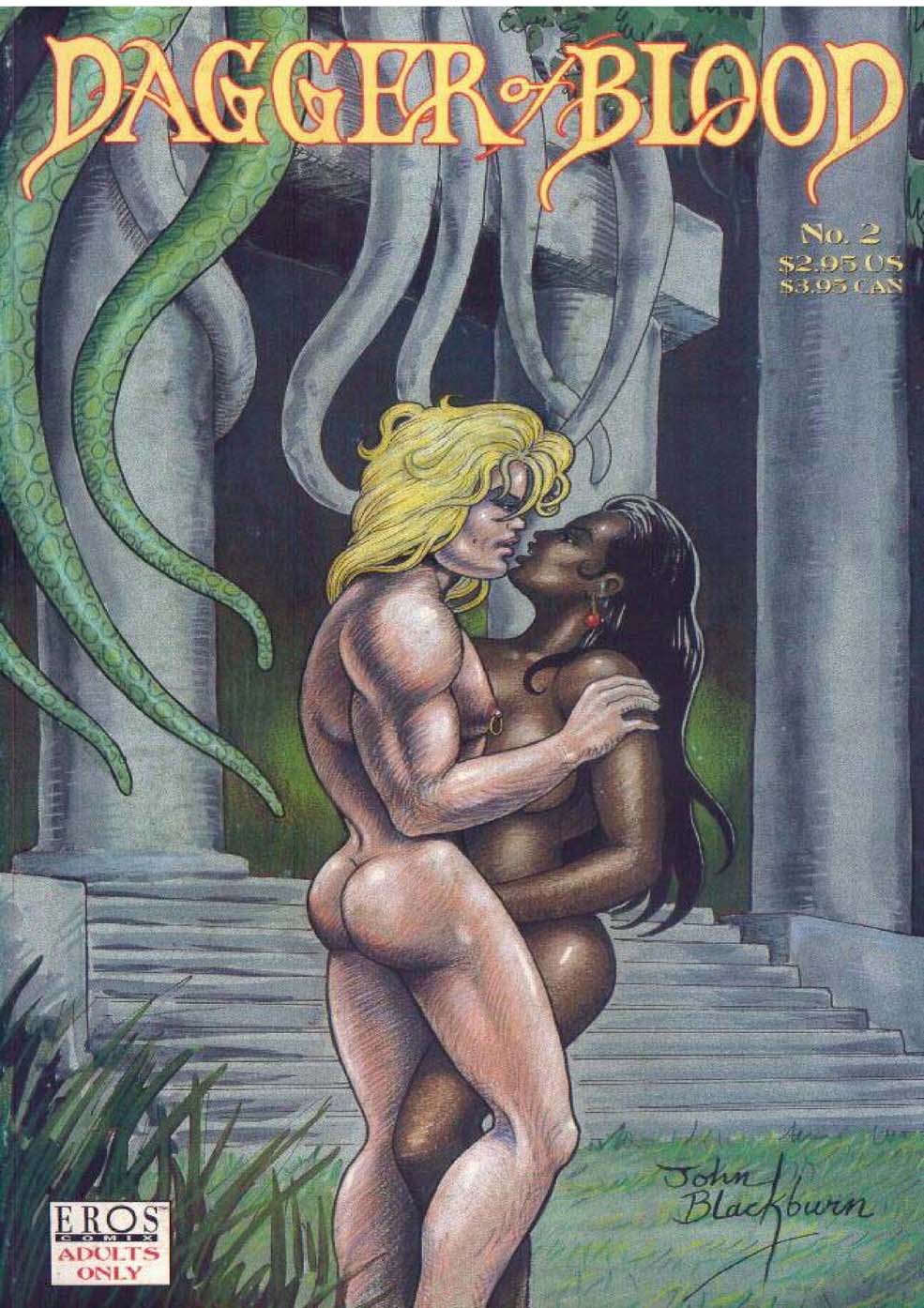
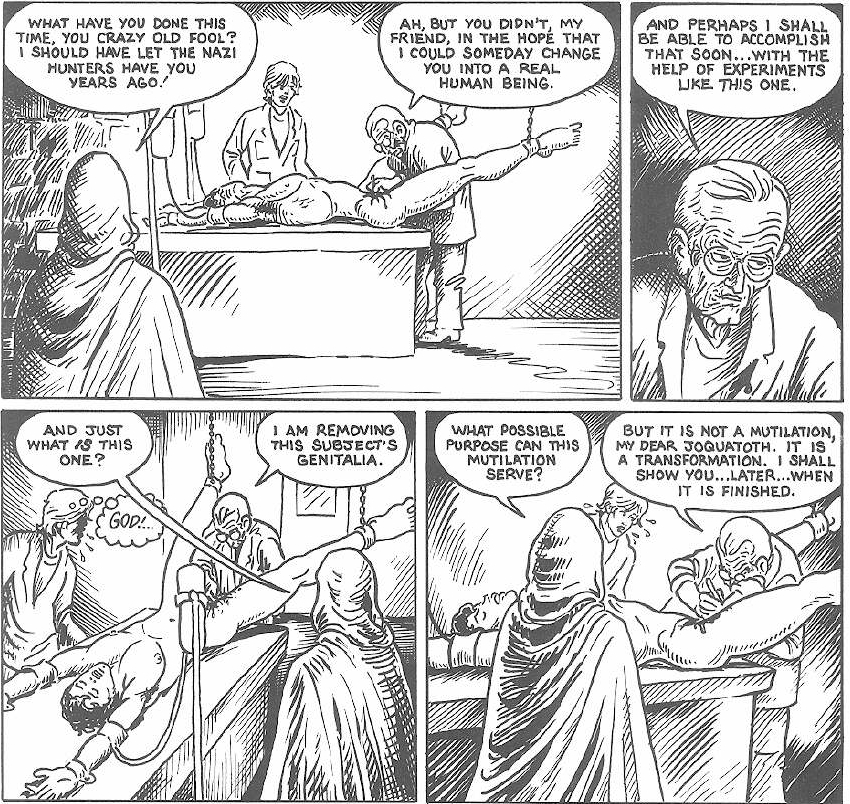
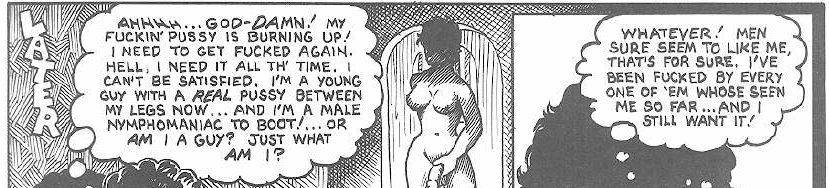
Blackburn would return to Coley and the Cthulhu Mythos in a longer, more involved, and even weirder storyline titled Dagger of Blood (1997), which makes brief reference to Garth and the events of “Shadow over Darkcliff.” Yet it reading the stories in order gives a better sense of the ideas that Blackburn was developing. Coley is presented as this perfect bisexual heartthrob, while characters like Garth and the antagonist of Dagger of Blood are both attracted to and hate Coley because of their own deformed bodies. There is a strong element of body dysmorphia to those characters, really only implicit here and more fully developed (and exploited) in Dagger of Blood, which fixates on genital mutilation.
It feels like Blackburn was working through some things, if only in art and writing, and perhaps only for his own entertainment. Certainly Blackburn was aware of the main focus of his comics—Coley has no shortage of sexual partners on the page, in explicit detail, both men and women—and the mundane drama of trying to keep his lovers happy is a counterweight to the more fantastic elements of Lovecraftian horror, even as the action and horror plots provide some relief from the soap opera.
When you look back at the history of LGBTQ+ characters and themes in comics, Blackburn’s work arriving when and where it did—first in self-published underground comix, and then after the CCA waned in series from an independent press which stressed the erotic angle—makes sense. It took decades after the Stonewall Riots for LGBTQ+ folks to gain greater recognition, acceptance, and basic rights in the United States, and such works were slow to find a place in mainstream comic books and strips. The underground was more willing to accept these nonconforming works with LGBTQ+ characters and to have discussions about subjects like homosexuality, polyamory, bisexuality, kink—and, yes, how the occasional bit of Lovecraftian horror fit into the mix. At the time, homosexuality in the Mythos was limited to stories like Ramsey Campbell’s “Cold Print” (1969), and those were few and far between.
Reading all of John Blackburn’s Coley saga is damn near impossible these days. Fantagraphic’s individual issues and reprint collections are long out of print and command collectors’ prices; the Idol of Flesh comics are reprinted in Coley Running Wild Book One: The Blade and the Whip. Several other adventures by Coley were published or re-printed in the gay comics anthology Meatmen, though there is no complete index for that series as yet.
Bobby Derie is the author of Weird Talers: Essays on Robert E. Howard and Others and Sex and the Cthulhu Mythos.
Deep Cuts in a Lovecraftian Vein uses Amazon Associate links. As an Amazon Associate I earn from qualifying purchases.
 Deep Cuts in a Lovecraftian Vein