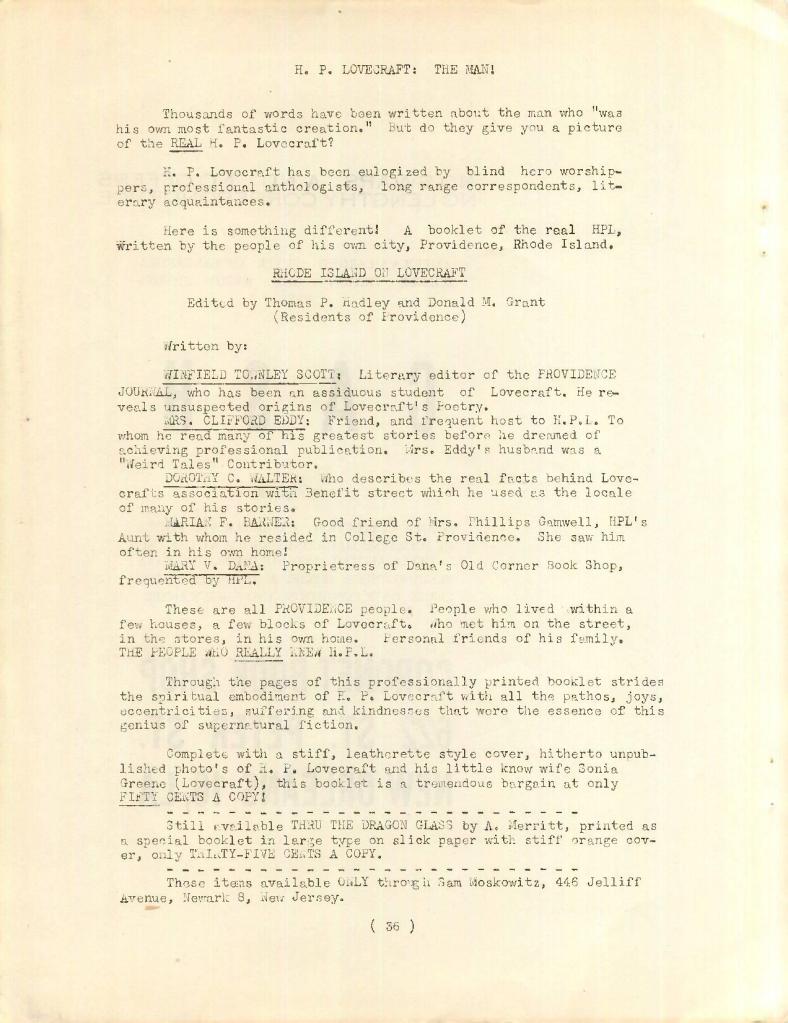
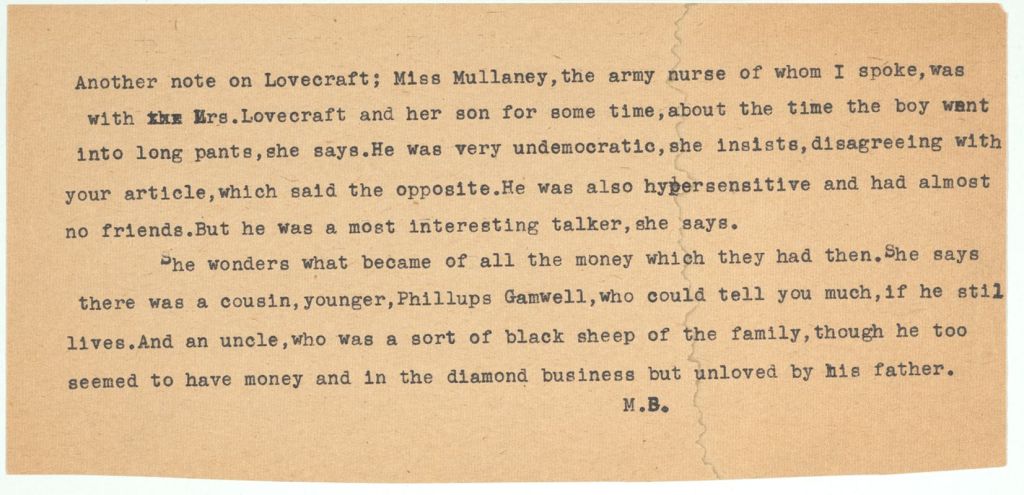
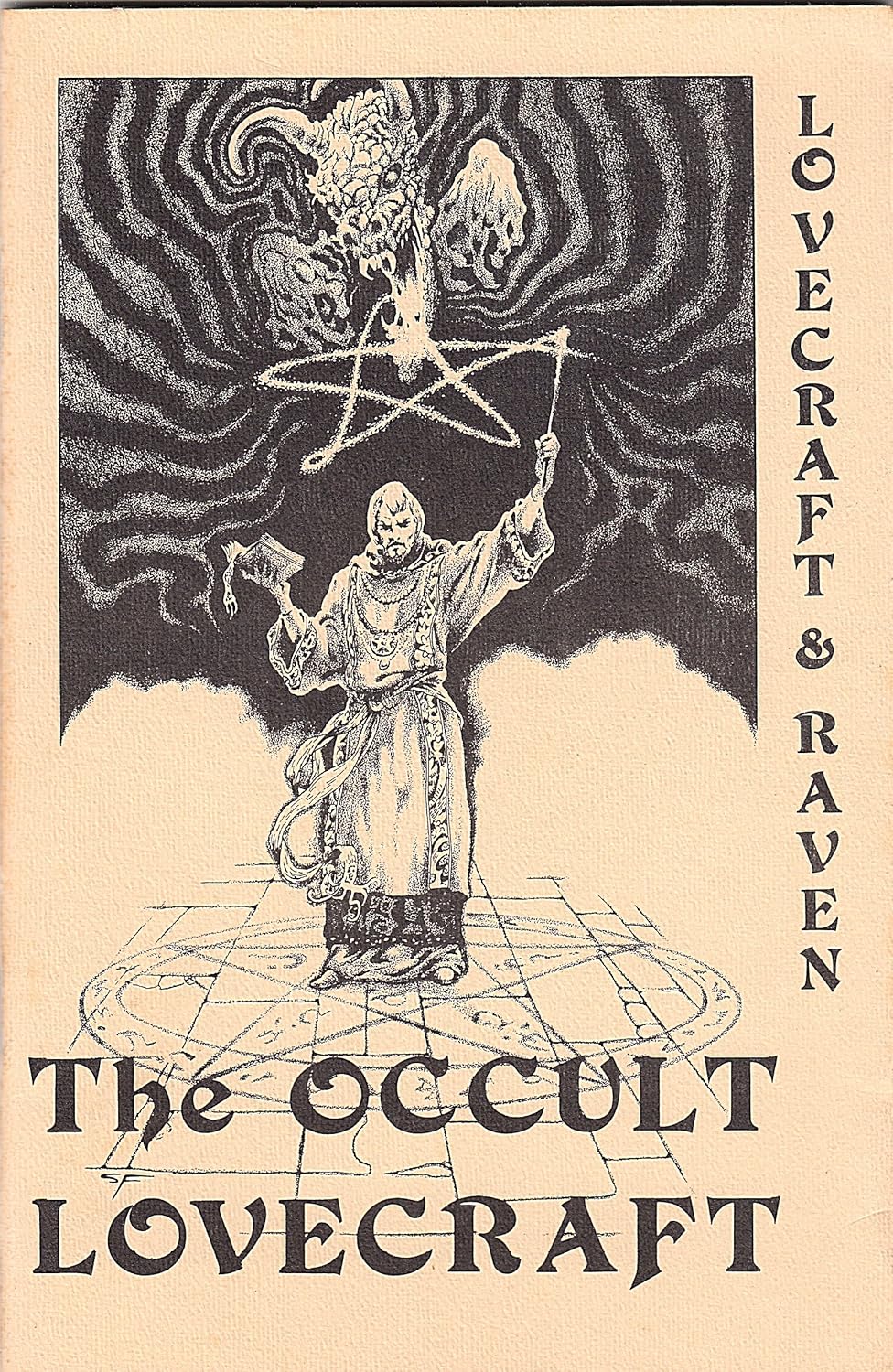
“Of Gold and Sawdust” (1975) by Samuel Loveman

Antisemitism

The following article deals explicitly with antisemitism in a historical context. Frank discussion of these matters requires the reproduction of at least some samples of antisemitic speech from historical sources (e.g. Lovecraft’s letters). As such, please be advised before reading further.


“American literature has produced three great writers of terror fiction: Edgar Allan Poe, Ambrose Bierce and Howard Phillips Lovecraft. It has been my good fortune—certainly, no inconsiderable one—to have been on intimate terms with tow of these: Ambrose Bierce and Howard Phillips Lovecraft.
—Samuel Loveman, “Howard Phillips Lovecraft” in The Arkham Sampler (Summer 1948)

For a matter of three years and more I was actually in daily association with him—years of plenitude and literary activity; years of happiness. I can safely assert that Lovecraft’s conversation takes its place among the masters of that brilliant but difficult art.
—Samuel Loveman, “Lovecraft as a Conversationalist” in the Howard Phillips Lovecraft Memorial Symposium (1958)

During that period I believed Howard was a saint. Of course, he wasn’t. What I did not realize (or know) was that he was an arrant anti-Semite who concealed his smouldering hatred of me because of my taint of Jewish ancestry. It would be impossible for me to describe the smug, cloaked hypocrisy of H.P.L.
—Samuel Loveman, “Of Gold and Sawdust” in The Occult Lovecraft (1975), 22

H. P. Lovecraft came into contact with Samuel Loveman (1887-1976) in 1917; the two shared a love of poetry and Classical themes, and with their correspondence, Loveman was drawn back into amateur journalism.

Loveman has become reinstated in the United through me. Jew or not, I am rather proud to be his sponsor for the second advent to the Association. His poetical gifts are of the highest order, & I doubt if the amateur world can boast his superior.
—H. P. Lovecraft to Rheinhart Kleiner, 8 Nov 1917, LRK 93

Lovecraft’s antisemitism, so adamant when speaking about the faceless, anonymous mass of Jews as a people, often broke down at the individual level. Loveman and Lovecraft became close friends, and their acquaintence brought Lovecraft into contact with the poet Hart Crane and his circle. In her memoir, Sonia H. Greene claimed that when she wished to prove to Lovecraft that his antisemitic prejudices were bunk, she invited both HPL and Loveman to New York. During the period of Lovecraft’s marriage and inhabitation of New York (1924-1926), the two were closely associated, sometimes seeing one another on a daily business, and for a time were neighbors at 169 Clinton Street. When thieves broke into Lovecraft’s apartment and stole his clothes and his wife’s suitcase, they also stole an expensive radio set that Loveman had secured with HPL.

Loveman and Lovecraft did not always move in exactly the same circles, however. For one, Loveman was a working bookman, always either employed or operating as a bookseller on his own account, while Lovecraft perpetually failed to find gainful employment. For two, Loveman was gay, a fact that Lovecraft never directly alludes to (and possibly was ignorant of); Loveman’s homosexual affairs are absent in Lovecraft’s letters, and largely only became more widely written about in later decades. After Lovecraft left New York, their lives drew apart, though they seem to have remained in correspondence until Lovecraft’s death.

For the next few decades, Loveman was a bookman. He developed a somewhat infamous reputation for his fanciful catalogues and a few inept attempts at forgery. As Lovecraft’s posthumous star waxed, Loveman produced three memoirs of his friend: the largely laudatory “Howard Phillips Lovecraft” (1948) that barely mentions Lovecraft’s xenophobia in New York, the anecdotal “Lovecraft as a Conversationalist” (1958), and the much more barebones and critical “Gold and Sawdust” (1975), written near the end of his life and addressing, for essentially the first time in print, his reaction to Lovecraft’s antisemitism.

So what changed Loveman’s attitude?

During Lovecraft’s lifetime, he had several Jewish correspondents, including Sonia H. Greene, Adolphe de Castro, Robert Bloch, Julius Schwartz, and Kenneth Sterling. While Lovecraft was an antisemite, these people were still his friends and loved ones; as such, his letters to them are notably absent of anti-Jewish sentiments. Even when Lovecraft was discussing the Nazis with a teenaged Robert Bloch in late 1933, HPL was careful to talk around certain issues, never once mentioning Jews or the Nazis’ antisemitic policies directly, e.g.:

Regarding the defeat of disproportionate cultural & standard-building influence by sharply-differentiated minority-groups—here again we have a sound principle misinterpreted & made a basis for ignorant, cruel, & fatuous action. There is of course no possible defence of the policy of wholesale confiscation, de-industrailisation, & (in effect) expulsion pursued toward groups of citizens on grounds of ancestral origin. Not only is it barbaric in the hardship it inflicts, but it involves a faulty application of ethnology & anthropology. However—this does not obscure the fact that there is always a peril of the concentration of disproportionate power & articulateness in the hands of non-representative & alien-minded minorities—whether or not of alien birth or blood. Cases are very numerous where small groups of especially active & powerful thinkers have tacitly & gradually secured a “corner” on expression & value-definition in nations widely different from themselves in natural instincts, outlook, & aspirations.
—H. P. Lovecraft to Robert Bloch, [late October 1933], LRB 82-83

Lovecraft’s surviving letters to Loveman are few and end in 1927, so we don’t know exactly how or if HPL discussed the Nazis with his other Jewish friend, but based on his letters to Bloch et al., it seems reasonable to assume that HPL was careful to never give his friend offence on account of his Jewish ethnicity. It is quite possible that at the time of Lovecraft’s death in 1937, Loveman had no idea of Lovecraft’s real thoughts about the Nazis during Hitler’s rise to power, or the discussions he had with others as the antisemitic policies began to go into effect. If Loveman did have any idea about Lovecraft’s antisemitism, it likely came from his friendship with Sonia H. Davis, Lovecraft’s ex-wife.

In the mid-1940s, as WW2 was coming to a close, Loveman was contacted by early Lovecraft biographer Winfield Townley Scott, who was looking for data. Loveman pointed Scott at Sonia, and between Scott’s article and Sonia’s memoir, she seems to have come into correspondence with Loveman again; at least, there are some letters between the two dated 1947. Sonia had been in correspondence with August Derleth, who attacked her memoir and claims of Lovecraft’s prejudice, keeping in mind that this was in the immediate aftermath of the Holocaust. Sonia vented her spleen a little to Loveman:

In his Marginalia he is all wrong in stating how much older I am than HP, also that our divorce was the result of HP’s inability to write for money or his lack of desire to write for money. None of this is true. I carried a handsome salary at the time and provided many things for him. I did not leave him on account of non-providence, but chiefly on account of his harping hatred of J__s.
—Sonia Davis to Samuel Loveman, 4 Jan 1948, JHL

This is likely why Loveman wrote:

Her treatment by H.P. L. was, whether consciously or unconsciously, cruel. His anti-Semitism formed the basis for their eventual divorce. Howard’s monomania about race was about as close to insanity as anything I can think of.
—Samuel Loveman, “Of Gold and Sawdust” in The Occult Lovecraft (1975), 22

Elsewhere, Sonia wrote:

But I told him this very soon after we met; especially when he remarked that it was too bad that Samuel Loveman was a Jew.
—Sonia Davis to Winfield Townley Scott, 24 Sep 1948, JHL

This is presumably the source for when Loveman wrote:

Lovecraft had a hypocritical streak to him that few were able to recognize. Sonia, his wife, was indubitably his innocent victim. her love for him blinded her to many things. Among the things he said to her was, “Too bad Loveman’s a Jew; he’s such a nice guy.”
—Samuel Loveman, “Of Gold and Sawdust” in The Occult Lovecraft (1975), 22

This kind of context was important because Loveman had relatively little save his own memories of Lovecraft to go by when he wrote his first memoir of Lovecraft, published in 1948. He wrote to Derleth:

I look forward to the publication of the letters [of Lovecraft] with a great deal of eagerness. I have practically nothing at all, or I would have tend[er]ed them to you. All my material was either destroyed or confiscated when I left Cleveland for New York.
—Samuel Loveman to August Derleth, 1 Dec 1949,
quoted in Letters to Maurice W. Moe & Others 29

How Loveman lost most of his letters from Lovecraft isn’t clear, but in the 1940s Loveman purchased several hundred pages of letters that Frank Belknap Long, Jr. had received from Lovecraft; HPL’s letters were already becoming collectors’ items. When Loveman wrote his second memoir of Lovecraft in 1958, this material was presumably available, but perhaps Loveman had not taken the time to read through several hundred pages of his friend’s infamous handwriting when approached for a brief memoir.

So what happened between 1958 and 1975 that caused Loveman to write:

The one last letter of his I have fills the bill, and a hundredfold more! It advocates the extinction of the Jews and their exclusion from colleges. The letter was written to a partner of W. Paul Cook, who published my books, “The Sphinx” and “The Hermaphrodite.”
—Samuel Loveman, “Of Gold and Sawdust” in The Occult Lovecraft (1975), 22

The unnamed “partner” would be Walter J. Coates, an amateur journalist and small press publisher during the 30s; Coates’ letters from Lovecraft had apparently also passed through Loveman’s hands. Several of Lovecraft’s letters to Coates appear to be in private hands or lost, so the exact statements that Loveman found so damnable are not widely available. However, a letter from Lovecraft to Coates contains several of these sentiments:

Undeniably—all apart from the effects of natural change and altered philosophic-scientific-psychological perspective—the world of American taste & opinion is distinctly & lamentably Jew-ridden as a result of the control of publicity media by New York Semitic groups. Some of this influence certainly seeps into Anglo-Saxon critical & creative writing to an unfortunate extent; so that we have a real problem of literary & aesthetic fumigation on our hands. The causes are many—but I think the worst factor is a sheer callous indifference which holds the native mind down to mere commercialism & size & speed worship, allowing the restless & ambitious alien to claim the centre of the intellectual stage by default In a commercialized civilization publicity & fame are determined by economic causes alone—& there is where the special talents of Messrs. Cohen & Levi count. Before we can put them in their place, we must de-commercialise the culture—& that, alas, is a full-sized man’s job! Some progress could be made, though, if all the universities could get together & insist on strictly Aryan standards of taste. They could do much, in a quiet & subtle way, by cutting down the Semite percentage in faculty & student body alike.
—H. P. Lovecraft to Walter John Coates, [mid-October? 1929], LWH 121

The date is uncertain, but the sentiments are in keeping with some of Lovecraft’s other letters. It followed Lovecraft’s time in New York, when he was most vociferous about the city and its Jewish population. The idea that Jews exerted an outsized influence on national media was one that Lovecraft apparently picked up in New York and retained in follow years, and unfortunately dovetailed with Nazi propaganda. Similar-though-not-identical statements appear in some of Lovecraft’s letters from 1933 and ’34, though this is the most explicit instance where Lovecraft suggests censorship of Jews from universities and academia.

The title of Loveman’s final essay, “Of Gold and Sawdust,” echoes a famous statement from W. Paul Cook’s “In Memoriam: Howard Phillips Lovecraft” (1941), on Lovecraft’s return to Providence after his stint in New York—a frustrating period which had seen Lovecraft married, separated, failed to find employment, robbed, and utterly miserable by the end of it, but had matured somewhat as a writer with his best work ahead of him, still to be written—”He had been tried in the fire and came out pure gold.”

These were happy days when I believed H.P.L. was pure gold—not sawdust!
—Samuel Loveman, “Of Gold and Sawdust” in The Occult Lovecraft (1975), 21

What Loveman’s final essay—really, his final word—on Lovecraft captures is the sense of betrayal. These were two men who had been intimate friends, through thick and thin, who had dedicated poems to each other (cf. “To Mr. Theobald” (1926) by Samuel Loveman), who were, if far from agreeing on every subject, at the least open and accepting of differences of opinion. In the 1920s and 30s, when antisemitism was so rife in the United States and rising abroad, there was likely a bit of trust there, that at least Lovecraft was different. Maybe (we don’t know, unless Loveman’s letters to Sonia surface), he even doubted Sonia’s initial claims regarding Lovecraft’s antisemitism, since they didn’t match his own memories.

Then the letters came into his hands that gave undeniable proof.

There is a broader context that Loveman missed, having not lived long enough to see the publication of more of Lovecraft’s correspondence than the first volumes of the Selected Letters from Arkham House. He did not see where Lovecraft’s antisemitism began or where it ended, did not see how and why Lovecraft’s prejudices changed over time and in response to personal and world events. Would it have made any difference? “Of Gold and Sawdust” is the cry of a wounded soul, of memories forever poisoned by the thought that in his heart, Lovecraft had hated Loveman just because he was a Jew.

Lovecraft’s letters do not speak of hatred for his friend Sam Loveman. Imperfect as Lovecraft was, he was loyal in his appreciation for Loveman as a friend and poet. That makes “Of Gold and Sawdust” especially bittersweet; there is no reply that Lovecraft could make, no apology, no way to mend the hurt he had inadvertently caused. While Lovecraft’s friends are all dead, it is a feeling that echoes in the lives of many fans who, wanting to learn more about this Lovecraft person and their stories, finds out about his prejudices. It is something we all have to come to terms with, each in our own way.

“Of Gold and Sawdust” was published in The Occult Lovecraft (1975). It has not been reprinted.


Bobby Derie is the author of Weird Talers: Essays on Robert E. Howard and Others and Sex and the Cthulhu Mythos.

Deep Cuts in a Lovecraftian Vein uses Amazon Associate links. As an Amazon Associate I earn from qualifying purchases.
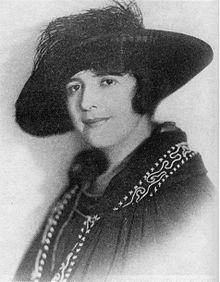
“A Lovecraft Postscript” (9 Jan 1944) by Philomena Hart

Winfield, do you ever think of Philomena Hart? She used to be so interested in H.P.L. and many’s the letters we exchanged…re: him. I always had the greatest of respect for BOTH the Harts … B.K.H. was HPL’s good friend. (By mail, at least. HPL used to adore BKH’s column.)
—Muriel E. Eddy to Winfield Townley Scott, 23 Sep 1947, Brown Digital Repository

Mary Philomena Hart (née Kelly) (1894-1944), journalist and book reviewer, was the wife of Bertrand K. Hart (1892-1941), who for many years was the literary editor of the Providence Journal. Betrand Hart had a long-running article series titled “The Sideshow,” known colloquially in Providence as “bekes” according to H. P. Lovecraft, because he would sign each article “B. K. H.” Sideshow articles tended to be relaxed, positive, and centered on small affairs local to Providence and Massachusetts (where the Harts made their home).

H.P.L. and B.K.H. became friends by mail. In 1929, “The Sideshow” had a discussion about the weirdest tales, and Lovecraft couldn’t resist writing in. Letters went back and forth, and excerpts from some of them ended up in “The Sideshow”; these are all reproduced in Miscellaneous Letters. Following B.K.H.’s death in 1941, his widow Philomena edited a collection of these columns into book form, published as The Sideshow of B. K. Hart (1941).

She didn’t stop there.

It is the business of the living to keep on living, and so Philomena Hart continued her own column in the Providence Journal. On 9 January 1944, a few months before her own death, she published an article on H. P. L. and B. K. H.:

A Lovecraft Postscript Based on Barnes Street Letters.—The Providence Poe and His Decade of Mail to “The Sideshow”

Of all the fascinating mail which made its way through the years to the desk of “The Sideshow” there was nothing more exciting than the frequent postcards and letters that carried the initials, “H. P. L.” Winfield Scott and I talked at length about them when he was preparing his rewarding paper on Mr. Lovecraft for the Book Page a fortnight ago. They were written in tiny, clear script, their message was always pertinent to something that had appeared in B. K. H.’s column and usually they dealt with the eldritch, the supernatural, the oblique.

Mr. Lovecraft hoped one day to compile an anthology of horror-tales meeting his own exact requirements. “I fight shy,” he wrote in a long letter on the theme, “of tales dependent on a trick ending. Best horror dwells in atmosphere—even in language itself—and not in obviously stage-managed denouments and literary cap-pistol shots.” Once he wrote for B. K. H. a Providence ghost story of such eerie wonder that speaking of it the next morning in the Journal B. K. H. said “Personally I congratulate him up on the dark spirits he has evoked in Thomas Street but I shall not be happy until joining league with wraiths and ghouls I have plumped down at least one large and abiding ghost by way of reprisal upon his own doorstep on Barnes Street. I think I shall teach it to moan in a minor dissonance every morning at three o’clock sharp with a clanking of chains.

* * *

Only a couple of days later came Mr. Lovecraft’s answer to this threat in the form of a sonnet dedicated to B. K. H.

“The Thing, he said, would come that night at three
From the old churchyard on the hill below.
And, crouching by an oak-fire’s wholesome glow
I tried to tell myself it could not be.
Surely, I mused, it was a pleasantry
Devised by one who did not truly know
The Elder Sign bequeathed from long ago
That sets the trailing forms of darkness free.
He had not meant it—no—but still I lit
Another lamp as starry Leo climbed
Out of the Seekonk and a steeple chimed
THREE—and the firelight faded bit by bit—
Then at the door that cautious rattling came
And the mad truth devoured me like a flame.”

* * *

It was an oddly enduring friendship, that of B. K. H. and Lovecraft, for they met only through correspondence. There was never through the years even a telephone conversation though they must have often been at shouting distance from one another. Sometimes there would be post-cards nearly every day, occasionally two long arresting letters in one week coming from Barnes Street, then when matters discussed in “The Sideshow” were out of the range of Mr. Lovecraft’s particular interests there would be a spell of silence. Then suddenly some allusion in the column, some provocative line would start the welcome flood in motion again.

B. K. H. always valued Lovecraft highly, always felt that one day our Providence Poe would meet the recognition he so richly deserved. B. K. H. would have been delighted indeed that the present literary editor of the Journal saw fit to devote an article to the personality and the writings of H. P. Lovecraft.

The correspondence did not last a decade; Lovecraft was only at 10 Barnes Street from 1926-1933, when he moved to 66 College Street, and the last “Sideshow” to mention Lovecraft was published in 1931. The excerpts from Lovecraft’s letters, and the poem “The Messenger,” are all borrowed from B. K. H.’s columns.

Winfield Townley Scott, the literary editor of the Providence Journal, had published “The Case of Howard Phillips Lovecraft of Providence, R. I.” on 26 Dec 1943, an extensive review of the first two volumes of Lovecraft’s fiction from Arkham House, The Outsider and Others (1939) and Beyond the Wall of Sleep (1943). Scott would go on to write the first extensive biographical treatment of H.P.L.: “His Own Most Fantastic Creation: Howard Phillips Lovecraft” (1944).

It is always the unexpected that jars loose old memories, and sometimes sets one to sit down and write it out before they are forgotten again. So it seems to have been with Philomena Hart, who recalled happier days when her husband was still alive, and strange letters and postcards would come in the mail to brighten their life.


Bobby Derie is the author of Weird Talers: Essays on Robert E. Howard and Others and Sex and the Cthulhu Mythos.

Deep Cuts in a Lovecraftian Vein uses Amazon Associate links. As an Amazon Associate I earn from qualifying purchases.
“Mrs. Hinckley’s Providence” (4 Jun 1967) by Anita W. Hinckley

While going through the letters from Muriel E. Eddy to August Derleth, one passage caught my eye:

Dear August Derleth,

The moment I saw this article I knew I had to send it to you! Her memories of H. P. L. do not coincide with ours—neighter of us remember that H. P. L. wore a black cloak (shades of Dracula!) or a wide-brimmed hat! Also, that he sat often in the railway station. (Only when he was about to meet one of his literary friends!)

—Muriel E. Eddy to August Derleth, 4 Jun 1967, MSS. Wisconsin Historical Society

The brief description was unfamiliar; I knew of no such published account of Lovecraft. The enclosure did not survive in the file, however Muriel often sent Derleth clippings from local papers. An online search quickly located the article she discussed: “Mrs. Hinckley’s Providence,” which ran in the 4 Jun 1967 issue of the Providence Sunday Journal. Running for six pages (with ads and photographs), this article consists of a slightly rambling memoir of Rhode Island native Anita Wheelwright Hinckley (1884-1972), who wrote a number of memoirs of Rhode Island, including Wickford Memories (1972).

Lovecraft fans will note many familiar street names as Mrs. Hinckley reflects on the changes that the city went through over the course of her life, including Angell St. and Benefit St. She was most definitely familiar with the same geography of where Lovecraft lived and worked, and reference to the Providence Art Club suggests their families probably moved within the same general social circles.

But what did Mrs. Hinckley have to say about Lovecraft?

Before I forget it I want to write about Mr. Lovecraft. He was an unusual person, medium height, always dressed in black, with a cape coat and a wide-brimmed hat winter and summer. He wrote gruesome stories rather like Edgar Allan Poe, and some charming poetry.

Dorothy Walter, a member of our Short Story Club, said Mr. Lovecraft used to call on her when she was young. About 20 years ago a stranger came from Baltimore and asked Miss Walter and me many questions. I only remember that my father knew Mr. Lovecraft and always spoke to him. When we came from Wickford to go to school, Mr. Lovecraft was usually sitting in the Providence railway station, probably because it was nice and warm there.

It isn’t clear when Mrs. Hinckley saw H. P. Lovecraft. The 1910 Federal Census has her living in North Kingston, Rhode Island; but that same year she married Frank Hinckley of Providence, and their first child was born there in 1911. On the face of it, Mrs. Hinckley’s residence in Providence seems to have covered most of Lovecraft’s adult life. Yet the recollection “When we came from Wickford to go to school” recalls one of her other memoirs:

One day a week [George Cranston] would go to Providence to replenish his stock. He went on the early train, the one we children took to go to school spring and fall, and the one my father always took as long as we lived in Wickford. Winters, when the weather was bad, we had governesses and studied at home.
—Anita W. Hinckley, “Wickford Tales” (1965)

This suggests that a school-age Hinckley saw Lovecraft at the train station in Providence sometime in the 1890s or early 1900s (her father died in 1906, and she would have graduated high school in 1902). The problem is that Hinckley is older than Lovecraft; unless she saw him hanging out at the train station when he was 10-12, it seems unlikely.

When comparing Mrs. Hinckley’s account, written thirty years after Lovecraft was in his grave and probably at least 60 years after she saw him, we can confirm very little and might wonder at the accuracy of her memory. Lovecraft wasn’t known to go about in a cape coat and wide-brimmed hat, though a 1905 photograph does show Lovecraft in a dark coat and hat, so it isn’t improbable that he could have been wearing something similar.

Dorothy C. Walter (1889-1967) was the author of “Lovecraft and Benefit Street,” which appeared in The Ghost and Rhode Island on Lovecraft (1945), and “Three Hours with Lovecraft” in The Shuttered Room and Other Pieces (1959). Walter doesn’t mention Hinckley in those pieces, but there’s not necessarily any reason why she would. Nor is there any mention in Lovecraft’s letters of David Sherman Baker (1852-1906), whom Mrs. Hinckley claims knew Lovecraft—but, then again, since Mr. Baker died when HPL was only 16, before we have many letters, that might be understandable. The inquisitive stranger might have been science fiction fan and Lovecraft scholar George T. Wetzel (1921-1983) of Baltimore, although the description is scanty.

Ultimately, there is very little we can confirm from Mrs. Hinckley’s brief memoir. Yet there is no reason to think it is a deliberately false or exaggerated account, as with “The Ten-Cent Ivory Tower” (1946) by John Wilstach. While Mrs. Hinckley may not have had much insight to give on Lovecraft’s life, tidbits like this are an example of the little invisible connections and influences that folks have on each other all the time.


Bobby Derie is the author of Weird Talers: Essays on Robert E. Howard and Others and Sex and the Cthulhu Mythos.

Deep Cuts in a Lovecraftian Vein uses Amazon Associate links. As an Amazon Associate I earn from qualifying purchases.
Two Hearts That Beat As One (2024) by Sonia H. Davis & Monica Wasserman (ed.)

In the small village of Itchno, which is on the outskirts of the town of Konotop, in the small Province of Chernigov, on the cold and wintry night of March 16, 1883, with the temperature several degrees below zero, an infant girl was born.
—Sonia H. Davis, Two Hearts That Beat As One (2024) 1

In February 2022, when the Russian Federation invaded Ukraine, I noted the news as the invaders moved through Konotop, the birthplace of Sonia H. Davis, who had once been Sonia H. Lovecraft. In 2019, when I prepared my notes for a panel at NecronomiCon on Lovecraft’s ex-wife, I had wondered if there were any records of her early life still there in the city. As the Russians overran the city, any hope I had of some original documents about Sonia or her family surviving to fill in the gaps in her early life faded.

It was mid-October 2022 when I got in touch with Monica Wasserman (The Papers of Sonia H. Davis), and to my surprise found there were better sources closer at hand than Konotop. We shared a common interest in the former Sonia H. Greene, who had become Mrs. Lovecraft. However, Monica’s dedication to the subject far outstripped mine. Her considerable research on Sonia’s life included access to the papers of Sonia and her third husband at Brown University, tracking down some of Sonia’s books and the extremely scarce second issue of The Rainbow, and scouring newspaper archives and genealogical databases. She even managed to access photographs of Sonia that had never been published, and contacted Sonia’s living relatives for family lore.

My own research was more modest, though complementary: while Monica had focused on her subject, I’d been focused on everything else around Sonia. I had been meticulously reading H. P. Lovecraft’s letters for references to Sonia, and had obtained access to other correspondence from or related to Sonia in various archives. Monica had unearthed the goods: I could offer a bit of context and insight from the Lovecraftian side of things. When Monica followed through on her project of actually publishing Sonia’s autobiography, unearthed from the archive and supplemented by additional autobiographical materials like The Private Life of H. P. Lovecraft (1985) by Sonia H. Davis, she was very gracious in allowing me to be a beta reader and to comment on it before publication. Because a few of my suggestions found their way into the final product, I’m listed as a contributor.

Which is a very long way to say, I’m biased when it comes to Two Hearts That Beat As One.

Most readers come to Sonia H. Davis as an adjunct to their interest in her second husband, H. P. Lovecraft. Her memoirs of their marriage shed light on a critical period of Lovecraft’s life, and fans and scholars alike sought her out for what she could give them about him. Yet that interest never manifested in any profitable form. Lovecraftian scholarship and publishing in the 1930s-early 1970s was almost entirely a small-scale endeavor, dominated by amateurs and small presses like Arkham House that sometimes seemed more labors of love than businesses that could produce actual revenue. There was no major biography of Lovecraft released during Sonia’s lifetime, though every major biography since has depended at least in part on her memoirs.

Pretty much no one seemed interested in Sonia’s own story. Until Monica Wasserman, that is.

Sonia’s autobiographical manuscript is, first and foremost, the story of her life. Born to Jewish parents in Ukraine (then a part of the Russian Empire), the loss of her father, her travels to the United Kingdom and then the United States, the new family her mother made, her need to work at a young age, marry at a young age, to become a mother, a successful businesswoman, an amateur journalist…long before she met Lovecraft, Sonia lived a life worth telling about. Her story is the story of many immigrants that came to the United States, living by her wits and the sweat of her brow, striving for education to better herself, dreaming of her own business and financial freedom, and yes, even of love.

While Sonia is very honest in her autobiography, there are things she doesn’t talk about very much. This is where Monica added footnotes, stitched-in material from The Private Life of H. P. Lovecraft and other autobiographical writings, to fill in some of the gaps. The result is more complete than just the individual works by themselves would be; the formatting by Helios is carefully done so it is easy to see at a glance when another text is “pasted-in,” and perhaps most importantly, in a way that preserves the intent of the book:

To tell Sonia’s story in her own words.

To appreciate Monica’s work, it is important to realize that Sonia desperately needed an editor. While some of her autobiographical writings proceed in a fairly linear manner, she had a tendency to hop around in time, or to put down sudden thoughts and recollections as they occurred to her, and there is much that might be forgotten (or omitted) when writing for a general audience decades later. We see little of her daughter, Florence Carol Greene, who grew up to be the journalist Carol Welde, for example, though we know their relationship was fraught and eventually irrevocably sundered. Endings seemed to be particularly difficult for Sonia; she struggled to wrap things up. The raw manuscripts aren’t unreadable, but they benefit immensely from someone taking the time and care to put them in order and to clarify a few obtuse points with cogent endnotes.

Monica put in the work so that the reader can access Sonia’s story more easily.

Two Hearts That Beat As One is, as of the moment it saw print, the definitive text on Sonia’s life. In a format accessible to both scholars and casual readers, it provides a unique glimpse into the life of a woman who suffered, strove, and finally achieved much of what she hoped for—love, a degree of economic comfort, and purpose—with her third husband, Nathaniel Davis. In time, old age would take this all away. All lives end, and the last chapters are rarely pleasant. Here, at last, Sonia is the star and subject of her own story, not a brief and shadowy chapter in H. P. Lovecraft’s.

After a successful crowdfunding campaign, Two Hearts That Beat As One is available both as a standard edition and a collector’s edition (with handsome slipcase). Helios House has made a beautiful, well-laid out project that does great service to Sonia’s text and Monica’s scholarship and hard work bringing this project together.


Bobby Derie is the author of Weird Talers: Essays on Robert E. Howard and Others and Sex and the Cthulhu Mythos.

Deep Cuts in a Lovecraftian Vein uses Amazon Associate links. As an Amazon Associate I earn from qualifying purchases.
“Hyborian Africa” (1980) & “To Kush and Beyond: The Black Kingdoms of the Hyborian Age” (1980) by Charles R. Saunders

South of Stygia are the vast black kingdoms of the Amazons, the Kushites, the Atlaians and the hybrid empire of Zembabwe.
—Robert E. Howard, “The Hyborian Age”

The Hyborian Age of Conan the Cimmerian was no mythical white space, occupied only by pale Caucasians. In formulating the adventures of the Cimmerian, Robert E. Howard drew on everything he knew: Conan’s travels encompass not just a fantasy geography, but chronologies and genres. The barbarian might find himself leading a battle of European-style medieval knights; on the deck of a ship whose pirates could have stepped out of Robert Louis Stevenson’s Treasure Island; in a frontier wilderness fort reminiscent of pioneer Texas; in a stone temple that might have stood in some fantastic vision of ancient Egypt—and in a fantasy equivalent of Africa, populated by Black people, who were to Conan’s friends, allies, enemies, and lovers.

The Conan stories, while fantasy and aimed at Weird Tales, grew out of Howard’s love for history and adventure fiction, and writing historical adventure stories for magazines like Oriental Stories. The conceit of the Hyborian Age is that by setting it before any known period, Howard had a free hand to invent details that would otherwise trip him up if trying to write a realistic historical yarn.

For pulps like Adventure, accuracy was paramount; the magazine prided itself on publishing stories from people who knew their subject, who had gone out and lived in exotic lands, and returned to tell the tale. To that end, Adventure invited readers to write in with their questions, for Adventure’s stable of writers to answer. In September 2024, scholar Patrice Louinet came across a letter printed in a copy of Adventure (30 December 1923):

White Man and Native of West Africa

HAUSAS—trading-factory terms—marriage ceremonies and customs:

Question:—”I am writing to get some information in regard to the customs, habits, etc., of the natives of that part of Africa which is included in your section in ‘Ask Adventure.’

  1. Are the natives of a war-like stock? That is, did they come from a fighting race?
  2. How much authority does the superintendent of a trading-post possess?
  3. Do the whites interfere with the natives in dealing with native criminals?
  4. What are some of the punishments of native wrong-doers by the whites? By the natives themselves?
  5. What are some marriage customs among the natives? Am I right in supposing a native has full power to punish his wife in any way he pleases?
  6. Have the morals of the African natives been raised by the rule of the white men or have they decreased in standard?
  7. Is the ceremony of Mumbo-Jumbo—or something of some name like that—for the correcting of disobedient women used in that part of Africa? If so, how is it carried out?
  8. What is the customary costume of the natives?

I apologize for asking so many questions, but I am very much interested in Africa. If by any chance this letter should be published in Adventure, please do not print my name.”
—R.E.H., Cross Plains, Texas.
Text from REH.world.

This would be Robert E. Howard of Cross Plains, Texas—and if the questions of a 17-year-old boy seem somewhat ignorant, it must be remembered that knowledge of Africa was by no means widespread in the rural United States during the 1920s and 30s. For many years and even decades to come, Africa would be the metaphorical “dark continent,” whose peoples, geography, and history were intermixed with fantasy, racism, and plain ignorance. Howard’s questions were honest ones, and it is to his credit that he sought out answers instead of immediately falling back to stereotypes and fantasy when he wrote his first few African stories.

The Conan boom in the 1960s and 70s brought with it not just an increased admiration for Robert E. Howard as a writer and Conan the Cimmerian as a character, but new criticism and new sensibilities. As Marvel Comics adapted Howard’s character and stories to a new medium, they had to face the reality that this was a new world: the Civil Rights movement had won victories with the decision in Brown vs. the Board of Education (1954) and the passage of the Civil Rights Act of 1964. Black Pride and other movements raised awareness of the roots of the African diaspora in the United States and surrounding countries.

Adaption to this new reality was, at first, slow. “The Vale of Lost Women”(1967) by Robert E. Howard is one example of how 1930s stereotypes and prejudice found an unwelcome audience in the 1960s and 70s, and how later writers and artists worked to make this work acceptable to a contemporary audience of all races. Not every creator was so conscientious; in 1975, Black fan Charles R. Saunders wrote “Die Black Dog! A Look At Racism in Fantasy Literature.” While it was one thing for something Robert E. Howard, who died in 1936 and never lived to see the changes in US society, to rely on racial stereotypes the essay specifically called out latter-day creators of Conan pastiche for continuing to use such lazy and biased storytelling nearly four decades later.

Just because Charles R. Saunders called out writers of heroic fantasy doesn’t mean he stepped away from the genre; quite the opposite. In 1980, Saunders published two related essays: “Hyborian Africa” was published in the fanzine Paragon #1 (May 1980), and “To Kush and Beyond: The Black Kingdoms of the Hyborian Age” was published in Savage Sword of Conan #56 (Sep 1980). Both essays deal with similar subject matter: an exploration of the “Black Kingdoms” mentioned in Howard’s essay “The Hyborian Age,” references to which are sprinkled throughout Conan’s adventures. However, the purpose and approach of each essay is different.

The historical derivation of the lands south of Stygia, the Black Kingdoms, are less obvious. Nonetheless, a look at any reference work on African history quickly exposes Howard’s inspirations for the names of some of his Black Kingdoms, if not their cultural backgrounds [.] Kush, Punt, Darfar, Zembabwei and Amazon are names as familiar to African scholars as those of Poland, France, Spain and Italy are to students of the European past.
—Charles R. Saunders, “Hyborian Africa,” Paragon #1 (1980), 27

“Hyborian Africa” looks at the historical sources and inspiration behind Howard’s stories. Given that this was a fanzine and that Howard studies was in its infancy, the usual apparatus of scholarly writing is neither present nor expected: no footnotes, no bibliography. However, Saunders’ care in the article is evident. He addresses only the stories written by Robert E. Howard, not later pastiches or derivative material from the Marvel comic books. It is brief, at only a little over two pages, but the history offered is largely accurate…and if Saunders criticizes some of Howard’s depictions of these fantasy versions of African kingdoms, he also offers a parting observation:

Although Howard’s depictions of Hyborian Age blacks consisted primarily of stock racist stereotypes, he did do more research into African history than such contemporaries as Edgar Rice Burroughs. Even today, the mention of the wor[d] “Kush’ would draw only blank stares from most people. With the exception of Darfar, Howard’s historical foundations for his Black Kingdoms were as solid as those of the rest of Conan’s world. And this is to his credit.
—Charles R. Saunders, “Hyborian Africa,” Paragon #1 (1980), 29

“To Kush and Beyond: The Black Kingdoms of the Hyborian Age” was published as a literary exploration of the Black Kingdoms as they appear in the broader Conan mythology, which includes not just Howard’s stories but also stories that were completed or re-written by L. Sprague de Camp and Lin Carter like “Hawks over Shem,” “The Snout in the Dark,” and “The City of Skulls.” In adapting Conan stories to comics, Marvel had included some of de Camp and Carter’s creations, including Conan’s ally Juma the Kushite, and so Saunders incorporates that lore into his survey of the Black Kingdoms of the Hyborian Age. Saunders’ work provided an explanation and codification of lore on the world of Conan that both readers and writers could reference.

Being published in a comics magazine, Saunders’ essay was illustrated by Conan artists John Buscema and Gene Day, and being of a scholarly character includes a page of endnote citations, for a total of 7 pages. Saunders’ interest in African history is still present, though less explicit. In the closing paragraph, for example, he writes:

The cataclysm that formed the outlinees of the modern world separated the land south of the River Styx from the rest of the world, and raised up from the sea the entire west coast of what is now Africa. Much of the history and lore of the Black Kingdoms perished in the disaster—yet the Black Kingdoms did not truly die. Kush, Darfar and Punt rose again in historical times, and the West African Kingdom of Dahomey boasted a formidable corps of Amazon warriors. Like so many other nations and races, the African can trace their history “back into the mists of the forgotten Hyborian Age….”
—Charles R. Saunders, Savage Sword of Conan #56 (1980), 54

While the two essays have very different purposes, considered together gives the sense that Charles R. Saunders wasn’t just chronicling the lore of the Hyborian world and glossing it to make it fit. Saunders was studying the work of Howard and other writers to see how they used Black characters and African history in their stories, for good or for ill—and he used those lessons when he wrote his own fiction, the kind of heroic fantasy series that he wanted to read.

Saunders combined his interests in African history and heroic fantasy in his own fiction, including the Dossouye stories about fantasy warrior-women that were first published in the anthology Amazons! (1979), and the Nyumbani setting stories that feature his hero Imaro—who would star in Saunder’s first novel, Imaro (1981). These are the critical early stories of Sword & Soul (see Milton J. Davis’ A Sword and Soul Primer), and they represent a desire to look beyond what other people have written to what stories have not been written, that need to be written, and to write them.

“Hyborian Africa” has not been reprinted. “To Kush and Beyond” has been reprinted in the Savage Sword of Conan Omnibus vol. 4.


Bobby Derie is the author of Weird Talers: Essays on Robert E. Howard and Others and Sex and the Cthulhu Mythos.

Deep Cuts in a Lovecraftian Vein uses Amazon Associate links. As an Amazon Associate I earn from qualifying purchases.

Lettres d’Arkham (1975) by H. P. Lovecraft & François Rivière

H. P. Lovecraft appartient corps et âme à la grande familie des écrivains puritans de Nouvelle-Angleterre.

Névropathe exemplaire, il vécut à Providence—Arkham pour tes initiés—une existence tout entière vouée à l’exorcisme des démons de son imaginaire.

D’où l’œuvre fantastique que l’on sait.

Sa correspondance participle de façon à la fois ironique et passionnée à ce douloureux mais aussi fascinant combat : pour la première fois, les lecteurs français sont à même de pénetrer dans le labyrinthe le plus intime du créateur magique de Démons et merveilles et di La coouleur tombée du ciel.

Ces Lettres d’Arkham les y invitent…
H. P. Lovecraft belongs body and soul to the great family of New England Puritan writers.

Exemplary neurotic, he lived in Providence—Arkham for the initiates—a life entirely devoted to exorcising the demons of his imagination.

Hence the fantastic work we all know.

His correspondence is an ironic and passionate contribution to this painful but fascinating struggle: for the first time, French readers are able to penetrate the most intimate labyrinth of the magical creator of Démons et merveilles and La coouleur tombée du ciel.

These Letters from Arkham invite them to do so…
Back cover copyEnglish translation

French audiences may have been aware of H. P. Lovecraft as early as the 1930s, when English-language books and periodicals made it to European shores; Jacques Bergier even claimed to have carried on a brief correspondence with Lovecraft, and he certainly had two letters published in the pages of Weird Tales despite living in France at the time.

Lovecraft’s major introduction to French audiences came in the 1950s with collections like La couleur tombée du ciel (“The Color from the sky”/”The Colour Out of Space”) [1954, Denoël], and Démons et merveilles (“Demons and Marvels”) [1955, Deux Rives] that translated Lovecraft’s prose into French. Both of included introductions from Bergier, who provided many readers with their first insight into Lovecraft himself—who he was, and where he came from. Both books went through many reprints and editions.

In 1964, Arkham House published the first volume of Lovecraft’s Selected Letters. This project had begun shortly after Lovecraft’s death in 1937, as August Derleth and Donald Wandrei had begun contacting Lovecraft’s correspondents and requesting letters to transcribe for future publication. The scope and cost of the project soon made actual publication of the Arkham House Transcripts—at least in their entirety—impractical; war time paper rationing and rising post-war costs delayed the project further. The first three volumes, released under the editorship of Derleth and Wandrei, represent a compromise to their original vision—but also a tremendous effort, and one nearly unique.

Lovecraft had died broke and was far from a popular or mainstream author; the publication of his letters not only kick-started real Lovecraft biographical scholarship and literary criticism, but it helped center Lovecraft himself as an individual worth reading. More of Lovecraft’s letters would be published than those of Ernest Hemingway, Dashiell Hammett, or dozens of other much more popular authors.

Of course the French had to get in on the action.

Early translations of Lovecraft’s letters into French began piecemeal, in literary and fan periodicals; the biography is a bit opaque to English-language readers living in the United States, but a special issue of L’Herne dedicated to Lovecraft in 1969 stands out for translating a few letters, amid a mass of literary and biographical material that marks the first major critical publication on Lovecraft in any language. The 1970s in France would see growing interest in Lovecraft, especially in the field of Franco-Belgian comics; the contributors of Metal Hurlant (“Howling Metal,” translated into English markets as Heavy Metal magazine), which began in 1974, was founded by Jean Giraud (Mœbius) and Philippe Druillet, both of whom would go on to fame…and through Metal Hurlant, many graphic adaptations of Lovecraft’s stories, and stories inspired by Lovecraft and his creations, would be published in the pages of Metal Hurlant and Heavy Metal, to audiences around the world.

Lettres d’Arkham (1975, Jacques Glénat), translated by François Rivière, is a slim booklet of 80 pages, counting all the introductory material. The cover is by Mœbius, and plays to Lovecraft’s legend: seated at a table, writing with a quill pen, a row of antique volumes behind him, against a starry landscape, a tail or tentacle discreetly emerging from beneath the table cloth.

Jacques Glénat had founded Glénat Éditions in 1972; it is now a major publisher of bandes dessinées, and also publishes French translations of manga and nonfiction periodicals. But this was early days, and Lettres d’Arkham was the second entry in a series titled Marginalia; the first was a reprint of Les clefs mystérieuses (“The Mysterious Keys”) by Maurice Leblanc, the creator of Arsène Lupin. This was apparently an experiment in shorter-form material, mostly fiction reprints, with Rivière as overall editor of the series. Lettres d’Arkham appears to be the sole non-fiction entry.

Given the short format, Yves Rivière apparently opted against trying to translate entire letters. Instead, after a brief initial essay (“Lovecraft, un cauchemar Américan”/”Lovecraft, an American nightmare”) and chronology of his life, Rivière presents a series of excerpts from the first two volumes of the Selected Letters, divided into individual topics.

The initial letters, reminiscent of illuminated manuscripts, were created by the artist Floc’h (Jean-Claude Floch), who would become known for his many collaborations with François Rivière.

Most of the translations don’t specify date or even the recipient of the letter, so from a scholastic viewpoint Lettres d’Arkham wasn’t ideal—but translating one of Lovecraft’s letters is more difficult than translating one of his stories or poems. There is no guiding narrative, the letters are full of quirky language, obscure topical and geographic references, callbacks to previous correspondence. Even though Derleth and Wandrei had already edited and censored Lovecraft’s letters to give the excerpts in the Selected Letters volumes better readability (and to remove or downplay some of Lovecraft’s more racist sentiments), Rivière was trying to translate some pretty tricky material for an entirely new audience.

Generally speaking, Rivière seems to have done a pretty decent job of the translations. The most egregious errors are (and this might be expected), geographical. For example, the entry for Salem places it in New York instead of Massachusetts. Still, for a Lovecraft fan in 1970s France, how else were you going to read any of Lovecraft’s letters at all?

For francophone readers, that is still an issue. The vast majority of Lovecraft’s letters have never been translated into French, and might never be (one can only imagine the difficulty of trying to translate some of Lovecraft’s slang-filled letters or stream-of-consciousness sections into French). Some further attempts have been made to present a part of Lovecraft’s correspondence to a French audiences: in 1978 there was Lettres Tome 1 (1914-1936), translated by Jacques Parson, for example, but there was no Lettres 2 forthcoming. Several other collections of part of Lovecraft’s letters have been published, especially in recent years, much of the correspondence from Lovecraft’s later years, and with friends like Clark Ashton Smith, August Derleth, C. L. Moore, Fritz Leiber, E. Hoffmann Price, and Robert E. Howard, remains untranslated.

There are people working on that last one, however. A translation of the correspondence of Robert E. Howard and H. P. Lovecraft into French by David Camus and Patrice Louinet was successfully crowdfunded, and although health issues have delayed the project, it still looks fantastic.

It has to be emphasized what a labor of love translation is; it is never simply a matter of translating word-for-word, but always trying to capture the essence of what is being communicated. English-language readers have an advantage over the French in that we have practically every word that Lovecraft has written published, but as he wrote them; French readers and scholars face not only a limited amount of such material, but have to deal with multiple translations of those same stories and letters in various formats.

Considering that the whole of Arkham House’s Selected Letters has never been translated, much less any of the later, more complete volumes of letters by Necronomicon Press or Hippocampus Press, Lettres d’Arkham remained relevant in France long past the point where most Lovecraft scholarship had superseded the Arkham House Selected Letters.


Bobby Derie is the author of Weird Talers: Essays on Robert E. Howard & Others (2019) and Sex and the Cthulhu Mythos (2014).

Unfinished Autobiography Fragment (1982) by C. L. Moore

There is no full biography of C. L. Moore.

This may seem a little weird, considering how immensely popular C. L. Moore and her fiction were during the heyday of Weird Tales. After her marriage to fellow writer Henry Kuttner in 1940, Moore’s profile dips—not because she was writing less, but because much of their shared output was published either under Kuttner’s name, or one of their shared pseudonyms such as Lewis Padgett. Her writing career shifted as she began to write for television in the 50s. After Henry Kuttner’s death in 1958, she remarried again to Thomas Reggie, and her writing career largely ceased, though publications of her previous work, and the occasional foreword or introduction, continued.

The last years of her life are a bit murky. Biographical focus has always been on her working years, and the fiction she wrote, the romance of her first marriage. Awareness of her work, and the degree of her collaboration with Kuttner, grew by leaps and bounds among fans, and in 1981 she won the World Fantasy Award for lifetime achievement, and was nominated for the Gandalf Grand Master award (the only woman to ever be so nominated). Yet Catherine withdrew from conventions and meetings; her interactions with friends and fandom dwindled, ceased giving interviews. Alzheimer’s disease was the diagnosis. She died in 1987.

This is not to say that no biographical materials exist for C. L. Moore. “An Autobiographical Sketch of C. L. Moore” was published in the May 1936 issue of Fantasy Magazine. Various reference works have given the raw data of at least a part of her life, including:

  • “Genius to Order” by Damon Knight in In Search of Wonder (1956)
  • “C. L. Moore: Catherine the Great” by Sam Moskowitz in Amazing (Aug 1962), which was reworked into a chapter of Seekers of Tomorrow (1966)
  • “Modern Masters of Science Fiction: 12: Henry Kuttner and C. L. Moore” by William Gillings in Science Fiction Monthly (Jun 1975)
  • “Henry Kuttner, C.L. Moore, Lewis Padgett et al.” by J. Gunn in Voices for the Future: Essays on major science fiction writers, vol. 1 (1976)
  • Moore’s entry in The Encyclopedia of Science Fiction and Fantasy, M-Z (1978)
  • “C. L. Moore and Henry Kuttner” by Frederick Shoyer in Science Fiction Writers (1982)
  • Moore’s entry in Contemporary Writers vol. 104 (1982), which includes a long interview by Jean W. Ross
  • “C. L. Moore” by Russell Letson in Supernatural Fiction Writers Fantasy and Horror vol. 2 (1985)
  • Moore’s entry in the Encyclopedia of Pulp Writers (2002) by Lee Server
  • Moore’s entry in Fifty Key Figures in Science Fiction (2009) by Brian Attebery

Among many other entries. Most of these are very outdated; some get facts wrong, most don’t cite their sources as well as they might be hoped to. A full picture of C. L. Moore’s life and work simply hasn’t been put together at this time. Other secondary sources tend to be scattered; works like C. L. Moore and Henry Kuttner: A Working Bibliography (1989) by Virgil Utter are convenient, but a good deal of bibliographical work has shifted to online sources like ISFDB.org and philsp.com…and while those sites may be useful, they are rarely complete or completely accurate. Critical literature about Moore’s fiction is more robust, especially that focused on her position as a woman science fiction writer, though her work is so mixed with Kuttner that no truly comprehensive assessment has ever been attempted.

Which isn’t to say there isn’t ample material for a fuller biography.

A handful of interviews conducted during Moore’s lifetime have seen print; there are some biographical snippets in her introductions and afterwords to various books; letters to and from H. P. Lovecraft and Robert E. Howard have been published, and among the unpublished letters known to survive a cache of correspondence from C. L. Moore at Brown University. Memoirs lurk in odd places; E. Hoffmann Price included reminiscences of C. L. Moore in his chapter on Henry Kuttner in his Book of the Dead. Fanzines [PDF], newspapers, and genealogical databases all contain useful and interesting information, including never-republished interviews [PDF] and letters to records of her marriages, details of her workplace, family data, etc. Letters to and from friends, editors, fans, and literary agents may yet linger in some archive, waiting to be re-discovered.

There is also the open question of what files or papers may yet survive, either in the possession of C. L. Moore’s heirs or collectors. When Frederick Shoyer wrote the entry on Moore and Kuttner for Science Fiction Writers, he quotes both from Henry Kuttner’s diary and from the “manuscript of [an] unfinished autobiography of Moore”:

Hank and I were hooked on the glorious feeling of having a story take the typewriter in its teeth and tearing off into the distance, we panting along trying to keep up—pages rolling up out of the typewriter and falling to the floor before we knew it was down to the bottom of the page. To be panting along behind a headstrong story like that is one of life’s major glories—a high better than drugs or drink. You summon it like a God to his altar, and He descends in his glory and inhabits the brain until the mind ceases to be a thing in itself and becomes part of a tremendous on-rushing stream. your only contribution being to hang in there and type fast enough to keep up.

Probably you have to train your mind to function this way, unconsciously of course, but it does trian itself because the reward is so glorious. When Hank finished a story, he felt at the time that it was not only the best he had ever written, but probably the best anyone had ever written. Re-reading usually brought second thoughts, but not always, sometimes it really was!

The glow of triumphant complacence can last for days. You have to let the story get cold before you re-read it critically, to catch the small errors which infest every rough first draft, the repetition, the unclear sentences, the spots that need cutting or expanding. As if the words which had come white hot from the crucivile were too hot from the creator to defile with one’s own crassly human alterations until the heavenly glow and heat had died out of them.

Science Fiction Writers 164

When was this written? Henry Kuttner is spoken of in the past tense, so sometime after his death in 1958, and probably before the decline of Alzheimer’s set in completely. Given the date, Shoyer may have gotten the materials from Moore herself; whether they still survive as part of her estate, or were lost with the passage of years, is unknown. All that was ever published was this fragment.

How nice it would be, to have more of C. L. Moore’s story in her own words.

For those involved with pulp studies, the fans and scholars of H. P. Lovecraft and Robert E. Howard are spoiled for choice when it comes to biographies and the raw materials. Many writers have assayed to capture their life, several publishers have worked hard to catalogue their writing, print and re-print their every word. Few other writers of the 1930s received anything like that attention; the full letters of Dashiell Hammet have never been published, for instance, and while you might find a biography of Walter B. Gibson (creator of The Shadow), there has never been a full biography of Seabury Quinn (creator of Jules de Grandin).

Most pulp authors linger in semi-obscurity; some are lost for good, remembered only by a few stories and bylines in crumbling pulp magazines. C. L. Moore has not suffered that fate—if anything, her star has been on the rise lately, with the Black God’s Kiss RPG and a new, authorized Jirel of Joiry story by Molly Tanzer for New Edge Sword & Sorcery magazine.

Perhaps someone will finally put all the pieces together and give a full biography of C. L. Moore. All the pieces are there.


Bobby Derie is the author of Weird Talers: Essays on Robert E. Howard and Others and Sex and the Cthulhu Mythos.

Deep Cuts in a Lovecraftian Vein uses Amazon Associate links. As an Amazon Associate I earn from qualifying purchases.
“The Ten-Cent Ivory Tower” (1946) by John Wilstach

[…] I happen to have published, as long ago as in the January, 1946, issue of Esquire, the first article about Lovecraft to appear in a general magazine. It was by John Wilstach, called “The Ten-Cent Ivory Tower,” and this is how it began:

“Enthusiasts for the work of Howard Phillips Lovecraft have become a literary cult. Highbrow critics pay tribute to him as a writer of horror tales. His devotees insist that his place is in a niche beside that of Edgar Allan Poe. Collectors scramble for his first editions. Yet, to one who has known literary booms and their nourishing, it is amazing that nothing has been done to acquaint the public with the personality of a man who was one of the most fantastic literary figures of modern times.”

Arnold Gingrich, “The greatest character H. P. Lovecraft ever created” in the Chicago Times, 2 Feb 1975

How do we know what we think we know about H. P. Lovecraft? Over the decades since Lovecraft’s death, many works have been published about Lovecraft—memoirs, recollections, biographies—and a great deal of his personal correspondence, autobiographical essays, and photographs. Diligent researchers have scoured archives for marriage certificates, wills, draft cards, city directories, and brief mentions in newspapers and amateur journals. The mass of data can be intimidating, difficult to sift through, and perhaps most especially interrogate.

When it comes to memoirs of Lovecraft, it can be especially difficult to sort out the veracity of various claims. Memories are tricky things, and can be skewed by age, distance, and emotion. Many of the recollections of Lovecraft contain matter which seems to be erroneous; not so much deliberately misleading as incomplete. Dates don’t line up, incidents don’t quite match with other accounts, and misunderstandings abound. These are typical problems in evaluating historical evidence…but there is an added wrinkle.

From the beginning, Lovecraft memoirs and biographies have been referential. So when W. Paul Cook wrote “In Memoriam: Howard Phillips Lovecraft—Recollections, Appreciations, Estimates” (1941), he included quotes from an amateur journalism piece on Lovecraft from 1919; when Winfield Townley Scott wrote the biographical essay “His Own Most Fantastic Creation” (1944), he drew material from Cook’s “In Memoriam”; when Sonia H. Davis wrote The Private Life of H. P. Lovecraft, she specifically spoke to several points in Cook’s memoir—and that’s one chain of references where the later author acknowledges drawing on the former. There are many works that borrow from other essays and memoirs on Lovecraft without acknowledgment so that you can have a number of works that have a superficial agreement—but might all be repeating the same legends and false information.

So how do you pick out fact from fiction in a Lovecraft memoir? Generally, the first task is to cross-reference the persons and events in the memoir with Lovecraft’s letters and, if possible, other sources to fix the dates and verify the contents as much as possible. There is a bit of a contradiction involved in this: if a memoir agreed 100% with all existing sources without any disagreement, it would be very easy to verify—but it wouldn’t be very useful, as there would be no information in there that wasn’t in other sources. What readers and scholars both like is new information, new data, some unique insight into Lovecraft’s life to add to our store of knowledge.

From this standpoint, “The Ten-Cent Ivory Tower” (1946) by John Wilstach seems at first promising: while Wilstach makes a number of errors about Lovecraft’s life and work (not uncommon in the memoirs), many details ring at least somewhat true (or at least familiar), and it contains some material not included anywhere else, including details of a meeting with Lovecraft and the gay poet Hart Crane in New York c.1925.

As background: John H. Wilstach (1890-1951) was a novelist and fairly prolific pulp-writer. He had some association with amateur journalism, publishing material in Driftwind and The Ghost, but he was mostly published in the Argosy, Top-Notch, and associated pulp magazines. His article “The Ten-Cent Ivory Tower” in Esquire was a very rare appearance in a “slick” magazine.

The first problem comes when trying to cross-reference dates and persons. Lovecraft and Crane did meet a couple of times, first in Cleveland in 1922 and later in New York City in 1924 and 1925. However, in no published letter does Lovecraft ever mention John Wilstach, nor is such a meeting with Crane and an unnamed third individual mentioned in Lovecraft’s diary for the period. For that matter, the published letters of Hart Crane, with their brief references to Lovecraft, don’t mention John Wilstach either. This individual, who claimed to be Lovecraft’s friend and to have met him several times in New York and Providence, RI, would appear to have fallen completely through the gaps in Lovecraft and Crane’s correspondence.

By itself, that might not be suspicious; Lovecraft’s correspondence for the New York period is not complete, and his meetings with Crane are not all well-recorded from either side. It is not inconceivable that there could be a meeting between Lovecraft, Crane, and a third man that both Lovecraft and Crane failed to record. In point of fact, there is another memoir that includes just such a meeting: Frank Belknap Long, Jr.’s “Some Random Memories of H. P. L.” published in Marginalia (1944), less than two years before Wilstach’s article. This brings us to the next problem.

Long’s memoir recounts a meeting between Lovecraft, Crane, Samuel Loveman, and himself on the street in New York in “the second year of [Lovecraft’s] New York phase”—Lovecraft had come to New York and married Sonia H. Greene at the beginning of March 1924, so the meeting would be post-March 1925. Long wrote:

Howard had never seemed more depressed—he was writing such lines as these: “My coming to New York had been a mistake; for whereas I had looked for poignant wonder and inspiration I found only a sense of horror and oppression. Instead of the poems I had hoped for there came only a shuddering blankness and ineffable loneliness.”

Frank Belknap Long, Jr., “Some Random Memories of H. P. L.” in Marginalia 335

The lines are part of the opening of Lovecraft’s story “He,” which was begun in August 1925, in general agreement with when Long says the meeting took place. In “The Ten-Cent Ivory Tower,” Wilstach wrote:

“Hart drew a battered manuscript from his pocket and I began reading:

“My coming to New York had been a mistake; for whereas I had looked for poignant wonder and inspiration in the teeming labyrinths of ancient streets…in the Cyclopean modern towers and pinnacles that rise blackly Babylonian under waning moons, I had found instead only a sense of horror and oppression which threatened to master, paralyze and annihilate me. . . .”

“Kinda turgid prose,” I waved my hand to stop him.

John Wilstach, “The Ten-Cent Ivory Tower” in Esquire Jan 1946, 83

What are the odds that Lovecraft and Hart Crane had not one but two otherwise unrecorded encounters, and that both of them would quote from the opening paragraphs to “He?” At this point, a scholar might be suspicious. Testing those suspicions would require comparing the content of “The Ten-Cent Ivory Tower” against the other sources available in 1946 when the piece was published. For the most part, this would mean Cook’s essay “In Memoriam” (1941), the first three Arkham House books regarding Lovecraft (The Outsider and Others (1939), Beyond the Wall of Sleep (1943), and Marginialia (1945)), the slim chapbook Rhode Island on Lovecraft (1945), August Derleth’s H. P. L.: A Memoir (1945), and some scattered essays, critical reviews, and articles, some of which were collected in Marginalia, such as the early version of Winfield Townley Scott’s biographical essay “His Own Most Fantastic Creation.” Crane’s letters mentioning Lovecraft would not be published until some years later.

As it turns out, most of the content in “The Ten-Cent Ivory Tower” could have been sourced directly from these existing sources; a copy of “In Memoriam” and Marginalia would have supplied nearly every “fact” (and much of the speculation) in Wilstach’s piece. Cook had not mentioned Hart Crane, but like Long he quoted from “He” to illustrate Lovecraft’s despair at the city he had come to detest. Wilstach acknowledged Cook in a way when he wrote:

W. Paul Cook tells me that Lovecraft made three poetry reputations with his rewrite method.

Unlike many Lovecraft enthusiasts, Cook insisted that, though his friend was a genius, one stout volume of stories, and another of letters, will provide his lasting work.

“Lovecraft has been compared to all the great masters of the macabre from Poet to James,” says Cook. “Only in spots can be found basis for comparison. A hint here and there of Poe—perhaps. A sign of Dunsany—possibly. Lovecraft identified his own influences as Dunsany, Poe, Arthur Machen, and Algernon Blackwood, rather than to Montague Rhode James. If we mention Machen and Blackwood we have about exhausted any color he may have unconsciously acquired from others. Since his advent, weird fiction has owed more to Lovecraft than Lovecraft owed to all the body of preceding writers.

“A friend once suggested the he stimulate dreams by means of drugs. Lovecraft exclaimed that if drugs would give him any worse dreams than he experienced without them, he would go mad. His dreams were his own It is unfair to call him equal to Poe, greater than Poe, or lacking in certain Poe qualities. Better, consider him as standing alone.”

That standing alone, for our friend, sounds very fair. And to judge him at all one must judge him as a writer, since he never was anything else. He never held any kind of a job, nor had the slightest inclination for any sport.

John Wilstach, “The Ten-Cent Ivory Tower” in Esquire Jan 1946, 160, 162

There is a bit of disingenuousness to this: while Wilstach is portraying this as something Cook told him personally, he is actually quoting directly from “In Memoriam” in the two middle paragraphs, and paraphrasing from there elsewhere. However, Cook and Wilstach were actually acquainted: Wilstach has an article in Cook’s amateur journals The Ghost #3 (May 1945) and #5 (Jul 1947). While neither article is about Lovecraft, their very presence confirms that the two men must have shared at least a correspondence. It’s not too much of a stretch to imagine that Cook himself was the source of the copy of “In Memoriam” that Wilstach must have had when writing “The Ten-Cent Ivory Tower.”

If a reader were to subtract from Wilstach’s memoir all the material that was directly attributable to Cook or a copy of Marginalia, the remaining details are few and rather weak. For example:

I learned that he had worked and roamed all night, slept since dawn, and had just breakfasted upon an orange.

John Wilstach, “The Ten-Cent Ivory Tower” in Esquire Jan 1946, 83

Lovecraft walking the streets of New York late at night, returning early in the morning, and sleeping late into the day are all believable; many letters support this behavior, and Cook and others commented on it. However, Lovecraft breaking his fast on an orange is unusual. While there are references to him consuming grapefruit when in Florida, citrus does not appear to have been a regular part of Lovecraft’s diet. One letter from his New York period shows how rare a treat fruit was to him:

[Sonia H. Lovecraft] left a lot of provisions here last week, including a lemon—so tonight I have been emulating W. V. Phillips in his vespertine glass of the citrick beverage.

H. P. Lovecraft to Lillian D. Clark, 22 Oct 1925, Letters to Family & Family Friends 1.457

Other little details face similar scrutiny. The errors become more glaring. The words Wilstach attributes to Lovecraft become less and less believable, even granting that twenty years had passed since they were set down. For example, during the apocryphal meeting with Crane, Wilstach wrote:

Crane muttered that I might tell something about the market.

“What have you been aiming at?” I asked him.

“I don’t know. Hart thinks my scripts should be typewritten.”

Well, it was unbelievable–he was actually, in person, the amateur who brought a manuscript rolled up, in handwriting, and tied with a string–and called back to find it still tied with the same strong. Of course he had sought out the offices of Harper’s, Century, Scribner’s, while any tyro would know that his own chances were at the Munsey or Street & Smith’s fiction chains.

John Wilstach, “The Ten-Cent Ivory Tower” in Esquire Jan 1946, 83

It is unbelievable—because we know that while Lovecraft hated typing, he had learned after his first submissions of longhand manuscripts to editor Edwin Baird of Weird Tales that manuscripts had to be typed. Sonia H. Davis in her memoir of their marriage recalls how their honeymoon was spent in part with her reading out his manuscript for “Imprisoned with the Pharaohs” as Lovecraft laboriously typed it out on a rented machine. Wilstach’s repeated claim that Lovecraft never typed is patently not true—but is it the case of bad information, misremembering, or something worse?

Did John Wilstach just make it all up?

The Advocate-Messenger, 16 Dec 1945

Many magazines were published in the month before the cover date; newspaper journalists appeared to accept Wilstach’s piece at face value. Contemporary fans too appear to largely accept Wilstach’s article as accurate, with one writing:

In the few pages of the article he paints a very good word picture of Lovecraft as he knew him.

Jay Edwards, “Lovecraftiana” in Lethe #9 (Sep 1948)

Lovecraft’s surviving friends were less kind:

Winfield Townley Scott was fairly blunt:

Providence Sunday Journal, 17 Feb 1946

J. C. Henneberger wrote to Esquire saying the piece was flawed, and his letter was published in the March 1946 issue; Wilstach responded with a rebuttal in the June 1946 issue, which failed to correct any issues but cited W. Paul Cook’s piece on Lovecraft in The Ghost.

Time, no doubt, exposed more of the obvious flaws in Wilstach’s Esquire article to fans and would-be scholars alike. Lovecraft’s friend Robert Bloch would write:

My friend, the late John Wilstach, may or may not have met H.P.L. in the flesh; for the purposes of auctorial authority he laid claim to having done so in New York, during the Twenties, and penned an article for Esquire magazine, some years after H.P.L.’s death, entitled The Ten-Cent Ivory Tower.

I corresponded with Wilstach for some time before his own passing, and I can attest that his personal admiration for Lovecraft was unbounded. Nevertheless, he knowingly added his bit to the growing accumulation of Lovecraftiana which emphasizes only the legendary aspect, the “fantastic creation” rather than the whole man.

Robert Bloch, “Out of the Ivory Tower” in The Shuttered Room and Other Pieces (1959) 173

S. T. Joshi in H. P. Lovecraft: A Comprehensive Bibliography minces no words and simply calls Wilstach’s “The Ten-Cent Ivory Tower” fictitious. This makes a certain amount of sense: unlike “The Day He Met Lovecraft” (1972) by Lew Shaw, Wilstach was presumably paid for the article, and Esquire was a prominent enough market that publishing in it could raise a writer’s profile. There was a potential incentive for Wilstach to invent meetings and a friendship that maybe never took place.

When taken all together—the obvious errors, the borrowing from Cook, the absence of Wilstach from Lovecraft and Crane’s letters, the bits that just don’t line up—”The Ten-Cent Ivory Tower” is ultimately a poor source. Too much doesn’t fit with other facts from Lovecraft’s life, too much feels like a fictional narrative. Not useful to Lovecraft scholars or particularly interesting for fans today. The value of “The Ten-Cent Ivory Tower,” if any, is largely historiographical: this was a step toward a deeper understanding of and wider interest in Lovecraft and his work. While it might be a false step, how many thousands of readers encountered Lovecraft through this article in Esquire? Read about it in newspapers and fanzines? How many lives did Wilstach touch with this one piece?

Even though a memoir may sink out of sight and out of mind, in its passage it has left a mark on the world.

The January 1946 issue of Esquire containing “The Ten-Cent Ivory Tower” may be read for free online.


Thanks and appreciation to Dave Goudsward for his help and sanity check.

Bobby Derie is the author of Weird Talers: Essays on Robert E. Howard & Others (2019) and Sex and the Cthulhu Mythos (2014).

Deep Cuts in a Lovecraftian Vein uses Amazon Associate links. As an Amazon Associate I earn from qualifying purchases.
Old World Footprints (1928) by Cassie Symmes & Portrait of Ambrose Bierce (1929) by Adolphe de Castro

The fact that H. P. Lovecraft worked as a ghostwriter and reviser of other’s writing is common knowledge. Most of the work that receives attention is the weird fiction which he wrote for clients, to appear under their names in pulp magazines like Weird Tales and Wonder Stories, but Lovecraft’s revision services were much broader, covering everything from poetry (such as his work for David Van Bush and Josephine Evalyn Crane Blossom) to travelogues, such as European Glimpses (1988) by Sonia H. Greene.

Two of these works, Old World Footprints (1928) by Cassie Symmes and Portrait of Ambrose Bierce (1929) by Adolphe de Castro, are both connected with Lovecraft and his long-time friend Frank Belknap Long, Jr. By the late 1920s Long had set out to be a professional writer, and had published several short stories in Weird Tales, including “The Were-Snake” (1925), a book of poems, A Man from Genoa and Other Poems (1926). That book was underwritten by his aunt, Cassie Symmes, and printed by W. Paul Cook. Symmes was so impressed with the production that she hired Cook to produce a travelogue of her 1924-1927 trips to Europe, asking her nephew to provide the preface. Lovecraft was asked to correct the proofs.

Lovecraft did a little more than that. For many decades, Old World Footprints remained one of the rarest works of Lovecraftiana, but a 2021 reprint from Bold Venture Press has finally made it available to the average fan. Dave Goudsward tracks the history of Lovecraft’s involvement, including where and how Lovecraft touched up Symmes’ prose, to the extant that he basically ghost-wrote Long’s preface.

I concocted a euphemistic hash for young Long to sign—a preface to a tame travel-book by his aunt that bored him so badly he couldn’t think of anything to say! He didn’t want to turn down the request for a preface—so got me to cook up some amiable ambiguities for him.
—H. P. Lovecraft to Clark Ashton Smith, 19 Dec 1929, quoted in Old World Footprints (2021) 54

As the text of the travelogue itself is very short, the book is expanded with a biographical essay on Cassie Symmes, with focus on her involvement with all things Lovecraftian—she was, for instance, the person who gave Frank Belknap Long, Jr. a small statuette of the Hindu god Ganesa, which in turn inspired the figure of Chaugnar Faugn in Long’s novelette The Horror from the Hills (Weird Tales Jan—Feb-Mar 1931). The book also contains a collection of quotes from Lovecraft’s letters about Symmes and the book, making it a single point of reference for those who don’t own or wish to dig through multiple volumes of letters. Even for those not interested in the travelogue might yet find some interest in the light it sheds on Lovecraft & Long’s friendship.

I was asked to provide the foreword to this book, and one of the key points I made in that bears repeating here: even if you though you’d read everything Lovecraft had to offer, you almost certainly haven’t read this.

Long’s involvement with Portrait of Ambrose Bierce would be more substantial, while Lovecraft’s would be slighter. In 1927, Adolphe Danziger de Castro received some nationwide attention when an article he wrote supposedly giving some insight to how his one-time friend Ambrose Bierce had died was picked up by the Associated Press. De Castro sought to parlay this fifteen minutes of fame into an opportunity to revise and reprint some of his fiction, which was badly out of date, and he wrote to H. P. Lovecraft to do this. Lovecraft was willing to consider the revision work…and then de Castro made a further suggestion:

Now, to something else. you probably have seen the flash of publicity I have received lately with regard to Bierce. I have written the first part of a book, BIERCE AND I. It is the part relating to the west. I lost over two thousand letters of B. in the San Francisco fire. but the letters, 14 in all, he wrote me since 1900 I have and with these I am going to build the second part. Bob Davis assures me that he will get me a publisher at once. This means that I would be able to realize some money from the work. In this work, however, no revision as you suggest for the story is possible, for the reason that it my “I” that enters in the work and my style, with the exception of some expression here and there, is fairly well known. As these are purely reminiscences, even the aesthetic arrangement could not be changed. As the matter of the story is virtually settled—and it would please me if I could get it next week – what idea can you suggest about BIERCE AND I?
—Adolphe de Castro to H. P. Lovecraft, 8 Dec 1927, Letters to Alfred Galpin and Others 346

Lovecraft did revise some of de Castro’s fiction, and did so for “The Last Test” (Weird Tales Nov 1928), “The Electric Executioner” (Weird Tales Aug 1930), and a third revision. It appears during 1928 Lovecraft had recommended that Long might also help de Castro in some way, but de Castro was fixed on Lovecraft as a potential reviser or collaborator:

However, since I wrote you I added about fifty thousand words to the Bierce book, original matter written by Bierce and bearing on certain reminiscences I note.

The title of the book will not be BIERCE AND I but simply AMBROSE BIERCE. As I appear in the book a great deal as the teller of the story I deemed the former title over-descriptive.

What pains me, I frankly confess, is that there are probably many literary blemishes of which a book of this sort ought to be absolutely free. But I have written more than 115,000 words and have grown very tired. It is equally obvious that I cannot have the work done—as correctors might prove correctioners—spoiling the personal tone for an assumed form. It is not every one, my friend, who has your sure touch and is so sympathetic to the subject under discussion.

Albert & Charles Boni have the matter under consideration (this is in confidence, of course) but there are a number of publishers quite desirous of bringing out the book
—Adolphe de Castro to H. P. Lovecraft, 25 Feb 1928, Letters to Alfred Galpin and Others 351

It was at this point that Frank Belknap Long re-enters the picture:

Old Danziger-de Castro is now in touch with Belknap, & that little imp has just revised his memoirs of Bierce absolutely free of charge, in return for the privilege of prefixing a signed preface! Belknap thinks it will bear him onward toward fame to be thus visibly connected with a work likely to become a standard source-authority for future Bierce biographers. […] It seems that de Castro has written a great deal of more or less solid material, besides serving the government in several important capacities—consular & otherwise. Belknap says he is 62 years old, stout, & genial.
—H. P. Lovecraft to Donald Wandrei, 16 Mar 1928, Letters with Donald & Howard Wandrei 206

Ambrose Bierce in 1928 was much more famous than he is today, and the mystery of his disappearance—and the pop-culture trends that were already circulating regarding it; in 1932 Charles Fort’s book Wild Talents would propose the theory that someone was collecting Ambroses, which would enter the modern lore of conspiracy theory, pseudoscience, and UFO abductions. While today Mythos fans might recognize Bierce as the author of “An Inhabitant of Carcosa” (1886) and “Haïta the Shepherd” (1891), which Robert W. Chambers drew on for The King in Yellow (1895), in the 1920s Bierce occupied a position closer to that which Lovecraft himself would later occupy, recognized as a master of the weird tale with stories like “The Damned Thing” (1893) as a thematic precursor to Lovecraft’s own “The Unnameable” and “The Color Out of Space.”

So Long’s desire to attach his name to a piece of Bierce scholarship is a little more understandable in that context than it might be today. However, once de Castro got the preface and revised manuscript back, he wrote to Lovecraft again:

Now to something else…Belknap Long wrote a nice bit of preface to my Bierce book; but I’ll be this, that and t’other, if I like the book as I wrote it; although Belknap thinks it very good. There is something missing in it, something I could do if I were away from harassing conditions and disturbing elements. It has been read by three publishers and rejected on a certain expressed criticism and the adulti stulti seem not to comprehend that I know better than they what is the trouble. The book is written by the person who for more than twenty-five years was in closest touch with Ambrose Bierce with little confidences that no other human being knew or heard. Naturally it is written in the first person singular—how else could it have the personal touch? However, this makes it “reminiscent” rather than biographical, and they want a pure unadulterated biography—although not quite true, as one publisher expressed it; and this publisher actually offered a big advance royalty—what do you think of that? No wonder I am bewildered and don’t know how, where, and to whom to turn. nor have I put any great criticism of Bierce’s works in my book, but I have left out oceans of matter of most interesting personal character—not wishing to make the book too long.
—Adolphe de Castro to H. P. Lovecraft, 1 Apr 1928, Letters to Alfred Galpin and Others
 353-4

In his letters to de Castro, Lovecraft is unfailingly polite. In his letters to others, he is much more direct about the whole matter:

As for the memoirs themselves—alas! They are again set back to the raw material stage. Belknap did not take any job away from his old grandpa—he refused to consider it till old ‘Dolph stated positively that he could not have the work done by anybody on any cash basis whatsoever. But behold & lament! Though the job is done, yet it isn’t—for since the revision no less than three publishers have rejected the MS. on the ground that the style is still too crude, & the material still too ill-proportioned! I thought that Belknap must have made a rather light job of it when he said that he did that whole long book MS. in only two days—& lo! That is just about what did happen! Now old ‘Dolph is looking for a regular recasting in the slow, extensive, & painfully conscientious manner of Grandpa Nekrophilos—indeed, a suggestion from the third & latest rejecting publisher has led him to consider a radical change of plan, & an abandonment of the memoir style for a regular biographical treatise in the third person. This, of course, means a radical text-upheaval which really amounts to collaboration rather than revision. But—eheu!—though his ideas are bigger, his purse most infelicitously isn’t; so that he plaintively announces himself as ‘bewildered, & at a loss how, where, & to whom to turn’. He hems & haws & alludes delicately to the ‘almost certain’ profits of the biography if it can be properly formulated & launched—placing the likely receipts most alluringly at about $50,000.00. [Fancy!] What he is leading up to is undoubtedly a proposition for me to do the work on a speculative basis—i.e., for a certain percentage of the possible royalties—but right here is where Grandpa pauses for sombre reflection! As a piece of work—rightly done—it would be a staggering all-summer asphyxiation cutting off alike my immediately remunerative revision, & any possible original fiction I might wish to write. In exchange for this sacrifice I would have a double gamble, with two exceedingly doubtful spots—(a) whether any publisher would take the damn thing after all, & (b) whether, being published, it would really drag in enough to make a collaborator’s percentage anything more than a joke. Yes—the old gentleman will be very deliberate! Moreover—I don’t know how big a percentage a collaborator really ought to ask. And yet, at that, there’s certainly great stuff in the book; real source material that no future Bierce student (if such the coming years may hold) can afford to overlook. Belknap went wild over it—eating up every word so avidly that he didn’t see any mistakes at all until he started to go over it a second time with critical pencil in hand—& I shall be glad to get a chance to read the MS. myself. Old ‘Dolph still talks of making a stage-coach trip to Providence—& I shall certainly receive him with civility if he does. But in my opinion he’d better stick to Belknap—who is right on he ground for personal consultation, & who is willing to toil for fame alone—as his collaborator, telling him just how extensive he wants the changes, & giving him plenty of time to make a really thorough job. In recompense he ought to include the Child’s name on the title-page—”Ambrose Bierce: By Adolphe de Castro & Frank Belknap Long, Jun.” Just how much fame it would bring Belknap remains to be seen. The book is no mere controversial item—it’s a long string of general Bierce reminiscences—& now that a triple rejection has chastened him, Old ‘Dolph would probably be willing to cut down the [“Monk and the Hangman’s Daughter”] episode till it occupied a less disproportionate space in his whole oeuvre.
—H. P. Lovecraft to Donald Wandrei, 5 Apr 1928, LWP 209-210

There was a bit of back and forth, and Lovecraft & Long actually met with de Castro at the latter’s apartment in New York City. However, Lovecraft was less than hopeful about the outcome:

I’m afraid the old duffer can’t or won’t pay a decent advance price, hence I doubt if I take the revision job after all; though I shall read the book fully & prepare a helpful synopsis & list of suggestions. My own interest impels me to do this—& I  have promised him such a list by next Thursday.
—H. P. Lovecraft to Lillian D. Clark, 29 Apr 1928, Letters to Family & Family Friends 2.635

The next few months were trying; de Castro continued to pester Lovecraft to work on the book, and Lovecraft refused to do so for less than $150 up front—a sizable fee for a very sizable job, and less than de Castro had been paid for the stories Lovecraft had revised for him had sold for. Nevertheless, it seems like Lovecraft did send his promised list of suggestions, and Long did apparently do a light revision of the text, and eventually de Castro managed to sell it:

Old Adolphe de Castro has turned up again, & is pestering Belknap & me with dubious revision propositions. He says the Century Co. has just accepted his Bierce book, which is surely interesting if true. He claims to have just returned from a European trip.
—H. P. Lovecraft to August Derleth, 2/9/16 Nov 1928, Essential Solitude 1.167

Portrait of Ambrose Bierce (1929, Century Co.) was published in attractive hardcover, complete with photographic plates, a fold-out facsimile of Bierce’s “The Town Crier” articles of 1969, and a brief prologue by Frank Belknap Long (who signed himself, in James Branch Cabell’s fashion, as simply “Belknap Long.”) The extent of Long’s revision of the manuscript isn’t clear, a comparison of the table of contents for Bierce and I that de Castro had mailed to Lovecraft (LAGO 350) and the final table of contents of Portrait of Ambrose Bierce shows many of the chapters are nearly identical, so there was no major re-shuffling of the contents. Still, it appears de Castro might have taken some advice from Lovecraft:

Old De Castro’s book has been attacked quite violently by some reviewers—& not unjustly, since it is truly a slovenly & egotistical concoction which doesn’t give Bierce half his due. I have glanced through the printed copy, I see that the author took all of my advice regarding deletions, though giving me no credit therefor. Belknap’s preface opens with a misprint—Beaudlaire.
—H. P. Lovecraft to Clark Ashton Smith, 14 Apr 1929, Dawnward Spire, Lonely Hill 173

Aside from this, Lovecraft never claimed to have any part in the final text of Portrait of Ambrose Bierce, and in truth it’s difficult to see any part of the book he might have had a hand in. The tone throughout is from de Castro’s point of view, and one would be hard-pressed to find a word distinctive of Lovecraft’s vocabulary or philosophy, unless it be in Long’s own preface. Certainly, the book does not deal even cursorily with Bierce’s weird fiction; Lovecraft’s friend Samuel Loveman’s 21 Letters of Ambrose Bierce (1922) is cited in the bibliography, but under the wrong title. Certainly if Lovecraft did have any direct hand in the book, he would have striven to correct that error. When Long finally saw the finished product, he was nonplussed:

First we stopped at Kirk’s, where the Child took a look at De Castro’s Bierce book with his preface in it. The result was something of a shock; for there were many grave misprints, & old De Castro had interpolated a whole section of a personal letter which Belknap wrote him in praise of the volume. Sonny intends, however, to buy the book eventually. It was a cheap trick of old De Castro’s not to give us both free copies!
—H. P. Lovecraft to Lillian D. Clark, 28-29 Apr 1929, Letters to Family & Family Friends 2.761

Portrait of Ambrose Bierce was not the end of Lovecraft’s personal and professional relationship with de Castro, although it seems to have been the end of de Castro’s professional relationship with Long. The poor reception of the book seems to have negated any hoped-for recognition association with it might bring, and the book itself is of relatively limited value to Bierce scholars, since so much of the facts are filtered through de Castro’s own self-importance and determination to give himself what he felt was due credit—often at the expense of Bierce, and in the bibliography at the expense of Bierce’s friend the poet George Sterling, who had committed suicide in 1926. That was in exceptionally poor taste.

If it’s a failure as a work of biography, as an artifact, Portrait of Ambrose Bierce is interesting as another thread in the web of connections between two masters of the weird tale—aside from his association with de Castro (The Monk & the Hangman’s Daughter, Portrait of Ambrose Bierce), and Samuel Loveman (21 Letters of Ambrose Bierce), Lovecraft was also connected to Bierce through Clark Ashton Smith, whose mentor was George Sterling (and Sterling had actually commented on Lovecraft’s story “Dagon”). There are some more obscure connections, if you dig for them, in certain anecdotes in Lovecraft’s letters. Robert E. Howard ended up reading Portrait of Ambrose Bierce, and brought it up in is letters to Lovecraft (A Means to Freedom 1.453, 2.539).

Perhaps belatedly, the affair also cemented Lovecraft’s professional standing with regard to de Castro:

Just heard from old De Castro—he thinks his Bierce book would have been better received if I had revised it! Well—if he’d been willing to pay, I’d have been willing to work!
—H. P. Lovecraft to Clark Ashton Smith, 5 Jun 1929, Dawnward Spire, Lonely Hill 176

Lovecraft never would revise any full-length book for de Castro, although he did do a revision or two—cash up front.

What these two books show is that there was a lot more to Lovecraft’s career as a revisionist than just his weird fiction—and that when it came to revision, as opposed to fiction written for his own aesthetics, Lovecraft could be somewhat mercenary. Although he was always willing to help out a friend, Lovecraft couldn’t afford to take big revision jobs without the promise of pay—an attitude which would, eventually, see him get out of the revision business altogether.


Bobby Derie is the author of Weird Talers: Essays on Robert E. Howard & Others (2019) and Sex and the Cthulhu Mythos (2014).

The Supernatural in Modern English Fiction (1917) by Dorothy Scarborough & The Tale of Terror (1921) by Edith Birkhead

W. Paul Cook wants an article from me on the element of terror & weirdness in literature, but I shall take my time about preparing it.
—H. P. Lovecraft to Lillian D. Clark, 19 Nov 1925, Letters to Family & Family Friends 1.492

In November 1925, while living alone at 169 Clinton Street in Brooklyn, New York, H. P. Lovecraft was asked to write for his friend W. Paul Cook’s amateur journal, The Recluse. Up to this point, Lovecraft had been a fan of weird fiction and read many of the major works in the field, and a reader and contributor to Weird Tales for the last two years, but had never undertaken a systemic course of reading on weird fiction. Now without a wife or regular employment, he had an excuse to do so—as well as the resources of the New York Public Library and Brooklyn Public Library to draw on.

A significant chunk of this reading, and the initial chapters of what would become “Supernatural Horror in Literature” was completed by May 1926; in April of that year, he moved back to Providence, Rhode Island. The final sketching and typing of the long essay was delayed by further discoveries at the Providence Public Library, and Lovecraft continued to make last-minute alterations up until 1927; the essay was finally published in The Recluse in August 1927.

I want to get down to the publick library & read that Timothy Dexter book, (of which Tryout has just sent me another fine review) as well as Gemmill’s new work on the Salem witch trials, & a volume of two or three years ago on the tale of terror.
—H. P. Lovecraft to Lillian D. Clarke, 19 Nov 1925, LFF 1.493

[…] went out to the Bklyn. Library, got Birkhead’s history of “The Tale of Terror”, came home & read it through, & retired 7 a.m.
—H. P. Lovecraft to Lillian D. Clarke, 25 Nov 1925, LFF 1.495

Chapters III & IV of “Supernatural Horror in Literature” are devoted to Gothic literature, and while Lovecraft did peruse the Gothics, one of his major acknowledged sources for these early chapters was The Tale of Terror: A Study of the Gothic Romance (1921) by Edith Birkhead, an assistant lecturer in English literature at the University of Bristol. Birkhead’s study was pioneering in many ways, but as David Punter points out in The Literature of Terror, not only was it a very readable and accessible volume, but it was free of the defensive attitude toward genre fiction that characterized many other works on supernatural and Gothic fiction.

Even in the 1920s, there was something a little trashy and disreputable about such literary fare; penny dreadfuls and purple prose. Folks today still make fun of a novel starting “It was a dark and stormy night…” but that was the actual opening to Edward Bulwer-Lytton’s neo-Gothic novel Paul Clifford (1830), which Birkhead mentions in passing. Even Lovecraft was not above taking a shot at such works, referring in his essay to:

[…] the dreary plethora of trash like Marquis von Grosse’s Horrid Mysteries (1796), Mrs. Roche’s Children of the Abbey (1796), Miss Dacre’s Zofloya; or, The Moor (1806), and the poet Shelley’s schoolboy effusions Zastrozzi (1810) and St. Irvyne (1811) (both imitations of Zofloya) […]

While Lovecraft did read several Gothic novels in the course of his research, the ones listed above are not books which Lovecraft tracked down and read for himself: he was distilling Birkhead’s more detailed history of Gothic literature for his own purposes. No doubt Lovecraft also appreciated that Birkhead did not stint on attention to American Gothic authors such as Nathaniel Hawthorne and Edgar Allan Poe in her chapter on “American Tales of Terror,” and her description of Poe in particular has many echoes with Lovecraft’s own stylistic efforts:

But Poe’s psychology went deeper than that of the writers of romance. His art was much subtler, finer, and more self-conscious than theirs. He was a penetrating critic of his own work, and was deeply interested in craftsmanship. No doubt he analysed the structure of his tales as closely as that of his poem, The Raven, and studied constantly their precise effect on the mind of the reader. In his best tales we feel that he knows from the first sentence exactly what the end is to be. In choosing his subject, he intentionally shuns the normal and turns to the odd, the exceptional and the bizarre. He watches for the airy, gossamer filaments of sensation that float unrealised through most men’s minds and transfers them to his stories. He imagines obscure feelings as intensely as he imagines actual scenes. It seems as if he had brooded so long over his story and become so completely absorbed into its atmosphere that the fine shades of emotion are as real to him as the background he has conceived as a setting. He does not aim at depicting character. The people in his tales are little more than algebraical symbols. he prefers to follow the twists and turns of a brain working under some abnormal influence. His not interested in healthy human minds or hearts. […] His pictures are sometimes so vivid that they make the senses ache. Like Maturin, he even resorts to italics to enforce his effect. He crashes down heavily on a chord which would resound at a touch. […] While he was writing, Poe did not for a moment let his imagination run riot. the outline of the story was so distinctly conceived, its atmosphere so familiar to him, that he had leisure to choose his words accurately, and to dispose his sentences harmoniously, with the final effect ever steadily in view. the impression that he swiftly flashes across our minds is deep and enduring.
—Edith Birkhead, The Tale of Terror 219-220

Lovecraft’s opinion on Birkhead’s book was mixed. While he did not hesitate to recommend it to his friends and correspondents, notably August Derleth (who would write his thesis on “The Weird Tale in English Since 1890) and Donald Wandrei (who was taking an honors course in Gothic fiction at university), to Wandrei he admitted:

I read the Birkhead book on “The Tale of Terror”, but found it exceedingly ill-proportioned & imaginatively unappreciative.
—H. P. Lovecraft to Donald Wandrei, 11 Dec 1926, Letters with Donald and Howard Wandrei 22

No doubt, this was due to the relative narrowness of the scope of The Tale of Terror, and because Lovecraft’s own tastes—reflected in “Supernatural Horror in Literature”—were focused on the uncanny and supernatural, more than the merely terrible or gruesome phases of literature, and because Birkhead’s remit ran out before she tackled contemporary weird fiction or writers such as Arthur Machen or M. R. James. In other places, Lovecraft was more effusive in his praise:

Do you know Railo’s “The Gothic Castle” & Birkhead’s “The Tale of Terror”? Both are excellent exposition of the earlier phases of horror-fiction in English—the Walpole-Radcliffe-Lewis-Maturin type. I could lend you the Birkhead book.
—H. P. Lovecraft to J. Vernon Shea, 22 Mar 1932, Letters to J. Vernon Shea 92

Eino Railo was a Finnish scholar whose treatise The Haunted Castle: A Study of the Elements of English Romanticism was published in English in 1927. Lovecraft would count his work along with Birkhead as one of the default textbooks on Gothic fiction, although he read it too late to incorporate into the first publication of his own article:

Speaking of Gothic source material—Cook has just lent me a brand new book by one Eino Railo (never heard of him before) which for thoroughness throws Birkhead altogether into the shade—although its scope is even narrower.
—H. P. Lovecraft to Donald Wandrei, 22 Oct 1927, LWP 171

Lovecraft did not cease collecting material after “Supernatural Horror in Literature” was published, but continued to collect notes with an eye toward a revised version of the text, incorporating more material he subsequently found on important authors like William Hope Hodgson. In this, Wandrei was very useful in pointing Lovecraft toward some other sources:

By the way, in looking through the bookstacks of the University library the other [day], I came across “The Supernatural in Modern English Fiction”, by Dorothy Scarborough; it does not seem to be especially good as a monograph but it mentions a great many books and tales which I do not know. I have also discovered at the U. a professor whose speciality is the eighteenth century and who is fond of Gothic literature. He says a French book on the subject has just been issued, under the title, I think, “Le Roman de Terreur”. I don’t remember the author’s name, but I’ll find it out. The book apparently has not come into the library as yet; hence I can’t say how good it is.
—Donald Wandrei to H. P. Lovecraft, 28 Feb 1927, LWP 59-60

Dorothy Scarborough, PhD., was an English instructor at Columbia University, and her work The Supernatural in Modern English Fiction (1917) is an extensive survey of the entire field of supernatural works in English, though even with this vast scope and a bibliography of some three thousand titles, she admits in her preface that it isn’t possible to mention every title, the field is simply too vast. Still, her volume represents one of, if not the, first major assay of the field of supernatural fiction in English. Her general expertise on ghost stories was acknowledged in several collections, notably The Best Psychic Stories (1920), Humorous Ghost Stories (1921), and Famous Modern Ghost Stories (1921)

The other work Wandrei mentions is Le roman “terrifiant”: ou, Roman noir de Walpole à Anne Radeliffe et son influence sur la littérature française jusqu’en 1840 (The ‘Terror’ Story, or the Black Novel from from Walpole to Anne Radeliffe and its influence on French literature until 1840,” 1923) by Alice M. Killen, a revision of her 1920 thesis. This is a strictly French-language work on the Gothic novel in much the same vein as Railo and Birkhead, although again with a narrower focus. Lovecraft didn’t read French and never saw Killen’s book, though he continued to cite her as an expert in the field—but he did read Scarborough.

Thanks tremendously for the Scarborough book, which I read with keen interest & am going to return the first moment I can get to a post office. It was certainly kind of you to send it. The material is really of great value, & I am immensely glad I had a chance to go through it. As you say, the weakest parts are those dealing with later work. The author does not mention M. R. James, & her prim distaste for Machen’s macabre suggestions is rather amusing. Likewise, her efforts to be continually jocose & flippant become a little strained as one reads on. There is no conflict with my article, because the scope & method of the work are entirely different. This book covers not only horror but all forms of the supernatural, & includes the comic & the lightly whimsical as well as the grotesque & the terrible. Also, its plan of development & system of emphasis is entirely different. What I am trying to do is give a  list of especially notable works containing supernatural horror; listing them by periods & authors & allotting them notice on the basis of their strength & merit in the given field. Dr. Scarborough, on the other hand, is trying to trace certain types of subject-matter through literature in a less critical way—being interested in the mere mention of a certain superstition by an author, & listing items simply because they deal with such-&-such—not because they have a special power to influence the emotions. This system involves a radically different form of outline, as you see. Instead of going ahead chronologically & treating the most powerful books of each period, Scarborough follows first one stream of subdivided subject-matter & then another—i.e., ghosts, devil, vampire, werewolf, wandering Jew, metempsychosis, alchemy, folklore, science, &c. &c. In the course of this scheme she lists many things so pallid & inane that one can hardly think of their deserving a place except from the standpoint of academic scholarship. And yet, for all that it’s a valuable book. It certainly brings out many essential facts & tendencies amazingly well, & will bear comparison with anything else on this theme ever written. The separate & perhaps encyclopaedic bibliography edited by Dr. S. must be another item of great importance. Let me know any time you want to see the Birkhead book. […] I obtained several hints from Scarborough, & also copied two tributes to the weird as a genre from the introduction—Lafcadio Hearn’s & the author’s own. Whether I’ll ever get around to preparing a second & amended edition of my article, I’m sure I don’t know.
—H. P. Lovecraft to J. Vernon Shea, 31 Mar 1932, Letters to J. Vernon Shea 95

As it happened, Lovecraft did get that chance. Charles D. Hornig, the editor of The Fantasy Fan fanzine, serialized the revised essay in parts from 1933-1935…at which point the series ended, having only published up to the revised chapter VIII. The full revised text was not published until two years after Lovecraft’s death, in The Outsider and Others (1939, Arkham House).

The influence that Scarborough had on Lovecraft’s revised version of “Supernatural Horror in Literature” is hard to measure. A comparison of the original 1927 text and the 1939 text show some substantial revisions, some of which might be due to additional authors and insights provided by Scarborough, but others which concern contemporary authors that Scarborough’s book doesn’t touch upon. Yet for the rest of his life, Lovecraft generally acknowledged the authority of Birkhead and Scarborough in passages like:

Weird elements have permeated literature since prehistoric times—flourishing in Elizabethan drama & forming a distinct school since the middle of the eighteenth century. (cf. “The Tale of Terror” by Edith Birkhead; “The Haunted Castle”, by Eino Railo; “The Supernatural in Modern English Fiction”, by Dorothy Scarborough—all presumably obtainable at the public library […]
—H. P. Lovecraft to C. L. Moore, 12 Apr 1935, Letters to C. L. Moore 30

Perhaps the most remarkable thing about Lovecraft’s acknowledgement of the expertise of these two women is how unremarkable it is. Lovecraft at no point makes any issue of their gender, and while he does not agree with them in all particulars, he also does not associate the source of that disagreement with their being women. He acknowledged their expertise and scholastic efforts, at least in their letters. While “Supernatural Horror in Literature” only credits Birkhead and not Scarborough, that is no doubt because he leaned much more heavily on Birkhead’s scholarship in the early chapters on the Gothics.

Since his death, Lovecraft’s “Supernatural Horror in Literature” has probably become his most influential essay, a survey and definition of the field of weird fiction which, while not as exhaustive as that of Birkhead, Railo, Killen, and Scarborough, is more focused on what we think of as the “weird tale” today. If Lovecraft saw a little further than other weird talers during his lifetime, it was because he stood on the shoulders of giants like Birkhead and Scarborough, and all those who cite his essay are in turn being influenced by these great women scholars of the weird.

Edith Birkhead’s The Tale of Terror: A Study of the Gothic Romance may be read for free online here.

Dorothy Scarborough’s The Supernatural in Modern English Fiction may be read for free online here.


Bobby Derie is the author of Weird Talers: Essays on Robert E. Howard & Others (2019) and Sex and the Cthulhu Mythos (2014).