“Howard Phillips Lovecraft and Sex” (1974) by R. A. Everts

If anyone speculated about Lovecraft’s sexuality while he was alive, they were polite enough not to publish about it. It wasn’t until Lovecraft was safely dead that the lockpicks of biographers went for his underwear drawer. When Winfield Townley Scott published “His Own Most Fantastic Creation: Howard Phillips Lovecraft” in The Providence Journal for 26 Dec 1943, he wrote:

His stories are sexless and one supposes the man was nearly so, all but mothered into impotency. One can say that almost all of his adult relationships were homosexual, if the word is intended in the blandest sense: there is no sign of strong sexual impulse of any kind. He was “not at ease” with women. His marriage was a mistake and a quick failure. He was disturbed by even mildly sexual writing. When he bought pulps at Douglass Dana’s Old College Book Shop, at the foot of College Street, he tore off the more lurid covers lest friends misunderstand his interests.

Speculation on Lovecraft’s sexuality picked up during the period of the Lavender Scare. Attention on that front shifted to his ex-wife, Sonia H. Davis, who was perhaps uniquely in a position to know. Her memoir does not go into any detail, but suggests Lovecraft was reserved, e.g.:

When I parted for the night, I said “Howard, won’t you kiss me goodnight?” His reply was, “No, it is better not to.”
Sonia H. Davis, “The Private Life of H. P. Lovecraft” in Ave Atque Vale 143

This scene has been interpreted as an invitation to resume marital relations and Lovecraft’s decline; the morality involved is old-fashioned these days. But certainly Sonia implied that she and Howard engaged in normal heterosexual relations as a married couple. She implied further in the “pinkey” anecdote and the “asequately excellent lover” comments in Memories of Lovecraft (1969), and once, August Derleth asked her directly about it:

A propos your piece on Lovecraft, the question of HPL and sex had been bothering me for some time, especially in view of his violent reaction against Oscar Wilde as a person, however much he admired his work; so in 1953 when I was in Los Angeles, I asked Sonia Davis—the ex-Mrs. Lovecraft—rather bluntly about HPL’s sexual adequacy. She assured me that he had been entirely adequate sexually, and since she impressed me as a well-sexed woman, not easily satisfied, I concluded that HPL’s “aversion” was very probably nothing more than a kind of puritanism—that is, it was something “gentlemen” didn’t discuss, and so on.
—August Derleth, Haunted vol. 1, no. 3 (June 1968), 114.

The idea of Lovecraft as prudish, sexually repressed, asexual, or homosexual thus developed further in the literature; L. Sprague de Camp would synthesize several of these lines of thought in “Sonia & H. P. L.” (1973) and his biographical essay “Eldritch Yankee Gentleman” (1971), where he wrote:

He abhorred sexual irregularities and deviations, yet his own approach to sex was so prissy and inhibited as to make some wonder whether he, too, had a touch of lavender.
—L. Sprague de Camp, “Eldritch Yankee Gentleman” part 1, Fantastic Stories (Aug 1971) 98

Writers have described Lovecraft as “sexless,” which does not seem to have been really the case. During the early months of his marriage, he seems to have performed his husbandly duties adequately if without great enthusiasm. The charge of “latent homosexual tendencies” has, however, becomes such a fad that it is leveled at almost any notable, including Lovecraft, whose love life is the lease unusual. As far as the evidence goes, it is probably true that Lovecraft had a low sexual drive. Otherwise, there is nothing to support the “latent homosexual” charge.
—L. Sprague de Camp, “Eldritch Yankee Gentleman” part 2, Fantastic Stories (Oct 1971)

Comments like this may have been what inspired R. Alain Everts to write up “Howard Phillips Lovecraft and Sex: or The Sex Life of a Gentleman” for Nyctalops #9 (1974), an article based on Sonia’s memories of her long-dead second husband and H. P. Lovecraft’s sexuality:

During the course of my friendship with Sonia Lovecraft, the topic of her sexual relationship with Howard Phillips Lovecraft came up not once—due more to the young age at that time of this author, than to the lack of his scholarship. Fortunately for me, however, several times Mrs. Lovecraft brought up the subject herself and this scholar duly recorded and filed away the pertinent data.

In several unpublished recollections of HPL, Sonia mentioned in passing that aspect of their relationship—of course, as was HPL, she was also a Victorian prude when it came to sex and sexual relations; however Sonia lived into an age of greater liberties regarding sexual matters and the revelation of them in publick. And, she also had given birth to two children prior to her 20th birthday, children by her first husband, only one of which survived. This experience, although somewhat traumatic and repressing to her at the time, was certainly much more than Howard had ever had, for he was a virgin at their marriage in 1924. His bride was hardly blushing, and although both were not enthusiastic in any sexual sense of the word, both were able to sustain satisfying sexual relations.

There are two immediate issues with this piece: first, the degree to which it tracks with (and thus was likely informed by) earlier works like Winfield Townley Scotts’s influential biographical essay make it suspect, and second, the source documents and conversations that Everts cites have never been published. While we know he was in contact with an elderly Sonia H. Davis for several years, this means that everything he’s reporting is being filtered through his own viewpoints and in his own words, and the veracity of the material is qualified by how trustworthy Everts himself is as a scholar and journalist (see The Curse of Cthulhu for some potential issues).

Even if Everts accurately presented Sonia’s comments on Lovecraft’s sexual reticience, she herself may have been influenced by posthumous publications on HPL. For example, when Everts quotes her as saying:

Sonia also reaffirmed a statement that I have heard from various sources—that when HPL was growing to young manhood, “his mother’s admonitions to him were ‘devastating.’” This possibly pertains to HPL’s looks—his mother did tell him that he was “grotesque” and that he should not go out at daytime for fear of scaring the neighbours. No doubt some sexual admonitions arose also, for the entire family, according to what Sonia recalls Annie Gamwell telling her, knew of Winfield Lovecraft’s paresis, and the adventures with prostitutes and women on his lengthy travels that gave him his affliction. In fact, Annie told Sonia prior to her marrying HPL that they could not have children—in fact this was a warning that Annie was giving to Sonia, and to me her choice of words was interesting—could not instead of should not.

The idea that Susan Lovecraft was concerned about her son’s appearance first appeared in the letters of Clara Lovrien Hess to Winfield Townley Scott, and were reported in his column in the Providence Journal. Sonia was in correspondence with Scott at the time (some of their letters remain at the John Hay Library) and would have learned of this; Scott’s research and speculations may well have influenced her memories. The story of Annie Gamwell confessing that HPL’s father had syphilis, for example, was written after Scott revealed Winfield Scott Lovecraft’s diagnosis and cause of death. It is impossible to tell, at this distance, how much if at all Sonia’s memories were fitted to the facts as reported, rather than straight recollections, with all their inherent inconsistencies and errors.

If this skepticism seems extreme, it is because the evaluation of historical evidence demands a certain amount of rigorous questioning of the sources: who is writing? When did they write it? Why did they write it? What sources influenced the writing? Both Everts and Sonia had their own biases when expressing views on Lovecraft’s sexuality, explicit and implicit, and this has to be understood when reading the essay. Without access to Everts’ source materials, we cannot tell if he was censoring Sonia by leaving out recollections that didn’t fit his theme (that of Lovecraft as heterosexual, capable of sexual intercourse, but of low sex drive), or if he was presenting everything she said and adding his own interpretation based on the then-current state of Lovecraft scholarship. The emphasis on Winfield Lovecraft’s syphilis, for example, appears to be an addendum to the discussion on WSL and syphillis in Dr. David H. Keller’s “Shadows over Lovecraft” (1948), Dr. Kenneth Sterling’s “A Reply to Keller’s Article on Lovecraft” (1951), and Arthur S. Koki’s “H. P. Lovecraft: An Introduction to His Life and Writings” (1962).

The degree to which “Howard Phillips Lovecraft and Sex” parallels or is in conversation with Lovecraft scholarship of the 1970s cannot really be overstated. While the quotes from Sonia’s unpublished memoirs or interviews are unique and original, the actual content strongly follows existing lines of thought. For example, when Everts quotes her as saying:

He was reared more like a girl evidently instead of being reared like a man; yet he was far from unsexed as someone has stated. But it was this sort of up-bringing, I believe, that made him squeamish and prudish about perfectly natural functions.

The “reared like a girl” comment dovetails some anecdotes in Sonia’s account that Susan Lovecraft had hoped to give birth to a girl, and that a young Lovecraft (who, as many infants in the 1890s, wore dresses and kept long hair) “looked like a beautiful little girl” and his mother cried bitterly when the long locks were cut off (Ave Atque Valley 121). Sonia and Lovecraft didn’t begin their relationship until after Susan Lovecraft’s death, so Sonia was reporting at best second-hand recollections, which were then quoted (hopefully accurately) by Everts—but the photographs of the infant Lovecraft in a dress were published in Rhode Island on Lovecraft (1945), and Lovecraft’s own recollections of his earliest years were published in the first volumes of the Selected Letters.

The degree to which Sonia’s memories were affected by such post-Lovecraft materials is unknown; that she speculated on such things seems clear, based on material that didn’t pass through Everts’ hands. Everts’ motivation for adding it in this essay seems clear enough: it’s relevant, even if speculative, and it helps sell the narrative of a young Lovecraft who was prudish and dominated by his mother, “all but mothered into impotency” as Winfield Townley Scott put it.

An interesting question to ask is: what is not in “Howard Phillips Lovecraft and Sex?” There is no reference to any speculations about Lovecraft as a homosexual or transgender. This was not a strong theme in Lovecraft scholarship at the time, although it would swiftly become one when L. Sprague de Camp’s Lovecraft: A Biography (1975) came out the following year. While Winfield Townley Scott had given short shrift to the idea of Lovecraft as a homosexual, de Camp would devote an entire chapter to Lovecraft’s sex life and speculation of HPL as a closeted homosexual. Whether this was a deliberate choice on Everts’ part (in some private correspondence, Everts evinced some homophobia), or simply accurate reporting of Sonia’s thoughts is unknown.

The idea of Lovecraft as transgender is relatively recent, and mostly based on the same evidence that was presented for HPL as a closeted homosexual; e.g. the idea that his mother attempted to raise him as a girl, as Sonia speculates in this essay. This harkens back to an older perspective on homosexuality that muddled sexuality and gender identity, with the idea that homosexual men were necessarily effiminate and possibly overly-influenced by women when young. Contemporary understanding of transgender identity does not follow this line of thought, but when reading older material out of context, misunderstandings can happen.

Also absent are any quotes from Lovecraft’s letters on the subject of sex. This may be more understandable as HPL’s more extensive discussions on the subject weren’t published until the later Selected Letters volumes published after this article came out. Some of Sonia’s further comments on Lovecraft and sex in her letters to August Derleth are also not present, but there is no reason to believe Everts would have had access to those letters and she may never have repeated those comments to him.

Today, “Howard Phillips Lovecraft and Sex” is probably more interesting for the snippets from Sonia H. Davis than for Everts’ speculations and interpretations on Lovecraft’s sexuality. Some of the estimations have held up as more evidence has been presented: the idea of Lovecraft having a low sex drive seems well-supported based on his letters, the impressions of friends, and especially Sonia’s estimation quoted here. Lovecraft the prude has shown to be more complicated; his correspondence doesn’t include any frankly explicit or erotic material, but he was not otherwise reticient in writing about sex, even if he never went into anatomical detail. There is some supporting evidence in the memoirs of Mara Kirk Hart for Lovecraft’s reticience in discussing sex verbally.

“Howard Phillips Lovecraft and Sex: or The Sex Life of a Gentleman” by R. A. Everts is ultimately a nonfiction work representative of a particular historical period and context, and understanding what works that Everts and Sonia were influenced by and responding to changes how we read and understand the essay. Its historical impact on Lovecraft studies hasn’t been dramatic; there are no terrific revelations here, mostly quite confirmations of ideas that had already been passed around before. However, it is one of the first works to discuss Lovecraft and Sonia’s sex life openly, quoting some of Sonia’s own words on the subject, and for that, at least, it has a place in the study of the lives of both H. P. Lovecraft and Sonia H. Davis.


Bobby Derie is the author of Weird Talers: Essays on Robert E. Howard and Others and Sex and the Cthulhu Mythos.

Deep Cuts in a Lovecraftian Vein uses Amazon Associate links. As an Amazon Associate I earn from qualifying purchases.
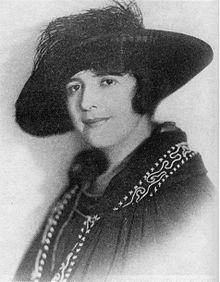
“Mrs. Howard Phillips Lovecraft” (1973) by R. Alain Everts v. “Sonia & H. P. L.” (1973) by L. Sprague de Camp

During my recent visit to Los Angeles over the Christmas hollidays [sic], I telephoned the Diana Lynn Lodge where Mrs. Sonia Lovecraft Davis had been living for the past 8 years. I phoned on 22 December and spoke with Mrs. Davis’ nurse, who informed me that Sonia was quite ill and deteriorating rapidly. She no longer read – that used to give her the greatest pleasure – as did writing, which she also no longer did. For the most part she watched television and slept – and of course died alone in that particularly horrible manner that we condemn the old to.
—R. Alain Everts, “Mrs. Howard Phillips Lovecraft” in Nyctalops #8 (Apr 1973), 45

Sonia H. Davis, the former wife of H. P. Lovecraft, was seldom mentioned in his letters after the divorce was filed in 1929. She largely disappeared from his life after the editing of “European Glimpses” in 1933. Was not informed of his death in 1937, and did not learn of it until 1946. Many of Lovecraft’s friends and correspondents did not know he was married, or if they knew, did not know Sonia’s name or where she was. When Winfield Townley Scott published “His Own Most Fantastic Creation: Howard Phillips Lovecraft” in The Providence Journal for 26 Dec 1943, he wrote honestly:

Then a quite astonishing thing happened—I don’t know how else to describe this sudden outbreak of a semi-invalid tangled with apron strings; Lovecraft in 1924 went to New York and married. So far I have not discovered either the woman’s name or her present whereabouts.

The next year, in “His Own Most Fantastic Creation” in Marginalia (1944, Arkham House), the first extensive biographical essay on Lovecraft, Scott had at least learned Sonia’s name and some basic account of the marriage, though he added:

It is very difficult—and so I think I shall not bury this somewhat footnote-ish aside in an actual footnote but, without apology, keep it up here in larger print—to write of Lovecraft’s marriage. This is principally because the former Mrs. Lovecraft is inaccessible; one hears that she is remarried and that she is probably living out West, but even old friends of Lovecraft who knew his wife are unable to establish communication with her because they are denied, by her relatives, knowledge of her present name and whereabouts. To write of the marriage from others’ reminiscences and speculations is under the circumstances certainly permissible, and as certainly embarrassing. One can only hope, in view of Lovecraft’s increasing fame and the consequent importance of his biography and of the need for fairness all around, that this one woman who ever lived intimately with him will tell her story. Until then, one can only piece the story together form the fragments offered by outsiders—human outsiders! (ibid. 321)

Sonia did finally get in contact with Winfield Townley Scott, and with his assistance, she did write her memoir of the marriage, and he also helped her to get it published, in abridged and edited form. This led to Sonia meeting August Derleth, the eventual publication of “Four O’Clock” (1949), and many other things—but relatively little from or about Sonia herself made it to print. She had some scattered references in mid-century amateur journals, including attempts to sell books associated with Lovecraft. In 1961, when Scott revised his biographical essay for his collection Exiles and Fabrications, he included material from Sonia’s memoir, but new material on or about Sonia was almost nil.

Fans eager for data could look to “Lovecraft’s Marriage and Divorce” (1968) by Muriel E. Eddy, but would scarcely learn anything not already in Sonia’s memoir. August Derleth put together Memories of Lovecraft (1969) from some of Sonia’s letters, but again, this is fairly thin. New facts about Sonia, and new information on her marriage with Lovecraft wasn’t really made public until after her death.

I heard later that Sonia had died on 26 December 1972 – I had the pleasure of her acquaintance for nearly 5 years, and of her family for the same length of time. it was on her 85th birthday in 1968 that I first met her personally although I had corresponded with her from some time previously. I was more than anxious to meet her, to try and persuade her to talk about her second husband, Howard Phillips Lovecraft, which she was at first extremely reticent to do – she was now the widowed Mrs. Nathaniel Abraham Davis, and owed most of her final good memories ot him. However, during the course of our personal acquaintance, in which I visited her several dozen times, to talk with her, to tape record her reminiscences of Howard Lovecraft, and her own life, to take her out to lunch and on special errands, and simply to visit this lonely and charming, and until her decline into senility, vibrant lady.
—R. Alain Everts, “Mrs. Howard Phillips Lovecraft” in Nyctalops #8 (Apr 1973), 45

Everts’ article was the first really new information on Sonia H. Davis’ life and background available to fandom, and it must have derived from his communications with Sonia and her family. Later authors, like L. Sprague de Camp in Lovecraft: A Biography (1975), either Drew on Everts’ piece or similar sources when writing about her birth in what is now Ukraine, her parents, her early history as a young immigrant to the United Kingdom and then the United States, apprenticeship as a milliner, and all the events that led up to her marriage with Lovecraft and carried on afterwards. Everts, at least, had read Sonia’s autobiography in manuscript, later published as Two Hearts That Beat As One (2024), edited by Monica Wasserman.

Scholarship is not just the accumulation of evidence, the piling together of facts, the collection of books and manuscripts to cite and quote with uncritical acceptance. Today, we can compare Everts’ article with Sonia’s autobiography and other sources and conclude it is largely accurate. However, there is a lot that Everts doesn’t say in this short piece as well. Everts’ relationship with Sonia was not always completely friendly; Everts developed a negative reputation in fandom, partially covered in The Curse of Cthulhu (2002), whereby he alienated several fans by action or inaction, such as the failure to return a photograph of Robert E. Howard lent by Novalyne Price Ellis, accusations of other borrowings, etc. A photocopy of a letter from Everts to Sonia dated 24 Apr 1969 survives among the August Derleth papers at the Wisconsin Historical Society, which includes admission of borrowing material without permission, and responses to some allegations apparently levied against Everts by Sonia, though in that letter Everts states his intention to return everything and his belief that the true sources of the allegations are August Derleth and Muriel E. Eddy.

Which is a long way to say, we have to read this piece with the understanding that it is not Sonia H. Davis expressing herself directly to the reader, but is filtered and edited through Everts, and Everts does not include anything in the article that speaks to their possible contretemps.

From 1946 until about 1960, Sonia worked at various jobs – she broke her hip that year and had to go to live in a rest home in southern Los Angeles. In 1965, she was transferred to the Diana Lynn Lodge in Sunland, on the north rim of the San Fernando Valley, where she died just after Christmas of 1972.
—R. Alain Everts/ 21 January 1973
—R. Alain Everts, “Mrs. Howard Phillips Lovecraft” in Nyctalops #8 (Apr 1973), 45

“Mrs. Howard Phillips Lovecraft” has been superseded as a source of information about Sonia’s life by later works, the only really unique information in there concerns her relationship with Everts (which, again, not the whole story) and the end of her life. It holds a place in historical scholarship because when we ask how we know certain information and when did we know it, Everts’ article stands out as a point where new biographical information on Sonia became publicly available, where fans and scholars could read and cite it. The snapshot it offers of the end of Sonia’s life, with Everts as one of her few points of contact outside the rest home, is poignant but necessarily brief.

Yet it is also at this point that Everts takes a hand in shaping the narrative of Sonia and her marriage to Lovecraft. He would go on to create his own publishing imprint, The Strange Company, whose publications include material borrowed or copied from Sonia’s files, including Alcestis: A Play (1985) by Sonia H. Greene & H. P. Lovecraft. We can only speculate why Everts waited until after Sonia was dead; perhaps the money wasn’t there earlier, or life got in the way; such things happen. Sadly, his correspondence and interviews with Sonia have never been transcribed and published or made accessible, save in brief essays like “Mrs. Howard Phillips Lovecraft.”

Yet there was another essay on Sonia H. Davis published in 1973, and one that showcases a different approach to the same material. This was “Sonia & H. P. L.” by L. Sprague de Camp, one of the items in The Normal Lovecraft (1973, Gerry de la Ree), a magazine-sized chapbook published by fans for fans. To understand de Camp’s approach, we need to wind back a little:

For five years I had been writing short articles for [George] Scither’s Amra on authors of heroic fantasy, such as Pratt, Howard, and Lovecraft. In 1970 I decided to expand the series by rewriting these pieces as regular magazine articles and eventually to combine them into a book. The only market for the articles was the now defunct Fantastic Stories, which paid badly and often neglected to register copyrights. […] The book, Literary Swordsmen and Sorcerers, which resulted from these labors, was slow to become airborne. I tried a sample and synopsis on a prospective new agent; no results, so for a few years I put it aside. In 1974 I sold the book to Arkham House; it appeared in 1976 and is still in print. Meanwhile my book-length biography of Lovecraft had been published.
—L. Sprague de Camp, Time & Chance: An Autobiography, 366-367

The first biographical article on Lovecraft, “Eldritch Yankee Gentleman,” ran in two parts in Fantastic Stories August and October 1971; Sonia appears in the second part, which covers 1921-1937. For sources, de Camp leaned heavily (or exclusively) on Sonia’s memoir and Lovecraft’s letters at the John Hay Library in Providence, RI, where they had been deposited after Lovecraft’s death. There is no indication that de Camp contacted Sonia directly—and given the timing, this might be understandable; by the time de Camp got seriously into writing about Lovecraft, Sonia was in her twilight years, in a rest home in California, health declining. By the time de Camp decided to expand his biographical essay of Lovecraft into a full-blown book, Sonia was already dead.

So what did de Camp have to write about in “Sonia & H. P. L.” that wasn’t already published?

Five years later, Lovecraft wrote Derleth: “My one venture into matrimony ended in the divorce-court for reasons 98 per cent financial”. This ignores other weighty factors, such as his topomania (his fantastic attachment to Providence), his xenophobia, and his strong anti-sexual bias, which he probably got from his mother and which made him at best a tepid and half-unwilling lover.
—L. Sprague de Camp, “Sonia & H. P. L.” in The Normal Lovecraft 25

It would be fair to say that de Camp was correlating the contents; he could take Sonia’s memoir, combine that material with Lovecraft’s letters, and use the ideas from Winfield Townley Scott’s biographical essay as a framework to build his own image of Lovecraft, Sonia, and their relationship. When de Camp sticks to just the facts, this has the overall benefit of combining Sonia and Lovecraft’s different perspectives of the marriage and relationship; however, whenever de Camp gets into analysis, his own biases show through more strongly:

Lovecraft never pretended to be other than he was. Sonia had taken the initiative in their courtship, although he had tried to warn her of what she was getting into. And if the episode left him looking hardly heroic, he would not have looked much more so, according to the mores of the time, if he had gone on letting Sonia support him.

Over the next few years, Lovecraft and Sonia visited each other every times. Although Sonia was a full-blooded woman, Lovecraft declined to renew martial relations. For reasons that we can guess at but cannot really know, he let his maternal tabu against sex prevail, even though it would have been perfectly legal and moral. Although his organs and instincts, as far as is known, were normal, he had been early inclucated with the ideas that sex was “sordid” and “bestial”. Young persons might be subject to irrepressible animal urges, but middle-aged persons like himself and Sonia ought to be “all though” with it. (To him, middle age began at thirty.)

Then came the divorce and Sonia’s move to California. Poor strenuous, generous, passionate, managerial, loving Sonia! The moral would seem to be: girls, don’t marry a man with the ideas of “making a man of him” or otherwise drastically changing him. It won’t work.
—L. Sprague de Camp, “Sonia & H. P. L.” in The Normal Lovecraft 27

This was the kind of psychologizing that de Camp would receive considerable criticism for when Lovecraft: A Biography (1975) came out, but more than that, there’s a great deal of rampant speculation and characterization on de Camp’s part in those few paragraphs. It was Winfield Townley Scott who had first emphasized that Lovecraft’s relationship with his mother was unhealthy and speculated on Lovecraft’s sexuality, on fairly weak evidence, and de Camp doubled down on both ideas.

The characterization of Sonia as “a full-blooded woman” was a counterpoint to that; de Camp built her up as a sexual entity in opposition to Lovecraft’s apparent asexuality. In this, de Camp was not alone—August Derleth had famously cornered Sonia in 1953 and asked about her sex life with Lovecraft. As he put it:

A propos your piece on Lovecraft, the question of HPL and sex had been bothering me for some time, especially in view of his violent reaction against Oscar Wilde as a person, however much he admired his work; so in 1953 when I was in Los Angeles, I asked Sonia Davis—the ex-Mrs. Lovecraft—rather bluntly about HPL’s sexual adequacy. She assured me that he had been entirely adequate sexually, and since she impressed me as a well-sexed woman, not easily satisfied, I concluded that HPL’s “aversion” was very probably nothing more than a kind of puritanism—that is, it was something “gentlemen” didn’t discuss, and so on.
—August Derleth, Haunted vol. 1, no. 3 (June 1968), 114.

This interest in Sonia and Lovecraft’s sexual life can be seen in the historical context of the Lavender Scare as an effort on the part of some scholars to establish Lovecraft as heterosexual; Sonia’s confirmation of heterosexual relations would help immensely in that regard. De Camp would bring up the possibility of Lovecraft as a closeted homosexual in Lovecraft: A Biography (Derleth was, at the time of its publication dead and thus past the ability to protest). Both de Camp and Derleth seemed fixated on the idea of Sonia as sexually aggressive, though never to the point of suggesting she was promiscuous, and make this part of their characterization.

When de Camp did finally write Lovecraft: A Biography, he had more to say about Sonia than he did in “Sonia & H. P. L.”; the bibliography includes both Everts’ “Mrs. Howard Phillips Lovecraft,” Derleth’s letter in Haunted, and “Misc. unpublished autobiographical MSS. in the John Hay Library” (479), in addition to Sonia’s memoir and Memories of Lovecraft (1969). Yet it is easy to see how, in 1973, not long after Sonia H. Davis passed away, her memory was already being shaped and fitted to the purpose of would-be Lovecraft biographers, her words selectively used to convey the impression they wished to give rather than presented unaltered.


Bobby Derie is the author of Weird Talers: Essays on Robert E. Howard and Others and Sex and the Cthulhu Mythos.

Deep Cuts in a Lovecraftian Vein uses Amazon Associate links. As an Amazon Associate I earn from qualifying purchases.