The religious rites varied according to circumstances and the requirements of the people. The greater number of the ceremonies appear to have been practised for the purpose of securing fertility. Of these the sexual ritual has been given an overwhelming and quite unwarranted importance in the trials, for it became an obsession with the Christian judges and recorders to investigate the smallest and most minute details of the rite. Though in late examples the ceremony had possibly degenerated into a Bacchanalian orgy, there is evidence to prove that, like the same rite in other countries, it was originally a ceremonial magic to ensure fertility.
—Margaret Murray, The Witch-Cult in Western Europe (1921)
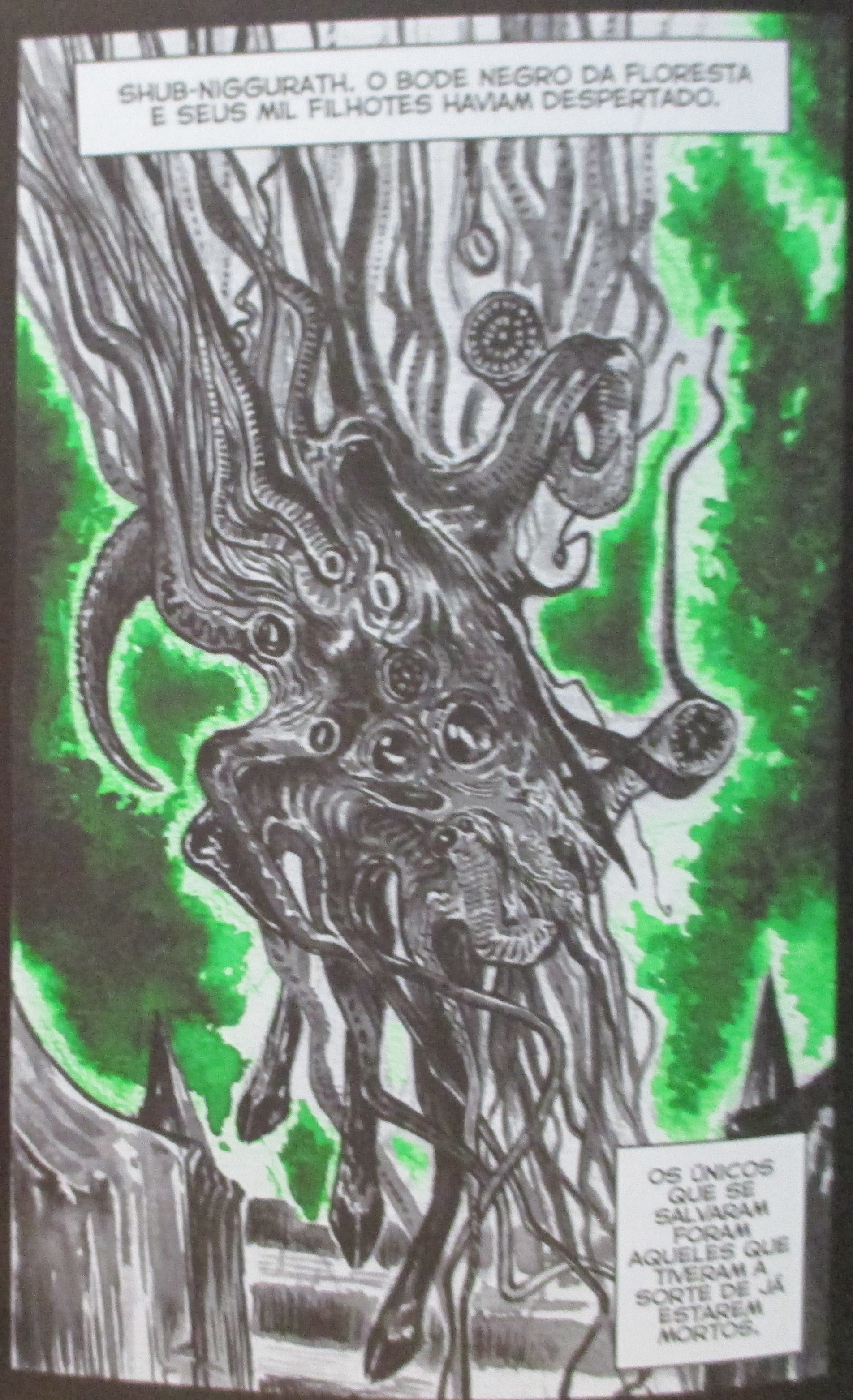
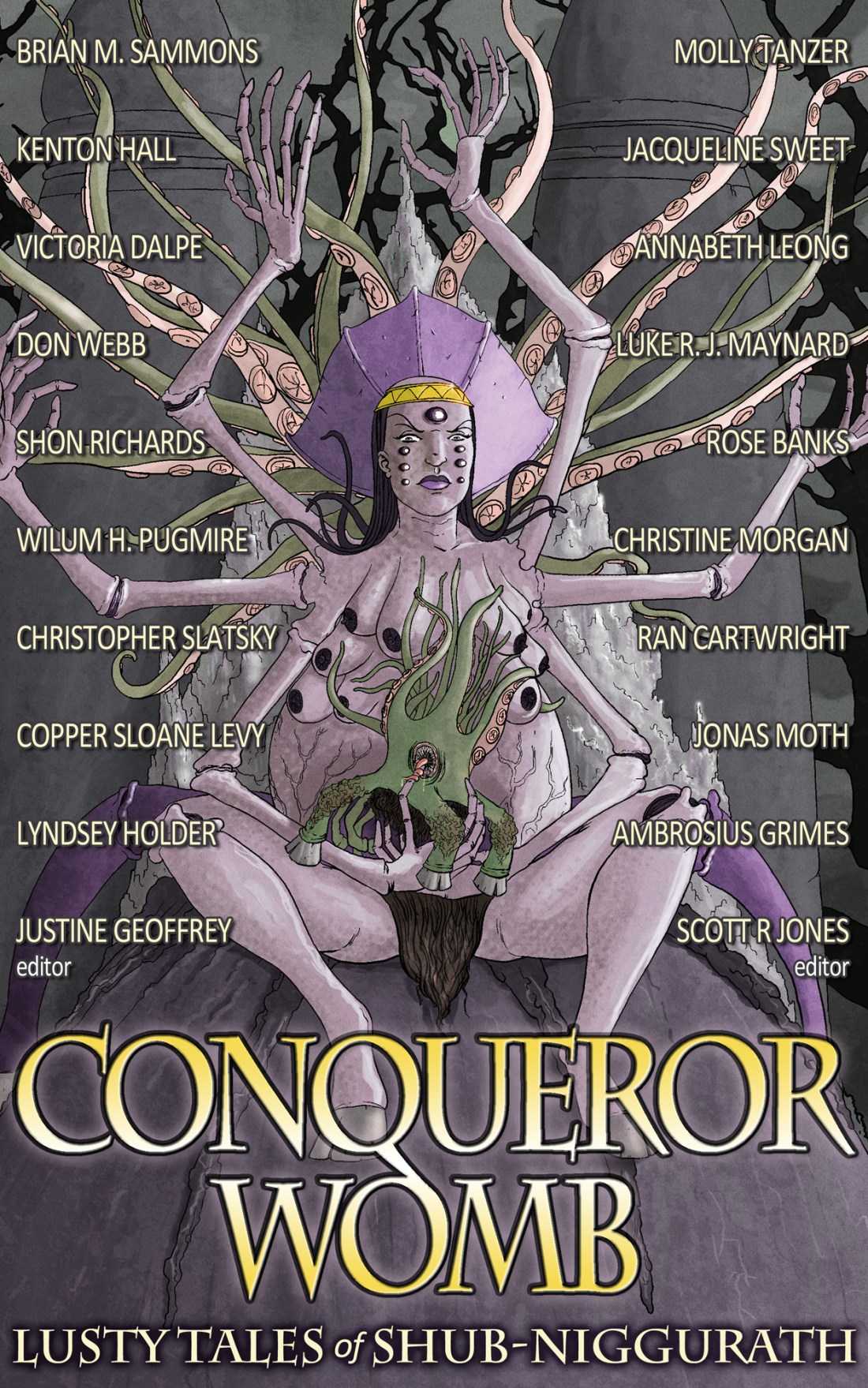
The conception of Shub-Niggurath as a fertility figure in Lovecraft’s artificial mythology, presented or hinted at in “The Mound” (1940) by Zealia Bishop & H. P. Lovecraft, has always carried with it certain implications. In the early 20th-century anthropological context, “fertility rites” in religion applied to humans, animals, and vegetables. There were rites to conceive and safely deliver children, to grow more crops, to have domestic animals increase in number. The sexual connotations were clear and sometimes salacious.
This was before in vitro fertilization or genetic engineering, before hormonal birth control or effective medical gender transition. Before contemporary labels like ace and aro. The anthropological perspective rarely took into account the vast diversity of reproductive schemes in nature, most of which don’t apply to humans and domestic animals; it did absorb a lot of the cultural norms regarding gender and sexual identity, and the reproductive focus of fertility cults in the literature can bear some strange parallels to reproductive abuse and pregnancy fetishism.
This is the heritage of Shub-Niggurath in the 21st century: one of the rare identified-as-female divinities (or at least entities) in the Cthulhu Mythos, and her cult is often treated as effectively the Quiverfull movement with optional magic and monsters. While that may be a simplification for a diverse array of works that run from “Shub-Niggurath’s Witnesses” (2015) by Valerie Valdes to “The Shadow over Des Moines” (2016) by Lisabet Sarai, the important takeaway is that Shub-Niggurath and her cult have been primarily shaped by early 20th-century ideas of sexuality and reproductive biology.
What does Shub-Niggurath have to offer if you’re asexual, transgender, gay, or just never want to have kids?
As for the rest of the idealistic traditional family concept, you know I never had any real interest in men. I guess I should have been more open about my romantic endeavors. I would have been, if I’d known you thought I was holding back for your sake. You suspected there was something with Rachel, and briefly, there was. There were also a few people in college of varying genders, and while I sometimes felt deep affection, I discovered I’m not terribly interested in physical intimacy. And I don’t feel like my life is incomplete without it.
I love cake. I love cozy mystery novels and sad romance movies. I love my friends, I love Liriope, I love you. And that’s enough. I wish I’d made this clearer to you.
—Jessi Vasquez, “Blessed Be Her Children” in Tales of Shub-Niggurath (2025) 192
“Blessed Be Her Children” by Jessi Vasquez is told in mostly epistolary format; as a series of journal entries, sometimes addressed to specific readers, in a contemporary setting involving a young divorced single mother, her daughter, and her older sister. This is a woman’s story, told from a woman’s perspective, dealing with the messy, complicated mess of faith and something more than faith as their relationships get tangled up with a cult that has an unnerving focus on fertility. The story is not explicitly set in the Cthulhu Mythos; it doesn’t need to drop Shub-Niggurath’s name to draw the familiar associations with goatish imagery associated with the cult. Yet it is very much written, at least in part, in response to how we look at Shub-Niggurath now compared to in 1940.
One squat, black temple of Tsathoggua was encountered, but it had been turned into a shrine of Shub-Niggurath, the All-Mother and wife of the Not-to-Be-Named One. This deity was a kind of sophisticated Astarte, and her worship struck the pious Catholic as supremely obnoxious. What he liked least of all were the emotional sounds emitted by the celebrants—jarring sounds in a race that had ceased to use vocal speech for ordinary purposes.
—H. P. Lovecraft & Zealia Bishop, “The Mound”
Lovecraft never presents Shub-Niggurath from a woman’s perspective. He very rarely addresses pregnancy and birth in the Mythos from the viewpoint of anyone who might have to gestate something and push it out of their body in forty weeks or so. Lavinia Whateley has a few lines in “The Dunwich Horror,” but that’s only afterward. Readers don’t get to see what joy or fear, horror or gratitude, disgust or distress that she felt at the conception of conception, pregnancy, and birth. The whole viewpoint of reproductive horror from a woman’s perspective came to the Mythos relatively late, and is still being explored in stories like “In His Daughter’s Darkling Womb” (1997) by Tina L. Jens and “A Thousand Young” (2025) by Andrea Pearson.
So Vasquez’s approach in “Blessed Be Her Children” is interesting. It is a rebellion against the default program that the cultists are running. The cult, rather than adapt to changing ideas, is still serving what is essentially an ultraconservative agenda: be fruitful and multiply, on our terms. “Blessed Be Her Children” isn’t a polemic in the guise of a piece of fiction, but it is correctly trying to portray a predatory religious group (that happens to be a Mythos cult) whose central ethos doesn’t take into account that nowadays not everyone is heterosexual and looking to have kids.
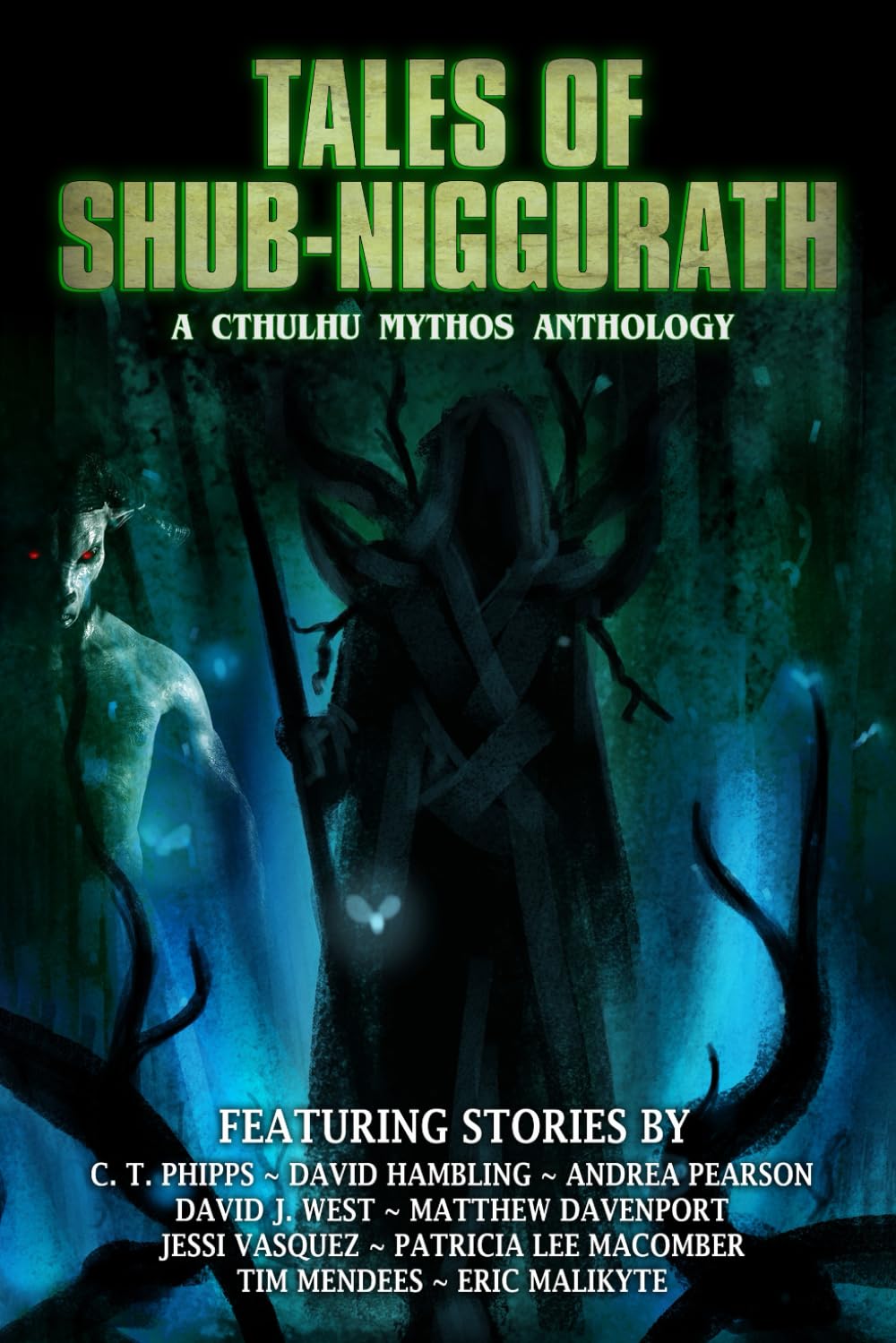
“Blesssed Be Her Children” by Jessi Vasquez was published in Tales of Shub-Niggurath (2025).
Bobby Derie is the author of Weird Talers: Essays on Robert E. Howard and Others and Sex and the Cthulhu Mythos.
Deep Cuts in a Lovecraftian Vein uses Amazon Associate links. As an Amazon Associate I earn from qualifying purchases.
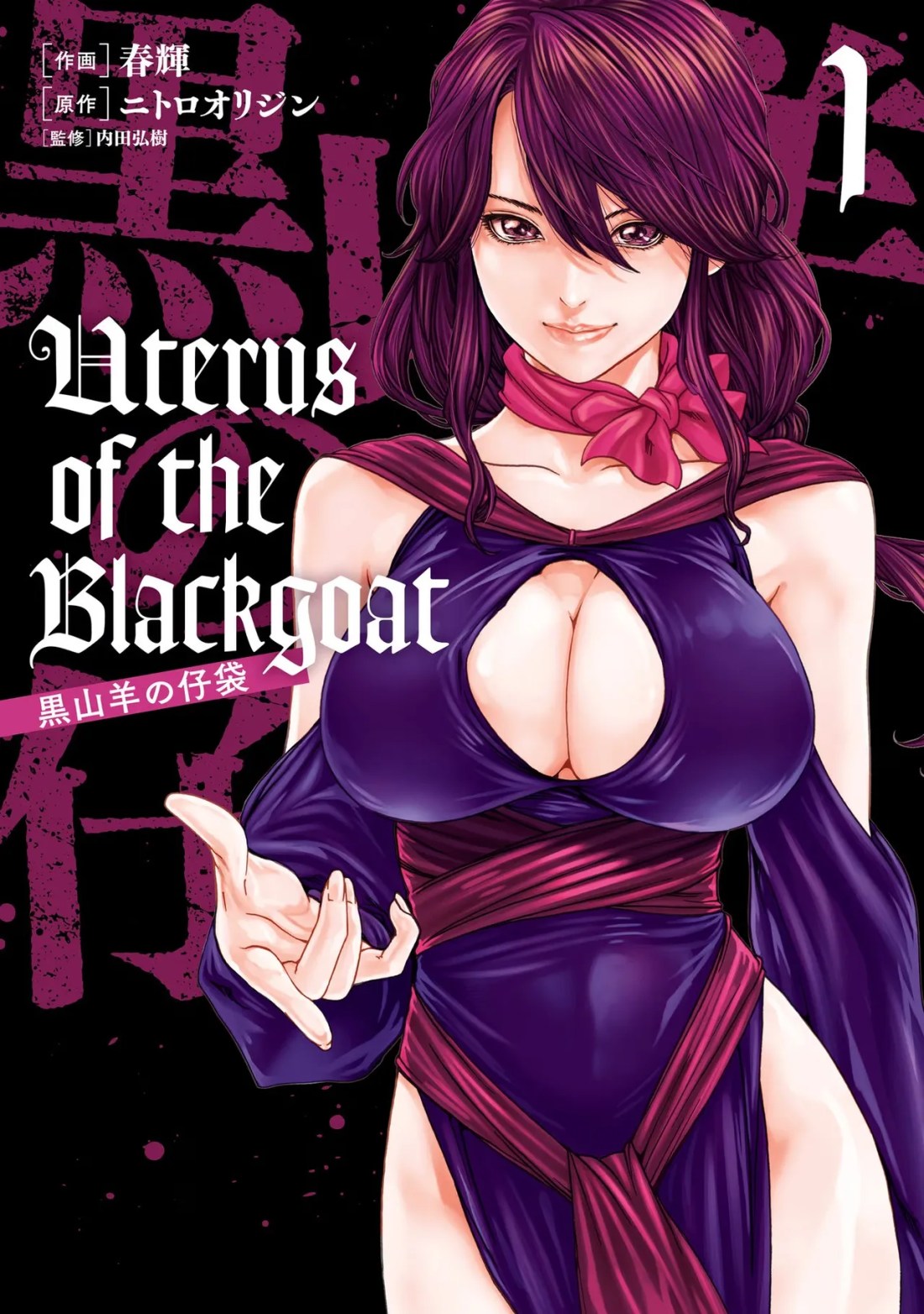
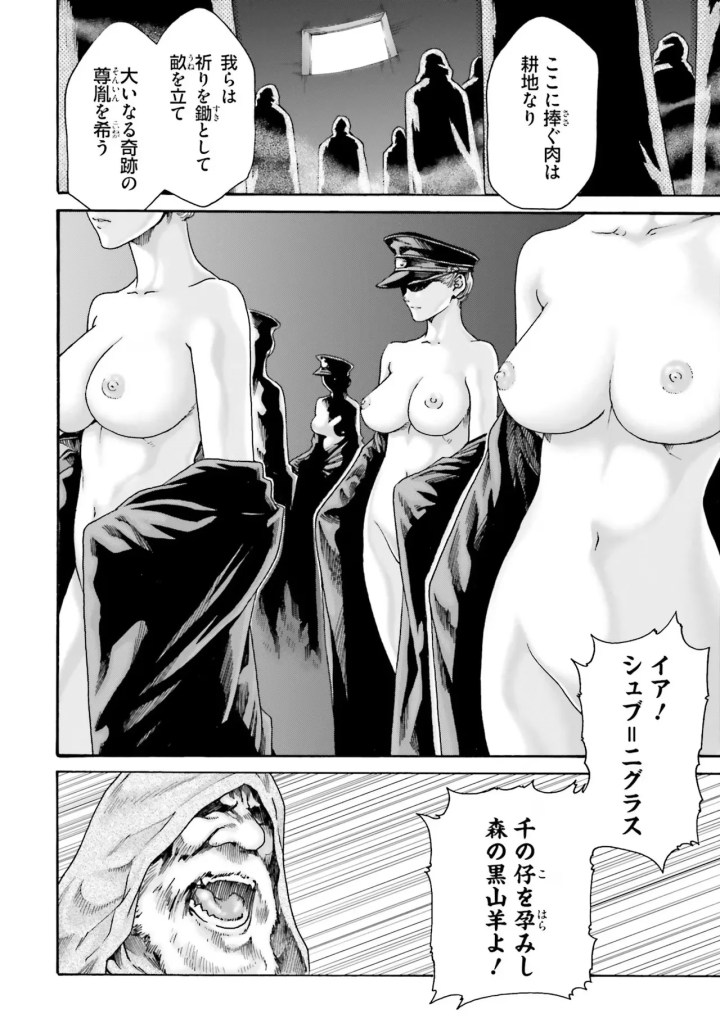

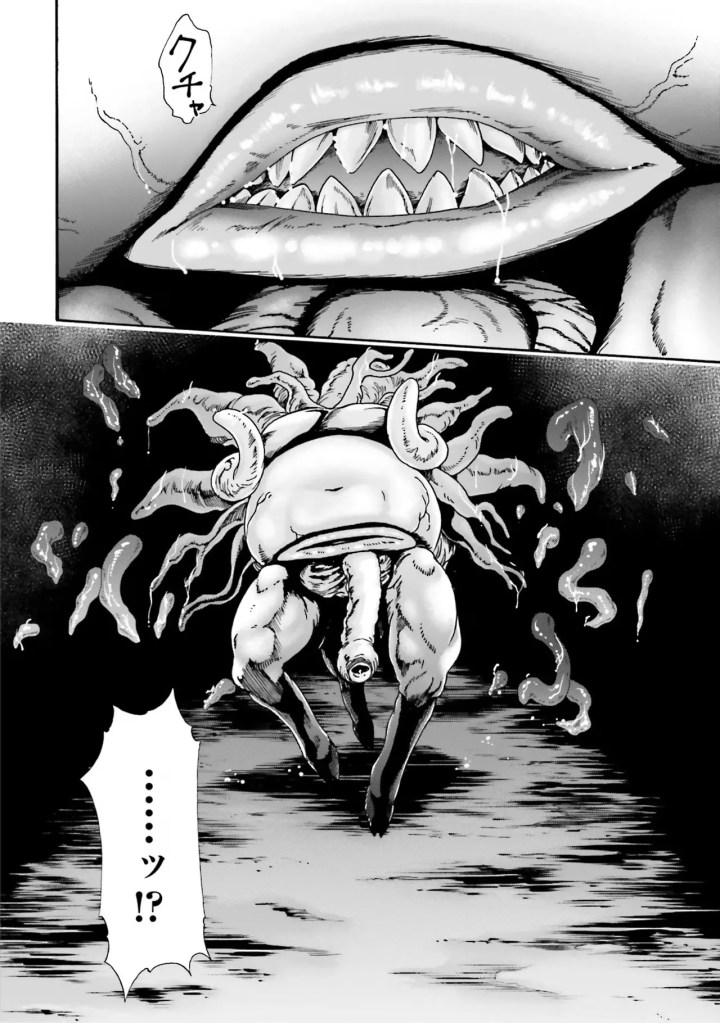
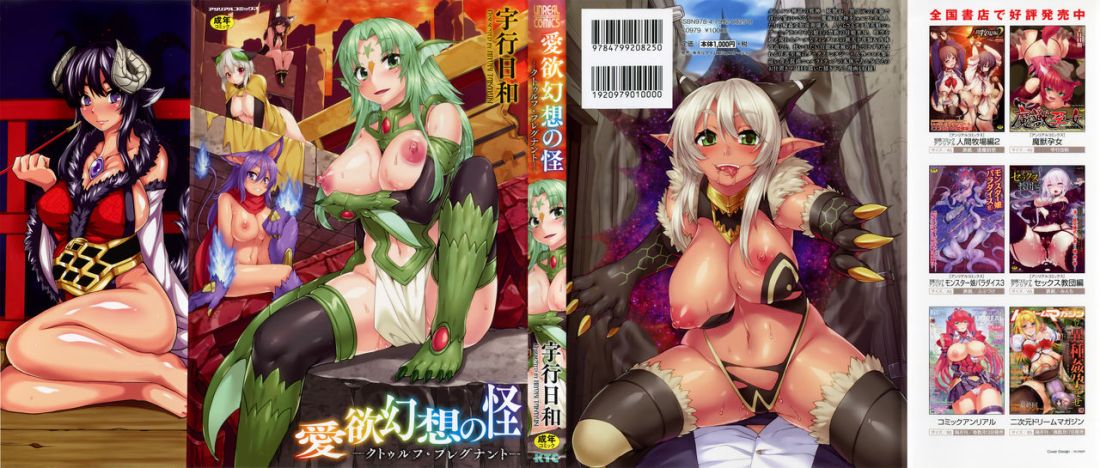

 In point of fact, The Mystery of Lustful Illusion -Cthulhu Pregnant- is difficult to distinguish from Monster Musume or Monster Girl Encyclopedia products. While Takayuki Hiyori uses references to the Cthulhu Mythos in the crafting and telling of the stories, the manga itself is pretty straight forward monster girl erotica, and aimed more directly at that audience than Lovecraft fans. The depictions of the various Mythos entities is mostly original, but skewed toward “mostly human with a few non-human traits”—the Cats of Ulthar, for example, are indistinguishable from the generic manga or anime “catgirl,” with their primary feline traits being cat ears and tail on a nubile young woman’s body. Eldritch horrors are hinted at but seldom realized.


 Deep Cuts in a Lovecraftian Vein