“Paedomorphosis” (1998) by Caitlín R. Kiernan

“Oh,” Annie said and sat down on the rug, grateful for something between her and the concrete. “Where are you from, anyway?”

The loose flap of cloth falling back in place, once again concealing the crack, and “Massachusetts,” Elise replied, “but no place you’ve probably ever heard of.”
—Caitlín R. Kiernan, “Paedomorphosis” in Song of Cthulhu 93

Music, lesbians, a muggy Georgia summer, and white blind things in the dark. “Paedomorphosis” is a story of mood and affect, intimation almost to the point of deliberately hiding things. If it wasn’t published in a Mythos anthology…if it wasn’t published by Caitlín R. Kiernan…there are certain connections which might not be made at all. Like “She Flows” by Takeuchi Yoshikazu (竹内義和) the story lives in that liminal space between telling and showing and knowing. It’s not a horror story by any stretch, but there are the bones of horror story technique there: the way the story and characters are built up, like fossils emerging from dry rock of an ancient river bed, and there are only a few people that can read those old bones and reconstruct something of what happened.

To a degree, all stories are reflections of their authors. We read about Lovecraft’s life and we look for the echoes of events and ideas in his fiction; as his life becomes more well-known through biographies, Lovecraft himself has become a kind of character in the fictional universe, fragments of his life and thought cropping up here and there in stories, some more explicit than others.

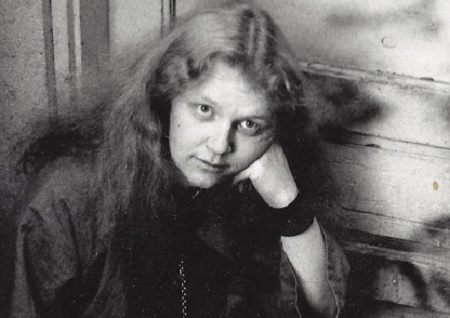
With “Paedomorphosis,” readers may well ask how much of Kiernan herself is reflected in the story. The setting of Athens, Georgia, where she lived. Elise-from-Massachusetts with her interest in paleontology; Kiernan herself a paleontologist. The imagery of drowning, repeated in some stories, especially her later novel The Drowning Girl: A Memoir (2012). The lesbian characters and her own sexuality.

“I thought dykes were supposed to be all tough and fearless and shit,” she said.

Annie shook her head, swallowed before she spoke. “Big ol’ misconception. right up there with the ones about us all wanting dicks and pickup trucks.”
—Caitlín R. Kiernan, “Paedomorphosis” in Song of Cthulhu 93

The story has the feel of something cribbled together from bits of life; people and places known rather than imagined. A bit of sexual longing, fulfilled. Drugs and rock and roll. And it takes Annie…and the audience…somewhere they never expected, gives them a glimpse of a world they never imagined might exist, those strange caverns measureless to man, the porous world spoken of so cryptically in “Machines Are Digging” (2009) by Reza Negarestani.

The title is never explained; look up the definition on your own time. The story ends with, of all things, a quote from Tolkien:

There are strange things living in the pools and lakes in the hearts of mountains…
—J. R. R. Tolkien, quoted in “Paedomorphosis” in Song of Cthulhu 98

But not the whole of it:

There are strange things living in the pools and lakes in the hearts of mountains: fish whose fathers swam in, goodness only knows how many years ago, and never swam out again, while their eyes grew bigger and bigger and bigger from trying to see in the blackness; also there are other things more slimy than fish. Even in the tunnels and caves the goblins have made for themselves there are other things living unbeknown to them that have sneaked in from outside to lie up in the dark.
—J. R. R. Tolkien, The Hobbit, Chapter V “Riddles in the Dark”

The story captures a mood, but the mood itself is almost inexpressible in anything less than the story. There are things to think about, long after the last page is turned. What might have happened, if Annie had been fearless enough to take the plunge? Who is the subject of paedomorphosis in the story? These are questions that Kiernan doesn’t answer in this story…but in some of her other stories, we catch hints of what might have happened, in love affairs that lasted a little longer and got a little weirder.

“Paedomorphosis” was first published in The Urbanite #10 (1998), it has been reprinted in Kiernan’s collection Tales of Pain and Wonder (2000, 2002, & 2008); Song of Cthulhu (2001); and Rock On: The Greatest Hits of Science Fiction & Fantasy (2012).


Bobby Derie is the author of Weird Talers: Essays on Robert E. Howard & Others (2019) and Sex and the Cthulhu Mythos (2014).

Windwalker’s Mate (2008) by Margaret L. Carter

She had been chose, she said, to be sacrificed to Ithaqua, the wind-walking elemental which the Stillwater people are said to have worshipped, and she had decided that she would flee, rather than die for a pagan god, of whsoe existence even she was not too sure.
—August Derleth, “The Thing That Walked on the Wind,” Strange Tales of Mysery and Terror Jan 1933

Ithaqua is one of August Derleth’s original contributions to the Mythos; the story that introduced him is first mentioned to Lovecraft in 1930, after Wright apparently rejected it (ES1.277). The sort of chequered history has dogged the Windwalker down the decades; few writers have made much use of Derleth’s creation, although Brian Lumley has made good use of Ithaqua—and given that entity a penchant for spawning children, a la Yog-Sothoth and “The Dunwich Horror”—in works such as “Born of the Winds” (1975) and Spawn of the Winds (1978).

It is Lumley’s interpretation that almost certainly inspired M. L. Carter’s dark paranormal romance novel Windwalker’s Mate (2008), although she puts her own spin on the proceedings. Shannon is a survivor; after the Rite of Union, she left the cult that was trying to bring strange Mythos entities to overrun this world—and forty weeks later she gave birth to her son Daniel, never knowing if his father was Nathan, the son of the culture leader who had participated in the rite with her, or the Windwalker who had possessed him.

Romance may seem an odd genre for Lovecraftian fiction; Lovecraft himself saw little of it in his life and his stories focus very little on those kind of human relationships. Nor were many of Lovecraft’s followers very inclined toward such things. Yet there is a thin substratum of genuine Mythos romance, dealing with the complex tangle of human relationships in a Mythos milieu—and much more seriously than “I Wore The Brassiere Of Doom” (1986) by Sally Theobald or “Love’s Eldritch Ichor” (1990) by Esther M. Friesner. These are works that tend to get overlooked by the main audience of Mythos writers; stuff like Tide of Desire (1983) by Sheena Clayton, Arkham Dreams (2011) by Robin Wolfe, Widdershins (2013) by Jordan L. Hawk…and one might even include The Dunwich Romance (2013) by Edward Lee, although that gets a little more hardcore than the others.

There are a few steamy moments in Windwalker’s Mate. It is far from the elaborate sexual fantasies of, say, Shoggoth Butt Invasion (2016) by Jason Wayne Allen. The sex scenes serve the plot as much as the reader; Shannon is reconnecting with Nathan, worried about her kidnapped son, placing her hope that coitus will re-establish their telepathic bond (it makes sense in the context of the book)…

He deepened the kiss, drawing her back into the present. her tongue darted eagerly to meet his. His hand cupped her breast through the T-shirt and thin bra. The tingling in the nipple zapped to the pit of her stomach and the V between her legs. The explosion of colors crashed over her again.

Then she saw stars falling like snowflakes and the sky behind them splitting open.
—Margaret L. Carter, Windwalker’s Mate 105

…yet the emotional core of the novel is very serious. Shannon is trying to save her son; she’s a lonely single mother, the cops are useless, and the former cult leader is trying to use Daniel to summon Ithaqua and the Ancient Ones into the world…there is a great deal of drama, both of the mind-numbingly mundane and weird kind.

It works. Opinions will vary on the approach, but M. L. Carter succeeds at what she set out to do: write a paranormal romance with the Mythos as a setting. If Chaosium ever published a sequel to The Ithaqua Cycle (1998/2006), this would not be out of place. The basic premise is much like the question of what happens after Rosemary’s Baby? only with Rosemary having the hard practicality to not stay with the Satanic cult because she had a baby to think of now. Daniel might well be the spawn of the Windwalker, but he isn’t a Wilbur Whateley-esque monster…not yet, anyway.

Windwalker’s Mate was published in 2008 by Amber Quill Press. Carter’s other Lovecraftian works include “Prey of the Goat” (1994) and the erotic novella Tentacles of Love (2009).


Bobby Derie is the author of Weird Talers: Essays on Robert E. Howard & Others (2019) and Sex and the Cthulhu Mythos (2014).

“Dope War of the Black Tong” (1996) by Robert M. Price

[…] we present an original story by the estimable Price, which is dedicated to Lin Carter and Robert E. Howard, as it utilizes Carter’s Dr. Anton Zarnak and Howard’s Steve Harrison. Its style brings back memories of the weird mysteries which Howard was noted for.
—Edward P. Berglund, “Preface to the Revised Edition” Disciples of Cthulhu (2nd Rev. Ed.) vi

In the Spring of 1933, Robert E. Howard got himself a new agent. Otis Adelbert Kline was a pulp writer himself, and had been a reader for Weird Tales in the early days, ghost-editing a single issue to bridge the gap between the outgoing Edwin Baird and the incoming Farnsworth Wright. Kline’s agency handle the promotion and collection of Howard’s work, freeing the Texas pulpster to simply write, and the agent encouraged Howard to splash new markets—to spread his literary wings and try his hands at not just weird fiction but spicy stories and detective fiction.

It was the great period of hardboiled detective fiction, which would become so married to film noir; the pulp magazine Black Mask thrilled to Dashiell Hammett’s Continental Op and Sam Spade, Raymond Chandler’s John Dalmas. Yet it was also the era of Sax Rohmer’s Fu Manchu novels. Yellow Peril literature was still going strong in the interwar period; H. P. Lovecraft and Robert E. Howard exchanged letters discussing the danger threatened by Imperial Japan, on the rise since their victories in the Russo-Japanese War and the Great War, and worried over the Japanese invasion of Manchuria in 1931, and the looming probability of a great race war in the perhaps not too distant future.

This was the background against which Howard created Steve Harrison, star of nine weird detective stories, four of which sold and were published in magazines like Strange Detective Stories, Super-Detective Stories, and Thrilling Mystery between 1934 and 1936. Harrison’s beat was normally the local Chinatown, and the plots tend to be more oriented toward action than detection. Racism and racial conflict are part and parcel for the stories; Robert E. Howard, who had written quite a bit for Oriental Stories, obviously never heard Robert Knox’s rule that “No Chinaman must figure in the story.”

“Three unsolved murders in a week are not so unusual—for River Street,” grunted Steve Harrison, shifting his muscular bulk restlessly in his chair. […]

“It’s your business to solve murders,” she said.”

“Give me a little time. You can’t rush things, when you’re dealing with the people of the Oriental quarter.”

“You have less time than you think,” she answered cryptically. […] “Do you remember Erlik Khan?”

Involuntarily his hand sought his face, where a thin-scar ran from temple to jaw-rim.

“I’m not likely to forget him,” he grunted. “A Mongol who called himself Lord of the Dead. His idea was to combine all the Oriental criminal societies in America in one big organization, with himself at the head. He might have done it, too, if his own men hadn’t turned on him.”
—Robert E. Howard, “Names in the Black Book” (1934) in Steve Harrison’s Casebook 143

Occult detective Anton Zarnak was created by Lin Carter in the late 1980s, first as a minor character in “Curse of the Black Pharaoh,” and then star of his own adventures—sometimes written by Carter, others by Robert M. Price, Joseph S. Pulver, Sr; Pierre Comtois, and C. J. Henderson. Carter alongside L. Sprague de Camp had a hand in the legacies of H. P. Lovecraft and Robert E. Howard; the two collaborated on many further adventures for Conan; revised, finished, or re-wrote Howard’s fiction; published highly-regarded fantasy anthologies and wrote articles promoting weird fiction and sword & sorcery. Lin Carter also created his own “Xothic Cycle” to expand on the work of Lovecraft and August Derleth.

Price in his introduction to Lin Carter’s Anton Zarnak: Supernatural Sleuth notes that Zarnak’s influences include Sherlock Holmes, the Weird Tales occult detective Jules de Grandin (created by Seabury Quinn), Sax Rohmer’s Sir Dennis Nayland Smith, August Derleth’s Dr. Laban Shrewsbury, Steve Ditko’s Dr. Strange, and Robert E. Howard’s own Steve Harrison. Zarnak had his abode in Chinatown, had an Sikh manservant (much as Wong to Dr. Strange, or Ram Singh to The Spider), and had a shelf full of Mythos tomes. The first proper Zarnak story opens:

Below Fourteenth Street, between Chinatown and the river, extends a disreputable region of cryptic, winding alleys, crumbling tenements, rotting wharves and abandoned warehouses slumping in decay. Here dwell the human dregs of a thousand Eastern ports: Hindus, Japanese, Arabs, Chinamen, Levantines, Turks, Portuguese. Once these dark and sinister side-streets and fetid alleyways were the battlefield of the Tong wars; that was in the days of the legendary detective Steve Harrison, who single-handedly dealt out the white man’s law and the white man’s justice along River Street.
—Lin Carter, “Dead of Night” (1988) in Lin Carter’s Anton Zarnak: Supernatural Sleuth 107

Steve Harrison was a product of the 1930s; between the time Robert E. Howard drew his last breath and Lin Carter sat down at his typewriter a second World War had come and gone; together with the Korean War and the Vietnam War these conflicts changed the contours of Yellow Peril fiction—it is often forgotten that comic book characters such as Dr. Strange and Iron Man came to be in the 1960s, their pulp fiction roots showing in characterizations of Asian characters as mystical and exotic, such as the Ancient One who taught Strange his sorcery, and the Mandarin who served as a Chinese counter to the American Iron Man. Later, as such blatant Asianophobia waned, the characters would be re-imagined from their original contexts…so what was Carter up to, writing a story with 1930s racial tropes (and almost 1930s racial language) in the 1980s?

In part, it might be because Howard’s Steve Harrison stories had only rarely been published or republished; most of them only became available in the late 1970s and 80s, during the tail end of the “Howard Boom,” and those often spread out; there was no complete book of Steve Harrison stories at the time. Also in part, it could be that Carter did not see the problem; he avoided the outright vulgarities of Howard (the N-word was casually dropped in several stories), and the nature of the fiction was in keeping with the style of the original—which, for a pasticheur like Carter, was important. Some years before, African-American fantasy author Charles Saunders had specifically called out de Camp and Carter for this approach in their Conan stories:

Carter and de Camp, on the other hand, continue to practice good old-fashioned bigotry in their non-Conan endeavors. Though they have done a good job at ameliorating some of Howard’s more blatant racism, their own efforts at sword-and-sorcery are throwbacks. This is doubly shameful, because both of these men are scholars, and should know better. Their books sell well enough, so it may be that racism in fantasy matters little to fandom.

But it does matter to me.
—Charles Saunders, “Die, Black Dog! A Look At Racism in Fantasy Literature” (1975)

The Cthulhu Mythos is itself no stranger to Yellow Peril tropes, as seen in “Polaris” (1920) by H. P. Lovecraft & “The Lair of the Star-Spawn” (1932) by August Derleth and Mark Schorer. The question is not if such sentiments are present in the original material, but how a new author working with that material chooses to adapt it to the syntax of their own time. There is nothing wrong with presenting historical racism as a fact of life; To Kill a Mockingbird (1960) for example is set during the Great Depression, and the realistic racism in the novel is critical to the story.

The issue when creating fiction set in this period or in this style is how much the story plays into the inherent biases of racial tropes and stereotypes. Having a villain who is Asian does not necessarily make a Yellow Peril story, so long as the individual is not a villain because they are Asian. Presenting historical racism as it was is often necessary; writing a story as if from that period, with all the inherent approach that the racism is true and correct is neither necessary nor commendable. The point is often a fine one, and easily lost on writers trying to capture the spirit of pulp fiction without considering the ideas and messages inherent in the text, never mind the subtext.

Carter was not alone in trying to navigate these difficult waters. One of the more egregious examples might be “Yellow Peril”: The Adventures of Sir John Weymouth-Smythe (1978) by Richard Jaccoma, which is essentially Fu Manchu fanfiction with a very slight wink toward the Mythos (Jaccoma also holds the rather dubious honor of having written the script for Teenage Twins (1976), the first hardcore adult film to feature the Necronomicon—and an incantation from a Robert E. Howard story—but I digress.) Like Carter, he was essentially trying to write a 1930s style Yellow Peril story.

This is essentially where Robert M. Price’s “Dope War of the Black Tong” (1996) begins:

The one-man posse of River Street set his feet squarely, while the blue steel of twin automatics leaped into his fists and began to discharge a hail of white man’s justice into the knot of Oriental thugs. When his guns were empty he cast them aside and reached for the Gurkha knife had concealed in his belt Eastern style. It descended with the force of a guillotine, cleaving the skull of the first assassin to elude the rain of bullets and reach him. Himalayan blood spattered Harrison as he pulled the blade free of the sundered wreck of a head and managed to dodge a sword thrust aimed at himself.
—Robert M. Price, “Dope War of the Black Tong” (1996) in Disciples of Cthulhu (2nd Rev. Ed.) 140-141

Price is deliberately working the story as a throwback piece; a character that uses the term “chink” or “Chinaman” once or twice can be grimaced at as an acknowledgment of the casual historical use of racial pejoratives; but the text itself describes them as “Asiatics,” “Muhammadans,” and “slant-eyed devils.” Not strong language by Robert E. Howard’s standards in 1936…but in 1996?

The story itself is the kind that weaves together disparate elements of Mythos (and non-Mythos) fiction, one of Price’s major interests. So the story references not just Steve Harrison and Anton Zardak, but the Unaussprechlichen Kulten created by Robert E. Howard in “The Black Stone” (1932) and given a German name through the help of Lovecraft, for more on which see “Unspeakable! The Secret History of Nameless Cults; the minor Mythos story “Dig Me No Grave” (1937) published after Howard’s death; the Black Lotus from the Conan stories, for more on which see “Robert E. Howard’s Reefer Madness”; Gol-Goroth from Howard’s “The Gods of Bal-Sagoth” (1931); the cat-headed staff of Howard’s Solomon Kane; a passing reference to Frank Belknap Long’s Chaugnar-Faugn from The Horror from the Hills (1931), which includes an Asian Mythos cult; Lloigor, Zhar, and the Tcho-Tcho from August Derleth and Marc Schorer’s “The Lair of the Star Spawn” (1932)…and those latter especially deserve further consideration:

And the Tcho-Tchos! Every cop in the area knows them only too well: the latest wave of Oriental immigrants to clutter the docks. Damn near every single one of them connected with the criminal underground in one way or another. There are only a few, but even at that, there’s too damn many of them if you ask me!
—Robert M. Price, “Dope War of the Black Tong” (1996) in Disciples of Cthulhu (2nd Rev. Ed.) 155

Derleth & Schorer introduced—and exterminated—the Tcho-Tcho in their story; but the idea of a small alien race in Asia had appeal to Lovecraft, who made reference to them, and were revived by devoted fans like Robert M. Price, who here inserts them into the context of the Asian diaspora to the United States, very unlike their original appearance. The language used against the Tcho-Tcho, who were initially presented as inhuman, is essentially the same as used for any Asian ethnicity in the age of the Asiatic Barred Zone Act (1917). Price doesn’t mention the events of Derleth & Schorer’s story, and glosses over their depiction of the Tcho-Tcho by noting:

You should be aware that these dwarf-like figures belong to a warrior caste specially bred. Not all the Tcho-Tchos are like them, nor have I expressly claimed to be of their nation. (ibid.)

Price’s mingling and confusion of real-world prejudice against Asian immigration with the fantasy racism of Derleth & Schorer’s confusion is a literary sin; whatever his intent, the result is that the real-world fear and hatred is given a justification within the context of story. Price has perhaps exposited too much; the Tcho-Tcho never appear on the page before the revelation is made, so the reader is exposed to their Mythos aspect and the anti-Asian prejudice in virtually the same breath.

Then it gets weirder:

The swelling chorus of guttural voices gave Steve a hint of his earlier dread. Deep down he knew that his Celtic forbears had driven the reptilian kindred of these dusky trolls away from the open spaces of human habitation. His knife thirsted for their stinking blood. He seemed to know that his statuesque cmpanion shared his own primal hate for the Little People. Askbar Singh’s ancestral mythology would know them as the Asuras, eternal enemies of the Aryan gods. (ibid., 163)

For anyone not hip-deep in Mythos lore this probably seems like racist gibberish. It is in fact a very nerdy reference where Price attempts to tie the dwarfish Tcho-Tcho with the Little People in Robert E. Howard’s stories such as “The Children of the Night” (1931) and “The People of the Dark” (1932) which in turn drew inspiration from Arthur Machen’s Little People stories such as “The Novel of the Black Seal” (1895), “The Red Hand” (1895), and “The Shining Pyramid” (1906); those interested in the gritty details can read about it in “Conan and the Little People: Robert E. Howard & Lovecraft’s Theory.”

The Little People as initially conceived by Machen and Howard derive from racialist anthropological theories that posited a “Mongoloid” race that inhabited Europe before being driven out by the arrival of the Causcasoid race that were the ancestors of contemporary (and implicitly white) Europeans. Both Machen and Howard attributed powers and non-humanoid characteristics to the Little People, and it’s easy to see how Price might have been drawn to the idea of conflating the Tcho-Tcho and Little People who both shared short stature, non-human nature or attributes, ignorant of modern technology, worship of Mythos agencies (in at least some cases)…but also an at least implicit connection to Asian peoples.

The fact that Price gives Steve Harrison a racial—and almost explicitly Aryan—hatred for the Little People/Tcho-Tcho makes the already bizarre mashup of fantasy and real-world racism uglier. Robert E. Howard, with his strong grounding in racialist ideas of history and narrative, had no difficulty writing such stories in the 1930s; Price in putting those thoughts into Steve Harrison’s head was perhaps doing no different than Howard might have done, and certainly was not writing anything worse than Howard had written in “The Children of the Night.”

Yet this was written in the 1990s, not the 1930s.

The fundamental issue here is not so much the use of the Tcho-Tcho as villains; Derleth and Schorer had already done that. If anything, giving the Tcho-Tcho some greater depth and making them something other than an “evil” race of faceless mooks would be praiseworthy. Attempting to accurately portray the historical racism of the period is certainly understandable given the context of the setting, where Anton Zarnak (who lives in Chinatown) and Steve Harrison (who works the Chinatown beat) meet to deal with a mutual threat. Combining the real-world prejudice and the fantasy racism however…this is where the story really gets problematic.

Price himself was a long-time editor of Chaosium’s Call of Cthulhu Fiction line, and as part of his notes for Howard’s “The Children of the Night” he wrote:

Can you spot similarities between this tale and three by Lovecraft? I am thinking of “Polaris,” where the narrator recalls an ancient life in which he fell asleep on guard duty when he should have been watching for the advance of his people’s subhuman foes; “The Shadow over Innsmouth,” where the narrator’s opening gives nary a sign of the atavistic identity-change he has undergone by the end; and “Pickman’s Model,” where one member of a Kalem-like club is ostracized as a hideous sub-human changeling.
—Robert M. Price, Nameless Cults: The Cthulhu Mythos Fiction of Robert E. Howard 66

Not all the parallels are pleasant: “Polaris” is explicitly a “Yellow Peril” story, albeit one set in a mythical past, for example. Early on “The Shadow over Innsmouth” has more than a trace of it:

But the real thing behind the way folks feel is simply race prejudice—and I don’t say I’m blaming those that hold it. I hate those Innsmouth folks myself, and I wouldn’t care to go to their town. I s’pose you know—though I can see you’re a Westerner by your talk—what a lot our New England ships used to have to do with queer ports in Africa, Asia, the South Seas, and everywhere else, and what queer kinds of people they sometimes brought back with ’em. You’ve probably heard about the Salem man that came home with a Chinese wife, and maybe you know there’s still a bunch of Fiji Islanders somewhere around Cape Cod.

“Well, there must be something like that back of the Innsmouth people.[“]
—H. P. Lovecraft, “The Shadow over Innsmouth”

With Lovecraft, the prejudice is a red herring. The real-world fears of miscegenation and “foreignness” held by other Massachusetts locals towards the folkd of Innsmouth is a mask for the much weirder and more horrific truth. The locals are correct in that the “Innsmouth look” is the result of Innsmouth being a mixed-race community, they are wrong and ignorant in assuming they know what the “races” involved are. Blinded by their prejudice, they don’t see the terrible reality.

That could have been the case with “Dope War of the Black Tong”—but we never get a sense of the Tcho-Tcho before the Mythos connection is revealed. They have no sympathetic character, no demonstration of the prejudices they must suffer, no real explanation for what they’re doing in Chinatown instead of the Plateau of Sung. In this sense, the Howardian action-adventure approach that Price adopted is partially to blame; he starts off with Harrison in the thick of it, rather than ruminating on what brought the Tcho-Tcho diaspora to the United States, or why they would form a tong.

Price’s story essentially sees Harrison confirm the prejudices he held instinctively against the Tcho-Tcho just for looking Asian.

The racialism in the early Mythos stories from the 1930s can have a very long tail, impacting stories today. It is difficult to say how much influence “Dope War of the Black Tong” has had on the depiction of the Tcho-Tcho as, essentially, default Yellow Peril villains in contemporary Mythos fiction. For example, in the roleplaying game Delta Green, the Tcho-Tcho diaspora and association with drugs and other criminal activities are explicitly part of the setting; however, the explicit association between the Little People and the Tcho-Tcho is not.

“Dope War of the Black Tong” was first published in Disciples of Cthulhu (2nd rev. ed., 1996), it has been republished in Lin Carter’s Anton Zarnak: Supernatural Sleuth (2002), and Robert M. Price’s own collection Blasphemies & Revelations (2008/2019).


Bobby Derie is the author of Weird Talers: Essays on Robert E. Howard & Others (2019) and Sex and the Cthulhu Mythos (2014).

“The Sorrow of Qingfeng” (2014) by Grey Yuen

Traitorous may be one who withholds praise and gratitude to Her Majesty of Ten Thousand Years for appointing the title of Grand Prefect to our Judge Di Renjie, but when caught between the horns of political obligations and the call of justice, it is justice that often falters.
—Grey Yuen, “The Sorrow of Qingfeng” in Swords & Mythos (2014) 256

Judge Di (or Dee) has become popular in the West through a series of historical crime novels by Robert van Gulik; but the character was based on a real person, Di Renjie, a magistrate during the late Tang dynasty and the early Zhou dynasty under the empress Wu Zetian (“Her Majesty of Ten Thousand Years”), and it is in this period (694 CE) that the story is set. This is not a detective story; though it shares some elements with that genre. “The Sorrow of Qingfeng” is something rarer and weirder: a Mythos Wuxia story.

Wuxia is a genre of Chinese (and more broadly Southeast Asian) fiction dealing with the adventures of martial artists; a form of fantasy which has enthralled millions across the globe, especially in the form of Japanese manga and anime like Dragonball and Fist of the North Star, and Chinese martial arts films like The 36th Chamber of Shaolin (1978) and Crouching Tiger, Hidden Dragon (2000). The influence of wuxia can still be clearly seen in Dungeons & Dragons and many other roleplaying games, action film around the world, and English-language fantasy fiction.

Mythos fiction, not so much.

Action & adventure is nothing new to the Mythos. The original draft of the first story of Conan the Cimmerian, “The Phoenix on the Sword” (Weird Tales Dec 1932) mentions Yog-Sothoth and the Old Ones, and that was neither the first or last time Robert E. Howard’s sword & sorcery heroes touched base with the Mythos; “The Vale of Lost Women” being a notable instance of swords being taken up against a Lovecraftian horror. Howard was not entirely ignorant of Asian martial arts; there were exhibitions and matches even in Texas in the 1920s, and even wrote “Hard-Fisted Sentiment,” a mixed-martial arts story where an American boxer goes up against masters in French savate, jujitsu, and British boxing in turn.

It has been relatively rare to see a Mythos story where wuxia-style fantasy martial arts feature prominently. Steve Perry’s “The Case of the Wavy Black Dagger” in Shadows over Baker Street (2003) comes pretty close, but for the most part the two modes of fiction simply don’t cross over very often. Cthulhu may be punched, but said punches usually have little to do with specific schools or techniques, swords of nigh-magical sharpness, or the cultivation of internal force. These are the tropes that Grey Yuen specifically invokes in “The Sorrow of Qingfeng.”

Grey Yuen’s style in the story is reminiscent of “Quest of the Nameless City” (2007) by Tachihara Tōya (立原透耶); the effort is made to set the story not in some nameless quasi-medieval Asian setting, but in a specific era of Chinese history and with a style of narration that borrows at least a little from the Romance of the Three Kingdoms (which period, the Tang dynasty, immediately preceded the Zhou dynasty). Like Tachihara Tōya, Yuen makes an effort to combine Western-style Lovecraftian imagery with a very different cultural context, with fairly solid results:

It stared back at me. He stared back me. He was…black—not dark-skinned, not in his skin tone. He was black like the night. At first, I thought he was from the lands far to the west, where the sun scorches and the sands run yellow, where an ancient city waits to be discovered again. But then I realised he was from much farther aay, waiting to give away secrets that would doom us all.
—Grey Yuen, “The Sorrow of Qingfeng” in Swords & Mythos (2014) 267-268

The question of the racial characterization of Nyarlathotep rears its head, as it did in “Collector the Third: Charles Wilson Hodap (1842-1944)” (1995) by Kenneth W. Faig, Jr., but in a slightly different syntax. Yuen is smart to keep explicit details to a minimum, this is a story where a wuxia character encounters the Mythos, and suggestion works better than detailed explanation. Likewise, the spectacle of Master Yue’s Taishan Wulei Palm is all the more effective for seeing the results than the execution.

“The Sorrow of Qingfeng” is definitely an odd duck of a story, and it is hard to see where it might have been published except in an anthology like Sword & Mythos (2014), edited by Silvia Moreno-Garcia & Paula R. Stiles—yet it is an effective story, one that marries disparate modes of fiction and cultural contexts into a very competent whole. It has not yet been reprinted.


Bobby Derie is the author of Weird Talers: Essays on Robert E. Howard & Others (2019) and Sex and the Cthulhu Mythos (2014).

Editor Spotlight: Interview with Lynne Jamneck

Why a collection of contemporary Lovecraftian stories written by women? The evidence for answering this question is there for anyone to see; simply review the Table of Contents from Lovecraftian-inspired anthologies over the past number of years (and there are many) and it becomes evident that the bulk of contributions published in these collections were written by men. Here, some draw what seems to them an obvious conclusion—women simply don’t write Lovecraftian fiction. Of course, anyone who has consistently read both Lovecraftian and horror fiction in general will know that this is not the case.
—Lynne Jamneck, introduction to Dreams from the Witch House (2015) v-vi

Tales of the Cthulhu Mythos (1969, Arkham House), the very first anthology specifically dedicated to the Cthulhu Mythos, featured no stories by women. Nor did The Disciples of Cthulhu (1976, DAW), New Tales of the Cthulhu Mythos (1980, Arkham House), or many subsequent anthologies of Mythos fiction. While female authors, poets, editors, and artists have been far from absent from Lovecraftian fiction, their voices have not been equally heard by readers. The overall under-representation of women in Mythos anthologies over several decades must be understood to appreciate the background against which Lynne Jamneck was working when she was putting together one of the first all-women Mythos anthologies in 2015.

Dreams from the Witch House (Dark Regions Press) hit shelves the same year as two other Mythos anthologies of fiction by female authors: She Walks in Shadows (Innsmouth Free Press) and Cassilda’s Song (Chaosium). These three anthologies share few authors in common, testament to the number of talented women writing in the Mythos…and, perhaps, a notice to the editors of male-dominated Mythos anthologies that keep filling book after book with the same old names: there are women Mythos writers out there. Good ones. Why not publish them? 

Gothic Lovecraft (2016, Cycatrix Press) was co-edited by Lynne Jamneck & S. T. Joshi. This limited-edition anthology shares several of the female writers with Dreams from the Witch House, and is one of the better gender-balanced Lovecraftian anthologies, before considering its interesting theme and what the various authors do with it. The combination of talent and editorial insight makes for a solid Mythos anthology.

Lynne Jamneck has been kind enough to answer questions about herself as a Lovecraftian writer, and her experience as a Mythos editor on Dreams from the Witch House and Gothic Lovecraft:

How did you get into Lovecraft and the Mythos?

Lynne Jamneck: I can’t actually remember. I know that no-one came to me and said here’s someone you should be reading. All things considered, it was probably the result of discovering Stephen King as a teenager, and likely after reading King’s Danse Macabre. I’m sure he mentions Lovecraft in that as an influence and/or talks about him in some context. But I also didn’t immediately go out and look for Lovecraft’s writing. But it’s a name that, once you’ve seen it a few times in print, it sticks, you know?

Do you feel that being you (female, queer, non-American) has shaped your understanding of Lovecraft and approach to the Mythos?

LJ: Difficult to say, but probably, at least to a degree. Definitely the cultural and race aspects of both Lovecraft and his work. Having lived in South Africa during Apartheid and then through the country’s democratization has unquestionably shaped my perspective of the Other, including myself as Other. Funny though, I’ve never particularly found Lovecraft’s lack of female protagonists something that specifically put me off his work. There’s often overlap of the human experience regardless of gender. Maybe it’s because from a young age I’ve had to imagine my own experience, as queer, within the contexts of others due to a lack of representation. It’s more of a curiosity – in the same situations, how would women react to Lovecraftian terror? How do they experience it? 

Besides being an editor, you’ve written a good bit of Lovecraftian fiction yourself. What draws you to write it?

LJ: The lack of closure. I hate writing stories with resolved endings. It bothers me. I do it to annoy people who ignore the realities of life.

What made you decide to edit two anthologies of Mythos fiction?

LJ: With Dreams from the Witch House, it was definitely with the aim of exploring the female approach and reaction to cosmic horror, more so than because I wanted to make a point about including only women based on gender… Does that make sense? Maybe it’s the same thing. And it was an opportunity to work with writers who I believed would be able to present this in a unique manner, while at the same time possibly discovering writers I was unaware of and providing them with an opportunity to contribute to the dialogue. Gothic Lovecraft happened because of several fortuitous opportunities all connecting at the same time. It was an opportunity to explore the more lurid nature of Lovecraft’s universe and its echoes in the style of Gothic horror.

Were there any barriers to editing and publishing an anthology of Lovecraftian fiction written solely by women?

LJ: Not at all, at least not from Chris Morey at Dark Regions Press, who I initially approached with the idea. There were a few grumbles about people not being able to submit because they were male, which I didn’t pay much attention to, considering that male writers still seem to represent the larger percentage of authors included in horror anthologies.

You wrote in the introduction to Dreams from the Witch House “Perhaps it is simply that women write the Lovecraftian differently than many of their male counterparts traditionally have.” Do you think this is true historically—that writers like Joanna Russ and Ann K. Schwader have brought their own understanding to Lovecraftian fiction?

LJ: Definitely. This links back to what I mentioned previously about reaction and response to cosmic horror, to that sense of awe (in the traditional sense of the word) one experiences when confronted by something your mind can barely make sense of. It’s a curious combination of attraction and being repelled all at once. I know I’m generalizing, but I think there is definitely a difference in terms of how women would deal with such circumstances compared to men, at least based on the cosmic horror I’ve read. It’s interesting; the female perspective often comes across as more accepting of cosmic inevitability…there often appears to be some kind of recognition… It’s difficult to pinpoint.

Dreams from the Witch House, She Walks In Shadows, and Cassilda’s Song, all came out at about the same time in 2015. Were you aware these other anthologies of Mythos fiction were in the works while you were editing Dreams?

LJ: Only at a peripheral level, primarily from mentions in conversations with others. I knew that Witch House would have a different sensibility so I didn’t engage in comparisons. 

The first printing of Dreams contained “The Genesis Mausoleum”—which had been plagiarised from Clark Ashton Smith’s “The Seed from the Sepulchre.” How did you discover the plagiarism? How did you handle it?

LJ: If I recall, someone who had read an advance copy told me but by then it was too late to remove it from the first print. I was livid. I made sure to let as many publishers as possible know about what the individual had done because I didn’t want any other editor to have to experience the same thing. It’s deplorable. There’s absolutely no excuse. 

You partnered with S. T. Joshi to edit Gothic Lovecraft. How would you describe your working relationship? What did both of you bring to the task?

LJ: S.T. is an extremely generous co-editor. I think we played off one another well. His knowledge and scholarship on Lovecraft is very broad. In turn, I wrote my MA in English Literature on Lovecraft and Poe (ten years ago, yikes!), which provided a good foundation for us to work from. From my end, I probably brought a bit more of a modern approach to some of Lovecraft’s ideas, informed by a queer/female perspective.

Both Dreams from the Witch House and Gothic Lovecraft contain a mix of well-known Lovecraftian authors and some that are less well known. Did you have specific writers in mind when starting both projects?

LJ: Yes. As I noted above, I knew from the outset that I wanted to work with Joyce Carol Oates (I’m always surprised to learn how few people realize Lovecraft is an influence in a decent amount of her work), Caitlin R. Kiernan, Gemma Files, Sonya Taaffe, Karen Heuler, and Lois Gresh because their work signified the sensibility I had in mind for the anthology.  Once I approached these authors, small but important signposts occurred in our conversations that directed me to additional writers (apart from those who submitted during the open call) and, well, the magic just happened.

Did you achieve what you wanted with Dreams from the Witch House?

LJ: Overall, yes. My aim was to collect and present stories that imbued readers with a sense of dread and unease not only while reading it, but that would linger and reoccur in the mind at unexpected moments. That’s what cosmic horror is to me. The inescapable.

Do you feel the Mythos scene has changed since Dreams and Gothic Lovecraft came out?

LJ: It’s difficult to comment on the scene as a whole and admittedly, I tend to seek out Lovecraftian/cosmic fiction that is less obvious in terms of using the typical Lovecraftian conventions/settings/monsters. There definitely still is a generous degree of retreading. I tend to look for fiction that, while recalling Lovecraft, presents the notion of cosmic horror in a new way; that doesn’t need Cthulhu or Nyarlathotep to instill the sense that we are atomic specks on a small rock in a very, very big universe we still know precious little about.  

In your thesis, “Tekeli-li! Disturbing Language in Edgar Allan Poe and H. P. Lovecraft” you talk about how the shoggoths have appropriated the word (‘tekeli-li) of the Elder Things—do you think writers today appropriate Lovecraft and his Mythos?

LJ: Absolutely, some more successfully than others. Among the rehashes there are fantastic narratives like Matt Ruff’s Lovecraft Country that appropriates the mythos in the best way possible, all the while remaining quintessentially ‘Lovecraftian’, to produce a story that is super relevant today, right now. These and other stories (e.g., The Fisherman by John Langan) is the kind of legacy that Lovecraft’s work has, in its best form, evolved into today. 

While editors don’t play favorites—what’s your favorite story from Dreams and why?

LJ: Why do you do this to me! Sneaky-sneaky. I’ll meet you half-way and give you a story I love for a specific reason. I knew right away, after finishing “The Body Electric” by Lucy Brady that I wanted to include it in the anthology. The story is a super-great mesh of the Old and New coming together in a way that I found extremely relevant to a mainstream, modern cosmic horror sensibility. I find the idea of something cosmically threatening meshing with computer code more than a little bit unsettling, for reasons that should be 100% obvious. 

Thank you Lynne Jamneck for answering these questions, and I hope we see more from you in the future.

Aside from editorial laurels, Lynne Jamneck is a Lovecraftian writer in her own right with stories such as “The Paramount Importance of Pictures” (2006), “Azif” (2011), “In Bloom” (2016), “Oude Gouden” (2017), “We All Speak Black” (2018), and a scholar whose thesis “Tekeli-li! Disturbing Language in Edgar Allan Poe and H. P. Lovecraft” was published in Lovecraft Annual #6 (2012).

Dreams from the Witch House may be purchased direct from the publisher.

Gothic Lovecraft may also be purchased direct from the publisher.

Lynne Jamneck’s other works may be purchased through her Amazon author page.


Bobby Derie is the author of Weird Talers: Essays on Robert E. Howard & Others (2019) and Sex and the Cthulhu Mythos (2014).
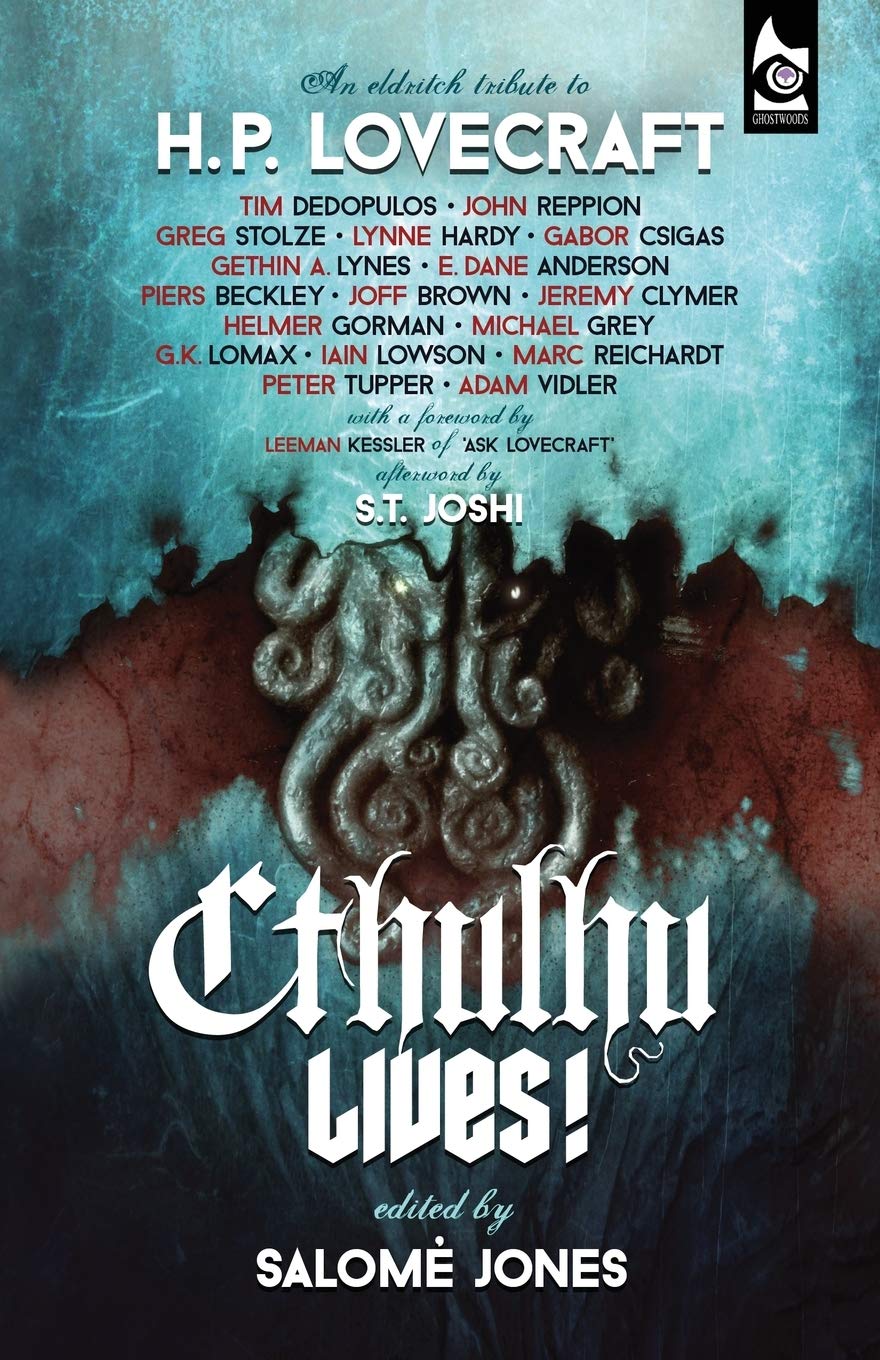
“What Hides and What Returns” (2011) by Bryan Thao Worra

Ajan Somnung had sternly encouraged us not to look too closely for some secrets, but to turn our eyes to the lessons of the Buddha. The search for Nirvana should supersede any attachments ot this illusory world and all its perilous entanglements. He had taught us that death was impermanent, a great dreaming slumber, and one day, we could break free of our eternal returns because, after a time, even death would die.
—Bryan Thao Worra, “What Hides and What Returns” in Historical Lovecraft 227

Lovecraft did not create the unseen, the indescribable, the unnameable, the ineffable, the invisible monster or threat. Before him there was Algernon Blackwood’s “The Willows” (1907), Ambrose Bierce’s “The Damned Thing” (1893), Guy de Maupassant’s “Le Horla” (1887). Maupassant was alive during France’s imperial drive into Southeast Asia, although he did not quite live to see the establishment of the French Protectorate of Laos at the end of the Franco-Siamese War of 1893. It is in Laos under the French where and when Bryan Thao Worra has set “What Hides and What Returns.”

It is important to remember that weird fiction was never created in a vacuum, that the people who wrote these stories lived in a busy, complex, and changing world. Where many writers found horror in distant and exotic places, such as “The Lair of the Star-Spawn” (1932) by August Derleth and Mark Schorer, Lovecraft found just as much potential for terror and antiquity in his proverbial backyard; Lovecraft Country as it was originally conceived was about finding the darkness close at hand, both geographically and chronologically, in stories set not in some far-off place and time.

This can hold true, of course, for people that are in places which Lovecraft would have felt wild & exotic as well. For the Lao, their country was no more strange and exotic for them than Massachusetts and Rhode Island were to Lovecraft. And for Worra, that means there is just as much potential there to find horror in their own backyard.

It is interesting to compare and contrast this story with “Dreams of a Thousand Young” (2014) by Jennifer Brozek; both are Mythos stories set in European “protectorates” in Asia, the imperialist intrusion of the British and French setting up the well-trodden trope of ignorant Westerners sticking their greedy noses into dark places. Where they differ is in approach and presentation; Worra’s protagonist Saeng is philosophical, ungreedy, clever enough to put a few pieces of the puzzle together and wise enough to let sleeping gods lie, so to speak, and in “What Hides and What Returns” Laos itself becomes a character, with much of the story given over to describing the environment, the peoples, the interaction of history and the present—and it is not dark and forbidding, except through the eyes of European characters.

Well, except for one part. Worra has made of Laos a bit of Lovecraft Country.

There is a curious question, posed and answered to the reader, which sets the tone of the story and perhaps the Mythos:

Some would say it was an inappropriate gathering, but if you learn from it, how can it be wrong? Our worlds are not some fragile bits of glass that shatter at the encounter with the Other. Our ability to inquite surely defines our humanity; it sets us above hounds and mere rutting beasts of the field, all jaw and genital.
—Bryan Thao Worra, “What Hides and What Returns” in Historical Lovecraft 228

This might be taken as a gentle rebuke of Lovecraft’s opening to “The Call of Cthulhu”:

The most merciful thing in the world, I think, is the inability of the human mind to correlate all its contents. We live on a placid island of ignorance in the midst of black seas of infinity, and it was not meant that we should voyage far.

But Saeng’s statement is given near the beginning of the story, before the end—where all is not quite revealed—and while Saeng never quite rebuts himself, he does end by noting that: “[…] some things were meant to stay forgotten….” (236). It is a fine point, but one which many Mythos enthusiasts will appreciate: the naive young Lao did not conceive of such a horror, only experience of encountering such a thing could bring them around to a Lovecraftian point of view.

Like “Red Goat, Black Goat” (2010) by Nadia Bulkin, Worra manages to evoke the Mythos without falling into the habit of naming familiar names. There is no Necronomicon in this story (although Worra creates his own addition, an occult variant of the Thao Cheuang), no Cthulhu or other familiar Mythos entity. It is instead unseen Sealed Evil In A Can, and if the trope is hoary and well-represented in Mythos fiction, it’s because it works.

The point is less that some Lovecraftian horror waits to be unleashed, but that the Lovecraftian experience is ultimately universal. It can be set anywhere or anywhen; it is not relegated to Massachusetts in the 1920s, it can be experienced regardless of race, gender, or religion.

“What Hides and What Returns” by Bryan Thao Worra was first published in Historical Lovecraft (2011); it has not since been republished. While Worra has written other fiction, he is also a very notable poet, whose Lovecraftian works include “The Deep Ones” (2007), “Fragment of a Dream of Atlantean Yellows” (2013), “Dead End in December” (2013), “Laonomicon” (2013), “The Doom That Came To New Sarnath” (2013), and “The Pearl in the Shadows” (2016), many of which can be found in his Demonstra (2013).


Bobby Derie is the author of Weird Talers: Essays on Robert E. Howard & Others (2019) and Sex and the Cthulhu Mythos (2014).
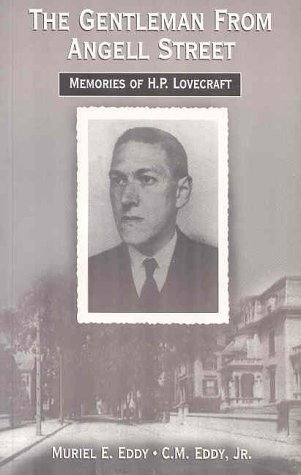
“Portrait of Death” (1952) by Rudy Palais

Early comic books had close ties with the pulps; they sometimes shared artists, writers, editors, even publishers. Both DC and Marvel started off publishing pulps; Harry Donenfeld’s Spicy magazines ran comic strips like Polly of the Plains, Olga Mesmer, and Sally the Sleuth. Donenfeld switched to producing comic books—and ultimately found Superman more profitable.

Lovecraft had no direct ties to the nascent comic book industry; he died the year before Superman appeared on the newsstands, but several of his associates and contemporaries did. Julius Schwartz, the teenager who acted as Lovecraft’s agent to sell “The Shadow out of Time” and “At the Mountains of Madness” to Astounding ended up at DC Comics. Frank Belknap Long, Jr. and Otto Binder wrote for the comic books, as did Manly Wade Wellman. August Derleth was more of a collector—and famously used his Guggenheim grant to bind his collection of newspaper comic strips—but he made it into the comics anyway when a writer plagiarized his story “The Ormulu Clock” (1950) for a comic (Forbidden Adventures: The History of the American Comics Group 73).

Plagiarism, or at least “borrowing,” was rife in both comics and the pulps; and not even H. P. Lovecraft was immune from it. “Cool Air” had already been discreetly adapted by EC as “Baby…It’s Cold Inside!” in Vault of Horror #17 (1951). In 1952, someone else published an adaptation of “Pickman’s Model”…with a few changes.

18
Weird Terror #1 (1952) – Page 18

The writer is unknown; the artist is Rudy Palais, who had been working in comic books since the 1930s. “Pickman’s Model” was first published in Weird Tales in 1927, but had been reprinted a number of times, including in the Best Supernatural Stories of H. P. Lovecraft (1950, World Publishing, Co.) and Famous Fantastic Mysteries (Dec 1951), so it was definitely available.

At seven pages, the adaptation drastically truncates Lovecraft’s story, and the character of Richard Upton Pickman is replaced by the slightly more generic (but still vaguely Lovecraftian) Eric Gilman; the narrator is replaced by female investigative reporter Pat Carter—shades of Lois Lane and Sally the Sleuth. Her journalistic instincts are correct, her courage is undoubted, and Pat Carter is tough enough not to “scream like a silly fool.” Hardboiled though she might be, Carter is not prepared for Eric Gilman’s secret…that he paints from life!

22
Weird Terror #1 (1952) – Page 22

Much as with “Pickman’s Other Model (1929)” (2008) by Caitlín R. Kiernan, the writer goes a step further than Lovecraft—capturing actual video evidence for the ghoulish creatures that live beneath the earth. The denouement is stereotypical of horror stories and creature features in comics at the time—the preservation of the status quo, at least nominally; the trust in the “proper authorities” to deal with the unpleasant realities that normal people wouldn’t be equipped to deal with and the desire not to cause mass panic. The preservation of normalcy.

“Portrait of Death” is ultimately an effective adaptation; not the first or the best, although perhaps the first with a female protagonist. It definitely isn’t one of the most gruesome of the pre-Code horror comics ever published, but it gets the job done…and in an intriguing way. Other uncredited Lovecraft adaptations may well still in the yellowing pages of old comics, waiting to be recognized for what they are.

The story was first published in Weird Terror #1 (1952, Allen Hardy Associates), republished in Horrific #8 (1953, Allen Hardy Associates), and slightly reworked and republished in Tales of Voodoo #3 (1968). The reworked version has been reprinted in Weird Worlds #2 (1971) and Terror Tales #6 (1972) from Eerie Publications. It has also been republished as part of Weird Terror volume 1 (2016).

The original story is in the public domain, and may be read in its entirety here.


Bobby Derie is the author of Weird Talers: Essays on Robert E. Howard & Others (2019) and Sex and the Cthulhu Mythos (2014).

“The Opera Singer” (2015) by Priya J. Sridhar

Strictly speaking, “The Opera Singer” is not a Mythos story. Mythos by association only. No invocation of strange and terrible and familiar names, nary a tentacle to be seen. Yet it is a Lovecraftian story; those who are initiated into the Mythos, who have read Lovecraft’s “The Colour Out of Space,” can draw their own connections, their own conclusions.

Nor is it entirely unprecedented.

Brian Lumley’s “Big ‘C'” (1990) is a brother-from-another-mother-with-a-thousand-young to Sridhar’s story. The two have parallels, similar ideas but carried out very differently. A combination of adult fears and something alien, intrusive, other. For “Big ‘C'” it is cancer; for “The Opera Singer” it’s the stroke that landed the protagonist Circe in a wheelchair. That terrible biological betrayal, body turned against itself. Sridhar does a better job than Lumley in showcasing a woman with a disability; living with the body as a cage. Lumley is focused on a bigger picture, fewer emotional attachments. Different takes on the idea.

Readers might also compare “The Opera Singer” with “While The Black Stars Burn” (2015) by Lucy A. Snyder; both involve a glimpse into the life of the trained musician, talent toned with tragedy. Even exceptional musicians rarely rise to rock-star fame; they take gigs, pour their heart into operas and rehearsals, watch the money go to other people. Musicians are like athletes, their bodies a part of the performance, and as they get older bits wear out. Singers can no longer hit the same notes. Snyder and Sridhar touch on some of the same points there as well, although they are going in different directions; while readers might suspect more than cosmic accident to what happens to the protagonist in “The Opera Singer,” Sridhar gives no hint of actual conspiracy.

Sridhar gives a Lovecraftian frame to the story as well; the revelation unfolds, a bit at a time, and at the beginning of the story it isn’t even clear that there are things to reveal. Call it Chekov’s wheelchair: if you show the protagonist struggling in a wheelchair in the first act, you have to show how they got there by the end of it—but even that might be too simple. To understand how the protagonist lives, it isn’t just important to show how she got in the wheelchair, but what she lost in the process.

There are names involved too—Circe, the protagonist, lives under the shadow of the Circe from Greek myth, has odd connections with 34 Circe. Significant? Hard to say. The human talent for pattern recognition comes into play; what seems like a pattern could be random chance. The Mythos is dependent on pattern recognition, of readers recognizing associations between names, places, critters, ideas.

What else is this review but an effort to place this story within the wider framework of Lovecraftian fiction, finding the points that seem to fit?

There is always that danger with labeling something Lovecraftian fiction: a false positive. Maybe Priya J. Sridhar never meant a Lovecraftian connection at all when she wrote the piece, and it just happened to find a home in a Mythos anthology. It is always possible to read meaning and intent in a piece, especially if the net of comparable fiction is cast wide enough. Still, it is in a Mythos anthology now. The association is set.

Priya J. Sridhar’s “The Opera Singer” was first published in She Walks In Shadows (2015) and its paperback American edition Cthulhu’s Daughters (2016); it was also published in Nightmare Magazine (Dec 2016), where it may be read online for free.


Bobby Derie is the author of Weird Talers: Essays on Robert E. Howard & Others (2019) and Sex and the Cthulhu Mythos (2014).

The Private Life of H. P. Lovecraft (1985) by Sonia H. Davis

I’ve heard from various sources in town that Lovecraft’s wife has suddenly put in an appearance and is causing somewhat of a rumpus. Is this true, or is it, as usual, the kind of ill thought out gossip that is prevalent among the inept citizens of the L. A. Fantasy Society?
—Ray Bradbury to August Derleth, 19 Nov 1947 

Lovecraft’s wife did turn up; she is now a Mrs. Sonia Davis, the widow of the husband (no. 3) she had after HPL. She wrote a biography called THE PRIVATE LIFE OF H. P. LOVECRAFT, and wanted to incorporate a lot of his prejudices as if they were major parts of his life, seen through her Yiddish eyes; she also wanted to include letters of Lovecraft, but we pointed out that the only way she could do that would be with our permission first. We have heard nothing further from her, though I had a talk with her in New York City.
—August Derleth to Ray Bradbury, 21 Nov 1947

Howard Phillips Lovecraft met Sonia Haft Greene at an amateur convention in Boston in 1921; on 3 March 1924 they were married. The union was brief; they cohabited for only about fifteen months in New York City, with Sonia forced to seek work in the Midwest where Howard would not follow, and Howard returned to Providence. In 1929, Sonia petitioned Howard for a divorce; due to the laws in place at the time, this could not be granted without cause, and the pretense was made that Sonia had deserted him. Howard, however, did not sign the final decree. They remained in touch for some years, and Howard even helped her with her travelogue. In 1933 Sonia left for California, and in 1936 she remarried, to Nathaniel Abraham Davis. H. P. Lovecraft died in 1937; Sonia was not made aware of this until 1945, when informed of the fact by their mutual associate Wheeler Dryden. Nathaniel Davis died 6 April 1946.

So it was, in the immediate aftermath of the second World War and the revelations of the Holocaust, that Sonia H. Davis cast back her mind some twenty years to write her memoir of her second husband, H. P. Lovecraft. The resulting document is a valuable account on several fronts: no one was as intimate with H. P. in the way of his wife, and since H. P. was very reluctant to write about his marriage in his letters, Sonia’s account provides the major source for their domestic life, as well as incidental information on their courtship.

Getting published, however, was a bit tricky.

While here Belknap Long put me in touch with Mr. August Derleth, who seems to have full rights to HP’s work; at least so he states.

I read a few pages to him from my scribbled manuscript (it was almost illegible to myself).

At first he told me that he wanted to publish it. Then he shunted me off to one Ben Abramson who, he said would publish it. At first Derleth said he would me $600.00 for it at the end of three years, with possibly a small initial sum against royalties.

I’m not young enough to wait three years. If the work is important to those who are most interested I felt it ought to be paid for outright.

So upon reflection I wrote to Mr. Derleth telling him I would have my own publisher do the work and that I would use my story of the “Invisible Monster” as revised by H.P. of mine first as well as some very personal letters and poems of his revision.

In reply he shot back a spec. del. letter that all HP. material belong to the estate of H.P.L. and that “Arkham House” (ie. he) alone had full legal rights to its use; and that I was likely to find that the could would restrain the sale of the work, would confiscate & destroy it.

I have written him stating that I had already offered the material to you, but that I may have to retract the offer if I am to be punished for using letters that were addressed to me personally.

Perhaps I am quite ignorant of the law but I cannot see how these can belong to the Lovecraft estate, to Mr. Barlow (as he stated) or to himself! Personally I no longer feel an interest in my past. Other interests have developed since then. However, because Mr. D. & you and others clamored for HPL’s private life with me, I thought it might be a source of income, and at the same time tell some truths that would throw more light on his character and perhaps on his psychology.

Since I do not know the law regarding these matters and as I have no money to start any “fights” it might be the better part of valor to drop the matter altogether, since while I do not fear Mr. D’s veiled threats and open intimidation I’m not in a position to fight.

Mr. D’s method of “high pressuring” me into doing what he wants is not to my taste. It would be interesting to contact the county clerk in Providence and make sure my reasons to believe that H.P. died intestate. If so, how does the property belong to Barlow and Derleth?

Had HP. lived and known of D’s aims, I feel sure he would not have countenanced D’s intimidation of me, no matter how much he would have liked to have his words read by his followers.

Sonia Davis to Winfield Townley Scott, 13 Sep 1947

We will never know exactly what passed between August Derleth and Sonia when they met in New York, but some correspondence survives regarding the meeting and its aftermath. After his death, Lovecraft had provided instructions that R. H. Barlow was to be his literary executor, and whether or not the document was exactly legal his surviving aunt Annie Gamwell respected his wishes. August Derleth and Donald Wandrei were anxious and eager to get Lovecraft into print so that their friend’s work would not be lost; to this end they quickly got to work, and after securing permission from Mrs. Gamwell, began looking for a publisher. Failing to find one, they founded their own small press: Arkham House.

Barlow’s position as literary executor was a complication; especially as Barlow was at university at the time and moved from Kansas City to San Francisco, and then down to Mexico. Donald Wandrei joined the U.S. Army during WWII (Derleth was exempted from the draft for health reasons), leaving Derleth in essential control of Arkham House—and by extension, the Lovecraft estate, having secured Barlow’s essential cooperation for access to Lovecraft’s manuscripts and letters and Gamwell’s permission to print. Derleth took a very proprietary stance with regard to Lovecraft’s fiction, claiming that Arkham House had sole and exclusive rights to all of it, as well as his letters and any other materials—if it was to be published, it would be through Arkham House. In part, this legal bluff was hard-nosed business sense, Arkham House was not exactly a cash cow, with small print runs of relatively expensive books that took a long time to sell, the company basically supported by Derleth’s other writing. But also in part Derleth wished to preserve the memory of H. P. Lovecraft and his image. So Derleth would also threaten legal action against C. Hall Thompson during this period for using the Mythos without permission, and in 1950 would refuse publication of Warren Thomas’ thesis on Lovecraft, which cast an unflattering light.

Meanwhile, did I tell you Sonia Lovecraft Davis turned up with some laughable idea of cashing in on HPL’s “fame” and the desire to publish a “frank” book, entitled THE PRIVATE LIFE OF H. P. LOVECRAFT, and quoting generously from his letters. She read me part of the ms. in New York, and in it she has HPL posing as a Jew-baiter (she is Jewish), she says she completely supported HPL for the years 1924 to 1932, and so on, all bare-faced lies. I startled her considerably when I told her we had a detailed account of their life together in HPL’s letters to Mrs. Clark [Lovecraft’s aunt Lillian Clark]. I also forbade her to use any quotations from HPL’s letters without approval from us, acting for the estate. I told her by all means to write her book and I would read it, but it was pathetically funny; she thought you could get rich on the book. She said it would sell easily a million copies! Can you beat it! I tried to point out that a biographical book on HPL by myself, out two years, had not yet sold 1000 copies, and that book combined two well-known literary names. She thought she should have $500 advance on her book as a gift, and royalties besides! I burst into impolite laughter, I fear.
—August Derleth to R. H. Barlow, 23 Oct 1947

Sonia probably didn’t have an idea about the realities of publishing, and she did likely need the money. An agreement was finally reached: Sonia cut all the quotations from Lovecraft’s letters, and the journalist Winfield Townley Scott heavily edited the piece, which was published in the 28 August 1948 edition of the Providence Journal as “Howard Phillips Lovecraft As His Wife Remembers Him.”

In September 1948, Sonia suffered a heart attack.

“Howard Phillips Lovecraft As His Wife Remembers Him” was published in Books at Brown vol. XI, nos. 1-2; Lovecraft’s papers had been placed at the John Hay Library at Brown University in Providence by R. H. Barlow shortly after Lovecraft’s death. Cordial relations between Sonia and August Derleth were re-established. In 1949, Arkham House published Something About Cats and Other Pieces which included “Lovecraft As I Knew Him” (a Derleth-edited version of “Howard Phillips Lovecraft As His Wife Remembers Him”) as well as the stories “The Invisible Monster” and “Four O’Clock.”

Little other material was forthcoming; Sonia broke her hip in 1960 and ceased to work, moving into a rest home. Arkham House eventually published a briefer remembrance “Memories of Lovecraft I” in the Arkham Collector (Winter 1969), and later a letter that Lovecraft had sent her as “Lovecraft in Love” in the Arkham Collector (Winter 1971). A young student named R. Alain Everts, interviewing Lovecraft’s surviving correspondents interviewed her and obtained a copy of Alcestis which he would eventually publish. His final telephone call with her was 22 December 1972; Sonia H. Davis would pass away four days later.

While a few more items would be published after Sonia’s death, her memoir of Lovecraft remains her single largest work. It was eventually published in its original form—sans any quotes from Lovecraft’s letters but before Scott or Derleth edited it, with an appendix on their mutual friend Samuel Loveman—in 1985 from Necronomicon Press under her original title: The Private Life of H. P. Lovecraft.

As an historical document, Sonia’s memoir is both extremely valuable and not without its flaws. On the one hand, it is a first-person account, even if some of the events being written about are twenty years in the past. Many of the basic facts that can be checked against other sources do check out; there are a few claims that probably deserved caveats—S. T. Joshi in his introduction to the text notes:

The extent to which Sonia harps upon money matters in her memoir may in part be justified—she was clearly trying to set the record straight and correct the inadequacies of previous treatments, especially by W. Paul Cook—but also underscores another point of tension which Lovecraft was perhaps reluctant to mention to his correspondents. For a full two years—from 1924 to 1926—Lovecraft was essentially supported financially by his wife. he had virtually no independent income, and his bootless efforts to find employment in New York are poignantly chronicled in his letters of the period. (5-6)

Some claims have to be measured against what else we know. Sonia’s assertion that:

He admired Hitler, and read Mein Kampf almost as soon as it was released and translated into English. I believe he was much influenced by that book. It may have had much to do in influencing further his hate, not only for Jews, but for all minorities, which he made little effort to conceal. (28)

This claim is on the last page of the book, in an addendum of afterthoughts that are predominantly about Lovecraft’s racial views. Keeping in mind that Sonia was writing this after World War II, when antisemitism was more prominent, and that she had very limited contact with Lovecraft after 1932 when Hitler came to power—which she and Lovecraft chronicled a small part of in their European Glimpses. The first English edition of Mein Kampf was the Dugdale abridged version published in 1933; it is possible Lovecraft read this, although there is no mention of it in his correspondence, and excerpts were published in the Times. So the claim is a bit iffy on the face: it’s not clear how Sonia would know this, the timing is a bit suspect, and there is no clear corroborating evidence from Lovecraft’s letters that he read Mein Kampf. But it cannot be completely discounted; they may well have continued corresponding in the mid-30s, and Lovecraft may have read the excerpts in the Times and mentioned them.

Similar consideration has to be given to every claim in the book. Her insistence on the importance of The Private Papers of Henry Ryecroft to Howard does not seem borne out by a study of Lovecraft’s letters, but many other little details are. In some cases, such as the writing of “The Horror at Martin’s Beach,” Sonia is essentially the sole source we have to go on. Her manuscript sans Scott and Derleth’s writing is often disordered, written down as she remembers it, or to counteract specific points in previous memoirs about Lovecraft that had been written at that point (1946).

Also telling at the things that Sonia does not talk about. She makes almost no mention of her previous marriage or family; barely mentioning her mother (Lovecraft’s mother-in-law), who was alive and in New York at the time of their marriage, or her adult daughter Carol Weld (they had become estranged sometime in the 1920s), and no mention of her half-siblings in the Midwest. Juicy details on the Lovecrafts’ sex life were also not forthcoming, although Everts would provide what few we have from his interviews with Sonia, and Derleth noted after meeting Sonia in Los Angeles in 1953:

A propos your piece on Lovecraft, the question of HPL and sex had been bothering me for some time […] so in 1953 when I was in Los Angeles, I asked Sonia Davis—the ex-Mrs. Lovecraft—rather bluntly about HPL’s sexual adequacy. She assured me that he had been entirely adequate sexually, and since she impressed me as a well-sexed woman, not easily satisfied, I concluded that HPL’s “Aversion” was very probably nothing more than a kind of puritanism—that is, it was something “gentlemen” didn’t discuss.
—August Derleth, Haunted (1968) vol. 1, no 3, 114

Much of the actual domestic life and some of their later visits after their separation are not included in Sonia’s memoir. We know from Lovecraft’s letters to his aunts that he spent an extensive amount of time out of the household, visiting friends and the Kalem Club; we know that they enjoyed going out to dinner and to the theater; that when she was ill he would visit her in the hospital for hours; that they struggled with finances after Sonia lost her job and ended up selling some of her furniture.

It is an important memoir; perhaps one of the most important memoirs of Lovecraft that we have. Nearly forty years were required to get Sonia’s unedited words to the public, and she did not live to see that happen. The few errors in it or the critical assessment of some claims do not detract from its importance; it is the nature of historical research to question sources, to view them critically, to weigh the evidence against other accounts. To ask ourselves why Sonia was writing this, and to whom. There she was, alone once more, writing about a husband that had died nearly a decade before, and whom she had first met over twenty years before—and there are moments in her recollections that may be a bit rose-tinted, and others where Sonia was clearly trying to answer to claims about Lovecraft’s prejudices, or refute the inaccuracies of early biographers. Yet she wrote what only she could—and we are the richer for it.

“The Private Life of H. P. Lovecraft” has been most recently published in Ave Atque Vale (2018) from Necronomicon Press, alongside other memoirs of Lovecraft.


Bobby Derie is the author of Weird Talers: Essays on Robert E. Howard & Others (2019) and Sex and the Cthulhu Mythos (2014).
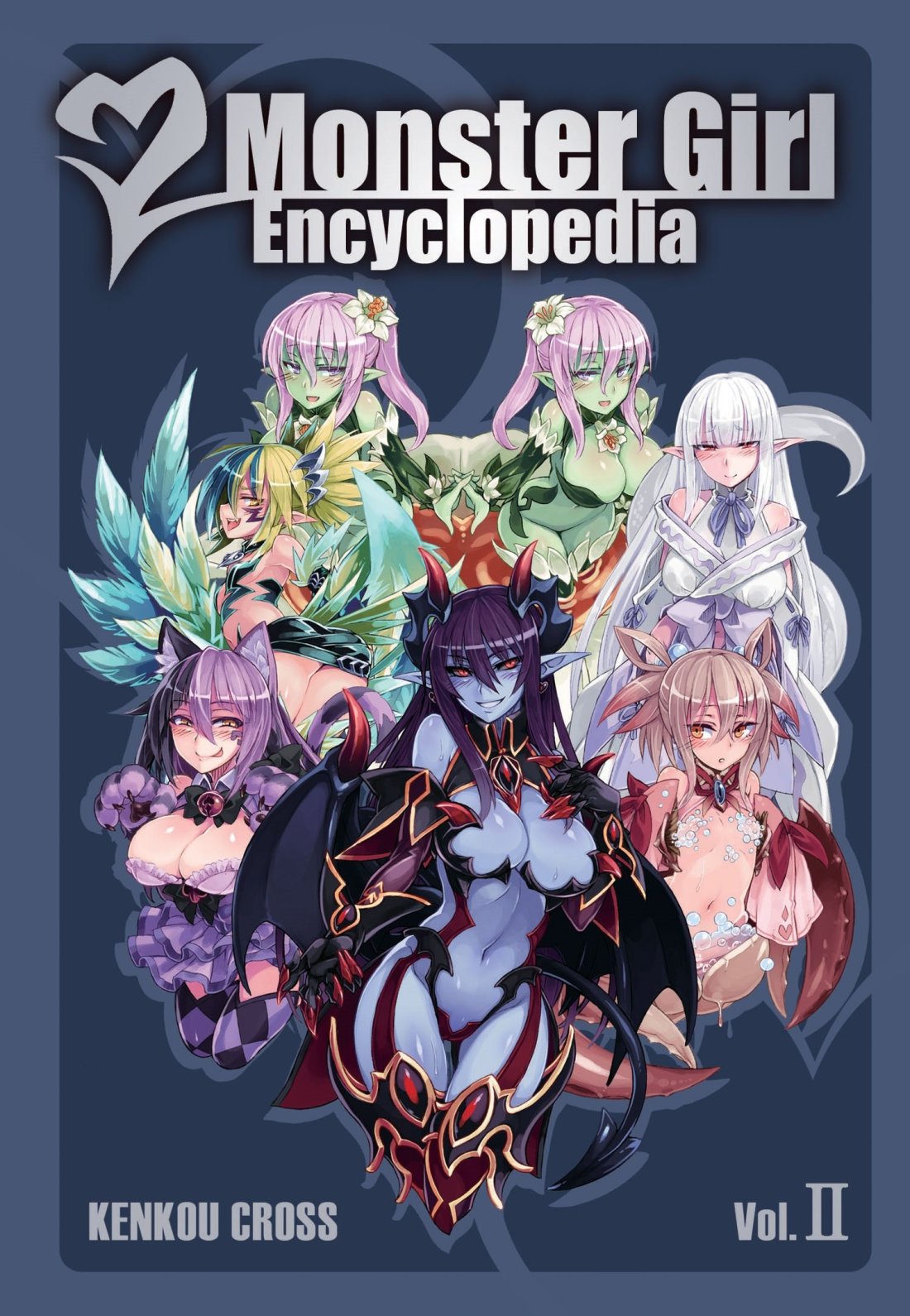
“At the Left Hand of Nothing” (2016) by Jayaprakash Satyamurthy

That cult would never die till the stars came right again, and the secret priests would take great Cthulhu from His tomb to revive His subjects and resume His rule of earth. The time would be easy to know, for then mankind would have become as the Great Old Ones; free and wild and beyond good and evil, with laws and morals thrown aside and all men shouting and killing and revelling in joy. Then the liberated Old Ones would teach them new ways to shout and kill and revel and enjoy themselves, and all the earth would flame with a holocaust of ecstasy and freedom.
—H. P. Lovecraft, “The Call of Cthulhu”

When all is madness, there is no madness.
—Scott R. Jones, introduction to Cthulhusattva: Tales of the Black Gnosis (2016) 5

Lovecraft was a materialist; he had no belief in gods, neither those of traditional religion or of his own making, and carefully informed fans that yes, Cthulhu and the Necronomicon and all the rest were totally fictional, that he and Robert E. Howard and Clark Ashton Smith & co. had made them all up. The irony of this is that the writings of the materialist would inspire in others true faith; that his writings would be taken by some as revelations of occult truth, and others as something close to holy writ. So we have Necronomicon Gnosis: A Practical Introduction (2007) by Asenath Mason and “The Book of the Forgotten Ones” (1977) by Nema Andahadna and many other works of esotericism, accounts of spiritual revelation or occult compilation.

For all that these individuals and groups pay homage to the names and ideas that Lovecraft & co. created, few of them strive to capture or explore the philosophy behind those names. Thomas Ligotti comes to mind: “The Sect of the Idiot” and “The Last Feast of Harlequin” dig deep into the philosophic underpinnings of the Mythos. Scott R. Jones in When the Stars Are Right: Towards An Authentic R’lyehian Spirituality (2014) describes the deep understanding of the Mythos, beyond the farcical family trees of the gods and sometimes humorous mucking about with incantations and talismans, as the Black Gnosis.

Humanity, with its bilateral symmetry, tends to think in dichotomies. Good and evil, black and white, left and right. Theosophists and occultists in the early 20th century talked about black lodges and white, locked in a cycle of conflict; the devotees of “evil” revelations followed the left-hand path, the Satanists and Thelemites, while those “white magicians” followed the right-hand path. The terminology of left hand/right hand was borrowed (stolen, appropriated) from Indian tantra; Westerners like Aleister Crowley seeking to incorporate aspects of Eastern esoteric practices into their occult systems were cafeteria occultists.

Of course the Chinese mix everything up. Look at what they have to work with. There’s Buddhism, Confucianism, and Taoist alchemy and sorcery. We take what we want and leave the rest. Just like your salad bar.
—Egg Shen, Big Trouble in Little China (1986)

Every so often, however, someone comes along that reminds us that the universe is much stranger than our standard definitions, that we are limited by our conceptions. Such a work is “At the Left Hand of Nothing” by Jayaprakash Satyamurthy.

A short piece, but dense in concepts. An unnamed cultist or adept speaks to an unknown audience. Familiar terms are embedded in unfamiliar attitudes. The language is carefully chosen, the reader letting the onion peel back, layer by layer, revelation by revelation.

There is an entire literature out there dealing with the antics of these fools. It is imagined that these plots and cults are the sum of our ambition; that we exist merely to subvert normality and exalt some strang epantheon, that we want to pring a triumphal return of squamous divinity to old Earth.
—Jayaprakash Satyamurthy, “At the Left Hand of Nothing”
in Cthulhusattva: Tales of the Black Gnosis (2016) 54

The central idea of Satyamurthy’s piece harkens back to the older, original idea of left-hand and right-hand tantra. Wearing black robes and participating in orgies in the swamp isn’t the left-hand path; maybe none of the characters in any of Lovecraft’s stories had the insight and ambition to conceive of the possibilities that Satyamurthy hints at, though some of the stories that came after have characters whose feet might have turned in such directions.

It is, if nothing else, a revelation. A new way to think about the Mythos. Something to widen your preconceptions, re-calibrate how you think about stories old and new. Go back and re-read “The Call of Cthulhu” after reading this story, and see if you can experience it in a new way. Not as the naive believer in old Castro’s ramblings, but as an initiate that knows a deeper truth and can recognize him and his for what they are…and who their true undying masters must be.

“At the Left Hand of Nothing” was first published in Cthulhusattva: Tales of the Black Gnosis (2016); it has not yet been reprinted. Jayaprakash Satyamurthy has written a number of weird tales, some of which have been collected in Weird Tales of a Bangalorean (2015) and Come Tomorrow: And Other Tales of Bangalore Terror (2020). His Lovecraftian stylings can also be experienced with his band Djinn and Miskatonic.


Bobby Derie is the author of Weird Talers: Essays on Robert E. Howard & Others (2019) and Sex and the Cthulhu Mythos (2014).